
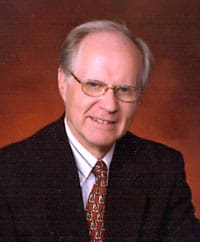
 In this episode Grant Palmer, author of “An Insider’s View of Mormon Origins,” returns to Mormon Stories to discuss:
- Sexual allegations made against Joseph Smith during his early years
- The story of William and Jane Law, and
- An update on Grant’s resignation from the LDS church
Warning: The material on this podcast is very sensitive and will likely be considered offensive by traditional LDS church believers. Please do not listen if your faith is tender, or if you are seeking to avoid any critical discussion of Joseph Smith or the LDS church.
Finally, to listen to our original interview with Grant Palmer please click here.
Episode Transcript
Host: John Dehlin · Guest: Grant Palmer
This transcript is machine-generated and lightly edited for readability. The audio is authoritative. Please excuse occasional errors in names and spelling.
Disclaimer and Introduction to Grant Palmer
Part 1 of 3 · Ep. 324
John Dehlin [00:00:00] Hi everyone, this is John with a brief disclaimer before you listen to this three part interview with Grant Palmer. First, I want to say that I love Grant Palmer. I think he's amazing and I'm really honored to have him on Mormon Stories for the second time. If you care to please go back and listen to my interview with him about his book, An Insider's View of Mormon Origins. It's definitely one of the most important interviews I've done on Mormon Stories, but I wanted to do a disclaimer. It's more disclaimer about me than it is about Grant. I've been receiving a lot of feedback on Mormon stories lately that some people feel like Mormon stories has become too negative.
John Dehlin [00:00:40] You know, I'm trying really hard to
John Dehlin [00:00:42] be fair and balanced. And I've brought on several people that would be considered faithful or apologetic. I've brought on, you know, Terrell Givens lately and Brant Gardner and Charles Harrell.
John Dehlin [00:00:55] But for some reason, people feel like
John Dehlin [00:00:57] the tone in Mormon stories has turned negative. And I just want to first say that it is an absolute goal of Mormon Stories to be a safe place for believers and non believers to both listen on the podcast. And the second thing I want to say is that, you know, even though we strive for that, sometimes we're going to interview people who have lost their faith or who ask hard questions about Mormonism. And, you know, that's probably never going to change.
John Dehlin [00:01:23] But, but I guess because the topic
John Dehlin [00:01:25] of this podcast coming up is so sensitive because Grant Palmer has done some writing and research lately on sexual allegations regarding Joseph Smith. And then we're going to talk about the William Law story, which is a really hard story to hear. I just want to let my listeners know that this is going to be a really hard podcast to listen to. If you're faithful, if you have tender ears, if in any way you are sensitive to more tough discussions, I just want to warn you now on this one, just please don't even listen. Just please put it down. This is if you're interested in these types of allegations, if you want to know one man's perspective on Joseph Smith and some of the tougher issues, you
John Dehlin [00:02:12] know, we're going to be exploring it
John Dehlin [00:02:13] and I hope we do a fair and balanced job. But you know, it's difficult to talk about these things. So again, I think I made my point. But please don't listen if you have sensitive ears or if your testimony is fragile, or if you just don't want to hear something negative, because, you know, this is one of the tougher ones. And I promise to do my best to maintain a good balance going forward. So thanks for listening and I hope you enjoy this interview with Grant Palmer. If it's the type of thing you care to listen to.
John Dehlin [00:02:42] Thanks so much.
John Dehlin [00:02:50] Mormon Stories Podcast is a production of the Open Stories Foundation. All donations to Mormon Stories are fully tax deductible and go directly towards keeping the podcast alive and towards building a community of support for Mormons like you. To support the podcast or to join the community, please become a monthly subscriber today@mormonstories.org.
John Dehlin [00:03:11] hello, and welcome to another edition of Mormon Stories Podcast. As always, I'm your host, John Dehlin, and and as always, I'm very excited to have with me a very special guest. Today we have, I think for the one of the first times ever in the history of Mormon stories, we have a repeat guest, someone who I'm interviewing solo for a second time. This person will be familiar with many of you, and maybe some of you will have never heard of him, but it is the incomparable Grant Palmer. Hello, Grant Palmer. How are you?
Grant Palmer [00:03:44] I'm doing fine, John.
John Dehlin [00:03:46] Thanks for joining us.
Grant Palmer [00:03:48] Thank you. I'm happy to be a part of this.
John Dehlin [00:03:51] Yeah. You know, for those. Those of the listeners who have never heard of you, you. You're definitely one of the most popular and most important interviews I've ever done. I interviewed you, I don't know, what, four years ago, maybe? Does that sound about right? Four years?
Grant Palmer [00:04:08] That's correct.
John Dehlin [00:04:09] Two thousand and four years. And what happened was, you know, your book, An Insider's View of Mormon Origins, was. Was definitely one of the most important books that I found in. I'd say 2000. 2000. Well, let's see. It probably would have been 2002. 2003. When did that book come out?
Grant Palmer [00:04:27] 2002.
John Dehlin [00:04:29] Yeah. So around 2002, 2003, I found your book, and I was trying to figure this whole Mormon thing out, and I read your book and your book, basically the insider's view. For those who don't know, an insider's view sort of explains Joseph Smith and his time period, you know, the origins of Mormonism in a. In a. I'd say a secular way. That makes a lot of sense. I'm not saying it's true. I'm not saying it's perfect. I'm just saying that just like Fawn Brody's book, no man Knows My History. What Grant Pomber does better than almost anybody is he pieces together a historical narrative that if you don't accept the church's absolute truth claims. And if you're skeptical about the divinity of Mormonism, Grant pieces together kind of a secular view of Joseph Smith and of the origins of the Book of Mormon that really resonates with a lot of people. And I've mentioned it in even recent podcasts with Brent Gardner and with Terrell Givens and others. But that book, An Insider's View, is probably what, one of signature books, bestselling books of all time, Is that right?
Grant Palmer [00:05:42] Yes, that's my understanding.
John Dehlin [00:05:44] Yeah. And part of what makes it, you know, that book so interesting, and again, we're rehashing a little bit, is that Grant was a seminary institute teacher for how many years?
Grant Palmer [00:05:55] 34.
John Dehlin [00:05:56] Yeah. And that's where the title and insider's view comes from. Now, now, we're not going to rehash all of Grant's story, but on this podcast link we are going to refer to that interview. It's like a five hour interview. Every minute is worth your time. But it's just a fascinating story of why a 34 year seminary institute teacher would ultimately come to the conclusion that the church wasn't what it claims to be. Now, I'll just say on Mormon stories, you know, what differentiates us from everybody else maybe is that we allow, we want to allow for room for both belief and disbelief. And so we're not here to tell people, you know, the church is true or false, but we are here to explore Mormonism, to get the facts and the evidence out on the table so that people can make an informed decision. And so that's what this is about. Now why are we bringing Grant back on? Well, here's a little bit of background. I have started, you know, my foundation, the Open Stories foundation, and I have started a new project is it's called why People Leave the LDS Church or why Mormons Leave. You can access it@why Mormonsleave.com or org. And this, the impetus of this, it's been something we've wanted to do for quite a long time, but we want to get out there. Just like MormonThink, the website has a public record for why people are leaving the church because we feel like there's a lot of pain and damage that is, that is being experienced by a lot of people because of this situation where people for various reasons decide that they can no longer stay in the LDS Church and marriages are being broken up, people are being driven to depression and anxiety disorders and suicide. And it's a really serious, traumatic thing. And so regardless of what you believe about the church. And regardless of where you end up, we believe it's really important to get all these issues out on the table, both so that people can be informed consumers of what they engage in from a religious perspective, but also we want to create space within Mormon culture for disbelievers with no other reason than because we find it unacceptable the social and emotional and psychological and cultural costs that people are experiencing by deciding that the church isn't. It doesn't work for them again. But we try and do this in a way that is not hostile to those who also believe. And many of the participants on our board and participants in Mormon stories do maintain beliefs of some sort, whether traditional or somewhat non traditional. But having given you that background, we've done a few interviews already on the subject of why people leave. And to today we're bringing Grant back for two main reasons. Number one is Grant has done a little bit more history and writing on why people leave the church. And specifically, there are two areas that we're going to cover in the first segment of this podcast. Basically, Grant's done some research on some of the sexual allegations against Joseph Smith in his early years, let's say in the, I don't know, 1830 to 1835. Is that kind of the time frame?
Grant Palmer [00:09:23] 29 to 35.
John Dehlin [00:09:24] Okay, 29 to 35. And again, you know, it's just to put the facts or the evidence out there. If somebody wants to create a rebuttal, they can. But we think it's important to explore that information. And also, Grant's written a paper, a very good paper on William Law. And many of you may not have heard of William Law, but William Law was a very prominent and important member of the church in Nauvoo. I think he was a member of the First Presidency, if I'm not mistaken. Is that right, Grant?
Grant Palmer [00:09:56] Yes. He was second counselor in the First Presidency.
John Dehlin [00:09:59] Right.
Grant Palmer [00:10:00] And probably the most credible, important person to have ever left the First Presidency of the Church.
John Dehlin [00:10:05] Right. And we're going to talk about why he left, because it turns out that a lot of the reasons why William Law left are the reasons that people leave today. And we want to tell that story. William Law has probably been either ignored or defamed in the history of LDS history. Is that right, Grant?
Grant Palmer [00:10:25] Yes. What we're finding is that, you know, I grew up thinking he was a horrible person and some of those early apostates, and we're finding out that maybe we were a little bit one sided on that. It turns out that the Bad guys seem to be more of the good guys. Some of the good guys seem to be more of the bad guys, if that makes any sense.
John Dehlin [00:10:48] Yeah, so we're going to explore that, and then finally we're going to do an update on where Grant is today. You know, the way that we left it was Grant was disfellowshipped from the LDS Church for writing this book. An insider's view. That's the way we left it. And I don't mean to keep people in suspense, but there's been a few developments there. And so we're going to talk about that in the second half half of the show and just end with Grant's perspective on the situation the church is in now and what needs to be done about it. How does that sound, Grant? Does that sound like an okay.
Grant Palmer [00:11:23] Yes, I think Structure. Yep. Let's go.
Overview of Sexual Allegations Against Joseph Smith
John Dehlin [00:11:26] Okay, so. So the first thing I want to refer listeners to is an article that can be found on the MormonThink website. If you go to mormonthink.com Grant Palmer.htm and I'll have a link to this up on Mormon Stories, you're going to find that Grant Palmer actually has a webpage on the Mormon Think website. And on that website, there is actually an article that you released, what, a few months ago? What did you release?
John Dehlin [00:11:55] That.
Grant Palmer [00:11:57] The William Law.
John Dehlin [00:11:58] No, the sexual allegations against.
Grant Palmer [00:11:59] Oh, I wrote this about 10 years ago. I just put it up on the 22nd of December of this last year.
John Dehlin [00:12:06] Okay, so it's something you wrote. Wow. How many years ago?
Grant Palmer [00:12:09] Oh, 10.
John Dehlin [00:12:10] Okay, 10 years ago. And it's on the website. It basically is called Sexual Allegations Against Joseph Smith. We'll also put a link to that up on the. The blog page, but we're going to kind of go chronologically because I think this is something that we can talk about that leads to the William Law stuff. Doesn't that make sense, Grant?
Grant Palmer [00:12:29] Yes. Yes, it does. In fact, it definitely does. By the way, I. The sexual allegation, I didn't write that 10 years ago. It's more like five or six years ago. Sorry.
John Dehlin [00:12:38] No, that's. That's fine. You know, not a problem at all. So. So we'll go chronologically. And so let's begin. You know, I want to be clear that the purpose of why I'm interviewing you is not to drag Joseph Smith or his name through the mud. It's not even to take people's faith away. But we're living this reality where you can't ignore history. You can't ignore Evidence and facts. And that's, that's sort of pillar one, it's there. And then number two is so many people have engaged in Mormonism either as converts or as members of record that have sort of been raised believing one narrative, one, one version of the church's history and it's safe to say that it's sort of a correlated, maybe even whitewashed is not too impolite of a term to describe it. But then, but then what happens is they Google or they're researching for Sunday school lessons or they talk to a, or they watch an episode on south park or Bill Maher or whatever they do and inevitably people are stumbling on the factual history. And my view is it does no one any good to have ignorance about the facts, the historical facts. And it does no one any good to hide or ignore what these facts are because whether if the church is true then, then you have nothing to fear about the facts and God's will is going to prevail. And you know, it's better that we just know reality than ignore it. And if the church isn't what it claims to be. I kind of like what Gordon B. Hinckley said, or even what J. Reuben Clark I believe said, which is that, you know, if the church is true, you know, it can withstand scrutiny. If it's not true, it deserves to be, you know, punished or whatever, you know, the exact quote is. But that's sort of the spirit of what we're talking about. Believers have nothing to fear. Disbelievers, you know, deserve to have the record be made straight. And so that's why we're talking about this, not to criticize Joseph Smith. So having said that, Grant, I'm sure you can imagine that talking about sexual allegations of Joseph Smith would be shocking and somewhat, you know, disturbing and sensitive for believers. So how can we start talking about this in a way that, that is in the proper spirit? Do you have any early insights on how we can go about this?
Evaluating the Sources and Their Credibility
Grant Palmer [00:15:12] I think my conclusion to this short paper might be helpful. I do not draw any hardened fast claims about these six allegations in a three state period over a five year period. I, I'm just stating what I found. I, I let the reader or the listener evaluate these value allegations for themselves. But I would think that Joseph Smith must have been mortified to be accused of sexual improper conduct by at least four, four women during a six year period in three different states, that being New York, Bainbridge, New York, Harmony Pennsy Penny and Kirtland, Ohio. So this, this goes up from 18 29, 28, 29 to 35. And like I say, I, I don't draw any fast conclusions. But if it were me that was being charged by four, four or five women from three different states in six years, I think I would be mortified.
John Dehlin [00:16:21] Right. And, and I guess, I guess what I'm okay, so, so we're going to dig into that but at the outset I just want to, I want to make sure that we understand the sources for your research. And here's where I'm getting at. There are, you know, there are different sources for where we can pull this information from and what I want to make sure to the extent that we can. So, so let me lay out some of the possible sources. So one would be, you know, Joseph's own admissions or journals. Another would be, you know, journals or articles written that are published by the Church. Another would be journals or history written by people who are close to Joseph who were part of, you know, loyal, committed members to the church who were always committed. Then there's going to be people who once were committed but in some way fell away. And then there's going to be this last case and I saw a tiny bit of this in your references. There's going to be this last case where maybe there were people who had an axe to grind against Joseph or the church and they went around on almost like a fishing expedition trying to drum up accusations in sort of a, just you could even say an anti Mormon way. And so what I wanted. Can you give us a sense just overall, you know, we're not going to go into every source but can you give us a sense for the resources that you base these accusations? Where do they mostly come from or what's the distribution of those different types of sources? Do you have a sense?
Grant Palmer [00:17:59] It varies. When Joseph is in Harmony, Pennsylvania in 1828, 29 translating the book of Mormon, some of the Emma Smith cousins, the Lewis's, just they make this accusation that Joseph has been familiar with 16 year old Eliza Winters and who's a very good friend of Emma Smith's. And, and then some of the neighbors say a few things and so it's kind of neighborhood stuff. It's Emma's relatives in this case the Lewis's, that that's the source for that one. For example, as for the Miriam and Josiah, Josiah stole, helped worked in a silver mine with Joseph Smith and his father and others. They were in partnership together in 1825, 26 and the source of that comes from 12, two of 12 witnesses which were called at the trial of Joseph on the 30th of June, 1830. And so that's the court record on that one. That's when Josiah's daughters, Miriam and. And what's. They're 18 and 20, respectively. There have been rumors against him and so forth. And so the prosecutor, I think, based on what's happened to Eliza Winters in 1820, 28, 29, now it's 1830. And he's heard about these, even though ones in Harmony, Pennsylvania, ones in Bainbridge, those communities aren't that far apart. And I think the witnesses are being asked by the prosecutor the moral character of Joseph Smith. These are the two stole girls and Miriam and Rhoda. That was their names. And I think it is a fishing expedition in this case because nothing really came of it. But the prosecutor's trying to do his job and find out, you know, what kind of a person Joseph is. And. But. But there is. There is a. An accusation there, at least by the prosecutor. That's okay. Based on what he's heard.
John Dehlin [00:20:33] Okay. So I'm sorry. So before we dig into the actual stories, just let's back up and one more time, just. It sounds like what you said is some of this is court documents. Some of this is trials that were held.
Grant Palmer [00:20:46] Yes.
John Dehlin [00:20:47] Okay. So some of it's that what are.
Grant Palmer [00:20:51] Okay. Some of its court documents, some of it is Joseph Smith's history. Some of it is Emma's relatives. Some of it comes from Martin Harris, Benjamin Winchester, who is a close friend of Joseph Smith. Some comes from Luke Johnson, who was later one of the original 12 apostles. Some of this comes from William McClellan in his conversations with Emma Smith. Some of this comes from
John Dehlin [00:21:22] Oliver Cowdery.
Grant Palmer [00:21:24] Yeah, Oliver Cowdery, Emma Smith, if you will, through McClellan.
John Dehlin [00:21:29] Okay. Okay. And then, you know, tell me, do you know anything about the book Mormonism Unveiled?
Grant Palmer [00:21:36] Oh, yes.
John Dehlin [00:21:37] Like, is that. Like, is that a credible source in your mind, or is that like an ax to grind, you know, yellow journalistic hit job?
Grant Palmer [00:21:46] You have to be really careful with how you use Mormonism. Unveil, for example, affidavits would say, well, the Smiths were lazy. Well, you know, they were only renting the home, and they didn't. They kind of let it go. And renters don't usually put a lot of resources into a rental once they lost that home. And so people would look at their house when they go by and it may be in a little rundown and say, gee, they're lazy. When they didn't know the, you know, they didn't realize that they're just renters after they lost that house, for example. And people say, well, people, we saw them drunk. Almost all of our ancestors drank in those early years. So you have to be very careful about using a source like Mormonism Unveiled. I tried to be very careful in using it.
John Dehlin [00:22:38] So it sounds like they don't. They, they don't always, they, they don't always take a more charitable or neutral stance. They'll more quickly jump to an unfavorable interpretation.
Grant Palmer [00:22:50] I think that's true.
John Dehlin [00:22:51] And that's what, that's probably what apologists would say about you or Fon Brody. Right. I mean, it, some of that depends on your perspective on whether you, whether you believe Joseph was God's servant or whether you believe he was a fraud. I mean, you know, you're going to, you're going to approach him as you write a history differently, right?
Grant Palmer [00:23:09] Well, you do it as you see it. And, you know, I mean, apologists throw the term anti Mormon around rather loosely. I did a little paper at Sunstone Symposium on that. What is anti Mormon? And if you go back to Joseph Smith and Brigham Young's definition, anti Mormon is essentially anything that's not true. Everything else is Mormon because they embraced all truth wherever it's found. That type of idea, we've, we've moved away from that. But I, I think that, I think members of the church would do well to get back to that definition.
John Dehlin [00:23:45] Okay. Okay. So it's murky and sometimes, you know, all I can say is, like, Fawn Brody was once derided as anti Mormon, and now if I read Rough Stone Rolling, what a third of his references are Fon Brody's book. I mean, I'm guessing, but clearly she's been embraced as a credible historian, regardless of whatever slant she had. Right?
Grant Palmer [00:24:07] Well, now, yes, now she is. But back when it came out in 45, you know, it was this scurrilous rag, you know, and she'll be, you know, I think George Albert Smith from the pulpit said that she would go down in history as a, you know, as a Judas, as a traitor, and very harsh words for her.
John Dehlin [00:24:27] Okay, okay. So I guess truth and goodness and even scholarship and history is sort of in some ways in the eye of the beholder. And I guess that's why it's important for there to be an open discussion and footnotes and references so that, I guess, readers can go and dig into these sources and find out what they want to decide is credible versus not credible, right?
Grant Palmer [00:24:55] Precisely. That's what's needed.
John Dehlin [00:24:58] And if you, if you had to characterize your approach to writing both of these pieces and your book, you know, how do you, how do you describe your approach? If someone were to say to you, grant Palmer has decided beforehand, just like fair, that he has a bias. His bias is that Joseph Smith is a fraud. And so you can't trust his history because he's just got an axe to grind. How would you, just to set up what we're going to explore, how would, how would you respond to that?
Grant Palmer [00:25:30] Well, I've already responded to the sexual allegations paper. I don't draw any hard and fast conclusions on this. I just say the reader can evaluate the facts. I don't tell a reader how to think. In this case, all I say is that I would be mortified, and I'm sure any person would if they were accused over a six year period of having unwanted sexual advances towards four or five teenage girls in three different states. That is a mortifying kind of thing. And as for the William Law paper, I don't say why William and Jane Law left the church in 1844. They do.
John Dehlin [00:26:17] Right, right. And so you're just trying.
Grant Palmer [00:26:19] I'm actually reporting what they are, what, what drove them out of the church. I mean, I was very interested because here's a person who was intimate with Joseph Smith on a daily basis. They lived a half a block apart in Nauvoo. He's in the first presidency from 41 up through early 44, and he leaves the church. We've never had anyone do that. I'd like to say, well, why, why did they leave? And so I started digging and, and so I'm not guiding the reader there. They can take or leave. If they want to think that the laws are lying, fine. If they want to think they're credible, fine. I'm just giving what I found and the reasons they left.
John Dehlin [00:27:00] And so do you feel like you try to, to be meticulous in, in the sources? Do you try and make sure that your sources are credible? You know, is there a source, Would you ever, for example, rule out a source that maybe supported your view on Joseph but that you didn't think would be credible? In other words, to what extent do you try and assemble credible sources versus, you know, National Enquirer yellow journalistic type of non credible sources?
Grant Palmer [00:27:29] Well, it. Okay, that's a good question. The laws. I'm quoting a lot from the laws because I'm giving their reasons for leaving, first of all.
John Dehlin [00:27:38] Okay.
Grant Palmer [00:27:39] And secondly, if I only have one source on something, I generally don't use it.
John Dehlin [00:27:45] Okay.
Grant Palmer [00:27:46] And if. And if one of them is kind of a unsavory source, I try to just use that source to back up a more credible source, just as a backup, not as the leading reference for that point.
John Dehlin [00:28:06] So as far as you're concerned, you won't. You're not just. You wouldn't say that. You're just looking for anything to discredit somebody. You want to make sure that A, your sources are at least somewhat credible, and B, that you use. You have at least two sources to corroborate some type of point. Is that what you're saying?
Grant Palmer [00:28:24] That's what I always try to do. And if I've got more, even better.
John Dehlin [00:28:28] And just as a way to refer to your past work so far, based on your feedback about your book, an insider's view on Mormon origins, do you feel like the history that you've reported there, not your interpretations of it, but the sources and the general claims, historical claims that you've outlined there, have withstood the test of time so far?
Grant Palmer [00:28:54] Yeah, I think so. But again, everyone has to decide that for themselves. It's. It. There's a tendency in people to. To want to talk to you if they agree with you.
John Dehlin [00:29:06] Right.
Grant Palmer [00:29:06] Not if they disagree with you. I've probably talked to 1500 people. That's not an exaggeration. Emails, lunches.
John Dehlin [00:29:14] Yeah.
Grant Palmer [00:29:15] Telephone calls, whatever. Mail, snail mail. And. And they're overwhelmingly supportive. I, of course, have some. Had some critics. And. And that's fine. You know, I mean, I didn't think they talked about my book much. They talked, try to find stuff on me, and they don't have much on me.
John Dehlin [00:29:35] Right. That's the Fair Farms kind of people.
Grant Palmer [00:29:38] Yes.
John Dehlin [00:29:39] Okay.
John Dehlin [00:29:39] But overall, the, the vibe that you've gotten from your book is that the. His. The history stands, whether. Whether you want to make the same conclusions. You haven't, you haven't noted much critique around the. The. His history, the actual credibility in terms of the history of your book, Is that right?
Grant Palmer [00:30:01] Correct.
John Dehlin [00:30:01] Okay.
Early Trials and the Fanny Alger Relationship
John Dehlin [00:30:02] All right, so let's dive in. Now. I know, I know you already started, but let's just back up before we start talking about interpretations. So when's. When's the first sexual allegation that,
John Dehlin [00:30:18] that
John Dehlin [00:30:18] you report and, and give some background about it so we can sort of maybe even feel for the story of
John Dehlin [00:30:25] what was going on, if you're able.
Grant Palmer [00:30:27] Well, this is a very brief paper. We don't know much about Eliza Winters. Again, the accusation comes in 25, 28, 29. When, when Joseph's in Harmony.
John Dehlin [00:30:41] Right. Before. So this is before he, this is while he was producing the Book of Mormon. Yes, before it was released and before the church was founded. But after the first vision and after the Moroni visits. Right?
Grant Palmer [00:30:52] Oh, very much after.
John Dehlin [00:30:54] Okay.
Grant Palmer [00:30:54] They're down in harmony, they're translating the Book of Mormon and Martin Harris is
John Dehlin [00:30:59] the scribe and, and in harmony, he's living with, with Emma's parents. Yeah, he's living with Emma's parents. Right.
Grant Palmer [00:31:06] Isaac Hale.
John Dehlin [00:31:07] Okay, all right, I'm with you.
Grant Palmer [00:31:10] And you know, I mean you can't get into every little detail here, but some of the neighbors talk about the relationship between Joseph and the 16 year old girl named Eliza Winters.
John Dehlin [00:31:26] Okay.
Grant Palmer [00:31:26] He may have, he may have been part of the reasons why Joseph left Harmony in haste is because of these, these allegations. That's. But again, I don't go much further now. I don't know.
John Dehlin [00:31:39] Right. Or we'd be speculating. Yeah, he was married during the time the accusations come.
Grant Palmer [00:31:45] Oh, Joseph. Oh yeah.
John Dehlin [00:31:46] Okay.
Grant Palmer [00:31:47] Definitely married. He's been married since January 27. Now it's 28, 29.
John Dehlin [00:31:52] Okay.
Grant Palmer [00:31:53] And Hiale Lewis not only accused Joseph at the time 28 and 29, but he did it 50 years later. He still held that view. So that's about what we know about that. And so that information that came out of Harmony, Pennsylvania kind of travels over and becomes a part of the June 1830 Bainbridge, New York trial.
John Dehlin [00:32:19] Okay.
Grant Palmer [00:32:19] And that's when the Parse prosecutor has two of his 12 witnesses are character witnesses about the, the stole girls. And he's probing their moral character and, and the relationship with Smith. You know how prosecutors are. They're always looking for something to discredit, to discredit their, the person.
John Dehlin [00:32:44] Now as I understand it, nothing comes of that.
Grant Palmer [00:32:47] Nothing comes of those two. So that I just say he's accused of that. Or, or they're on a fishing expedition is probably more accurate.
John Dehlin [00:32:54] And did they, did they what did they testify? Do we know?
Grant Palmer [00:32:58] No, we don't know.
John Dehlin [00:32:59] We just know that they were called. And these are, are these the daughters of Josiah stole? Was he the one who charted the, the silver expedition into.
Grant Palmer [00:33:08] Yes, yes he was. And in Joseph, these are Joseph's own world. Both girls quote, were severely examined, particularly as to my behavior towards them both in public and in private. That's Joseph Smith's own words. You find that in the history of the church or Dean Jesse's papers. So.
John Dehlin [00:33:28] Okay.
Grant Palmer [00:33:29] And nothing came of those accusations. But I'm Just saying that's. That's part of the sexual allegations that are arising in the life of Joseph Smith before polygamy is going on. You see?
John Dehlin [00:33:41] Okay.
John Dehlin [00:33:42] All right.
John Dehlin [00:33:43] Okay.
John Dehlin [00:33:44] So. So we've got those early two trials.
Grant Palmer [00:33:49] Yeah. And then we have three in Kirtland, Ohio.
John Dehlin [00:33:52] Okay.
Grant Palmer [00:33:53] And these. The first of the three is. He's living at the John Johnson home. That's Luke and Lyman Johnson. They later become apostles, the first quorum of the. Of the 12 under Joseph Smith. And he. There. There's some question about him making sexual advances toward their younger sister, who is Nancy Mirinda Johnson. And the next thing we know is that in the middle of the night, at least four or five people here, including Eli Johnson, and he is the uncle of young Miranda. Nancy Miranda, excuse me, Johnson, they think that some sexual things are going on there. And I don't know how. I don't defend it, but they pull Joseph out in the middle of the night, and they have a Dr. Dennis in there, and he is there for the purpose of a castration of Joseph Smith.
John Dehlin [00:35:06] Now, Now, I. I've heard this story. I even heard it growing up. But the funny thing is, you know, you hear this story about them breaking into where Joseph is, you know, ripping him out of his home. Was. Was this the same instance where they tried to force something into his mouth and.
Grant Palmer [00:35:28] Yes. And see, Dr. Denison, he saw him spread out naked on a. On a board. And. And they. And he says, I. I just can't. I can't castrate him. I know I came here for that purpose, but I can't do it. So then they stuck a paddle down his mouth with tar and then put feathers on him. And. And then they picked off the tar. And the next morning, he was. He was giving a sermon and so forth. But they've never really gone into what's going on. The only thing that struck me about this is they're upset for two reasons. One is the sexual advances. And two, Eli Johnson in particular is upset that they're trying to take away his brother. Joseph Smith's trying to get the Johnson property in that kind of a communal thing, you know, a law of consecration or something back there in Ohio. The only thing that struck me about this is crimes of passion are usually fairly immediate. If this was just a financial thing, they certainly could have waited until the next day to, you know, bring charges. But when they pull you out of your bed in the middle, at the middle of the night, it says that's a quote. That's probably. They're Concerned more about the crime of passion that is protecting his niece.
John Dehlin [00:36:48] Right. And so when I. When I've heard this story told in a church context, somehow there's no reference to anything sexual. And you get the impression that it was just people who wanted. Wished the church ill, that they were envious of Joseph or were under Satan's control. And. And so Joseph was being dragged out and tarred and feathered as almost a martyr for the cause of his religious courage, like Peter or one of the apostles of old. Have you ever heard the story told in that context?
Grant Palmer [00:37:21] Oh, absolutely. In fact, the names of those that are here, we have 1, 2, 3, 4, 5. At least five of these men, most of them have been recently left the church and they, you know it. Apostatized from the church. But the person who's reporting this information are not any of those five. It's Luke Johnson. It's the brother of Nancy Miranda Johnson. Okay, right. That, that's what, that's where I'm getting my information here. He was later to go on as an apostle. He was not married yet. He was living in the home. He seemed to know what was going on. He saw what happened, he was there. And so that's the source of it.
John Dehlin [00:38:01] Now, isn't that interesting that he would go on to become an apostle, him
Grant Palmer [00:38:06] and his brother Lyman?
John Dehlin [00:38:07] How in the world is that possible?
Grant Palmer [00:38:11] Well, that's a good question. Let's see. When did he write it? I have to see. I think he wrote it. Let's see.
John Dehlin [00:38:19] Wrote what?
Grant Palmer [00:38:20] Wrote this piece of information I'm giving you about Nancy Miranda.
John Dehlin [00:38:24] It says. Well, it says March 1832 is when the event happened.
John Dehlin [00:38:29] Oh, you say when he actually wrote the.
Grant Palmer [00:38:32] Yeah, it looks. The history of Luke Johnson. Let's see. I'm not. It looks like 1864 is when he's writing it up.
John Dehlin [00:38:42] Oh, okay.
Grant Palmer [00:38:42] And by then, Luke has left the church. He and his brother Lyman. Luke and lyman Johnson were two of the original 12 apostles. They both left the church and Lyman never came back. Luke did. And he was a bishop out here in Salt Lake City.
John Dehlin [00:39:01] Yeah. So this is this crazy dynamic that apologists would seize on. They would say, well, I guess. I guess that history swings both ways because on the one hand you would, you know, a critic or an apologist could say, oh, well, Luke Johnson had apostatized, so of course, he was just telling a lie.
Grant Palmer [00:39:21] But that's later.
John Dehlin [00:39:23] Right, right.
Grant Palmer [00:39:23] He's. He. He's not made an apostle to 1835. He apostasizes in 1838. 39.
John Dehlin [00:39:32] Yeah.
Grant Palmer [00:39:33] Comes west.
John Dehlin [00:39:34] Right.
Grant Palmer [00:39:35] Rejoins the church, becomes a bishop. And that's when he's writing this material up.
John Dehlin [00:39:40] Right. But it is weird that he would even stay affiliated with the church after his sister or daughter had been. Had been potentially assaulted by Joseph, is that right?
Grant Palmer [00:39:52] Well, I don't know what he thought about the whole incident. He's just telling what happened.
John Dehlin [00:39:57] Yeah. So. So we can't really fill in the blanks. We're speculating. It sounds like the only point you're making is that there seems to be a trail of sexual allegations against Joseph.
Grant Palmer [00:40:08] Exactly. Then we move on to the next one. There's a Ms. Hill. And. And let's see, let's see. It's a little different approach to this paper than I'm used to.
John Dehlin [00:40:28] No, it's okay.
Grant Palmer [00:40:28] Discussing. That's okay. Anyway, there was a Ms. Hill. This comes from Benjamin F. Winchester, a close friend of Joseph Smith in Kirtland. And he said there was accusations of licentious conduct against Joseph Smith was discussed, especially among the women with two or three families. Winchester says Joseph scandalous relations with two or three families. And this was in the year 1833. So if the. Nancy Mirinda Johnson's 32, we're now into a 33. A servant girl living in Joseph's house. All we know her by is a Ms. Hill. And then that improper procedures were made. And that comes from. From reported by Benjamin F. Winchester, a true blue Mormon. And then we get to a third one and this one involves one that a lot of people have found, have heard of. And this is a.
John Dehlin [00:41:29] What do you mean a third? When you say a third, what do
Grant Palmer [00:41:31] you mean a third? A third accusation in Kirtland.
John Dehlin [00:41:35] Okay. Okay.
Grant Palmer [00:41:36] Yeah.
John Dehlin [00:41:36] Okay.
Grant Palmer [00:41:38] And.
John Dehlin [00:41:39] And fifth overall, right?
Grant Palmer [00:41:42] Yes.
John Dehlin [00:41:42] Okay.
John Dehlin [00:41:43] And who's that? Is that Fanny Alger?
Grant Palmer [00:41:46] Yes, that's Fanny Alger.
John Dehlin [00:41:47] Tell us about that really quick.
Grant Palmer [00:41:50] Well, that's briefly. That's a story where Emma actually finds a 16 year old fanny Alger and Joseph Smith in a barn and she looks through one of the cracks and witnessed the transaction is the way she calls it.
John Dehlin [00:42:07] Okay, so this is from Emma's own.
Grant Palmer [00:42:09] No, this is emma telling William McClellan about this incident in 1847. Now he's out of the church. He was an apostle, he left. But Oliver Cowdery was with Emma when this transaction took place. And he was. He later brought this up, both his brother and a couple of other people. And this was used at Cowdery's own court trial for accusing Joseph Smith of committing adultery. So we have references here from Cowdery, interviews of emma by William McClellan. Those are the sources there.
John Dehlin [00:42:52] What do you mean? Oliver was with.
Grant Palmer [00:42:55] She was with Emmon and witnessed the scene.
John Dehlin [00:42:58] Oh.
Grant Palmer [00:42:59] Of Joseph in the barn with Fanny Alger.
John Dehlin [00:43:02] Yeah. And this is something that a lot of people don't realize. We talk about Oliver Cowdery leaving the church. Right. Or being excommunicated. What do we know about why Oliver or the situation around Oliver's excommunication?
Grant Palmer [00:43:20] Well, he was accused with nine different things. That's one of which was that he had accused Joseph Smith of adultery with this, this nasty, dirty little affair with Fanny Alger. That's what we're talking about here. That was one of the nine charges. The other eight are in the history of the church. Joseph was very unhappy with Oliver because he had sold his property, his lots that were in Jackson County, Missouri, when Joseph told, hang on to him, we're coming back there. And it's an act of lack of faith to sell them when they moved on. You see?
John Dehlin [00:43:58] Right. And so, and so it sounds like Joseph and Oliver had a falling out in 1838, partly around Oliver accusing Joseph of adultery. Now, a couple interesting things about this. If you go to the church's own website, familyhistory.org or whatever it is these days, it lists Fanny Alger as Joseph's first wife. Is that right?
Reasons Fanny Alger Was Not a Plural Wife
Grant Palmer [00:44:21] Well, it does. And I, I, that's one area that I, I question whether that's the case because Todd Compton is saying that Fanny Alger was Joseph Smith's first plural wife. But I write a couple of things. Let me just list them to make a compelling case that Joseph Smith and Fanny Alger were married. Here's. Here's something considerable. One, there's no marriage license or record of the ordinance. Two, there's no revelation authorizing polygamous marriages until 1840. Now, the apologists like to say, well, he, he knew about as early as 1831, but that was the Mary Lamanites, and that would make them white and delightsome. The revelation in 1840 was a very different thing. And I don't think the apologists can hang on to 31 revelation.
John Dehlin [00:45:18] I'm going to pause you just because what you just said is something most Mormons don't know, and that's that that Joseph would have whatever he did about white and delights them. Most Mormons don't even know that. So can you just talk a tiny bit more about what, what that revelation might have been or what that document or what the Source might be for that. 1831.
Grant Palmer [00:45:39] Well, it's in the footnotes and I, I just. It gets rather long, frankly. John, I.
John Dehlin [00:45:46] No, that's fine, that's fine. But, but Joseph basically seems to have said that or indicated in some way that polygamy was okay.
Grant Palmer [00:45:55] Oh, yeah.
John Dehlin [00:45:56] With the purpose, in the context of, of doing missionary work with the Indians on the frontier.
Grant Palmer [00:46:04] That's when the revelation supposedly came in. 31. Yes.
John Dehlin [00:46:08] Okay.
Grant Palmer [00:46:08] They're out on a laymanite mission. They don't have much success. Martin Harris is there and he's just really excited that he can marry a laymanite woman and raise up a white seed because he doesn't have a very good marriage with Lucy Harris anyway. And he's pretty eager about doing this. You say?
John Dehlin [00:46:30] Yeah, yeah.
Grant Palmer [00:46:31] And I get into that in the footnotes here.
John Dehlin [00:46:33] And this, in this jives with what Spencer V. Kimball used to always say about the Lamanites.
Grant Palmer [00:46:37] Right.
John Dehlin [00:46:37] That, that, that through our intermingling with them that they will, you know, become
John Dehlin [00:46:42] white or in delights them.
John Dehlin [00:46:44] Right.
Grant Palmer [00:46:44] Well, that's how Joseph Smith thought it was going to happen.
John Dehlin [00:46:46] Yeah.
Grant Palmer [00:46:47] He usually likes to be a part of fulfilling his own prophecies. The Book of Mormon says they'll become white and delight some. He's going to help that along.
John Dehlin [00:46:54] Got it, got it. Okay. So you were, you were listing some of the reasons why we may not.
Grant Palmer [00:47:02] Okay. No marriage license or record of the ordinance.
John Dehlin [00:47:04] Right.
Grant Palmer [00:47:06] No revelation orthora authorizing marriages until 1840.
John Dehlin [00:47:11] Right.
Grant Palmer [00:47:12] Three, Joseph Smith did not claim the power to bind on earth and seal in the heavens eternally until Elijah appeared to himself and cowdery in the Kirtland Temple on the 3rd of April, 1836, perhaps a year. Perhaps a year after Alger.
John Dehlin [00:47:29] Right.
Grant Palmer [00:47:30] Supposedly married. And that last one is the big one to me.
John Dehlin [00:47:34] So the ceiling power hadn't been given yet.
Grant Palmer [00:47:37] No, it didn't until he appeared. Elijah appeared in April 3, 1836. And then the fourth reason Fannie left the state quickly rejected counsel by marrying a non Mormon in Indiana. Something one would not expect from a Mormon polygamous wife.
John Dehlin [00:47:55] Right.
John Dehlin [00:47:55] Okay. And to this day we don't have any real evidence that there's.
John Dehlin [00:47:59] That.
John Dehlin [00:47:59] That there was a temple or a ceiling, you know, sealed attempt, a plural marriage.
Grant Palmer [00:48:04] Oh, no, I think all four of those regions are.
John Dehlin [00:48:07] Okay.
Grant Palmer [00:48:08] Are caused to pause. Now, I don't know how people handle that. I'm just stating that on this one point I would, I would definitely question Todd Compton's conclusion that there was a. That she was his first plural wife. I. I just don't. I think that's a rush to judgment.
John Dehlin [00:48:28] Yeah. And something that just begs the question is why wasn't Oliver in on it? Why would Oliver accuse him of adultery? If Oliver was still in the first presidency and Joseph's closest. One of Joseph's closest collaborators, you would think that Joseph would have said, hey, you know what? I've got this revelation and this phenylger thing you just don't understand.
John Dehlin [00:48:52] But. But.
John Dehlin [00:48:53] But clearly Oliver wasn't part of that, right?
Grant Palmer [00:48:56] Well, no, there's nothing said. He first learned of it, as did Emma, by looking through the barn.
John Dehlin [00:49:01] Right.
John Dehlin [00:49:02] Yeah.
John Dehlin [00:49:03] Now. Now, of course, you would wonder why. Why Oliver eventually stayed in the church.
John Dehlin [00:49:09] Right. I mean, he.
John Dehlin [00:49:11] He may have left, but he came back.
John Dehlin [00:49:12] Right.
Grant Palmer [00:49:13] Well, that's another story. And that's. It's a. It's a very interesting one and one that is not known by hardly anyone, but we don't. That would take us on a sidebar that we'd never recover from.
John Dehlin [00:49:26] Okay, but. But you're saying. But he did come back, right? Are you saying that he. He may not have fully believed or.
Grant Palmer [00:49:33] He came back and he believed in the Book of Mormon. Hiram Page was his nurse. He saw him die. He took care of him in the last remaining months. He was dying of consumption or tuberculosis in 1850. And. And he's. His last statement is he. He doesn't really believe in polygamy. He doesn't believe. He doesn't believe in the. In the Doctrine Covenants, quite like.
John Dehlin [00:50:07] Right.
Grant Palmer [00:50:07] A typical Mormon would today. Right, but that's another topic. One last quote this. William McClellan interviewed Emma Smith on 20 28th of August, 1847. Now this. There was a short period after Joseph died before Emma went into denial about Joseph practicing polygamy. And she was quite upfront with people. We have two or three people who interviewed her during that time. The most interesting, I think, is. Is William McClellan. And McClellan, he's interviewing Emma and he says, now, Emma, I don't want to offend you in any way, but I've heard some stories about Joseph and I'd like you to confirm or deny. You don't have to repeat them, but just tell me if they're correct. And he. She confirmed the Ms. Hill story. She also confirmed. Confirmed the Fanny Alger story because she was there.
John Dehlin [00:51:12] Right.
Grant Palmer [00:51:12] And then this is what he wrote in his notebook. Mrs. Joseph Smith, the widow of the prophet, told me in 1847 that she knew her husband, the prophet, practiced Both adultery and polygamy. And later when Orson Pratt and Joseph F. Smith, who later became president of the LDS Church, they went back to interview Emma and, or interview McClellan and he repeated that story to both of them. So that's what they believed. So then the conclusion is sexual allegations involving Eliza Winner, Nancy Marinda Johnson, Ms. Hill and Fanny Algeria were made against the character of Joseph Smith from 1829-35. As a married man, Joseph Smith must have been mortified to be accused of improper sexual contact conduct with at least four young women during this six year period. Each reader can evaluate these allegations for themselves. So I'm just saying that's, that's, that's what we have on this, on, on the allegations.
John Dehlin [00:52:29] Yeah. And just to, just to kind of round out this point and you've been very patient with me as I've tried to kind of paint the story because I don't want to just talk about sources without trying to paint a bit of the narrative behind it to give our listeners a bit of a better understanding.
John Dehlin [00:52:44] But
John Dehlin [00:52:47] I guess, you know, anyone can have different interpretation of this. You can believe that Joseph, God was guiding him all along. You can believe that, that, that he, you know, had a high libido and, and took advantage of women all throughout and that polygamy was just part of that pattern. Like people are going to draw their own conclusions. I think, I think what this does is it gives us the information that, that Nauvoo wasn't this isolated sort of thing that happened at the end of his life, but that instead there seems to have been something going on with women and sexual improprieties almost, you know, from the beginning of his adult life. And we should have that information as we form a more informed conclusions about Joseph Smith. And when we hear that story about him being tarred and feathered, we need to understand that it wasn't simply because he was being a martyr for truth, but instead it was because there were sexual allegations against him.
Grant Palmer [00:53:50] You know, well, you know, the Mormon Sunday School, they don't tell you the rest of the story.
John Dehlin [00:53:55] Yeah, yeah. And so that's, that's kind of what we're doing here is doing our best to fill in some of those holes. And, and I'll just invite any apologist or anyone who wants to come on this show and tell us where we've got it wrong or paint a different picture. We're totally open to that. But I think what, what Grant you've done is at least given us a starting point to know this stuff. And to. To talk about it, you know.
Grant Palmer [00:54:19] Well, I. I put it together. It's not isolated. This incident and that incident and this incident. It. It bros. Brings them all together in. It's only four pages. And then I have no, It's. Excuse me. It's. Oh, it's. Oh, I'm looking at the wrong paper. Yeah. This is all done in a very short period. It's roughly three and a quarter pages plus footnotes.
John Dehlin [00:54:47] Yeah, yeah, yeah. And so people can dig into it and figure out what. What they want to make of it. And some are going to say, where there's smoke, there's fire. And others are going to say, well, if Joseph did it, God must have wanted him to do it. And, you know, we'll let people draw their own conclusions.
Grant Palmer [00:55:02] Well, and as you know, there's a raging debate on whether Joseph Smith had sex with his married women who are already married. I mean, that is. You know, everybody can come to their own conclusion based on what they think, but at least we have the. The information there to. To take a look at.
John Dehlin [00:55:19] Right.
John Dehlin [00:55:24] Thank you for joining us today on Mormon Stories.
John Dehlin [00:55:26] Music today was provided by the saber rattlers. Check them out@sabre-rattlers.com the Mormon Stories logo was generous. Universally donated by StudioCase.com thanks for listening.
Guest [00:55:39] Come, come, ye saints no toil nor labor fear but with joy wend your way though hard to you this journey may appear Grace Shadow as your day Tis better far for us to strive Our useless cares from us to drive to the San Jo your hearts will swell Oh, I All is well all is well. Why should we mourn? I think our lot is hard Tis not so all is right
Grant Palmer [00:56:51] and when
Guest [00:56:51] why should we think to earn a great reward if we now shun the fight? Gird up your lo Fresh courage take Our God will ever ask for sa sake soon we'll have tale to tell? Oh, all is well all is well oh, all is well all is well. Sam.
Grant Palmer [00:58:08] Sa.
Guest [00:58:33] Should we die before our journey is through Happy day? All is well we then are free from toil and sorrow too with the just we shall well but if our lives are spared Again to see the sa the rest obtain or how we'll make this ch swell oh, all is well all is well all is well
John Dehlin [00:59:32] all is well
Guest [00:59:35] all is well oh, is well. All.
Part Two Disclaimer and Introduction to William Law
Part 2 of 3 · Ep. 325
John Dehlin [00:00:00] Hi, this is John with a super brief disclaimer that the topics discussed on today's edition of Mormon Stories Podcast are very sensitive and kind of controversial and many are going to see them as somewhat critical or negative of Joseph Smith. So please don't listen if you have sensitive ears, if your testimony is sensitive or fragile, or if you're just tired of negative things on Mormon Stories, because this is a tough one. But please know that we're committed on Mormon Stories to being fair and balanced and to be a safe place for believers and non believers. So we'll do our best to make sure that happens. But this one's a tough one. So listen if you feel so inclined, but don't hesitate to put it down if you don't. And now to the wonderful and incomparable Grant Palmer. Thanks a lot. Mormon Stories podcast is a production of the Open Stories Foundation. All donations to Mormon Stories are fully tax deductible and go directly towards keeping the podcast alive and towards building a community of support for Mormons like you. To support the podcast or to join the community, please become a monthly subscriber today@mormonstories.org okay, great. Well, let's, let's move on then to the, to the William Law story. And I don't want to just dive into the particulars without painting a bit of a, you know, just a, a bit of context, setting a bit of context for the story. So we're not looking for you to recount specifics, we're not going to hold you to any details. We just want to get an overall feel for what's going on. So tell us a bit about William Law so that then we can understand why this is significant.
Grant Palmer [00:01:46] Okay. I don't pretend to have a deep understanding of William and Jane Law's life, frankly. We need a first class biography of the man. He. The research I did, let me just say he was born in Ireland in 1809, came to western Pennsylvania when he's 10 years old. His family, he's only a 10 year old. He migrates up near Toronto, Toronto, Canada. And there he meets, marries his wife Jane. They joined the church in 1836 in Toronto. That's 1836.
John Dehlin [00:02:25] Right.
Grant Palmer [00:02:26] He's late on the scene.
John Dehlin [00:02:27] Okay.
Grant Palmer [00:02:27] Then moved to Nauvoo in 39, in 41, he's a member of the first presidency.
John Dehlin [00:02:32] How does that happen?
Grant Palmer [00:02:33] Yeah, he's, he's, he's very industry interest, industrious. He's, he's has money, he's has mills, he has this. And he was all I could ever find in his before he joined Mormons. He was a very good man. All I could ever find after he left Mormonism. He was a very good man. He, the last 40, he's excommunicated in the church in April of 44, just, you know, a couple of months before Joseph dies or is killed. And then they left Nauvoo, never to return in June of 44. And his last 40 years were spent in Apple River, Illinois and Shoalsburg, Wisconsin where he was a medical doctor. And if you go up there and, and little probing I've done. He had a very good reputation. He raised a very good family. I think he had five or six children. I know one of them was a physician and one was a judge. They, this, these are fairly prominent people. And I mean obviously Joseph Smith saw something in Young Law. Here he's, he comes to Nauvoo in 39 and two years later he's in the first presidency. Wow. So anyway, that I think he was a good man all during his life. But I'm not going to defend that to the death because someone needs to do a major biography on the man. And I'm just giving three of many reasons why he's leaving the church.
John Dehlin [00:04:07] And there's a decent chance that in addition to whatever righteousness and reputation that he has, you could probably attribute his rapid ascent to the first presidency to the fact that he was a person of means. Right.
Grant Palmer [00:04:23] I'm sure that's one of the reasons. But he had a pretty level head. He was a, you know, I think he was, I think he was a good man. I think he had leadership qualities and what have you. That's why I say I think he's the most important person to ever leave because he has a certain credibility. At least that's the way he came across to me. Okay, so he ever tell a lie? Sure. Was he a little self righteous? I think so. But I don't want to paint a picture here of a perfect human being that he was not.
John Dehlin [00:04:57] Okay, got it. So, so what do we know about his leaving and why he left?
Grant Palmer [00:05:06] Well, I give just three reasons here in this paper and I don't know how deep you want to go into this, but the first one, let's just paint a story.
John Dehlin [00:05:15] Let's tell the story the best we can.
Grant Palmer [00:05:16] Well, William Law says that once and more of this will come out as we have this discussion. But they were excommunicated, he and Jane Law in April of April 18th of 44 and thereafter the Laws Got death threats. Law claims that he and the Joseph and Hiram tried to poison him at a. At a banquet. And back then, you couldn't tell very well. Dr. Foster, who was a medical doctor, and Law did a little bit of medicine in Nauvoo. He had some idea, but we. Again, we don't know that. But by June, they are actually driven from the community. They lose about $30,000 worth of property. He and his brother Wilson, who was not a member of the church, by the way. Wilson Law. And. And that was a standard procedure, according to William, that when someone did something that Joseph didn't like, they'd put a freeze on your property and nobody would buy it unless you had his permission. So they lost their residences, they lost their farms, and they lost some city lots that they owned. They valued about $30,000 in that era,
John Dehlin [00:06:37] which is a huge amount of money back then.
Grant Palmer [00:06:39] Yeah. And so they left, never to return. And you have to understand that William Law and Jane Law were so mortified, they felt they were duped. They're like the. The old couple on television who lost all their money, and they don't want to talk about how they. How they lost it. They were so mortified that once they left Nauvoo, after about August, they didn't talk about Mormonism for 43 years. The only reason they brought it up is because their son, Thomas Law, the judge in Wisconsin, now prevailed upon him. And they. He gave one oral interview, and then he wrote three questions. It was so painful to him. He says the worst thing he ever did was join the Mormonism. Jane Law burned all of the Book of Mormon and the Doctrine Covenants and. And what have you. I mean, these. They felt like they were duped. They. They thought it was the worst thing that ever happened to them, that they had joined the LDS Church and they just. They didn't want to talk about it, and they. And they didn't.
John Dehlin [00:07:45] Okay.
Grant Palmer [00:07:45] 43 years.
John Dehlin [00:07:46] Okay. So we don't really. We don't really get their. Their story other than what came out in the Navu Expositor, right?
Grant Palmer [00:07:58] Well, no, because William law wrote a 1844 diary, but he. It was never published, to my understanding, until 1994 by Lyndon Cook.
John Dehlin [00:08:12] Really?
Grant Palmer [00:08:12] Yes.
John Dehlin [00:08:13] Is it viewed as a credible biography?
Grant Palmer [00:08:16] No, it's just. It's just Law just writing down what happens day to day. So we. We know what he thought because he recorded it at the time.
John Dehlin [00:08:26] Okay. All right.
Grant Palmer [00:08:27] But he never talked about it, and he never published it. And I don't know how the church got a hold of it. But they did and they, they have a copy of it.
John Dehlin [00:08:33] But no one's challenging the credibility of the biography like a forged forgery or anything like that.
Grant Palmer [00:08:39] Not to my knowledge.
John Dehlin [00:08:40] Okay. All right. Okay.
Grant Palmer [00:08:43] And then we have the three letters and the oral interview that he did in 1887. That's after 43 years of total silence.
John Dehlin [00:08:51] Okay, okay. All right. But didn't he have something to do with the Nauvoo Expositor too?
Why William and Jane Law Broke with Joseph Smith
Grant Palmer [00:08:57] Yeah, but let's back up here. The first thing that really bothers the, the laws is that they, they believe that Joseph Smith ordered the death of his enemies. And, and, and let me say right up front the reasons why people are leaving the church today for academic, intellectual reasons. This is not the reasons why William and Jane Law left the church. People will be shocked for why they're leaving the church. They're not leaving the church because the Book of Mormon isn't the word of God. They even say that in the Nauvoo Expositor, by the way. They believe in, in the Doctrine Covenants. It's the other things that they don't, they don't question the priesthood, restoration, the witnesses of the Book of Mormon, the historicity of the Book of Mormon. The first, you know. Yeah. First. They don't, they don't question any of the things that modern day people who look at this stuff and get disturbed by it. This is not why they are leaving and this is what attracted me to this project in the first place. They're on a whole different time frame. So the first thing they're saying is that they were deeply disturbed that Joseph Smith would try to kill his enemies. Now that is so strong sounding that I'm not sure a true believer would even believe what I just said. And I'm not going to defend it. I'm just trying to say what bothered me. The laws. Okay, Right. The first thing they did is they got that Joseph Smith in 1841 prophesied in Nauvoo in a grove that Boggs would die a violent death within one year.
John Dehlin [00:10:49] This is the governor of Missouri that, that people say was responsible that, that issued the extermination order on Mormons. Right.
Grant Palmer [00:10:55] Yeah. There again, Joseph Smith is really upset that Governor, ex Governor Libran W. Boggs drove the LDS Church out of Missouri.
John Dehlin [00:11:07] Right.
Grant Palmer [00:11:08] Now they're settled in Nauvoo and Joseph has, according to the laws, he can't let it go. They can't, they can't have a Christian attitude towards it. The laws say just let it go. He says he couldn't do that. He hired Warren Porter Rockwell to go do the deed. And you have to understand that Rockwell was a real lackey. That's the William Law calls him. He was a lackey for anything Joseph Smith wanted to do. He'd fix the mansion house. He'd fix. He'd fix everything. He would do whatever he wanted. And according to this, he went and shot Boggs through his window at his residence in Independence, Missouri.
John Dehlin [00:11:47] And this is something that's been rumored for a long time, right?
Grant Palmer [00:11:50] Yes.
John Dehlin [00:11:51] Yeah, I mean, I've. I've heard of this, independent of anything I've heard about William Law.
Grant Palmer [00:11:56] But as soon as it happens, the sitting governor of. Not of Illinois, named Thomas Carlin writes Joseph Smith a letter, and he says, you know, you've threatened my life, too, but I haven't taken you seriously until now because I know for a fact that you. You predicted that Boggs would die a violent death within a year. Now, where is that coming from? Well, that's coming from then John C. Bennett, who's not the best source in the world, I grant you that. But then he was assistant to the first presidency of the church because Sidney Rigdon had fallen ill. And so you basically have John C. Bennett is an assistant to the first president, William Count Law as the second counselor, and Rigdon is still first counselor, but he's ailing, so he's in. And so according to Bennett, he says now we have Carlin's statement. We have Bennett's statement in 41 a public congregation in Nauvoo that he would die within one year.
John Dehlin [00:13:09] Okay, so. So, Grant, let's just. Let's summarize where we are now. So you're saying that maybe the first reason that the Laws left the church and were scared was because they feared for their lives. Because they report to feel pretty certain that Joseph had ordered the assassination of Bogs and the Boggs. There was an assassination attempt on him. And so they were probably fearing for their lives. Is that potentially true?
Grant Palmer [00:13:41] Well, that. That was a very big red light for them. Now you've got Thomas Carlin writing a letter to Joseph and saying, look, I didn't take the Bogs threats you made on him seriously. But now that he's been shot and he miraculously lived, by the way, he's shot three or four times, twice in the head, but he lived. And so Carlin's writing a letter saying, I'm putting you on notice here. I've got that document. And. And then Carlin has heard about the predictions that Boggs will die a violent death. Other members have also, including John C. Bennett. And Bennett says, he says Joseph was. I was, you know, I was in the First Presidency with him, at least assistant to the First Presidency. And, and one day I noticed that Porter Rockwell was gone. I says, where. Where's Porter Roll? And he says, gone. Gone to fulfill prophecy right now.
John Dehlin [00:14:39] Now, of course, you mentioned this, you alluded to this, but John C. Bennett is viewed as kind of a scoundrel by many sources, including William Law. Right. And let me just, so let me just ask you just. Well, oh, go ahead, go ahead.
Grant Palmer [00:14:54] Let me just finish the prediction part of this.
John Dehlin [00:14:56] Sure, sure.
Grant Palmer [00:14:57] So other members, when Joseph started denying. No, I haven't made this prediction in, in the Nauvoo newspapers and in the Sagamo Journal in Illinois. Joseph got letters, and I have some of those letters saying, denying you have prophesied the violent death of Boggs won't do at all. Too many people have heard you, myself included. That's one wrote in. And, and then the most important testimony, I think here is that Joseph, William Law says he told me flat out that he had sent Rockwell to assassinate Boggs. And he almost gives the exact words, let me tell you that Joseph Smith told me the fact himself. The words were substantially like this. I sent Rockwell to kill Boggs, but he missed him. It was a failure. He wounded him instead of sending him to hell, unquote. So you got two members in the First Presidency closely associated with Smith that are claiming that they've had that Smith told him this. Now, it's interesting to me that after all these years, after 43 years is now 1887, and Dr. William Weil is going to interview Law. And before any questions are even asked, Law made that statement. You. So, you know, it's on his mind and been bothering him for a long time. And it's something so graphic, I doubt that even the lapse of time would have completely diminished his memory on such a. Such a testimony by Joseph Smith. Anyway. So that's, that's the prediction there. Now enter Joseph Jackson. Now a whole book is going to be written on Jackson that probably be published by signature book by a very good Illinois historian that I know. And he came from Georgia to, to Nauvoo and met Joseph in, in May of 43. And he had a rather sordid past. And according to Jackson, he. Smith said that. That I was just the man he wanted. Well, then he hired Jackson to go finish what Rockwell failed to do. He offered him a pretty substantial Sum of money and he gives his, his story. It's rather. I won't read it all. So that's kind of the bog story. Now about a month later, Joseph gets Section 132 in the doctrine Covenants and there it says that Joseph has his exaltation. There's only one thing that can keep him from being exalted, and that is you cannot shed innocent blood. And the thought occurred to me, I don't think it's a possibility that Joseph regarded Boggs not as innocent blood but as guilty blood.
John Dehlin [00:17:54] Right.
Grant Palmer [00:17:55] And therefore there would be no eternal consequence and he didn't seem to fear the law. I just thought that was kind of interesting. So that's, that's the first thing that really I think bothered. There's a number of things that bothered him. I'm just talking about three of the.
John Dehlin [00:18:11] Right. And that, that innocent blood notion, you know, maybe that, that forms the beginnings of what later became Brigham Young's whole emphasis on, on blood atonement.
Grant Palmer [00:18:23] Mountain Meadow Massacre, the Lafferty's doing their thing.
John Dehlin [00:18:27] Yeah, it's fundamentalist.
Grant Palmer [00:18:29] Yeah.
John Dehlin [00:18:29] It's like Brigham learns from Joseph that there's such thing as, as guilty blood and innocent blood. And, and maybe it's okay for guilty blood to be shed.
Grant Palmer [00:18:37] And, and, and see, Joseph Jackson says, I just, I was playing along with this because, you know, blah, blah, blah. But he says he had such a calm. It's like heaven had commanded him to have this murder committed. He had seemingly no guilt or conscience about it. And I wonder if that's the reason Smith could have been so, so calm about ordering these, these. The Death of Boggs.
John Dehlin [00:19:04] Okay, so before we go into reason number two, one quick question. Are William Law's. Is William Law's journal published?
Grant Palmer [00:19:11] Yes, in 1994. His diary.
John Dehlin [00:19:14] His diary is published. And is it good stuff? Is it interesting?
Grant Palmer [00:19:19] It is, but it was done by Lyndon Cook who's a BYU professor and it was published in BYU Studies. He's a part time BYU professor at the time. So, you know, I think he's being a little careful in order to get it published. But I think that the diary speaks for itself in another very. Of what the laws believe. Now if someone wants to refute it. Okay, okay.
John Dehlin [00:19:40] All right, but that's a good read. Okay, so let's go.
Grant Palmer [00:19:44] It's in the paper that will be on, on, on the, on my home page.
John Dehlin [00:19:50] Okay, got it. Okay, so what's the second reason that you're saying the laws left the church?
Joseph Smith's Plural Marriage Proposals to the Laws
Grant Palmer [00:19:56] A couple of immoral proposals and it's pretty well known to. To members of the LDS Church that, that Joseph Smith had 30, at least 33 documented wives. Some of them were teenagers, some of them were married women, some of them were older singles over. Over their teens. But in. By June 23, 1843. And I. I say that date because William Clayton, this is Joseph's private secretary, he records in his journal that day, he says, Emma Smith and Joseph had a conversation, which I was privy to. And Emma is saying, Joseph, if you can have all these wives, and by that date, June of 43, he has 21 plural wives. He says, if you can have 21 plural wives, I ought to be able to have at least one man for myself. And I want William Law because, quote, he's a sweet little man, unquote. Okay, okay.
John Dehlin [00:21:06] All right. So is she missing her husband because he's busy.
Grant Palmer [00:21:10] He's. And so William Law says, well, let me tell you. And so in the doctrine covenants, section 132, verse 51, is written a revelation that's later embedded into section 132, which was given on July 12, 1843. So this happens sometime between Clayton's comment in June of 20th, June of 23rd, 1843, and before the revelation on polygamy in 18, July 12th, 1843. A couple of weeks. Okay, I just set that up for the reader or for the listener. So Jackson seems to know about this stuff, and this is what he says. Emma wanted Law for a spiritual husband, and she urged the reason that he had so many spiritual wives. She thought it but fair that she should have at least one man. And she wants Law because he's such a sweet little man. Well, in section 132, verse 51, it. It says, commandment I give unto my handmaiden Emma Smith, which I commanded you, Joseph, to offer unto her. Okay. The offer is. I think Jackson's got a little bit wrong because he thinks it's going to be a quartet. In other words, William and Jane Law and Joseph and Emma Smith are going to do a little wife swapping.
John Dehlin [00:22:45] Swinging, basically.
Grant Palmer [00:22:46] Swinging. Yeah.
John Dehlin [00:22:47] Okay.
Grant Palmer [00:22:48] And. But that's not what is going down according to Law. They. They later ask him in his oral interview, and he says, no, it's not wife swapping. Joseph offers. Emma says, joseph, if you can do it, I can do it too. That's William Clayton, Secretary of Joseph. And then William Law describes what the offer is as described in section 132, verse 51. The offer is that she is to be a substitute. That's the word he used a substitute for Joseph Smith. Why? Because Joseph has seven young wives in the mansion house. And Emma's supposed to smile all the time and she doesn't like it and she harasses Joseph all the time about having all these wives. She knows about it. And so he says, okay, I will give you William Law or somebody else as a substitute. And they take that to. So Joseph and Emma are agreed about this. They take it to the Laws and the Laws turn it down. I think this is ridiculous. So.
John Dehlin [00:24:01] And who. And again, where do we learn about this? The Joseph and Emma approaching the laws about Emma having William Law. What's the source for that?
Grant Palmer [00:24:10] Do you remember Doctrine and Covenants 132, verse 51.
John Dehlin [00:24:15] Let's read that real quick.
Grant Palmer [00:24:16] I just read it. Oh, this is the. It's, it's in. It's generic. It says quote, a commandment I give unto my handmaiden Emma Smith, which I command you, Joseph, to offer unto her. Okay. That's the first part of it. Okay.
John Dehlin [00:24:34] Okay.
Grant Palmer [00:24:35] William Law tells us what that offer is.
John Dehlin [00:24:38] Okay.
Grant Palmer [00:24:38] And, and that's. We've discussed that. Right?
John Dehlin [00:24:41] Okay. Yeah. Okay. I just making sure.
Grant Palmer [00:24:42] So okay then.
John Dehlin [00:24:44] Now is this just your interpretation or is this accepted by other historians that you talk to?
Grant Palmer [00:24:52] I think it's getting to be pretty accepted, but I can't speak for all of them, of course.
John Dehlin [00:24:57] Okay. But I mean, you have other reputable friends who, you know, historical friends, maybe even faithful ones that. That.
Grant Palmer [00:25:04] Oh yeah.
John Dehlin [00:25:05] That recognized that Emma was looking to have William Law as a spiritual husband and that Joseph was willing to go along with that. And then the law.
Grant Palmer [00:25:16] This is where Law disagrees with Jackson. Jackson says it's a spiritual husband. Law says, no, it wasn't to be a spiritual husband. It was to be a substitute for Joseph.
John Dehlin [00:25:27] Okay.
Grant Palmer [00:25:28] In other words, Joseph and Emma would live together and William and Jane would live together, but there would be a little.
John Dehlin [00:25:36] Yeah.
Grant Palmer [00:25:37] Gift or a substitute for Joseph in sexual substitute because she was so lonely because he was spending all this time with all these 21 plural wives at that point. That's, that's what Law says happens. It's not, it's not wife swapping.
John Dehlin [00:25:52] Right. Okay, so this is kind of crazy, right? This is like kind of crazy.
Grant Palmer [00:25:58] It's really crazy when you think that what the First Presidency of the Church is doing. Joseph is. Has already asked Nancy Rigdon to be his spiritual wife. And what's wrong? Under one circumstances. Right. Under another, you're familiar with that statement. So Rigdon is pulled In. He's his first counselor. And now you got Law being asked to be a substitute for him sexually. You got John C. Bennett that's running around Nauvoo using Joseph's name to have sex with women and being somewhat successful. And then, you know, Emma's saying, my husband commits adultery and play me. So the whole first presidency is. Is kind of. It's really. Except.
John Dehlin [00:26:36] Except William Law.
Grant Palmer [00:26:39] Except William Law. That's right.
John Dehlin [00:26:40] Okay.
Grant Palmer [00:26:42] And they turn him down. And then. And as soon as they turn him down, somewhere between June 23 and July 11, then Joseph gets the rest of the revelation. And if you want to read it, it's in section 132, verse 51 through 54. And this is what it now read what? What? This is the instructions to Emma now that the laws have turned them down for this substitute deal with Joseph, not a marriage. Okay. He writes that the revelation is that she stay herself and partake not of which. Of that which I commanded you to offer unto her. For I did it, saith the Lord, to prove you all as I did Abraham. That's what Joseph's now.
John Dehlin [00:27:33] So he falls back on the Abrahamic sacrifice thing. Okay.
Grant Palmer [00:27:37] And a lot of that just simply means I really didn't want you to accept my proposal. I. I accept the proposals of pretty girls. I. I mean, no, that's a little over the top, but that's. That could be interpreted that way.
John Dehlin [00:27:50] Okay.
Grant Palmer [00:27:51] Let my handmade Emma Smith receive all those that have been given unto my servant Joseph. I command my handmaid Emma Smith, to abide and cleave unto my servant Joseph and to none else. See, there it is. But if she will not abide this commandment, she shall be destroyed, saith the Lord. For. For I am the Lord thy God, and will destroy her.
John Dehlin [00:28:13] Yeah. Like, how is Emma. Not. How is Emma going along with this? Like, as I understand it. Oh, go ahead.
Grant Palmer [00:28:21] So Emma's talked to. To William quite a bit. And. And. And William records both Joseph and Emma's comments on those verses we just read to Joseph. Joseph thought. He thought the revelation would cause Emma to submit peacefully as it threatened her removal, if that's what Law's saying that Joseph's reaction was. So he thinks Joseph will come. Emma will comply. Emma confided to Law that the revelation, which she did not believe in, by the way, quote, was a threat against her life if she did not comply. That's quote.
John Dehlin [00:28:58] You thought that maybe Emma thought Joseph would take her out?
Grant Palmer [00:29:03] That's what Emma thinks.
John Dehlin [00:29:04] Okay. All right, all right.
Grant Palmer [00:29:06] Joseph Uses the word removal and destroyed, destroying the revelation and removal to William Smith.
John Dehlin [00:29:14] And if Joseph, you know, one could. It's clear that some people thought that Joseph committed the murder of Boggs. And so it's not hard to draw lines and say, well, if Joseph could command the murder of Boggs, he could do it to me, Emma or someone else. Right?
Grant Palmer [00:29:32] Yes.
John Dehlin [00:29:33] Yeah.
Grant Palmer [00:29:34] Well, the day Joseph Smith did. Died, this is what Smith wrote. Joseph Smith was unscrupulous. No man's life was safe if he was disposed to hate him.
John Dehlin [00:29:48] Who wrote this? Who wrote this again?
Grant Palmer [00:29:50] William Law. On the very day.
John Dehlin [00:29:52] Okay, okay.
Grant Palmer [00:29:53] Joseph died June 27, 1844.
John Dehlin [00:29:56] Okay.
Grant Palmer [00:29:57] In his diary.
John Dehlin [00:29:58] Got it.
Grant Palmer [00:30:00] He was unscrupulous. No man's life was safe if he was disposed to hate him. He set the laws of God and men at defiance. So he sets it right there that the day he dies in Carthage. So he believes this. Okay, so Emma then says the law. Emma's law said that Emma's quote spoke repeatedly about that pretended Revelation 132 and says, I must submit or be destroyed. Well, I guess I have to submit.
John Dehlin [00:30:29] Right?
Grant Palmer [00:30:30] So that's how that goes down. All right. Now, several months after the substitute for Joseph incident, Joseph approaches William Law to be a plural wife of his. This is in November, December. And it's just baffling because here the Laws have already turned him down on the substitute sex deal. And now he's approaching Jane Law when William isn't home and wants to marry him. Marry her. This comes right from Alexander Nebor, who's a good friend of Joseph Smith. And it also comes from Jackson and so forth. And this is in November and December of 1843, probably December. So it's like four or five months later. And. And Joseph is. Is asking Law to marry Jane to marry him. She's very attractive. She's 30 years old. Joseph is 38, William Law's 36. I'm guessing Emma's probably 39. I think she's a year older than Joseph. So that's what's going down. So on June or on January 1, the law. Law records in his diary, this is
John Dehlin [00:31:58] 1844, the year Joseph's death.
Grant Palmer [00:32:00] Yeah, See, the marriage proposal to Jane is in November. December 43. Now it's January 1st. And in his diary, he just really emotionally says, we've had one heck of a year. And we have rejected Smith's proposals about polygamy. The light, the latest one about being a polygamous wife. And. And then, and then he tells Jackson this. He says Jackson. I've tried for two months to get Mrs. William Law for a spiritual, polygamous wife, but I can't do anything to convince her of the correctness of my doctrine, and I have not succeeded. And then he hires Jackson to take Smith out. According to Jackson, and he says this. On Sunday morning, Joseph and I had a long talk concerning law in which he avowed, not for the first time, however, his determination to put Law out of the way, for he had become dangerous to the Church of Jesus Christ of Latter Day Saints, and that it was the will of God that he should be removed. So he's hiring him. And we have other writers who are writing on this. It's not just Jackson. Okay. He, however, wished to proceed in such a manner that he would be able to get Law's wife. In other words, he wants to do it incognito. This is according to Jackson. There's also affidavits on that, that. That Jackson was hired to kill Law. Okay. By Jan. Okay. So they turned. They turned Joseph down on Jane being Joseph's plural wife. And by 8 January, law is dropped as a counselor in the first presidency of the Church. And then on April 18, the laws are excommunicated from the church.
John Dehlin [00:34:00] Okay, so the laws. Okay, so.
Guest [00:34:03] Wow.
John Dehlin [00:34:04] So the. So the claim here is that. I'm just going to summarize that Emma wanted William Law as a spiritual or even as a real plural husband. Sexual partner.
Grant Palmer [00:34:18] No, not a husband, a sexual partner according to the laws that.
John Dehlin [00:34:22] The laws. According to the laws that that approach was made, and the laws turned that down. Later, Joseph tried to approach Jane Law to be a plural wife of his. And that was also turned down.
Grant Palmer [00:34:36] Down. Yeah. And then a week later, he's dropped from the first presidency. And a couple of months later, he's. The both of them are excommunicated.
John Dehlin [00:34:45] And this is in this. This. I mean, wow, this sounds like high drama of a sort. I've actually, you know, I've read enough to. To. To perceive a lot of high drama in Nauvoo, especially in those last three or four years. But this is sort of drama of the highest possible sort.
Grant Palmer [00:35:04] Yeah.
John Dehlin [00:35:05] Because we're talking about swinging wife swapping. We're talking about potential murder. The part of this that does corroborate with what I've read is. Is the fact that Joseph would proposition people's wives even when they were married to other men at the time.
Grant Palmer [00:35:25] Well, Jane Law's married.
John Dehlin [00:35:26] Right. And. And we know that at least, what, eight of Joseph's 30 plus wives were married to other men. Eleven were married to other men at the time Joseph took them on.
Grant Palmer [00:35:37] And we found two more since that book was written by Todd.
John Dehlin [00:35:42] Right. And, and we also know that sometimes Joseph would send people on missions.
Grant Palmer [00:35:48] Oh yeah.
John Dehlin [00:35:49] And then proposition their wives while, while they're here.
Grant Palmer [00:35:53] So, okay, so, so this incident caused a breach between Joseph and Law. This is what triggered it.
John Dehlin [00:36:03] And I just, what was going through Joseph's mind? Like, this is crazy.
Grant Palmer [00:36:09] I don't know.
John Dehlin [00:36:10] What was he thinking?
Grant Palmer [00:36:14] I, I don't know. I, I, I honestly don't. It's, it's, but it involves the entire First Presidency of the Church, involves Sidney Rigdon's daughter Nancy. It involves John Bennett doing his thing, whether it's authorized or not. He's, he's doing that. And it involves the laws. His first, second counselor.
John Dehlin [00:36:32] Crazy.
Grant Palmer [00:36:33] It is crazy.
John Dehlin [00:36:34] Okay. All right. Now I, I, I want to talk about the Nauvoo Expositor. Do you know, do you know about the Nava Expositor?
The Nauvoo Expositor and Its Destruction
Grant Palmer [00:36:45] Sure.
John Dehlin [00:36:46] Okay. You talk about the political kingdom of God as your third point. Should we talk about that and then come back to the Expositor or should we talk about the Expositor now?
Grant Palmer [00:36:55] Let's talk about the Expositor right now. Well, let's see. Now let me say another, a couple things about the proposals of Joseph.
John Dehlin [00:37:07] Okay?
Grant Palmer [00:37:11] So, and this kind of ties in to the Expositor, which by the way means to expose.
John Dehlin [00:37:19] Right.
Grant Palmer [00:37:22] So the laws, they, they, they think this, this is ridiculous. There's only a hundred people in Nauvoo who probably know about the stuff that we know about. And by the way, the 1845 census of Illinois shows there was a, I think 11,800 something people living in Nauvoo proper city.
John Dehlin [00:37:47] Okay.
Grant Palmer [00:37:48] And then another 5,000 outside of the city limit. So this is a big community. This is what, 18,000 people, right? Just to compare, Chicago in the 1845 census had 10,000 something. So a thousand something less than, than what's in Nauvoo. So this is a pretty big, pretty big city, right? And, and Carthage has over 300 people. Warsaw has less than that. I mean, this is, these are the surrounding areas. So William and Jane Law and Dr. Foster and his wife and, and there's two there and a few others. They think, what in the heck are we going to do about this? And they said, well, let's get up a printing press. And Law put two grand in and the rest of them put, you know, seven, eight hundred bucks. And they, they, they rented a building on Main street there, right by the Kraus furniture store, now stands in, in Nauvoo. And by the way, there's no plaque on there. And this, this incident about the destruction of the Nauvoo exposure is what triggered Joseph Smith's events to lead, leading to his death and the exodus of the Mormons from Illinois. And there's, there's no plaque. There's nothing. It's a very important part of our
John Dehlin [00:39:10] history that we have.
Grant Palmer [00:39:12] Somebody needs to put a plaque up there. And the Kraus, as I understand, I was going to talk to him when I was back there in October or September, but I didn't get around to it. But I think they would probably be amenable to that. I think somebody needs to approach them anyway. So the first thing the laws do is they get this, this building and they get a printing press and they're into this three grand. And then they write up a prospectus and they send it out to the community and it tells everybody what they're going to do. Now, very, very few people, we're talking, I don't know, maybe a hundred, 200 people know about this out of 18,000. Okay. So this becomes very dangerous for Joseph Smith to have the facts revealed. And this paper had one and only, Only one issue came out on a Friday, but it was designed to come out every Friday. But of course, the press was destroyed and, and this led to consequences for the laws by. It came out on the 8th of 7th or 8th of June, and by the 12th, the laws felt so threatened, they just left the community and never returned. They, they just thought their lives were threatened. They lost all that property we mentioned earlier. They just walked away from it.
John Dehlin [00:40:28] But let's talk about what the. Not what that Nauvoo Expositor claimed.
Grant Palmer [00:40:33] Well, it claimed two. Two of the three reasons why the laws left the church. One is the polygamy thing and another is the, the political kingdom of God, which was set up on March 1144, called the Council of 50. And that's a big subject and we won't go into that too, too much, but it says right in the minutes that Joseph Smith had himself ordained king of the earth right in there.
John Dehlin [00:41:08] Right.
Grant Palmer [00:41:08] And of course, Brigham Young was in 1847 and John Taylor in 1885. So this was a long going thing. They actually thought they were going to take over, give laws for the world and eventually help Christ usher in his millennial reign. So this leaks out and, and William Law has an entry on Joseph is ordained king on 4-11-44. And by the 15th, the laws already know about it, even though they're, you know, they're about to be excommunicated. Four days later they're going to be excommunicated. But he records in his diary, he says this, this is, this is the straw that breaks the camel's back. This is the idea of Smith being a theocrat of dictating everything that happens here in our community and having worldwide vision of it all and being, you know, king over the earth and president pro temp of the world. That's an actual phrase by Heber C. Kimball. They, they couldn't, they wrote that up in the Navo Exposure, the one and only edition. And they said something like, it's a sacred duty to advocate unmitigated disobedience to political revelations and to censure and decry gross moral imperfections wherever found, either in the plebeian perdition or self constituted monarch. So they know he's, they declared him to be a God in that council and a king over the earth. And the laws just says, I've had enough, this is it. And so they excommunicated him four days later.
John Dehlin [00:42:52] Okay, so I'm just gonna, I'm gonna just go back a bit. So, so just to, just to summarize what you said, it seems like Joseph kind of, you know, went crazy towards the end because he, he creates this council of 50, he gets himself anointed as king of the world and he sort of starts talking about ushering in this theocracy where he's not just going to rule Nauvoo or the United States, but he's ultimately going to rule the world. Right, right. And this is accepted widely by faithful and non faithful historians. The Church has the council of the 50 minutes in its vault somewhere, as I understand it. Right.
Grant Palmer [00:43:33] And they have not let scholars see them to this date.
John Dehlin [00:43:36] Yeah.
Grant Palmer [00:43:38] I think because it may. We don't know what's in those minutes, frankly, but it could be treason. Treasonous kind of stuff.
John Dehlin [00:43:45] Yeah. And so what? And so what we hear, what we see from the laws, is that they see that Joseph's willing, may potentially willing to kill or assassinate people. They see that he's propositioning young girls, you know, immigrants that come over from England or wherever. He seems to be preying upon young girls. He seems to be preying upon other men's wives. Now he's done that to the laws themselves.
Grant Palmer [00:44:12] Well, in section on multiple occasions, section 132, section 132, verse 61 says he's only supposed to approach virgins. And so obviously, married women are not virgins. So he's breaking his own commandment.
John Dehlin [00:44:23] Okay, and then, and then finally, like you said, the, the straw that breaks the camel's back is when he declares himself king of the world. Right? And so the Nauvoo Expositor. These are basically the claims that the Nauvoo Expositor basically makes. It's not like this newspaper offers a bunch of lies. In fact, what it's doing is it's saying, I, William Law, along with seven or eight other people, you know, we were there. We know Joseph. And the crazy thing is they actually, just like, Just like David Whitmer, they start out, don't they start out by saying, we still believe in the Book of Mormon. We still believe in the Restoration.
Grant Palmer [00:45:08] It says that right? In the Nauvoo Expositor.
John Dehlin [00:45:11] Yeah, just like. So it's not like they're total disbelievers or heretics. They still believe in part of what Joseph, you know, did. But they go on to say that this guy must have been a fallen prophet. Again, just like.
Grant Palmer [00:45:23] That's exactly.
John Dehlin [00:45:25] Go ahead.
Grant Palmer [00:45:26] Two or three hundred people meet at Law's house. And that's the gist of it all. He's a fallen prophet. And what are we, you know, what are we going to do about it?
John Dehlin [00:45:36] So, and so what they, so what they do is they, they, they, they write this up in the Nauvoo Expositor. And the main two claims, other than that he's fallen is that he's doing this polygamy stuff, this exaltation stuff, these controversial doctrines, like the, like the king followed discourse, you know, men becoming gods. So theologically, he's gone crazy. Too much power. Go ahead.
Grant Palmer [00:45:59] Well, yeah, the fallen prophet. And see, the laws, they says we hang in that. We hung in there because we thought we could reform him, get him to stop doing this stuff. But he went full bore ahead. The laws. Once the, Once the prospectus of the, of the Nauvoo Expositor is out. Remember, the expositor appears on 44-6-7, but on May 10, the prospectus is given to the community. So they know it's coming.
John Dehlin [00:46:26] Right?
Grant Palmer [00:46:27] And in that, as soon as that prospectus hits the streets, there is Sidney Rigdon over there on the Law's doorstep in behalf of Joseph. And he says, look, we don't want this stuff out. We will reinstate you in the First Presidency. We'll admit that we. We cut you off in the church and you weren't even in attendance. We will admit all this stuff. And the law says, well, we have a few things we want before we're going to come back. And that one, you know, and they start ticking these things off about polygamy. You got to say, it's from hell and all this other stuff. And. And Rigdon says, well, I'm not authorized to offer you that. And then three weeks later, out comes the expositor, really giving their. Their. Their serious grievances.
John Dehlin [00:47:12] Right. And so. And every. You know, most of my listeners know this, but if there's someone who's new to this history, I'm just going to finish drawing the lines. The Nauvoo expositors released. It's declared a menace by the council that oversees Nauvoo, of which Joseph is what, the mayor or he's the mayor. Yeah. And it's declared a nuisance, a public nuisance. And, you know, thugs basically come and destroy the printing press, right? Yes, they physically destroy the printing press, which of course is what, a violation of law in terms of the destruction of private property and a violation of the freedom of. The freedom of press. Is that right?
Grant Palmer [00:47:55] Yeah. And if you read the document, there's really very little in here from a perspective of today that was false. I. I can't hardly see anything. They have 15 resolutions, and as far as I can tell, those. Those things are true about what was going on in Nauvoo.
John Dehlin [00:48:10] Yeah. And I'm gonna. I'm gonna. I'm gonna go ahead and provide a link to the full text, you know, a full rep of the document. But it. But, but. But the biggest. The most scandalous thing in there is that he's seducing young women. Right.
Grant Palmer [00:48:25] Yeah. When they first come over from England, primarily, or.
John Dehlin [00:48:29] Yeah. That these young, poor immigrant girls.
Grant Palmer [00:48:31] Yeah. The first thing, you got to have an audience with Joseph and then bang, you know, they're.
John Dehlin [00:48:36] Yeah. And. And to be honest, when you think about the crazy stuff that, like Warren Jeffs is doing, it, you know, you kind of think that Warren Jeffs basically is just really studied, you know, or the. The fundamentalists, they've just really studied and taken seriously, you know, 1842-1844, Mormonism and Joseph.
Grant Palmer [00:48:57] They're Joseph Smith Mormons.
John Dehlin [00:48:59] Yeah. And so they're. They're. They're doing Mormonism like Joseph did towards the end of his life. Right?
Grant Palmer [00:49:04] That's right.
John Dehlin [00:49:04] Yeah. And so the. The pretty press gets destroyed, word gets back, and, you know, the governor. Doesn't the governor of Illinois get involved? And he basically says, you know, Joseph we gotta put you in jail. I think he may have even promised Joseph to protect him, but because he needed to get Joseph in jail, and he said, if you'll get in jail, I'll protect you. But the idea was, I, as governor of this state, I can't have people destroying printing presses in America, you know, without. Without there being at least some type of trial.
Grant Palmer [00:49:38] Well, and declaring yourself a king. I think. I think it's Ford who said that Nauvoo was a. A government within the state of Illinois.
John Dehlin [00:49:49] Right.
Grant Palmer [00:49:49] Because of that charter. It was a very generous charter. And the laws thought that this was the beginning of the. Of our problems in Nauvoo because it gave too much power to. To Joseph Smith.
John Dehlin [00:50:01] Yeah.
Grant Palmer [00:50:01] And he just kind of went from there.
John Dehlin [00:50:03] Yeah. So it's kind of like a rogue. A rogue state, a rogue city, a rogue religion, and a bit of a rogue prophet and things unravel. And so that's why Joseph Smith went to Carthage for the destruction of the printing press. And of course, it was there that he was assassinated by the mob. But that's why I always like to say that it was polygamy that killed Joseph. I mean, it really was. Right. I mean, it was.
Grant Palmer [00:50:29] No, there's a. There's about five reasons. One of them was masonry, given away the temple ceremony and did it all in one setting. And it normally took years to get there. That was. There were a group of those. This kingdom. This kingdom on earth was. Was part of it. Polygamy was part of it. And. And the young man and cattle stealing, carriage stealing, that was another group in the mob. And finally we have. We have one young man. When Joseph jumped out of the window, he wanted to cut his head off. And they interviewed him and says why? He says, because he violated my sister. So you've got multiple reasons why they. And this isn't just a theory. This Illinois historian is doing a major book on the martyrdom of Joseph and Hyrum Smith. Not just Joseph Jackson, but the martyrdom of Joseph and Hyrum. And also we'll probably do something eventually on Nauvoo polygamy. He's done more than. He's found more stuff than I think anybody or beyond what we have now. And we found a lot.
John Dehlin [00:51:34] So what are some good books? Let's say that people are like, Grant Palmer's pulling this out of his rear. This is anti Mormon evil things. What are some books that people can read to read the primary sources on all this story?
The Council of Fifty and Joseph Smith's Political Ambitions
Grant Palmer [00:51:49] Well, if they'll go to my home page. I've. I've got everything documented. They can go there. The William Clayton's journal is some of this. And while extracts have been published, the church has not released those journals of Smith, just as they have not released the minutes of the Council of 50. But the sources are in here. You know, I.
John Dehlin [00:52:13] Okay, well, you haven't released this. This William Laud is the William Law thing released.
Grant Palmer [00:52:19] The time you get your podcast out, it will be on MormonThink.com under what's New.
John Dehlin [00:52:25] Okay.
Grant Palmer [00:52:27] The allegations is already there, sexual allegations.
John Dehlin [00:52:30] And all the sources will be there. But if someone wants to just get a sense for how Nauvoo ended, what are some good books that at least corroborate the Council of 50 stuff? The Navo Expositor stuff, the polygamy stuff. What are just some good books that people can read to just corroborate a lot of that general history. What would you recommend?
Grant Palmer [00:52:50] Well, Klaus Hansen, Quest for Empire was written, I think in 1967. It's a bit dated, but you can get an awful lot of information on that. There's. But if you want to get in to just the Nauvoo Council of 50, not Utah. Andrew Ehat has done a lot of work. Michael Quinn has done a lot of work. There's a couple of articles in BYU studies on it there.
John Dehlin [00:53:17] It doesn't. Doesn't. No Manoma history kind of COVID generally a lot of this.
Grant Palmer [00:53:21] No, I probably forgotten. I honestly can't remember that. But people ought to read the Navo Expositor. That's a place to start.
John Dehlin [00:53:30] Yeah, it's kind of a primary source. Okay. And I'm sure rough stone rolling covers this too. Right. At least in some detail.
Grant Palmer [00:53:36] Again, I can't remember. I read that so long ago. I'm 70 going on 72 here in the memory. You know, let me just say one more thing about the laws.
John Dehlin [00:53:46] Sure.
Grant Palmer [00:53:46] When the laws sat down by August, they sat down and says, my gosh, Joseph Smith has no respect for the Ten Commandments and he has no respect for the Sermon on the Mount. And they went through and indicted Joseph Smith with blasphemy, or using God's name in obeying. That's one of the 10. Committing murder, committing adultery, stealing and robbing from the gentiles, including themselves, bearing false witness and coveting the wives of other men. In other words, they broke six of the Ten Commandments. That's they're indicting him for.
John Dehlin [00:54:20] And where is that written?
Grant Palmer [00:54:22] In my paper.
John Dehlin [00:54:23] Okay. All right.
Grant Palmer [00:54:24] But it's also in. Let's see, it's in William Law's correspondence In August of 1844, 1. One month after Smith dies. Okay, and then he says, and then he says that Joseph Smith quote, was one of the false prophets spoken up by Christ, who had come in sheep's clothing but inwardly be a ravening wolf. His works proved it. He's quoting Matthew 7, 15 and 16. He claimed to be a God, whereas he was only a servant of the devil and as such met his fate. That's one month after Smith, two months after he met his, after he was killed. And then 43 years later when he finally starts talking about it, he hasn't softened his view. He says, the great mistake of my life was having anything to do with Mormonism. I feel it to be a deep disgrace and never speak of it when I can avoid it. For over 40 years, I have almost entirely been, almost been entirely silent on the subject. It's very painful for him. Now, whether you believe him or not, you know, apologists might just say, oh, he's a liar, and that's the end of it. But I think that's why a first rate biography of Law is important, to establish what kind of man he really was. Because I grew up thinking the worst things about some of these men and I'm finding it isn't true.
John Dehlin [00:55:48] Yeah. And, and it's not just that. I mean, you know, fine, William Law's dead, like, you know, the. That could be enough. But this whole podcast series that we've talked about so far is basically just focusing on a couple aspects of Joseph's life, right?
Grant Palmer [00:56:09] Yeah.
John Dehlin [00:56:09] That's very different from what we've been taught growing up in the church. You know, we're taught this simplified, whitewashed version, and now we've got all this stuff. Now this stuff could be true, could be false, could be partially true, it could be inaccurate. But this is just one set of historical stories and evidence that we have that certainly gives people credible, you know, credible pause or reasons to start questioning, you know, the church's truth claims.
Grant Palmer [00:56:42] That's why they don't want to talk about them.
John Dehlin [00:56:44] Right. And, and what's not fair is that when someone reads this stuff and finds out about it, they start trying to talk in elders Quorum or relief Society and that, that's not acceptable. They try and reach out to family members and friends and shut them down. They shut them down and they say, this is dangerous anti Mormon stuff. Get away from it. And to whatever extent someone tries to, they go to their bishop and say, can you help Me understand this. The bishop's never heard it before. And the bishop treats them like they're sinners and needs to repent and there's no place for them to go. And they. Either they suffer in silence and get depression and anxiety and become mentally ill, or they try and talk publicly and become ostracized and potentially lose their marriage and their spouse and whatever.
Grant Palmer [00:57:33] Yeah. And we have enough. We have a few rogue bishops out there will say to, say, the wife, well, if he doesn't believe, you might as well divorce him. I mean, that's against church council, but there it's happened.
John Dehlin [00:57:44] Oh, absolutely. I know it's still happening in some places. And so, you know, I guess. I guess there's a meta point that we're trying to make here. There is the history about Joseph and William Law, and people can go read the primary sources and decide what they want to. But. But there's a. There's a bigger meta issue that we're covering, and that's that not only did William Law and many, many other people feel like they had a credible reason to leave the church, you know, but also today, people who learn this history feel the same way. And so, you know, this is a real problem that we need to face as a church and as a culture is how do we become aware of the facts and then how do we create space and empathy and support for people who lose their faith? Because I'm sure you could attest it's no fun to lose your faith. Right.
Grant Palmer [00:58:36] It's about the saddest thing that ever happened in my life, other than my wife's first wife's death. I mean, it's just an unbelievable blow.
John Dehlin [00:58:44] And so you're not. You didn't run out and say, what can I do to lose my testimony today? Right.
Grant Palmer [00:58:48] Heavens, no. It's just, you know, my story's not so dramatic. It's just the case of the shelf getting, you know, building two or three shelves, and then they all came crashing down.
John Dehlin [00:58:58] Yeah. Because you were. I mean, I assume you were a seminary and institute teacher in good faith.
Guest [00:59:04] You.
John Dehlin [00:59:04] You didn't.
Grant Palmer [00:59:04] Absolutely.
John Dehlin [00:59:05] You didn't dedicate your life to that just so that you could screw the church in the end, right?
Grant Palmer [00:59:09] No, I taught it for 34 years, and I never talked about any of the stuff in my book or what we talk about today. Not that I knew it then, but. No, I was faithful. I was. It's just that simple. If they want to say I was a wolf in sheep's clothing, looks to me like the Laws are saying it was Smith. It was the. You know, and why. Why do they treat us so poorly? You know, your own family will treat you poorly because they don't know and they don't want to know. Ignorance really is the softest pillow and they prefer ignorance. Yeah.
John Dehlin [00:59:43] Yeah. Well, that. So I appreciate you taking us through this and it's tough stuff to hear. I mean, really, I can't imagine anything more scandalous than what we've covered today. Right. I mean, this is just beyond, beyond whatever I've ever heard.
Grant Palmer [01:00:01] Well, that's why I wrote it up. I mean, he's a member of the first presidency. Do you know anybody who's left the church for these three reasons? Well, no. Did you get death threats? Well, no. Did you get your wife hit on? No. Did you. Did you find out what happens when, when someone declares himself king of the earth and how it starts dictating in temporal policy and all that? I mean, come on, people, they're leaving for none of the reasons that are in my book.
John Dehlin [01:00:33] Right, right. And so, so, you know, this guy deserves our love and respect and appreciation and our admiration, not. Not our scorn. Right.
Grant Palmer [01:00:42] Well, like I say, a first rate biography needs to be written. I'm not, I'm not going to defend it, but what I've seen so far, this was a good man. He was called a good man. That's a quote, unquote.
John Dehlin [01:00:55] Yeah, yeah.
Grant Palmer [01:00:56] And I see no reason that he wasn't. Now some of the apologists will say, well, he, he once testified in a court in Carthage and he was caught lying under oath and. Well, I think someone needs to answer that piece of work that's apparently on farms.
John Dehlin [01:01:14] Sure, sure.
Grant Palmer [01:01:15] I don't know that that discredits him for everything and all the things we've been talking about today.
John Dehlin [01:01:21] If only FARMS were as objective about Joseph Smith's life as they were about his critics. Yes, it seems like they're willing to dig up anything on anyone who might be a critic, but they're not willing to apply the same level of scrutiny
Grant Palmer [01:01:36] to Joseph's own life or anyone who writes a book. Favorable.
John Dehlin [01:01:41] Right, right.
Grant Palmer [01:01:41] They don't scrutinize them like they do critics.
John Dehlin [01:01:45] That's right. That's right. Thank you for joining us today on Mormon Stories. Music today was provided by the Saber Rattlers. Check them out at saber-rattlers.com the Mormon Stories logo was generously donated by StudioCase.com thanks for listening.
Guest [01:02:05] Come, come, ye saints. No toil nor labor fear, but with joy when you're though hard to you this journey may appear Grace shall be as your day Tis better far for us to strive Our useless cares from us to drive to the sun and joy your hearts will swell oh, all is well all is well. Why should we mourn I think our lot is hard Tis not so all is right why should we think to earn a great reward if we now shun the fight Gird up your lo Fresh courage take Our God will never us for sake soon we'll have. Oh, all is well all is well oh, all is well all is well Sa. Sam. And should we die before our journey's through Happy day All is well we then are free from toil and sorrow to with the just we shall dwell but if our lives are spared again to see the saints the rest obtain I will make this car is swell oh, all is well all is well all is well all is well all
John Dehlin [01:06:01] is well
Guest [01:06:05] oh, all is well La.
Part Three Disclaimer and Palmer's Disfellowshipping
Part 3 of 3 · Ep. 326
John Dehlin [00:00:00] Hi, this is John with a super brief disclaimer that the topics discussed on today's edition of Mormon Stories Podcast are very sensitive and kind of controversial, and many are going to see them as somewhat critical or negative of Joseph Smith. So please don't listen if you have sensitive ears, if your testimony is sensitive or fragile, or if you're just tired of negative things on Mormon Stories, because this is a tough one. But please know that we're committed on Mormon Stories to being fair and balanced and to be a safe place for believers and non believers. So we'll do our best to make sure that happens. But this one's a tough one. So listen if you feel so inclined, but don't hesitate to put it down if you don't. And now to the wonderful and incomparable Grant Palmer. Thanks a lot. Mormon Stories Podcast is a production of the Open Stories Foundation. All donations to Mormon Stories are fully tax deductible and go directly towards keeping the podcast alive and towards building a community of support for Mormons like you. To support the podcast or to join the community, please become a monthly subscriber today@mormonstories.org. well, let's, let's just spend the last 10, 15 minutes talking about where you are. So, so last we talked, you had been disfellowshipped. And then, you know, you kind of. I don't want to say what. Silent. But, but, you know, I haven't, I haven't heard a lot from you until the Mormon expression interview. Why don't you tell us a little bit more about your journey since we last talked.
Grant Palmer [00:01:40] Well, I was put on disfellowshipped in December of 2004, and the accusation and
John Dehlin [00:01:49] the claims were what remind us My
Grant Palmer [00:01:52] book, of which only one person of the whole group had read the book and they appointed him to defend the church.
John Dehlin [00:02:01] Right, right.
Grant Palmer [00:02:02] It went on six hours and I dictated it to Lavina Anderson. She still has all that and she's so busy she doesn't get around to it. But one of these days she'll write
John Dehlin [00:02:12] the history of that.
Grant Palmer [00:02:13] Well, she, she will give me my notes, but I just wanted you to know they were recorded two or three days after the court.
John Dehlin [00:02:20] Okay. Okay.
Grant Palmer [00:02:21] It's very exhausting. Went from 7 in the morning to 1 in the afternoon, and we won't repeat a lot of that. But anyway, so. So now comes 2010, and I had. I had written a two and a half page article that appeared in a very obscure theological journal out of Kansas City, Missouri, and the name of the piece it's on my website is Religious Feeling and Truth. And I just, you know, was just trying to think out loud and put some of my pieces on paper because this is a Baptist seminary. And they thought, well, it would be good to have, you know, something other than from a Baptist. And so, and in fact, Ron Huggins, who's the editor and teaches at this, this theological seminary, we'd had lunch and he kind of indicated, as I recall, that some of the members of the Baptists were going into this feeling thing, you know, the LDS faith. It's through feeling that facts, that fact is found, right? I think that it's through feeling that fact is found and it comes from Doctrine Covenants 9 that you shall feel that it is right. And, and therefore they take that, and they, and that they can justify 3 and 4 year olds getting up in testimony meetings, say I know this and I know that, and they can't even read.
John Dehlin [00:04:00] Right.
Grant Palmer [00:04:01] But that's the justification for it because they actually believe that is a source of, of knowledge. And I'm just saying, is it, is it really true? Moroni 10, 10, 5. That you shall know the truth of all things by the Holy Ghost and because a lot of people are claiming this kind of stuff, the evangelicals, the, the, the, the Muslims, you know, different Christian churches.
John Dehlin [00:04:25] Everybody.
Grant Palmer [00:04:26] Yeah, everybody. And so I, I just was, you know, evaluating some of that. Is this what we want to hang our hat on? Because it seems as the intellectual constructs get kicked out from under the LDS faith, they've gone more and more to this feeling. I mean, I have had bishops and stake presidents in my, my front room tell me that that's what they go on, you know, and therefore they don't really need to look into anything. And anyway, I wrote this article and boy, this was in the spring of 2010, and there's a stake president right on my door. Wow. And he'd been on my door once before when I appeared on the PBS Frontline.
John Dehlin [00:05:04] Now, had you promised to stay silent or had you.
Grant Palmer [00:05:07] Oh, no, I never, I never promised. In fact, my stake president before this one, he thought, well, you're doing pretty good. And so we won't, we won't do anything about this. CBS had indicated they, they wanted maybe me to appear on 60 Minutes and, but I wasn't excommunicated and I think they were not interested because of that, which is, I didn't want to be excommunicated. So anyway, there he is on my doorstep with this article and, and then he proceeds to tell me that he must hold a court on me. Well, as soon as he said that, I think it came from on high. High meaning not so much church headquarters. Church headquarters, not, not from God. But that's an interpretation, I'm sure. But, and so he must hold a church court. And I thought, well, I, I had a bishop's handbook and it doesn't say that my bishop was quite sympathetic. I think he wanted, because I offered at that point to cease and desist. I, I had already given all my papers to the University of Utah special collections several years ago. And so I was through. And so I says, look, why don't you just let me fade away and, and I won't do anymore, and I won't say anymore and I won't appear anymore and just let it go. And I said, no, we want to hold a court on you. So, so they scheduled the court and I handed in my resignation.
John Dehlin [00:06:35] So you resigned? Why, why didn't you go through the court?
Grant Palmer [00:06:41] Several reasons. One, I'd already been through a six hour ordeal. He assured me it wouldn't take that long this time. But secondly, I didn't, I didn't want rumors spread around about, you know, why I was being excommunicated because the church never says, they, they just say, well, we can't talk about that. So if I was a little proactive, I thought I. But specifically to answer your question, my bishop thought I had a 50, 50 chance of surviving this second court. And I thought, well, maybe I've got about one in five chance. And, and later. And then finally I started asking the right question. And the bishop asked the stake president outright, what does Grant need to remain a member of the church? You know, not to get a temple recommend, not to hold a position, just to be on the records of the church. And that's when he said he's got to repudiate essentially every chapter in my book, an insider's view, and quote, regain his testimony, unquote. And regain my testimony. Wow. And so I thought, well, that would simply emasculate me as a person. And no one's ever come forward and says I'm wrong. They've attacked me, but they haven't really gone into it. And I've always been, if I were wrong, I would correct things. But I've never had that, that offer, anyone take me up on that offer. And so I thought, well, this is futile. And the bishop then says, yeah, you have, you have no chance of surviving a court. So I handed my resignation in and my family, I didn't I still would prefer people keep it to themselves, but now that we're talking, I suppose that won't occur. But I do have an aged mother and my children. I am concerned about that, but I guess I won't worry about that. It's going to get out eventually anyway, so might as well be on your program. I was going to do it next week with the BBC, but I thought, well, what's a week?
John Dehlin [00:08:59] Do your kids know you're. You've resigned?
Grant Palmer [00:09:02] No, that's what I'm saying.
John Dehlin [00:09:03] I.
Grant Palmer [00:09:04] That's why I've been really quiet about it. And I was asked to speak at a Unitarian Universalist Society meeting about, oh, two months ago now. And that's where I gave both my story and also the William and Jane Lawrence, why they left the church paper.
Life After Leaving the Church
John Dehlin [00:09:28] Right. And so how do you feel? How do you feel no longer being a member?
Grant Palmer [00:09:33] Well, that wasn't my first choice, but, you know, it's kind of nice not to have to be looking over your shoulder because they're always, they're always showing up, you know, on my doorstep. I mean, when I, When I appeared on Front Line, he was right there. He says, you violated your. This is a new state president. You violated what you. You promised with the other stake president. I says, but my bishop, a different bishop, then he came to my rescue and he says, well, just because Grant's book appeared on that program doesn't mean he took it to the interview and promoted it. That was their, that was Helen Whitney's decision, not Palmer's.
John Dehlin [00:10:09] What promise was he referring to?
Grant Palmer [00:10:12] Well, he thought that I was not to promote my book. And by having the book appear literally on PBS Frontline, he thought that I had violated that, that charge of the court. Promote my book.
John Dehlin [00:10:31] And you had. You had never agreed to that, to, to not promote your book, is that right?
Grant Palmer [00:10:37] No, I, I pretty well had. I mean, it wasn't something to agree to. They just says this, you know, don't. Don't promote your book. And so I did.
John Dehlin [00:10:45] They told you not to?
Grant Palmer [00:10:46] Yeah, in the. Just don't. That was their understanding. Don't promote my book. And so I didn't. But he was over there on my doorstep saying, I'm. I'm. You know, you're. You're history. He's already. He has quite a bit of fire in him that way. But he, he backed down once. My bishop, who was an attorney at the time, he says, well, you can't blame Grant because they put a picture of his book to promote it on, on the PBS special. I mean, I, I spoke with Helen Whitney for two hours and I was on there less than two minutes. So, you know, I don't know what they were going to put on there, but I did not bring a book with me that was their decision to put the book on.
John Dehlin [00:11:28] Right, right. And it's just not fun to always have to worry about this kind of stuff. Right.
Grant Palmer [00:11:32] Well, it, I, I feel relief that I don't have to keep looking over my shoulder, if you know what I mean.
John Dehlin [00:11:38] And why, why do you say you would have preferred to remain a member? Like, do you, do you, do you believe the truth claims of the church, that it's the one true church with exclusive authority?
Grant Palmer [00:11:51] Oh, I just, I don't know. I just, I don't know why, I really don't, I can't answer that question. I just, I just as soon have faded away. But, and that, by the way, since that decision, that is why I have been doing what I'm doing. I thought, well, I don't have much to lose now, do I? I mean, so I am appearing with John de Lynn on this podc, appeared with John Larsen on Mormon Expressions. I appeared on Ancient Paths on two different hour programs, one on, on the Mormon Jesus versus the New Testament Jesus and another on my, my Book and Insiders view and this BBC thing that I'm doing in a week or 10 days, which is in conjunction with, as I understand it, Romney's rise and the probable nominee of the Republican Party. And they want to know from me, as I understand it, how scholars treat the church. So there you go.
John Dehlin [00:12:47] How the church treats scholars. Right?
Grant Palmer [00:12:49] How does, yeah, yeah, yeah.
John Dehlin [00:12:52] You know, I want to ask you about this really quickly. We talked a lot. You know, you came out after an insider's view with the book the Incomparable Jesus. And, and I think we talked about this some. But I'm just curious if your views have changed. A lot of people who deconstruct Mormonism quickly deconstruct Christianity and end up atheists or agnostics. They find similar problems with the Bible and the historicity of Jesus that they do with the historicity of the Book of Mormon. Do you still cling to a literal Jesus and a literal resurrection and the Bible is the word of God? Or have you softened that over the years or.
Grant Palmer [00:13:32] Well, short answers. No.
John Dehlin [00:13:36] No, you don't believe or no, you haven't softened?
Grant Palmer [00:13:38] No, I haven't softened. I still believe. I, I, my book on incomparable Jesus was written in part because I don't think Jesus really defended theology much. He didn't sit down and say today we're going to talk about theology of the Godhead and the nature of man and whether there's three beings he didn't do, do that from what we have of him. And we could go into a lot of, a lot of pagan influences that have undoubtedly influenced Christianity, but a lot of that so called pagan ideas originating, you know, with Osiris and on down. I think the people need to take a closer look at that. That, that stuff started appearing in the middle 19th century. And Ronald Higgins, I'm trying to get him to write a book on it, he says it's bogus. He says they've just made up parallels that it's not quite what you think it is. And I've read two or three books on that. But I don't want to go there right now. But help me get back on.
John Dehlin [00:14:41] You still believe in God?
Grant Palmer [00:14:42] I believe in God and I've had enough experiences with Christ to believe he's so. As for the magic in Christianity, I have a good friend who says, well, if it isn't true, it ought to be true. The Sermon on the Mount, whether he gave it or not.
John Dehlin [00:14:56] But you still believe in an afterlife and a resurrection?
Grant Palmer [00:15:00] I do.
John Dehlin [00:15:01] Okay.
Grant Palmer [00:15:02] And my thinking is, here's just one idea. If you look around the world, I mean we've only had the industrial revolution, what, 300 years in the electronic age, maybe 100 years, about 100 years before that. You know, they're a lot the same. Look how much progress the world, and especially the United States has made in the last hundred years with electronic everything. Well, this universe is something like 13.7 billion years old. And, and they, they trained that Hubble, Hubble telescope on a 1 square inch of space that looked black to them from the Hubble's point of view. And after 10 and 12 days respectively in two different 1 inch squares, they found 10,000 galaxies in there. Or is it 10,000? Yeah, $10,000 in a. 10,000 galaxies in a square inch. And so they've been revising up the number of galaxies in the world. It's our own galaxy has jumped in the number of stars from what was 100, I can't remember, 100 billion to 4, 3 to 400 billion. The number of galaxies have jumped. And that's been the way man is misunderstood since Galileo. They've always underestimated the situation. Now here's my point. Let's suppose a civilization has been around and leave God out of. Just suppose it evolved somewhere 13 billion years ago, is it possible that, that society has found out how to resurrect someone from the dead after three days? It seems to me that we get a little bit hasty here. We get a little bit eager to just say, well, it's all a fable and it's all God and what have you. Jesus did say he came from another place. If you take that literally, we don't know where he came from. But if you take him, if you take him at his face value, he says, I, I, you know, I, I'm an interloper. I've come here to do my mission and I'm leaving, I'm going back anyway. That's one way of looking at it. So let's not be so quick to, to, to write God off. And I said this to the Unitarian Universalists and as you know, a lot of them don't particularly believe in the reality of Christ. Also, I would say my own experience and, and critics would say, oh, it's, you know, it's nothing there. But I've had enough experiences that I can't explain away. And they're not just feelings, they're more than feelings. And if you read my Jesus book, the Incomparable Jesus, you'll see what I'm talking about.
John Dehlin [00:17:47] Okay, so you're saying that your testimony of God and Jesus are based on more than feelings.
Grant Palmer [00:17:53] Absolutely.
John Dehlin [00:17:54] It's based on evidence, scriptural evidence, or other experiences that go beyond feelings.
Grant Palmer [00:18:02] But I'm not going to defend all the theology in the book. To me, Jesus doesn't, he's not really interested in theology. He's interested in behavior. He's more interested in, in right behavior than he is right thinking. And almost all of the reasons we have all these different Christian churches is because someone has a theological notion that's a little different than the other church. And it's generally stuff that Jesus had nothing or little to talk about or say on the text.
John Dehlin [00:18:30] Of course, of course.
Grant Palmer [00:18:32] So, you know, I like the ethics. I've written my book from a point of view of what he wants us to do. We've got to have a set of ethics somewhere, I think to function in our own life. And whether you choose to say they're from God or not. So what? Again, my friend says whether the Sermon on the Mount was given by Jesus, I'd like to think it is, but if it's not, it should be true.
John Dehlin [00:18:56] Right, okay. Well, I'm going to, we're going to close with this. This is kind of a two part question, but let's say that you were standing up in front of that stake presidency and the, and the High Council, but let's just say that you had audience with the prophet and the first presidency and the quorum of the 12 and even the general membership. I would like to hear you close with two things. What are the things that you do believe in? You know, what are the aspects of life, you know, your morality, integrity, you know, whatever. What are the truths or the values that you still hold and believe in? And if you had some final remarks that you wanted to give to the church and its membership, you know, why don't we close with those two things? Are you comfortable doing that?
Grant Palmer [00:19:43] Yeah, I think so. I don't know if I'll give you the answer you're totally looking for, but.
John Dehlin [00:19:48] No, I'm looking for what, I'm looking for what you think.
Grant Palmer [00:19:51] I think the church is heading for a smaller, more controlling church. But it will depend on who is in the key leadership positions in 20, 30 years, whatever, when a tipping point comes. And maybe it will come sooner or later, especially with the stuff you've been telling me about what you've amassed and why people are leaving and who's leaving and the education level and all of that. So I think it will depend then whether they will make any changes or how much change they'll make. That's their problem. And a problem it is. It's going to continue to have a brain drain in the church unless they, they start to deal with this. In order to get me to go back to the LDS Church, I'd have to see a whole lot more Jesus Christ than I see there now. And just because it's the name of the church of Jesus Christ isn't enough for me. I mean, after all, what was the name of Hitler's Nazi party? The Democratic Republic of Germany. Well, there's nothing democratic or republic about Nazi Germany under Hitler. So the idea that you're have the name, it sounds great. Isn't enough. I, you know, I accept that the church is, is, is a Christian church. It's, I don't think they're focusing on much of the behaviors and the, and the, the attitudes and the, even the doctrinal emphasis of Jesus. Jesus talked a lot about being born again. He talked about. And if you start comparing the Mormon Jesus with the, with the New Testament Jesus, you'll find quite a, quite a difference. But I, I suspect that at some point somebody's going to get excited enough to say what are we going to do about this? And, and I don't know if they'll have to wait until enough people have left before they wake up and deal with this. But it will depend who's in the leadership at the time. Maybe they will try to do a historical model. If they follow a historical model. You know, there were Luther and the Reformers and then there was pushback by the Counter Reformation of the Catholic Church. Cleaning up what they could. I don't know that it worked very well, but at least they tried. Reapprise me of the question again. I, I would tell them that they can make, they can make, they need to quietly, silently move to Christ in a, in a major way. And most of the Mormon people will follow. That's by my experience. I don't think it's. They, people think it's a difficult decision. To me it's clear enough that I think it would be an easy decision of what is right, what is. The LDS people deserve to know the truth. And for those who want to hear it and find it, it's really easy. The Internet is to the LDS Church what the Gutenberg Bible was to the Catholic Church. People started reading and saying, gee, you're not following what Jesus taught here. We've been reading the New Testament and they had a lot of trouble with that. And the Mormon Church thought they had all this stuff buried and it's not buried at all. It's alive and well and getting more alive and well.
John Dehlin [00:23:23] Right.
Grant Palmer [00:23:24] I don't, you know all it's, it's the great democratizer, it's the killer of organized religions who have totalitarian basis. What would I tell them? Move to Christ and let the consequences follow. Yeah, yes, you're going to lose some, but you're going to lose, you're losing a lot of people anyway. The church is hemorrhaging, you know that. I know that. It will only get stronger. But right now we have prophets that don't prophesy, seers that don't see anything, and revelators that don't reveal. And I think history in 40 to 50 years will not be kind to their lack of courage and leadership in the church. The historians are going to come off better, I think. But eventually, you know, things will change if things keep getting more difficult for the church. And I Predict the next 25 years is going to be a rough time for the church. But Gorbachev, you know, came out of a, out of the KJB and he even saw the handwriting on the wall of the Soviet Union becoming a third class power. And the changes were accordingly Made same with China. They did not believe that America put a man on the moon in 69, and they withheld it from their people, as I understand it. But they realize we're slipping away, and if we want a piece of this pie, we better get our act together. And they're trying to do that now, at least economically, but maintain totalitarian control. That'll be an interesting experiment to watch.
Final Reflections and Message to Members
John Dehlin [00:25:04] So what do you. What would you say to a member. What would you say to the members of the church other than if you want to. You want to learn, you can learn. Is there anything else you'd say to them?
Grant Palmer [00:25:17] Well, it doesn't much make much difference what you say until they start asking questions. That's my experience. So, no, I don't. I don't generally talk to people unless they show some interest. I mean, I've asked questions like, would you want to know about the church if it wasn't what it claims to be? And I've had people say no. Well, that answers that question, doesn't it?
John Dehlin [00:25:39] Well, if someone would. Should say. If someone were to say to you, I'm happy, I. I love the church and I'm enjoying it, so why. Why should I. Why should I learn more and. And risk losing my faith, what would you say?
Grant Palmer [00:25:52] Stay with it. If that's what makes you happy, stay with it. I don't want to get too personal here, but I have a. I have a close relative. She's 21, 22, and she's gone. She's gone through a lot, and she's now come back to the church, and I'm the first one to say, wow, okay. And she's. She straightened up her act and. And the church is very good for people that's coming in out of the cold, out of the drug culture, out of the, you know, out of dysfunctional families and so forth. They're very good that way.
John Dehlin [00:26:24] Or poverty. Right? Or poverty.
Grant Palmer [00:26:25] Poverty, yeah. So, no, I. I thankful for the church, for my youth. I mean, there were a lot of good things, but there's an underbelly of the church, and most LDS don't know it because all they see is the leaders up in suits and ties, smiling, giving little messages twice a year. And they don't encounter the problems because they never. They never break the. They not break the rules. They. They just don't ever look into things, and they don't ever write anything, and they don't ever, you know, so they. They don't know, and they. Maybe they don't want to know. I Don't know.
John Dehlin [00:27:01] Okay. And so finally, let's just end with what you do believe in. If you could bear your testimony now of truths or goodness or whatever things you do believe in, what do you believe in?
Grant Palmer [00:27:13] Well, I believe in integrity and honesty, and I think if you're not. That you're emasculated as a person. I also believe that in Jesus Christ and especially the New Testament, I think Paul had a few innovations there, but basically the ethical life, I think, is worth living. I accredit good things to God because of my experiences and what have you. But I guess I, I mean, I mean, if you want to go into politics, which I don't think you do, I. But, but that's my, my core beliefs, that the church has helped me to become who I am. And I think it's important that people who leave that they, they give their children some core values or else when they get to be 12 or 13 or 10 or 11, they start associating with people who haven't taught their kids any core values or haven't taught, and then, then they drift off into problems. So I think it's imperative if you, you're going to drop out of the church, that you have some kind of a plan for giving your kids the same kind of values that you got in the church. Now, that's the, that's the upside of the church's valid. There's a downside, and we've. And somebody needs to write a book about the cultural and social problems of the church. There are a number.
John Dehlin [00:28:45] Right. So integrity is kind of what you stand for most, it sounds like.
Grant Palmer [00:28:49] Well, that's, that's, I think, why I did what I did. I just couldn't sit by and watch this because they keep pushing it. They keep, they don't just let it go and quietly, you know, change. They, you know, get up and, you know, vilify people who write and defend things that are indefensible and promote things that aren't true. You know, I mean, I originally thought I could go to church, but my gosh, it was much harder than I thought because so much of what's said there just isn't true. And if I, if I made a comment, it just hurts somebody else. And if I didn't make a comment, I got frustrated, so I found it easier just not to go. And I haven't been active in the church for about five, six years.
John Dehlin [00:29:42] Right, right. Well, Grant Palmer, I want to thank you for your work. I thank you for your publications. Thank you for your courage. I'm going to call it courage. Some people don't like it when I call you courageous, but I think you have a story that's courageous. I think you've taken a lot of hits. I think in some ways, you're a pioneer for standing up for what you believe in, and everyone can read the history and draw their own conclusions. But I think your conclusions are reasonable ones, and I think your scholarship is credible. And I think you're a personality that deserves attention and consideration. And so, just on behalf of all those who've appreciated what you do, I just want to thank you for your life and your example of courage and honesty and truth telling.
Grant Palmer [00:30:35] Well, thank you, John. Appreciate you having me on.
John Dehlin [00:30:38] Yeah. And maybe we'll have you back to talk about other stuff as you do more history.
Grant Palmer [00:30:45] Well, I don't know how much more I'm going to do, but if I feel interested in it, I. I do. I'm doing another project, but that's. That's another day.
John Dehlin [00:30:55] All right, Grant. Well, thank you so much for coming on Mormon Stories.
Grant Palmer [00:30:59] Thank you, John.
John Dehlin [00:31:00] And for our listeners, you can check us out@mormonstories.org, you can talk about this conversation. And I just want to make an open invitation if there are any apologists or believers or historians, secular or religious, who want to come on and give their own version of Joseph Smith's final years and William Law and the Expositor. If there's someone who thinks that they can debunk William Law or challenge some of these fundamental assertions in. In any credible way, we're willing to entertain all sides. But in the meantime, this is a record that we'll put down and will encourage further discussion@mormonstories.org and again, we'll thank Grant Palmer for what he's done.
Grant Palmer [00:31:42] Thanks, John.
John Dehlin [00:31:43] Thanks, Grant.
Grant Palmer [00:31:44] Bye.
John Dehlin [00:31:48] Thank you for joining us today on Mormon Stories. Music today was provided by the Saber Rattlers. Check them out@savor-rattlers.com the Mormon Stories logo was generously donated by StudioCase.com thanks for listening.
John Dehlin [00:32:03] Come, come, ye saints no toil nor labor fear but with joy wend your way Though hard to use, this journey may appear Grace shall be as your day Tis better far for us to strive Our useless cares from us to drive to the censure your hearts will swell. Oh, all is well, all is well. Why should we mourn? I think our lot is high Tis not so I live why should we think to earn a great reward if we now shun the fight? Gird up your lo Fresh courage take Our God will never us for sake? Soon we'll have? Let's tell a tale? Oh, all is well? All is well? Oh, all is well? All is well? And should we die before our journey's through? Happy day? All is well? We that are free from toil and sorrow too? With the just we shall dwell? But if our lives are spared Again to see the saints there rest obtain? I will make this chorus swell? Oh, I'll resort? Well? All is well? All is well? All is well? All is well? Oh, all is well.
Grant Palmer [00:36:16] In the.
Transcript © 2026 John P. Dehlin. All rights reserved. Brief quotations are welcome with attribution and a link to mormonstories.org; all other use requires written permission.
191 Responses
It’s hard to say I enjoyed this podcast since many of the things discussed are hard to hear. Having said that, I did in fact enjoy it because (pending further research) I learned a few new things, such as the fact that D&C 132:51 was a “revelation” in which God gives Emma a new sexual partner (William Law, happily married to Jane Law) because Joseph was too busy having sex with younger, hotter girls. William Law refused to join the swinger’s club and said NO to Joseph. After soliciting William Law to become the sexual partner of his wife Emma, Joseph then made an advance on William’s wife Jane. Joseph tried unsuccessfully for two months to make Jane Law his wife number 22. Jane flatly refused him. Do you remember the story of the Devil tempting Adam to no avail, so he then goes after Eve? Same story, different outcome. Good for Jane Law.
Considering Joseph’s sexual advances on the Rigdon family and the Law family, and in the context of John C. Bennett’s perverted adventures, it’s fair to say that the entire first presidency was inflamed in actual or proposed sex circles in all directions. Ironically, William and Jane Law were the only people in the first presidency who had integrity and a good conscience–so Joseph excommunicated them.
What a First Presidency!
I had already read the accounts of Joseph Smith issuing orders to have people killed, as in the case of Porter Rockwell’s attempted assassination of Lilburn Boggs. Grant Palmer mentioned Emma fearing for her life, fearing that she would be “destroyed” according to Joseph’s revelation about her, but Palmer failed to mention that Joseph feared Emma as well; feared that she had poisoned him. Brigham Young also thought that Emma had indeed poisoned Joseph.
What a marriage!
Perhaps that’s what happens when you introduce infidelity, lies, ego-maniacal grandiosity, and vindictiveness into a marriage. That does seem like a bad mixture.
Any time someone can shed light on Joseph Smith’s annointing as King (and God) of all the Earth, I’m going to enjoy it and soak it up. Joseph was a total narcissist to the Nth degree, with a capital N.
Joseph’s life is a case study in Narcissistic Personality Disorder (NPD). Why do we give so much authority to these people? It’s gotta stop.
Jonah, I just read your response and agree with your NPD assessment. You might be interested in my 2008 Salt Lake Sunstone presentation: “Did Joseph Smith know himself?” With subtext: “Did he know his shadow? Do we know ours?”
Eugene,
Sounds interesting. Send me a link to your article and I’ll check it out.
I can send you the paper as an attachment if you will send me an email to enk33@q.com. FYI here is my personal website: http://www.eugenenkovalenkophd.com.
Jonah,
You write:
“William Law refused to join the swinger’s club and said NO to Joseph.”
Perhaps he didn’t have to … the Lord let him off the hook. Consider ..
D&C 132: 51 Verily, I say unto you: A commandment I give unto mine handmaid, Emma Smith, your wife, whom I have given unto you, that she stay herself and partake not of that which I commanded you to offer unto her; for I did it, saith the Lord, to prove you all, as I did Abraham, and that I might require an offering at your hand, by covenant and sacrifice.
You also write
“Perhaps that’s what happens when you introduce infidelity …”
Well, perhaps that’s just what happens when the Lord tries to use sex as the basis of Abrahamic tests (same verse). Interestingly, the Lord stepped in and gave Emma her “ram-in-the-thicket” (“stay herself … partake not”) but seemed to forgetting to send Joseph his – 30 times!
On second thought, I think you are probably right .:)
JT
Actually, what you are all not getting, including Grant Palmer, is that the Lord is using historical allegations of improprieties to give you all your own Abrahamic tests. William Law and his wife failed their Abrahamic tests, and all of you that reject Joseph Smith on the basis of these things are also failing your own Abrahamic tests. You seem to all forget that Abrahamic tests are all about “head games” to see what people will do, and if they will continue to have simple faith and humility, or whether they will apostatize when confronted with things like this. The Lord has to allow you free agency, and cognative dissonance caused by stuff like this is one way he can do it. You that reject Joseph Smith over stuff coming from the likes of William Law are not persisting and waiting paitiently for your own ram in the thicket.
The God I believe in doesn’t need to play head games.
As Yoda said to Luke, “And that is why you fail.”
Where have I failed, Joe? Enlighten me. And while you’re there, tell me how you dare make such an arrogant statement about somebody you don’t know. Here’s my theory: you’re a recent RM who still sees the world in black and white. You believe, like President Benson, that the answer to every problem is in the gospel. You have never seen anyone suffer and your ability to empathize ends at the limts of others’ disagreement with you.
Wow. That’s quite a lot of assumptions to make. I guess you will keep guessing.
Granted: lots of assumptions. But I won’t be giving you any more thought or guesses. Best wishes in your evolution.
Please tell me this is satire!!
Actually, I’m quite serious.
Scary!
Stupid scary.
Blind scary.
Joe! The history is pretty darned clear. There are no head games. The argument you employ could be used by David Koresh, Jim Jones and others. Sometimes you have to use good old common sense.
So Abraham was an ancient Jim Jones cult leader I guess.
Hell yes.
If I tried to sacrifice my son because a voice from the sky told me to do so, I would be locked up in the funny farm and my son placed in local authority care. And quite right too. Abe’s parenting skills are probably not a good example to use Joe. At any rate I do not believe that story occurred any more than I believe that Joseph’s marital practices were from God. However, to give the Mormon Church some credit, you are perhaps not the best spokesman for the church in terms of intelligent argument.
He also heard voices telling him to cut off the end of his penis.
Yikes!
I’m not sure I want to worship a God who would do such a thing. Thinking about it, I am sure, I don’t and I won’t worship a God who would do such a thing. Of course a simple application of Occam’s Razor is useful in this situation. What’s more likely. That Joseph Smith, a know philander, was trying to have sex with Jane Law, or was trying to test the Law’s. I think it is much more likely that the first case is true.
Well, your reductionist philosophy with which you judge Joseph Smith will always result in a judgement like that that you are using. It is only after you are dead anyway that you know the sureity of anything. For many Mormons, Mormonism works for them regardless of anything Joseph Smith or Brigham Young might have done. Individuals like yourself always seem to conflate the message with the messenger which is fallacious thinking to begin with, even if Joseph Smith was precisely as you say.
You need to watch the Southpark episode, Meet The Mormons.
Or even better, this:
https://www.youtube.com/view_play_list?p=522BD568308C0458&playnext=1
It is morally as bad not to care whether a thing is true or not, so long as it makes you feel good, as it is not to care how you go your money as long as you have got it – Edmund Teale
OK so you accept that it is only when you are dead that you can ‘know of a surety’? So following that reasoning, it would be logical to assume that even your reasoning in this matter is not certain? You are not dead yet Joe and therefore your ‘sure knowledge’ is just as faulty as mine.
That said, all we have is sensible thinking, reason, common sense and perhaps a touch of realism to assess the likelihood of what you are saying.
I feel very confident that you are very much mistaken. Please look at this situation without the bias you are burdened with. Look at it with a sensible, thinking mind which I am sure you have.
I do look at it rationally. It is my detractors in this conversation that think, quoting Nibley, that the answer no can never be as wrong as the answer yes, and only the answer no can be rational. I have the testimony of all the scriptures, and all the people that came before me that lived a happy life. My eyes are wide open, and every time I “suspend disbelief” long enough when I am asked to have faith, I end up with a testimony after the fact that my faith was not in vain. Getting lost in the details of the history to such a degree that you lose faith in the basic fact that Joseph Smith is at his core everything that he claimed to be is a great tradgedy, and it is only because individuals refused to CHOOSE to have faith, because they choose to give heed to stuff that may well have particles of truth in it, but that are fundamentally flawed from the standpoint of what they really mean in the big picture. I choose to have faith in the end product of this thing, not to get too worked up in the bumps along the way in the ride to get there. All of you take this stuff way too seriously. You say that you are skeptical, but you refuse to be skeptical about anything that would suggest that Joseph Smith was a fraud. You refuse to give him any kind of benefit of the doubt because to you that is too unreasonable.
Joe you talk about your own faith as if that alone affords you divine virtue that the rest of us are bereft of and that your kind of faith should not be questioned or criticised. Surely faith should be subject to scrutiny and we should all have opportunity to question our faith. As I was growing up in the church I was taught that black people were an inferior race. Cain’s sin brought upon him a mark, which was the negroid condition. I was taught as truth that black people were not valiant in premortality and while man was not responsible for Adams transgression, black people were responsible for the murderous psychosis of Cain!!!! Can you not see how evil and sickening that is. I’m not black but I can remember the affect that had upon black people in the church. Now the church have issued a statement suggesting that it was totally wrong, this is done without any kind of apology and without any acknowledgement of the pain, trauma or distress that this brought to people for over 100 years. It is criminal. It is wicked. The church should be brought to account for its behaviour. So do you really think that faith should never be questioned?
Joe – You are contradicting the church itself with this post. When I was an investigator, the “hook” that the missionaries used was basically that “if the Book of Mormon is true, then the Church is true, and the things Joseph Smith said are also true.” They were trying to hook you in with one, and force you to acknowledge that they must all be true. Of course they are all completely false, but I digress. Your post above is interesting in that it reflects what I have heard from other Mormons recently too, the whole “You can’t judge the Church based on the bad choices of a couple of members over a hundred years ago. Only these aren’t a couple of members, they are the founders and leaders of the church, and, according to the argument provided over and over again by missionaries back in the day, the veracity of the church does indeed hinge on their trustworthiness and integrity. This is just one of the major shifts that I have noticed in the Mormon position in the time I have been familiar with it. Another is a complete shift away from the whole “you have to have as many babies as possible because the souls awaiting their bodies deserve to be born into a Mormon family” mindset. Now it seems common to hear Mormons I know say – “We’ve got two, and we’re done!!” This shift has been rapid and doesn’t seem to be directed by some “revelation” from the church leaders, but more just a shift that has taken place in the culture of the church. I think the church realizes that too much has come out about the true history of the church and what a charlatan and sexual predator Joseph Smith was and so they are letting issues like these slide. The reality is that they need the membership mostly to keep up the pretense of being a church, so they can give their cronies and sons in law contracts in the 100s of millions of dollars range to build malls and the like, using the church members tithe money. You are being duped, Joe, and you are being used to serve their selfish purposes. I wish you luck in teasing out the truth for yourself. Jesus Christ is real, the Mormon Church is one big lie. Good luck.
And, people like you are nothing but pedantic little piss-ants, with your thumb up your butt.
I think it is past your bedtime, there, Sparky.
(Nobody, here, is going to change their mind because of your personal put-downs, you little sack of dog mess!)
Smith, the narcissist, was first trying to “test” them, to see if they would “obey their prophet, in all things”. If they HAD obeyed him, then they would have passed the “test”: and, Smith would have added yet again another duped soul, into his harem.
I feel sorry for you Joe. People choosing rational thought over head games are not failing any test. I don’t believe in God, but if I did, he/she/it wouldn’t expect humans to forget they were born with a brain! I want to shake you!!!
It is quite rational to expect that these extreme things in life are more about a test of loyalty and obedience than about things that can be subjected to “occam’s razor.” This life is the first stage of a test of loyalty. We were told so in the scriptures, specifically in the Book of Abraham where it says that we will prove them herewith to see if they will do everything that they are commanded. Those of you that turn aside from things that you are commanded on the basis that Joseph Smith did this and that are precisely not passing that kind of a test. yes, Joseph_P, this is what I say that a person “fails” when he takes that kind of attitude against it. The test is precisely to weed out those who will versus those who will not, because there is “no other way” to test what people are really made of.
And the difference between Joseph Smith and Jim Jones is that one is upheld by the Spirit of the Lord, and the other was indeed a “cult leader” with no substance. Those that “hear the Lord’s voice” and put that above all else, even to the extreme of setting aside expectations that everything in life is supposed to be logical when it comes to Abrahamic tests are the ones that actually do pass the tests of loyalty. This is precisely at the core of D&C 132 and Abraham’s calling to sacrifice his son. This is all very rational, and we were told in the scriptures to begin with that we would be subjected to these very types of tests. Those who deny that aren’t reading those scriptures carefully. If you pass this off as “convenient” as an excuse for joseph smith’s immorality, then obviously, you are precisely what the test was designed to weed out. There is no self-sacrifice in your tendency to assume that joseph smith was doing this as a convenient way to justify his so-called iniquities.
OK Joe.
How about we get two of your children and tell one that God wants them to blow the other’s head off with a shotgun, and then we pressure them and abuse them until they feel like they have no choice. And remember they must believe they are ACTUALLY going to blow their siblings head off.
Please explain how you would rationalize this as a parent who loves your children.
One of the hallmarks of a cult is that it will require or advocate behavior that would be inappropriate or wrong under any other circumstance.
Your “abrahamic test” idea would land you in jail for a long time if you ever tried it. It’s use in any other familial, employment, educational or social context, in any form, would be manipulative, abusive and deceptive on its face, or patently criminal.
This is the only “rational” analysis of this idea and its use as an excuse for damaging and outrageous behavior.
Slippery Slope fallacy. You cannot equate being asked to have faith in spite of historical problems to someone being asked to blow someone else’s head off. Nephi was faced with the same type of test, being asked to kill Laban. Those of us that are regular, everyday people, are not being asked that much. To be asked to have faith in Joseph Smith in spite of all is a very SMALL thing. The stuff that we are asked to have faith in are very small things. No more than looking to the snake on the pole. That was the Abrahamic test for Israel, and those that failed to look failed to live. Those that fail to CHOOSE tohave faith in Joseph Smith in spite of all of this are failing the same type of simple thing.
Joe, I don’t think you know what a ‘Slippery Slope Fallacy’ is. You might want to read up on it.
Actually, now that you have decided to split hairs on this one, “slippery slope” is an easy way to refer to this particular fallacy, as it is very technically related to it. But since you are going to split hairs on semantics, then we shall split hairs. What Paul Bunyon has done is to invoke the applealing to extremes fallacy in order to invoke an emotional response(https://commfaculty.fullerton.edu/rgass/fallacy3211.htm)
“APPEALING TO EXTREMES: A fallacy very similar to slippery slope, which involves taking an argumentative claim or assertion to its extreme, even though the arguer does not advocate the extreme interpretation. The difference between the two fallacies is that appealing to extremes does not necessarily involve a sequence of causal connections.
example: Husband to ex-wife: Well, if you want to be completely fair about dividing everything up, you should get one of my testicles and I should get one of your breasts!
example: Debtor to creditor: Hey, you’ve already repossessed my car and my television. Why don’t you just draw a quart of blood or carve a pound of flesh from my heart too?”
Joe,
Wouldn’t it be more of an Abrahamic Test for one to use his or her own sense of moral agency to determine what is right or wrong in the face of duress from an authority figure? It is easier to be a mindless sheep who is commanded in all things. It takes courage to stand up to a coercive, manipulative authority figure who has the power to blacklist you, bankrupt you, and otherwise ruin your life.
If any test had to be passed, the Laws certainly passed theirs with flying colors. And it certainly is our test in this life to find our way in this world using our own sense of right and wrong even when the rest of the herd is mindlessly pointing in the other direction. I promise you that Joseph Smith was not taking orders from the Almighty when he was trying to marry and bed other men’s wives or arrange a sexual surrogate for himself to pacify Emma. Crazy, crazy stuff… Way to play the ol’ Abrahamic test card.
You promise me that, huh? Well, what this is really about is everybody is placing bets on the table for where they stand until the day of reckoning. You have confidence that your bet based on your supposed sense of “integrity” going up against authority is going to result in you being ok in eternity. The time for me to “retract” if I am wrong is after I’m dead. I am into this until death, because that is what is asked of me to pass the test. The bet that I am making is that what I believe is the Spirit of the Lord is actually that. The definition of apostasy is not preaching false doctrine. It is precisely when one goes up against the priesthood keys and has no regard for them. In other words, the happiness I have in my life is not contingent upon Joseph Smith’s lack of perfection. If Denver Snuffer is right, the only thing I have to do is seek the divine for myself. It doesn’t matter what Joseph Smith did or who he slept with. It doesn’t hurt me any to be patient and wait until death to see the fruits of my faith. That is a sacrifice that has been asked of me. It is one that I’ve committed to make. So, more power to you if you think that apostasy and going up against authority is going to do you well in the end. We shall see. Praise to the man that communed with Jehovah. I can’t wait till I can meet that man and shake his hand in the flesh, and thank him from the depths of my soul for what he has done for my salvation. I can’t wait till I can drink of the fruit of the vine with him and Moroni at Adam Ondi Ahman.
Joe, why do you listen to the podcasts and participate in the discussion? Doesn’t seem there’s anything in it for you. Unless you just like to argue, which is a good enough reason I guess.
pot calling kettle black.
Sounds like it’s Pascal’s Wager for you?
I have to say that I am proud to “fail” my Abrahamic test, since succeeding would only destroy what seems to me like the best part of my humanity.
I’ve changed my thinking since leaving the church. Abraham failed his test. I chose to save his own a$$ by killing his own son. When instructed by God to kill his own son, to pass the test Abraham should have said, “God, you can kiss my …”
What?? What are you smoking, dude!!! I’ve never heard a more asinine theory in all my life! Some people will go to any length to preserve a delusion, that’s all this idea proves. Get real.
I don’t believe the lord plays “head games” with people. That is a disgusting idea.
In D&C 132 it’s not the Lord speaking – it’s Joseph silly!!
Can’t you see that???
At some point in this string I suppose you yourself began to feel under attack, like your faith was on trial. I think it is regrettable that the conversation took such a turn. But I hope you will remember that it started with you insisting that people have “failed” the Abrahamic test, and been “weeded out” from among the righteous. I am glad that your faith is a source of happiness for you and generations before you. I am glad that it has been validated by your experience. But I urge you to strive for empathy with those you make such judgements about. For there is a gospel matter which is weightier than intellectual assent to the doctrines of the church. I have commanded men that they should love one another. Remember it is the merciful that shall obtain mercy.
I have to say… anyone who would subscribe to the notion that an ‘Abrahamic test’ is something a god would sanction either has no respect for the idea of a moral god at all or is subscribed to a very immoral sort of god. If there is a god that is capable of morality it would be appalled at such a thought. And if there is a god that actually approves of the Abrahamic test, it is no god worth worshiping to begin with… and kudos to all who refuse to bow to so psychopathic a cosmic bully.
Joe is sick. I don’t mean this as in insult. Joe, honestly, do you really believe that God will test people by asking them to do something that he commanded them not to do? What a twisted, sick joke! What will you do, Joe, one day when you think God tells you to do something morally wrong? How far will you go in violation of law, God’s or man’s, just to prove that you believe? That’s a dangerous road, pal. I hope you don’t live in my town.
“Joseph’s life is a case study in Narcissistic Personality Disorder (NPD)”
Since the 90s I have thought Joseph Smith was cut from the same genetic cloth as Bill Clinton.
Jonah, Why do you think that just because someone said it or wrote it, it is true?
It’s pretty easy to condemn the messengers of God instead of actually researching all sides of the issues. Grant Palmer’s research gave him the results he chose to look at, the results he chose to accept. It happens all the time with all of us.
I seriously doubt that Joseph was part of a den of murderers and sex-aholics. In fact, in my research, I have reason to doubt that Joseph actually had more than one wife even though people love to bring him up on that and other charges. It seems he was offered that as a test, just like Abraham was offered a test.
Just for the record, I’ve read the “anti-Mormon” books. I had a brother who began to research church history from the time I was 12 (a looong time ago). I have learned to separate myself from the emotionalism and the “it MUST have beens” and the inconsistencies rampant in each book against Joseph, as well as painting God’s truths as somehow evil.
Go ahead, revel in your belief that Joseph and his fellows were Satan incarnate, but it isn’t true – and one day you will discover what is true – at some point in your existence.
Finding flaws (real or imagined) in the messenger has been one of the devil’s ploys since Adam had children old enough to think for themselves – and we humans keep falling for it over and over and over again. It “must” make him pretty happy to see how stupid and self-centered we are.
Antauljn,
You’re going to have to do the real research. The fact that you still doubt whether Joseph Smith had other wives is evidence that you haven’t read anything of value on topic. Not even church apologists would say that.
In fact, you should read Palmer’s papers and his book, as well as other books such as: In Sacred Loneliness The Plural Wives of Joseph Smith, Mormon Polygamy, Rough Stone Rolling, No Man Knows my History, Emma Smith Mormon Enigma, etc.
What in the world have you been reading?
Jonah
Or even just go to the BYU website and look at the reviews on “In Sacred Loneliness: The Plural Wives of Joseph Smith.” As you might imagine, BYU folks will alert you to any misinformation they percieve in the book. But what’s more? they also confirm a great deal. Even their scholarly apologetic critique leaves you with alot to think about. I’m not here to demonize Joseph Smith… He is probably my favorite person in history after Jesus. But he had multiple wives.
Jonah, I think you missed the point. These are “Mormon Stories” i.e. STORIES about Mormons that are often made up. : )
Many have speculated about the motivations behind Joseph Smith’s behavior and fortunately Occam’s Razor provides us with a possible answer. See page 2, acute mania.
https://www.brown.edu/Courses/BI_278/Other/Clerkship/Didactics/Readings/Bipolar%20Disorder.pdf
Jeff,
There are substantial differences between bi-polar and narcissistic personality disorders. Here is a quick video that explains the difference and it’s illuminating in the context of Joseph Smith.
https://www.youtube.com/watch?v=1-i7Y7atsqk
When you watch this, you’ll understand why Joseph Smith was a narcissist, not a bi-polar.
Acute mania is just one element of the disorder and more importantly, narcissists and bi-polars experience mania very differently and for different reasons.
Not to get all PC here, well, okay, I will. :)
Can we cut out the “bi-polars” and the “narcissists” – the latter is almost tolerable because some people with NPD actually take pride in the fact, but regardless, we should not be identifying a group of people as their diagnosis.
Having listened to only the update on Grant’s life, I have to say how much I appreciate his willingness to share his experience. Specifically, I relate to his concluding comments about being frustrated when attending church. He, as I do, felt that he couldn’t make opposing statements in fear of hurting other members; yet, he could not sit quietly, either. March will mark the one year point at which I opted to stop attending my own ward because of the hateful rhetoric continuing to be espoused regarding Proposition 8 and any opponents of the proposition. While it has been a struggle of dealing with guilt, if I have only known one thing in my life it is this: equality is the RIGHT thing to enact and this church will not have my support or fellowship as long as it maintains its current trajectory against LGBT equality.
Thank you, Grant, and thanks to Mormon Stories for the podcast. I look forward to listening to the other two interviews…….
I’ve actually considered going back to church so I can sit in EQ and tell them when the correlated lesson manual is false. Then again, it would probably be like going back to ancient Egypt and telling those people that the Sun is a star, not Ra being reborn each morning after visiting the underworld.
Very brave. The same can’t be said for the leaders of the church.
Usual Grant. The case for the prosecution similar to an An Insiders view…he leaves out anything that counters his viewpoint.
Looking forward to second interviews for Daniel C. Petersen, Terryl Givens etc as we are going to be ” fair and balanced here”.
Part three was very good.
Paul, an offer was tendered in the podcast for countering evidence – all you need to do is contact John, accept the offer and go for it.
“Usual Grant. The case for the prosecution similar to an An Insiders view…he leaves out anything that counters his viewpoint.” Perhaps, Palmer didn’t need to include all that counters his viewpoint; That’s all the stuff we’ve already heard, all throught the decades of correlated teaching, in the church. Namely that Joseph was ALWAYS falsely accused of the bad stuff, he never committed adultry, all his marriages were legit, even the polyanderous marriages Joseph was always upright. But we’ve already heard all that.
Sam, that’s a very good point!
For the average Mormon (particular BIC Mormons) Mr. Palmer’s presentation WOULD be countering evidence to CES and other official church sources.
I hadn’t considered that – good catch!
I’m not sure how Daniel C. Petersen would present a fair and balanced view since on many subjects he strays from correlated LDS material. In fact I would go so far as to say that ANY correlated response to this material is impossible due to the fact that the factual history of the Church is rarely mentioned. You can’t get fair and balanced when one side is manufacturing its own version of history.
Paul, you seem to be in the know of some kind of “counterargument” to journals, diaries, legal records and documents and, oh yes the Expositor itself that Palmer offers. The author promised to correct where there are mistakes, and there be none. Have you got a counter viewpoint?
Thank you John for doing this interview with Grant. What a pleasure to hear Grant again interviewed by you. I want to say that I appreciate your comments at the beginning of the interview. I think they are appropriate, but my only warning would be that in my experience, many of the “faithful” Mormons want the conversation to be one sided. You seek to allow all/most voices to be heard, but for the people from FARMS, FAIR, Maxwell Institute, Mormon Defense League, and Mormon Voices (and what ever name they will come up with this week) will never be happy until they can silence any other voice but their own.
I have not listened to Grant’s comments on Wm Law, but I am very happy this discussion is taking place. When I rad Lyndon Cook’s amazing article in the late 1980s, I was shocked to discover that Law was really the person I had been taught was Joseph Smith’s character and that Smith was really what I had been taught was Wm Law’s character. What a shock for me! The fact Lyndon’s article was published in BYU Studies 20 (Winter 1980), even made it more powerful for me as a student of Mormon history.
I am not convinced anything happened in 1832 between Marinda Johnson and Smith. I find the evidence very shaky, and the fact Marinda was not in Hiram, but away at school even makes it more shaky. I think the evidence is very strong that this all had to do with money. For the people in Hiram, Smith was robbing the Hiram members blind, and many of these people were going to loose everything they had spent their lives working for. Money and sex are the two most commons things in acts of violence. I think we have to stick with money on this mobbing. The only part of the events I can not reconcile is why Dennison was their, and clearly he was reluctant at being there.
As for Joseph and Emma and what they meant to one another, I keep reflection of what Wm Law said about Emma:
“Emma was a full
accomplice of Joseph’s crimes. She was a large, coarse woman, as deep a woman
as there was, always full of schemes and smooth as oil. They were worthy of
each other, she was not a particle better than he.”
Joe, how do you account for the attempted castration on Joseph by the mob at the Johnson farm?
Tom, (If this really is “the Tom”) LOL
I agree that Dennison’s presence is difficult. I don’t have an answer. It seems most historians believe he was there.
But the motive for the mobbing is clear to me. We have Symonds Ryder’s own words for the mobbing:
” During the next spring and
summer several converts were made, and their success seemed to indicate an
immediate triumph in Hiram. But when they went to Missouri to
lay the
foundation of the splendid city of Zion, and also of the temple, they left
their papers behind. This gave their new converts an opportunity to become
acquainted with the internal arrangement of their church, which revealed to
them the horrid fact that a plot was laid to take
their property from them and place it under the control of Joseph Smith the
prophet. This was too much for the Hiramites, and they left the Mormonites
faster than they had ever joined them, and by fall the Mormon church in Hiram
was a very lean concern.
But some who had been the
dupes of this deception determined not to let it pass with impunity; and,
accordingly, a company was formed of citizens from Shalersville, Garrettsville,
and Hiram, in March, 1832, and proceeded to headquarters in the darkness of night,
and took Smith and Rigdon from their beds, and tarred and feathered them both,
and let them go. This had the desired effect, which was to get rid of them.
They soon left for Kirtland.”
All of the castration allegations are from non-participants. Luke Johnson was on a mission to the east, all his information would have been second hand. I think he is a credible witness., but I also am hesitant to put too much weight on his account about Dennison and the “emasculating” of Smith. Grant seems to believe, as I do, that the poisoning part is incorrect. That most like Smith lost the tooth when the mob was trying to put the paddle with tar in his mouth. But the poisoning part comes from Luke also.
I will stick with the account of Ryder.
Part three was excellent. I feel the same uneasiness when I attend LDS services. It is the worst in priesthood. For years I taught the high priests, so a longing remains (especially among old time friends) to say “Wait, I have further light and knowledge to share…” As Grant suggests, to worship with a church centered on the life and teachings of Jesus… so much more uplifting.
Best MS episode ever. Thanks Grant and John.
In the spirit of “fair and balanced,” here are reviews of Grant Palmer’s book: https://maxwellinstitute.byu.edu/publications/review/?reviewed_author=513
The article “Prying into Palmer” by Louis Midgley is very detailed, and does give one reason to pause and wonder…Definitely worth the time to read.
How exactly is an article length ad-hominem abusive argument a “fair and reasonable” response?
After all, ad-hominem arguments are by their very nature fallacious and, therefore, irrelevant.
(see https://en.wikipedia.org/wiki/Ad_hominem )
Arguments that ignore the evidence and attack the presenter speak for them self. In fact, they say a whole lot more about the attacker (and or the group the attacker represents – not to mention those who use, endorse, or approve of such tactics) than anything else.
Thank you
[and please not that I will reposting this as a response to your other post recommending this article as well]
Most enlightening, that “Prying into Palmer.” On future visits to this site, I will have to remember how credible I considered Palmer after reading it.
Dehlin was more gentle with him than he has been with some other guests. But, as the name of the podcast indicates, guests are not invited here to debate but to simply tell their stories. So maybe the “Entertainment Tonight” style of interview was more appropriate than a “60 Minutes” approach would have been.
I don’t remember Dehlin taking it quite as easy with Givens, but maybe I need to listen to that podcast again.
Midwest Mormon – I’ve lost count of how many apologists I’ve invited on the show to refute Grant Palmer. Still waiting to find a good one…happy to entertain. But as of now, Daniel Peterson, Mike Ash, Blair Hodges, and many others have all politely declined. FWIW.
Andrew Jenson summarizes the Church’s view on William Law in General Conference, October 1921:
“William Law acted for a while as second counselor to the Prophet Joseph Smith in Nauvoo, Ill., and while on terms of intimate friendship with the Prophet he was, Judas-like, plotting with his enemies to destroy him. His treachery was found out and he was dropped from his position and excommunicated from the Church. But so strongly did this base man profess to believe in the doctrines of the Church that after declaring Joseph Smith to be a fallen prophet he actually attempted to organize a church of his own. He put himself at the head of it as a prophet, chose two other apostates to act with him as counselors, and proceeded to select twelve men to be his apostles. This movement of his and his confreres was the height of impudence and hypocrisy, and of course it failed.”
Also in the spirit of “fair and balanced,” here’s the Signature Books response to the FARMS reviews:
https://signaturebooks.com/2010/06/a-reply-to-farms-and-the-joseph-fielding-smith-institute/
In the spirit of “fair and balanced”, I could have done without reading that nonsense. Even the Church won’t publicly stand behind this stuff.
I’m not sure that an opposing viewpoint on ALL subject matter is always fair and balanced. An interview about the rotation of the Earth doesn’t gain anything from allowing flat-Earthers to “refute” the statements made.
Thank You Grant for telling the other side of the story!
This was a hard episode to listen to but I was grateful for it. I want to know the truth. I was left wanting to know if there are other sides to the story. I can’t imagine its as simple as it sounded in the podcast and I would be really interested in hearing a different perspective. I guess the lack of offering another view point makes me less likely to trust the ideas, nothing is that clear cut in history.
The podcast made at least one reference to an excellent BYU Studies paper on the subject by Lyndon Cook. The paper raises a lot of questions not addressed in the Palmer presentation (which probably would have made the podcast too long.)
Was William Law really guilty of adultry or was he just practicing polygamy without telling Jane?
Did Jane really seek a polygamous relationship with Joseph before he sought one with her?
Were Bathsheba Smith and John Hawley correct in reporting Jane actually *was* sealed to Joseph?
With these for starters, you probably can think of a lot more questions. I share your suspicions that there was a lot more to the story than William Law was willing to tell.
Here is a link to the Cook paper: https://byustudies.byu.edu/showTitle.aspx?title=5507
Palmer is fairly reasonable, that I have to say, for someone with basically a negative attitude. Just to comment on two things, and there aren’t that many that have anything worthwhile.
About Laws claiming (and I don’t claim they lie about that) that their property was worth $30,000: John just says that that’s a huge amount today. That may be true. Opportunity cost of that money, if you’d used it in 1844 would be $727,000 in 2010 money by the GDP rate, and yes, if they’d had the money leaving Nauvoo they would have been well off indeed. See measuringworth.com https://bit.ly/xFH7zf for 2010 values of 1844 money.
Two things about that, though. If they had kept the real estate then, they would have lost all but the farming land anyway. Because Nauvoo’s population started shrinking in 1844, and practically all were gone by January 1847, so it was fire sale pretty much July 1844 onwards. They would have been hard pressed to get any money for their Nauvoo lots or even house. Think of a suburb or even subdivision that had popped up in 2004 and grown from pretty much zero to 10,000 by the time Lehman Brothers went down in September 2008, and think what you would have got from your house, let alone empty lots, when mortgage closures were hitting everyone around you.
1849, a group of French Utopians arrived in Nauvoo to practise their ideal life style, and from then on their peak number reached 500. Nauvoo was all but ploughed over. See History of Nauvoo, Illinois, in Wikipedia.
The other one I wanted to comment about was Palmer’s comment that crimes of passion is usually a heat of the moment thing, and they could have waited for the meetings next day to talk about Johnson farm “takeover”. True enough, except in the morning they would not have been drunk! There’s probably any in that group that would have denied having been drunk, as WoW was still years ahead in the future. Palmer’s just lazy in not reporting that part into why they would have come for Joseph after midnight rather than the morning (or then worse), and John lets him off without a question.
I’m just saying that if you’re just getting this from the podcasts without having read Rough Stone Rolling, No Man Knows my History or any other well-sourced books, then you should not be listening to Palmer, because he does indeed leave out a lot of stuff that talk about things that don’t support his conclusion. Leaving out information that is readily available is a conclusion in itself, and there’s certainly more in this than 4 pages worth plus footnotes. And if you don’t want to write it, don’t talk about it for two hours.
Anyhow, I’m not saying that Palmer isn’t generally telling the truth. Just not critical history. Even I, as a number guy understand that much. Joseph Smith was perhaps a prophet, but he definitely was a guy who was able to make enemies as well as friends. Smith would be just as quick to forgive his enemy as he could be quick to get mad.
People in those days would get mad at someone and go swear out an affidavit against someone and take it to a sheriff saying they wanted to sue, and the sheriff would send out a deputy for a trial a couple of days down the line. They might have changed their mind by then, and end up saying in court that had happened.
There might be a slight cost, but not much, compared by what suing someone means today. Some would stay mad for the rest of their lives and repeat their allegations at every opportunity, bringing plenty of grief down the line, appearing even resurrected in historical documents that end up quoting those affidavits and the later reiterations despite never a shred of evidence turning up.
This comes just over the left shoulder after two episodes.
Velska – I don’t pretend to be an expert in history…but if you can find someone to present a more accurate/balanced view of all this, I’m totally game. Unfortunately, apologists rarely seem to want to engage outside of their own carefully controlled environments. But if you can find someone, I’d gladly welcome them on the show. Gladly. I think I’ve shown that.
Yes, well, I’m definitely no FAIR insider, barely even reader. But I like more the kind of history that is less about conclusions and more about documented evidence that you can point me to and let me look at the evidence. But thanks, I’d love to be able to put enough things together to present something more complete, but then I’d have to have Richard Bushman or someone as a guide. Maybe Palmer, if he’s such a researcher as he seems to be. I don’t care about their preconceived notions.
To be sure, I have no good explanations to polyandry etc. To me it’s a bit like the priesthood issue: I don’t think we’ve ever had an authoritative statement about blacks and priesthood. Mormon Doctrine or Doctrines of Salvation don’t count as authoritative in my book. The racism comes through so bad I cringe when I read them.
I am not sure whether I can find someone who can give a more accurate view of what GP was talking about. He seems to set himself up as an expert on the issue, having documents that others don’t have, knowing things that others don’t. I’m not sure what to make of it, other than that he does have his own axe to grind here. Apparently some books are in the works that will shed more light. Looking forward.
Unfortunately, I do not have enough documents at my disposal as of now, because I’ve had to return some borrowed books and such, but I’ve sometimes felt that I should put enough stuff together to put forth an even-handed view; I have nothing against showing evidence, no matter what conclusions you might make of it, I think all evidence deserves to come out. If the Church is of God, we have nothing to fear from scrutiny in the end, you can quote me as a temple recommend holder for most of my adult life. It may be embarrassing, though.
And I just do get the nagging feeling from what GP stresses in the interview that he just wants to justify himself. Look, “sexual allegations” remind me of Gary Hart, Clarence Thomas, Herman Cain etc, etc. There are a gazillion allegations against powerful, charismatic men, and I’d be more interested in whether they ever were substantiated.
And what if Joseph was adulterous?
And the best evidence we have is what could have been an affair, or a polygamous relationship, in the barn, witnessed by Emma and Oliver, who was already really pissed at Joseph at that time to begin with. To me, it seems that it’s becoming so much “he said, she said” that I’m left wondering if something has gone missing.
I admire the work you do, John. I think it’s important, and I think it’s important that people like Palmer get a forum. What you, or anyone interviewing these guys, could perhaps do is know beforehand what they’re presenting, and then not sounding so much like everything he says is Gospel. An interviewer should sound more like a friendly inquisitor than a co-conspirator. I’m not sure that’s the impression I’ll get the second time over.
Oh, and I do think the FAIR guys deserve some questions asked of them, too. I don’t like the way they criticise the messenger when the message is something they don’t like. Not the way I’d like to see things handled. It’s not about us, it’s about historical facts, whatever we can shed light on.
If Joseph was adulterous, it doesn’t make the books he left behind and the message in them anything less. The false image that some of us have been worshipping deserves to go. First off, we should not be worshipping a man, and then every prophet has always been a fallible man.
And I think the question still would deserve an answer: If Joseph was such a philanderer that he had to sow his seed everywhere, where are the children? I’m not saying it proves anything much, but really? AFAIK, he didn’t have condoms at his disposal. Brodie speculates that he had some unknown contraceptive at his disposal. Unknown indeed.
Velska – I see this as valuable feedback, so thank you.
An individual with more depth on the polygamy and sexual accusations history would be Brian C. Hales. I don’t know if he would qualify as a scholar (meaning PhD in history on JS sexuality) but he is an anesthesiologist who has performed more research on this topic.
Just a few comments. Aleander Neibaur’s diary entry from May 24, 1844 where he comments on the seduction event sounds similar to Genesis 39/Jasher 44 where Zelicah tries to entice Joseph, then after a few refusals she turns on him. Also have the Bathsheba Smith deposition where she [JL] goes with Joseph to church a few times. One counter testimonial on the seduction event is Jane’s son Tommy where he says that his father would have shot his [Joseph’s] head off if he had attempted a seduction on his mother. A few quotes which counter good ole’ Joe Jackson’s Adventures and the curious “offer” wife swap is when William Law himself says in the SLC tribune in ’87 that “I never heard of it till I read it in your book.” WL also takes issue with Wymetal’s MP book when he says “your informants may now and then drawn a little on their imagination, and have reached false conclusions” – as to what? R Bushman wrote an email to Hales saying, “Personally I found all the assertions about the Prophet’s promiscuity pretty feeble.” I don’t to fall into an ad hominem ditch here but Jackson really took issue when Hyrum turned him down on a proposal to his daughter Lovina, and may not have been in on the inside circle, as JS called Jackson a rotten hearted scoundrel a few days after meeting him. Hales says that Emma may have turned down an eternal sealing before may 1843, and the “offer” was a divorce so she could be sealed to another. I don’t buy it.
Sounds like a tabloid mess to sort through, but as in the mov Men In Black there has to be some truth in there.
I just finished reading this article about Palmer that you might also find interesting:
https://maxwellinstitute.byu.edu/publications/review/?reviewed_author&vol=15&num=2&id=514
Were you trying to help make Palmer’s point about Ad Hominem attacks being made against him rather than disputing the facts? If so, Bravo!
You’re right in a way, but Palmer also points his finger at Joseph Smith because of his behaviour in his private life (not as a Church leader). If Joseph’s message is less believable because he apparently had adulterous tendencies, isn’t Palmer’s message equally vulnerable to scrutiny of his behaviour in his private life.
Most of what he presents in the sex allegations part is “she said, he said” if that. The William Law journal is a valuable document, but its value is more in estimating his own development than Joseph Smith’s. I always thought that the Laws were good people, who got run over in the rough happenings in Nauvoo. I still say Laws would not profited too much from their Nauvoo lots unless they were already selling them, but didn’t have time.
Nauvoo was typical of a boom-town. They have a tendency to rise out of nowhere and sometimes that’s where they often go…
People who bring sources to light are what we need more than people who dig for stuff that justify their own preconceived notions, on either side. I can see how Palmer has developed from his last interview, where he already was telling how he had a much better plan of how the Church should work…
Oh, yeah, forgot to say: Fair’s fair. Play by the same rules? No, I don’t like to shoot the message down because I don’t like the messenger.
I think it depends on what argument is being presented or responded to. In the case of Grant, the ad hominem has nothing to do with his claims or arguments, they are just meant to try and discredit him on different issues without addressing the facts or arguments. The book could have been written by anyone and it wouldn’t matter because it doesn’t claim to be anything other than a book, so it stands on its own.
In the case of Joseph, the quality of his character is an essential aspect to the claim that he was a prophet. Since most of what he represents depends on whether or not he is a trustworthy source, it’s not a fallacious argument to compare what we know about Joseph’s behavior and what he claimed to be.
I really don’t care when Grant “lost his testimony”, but I also see that he’s skipped stuff that is available for us in books like Rough STone, that are trying to bring evidence to light, not trying to prove their own point.
I’m with you. If there are legitimate criticisms of the work itself it would be much more of an affective argument. Like FredWAnson says below, ad hominem attacks speak more to the attacker and the weakness of their position than the person being attacked.
If you go through Rough Stone Rolling and No Man Knows My History and check the sources, you see they’re well sourced. Insider’s View has many sources listed, but we should remember that the evidence is carefully picked to support Grant’s insider view.
How can Grant have so many sources that others don’t have, even antis… (so it’s not about that)?
Velska, You should actually read both books. The truth is that Rough Stone Rolling cherry picks like crazy. If you know anything about church history then you know that the thread of polygamy is everywhere. Even if it is not front and center, polygamy is just under the surface of an astonishing number of church history events. This is true even if you support or believe polygamy is divinely commanded.
Now, try this experiment: Open the index for Rough Stone and tell me how many entries you see regarding polygamy. Talk about cherry-picking…
Sorry for the crosspost, Kris.
Velska, Palmer’s private life is not fair game here, because he’s not making the sorts of claims that the Prophet was. Palmer is presenting a (presumably) verifiable historical record. He’s doing history (whether well or poorly, you can decide).
Smith’s private life is fair game, though, because he was not doing history. He was claiming to be a leader chosen by God to restore Truth to the earth. Given that he claimed to be the spiritual leader and judge appointed by God for His chosen people, Smith’s personal conduct is absolutely par for the course. Understanding him as a person is important in evaluating his claims.
As a historian, Grant’s assertions should be verifiable (or not!) by recourse to original historical sources, regardless of his character. As a prophet, Smith’s character is about the only evidence we have for his claims.
How exactly is an article length ad-hominem abusive argument a “fair and reasonable” response?
After all, ad-hominem arguments are by their very nature fallacious and, therefore, irrelevant. (see https://en.wikipedia.org/wiki/Ad_hominem )
Arguments that ignore the evidence and attack the presenter speak for them self. In fact, they say a whole lot more about the attacker (and or the group the attacker represents – not to mention those who use, endorse, or approve of such tactics) than anything else.
Thank you
[and please not that I will reposting this as a response to your other post recommending this article as well]
When Grant’s first book (Insider’s View…) came out, I had the experience of first reading it and then afterwards reading all the FAIR/FARMS “reviews” of Grant’s book. Astonishing. Up until that point, I had a somewhat positive impression of FAIR/FARMS. However, after this experience, FAIR/FARMS forever lost their credibility in my eyes. BTW, I also had a similar experience with Todd Compton’s book “In Sacred Loneliness” and FAIR/FARMS’ reviews. FAIR/FARMS clearly demonstrated:
1) They had no real answers to the difficult issues in church history.
2) They have the lack of integrity needed to resort routinely to ad homin attacks.
3) They are not oriented to seeking truth — they are oriented to protecting the tribe at all costs.
4) Their “reviews” are not designed to review. Their reviews are designed to scare the sh*t out of believers and prevent believers from reading the books they are reviewing.
People are still drunk the morning after, especially if drinking to excess all night.
This has been a sad podcast.
I would like to add a few thoughts to the comment stew…
I was surprised by Grant’s explanation for Emma’s desire for a surrogate Joseph.
I suspect the motivations were a bit different. I think in propositioning Law, she was actually trying to put the shoe on the other foot, and have Joseph understand what it feels like. Perhaps she was attempting to pique Joseph’s jealousy, and help him recognize the receiving end of unfaithfulness.
I also found the description of the First Presidency, Porter Rockwell, and the ‘King of the World’ incidents indicative of an interesting phenomenon. Suppose we remove the names and titles of the people, and say they are… hyenas. You have the alpha male under whose tyranny the tribe operates. The privilege of being an alpha male would be as many young females as desired. You have the alpha male’s lackeys who do the alpha male’s bidding in exchange for access to young females. (This would include fighting the alpha male’s rivals.) So, oddly enough, we can find examples of this kind of behavior in the natural world.
By contrast, the Laws come across as bewildered humans among a pack of wolves…
Though not exemplary by any means, one has a glimpse at what happens when a person has access to unlimited power and unlimited opportunity.
I agree with your assessment of Emma. I also get the impression she wanted her life to be more simple, and she did not like polygamy at all. Any dalliances would be for reasons other than sexual gratification for Emma.
Your assessment of the alpha male is interesting. One thing missing from such control of females and rivals in the natural world is the claimed link to God’s power and authority. Maybe humans need to be scared more than hyenas – our threatened punishment extends to the next life.
The problem with claiming God’s authority is that when you act like a sexually insatiable psychopathic predator, your “God-cred” kind of evaporates. If you want to convince others that God is truly on your side you would do well to do the opposite of everything Smith did.
Michael, I appreciate your reply. It is over 30 years now since I studied utopian societies in 19th century America. I’ve had to refresh some of my recollections, but some of my most potent memories are of the many (over 100?) utopian communities that existed then.
Although we mainly remember the sex-negative shakers as representative, most utopian communities were based on more open communal values. Those values included shared work responsibilities, the common ownership of property, etc. One of the typical traits of such communities is a more equal role of women in society. Another is unconventional attitudes toward ‘traditional’ marriage. Monogamy was often seen as a self interested relationship in direct opposition to how the individual could act in order to benefit to the whole community. One example is the idea of ‘complex marriage’ where the male was effectively married to all the females, and the female was married to all the males. The emphasis was to not spend any more time with any one partner than any other. Children were also usually raised communally as well.
I’m not sure the origins of these communities were always religious or spiritual. They were probably more philosophical/idealistic and utopian. The basis was usually a less authoritarian, more egalitarian ideal with a lot of hard work and selflessness thrown in. I think that all of these experiments were about a group of people determining how they would live– this self determination led to questioning what are often considered the very basic givens of human society. (marriage, family, education, societal roles, ownership, the relationship of community to the self, etc.) The remarkable thing is that if you really look at the colonization of America, and its history, it really is mostly about peoples’ finding a place to experiment on unconventional lifestyles. (Whether repressive puritanism, communalism, or perfectionism, people wanted to live their ideals.) Unfortunately, contemporary Republicans have no grasp of their history.I see Joseph Smith, and early Mormonism as having been born of that era, and those experiments. (Polygamy, the United Order, etc. follow these patterns exactly.) I understand your thinking when it comes to our conventional ideas regarding ‘God-cred’, but it is interesting to note that Joseph was doing what many of the other utopian thinkers were doing at that time.
I see the Utopian or religious societies where sexual freedom played a central role as simply means to an end.
The more I learn about Joseph Smith, the more it appears that he created (or at least expanded) Mormonism, and its support communities in part to satisfy his sexual urges.
Not a simple whore’s “John”, Smith created a society where he could have sex with almost anyone he pleased, including other men’s wives, with their full knowledge as well as that of his own wife.
Power and wealth were other motivators, although the power he sought and exhibited was often linked to his sexual gratification. The power to take sexual partners at will from other males was flaunted. This podcast seemed to suggest much of Smith’s acts of aggression and control were motivated by his desire to keep his sexual activities out of public scrutiny, and to force his desires on others such as the Laws.
Something changed in Smith. Although he lied from the beginning, he could not have planned how his religion ended. Sex became a primary motivator. Perhaps a little power allowed him to woo Fanny Alger easier than he thought possible. Power and sex drive then fed each other.
It’s easy to see why so many of Smith’s closest followers and allies considered him to be a fallen prophet. He became drunk with power – out of control. God was conspicuously absent.
Fascinating podcast. Thank you.
Until Grant Palmer’s reference to William Law’s diary, I had never heard anything suggesting that Joseph Smith’s followers may have declared him to be a god while he was still alive. But there seem to be several references from later years. Along with Brigham Young’s comments from 1859 and 1869 which Mr. Palmer cites on his home page, there is a reference to an 1847 letter mentioning “our god Joseph” on p. 91 of Todd Compton’s “In Sacred Loneliness.”
It’s not too uncommon for people with severe mental illnesses to claim that they are God or a god. In Mormon history, for example, there was Arnold Potter, who started a splinter group in 1857 and printed the words “Potter Christ – the Living God” on his forehead.
This makes me think twice about the persistent theories that Joseph’s inner circle was alarmed about his increasingly bizarre behavior, and may have either helped instigate — or at least refused to prevent — Smith’s murder, in the interest of preserving Mormonism.
I am an active member of the church and I love these podcasts. I want to know everything about my religion – warts and all. We should not be afraid to ask hard questions because we are afraid the answers will make us uncomfortable.
I have kids and I want to be the one who tells them about the amazing attributes of their religion as well as its skeletons in the closet.
Keep it up.
Is there any chance you will tell them when one of the skeletons is speaking at General Conference and not telling the truth, or will you explain away Mormon historical obfuscation as something the church did in the past?
When I listen to Mr. Palmer I get the sense that he is tired, perhaps even world weary. He spent his whole life dedicated to The Church of Jesus Christ of Latter-Day Saints and would never have been questioned on his integrity. Suddenly he went over to the “dark side.” I don’t think so. I think he applied that same integrity then as he does now.
With regard to the Nancy Miranda Johnson allegation … the fact that Rigdon was also attacked points away from sexual misconduct being the primary motivation.
Perhaps there were several factors at play and for the mob members (otherwise normal folk) to get themselves worked up enough to do it they went reaching (or overreaching) for as many as they could think of.
For all we know Nancy had a crush on Joseph that was never reciprocated – but was noted by the brother. Or, then again, maybe Joseph did make advances on her.
Her name is actually Miranda Nancy Johnson. I believe it was Fawn Brodie who first transposed the names.
As for Miranda having a crush. I have no idea, but it does not matter. Smith was the adult, Miranda was 14 or younger during this time period. Smith was the responsible party, but as I point our in my earlier comment, Miranda was not in Hiram, she was away at school.
It also needs to be remembered that Smith “married” Miranda in Nauvoo after Orson Hyde was sent on a mission. So, even though I do not think the attack on Smith was about Miranda, he wanted her as his “wife”and sent her husband off on a mission so he could have her. After Smith was done with these women, their lives were never the same. Miranda lived a very unhappy life after Nauvoo. Smith destroyed everything he touched.
If Velska thinks you can make Smith look better by giving more details, I would suggest the more you uncover, the worse Smith looks.
William and Jane Law … the patron saints of Latter-day saint apostates :)
William and Jane Law,
the patron saints,
of Latter-day
saint
apostates
(chiasmus)
Have you read about what happened to William Law after Nauvoo? How did William and Jane Law end up?
The Article “William Law, Nauvoo Dissenter” by Lyndon W. Cook was mentioned in passing in this interview. It can be found at:
https://byustudies.byu.edu/showtitle.aspx?title=5507
On the last page Cook writes:
“In the end, WIlliam Law’s disillusionment with Mormonism resulted in a complete rejection of institutionalized religion. William spent the remainder of his life seeking to implement Christian principles in his own way.
After he left Nauvoo, he continued another decade as a merchant in northern Illinois (Hampton and later Galena) but eventually turned his attention to medicine. Regionally acknowledged as a competent physician and surgeon, Dr. Law practiced nearly 40 years near Apple River, Illinois, and at Shullsburg, Wisconsin. He died of pneumonia at the age of 82. By design, William Law’s pot-Naurvoo years were quiet and reserved. Any publicity naturally would have resurrected a past that he wished not to remember.”
I have been stalking this site for a month now. Thank you John for putting this together and contributing in this manner. These are valuable truths, insites, and even herosies that deserve to be addressed.
The William and Jane Law portion was very interesting and if Grants conjecture is even partially accurate then there are some very real issues about the last years of Josesph and the Church. I agree with a previous post that Grant sounded tired if not haunted about his “resignation”. I applaud him for doing it on his terms but feel a sense of saddness that his true intent was just to fade into the shadows. Even at 72 he has feelings first about any possible embarrassment his family could endure because of his Church status. Very easy to empathize.
Anyway, thanks again John. Your work is very much worth contributing to.
John, can you help clarify something? In episode 2, Grant twice misquotes D&C 132:51, then on the third time he quotes it correctly when the Abrahamic test nonsense is brought in. In the first two misreads, was he referring to an earlier version of the text? Sorry I don’t have time stamps for you.
I don’t why you, John, to apologize for your content or topics. If people don’t like what you are producing, then they don’t have to listen. I realize that you get some negative feedback, but it is only coming from those that are closed and are not willing to listen to truths as they really are, but only the truths that they are spoon fed. You are doing an amazing job and I appreciate the information that you provide.
The third segment was really interesting, especially where Grant compares reform movements within the church to the sixteenth century Catholic Reformation (aka the Counter-Reformation) and to the reforms in the Soviet Union under Gorbachev.
The Gorbachev comparison is probably more on target. Just as the church claims that it can be relied upon because it is led by a prophet, so the Soviet Union claimed that it had a reliably “scientific” method which would inevitably lead to a workers’ paradise. Very few Soviet people still believed this by the 1980s, but most pretended to believe. What finally destroyed the Soviet Union was its leaders’ acknowledgement that “scientific socialism” was simply wrong.
Church leaders seem to get the point. That’s why no one hears any official pronouncement that a former doctrine was ever just wrong. Instead, the doctrine is dismissed as unofficial, or folklore, or an opinion, or a speculation, or an anti-Mormon lie, or the result of misquotes or typos or — in the case of pre-1978 racial discrimination — a God who simply issues a decree without taking an extra minute to explain it.
On the other hand, the Catholic Reformation occurred because Catholic leaders were able to say that some church practices were horrible and that some former Popes were scoundrels. You won’t hear anything like that at General Conference.
Though Grant has resigned from the church, there was one point in the podcast where he got pretty orthodox. At about 17 minutes in, he suggested that Jesus could arguably have come from another planet. If only he had been talking about God the Father, maybe he’d get a little more respect from TBMs.
John, really loved this podcast. I read some apologist responses to many of these accusations and kept coming across a FARMS apologist by the name of Gregory L. Smith (he wrote the FARMS apologist review for the book “Nauvoo Polygamy” by George D. Smith). Anyway, Gregory L. Smith might be a great interview response to Grant Plamer (if he would be willing to come on). Here is Gregory L. Smith’s Wikipedia bio: https://en.wikipedia.org/wiki/Gregory_L._Smith
Great job on this interview by the way. Love Grant’s work, and I wish him much happiness in his future endeavors.
I hope it would be better than, on one side, the FAIR polygyny defense that boiled down to essentially saying that, yes, Joseph intended a sexual aspect to his polygynous marriages but that he had the keys to loose and bind any marriage he so chose — thus avoiding moral culpability by the values that instinctually resonate with most members — and, on the other side, the horrible (and dated) FARMS review of In Sacred Loneliness that denied any evidence to a sexual purpose behind the polygynous marriages.
Does Grant sound a bit on edge or is it me? He seems at times to be giving John a bit of a gobfull.
I had the same thought. He sounds emotionally invested in the material. Nothing wrong with that, but it’s different from the first series of GP interviews. I don’t know what you mean by gobfull, though.
The ‘Gob’ in UK is the mouth. So he was giving John a bit of a mouthful. Ie getting a bit snappy. But I agree with you Grant is a bit of a hero in my opinion, so was surprised to hear him so tetchy. Maybe he was on edge as a result of his disclosure that he had resigned his membership.
I think he just didn’t want this interview to go on for five hours like the last one, which it would have if he had gone into detail on every point.
Maybe he was still at a new angry stage. I’m sure he thought he had heard it all too.
Verminpants…where are you from in the UK? Do you affiliate with the UK Mormon Stories group?
Yep! I live in Lichfield Stafforshire. Right where they found the Anglo Saxon hoard of gold.
Brutally honest assessment here . . .
I don’t see how after listening to that series of podcasts any reasonable Mormon could see ANY difference between Joseph Smith, Warren Jeffs, David Koresh, Jim Jones, L. Ron Hubbard, or any other cult founder who has used their position power as a means of having sex with member’s wives and daughters.
They all, including Joseph Smith, Jr., seem to have been cut from the same cloth.
Thanks, Grant! What a powerhouse interview, and thanks to John and Grant for making it happen. Absolutely astounding. For some reason Fanny Alger was the earliest sexual deviance story I had heard, but little did I know, there was a couple torrid prequels.
Not much to say other than I had the guitar riff of AC/DC’s “Thunderstruck” bouncing through my brain as the interview progressed. Bomb-dropping interview! I look forward to reading the papers posted on your website, Grant.
John seriously didn’t know that William Law was a member of the 1st presidency??
I’ve known that for years. Not sure what gave you that impression.
You ask Grant as much in the interview…no big deal…however, how could Luke Johnson have written something per Palmer in 1864 when Luke had been dead for 3 years?? https://en.wikipedia.org/wiki/Luke_S._Johnson
At 26:36 in the second interview John clearly includes Law in the first presidency. He’s referred to Law in the first presidency dozen of times over the years.
Dozens. whoops.
Ouch! That one kind of hurt. I thought I had heard it all.
I hear you on that one, Garth. I must confess I’ve read and heard a good bit of information critical of Joseph Smith in my day but the whole swinging shenanigan and putting a hit on dude was a first for me. Thanks for filling in some of my shelf space.
I was only able to download about nie and a half minutes of part 3. But the time of the file says 36minutes. Any sugggestions anyone. I so want to heat the ending.
Ok, my spelling was atrocious in that last comment. Here it is again:
I was only able to download about nine and a half minutes of part 3. But the time of the file says 36-minutes. Any suggestions anyone? I so want to hear the ending. Thanks anyone.
Just re-download. Must have timed out. You can download directly from the site if necessary.
Jon, I thought you did a good job getting to the sources. It took time but I’m glad you did. I like Grants attitude of ” I’m just putting out there” Thank You
Really? MS is now warning TBMs that if they want to continue in their deluded stupor, they should not listen to facts that the LDS church does not want you to hear? Wow.
Maybe the warning should read “If you want the church to be true more than you want to know the truth, don’t listen.” Does anyone else find this sad?
I think it was completely appropriate. John tries to meet people where they are, not where he thinks they should be. He was just being sensitive to the needs of his believing listeners.
I don’t find it sad at all. What John is demonstrating is that it’s possible to be a truth seeker and not be hostile towards believing members of the church. His attitude in this respect is, in my opinion, the pragmatic approach for encouraging change in the church. As soon as John acts condescending in any degree many people will feel justified in shutting it off and simply dismissing John as an anti-Mormon. I feel like John is very sincere in this regard and it’s one of the reasons that I love to listen. My feeling is that truth will win in the end and there’s absolutely no need to resort to hostility or condescension when you have the facts on your side.
I don’t agree that telling the truth is a hostile act.
John talks about feedback – code for complaints – about the podcast getting “negative”. It’s only negative from the perspective of someone who wants to keep secrets such as those discussed in this podcast.
Personally I consider truth to be very positive. There is nothing so uplifting as to have people stop tip-toeing around those who love the lie, and tell it like it is.
This podcast is POSITIVE! It’s about truth!
I refuse to let the believers in the correlated, phony history label truth as negative! You know you are under some serious mind control when you consider truth to be bad and negative.
Sure, but recognize that John is seeking to create a space where people can encounter historical truths with as few negative emotional effects as possible. I think the disclaimer shows the depth of of John’s integrity and his desire to respectfully pursue truth without crushing those who are not yet ready.
Very sad that a disclaimer had to be included. Very sad that people can’t handle truth.
Many thanks to John Dehlin and Grant Palmer for their courage and personal integrity in addressing church history. You have both become an inspiration to me and I am grateful for all the work you have done. Love your books Grant.
I hope that both of you continue to STAND TALL and not shrink under the glare from church leaders or apologists. Keep up the good work–you are doing the world a good service. Grant’s experience with the church and subsequent forced resignation should be a reminder to everyone that nothing has really changed since the days of Joseph Smith. Church leaders ( not all, but usually the more vocal ) will continue to marginalize, villify and smear any who dare speak the truth about the church. These are the wolves among the flock. It will be interesting to watch the progress of the church and the attitudes of leadership as further light and knowledge comes forth. Thank God for the internet!
Loved the following quotes from Palmer in the last section:
“The internet is to Mormons what the Guttenberg bible was to the Catholic Church.”
“Right now we have prophets that don’t prophesy, seers that don’t see, and revelators that don’t reveal anything.”
Thank you John, these interviews I find highly important, and the comment in part 3 about historians being an important voice in helping to rectify the course of the church (if it can at all be rectified) is not lost on me. I especially enjoyed the comparison of understanding the “writing on the wall” of the fading Soviet Union by Gorbechev. Reading Chaste and Benevolents comments a few comments up reminded me of the Prof. Dr. Micheal Coe interview you did, and how he mentioned the “Marxist Anthropologists” beng almost identical in worldview as the “Mormon Anthroplogists” (as opposed to Anthroplogists that are Mormon), and again, like so many times before, the bigger picture came together, as huge social structures built on untenable dogma and philosophy will eventually, one day, disintegrate.
I love Grant Palmer and was captivated with his book “Mormon Origins”, as I always had suspected the great sermons in the BoM had a Evangelical/Protestant Revivalist flair to them. I have personally stepped away from belief and have let the objective blocks fall into place, as it’s easier to see the bigger picture once you’ve backed away from the myopic positions of ingrained religion. I for some reason I had never connected the “Porter Rockwell” attitude to Brigham Young’s Blood Atonement doctrine, and that makes all kinds of sense, and was an aha moment that took a chilling interpretation of DC132:53 “but if she will not abide this commandment, she shall be destroyed”.
Although Palmer fairly asserts that these allegations and writings are for us to interpret, for me they weave a fabric of convincing argument. This is where the FAIR/FARMS apologetics break down for me. Apologetics is inherently myopic. They will focus like a laser on one cancerous cell, treat it with unproven methods, declare it whole, then straighten up, snap off the surgical gloves, insist their brows wiped, and head to the 10am tee time (Irony is, that if they explained their methods of healing to lay church members, of whom they want me to dutifully and obediently return to, these good people would be as perplexed by these explanations as members, as I am as a doubter). I admit, the 5 cases of sexual allegations against JS may not on their own convince me, but weaved into a bigger picture of the polygamy and polygny narrative, it now holds sway. I might find some sway in apologist’s argument for Joseph having non-sexual relations with his polygynous and polygamous marriages, but the fact that his conduct was dishonest, un-integrous, and just plain dishonest and sneaky, that behavior weaves into the bigger picture that Joseph’s behavior in the question, was behavior more towards the “base” allegations of sex and power. I don’t think any arguments justify any of Joseph’s behavior in regards to the subject of polygamy, and don’t look now, but there’s a bigger picture, a line that goes out the door and around the block. That line is filled with other truth claim problems, with as many if not more questions that our thinking members want answered. Questions that Apologists in thier cowardice will label as “anti-Mormon”. I love Grant’s reminding us of the what the true definition of what “anit-Mormon” ought be, and that is anything that is not truth.
I agree that it’s important to try to get the most comprehensive possible picture of Joseph Smith and early Mormonism. It often seems that the apologists do the opposite: They focus on one small facet and try to make it the crux of the argument.
This is especially true of their insistence that Joseph may not have had sexual relations with his plural wives. Even if that were credible in light of Joseph’s reputation, what would it imply? That God intended plural marriage to exclude sex?
If so, then almost all of the other Mormons who practiced polygamy over the next eighty years — including all the prophets, seers, and revelators — seem to have never caught on to that part of the revelation. On the other hand, if God thought that sex within plural marriage was fine, then what does the apologetic argument gain by suggesting that Joseph kept his pants on?
If people insist on continuing to argue after they have ceased to make sense, they aren’t doing much good for their cause.
Palmer sounds very Evangelical talking about the “Mormon Jesus” vs the “Biblical Jesus”, advising the Church to move closer to Chist. He talks of conspiracies within the Church trying to hide the history and that the internet is the church’s worst enemy and that the church is hemeraging. He’s welcome to believe whatever he wants to believe, but these misguided memes are simply holdovers of the believe system Grant began to forge durning the 80s (a la Ed Decker), spurned by his piqued interest in the Hofman forgeries. Conversely, a close monitoring of any General Conference will show that talk of the Savior is predominant. Although there is no discussion of the trinitarian Christ, there certainly is talk of the Christ of the Old and New Testament. LDS scriptures are flooded with talk of Christ and preaching of Christ. Temple worship revolves around Christ and his sacrifice for us. Furthermore, the Chruch certainly cannot be accused of hiding it’s history. Certainly, faithful members can be accused of misreading the history, or reading from a faithful perspective, but so what. As John D said, everyone can read history and draw their own conclusions…Palmer has certainly done that. His reading of Church history seems misguided and wrong to me, but to each his own. His interpretations certainly aren’t new, but are simply regurgitated accusations going as far back as Fawn Brodie. People are so quick to discount the apologetic responses to threse criticisms found at the Maxwell Institure and FAIR. They say attacks are ad hominem. Not so. Palmer is an interesting case because he sets himself up as an “insider” and therefore opens himself up as fair game so that his insider status must be examined. Nonetheless, a reading of the many critiques, from a faithful perspective, of Parmer’s work ( https://maxwellinstitute.byu.edu/search/?fulltext=grant+palmer&jbms_vol=&jbms_num=&review_vol=&review_num=&author=&search=Search+The+Maxwell+Institute ) will show that his criticisms are recycled and have been answered many times over.
John, sorry for the long post and thanks for providing this forum for us to post different perspectives about a Church we all feel strongly about.
JR, when CES and church manuals fail to tell anything but the most sanitized version of foundational stories; when members are censured and silenced for raising tough questions; when a top leader says, “Not all that is true is useful,” then yes, the church can be accused of hiding its history.
JP, one leader making one statement does not mean that the entire Church is trying to hide its history.” I agree that CES and church manuals mostly stick to the very basic foundational historical stories. Their purpose is to primarily teach the doctrines of the Church.
@651ef3884f34d7270a0784e4355119dd:disqus Please have a little more intellectual honesty to say “the Chruch certainly cannot be accused of hiding it’s history”…when I was going through my ordeal of finding all this stuff out about polygamy I borrowed a book from our Church Library called “Joseph Smith the Prophet, Joseph Smith the Man”, It was a book from many church leaders, including prophets and GA’s alike. I wanted to see what the brethren had to say about Joseph Smith “the man”….there was one….yes only one (1) indirect reference to plural marriage about Joseph Smith…I got so frustrated with the book that I almost threw it away….1 indirect reference to polygamy in a 300 page book?
From what view point do you make the statement that the church has not hid its history? Is it from the view point that the church encourages members, teachers, priesthood leaders to “only” use church curriculum and nothing else? Is it from the view point that they should only study the history from approved sources? Is it from the view point that anything that is contrary to church opinion is perceived as “anit”?
Where does the church bridge the gap between real history and its version of Joseph Smith put out in its movies with the Mormon Tab choir singing in the back ground? Is that the REAL history of Joseph as shown in the movie? Is there any mention in the movie of his institution of one of “Gods” most important revelations? The revelation of plural marriage? Why not? Does the modern church believe or not believe that plural marriage was of God? Hinckley made it sound like they did not.
For you to say that the church has not done anything to hide its history makes me discount your opinion all together. Because as a former Bishop, Seminary teacher I can tell you they have, and it is an insult to all members who have had their faith chucked out the window when they find all this stuff out….that once again….this is not the churches fault we did not know this….it is my fault that I did not know all this….Of course!
Correction: “Anit” = “Anti”
Hi Jeff. I’m sorry that my statement about church history has caused you to disregard everything else that I mentioned in my original post. I first encountered critical statements regarding Church history during my teenage years in the 1980s (during the hay day of Ed Decker and the God Makers). In that light, I will say that official Church statements regarding controversial historical issues were pretty non-existent and probably continued into the 1990s. The implication is that the Church was trying to hide it’s history. I understand your point of view here, however, I don’t think the Church had an effective mechanism, like it does now (in the late 90s and into the 2000s with the power of the internet) on how to tell the faithful side of it’s history. Now, with organizations such as the Maxwell Institute and FAIR and the publishing of the Joseph Smith Papers (oh and let’s not forget publishing of the Church History volumes so many years ago) I don’t see how the Church can be accused of hiding it’s history. And perhaps it’s too little too late for you. I respect your opinion even if I may not agree with it. As for me, I feel that I’ve been able to fully investigate just about every critic’s claim (including the historical issues that you mention) and my faith has only grown stronger. Take care.
John Richardson, how many people know of the problems with the Book of Mormon geography? How many people that sit in our weekly Gospel Doctrines class would still identify Ameri-Indians as descendants of the Lamanites? Answer: Most. How many of these same people know that the scholars of the church, and even many GAs are postulating a limited and small BoM population, with no impact culturally, linguistically, and genetically, and purports two hill Cummorahs? That these scholars are in conflict with another school of thought by LDS scholars that places the BoM narrative only in the Great Lakes area. Answer: Not many. How many of these same poeple are aware that the Temple Endowment has borrowed heavily, word for word in many parts from the Masonic ceremony, and that the Masons know along with historians and scholars that there is no connection with their ceremony and the Temple of Solomon? Answer: Not many. How many of these same people know of any controversy surrounding the Book of Abraham? Answer: Not many. How many of these same people even know of Joseph’s polygamy? Answer: Not many.
In a culture where we are just embracing the reality of stones in the hat translation, and culpability at Mountain Meadows, to say the church has been honest and forthright with its history is naive to say it least, dishonest to say it best.
John you must really like shiz sadwiches.
I prefer a good ol’ PG&J with homemade jam!
Grant Palmer, Thank you for your courage! Thanks for speaking up! Thanks for lending your voice against all this!! I attended a fireside the other night on the Book of Mormon and Lehis journey through the Arabian peninsula. There were so may times I wanted to engage in discussion with the things being presented. But I did not have the guts! I did not want to be a detractor of peoples faith. But like all good mormons the presenter was only presenting points that made sense….and ignored all the points that have no answers…..he left us with a probability that he said: “the probability of Joseph knowing all 81 points that he discusses in First Nephi was like 1:4000000000000000000000000000000000000000000….it ended up being that the probability was more than all the stars in the universe….that Joseph could have known all the things he talked about….1:4×10^42 power…..I am glad he did not see me throwing up on the back row. The problem was…..everyone was believing him……many people were nodding, and kind of laughing in the back ground…..kind of like “Yeah….look at all this truth God has given us through Joseph Smith”
It was a classic mormon scenario of half baked truth claims that everyone took hook line and sinker.
So thanks for speaking out!! I really enjoyed your book “Insiders View”.
Good luck in your future en devours!
Grant Palmer would make a great apostle and lead the chruch in the rigth direction. He is a saint.
Despite my gripes above, I’ll say thank you. Thank you for the work you put in this.
I just finished the Maxwell Institute Louis Midgley’s review. ( https://bit.ly/ybFGDK )
I’m not happy with the tone of the review, which does go uncomfortably into the ad hominem zone.
However, if Palmer is the Paul Pry character who compiled and distributed New York Mormonism–I certainly can’t know for sure either way–it would beg the question of how honest he has been in his claims that he’s been above the board (teaching seminary, attending temple…).
So yes, I’m sorry but the question has been raised before about how “faithful” he’s been since the mid-1980s (as he’s marketing himself; if he weren’t underlining it himself it would be different)?
And how he can have been thinking that the Church’s foundational story is a lie, and that the BofM is a purely 19th century product, and be drawing a salary (and presumably being on some kind of retirement plan)?
But the main question for me would be is it true that Palmer is the author of New York Mormonism? I went through the interview with Palmer four years ago, and his “evidence” is like, yeah, they had it in the local library, so it was in his cultural surroundings, and other innuendo that can mean something or then not; no proof of anything. Palmer like some others assume that any book that might have circulated in that area is fair game as having been an influence to Joseph Smith. I’m pretty sure he didn’t read all the books in the library. I don’t take the family as a very literature-oriented.
Even if Joseph Smith had read ETA Hoffmann, what about Mark Hofmann? Did he know the similarity in the name? Hoffmann was a famous storyteller/liar in is time, if perhaps not in New England as much as Europe. Besides, the salamander was a forgery, so there never was a salamander, right? Mike Quinn did the paper about the priesthood lineage of the LDS Church based on the Joseph Smith III patriarchal blessing which that, too, was a forgery. I read the paper and the Patriarchal blessing and was a bit pensive about the transition. I realised the provenance or lack thereof of the Patriarchal Blessing only afterwards. I was trying to fit pieces back together and then read a list of Hofmann’s forgeries.
There’s been a bunch of revisionist history that many people still think is valid despite them being based on known forgeries. I guess there’s no use trying to get them straightened out. One guy here was talking to the missionaries and was digging this shit up on the Web and his favorite meme was one of these things that was based on Hofmann forgeries.
Oh, well. So who’s selling himself as something he’s not? I don’t think that asking that question is ad hominem.
whats this guys website. he mentions it but does not give an address. have i missed anything!
Hi John. I don’t really have anything substantive to add to the discussion, and at this point, with something like 140 comments, I don’t actually have time to read them all in order to adequately join the discussion. I did want to give you a very heartfelt thank-you for your work on Mormon Stories over the years, and your courage in dealing with difficult matters in Mormonism. I’ve listened to dozens of your podcasts at this point, and they all have opened my eyes, and more importantly my heart, to new ways of thinking, being, interpreting. Awesome work.
I would like a source for his William Law comments. I didn’t read anything first hand from him that even implied that JS was hitting on his wife, or where the change in 132:51 came from.
John, please don’t shout into the microphone! It’s painful for those of us using headphones
When did I shout?
I find this interesting, hearing stuff on this webcast sounds so shocking and then to actually read it in the official church manual is just crazy.
“On June 10, 1844, Joseph Smith, who was the mayor of Nauvoo, and the Nauvoo city council ordered the destruction of the Nauvoo Expositor and the press on which it was printed. The Nauvoo Expositor
was an anti-Mormon newspaper that slandered the Prophet and other
Saints and called for the repeal of the Nauvoo Charter. City officials
feared that this publication would lead to mob action. As a result of
the action by the mayor and city council, Illinois authorities brought
an unfounded charge of riot against the Prophet, his brother Hyrum, and
other Nauvoo city officials. The governor of Illinois, Thomas Ford,
ordered the men to stand trial in Carthage, Illinois, the county seat,
and promised them protection. Joseph knew that if he went to Carthage,
his life would be in great danger from the mobs who were threatening
him.”
https://www.lds.org/manual/teachings-joseph-smith/chapter-46?lang=eng&query=expositor
I really liked this podcast for the content, the objectivity and its real search for TRUTH. I get tired of the Hollywood approaches of yet another mini series to drag on the unknown into years and years of marketing followership. Sunstone at times gives me the impression that folks just like to talk and they like to be heard and the cycle goes on and on. Thank you John and especially thank you Grant! I will always be grateful for the rest of the story. Tar and feathers just because of religious newness never sounded correct to me. Irate families trying to solve abuse definitely makes sense. Shame on the corporation for its image lie spin.
this last podcast with Grant Palmer truly broke my heart, I have listened to almost everyone several times as I tried to make some sort of sense of it all. I look back over the 30+ yrs. in the church, serving myself to death in multiple callings, doing family history, food storage constantly, driving kids back and forth to church activities, faithfully holding FHE, worrying myself to death before every Temple Rec. interview whether I was worthy enough to be there..lliving on poverty level so my kids could serve missions, .the list is endless….and all this, so I could find out it all is a joke.
brokenhearted123 – I understand, and can so deeply relate to all you have shared. But that said, doing good to others is never truly wasted, even if the organization the service takes place in is not all it claims to be. Hang on, go slow, act with integrity to yourself and your own true beliefs. As Rude Dog notes, this can be a new beginning.
brokenhearted123,
I don’t do this very often, in fact, I don’t think I’ve ever said this. I wish I could offer you my hand, pull you in and hug your neck. You are not alone, and we have all sacrificed an incredible amount only to see the work disappear into an organization that still believes in a literal flood, Adam and Eve, and Hebrews in Meso-America.
Look at it like this. You are a lucky individual. Most will never escape it. Take a moment and stop in on youtube and watch the following:
1. Tribute to Richard Dawkins: We are going to die.
2. Science saved my soul. (philhellenes)
3. We are star stuff – Cosmic Poetry
Then go outside, look up, and drink in your station of life, and that station is a new beginning, to really start to understand with humility and gratitude, where we fit in.
a fucking men. in that order.
Learned a lot from this information. Thanks to John, Grant and those behind the scenes.
Here are the problems with this podcast series:
1. Palmer’s conclusions are based on comments from people with an agenda. For example, a lot of this is from William Law’s interview on the topic delivered some 43 years after the fact. Other material is based on looking at a variety of documents and seeing what he wants to see.
2. Palmer prooftexts information from a variety of sources and draws conclusions not entirely supported by his source material. His 1+1=3 sort of analysis breaks down pretty quickly when held to academic standards.
3. Palmer never differentiates between hard evidence and speculation (and a majority of this is wildly speculative.) Credible historians have had access to nearly all of tis information for years, and no one has extracted the kinds of salacious conclusions that Palmer has.
4. John speaks about 1/3 of the time. He asks softball questions, and never questions any of the conclusions drawn by Palmer. In fact, he draws many of the conclusions himself, which seems inappropriate.
I’m not saying JS was an innocent. He clearly had issues around sexuality. But Palmer is so fascinated by the salacious nature of his own conclusions that he has lost academic perspective.
Shame on John for promoting this before subjecting it to any sort of scrutiny.
If Grant believes the LDS church does not focus on Christ, I think he’s slept through the meetings, conference, church publications, etc…
Nothing Grant Palmer said in this podcast was a surprise to me. I’ve heard it all from other sources. Grant Palmer is just detailing the historical records. He is not putting any kind of negative spin on it or making new conclusions about it. It is what it is.
Yes Elizabeth, for many TBM here, the truth really does hurt!
Joe and others who believe in a God who “tests” their loyalty and devotion by commanding them to do irrational, immoral things like killing their sons, committing adultery and lying about it, etc. — has it ever occurred to you that, once you invoke a God who plays such games, how can you ever be confident that everything you think is from this god is really just a “test”? Perhaps the true and living god is actually allowing Satan to “test” you with the entire LDS Church, and your devotion to the Church and its leaders is failing the test of devotion to god? Perhaps the “burning in the bosom” you claim to experience as your “testimony” is just a “test” from this game-playing god to see if you will be led astray by “feelings”?
Once you invoke such a manipulative god, there is no way to have any confidence in the words of that god. For ought you know, that god will come to you as “an angel of light” or a “White Salamander”, trying to deceive you the better to “test” you. Once you have convoluted moral judgment like that, you cannot possibly hope to make sense of things, and you are on the fast road to cutting off defense-less, unconscious men’s heads, murdering 120 members of a wagon train, including innocent men, women, and children, and even flying jet airliners into skyscrapers! Where does the “test” end? And how do you know which part is the “test” and which part is the “ram in the thicket”?
The simple answer is, you cannot. That is the horrifying danger of this kind of thinking.
The one thing I always feel I’m asked to do when considering the truth of the church, the idea of Joseph Smith being a true prophet, the BOM as a work of God… is to abandon reason and replace it with a “feeling”, or technically faith. I believe what makes humans the greatest of God’s creations is that we have a brain that allows us to reason and make a choice. Why would God want me to abandon or discard the greatest physical gift that He has given me. Where is there ANY evidence that “feelings” are a reliable source for knowing what truth is? I would argue that “feelings” are very subjective and far from being a reliable source of truth. So without feelings, I’m left to use my brain to determine what truth is. I choose to use God’s greatest gift He has given me and it becomes easy to determine that not only is the LDS church a creation of man, but more than likely all organized religion is.
To listen to these Podcast, it becomes almost unbearable to hear what some of these apologist are asking me to do with my brain. Unfortunately I was raised in the church and have held many prominent callings. The doctrine has been so ingrained in me for so long, that I’m addicted to the practice of trying to find a good “reason” to believe. Otherwise it would be so easy to walk away from this whole nonsense. None of these apologist or active members of the church would accept these arguments or practices from any other leader or organizer of other religions. Their “reasoning” would have them discard those people immediately, i.e. Warren Jeffs or Muhammed. I’ve listened to friends and family talk about other faiths or their leaders and make reasonable observations that easily discredit the faith, yet they would never use that same reasoning with the LDS faith. When it comes to the church we are taught the opposite, trust your feelings and abandon reason. As Ayn Rand teaches a person who abandons their ability to reason becomes a nothing, no better than the lowest of animals.
MEN OF GOD dont have SEX with 14yr old LITTLE GIRLS !!!! ave age of marriage was over 20 then !
https://www.mazeministry.com/mormonism/newsletters_articles/newsweek/newsweek/lawint2.htm
In this letter from William Law, he specifically refutes the idea that Joseph Smith ever approached him about swapping wives.