
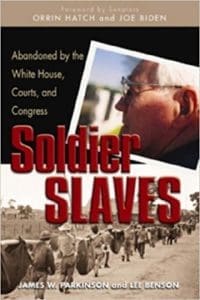
This podcast is a slight divergence from my most recent interviews, but in every way fits the original spirit of Mormon Stories. Within these 3 episodes, we tell the story of Harold Poole–an LDS survivor of one of the most barbaric events in the 20th century–the Bataan Death March. We also discuss in some depth the ethics of law, and the juxtaposition of being LDS and a lawyer.
- Part 1: We meet James W. Parkinson–a high profile personal injury lawyer, and a member of the LDS Church. We discuss Jim’s early years in Indio, CA, his early career as a law student and trial lawyer, his involvement in the “Big Tobacco” settlement, and his introduction to Harold Poole–LDS member and survivor of the Bataan Death March.
- Part 2: Jim tells us the story of Harold Poole–member of the LDS church, and survivor of the Bataan Death March. We discuss in detail how Mr. Poole survived the march, and his subsequent enslavement to a Japanese steel factory.
- Part 3: Jim Parkinson tells us the story of how he and his colleagues initiated a law suit on behalf of the Bataan Death March survivors, and took the case all the way to the U.S. Supreme Court, and then to the U.S. Congress.
For instructions on how to subscribe to this podcast via iTunes, click here.
If you enjoy the podcasts, please consider a book…for yourself, or for a friend and/or loved one. I promise you that the $$$ will go towards a worthy cause.
Episode Transcript
Host: John Dehlin · Guest: Jim Parkinson
This transcript is machine-generated and lightly edited for readability. The audio is authoritative. Please excuse occasional errors in names and spelling.
Introduction and Guest Background
Part 1 of 3 · Ep. 34
Guest [00:00:00] Foreign.
John Dehlin [00:00:22] Hello and welcome to Mormon Stories podcast. This is John Dehlin and as always, I'm very excited to have you with us today. It has been a while since my last few podcasts, especially the one with Grant Palmer. I want to thank all of you for your overwhelmingly positive feedback about the Grant Palmer podcast. Really appreciate all your emails and blog posts thanking me for that. Grant Palmer thanks you as well. As a follow up, we have invited Fair, the apologetic group, to do a response, and so far we haven't been able to find the right person for that. But we still have an open invitation to Fair to provide us with someone to provide a response or at least paint a mosaic, an alternative mosaic from a faithful perspective of Mormon origins. Today I am very, very excited to have with you have with me a very special guest. His name is James W. Parkinson, or Jimmy as I like to call him. He happens to be my cousin. But before you become turned off and think that this is just blatant nepotism on Mormon Stories podcast, let me just tell you a little about my cousin, Jimmy. Jimmy is a graduate of Brigham Young University Law School, the inaugural class, is that right?
Jim Parkinson [00:01:44] Correct.
John Dehlin [00:01:46] But aside from that, he's, I think, one of the finest lawyers within Mormonism. And there's a lot of Harvard graduates, Harvard grads out there within the bloggernackle that might take issue to that. But Jimmy is a trial lawyer out of California. He's participated on some of the largest cases in the history of the United States, including the tobacco case and the settlement there. We'll probably go through a little bit more of his career, but I would say he's one of the finest lawyers within the Mormon Church. Would you object to me saying that?
Jim Parkinson [00:02:20] No objection. Thank you. I appreciate that's probably an oversell, but I appreciate it.
John Dehlin [00:02:24] Would you like that stricken from the record then?
Jim Parkinson [00:02:26] No, I wouldn't.
John Dehlin [00:02:29] Anyway, my cousin Jimmy, I think is going to be interesting to you from several perspectives. He is lds, grew up in the church, and has an interesting story to tell there. Though we're not going to focus on that during this episode. But what we're going to do is talk about three things during this three part podcast. The first is going to be Jimmy's ascent into the career of law and specifically as a trial lawyer, and talk a little bit about how he became a lawyer and what it's like to be a lawyer and, you know, be a lawyer who's also a man who's somewhat faithful or very faithful to the church. So that would be part one, sort of Trial lawyer and Mormon. How does that all work? The second is going to be quite a divergence from the first episode because Jimmy has co authored a book called Soldier Slaves. James Parkinson and Lee Benson together have written this book. It is published by the Naval Press.
Jim Parkinson [00:03:32] What is it? A Naval Institute press out of Annapolis.
John Dehlin [00:03:37] Naval Institute Press. It's a fascinating book about a member of the church named Harold Poole. We're going to get into this in detail, but basically, Harold Poole was a participant in one of the most infamous events, at least in the 20th century, in military history, the Bataan Death March. He's a survivor of the Bataan Death March. A man who was forced into slave labor by a Japanese corporation during World War II, survived and then went on to live a very healthy and productive life. We're going to tell his story through Jimmy's narration, which is also recounted in this book, Soldier Slaves, which I'm going to talk to you about. And then the third part of this episode, we're going to talk about the class action lawsuit. Is it a class action lawsuit? Is that right?
Jim Parkinson [00:04:29] It was both a class action lawsuit and also lawsuits for individual plaintiffs, which.
John Dehlin [00:04:36] Which Jimmy was one of the leaders on to try and achieve or receive some type of compensation for that slave labor. And this case wasn't just sort of a local case. It wasn't a regional case. It became a national case that reached the United States Senate. And so Joseph Biden and Orrin Hatch, our own Orrin Hatch, wrote the forewords to this book. On the back of the book, it says, by Tom Brokaw. This long overdue story of great courage and great suffering rewarded with great injustice should be required reading for every member of Congress. It is a tale to make you at once proud and angry. And so part three of our podcast will be recounting a bit about the legal battle that Jimmy engaged in to try and help help us repay the debt to what many have called our greatest generation. So without any further ado, Cousin Jimmy, welcome to Mormon Stories.
Jim Parkinson [00:05:38] I appreciate the invitation to come and talk on all three topics. I look forward to your questions.
John Dehlin [00:05:44] Well, thank you. So tell us where you live.
Jim Parkinson [00:05:47] Well, I currently live in Bermuda Dunes, California. But my wife and I just purchased a condominium in Midvale because our son Brett is an Assistant U.S. attorney and he lives in Sandy. We have two grandbabies and one two weeks away, and so we want to be closer to our family up here. So we actually have two places now.
John Dehlin [00:06:09] Well, I can say as an inhabitant of Logan, that we'll be Glad to have you close by, at least somewhat close by.
Jim Parkinson [00:06:15] Look forward to many visits and I
John Dehlin [00:06:16] may actually pick up the check one of these times we got to do.
Jim Parkinson [00:06:20] That would be a first.
Jim Parkinson's Childhood and Education
John Dehlin [00:06:24] All right, so let's just talk briefly. Tell us a bit about, you know, where you were born, a little bit about your childhood, a couple stories that might be interesting just to paint a color for what type of family you grew up in and what formative events might have led to the career of law.
Jim Parkinson [00:06:40] Well, first of all, my father is a doctor. He's now 85 years old and he's retired. He practiced in the small town of Indio, California, which is just outside of Palm Springs, California, very near where I live now. My father was educated at Utah State and then he went on to Tulane Medical School in New Orleans, Louisiana. And that's where I was born. I lived there for six years, then we moved to California, and that's where we've been basically ever since. I graduated from high school in 1967, served a two year mission for the church in Argentina, and then came back, finished undergraduate at byu, and then I was in the first graduating class of the law school at byu. Left byu, went down to Indio, worked in a very prominent personal injury plaintiffs firm with a man named Tom Anderson, who's a nationally known plaintiff's trial attorney, was with him for 12 years, went with another firm for 10 years, and I've been on my own now for about 10 years.
John Dehlin [00:07:49] What did you study in your undergrad at BYU?
Jim Parkinson [00:07:52] Well, I graduated in Spanish with a minor emphasis in English.
John Dehlin [00:07:57] Okay. That was a natural extension of your mission experience, I imagine it was.
Jim Parkinson [00:08:01] When I was in Argentina, I fell in love with the Spanish language. And when I came back, back in those days, you could get 16 credit hours if you took one class and then you got that grade. And I thought, well, gee, that's a magnificent way to go. And so I did that, and then I got into Spanish literature, Latin American literature, the grammar, and I've continued to study it all these many years.
John Dehlin [00:08:26] So you still speak it, huh?
Jim Parkinson [00:08:28] Well, I speak it not as well as I once did because I got real busy. But I enjoy speaking it. I do it every chance I get.
John Dehlin [00:08:38] Not as well as our president, George Bush, maybe.
Jim Parkinson [00:08:40] I speak Spanish significantly better than George Bush.
John Dehlin [00:08:46] So were there any, you know, why law school? Why the profession of law? Was it just a financial decision? Was it a practical decision? Or were there any altruistic, you know, motives behind it?
Jim Parkinson [00:08:59] Well, as you know, John, because of our private discussions over the many years. I have a father who is a remarkable man in many ways, and I love him and I admire him. But if he had one flaw, it was that he wanted to micromanage all of his sons and their lives. From the time I was a little boy in New Orleans, my father wanted four doctors. The only issue was not, are you going to be a doctor? The issue is, are you going to be an orthopedist? Pediatrician, oncologist? There was never any doubt what you were going to do. Personally, as I was growing up, I loved to tell stories. I loved to gather people around me and regale them with either a matrix up story or I'd report on something. I fell in love with language I can remember as a little boy. I arrived in California the same year the Los Angeles Dodgers did. And I used to have a transistor radio and I'd listen to the games every night. And there was a remarkable sportscaster named Vin Scully. He could describe a scene on the baseball field with a word picture that when you did go to the ballpark, which I did a couple of times as a boy with my uncle Jim Beatty, everybody had a transistor radio. Even though you were seeing it, you wanted to hear what Vin Scully was going to describe. Two things I remember. One is one night Sandy Koufax was pitching with a great left hander, and Vin Scully said that his curveball was so effective that night, it looked like a ball falling off a table. And you knew with the way he described it what was really happening. And then he described flying into San Francisco International Airport, which, if you haven't done it, you come right over the water and it goes from water to Runway. And I remember when he described it, I was so enthralled with how he used words that I fell in love with it. Now in high school, I wanted to go into speech and drama, and I loved history. And I remember one semester I came back with straight A's, one B. And my father saw the report card and instead of saying, well, gee, you did great in all your other classes, he focused on the B. He said that B is in chemistry. Anybody can get straight A's in those other subjects, but, you know, you really have to be a student to get an A in chemistry. He was not mean spirited, but he was incredibly manipulative in a kind way. He didn't try to make me a drug dealer, but I felt that pressure. I think if I were to be brutally honest with you, the only reason I went on a mission or the primary Reason is because my dad was pushing me to become a doctor, and I just didn't want to do it. And so the only way to postpone it was, I'm going on a mission. And I was gone for two years. And I came back and he wanted me back into chemistry. I waited till my dad became a volunteer physician in Vietnam, and I checked out of chemistry 106 in the middle of the semester. And the lab instructor told me that I was the best lab student he'd ever had. Don't do it. Stay in it. And I said, if I stay in this, my dad will get me to medical school. I don't want to go.
John Dehlin [00:12:18] Why didn't you want to go?
Jim Parkinson [00:12:20] I didn't care for the sciences. They just didn't interest me. Language did. And I didn't really think about law back then. I mean, there was nothing really that caused my mind to come together and wrap around the law. I didn't have any role models. I had a couple of uncles who were lawyers, very fine men, but nobody who I said, oh, I want to be like him or her.
John Dehlin [00:12:45] So were your high school years in the 60s then?
Jim Parkinson [00:12:47] Yes.
John Dehlin [00:12:49] Were there any injustices, social injustices that were going around that also impacted your consciousness at all?
Jim Parkinson [00:12:57] Absolutely. I mean, I came from the south, and when my grammar school would meet every morning, I have a vivid memory of the principal and the teachers leading us in the Pledge of Allegiance. There were two flags. There was the American flag and the Confederate flag. And we'd sing songs like Dixie. And those kinds of things were still extant at that time. And when Lusher School was integrated, it made look magazine. But I wasn't conscious of that. One thing that I really respect my parents about is during my formative years, we were never once subjected to a racial epithet. There was never a question about equality. There was never an issue about, oh, he's better or she's better because of birth, money, inheritance, or race or ethnicity. And then in California, back in the 60s, we had the Watts riots, when Martin Luther King was assassinated, Robert Kennedy, tumultuous time. And if you reflect on what was going on in the church at that time with the African American issue, if one thought about it, it would be very disturbing. I chose to play basketball. I played on a team where, quite frankly, of the five starters, I was the only white. But it didn't cause me any problem because of the way I was raised. But as I look back at my life and I read books about that era, I'm bothered by it, you know, when you read To Kill a Mockingbird and you understand the underlying theme of that book, which is human dignity, that's what it's really about. You say, where was I during the great battle of the 60s? Well, I was a high school student. I guess not much was expected of me and I quite frankly, didn't produce much. But as I look back on my life, I say, you know how my dad raised me and my mother, my mother's love of literature, my dad's caring for other people always gave them their dignity. Those things had a tremendous impact on me as a young man. One thing that I remember vividly about New Orleans is my brother Rick, who's a year older than I am and he's now a practicing dermatologist in Orem, Utah. He and I used to wake up early Saturday mornings to watch cartoons. I mean, I was four, he was five, something like that. And we'd always wake up before the program would begin and before they'd go on the air and you'd have all that snow on the tv. I don't know if you. You're too young to remember.
John Dehlin [00:15:38] No, no, I remember.
Jim Parkinson [00:15:39] And my brother and I were sitting there one morning on the floor waiting for, I guess, Howdy Doody or something to come on. And when it first came on the air, you saw the American flag and then you heard the national anthem. My dad was just out of World War II. He walked in the room one day and he saw my brother and me sitting on the floor. He had a stand up salute during the entire national anthem. And he said, and explained to us what that was all about. And remarkably, if I'm alone today and the Super Bowl's on or something like that, and I hear the Star Spangled Banner, I immediately stand up, put my hand over my heart. That's something I learned from my daddy a long time ago, and I appreciate it. In company, you don't do that. You don't draw attention to oneself. But that's one of the things I have a vivid memory of.
John Dehlin [00:16:32] So a little bit of love of literature and language, a little bit of love of country, a little bit of patriotism, some sensitivities towards social justice.
Jim Parkinson [00:16:40] Yes.
Path to Law School and Early Career
John Dehlin [00:16:41] So how did you go from Spanish to law?
Jim Parkinson [00:16:46] Well, it was a remarkable time at byu. For whatever reason, the church decided they needed a law school. They selected as the organizer, the founding father of the law school, one of the most remarkable men in the history of the Mormon Church, a man by the name of Rex Lee. And I recall I belong to an honor Society, I think the name of it is Blue Key. And one evening Rex Lee came in and spoke and he spoke about this incredible law school they were putting together. I didn't really know too much about anything except I knew that I'd be a much better lawyer than I would be a doctor. And I think it was seeing Rex Lee and feeling his energy. He was an absolute genius. He was a graduated number one in his class at the University of Chicago, was a very fine practicing lawyer. And I think it was Rex Lee that first got me thinking. I only applied to one school, byu. In retrospect, I don't know if that was a real wise decision. They had no real track record, no hiring record, but they had Rex Lee and that made all the difference. I think without Rex Lee, yes, they probably would have had a law school eventually, but they would have never been this far in 30 years.
John Dehlin [00:18:03] And for the listeners of mine that, that are into the legal profession, did you have any colleagues or any co students that have gone on to do some interesting things?
Jim Parkinson [00:18:13] Well, remarkably enough, my best friends in law school were. Dee Benson, who's now the chief federal judge in Utah, sits on the FISA court, which is the court that reviews all the Department of Justice search warrants for terrorism.
John Dehlin [00:18:31] That's the court Bush likes to skip, right?
Jim Parkinson [00:18:33] Well, from time to time he likes to go around it. But that's my good friend Dee Benson. He's a former U.S. attorney, former chief of staff, D.O. orrin Hatch, a remarkably talented human being, a close personal friend. Paul Warner sat next to me. He just gave up the position of the United States Attorney for Utah. He's now a magistrate. And then there was another classmate named Tom Perry who was on Orrin Hatch's first campaign back in 1976 that went back to Washington with Senator Hatch, ended up being an attorney for the Senate Judiciary Committee and then became a lobbyist. And Tom had a tremendous impact on my life in terms of the contacts I had. Unfortunately, Tom passed away. Those were my best friends of my peers. I did have a faculty member who had an enormous impact on my career who made me understand that law wasn't law school, it was people. His name is Monroe McKay. Judge Monroe McKay is the. He was the Chief Judge of the 10th Circuit Court of Appeal, a Jimmy Carter appointee. His brother was Congressman Gun McKay. He was a professor at BYU, but before that he was an attorney at Lewis and Roca in Phoenix. Famous case of Miranda. He was the junior attorney that worked on that case. He taught constitutional law, administrative law. And Monroe And I have been very close ever since law school. We've traveled to South Africa together, we've traveled to South America together, we've exchanged books. He's had an enormous impact on me also because of what he taught me about being a lawyer, what it means to enter in the fray, to get involved and to care about your clients and be professional. Dee Benson and Paul Warner the same way. I mean, if you listen to him talk and you listen to what they really care about, it makes me want to be a better lawyer. But more importantly, it makes me want to be a better person.
John Dehlin [00:20:43] And is that the same Monroe McKay that was quoted a few times in the Greg Prince, David O. McKay in the Rise of Modern Mormonism?
Jim Parkinson [00:20:49] One in the same.
John Dehlin [00:20:50] Okay. And how's he related to David O. McKay?
Jim Parkinson [00:20:52] I think he was nephew. I'm not exactly sure, but it's not as close as some people might think. I think it's a little more distant. Although, if I'm not mistaken, he lived next door to President McKay up in Huntsville.
John Dehlin [00:21:04] Okay, so graduating from law school, being thrown to the wolves, so to speak, you know, what was it like?
Jim Parkinson [00:21:15] Well, let me just take that expression of yours and clean it up a little bit. I was never thrown to the wolves. I was really lucky. In the little town of Indio, California, where I grew up, one of the finest plaintiff's lawyers doing personal injury work had an office, and that's where he practiced. Even though it was a small town, he had a statewide reputation, national reputation, and my father had known him for quite some time. I clerked for him for two summers, so I got to know him, and he did not throw me to the wolves. What he did is he took me in and taught me. He would hold in house seminars and teach me how to do things during the lunch hour. Gave me tremendous responsibility. One of the most ethical, honest attorneys I've ever met and one of the finest orators, one of the finest persuaders you can ever listen to. So I was remarkably lucky. And I've always surrounded myself with extraordinarily talented people that I've learned from.
John Dehlin [00:22:20] What were the types of cases you started out?
Jim Parkinson [00:22:22] Injury cases, personal injury. Right. They'd usually be an automobile accident or a products liability case. I didn't really do much medical malpractice case. I did one case, I won the trial. But because I've got two brothers that are doctors, my dad's a doctor. I just, you know, some things you're comfortable with, other things you're not. It just didn't fit who I was. But injury cases, did any type of injury case, I really found to be a challenge and I felt like I made a difference.
John Dehlin [00:22:53] So here's where the, here's the part of the interview where the sparks may start to fly a tiny bit. You know, lawyers don't necessarily hold the best of reputations among some in the United States. And I think if they were to reverse sort the different types of lawyers, it might be the personal injury lawyers might even rank a little bit farther down that list. And so what could you offer to an average LDS listener that's listening, your inside view of personal injury law and where the reputation fits and where you think it's not appropriate?
Personal Injury Law and Its Reputation
Jim Parkinson [00:23:32] Well, I don't really think any sparks are going to fly, except if one comes into it with a prejudice or an agenda, which I don't think you
John Dehlin [00:23:40] have, but my listeners might. So let's help dispel that.
Jim Parkinson [00:23:44] Okay, let's talk about the Last Supper. Everybody invited to the Last Supper, a real believer. That made you proud. Or did we have one in it that was not really up to the moment? You take any profession, you're going to have doctors that are alcoholics, you're going to have politicians that have $90,000 in a refrigerator like that representative in Louisiana, you have a Huey Long who's a governor. So no matter what profession you want to drop the microscope on, you're going to find some horrible bacteria. Now, does that make the profession bad? Does that make us say get rid of all the politicians or kill all the lawyers or whatever you might want to say? Of course it doesn't. But if I were to stand up and be an apologist and say 100% of all lawyers are wonderful human beings, the answer is no. But let's just take a real adult look at this. Take a divorce case, for example. You got a husband and a wife that for whatever reason decide it's time to go their separate ways. Problem. What are we going to do about the assets? What are we going to do about the heirlooms that we've collected together? And, and more importantly, what are we going to do about the kids? Now, if you want to talk about sparks, the judges in California who are at most risk for personal harm are the judges that deal with the family law issues. So whenever you have conflict and you bring someone in who's going to be an advocate for one side or the other, feelings are going to develop. Oh, that man who represented my wife was a. And fill in the blank. Or that woman who represented my husband did all these awful things to take my rights away to be a mother. Well, you do not have a monopoly on truth. When you put two people in a room and you have something that is extraordinarily important to both of them and they have separate points of view. I heard it once expressed, no matter how thin the pancake, it has two sides. Well, take a lawsuit and you're going to have all kinds of emotions course their way through that. You're not going to walk away with everybody feeling good about it. There's no Solomonic result that comes out cookie cutter every time. It's messy. And people invest a lot of energy and their soul into representing their clients. That's the price we pay for democracy. Tell me a better system. Do you want to go and have the king decide it? I mean, we rejected that with George, didn't we? I'm talking about the George of England, right? I mean, you talk about the importance of a jury trial. Some people say, oh, don't have a jury trial. Oh, really? Who do you want to decide it? Somebody who was selected by the government on some issue other than competency. You don't know. I think the jury system is one of the great tools of democracy. It makes us feel like we've got the small man has a chance. So I'm really proud to be a member of the legal profession. I have moments when I look at it and go, that embarrasses me. But I have moments being a member of the church. I look at something and say, that embarrasses me. Or as a member of my family, I see somebody that does something and I say, that really embarrasses me. But you don't walk away from a system that has some rough edges that needs to be oiled from time to time and say, I'm just going to reject it and I'm going to make attorney jokes and I'm going to demean the legal system that keeps us free. We're in Iraq right now. Okay, what are we really exporting to Iraq? Oil. No, no, that's what we're getting from Iraq. Oh, we want to give them a democracy. Well, Tom Jefferson, Jimmy Madison, Alexander Hamilton, et al, would say, oh, by the way, get out the Federalist Papers. Understand what we did. We have a jury trial, read the Constitution. We believe in legal systems. We need to export that to Iraq. That's who we really are. So, no, I don't apologize for being a lawyer at all. And I don't what sparks are going to fly. Sparks are going to Fly. When people have differences of opinion, thank God they don't go out in the street and say, okay, I've got my gun, you've got yours.
John Dehlin [00:28:20] So what about. So, you know, you've been pretty persuasive there. What about personal injury law and the reputation of ambulance chasers and tell us a few stories of egregious corporate or insurance company violations that maybe you've been involved in, maybe that you've heard about that might make someone take a second look at the profession of personal injury law.
Jim Parkinson [00:28:43] Well, let's just back up. Where does it all start? Go get your Bible and look in the Old Testament and go through Leviticus and look at how they resolved issues when people got hurt. It wasn't an eye for an eye, as you and I would think, eye for an eye. It was only an eye for an eye if you couldn't pay. See, there's no way that if you injure somebody, you can make them whole. But if someone comes into a family and because of negligence hurts the breadwinner, he goes from making 50,000 a year to making 00, and he'll never make any money at all. Who should pay for that? Who should bear the burden? The person that was injured, should he just walk away and say, well, things happen? Or should you say, well, gee, this happened because you made choices and you hurt this person because you made an incorrect choice? And how much should that person be compensated? Well, that's what personal injury law is all about. And, you know, I really find it fascinating that the American people has been so duped by the insurance industry that somehow these giant insurance companies that own every large complex of buildings in every large city in America are somehow disadvantaged? You don't think they can hire the best lawyers at the highest rates, get the investigators, and make people who are telling the truth appear to not be telling the truth? Do you think every doctor that the insurance companies hired to come in and examine somebody is not going to see it the way the insurance company wants them to see it? Well, how do you balance that? How do you get a fair fight out of that? Let me tell you a story. You want a story? I'll tell you a story. The last significant case I handled involved quadriplegia. A young man, 40 years old, was delivering bread at a Costco down in Rancho Mirage. Without going into a lot of detail, as he delivered the bread, a door went up. The lip of the door caught his bread rack, which, by the way, can weigh anywhere from 400 to 800 pounds, tipped it on top of him and broke his neck. And he was a quadriplegic. Well, I was contacted for that case about three days after it happened because the family knew me.
Guest [00:31:08] Me.
Jim Parkinson [00:31:09] I immediately contacted my associate in San Diego, and then I contacted Costco. We went out to the scene of the accident because I wanted to see what it looked like. And Mike Montgomery, who works with me on all my significant cases, had his camera. We took a picture of the door that was involved in this incident and the lip and also the lighting. Because this happened at 5:30 in the morning. We sent a letter, we sent a fax, and we said to Costco, do not in any way, shape or form, touch anything, remove anything, change any evidence until such time as we notify you that we're going to send an expert out to look at everything to tell us if there is any defect out here with the door itself or the lighting. And we sent that letter. We never received word. We filed a lawsuit against Costco and others, the manufacturer, the door and other defendants, because this man would never move again. He needed 24. 7 care. His medical bills were a million $600,000. He'd never have a wage again. He needed 24. 7 care with medication, physical therapy. And I could go on with that. Major, major injury. A life ruined. He had an elderly pair of parents who really couldn't take care of him. I mean, they had their own problems. They were in their 70s. Well, we arranged to go back out to the scene with all the expert witnesses. Some eight or nine months later, we get out to the scene and lo and behold, the door had been changed. They had a different door there. Then they had a different light overlooking the scene. And one of the issues what was the lighting like and the door? What was the lip like and how could you see and how did you know when to open it? Well, they changed that. Now, we went into court and we got a court order that obviously was in our favor because of the wrongdoing of the defendant. Now their defense is, well, we. We didn't do anything intentionally. There was an accident. We had to change the door out. We changed the lighting as a regular course of business. But they were facing a multimillion dollar verdict against them because of this horrible accident. Well, you can believe it if you want, that they routinely had to change that door because of another accident and just so happened that the key piece of evidence disappeared and they changed the lighting and that just happened to disappear. You can believe that if you want, but if Mr. Montgomery and I hadn't gone out there three days after the accident, photographed it, which, by the way, we did with their permission. That's how arrogant they are. They wouldn't have been caught. Now, we ended up settling the case. The settlement's confidential at their request, so I can't talk about the amount, but it's not a level playing field. If you think these insurance companies are at some disadvantage by some plaintiff's lawyer out in a little town of Palm Desert, then I think you ought to check, you know, how well you're thinking. It's the biggest myth in America. Now, are there some plaintiffs lawyers who are flamboyant and who hold press conferences at a drop of a hat, who file frivolous lawsuits? Of course there are. I'm not here to defend them. I think that's wrong. And I think they should be handled in a certain way by the state bar. But I think the system works.
John Dehlin [00:34:42] How do you know when a settlement is too much, like, you know, the spilling of the coffee on the guy at McDonald's or.
Jim Parkinson [00:34:48] Whoa, whoa, you start this question with a prejudice. You're under the impression that that was a verdict that was too high, right?
John Dehlin [00:34:57] Well, I try to speak on behalf of my listeners.
Jim Parkinson [00:35:00] Well, that's what you're doing. Do you know how many times that woman was operated on? It was a woman, by the way, case was in New Mexico. I know some people involved. She was in. She was operating. She spilled the coffee in her pudanum that burned through her clothes. And she had, I think, 27 operations. She was not in a moving car. She had the. The cup on her lap and she was trying to remove the. The COVID when it spilled. Now, what's the issue in the case? The issue in the case is that McDonald's had its coffee. I think. I'm not positive of this, but it was 20 degrees hotter than anybody else had it. So your fault, my fault, nobody's fault. That spills out, you're going to get a third degree burn. Now, how does a customer protect himself or herself from that? I mean, where's the voice in the corporate headquarters that says, oh, by the way, you know, we really shouldn't do it? How about if someone adjusted your shower, which, by the way, that is statutorily set, how hot that can be in your shower. You want to know why? Because children go into showers or they go into a bathtub and they don't know any better. And they can be scalded and badly burned and badly injured. Now, was that a fair verdict in New Mexico? I wasn't There, but I don't think we know all the facts. But for every case you can give me where there might have been a verdict that was too high, you have an appellate court that drops it down when it hears it. That's exactly what I think happened there in New Mexico. And they ended up settling it for significantly less than the jury verdict. There are case after case after case of injustices that go the other way. Do you really think the insurance companies take it on the chin every time? I mean, no one's that naive. Sometimes you get a person. I'll tell you an experience I had. I got called for jury duty. I was thrilled to do it. It turned out it was a murder case, and they had about 200 of us in an open room waiting to be called into the courtroom. Now, my chances of being left on a jury are about the same as my hair growing back on the top of my head. It's not going to happen anytime soon. So I'm sitting there in a golf shirt because I didn't want to be identified as a lawyer. I just wanted to be down there with the veneer panel. A man sitting next to me reading the Wall Street Journal, and I don't initiate a conversation. He says to me, he said, you know what makes me sick? All these blankety blank verdicts for people that think it's just a cash register. I said, oh, really? I said, do you think this might be a prison? He said, I'd love to get on a personal injury case. He said, I'm sick of this. Now, if that man. During the voir dire, which is when you answer questions that are posed to you by the judge and the other lawyers, you think he's going to admit he's got that prejudice? No. And sometimes they get on the jury and you get horrible results. So I think, on balance, juries do a great job, but that's because the lawyers do a job great, good job. And sometimes you have a. It's not a fair fight. That's part and parcel of our system.
The Big Tobacco Case
John Dehlin [00:38:01] So let's talk a little bit about your big tobacco case. I would love to know, did you participate in any class action stuff before that? Was that the first one? And then, you know, on behalf of my listeners, how would you respond, you know, to the claim that smokers knew what they were doing? They knew that they were, you know, doing something that was dangerous to their health and that, you know, such a huge sum of money, such a big settlement, so punitive really wasn't meritorious given the fact that you know, these were consenting adults. That's a lot to talk about, but I think you have the gumption to carry it through.
Jim Parkinson [00:38:39] John, let me share a legal principle with you. We call that a compound question, but I'm going to sort it out the best I can. First of all, I played a very minor role in a group called the Costano Group that came out of New Orleans that cobbled together about 80 law firms that brought class action lawsuits. I was of counsel to David Casey and Mark Robinson in California on the California tobacco case. So I wasn't a leader by any stretch of the imagination. I actually came in kind of late in the case. But Big tobacco is a case that I think is meritorious, you say, or one would say, well, everybody knows that smoking is not good for you. Well, let me tell you a couple things we uncovered as that lawsuit unfolded. Who do you think they targeted with advertising? Do you think they targeted the. The people in their 20s to 30s in California? 10 years before any of this came to fruition, a law was passed that you could not sue the tobacco industry, the alcohol industry, sugar, and I forget what the other one was. There were four of them. They were completely shielded from any lawsuit because of the argument that you just articulated, which anybody knows you eat too much sugar, your teeth are going to rot and you're going to. Your bottom is going to get big or your coronary is going to get blocked, and if you smoke, you're going to get cancer, ergo no lawsuits. Well, interestingly enough, the way the attack moved forward against Big Tobacco in California was under unfair business practice. And the statute is 17, 200. And what it says there is you can't have fallen advertising or illegal advertising. As the facts came out, tobacco targeted children. They knew that if they didn't get people hooked by the age of 12 to 14, they'd never get them. Why do you think you had Joe Campbell? Does Joe Camel appeal to the John de Lynn's of this world? Or Johnny or Joe Sixpack, who's 35 years old watching a ball game? Of course not. He appeals to the child. That's what the attack was really about. You take tobacco, tobacco, if you want to smoke it, for whatever your reasons are, that's your business. But if you're going to spike the nicotine with ammonia and make it more addictive than anything on the planet, well, there's a problem with that if you don't make full disclosure. One of the attorneys involved in Big Tobacco is John Clamacco at a clinic, Cleveland. John is a Remarkably talented lawyer. He represented the great entertainer and his name's slipping me. He's the Sammy Davis Jr. And he helped Sammy Davis Jr. But when he died, John went to the hospital. Do you know they had a special apparatus set up in the hospital for Sammy Davis Jr. So he could smoke because he was so addicted. The way the Castano group got put together is a man named Castano died. His best friend was Wendell Gautier, one of the really flamboyant, tough trial lawyers out of New Orleans. He's a story all by himself. And the widow had him give the eulogy. And then after the funeral, she turned to him, she said, you're a big time lawyer. You know, it killed him. What are you gonna do about it? And so Wendell got 80 of his best friends together, said, you're all putting up $100,000. We're gonna lose this case, but I've got to file it because it's the right thing to do. It's the right thing to do. And you know what's really sad is that we went back to Congress because big tobacco wanted some protection for future lawsuits. And we thought we had the whole thing settled. The number was $364 billion with smoking secession programs in place. With a B. With a B. With medical monitoring to be paid out over 25 years, which would have absolutely, in my opinion, done away with smoking in 25 years in America. I mean, a great blessing to this country and the medical profession and the insurance industry that pays for these hospitalizations and, and medications. We go to Congress and unfortunately the bill went to one committee instead of the other. And I'm not going to get into the personalities, but it was just a mess. The whole thing fell apart. And it ended up going back to the states and whatnot. And it got settled for about 200 billion. They left $164 billion on the table. And now the states are using the money for all kinds of things, not all of it addressing the tobacco problem. So, no, I don't think that that was an excess. I don't think that it's something that shouldn't have been brought. I think it got resolved in a way that wasn't necessarily in the best interest of the public. There's other ways to do it. You know, when you watch a movie and you see somebody smoking a cigarette, do you think that's by the guy just wanted to smoke?
John Dehlin [00:43:55] Yeah, the, you know, screenwriter just happened to write it in.
Guest [00:43:58] Right.
Jim Parkinson [00:43:58] Well, they also get paid a half a million million dollars to smoke. You Think when you watch a movie and there's a all the cars are Fords, think that's an accident. Well, having everybody drive a Ford is not deleterious to your health. But seeing a Sylvester Stallone, this icon, or a Julia Roberts smoking a cigarette, because that's Sexy and a 14 year old girl or boy sees that, I mean, there's a problem with that.
John Dehlin [00:44:24] So it's a case you're proud to have served on?
Jim Parkinson [00:44:26] Oh, absolutely. And some people say, well, you know, the fees were outrageously high and on and on and on. Well, you know, the reality is that the fee was set by arbitration where everybody got to present their case of what they did or did not do. That wasn't just an arbitrary and a capricious way. I mean, it was done very professionally. And I don't hear anybody really objecting to it. The tobacco companies are objecting to it. You know, the tobacco companies were paying their own attorneys about $600 million a year to fight these lawsuits now that it's over. They're paying $500 million a year to the plaintiff's lawyers over a period of time, saving money, saving $100 million a year. So, I mean, the problem with the American public is we don't have podcasts where you can sit down for three hours and really have a good explication of what's going, going on.
John Dehlin [00:45:18] We got sound bites.
Jim Parkinson [00:45:19] We've got sound bites and we've got sound bites paid for by very bright people and done by extraordinarily talented people who know how to advocate and touch you in a certain way. We made that a little jingle at the end of it or a little music or something. So that's how some of it gets done.
From Tobacco to POW Advocacy
John Dehlin [00:45:37] So how did you go from tobacco to this issue of the Baton death march? Tell us a story. What, you know, what we'll do is to close out this hour, talk to us about, you know, your however many years in your law profession you've been successful, however that's affected you personally. And then talk to us a bit about the journey to Harold Poole and what it was about him and the other people you met that made you decide that you had to help tell this story.
Jim Parkinson [00:46:09] Well, you know, I got to get you to law school. I got to get you someplace where they teach you what a compound question is. But I'm going to sort through this, John. I'm going to do the best I can. Well, you know, it was 1999 and we'd finished the tobacco case and we were waiting for the Fee arbitration and all that. And we all knew it was coming. I'd run into some remarkable attorneys during the tobacco wars. I mean, those are the best plaintiff's lawyers in America. Extraordinarily bright, very talented. And if you ever want to hear great storytellers, just gather those guys around a bonfire with some marshmallows and sit on the log and listen to their tales. They're the best storytellers in the world. Well, David Casey Jr. Was one of the big tobacco lawyers in California, one that I was of counsel to. I was in his office one day in September of 1999, and we were talking about, you know, what direction we were going to go now that tobacco was over. And he said, jim, we just formed a mega firm, Herman Mathis, Casey Kitchens and Jerrel, where what we're going to do is kind of replicate what we did in tobacco, bring all these top firms together and take on major national cases because we got the resources and that's what we want to do. I said, really? I said, can I participate? And he said, yeah, on a case by case basis. And he says, as a matter of fact, let me tell you about a case. And he tells me about Lester Tenney, who came into his office brought by Michael Goldstein, a good friend of mine who was a soldier during World War II stationed in Manila. And when December 7th hit with Pearl harbor, it was December 8th in Manila. The Japanese attacked both places at the same time within nine hours of each other. Difference being the Japanese actually invaded the Philippines. When they invaded the Philippines, the men fought and they were later surrendered on April 9, 1942, largest surrender in the history of the American armed services. The men were put on the Bataan Death March. They were marched 85 miles without adequate food, without adequate water. The men were bayoneted, they were buried alive. It was just horrific. And about 1,000American soldiers died out of 10,000 Filipino soldiers who were on that march. Died in numbers that are just hard to believe. Let me give you a little math here, John. If you take the number of men who died on the Bataan Death March during that five day period, 85 miles, and you divide it into the number of miles, you had a dead body every 30ft for 85 miles. It's just horrific. The ones that survived that went to Camp o' Donnell in Cabatatowan, many of them were put on ships and sent to Japan, turned over to private corporations and used as slaves. Well, David Casey told me that in 1999, that summer, a bill had passed in California authored by Tom Hayden, of all people that gave the right to Americans to file lawsuits in California against the Nazi corporations or the corporations in Nazi Germany that use slave labor and their allies, which would be Japan. So we filed lawsuits, or David Casey did file lawsuits on behalf of the American soldiers against these Japanese corporations. He said, jim, if you'd like to be involved in that case, you're in it. And that's how I got in it.
Meeting Harold Poole and His Story
John Dehlin [00:49:45] So tell us about your trip down to St. George or over St. George.
Jim Parkinson [00:49:49] Well, when I first got involved in the case, you know, I wasn't really sure how I get clients. I mean, it's not like there's been an auto accident and someone knows your reputation, they call you up. And I was on the board of visitors of BYU Law School and I was up for an executive meeting and Paul Warner, the U.S. attorney was chairing the meeting and Paul and I are best friends. So in the meeting he just kept leaning over to me, whispering in my ear and just giving me a hard time about the tobacco case and how I suck them dry and other things, making fun of me. And so finally I basically had enough. And during one of the breaks I said, look, Paul, let me tell you about a case I'm advised, involved in now. And I described the POW case. And he literally grabbed me by my arm. And he's my size, about six, four, you know, uppers, over 200 pounds. He just grabbed me. Says Parkee said, my father in law was on the Patan death march. He is your client, he has to be your client. I said, paul, let go of my arm. Have him call me. By the way, what's his name? He said, harold Poole with an E on the end of it. I said, have him call me. Be more than happy to talk to him. I didn't really understand the significance of it at the time. The next day I'm back in my office in Palm Desert. Phone rings. My secretary said, it's Harold Poole. So I take the call and if you're a trial lawyer, you know what it's like to have that kind of a client call you. I mean, you really want to pay attention to it, pay attention to all clients. But I mean. And I said, well, Mr. Poole, he said he was interested in the case. I said, I'll tell you what, I'll catch the next flight to Salt Lake City and I'll sit down.
Guest [00:51:34] Oh.
Jim Parkinson [00:51:34] He said, don't do that, don't do that. That's just too much trouble and don't want you to do that. He Said, we're having a reunion of the 20th Pursuit Squadron, all my guys in St. George, Utah on Saturday. Can I call you back? I said, sure. He calls me back in a couple of hours and he says, I talked to our commander and he's agreed to give you 15 minutes on the program on Saturday at 2:00'. Clock. I said, great, I can hardly wait because in the peculiar world I live in, I can't go searching clients, they got to search me. But I can go out and give speeches and if they like what they hear, they come and get me. So I talked my wife into driving to St. George, which is about a seven hour drive from Palm Desert. I said, look, let's drive to St. George. You rest in the hotel, I'll go give this speech and then we'll have dinner and go to a movie and spend the night. She said, great. So we showed up to St. George and I put sue in the hotel. I went over and met Harold Poole. Never met him before. They were standing across the street and I started to talk to him and he had these piercing eyes and he had a presence of somebody that I knew intuitively was different. Different in a special positive way. So he took me down to the conference room where the meeting was going to be held, the reunion. The chairs were set up in a semicircle and as I was standing there, the men slowly came into the room. There was only about 13 of them. Some of them had their wives. One was on an oxygen, was on oxygen, one had a walker, one with a cane, all about the same age. And as they sat down in the semicircle, I was overwhelmed with an emotion that this is just really a different group of people who have shared a life experience that I knew a little bit about. I knew a little bit about Bataan because of my father and I love history. So Harold Poole stands up to introduce me because I'm the only one on the, on the program for that afternoon. There's going to be 15 minutes. He said, this is Jim Parkinson. You all know my son in law, Paul Warner is the U.S. attorney for all of Utah. He said, jim Parkinson's a good man. And he sat down and so I took the floor. And for the next 15 minutes I gave a presentation about what the case was about, et cetera. And I watched the clock because I knew, don't go over with these men. And I turned to the man in charge and I said, I guess my 15 minutes is up. He said, Mr. Parkinson, he said, you'll keep talking till I tell you to sit down. And so I talked and I talked and I talked. And most of the questions came from one or two of the women. One of them I just adored. After a couple of years, Marlene Agnes just loved her husband and the veterans and did everything for them with the Department of Veterans Affairs. Just a wonderful woman. And then we wrapped it up and then Harold and I went back to his room and we started talking and he shared some of the stories with him. I said, well, gee, Harold, tell me about the Bataan Death March. And he described it for me and he had a way of describing it. He's a retired mailman, he's not a wordsmith. He's just somebody that experienced something firsthand and remembered it and could tell it. And I was just overwhelmed with emotion. And then we continued to talk and I said to him, I said, Mr. Poole, your son in law Paul tells me that you were awarded the Silver Star, which is one of the most significant, significant medals in our armed services for heroism. And he said yes, he said, I did. And I said, would you mind sharing with me what the citation reads? I didn't want to. Tell me what you did. I said no, what did this? He said, do you really want to hear it? I said, well, yeah, I kind of do. And we're sitting in this little motel room with that round table next to the window with the wall, air conditioner, two chairs very close to each other, other. And he said it was December 8, 1941, right after noon and he's walking out of the chow mess hall and he heard airplanes and he looked up and he didn't know if they were American or Japanese. And all of a sudden the bomb started, if you can imagine. He looks over and he sees a building blown up and then he starts seeing bodies flying and all kinds of, of mayhem occurring. And so after the bombers went by, the Zeros came, you know, the pursuit planes that would drop down and strafe the airfield. And so he jumped into a foxhole and one of the planes is coming right at him. So Harold had the ability to grab an air cooled.30 caliber World War I vintage machine gun, took it off the pole and waited for that plane to come right over him. So Harold put it in his sight and pulled the trigger and the doggone thing jammed. And then the, you know, you see the puffs of small puffs of dirt where the bullets are hitting and petrol is hit and flames everywhere. And I mean you really get this picture of total chaos and fear. I could actually smell the fear as he's telling me the story. He said the plane missed him and then it went out and circled. And then Harold, who was a mechanic, had that rag you always see in the back pocket, pulled it out and he cleans the gun. And then here comes that Japanese Zero again and was 75ft over his head. He shot and killed the pilot. First plane to be shot down. The Battle of Manila. And Harold looks at me and this 80 year old man, a retired mailman, and he says, I guess that's why they gave me the Silver Star. And then I said, well, gee, how did you make it through all the carnage and the Bataan death march and you went from 190 pounds to 97 pounds. And he says, you know, and I said, Mr. Pool, no, I don't. I said, no, no, you know, you're lds. I said, well, no, candidly, I really don't. He says, well, it was prayer. It's the faith of my family, my parents and you know, you know, and so when we said goodbye, there are many more stories. That night it was dark when I said goodbye to Harold and I crossed the street and I went and got Sue. We actually went to dinner. And while we're at dinner I'm kind of a little bit quiet, which is not my way. And sue asked me what was the matter and I said, well, I'm not sure I want to spend the night here in St. George. She said, what are you talking about? I said, well, I just had an experience that I'm not sure I can share it with you at dinner. It's going to take a little bit of time. I said, would you mind if we just turn around and go home? Now keep in mind, we're in St. George, Utah. They're not used to having people rent hotel rooms at the Sheraton by the hour. And so she said, sure. So we went back and checked out and we're going across the desert, I mean, and it was a long day. And what happened was I have a son, Matthew, and at the time he was in high school. Great kid. I just loved Matthew to pieces. But he didn't want to be a student, he didn't want to study hard, didn't want to read, he wanted to skateboard, he wanted to play water polo, but just a good kid. And I was on his case a lot, I guess, because he didn't want to be me, he didn't want to follow what I did. And so I, I was always telling sue, you've got to be a lawyer, got to be a doctor, got to do something important. So on the way back, Kind of
John Dehlin [00:59:14] like your dad, huh?
Jim Parkinson [00:59:15] Well, yeah, kind of like my dad. Apple doesn't fall far from the tree. And so as we're traveling across the desert in the middle of the night, I turned to sue and I said, you know, Sue, I've been on Matt's case. I said, if Matt can develop the character of the man that I just met, Harold Poole, I don't care what he does for a living. That's the only thing that matters to me. I want him to be like that man I just met and the character I just experienced. And that's kind of what really got me involved with Harold Poole.
Guest [01:00:09] Every generation blames the one before
John Dehlin [01:00:19] and
Guest [01:00:19] all of their frustration Come beating on your door I know that I'm a prisoner to all my father hell so dear I know that I'm a hostage to all his hopes and fears I just wish I could have told him in the living years. To paper filled with imperfect.
Part 2 of 3 · Ep. 35
John Dehlin [00:00:01] So what can you tell us about Harold Poole growing up, the early years of Harold Poole?
Jim Parkinson [00:00:07] Well, let me back up and kind of give you the tableau that this whole thing is painted on. Early on in the case, after I met Harold Poole and after I got involved with the lawyers, it became abundantly clear to me that I was involved in something that was a lot bigger than I, Jim Parkinson, am ever gonna be about. I mean, we had a. A world war. We had a war hero. We had some of the best lawyers in America, including some of the biggest firms in Washington, D.C. greenberg Trarek and Patton Boggs. I mean, both of those firms were involved in the reelection fiasco in Florida and the legal battles. So I was with some of the top people in the country. So what I did is I early on got ahold of Lee Benson, who's one of my closest friends, and I said, lee, I said, let me tell you a little bit about this guy case. I said, no matter how it turns out, win, lose or draw, it's going to make a fascinating story. And it's a story that needs to be told. There's a lot of this history that nobody knows. So I got Lee involved early on to write the book with me. So he would go to the hearings with me. I would call him right after an event and he would write it down, and I would keep a diary. And then he would interview Harold Poole and I would.
John Dehlin [00:01:25] So.
Jim Parkinson [00:01:26] So we both were on this story from the very beginning.
John Dehlin [00:01:30] Sounds like a bit of an investment on your behalf.
Jim Parkinson [00:01:32] Well, what I did candidly is I knew that Harold Poole's story was valuable. I didn't know how it was going to turn out, but I knew it'd be good for me to do it. So I basically agreed to take care of all the costs up front, including getting the writer. And I told him at the end, as soon as I got my expenses back, the three of us would participate in the profits of the book. And I told Harold I didn't want to make anything more than he made. So obviously that was a good deal for everybody. And so we started the adventure. Early on, I learned about Harold line by line, I guess you could say, as I talked to him. He grew up in Salt Lake City. All sisters but Harold and good, devout Latter Day Saint. It's kind of interesting that on the morning he was shooting down the first Japanese plane to be shot down, the battle over Manila, both of his parents were comfortably ensconced in chairs in the Tabernacle, both singing in the Mormon tabernacle Choir that morning when their son was in harm's way. But he didn't go on a mission. He was a hunter and a fisherman. Loved the outdoors. Guns were nothing new to him. His mother said, my son will never own a gun. Well, that was true until he was 16. And then he became an avid hunter. And he was just a good kid, had wonderful friends, and he knew the war was coming, so he thought it would be a good idea if he enlisted, and he did.
John Dehlin [00:03:05] Was he the college type?
Jim Parkinson [00:03:07] No, he just knew that he needed to join the Army Air Corps. Back in those days, he was a mechanic, and he was sent to the Philippines, and the first six months he was there, it was just paradise. I mean, you know, he had people, money was no problem, and he could have a houseboy and help him with different things. He could go and hike and fish and do anything he wanted to do until December 8th. And then his whole world changed. He's a remarkable man. You know, when I first started talking to Harold, one of the things that struck me was his humility. There's certain people that give off. You know, if you're around somebody that's a type A personality, pretty soon where you're shaking your feet up and down and you're buzzing around like a bee in a bottle. When you're around a person like Harold who has an inner peace, it affects you just the same. You know, originally he wanted to be a photographer, and then he found out that a mailman had more free time. So that's what he did. I stopped by his house the other day because he wanted me to sign some books for his son. And I took my son and my two granddaughters, and they went out in the backyard. And Harold has a little dollhouse. It's big enough for little girls to get in with the furniture and everything. He has made 17 of those in his life for his neighbors and his children and grandchildren. That kind of guy. Very good with his hands, like taxidermy and all that kind of thing.
John Dehlin [00:04:39] Okay, so he signs up, he volunteers for the Army. Is that right?
Jim Parkinson [00:04:45] Yes. Did that early on about. I think it's about six months or so before the war.
John Dehlin [00:04:49] Okay. And what branch, what position?
Jim Parkinson [00:04:53] The Army Air Corps, which was the entity that took care of the planes. And he was a mechanic. Very proud of the fact that he became a mechanic early on, passed all the exams. And so he knew guns intimately. I mean, he worked on them and he knew airplanes. So that's kind of where he gravitated towards. He wasn't Someone who was going to end up being an officer candidate. He was somebody that learned to take what they would give and give what they would take. That was kind of his mantra and what got him through.
John Dehlin [00:05:29] Do you have a sense for the role of religion in his early years prior to the military?
Jim Parkinson [00:05:33] Well, well, interestingly enough, he came from a very religious home, parents were devout and Mormons going way back. I didn't get the sense that he was the kind of young man that all of us got upset at as we were going through the priest quorum. The guy that was always doing the right thing. I think Harold, it's most revealing when he says he never read the Book of Mormon all the way through before the war. Kind of tells you where he was, but he always believed. Believed in prayer. He actually found a Bible during his captivity. Interesting. I tell the whole story in the book, but to give you a little synopsis, the Japanese never took it from him and didn't give it back. They always gave it back. And reading the scriptures made a tremendous difference in his ability to get through captivity. And then he said he'd read it over and over and over again. He said, I was getting a little tired of the Bible, if you can believe it. He said, so one night he said, I got down on my knees and I prayed to my heavenly father that somehow I could get my hands on the Book of Mormon. And he told me that the next day, this was in Japan, he went out to the big mess hall and there were a lot of men there. He didn't really recognize a new group. And one man in particular caught his attention. He started a conversation with him and turned out he was a returned missionary and he had a copy of the Book of Mormon which he shared with Harold Poole. Now, I was talking to Lee Benson, the co author, the other day. He received a telephone call in his office a couple weeks ago, and that man who shared the Book of Mormon with Harold Poole is still alive. And called him up and said, oh, I heard about the story. And yes, I am the man that did that. It had a tremendous impact on Harold.
John Dehlin [00:07:27] So it sounds like religion was important to him in a very practical way.
Jim Parkinson [00:07:30] Very practical way. But, you know, it was very important to many of the men. I mean, Lester Tenney, one of my favorite clients, Jewish, sad part of his story. When he was captured, his wife thought he had been killed. So during the war she remarried. He came home and his wife had remarried. And what helped him was the Jewish prayer book. And Manny Eneries, a Catholic, had a remarkable Experience in the hold of a ship as they were being transported to Japan for slave labor. I mean, they were in a very small hold of the ship. They were without adequate food or water. I mean, it really got so bad that they would. Some of them would slit their wrists just to suck their own blood, to hydrate themselves, then defecate in place and urinate. What happened was a riot broke out. And so Manny Enerys personally told me this story. He climbed up the ladder, going to the deck, and he got as far as he could go before the Japanese soldier would bayonet him. And he saw this scene of mayhem and panic and chaos. And he pulled out his rosary beads, and he began to recite the rosary. And a calm came over the men, and it stopped. How many lives were saved? You tell me. But that's Manny Eneries. And the stories go on and on, depending on your religion. So if one were to say to me, okay, because Manny Eneries did that, the catholic church is the only true church, or because Lester Tenney did what he did, Judaism is the only way, or Harold Poole, I just say, well, I can't answer that question for you, but I can just tell you what happened, and you arrive at your own conclusion.
John Dehlin [00:09:16] So when we talk about the greatest generation, faith is a clear, significant component.
Jim Parkinson [00:09:23] I think it is with a lot of men. And the other thing that kind of caught my ear as I was listening to these stories was the significance of mothers. You know, one of the things I would ask myself is I would interview the men. What made the difference? I mean, why did some men endure the Bataan death march and all this and make it through, and other men just would sit down and literally give up and die? Was it a West point education? Not necessarily. Was it an education at all? Not necessarily. You really can't pinpoint it, except to say that many of them, some of them were so angry at what they were watching, they just swore they would get back at these Japanese and they would even the score. So hatred actually fueled their ability to survive. In others, it was a desire to get home or abiding faith. So it's different with every different man.
John Dehlin [00:10:17] But mothers also were an important part.
Jim Parkinson [00:10:19] Oh, yeah, you'll hear stories and you'll read this from Stephen Ambrose and others. Stephen Ambrose, the great historian that passed away recently, that when men would be on a battlefield close to death, they would call for their mothers. It's kind of a haunting thought,
The Pacific Theater and the Fall of the Philippines
John Dehlin [00:10:36] so I'm kind of putting on the spot here, but what can you tell us about The Pacific theater during World War II, right around the time this invasion was about to happen. Try, if you can. I want to do some chronology here throughout the next 20, 30 minutes or so. Let's just start with the. The Pacific theater and the environment in the war that that was. That led up to the attack on the Philippines.
Jim Parkinson [00:10:58] Well, you know, that would take more time than we really have, and it's really a whole college class. But let me see if I can summarize a couple of key points. It was no surprise to anybody that understood geopolitics that Japan was on the march. Early on in the 30s, all you had to do was go into China. I mean, they marched into China. There's a very good book, the Rape of Nanking by Iris Changing, where she chronicles what happened in China. The Japanese kind of looked at us kind of with a surprised eye and said, well, why are you upset? I mean, we're going after territory. We're going after natural resources. I mean, you did the same thing. America. What about Manifest Destiny? What about going to the West? I mean, you bought the Louisiana Purchase, but you didn't buy everything. And what you did to Mexico in 1846, you know, that was not a war that should have happened. What about the war with Spain? So I think an argument could be made from their perspective that, hey, this is all right. We're doing the same thing you did. But it was a little bit barbaric and somewhat disingenuous, but that was, I think, their pretext. They needed natural resources. They needed more land, and they had a history of leadership based on deity. I mean, it's not like we elected Roosevelt. Well, they elected Hirohito. That's not how it went. But they believed in this code of Bushido, which is this code of honor and all that, which is remarkable because what they did to our men was the most dishonorable thing imaginable. One of the really interesting aspects of doing this book was the history. I just love history. William Manchester is one of my favorite authors. Authors. He wrote a great autobiography on General Douglas MacArthur. I read it, and I just thought Douglas MacArthur was great. I thought Truman was a fool for relieving him of his command until I really got into the history. MacArthur was sent to the Philippines and was given the charge to prepare the Philippine Islands for an invasion by Japan years before it happened. And it's not like he wasn't given good support. He was given Dwight Eisenhower to help him do it. Well, he didn't prepare. I mean, if anybody should have Been relieved of command. I mean, if we relieve the men at Pearl harbor, both army and Navy, for what happened there with that sneak attack, well, MacArthur should have been taken out and whipped. I mean, he should have been discharged. Now, I'm not saying he didn't do great things at other times in his command, but what he did there. Do you realize that when we did the research, and quite frankly, Manchester tells this in his book American Caesar, MacArthur got word that Honolulu had been attacked, Pearl harbor had been attacked, and sat in his room and called for his Bible, wanted to read the Bible and did nothing. Brereton asked him, he said, don't you think we ought to send our planes to Formosa and bomb those Japanese before they bomb us? And he said, no. He was catatonic. And then there's a great explication of that in Manchester's book, because that's not the first time that happened. It happened to Napoleon at Waterloo. You know, it happened to Stonewall Jackson. So these things happen. The best way to describe it would be computer overload, but he really handled it inappropriately, and I lost a lot of respect for MacArthur.
John Dehlin [00:14:29] Sure, sure. Or got a more realistic view, maybe.
Jim Parkinson [00:14:32] Well, realistic view, but he went way down in my estimation. The average American soldier is the one I respect. I mean, you've got a scene where Harold Poole is on the banks of the Bay of Manila and his general gets in a PT boat and leaves. Franklin Roosevelt goes on the radio and tells everybody that we're sending at this moment, reinforcement to the Philippines. It was an out and out lie because they're retreating. Well, not only were they retreating, but nothing was coming to save these men. Wainwright told the man, told General King, do not surrender. You fight to the end, you do not surrender. Well, General King realized in early April of 42, if we do that, it's going to be the biggest slaughter in the history of the Republic. So he surrendered them in. By the way, if you tell a Bataan Death March survivor or if you frame a question, when did you surrender? They'll go apoplectic. I did not surrender. Every one of them will say that I was surrendered by my general. I did not quit. And it's a matter of pride with him.
The Bataan Death March
John Dehlin [00:15:46] So Pearl harbor happens within the space of nine hours. Harold Pool is in the Philippines. What happens in the Philippines?
Jim Parkinson [00:15:53] Well, what happens in the Philippines is after the initial attack, the Japanese Imperial army lands on the Philippine island of Luzon, marches towards Manila. And, you know, the American soldiers were prepared, and they weren't prepared, and the Filipinos were Prepared, and they weren't prepared. And next thing you know, they had to retreat into the peninsula of Bataan, which was their plan all along, but they just didn't do it correctly. It was a poorly devised plan and poorly executed by the generals. And the men get trapped on the Bataan peninsula. And on Corregidor, which is the little island that sits in the Bay of Manila, nothing can come in, nothing can come out, unless it goes by. And MacArthur was on Corregidor, which is about two miles out into the bay, and they had the Malinta Tunnel, where they could avoid any real danger because they couldn't be bombed. Well, the men at Bataan surrendered first, and then the men of Corregidor did it. A month later. The Japanese were extraordinarily upset when the men of Bataan surrendered, and. And those on Corregidor didn't, and they just were brutal because of it. Now, keep in mind that there's a different mindset in Japan. I don't know if you know the history of Iwo Jima and how many Japanese surrendered and how many got killed. 23,000 got killed because they had a code of Bushido which was, you don't surrender. You surrender. You're lower than a dog. We'll take your family name and we'll blot it out. Back home, you're a non entity. Don't you come home. We don't want you. You're a coward. And the Americans didn't approach it that way. If you take the German prisoner war camps for American soldiers, juxtapose the statistics with what happened in the Japanese prison camps, you learn the. You learn that in Japan, I mean, in Germany, 3% of the American soldiers perished as prisoners. In Japan prison camps, 40%. That's kind of hard to explain that, except there's a different code. They were playing by rules, but they were playing by their rules. They were not signators of the Geneva Convention, but that didn't make them non humans.
John Dehlin [00:18:15] So there's an invasion, there's a retreat. Where's Harold Poole sitting in all this? As the Japanese are marching in there?
Jim Parkinson [00:18:23] He's fighting. He's fighting every day. And what happened as a mechanic, how
John Dehlin [00:18:27] does a mechanic fight?
Jim Parkinson [00:18:28] Well, what he does is he ends up having a gun. He ended up shooting down another Japanese airplane with a machine gun. He manned a machine gun because as a mechanic, whether you're a mechanic or a barber, when the enemy starts coming across the line, you take out a gun and you start to shoot. And so that's what Harold Poole and everybody else was doing. But they had their rations cut, then they got cut, and they got cut again. And then when they ended up being surrendered, they had that horrific Bataan Death March, which we've already talked about. And they end up in these prison camps of Cabanatiwan and o'. Donnell.
John Dehlin [00:19:05] Actually, let's drill in a bit to the Bataan Death March. What is it about that death march that makes it go down as one of the most horrific events? Can you tell a story or two, lots of detail. What makes it barbaric? What makes it horrific? I don't want to be grabbed. I mean, you know, be graphic. But my intent isn't to be graphic. It's to be accurate on why it goes down.
Jim Parkinson [00:19:26] Well, I really learned about the Bataan death March in a hotel room in Los Angeles. We planned to file the case of Johnny Johnson, who's from Salt Lake City, and Harold Poole on December 7, 1999, for obvious reasons, the press and all that. And we'd arranged a press conference that day. And I went up to Johnny Johnson's room in the Intercontinental Hotel in Los Angeles, and his wife was there and Harold was there. Harold was sitting on the bed. Johnny was sitting on a chair, and I'm in a chair and his wife off in a corner. We had two hours to kill. I didn't say a word. And out of the silence, Johnny Johnson said to Harold, do you remember when they shot the captain? And I looked over at Johnny, who is a wonderful man, and he had tears just streaming down his cheeks. And I looked at Harold and he had tears in his eyes, but he was in control. And he said, yeah, I remember. And he said, why'd they do that, Harold? They took him and they made him kneel at the bridge and they shot him in the head. And then for two hours, Harold and Johnny relived verbally, in the presence of Johnny's wife and me, the Bataan death March. They started to march in Mariveles, and they went all the way to Camp O', Donnell, 85 miles. They weren't really given enough water. Food was really minimal at best. And as they march down this road, which I have been to, if you're on the outside, these Japanese soldiers would come by either on horseback or they'd be in a jeep or something and they'd take out a sword and they would, just for fun, decapitate somebody. They would have American soldiers bury their comrades alive. If someone stumbled and couldn't really walk, the Japanese soldier come up and Put a bayonet right through him. I mean, it was just unbelievable. And I heard it firsthand from Johnny Johnson in Harold Pool for two hours nonstop. And I was overwhelmed by the enormity of it. Enormity, of course, means the awfulness of it, not the extent of it. But the extent of it was extraordinary. I mean, one of the questions that struck me was, how do you get a Japanese soldier to be so bereft of any human feeling that it's okay to do that? And it reminded me of All Quiet on the Western Front, where the author says, the only way to really get somebody to do that is you got to dehumanize who's on the other side of the bayonet. Either he's a Jap or a Kraut or a Nip or gook or something, but he's not John De Lin with a family, with Margi and kids. Because if you say that's a human being, you can't do it. So the Bataan Death March. I went back to Bataan after the case was over with Harold Poole and Lee Benson and Paul Warner. And we went to all those places and we stood where it happened. And the. The irony of some of the moments is overwhelming. When we first got to our hotel, Harold and I got on the elevator, and he didn't notice it, but I did. The elevator was made by Mitsubishi, had the insignia. The day we were there, the president of the Philippines was in Japan borrowing money. Most of the tourists in the Philippines are Japanese. So it's kind of, you know, you think about these things and you say, how do you sort all this stuff out? And one of the things I wanted to do with Lee in this book was not only to tell the story of Harold Poole, but I want everybody to take a second and kind of get in a balloon and go 75ft over the area and take a look down and say, okay, here's what's going on. How do I really want to participate in the world? What role do I really want to play? Do I really want to just be a cipher and let this stuff go down? Or do I want to play a role in making this a better place? So the Bataan Death March was extraordinary. Elder Oaks gave a talk in conference several sessions back. He was assigned to the Philippines for a couple of years, and he was describing the serenity of the Manila American Cemetery, which is built by the Americans and maintained by the Americans. And as he described it, I had to harken back to when I was there. I went there With Harold Poole. And we have these beautiful, beautiful monuments, headstones, manicured lawns. And then there's this semicircle with these marble or granite pieces with the name of every single soldier who died. And as we looked out, I asked Harold a few questions. And he said, well, I'm glad my comrades have gotten an appropriate and an honorable burial, because that's not what happened. So we buried him out in Cabatatowan and o'. Donnell. And then he looked at some names. There were three pools that were with him in the. There was the game nicknames. There was Whirlpool, There was Cesspool, and there was Pocket Pool. And they were friends. And we found their names up on the wall. And Harold says, I'm the only one who lived.
John Dehlin [00:25:30] How many days was the march?
Jim Parkinson [00:25:33] Well, it depends on when you joined the march. It was between four and seven days.
John Dehlin [00:25:36] Okay. And you mentioned this in the previous episode, but I just want you to mention it again. Talk to us about the mortality rates and even mortality rates per unit of distance.
Jim Parkinson [00:25:52] Well, let me give you. Harold was in the 20th Pursuit Squadron when the war started. I think there were 225 in it when the war was over. 50 of them returned. Now, when they died, you know, I'm not really sure I know. Well, no, I am sure I don't know. You know, some on the Bataan Death March, some in o', Donnell, some in Cabanatowan, some of the worst prisons in the world, and some on the hell ships. You know, one of the things I haven't mentioned is these ships would cross the ocean, the South China Sea, to get from the Philippines to Japan. Under the war, the rules of war, if you're moving prisoners, you're supposed to put a white cross on the boat. So Americans don't bomb Americans. It's just kind of how things are done. Well, the Japanese didn't do that. So as these ships would cross, they had to. The men would fight disease, panic, dehydration. You know, you can go a while longer without food than you can without water. Without water, you really have a problem. You go three days and you're dead. And then they'd be bombed by their own men, their own country. I think the highest mortality rate was on those ships, believe it or not. And those stories. There's been several books written about the hell ships. That's what they were called. For obvious reasons. Being claustrophobic myself, that's probably what bothered me the most about it. I'll share a little anecdote with you. We're up on the 16th floor at the Intercontinental and I avoid elevators if I can. I mean I ride them. I'm not completely gone about it, but I'm not comfortable in it. Maybe it's because I'm not in control or whatever. But we hear this story, you know, all of us in the room about the Bataan Death March and they talked a little bit about the hell ships and it came time to go down for that press conference. So as we approached the elevator, the thought entered my mind about, well, why don't we take the stairs? Until I remember we were on the 16th floor. Then I get in this elevator with these two 80 year old men and the Johnny's wife and I look at him and it hits me. How in the world could I even entertain the thought of being claustrophobic in an elevator in a modern luxury hotel in downtown Los Angeles with these two war heroes who were in cattle cars, who were on a hell ship? I mean it was just kind of an ironic moment for me. Puts it in perspective, it really does. I think that's one of the things that Lee and I try to do with the book. I mean it gives some perspective to the youth of America. You know, I went to a local high school down in California and I know the principal very well. I represented his wife once. And I asked to see a copy of the textbook used for American history for the high school kids. 900 page textbook, a lot of photos and all that. So I looked up in the index to find out my issue. The Philippines, Batan, etc. 900 pages and there's one paragraph about the Battle of Manila, 1 Nothing about the Bataan Death march, nothing about slave labor. And it dawned on me this story is going to die. Iris Chang said it best. She said, I think I'm paraphrasing. She said if we don't honor the greatest generation, maybe we don't deserve another one.
John Dehlin [00:29:19] So just to drive it, just to sort of drive conclusion to the, to the march itself. Do you have any stories about maybe how later in some of these veterans lives, some of the survivors, what they experienced on that march continued to haunt them?
Jim Parkinson [00:29:34] Well, it's hard to differentiate, you know, what is it that triggers the nightmares, etc. Mo Maser from Florida, who ended up testifying before the United States Senate with a couple of other clients, died several years ago. I was on a conference call with his widow right after the funeral. She thanked us for what we were doing. And then she said the last words uttered by my husband on this Earth were stop beating me. Please stop beating me. Took it to his grave. Al Barrest from Indio told me that his wife hasn't slept in the same room that he's been in for their entire marriage. Because he'd wake up in the middle of the night throwing punches. He'd be back in Bataan, back in the hell ship, back in the company that he worked as a slave laborer for. So she slept in another room. He said one time he actually stood up in his bed asleep and walked right off it, thought he was back on the march, fell off the bed and cut his head. So it's concern to him, he said, but I solved that problem. He said, when my dog died, I took the leash, tied it to my thigh, tethered it to the bedpost, and so if I moved it, wake me up. So it had horrible effects. I mean, these guys had dysentery, beriberi, malaria. You name the disease, it stays with you. You can't say that that war is something you can put out of your mind. I mean, you could put a bad dinner from 1972 out of your mind. You put an argument with your wife from three years ago out of your mind. She won't, but you will. But you don't take a war experience and say it didn't happen. But Harold, of all my clients in Lester Tenney and others, they seem to just go on with their life and become very productive citizens. I mean, it's remarkable what they did after all this happened. But to say that this is something, oh, just forget about it and go and live your life. Well, wait a minute, wait a minute. We're not talking about an insignificant episode in the world history. We're talking about a marker in world history. Before Bhatan, after Bhatan. You know, I was in New York City a couple of weeks ago at the Security Council meeting of the United Nations. A friend of mine, Hassan Jalo, is the prosecutor for the genocide case for what happened in Rwanda in 1994, where a million people were killed in 100 days. He's prosecuting the case in the United nations or for the United nations in Arusha, Tanzania. I've been there and I've seen part of the trial, and I was there to hear his report. Well, well, wait a minute. It happened again in 1994. What Pol Pot do in Cambodia, what happened in Croatia? I mean, when are we going to learn? Well, it's my position that we're going to learn as soon as we listen. I mean, if you Hear the story, and it's properly told either through a podcast or through a book or through a movie, and it really penetrates you that this is wrong, well, then maybe it'll stop. But it's not going to stop just because nobody talks about it.
Survival, Forced Labor, and Life in Japanese Camps
John Dehlin [00:32:53] Certainly. Tell me, either on the march itself or in the camps, did Harold have any coping mechanisms, techniques? Were there any economies involved? Tell us a little bit about how he survived. How did he do it?
Jim Parkinson [00:33:11] Interestingly enough, that's a question that both Lee and I probed with Harold. First of all, he had his own mantra, which I think is a pretty interesting way to live. He said, I gave what they took, and I took what they gave. In other words, he wasn't fighting a fight that he couldn't win. I mean, if they said bow, he bowed. If they said you had to do exercises before you went to work in the morning, you did it. If they said, you're going to have a. A rice ball with an insect in it, well, that's just the way it's going to be. So he developed an ability to kind of ride easy in the saddle, as cowboys say. And he didn't spend all of his time in this angry stupor about why me or why did I? And also, he had a tremendous faith. He just knew that his parents were praying for him and that he was praying, and he just had an overpowering sense that he was going to be okay. And I think other men had that same sense. Now, where does that come from? You know, I've been struggling with that ever since I met Harold, because, number one, I'd like to inculcate myself with that kind of thing, and I'd like to inoculate my children with it so as they face problems in the future, they'll be able to do it as honorable people. Everything doesn't go your way. You don't always get to control where things are going to go, but you can control how you're going to react to it. And I think that's one of the lessons that came through to me by way of Harold Poole and my other clients. But I think that's how he did it. He just realized that, you know, if you want to not bow, you're going to get your head chopped off. I mean, there's pretty instant reaction to stupidity.
John Dehlin [00:35:06] Yet even so, were there soldiers who weren't that wise?
Jim Parkinson [00:35:09] Oh, yeah. And some of them got away with it. You know, they would do things to the machinery and make sure it didn't work, and they would fight a little Bit. But if a prisoner tried to escape on Bataan or out of o' Donnell or Cabotatuan, they were in groups of ten, the Japanese would take out the other nine and execute them. So if you thought you were going to be a hero and you were going to leave, you're going to jeopardize the other nine men that stayed behind. Pretty effective way of keeping control.
John Dehlin [00:35:38] Wow. So maybe this will lead to a bit about the forced labor. But why didn't the Japanese military just execute them all and leave them there?
Jim Parkinson [00:35:51] Well, the Japanese military could have done that, but they didn't. Why? I don't know. General Houma chose not to do that. One of the problems that was created during the war is you had such a horrible attrition of men, and so you'd go back to Japan and you didn't have enough people to run these Mitsubishi, Nippon Steel, Kawasaki at all. So they needed the slave labor. Now, this is nothing new in the history of warfare. I mean, this has been going on since time immemorial. I mean, you could go back and take a look at what they did in Sparta, in Rome, and even in Germany. Albert Speer, who was the architect of the Third Reich, became the Minister of Armaments. And his great crime that he was convicted of at Nuremberg was using slave labor. So nothing new, because as the men were killed, you had to have somebody go and work. And so slave labor fit that niche.
John Dehlin [00:36:48] So that might have been a motivation for keeping them alive.
Jim Parkinson [00:36:51] Well, you know, I think it was in part keeping them alive, killing them. I mean, if you got right down to the foot soldier, they probably said they didn't care one way or the other. But I think there probably was an overall feeling that this was a good way to use manpower. And surprisingly enough, the corporations ask for these slaves in Japan. I mean, there are documents that show that.
John Dehlin [00:37:14] So. So at some point the. The march ends, they're put on these hell ships, and Harold goes to mainland Japan. Tell us about what he experienced there.
Jim Parkinson [00:37:26] Well, he gets to Mainline, gets to the. To Honshu in Japan, and you've got a remarkable shift. You go from the Philippines where it's too hot, to Japan where it's too cold. But you've got the same rations, the same amount of food, etc. And instead of working outside, he was now going to work in Nippon Steel with the furnaces and all that. So he trades one thing for another. He actually volunteered to go. He thought he'd have better rations and whatnot if he went to Japan. Didn't turn out that way. And they would march him from the military prisons to the gates of the corporations, turn them over to the corporations, and they had their own guards. Now, one of the things that is misunderstood is that they didn't work on armaments for the Japanese military 100% of the time. They were actually used for domestic products.
John Dehlin [00:38:25] Right. Gotta keep the domestic economy going.
Jim Parkinson [00:38:27] Because that became a very central issue in the legal case because of the peace treaty signed in 1951. It gets a little complicated, but that's one of the issues.
John Dehlin [00:38:36] Okay.
Jim Parkinson [00:38:37] And so Harold was assigned where Nippon Steel and Honshu. Now, some of my clients had the interesting experience of actually seeing the mushroom cloud from the Nakasaki and Hiroshima atomic bombs.
John Dehlin [00:38:50] Oh, my goodness.
Jim Parkinson [00:38:51] Yeah. And also, you know, you talk about how horrific those experiences were when what was really bad on Japan were the bombs that led to the fires and that killed far more people than the other. And the camps where the men were were not marked. And so they had to worry about starving, getting beaten by the Japanese guards, and also getting bombed by the Americans.
John Dehlin [00:39:16] Firebombed.
Jim Parkinson [00:39:17] Absolutely.
John Dehlin [00:39:18] So tell us some of the positions or jobs that some of these soldiers would have in the various types of plants or facilities.
Jim Parkinson [00:39:26] Well, let me tell you about Frank Bigelow. Frank Bigelow worked for Mitsui in the mines. And they would take him down to the mines, which had been closed because they were too dangerous. So they sent the Americans down there. Now, what makes Frank Bigelow's story kind of interesting? He testified before the US Senate, and he described how there was an accident in the mine. He badly injured his leg, and so they had to amputate it. Well, they didn't use an anesthetic. So he's lying there as they're going to amputate his leg, and he screams out to his best friend, hit me. Just hit me. Knock me out. I can't take the pain. And I heard Frank Bigelow tell the story, and he said, my friend looked at me and he said, biggie, I can't hit you. I love you. I just can't do it. So they amputated his leg. Well, Frank went on to to be a cab driver and a construction worker, and one of the most delightful men lived down in Florida. Well, we had four of our clients testify before the U.S. senate. Two of them are dead. Mo Maesur and Frank Bigelow. I remember when I got the news that he had passed away, I just felt that a great American had passed. You know, there's a memorial in Washington, D.C. for World War II. First time I went to it was during the pendency of the case. And the day I was there, I photographed the inscription by Truman about, we can never forget what happened. We can never pay the debt. Because I thought it was so ironic after the Congress denied these men that that would be there. And then I looked behind me because I heard some laughter. And I see a group of Japanese kids about, oh, 19, 20, 21 years old, and they were all having a good time, and they were all kind of cavorting around this thing. And you had the monument to the Pacific War, and you had it to the European theater. And how are all these Japanese kids out in front of this thing speaking Japanese in front of the water? So I found the person in charge. He was my age, spoke English. And I asked him who these kids were. He said, oh, they're from a university in Japan or over here. I said, really? I said, how old are you? He said, 55, 56. And I said, was your father in the war? And he said, yes. And I said, well, this is kind of interesting, because my father probably tried to kill your father. He said, probably. And I watched these kids and I had them pose for a picture. And then this gentleman and I shook hands and we went our separate ways. And rather poignant story. Now, these are the same people, the same ethnicity of people had the Koto Bushido, and you're talking about a couple generations later, and they're there, and probably with no real understanding. You know, if you go to the Japanese textbooks and you try to figure out what happened In World War II, Stephen Ambrose, the great American historian, said, it'll read something like this. And August of 1945, for some reason that we can't figure out, America started dropping atomic bombs on Japan. And that's the totality of the story. That's it. Well, we're getting a little bit like that in the United States. I mean, the history is being forgotten.
John Dehlin [00:42:49] So in addition to working in the mines, any other.
Jim Parkinson [00:42:56] Oh, sure, they work. They worked on the docks, they worked in agriculture. You name the industry, they were there.
John Dehlin [00:43:05] The American soldier, motorcycle, automobile.
Jim Parkinson [00:43:08] I don't know about that, but they were unloading the ships and the docks and keeping the furnaces going, working in the mines and all that. It was very hard labor.
John Dehlin [00:43:19] And so tell us about what Harold will do and what his. What his time was like there working in the steel factory.
Jim Parkinson [00:43:26] What he would do is he would wake up in the morning, he would go out, and they would have him do morning calisthenics with these men that were emaciated and improperly fed and starving from malnutrition. Then they'd march him two miles to Nippon Steel where he'd run the furnace, and he'd do that all day. And they'd give him a little rice ball or whatever food he could actually spot. You know, he said sometimes they would take a bean or something, that they would sack it, break, and they'd grab a little food. Then he marched back. I mean, it was kind of monotonous in addition to being brutal. And then as the war began to wind down, the men knew it because they would hear fewer and fewer discussions among the guards about how great Japan was and what they had done. And then, you know, on a day when the war ended for Harold, the guards just put down their weapons and turned and walked off. Walked off. That was the end of it.
John Dehlin [00:44:38] Was there any warning? Was there any sirens? Just walked away.
Jim Parkinson [00:44:42] For him, it was just. They all walked away. And then all of a sudden, the prisoners took over the camp, and then the Americans came.
Harold Poole Returns Home After the War
John Dehlin [00:44:50] Does Harold. Did he describe to you how he felt to find out the war had ended?
Jim Parkinson [00:44:55] It was kind of a quiet that came over him. It's kind of hard to explain. You would think that he would be overjoyed and be in a hurry to get the heck out of there. He tells the story of going into town, and when he got into town, he ended up at an air base, and an American plane landed. He's with one of his buddies. An American plane landed, and the guy got off. Took one look at him and said, hey, look, guys. He said, come get in the plane. I'll fly you out of here. And Harold looked at his companion, and he looked at the pilot and he says, I'll tell you what, thank you, but we'd rather go out with all of our men. After all that, he would not leave without everybody in his group. Now, that says something about Harold Poole as a man and the man that was with him.
John Dehlin [00:45:44] And you said he weighed how much at the beginning and how much at the end.
Jim Parkinson [00:45:47] I think it was about 187. And he got down to 97 pounds.
John Dehlin [00:45:52] 97 pounds.
Jim Parkinson [00:45:53] And that's after having malaria. Berry, berry wet and dry. Just name the disease. I mean, malaria just about got him. He got lucky because he had some quinine. But, I mean, you know, I just had my gallbladder taken out, and I had a gallbladder attack. And I thought about all the pain. And when I was in the hospital two Weeks ago. And I had the best care in the world. I'm at Eisenhower Hospital in one of the nicest facilities in America, probably in the world. And I thought, I wonder how many men on the hell ship or on the Bataan death march or. No, Donald had a gallbladder attack. I could hardly stand the pain and then have somebody come by and bayonet me or worse yet, cut off the head of my best friend who's standing next to me and then try to make sense of that and then go to sleep at night and then pray to a God that would let that happen. I mean, keeping that together. I'm not sure one could really put their arms around it unless they were there and went through it. I mean, I don't know how you do that. How do you sort all that out? What guidepost do you have? What point of reference do you have? I mean, I don't have any.
John Dehlin [00:47:11] Do you sense that Harold owes knew he would survive?
Jim Parkinson [00:47:15] I think he had an overwhelming faith that he would. He's not the kind of man that says, okay, it's time to go. I think he's the kind of man that, you know, puts his faith in his father in heaven and he just doesn't. Whatever way it's going to come out, it's going to come out the way it was supposed to. And I don't think he ever thought for a minute he wasn't going to make it.
John Dehlin [00:47:33] Certainly wasn't going to give up.
Jim Parkinson [00:47:34] Oh, absolutely not. It's just not, it's not in his constitution. He would never. Let me tell you a story about Ol Harold. I mean, he is my hero. And I don't think that I could ever talk about him without getting emotional or when I really put my emotions where my thoughts and my words are. During the pendency of the case, I had to get a hold of Harold on several occasions. Once in particular, I called his house. He didn't answer. So I called Paul Warner at the U.S. attorney's office to say, Paul, where in the heck is Harold? Because it's his father in law. So he's over at my house because we're having some trees removed and he always wants to be there to supervise. Well, the guy's in his 80s. So I called Paul's house and his wife Linda answers the phone. Harold's daughter. Oh, she said, oh, dad was here. But the bishop called. I said so. Well, the bishop called because there's a funeral that was going to happen and someone needed to go to the chapel and put the chairs out. And I said, well, when's Harold coming back? She said, dad will come back when the funeral is over and he's put the chairs up. That's the kind of man you're talking about. He has no interest in being the center of attention, no interest in doing anything except helping you. You know, one of the big concerns that he had during the dependency of the case, he's worried about me going broke. He said, what happens if we lose? It's a contingency fee. I said, I'll be fine. No, no, I'm really worried about you. That was his main concern. The only way I could talk him off of that is I told him how much money I made a year, which I don't share with many people at all except the IRS and my wife when she happens to look at the return. But I mean, he was really worried about that.
John Dehlin [00:49:23] So he returns home. What can you tell us about how the war impacted the rest of his life? What was it like to come home? And for better and for worse, was there a short, medium and long term impact, positive or negative, as he lived out a very full life and then is still living today?
Jim Parkinson [00:49:45] Well, I think everything that happened to him during the war shaped him into who he is today. I think it was all positive, no matter how horrific it was. When he first came back from the war, he had to go to a hospital and then his sister met him and then he went home to Salt Lake City and he just resumed his life. He said he was asked to speak in sacrament meeting. He told a couple of stories and they didn't talk about it for another 30 years. Literally did not talk about it. He delivered the mail. And once this case got going, there was a wonderful story in the Salt Lake Tribune about Harold Poole, the war hero. One of the people on his mail route called him up and said, I never knew you were a war hero. I didn't know you got the Silver Star. Because he never talked about it. Paul Warner, the son in law,
John Dehlin [00:50:40] had
Jim Parkinson [00:50:40] been married to Linda for years. And for some reason Harold had to give a talk someplace at a school or something about what happened in the war. And Paul's in the audience now. Paul was in the National Guard, I mean, and he was in the Navy, Jack, he understands the military. And so he's sitting there with his wife and Harold starts to talk and he mentions that he was awarded the Silver Star. Paul had no idea. Been married to the daughter for 25 years. He leans over to land and he said, you, dad won the Silver star. So yes, never brought it up. Never said one word about it. We had a Senate hearing during the pendency of the case. And I understand a little bit more than Harold media. And I said, hey Harold, look, when you come into the Senate Judiciary Room on your lapel before you testify, I want that silver star there. You bring it with you and put it on your lapel. All the media from Japan and America is going to be there. And there you are, war hero. I guess I was kind of thinking about my good friend as a prop. We get to the Senate Judiciary Room and all the klieg lights pop on and Senator Hatch comes out and Dianne Feinstein and the others. And I look at Harold's lapel and there's no silver star. I said, harold, where's the silver star? He reaches in his pocket, pulls out the original box that metal came in, opens it up and says, parky, would you mind helping me put it on? I've never worn it. Where do you get guys like this?
John Dehlin [00:52:20] So not. Not a guy who was running around doing road shows and firesides telling his. Doing a. Paul Dunn, basically 20 years
Jim Parkinson [00:52:29] or 20 some odd years after the war was over, his son Stanley was called on a Mormon mission. Where do you think he went on his mission? Japan. Harold didn't say one word about it. When Paul Warner went to Linda's house to talk to Harold about marrying Linda, Harold said to Paul, where did you serve your mission? And Paul said, in the Philippines. And all Harold said was, I've spent a little time there. And Paul didn't learn for years that he was on the Bataan death march. Just didn't bring it up. But did it shape him? Of course it did. Did it make him into the kind of man he is? Of course it did. Does he have any animosity towards the Japanese? None. Zero. They're his brothers in Christ in the church and doesn't give it a second thought. He said, you know the leaders, that might be a problem, but not the average man. They're just like me and isn't he right?
John Dehlin [00:53:36] So I think our listeners probably have a pretty good idea about the nature and the character of Harold Poole. I want to end maybe with a story you can tell us that might encapsulate Harold Poole and what he's meant not only to his family, but what he can mean to us as an example of heroism and of courage and of humility. Tell us maybe the story that you've told about when he came back to Salt Lake City.
Jim Parkinson [00:54:06] One of my Favorite stories is Harold's return to the United States. Comes into San Francisco under the Golden Gate Bridge with a big banner, and then his sister meets him in the hospital. And they're going to send Harold back on a bus into Salt Lake City. And the sister wasn't going to stand for that. She said, I want him flown back because he needs to get back as soon as he can to the family. So they made arrangements to put him on a plane, and they flew him into Salt Lake City Airport. And they had the families behind kind of a fence so they weren't right out on the tarmac. And so if you picture in your mind's eye the following, you've got a mother who hasn't seen her son in five years, who knows he's been in captivity. Father and the sisters are all standing there with others. And as the American soldiers begin to deplane, Mrs. Poole sees Harold descend the steps from the airplane. And then the consummate rule keeper, the member of the Mormon Tabernacle Choir in her Sunday best, jumps over the fence and runs and embraces her son. That's probably one of the most poignant stories I know. And then just hugs him, just like every other mother did across America, from San Francisco to New York, from Seattle to Miami when the war was over. And I think only a mother would understand that. Fathers can think about it, but mothers can feel it.
John Dehlin [00:55:50] And that's Harold Poole. And that's every member of our greatest
Jim Parkinson [00:55:54] generation, I think it is. And my big worry is, number one, we forget. And number two, we don't take the steps to become those kind of people ourselves.
Guest 1 [00:56:29] Every generation blames the one before all of them Frustration come beating on your door I know that I'm a prisoner to all my father hell so dear I know that I'm a hostage to all his hopes and fears I just wish I could have told him in the living years. More crumpled bits of paper filled with imperfect.
The Lawsuit Against Japanese Corporations
Part 3 of 3 · Ep. 36
John Dehlin [00:00:01] Well, Jimmy Cousin, we've spent an hour talking about, you know, your early life and your career as an attorney. We've spent an hour talking about the great Harold Poole and the other members of the greatest generation who not only fought in World War II, but also survived and stand as great men and women examples for all of us. Let's now talk about where you come in as a lawyer as you intersect with Harold Poole and tell us about this lawsuit, how it came to be, who are the players involved, and why you think this is an important story that needs to be told.
Jim Parkinson [00:00:43] Well, let's begin at the beginning. The law passed in 1999 that made it possible for these lawsuits to be brought against Japanese corporations. And California bill was passed by Tom Hayden, remarkably enough. You know, the Tom Hayden of the Jane Fonda fame. Well, once that law passed, Lester Tenney became the first client who was brought to the mega firm by Michael Goldstein. Now, the mega firm did not want to have as its flagship case something that they thought they could lose. So they were not really interested in taking this on because people had tried to take this issue before, gone nowhere. But they got some of the finest lawyers in America, from Greenberg Trarch and Patton Boggs to take a look at it and study the peace treaty in 1951 and get expert witnesses to come in and tell us exactly what it said and didn't say. Probably the most impressive legal mind on the whole team was an attorney in Dave Casey's office by the name of Bonnie Cain. Bonnie has turned out to be one of my closest friends, one of the people I respect, not only professionally, but she's one of the nicest people you'll ever meet. Well, Bonnie's the one that researched the history of it and figured out exactly where everything was. And then she came up with the legal theories that we used to go forward with. The legal theory of going after compensation for wages with the interest compounded yearly.
John Dehlin [00:02:20] Start by. If you don't mind, tell us about the treaty itself. This wasn't what was signed on the boat, the surrender. This was. Tell us about the history there.
Jim Parkinson [00:02:27] Well, remarkably enough, just because they stopped shooting at each other doesn't mean there's a peace treaty. It took till 1951 to get a peace treaty in place that ended all the issues, because there are a lot of things out there and it takes too long to go through them all. But the key paragraph in the peace treaty of 1951, which was signed in San Francisco, was 14B. That basically says that no lawsuit can be brought against Japan by an American or Japanese against America. The way we read the peace treaty,
John Dehlin [00:03:02] just real quick, why would they include that? What do you have any sense for diplomatically, commercially? What were the motives to add that clause?
Jim Parkinson [00:03:11] Let's have a history lesson. After the First World War, we had the peace treaty at Versailles. The problem was that the British and the other allies wanted to be so punitive to Germany for what happened that they demanded terms of that peace treaty that just put Germany to its knees. And because of that, historians argue that it fomented and created a petri dish that was perfect for the birth of one Adolf Hitler.
John Dehlin [00:03:46] And the Third Reich.
Jim Parkinson [00:03:46] And the Third Reich, those involved in the peace treaty and the negotiating of it in 1951 didn't want to repeat that mistake. They said, we're not going to be punitive about this. We want Japan to come back. We were just seeing the ugly head of communism start to rise over there. And we said, we need somebody over there like Japan. I mean, Japan went to war with Russia in the early 1900s. So we wanted that geopolitical area stabilized to do that. We said, we want all the lawsuits over. We don't want this to go on any further. Let Japan build its economy. MacArthur is going to go over there with the army of occupation, on and on and on. The way our experts read that treaty, they said, you're right, an American citizen cannot sue Japan, but an American citizen can sue a Japanese corporation with the proper legislation. So that was the focus of the litigation. As we filed it and marched forward, we thought we were on very solid legal ground. The Japanese corporations came into court, both state and federal. It gets very complicated, but we explain it in the book. And they were able to get us thrown out of court based on that section of the peace treaty. That led into a very interesting arena, the political arena. If someone comes and says, okay, John, I want your house because we need to build a high school here, they can force you to sell the house. It's called eminent domain. But by taking your house under the Fifth Amendment, they got to give you compensation. It's called the espousal of a right. Well, once the courts ruled, and it went all the way to the US Supreme Court, once they ruled that paragraph 14B espoused the rights of the American soldier to file that lawsuit, which we said there was an unconstitutional taking of a right, okay, America, you compensate the soldiers. So we went to Congress and we tried to get a bill passed. And that led to some remarkable exchanges. Now, keep in mind that Germany and German companies did just that. When the lawsuits were filed against them, there was a stay of the proceedings. President Clinton sent Stuart Eisenstadt over to Europe and said, now negotiate this. And they did. When the American Japanese said, hey, wait a second, we were unconstitutionally put in internment camps. We want this solved. Ronald Reagan stepped in and gave him $1.2 billion and apologized. Well, now we have the American soldier come back who was brutalized, who had his rights taken away and says America set this right. That led to the Senate hearings that I referenced earlier with Senator Hatch and Senator Hatch and Joe Biden, the Democrat from Delaware, put together legislation to compensate the men. Unfortunately, very powerful lobbying efforts took place. And I'm not exactly sure how all that played out because I wasn't inside those rooms. And with the Iraq war starting and the money being drained, the American State Department said we're not going to do this. Now some would argue that George Bush, our current President, stopped this. I don't know that for a fact. So I'm not going to say that. I think he's a good American, he cares about the American soldier. Politics is politics. But I don't think it was ever presented to him. I don't think he ever put his arms around it and understood it. But we have now made arrangements to deliver a copy of my book to him. And I feel very confident in the next seven days he's going to be hand delivered the book because of some friends that we have. I feel very comfortable now that everything was defeated three years ago. All of a sudden there's a renewed interest in getting this bill passed. You know, the bill was killed, it died three years ago.
John Dehlin [00:07:42] So let's back up a bit. You take this case on, you do the historical work to understand the treaty, etc. And you start pursuing it. You've talked about it at a super high level, but tell us just one level deeper, you know, what some of the complications were, what some of the issues were and what your involvement was.
Jim Parkinson [00:08:07] Well, I was involved at the very beginning. I was involved in every hearing, reviewed every document, every submission of briefs we had from Greenberg Trarch law firm and from Patton Boggs, attorneys who had been in the State Department who had argued treaty issues before, who would come into court in California, both in the state courts and the federal courts, and argue motions where the other side argued the case should be dismissed because the peace treaty was just barred.
John Dehlin [00:08:35] It was just federal lawyers on the defense.
Jim Parkinson [00:08:37] Well, there were lawyers who represented the Japanese corporations in federal court and there were Lawyers representing the Japanese corporations in state court because we were in both venues.
John Dehlin [00:08:49] So Mitsubishi and Mippon hired lawyers?
Jim Parkinson [00:08:52] Oh, yeah, they had a whole battalion of lawyers.
John Dehlin [00:08:54] Japanese or US Lawyers?
Jim Parkinson [00:08:55] Oh, they're all US Lawyers.
John Dehlin [00:08:56] Any names of firms that come to mind?
Jim Parkinson [00:08:58] Oh, I don't remember. No. I think many of the largest firms in America were involved. Sullivan and Cromwell out of New York comes to mind because they were one of the lead group of attorneys. Had very powerful lobbying efforts going on. This got a lot of publicity. I mean, this was on 2020. Did an article in Parade magazine. There were op ed pieces in the New York. I mean, this was everywhere.
John Dehlin [00:09:23] Around what year were these state courts being held?
Jim Parkinson [00:09:26] This started in 1999 through 2003.
John Dehlin [00:09:30] And I'll say this jokingly. How did you turnip truck California lawyers feel about going up against the big guys?
Jim Parkinson [00:09:38] Well, you know, we knew early on that our forte was in the courtroom. I mean, we had Russ Herman, who is the former president of atla. We had David Casey, former president of atla, Maury Herman, Jim Kitchen from Mississippi. I mean, we had top trial lawyers from all over America. But trial lawyers are not the A players. When you're going to argue a treaty before an appellate court or before a motion to dismiss, that's when you need the firms like Greenberg Trarek and Patton Boggs, who have lawyers who specialize in treaty issues. And that's who we brought in. We knew that going in. We assembled probably one of the most formidable teams imaginable. Now, the difference between the plaintiff side and the defense side, every time you saw these big firms come in on the defense side, they were being paid by the hour. Every. Every lawyer that came in there got paid. Our side, nobody got paid unless we won the case. Not one single lawyer in this case made one dime. And we've spent millions of dollars prosecuting the case.
John Dehlin [00:10:43] So I'm sure our listeners would love to believe that this was a purely altruistic motive. And this may be impossible to do, but can you give a sense for at least in your heart and mind, was there some profit motive? Was it purely for the good of America? And for Harold Poole, how did you come down on that?
Jim Parkinson [00:11:01] Well, why don't we just address me? I can tell you, when I first got introduced to the case, one of the things that really attracted me was this is big tobacco all over again. Except this time I wasn't going to be a bit player. I was going to be a major player, and I was going to get in. Not at the end of the case, but at the beginning of the case, and it wasn't without its potential financial payment. I mean, if we had won the case at a 28% contingency fee, you're talking about an enormous profit to all the lawyers. I mean, we take huge risks, but the uptick is pretty good. Well, in this particular case, once we got into it, you might have been motivated by money. I mean, I don't think money was the motivating factor for anybody. It was a factor along with others. But as you learned the cause and you felt what was really, and you met the men, then there became more of an emotional attachment. I can recall my favorite novel is To Kill a Mockingbird by Harper Lee. And there's a scene in that book where Scout is talking to her dad and he says, you know, Scout, in every lawyer's career, a case comes along that they just have to take. And that's kind of how I feel about this case in retrospect. I just had to take it. And as we got further and further into it, and we spent millions of dollars in time and real expenses prosecuting it, and nobody wanted to quit. Nobody walked away from it, not one single lawyer. And we weren't about to quit.
John Dehlin [00:12:45] Even when it was looking like you might lose?
Jim Parkinson [00:12:48] Oh, right. To the last. I mean, when the last court ruled and I knew it was over, I still didn't want to quit. When we lost in Congress three years ago, I always believed in my heart of hearts, if, you know the problem with Congress people, they're very bright, most of them. I mean, a Joe Biden and an Orrin Hatch and a Lindsey Graham and a Dianne Feinstein. You get in a room with them and you realize the breadth of their intellect and you're really pleased with who they are and what they're doing. Problem. They don't have time to be reflective on the real issue. There's no way that they can possibly hear everything they need to hear. They heard it, and they all agreed with what we were trying to do. I mean, Sheila Jackson Lee from Texas, Democrat, I mean, she's so far left, you can't find her half the day. Dana Rohrabacher, so far to the right, he's going to bump into Sheila coming the other way. They can't even agree on what time it is. Both of them believe that these men should have their day in court. Mike Honda, Democrat, California, was one who pushed this case and pushed it and pushed it. He, as a little boy, was in an internment camp for Japanese Americans. He was so impressed when he met Harold Poole in Salt Lake City. He went back and put his suit on and came back with a camera and asked to have his picture taken with Harold Poole. So as you're around these statesmen, and that's what I'll call them, not politicians, you realize that, hey, they're really bright, but they don't get to hear the whole story. And so I knew, and I shared this with Lee. I said, you know, if we could ever write the book and put it someplace where they could pick it up and. And whatever number of hours it takes them to read it, they would understand the real issue, and then they'd make the right decision. And that's how I feel about President Bush. You know, I feel in my heart of hearts if he just sat down at Camp David for an afternoon, you know, if he ever had the time and read it and said, my goodness, we can't do this. I mean, we got to fix this. And that's what's happening.
John Dehlin [00:14:48] So you fought this in both state and federal courts in California.
Guest 2 [00:14:54] Correct.
John Dehlin [00:14:54] And you lost?
Jim Parkinson [00:14:56] Yeah.
John Dehlin [00:14:57] Why? What happened? What do you think happened? What was the judgment?
Jim Parkinson [00:15:00] Well, the judgment was that because of the Peace Treaty of 1951, that paragraph 14B precluded any lawsuit. That's the end of it. The California appellate court upheld it, the state supreme court upheld it, and the same with the federal.
John Dehlin [00:15:15] So how. After how many days or, you know, how extensive, how extensive was the initial battle within the state?
Jim Parkinson [00:15:20] Oh, it was an enormous battle. It took years to get to that point.
John Dehlin [00:15:25] And then you lost. How did you feel when the state. When your efforts in the state.
Jim Parkinson [00:15:31] You know, I always knew. And any good trial lawyer will tell you this, you can always lose. I mean, you look at the O.J. simpson case and you go, good night. How'd that happen? I mean, anybody can lose anything. You could have the best case in the world and lose it. I was shocked, but then again, I wasn't. I mean, there are arguments both ways. I mean, I don't think the courts were so far out of bounds where you'd say, you know, this is just ridiculous. I mean, there are legal reasons why they decided it the way they decided the case. I understand that. What I don't understand is how once that was done, Congress walked away from it and the White House walked away from it.
John Dehlin [00:16:10] Okay, so it's defeated in the state. You go to appellate courts and you say it went all the way to the Supreme Court.
Jim Parkinson [00:16:18] Yeah, the way it goes all the way to the Supreme Court. The Supreme Court is presented with a petition to review the case, and they denied certiori. And they said, this is not a case we're going to look at. Therefore, the decision by the Ninth Circuit Court of Appeals stands. And then the state Supreme Court says, well, why are we going to look into this? It's already been decided. It gets a little more complicated than that. The book kind of lays it out, and I think for a lay person to understand it, but it was over.
John Dehlin [00:16:45] Had you chosen someone to argue in front of the Supreme Court if it were to have been accepted?
Jim Parkinson [00:16:50] Well, I'm sure that Patten and Boggs had somebody or Greenberg Trarch, who does it all the time. You don't have a personal injury lawyer from Palm Desert, California, get up before the nine justices and argue with the Supreme Court. You know, you think about doing it.
John Dehlin [00:17:05] I think a lot of you, cousin. I think you do just fine.
Jim Parkinson [00:17:08] Well, I would if I got to select the rules. But they go by a different set of rules up there, right?
John Dehlin [00:17:16] Okay, so the Supreme Court throws it down, but Jimmy's not giving up.
Jim Parkinson [00:17:23] Well, you know, I knew that if I just walked away and said, okay, you lost in court and you lost in Congress, then what happens to the story? I never wanted the story to die. I said, harold Poole, he needs to have a story told. And I was prepared to do it. And I was prepared to spend my own money to do it.
John Dehlin [00:17:46] What was it like telling Harold that you kept losing?
Jim Parkinson [00:17:50] It was interesting because at one point in the case, he wanted to get out. He'd read a book by the president of the Mormon Church, Gordon B. Hinckley, that talked about forgiveness. And I got a panicked phone call from Paul Warner. He said, you're going to lose your best client. He just wants to walk away. He doesn't think litigation is the way to go. And I had to get him on the phone and talk to him.
John Dehlin [00:18:10] Now, this is going to be really interesting to our listeners. He's listening to a prophet of God. He's a Christian, you're a Christian. He's thinking in his mind, forgiveness. A lot of people would say, look, come on, 50 years later, yeah, war is bad. Bad things happen to people. But come on, it's done. It's time. It's time to forgive. Let bygones be bygones. How do you get up the muster to try and unconvince him of that? And I'm not saying, well, let me
Jim Parkinson [00:18:38] tell you how I did it.
John Dehlin [00:18:39] Put yourself against the prophet. But, I mean, it is A I
Jim Parkinson [00:18:41] didn't put myself against the prophet. I just got Harold on the phone. I said, harold, if somebody came in your house and took your TV and you knew he had it down the street, what would you do about it? Would you just say, okay, go ahead and keep my tv? Well, what if he did it a month ago? How about six months ago? what point do you say, I'm just going to forget it? Now? If you think the Mormon Church doesn't believe in litigation, then why in the world did they founded law school down at byu? Why do they have a trial practice program? It's because certain things need to be litigated. If somebody came in and took a helicopter, went up on the Mormon Temple and took Moroni off of it and said, I'm going to take it down to the warehouse over there in West Jordan and watch you forgive me, what do you think President Hinckley would say to that? In the same book, President Hinckley talked about somebody that had come into his home, took some money off his desk, and then years later, wrote him a letter and admitted it. And President Hinckley said, well, where's the money and where's the interest? I mean, that's the same book. Now, I think President Hinckley is right. I think if your wife says something to you hurtful or you say something hurtful to your wife, we're all better off if we walk away from it and forgive. I think at the end of the litigation, part of the process is truth and reconciliation. I was in South Africa last year in September, and I went to Robben island where Nelson Mandela was a prisoner. And I read his autobiography, A Long Walk to Freedom. And in it, after being a political prisoner for 28 years, he walks out of prison, becomes the president of the country. And people go, what's he going to do? And he says, I'll tell you what I'm going to do. We're going to have truth and reconciliation. If you come in and admit it and you're not a leader, you walk. If he hadn't done that, there would have been a slaughter of monumental proportions. So do I believe in that? Of course I do. But I don't believe you ought to just walk away from something like this. And at the end, Harold said, you know, I'm not doing this for myself. I'm not doing this for the money. I'm doing it because the story has to be told. People cannot forget it happened. And you know something? I'd like an apology from the Japanese. So that was Kind of an interesting little thought provoking colloquy that he and I had on the telephone because I wasn't about to confront President Hinckley. He's my prophet, too. But sometimes the words of the prophet can be taken out of context and used a thousand different ways that don't make any sense. I mean, why don't you go down the county courthouse in Salt Lake City and see what kind of litigation the church is in now. They're not going to walk away and let somebody take advantage of them. We had that happen to us. We had it happen in Nauvoo, we had it happen in Missouri. It's not going to stand.
John Dehlin [00:21:35] Makes sense. So you got Harold back on board.
Jim Parkinson [00:21:37] Yes.
John Dehlin [00:21:38] So after the Supreme Court, the next step is Congress.
Jim Parkinson [00:21:41] Well, you know, we're going to Congress and trying to get all this done. And then that failed.
John Dehlin [00:21:47] What do you mean, get it done?
Jim Parkinson [00:21:48] Well, get compensation for the men. You know, at the end of the day, there's no way Congress is going to come in and pay the men their back wages. So what did it really turn out to be? It was more symbolic if Congress would come in and say, okay, we know this happened. We have a resolution. We're going to give each man $20,000. What that does is it says, as an American people, we acknowledge that it happened and you meant something. The amount, I think, is quite irrelevant to my men. I don't think they really care. But it's the thought that matters. We deal in money all the time. I mean, why help the Germans and their slave laborers resolve their disputes? Why do it for the Japanese Americans that were interned in California, Colorado, Idaho and Arizona, then, say, the American soldier, you know something? We don't give a damn. We don't care. Forgive, go about your business. Well, that didn't make any sense.
John Dehlin [00:22:44] So the logic was, have it come out of the U.S. treasury.
Jim Parkinson [00:22:47] Yes.
John Dehlin [00:22:47] Instead of out of the Japanese corporation.
Jim Parkinson [00:22:49] At first, my clients didn't want that. At first they said, wait a minute, we want it from the Japanese. This is not right. We want it. The Japanese corporations then, as they understood what happened, it was us that backed away. And then they got. A couple of them got pretty mad. One of them in particular said, I love my country, but I hate my government. You know, they left me out to dry in the Philippines. They lied to me in 1951. They took away my rights and told me not to talk about it, that they'd get back to us. They never did. And then in 2000, 2001, 2 and 3, they do nothing for me. They all love their country, but that's not right.
Legislative Efforts and Reflecting on a Career
John Dehlin [00:23:27] So, you know, what was it like to contemplate trying to get a piece of legislation through the House and Senate or whatever it was, you know, what's it like to play in the big leagues? Because it's one thing to do, you know, state court, it's one thing to do federal courts, one thing to take something Supreme Court, but now you're getting senators involved. How did you even get it in there? Tell us a bit about, you know, how you broke in to the U.S. congress.
Jim Parkinson [00:23:53] Well, I was the. The chairman of the Republican Trial Lawyer Caucus of the trial board for atla. And so I'd been in the political game for a while and knew some of the people. As a matter of fact, it was my uncle Gray Noakes who talked Orrin Hatch into running back in 1976. I had good friends that had served as his chief of staff, so I had to connect with him. And I knew my way a little bit about around Washington, but I mean, I wouldn't say I was really adept at it, but I knew a little bit about it. The other players knew a lot about it. So as we got into it, Senator Orrin Hatch, the senior senator from Utah, who happens to be extraordinarily powerful and well liked on both sides, he and Dianne Feinstein do a lot of bills together. Joe Biden, Ted Kennedy, he's very well liked because he wants to get things done. He's not an ideologue on certain issues and won't budge like some of them are. So when we went back there, because of my connect, we were able to do that with him and some of the others. And it's kind of like, you know, you don't have to be the smartest lawyer in town if you've got a great case. And we had a great case and we had a compelling story, we had compelling clients. So it all started coming together. We started using all of our resources from all of the firms to lobby, as it were, put a bill together. We had a very good bill put together and we thought it was going
John Dehlin [00:25:20] to pass only on the Senate side.
Jim Parkinson [00:25:21] Well, Senate and the House side. I mean, we had it going both places, and then they end up going to conference. And the book tells the story. Long story short, the administration killed it.
John Dehlin [00:25:33] The Bush administration.
Jim Parkinson [00:25:34] The Bush administration.
John Dehlin [00:25:35] But you're not coming down hard on President.
Jim Parkinson [00:25:37] Well, I don't know. I mean, if someone told me President Bush has read your book and I guarantee he understands the issue A to Z, and he said, we're not going to pay him. Well, then I got a different issue with President Bush. Then my issue to him would be. My pronouncement to him would be, well, President Bush, I got news for you. You know those young men and women over in Afghanistan and Iraq that are fighting our battle, walking the wall, protecting us? They're going to be tomorrow's veterans. Why don't you tell their mothers before you put them on buses and trains and planes to go over there? Here's how we're going to treat you. And we're going to do it the same way we treated the men from 60 years ago. And they're our greatest generation. You know, if you walk around Washington, D.C. there's so many great monuments. And I was there, and I walked past the Archives Building and outside the building, it says, past is prologue. I'd say, President Bush, why don't you explain that to the mothers of America? I mean, now, that's. If he comes and says, okay, I've read it, I understand it. We're not going to do it. To hell with these guys. Then I got a different battle with him, but I give him the benefit of the doubt until he reads the book. Now, remarkably enough, Senator Hatch called me up a couple weeks ago and said, two senators have read the book because we got it to all 535 of them, and they said, we want your bill reintroduced. The House and Senate, House and Senate. Duncan Hunter from the House said the same thing. So we've got great hope. I'm on the phone every day with the staffer from Senator Hatch going over a bill he's going to introduce. And I think on July 25, he's going to introduce it, and he thinks it's going to pass. He said, there's no way you can read this account and say, we're going to walk away from this. And if anything gives me a great feeling of accomplishment, it's that maybe this book that I had a sense was going to be important early on, not because of me. I mean, the great writing that's done in this book is Lee Benson. I mean, he's the great writer. They're my stories. But we sat down and he worked it out. I'm not the protagonist of this. I didn't shoot down anything. It's Harold Poole. But if I did anything worthwhile is I involved myself in a great case, and I was on the right side. You know, years ago when the book came out about John Adams, one of the and that's the book by David McCullough. When I was reading it, I was kind of arrested in the first couple of pages because John Adams was a trial lawyer. You know, he represented the British in the Boston Massacre. And one of the quotes. And when I came here tonight, I noticed you had the book, and I took it off the shelf. And much to your credit, you've got this quote, You've got it underlined. It reads as follows. Let me set this up a little better. John Adams is telling his friend Jonathan Sewall why he felt privileged and blessed to be a lawyer. Now, this is something lawyers need to hear. Now, to what higher object, to what greater character can any mortal aspire than to be possessed of all this knowledge well digested and ready to command, to assist the feeble and friendless, to discountenance the haughty and lawless, to procure redress to wrongs the advancement of right, to assert and maintain liberty and virtue, to discourage and abolish tyranny and vice. That's what being a lawyer is about. I mean, that's why you do it. It isn't about a fee. I mean, you hit a certain point where money isn't an issue. You do it for principle. I mean, this is one of the founding fathers. This is John Adams. He wasn't on the, quote, unquote, right side of a case representing the British, or was he? He was on the right side of the process. He participated in the process. And you say, well, how comes there's all this friction? Well, because you got two sides going after the same prize. I want custody of my children. I want alimony. You know, I want this contract in force. Well, that's going to lead to a little bit of friction. But I kind of felt when I read this John Adams quote, you know, Jimmy, you've probably screwed up a little bit in your life here and there, and maybe your video wouldn't be all that pleasant to watch all the way through, but on this one, I think I did the right thing.
John Dehlin [00:30:13] And sort of, in closing.
Jim Parkinson [00:30:16] Well, let me tell you what I'd like to close with, if I could, please. You know, you look back at your career when you're 57 years old. We're going to have our 30th reunion at the BYU Law School. And I met with the dean today, and I talked about a very, very close friend of mine and about how I thought he might be somebody that could make a difference in the legal profession. Because I kind of thought of him in terms of this John Adams, quote. And I thought about what my career meant to me and what I gave to other people. And I think about the sacrifices I made to prosecute this case. The money, the time, the energy. And it's kind of silly for me to think in those terms because I took so much more out of it than I gave. I mean, to be involved in a case of national importance with the greatest lawyers in the country, the finest men I've ever met, and to represent Harold Poole, who couldn't speak for himself before the US Congress until he did it. You know, it reminds me of a case I had years ago for a Hispanic boy, 16 years old, in high school, who was working out in the fields doing carrot harvesting. Don't know if you've ever seen the machine, but it's got a platform, and then it's got something that digs in the ground, and the carrots come up and the tops are severed. Then they've got a conveyor belt that takes the tops off, and the carrots go one way and the carrot tops go down. In order to make it go quicker, someone had to take the guard off the chain and the sprocket. So somebody had to stand up there, because if the carrot tops get caught, they got to stop the machine and stop the production. It goes 247 when the carrot harvest is on down the Coachella Valley. So somebody has to stand there on a wet platform at night some of the time with a broom handle, pushing the carrot tops out of the way of this belt that goes round and around and around. My client did that one night during the harvest. He's pushing the carrot tops out. There's no guard on that sprocket. There's a very dim light that gives illumination to the area where he's working. Dangerous beyond belief. He pushes down and he slips and he falls, and his arm gets caught up in the sprocket. It was two days later in the hospital before he even knew his arm was gone. Because when you have that kind of traumatic injury, you just don't even feel it. Well, I took that case on for Marciano, and it was a difficult case because of some workman's compensation issues and some unusual laws in California. But we ended up taking that case all the way to trial, and I won it. But the other side didn't want to pay, so they took it up on appeal. And so it was another 18 months before we were going to get a final judgment. Well, my office was situated in such a way that the waiting room is out front. Then there's a hallway. And there's a garden in front of my office, so I can see into the garden and see into the waiting room, so I can actually see when clients come in. Marciano was a young kid, and he just stopped by without an appointment all the time, just to visit with his lawyer. And most of the time I just really enjoyed seeing him because he was kind of a. A real witty kid, even though he was basically under educated. And he'd show up and he'd come in my office, we'd have a Diet Coke and laugh about this, that and the other. Well, one day I see him come in the office, and I was having a real bad day. I mean, I can't remember what it was about, but it was bad for whatever reason. And I see him. I said, oh, no. So I tell the secretary to have him come back. He comes in the office, he plops down in my chair. Hey, Parkinson, what's going on, baby? And I said, well, nothing. They keep trucking and driving like we always did. And then all of a sudden, it dawns on him that I'm not the same. He said, Mr. Parkinson says, what's the matter, man? What's going on? And I'll leave out his four letter words. And I said, well, I'm having a bad day, Marciano. Oh, how can you have a bad day? I said, what do you mean? He said, is that a picture of your wife over there? I said, yeah, those are your kids. I go, yeah. He said, is that your Mercedes Benz out in the parking lot? I said, well, it's the office, but I get to use it. And he said, well, how can you have a bad day? Well, I said, marciano, you're not going to believe this, but you know, I'm having a real bad day. I mean, it can even happen to me. So this Hispanic kid looks at me and he said, I guess you are having a bad day. I said, yeah. He said, maybe I had to leave. And I said, yeah, probably. So he stood up and he went to the door. He started opening the door, and then he shut the door and he came back to me and he said. He said, would it help you if I gave you a hug? I looked at him and I said, yes. And then a one armed farm working boy put the only good arm he had around me, gave me a hug and whispered in my ear, parkinson, it'll be okay. And left. And then when he left my office, I sat down and cried. And I said to myself, if you've done it unto them the least of them, my brethren, you've done it unto me. Well, it wasn't the big time lawyer given to anybody. It was Marciano hugging me. He'd given to me. I was the least of them that day. And that's kind of how I feel about Harold Poole and his comrades. I mean, I got so much more out of it than they did. I ended up winning the Marciano case. But I see him from time to time and I remember that story. I never have a bad day anymore. And then when I have a real bad day now I've got a picture of the quadriplegic client, Jonathan, on my desk, who I just love. And every time I start feeling a little bit goofy that I'm not having a good day, just look at that. And I say I'm just glad I'm in this position, possessed of these talents, prepared to take on issues that are of significance to the person sitting in front of me, whether it's a national case or somebody that lost a father and needs my help. And then I feel okay about everything. Thanks for having me.
John Dehlin [00:37:07] Oh, thank you. Real quick, I just have to ask you, is this it? Is this your capstone work for veterans or do you have other things in store, maybe?
Honoring Forgotten Veterans and Closing Thoughts
Jim Parkinson [00:37:18] Well, I think that as I've gone out and talked to different people, it's abundantly clear we don't really take as good a care as we should. I was talking to a doctor friend of mine that said if you loved your father or whatever, you'd never send him to a veterans hospital. That makes me feel bad when I go different places. I hope to keep track of the congressmen who do the right thing for veterans and the corporations that make contributions, especially those who have contracts with the government. So I've got a webpage, it's forgottenveterans.org and just started it. I was. Got to give credit to you, John, for helping me set it up. I mean, I'm kind of a computer illiterate because of my age, but you're going to bring me into the millennium. And it's my intention as I go from place to place to solicit charitable donations to veterans groups that people get to pick but articulate the issues for everybody. And then hopefully on my webpage, post you know, who's doing what. So if a congressman drives his car around that says I support the troops, well, you know, we're not going to judge you by the color of your bumper sticker. We're going to maybe judge you by the way you vote. And when this Bill comes up again. I'm going to put on my webpage how everybody voted and then we'll vote on you.
John Dehlin [00:38:47] Very good. All right, James Parkinson. The book is Soldier Slaves Abandoned by the White House Courts in Congress, written by James W. Parkinson and Lee Benson Forward by Senators Orrin Hatch and Joe Biden. Thank you for coming on Mormon Stories. It's a pleasure to have you.
Jim Parkinson [00:39:05] My pleasure. Thank you.
John Dehlin [00:39:07] And for all the listeners, please don't hesitate to come up to the blog mormonstories.org send my cousin a note or two. Tell him if you think he's full of it or if you think he's a genius. I think he'd enjoy hearing either one and engaging a bit on the blog again. We always appreciate those who have taken time to make a donation, large or small, to Mormon Stories. Your donations definitely help keep this thing going, keep the expenses going. We do have at least a couple more podcasts planned in the short term. I won't tell you too much about them now, but know that you can expect at least a couple more before the fall. We really appreciate your listenership. So with that, thanks again for tuning in and we'll talk to you guys again soon.
Guest 2 [00:40:22] Every generation blames the one before and all of their frustrations come beating on your door I know that I'm a prisoner to all my father household dear I know that I'm a hostage to all his hopes and fears I just wish I could have told him in the living room years. More crumple bits of paper filled with imperfect thought still to conversations I'm afraid that's all we've got you say it, just see it he says it's perfect sense you just can't get agreement in this present tense we all talk a different language talking in defense. As well as you hear it's too late, it's too late when we don't oh when we die too we don't see eye to eye so we open up a quarrel between the present and the past we only sacrifice the future it's the bitterness that last so don't give to the fortunes you sometimes see his fate it may have a new perspective on a different day and if you don't give up and don't give in you may just be okay say it, say it, say it loud say. As well as you here because it's too late it's too late when we die when we die too we don't see ey too wild. I wasn't there that morning when my father passed away I didn't get to tell him all the things I had to say Think I called his spirit later that same year I'm sure I heard his echo in my baby's newborn tears I just wish I could have told him in the living years say, say, say loud say it clear. As well as.
Transcript © 2026 John P. Dehlin. All rights reserved. Brief quotations are welcome with attribution and a link to mormonstories.org; all other use requires written permission.
Part 1
Part 2
Part 3



10 Responses
John, is this Mr. Parkinson any relation?
What a wonderful podcast. I really enjoyed listening to such an articulate lawyer discussing the topic of the Bataan Death March.
Thanks for having such an great guest on your show.
He is my 1st cousin, but we are from different generations. His father is the oldest of 6, my mother is the 2nd youngest of 6, and I am the youngest of my mother\\\’s kids, and he is the 2nd oldest of his parents.
Anyway, I feel pretty lucky to have him on the show. He has been on the front page of the Wall Street Journal, been in USA Today, etc.
Thank you. The best show so far. These heroes should be recorded as they tell their stories. I think of these kinds of things as I hear of the current debates over the use of torture. This story needs to be heard.
Mr. Parkinson helps to point out the good side of being an attorney. I tell the lame jokes too, it was important to hear the other side.
I second Aaron: great podcast, amazing stories, interesting to hear an “atorney’s side” to some issues. I have been recommending this podcast to everyone I know.
Only half way through part 2, but VERY interesting stuff. I must admit, I was a little disappointed at first to hear that a big LDS topic wasn’t going to be discussed, but that soon went away as I listened more to the stories of this very fascinating man and the people he has been involved with.
I’ve listened to all of the Mormon Stories podcasts to date and look forward with great anticipation to what else you have in store for us…
Keep up the great work Mr Dehlin!
Aw shucks, fellas. My cousin will be mighty happy to hear your kind words. Thanks so much. And don’t forget to get purchase a book for yourself or for a loved one if you support the cause. I’m not one to shill….but the book is much more powerful than the interview, and it would be a great present for a grandparent or parent…or youngster for that matter.
I’ll put a link up to make it real easy-like.
Thanks for all the support.
I loved this 3 part series! Thanks for interviewing my Dad. Although I have heard all of those stories before, I never get tired of hearing them because he tells every story like its the first time. I love listening to him, not because he is my Father, but because he is very interesting, articulate and can really make you feel the emotion of a story. I guess you can say he is my Vin Scully and I learned to love language because of him. THANK YOU JOHN- This was GREAT!
I have mixed feelings about this podcast. I know this commentary is late in coming, but I just barely got around to listening to the three part series. Certainly I have a lot of respect for people like Harold Poole and the other survivors of the Bataan death march. What they did in defending the U.S. is admirable. I read about the rescue of the prisoners remaining in the Philippines in a different book a while ago – an amazing story in its own right.
I also respect Mr. Parkinson for having the insight to turn his trial idea into a book (though I haven’t read the book).
That said, I was a little disappointed by some of what came out about the actual trial. It seems to me that Mr. Parkinson is suffering from “one tool syndrome” – Mr. Parkinson is a trial lawyer who litigates. And, as the famous dictum goes, “When all you have is a hammer, everything begins to look like a nail.” I think that is the case here as well. I don’t think this ever should have been turned into a lawsuit. Certainly what was done to U.S. POWs at the hands of the Japanese was reprehensible. I’m not arguing that point. But does Mr. Parkinson also believe in reparations for black slaves in the U.S.? Or does he only believe in reparations for white, U.S. POWs in Japan? That seems like a major double-standard. Additionally, it really seemed to come across as though the lawyers were the ones pushing this lawsuit. As Mr. Parkinson himself said, Harold Poole and the others didn’t want any money – they just wanted people to recognize what happened to them. I won’t go so far as to say that this was just a bunch of greedy lawyers trying to take some money from large Japanese corporations, but it almost started to look that way. I was particularly disturbed when they tried to pass this as legislation that would take money away from U.S. taxpayers to give to people who don’t even want it. How much would the lawyers get from such a piece of legislation? Or are they just interested in the publicity?
Don’t get me wrong – I’d love to see the survivors of the Bataan death march receive some other form of accolade – a monument, a tribute, etc., but why does it have to be in the form of money? Again, if all you have is a hammer, everything looks like a nail. Mr. Parkinson has litigation; everything seems to require litigation.
I don’t want to imply that he was just greedy; I don’t think that is true. But I also don’t think suing Japanese corporations for the actions of the owners of the companies 60 years ago makes much sense. What is the oft-repeated thought by Mormon apologists – don’t judge Joseph Smith by today’s standards (or Brigham Young, in particular)? Isn’t that what Mr. Parkinson is doing? Clearly things have changed in Japanese culture over the last 60 years. Why hold the current companies responsible for the actions of the leadership 60 years earlier? That doesn’t seem very fair… And why isn’t he pushing for reparations for blacks in the U.S. today?
Anyway, I did enjoy the podcast – but mostly for the historical and factual information about the death march, events in the Pacific Theater, and the information about the survivors and the case. I was not all that impressed with Mr. Parkinson’s defense of lawyers, though I see his perspective. I’m not opposed to lawyers to begin with, but actions like his (suing a company for actions 60 years ago) are part of the reason lawyers have a bad name, deserved or not. What good would it have done if they won? The victims didn’t want the money, just an apology. I bet if the lawyers had just sued for an apology (which they would never do; it wouldn’t cover their fees), they would have gotten one. Hell, they would have gotten that through arbitration and wouldn’t have needed lawyers.
Anyway, it was a good podcast but not without its problems.