
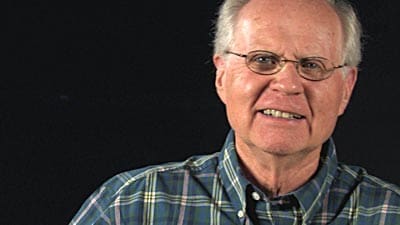
In this episode of Mormon Stories, we interview Grant Palmer–author of the book entitled “An Insider’s View of Mormon Origins.”
Grant (M.A., American history, Brigham Young University) is a three-time director of LDS Institutes of Religion in California and Utah, a former instructor at the Church College of New Zealand, and an LDS seminary teacher at two Utah locations.
- In episode 1, Grant talks about his childhood (growing up in Salt Lake City), his mission experience in Virginia, and his early years with the Church Education System.
- In episode 2, Grant talks about his move with CES from California to Salt Lake City, how the Mark Hofman bombings affected him and his colleagues, and his subsequent deep dive into LDS History. Grant also discusses his arrival at the decision to write his book–An Insider’s View of Mormon Origins.
- In episode 3, Grant takes us through a deep dive into his 1st book–An Insider’s View of Mormon Origins. During this episode we cover Joseph Smith’s treasure seeking and usage of peep stones, the actual mechanics of the Book of Mormon translation process, the recorded accounts of the witnesses to the Book of Mormon, the multiple versions of Joseph Smith’s First Vision story, and the evolution of the LDS Priesthood accounts over time.
- In episode 4, Grant discusses the early reactions to his book, his trial with the LDS Church for apostacy (which ultimately led to disfellowship), his thoughts about how the LDS Church might constructively deal with these tough historical issues, and his testimony of how focusing on Christ could benefit all sides of these issues.
Part 1
Episode Transcript
Host: John Dehlin · Guest: Grant Palmer
This transcript is machine-generated and lightly edited for readability. The audio is authoritative. Please excuse occasional errors in names and spelling.
Introduction and Episode Overview
Part 1 of 4 · Ep. 30
Grant Palmer [00:00:00] Foreign.
John Dehlin [00:00:18] Hello and welcome to Mormon Stories Podcast. My name is John Dehlin. As always, I'm very excited to have you with us today. Today we have a very special guest and a very special topic. But before we begin, I just want to thank you all for your continued listenership. Thank you for those of you who Visit us@mormonstories.org to leave your comments up on the blog, and most importantly, those of you who have taken the time to make small donations or donations to help support the costs and the time put in this podcast. We appreciate it and we just, most importantly, are grateful to have you guys tuning in. So today we're going to be talking about a very important fundamental dilemma that the LDS Church is facing in the 21st century. And the dilemma revolves around the notion that for over 100 years, a certain version of the Church's history has been taught in sacrament meeting, in Sunday school, in priesthood and relief society meetings, in the church manuals and seminary institute. And any of us who are lifetime members of the Church are pretty familiar with the basic facts of that history. Well, the dilemma comes in that there's a pretty significant chasm or disparity between the version of the history that we've all learned and have been taught over the years and what the history and the facts and the data actually show. And it turns out that this history, this discrepancy is a material one. It's a significant one. And there are thousands and even tens of thousands of faithful, good, righteous LDS people all over the world who have stumbled on to this history. Not because they are doubtful, faithless, sinning type people, but maybe they're called as a seminary teacher. Maybe they're called into the seminary institute program. Maybe they want to be a really good gospel doctrine teacher. Or maybe they just take their faith so seriously that they believe that understanding the history. Just like an American citizen would study US History to become a better citizen, an LDS person might decide that they want to study Mormon history so that they can become a better Mormon, regardless of the origins. These people start studying this history more in depth, very quickly, start asking themselves, whoa, I didn't know that. Whoa, why didn't I learn that earlier? Whoa. Why is the version that we're taught so fundamentally different from what the facts and the evidence actually show? And I have to add that these facts and evidence don't necessarily come or don't in any way necessarily come from anti Mormon literature. These come from journals of our early church leaders. They come from journals of our ancestors and our pioneers. They come from The Church's own publications, whether it be the Journal Discourses or the times and seasons, etc. These sources are accepted by the Church as valid and legitimate and often and most often actually printed by the Church. So today we have with us a man who I view as sort of an embodiment of the Church's dilemma in the 21st century regarding its origins, its history, its founding story. His name is Grant Palmer. Grant Palmer was employed by the LDS Church for, oh, let's say 30 plus years. How many years was it?
Grant Palmer [00:03:48] 34.
John Dehlin [00:03:48] 34 years. He served in many capacities. If I were to read his biography. He's a three time director of LDS Institutes of Religion in California and Utah, a former instructor at the Church College of New Zealand and an LDS Seminary teacher at two locations. He's an active member of the Church. He loves the Church. He values his membership in the Church. So in no way could we call this man, you know, an ex Mormon or anti Mormon. This is a man who has basically given a huge portion of his life to the Church and discovered these historical issues during his time in the Church's employment and has written openly about what he's learned. And the book that he wrote that probably is of most, that's most well known is a book called An Insider's View of Mormon Origins, again written by Grant Palmer. And he's followed that up with the second book that's entitled the Incomparable Jesus. Now, real quick, before we actually begin the interview with Grant, I just want to mention that I've extended a formal invitation to the folks at FAIR, the apologetic LDS grant group up on the web@fairlds.org and John Lynch. I've extended them a formal invitation to do a response to this podcast. Not, you know, a response to Grant's story or a tit for tat sort of thing. But as we're going to discuss in depth many of the Mormon claims about its origins, the Book of Mormon, Joseph smith translation, the eight and three witnesses, etc. We've extended a formal invitation affair to do a response to discussion Mormon origins from an apologetic perspective. And John lynch of FAIR has assured me that he will do his darndest to find someone to do that interview. So again, we're going to do a fair and balanced approach. Consider this part one of a two part series dealing with Mormon origins and look for FAIR to be providing a respondent soon to discuss Mormon origins from apologetic perspective. So, without any further ado, Grant Palmer, welcome to Mormon Stories.
Grant Palmer [00:06:04] Thank you.
Grant Palmer's Early Life and Church Experience
John Dehlin [00:06:06] I should, I should mention that I'm sitting here in Grant Palmer's house in his. Is this your living room? Yes, in. In Sandy, Utah. So actually, we're doing this on location. Anyway, Grant, let's start, if you don't mind, with your early years. Tell us about where you were born, your early years in the church, and let's just start there.
Grant Palmer [00:06:33] I grew up in Salt Lake City over here in East Mill Creek area. All my ancestors on all sides are four, five or six generations. Some of them go back to Nauvoo. And I would say I was raised as a very orthodox member of the church. My. My mother was a Stake Relief society president for 10 years. My father was in Bishopric's. Their best friends were Bruce and Amelia McConkie, lived across the street and down about four houses. So I grew up with those folks in my life.
John Dehlin [00:07:14] In your ward growing up?
Grant Palmer [00:07:16] Yes.
John Dehlin [00:07:16] Wow.
Grant Palmer [00:07:17] And in fact, my father and my uncle AW Mickey Hart, who's a songwriter and owned a string of music stores here in Salt Lake City for many years, they used to ask Bruce McConkey lots of questions. And finally, when he published Mormon doctrine, he gave them the. Well, about the first two copies and says here, don't ask me any more questions. Here's the answers. So, yes, I was affiliated with Brother McConkie's children and knew them well. And my parents were very, very orthodox in every sense of the way. And I grew up that way in a very strict upbringing. In fact, my mother was a polygamous child. My grandfather, her father grew up in. She grew up in Logan and Preston, Idaho. And. And so you can see how devout and orthodox they were.
John Dehlin [00:08:21] Yes. Yeah. Did you have siblings?
Grant Palmer [00:08:26] I'm the oldest of seven boys, so I have six younger brothers. I'm. 20 years between me and the youngest one.
John Dehlin [00:08:39] Right. So lots of siblings.
Grant Palmer [00:08:41] And they all went on missions. They all got married in the temple. Just very straightforward family and kind of a DNA to the bone kind of Mormon.
John Dehlin [00:08:56] Right. So what was your experience in the church growing up? Did you have a good experience?
Grant Palmer [00:09:01] I did. In fact, I think a lot of who I am was the encouragement I received from the church, my mission. I really bloomed on a mission.
John Dehlin [00:09:16] Where did you serve?
Grant Palmer [00:09:17] I served in the Central Atlantic States mission, which is Virginia, North Carolina. In fact, in 1962, the last year, I was in the mission. Our mission led the world in convert baptisms, and I was very much a part of that leadership and part of that success story.
John Dehlin [00:09:36] And did you feel like you had a strong testimony before you went on your mission? Or, you know, when did your testimony come about?
Grant Palmer [00:09:45] I think more on the mission. My family always had family home evenings, and we talked a lot about the church. But you know how teenagers can be. They don't always pay a lot of attention. I wasn't a really serious student. I wasn't a very serious reader of the Book of Mormon, and I hadn't even read the Book of Mormon until I got out in the mission field. But it was just that you went and I went and I ran into some fairly erudite people in the Virginia Pentagon, worked at the Pentagon. And I remember my companion, after we were talking to a family, I think he was a colonel in the Pentagon. And he bore his testimony, the Book of Mormon. And the man said to me, how do you feel about that, son? I said, well, I believe it's true because I hadn't read it all the way through. So finally my missionary companion chastised me for just saying I believed it was true. But I read it and I felt the spirit on almost every page of the book as I went through the Book of Mormon. And I'd say that was probably where my conversion took place.
John Dehlin [00:10:55] On your mission, reading the Book of Mormon?
Grant Palmer [00:10:57] Yep.
John Dehlin [00:10:58] Okay. Did you ever serve in the Potomac area? Was there a Potomac ward back then, do you know?
Grant Palmer [00:11:03] There was. That was just off limits. We weren't allowed to go in Washington, D.C. i did receive an FBI clearance to see the inauguration of John F. Kennedy from a building in the street, but we weren't normally. That was outside the boundaries of our mission. But Arlington Alexander Falls Church, Virginia. Yeah, I spent quite a bit of time there.
John Dehlin [00:11:27] So many of my listeners who have listened to my first episode will know that in my mission in Guatemala, there was a real problem with baptizing little children and inactivity rates and overzealous missionaries and mission leadership. Because I talked to you a year or so ago a little bit about your mission experience, I thought I might just have you tell us a little bit, aside from the wonderful, glorious things that happened in your mission, tell us about the baptismal dynamics that you confronted and dealt with on your mission.
Mission Service and Baptismal Challenges
Grant Palmer [00:12:04] Well, when I went to Central Atlantic states mission in 1960, I think we were listed like 48th baptizing mission in the world. I don't know how many missions there were, but there weren't maybe 60, I'm guessing. And I think we only had 11, 12,000 missionaries out in the whole church then. We were baptizing lots of people back then, per capita missionary. Anyway, there was the baseball baptisms going on in England and they led the world for quite a while. And then my mission president, George Potion, who was also my stake president, he'd really brought the mission up and motivated us. He's a very effective leader. But towards the end of my mission, starting in about, oh, I'd say the spring or summer of 62, and I only had two or three months left, they introduced a plan called Babu Fam and you were to get in your American Motors car and drive along your junior highs or grade schools and chat up the kids. And then the idea is you'd offer them a ride home to meet their parents and that's how you'd get in the door. And of course that's kidnapping, but that's one of the messages, the methods that they were using. And In August of 62, they baptized 800 people. And in December of 62, after I had left, they baptized 1200.
John Dehlin [00:13:50] In one mission.
Grant Palmer [00:13:51] In one mission, in one month.
John Dehlin [00:13:52] With how many missionaries?
Grant Palmer [00:13:54] I don't know. I think 200.
John Dehlin [00:13:56] So were the parents even aware that these baptisms were going on?
Grant Palmer [00:14:01] No. In a lot of cases in Danville, Virginia, we had been told that the city fathers there banned missionaries from swimming in swimming pools because they were dunking their kids in the swimming pool. And there's just a lot of shenanigans going on in the. Of course, my own belief is that my stake president, who had done a marvelous job and now my mission president, a Potion, had done a marvelous job. Somehow he got carried away. I don't know if he wanted to be a general authority or something, but he extended his mission six months and that's when the wild times really began on this Babu Fam. And I remember in his own conference just saying that, that this is really not an honorable way to do business. And that was, that was regarded as negative thinking on this Babufam thing to
John Dehlin [00:14:55] your mission president or.
Grant Palmer [00:14:56] Yeah, he was in his own conference and I stood up and told him what I thought and that was regarded as negative thinking. All the other speakers were saying how wonderful it all was. Well, midway through the six month extension of my mission presidents tenure, they began to get lots of requests for name withdrawals from parents. They found out their kids were baptized. Stake presidents were getting upset because they were assessed so many dollars a member. And one stake president, I think in Norfolk, Virginia said that he, there were a thousand people on his rolls and he never even met him and nobody had ever met him, they never came to church and, and they had to
John Dehlin [00:15:46] pay the, the members of the stakes, the stake presidency had to pay per head. Some type of tax?
Grant Palmer [00:15:52] Well, no. Some kind of a welfare assessment per member.
John Dehlin [00:15:55] Okay. You know, and they had to pay per head. But with all these children baptized. Yeah.
Grant Palmer [00:16:00] And he says, I don't want to pay all that money. Who are these people?
John Dehlin [00:16:04] Right.
Grant Palmer [00:16:05] We had missionaries that would make up signs the devil with a pitchfork on one side and Jesus smiling either. And they'd say to kids, whose side are you on? And they'd say, Jesus said, well, you got to get baptized and then baptize them without parental permission. Just write up, turn it in. So when Mark E. Peterson came out midway through this extension of the mission president's term, he got upset real quick and sent the missionary mission president home early.
John Dehlin [00:16:36] Sent a potion home early?
Grant Palmer [00:16:37] Yeah, he sent a potion home before the extension expired. And he would ask a number of young people, what's the name of the church? I don't know. Who's Joseph Smith? Don't know. You know, real basic stuff. And my companion, Elder Ward and myself from Malat, Idaho, we teach school the Prophets. And we take some of these kids and try to teach them, but they were already baptized. And you know how missionaries, they want to go on to new territory. But I was going home, and so I was in this zone meeting. I says, well, I don't think this is very honorable way to do business and picking kids up on the way home school. I don't think I'd want my kids picked up on the way home from school, no matter what the intention, by strangers and so forth and so on. So when I was released, my parents and I went up to see the New York sites. And President Smith of the Eastern State Mission, he found out I was a missionary in the Central Atlantic States mission, and he wanted me to talk to his missionaries of how we're having all this wonderful success. And I told him, I said, no, I don't think you want to know that. And after I briefed him, he agreed.
John Dehlin [00:17:52] But it wasn't your sense that this is something the church presidency or the Apostles of the quorum of the 12 sanctioned.
Grant Palmer [00:17:59] Not at all. In fact, my uncle Mickey Hart wrote songs, and Joseph Fielding Smith's wife, Jesse Evans Smith, used to come up to his house, which is two doors up there on Lambourne Avenue, from me. And they do things socially with my parents occasionally. And I get to talk to President Smith, who had a very interesting sense of humor. He said to me once, here, I just got back from California. Here's have an olive. And it was a green olive, and I didn't know that they were pickled. And I had a sour face. Oh, you must have got a bad one. Have another one. This was him, but this is Joseph Fielding Smith. Joseph Fielding Smith. But I remember my mother saying finally to him, says, you know, my son Grant is in the Central Atlantic States mission. And he says, there's some irregularities going on back there with how we're doing baptism. He looked and says, yeah, I know. And then he looked at my mother and he says, we've got to start sending out more doctors as mission presidents and less salesmen, which struck me very funny.
John Dehlin [00:19:07] So did this affect your testimony at all?
Grant Palmer [00:19:10] Not at all. I just thought it was a bad way of doing business and eventually the church would reap a negative reward from it. They would always say, oh, there are good things that will come out of it. And I'm sure there are some of those babufam baptisms that probably worked out rather favorable.
John Dehlin [00:19:30] Oh, I gotta love that name, baby fam. Sounds like a product from Ronco. Mr. Pope Hill.
Grant Palmer [00:19:35] It was, it was kind of funny, sad, but, you know, we, up until then we were baptizing middle class families, whole families contributing to the church. And then they got on this, let's be number one. And we were number one in the world in 1962, and that's how we did it.
John Dehlin [00:19:57] So you gained a strong testimony of the Book of Mormon on your mission. You felt the Holy Ghost reading it. You enjoyed your mission, you had a lot of good success. What did you do when you got home?
Grant Palmer [00:20:07] Well, I was so infused with the missionary spirit. I mean, I think I carried the missionary spirit like eight, ten years after I came home. The missionaries I see today, some of them look like they've lost it two weeks after they come home. But. But I was very devoted and dedicated to that. And it got me thinking about I should go into CES because of this. And that's what I eventually did.
John Dehlin [00:20:34] So where'd you go to college?
Grant Palmer [00:20:36] I went to the University of Utah, graduated. I did some study in speech, minor in philosophy. And I noticed those who had philosophy degrees weren't getting very good jobs. So I transferred to history and received a. A bachelor's degree in history from the University of Utah. Then went to BYU and took a master's degree in American history with a minor in church history. And then after teaching, oh, seven or eight years, came back for the PhD, did all of the classwork, starting to work on my dissertation, working on one of the two languages. But the church Back then, and really today, they, they pay you well if you get a master's degree. But beyond that, there's not a lot of extra money. And I, by then, by that time, I had four children, three children. So I was happy to just pursue what I was doing in the institute program.
John Dehlin [00:21:39] Sure. And if our listeners noticed, it's 11:30 Utah time, based on the chimes of the. Of the clock. I have to just ask you real quick. You were at the University of Utah in the 60s, is that right?
Grant Palmer [00:21:54] Yes.
John Dehlin [00:21:57] Were there any remnants of the Lowell Bennion, T. Edgar Lyon years that you must have come right after they had stopped teaching there? Was there any residue from that that you could recall or that was an influence on you?
Grant Palmer [00:22:09] Well, the thing that influenced me most about that group of men, George Boyd, I knew the best because we taught together down in the Los Angeles area. I knew Lowell Bennion. I'd gone to school at Olympus with some of his children. Albert Payne, I knew of him. I knew Ted Guerlain. I especially knew his boys. We were paper boys together. I wasn't a friend of them. They were, you know, they were not my peers. They were a generation older than I was. Sterling McBurn, same thing. I just looked at those men and I thought, they are really fine Christian gentlemen. And if I can go into the seminary institute program and become like that. I admired them and I thought I'd like to be like that.
Joining CES and Teaching Abroad
John Dehlin [00:23:02] Okay, so when did you join ces? Was that in the middle of your
Grant Palmer [00:23:09] graduate work or after actually started in New Zealand? In, let's see, years. Let's see, 19, 1967, I arrived in New Zealand and I actually went there. I was hired by the church to teach history, British Empire history, and taught a little science and then moved into the religion department when one of the teachers returned home.
John Dehlin [00:23:44] Why would the church be hiring you to teach British history?
Grant Palmer [00:23:49] Well, because outside of England, New Zealand is the most English like country in the. In their empire.
John Dehlin [00:23:56] But why is the church in the. In the business of teaching, teaching secular history at all? Was this a church?
Grant Palmer [00:24:02] It was a church school. And they basically opened the Church college of New Zealand, called CCNZ for the Maori, because the Maori weren't getting a qualified education. So the government allowed the church to come in. But over time, we started having a lot of students that were Pakeha's or Europeans, so they wanted to give them grounded education in their own British history.
John Dehlin [00:24:34] Wow. So was this the high school then?
Grant Palmer [00:24:37] It was really kind of a combination of a junior high, high school and eventually they added on kind of all like a junior college. It was challenging me for a teacher because I was teaching all three age groups and never taught before. And I soon learned that I was shooting over some of their heads.
John Dehlin [00:24:56] Right, sure. Does this church, does this school still exist?
Grant Palmer [00:25:00] Yes, it's still there. Back when I was there they had a lot of American faculty members. Now I think it's gone more and more to the locals that are filling the teaching posts.
John Dehlin [00:25:11] And so these were all native, you know, Maori people that you were teaching?
Grant Palmer [00:25:16] Not all. I'm saying, like I was saying, they were started out as almost all Maori, but as time went on, you got a greater percentage of Europeans or New Zealanders. White Europeans. And that's the way it was when I was there between 1967 and 1970.
John Dehlin [00:25:40] So you were there three years there?
Grant Palmer [00:25:41] Three years.
John Dehlin [00:25:43] I just have to ask this. At the time, did you teach or believe that the Maoris were Lamanites?
Grant Palmer [00:25:48] Oh, very definitely. And so did they. They were very proud of that.
John Dehlin [00:25:51] They called themselves Lamanites?
Grant Palmer [00:25:53] Oh, very much so.
John Dehlin [00:25:54] And you taught it as part of the curriculum?
Grant Palmer [00:25:56] Very much so, yes.
John Dehlin [00:25:57] Okay, so why'd you leave New Zealand?
Grant Palmer [00:26:03] I have asthma and they have a 12 month growing season over there and I was especially allergic to grasses. And after it was a four year contract and the doctors told me if I didn't leave I'd have permanent lung damage. So after three years I left.
John Dehlin [00:26:21] Were you married by this time or.
Grant Palmer [00:26:22] Oh, I had two children.
John Dehlin [00:26:24] Okay.
Grant Palmer [00:26:25] that point in time, yes.
John Dehlin [00:26:27] So married in the temple?
Grant Palmer [00:26:28] Oh, yes. All my family, all my siblings were as well.
John Dehlin [00:26:32] Which temple?
Grant Palmer [00:26:34] Salt Lake Temple. But I was an officiator in the New Zealand temple. And my gosh church opportunity was, was there. I was young men's president, I was Sunday school president, I was temple officiator
John Dehlin [00:26:49] there, chief cook at bottle washer.
Grant Palmer [00:26:51] Yeah, between my wife and I we had like seven positions and, and that involved a stake of 250 miles. So we were very busy in the church.
John Dehlin [00:27:03] Do you look back with fondness on that time?
Grant Palmer [00:27:05] Very much so. And I related very well to the students. And when I first went there, only 15% of the of the males in the school wanted to go on a mission. And so I, I came up with a plan, ran it by the headmaster that we take our best students and have them go out with full time missionaries. And I think Rulon Cravens was the mission president. He liked it. He talked to Howard W. Hunter and he approved it even though missionaries were not to have Non missionaries in their vehicles, he says, do it. And within six months we turned that around and were 85% of those young men now wanted to go on a mission just by having splits with the full time missionaries in the Templeview Hamilton area. And it was very gratifying. One of the things that people probably don't know about me, I've got a little of the reformer in me. I mean I like to make change and hopefully for the better. I've always been this way. I remember taking three full pages of ideas to the stake president of how we could improve things in the stake. And lo and behold, he embraced about 2/3 of them.
John Dehlin [00:28:22] Was this a native stake president or no?
Grant Palmer [00:28:25] He was an American stake president. The missionary concern I had their lack of free agents. We used to march those kids in uniform to church every Sunday. And when I mentioned that to Paul Dunn, he says he went to David O. McKay and they got rid of that practice.
John Dehlin [00:28:44] What do you mean march him?
Grant Palmer [00:28:45] Well, they'd line him up in platoon formation and march him to church in uniform and cadence to a whistle. I went up and said to the master, I says, if I had to present the plan of salvation in a roadshow, this is exactly how I demonstrate Satan's plan. And they didn't listen to me. But when Paul Dunn observed this and Thomas Monson, they were over that area when they observed it. It was soon gone when they talked to President McKay. So there's a certain, you know, reform element in me. And I also did this. I was chairman of Academic Standards Committee New Zealand. I says, my gosh, if we're getting, if we have 600 beds here and we have a thousand applicants, let's be selective for heaven's sakes. Because the school was not accredited. And what that meant is, is that our students would go through the school. And even though they'd passed the school certificate exam, the school was not credentialed. So they ended up working in the meat packing plants. They couldn't get very good jobs. So I said let's be selective and do a little field work and pre select students. We want to come here. And that's what we did. And some of the Maori people says, well, our people can't compete because they've been out on the pause of the reservations. But I think it was important to move forward and have our people have a high school diploma. That meant something where they could actually go out and get a job. And so I was in the forefront of pushing that. I was made the academics chairman's committee Chairman. And so I worked there. I worked in helping to turn the missionary program around. I mean, we had two hour sacrament meetings. I wrote a letter to the presiding bishop and he says you don't need to have two hour sacrament meetings. And I wrote articles on evolution because they were very much against it. I got a letter back from David O. McKay through my stake president. So I've always been kind of reform minded like this.
John Dehlin [00:30:49] And okay, wait, they were teaching evolution?
Grant Palmer [00:30:52] Well, they were, they were denying that it was, has any authenticity and that the church was against it.
John Dehlin [00:30:58] And that bothered you?
Grant Palmer [00:31:00] It bothered me enough because I knew that the church was neutral on it. And sure enough, the, the letter came from the first presidency under David O. McKay and Hugh B. Brown and then Elton Tanner and said that we have a neutral position on it. I think this little background on me is always being interested in proving things. It will help us later on in our discussions for why I wrote my book.
Interactions with General Authorities and Church Leaders
John Dehlin [00:31:23] So did you, did you have lots of interactions with general authorities?
Grant Palmer [00:31:27] You know, some, they would come to Church College of New Zealand, but not a lot, no.
John Dehlin [00:31:33] Okay, so, so when you left, what'd you do next when you left New Zealand?
Grant Palmer [00:31:38] Well, they liked what I was doing so. Well, I got a highly recommended from William E. Barrett, who was over CES at the time. He liked me and the Alton Wade, the headmaster, American headmaster, liked me. And when I arrived in Los Angeles, Frank Hershey says I had come highly recommended. And so they asked me to be the director of usc. And I'd already found a home in Whittier, California, which is over an hour's drive. And so I asked if I could teach at Whittier and Rio Hondo Junior College. And they granted that. And I was there for three years and had a marvelous experience.
John Dehlin [00:32:21] And where'd you go then?
Grant Palmer [00:32:23] Then I went on a sabbatical, came to BYU, did a PhD study and my four areas of study were American history, ancient world history, the history of religion in America and church history.
John Dehlin [00:32:36] Okay, so what year was that Approximately?
Grant Palmer [00:32:39] That was 70 through 73.
John Dehlin [00:32:43] So that was right during the Leonard Arrington years of church history.
Grant Palmer [00:32:47] Yes. And he was going to be my chairman and I could have ended up as one of his group that, that he fielded Ron Walker, Michael Quinn, that group. I like teaching institutes. So I just kept. So I left and went up to Northern California and spent six years as an institute director up there and a supervisor over a number of seminary early morning.
John Dehlin [00:33:20] So where in Northern California?
Grant Palmer [00:33:22] Chico, Paradise, Oroville, California. I always liked to live in a Forested area. And so we ended up there for six years. And that was a very pleasant experience as well.
John Dehlin [00:33:35] Sure. Okay, so just real quick. Did you get a sense that, you know, 72 to 82 with Leonard Arrington and Church history department, that that was an exciting time for church history. Were you plugged into the magazine articles and the books that were being published? You know, did you even have your finger on that pulse from 72 to 82 when that was going on?
Grant Palmer [00:33:59] Yes, I wasn't totally immersed in it, but I was certainly interested in it. And I remember going to lunch with Leonard Arrington and Dave Whitaker and some of the other ones when we were in Los Angeles when he'd come through. Yes. My interests were there as well. Yes. And of course, I had three, almost three degrees in history, so I was interested in history.
John Dehlin [00:34:18] Okay, so by the time you're Northern California, you have how many children?
Grant Palmer [00:34:23] Four.
John Dehlin [00:34:23] Four children. Is that the total number that you had for. Okay, and you were over institute there?
Grant Palmer [00:34:30] I was the institute director at Butte Community college there and 2 or 3 stake of seminary teachers.
Life as a Seminary and Institute Teacher
John Dehlin [00:34:39] Okay, now tell me, let's just talk briefly about, you know, what. What it was like being a seminary institute teacher in the 70s. You know, a lot of some of our listeners who are more liberal, you know, will understand the notion of correlation. They'll understand how sometimes doctrine or history can be rigid or whitewashed or whatever. You know, what was it like to be in it? Now that you're looking back, how were you feeling? What was the curriculum like? What were the students like? Did you get a, you know, how did you feel about the content that you were passing on to your students?
Grant Palmer [00:35:16] I think the word is we were more open. We had more freedom. My forum speakers that I would bring in would be my gosh. I debated Walter Martin. He wrote a book called Kingdom of the Cults. And I debated him for two or three hours down in La Mirada, California, in a Quaker friend's church. I had him come and speak to my students. That would never, ever be allowed.
John Dehlin [00:35:45] So he's an anti Mormon?
Grant Palmer [00:35:47] He was clearly an anti Mormon, but I thought he was weak enough in some of his arguments that we could tolerate it. That was probably over the line for me to have him come in, but I taught a class on different religions, and I'd have Buddhists come in and RLDS speakers come in and Pentecostals come in and Jehovah's Witnesses come in. It was. And I teach classes like that at the institute. It's very open. We Also had a lot of latitude of. Fundraising. We used to sponsor Mormon Night at Disneyland and we got to keep the profits all in all of Southern California. We used to go to Catalina on our excursions. We would have wonderful evenings out. And all that budget money is all dried up and everything's more correlated in every sense of the word, both in any direction. You.
John Dehlin [00:36:47] How would you do fundraising?
Grant Palmer [00:36:49] Fundraising? Just sell tickets to Mormon Night at Disneyland and we get a quarter of every ticket we sold throughout Southern California. We had a budget of $40,000, 25,000 DOL from one year, about 40,000. We had a lot of money to spend on social and cultural experiences because of that. A lot of enrichment. It's a very different program today. It's very spartan and very different.
John Dehlin [00:37:16] So do you have a sense for the role you were playing in the lives of the seminary institute teachers you taught? Like what. How important was the institute? Were these, these were LDS kids attending local California colleges, universities, a lot of
Grant Palmer [00:37:33] those who didn't come on to BYU and didn't have the money or didn't have the grades in some cases. And we had marvelous programs for them, I think. And they, they seemed to blossom and flower under it. I hear now in Southern California, the institutes are kind of reducing numbers there. If they drop below 50 students, they have a missionary couple, older couple come in and take over instead of having an institute teacher there. So there we were there in the heyday of the, of the ces, I think a lot of LDS families, it's so expensive to live in the LA area, San Francisco area, that they're moving to the deserts and if they have children and that's. They're closing some wards and the institutes are getting smaller. And like I say in Santa Monica Institute, it's now, as I understand, recently been taken over by a missionary couple who actually teaches the students so forth. So we were there during the heyday. It was a wonderful time to be there in every sense of the word.
John Dehlin [00:38:44] And how, you know, what did a Church history or Doctrine and Covenants class, how did that differ from how Church history or Doctrine and Covenants is taught today? Was there a real openness about the church's, the founding teachings? This new Mormon history as it was coming out, was it at all coming across? Is there anything an average institute student in the 70s that you taught, is there anything that they would know that an institute student today would never have learned in terms of the origins of. Of Mormonism?
Grant Palmer [00:39:16] Well, back in the 70s, the new Mormon history, of course, was just emerging and so, you know, we had our approved lesson plans and we stayed, we stuck to them. And I was certainly orthodox and I didn't know as much then as I do know now about the more new Mormon history. My students certainly weren't aware of it, generally speaking.
John Dehlin [00:39:39] Right, okay, so when did you start having questions or doubts or concerns? How did you know what. What becomes the kernel, a starting point for what later evolved into the. The book you wrote, an insider's view of Mormon origins. Talk to us about how that came from.
Grant Palmer [00:39:57] I came out of a very cloistered family, obviously very orthodox, and my mind was somewhat open when I went to the University of Utah and things were more open. And I've always been playful with ideas, always been curious, and always, you know, pursued the truth, always been interested in issues, always been free to share what I found with others. And just in the course of my studies and preparations, you run on to things. So I was aware of a lot of the concerns and questions about the Mormon past.
John Dehlin [00:40:34] Like which ones? What were some of the ones you would have been aware of?
Grant Palmer [00:40:36] Oh, the issues that they're talking about today, the Book of Abraham, to some extent, the different accounts of the first vision, the finding of the papyri, and the discussion of that.
John Dehlin [00:40:53] You would have known that in college.
Grant Palmer [00:40:56] Yes, I knew certain amount of these things about Joseph and many treasure hunting and peep stones, seer stones and all that kind of thing. In fact, I'm one of the few people that have probably ever seen the seer stone, the, the seer stone that Joseph actually used to actually complete the Book of Mormon, the one that we have today.
John Dehlin [00:41:17] Did you learn this stuff growing up in Sunday school? Did you learn this at university? How did you.
Grant Palmer [00:41:22] More at the. The University of Utah and Western History. And that's. That's where I think the initial opening of a number of these ideas came from. Classes by teachers in Utah history a little bit at the Institute of Religion. They were starting to discuss things the time I was there.
John Dehlin [00:41:48] Was that ever challenging to your faith either as a college student?
Grant Palmer [00:41:51] I didn't participate that much in the Institute, but Reed Durham was, Was very open. He'd bring stacks of books, he'd bring the Tanner's publications, and he was very quite open back then. And of course, he and Max Parkin got in a certain amount of trouble. I remember Max Parkin telling me that he and Reid had gone out separately to give talks on the first vision and the different accounts, and they both had complaints against him. And on that occasion and some previous occasions, and so the leader of the Institute, I forget who it was, he said, if we have one more report on either one of you, you're out of here. And so they both quit giving firesides at that point.
John Dehlin [00:42:36] So, just for our listeners, these were Institute teachers at the University of Utah while you were a student there.
Grant Palmer [00:42:42] Yes, at the Institute.
John Dehlin [00:42:43] So they would talk somewhat openly about some of these, more controversial, far more than they do today, and even push the envelope to. To the point where they maybe got in trouble a little bit. Well, that certainly would follow the legacy of Lowell Bennion and Ted your Lyon, because that's, as I understand it, how they're.
Grant Palmer [00:42:58] They were very much more open about things like that. I mean, I remember sitting at a banquet honoring George Boyd's retirement, and I sat next to T. Edgar Lyon, and I remember asking him how come they had so many visions in the Kirtland Temple era and so forth. And he says, oh, that's easy, he says. And he gave me an answer that quite surprised me. He says, if you have people fast three days and then have them drink beer on an empty stomach, you'll see things. And I thought, what an interesting answer that was.
John Dehlin [00:43:27] That's T. Edgar Lyon, huh?
Grant Palmer [00:43:29] That was T. Edgar Lyon.
Doctrinal and Historical Questions Begin to Surface
John Dehlin [00:43:31] Any other interesting memories you have of doctrinal nuggets or historical nuggets that changed for you as you learned new information in those years?
Grant Palmer [00:43:43] Well, it was a kind of a gradual thing. And like I say, I was always open, always willing to share whatever I found. And I found and shared many, many things over the years. It's when I began to take a more serious look at Mormon history that I got in a little more trouble.
John Dehlin [00:44:20] I watched it sinking down. The treasure I'd almost found
Grant Palmer [00:44:37] is gone.
Part 2 of 4 · Ep. 31
Grant Palmer [00:00:15] I watched it sinking down. Well, I, you know, I've always put things on the shelf. When I was doing my PhD work, I ran into some, some interesting researchers. One of them did research for Truman Madsen. I got to know Truman Madsen through that source and just we would swap material. And this was when I was doing my PhD at BYU and plus my studies in the history of religion. I mean, for example, I began to study the Second Great Awakening discourses by Methodists and others at camp meetings. And I was struck of how similar those sermons and the doctrine, the Protestant doctrine and the form and the conversion pattern and all the things that's today in my chapter four, in an insider's view. And how struck I was with how similar that was to the mainline preachers in the Book of Mormon, say, starting with Enos and going right up through Alma II and those Discord, Benjamin and Amulek, and, and there's a lot of similarity. I thought, my gosh, that's striking. And so, you know, I just put that on the shelf. I knew there was a lot of Bible in the Book of Mormon. And the more I studied the Bible and learned the Bible, the more I saw that the Bible was in the Book of Mormon. All these people are not truly aware of how much Bible is in the Book of Mormon.
John Dehlin [00:01:52] Yeah. And we'll cover that when we actually dig into the book.
Grant Palmer [00:01:55] So we had the Bible, we had the, we had the evangelical influence there, the Smith family dynamics. I was introduced to view of the Hebrews, you know, those kind of, kind of things. But I really, I really didn't do much of anything until I came back to Salt Lake. And I was at East Seminary for one year. This is 1980, up through about 1987. I spent seven years at Brighton High School, which is to be close to my home. And that's when I participated more in MHA and the Mormon History Association. Mormon History Association. And, you know, the sources were here Begin. But the thing that really triggered me was my interest in this was Mark Kaufman and the Salamander.
The Mark Hofmann Salamander Letters
John Dehlin [00:02:51] What year was that letter?
Grant Palmer [00:02:52] That was 1984.
John Dehlin [00:02:55] Give our, give our listeners a brief history of. You know, a lot of people might know the name, some know it in depth, but probably few know the basic history of what happened there. So tell us real quick what happened as you were experiencing it. So you were in Salt Lake when Mark Hoffman.
Grant Palmer [00:03:08] Yes.
John Dehlin [00:03:08] Went down.
Grant Palmer [00:03:09] I'd met Mark Hoffman, like four days before the bombings and, and when the bombing started, we were all opening our mailboxes with a Stick. And looking underneath our cars, we wondered if. If they were out to get historians or what.
John Dehlin [00:03:25] How'd you meet Mark Hoffman? What were the.
Grant Palmer [00:03:27] I met him. Brent Metcalf. Brent Metcalfe wrote a book called New Approaches, the Book of Mormon. And, and he worked. Did research for. For Mark Hoffman and I met.
John Dehlin [00:03:40] But Brent hadn't published that book at the time.
Grant Palmer [00:03:42] No, he had not.
John Dehlin [00:03:43] So what was he doing at the time?
Grant Palmer [00:03:43] He was doing. He was working for. For Mark Hoffman.
John Dehlin [00:03:48] Just as a researcher?
Grant Palmer [00:03:49] Yeah, as a researcher and whatever.
John Dehlin [00:03:51] How did you, like, how did you meet Brent?
Grant Palmer [00:03:54] You know, I honestly can't remember how I met Brent, but
John Dehlin [00:03:59] would it have been through MHA or just through Circle of Mormon Historians?
Grant Palmer [00:04:03] I honestly can't remember.
John Dehlin [00:04:05] Okay, all right.
Grant Palmer [00:04:05] That goes back quite a ways.
John Dehlin [00:04:07] No problem.
Grant Palmer [00:04:08] But of course, Mark Hoffman was. Was doing all this work on documents that we later found out were. Were made in his basement, right?
John Dehlin [00:04:17] Yeah.
Grant Palmer [00:04:18] But they were causing quite a stir in the 1984 when all this came out. And when the Salamander letter came out, I thought, wow, this is. This is very interesting to me. And so I thought, I think I'll go back and reread the affidavits by Ed Howe in the Mormonism Unveiled. And of course, the. One of the affidavits in there was written by Willard Chase. And he talks about how Joseph Sr. In the summer of 27, before Joseph gets the place, was. Was told the story by Joseph Senior and how he went to the Hill and there was something like a toad there. And we later learned that Mark Hoffman used that very affidavit. Well, to. To write up his white Salamander. And he did it down here on the Highland Drive in the. Oh, what's that? Training Table Restaurant. Then he went down to a park down below a mile and actually wrote it out, but he'd written it on a napkin. And so he thought something like a toad. White salamander. And then the research took off from there. And Michael Quinn found, I think it was a 1867 interview by Kelly. He was an RLDS member of the Presiding Bishopric. And when he went and interviewed Smith's neighbors, Benjamin Saunders, good friend of the Smiths and very loyal to the Smiths, I might add. Benjamin was. And his mother. He found something about something like a toad too, in that interview that he had heard personally Joseph say that to him and his mother. And then I had found one in the. In the New York newspaper. And Quinn and I swept. Swept salamander stories or toad stories, Something like toads so we had. I had found one and Quinn had found one, and we also. And then we had Martin Harris, the White Salamander letter. And then we had the. The Willard Chase affidavit of Something Like a Toad. So here we have four references to it. And so that got me interested in writing some. I call them position papers. And
John Dehlin [00:06:38] so let me just break in for a second. So, you know, you went from the 60s through the 70s to the early 80s, you know, teaching seminary and institute strong testimony of the church and having some doubts and questions, but mostly putting them on the shelf. That's correct. So to speak.
Grant Palmer [00:06:57] That'd be true. True Blue Mormon.
John Dehlin [00:06:58] You come to Salt Lake and maybe have some more time that you didn't have before, but something led you to start getting in with the Mormon History Association. A couple things jump out at me, and one is, as I'm thinking about the Fair and Farms guys that might be listening, some of the apologists or the really conservative folks, they're going to immediately go, whoa. Well, that explains it. Grant Palmer's hanging around with Brett Metcalf, who, you know, many like to demonize, and Michael Quinn, who many others have demonized. You know, this must have been a evil, secret combination cabal that was started in the early 80s that culminated. So can you just talk briefly? What was the context where you would talk with. With Brett or with Michael Quinn? Was it in a believing context? Was it in a faithful context? Was it in a pernicious sort of subversive context?
Grant Palmer [00:07:47] You know, well, there was a variety. Quinn, of course it was from a believing context. Ronald Walker was a bishop and very much a believing context. Martin or. I talked to many people at byu. Many, yeah. And as these problems began to emerge, I would ask a variety of people, I says, you know, what about this? And they'd say, yes, generally. Basically, they'd say, well, yes, we have some problems, but we don't. I don't think we have very good answers to it. That was kind of a general. But I talked to many of them over the years.
John Dehlin [00:08:29] So you were having. You were starting to dig into the stuff and starting to really have questions.
Grant Palmer [00:08:33] It was a Salamander letter by Mark Hoffman that got me writing.
John Dehlin [00:08:39] Okay, so you started writing, and I
Grant Palmer [00:08:40] wrote some papers under the name of a person named Paul Pry. And the FARMS people liked to make a big thing of that. There was no big thing at all about that, really. I've traveled a good deal, and if you go over to the West End, which is kind of London, you'll see plays there. It's kind of comparable to Broadway in New York. And it'll advertise a play and it will say things like, Paul Pry says, be curious. Look beneath, you know, visit. Go to this play, look into it. In other words, Pry. Pry into it. So I thought, well, Paul Pry, Palmer Pry. That's why. That's what I was doing.
John Dehlin [00:09:30] So you were, okay. Why a pen name at all?
Grant Palmer [00:09:35] I think at that point it was. It was. If you're going to raise questions and you're in ces, that that was probably a dangerous thing to do.
John Dehlin [00:09:43] So you feared for your employment?
Grant Palmer [00:09:46] I would say yes, to some extent. And so it only lasted about six months. And I'd say of the pages I wrote and I sent it out for peer review and they got passed all over the church, these five or six chapters. And by the way, I would say of all that material, I wrote in 84, 85, 86. Virtually none of it is in this current book. An Insider's view.
John Dehlin [00:10:18] So when you say it only lasted about six months, what is it?
Grant Palmer [00:10:21] It. Meaning the pseudonym Paul Pry. Then people knew who I was.
John Dehlin [00:10:26] So who are the people that were. So you created some position papers on the Salamander Letters?
Grant Palmer [00:10:33] Yes. That's the only one of the Paul Pry writings that ever ended up into the current Insider's View. The rest of it.
John Dehlin [00:10:40] And what were the other ones you were writing?
Grant Palmer [00:10:41] Oh, I'd write things about history, how a person could deal with history, and some can't and some can, I dealt with at that time. I was writing about the Alvin connection to the Salamander Lever, bringing in some of those documents about the procedure of treasure digging and the formulas that were being used and things of that nature.
John Dehlin [00:11:06] And who was the intended audience for these articles?
Grant Palmer [00:11:10] There wasn't any intended audience. It was just me trying to process curious and valuing truth more than loyalty to a tradition and having curiosity that I wrote this mainly for them myself. And I send these papers out for some criticism. And like I said, they went all over the church.
John Dehlin [00:11:28] Who'd you send them to?
Grant Palmer [00:11:29] I'd give them to my seminary faculty members. I'd give them to anybody who is interested in them.
John Dehlin [00:11:37] And you'd say, I wrote.
Grant Palmer [00:11:38] I've always opened.
John Dehlin [00:11:38] And you'd say, I wrote this under the pen name Paul Pry. Or did you say, I've got a buddy named Paul Pry who.
Grant Palmer [00:11:44] Yeah. And people knew who I was even though I was using Paul Pry. I didn't tell every. Not everybody knew that at first.
John Dehlin [00:11:49] But you would Give it to friends that you trusted?
Grant Palmer [00:11:52] Yes.
John Dehlin [00:11:53] And did they know you were the author of the articles?
Grant Palmer [00:11:56] Oh, yes.
John Dehlin [00:11:56] And did they ever say why? Paul Pry.
Grant Palmer [00:11:58] You just probably understood, especially my CES colleagues, that this is. You're raising some. Some questions with the traditional accounts of the church. And it was a curiosity thing for me. And eventually the way I came into information about the Salamander Letter is I contacted one of the senior members of the Smith Institute, and he's the one that handed me the golden pot.
John Dehlin [00:12:26] Right.
Grant Palmer [00:12:27] And he'd done some research on. He says there's definitely some connections here. Marvin Hale thought that the parallels were rather overwhelming.
John Dehlin [00:12:35] So you have Seminary Institute teachers, CES employees in the Salt Lake area who are affiliated with mha, who are starting, because of the Mark Hoffman thing, starting to really get curious and interested and amongst themselves behind the scenes, they're talking about studying the history, sharing with each other ideas, thoughts.
Grant Palmer [00:12:54] And some. Lauren, some of them are very disturbed by what I wrote and passed around.
John Dehlin [00:12:59] Right, okay.
Grant Palmer [00:13:01] And that's.
John Dehlin [00:13:02] And so were you guys ever just sitting there going, man, what do you think about this? And what were the feelings and the sentiment that were being expressed behind doors by the CES employees that were plugged in to the issues?
Grant Palmer [00:13:15] Well, depending on who they were. I mean, we talk about BH Roberts, studies of the Book of Mormon came out about that time, you know, as I remember, 86, 87, 85, somewhere in there, we discussed stuff like that. And. And it made some of people very uncomfortable. Others were more. Had more curiosity. Others had more of a. You know, we weren't teaching in this. In the classroom, you understand, none of us were right. But anyway, this is. This is what triggered me. And then when Ron, I shouldn't say his name, but BYU history professor gave me a lot of material, some few articles, and the ETA Hoffman, he says, grant, what do you think of this? And I went home and read the piece seven times, and I came back and we sat down. And he says, well, did you see this motif and that motif and that one? I says, yeah, but did you see this, this, this, this, this and this? And that's what kind of got me interested. And then two other professors, not that one. I presented the Paul Price stuff to them. They knew who I was, BYU history professors. And they says, you really ought to write an article on that. Let us help you write an introduction. I wasn't a writer, you know, I never intended to publish anything of the Paul Pry until they says, well, why don't you take this one article on the golden paw. This is kind of something new. And publish something on it. We'll help you write an introduction. So it was going to be an article that would be submitted somewhere, and that was the. So these things were never published. They were never designed to be published at that point.
John Dehlin [00:14:58] Right. Position papers to share with friends, to
Grant Palmer [00:15:00] explore issues and just wanted feedback and
John Dehlin [00:15:03] you put a name on it. You know, just kind of clever and creative.
Grant Palmer [00:15:07] But you didn't want to identify prize into things. That's me.
John Dehlin [00:15:10] So real quick, what kept you from feeling the Holy Ghost and saying, you know, the Church is true, I don't want to hurt people's testimonies. The brethren have told us what we need to think and feel and do. I'm not going to go and explore this stuff. I'm happy enough with my testimony, I'm happy enough with my understanding of the gospel. And I certainly don't want to be spreading things that might damage or undermine people's faith. What kept you as a CS employee in the mid-80s, from just suppressing all that and saying, better leave it alone? Why not? Why not, Grant Palmer? Just leave it alone?
Grant Palmer [00:15:44] Well, I'm one of those persons that you described at the front end of this interview. I have more curiosity than fear and I have more interest in truth and loyalty to a tradition. To me, those are higher virtues. And I've always been open sharing stuff. It's just that when the Salamander Letter began to trigger my interest in that, I thought, these are some very interesting parallels. And like I said, then we had four statements that said something like a toad. And of course, the bogus letter, a white salamander. So we had four of them. And after I'd written something up, I went back to the. To the history professor who had given me the Golden Pot article. And this was after Hoffman's article was found to be bogus. The Salamander letter. And we both said, you know, it hardly changed anything that we had written. We both agreed that he'd written stuff, I'd written stuff.
John Dehlin [00:16:51] Right.
Grant Palmer [00:16:52] And I think he was told by Neal Maxwell to leave it alone.
John Dehlin [00:16:56] The Golden Pot.
Grant Palmer [00:16:57] Yeah. So I think that's right.
The Hofmann Scandal and Its Impact on Faith
John Dehlin [00:17:01] So real quick, when you learned that Hoffman, at some point, you must have learned that Hoffman had connections into the First Presidency, that he was selling documents to the First Presidency, that they were purchasing documents for him, not only original documents, but documents that he had forged, that they were trying to buy. These. Some accused they were trying to buy these to hide them or keep them secret. Others say that they were just interested in owning them and possessing them because church, Church history, it's the church. But eventually, as he was discovered to be a fraud. And many say he sort of pulled the wool over the eyes of the First Presidency. And I think Dallin H. Oaks has even acknowledged in an Ensign article that the Brethren were fooled and misled and that we shouldn't expect that these trusting men aren't going to be duped by nefarious people at times. How did that all come through to you? And how did you process that in your mind and reconcile it and justify it? Or did you. Or is that a big concern to you?
Grant Palmer [00:18:06] State the question. Just shorter sentence, sorry.
John Dehlin [00:18:12] How did you reconcile at the time or process the fact that Hoffman had been able to have such close access to the. To the First Presidency and to even fool them, and that they were apparently trying to purchase up a. These documents with, as some people claim, a desire to hide them.
Grant Palmer [00:18:32] Well, for me, I thought they were trying to suppress things. I think President hinckley had used $25,000, as I remember, out of a special fund to buy the Josiah Stoll magic letter. It was supposedly written in Joseph's hand in 1825. And he said the church didn't own it. And it seemed to be a numbers game or just a shell game there. And this same historian told me that we did have it. And I just thought that charade went on for about nine or 11 months. And finally they admitted the church did have the letter, but technically it wasn't purchased by church funds. So the church didn't own it. It was that kind of a. And then I think there was kind of a feeling that things were trying to be kept in a black hole and not revealed. The McClellan papers. The church was trying to buy those. And we kind of thought that they'd never see the light of day if they did. And they were negotiating to buy those. I think Steve Christensen was the middleman to buy those from the church. And. And so we had our suspicions that they weren't being very upfront about things that Hoffman was finding. And so how did that affect me? I just kept doing my work. I just thought, well, I'm just going to pursue this independently, see what I find.
John Dehlin [00:20:06] So did you feel your faith in the mid-80s slipping and eroding your faith in the Brethren or in the authenticity of the church or in the origins of the Church?
Grant Palmer [00:20:17] No, I was just curious. And if you read the first drafts of the Salamander paper that I wrote under Paul Pry, you'll just see that I'm raising a lot of questions and making some parallels and just find this very interesting.
John Dehlin [00:20:32] So this wasn't a crisis of faith for you at this point?
Grant Palmer [00:20:34] No.
John Dehlin [00:20:35] In the origins of the Church?
Grant Palmer [00:20:36] No, I was just curious.
John Dehlin [00:20:37] You were just curious? Were you excited? You were?
Grant Palmer [00:20:40] Oh, I was very excited because I always liked to learn. I'd written these position papers, and like I say, they got passed all over and so forth. So then some of those papers went to George Smith, who's the owner of Signature Book, and he wrote me a letter and says, I'm very interested in the work that Paul Pry is doing. He knew I was. And if you ever consider publishing something, we. We'd be interested in the Signature Book.
John Dehlin [00:21:11] What year was this about?
Grant Palmer [00:21:12] I think it was 86 or 87.
John Dehlin [00:21:15] Okay.
Grant Palmer [00:21:16] And so I thought. I never even considered that except for this article of the Salamander material. So I thought, well, I just kept doing more research, and one thing led to another. So I wrote a manuscript called New York Mormonism, and it was a precursor to the book I have today. Now, during this time, I think it's important to say that I began to be conflicted enough about 1985, 86, 87, 88, right through there. Conflicted enough that it was just weighing on my mind. What are the answers to this? This is an increasing question that I had. And I was teaching seminary over at Brighton Seminary. I was teaching my own children over there. And I never talked about any of this, but it was a beginning. I just had so many questions that I needed to get some answers. So I went to my file leader, who was at the time over the entire Salt Lake Valley Institute and Seminary, and I. And I said to him, I am conflicted about what I'm doing in the classroom. And he was very gracious to me, and he asked me some questions. And at that point in time, I was still orthodox enough, he says. I knew there was a position open at the Salt Lake County Jail, and so I asked him if I could go there to work things out. So what was the conflict out of the classroom?
John Dehlin [00:23:16] Why was the classroom causing you conflict?
Grant Palmer [00:23:19] I was just so disturbed the more I had studied in 86 and 87 that it reached a point where I've got to find some answers. These things are more serious than I thought they were initially. And as I began to look into priesthood restoration and the witnesses of the Book of Mormon and the content of the Book of Mormon and the first visions and take a serious look at things, and so I was conflicted enough. I said I would feel, I would feel more comfortable in going to the Salt Lake County Jail. And he granted me that. And the jail administration says, look, you're the only full time LDS institute religion teacher here. And it was in the old facilities, they didn't have a lot of rooms to meet. So we would like you to teach New Testament material or biblical material that would be suitable to all inmates. And I was of course happy to do that. So I didn't teach any Mormon studies.
John Dehlin [00:24:28] What year was this?
Grant Palmer [00:24:29] This was 88 when I finally ended up there. And my file leader says, yes, happy to have you go down there. So he knew that I was conflicted. He knew what. And he allowed me to go down there to work things out. And he knew that I could only counsel and teach biblical material. So the church knew that and the jail administration insisted on it. So this was all out in the open and that worked very well for me. And so I did my work there. In fact, my Incomparable Jesus book, which is a sequel to the first book, is really the lessons I taught to inmates in the Salt Lake County Jail and some of the experiences I had with them. The jail, so unlike what farms would have you believe, this was really quite up front, right. I had a very honorable, wonderful 34 year career. The last 13 years was, was at the Salt Lake County Jail. Had I not been allowed to go there, I probably could not have continued teaching and, and would have quit, although that would have prevented, presented a financial hardship to me. What do you do after you spend 25 years or 20, 23 years and you're 40 something years old and you just don't go out and work for the Presbyterians or something? Yes, there is a.
John Dehlin [00:26:07] You would have lost your retirement.
Grant Palmer [00:26:10] Yes, you didn't get much retirement unless you were like five years away away. That's the way they've designed it. But I felt very comfortable in what I was doing. So I would go around and I says, look, I found all this stuff and I'd go to all kinds of people I had respect for, of all persuasions, unbelievers, people just like myself, colleagues, BYU professors, and say, what about this? I'd go to my colleagues at the U of U Institute and ask them those I felt comfortable with. Not all would feel comfortable discussing this, but there were a number who were. And so basically they says, well yeah, we know about the problems. We don't have very good answers to this or that. We have a pretty good answer over here and that kind of Thing. And then my wife died. She got cancer, and so my research came to a screeching halt. The year before she died, the year after she died, what year was this? This was in 91, 92.
Family, Faith Crisis, and Personal Struggles
John Dehlin [00:27:21] Before we talk about that, what was the. With your. With your wife, with your children, with your siblings, your parents, and with extended friends and family. How much did family and friends know you were struggling? Were you keeping this in the closet because you were worried? Were you talking about this in, you know, Sunday school and in priesthood?
Grant Palmer [00:27:43] Not at all.
John Dehlin [00:27:44] So you were very quiet about this.
Grant Palmer [00:27:46] Not a word at church, not a word about it. And I was teaching the High Priest Quorum all during this time.
John Dehlin [00:27:52] And you weren't bringing this stuff up?
Grant Palmer [00:27:53] I didn't bring any of it up. In fact, a good many of them hardly knew I was even writing a book till right at the end.
John Dehlin [00:28:00] And how much did your wife and kids know about what you were feeling and struggling?
Grant Palmer [00:28:06] Well, my wife knew.
John Dehlin [00:28:07] So you would talk about it with her?
Grant Palmer [00:28:08] My kids didn't know.
John Dehlin [00:28:09] Was she worried about you? Was she worried herself?
Grant Palmer [00:28:12] Well, I asked her, what do you think? She read the manuscript. She says, I think it's probably true, but I would. So even after all of that, and my parents knew a little bit, I just tell them, you know, we have some. We have more problems than I thought in the Mormon past. And at some point, I says, it's really kind of like a minefield. It doesn't matter what you take a look at. There's going to be some adjustment to what we've been taught. And so we talk like that. And the closer I got to the book, of course, publishing, I felt more secure in what I was finding, But I was always going to lunch or talking to a variety of people. Is. Is there an orthodox way out of these difficulties? That was my constant theme when I
John Dehlin [00:29:10] would talk to who are your confidants? I mean, you don't have to name names, but if you want to, you can. Or you can just describe at least a half their relationship to you.
Grant Palmer [00:29:19] History professors.
John Dehlin [00:29:20] So this is the BYU history faculty. Basically.
Grant Palmer [00:29:22] These were people at the. At the U of U Institute of Religion, three or four of them. This was some of my other colleagues who taught elsewhere.
John Dehlin [00:29:33] Okay.
Grant Palmer [00:29:35] This would be anybody that I thought was informed enough that they might have an intelligent answer.
John Dehlin [00:29:42] So were you going to Sunstone Symposium?
Grant Palmer [00:29:45] Yes, I was attending Sunstone and some. And some MHA presentations, even giving a presentation here and there.
John Dehlin [00:29:55] Were you subscribing to Sunstone a dialogue as well?
Grant Palmer [00:29:58] Yes, Okay, I was.
John Dehlin [00:29:59] And at the time was.
Grant Palmer [00:30:01] I've been doing that for a number of years.
John Dehlin [00:30:03] Did that have the stigma back then that it acquired later? I mean, were you able to have a sun stone openly in your house, or did you kind of put them in a secret place or.
Grant Palmer [00:30:10] I didn't share them, but I was just interested in. Again, I'm always open to ideas, and I actually taught a number of things that I liked, from Sunstone to my high priest, but I never told them where it came from, and they loved it.
John Dehlin [00:30:24] Right, right. Okay. So your wife knew. She was. Was she concerned about you? Was she concerned about her?
Grant Palmer [00:30:31] I think so, because she could see that I was conflicted about it. And. And so, yes, there was, but it was a kind of thing where we. It wasn't the kind of thing that, yes, I was conflicted, but I hadn't really reached any nasty conclusions about things. I was looking for orthodox answers.
John Dehlin [00:30:51] Right.
Grant Palmer [00:30:52] Constantly. So finally, when we. So I. So after my wife died in that two or three years where I didn't do much with it, then I thought, well, okay, I'll take a serious look. Maybe the solution to thinking what I found so far, maybe I can keep searching and find more. It's got more problematic.
John Dehlin [00:31:14] Right. And so finally, this is why you're at the jail.
Grant Palmer [00:31:19] I was at the jail, and I was doing my job, and I was teaching Jesus and counseling inmates. I wasn't talking at all about Mormon studies at all. So that worked out pretty well for me. And I think the church now, some people would say, well, you're a real hypocrite. But to me, it wasn't because I was up front with my file leader. He knew why I was there. I was working things out. And so I had ongoing studies on my own time. Sure.
John Dehlin [00:31:48] So.
Grant Palmer [00:31:50] So in 94, up through 99, 97, I. I really, you know, looked into it and found I've. And it got more problematic. And so I said. And so at this time, that point in time, Signature Books was pushing me for conclusions into my manuscript because I'd turned it in.
Writing and Publishing an Insider's View
John Dehlin [00:32:15] Okay, so when did you start writing a manuscript officially with the intent of publishing a book?
Grant Palmer [00:32:19] I think it just kind of a gradual thing. It was called New York Mormonism. And then I changed it Understanding Mormon Origins. And then Signature Book thought it would be a more catchy title to call it Insider's View of Mormon Origins. And that's what ended. I think George Smith named the book, and I went along with that. That's fine.
John Dehlin [00:32:42] What year did you start. Right. Did you, did you say, okay, I'm going to start writing a book now?
Grant Palmer [00:32:47] Well, like I say, I'd done a lot of research. George Smith had encouraged me around 87, 88, to put something together. And I just kind of thought, well, okay, I'll kind of pursue this. I don't know if I'll turn it in. I don't know if they'll be interested. I don't know. And then my wife problems came along and so I would say I seriously started writing a book about 1994.
John Dehlin [00:33:10] Okay. Okay. Having had been a thought or a dream for seven years or so.
Grant Palmer [00:33:16] Yeah. And I'd written some position paper and, you know, because I'm a curious, analytical person, I think. And so about 94, I thought, well, okay, I'm going to do some more research and see where this goes. And if, you know. So I did the research up through around like it was about 90, 99. And then they were really pushing me to write a conclusion Signature book was. And so I thought, wow, I don't really have orthodox answers to any of these foundational events. And I have to admit, this is the way things seem to be. And so. I submitted my, my conclusions to signature book. And then I tendered my resignation from church education four years early. I felt that once I, as long as I was really honestly struggling to find a way out of these difficulties, that I was ethically justified in what I was doing. It was just my. I was writing a book. Yes. But I didn't know how I was going to conclude this.
John Dehlin [00:34:37] Right.
Grant Palmer [00:34:38] So when I've reached a point where I thought there's no way out of these difficulties, I've talked all these people and they don't have any better answers than I have. I submitted the conclusion and offered my resignation for the following June.
John Dehlin [00:34:56] Was it a big sacrifice to retire early financially?
Grant Palmer [00:35:03] It was somewhat, but not, not serious.
John Dehlin [00:35:05] Okay.
Grant Palmer [00:35:06] And, and let's, let's get real here. The financial was a consideration in waiting. I mean, I would have been fired for writing this book. There's no doubt about it. That was a consideration, but it was not the only consideration. The main thing is what I've been pushing here that are dwelling on that, that I felt comfortable with myself. My file leaders knew that I had some problems and that's how it went down. And so I get letters for people who say, oh, you're a real hypocrite. You know, why could you take the church's money all this year? And it hurts, but I don't Feel all that bad about it when you understand the story behind what happened. In fact, if you'd like, I've got a copy there on my career. And CES is that one single page. Have you ever seen that?
John Dehlin [00:36:01] No. No.
Grant Palmer [00:36:02] You might want to just take a look at that for your own. It's also on Signature Books website, and I wrote it in response to some of the nasty things that were written about.
John Dehlin [00:36:11] Maybe if you can send me an electronic copy, I'll post it to the blog entry.
Grant Palmer [00:36:14] Okay.
John Dehlin [00:36:15] We'll submit this for our readers.
Grant Palmer [00:36:16] Okay. I'll be happy to do that. It's short, but it's. It kind of tells my side of the story.
John Dehlin [00:36:23] Sure.
Grant Palmer [00:36:24] I feel very comfortable with what I've done. Other people may fully understand everything I've said today and still think I did an unethical thing, but I don't. And most people who criticize me really don't know the story of how I. My leaders knew my situation.
John Dehlin [00:36:45] Sure. What I want to do in just a couple minutes is actually take this episode into a new chapter by digging into the book itself. But let me just ask you a few questions about the book real quick. You mentioned that George Smith named the book. Is that right?
Grant Palmer [00:37:04] That's what. Yes. And it was their prerogative to do that. They could do what they wanted on that, but I wasn't against it. They just said they thought it would be more of a marketing. And he turned out to be right.
John Dehlin [00:37:15] Yeah. So that. That's actually, you know, I talked to John lynch of FAIR just last week, and I went up to the fac on you, up on the FAIR website, up on FairLDs.org and one of the first. The first criticism they have of you is that you're not an insider, that you're a disgruntled apostate, that you, you know, you weren't operating at the inside echelons of church headquarters. So to claim that you're an insider, you're anything but an insider. You're an outsider. Their argument that I'm not personally necessarily crazy about. So tell us what you meant by insider. You just said it was sort of a marketing decision. But you know, what. What's the context under which you felt comfortable, you know, claiming the term insider?
Grant Palmer [00:38:00] Well, like I said, my book, the manuscript, was titled from roughly 94 through 99 or even 2000. Understanding Mormon origins. That's the way I submitted it.
John Dehlin [00:38:14] So that's. That was your intent all along.
Grant Palmer [00:38:16] That was the intent. And I don't know what happened. On the internal machinations at Signature Book. But I, I was told that George Smith thought that this would be a better marketing title.
John Dehlin [00:38:32] Right.
Grant Palmer [00:38:32] An insider's view of Mormon origins. And from my perspective, I am an insider in every respect. I mean, I'm four sixth generation lds. I've taught institute, seminary, mainly as an institute director for the church for 34 years. I've devoted a huge chunk of my life to this. I don't know what someone else would mean by an insider, but that seems to me to qualify enough to call yourself an insider. And I was frankly a little surprised at that criticism.
John Dehlin [00:39:06] You thought that would be a natural?
Grant Palmer [00:39:08] Yeah, I didn't think that'd be a problem.
John Dehlin [00:39:09] Employed by the church for 34 years, church employee, you know, teaching official, church curriculum and doctrine. Sure, yeah. Okay.
Grant Palmer [00:39:20] I was surprised.
John Dehlin [00:39:22] Yeah.
Grant Palmer [00:39:22] When it came up. But that's, that's one of the things they like to talk about. But I don't think the argument has much merit myself. I don't know, but I wish that FARMS would have, well, would have plowed into the content of the book instead of talking about me so much.
John Dehlin [00:39:39] Yeah. And I went up to the fac on you and there's actually very little to any in the overall summation of the reviews that Fair publishes. There's almost nothing on the substance of what you wrote. It's all about, are you an insider? You know, were you dishonest in how you did this?
Grant Palmer [00:39:58] Yeah, it's all about me.
John Dehlin [00:40:00] Is it one sided?
Grant Palmer [00:40:02] And when Louis Midgley called me up, I was cooperative at first. And then he sent me back what I. He had recorded over the telephone. And it was so biased, I thought, well, I can see that you're just. You're interested in demeaning me. You're not interested in my book. And I no longer had contact with him. He wrote two or three other letters, you know, and pleading that I do so. And with the Davis Benton article, which is pretty nasty too, I understood he was going to write a piece. I called him up, I says, you know, we've never met. Would you like to go to lunch? I'll be happy to tell you about myself. No, I don't need that. And then he writes this article about me. I know a person who actually conducts an experiment. He takes the five or six reviews of my book from farms, gives it to a person and hands them my book and say, read them both. And you tell me, does FARMS review answer Palmer's issues in his book? And in every case they say no. No.
John Dehlin [00:40:59] Well, what Real quick, you got to the end of your journey and your book writing experience, having serious doubts and questions about Mormon origins. But you still published the book. So you had to have at some point said, whatever my purposes were in exploring and writing the book. I've now come to this conclusion where I can't tie everything up in a neat little package. I can't resolve all these issues for my readers, but I still want to publish this book anyway. And your foreword, I read it just a couple nights ago, and your foreword says, you know, it talks a bit about your intent. It definitely says you're not trying to hurt the church, that you love the church, that you're not trying to destroy the church. So what, you know, when you submitted the publication, what was your intent for the audience? What did you hope would happen in terms of the church and its membership and the overall dialogue and conversation, the understanding, you know, you must have knew that there'd be implications for you and for the readers. So how did you know? How would you summarize your intentions or goals or objectives with publishing the book?
Grant Palmer [00:42:10] Well, there are four or five reasons why I wrote the book. I mean, Sir Edmund Hillary said after climbing Mount Everest for the first time, he says, why did you do it? And he says, because it is there. And I would say I did it for one, because the material was there and hadn't been put together before. I mean, there's not a lot that's new in my book. The golden pot stuff is the most. You know, I'm the first one to really detail that material and make those comparisons and parallels. But. I don't know where I was going with that. But the idea of, I'm also a historian and I've been putting these things on the shelf for years. Like I said, the evangelical influence of the Book of Mormon, my PhD study, that became more obvious the more I understood the Bible, the more I saw that there. We can talk about this in some of your later questions, but I just felt like the only honorable thing to do is to deal with these issues. And I still feel that way. I just don't think open and honest is the word for me. And I love the church, I think enough that I think that only the truth is good enough for us Latter Day Saints. I continually told my church leaders that I don't know how to repent from something that's true or probably true. But I believe in the marketplace of ideas, and if you can show me I'm wrong, then I'll be happy to change the change that in the next printing, right. I had two first class historians who know a lot in this church read the FARMS reviews independently. I says, look, these people took a year to take a shot at me and I want to have. And I appreciate that, at least I thought I did initially and I would like you to honestly tell me where things need to be changed. They both came back independently in their statements and said there is a couple of areas where you could have been more clear. There's a, there's an area or two where on the surface it looks like they, they've got you in an area or two but deep down, no, they really haven't penetrated anything. And so no, there's really nothing there worry about it. And I was frankly disappointed after a year of writing five, seven reviews, whatever you want to count, some of them ended up in a review of the reviews and one of them ended up in BYU studies, I think, or on the FAIR boards. The others were farms. I don't know if I fully answered that question. Well, other reasons. I just think that it just seemed to me that the Mormon people have a right to know this stuff. I mean they're asking for 10% of your income and it just seems to me that we. The time has come to deal with this instead of just doing what we're doing.
John Dehlin [00:45:38] And what about the implications as you're considering to publish this book about what impact it might have on people's faith, on people's families, on the church itself, on the church membership activity rates? How did you piece that together? Or did you just say do what is right, let the consequences follow?
Grant Palmer [00:45:57] More of the latter. I just thought that we just need to deal with our Mormon past and I knew it would have a variety of reactions. I personally thought I'd probably be or very likely could be disfellowshipped. A lot of people making dire predictions and I think in my heart I didn't think I'd be excommunicated. And I later found out that the stake president, who's my current stake president has never excommunicated anyone. He's been in eight years. So if I'd have known that, I would have even felt stronger, that I'd probably only be disfellowshipped. But that was in my heart of hearts thought what would happen? How would it affect people? Yes, it's going to affect people, but it's the honorable thing to do. Only the truth is good enough for us LDS people. I mean I can use slogans like that. I was raised that. This is the Church of Jesus Christ. And can the only true church afford to tell the truth? I think the answer has to be yes. I watched it sinking down.
John Dehlin [00:47:35] The treasure I almost found
Grant Palmer [00:47:41] is gone.
Overview of the Book's Key Arguments
Part 3 of 4 · Ep. 32
John Dehlin [00:00:18] Thank you so much for sharing with us so far your history up until writing the book and your, your motives and thoughts for publishing the book. Now. Now what I'd like to do is kind of do a dive into your first book, an insider's view of Mormon origins. And I think the way I'd like to try and set it up, and this is a bit experimental because it's not necessarily in the exact order you wrote the book, but I want to contrast a bit for our listeners what the traditional correlated view is of Mormon history so that then we can. So we can then compare what you learned as you actually studied Mormon history as it contrasts with what the correlated view is. So for our listeners, I'll just take you all through it. Joseph Smith, you know, born in 1805 in Vermont, eventually moved to Palmyra, New York. When he was a boy, he was curious about which church he should join. And so he read in the Book of James and decided to pray. Went out to a grove of trees, let's say in his 14th year, when he was 14 years old, prayed to know which church was true. During that prayer, God the Father and Jesus Christ came down and told him that he should join none of the churches because they were an abomination, but instead that God and Jesus would be establishing their one true church with Joseph Smith. So Joseph Smith then continued as a boy and grew in light knowledge, had visits from Angel Moroni, knew at a young age that he was going to be publishing the Book of Mormon. There were several years where he wasn't able to actually see the plates, but eventually he was able to actually get the plates. While he had those plates, he started translating them. We know that Martin Harris and Emma helped him at the beginning, but eventually the manuscript got lost. And so then Oliver Cowdery took over and eventually the Book of Mormon was published. And as we're taught about how the Book of Mormon, the mechanics of how the translation happened, were taught about some type of breastplate with a Urim and Thummim, where it was a literal translation, where he'd look at the characters in the gold plates and then he would translate them into English. There are often recordings of how he would literally, you know, it was a literal translation. And then it goes on. He goes on to start the church. The priesthood is given. Aaronic and Melchizedek priesthood is granted by the hand of angels. And the church continues in strength and light and knowledge to where we have it today. And then as a side note, the witnesses got to feel the plates with their own hands. Some of them got to actually see the plates with their own eyes. Joseph Smith was a super righteous person next to Jesus in righteousness. And no other man has done more for the salvation of mankind other than Jesus than has Joseph Smith. So let's just say that's the correlated view of our church history. Why don't we tell us what you discovered that's a little different. And if you don't mind, instead of starting with the first vision, since the first vision isn't actually written down until 1832, I think for the first time, let's start with what Joseph was like as a teen and what types of activities and businesses he got into when he was growing up with him and his father and stuff like that.
Joseph Smith's Early Life and the First Vision Accounts
Grant Palmer [00:03:55] All right. Well, Joseph was a very curious person. He had a very good mind and a pretty good memory. And by the way, that memory we're now finding goes back in his line. Silas Smith, his uncle, had a very good memory. Richard Van Wagner will be writing about this in the trilogy that will appear at Signature Books in a year or two. Joseph had a very good mind. He, he seemed to be able to remember things that he read. He had a pretty good grasp of the King James Bible. We know that from section 4 in the doctrine and Covenants. If you look at that short revelation that all missionaries quote about white is the field and it's white to be reaped and these are the qualities you need to do for missionary work. It is utterly amazing to me how many three, four, five word biblical phrases that he just pulling out of his. They're definitely King James Bible phrases that are integrated in an ongoing revelation. There's hardly anybody in the church that could do that today. Maybe Neal Maxwell when he was alive. Maybe there's others. Well, this is pretty impressive. He grasps things. He's curious. He's not quite the ignorant farm boy that we've portrayed him to be. And in the areas where he was most interested, that's where we see reflected that material in the Book of Mormon. He was into revivals. He attended as often as he could. He was into the King James Bible. Those are things we see in the Book of Mormon. Some of his neighbors were not very or were disingenuous towards him. I mean, they'd say he was lazy or the Smith family was lazy. Well, you know, they lost their house. And when you're a renter, you don't exactly keep your yard up quite the same as if you own the place. It said that they drank. I think everybody drank back then. And so, you know, when I use Ed Howe's affidavits of his neighbors, I tried to be selective. Joseph was raised to be a visionary really. His mother and his father were very much. His mother was quite pious, his father less so, but he was into more the magical thinking. Joseph inherited this kind of visionary outlook and was very much part of that. And so they'd go treasure hunting and what have you. He also, he'd also come from a. I think today we call it a dysfunctional family. He's. He's got a family that is. His father is. Did a fair amount of drinking. Alvin actually had to build a house. He talks about his drunken condition at times in patriarchal blessings to Hiram and others. His family is split religiously. His father is a universalist. His mother leans more towards Presbyterianism. Eventually her and three or four of the kids join. So it's divided religiously. They don't have any money, they don't have any influence socially, economic, politically. And they don't even have a very high standing in the community in regards to their neighbors. Partly because they're having visionary projects that are saying, well, you ought to see what I've seen. Let's go down and find a silver mine. Let's go over here and do this visionary project. So the neighbors signed affidavits saying we. When the gold plate story came out, they'd cried wolf one too many times and nobody paid much attention to it.
Treasure Seeking, Seer Stones, and Folk Magic
John Dehlin [00:08:07] So tell us a little bit about these gold digging or treasure seeking expeditions. Paint a picture of who's going, what they're doing, who's involved, what's Joseph's role?
Grant Palmer [00:08:20] Well, we have evidence from a variety of sources from old timers who lived there. The Smiths were involved in the treasure hunting almost from the time they moved there. We know from 1820, 18, 1920-27, they were doing treasure hunting at the hill, Cumorah, what today is called Cumorah. They did it before the golden plate story, during the angel gold plate story and after the plates were retrieved. There's legends or traditions that there's hidden material there. And they would go out at night, usually Joseph, his father, Alvin Hyrum, sometimes Samuel. And they would look for treasure. Sometimes it'd be salt, sometimes it'd be mines. Hidden, lost treasure. And they would go through certain ritual procedures. And there were, there were a number of people doing it in that era.
John Dehlin [00:09:27] Wasn't unique to.
Grant Palmer [00:09:28] No, but it was kind of dying out about 1825, 6 and 7.
John Dehlin [00:09:32] Was it socially? How Was it viewed social
Grant Palmer [00:09:38] just like today? There are some people that are more inclined to superstition and some less so. Some people always probably thought it was strange and others less so.
John Dehlin [00:09:46] Was the goal to actually find money and to get rich to find treasure? Was that the goal of these outings?
Grant Palmer [00:09:53] Well, I think so. I mean, they claimed a kind of a second sight or the scriptural phrase for that is the we saw this by the eyes of our understanding. That's an important phrase. LDS people today, if they read section 110 where he and Oliver Cowdery are seeing Jesus and Elijah and Moses, what have you, the very first verse says, and the eyes of our understanding were open when they're seeing all of these beings in the Kirtland Temple. It was all by the eyes of our understanding. Convoy after convoy of angels, one person said they saw. They're really not seeing anything, as you and I would use the term. They're perceiving. They're seeing it in their mind, so to speak.
John Dehlin [00:10:36] And so why would they go treasure seeking to just see treasures in their mind?
Grant Palmer [00:10:41] Because they. They would see them in their mind and then the fact they believed they existed is when they went to dig for them.
John Dehlin [00:10:47] Okay. And did they ever find treasure?
Grant Palmer [00:10:50] They never did.
John Dehlin [00:10:51] Huh. So. But why would they keep doing it? Were they trying to fool other people? I mean, why would.
Grant Palmer [00:10:58] They would always have excuses. They would say, well, someone spoke out of turn, or we didn't draw the circle properly, or we didn't make the little sacrifice of the dog or the chicken, or we didn't use the right
John Dehlin [00:11:15] phraseology to they did sacrifice dogs and chickens.
Grant Palmer [00:11:20] I think there's an example or two, but I don't. You know, some people claim that that was going on Smiths, but they were into different. But they always had an excuse why they failed.
John Dehlin [00:11:33] Well, were they doing the. Just with themselves? Were they bringing other people along?
Grant Palmer [00:11:36] Oh, they would have. Sometimes they would have Willard Chase with them. They would have Beeman, I think was his name. Sometimes they would have, oh, Joseph Knight Senior, when they would dig on his property over in the. Over in. Where is it? Forget Bainbridge, New York. That's not the place.
John Dehlin [00:11:58] It just. It just doesn't sound very fun. Let's all go out and go search for this treasure and we'll go and we'll see a vision in our minds of what the treasure is, and then we'll dig for it. But we'll never find it. But we'll keep doing it for 10 years.
Grant Palmer [00:12:09] Well, I think they thought they would Find it.
John Dehlin [00:12:11] So they really thought they. Do you think they. So it wasn't like they were trying to fool or fraud, defraud anybody.
Grant Palmer [00:12:17] I don't think so.
John Dehlin [00:12:18] They really believed that they were seeing treasures in the mountains and that they were going to find them if they did the right ritual and the right steps to actually find them.
Grant Palmer [00:12:27] And Joseph had the seeing gift better than the others. And so he was often the person who would point out where stuff was. Now, his father had that ability, and Alvin, I think, may have had that ability and others, Samuel Lawrence had that ability, but Joseph seemed. Sally Chase had that ability. These are neighbors. But Joseph seemed to be at least convincing that he was able to see these. And so they go out and dig accordingly. Now we have statements under two under court oath and two affidavits that Joseph privately told people that he really couldn't see anything in that stone, but he would. You'd make a little money. I told that to Addison Austin under oath at two different court trials in July of 1830. And then he also told his father in law and brother in law, Alva Hale and Mr. Isaac Hale the same thing. And they all independently wrote this.
John Dehlin [00:13:45] So they were making. They were making some money off of this deal.
Grant Palmer [00:13:49] Well, I think so. I think we've played that down. And Joseph, in his official history said that he was accused of money digging once and he never made any money. Tried to talk the old man stole out of it. But Joseph was not only paid a little money to help find, but he was. They had shares of when they found the silver mine. I know, right. And so, I mean, there was a. There was a temptation there. He said he was tempted and did some things in his youth that he wasn't particularly proud of. Maybe this was one of them, where he was telling people he could find treasure and see treasure and he really, really couldn't. But he seemed to carry that over. They're not only seeing guardian spirits of secular treasure in the hills and elsewhere, they're also seeing religious personages and through the same stone.
John Dehlin [00:14:50] Right.
Grant Palmer [00:14:51] And translating the Book of Mormon with that stone and others.
John Dehlin [00:14:56] So you mentioned a stone. What did a stone have to do with this treasure seeking?
Grant Palmer [00:15:03] Well, Joseph said that he could look into the stone and see images. He could see where treasure was deposited. He could see and would then accordingly guide them to the spot.
John Dehlin [00:15:20] So was he the only one with a stone or did other people have a stone?
Grant Palmer [00:15:22] No, no. Samuel Lawrence had one. Sally Chase had one. The Whitmers had several. John and Jacob and David Whitmer had a stone and Joseph Sr. Had stones in the. Willard Chase had a stone.
John Dehlin [00:15:38] What did the stone look like and what did they call?
Grant Palmer [00:15:40] Well, it had a variety of them. The most important stone, of course, The one that he translated the Book of Mormon through. But he also used that same stone to see guardian treasures in the hills.
John Dehlin [00:15:55] Okay, and how do they refer to these stones? Do they have a name?
Grant Palmer [00:16:02] Oh, they'd call them a peep stone or a seen stone or a seer stone, a stone of peculiar quality, that kind of thing.
John Dehlin [00:16:17] I'm trying to get a sense for. Did they really believe that they were seeing things through these stones or was it just fraud? You know, just charlatan sort of works, or do we know?
Grant Palmer [00:16:27] I think they believe that Joseph Smith and Sally Chase and Sam Lawrence and some of them could actually see in the stone. I think every LDS person has to ask themselves that question. And I personally don't think they could see anything in those stones, but I know LDS people who do who believe
John Dehlin [00:16:49] that they were really having sincere, true visions. Okay, so how do we go from treasure digging and seer stones, etc. Well, real quick, did Joseph ever get in trouble for doing this?
Grant Palmer [00:17:02] Oh, yes. He had an 1826 examination. It was kind of like what we'd call a pretrial examination. It wasn't, you know, a full court. I mean, it was a court proceeding, but it was really dismissed at that point on the pre trial examination. Then he had two more in July of 1830, which stemmed from charges earlier in 26, 27.
John Dehlin [00:17:33] And so every once in a while he'd kind of get in a little bit of trouble for this. Was it against the law, what he was doing, or was it questionable or, you know, why was the law even involved?
Grant Palmer [00:17:43] Yeah, I think it was a misdemeanor. They called it juggling, which is, you know, claiming to see things underground and when you really couldn't see anything or
John Dehlin [00:17:53] glass looking, glass looking was.
Grant Palmer [00:17:55] Yeah, that's scrying, all of those kind of things. I'm not informed on the legal part
John Dehlin [00:18:02] of that, but there was some legal ramification.
Grant Palmer [00:18:05] There was some kind of a legal ramification there.
John Dehlin [00:18:07] And during all this time, did everyone know that Joseph had seen a vision of God and Jesus, as the traditional story goes, that he had been told to start the one true church, that this was just Joseph in his formative years getting ready to start the one true church? I mean, how did even his family know about the first vision at the time?
Grant Palmer [00:18:29] No, not at all. Nobody knew about it. Those critics had negative affidavits about him. They didn't know, his family didn't know.
John Dehlin [00:18:38] So he didn't come back and tell everyone at any point during these twenties that he had.
Grant Palmer [00:18:42] Not that we know.
John Dehlin [00:18:44] So there's no evidence of Joseph telling people that he had the first vision or was told to start God's one true church or was called to start the Book of Mormon in the early to mid-20s?
Grant Palmer [00:18:54] No. In fact, the family's perception of the whole thing is that it's all about an angel, later named Moroni. When Lucy Smith, his mother, writes her brother about the beginnings of the church, it's all about an angel.
John Dehlin [00:19:09] An angel.
Grant Palmer [00:19:10] He's called to the work by an angel. Section 20 in the doctrine and Covenants, he's called to the work by an angel, not called by God and Jesus. Lucy, in her interviews that she recorded with Howard and Jean Corey, Jane Corey, she says that they were sitting around discussing religion one night and Joseph went up to bed and then almost sounded like a dream. An angel came to him and said, I understand you've been inquiring after true religion. There are no true churches on the earth. And. But if you're good, there's a record for you and you can go dig it up. And this is your story.
John Dehlin [00:20:00] This is around when.
Grant Palmer [00:20:01] Well, she. That's the story she heard early on about how Joseph was called to the work.
John Dehlin [00:20:08] Okay.
Grant Palmer [00:20:09] And then William Smith, he says the same thing. It's a combination of first vision motifs along with angel or an angel motifs. That's quite different, of course, from what you hear in the later versions of the first vision.
John Dehlin [00:20:29] So at least the people around Joseph are not engaging with him, with any understanding of him having talked to God and Jesus with him having. Having the intent to start the one true church. This is just. He's got friends and family and they're doing superstitious stuff like a subset of people dead. How do we get from glass looking and seer stones and treasure digging to the Book of Mormon? What was the migration path chronologically? How did Joseph get there?
Translation of the Book of Mormon
Grant Palmer [00:21:00] Well, Joseph gets married. He promises father in law Isaac Hale that he'll give up glass looking and for the, for the treasure digging group.
John Dehlin [00:21:09] And we should, we should probably mention that the way Joseph met Emma was because, well, you want to, maybe you want to tell the story. How did he end up in Pennsylvania to meet Emma at all?
Grant Palmer [00:21:20] Well, he's over there because there's a silver mine. They're looking for silver mine. And I think he lodges at the Hale home and he, he meets Isaac and Ammahale and that's where the acquaintance kind of came.
John Dehlin [00:21:41] So Josiah Stowell brings Joseph from New York to Pennsylvania to find a buried treasure. Right, to find a silver mine. Yeah. Did they ever find a silver mine?
Grant Palmer [00:21:51] No, I never found anything of any
John Dehlin [00:21:52] value as I understand it. From what I've understood, Isaac hail. Emma's father actually went with them to the place where Joseph claimed the treasure actually was. So Joseph had been hired, paid to go with him to Pennsylvania to find this treasure. Joseph took them to a place actually said, here's the treasure, I found it, but it's too far underground. We're not going to be able to exhume it.
Grant Palmer [00:22:16] Yeah, there's always an excuse why you can't get it, but Josiah Stoll obviously thought Joseph Smith could had second sight or the eyes of our understanding, so he hired him.
John Dehlin [00:22:26] And do you know how Emma's dad felt about Joseph at all?
Grant Palmer [00:22:34] He didn't like his profession. In fact, he said, if you'll quit peeping in stones and if you come here, we'll let you stay here and give you some honest employment. And Joseph followed suit. He did that. So he gave up, you know, peeping for the treasure hunters. And then he seemed to, at that point, the Golden Plates project came along.
John Dehlin [00:23:03] So tell us about that. What do you know about that? How did that come about?
Grant Palmer [00:23:10] How did what come about?
John Dehlin [00:23:12] I mean, from someone who's not sure this is necessarily of divine origins. What does the history say, how Joseph came up with the idea to write a Book of Mormon or whatever?
Grant Palmer [00:23:23] Well, we don't know other than that the official story tells that he was contacted by an angel three nights in 1823.
John Dehlin [00:23:34] Okay.
Grant Palmer [00:23:36] And they're really not telling that story outside of the family until 1827.
John Dehlin [00:23:41] Okay. So we don't know exactly when you know. We know Joseph says that in 1823 he got a vision from Moroni. There were several years where he says he wasn't allowed to actually have access to the plates. But at some point he's claiming that he got the plates right.
Grant Palmer [00:24:00] Did he supposed to bring a person with him each year to get the record? The first year was Alvin, but he died. So he didn't get them next year. It was 24. Let's see, it was 24, it was Alvin, but he had died by then. 25. We think it was Samuel Lawrence, one of his fellow treasure diggers is supposed to get the record with him. 26, we're not sure. 27. It was Emma.
John Dehlin [00:24:26] Okay, so Emma went with him back to New York.
Grant Palmer [00:24:30] Well, they eloped from Harmony, Pennsylvania, where Emma lived.
John Dehlin [00:24:37] And why did they elope? Why didn't they have a nice religious celebration?
Grant Palmer [00:24:41] Her father didn't approve of Joseph. She was of age. It was legal. But he just didn't approve of Joseph because of his profession. And so he took off and they got married and came to live with the Smiths in Palmyra, their Manchester. And Emma wasn't too happy there. And then she wanted to go get her belongings and her furniture because she had ran off. And that was the following spring. They got married in January 27, and by about spring, summer, she was going back to get her furniture. And that's when she has this. When Joseph has this confrontation with Isaac Hale and says, you stole my daughter. You ran off with her. You looked through. You claim to see things in a stone and do treasure hunting. And that's when Joseph confessed to her in front of Peter Ingersoll, Alva Hale and himself. I've never been able to see through a stone. Never have. Never could.
John Dehlin [00:25:40] Right.
Grant Palmer [00:25:41] And so that's when Isaac Hale offers Joseph. He says, well, if you'll come live here, we'll. We'll let you, you know, we'll let you. We'll give you some. Some work and. But you got to give up this treasure hunting. He says, well, I'll do it, but it'll be hard because they put a lot of pressure on me to. To go SCRY for them, go see for them.
John Dehlin [00:26:05] So did he bring the plates back? So after they.
Grant Palmer [00:26:07] Well, he doesn't have the plates yet. Okay, so that's the summer of 27. And then in September is when he says he gets the record.
John Dehlin [00:26:14] So he goes back to New York, makes a trip back to New York.
Grant Palmer [00:26:17] Well, now he's still living there with Emma, you say, so when did he
John Dehlin [00:26:20] go get the plates and bring them back? I'm putting a lot of pressure because you're just doing this all from memory. But at some point, he had to have brought the plates from New York.
Grant Palmer [00:26:32] He gets married in 27. She goes to get her furniture. I think in June 27, he gets the record, and he has that conversation. Why is he. Kale. And he says, okay, I'll give up the treasure hunting. Then he comes back to New York, and in September he gets the record, and he gets persecuted, so he goes back to Harmony to do the translating.
John Dehlin [00:26:58] Okay, so In September of 27, he. He gets the plates, right? And then he gets persecuted, so he
Grant Palmer [00:27:05] takes the plates Back somehow takes them to Harmony, Pennsylvania. Or concealed in. Was Emma helping barrel of beans or something?
John Dehlin [00:27:13] Was Emma helping him? Was he know. Did she see the plates? Do we know?
Grant Palmer [00:27:17] She wanted to see him, in fact, she says she murmured because she couldn't see them. She would lift them and they were under some kind of a wrapping or pillowcase, but she never saw him. And no one ever saw Joseph use the plates in the translation process. Not his scribes, not family, not relatives, not observers, no one.
John Dehlin [00:27:40] So there was some heavy thing, something that could have been plates or whatever,
Grant Palmer [00:27:44] Something plate like, okay, so they're brought
John Dehlin [00:27:46] back to Harmony and then the translation begins. Is that right?
Grant Palmer [00:27:50] Yeah, pretty much.
John Dehlin [00:27:50] So and who are the original translators?
Grant Palmer [00:27:54] Well, we know that Emma scribed for a little while. We know that Alva Hale probably at that point was a scribe. There may have been another. And Martin Harris appears in March of 28 and he becomes the scribe. They do 116 legal size pages and he loses the manuscript and so he's fired. And then, and then it's another nine months before Cowdery comes on the scene in April of 29.
John Dehlin [00:28:29] So what does Emma's dad think about this Book of Mormon translation business?
Grant Palmer [00:28:33] Well, he's not very impressed with it because he knows the same stone that Joseph's translating the record with or claiming to change translate the record with in a hat, is the same one. He pretends to see things in the hills and what have you and the plates are nowhere around. And so he's very suspicious about the whole thing. But he says, I will not allow my neighbors to harass you and I will protect you. And you know, you are married to my daughter and I'll give you safe haven here.
John Dehlin [00:29:02] So what, what were the mechanics of the quote translation based on the people who were in the room in that early phase? I mean, I was always taught there's a breastplate and there's two stones and there's. Look at the golden plates with a blanket between him and whoever.
Grant Palmer [00:29:18] Well, there's definitely a blanket. And before that, Harmony House burned down or was destroyed. You could actually see the nails that were still in the walls where they hung the blanket between him and Harris. Now he's the only scribe, we think, or that early era was the only time that the blanket separated Joseph from his scribe. Once they get to Fayette where they finish the translation, there doesn't appear to be any screening device. But Harris says four or five or six places that Joseph was. Sometimes there'd be a screen or sometimes he would be upstairs and. Or Harris would be upstairs writing and Joseph was on the stairwell or, you know, things like this. So.
John Dehlin [00:30:06] So whatever Joseph was doing, Martin Harris couldn't see it.
Grant Palmer [00:30:09] Right. And the fear was that if you saw the plates prematurely, you could die. That's right. In the. I think that's right in the Mormon scripture.
John Dehlin [00:30:19] Like an Ark of the Covenant kind of thing.
Grant Palmer [00:30:20] Yeah, kind of. He was very frightened about the whole thing and he respected it. But it was a stone in a top hat, and you'd put it in there and you kind of COVID the face. And the thinking is that he could read stuff off in the stone, but I don't think he could see anything in the stone. I think the sudden strokes of ideas that came into his mind is what he was dictating to his scribes.
John Dehlin [00:30:45] So if he had his face in a hat with the stone in the hat, why were the plates even necessary?
Grant Palmer [00:30:50] Well, that's the question. And you have Nephite prophets and historians passing these hard to engrave plates down for centuries and generations, and then he doesn't use them. I think there's a. There's an ode explanation here as to why they were not used.
John Dehlin [00:31:07] So why the veil? I mean, how do we know we didn't use them if there was a veil?
Grant Palmer [00:31:13] Well, because they were either hid in the woods or they were wrapped up over there on the mantle, or they were somewhere else. They were never, never present.
John Dehlin [00:31:25] That's a piece I don't get. The veil's there, so they can't see the plates, but the plates aren't being used. So there's something I'm missing there. I don't quite.
Grant Palmer [00:31:32] Well, that's where. Does he have something else there? Does he have a Bible that he's referring to sometime? Does he have notes? Does he have.
John Dehlin [00:31:45] So the veil wasn't necessarily to keep them from seeing the plates?
Grant Palmer [00:31:49] Well, that's what they said. But we know the plates were never there.
John Dehlin [00:31:51] How do we know that?
Grant Palmer [00:31:52] Because he's got a face in a hat. And you can't exactly, if your face is buried in a hat, be looking at the plates.
John Dehlin [00:31:59] How do we know he has a face buried in the hat if he's behind a veil?
Grant Palmer [00:32:02] Because. And many times people. He would translate like that and people would observe him and they'd say, this is the way he did it.
John Dehlin [00:32:13] So we only know it. We know that there was a veil because someone wrote about that, but we also know that people saw him with his head and a hat and a stone in it.
Grant Palmer [00:32:20] Oh, yeah, Brother in law who married Emma's younger sister. Trial Hale married Michael Morris. And he observed exactly how he did it. In fact, the portrayal of it in a picture is the only one in my book that I think is accurate. It actually has his elbows on his knees and his face buried in the hat. Michael Morse describes that several times. All of the people who saw him. That's how he's doing it. The plates are never, ever mentioned by anyone as being involved in the process.
John Dehlin [00:32:53] And I should say to our listeners that Russell M. Nelson has published an article in the Ensign where he acknowledges that this was at least part of the methods or process by which the Book of Mormon was translated. So we're not conveying anything to you that the apostles of the LDS Church have acknowledged in the Ensign. And I can give you guys a reference to where that's been acknowledged.
Grant Palmer [00:33:16] Well, B.H. roberts said the same in the comprehensive history of the Church many years ago. And I think Neal Maxwell said something before he died. But when I got in trouble, that was the first thing that they said to me in the church office building. Well, we've never heard this before. Here's the Ensign and he's using them. They have a picture of him using the plates maybe two or three times a year in that magazine. And besides, we never heard a general authority say that they weren't used. And so this got me in trouble. That's how I ended up on probation for a year in CES when I was a teacher at Brighton is because of what? Well, it was during the Hoffman era and it was in the newspapers and I was teaching senior students. And every other week we had a question answer period. They could put questions in. And one of them is, did Joseph use the plates in the translation process? I says, I don't think so. The boy told his mother, went right to the principal, went to his superior. Next thing I know, I was down in the church office building for an hour and a half discussing that very question. We spent about an hour on whether he used the plates in the translation process. And I just says, well, from what I found, there's no relative whoever said he used the plates. There's no scribe, there's no friend, there's no acquaintance, there's no observer. Zero. None ever. And they didn't. And of course, my principal and his leader and the zone administrator, all they had seen is pictures in the Ensign and no general authorities had ever said this. So after an hour discussing primarily that very issue, they pulled out a statement and put me on probation. For one year, which was pre prepared before I even got there. And so I was on probation for a year and then I got off probation and that was fine. But I remember talking to a historian at BYU and I says, I can't tell you how frustrated I felt. I says, there I am in my three file leaders there. And I says, I felt like on a scale of 1 to 10, their understanding of our Mormon past was about a 3. And he says, oh, I think you're being far too generous.
John Dehlin [00:35:46] So there's no evidence or little to none that plates were ever used in the translation process.
Grant Palmer [00:35:52] There are no evidences of any firsthand observer. I think there's like a 1920 statement that it's a third or fourth person reference that he did.
John Dehlin [00:36:02] But there's, there's no original sources.
Grant Palmer [00:36:04] There's at least 20 statements and several people who have say that they were never used.
John Dehlin [00:36:10] And there are several, there are several people who have witnessed the stone and the hat.
Grant Palmer [00:36:17] 20.
John Dehlin [00:36:17] 20 people. Yeah. Okay, so. So the manuscript, 116 pages get lost. Martin's fired. Why the big delay, I wonder between. Why didn't he just keep going, find another scribe and keep going? I wonder how Oliver Cowdery fits into all this. And, and why the delay?
Grant Palmer [00:36:36] Well, Joseph said that when he lost the plates, he lost the Urim and Thummim and then it was returned to him on the equinox of September 28th. Martin's fired in June, as I remember. He gets it back, he says, and, but the angel doesn't give him back the Urim and Thummim. It's never called the Urim and thummim until 1832. It's just always stone before that time.
John Dehlin [00:37:04] But anyway, so what was taken away? Did he lose his peep stone?
Grant Palmer [00:37:08] Well, that's, that's the discussion is no, he always had the peep stone. The question is he apparently lost the device the angel provided with him and that was never given back to him. The plates were given back to him on the equinox. See, the angel took the plates after Martin did his thing. So Joseph doesn't even have plates until September, reportedly. And then the angel gives him back the plates, but not the device to translate them with. So from there on he uses the stone, Peep stone or Seer stone, and that's the translation they translated from that stone. The entire Book of Mormon we have today. But Oliver Kadir doesn't come on the scene until March of 29, you say. So Joseph is. I don't know what he's. He has about a nine month period in between there to think about the book, maybe to streamline it, maybe to work out some plots. And in some ways the loss of the 116 pages while devastating on the one hand gave him a chance to start over again.
John Dehlin [00:38:19] Yeah. And he did. It was a totally different book. Right. It was, it was sort of a political history as I understand it.
Grant Palmer [00:38:25] A secular.
John Dehlin [00:38:26] Secular history. The first one.
Grant Palmer [00:38:27] That's what we're told. Yeah. So I, I don't know how close that was. It's a. I'm surprised more Mormons weren't more curious and asked Martin Harris how were the two different from the current edition and the one you scribed for? Yeah, it seemed to me someone should have asked him that question, but they apparently did not.
Sources and Influences Behind the Book of Mormon
John Dehlin [00:38:47] Okay, so Oliver arrives on the scene, helps him publish the book. Now let's just go ahead real quickly apparently up preacher in Oliver Cowdery's town around this time wrote a very interesting book called A View of the Hebrews. As I understand it, it was Oliver Cowdery's preacher who wrote this book, View of the Hebrews that Oliver Cowdery would have learned about before he ever joined Joseph Smith.
Grant Palmer [00:39:15] Well, he certainly could have. Ethan Smith was the lived up in Pulteney, Vermont and that's where Cowdery's siblings and mother was and so forth. Parents, mother. And he was the Congregational minister. He was the minister there of the Cowderys. And so Oliver knew him. As I understand it, he participated in that. And then Eden Smith wrote this book. He gathered up 40 previous authors of material about what he thought ancient America would be like and wrote this novel. And the first edition sold out rather rapidly in 23 and then his second edition sold out pretty fast as well. And this went all through New York. This was a discussed book over when you met somebody at the post office. It's kind of like you and I discussing what's going on in the news today.
John Dehlin [00:40:13] Like the Da Vinci Code.
Grant Palmer [00:40:15] Yeah. Or the Warren Jeffs thing, which seems to be kind of hot right now. Everybody's looking for him and talking about polygamy on television and discussing it here and there among ourselves.
John Dehlin [00:40:26] Yeah. So tell us the basic. I mean it's obviously the Book of Mormon was not copied from view of the Hebrews by any stretch, even by the most anti Mormon or you know, historically minded scholar who'd be secular. But tell us what you know, why the frame seems somewhat similar, the framing of the book and you know what the high level similarities are that you talk about.
Grant Palmer [00:40:49] BH Roberts thought that the Smiths would have known the contents. He didn't know if they'd read it or not, but it was just common knowledge. And he thought that Joseph could have used that probably, I think is the word he uses, saw or knew about. View of the Hebrews. And it was just a kind of the material that was there. Everyone's looking around, poking around the mounds and so Ethan Smith writes a book that catches the public attention about who these people were.
John Dehlin [00:41:19] The Indians you're talking about.
Grant Palmer [00:41:20] Yeah, the Israelites. And they come from. From the Middle east or from, you know, the ancient world, Rome or somewhere and came over here and it just had a lot of very.
John Dehlin [00:41:32] Did they come over by boat? Yes, they came over by boat. Okay.
Grant Palmer [00:41:36] There's a lot of similarities. And so BH Roberts thought that there was. Joseph Smith may have used Ethan Smith's book as kind of a structural or an outline for his book, but there's a number of similar. There's a Christ type figure in Moses. There's two classes of people, those that are educated and industrial and mechanical, and those who are lazy and slothful. And eventually the slothful, the slothful heathen arm of the civilization overwhelms and destroys the civilized portion. There's a lot of things that catch your attention for sure when you look at the book. I don't look upon view of the Hebrews as something that Joseph used for what? For text, as an early, as an early manuscript for the Book of Mormon. I don't see that Ethan Smith was just one of many who were writing about that period. And those are the kind of ideas that are all Israelites. Those kind of ideas were just in the environment and emerged. And Joseph seems to tap into that.
John Dehlin [00:42:52] Okay. But it is interesting to note that there were at least one book and maybe several that had the. The Native Americans coming from Israel, that had them coming over by boat, that had a good tribe and a bad tribe, that had wars and governments and politics and a Christ coming at the very end.
Grant Palmer [00:43:10] Christ like figure.
John Dehlin [00:43:11] A Christ like figure coming at the very end. You know, a lot of similarities that it was surprising to me. So anyway, so the Book of Mormon eventually gets published
Grant Palmer [00:43:25] March of 1830. So by the time Cowdery left, which is In June of 29, Joseph has another nine months to refine the book, to make whatever corrections he wanted to make. We don't know how much of that went on, but it's really from start to finish. The translation part of it or the dictation part of the book may have only lasted 90 days, but you could make a case that he's, he is a three year project or if he starts thinking about the book after 1823, it's a six year project.
John Dehlin [00:43:58] Right. So let's go ahead and dive into the Book of Mormon now, if you don't mind. You talk about, you know, the premise. I think the question you're asking in your book is, is the Book of Mormon a 19th century document versus, you know, historical document that dates back to, you know, pre, you know, pre Christ times? And so you list some, some in a few chapters of your book, you basically talk about coincidences or parallels or odd similarities between, as you mentioned, evangelical Christianity and the Bible, et cetera. So talk about just a high level, you know, where you think the sources of the text of the Book of Mormon may actually have come from, if they're not from the plates and from a divine source.
Grant Palmer [00:44:55] All right, I think that 80% of the book of Mormon came from sources right in Joseph Smith's backyard, so to speak. Farms likes to dwell on that 20% that we don't know where it came from. And we may never know where that 20, 25% came from, but I think we have a pretty good handle where 75 or 80% came. And I'd say it came from six sources can account for 75 to 80% of the book, 19th century sources. The first is the King James Bible and we know what edition he's using because it carries the errors in the Book of Mormon from that 1769 edition or later printing of the King James Bible. I would say 22 to 25% of the book of Mormon is from that King James Bible.
John Dehlin [00:46:01] So a fourth of the Book of Mormon is straight out. Yeah, word for word almost.
Grant Palmer [00:46:05] I'd say another fourth or 25% comes from the evangelical camp. Meeting procedures, forms, conversion patterns, the things they condemn, the concept of God and man, and the patterns that you'd find at a tent meeting, a revival tent meeting. And like I say, the, the 11 main preachers in the Book of Mormon from Enos on up through Alma II seem to follow that pattern rather closely, using not only the phraseology, but the theology that, like I say, the baptism conversion, four step pattern that the Methodist, especially Methodist stuff, by the way, and,
John Dehlin [00:46:51] and this is all chronicled in your book?
Grant Palmer [00:46:53] Yes, that's in chapter four of an insider's view. And I'd say that's another 25 of the book so there's 50%. Okay, now the, the last 25 to 35%. The last 25 to 30% comes from the following three or four sources. I think there's Smith family biography dreams, certain things that seem to relate Joseph Smith's dreams. And the Lehigh dream seems very, very close to me in similarity. And it's not just that one dream. There's several dreams of Joseph Sr. That seem to end up in the Book of Mormon American Antiquities, which we just mentioned. The view of the Hebrews and things that were being found and parallels that way. I think that's another part of this last 25 to 30%. I also think, and I was going to do one more chapter, but I think someone needs to do more than Dan Vogel has done in the influence of The War of 1812. The battle strategies of the War of 1812, and especially when the British and the Indians team up to fight the United States soldiers. You find certain strategies of that war that seemed to end up from Alma 45 on up through Helaman on up through early third Nephi. And there's two major themes that are in there that I wanted to put in another chapter on the Book of Mormon, but I didn't. And that was the war material and the war strategies out of the American Indian wars and the War of 1812. And there may have been other places for sources. And then the anti Masonic feeling, which, which is especially Strong from 1826 to 1830. Captain William Morgan was killed in 26. And then it just was in the papers continually. When Andrew Jackson ran For President in 1828, he was a Mason. Most people don't know that. And if you read the newspapers in the campaign of 1828, it's just full of what's going to happen should a Mason get in the White House and how he will corrupt the lower judges and how he will put his friends in office and he will corrupt the executive and the judicial branches of government. And that's exactly what you find in the Book of Mormon in Helaman, early Third Nephi and even parts of the latter part of ALM as I remember.
John Dehlin [00:49:31] So you're saying there's a parallel between all that secret combination stuff that you read about in the Book of Mormon.
Grant Palmer [00:49:37] The anti Masonic feelings seems to be the arguments, the issues that are raised of what's going to happen should Andrew Jackson the Mason get in the White House and what will happen to the American government in the Book of Mormon seemed to be similar enough to me. But there needs to be more research on that. So I would say we got roughly 20, 25% from the king James Bible, including the heirs, and another 25% from the evangelical Protestantism of Joseph's day, which he said he often attended. So this is right in his backyard. And he would know about this stuff. He would know about the King James Bible and then these other issues, they're also in his backyard. The Smith family biographical materials, the American antiquities like View of the Hebrews, the anti Masonic stuff, the war chapters. This is all something that you don't have to look in an ancient place to find out. So I think that we can make a pretty good case that 75, 80% of the book comes is a 19th century source. Right, right.
John Dehlin [00:50:48] So you know, that's pretty, that's going to be pretty shocking to our listeners because basically you're saying that Joseph had a great memory, a great imagination and authored the Book of Mormon as a social sponge and historical sponge. And it's a work of fiction is basically kind of where you're sort of saying this all leads up to yes,
Grant Palmer [00:51:10] it could be inspired fiction because I mean, let's face it, those. I think when I read the Book of Mormon as a young missionary, I felt the spirit there. I think what's happening there is you're at a revival but haven't been told. And if you've ever been to a revival, I've been to him in the south as a missionary and I've been, I've watched the Billy Graham crusades and people get a genuine feeling at these. I think that's what's going on and that gives the warmth and the spirit of the Book of Mormon. I think that brings people to Christ and that's the true value of the Book of Mormon. It does bring people to Christ. It causes them to confront their sins and to say, I'm not doing as well as I probably ought to. I think that's why Joseph wrote the Book of Mormon. It's just like the title page says, this book is written to bring people to Christ. And I don't know how people can say it hasn't worked. I think it's worked rather well. And does that mean that that feeling means it's historical, has historicity? Well, I deal with that in the insider's view, I don't think so. But it does bring people to Christ. And maybe that's what the Holy Spirit is designed to do, is to bring people to Christ and not answer every question under the sun. That's when we get in trouble.
John Dehlin [00:52:29] But this Puts Joseph in a bind of sort of claiming that he was doing something that he wasn't. Of committing a fraud, basically of saying he was translating an ancient record when he really wasn't. Of claiming to have had visions with angels when maybe he didn't. So how do you reconcile him having a sincere desire to bring people to Christ but being willing to mislead and deceive people?
Grant Palmer [00:52:56] Well, I think that Joseph Smith thought it was okay to use questionable means to bring about a glorious end. In this case, bringing people to Christ. He looked around. You read his early letters. He's terribly disturbed about people in the way they're acting. He thinks that man is soon to be doomed to destruction. Read his New York letters to his wife in 1832. Read earlier stuff, in fact, he says, and I think it's the Book of Mormon within the Book of Mormon, that this book was written to bring you to the Bible. You'd believe more in the Bible. I think he's right on his title page. And I think. But he thinks it's okay to fudge a little to bring people to Christ. And I think that's the pious fraud in him. Is. Does he really go up and get a set of plates? My guess is that he. He made up a set of plate to persuade belief, to increase belief. But I don't think that he used those records. And so we should have some accounting of why not, since so much effort went into doing them. Now, the sincere part of it, I think, and I'm willing to give Joseph this amount of credit, is that he may have thought that what ideas were coming into his mind, sudden strokes of ideas. I don't think he's reading off a seer stone. I think these ideas are coming into his mind. Why he's using the hat, I don't know if it's to persuade people who already believe he can see that way or whether he's using it for concentration purposes or some kind of prop, I don't know. But I think ideas are coming into his mind. And whatever comes into his mind, he dictates to his scribe. And he believes he's accessing an ancient American civilization. But I don't think he is that sincerity, even if it's not true. I think the real test of it is the content of the book. And then we've already gone over six sources in his own backyard. Pretty well take care of it for me at least. And I think a lot of people these days, this book came out of his own backyard. You don't need to look in some esoteric lore and some ancient world.
John Dehlin [00:55:24] Right. And of course, you know, one of the evidences or one of the, the challenges that FARMS and FAIR have to continually defend is all the anachronisms that are found in the Book of Mormon. The horses and elephants and steel and barley and, and yes, FAIR and FARMS have apologetic answers for that where they say steel may not be steel. Someone once found a horse somewhere in a tar pit and you know, wrong time period.
Grant Palmer [00:55:57] But the answers FARMS are giving these days are so, so weak that they're actually causing people who go there to say this is our best shot at this and are starting to look deeper. And then they're, they're, they're actually the source of their doubts are beginning with the answers FARMS provides.
John Dehlin [00:56:23] Right. That's a tough pickle that they're in trying to help.
Grant Palmer [00:56:26] Well, and it's like a person, a peddler carrying a bag and then the bag keeps getting heavier as time goes. The march of the evidence has not been very kind to the church during the last 35, 40 years. Now we got DNA and you know, they're having to spin that and deal with that. And we've got all of these other issues. We got, got the Book of Abraham. We now have three new or two new accounts of the first vision. We got this papyri that we found the light. We've got all these things that we didn't used to have to defend, and the FARMS is trying to defend it all. And the bag is getting so dang heavy. There's a lot of people that, that's getting in the, in the way of the message of the church. And I think that has some direct relationship to conversion rates are going down, have been since about 1918 90.
The Three and Eight Witnesses Reconsidered
John Dehlin [00:57:09] Right. So we didn't, we didn't talk about the, the, the eight witnesses and the three witnesses. Real quick. There's something very important in your book where you, you claim that maybe there was actually never. They were never actually witnesses, physical witnesses to the plates. Talk about that for a bit. I was surprised to read that.
Grant Palmer [00:57:29] Well, the last half of my. But first half is essentially about the Book of Mormon. The last half of the book is on the first four foundational event visions, namely the angel gold plate story, the witnesses to the Book of Mormon, the priesthood restoration in the first vision. And what caught my attention there was that all four of these have the same pattern. That is they evolve, they become more impressive, they become more literal, physical. Yes, they become more miraculous.
John Dehlin [00:58:03] The stories of the all four of Those founding restate them.
Grant Palmer [00:58:07] Again, the angel gold plate story.
John Dehlin [00:58:10] Okay.
Grant Palmer [00:58:11] The witnesses of the Book of Mormon, especially the eight witnesses. The priesthood restoration and the first vision.
John Dehlin [00:58:17] Okay.
Grant Palmer [00:58:18] And the priesthood in the first vision. Dramatic, miraculous, impressive changes come when Joseph Smith is in trouble with his own leadership in 1838. Yes.
John Dehlin [00:58:29] And Kirtland. So, so before you do that, tell us what, what evidence we have that what are the witnesses later in their lives as they're recounting what happened, what are they actually telling people? They did experience the three and eight witnesses to the Book of Mormon. And then we'll get to the first vision changes and the others in a sec.
Grant Palmer [00:58:49] It's not that they're changing their story, it's that you find out the rest of their story.
John Dehlin [00:58:54] Okay.
Grant Palmer [00:58:57] Modern lds, we talk about their witness or testimony is found in the Book of Mormon and it's very impressive. And we say, well, they never denied their testimonies. And we say things like that. And then we say, but when you start looking into their lives, these people joined a lot of groups. Martin Harris joined four or five groups before Mormonism and six or seven groups after Mormonism. He would say things after he was a Mormon, when he joined Shakerism, that he saw the role of the scroll and it was more impressive than seeing the plates. He was also one of the witnesses of Gladden Bishop in 1835 in Ohio. Gladden Bishop claimed to have not only had the, the artifacts that Joseph Smith had, you know, the breastplate, the urim and thumb, the Liahona and all of that, but the Latin bishop says the angel had given him a large and small crown of Lehi. And guess who his witness is going to be? Martin Harris. These guys never deny anything. That's they're spiritual gypsies, right? Some of them the witnesses are and they move around and they never deny any. Anything.
John Dehlin [01:00:13] Didn't someone join Strang at some point?
Grant Palmer [01:00:16] All of the living witnesses in 1845, that would have been, you know, whoever was alive in 45, we won't go into that. But most of the, the, the families of the, of the Smith family and the Whitmers, Lucy Smith, Emma Smith, William Smith, who had been an apostle. They write letters that Strang is our man and Revelation has confirmed it to us. And he's the successor of my brother Joseph. And Lucy's right and the same. And of course, Strang claimed an appointment from Joseph Smith and he said that Moroni appeared to him and gave him those lost plates of Laban. You remember that story of Laban 600 BC in the book of Mormon, he got those records and he gave them to Strang and Strang translated them and he got. He had four witnesses who saw these plates and then another seven who saw a second set of plates. So he had 11 witnesses, just like Joseph Smith. They never denied their testimony and they had fallouts with Strang and they never denied anything. So this shows you perhaps how easy it was for Joseph Smith to persuade these men to accept that Joseph had an ancient set of plates. I think the key to understanding the witnesses to the Book of Mormon is their mindset. The mindset is second sight. Their mindset is you can see things by the eyes of our understanding. And there's all kinds of examples of where they go inside the Hill Cumorah and they see these artifacts. And if you look at how they describe their testimony, it's an awful. Like the way they're describing what they see inside the Hill Cumorah, Tables, plates, Lahonas, swords drawn, all of this kind of thing. It's very, very similar in the description, especially Martin Harris and David Whitmer.
John Dehlin [01:02:17] So the early treasure digging, where they would go and have these visions through their peep stone of seeing artifacts, of seeing things in the ground, that was the mentality.
Grant Palmer [01:02:28] It's an extension of that.
John Dehlin [01:02:29] It's an extension of the early treasure digging visualization, spiritual glass looking. That was that they had sort of spent seven to 10 years participating in, I think so.
Grant Palmer [01:02:40] And I think that's the part the LDS people don't know. They don't know, as Paul Harvey would say, the rest of the story. And when you hear the rest of, of the story, then the word that looms up is credibility.
John Dehlin [01:02:54] Right.
Grant Palmer [01:02:54] How credible, how good is the evidence really? And you know, we've been told that it's a physical thing, but now we found documents and some, you know, that, that Martin Harris gets up in the Kirtland Temple and said that none of the witnesses saw the. The plates with their natural eyes.
John Dehlin [01:03:16] Yeah, I have, I have here in your book it says Harris testified to Anthony Metcalfe of Elkhorn, Idaho, that quote, I never saw the golden plates only in a visionary or entranced state while praying. I was passed into a state of entrancement. And in that state I saw the angel and the plates. Another person asked Harris, did you see the plates and the engraving on them with your bodily eyes? Harris responds, I did not see them as I do that pencil case, yet I saw them with the eye of faith. And then it goes on to say pattern.
Grant Palmer [01:03:48] And there's numerous statements all independently.
John Dehlin [01:03:50] Recall that Harris said he saw the records with his quote, spiritual eyes only.
Grant Palmer [01:03:56] Or that's. That's the eyes of your understanding.
John Dehlin [01:03:59] Right?
Grant Palmer [01:04:00] Second sight, spiritual eyes.
John Dehlin [01:04:02] And Leitner Whitmer, another, another witness, it says, recall that when asked by Gurley if the three witnesses actually did touch the real metal of the golden plates, Whitmer responded, we did not. In other words, if they handled them, it was in vision rather than in plain sight. Moyle said that Whitmer quote repeated to me that he did see and handle the plates, that he did see and hear the angel in a vision, but that he did not handle the plates physically.
Grant Palmer [01:04:32] The three witnesses have always said it was visionary. The more problematic one is the eight witnesses who are supposed to have handled the actual artifact, the plates, and seen them and seen them. But I think it's happening in a vision. They're handling and seeing things in a vision. At least that's the way they describe when they go inside the hill. This is second sight stuff. And I could say the descriptions of what they see on the hill is an awful lot like what they see in their, in their public statement. But remember, the eight witnesses hesitated to sign the statement that was probably written by Joseph Smith as found in the Book of Mormon. And I think the reason they did, although we can't be certain of this, is it sounded more physic, had a more physicality ring to it than what they really experienced. The key to understanding that, and it's in Mormon scripture, in the Doctrine Covenants and elsewhere, is that whatever you see that is spiritual has a certain amount of physicality to it. Right, that makes sense, sure. And so I think Joseph persuaded them to sign on that basis, but I'm guessing at that. But any event, if you look at the whole picture of what they see, claim to see, with all the various movements, they never deny much of anything and they really believe in this second sight stuff. That's the key for understanding the witnesses, in my view.
John Dehlin [01:06:01] And just finally with this point, the church is in a real bind because they rely on the witnesses of the three and the eight witnesses as people of credibility to demonstrate the Book of Mormon is true. Yet these men later on not only leave the church completely follow other religions religions, but also but go back on the literalness of having seen and touched the place. So it's a real bind for the church because how do you lift them up in credibility on the one hand, but then discredit all the things they say on another?
Grant Palmer [01:06:33] Well, I think they were Pretty good men, you know, I mean, some people have gone after their character. I don't think the answer is not in their character. The answer is in the way they think. You know, there's people. I don't know how far to get into the this, but we have people since 1947 who see flying saucers. And then later we get people that are abducted. And this psychiatrist that have looked at these people says these people are Norman. They're not pathologically diseased, but they're under some kind of stress or something. But the bottom line is that these things are being seen in inner space, not outer space.
John Dehlin [01:07:12] Okay. Okay.
Grant Palmer [01:07:13] So in other words, the mind, right?
John Dehlin [01:07:14] Yeah, sure. So just briefly, we'll do a couple more things on history very shortly, and then I want to get to the rest of your story. So the Book of Mormon is published, the church is founded, and as I understand it, for several years, no one joins the church based on a first vision story. And. And no one's even told a first vision story involving God and Jesus until. Tell us about the first account of the first vision story.
Grant Palmer [01:07:43] Well, the evolvement of the first vision. The first mention of it is in, I think, Section 20 of the doctrine and Covenants Hope. That's right. It's in my book. Anyway. And it says he had a forgiveness of sin. And then if you read the 32 account, it's forgiveness of sin. And then if you read the 35 account, it's a forgiveness of sin.
John Dehlin [01:08:08] So, Joseph, tell us about the32 account. That's probably the most shocking for many people I could read.
Grant Palmer [01:08:13] Well, it was found in 1965, as well as the 32 and 35 accounts were found about the same time. And this surprised the church because all we thought we had was the 38 account, which is in the pearly. Great price, and the Wentworth letter, which is 1842. So to have these two earlier ones.
John Dehlin [01:08:34] So this is new to the church. I didn't realize that. So they didn't find the original first vision account. And who was it? Joseph's own account.
Grant Palmer [01:08:41] It was the only one he wrote in his own handwriting. Yeah.
John Dehlin [01:08:44] So this is Joseph.
Grant Palmer [01:08:45] He was writing it in his journal.
John Dehlin [01:08:46] So in 1832, Joseph goes to his journal, writes his own first vision story with his own hand.
Grant Palmer [01:08:52] Yeah. There's no revival. There's no asking which church is right. He seems to already know that. He seems. He's like his mother before him. They believed that there was no. That everybody was in apostasy, and he already had reached that Conclusion.
John Dehlin [01:09:13] Right. So basically, first of all, he doesn't say it was God the Father and Jesus that appeared to him.
Grant Palmer [01:09:19] No, just one being occurs and that's another key to it. Whatever Joseph Smith is working on at the time in his life, whatever era it is, it doesn't matter. It reflects what Joseph believes about God.
John Dehlin [01:09:32] Right. Let me just, let me just read from Joseph's own account of his first vision. 1832 account. Therefore, I cried unto the Lord for mercy, and there was none else to whom I could go and obtain mercy. And the Lord heard my cry in the wilderness. And while in the attitude of calling upon the lord in the 60s, 16th year of my age. So it's a different age. A pillar of light above the brightness of the sun at noonday came down from above and rested upon me. And I was filled with the Spirit of God and the Lord. So the Lord opened the heavens upon me and I saw the Lord. And he spake unto me, saying, joseph, my son, thy sins are forgiven thee. Go thy walk, go thy way, walk in my statutes and keep my commandments. Behold, I am the lord of glory, etc. Etc. And I don't believe there's anything about starting a new church, anything about other, you know.
Grant Palmer [01:10:24] No, he doesn't even ask because he's already reached that conclusion within his own own statement there.
John Dehlin [01:10:30] Okay.
Grant Palmer [01:10:30] He already knows there aren't any.
John Dehlin [01:10:31] Okay.
Grant Palmer [01:10:32] So it's a different mother's view too.
John Dehlin [01:10:34] Right. So it's a different age than we, we understood. We don't hear about 2B.
Grant Palmer [01:10:38] The age is kind of trivial. The more important things are things like you have to get the three accounts out and read them. And a lot of people like to play it down. You see an accident differently, a car accident, you describe it differently. But if you take a look at the motifs, they evolve. It goes from one God to two gods. It goes from no call to. In 38, God and Christ called me to the. The work all before this, for 12 years. It's Moroni, it's an angel. It's the Book of Mormon and nothing else. That's the missionaries. That's what everybody understands, including his own family. Now all of a sudden, when he gets in trouble with his witnesses of the Book of Mormon in 38. So in 1838 to the first vision,
John Dehlin [01:11:25] pretty much a third of the high leaders of the church leave the church after Kirtland sort of crumbled. Yes, we have the Martin Harris leaving all the witnesses. Oliver Cowdery leaves. The Whitmer brothers leave. Why are they all leaving.
Grant Palmer [01:11:39] It starts out as an economic problem
John Dehlin [01:11:42] because of the Kirtland bank and people losing their life savings.
Grant Palmer [01:11:45] Frederick J. Williams, a member of the First Presidency, leaves and, you know, several apostles and then the witnesses to the Book of Mormon and the witners and the cowderies. But I think what really pulls the trigger is this meeting in the Kirtland Temple where Harris gets up and says, nobody saw the golden plates with their natural eyes.
John Dehlin [01:12:10] Martin Harris says that about all of the Witnesses in 1838.
Grant Palmer [01:12:14] Yep. Right in the Kirtland Temple. And that blows three apostles right out of the church.
John Dehlin [01:12:21] Right.
Grant Palmer [01:12:21] Boynton and Rich and Lyman, Luke Johnson. And Luke Johnson blows them right out.
John Dehlin [01:12:29] Right.
Grant Palmer [01:12:29] And there's another witness who heard that not only there's two or three, we have more evidence of what happened there than we used to.
John Dehlin [01:12:37] And there's a quote here in your book. It's on page 246. We have learned of late that parish and most of the common nation have openly renounced the Book of Mormon and become deists.
Grant Palmer [01:12:48] See, they're dropping like flies because not only. So in the April conference, is it April conference, The minutes in the Far west record says that five apostles are out of favor with the church. The three I mentioned have left because of the Book of Mormon not being what it claims to be. But William Smith is out of favor, and so is McClellan. McClellan lives a month later in me, May 38. All the witnesses left in April of 38. And then William Smith is out of sorts. And then later, by September, you have Marsh, who's president of the quorum, the 12, leave, as well as Orison Hyde in the 12. So it's a problem of. And at that point in time is when Joseph decides to rewrite his history. And he starts out, as everyone knows, in the church, owing to the many reports.
John Dehlin [01:13:51] Right.
Grant Palmer [01:13:51] I'm gonna set the record straight. Do those who are attacking the rise and progress of the church. That's right. In this first vision.
John Dehlin [01:14:00] Right.
Grant Palmer [01:14:00] And who he's talking about, it's not only those affidavits that were, you know, written much earlier, but it's talking about guys like Boynton and the Johnsons and the Whitmers who are saying some pretty bad things about Job, all the first witnesses. And it's in a time of trouble with his own leadership. And that's when the story moves from being called by Moroni to being called by God in Christ. In the 38 account of the first one, the name of the church has changed. Joseph says, I'm going to write the new history. He changes the name of the church and then the next day he starts
John Dehlin [01:14:40] writing about originally it's the Church of Christ. Right. Originally our church was called the Church
Grant Palmer [01:14:44] of Christ, called the Church of Christ. And then when he gets in trouble In May of 34, he has a lot of financial debt back in New York, it's in the Doctrine Covenants about the United Firm and what have you. Then he changes the church to the Church of the Latter Day Saints. And then in 38, with this crisis we're talking about, it goes through to the, from the, to the Church of Jesus Christ of Latter.
John Dehlin [01:15:05] Most members would think that that was the original name of the church, I think. Right? Yeah. Okay, so there's a, there's a lot more we could talk about.
Grant Palmer [01:15:13] Let me just say one other thing. I think the pattern here is what's important. Just as the first vision, he goes from a forgiveness experience to he's getting a call not from Moroni, but from God. Instead of one God, there's two gods. Even his account, just take a look at them for yourselves. Look at the development of even something like the devil motif. In 32 there's no mention of the devil. In 35 he hears footsteps and it's a little alarmed. By 38 it's a knock down, drag out life and death battle with the devil. Just follow how many of those themes go through and how they become more impressive and more miraculous and physical. You can do that with the first vision. We've already talked about the witnesses. The priesthood does the same thing. It starts out that he's getting a command of God through the Spirit in 29 and 30 in the Doctrine and Covenants. And then in 32 it moves to vision. It's more of a visionary thing where angels are in attendance and then in 35 they become resurrected beings. They're named John, Peter, James and John. And it gets a whole lot more impressive. It's the same pattern. That's what's key here. That's what caught my attention. And it's the same with the eight witnesses. It looks to me like it was a metaphysical experience and then became physical. Is interpreted as physical. Members interpret it as physical literal. The same is true of the angel gold plate story. Starts out as a treasure guardian. He can appear as a nice old man, a scary old man, a majestic kingly form or resurrected being. Now today he's only a resurrected being. It starts out as kind of dream like stuff and ends up in interviews. And it just goes to be More. And then he quotes biblical passages in the later accounts. There's nothing biblical now. Some of that can be accounted for. But when you see that pattern over and over and over again, like a federal judge who's a good friend of mine said, he says to reading my book, he says, my gosh, he says, if a witness like that came before me and told those, those three stories, those four visions, and each time told a more impressive one, we call that the testimony is impeached and it's a credibility problem and it's set aside. And that's the problem I think the modern church has to deal with.
Broader Historical Issues in Mormon Origins
John Dehlin [01:17:44] So we have about an hour or less left and I really want to focus on your story after publishing the book. So I'm just going to do violence here. And very briefly in one minute or two, tell us. Because a lot of people have said the golden pot thing, they really didn't like or didn't enjoy or didn't appreciate in your book. They didn't see it as being very valuable. I really don't want to dig into it deeply. Tell us just really quickly at a high level what the golden Pot thing is and if you have any response.
Grant Palmer [01:18:15] Well, I've given you. I knew there'd be response to this because it never been really published in any kind of detail before. And if you'd like, there's a copy, I put it in a different format. I think what's key here is that I'm not saying in the book and I could make quotes within the Chapter 5, the Golden Pot chapter. I'm not saying that Joseph Smith got this book and decided this is the story I'm going to tell. That's not what happened. It's a lot like Ethan Smith's view of the Hebrews. It was there. It was in the environment, the storyline was there, the motives, the magic stuff. Joseph is being influenced by his own experience, whatever it was. He's being experienced by the treasure lore of the day. He's being. I think there's definitely ideas in the Golden Pot that may have influenced him. At least I feel there is. And you get different reactions. Now, Mark Scherer, the world historian of the RLDs now Community of Christ, he thinks that's a wonderful chapter and he doesn't think I went far enough. He sees parallels between the Golden Pot and Smith's story even in the Doctrine Covenants. Two or three of my historian friends says there's definitely something there. Others say they don't see anything there.
John Dehlin [01:19:28] But you said it was a BYU history professor who sort of took you off to.
Grant Palmer [01:19:31] Yes, he would definitely say one of them said that to him. And he's one of our very best historians, said to him the parallels were overwhelming. And another says, well, there's definitely something there. He might say, well, there's seven or eight things in there that really caught his attention, where I've listed 25, but. And then there's. People say, I don't see it. I don't. You know, But I'm not saying that
John Dehlin [01:19:54] it's a primary source of textual.
Grant Palmer [01:19:57] I don't. There's no evidence that Joseph Smith read the golden pot. I think the conduit is most likely Lumen Walters, but that's. We don't know that. But this stuff is just in the environment. It's there.
John Dehlin [01:20:08] Yeah. Okay. Okay. So, you know, I read the book a couple years ago when I was a seminary teacher in Seattle, and there was one problem I have with the book. It seemed like what you were saying was, here's all this circumstantial evidence, therefore any rational, reasonable mind is going to come to the conclusion that the Book of Mormon was a fraud. And I found myself saying it's going to be very easy for the apologists to say, of course the Bible is going to appear in the Book of Mormon because God is the author of the Bible. So if God is the ultimate author of the Bible and God's the author of the Book of Mormon, then God's word is going to be in both. And of course, Joseph Smith had to use his understanding and his experiences to inform his translation and his inspiration. And so there's going to be residue of anachronistic things and of stories or phrases or ideas, because he's taking these weird characters that he doesn't know anything about, and he's struggling to try and do this translation, and he's going to have to use his language and his understanding to make that record come about. It's not a literal word for word thing. And so, of course, the things that inspire and influence Joseph Smith are going to show up in the book, because that's how translations happen. And so I felt like you were trying to say, it's obvious any rational person is going to conclude the Book of Mormon is a fraud by these facts. When I read the book, I thought, no, you're painting a mosaic that's very compelling, one that Fawn Brody and others also painted. But I don't think you've proved beyond a shadow of a doubt that the Book of Mormon is false.
Grant Palmer [01:21:42] No. And I haven't answered the question for the reader. The reader has to make that decision. I'm just showing what I think happened and where his sources are from. And then the reader will have to take it from there.
John Dehlin [01:21:55] So you don't claim that your book disproves the Book of Mormon, debunks the Book of Mormon's origins?
Grant Palmer [01:22:02] Well, I would. For me, I would find it hard to still believe it's a real historical record of an ancient people. It just. As a colonial historian, I studied a great deal that I just see too much of that period of time in the Book of Mormon.
John Dehlin [01:22:22] Right.
Grant Palmer [01:22:23] Okay. I watched it sinking down.
John Dehlin [01:22:48] The treasure I'd almost found
Grant Palmer [01:22:55] is gone.
Part 4 of 4 · Ep. 33
Grant Palmer [00:00:15] I watched it sinking down.
John Dehlin [00:00:20] Let's talk about the reaction to the book. What was the reaction? You know, how was it taken, how was it received? And how did that come to you?
Grant Palmer [00:00:30] Well, it started out kind of slow. The six months before my court, which occurred in. I think it was December 12th of 2004. It averaged selling 75 books a month from its inception.
John Dehlin [00:00:44] So when the book, when was it first published?
Grant Palmer [00:00:46] I think it was November of 2002.
John Dehlin [00:00:50] Okay.
Grant Palmer [00:00:52] And it just kind of bumped along average, roughly. I don't know, I think maybe 75 books a month.
John Dehlin [00:00:59] Okay. So very slow sales at first. More than Signature. Expected less. Right, right.
Grant Palmer [00:01:05] What they expected, they were pleased with it. It went through two printings.
John Dehlin [00:01:09] Okay.
Grant Palmer [00:01:09] And they. They regarded a book as a success if it sells a thousand copies. Not that it necessarily makes money for George Smith, but at least it didn't fall deadborn from the press, so.
John Dehlin [00:01:21] Right, right. So. And so did you start hearing from people? Did people start writing you?
Grant Palmer [00:01:25] Y. In fact, I would say I've had well over a thousand people since the book came out three and a half years ago. Write me, email me, call me on the phone, come and see me. Overwhelmingly, they're positive.
John Dehlin [00:01:41] So what are the responses?
Grant Palmer [00:01:43] Thank you for pointing this out. Two inmates, white collar inmates, said, my gosh, if Joseph Smith can have all those problems, that gives hope for us. Interesting reaction.
John Dehlin [00:01:56] Right, right.
Grant Palmer [00:01:58] People say, you've destroyed my faith. People say, I can't deal with it. I can't face the alternative. If this is true, you get it all.
John Dehlin [00:02:11] What about loved ones close to you? Siblings?
Grant Palmer [00:02:15] Same thing. I have two brothers that completely accepted it, and that's. That's the way it is. And four who haven't read it, haven't
John Dehlin [00:02:25] read it at all, won't write it. And how about in your ward or. I mean, before any action was taken,
Grant Palmer [00:02:30] there was a number of people that read it in the ward. Once they found out about it, because they known me, I had a certain credibility over there. I mean, I taught the gospel doctrine class for five years and 16 years. The high priest. I think I was well regarded by most of them, almost all of them. So there was some people that read it and were very disturbed by it. Some liked it.
John Dehlin [00:02:52] And did they talk to you about it and come say, why'd you do this? Or did anyone ever come to your home and say, very few of them.
Grant Palmer [00:02:59] Most of them know, but most of them haven't shunned me or anything. I go over there and they, you know, I don't Think they want to talk about it because they know they don't know a whole lot about it and but on the whole, I think they've been very kindly.
The Church Discipline and Disfellowshipment
John Dehlin [00:03:16] How does it make you feel that this book is held up by ex and anti Mormons as being a must read? I mean, you say your intent, you voiced your intent at the beginning that your intent was to do what is right, let the consequences follow. Now that you know that it's been embraced by ex and anti Mormons as being a must read, does that give you any pause or regret? Does that make you feel happy?
Grant Palmer [00:03:39] I mean, you know, well, signature book. Thought this would be a big read for beginning college students because it took everything from the last 40 years and kind of put it in. One book has pictures and it's written for a broader audience. And I think that's the true take on the book. I thought it would have appealed to college students and it has, but it's also had appeal to, to people that have felt a great deal of guilt for not feeling comfortable with the church. And it's relieved some of their guilt actually that they found out, gee, it really wasn't like it had like the Mormon past, which was drumbeated in my head maybe, you know, it's not, it's not what we said it was. And that's made them feel good. Not necessarily they go out and sin because of it, but just they felt relieved. I get letters from that. Yes, the anti Mormons have run with it and so has the RLD Community of Christ. They're using it as their textbook in Graceland University right now. And then I also thought the book would have quite an appeal among educated people and there's quite a bit of evidence to that. And I think because I've never told one person that they ought to leave the church, it's hard to sit over there and listen to things that are probably not true.
John Dehlin [00:05:03] And you're active, right? You're active in the church?
Grant Palmer [00:05:05] Yes, I don't go to priesthood and Sunday school at this point in time. It's just too painful in the sense of there's so much that's said over there that just isn't. It bothers me more than I thought. But I go to sacrament meetings and I participate as best I am allowed and. But it seems to have crossed all barriers of people. And I pled with my stake president, my wife and I says, you don't know me very well and what's the big hurry here to have a church court? This book is pretty well, at this point, been read by professionals and people who know about these issues. He says if. But the court is going to cause a lot of publicity.
John Dehlin [00:05:57] How did you first hear about the court? You know that you were going to be.
Grant Palmer [00:06:01] Got a letter from the stake president appear.
John Dehlin [00:06:04] Okay, you got a letter from the stake president.
Grant Palmer [00:06:06] It said, I'd had a couple of preliminary discussions with the bishop and the stake president was engineered from the top or not. The stake president says no. And they got a number of complaints, both within the stake and outside of the stake, meaning the rest of the world, that this book could cause them some damage, had done some damage to faith is the way the stake president put it to me. That's why they're holding the court.
John Dehlin [00:06:37] So the bishop and the stake president called you in and you had interviews with them.
Grant Palmer [00:06:40] I had a couple of preliminary interviews and then they decided to hold the court. But they didn't hold the court until the book had been out for a little over two years.
John Dehlin [00:06:48] This true Deseret book sold your book for a while?
Grant Palmer [00:06:51] Yes, they did.
John Dehlin [00:06:52] Okay, that seems bizarre to me. How in the world did that happen?
Grant Palmer [00:06:57] Well, they sold it online. I don't know that it was on the shelves.
John Dehlin [00:07:01] Okay.
Grant Palmer [00:07:03] But BYU bookstore always sold my book on the shelves and still does.
John Dehlin [00:07:08] Still does.
Grant Palmer [00:07:09] Still does. The U of U bookstore carries my book. There's a lot of, you know, Barnes and Noble.
John Dehlin [00:07:15] So when you had these interviews with your bishop and stake president, did you ever discuss the merits of your book? The sub content matter of your book? I mean. No.
Grant Palmer [00:07:24] They just want to know why were
John Dehlin [00:07:27] they nice to you?
Grant Palmer [00:07:27] They're very, very nice to me. They're never really interested in the truth claims of the book, even at the church court. In fact, to me, you know, they divide up. I've been on high council, I've been a high counselor. They divide the high council up. Six to defend the church, six to defend me. None of the six that were to defend me had read the book. And my high councilman from my war didn't even know I'd written a book. And only one had read the book was to defend the church. So it wasn't about the book. It was about whether you're orthodox in that sense. It was a Galileo trial. I mean, when Galileo went before his inquisitors, they weren't interested in whether you could actually see moons around Jupiter through his telescope. They were only interested if he was orthodox. Some of them wouldn't even touch the instrument he offers. Look through it. You'll see him Right. Not interested. We already know, you know. And so it was. It was in that sense a kind of Galileo trial that they really weren't interested in the truth claims. And that's the way it remains to this day. They just want to know if you're
John Dehlin [00:08:43] orthodox, were you able to bring any friends or family with you or.
Grant Palmer [00:08:46] My wife sat through it and my bishop was there.
John Dehlin [00:08:49] I should tell the audience.
Grant Palmer [00:08:50] And I had one witness, a BYU professor.
John Dehlin [00:08:53] Okay, I should tell the audience. You're remarried, so your second wife, so you're a bishop. And a BYU professor is allowed in
Grant Palmer [00:09:03] for part of the times to be a witness for me.
John Dehlin [00:09:06] So what can you tell us about how that went down? I mean, how'd you feel? What was it like? What were some of the conversations or whatever you're comfortable talking about?
Grant Palmer [00:09:14] Well, it was long. It lasted from seven in the morning to one in the afternoon. So it was a six hour thing. And that's a long time to be in there.
John Dehlin [00:09:23] Were you tempted to bring press or to try and do like a Thomas Murphy thing where you would.
Grant Palmer [00:09:27] Oh, I was, I was in. They were. I had Thomas Murphy himself call me. Wanted to hold a big vigil up in Seattle. I had a guy here who wanted to have demonstrations around the Salt Lake Temple. I said, no, that's not me. I don't, I don't want to do that. So that was called off. There was an email campaign and a lot of letters. I mean, a lot of them went to President Hinckley and to my stake president. He was kind of bombarded. I think he's still getting letters.
John Dehlin [00:09:57] Right. Okay. And so what was it like when you were there? It was long.
Grant Palmer [00:10:01] Well, it was long. I mean, they, they read, you know, he acknowledged what the, the letter, the emails had said that were for me and some were against me. And, and he acknowledged some of the letters he had received from both within the stake and outside of the stake in different states. And, and some of the farms people had, I think, had taken upon himself to write some letters. And the person who was in charge of CES wrote a letter. He had never met me. And if he had looked in the file and bothered to discover the story that I shared with you earlier in this interview, he would have been much nicer. He just called me a hypocrite. And he read that letter. And then they read letters in support from my children, you know, of what kind of person I was. And then there was a.
John Dehlin [00:10:58] They're reading all these letters out loud
Grant Palmer [00:10:59] when you're sitting there Reading them out loud.
John Dehlin [00:11:01] Okay.
Grant Palmer [00:11:02] Well, you know, a representative sample. They read all my children's letters and. And so that went on for a couple of hours and then they're just
John Dehlin [00:11:11] reading and reading and reading.
Grant Palmer [00:11:13] Yep.
John Dehlin [00:11:13] And you're just sitting there listening.
Grant Palmer [00:11:15] Yeah. And I'm supposed to, at the end, have a one shot at response to this. Two or three hours of material. And so I did. I did the best I could. And.
John Dehlin [00:11:24] And what'd you say? What can you tell us a little about what you said? I mean, some. Summarize it.
Grant Palmer [00:11:29] Well, you know, it's been a couple of years from now, ago. I would say that Lavina Anderson, within the week after it happened, she called me up and we had two hour and a half discussions on two different days. And she has got it all down. And one of these days, maybe it'll come out. But. And that's my clearest recollection because it happened right after and she wanted to get it down and I gave it to her over a two and a half, three hour period. And so, you know, as for what happened, blow for blow one day, I guess that will come out okay. But it was long, it was exhausting. And I tried to answer the best I could, and I was told later they thought I did a pretty fair job of how I conducted myself. And I appreciated that. And then they deliberated for an hour and then they came back. And they have one high councilman on each side, those who defend the church and those who defend me, you know, sum up what had happened and what they thought should be done and so forth. Then the stake presidency went in and discussed it for an hour or so and then came back on the verdict. But it was long.
John Dehlin [00:12:58] And the verdict was disfellowshipment.
Grant Palmer [00:12:59] Disfellowshipment, yes.
John Dehlin [00:13:01] And were you devastated or.
Grant Palmer [00:13:03] No, I think that was about what I expected.
John Dehlin [00:13:06] So you expected it?
Grant Palmer [00:13:08] Yeah. And then that's when we were out. So when my bishop says, well, your bishop or this stake president, as I know, has never excommunicated anyone. So I thought. And he told me that before the verdict. And that just kind of gave me even more confidence that that would likely be the outcome. In fact, maybe I should say something here, that my bishop was a young high counselor in the stake that Lavina Anderson was excommunicated in. And he said to me point blank, if Lavina Anderson would had a stake president like this stake president, she never would have been excommunicated. Wow.
John Dehlin [00:13:55] So what were the consequences? What are the consequences of disfellowshipment you
Grant Palmer [00:14:01] really can't bear your testimony. You can't vote for sustaining anything. You cannot take the sacrament, you cannot teach, you cannot hold any church positions and so forth.
John Dehlin [00:14:13] Do you ever find yourself accidentally raising your hand and having to put your hand back down?
Grant Palmer [00:14:19] I've thought about it once or twice, but I've constrained myself and personally, to
John Dehlin [00:14:25] the extent you're comfortable sharing, has it been hard to be disfellowshipped for you? Has it been devastating? Has it been not so bad?
Grant Palmer [00:14:34] No. In fact, this gets quite personal. But I think I'll say at least this much. I was really exhausted after the six hours and I was advised not to talk to the media. They were all out in the front. They wouldn't let them stay on the church property. They had to stay across the street. But I really didn't feel like talking to him and I was probably advised not to. I wish I would have said something to him now, in hindsight, to the media. Yeah, at least something.
John Dehlin [00:15:05] Some people have asked whether there was an agreement made where you were asked restrictions.
Grant Palmer [00:15:10] No, no gag order. There was an inquiry of interest by 60 minutes to have me on, but I think they were only interested if I was excommunicated.
John Dehlin [00:15:20] Right.
Grant Palmer [00:15:20] I don't know all the details of that, but there was definitely one inquiry made to me on my computer from cbs.
John Dehlin [00:15:27] But the stake president never, never no gag order.
Grant Palmer [00:15:30] And he just says that you've been doing pretty good, so just continue as you've been doing, you know. And I says, well, I won't go on 60 minutes, but it wasn't a slam dunk that I was anyway. But I've had. So people think that I've had some kind of a gag order on me, but I have not. But I have been selective of who I've chosen to go with. I've been asked to speak twice at the Ex Mormon Conference and turn that down. I had a guy from Florida who wanted me to come and speak on a Southern Baptist Convention circuit and I turned that down. So I've had requests. I've. I've been rather. I think, I mean, I've talked where I think that the people are responsible. I. I'm going to tell what I think happened. And it's just my view here, of course, and other people have theirs. Say I did speak with Newsweek magazine. I never ended up being quoted there. And I've done a piece with Frontline which should appear this October or November. And I've done you right. That's it. And I've done Van Hale, which is on the Incomparable Jesus book, which, which was designed to be a sequel to the insider's view. I just didn't want to leave people hanging. In fact, the insiders or the Incomparable Jesus was designed to be in the insider's view, but Signature didn't want to do that. And I'm glad they didn't because it gave me a chance to have a better book. But getting back to the story, I woke up after my court. I went to sleep and whatever I did and I went to sleep and I Woke up at 3 o' clock in the morning and I wasn't up. I mean, I was just laying there and I just felt the strongest feeling, just like it went right down into my soul, that it was the spirit of God. That's all I can describe it is. And then I got another shot that was even deeper and lasted longer. And it was like, it was like Lord was saying to me, you haven't asked to be strengthened, but I'm going to strengthen you anyway. That was the message. And maybe it's because I was then working on the Jesus book, but I felt his presence very strongly for ever since that court. And it's taken the sting out of it. And people may not understand about that, about me, but I am a spiritual person. And if they read the Incomparable Jesus, you will soon find that out.
John Dehlin [00:18:19] Well, thanks. Thanks for sharing that. I know our listeners will appreciate that. So let's talk briefly about. About the church, if we can. You know, it's a fair question to say, you know, is the church acting rationally? Is the church simply trying to preserve itself? You know, because we know that people have left over your book. We know people have left the church. At least it became a important component in them leaving. So a church, obviously, regardless of whether it's God's one true church or not, is going to try and preserve itself. And so it's easy for us to get all angry at the church and compare it to Galileo and whatever. And I understand that point of view, but it's fair to say. Do you think the church is acting rationally? And do you think the church is helping itself by acting this way versus hurting itself?
Calls for Transparency and Church Reform
Grant Palmer [00:19:31] Well, you can answer on both sides of that. And I have answers for both sides of that. First of all, the church says, well, why should we make changes? And if we make too many changes and move in the direction of the truth, we're going to lose a lot of people like our LDs did. They went from like 250 down to 45,000, right? Thousand, yeah. And they've stabilized now, but they lost
John Dehlin [00:20:00] a lot of folks when they acknowledged that Joseph was a polygamist.
Grant Palmer [00:20:05] And well, they moved away from the Book of Mormon and you don't have to accept that as canon. And they're basically have a lot of Protestant beliefs. They like my book for a textbook because that helps accelerate what they're, where they're going and what have you. It's also true to say that by, in some ways I think they want to go slow. They don't quite know how to deal with this. They don't have a very good answer for it. I think they're moving to maybe more of a this is the family church and more of that kind of thing. At the same time, they're losing a certain amount of credibility both within the church and outside of the church by not dealing with these things. So that's another part of that answer. I think that books like mine, but especially the Internet is bringing all of this stuff to anyone who wants to know his attention. And in three weeks you can know an awful lot about what's really going on in the Mormon past, if you choose to find out. In the past you had your little local friends or you had a book here and there, but now you can be over in England and not have to even bought a book and go on there and find out all this stuff. So all this stuff that was kind of laying out there in the past and some kind of distant past is all of a sudden current and we're living through another war of words, so to speak, of what is truth and what isn't.
John Dehlin [00:21:40] Right.
Grant Palmer [00:21:42] I'm not sure that fully answered the question.
John Dehlin [00:21:45] No, no, definitely.
Grant Palmer [00:21:46] But there's probably more to say. What was the question again exactly?
John Dehlin [00:21:49] Well, is the church acting rationally and is it hurting itself or helping?
Grant Palmer [00:21:52] Well, long term it's hurting itself because this stuff is starting to get down to the 19 year olds and they haven't discussed this thing in seminary and institute. And our missionaries go out and they're being handed books like Quinn's, like mine from our own scholars and it's taking its toll.
John Dehlin [00:22:08] Or even by Bushmen. Right.
Grant Palmer [00:22:10] I know a person who's left, one person who's left the church from reading Bushman just because he raises the issues. And I think one of the reasons he's raising the issues is because of the Internet and books like mine and books like Quinn's and others and books like Todd Compton and Sacred Loneliness. And so Forth, they're having to be more open. And I say that's a good thing, not a bad thing, because I think the honorable thing to do is to deal with this stuff. And right now they prefer to distort and manipulate history. And in the long run that's going to hurt them.
John Dehlin [00:22:46] Right. Do you think they're distorting and manipulating history or are they just telling the version that they heard when they were growing up?
Grant Palmer [00:22:56] I mean, they're, they're, they're both. Yeah, you're right. I think they just are telling the version they, they learned when they grew up. They're perpetuating it and they're perpetuating it and it's almost like saying they're not going to make any changes on my watch. This will have to be some. Someone else, but the church is. I wrote a letter to President Thomas S. Monson, and in my court case, I had people going up through the PR into the church to the First Presidency. And I had a letter that I know is hand delivered and read by President Monson because I got an acknowledgement back. But I just says, you know, one of the things I said was the church is hemorrhaging right now, and by disciplining me, it's just putting a band aid over it. And I think that's a good description. I mean, if the reports are anywhere accurate at all, we're now experiencing about zero growth in the church, about 100,000 people a year reportedly resigning officially from the church. There's a committing headed by Greg Dodge. He used to have five members of his committee. He now has 10 members, and all they do is process excommunications and resignations and Dodge reports directly the First Presidency. Now, we can't be a hundred percent sure of everything I just said, but it sounds about right. So the Church is hemorrhaging and the question is, how do you stop the bleeding? Well, one of the ways is you get a guy historian with some credibility, like Richard Bushman, and have him put a book out there. And for those who slogged through the book, you know, I think it will probably help the church on the whole, and I'll give Bushman credit where he's correct. But Bushman is not into deep analysis. He brings us right up to the cliff on some of these issues and then he kind of fades away and doesn't really continue the analysis, but he does raise the issues and where he's right, let's give him credit, and I think it is a step in the right direction. For openness. And I've been told by someone I trust that there are some general authorities that have complained to Deseret because they're kind of sponsoring it.
John Dehlin [00:25:18] You know, sure, there's hundreds of the
Grant Palmer [00:25:20] copies, but they don't like it. They just wish it'd go away.
John Dehlin [00:25:23] Really?
Grant Palmer [00:25:24] Yeah. And I trust that source and more than one. And so. But they think, they see the practical necessity. Things are opening up. People are, you know, are starting to understand and there are certain number are leaving and I, I wish they'd stay in and help promote and make it the kind of experience we'd like to have instead of just leaving.
John Dehlin [00:25:49] Sure, sure. So if you were prophet for a day, and I'm not saying advise the brethren, but have you ever thought about, let's just assume that these men understand the historical issues. Let's just assume they care about it and are concerned about the people leaving. What could they do? It seems like their hands are tied. If they suppress it, they're digging their own graves. In the long term, or at least digging the grave for their credibility and, and for a healthy portion of the church membership that are intelligent or inclined towards curiosity or studying, they're going to lose those people. But if they come clean and pull a reorganized church and admit their frailties, they're going to lose 75% of their membership. So what, you know, do you, do you, have you even tried to process.
Grant Palmer [00:26:44] Yes.
John Dehlin [00:26:45] How you would make this change?
Grant Palmer [00:26:46] I'm glad it's not me. It has to make that decision. Every time the church makes a move of accommodation of one degree or another, the fundamentalists rub their hands with glee and they get new converts because that shows that the church is not the true church and they've moved away from the truth once again.
John Dehlin [00:27:09] Which fundamentalists?
Grant Palmer [00:27:10] Ah, these polygamist groups. Any kind of fundamentalist offbreak of the church. When the church starts changing the garments or the church starts doing anything, blacks hold the priesthood, anything. Anytime they make any kind of forward move, in my view would be forward, that becomes fodder for proselyting for these fundamentalist right wing groups. They're more vulnerable then to saying, well, my church is doing some stuff I don't like, so I'm going to leave.
John Dehlin [00:27:42] So the growth of the FLDS church and Warren Jeffs and all that is.
Grant Palmer [00:27:45] Well, it's been fueled over the years from changes. And I'm just saying that's an ongoing process. On the other hand, yeah, if you keep moving in that direction, you're going to lose more and more. If you start embracing what I'm advocating, they're going to lose some people. But I also see, and I don't know where the hammer comes down on this except that there's a lot of respect for the president of the church.
John Dehlin [00:28:15] Yeah.
Grant Palmer [00:28:16] And I think if we just kind of quietly, you don't announce things, you just quietly start moving in the direction of a more Christ centered experience. I think that has to be part of it. I think most of the people would follow. You're going to lose some, but you're going to lose them anyway. You're losing them anyway.
John Dehlin [00:28:38] Right.
Grant Palmer [00:28:38] And by, by not dealing with it, they're starting to lose credibility because people are starting to say, well if they don't know about these problems, they should, and how much time should we give them?
John Dehlin [00:28:47] Yeah.
Grant Palmer [00:28:48] Because they've got to know what's, what's going on in wave resignations and bishops and stake presidents are starting to say this is a problem in my area, that kind of thing. And I know at least I'm corresponding with a two time member of a stake presidency right now in Florida. And he basically says, well I'm corresponding with you because you are in the church. And they just told me to trust it all. And I've spent my life in service to the church and then I find out it's not true. He says, I am angry. Use the word four times in one email. So this is beginning to hit to affect the structure of the church. And by its structure I mean bishoprics, stake presidencies, young missionaries. That's got to be an alarm bell. Another is, is the tithing, you know, slowing down. Another is our would be 19 year olds going in on missions in ever increasing numbers. And fourth is what's happening to the convert baptism rate and retention. Those are four alarm bells. And they've, they've got to know that there's, there's going to be some problems in all four of those areas eventually. And I think they're already there in a couple of them.
John Dehlin [00:30:03] So you don't have ideas like start an advanced Sunday school where they deal with these histories. Put up a big website with the fac, Frequently asked Questions which says here's our story on the polygamy thing, here's our story on polyandry, here's our story on peep stones. You know, it's not my call and
Grant Palmer [00:30:22] I'm glad I don't have to make it. I know Richard Bushman has talked to groups of missionary at least back in the New England states. The someone he told Me, he did that. He had a discussion with him and brought up some of these issues. But right now they do not allow any of this in seminary institute. And these poor young missionaries go out
John Dehlin [00:30:40] clueless and they get clobbered.
Grant Palmer [00:30:42] They get clobbered because books like mine and others are being read by non LDs and they're handing them to missionaries. A certain number are going to break the rules and read these books and we have more coming home. When I went out, people never came home because of our history was bad.
John Dehlin [00:31:06] Right.
Grant Palmer [00:31:07] They're certainly doing it today.
John Dehlin [00:31:10] So you don't have any good suggestions. You just think it's a tough situation.
Grant Palmer [00:31:13] I think it's their call and I wish them all the luck in the world. But I think the honorable thing to do is to deal with this and move on. Every organization has a history and I think my one suggestion is to just don't make any grandstanding, just quietly move in the direction of a more Christ centered experience. And I say that at the end of my Jesus book. I think this is in light of these foundational problems. I think taking a couple of giant steps to a more focused experience on Jesus Christ at the local level of the church is certainly one thing I would do. I don't see that happening yet on the local level, by the way.
John Dehlin [00:31:57] Sure. Well, let's spend at least, let's spend 10 minutes on your incomparable Jesus and then we'll end up by sort of 10 minutes on where you're at today. So it seems like the premise in your incomparable Jesus book is that Jesus necessarily isn't the focus of our worship these days. Sometimes. You want to elaborate on that a bit?
Grant Palmer [00:32:19] You know, I don't wish to be adversarial, by the way. I just think that we can improve in that area greatly. And some of that has to come from the top. It's not just individual. I wrote this book for the incomparable Jesus. For individuals to have information about Jesus Christ that they would share either. I would just encourage people when they bear their testimony, when they sing, when they preach, when they, when they teach, to think of introducing a little more of the life and ministry of Jesus. If you break down the meetings, the sacrament meeting is designed to remember him, the sacramental prayers. And yet we don't have a lot of. We mention Jesus Christ in the sacrament service, but we don't talk about his life and ministry very much.
John Dehlin [00:33:12] Right.
Grant Palmer [00:33:13] And if you go 52 times in a year, 52 Sundays, and actually keep track of this, as I know Some people have. They would. They'd pretty well confirm that we drop his name. We close in the name of Christ. We are hymns. Sacrament hymns are usually centered around Christ, but the preaching and the teaching is where it starts to break down. I think, I think we could, I think we can improve this spirit in our meetings, if we would. Would talk more about the life and ministry of Jesus. What typically happens is a bishop will say, now next Sunday, Brother, so. And so I want you to speak on love or forgiveness or faith. And then they do that. They talk about the principle. But if they. But principles are more inspiring when they're attached to a person anyway.
John Dehlin [00:33:57] Well, we do attach them to people, but we just attach them to general authority quotes.
Grant Palmer [00:34:01] Yes, but a lot of our. And so we don't get a lot of that. The other thing is we get a lot of what I call institutional beliefs and organizational needs emphasized in the sacrament meeting. And so it's very easy for a person to. It's very easy for three months of sacrament meetings to go something like this. Well, this week we're going to talk about food storage preparation. And the next week we'll have something on genealogy. And the next week we'll have a missionary report. And the next week we'll have something on the primary. And the next week will be Mother's Day. And the week after that we'll have something on, You know, Joseph Smith or something about.
John Dehlin [00:34:59] Or the priesthood or one church.
Grant Palmer [00:35:01] Yeah.
John Dehlin [00:35:01] Or the importance of ordinances.
Grant Palmer [00:35:04] Right. And so you stand back, three months have gone by and you say, what happened to Jesus Christ here? And he fell through the cracks, that's what happened to him.
John Dehlin [00:35:13] Right.
Grant Palmer [00:35:13] I think we could, if we, if the bishop would say, now here's a, Here's a little text on love. Start out with talking about this incident in Jesus life or something about Jesus and then let them do whatever they want. I think that would help. I think having the sacrament last in the service, the sacrament service itself within the sacrament meeting, and especially when you've been talking about Christ, I think it would reinforce the sacrament. I think we could do more to bring the presence of Christ in our meetings by talking about the importance of the sacrament. In my experience, we talk a lot about, if you want the Spirit, go to the temple, go to the temple, go to the temple. And David O. McKay talked a lot about the sacrament. Russell Nelson has too. Elder Nelson, and there may be others, but it seems to be kind of. We don't hear how that really relates and focused on that. I'd like to see more done on some of the holidays. Easter, for example, why not talk about the last week of Christ's life, the Sunday before Easter, and then on Easter, talk about Friday, Saturday and Sunday, the Good Friday and the resurrection. I think we could do more with holidays. I think we could enhance our understanding of Jesus if they'd allow the new international version of the Bible to be used instead of just the King James for teaching especially. I think you could readjust the core curriculum, so to speak, in Sunday school, once every four years for about four months, we talk about the four Gospels. That's it. We move on to the epistles,
John Dehlin [00:37:03] And then it's Old Testament. You know the years. Old Testament.
Grant Palmer [00:37:06] Yeah.
John Dehlin [00:37:06] Book of Mormon, which. His son Christ. But also.
Grant Palmer [00:37:10] Right. You could reconfigure that. I mean, just one idea, and this is thrown out, is you could take as the core text Matthew one year, teach Matthew, and then if the core topic or the supplementary would be, say, the Old Testament, and plug in examples of that principle that Jesus is teaching in Matthew. Is that clear?
John Dehlin [00:37:34] Sure.
Grant Palmer [00:37:35] And then next year Mark and next year Luke and next year John deep
John Dehlin [00:37:39] dives in the New Testament.
Grant Palmer [00:37:40] Yeah. So you get it more often. And yet you could bring in Old Testament examples that illustrate that principle found in Matthew and the Book of Mormon in St. Mark and the doctrine covenants in Luke and.
John Dehlin [00:37:52] Or even the Book of Mormon teachings about Christ.
Grant Palmer [00:37:54] Sure. And focus more on that. Right now we have 24 lessons in the Sunday School school about. And I've added that up. Excuse me, I'm on the priesthood Relief Society now. The last nine years, they've had the teachings of modern prophets, and I added those lessons up for the first eight years. It's in the incomparable Jesus. It's 192 lessons. And I only found about 20 of those out of 192 that directly relate with Jesus Christ.
John Dehlin [00:38:28] Right.
Grant Palmer [00:38:29] So as a result of that, if you ask LDS people, active LDSP people, tell me about the briefest overview of Jesus's ministry or Joseph Smith's ministry, they say, well, 18, 20, 23, 27, 29, 30. That's New York. Then he went to Ohio, Missouri, Illinois, and he's martyred. Do that for Jesus.
John Dehlin [00:38:51] Right.
Grant Palmer [00:38:51] See what. See what you get.
John Dehlin [00:38:53] Right.
Grant Palmer [00:38:53] We're talking about active LDs. They'll say, well, let's see, he was born In Bethlehem and 12, he went down to the. They really can't say he had a ministry in Galilee. They went to the Upper Gentile area. Then he went down to Judea over to Perea and then Holy Week. It's just that simple. But you can't do that. And there's a reason for it, I think. And I'm just saying we can improve on this. I just would ask people, how central is your study and worship of Jesus Christ the person? And that's the focus of the Jesus book is. Let's take a look at what Jesus is really saying. Now. I went through there And I found 29 places where Jesus said, come unto me. And it always ends in me. Look unto me, abide in me, testify of me, look unto me. I mean, 29 different ways of saying that. And so I really think that he probably would like us to focus more on him. And I take a look at Jesus Christ the man. What is he really like? He's asked us to follow us, and he says, if you do so, you'll end up in the City of God with me and my father. I believe him. And a person could probably ask, well, what more do you need? And I don't want to go there. But a person could say, does it really matter that there was an apostasy and a restoration? We've got Jesus Christ. And he says, if you follow me and you take upon yourself my divine nature, that you'll be with my Father and God in the City of God as described in the last two chapters of the Book of Revelation. Wow, that's an interesting thought. So in the Sunday school, four months, every four years, priesthood, Relief Society, Not very much. It centers around 24 lessons, and most of those are institutional needs and organizational needs or beliefs.
John Dehlin [00:41:00] There are a lot of people I talked to who were very frustrated about the emphasis on Joseph Smith this past Christmas. Some people felt like that was very disproportionate to the importance we should be paying. But so I think it's a very important message you're conveying in the incomparable Jesus. And I recommend the book to all the listeners out there.
Grant Palmer [00:41:23] Well, thank you. And as my stake president says, does it bother you they're having all this attention to Joseph Smith? And I says, well, I just wish they'd give Jesus equal time. That's my answer.
John Dehlin [00:41:37] Well, well, let's hope that we can help make that happen.
Grant Palmer [00:41:39] Well, it is. It's an appeal to individuals to do their part, but some of this is going to have to come from the top. But I think in lieu of our difficulties with the foundational claims, this would be the direction I would like to see the church move and our members can help that out. It Seems to me.
Palmer's Personal Faith and Life After Discipline
John Dehlin [00:41:59] Well, let's then conclude by talking about you and how you're feeling today. I got several emails from people who wanted to ask you lots of Mormons whose testimonies wither because of their concerns about history and the foundational claims very soon after God and Jesus fall for them too. And so a lot of people wanted me to ask you, why have you abandoned the validity or the truthfulness or the historicity of the Mormon origins, but you've clung to Christ?
Grant Palmer [00:42:37] Yes, that's a common statement by people. If you applied the same test to Jesus as you do Joseph, you'd have the same result. I respectfully disagree with that. I've seen the literature, I've read the literature. I don't agree. First of all, I would say we have a plethora of documents on Joseph Smith to evaluate him. We have letters and just archives full of material. What do we have about Jesus? Well, we have a few secular historians who mentioned that Jesus lived. Not much about him. We have the four Gospels. We do not have any interviews of him healing lepers or. Please tell me your account of seeing the resurrected Christ. We don't have that. What we've got is the four Gospels. So I don't know that you can even begin to apply a historical test to Jesus like you can with Joseph Smith. Now, there are some things you can do. I take the resurrection doctrine, for example. People say, well, it looks to me like there is a short ending of Mark 16 after verse 8 or 9. It just abruptly ends there. And there's no example of the resurrection. Therefore, when Luke and Matthew come along, they simply make it more impressive. And when John comes along, it even gets more impressive. That's one way to look at it. Another way would be say, well, Mark certainly believed that Christ was going to resurrect. Look at chapter eight and nine of Mark. He fully believes that Christ is going to resurrect. And half the scholars think that the last page of Mark was somehow mutilated, and the other half think it just plain ended there. And they like that developing evolving thesis. When you get to the resurrection material, Luke seems to have his own sources, Matthew has his. And. I don't. I don't know where they're getting it from, from eyewitnesses or interviews or what, but they don't use the same language as each other. Then John comes along and John the Gospel. John is like 92% different from Matthew, Mark or Luke. And we have some evidence. It's late, by Clement, 2nd 3rd century. He says well, John kind of. He knew about Matthew, Mark and Luke and he just says, well, let's. They're complete as far as they go, but here's some material that they left out. And he goes into John or that kind of thing. But before any of the four gospels are written, Paul is talking about the resurrection. He's doing so 20 years after Christ rose from the dead in 33 A.D. in 53. 4 A.D. in Corinthians, he's saying, listen, Christ appeared to more than 500 people at once and most of them are still alive. And if you don't believe me, you go talk to them. You can get your own stuff story on the resurrected Christ. And I'm sure Paul had done knowing his the way I think he is. So I don't see. I see the, the resurrection idea early. It's physical, literal, and it remains that way throughout the New Testament. I don't see an involvement there. Now come back to the question again
John Dehlin [00:45:59] because there's so it sounds like your faith in the literal Jesus and in a and Jesus as son of God and Savior is firmly rooted and intact.
Grant Palmer [00:46:08] There's no question that the birth narratives have problems. Well, there's several things that we could say here, but yes, I believe in the resurrection. That's the one thing for me that has to stand up. One of the church problems we have in the LDS Church is that we've tied so much of our faith to historical events or alleged historical events. Events. If you want to be baptized, you've got to believe in the literal historicity of the Book of Mormon. You've got to believe in the first vision, you've got to believe in the priesthood restoration. You've got to believe in these different items. And I think that as time is going on and those things are becoming more and more up in the air and questionable, I think we ought to evaluate our membership on how central they are spiritually and morally in Christ and the and not by these evolving, controversial, increasingly impressive, unique and miraculous accounts that we have in our church tradition. But Christianity is cleverly moved away even from. You don't even have to accept the resurrection. It's about faith and Jesus Christ. It's not about anything that happened historically back way back when.
John Dehlin [00:47:27] So why not just join your local Unitarian Universalist Church? Why not become an evangelical? Why have you remained and desired to remain within the church?
Grant Palmer [00:47:40] Well, remember I mentioned to you earlier in our interview that I've always had a little bit of the reformer in me. The church is good to me in my Youth. A lot of who I am is because of those teachings and in some areas I'd give them an A and in others I'd give them a D. When you talk about Boy Scouts, that's our youth programs or finances or care for the members or the social community. Very high marks. We talk about Jesus, maybe a D. There's an area to improve in, but there's a little bit of the reformer in me. I just, I'd like to see this. This is my people. This is not. This is a birth to death religion. It's not just a one hour experience on Sunday. As you know, you grew up in the faith and these are my people. They go way back. I would like to see a more Christ centered experience. If that doesn't happen, then there's not a lot over there for me. And in a few years, if nothing changes, I probably will drop out.
John Dehlin [00:48:48] But you're still holding out hope that changes will be made.
Grant Palmer [00:48:52] Yes, and it's probably naive, but I want to give them the time. That's not said in any threatening way. It's just there's not much over there for me is the way I see it. And I just think that eventually they've got to come to terms with this stuff and I'm willing to wait for a while rather than just give it up. There's a little bit of a reformer in me. That's one reason I wrote the book is let's move in that direction anyway. It wouldn't hurt. Regardless of whether the foundations have problems, I think we could have a more Christ centered experience and it would benefit all the members.
John Dehlin [00:49:29] And do you fear that by being vocal now you might come up in front of the disciplinary council again for the final blow?
Grant Palmer [00:49:39] Yes, I'm concerned about that. But I. I've tried to be responsible. Who I've talked to and the settings, I talked with people. I hope that. I hope that things will become more open and they will. The church's umbrella. One of the decisions they've got to decide and they have one. Are we going to open the umbrella on the polygamy issue? Are we going to open the umbrella on the blacks issue? Are we going to open the umbrella
Grant Palmer [00:50:23] on
Grant Palmer [00:50:25] our foundational history? And maybe that's the biggest one of all because that could be very, very threatening. But I think it's got to happen. It's going to happen whether it's with me or without me or people like me. I think the forward march of this is evident and I just think that you could be mature Enough in a church that there's room for people like me in it. I don't know they're going to make me a bishop. No, I wouldn't want to be one anyway. I don't believe. But as more and more of this comes out, they've got to be a little more accommodating or they can not enlarge the umbrella and just shut us out. That's a decision they have to face. That's their decision. I think it's not an easy one, and I do empathize with their decision. For me, it's not that difficult. I think you just tell the truth and let the consequence follow, and there will be consequences. And I think they feel responsible for those consequences. But there's consequences now. And the fact of the matter is that we have families that are being torn up and this will go through much of the church. Someone in their family is finding this out and they move away from the church or they have different views. And with my family, that occurred and I got them all together and I says, look, our love and connection and bond is more important than the interpretation of a religious view. And it hasn't worked entirely, but it's worked well enough that it's a very good start towards that. The outcome I have in my family might even be a minority outcome because a lot of families are being torn apart and it's just on the cusp on the edge of this. This is just getting started. This isn't midway through this process. We're just getting started on the new Mormon history, penetrating people's lives.
John Dehlin [00:52:25] Yeah. So just to close, we have a lot of listeners out there, probably over a thousand listeners now. What would you say to these people who also know this history, who also feel sympathies or understand this point of view, or maybe are listening for the first time? Do you offer any ideas of encouragement or hope or suggestions or any words of advice or counsel to people who are struggling with this for the first time?
Grant Palmer [00:52:58] Well, it's very devastating. It's the hardest thing that ever happened in my life. It was harder than my three surgeries of cancer and six months of chemo and six weeks of radiation. It was harder than losing my sweetheart wife in 92. I love dearly. This has been devastating to a person who's gone through this journey, and many people will go through this journey. I would hope that the church leaders could ease that burden somewhat and find a way to make it a little easier and open the umbrella and discuss this and somehow move on. I think Moving to Christ is the answer for me and what I'd like to see happen. But every individual is going to do their own thing and have their own take on this. And it wouldn't hurt for the church to change some of its social control. A lot of people are really upset with the control that comes with all this, the good part of it, and they're probably right. So what do you tell people? I'm a little discouraged right now. I would like to see the church at the local level just quietly move more centered in Christ. I don't see that happening. I think it's the logical way to go in light of these problems and the family. I don't know what to tell listeners. Everyone has their own take and journey and speed even on this and what, what they're comfortable of doing. Obviously a lot of people are saying done this, seen it. It's not what I was told. I was told that it was a Cadillac in the driveway. It turns out to be a motor scooter and I'm out of here.
John Dehlin [00:55:04] Right. So I guess if there were ever a time for inspiration and direct revelation, now's the time to find a solution to this dilemma.
Grant Palmer [00:55:15] I think so. And as you notice in the front of my the insider's view, I'm really calling for a reassessment like B.H. roberts called for it in the early 1920s. It's too bad it wasn't done then when we were a very, very small church. Now our problem is greatly aggravated and I just think it's the honorable thing to do. I'm going to keep mentioning that word. It's the only honorable thing to do is to deal, deal with this stuff. I've given my idea of how to do that. I think I would just quietly become a more Christ centered church. I wouldn't make any grandstand statements and I think most of the church members will simply follow and I think it'll be a better church for it. And I think we'll get rid of some of that baggage and begin to move and have more success in the
John Dehlin [00:56:07] missionary work and bring more people to Christ.
Grant Palmer [00:56:10] Yes.
John Dehlin [00:56:12] Well, Grant Palmer, I can't thank you enough for spending these 34 hours telling your story. It's an honor to be in your home and I admire you for your courage and strength. I've received several emails from people who asked me to pass on to you their appreciation for what they see to be a lot of courage and honesty and integrity. I'm sure they're detractors as well, but I'LL side with those who respect you for your honesty and your courage and your willingness to talk openly. So thank you for coming on Mormon Stories.
Grant Palmer [00:56:44] Thank you. It's a privilege to be here.
John Dehlin [00:56:47] And we'd like to thank all of you once again for tuning in to Mormon Stories podcast. We'd like to remind you again that we've extended an invitation to fair, the Apologetics Mormon Group, to respond to the portions of this podcast dealing with Mormon origins. They've accepted that invitation, and so through John lynch, we look forward to bringing someone on from FAIR to give an apologetic perspective on these issues of Mormon origins. So we look forward to that very much. We hope you'll tune in. In addition, we like to thank you for all your emails@mormonstoriesmail.com please keep them coming. Also, thank you for the blog posts@mormonstories.org please come up there and visit us and let us know what you think. And finally, again, thanks to all of you who've taken the time to donate to Mormon stories up on mormonstories.org your donations definitely help keep this program running. So with that, we want to thank you again. Wish you all the best, and we look forward to talking to you soon. Take care and goodbye.
Grant Palmer [00:58:06] I watched it sinking down. The treasure I'd almost found is gone. I had been hope holding on so long I had to let it go. I wagered my heart and soul. All of that weighs in gold and dreams A man that I thought I should be I had to let it go. High above the broken opening I see the light of love is spoken welcoming. Now that I remember how this love
Grant Palmer [01:00:04] can be
Grant Palmer [01:00:07] all of my surrender
Grant Palmer [01:00:15] empty.
Grant Palmer [01:00:21] Into the deep blue sky. When it's my time to fly away. I can release. This weight Now I can let it go. Now I can let it go. All of this is love I've saved I get to let it go.
John Dehlin [01:01:32] Sa.
Transcript © 2026 John P. Dehlin. All rights reserved. Brief quotations are welcome with attribution and a link to mormonstories.org; all other use requires written permission.
Part 2
Part 3
Part 4



161 Responses
In all my efforts to be a faithful Latter Day Saint, I nearly lost my life at my own hand. I trusted that what I was told was true and somehow I just came up short as a less righteous spirit. The Church of Joseph Smith of Latter Day Saints has many good teachings worthy of following but for those who find themselves with temptations and trials beyond that which a “more righteous” follower can comprehend, it is deadly…….
Dehlin,
Thank you! Your efforts continue to amaze me. A true “savior on Mount Zion”.
Thank you for offering such a wonderful insight into the truth behind the origins of Mormonism. I have left the church over these issues as I could no longer reconcile my faith with the half truths told me. I mourn this loss, however I know it was the right choice. Unfortunately, I don’t share Mr. Palmer’s opptimism for a change in the church. As was mentioned, the RLDS church crumbled, and that I feel will ultimately be the fate the of the LDS church if they come clean on their history as well. I wish with all my heart that the church had been what it claimed, but in the end I still have Christ and for that I am grateful to the church and a good mother.
Free speech is something that makes a democracy great. Grant was treated poorly because he said what he felt. In my relationship with my family, I always wish that I could be as honest as Grant. But that’s something that is unlikely to happen. It would hurt our relationship due to their orthodox views.
Isn’t it ironic that for a church that likes to throw around the words truth and true like they are going out of style, the people that they choose to battle against the most are those who speak truth. What fools the LDS was for holding a galeleo trial.
I enjoy my membership in the church and being a mormon. But it is hard to deal with the hypocracy and hatred. That’s why I can’t attend often anymore.
I think Grant is right, if the leadership and membership decide to change and become more honest about their history they should do so slowly and quietly so that it is not too hard on the members.
You are doing a great service John by providing a forum for people to discuss this openly. I wish there could be an open forum for discussion at church, but I can certainly understand why that won’t happen.
There’s a really good thread dealing with this issue….over on By Common Consent.
https://www.bycommonconsent.com/2006/05/speaking-truth-to-power/
Check it out if you feel like it….
Hey…for those of you who are interested, I’d love to see you join a thread over at FAIR on Palmer and this podcast. https://www.fairboards.org/index.php?showtopic=15344&st=0
I feel like, as usual, they’re attacking Palmer, and not dealing with the origins, and the disparity between the facts/history, and the church’s correlated version.
“Isn’t it ironic that for a church that likes to throw around the words truth and true like they are going out of style, the people that they choose to battle against the most are those who speak truth. What fools the LDS was for holding a galeleo trial.”
You’re right. Members and leaders do that all the time.
But the gospel doesn’t teach that.
I’m not surprised that most members don’t really grasp the gospel. If they did, there wouldn’t need to be a church in the first place.
John, I just got a message at the fair board saying that the reply feature had been disabled for that topic. Is that just a glitch? I have to say that I’m not sure it’s really worth spending much energy on that group. One poster has “You’re a jerk” in red letters for a signature line? Good grief. I just don’t see that posting anything there will change anyone’s mind, or the level of discourse there.
I’m curious whether he mentioned what the Frontline piece he was interviewed for will focus on. Is it a story on the foundations of Mormonism, LDS Church history as a whole, or some other broader religious topic. If not, could you ask him?
I am once again reminded that I can’t look at the FAIR boards; the bile I see flowing from both sides on most issues — the couple of comments I read relating to this interview included — tarnishes the soul.
I want to quickly thank John and Grant Palmer for this excellent interview. The life history is outstanding, the overview of “An Insider’s View…” is concise and very helpful, and the discussion of how our worship could become more Christ-centered seems dead on target in my opinion.
I’d pray, with Bro. Palmer, that the church is indeed big enough to have a place for people like him. The thing that will stick with me longest from this interview is Bro. Palmer’s palpable, continuing love for a church and a community that has really treated him quite poorly.
Is it enough to say that when I study and ponder the Book of Mormon and then pray about what I have learned, the truth of those things are manifested to me and I “know” that it is from our Father.
Hey…for those of you who are interested, I’d love to see you join a thread over at FAIR on Palmer and this podcast. https://www.fairboards.org/index.php?showtopic=15344&st=0
Wow. Tough room. Have you heard back from anyone at FAIR regarding a rebuttal podcast? It would be fascinating to hear a response from Daniel Peterson or some other respected FARMS apologist.
If Grant Palmer’s book is really as sloppy and inaccurate as the folks at FARMS and FAIR seem to think it is, you would think they would be jumping at the opportunity to respond on Mormon Stories.
BTW: I’ve read FARMS’ apologetic responses to Grant Palmer’s book, and frankly, I just didn’t find them nearly as convincing as Dr. Peterson seems to think they are. It’s probably because I don’t hold a PhD and lack the academic training and intellectual horsepower to understand and analyze the issues properly… :)
I don’t want to get into the same kind of person bashing over here as goes on at FAIR, but for those of you who haven’t run into these guys before, it is probably instructive to google some of the names there, such as Bill Hamblin, which is his real name. Add Metcalfe and Butthead to the search, if you don’t already know that story. I think it’s good background to know about him, when he discusses ad hominem attacks.
Daniel Peterson declined today. Bummer.
So far no FAIR volunteers. I can’t understand it. They’re so willing to comment/respond on the forum…just no takers via audio/interview.
I hope they don’t leave me/us hanging.
Thanks for this awesome podcast. I loved Palmer’s book. It was a revelation to me! It puts you right in Joseph’s day and you experience the era firsthand, it’s an amazing book. The book is my number one choice book for sharing with Latter day Saint loved ones. It gives you the facts without polemics and it is honest, sincere, and concisely well written. After reading the book I started reading the FARMS reviews and was utterly appalled. I wrote my own rebuttal to a few of the FARMS reviews https://www.geocities.com/exmormon2000/Palmer.doc
https://www.geocities.com/exmormon2000/Palmerreview.htm
https://www.geocities.com/exmormon2000/Palmerreview2.doc
Regarding the last bit of episode 3, yes it’s true that apologists can say that Joseph simply used the language and sources of his environment to translate real gold plates, but this overlooks the fact that Palmer demonstrates in his book that entire Evangelical sermons are repackaged nearly verbatim in the Book of Mormon. Joseph quotes Protestant ministers and adds Masonic plotlines (“secret combinations” etc) in the Book of Mormon.
If you’re interested in learning more about how Joseph’s retelling of the First Vision versions reflected his belief in God at the time see my essay https://www.geocities.com/exmormon2000/godhead.html. I own an 1891 Doctrine and Covenants that binds the Lectures on Faith as official LDS doctrine in scripture. The Fifth Lecture, as you probably already know, declares that only Jesus has a body of tabernacle, the Father is only a spirit, and there is no personal Holy Ghost! In my short essay I also demonstrate how Joseph’s concept of deity evolved step by step over time into the tri-theistic Godhead of today, and how Joseph originally believed in one monotheistic deity.
I am very interested in Palmer’s Jesus book. From the interview I’m happy to hear he has not fallen into a Jerry Farwell approach to Christ and the literalist underpinnings of Evangelical Fundamentalist Christianity. Instead, he seems to hold a position similar to, though not completely the same as, the excellent Marcus Borg and John Spong.
Thanks for the great podcast. The last two podcast have been fantastic. Grant wrote a great book that addresses most of the big problems in mormon history. I had read many of the problems before but Grants book just puts them all together and makes it so clear that the church is not being honest in its history. John thanks for all the hard work. Keep it up. Grant, thanks for your time too.
Japanguy
Hi John, hi Grant,
thanks for the great podcast.
However I cannot follow both of your intentions to stay in the church and to support it as you do.
When Joseph Smith founded the LDS church, he did so for a certain reason:
All other churches are an abomination, wherefore God has removed the keys of authority from the world.
These sacred ordinances were then reintroduced by the RESTORED church.
Whereas Luther was a reformator, Smith was a RESTORATOR.
Therefore, Mormonism is not “yet another christian denomination” but a very distinct group with a claim of absolute and solitary truth.
This has to be kept in mind when the truth claims of Joseph Smith and the Book of Mormon are analyzed.
In your book, you come to the conclusion that the historicity of the BoM as well as the credibility of the stories surrounding the creation of the BoM are highly questionable and that the better explanation is to consider the BoM as a fictional book written by Smith himself, whose imagination was influenced by his environment, and maybe by books like “The golden pot” or “Views of the hebrews”.
If the LDS church was “yet another christian denomination”, it would without a doubt be possible to reduce the stress on Smith and increase the stress on Jesus.
Many statements Martin Luther made are nowadays ridiculous, and are not believed by current Lutherans.
E.g. Luther believed in witches like everyone did at his time. But as he was just a theologician, those statements can be discarded.
But this cannot be done in Mormonism. Either Joseph Smith was a prophet of God and the Book of Mormon is historically true, or he was a fraud. The LDS church is built on the foundation of the person Joseph Smith as well as the book of Mormon and the sacred ordinances.
Removing everything you question, Grant, you strip the LDS church in its very foundation.
The bible teaches to build a house on a rock. The LDS church is not built upon a rock, but upon
the sandy ground of Joseph Smith, the fictional novel called “The book of Mormon” and keys of authorities
invented by Smith. If you remove all those things, you get “yet another christian denomination”.
But “yet another christian denomination” has no need for missionaries proselyting people from other denominations like today’s missionaries do. If Joseph Smith was a fraud, there is no need to
– abstain from drinking a cup of black tea.
– wear old fashioned church underwear
– pay loads of money to a multibillion enterprise
– store one year amount of food till it expires
– baptize dead people
etc.pp.
As the christian song goes “Don’t build your house on a sandy land… oh it might look kind of nice, but you have to build it twice. Yes you have to build your house once more.”,
the problem cannot be resolved by reforming the church from within. As it was not created by a reform,
it can also not be changed to a christian mainstream church by a reform.
Instead, it has to be ripped down and built again on a solid foundation.
Why even mention the fraud Joseph Smith during sacrament meeting?
Why teaching children a bunch of stories which never happened?
Why indoctrinating people to be “the one and only church” when besides a fraud and a fictional book,
they are just another christian denomination?
In any way, it makes no sense to try to keep the LDS church alive.
It will inevitable stumble to the ground, because the truth always prevails,
and the invention of the internet has made the truth accessible to many people around the globe.
You may slow down the process by watering down the doctrine, but in the end, the credibility of the
book of mormon will sink to 0 until noone believes in it anymore.
You complained that the RLDS / community of christ has lost members, but actually that is not a problem:
The CoC has become “yet another christian denomination”, so it does not matter whether a person attends this church or another church around the block.
Anyway, this is my prophesy:
The LDS growth rate will be devastating decreasing in the following years because of the availability of information in the internet. As a consequence, the church will try to water down some aspects as well as
admit some aspects of their twisted image of church history, but eventually the number of people leaving will increase, while the number of converts and of new missionaries will decrease.
In the near future, the LDS church will lose its importance and will be replaced by other more successful churches.
Of course, it might be nice to live near the shore, but one day, the wave will be coming, and that day may be soon…
Just my two cents on the topic.
Grant : good luck for the future,
John : Keep up your podcast,
I think that the podcast about yourself was one of the best podcasts ever made,
and I believe that your podcast will increase in importance and number of listeners, because
you do high quality interviews on highly relevant issues.
Your effort is really appreciated by the internet/podcast community. Thanks in the name of all listeners.
Chris.
I have been teaching Old Testament this year, we could just as easily attack the historicity of the Bible. The doctrines of the bible appear to have been in a state of constant flux. Appear to be changing. What is really in the stories of scripture is a pattern. That pattern is that when God’s chosen people are righteous to the things they are given through the prophets they are saved. They were commanded to wipe lamb’s blood on their door posts, they were told to look at a golden serpent, they were told to have specific feasts at specific times, we are not told to do these things, but both they were and we are commanded to follow the living prophet.
I read the scriptures and I see a pattern that when God has something to tell us He does it through the prophet, so that is whom I listen to for new revelation. It might be additional knowledge or clarification on misunderstood doctrine. The pattern has always been that when you follow the prophet he will lead you to God. The lesson of the scriptures has never been that the prophet knows everything about everything. Let us not expect the prophets to be more than they were chosen to be.
We know more today about God and his ways than people before us. Does that mean that they were wrong? NO! It means that we have more to learn.
God’s church has never been perfect. God has always been perfect. One of the things that you and your guests point out in your podcasts is that the prophets and leaders of the church are imperfect men. This is true. It always has been and always will be. If you believe this then you should not hold them to perfection. You must allow them to be imperfect and make mistakes. You must also allow them time to correct your understanding of what they said. The doctrine of prophets is that they are the conduit for the Lord’s revelations. It is not that the prophets know everything. They just know what they have been revealed for that time. Jacob didn’t prevent his children from going into apostasy and slavery in Egypt, does that make him a false prophet? No. He did with the help of Joseph, save them from the famine.
It would be nice if when we follow the prophet everything turns out nice and neatly packaged. I followed the prophet, I was obedient to God and now I have a perfect family, the perfect job, I am rich and I have a perfect life. That has never been true. Remember Job? Remember how Israel followed Moses into the desert. The DESERT! That must have been terribly awful and a difficult pill to swallow. Many of the Israelites wanted to return to Egypt and the false dead gods. They were not willing to withstand the trial of the desert and failed to remember the evidence of God they had already received. I think that for many at the time, Moses appeared to be a false prophet, but we know today that he eventually lead them to a land of milk and honey. Most importantly he lead them to the true and living God.
Brother(I still consider him one of us, as does he) Palmer has had a long time to research his book. I think it is unfair to expect anyone to be able to adequately explain everything he talks about in a quick knee jerk response.
The Church of Jesus Christ of Latter Day Saints has brought me closer to God and Jesus Christ. So has The Bible, The Book of Mormon, and the rest of LDS scripture. My understanding of doctrine is corrected all the time. I have found that it wasn’t the doctrine that was wrong, it was my comprehension. I have received my own witness that I am in God’s church. That is enough for me. I will remain with the prophet even if I am asked to wander in the desert, literally or figuratively. I have learned that when you follow the prophet he leads you to a land of milk and honey, a type and shadow of God’s glory.
We will eventually know the answers to all questions. Today we can only hold to the knowledge that has been revealed. The unbeliever considers faith to be weakness. The believer knows faith to be strength.
Excellent Podcast, as per usual. Thanks so much for the time and effort.
That part of the podcast that Chris refers to bothers me to. Both John and Grant seem to be able to forgive the leaders of the church for not moving quickly to be forthright with the history because of the potential damage it could do to the church. What is more important, the church or the truth? I’ll stand on the side of truth. If the church falls because it’s not true to what it claims to be then I view that as a good thing. People are dedicating their lives to the church.
If the history and doctine have flaws, and the leadership knows – which I believe they do– they have a duty to the membership to tell the truth, in plain terms. Hinkley suggests we all “Stand for Something”, well if we as a church don’t stand for truth and honesty, what does the rest of it matter?
In the end, the internet is here to stay, members who are curious about issues but feel uncomfortable bringing them up in Sunday School or PH meeting will increasingly turn to the internet. Grant was correct in saying that this is only the beginning. Whether the church is ready to move quickly or not, the truth about the historical problems of the church is coming to the membership at large, and its coming fast.
As Joseph Smith himself said “the truth will cut its own way”
If my wife and I were discussing divorce, we wouldn’t include our child in the discussion. We would keep our child from that truth.
I understand why the church is being careful in how it handles its explanation of church history.
And besides truth’s only purpose is to help people become good. Truth, on its own, is useless if it does not further goodness.
Nobody’s life changes because the church is true. People lives change because Christ teaches them to be good.
I am not sure that Church leaders ought to treat us like children, especially not when they are asking us to sacrifice everything for the Church.
It has long been an axiom in strategy that decision makers who want to defend everything under assault will end up with nothing.
It seems to me that this applies in this case. The Community of Christ made a tough choice, got its house in order, suffered inevitable losses, and is a thriving organization today.
The LDS missionary program has already atrophied in Europe, Anglo and Latin America. I have heard that there is still strong growth in parts of Southern Africa but that doesn’t appear to be real growth in many other parts of the world.
By comparison, look at the Seven Day Adventists. They too had to confront faith promoting history. They did so courageously, lost almost a third of their followers but have become one of the most vibrant proselyting movements in the world.
Yes, you’re right. It becomes a case where we wonder how church leaders view us.
But essentially, we’re all lost children. God is a concerned father and who knows how and when he will give us more truth.
And good point with the Seventh Day Adventists. I believe the church will eventually do the same (may not have the choice) and may suffer the same losses.
Jordanandmeg, the Adventists did initially suffer heavy losses. But they’re now growing much faster than the LDS church, and with higher retention rates. They’re an excellent counter to the example of RLDS decline on making similar changes.
I wonder how Adventist apologists explain their previous misshaps with the Second Coming predicions.
I get an Adventist television channel by accident. Nice people.
I also think that one of the reasons that they recovered from their past is that they still hold fast to some very demanding doctrines. You cannot be Adventist and consider Sunday to be the Sabbath. You cannot be an Adventist and disagree with their scriptural interpretation of of future events.
Good for them. They are holding fast to their identity. I don’t think they’d be as successful if they’d become as watered down as the RLDS faith.
Who knows?
jordanandmeg,
Your suggesting that it is desireable for church leadership to shield the church members from the truth so that we remain their definition of ‘good’? That we should be treated like children? That’s absurd. We are adults, and theoretically, our salvation is at stake here, so we deserve to know the whole truth, and to know it now. Perpetuating a series of lies to protect an organization that was built on them is cowardly and reprehensible. I believe there is a “not on my watch” attitude among the bretheren who would rather cling to the status quo than do the right thing.
Peoples lives do change based on whether the church is true or not.. .in fact their eternities change. Mormonism isn’t a Sunday religion, its an all encompassing way of life, where once you’ve accepted it, if you live up to your callings and commitments, you have very little time for anything else. My life has definitly changed for the better now that I don’t take it all so seriously.
If a public company treated its shareholders the way the church treats its members, management would rightfully end up in prison. And I think we can all agree that the one true church on the face of the earth should be held to a higher standard than your average Fortune 500 conglomerate.
I also will not accept that believing lies brings anyone closer to Jesus.
I believe truth is inherintly good in the long run– even if it is painful to accept in the short run. Learning that the church was not what I had been taught was one of the most painful truths I’ve ever had to face. It was gut-wrenchingly painful. That said, I wouldn’t trade that knowledge for anything. I think all church members have a right to walk through the abyss and see the sunshine on the other side.
If the point of life was to enjoy truth then the Lord would have given us all much much more. But the point of life is not to gather truth (for even the wisest of us would come up way short). It is, as Hugh Nibley says, to learn repentence and forgiveness.
When it comes to truth, we are ALL flyng blind. But we all have a strong sense for what is good.
I am not a member because this church is true. It could be true and be bad. I am a member because the fruits of its truth are christianity. Its ‘truthfullness’ is an added bonus.
Now do I think that the church should better handle the dispensing of its history? Of course. I too had that painful experience. It, dare I say, sucked. And I wouldn’t trade it for anything either.
If the church was more perfect, I bet my transition would’ve been smoother. But my new found knowledge allows me to see the church for what it really is and FORGIVE it. Yes it should be better. Yes, I still wish it was perfect. It’s history, it’s imperfections, some doctrines are all so unknowable.
I deal with this by focusing on the point of life. Knowing truth? No. Learning and enjoying goodness. I receive this and more from the LDS church.
If you’re not interested in truth, then by all means, stay in the LDS church… or perhaps join the Moonies, those people seem particularly happy in their delusions.
If you want to draw close to Jesus, I would suggest that there are other churches that would serve your purpose much better than the LDS church and they don’t come with all of the secret handshakes and historical baggage.
I believe truth is the pathway to righteousness and happiness. We only arrive at the truth by being honest with one another and the church has not been, and is not currently, honest with the members. These members have put so much faith in the bretheren that they KNOW they don’t even need to look at anything that contradicts official church teachings, because if it does, it has to be false.
The church expects me to be honest in my dealings with my fellow man, and I expect the same from them.
Interesting. What you say makes much sense and is very logical. The question for me comes down to what we can know.
I consider myself a scientist. What can one know for certain? What is knowledge? Synapses? Spirit? It is very arrogant to say that one knows something for certain to be true. It just as arrogant to declare something false. I envy such arrogance and would love a dose.
In a world without the luxury of absolute knowledge, one has to find one’s way with a different nose. THIS was my disillusioning process. Suddenly I didn’t know if the church was true or false. Instead of grasping for whatever seemed more true, I asked myself what is truth.
Very stage four, eh, John?
This letting go process was very painful, for I had relied on my perception of truth for so long. But . . . here it comes . . . I don’t think God wants us to rely on our sense of what is true, but of what is right. This is what, I think, Alma 32 is all about. Our only SURE knowledge comes from a testament of the fruits of goodness that come from righteous action. I don’t think truth leads to righteousness. I think righteousness lead to truth. Laman and Lemuel knew truth, but they still sucked.
Why not join the moonies. Perfect question. The book of Mormon teaches such wonderful righteousness. The prophets teach such goodness. The temple represents the Lord’s forgiveness and patience. I’m chasing this goodness.
(I think God will judge the Moonies, Laman, Lemuel, and even me with kindness, by the way).
Now I can use my logic (which I believe to be fininte) and ask if I think Joseph Smith actually was a prophet or if there should be archeology for the book or Mormon. I must admit that logic could take me either way. If I was a betting me, I’d say yes, for the fruits of their works are beautiful to me. These fruits I trust. Other religions with other truths that are beautiful, I will grasp as well.
Now, do I think the church should be honest and own up to past mistakes? Yes.
Jordanandmeg,
You say about the Adventists, “Good for them. They are holding fast to their identity. I don’t think they’d be as successful if they’d become as watered down as the RLDS faith.”
In actual fact, the Adventists have abandoned as much of their traditional heritage, with respect to the prophetic role of early church leaders, as the RLDS faith. What’s left behind is rigorous, certainly, but it’s the equivalent of an LDS church that is rigorous about chastity and tithing but never talks about Joseph Smith or the Book of Mormon.
Really? You would know more than I. Would you say there success comes from that rigorous emphasis on chastity etc?
I used to work at the church office building in SLC. I was frustrated with some of the policy decisions that were presented to ‘the brethren.’ I didn’t get why they weren’t as wise as I was. Then later after seeing the fruits of their decisions I realized that I was not as fully informed as I thought I was. They were right, I was wrong.
I got to see a lot of statistical data about growth, retention, abuse, divorce, all of the issues and their causes. The church knows their problems much better than you, it is their job to deal with it everyday. All of the problems, not just history, but the present. To think that you know more about the church’s issues than they do is ignorant.
Don’t forget that the greatest source of the history on the church is the church archives which they allow people to research. If they are hiding the history, then why are they letting people research it?
There are historical projects under way that many of you know nothing about. Before you tell the church what they should do, you might consider that they are already doing it.
History is written with the bias of the author. There are many different points of view. All of us have opinions as to what it all means but none of us have the full story. Maybe there isn’t action on this issue because the whole story is not known.
We have been told by Grant Palmer and others in this blog to focus on Jesus, but I have met plenty of people who will use the same arguments against all of Christianity that is being used against LDS. Not the details of history, LDS obviously has their own unique history, but we share the same biblical history that an atheist would dispute. I don’t know about the ward Brother Palmer attends, my wards have always focused on Jesus. We do put some attention on Joseph Smith because we believe in a restoration of Christ’s church. We are different in some ways to other Christians. Those differences are important enough to emphasize them. Every principle I have learned at church and at home was presented as being part of Jesus’ teachings. He has always been central. My earliest primary memories are singing “Jesus Wants Me For a Sunbeam” “Love One Another” and “I am a Child of God”
Religion has never been about empirical evidence. That is for science. I don’t believe in Jesus because I have proof. The Bible and other scriptures are bad at proof. They are good at faith. Faith is many things, one of which is confirmed belief. I have faith in Jesus and His church because my belief has been confirmed.
Hear hear
Aaron, your statement strikes me as a little bit inadvertently self-contradictory.
You say: “I got to see a lot of statistical data about growth, retention, abuse, divorce, all of the issues and their causes. The church knows their problems much better than you…” “There are historical projects under way that many of you know nothing about.”
Okay, fair enough. So the church has information that isn’t published. But to then claim that the church is telling us everything doesn’t quite work.
In fact, the church archives are partly open to researchers, and I think that’s wonderful. There are also documents of high historical value, such as the minutes of the Council of Fifty in Nauvoo, that have never been shared with researchers. Furthermore, statements from church leaders have discouraged rank-and-file members from learning about much of the history that has been produced using materials from the church archives and other relevant sources.
If you’re trying to say that the church isn’t conspiratorially covering anything up, I agree with you. I think what’s happening instead is inaction due to indecisiveness. But it remains the case that many members of the church don’t really know much about the church’s history and would be profoundly upset if they were to learn. The same is true, by the way, with respect to conversion and retention statistics. As such, this information remains a kind of ticking time bomb.
You’re right to point out that there are historical and textual problems with respect to the Bible. But they aren’t even comparable in magnitude with the challenges that advocates of Book of Mormon historicity, for example, face. Consider this: it’s actually possible to point on a globe to the part of the world where Jesus lived, but nobody can even do that with Nephites and Lamanites. Some people do lose all faith when they are faced with Mormon historical and textual difficulties; others find a more balanced path. I wonder if we could possibly be doing more to help people find those balanced paths?
When all is said and done about all that is said and not said about these things — The truth remains that we don’t know what happen and until we talk with Joseph we won’t. We have to look at the tapestry and not individual treads to measure the value of something. When you look at the life of Joseph did he do well for mankind? When we get on our knees and pray about the things that Christ taught or the things that Joseph taught do we feel peace and light or is it unrest and darkness. This is how we learn about spiritual things. I think someone can it Faith.
This is my first ever response on this message board. First of all a big thanks to John- I love Mormon Stories! I also enjoy reading through these posts. A smile came to my face as I envisioned these black typed words on white digital background, like pioneer footprints wading through deep winter snow. No matter the direction of the journey, in or out, it’s unclear for many of us. Thanks to the courageous souls who blaze the trail!
I have a couple of questions for John: where did you find the theme song for the Grant Palmer interview and what’s its’ title? I thought it was perfect, especially the “sinking treasure” motif (on many levels).
Keep up the great work!
I enjoyed the podcast. Grant Palmer did a ton of research for this book, and I admire him very much for writing it. Well done. The podcast was well done, too.
I imagine that it is hard for John and Grant to walk that line between belief in the church and their knowledge of the truth about Joseph Smith’s life. I think everybody has to live their life the way they feel best. I admire those who live in almost any church, as long as they are good people. These both seem like very good men.
I left the Mormon church many years ago because I think the Joseph Smith story is a straight up lie. It does not follow that he was a horrible man. i happen to think he did more harm than good, that he spent much time looking out for himself, but that is only one person’s opinion.
I used to get into raging arguments with Mormons about things, but in the end, nobody felt different about Joseph Smith, but we did about each other. no sense in losing friendships over the Joseph Smith story. It is not worth it. Life is too short to worry about that.
I used to be a flaming anti Mormon after I left, but now after 25 years, I think I am doing good just to get up daily. Live and let live.
i was interested to hear Grant’s beliefs. Even though I do not share them, I think he is an articulate, brilliant man who deserves a great deal of praise for his book and podcast.
Thanks again for great work, John.
Someone on the Recovery from Mormonism website (www.exmormon.org) provided a link to this blog. Thanks for your comments about Grant Palmer, another Mormon-esque Galileo (like D. Michael Quinn). Both tried to help Latter-Day Saints gain a deeper and broader understanding of church history through their research and writings, and what happened to them? They got hit with the big stick of church disciplinary action for communicating the truth. Such is the enlightenment of Mormon patriarchy. Some things never change in the church, apparently.
Since my departure from the LDS Church in the early-1990’s, Mormonism has changed greatly. I was raised in the church, served a mission in 1984/5, continued to participate as a young adult, and left the church at age 28. There were SO many church teachings that didn’t make sense, and the environment in the church was one in which only ‘faith-supporting’ facts and personal experiences were permitted. Is this still the case? Mormons were always ‘nice’, but rarely real. Once I started working in my career, I found non-Mormons to be much more open and relaxed with themselves and their humanity than Latter-Day Saints. During my years in the church, its emphasis was always on performance, obedience, and perfection. We were frequently reminded by our leaders, including the General Authorities, that we weren’t obedient enough, sacrificing enough, doing enough to build up the church, etc. Members were stressed out big-time. Hopefully, that self-esteem-undermining aspect of Mormonism has changed.
Church doctrines and teachings have changed greatly over the years, and in my lifetime no less (I’m 41). As Mormon youth in Seminary and Sunday School, we were taught the ‘eternal’ doctrine of polygamy. I still have my Seminary work booklet on the doctrine, which remains a part of LDS theology, as per D&C 132. We were told that the Lord no longer required church members to practice polygamy because of the ‘wickedness of men’, but during the Millenium, ‘the principle of plural wives’ would be restored, even as God had ‘restored’ it through Joseph Smith. Members were also taught that ‘worthy’ priesthood holders would become Gods after death, with each resurrected man creating countless planets in his own universe. LDS women and teenage girls were taught that they would become the polygamous wives of a Mormon priesthood holder-God, and spend eternity bearing ‘spirit children’, who would incarnate on planets created by their omnipotent hubby. It’s my understanding that the LDS Church no longer teaches this ‘true’ doctrine.
Post-mortality polygamy was one of several doctrines that Latter-Day Saints were taught in my day by the church that Mormons in this century are astonished to learn about. Other church teachings included the idea that blacks had been ‘less valiant’ in the Pre-Existence and were the ‘cursed seed of Cain’, interracial marriage was disapproved of by God, and all indigenous peoples of the Americas and Polynesia descended from The Book of Mormon Lamanites. These ‘eternal truths’ are no longer a part of LDS theology.
Mormonism has become duller, frankly. The church should’ve hung on to its wacky ‘spiritual’ ideas, which made the LDS religion sexier in an eclectic sort of way. However, the main objective of the church’s leadership has always been to expand the ‘Kingdom of God on Earth’ (and the LDS corporate empire), so as society became more enlightened, changes in the church were inevitable. Does the LDS Church still teach people that it’s the ‘one, true’ church of God, or has that doctrine been dropped as well?
It’s interesting how many shades of Mormons there are these days, ranging from those who believe all church doctrines and teachings to those who believe very few, but continue to participate in the LDS Church for family or other reasons. I’ve read posts from Latter-Day Saints about bishops and even stake presidents who have acknowledged to them in private that they don’t believe in The Book of Mormon and other fundamental aspects of Mormonism, but continue to participate because the church is ‘good’. This is a HUGE change from my years in the church. The day of the true-believing Mormon appears to be over.
As BYU professors on the Make Good Foundation website acknowledge, the Internet has had an enormous impact (mostly negative) on the LDS Church. In my day, church leaders controlled the information about Mormonism that members and potential converts received (through church manuals, magazines, and books, investigator pamphlets, General Conference talks, etc.). We were taught the ‘faith-promoting’ version (i.e, the propaganda). Prior to the Internet, few Latter-Day Saints had easy access to the full truth about Mormonism. In the past 10 years, the situation has changed completely. One manifestation of the quiet revolution that’s been taking place in the LDS Church is the number of hits on the Recovery from Mormonism website: 140,000 PER DAY! Last October at the Ex-Mormon Conference in SLC, I was surprised at the number of people in attendance who had recently left the church (
Last October at the Ex-Mormon Conference in SLC, I was surprised at the number of people in attendance who had recently left the church (
I just had a thought. There is nothing different in Palmer’s research from say the Tanners. Both point out the facts, both see the origins of Mormonism in naturalistic terms, and wish the LDS church would focus more on Christ. The biggest difference I see is that Palmer wants to remain a Mormon for traditional/cultural reasons. My point is this, if the Tanners have been around for decades and the Mormon leadership have not addressed or acknowledged the historical research they provide, why would we think they’d all of a sudden change for Palmer, or T. Murphy?
Palmer is right that the Internet is booming and today we have you John, and Palmer, which is a new phenomenon. Maybe if enough progressive Sunstone Mormons start speaking up then the Church will become less Josephcentric and more Christ-centered as Palmer envisions.
The Church leaders should acknowledge the problems that Palmer is identifying not to humor him but to strengthen the Church. The challenge is, of course, that problems with Joseph Smith reflect on the current leadership who would compromise its own status.
If people were to find out about the nature of Joseph’s prophesies then many members would be more discerning when it comes to the advice of contemporary prophets, seers, and revelators.
That may well be the real problem. The interests of the organization and the interests of the decision makers are not identical.
How exactly would acknowledging faith-disturbing/shaking historical facts presented by Palmer, Quinn, and others “strengthen the Church”? Mormons’ faith is based on the propaganda that the church has taught them for years about Joseph Smith, The Book of Mormon, early church history, etc. Deception has been an integral part of Mormonism since Joseph Smith first lied to people about his ‘First Vision’ experience and the ‘Golden Plates’.
The only way out of the mess that generations of Mormon patriarchal leaders have created is through the mountain of faith-destroying facts, such as those presented by Palmer. However, there is currently no senior General Authority who has demonstrated the requisite courage to promulgate the full truth to the general membership. The deception, denials, and obfuscating continues. We saw of such just last week in the church’s press release to the news media that there is no connection between Warren Jeffs and his FLDS movement and the LDS Church/Mormonism. As well, the church’s PR Dept. indicated that there is no such thing as a fundamentalist Mormon or Mormon sect.
So while the suits in the COB (Church Office Building) were putting out ‘spin’, people were finding out about Mormon polygamy on the Internet. They learned that Joseph Smith, Brigham Young, John Taylor and other Mormon prophets and apostles preached to Mormons that polygamy was essential to their salvation, that no president or First Presidency of the LDS Church has ever rescinded the doctrine of polygamy, and that the ‘revelation’ on polygamy ‘received’ by Smith is still a part of LDS scripture (D&C 132). As well, they learned that FLDS members and other Mormonism-rooted polygamists are only being obedient to a doctrine that is still a part of LDS theology. The church came out of last week looking like it really had something to hide. The GA’s continue to go in the wrong direction. When will they wake up?
Conspiracy theories.
The GA’s aren’t out to get anyone or trick anyone. They may not be handling church history as effectively as they could, but no one is out to hurt anybody.
I guess the only way to be enlightened is to be contrary.
Sapollonia- the song is REM’s “Losing my Religion” Very appropriate. Good choice John. Google for the lyrics.
Roasted- You said “Okay, fair enough. So the church has information that isn’t published. But to then claim that the church is telling us everything doesn’t quite work.
Those are your words not mine. I never said they are telling us everything. What I was trying to say is that they don’t know everything, so they can’t tell us everything. They present what is understood. They have the archives and they have people researching the history trying to make sense of things. We can’t assume to know the reasons why some of the minutes are sealed. I might say the minutes have sacred things in them, someone else will cry cover up.
When we talk of history it is very inacurate to speak of the true story. It is more accurate to say more of the story. Historians have been changing the view of history as long as they have been looking. Tomorrow someone might find another account of the same event.
The most important task the church has is to bring souls unto Christ. Not teach history. The church has changed their focus over the years as they have seen the effectiveness of their efforts. When something is not bring people to Christ they cut it. Many programs have been cut when they find a better way. Many ideas taught as doctrine have been corrected. I have heard all of the weird ideas that some members teach as doctrine. John likes to denegrate correlation, but I think he would admit that they have done a lot of good in bringing people away from the weird ideas and back to the gospel of Jesus Christ. I was always taught to stay in the scriptures and listen to the modern prophet. It is easy to attack the teachings of a dead prophet, he can’t correct you when you misinterpret what he said, nor correct himself with newly revealed information.
When I read the scriptures I find a common thread among all of the prophets. None of them were perfect. Every one of them were mortal and made mistakes. I guess that is all God has to work with. I find it comforting to read how forgiving God has been and it gives me hope that through Christ I can become better. I don’t know why other people need the modern prophets to be perfect, I don’t.
I don’t think Palmer’s problem is that he presented his research. He did tell the leaders of the chruch how the church should be run. That is not the way things are done. -here come the control issue complaints. There has to be some sort of order to the church or there would be kaos. It is hard to see a problem in the church and not be able to fix it because it is not your position to fix it. I have seen things too. I have had to keep my distance and let the person who was called to the position take care of things. There is a proper way of things. Palmer went outside when he dictated how the church should run, not when he presented research. My opinion, I could be wrong.
It is easy for a non-believer to to make light of religious things. I must be ignorant , since I believe.
Man, you guys are playing tug of war with like two feet between you. Each person has a different way they relate to this Church. It’s no more right to leave the church than it is to be a TBM. If you believe it’s true that’s great. If you have doubts and still wanna say your Mormon, that is cool too. Don’t wanna go? It’s all good.
The church will go on fussing over the liberal and less active Mormons, and you will always get some looks at church. But on the bright side if you are in my ward we can go get stoned after church. And people like us are growing in numbers. TBMs are starting to feel the way white people feel when more black people move into the neighborhood. I think there is a real possibility that there will be more of a place for us in the near future. Solidarity!
The worst thing we can be is bitter. Can’t go blaming the church for ruining your life (even if it did, life’s not over yet). We can’t be bitter at the stuck ups and we can’t be bitter at the lefties. We gotta get along, have a potluck. That’s what being Mormon is all about.
Some people just wanna leave and have nothing to do with it ever again. That’s cool too. I wish I could make a clean break. But no one on this board is one of those people. If you were, you wouldn’t be here.
jordanandmeg posted, “Conspiracy theories. The GA’s aren’t out to get anyone or trick anyone.” If that is true, why did they approve the church’s new website about Joseph Smith that went online last year (ref. https://www.josephsmith.net/portal/site/JosephSmith), which contains not one word about Smith’s ‘revelation’ about polygamy, his plural wives (including marriages to women who were already married and teenage girls as young as 14), his teachings and writings about polygamy, and his first wife’s (Emma’s) strong opposition to the ‘principle’? Why does the website contain no info. about Smith’s conflicting versions of the ‘First Vision’, his face-in-the-hat Book of Mormon translation method (which Elder Nelson briefly acknowledged in the July 1993 Ensign), and his ordering the destruction of the press of the Nauvoo Expositor, which was a violation of the First Amendment and set in motion events that led to Smith’s death? Why is there no mention of the fact that Smith had himself crowned ‘King of the Earth’ and established the secret ‘Council of Fifty’, or that he was a Mason and adapted Masonic ceremonies to create ‘sacred’ temple ceremonies?
If there has been no strategy by the GA’s to keep church members and potential converts in the dark about early church history, why then does the 1997 edition of the church’s lesson manual on Brigham Young state that he was married to one woman, instead of mentioning the truth – that he had 55 wives, one of whom divorced him? Why does the manual, which has been translated into various languages and used by Mormons in non-English-speaking countries for some years now, indicate nothing about Young’s sermons and writings concerning polygamy, blacks being the ‘cursed seed of Cain’, Adam being God incarnate, ‘Blood Atonement’, and ‘Heavenly Father’ having sex with Mary to create Jesus? Why is there no mention of Young’s 1871 trial under U.S. territory law for practicing polygamy? Why does the manual, which naïve, historically-ignorant Mormons around the world read and believe contains the truth, contain not one word about Young’s use of tobacco and alcohol long after Mormons arrived in the Salt Lake Valley, or his tavern in Salt Lake City? Why aren’t these faith-shaking facts about the ‘Lion of God’ included in the 1997 manual? The same is true about other church manuals, magazine articles, pamphlets, and other materials produced by the LDS Church. Bear in mind that General Authorities review and approve church materials. They are aware of what goes into such materials, and what’s left out. The question that Latter-Day Saints need to ask themselves is, “Why is the highest level of priesthood leadership concealing the truth from me?”
Interesting perspective, Kirk Faulkner. More and more Mormons getting stoned…hmmm. You sound kind of young (
I must be real tired because I couldn’t help laughing.
The men behind the curtain are nice old men, some are rad, others misguided. Not one of them has a degree in “Running a Church.”
My dad was stake president for awhile (no big deal, I know, but hold on) and we had apostles come stay at our house a couple times a year. Some were cool and some weren’t.
Point is they are just people. You don’t listen to everything they say but you respect their calling and their efforts.
Thank goodness they are just people or else I never would’ve learned to rely on the spirit instead of them.
The ‘men behind the curtain’ are ‘just people’? Really? What church did you grow up in? During my 20 years in Mormonism, I was taught that the ‘nice, old men’ are ‘prophets, seers, and revelators’, ‘special witnesses of Jesus Christ’, and the most spiritually-enlightened individuals on the planet. Hardly ‘just people’.
You posted, ‘You don’t listen to everything they say’. Why listen to any of it? After all, the GA’s are only expressing their beliefs and perspectives. Yours, or those of any other Latter-Day Saint, are equally valid, and not infrequently, more enlightened. Much of what Hinckley, Monson, Faust, and the rest of the GA’s say is no more ‘true’ than Joseph Smith’s preaching about polygamy or Brigham Young about men and women living on the moon.
Regarding respecting their efforts, the GA’s certainly spend a lot of time doing church work. The crucial question is though, to what end? It’s already been well-established that Mormonism is based on a fraud. Science and historical research has thoroughly discredited the ‘keystone’ of the LDS religion, The Book of Mormon. The GA’s and other Latter-Day Saints can toil their whole lives to support the LDS Church, but their efforts and religious faith will never make the mountain of facts that do not support the LDS religion disappear. Personally, I do not respect people who ignore, trivialize, or condemn facts that disagree with their beliefs, even their cherished beliefs. Yet I understand the psychological and emotional reasons why they do it.
Concerning respecting the positions of the men in senior leadership positions in the LDS Church, respect for a position is the product of psychological conditioning. For example, Catholics revere the position of Bishop, Cardinal, or Pope far more than Latter-Day Saints. Why? Because Mormons aren’t indoctrinated to feel the same type of respect for the position of Pope as they do for the position of President of the LDS Church. Are you aware of how you’ve been indoctrinated and psychologically conditioned by Mormonism?
What has any of the 15 men at the top of Mormonism’s patriarchal leadership said of ‘spiritual’ consequence/import in the past, say, 10 years? Have they publicly acknowledged the fact that many LDS women feel depressed because in the church, they’re second-class members who are shut out of positions of authority? Have the GA’s encouraged members to study the true, full history of the church, and announced their plan to make the church’s historical records available to all members? Have they explained to Latter-Day Saints how they’re going to make the church transparent so that members can find out exactly how their tithing is spent?
Have the GA’s told members that the church will sell the SLC shopping malls that it acquired last year and shelve its multi-million dollar commercial real estate development plan, and use the money instead on humanitarian relief? That would be an enlightened announcement! For 1/20th of the $1 billion that the church is spending on those malls, 250,000 children around the world who lose their eyesight prematurely each year due to a lack of vitamins could have their sight saved. Think about it – 5 million children over 20 years saved from a lifetime of blindness. But the ‘old men’ who run the LDS Church aren’t interested in reducing human suffering to THAT extent. Increasing the church’s real estate portfolio and corporate income is clearly where the GA’s values lie. Actions speak louder than words. Mormons need to ask themselves, “How would Jesus spend $1 billion?”
Aaron replied: Sapollonia- the song is REM’s “Losing my Religion” Very appropriate. Good choice John. Google for the lyrics.
Thanks… but I already knew the title of the song John used for his own story. I’m asking about the theme song he used for the Grant Palmer Interview. Appreciate your reply though.
Jordan and Free are at the core of the issue. Do we perceive the General Authorities as ordinary human beings or do we treat them as the messengers of God?
If they are just people then we need to determine what’s best for ourselves. If the General Authorities are prophets, seers, and revelators then we better do everything they tell us to do.
There are many Mormons that believe that Mormon leaders have a direct pipeline to God. Some of them do get hurt by bad advice.
I know a lot of folks that dropped out of college, for example, because they had too many children too early as they had put their faith into the advice of Mormon leaders such as Elder Maxwell. I have seen others that did not know how to pay their bills because their families were bigger than they could afford. I have seen countless people who are depressed by feelings of guilt and inadequacy.
I have seen children who have had the fear of the devil put into them by their primary teachers. I know about two who could not properly sleep for years while they were teenagers. One of them had to undergo institutionalized therapy for over a year and remains on anti-depressants.
I know a number of women who have never gotten married because they bought into the advice to only marry in the temple. There are so many gays and lesbians that suffer from ignorance proclaimed as doctrine so much that they attempt to commit suicide.
People do get hurt when they listen to bad advice and bad theology. Whether that’s the intention of the General Authorities does not really matter. The road to hell is paved with good intentions.
Therefore I am with Jordan. The General Authorities are human beings that are just as flawed as anyone else. LDS members cannot rely on them but have to take responsibility for their own lives.
The problem is that this is not what’s taught in primary, sunday school, and the missionary discussions. The doctrine idolizes Mormon leaders and people continue to get hurt.
The song in the GP interview is called “Let it go”. Singer is David Wilcox, Album is Vista.
https://davidwilcox.com/index.php?page=songs&display=787
Amen and amen, Hellmut.
When I hear people say that Mormonism is not harmful and a great religion for raising families, I ask them if that would still hold if their children later grew up to be gay, or interracially/interculturally married, or in any way divergent from the “norm” that the Church holds as integral to life here and in the hereafter.
People make choices based on doctrine put forth by prophets, seers and revelators. When they say things such as “the use of birth control is contrary to temple covenants” (as recently as the mid-’90s) or “don’t put off having children…don’t have one or two “trophy children” but have many–God will provide” or “don’t marry this race or that culture” you are indoctrinating children to make poor choices and even become bigots.
Other religions teach directly from the Bible and don’t coerce their members into heaven. It’s amazing how much guilt a Mormon might feel over drinking a cup of coffee (sometimes a Coke!) or not dating the “right” person (a good person, just not temple-worthy) or any number of trivial things.
This is why I like Palmer’s emphasis on teaching what Christ taught, and not the esoterica devised by mere men who claim to hold the secret to the world’s salvation/exaltation in their hands.
Lastly, it is extremely troubling to know that as long as one professes to believe, one can be in the good graces of the Church. Is the Church more concerned with orthodoxy than honesty? If so, I can see why people continue in the the dishonesty of attending church and professing to believe without actually believing.
I had a bishop once who confided in me that he thought the temple was a good motivator, but that it was all a fable and there was no Celestial Kingdom, no angels who would stand as sentinels, no actual “sealing power”, etc. I admire him for doing so and while I don’t know why he remains in the church, I feel that people like him and John Dehlin are helping to make it more comfortable for non-TBMs to become more honest with themselves and others.
John, I’m curious– how many downloads of the Grant Palmer interviews so far?
Looks like around 400 per episode
Aaron, you say: “It is easy for a non-believer to to make light of religious things. I must be ignorant , since I believe.”
I don’t really know who you’re talking to here. I’m a believer, as well, and I am in no position to comment on whether or not you are ignorant of church history. After all, I don’t know you. If you feel that I’ve called you ignorant, please accept my apologies; I don’t want this discussion to get personal.
You also say, “The most important task the church has is to bring souls unto Christ. Not teach history.” I feel tempted to agree with that. This is why it always drives me a bit batty when, for example, the church devotes an entire year to making historical representations about Joseph Smith, rather than to teaching the gospel message of Christ. The problem is, the church as it currently stands puts a lot of effort into making historical claims. Many of those claims are inconsistent with the best currently available evidence. As such, they wouldn’t pass peer review and hence don’t count as competent or credible history.
Does history change over time? Of course. Part of the change involves the discovery of new documents–a process that has rather consistently trended toward creating new difficulties for traditional Mormon faith claims over the last 50-100 years. A much bigger part of the change, however, involves shifting interests on the part of the audience and the profession. On this front, Mormon history is somewhat on the tailing edge. History in general has shifted substantially in the direction of depicting the lives and worldviews of non-elites; rather than presidents and kings, farmers, doctors, and midwives. Mormon history, for the most part and with important exceptions that are nonetheless mostly disregarded by non-academic readers, remains fixated on notable men. Nowhere is this more true than in the church’s representations of Mormon history. Look at the church institute manual about church history’s coverage of the 20th century, for example. The entire century seems to be one in which the church consists almost solely of general authorities.
So the church has put itself in the business of telling history. But it does so in a way that neglects emerging primary sources and clings to reactionary modes of historiography. In effect, the church is perhaps somewhat overcommited to telling bad history. Does that bring souls to Christ? I don’t know; something we’re doing isn’t working, given the roughly zero net conversion rate over the last 15 years.
One last point. You said, “Palmer went outside when he dictated how the church should run, not when he presented research.” When did Palmer actually get to dictate church policy? As far as I can tell, he’s never held the First Presidency and Quorum of the Twelve hostage and demanded that professional history be listened to. In fact, his suggestions about emphasizing Christ more than history haven’t even been implemented. So he seems to have failed as a dictator.
Did you perhaps mean instead that Palmer went wrong when he made suggestions about how the church could best bring souls to Christ? If so, I think you’re probably wrong. As I’ve written elsewhere, I think that the church would benefit substantially in its ability to fulfill its mission if it had more open institutions of communication. Bad suggestions are the price of getting good suggestions; punishing bad suggestions deters the good ones that the institution probably needs.
Thanks for the figures John. It seems to me that there are more than 400 people attacking Palmer over at the FAIR boards. :)
It’s hard to put ‘ordinary man’ and ‘messager of God’ in the same person. But that’s what God has done.
That has caused plenty of problems (Joseph Smith spoke about power corrupting men), but I think it is beautiful to watch to the divine and mundane collide in these men, the church, and all of us.
I’ve heard a number of Latter-Day Saints say they wish the church would become more Christ-centered. I’ve read posts from Mormons on other websites who have started to attend other churches because they got tired of the Joseph Smith-worship in the LDS Church. Will the church’s highest levels of priesthood leadership pay attention to what members want and make the necessary changes? If the past is a good predictor of the future, the answer is yes – after the church has experienced crises.
Examples are polygamy (officially ended in 1890), the church’s racist doctrine and policy concerning blacks (reversed in 1978), the simulated violence and other disturbing aspects of the temple endowment ceremony (removed in 1990), LDS spousal and child abuse (finally acknowledged in General Conference and partly addressed in the 1990’s), the naked touching of the washing and annointing temple rite (gone in Jan./05), and more. All of these aspects of Mormonism were finally dealt with by the church’s senior leadership only after the church experienced problems such as very public criticisms of its doctrines, lawsuits, and even strong government action (in the case of polygamy). The question that Latter-Day Saints need to ask themselves is, “Why has it often taken crises to bring about positive change in the church?”
Enlightened leaders are the ‘locomotive’ on the ‘train’ of a group, not the ‘caboose’. They lead, not play catch-up to the level of enlightenment attained by a significant portion of the group’s members and/or society-at-large. For example, if 19th-century Mormon leaders were actually ‘men of God’, why weren’t they speaking out against slavery, instead of teaching Mormons that blacks were spiritually inferior and cursed by God with a dark skin? The same racist teachings endured in the LDS Church until the latter 1970’s! By 1978 when the church finally reversed its doctrine/policy concerning blacks and the priesthood, non-Mormons had been struggling for more than 200 years in support of the basic Christian teaching that all people are created equal before God. Where was the ‘spiritual’ leadership in the Mormon Church regarding blacks for nearly a century and a half? Countless Latter-Day Saints mindlessly believed the church’s teachings regarding blacks because they’d been indoctrinated to believe that the church was ‘true’ and what it taught was ‘God’s truth’.
Hellmut posted, “LDS members cannot rely on them [Mormon priesthood leaders] but have to take responsibility for their own lives.” I completely agree. One of the characteristics of people who are psychologically mature and have high self-esteem is that they fully live by their mind and judgements, not unquestioningly by the group mind. My advice to Mormons (and people in other religions) is learn to think for themselves – about everything. The quality of our lives depends on it. The problem in the LDS Church is that members are indoctrinated to believe that priesthood leaders higher up in the pyramid-like patriarchal structure are more ‘spiritually’ enlightened than the general membership. As the history of the Mormon Church has shown time and again, it’s often rank-and-file Latter-Day Saints who have been more enlightened than the ‘old men’ at the top.
“The problem in the LDS Church is that members are indoctrinated to believe that priesthood leaders higher up in the pyramid-like patriarchal structure are more ’spiritually’ enlightened than the general membership.”
I wasn’t taught that. Would that every man were a prophet.
I’m listening to Part 4 of the podcast with Grant Palmer. Thanks very much, John, for putting it together. I’ve encouraged people on the Recovery from Mormonism website to listen to it, not so that they can take ‘pleasure’ from the problems of the LDS Church, but so that (hopefully) they’ll strive to go deep into their humanity and feel for Latter-Day Saints, who finds themselves in a difficult situation.
For the past 13 years, I have studied the psychological effects of Mormon systematic indoctrination, and would be pleased to be interviewed by you if you’re interested in a Podcast on the subject. My book on the subject is coming out in October. I can be contacted at blair_watson@shaw.ca.
Please thank Grant Palmer on my behalf for his candor and thought-provoking words.
I listened to Part 4 of the Palmer pod-cast. (I am very familiar with the historical problems of the Church and didn’t feel in need of a refresher course.) Frankly, I too had a really hard time during “The Year of Joseph,” because it took us further away from being Christ-centered. I dislike sugar-coating, so I haven’t cared much for Church movies. Nonetheless, the broad brush-strokes used by SOME (not all) ex-Mormons are even more offensive to me than sugar-coating. When I’m talking to a well-educated Mormon (say a William Hartley or a Richard Bushman) about a historical issue, I find great generosity in acknowledging and facing all of the problems Palmer brings up. I find them ready to admit that ALL mortal leaders are flawed–and hence Church members are actually responsible for their own morality. I do not find similar generosity from some who have left the Church. (And I’ll admit that sometimes FARMS and FAIR give ungenerous answers to some good questions.) One of my heroes is Pastor Chip Murray, of the Los Angeles AME Church. He is to me the epitome of a disciple. I have gotten to know him pretty well as I’ve asked his counsel on some important family problems. I have found him to be uncompromisingly open, giving, forgiving, and sure of his own foundation. Though he, as a Black man, was once told by some Mormons that he was “cursed,” he has absolutely NO ill will towards any member of the Church. (In fact, when I e-mailed him President Hinckley’s words from the Priesthood Session, he responded, “President Hinckley is a true messenger of God.”) Pastor Chip lives in the bright corridors of the future, not the drab alleys of shame. He actually believes in the grace of Jesus Christ–which applies to all, even Brigham Young and other Church leaders who were burdened with the great plague of racism and other weighty ills. Christ’s grace is sufficient for the misguided and for the prideful. Our mission is to make sacred spaces where His light can shine, not to point accusing fingers at dark corners. The words “No man knows my history” usually bring either Joseph Smith or Fawn Brodie to mind. But I would say that they apply to all of us. We may think we know another person well enough to sum them up. NEVER. If we can get well-acquainted with ourselves, we’re doing fine. If we can establish true intimacy with our spouses, we’re fortunate. But how sad is the man or woman who lives with a perpetually clenched fist or an accusing, pointed finger. How much better to hold blessings in our hands and freely share them. Despite its problems (and believe me, I’m familiar with them) I have found great blessings through my membership in this Church. I will continue to seek ways to share the blessings, whether or not they come with missionary discussions. I hope to do so generously for all my days. There is no Church on the face of this earth without great problems in its history. Thank God we need not hold the present hostage to the past. We can look back and say, “We have far to go, but look how far we’ve come! We are PROGRESSING!” Apparently, God has always intended us to grow beyond the childish borders of our youth.
Diversity / similarity
Hi, I wanna shift the topic a bit in my post.
One thing which becomes clear in your postings is that there is a great diversity among Mormons.
Some LDS are rather liberal and take a more realistic view, e.g. on the authority of the Prophet.
They accept that the church authorities are only humans who can make mistakes. Therefore, e.g. they
can understand that in the past people were racists. And we have to admit that people of all denominations
have been racists, not only mormons. The “seed of Cain” theory was common among most denoms., not an
LDS invention.
But other people take a more literal view. And some church authorities try to enforce this literal and conservative
view that the prophets “cannot lead the faithful astray”. When these people find out that church authorities and prophets actually made mistakes, they are shocked. That’s why, to them Joseph’s polygamy, Young’s racism, men on the moon and other topics are so faith-destroying to them.
We have to keep in mind this diversity, because it leads to a diversity in reactions to the topics.
While one person is totally uninterested in them, because he didn’t believed in this literal way anyway,
others are devastated, and react extremely by loss of faith, leaving the church, becoming “anti-mormons” who get angry about the church portraying this literal, yet obviously false picture of the world.
In this regard, the LDS church is not alone.
Similar problems can also be found in other denominations and even in other religions.
The church structurally most similar to the LDS church is the catholic church, because it is also
hierarchical and puts some emphasis on the authority of their leader, i.e. the pope.
The authority is based on some stories in the bible about Peter, “the rock”.
Emphasis on this authority was made in the 19th. century, when Darwin’s evolution theory threatened
the old held beliefs. Only at this point, papal infallibility was introduced, although the words of the pope
were regarded as true also before this dogma was introduced.
Today, many catholics face the same problem. They look back in history and see many bad and false teachings in the catholic church. They see corruption, violence, superstitious beliefs and wonder how these “men of God” could have been so errant.
Instead of believing in the infallibility of certain persons, many protestant denominations hold up the inerracy of the bible. Although this view excludes many bad ideas developed in the course of history
(racism, witchcraft, etc.), this view also faced severe problems when in the 19th century, a scientific examination of the bible started and many archaeological were performed.
Several doctrines and beliefs which were held dearly in the past dissolved into air, e.g. the belief that the 5 books of Mose were written by Mose. Also the historicity of several books in the bible were questioned.
While the problem of historicity of the bible is not as severe as it is for the book of mormon
(The bible has a historical core, whereas the book of mormon probably is a work of fiction), there certainly are many problems, e.g. the book of Joshua turned out to be a collection of local legens, all from the tribe of Benjamin, which were combined to a heroic conquest of the holy land. This heroic conquest however, does not fit to the following stories where the Israelites face severe problems with the other people living in the same land (whereas the book of Joshua depicts the Israelites to drive them all out).
The (catholic) book of Tobit talks about Tobit and his son, yet, the historical events described in the book span about 300 years, so those guys would be at least 150 years old each…
The list of biblical problems could be extended to fill pages after pages, the differences in the gospels, contradicting verses throughout the bible, developments in the bible inspite of a god who never changes, etc.
All this leads to similar developments in the other denominations and religions as well:
There are liberal catholics who roll their eyes when the Pope makes yet another statement about condoms;
there are liberal protestants who don’t take many accounts in the bible literally and who don’t apply all stories to modern times.
Fortunately, this liberalism can also be found in Judaism, so much of the old testament stuff is not followed any more.
To sum it up:
There is a diversity in beliefs of LDS members. This diversity leads to different reactions to the problems faced by the church, such as historical issues or doctrinal problems.
These issues can be found in other denominations and religions as well, they are not unique to the LDS church.
Just to mention one example, I know two gays who have left the catholic church, because they don’t want to support a church which openly attacks them for what they are.
Therefore, I would not stigmatize the church as “an evil cult” when they face the same problems as most religions, and I think we should take into account the diversity of different people which accounts for their reactions to the problems discussed in “Mormon stories” podcasts.
Greets, Chris
If Smith lied about having seen God and Jesus; if he authored the Book of Mormon; if he only pretended to have met Peter, James and John–and even Noah (does anyone even believe the story of Noah and the ark anymore?), then the church is likely wrong about its message re. ordinances, temples, etc.
Confused, if the church’s message leads people to Christ, do we really want to get too hung up on the details?
That’s a big if for some people–but it’s worth thinking about.
The details might not matter to some people in some situations, but for others it’s potentially HUGE–even life-threatening. Consider:
1. The single person who believes so much in Eternal Marriage (TM) that s/he gives up chances to date or marry outside the church and compromises his/her emotional, social and even physical health.
2. The gay person who lives alone and celibate, threatened by the idea that ANY relationship in which he engages will mean no celestial glory for him, no relationship with anyone, anywhere at anytime, while his straight counterparts get to have eternal wives/sex just for having been born straight.
3. The people who don’t want to lie to get a recommend if their bishops only give TRs to true believers who will say they believe in the restoration as the Church presents it. Yet they don’t want to upset the family, or they want to go to so and so’s wedding, or they don’t want to lose face. So they lie. The Church teaches people to lie. The person in the singles ward or the young teenager who fears confession of having broken the Law of Chastity–even if it’s just a necking session–is tempted to lie and often does–because a recommend matters. A recommend to do what? If the “details” were made up and people’s life choices are in the balance, it’s a BIG DEAL. Some people value honesty more than their Church membership. And yet the Church punishes them for it. Sometimes “standing for something” is the right thing… Sometimes details do matter.
John,
As usual excellent Podcast with Grant Palmer. You have a talent for being able to listen actively from multiple paradigms at once. Most women pull this off in their sleep and will find it laughable I even acknowledge this as a skill but it’s rare to find a guy who’s so adept at it. I’m sure this comparison has already been made several times but in my mind you’re the LDS Larry King/Paul Harvey/Oprah all rolled up into one.
You mentioned in the podcast you could post a link to an Ensign article from I believe you said Elder Ballard where he acknowledged the translation process may have been a bit different than we see in say “How Rare a Possession.” I may have overlooked it but if you have not already could you please post that link?
Also, I intend to buy Mr. Palmer’s book to get the sources but would it be possible (again, I may be overlooking a feature you may have up already) to post some of the key sources of a given author in the blog? Grad school has pounded into my head that you don’t take anything at face value and always look up the sources in order to be able to see where the author made a conjecture, perhaps missed some context, etc.
Again, fabulous job. I love these longer format interviews that are broken up into several segments. I feel like it gives you the time you need to really dig into not only the person’s story but the point(s) they are trying to make.
BTW: Mr. Palmer is in my in-laws ward.
Wow, Randy. You can flatter me anytime. :)
You should be able to find a link to Elder Nelson’s talk here: https://www.mormonstories.org/top10toughissues/
Just click on the “Peep Stones” link, and you will find it in the article.
Thanks again to all of you for your feedback and comments. What a great group of seeking, feeling folks.
John
You need any help keeping the “Upcoming Podcasts” page up to date?
Apparently. :) I need LOTS of help. I’m sorta tired/burned out a bit. I have like 100 emails I haven’t replied to. UGH!!!
John
John, got it. Thanks:
“Joseph Smith would put the seer stone into a hat, and put his face in the hat, drawing it closely around his face to exclude the light; and in the darkness the spiritual light would shine. A piece of something resembling parchment would appear, and on that appeared the writing. One character at a time would appear, and under it was the interpretation in English. Brother Joseph would read off the English to Oliver Cowdery, who was his principal scribe, and when it was written down and repeated to Brother Joseph to see if it was correct, then it would disappear, and another character with the interpretation would appear. Thus the Book of Mormon was translated by the gift and power of God, and not by any power of man.” (David Whitmer, An Address to All Believers in Christ, Richmond, Mo.: n.p., 1887, p. 12.)
So taking the above at face value I have a question or two:
1. Let’s say Joseph is seeing a reformed Eqyptian character and its English counterpart simultaneously while looking at the stone which is in the hat. If the translation happened letter by letter it would seem Joseph would call out something like the following:
“A”…”n”…”d”
“New word”
“i”…”t”
“New word”
“c”…”a”…”m”…”e”
“New word”
“t”…”o”…
Now let’s suppose that Joseph would first look at an actual character on the physical plates (which Grant pointed out in his interview we have no evidence of) and would then look into the hat to see the translation of that character. One would think in such an exercise that one might take a rubbing of a character, record the English translation, and build up a library. As one encountered that character again one would no longer need to obtain it’s translation via the hat again but would simply refer to the growing character library and the process should be sped along so that looking into the hat becomes less frequent and the scribe’s job is simply to apply the cipher to the rubbing of a given page/plate.
It would seem overly laborious to re-translate a given character over and over again.
If, on the other hand, the reality was like what Brother Palmer suggested and the physical plates may not have even been present during translation then the “parchment” Elder Nelson refers to above would appear and it would mean the book was presented to Joseph almost as a PowerPoint in a page-by-page fashion and John’s question during the interview of “why even have the plates?” is a good one.
It also begs the question of why the Urim and Thummim/breastplate were even introduced if the existing seer stone was adequate. I’d love to see some additional references to this. And as much as I hate to say it, seeing things in a rock–albeit perhaps in one’s mind’s eye or with “the eyes of one’s understanding” as Grant put it is not too far off from the practice of peering into a crystal ball that I was told was hogwash as I was rushed along by the hand as a child at the county fair. Perhaps if we look into our past we have reason to be less critical of those who believe in the “supernatural” and hang a shingle on the corner with the neon sign claiming to tell fortunes.
“Do we really want to get too hung up on the details?”, posted RoastedTomatoes. What details should Latter-Day Saints overlook? The conflicting versions of the ‘First Vision’ that Joseph Smith produced? His propensity for treasure-digging as a young man and fascination with the occult/magic? His lying about possessing ancient ‘Golden Plates’? The fact that newspapers and records of churches in the Palmyra area prior to the spring of 1820 contain not one word or statistic supporting the statement in official church history that there was “an unusual excitement on the subject of religion. It commenced with the Methodists, but soon became general among all the sects in that region of country … and great multitudes united themselves to the different religious parties”?
Should Mormons and potential converts overlook the detail that, according to official church history, Joseph Smith was told by God that all other religions were an abomination and to join none of them, but in 1828, he tried to join the Methodist Church? What about the complete lack of archeological and genetic evidence supporting the historicity of The Book of Mormon? Or the church’s online genealogy records that show Joseph Smith’s marriages to women who were already married and teenage girls as young as 14? What about the Egyptian papyri ‘translated’ by Smith and published as the Book of Abraham (in the Pearl of Great Price) that in fact said nothing about Abraham, Jehovah, the creation of the Earth, etc.? Which details should Mormons not get ‘hung up’ on?
If these facts (and many others), which conflict with claims, doctrines, and teachings of the LDS Church, are not worthy of consideration, as RoastedPotatoes alludes to, then what does matter in Mormonism? Simply believing that the LDS Church and religion are ‘true’? Why not believe, as did Catholics in Europe prior to the 17th century, that the Earth is at the center of the ‘heavens’ and the stars and planets are embedded on crystal spheres that revolved around the Earth? This Aristotelian view of the universe was an integral part of the ‘spiritual’ belief system of millions of people for centuries. The ‘spiritual knowledge’ that Catholics had about the cosmos influenced everything they thought and did because it told them the ‘truth’.
What has brought about a very different and increasingly correct view of the cosmos in the past 400 years? Individuals paying attention to details – people like Nicklaus Kopernig (Copernicus), Giovanni Benedetti, and Galileo Galilei. Their desire to understand the cosmos as it was, not as the Catholic Church told them it was, resulted in the collapse of a ‘spiritual’ cosmology that was nearly 2,000 years old. In relation to Mormonism, Latter-Day Saints must do the same. They must pay attention to the details, and not mentally flee from, trivialize, or condemn them. Mormons’ psychological health depends on them respecting the facts and modifying or getting rid of their ‘spiritual’ beliefs accordingly.
John, sounds like you need an Aaron or two to help hold up the arms a bit.
I suppose it may be worth mentioning what may be an orthodox point of view on Joseph’s past: if, in fact, God had an ancient record of gold plates that needed to come forth and be translated in a fantastic way who better to do it than a young man who comes from a family that does not find the idea of buried treasure close by unusual nor stones that would allow one to see “with second sight” out of the ordinary? In fact, rather than seeing these paradigms and personal history as a liability, the orthodox would probably point to them as “gifts of the Spirit” that had surfaced but had not yet been given full expression. In fact, the past was simply a training of sorts to prepare young Joseph for the true purpose of his gifts.
ercMD/Randy,
That’s actually exactly what Bushman argued in his early work, and in RSR. Makes sense…….though I tried teaching this to my seminary kids…..and it wasn’t pretty. :)
I definitely don’t recommend that. :)
John
Yeah I could see that. I was pretty blunt with my seminary teacher at times when something didn’t quite add up. Thanks, John for pointing that out.
I hesitate to post since I’m not nearly as well read as you and the others on these matters and your podcast is literally the first real exposure I’ve had to a number of questions I’ve had for a while but never felt I could just bring up in EQ, (“So how ’bout those peep stones…”). I apologize for stating what is probably sophmoric for everyone else and exposing myself as a neophyte but chalk it up to enthusiasm about the show.
We all know the correlated view of the translation process. My question is if that is actually an “official” story put out by the church or if it’s an interesting case of something like the Abeline paradox.
Could it be that the church authorities were basically silent on the matter in the beginning and then various artists began to portray their rendention of how the translation may have happened (apparently being either uninformed or simply taking artistic license) and that was what made it into the church members’ collective awareness? Then, seeing that the image of Joseph thumbing through actual golden plates would be much easier for modern sensibilities to accept than a painting of Joseph with his face hidden in a hat, the church simply continued to be silent and allow that view to take hold–eventually embracing it and putting it into church films?
It would be like the paintings by Friberg: somehow I doubt Ammon could have competed in Mr. Universe or gone up against Vin Diesel but it made an awesome depiction of a hero that I gravitated toward as a teenager and a missionary.
Not only is this an instructive example of the power of imagery on shaping the populous mind (and/or as I mention above an evidence of the Abeline paradox) but I’m asking what evidence we have that the church officially propogated the now common translation story in the beginning.
No worries at all, Randy. You’d be surprised at how little I know. :)
Confused and FreeAtLast, I think you’re overreacting to what I said. I’m not opposed to working through the details. I think it’s important to get the history right and to make realistic claims about the origins of Mormon scripture and so forth. But I did provide an answer to the question of what might be worth saving in Mormonism: the power of its texts and narratives to bring people to Christ and make them feel more in connection with God and better about their lives.
Randy,
I definitely believe it’s totally possible the bretheren (and correlation committee) are only teaching what they were taught. I’m not big on conspiracies. I don’t really fault anyone for it…..I think it’s all human nature.
John
Roasted Tomatoes: I don’t think I was overreacting at all! You say that “the power of (the church’s) texts and narratives…bring people to Christ and…make them feel more in connection with God and better about their lives.” I’m saying that’s absolutely impossible for the kinds of people I mentioned above–people who believe in the temple ordinances but have no hope of obtaining them; people committed to truth but who must lie about their beliefs in order to stay within the fold, etc. What good is that narrative to them? Why not just another branch of Christianity or any other faith tradition that teaches good?
The power of the Joseph Smith narrative, the temple narrative and so much else is HARMFUL to the many of the world’s people, not helpful. And it does much to drive people away from Christ, not to him. I guess in a sense if you consider the people who consider suicide because they can’t measure up to standards, or who don’t easily fit into the plan of salvation and who want to (or actually) commit suicide, in that sense they’re brought “closer to Christ”…
You’ve raised a crucial point, RoastedPotatoes: Do people need Christianity and a belief/faith in Jesus to feel “better about their lives”. This goes to the issue of self-esteem. Many Latter-Day Saints base their self-esteem on their identity as a Mormon. How many times have we heard members say during Fast and Testimony meeting: “Without the church, I don’t know who I’d be. I don’t know what I’d do with my life. I wouldn’t know the right way to live. The church is everything to me!”
Countless Latter-Day Saints base their self-esteem/-concept/-identity on Mormonism. They have little, and in some cases no inner experience of a self differentiated from the self that is the product of Mormon psychological conditioning. This is particularly true for people raised in the church because they never had a chance to experience life without Mormonism influences their psyche during their formative years.
Self-esteem is the reputation that we acquire with ourselves, particularly with our mind, over time. If we mentally flee from, trivialize, and condemn facts that do not support our beliefs, including cherished religious beliefs, then we betray our mind. Our survival, quality of life, and well-being depends on us having full confidence in our mind, cognitive process such as rational/critical thinking, and our judgments.
One of the chief problems with Mormonism in terms of people’s psychological health is that is conditions people to betray their mind and undermine their rational/critical thinking when they are confronted with information that is not congruent with their ‘spiritual’ beliefs. The typical LDS response is to discount such facts/truths. Only faith-supporting information is presented in church materials, only faith-supporting personal stories are told at General Conference, and so on. The cognitive dissonance that is very common among Latter-Day Saints is a manifestation of the psychological dysfunction caused by Mormonism.
Another symptom of psychological dysfunction among Mormons is their baffling ‘logic’; the FAIR LDS website is full of examples. The mental gyrations that Latter-Day Saints go through in an attempt to try to make sense out of nonsensical church teachings are legion. In the end, all they can do is ‘just have faith’. Again, one might as well believe in an Earth-centered universe of crystal spheres. It is absolutely vital to Mormons’ well-being that they understand how their minds have been ‘programmed’ by the LDS Church through systematic indoctrination and their psyches conditioned by Mormonism. The extent to which they remain unaware of that conditioning is the degree to which they will unconsciously think and behave as the LDS Church/community/collective wants them to.
Many people that they’d be nothing without God (as defined by their religion). Many Christians believe that they’d be ‘lost sinners’ without Jesus (as defined by Christian religions). In both cases, people are basing their self-esteem on externals. The ‘Heavenly Father’ and ‘Jesus Christ’ of Mormonism are psychological constructs, the products of people’s minds, starting with the mind of Joseph Smith. Many Latter-Day Saints also base their self-esteem on their ‘worthiness’, which is based on a set of compliance criteria established by the church. Mormons use an external yardstick, so to speak, to determine whether they ‘measure up’ or not. Are you ‘temple-worthy’? That depends on your compliance with requirements A, B, C, D, etc. Who created those requirements? Mormons in positions of authority in the church who believe that requirements A, B, C, D, etc. come from God. But in fact, they came from the minds of LDS authority figures. Obey and they will tell you that you’re ‘righteous’ and ‘worthy’. Don’t comply and Mormonism categorizes you as ‘unworthy’.
Why base one’s self-esteem on others’ opinions and judgments? Why base it on other people’s concepts of God and what God ‘commands’ and wants? One does not need God or Jesus to “feel better about their lives” or themselves. Ultimately, there is no source of healthy/functional self-esteem outside of one’s self. This is a crucial psychological truth that Latter-Day Saints (and people in other religions) need to learn.
I want to point out again that FreeAtLast and Confused have not left the church. Even if y’all took your names off the roll call, it is obvious from your posts that a good deal of your personality is tied up in the word Mormon. Whether you put an ex or a TB in front of it doesn’t even matter that much.
That being said… The idea that the Church is actually dangerous should be explored. Are there cases where the church can cause despair, depression, divorce and even (one more D word) death? Hell yeah. I have seen it in my own family in degrees that vary from mild discomfort to really really bad stuff, and I would bet to some extent every person on this list has felt some amount of pain that you can trace back to the church.
However…
So what? So this institution we were born into hasn’t worked 100%? Bummer. But what are you going to do? Put all your faith in the government (cause they never hurt anyone on accident)? Schools? Other Churches? (What if we were Catholic? At least it was only our FEELINGS that got hurt {zing} ).
It is true that we should base all of our self-esteem on our selves. We should also floss every day. Some people (this is gonna be a bomb shell) have a hard time with self-esteem. Some people get sad and depressed. Some people have a hard time deciding who they are exactly and what they should do with their lives. They could use a little help. Now I am not saying you just give those choices to GB Hinckley and wish him luck making your decisions, but from time to time we, well, I’ll just speak for myself, I need some help.
I am not saying stay in the church (again I bring up the point that I am chronically inactive). I’m just saying how does your criticism in any way invalidate the church for other people?
IF the Church is NOT the one true church, then it’s just a church.
AND if it’s just a church, why does its short comings make it any worse than any other church or really any other human institution? A church, by definition, is a place where people go to talk about what they should and shouldn’t be doing. I have trouble seeing the problem with that desire.
We all have some complex feelings towards this thing called Mormon. There’s a lot of pain and confusion and really really dark crap. But what are you gonna do? Cry? You wanna cry little baby! THERE’S NO CRYING IN RELIGION!
Sorry. I just watched “A League of Their Own”.
But the point is – hmm. What is the point?
This thing is what it is. We can sit around and argue if it is good or bad; if we should build it up or destroy it; if it does more good than harm. At the end of the day it is about YOU and YOUR own peace. Get out if you can, but since WE can’t, might as well try to make this a positive experience. And if you are really interested in the well being of the misfits of Mormonism that you talked about, you will stay in or around the church to help them out.
And to answer FreeAtLast’s’s inquiry of my age- I’m 26. And I rock.
Your point about LDS leaders may have been true in the sixties, John. However, Lavina Anderson has documented as early as in 1992 the systematic intimidation of historians by priesthood leaders. You can read her article in the 1992/93 volume of Dialogue.
I am providing a collection of citations of LDS leaders and their attitude about history on my blog under the title The Testimony of a Dissident.
In light of their own words, it is clear that many LDS leaders are well aware that the current state of historical research contradicts the correlated material. Moreover, it is also clear that LDS leaders continue efforts to persecute and punish historians.
Kirk, I appreciate your honesty. It seems to me, however, that your argument misunderstands the problem of LDS imperfections in two ways.
First, it’s not true that other organizations are just as imperfect as the LDS Church. Few organizations are so intolerant with regards to dissent. Few organizations instill so much arrogance in their followers as the LDS Church.
The LDS Church is an outlier, especially within the context of developed democratic societies. In some ways, such as teenage smoking and alcohol consumption, the Mormon way of live works out pretty well. In others, as you have pointed out, it’s a disaster.
Second, we need to remember that LDS doctrine requires unconditional obedience of its adherents. Anyone who demands so much deserves to be scrutinized according to rigorous standards.
An organization that asks us to sacrifice everything in its behalf cannot invoke average behavior in its defense. It’s fair and appropriate to evaluate the LDS Church according to the standards that it demands of its members.
Thanks for the song info John!
Kirk wrote, “I want to point out again that FreeAtLast and Confused have not left the church. Even if y’all took your names off the roll call, it is obvious from your posts that a good deal of your personality is tied up in the word Mormon.”
Don’t confuse personality, Kirk, with the personality-altering effects of Mormon psychological conditioning. Far too many Latter-Day Saints have unconsciously ‘closeted’ their true personality because it didn’t fit in Mormonism. Men and women who didn’t have a conservative bone in their body who buried their fun, partying, sexy self because Mormonism conditioned them to always be ‘reverent’, ‘meek’, ‘humble’, and ‘long-suffering’. Ambitious and intelligent LDS women who buried their natural drive and intellectual abilities because the LDS Church indoctrinated them to believe that their main purpose in life was to be a ‘wife and mother in Zion’. LDS boys and young men who were emasculated by Mormonism and ended up as submissive milk-toast types.
I don’t know about other people who visit this website, but my personality is not ‘tied up in the word Mormon’. I spent a decade de-programming myself from the many unhealthy and wounding aspects of Mormonism, and liberated my personality in the process. What kept the real me buried for so many years? The fear, guilt, and shame that Mormonism conditioned me to feel every day. In the past 13 years, I have spoken with hundreds of people with experience in Mormonism who know from personal experience what I’m talking about. Mormon psychological conditioning keeps Latter-Day Saints from fully knowing/experiencing their authentic self. In some cases, the pain of self-estrangement has been so intense that Mormons have killed themselves. Countless members are chronically depressed because of LDS Church teachings and Mormon psychological ‘programming’.
Mormonism keeps people psychologically enslaved. Its core message is “Comply or else; obey or you will suffer”. If you don’t follow church teachings and God’s commandments (as defined by Mormonism), according to church teachings, God will withhold blessings from you and punish you, Satan will gain power over you, and after death, you will suffer ‘eternal damnation’ and be forever separated from ‘righteous’ Mormon family members and friends. For generations, the church has taught that “no unclean thing can enter the Kingdom of Heaven”. What makes Mormons (and all people) ‘unclean’ according to LDS theology? ‘Sins’, as defined by Mormonism. To be ‘sinless’, you must be ‘perfect’. Is it any wonder that so many Latter-Day Saints are afraid of making a mistake and feel like God is always watching and judging them?
It’s impossible to mature psychologically or grow/evolve when a person is psychologically bound by chains of fear. History has shown that religious fear has been a very effective means of controlling and manipulating the masses. A person can muster the courage to confront an individual, a group of people, or even an organization, but how does a person stand up to God (the version of God that they’ve been indoctrinated to believe is as real as their own self)? Mormons’ psychological liberation depends on them confronting, down to the deepest level of their psyche, the fear-inducing ‘spiritual’ ideas that Mormonism planted and reinforced in their mind. This, more than anything else, is what recovering from Mormonism is about. Having gone this process myself (it wasn’t fun) and counselled dozens of people who have struggled through the same process, I know of what I write.
As Hellmut pointed out, the LDS Church/Mormonism is judged by the highest, most demanding standards because it has placed itself about all other institutions and organizations on Earth. It has told the world since Joseph Smith’s day that it is the one ‘true’ church of God, and Mormonism is the one, ‘true’ religion of ‘the Lord’. It cannot now try to slip out the back door, so to speak, and try to come across as just another church, run by flawed people. In past generations, the LDS Church declared that it was perfect as an organization, and only it had the power and authority of God. Generations of Mormons, including my own, were indoctrinated to believe that ‘the Lord’ directed the church via ‘revelation’. The LDS Church placed itself on the world’s highest pedestal, and there it shall stay, until its foundation of deception crumbles and fails. Anyone with “eyes to see and ears to hear” knows the church’s foundation is crumbling.
One more clarification about something Kirk posted: “We all have some complex feelings towards this thing called Mormon.” Some people who read this blog may have convoluted feelings relative to Mormonism (e.g., they love the sense of community and family values, but dislike the ‘dark’ aspects of Mormon history). I do not. My feelings (and thoughts) are clear: Mormons are generally ‘nice’ (to a fault), friendly, and caring, but they believe nonsensical and unhealthy ‘spiritual’ ideas, which results in psychological dysfunction and self-esteem problems. As an organization, the LDS Church is morally bankrupt because of its long history of deceiving people. I left the church because in good conscience, I could no longer support such an organization. Each person has their reason(s) for leaving or staying.
Kirk, I’m sorry you misunderstood, misread and misconstrued my clearly-worded points.
To simplify even further, let me reiterate that I don’t think Mormonism is the root of all evil. Here’s what I do think:
1. The unique teachings, practices and ordinances of Mormonism exclude certain people. These people might want to comply but simply can’t. They are therefore wracked with unneccessary pain, guilt, longing and angst. Such people include:
(a) older singles who choose not to marry outside the Church because they believe that to choose to do so would be to “reject the covenant.” According to Smith’s D and C 132 that would mean a rejection of exaltation itself. If this doctrine is not true; if Joseph Smith made it all up, such singles are needlessly wasting their lives.
(b) gays who want to be members of “The only True Church on the Face of the Earth (TM)” but who are made to feel that there is no place for them in the Plan of Happiness (TM). If the Plan of Salvation (TM) is a figment of Smith et al’s imagination, then the church has once again devalued the meaning of life for homosexuals.
(c) and so on an so forth: Teachings that demean of exclude people who can’t or don’t have a Forever Family ™ are unique to the LDS church. In other faith traditions, it simply doesn’t matter what your marital status is or whether you are on the path to becoming married. This teaching needlessly hurts the very people who take Mormonism to heart/take Mormonism seriously.
(d) The poor are made ot think that unless they consistently give ten percent of their earnings to the Church, they are “unworthy.” For some, this means the choice between feeding their family or having a recommend, going into serious debt to be in good graces of the Church, etc. If the church is wrong on this point, too, it is ahrmful to a good deal of people.
Is this clearer to you now?
Hey, you guys.
Join me in pitching John a few bucks to let him take the Dehlin Fam out to dinner after this Phenomenal run of podcasts!
p.s. It was quite easy to donate.
-W.
Great quote from the movie “The Truman Show”:
Interviewer: Why do you think that Truman has never come close to discovering the true nature of his world until now?
Kristof: We accept the reality of the world with which we are presented. It’s as simple as that.
WH, great idea. Done.
Good points guys. Confused, I should have let you know in clearer words that I do think the church can be a very negative force in the life of a person, especially the four groups you mentioned.
The one thing that Hellmut, Confused and FreeAtLast all said was (roughly) because the church says it is the one true church and holds its members to a very high standard (perfection?) then we must judge it on a scale with its own standards.
I’m cool with that. Scrutinize it. Tear it apart. Look in every dark corner. You will find enough evidence against the church that its claims of being the one true church will be, at the very least, called into question if not totally dismantled.
And if you are black or gay or like tattoos or want a career even though you don’t have a Y chromosome, I would think long and hard about whether you want to be in a church whose teachings are fundamentally against you. Even if you are a white straight male with nice teeth and your last name is Young, you still need to think about it. Do what they say “Study, ponder, pray.”
I think up to this point we are in agreeance. Right?
So then what? What do you do next? Leave? Stay? Something else?
I always say, if you can get out of this church, you might as well do it. But when I say get out, I don’t mean this thing we’re doing right now. I mean, leave it alone. Walk away. Move on. If your feelings about the church are truly not convoluted (convoluted – Having numerous overlapping coils or folds; intricate; complicated) then why do this? Why this constant discussion on boards? These organizations working against the church? For it? Around it? Sounds pretty convoluted.
Since we haven’t/won’t/can’t leave it alone, what do we do?
You guys sound like very different people to me so it seems fruitless to try to generalize but let’s just say you don’t want to be an active member of the church any more. Well neither do I. But whether we are TBMs, EX mormons NOMs or whatever we still have this relationship with the church. That was always my main point. And like any divorced couple will tell you, divorce is its own kind of relationship. Different, but no less a relationship.
There are a million ways to deal with it and I like the idea that FreeAtLast helps others get out and provides support. That’s more than I am doing for other people. So again I say, we probably agree a lot more than disagree here.
OK wait… what did we disagree on again?
I guess you guys felt like I was down playing how horrible it is that (we have come to believe) the church lied to us. And yeah, I guess I am downplaying it. Not because I want to lie to myself, but because I don’t see the use in dwelling on it.
That doesn’t mean I’m not hurt. I remeber feeling so betrayed when my faith fell apart. It was like my best friend had stolen my wife and then shot my dog while he was leaving. And that pain is still there. If I down play my anger towards the church it is because I have lived in it (the anger) for all of these years and I am exhausted. I am here because i want some peace. And when i listen to these podcasts I don’t feel alone any more. I realize that there are others out there who are in this church, but they are in it in their own way.
Anger, bitterness, hurt, guilt (oh come on, admit it, you feel guilty you left sometimes. Nothing you can do about it); these all play a part in coming to terms with this whole thing. But there was good too. I remember it. You remember it. Denying the good is just as close minded as TBMs denying the bad.
The Mormon Church is a church that claims it’s the one true church (as does the Catholic church, the muslims, the JWs, and about half the churches out there). It IS intolerant of blacks and gays but you can not seriously say that it is the most intolerant church in America.
You can’t tell me that the Republican party doesn’t inspire a healthy helping of intolerance (both for minorities and dissent). You can’t tell me the Democratic party doesn’t instill arrogance in its members. And what the hell are those Shriners really up to in those little cars? Talk about secrecy.
The church has problems. We have problems with the church. It’s a lot to sort out. Good thing we have this community in which to do it.
Here’s what I’m having a problem with and ex-mormons, anti-mormons and proud members alike can dash at me as you like.
If this is all a lie. If everything I’ve been taught is wrong. If Joseph was a fraud and an evil man. If the Book of Mormon is pure fiction. etc etc etc
Why is it that I feel such warmth, joy, peace, etc whenever I walk into a church building, a member’s home, etc? Is it just a pavlovian reaction based on the inner response I’ve been taught to feel? Why is it that I’ve felt this all my life even when I didn’t believe it?
Even as a teen I was very much in rebellion from what my dad believed. I hadn’t yet joined the church, was looking through various wiccan, vampire, satanic, etc books and was proud to be evil. Even back then I still felt the same feelings (though to a lesser extent) in these environments.
If I feel such peace in such a church. If I feel it when I read the scriptures (including the BoM) and pray. If I feel it when I’m in the home of a member and when I’m discussing spiritual matters with my wife, why should I leave a religion that makes me feel so good?
Daniel,
If Mormonism is working for you and your family, you SHOULDN’T leave. I certainly haven’t. I went yesterday and really enjoyed it.
Nothing anyone has ever discovered historically proves that Joseph didn’t have a vision, or that the Book or Momon is a fraud.
And even if you are inclined to believe that JS wasn’t who you thought he was, or that the BOM isn’t historical–you can still choose (like many) to see them as inspired by God, even if imperfect, or not what they claim to be.
I’ve tried other religions, and can’t get myself to feel good about switching. That’s why I choose to stay….and I’m finding a way, fwiw.
John
Daniel,
I agree with John that if Mormonism is working for you perhaps you should stay. But the minute you start suffering cognitive dissonance or feel that you are being dishonest in some way or supporting a fraud perhaps you should consider leaving. This is why I resigned (see https://www.geocities.com/exmormon2000/resigning.html). I was once asked your question by a Mormon friend Daniel. She asked me how can the church be so wrong when it feels good?
Here is what I told her: I accept your personal subjective experiences Jen, but I do the same for my exMormon cousin (now born-again Christian). I accept the testimony of my Catholic relatives, my Buddhist friends, and a Hindu I met one time. All of their subjective experiences are valid and I believe can be explained psychologically. But you all proclaim a belief in a different dogma, when I just want to unite us and share with you things that we both can experience and know objectively. Isn’t it possible that each of your individual spiritual experiences are real for each of you, but does not make a particular religion truer than another?
1. I hope you’re able to see my sincerity Jen. You have to understand that I am not coming out and saying, “Mormons are wrong.” I never said Mormons are “wrong in everything.” I’m saying everyone appealing to feelings cannot be right. There are a lot of things in LDS teachings I believe are good and true. I never said Mormons are wrong totally, I just don’t agree that Mormons are “all right” and all the other religions are “all wrong.”
2. How can Muslims, Catholics, Jews, and Hindus be so wrong when it feels good to them?
A. John the Hindu worships Krishna. He prays to his God and feels the spirit. He then believes those feelings prove only his religion is true.
B. The Mormon says feelings equal his religion is true.
C. I’m only saying that logically A & B cancel out each other.
Saying those others only felt “the light of Christ” whereas we Mormons felt the Holy Ghost is unprovable and quite frankly a little arrogant. How can you presume to know what someone else felt and be so quick to discredit their experience as lesser than yours? And what about those Book of Mormon believers in Utah who reject Utah Mormonism and claim they felt the Holy Ghost?
For more information on the Mormon testimony please read an email exchange between me and an LDS friend at https://www.geocities.com/exmormon2000/testletter.htm.
I sent an email to John mormonstories@yahoo.com
It bounced.
Hey John Write me, I have something for you.
Thanks
Perry
perryp@pobox.com
Hey Kempton,
> 2. How can Muslims, Catholics, Jews, and Hindus be so wrong when it feels good to them?
When I read about the Mormon “burning in my bosom”, I had quite a laugh.
A half year before that, I had been in an evangelical youth group (sect?).
Anyway, during the bible study group, you get constantly pushed to “make a decision for Jesus”.
Because of some personal problems, I searched the help of the almighty God, who seems so loving
and caring in the bible stories.
Well, one day I prayed to God and Jesus and gave my life to Jesus, and guess what…
I had a warm feeling in my bosom, and I cried and whatnot.
This is the proof that the “bosom-Method”(TM of the LDS church) doesn’t work, for it worked in an “apostatic church” as well.
I think what counts is reality.
In my study group, people constantly thank God for the good things they receive.
That’s basically because they are spoiled children in the west who have everything.
Of course, if you get three meals every day, thanking God is quite redundant.
But where is God when you need him/her/it ?
In these situations, God proves himself to be be absent.
“…Cry aloud: for he is a god; either he is talking, or he is pursuing, or he is in a journey, or peradventure he sleepeth, and must be awaked.”(1.Kings 18:27)
In contrast to the nice and happy ending bible stories, in reality God is as absent as Baal in this old testament story.
When I had such a “spiritual experience” that there is no God who cares when you really need him,
I became an atheist.
Actually, its ridiculous, cause in both situations I base my faith and behaviour on “spiritual experiences” which are just psychological effects.
Anyway, as those experiences are totally exchangable (you can have your bosom burn for Buddha, Allah, Krishna, the Spaghetti Monster which created the universe, Jesus, Mother Mary, Adolph Hitler, … insert whatever spiritual leader you might want to add…, Joseph Smith.)
it is ridiculous to base your life on such a vague foundation.
The churches of course do SOME good, that’s how they sneak into people’s lives.
Boy scouts here, a nice parish there, collecting money for the needy, loving your neighbour, etc.
But under this beautiful facade, religions hide their darker side.
“… for ye are like unto whited sepulchres, which indeed appear beautiful outward, but are within full of dead men’s bones, and of all uncleanness.”(Mt 23:27)
The religion forces you into irrational behaviour:
Some religions forbid pork, some coffee, some alkohol.
Orthodox jews keep meat and milk in two different fridges.
Some people wear secret underwear.
Most religions tell their members that only they are the chosen people, all other religions are false.
In the course of history, religion has caused:
– Wars
– Murder of witches, heretics, unbelievers
– Destruction of cult sites of other religions
– Break ups of families whose members belong to different faiths (especially Mormon missionaries baptizing only one member of a family thus create big conflicts)
– Self denial, feelings of unworthiness, measuring with unrealistically high standards
– Negative influences also on politics and states for their own purpose
– Hatered instead of love
All these points can be backed up with episodes from history.
I just want to mention one point:
When Christianity came into being, it became a competitor of Judaism, especially after Paul and others decided to depart from the Mosaic law. Like all competitors, Christianity wanted to gain more power/members by showing its competitor in a bad light.
When the new testament was written, anti-judaistic tendencies were included.
(cf. John 8:31,8:44, where Jesus calls Jews the sons of Satan; Mt 27:25: The Jews are blamed for Jesus’ death)
This anti-judaistic tendency is in part responsible for many of the horrible things the Jews had to suffer, including the holocaust.
In a similar manner, Mormonism became a competitor of traditional Christianity, and equally, the book of Mormon shows Christianity in a bad light, yea even in the Apostasy theory.
Therefore, I would be very careful to only address the positive aspects of religion when there is so much evil and bad things religion has caused.
You can also have a boyscouts group without Prayer,
you can have a happy family without prescribed home evening,
you can rear virtuous children who act responsible without threatening them with the Mormon God,
you can have barbeque parties in your neighbourhood with people who wear different kinds of underwear,
you can help the needy without printing an LDS tag on the goods sent,
you can learn a foreign language in an exchange program without molesting strangers by knocking on their door and telling them about a religion which is “more an alternative which can add to the good you have”.
By doing all this, you can enjoy your life to its fullest without regret, suppressed feelings, without irrational behaviour, wasting your time with faked historical accounts etc.
And in the end, when you have lived a happy and harmonious life and stand at heavens gate with a good conscience, an Indian God will be quite mad at you, because you have eaten so much beef, and after all,
cows are holy animals, aren’t they? And will be thrown into a pit of burning brimstone and suffer from endless torment.
Ok sorry, I was just following my associative thoughts.
Hey chrisac80,
“Amen” to everything you said. I attended a Fundamentalist church meeting once and while joining in with the singing I felt the burning in the bosom. When I was a Mormon missionary in Indepence Missouri I spoke with an apostle of the Church of Christ, the church that owns the property where Christ will first come in the Millennium according to the D&C https://scriptures.lds.org/query?words=Independence missouri temple. As this apostle bore his testimony that Utah Mormonism is false and that his church is true I felt “the spirit” just as I had felt hearing Mormon leaders bear their testimony. Feeling don’t equal facts and no one can disprove the subjective testimony of someone of a different religion, thus all religious testimonies are equal, that is equally invalid. I could not agree with you more when you said that “I think what counts is reality.” I wrote a short essay arguing that what counts is reality at https://www.geocities.com/bill_kempton/Realitybasedthinking.doc.
In regards to your last comment, basically everyone’s going to someone else’s version of Hell. This Muslim website declares that belief in Mohammed, the Koran (Quran), and the religion of Islam equals salvation (and your 70 virgins in heaven) and disbelief equals hell fire:
Salvation from Hellfire: God has said in the Quran:
Those who have disbelieved and died in disbelief, the earth full of gold would not be accepted from any of them if one offered it as a ransom. They will have a painful punishment, and they will have no helpers. (Quran, 3:91)
So, this life is our only chance to win Paradise and to escape from Hellfire, because if someone dies in disbelief, he will not have another chance to come back to this world to believe. As God has said in the Quran about what is going to happen for the unbelievers on the Day of Judgment: If you could but see when they are set before the Fire (Hell) and say, “Would that we might return (to the world)! Then we would not reject the verses of our Lord, but we would be of the believers!” (Quran, 6:27)
But no one will have this second opportunity. The Prophet Muhammad said: {The happiest man in the world of those doomed to the Fire (Hell) on the Day of Judgment will be dipped in the Fire once. Then he will be asked, “Son of Adam, did you ever see any good? Did you ever experience any blessing?” So he will say, “No, by God, O Lord!”} From: https://www.islam-guide.com/frm-ch2-2.htm. See also: https://www.islam-guide.com/frm-ch3-2-5.htm
Well that is certainly enough manipulative fear tactics to scare the crap out of a Muslim into believing, if they’ve been reading the Koran (Quran) since birth, and all their friends and family believe. But to the Christian, they shrug off the threat. Mormons are essentially Universalists https://www.lightplanet.com/mormons/basic/afterlife/. But those who hear about Mormonism and reject it will be sent to a lower degree of heaven https://scriptures.lds.org/query?words=D&C 76: 73-119 with no second chance https://www.lightplanet.com/mormons/basic/afterlife/second_chance.htm. Shut out forever from celestial glory as the Gods above procreate forever. Freethinkers will be celibate slaves to the gods above them forever because they… get this, had a difference of opinion https://scriptures.lds.org/query?words=D&C 76: 73-119. To the non-Mormon this is the most absurd load of bull crap one could ever imagine, but to the Mormon whose been brought up on this doctrine, encultured properly, and indoctrinated thoroughly, it is a powerful threat to be a good Mormon: believe in Joseph Smith, obey LDS rules, and get married only in the Mormon Temple to earn your own 70 virgins or else you’ll be castrated forever! https://scriptures.lds.org/query?words=D&C 132: 1-4, 15-18, 63-64&search.x=2&search.y=5
> 2. How can Muslims, Catholics, Jews, and Hindus be so wrong when it feels good to them?
This may be a radical, distressing, and perhaps heretical thought to some, but allow me to attempt an answer. Maybe that feeling is in fact coming through God in spite of the facts that they all have soemwhat differing creeds. Maybe God works with us to enlighten our minds wherever he is able and in a framework that we can stomach, enlarging it as we progress bit by bit as we can take it.
One of the astounding innovations in doctrine Joseph Smith developed was reconciling evangelical christian thought about the need for a Savior of mankind and the need to make his atonement effective in our lives with Universalist thought that there are noble and good people in all faiths, therefore everyone will be saved, anything less would of itself be evil. He developed a radical and ground breaking idea of Baptism for the dead and proxy work. So many that live now or have ever lived have never received the complete gospel, In fact, no one has received it all, and in LDS Doctrine, this learning and growing in God’s wisdom is eternal for all the Righteous, a vehicle is provided for the elect of all the human family to receive salvation. Certainly many are offended when they view this doctrine in sectarian terms. “We are right, you are wrong nyah, nyah, nyah,” does not and should not sit well with anyone.
But how else can we explain what happens to the remote, tribal villager in whatever corner of the world who has no opportunity to learn anything of the any of these prophets and teachers, make any kind of informed decision, and yet for all we know could be a bright and noble shining star of humankind, making life better for all thos e villagers with which he may have contact.
Of course the danger in this line of thought is that it is a setup for puffing ourselves up into believing that we are better than everyone not of those “Not as true or incomplete faiths.” The savior repeatedly denounced this mindset as he castigated the leaders of Israel in his day. No one is in more danger of becoming Pharisaical, holier than thou, judgmemental, and self righteous than those whe feel they are the Lords chosen people. So to truly live such a religion, one must be able to accept people on their terms and offer them that which they can accept, and always watch for the creeping in of these self congratulatory feelings, the pride, to which they are so prone.
Enmity, contention, and War have jealousy and pride at their root, regardless of whether the warring parties differences are political, social, cultural, etc.
Daniel W,
Had a vision of the Virgin Mary? Felt the presence of Buddha? Experienced the ‘cosmic energies’? Known in your soul that Mohammed is Allah’s ‘prophet’? Probably not, I’d imagine. Why not? Because you weren’t psychologically conditioned in Catholicism, Buddhism, the New Age religion, Islam, or some other ‘spiritual’ tradition. By the sounds of it, you were raised in Mormonism. Hence, you were psychologically conditioned to “feel such warmth, joy, peace, etc” when you “walk into a church building” and “a member’s home”.
You rebelled as a teenager because adolescent ‘rebellion’ is a natural part of the individuation process that people are psychologically ‘wired’ to go through. Any competent mental professional will tell you that. Individuation is how we prepare psychologically to ‘leave the nest’ and establish ourselves as independent adults in the world. In my generation, teenage rebellion involved listening to AC/DC, Aerosmith, Led Zepplin, etc., smoking pot, drinking a lot of beer, and engaging in pre-marital sex as often as possible (I was a ‘good’ Mormon youth, however). Based on my observations, the wiccan-Gothic-vampire-satanic thing seems to have been bigger for your generation. Having explored your ‘dark’ side as a teenager, you decided to come back to what was familiar and comfortable: Mormonism. If you’d been raised in Catholicism, you probably would’ve gone back to the Catholic Church.
If Mormonism works for you, fine. Just don’t confuse psychological conditioning and its emotional results with truth.
John wrote, “Nothing anyone has ever discovered historically proves that Joseph didn’t have a vision, or that the Book or Momon is a fraud.” What about the conflicting versions of the ‘First Vision’ produced by Joseph Smith? (Ref. https://www.irr.org/MIT/fvision.html
and https://www.utlm.org/onlinebooks/changech6.htm). You’d think that if God the Father and Jesus Christ, the two most powerful and glorious ‘Celestial’ beings in the universe, according to Mormonism, appeared to someone, the person who received such a remarkable visit would get his story straight.
Re. the Book of Mormon, there is a MOUNTAIN of evidence that the book is a fraud. Archeological, DNA, and historical evidence have thoroughly discredited the BoM. Geneticists have proven that the ancestors of the vast majority of native Americans came from northeast Asia, not Israel, as the BoM states. The remainder came from Europe, who crossed the north Atlantic following the base of the ice shield, as reported by the BBC and other news sources earlier this year.
Archeological sites in the Aleutian islands, Alaska, British Columbia, and down into North, Central, and South America have proven that Asians arrived in the Western Hemisphere about 11,000 to 17,000 years ago in various migrations, and spread out. They reached this part of the world millenia before Lehi and his family arrived, according to the BoM timeline. The Introduction to the BoM states: “the Lamanites…are the principal ancestors of the American Indians.” This is simply not true. There is no scientific evidence supporting this teaching of the LDS Church, and a great deal of evidence disproving it. As Dr. Tom Murphy, who is a church member, has pointed out that there is no genetic data supporting the story in the BoM and church teaching that the disobedience of Laman, Lemuel, and their followers resulted in their skin becoming dark.
A fascinating website to visit is https://www.postmormon.org/tories.htm, which lists many words and expressions in the BoM which are identical or very similar to words and expressions in history books of the late 1700’s and early 1800’s. Those books were available in upper New York state, as notices in archived NY newspapers and other historical documents prove.
In late December, I visited my TBM sister, brother-in-law, and their five kids. The oldest is 15 and was blitzing to finish the BoM by the end of the year. She was reading the church’s 1999 edition of the BoM For The Family. On the page of Mormon, Chapter 6 it stated that 230,000 Nephite warriors were killed in battle in the Hill Cumorah area. I told my niece that if such a massive armed conflict had taken place, there should be 230,000 skeletons and a huge number of weapons in the area. They wouldn’t be buried too deeply either because the fighting took place only 1,620 years ago. I asked her why not a single ‘Nephite’ skeleton or weapon has been found. As she started thinking, I could see by the expression on her face that she was starting to experience cognitive dissonance. Rational thinking was conflicting with what she’d been indoctrinated to believe by the church and her parents, and what she’d unconsciously accepted as ‘true’. I encouraged her to e-mail the Anthropology Dept. of Syracuse University, which is less than 70 miles to the east of Palmyra and ask for info. about any archeological evidence supporting the story in Mormon, Chpt. 6. I could tell by her nervousness that she wouldn’t. I did contact the dept. after I got home in January. They confirmed that there’s no archeological evidence from the Cumorah/Palmyra area supporting The Book of Mormon.
Other websites with info. about the BoM are:
https://lds-mormon.com/bomquest.shtml
https://www.utlm.org/onlinebooks/changech5a.htm
https://www.utlm.org/onlinebooks/changech5a.htm
If you want to read the Smithsonian Institution’s statement about the BoM, go here:
https://www.utlm.org/onlinebooks/changech5a.htm
Generations of Mormon ‘prophets and apostles’ have taught that The Book of Mormon is the keystone of the LDS religion, and echoed Joseph Smith’s declaration that it’s the “most correct of any book on Earth”. The fact of the matter is that the BoM is a work of fiction.
Hi Doc,
> Universalist thought that there are noble and good people in all faiths, therefore everyone will be saved
Actually, as often as I read this quote from Joseph Smith, I cannot find that he held the concept that there is goodness in all religions, I don’t regard the LDS faith as universalistic:
“I was answered that I must join none of them, for they were all wrong; and the Personage who addressed me said that all their creeds were an abomination in his sight; that those professors were all ccorrupt; that: “they draw near to me with their lips, but their hearts are far from me, they teach for doctrines the commandments of men, having a form of godliness, but they deny the power thereof.” (JS H 1,19)
If all churches are so good that their members get saved, why do 50000 missionaries go into the world each year, risk their lives, live under hardly bearable conditions, to talk people with social problems into their cult?
I think that the “you are quite good, lets see if we can add a little to it” image is just a facade to hide the intolerant attitude the LDS church holds in reality.
> He developed a radical and ground breaking idea of Baptism for the dead and proxy work.
If you be a realist, you will see that the percentage of people which will be baptised by proxy work is ridiculously small. Many family records will not reach back many centuries. Especially researching the origins of american immigrants seems to be very difficult.
But lets consider a simple example, the Lamanites, also known as Native Americans.
Do they have genealogical records like we have books for baptisms?
All in all, there are billions of people who will never be baptised, because their data is written down nowhere.
If God depended on such a system, he would only reach a tiny percentage of all human beings.
If on the other hand, God did not depend on such a system, why do such a fuzz about genealogy if He will give all people another chance anyway?
Genealogy is just a means to keep people busy.
Using the church database for scientific research is actually dangerous, as there are a lot of mistakes in the records. I have found several conflicting records in my family.
But I think the real problem about Temple work is the temple recommend.
This institution gives human beings the power to judge people according to a strange set of categories
such as masturbation practice, contact to apostates, etc. While Jesus taught throughout all the Gospels that we should not judge each other, the Church has judgemental institutions like the temple recommend interviews, church courts, etc.
One effect is that it actually promotes lying, for men masturbating, but being able to lie to their Bishops without getting red, get their recommend, while honest men will admit they masturbate occasionally.
Well, so I basically don’t agree with your statements,
greets, Chris.
Very stage three to push ideas on one another. From both sides.
I liked the stage four storytelling and support discussions better.
Chris, JordanandMeg,
I actually was attempting to show that there just may be a stage 5 orthodox belief system in mormonism in contrast to the tone some of the posters were taking on. I realize I may be coming off insensitive and marginalizing others feelings. This is absolutely not my wish, nor do I wish to start arguing points of doctrine or history. People can take it as they will. I understand not everyone may agree and perhaps it is a somewhat radical idea. Joseph Smith’s Father was absolutely a Universalist as was his paternal grandfather before him. He, by his own history found himself drawn to the methodists(evangelicals) But refrained from joining them. Putting aside all the arguments, hurt feelings regarding fraud, proof, etc. I just have to wonder if He himself was not trying to reconcile these ideas. The quote about the other teachers of religion being an abomination, viewed in context, can easily be seen as a response to stage 3 contentions and belief pushing, to all the arguing, confusing and contending people exhibited at the revivals as he experienced them.
In sharing these things I only was hoping to lighten the debate and tone. I hope that by sharing this people realize I’m not trying minimalize the pain or feelings of those who feel a betrayal of trust secondary to things they later learned about the church. I have dealt long and hard with these things myself. In talking about the stages, I think you realize we all do to some degree or another.
I was actually raised with a knowledge of the LDS church but I was primarily raised protestant in base and baptist specifically though for my first 10 years I never attended any church.
When my mother re-married we started going to a free-will baptist church and I was baptised there. I enjoyed it until I grew of age and started listening to the adult sermons which were filled as much with Scriptural lessons and the love of Jesus as they were with “Save your occult brothers and sisters” ie… convert mormons to baptist day. The night they held a special meeting just to teach us how mormons were evil and wrong, handing out pamphlets and showing videos, that was the last time I stepped foot in their door.
I tried catholicism, buddhism, wicca, satanism, various non-denominational protestant type churches, and even some odd groups of holy rollers and other sects. None of them touched me like the LDS church did. Perhaps it was partly because my dad had rejoined the church and I saw him 6 weeks a year and so the seeds were sorta planted for me to be more accepting of them than anyone else but frankly in the other churches I just saw hatred for others, unfair judging, you know…human flaws.
I see some of that judging in this church but for some reason I’m more able to shrug it off because it’s the people in the congregation that I see it from (and VERY discreet and VERY rarely) instead of the leaders of the congregation which is where I saw it coming from in the other churches.
Perhaps I’m just in a really good ward and haven’t been exposed to a corrupt bishop or stake president or someone in church that I had to REALLY struggle to be civil around.
Still, I think I’ll stick around but this episode definitely gave me a lot to think about. It shook my faith but didn’t destroy it. I think that’s a healthy thing.
John, just curious, did anyone from FAIR or FARMS finally take you up on the offer to do a response? Paula
They’ve referred one possible candidate to me, and we’re in discussions. More soon……thanks for asking!
Has anyone ever read the book/seen the mini series “Brideshead Revisited”? In the book a character who has left Catholocism talks about how she could never set up a rival good to God. She could rebel against him and break his commandments but the thing she could never let herself do was set up something else in her life that would rival God as a positive force. I’m not making a point here, I am recommending the book. It has a lot of really beautiful commentary on this situation we are all in. In fact there is a character in the book to represent each of us on this post board.
Daniel: that was a very nice testimony. thanks for sharing it.
Daniel said: “It shook my faith but didn’t destroy it. I think that’s a healthy thing.”
Yes. Wonderfully said. It’s very healthy, I think, to let your faith be shaken. When it is shaken it can be deepened, corrected, reoriented, broadened. A stagnant testimony is like an embalmed flower.
And even when faith is destroyed, time finds ways to put it back together with more beauty and precision than we had before, even if it takes years. And not just faith that a particular religion is true or false, but in God, goodness, truth, happiness.
Wow, well said jordanandmeg! Kinda describes what I’m going through. Many don’t understand my “new” testimony I have now but luckily my wife is very understanding and open-minded herself. I’ve been involved in Mormon studies since I got back from my mission in ’02. I now feel very content with my new way of thinking and have even prayed to God about my new “un-orthodox” way of thinking and felt extremely whole, happy and satisfied. I have a few questions for all you guys:
1) I haven’t been married in the temple yet and I currently don’t feel the need to do it either. Should I just get married in the temple to satisfy the parental pressures from my family and my wife’s family? (We occasionally hear the “I hope you don’t die and end up seperated for eternity” line). What about getting married “just in case it’s all true”? I’ve thought about that, too. Any thoughts?
2) How can I open up and be completely honest about how I feel spiritually to my parents? (I feel that a conversation between us cannot even start since they don’t have the “background” of information that I have).
3) I’m twenty-five and can’t get my friends to be more involved in Mormon studies. I’ve sent free issues of Sunstone to my friends and they don’t read it. My wife doesn’t get involved either so I’m stuck reading all this interesting and listening to all of the Mormon Stories Podcasts on my iPod and I end up with noone to share it with or chat about it. Does anybody know of a community of young open-minded individuals that meet in Utah County or anything?
4) Since I’ve become more open-minded about sources of information/ books/ philosophy (instead of just the church correlated), I have come across some cool books that I can now read and be inspired from. You guys come across any cool books that you wouldn’t have read beforehand but now you find thought-provoking? (A couple of my examples are “The Teachings of Don Juan”, and “The Singularity is Near”)
I’m an exmormon but I hope that doesn’t detour you from listening to my perspective Mike25. In regards to #1 above I am so glad I no longer have to make those kinds of decisions. But I understand where you are coming from. If you are already willing to live in an orthodox environment with unorthodox beliefs then why not extending it to going through the motions of a temple marriage with the funny hat, secret handshakes, and modified penal oaths?
In regards to #2, for any Progressive Sunstone Mormon, I highly recommend John Dehlin’s screencast at https://www.mormonstories.org/whytheyleave.
If they do not have at least some basic common knowledge in regards to the problems with taking Mormonism literally they will likely not be receptive to what you have to say. Ask them if they want to understand your perspective? If they don’t then they won’t read any books or web pages you recommend. If they won’t read for themselves, it is like a PhD professor trying to explain algebra to a person who refuses to learn basic mathematics. In my experience I have received two distinct reactions from LDS family and friends when I tried to explain my perspective, first as a Sunstone Mormon and then as an exMormon.
1. Some of my friends would listen intently. They knew that I was a man of good character. They trusted me enough to know that there was something to what I was saying. After I gave them the basic reasons why I feel that Mormonism is not what it claims to be, they then decided to do their own research on the Internet or in books. They chose to read for themselves in more detail. After which, whether they decided to remain a devout Mormon or not, they had read for themselves everything I was saying, and so they never chose to accuse me of being the problem or making stuff up, as they had read it for themselves.
2. The second half of the people I opened up to would immediately attack my character before investigating what I told them. They’d just say they know it is true, and I must be the problem, not the church.
I have since learned that, unfortunately, people in category 2 never prove to be very good friends. But I don’t necessarily blame them. Although it is ultimately their choice to refuse to hear your side of things, they are also under a lot of socio-cultural pressure to avoid apostate Mormons and Sunstone Mormons. Below are ten examples of how much conditioning the LDS member goes through, in order to keep them from being able to see their religion as anything but the only true church let by direct revelation. Consider the following:
1. Just think about this: the LDS temple interview actually contains the following question that Latter day Saints must answer correctly to be considered a devout Mormon:
Do you affiliate with any group or individual whose teachings or practices are contrary to or oppose those accepted by The Church of Jesus Christ of Latter-day Saints, or do you sympathize with the precepts of any such group or individual? See https://www.lds-mormon.com/veilworker/recommend.shtml.
Therefore Mormons vow not to sympathize or affiliate with apostate Mormons like me.
2. Mormons are strongly discouraged from reading literature about their religion that is not faith promoting and published by the church or deseret books.
3. At least ten times a week they say or hear the phrase “I know the LDS church is true…” When the LDS member is surrounded by friends and family who reinforce this, I believe that over time it becomes a factual truth imbedded in their subconscious mind. Any emotions they get while thinking or talking about Mormonism becomes proof to the truth of the LDS church.
4. Mormons are taught that the natural man is an enemy to God and science and rational thinking are seen as man’s ways. Therefore, when anyone writes a book that opposes the claims of the Mormon Church, the LDS member will often presumptively discount any evidence disproving LDS claims as natural man’s distortion of the truth before even examing the evidence, all because it is against what he or she believes and “feels” is true.
5. Therefore, LDS tend to refuse to read anything that criticizes the Mormon Church. Anything that challenges the idea that Mormonism is the only true religion is deemed anti-Mormon. Mormons develop an aversion to anything that is critical of their religion. When they are constantly reinforced with faith promoting literature and refuse to read the opposing point of view, they inevitably develop a powerful bias and remain voluntary ignorant to all the problems in their religion.
6. Mormon culture functions on the basis of conformity. Members don’t go to church to think but to have their beliefs reinforced. People who do not believe in Mormonism are not expected to show up, as that would challenge the faith of those in attendance. Therefore, since Mormons usually associate with only Mormons when discussing their religion, they slowly develop religious tunnel vision as their relationships are built around the emotion-based premise that Mormonism is true. Anyone who questions this premise is seen as someone causing trouble. Mormonism is a feel-good religion, based on emotional security and social conformity. If someone brings up something that doesn’t make the church member feel good they will not be welcomed.
7. Since the Mormon’s identity is wrapped around Mormon dogma anyone who questions things like the historicity of the Book of Mormon will be seen as someone who is attacking the member’s very identity. Just like taking a toy away from a two-year-old, most LDS members are unable to look at their religion objectively, because their ego has become attached to the dogma.
8. Then they are taught to believe that subjective feelings are the way to know objective truth. Talking with an exmormon usually will not make the true believing Mormon feel good, since they had no idea Smith put a seer stone in a hat or that he had sex with teenagers.
9. If the Mormon really thinks an old white man in Utah is the only person on the planet who speaks for God they will begin to distrust any scientific expert that does not conform to the words of their leader. They believe obeying the words of their leader is what’s most important.
10. The LDS member has been trained to handle the former LDS believer and Sunstone Mormon with disdain. They are told to bear testimony: appeal to emotions rather than have an open discussion based on logic and reason. They are told to refuse to read what the former Mormon offers as evidence because it’s all considered anti-Mormon lies. The Mormon has been taught to assume that anyone who leaves the church is an evil sinner that is spiritually sick, and must be either reconverted to the true fold or rejected lest they drag you down to the pit of hell with them. Dramatic language aside that is unfortunately what you’re dealing with.
For some suggestions for having a friendly dialogue with an LDS member see: https://www.geocities.com/exmormon2000/friendlydialogue.htm
Thank you!! I sincerely thank you for your thoughts, experiences and links posted. I didn’t even know about the slideshow put together by John Dehlin! I’ve already started to bring up some sort of dialogue with my dad and already he told me he was worried I would become an “apostate”. I know that he is scared to look into the things I’ve been looking into for the last year.
Everyone around me tends to say, “I don’t wanna hear about it”, or “why are you poking around in manure”. Well the reason why is because, like Mr. Dehlin, I was SOOOO into LDS apologetics and Church history. I studied everything on the FAIR website, SHIELDS, Jay Lindsay and ate it all up- I loved it, but I wanted more and delved deeper. Like John I went from LDS Church manuals to Arrington, to Bushman, to Quinn, Compton and other Signature books. Is it bad to to have come to the place we are?? No, we arrived here from our thirst for knowledge of our church and its fairy-tale-like history. People who have come to where we are arrived here because they value integrity, too. I think most of on this blog are studious, care about truth and integrity.
I would probably consider myself a NOM for now and my path to where I am started with an LDS mission, then to apologetics, and then to fair and balanced Mormon literature. John Dehlin’s studies started when he wanted to be a better Seminary teacher. He cares very much about integrity and truth, I can tell. Grant Palmer sounds very much the same in his podcast. You sound like a great guy too, Bill, and I am sure none of us are going to be judged negatively for simply studying our church.
Thanks again!
Mi Mike25.
I think the road to deeper faith is an inherently lonely one. It is essentially between oneself and God. You learn to judge things as they come and slowly become more patient with yourself, other people, your religion, and life’s ambiguities.
I wouldn’t expect anyone to understand or join you. I wouldn’t expect family or church to take part in this. And rightly so. Deep faith is deeply personal. And I wouldn’t expect to change the world – that’s part of learning patience with reality.
Deepening faith is like running the gauntlet: there’s nothing more lonely, painful, dire, urgent. But once it nears its end – what satisfaction, what accomplishment! And every once and a while, you come across someone who’s ran the same race, and you can enjoy a knowing exchange.
Through it all, I have come to love the church. I think I’m beginning to see it for what it really is.
It’ll be exciting to see what kind of conclusions you come to.
Hey Mike,
I’m afraid that the “I don’t want to hear about it” retort is quite common in Mormondom. I once presented an LDS friend with David Whitmer’s pamphlet An Address to All Believers in Christ where he states that God told him to leave the LDS church. My friend just said, “I don’t care what David Whitmer said!” Imagine that, he doesn’t care what a BoM witness said, LOL. Most of my family has seen the light but my father is still afraid to look into things and we agree to disagree about religion. I spent about two years trying to get him to read or listen to things and finally I decided that you can lead a horse to water but you can’t make it drink, you can’t teach a dog new tricks, and I accept my father the way he is. You know the saying, “would you rather be right or be happy?” You are so right Mike when you wrote that “most of us on this blog are studious, care about truth and integrity.” Jordanandmeg is right too, the road to truth and integrity is often a lonely one, but once the smoke clears you’re true friends remain and no one can put a price on truth. In the long run the truth comes out. Be glad you found out now rather than later.
– Bill
http://www.geocities.com/exmormon2000
I heard a great quote today from Patrick Henry, the 18th-century American Revolutionary leader and orator. It’s SO applicable to many Latter-Day Saints in respect to their fear of finding out faith-shaking facts about Joseph Smith, The Book of Mormon, early church history, and other aspects of Mormonism. Henry said, “We are apt to shut our eyes against a painful truth…Is this the part of wise men…Are we disposed to be of the number of those, who having eyes, see not, and having ears, hear not…? For my part, whatever anguish of spirit it might cost, I am willing to know the whole truth; [and] to know it – now.”
John, I have very much enjoyed all your podcasts and especially the past couple. When I visit Cache Valley this summer I’ll try and take you up on the free Ice Cream offer.
I just now read most of the posts here as well as some of those on the FAIR board. One thing that I thought was unFAIR on the FAIR board was the fact that Grant P. had told his superiors of his concern regarding history, etc. Time and again the FAIR guys talked about how it was wrong for Grant to continue as a CES employee when he was no longer a believer. But, if it was clear to his ‘supervisor’ that he had these doubts and the fact that he wasn’t in a classroom, but down at the State Prison giving lessons to convicts about Jesus, why attack Grant?
It reminds me of when I could no longer serve in the bishopric, I told the SP I needed to be released. He obliged. Due to family concerns, I did (do) not wish to terminate my membership. After I was released, the bishop called me to be Ward Chorister. I did that for a year or more and was then asked to be membership clerk. I was concerned because I wasn’t temple worthy (can’t answer some of the restoration questions with a clear conscious). Nevertheless, I served in that capacity for over 4 years.
If they were going to be ‘nitpicky’ they could have probably disfellowshipped me for apostacy long ago. If they wanted to follow the letter of the law as far as callings go, I should never have served as membership clerk.
Why do they make such a big deal about Grant’s solution? His boss knew of his beliefs and took what he believed was appropriate action.
labguy
The answer why you, labguy, weren’t disfellowshipped like Palmer is because you didn’t write a book that included facts and a perspective about Joseph Smith and early church history that did not support the church’s propaganda about the ‘Prophet of the Restoration’ and early 19th-century Mormonism. Grant Palmer did.
Your lack of ‘faith’ was tolerated because you hadn’t done something of significance that would rock Mormons’ religious beliefs. Palmer had. In the great machinery of the church, you were a very, very small cog. On the other hand, Palmer had become pretty high-profile. Somebody’s name was needed for the ward chorister and membership clerk slot on the ward organizational chart. Why not you? You could select hymns and wave your arm on Sunday, and (later) process church membership forms, and what effect would your lack of belief have on Latter-Day Saints’ ‘faith’ in the church and its patriarchal leadership? None.
Palmer, on the other hand, became a significant liability for the church. Excommunicating him would make the church look extremely foolish, considering that Deseret Book had sold “An Insider’s View of Mormon Origins” for more than a year. But some type of church disciplinary action had to be taken against him. After all, his book had shaken the faith of many Mormons badly. So, he received the LDS equivalent of Galileo’s house arrest (rather than facing the more extreme measures of the Inquisition): being disfellowshipped.
Remember – in authoritarian organizations like the LDS Church, believing and compliance by the rank-and-file are everything. The organization cannot survive without them. Anything that seriously threatens members’ ‘faith’ must be dealt with, and silenced if possible.
I haven’t read all of the comments so what I say here might be repetitive. Anyway, first I must say that I have loved the podcasts and hope they continue! Second, I realize that the purpose of the podcast is to allow the individual to tell their story, and I think it is great that Mormon Stories exists so that these stories may be presented.
Now for the critic in me. I thought that it was very evident that the questions John made to Grant were leading, and obviously this was done for a purpose, to get Grant’s story. Yet, I thought the questions were used to further Grant’s story which assumes that the church has hid all the information. Further, I learned nothing new from this podcast. While I realize that the purpose of the podcast isn’t to educate, exactly, the overall tone of the podcast was to present ideas which would lead the listener to say “What?” or “I had no idea.” Personally, because I am a student of Mormon History, I have became acquainted with all of these issues, exepting perhaps the golden pot (?) topic. In fact, these issues have been addressed for decades by Mormon Historians. Some had even been addressed as earlier as the 1830s with Alexander Cambell. So, I wonder what the purpose of this book is. To me, it seems as thought its primary purpose is not to present new information, but to show that this information has been somehow hidden from members of the church. On this point, if people are expecting to learn the details of the history of the church in sunday school or seminary, perhaps they should realize that this is not the purpose of these programs. I do believe it is important to get information about the church’s history “out there” more so than in the past, but I believe this isn’t the church’s role.
Lastly, compared with other podcasts I thought this one was done rather poorly. But I know that my work is flawed as well, and I only offer this as my opinion. Further, for the most part I love Mormon Stories podcasts, and hope they keep coming! Thanks for your efforts John, and thanks for your point of view Grant.
John,
I just learned that Pope John Paul II was baptised for the dead and endowed in april 2006 at 4 temples. First, I am appalled that the Mormon Church would have the balls to do this. Do they not respect ANY religion?
Good hell, keep their friggin hands off of the leaders of other churches. Not that this necro dunking does a damn thing, but it sure is disrespetful.
This is just one more reason I hate the Mormon church.
Bonnie
FreeAtLast,
Of course you are absolutely correct that my situation was insignificant compared to Palmers. I was naive to even make the comparison.
But, it still bothers me that the FAIR guys make such a big deal about Palmer making a living off the church while having doubts regarding doctrine, etc. If he came ‘clean’ with his supervisors, why should he be given such a bad rap for doing what he did? Unfortunately the thread was closed on the FAIR board and I couldn’t complain about it.
It wasn’t my intention to belittle your contribution to the church as chorister and membership clerk. My post could’ve easily been interpreted that way. My apologies if my words touched a ‘nerve’ in you.
Re. Grant Palmer – being sent to teach in the prison (or did he request that assignment?) was probably a blessing-in-disguise for him because it gave him the opportunity to talk more about Jesus Christ to society’s ‘outcasts’, rather than doing lessons about Joseph Smith, early church history, etc. for Institute classes. In the interview, it’s clear that Palmer feels strongly that the LDS Church should focus more on Jesus and core Christian teachings. As he said, he’ll give the church a few years to change, then he’s moving on. As do so many people with experience in Mormonism.
It’s 3 in the morning and I’m tired but I’m gonna try ‘n’ contribute. What interested me was Grant’s longish pauses. These seemed — at least to me — to occur whenever Grant was asked a question requiring him to come up with some kind of, well, equivocatedly positive spin on the foundations of the Church. In contrast, Grant really got animated only when he was addressing his interest in the problems he’d been so earnestly researching.
Many can’t handle the so called cognitive dissonance Grant willingly abides; those who’ve bailed wonder why he remains, while those who don’t recognize the Church as having as significant of philosophical problems as Grant sees, wonder why he’d consider staying . . . Yet I’m a bailer who still can appreciate Grant’s having taken the path he has. Yet, others no doubt inhabit a similar trajectory, more quietly?
I’m rambing, but I’m tired. Sorry. Thanks a lot, Grant & John.
– – –
And John, your own three-parter was great too! I liked how true blue you were. It’s interesting how a true believer type(That is: one who’s so self-assuredly/ “directedly” orthodox and so motivated through such self-confidence to explore wherever things may lead). . . reshapes and rechannels this dynamic into your present endeavors? Blah blah — Lol! (Sorry — Still tired!)
I wanted to thank John for the wonderful podcasts he has been providing. I also thoroughly enjoy the personal views and experiences that come across in each podcast. Thank you for providing this venue.
I woudl like to bring up a question for general discussion. Do those that listened to the podcast think that Grant’s solution of focusing on Christ would work?
Personally I just think it pushes the historical problems back to 1 A.D – 400 A.D. but this doesn’t work. There are equally difficult problems with the New Testament as there are with the Book of Mormon. There are also equally as difficult problems with the Old Testament as there are with the New Testament. Each of these religious documents have abundant problems.
Clinton wondered if Grant Palmer’s recommendation that the LDS Church focus more on Christ would work. From my perspective, the answer is yes, and no. It’s no secret that the LDS Church has been striving to go ‘mainstream’ for a number of years. Several church doctrines and teachings that made Mormonism quite distinctive from other Christianity-rooted religions, even as recently as 25 years ago, are no longer taught or mentioned. In the past decade, Gordon Hinckley has stated on national TV that he’s not sure the church teaches certain doctrines that former ‘prophets and apostles’ boldly declared to the church’s membership and the world. Mini-crosses have been erected on the top of meetinghouse spires, which would have been inconceivable a generation ago.
The church’s senior patriarchal leadership has been trying to make the LDS Church appear to be more Christian, and their strategy has worked – intermittently. When an aspect of Mormonism from a previous era suddenly re-surfaces, as happened earlier this month when the media reported on Warren Jeffs, his FLDS polygamous group, fundamentalist Mormons, and the ‘principle of plural wives’ practiced by Joseph Smith, the Mormon Church suddenly looked very un-Christian. News of the church’s proxy baptisms (four of them, for some strange reason), temple endowments, and sealings last month for Pope John Paul II is another reason why non-members think Mormonism is un-Christian. Most Latter-Day Saints don’t realize that doing baptisms and other religious rites for dead people seems very weird to the outside world. In the case of Jews who were killed in the Holocaust who have been post-humously baptized and ‘sealed’ in Mormon temples, it’s been quite offensive (ref. https://www.cbsnews.com/stories/2006/05/26/ap/national/mainD8HRN99O6.shtml).
Another problem that disrupts the strategy to mainstream the LDS Church is that many people who joined the church in the last 10-15 years have been indoctrinated to believe that Joseph Smith, Brigham Young and other 19-century church leaders were monogamists. To hear on Fox News or CNN that Joseph Smith had 33 wives, and like Warren Jeffs, married teenage girls as young as 14, has been a terrible shock to many newer members. They’ve gone on the Internet and discovered facts about Mormon polygamy which the ‘Christian’ Mormon church concealed from them. People have been leaving as a result. It’s hard to build a strong Christian church when 100,000 people are formally resigning each year (a stat. provided by Palmer in his podcast interview).
Temple worship is something that will have to be radically changed or eliminated for the LDS Church to Christian-ize itself. Palmer missed this point because he’s too close to Mormonism to see it. The strange rites, secret handshakes and words, bizarre clothing, etc. strikes non-Mormons (and many Latter-Day Saints) as un-Christian. There is nothing in the words or life of Jesus, or the words and lives of early Christians (as per the New Testament) that provides a bridge between Christianity of the Bible and Mormon temple worship.
Other than some Mormonism-rooted offshoots such as the Community of Christ (formerly the RLDS Church), no Christianity-based church recognizes the Book of Mormon, Doctrine & Covenants, and Pearl of Great Price as scripture. In the minds of the great majority of people, the book of Christianity (the word of God) is the Bible, and no other book. To come across as more Christian for non-Mormons, the LDS Church will have to reduce its focus on the keystone of Mormonism, The Book of Mormon.
The Catch-22 is that as the LDS Church becomes less and less distinctive from other Christianity-rooted churches as part of its strategy to go mainstream, it loses its zest. Many Latter-Day Saints who have been in the church for a few decades or longer have noted this trend. As Grant Palmer pointed out, the church’s senior priesthood leaders have very difficult choices facing them.
I realize I’m taking this to more of a message board level and not even commenting on the podcast episode itself, which is sorta what these comments are for I guess but here I go:
In response to the anger over baptism for the dead and moreso those baptisms performed for deceased leaders of other religions I think about this on a couple of levels.
From the LDS perspective, baptism is essential for eternal life (John 3:5). As a church they believe that only priesthood holders have the authority to baptise and thus all other baptisms are not recognized. Therefore, they believe it essential to baptise all those who have died without being baptised in order to give them the opportunity at eternal life should they choose it in the spirit world.
They also believe that if, for instance, Pope John Paul II refeuses the gospel when he is in the spiritual realm, then that baptism means nothing.
From the non-LDS perspective, if the LDS church is a cult and it’s baptisms aren’t done with any spiritual authority what harm does it do to have everyone baptised when they pass on? It’s the LDS’s way of honoring the dead and if the LDS church is false it does no wrong to the person in who’s name the baptism is taking place since the baptism wasn’t done with their permission.
So if the LDS church is true, then it has done a great service to the Pope.
If the LDS church is false, the baptism is null and void and so no wrong has been done.
I whole heartedly agree with the underlying ethos of this comment.
I get how it is kind of a bummer to Jews when they hear that Mormons are baptizing Holacaust victims after they died in such a horrible way BUT
Let’s say for sake of argument that Mormonism IS NOT TRUE. Let’s pretned for this argument that is a man made religion. Is it such a bad thing to have the members of your false religion (or we’ll just call it a religion causer if it’s false, they all are and it IS [probably] false and they all are) connecting with the memories of the people who have died in this world? Isn’t that advancing the collective spirit of the human race? is it really so bad? No it isn’t. it is good.
I don’t know if anyone else ever finds them self siding with Pontious Pilate when he asked “What is truth?” Because I don’t know what is anymore. But I do know what connection is. I think it is the only truth I know. that we can connect with other human beings in a way that seems eternal and important. isn’t baptisms for the dead (in thi scenario where we are pretending they don’t really mean anything in a true eternal sense) just a way for humans on earth now to feel some connection with the humans that came before them? And can that kind of connection be negative?
No it can’t.
FreeAtLast,
I think that you have missed my point entirely. However looking at my own post, I realize I didn’t make my point well. Let my try to restate it more clearly. Grant Palmer views many intractable problems in Mormon History. In particular he believes that the historical facts do not match up with the story we tell in church. He then proposes that we focus on Jesus, because that history is reliable. My point was that the history of early Christianity is as much in question and just as unreliable as early Mormon history. In particular the actual facts do not fit with the story most Christian churches tell in Sunday School. Therefore I do not think that Grant Palmer’s “Fix” is viable.
Just listened, WOWSER! What a revelation. Made me depressed for a while. The content is fantastic and the evidence astounding.
But afterward, I am not convinced that it is all for naught. (Not that the podcast was trying to say that, but almost.) I’m not as smart as a lot of you guys here and I don’t have all the answers but I still believe, without knowing, there is more to it than that. Maybe I can say that I have a better connection with the current day church than it’s origin. I didn’t know it then, I wasn’t there at that time.
But, the current day church is a product of where that stemmed you say? Yes I know. I have witnessed too many things spiritually and significantly in this church today to write it off. You wouldn’t be interested in the details. So I guess I am judging the church and it’s origins on what I have seen and felt today in my lifetime, not it’s history or origins. I guess I am judging the root by the fruit.
But, the church’s fruits are diminishing today you say? People dropping like flies from membership? Wasn’t there a prophesy of half the membership dropping away at some point? I remember learning that somewhere. Is that happening now? Already? DANG!
It is what I have felt. I keep hearing that the spirit is the teacher of all truth. It seems the way things are going the only way to be LDS nowadays is on spiritual faith or ignorance. I’m sure some of you will call me ignorant. It is your right. I’ve just witnessed too much in the church that no one podcast or whole website for that matter can wipe it all out for me. It’s the spirit that brings me back each time. I don’t know why that is either. I wouldn’t consider myself close to the spirit at any other given time. But times like this, yes.
TW
PS, hey John! Can you get the spirit as a guest on the show? I’m sure He’d clear things up. That was a joke, but John, I think a good guest would be someone to explain spiritual feelings and what makes people believe and get motivated like I explained I am above. I hear so much of botched church history and anti-evidence, etc… Would it be worth it to talk about why (the remaining LDS members, be them few) would feel the spirit is telling them to stay put no matter what? Am I making any sense? If one could explain that away, then we’d be getting somewhere.
Wally,
OH THANK YOU! THANK YOU! Without you, I never would have realized that all I had to do was listen to THE SPIRIT! Oh man! To think…I would have gone through life not believing in a Church that was founded by someone who married other men’s wives and convinced people he could find buried Spanish treasure in their backyards. But now that I know that all I have to do is be like you, i.e. to listen to THE SPIRIT, I believe! I believe! I believe! >
Wally, think about all those poor lost souls out there that you have now saved! I mean, there is a whole website here full of people who struggle with these historical issues, but now they too realize (because of your insightful comments) that they just failed to listen to THE SPIRIT! Now they will realize that all of those nasty things that Palmer said about Joseph Smith are really just lies from SATAN! And that they shouldn’t really judge a prophet based on his “fruits,” all you need is a burning in the bosom. I mean, what crazy guy said, “By their fruits ye shall know them.” We don’t need to examine the fruits of a prophet, we just need THE SPIRIT!
Silly, silly, John. You just need to to have the Spirit on your show. DUH.
Much love,
SIMM
I thought this might happen. Sorry to offend you. I guess I was trying to use humor to reconcile why I still feel the way I do but yet having serious issues with this data.(Meaning, serious issues with my own belief now) The fact is I believe what Grant says is great evidence. Like I said in the beginning, the evidence is astounding. And I am astounded. So, naturally, I’m trying to figure out why I am so conflicted. I’m REALY down about all this. Thanks for kicking me while down.
I didn’t feel “Much love” in your post.
So listen for a moment. What I am really trying to say about the spirit is, can we look at it maybe even scientifically or physiologically, what goes down in people’s minds when they “feel the spirit.” You might say, brainwashing, delusions… I’m really not joking now. I’m opened minded to this kind of discussion but this is the last grip the gospel has on me. Is it too much to ask for a podcast on it?
Thanks SIMM, your a real pal.
Wally,
“Thanks for kicking me while down.”
The purpose of my previous post was not to kick you while you were down. My purpose was to kick you off your high horse. Comments like this one
“PS, hey John! Can you get the spirit as a guest on the show? I’m sure He’d clear things up.”
and others in your original post led me to believe you were making a mockery of those of us who doubt or disbelieve the Church because of the historical evidence. The main point of your original post seemed to be, “Hey, none of this stuff is really that hard. If you struggle with it, it’s because you haven’t listened to the spirit.”
The comments at the beginning of your original post—where you claim to struggle with the historical evidence—seemed disingenuous in light of the comments that followed, which took on a more sarcastic tone—like this one:
“But, the church’s fruits are diminishing today you say? People dropping like flies from membership? Wasn’t there a prophesy of half the membership dropping away at some point? I remember learning that somewhere. Is that happening now? Already? DANG!”
Again, your original comments gave me the impression that you were prancing around on a high horse.
“I didn’t feel “Much love” in your post.”
None was intended—see my comments above.
“The fact is I believe what Grant says is great evidence. Like I said in the beginning, the evidence is astounding. And I am astounded. So, naturally, I’m trying to figure out why I am so conflicted. I’m REALY down about all this.”
If this is truly the way you feel, then I empathize with you. I’ve been there, and it wasn’t fun. Time heals all wounds, supposedly, but you can tell from my caustic response to your original remarks that I still have some sore spots.
“So listen for a moment. What I am really trying to say about the spirit is, can we look at it maybe even scientifically or physiologically, what goes down in people’s minds when they “feel the spirit.””
I think these are interesting questions, and I would love to hear them discussed in a future podcast (Whaddya think, John?) Michael White addresses some of these issues in an essay on the site Zarahemla City Limits. Apparently, psychologists have done studies where they have been able to create “spiritual” experiences in people by stimulating certain parts of the brain. White’s essay “Why I No Longer Believe” cites some of these studies, but I haven’t had the time to look them up myself. Also, some books on my reading list that address this topic (but which I haven’t had time to read) are
Why God Won’t Go Away : Brain Science and the Biology of Belief
by Andrew Md Newberg, Eugene G. D’Aquili, Vince Rause
The “God” Part of the Brain
by Matthew Alper
The Mystical Mind: Probing the Biology of Religious Experience (Theology and the Sciences)
by Eugene G. D’Aquili and Andrew B. Newberg
And one last place you might want to look is on Bob McCue’s website. He has written several rough drafts of essays that deal with the topics of religious beleif and psychology/sociology.
“Thanks SIMM, your a real pal.”
I wasn’t trying to be one. However, if you truly are struggling with this stuff, I wish you the best.
SIMM
Wally,
The spirit is what heals rifts and bitterness like that displayed by our friend in the previous post. The spirit is what I believe causes John to reach out and build bridges in spite of the fact that he has reasoned himself out of a testimony of the saviour. The spirit is what casts out fear and lets us learn the truth and yet not be shaken by it. The spirit is what convinces me that there is something noble and great in all men, that we may all be far from perfect, but have a great and noble side to us as well. The spirit enlarges the soul. Pride, anger, sense of betrayal shrink it. Mr. Palmer’s historical insight and his given solution for the church to abandon the BOM afterhe explains away the spirit, and yet to have more of the love of Jesus are truly incompatible. Because, more than anything, a testimony of the saviour comes by the spirit. Reason, historical study, Proof, will NEVER lead one to this conclusion. For an idea of how someone may process all this information and yet grow into a stronger person please refer to my earlier post on this thread. Look where the church is in spite of any historical shortcomings. The fact that the church survived its 1st 100 years at all in light of the history is frankly remarkable. You see, in ALL ages, the Lord has taken a group of very imperfect people and done his best to guide them and teach them as much as we are able. His guiding hand is clearly present in the major history of the Church and I am certain it will continue to be. Hang in there
;)
My apologies, I posted it in a different thread but here it is for reference
Doc
May 22nd, 2006 at 4:44 pm
John,
Regarding these historical issues, Homosexuality, etc, I’m afraid I have to give an answer that you and others have struggled with. I don’t have the answers. Certainly not any I can give quickly or that will convince anyone who is not ready to hear them. Please understand, I don’t say this to dodge the questions. Here aris what I’ve found f=helpful in my life when faced with such a problem.
1) Go back to basics and focus inward.
Call me naive, but I believe hard doctrinal or historical issues sometimes I think need to be backed away somewhat to try and get perspective. Feeling lied to is hard, Its painful, feeling betrayed is frustrating. Re-examining the “milk” I believe is actually helpful and I’ll tell you why. We simply forget them far too often. Each of us is a child of God, We have ALL have a potential within each of us that is beyond any of our capacities to understand. Regardless of what mistakes we may have made, what temptations we suffer, what failures may occur in our lives, we do not have to give up. You see, The Savior came specifically into this life to understand our temptations and shortcomings so we aren’t alone, and when we make mistakes, we can pick ourselves up and keep going. “Not the spirit of despair , but of a sound mind and understanding.” Come unto me ye that are heavy laden, for my Yoke is easey and my burden light.” These are milk doctrines one could say but far too often we just do not get them. Sometimes we won’t get them until certain events bring us to rock bottom. For myself it was at this point that the Savior became real, 3-dimensional, in a way that I can’t do justice with words.
2) Seek to understand the source towards which your bitterness is directed and forgive.
Learning to forgive others, Being aware that by what measure you judge by this shalt thou be judged, before removing the mote from the eye of others cast first the beam out of thine own eye. Remembering that the Saviour spent most of his mortal life with those of low social status, the meek, the lowly, That we are warned over and over and over again about the dangers of pride throughout the scriptures, and then realizing that while these things may be so easy to see in others, We are really warned so that we can root them out of ourselves. No one is in more danger than those who feel self justified and lift their hearts into believing that they are better than someone else. At it’s heart, Isn’t this where the apostate road leads every bit as much as it is at the heart of where the I am the elect and chosen of God road leads. “I am better than all these members in the church because they do some horrible things, the leaders have done things I see has horrible, they are dishonest, they are untrue, the members of Israel, christianity, the Mormons believe they are better than everyone else so they themselves are nasty and horrible, God is horrible because he allows sufferring and pain into the world, religion is horrible because those who have believe they are better than those who don’t have it. Nonreligious are horrible because they are sinful, Blacks are less valiant in the preexistence and therefore less than us, Church members are awful and horrible bigots and therefore less than me, Homosexuals are horrible and cannot contribute to the church because the church emphasizes families and eternal marriage. Religion is horrible because it institutionalizes homophobia.” Every on of these statements have one thing in common. PRIDE.
Bitterness, venom, bile, I think these feelings are absolutely destructive. They’re destructive when levelled against us and they’re destructive when we retaliate with them. Kudos and congratulations to you for seeking to create a forum then banishes these things as much as possible. I am sorry to hear that when you tried to discuss certain issues with others they felt threatened and fearful and were therefore less than helpful. So what can one do, try understanding why the other is doing what he’s doing then try and meet them halfway. Not an easy thing to do in the middle of a crisis, and maybe just suggesting it may raise anger in defensiveness in those who are misunderstood. But the thing is, when you can achieve this, your own soul becomes enlarged and some of the anger and pain dissipates.
3) Continue personal study and prayer
Look to understand your questions but also focus on the things that are redeeming about the gospel and your roots. The seed of faith is critically important. I relate to this. What resources have I found helpful. well forums like yours are helpful for trying to heal wounds through understanding and sharing. I found Institute in college to be one of the absolute best forums I ever found personally. There were some very gifted and inspired teachers there at the institute in Logan. I also have to say that My experience with priesthood leaders has been very good. I don’t know if I’ve just been lucky or what my difference is. Required reading in my mind for anyone struggling with depression is “Believing Christ” by Stephen Robinson.
I really want to speak more specifically to the issue sof depression. part of the sickness with depression is that we have this internal voice that without maybe even our conscious understanding is persistently cherry picking things from our environment to tear ourselves down, telling us we are worthless. We are evil. We don’t measure up, we are alone and there is no one else that understands us. The more religious we are the seemingly more plentiful a resource we have for reasons for beating ourselves up. However, when the eyes of your understanding are opened by the spirit, we learn some truths that while obviously there the entire time become more apparent. Again Each of us is a child of Gad. All of us for that reason have a divine potential that is beyond our ability to comprehend. The Savior said” come unto me ye that are meek and lowly of heart for my yoke is easy and my burden light. Christ came to redeem all mankind, to understand what we feel in mortality, to show us a better way, To help us to become more united, Zion. Each of us is learning, Gad is working with all of us where we are at and to the extent we are able to build us line upon line and precept upon precept into something greater. It is using this framework that I have been able to make sense of the Lord taking Joseph Smith and some local superstition peepstones, and helping him progress beyond it to becoming a powerful and marvelous prophet. It is in this framework that I can start to understand the mortals who let their preconceptions about blacks lead to the ugly and long policy that it did in spite of feeling personally that they should have known better. As you yourself said John, look how far we have come, It is in this framework I can step back and take a look at my own perceptions of masons, Joseph Smith and rumor and suspend judgement until I can get a more informed dual perspective from someone such as John Kearney, It is with this framework that I can look at a tendency to judge Joseph harshly for the secrecy of how he initially began to practice polygamy and ask myself, what are my prejudices in this regard, Is polygamy always evil. Could there possibly be a plausible alternate explanation for these things. If I look at them with the assumption that the gospel is true and try to get their perspective on these things, suspending judgement, How does that change my picture of the situation. This is how I believe these crises are solved. Is this is simple minded? Is it whitewashed, apologetic? I don’t feel that way. I feel my mind and spirit have been greatly enlarged because of this approach, personally. I feel my understanding of the big picture continues to grow because it is in this framework I continue to study it. The Book of Mormon, the 121st Section of the Doctrine and Covenants, the New Testament, and so many other writings, when really applied and understood teach us something radical, mind openning, and profound if we are open enough to look for it. Unfortunately, this is not universally applied or understood by fellow members around us. We can therefore, try to exemplify and discuss with others what we a re able to on their terms and I guess all we can do is all we can do. I absolutely believe dialogue and contnual searching for truth is the answer. You are the ultimate keeper of those axioms. I apologize for rambling on and on but I hope this writing is helpful to someone out there. Thanks
Doc,
Sounds like you need a kick off your high horse too.
Much love,
SIMM
SIMM,
We all do from time to time, that’s why I continue to hang around here and try to sincerely participate in a civil dialogue. ;)
BTW,
I apologize if my comments seem self righteous. They aren’t intended as such. I read your first post and I guess it set off an instinct to defend my point of view. Whether one calls it the spirit or not, I think even the TBMs like myself and the ex-mormons can at least agree that there is something to be gained in reserving judgement and understanding one another, something healing about learning to empathize with one another. I find I have difficulty sometimes with what I feel are overstatements of others caseand I want badly to defend my point of view. It is a point of view that maybe isn’t always articulated here. That said, these truly are tough, tough issues we are discussing. I don’t think we are ever all going to come to a consensus on everything. I do feel that a line is crossed when one reasons a way the spirit. The point has well been made that too often people use the spirit to marginalize the feelings of others. I think it is a very easy thing to do. I also think that it is just as easy to marginalize those who have a profoundly personal view of the savior and the gospel. I guess that is why I harp on the forgiveness issue. Seeing the fault in others arguments and behaviors is easy. Can we learn to see those same faults in ourselves?
Some interesting posts here about ‘the spirit’ and ‘truth’. In the LDS Church, ‘the spirit’ is defined in the context of what is acceptable and approved of in Mormonism. Feelings, ‘promptings’, and experiences that, when interpreted through the Mormon psychological filter, seem to support church teachings, the LDS perspective, and Mormon values are judged as having come from God. Those that do not are typically regarded as having come from ‘the Devil’.
For example, if a non-Mormon who has taken some of the discussions informs the missionaries that she’s prayed to God about Mormonism and ‘the spirit’ has told her to not continue with them, the missionaries interpret her personal reality (i.e., her feeling) as having come from ‘Satan’. Why? Because before going on a mission, they were indoctrinated to believe that ‘the Devil’ tries to keep people from joining the church. On the other hand, if she tells the missionaries that she’s felt that the LDS religion is ‘true’, then again, they interpret her feeling through the same spiritualistic ‘programming’ operating in their psyches (of which they’re unaware).
People have spiritualistic feelings in accordance with psychological conditioning they’ve received. The problem is how people interpret facts/realities, and a lack of awareness of their psychological filters, ‘spiritual’ or otherwise. For example, if a caring, hard-working, 48-year old Mormon bishop is killed in a car accident, Latter-Day Saints interpret that reality as “It was his time to go” and “God has taken him home”. But the objective truth is that a middle-aged man died in a motor vehicle accident. No one can say with authority that the man’s ‘purpose on Earth’ had ‘come to an end’. Such a belief may give the bishop’s family members a measure of solace in their grief, but it’s still only an interpretation of a psychologically and emotionally traumatic reality.
Many Latter-Day Saints claim to have had ‘spiritual’ feelings that they’ve interpreted as ‘confirmations’ from God that, for example, the Book of Mormon is ‘true’. I have a Mormon sister, brother-in-law, mother, and stepfather who say, with complete sincerity, that this has been their personal experience. Independent of how they feel, however, is the mountain of facts that the BoM is not true. When I confront them with the scientific, historical, and literary evidence that overwhelmingly does not support the BoM, all they are able to say to me is that they have felt strongly that it’s ‘true’. Clearly, feelings that people interpret as having come from ‘the spirit’ (as defined by a religion such as Mormonism) are not an effective way of determining truth.
Truth stands up to rigorous scrutiny. Unfortunately, Mormonism has failed badly in this respect. In this information age, it’s become increasingly clear to non-Mormons, and to many Latter-Day Saints as well (to their dismay), that the LDS Church has not been truthful with people, and does not have the truth. It certainly has no historical foundation that can withstand scrutiny. As Grant Palmer pointed out, the church needs to re-define itself. The current senior patriarchal leadership has yet to demonstrate that they possess the courage and do “the honorable thing” (quoting Palmer). People are leaving the church in large numbers and discovering ‘the spirit’, if you will, of community and human connection outside of Mormonism. This trend will continue, and probably increase over time. I, for one, view it as a good thing. People with experience in Mormonism are moving forward in their psychological maturation and personal growth as a result.
I just wanted to add to what FreeAtLAst posted.
lds-mormon.com has two excellent articles on the problem with the LDS testimony at:
https://www.lds-mormon.com/spirit.shtml#spirit
https://www.2think.org/hii/message3.shtml#105
If you perform the prayer and receive no “revelation” that Mormonism is true, the Mormon will just tell you that you weren’t sincere enough and you need more faith to make it work. If LDS leaders tell you that if you pay tithing you’ll receive blessings, and so you pay the church money and the next day you lose your job, they will say that the Lord works in mysterious ways, and he’s testing your faith. So no matter how you spin it the arrow lands on “Mormonism is true and infallible.” Like flipping an altered coin with two heads in order to con someone, religions are set up to never be wrong.
In his interview over at https://www.thechurchisnottrue.com/ Bob McCue does an excellent job explaining the psychology of the Mormon testimony. He points out that your religion is either true or it isn’t. If it is true you should have a way to prove this: there should be good reasons to believe it’s true, and if it is true there should be a way to test if it’s false. This is known as falsifiability. There should be strong reasons to believe it’s true by testing if it’s false. So how can you prove your religion is wrong if all that is required of you to believe is blind-faith and subjective feelings? What would it take to show you it wasn’t true?
McCue asks the question, what would it take to show you that Mormonism isn’t what it claimed to be? When McCue asked the question, he couldn’t think of an answer at first. He had been programmed to just believe it “a priori,” i.e. he formed an opinion that the church was true before real examination or analysis, presupposing presumptuously without cause that it was true based on blind-faith and emotion. Suddenly he realized that he had put the church on such a high pedestal that the error-correcting-machinery of science and reason were outside its reach. He realized that no matter how he spun it he came up with the “a priori” assumption that Mormonism is true. He thought to himself (paraphrasing), “what would I think if convert baptisms tripled in number this year, well I’d think God was shining his light, the righteous were winning the battle against the devil; then I pondered, what would I think if convert baptisms decreased in number by like 85% this year? Well I’d say the church is true because Satan is fighting so hard against the church. No matter what I asked I came up with the same answer, the church is true, the church is true, like a mantra, the church is true. And it finally dawned on me that my religion was non-falsifiable.” I experienced the same line of reasoning myself which began a real investigation into testing the claims of my religion leading to my resignation that I discuss on my webpage: http://www.geocities.com/exmormon2000.
I know now that no matter how you spin it Mormon claims are exempt from verification. LDS leaders have a sort of “diplomatic immunity” from inspection and investigation. It’s even considered a sin to speak anything critical about them. The leaders are always excused, and praised as infallible when they speak “with the priesthood authority.” The Book of Mormon and Ensign, for example, are always perfect, holy, and right, without error and thus exempt from scrutiny. Faith and feelings bolster the non-falsifiable articles of faith, and saying one’s testimony like a mantra acts as a “place holder” for rational thought. Questions, doubts, and concerns are carefully discarded, ignored, or placed on a shelf while the believer chants the Mormon creed and sings the hymns louder and louder until reason is drowned out by emotion and the power of religious social peer pressure. Critics of Mormonism and former members are ostracized, attacked, and disregarded. So members of the church rarely hear their side of the story.
I once heard a speaker at an LDS fireside declare that “this church stands or falls on your testimony.” Imagine if a scientist got up and said that this or that theory stands or falls solely on the bases of some individuals subjective feelings?
(BTW…I loved this series of podcasts.)
I was having fun playing with Google Trends today and noticed Palmer has his own news spike he’s credited with. It’s fun to see:
https://www.google.com/trends?q=mormon&ctab=0&geo=all&date=all
I don’t know if anyone is still reading this thread but I’d like to thank those who chimed in at my request. I did want some discussion on the spirit and I got it.
Doc, you really did have some good inspiring words to say on that and I take them to heart. Thanks.
FreeAtLast, those really are some great points and ones that I have often thought of even in the church. It is reasonable to think that people say things just to comfort each other, social conversational traps we find ourselves saying when they really have no basis in reality. Or we have nothing to back it up. I know you said more than that but I’m just saying I think I know what you mean.
SIMM, I know that my initial post was misleading. I did use a disclaimer though saying that it was a joke. I often try to use humor when I’m troubled. But, it’s not like you know me so you wouldn’t have known that. So, it’s cool man. No worries. And thanks for your input. (If in fact you are a man, which I have no idea so sorry if not.)
I have to admit though, I had no idea about this. It’s been a hard week for me. My problem has been I have not been that interested in church history. I enjoy most of the current day doctrine but I never gave history that much thought. I’ve never had that much connection with it as a result. Then one sunny day I’m poking around a podcast and KABOOM! Here I am.
When growing up I was a student of philosophy and critical thinking. Instead of reading church history (as I should) I was reading hard sci-fi for it’s big ideas. I love science and was ignorant of my own church history. I felt like I already knew it was true so I didn’t need to go there. (Foolish, I know) Also I did NOT grow up in Utah, just had to say that. :-) That is how I know it’s plausibility nearly instantly. I really could feel my brain unravel. If any of you could have seen me at that moment you’d be laughing your heads off. Seeing a guys mind explode is entertaining. I know because I saw it once in Easyriders (the movie).
I liked what Grant had to say about “when a person reads the BoM it’s like a spiritual revival that they didn’t know they were at”. Not exactly what he said, but anyway… It’s the “other half” of the religion equation that I’d like to explore besides the “cracked history” and “corrupted doctrines”. It reminds me of when B. Young said something like, “Tell the saints to keep the spirit to guide them.” (don’t quote me on that, I didn’t look it up) How I interpret that is this: You better have the spirit because you are NEVER going to believe it! Exploring it with some PhD-ness would make a good podcast I think. Maybe a silly idea, but it is such a big part of the mormon story.
For me, while in the church I have had certain experiences that I could look at critically just as well. Those are the things that hold me still at the moment. I wish I could tell my Mormon Story on it but I don’t have a PhD nor do I know crazy things about church history so I don’t think it would be that interesting. But it is something that holds me in my tracks from walking out the door. Something as palpable to me as the keyboard I am typing on.
My experiences though did not come when reading the Book of Mormon. Sure, I felt ok when reading it, but I am not one of those “spiritual” people that feel it all the time. Maybe because I listen to too much rock. ;-) Anyway, I can really relate it to Serenity Valley’s experience in their lovely story here. If I remember, she was watching TV one day and something overcame her and she knew she needed to go in a different direction in life. Just knew it. That same exact thing has happened to me, one while driving, another while sleeping and jolting me awake, etc. (there are a couple more I think are really good) I can’t expect anyone here to believe them because they were my experiences, not yours. It’s just that none of these things ever lead me away from the church, but toward it. When I have rebelled, it was like two arms that wrapped around me and pulled me back in, and it felt like the right thing to do even though fighting it at the same time.
So fellas (people), I can’t explain away the history shenanigans. This is just all I have. If any of you good people want to hear more I’ll be happy to let you judge what you think about my few (amazing to me) experiences. If no one’s interested, it’s cool too. I hope we can all be friends anyway.
All the best,
TW
PS. And YES I am still thinking about the Grant P. data. I haven’t forgotten it “just because”. I just need to really process it for a while and read more things. tootles
Wally,
I’m going through the same thing, buddy. Yesterday was the first time I was completely honest about my feeliings and testimony to my mother and my aunt. It was a wierd day but it all ended on a positive note, I think. Anyways, just remember to keep in touch with these communities here for you for support (and thanks for sharing your feelings, by the way). I also have an amazing spiritual experience that I cannot explain away. The thing that is key is that I don’t believe the spirt to be exclusive to the LDS faith, anymore. I have a hard time believing that it is just us who has a conciounce or even the Spirit to guide us. We are such a small minority in the world and in world religions that I believe others from other faiths and places have similar experiences. It would be interesting to look into that.
The funny thing is that we kind of default back to the “spirit issue”. Something funny is that when I was seven years old, and hearing everyone around me bear testimony and use the word “know” (it is true, etc.) I had a problem with that. I thought to myself as a kid, “how do they not know it is not just their body giving those feelings or even a spacecraft sending those feelings” (remember i was seven). but really, though, how do you know??? So I don’t know if feelings should trump data and logic. I’m kind of hung up like you.
What I do know, though, since i’ve opened my mind to new ways of thinking is that my marriage has been better, I feel much more love and acceptance to others around me that I previously had prejudices before (if only even on the subconcious level) like gays, blacks, “sinners”, people of other faiths. It’s amazing how the world changes becomes colorful once you open your eyes and it is no longer just black and white. (John I had written that same thing in my journal before I saw it presented in “why they leave” and I was amazed when I saw your words “confirming” mine!!) Here’s my blog entry on it if anyone is interested: https://blog.myspace.com/5800021
Wally and anyone else that would like to talk to me about this stuff send me a Myspace friend request here: https://collect.myspace.com/index.cfm?fuseaction=invite.addfriend_verify&friendID=5800021 love to here from ya!!
late.
ps. anyone check out the Baptist Version of the Book of Mormon? Kind of cool… https://www.centerplace.org/library/bofm/baptistversionofbofm.htm
Chris and Margaret, I liked what you had to say. I didn’t read all the posts, it got long, sorry.
In my May 22 blog/post, I mentioned that in late Dec. and early Jan., I’d visited with my TBM sister, brother-in-law, and their five children. The eldest, my 15-year old niece, was blitzing to finish reading the Book of Mormon by the end of the year. She had the 1999 Family Edition of the BoM, and as she was reading Mormon Chapter 6 at the kitchen table, I sat beside her and noticed that it said that more than 230,000 Nephites had died in battle in the vicinity of the Hill Cumorah. I mentioned to her that if so many fair-skinned warriors had indeed been killed, as per the BoM, it’d be relatively easy to find skeletons, weapons, and other battle gear in the area since only about 1,620 years had passed. I then asked her why there is no archeological evidence from that area of 230,000 dead Nephite warriors. She said that she really didn’t know. I then encouraged her to contact the archeology dept. of a university in New York State to ask if any archeological evidence supporting the story in Mormon Chapter 6.
After I returned to my home, I sent the following e-mail to Syracuse Univ. in New York State (ref. https://www.maxwell.syr.edu/):
To Whom It May Concern:
I’m hoping that your department can provide me with some information regarding archeological research, if any, done in the Palmyra, NY area that would have uncovered evidence of armed conflict in which tens of thousands of people would have died in 385 CE.
I was recently visiting with relatives who are members of the Church of Jesus Christ of Latter-Day Saints (i.e., the Mormon Church). I am not a Mormon. As you may know, the Mormon Church claims that there were two main groups of people who lived in the ancient Americas (including in the Palmyra area) known as Nephites (a fair-skinned group) and Lamanites (the ancestors of all indigenous peoples in the Americas, and of Polynesians, according to Mormonism). One of the main books of scripture of the Mormon Church, the Book of Mormon, states that these two groups lived in the Americas from about 600 BC to 421 AD (the Mormon Church does not use BCE and CE).
Close to Palmyra, NY, there is a hill that Mormons call the Hill Cumorah (the name given to the hill by the founder of Mormonism, Joseph Smith in the late 1820’s). If you’re wondering exactly where the Hill Cumorah is located, according to Yahoo Maps, it’s 69.1 miles west of Syracuse University.
During my visit, my 15-year old niece was reading from the Book of Mormon (BoM), and in the footnote, it stated that 230,000 people were killed as a result of battles between the Nephites and the Lamanites, not including women and children. According to the BoM, the Nephites were eventually hunted down by the Lamanites and destroyed. From Chapter 6 of Mormon, one of the main sections (books) in the Book of Mormon (ref. https://scriptures.lds.org/en/morm/6):
Chapter 6 Preface:
“The Nephites gather to the land of Cumorah for the final battles—Mormon hides the sacred records in the hill Cumorah—The Lamanites are victorious, and the Nephite nation is destroyed—Hundreds of thousands are slain with the sword. [A.D. 385]”
Verses from Chapter 6:
“1 And now I finish my record concerning the destruction of my people, the Nephites. And it came to pass that we did march forth before the Lamanites.
2 And I, Mormon, wrote an epistle unto the king of the Lamanites, and desired of him that he would grant unto us that we might gather together our people unto the land of Cumorah, by a hill which was called Cumorah, and there we could give them battle.
3 And it came to pass that the king of the Lamanites did grant unto me the thing which I desired.
4 And it came to pass that we did march forth to the land of Cumorah, and we did pitch our tents around about the hill Cumorah; and it was in a land of many waters, rivers, and fountains; and here we had hope to gain advantage over the Lamanites.
5 And *when three hundred and eighty and four years had passed away, we had gathered in all the remainder of our people unto the land of Cumorah.
8 And it came to pass that they came to battle against us, and every soul was filled with terror because of the greatness of their numbers.
9 And it came to pass that they did fall upon my people with the sword, and with the bow, and with the arrow, and with the ax, and with all manner of weapons of war.
10 And it came to pass that my men were hewn down, yea, even my ten thousand who were with me, and I fell wounded in the midst; and they passed by me that they did not put an end to my life.
11 And when they had gone through and hewn down all my people save it were twenty and four of us, (among whom was my son Moroni) and we having survived the dead of our people, did behold on the morrow, when the Lamanites had returned unto their camps, from the top of the hill Cumorah, the ten thousand of my people who were hewn down, being led in the front by me.
12 And we also beheld the ten thousand of my people who were led by my son Moroni.
13 And behold, the ten thousand of Gidgiddonah had fallen, and he also in the midst.
14 And Lamah had fallen with his ten thousand; and Gilgal had fallen with his ten thousand; and Limhah had fallen with his ten thousand; and Jeneum had fallen with his ten thousand; and Cumenihah, and Moronihah, and Antionum, and Shiblom, and Shem, and Josh, had fallen with their ten thousand each.
15 And it came to pass that there were ten more who did fall by the sword, with their ten thousand each; yea, even all my people, save it were those twenty and four who were with me, and also a few who had escaped into the south countries, and a few who had deserted over unto the Lamanites, had fallen; and their flesh, and bones, and blood lay upon the face of the earth, being left by the hands of those who slew them to molder upon the land, and to crumble and to return to their mother earth.
* verse 5 (A.D. 385).”
Has any archeological work been done in the Palmyra area that has uncovered evidence of the armed fighting described in the Book of Mormon?
What archeological research in the Palmyra area (if any) has been done covering this time period? What native group(s) lived in the area?
I would greatly appreciate any information that your department can provide. If you have links to related research papers and/or other info. sources, please send them to me.
Thank you.
[my name]
____________________________________________________________
The following is the response from Syracuse University’s Anthropology Dept.:
Dear Mr. [my surname],
Your query concerning the prehistory (or history) of New York State was forwarded to me. I am familiar with both the archaeology of New York State and the passages from the Book of Mormon noted.
Your questions are pointed and the answers complex. The quick response is that there is no archaeological evidence for the conflicts referred to in the Palmyra area, for the population densities referred to (while very difficult to assess the population of the northeastern US was likely substantially smaller than is suggested by the numbers noted), and there is no archaeological or physical anthropological data suggesting the presence of distinctly different populations (“fair-skinned” and “Native American”) in the Palmyra area circa 385 CE.
The archaeological and physical anthropological data from Central New York are consistent with that from surrounding areas which provide evidence of ancestral Native American populations, beginning with Paleo Indian settlement, and continuing through Archaic, Woodland and Historic Period Occupations. While some data have suggested pre-Columbian European contact with the Americas, these data are not widely substantiated and not relevant to New York.
There is a very large and specialized literature on North American archaeology. If you are interested in an overview of the archaeology of New York, you might look at Brian Fagan’s “Ancient North America,” Jesse Jennings “Prehistory of North America”, or Gordon Willeys “An Introduction to American Archaeology”. The first of these is the most up-to-date of the three and the most assessable in terms of writing style. While not of direct relevance and somewhat dated, you might also look at “Fantastic Archaeology” by Stephan Williams. You may also find the book “Who Really Wrote the Book of Mormon?” by Passantino, Gretchen, and Scales, Donald R., and Davis, Howard A. of interest.
With regards,
C. DeCorse
___________________________________________________________
FreeAtLast adds:
For those interested in, “Who Really Wrote the Book of Mormon?”, the book info. is as follows:
Publisher: Vision House Publishers, Santa Ana, CA
Published: 1977
ISBN: 0884490688
Free at Last, shouldn’t you at least acknowledge the mainstream view that the final battle wasn’t at the Cumorah in New York? This has been a dominant position for decades now. It seems like what you are doing is more than a little disingenuous. I’m not saying you have to agree with these readings. But I think your approach more than a little unfair.
Clark,
To bring balance to the discussion of Cumorah and the last battle…
There must have been TWO Cumorahs! Joseph Smith and the other early brethren didn’t know what they were talking about when they acted like the BoM Cumorah and the New York Cumorah were one and the same. Of course there aren’t bodies of hundreds of thousands of Nephites around the New York Cumorah, because that’s the wrong Cumorah! In fact, the real Cumorah could be almost anywhere in North or South America!
SIMM
Wally,
I wish you all the best. There are lots of people that continue to believe in spite of the evidence, and I am sure they have had significant spiritual experiences similar to your own. I personlly think most (all?) spiritual experiences can be explained best by psychology/biology (as I mentioned in my previous comment), but that is just my own personal take on things. Anyway, good luck on your “journey”.
SIMM
PS You’re correct, I am a male…
I’m sorry, but this blog has left the borders of respect which John established. It has moved into sarcasm and dismissiveness. Some good comments, but there’s a lot of bashing going on here–and most of it in the more recent posts. Who does that help? I must say, the comments of “Free at Last” make me very sad. Whoever you are, you’re clearly an intelligent person, but you seem to have a very hard time allowing others to believe in the faith system you have chosen to leave. Even when visiting your TBM sister, you actually try to persuade her children–in her home, where you are a guest–that their upbringing is based on lies. That’s the sort of thing ancient Greeks would’ve killed you over. Your sister apparently treated you well; at least you don’t say she kicked you out of her home. Despite the fact that you showed great disrespect towards her and the things she has chosen to believe, she apparently treated you kindly. I think you owe her an apology, not a copy of the letter from Mr. Anthropologist. There are MANY paths to truth. There are many frameworks of faith. I genuinely believe in edifying, not destroying or denigrating any of them. I celebrate faith wherever I find it–and faith, at its core, is based not on a collection of historical facts but on LOVE. If you have not charity, it really doesn’t matter one whit how many facts you can recite which debunk another person’s belief system. Charity would even demand that you show long-suffering and humility out of respect for the humanity we all share. My own Mormon framework is not the same as my neighbors’, but I suspect we’re a hugely heterodox religion, not nearly so easily pegged and nailed as this blog would suggest. I hope John gets another guest on his program soon so the conversation can improve. I do think some serious questions must be posed: Why is it that Grant Palmer’s podcast brought such a huge response, and why did the conversation turn so negative? Since Palmer wants Mormons to become more Christ-centered, surely he would not have approved of the bend the blog took.
Yes, yes. Thank you, Margaret.
Ms. Young,
First, I agree with you that it was inappropriate for FreeAtLast to discuss facts that might undermine the faith of his sister (or her children) while a guest in their home.
However, this blog is the perfect place to discuss those same facts. If it weren’t for issues such as the lack of archaeological evidence for the BoM (among others) this blog and John’s podcasts probably wouldn’t exist (see Mormon Stories #27 #28 #29).
There appears to be a whole community of people who have learned these “facts” and want to discuss these issues with others, and that seems to be the point of John’s blog…a place where people can be “Open.” and “Honest.” about tough issues in the Church.
Finally, I hope that you can be more respectful of others’ approach to religion and faith. FreeAtLast takes an “evidence-based” approach to religion/faith. He judges the truth claims of a religion based on (what he feels are) testable hypotheses—and then he gathers evidence that can help test the veracity of those hypotheses.
However, you wanted it known that your approach to religion is superior to his approach. You consider your approach to religion “edifying” and his approach “denigrating.” You imply that because his approach to religion is based on “historical facts,” that it is not based on LOVE.
In summary, you claim to be tolerant of your neighbors’ Mormon framework, but you see no reason to be tolerant of FreeAtLast’s Mormon framework.
Margaret,
Thank you, Thank you for saying what badly needed to be said. I thoroughly agree the comment sections seem to be where the ideas in this podcast really devolve.
Mckay,
I think you may also notice that John was very, very hesitant to post his story because he did not want to be seen as directing the belief or the discussion in any way. He wanted dialogue, to help give everyone an understanding of where everyone else is coming from. To really understand one another requires love. It requires patience. It requires tolerance. To have anything less, to ridicule, to disrespect those to whom you are in dialogue with is simply a barrier to any kind of real communication. It is a barrier to understanding others AND to being understood. Open and honest dialogue requires refraining from barbs, quips, sarcasm and cynicism.
Certainly, people who want to explain how their belief system is based on testable hypotheses need a forum. They should be respected, and feel free to express what they often feel they cannot at home. Just having opportunity to express these feelings without fear of reproach is healing. My apologies but it is also an act of love. This is what Ms. Young is speaking of(If am understanding ;))
What on earth is productive about ridiculing faith?
Is it okay to explain how you feel faith can be explained by psychology and what your hypothesis is, Yes, absolutely.
Is it okay to say (or imply) anyone who believes otherwise is a fool, No. A thousand times NO.
This will only destroy the very forum you were looking for, one with ideas that can be exchanged openly and honestly.
There is a way to respectfully advocate for your views and there is a much more easy and less productive way to throw those views in everyone’s face.
For example, when someone claims that the standard view of the hill Cumorah is that there are two Cumorahs, ask them to elaborate. If, once they give your evidence and reasons for feeling that way, you still disagree, perhaps you can ask further questions. If either party does not feel they are going to ever agree with the other in the near future, but understand eachother, just agree to disagree. Move on with your life. Ridiculing the idea without allowing anyone to explain their reasoning is the equivalent of burying your head in the sand. It is the exact same thing as the complaint I am certain they would voice that whenever they tried to discuss history in the church they find problematic they get shut down by people who just do not want to hear anything negative, leading to an arguably unhealthy whitewashed view of history. Personally, I think there is a necessisity and place for this stage 3 perspective, but that is an entire discussion in itself and I am getting way to wordy as it is (my apologies).
The bottom line, listen, you just might learn something.
In reference to me, Margaret Young posted, “you actually try to persuade her children –in her home, where you are a guest–that their upbringing is based on lies”. First, only my niece was present when I encouraged her to contact a university in New York State for information about archeological evidence relative to the story in Mormon, Chapter 6 of an epic battle in the Hill Cumorah/Palmyra area. None of her younger brothers were in the room at the time. As they grow older, I will encourage them to do the same.
Second, my niece has the right to know whether Mormonism is based on “lies” or not. Her religious beliefs are founded on information that the LDS Church has taught her during the past 15 years. If that information, including stories in the BoM, are true, they will withstand her scrutiny. If not, her belief in Mormonism will collapse under the weight of the facts she discovers.
My niece pays the LDS Church ten percent of her allowance and babysitting monies. She does so because she’s been taught to believe that the church and LDS religion are ‘true’. From an early age, the church (and her parents, both of whom were raised in Mormonism) have indoctrinated her to believe that if she doesn’t pay tithing, she will be disobeying a ‘commandment of God’, ‘Heavenly Father’ will withhold blessings from her and probably punish her, ‘Satan’ will gain power over her, she will be burned at the Second Coming of Jesus Christ (ref. D&C 64:23), and she will be ‘eternally damned’ after death, suffering eternal regret and torment of her soul because she was not ‘faithful’ during mortality. The message to my niece from the church has been very clear: “Obey, or you will suffer the consequences”.
My niece’s belief in Mormonism is based on a ‘package’ of propaganda that the LDS Church has provided her (and her parents) with since she was a small child. For example, the church has never disclosed to her (or my sister and brother-in-law) that Joseph Smith married two teenage girls who were younger than my niece, or that he married Helen Mar Kimball and Nancy Winchester (at age 14) after marrying 24 women polygamously, including 10 who were already married! What would happen to my niece’s ‘faith’ in the ‘Prophet of the Restoration’ and Mormonism if she learned the full truth about Joseph Smith? It would evaporate, and the church’s cash flow would decrease a little.
To use misinformation to bolster people’s trust and indoctrinate them to believe that they will suffer if they do not pay money is not only grossly unethical, it’s fraud and psychological extortion. Latter-Day Saints, including Margaret Young, have the right to know the full truth about Mormonism, and not have their trust abused by LDS patriarchy.
Be at ease, Brother. (I’m tempted to call you “Son,” since I suspect you are young enough to be my son.) I know the truth about Mormonism; you don’t need to save me. I am well acquainted with anti-Mormon material. I just don’t believe that the “whole truth” can be discovered about anything or anyone by a list of their flaws or ambiguious actions–especially if you’re looking back several hundred years and searching for incriminating evidence. I can imagine the book someone would write about me if it were based sheerly on revealing my weaknesses. It would be long, tedious, and very embarrassing. Would it then depict the REAL me, so that all of my friends would feel obliged to depart from my presence and throw eggs at my house? Not hardly. I am far too complex to be boiled down to my sins. So are you. So are we all. What would happen to your niece’s faith in Joseph Smith if she learned the full truth about him? Maybe the same thing that happened to my daughter: She would take it as another dimension of the story and think about it. She might decide, as my daughter has (and as I have) that polygamy was a lousy idea, but is still a part of our history. What would happen if you showed her everything you know about the temple and masonic rites? Maybe the same thing that happened to my daughter when her father (my ex-husband) read her the ceremony complete with his own interpretations: She’d be troubled but open to a re-framing of her faith. Maybe she’d tell her seminary teacher that she didn’t know if she could believe in Mormonism, but then one day she would feel that she needed to bear her testimony, and when she stood, she would feel so enveloped in the love of Christ, so embraced by a patient and infintely unknowable God, so completely assured that her faith was a good thing, not a sign of weakness, that she would weep without restraint, knowing for herself that the love of God liberates her from doubts and from narrow interpretations (Mormon or anti-Mormon), and invites her to partake of the most exquisite joy possible. Does this love erase the historical problems all religions face? No; it just makes them seem very small, because it reveals what pure and undefiled religion actually is. Could such a spiritual experience be explained away by a psychologist? Well, none of mine could. My “spiritual” experiences transcend explanation, and I would never dishonor them by boxing them into somebody else’s categories. So what have we learned from this blog?
1) The Church has a tainted history. Is anyone surprised? (Apparently, a few were. Take the journey. You would have needed to anyway. Decide what you will bring with you–bitterness or hope. Which will serve you best? Hope, frankly, is far more dangerous than bitterness because it will insist on an open heart and will continually present unresolved questions.
2) When we try to talk about the historical problems of the Church, we seem to invite all sorts of negativity. Why is that? Of course, it happens when we study U.S. history as well. Surprise! Andrew Jackson was an Indian killer–do you still want to spend that twenty-dollar bill with his mug on it? Lincoln was a racist; should we still call him a liberator? Kennedy was a more frequent adulterer than Clinton–how can you possibly be a democrat? (That last question is mostly for people outside Utah, of course–and for my husband. I vote for Nader.) We stole this nation from Native Americans and Hispanics–and you want to talk about bigger walls to keep “illegal” aliens out? We LIVE with ambiguity. I sang “America the Beautiful” last Sunday with one of my heroes–Mariod D. Hanks–and I teared up on the last verse, remembering the service of my dear friend in WWII–a war where we firebombed cities in Germany and in Japan and where we introduced the Atomic Bomb.
3) An invitation to be more Christ-like does not necessarily lead to a Christ-centered conversation. That’s the one I think we need to ponder. What are we doing that keeps us from the kind of at-one-ment we should have?
As for my daughter’s story–which is far from finished–she was marrried in the Bountiful Temple five years ago. I had refused to talk to her about the temple rituals until she had been through them herself–not just through the Jerald and Sandra Tanner cartoons. There, in the temple, I told her how I felt about the symbols and the sacredness of the place. I believe everyone has a right to a sacred place–whether it’s a grove, a mountain, a Mormon temple, a Buddhist shrine, or a bed. I am grateful I was able to share a sacred place with my daughter. Our communion was not directed to an abusive patriarchy (a politically charged phrase which is hugely misunderstood), but to our interpretation of God. I suspect my daughter’s picture of God is different from mine. I don’t care. I believe we’re both in for some great and beautiful surprises when we leave this earth. I have great hope. I will never surrender it.
I do want to 2nd the notion that we can express our own feelings/opinions….and ask people lots of questions to try to understand their positions….without having to mock or criticize their views/beliefs. I hope we can keep this as a guiding principle in these discussions.
Always open. Always respectful–from any side.
So far in relation to Palmer’s book and interview, and mor importantly to the issues raised about Mormon origins, I have only seen commentary on:
1. Palmer’s character and credibility
2. Some declarations that some people simply “disagree with Palmer’s conclusions”
3. General confusion at the choice to remain a member
I have yet to see anyone address the veracity of the historical facts presented. Especially interesting is the claim that the 4 major vision/manifestation stories evolved over time, and at times of great internal pressure. I had heard only of the different First Vision versions previously. From a faith perspective, one could possibly take these facts about the history and interpret that Joseph was inspired but took an incredible amount of artistic license in how he conveyed the essential spiritual messages to the people. Of course, supposing that God would allow such license to accomplish His work (elevating the human race) would require a bit of a change in our understanding of God.
If in the end the basic facts Palmer is interpretting are actually true (regardless of wether he is interpretting correctly or not), I’m not sure how one could reconcile Joseph’s method of exaggeration with the common view that the church and our scriptures are completely the product of God directing us through prophets. In order to maintain that God truly leads this church in every step as the only true church on the Earth, surely there must be an explanation from someone as to how Palmer’s core facts (not his conclusions) are false. I am speaking from a position of wanting to hold onto faith, not to justify losing it.
p.s. Please don’t bother posting the customary “you won’t find it because the church is not true” response. I’m really only looking for references to links or books that are relative to Palmer’s underlying points.
John
Forgive me if my question has been addressed above. If so, delete this post and I’ll catch up on my reading in time. I’m new to your excellent site.
At the end of #3, you play devil’s advocate in channeling FAIR, by suggesting that Joseph’s frame of reference and personal experiences would be reflected in a true translation in an attempt to explain the 19th century feel of a lot of the BofM.
If words appear from the stone in the hat, are read aloud by Joseph, then written and repeated by the scribe, how could this process even leave room for poor grammar or misspellings?
I enjoy going back and relistening to older broadcasts. These precious interviews are part of time and place now. Grant is gone but we still have his voice and can feel his humble honesty. One can refute his opinions but never the man himself. As good a man as any I ever knew. I am so grateful for his efforts in research and his ability to bring it forth in his common sense way. No bitterness , only honesty that speaks for itself.
Interesting also to note now, this many years after this interview how much the LDS website has put out. Gradually …one tiny step at a time they are owning up to their history . Their hand is forced , at long last.
I’ve always felt that spirituality was open to all , completely inclusive and doctrine and dogma has to be defended, so as to exclude ‘ others.’ It’s a depressing deal altogether to observe FAIR and others try to defend and explain what is so blatantly obvious . Just own it and move forward . I suspect Grant is 100% correct that all the squirming by true believers is very harmful. Same deal in politics today ( both sides) Just ends up as divisive. “A person convinced against their will is of the same opinion still.”
Grant …you are gone now but I am so beholding to you for what you did but more importantly for who you are.