
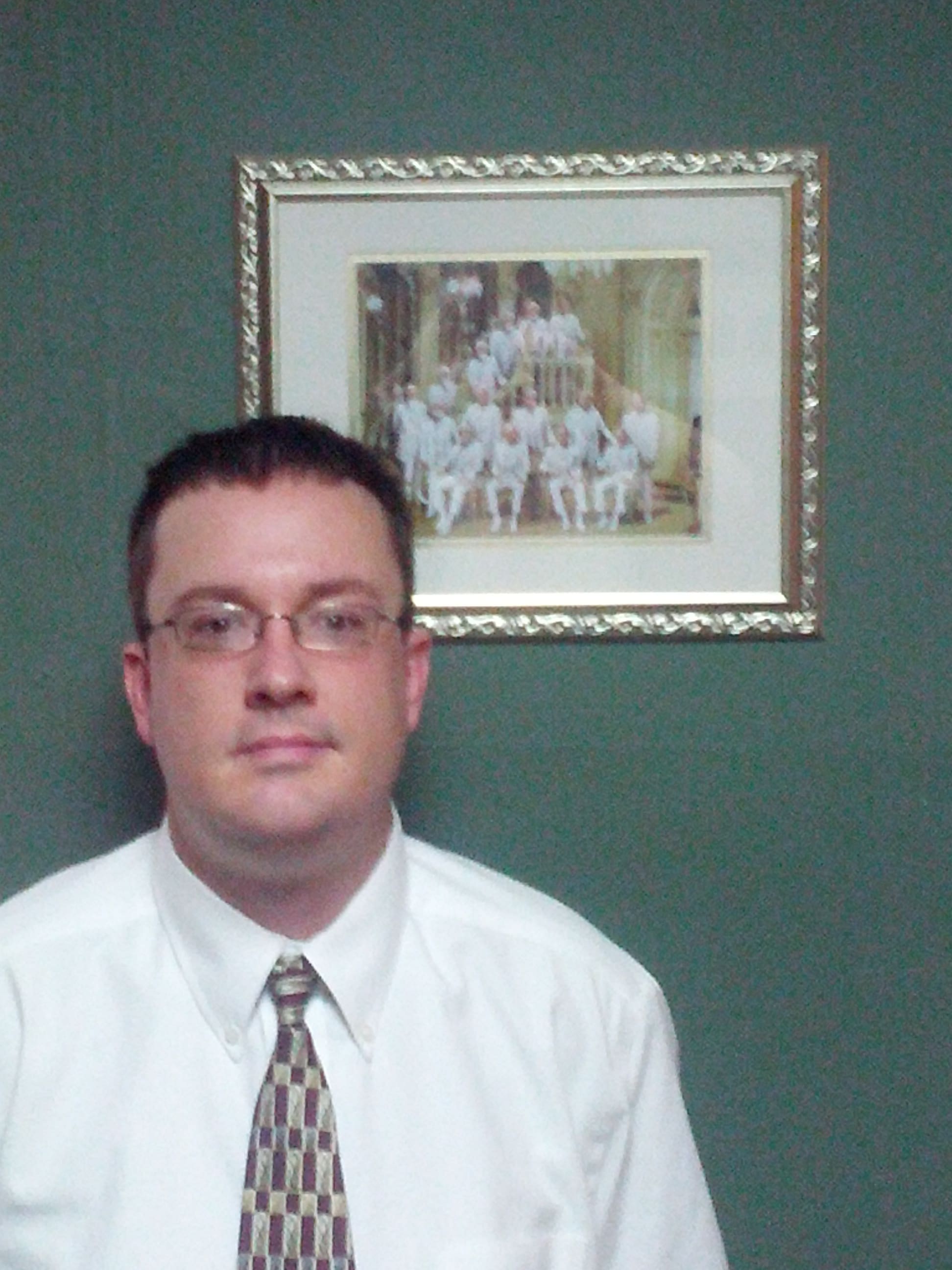
 Bill Reel is currently serving as Bishop of the Sandusky ward of the Cleveland Ohio Stake. In this interview we begin by discussing Bishop Reel’s conversion to the church AFTER reading Fawn Brodie’s “No Man Knows my History”, and his avid pursuit of Mormon apologetics after his baptism. We also discuss in depth his calling as bishop – including his job to counsel youth and women on sexual matters, masturbation, and homosexuality. Since Bishop Reel is a listener of the podcast, we discuss his perception and frustration of an increasing trend towards negativity on Mormon Stories. We also discuss the future direction of Mormon Stories, and Bishop Reel offers his advice for members in doubt.
Episode Transcript
Host: John Dehlin · Guest: Bill Reel
This transcript is machine-generated and lightly edited for readability. The audio is authoritative. Please excuse occasional errors in names and spelling.
Introduction to Bishop Bill Reel
Part 1 of 2 · Ep. 363
John Dehlin [00:00:02] I'm John Dehlin. Next on Mormon Stories, I interview a currently serving Mormon Bishop. Bill Riehl is currently serving as bishop of the Sandusky ward of the Cleveland, Ohio Stake. We begin today's podcast by discussing Bishop Riehl's conversion to the church after reading Fawn Brodie's no Man Knows My History and his avid pursuit of Mormon apologetics after his baptism. We also discuss in depth his calling as bishop, including his job to counsel youth and women on sexual matters, masturbation, and homosexuality. The church has changed in all sorts of ways. Do you think it's possible that this might change too? That someday you can engage in sexual relations within the bonds of marriage?
Bill Reel [00:00:42] You know, one of our articles of faith is, is that we believe there are still many great and wonderful things yet to be revealed. And this is a church of revelation.
John Dehlin [00:00:49] Since Bishop Reel is a listener of the podcast, we discuss his perception and frustration of an increasing trend towards negativity on Mormon Stories. We also discussed the future direction of Mormon Stories, and Bishop Reel offers his advice for members in doubt. What advice would you give to somebody who's really on the fence, who's really struggling with their faith to help them through what they're struggling with?
Bill Reel [00:01:10] If you are having a faith crisis, reach out to somebody. Grab somebody in your ward or in your stake who, one, you have trust with and two, who may know some of these issues. Find somebody you trust who knows those things and go talk to them. The other thing I would say is take your time.
John Dehlin [00:01:25] An in depth discussion with Bishop Bill Real next on Mormon Stories. Mormon Stories Podcast is a production of the Open Stories Foundation. All donations to Mormon Stories are fully tax deductible and go directly towards keeping the podcast alive and towards building a community of support for Mormons like you. To support the podcast or to join the community, please become a monthly subscriber today@mormonstories.org hello and welcome to another edition of Mormon Stories Podcast. I'm your host, John Dehlin, and today I'm very excited to have with us Bishop Bill Real. Bill is a bishop in Ohio. He's currently serving as an LDS bishop and he's been listening to Mormon Stories for, I don't know, almost a year.
John Dehlin [00:02:27] And I found out about Bill because he sent me an email in a very kind and polite way expressing frustration. He has been frustrated at what he kind of feels has been a change in tone of Mormon Stories Podcast over the past year or so. I'll let him speak for himself, but my understanding from reading his email to me is that he feels like it's kind of gotten a little more negative, more critical of the church. And my sense is that made him kind of sad because he wants to, you know, listen. He wants to see Mormon stories be successful. He kind of believes in the mission, but doesn't want to see it become too negative.
John Dehlin [00:03:01] And the truth is, I've been getting this feedback a lot from a lot of people, and it makes me sad. I don't intend Mormon stories to get negative or critical, but there have probably been some things I've been experiencing personally over the past year or 15 years that probably play into it. So here's what I thought today would be about. We'd bring Bill on. We would talk to Bill about his faith journey. He is a convert to the church, so we're going to talk a bit about his conversion, his faith development in the church, and we're going to talk about how he's come to a more mature faith.
John Dehlin [00:03:37] From his perspective, and probably from my listener's perspective as well, we're going to talk about what it's like to be a bishop in the Mormon church. And at the end, Bill is going to ask me some questions. He's going to be able to express some of his feelings and concerns. We're going to kind of turn the tables a little bit, and he's going to interview me, and we're going to just talk about Mormon stories, past, present and future and talk about how we can make it better. How does all that sound, Bill?
Bill Reel [00:04:02] Sounds great, John. Looking forward to it.
John Dehlin [00:04:04] All right, so, Bill, thanks. Thanks for coming on Mormon Stories. I should ask, like, have you asked your stake president if this is okay?
Bill Reel [00:04:11] I have not, but I assume if Terrell Givens and Richard Bushman and guys like that can be on, I would assume that I'm okay doing this.
John Dehlin [00:04:17] All right.
Bill Reel [00:04:18] Well, I'm not going to say anything that's going to, I think, be a negative. So I think we're in good shape.
John Dehlin [00:04:21] Okay, good, good. Well, I just want you to know I really appreciate you coming on both you sending me the email and coming on the show. We've had Kevin Klusterman on, but he kind of just spoke at a conference. We've never actually interviewed someone who's currently serving as a bishop, so this is something I've wanted to do for a long time.
Bill Reel [00:04:38] Wonderful.
John Dehlin [00:04:39] So thank you. Well, let's start talking about your upbringing and your conversion to the church.
Bill Reel's Background and Upbringing
Bill Reel [00:04:44] Excellent. As far as my upbringing, I'm from a family of my dad, my mom, and One brother. Close knit family. My dad was one of eight kids, and we were really close to the aunts and uncles on my dad's side. Everybody lives in this small city of Sandusky, smack dab between Cleveland and Toledo in Ohio. And growing up, my mom was a Baptist, but she stopped going to church around the age of 16.
John Dehlin [00:05:08] Do you know why?
Bill Reel [00:05:10] No. She had a rough childhood, and for whatever reason, she just. Church wasn't a priority on her list, and so she stopped attending around the age of 16. But my mom and dad both still believe in God, although there was never any active practice growing up. The closest I came to religion throughout my childhood and through my schooling up to my senior year in high school was my parents had a Bible in their house. A real big one. Big, huge family heirloom Bible. And once in a while I would open it up and just look at the pictures inside. When I was a kid, we didn't pray. We didn't really have much religion at all. The only time I really went to church was for a funeral or for a wedding.
John Dehlin [00:05:44] Okay, how was that? Was that okay? Or did you feel like something was missing?
Bill Reel [00:05:49] You know, I didn't. I really didn't look to God very much. Growing up, the only time I really even prayed myself was if I was asking for a new bike or for a girlfriend. So, no, religion wasn't really part of my childhood. It wasn't something I missed or felt like was missing.
John Dehlin [00:06:05] Okay.
Bill Reel [00:06:05] You know, that was my outlook, I guess, on God at the time. I kind of believed he was there, but didn't really bother to talk to him very much. All right, so growing up, the time I kind of interacted with the church, it's kind of an interesting story. Of course, this is back when I was 17 years old. I'm 33 now, I worked at a restaurant.
Converting to Mormonism at Age 17
Bill Reel [00:06:24] Back then, minimum wage was $4.25 an hour, and I worked at a restaurant. I was promoted up to be the baker in the restaurant. So I was paid eight bucks an hour, which was just a ton of money for a kid, basically. You know, I was working lots of hours, making good money, and I went to a store one day with a friend of mine, and I come out of the store and there's a little brochure on the window for McDonald's about getting employment for the summer and whatnot. And I didn't need a job. I mean, I had a good paying job, but there was just an inclination in me that said, I need to go get that.
Bill Reel [00:06:51] I know it sounds like one of these things you hear maybe in a testimony meeting. But I was really drawn to it, and so I went and applied to McDonald's for a second job, and they hired me right away. And while I'm working there, there's a wonderful girl there who paid attention to me, who was a member of the church, and she asked me out, and the two of us started dating. And in that process, she introduced me to the church, and that's how I came to find the church.
John Dehlin [00:07:13] So you converted to the church through her?
Bill Reel [00:07:16] I did. I saw lots of instances of people joining the church because of a girl. That wasn't my reason.
John Dehlin [00:07:23] Okay, so you weren't thinking, I want to marry her?
Bill Reel [00:07:25] No, no, that wasn't the case. I mean, we were dating, and that was going along well, but my experience with the church was. It was serious to me. It wasn't something that I was just going for anybody else. It was a serious thing for me to look into and to begin attending and checking it out.
John Dehlin [00:07:39] And this is not the person you ended up marrying?
Bill Reel [00:07:41] It is, actually.
John Dehlin [00:07:42] Oh, okay. It is.
Bill Reel [00:07:43] Yep. I ended up marrying this wonderful lady. Her name's Amanda.
John Dehlin [00:07:46] Now, I take you at your word. But how do you separate, you know, your genuine feelings and spirituality from the love that you had for this, what I assume you believe to be as a wonderful woman, and your desire to be with her? How do you separate those out?
Bill Reel [00:08:03] The best way I can explain it is to use this example. There are lots of people who join the church very quickly after getting through the discussions in a few weeks and entering the waters, really not knowing what they're getting into. Before I was baptized, I read the entire Book of Mormon. I took the church very serious. I read everything I could find. I didn't mess around. To me, it was either the work of the Lord and his church on Earth, or it was the biggest fraud in the world, and I had to get away.
John Dehlin [00:08:27] Okay.
Bill Reel [00:08:28] And that was that choice, and I knew that early on.
John Dehlin [00:08:30] And you would not have joined if it weren't sincere?
Bill Reel [00:08:33] No, I wouldn't have. Absolutely not.
Guest [00:08:34] Okay.
John Dehlin [00:08:35] Okay, I believe you. Okay. So you joined, huh? Was your joining like taking Moroni on his promise and getting that answer, or was it something else?
Bill Reel [00:08:44] Well, one thing that always kind of, I guess, bothers me just a little bit is when we're teaching investigators, and sometimes they're praying and they're reading, and they're just not getting this direct answer. And so we ask them to kind of act on their faith first, and maybe the answer will Come later. And I'm always skeptical of that because my experience was so profound as I was investigating the church, taking the discussions, going to church, learning all this stuff. It just seems so awesome to me when I first hear about Joseph smith at this 14 year old boy and him receiving this vision of seeing God the Father and the Son and.
Bill Reel [00:09:14] And to me that was almost magical. And as I began to study things, I started to go into my school library at the high school I attended and looking up things on Mormonism. But as most high school libraries, they don't have a whole lot of anything. And so I went to our local library in our city and so I go to the old card file system. You know, of course they didn't have anything on computer back then. And so I'm going through the card file system, I look up Joseph Smith and I get up to where the books are, the biographies and things on him, and there's only two books there and one of them is no Man Knows My History by Fawn Brody.
Bill Reel [00:09:44] And I thought, oh, she's got to be a member. She's writing a biography. This is beautiful. What a wonderful thing. And so I take that book out.
John Dehlin [00:09:51] Okay, wait a minute. This is before your baptism?
Bill Reel [00:09:53] This is before my baptism.
John Dehlin [00:09:56] Okay.
Bill Reel [00:09:57] Yeah, this is probably three or four weeks before I'm ready to get baptized.
John Dehlin [00:10:00] Oh, okay.
Bill Reel [00:10:02] So obviously reading through that, I mean, you can imagine being an investigator and that being the first bad taste in your mouth of the church. It obviously caught me off guard.
John Dehlin [00:10:10] You read the whole book?
Bill Reel [00:10:11] I read probably at least three quarters of it.
John Dehlin [00:10:14] Okay.
Bill Reel [00:10:15] And so as I go through it, you know, I'm making little mental notes of things that just are out of place to me. And I go to my girlfriend at the time, of course my future wife, but I go to her parents and I sit down with them. I say, hey, I found this book. This thing just tore me apart. These are questions I have. And so I start naming off all the questions I've got and the two of them were super kind about it.
John Dehlin [00:10:34] What were the biggest, what were the biggest issues that you remember gleaning from the book?
Bill Reel [00:10:39] That's a long time back, I guess maybe some questions on the witnesses, some of the things that they had said. Obviously, as the missionaries are teaching you, they give you the absolute, complete, faithful perspective of that and translating with a seer stone different things like that that were going on.
John Dehlin [00:10:55] Polygamy, maybe.
Bill Reel [00:10:56] Well, maybe a little bit. But I never, I can't honestly tell you that up until maybe the last five years or so that I remember having to deal with the polyandry aspect of it. I do remember reading in the no man knows my history about the polygamy, but for whatever reason that didn't bother me because I saw it in the Old Testament and thought, hey, if this is the Lord's church, it's obviously going to do the things that past prophets have done, right?
John Dehlin [00:11:19] Okay, so you brought these questions to your future in laws. What did they say?
Bill Reel [00:11:26] Well, they were really kind, respectful, but they didn't give me good answers. They didn't answer in the same way that Fair or Farms would have answered the question. And so I had to walk away kind of okay. They were nice about it. They reassured me I was doing the right thing, but they didn't really give me good answers. And so from that point forward, I made a commitment to get answers to those questions. And so I started looking online for everything I could find. And in the process of doing that came across Fair and Farms Shields. And one of my favorites was a site called Book of Mormon Answerman where a guy took questions that were sent in and answered them one by one.
Bill Reel [00:11:58] And you could go back in the logs of his website and look at all the past questions. But I got answers to all of my immediate questions. I was in the process of reading through the Book of Mormon and I finished reading that. And so I knew that, okay, there's evidence on both sides. There's a positive way to see the church and there's a negative light to see the church in. And so one night I knelt down and prayed to Heavenly Father to let me know what the truth was. I remember praying for a long time. I would even now, looking back, maybe say an hour or two.
Bill Reel [00:12:28] And by the time that experience was over, I hadn't gotten an answer. I was in tears and eventually just crawled into bed and went to sleep. I woke up the next day and was sitting down on the couch in my parents living room and my girlfriend came over and we're talking and we're talking about the word of wisdom. And it seems like a strange thing for me to kind of make as my last roadblock to overcoming the belief system of the church. But my dad made some wonderful iced tea and, and he made it every day and he put tons of sugar in the stuff.
Bill Reel [00:12:56] It was really good. And so I told my girlfriend, I said, you know, I can give up the drugs which I used to use, I can give up the alcohol, I can give up some of the other things, you know, but coffee and tea don't make a whole lot of sense to me. And in the midst of having that discussion with her, and I don't want to go too far, but I will say that an experience happened at that moment that, as I look back on, was absolutely profound. And the message to me was that the church was true, and that kind of erased all the doubts. And so I went forward and got baptized.
John Dehlin [00:13:24] Wow. So I don't want to probe you.
Bill Reel [00:13:28] Sure you can.
John Dehlin [00:13:30] So just like kind of a overwhelming emotional feeling, like some type of penetrating, you know, deep, sincere witness. Like, what can you tell us about the witness that doesn't violate the sacred nature of it?
Bill Reel [00:13:46] Sure. Of course. My girlfriend is in the room with me, and as we're having the conversation, it's. It was more than emotion. It was a spiritual experience. One in which, if I were to look at in a small way, to resemble that of Alma the Younger or Paul, and not to the extent where I saw angels or anything like that, but certainly more than just a burning of the bosom. Yeah. I mean, to me, a very sacred experience.
John Dehlin [00:14:10] Did she feel it, too?
Bill Reel [00:14:12] She did, and she recalls that as being the moment that she knew the church was true as well.
John Dehlin [00:14:17] Wow. Well, that's a real bonding thing for a couple, isn't it?
Guest [00:14:21] It is.
Bill Reel [00:14:22] It's one of those things that we can kind of always look back on and be able to reassure each other, because obviously, as time goes on, any spiritual experience you have, you start to look back and go, you know, was that really what I. What I thought it was? Was that really the experience that my memory tells me it was, and yet both of us were there in the room at the same time? And so you're right. It is absolutely a strength to both of us.
John Dehlin [00:14:40] Well, that's a beautiful experience. Probably one you never forget, huh? Correct.
Bill Reel [00:14:43] You're right.
John Dehlin [00:14:44] So you joined the church?
Bill Reel [00:14:46] I did. I got baptized back in April of 96, right after I joined. My first calling was to serve as the assistant ward mission leader. And I thought I was the cat's meow. I thought that was the greatest calling in the world. I get to sit with the missionaries. Right. These guys who just got done teaching me, I get to help them work on meal calendars and missionary splits. Of course, today they want to call them exchanges, but it was a neat opportunity just to be close to the missionaries and really feel a love for the missionary work.
John Dehlin [00:15:16] I should have done this earlier, but how did you resolve the Joseph Smith stuff? Did you just put it on a shelf? Did Fair Farms and Shield And Book of Mormon Answer man, just really, really resolve your issues.
Bill Reel [00:15:28] I felt like early on, the stuff I was coming most in contact with was the cheesy anti stuff. You know, the Book of Mormon where it talks about Jesus will be born in Bethlehem, Right. And not Jerusalem and that kind of stuff. And so I thought the apologetic sites that I used address those things very well. I think even the mediocre questions about, you know, the Book of Mormon witnesses and things like that, I think those apologetic sites take care of very easily so that those things were not an issue for me. And so I was able to very easily see right away that there are lots of people who fight against the church that would and will say anything to take people out of the church or to keep them from ever getting involved.
Bill Reel [00:16:10] While I do see some criticism of the church as being valid or at least worth the discussion, I would say 90% of it, 95% of it is a bunch of junk. And that stuff I was able to wade through pretty well. Obviously, this was just during my senior year of high school. And I also, right after joining the church, started going to a local community college as my time there. Of course, I'm taking 14, 16 credit hours, but in the space between classes, I would go up to the computer room and I would spend an hour and a half at a time just printing off tons of things from the apologetic sites and from other places that just gave church history and theological discussion.
John Dehlin [00:16:47] This is all after your baptism.
Bill Reel [00:16:49] Correct.
John Dehlin [00:16:49] While you're in college. Correct. So you started getting into apologetics just right off the bat after joining.
Bill Reel [00:16:55] You got it. I mean, if you read no Man Knows My History and you still join the church, you really have no choice. Right.
John Dehlin [00:17:00] Okay. All right.
Bill Reel [00:17:02] So, I mean, you've got to deal with that stuff. The things that Vaughn Brody and other critics raise, obviously is a barrier to faith if one doesn't search out answers.
John Dehlin [00:17:11] And this was like on aol, right? This was like early on in the Internet's life.
Bill Reel [00:17:15] This is when the computer made lots of noise when you signed in. Yes.
John Dehlin [00:17:20] Yeah. Was there even a fair website at that time?
Bill Reel [00:17:22] I don't believe Fair was there early on. Farms, I believe, had a small presence. I also went on a couple early church trips to do baptisms for the dead in Toronto and things. I would go to a church bookstore and pick up some of the farm books from Things by Hugh Nibley. My main source, probably early on, was Book of Mormon Answer Man.
John Dehlin [00:17:43] Okay, got it. And that was a website that existed back then?
Bill Reel [00:17:46] It was. And it was just one guy who took on questions. I think at some point he took on some other people to help him. But originally there was. I think. I don't know if it was Dr. Walter Martin or who it was, but somebody had a Bible answer man, and this was his way to combat that.
John Dehlin [00:17:59] Got it. Now, is this guy still alive? Book of Mormon answer man.
Bill Reel [00:18:02] I don't know. I haven't looked him up in probably 10 years.
John Dehlin [00:18:05] Okay. All right. So were you like. Did you eventually, like, join FAIR and become a member and a participant?
Bill Reel [00:18:10] No, I've sent them some questions over the years, but no, I've never become involved. I'll try to say it this way. I know how, you know, in many of your podcasts and you having discussions with those who have either left the church or who are struggling, recognize the feelings that you guys have. And, you know, as we go through this interview, I'm sure we'll talk a little bit about faith crisis. But, you know, I've had times where I've felt those things, and so I didn't really feel like playing kind of the line at times whether I should even ever even take an interest in joining fair. I've. Like I said, I've sent them questions along the way.
Early Faith and Evolving Beliefs
John Dehlin [00:18:41] Okay, so during those early years where you're sort of becoming an apologist, my guess is from our early conversations that you had maybe a bit of an absolutist or even a naive kind of worldview of the church. Is that right?
Bill Reel [00:18:57] Absolutely. If it was written in Mormon doctrine, if it was written in doctrines of salvation, if anybody said it, that was a leader of the church, to me, it was absolute truth. To me, it was very black and white. I know lots of people have talked about the different followers stages of faith. I was definitely, even though I was dealing with the criticism and the answers, I found myself probably looking back to be very much in stage one of that paradigm.
John Dehlin [00:19:23] Actually, not to correct you, but just for my listener's sake, I think stage three can safely be said to be kind of this literalistic black and white, true and false. Now, you may know more about Fowler than I do.
Bill Reel [00:19:36] No, you got it.
John Dehlin [00:19:37] But what you're saying I associate with. With stage three of Fowler. But it's not an important distinction. It's just so our listeners don't get confused. So you were a Bruce Armaconki guy, huh?
Bill Reel [00:19:47] Early on, you're right. At least with the few things that he said that maybe seem controversial now. At the time to me, I didn't know there was another Side of view to those things.
John Dehlin [00:19:59] Give us an example of the things you believe that maybe you don't believe now.
Bill Reel [00:20:03] Well, I remember even as early as maybe seven years ago or so, taking my older two kids to a museum of history and walking through a section where they had Lucy the skeleton from a bazillion years ago. And we were having a discussion. I told my kids, I said, listen, guys, they only have like seven bones of hers and they put her all back together. And this stuff's absolutely false. There's no such thing as evolution. Otherwise we would have something between the monkey and the man. And so even at that point, seven years ago or so, I was very much evolution. Age of The Earth was 6 to 7,000 years old.
John Dehlin [00:20:40] And what about the blacks in the church?
Bill Reel [00:20:43] I'll tell you an interesting story. One of the things that I think I sent to you. When I was working at McDonald's just out of high school, just starting college, there was a wonderful African American lady who worked there and she had caught wind somewhere of the church's stand on African Americans and knew that they didn't allow the priesthood up until a certain time, obviously 1978. But in her mind, she didn't know what that was. And so she asked some questions about it. And I tried in the nicest way possible to explain to her that unfortunately the pre existence some didn't make very good choices and they perhaps, maybe rode the fence.
Bill Reel [00:21:16] Ooh, yeah, absolutely. And that was awful. The moment it came out of my mouth and I reflected on it that night, I thought, man, even if that was true, that was the dumbest thing in the world to say.
Bill Reel [00:21:26] And so I've kind of ever since then taken a stand of looking at the facts, researching things out, and trying to get a better feel for how the church as a whole handled that situation.
John Dehlin [00:21:37] And he got that From Bruce R. McConkey, the fence sitter staff.
Bill Reel [00:21:40] Yeah, but not just him. It was members of the ward that I would have private conversation with who also had never encountered another way to see things. And so they were kind of in that same framework. And so if you just joined the church and Brother Jones tells you that, you assume because Brother Jones has been in the church 20 years, that he's not lying to you. So.
John Dehlin [00:21:59] Got it. Okay. So that's pretty hardcore. And that's kind of where I was before my mission. So I totally get that mindset. You also talk a little bit about how you viewed salvation and the atonement.
Bill Reel [00:22:17] Sure. As a teenager, young adult, even into probably my late twenties. Salvation, to me was an earned thing. We hear so often in church about obedience and keeping the commandments. And those things are obviously important. I hope I maybe can expound on that a little bit more as we go. But those things are absolutely crucial, and they're important, but they're not the end all, be all. Elder Holland, in his talk, the Only True God, which was at conference maybe four years ago or so, he finishes off by bearing his testimony of the Savior. And in doing so, he says that the only way we're getting back to the Father is through the merits, mercy, and grace of Christ.
Bill Reel [00:22:52] And that is absolutely where I've come to. But you're right. Early on, I felt like salvation was an earned thing, that we were saved after all we could do. And early on in church, I felt like I could do everything I was supposed to do. You know, as a young person, you sometimes have this naive view that you can just conquer the world and do it your way. And I think at times in the church, we imply that, although I don't think that's the doctrine at all. And I kind of walked away feeling that way. I didn't see a whole lot of grace until later on in my life.
John Dehlin [00:23:19] So just a very much obedience, work hard, earn your salvation kind of thing.
Bill Reel [00:23:26] You got it? Yep, very much so.
Callings and Being Called as Bishop at 29
John Dehlin [00:23:28] And callings before becoming bishop?
Bill Reel [00:23:30] Well, of course, when I first joined the church, we talked about being the assistant ward mission leader. Sometime after that, maybe six months down the road or so, I was called to be a counselor in an elders quorum presidency. I come from a small ward, and so it's a lot different than the wards out west. Maybe on normal attendance in those days was maybe 100 to 115 for a sacrament meeting. And so there weren't a whole lot of people in. In the ward to fill callings. We probably barely had enough to fill the basics. And so I was a counselor in an elders quorum presidency. After that, I served in an elders quorum presidency three more times. And I also had a brief stint in a young men's presidency before being called elders quorum president.
John Dehlin [00:24:09] Right, okay. So lots of callings. Yeah, Elders quorum presidencies. And you're in the bishopric, right?
Bill Reel [00:24:15] Yeah, I served in the bishopric after being an elders quorum president as a second counselor, and then, of course, a couple years later, called as a bishop.
John Dehlin [00:24:21] So what was that like being called as a bishop at age 29?
Bill Reel [00:24:24] You know, there's a lot of times where you'll hear in the church that people receive A spiritual impression beforehand that they're going to receive a calling. And obviously, we want to be careful that we don't want people walking around and telling everybody that, hey, I'm going to be the next so and so. But I remember about a year prior to being called as bishop, receiving an impression that that was going to happen. And so just me privately, I started taking some notes on things that I felt like the Lord wanted me to do different or things that he wanted me to make a priority in our ward.
Bill Reel [00:24:52] And, you know, a year later or so, that happened. As you can imagine, anytime being called in one of those kinds of callings, you know, the stake president, his executive secretary calls me up and says, hey, we'd like to see you. Probably a couple months prior to that, I had told my wife that I felt like that was coming. And so I shared that with her. And I went up to the Stake center, sat down with the stake president. He said, do you know why you're here? And I said, yeah, I know why I'm here. And I had already prayed about counselors that I wanted to submit to him.
Bill Reel [00:25:18] And so we had a nice discussion. He extended the call. He asked for counselors. I submitted those names to. He asked me to go home and pray about. And I said, I've already done that. Here's the two names of the brethren I'd like to serve with me. And that's how it started.
John Dehlin [00:25:30] Okay, so, wow. Being a bishop, that's a pretty big thing. Now, just before we kind of dig into what it's like to be a bishop, would you say that you began your time as bishop as a stage three literalistic Mormon, or had your faith perspective matured by that time?
The Best Parts of Serving as Bishop
Bill Reel [00:25:50] I wouldn't say I was as far along as I am today, but I would say that I recognized that the church being made up of human beings is messy. And I did realize, probably before being called as bishop, that not everything happens in a perfect, exact way that Our Father in Heaven would like it to. So I hope that answers that.
John Dehlin [00:26:11] Sure. And on The Bruce R. McConkie like
Bill Reel [00:26:12] kind of stuff, well, I quickly realized that there was more than one edition of the book and that changes had been made that were asked for. And so I realized that at least on some things he had written, it was time to make some changes to those. And I also realized, too, I mean, we'll talk about this as we go forward, but as time goes on, you kind of realize that the leadership of the church, even though one person might express their opinion off in this corner, there's a big difference between one leader saying something he thinks and the church in general being united and saying, that's the way we go.
Bill Reel [00:26:40] And one example, I'll say, is the supposed journal entry of one of the members of the church replying back about Joseph having claimed that there were men living on the moon. And I also knew that Brigham Young had said in journal discourses that there were people living on the sun. And, you know, obviously, knowing that, you either got to say those things are true or obviously people are somewhat limited at times in their understanding of what truth is.
John Dehlin [00:27:01] How would you feel if we dug into what it's like to be a Mormon bishop, and then we can talk about how that's affected your faith journey after? Is that okay?
Bill Reel [00:27:09] Sure. Absolutely.
John Dehlin [00:27:10] Okay, so let's start. What are some of the best things about being a bishop? What are some of the things you just love?
Bill Reel [00:27:16] This is going to sound crazy, but I love getting there early. I love the meetings. I love being with other good members of the ward. I like being involved in that revelatory process of discussing callings and trying to make a list of all those you think fit and those that don't fit, and then going back and asking, heavenly Father, disregard my list, but who are you wanting to be there?
John Dehlin [00:27:38] There's a lot of cynicism out there about that process that really, it's just about plugging holes with people that are available, that it's more of a discussion and there's no possible way. It's like a teacher needs to be released. You release them, you figure out who's available, or you go pick somebody and you plug them in. Tell us how. From your perspective, that doesn't quite paint the picture.
Bill Reel [00:28:00] Sure. I think at times it can kind of be like that. There are times where another primary president or a young woman's president or, you know, another leader in the ward will make a recommendation that they've already prayed about, and they'll bring that into our meetings, that recommendation, and we'll discuss that. We have a prayer at the beginning of our bishopric meeting, and obviously, if we feel like that's not going to work, we'll ask them to make another recommendation. But we feel like they've already spent the time pondering and praying about it. So unless we have this really awkward feeling as we discuss it, there are a lot of times where we'll move ahead with what another auxiliary has already prayed about for a teacher or whatnot. But in instances where the bishopric, my
John Dehlin [00:28:34] guess is you would see that as part of the revelatory process that Correct. That the auxiliary can receive inspiration just like you.
Bill Reel [00:28:40] Yeah. In fact, sometimes people will come to me and they'll say, bishop, who should I have as this? And I'll say, that's your revelation. That's not mine. At the end of the day, it's up to us, the bishopric, to confirm that. But that's not our revelation to receive.
John Dehlin [00:28:52] But sometimes you can get confirmation.
Bill Reel [00:28:55] Absolutely. When we have those discussions, there are times where we feel really good about those who have been submitted. And there's times where we say, you know what? This fits for all intents and purposes, but this just doesn't feel right. And so we'll ask them to make another recommendation. The times where that's the strongest is obviously where we as a bishopric, have stewardship for initiating that call. So, for instance, if we're going to call an elders quorum president or a young men's president, in that discussion, we will talk about every name in the ward that could possibly serve there. Sometimes that list includes less active members as well.
Bill Reel [00:29:26] And so as we ponder it, we'll talk about the list. We'll go away that day from our meeting. We'll email each other back and forth through the week, perhaps some phone calls. We'll come back in the next Sunday, we'll settle in maybe on a list of three or four names, and at that point we go off and we pray individually and pray together. I can testify and share with you maybe just as a bishop, kind of putting on my spiritual hat for a second, that some of those experiences are to me, as profound as the time when I prayed about the Book of Mormon. There are other times where I feel like Heavenly Father just leaves us on our own to figure out who the best person is and that it maybe doesn't matter a whole lot to him in a certain calling.
John Dehlin [00:30:00] But sometimes you receive what for you are very clear promptings or witnesses.
Bill Reel [00:30:05] Absolutely. I mean, there are several occasions where I could say that it absolutely wasn't my mind or my idea. And in circumstances that the Lord worked through, made it clear that that was somebody that was to be called to something. I've been, you know, not to. Again, I don't want to be careful. I don't tread on sacred experiences. But there's been times where I've been woken up out of my sleep and told who to call to something. Those type of things happen. Is that every single calling, not necessarily those might be not a common occurrence, but they do happen.
John Dehlin [00:30:31] Have you ever felt really good about, like, really spiritually impressed about a call, made the call, and then it was just kind of a disaster, or like the person had to move or they did a bad job and you had to release them. Have you ever had something that you just thought you had clear direction about just really not turn out okay?
Bill Reel [00:30:50] I haven't had that happen. I have had a disaster occur. But that was because I ignored an impression that came. I'll share the story, and of course, I won't put any names in there, but we were looking to fill a calling, and we prayed about. We talked about the names that were available. We settled on a list of two or three that really seemed like they would fit both from a spiritual standpoint and also just from a logical way of talking about people's talents and abilities. And so we had kind of thought about a certain individual. I felt really good about that person, but the person was a very young individual, and I felt like that was just too young of an age for them to serve in that capacity.
Bill Reel [00:31:25] And so I disregarded that. We ended up calling another person to serve in that calling. It was a disaster. I mean, it just didn't go well from the very moment we sustained him till the moment we released him. And it was weird, too, because the first individual that I felt good about and should have called moved out of the ward in the same week he moved out, moved in another individual who ended up being the next person to take that calling. And so it was an obvious lesson to me that as a bishop, sometimes you're left to make your own mistakes and learn from those as well.
Bill Reel [00:31:53] I mean, just because you're called to be a bishop doesn't make you some super spiritual giant where you don't make mistakes. You absolutely do.
John Dehlin [00:31:59] Got it. If you were to have some inspiration about a call, were to make it, and then it were to go bad, can you imagine how you would make sense of that?
Bill Reel [00:32:07] Sure. We've had callings where we've extended, and person's only been in the ward another month and ended up leaving. But who am I to say that there wasn't something in those few weeks that they learned or picked up on or assisted somebody else with? I'm always reminded the Scripture, right. The Lord's ways are not our ways.
John Dehlin [00:32:22] Right.
Bill Reel [00:32:22] And so we just. We have to come to conclusion if we feel good about it, if we feel inspired and we do something. I'll give you an example. Joseph Smith Sr. Lives in Sharon, Vermont, with his family, and he's got a farm. And that Farm fails multiple times. Right. It's an absolute disaster. Things don't go well, but yet at the same time, the Lord needed him to be in Palmyra. And so we can't look at every bad experience or every time something goes wrong and say to ourselves, you know, oh, I really messed that up. You know, sometimes bad things happen because there's a greater purpose in it that needs to occur. And if Joseph wasn't in Palmyra, then we don't have any plates and we don't have any Book of Mormon.
John Dehlin [00:32:56] Okay, so aside from showing up early, the meetings, and the revelatory process, what else do you love about being a bishop?
Bill Reel [00:33:04] It is absolutely enjoyable to sit down with the youth and to work with them, whether it be, you know, primary kids, to interview them before baptism. A chance to sit down with young men and young women on a regular basis and see how they're doing in life. There are several youth in the ward who take lots of opportunities to sit down with me and just chat about how they're doing and ask questions about, you know, this is what's going on in their life and how would you handle this? And it's nice to know that they trust me to that capacity. I know joined the church at 17.
Bill Reel [00:33:30] I was scared to death to talk to the bishop about anything. So some of them take advantage of that chance to kind of open up to the bishop. It's a wonderful thing. I mean, you can't beat those experiences. There are times where people have struggles, whether it's a husband and wife in a marriage. You know, I've had to sit down with several couples who have been struggling. And while that's not a fun thing to have to talk about or work through, it is enjoyable in most situations where that tends to work out and people tend to take a step back and find ways to make things work.
How Bishops Handle Sexuality and Repentance
John Dehlin [00:33:59] Let me ask you a couple questions about all that. So right off the bat, one of the things that, let's just say disbelieving or disaffected or struggling Mormons struggle with. In terms of bishops, the first is a lot of people are uncomfortable with bishops talking about sexual things with teenagers or with women.
Bill Reel [00:34:18] Sure.
John Dehlin [00:34:19] They kind of feel like, you know, women should be talking to women about sexual things. The last thing we want is some bishop being aroused by inquiring as to the sexual exploits of a young woman. Right.
Bill Reel [00:34:29] Sure.
John Dehlin [00:34:29] And then a lot of people are very uncomfortable about a bishop asking a young teen about masturbation or about, again, his or her sexual exploits and stuff. How do you handle those things?
Bill Reel [00:34:41] Well, I'll start off maybe with the teenagers. When they come in and they're struggling with those kinds of issues. I'm real careful and I'll share. There's kind of a dichotomy there. You can either be so tough on what it is they're doing and make it sound so awful that you drive the person to discouragement and depression, or you can approach it from trying to be so soft about the issue that the person doesn't see it as a problem and sees it as okay to do. And that's a really tough line to walk. But that's the line I try to walk. I try to make sure that when someone comes in and they're making mistakes, that they know that in God's eyes that they are mistakes, but at the same time express such a love for them and help them understand God's grace that they see the push to be better. Does that make sense?
John Dehlin [00:35:24] Yeah. Do you ask for details? Do you like say, how far did you go? Is that an important part of the process for you?
Bill Reel [00:35:30] I don't think the details are important. If someone were to come into my office and share some sin they committed, there are probably some details that are pertinent. Whether it's something that happens a lot, whether it's just a one time mistake, maybe if it involves a church member, things like that. But the exact details of when it started, when it ended.
John Dehlin [00:35:48] But I'm asking most about what they did, you know.
Bill Reel [00:35:51] Oh sure. The actual act itself is obviously going to have to be part of the process of confession. So yeah, I mean, if we're having a discussion about a young man and we're talking about masturbation, for instance, and he comes in and he says, bishop, I've got something I need to talk about. You know, I'm going to ask him what it is and he's going to say it's a sexual sin. And I'm going to say, well, I need to know more than that because obviously masturbation is going to be treated different than fornication versus other sexual sins. So to that extent, sure, I'm going to need to know what it is, but I'm not going to ask him what day of the week and what all occurred.
Bill Reel [00:36:18] I think sometimes we get this impression because we hear one negative story out there of one bishop or church leader who stepped across the line, that for some reason all church leaders are probing and trying to find out every detail. I just don't think that's the case.
John Dehlin [00:36:32] So you try. You don't. How far did you go? What did you touch? Where did he touch you? You do or don't kind of go to that detail.
Bill Reel [00:36:40] I obviously want to split up between the severity of the issue.
John Dehlin [00:36:44] Okay.
Bill Reel [00:36:44] But I don't need them to share the entire sexual experience with me for me to know where they cross the line and what the repentance process is.
John Dehlin [00:36:51] And I'm guessing the big lines are touching versus intercourse. You know, are there other big lines besides those?
Bill Reel [00:36:58] Well, I think you hit on it. I guess what I'm trying to say is this. It's important to know what occurred, but not every single moment by moment of how it happened. I think the essential basic facts are necessary, but I don't think we need to put someone on the spot to share the entire experience so that we can move from there.
John Dehlin [00:37:15] Okay. And you can understand why people are concerned, right?
Bill Reel [00:37:18] Absolutely.
John Dehlin [00:37:19] A man asking a young 15 year old to talk details about their sexual exploits, you could see how that would make some people uncomfortable. Right.
Bill Reel [00:37:28] And I can understand that. And you know, I've had adults come in and talk to me about similar kinds of issues. I can share with you that just as one bishop. I'm not comfortable having those discussions necessarily. It's not like I enjoy having people talk to me about the mistakes they make. It just doesn't work that way. I'm sure there are a few oddballs out there who take something from that, but for me it's not the case. It's a very uncomfortable experience outwardly. And obviously I don't want them. Hey, I'm uncomfortable. You're making me nervous. That's not the case, but.
John Dehlin [00:37:56] Right, right. I appreciate. I hope you understand the spirit from which I'm asking the question.
Bill Reel [00:38:02] Absolutely.
John Dehlin [00:38:03] This is a particularly important thing for me because in my line of work, I either talk to people or hear about people struggling with masturbation. And I've searched the Church Handbook of Instructions and I have not found the word masturbation anywhere in the Church Handbook of Instructions. So my question to you is, and this is a very technical question, is there church policy related to masturbation, official Church policy that you're aware of?
Bill Reel [00:38:27] The only thing I could say that I'm aware of is that in some of the young men manuals in the For Strength of Youth pamphlet, and in some of the talks from General Conference, it's shared with us that that kind of conduct, while not as grievous as other sexual sins, is certainly not the choice. Our Father in Heaven would have us make. And that I really believe that this life is about overcoming the things we want to do and turning our will over to the Father and the Son. And perhaps that's just one of those things that for young people especially, is a struggle, but is a necessary thing to be able to strengthen one's own willpower.
John Dehlin [00:39:01] Okay, so you're not aware of any official doctrine around masturbation?
Bill Reel [00:39:05] No. Other than obviously the For Strength of Youth pamphlet that each of our youth are given and lessons are taught from is certainly approved by the First Presidency. And so I see it as a policy. I don't know that we have any doctrinal statement saying this is absolute doctrine of the Church.
John Dehlin [00:39:21] No. Or even anything in the Church Handbook of instructions about it.
Guest [00:39:25] Correct.
Bill Reel [00:39:25] But there's other things in the Church Handbook of instructions that, you know, I'd have to sit and think about them. But there's things in there that probably aren't spelled out specifically either.
John Dehlin [00:39:32] Right? No, no, no. That's okay. That's important to me. Let me tell you why. Sure. I hear of situations just here in Logan where a bishop will find out that a kid's masturbating and not let him take the sacrament or take his temple recommend away. I even heard of a bishop here who would ask the teenager to text him every night before he went to bed and tell him whether or not he masturbated. And what I've experienced is that there's a lot of public shame in saying you can't go to the temple or you can't take the sacrament, especially over something that. Would you say that masturbation is pretty common among our male youth?
Bill Reel [00:40:07] I would assume so. Obviously, being a non member enjoying the church at 17 and having those discussions with other guys in the locker room and things that go on. And you're aware of the studies, too, that say that almost every young man does that. But just because something occurs as a temptation or as an act to a majority of people doesn't necessarily make it something that's approved or okay with our Father in heaven.
John Dehlin [00:40:30] Right. So how do you get guidance on what the right punishment is for that?
Bill Reel [00:40:34] Sure.
John Dehlin [00:40:35] And that's why I'm asking about policy. Because if you take their temple recommend away, or if you tell them they can't take the sacrament or they can't bless the sacrament or pass the sacrament, it's a signal to the whole ward that this kid is potentially doing something awful that makes them feel terrible. People are left to their own imagination to speculate as to what the infraction was and then you've taken away from them. If you believe that the temple or the sacrament are important resources for spirituality, you kind of have taken that away from them and made it maybe even harder for them to draw on the spiritual support that they might need to make some positive change. So how do you decide how to discipline on something like that? Do you have a set punishment or discipline for things like that?
Bill Reel [00:41:22] I don't. Each individual is different. And so some of the individuals that I work with on those kinds of issues, some of them, there might be more of a harsher consequence for that only because in our discussion back and forth and our spending time together and talking, it becomes obvious that they're not working on it very hard. And yet there are other individuals who are really trying to do all they can to rid themselves of that practice. And in doing so, there are times where I exercise a lot more leniency with them. And so, for instance, I'll give you an example. If a young man is really putting in the effort to try and rid himself of that practice, let's say he hasn't had an issue that week.
Bill Reel [00:41:58] Perhaps we let him take the sacrament that week. It just depends. It's a person to person issue if someone has a written out plan of how they handle it. Anytime any youth comes in with that problem, I would venture to say they're not going by the spirit, not handling it the right way.
John Dehlin [00:42:10] Okay, so you might go week by week. What are some of the consequences you would give to a kid who's trying to struggle with that?
Bill Reel [00:42:17] If the person seems insincere or not really working on it, then I might take sacrament away or might enforce some other disciplinary actions such as not giving a talk or not saying prayers in church, but obviously encouraging them to pray as often as possible privately. But at the same time, there's the other end of the spectrum too, where some of the youth will be able to participate fully as long as there's at least some time barrier between the last time that it's occurred and there's a constant effort of them to get that practice behind them.
John Dehlin [00:42:45] Got it. You know, people are going to be annoyed that I'm talking about this. The truth is it can really tear a kid's life apart.
Bill Reel [00:42:52] Absolutely.
John Dehlin [00:42:53] Okay. Talk about why you said absolutely. Because I don't want people to think I'm just being prurient or whatever.
Bill Reel [00:42:58] That's all right. I've read stories where a young man perhaps getting prepared to go on his mission or whatnot comes in and confesses to his bishop that he's struggling with those kinds of issues. And the bishop just feeling, maybe because of the way he was taught or the way things were explained to him, that that act is just so grievous that he makes the young man feel so bad and guilty. And I've heard of issues where people have either left the church or from that point forward, never had positive feelings of the church again. And I don't know if it's true or not, if we're talking urban legends or what, but I've heard situations where suicide has occurred or at least suicidal thoughts because of feeling so worthless.
Bill Reel [00:43:33] Like I say, I try to walk the line. I don't want people to walk out of their office speaking to their bishop and feel discouraged and depressed. They should feel the exact opposite. If one has a conversation with their bishop about serious issues, one should walk out of there impressed and inspired to reach higher.
John Dehlin [00:43:47] What would you say to a kid who just said, bishop, I've tried to stop and I can't. And so I'm gonna. I'm not gonna try and stop masturbating. It's just something I can't stop. What would you do? Do you have any idea? They said, I love the Lord. I love the church. I want to be a missionary, but this is just something that I just. Honestly, I do, and I've tried to stop. And every time I've tried to stop, it's made it worse, and it's just wrecking me to keep trying to stop something. Do you have any idea what you might say or how you might counsel them?
Bill Reel [00:44:13] Maybe just some basic principles? I mean, we obviously don't want to encourage anybody to give up on trying to be better. So we certainly don't want to say, okay, well, that, you know, that's good enough. You've tried your best. That's fine. No, we don't want to do that. Obviously. We want people to feel encouraged to keep trying. There are lots of things, right? I mean, there are probably things that you and I struggle with in regards to maybe language, maybe different things in our life that at one time or another we said, man, I'm really struggling with this, but I'd really like to rid myself of it.
Bill Reel [00:44:37] Giving up isn't the answer you hope you can show people. Maybe if you've talked to them several times and you've given them kind of an outline of a way, you'd like them to try and attack the problem. Maybe if that's not working, you go back to the drawing board and you say, okay, let's try something different. Let's approach it this way. I've had some youth that I've had them keep a journal. I've had some youth that, other than practicing righteous behaviors to put it as far from their mind as possible. Again, it's a person to person, individual circumstance.
John Dehlin [00:45:03] Is that something you ask about explicitly or do you wait for them to confess it?
Bill Reel [00:45:07] I don't ask explicitly.
John Dehlin [00:45:10] So it's possible there's lots of young boys in your quorums that kind of do that, but they've just never brought it up.
Bill Reel [00:45:16] Sure. I will say that even just as early as last Sunday, a Sunday school teacher happened to be absent. And so I walked into the older youth Sunday school class. I think it's the 16 and up, and we had a lesson on law of chastity. And we talked about the law of chastity from top to bottom. And one of the things we talked about was masturbation. We talked about it in obviously the terms that the For Strength of Youth pamphlet puts it in, but we discussed that issue. And so the youth know where I stand. I make that clear to them. So they're taught the principle, they understand the doctrine of how we treat our bodies.
Bill Reel [00:45:45] But at the same time, no, if I'm in an interview with the youth, I don't explicitly ask them that. I've also heard stories where young men on missions ran to problems and their mission president asking them how they've encountered that, they then respond that it was something that came up in an interview with the bishop. So I don't want to put ideas in their head either. So again, I think you cover those things when they come up. It's just like I don't ask every adult couple when they're in an interview, hey, have you had an adulterous relationship?
John Dehlin [00:46:10] Right.
Bill Reel [00:46:10] You wait for those things to come out.
John Dehlin [00:46:11] Do you think that there's an extent to which kids just don't tell you or maybe even just kind of don't always tell the truth because it's just too embarrassing and they just want to avoid it?
Bill Reel [00:46:22] Absolutely. I mean, there's certainly youth who try to keep some of those things in their life very private. There are times where as a bishop, I don't want to sit there and just probe and put them on the spot at great length. But I'll say, hey, is there something going on? I feel like something's not right. And if they don't want to take that opportunity, I'm not going to Pray. I'm not going to say, hey, the spirit of discernment says something's wrong, you have to share it with me. You know, it doesn't work that way.
John Dehlin [00:46:44] Yeah, it would be kind of compulsion.
Bill Reel [00:46:45] Absolutely.
John Dehlin [00:46:47] So the only reason I bring that up is because I worry that sometimes in the church we punish the most honest because there's the kid who does what they do on Saturday night, and then they kind of clean up and present a certain way on Sunday. They kind of skate through under the radar for those kids. I worry sometimes that we're teaching them to lie or to hide things. But then the other thing that I get sad about sometimes is that for that really honest kid that just wants to do what's right, that messes up, they're the ones that get punished because they speak out honestly about what they're struggling with, and then they may have consequences that could be viewed as shaming.
John Dehlin [00:47:23] You know, why couldn't you go to the temple Trip? Why aren't you passing the sacrament today? Like, that can be probably pretty harsh for a kid to experience that public shaming. Is that dichotomy ever kind of occurred to you and do you have thoughts about that?
Bill Reel [00:47:35] The only thought I would share would be that if I were to present to you the four or five youth in my ward who take opportunities to sit down with their bishop and to talk with him, I would bet to a t all four or five of them would share with you that it is a positive experience and that they in no way feel shamed by having to work things out. I would bet that's more true. At least in my war, that's more true with those who aren't sharing it and then feel like they're having to live with that as a secret rather than taking the chance to have a discussion about it and find ways to improve.
John Dehlin [00:48:06] Can you tell us just really quickly, even without giving any details, if you've seen positive, miraculous things happen coming out of those repentance discussions in regards to
Bill Reel [00:48:17] the youth, I think especially for young men, it's sometimes for some of them it's a constant battle. But if it's something that maybe is occurring on a regular basis and maybe they've got it down to where it occurs once every three or four months, I think you're heading the right way. Would I say that's miraculous? To me, it is. I don't know if others would consider it that.
John Dehlin [00:48:35] And I'm actually now moving a bit on, like, I'm just saying that. Have you seen the Repentance process as a bishop bear positive fruit in the lives of the members, where lives really were turned around and changed in positive
Bill Reel [00:48:48] ways to make it like a night and day difference from one day to the next. Probably not. But I certainly see where people come in, heading down one fork in the road, having a discussion, giving them maybe some perspective, giving them some positive things to go and do and some positive encouragement to go with it, that looking back a year later, that that was a turning point in their life. This is kind of off the ball, but we felt inspired at one point to extend a calling to a less active member. And I went into his home and sat down with him, extended the calling to him.
Bill Reel [00:49:18] This gentleman had been inactive for 20 years. And the next Sunday, I sit up on the stand and I didn't get an answer. He told me he would think about it and give me a call. He never called. Church is about ready to start, and all of a sudden this brother walks in with a suit and tie on and sits down, and we sustained him in the calling. So I absolutely see moments where miracles occur, where people take opportunities in her life to say, okay, you know what? From this point forward, I'm going to exercise more faith. I'm going to try and live more righteously. I'm going to try and do the things my father in heaven ask of me.
John Dehlin [00:49:47] I'm sure that's what being bishop is really all about at the end of the day, Just changing lives.
Bill Reel [00:49:51] Yeah, absolutely.
John Dehlin [00:49:52] Do you ever feel like, you know, I'm training to be a psychologist, I'm in my fourth year. It's a lot of training. It's a lot of hard work. You know, I've spent now hundreds of hours in that chair trying to be a therapist to people. And, you know, there's a reason why it's six years of training full time. It's because some of these things that people are struggling with, addictions, depression, marital issues, eating disorders. Like each one of those things is highly complex. Do you feel well trained as a bishop to counsel people in a role, kind of like a therapist might?
Bill Reel [00:50:28] I think the church does a beautiful job of giving their leaders the resources they need. I mean, we have LDS Family Services, of course. And so if I run into a situation where I feel like it's outside of my realm to help, regardless of how strong the spirit is or how spiritual you feel in addressing some situations, some of them can't be addressed from that level. If someone's been abused in the past, for instance, if there's a Marriage relationship that isn't just going through a bump, but has had some constant issues throughout its marriage that are causing being the root of the problem, then the church gives us a way to send those folks off where they can get some professional help.
Bill Reel [00:51:04] I think the church does a beautiful job of that in regards to those times where I think it is something I can handle. I feel like the spirit's there. I feel like it assists in doing that. When I was first called as bishop, we had a psychologist in our ward. Right after I was called, he asked me to sit down with me for a few minutes and talk. And so we sat down, we were chatting, and he had served as a bishop at one time in his life as well. And he said, I just want you to know that there are some problems that people have that you serving as a bishop can't fix.
Bill Reel [00:51:29] You know, whether it's mental illness, whether it is some type of abuse, issues that need some professional help. And I think in those situations, the church does a beautiful job of helping the bishops know that they can send them on to someone who can provide that help.
John Dehlin [00:51:41] Now, I've heard that the Church has moved away from encouraging bishops to refer to LDS family or social services, and that they're trying to encourage bishops to do the counseling. Now, has that not been your experience?
Bill Reel [00:51:53] In my neck of the woods, that's not been the case. In our training with our stake president and in the things that we've gotten from church headquarters, nothing has indicated to me that there should be any decrease in my ability to send somebody on to get more professional help. Obviously, out in Ohio, there aren't a lot of LDS therapists or LDS counselors, but in the few times that I've needed something and reached out to those in the stake that oversee those things, they've sent me a list back of six or seven people in the area of the stake who can assist with those issues.
John Dehlin [00:52:23] Okay. And will the church sometimes pay for people's mental health services?
Bill Reel [00:52:26] Again, I think it's an individual thing. If the family needs that and they have no way of taking care of that, I think the Lord always takes care of his sheep.
John Dehlin [00:52:33] Got it. Okay, good. Any other favorite parts about being a bishop before I ask you about some of the harder things or things you don't like as much?
Bill Reel [00:52:42] Sure. This will sound weird, but I love to give talks. Most people in the church are like, hey, that scares me to death. I'm the exact opposite. I get nervous if I'm on a phone call with my mom or my Wife, I love to speak. You could throw me into a place where 10,000 people who are non members are waiting to hear me speak. And I could walk up to the podium and I think I would feel comfortable doing that. To give a talk in church to me is a fun thing to do. And so as a bishop, you have more opportunities to teach and to speak, and I really enjoy those.
John Dehlin [00:53:09] Okay, let's talk about some of the things you don't particularly like, if you're able to come up with any. Anything you just don't like to do.
Bill Reel [00:53:16] The only thing I would say is that bishops have rough days, too. And there are times where the last thing I want to do is go sit down with somebody who's having a problem, because I'm having my own problem at the moment. And those are rare. Those aren't a majority of the time, those are very rare. But when those happen, it is tough to put your bishop hat on and to help other people when you've got some major crisis in your own front yard that you're trying to work through.
John Dehlin [00:53:40] Got it.
Bill Reel [00:53:40] Yeah. So that, that can be a tough time.
John Dehlin [00:53:42] Yeah. I see in your notes here that you mentioned kind of having to put your game face on a little bit.
Guest [00:53:47] Yeah.
Bill Reel [00:53:47] I mean, you are sitting down. Let's say you're sitting out with a married couple and they're having marriage issues. Say you and your wife just had a major spat the night before. Right.
John Dehlin [00:53:55] Wait, Bishops, wait. Bishops fight with their wives.
Bill Reel [00:53:57] Yes, they do. Right. No, especially since I'm 33 and I haven't learned all the lessons of life yet.
Guest [00:54:04] So.
Bill Reel [00:54:04] Okay, so I'm learning. Right. Happy wife, happy life.
John Dehlin [00:54:07] Right, Right.
Bill Reel [00:54:09] But there are times where those situations occur and you're, you know, you're having one of those moments, and yet someone calls you up at 10 o' clock at night, says, hey, my spouse and I need to come talk to you. We're having a major issue. And so I go out and meet him at the church and we sit down, we have those discussions, and I enjoy helping them. It's not a matter of not wanting to be there, but it's that I want to be home and fixing my own problem at the moment. And yet, because of the calling, my immediate responsibility is to help them.
Bill Reel [00:54:33] Now, I don't want anybody to take the wrong impression. I'll share this. Some people think, and I know some people had this experience where their dad served as a bishop and their dad's never home and he's always doing churches things. And some people have had bad experiences with a father or a husband, serving in a big leadership calling. I've told members of my ward and my family I know would vouch for this. But I spend adequate time with my family. If it comes down to spending adequate time with my family or being about doing the Lord's work every moment of the day, I'm gonna find a nice balance.
Bill Reel [00:55:01] I told my members of my ward before, I said, if it's a matter of being a good bishop or a good dad and husband, I'm gonna be a good dad and husband. But I find that there's a good balance there.
John Dehlin [00:55:09] I think I remember a talk by Elder Holland, sort of promising bishops that somehow their sacrifices would accrue to the benefit of the family in some kind of powerful way. Have you seen that at all?
Bill Reel [00:55:22] Personally, I feel that way. I think there are instances where some leaders take the calling to such an extreme that every single night they get off work, they feel like they have to go out and visit three or four people and get home at 10 o' clock each night. And I would say that, you know, we've got to be real careful that we make sure that our wives and children have the time with us as well, that we spend time as a father and a husband with them. And in regards to Elder Holland's talk, absolutely. I mean, in my case, I don't think ward members would say they've been neglected in any way. And I would say that my family wouldn't say they've been neglected anyway, that they've been blessed by the calling.
John Dehlin [00:55:54] That's nice. This is, this is going back a little bit. Have you had to deal with same sex attraction with members of your ward yet?
Same-Sex Attraction and Church Policy
Bill Reel [00:56:02] I have not. You know, I've thought about that. When I was called as bishop, I wondered if that type of situation would ever arise. And I'm sure that there are members in the ward who maybe have that kind of a struggle. But I've not had to deal with that with anybody coming to me and saying, bishop, this is a problem I have, and what do we do? I've not had that happen.
John Dehlin [00:56:20] Do you know how you would handle it? I'm asking you this because this is my dissertation for my PhD. I'm studying people's Mormon attempts to change their sexual orientation. And the most common way that people use to change their sexual orientation is individual righteousness. But a close second is talking to their bishop. And I'm just wondering if somebody came to you and said, I want to change my same sex attraction by being Righteous. What would you say?
Bill Reel [00:56:45] Well, two examples that I've read about in the news recently, there was one about maybe six months ago where a member of the church was serving as the executive secretary in a bishopric. And this gentleman had suffered from same sex attraction. It was something that was a constant battle for him, but that he had repented of acting outwardly on that temptation and was worthy to hold a calling and was serving in a bishopric. I also saw, was it last week or the week before, a husband and a blog who married, has a wonderful marriage, but is attracted to men, but has never acted out on that.
Bill Reel [00:57:18] And so, you know, I know that in the church there's been this debate for a long time whether it's this inborn thing or whether it's something that comes because of our environment or because of our choices. And you know, I don't know that I am professional in that area to build a state, what is absolute truth. And I think to some extent both sides of that equation shape that. But my point would be, is that there are lots of temptations that each of us suffer from or have to be a challenge in this life. And that I wouldn't work with trying to get rid of the temptation per se, but more so working with not acting on those things.
Bill Reel [00:57:49] I think temptations, each of us has certain temptations that probably stay with us for most of our life, but it's the acting out on them that shows our mettle.
John Dehlin [00:57:56] So, and this is speculation, but it's actually really important. So I just want to explore this with you. I'm not trying to trap you, but I am going to ask some questions and then give some follow up, just because I think this is a conversation that I hope people will think about. So you just referred to Mitch Maine and you referred to Josh Weed. Mitch Main is a man in the Oakland area who has had gay relationships in the past. But right now he's made the decision to serve in a bishopric as I think an executive secretary and to not have a homosexual relationship. So in the second case, Josh Weed is a man who's gay, but he has found a way to marry a woman and to make it work.
John Dehlin [00:58:35] So if a kid came to you and said, bishop, I'm gay, but I want to marry a woman because I want to live the gospel, would you use Josh Weed's story as an example to say to that young kid, you know what? Josh Weed does this, you can do it too?
Bill Reel [00:58:50] I wouldn't say that that's the only alternative, but I would at least share with him that in some instances that's been proven to work. I don't want to come down and say this is what every, you know, anybody with this type of situation, this is what they have to do. I just don't think that works very well. But I do think that if we can at least give people positive experiences where it has worked out, teach them the principles, you know, as Joseph said, right. Teach them good principles, let them govern themselves. I think we have to allow people their agency at the end of the day. And we also have to recognize that there's within the church consequences to certain choices if one can either remain celibate or if one can find a way that that situation works. Like the young man who's married, more power to them.
John Dehlin [00:59:30] So let's say your stake president came to you and said, bill, I have a special thing I need to ask of you. I need you to remain celibate for the rest of your life. Would you. Do you think you'd do that? Do you think you could do it? So no masturbation, no sexual intercourse for the rest of your life. How much have you thought about what that is asking of people?
Bill Reel [00:59:50] Sure. And I do understand the degree to which you're asking somebody to do something. And I realize that that is probably one of those challenges that would just about seem impossible. I haven't thought about that myself in regards to me personally.
John Dehlin [01:00:04] Would that be hard for you?
Bill Reel [01:00:05] I would imagine it would be. And I don't know until we're put in the spot of that, of either saying, hey, this is my faith and this is what I believe, and this is the sacrifice I have to make to be part of that, I don't know until we're put on those spots, those precipices, whether we can say, hey, this is what I would do, or this is what I wouldn't do. I don't know.
John Dehlin [01:00:23] Just guessing. Do you think you could do that? If I just had to. If I just had to put you on the spot.
Bill Reel [01:00:27] If you put me on the spot, sure, I would probably say, no, I couldn't do that. But that's with the understanding that that isn't something frowned upon by the doctrines of the church. Does that make sense? In other words, it's hard to see it from the other shoes without having all the details be the same as well.
John Dehlin [01:00:43] Okay, so you're saying that because it's a sin by the church's standards right now, it's easier for you to see someone being a celibate for the rest of their lives as a gay man than having. You have to contemplate it because for you, it's not a sin to have heterosexual sex. Is that right?
Bill Reel [01:00:59] Right. In other words, it's impossible for me to put myself in the spot to say, even if you run the situation by me and ask what I would do, it's still impossible to completely understand how I would act, knowing that on one side is a church that I believe to be the Lord's church on earth, and this is the current policy and doctrine of the church. And on the other hand, this is the way I feel and this is the way I want to act, and both of those things can't go together, and I have to choose one.
John Dehlin [01:01:23] So there was a time, I think, Spencer W. Kimball in the 80s, issued a memo to all bishops saying that oral sex was prohibited. And my understanding is that that edict didn't last but a couple years, and it was actually retracted. It's not your understanding that oral sex deserves discipline within a marriage? Right.
Bill Reel [01:01:42] I'll be honest. That subject has never come up in my time as bishop.
John Dehlin [01:01:45] But certainly you're not. You've never punished anyone for it or even asked about it?
Bill Reel [01:01:49] No. Correct.
John Dehlin [01:01:49] Okay. So it's no longer a punishable thing by any information you have, but it used to be. Have you thought about the possibility that this is just a policy, not a doctrine that could change? I mean, we've changed on polygamy, sure. We changed on blacks in the priesthood. We've changed on oral sex. The Church has changed significantly on its views about homosexuality, where it's no longer a sin to be gay, to have the feelings. They're no longer encouraging men to get married as a solution to homosexuality. So the church has changed in all sorts of ways. Do you think it's possible that this might change too? That someday you can be legally married to a man, if you're a man, and as long as you're legally and lawfully married and you can engage in sexual relations within the bonds of marriage.
Bill Reel [01:02:32] You know, one of our articles of faith is that we believe there are still many great and wonderful things yet to be revealed. And this is a church of revelation. And so I'm not. You know, if that were to happen tomorrow, if President Monson were to come down and say, you know, we've received a revelation, We've got first presidency in the quorum of the 12, unified in this, then obviously, as every member with any kind of change like that, I would go off privately and pray and either receive confirmation, and if I did. Then absolutely. That's the Lord's will. Let's move forward.
John Dehlin [01:03:01] How would that make you feel if that happened? Would you be happy? Would you be sad?
Bill Reel [01:03:04] I would be happy to the extent that we are taking a challenge that lots of individuals in the church have and making it easier for them not to have to choose between the church and those feelings. You know, I don't have an opinion one way or the other. I want to do it this right way. John, in regards to same sex attraction, I'm not a homophobe. I'm not somebody who makes fun of those who have that. I'm not one who makes jokes and things. I absolutely understand the plight they're in. But at the same time too, it doesn't do any good to say this is how I feel and it has to be okay and right. But I also still have to be able to be allowed to participate in a church that at least currently says that that's not appropriate. Does that make sense? You can't.
John Dehlin [01:03:45] It sounds like what you're saying is that there are standards and there are qualifications for membership and you either live up to them or you don't. And if you don't, there has to be.
Bill Reel [01:03:55] And obviously I'm not going to say that this issue is anywhere near the situation of same sex attraction that someone would struggle with. But when before I joined the church, I used to use drugs and there were certain substances that I absolutely loved were part of my life. And yet when I went to join the church, I had to make a choice on whether it was more important to me to be part of this community or whether it was more important to me to hang on to the things that I was doing and while nowhere near the mountain that those who struggle with same sex attraction and also have a testimony of the church deal with, at least in principle.
Bill Reel [01:04:26] It's that same idea that unfortunately, on some level we all have to make choices on the things we'll do and the things we won't do. And to belong in the LDS Church, we can't hang on the outside and say, I want to, you know, I want to do this, that and the other thing, but I still want to be able to go to the temple. The church sets its rules, the church sets its policies and its doctrines. And each of us have to make a choice whether we're going to do the things we want to do or whether we're going to submit our will to the Father and the Son and do the things that he's asked of us.
John Dehlin [01:04:53] Okay, Bill, I'm going to ask you a favor because this is something I'm studying for my dissertation. Do you mind if I share with you just a little bit about. Because I want the listening audience to have the benefit of a little bit of a back and forth on this issue. Do you mind if I share with you a bit of my experience and then.
Bill Reel [01:05:09] Please do.
John Dehlin [01:05:09] Okay. So we surveyed 1635 Mormons with same sex attraction about their experiences with their same sex attraction in the church. We asked them whether they attempted to change their sexual orientation or not in their process and we asked them by what methods they use to try and change their sexual orientation. As I mentioned before, the number one method that they tried to use was personal righteousness. And the second method that they used was talking to their bishop. The third method that they used most frequently was psychotherapy. Out of all the 1635 people, and I'm just, I'm pulling these stats from my head, they're not going to be perfect, but they're going to be pretty close.
John Dehlin [01:05:46] 95% of the people either did not try to change their sexual orientation or when they tried, and I think about 6, 65% tried to change their sexual orientation in some way. Of those 65% who tried, 95% of them failed. In other words, you've got about a 5% out of 100 chance of being successful in trying to change your sexual orientation. And what's most devastating to hear is that the method of change that most often leads to suicidal thoughts, suicidal ideation and suicide, from my understanding of the data, is attempting to pray or fast or work with your bishop to make your same sex attraction go away.
John Dehlin [01:06:27] Because you get this idea that if you're righteous enough, if you pray enough, if you fast enough, and some of these people would go on three day fasts to try and change their sexual orientation. Some of these people would become the best missionaries. APs on the mission date. Women do everything that they could possibly do, read the scriptures hours a day, serve in every calling. Some of them would go to the temple two or three times a week, all in the effort to try and change their sexual orientation. And for 95% of them, it not only didn't change, but it made them suicidal for a large percentage of them.
John Dehlin [01:07:01] And then for those who did say that 5%, almost nobody said I was fixed. What they would say was, well, my same sex attraction went down a little bit and my attraction for the opposite sex went up a little bit. But again, that's 5%, 95% either failed or was catastrophic for them in some way. Something like 35% said it was damaging to try. So if attempting to change your sexual orientation through righteousness or psychotherapy were a drug in the fda, it would be a drug where you'd be six times more likely to damage yourself than actually the drug would work as you hoped it would.
John Dehlin [01:07:39] That is a really sobering thing to think about. You know, I had a phone conversation with Josh Weed, you know, this guy you just talked about just the other day, and Josh Weed is about to appear on Nightline. And I said to him, josh, would you recommend your path to other gay Mormons? You know, what he said was no.
Bill Reel [01:07:56] What did he say?
John Dehlin [01:07:57] He said, heavens no. And I said, how would you feel if you knew that mothers across the country right now are emailing their gay sons saying to them, hey, you know what? Josh Whedon and his wife can do it. You can do it too. Do you know what he said to me? He said, that makes me sick to my stomach.
Bill Reel [01:08:13] And John, I would agree with you on this point. We're dealing with two issues. One, we're dealing with the inner feelings that each of us has and the things that our body, our mind, our chemistry is telling us is appropriate and a desire. The other thing is acting out on those things. And if we can set the same sex attraction aside for just a moment and just simply deal with temptation in general, each of us have those types of things that we feel a need to take into our bodies, things to participate in.
John Dehlin [01:08:41] Okay? So I don't mean to cut you off, but you've talked about this, so I just want to address something you said. I'm sorry, this is going to sound rude, but it's just going to accelerate the conversation a bit. So you compared same sex attraction to consuming alcohol or drugs or whatever. And I know you probably you wouldn't say that it was a clean comparison, that you would acknowledge that there would be problems with that comparison. Let me tell you why that comparison is problematic for me as someone who's studying psychology. You know, there's sort of the Maslow hierarchy of needs, right? And there's food and shelter and physical health as like, you know, the most fundamental.
John Dehlin [01:09:15] Because if you don't have that, you basically die, right? The very next level of human need is human intimacy, the love that you share with your wife and children, right? We know that babies die when mothers neglect them when they don't have that intimacy, right? And when an adult developmentally is adult, what you long for is Love and companionship. And that's why we provide that. It's a misnomer to call same sex attraction or whatever homosexuality, because one, it pathologizes it, it makes it sound like it's a disease. But secondly, it focuses on the sexual as the issue. So it's fine for you to say, you know, we all have drives and some of them are unhealthy.
John Dehlin [01:10:01] And to the extent that we're desiring to sleep with prostitutes or to take drugs or to be a pedophile or whatever, you know, we should not act on that behavior. But to compare someone's same sex attraction to those things is problematic because one, it compares it to really terrible things. But most of the gay lesbian people that I've talked to, they don't describe their desires in a limited way, that this is just about sex for me. What they say is, is I want to love somebody. I want to be with somebody. I want to have a committed, loving union and partnership, just like a straight couple has.
John Dehlin [01:10:39] And I want to be able to come home and tell them about my day. I want to be able to go on trips with them and wash the dishes and figure out our finances and build a life together. Not because I want to have prurient sex, although that's part of it, but it's more I want to. I want to take part in the fundamental human need for love and relationships and intimacy that every other human has the chance. And so when you're asking somebody to be a celibate and to never have a relationship that's same sex, you're not just saying, don't have sex, you're saying for the rest of your life you will never know true love and intimacy.
John Dehlin [01:11:22] And you have to go without that fundamental human need. And I just ask you, if 95% of the people are not going to be able to follow that path, does it seem fair when you yourself aren't sure that you could go without it? Is there any fairness in asking somebody to go without that?
Bill Reel [01:11:39] I think we do a better job of acknowledging that the feelings are real and that we can't do shock therapy and things like that. That shouldn't be sin.
John Dehlin [01:11:47] Okay?
Bill Reel [01:11:47] On the other hand, and I don't want to belittle your listeners who struggle
John Dehlin [01:11:51] with this, and by the way, they would be offended to hear it even be referred to as a struggle because they would say, is your love for your wife a struggle? This is just love. Don't characterize it as a struggle. I'm just, I'm kind of Advocating for them here a little bit.
Bill Reel [01:12:04] No, I absolutely agree and I apologize. I'm going to use the terms that I've grown up using. And so in regards to them expressing those feelings, it is a heavy cross to bear. It's not something that I can just look at them and say, hey guys, sorry about your luck and you should just have to deal with that. No, what I'm saying though, is that as strong as those feelings are, there are people in this world who make choices to be able to deal with that. I'll give you an example. And maybe this isn't even a good example because there's going to be negative things that can be said about it.
Bill Reel [01:12:31] But in the Catholic faith, there are women and men both who, because of their relationship with their Father in heaven, make choices to not participate in intimate behavior with anyone. They essentially marry themselves off to God as nuns or as priests and don't participate in those things. Now, obviously we also have instances where people gave into those temptations and did catastrophic and awful things. But there are people who have done that and have been able to do that. Am I advocating that for everybody? I'm not. I think we all have agency. We all have to pick how we're going to live our life. All I'm saying is that if we're going to belong to the Rotary, we have to live by the Rotary's rules.
Bill Reel [01:13:08] Any club we belong to, any church we belong to, any organization we belong to, we can do our best to try and be an advocate for more understanding, but we can't just demand that the rules change. You know, the church doesn't claim to work that way. It works by revelation. And so.
John Dehlin [01:13:23] But do you think revelation happens in a vacuum? You know what I mean by that is, do you think polygamy would have ended if the United States government hadn't put our leaders in jail and seized our property? Do you think that the revelation on blacks would have happened if the civil rights movement hadn't have happened first?
Bill Reel [01:13:40] Right. Joseph never received a revelation that he didn't go ask a question first.
John Dehlin [01:13:43] So what if those of us asking questions about same sex attraction, homosexuality, and marching in gay pride parades and doing research to help bring to light how dangerous it is to encourage somebody to try and change or fix this or how dangerous it is to have somebody live as a celibate for their whole life in terms of their mental health. What if these are the steps needed to actually lead to revelation in the church? Is that possible in your mind? Is it possible that the church can change on this.
Bill Reel [01:14:12] I don't have a problem with President Monson or whoever. The president at the time would be receiving a revelation.
John Dehlin [01:14:18] Okay, so this is. So this is just. All I want to say is that this decision that the church has made to tell people that you have three options as a gay Mormon. You can either never know love and live as a celibate for your whole life. You can marry heterosexually, which so often ends in divorce and tragedy for both the gay person, the heterosexual partner, and the children, or you can leave the church or be excommunicated. It is a terrible situation that gay members of the church currently face. 70% of these people leave the church. 70%. And it's because, number one, they don't have any options that they see as mentally and physically healthy for them, because a healthy sex life and human love and emotion, I'm sorry to say, are both basic fundamental needs.
John Dehlin [01:15:03] And when you see the levels of pedophilia in the Catholic Church, and if you read enough to know that a lot of these priests actually have secret lovers on the side, you realize that this isn't something to actually necessarily be held up as beautiful. It's actually something that maybe has caused an incredible amount of damage and pain to people. So my question to you is, would you. You know, you don't have to answer this, but it's to my listeners and to you. What if this policy is actually. This policy of Mormons and homosexuality is responsible for an incredibly high amount of suicide, pain and suffering and loss of faith?
John Dehlin [01:15:43] Because you know what happens to these people's faith in God when they try and change their sexual orientation? When they promise to God to take this away, or they have a bishop tell them, you can do this. If you have faith, you can marry a woman, and then they marry the woman and they have the children or whatever, and then over time, catastrophe results. They lose their faith in God, they lose their faith in Christ, they lose their faith in the church, and they often end their lives, and it's catastrophic. And I'm just saying, what if this policy in particular is actually not God's will?
John Dehlin [01:16:15] It's something that eventually the Church is going to change. And in the meantime, those of us who weren't really listening to the Spirit and trying to get answers about what is right are becoming complicit in a setup and a trap that's caused suicide and heartache to hundreds of thousands of Mormons over the lifetime. Is that possible that that's what we're doing right now in your mind?
Bill Reel [01:16:37] Sure, that's possible. I guess where I'm coming from though is that I'm saying that and I think a church has said as much, that we need to do a better job of making everyone feel welcome at church, that we need to do a better job training local leaders and helping them better understand this situation so that people who have same sex attraction can find at least an improved way. If not, we can at least head in the right direction. A way to fit in and feel accepted and have a purpose within the church. Now is that the current status of where things are at? It is the way it is.
Bill Reel [01:17:07] And I agree 100%. There are people who, because of this heavy cross to bear, it's just too much for some. And I understand and that's awful. And I would hope that each of us, you know, me as a bishop, any other local leader, that when we deal with these types of situations that we don't make people feel like they only have the two choices, that there's ways to live within the paradigm and steal from, feel loved by our Father in heaven. I don't want to come off as being condemning. I think way too often, whether it be a leader in the church or especially at the local level, people have seen same sex attraction as such an atrocious sin that they have made people who have these feelings within them feel absolutely worthless.
Bill Reel [01:17:43] And yet there's nothing they can do to shed themselves of that. And I think it's awful that we paint it that way. And I hope that as a church and as leaders that we're opening our eyes up and seeing what kind of harm that can do and trying to offer more of a better approach to it. It, if I guess, is the best way to word it.
John Dehlin [01:17:58] And I guess part of the question I'm asking is when is it our job to say, you know what? I love the church, I believe in it. But this policy, I disagree with this. I think the church is wrong on this issue, kind of like Kevin Klusterman did last year and just say the church is wrong on this one and I'm going to speak out about it.
Bill Reel [01:18:16] The line I try to walk is that I want to advocate better understanding and more acceptance, but I don't want to demand the church make a change. Do you see there's that line where it tells which side of the we got to be careful which way we fall. If we're going to prop the church up and say, this is the Lord's church. I believe in this. I have a testimony of this. This is what I want to invest my future into. We can't also, at the same time, say the church is led by revelation, but I'm going to demand they do something.
John Dehlin [01:18:39] But just like you as a bishop, sometimes, like you said at the beginning of the podcast, you made the wrong call on something. You didn't listen, and you made the wrong decision, and it had unpleasant consequences. I'm sure you wouldn't believe that. I mean, I read in your notes, you would never believe that prophets are infallible. Right?
Bill Reel [01:18:56] Correct.
John Dehlin [01:18:56] Right.
Bill Reel [01:18:56] Yeah.
John Dehlin [01:18:57] So what if on this gay issue, they got it wrong, and as a result, hundreds of thousands of people have either suffered or even ended their life? Is that possible in your mind?
Bill Reel [01:19:07] It absolutely is possible. Going back to that article of faith and knowing that there are still many great and wonderful things yet to be revealed, you have to recognize that the church is never at a point where it's completely perfect. It's made up by human beings who have their own weaknesses and flaws. And so I absolutely have an allowance in my mind to say that the policy on that issue is not correct at this very moment. But where I stop short of is saying it absolutely is wrong and I demand change.
John Dehlin [01:19:35] Right, right. Yeah. Well, I can see that.
Bill Reel [01:19:38] Who am I to tell President Monson he's wrong? You know what I mean?
John Dehlin [01:19:41] But if there was a policy you felt bad about that the Spirit just said, this is wrong. This is hurting people. Would you obey the policy anyway just because you felt like obedience is more than your perceptions of the Spirit?
Bill Reel [01:19:53] I would have to have a real example. I will share that. There are times where somebody in maybe middle leadership of the church wants something done a certain way. And so a memo comes down to either the stake president or perhaps to me as a bishop and says, we want you to do this. And going back to the handbooks, going back to the doctrine of the church, I'll say, you know what? That just doesn't fit. It isn't where it's supposed to be. And so I will struggle sometimes. I will follow it just out of the act of being obedient. Other times, I may say, you know what?
Bill Reel [01:20:23] The church leadership, this is where they stand. And somewhere along the way, it got off track just a touch. A high councilman comes to the ward and says, we want you to do this. Maybe we want you to have your elders quorum presidency meet two times a week. And I may sit down with the elders quorum presidency and say, hey, that's what the high councilman would like you guys to do. But what the church asks us to do is to meet regularly. And maybe you ought to go off with your presidency and pray about the best way to meet, meet those directives. I want to give people flexibility.
Bill Reel [01:20:46] I don't want to put people in a box and say, you have to fit in this box just perfectly. I think there's a lot of room in the church for different people. I think that's the problem. I think when look at it, those who are critics of the church, they take every single thing that a leader anywhere has said in any kind of forum and they pinpoint it into this is the doctrine of the Church, Brigham Young said in journal discourses A, B and C. And so that is the doctrine of the church. And yet in reality, if we go back to the actual doctrine of the church and we go to second Nephi 31 and we read about the pure doctrine of Christ, we know it's faith, repentance, baptism, Holy Ghost, pressing forward with steadfastness, enduring to the end.
Bill Reel [01:21:20] And we could even add temple ordinances to that. I don't want to make the box so much bigger than that. Even Bruce R. McConkey said that, for instance, the word of Wisdom is an appendage to the Gospel. It's not the gospel itself. And so I want to give people flexibility. But at the same time, the church we're in, it has rules and policies. And so if the current policy is. Is that one has to live the word of Wisdom to get into the temple as a bishop, I can't say, well, you're smoking cigarettes, but I'm still going to let you in. I can't do that.
John Dehlin [01:21:44] Right. So it's a matter of just kind of using the Spirit, I guess, to. To guide. Sometimes there's flexibility and sometimes there's not. Based on your best attempts to try and discern.
Bill Reel [01:21:55] Yeah. And as frustrating as it probably is for certain groups of people, I know of members who perhaps have. I got one member in my ward who is an alcoholic, has a very severe dependency on alcohol and has tried several times in his life to give that up. And it's caused major health issues for him as well. And as much as I want him to put that away and to participate in the gospel fully, he's unable to do that. And I can't bend the rules for that. Even the Savior went on the earth as much flexibility as he wanted to give people and try to lift them from wherever they stood.
Bill Reel [01:22:25] He didn't bend the rules. He didn't change the game. He didn't say, hey, for some of you baptism isn't necessary, or hey, I don't have to get baptized because I'm perfectly righteous. The rules had to be followed and I want to allow flexibility as much as I can. I want to push for understanding. But I'm going to be the last person who's going to stand up and say, let's demand change and change the enforce the rules to be changed.
John Dehlin [01:22:45] I understand. Well, I appreciate you taking those tough questions. Sure. I hope you don't feel like I've been too hard or negative. I just, these are the people that I deal with. And in some degree we kind of as therapists are picking up the pieces of people whose lives have been really damaged. And so I just wanted to explore this stuff with you, but I hope you don't feel like I'm just being hard on you or excessively negative or whatever.
Bill Reel [01:23:07] No, not at all. In fact, two weeks ago when I taught that lesson on the law of chastity, one of the things we had about a 10 minute discussion out of our 50 minute block there, we had a 10 minute discussion on same sex attraction. And I shared with each of the young men and young women in that Sunday school class that number one, if any of you struggle with that talking to those youth, that I would encourage you to come talk to me, that this isn't a matter of you not having a way to get some help or get somebody to talk to or at least be able to have someone to share that burden with.
Bill Reel [01:23:33] In no way did I want anybody to feel cast out if they ever had that kind of struggle. The second thing I shared was with any of the youth in that class who maybe encounters somebody who has that struggle, it is not something to make fun of or to pick on or to make jokes about. And we talked about whether it was an inborn thing or an environment caused thing and that we don't have the leeway to be able to say it's a completely environmental issue. And so with that said, that class, those 10 or so young men, young women, I think walked out of there recognizing that it's not a cut and dry thing where we should just cast it out as this awful sin and make people feel horrible for having that be something that's their burden.
Bill Reel [01:24:11] And I don't mean I know that comes off the wrong way, but I'm trying to speak from inside the church as one who is looking at those who have same sex attraction and trying to relate it in such a way that members of the ward won't feel the need to pick on people or to make jokes or even just in their home. You know, often work and things get sad. And to make humor of things, we have to be really careful because life isn't easy and life is full of mountains to climb that are difficult. And you're right, we have to be very careful. We don't make people feel such a way that they walk away more discouraged and depressed.
Bill Reel [01:24:42] Like I said, every youth like that I talk to, I try to get them to walk out of my office feeling inspired and feeling uplifted. And if we're not doing that in any instance, then I think on some level we're falling short.
John Dehlin [01:24:52] That's good. I just have to ask a very last quick question about this and then I'm ready to move on. Can you imagine, let's say in a year gay marriage is legalized in Ohio. A man comes into your ward, he's legally married to another man. Is there a calling you can give him that would allow him to participate?
Bill Reel [01:25:08] I think the way current policy is set up, if he is intimately carrying out that temptation or that feeling of same sex attraction, I'm going to be very limited. I'm going to be able to maybe, I don't know. There are some callings, like an assistant Scout master, for instance. But obviously in scouts we're in a whole other issue. But there are some callings. Yeah. Because the Boy Scouts of America don't allow that currently. Correct.
John Dehlin [01:25:31] Okay.
Bill Reel [01:25:31] But one could. If he played piano, he could be the ward organist, for instance. That would be a calling that one does not have to be a worthy active member of the church to participate in.
John Dehlin [01:25:40] What about primary pianist?
Bill Reel [01:25:42] I don't know. I'd have to check the handbook. John.
John Dehlin [01:25:44] Oh, no, sure.
Bill Reel [01:25:45] I don't know. I don't know that I've read that. I would assume not.
John Dehlin [01:25:49] Are you allowed to come up with informal callings that aren't formal? Absolutely. So is that a possible solution that bishops could give gay, lesbian, Mormons who choose love? Could they give them informal callings that would still let them feel a part of things?
Bill Reel [01:26:03] That's a good way to put it, by the way. I'm going to use that, the choosing love. I think that's a, that's a nice, that's a nice way to put it. I appreciate that. Anyway. Yes. I think any bishop who's not using formal, you know, whenever we have a member join the church, just a new convert who's brand new, you know, we're not going to throw them in as a primary teacher right off the bat. So we give them class president of the Gospel Essentials class. I don't know if that one's necessarily specifically in the handbook. So, yeah, you want to be creative as a bishop. You want every member of the ward to feel involved in building up the kingdom. And so I would encourage any bishop who has maybe someone in their ward that that's on their plate consider to find some way to get them involved. Absolutely.
John Dehlin [01:26:37] Okay. Well, I think that that might be a really positive step, because right now, they not only feel judged, they feel cut off, they feel ostracized, and then they just don't feel like there's a part for them anywhere. So.
Bill Reel [01:26:48] And that's unfortunate because I think it was Elder Holland that was speaking recently. I don't remember what the forum was, but talking about the fact that we need to help all members of the church be more involved, feel more accepted. Obviously, the church has lines in the sand that there are consequences and things for as far as discipline and things like that. But that's a side issue of making someone feel accepted. You know, there are members of my ward who come to see me and need to repent and have disciplinary issues. Just because of that doesn't mean that I make them sit in the back row, tell them they can only go to certain classes or not participate. I think we got to find a way to make everyone feel loved. I think that's what the Savior would do.
John Dehlin [01:27:23] That's beautiful. Well, let's end this segment. We've been talking about just kind of being a bishop. You talked a little bit about the mantle. And what I'd like to do just to end this segment is just have you talk about what that means to you and maybe even just bear your testimony in whatever way you're comfortable. Just talking about how being a bishop has sort of strengthened your testimony or matured or grown your gospel perspective.
A Bishop's Perspective on Church Leadership
Bill Reel [01:27:48] Sure. One of the things, obviously, serving as a bishop, you want so many good things to happen. I remember when I joined the church, and I thought, even right off the bat, I can't wait to be a bishop. I remember reading in the New Testament, he who desireth the office of a bishop desireth a good work. And I remember always wanting to do that and always feeling like I could be for a lot of good in serving in that capacity. In the midst of doing that, there are times where people are critical of how you serve in that calling. I remember one time having a counselor come back to me and say, brother, so and so.
Bill Reel [01:28:20] Said this or sister so and so said that, and me feeling like, wow, I'm just trying to do the best I can, and yet I fall short. I make mistakes, and people choose to draw those things out and make that what they want to put attention on. And in some regards, I've taken that kind of lesson and applied to the church in general. I think so often we take things in the church that happen, and we draw attention to the six things that Elder McConkie said that cause frustration, and yet we ignore the 30,000 things he said that were inspiring and lift us up the mantle of being a bishop.
Bill Reel [01:28:52] It's not easy. You are called on so many times to be the person to make a decision on something or to be the one who points somebody in the right direction. And some people think, oh, that's just some fun ego trip where people get to be in charge and take the lead. But there's a lot of accountability that comes with that. One of the things I always think about is if every member of the church could serve as a bishop or some kind of other calling that's higher for even just six months, just so they could grasp the weight that those individuals feel. You know, it's easy to stand back and be critical of church leaders, but if we put ourselves in their shoes and try to recognize all the things they handle every day and the things that they're accountable for, and it really kind of makes it a lot more difficult to be critical of them.
Bill Reel [01:29:35] I wish everybody could serve as a bishop for six months. Earlier on, in my time in the church and my late teens, early 20s, I would look at things that happened in my ward and I would say, I can't believe they did that. I would have done it this way. And yet now, having served as bishop, when my time is up, whoever is the next brother to take that calling, I'm going to put him on my shoulders every chance I get and be his biggest fan.
John Dehlin [01:29:56] Right. Gives your perspective on how tough leadership can be.
Bill Reel [01:29:59] And it is tough. And so many people take such a quick shot at anything that goes wrong and yet. But people are kind of oblivious to all the things that go right, and
John Dehlin [01:30:09] probably oblivious to the complexities of making decisions and everything that goes into a decision. Right.
Bill Reel [01:30:15] And I'll be honest, I just told you earlier. I mean, as a bishop, I've extended a calling that didn't go the way it was supposed to. Bishops make mistakes. I'm sure prophets and apostles make mistakes. There are times where I can't remember what the talk was Somebody said that Catholics believe the Pope is fallible, but is infallible. Right, Infallible. But the members don't really believe that. And the LDS Church teaches that the prophet is fallible. And the members don't buy into that. You know, they want him to be this perfect person who never makes a mistake. I think we've got to cut a lot more flexibility. You're talking about the same sex attraction issue. And those individuals are asking for understanding and flexibility. And I think that also goes the other way as well.
John Dehlin [01:30:51] I would agree with you. But I would also say that it would help if in General Conference they emphasized more their fallibility. You don't hear about that a lot. Right. You hear more about obedience, and you see everyone stand up when the prophet comes in and we sing Hail to the Prophet. You don't hear the leaders speaking about their fallibility within the LDS Church very much. Right.
Bill Reel [01:31:12] And I would agree with that to some extent. I think it's a tough line to walk. I think if you go out and you stand at the pulpit and say, you know, elder so and so, or President so and so did this and he messed up, I think you also can do damage to those in that stage three of faith and hurt their testimonies at the same time. I would love for, in some way, little bits and pieces here and there to kind of acknowledge how the Quorum of the twelve and the First Presidency go about making decisions and how sometimes in that room there's a difference of opinion and how maybe, for instance, Joseph Fielding Smith speaks out on evolution.
Bill Reel [01:31:44] Meanwhile, there's two or three members of the Quorum of the twelve who disagree with him and think the opposite. And yet it's his words that make it into official writing and come off his doctrine. And yet there's not necessarily a unity in that decision. And yet we see it one way, but in reality, there is room to allow flexibility and belief.
John Dehlin [01:31:59] Right? Right. Excellent. So being a bishop has strengthened your support and empathy for the top leaders in the church.
Bill Reel [01:32:07] Being a bishop in the church has helped me to understand that anytime you involve humans, even those who are inspired, it sometimes is messy. If I were to tell you, John, to take 12 friends who all like each other and put them in a room and have them make a common decision on some big issue, that wouldn't be an easy thing to do. I look at the First Presidency in the Quorum of the twelve, and I see them as great men, men who are called of God, who are doing the best they can, but yet it's not like the Savior appears in their room every morning and gives them a list of things they have to get done. They're left, to a large extent to be guided by the Spirit, which sometimes is more of inspiration than revelation. And then maybe at those big moments, to have those giant spiritual experiences that leave no doubt.
John Dehlin [01:32:53] Thank you for joining us today on Mormon Stories. Music today was provided by the Saber Rattlers. Check them out@sabre-rattlers.com the Mormon Stories logo was generously donated by StudioCase.com thanks for listening.
Guest [01:33:08] Come, come ye saints. No toil nor labor fear but with joy when you're away Though hard to you this journey may appear Grace shall be as your day Tis better far for us to strike Drive our useless cares from us to drive to the San Jo your hearts will swell oh, all is well, all is well.
Guest [01:34:05] Why should we mourn? I think our lot is high Tis not so all is right. Why should we think to earn a great reward if we now shun the fire right good up your lo fresh courage take Our God will never us for sake soon we'll have tal to tell oh, all is well, all is is well oh, all is well all is well.
Guest [01:35:22] Sam. And should we die before our journey is through Happy day All is away we then are free from toil and sorrow too with the just we shall dwell but if our lives are spared again 2 spirit see the SA the rest obtain I will make this chorus well oh, all is well, all is well, all is well,
John Dehlin [01:37:00] all is well
Guest [01:37:04] all is well well oh, is well, All
Bill Reel [01:37:20] is. Sam.
Bill Reel's Critique of Mormon Stories
Part 2 of 2 · Ep. 364
Bill Reel [00:00:00] 1, 2, 3.
John Dehlin [00:00:07] Mormon Stories podcast is a production of the Open Stories Foundation. All donations to Mormon Stories are fully tax deductible and go directly towards keeping the podcast alive and towards building a community of support for Mormons like you. To support the podcast or to join the community, please become a monthly subscriber today@mormonstories.org all right, Bill, so this has been so interesting and valuable, beginning with your concerns and questions about Mormon Stories. And from there I want to come back to your faith crisis and how you approach difficult issues today, because I think that'll be an interesting exchange because you can tell me your concerns, I can tell you my concerns, and then we can talk about how you make things work. Does that make sense?
Bill Reel [00:00:57] Sure, sure, absolutely.
John Dehlin [00:00:58] And I think that'll just be a nice framing. So why don't you tell me about your frustrations with Mormon Stories recently? Well, tell us about what drew you to it, what you liked about it, and then why you've been frustrated.
Bill Reel [00:01:10] Absolutely. It started off probably like I said, eight, nine months ago or so. I was on a kick of really trying to feed myself spiritually. And so I went on to the BYU speeches website, the BYU broadcast website, downloaded some MP3 files of different talks that interested me. I also went on Google then and typed in Mormon MP3 to see what other stuff come up. Now obviously there's the whole load of anti things, but there also came up your website mormonstories.org and so I clicked on that, went in there, saw these podcasts of men and women who I respect and know very well in sense of their their work as far as books they've written or talks they've given whatnot.
Bill Reel [00:01:47] So I saw Richard Bushman's podcast up there. Terrell Givens was another one that I saw, Daniel Peterson. And so I downloaded Those to my MP3 player and would listen to them on my lunch breaks or on my way to and from work and found those to be quite interesting. I gu my frustration kind of began with the Brandt Gardner interview.
John Dehlin [00:02:06] Okay, wait, so which ones did you like? Which were the ones that you really liked?
Bill Reel [00:02:10] I really enjoyed any interview you did with a believing Latter Day Saint who you gave them the tough questions. Okay, things that I've been reading about all my life that I don't see discussed a whole lot and don't really have a forum to kind of explore those things. And so whether it's from an apologetic sense or I wouldn't really call Terrell Gibbons an apologist, but certainly informed enough to be able to Answer those questions. I thought your three part interview with him was really fantastic. So I like hearing the believing standpoint, but I like those individuals to get the tough questions that you were throwing at them.
John Dehlin [00:02:39] Okay, so some of the ones you
Bill Reel [00:02:41] liked were what Richard Bushman I really enjoyed, even in the midst of him not feeling well during that interview and obviously the sound quality being not great because of that. That was just a splendid interview. And you talk about the men on the earth who know as much as they can possibly know about Joseph Smith. I think Richard Bushman's on that short list. Terrell Givens was a great interview. Okay, was the Daniel Peterson interview. I know it was done by Witherspoon. Was that part of your Mormon stories?
John Dehlin [00:03:04] Yeah, it was.
Bill Reel [00:03:05] That was a good interview as well. I enjoyed that. Brandt Gardner's I enjoyed for the most part, although that's kind of where I sensed a difference in tone.
John Dehlin [00:03:12] Did you listen to any of the ones from critics in the past that you did or didn't enjoy before we talk about Brant Gardner?
Bill Reel [00:03:20] Sure. I listened to your Grant Palmer one. The very first one you did, not the one where he came back and talked some more, but the first one he did.
John Dehlin [00:03:26] Okay.
Bill Reel [00:03:26] I listened to the Maclays interview as they were leaving. And then also kind of on a middle ground, I listened to like Denver's snuffer, who has a completely different view of the church but still is believing.
John Dehlin [00:03:36] Okay, so it's not. You're not opposed to people expressing their frustrations or sadness about the church or even the issues necessarily, Right?
Bill Reel [00:03:45] No, it seems like early on, or at least up until the Brant Gardner interview, you would interview somebody perhaps critical, perhaps pro belief, and then you'd come back the next week and you'd have somebody who offered the opposite side of that view.
John Dehlin [00:04:00] Okay.
Bill Reel [00:04:01] And I didn't mind that at all. It was quite enjoyable. It's nice to hear what the questions are and then the following week get somebody who shares a positive answer to those questions.
John Dehlin [00:04:08] Okay. Okay. So what was it about the Brandt Gardner interview that bothered you?
Bill Reel [00:04:11] It seemed like at points in that interview, rather than being a nice friendly conversation, kind of like the one you had with Terrell Givens, it seemed a lot more antagonistic and it seemed like there were moments where you were really pressing him and not letting him hold his position, kind of really shoving him into a corner and trying to get him to bite back. Okay, so that was kind of the feeling I got.
John Dehlin [00:04:30] Oh, okay. And how did that make you feel?
Bill Reel [00:04:31] I felt like Brant Gardner obviously is well informed on his positions. Not all of them are necessarily like church doctrine or anything, but there were things he studied out and he's come to a conclusion on his mind. And so I felt like here you've got a guest on the show. All your past interviews have been very friendly, challenging, but very friendly. And that one seemed a little more. A little more tension. And as far as how I felt, I felt like there are other ways to get somebody to answer the question you're asking without being antagonistic.
John Dehlin [00:05:00] Okay, that's fair. And any interviews since then where you felt the same way?
Bill Reel [00:05:04] You know, I'm just looking at your page right now and you had Professor Harrell on, but he's kind of got a little bit different viewpoint as well. As I kind of scan up and see the other talks that you've had on there, I don't see any big name pro belief people who are essentially giving the pro side of the discussion. It seems like maybe some believing Mormons, but not really attacking the issues per se. Does that make sense?
John Dehlin [00:05:26] Yeah. So, I mean, we've had Laurel Thatcher Ulrich speak, we've had Claudia Bushman we just released. And then we've had like Simon Southerton and James Nagle and others where it was kind of critical stuff. So maybe we haven't had as much of the faithful participants in a while. Is that kind of what you're saying correct?
Bill Reel [00:05:44] You know, I'm looking at it. Yeah. I mean, the Sons of Perdition, obviously that wasn't directly connected to the church itself. Although the folks that you talk to or ex Mormons. Right. And so they shared how some of the things they saw in the FLDS church seem to represent their journey in the LDS church. Southerton. Yeah, that was one that obviously is a very, very critical.
John Dehlin [00:06:01] Did you listen to that one?
Bill Reel [00:06:02] I did not. Although I did go in and research a lot of the DNA stuff, again, refresh myself on it after I saw that up there.
John Dehlin [00:06:08] Okay, so that's all really fair. Let me just ask you, before we dig into it, how did you feel about my interview with you just the past two hours?
Bill Reel [00:06:16] I felt a very friendly conversation. I mean, obviously the questions you want to ask and things you want to know how I feel on them, and you asked them, but I didn't feel at all like there was any kind of tension or negative tone in any of it.
John Dehlin [00:06:26] Okay, so this interview's been okay for you?
Bill Reel [00:06:29] Absolutely.
John Dehlin [00:06:29] Okay, so let me just respond. First of all, I have been going through my own faith journey and struggle. It's kind of hard not to do 400 plus hours of interviews. If you count Mormon matters and Mormon stories and other things I've done. It's hard not to have this stuff kind of affect you. And so I'll admit that my traditional LDS faith has been challenged and probably damaged by many of the interviews I've done. And that's part of it. And then part of it is. Part of it is like with Brant Gardner. I don't know if you remember a specific issue. I certainly do. There's one issue that sort of sticks out to me is the most troubling or difficult to understand, which was when he was trying to make the assertion that the Book of Mormon actually doesn't speak about skin color, but instead it's sort of just referring to their aura or effervescence.
John Dehlin [00:07:21] And I guess I have just genuine concern about that approach because it's so different from what's been taught for so many years. It's not even close to the type of understanding or belief that we have at church. You know, there's this idea across the Internet of sort of Chapel Mormons and Internet Mormons and that Internet Mormonism for believing Mormons is almost like unrecognizable to Chapel Mormons. To go into Sunday school at the average church and say that dark skin doesn't mean dark skin, the people would just kind of call you crazy. Yet if you're an apologist and you've got this kind of Internet Mormon, you can have all sorts of nuanced beliefs where steel doesn't mean steel and horse doesn't mean horse, and dark skin doesn't mean dark skin.
John Dehlin [00:08:05] And I guess it's frustrating and challenging because it gets to the point where words don't. You can become cynical to the point where basically you're saying, to an apologist, words don't mean anything anymore because you could use any definition for any word, and at the end of the day, words are meaningless. And you're just kind of stringing it together as you go along without really respect for how the prophets and apostles have traditionally interpreted things. And I guess that was some of the frustration that I was feeling and that I felt for apologists all along. And some of that came out in the Scott Gordon debate that I had as well.
John Dehlin [00:08:46] So let me just ask you. I know there's two separate things. There's sort of the feelings and frustration, and then there's how I dealt with it as an interviewer. And I want to just completely agree with you that as an interviewer, I should always be respectful and supportive. And even if I disagree or have questions, do it in a compassionate, empathetic way. And I've tried to pride myself on that in the past. And I deeply regret that I've lost some of that. And I want today to be my attempt at bringing back that to Mormon stories. So I'm not even going to ask you necessarily to comment on that.
John Dehlin [00:09:23] I'm going to just concede that, agree with you, apologize for it to all my believing listeners and even my disbelieving listeners who want respectful discourse. And I'm going to say, I'm sorry, I deeply regret it. I'm going to try and do better. So any comments on that apology before I actually talk about the substance of my concerns that I voiced previously?
Bill Reel [00:09:44] Sure. The only thing that I would add to that is I absolutely respect where you're at as an individual and the struggles or issues of belief or non belief that you have. All I'm asking as a listener to your program, is that you find a way to let the program still walk the line. And if you do that, if you have the Grant Palmers of the world on one week, but you show the Richard Bushman's the next, I don't think anybody can really complain about that fairness. And I don't, you know, I don't know. Obviously as time goes on, you've interviewed lots of people. Maybe it becomes harder to find somebody who'll agree to do it and be as good of an interview as Bushman or Palmer.
Bill Reel [00:10:19] Those kinds of guys are on those kinds of faith crisis issues. But if you can find a way to do that, I would certainly love to see you.
John Dehlin [00:10:25] Okay. And I just want to, in my defense, I've invited Richard Bushman to come back on the show before and he hasn't been able to accept that yet. I don't want to speak for him as to say why. Maybe I should keep trying. Maybe some of you who know him or friends with him can recommend it. But I would have him on infinitely to the extent that he would. Terell Givens so far, even though he had indicated that he would come back, hasn't yet been able to, and he said he's just been too busy or I would say, you know, and even people like Carl Cranny, who's getting his PhD in religious studies, who kind of makes comments a lot about the balance, he won't come on.
John Dehlin [00:11:01] And I just want to say that it's been particularly hard to get really credible believers to come on the podcast. And so I want to just sort of say in my defense, I've really tried, and to some extent the lack of balance has to do with the lack of believers being willing to come on. So I want to. I want to just offer that as a defense, but also as an invitation and say if there's someone who wants to respond to Grant Palmer, if there's someone who wants to respond to the atheist podcasts or Simon Southerton, I welcome them to reach out to me and to express a desire to come on, and I will bring them on. But please know that part of that is because sometimes believers aren't willing.
Bill Reel [00:11:40] Sure. No, I understand that. Can I ask you something?
Wrestling with Book of Mormon Challenges
John Dehlin [00:11:42] Yeah.
Bill Reel [00:11:42] In the process of this kind of discussion about where the podcast is at, where things are going, and I, and I recognize that as of right now, today, you would consider yourself a non believing Latter Day Saint, correct?
John Dehlin [00:11:52] No, that was not correct.
Bill Reel [00:11:53] Okay. Do you see room for belief on both sides of the aisle?
John Dehlin [00:11:58] What do you mean belief on both sides of the aisle?
Bill Reel [00:12:00] In your mind, is it possible that the Book of Mormon is really based on a record of metal plates and it's also at the same time possible that it's all hogwash?
John Dehlin [00:12:08] Okay, if you've. This is a great question. If you hear my frustrations, what's behind them is you could look at Mormon stories as 350 Hours of Me trying to maintain my belief in the church. Right, sure. And so, yeah, if you were to ask me, is it possible that there were gold plates and that there were angels and that the Book of Mormon is a historical narrative, I would say it's possible, but the evidence is highly problematic. And that I would say 99% of the scientific evidence argues against a historical Book of Mormon and that to believe in it, you have to reject an overwhelming amount of credible science and then sort of suspend logic and believe more based on feeling or someone else's word than what the evidence actually says.
John Dehlin [00:12:58] And I don't say that gleefully. And so I say, you know, there's kind of the flying spaghetti monster argument that maybe there's a flying spaghetti monster out in the universe somewhere, and no one can prove a negative, no one can prove that it doesn't exist. But people use a flying spaghetti monster as an example because it's so unlikely and it's so preposterous that, yes, you could say that there's a possibility, but it's also kind of ridiculous to sort much belief in that. I would say that a belief in the Book of Mormon as a historical document isn't on par with a flying spaghetti monster, but what I've been struggling with.
John Dehlin [00:13:33] And maybe you can help me with this, and I mean this in all sincerity. If you compile the DNA evidence, the archaeological evidence, the linguistic evidence, the anthropological and archaeological evidence, the geological evidence, there's just so much scientific evidence that contradicts a historical Book of Mormon that I am having a really hard time taking it seriously as a historical document. And I'm curious how other people make that work. And if you hear me with Grant Gardner or with other people frustrated or skeptical, it's because I just don't understand how people can deny so much reality in terms of evidence and still have a credible belief. And I don't look at it like they're dumb or crazy. I just. I honestly don't understand, you know?
Bill Reel [00:14:25] Yeah, absolutely. And I would say, you know, I would add to that being one of those. And I'm not going to sit here and say it's a 50, 50 shot. I mean, there's hundreds and hundreds of different Christian religions, there's hundreds and hundreds of different faiths in the world to say that the chance of this one church over here in this corner being the Lord's church and everybody else being, you know, wrong, obviously that's not 50 50, but when I look at all the same things you look at, you know, I'm just as familiar with all the issues that cause faith crisis in regards to the historicity or theological stand of the LDS Church.
Bill Reel [00:14:57] In my mind, as I wade through all of it, I'm left with two things. One is, as I look at the evidence, I'm left almost feeling like it's 50, 50. And then spiritually, I've had those spiritual experiences that have confirmed that. So it's the deal breaker one way or the other, if that makes sense. So, you know, it'd be really easy to take the side of not thinking the church was true, except I. Spiritual experiences that are not just warm, fuzzy feelings to have to weigh in that. And so when I look at all those issues that you've talked about, the Seer stone, not, you know, being used instead of a Urim and Thummim Book of Abraham, you know, all the whole list that you guys have got in the survey that you guys did, which I thought was really well put together, I see those same issues, and the issues don't really bother me. I feel like I have a credible answer in my mind for each of them.
John Dehlin [00:15:40] I mean, okay, so in the past, I've handled these types of Discussions, almost like an inquisition where I'm really skeptical and I'm trying to really nail down someone's credibility, and I don't want to do that anymore. I feel like that's been done enough. How do you want to spend these final 45 minutes together? Do you want to express how you have worked through those issues and how you see them? Do you want to ask me more questions like how would you want to spend these remaining minutes together that you think would be most constructive for our listeners? And what would you want to say to our listeners?
Bill Reel [00:16:14] Well, let me make maybe a small point, and then maybe we can kind of go from there. I think with almost every criticism of the church, I mean, you put this survey together where you listed the top 20 or so things that cause faith crisis, and the top 10 or so. I don't know if I have it.
John Dehlin [00:16:29] Yeah, I'll pull it up, but it's just so my listeners can reference it. It's called the why Mormons Question Survey. It's@why mormonsquestion.org we surveyed over 3,000 members who have lost their faith in the church. And we've asked them what the main issues were. And we have general. And then we have sort of historical factors. And starting on page eight of that document, you can see these lists. So you're referring to the general ones or the historical ones?
Bill Reel [00:16:56] The historical issues.
John Dehlin [00:16:57] Okay, so we can go, so what were you going to say? And then I have got them here, if you want to reference them in any way.
Bill Reel [00:17:01] Absolutely.
Bill Reel [00:17:02] You know, obviously everybody's faith crisis is different. And for some people, historical issues are not the issue at all. Sometimes it's something else.
John Dehlin [00:17:09] Right.
Bill Reel [00:17:10] For me, in the times where I've struggled with faith crisis, it's because of the historical issues. I'm one who needs to be able to. The square peg and the square hole. And if there's a round hole, I keep banging my head against the wall until I get it to fit. So for me, the historical issues are the ones that kind of get me hung up. And as I look over the list of them, and I don't want to go by them one by one either, but I Want to share 2 thoughts with most of these, when you take the apologist or apologetic answers to each
Bill Reel [00:17:36] of them, and at least if I were to ask every person listening, the very least they've got to find a way to do is to allow human beings who are also called of God and lead the church to have flaws and make mistakes. If you do that, it takes Some of these right off the list.
John Dehlin [00:17:52] You know what, let's go through the list. But it's not going to be an inquisition where I try and pin you down. Okay, I'll lay out the issue and then you tell me whether it applies. So the very number one issue is polygamy and polyandry, right now that's in the Doctrine of covenants in section 132, at least the law, the new and everlasting covenant, and the teaching about plural marriage. So tell us how you think about that.
Bill Reel [00:18:13] And obviously you've had experts on share their opinion. I'm not an expert in any of this stuff, but my two senses is polygamy doesn't bother me at all. I see it in the Old Testament. And so as one who accepts the Old Testament and New Testament is scripture and recognizing that God is working with prophets throughout the whole time, I accept polygamy as a doctrine that God will use from time to time in his church. I don't have a problem with that. Polyandry is a whole different story. At first, that really troubled me. I said, why has nobody told me that this occurred? But as I've researched it and looked at it and tried to examine it from every angle, I come to two conclusions.
Bill Reel [00:18:45] One, we don't have all the information. It'd be nice if Silk Sylvia Sessions was still alive and we could sit down and do a podcast with her. That'd be great. But we can't and we don't have all the information. The other side of it too is that there is absolutely evidence that leads us to at least give some amount of credibility to the discussion of it being more of an adoption, lots of these situations than an actual ceiling. And also knowing that Joseph Smith certainly was fertile and knowing that of all the DNA testing that's been done so far, they're still struggling to find one example of someone being his child. And it being proven shows me that this wasn't exactly a sexual based issue.
John Dehlin [00:19:20] So first of all, for our listeners who don't know what polyandry is, it's when a man marries a woman who's already married to another man. And I think there's eight or nine instances where Joseph married women who were already married. Sometimes he would even send a man off on a mission and then marry his wife while the guy was off on a mission. So with regular polygamy, do you concede that sex was happening?
Bill Reel [00:19:40] Sure. I wouldn't necessarily say it had to have happened in every circumstance, but I don't prohibit it. From occurring either. It certainly could have.
John Dehlin [00:19:46] And you acknowledge that when Joseph Fielding Smith ran around and did affidavits with Joseph, plural wives, to try and prove to the Reorganized Church that Joseph was a polygamist, that these women swore under oath, these former wives of Joseph, that they knew him in every sense of the word, you acknowledged that, right?
Bill Reel [00:20:01] Correct.
John Dehlin [00:20:02] Okay, so you don't have a problem with Joseph having sex with his plural wives necessarily.
Bill Reel [00:20:07] Correct.
John Dehlin [00:20:08] Okay. So as far as polyandry goes, though, are you saying that but maybe with the polyandrous wives that he would make a distinction? Is that what you're kind of thinking?
Bill Reel [00:20:17] I'm saying that there is enough evidence out there that at least allows me to allow for that.
John Dehlin [00:20:22] So for you, maybe Joseph drew a line and said, if they're married to other men, I won't have sex with them. That's a possibility.
Bill Reel [00:20:29] Well, I even see it a step further than that. Rather than even saying, I'm going to get married to this lady who's already married, I think rather than referring to it as a marriage, if we were to call it a ceiling and to say that, you know what, there is evidence there that on many of the these situations, there was a discussion of sealing families together in the law of adoption. And so I think there's room to allow polyandry to be more of an adoption of families that wanted to be sealed to the prophet Joseph Smith through these sisters to allow that to have occurred.
Bill Reel [00:20:57] And I think there are a couple of examples of him possibly having intimate relations with them. But I think even in those examples, and the one that always comes to mind is Sylvia Sessions, it's not exactly clear whether she considered her marriage to her first husband to still be intact or whether she considered herself to be separated from him.
John Dehlin [00:21:13] So for you, there's enough uncertainty and enough sealing stuff going on that it could be that we just don't have all the information.
Bill Reel [00:21:21] Exactly.
John Dehlin [00:21:21] And because there's no offspring, it's true that there's no polyandrous offspring, but there's no polygamous offspring either. So that that issue about offspring applies both to the standard polygamous wives as well as the polyandrous ones. Right.
Bill Reel [00:21:33] And it does. And so I think that at least gives us an indication that Joseph wasn't just using this whole principle just to run around and be intimate with every woman in Nauvoo.
John Dehlin [00:21:42] Okay. Is it possible that some of Joseph's polygamous relationships weren't appropriate? That maybe he made mistakes there? Like, were you ever troubled by when he would send off someone's spouse on a mission and then marry them or the pressure that he would put on some of these young women. Is that part of your testimony that maybe he goofed up in some of these, too?
Bill Reel [00:22:02] My initial coming into contact with the subject of polyandry certainly was troubling. Certainly reading the details at the very first onset, and obviously you don't get those details by reading lds.org and so reading those details at the first onset, very difficult for me to kind of work through. But once I said, okay, let's sit down, let's read what's been written, let's go on fair. Let's go on some of the other sites, let's see what Mike Ash has wrote. As we deal with those subjects, I think it becomes a lot more flexible to allow things to say, you know what? I don't have all the facts.
Bill Reel [00:22:35] I'm never going to have all the facts. We're never really going to know exactly what went on there. The only facts we know is that Joseph didn't have a ton of children. So from that I assume that there wasn't a lot of intimate relations going on. I certainly leave leeway for some. But on some big scale, I don't see that. We do know that Joseph used other situations in this same type of subject to have adoptions take place where he would be sealed to Brother Kimball or to Brother Woodruff or whoever. I just, I think it's messy and I don't think we can sit down and say this is definitely what exactly happened and Joseph was simply in it just to sleep with all the sisters in Nauvoo.
John Dehlin [00:23:11] But could it be, and I'm just going to hold your feet to the fire a little bit, not in a hostile way. Could it also have been that he maybe messed up and some of those relationships maybe were a little bit inappropriate?
Bill Reel [00:23:21] If by messed up we are going to say that Joseph received revelation from our Father in heaven, knew a principle that he had to put in place, but wasn't given the exact guidelines of how to do it, and felt on his end that there was a pressure to put it in place, then I can certainly allow for him not to act out every detail in exactly the same way Heavenly Father would have liked him to.
John Dehlin [00:23:44] Like what if he maybe pressured people in ways that sometimes was a little bit overbearing? Or what if some of the polyandry thing just wasn't appropriate? Like, could it be that that's a possibility in the mix for you?
Bill Reel [00:23:58] In my mind, I allow for that. But without all the details, I don't have a firm basis to say, hey, this was absolutely wrong, or hey, this was absolutely right.
John Dehlin [00:24:07] You're suspending judgment? I am.
Bill Reel [00:24:09] You know, when you look at the Old Testament and you look at the polygamy that occurred there, and you look at, for instance, Abraham, you know, obviously we just get the bits and pieces of the story and we're told how this whole Old Testament kind of goes together really quickly. But if we were actually given the day to day going on of how this all occurred, it would probably be very frustrating for you and me to read about Abraham and how he was married to Sariah and yet he takes on these concubines and these other wives and how that would have hurt her. And it's just a messy issue, John. It's not cut and dry. It's not a simple thing to just say, this is what it is.
John Dehlin [00:24:37] Do you allow for the possibility that polygamy just wasn't at all God's will? Some people just say that was just a mistake. Do you allow for the possibility that polygamy, just the whole thing was a mistake? And that's just. Sometimes a prophet makes mistakes.
Bill Reel [00:24:50] I wouldn't say that's what I think, but I would certainly allow for that. When I look at the New Testament and I see Peter, who didn't want to give the gospel to the Gentiles, Peter goes and lays on top of the roof of his home and he prays and just sits up there and kind of meditates on various things. And all of a sudden he's given this dream and he interprets the dream to be that now the Gentiles are supposed to have the gospel as well. Now prior to that revelation, we would look back and say, Peter was wrong, Peter made a mistake, Peter didn't get it right.
Bill Reel [00:25:13] But we have to at some point, if we're going to take the side of belief, we have to at some point take the angle that the Lord doesn't give things in our time the way we want them to be. He does it in a way that he sees fit, and we have to allow that flexibility for that to occur.
John Dehlin [00:25:27] Got it. What about Joseph's denial of his polygamy? How do you square that one? When he was asked as late as 1843 or 44 if he was a polygamist and he said, no, I'm not, how do you reconcile that one?
Polygamy, the Book of Abraham, and DNA Evidence
Bill Reel [00:25:39] Sure. Dishonesty on any level is troubling. And yet at the exact same time, each of us do it in our own lives. You know, whether it's telling our kids different stories of things on holidays. I'm trying to beat around the bush because I've got a kid hanging out in the other room. But in those types of situations, whether our wife is asking if these shoes look nice on her and maybe they're horrendous, but we want to hurry up and. And move forward and get out of the house, we don't. Joseph was under tremendous pressure to keep the church intact. And if he saw polygamy as
Bill Reel [00:26:09] the revealed doctrine and polyandry is more of an adoption, which is the way I want to try and see it, then I have to leave room for him to kind of feel out and maybe make mistakes, but do the best he could to try and feel out what's the best way to keep things going and the church growing and things moving forward.
John Dehlin [00:26:26] So for you, if he lied about it, that was wrong?
Bill Reel [00:26:29] If he lied about it, I would say it was wrong.
John Dehlin [00:26:31] Well, he did lie about it, right? Sure. You agree with that, right?
Bill Reel [00:26:33] Absolutely. Yeah, absolutely. He denied that it was occurring right when it was going on. I agree that lying is wrong, and I don't want to be misinterpreted. You know, I understand, too, the whole lying for the Lord and the things that the church gets accused of. I just want to simply say we all do it on some level when the other choice in our mind maybe presents more of a problem of offending someone, hurting someone's feelings. There are things that happen every day in our interaction with people that if we were just to walk around and say the truth every moment of the day, we wouldn't be allowed in very many places.
John Dehlin [00:27:02] So you're saying sometimes lying is necessary or what?
Bill Reel [00:27:06] I'm saying that sometimes in the human mind, I'm not necessarily saying according to God, but I'm saying sometimes in the human mind, we think that being dishonest is the better choice of the two. When Abraham. I think it was Abraham, Abraham and Sarah or Sariah went into Egypt and Abraham lied about his relationship with his wife. Right. He allowed her to say that she was his sister. He did that because he felt like his life was on the line. And who am I to say, not knowing all the details of that, whether that was the right decision or not? I don't know. Maybe they would have killed him.
Bill Reel [00:27:36] I'm just saying that again, we like to paint a black and white stripe on every single thing, and yet every issue is not always so cut and dry. Sometimes there's Just a lot more facts and information that go into something that one might feel compelled to be dishonest. Again, I'm not saying it's right, but I'm saying in the human mind, the way we reason things out, that sometimes we that as the only way to get something done. And I'd be interested to know what God's feelings were on those things. We'll just have to wait to ask.
John Dehlin [00:28:04] So you're saying dishonesty happens. You're not trying to excuse it, but you're saying that in reality it happens. And, you know, God will kind of sort it out and everyone's going to be accountable. But sometimes that's just what happens in the human experience. Right.
Bill Reel [00:28:18] I don't think he holds our hand through every single moment of life. And sometimes we're left to our own devices and each of us have flaws and weaknesses. And in the midst of those weaknesses, at times, sometimes we make a decision that the best thing to do is to be dishonest in this certain situation. And in reality, perhaps it wasn't. But if we're going to cast stones at every person who's been dishonest, I don't know that any of us are still walking.
John Dehlin [00:28:40] Right, but you're not. But you're not saying that dishonesty is okay?
Bill Reel [00:28:44] No, I'm not saying it's okay. And I'm not saying it's justified by God. But I'm also saying that God is merciful and patient with his children and he allows them to make mistakes and encourages them to do better.
John Dehlin [00:28:55] All right, and that goes with Joseph not telling Emma. And what about the printing press?
Bill Reel [00:29:00] You're talking about a Nauvoo before the martyrdom.
John Dehlin [00:29:02] Yeah. Like, what about the fact that would you sort of put Joseph's ordering the printing press of the Nauvoo Expositor to be destroyed because it talked about his polygamy? Would you put that kind of in the same category of a mistake that you wouldn't condone?
Bill Reel [00:29:16] If polygamy was a revealed doctrine, which obviously I'm going to stay on the side of believing that it was, we have to allow Joseph in his own mind to say, hey, how do I keep doing what God's asking me to do? And yet knowing that if I tell the world that this is going on, that I'm going to possibly bring the church down, Maybe it doesn't. Maybe God's got a whole other plan and ways he works things out. But at least in Joseph's mind, he sees it that way. And so I certainly allow for him to have done that maybe inappropriately. And again, I don't know that that's the case case necessarily either.
Bill Reel [00:29:46] Of course, he was the mayor at the time, I believe. But we also have the city council involved, and I'm sure most of them are Latter Day Saints. But again, we don't know the exact interaction of how that order got issued and who did what in those steps. But I certainly allow for Joseph to have made a mistake in doing that, but allow too for him to have thought he was doing what needed to be done. And I know that comes off the wrong way. I know some people will jump at that and say, you know, the LDS Church will do whatever it takes to see that things get done. I just, I think we paint things too black and white and we don't allow life to be as messy as it really is.
John Dehlin [00:30:14] So it sounds like I'm just reflecting and I'm not judging this at all. It sounds like you're saying that with church historical issues, you can take a negative, cynical, critical interpretation, or you can take one that says people are acting in good faith, they may have made some mistakes, but also we don't have all the information. And it could be that with all the information, we would understand better why people were acting. And it may even be that people acted in ways that would seem to be unethical to us. But in the Lord's infinite wisdom, maybe some of these things that might appear dishonest to some were actually righteous in the Lord's grander schemes. Is that kind of fair to say?
Bill Reel [00:30:55] Absolutely.
John Dehlin [00:30:55] And that we should withhold judgment and give the benefit of the doubt if we are to be faithful saints.
Bill Reel [00:31:02] Correct.
John Dehlin [00:31:02] Is that fair?
Bill Reel [00:31:03] Nope. That is fair. Absolutely.
John Dehlin [00:31:04] Okay.
Bill Reel [00:31:04] Okay.
John Dehlin [00:31:05] All right, let's go through a few more. Just because some of them we can just say everything we talked about polygamy, applies to these other things. Book of Abraham. How do you make that Just the fact that the Egyptologists have read the remnants of the scrolls that we have, it's funerary text, bears nothing at all resemblance of the text that Joseph produced. How do you make sense of that?
Bill Reel [00:31:24] You know, I think Brant Gardner hit on this one perfectly. In the instance of understanding the Book of Abraham, one has to recognize that when Joseph looked at these gold plates in the Book of Mormon, he doesn't know what he's seeing. He knows he's seeing some gibberish written down on these plates. Translation to us is completely different than what Joseph understood translation to be with the Book of Mormon. And so to put the Book of Abraham in front of him, like Brandt said, maybe he's translating off there, maybe he thinks he's translating off there, and he's getting a revelation on the Book of Abraham that has nothing to do with the actual papyri.
Bill Reel [00:31:56] I don't know. But, like, I think it was Daniel Peterson, maybe one of your other podcasts that pointed it out. There's a lot of ritual in things in the Book of Abraham that do date back to ancient times. An ancient way of seeing things. And so I give benefit of the doubt. Again, I know that seems to be kind of the core at times with how apologists address issues. We are always asking for leniency or a way to just give the benefit of the doubt to the church and to its leaders. But I think until we are 100% exact, certain on how those things occur, it's really hard to just strike a line on one side or the other and say, this is absolutely the way it is.
Bill Reel [00:32:28] I guess the other thing with the Book of Abraham, too, is I know that there's been discussion about one of the witnesses who saw it, said it was a really big document, and we don't. What we have left is not that big. Now, whether that one person was exaggerating or whether there really is more, we don't know.
John Dehlin [00:32:39] So you're saying because we don't have all of the scroll, maybe some of the stuff from the Book of Abraham comes from the parts of the scroll we don't have.
Bill Reel [00:32:46] That's possible. Or it's possible, again, that he was looking at this Egyptian funerary text and simply received a revelation on the Book of Abraham that really has nothing to do with.
Bill Reel [00:32:54] With it.
John Dehlin [00:32:55] Got it. Okay. And so those who called it a translation just were mistaken.
Bill Reel [00:33:00] Only in the same extent that you're talking about the Book of Mormon as a translation. Sometimes the plates weren't even in the room.
John Dehlin [00:33:05] I'm just saying. In the traditional sense of the understanding of the word translation.
Bill Reel [00:33:10] Correct.
John Dehlin [00:33:10] Okay. And even if prophets have referred to it as a translation, my guess is that wouldn't bother you, because prophets aren't perfect and they'll have an imperfect understanding, too.
Bill Reel [00:33:20] Right?
Bill Reel [00:33:20] Right.
Bill Reel [00:33:21] Yeah. Again, unless the Savior is walking in their room every single morning and giving them a list of the things they messed up on yesterday and the things they need to do that day. We've got to allow them to have their own opinions and thoughts and philosophies and understandings and view of church history and allow the Lord's work Still to come forward in the midst of that.
John Dehlin [00:33:37] Okay, what about the Book of Mormon issues like DNA and the anachronisms like horses and steel and all that stuff?
Bill Reel [00:33:45] Sure. I look at the Southerton interview you did and of course the big deal was on the DNA and I know without listening to it, I went back and was reading some of the comments underneath. But one of the big premises with his thoughts and feelings was that we're talking about a hemispheric model for the Book of Mormon. And as long as we don't have to have that be our framework, I just think DNA becomes a non issue when we talk about a small group of people in a small spot in the middle of Central America.
John Dehlin [00:34:10] So you're saying that if and again, because we've been taught this by the church and the church leaders that the Book of Mormon took place all over North, Central and South America and they've called Latin Americans and Hispanics and Pacific Islanders, they've called them Lamanites, you would agree that we've come to that hemispheric model honestly, right?
Bill Reel [00:34:28] Absolutely. I would agree that as members of the church, the things we have views on are from the things we read and things we hear and that some leaders of the church have written things in books or said things in talks that maybe if you got all 15 men together, they would say we're not in for putting that out as doctrine. But you. Yet somehow it made its way in there from one leader speaking it. And each of us have formed our views based on that. And I think at the end of the day we got to ask ourselves, is that the view of the entire church?
Bill Reel [00:34:55] And I'll give you one example. We look at evolution, right? Joseph Fielding Smith talks about it. He's got it in some of his writings. And yet we know that elder Talmadge and B.H. roberts and John Widstow all held a separate view from that. Now, those brethren don't have necessarily their words, a whole bunch written out in talks and general conferences and things, but we know privately those men disagreed with Joseph Fielding Smith on the issue of evolution. And so I have a choice to make. I either got to say that evolution is a doctrine of the church. And yet I look at the evidence and I say maybe I believe in evolution.
Bill Reel [00:35:24] Again, I leave room for members to fall on either side of that. But I think sometimes we take away the flexibility we actually have. I don't think anybody's going to come to you and say evolution is a doctrine of the church. Anybody who knows better is going to come to you and say, evolution is a doctrine of the church. You either have to be for it or against it. And if you're against evolution, you can be in the church, but if you're for it, you can't be in here. I don't think that's ever happened. Like I said, I think there's basic principles in the gospel and there's a lot of things outside of that that we have limited ourselves.
Bill Reel [00:35:49] And you're right, it is fair because we've heard Joseph Fielding Smith or read his writings and he said it. But I think we got to take a step back sometimes and say, did all 15 men think that? And if they didn't, that isn't the church speaking that. That's one. You know, Elder Christofferson said this in conference. Right. He gave a talk on doctrine and he said one man speaking his opinion, even though it might be well thought out, is not the doctrine of the church, just because he spoke at one time in one place.
John Dehlin [00:36:11] But you would agree that it's been multiple prophets and apostles over 150 years that have taught, starting from Joseph Smith, that Native Americans are Lamanites. I mean, it's not just Joseph Ealing Smith. It's pretty much every prophet and apostle from Joseph Smith to now that gave Mormons that impression.
Bill Reel [00:36:29] Absolutely. But at the same time, do you think that God was under some type of obligation to step down to this earth and share with one of his leaders and say, hey, guys, you've got this wrong. This is a really important issue. This is only a small area in Central America. I just, I don't see those small things being things that God concerns himself with, telling the prophets. You have to get it right on this issue. I just don't see that.
John Dehlin [00:36:53] What about telling a young kid that you're a Lamanite? And so they sort of incorporate that identity when they're probably Asian? Are you saying that's not important? Like, I just don't want to trivialize.
Bill Reel [00:37:04] No, no, absolutely.
John Dehlin [00:37:05] Like, what if you were taught growing up that you were British and you gained all this confidence from being British and it turns out you're from Czechoslovakia? Would you see that as a small. If your whole identity had been formed around it? Because a lot of these Pacific Islanders and Hispanics, Latin Americans, they're taught their whole lives you are Lamanites, you are descendants of Laman, and you have the blood of Israel flowing in your veins. And it turns out the vast majority don't.
Bill Reel [00:37:29] Right.
John Dehlin [00:37:29] Do you see that as a Small, trivial thing or just in God's wisdom, he allows some things like that to
Bill Reel [00:37:34] happen to us as a human being. I could see how that would be a giant thing for us, that we felt like we were told one thing and it's another. But I think we're talking about prophets and apostles doing the best they could with their own understanding and the way that they saw things. And I also think in the big scheme of salvation that it is probably a trivial thing to Heavenly Father, unless we're talking about specific instance where somebody was torn away because of those things. You know, if one grows up thinking he's a Lamanite, and incorrectly, maybe, again, I allow room for either side of that, but incorrectly, maybe in the whole scheme of things, if he makes it back to Heavenly Father, was that a big deal? I don't know.
John Dehlin [00:38:10] Okay, okay, okay. So your view on the DNA is that contrary to conventional wisdom in the Church, that North, Central and South America was already populated by people of Asian descent prior to Laman, Nephi and Lehi arriving here, and that because of that, when they intermingled, their DNA just got wiped out because they didn't survive? And the DNA of the predominant population, Is that your view on DNA? Right.
Bill Reel [00:38:39] I see that as a fair way to look at it. I think if you throw 10 people into a place that's already filled with a multitude of people, I don't see how that's an impossible thing for the DNA to get lost.
John Dehlin [00:38:49] The way the Book of Mormon, the title page and the way that it reads, you don't get that clear sense. You get the sense that it's talking about from the tip to the bottom, from side to side, millions of people dying. You get the sense that these people are descendants of Lehi and Nephi. And, you know, I don't think that a fair reading of the Book of Mormon really points to the narrative being that they're joining these massive already existing populations. Wouldn't you say that that's true? That you kind of have to stretch to adopt this view, that they joined larger existing populations?
Bill Reel [00:39:25] I would agree that it's not in there that way. But I would also have to say that the Book of Mormon isn't being written as Mesoamerican history. It's being written about what experiences these authors had and how they felt it would play into bringing all into. In that model, if you were to sit down and say, I don't want you to write a journal or a diary or write your autobiography, I simply want you to pick out of your life, the 25 experiences that meant the most, you think, to your posterity. I think your approach to how you would write it would be a lot different. And I don't know that you'd find all those things in there. I don't think if you wrote a book that way and took that approach that somebody 500 years from now would take your book and would understand all the historical facts of your culture.
John Dehlin [00:40:04] Okay, so because it's not a historical document, it's not going to necessarily be as precise on these matters.
Bill Reel [00:40:12] Right. I mean, they didn't see any importance on making sure that you were clear cut on the culture.
John Dehlin [00:40:16] Okay, okay.
Bill Reel [00:40:17] They just. That wasn't their undertaking.
John Dehlin [00:40:18] Okay. Okay. And I guess it'd be your view that a technical reading of the text doesn't preclude the possibility of there being other civilizations. Right? Correct.
Bill Reel [00:40:28] I don't see it that way, but I would also, again, I would allow any member of the church to take the view that, you know, if they want to believe it's north and South America, I don't have proof to say it absolutely isn't. But at the same time, if one wants to believe it's, you know, a small spot in Central America, I think, again, there's that flexibility. That's the side I would take. But I don't know that we have to pin people into a corner and say, you have to believe this or this on a lot of these things. But I do agree the DNA issue is solved by it being a small location.
John Dehlin [00:40:53] Okay.
Bill Reel [00:40:53] I just don't. I don't want anybody to listen to this podcast and think, because I'm speaking as a bishop, I'm telling everybody they have to believe that it was Sorensen's model. That has to be true or else it's not. I want to allow people to go whatever direction they feel is appropriate in their belief system. In regards to where the Lamanites or Nephites were, I just don't think in the scheme of salvation. Again, I don't see that as a big deal. And so I'm telling you what I believe. But allowing any member to think either
John Dehlin [00:41:14] way, that makes sense. So just quickly, what about steel and horses and those things, you know, barley and wheat and all those things in the Book of Mormon that didn't exist until the Europeans brought them over?
Bill Reel [00:41:25] Sure.
John Dehlin [00:41:26] How do you make sense of those?
Bill Reel [00:41:27] I would take the same position that Brant Gardner did. I would look at it and say, you know, Joseph was receiving inspiration or revelation on the things that he was to write in the Book of Mormon from the things that were written in the book plate. And not every single term or word that he comes across does he get a clear cut understanding of exactly what that means. And so maybe steel is steel and maybe we haven't found it yet, but maybe steel is some other type of metal that for whatever reason is not translated the right way. And I would apply that probably more to the animals. We just don't know. If I gave you a bunch of Greek and gave you a rough idea of what certain words in Greek meant, who's to say exactly what you would say they meant in English, Right.
John Dehlin [00:42:06] So he's just having to grab words. But how do you keep that from bleeding over into what he wrote about doctrine? You know, what if repentance doesn't mean what we think it means? Or what if faith doesn't mean what we think it means? Like, how do you develop flexibility on the historical stuff without calling into question what the doctrinal or theological stuff means?
Bill Reel [00:42:28] I think he could have used lots of different words to express. You know, if we were to look up the word faith in addiction, we'd be given more than one term for faith, maybe hope, maybe belief. And so maybe in some of those instances it's possible that those words aren't exactly right. But what I would say is that when we talk about principles, I think I could describe to you a principle and you could tell me what word I'm talking about. If I simply tell you a four legged animal that lives in Guatemala, I think it's a little more difficult to pin down an exact word for that.
Bill Reel [00:42:56] I think it's a little easier to do with doctrinal or principle based words, words than it would be to do with just a noun of something you've never seen before. One, we're talking about emotions and things going on and how we feel and how we come to understand the world. The other one is an actual object that we saw at a specific place in time.
John Dehlin [00:43:12] Got it. So I'll just ask this as just kind of a summation. Sometimes it feels to some people like apologetics are about stretching explanations to justify belief and plausible deniability. In other words, trying to come up with any explanation that, that the thing that was previously believed could possibly be true. So that people could just feel comfortable maintaining their belief. Since it's really hard to prove anything for sure. Right. We don't know whether Joseph saw God. In terms of like, evidence, we can't prove that there was never someone named Alma in the Americas, like, it's really hard to prove a negative, right. We can't prove that there weren't plates.
John Dehlin [00:43:53] We just don't have any, maybe physical evidence right now that there was. And so some would say that what apologists do is they create enough possibility or enough doubt in the skepticism that someone could feasibly maintain belief because apologists have created enough doubt or possibility that belief could still exist. But what I've done in the past is tried to flip it to another perspective and say, put a hundred scientists in a room, a hundred of the world's top biologists, archaeologists, anthropologists in a room, give them the Book of Mormon, have them read it and say, what is the probability that science supports, is neutral on, or would refute the claims in the Book of Mormon?
John Dehlin [00:44:37] You know, and the scientists had to say historical document or fraud. And those are their only two options. What do you think 100 scientists are likely to conclude based on their understanding of the scientific evidence and what's in the Book of Mormon?
Bill Reel [00:44:50] They're probably going to say it's a fraud.
John Dehlin [00:44:52] But so how, like, how many of those scientists do you think, say, frank fraud?
Bill Reel [00:44:55] I don't know.
Bill Reel [00:44:56] I don't know.
Bill Reel [00:44:57] I don't know how many would do that. I just. I think that's a tricky thing to say because each of those men come into that, you know, if you took 100 LDS scientists and anthropologists and folks and put them in a room, what do they think? It probably would come out the other direction, right?
John Dehlin [00:45:08] Yeah, the exact opposite. It would go from 100% scientists saying that it's a fraud to 100% saying that it's true, Right?
Bill Reel [00:45:16] Correct. And so the question is, is part of the result based on the preconceptions that those men walk into that room with? And I think that's a large part of it. And I think when it comes to archaeology and some of the other things that we're talking about, again, I don't think it's cut and dry. I think there's a lot of things that people see or understand. Maybe that makes up, you know, if you found 100 artifacts in Guatemala and one of them was a fish, and maybe the fish for that person at that time represented Christianity just like it did in the old world.
Bill Reel [00:45:43] But you had a hundred artifacts, you have one fish and the other 99 or something else, and you get experts on those, those artifacts, how many of them are going to say, definitely there's Christianity in Guatemala? None of them would. And so each of them walk into that room, the preconception exceptions that is going to play on their bias at the end of the day of what decision they come to. And so I wouldn't base my opinion on how 100 non members feel about LDS archaeology.
John Dehlin [00:46:03] But, but I don't think it'd be fair to just say that the non believing scientists would just be unfairly biased. They would look at the word horse, they would look at the word steel, they would look at, you know, the claims about age of the earth and the populations and the weapons and the battles. They would look at the existing archaeological evidence, they would compare it to what they know about the old world. And I think that we could get scientists to do a fair, reasonable attempt at being unbiased and it would just be the text itself that would lead them to conclude that, not their biases.
John Dehlin [00:46:39] It seems like to not think steal when it says steal, you would have to have a bias that would make you not look at that word and believe it when it says steal. So isn't it the believers who are biased, biased and the scientists, the non believers who are being objective? In those two cases, I think both
Bill Reel [00:46:57] sides are probably going to be biased. I'll give you an example. If we were to take 100 of those individuals and put them in a room and say is there evidence of Hebrew writing in Central America? They would probably all say no, not, there's nothing. And yet I don't know if you ever heard of like the decalogue stone. No, it is a, if you look it up online, it's a stone that was found, I believe, in either New Mexico or Mexico.
Bill Reel [00:47:18] And this stone has the ten Commandments written in an ancient form of Hebrew. And so there are things out there that at least open up the gate and say, hey, there is room to believe that there was Hebrew in Central America. But on the other hand, not everybody is aware of those things. And not Everybody takes the one piece of evidence that mounts against the other 200 pieces of evidence and says, you know what, I'm going to side with the one. And if we take the fact that these Lamanites and Nephites were a small group that made up part of a larger population, then we shouldn't expect a large percentage of whatever things we find to resemble in any way Christianity or Hebrew or any other kind of expectation we kind of preset with those things.
Bill Reel [00:47:57] I just, I don't think it's fair to say that if you take 100 non member folks, put them in a room and say be objective, that you get an Objective answer.
John Dehlin [00:48:04] I'm not claiming that anyone, not myself, not anyone, can ever be perfectly objective, because I feel like that kind of misses the point. But I think that. Wouldn't you say that the believing science, scientists, spiritual experiences, sort of heavily bias them in a way that's a much more significant bias than these scientists who are committed to the scientific method. They're open to being proven wrong. I mean, that's what a scientific experiment is. It's like, I did this experiment. I'm open to being wrong. Come prove me wrong, and then we'll build a knowledge and an understanding based on experiments and people's best guess at being wrong.
John Dehlin [00:48:42] In a religious paradigm, you're not attempting objectivity. You're saying, I am biased. I've had these feelings, and for me, they testify as to something. And so I'm going to be willing to ignore evidence if it conflicts with my religious beliefs. That's a very different point of view than what I think scientists do, which is they say, prove me wrong. I'm willing to be proven wrong, and if you show me good evidence, I'll change. I don't think it's fair to say that they're both equally biased. I think that both are biased. But religious people are clearly biased.
Bill Reel [00:49:17] Sure.
John Dehlin [00:49:17] And scientists are attempting objectivity, but influenced by their bias. But I think they're just totally different classes of bias, don't you?
Bill Reel [00:49:25] And I would agree with that. What I'm saying, though, is that if the apologetics were allowed to present their case and its completeness on any one of those kinds of issues that these men would be debating, I think what they would do is, at the end of the day, they would say, look, the evidence says that this is not the case. But at the same time, I can understand what their side is saying, and there certainly is maybe room for that. But that's not where the mounted evidence would weigh. It would go the other direction. Does that make sense?
John Dehlin [00:49:48] Okay, I understand. Let me just quickly ask you, what do you think about feelings as a reliable evidence? Because I know you know that. Would you think that the Dalai Lama isn't sincere in saying that his beliefs are informed by inspiration, or the Pope or, you know, a really devout Muslim, or like, one of the problems that many people have with any church that claims to be the one true church is that it's so invalidating to other people's claims of inspiration. You're basically saying, you know, you bishop real in Ohio. You're right. But everyone else who claims to have the truth based on their Feelings, they're all wrong and misled because there can only be one true church and you claim to have it, which means that they're deceived or wrong. And some would just ask, are feelings reliable data when trying to conclude who's right and who's wrong? How do you work through that?
Feelings, Evidence, and the Truth Claims of the Church
Bill Reel [00:50:43] Two things. One would be, you're right. I think feelings are tricky because there are lots of good people and lots of other faiths who experience good feelings in regards to feeling like they're where they're supposed to be or what the Lord would have them be. And so I would say on some level, feelings are tricky. Just as you spoke about, I would also say too, that we as Latter Day Saints have to be very careful. I just had an experience recently where somebody was speaking in one of our meetings and talking about how now that someone was a member of the church, that now they could be an eternal family.
Bill Reel [00:51:14] I struggle with that because of all the population in the entire world, the billions of people that are here, 02% make up those of Latter Day Saints. And so, on one hand, we have to be really careful that we don't practice this exclusivity, trying to say that only being a member of the church allows one to get back to God or gives one, the greatest part, blessings. On the other hand, I think if we look at all the Christian denominations and probably on some level, a lot of the other faiths in the world, the Latter Day Saint Church and its core doctrine is as inclusive as any faith there is.
Bill Reel [00:51:44] I have spoken to lots of Christians who have told me that because I'm a Mormon, I can't get back to my Father in Heaven. On the other hand, the church extends that a possibility for every single individual who's ever lived. And so I agree it is tricky. We got to be careful. We do put so much weight on being a member of the church that we start to cross the line of being inappropriate. But at the same time, being one who's a believer, we got to recognize that if the truth is offered to us, we need to take it. And when we do that, there are more blessings there for doing so, the more truth that we'll hold onto.
John Dehlin [00:52:13] Right? And, you know, I really think this is the heart of the divide between apologists and believers and skeptics. It's just this. People who lose their faith in Mormonism basically say at some point, point, the Church taught me to rely on my feelings as evidence. And I realized that lots of people have feelings about a lot of things. And those Feelings conflict. And at some point people just say, I'm uncomfortable saying that others are wrong and I'm right based on feelings, because feelings aren't the best judge. And I don't ever want to be in the position of telling someone else their feelings are invalid. And so I'm going to stop believing that this is the one true church because it's as likely that I believe this because.
John Dehlin [00:52:55] Because. Either because my parents taught me to believe these things or because I, you know, and I'm not saying this to be insulting, this is what cynical people are going to say. You know, I fell in love with this girl. And even though consciously I felt like I was being objective, subconsciously, we know that the subconscious mind can do all sorts of powerful things. People are going to say that subconsciously I was able to stir up these feelings to the point where I did believe that. But I realized that that happens in Islam and Buddhism and Catholicism and every other major world religion. And to say that my feelings are right but other people's feelings are wrong is just a leap I no longer am willing to take. Can you understand that?
Bill Reel [00:53:36] I absolutely understand how you and others feel that way. I really struggle with people who simply, the very first warm, fuzzy feeling say, okay, let's move forward and jump ahead. I would much rather see us all take our time and that those spiritual experiences are of such a magnit that we comprehend them for what they are. At the same time, we can't wait to have an angel visit us, because that's probably not going to happen. And so there's got to be some happy medium of saying, you know what? This is just an emotional feeling that could have easily come up. But on the other hand, here's this experience that is more than that.
Bill Reel [00:54:07] And I guess that's the quest of life, no matter what faith you're in, is to decide at what point are these spiritual experiences real and at what point am I just kind of forcing them because I want it to be so?
John Dehlin [00:54:18] And that really is what it comes down to, huh?
Bill Reel [00:54:20] It does. You know, it's just it people want. And I don't mean to be rude or anything, but I've only got a few minutes here left. Some people want everything to fit perfectly in a box that everybody would just love the church if everything was spelled out so perfectly. If the Book of Zenos and Zenith showed up, it would just be so wonderful. But at the end of the day, if we could prove the church true, then where are we left in regards to faith or not? And So I think the church calls us all out onto the carpet and says, look, here's all my flaws and imperfections, perfections, here's all the things that don't go quite the way you would have liked them to, and yet where are you going to stand? Which side are you going to be on? And it really puts our faith to the test.
John Dehlin [00:54:55] And how do you account for the inefficiencies of God's plan in the sense that less than 1/2 of 1% of the world's population is ever going to really believe like you believe in their mortality? Like, I know that Mormonism is tolerant and inclusive in the sense that everybody makes it out on the other side, but that just seems like those odds are so preposterous that we happen to be right even though we're less than 1/2 percent. Like, what does that tell you about God? Or how do you square that with God, if just such a minority ever really is able to believe the quote, one true church.
Bill Reel [00:55:30] Sure. I see the purpose of the church as this. I see the church as having the authority so that if God chooses to speak to the world and give them something, some revelation, that that's the vehicle he's going to do it through.
Bill Reel [00:55:40] Through.
Bill Reel [00:55:40] And I also see that by having that authority, one has the right to perform those life saving ordinances. And on the other side of that paradigm is the fact that every single person who has ever lived on this earth will have an opportunity to receive those ordinances on this side or the other. And that as much as we stress out about the details of how each life is blessed or the challenges each life has, whether they're in the church or out, I think we have to go back to what you said. We got to let God sort it out when it's all said and done.
Bill Reel [00:56:05] And I think every person who clings to truth will find some way to be back in God's presence. And all those who maybe are good but do very little with truth, or those who rebel against truth will have another story. And I'm not saying either that every member who's outside the church, who has left the church, who's lost belief, is going to be in some other place besides the celestial kingdom. I leave room for every individual to do the best they can with the knowledge they have and to cling to truth as they see it, and God to value each person at their heart.
John Dehlin [00:56:32] Hmm. Well, that's beautiful. I mean, it's a real. I think what you're modeling is sort of a real attempt at being empathetic, fully informed and inclusive and tolerant while still being faithful. And I think what it really comes down to, which is going to sound cliche, is you've had some powerful, you'll call them spiritual experiences, some will say they're emotional, but maybe they're both emotional and spiritual, who knows? That have really cemented your commitment to this belief system. And whenever there's a problem or a concern, you'll study it out, you'll get fully informed. And in instances where there's uncertainty or confusion or even problems, there's
John Dehlin [00:57:13] a willingness to trust in those feelings and in that spirit to say, I'm committed to this and I'll either account for these problems as a lack of information, a lack of all the information, or a trust in God's wisdom and goodness that somehow it will all be understood or made right in the end.
Bill Reel [00:57:35] And that's fair to say, and I would add to that that if tomorrow I found some challenge that challenged my testimony and I explored it from top to bottom and there was just no room for the church to be true in that, whatever that issue is to be true as well, I wouldn't stay in the church, I would leave the church. I'm not one of these guys who just will always find a way to make it fit that I've had my moments where things were not fitting in place. Now the difference, I would say is that at least in my particular instance, I took time to really explore the issue and try to at least find room for belief.
Bill Reel [00:58:09] I think that's what faith boils down to. We have to make a choice. We either have to choose to find out, because let me put it this way, there's evidence on both sides, right? It's hard to disprove the Book of Mormon by saying that here we have 11 witnesses. Even though there might be some things they said that raise your eyes. There's these 11 witnesses who, even though some of them are kicked out of the church, never flat out come out and do a newspaper report and say the church is false. I just want to get this out in the open. The fact that so many people saw and handled the plates, or Emma said she saw them on the table and flipped their pages.
Bill Reel [00:58:39] I mean, there's enough evidence in that direction that it's not a clear cut way of saying, hey, the church has to be false. There's no evidence that it's true. I just think at the end of the day, with anything in life that is religious, based on and based on Our Father in Heaven, we have to make an active choice to choose faith or not.
John Dehlin [00:58:55] And for you, you're choosing it.
Bill Reel [00:58:57] I'm choosing faith. And you know, if something came up that was absolutely contrary to that, we'll go another direction. But as long as there's room for that, and I add that together with the spiritual experiences I've had, this is where I need to be. This is where I belong.
John Dehlin [00:59:09] So let us. Do you have just two more minutes?
Bill Reel [00:59:11] Two more minutes. You got it.
Advice for Those Struggling with Faith
John Dehlin [00:59:12] All right, let's end with number one. What advice would you give to somebody who's really on the fence, who's really struggling with their friends faith, they're contemplating disbelief or disaffection? What advice would you give them to help them through what they're struggling with and end with your testimony? If you wouldn't mind.
Bill Reel [00:59:33] Sure, absolutely. Advice I would give would be this. If you are struggling, if you are having a faith crisis, reach out to somebody. If you feel like your only hope is to write a leader of the church, if you feel like your only hope is to talk to your bishop, grab somebody in your ward, in your stake, who, one, you have trust with, and two, if you can kind of get a feel for this, who may know some of these issues. And again, I'm only talking about the historical ones because that's the ones that my mind is kind of always on. But find somebody you trust who knows those things and go talk to them, sit down with them, run the things by them, see what their viewpoint is.
Bill Reel [01:00:05] While I am a little hesitant to say that one should go on fair and just read straight through that and that be the gospel truth, I would say go grab both sides of the story. If you read something that has caused you to be concerned, go read what the other side of that argument or discussion is and at least get a fair balance. And so that way you at least know what the possible answers are. The other thing I would say is take your time. I think that's one thing you've always advocated, John, is that whenever you run into a faith crisis, don't just make a spur of the moment decision and say, I'm leaving the church.
Bill Reel [01:00:35] I would take your time and explore the maybe top five issues that bother you and see if you can at least find room to allow the leaders to be human beings. Beings and the church still be true. And I find with almost every single problem that I've ever ran into in my time in the church, if I allow for just general human error, there's a lot of room for Heavenly Father, to still be guided in this work. In regards to my testimony, one thing I shared in my ward a few months back was that there are people who we say we know things. A lot of testimony meetings, people will be critical of, because everybody stands up and says they know this.
Bill Reel [01:01:08] They know that. I shared with my ward a while back. I said, there's things I know and there's things I believe and there's things I hope in. And the things I know are this. I know that God answers prayers. I know he does. I've had that happen too many times in my experience to discount that. I know that by following the precepts of the church the best we can, that it brings more joy into our life. That's my personal experience. I can't testify to that to other people. But for me, as I followed the things that I'm asked to do in the church, I experience more joy.
Bill Reel [01:01:36] I experience more blessings in my life. You know, I hope a very strong hope. I hope that the church is true. I believe it is. I believe the Book of Mormon to be the word of God. And what draws me to that is the fact that as I read it, I feel inspired. I'll tell you this. The time when I feel my testimony the strongest is on Sundays when I'm at church. If I'm spending my time on the Internet, I can find things that, you know, I want to know. An answer to this or an answer to that. But when I'm at church on Sunday, I just feel like I'm in the right place.
Bill Reel [01:02:03] I feel like that's where I need to be. I feel like that's where God would want me to be. And so I hope that each of us have things we know, things we believe in, and things we hope and to cling to those as much as we can.
John Dehlin [01:02:16] Beautiful. Well, Bill, Real, I can't thank you enough for coming on Mormon Stories and sharing your experiences and for reaching out to me in email. How did I do? Did you feel like this is a good interview, a bad interview? What did you think?
Bill Reel [01:02:26] I thought it was very good, John. I appreciate it, and I hope that others will take the chance to sit down with you and talk and give you a pro belief perspective. I think your podcast is at its best when you walk that line to allow those on both sides to be avid listeners.
John Dehlin [01:02:40] And you felt like I treated you okay? Listen.
Bill Reel [01:02:42] Absolutely.
John Dehlin [01:02:43] All right, Well, I want to give you and my listeners a commitment that I will keep bringing on faithful perspectives, try and keep it balanced, and try and always interview with respect. And I just want to thank you for reaching out to me and trusting me enough to come on the show. I think you're a fantastic spokesman for informed, compassionate, inclusive belief in the church, and I appreciate it.
Bill Reel [01:03:02] Thank you, sir. Have an excellent day.
John Dehlin [01:03:04] All right, Bill. Thank you. And take care. Take care. Thank you for joining us today on Mormon Stories. Music today was provided by the Saber Rattlers. Check them out@sabre-rattlers.com the Mormon Stories logo was generously donated by StudioCase.com thanks for listening.
Bill Reel [01:03:22] Come, come, ye saints no toil nor labor fear but we with joy when you're away Though hard to you this journey may appear Grace shall be as your day Tis better far for us to strive Our useless cares from us to dry to the San Jo your hearts will swell oh, all is well all is well. Why should we mourn? I think our lot is hard
Bill Reel [01:04:27] t
Bill Reel [01:04:27] not so all is right why should we think to earn a great reward if we now shun the fight? Gird up your lo fresh courage take Our God will never us forsake soon we'll have let's tell a tale oh, all is well all is well oh, how long well all is well. Sam. And should we die before our journey is through Happy day All is well we let are free from toil and sorrow too with the just we shall dwell but if our lives are spared Again to see the saints their rest obtained I will make this chorus well oh, all is well all is well all is well
John Dehlin [01:07:15] all is well
Bill Reel [01:07:18] all is well oh, way.
Transcript © 2026 John P. Dehlin. All rights reserved. Brief quotations are welcome with attribution and a link to mormonstories.org; all other use requires written permission.

152 Responses
I had to quit when Bill starting defending the form of pedophila-light that goes on in interviews by pretending that going further than he does is a rare thing. It also sickened me that he knows that the guilt he inflicts is damaging but he continues to do so, even knowing that it is not doctrinal and not in the handbook. To inflict that guilt with no reason is inexcusable. To make them have journals etc to deal with those issues is just plain wrong wrong wrong.
He should also read the words of Spencer Kimball that said that M will not keep anyone out of the Celestrial kingdom.
Really? In Miracle of Forgiveness, he said that masturbation would keep you from the celestial kingdom. If you can, please refer to me where President said the opposite.
It was in a book of short quotes and talks by Kimball, not in the Miracle of Forgiveness. I have been searching to find the book and the quote again.
I think Hell will freeze over before you find that quote…
Sorry, but you got the title of the book wrong: “It’s a Miracle if you are Forgiven.” It’s still in print I believe.
The Bishop mentioned the finding of a stone with the ten commandments written on it. There is a discussion about this on https://www.unmuseum.org/decalog.htm
https://en.wikipedia.org/wiki/Los_Lunas_Decalogue_Stone
The stone you sent the site on is not the one I am speaking of, here is the one I mention.
It’s about as easy to believe that the markings on that stone are pre columbian as it is to believe that the Book of Mormon is. I guess I’ll have to pray about it.
*******Okay Bill, I will bite.********
I am going to respond to a few of you “replies”. My comments will appear inline throughout the comment section. Although my comments my appear confrontational (hopefully not too much so), please know that I ask my questions with complete sincerity.
I want to believe. I just cannot find a case that is compeling enough for belief.
Anyway, let’s get started.
Regarding the Los Lunas Decalogue Stone, this stone has been dismissed as a fraud by most archeologists (I have read quite a bit on the stone). Even the WIKI article you pointed us two indicates that most scholars have dismissed the stone. They believe it is a recent effort carved be someone in the early 20th centuray.
I find it very difficult, based upon the journals that I have read, to believe this stone is anything more than a flattering forgery.
How do you come to the conclussion that it isn’t a fake?
I think Bishop Reel is about as compassionate and understanding regarding homosexuality as one can be while still remaining loyal to the current institutionally-approved interpretation of God’s opinion on the subject. I am so grateful that John took the time to explain how homosexuality is different than alcoholism. His explanation brought me to tears.
I completely disagree with Bishop Reel on homosexual behavior. I believe it is essentially a-moral, not immoral. The morality of sexuality is not rooted in who you love, it is how you treat those that you love.
I hope the Church is able to transcend this narrow (in the sense that it is from a heterosexual-only perspective) vision of human sexuality just as Jesus taught the Pharisees to see and feel beyond the Jewish laws and customs they never questioned.
Over my lifetime, I belive the Church has become too focused on institutional loyalty and unquestioning obedience. This is not a faith I can embrace. But I still love my Mormon family, and I admire the integrity and determination of people like Bishop Reel.
Thank you for your comments. I realized during the interview and especially while re-listening last night that my use of the word struggle or challenge isn’t fitting and am grateful John pointed that out.
I was searching for a better way to describe the conflict between feeling or believing a certain way (same sex attraction) while still striving to maintain membership or faith in a church that currently stands firmly against said feeling/belief. Obviously this issue is way more impactful then most others, this internal journey applies to many other issues as well.
I like many others am searching for more understanding of issues such as this. While I wasn’t aware John was going to bring this topic up (or the youth issues either), I am glad he did as it allows for some dialogue to see the world through the eyes of others and for each of us to grow.
Thanks Again
Bishop Reel,
I just want to thank you for your willingness to participate in this forum. I think your answers were compassionate and genuine. Interviews like yours keep Mormon Stories a helpful and relevant place for me to come as I try to figure out a relationship with God that I let the church broker for way too long. In my personal experience, I have not been the recipient of pastoral care from a Bishop with your skill level in dealing with the more difficult aspects of Mormonism…your ward community is lucky to have you. Although I can’t agree with all of your perspectives, I don’t doubt your love and devotion to those you serve. Thanks again!
Thank you for your kind remarks
After hearing Bill talk about ‘being flexible’ and ‘how much we don’t know’, I was really expecting another double standard where he would end with the typical ‘all knowing/truth’ testimony. First time I’ve ever heard a bishop say ‘I hope/believe the church is true’. Do you think he made this statement during his bishop interview? Regardless, you have to respect Bill if this was a sincere statement by Bill, and this is his position going forward.
I want to be clear here. About a year ago or so I began to ponder on how we as latter-day saints bear testimony. While I see nothing wrong with members saying they know things from the spirit, I personally recognized I at times went from thinking I knew something to not being sure. For me I felt to personally be more honest to myself, have made an effort to only say “Know” to things I am 100% sure of. Please don’t misunderstand my “hope/believe” statement. While perhaps not a 100% certainty, I have a firm testimony that “the Book of Mormon” is historical and that the Church I take membership in is where God would have me be, it just isn’t absolute knowledge. I personally feel by separating the “knows” from the “hopes” and “believes” that one will take more seriously my testimony about the things I know absolutely.
II agree with only saying ‘Know’ when you’re 100% sure, which requires adequate supporting evidence/proof. God, religion, prophets, etc cannot be proven or disproven and therefore claiming to ‘Know’ is deceitful and wrong. I would encourage to continue using other terms like believe, hope, think, faith, trust, etc for all theories that cannot be proven or disproven. Members of any religion saying they ‘know things from the spirit’ is also really subjective. There are millions of religious people having spiritual experiences and they obviously aren’t coming to the same conclusions. I’m ok with that because if there is a god who created everything in this world, it’s obvious he/she is a god of diversity. It is also very obvious that the human neurological system is capable of all types of ‘feelings’, to the point that you (or someone else) can basically convince yourself to believe in just about anything. You could spend your whole life playing the mind games trying to discern ‘feelings’.
When the Holy Spirit testifies to me that the Church of Jesus Christ of Latter-day Saints is the only true church and that the Book of Mormon is the word of God just as the Bible is, and that the president of the Church is a true living prophet. I have my proof and my evidence. I would believe the spirit of God telling me these thing before I would believe any man or book I read telling me these things. So the supporting proof/evidence is there. It just came from God not man. Nothing being subjective.
I enjoyed this interview with Bishop Reel. I am a believer… in science and honest truth seeking. I choose to be active in my Mormon culture because I have been immersed in it for the last fifty years and activity is by far the easier path to take at this point in my life. I live a good LDS life as a Middle Way Mormon, but I do not believe that the Mormon Church is the “one and only true Church.”
This podcast was an attempt to highlight a faithful “believer’s” approach to Mormonism and to bring more positivism back to Mormon Stories. I think John did a very good job conducting the interview and I think Bishop Reel was honest and straightforward in his answers. However, it is ironic that this podcast did more to strengthen my testimony in my “middle way” Mormonism than many of the “negative” podcasts.
I thought the quick run through of Mormon issues with Bishop Reel giving the “apologetic” approach was fascinating. For me, it bolstered my belief that apologists do not have valid arguments to defend the major issues facing the Church.
It is striking the forgiveness apologists will give Joseph Smith when it comes to him lying to the members of the Church in Nauvoo about polygamy. But if an “apostate” is found lying, even years removed from the pertinent event, apologists will throw out every word ever spoken by that person and conveniently brand him “untrustworthy” and an “unreliable” source.
Bishop Reel’s claim that the Church trains its leaders well to handle the issues that may arise was very troubling. Maybe I misunderstood what he was saying, but that has not been my experience through the years. Whenever I hear comments like, “I don’t know. I would have to see what the manual says about that, John.” I get nervous. Let’s please direct ward members to professionals when it is appropriate, and, since we will err, let’s err on the side of involving professionals.
Bishop Reel mentioned the Los Lunas Decalogue Stone as an example of Hebrew existing in ancient America. The Bat Creek Stone is another piece that falls into this category. Google either and you will have plenty of reading. Modern scholars question the validity of both of these stones based on various arguments. As far as I am aware, there are zero examples of “undisputed” pre-Columbian Hebraic writing examples in the New World. This is a fascinating area of research and I would invite all to investigate for themselves.
Thanks John for another great podcast. I too appreciate a balance between “pro” and “anti” rhetoric.
The trouble with Apoligetics when one is confronted with a list of issues is that is always harder
to defend a position then to attack it. For example The united States in it’s effort to thwart
future terroist attacks has to be perfect, meanwhile the terrorist only have to be succesful
once.
While 95% of critical challenges to the Book of Mormon are hogwash I absolutely see 5% of those
challenges as valid. That doesn’t mean I do not see valid answers as well. I wish we could
have gone longer in the interview as I had a appointment and had a cut off time, I think there
is a lot more to talk about.
I do believe that if one were permitted to turn the tables per se, and force critics to defend
the evidences of the church, it would be just as difficult to do
For example and know there are dozens more
1.) Chiasmus namely in Chapter 36 of Alma. While many things can be said here, it appears obvious
that this chiasmus in this particular chapter is intentional, planned out, complex, and I simply
can’t accept it is of Joseph’s doing or any other individual in the 1830’s. While simple
Chiasisms can be coincidence or part of a smaller languge tool (nursery rhymes) Alma 36 is way
beyond that in my eyes.
2.) Nahom/nehem – a coincidence of the greatest magnitude.
3.) I see the 11 witnesses as strong evidence. Several of them frustrated and angry at having
been excommunicated or leaving the church on their own had perfect opportunity to expose the
fraud. Yet while a few small challenges to their testimonies exist, the smoking gun is no where
to be found when it should have been there. Imagine how often these men were asked about their
testimonies, about what they saw, yet their testimonies still stand (spiritual eye or not).
3.) I see Joseph’s thinking all Indians were Lamanites and the Hill where the plates being buried
being wrongly thought of as the Hill Cumorah as small evidences and not challenges. I would expect
one zipping through anothers writings to mix up some facts and statements. But if Joseph’s own
mind, I would expect him to know his own story better then he did.
4.) Joseph used the Book of Mormon very little in his preaching and discussions. If I had invented
that, I would have held it up to the world to see, and would have used it at every chance. Who doesn’t
want to be recognized for their inventions and masterpieces
5.) In regards to the Book of Abraham – like many other faithful I see way too much factual info tied
into the Book of Abraham that comes from ancient documents discovered only after Joseph Smith’s time
https://www.lds.org/ensign/1992/07/research-and-perspectives-abraham-in-ancient-egyptian-texts
https://maxwellinstitute.byu.edu/publications/books/?bookid=40&chapid=161
https://www.jefflindsay.com/LDSFAQ/boa.shtml
While how we got it exactly is unclear and some of the sorrounding details seem problematic in some ways
It seems in the actual text to have many levels of authenticity.
While this work by it’s nature will never have the proof critics demand, it also can’t be explained as
easy as critics wish to either. Again at the end of the day it comes down to faith.
I do think there is evidence and in some cases, very strong evidence that something else is going on here,
where as the flying Spaghetti Monster has no evidence at all and so the comparison seems lacking in my mind.
In regards to the lying, many of us want to saying accross the board lying is wrong, in every instance… not true.
If a gunman broke into your home and before he finds you you et your children to hide under a bed. And then at
gunpoint he asks if there is anyone else in the home? What is your answer?
That is why it isn’t cut and dry. Joseph’s conflict of protecting the Saints and Church is much as
strong to him as you and the gunman and your children. Unless one is prepared to say the Father
should be honest to the gunman, one must admit that lying is not always evil and bad. I also want
to admit each situation must be judged on it’s own and thought out considering all the details.
In regards to the training, Again I feel well trained in knowing what I am to try and handle by
the spirit and what needs to be handled by professionals. None of us can remeber everything.
Consulting the handbook is not a weakness, no more then consulting the scriptures is.
Wow, that was an amazing response that I was not expecting. I am sorry if my post was overly negative. I read it again and it probably was. I am sorry. I live in the belly of the beast and sometimes I have so much of what I perceive as “propaganda” being thrown at me by family, ward members, and friends that I relish an opportunity to give a kick back here and there. Anyway, that is no excuse but it at least may give you perspective about where I am coming from.
Yes, I am very aware of the issues you brought up in your reply and I appreciate the choice one may make to believe. I agree that there is no way to “prove” anything. Critical expression and apologetics could be considered “a tale told by [mostly honest people], full of sound and fury, signifying [that the tie breaker is one’s decision to allow for the divine or not].”
Thirty years ago I allowed the divine. I don’t anymore. My opinion is that when weighing the evidence there is just too much against the Church. Couple that with a dearth of spiritual experiences or confirmations and it really adds up to frustration. But given that my entire life revolves around Mormonism and I have family and many good friends in the Church, I grin and bear it.
I do not want to get into a “back and forth” on the issues you brought up. There is already ample information available on the Internet already. I guess I would just say that I stand by what I wrote in my post. I believe the general ideas I was expressing are valid. My only wish is that I would have lightened it up a bit.
My son served a mission in the Columbus, OH mission returning just last May. We made the trip back after he came home to visit the places he served and we had a great time. Also, Darwin Sorensen and his wife Lee Ann are currently the mission president in the Cleveland, OH mission. Lee Ann is my cousin. We made many friends out there, met many wonderful people, and wish you all the best.
Sorry, I wasn’t trying to come off harsh if it sounded that way. Wanted to get across that there are things critics can’t easily explain away as well
I just feel like critics make it (the church’s possibility at being true) seem so far fetched, and that in turn it makes guys like Teryl Givens, Richard Bushman, and others seems silly and living in Fairy Tale land.
I absolutely understand how critics see the church. I have felt that at times. I see how challenging some aspects are. But I also see the other side and how beautiful, inspiring, and spiritual it is as well. I feel like many apoligists are unable to grasp how the critic sees the church and how the critic fails to comprehend how a believer can ever know all the information and still believe.
I think we have to grasp that intelligent, well intentioned, honest, well informed people fall on both sides of this dichotomy and there is at its core enough room for both belief and disbelief without someone being ignorant, uninformed, or doing mental gymnastics on both sides. Too many people on both sides want to discredit the other with hyperbole and ridicule.
Not saying at all you did that but wanted to provide an answer to your comments by showing there are other ways to see things and that one must understand the trouble of defending a position to help explain why it appears as it does.
I wish you well. I know President Sorenson well. He is a great man. I wish I knew his wife as well. They are great Missionaries. I think they just left for home. Tell them I said Hi.
Bill – What is more probable that your explanations are the truth or JS made it up?
*******Second Group of Questions********
CHIASMUS
I too use to lean on chiasmus as a “proof” of the BoM. But I have found far too many problems with this argument. First, chiasmus is simply a pattern of poetic writing that exists everywhere in literature. Shakespeare used chiasmus. Numerous other authors used this style of poetry (especially during the early 19th century). And chiasmus is present all throughout the Bible (with which the Smith family was well acquainted).
But the most damning evidence is that we know that a book was published during the early 19th century that specifically mentions chiasmus (Introduction To the Critical Study and Knowledge of the Holy Scriptures, published in a U.S. edition in 1825). And we know from old newspapers (The Wayne Sentinel, on April 6, 13, and 20, 1825) that this book was being sold at the local hardware/grocer in Palmyra. It is hard to make an argument that Joe S was a dumb hick that was ignorant to this “special form of poetry”.
NAHOM/NEHEM
Even a blind dog finds a bone occassionally. But in all seriousness, from a linguistic perspective, apologists are grasping at straws. And if we are going to grasp at straws, what about the fact that linguists have not found one native american tribe that speeks a language that decends from Hebrew or Egyptian. Not ONE???
ELEVEN WITNESSES
I don’t find the testimonies too compelling anymore. When a person talks about seeing the plates with their “Spiritual Eyes”… well, that just makes me think that they were deluding themselves.
A more sinister thought makes we wonder… could they have been threatened Boggs style?
REMAINDER OF POINTS
You seem to be pulling at straws…
Occam’s razor!
*******Now lets flip this a bit.*******
1) How do you get past the fact that 20 plus percent of the BoM is copied directly from the KJV of the Bible that the Smith family had in their posession (same edition errors)?
2) How do you dismiss the Second Isaiah stuff?
3) Anochronysms?
4) How do you dismiss the fact that Lucy Smith’s history reports the “Tree of Life Story, et. Al.” as Smith family stories that Joseph Smith Sr shared with the Smith children from a young age?
5) You cannot harmonize the JS first vision stories. Because it is clear that JS, Jr’s narative changes as his theology changed. I could conceed harmonizing these if we had ONE 1820 or early 1830’s account of GtF and JC both appearing to JS. This is a HUGE event. But the narrative doesn’t exist.
I could go on and on… but why? The problems are so overwhelming–IMHO–that an honest person cannot get past them. But let’s move on to the BIG QUESTION…
6) Why don’t the Twelve or the First Presidency ever see God or JC?
Joe S. said:
CHIASMUS
I too use to lean on chiasmus as a “proof” of the BoM. But I have found far too many problems with this argument. First, chiasmus is simply a pattern of poetic writing that exists everywhere in literature. Shakespeare used chiasmus. Numerous other authors used this style of poetry (especially during the early 19th century). And chiasmus is present all throughout the Bible (with which the Smith family was well acquainted).
But the most damning evidence is that we know that a book was published during the early 19th century that specifically mentions chiasmus (Introduction To the Critical Study and Knowledge of the Holy Scriptures, published in a U.S. edition in 1825). And we know from old newspapers (The Wayne Sentinel, on April 6, 13, and 20, 1825) that this book was being sold at the local hardware/grocer in Palmyra. It is hard to make an argument that Joe S was a dumb hick that was ignorant to this “special form of poetry”.
————
As Bill mentioned, the chiamus in Alma is developed way beyond short little Dr. Suess rhymes or chiasmus in the D&C, etc. The bigger question in my mind, however, is why would J.S. go to all the effort of putting a complex chiastic form writing in the BofM? Who was he trying to impress? He purportedly puts easy to find and almost silly anachronisms and non-sensical words within the text that stick out like a sore thumb and then takes a great deal of time and effort to create complex chiasmus that nobody is going to be looking for? Doesn’t make sense. I think Jack Welch was the first one to catch J.S.’s “chiastic creations”. I suppose J.S. could have been looking ahead into the 20th century and wrote chiastic structures into the BofM to act as an evidence 150 years after the fact.
How do you know they havent? If I saw the Savior, I certainly would not share that sacred experience with very many people. I personally heard Elder Bruce R. McConkie give his last testimony in General Conference. Read it. I believe he saw the Savior, as many others have.
John and Bishop Reel,
Thank you both for this podcast. I thought that this was very well done. One of my favorites for sure. As President Hinckley used to admonish: We can disagree without being disagreeable and I thought you both struck that balance very well.
Bishop Reel,
Thank you for having the courage to attempt to answer the very difficult questions that you were asked. Your answers didn’t completely satisfy me, but I truly appreciated your candor and sincerity. It sounds like the members in your ward have a leader that is willing to listen and understand. I’ve been around many Bishops that have not been so willing to listen or understand any of these issues so in that sense your ward is very lucky.
Questions for you: As you continue to get Bishop training from the Stake level on up, are some of these issues beginning to become part of your ongoing training? In other words, do you sense that these type of issues (historical, sexuality, etc.) are really grabbing the attention of local leaders?
I have a very close relative in a bishopric and I’m pretty sure if I shared with him what I now know I would absolutely blow his mind. Do you get the sense that you are part of the rare few that have really studied out these issues? How would you suggest they roll some of these issues out to those local leaders that have no clue about these issues?
It seems to me that the more I learn about all of this stuff that my level of compassion and love for those different from me go up tenfold. I often think that if our local leaders/members REALLY knew just how imperfect Joseph was they would be a lot more compassionate to those that don’t quite fit the TBM mold.
John,
I loved this dialogue. Keep up the great work!
Thanks,
Jay
There has been discussion on how to handle faith crisis. Though I am giving a talk in my ward next Sunday. It is a difficult bridge to cross. Neat Story, I too once felt that the church intentionally withheld info from me in order to keep me from finding things out. I had a testimony but was struggling with this concept.
Then I was called to a member’s home where her daughter confronted me with a bunch of anti material. After answering all her questions, she asked me why she wasn’t told this stuff? And that I needed to see that all members of my ward were told this stuff.
Something neat happened. I realized that I was represented on both sides of this conversation. Bishop Reel was speaking to Brother Reel. I was answering my own concern. What was the answer?
I asked her… where would you like me to cover this? In a fireside that only 15 members come to? Should I set aside the resurrection and the Doctrine of Christ and discuss the challenges to the Book of Abraham, Polyandry, Anachronisms??? That just doesn’t make sense. I don’t think the Church has a responsibility to discuss the critic’s viewpoint. I think their responsibility is to teach the gospel as they see it. As I explained this it hit me that here was my real heartfelt answer and realized that while it seemed like a fair question… to me anyway, it really wasn’t
I knew all the issues in my first year in the church (except polyandry) even before baptism. On some level the learning of opposing viewpoints is up to the individual to seek out and are available to every member who wishes to invest time in reading and research. The church is trying to make more info available as some stuff has only come to light in the last 20-40 years. But they in no way have to explain the critics viewpoint in order to be honest. That is an individual responsibility. That said I look forward to more mention of seer stones, info in the other first vision accounts, ect.. which the church is becoming more prevalent.
In regards to who knows the issues and who doesn’t…. it is a people problem in that whether in the church or not… who studies extra stuff, who reads informative books, who spends time gaining more knowledge? Very few people. Most people do not want to be bothered by studying things until a problem is at their doorstep (like a person who researches a disease of a sick family member on the internet). I think in the church and in the world at large, very few of us want to take the time to learn. How many Christians read their scriptures and actually think deeply on those things therein? Very few.
it should have read “there has NOT been discussion on faith crisis”
John Dehlin refered to some research done recently on gay issues. Where can I find the results of this research survey?
https://ldshomosexuality.com
Thanks Administrator! Just what I was looking for.
First and foremost I want to thank you Bishop Reel for coming on. I think this discussion between faithful members (especially in leadership positions) and disaffected is so important!
You seem very genuine, and like you’ve put a lot of thought (and continue to put thought) into your positions. I like some of your answers/thoughts, while some others for me seems like you’re working very hard to fit that square peg into the round hole. Ultimately I come to different conclusions than you do, but I applaud your desire to work through the issues, and your willingness to engage in constructive discussion.
You mentioned your willingness to change in light of new, undisputed evidence. I wonder if you have ‘meta’ thought about the human condition, and human psychological processes in depth? For me, some of the scientific knowledge that is available, on how people build belief, justify their positions, are affected by biases are very compelling. And I see very many of the scientifically ‘proven’ methods of building belief/feeding biases are strongly at work in the church. This field was a complete eye opener for me – so much that it made me question every testimony building activity in the church…
I would really encourage you to study this field, and see how you make sense of the scientific knowledge in light of your faith. We seek after all truth…
A good introduction is this MS podcast:
https://www.mormonstories.org/339-342-the-psychology-of-religion-with-dr-james-nagel/
All the best, and thanx again for coming on!
while some others for me seems like you’re working very hard to fit that square peg into the round hole.
Thank you for your thoughts and kind words. In regards to some frameworks being a difficult pill to swallow, I agree. We don’t know everything, an unfortuantely, not everything can be understood completely. So while I hope for more information to better understand certain issues, I also see my current explantions as satisfactory enough to view things until more information surfaces. In otherwords, there are weaknesses in the argument but there are also strengths and combined with deep personal spiritual experiences, I am left as a believer. As a believer I realize there are weaknesses in the LDS side of the debate, but see that as no reason to definitively throw out the baby with the bath water when a lack of evidence or information is not the same as proof or evidence that it is not true.
Another far-ranging, thought-provoking interview, John. Thank you for your frank, friendly views, Bishop Reel. Good strength to you both.
I agree that there isn’t a shred of compelling evidence for placing the Book of Mormon story in Mesoamerica. It’s a pity so many testimonies including yours gasp for breath from a belief system that is so interesting yet offers so little. I would challenge you to consider interviewing Rod Meldrum and Wayne May who believe Joseph Smith when he said the Book of Mormon took place in the Ohio River Valley in what is now the United States. In a letter to his wife, Emma, Joseph Smith wrote from the Zion’s Camp march that they were, “wandering over the plains of the Nephites, recounting occasionaly the history of the Book of Mormon, roving over the mounds of that once beloved people of the Lord, picking up their skulls & their bones, as a proof of its divine authenticity.” He refers to the geographic area in Illinois as “the plains of the Nephites.” He reports that the mounds belonged to the people of the Book of Mormon, and, further, that these discoveries were proof of the authenticity of the Book of Mormon.
Where a Mesoamerican setting for the Book of Mormon leaves the thoughtful student full of doubts there are rich and deep correlations between the Book of Mormon story and the Hopewell culture and its predecessor culture, the Adena culture of the central United States. Tens of thousands of folks, myself included, have found an increased devotion to the Book of Mormon, to Joseph Smith and the Church of Jesus Christ of Latter-day Saints in learning about the evidence pointing to the Book of Mormon taking place here in America. Yes, Meldrum and May write books, go on lecture tours and attend conferences. So do many of your best interviewees, including those from the Mesoamerican camp. No, you don’t hear Meldrum’s and May’s ideas taught in the CES curriculum. But like you’ve been saying for a long time and the recent survey of why folks leave the Church emphasizes, the dearth of evidence for a historical Book of Mormon in Mesoamerica is helping to push folks out the door.
You have such an open mind, John. You’ve bent over backwards to tell both sides of the story for all sorts of gospel-related issues and beliefs. Think of the potential good you could do exposing your listeners to a context for the Book of Mormon that actually strengthens testimonies and increases belief.
Coming from the perspective of a member who believes in the historicity of the Book of Mormon and in the restoration through the prophet Joseph Smith I want to thank John, and especially Bishop Bill Reel for this podcast.
I especially enjoyed Bill’s open approach to gospel problems where he states clearly the answers he has found helpful, while leaving open the possibility of other answers. His approach creates an environment that encourages thinking and leaves room for new discovery. Thank you both very much.
Thank You.
Hey John,
Maybe at some point you could do an episode where roles are switched. A very informed apoligist could throw out all the “evidence” of the restored gospel and you or another informed individual could answer to the evidences and allow listeners to see how difficult it is to defend the opposite position form the opposite angle. I think it would be beneficial to both sides. It would be interesting to see just how many coincidences there were where Joseph got lucky and hit the nail on the head.
Bill – I’d be happy to do that. I think it’d be fun. Great idea.
Please. This would be amazing!!!
I have had these same thoughts, and second this motion to reverse the roles. The internet is flooded with those going through faith crisis making it appear that the only informed individuals are those end up losing faith. I’ve read Brody, Bushman, and hours of anti and apologetics, yet for me, the arguments and coincidences are clearly in favor of the Restoration and the miracles surrounding those events. This interview was great and I applaud John in his efforts to turn things to the positive, but at the present time Mormon Stories remains on the offensive in attacking believers while neglecting the compelling arguments that the Church is what it says it is and Joseph was who he said he was.
In the interview John asked something like “If you put 100 scientists in a room to determine the truthfulness of the Book of mormon, how many would conclude that the Book of Mormon is Authentic?” I think the biggest problem science has with the BOM is the supernatural means by which we obtained it. This problem is insurmountable by the scientific method and so requires a strictly science minded person to come up with an alternate theory as to its origins.
I think an interesting question along those same lines would be: If a document (perhaps of less religious significant than the BOM) was found through conventional means that seemed to be authentic and seemed to date to the correct time period, but that presented the same supposed anachronisms that the Book of Mormon does, would it still be unanimously rejected as fraud, or would a higher percentage of scientists be more willing to explore ways to reconcile the text with what we find in archeological digs?
Archeologists, as I understand it, accept the fact that we can learn much more about a civilization by reading their descriptions about society than by finding physical artifacts. Are the Book of Mormon anachronisms though so daunting, that even if the source document looked authentic in all other ways, it would still be rejected by all in the scientific community?
In short, if it wasn’t for the supernatural means by which the BOM was obtained would there be at least some in the general scientific community making the same types of attempts that FARMS and other believers are making to reconcile the data? I think that there might be.
The question I wished John had asked him: “Since you don’t claim to have an unconditional testimony, what would be a deal breaker for you?”
I honestly can’t imagine Bill Reel losing his faith over anything because he seems unwilling to countenance the weight of the combined evidence. As he focuses on a problem he seems to be simultaneously imagining that no other problems exist.
It’s like he is a doctor that pronouncing his patient healthy because the wounds on his right foot are not too concerning, meanwhile the patient is dying of other wounds on the other parts of his body.
I can’t imagine a more perfect deal breaker than the DNA evidence and yet it doesn’t seem to even bother him. An intellectually honest person would admit it bothered him. The Book of Abraham is another. If that never caused him to struggle and shook him to his foundations, then he has insulated himself from the truth and has an unconditional testimony.
He urges people to not be hasty in casting off the church in light of evidence. Sounds reasonable to a degree, but it also sounds like he asking people to wait until the shock wears off and the evidence can be properly explained away and ignored.
His response is the same as just about every nice Mormon educated on these troubling issues – “just put it on the shelf and have faith…in due time the truth of the matter will reveal itself.” That dog don’t hunt for me my friend. I choose my integrity over “faith” – my children will not be subjected to the massive amount of cog dis for the sake of tenuous explanations in the face of a mountain of contrary evidence.
Turkey Vulture
Interesting response, your statement “my children will not be subjected” As many faithful and believing parents have found, you may not control what your children will be subjected to, they may chose to have faith. Agency is wonderful thing for us to “subjected to”. Good look with that subjected to approach.
Don’t really follow you here Zachary…we don’t live in Utah (most of their friends won’t be LDS growing up is what I mean) and my kids are very young…So chances are they won’t have to deal with the mess that my wife and I had to deal with when faced with all the let’s say NOT so faith promoting aspects of Mormon history. I will teach them honesty and integrity above all else then they can choose the path to follow as adults but we will not teach them things that, as parents, we can’t square in our own minds as truth…simple as that.
I don’t think Joseph lied about Polygamy, or do I think he was Polyandrous…..Joseph was sealed to women for the next life only. These women were married to their Husbands for this life only. Polyandry would require that two men would be married to one women at the same time. The situation does not fit the definition of Polyandry. Despite dubious testimonies that Joseph was sleeping with these women, that fact that there was no offspring makes these claims suspicious.
Steel was used in Old Testament times, just go to the Bible index, so Nephi having a steel bow is not suprizing.As for horses, just google it.
As well the Aztecs wrote in ancient Phonecian, which is ancient Hebrew.
Critics claim there is no evidence archeologically for The Book of Mormon, but when we present evidence and there is lots, they say it is not proof…..well if it wan’t true there would be no evidence.
Randy, I am very interested in your information about the Aztecs writing in Ancient Phonecian. I have been looking for such evidence for a long time. Could you please provide me with a specific reference so I can study it for myself? Thanks.
You can google it there is quite a bit of info on it…..
Wow!! This has got to be a psychological gold mine for John. Bill’s spiritual conversion parallels that of some of the Jones town converts. They were introduced to the “gospel” by someone they cared about, only to have an amazing spiritual experience once they were investigating. No doubt from Bill’s unquestioning devotion that, had he been exposed to this group before Mormonism he would not only have passed out the kool-aid, but he would also have drank it without hesitation. If you ever doubted the type of psychological manipulation that Orwell described was possible, this podcast is living proof of it.
Thanks Bill Reel, I really appreciate your honesty and I appreciate your active LDS viewpoint. I also love how he send questions right back at John, it made for an interesting conversation.
I have a soft spot in my heart for John Dehlin because I think that he has a huge heart and he helps so many people. That said, I do think he has become much less objective this past year and he seems to push more of an agenda.
I agree with John that “respectful dialogue” is paramount. It is key to creating a sense of community and keeping Mormon Stories a “safe place.”
How anyone can read the history of Joseph Smith that the LDS church excommunicated the author for, THEN join knowing the religion he is joining lies about the history he has read, is beyond me.
I can’t take much of what this man says seriously.
Fawn Brody while taking the approach that Joseph had good intentions but was a fraud still openly attempted to discredit the Prophet. Whether her explanations were accurate or not (having read her book believe some of her explanations for the miracles of the Restoration to be extremely far fetched and sometimes plain ridiculous) her being excommunicated is very understandable and justified I believe. If Joseph was a Prophet then I would expect nothing less than excommunication for Brody’s book. Her book is very historically accurate, its her misleading explanations of the events that called for excommunication. Obviously you haven’t read No Man Knows My History with any detail. The Church has not lied about Joseph’s history. Is everything openly taught? No, but that is changing and does not change whether he was a prophet or not. Many with this view have taken offense that not everything about the Prophet is taught in sunday school. Its time to cease to be offended by the humans that have recorded Church history and move forward with the information we have, none of which change the argument that Joseph was indeed who he said he was.
Loved this podcast and the MANY I’ve been listening to. I can feel John’s sincerity in trying to develop a well-balanced atmosphere that allows for open/honest/controversial dialogue.
I agree with Bishop Reel in detecting that same sense of negativity developing slowly over time and am happy to see that it has been put on notice. On my own faith journey as well, I am too often disheartened by what I see as misleading bias coming from BOTH ‘sides’ of the aisle. I view it most often as completely unintentional but nonetheless following the old adage “what you focus on grows”. I hope the focus remains broad and inviting for all types of listeners. I appreciate the awareness demonstrated and hope that everything can move in a direction of always attempting (however hard and imperfect it may be) to sort through the complexities fairly!
John: you are a GOOD man and I commend you for your efforts. You have given me hours and hours of thoughtful introspection while listening to these stories and thinking through these matters.
Thanks to you both! I’ll keep listening!
I was generally unimpressed with this podcast. Maybe I am too far down the path of disillusionment but it seems listening to the attempted explanations of historical problems just made me like the institutonal church less. Totally unsatisfying explanations. I much more enjoyed Richard Bushman as some focus was on the good that our relationships in and with the church do. I attend, I serve as the HPGL, am not a literal believer but focus on the good. However I cannot support the “Party Line”.
Bishop Reel,
Thank you for being open and taking on the hard issues. My husband was a bishop too.
Have you or John picked up on Elder Christofferson’s last conference talk concerning revelation? It was the first time I ever heard a conference address that openly discussed that not all things spoken by a prophet necessarily constitute doctrine, and that “the Church will know by the testimony of the Holy Ghost in the body of the members, whether the brethren in voicing their views are ‘moved upon by the Holy Ghost”;and in due time that knowledge will be made manifest.”. I stood up and took notice of this, because it seemed to me an open admission that policy and even doctrine may prove false over time, and that the body of the Church through the Holy Ghost is in position to affect doctrine. I don’t know how this may affect the issue of homosexuality and church membership, but perhaps we are reaching a critical moment when the Brethren may become more open about the fallicies of the past and, perhaps, more prepared to deal with compassion some of the present day concerns.
I am well aware of what Elder Christofferson said in Conference and I too was glad to see it occur. Where I differ is that I find these statements made throughout LDS history by leaders. If one looks you will find this is not an anomoly. While the church teaches obedience and a leader or two has implied blind obedience, I do not think blind obedience has been taught as doctrine. One example of Christofferson’s idea elsewhere is
“I admire men and women who have developed the questing spirit, who are unafraid of new ideas as stepping stones to progress. We should, of course, respect the opinions of others, but we should also be unafraid to dissent – if we are informed. Thoughts and expressions compete in the marketplace of thought, and in that competition truth emerges triumphant. Only error fears freedom of expression. . . This free exchange of ideas is not to be deplored as long as men and women remain humble and teachable. Neither fear of consequence or any kind of coercion should ever be used to secure uniformity of thought in the church. People should express their problems and opinions and be unafraid to think without fear of ill consequences. . . . We must preserve the freedom of the mind in the church and resist all efforts to suppress it.” (Hugh B. Brown, The Abundant Life: The Memoirs of Hugh B. Brown, ed. Edwin B. Firmage (Salt Lake City: Signature Books, 1988), 137-39; Hugh B. Brown, “An Eternal Quest—Freedom of the Mind,” a speech delivered at Brigham Young University, 13 May 1969, in Speeches of the Year (Provo, UT): Brigham Young University Press, 1969); rpt. In Dialogue: A Journal of Mormon Thought 17 (Spring 1984): 77-83)
I think Doctrine is Doctrine and Policy is Policy and opinion is opinion and they each are different but these are very difficult to separate and somewhat intentionally as Joseph taught that the Church was not to have creeds and a spelled out theology as he saw that as limiting to God and future revelation.
Theoretically and idealistically that sounds good. (and I’m not surprised that your quote came from the open minded Hugh B. Brown.). But In the everyday ward/stake experience working with bishops and stake presidencies and the general membership of the church, one has to be very careful about dissent. It doesn’t go over very well especially in small town, Mormon culture. People (especially women) who speak up in gospel doctrine or take a realistic view of Church history with all its warts and wonderful moments may be held as suspect of something less than submissive and supportive of the local priesthood leadership. If you take a contrary view from the stake president on policies or politics or whatever, you will most likely be held in some sort of contempt. Hopefully, this is not so common in most Wards, although my experience shows that it is typical in small, isolated Mormon towns in the West. Our son while doing his residency, attended Centerville ward, just south of Dayton. Worshipping there with his ward was always a delightful experience; so hopefully your neck of the woods has more of the healthy, open outlook……….. But, frankly, it seems to me that even Joseph Smith was all over the map with the concept of being open. The last part of Section 132 is pretty unyielding and dogmatic in its condemnation of Emma Smith for not accepting plural wives. Thanks for your response. Without this open dialog and the forum of Mormon Stories, it would be difficult to remain faithful.
I agree with Allie. Leaders such as Elder Christofferson and others can say anything they want in conference; however, the fact is that dissent and asking tough questions is not encouraged in the church. Anyone who says otherwise is out of touch with reality or has never questioned any doctrine seriously.
I have found friends that challenge local leaders and certain policies but not doctrine.
The church is in a tough spot… Years of claiming to be the only true church cannot be walked back now or ever. I am sure that current general authorities wish they could go back in time and stop previous general authorities from trying to be prophets, seers and capable of revelation. The things they said in attempting to be relavent are costing the church today.
Fact is opinion is opinion, and revelation is revelation….understanding which is which is key.
I agree wholeheartedly with you Allie. My bishop actually drove me out of church attendance for two years because I questioned the way the Church had handled an extremely sensitive matter in my family. As it turns out, I was correct. The matter was completely misunderstood. The person involved turned out to be mentally ill and should have been treated by a psychiatrist instead of being tried in a Church court. When I complained I was told that these were just men who had no training in mental health and I should not expect them to know any better.
If that is the case, why are they acting as judges in Israel?
And if they have done wrong, why won’t they fix what they have done? When I do wrong, I move heaven and earth to try to repair the damage. These men seem to believe they can just walk away with an excuse as to why they are not accountable for their words or actions. I really wish the members were given the same ability to call a bishop or stake president or general authority into a Church court where they would have to answer for their actions. I think we would see a number of them excommunicated for unChristlike conduct, pride and failure to repent. I find it amazing every time another story appears in a Church publication about the Church receiving an apology from Missouri or Illinois about the way the Church was treated there but we never, EVER see a story about a Church leader apologizing for the way members have been treated. I guess repentance is for others.
I believe that pride is single most important issue that the Church faces. Pride is warned against in the scriptures no less than 200 times, yet it is still prevalent in the church.
“A man’s pride shall bring him low: but honour shall uphold the humble in spirit.” -Proverbs 29:23
Thank you for sharing your experience and responding to John’s questions without becoming defensive. I am non-believing, yet actively attending the Mormon church and hold a non-testimony bearing calling. I am not having a faith crisis or “struggling” with my testimony. I know what I believe and how I feel. My husband is a former bishop who sounds similar to you in some ways i.e. leaders aren’t perfect, what we think the “church” believes is not always actually doctrine, etc. He has an unshaken testimony and refuses to discuss any issues I have with the church.
When you advise those who are questioning to talk with someone, I must say, that is what I am looking for in listening to MS podcasts. I thought my husband and I would be able to negotiate a parallel path approach to spirituality, but it is difficult. I am wondering, Bp Reel, do you think it is possible for two people of mixed faith perspectives to make a marriage work? What would you say to a couple who came to you with marriage issues when one of them has changed his/her belief away from the Mormon faith?
When I ask those who have a faith crisis to talk to someone I am suggesting that if one wants to believe then one must find satisfactory answers. Sometimes those satisfactory answers don’t respond directly to the question. Ex: Once I recieved an answer that helped me see that faith was required and yet didn’t answer my question at the time at all but allowed me to move forward, then a direct answer to my question came about a month later. I absolutely believe there is more then enough room in the history for one to have faith. John, if you don’t mind I would love to include my email here billreel@bex.net if anyone wants to chat. But this is extended only to those who want to find room for belief in the LDS church as I do not want to get into a debate.
I absolutely think that while a mixed marriage may have it’s own challenges, I certainly think they can work as there are multiple mixed faith marriages in my own ward and feel most of them are doing very well.
I would be interested to know when Bishop Reel is contacted by his Stake President and what the feedback is from the brethren who he reports to in the church.
I think he did a great job and his SP and the brethren he reports to will be pleased.
I ultimately lost my testimony of the Book of Mormon as a literal historical book not because of the DNA challenges, anachronisms, KJ bible quotes, dark skin curse, but because when the truthfulness of book of mormon was the one truth claim I was holding on to I prayed over and over again to know if Lehi, Nephi were real men in time and space. I prayed to know if they really crossed the ocean to settle in the Americas and create a civilization that lasted 1000 yrs. I prayed to know, did Christ visit the Americas and call 12 apostles? Did captain Moroni really exist and raise the title of liberty? When I prayed this way to know if the Book of Mormon was true and accurate, there was absolutely nothing. No warm feelings just a stupor of thought. I wanted it to be true more than anything as I did not want to disbelieve in something I held so dear for 35 yrs. I prayed many times over a period of months but with the same result, there was no feeling, thought, inspiration, or anything that confirmed it was true in that it historically occurred and these people ever existed.
While I recognize and even have a testimony of the truisms in the book of mormon, considering all the evidence both temporal and spiritual as a record of a civilization that really existed I believe it fails. Although its not historical, the Book of Mormon can still inspire, motivate, and help one to feel close to the divine.
Perhaps your insight that the Book of Mormon can make you feel closer to the divine, is the answer to your prayer, that you just didn’t realize…..answers to prayers, don’t always come the way we expect.
I believe in praying to know if a book is true, – I also like the way Grant Hardy really sifts through the book of mormon to analyze the literature more deeply for literature’s sake. When I look at the theories on how the book may have been written like Jocker’s et al. Stanford University word-print publication in 2008, it still does not answer the many questions of authorship. Even with the daughter of the string theory genius (Edward Witten) working on the statistics (in the Jockers paper) – it still is not as convincing when considering the rich doctrinal expositions. If you look at it through the magical view, automatic trance writing – etc, it is still really hard to accept scientifically. I really love the Lord of the Rings and Les Miserables as literature as well, but the book of mormon to be written in such complete secrecy by a team of writers is really hard to accept.
I am really impressed that Bishop Reel was able to survive the gauntlet of questions pulled off the shelf and thrown in his face by Dr. Dehlin. Dehlin launches his super list of problems but does not ask the harder questions which Bishop Reel deals with every day with his local congregation when applying LDS christianity to the weight of deeper relevant problems like, Why are my parents getting a divorce? Why did my best friend commit suicide? Why, in this economy, can’t I get the good job I need to support my family? How can I encourage my son with clinical depression to become something better and greater than he views himself right now? Christianity begins in a hopeful, visionary place, a humble yet powerful man healing the blind, the leprous, and those who may have had mental illness of some kind – an empty tomb for faith to enter. I feel like Dehlin although respecting Bishop Reel still asks as a scribe, “Why doth this man thus speak blasphemies? who can forgive sins but God only?” In other words, “this guys faith or (self-transcendent elevation) does not light a candle to science” when it is really science which needs more funds to solve blindness, death (senescence), and depression. The reality is that we cannot produce more funds to reproduce through science the ‘Jesus miracles’ until we free people from their need to be a warlike, hateful people.
After listening to this man justify asking young people creepy sexual questions and then equate homosexuality with drug addiction, I’m done. This is pure dreck.
The only positive thing I’m coming away with is a confirmation that I’ve done the right thing by leaving such an organization. Thank goodness my children will never have to endure this nonsense.
*******Final Thoughts*******
Bill: I want to thank you for this interview. Again, I want to believe. Short of believing, I would be okay just participating. The problem–as I see it–it that TCJCLDS doesn’t let non-believers FULLY participate. And as long as this “policy of exclusion” exists, the LDS Church will always have critics (I try not to be too big of one). :-S
Their lies the rub.
My testimony is that TCJCLDS tries to do some good in the world. I believe that some people can sometimes find peace in participating. I think the BoM is a (sometimes) inspiring book. I think the community is usually mostly good. However, I also believe it is a Christian religion made up by a man.
And although the CJCLDS does some good, it also does harm. The “Policy towards African Americans” was horrible. The treatment of women has been deplorable (at times… even now). The treatment towards our GLBT brothers and sisters is harmful. The “Temple Traditions and Policies” are divisive (ironically to families). The CJCLDS has become so Old Testament in its administration… that Christ-like behavior is sometimes difficult to see. Finally, LDS Services are sooooooo boring (most of the time).
Can we reconcile?
Can we reconcile?
Please take this in the softest spirit but the Church stands for things. There are always going to be some that say change this, do that, stop with this. Whether your a church, the rotary, or a city council, there are always going to be problems and naysayers. Within the church, some of the problems are not real and are simply perceived. Other Problems are real and will correct themselves with future revelation and inspiration and may seem hard in the present. Others are real problems that will always arise when human beings are permitted to carry out responsibility.
If as a Church our goal is be totally inclusive in every direction, we would be a universalist faith. I don’t want that. The Church has to stand for things and there will always be some who see a problem with those things. I feel horrible about those who are affected adversely by any influence and I only wish each to feel God’s Grace and mercy and love.
I hope all of us including the Church and it’s leaders are improving and progressing and getting closer to the one whom we are to emulate. I also look forward to the great many things yet to be revealed in the church. while I hope we each are pushing and praying for improvement on how we individually and as a institution treat others and give each human being the respect and dignity they deserve, I stop short of deciding what revelation God should give the church and demand they occur, and demand they occur right now.
Last of all – I don’t speak for the church as some have mentioned or implied here. Like the rest of Mormon Stories, I am sharing my experience and hope it is beneficial to some.
Like Heather above, I will do everything to ensure children in my extended family never have to feel like playing with themselves makes them evil and sinful. They will not grow up to believe grown men can ask personal, sexual questions of them then mandate what they can or can’t do with their own bodies. That’s sick and should not be allowed to hide behind so-called freedom of religion.
Another thing, I hope the COJCOLDS maintains their stance against homosexual people. I want as many gay people as possible to realize the church is uninspired and absolutely clueless when it comes to social issues and human sexuality. I don’t want gay couples accepted at church, even though I’m gay. I want people like me to be free.
The best thing for gay LDS is to get out, as soon as they can without damaging their own chance for success. Gay at BYU? I say stay in the closet until you have your degree. DO NOT tell your Bishop. They can’t be trusted. They have a very skewed concept of morality. Lying is fine if the church benefits.
Mr Reel, You mentioned a few times instances where the “official”, faith promoting history differs from the truth. That’s called lying. ExMormons hate lies. We love the truth. I’m afraid people in the church who want to keep up the facade of false (faith promoting) history and demonstrably false “sacred” texts, consider any truth objectionable if it shines light of LDS Inc’s lies. Truth that shows that the LDS leadership have systematically deceived members and the world is not “negative”. Truth is truth. It can only be considered negative by people who wish to suppress it.
What do you suggest we do Mr Reel? Perpetuate lies? Ignore scientific facts and support the ludicrous assertions of apologists as they grasp at any straw? You know the “Lamanites” were always considered to be Semitic by the church. Now they claim they always said there were already people in the Americas. Read the BoM. The land was empty. Mormons are changing their everlasting gospel to explain away DNA evidence. They changed the BoM introduction to reflect DNA evidence that shows Lamanites (Native Americans) have zero Semitic blood. Now the church and apologists have decided Lamanite DNA is so diluted that it can’t be detected anywhere. So their skin colour curse is as strong as ever, but their DNA has disappeared? Ridiculous.
I’ve said it before and I’ll say it again – Mormons have a very low opinion of their God. An all knowing and all powerful God chooses a man with suspect sexual and moral history to “translate” an Egyptian document that God knows will one day be translated by scholars who will prove Joseph Smith did not actually translate anything. God then decides that those of his children who believe the facts and ignore the known liar, are the baddies (apostates); those who ignore facts and believe a man who was mixed up in confidence tricks and fraud to gain money from his youth, are the goodies. I don’t know what type of father you are Mr Reel, but I should hope you never train your children in the same way your Mormon God trains his children – He condemns the rational and logical while rewarding not only those with blind faith, but people like you who choose to believe known lies and obfuscate facts you don’t like by calling them too negative for your liking.
You know what’s negative? Suppression of truth and rationality by people who threaten everlasting negative consequences for those who dare to tell the truth.
There’s a lot of pain in the posts above. I’m sorry to hear that. There seems to be a lot of concern about youth confessing sexual sins to Bishops and about the teaching that masturbation is a sin. I can see how for a nonbeliever, the entire process would seem not only pointless, but also destructive. However, assuming we all highly value our relationship with God, those who believe in the restoration will usually experience it very differently I think than those who doubt the inspiriation behind much of what the church teaches.
I can only speak authoritatively about my own experience but with all honesty, the times growing up where I understood that I needed to go confess sins to my Bishop, were the times when I truely felt closest to God. They were terrifying, and painful, but the whole experience proved to be incredibly empowering. Nothing makes the atonement more of a reality then suffering the anguish of a guilty soul, and then repenting before the Lord with humility ready to do anything he asks of you no matter how scary it might be, and then coming out purified before the Lord. I hope all of my kids get to experience it on some level (hopefully only with minor sins that don’t hurt anyone else like masturbation) From personal experience, it is well worth the temporary pain and embarrassment.
That being said, I kind of like some aspects of the catholic version of confession where it is an expected practice for everyone, not just those struggling with sexual stuff or major sins.
Tell me, where in any scripture is masturbation ever mentioned as a sin?
I don’t know of any scriptures that directly describe, or name the act of masturbation which of course leaves some room for interpretation. However, I think that Matt 5:28 clearly defines a sin that will usually accompany it.
If you are serious about considering the scriptural evidence, for starters I would suggest carefully contemplating Matt 5:28, Galations 5:16, 1 Thess 4:3-5, 1 Peter 2:11, 1 Cor 6:19-20, and D&C 125:45 and then asking yourself if you honestly feel like masturbation is something that the scriptures seem to approve of. In light of no scriptural evidence in support of it, and with the numerous passages that seem to condemn it (albeit not by name) I think it is safe to say that it is a sin. If you are convinced that it isn’t a sin, my guess is that the standard works weren’t your primary source material when looking into the question. I’m not saying that they necessarily need to be. But for a believing LDS they will hold a lot of weight.
If you know of scriptures in support of the practice that I ought to consider please share them.
When I was a teenager also felt much closer to God after having confessed to masturbation. But eventually I realized it was my own self disconnecting me from feeling the presence of God because I had so much shame over what I had done. In my 20’s, while still a believer, I came to terms with masturbation and no longer felt it was wrong. That time may have been the closest I ever felt to God because I no longer had the guilt of masturbation, the guilt of wanting to or the stress and pressure from not allowing myself to when it felt needed.
I don’t doubt that you have found peace this way. Guilt only tears us up when we thoroughly believe that our actions are wrong. Because of this guilt and shame can be overcome of course in two ways:
1. Actions can be changed to match beliefs
2. Beliefs can be changed to match actions
In most cases, it is easier to change ones actions than it is to truly alter ones beliefs and convictions about right and wrong. In the case of particularly difficult commandments however, it can for some become easier to change their beliefs. (this by the way is one of the reasons that I think faith is considered to be such an important moral choice)
From my deeply rooted understanding of God’s will, masturbation is wrong and therefore I wouldn’t be able to find peace following the path that you did. But for those who truly change their beliefs, they will have peace just the same it seems.
Mormon stories sees the very real and very devastating problems caused by guilt and shame and I hear them saying “This is dangerous! Let’s consider changing your beliefs, we’ll help you find some reasons that might make that possible in order to really relieve the pain.”
The Church sees the same problem and I hear them saying “This is dangerous! Let’s work on changing your actions. Through Jesus Christ and the support of friends and sometimes professionals, you can do it.”
Both methods can work for most people. If the Bible and the BOM are scams, whichever method is easiest for the individual is probably the healthiest one to take. If the Book of Mormon and the Bible are what they claim to be, the Mormon Stories way can be potentially destructive (although, if it saves someone from suicide or from a mental breakdown, and still allows them to hold onto some hope and faith, I would consider it a good thing)
Why is it that men seem to be able to quickly justify polygamy as biblical but polyandry as disturbing to them. To women, polygamy is just the other side of polyandry. And the issue most women I talk with are still disturbed about is that women could not then and cannot now protect their own marriages by saying no. As section 132 of the D&C makes clear, their vote does not count. I have heard many married women express how concerned they are that a husband might remarry and have a second wife sealed to him if they die first. Even today they feel personally threatened by this issue. I feel it poisons the culture of Mormonism over 100 years after the practice was stopped because in the eternal sense it was never stopped. And I feel it is very good for the men to have to deal with the issues raised by polyandry because it introduces the same threat level into their feelings of security regarding their marital covenants and the exclusivity of their union.
Question for Bishop Reel: You mention that bishops are taught that they are not qualified to treat mental illness through their counseling. What happens when they do try to treat it and mess up the lives and families of those they counsel? What recourse do those members and their families have? I have personally experienced this in my own family, watching a marriage disintegrate as the bishop gave what turned out to be devastating counsel that led directly to the divorce of the couple. I have watched it in the lives of friends who were excommunicated for sexual sin and were later diagnosed as bipolar or borderline. Even now with the best medical care and drugs available, they are still subject to wild mood swings and extremely distorted judgements and thoughts that make them believe they need to marry virtual strangers or need to have sexual relations with the woman next to them on the plane because she expects it. And yes, the bishops are still calling church courts to deal with their behavior.
So my question is, what is the official church position on dealing with the mentally ill and how are the bishops taught to recognize it?
I can only say in my own experience that I have been well advised by my stake presidency and elsewhere that I am to lean on the spirit to counsel those who come to see me. When it is felt by me to be beyond what I can assist with I am able to recommend them to an agency that provides professional help including but limited to LDS family services.
I can not speak to your experiences as I am not privy to that situation though my heart go out to any situation that ends in divorce or any other difficult experience.
You say “lean on the spirit” like it’s an assumed truth that a Deity can communicate through biological human sensories resulting not only in comprehending the will of this Deity, but being guided by this celestial counseling above the frays of modern psychology that although terribly imperfect, was bought by millions of hours of sweat and tears to get to this imperfect state where actual relief of human suffering can be witnessed By using this assumption Bishop Reel delves into territories of such extreme personal-ness that only the religious would arrogantly feel qualified to be.
If God has the ability to communicate with humanity and humanity has the ability to perceive this communication through senory input, then isn’t the height of solipsism to beieve that this ability to perceive such lofty communiques has been limited just to a few chosen few, and all the other billions of the religious be it originators, leaders, or humble followeres who’ve striven this road of sincere quest just didn’t quite have enough ability or sincerity? And that Bishop Reel has not only tapped into the rich vein of direct communication with a member of the Godhead who speaks for the Deity Himself, but has the ability to interpret such communication so precisely that he can guide individuals down roads of psychological safety?
I know this forum assumes communication through the spirit. I can’t help but feel that most have not given this concept a moments reflection. One should rationally conclude that if we as a humanity could perceive our sensories the communications of a Deity, and interpret this communication applicable to our behaviour, we’d see a lot less of the wildly varied human expressions of this behavior and God belief, expressions and beliefs that are as varied as there are societies and cultures. What we have now would fit the belief that the “whisperings of the Spirit” come from somewhere deep in our biological brain, and that Bishop Reel is counseling from the amygdala, which although as wonderful as I’m sure he is, is totally unqualified to sit alone in a room listening to the intenesly personal issues of fellow human beings, and giving advice and definition regarding healthy resolutions.
John, it was toned in your “psychology of religion” podcast. When does trying to present a fair representation of both sides of an issue circumvent to quest and respect for truth?
Rude Dog:
When does trying to present a fair representation of both sides of an issue circumvent to quest and respect for truth?
Huh? Not sure exactly what you’re saying here. It sounds like you’re saying that “truth” is explicitly one thing and not the other and that you know the difference? It seems to me as though fair and balanced interviews/reporting on MS’s ought to present “truths” as independently experienced perceptions of reality represented by various individuals. You’re not trying to exclude Bishop Reel’s perceptions/experiences as poppycock are you? If so, that’s awfully audacious of you, don’t you think?
What is the policy of the Church with regard to correcting the past mistakes of priesthood leaders who misjudged the mentally ill? Do these people need to be rebaptized or is their excommunication (or disfellowshipment) just negated some way on the official records of the Church? I actually have three friends this applies to so need to know.
Also, when you say you were well advised, does that include some specific training so that you will be able to recognize the symptoms of mental illness? Are bishops given training manuals to read or videos to watch? Until I actually studied mental illness, I had no idea that some of the symptoms we call sin are actually standard behavior for people suffering from these disorders.
When I say trained, I mean that I feel well advised on what I am to try and handle through the spirit and what is above my paygrade and needs professional help. In regards to how we fix mistakes….. that would seem case by case though this is not an area I have experience and so I will withold from commenting.
In regards to spotting Mental Illness, I have informally spoke to several professionals in that field to better grasp the signs and best routes to assist but no, there has been no formal church training. With a lay clergy that would seem difficult though perhaps when someone is called as a Bishop or Stake President they could mandat a 2 day workshop and some type of followup over time.
Would those 100 scientist be required to accept everything that anyone said about the book of mormon, including Joseph Smith, or would they be free to treat the book of mormon as a translation by 19 year man that lived in late 1800s?
The other problem is that those 100 scientist would also need to be experts in the BOM at least from a textual perspective, if that could be done the numbers would change. Of course if any of them converted to Mormonism they would be disqualified from participation in the experiment and would have to be quickly replaced.
I’m not naive or foolish enough to believe that even then they would all agree, but I do think there would be some.
July 25th 9:57 a.m.
Last date and time Bishop Reel posted a comment.
I imagine Bill’s Stake President was contacted by an Area Authority regarding his participation in the podcast and his subsequent comments here.
Bishop’s aren’t called to speak for the church. They have specific duties and pontificating on church policies and doctrine are not in the handbook.
Bishop Reel needs a little more training…
He’s done. He’ll be the new building cleaning coordinator before you know it.
I stand corrected… he’s back!
We all get a bit Orwellian at times. Rush Limbaugh does it. Glen Beck does it. Ex-mormons and disgruntled mormons do it. It’s a common human trait to look at the “other” as being worthy of suspicion or fear. My guess, however, is that Bishop Reel will not be visited any time soon by the Strengthening the Church Committee. I really don’t think he’s crossed any line that would require sitting a seat at a church discipline council. Far from it. I think that if an Area Authority took the time to look at and listen to this podcast and its comment section (and those by Bishop Reel), there would be little, if any, concern.
TBM do it to KT.
No suggestion was made that there would be a DC, only that the Bishop’s SP would be contacting him.
DT
The post here I most relate to is Joe S ‘Final Thoughts’. The comment I least relate to is belongs to ‘Ozpoof’ where he says he hopes the church maintains its position toward gays. I certainly don’t. I wish to join the Australian Support Community, but while Ozpoof continues to display his current avatar on that site, I cannot feel comfortable in so doing. I thought (perhaps wrongly) that the purpose of the Mormon Stories Support Community was to be very different to that of the well-known ‘Ex-Mormon’ site. I hope and trust this is so, and that Ozpoof will accept that his attitude toward the church and Mormons as people,is not in keeping with the spirit of this particular ‘Support Community’ enterprise.
Jonathan,
I was given the position by default as I was the only person from Australia who had joined the community at the time. I did not ask for the position.
Please feel free to ask the leadership of MS communities to assume the role as Australian facilitator. You have no reason now to not join the group, in fact I will be willing to leave if my opinions and beliefs are far too unacceptable for you.
That avatar is my Facebook avatar. It’s a picture of how someone reacted after Proposition 8 removed the civil rights of gay people in California, thanks to the relentless campaign of lies and paranoia spewed on the people of that state by the Mormon church. I doubt the person who put that sign up meant it as an attack on every Mormon person, however, the leadership of the church would not have acted as they did – illegally funneling and hiding money related to the California campaign and paying for inaccurate advertising and propping up front groups – if the membership were more vocal and took a stand to support equality. The church membership sustains the leaders, and in doing so have supported anti-Black, anti-women and anti-gay attacks on civil rights in the US and more broadly. Perhaps then it is appropriate to spread the blame for past wrongs among all Mormons.
Mormon Stories communities provide a safe place for all types of people. I am not going to change my avatar, or my opinion. Again, feel free to assume the role of community facilitator.
I agree with Bishop Reel in saying that it is unfair to expect God to come down and reveal to us little minutia… however, that is exactly what Mormonism teaches God has done. Many of Joseph Smith’s revelation deal with minutia, the minutia of Heaven the minutia of Space, the Minutia of early America…and we love it! That is much of what makes Mormonism so interesting. But the really big things, the ones where we would expect God to go out of his way to mention, he has been significantly more reserved. Issues like race and gender. Ideas that have literally brought an entire segment of the into bondage or treated them as less than human. Those are the big issues! (While God did not think that was worth revealing, it was apparently important for him that we know the precise location of the Garden of Eden, intricate details of ancient American warfare and the name of Zelph, the white Lamanite.) The issues I mentioned strike me as especially appropriate for revelation since these issues were against the cultural norm, yet at that time society clearly was able to accept such ideas since some individuals were already drawing those conclusions on their own.
Apologists like to respond that Prophets can only work with their culture tools, but we have many examples otherwise! Polygamy was certainly not something culturally accepted and God felt strongly enough about that to send a messenger with a sword.
Prophets themselves clearly teach otherwise. Raising themselves up as beacons on a hill, able to see and teach values that society might find offensive but God higher law says otherwise, to the point where they may even be killed.
It is by no means unreasonable to expect a prophet in early 1800’s America to teach progressive views on race/gender/sexuality. Why? Because another prophet was teaching racial and gender equality at almost the same time as Joseph Smith except in the Middle East, an area far more hostile to such ideas. The Prophet’s name was Baha’ullah, founder of the Baha’i faith ( I briefly became a Baha’i after I left Mormonism, but since became disillusioned. They teach things like eternal progression and eternal marriage. I think many Mormons would like it in a similar way as I.)
My point is, Bishop Reel is correct, we need to expect God and his prophets to focus on the big things, not minutia such as earrings, malls or being on the wrong side of history when it comes to Gay rights. Prophets should push us forward and upward when it comes to morality, not try and hold us back as secular culture eventually forces us to adapt then later claim it was revelation from our God.
I appreciate John bringing up the idea of what 100 scientists would think of the BOM. I think an important thing to consider when thinking science’s (as a whole) approach to the Book of Mormon is that it isn’t as if the scientific community has been so thoroughly biased against the Book of Mormon that none of them have ever given it serious consideration. In Joseph Smith’s time, if you asked a scientist where the Indians came from, a popular answer would have been something very similar to what Joseph Smith would say. The Mormon answer WAS the scientific answer, that is where Joseph Smith got his ideas from, his culture and the scientific though that was popular at the time.
Since Joseph’s was the default belief, that means it had to be overturned and ideas don’t get overturned without good reason.
Science has considered the Mormon position, to the point they once believed it, however they just concluded it was false long ago.
This podcast highlights the absolutely critical effect a prior spiritual experience has on one’s assessment of the evidence both for and against the Church. We saw this at play in two themes from Bishop Reel: first, until he knows all the facts about a seemingly difficult historical issue, Bishop Reel would suspend judgment. Second, the evidence in favor and against the Church is 50/50 and one could go either way. One would not make these statements without a prior spiritual conviction. For the first statement, in fact, Bishop Reel has not suspended judgment because he has chosen to stay in the Church after discovering faith-demoting evidence. It’s a judgment that’s difficult to recognize because attending and believing are part of Bishop Reel’s baseline assumtions which are predicated on a spiritual experience, but it is nonetheless a judgment.
As for the second statement, one would not believe the evidence is 50/50 without some prior commitment to viewing the evidence a certain way. As a thought experiment, if you were to take a group of spiritual, but non-denominational Christian (i.e., they believe in a paradigm in which God’s true church could miraculously be restored), they would not, after careful study, view the evidence as 50/50 in favor or against. I’m quite confident that they would find the evidence weighs quite favorably against the Church’s truth claims. Just look at your own wards. When was the last time you’ve seen an individual join the Church because of the evidence? If the evidence truly were 50/50, one would except that a good portion of neutral-third parties would join the Church based on the evidence.
Jason: This podcast highlights the absolutely critical effect a prior spiritual experience has on one’s assessment of the evidence both for and against the Church.
——————
I think that you’re right. I suppose, however, that we ought to define exactly what a “spiritual experience” is. Can we do that? I think what I’m hearing you say is that any kind of experience (not directly attributable to perception through the five senses) which plays and affective role in our perception/understanding of the world and our place in it ought to be automatically rejected? Or at the least, not be used in an evidential capacity for explanatory reasons as to how one came to a realization or determination of truth? Even if on a provisional basis? I think that rejecting what Bishop Reel has to say based on the simple fact that he claims to have had spiritual experiences is a rejection based upon incomplete information on your part. He seems to have information that he has entered into his equation for finding/discerning truth that you’ve invalidated as being irrelevant at the outset.
Yes, I too often wondered as a missionary that served in Northern Europe, a place that was often hostile towards our message, if they listened at all, why it was that I, a representative of the restored gospel, a set apart servant and missionary of Christ in a hostile land couldn’t receive a definitive answer to the implored question of the truthfulness of the Book of Mormon. I prayed and prayed, waiting with “real intent”, and still the answer never came. I began to use other people’s excuses of “do you fee closer to the Lord?” or “does it feel right, does it seem true?” I had to grab that and then justify a testimony even though I had not receive one inkling of “burning” or an unquestionable witness.
You make a good point about DNA, dark skin, anachronisms and archeology. Really, the best point is that I put the Book of Mormon to the test as directly stipulated, I asked with real intent and faith in Jesus Christ, and I received nothing.
Sorry, that last post was a reply to Chris on July 26th, 2012 at 8:50 am.
One day you may realize that you did receive an answer, but not the way you expected. Boyd K Packer had the same experience as you, his answer came later with diligence.
That is actually one of my biggest “challenges” with the church; it just feels like something isn’t right if the only time you get your answer is if you are completely submerged into “the program” (doing/reading/thinking/acting all the ways they tell you to, and for a long time). Seems like you should be able to get the answer on neutral ground, no?
If i immersed myself in Scientology, or even yoga, took it to the extreme, etc., and then asked “is this good?”, seems like the natural inclination would be yes it’s good, given what you’ve poured in. Probably a very different answer had you taken a cliff notes version of its claims/beliefs/obligations etc. and asked.
Seems like the mind is pretty powerful in swaying in these types of instances.
Bishop Reel,
What a pleasant surprise to see you here. I had no idea of your interest in the Mormon Stories podcasts. I will certainly give these two episodes a listen (beginning tonight on the drive to storehouse training) and follow up with you. I’ve been a listener for years.
Your friend,
Bishop Kitchen
Lorain Ward, Cleveland Ohio Stake
Hope you enjoy it David. Thanks
Bishop Reel
So in the discussion about putting one hundred scientists in a room and asking them to determine if the BOM is historical or not, Bishop Bro. Reed used the word “men” to describe these scientists. Why would all these scientists be men? This is why I’m no longer active; regardless of whether the BOM is historical or Joseph Smith was inspired, the modern church is sexist, homophobic and racist in it’s doctrine and I do not believe that God is a part of that, even if it was inspired to begin with.
That may seem like a small thing, but the words we choose to use to describe others show our biases, and it seems that Bro. Reed shares the bias of many male members of the church towards women. If we say men to describe scientists instead of people or women, we are making assumptions about the intelligence, capacity and place of women.
Defy gravity ….when you accept the gift of the Holy Ghost, and the Holy Spirit changes you, you can see things through Gods eyes, and know that the church is none of the things you say, and you will see how it lines up with Gods word, hopefully you will receive this gift one day, and release the bitterness that fills you….
And how did that adress anything? The Spirit has confirmed to me that the church is not a good place for me and that God is not behind much of what the church says or does. So maybe one day you will be shown by the Spirit that the church is damaging to many, including the women this man doesn’t think are capable of being scientists.
The spirit has confirmed to you to go against the word of God?
What spirit exactly is it that tells you that Gay marriage is alright, shouldn’t what the spirit says line up with the word of God?
What’s the point of revelation if it can’t provide new info? The church wouldn’t exist if Joseph Smith had said “Oh, what God said to me conflicts with what I’ve been told God has said, so God must be wrong.”
So God was wrong, and Hollywood and the media are right?
What does the media have to do with anything? I’m talking about my relationship with God and what God has told me. Read what I’m writing instead of thinking you know what I’m saying.
God destroyed whole cities in the Bible for homosexuality, do you think he changes, because the media tries to make it politically popular.
What does that have to do with how the church treats women, which was my primary point?
I have never met a women that has a problem with how they are treated. Women are revered, and as far as the Priesthood goes this is the same as when Jesus walked the Earth.
You’ve met me. And if you bother to do any kind of research into what many LDS women are saying, you’d realize that your statement is false. I doubt you haven’t met any women who share my opinion, you just choose to ignore them because they don’t fit into your world view.
It frustrates me when someone can take one word out of an almost 3 hour interview, and twist it to try to make a point. Why he chose the word “men” over something more sex neutral could be due to the FACT that men dominate the science fields. Women only account for 30% of all doctorate degrees in science, so maybe he was just reflecting a sad fact in our society. Maybe it could be due to him simply using the word men as a gender neutral term. Perhaps, it was a overt sexist statement. In any case, the interview did not focus on his beliefs on a woman’s place in the church, and any attempt to assume his position from just one word is just grasping at straws.
Men is not gender neutral; it is male.
Unfortunately, we do not make up the rules of the English language. Too bad, there are all sorts of changes that I would like to make as well.
https://en.wikipedia.org/wiki/Gender-neutral_pronoun
DefyGravity: I noticed that too-assuming the scientists would all be men-and it bugged me, but I doubt he did it intentionally. Let’s give him the benefit of the doubt. Besides, sexist assumptions aren’t unique to Mormonism by any means.
As a new visitor to this site I really appreciated the civility and dialogue between John and Bishop Reel. I feel like my understanding has grown by listening to their discussion. I think John has made some gigantic assumptions in his survey though. His suggestion that counseling those with feelings of homosexuality may lead to depression and suicide is unsubstantiated. I would suggest that it’s not the counseling, but a combination of other circumstances in their life causing their problems. Perhaps a greater understanding of what causes homosexuality in the first place would help us understand their struggle better. I don’t have all the answers. I do have many friends and relatives who are now gay, who were not always. Most were abused by someone else and I believe that lead to the struggles they currently face with their sexuality. Maybe some are born with homosexual feelings, but in the end the scriptures are clear. No unclean thing can enter the kingdom of God. John made a good point about the difficulty of someone remaining celibate and putting off their natural human desire for love and affection in their life. I would point out that there are a lot of straight members of the church do the same thing because they never find the “right person” to marry. Look at Sherry Due. We all come to earth to learn and grow and face different trials and challenges. Some may find relief through counseling and Priesthood blessings and some may be called to live a life of celibacy, but those of us who know this is the true gospel of Jesus Christ must not rationalize any sin, especially those of a sexual nature. President Ezra Taft Benson taught “The proud wish God would agree with them. They aren’t interested in changing their opinions to agree with God’s.” He also taught in the same talk “If we love God, do His will, and fear his Judgement more than men’s, we will have self-esteem.”
Although off-topic, my post above in which I was critical of Ozpoof’s supposed Mormon Stories Support Community Australia avatar, was in error. It appears that I mistook someone else’s avatar for his. My unreserved apologies go to him.
Just finished the full interview. Enjoyed it very much. While it seemed the Bishop was “stretching” quite a bit to make it all fit (i.e. “it leaves room for the possibility of believing this, so I’ll believe), I believe the church would be very well served to have more people like him serving as bishops. It has not been my experience to have such an educated and “enlightened” bishop running the show. Just the fact that he’s open to the possibility of errors/shortcomings/mis-understandings, means a lot to me in the sense that it’s quite a step.
At the end of the day, I still have quite a time trying to reconcile how there can be so much uncertainty, so much “it leaves room for possibility/belief” for the one & only true church that receives direct revelation from God. Seems like if it was that important to follow the one true path, God would have made it a little more clear. That’s not to say Mormonism can’t be inspired or great, it just requires that the brethren, and perhaps more importantly, “mid-level mgt”, backs of the hard line stance of this is ALL direct from God, and instead goes with “we’re doing the best we can with what we’ve been given”.
Thanks again.
The same uncertainty that plagues the church today is the same uncertainty that plagued the ancient church. Today we have people turning away from the church because those of African decent couldn’t hold the preisthood till ’78. The ancient church had people turning away from the church because Gentiles were fully accepted into the church without needing circumcision. Today we have people leaving the church because of trivialities in the Book of Mormon. The ancient church had people leaving the church because of trivialities between the different accounts of Jesus’ life. Today we have people getting their feeling hurt by the human errors of those in leadership positions. The ancient church had members complaining about widows not receiving food, when it was the apostle’s responsibility to ensure the needy had what they needed. It’s the same problems, just a different year.
Fantastic insight Nick. While I understand and recognize the “challenges” some individuals have(and that I have had at times in my life also), I have found also that most of them stem from being offended by human error.
I just wanted to ask why polyandry would be worse than polygamy? Polyandry was incorrectly defined in the podcast as meaning men marrying women already married to other men. Its strict definition is when a woman has more than one husband, the same way that polygamy is defined by a man having more than one wife. Why would one be worse than the other? Both are equally horrible to me.
And how can polygamy not bother some people? Have you read about the women involved? I’ve cried my eyes out for these women, and you just conveniently go with “it was in the old testament” as an excuse! What if the old testament wasn’t correctly translated? Did that thought ever strike you?
I also reacted on the part when Bill says he always wanted to be a bishop, and that he thinks everyone should try being the bishop for 6 months to understand how hard it is. Well, only 50% of the members can ever get to try that, and however much i wanted to be a bishop when i grew up, i always knew that the closest i would ever get is being the bishop’s wife…
John, your input on the homosexuals and the terrible situation they face brought me to tears. I find that to be à whole separate podcast to be done!!! This information needs to come forward!
Lastly, i noticed that your discussion on masturbation only seemed to include young men. For your information, young women masturbate too. do you find it appropriate for a 33-year old man to ask a 17-year old young woman about her masturbation habits? Is it ever done? Or does it not matter that women masturbate since they don’t get to pass the sacrament anyway?
I do think that Bill seems like a supernice guy and i’m sure you do lots of good. But i think you need to ask youtself if the answers you provided really make it in the long run.
From a scriptural standpoint, the difference between polygamy and polyandry is that polygamy was allowed several times in ancient times, and polyandry was never allowed or condoned in ancient times. In fact, polyandry is seen as adultery, and was punishable by death. A few places where polygamy is addressed in the Bible are: Exodus 21:10; Deuteronomy 17:17; Deuteronomy 21:15–17; Deuteronomy 25:5–10. It is not our place to judge the morality of the practice of such things. We can’t pass judgment on a world that was so much different from our own. The ancient practice of polygamy had more to to with the practical needs of the tribe as a whole rather than wants of the individual. When the selfish desires of the individual were exposed, prophets were quick to chastise. The restored church’s practice of polygamy is much more difficult to justify. While the practice was somewhat limited, it seems to have served little practical purpose. Like the ancient church, there were rules that were to be followed for those that engaged in a polygamous relationship. I have some ideas why polygamy was practiced, but they are essentially only educated guesses as to the will of God. As for the horribleness of both, I find it much less horrible than the sexual promiscuity that is happening in much of the world today. One only has to watch a few daytime talk shows to see how people have given up on any sense of sexual boundaries. Instead of having stable family units, both men and women are engaging in one time sexual encounters outside the bounds of marriage that lead to feelings of inadequacy and depression. The children of such relationships have a dramatically greater risk of drug and alcohol abuse, mental illness, suicide, poor educational performance, teen pregnancy, and criminality. It is hypocritical of us to judge the polygamy of the restored church when our culture is much more damaging to our young men and women than polygamy ever was.
Are you calling the polygamous family that for example brigham Young created “a stable family unit”? He had fifty wives that he didn’t look after and just as many children that hardly knew their father. We can’t know if polyandry happened before, we can only know it is not included in the bible. The BoM states that polygamy is only to be allowed to raise up seed. Why then are there no offspring from JS? Did he practice it incorrectly? And what is your take on polyandry then? One if JS’s mistakes?
Brigham Young’s polygamous family was not the ideal family unit. I’ll give you that. However, it was much better than what is becoming our current societal norms. It is apparent that you have never worked with those affected by the degrading social structure in the world. You haven’t looked into a child’s eyes and seen the hurt because they don’t know who their father is, and their mom has to work so much that they rarely see her. You haven’t seen the distress on a mother’s face because she is working three jobs just to keep food on the table. Even worse is when drugs and alcohol are brought into the equation. The standard of living then goes from bad to worse. Comparing this type of life to a polygamous family where the kids don’t have to wonder how they are going to get their most basic need met is not a comparison at all. I have seen this first hand, and I hate it.
As far as the polyandry of Joseph Smith, it is hard to say. The historical evidence of possible polyandry is there, however the justification of it isn’t. I think that the justification of it is what most people are looking for, and since it’s not there, people jump to their own conclusions. Since there were no children, I would leave room for the possible misinterpretation of Joesph’s intentions, or Joseph’s misinterpretation of how polygamy was to be implemented. However, all possibilities are on the table. Historically, we may never know for sure.
You seem to draw a lot of conclusions about me and my experience of the world that surprice me and are entirely wrong. What do you know about me that makes you come with these statements? Not believing in mormonism does not make me want to sleep with every person i meet or don’t want to spend time with my children.
And believe me, i have seen the very people you mention both where i live and abroad, through my work as a doctor, and in my opinion, the mormon church is not the answer that will solve their problems.
Like many many mormons you seem to see the rest of the world like worse than hell, and don’t realize that moral, kind, loving and caring people with great values exist. I would like to go even further. Without people outside the church, lds would look more like the flds today. Thanks to people from outside questioning some practices, they were changed. If this hadn’t happened, you would probably have seven wives yourself by now!
You seem to be able to draw quite a few conclusions yourself. I’m not a bubble Mormon. I have lived most of my life outside the church. The degradation of society that I have seen is from both inside and outside the church. I was simply trying to point out the old saying that “people in glass houses shouldn’t throw stones”. Our culture is much more destructive to people than the culture of the early Utah LDS church.
I’m sure that your not going to take my word for it. As a doctor, I’m sure that concrete facts are what you base your world view on. To help you see what I see, I have included some statistics that should trouble you.
49% of male high school students have had sex
48% of female high school students have had sex
49% of college students have had a one night stand.
74% of women have had casual sex, i.e., no serious relationship, “no strings attached”.
80% of women who have had causal sex regret it.
41% of people admit cheating on their significant other.
68% of people admit being cheated on by their significant other.
1 in 3 men take off their wedding rings when they go out without their wives.
64% of couples preserve their marriage after an affair.
78% of couples who remain married despite an affair, describe the marriage as unhappy or empty.
61% of divorcing couples from a first marriage for each have children under the age of 18
1,075,000 children under the age of 18 had their parents divorce.
40% of children are being raised without their fathers.
Children in repeat divorces earned lower grades and their peers rated them as less pleasant to be around.
Teenagers in single-parent families and in blended families are three times more likely to need psychological help within a given year.
Following divorce, children are fifty percent more likely to develop health problems than two parent families.
A child in a female-headed home is 10 times more likely to be beaten or murdered.
70% of long-term prison inmates grew up in broken homes.
Children of divorce are four times more likely to report problems with peers and friends than children whose parents have kept their marriages intact.
Children of divorce, particularly boys, tend to be more aggressive toward others than those children whose parents did not divorce.
People who come from broken homes are almost twice as likely to attempt suicide than those who do not come from broken homes.
Children of divorce are roughly two times more likely to drop out of high school than their peers.
Oh, and i hope the comment “happy wife, happy life” was nothing but empty words, because i can hardly think of anything more discriminating towards the role as a wife in a relationship. As if the only thing we want is to have a man say what we want to hear and buy what we want to wear. Such undermining of women’s capacity is dreadful.
You know, your right! Why should men strive to make their spouse happy? It’s just degrading.
The sarcasm is not appreciated. If you don’t understand why i wrote that comment, you are probably not aware of the problems that patriarchy causes in church, and we are not able to discuss this topic.
The phrase your attacking is not a phrase that is exclusive to the church. In fact, it is more widely used outside the church. I attacked your comment because you assumed a position based upon a sexist viewpoint. You made the assumption that men think that women are shallow materialistic people. Wanting to make your spouse happy is not sexist, nor does it have anything to do with the church. If you wanted to make a comment about the problems that patriarchy causes in church, then you should have done it, instead of attacking a man for wanting his spouse to be happy.
Attacking a man? Are you kidding? You need to relax. I was saying that i hoped those were empty words. Often, in and outside the church, people say things that they don’t actually mean. It is often a way of speech that goes way back. For example “struggle with honosexuality”. Same thing.
Bishop Reel truly does seem to be the “thinnest kid at fat-camp”, and doing the best he can, but the real, over-ridding issue is that any church (and its founders/leaders) that demands Perfect Obedience had better be Beyond Reproach. Otherwise, it will degenerate into a stratified/privileged obedience club where the only people really doing everything they are supposed-to are the ones at the bottom. This is ironically what most find so distasteful about Free-Masonry, of which Mormonism has so often been accused of having ties with.
How is it that the Marriotts, who have served in so many high-level church callings have not been taken to task for basing their empire on each hotel in the 80’s/90’s having a perfect replica of the Cheers bar in it, or that now they are one of the largest sellers of pornography in America? Mitt Romney who has become Uber-Rich by destroying the ‘sanctity of contracts’ whenever they protected workers – how can anyone signing his Temple Recommend, really believe that he is honest in his dealings with his fellow man? I guess the church is learning that dirty tithe money spends just as well as the clean.
You start you post with a “fat camp” insult and then expect to be taken seriously? Perhaps its not too late for your mom and dad to teach you how to have civil discussions with people you don’t agree with.
Nick, This is a relatively common metaphor these days when referring to the best example of a compromised group. Bishop Reel does not appear to be overweight in his photo, so to use this as an excuse to be outraged is somewhat lame.
I understood the metaphor, and it’s still an insult, no matter how “common” it is. Being that insults are the minds way of marginalizing a person or idea, your comment was intended to make the LDS position inferior, while at the same time promoting your position as superior. I found your comment to be divisive and contrary to the spirit of this blog. I’m all for a lively civil discussion, however I’m not afraid to call people out when they need it. BTW, just because Jon Stewart said it doesn’t make it common.
I don’t think he is calling me fat despite the double chin in the picture above. He is saying even though I seem to be doing very well in the church, I am still a believer in the church and that still makes me a problem. I might be the nicest problem in the room but still a problem that needs addressed. I don’t feel the church expects perfect obedience, though I do think that many of the members have adopted that approach. Bruce R McConkie, a very fundamental mormon in his own right said
“Salvation is not in works—not even in those revealed of God—but in Christ and his atonement.”
https://speeches.byu.edu/?act=viewitem&id=597
Thanks Bishop Reel for gleaning the actual meaning of my reply and not looking for any excuse (ala Fox News) to cut down my opinion. For what it is worth, I think you are EXACTLY where the Lord would have you be as a force for good in the Church. I don’t think that church is bad/mis-founded and such as much as I believe the Book of Mormon when it says that the olive branches go wild and not even the Master can stop it from happening.
“…Things fall apart; the centre cannot hold;
Mere anarchy is loosed upon the world,
The blood-dimmed tide is loosed, and everywhere
The ceremony of innocence is drowned…”
– William Butler Yeats
Bill- Thanks for rising above the fray. I found a very important lesson in this for me. While I was offended by the wording of Adam’s post, I need to focus on the issues behind the spirit of what was being said. Sometimes it’s difficult to see the road in the fog.
Adam- I’m sorry for not addressing the issues that you wanted to discuss. I have the bad tendency to charge when I see red. I’d blame it on too many years in the military, but that doesn’t excuse me for misrepresenting the Church. I hope that you’ll accept my apology.
Nick: that was very gracious.
I have been recently reading a book (free to download from this site: https://home.cc.umanitoba.ca/~altemey/ ) called “The Authoritarians” that explores the limbic (natural man) connection to conservative/reactionary thinking, and how these are things to root out from our minds.
Here is a quote, for example, that seriously calls into question the LDS people’s modern zest for war and national defense:
“We are a warlike people, easily distracted from our assignment of preparing for the coming of the Lord. When enemies rise up, we commit vast resources to the fabrication of gods of stone and steel—ships, planes, missiles, fortifications—and depend on them for protection and deliverance. When threatened, we become antienemy instead of pro-kingdom of God; we train a man in the art of war and call him a patriot, thus, in the manner of Satan’s counterfeit of true patriotism, perverting the Savior’s teaching”
– Spencer W. Kimball
Bishop,
What do you think about scientific treatment for same-gender attraction?
I think it is two separate issues. I wouldn’t treat same sex attraction as you imply. I don’t see the attraction as the issue and am perfectly happy assuming that in a majority people with SSA that it is not a choice and is a natural tendency though perhaps in some cases influenced by life experiences such as abuse or neglect. I do not want to try to change things from that angle as I agree with John, it is destructive. 2nd – I would rather handle this issue from a behavior standpoint which I believe is the current approach of the church. We each have natural tendencies. some good, some bad. This life is about coming to terms with and putting off the Natural Man, discovering which behaviors are healthy and bring us peace and joy; and which ones are unhealthy and destructive. If one decides in their individual circumstance that SSA “behavior” is appropriate then one is free to live that lifestyle and I wish them all the happiness in the world. If one decides for himself that SSA “behavior” is undesirable then one has power to progress and improve in putting off the natural man. The problem is that the Church has a current policy/doctrine. Until that changes and perhaps it never does, one must reconcile the issue with the church’s stance. My next statement only applies to those in the Church who have a testimony of both the Church and it’s stance…. Me personally – If one has SSA tendencies and one tries their whole life to overcome the natural man, and continually struggles to do so but makes a continual effort to try again and again…. Then I do not see them being left out of the Celestial kingdom because of it. Helamen 3:35, Moroni 10: 32-33 this life is not about Righteousness or wickedness, it is about progression to become less like we are naturally and more like the Savior.
Tried to answer this but my answer was removed it seems???? not sure what that is about.
Sorry. It was stuck in the comments cue. It should be there now.
no biggie John, I assumed something odd as the comment wasn’t confrontational, I don’t think… hope not
I am new to this site and have listened to only a few podcasts and I realize my comments on this particular podcast may be late in game (or after the game’s over).
I enjoyed this dialog to a great extent, but was bothered by what seemed to me–and from my brief perusing of the comments, it may only be me–that the dialog was hijacked midway through for John to make his points about the issue of homosexuality. It is obvious John has strong feelings and likely many great ideas about this topic, but if you look at the interview from a holistic process, you can see that it shifted when he initially began to ask meaningful and poignant questions about the topic into a “let me tell you what I think, Bishop Bill.” That kind of spoiled the interview for me because I thought it was about an interview with a current Mormon Bishop. I certainly think John’s ideas are worthy of a separate podcast, perhaps where someone interviews him about his research. I just think that it came across as out of place here.
(As an aside, if you do such a podcast, please be sure to explain the sampling methods used in this research because they are critical in interpreting what your data might mean.)
In regard to book of mormon and book of abraham – does the substance of what is in these two books of scripture enlarge faith or diminish it ?
regarding evolution and age of the earth: doesn’t book of abraham refer to “we will take of these materials and make an earth whereon these may dwell”.
It never ceases to amaze me at how circular, convoluted and fallacious pseudo syllogistic reasoning patterns rattle around the minds of people in order to maintain their illusory belief systems. Using the word “absolutely” connotes a finality of feeling not necessarily of reality or understanding. A man believes what he wants to believe and disregards the rest. There is no way to intellectually reach those who are incentivized with and adhere to toxic world views until they either suffer themselves or begin to have eyes to see the destruction that toxic world views have. Freemasonry will elevate a man as he commits himself to the esoteric society. It is a hierarchical underlayment that will always trump and forever turn a blind eye to evidence and reason. To base ones foundation on spiritual revelation and distinct impressions presumed to come from God for the true believer needs to be tempered with the teaching of Joseph Smith….as a prophet; not just a common man like the rest of us…when he indicated that revelation can come from God, man or Satan. He acknowledged that his Toronto revelation has apparently not come from God. Nice job John. Thanks for being a truthseeker and listening to your inner self in your interview techniques. You bend over backwards being fair.