
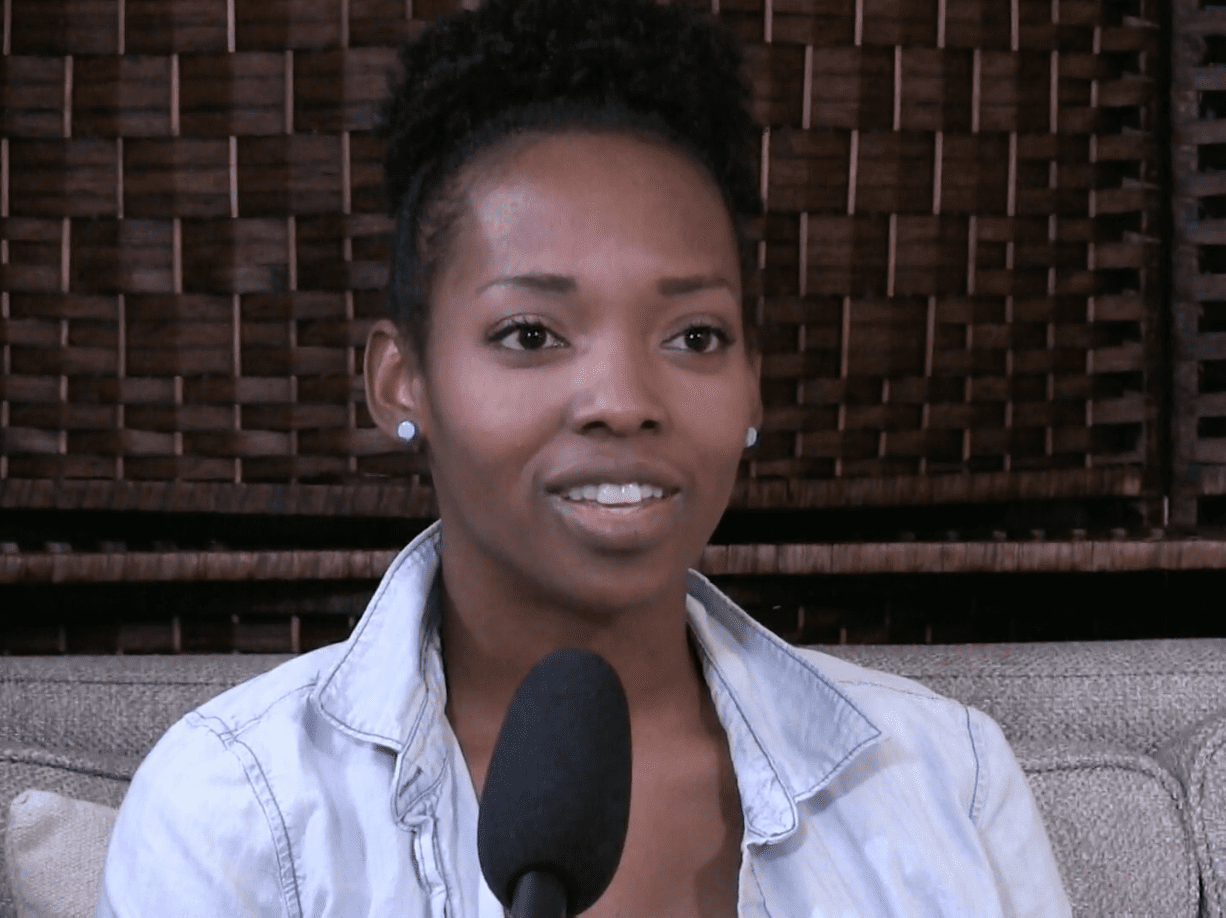
 Marlena Smith’s parents joined the Mormon church as black converts after the priesthood ban was lifted (1978). After her parents moved to Utah, Marlena was born in 1989 in Provo, Utah. Marlena was raised as a devout Mormon in Lindon and Pleasant Grove – as the only black family in her ward and stake. Later Marlena attended BYU and married in the Payson temple.
This is Marlena’s story of growing up as a black Mormon woman in Utah.
Episode Transcript
Host: John Dehlin · Guest: Marlena Smith
This transcript is machine-generated and lightly edited for readability. The audio is authoritative. Please excuse occasional errors in names and spelling.
Introduction and Why Marlena Wanted to Share Her Story
Part 1 of 3 · Ep. 1174
Marlena Smith [00:00:00] Sa.
John Dehlin [00:00:31] Hello, everyone, and welcome to another edition of Mormon Stories podcast. I'm your host, John Dehlin. It is September 11th. I didn't realize that. 2019. And today we are very excited and honored to have our interviewee. Today we're going to be interviewing Marlena Smith.
John Dehlin [00:00:55] Marlena, her parents joined the Mormon church as black members after the 1978 priesthood ban was lifted within Mormonism and raised their children in the church. Eventually, they moved to Utah in the, you know, early 80s, I'm going to say. And Marlena was born in Provo, Utah, in 1989.
John Dehlin [00:01:25] Marlena was raised again as a, as a devout Mormon here in Utah and kind of the Linden and Pleasant Grove areas. She, as far as she and her family knew, they were the only, the only family of color, let's say, in, in their warden stake, maybe only a few kind of black people in the entire high school kind of thing.
John Dehlin [00:01:46] And Marlena was really, I just felt like it. And I think Marlena was also interested in kind of telling a unique story, which is, you know, what's it like to grow up as one of the only black people, you know, in the entire, you know, city you live in in Utah as a Mormon?
John Dehlin [00:02:05] And that's a story we've never really told on Mormon Stories Podcast. We've interviewed Juliana Viegas Haas, who, who was born in Belgium and was a Mormon in Belgium as a, you know, as a black Mormon. We just interviewed Spencer Nugent. We've interviewed Darren Smith again, who grew up outside of Utah and also, you know, others. But this is a unique story that hasn't been told. So that's what we're going to be talking about today. And Marlena, we're just super excited to have you on Mormon Stories podcast, and we're honored that you would be willing to share your unique story with us.
Marlena Smith [00:02:40] Thank you.
John Dehlin [00:02:43] So let's tell us. I tried to kind of touch on this, but tell us why you wanted to tell your story.
Marlena Smith [00:02:51] I really want to tell my story is because when I was going through my faith crisis, I just couldn't find a narrative that I, there were things I could relate with, but I just really wanted to find someone who knew exactly what it was like for me growing up in Utah, you know, being a black member, being born and raised here, what that would be like. And I just didn't find it. And I felt like I've had other friends who've left, who we've had the same story. I'm grateful for that because I was able to lean on them But I feel like there's other people
Marlena Smith [00:03:19] who could really relate to me and, and also learn too, because every time I tell my story, especially even to people who've left the church who are not black, they're always surprised and they're always like, oh, I never thought about that. And so that's another reason why I want to share my story.
John Dehlin [00:03:34] Yeah. Yeah. It's really important when you are, are going through a faith crisis or you've been through one to be able to find people you can connect and relate to for sure. And I'm so grateful because there are gonna be many, there are many people like you, but you don't wanna just go up to Mormon stories and see a bunch of white people or other people not like you and say, well, where's someone who I can share an experience with? So we're hoping that people come outta the woodworks to me and to you to say, hey, I connect with this story and thank you for sharing it.
Marlena Smith [00:04:04] Yeah. And I am so grateful even to everyone else who shared it. It also has really helped me as well, so I felt like I could also do the same.
John Dehlin [00:04:12] Yeah. Okay, so let's start where we always start. Tell us about your, your parents journeys, what you know about their ancestry. Clearly they weren't normally we have the pioneer Mormon kind of stories. Your parents probably didn't have that since they're converts.
Marlena's Parents and Their Background
Marlena Smith [00:04:28] Definitely not.
John Dehlin [00:04:30] And we're just dying to know why would any black person join Mormonism before or after 1978?
Marlena Smith [00:04:36] Yeah.
John Dehlin [00:04:37] So let's start with whatever backstory you want to about your parents.
Marlena Smith [00:04:40] Yeah. So my parents met in high school. My mom was raised.
John Dehlin [00:04:44] What state was this?
Marlena Smith [00:04:45] Omaha, Nebraska.
John Dehlin [00:04:46] Oh, yeah. Okay.
Marlena Smith [00:04:48] Yeah, My parents actually met in high school and my mom was Catholic. My parents story is kind of crazy, but I feel like a lot of African Americans can relate to this because it wasn't too far off before slavery. And when you think of that, it's like, okay, so I don't want to share too much of my mom's story because she actually just barely told me what happened to her as a child. And it's kind of, it's, it's kind of crazy. But I will share that. She basically, she told me too, like when she was younger, she, her little sister thought that she was her mother because.
Marlena Smith [00:05:24] And they're only two years apart. So when she was, her sister was like 2 and she was 4. She was taking care of my little sister because my mom, my grandmother, was not fit to basically raise her and she was Actually she, she was fine at. But one time she got gang raped actually. And after that went through a psych schizophrenia and you know, just kind of a mental breakdown and wasn't able to take care. There's other things that have happened. It's crazy, but she couldn't really take care of my mom and her other siblings. And my mom had, let's see, three sisters. Two. Two or three brothers, I can't remember exactly.
Marlena Smith [00:06:10] And basically was raised by. And I forgive me for. I might get this wrong a little bit her aunt. But then also. But it was crazy because they didn't really take care of my, my mom. Like they were malnourished. There was a lot of crazy things that have happened, but my mom was able to survive that and eventually was able to be cared for by some other family who took care of them and. And she was a much healthier situation after that. And so yeah, raised Catholic and she met my dad at high school and they got together in Omaha, Omaha, Nebraska. Okay, got together.
John Dehlin [00:07:02] So your mom had a tough upbringing.
Marlena Smith [00:07:04] Yes.
John Dehlin [00:07:04] What about your dad?
Marlena Smith [00:07:05] My dad did too. Definitely my dad. Not. It's not necessarily as crazy as my mom's story. My dad, I. It's interesting because. Well, actually not too bad. His mother actually went to college, which is not very common for, for black people at that time.
Marlena Smith [00:07:24] And there's some speculation that actually my grandmother, because she was pretty light skinned, that her father was white man. And my father remembers going to this rich white man's house often and he would take care of things, but nothing was said because back then, you know, it wasn't really a good thing. And so he didn't necessarily know who his grandfather was and. But kind of had speculations and so. Yeah, and then some. I feel like my parents were kind of like my dad was more.
Marlena Smith [00:08:06] Let's. How would you say in a. More. Forgive me, I'm trying to think of the word in a. I guess a better environment than my mom did. But though at the same time they're still not the greatest. I mean it's hard to grow up in black in Utah during those times.
John Dehlin [00:08:25] It's hard to grow up black in America, especially in the 60s and 70s.
Marlena Smith [00:08:30] So you, you can imagine.
John Dehlin [00:08:32] Yeah, yeah. So whether it's the Jim Crow laws or the civil rights movement or oppression or just systemic racism.
Marlena Smith [00:08:42] Exactly.
John Dehlin [00:08:43] On every level, wherever you go.
Marlena Smith [00:08:44] Yes.
John Dehlin [00:08:46] And then all the multi generational trauma.
Marlena Smith [00:08:48] Yeah, for sure.
John Dehlin [00:08:49] It's brutal and it still is. And so that's the environment your parents grew up in.
Marlena Smith [00:08:54] Yeah. For sure.
How Her Parents Joined the LDS Church
John Dehlin [00:08:55] So what brought your parents to Mormonism of all things?
Marlena Smith [00:08:58] Right.
John Dehlin [00:08:59] Especially after the priesthood ban was lifted.
Marlena Smith [00:09:01] Yeah, so my dad was in the Air Force and they were in Germany and they met some missionaries, and that's where it all began.
John Dehlin [00:09:09] And you're thinking late 70s, early 80s?
Marlena Smith [00:09:11] Yeah. Okay. Yeah, yeah, that's where it all began.
John Dehlin [00:09:13] Do they have kids at that time?
Marlena Smith [00:09:15] Yeah, I had two brothers, a brother Marvel, and then my brother Jason. They were two years apart.
John Dehlin [00:09:20] And has your dad ever told you the story of, like, his conversion? Of, like, what, what. What the family was like, what the marriage was like, what they were feeling and what made them, I don't want to say, some would say vulnerable or what made them interested or ready or, you know, golden for the missionaries?
Marlena Smith [00:09:37] Yeah. My dad was always kind of looking for something, you know, like, he was. He was always kind of like, into spiritual things.
John Dehlin [00:09:44] Was he raised religious? I don't know if you talked about that.
Marlena Smith [00:09:47] He was like, I. I believe Baptist, but not really. Like, he was like. My grandmother was. Said that she could, you know, that she was, like, kind of psychic. So it was kind of like the spiritual that was kind of there. And my dad was kind of looking for something. And, and, and from what I remember, he felt that there was just something different about the LDS Church compared to other religions. And I think that's what drew him in. And my mom as well, so.
John Dehlin [00:10:15] Something about it.
Marlena Smith [00:10:16] Yeah, something about it. I think if I can remember correctly, and I could get this wrong, but they could tell that there was something different about the people as far as the treatment that they were getting at that time.
John Dehlin [00:10:29] Do you know, was it in Berlin? Do you know what city?
Marlena Smith [00:10:32] I think so. I think so.
John Dehlin [00:10:33] Okay.
Marlena Smith [00:10:34] Yeah.
John Dehlin [00:10:35] But. But oftentimes this is just for those who aren't Mormon. You know, it's just like these Mormon wards. The families just all seem clean cut and. And strong and traditional, and people seem very happy and people seem very healthy and they're very friendly and they're super excited whenever someone's interested. And so you just get number one. It's just super attractive. It's like, I want a family like that. I want a family like the Osmonds, you know, who knows what's going on behind the scenes with the Osmonds, but, like, they look amazing and everybody seems super happy and healthy, and I want a family like that. And these people just are embracing us. Open arms. I'm guessing that is probably what your parents experienced in that Germany war, Branch?
Marlena Smith [00:11:20] Yes.
John Dehlin [00:11:21] Okay, so they joined. Did your Did. Have you ever talked to your parents about whether they knew about the church's history in terms of race and whether that factored in to their decision at all made it harder? Not harder.
Marlena Smith [00:11:35] I think they did know, but I feel like there's not a lot of other. I mean, granted, like, it is huge, but there were other religions still teaching about Curse of Cain. And so it wasn't necessarily like, you know, my mom being Catholic, she, you know, I'm sure she was also used to some of the racism within Catholicism. And so I feel like. I feel like they kind of knew, but didn't exactly know. Like, it wasn't. They didn't know exactly what was going on, if that makes sense.
John Dehlin [00:12:05] I remember talking to. I think it was Sean Carter, but it was probably others who I've interviewed that just that they. They share the perspective that a white person who doesn't believe in Mormonism anymore would say, why would any black person ever join the church? Because the church has a racist past. And I've heard people say to me, well, what church doesn't have a racist past? If you're going to be a black person in America, then, and you're going to hold a criteria. I can't join this church if it has a racist past. You don't ever join a church. And so you kind of just have to lower the bar across the board and just say, what. What can this offer me now? Because I need or want support now, and I don't have the luxury of, like, picking and choosing.
Marlena Smith [00:12:55] That's true. Yeah.
John Dehlin [00:12:56] I don't mean to be glib or even tell you your experience.
Marlena Smith [00:12:59] No, but no, you're like, what you're saying is true. A lot of people don't recognize that. I mean, even when it comes to the image of Christ, when it comes to other things, it's like we're used to not being represented, you know, and so it's something like you said, we kind of just. If we don't think about it, it can be easy just to be like, okay, well, you know, they're kind of used to it, you know, but obviously it's not right. But yeah, yeah.
John Dehlin [00:13:24] So they were more concerned about how it would contribute to their lives positively.
Marlena Smith [00:13:28] Yeah.
John Dehlin [00:13:28] At the time.
Marlena Smith [00:13:29] Yeah. Yeah. Like, my dad was looking for something and he. This was different. People were they for what they felt were seeming genuine and caring. And my dad was very much into that. And so I think that's where. And my mom, too, and I think that's where it began.
John Dehlin [00:13:45] And they were probably searching for spirituality and meaning and purpose and identity and belonging and all those things that religions provide.
Marlena Smith [00:13:52] Yeah.
Early Family Life in the Church
John Dehlin [00:13:52] Do you have a sense for what joining the church did to your family, like, in those first five, ten years?
Marlena Smith [00:13:58] Oh, yeah. I mean, you know, when I was a younger kid. I have really fond memories as a child, before I recognized. When I was starting to realize that I was. Before I realized that I was being treated differently. I have fond memories because, like. Like, it was safe. You know, we. People knew who we were. You know, we were in a lot of, like. Like I was saying, we're in, like. I can't remember what page, but we're in, like, the. My family's in, like, the spiritual, like, revelation of, like, preach my gospel. We're, like, praying. We've been. We were doing all these pictures, photo ops. We were kind of like. Yeah, I had. I have some fond memories when I was younger.
John Dehlin [00:14:41] So the church is probably excited that your family converted because there probably weren't a lot of families of color converting.
Marlena Smith [00:14:47] Yeah. Especially, I mean, you know, from. We weren't, what. A lot of people who've never met, like, stereotypically, where some people assume what black people are. We weren't necessarily what they thought.
John Dehlin [00:15:02] How are you different? How was your family?
Marlena Smith [00:15:04] Well, and I have to say stereotypically, because it. It was frustrating when people would just assume that, you know, I'd had people be like, oh, you speak so eloquently, or you, you know, you sound white. I'm like, what does that mean? Does that mean I speak? You know, just like a. You know, I, you know, speak well, you know, or the other people of
John Dehlin [00:15:26] color don't speak well.
Marlena Smith [00:15:27] Yeah, exactly. Not understanding Ebonics. And you know what it means when you live around other people? You sound like people you live around. That's just how it is.
John Dehlin [00:15:35] Yeah.
Marlena Smith [00:15:35] Yeah. Sorry. I totally forgot what you're asking.
John Dehlin [00:15:38] No, so. So you're. The church was excited that your family joined. They. They used you guys for a lot of.
Marlena Smith [00:15:44] Yeah, they used us. We were. Yeah, we were in a lot of, like, church videos. We were in a lot of, like. I forget there was, like, this magazine about family magazine for, like, family Home evening. I can't.
John Dehlin [00:15:58] Like, the manual. Family Home Evening manual or.
Marlena Smith [00:16:01] I think so. Well, we were in, like, Just a lot of stuff. Lots of stuff. Yeah, they used us a lot.
John Dehlin [00:16:07] And how would that feel? How does that feel to, like, have the church, like, super excited to.
Marlena Smith [00:16:11] Yeah.
John Dehlin [00:16:12] Take your photo and put you in their publications?
Marlena Smith [00:16:15] Yeah. I mean, I was like, three or Four or five. So, like, when I was younger, I was like, this is fun, you know? Like, I just thought it was. This is great.
John Dehlin [00:16:23] It's got to make you feel special.
Marlena Smith [00:16:25] Yeah, it did. It did. It did make us feel. Make me feel special until I understood. Exactly.
John Dehlin [00:16:31] So later there was a problem.
Marlena Smith [00:16:33] Yeah.
John Dehlin [00:16:33] Okay, so, like. But what about, like, did your. Did your parents seem to get happier? Did your family seem to get along better once. Once, I guess you were born years after they joined.
Marlena Smith [00:16:44] It was hard for me to say because for me, it was all I knew. And when I was younger, yeah, life seemed great. My family, we were like. We would go to church, you know, people knew who we were.
John Dehlin [00:16:57] Why were you born in Provo? What was going on with your family when you were born?
Marlena Smith [00:17:01] My dad actually went to byu.
John Dehlin [00:17:03] Okay.
Marlena Smith [00:17:03] Yeah. They recruited him using the track team.
John Dehlin [00:17:06] After Air Force.
Marlena Smith [00:17:07] After Air Force, he came. We. So they were in. They. After Air Force, they actually moved to California, and then they moved to Utah, and he went to byu and he was. Yeah, he was on the track team, actually. His record's still on the board. He got.
John Dehlin [00:17:22] Oh, wait a minute. You were. You were born in 89.
Marlena Smith [00:17:25] Yeah, 89.
John Dehlin [00:17:26] So he would have been at BYU in the late 80s.
Marlena Smith [00:17:29] Yeah, late 80s, ladies. But I. He. He left BYU before I was. I mean. Yeah, before I was born.
John Dehlin [00:17:35] Okay, so I was there in the late 80s.
Marlena Smith [00:17:37] Oh, really?
John Dehlin [00:17:38] Maybe we would have been there.
Marlena Smith [00:17:39] I mean, come on, there's. How many black people are byu?
John Dehlin [00:17:42] And my. My wife Margi ran tracking cross country.
Marlena Smith [00:17:45] Maybe you guys.
John Dehlin [00:17:46] I'm sure I'll have to ask her.
Marlena Smith [00:17:47] I'm sure.
John Dehlin [00:17:48] So he had her. He has a record that still stands. Yeah, it still stands because that was a. They had. They have had a good track and cross country team. Teams, historically.
Marlena Smith [00:17:56] Yeah. Yeah. He was a triple jumper, like, and a long jumper. And his. I believe his triple jump record is still up there.
John Dehlin [00:18:02] And his name is Joe. Joe Smith.
Marlena Smith [00:18:03] Joe Smith.
John Dehlin [00:18:04] But. But not named after Joseph Smith.
Marlena Smith [00:18:06] No. I can't believe you. How many times, like, I would tell people that? They're like, no way. He can't be named that. No. Like, it's very common, actually. Joseph and Smith, you know.
John Dehlin [00:18:18] Yeah, yeah, it's common. It is common. So, okay, so you were born in Provo while your dad was at byu. Was your mom studying at byu?
Marlena Smith [00:18:27] My mom. No, she wasn't. She was taking care of the kids. But then I wasn't born yet when they were at byu, so I have. They had the time, had four kids. I Have they had my four other older brothers before I was born.
John Dehlin [00:18:40] And do you have a sense for what their time at BYU was like? Did they remember it with fondness?
Marlena Smith [00:18:44] Yeah, kind of. I mean, it was. I think they, like. I know my dad really liked the track, but they didn't. They don't talk too much about it, so I think, like, they met a lot of friends, they created a community. My mom. I think they lived in Wymount Terrace back in the day, and my mom. Yeah. Just raised the kids while my dad was at school.
John Dehlin [00:19:04] Okay.
Marlena Smith [00:19:05] Yeah. She didn't. She didn't go at that time.
John Dehlin [00:19:08] And. So how many kids total?
Marlena Smith [00:19:11] So six.
John Dehlin [00:19:11] Wow.
Marlena Smith [00:19:12] Yeah, it's a lot of kids. It is. But, you know, it's. It's what you're supposed to do when you're Mormon.
John Dehlin [00:19:17] Yeah. Yeah. Okay. So where did your family go from there?
Marlena Smith [00:19:21] So from there, my dad got a job at. What is that? It's in Provo. And New Skin, he worked at New Skin. Oh, he worked at New Skin. They moved to Linden, Utah. We had this house in Linden, Utah, And. And so my dad was working.
John Dehlin [00:19:42] That's north of. That's north of Provo, right?
Marlena Smith [00:19:45] Yes.
John Dehlin [00:19:45] That's where Ty Detmer was baptized.
Marlena Smith [00:19:47] Okay.
John Dehlin [00:19:48] He was a football player when I was at byu. So that's why I remember London. Kind of near Pleasant Grove. A little south. A little south of Lyndon's.
Marlena Smith [00:19:55] Pretty small. So. Yeah.
John Dehlin [00:19:56] It was right. By Geneva Steel at the time. Which has been removed.
Marlena Smith [00:20:00] Yes.
John Dehlin [00:20:00] Okay.
Marlena Smith [00:20:01] Yes. Yeah.
John Dehlin [00:20:02] Okay. So Lyndon. And that's where you kind of were raised. Okay. How many families of color were in your neighborhood?
Marlena Smith [00:20:12] None. I mean, none. There were some kids that were adopted into white families, but they still weren't in the neighborhood. But that was, like, as far as, like, you know, maybe another city, like, maybe in Pleasant Grove or Orem. That. That was what was going on.
John Dehlin [00:20:28] Now, I can. None of us can imagine what that would be like. I mean. Or. Few of us.
Marlena Smith [00:20:33] Yeah.
John Dehlin [00:20:34] Some would say, no big deal. Some would say, wow, that awful. Like, what was that like? How did you experience it as a kid?
Marlena Smith [00:20:41] Yeah, as a kid, like, we were always outside playing. We had a lot of friends, but it wasn't until people started pointing out that I was different that it started to be like, oh, like, obviously I'm black, but I didn't know I was black until someone told me I was black. Does that make sense? I just thought I was Marlena, you know? And then it was like this differentiation, you know, going on.
John Dehlin [00:21:03] Do you remember kind of an age where it started to occur to you that you were black.
Marlena Smith [00:21:07] Yeah. Like, round six. Okay.
John Dehlin [00:21:09] Yeah. So the kids were nice to you?
Marlena Smith [00:21:11] Yeah, they were nice friends. They were nice, but at the same time. Yeah. Curious. It was hard. Like, I remember, like, crazy things. Like, people, they would be, like, really surprised that the palms of my hand wasn't also brown. Things like that. There were comments that would happen.
Being Black in Utah: Hair, Identity, and Not Fitting In
Marlena Smith [00:21:31] I would have my hair braided, and kids would always touch my hair, you know, or even when my hair was, you know, natural. Or they would be like, oh, it just feels like a cloud. And like, you know, at the time, I didn't realize, you know, it was uncomfortable, but I just kind of went with it because I really wanted to fit in with everybody. Everyone else was my. You know, I wanted them to be my friend, you know, and so I kind of just went with it, you know. But looking back, it was. It was hard because it was like. I never felt like I could fit in.
Marlena Smith [00:22:00] I always was singled out. I could never be, you know, dislike with everyone else, you know, And I think one of the hardest things for me when people don't recognize is, like, when it's Black History Month, it's the worst month for me, because.
John Dehlin [00:22:14] In Utah.
Marlena Smith [00:22:15] In Utah, because it was basically. It felt like, let's look at Marlena month kind of thing, you know, let's. And I'm, like, getting emotional. Like, it's hard. Like, they would read books, and it would have, like, the N word, and, you know, kids would read it, and then they'd look right at me, you know, and it's just, like, really uncomfortable. And I just felt like my experience was, like. I never felt like I could just be like everyone else, which hindsight, I recognize that it is a gift, but back then, when you're a kid, you just want to. You want to be like everyone else.
Marlena Smith [00:22:49] You want to. You want to feel like you associate and you belong. And so that was something that was really hard for me and something that my siblings, not all of them, but some of them, couldn't relate to because they didn't necessarily. Like, I did have two other brothers that were also born in Utah, so they could kind of understand, but, like, it was something that some of my siblings couldn't relate to me because they kind of were able to create that identity that black. You know, if that makes sense. And that a positive feeling towards that. And I think deep down, it was like, it was difficult because it wasn't like, people were necessarily racist per se.
Marlena Smith [00:23:28] There was that, but it Was more of a prejudice, but they didn't know. They didn't. They. You know, their meaning wasn't like their meaning to be rude about it. They were curious but not realizing it was doing damage as well, if that makes sense.
Racial Undertones in Mormon Scripture and Teachings
John Dehlin [00:23:45] Yeah. And how do you feel like that type of thing does damage? Is there a way to describe or.
Marlena Smith [00:23:51] Yeah. I mean, it hurts your core. It's. It's. It's like, it's. I'm trying to think of how it's like the idea of Tarzan kind of. You know, I think of Tarzan where it's like, not quite, but I think you kind of get it where it's like, you know, he's trying so hard to fit in with the other apes, but he's, you know, he's. You know, even though we all are all human beings, but it's like,
John Dehlin [00:24:19] no matter how hard, you just want to be one of everybody else.
Marlena Smith [00:24:22] I just. Yeah, because my physical appearance, I just couldn't. And I think that's the difference between some other things, is that physically it's marked, you know, that, you know, I'm different. Like, physically, people can see from a mile away. But if it's something that's internal, no one really knows that you're, quote, unquote, possibly different unless they talk to you or if you act a certain way, you know, physically. But it's, you know, if that makes sense.
John Dehlin [00:24:47] And what's. What makes it even more bizarre or hard is that like. I'm sure, from a white person's point of view, hey, you get a whole month each year to be celebrated, and we're honoring you. And when I show interest, you know, I'm being curious because I care. And I think it's neat and special. That's what that. But. But you're reacting strongly to that. Tell us why, what that feels like for me.
Marlena Smith [00:25:09] You know, I mean, you.
John Dehlin [00:25:10] You already have, but that's the irony is all I'm saying.
Marlena Smith [00:25:13] Yeah. I mean, it was just frustrating and. And also, you know, or if some other issues, they'll be like, oh, you already have a month. Like, you know, like. Or things. That was another thing, too. You have a month. Like, it's like, okay. But. Yeah.
John Dehlin [00:25:28] Don't complain about other stuff.
Marlena Smith [00:25:29] Yeah, exactly.
John Dehlin [00:25:30] You got your own month.
Marlena Smith [00:25:31] Yeah.
John Dehlin [00:25:32] Everything's good.
Marlena Smith [00:25:32] Yeah. It was just. I think, though, as a child, not understanding was just very difficult because all I wanted to do is just be like everyone else. Just wanted to. Just to. Just to fit in. Yeah. Oh, man. Bring up stuff I forgot.
John Dehlin [00:25:51] It brings it up.
Marlena Smith [00:25:52] Yeah.
John Dehlin [00:25:54] And I just have to imagine that's a psychological process that's just always there when we exist in the world. Let's just say in a white world, as a white person, we don't have to have that constant cognitive process reminding us every day that we're different, trying to fit in, feeling like we don't quite. And it, like, I'm sure being. Being lgbt, you know, is something similar. It's just like I'm different than these people, and they always keep calling me out, and there's nothing. And so it's just like a. It's got to be a mental tax, for sure, or a burden that you're always carrying.
Marlena Smith [00:26:35] For sure. Like, even in the church, people don't recognize even the implication of, like, white, black, dark, light, even though it's not necessarily meaning to portray or. Or talk about skin color or identity. There's something deep inside of you that whenever someone says the darkness, that subconsciously you feel like that's you.
Marlena Smith [00:27:02] Because I'm not white. Like, as a child, when they would talk about the curse of Canaan or when they would talk about, you know, priesthood ban or even the darkening of the skin in the Nephite and stuff, it's like, you can't help but think, well, that means that I'm inherently bad because I'm not light. I'm not white, even though it's not talking about skin color. But when you read those scriptures and it's talking about the darkness and they became dark and loath, you know, you know, the dark and loathsome people, whatever, or they became white, like, you know, and it's just deep down, you can't help but, like, take that on at least.
Marlena Smith [00:27:38] And this is my story. I can't speak for every black person that was raised in the church, but for me personally, when I would read the scriptures, I couldn't help. And I didn't realize I was doing this as I was after I got some help with it, but that I was kind of applying that to myself. That makes sense.
John Dehlin [00:27:56] Even if it's subconscious.
Marlena Smith [00:27:58] Yeah. Subconscious. Yeah. It was more like I was brought up later that I did that I didn't realize that I was doing at the time when, you know, those words were being said. But that's how people identified me.
John Dehlin [00:28:08] Yes.
Marlena Smith [00:28:08] You're black, you know. Yeah, I'm white.
John Dehlin [00:28:11] Lesser.
Marlena Smith [00:28:12] Yeah.
John Dehlin [00:28:12] Because all these messages and I. I. One of the formative books for me was the Autobiography of Malcolm X. Oh, yeah. When I was at byu, and it just talks about how much whiteness in our culture is associated with good.
John Dehlin [00:28:30] You know, God's white, Jesus is white, angels are white, heaven's white, purity is white. And then dark is scary, dark is loathsome, dark is mysterious, dark is savage, it's native, it's dirty. And those messages, both within Mormonism but in the broader culture are everywhere.
John Dehlin [00:28:54] And so again, there's a second process. Not only are you different, but all these negative associations with the color of darkness are constantly bombarding you. And then it's in your scripture. Now, we can get to this later, but because you mentioned it, I wanted to.
John Dehlin [00:29:13] You said something to the effect of, even though the Book of Mormon isn't referring to skin color, when it talks about darkness, I always understood it to mean skin color. For me, that's a modern apologetic changing or device to try and make the argument that it's not talking about skin color. For my understanding is that for everyone. Prior to the 90s or 2000s, when that apologetic argument got popularized, it was common knowledge that the Book of Mormon was referring not to a spiritual curse, but to actual skin color.
John Dehlin [00:29:59] And if you had asked Spencer W. Kimball or Ezra Tab Benson, they all knew that darkness in the Book of Mormon meant skin color. But we've since changed it to mean, no, that's the curse. That's the spiritual curse, not the actual. But I wonder if that's just spin. But it sounds like that's what you were told.
Marlena Smith [00:30:20] Well, yeah. Well, you know, in order for me to make sense of the church and to stay, I had to make it make sense to me. So even though when I knowing that the apostles had said that, in my mind it was, they're wrong.
Marlena Smith [00:30:38] And if you look at, like I even would look up the old Bible, like the old dictionary, and what certain words were meaning to help it fit my understanding, if that makes sense. Because to me, I was like, no, they're not talking about skin color because I had to make it fit. If they were talking about skin color, then this. Then it wouldn't work for me. So I was thinking, okay, no, they're talking about spiritual. They're talking about that. That's how I can accept that. That's how I can accept this is because the scales, you know, from it's. They're talking about, it has to be.
Marlena Smith [00:31:13] It has to be. Because back then, they didn't call people black back then. This is a modern thing. And so that's how I was able to make sense of it, because people weren't distinguished by skin color. And in that time, at least that's what I would tell myself.
John Dehlin [00:31:26] Yeah.
Marlena Smith [00:31:26] And so that's how I was able to stay, because I was able to make sense of it. And I would even, like, stand up in my BYU classes. And I mean, I don't want to go too far into.
John Dehlin [00:31:35] We'll get there. We'll get there. Yeah, yeah, yeah. So. So this is just important. I'm. I'm just. I'm coming to understand this a little bit better. Like, many times I've. I've run into Mormons of color who cared less about the skin color thing than I did. And I'm just like, I was bothered by this when I was in seventh grade. Like, why aren't you more bothered than me? But to be a Mormon of color, you can't. It's almost like you have to build walls up around that. Even though it's one of the most obvious things to be concerned about, if you're going to survive intellectually, you have to build walls there and kind of not go there.
Marlena Smith [00:32:13] Yeah. And I mean, even just living in America, we do that all the time. If not even religion, it's like, other things, too. And so I think it's like, I feel like. And I can only speak for myself, I feel like I was kind of used to doing that for other things, too, because, you know, like. Like, you know, we're used to, you know, like. Like I was. We were saying earlier, we're used to seeing a white Jesus Christ. We're used to, you know, even though we don't necessarily agree with it, we're used to it. You know, it's kind of like growing up and through slavery in America.
Marlena Smith [00:32:46] Like, I feel like. Like there's a lot of things that had to put up with that just were able to, you know, create calluses and. And be, you know, able to handle that. Because, you know, seeing that versus, like, you know, having being beat is not, you know, which one is worse. Seeing a white Christ is not as, you know, I mean, abuse. And so, yeah, that's.
John Dehlin [00:33:09] I feel like you're always having to just say this is like, you know, it's just like.
Marlena Smith [00:33:13] Exactly. It's just like, is it worth it? No. Like, there's other things.
John Dehlin [00:33:16] It could be worse. It could be worse.
Marlena Smith [00:33:17] Yeah, it could be worse. We can handle that, you know, kind of thing.
Positive and Negative Memories of Mormon Community as a Kid
John Dehlin [00:33:21] So let's go back. Just quickly, as you're thinking about being in Utah as a kid and as a teen, were there. Were there good things about your Mormon associations? Things. Tell me about what you enjoyed about the church, if anything, actually like primary.
Marlena Smith [00:33:41] You know, I actually don't really remember too much primary. Well, kind of like. Well, okay. I, I was actually a very social kid. I was very like, even thinking of school. Like, I, I really loved kids. I was really social, played all the time with every. Like, people knew me. I don't know. I just, I, I thrived in school and in. And I think in. In my wards as well. We were just. I was playing out outside all the time and I, I even remember, like, I. I would tell my teacher and that I'm a princess. I was very much like, you know, kind of at that time, I knew I was just very much like that. And then, and then it.
John Dehlin [00:34:23] Did your family do, like, the family prayer, scripture study?
Marlena Smith [00:34:26] Yeah, we did it, but not really. I mean, yeah, we did family home evening, but not like, typical. I, you know, you weren't like, always on the ball. But we did do that.
John Dehlin [00:34:34] Tried to do it.
Marlena Smith [00:34:35] Yeah, we tried to do it, but my fit. My parents are very much. They, they. They don't just follow the rules all the time if it doesn't make sense.
John Dehlin [00:34:47] Even back then.
Marlena Smith [00:34:48] Yeah, even back then, like, they were still very Mormon, but they were also like, we're going to do it this way.
John Dehlin [00:34:53] Yeah.
Marlena Smith [00:34:54] So.
John Dehlin [00:34:54] But church every week and that whole.
Marlena Smith [00:34:56] Yeah, we went to church every week, but. But besides that, we still kind of, you know, did it our way. I even remember, like, some of the movies we grew up watching were maybe not like, the best, but, you know, so they say we were Mormon, but they weren't like. So like, very like Molly.
John Dehlin [00:35:14] And in the home, you. There wasn't coffee, right?
Marlena Smith [00:35:16] No, no.
John Dehlin [00:35:17] No drugs and alcohol, Tobacco.
Marlena Smith [00:35:19] Okay. Definitely not. No. We didn't even drink caffeine.
John Dehlin [00:35:23] Okay. And do you remember, like, getting any young women's beehive?
Marlena Smith [00:35:29] Oh, yeah.
John Dehlin [00:35:30] Laurel, did you. Did you like.
Marlena Smith [00:35:32] No, I actually hated it.
John Dehlin [00:35:33] Okay, Talk about that. So girls, Girls, camp, all that stuff.
Marlena Smith [00:35:39] Yeah, I really struggled with it because I felt how I just at a young age, I recognized how hypocritical it was. It was frustrating. You know what I mean is, a lot of the kids would. They would like the girls in our Laurels, whatever. They'd be so sweet to me at church, but then at school they'd act like they didn't know me, some of these girls. And I thought, wait, you're saying this at church? But then when you're in real life, you're not actually doing it, and I recognize that. And I absolutely hated it because I feel like I was a. I, I really love people and I love to get to know people.
Marlena Smith [00:36:19] And so there were just some girls that were kind of catty and I wasn't like that. And it was frustrating because they would be like, oh yeah, we're friends. And then at school it was like, no, not really. Does that make sense? Like it was like, they're nice, but like kind of like the two faced nice.
John Dehlin [00:36:37] It's like, was it just mean girl stuff? Was it just.
Marlena Smith [00:36:39] No, not really. I just feel like I could sense this idea of I'm gonna be nice to you but I don't want to be nice to you. And I feel like even in the church it happens a lot where people are nice because they feel like they're supposed to be nice even if they don't want to be nice or they don't want to like that person. But I'm supposed to like that person because, you know, Christ told me to. So I'm going to be nice to that person, if that makes sense.
John Dehlin [00:37:00] Right, right.
Marlena Smith [00:37:01] So I recognize that and I just really bugged me and I just didn't like it. I mean, I had friends, but I just felt there was just a lot of that going on and I just didn't like it.
John Dehlin [00:37:12] And then there's kind of a two part question that comes out of that. You know, I think it's natural for me to ask was any part of that because you were a person of color? And then the second part is this is part of what it's like to be a person of color in Utah as a kid growing up. Because whether or not it is because you're a person of color, your brain's gonna always be wondering. And so it's kind of like either way there's an impact. So tell me about, I don't wanna project but like, did you wonder that.
Marlena Smith [00:37:41] Well, you know, at that time I didn't necessarily. Okay, I didn't. It wasn't until I went to BYU and high school that I really was starting to notice those things. But at that time I didn't necessarily like equate it to that. I was still, you know, trying to hold the idea that that wasn't happening as, you know, not, Not Mormonism, not. Yeah, exactly, exactly. I was still trying to hold on to that. And you know, I, I do admit, like there were some things I remember, like when I would read the scriptures in the class, like, I wouldn't even say like, hell, if it said it in the Bible, you know, like, read this Verse.
Marlena Smith [00:38:15] And if it had hell or. Or like ass or, you know, for the donkey, I wouldn't read it because I'm swearing. And I think some people thought I was weird because instead I would say, like, blank. And I remember the memory when I did that. And my teacher thought it was so weird that I wouldn't read it. But I was so, like, trying so hard to, you know, be good not knowing that I can read the scripture. If it says hell, I can say hell. Sorry, I totally forgot your question.
John Dehlin [00:38:42] No, it's okay. So what things did you. As you're developing into high school? What were your talents or interests?
Developing Interests and Talents Through High School
Marlena Smith [00:38:50] Yeah, I've always been into art. I've drawn ever since I was a little girl. I was always kind of like, I got awards, you know, my teacher. I was like. There was like, reflections. If anyone's from Utah, you would know what that is. I, like, won the reflection. Yeah.
John Dehlin [00:39:07] Yeah. That's like an art. That's like poetry writing, art contest.
Marlena Smith [00:39:10] Yeah. Like, I won that.
John Dehlin [00:39:11] The high schools run.
Marlena Smith [00:39:12] Yeah.
John Dehlin [00:39:12] And the kids compete. And then you get an award. Best drawing.
Marlena Smith [00:39:15] Best painting. In junior high. I, like, won one of those. And I was also on the track team because my dad was in track. So I've done track ever since I was nine. So I did track.
John Dehlin [00:39:24] Which. Which distance.
Marlena Smith [00:39:26] I did 100 meter. And then at the time, too, when you're young, you could do like the 50 meter dash. And then I did long jump as well.
John Dehlin [00:39:34] And was there. I. I can only imagine there was weirdness around. You're a person of color and you're an athlete.
Marlena Smith [00:39:40] Oh, my gosh. Okay, I have to tell you this story.
John Dehlin [00:39:43] So
Marlena Smith [00:39:46] was it my sophomore year of high school? They were trying to get me on the basketball team. I'm bad at basketball. But they were trying to get me on the team because they thought I was gonna be good and I was not good.
John Dehlin [00:39:56] Cause all black people play basketball.
Marlena Smith [00:39:58] Exactly. And they learned that I was not that good. And that was the end of that story.
John Dehlin [00:40:04] Pull the mic forward just a little bit.
Marlena Smith [00:40:05] Yeah. Oh, yeah. Yeah, for sure. So that was the end of that story.
John Dehlin [00:40:10] And they're just thinking, oh, black people are great about.
Marlena Smith [00:40:12] Yeah. Because like, there were literally. It was me and junior in high. There was, like, me and then these two other black kids, and that was it. Three. My whole high school. So they're like, oh, she's going to be good. No.
John Dehlin [00:40:24] And then like, oh, okay.
Marlena Smith [00:40:27] Oh, she's a human that, you know. Not all humans are good at this.
John Dehlin [00:40:31] Oh, okay. So you were in track. You like to draw.
Marlena Smith [00:40:36] Yeah, yeah, I was. Yeah. Always true. I was.
John Dehlin [00:40:39] And you. And you left Utah by your junior year?
Marlena Smith [00:40:42] Yeah, my junior year.
John Dehlin [00:40:43] Okay, so what. What caused you to leave Utah?
Marlena Smith [00:40:46] Yeah.
John Dehlin [00:40:47] So unless there's other stories you want to tell.
Marlena Smith [00:40:50] Yeah. Yeah, let's look. Yeah.
John Dehlin [00:40:52] Let's go back. Okay. Tell us where you want to go.
Marlena Smith [00:40:54] Yeah. So let's start when my parents split.
John Dehlin [00:40:56] Okay.
Marlena Smith [00:40:57] Because that's kind of where a lot of things change. So my parents split, and that was like, you know, there are a lot of other things I. It's not my story to tell, so I'm not going to bring up everything, but my parents split and my dad. Around.
John Dehlin [00:41:09] What grade. What grade were you?
Marlena Smith [00:41:10] I was nine.
John Dehlin [00:41:12] You were nine?
Marlena Smith [00:41:13] Yeah.
John Dehlin [00:41:13] And your dad left the church?
Marlena Smith [00:41:14] Yeah.
Her Father Leaving the Church and Her Parents' Divorce
John Dehlin [00:41:15] Okay. Is there anything, you know about why he left the church now?
Marlena Smith [00:41:18] I do.
John Dehlin [00:41:18] Okay.
Marlena Smith [00:41:19] But at the time, I didn't.
John Dehlin [00:41:20] Okay.
Marlena Smith [00:41:20] I didn't know. I. You know, I was. I almost thought it was my fault. You know, even with my parents splitting, it was. It was difficult. And so, yeah, my parents split, and so my dad remarried, moved to Washington. I mean, Salt Lake. And then we were in Linden, and my mom had. Went back to be to UVU or UVSC at the time and went to go get her degree so she could provide for us. Well, my. You know, my dad would pay child support and then. Yeah.
John Dehlin [00:41:51] And what was that like to be. Get it. Have your family get divorced when you're nine?
Marlena Smith [00:41:56] Yeah, that. That changed everything, really. It was like we went from being this revered, you know, family people knew we were to, oh, your parents are divorced. Oh, my gosh. You know, like talk of the town, you know, all the black. You know, I mean, I can only imagine that's kind of what I.
John Dehlin [00:42:17] Again, it's.
Marlena Smith [00:42:18] Yeah.
John Dehlin [00:42:19] Lots of white families get divorced, and they're just like, we got divorced.
Marlena Smith [00:42:22] Right, right.
John Dehlin [00:42:22] But that was a black family that got divorced.
Marlena Smith [00:42:24] Exactly. Yeah. Like, we were. Yeah. So, like, there was a lot of things that happened. You know, my siblings were all pretty. They. They all were, like, you know, active. We all went. And then after the divorce, they all kind of started to fall away and. And it was really hard. It was difficult.
John Dehlin [00:42:45] I can only imagine that if you're, like, get photo ops with the church and, like, in the manuals and cover the ensign or whatever.
Marlena Smith [00:42:53] Yeah.
John Dehlin [00:42:54] And then all of a sudden, oh, your family's not special anymore because you. You didn't live up to the model. You kind of fall in status from, like, the special, unique Ones that we want to take photos of whenever we can to like, oh, no, there they go. It's the divorced black family. That would be really hard to stay in the church. Falling from a pedestal.
Marlena Smith [00:43:19] Yeah.
John Dehlin [00:43:20] Does that project?
Marlena Smith [00:43:22] As far as I knew, that was our status. My parents might have thought different. Maybe we weren't, like, necessarily revered as this, you know, amazing family. But that was my perspective as a child and as a little kid, that's like, oh, we get to do this. Maybe, you know, like, knowing my parents, they probably would have been like, no, it wasn't really that great. But I, you know, I, that was my, my assumption. And so, yeah, it, yeah, it was, it was hard. And I think the, the hardest thing. So, yeah, there's a lot of crazy things that happened. So after that, I actually, and I, I think it was because of stress and everything that was happening with the divorce, I actually had seizures, and then I had a brain tumor. And so that was like a crazy thing that happened.
John Dehlin [00:44:10] So at what age? At what age?
Marlena Smith [00:44:12] When I was 9. So shortly after all that went down.
John Dehlin [00:44:17] Is that just a coincidence or do you actually think I feel like, the stress.
Marlena Smith [00:44:20] I feel like there's stress. And I'll explain to you that there was also some trauma that I went through that I feel like that equated to that as well. But, I mean, that's as far as I know. I mean, because I was, I mean, I was pretty healthy kid, so I, I, it kind of came out of left field, and it's not really, you know, in a family or anything, so. But that changed a lot of things for me. Yeah. So, yeah, that happened. Luckily it was. Is it benign? Right? It was benign.
John Dehlin [00:44:51] It wasn't malignant. It was benign. So non cancerous.
Marlena Smith [00:44:54] Yeah, non cancerous.
John Dehlin [00:44:55] So you're 9 or 10 when this brain tumor.
Marlena Smith [00:44:57] Yes.
John Dehlin [00:44:58] So do you had surgery?
Marlena Smith [00:44:59] It was too close to. I can't even remember, but I remember them saying, my memory. I have, I have hard. My memory is really. I struggle with my memory. So sometimes I forget words. So it's because of that.
Health Challenges and Faith in the Priesthood
Marlena Smith [00:45:13] So it was too close to something, and so they couldn't operate on. And so I remember I took lamictal to keep the seizures down because I would used to have. I would have like, petite mal seizures. I still do occasionally, but I can handle them. But that was like a huge thing because when it did happen, I remember I was in the hospital. And this is before, like, at the time, it was the size of like a quarter. And when I was in the hospital, Missionaries came and they gave me a blessing.
Marlena Smith [00:45:46] And, you know, I remember just feeling at peace, that everything was going to be okay. Gave me a blessing. And a couple months or like six months later, it went down in size. And so I. I, you know, equated that to the missionaries coming and me praying, and it was, you know, and that. That was kind of the start of like, oh, okay.
Marlena Smith [00:46:06] Like, yeah, let's. Okay, so the people and the gospel are separate. So if I can separate them, I can still enjoy being a member of the church if I recognize that the gospel's perfect. But people aren't perfect. Okay. I can do this.
John Dehlin [00:46:21] Right?
Marlena Smith [00:46:22] And so I kind of just became very much like, okay, I'm gonna. I'm gonna be, you know, Molly Mormon. You know, I'm gonna really, really try. And at that point, I was being. Come, you know, I was becoming very, like, into the church, and my siblings were all starting to leave the church for reasons.
John Dehlin [00:46:39] And your dad had left.
Marlena Smith [00:46:39] And my dad had left.
John Dehlin [00:46:41] Yeah.
Marlena Smith [00:46:41] I mean, and they were talking about, oh, the church is racist. And I was like, no, you know, and, you know, because of the curse of Cain. But it's like, no, I, you know, my. What I told you of how I, you know, explained it. That's how I was able to stay. And I was like, no, this is what it means, you know?
John Dehlin [00:46:58] And then what made the tumor shrink? Was it medicine? Were you taking medicine?
Marlena Smith [00:47:03] No.
John Dehlin [00:47:04] How can they just say we're. We have a tumor but we're not going to operate?
Marlena Smith [00:47:07] I don't know. I can't. If you talk to my mom, it was a miracle. It just.
John Dehlin [00:47:12] And you. You believed that for a long time. And maybe. Maybe it's. Maybe it was a miracle.
Marlena Smith [00:47:16] Yeah.
John Dehlin [00:47:17] But you're saying the tumor went away?
Marlena Smith [00:47:18] Yeah.
John Dehlin [00:47:19] And it went away after the elders gave the.
Marlena Smith [00:47:22] Well, not exactly after, but it. For. For one, it wasn't growing. And then years later, this is like, not within months, but years later, that's when it would. It was like they. We had. I had a. What is it called? Oh, my goodness. When you go underneath the thing.
John Dehlin [00:47:44] Like an mri?
Marlena Smith [00:47:44] Yeah, I had an mri. And that's when it had gone down in size because I. I didn't get any, you know, chemotherapy or anything.
John Dehlin [00:47:53] Huh. So it's just a. Yeah. And that's the. One of the hard things is fine, if people want to believe that. That elders give blessings and it heals people or the priesthood works, that's fine. We're not telling people not to believe that. But if you're looking at it scientifically. You know, tumors can grow, they can shrink, they can stay the same.
Marlena Smith [00:48:14] Exactly.
John Dehlin [00:48:15] And a blessing happens. And kind of the way it works in Mormonism is if a good thing happens after a blessing, then it's because the priesthood's real and the power is real. And it's a miracle.
Marlena Smith [00:48:27] Yeah.
John Dehlin [00:48:28] If you don't get the desired result, then you always code it as well. It was God's will or the people weren't worthy enough. And so either way, it's, at minimum, neutral to the church. It's either a neutral or a positive to how people interpret. But the truth is, do we know if the elders made the tumor shrink? We don't know. And so. But that's for you and your mom, it was a miracle.
Marlena Smith [00:48:54] Yeah, exactly. Like, I still had seizures, but the tumor thing was.
John Dehlin [00:49:00] Yeah, and that's great. I'm glad. I'm sure you're glad too.
Marlena Smith [00:49:03] Yeah, for sure. But, you know, it was interesting, though. I remember going there and be like, oh, I don't know how to say this without it seeming kind of weird, but I just thinking, you know what if it was my time, I could go. I remember just being like. I don't know if that sounds weird.
John Dehlin [00:49:19] Celestial kingdom.
Marlena Smith [00:49:20] Like, I just was like, okay. And I wasn't even thinking about that. I was just thinking. I don't know. It was weird, but I just was thinking. I was feeling at peace. I was like, okay, I could do this if I had to go, yeah, I'll go. Yeah. So.
John Dehlin [00:49:36] Okay. So those experiences made you want to be a Molly Mormon?
Marlena Smith [00:49:39] Mm.
John Dehlin [00:49:40] Okay. You're gonna be the righteous one in your family. You were Nephi?
Marlena Smith [00:49:43] Yes, I definitely identified with Nephi. Yes.
John Dehlin [00:49:48] And your siblings were Laman and Lemuel?
Marlena Smith [00:49:49] Yes, yes. Yeah, yeah, yeah. And in fact, my older brother, who I was closest to, he's two years older than me, had. He was really popular in school, and so everyone knew him. And this older man recruited him and some other kids to steal and rob this store, and that happened. He was 17.
John Dehlin [00:50:20] And again, when a white kid in Utah steals, it's just a kid in trouble. When a black kid in Utah steals. Oh, yeah, there's black people again doing whatever they do.
Marlena Smith [00:50:29] Yes. And that basically. Yeah, after that, he was in jail, and he's still been in and out of jail since. He's very. Yeah, he's a follower, my brother, really was.
John Dehlin [00:50:41] And when a sibling. This. This happened for me, when. When older siblings get into trouble, sometimes that can make you just even more
Marlena Smith [00:50:49] that's exactly what happened.
John Dehlin [00:50:49] Desirous to be righteous.
Marlena Smith [00:50:51] Yeah. Yeah, that's exactly what happened. Yep. So, yeah, that happened. And it was really interesting to see how my neighborhood in Wardwood was reacting to. Towards that. I felt like we. I thought we would have more support, but it was almost like everyone was talking about us. Like, of course that would happen to them, you know? Of course. Black kid. Yeah, of course. We were. For a lot of people, we were the first black people that they have ever met, you know, and so with what's on the tv, those rappers, you
John Dehlin [00:51:29] know, or like the cop shows.
Marlena Smith [00:51:31] Yeah, the cop shows, of course.
John Dehlin [00:51:32] Yeah. That's what black people do. They. They steal and.
Marlena Smith [00:51:35] Yeah, of course that would happen.
John Dehlin [00:51:36] Divorced and they have broken families and, like, single moms.
Marlena Smith [00:51:39] Yeah.
John Dehlin [00:51:39] And all the stereotypes, for sure.
Marlena Smith [00:51:40] And I don't want to speak for everyone, because then I'm sure there are some people who didn't feel that way. But that's also what I was projecting to. I. I was also feeling that that's how people were, you know, and so that was my world. And so I saw that that was my idea of what was going on as well.
Marlena Smith [00:51:55] And after all of this stuff was happening, I became extremely shy and extremely. Didn't want to. You know, like, I didn't feel safe, you know, I didn't want to go out, you know, because, you know, it was interesting. Like, some people don't realize, like, even going to the store and just, you know, innocent, obviously. But to have a little child stare at you like they've never seen you, like you're an alien and what that does to you, you know, it's like, mommy, there's. You know, and it's like, whoa. You know, like, to have that happen not just once, but a lot, you
John Dehlin [00:52:34] know, and you hear those stories of, like, mommy, Mommy. That this person has dirt on his face, or, like, really offensive, but it's just. Cause they've never seen.
Marlena Smith [00:52:43] Or mommy's a black person, you know, and it's just like, yeah, I am black. But then it's like, oh, yeah, okay. Constant reminder I'm different, you know, Constant,
John Dehlin [00:52:53] you know, and when you're a teen, it's just hard enough to be a teen.
Marlena Smith [00:52:56] Yeah. I'm going through, like, puberty, you know, I'm already, like, feeling awkward. And like, to add that in the mix, even more awkward.
John Dehlin [00:53:04] Yeah. Super hard.
Marlena Smith [00:53:05] Yeah. And, you know, I thought.
John Dehlin [00:53:09] So you go shy. You went internal.
Marlena Smith [00:53:10] Yeah, I went very shy. Extremely.
John Dehlin [00:53:14] And that's lonely and.
Marlena Smith [00:53:15] Yeah.
John Dehlin [00:53:15] Kind of sad because you were such a vivacious child. Outgoing child, for sure. So that's a shift for you. That must have been hard emotionally.
Marlena Smith [00:53:24] And I was very grateful because I had two other best friends who were also black, and their families were also very Mormon at the time. And so where'd you find them here in Lyndon? Well, when you find black, if you see other black person, you're like, you.
John Dehlin [00:53:40] You know, like, where do you live
Marlena Smith [00:53:43] when it's that time? My parents knew them, you know, and so I grew up. I, like. No, I've known her since I was a baby. My friend. My best friend. And then I met another best friend. They came from Uganda, and my family helped them find a place to live. And then I became best friends with their daughter.
John Dehlin [00:54:01] So they weren't in your stake or high school. No, but they were.
Marlena Smith [00:54:05] They lived in Provo, but. Yeah. Okay. So we would.
John Dehlin [00:54:08] Somebody.
Marlena Smith [00:54:08] Yeah, so I had that. I'm really grateful. I had a friend, and she was also kind of shy, too. But, you know, thinking back, we were like, now, when we kind of find our own. That's not really. That was kind of learned. It was kind of like, you know, it was almost like, culturally, that's kind of where we were pushed to be, you know, if that makes sense, because we just really wanted to fit in, you know, I don't know how to
John Dehlin [00:54:32] articulate this, but that says a lot, because there are a billion ways people can be similar or make connections.
Marlena Smith [00:54:39] Yes.
John Dehlin [00:54:39] The fact that there's something stark about the fact that your family had to find a black family or two to become friends with, it shows how you felt in the broader culture.
Marlena Smith [00:54:51] Yeah.
John Dehlin [00:54:52] It's like, I won't really find comfort or connection.
Marlena Smith [00:54:56] Yes.
John Dehlin [00:54:57] Unless I find someone of the same skin color. And that's. That's just an evidence of, like, how uncomfortable it must have been for you to be living in a white culture.
Marlena Smith [00:55:06] Yeah. Because, like. Like when I had crushes on boys or, you know, like. Yeah, it was hard because, like, you know, I. I felt like some of them would never, you know, it was like, oh, never. Well, like. Like me or be willing to, like, you know, because I was the black girl, you know, or, you know, I just. It just like, I can tell you, even when I was in dating age, like, it was. It was actually. It was easier in high school, but in college, it was a little bit harder because I feel like when we were younger, like, people were, you know, not as conditioned and, you know, and so it was a little bit.
Marlena Smith [00:55:42] But at the same time, it still was difficult to, you know, not feel like the token black friend, you know, or to, you know, to other people and. But, you know, again, this is probably my perception because I'm sure I had friends who really didn't really liked me. But when you were growing up, it's just hard not to know if people are intrigued by you because of your skin color, because they really like you. If that makes sense.
John Dehlin [00:56:08] Yeah. Is it my charm? Is it my wit?
Marlena Smith [00:56:10] Yeah.
John Dehlin [00:56:10] My intellect?
Marlena Smith [00:56:10] Or is it my creativity?
John Dehlin [00:56:11] Or is it my color?
Marlena Smith [00:56:12] Yeah. And you're just curious or, you know, or you wanna. You know.
John Dehlin [00:56:16] Yeah.
Marlena Smith [00:56:16] Like, I. I remember when I was like. And this is kind of going a little far, but when I was at byu and if somebody was walking on that same sidewalk as me and if they ever were to walk off the sidewalk, I always wondered. I was like, it's because I'm black. Or is it just you're shy or you just don't want to talk to people in general? And I always had to, like, kind of.
John Dehlin [00:56:36] Yeah. It's always in your mind.
Marlena Smith [00:56:37] Yeah, it was just in my mind.
John Dehlin [00:56:39] Yeah. Okay. So your mom remarried. Yes, and eventually they leave. Anything else you want to share about being in Utah before moving away?
Mom Remarries, Family Moves, and Experiencing Racism
Marlena Smith [00:56:53] Well, I think. No, I think that's good. Yeah. So, yeah, my mom remarries, and at this time, I was just really. I'll just say I was going through, I think, a lot of depression and struggling, even with my mom remarrying and, you know, and not realizing what I was going through and just thinking, oh, I'm just this weird kid, you know, very emotional, very struggling.
John Dehlin [00:57:19] You're kind of depressed.
Marlena Smith [00:57:19] Yeah. And there's other reasons I'll bring up later why that is, but.
John Dehlin [00:57:24] So you mentioned in your. In your outline that you had a brother called his bishop at 27.
Marlena Smith [00:57:28] Yeah.
John Dehlin [00:57:28] Was that during this time?
Marlena Smith [00:57:30] Yeah, but he lived in. Where did he live?
John Dehlin [00:57:32] So one of your siblings stayed in the church?
Marlena Smith [00:57:34] Yes. Huh. Yeah.
John Dehlin [00:57:35] And he was in Boston.
Marlena Smith [00:57:36] Yeah.
John Dehlin [00:57:36] And he gets called as a bishop at 27.
Marlena Smith [00:57:38] At 27.
John Dehlin [00:57:39] That's pretty cool.
Marlena Smith [00:57:40] Yeah.
John Dehlin [00:57:40] What was that? It was. Were you special? Were you connected?
Marlena Smith [00:57:42] Oh, yeah.
John Dehlin [00:57:43] To him in a special way.
Marlena Smith [00:57:44] Yeah. Yeah. Because I feel like we could. Yeah, we could. I could relate to him. I mean. And granted, my siblings, some of them were still kind of in the church, but they were just kind of also doing their own thing.
John Dehlin [00:57:52] Yeah. Yeah.
Marlena Smith [00:57:53] But, yeah, I totally could relate to him. You know, I even. And I hate to say this, because now where I'm at now with my Father. So great. But I saw him as a father figure, if that makes sense.
John Dehlin [00:58:04] Because your father was downgraded in your eyes because you were assessing him from a gospel perspective, and so you're. Oh, that's just heartbreaking when kids downgrade their parents because they're judging them by the church yardstick.
Marlena Smith [00:58:19] And that's what I was told. So. Yeah.
John Dehlin [00:58:21] I'm so sorry for you and your dad.
Marlena Smith [00:58:23] Yeah. I'm grateful. We're. Yeah.
John Dehlin [00:58:26] Better now, but.
Marlena Smith [00:58:27] Yeah.
John Dehlin [00:58:28] So your brother becomes your surrogate spiritual dad.
Marlena Smith [00:58:30] Yes.
John Dehlin [00:58:32] That's great. And awful.
Marlena Smith [00:58:33] Yeah.
John Dehlin [00:58:35] So. Okay.
Marlena Smith [00:58:36] Yeah.
John Dehlin [00:58:39] Heavy stuff. Okay. Yeah. And plus, your dad's an apostate, so not only, you know, they're divorced. Yeah. But he's. Okay, we'll get there. So your family moves, you move.
Marlena Smith [00:58:51] Yeah.
John Dehlin [00:58:51] Your mother gets remarried.
Marlena Smith [00:58:53] Remarried. He's from Georgia. We moved to Georgia.
John Dehlin [00:58:55] How'd she meet him?
Marlena Smith [00:58:57] I think online. He was black, so it's like, you don't really find a lot of those. We were also like. He was Mormons. Yeah, but from Georgia.
John Dehlin [00:59:05] Okay, okay.
Marlena Smith [00:59:06] Because he moved to. He moved in to their house in Linda, and they decided that we were gonna move to Georgia. And then. And then before we moved, they got divorced. So then it was just.
John Dehlin [00:59:18] This was a short marriage.
Marlena Smith [00:59:19] Yeah, it was a short marriage. So my siblings moved with my dad, and then I was the only one that moved with my mom.
John Dehlin [00:59:26] Okay. And so. And that's in Washington.
Marlena Smith [00:59:31] Moved to Georgia.
John Dehlin [00:59:32] No, but.
Marlena Smith [00:59:32] Oh, yeah, they moved to my. My dad in Washington. Yes.
John Dehlin [00:59:35] Okay. Okay. So you're with your mom, but eventually you end up with your dad. What else happens?
Marlena Smith [00:59:39] So in Georgia. So. So yeah, we moved to Georgia and just, you know, I was leaving the bubble. That was hard for me.
John Dehlin [00:59:46] Were you excited? It's like, get out of Utah.
Marlena Smith [00:59:48] Woohoo. I wasn't because I. Even though, like, at that time, I didn't realize what was going on. Does that make sense?
John Dehlin [00:59:54] Yeah.
Marlena Smith [00:59:54] I realized I was depressed. I didn't realize that this was wrong and weird is all I've ever known. Yeah. I was trying to be Molly Mormon. Leaving this Molly Mormon safe bubble and going to Georgia. And mind you, we lived in Alpharetta, Georgia, or Gainesville, actually on Plantation Bend Trail. Was. I will never forget my address. And I was still talk about what
John Dehlin [01:00:17] that means, because I can imagine.
Marlena Smith [01:00:19] Yeah. Well, it just was like, oh, okay. It was interesting because. Because I realized that we were moving to Georgia, but we were moving to the white part of Georgia, and some people don't know what that means. So I Was still one of, like, three other black kids at my school in Georgia. Yes.
John Dehlin [01:00:41] Because segregation. Cultural segregation, still alive in the South.
Marlena Smith [01:00:45] Yeah. Like a sign that said, like, you know, blacks aren't allowed here. Like, not too long ago, it was, like, taken down from that area. But my mom, she was very much of a strong, strong woman, and she really wanted to, like, you know, we're gonna be, you know, we can do this. Yeah, we're gonna help these people. You know, kind of like, we got this, you know, kind of thing.
Marlena Smith [01:01:07] And then I forgot to mention, like, even in the church, she was very much like, you know, when people would be, like, when people would come over and do their visiting, teaching, and they would say, like, you know, they'd say things like, other churches are the church of the devil. My mom would be like, no, that's not true. You know, she's very. So like. So that's her personality type. So we moved there, and I was a minority, and it was different this time because there's a difference between being prejudiced and.
Marlena Smith [01:01:37] And just not. What's the word? Not knowing. What's the word? There's a word. I'm. Can. I can't think of it. Ignorant. There's a difference between ignorant and being, you know, prejudice than being flat out racist. And I had my first racist experience.
John Dehlin [01:01:54] Like, overt.
Marlena Smith [01:01:54] Oh, yeah.
John Dehlin [01:01:55] Overt racism.
Marlena Smith [01:01:56] Overt racism.
John Dehlin [01:01:57] Like, what kind of stuff? If you're comfortable.
Marlena Smith [01:01:59] Yeah, I'm comfortable. Cause it shocked me to my core. I remember I was.
John Dehlin [01:02:03] So the whole time you were in Utah, you never were called the N word or.
Marlena Smith [01:02:05] No, no, no.
John Dehlin [01:02:06] Or just like, over?
Marlena Smith [01:02:07] Yeah, it was more like people would be like, oh, your hair is so pretty, but you should braid it.
John Dehlin [01:02:12] And those are called micro. You know, I'm not an expert on race stuff, but when I took in my PhD, when I took kind of a diversity class, multicultural class, there's microaggressions. And microaggressions are like, oh, let me touch your hair.
Marlena Smith [01:02:26] Yes, exactly.
John Dehlin [01:02:27] Oh, you're. You're so exotic looking. Or any comment you can make.
Marlena Smith [01:02:32] You look Oprah. No, I don't.
John Dehlin [01:02:34] Right. You're a good basketball player. Like, all those things, those assumptions that feel innocent, that are probably said with okay intent, but they're received as. At a minimum, you're different.
Marlena Smith [01:02:46] Yes.
John Dehlin [01:02:47] And at a maximum, in some way, they're offensive.
Marlena Smith [01:02:49] Yes.
John Dehlin [01:02:49] But they're not intended.
Marlena Smith [01:02:51] Yes.
John Dehlin [01:02:51] Then there's. Then there's kind of the overt stuff. And you're saying the overt stuff. You never Received in Utah, but then you're in freaking Georgia with a bunch of white people. People in. In Confederate, sort of like, reconstruction of South Confederate flags everywhere. Everywhere. And. And it's called Plantation Road. I cannot imagine.
Marlena Smith [01:03:09] Ventrell. I was like, mom, we're moving here. She's like, yeah, yeah.
John Dehlin [01:03:14] Okay. And so. So some of the racist things you experienced there were like, what?
Marlena Smith [01:03:18] I remember I was walking in the hallway, and these two white BO come on my side, and they start walking with me, and they called me the N word, and they were just surrounding me.
John Dehlin [01:03:31] Right to you.
Marlena Smith [01:03:32] Right. Right to me.
John Dehlin [01:03:34] Fix the mic so that it goes right. No, it's okay. So, like, they say that to you.
Marlena Smith [01:03:37] Yeah. And everyone else is in the hallway. It wasn't. We weren't the only ones circling around you. Yeah. And I was shocked. I didn't. I've never experienced it, so I was just like, what the. What the heck?
John Dehlin [01:03:50] And you're like a junior in high school.
Marlena Smith [01:03:51] Yeah, I was a junior in high school, and I just was like, what is this? And I remember I told the principal, and she basically was like, oh, I'm sorry, sweetie, but do you want to suck her? You know, it was very much like, I'm sorry, but.
John Dehlin [01:04:04] And you're, like, adjusting to a new state. You've left your home. Like, you've got to be feeling overwhelmed.
Marlena Smith [01:04:09] I was learning a lot. Yeah, I was learning a lot. I remember, too. My mom, we got me a car so I wouldn't have to be in the bus because kids were saying profanities, and so I was very much like, I don't want to hear swear words, you know, like, what is. You know, I'm like, what is that word? I've never heard that word before. Kids talking about stuff I just never experienced. And. And I even went to Mormon prom. We didn't even go to the real prom. We had Mormon prom because. Real promise, like, you know, you don't. You want to go there, so.
John Dehlin [01:04:39] Yeah, So a couple things. So was the church kind of the safe haven for you in Georgia?
Marlena Smith [01:04:44] It was, because it was what I knew. I mean, I'm from Utah, and here I am, you know. Yeah. It was a safe place for me, like, because it wasn't really safe at school. I didn't feel like. I mean, it wasn't. That was not like that happened every day, but I definitely.
John Dehlin [01:05:04] It only has to happen once for you to feel.
Marlena Smith [01:05:07] Yeah.
John Dehlin [01:05:07] Terrified, I would guess.
Marlena Smith [01:05:09] Well, I was, you know, luckily, like I said, because of my mom being so strong, I wasn't necessarily terrified because I, like, I do have some fire in me. And so if I would have, like, I just was so shocked that I didn't know what to do.
John Dehlin [01:05:21] Yeah.
Marlena Smith [01:05:23] But it just made me be like, oh, okay, this is weird. Okay. I'm just learning. I was just learning a lot.
John Dehlin [01:05:30] Yeah.
Marlena Smith [01:05:31] And I would go to my brother's because he lived in Georgia after that, and I would drive to. He lived in Alpharetta, and I would drive over there and hang out a lot with him. And actually he was. Him and his family was with Safe Haven. You know, they're her. His wife at the time. They're not married anymore, but she was Haitian. And so there's this, you know, Haitian family that. Her mom lived there too, near my brother. And so there's this black, you know, family that's also lds. So I had refuge there a lot. And at the time, my mom was kind of not as active. And so I would like, go to church on my own. I would sit on my. I would sit by myself at church.
John Dehlin [01:06:10] In high school?
Marlena Smith [01:06:11] Yeah, in high school, I. I would even go early to my. My classes and sit on the floor and wait till classes start.
John Dehlin [01:06:21] What was that about? What was that about?
Marlena Smith [01:06:23] Just when was that? Or what was it.
John Dehlin [01:06:25] What was that about for you? Why were you.
Marlena Smith [01:06:27] It. I just didn't feel safe, if that makes sense. Like, I. I did have friends, but, like, I just. I wanted to get through school and, you know.
John Dehlin [01:06:37] But getting class early, is that just because you're trying to be good? You're trying to. Excellent.
Marlena Smith [01:06:41] No, I just was trying to find a safe place.
John Dehlin [01:06:44] Oh, you'd go early?
Marlena Smith [01:06:45] Yeah, like, I would even eat lunch with my teacher sometimes instead of going to the cafeteria. That makes sense. I mean, it didn't happen all the time, but I. I slowly found friends and it changed. But in the beginning, did you make
John Dehlin [01:06:58] friends in the ward?
Marlena Smith [01:07:00] Yes.
John Dehlin [01:07:00] And leaders. Did you feel you had a good. She had a good ward experience.
Marlena Smith [01:07:05] Yeah, I did have a pretty good award experience. But again, like, we. There was like six other kids, only six kids that were lds, not a big youth, and they weren't all going to the same school. I had only one girl that. From my ward that went to my same school, and we became friends.
John Dehlin [01:07:18] But not a huge, bubbling, vibrant youth program.
Marlena Smith [01:07:21] No, like, I. I did go to seminary in the morning at like 6 in the morning. And so I had that experience. But a lot of these kids weren't even really active themselves. They were, you know, in my opinion, as being, you know, a Molly. They weren't always like, you know, they were more, like, cooler, and they would do, you know, be more experimental. And I was more, like, very, like. And I had one other friend that was. Girl that was like that. That went to my school, and so we just hung out.
John Dehlin [01:07:50] So I'm just curious. Did you ever bump into a. A person of color who. Who. Who is in Georgia, who had been raised in the south, and they're trying to make sense of you because you talk differently?
Marlena Smith [01:08:02] Oh, yeah?
John Dehlin [01:08:03] What was that? Like, you may have talked or acted differently than they would have expected you to based on your color.
Marlena Smith [01:08:09] Yeah.
John Dehlin [01:08:09] And so that's a different form of.
Marlena Smith [01:08:11] Yeah.
John Dehlin [01:08:12] I don't want to say racism, but that. No, it's not racism, but.
Marlena Smith [01:08:14] No.
John Dehlin [01:08:15] Yeah, but it's some. Something. What was that?
Marlena Smith [01:08:17] It was interesting because I was thinking. I was like, okay, I get to relate to these people, you know? And they'd be like, why are you talking. You know, why do you talk like that? You know? And like, these are.
John Dehlin [01:08:28] These are black people.
Marlena Smith [01:08:29] Yeah.
John Dehlin [01:08:30] Like, basically thinking you're talking very white.
Marlena Smith [01:08:32] Yeah. Yeah.
John Dehlin [01:08:33] They're not used to seeing people.
Marlena Smith [01:08:34] No.
John Dehlin [01:08:35] Like, look like them.
Marlena Smith [01:08:37] Yeah.
John Dehlin [01:08:37] Quote.
Marlena Smith [01:08:38] Yes.
John Dehlin [01:08:38] That are talking like.
Marlena Smith [01:08:40] Yes. Like, they basically. I wasn't black enough.
John Dehlin [01:08:43] Yeah. And how awful is that? You finally around more of your people, quote, unquote.
Marlena Smith [01:08:49] Right.
John Dehlin [01:08:50] And you're not feeling at home. I'm not trying to project.
Marlena Smith [01:08:52] No. No. But I know what you mean. No. Yeah.
John Dehlin [01:08:54] Is that how you felt?
Marlena Smith [01:08:55] Yeah.
John Dehlin [01:08:55] Like, I can't be at home anywhere.
Marlena Smith [01:08:57] Yeah. Because I was thinking, like, oh, I can relate, you know, but it's like. No, I. It's like, I still can't. And, you know. You know, like, even when I was at BYU and I. And that's another story, but it relates to this, is I had roommates that were African, and I was. And I still didn't fit in. I wasn't African. I had an African friend. Tell me, Marlena, you're not African American. I'm African American. Like, oh, what? You know.
John Dehlin [01:09:26] Yeah. You can't even be African American.
Marlena Smith [01:09:28] Yeah, you're a good point. But anytime that I say I'm American, people are always like, no, you're African American. You know, like, Marlena, you're African American. I'm American.
John Dehlin [01:09:39] You know, I remember this. When Obama was elected president, there was this joke on the Colbert Report where. Where an academic's basically saying he's not really our first African American president because he's not really African American. And Colbert's like, what are you talking about? And she's like, well, he was raised in Hawaii by a white mom. And that's very different than what the average person in Alabama, person of color in Alabama experiences. It's not the same, but.
Marlena Smith [01:10:05] Yeah, but.
John Dehlin [01:10:06] Yeah, but for me, there's a larger thread that I'm picking up on that I just want to see if this is right. And that's just one of identity. Like, even though I grew up in Houston in a Baptist town, I grew up as a Mormon, and I knew who I was. I'm just like, I'm a Mormon. I'm a white, straight Mormon, male athlete, and I know who I am. I'm Saturday's warrior. I'm a part of these chosen people. I'm tribe of whatever. My patriarchal blessing. And I'm just. I know who I am. I never. Like. And I belonged. I belonged to. Because I belonged in my ward, I belonged to my stake, I belonged in my church.
John Dehlin [01:10:46] And I just. So regardless of being different and sometimes being excluded or even there was prejudice against Mormons, I always knew who I was and felt like I was part of not just something in my family, not just something in my ward, not just in my stake, not just in my city, but I'm part of a global family that I'm a part of. You're like, I don't think that's your experience. Your experience is something else.
Marlena Smith [01:11:14] Yeah. And then. Yeah.
John Dehlin [01:11:16] Which is like, who the freak?
Marlena Smith [01:11:18] What am I? Like what? Yeah, exactly.
John Dehlin [01:11:23] And I think we don't think about the luxury or the privilege of having this secure identity that we never have to question. There's never a process in the back of my mind about, do I fit in? You just. We just always fit in. I don't know. I don't want to make a big deal about that, but.
Marlena Smith [01:11:41] No, it is. I. Yeah. No, thank you. I appreciate you saying that.
John Dehlin [01:11:45] No. Okay.
Marlena Smith [01:11:46] Yeah.
Finishing High School and Moving to Washington
John Dehlin [01:11:47] So how did high school finish up? Any. Any big stories there or things you want to say?
Marlena Smith [01:11:52] So. So after my junior year, I decided to move to Washington with my dad.
John Dehlin [01:12:00] Just because. Why?
Marlena Smith [01:12:01] Well, for one, I hated it there because. And two, Well, I wanted to connect with him. I wanted to connect with my dad.
John Dehlin [01:12:08] But you hated.
Marlena Smith [01:12:09] What About Georgia? I hated. I just didn't like what we were just talking about. I just felt like I couldn't fit in. I just didn't have the friends that I really wanted. It just wasn't a place that I liked. I think I would have enjoyed it more had I maybe gone to a middle ground.
Marlena Smith [01:12:30] You know, instead of just going from, like, Utah to Georgia, which are kind of, like opposites in my mind, it just was like. Even though I was still a minority, it was just. I just was not. It was very uncomfortable for me. And I really.
Marlena Smith [01:12:46] I really love people. And I just couldn't find that community. And I kind of did, but I kind of didn't. And I just needed. I wanted, you know, to feel like I could belong somewhere. And I just didn't feel like I belonged there.
Marlena Smith [01:12:57] And so I realized that I just. I really wanted to connect. My dad, you know, and my mom and I, we, like, we were so close, but we were also starting to get on each other's nerves, too. And so I just kind of wanted. You know, I was a teenager, so I kind of wanted to, like, you know, get some air and, you know, get to know my dad more. You know, I was craving that, so.
Part 2 of 3 · Ep. 1175
Marlena Smith [00:00:00] Sa.
John Dehlin [00:00:31] 2006, 2007. You moved to Washington. He's working for Microsoft at the time. And how'd you like Washington? Now Washington's more integrated.
Marlena Smith [00:00:39] Yeah, I love Washington.
John Dehlin [00:00:40] We had, like, a neighbor from Iran. We had a neighbor from. From Pakistan. We had, you know, India. We had.
Marlena Smith [00:00:47] Yeah, I absolutely.
John Dehlin [00:00:49] French people.
Marlena Smith [00:00:50] I loved it. It was everything culturally.
John Dehlin [00:00:52] It's very integrated and diverse.
Marlena Smith [00:00:54] Yes. I loved it so much. I actually, we did move there for a couple years when I was. I was baptized in Washington, Redmond, actually. My dad worked for Microsoft for a little bit when we were there, and then we moved back to Utah in the same house. So I've lived there for a little bit, and I just. I loved it still. I mean, obviously, moving into your year, it was still a little bit hard to, like, you know, find some friends and. But, you know, I went. Found a ward there.
John Dehlin [00:01:22] But your dad wasn't in the church.
Marlena Smith [00:01:24] No, he wasn't in the church.
John Dehlin [00:01:25] Wow.
Marlena Smith [00:01:25] So I went to church on my own.
John Dehlin [00:01:27] And what ward, what stake do you remember?
Marlena Smith [00:01:28] Red Wing.
John Dehlin [00:01:29] You were in Redmond.
Marlena Smith [00:01:30] Yeah, yeah, yeah. I don't remember the word exactly, but it was Redmond.
John Dehlin [00:01:33] Okay.
Marlena Smith [00:01:34] Yeah.
John Dehlin [00:01:35] Church is kind of strong in. In Redmond.
Marlena Smith [00:01:38] Yeah, it was, and I loved it because it was like, people were not. I could tell that they weren't. They were different than the people in Utah. They've seen diversity.
John Dehlin [00:01:50] Yeah.
Marlena Smith [00:01:51] They didn't treat me differently. In fact, when I would talk.
John Dehlin [00:01:54] Even though it's probably mostly white again, right?
Marlena Smith [00:01:56] Yeah, it was mostly white again.
John Dehlin [00:01:57] Yeah.
Marlena Smith [00:01:58] There were a couple brown people there. Like, I had a friend, actually. A friend. Her name was Siggy. She was Ethiopian, and she was in my ward.
John Dehlin [00:02:06] Whoa.
Marlena Smith [00:02:07] Yeah. And. Oh, and her parents weren't members, but she would go. And so we would kind of like. So I had her. Yeah, yeah, yeah, yeah. Or. Okay, sorry. She was in my steak. Not my word. But, yeah, we'll take it. So. Yeah. Yeah, for sure. So. Yeah, we. Yeah. So I. I just felt like. Yeah, it was great. People were like. I was being asked on dates by kids, and obviously you're white because they're,
John Dehlin [00:02:30] you know, still white.
Marlena Smith [00:02:31] There's still very white. At least they were. It was genuine. It wasn't because, like, I'm curious or. It was like. No, like, I like you, you know, and so, like, that was kind of like, you know, So I really. I. You know, I did. School was great. My. I was. I did really well in the ward. I. I loved it.
John Dehlin [00:02:47] I thrived for maybe the first time.
Marlena Smith [00:02:50] Yeah. The first time, I was like, these are my thinking. And then my dad decides to move. He gets a job in Utah.
John Dehlin [00:03:02] Oh, no.
Marlena Smith [00:03:03] And he decides to move.
John Dehlin [00:03:04] You're like, I'm not move. I'm not moving.
Marlena Smith [00:03:06] And so I'm like, I'm not moving. So I found a friend and they let me stay with them for the rest of my senior year.
John Dehlin [00:03:12] That's so nice.
Marlena Smith [00:03:13] Yeah. And he was a stake president.
John Dehlin [00:03:16] Richardson.
Marlena Smith [00:03:18] Oh, did I say the name?
John Dehlin [00:03:19] No, I did. I'm guessing. I'm guessing because I knew the stake president in Redmond when I was there. You didn't say it. I did it. You don't have to confess. Confirm it.
Marlena Smith [00:03:27] Okay.
John Dehlin [00:03:28] I know he had a huge family.
Marlena Smith [00:03:30] Yeah.
John Dehlin [00:03:31] Smart guy. Okay. You know, you don't have to confirm anything I said, so. Yeah, I knew you were. You were like, in my. You were probably my brother's ward.
Marlena Smith [00:03:40] I probably was. Yeah. Probably. Hey. Anyway, okay, So I lived with them.
John Dehlin [00:03:46] Fun. That's so nice.
Marlena Smith [00:03:47] I loved them, actually. I really enjoyed them.
John Dehlin [00:03:49] Great humans.
Marlena Smith [00:03:50] I loved it. But the one thing I wasn't used to was like. Like, we woke up at like, 5:00am and we had, like, preach my gospel.
John Dehlin [00:03:58] Yeah, they're intense in the morning.
Marlena Smith [00:04:00] And then we had seminary at 6, so.
John Dehlin [00:04:04] Yeah, but that's up for a Mormon upbringing. It doesn't get much better than that.
Marlena Smith [00:04:07] Yeah, but at the same time, I also loved it. I was like, okay, like, I'm gonna up my gospel game. You know, I was like, okay, I could do this. And so, yeah, so we would do that. Do go morning seminary. And then I would go to school. And. And like, I was on the leadership team. Like, I was in the glee club. Like, you know, I had friends who were Jewish, friends who are Muslim, you know, like, it was so great. I loved it. I loved that diversity. And it was for the first time that I felt like, okay, I belong here, you know, like, yes, I'm different, but it's like we're all different. And we all. Yeah, we loved it.
John Dehlin [00:04:44] Yeah. Yeah. And what's gotta be confusing? And again, I don't want to project on your experience, but, like, there's gonna be hard things about living in Utah, period, For sure. And there's gonna be hard things about living in Utah as a person of color, but there's hard things about living lots of places, and there's hard places about being a person of color everywhere. So we might. I have a dual process going on in my mind about. Wow, you had. There are a lot of things that were hard about your upbringing in Utah and it could have been a lot worse in a lot of other places.
Marlena Smith [00:05:19] For sure.
John Dehlin [00:05:20] For sure, right?
Marlena Smith [00:05:20] Yeah.
John Dehlin [00:05:21] And yes, there were problems in your dad and like, church related things where you weren't always comfortable and the curse of Cain or whatever. And what freaking family would take you in your senior year and treat you with so much love?
Marlena Smith [00:05:39] I loved it.
John Dehlin [00:05:39] And like, when. When your dad had to go, like, a Mormon family would do that and a Mormon family did that. And so, like, it's never this unambiguous bad. It's always this complex combination of good and bad.
Marlena Smith [00:05:55] Yeah, I love them like they. I love the siblings. Like, I just loved. I just loved the kids and.
John Dehlin [00:06:03] But even, Even your family's Mormon experience up through high school, you can't say it was this nightmare. It was good and bad. It was a mix.
Marlena Smith [00:06:11] Yeah, it was a mix. Like, and it was. I'm grateful again that I lived with my family because my mom was very much like, if there was something wrong, she would tell people off. So I think, like, I was grateful living with her and having them as parents because even though I was dealing with all this crap going around, they would always ground me. And they would be like, you know, if someone said something like, marlena, that's not true, like, we are great. You know, my mom would very be like, no, this is. So even though I had those, like, times in church, my mom would be like, no, we are amazing. Like, we're of great worth. We are this and this and this. So she always would ground me.
Applying to College and Arriving at BYU
John Dehlin [00:06:46] All right, so you found. You found your home and then you had to apply to college.
Marlena Smith [00:06:52] Yeah. Oh, my gosh. So, yeah, I applied to college. The only school I applied to was byu.
John Dehlin [00:06:59] Well, there is, you know, there is the University of Washington. There is Washington State, Western Washington. There's eastern Washington, Central Washington.
Marlena Smith [00:07:08] No, definitely not. I was only going to byu. That's the only school I applied to.
John Dehlin [00:07:12] Oh, that puts you back in promo.
Marlena Smith [00:07:14] Yeah, it did. But then, you know, like, living with the Richards. Oh, why am I saying I blew it?
John Dehlin [00:07:19] But okay, that's fine. You blame it on me if you trouble.
Marlena Smith [00:07:23] But living with them, it like, it was like, okay, yeah, because she my.
John Dehlin [00:07:28] So that's what you do in the daughter's.
Marlena Smith [00:07:30] Yeah. Was one of my friends and she was going to go to byu. So like, oh, we can go together. And so like, it was good.
John Dehlin [00:07:36] They had a daughter your age.
Marlena Smith [00:07:37] Yeah, yeah, yeah. So. And that's how it started. She asked them and yeah. So we. And we Would hang out, and we were on the Glee Club, and she's an amazing singer. And so, yeah, we went. So we applied to byu. And I remember because I didn't get the best SAT scores. And I think they knew that. And I. I just remember. And I'm not going to say who said things, but the people just being, oh, of course you're going to get in BYU because you're black. You know, so it was almost like, what's that?
John Dehlin [00:08:06] Like, someone could say, well, by way is hard to get into. So you'd be happy about that.
Marlena Smith [00:08:11] Yeah, I know, but you're gonna get in because. But it's like, okay, whatever. If there is some truth to the mission, whatever. But when you say that to somebody, it makes them feel like, okay, so I'm not smart enough to get in. It's because I'm a token black kid, and that's why. And so that's why I'm getting in. And when a lot of people says. When they say that to you, it makes you feel like, oh, I'm not smart enough. I'm not good enough.
John Dehlin [00:08:35] Yeah.
Marlena Smith [00:08:35] Yeah. And that happened a lot.
John Dehlin [00:08:38] And it's like, you're gonna get in.
Marlena Smith [00:08:40] Yeah.
John Dehlin [00:08:41] But that doesn't feel good.
Marlena Smith [00:08:42] No, no. And I remember writing this essay, and, yeah, I had a lot of. And I told my whole story, and it was. A lot of. It was hard stuff there. And when I got in and. But still, there's a part of me, it's like, well, did I get in because I was black or did I get in because I was smart enough?
John Dehlin [00:08:58] And it's another. And then you have to deal with that, quote, imposter syndrome of feeling like you don't belong, and you've been feeling that way your whole life, except for the year in Seattle. And. Yeah, okay.
Marlena Smith [00:09:08] So, yeah, and I'm glad I got in because it's the only school I applied to.
John Dehlin [00:09:12] Yeah. Thank goodness.
Marlena Smith [00:09:13] And I wanted to go to BYU because my dad did. And at that time, we were getting along, and I. I was starting to really get that, oh, me and my dad are really similar. Like, I really was realizing, like, you know, like, I always knew he was a good person because even whenever I would go over there every weekend, like, I enjoyed it. But I think deep down, I still, like, had these feelings because, you know, he left the church and, you know, the divorce happened. But. So, yeah, so, yeah, I went to byu. Should I go there now?
John Dehlin [00:09:40] Yeah, if you want. Unless there's something important about your story. When did your patriarchal Blessing happen.
Marlena Smith [00:09:44] Oh, when I was 14.
John Dehlin [00:09:46] Okay. We missed that. Do you want to talk about that?
Marlena Smith [00:09:48] Sure. Well, you know what? Actually, I'll.
John Dehlin [00:09:50] It will come back to.
Marlena Smith [00:09:51] It will come back when we talk to college. It will come. A story will come up.
John Dehlin [00:09:54] Okay.
Marlena Smith [00:09:55] So, yeah, I went to go to byu to go to the dorms I lived in.
John Dehlin [00:10:00] Where's the Giliman Heritage Desert Towers. Any of that?
Marlena Smith [00:10:05] No, not. Is it Heritage? Well, the one that was like, families used to live in it, and then they converted it to single. I can't remember what it's called.
John Dehlin [00:10:13] Okay.
Marlena Smith [00:10:14] But I lived in that one. Oh, Wymount. Yes. Yeah.
John Dehlin [00:10:18] Your parents. Didn't you say your parents lived in Wymount?
Marlena Smith [00:10:21] Okay, well, so. My first. My first.
John Dehlin [00:10:23] Thanks, Cody.
Marlena Smith [00:10:24] Yeah. Yeah. So, yeah, I lived at Wymount. And, you know, it was. It was interesting. Um, like, I enjoyed my college experience. But I remember I had. I had my roommates. One was from, like, for, like. Forgive me if you get this wrong if you watch this, but I think she's from New Jersey. My other roommate was from California. And, like, it was cool. Like, I was. I was. My roommates were used to seeing, like, my. My other roommate was Latina, so she, like, you know, it was nice to be around, you know, you know, the brown people.
John Dehlin [00:10:52] Diversity.
Marlena Smith [00:10:53] Yeah, diversity. But I remember she was calling. Oh, man. Yeah, she was calling her missionary on the phone. He was on the mission.
John Dehlin [00:11:02] Oh, wait, that's no good.
Marlena Smith [00:11:03] Yeah, we and I, you know, so Molly. We, like, report her. There's, like, so many things that. Yeah, we. My experience at byu. Yeah, so, yeah, I went to byu and it was pretty good for the most part.
John Dehlin [00:11:18] So you're saying that you were trying to be a Molly Mormon. Good girl.
Marlena Smith [00:11:21] Oh, yeah.
John Dehlin [00:11:22] And the honor code.
Marlena Smith [00:11:24] Honor code made it.
John Dehlin [00:11:25] So you were always.
Marlena Smith [00:11:27] Yeah.
John Dehlin [00:11:28] What?
Marlena Smith [00:11:28] I. I always followed the rules. Like, I didn't.
John Dehlin [00:11:31] You did.
Marlena Smith [00:11:31] Yeah, I always. Yeah.
John Dehlin [00:11:33] But you were saying you're. It makes you want to report other people.
Marlena Smith [00:11:37] Like I did. Yeah, like. Yeah, like I told. We told the bishop because she was calling her missionary and.
John Dehlin [00:11:44] And looking back now.
Marlena Smith [00:11:45] Yeah, I wish I hadn't done that.
John Dehlin [00:11:47] But at the time. Yeah, at the time, that's what you do. You sign up for that.
Marlena Smith [00:11:49] Yeah, for sure.
John Dehlin [00:11:50] You made a commitment.
Marlena Smith [00:11:51] Yeah, for sure.
John Dehlin [00:11:52] So you told your bishop that your roommate talking to her missionary.
Marlena Smith [00:11:55] Yeah, on the phone. And I would. I just couldn't. Like, I didn't even understand that people did that, you know, because I was so, like.
John Dehlin [00:12:01] Who would break the rules?
Marlena Smith [00:12:02] Yeah, exactly. I didn't know people broke rules because I didn't break the rules, you know, I didn't know. I thought everyone at BYU was following the rules.
John Dehlin [00:12:11] Yeah.
Marlena Smith [00:12:11] Because I was always. And so. Yeah. So, yeah, I went to byu and it was great though, because I was in the art department. So I feel like my experience might have been different had I had a different major because a lot of my teachers are very more liberal. They are, you know, more understanding. They were just really cool. Like, a lot of the people in that had beards, they had beard cards. But I think they like got them somehow, you know. So, like, I'm grateful that I was in that major.
John Dehlin [00:12:36] Yeah.
Marlena Smith [00:12:37] It made life easier.
John Dehlin [00:12:38] Is that the H Vac? The Harris Fine Arts Center. That's where you hung out?
Marlena Smith [00:12:42] Yep, that's where you hung out. And then I also worked in the Multicultural Student Services, so I was around all the brown people at byu.
Being a Person of Color at BYU
John Dehlin [00:12:49] And now what's that like to like have this little. Because, I mean, when I was at byu, it's like if you're a person of color, you're either an athlete.
Marlena Smith [00:12:56] Yeah.
John Dehlin [00:12:57] You know, basketball player or football player or track person.
Marlena Smith [00:13:00] Yeah.
John Dehlin [00:13:01] Or you're from Africa because you're an international student. There's pretty much no people of color. Or you're Polynesian.
Marlena Smith [00:13:08] Yeah. Yeah.
John Dehlin [00:13:09] You're Tonga or Samoa.
Marlena Smith [00:13:11] Yeah.
John Dehlin [00:13:11] And there are very few Latinos that I ever ran into. So was it kind of like.
Marlena Smith [00:13:17] It was more. I think at that time it was a lot more. But yeah, I hung out with everyone because I worked in the multicultural services and. And there's thing called SOAR that they did.
John Dehlin [00:13:26] What is that?
Marlena Smith [00:13:26] It's basically for. I mean, it was almost like people would say it was like EFI for brown kids, but it wasn't. It was like for first generation college students, but we all mostly happened to be Brown. And so it was kind of like.
John Dehlin [00:13:43] And this is just like a little social club or what?
Marlena Smith [00:13:45] It was like. It was like. It's like efi. It was if it was like EFY in that, except it was like ACT Prep to get into byu. Does that make sense? Like they would create these programs and for first generation college students, people who, you know, would be that to have ACT prep. And then most people who went to SOAR would go to BYU and they're all brown, if that makes sense. Yeah, usually.
John Dehlin [00:14:08] Yeah.
Marlena Smith [00:14:08] I mean, there were some white kids there too, but.
John Dehlin [00:14:10] And then you were part of SOAR as like.
Marlena Smith [00:14:12] I was like a sore counselor, so I wasn't a part of the. You Know, going to that, But I was a sore counselor.
John Dehlin [00:14:18] Meaning you would counsel young kids?
Marlena Smith [00:14:19] Yeah, like, we were like, EFY counselors, but sore counselors, so. Yeah. Okay. Yeah.
John Dehlin [00:14:24] That's kind of cool, right? Was it at the time, did you feel like.
Marlena Smith [00:14:28] Oh, yeah, I loved it.
John Dehlin [00:14:29] You're helping young kids of color.
Marlena Smith [00:14:31] Yeah, for sure.
John Dehlin [00:14:31] Do what they need to do to get into byu, which is a great school, for sure.
Marlena Smith [00:14:35] And, like, I was a part of all. Like, they had be, the luau, powwow, everything. I was a part of all of that.
John Dehlin [00:14:42] And so were your friends mostly people of color, byu, or was it just everything? Was it.
Marlena Smith [00:14:47] Yeah. Yes. And yeah. And. But also, I was really friends with everybody, like, because I. Yeah, I was very.
John Dehlin [00:14:53] So did you feel like you belonged at byu?
Marlena Smith [00:14:55] Yeah, I did.
John Dehlin [00:14:56] That's nice.
Marlena Smith [00:14:57] Yeah, I did.
John Dehlin [00:14:58] Yay.
Marlena Smith [00:14:58] I did. And, you know, I think, you know, like, I. When I went. Moved to Washington, that's when I got out of my shyness, you know? And so, like, I was very. Like, I'm very social person. Like, a lot of people knew me. Yeah.
John Dehlin [00:15:13] So you kind of got out of your depression.
Marlena Smith [00:15:14] Yeah, yeah.
John Dehlin [00:15:15] Seattle took you out of your depression, and BYU didn't throw you back in?
Marlena Smith [00:15:19] No.
John Dehlin [00:15:19] So you had a good experience in pro.
Marlena Smith [00:15:21] I did. I did. I mean, obviously there were some things here and there, but for the most part, yeah. You know, like, I remember, like, if. If someone's, like, rude to me or whatever or, you know, even at the time when I had a little bit more confidence that they would walk on the other side of the road, I'd be like. I'd play this game where I would wave to people, and if they would say hi to me, then, like, great. And if they didn't, then I'll basically, in my mind, say, whatever, I'll see you in heaven. So I was very positive, like, just, like, not really, you know.
John Dehlin [00:15:49] So you would see people cross the street when they saw you coming on the sidewalk?
Marlena Smith [00:15:54] Yeah. And at the same time, I couldn't tell if it was just because I had a hard day and they want to talk to anybody. But, yeah, it's happened. And so I would just kind of, like, try to make sense of it, you know, so I could, like, serve, you know, like, you know, like, even a beer.
John Dehlin [00:16:07] I've never once thought about that.
Marlena Smith [00:16:08] Yeah.
John Dehlin [00:16:08] If anything, I've. I've been the one to change the street if I saw someone who made me feel uncomfortable.
Marlena Smith [00:16:14] Right. And, like. Yeah. So I just. And maybe that's what happened, but I just Always am. Like, oh, wait, is it because of this or that? And they probably didn't care. Whatever. But. Or weren't even.
John Dehlin [00:16:24] Or they were.
Marlena Smith [00:16:24] Yeah. Or they were. Who knows?
John Dehlin [00:16:26] Yeah.
Marlena Smith [00:16:27] Yeah, yeah. So. Yeah. And I. I. Yeah, that was. Yeah. My experience.
Dating, Marriage Pressure, and BYU Social Life
John Dehlin [00:16:35] Talk about dating. Talk about dating.
Marlena Smith [00:16:37] Oh, my gosh. Yeah. Yeah, I've. Dating.
John Dehlin [00:16:41] What? Spell it out.
Marlena Smith [00:16:43] So dating was interesting because most people are, you know, white, obviously.
John Dehlin [00:16:47] Be always, like, 90. What? Percent white? 98.
Marlena Smith [00:16:49] Yeah. I don't even know, really. There's a lot of white people. Yeah. Yeah. So basically, it was funny. Like, I remember being Wards, and people were like, oh, I should set you up with this guy. And in my mind, I'm like, are they black? Of course they're black. Oh, you know, And I probably even happened to know them, and they were probably like a brother to me, but it was like, people are constantly trying to set me up with someone who was also black.
John Dehlin [00:17:14] It's like basketball. It was like basketball. It's like, oh, this person's a person of color.
Marlena Smith [00:17:18] Yes.
John Dehlin [00:17:19] You need to date them.
Marlena Smith [00:17:19] Yeah. And not even knowing if we would jive personally.
John Dehlin [00:17:22] Yeah. Like, are they in the art? Are they. You know, are they my. It's just like, yes. Again, color connections.
Marlena Smith [00:17:28] And most of the people that I would date were. They either served a mission in Africa or, you know, like. And at the time, I was like, oh, okay, whatever. But those were usually people that I would. Would go on dates with or date, even dated.
John Dehlin [00:17:42] And what does that feel like? What. What goes to your mind or what's wrong with that?
Marlena Smith [00:17:46] I mean, it was frustrating, but at the. Also the same time, it was nice because they at least were around other. They. They at least were exposed to that. And it was, in a way, nice at the same time, but also frustrating, if that makes sense, that it was only. It was like, it took some people to go on a mission to experience, like, oh, these people are just like me. Like, we're not even that different. And then come back to like, oh, like, okay, I could date you now kind of thing. Like, now I recognize that I could, you know, And I. I'm not saying everybody was like this, but it just.
Marlena Smith [00:18:16] My experience with people that I dated, that was what happened. And I even remember, like, when I was dating this one kid who started a mission, Africa, and all the African girls were upset at me because I took their guy because it was. There wasn't that many, like, options for dating. And when there were some men who were interested in, you know, other African BYU students, other African BYU students. And here I was, African American, and he's dating me. And I got. A lot of them were upset at me for doing so, and.
Marlena Smith [00:18:47] Yeah. And I actually lived with some girls, and there was one girl who was like, I don't like you. You know, like, it was like I couldn't even fit in with them because I wasn't African, you know, this African American. Anyway, so dating was difficult. I remember saying someone told me that they couldn't date me because I was black.
John Dehlin [00:19:05] You did have that.
Marlena Smith [00:19:06] Yeah, I did.
John Dehlin [00:19:07] Did they say, like, where their parents
Marlena Smith [00:19:09] Nonchalantly, just like, like, you're really great. But I, I, we couldn't. I could date, you know, I couldn't date a black girl. You know, like. Oh, okay.
John Dehlin [00:19:17] And I mean, that, that comes from. If you look at the teachings of Brigham Young, where he basically. Brigham Young or Spencer B. Kimball, there's a long history of prohibiting multiracial kind of marriage. Right. In Mormonism. And so whether or not that's the official church doctrine, it certainly is culturally an artifact for. For over a century. And so certainly that's going to influence some of the.
Marlena Smith [00:19:50] Yeah.
John Dehlin [00:19:51] Some of the students.
Marlena Smith [00:19:52] Yes.
John Dehlin [00:19:52] Yeah. So you were just flat out told that.
Marlena Smith [00:19:55] Yeah.
John Dehlin [00:19:56] I mean, can't marry you.
Marlena Smith [00:19:58] Exactly.
John Dehlin [00:19:58] You're not my color.
Marlena Smith [00:19:59] Yeah, for sure. And then luckily, like, as time went on, like, and that's more of my first couple of years of byu, but as time went on, I met genuine people that I, you know, a date. And it wasn't because of those things. It was just because, you know, we liked each other just because of who we were as people. So I did have, you know, after some time, I, you know, I had some more positive experiences where it wasn't based on color, you know.
John Dehlin [00:20:22] Yeah.
Marlena Smith [00:20:23] It's just. Yeah.
John Dehlin [00:20:25] Okay.
Marlena Smith [00:20:26] All right.
John Dehlin [00:20:27] So dating.
Marlena Smith [00:20:28] Yeah, dating. Yeah, that was. Yep.
John Dehlin [00:20:32] So what, what happens next in your story?
Marlena Smith [00:20:34] Yeah, so what happens next? There's so many. Oh, oh. I would like to talk about religion classes at byu. I went through a lot of religion classes. And I remember whenever they talk about the Curse of Canaan or something that has to do with black people, that always come up. It always come up.
John Dehlin [00:20:55] Okay.
Marlena Smith [00:20:55] And I remember there was this one kid that was like, isn't it true that, like, God blesses people with riches? And so, like, because of the, you know, like, and I'm kind of. It's not exactly what he said, but this is what he was getting at was like, because of that, like, you know, and because of slavery and, like, black people didn't have that, you know, that they are less than. He was basically implying that because of the history that, you know, that we were. They were being punished because they weren't as righteous as white people. And whenever that would happen, I would always stand up and I would.
Marlena Smith [00:21:30] Just. Because I knew my scriptures, you know, I need my scriptures. And I would. And the way that I understood them to make sense for me. I would always be like, you know, you know, my thoughts are not your thoughts. You know, my ways are not your ways. Like, I would say things, God looketh on the outward, you know, you know, appearance. You know, he look at that. The heart. You know, I'm trying to say when I'm butching it up, but that's those things I would do. And I always thrived. I actually was excited for that to be the one person that would set the record straight because a teacher wouldn't say anything or didn't know what to say.
Marlena Smith [00:22:00] And so I would always, like, you know, say things like that or when they would say the, you know, the darkening the skin, or even when they would say that Mary was fair, even though they probably was meaning skin color, I related fairness. And when I would look at the old, you know, dictionary, there was one idea that fair meant more about the physical, you know, the personality of that person. And so that's how I saw Mary, and that's how I was able to relate to Mary. And that, you know, when I would, you know, quote that scripture, scripture that God looketh on the heart that she was.
Marlena Smith [00:22:33] Is because she. She was married because she was a good woman. Not because she was a beautiful, fair woman. It was because she was, you know, a devout girl. And she was of great, you know, she had great qualities as a person, you know, you know, personality. So that's kind of how I would. But whenever that would happen, I would always, you know, set the record straight. And so that's what I would do in my religion classes.
John Dehlin [00:22:57] The word that comes to my mind is apologist. In other words, making. Making excuses or finding some way to justify maybe what's unjustifiable. It sounds like the place you fit in the culture required you. And maybe your own desire to manage your cognitive dissonance drove you to be an apologist for things that.
Marlena Smith [00:23:23] Yeah.
John Dehlin [00:23:23] That other people should be explaining, not you.
Marlena Smith [00:23:25] Yeah, exactly. And. And also, like to. I was just trying to prove that it, like, you know, that it's not what it is. You know, like, people would say, no, this is what it is. You know, Mary wasn't it's because she was a good person. You know, I would. Yeah. So, yeah, that's what I would do all the time, even in my wardrobe. Mm. And I. I was always, like, best buds with my bishops. And like, I, you know, I felt sometimes I was even used. And like, Marlena, can you, like, have this talk and talk about your experiences? And I would, you know, stand up there and I would, you know.
John Dehlin [00:23:58] And there's a thing in multicultural discussions about not having the minority have to be the spokesperson for their minority group.
Marlena Smith [00:24:06] Yes, for sure.
John Dehlin [00:24:07] And it sounds like. But the weird thing is, in that context again, it's almost like you're back where your parents were before they got divor. You're back now sort of like making all the white people feel good. Because you're basically saying the church isn't racist. And I have a good experience in Mormonism. Tell me if I'm right or wrong.
Marlena Smith [00:24:27] Well, not quite. Actually. I actually made people somewhat uncomfortable because I would say things like, I would basically be telling them that they're wrong for thinking that.
John Dehlin [00:24:39] Right.
Marlena Smith [00:24:39] The blacks, you know, and so actually a lot of people were. Actually a lot of the students were uncomfortable because, for me, because they had
John Dehlin [00:24:45] been taught the Brigham, Brigham young, Bruce, all McConkie stuff.
Marlena Smith [00:24:48] Yes.
John Dehlin [00:24:48] The blacks were less valiant in the pre existence or things like that.
Marlena Smith [00:24:52] Yeah. Ish. And they. I think some of them just. Just the way that I was. Like, I would say things like, I would just say some things that maybe not some people wouldn't be as comfortable about, about calling some people out sometimes I would, you know, for their treatment towards this person, because this is what the gospel means.
John Dehlin [00:25:14] But for people that didn't want to believe that the gospel was racist, like, there were people who were like, believe the gospel is racist. You made those people feel uncomfortable. But for the other people that didn't want the gospel to seem racist, here a person of color is like saying, oh, no, the gospel isn't racist.
Marlena Smith [00:25:29] Right. You're racist.
John Dehlin [00:25:30] And I can see all these. Yeah, yeah, you're racist.
Marlena Smith [00:25:32] Yeah, that's what I was thinking.
John Dehlin [00:25:33] But I can also see other white people in the room going, whew, I don't want to be part of a racist church. And if she's a person of color and she's defending the church, ah, the church must not be racist. Racist. Yeah, I'm not. I'm not in a racist church.
Marlena Smith [00:25:45] Yeah, I'm not in a racist church, but I may be racist. That's kind of like where I, you know, I'm like, you're racist. You're racist.
John Dehlin [00:25:51] Not the gospel, not this church.
Marlena Smith [00:25:54] Yeah.
John Dehlin [00:25:54] That's interesting.
Marlena Smith [00:25:55] Yeah.
John Dehlin [00:25:56] Okay. And. But. But you were probably feeling good at byu, being in that role or not or.
Marlena Smith [00:26:02] Yeah, it was like. Yeah, I felt like I was. Yeah. Being, you know, like a missionary for the white Mormons, you know, teaching them how to, you know, understand that the gospel. The gospel, the true gospel, the real gospel. That didn't mean that the darkening the skin was actually physically darkening the skin. It was their spiritual, you know, it was more about the spiritual.
John Dehlin [00:26:26] Yeah. God was never racist. The Book of Mormon was not racist.
Marlena Smith [00:26:29] No. God meant your. Your, you know, who you were as a person. Because he doesn't look on the outward appearance.
John Dehlin [00:26:35] Right. He looked.
Marlena Smith [00:26:35] That scripture, you know.
John Dehlin [00:26:37] Right, yeah. So dark and loathsome meant spiritually. Dark and loathsome.
Marlena Smith [00:26:41] Yeah.
John Dehlin [00:26:42] White and delightsome meant spiritually.
Marlena Smith [00:26:45] Exactly.
John Dehlin [00:26:46] Right.
Marlena Smith [00:26:46] Yeah. It didn't mean skin color. Yeah.
John Dehlin [00:26:50] Interesting. Okay. So anything else about religion classes?
Marlena Smith [00:26:52] No, that's about it.
John Dehlin [00:26:53] Okay.
Marlena Smith [00:26:54] I would say that's about it. Yep.
Patriarchal Blessing and Growing Apologist Tendencies
John Dehlin [00:26:56] Okay. So it mentions your patriarchal blessing.
Marlena Smith [00:27:00] Yeah. Oh, yes. So I remember it was weird. Sometimes in religion classes, they'd be like, stand up. If you're in the tribe of this,
John Dehlin [00:27:07] you know, the tribe of Ephraim, the tribe of Manasseh.
Marlena Smith [00:27:11] Yeah.
John Dehlin [00:27:11] Are the two most common, right?
Marlena Smith [00:27:12] Yeah, exactly. And I was the tribe of Judah.
John Dehlin [00:27:14] So for those who aren't Mormon, and we do have a lot of non Mormon listeners, Mormons get what's called a patriarchal blessing. And because the world was so racist in the 19th century, there was this obsession about people's bloodlines. But then there was also this obsession around the. The tribe of Israel and the blood of David and, you know, running through the veins of originally the early Jews. But then Native Americans were supposed to be descendants of the Jews, and so Native Americans were supposed to have the pure blood of Israel. And the Book of Mormon has this whole narrative about bloodlines, and some would say it's very racist.
John Dehlin [00:27:53] But anyway, you know, Mormons and Christians became adopted into God's chosen people, you know, and anyway, when we became teens or young adults, we'd get these patriarchal blessings where a patriarch, an older gentleman in our religion, would put his hands on our head, give us, like a prophecy, almost like fortune telling, about what your life's going to be like, and they would, as part of the patriarchal blessing, declare your lineage. And sometimes it's been equated with a spiritual lineage, but other times it's confused with, like, a blood Lineage. And so you're told what tribe of Israel you come from. And again, most white people would be told they're from Ephraim.
John Dehlin [00:28:41] Sometimes. Is it Latinos? Or others would be told Manasseh, I'm not sure. But anyway, blood lineage. And so you get your patriarchal. Or you're thinking about your patriarchal blessing. So take over.
Marlena Smith [00:28:54] Yeah. And so in my patriarchal blessing, it says that I am the. The royal lineage of Judah.
John Dehlin [00:29:01] Judah.
Marlena Smith [00:29:01] Yeah.
John Dehlin [00:29:02] So that's like.
Marlena Smith [00:29:03] Yeah, that's.
John Dehlin [00:29:04] That's rare for me. Only Jews get that. And again, how would the patriarch know? Oftentimes they do an interview beforehand, find out what your racial lineage might be, and then all of a sudden, miraculously, that's the. The blessing. But for. For I. I'm not sure what a person of color would normally get. Like, a person African American.
Marlena Smith [00:29:25] Like, I have a friend who's black. She. Hers is Benjamin. My sister Manasseh. Yeah.
John Dehlin [00:29:33] But white people are pretty much always Ephraim.
Marlena Smith [00:29:35] Yeah, my mom and my dad. Ephraim.
John Dehlin [00:29:38] Okay. Yeah. Yeah. And so why are you getting a different tribe than your parents?
Marlena Smith [00:29:42] I don't know.
John Dehlin [00:29:43] Because it's all, like. It's all like kind of science fiction, but.
Marlena Smith [00:29:47] Yeah.
John Dehlin [00:29:47] But Judah, what does that mean?
Marlena Smith [00:29:49] Well, it was interesting because when I stood up and I was the only one, he claps for me. That's why I'm like, Because of Christ,
John Dehlin [00:29:58] you know, because Christ came out of the tribe of Judah.
Marlena Smith [00:30:01] Yeah.
John Dehlin [00:30:02] Christ was a descendant of the. One of the 12 sons of Jacob or Israel.
Marlena Smith [00:30:07] Yeah, basic. Yeah.
John Dehlin [00:30:09] So you get an applause. So what would that be? Awesome? You're getting a.
Marlena Smith [00:30:11] It was awesome, but weird because at the same time, even though people. I had a lot of people telling me, well, you can't be from Judah. You're black. You know, like, there was this idea, you're black. You can't be Judah. You were like. Even though technically everyone that was adopted in the tribe, they made sure that I knew that I was adopted into it. Because you can't really. You. You're, you know, you're brown. You can't. You can't. Yeah, so that was, like. That was my experience. And, yeah. When it came to my. My tribe.
John Dehlin [00:30:41] Yeah.
Marlena Smith [00:30:42] But I. I love my practical blessing, though. I, like, would study it and all that stuff. But, yeah, that part, for some reason, it was like. Yeah.
John Dehlin [00:30:49] So did it make you feel Jewish or something?
Marlena Smith [00:30:52] No, I. No, but I just. I just thought it was interesting, though, that people just wanted to make sure that I wasn't. I was Adopted into that because it was.
John Dehlin [00:31:03] It's not legitimate.
Marlena Smith [00:31:04] Yeah.
John Dehlin [00:31:05] Judah, it's.
Marlena Smith [00:31:06] Yeah. There's no way that a black person
John Dehlin [00:31:07] could, you know, get weirdness.
Marlena Smith [00:31:09] Yeah. Yeah.
John Dehlin [00:31:10] And to have some religion teacher applauding you for something that I guess you had no control over.
Marlena Smith [00:31:15] But, yeah, it was interesting because I just didn't think of it as something that was special, you know?
John Dehlin [00:31:20] Yeah.
Marlena Smith [00:31:21] You know?
John Dehlin [00:31:23] Yeah. So again, God. Is God a respecter of persons or not?
Marlena Smith [00:31:27] Yeah, yeah.
John Dehlin [00:31:28] Looks on the inside, not the outside, but then.
Marlena Smith [00:31:31] Right.
John Dehlin [00:31:32] All right. Interesting.
Marlena Smith [00:31:33] Yeah.
John Dehlin [00:31:35] So. All right, so anything else you. You talk about struggles of byu is that stuff you've already talked about?
Civil Rights Trip and Awakening to Internalized Racism
Marlena Smith [00:31:41] Yeah, so, you know, so. Yeah, so that all happened. And then what all changed is I was invited with some other. With actually my best friend and some other graduate students who were black to go on the civil rights trip. And that changed everything for me. Okay, talk about that, because when I grew up in Utah, you know, history, they don't really teach you, really, what happens with history, especially black history. Don't really know what happens, you know, when they. Even when you even learn about the Native Americans. What do they tell you? You know? Oh, yeah, they sit down and had dinner, you know.
John Dehlin [00:32:13] Thanksgiving.
Marlena Smith [00:32:14] Yeah, Thanksgiving. And everything was happy.
John Dehlin [00:32:16] No Columbus Day celebration, you know, and so genocide, Right.
Marlena Smith [00:32:21] Yeah, there was. That was like. It was crazy. So I learned where all of this came from. I learned more about who I was, why people were treating me the way that was treating me, what Malcolm X bring, you know, I learned all this stuff, and it was like I changed. Like, where were you?
John Dehlin [00:32:40] Where did you go?
Marlena Smith [00:32:41] I went. We went to Alabama. We went to Martin Luther King's house. Birmingham. All of it. Everything. And we saw.
John Dehlin [00:32:49] With the church burnings.
Marlena Smith [00:32:50] Yeah. And we watched before we went on the trip. And this was cool. Like, they. They found certain students. They select me and my. My friend, these other, like, I would say, like some progressive people. And they selected us to have this experience because we, you know, it's like, it was really cool. Anyway, so we would. We studied before he went and he watched all these things about, you know, the march and what happened in the. And just all these. All the real stuff, the dirty stuff.
John Dehlin [00:33:17] Birmingham.
Marlena Smith [00:33:18] Birmingham.
John Dehlin [00:33:18] Selma.
Marlena Smith [00:33:19] Selma, yes. All of it.
John Dehlin [00:33:22] All.
Marlena Smith [00:33:22] Yeah.
John Dehlin [00:33:23] And did you. Did you watch. What's the PBS documentary on the civil rights.
Marlena Smith [00:33:28] Yes.
John Dehlin [00:33:28] What's that called?
Marlena Smith [00:33:30] I don't remember what it's called.
John Dehlin [00:33:31] Eyes on the Prize.
Marlena Smith [00:33:32] Yes, we watched Eyes on the Prize and we watched. I learned about the freedom. Right?
John Dehlin [00:33:37] Freedom Riders. Yeah.
Marlena Smith [00:33:38] And all of that. And it just, like. It was like my eyes were being opened.
John Dehlin [00:33:42] Isn't that weird to learn that when you're, like, a young adult?
Marlena Smith [00:33:47] Yeah. Yeah. And like, the thing is, like, my parents, they knew this stuff, but it wasn't. I don't think they. They didn't realize that I wasn't. Like, they did teach me some things, but, you know, I mean, it's not like they. Yeah. So anyway, so, yeah, I learned all these things, and I just realized what was going on. And I was recognizing that my BYU experience wasn't so. Wasn't as amazing as I realized. Like, does that make sense?
John Dehlin [00:34:12] Why. Why?
Marlena Smith [00:34:14] There was a lot of things that I was a. I was just letting go. I was just being okay. I was being the nice girl, you know, I was just okay with people saying things or not realizing that deep down it hurt, but just kind of taking it. Does that make sense? Not standing up for myself, just kind of wanting to be the person that, you know, like, even though I would stand up and say the gospel, but it was in the, you know, the scriptures I had that I could do that because I, you know, I was reading the scriptures and people could. They can't refute the scriptures, you know, so I could do that for that.
Marlena Smith [00:34:42] But when it came to everything that came with also, you know, the priesthood ban and understanding, like, you know, just understanding all of that, it's like I shifted and changed me and my best friend. It was like we. We stopped being so.
Marlena Smith [00:34:58] Like, we weren't so concerned with being so liked. And we realized, like, what was really going on, why people were being like, you sound different, or, you know, like, what was that was coming from? Or when people were like, what music do you like? Or, oh, where are you from? I'm from Provo. No, where are you from? Like, do you want me to say Africa? You know, I told you I was born in Provo.
John Dehlin [00:35:22] Yeah, microaggressions.
Marlena Smith [00:35:24] Yes. But recognizing that before, I'd be like, oh, it wasn't that bad because it's not really racism. But then recognizing the damage of that and not realizing that that was hurting me deep down and that there was a part of me, even though I was standing up for, you know, certain things that were being said, I was. There was deep down, I was trying to be white. Does that make sense? I was not accepting, like, my sibling, you know, the culture, black culture, you think about even other cultures, Rap, rap, everything, it is bad. It's. Oh, bad. Black means bad, you know, And I didn't. That was when I first realized that deep down I was doing that to myself and other black people.
John Dehlin [00:36:06] Does that internalized racism? Is that what that's called?
Marlena Smith [00:36:09] I'm not sure the term, but yeah. And I, and I realized, oh, wow, I don't accept myself. And so that was the thing that it shifted to me and changed so much.
John Dehlin [00:36:20] And you're how old when this happens?
Marlena Smith [00:36:21] I was like, seven. No, I was not seven. I was like 20. Oh, my gosh. How old was I? 23. No. 22. 22.
John Dehlin [00:36:32] Now that's got to be, like, mind blowing.
Marlena Smith [00:36:34] Yeah, it was. It was. And I got my mom. I understood my mom. You know, like, my mom was very much like, you know, very strong black woman, you know, and I, and I didn't always get that because, like, you know, I was raised in Utah and you don't. She was like, the only example, which I love. But it was just, I didn't always get why, you know, where that was coming from. And I now was starting to get it, you know, and I was starting to understand.
Marlena Smith [00:37:00] And yeah, it was interesting. And it changed so many things. Mike. Yeah, I, I, that was when I was like, oh, I kind of want to get out of here. You know, I started to realize, like, oh, Utah's not always like this great place. I recognize, like, what it was doing to me, and I was trying so hard to fit in.
Marlena Smith [00:37:19] And what I was trying to do was what I. My idea was to fit in was to be white like everyone else. But deep down, what that meant. Yeah, but it was like I never could, so. Yeah. Yeah.
John Dehlin [00:37:31] So is that kind of a form of self loathing or self hatred? Yeah, you're trying to be what you're not and trying to not be what you are.
Marlena Smith [00:37:38] Yeah, yeah. I would say, yeah, in a way, but I don't think I, I can. I guarantee there's a lot of people who can. Black or are not, or even another race that's not white could probably relate to that in some way.
John Dehlin [00:37:52] Cecil Shellman, who I think is sisters to Spencer Nugent, says, yes, it's internalized racism. I did this to myself as well. So Janet writes, marlena, you're a beautiful lady. Thank you for sharing.
Marlena Smith [00:38:05] Thanks. It's scary.
John Dehlin [00:38:06] We're having a lot of, A lot of people writing really, really nice comments. Will, you'll want to go back and read a lot of these comments. But listeners write with us. We have 126 live listeners. That's a lot for a, you know, a business day, middle of the day kind of thing.
Marlena Smith [00:38:24] I hope people forgive me for not knowing terms, but.
John Dehlin [00:38:27] No, it's fine. So, like, you have this awakening and. And believe it or not, I. I didn't have. And I had a different awakening, but at byu, I had this awakening where I learned about Martin Luther King Jr. And I learned about Malcolm X and I learned about the Civil Rights movement. And even for me, it was like, what country?
John Dehlin [00:38:47] Where am I living? Where we do this to people and where we have these centuries of treating people. Even for me, it was just this like, oh, my gosh, the world is. I remember growing up, Malcolm X was that bad guy who was like a violin. He was like a violin guy. And Martin Luther King, I was taught as a Mormon. Martin Luther King, well, he was a communist, you know, and he. This J. Edgar Hoover in the FBI. Like, he was a bad, dishonest man. And so you looked on the Civil Rights movement with kind of like, disdain and like, they weren't heroes. Right.
John Dehlin [00:39:22] And then. And then you see eyes on the prize or you. Or you get awakened or you watch them, you read the Malcolm X documentary, or all of a sudden it's like your whole world shifts.
Marlena Smith [00:39:32] Yeah. Yeah. And like, luckily, like, my parents were. We had Malcolm X books. And like, that was still like. Like, my. My family, this is a side note, they owned one of the first African American bookstores in our house. So I had literature to look at a lot, you know, But I don't think I didn't always look at it, but I think just it was nice to be in a school setting where I was told that not just being. By being told that by my parents. Does that make sense? You know, because your parents are always, like, you don't always listen to your parents, but to. To also, like, have, you know, a professor be like. No, like, you know, it's. It's also nice to hear that from not just your parents.
John Dehlin [00:40:12] Yeah.
Marlena Smith [00:40:13] You know, I remember going at byu, like, I would straighten my hair and like, before this, I was.
John Dehlin [00:40:19] What's that process? Like, is it. Yeah, like, Malcolm X talks about it. They call it conking. Is that a word you've heard of before?
Marlena Smith [00:40:26] No, actually.
John Dehlin [00:40:26] Okay.
Marlena Smith [00:40:27] But relaxers, like, so, like, I would get my hair straightened, like, all the time to try so hard. Because, like, like we said earlier, kids would, like, touch my hair and just, you know, just all these things. It was really frustrating. And so I just, again, trying so hard to be like everyone else.
John Dehlin [00:40:42] Straighten your hair.
Marlena Smith [00:40:43] Straighten my hair. And then after that, and. And that's. After that, and actually A couple years later, I actually cut all my hair off and went natural and was really trying hard to embrace me and who I was as a. Embrace everything about me. Learning to love me and me as a black woman.
Cutting Her Hair and Embracing Black Identity
John Dehlin [00:41:05] What does cutting your hair off as a black woman mean, culturally?
Marlena Smith [00:41:09] That I am, you know? You know, Okay, I don't want to swear. That's another thing that I still.
John Dehlin [00:41:21] You can swear.
Marlena Smith [00:41:22] I wish I could. You know. Can I tell you this? I really want to swear, but that is one thing that I still struggle with allowing myself to.
John Dehlin [00:41:29] Me, too. I don't like to swear, so. But I'm just.
Marlena Smith [00:41:31] I want to swear, but in my head, I'm swearing, but it was kind of like the, you know. No, f you. Like, I'm going to be black. Because.
John Dehlin [00:41:43] What does it mean? What does it mean in a white context? Have long hair versus short hair.
Marlena Smith [00:41:48] Yeah.
John Dehlin [00:41:48] And then what does it mean?
Marlena Smith [00:41:49] Beauty.
John Dehlin [00:41:50] What?
Marlena Smith [00:41:50] Beauty.
John Dehlin [00:41:51] You're beautiful.
Marlena Smith [00:41:52] Beautiful. And so for the longest time, I could never grow my hair because I wasn't. I was abusing my hair. I was trying so hard to make it straight, to make it long look like all the other girls so that I could be, you know, beautiful.
John Dehlin [00:42:05] Because in white culture, long hair is beautiful.
Marlena Smith [00:42:07] Yeah. I can't tell you how many people, when I did wear my Afro, and they'd be like, oh, it's so pretty. When are you gonna braid it? You know, I'm like, do you know that those aren't. That braids aren't actually my real hair? These are extensions, and it's a protective style. It is great. But, like, people would say things like that.
John Dehlin [00:42:25] What do you mean, protective style?
Marlena Smith [00:42:27] So, like. Well, here's a little black Carolina one. So Utah's really dry here, and so our hair never gets oily. So we need to put oil and moisture into our hair. And so by having it in braids, it locks the moisture in to allow the hair to continue to thrive, if that makes sense. Because if it gets too dry, it breaks off. So me not being able to grow my hair, it was basically breaking off and not growing. And so that's. That's. So that's why braids are a thing. But at the same time, braids can also be like, I also would wear braids because it provided me length. It was a way that I could also kind of, you know, be viewed as beautiful, you know?
John Dehlin [00:43:09] But they're not. It's not your real hair.
Marlena Smith [00:43:11] No, they're. They're extensions. But it's. It's a cold, you know, A black cultural thing. It's. It's also really great thing that we get to do, but it's also something that protects our hair. It's a protective style.
John Dehlin [00:43:20] Got it.
Marlena Smith [00:43:20] Keep our hair. So. Yeah.
John Dehlin [00:43:22] Okay. So to cut your hair is an fu. In the sense of what that I'm.
Marlena Smith [00:43:28] I love. Like I'm worth it, you know, that me. Oh, I just had a memory before I even go there. I remember. And this was also. Actually, I'll. I'll talk about that after. But yeah, it was like, no, I'm. I'm going to embrace me and I am beautiful. And like my culture, everything that has to do with black, you know, I was learning to embrace it and not try to shy away because I was trying so hard to just fit in. So hard.
John Dehlin [00:43:55] And so when you cut your hair to be short, what was the response? And I don't. It doesn't need to be bad.
Marlena Smith [00:44:02] No, no. Do you mind if we get. We'll get there in just a second. So. But you asked me, you asked me a question because I wanted to talk more before we talked about. You were just saying.
BYU Unity Group and Beginning to Question the Church
John Dehlin [00:44:14] We were talking about self loathing. We were talking about civil rights movement.
Marlena Smith [00:44:17] Oh, yeah.
John Dehlin [00:44:17] We were talking about empowerment.
Marlena Smith [00:44:19] Yeah, the empowerment. So before that. So I actually was on the byu. I got into the, like, leadership, and I was on the BYU student council.
John Dehlin [00:44:29] And is that kind of prestigious?
Marlena Smith [00:44:31] Yeah, yeah, it was prestigious. But I just, at that moment, I just felt like, okay, I want to do some change here. You know, like, it was kind of my personality. I just wanted to do something. And so we created this group called BYU Unity. Well, it was already kind of there, but I kind of like took it on. And it was a group where people who are not Mormon or just people who are different, it was a group for people who are different to come together. And we can understand that we're all similar. So, like, we created that with people who, like there was groups.
Marlena Smith [00:45:01] So we would get together with all the non Mormons, people who had, you know, who had, you know, some disabilities, and we would all get together. And so we can recognize that we are all human beings because, you know, sometimes people try to separate and be like, no, you're. No, we're all the same. Like, it was like, like, yes, we have differences, but at the same time, like, we both bleed and that we can relate on some things.
Marlena Smith [00:45:28] And I would go to a lot of events where I learned about Muslims and, you know, recognize, like, what, you know, because there was this idea in, you know, 9 11. All the things that was going on and people didn't understand different people. And it was really great that we had this ability for people could recognize, oh, you're a human being too, you know. And so, like, I created. We were. I had that group, and that was really helpful for me. And it was just kind of like I felt like that was when I was starting to come on my own and, you know, start to embrace my differences, when I was seeing other people embracing their differences.
Marlena Smith [00:46:04] And, you know, and that was the start of that. And then. Yeah, and then. And I actually didn't necessarily shave. Shave my head until I left byu, but I remember when I was wearing my natural hair because I. I still, like, I still. So I didn't quite shave it yet. But I. I remember one time because I. I got endowed pretty early before I was married. Oh, yeah. So that's another story. Yeah. Gotten down because I want, you know, I was trying to be good. And I remember one day when I. I always.
Marlena Smith [00:46:37] Okay, so sorry. I am like, all over. My brain is like, all over. There's a lot. So when I went on that civil rights trip, one of the men who was a part of it, he happened to be my stake president. And he was kind of preparing me to go to the temple. And what he said is, you know, before you go in the temple, it's like this. It's like going to a different culture.
Marlena Smith [00:46:58] And I could totally relate to that. It might seem weird at first, but then over time you get used to it. And so I think, because he.
John Dehlin [00:47:07] Yeah, that's your whole life.
Marlena Smith [00:47:08] Yeah, that's my whole life. So when he explained that to me, like, oh, and so I went to the temple, I was like, oh, yeah, that's weird.
John Dehlin [00:47:14] Like every other thing.
Marlena Smith [00:47:15] Yeah, like, you know, like, when I see, like, you know, it's like the similar. When, you know, I see a white person crimping their hair, I think it's interesting and different. It's like the same. I can relate to going to the temple, you know, it's different. And I could. I. That's how I embraced it.
Marlena Smith [00:47:34] And so, yeah, that was my experience there. And then one day, though, I went to the temple with an afro. And that's when I realized, oh, this is different. That's when. That's the first time I realized what was going on here because people were looking at me really weird. It was interesting. Like, I. When I was embracing myself and. And I. I go in the temple and the temple workers, like, come in, they just were staring at me, not in, like, like it was, I don't know, it wasn't very kind. I don't know. It was like, it was like, you don't belong here. That's kind of how I felt.
John Dehlin [00:48:11] So you had not been wearing an afro prior?
Marlena Smith [00:48:13] No. Yeah, I started. Yeah. Before I cut it. I started to wear my natural curls and I went to the temple, did a session and it was the first time I realized because I wasn't assimilating and I was starting to embrace my curls and everything. When I was starting to do that, I started to recognize that people were treating me differently because I wasn't being like them.
John Dehlin [00:48:40] Interesting. So what was that like to you? Step out of line just a little bit.
Marlena Smith [00:48:46] I think my eyes were starting to open a little bit and I was like, oh, I'm not safe here. This is a temple. And that's the first time I felt I wasn't safe. And so. Yeah,
John Dehlin [00:49:06] what was that like?
Marlena Smith [00:49:08] Starting to realize that this isn't so perfect. You know, this isn't. This is a temple, but this isn't really the perfect place, you know, thinking that this is a protect place where I could be safe if I can't even be safe here. That was the first time I was just like, you know, things were coming on my shelf, you know, I was starting to like, okay, like, obviously, like,
John Dehlin [00:49:32] are you starting to feel emotional right now? A little bit?
Marlena Smith [00:49:35] No.
John Dehlin [00:49:35] Okay.
Marlena Smith [00:49:36] Not maybe a little angry.
John Dehlin [00:49:37] Angry.
Marlena Smith [00:49:38] Okay, maybe a little angry. But yeah, it was the first thing that seems. Because, like, I did have things on my shelf when I was learning about, you know, the Curse of Cain. But again, I was able to explain away that. So that's why they kind of like. But that was the first time I was like, oh, you're like a temple's
John Dehlin [00:49:54] too holy to have any of that nonsense going on.
Marlena Smith [00:49:57] Yeah, exactly.
John Dehlin [00:49:58] And all of a sudden, just because I wear my hair differently, I'm starting to get.
Marlena Smith [00:50:01] Yes.
John Dehlin [00:50:02] Treated differently.
Marlena Smith [00:50:03] Yeah. So I leave byu and I'm not married, which is funny because I'm young, but you know how it is. And byu. And is it okay if I transition out of byu?
John Dehlin [00:50:15] Yeah, this is your story.
Marlena Smith [00:50:16] Okay. So, so yeah, so I, I, I got my degree, art and art education, and I taught at Heritage and treatment school for troubled youth. And that's actually where my mom was a therapist there. So my mom's a therapist. And so. And that's where I met my husband.
John Dehlin [00:50:38] Okay.
Marlena Smith [00:50:39] Yeah, yeah. And working there is also kind of helped me too, because a lot of these Kids were. They had a lot of behavioral issues and I absolutely loved them. But yet they weren't, they were seen as the bad kids. You know, they were the like even when you think of church, like they were, they were the kids that were, you know. But then I recognized as I was working with them how beautiful and how good they were. And I think that was another thing that was starting to put on, you know, put things on my shelf as I was experiencing people who like these kids were just like, they're like, yeah, I had some crazy moments where like a kid, you know, push a door in my back and I.
Marlena Smith [00:51:25] A girl stabled her stomach in classroom. But besides things like that, I was starting to see like these kids are beautiful. Like these kids are amazing. They've done things. They're like, wow, you know, or they've had things happen to them. Not all of them were there because they, you know, that they, you know, were rebelling. It was mostly the parents that I recognized were the ones that needed to be there.
John Dehlin [00:51:56] And that was a while for you, why?
Marlena Smith [00:51:59] Because I was starting to just, you know, the idea of, you know, goodly parents and you know, some of these kids didn't have goodly parents, you know, and you know, Nephi, I was born of goodly parents. And I don't know, there's just some things that were just, you know.
John Dehlin [00:52:19] So you're realizing that the church can condemn individual behavior, but it's not always the kids fault.
Marlena Smith [00:52:25] Yeah, yeah.
John Dehlin [00:52:26] And that. And that sometimes people are in bad systems.
Marlena Smith [00:52:30] Yeah, yeah. People could be in bad systems and they end up robbing a store. And then, you know, they, and maybe they even went to church for a little bit and. But that doesn't mean they're going to hell. I didn't, I didn't believe.
John Dehlin [00:52:43] Got it. So all of a sudden people that maybe the church culture were flagging as bad or broken.
Marlena Smith [00:52:48] Yeah.
John Dehlin [00:52:49] You're seeing the humanity in them.
Marlena Smith [00:52:50] Yeah. I'm like, they're not going to hell.
John Dehlin [00:52:52] But then this idea of a celestial kingdom and yeah, you're. It's starting to break down for you and the whole judgment system of individual worth.
Marlena Smith [00:53:00] Yes.
John Dehlin [00:53:00] You're starting to question.
Marlena Smith [00:53:01] I'm like, what if that person was born in a family who had enough money to provide for them, who had a mother who loved them. What would then what would have happened if that a child. I'm thinking of like nature versus nurture, you know, like thinking about that and it's like, okay, so if someone does that and then they do all These things are they. You know. But then again, though, when I was studying the scriptures, I still had an explanation for that. So even though I was putting on my shelf, I was like, oh, God would never do that because he gets on the heart, you know?
John Dehlin [00:53:34] Yeah.
Marlena Smith [00:53:34] So. But yeah, that was kind of the start of that.
Temple Exclusion, Marriage, and Church Doctrine on Families
John Dehlin [00:53:38] Yeah. And I posted about this on Facebook just the other day. One of the biggest problems with Mormon doctrine has nothing to do with polygamy or peep stones or whatever Book of Mormon historicity. It's just how exclusive the plan of salvation ends up being. How few people are going to make it to the highest degree in the celestial kingdom for whatever reason. You know, the whole narrows the gate kind of thing that, you know, if you realize how much of a failure God is if the few people that we know of are actually going to make it.
Marlena Smith [00:54:08] Yeah.
John Dehlin [00:54:09] It starts, it starts you questioning, is God? How can God be all powerful and all loving?
Marlena Smith [00:54:13] Yeah. And all loving.
John Dehlin [00:54:14] And so many people don't make it for no fault of their own.
Marlena Smith [00:54:17] Yes. Yeah.
John Dehlin [00:54:18] Right.
Marlena Smith [00:54:18] Because a lot of these kids are trying to commit suicide.
John Dehlin [00:54:20] Yeah.
Marlena Smith [00:54:20] Suicide.
John Dehlin [00:54:21] Oh, yeah, that's.
Marlena Smith [00:54:22] Yeah, yeah. Some of. And, and, and unfortunately, some kids have succeeded and then. And a lot. But a lot of them have tried.
John Dehlin [00:54:29] Yeah. So you're just kind of getting sensitized to the complexities of the world, and it makes you wonder whether the, the, the gospel, the perfect gospel that you had grown up with is all that perfect.
Marlena Smith [00:54:42] Right. Yeah. And then again, I still had. I have an explanation for that. You know, like, I would try and, like, find a way to, like, explain it away, but. But yeah, that's. And then. And then I met my husband and. And he wasn't necessarily like byu. Like, you know, he went to uvu.
John Dehlin [00:54:56] Oh, oops.
Marlena Smith [00:54:57] But, you know, I think I was drawn to that because he was genuine. And I'm not saying that people at BYU are not genuine and not honest.
John Dehlin [00:55:04] No.
Marlena Smith [00:55:04] But him, per se.
John Dehlin [00:55:05] I went to byu.
Marlena Smith [00:55:06] Yeah. Yeah. And I went to be late, but. But he was a very honest person. I could tell he was a good. He was good. I could tell he was good.
John Dehlin [00:55:16] Now, what about the marrying a white guy thing? Like, I can see from the church angle there's still that legacy of interracial marriage. And then from the black community, I'm just guessing, but there might be this thing about you're selling out, you're not honoring your people.
Marlena Smith [00:55:33] Yeah, I had some of that. More like with some. Well, maybe some peers.
John Dehlin [00:55:38] But I mean, I guess at BYU you wouldn't have that.
Marlena Smith [00:55:40] Not really. And my family. My family was very. We're just. They still are very inclusive. Like, we.
John Dehlin [00:55:46] Your family didn't care?
Marlena Smith [00:55:47] No, my mom has been remarried. She's been remarried a couple times, and one of the marriages was to a white man. And my dad remarried a white woman at one point and.
John Dehlin [00:55:56] A white woman.
Marlena Smith [00:55:57] Yeah. And like, you know, I.
John Dehlin [00:55:59] Okay, so you're of a very multicultural.
Marlena Smith [00:56:00] Yeah, we. We embrace it.
John Dehlin [00:56:02] Okay.
Marlena Smith [00:56:03] You know, we don't care.
John Dehlin [00:56:05] So you weren't like. Did you always. I mean, you grew up in a white community.
Marlena Smith [00:56:11] Yeah, I did.
John Dehlin [00:56:12] So you. All the men you would have been exposed to would have been white.
Marlena Smith [00:56:15] Yeah.
John Dehlin [00:56:15] So in your mind, would you. Were you pretty much always expecting to marry a white guy?
Marlena Smith [00:56:19] I kind of just assumed just because. But, you know, I've dated Asian. Like, I would always joke my friends that I was interested in the rainbow. Like, I liked anybody. It didn't matter. It was more about the person to me. I think, if anything, it was more that if they could relate to me on a personal level.
John Dehlin [00:56:35] Yeah.
Marlena Smith [00:56:35] Like, even if I, you know, even dating a black guy, if they were born or have lived in an area where there was more predominantly white people that they. I could relate, does that make sense? And then that was more. That was what I was drawn to, I think, in a way, because I was rejected kind of when I went to Georgia, I think, you know, that was kind of where some of that was because I. I tried a little bit in Georgia, but I just kept getting like, oh, you're not one of us, you know. Yeah. So.
John Dehlin [00:57:04] Okay.
Marlena Smith [00:57:04] Yeah. So, yeah, I met my husband and. And he's. He's from, like, Woodland Hills and his family. There's no brown ness in their family.
John Dehlin [00:57:18] So how was that for them?
Marlena Smith [00:57:19] I had a shocker for them.
John Dehlin [00:57:21] Oh, yeah, you're married. About. You're dating a wet girl.
Marlena Smith [00:57:24] Yeah. They're shocked. But then again, I mean, you know, I've. I mean, like I said when I was telling you about when I would be like, wave at people and get people to love me, it was always a challenge. Like, it was kind of a challenge to me to, like, I'm gonna show you you're gonna love me. You know, that's kind of like. But actually, they do, so. So, yeah. Yeah. I met my husband and he wasn't necessarily priesthood in the church stance. He's a really amazing person. But like, in the church dent. He wasn't necessarily like Peter priesthood. But I was drawn to that for some reason, which I'm grateful, actually, now looking back, but, yeah, excellent.
John Dehlin [00:58:05] He served a mission.
Marlena Smith [00:58:06] Yeah, he served a mission. He served in California.
John Dehlin [00:58:10] So he was like. He was edgy in some way.
Marlena Smith [00:58:12] Yeah, he was edgy in some way.
John Dehlin [00:58:13] Like coffee, Like.
Marlena Smith [00:58:14] No, no, not.
John Dehlin [00:58:16] Not that edgy.
Marlena Smith [00:58:17] No, no, not that itchy.
John Dehlin [00:58:18] Okay. Okay. I'm trying to say that.
Marlena Smith [00:58:20] I'm like.
John Dehlin [00:58:21] Oh, wait, so, like, he had facial hair?
Marlena Smith [00:58:24] No, he. No, he. No, he just.
John Dehlin [00:58:27] I'm not asking. I'm not trying to dig. I just. Yeah, I'm just trying to.
Marlena Smith [00:58:30] Oh, yeah, he did have facial hair. He actually had. His beard was, like, down to here, which is. It was like four inches.
John Dehlin [00:58:36] It's kind of edgy.
Marlena Smith [00:58:37] Yeah. Yeah.
John Dehlin [00:58:38] He was artistic.
Marlena Smith [00:58:39] Yeah.
John Dehlin [00:58:39] In whatever ways. He didn't always fit the.
Marlena Smith [00:58:41] Yeah. Except he didn't fit the mold. And, like, I was drawn to that.
John Dehlin [00:58:44] But still faithful.
Marlena Smith [00:58:46] Yeah. Yeah, still faithful. Okay.
John Dehlin [00:58:48] Okay.
Marlena Smith [00:58:49] Yeah. Like, I mean, I remember maybe not to my, like, standard at one point because, like, we would go in church and he wouldn't sometimes sing the hymns, and I'd be like, you need to sing the hymns, you know, so, like, maybe in my mind, you know? But, yeah, he was pretty. Yeah. So. Yeah.
John Dehlin [00:59:06] So you married him?
Marlena Smith [00:59:07] Yeah, we married. We didn't marry in the temple, though.
John Dehlin [00:59:09] Okay.
Marlena Smith [00:59:10] Yeah.
John Dehlin [00:59:10] There's all sorts of public suspicion and shame around that.
Marlena Smith [00:59:15] Yeah.
John Dehlin [00:59:15] Was it hard or.
Marlena Smith [00:59:17] Not really. Like, again, my family.
John Dehlin [00:59:20] But you were the Molly Mormons, so that I imagine. Was that a disappointment for you or something you had.
Marlena Smith [00:59:25] Well, I did want it in the future, but at the same time, I recognize that he was such a good person, regardless of some, you know, like, regardless of, like, we were. I recognized that we were, like, going through, like. How do I say this? I recognize that there might be some struggles, but I've gone through struggles at one point. It was just. So happens there were some struggles while we were getting married, if that makes sense. And I recognize that. And I wanted one day to be married in the temple, and it was disappointing, but it wasn't that big of a deal because if I was married in the temple, my family couldn't come, and so I wanted my family to be there.
John Dehlin [01:00:01] That was a bonus.
Marlena Smith [01:00:02] Yeah. So. So. Yeah.
John Dehlin [01:00:05] But in this culture, everyone assumes you didn't get married in the temple. You must have had premarital sex.
Marlena Smith [01:00:09] Yeah. Yeah, we didn't, but.
John Dehlin [01:00:11] Oh, you didn't?
Marlena Smith [01:00:12] No.
John Dehlin [01:00:12] Oh, wow.
Marlena Smith [01:00:13] Yeah.
John Dehlin [01:00:13] So that must suck. And I wasn't trying to pry, but.
Marlena Smith [01:00:16] No, but I mean, I'll be open. We can.
John Dehlin [01:00:17] That must suck. Because that's what everyone thought.
Marlena Smith [01:00:20] Yeah. Yeah. But we didn't.
John Dehlin [01:00:22] Okay.
Marlena Smith [01:00:22] Yeah.
John Dehlin [01:00:23] Yeah.
Marlena Smith [01:00:24] I mean, again, it's like what was frustrating. It's like it's dependent on what Bishop.
John Dehlin [01:00:28] You have the roulette.
Marlena Smith [01:00:30] Yeah. Because it was. We were going to be married in the temple, actually. And then the bishop was like, ah, not ready. So. So on the invitations, it was like, oh, you're gonna be married in this temple. And then a week after, it was like, nope. So. Yeah.
John Dehlin [01:00:47] Okay.
Marlena Smith [01:00:48] Or not a week. Well, so we were already planning on having like a ring ceremony and then getting married in the temple. And so we just come.
John Dehlin [01:00:55] If you come from a part member family, you're going to be relieved in many ways.
Marlena Smith [01:00:59] Yeah, I was relieved.
John Dehlin [01:01:00] What a freaking stress to have to exclude your.
Marlena Smith [01:01:03] Yeah, exactly.
John Dehlin [01:01:03] And a bunch of brothers or whoever.
Marlena Smith [01:01:05] Yeah.
John Dehlin [01:01:06] From. Yeah. So, like, I can see why it wasn't some necessarily awfully traumatic thing.
Marlena Smith [01:01:13] Yeah. I think on his end they were disappointed.
John Dehlin [01:01:15] Oh, yeah. It's like person of color and not temple.
Marlena Smith [01:01:19] Yeah. I mean. Yeah.
John Dehlin [01:01:22] I'm not saying that for them it was a disappointment.
Marlena Smith [01:01:24] Yeah. Yeah. But, yeah. In culturally and, you know, like what we said about religion. Yeah. It's different, but yeah.
John Dehlin [01:01:32] And even if a white family isn't explicitly thinking, oh, she's a person of color, she's lesser than. We all have those associations. It's like something that blew my mind. This implicit. This implicit emotion when they. When they put white dolls and black dolls in front of little black girls. Even the little black girls would pick the white dolls and they'd ask the. The black girls, why did you pick the white dolls? Well, the black dolls are bad or the black dolls are dirty or the black. So. So these implicit associations affect us all. So even if your husband's family weren't formally disappointed, in their mind, they're dealing with all the baggage of the lesser of those negative associations. Because we all do. Including people of color. Sorry.
Marlena Smith [01:02:23] No, no. And what you just said about the doll is exactly a lot of my experience growing up. So. Yes. Feeling the idea of the bad. And then it's like, it's bigger than just the church.
John Dehlin [01:02:35] Yeah. It's culture.
After the Wedding and Marriage Difficulties
Part 3 of 3 · Ep. 1176
Marlena Smith [00:00:00] Sa. Yeah. So we get married. And I remember what was really frustrating is the bishop said something like. Something to the effect of this isn't as good, but when you get married to the temple, that's, you know, I mean, with all my family around and, you know, I just. That really angered me when he said that. But he.
John Dehlin [00:00:49] He. He basically downgraded the specialness of your special day.
Marlena Smith [00:00:54] Yes. That really frustrated me. So. Yeah. Then. Yeah. So. And even before I. I go there, because I forgot to mention about my missionary.
John Dehlin [00:01:06] Yeah.
Marlena Smith [00:01:06] And I don't know how much time. Okay. So when I was at school, I did date a kid, and he was amazing friend. Like. Well, we were friends first, and then we started to kind of date, and then he went on a mission to Africa. So. But he went to after. It was refreshing because, you know, we met before he went on a mission to Africa.
John Dehlin [00:01:27] Right.
Marlena Smith [00:01:27] He got called Africa while we were, like, kind of dating or talking. And so I wrote him and, you know, and his family, like, while he was on his mission, I'd go to his family's house and they loved me. And, like, it was kind of like we were gonna get together after his. His. His. His mission. Yes. Mission. And so I remember the day that he told me that he was gay and. Oh, and that was another thing. Like, I know we're going back, but that's another thing that was put. That was a big thing.
John Dehlin [00:02:00] We're kind of doing the unraveling now.
Marlena Smith [00:02:02] Yes.
John Dehlin [00:02:03] He told you he's gay?
Marlena Smith [00:02:04] Yeah, he told me after his mission. After his mission.
John Dehlin [00:02:06] Okay.
Marlena Smith [00:02:07] Because I think he thought that his mission would have, like, fixed him or something. And. But we were dating a little bit before he told me that he was gay. And, you know, um. And I. I kind of, like, didn't have a feeling, but I just had this idea that there could be something going on. But his family, like, they all wanted to get married and, like, you know, and he was such. He's. He is such a good person. And it was probably the first time that, as far as dating, before I met my husband, that I met somebody who was just so amazing, such a good person. Didn't just date me because, you know, it was genuine, you know.
John Dehlin [00:02:43] He saw you.
Marlena Smith [00:02:43] He saw me. Yeah. It was like, the first time I felt like somebody saw me. And so, yeah, we dated. But then he told me that he was. And I remember which. I'm really grateful for my upbringing because my uncle is actually trans. So, like, I've been, you know, exposed to that, and it never was I'm so grateful for my family for being so inclusive and so open to all. And my mom's a therapist, so I think having a mom who's a therapist and all these things, and, you know, when came to people who were, quote, unquote, like, different, I didn't. And I'm, you know, I'm different to some people. I just. It wasn't a big deal to me. So when he told me that and he was surprised that I just was like, oh, okay. This was like, okay.
John Dehlin [00:03:29] Yeah.
Marlena Smith [00:03:30] But I really liked him and I. And. And I remember him saying that, you know, I was the first goal that he was ever interested in. So we were trying to see how we're going to make it work. And it wasn't really a big deal to me, you know, But I do feel so bad because I remember we would meet with a bishop and like, almost try to, like, change him, you
John Dehlin [00:03:48] know, and, like, repent and heal.
Marlena Smith [00:03:53] Yeah. So that we could get together and
John Dehlin [00:03:55] gay or lesbian or bad gender is a disease.
Marlena Smith [00:03:58] Yeah. Like, it was a bad thing.
John Dehlin [00:03:59] A bad thing.
Marlena Smith [00:04:00] Yeah. And I feel so badly that I was a part of that because I. Yeah, because, like, even his parents would. You know, I remember his mom was that, like. I looked at his journal and he said that he liked. And she. I knew. I feel like she knew, and that's why she was telling me this. That, you know, his journal, he said that, you know, you. He really liked you, and because she was. I think she was hoping so much that he.
John Dehlin [00:04:23] Yeah. They're like any. Any woman. Any woman that will be with my son if he's attracted or likes her, we're gonna jump on that because.
Marlena Smith [00:04:30] Yeah.
John Dehlin [00:04:31] We don't want our gay son, heaven forbid, to be gay. Right.
Marlena Smith [00:04:34] Yeah. And, I mean, there were a lot of girls that liked him because he's, you know, he was attractive, dude. You know, but, like.
John Dehlin [00:04:39] Awesome.
Marlena Smith [00:04:40] Yeah. And awesome. And. Yeah. Awesome. And just amazing person.
John Dehlin [00:04:44] Yeah.
Marlena Smith [00:04:45] And so. Yeah. And. Yeah. And then I. And that was a thing that also was on your shelf, another thing. On your shelf, another thing. Because I felt that was. I felt like, for one, the fact that he thought that I would treat him differently or think that there was something wrong with him. When he told me that hurt me and made me sad that. That he. That was his experience. That he was. Something wrong with him.
John Dehlin [00:05:08] Yeah.
Marlena Smith [00:05:08] There's nothing wrong with him.
John Dehlin [00:05:09] Yeah.
Marlena Smith [00:05:10] And I remember he was telling me, like, you know, there's this idea that people who, you know, her gay, that it's because they've had some abuse in the. In the past, and that's why that they turned gay, you know, and he had. And he told me, my parents are amazing, and they're amazing, and it's like, no, no. You know, and there's nothing wrong with, you know, it's like. So that was kind of. Yeah, that was that thing on my shelf. So coming back to, like, you know, married life and. Yeah, so, yeah, back to that. My husband and I, you know, we were like, oh, we're 25. We better get, you know, have a baby right away or we. We won't have eight kids. We didn't get these, you know, better get going. So, like, three months later, I get, you know, I'm pregnant and.
John Dehlin [00:05:57] Oh, three months.
Marlena Smith [00:05:58] Yeah, but I mean, we were like. We were like, we want to have a kid. So we're like, yeah. And. But then I realized, like, you know, it's not as easy as I think. You know, the church kind of portrays or even in the world kind of portrays, like, being a mom's hard, but. And we were actually living with his parents at the time, which is also a thing that makes a little. Little difficult just because, you know, I want to be on your own. But. But we were grateful because we needed, you know, it was. It was good. We needed that. But. And my life's so weird, but we decided to build a tiny house. So we built a tiny house.
John Dehlin [00:06:38] Cool. My wife is obsessed with tiny houses. Really? Tell.
Marlena Smith [00:06:42] Tell our listeners I was obsessed with tiny houses.
John Dehlin [00:06:44] Tell our listeners what our viewers want.
Tiny House Project and Entering a Faith Crisis
Marlena Smith [00:06:45] A tiny house. Yes. So a tiny house is a house that basically can fit on a trailer. It's about. It's usually eight and a half feet wide. They can be anywhere from, like 20 to 40ft long, 13ft tall. And I was obsessed with them. And, you know, I'm an artist, so I. I love to make stuff. And so my husband was really handy, and so I convinced him, and that's why we moved into with them, because we were going to build this tiny house because we sold our apartment.
John Dehlin [00:07:15] Was this when the minimalism movement was really taken off?
Marlena Smith [00:07:17] Yeah, a few years ago.
John Dehlin [00:07:19] Just to.
Marlena Smith [00:07:20] This was. Yeah, like two, three years ago.
John Dehlin [00:07:23] Oh, wow. So we're only. We're now up to two or three years ago.
Marlena Smith [00:07:26] Yeah. Yeah.
John Dehlin [00:07:27] So you build it. You. You build a tiny house.
Marlena Smith [00:07:29] We built a tiny house. Yep. Built. He. Well, he'll always say, I built the tiny. He built it. I was pregnant, so he built the tiny house. I designed it, and we lived in it. And where and in Genola, because we. Do you know where Jola is? Or it's like, of course you don't. That's why we live there. So that people wouldn't know. It's like past Santa Quinn.
John Dehlin [00:07:51] Uhhuh.
Marlena Smith [00:07:52] But yeah, so we lived there. And while we were living there, I actually had my. Not my. I didn't have my son actually in the tiny house, but I had. I went to birth center, had my son there. And that's when all of myself, like, I started to get into self help and really, you know, tried to. Personal development all started after that.
John Dehlin [00:08:13] What kind of self help? So. So, like, were you feeling broken? Were you feeling depressed? Were you feeling a need?
Marlena Smith [00:08:19] Yeah.
John Dehlin [00:08:20] So was there some hole you were trying to fill?
Marlena Smith [00:08:22] Yeah, there was a hole.
John Dehlin [00:08:23] So.
Marlena Smith [00:08:23] Man, there's so much I forgot to mention this. Is it okay that I'm kind of going?
John Dehlin [00:08:27] Yeah. What time do you need to go?
Marlena Smith [00:08:28] What time is it right now?
John Dehlin [00:08:29] It's 12:35.
Marlena Smith [00:08:30] Oh, snap.
John Dehlin [00:08:31] What time do you need to leave?
Marlena Smith [00:08:32] I'm okay. I can probably. I can maybe do 40 more minutes.
John Dehlin [00:08:38] Okay.
Marlena Smith [00:08:38] Yeah.
John Dehlin [00:08:39] All right, let's cover the. Let's make sure and cover the faith crisis.
Marlena Smith [00:08:43] Okay. Yeah.
John Dehlin [00:08:45] Where you are now.
Marlena Smith [00:08:47] And this is a huge part of it. So when I was at byu, I realized that I had a struggle with control. I was really struggling. And the depression and everything that you. We were talking about when I was younger and I talked to a counselor and I realized that I actually struggled with abuse. And I don't want to go with who did the abuse or blah, blah, blah.
John Dehlin [00:09:05] That you had abuse in your background.
Marlena Smith [00:09:07] Yeah. Sexual abuse there. Was there sexual abuse? Yes. And I didn't. And I didn't surface until I got married. And so then that's when I wreck. That's like. Even though I talked to a counsel night and it came out. But then when I got married, that's when more issues were starting to come because, you know, I married and you know, what do you do when you're married? You know, and so that's why I was kind of spiraling with a lot of things and so. And even with things that my husband was going through and then what things that I was going through and I was really like, okay, I need to get some help. So I got. I dove into like this self help. So that's where it started.
John Dehlin [00:09:41] So I'm so sorry.
Marlena Smith [00:09:42] Yeah. Yeah.
John Dehlin [00:09:44] And so super common. And.
Marlena Smith [00:09:46] Yeah. And that was another reason why I became so quiet and shy, if that makes sense.
John Dehlin [00:09:51] Y.
Marlena Smith [00:09:52] So I'M like kind of going. Coming full circle.
John Dehlin [00:09:54] I'm so sorry. I'm so sorry.
Marlena Smith [00:09:55] Yeah, that's its own podcast. Yeah, that's its own. And we don't have time for that right now. But so that's when I started to go to seminars and start like landmark. Like, I don't know if I wanna say which ones they are.
John Dehlin [00:10:10] Okay. If that's okay, because. Okay, keep going.
Marlena Smith [00:10:14] Okay. So yeah, so I did seminars and
John Dehlin [00:10:15] like, were the seminars good experiences?
Marlena Smith [00:10:17] Yeah, they were great. It was amazing at one point. But so. Yeah, so, you know, we were breaking arrows and you know, I was breaking boards with my beliefs and I was learning how to change my beliefs.
John Dehlin [00:10:30] This is like walk on coal hot dogs.
Marlena Smith [00:10:32] Yeah.
John Dehlin [00:10:32] Walk on Tony Robbins kind stuff.
Marlena Smith [00:10:34] Yeah. Yes. Yeah.
John Dehlin [00:10:35] Okay. We did all that positive living. Vision boards.
Marlena Smith [00:10:39] Vision boards, all of that just to give people driving.
John Dehlin [00:10:42] Okay.
Marlena Smith [00:10:42] Yeah. And it was like the best. And me and my husband were like all in it. We went to Bali. We did like all these crazy things and our eyes were just being open to the world and you know, the idea of the atonement and how we were able to. It was like we were able to like deal with our own.
John Dehlin [00:10:58] Were they Christian centered self help kind of places?
Marlena Smith [00:11:01] Yes, but at the same time, like it was Christian centered, but it was, if you look at the ideas of belief, breakthrough. It was like we could do it on our own. It's like you didn't. It was almost like the idea of like deep down it was like self empowerment. Self empowerment. And didn't really need the. In my. What I took from it was like, I don't really need the atonement. Like the atonement. It was like, what's the atonement then? If you're able to kind of like.
John Dehlin [00:11:23] Right. You know, if you find the power within.
Marlena Smith [00:11:26] Yeah, exactly.
John Dehlin [00:11:27] Where's the atonement and Jesus and all this.
Marlena Smith [00:11:29] Exactly. So that's where it all began. When I, we started, my husband and I were, you know, starting to kind of become more Jack Mormon, you know, where we were. Even when I was teaching, I was introducing some of these things I was learning and I would get in trouble because I would tell people to see the, you know, the greatness in each other. And I got in trouble for doing that in one of a class and like, you know, we started.
John Dehlin [00:11:51] You can't get too powerful individually. Keep that power tam down because the, the, you know, Jesus and the brethren and the patriarchy and the priesthood.
Marlena Smith [00:12:01] Exactly.
John Dehlin [00:12:02] That's the power.
Marlena Smith [00:12:02] Exactly.
John Dehlin [00:12:03] Right.
Marlena Smith [00:12:03] Yes. And so that was going on. And then.
John Dehlin [00:12:06] And if you don't need Jesus in the atonement, you don't need the church. And if you don't need the church, that's a problem.
Marlena Smith [00:12:12] Yeah.
John Dehlin [00:12:13] So we can't have too much personal empowerment.
Marlena Smith [00:12:16] Exactly.
John Dehlin [00:12:16] Right.
Marlena Smith [00:12:16] Yeah. Yeah. So that happened, and then. Yeah, we started to really dive, and we were diving into the scriptures. We're kind of becoming, you know, it was like the lesser law versus the higher law. You know, what's the higher law? We were kind of like, going into that. Oh, like, what did Christ do? He didn't. You know, he helped somebody on the Sabbath. You know, like, what did. You know, what really did Christ do? Really studying Christ. How was he? He didn't follow the rules. Like, we were kind of like, really focusing on. On Christ. Nephi. What? They left their church. You know, like, we were kind of, like, seeing things differently. Like, they left the church that they were at to, you know, not. We weren't necessarily thinking about leaving the church at this point. We were just seeing things differently.
John Dehlin [00:12:59] You were becoming awakened.
Marlena Smith [00:13:00] Awake. Yeah, yeah. Awakened. And, and. And then, like.
John Dehlin [00:13:04] Like, even. Even that. It's. It's a very revolutionary act. You talk about being a Jack Mormon.
Marlena Smith [00:13:10] Yeah.
John Dehlin [00:13:10] What you're actually talking about is arriving at your own interpretations and meanings of the scriptures.
Marlena Smith [00:13:17] Yes.
John Dehlin [00:13:18] And that's a radical act.
Marlena Smith [00:13:19] Yes. Yeah, we would.
John Dehlin [00:13:20] Because in Mormon, orthodox Mormonism, there's one interpretation, the one you've been told.
Marlena Smith [00:13:24] Yeah, yeah. So we would always be in the back, and people would be like, well, and we're like, that's not true. We would say that to each other in the back and to. Yeah.
John Dehlin [00:13:32] And the church would call that becoming wise or prideful.
Marlena Smith [00:13:36] Right? Yeah, yeah, I guess. I guess so. Yeah.
John Dehlin [00:13:39] Dangerous.
Marlena Smith [00:13:40] And we'd always raise our hands and say stuff, and people are like, what, you know, slip your slope there. That was the start of that. And then we were struggling with finances, and, you know, and then I had a business and, you know, that happened. And it did really well and had some. And then. And then again, more financial struggles and then tithing, and it was like, oh, you know, and that was a struggle with my husband particularly. And then my husband was struggling with some things, and I. It was like this idea of, like, you know, you need to be, you know, worthy. Like, what's the word? Sorry. The memory. You have to be faithful to Christ more than your. Your own husband. You know, basically the gospel. Like, if. If someone is struggling, like, if you can't take it anymore, what do you do, you know.
John Dehlin [00:14:31] Okay, so if, if you're saying like your bishop or leaders or family members or whatever would see that your husband might not have been fully in.
Marlena Smith [00:14:39] Yeah.
John Dehlin [00:14:39] Or something, and you're being, you're being urged to pick Jesus over your husband.
Marlena Smith [00:14:42] Yeah. Kind of thing. But then luckily I. I wasn't ne necessarily like heeding into the, you know that because of this self help and the things that I was going through and then, and then my husband.
John Dehlin [00:14:52] You felt those forces.
Marlena Smith [00:14:53] Yeah, I did felt those forces for sure.
John Dehlin [00:14:55] Yeah.
Marlena Smith [00:14:55] Yeah. And there was a part.
John Dehlin [00:14:56] Jesus over your husband.
Marlena Smith [00:14:57] Yeah, there's a part of me. I was like, you know, but then I was like, how prideful, you know, for me to think that I am somehow better than, you know. I mean.
John Dehlin [00:15:03] Yeah.
Marlena Smith [00:15:04] Because I feel like sometimes, I don't know, I think sometimes in the church, it's like, it's like if husbands are struggling with something and the woman's like, is always good. I don't know. Do you know what I'm saying? It's like the women is always good. They're always good.
Mormon Teachings on Women, Sexuality, and Leaving the Church
John Dehlin [00:15:20] The women are the guardians of spirituality and righteousness. It starts with chastity and.
Marlena Smith [00:15:25] Yeah.
John Dehlin [00:15:25] When it comes to dress modestly.
Marlena Smith [00:15:26] Yeah. Things like that.
John Dehlin [00:15:27] Don't let them touch you. And you know, you keep. You're the guardian of the male's worthiness.
Marlena Smith [00:15:32] Yeah. When it comes to sexuality, I think that's more particularly, you know, things like that.
John Dehlin [00:15:35] But it flows into everything. In marriage, the woman makes sure there's scripture studies for sure.
Marlena Smith [00:15:39] Yeah.
John Dehlin [00:15:39] The woman makes sure there's family prayer.
Marlena Smith [00:15:41] Exactly, exactly.
John Dehlin [00:15:43] Whips the husband in line because men are. Men are carnal. Men are, you know.
Marlena Smith [00:15:47] Yeah.
John Dehlin [00:15:48] Unruly.
Marlena Smith [00:15:48] Exactly.
John Dehlin [00:15:49] So which is. Which is bad for men? That. That messaging for sure. Is bad for men and women for sure. Right?
Marlena Smith [00:15:55] Yes.
John Dehlin [00:15:55] How about we're all grown ass adults.
Marlena Smith [00:15:57] Yes.
John Dehlin [00:15:57] We take care of ourselves for sure.
Marlena Smith [00:15:59] Yeah. So then he found the CS letter and that's when everything.
John Dehlin [00:16:03] How long ago was that?
Marlena Smith [00:16:05] So this was actually like last year. Like January for February, Like a year and a half. Yeah, yeah, a year and a half ago.
John Dehlin [00:16:13] Okay. No, like, no, like, like this calendar year.
Marlena Smith [00:16:16] This calendar year.
John Dehlin [00:16:17] Oh, my gosh. Yeah. So you're like nine months into this.
Marlena Smith [00:16:19] Yes.
John Dehlin [00:16:20] Oh, that's fresh.
Marlena Smith [00:16:21] But the thing is, is like it's been.
John Dehlin [00:16:23] It's been building.
Marlena Smith [00:16:24] It's been building.
John Dehlin [00:16:25] Your whole life.
Marlena Smith [00:16:25] Yeah, my whole life. That's why it was so easy to kind of like step away, if that makes sense.
John Dehlin [00:16:30] Okay, so he finds the CS Letters.
Marlena Smith [00:16:32] So he finds CS letters and reads it, and. And, like, his whole world is shattered, you know, because, like, he. He didn't read it to find something. It's because his friend's like, you know, I'm leaving the church. And he's like, no. And he's like, like, basically, I'll read it. I'm not gonna leave. You know, blah, blah. Like, I'm gonna help my friend. He's struggling, and so he reads it, and he's like, holy crap. You know, and he doesn't want to show me because he really wants to make sure that he doesn't want him. Him to be the reason to make me want to leave. Does that make sense? He wants to be on his terms. I love him for that. He's such an amazing person.
John Dehlin [00:17:07] That shows a. Yeah.
Marlena Smith [00:17:08] And that's, you know, that's why so many people.
John Dehlin [00:17:10] And this isn't bad either, but they're like, I want to tell my. You know, and he's like, o. Yeah.
Marlena Smith [00:17:16] And I'm not saying people who do are bad. No. I'm just saying him personally, he. He just really cared about. He didn't want to rock my world. And he's like, I don't. You don't need to read it. Like, you know, and he's. And basically, you know, he was just like, man, like, if the church's true, families can't be together. Like, I want to do everything I can to just, like, you know, be a good person. And it was kind of. It was crazy. And so I was all about him having this experience. I had my experience being black, and so it was kind of nice. Even though, like. Yeah, exactly.
John Dehlin [00:17:46] You know what it's like to be on the outside.
Marlena Smith [00:17:48] Yeah. So it's kind of like. It was weird, but even though I was, like, in. It was like I was, like, all about him. Like, you know, and then. Because I. I'm not really into facts. I'm more about, like, I am. But, like, as far as, like, if this didn't happen on that time, it wasn't something that was so, like, does that make sense? Like, reading.
John Dehlin [00:18:07] It's very common for. And I don't mean to stereotype, but for women to be Mormons, in terms of utility, like, if the church works, if the church is useful, if the church makes me a good person, helps my marriage, helps me raise a good family, who cares about the history.
Marlena Smith [00:18:23] Yeah. Like, it made me. And the way it made me feel like I was all about.
John Dehlin [00:18:26] Yeah, it makes me feel good. It makes me Feel good.
Marlena Smith [00:18:28] Exactly.
John Dehlin [00:18:28] And that's. And that's actually, again, I don't want to stereotype people of color also. They tend to sometimes care a lot less about like polyandry. It's just like, look, there's messy history everywhere. We were freaking enslaved for centuries. I just wanted. Is there people that will accept me and make me feel good?
Marlena Smith [00:18:46] Yeah. And I think that comes with, you know, we. Yeah. So. Yeah.
John Dehlin [00:18:51] So the church made you feel good? You didn't care about the church.
Marlena Smith [00:18:54] Yeah, the gospel. The gospel per se.
John Dehlin [00:18:56] Right, not the church.
Marlena Smith [00:18:57] Yeah, exactly.
John Dehlin [00:18:58] Gospel of ancient things.
Marlena Smith [00:18:59] The church didn't necessarily make me feel good.
John Dehlin [00:19:02] Oh, yeah.
Marlena Smith [00:19:03] So that. And that's how I was able to stay day is by really, because the church didn't make me feel good. So. So yeah, so he reads that and. And I'm all about him finding himself. And then. So yeah. And then, and then I start reading it too, just to kind of know what's in there. Because I'm also like, there are things that I, you know, struggled with. And, and so, and then I'm reading it and like, and I'm, and I'm like, oh, okay. And I'm realizing, oh, like this is not just like facts. This is like things that are like, really important. Like, this is like, these are like the book of Abraham, you know, like, these are things that I like.
Marlena Smith [00:19:42] I've read these books. I've like studied the footnotes. I've like when geeked out on these scriptures, you know, like going back and like, oh my gosh. And like, also side note, when I was in the self help, I met a lot of people who are polygamists. I became really good friends with them and I heard learn their stories and there's a lot of progressive polygamists that live in Utah. And I, and I became really good friends with them and I was learning their story and their experience and that also came into all of that interesting. When I was reading everything and I knew people who, they felt like they were, you know, doing the better thing and that, you know, people who weren't in Polygamy who are LDs were not called to the.
Marlena Smith [00:20:19] It was just so interesting. And I, and I could. And because I. It was easy for me to like accept their story and to understand it because we're all, you know, anyway, BYU duty and all the things I went through. But anyway, so.
John Dehlin [00:20:29] Because that tolerance virus.
Marlena Smith [00:20:31] Yeah. Yeah.
John Dehlin [00:20:32] Is dangerous.
Marlena Smith [00:20:33] Yeah. So like. But then we met with some historians because we want to know if it was true. Because he saw a lot of this on the church website. There are a lot of things that he searched for was on the church website. He wasn't really looking for anything. And then we met with some historians, and they basically told it was true. And I was really grateful to one who said, like, basically, whatever you guys decide to do, be together. And he was still. And he's like, you guys need. You're more important. Your family and you together is more important than anything. And that was.
Marlena Smith [00:21:01] That's when I felt like I could give permission, because I feel like in my back of my mind, I've always wanted to kind of leave, but I felt like I needed to hold true to being that strong black Mormon, you know, Even though everything didn't really make sense for me, like, it was. There were things that were hurting me, and it was keeping me away, like, really being close to my own family who left the church. It was like, kind of like making me, you know, like, somehow I was better than that. You know what I mean? And that's not right. I wanted to, like, you know, be one.
Marlena Smith [00:21:30] Be one with my family and get them, because I was the weird one when my brother would listen to music, and I'm like, don't. No rated R, you know? Or, like, don't listen. Yeah, exactly. Bad words. Blah, blah. And so, yeah, so that. That all just him saying that also just. It just was. It began.
John Dehlin [00:21:48] And so, yeah, bless that man. Yeah, I want to shake that man's hand. Yeah. So he said, choose family. Choose your husband over faith.
Marlena Smith [00:21:57] Yeah. And he basically said, I'm here because a voice told me to. And that's my story. But that's not yours.
John Dehlin [00:22:02] Oh, I want to kiss that man.
Marlena Smith [00:22:04] Yeah. And. Yeah, so.
John Dehlin [00:22:07] Yeah, so that was this year. And so what. So then what happened?
Marlena Smith [00:22:12] So then I was. Have you seen, like, Tangled when she leaves the tower? That was me.
John Dehlin [00:22:19] So somersaults and sobi.
Marlena Smith [00:22:21] And then it's like crying. It's like. So I was like, best day ever.
John Dehlin [00:22:25] Yeah, exactly.
Marlena Smith [00:22:26] I have to go to church. But then, like, I really love the community. I. I would go to church just to talk to people. I loved people. Like, I would go to three. Like, sometimes I would go to two word sessions just so I can be with people. And so I miss that community. Yeah, I missed that.
John Dehlin [00:22:43] Yeah.
Marlena Smith [00:22:44] I missed, like, you know, like, I would sit by, like, all the, you know, the elders or the older ladies, and they'd be like, my. My. My grandma, you know, Like, I would just, like, love on the kids be on, you know, like, I was just loving the. And I miss that, you know, Like, I missed.
John Dehlin [00:23:01] Yeah, you did then.
Marlena Smith [00:23:02] I still do miss that because it's kind of hard to find something like that, you know, And I miss. Also, it saddens me that when some people have found that I've left that they. They're sad for me. And it's almost like they've. It was weird. It was like, when we left, it was like no contact. It was. It was like, even people in my ward wouldn't come over. And like, I did say, hey, I don't necessarily want to visit teach right now. But then after I said that, no one came over. No one did anything. Nothing. If they saw me, they would say, hi, maybe.
Marlena Smith [00:23:36] Maybe nothing. And that hurt me to my core because I was like, I'm still a good person. I, you know, like, I. And I still want to, like, can we still, like, be together? Can we still, like, talk? And it was like, I felt abandoned.
Marlena Smith [00:23:49] And I mean, unfortunately, when we moved, we were in a ward that didn't know us very well, so I get that they didn't know me very well. Actually, when we first moved, I went to the bishop and was like, give us a calling. And then like a month later, I'm stopped going. So I think that also, like, confused people how I could be so, like, in and then so out.
John Dehlin [00:24:10] But it is always shocking how conditional upon orthodoxy many Mormon relationships turn out to be.
Marlena Smith [00:24:18] Yeah, like, I'd had. People haven't heard from when they kind of saw me wearing a shirt that was like sleeveless or something, and they sent me a message like, oh, you're such a good. You know, I just, I. I wanted to reach out to make sure you're okay. And. But it. But then when I replied, they never replied back. And so it made me feel like,
John Dehlin [00:24:34] did you really care?
Marlena Smith [00:24:36] Are you just trying to be a missionary moment, you know, to get me come back, or do you actually care about me? You know, and. And I found since I've. We've kind of been left, I've been able to have more love for people and more accepting for people. Like, it's been amazing. Like, so. Yeah. So. Yeah. And my husband actually has a sister who's gay and is married. And we've always been so close with them. But, like, it was really re. I think, reassuring for her when we left to help her know that we really did accept her fully. And it was when we left that she. I think she realized that we really, like, even though we were. We were so close, but that we really did love her and accept her and her wife and her decisions. And so. Yeah.
John Dehlin [00:25:29] So as you were. And let me just ask you a weird question.
Marlena Smith [00:25:33] Yeah.
John Dehlin [00:25:33] We want to order Jimmy John's. Do you have a favorite Jimmy John's sandwich?
Marlena Smith [00:25:36] No.
John Dehlin [00:25:37] Do you like Jimmy John's? Do you like sandwiches? Do you want us to order something?
Marlena Smith [00:25:40] Yeah, I'm not picky.
John Dehlin [00:25:41] Ham and cheese, turkey. Okay. Chips? Nah, no chips. Drink? Cookie?
Marlena Smith [00:25:49] Water.
John Dehlin [00:25:50] Okay.
Marlena Smith [00:25:50] No cookie.
John Dehlin [00:25:51] Okay. All right. I'll find a way to sneakily order. I want you to eat before you go.
Marlena Smith [00:25:56] Okay.
Brigham Young's Racism and the Priesthood Ban
John Dehlin [00:25:58] So as you were going through your faith crisis was. Or sometime before. There's the Brigham Young racist stuff. There's the.
Marlena Smith [00:26:07] I already knew that.
John Dehlin [00:26:08] Okay, so. But there's also the, you know, the Kimball stuff and the kind of having all that doctrine that you had dismissed and kind of minimized for so long and apologized for the church and defended from the church. At some point, you would have had to have the gospel. Sorry. Thank you. You would have had to have this reconciliation where it's like, wait a minute. Maybe the Book of Mormon is racist. Maybe Brigham Young was racist. Maybe the church. Maybe the priesthood ban was bad. Is there anything you want to say about that?
Marlena Smith [00:26:45] Yeah, I've always felt that Brigham Young was racist, and I've always felt like that was all bad. I always have. And I think what helped me through is because I learned about Jane Manning and I learned about Elijah Abel, and I learned about all of that history, if that makes sense.
John Dehlin [00:27:01] Okay. Talk about that.
Marlena Smith [00:27:02] Yeah. So that is what kept me, because I knew there was racist past, and I never liked. I never liked Brigham Young. I just kind of. I've always just felt like he was there to basically get people to get to Utah. Yeah, like, that was his thing. That's kind of how I was able to, like, allow him to, but then
John Dehlin [00:27:20] be okay with him. Like, about him would have been what
Marlena Smith [00:27:22] types of things that I did or
John Dehlin [00:27:23] didn't that you didn't like?
Marlena Smith [00:27:25] Oh, he was racist. You know he was.
John Dehlin [00:27:27] What were the types of statements you now remember?
Marlena Smith [00:27:31] Well, like, not only what he would say about, like. Well, I can't. I can't tell you word for word, but I just know that the way that he treated black people, the way he treated women, what he would say. He was.
John Dehlin [00:27:42] He was a racist man. Yeah, he was.
Marlena Smith [00:27:45] Yes.
John Dehlin [00:27:45] He taught that if a. If a white and a black person have sex, that the only way they, you know, they had to be killed with a javelin between them.
Marlena Smith [00:27:54] He was messed up.
John Dehlin [00:27:54] The only Way you can atone for like having sex with a black person would be to have your blood spilled.
Marlena Smith [00:28:00] Exactly.
John Dehlin [00:28:01] Really, really awful. And the black people were bad and dirty and satanic and it was because of the pre existence. They were bad. All that journal of discourse is awful racist stuff.
Marlena Smith [00:28:13] Yeah. But the thing is that I think some people don't realize is that even our presidents of the United States are like that. And so I think that's why I wasn't like gonna leave.
John Dehlin [00:28:22] Because he's a product of his time.
Marlena Smith [00:28:24] Yeah. Yeah. It was like, well, I'm in the United States, I can't just leave the United States. You know, I'm kind of used to leaders doing things like that. Does that make sense?
John Dehlin [00:28:31] So totally.
Marlena Smith [00:28:32] So I just was like, he was a bad leader, you know. So that's kind of how I, I took it. But when I, I did the whole. I was in the plays and I. It was when I learned about Jane Manning and I could relate to her for the first time.
Jane Manning James and the Black Mormon Experience
John Dehlin [00:28:44] Talk about her. Well, tell. Most of our audience have never heard that name before.
Marlena Smith [00:28:48] Yes. So Jane Manning was a, a woman they came across in. Traveled and they, they. She found. And I'm trying to remember if how exactly it all happened, but she, her and her siblings came to the plains and they found Joseph Smith and first that she was. And I know I will get this wrong so people might like be like, correct me. And that's totally correct me if I'm wrong.
Marlena Smith [00:29:16] She came over and he. Like she stayed with Joseph Smith and helped them out in the house and, and I guess there was some fondness between like, like her and Joseph Smith. Like he treated her with kindness and she learned, you know, she, she knew about the gospel and.
Marlena Smith [00:29:43] Yeah. And so she was one of the first black women to like kind of be there during the times of Joseph Smith. And she was a friend of Joseph Smith and, and Emma kind of. And Elijah Abel was one of the first black men to receive the priesthood and went on missions and yeah. So she. And then eventually they tried to adopt her and to their family.
John Dehlin [00:30:09] Wasn't she sealed to Joseph as a servant?
Marlena Smith [00:30:11] At some point I think somebody tried to came back and sealed. Tried to seal her to them because she tried to go to the temple. They never let her go to the temple.
John Dehlin [00:30:20] She wanted to go to the temple.
Marlena Smith [00:30:21] Yeah.
John Dehlin [00:30:21] And she's kind of held up. Tell me if I'm wrong. In the Mormon African American community is this incredible example of faith.
Marlena Smith [00:30:28] Yeah. Why kind of like similar? Well, because she was able to handle all the crap and still be there.
John Dehlin [00:30:37] And that's who's. It's not the person that fights against or objects to or stands up against. The person who's made the role model is the complicit, obedient, faithful one.
Marlena Smith [00:30:50] Yeah, yeah.
John Dehlin [00:30:51] I mean, that's natural. But it's also a little bit like. You get praise if you're quiet and subservient and devoted.
Marlena Smith [00:30:59] Yeah. And I'm still grateful, for example. But, yeah, that was what brought me, what helps me stay. Because there was this poem where I would read, and a part of it says, you know, would you rather be the master, you know, or would you rather be the person with a whip? Because Christ, you know.
Marlena Smith [00:31:23] You know, because that's what, you know, Christ did. He was the one that, you know, withheld all of that abuse, basically. And then the end of the poem, it goes, God gifted us a calling. God gifted us our race.
Marlena Smith [00:31:39] And so it's like this idea that the calling as a black per. You know, to. To be like that. And that poem resonated with me because it was like, okay, I can. To be like Christ. To. To love someone so much and.
Marlena Smith [00:31:56] And. Or to not love something, but to. To. To basically not be the one, the persecutor, but to be. Does that make sense? I'm, like, trying to explain it, but it was the idea that we weren't the ones abusing and that culturally we weren't the abusers and that. That somehow, you know, that was a gift to be on that side and be the abuser.
John Dehlin [00:32:22] It's kind of true.
Marlena Smith [00:32:23] Yeah.
John Dehlin [00:32:24] But the function is to make you feel better about.
Marlena Smith [00:32:26] Yeah, exactly.
John Dehlin [00:32:27] Culture you're in.
Marlena Smith [00:32:28] And I'll just say, like, somehow that kept that. Somehow that poem and everything, it got me. It helped me to handle all the crap, so.
John Dehlin [00:32:38] And in some ways, that's beautiful.
Marlena Smith [00:32:39] Yeah. Yeah. In some ways it is, but in some ways it's kind of messed up, you know, so it's like. Yeah.
John Dehlin [00:32:45] What's messed up about it?
Marlena Smith [00:32:46] As you're looking back, I think to just allow the abuse. Do I mean, what Abuse to allow. So when someone says something like, you know, oh, you're so. What do people say? Oh, you're so. Not necessarily will say you're submissive or you're just so. You're obedient, you know, to say that. But it's almost condescending. But then to be like, call people out, you know, and help educate that what you might say had. Like, when people would say things with that. Were they Were trying to be the microaggression to be able to call that out and not just make excuses for people, if that makes sense.
John Dehlin [00:33:30] Yeah. I mean, there's a degree to which the church, the gospel, the Book of Mormon, it's all been overtly, egregiously racist.
Marlena Smith [00:33:42] Yeah, exactly.
John Dehlin [00:33:44] If there's a God, certainly God can't be judging people based on the color of their skin, but it's. It's everywhere. And the church excluded people from temples and authority for so long. That's. That's like. It's not Holocaust level bad, but like, if you go like one step down from like, Holocaust level bad or slavery bad, it's. It's century. It's over a century of something really bad.
Marlena Smith [00:34:15] Yeah. Yeah. That reminds me of the whole Juneteenth, The anniversary of the priesthood ban.
John Dehlin [00:34:28] Okay, so can I just give a little bit of a precursor to that? So one of the first people I interviewed on Mormon stories was Darius Gray.
Marlena Smith [00:34:35] Oh.
John Dehlin [00:34:36] And Margaret Young. And he joined the Mormon Church as a black man before the priesthood ban, and he's been faithful ever since. There's the Genesis group, which was this group of black saints. Faithful black saints.
Marlena Smith [00:34:49] I know everybody who goes there. Yeah, I went there Salt Lake. Yeah. I went to Genesis.
John Dehlin [00:34:52] So there's this whole heritage of like faithful black saints. And again, J. Manning, James and Elijah Abel are kind of viewed as heroes there. And, you know, Sistas and Zion comes out of that and talk about that whole culture and then as it leads to the commemoration of the priesthood, band lifting and how you make sense of all that.
Marlena Smith [00:35:15] Yeah. And I. And I still. I love what. I love what Sister in Zions is doing. I don't. I love that.
John Dehlin [00:35:24] Which is what. Who are they and what do they do?
Marlena Smith [00:35:27] They are bringing representation because, like, a lot of people don't know that there's black people who are Mormons, and not only Mormons, but they are strong and they are. They help people, you know, who see things in a different light, in my opinion. And like, I think I want to make sure that when people watch this, that this is just Marlena's story and not all black people who were born in Utah story. Because I think people are going to assume that or at least some part of them might be like, oh, that's how everyone feels. It's not. This is just what Marlena feels. So I want to just put that out there. But so the Juneteenth, when that happened, I believe a lot of people think that the church put that on, but it Wasn't.
John Dehlin [00:36:16] So this was the commemoration of the, what, 78. So it would have been the 40th.
Marlena Smith [00:36:23] Yeah, I think so.
John Dehlin [00:36:24] 40th anniversary of the lifting of the priesthood Band. And it was a huge celebration in the Conference center last year.
Marlena Smith [00:36:32] Yeah. And as far as I know, it was brought up from. There were members, black members, who came to the first presidency and asked if this could happen.
John Dehlin [00:36:43] Nice.
Marlena Smith [00:36:46] And I feel like the intentions were great on their part. I think it was needed and I was grateful for that. But I think what was frustrating is what some, I mean, what some apostles said during that time that made people frustrated because it downplayed some things, you know, like trying.
John Dehlin [00:37:10] I don't know what did it downplay.
Marlena Smith [00:37:12] It downplayed, you know, the impact that racism, slavery, all of that had on black members and, you know, black people alike in a sense, and was almost trying to dismiss, like, almost when, you know, when they thought that that apology was happening because of the priesthood ban. And it wasn't. It was like, you know, wanting to have some kind of like them to say something or like, you know, to admit some wrongs or to, you know, and there was nothing. But yet it was almost like trying to not. I'm not saying that like to talk about. I don't know if he talked about 9, 11 or something, but it was like the way that he was trying to relate, it just was almost dismissive to the real hurt and pain and wasn't acknowledging or willing to talk about what. What the church, in a way, had done, you know, in the past.
John Dehlin [00:38:09] And so there wasn't the. There wasn't the apology. There wasn't the acknowledgment.
Marlena Smith [00:38:13] Yeah, not even. Yeah, it wasn't. It was like kind of dismissal. It was like it kind of dismissed in a way, things are great.
John Dehlin [00:38:20] Let's move forward.
Marlena Smith [00:38:22] Yeah, it was kind of like move forward. It was like, okay, yeah, this happened. But like, now let's, you know, let's. Which I understand to extent. But in order to heal, you need to look at the wound. You can't just put a band aid on it. You know, there's a lot of deep wounds that need some. Some real looking at so that we can actually first off, know how to heal it, but just acknowledge that it was there. So. Yeah.
John Dehlin [00:38:47] So for you, you went.
Marlena Smith [00:38:48] Yeah, I went.
John Dehlin [00:38:50] And how was it? How did you experience?
Marlena Smith [00:38:51] And I, you know, actually, when I was there, I enjoyed it. I enjoyed it. And I think because, like I said it, being in America, you're kind of used to you know, being black in America, used to things being said and they're like, oh, really? But you kind of like dismiss some things. But my friend who I went with was really upset and like, now looking back, I get it, you know, And I think there was a part of me that was almost like trying to dismiss, you know, her experience that, you know, does that make sense? Like, it was some of these scenes coming back, my, you know, my past being in the church and.
John Dehlin [00:39:23] And you would have liked to see an apology and an acknowledgement.
Marlena Smith [00:39:27] Yeah, an acknowledgement and a, like.
John Dehlin [00:39:29] Of the. Of the racism?
Marlena Smith [00:39:30] Yeah, of the racism. But it wasn't really there. And I was like, oh, that was kind of a waste. Like, I enjoyed the music and I thought I felt beautiful and it was great, and there were some really great experiences, but that was something a lot of people were craving.
LGBTQ Issues, Race, and Finding Community Outside the Church
John Dehlin [00:39:43] Do you remember when that. When Jonathan Streeter made the fake apology and released that and I don't know, we. We covered that at the time.
Marlena Smith [00:39:54] Yeah.
John Dehlin [00:39:57] What did you make of all that?
Marlena Smith [00:39:58] I was actually. That actually made me really upset that he did that. It did. But at the same time, first talk
John Dehlin [00:40:04] about why I made you upset.
Marlena Smith [00:40:05] Yeah, it made me upset because, like, I was sharing it and like, when you first. Yeah, I was like, yeah, sharing it.
John Dehlin [00:40:12] You thought it was real?
Marlena Smith [00:40:13] Yeah, that was real.
John Dehlin [00:40:14] So for those who don't know, Jonathan Streeter published a web page that looked like an authentic letter with the first presidency apologizing for its, you know, the church's racist past. And he published it right during the time of this anniversary as if it were sort of like the apology that we all have been waiting for. And it was designed to look authentic and real. So it swept the Internet as an authentic apology. So everyone got super excited. All the liberals, all the. I imagine many people of color were like, woohoo. When you saw it, you. What happened?
Marlena Smith [00:40:49] I was excited and it was like, yes, I posted it.
John Dehlin [00:40:53] It was what you wanted. Like, the text was actually why you would have looked.
Marlena Smith [00:40:57] Yeah. I was like, yeah, but at the same time, I already knew. Does that make sense?
John Dehlin [00:41:00] What do you mean?
Marlena Smith [00:41:01] I already knew that that wasn't true. So, like, does that make sense? I mean, not that the. I didn't. I didn't know that the apology wasn't true. I knew that what they were saying in the apology was true. Does that make sense? Like, I knew that they were always in the wrong, but I just wanted them to say it right. So, like, yeah, so like, them acknowledging. I was like, okay, great. And Then. And then a friend. And, and. And I don't mean that's how to explain this. I know they didn't mean wrong, but the fact that he was white too, was saying that it was wrong and it wasn't right. It just kind of like. Kind of. It wasn't anything against him. It was just kind of another punch in the gut of like, oh, really?
John Dehlin [00:41:42] This wasn't for a white person to do.
Marlena Smith [00:41:45] Yeah.
John Dehlin [00:41:45] Is that what you're saying?
Marlena Smith [00:41:46] Well, yeah, but also just. I wish that they weren't more. I wish they understood how hurtful, like if they would have approached it or at least told me it wasn't true in a little bit more of a. Didn't realize how much this is going to hurt the black community by not for it not to be true. Who were active lds. Us.
John Dehlin [00:42:07] Yeah.
Marlena Smith [00:42:07] We're waiting for it. And it was almost like. Yeah.
John Dehlin [00:42:13] And you know what? Not to make this about me, but like, when I. Some of the reconciling I had to do was in my. In my mind by 2018. Church isn't obviously. Isn't true. Church is obviously racist. Why would any person of color ever be a member of it or ever believe it? And of course, I had no real friends that were faithful Mormons of color. So, like my privilege, but also my ignorance and my detachment. It was like, why would you. Why would you have a second thought about believing morms of color? They kind of don't exist except in Africa and they're not paying attention, which is like awful on 80,000 different levels. And you. You represent that group and there are many of them, right?
Marlena Smith [00:43:01] There is.
John Dehlin [00:43:02] Yeah, there is.
Marlena Smith [00:43:02] And I know all of them.
John Dehlin [00:43:04] And that was all 12.
Marlena Smith [00:43:08] I don't know. There's more that I don't know. But I knew a. Because my family was so involved and so.
John Dehlin [00:43:14] And so we. I didn't do it. Jonathan did it. But like, that was done without sensitivity to real people, for sure.
Marlena Smith [00:43:22] And I think people, even when they think, why how could, you know, black people be a part of this church? How. It's kind of like the idea of. Is why do people stay in America when they're still. You know what I mean?
John Dehlin [00:43:34] So it's kind of like that.
Marlena Smith [00:43:36] So it's like it's a little bit bigger than just that. It's like, that's why. That's why, you know, because there's like a lot of things that have happened that we. There's a lot of tolerance and even. Almost needs to be tolerance to even keep some people Alive as. As some things in, you know, in the news have happened that people, you know, making sure that, like, my brother could never run outside at night and jog, you know, in Utah, people are gonna call the cops on him, you know. But anyway, that's another thing.
John Dehlin [00:44:03] Not just Utah. All over the U.S. oh, yeah.
Marlena Smith [00:44:05] All the U.S. but especially in. When they hear there's not a lot of black people. Like when people like, oh, you know, like they're gonna hurt, you know. No, he's. He just happens to be black and he's running. Like, can you. Anyway, that's another thing. I want to go there because I could talk forever on that. But so, yeah, that was kind of insensitive. Yeah. And. And so. And I was grateful. There was this one member who basically would buy. Was buying black families pizzas.
Marlena Smith [00:44:31] Hearing that it wasn't true to, you know, like, I don't know. She was like, I don't know what I can do, but I'll buy you and your family pizzas. And she was buying black LDS family pizzas to kind of like show some love. And I thought that was so sweet and so kind to understand what that would do, you know, to know that learning that it wasn't true was going to be so hurtful.
Marlena Smith [00:44:51] Even though I'm upset, I was upset that that happened. At the same time, it helped me realize how the church wasn't going to ever apologize. And I was hoping they would.
John Dehlin [00:45:01] Wow, so you were upset. And it.
Marlena Smith [00:45:03] Yeah. And also made me realize maybe you think. Yeah, because also the same thing happened when they. When the apostles. When they're gonna call a new apostle. I was like, they're gonna call someone brown. Like they're gonna do it.
John Dehlin [00:45:14] Yeah.
Marlena Smith [00:45:14] And they did. I mean, they brought someone who wasn't white in, but it was Brazilian and
John Dehlin [00:45:19] someone from Hong Kong.
Marlena Smith [00:45:20] Right. But it wasn't. I was hoping that we. They would have some representation so that it was gonna happen. And it didn't happen.
John Dehlin [00:45:27] Yeah.
Marlena Smith [00:45:28] And then Uchtdorf was taken off of
John Dehlin [00:45:31] the, you know, out of the first presidency.
Marlena Smith [00:45:33] And I was like, oh, okay. Okay. And there's a lot of things. And then, you know, then they. They didn't. New revelation that, you know, people who, you know, gay couples who, you know, they're not apostate anymore and that their kids can still be baptized. Right.
John Dehlin [00:45:50] Yeah.
Marlena Smith [00:45:50] The rescinding of the November 2020and saying it was a revelation and not apologizing.
John Dehlin [00:45:59] Yeah.
Marlena Smith [00:45:59] You saw it again for all of these suicides. And, you know. Well, I'm like, anyway.
John Dehlin [00:46:07] Yeah. Yeah. You were seeing another minority group.
Marlena Smith [00:46:11] Yeah.
John Dehlin [00:46:12] Having an injustice and then a change without an apology.
Marlena Smith [00:46:16] Yeah.
John Dehlin [00:46:16] It's like.
Marlena Smith [00:46:17] It's like, can we just acknowledge that people's families were hurt and people thought that they were less than because of who they were, you know, and they thought that they. So they. That the only thing they were going to do because they can't change, you know, their orientation, that they had to kill themselves or. Or even. That they even thought that there was something wrong with them.
John Dehlin [00:46:39] Yeah.
Marlena Smith [00:46:40] It's like, no, you're a gift. You know, that's. That was like, also things that just. It was interesting that that happened at the time because it also solidified these things that me and my husband were slowly kind of like, you know, and
John Dehlin [00:46:53] see, that's its own injustice, the LGBT stuff.
Marlena Smith [00:46:56] It is.
John Dehlin [00:46:57] But it's a. But it's you seeing. I can relate in others.
Marlena Smith [00:47:01] I can relate to that.
John Dehlin [00:47:02] Yeah. It's not the same thing.
Marlena Smith [00:47:03] It's not the same. No. I don't know what it's like feeling like.
John Dehlin [00:47:06] You don't. Feelingless.
Marlena Smith [00:47:08] Yeah. I'm also a minority, and I know what it's like to be a minority, that people don't understand you. So that's kind of how I can relate.
John Dehlin [00:47:15] Yeah. Yeah. No, so. Yeah. And that's. That's important. Sometimes it's more powerful to see it in another group.
Marlena Smith [00:47:22] Yeah.
John Dehlin [00:47:22] To understand your own experience.
Marlena Smith [00:47:24] Exactly. If there wasn't that, I think it would be harder for me, but to be able to. I mean, it still is hard, but to be able to also have another group that knows what it feels like, because there's not too many black. You know, there's not too many people have a similar story that I do. But to have, you know. Or there's not that many black members in general, too, and to have another group that feels. Has some, you know, can relate in some way is nice.
John Dehlin [00:47:47] So it's also important to note that the trans community is different from the LGB community in many ways, and they're going through their own.
Marlena Smith [00:47:54] Yeah.
John Dehlin [00:47:54] Similar journey that's actually separate from. From these other communities. And they deserve just as much love and respect and attention, and they're struggling just as much or more so. I mean, each of these communities deserves respect. Let me ask you, when the church came out with its essay on blacks in the priesthood, how did you. Did you do. Did you read it when it came out?
Marlena Smith [00:48:18] Yeah, I already knew about. But the thing is, I was already educated on a lot of that but
John Dehlin [00:48:22] when, when it was sort of putting the blame on, oh, that was Brigham. You know what I mean? Or that was God. God. Did it like, did you. Did you like the justification that it, that it made? Instead of like saying, you know, we blew it, it's like, oh, it was, it was the mistakes of man or it was God, but it's certainly not.
Marlena Smith [00:48:41] Yeah. You know, I think it's funny when I read things now, I'm like, oh, I didn't notice that was in there. Does that make sense? So it's almost like I read it with like, glasses and I didn't see that.
John Dehlin [00:48:52] Okay.
Marlena Smith [00:48:52] Because I saw what I wanted to see.
John Dehlin [00:48:54] Because I've met a lot of white Mormons who left the church over that essay. Because it's like, wait a minute. I believed for all those decades that blacks were less valiant than the pre existence and that was taught as doctrine. Now you're telling me it's just folklore and it's Brigham's fault?
Marlena Smith [00:49:09] Well, see, to me, it's like other churches taught that. So, like, that's why it didn't really. Like, I'm like, like, guys, do you know that other Christians, like, when I lived in Alabama, in the Bible Belt, like, there's still similar racist ideas. So to me, I was like, okay, so it's not. Yeah, I was like, it's not the only church that taught that. So.
John Dehlin [00:49:29] But you would like to see the church own up to its problems, apologize for its mistakes, make restitution and not whitewash.
Marlena Smith [00:49:39] Yeah, I would have liked that. I mean, now that I'm out, I'm okay with them. Like, they can do what they want to do too. It's fine. And I, I do feel like there, it can be good for some people. I just know it wasn't good for me at now it's not good for me.
John Dehlin [00:49:52] Right. But it can be good for people when they're in it.
Marlena Smith [00:49:54] Yeah. Like, I enjoyed it and I had such. And it's almost like my husband said, it's like, almost like he wishes he could just graduate from the church for him, you know, and be like, we have. Yeah. And like, kind of move on. And so. Yeah.
John Dehlin [00:50:09] But oftentimes post Mormons want to say that religion is bad for everyone and it's, it's.
Marlena Smith [00:50:14] I, I don't. I think even though, like, I know people say that there's brainwashing, you know, but I, I still, even though that's true, I still honor everyone's decision and whatever they choose to, to do because I hope that people will do that for me. And so, I mean, you know, I. I respect people's decisions, and. And, I mean, it's almost doing the same thing, I think. I mean. I mean, I'm not calling anyone out, really, but, like, I feel like sometimes even in the church, like, we would say, like, we're the only true church, and then I know then to come out, and for some people to say that you're wrong.
Marlena Smith [00:50:54] I don't know. I just feel like there's so many stories and so many things going on that we can't always, you know, like, we should. How do I say this? Because, like, I'm not saying I necessarily agree with everything the church is doing, but I also agree if people get to choose or make their decisions, like. And I also don't agree with everything that other groups are doing, but I think that they get to. How boring would the world be if we're all the same? You know, I think. I don't think it's supposed to be that way.
John Dehlin [00:51:21] Right.
Marlena Smith [00:51:22] So.
Processing Faith Loss and Life After the Church
John Dehlin [00:51:24] So where does that leave you now? There's a. There's a bunch of different elements I want to ask about. What was it like to. What's it been like to lose your faith?
Marlena Smith [00:51:32] It was. It was really hard. I mean, like, I always come back to Tangled because it was very much like that. I was. Went through depression. I love people. And I was telling. I was telling the Relief Society president to please not come over because I needed. I knew that if they came over, it'd be easy for me to come back just because I was wanting to have that community.
Marlena Smith [00:51:55] And so I just told them to just leave me alone for a little bit. No one talked to me, and. Because I just need to, like, be by myself. And it was really hard, and I was really depressed. I was crying. I was going through grieving process. And, I mean, I forgot to mention this, but my brother passed away when I was living in byu. And so I could relate that same kind of similar grieving process that I went when I lost my brother to losing the church. And it was like, this whole thing. I was like. I didn't know who I was anymore. Everything that I ever did had to do with the church. Everything. The what I ate, what I would watch, what I wore, where I would go, how many kids I was gonna have. Everything.
John Dehlin [00:52:35] Yeah.
Marlena Smith [00:52:36] Yeah. And I just was like, who am I? And I was mad because I felt like not only did I. Not who I. Why I was, I find out that there were active members doing things that were seen as bad. And there were so many people doing that, and I felt like I missed out, you know, like, that I was trying so hard to be such a good person and to find out that there was a lot of people who were doing all kinds of things and would, you know, elope and get married and, you know, have sex and then come back and that they were still, you know, I mean, things like that was hearing.
Marlena Smith [00:53:06] And I. I just thought I was, like, in just now hearing that, and it's just like, wow. Like, I feel like I just missed out on a lot of experiences that, you know, humans have, and I just didn't have it. And, you know, I felt frustrated because, like, when it came to marriage, you know, intimacy in my marriage, it messed with some of that and obviously, of course, with some of the abuse things, but also just learning that it's bad, bad, bad, and then it's good, good, good, and that. That doesn't do well in a marriage, you know, and, like, you know, and just being so frustrated that, like, who would I have been?
Marlena Smith [00:53:41] And then I would think, like, then I. You know, I think at the same time, after I went through that grieving process, then I helped. It helped me see, like, that what. Then I wouldn't have met my husband. And, you know, there. There are a lot of things that I'm grateful for because of the church that shaped me into who I was. But at first I was like, who am I? Like, you know, like, there were times, like, for instance, I would be driving, and if I were. When I was Mormon, if. If I were to ever, like, listen to rap or. Or even music, and I would stop.
Marlena Smith [00:54:14] This is. This is weird, but I think people need to hear this because, like, if I would stop at a stop sign, I would turn my music down because I didn't want to be that black person. You know, I didn't. The stereotype that black people all listen to rap and blah, blah, blah. And then now I was trying so hard to embrace those things I was rejecting about my black. About black culture, you know, And I'm not saying rap is black culture, but, you know, I mean, like. Like, there were things that I just felt like I don't know who I am, and here I am. Like, I felt like a broken black person. I don't know. Like, if.
John Dehlin [00:54:51] Yeah, yeah.
Marlena Smith [00:54:52] It's hard to articulate because it's so weird to say, but I'm just trying to be open and honest.
John Dehlin [00:54:58] Yeah.
Marlena Smith [00:54:58] And I know some. I don't know, not everyone can relate to, but that Was my. My story and learning to, like, be okay. Like, what. Like, before, I wouldn't watch certain things because black culture, what black people did, was, like, actually anything that, you know, the church favors European. So, like, actually, anything that was, like, different culturally or wasn't following the commandments, you know, was bad. And for me to, like, reconcile. Reconcile that and, like, see, like, oh, like my brother, you know, that's not bad. And, like, you know, it's been hard for me.
John Dehlin [00:55:32] A bunch of things you had determined as bad.
Marlena Smith [00:55:34] Yeah.
John Dehlin [00:55:35] People, ways of speaking, culture, movies, music. Music, hairstyle.
Marlena Smith [00:55:41] Hairstyle.
John Dehlin [00:55:43] All of it you deemed as bad.
Marlena Smith [00:55:45] Yeah. Because it. Yeah.
John Dehlin [00:55:46] Dark, loathsome, whatever, unholy, unrighteous. You're like, oh, my gosh. Well, what was bad is maybe good, and.
Marlena Smith [00:55:55] Yes.
John Dehlin [00:55:56] And some of the things that was good is actually bad.
Marlena Smith [00:55:58] Yes. Yes. Yeah.
John Dehlin [00:56:01] And that identity that you struggled so long to forge, you lost it again. You, like, you struggle with it for so long, and then all of a sudden, you're in your 20s, late 20s. Who am I?
Marlena Smith [00:56:13] Yeah.
John Dehlin [00:56:14] Who the freak am I?
Marlena Smith [00:56:15] Yeah, exactly.
John Dehlin [00:56:17] Like, you shouldn't have to figure out who you are. Like, for me, I always knew.
Marlena Smith [00:56:21] Yeah.
John Dehlin [00:56:22] For you, you're, like, late 20s, early 30s. And it's like, I'm starting over.
Marlena Smith [00:56:25] Yeah.
John Dehlin [00:56:26] Who am I?
Marlena Smith [00:56:26] Yeah. Yeah. But the cool thing is, I think because of my whole experience, it went really fast because, like, people like you said you were surprised that this happened this year. It was just. It was like. I think it was just I finally felt safe, and then I went through some grieving, and then it was like everything that I was, like, pushing against, that I didn't like, but I just was. Kept keeping back, and I'm fully embracing my authentic self.
John Dehlin [00:56:55] Yeah.
Marlena Smith [00:56:56] And that's so great.
John Dehlin [00:56:57] Yeah.
Marlena Smith [00:56:58] That I'm not judging myself when I want to do this or that or this. It's like I can just breathe. And I. And I think that's one thing. I wish that any. Anyone who's feeling that I felt. I wish that they could feel the same way. And so, if anything, I. I really hope that anyone who's still in the church could, you know, because, like, I look at my mom, and I'm like, she's still in it, but she is so authentically herself. She tells people off if they say on the pulpit, you know, she is very much herself. And I feel like if I could have been that, if I was more like that, then maybe I could have stayed. But I feel like for me, personally, and what I want to be this is not my path for now.
John Dehlin [00:57:36] Was your mom disappointed?
Marlena Smith [00:57:38] Yeah, she was disappointed, but I'm so grateful. Like, when I told her, she's like, you know, I am disappointed. But you know, Marlene, you do. You like. You do what you got to do. I. I trust you. You are a wonderful woman. You're smart. Make your own decisions. You get to do that.
John Dehlin [00:57:55] That's a good mom.
Marlena Smith [00:57:56] Yeah.
John Dehlin [00:57:56] She gets the gold star. She gets the Mormon stories. Gold star. Good job, Mom.
Marlena Smith [00:58:00] Yeah, she. It's amazing.
John Dehlin [00:58:03] What about any of your siblings still in.
Marlena Smith [00:58:06] No, they all left.
John Dehlin [00:58:07] Okay.
Marlena Smith [00:58:08] Yeah.
John Dehlin [00:58:08] And then how has it affected your relationship with your dad?
Marlena Smith [00:58:12] It's been. It's grown so much because I, for instance, to give you an idea, we like. Like, we read, like, the same books and almost the same reasons. Why he left is why I left. And I realized.
John Dehlin [00:58:26] Meaning what?
Marlena Smith [00:58:27] What was that?
John Dehlin [00:58:28] So, like, tell me what.
Marlena Smith [00:58:29] So let's go.
John Dehlin [00:58:30] Because I see this at the beginning.
Marlena Smith [00:58:31] Yeah. Conversations of God. Have you read that book, Conversations with God? It's like, one of the first books. And I actually bought it.
John Dehlin [00:58:37] That led him out.
Marlena Smith [00:58:39] That was the start of it. Yeah.
John Dehlin [00:58:40] Okay.
Marlena Smith [00:58:41] And I actually read it when I was still active, but I was like, oh, Conversations with God. How can I be better with. You know, like, how can I? And I kind of like, left it on the shelf. And then they started, and I opened it. I was like, oh, this is not like a Christian. A typical Christian book.
John Dehlin [00:58:53] Right.
Marlena Smith [00:58:55] My. My dad also went to Marianne Williamson.
John Dehlin [00:59:00] Yeah.
Marlena Smith [00:59:01] Yeah.
John Dehlin [00:59:01] So he was kind of like self improvement.
Marlena Smith [00:59:03] Self improvement stuff. And he did all of that back then. Back then when I thought so.
John Dehlin [00:59:06] He had an awakening of his own empowerment.
Marlena Smith [00:59:09] Yeah.
John Dehlin [00:59:09] And that caused him to leave, all of that.
Marlena Smith [00:59:11] And I. It was. Almost. Came full circle.
John Dehlin [00:59:13] Well, what's that like to know you had followed a path of your dad
Marlena Smith [00:59:16] and you didn't even know? It was really amazing. Like, I realized when I was upset at him and I realized, wow. And at first, when I thought he was being so distant, but I realized he was allowing me to have my own journey.
John Dehlin [00:59:29] Yeah. But to his own detriment in the sense of. He allowed himself to be viewed as a problem, as fallen, so that you could have your own journey. Gold star to your dad as well. Gold star, Joe Smith.
Marlena Smith [00:59:43] Yeah. And he didn't tell me anything until I came to him, and then he opened up and told me, wow.
John Dehlin [00:59:49] Was it ever like, dad, why didn't you tell me? I wish I had known earlier. Like, no, I. Did you ever have that?
Marlena Smith [00:59:53] I didn't No, I didn't have that.
John Dehlin [00:59:54] Interesting.
Marlena Smith [00:59:55] Cuz I understood why he didn't.
John Dehlin [00:59:57] Yeah, I mean it is a respectful act. Yeah, it is respectful and it's an act of restraint.
Marlena Smith [01:00:00] Yeah, for sure.
John Dehlin [01:00:02] Others feel like it's their mission to have to tell their kids.
Marlena Smith [01:00:04] He was very, he was very much like respected me and what my decisions and every. Everything when I was Mormon. He was very respectful about my decisions always. And I think that's what. What I view even when people who are still in the church. I want to do what my dad did for me.
John Dehlin [01:00:23] So. So there's all these holes that develop after a faith crisis, identity, spirituality, morality, community, family, friendships, afterlife stuff. How have you. I mean, you probably need to go soon, so how have you. Have you filled those holes or.
Marlena Smith [01:00:40] The funny thing is like when I read the scriptures to give you an idea when it says be still and know that I am God. God. I kind of viewed that even when I was a church that we're all God. So it might be weird, but I. It was almost like even some of the scriptures I was able to like these views of, you know, it still fit into my new idea, if that makes sense.
John Dehlin [01:01:06] Yeah.
Marlena Smith [01:01:07] It's not what typical people would say that that's what that scripture means, but that's what it meant to me. And so like I read like the fourth agreement. So I like a more spiritual, not necessarily religious, but I like. I was, you know, read the fourth Agreements. What's that one? Miracles.
John Dehlin [01:01:29] Book of Miracles.
Marlena Smith [01:01:30] Yeah, it's like something like that.
John Dehlin [01:01:31] Okay.
Marlena Smith [01:01:34] I've been reading a lot of books and I think it's more of that There's. I still believe in a higher power for sure, but I'm also. I think the biggest thing is I'm just okay with not knowing. Before in the church, it's like, you know, and now it's like I'm okay with not knowing.
John Dehlin [01:01:51] How can you be okay with not knowing?
Marlena Smith [01:01:54] Yeah, I'm open. I'm. I. Yeah, I just. I. Before I was like, I know the church is true. And now I was like, I don't know. And it's okay. It's okay that I don't know and I don't want to ever be in a.
Marlena Smith [01:02:08] You know, I remember being in the church and thinking I know more than other people. And now I'm not in that position anymore. I feel like it's okay to not know and to be open to new ideas and hey, who knows, maybe one day I could go back. I don't know, could go Back to church. But I'm just, I'm okay with not knowing. I'm open. Yeah, I'm open to right now. I'm just happy to be able to just embrace myself. And before, I wouldn't allow myself to, you know, I'm just. I think the thing is, I'm just happy to breathe. Just happy to breathe and let myself, like, wear a sleeveless shirt and, and not judge myself and let other people see me in that. And I think that is, like, I don't know. That's the start.
John Dehlin [01:02:51] So I. You know, the Mormons are conditioned to think wickedness never was happiness. And of course, the most wicked thing you could ever do is apostatize from the church. So a Mormon would say, how can you possibly be happier now when you've left the true church and the gospel and you don't have the certainty? They're looking at you going, man, she's really fallen.
Marlena Smith [01:03:13] Yeah, well, my husband, Our marriage has been even better after leaving because I feel like I fully love and accept him more than I did before because I'm not judging him and his decisions and letting him be his own person. And, like, I feel like I'm just, I'm so happy. I feel like you could be so happy because I, I'm embracing myself and everything.
Marlena Smith [01:03:38] And I mean, yeah, I have moments, but, like, just to be able to, to respect your authentic self is so amazing. To just let me be okay with, with thoughts that I, you know, maybe would have rejected. Oh, Marlene, don't think that way. But to be, to embrace me and, like, I don't know, I've just. I have been the happiest I've ever been because even when I was in the church, there are things I've wanted to do and I wouldn't do it because it was bad. Right. And it's not bad. It's. I'm learning more. It's like the idea is more detrimental than the actual act, if that makes sense.
Marlena Smith [01:04:18] It's like what you think of, what that means, what you believe. The belief itself is more detrimental than the actual act. Depending on what the reason why you're doing it, I feel like is. There's. Yeah, more of. That's more of the power there than actually the act itself.
John Dehlin [01:04:35] Yeah.
Marlena Smith [01:04:35] The reason behind. So, like, had we left and I still believed in the gospel, I think that would be a different story. But because we left and I, I, I have evolved, then it's different that we're out.
John Dehlin [01:04:51] Yeah, yeah, yeah. And all a lot of the stuff that we called wicked is actually good. And a lot of the things that we call good is actually wicked. And.
Marlena Smith [01:04:59] Yeah. Yeah. You know, what you're just saying is, like, I think of this when you think of different cultures, and this is how I can relate it. And that's why the temple is. There are a lot of people that look at other cultures and they say what they're doing is bad, but if you lived there and you were raised that way, you wouldn't feel that way.
John Dehlin [01:05:16] Yeah.
Marlena Smith [01:05:17] In fact, what they saw you doing would be bad.
John Dehlin [01:05:20] Right.
Marlena Smith [01:05:21] And so when I see it, like, cultural relativism. Yes. It makes sense to me. And that's why I'm like, no, that's. That's. That's what's going on. I don't know if I necessarily think that anything really is inherently good or bad. I feel like it's different in a way, if that makes sense. I mean, obviously there's things that I don't agree with or think is, you know, not the best thing to do, but I do believe that, like, depending on the circumstance, I mean, like, some. I don't know. I don't want to go into that, but.
John Dehlin [01:05:52] Yeah. Yeah. But you're. You're happy and healthy.
Marlena Smith [01:05:54] Yeah, I'm happy and healthy. And like, you know, I've. I've tried some things and I've realized, like, that's another thing too. It's like, when you leave, you're expected to, like, just do all the things.
John Dehlin [01:06:07] Yeah. Drugs, alcohol, whatever. Swinging infidelity.
Marlena Smith [01:06:10] Yeah. And I'm not interested, you know, in
John Dehlin [01:06:13] a lot of that stuff.
Marlena Smith [01:06:13] No, I'm not. And that's okay. And I think that's another thing, even on the outside, that people are surprised that I'm not. Who have left, that I'm not wanting to do that to.
John Dehlin [01:06:22] They kind of want you to become a debaucherous because that's in their mind, what happens when you leave the church.
Marlena Smith [01:06:29] Yeah. But. And I've tried some things, and I'm just. I'm not interested.
John Dehlin [01:06:32] Yeah. It could be that simple. Yeah, not for me.
Marlena Smith [01:06:36] Yeah, exactly. I'm like.
John Dehlin [01:06:37] Or you try some things and like me, it's like, coffee's kind of cool. Cool. For me. For me.
Marlena Smith [01:06:42] You know, I tried that, and it has kind of put me to sleep, so I'm like, interesting.
John Dehlin [01:06:46] It doesn't work.
Marlena Smith [01:06:46] Yeah, it doesn't really. So. Yeah.
Embracing Black Identity and Final Reflections
John Dehlin [01:06:48] And then just you. You talked about embrace. What does it mean now? Are you. How are you making sense of what it means to be black now? It's probably a weird question.
Marlena Smith [01:06:58] No. No, it's not.
John Dehlin [01:06:59] Are you. Are you on a journey of discovering what that means?
Marlena Smith [01:07:02] I still am. And I think the thing is, I'm just Marlena, so whatever it is, it doesn't matter. And I think, like, yes, I'm black, but at the same time, that doesn't define me. And I think that's kind of where I'm also going to. You know, it's like. Like it. Like. Yes. But at the same time, it's like I'm allowing myself to have the journey I'm gonna have, and it doesn't have to look like anyone else. In fact, I know that there's gonna be even some black people who had, you know, who were raised in the church, and we're Stories are gonna be so different, and I'm okay with that. That. I think that is kind of where I'm going with. It's okay that. Yeah, I'm. You know. Yeah.
John Dehlin [01:07:39] Well, anything else you want to share with our audience before you. Before we part? I think any final words of wisdom or your. You know, because there. Let's just say there are. I mean, there are going to be a lot of people who connect with you because you're human.
Marlena Smith [01:07:56] Yeah. Yeah.
John Dehlin [01:07:57] But I think both of us really like the idea of. Of the fact that you're representing a certain experience.
Marlena Smith [01:08:03] Yeah, for sure.
John Dehlin [01:08:04] That we haven't really covered. So for anyone who's sort of in it right now, trying to make sense of who they are or their faith or whatever, and especially someone who is, you know, someone who's black or a person of color or another discriminated minority group, and they're trying to. They're kind of going through. They're. You. A year ago or two years ago or 10 years ago. Any final words of wisdom for. For them?
Marlena Smith [01:08:27] Yeah. I think even I'm not. Like, one thing is I'm not going to tell anyone to leave.
John Dehlin [01:08:31] Ye.
Marlena Smith [01:08:33] And I'm great, because I honestly feel if I feel like someone told me to leave, I wasn't going to leave. It needs to be on my own terms.
John Dehlin [01:08:39] Makes you want to stay.
Marlena Smith [01:08:40] It is. It has to be on your own terms. And I. And I. I honor anyone who still is staying, and I think it's beautiful that they're choosing that. I feel like if. If you're going through something similar and you're wanting to kind of leave or embrace that, you know, just. Just. If you. I'll just say if people want to reach out to me, they can, and that how can they get a hold of you?
John Dehlin [01:09:04] If some are listening, you may not want to give your email address or do you. Or.
Marlena Smith [01:09:08] Yeah, I'll give mine.
John Dehlin [01:09:09] Okay. What's your email address?
Marlena Smith [01:09:10] Because I have, like, three, so. Okay. You can email me at Marlena M A R L e n a. 2003. 2001 msn.com. don't judge it.
John Dehlin [01:09:24] 2003. 2001@msn. It's long.
Marlena Smith [01:09:27] Yeah, it's long. Long. I. Yeah.
John Dehlin [01:09:29] Marlena. 2003, 2001.
Marlena Smith [01:09:31] Yeah.
John Dehlin [01:09:32] @msn msn.com. that's the email. You're okay. People reaching.
Marlena Smith [01:09:36] Yeah. Yeah.
John Dehlin [01:09:37] There are people that reach out.
Marlena Smith [01:09:38] Oh, really?
John Dehlin [01:09:39] You will have people reach out.
Marlena Smith [01:09:40] Oh, really?
John Dehlin [01:09:40] Almost certainly.
Marlena Smith [01:09:41] Oh, okay, cool. Well, I. I just. And I want them to know I was really nervous to share the story.
John Dehlin [01:09:47] Yeah.
Marlena Smith [01:09:48] And.
John Dehlin [01:09:49] And you did it.
Marlena Smith [01:09:50] I just feel like people need to hear. And I'm. I'm. I'm. I'm not gonna lie. There's a fear that. That something.
John Dehlin [01:09:55] I don't know, but I live with that fear every day.
Marlena Smith [01:09:59] Yeah.
John Dehlin [01:09:59] Knock on wood. Pretty much everyone has ever done war stories is glad they did it. So.
Marlena Smith [01:10:04] And, yeah. So I appreciate people listening to my story. So. Yeah.
John Dehlin [01:10:11] Well, you are lovely. Thank you. And I hope to meet your husband someday. I'm sure he's awesome.
Marlena Smith [01:10:17] Yes.
John Dehlin [01:10:17] Bethany writes, Marlena, thank you so much for sharing. Interestingly, Alison Taylor Mansfield, who I dated at byu, she writes, hugs to both you and Marlena, John. I'm a friend from Marlena's Linden days. Only caught the end of the Facebook live, but I'm so happy that she's a faithful Mormon, as far as I know. But she says she's like your mom. I'm so happy that she's happy. All the best to you and your family, Marlena. Ali writes, thank you. Corinne writes, you're amazing, Marlena.
Marlena Smith [01:10:53] Oh, I know. So I think I recognize some of these Corinne Falcons.
John Dehlin [01:10:58] Anyway, Bethany Noakes. Lots of cool people. Yeah. Scott writes, Marlene, what a remarkable young lady. Thank you for sharing your story. Lots of people are listening. Lots of people are grateful. And on behalf of all our Mormon stories listeners, we're so grateful that you were courageous enough and had the integrity to want to tell your story and to share it, because every story reaches an audience that it needs to reach and tells a perspective that we need to hear.
Marlena Smith [01:11:31] Yeah. Yeah. And I leave for Seattle in, like, two days.
John Dehlin [01:11:35] Yeah. You're going back to Seattle. Everything's better in Seattle.
Marlena Smith [01:11:38] It really is.
John Dehlin [01:11:40] Except the weather.
Marlena Smith [01:11:40] I love Seattle. I Actually love, Ray.
John Dehlin [01:11:43] I know. I did, too. I did, too. This rain lately has been great.
Marlena Smith [01:11:46] Yeah. I was like. Yeah.
John Dehlin [01:11:47] Do you know what part of Seattle you're moving to?
Marlena Smith [01:11:49] We're gonna. It's. They're called art spaces.
John Dehlin [01:11:51] Oh, that's right.
Marlena Smith [01:11:52] Yeah.
John Dehlin [01:11:52] Yeah, we talked about that.
Marlena Smith [01:11:53] Yeah. Mount Baker street or something like that. Nice.
John Dehlin [01:11:57] You're gonna pursue your art. What if somebody wants to. Is your husband an artist as well?
Marlena Smith [01:12:01] He's a photographer and a videographer.
John Dehlin [01:12:03] So if somebody wants to follow your art or your husband's art, how do they do that?
Marlena Smith [01:12:06] Yeah, I'm on Instagram and I never post, but I'm going to.
John Dehlin [01:12:09] Okay.
Marlena Smith [01:12:10] It's Marlena Marie with an S. So. M A R L E N A M A A R I E S Instagram. I also have a business called La Mer Clothing, which is another story.
John Dehlin [01:12:23] That's all right. Yeah, you can plug that.
Marlena Smith [01:12:25] Yeah. Yeah. So I make clothes for moms who are nursing and they're zippers.
John Dehlin [01:12:29] So, yeah, plug that.
Marlena Smith [01:12:30] Yeah. So, yeah.
John Dehlin [01:12:31] Okay. How do you. What's the website?
Marlena Smith [01:12:33] La merclothing.com. l L A C. So, okay, Lamar. Sorry, I'm like mom brain. Lamar is mom and French. So. L A M E R E clothing dot com. So all the clothes have double zippers so that you can breastfeed or pump or. And that's a business that I started like a. A year ago, and so.
John Dehlin [01:12:54] Super cool.
Marlena Smith [01:12:55] Yeah, it's cool. I was on Popsugar Moms and Business Insider, and so, yeah.
Closing Thanks and Support for Marlena
John Dehlin [01:13:00] All right, well, please support Marlena and all her good stuff, art and business. Yes. Thank you so much for coming. Thank you so much to all our listeners who joined us today. Great comments. Please go back and check the comments. You'll. You'll love them.
John Dehlin [01:13:17] Really grateful for everyone who shared. We. We had to get Marlene out on time today, so we didn't dig into your comments as much as we normally would, but. But thank you for sharing. Please share this on social media. All the donors that donate to the Open Stories foundation of Mormon Stories. Thank you. We couldn't do this without you. If you value this programming, we would love to have your support@mormonstories.org you can donate become a monthly donor. 10 bucks, 50 bucks, 100 bucks a month. Whatever you can afford. We really appreciate the support. It keeps us going. Thank you. And thanks to Cody Layton. He's our producer, audio video producer.
John Dehlin [01:13:54] He always does a great job job. And thanks to our board at the Open Stories foundation that keeps us on the straight and narrow path. Of goodness. But thanks for joining us. We'll have more great episodes in the weeks and months and years ahead. You guys take care, and we'll see you soon on another episode of Mormon Stories Podcast. Take care, everybody. And thanks again. Marlena, thanks. All the best.
Marlena Smith [01:14:15] Thank you.
Transcript © 2026 John P. Dehlin. All rights reserved. Brief quotations are welcome with attribution and a link to mormonstories.org; all other use requires written permission.
Part 1:
Part 2:
Part 3:
Part 1
Part 2
Part 3

11 Responses
I’ve only finished the first segment but it is very interesting. When Marlena mentioned people who may never have seen a black, I thought of my wife who, having grown up in central Washington around Indians and Mexicans, had never seen a Black person face to face. She seems a bit racist to me in that it bothers her to see so many Blacks in TV commercials. I continually confront her on that. I, on the other had moved from California’s southern San Juaquin Valley, in a small cotton-raising town. My family moved to an island in Washington when I just turned 9. In my elementary school, I had friends who were Black, Mexican, Italian. But growing up, my dad continued to use the “n” word and my mother as a school teacher was always talking about the cute little “N” babies. In those days Blacks were referred to as “colored people”. When we got to Washington in 1954, through to HS graduation in 1963, I never once heard of anyone talking about a Black person.
I was the only one in my school from California and as this community was nearly all Scandanavian, my dark skin bothered my classmates. My family was naturally dark skinned though we were WASPS. My classmates were always talking about my mom finding a “N” behind a woodpile, and called me the “N” word a lot. It was hard and I hated elementary through 8th grade.
Marlena, you mentioned your dad living in Linden which I think is north of Bellingham, close to the Canadian border. I spent high school west of Bellingham, 5 miles from the Canadian border.
Am looking forward to the rest of your story.
I think she may have meant London, Utah? Not sure. Could be wrong.
Lindon, Utah: https://en.wikipedia.org/wiki/Lindon,_Utah
John, she meant Lynden, Washington, which is about 100 miles from Redmond. She talked about her dad working there.
Since she was learning about Black history, I wanted to say something about America’s gun issue and how firearms are used by police to cause trouble with Blacks. Not too long ago, I came across a small book written by an historian , a book which is the history of the Second Amendment. I’ll just write down a few ideas from the book, something that was completely new to me, as a former follower of ETB and the John Birch Society. In the 1600’s Native Americans were killed by militias or slave patrols. Wiping out indigenous people was the goal. Virginia was a gun culture. By the early 1820’s, “slave patrols actually increased in Virginia, where the main commercial ‘crop’ of the plantations was the enslaved person’s body, as farms turned into breeding factories to produce slaves to be sold in the Cotton Kingdom”. Both Thomas Jefferson and George Washington were slave owners. “It is estimated that in 1860 the total value of enslaved African bodies in the United States was $4 billion.” Slave patrols gradually became known as militias, like the KKK. So, in a nutshell, the Second Amendment, right-wing nationalism and Black and Native American hatred, and America’s love of guns is historically based on militias to wipe out the Indians and slave patrols evolving into militias to keep slaves under the control of wealthy corporate heads and politicians. I have tried to tell this to friends, but they think I’m a commie to dare show support to Blacks, Venezuelan migrants, Muslims or Native Americans.
To many white Church members can’t understand why blacks feel discriminated against. They seem to have no idea and don’t care to learn. I’m surprised why more folks don’t comment. Marlena is a shining example of courage and Mormons should learn from her. Thanks, Marlena!
There is a Lindon, Utah, which is close to Pleasant Grove, where she lived for a while.
I can see why she loved living in Washington. I miss coastal Washington. The weather is milder and it doesn’t rain much is populated areas. It only rains around 35–40 inches a year in Seattle and only 15 inches in Sequim on the Peninsula. The Island I lived on, reached mostly by a big ferry, had precipitation of only 22 inches a year.
Washington has lots of islands and coves and straits and ocean liners and freighters and sailboats. If Marlena lived in Redmond, she probably toured Pike Place Market, in Seattle,a multi-lever market with hundreds of shops and where you can see Blacks, Native Americans, Asians, Europeans, etc. A fascinating culture and quisine tour. Can take hours. to walk through. And she probably got a chance to go up in the Space Needle, or take a tour of the Seattle Harbor where she could look at 14,000-foot Mt. Rainier. Or if she took a drive north to the Canadian border, she might see 10,000-foot Mt. Baker, a volcano, or drive along the rocky coast south from Bellingham and see huge palm fossils on the rocks near the road. And living in Redmond she would be near beautiful and large Lake Washington, and Kirkland, the home of COSTCO and south is the Seattle Temple in Bellevue.
I wish I would not have thought that HF told me to move from there to Idaho. Lots of people on the Coast, way more than in Utah. Population of Utah is 2.7 million while Washington has 6.7 million. It is, in my opinion, one of the most interesting states and maybe the most interesting. My wife and I both miss the ocean. Idaho big rivers and lakes and mountains and forests are good but nothing like the Ocean and Marlena, living in Redmond, would have been fewer than 20 miles from that ocean, Puget Sound.
Last night and part of this morning I watched an online western movie, called “Children of the Dust”, starring Sydney Poiteau, a famous Black actor. The time period was in Oklahoma the time of the free-land homesteaders. It accurately showed how both Native Americans and Blacks were persecuted. It showed the KKK and the kind of people who with hate lynched 2 early teenagers. I have been learning a lot about Black and American Indians lately and this movie made me mad. Too realistic, but definitely one of the best movies I have ever seen.
Thanks, Marlena for this interview. I hope I can be one small light when I tell people about news articles on the hatred of Blacks.
Marlena, thank you so much for sharing your beautiful story. I laughed, I cried. Thank you for putting words to so many of the feelings that we people of color experience growing up in Utah. I can relate to so many of your stories about feeling ‘othered’. It’s not up to us to educate those that choose to be ignorant. It’s their loss missing out on someone as fabulous as you. Thank you for your courage and your honesty. Congrats on the move!
Thanks so much Marlena!! You are an inspiration and we wish you well! The gospel topics essay on race and the priesthood was my first big step in seeing the unraveling of the Church’s truth claims. There are alarming similarities between what the Church’s doctrines were regarding blacks and LGBT people. These toxic and easily documentable doctrines were: 1) It’s bad to be black, and it’s your fault that you’re black; and 2) It’s bad to be gay, and it’s you’re fault that you’re gay. The official nature of these doctrines can be found in, among other places, the Aug 1949 First Presidency message on race, and in pamphlets on homosexuality used throughout the Church written by Spencer Kimball and Boyd Packer.
Although other Christian churches also discriminated against blacks, they don’t claim to have a living prophet that speaks for God. This claim is the fundamental self-declared reason for the existence of the LDS Church. God doesn’t lie, and a real living prophet wouldn’t have taught such nonsense, but rather would have stood up against societal norms as we are taught is the role of a prophet. Our faith has been destroyed by not just by the doctrinal contradictions, but by the immeasurable harm, and even deaths, stemming from these false and toxic previous official doctrines of the Church. The Church’s unwillingness to apologize and clarify what is falsehood allows further damage to continue, and is massively reckless, negligent, and irresponsible. And by the way, I am an active Church member—because of the people in it, not because of the leaders in Salt Lake.
I worked at heritage as well for a bit! Thank you for sharing your story 🙂
Thanks for sharing your experience Marlena. I think unfortunately there are so many ways to be marginalized by the Church. I could relate to your story completely. I grew up in small town Utah ( Lehi , when it was small) with a inactive family. We were treated like outsiders. My brothers and I were labeled the “bad kids” of the neighborhood. And of course we were constantly the missionary opportunity. We all assimilated eventually and I thought we finally fit in. So I understand that constant need to want to fit in. I was in for 30 something years and read the essays in 2013, and that was that. Now I try to be very thoughtful of anyone who feels marginalized, so again thank you for sharing your story.
Well this was an incredible interview you have a very interesting and unique experience and perspective it would be very helpful if you could write a book I know that many many people would read it your life and your experience answers a lot of questions especially for the blacks people in Mormonism
You are amazing and I’m so proud of your courage to do all the things you’ve done and to move forward with your life I live in the north west and I know what you’re talking about it’s a very loving and excepting culture of differences in diversity and it is celebrated there you will have a great experience