
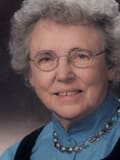
 Mormon Stories is very proud to introduce its newest sister podcast — Mormon Studies Podcast!
In its inagural episode, host Brent Metcalfe interviews Jan Shipps. Jan is professor emeritus of history at Indiana University–Purdue University Indianapolis and a former president of the John Whitmer Historical Association (2004–05) and the Mormon History Association (1979–80)—a scholar’s scholar who has influenced a generation of students of Mormonism, often reaching across and even narrowing the chasm between believer and nonbeliever.
Over the past several years Jan has laid the foundation for a forthcoming book on the history of Community of Christ (a.k.a. “prairie saints”; formerly RLDS) and The Church of Jesus Christ of Latter-day Saints (a.k.a. “mountain saints”) from the end of World War II to the present. Explicating 1950s strategic missiology and convert retention to 2010s ecclesiastical polity and women’s priesthood, she has new and trenchant insights that she shares with podcast listeners.
Episode Transcript
Guests: Brent Metcalfe, Jan Shipps
This transcript is machine-generated and lightly edited for readability. The audio is authoritative. Please excuse occasional errors in names and spelling.
Introduction to the Mormon Studies Series
Brent Metcalfe [00:00:00] I'm your host, Brent Metcalfe. Let's talk Mormon studies.
Guest [00:00:16] Come today you see the sun hit the Arch, A history song. If you don't know it now, then you will do. If you don't know it now, then you will do.
Jan Shipps on Prairie Saints and Mountain Saints
Brent Metcalfe [00:00:43] Folks, I am absolutely thrilled today to be kicking off a new podcast series called Mormon Studies. And with me today as a first guest, I am absolutely thrilled to have Jan Shipps. She would be considered, I think, a scholar's scholar. I consider her the Matron Saint of Mormon Studies. And she is just a brilliant, gifted researcher. She was a professor of American history at Indiana University, Purdue University, Indianapolis, and she is an author of a number of books, some of the most important being Mormonism, the Story of a New Religious Tradition, as well as Sojourner in the promised land, 40 years among the Mormons. Jan holds a distinctive position of being a prolific writer on Mormon history. While she herself is not lds, but I think that she is considered a friend among many and an incisive and insightful interpreter of Mormonism. And I welcome you, Jan. Thank you for being here.
Jan Shipps [00:01:57] I'm happy to be here. And it's very. It always makes me realize that I've been here a long time in Mormon Studies. When you move from calling me the den Mother of Mormon Studies to the matron of Mormon Studies,
Brent Metcalfe [00:02:16] well, you know, you know something, Jan, I was thinking about this as I was preparing for this podcast and, you know, I think I remember first meeting you in the early 1980s, and if I remember correctly, it was at a Sunstone symposium at one of the after event gatherings. And you were just such a gracious host. You invited so many of the young students and scholars up to your hotel room where we could all gather for a huge chat fest. And what a wonderful opportunity it was to share ideas and thoughts. And now I look back on the group who was in attendance and how many have gone on to become such remarkable scholars and contributors to Mormon studies and very fond memories of those events.
Jan Shipps [00:03:15] Those events. Stan Kimball, who is no longer with us, but the Stan Kimball who wrote the biography of Heber Kimball, called these the ship's Smoker. Why he did that, I don't know, because I smoked for a few years when I was in graduate school, but I haven't smoked cigarettes since 1964. But he called it the ship smoker. And it was surprisingly, if you very few people go back this far to realize that there was a time when people, after a banquet at MHA Mormon History association or after the end of the Day at an American Historical association or a Western Historical association and so forth, that people from the community of Christ, then the rlds and the people from the Western lds, which I call the Mountain Saints and the Prairie Saints, did not want to go to each other's rooms. My room was a neutral place where people could go. And. And that's. And it was that for years and years and years.
Brent Metcalfe [00:04:39] Well, I'll tell you, it must have rubbed off on someone because Erin, my wife, who is now the president of the John Whitmer Historical association, now it's becoming customary that on the Saturday evening after all the events that we have, people come over to our room or place wherever we happen to be standing. So we're trying to follow on in the tradition of Jan Schicks.
Jan Shipps [00:05:06] Oh, wonderful.
Brent Metcalfe [00:05:08] And bringing people together. And they're great opportunities to have just wonderful conversations with folks and, you know, learn more about each other's perspectives in a very friendly environment.
Jan Shipps [00:05:22] Yes, that's the important thing. It started with Leonard Arrington. He would always find himself a seat, and then he would arrange everybody around the room in a circle and say. He would start by saying, tell us what you're doing now.
Brent Metcalfe [00:05:40] Oh, that's excellent.
Jan Shipps [00:05:41] That's the way Leonard would do that. And it would get. We'd get back to Leonard and then he said, what kind of questions do people have? And that's when it would start.
Brent Metcalfe [00:05:51] Oh, that's wonderful. See, I love that sense of camaraderie in that type of environment, because often when you're dealing with religious history in particular, it can tend to become a war of ideas rather than an exchange ideas. And so I think that that's wonderful to cultivate that type of safe environment to be able to discuss each other's ideas and thoughts.
Jan Shipps [00:06:21] Well, and it's important to know that the development of the John Whitmer Historical Society was exceedingly important because it was a place where people from what is now the community of Christ could be together and invite people, invite the Mountain Saints to come and join them as they did when they put Davis Bitten on the. Davis Bitten was, I think, the first mountain saint that went on to the Council of the John Whitmer. And I went on the Council of the John Whitmer even before I was. I became a member of the Council of the Mormon History Association.
Brent Metcalfe [00:07:21] Right, yeah. Well, you know, that's interesting that you would bring up some of those relationships and cultivating those relationships between the community of Christ or the Prairie Saints and the LDS Church or Mountain Saints, because It kind of is an interesting segue into some research that you've been doing, because I know that that is actually part of the research that you've been doing. And for the last five years or so, you've been working on a book project, which I think absolutely sounds fascinating. And I wonder if you can give kind of an overview of some of the things that you've been doing and what you've been looking at.
Jan Shipps [00:08:03] Well, a long time ago, when Dean May was still alive, Dean and I had. There'd been a lot of talk about. We don't have any real good research and research that is not only about one little thing or another, but analytical research on Mormonism, including both the LDS and the rlds, which we called it at that time. And so we decided that Dean would do the early part of the 20th century up to and through the World War II, and that I would start there and go on. Well, of course, to our great dismay and very sadness, Dean did not live to do that study. But I started on what's happened to the Mormons since the Second World War, including not only the people in the west, the Mountain Saints, but also the Prairie Saints, what has happened since the Second World War. And that's what I've been working on. I looked, you know, I have an outline and I have a lot of the chapters pretty well ready to go. But I started looking at the beginnings with the development of the missionary movement in the 1950s and 60s, because that was what was going on, especially in the Mountain Saints were working, though what was the place that they were, I call it. They were trying to. To do. Do. They were trying to harvest the same fields as the Pentecostals when they. When they went to the American suburbs. Of course, the Prairie Saints did not go to the American suburbs in that same way, but were doing missionary work overseas at that time period. Very important from that standpoint. So I looked at the missionary. What was going on in the missionary movement and realized that, interestingly enough, the way the Mountain Saints and to some degree the Prairie Saints were identifying themselves had changed. Surprisingly, this happened in the 50s when they stopped spending all their time saying we're the only true Christians, and started describing themselves in as. According to an article that was published in one of the clones of the Reader's Digest called those Amazing Saints those Amazing Saints. And it was an article that talked about how the Saints had. They didn't drink and they didn't smoke and they didn't even drink coffee, and they had all the boy Scout virtues. They wouldn't have said Girl Scout Scout virtues at that time, had all the Boy Scout virtues. And especially they took care of their own. And this was the kind of identification of themselves as, as people that were important and amazing in how they behaved and not as much, at least in the public affairs, you know, in, in public relations, about being the only true Christians. It was. That's. That's one of the things that I have. This book is going to talk about now.
Brent Metcalfe [00:12:34] Now, is that the Mountain Saints who, Who are doing that or just the Prairie Saints?
Jan Shipps [00:12:39] No, the Mountain Saints are doing.
Brent Metcalfe [00:12:41] Oh, that's fascinating because it's. It almost seems like we've come full circle to where as the missionary program progressed, they moved away from that and it became very history based, you know, theology based, morality based and so on. And now they seem to be moving back more toward the idea that we're part of a broader Christian community.
Jan Shipps [00:13:09] And of course, that is what's happening to the Prairie Saints. Absolutely is part of the broader Christian community. The Mountain Saints have not gotten there yet. They. They. The interesting thing that I have discovered and, and that I emphasize is the Mountain Saints have moved to work with other Christian communities in the area of human need, but not in theology. Whereas, whereas the Prairie Saints are coming closer in theological belief even as they hold on to the Book of Mormon. They look, as Tom Alexander pointed out, that if you read the Book of Mormon in a particular way, it is really a very evangelical book and it holds on to the New Testament even as everybody thinks it's an Old Testament kind of book. And it is. But its theology is more New Testament, according to Tom's analysis, which I think
Brent Metcalfe [00:14:33] is right and certainly more in line with what some folks may view as traditional Christianity. Right. Something that would be in some ways theologically closer to what a methodist of the 1830s would have believed than what a contemporary Latter Day Saint may believe.
Jan Shipps [00:14:55] Well, yes, I think that's true. And of course, with regard to Methodism, I am a cradle Methodist, have been a Methodist that stole my life.
Brent Metcalfe [00:15:05] Thank you for mentioning that.
Jan Shipps [00:15:07] And I have, along with a wonderful colleague who is a nuclear physicist, the two of us have led an adult forum in our Methodist Church for going on 26 years. And we've done a lot of Methodist history as well as biblical studies and as well as social issues, issues of various kinds. But this whole business of how Methodism understood theology at the time of this, what most historians call the Second Great Awakening, it is very close to the way Brigham Young felt before he met Joseph Smith.
Brent Metcalfe [00:16:02] Interesting. Yeah, that's fascinating. And I've seen a number of areas of convergence between the Book of Mormon itself and Methodism, right down even to the methods that are being used for camp meetings with the notion of a preacher and exhorter and that type of thing. And you look at Alma and Amulek in the Book of Mormon here, who kind of fill that role as Alma being the preacher and Amulek is the exhorter. And so it's fascinating seeing those types of convergences in the book.
Jan Shipps [00:16:39] And they are there. And I mean if you look for them, they're there. If you're looking to make sure this is different and very, very leading to a true church of Jesus Christ, it gets. If you're looking for that, you miss a lot of the Methodist connections or parallels.
Brent Metcalfe [00:17:10] Well, let me ask you on getting back to the question on the missionary movements among the Prairie Saints and the Mountain Saints. I'm really curious because when I was younger growing up, there almost seemed to be an adversarial role between the then our LDS Church and the LDS Church. And so the missionaries, at least in part for some of the LDs, seem to be focused almost as being missionaries to the Mormons.
Jan Shipps [00:17:46] Well, of course that was true and the. But that is a carryover from the 19th century. At the end of the 19th century, it was in the public domain that these two, which turned out to be the largest churches, the largest institutions of Mormonism, were in clear trying to say one was right and one was wrong. The whole of the historical community and even I think the whole of the, of the religious community. You must know that Leonard Arrington was so important. Leonard Arrington and Bob Flanders were. And then of course, other members of the RLDS Church and other members of the LDS Church who were historians started being together. And that was very important. More important I think for the what was in the RLDS Church than the LDS Church, because the RLDS Church was small enough that the institutional leaders, the prophet as it were, and or the president realized and was kept in, was very much kept in a knowing what was going on. Whereas I think it was many years until the leaders of the LDS community realized that the LDs and the RLDS people were getting along just fine.
Brent Metcalfe [00:20:00] That's interesting. And you know something? I think that that tradition within, at least among the historians and so on, has continued and even thrived between the two communities and even beyond right now. It's very inclusive as far as even non LDS scholars such as yourself and others are as welcome.
Jan Shipps [00:20:26] Yes. And there are a surprising number of people who, who are not Mormon who have taken up the study of Mormonism. Because people ask me, why would I spend a half of century of my life studying the Latter Day Saints? And my answer is always, I was not investigating the Saints looking for a religious place to be, but I was interested in how religion works. And because we don't have all the references that would allow us to look at early Christianity, we have the, we have the stories told by the winners, but not the stories told by those who didn't win the. Which we do have in Mormonism. It is a wonderful case study of saying how religion worked well in a very real sense.
Brent Metcalfe [00:21:31] Jan, you're watching the birth of a new religious movement.
Jan Shipps [00:21:35] Well, listen, you're not only watching the birth of a new religious movement, you are watching the birth of a new form of understanding. That's right. You are just watching a new move that is to be understood as true. So you're really watching truth get, truth get established. And we know that that's what happened in early Christianity, but we don't know how it happened. But we.
Brent Metcalfe [00:22:17] Right. I mean, when you think about it, wouldn't it be just absolutely amazing if we were to ever find one of the original manuscripts of any book in the Bible? Hebrew scriptures, Christian scriptures, if we just found any of them. And yet here we have this large portion of the original manuscript of the Book of Mormon as dictated by Joseph Smith. We've got the Book of Abraham manuscripts, we've got all these different documents not
Jan Shipps [00:22:49] only, but we have the manuscripts of those who believed and extraordinarily important of those who did not believe. So we have a pattern of looking at how religion gets, how truth gets created and what happens. And the fact that this tradition, of course, I argue in my first book that this is a new religious tradition and that it started out as a cult because all new religious traditions start out with. New truths. And when you have a new truth, it has to get established or it will disappear and very often disappears with the death of the leader. But that did not happen with Christianity and that did not happen with Mormonism. Now, if we want to go back to one of the things that I have, one of the, one of the major, I will say one of the major analyses that I am doing in this, this book which I'm calling Being Mormon, the Latter Day Saints since War ii, is that the growth of Mormonism caught people by surprise. It caught the Mormons by surprise, the Mountain Saints by surprise. It even Caught the RLDS community by surprise after the Second World War, as they grew and grew and grew, somehow or other, especially because we had a very fine sociologist who decided that by 2050, all Christians, or more Christians in the United States would be Mormons than any other.
Brent Metcalfe [00:25:07] Yes, I remember that.
Jan Shipps [00:25:10] Well, what people bought into that analysis to that. Well, it's not an analysis, it's a theory. People brought bought into that theory and growth began to almost assume growth is truth. And that was a problem. Now, my interpretation is not that Mormonism is a new Christianity, but that Mormonism, if you want an analog, a religious analog, is more like Judaism. That is to say, no one, nobody anywhere would claim that Judaism is not a religion, but it. But it's a religion whose basis is not in numbers, but in what it believes. And I think that ultimately that's the pattern that is working in Mormonism. Because at one time, everybody thought Mormonism was the fastest growing church in the country, which was wrong, of course, because all the Pentecostal churches and all the evangelical churches were not in one group. And so that you'd look at this was the fastest growing single institution. But it was by no means the fastest growing religious movement, because evangelical grew. The evangelical movement and the Pentecostal movement, if you put those together, they were growing much, much faster. And another thing about the growth of the church, both churches, of course, the. The community of Christ has had schism that is so important in its history, but the growth has slowed amazingly, so that the growth that was once so pushed very much by the LDS Church, the Mountain Saints. And it's still, every year they say we have more members than we had before, but if you look at growth rates, the growth rates have gone back down. And I will be doing that in this book.
Brent Metcalfe [00:27:46] And that's fascinating, Jim, because even though there has been such an increase in the sheer number of missionaries going into the field, it seems like that has not had the desired effect of increasing the conversion rate as well.
Jan Shipps [00:28:04] That's true. That's true. And we have to. I think we have to wait a little while. The increase or the decrease in the age of especially women going out to be missionaries may make a difference, but it hadn't had time to make a difference yet.
Brent Metcalfe [00:28:25] Gotcha.
New Directions in Latter-day Saint Historiography
Jan Shipps [00:28:26] Okay, okay, let's change the subject to something else that I've done that I'm really quite excited about, and that is that one of the things that was of great interest to me is the development in Mormonism in both of these churches or institutions is the development of of a Mormon intellectual community. And somehow I've been very. I was very. I. I don't know, lucky or whatever. But when I was working in the archives in Salt Lake City, I came across a listing back on back. Remember when we had computers that listed everything on those green sheets that I came across a listing of all the Mormons that they could count that had not only a bachelor's degree, but had more education either to become school administrators or to go on to PhDs, Masters and PhDs. It was a list that had 6,627 people on it. And it was amazing. And so I took that list, and I have a wonderful research assistant who is still with me who took that list and made a database. And we could use that database which had attached to each name 17 different things like, are you married? What is your age? Where did you go to school? What degrees did you earn? Have you been on a mission? Just. Just an incredible number of things. Where are you? Where do you. Where do you live now? Which means it allowed me to be able to see the impact of the GI Bill on the Mormons. But in this sense, I took that. We took that database and we looked at and developed a. There's a chapter on the development of educated Mormons, that is, people who had gone to school who had become educated with more than a bachelor's degree. Now, that is. That does not mean that they are. Because there are people, many people who have master's degrees who don't become intellectuals in the. In the sense of maintaining in their. Maintaining in their thinking the possibility of things that might be not true or true and keeping things inside the same head as they try to figure things out.
Brent Metcalfe [00:31:59] Well, the curiosity element seems to go down. Right?
Jan Shipps [00:32:02] That's right. And so we move from that. And we had the list of the people who first subscribed to Dialogue.
Brent Metcalfe [00:32:14] Interesting.
Jan Shipps [00:32:15] And we took. We added that as a variable, and we took that. Either did they subscribe to Dialogue or did their kids subscribe to Dialogue for their folks? Now, what this told us were two things. One, this is not by no means the first time Mormonism has had an intellectual community, but only after the Second World War did a Mormon intellectual community. And of course, this is the rlds as well as the lds, move from one generation to the next. The intellectuals in the late 1870s, 80s, and the intellectuals in the 20s and 30s were great intellectuals, but they did not. It did not move from one generation to the next in the same way. But what happened after the Second World War with the Development of the John Whitmer Historical association, the Mormon History association, the development of Dialogue and the development of Sunstone. What happened is that intellectuals in both churches began to talk to each other in their own intellectual communities and then to share across intellectual communities, communities. And so we have a chapter, I have a chapter on educated Mormons, the development of an intellectual community and where it developed, of course, in the development of Mormon history, the Mormon History association, the John Whitmer Historical association, and Dialogue and Sunstone. And then, of course, there were the development of the people that were original writers and artists and those things. But these are the big groups is Dialogue, Sunstone, MHA and John Whitmer. And so I look at that and I'm able to describe the intellectual community. And then the third chapter in this section is the result of the Church responding to the development of an intellectual community. Of course, in the rlds, the response. Was welcomed, but it was not welcomed from the religious leaders in the LDS community. And in fact, there were efforts to tell people to not listen to these intellectuals. But this move gradually, maybe with the help of the new Mormon history under Leonard Arrington and maybe with other. The development of the push to understand the Mountain Brothers massacre and so forth. Finally, both churches have welcomed this. And the welcome that is shown, I believe, in the Mountain Saints is the development of the Church history library and the opening of the resources to virtually any legitimate researcher. So I think that's so important.
Brent Metcalfe [00:36:17] Absolutely, Jan. And, you know, it is really interesting because people in the past referred to the days when Leonard Arrington was historian as the Camelot days. And I've, you know, often said that, well, if those are the Camelot days and then, you know, we've reached nirvana now because, I mean, this is like nothing I've ever seen before in terms of access.
Jan Shipps [00:36:46] That's right. And the phone. Well, yeah, well, it was Camelot. I mean, I was there, I was there in those Camelot days and it was like that. But the church, the institutional church, did not regard it as Camelot days. And in fact, after they moved Leonard and his colleagues to byu, it closed up quite a lot until they came to realize that it was not going to be effective or useful to keep the, the church history, the, the, the, the sources that were held by the, the 12, by the, the, the council, first presidency, presidency, have all been moved to the, the Church History library now. And there's not that kind of pattern of those things that are kept secret. It would be very interesting to. I would have been very interested to Make a list of the things that were kept in the church history library. I've always thought that. I mean, everybody thinks that it was the Mountain Meadows Massacre stuff that was kept there. But I think more than that, it was the post manifesto polygamy that they.
Brent Metcalfe [00:38:31] Interesting.
Jan Shipps [00:38:33] But I don't know. That's just my guess.
Brent Metcalfe [00:38:35] Right, right. And the irony, Jan, is that now we're living in a time where information about all of the. That is just being disseminated at an accelerated, unprecedented rate.
Jan Shipps [00:38:49] It's been disseminated and accelerated, and it is the church itself that's putting it out on the web, that one of the things the church is trying to do is to deal with the new world that is created by the Internet. And that's a. Every church is dealing with that. It's a big problem, and it's a big problem for any religious group. But it's a bigger problem for churches that have a canonized history. That is Catholicism and Mormonism both have canonized histories. And if you have a canonized history and then you cut into that canonized history and say that didn't happen or it didn't happen that way, then people get really upset. And as we know, some people are leaving now. One of the things that I can say about what I have to do now is I thought I had pretty much written the story and had tried to bring the story of women in Mormonism into the chapter on the family. Well, that's not where it is anymore. And I've got to write a chapter on women and Mormonism because what's happening now is very different than what had happened in the last half of the 20th century.
Brent Metcalfe [00:40:37] Well, even when you look at the issues that were going on within Mormonism and you know, its opposition to the era, what we're talking about today is it's almost apples and oranges.
Jan Shipps [00:40:50] That's right. It's so far different than what it was then that I just really have to start that chapter all over again. Because what happened at the ERA was. Does not even begin to look anything like what is happening. Even the people that were for the ERA doesn't even begin to think about what's going on now. And it's always been true that the community of Christ is ahead and has been ahead for a long time of valuing and leading to making its women leaders both theological as well as institutional. And that's a big issue. That's important from the standpoint of knowing what happened, what's happened since the Second World War. But I think even Though I thought I was. I've been working on this so long, I thought I would let it end at the end of the 20th century. Well, I can't. And then I thought, well, I'll let it end at the end of the defeat of Romney. Well, I can't, because what's happening with the women now, especially in the Mountain Saints, has happened so much earlier in the community of Christ. But the same thing. What does it mean to allow women to be inside the leadership now, whether priesthood really means leadership and what that means. I've had a long conversation, of course, I have been talked to by journalists ever since I started, really, since I was the president of the Mormon history association in 1980. I've been taught, called and called and called and called from. From the media. But what is happening now is the question of what is the difference in leadership? And also I tell. When people say, well, you know, are the Catholics going allow their nuns to become priests and are the Mormons going to allow their women to become priests? And I. My idea, and I'm not sure, and I'd like to know what you think. My idea is that it would be easier for Catholics to allow women to become priests than it will for the Mountain Saints because their theology is so strongly based on. On gender differential and the development of a family that can reproduce.
Race, Gender, and the 1978 Revelation
Brent Metcalfe [00:44:15] That's a very interesting perspective. I think, too, that I mentioned on my interview that I did with John Dehlin recently on Mormon Stories, that when you look at the Pope now, who's coming out with more ecumenical ways of talking about faith and belief and being more inclusive and open to new ideas and trying to shut off some of the past polemics against different types of ideas, whether it be theology or moral concepts or feminism, sexual sexuality, gender roles, whatever, it seems like the Catholic Church on some level is embracing him. But still, when the Pope goes before the bishops and presents a statement that tries to heal the relationship with the gay community, and then the bishops basically shoot it down, or with the sisters
Jan Shipps [00:45:26] or with the nuns.
Brent Metcalfe [00:45:28] Right. And so it makes me wonder, you know, how long will it be? Will the Catholic Church have to go through its own pains to get there? Whereas within Mormon Church, not only do you have kind of this insular theology that's taught among the believers, but you also have a much smaller movement. And so, you know, the question is, how do you ease the burden, so to speak? And, you know, I think back to when the revelation that Spencer Kimball gave regarding that all males of every ethnicity, all worthy males. Yep. Could hold the priesthood. I look at that and I think, you know, it was almost like night and day. It was like one day, Mormons adamant believed that blacks would never hold the priesthood in this lifetime. And a day later, they were embracing just the opposite concept. So that also makes me wonder, if a similar type of event were to happen with regards to women in the priesthood, would the same change occur?
Jan Shipps [00:46:40] And I have to give the credit not to myself, but to. To Greg Prince, who is writing a biography of Leonard Arrington. His chapter on the 1978 Revelation is. Is so informative and so brilliant. I guess Leonard kept a diary. I mean, I know Leonard kept a diary because he used to. When we'd have a long conversation, he would write it up in his diary and he'd give it to me and say, is this right? And I have that several times. But he has a description of what happened in 1978. And the fact is that there was in 1978, after President Kimball pushed this, there was a group mystical experience that is so obvious that it has to be identified. And he had, he had put it. He had written the chapter without concluding, look, this is. This is a kirtland like group mystical event. And of course, I also have already written that I think the decision to name the Reorganized Church to the Community of Christ was also a group mystical event. I think if those events do not happen, then the shift and change will not have the power it did. And I think that is very important. One of the things I've tried to do as we move toward knowing more about this movement as a religious tradition is I have looked very, very carefully for group mystical events that would help us understand the way things were going one way or the other. And I'm just sure that in the, in the 1978 decision, and it was a. I mean, President Kimball announced it, but it was a decision of the council of the 12. It was a group mystical event, a major event that says this is more than the people who wrote to the New York Times and said it was a response to the pressure from Mormon intellectuals, which it was not. And there were those of us who saw it as a response to what was going on in Brazil, right?
Brent Metcalfe [00:49:52] The Sao Paulo Temple and so on.
Jan Shipps [00:49:56] And while I wrote an article in the Christian Century that said that, and while a lot of people said that's much more likely than the whole church responding to intellectuals, but now I know it was even more than that. I think that. That the. What was going on in Brazil made it necessary for the, for the council of the 12 to take it up, but it does not explain. They do not respond saying, we got a problem here and we're going to solve it here. That, that's. That. See, that's logical. But what they did was to enter into long prayer that led eventually to a group mystical experience. And if those don't happen every once in a while in a. In an institutional setting, then the institutional will not stay as strong as it was.
Brent Metcalfe [00:51:05] Right. And it has been, you know, sometimes since something of that magnitude certainly has happened. There have been incremental things along the way.
Jan Shipps [00:51:17] Yes, but not, not like that. And, and not, not like the change in the name in the RLDS institution. And so I, I have written that. I am on, on record as doing that. I did it in my, in a. In an article. I mean, in a paper I published. I mean, that was published by the John Whitmer Historical Society, but it was just published as a typescript. And I am going. I'm using that in my part of my study of the RLDS tradition, which I have. You know, I've always held that you can't just tell the Mormon story from the Western standpoint. You have to tell it from both.
Brent Metcalfe [00:52:08] I agree with you. I think that we're missing out on a lot of the richness of the story by not considering both.
Jan Shipps [00:52:18] That's right.
Brent Metcalfe [00:52:20] To be honest with you, since I joined jwha, that's where I've really come to realize what a profound influence, you know, these scholars have had and how fascinating, quite honestly, their history is, in and of itself.
Jan Shipps [00:52:38] That's right.
Brent Metcalfe [00:52:40] It's basically another branch on the tree. And I don't think that you're going to get the whole picture without considering, you know, what happened with Joseph Smith's family. Right. I mean, this is his son.
Jan Shipps [00:52:56] Exactly right. And I've been arguing that for years and years and years. And though so there once I gave a paper at the John Whitmer meeting that said, telling the whole story of Mormonism requires looking at both these two major institutions, plus the smaller institutions that are still around. Steven Shiels work has just been so useful to all of us.
Brent Metcalfe [00:53:33] Agreed, agreed. Steve has done some wonderful work in that regard. And that's another thing that I encourage our listeners to try and get involved with the John Whitmer Historic association and attend their meetings, because they have opened my eyes to things that I never even thought of before. And I've met people from other groups that are every bit as committed to Joseph Smith and the founding of Mormonism as the Prairie Saints or the Mountain Saints.
The John Whitmer Historic Association and Closing Reflections
Jan Shipps [00:54:07] I know that's true.
Brent Metcalfe [00:54:09] And that is just fascinating to me. And meeting apostles from these churches who quite honestly look just like the conservative businessmen apostles that you see in the Mountain Church. And you're sitting there thinking, my goodness, you look just. You could go and sit up on the conference stand and nobody would see any difference.
Jan Shipps [00:54:31] That's right.
Brent Metcalfe [00:54:32] And so it's just a wonderful, wonderful experience. And I've got another question that I wanted to ask you about because you touched on it, and I think this is a fascinating point to make, and that is that a lot of people see the church embracing the Mountain Church, embracing more openness, whereas the Prairie Church has accepted it for decades, really that now the Mountain Church is starting to embrace its scholars more as a way of trying to help ameliorate concerns over, you know, sticky gospel themes. And so now we've got these official gospel topics that are coming out.
Jan Shipps [00:55:17] Wonderful.
Brent Metcalfe [00:55:18] Yeah. And I look at them and even though, you know, I can nitpick at them all day and say, don't agree with this or don't agree with that
Jan Shipps [00:55:26] or you forgot to say this.
Brent Metcalfe [00:55:28] Right, right. But I kind of have. I almost see this as a type of quiet reformation, if you will, going on in the background, because Mormon theology is intrinsically history based. It's a theology that's inextricably tied to historical events, like you've said. And now they're kind of reaching back and into the history and embracing it. Right. Even some pretty controversial parts.
Jan Shipps [00:56:03] Well, there is, they are doing this. There's no doubt about they're doing this. But the other thing that is very important is that they really don't have much choice because with the presence of the Internet, the existence of canonized history, as the Catholics have discovered, is a big problem. If the canonized history leaves out important issues and important events that happened. And this last one, you know where that came out, that admits post manifesto polygamy, that was not accepted even by many of the. They didn't know it. I remember, I remember sitting in a ship smoker, if we want to call it that, and talking to Michael Quinn and he had just written this big long article about post manifesto polygamy. And it was a 70 page article and it started out, had two pages that this is my church, I believe in it. These are the, these are the apostles. I reference and believe in them, I honor them and so forth.
Brent Metcalfe [00:57:42] But a prelude testimony, a prelude testimony
Jan Shipps [00:57:47] to, yes, 66 pages of they lied, they lied, they lied. They lied. They lied. And then the last two pages is, these are wonderful men. And they, and I regard them as my religious leaders. And I said to him, michael, don't you think this is going to cause problems? And he said, oh no, I don't think so. They gave me access to these documents. But they did cause problems for him.
Brent Metcalfe [00:58:19] Oh yeah. And you make an interesting point. And that is, you know, I imagine that general authorities, much like people who are in positions, high ranking position, positions within corporations or whatever the case may be, they're not necessarily involved with every bit of minutiae that may occur on a daily occurrence. And they may not even know if you went and asked the CEO of Ford or what have you give us details about your history, especially the ones that involve the curious practices of, of your founder. I don't know that that person could recite them any more than a general authority could. And quite honestly, it's taken some of us who've spent the better portion of our adult lives looking at this stuff and no one of us still has all the information.
Jan Shipps [00:59:20] No.
Brent Metcalfe [00:59:21] And so to expect somebody who happens to be in an ecclesiastical position to possess that type of level of knowledge is a little bit unrealistic. But at the same time, I would have to say that when Mike did put out his paper, that would at least be some type of clarion call to say, you know, we may want to familiarize ourselves with these types of issues. Yeah. Because undoubtedly they're going to come up again. And of course they have.
Jan Shipps [00:59:53] I think that he. That was one of the late articles that is of information that came before the Internet. I think the brethren, that is the council, both in, in both churches have had to accept the reality of the Internet. And if, if the Internet provides information that the students of the Latter Day Saints used not to think was necessary to tell them, now they know it's. That has to come out because there are so many Latter Day Saint adults throughout the world that are looking to. This canonized history has to be revised. It's so interesting when I had a wonderful interview. I've had interviews with Hal Eyring, President Hal Eyring, who is the first counselor, and with President Uchtdorf and with President Packer all in the same day. It was a very interesting day.
Brent Metcalfe [01:01:16] Oh, it's an interesting day.
Jan Shipps [01:01:18] And one of the things that happened is when I talked to President Eyring, he said, before we start, can you give me, can you talk to me about the career of Leonard Arrington? And he simply wanted to know about the, you know, the history that was written during Leonard's time and what Leonard was like to know as a person and so forth. And I think that was very important for him to reach out, to know the past in a way. Interesting that, you know, he's such a, I mean, he's such a brilliant man because he, he's had such a brilliant career as an educator before he became the, a member of the council of the 12. And it's so interesting that when president, the president of the church called Hal Iring to be the first counselor, they had to call somebody that was. Had come into the council before or after Hal Eyring. You know, that's the way it works. And so they brought in President Uchtdorf, who has become a very interesting leader. And the many, many, many people are really looking to him as a future leader of the church, but he's very far down in the list of who will become the president of the church if they keep the traditional pattern. Because there's nothing in the, in the revelations that says the leader, the oldest person in the council has to be the new president. There's nothing there.
Brent Metcalfe [01:03:31] Right, right. And in fact, had there been such a thing, there, there would never have been the succession crisis.
Jan Shipps [01:03:39] There wouldn't have been that. And there wouldn't have been the succession crisis that is the Church is facing now as the what, what they call the gerontology problem.
Brent Metcalfe [01:03:52] And, and I, I would think that at some point that perhaps there would be an LDS president who would, who would basically say, like the Pope. Right. It's time for me to retire.
Jan Shipps [01:04:06] Yes.
Brent Metcalfe [01:04:06] And, and the church can be led by, you know, a new. Yeah, let's get some new blood in there to kind of take the church forward. Well, Jan, I can't tell you what a delight it has been to have you on. You're a gracious person to interview. You've had so much influence on so many of us, and I know that you're on a tight schedule today and I appreciate you taking the time out. One thing I want to you. You to promise me though, is to continue to watch what's going on in Mormon studies and Mormonism today. And then I would love to have you come back as a guest in the future and have you add on to many of the amazing comments and insights that you've provided today.
Jan Shipps [01:04:57] I would be happy to do that. It's a pleasure to talk to you and I hope that we will. And I want to say this too, to any John Whitmer listeners of the John Whitmer Historical Society. We must all go to the Mormon history association. It's 50 years, and we need to talk about where history is going. And it needs not just to be where the history of the Mountain Saints is going.
Guest [01:05:29] Point.
Brent Metcalfe [01:05:30] Amen, sister. I really appreciate that, Jan, and thank you again. And we'll be talking to you soon.
Jan Shipps [01:05:38] Okay, great.
8 Responses
Excellent interview! It’s surprising to hear a non-Mormon talk about Mormonism with such thorough understanding.
It sounded like she had MUCH more to say about women in the church, so I hope that subject will be delved into in greater detail on her return visit.
Thanks for featuring her!
Sister Shipps has always been one of my favorite voices in Mormonism. She is the closest we have to an unbiased opinion. Kind of like Alex Beam in that she offers just the facts from an outsiders perspective. Plus she is just so darn likable! I have always enjoyed listening to her talks at Sunstone and imagine the fun it must be to sit in her hotel room after and just riff. Great interview! Thank you both!
BRAVO! Well done, insightful and a marvelous initial conversation here for building a bridge toward authentic history and the next step.
This is the podcast I have been waiting for. Well done, Mr. Metcalfe! As one who listened to every second of your interview with John Dehlin twice (so far) with great interest, I am beyond pleased you are hosting. It was a delight to listen to Ms. Shipps. As a nonMormon long fascinated by the history of the LDS movement, I hope she will be a frequent guest.
Now, excuse me while I hit the rewind button….
I always agreed with Jan’s idea that Mormonism is NOT a new Christianity–but that Mormonism is to Christianity what Christianity is to Judaism.
Having left the LDS Church in 2003 and converting to Reform Mormonism, I have gained grown so much in my personal Mormon faith by studying and drawing upon RLDS writings and sources. I’m very excited to read Jan’s book on Mormonism’s two largest denominations.
Is Mormon Studies Podcast available on itunes?
Great interview! YOui have to love an Hitorian’s Historian.
Much thanks to Brent and Jan–loved this interview! Looking forward to the next one.