
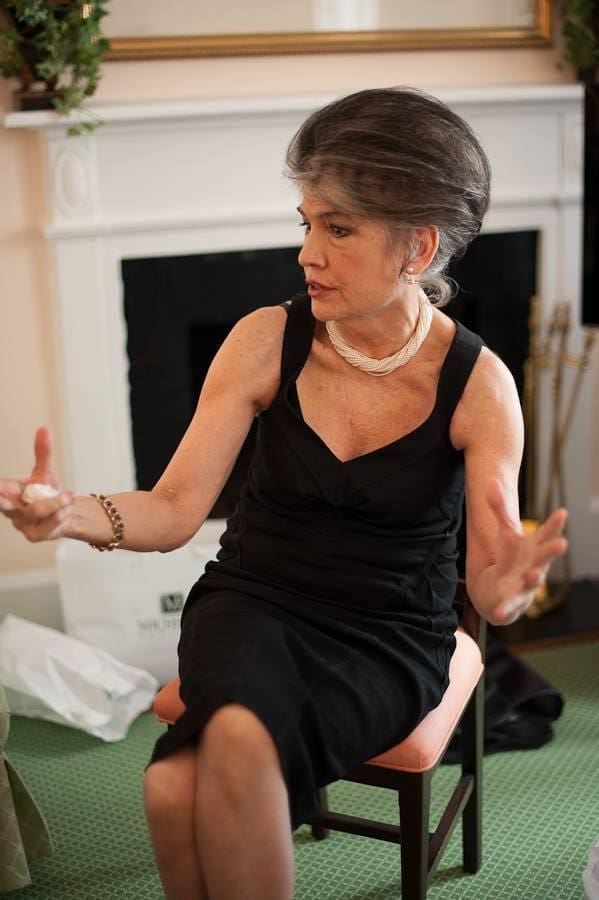
 On this edition of Mormon Stories Podcast, we are honored to interview award-winning documentary filmmaker Helen Whitney about her life as a documentary filmmaker, her work on the 2007 PBS documentary “The Mormons,” and her new film about mortality entitled “Into the Night.”
In Part 1, we discover that throughout her career, she has maintained a deep interest in spiritual journeys, which she first explored with her documentary The Monastery, a 90-minute ABC special, about the oldest Trappist community in the Americas. Helen followed this film with a three-hour Frontline documentary for PBS, John Paul II: The Millennial Pope, and in 2007 she produced The Mormons, a four-hour PBS series that explored the richness, complexities and controversies surrounding the Mormon faith. Following the Sept. 11 attacks, she produced Faith and Doubt at Ground Zero, a two-hour documentary that examined how religious belief – and unbelief – of Americans was challenged and altered by the spiritual aftershocks of 9/11.
In Part 2, Helen shares intimate details about the making of the highly-impactful documentary “The Mormons.” She also provides her non-Mormon perspective of the faith and many anecdotal interactions with LDS General Authorities including Boyd K. Packer, Jeffrey R. Holland, and Gordon B. Hinckley (among others) that our listeners will find very intriguing.
In Part 3, we learn about her new project, Into the Night: Portraits of Life and Death, a two-hour feature documentary featuring fascinating, unexpected voices from various walks of life: old and young, believers and nonbelievers, the dying and the healthy, well known and obscure. However varied their backgrounds, all are unified by their uncommon eloquence and intelligence, and most important by their dramatic experience of death. Into the Night is a two-part documentary, with Part 1 available now for streaming on Hulu and for rent on Youtube.
Episode Transcript
Host: John Dehlin · Guest: Helen Whitney
This transcript is machine-generated and lightly edited for readability. The audio is authoritative. Please excuse occasional errors in names and spelling.
Introduction and Welcome
Part 1 of 3 · Ep. 1004
Helen Whitney [00:00:11] Your mom and me, we've seen this life with eyes that only see in black and white.
John Dehlin [00:00:21] Mormon Stories is a production of the Open Stories foundation and relies solely upon the support of people like you, its listeners to help keep the podcast alive or to become a member of the community. Please become a monthly subscriber by visiting MormonStories.org and clicking on the Donate button on the right side of the page under Support. All contributions to Mormon Stories are completely tax deductible in the United States and go towards producing the podcast and building communities and programs of support for Mormons like you. Thanks for your support.
Helen Whitney [00:01:03] Tune me out if you must I know you've heard enough But I sing this song Just because I hope you'll be wiser than your daddy was I hope you'll be wiser than you hello
John Dehlin [00:01:27] everyone and welcome to another edition of Mormon Stories Podcast. I'm your host, John Dehlin. It is November 7, 2018. We are broadcasting to you live from our studios in Salt Lake City, Utah and we are so excited to have our our guest today. This is someone Helen Whitney is someone that I've wanted to interview at least for 11 years, if not longer. She is a world famous documentary filmmaker. Several of her documentaries have been shown on PBS and the one that will be most familiar to our audience is a documentary film called the Mormons, which I believe was released around 2007. It was a multi hour in depth look at Mormonism and as I've gone back to reflect how much amazing ground and territory Helen covered with that movie. It has informed Mormon stories, Mormon Stories, Podcast, and so much. It's sort of been a precursor or and architecture for so much of the change and issues and controversy that we've been grappling with as Mormons for the 11 years after she interviewed Marlon Jensen, Jeffrey Holland, Point K. Packer, Dallin Oaks. She talked about LGBTQ themes, excommunication. She interviewed Terrell Givens, Michael Koh. So much richness has come from Helen Whitney's gift to us as Mormons. Part of what we're here to do is just to celebrate her, her role in all of our lives. And I don't even think she realizes how much of an influence she's been on all of us. But before we talk about that, we're going to talk about sort of biographically her upbringing and her story as it relates to her becoming a filmmaker and specifically a filmmaker who's dealt with so many movies about faith and religiosity. She's done work on the Pope Pope John Paul II. She's done work on faith in 911 on monks in the monastery. We'll talk about that on the Mormons. And we're also here in part three to celebrate a new documentary film that she released earlier this year called into the Night, which deals with mortality. For me, you know, my stepfather passed last week. We were all in the room when it happened. Today, the day of this recording is the two year anniversary of Margi, my wife's fourth father's death. We were all in the room when he passed. So my sister Gina died a couple years ago. So I've been hit personally with this notion of death and mortality and faith and how it all comes together. And of course, so many of you who are progressive or post Mormons, who maybe have lost your orthodox views of the afterlife or of God or of heaven, are now trying to grapple with, do I still believe in God? Do I still believe in heaven? Am I an atheist? Am I an agnostic? But what do I do with. With the fact that we all die and I may or may not have some confidence in the afterlife? Well, her amazing documentary, into the Night, which is going to be screened tonight at the Broadway and which is available on Hulu, and she's hoping to fundraise for a sequel that is almost fully made. And she just needs a little bit more financial support to take her over the hump. Well, we're going to dive deep into this topic of mortality in part three of this interview. And so we're super glad that you on Facebook can join us. We hope that you'll send us questions about her life as a filmmaker, questions about her documentary the Mormons, and any feedback you want to share with her or questions you have with her or if you just want to thank her and celebrate her for the role she played in your lives. And please post your comments or questions now on the Mormon Stories Podcast Facebook page. And then of course, if you have questions about death and dying and mortality and your own existential angst, you'll have a chance to talk about that as well as we explore the themes in her latest film, into the Night. So without any further ado, we've got you up early. Helen Whitney, it's such an honor to have you on Mormon Stories Podcast.
Helen Whitney [00:05:48] And thank you for inviting me.
John Dehlin [00:05:50] Yeah, and a shout out to Greg Prince, because it was Greg Prince that put us together. Dear friend of yours. Is that right?
Helen Whitney [00:05:56] Very close friend, yeah.
John Dehlin [00:05:58] Okay, so anything you want to say in response to that introduction? I'm guessing you're a Little bit surprised to hear that tens or even over a hundred thousand Mormons are so grateful for your work. Maybe that doesn't surprise you, but are you surprised that after all this time your legacy lives on?
Helen Whitney [00:06:16] Yes, and I'm delighted by that. And I also loved your introduction. I wish there was a tape of it so I could run it when, when I'm feeling down.
John Dehlin [00:06:25] It will be on the Internet. It'll be available. It'll be available to you on YouTube, Facebook, anytime. You'll be able to replay it.
Helen Whitney [00:06:33] Okay, that's good.
Helen Whitney's Background and Career Beginnings
John Dehlin [00:06:35] Okay, so we're going to do three parts and I want to start with just your story. I, I want to understand how does a woman. What is your background that led you to become a world class. I would say the, I don't know, like the, I wanted to say the Michael Jordan of, of documentary filmmaking, or at least religious theme documentary filmmaking. You've won so many awards. If you don't mind, let's start by the kind of the, the level of awards that you've either been nominated for or have won so that other people understand who don't. Aren't familiar with their work, the, the level of filmmaker that you are. And then let's just go back into your history and talk about how you became such a successful documentary filmmaker.
Helen Whitney [00:07:17] Well, the awards range from an Oscar nomination actually for my first film and not my best film either, by any means, but I was delighted to get the nomination and Emmys and the dupont and the Peabody, the Writers Guild Award, the Humanitas, you know, just many, many. And some of those awards are, are really special. The Peabody and the DuPont really mean the most to documentarians. They really do. And though of course being nominated for an Oscar is quite delicious.
Early Films and Oscar Nomination
John Dehlin [00:07:56] Which one of your films was nominated for an Oscar?
Helen Whitney [00:07:58] It was an early film. It was about a day in the life of a newspaper. The beginning part of my career when I did verite films. And it was not exploring any spiritual themes and it was fun to make. It was a very early film. And I also remember the pain and sadness of losing. I had a close friend who said to me who had been nominated the year before in the documentary area and he said, Helen, the losing experience is like an out of body experience. You will think that you have died and you're floating over your body in a car wreck. And I said, oh no, of course I'm not going to take this seriously and it's all silly and I'll just go out there and have a ball. Well, I got out and of Course the whole town is riven with excitement. Not about the documentaries necessarily, but they are excited and I got into it and I was so sad and I lost. But anyway, we'll come back to that. Long while ago, A long while ago. But anyway, I have been making primarily documentaries. There was a sort of eight year old hiatus when I actually made some feature films with actors, primarily for television. And that came out of having my, my first script chosen by Sundance and that was a wonderful eight years. But I went back to documentaries. But it began about. As I said, I, I.
John Dehlin [00:09:37] Where were you born?
Helen Whitney [00:09:38] I was born in New York City and, and went to school there and ended up in which borough? Oh, Manhattan. 79th Street. East Side.
John Dehlin [00:09:50] Manhattan.
Helen Whitney [00:09:51] Yes, Manhattan.
John Dehlin [00:09:52] That's the real deal. That's the real deal.
Helen Whitney [00:09:55] Lived in something of a WASP bubble and went to an all girls school. Chapin went to an all girls college. Sarah Lawrence, you know, wonderful experience, Sarah Lawrence. And then I went off to graduate school thinking I was going to become a professor and I chose Victorian literature. What grad school, University of Chicago.
John Dehlin [00:10:16] Okay, really quick, were you raised with any religious sort of upbringing or not?
Helen Whitney [00:10:21] That was sort of interesting. My parents were Unitarian, which as you probably all know is, it's a wonderful religion in which the divinity of Jesus is not even mentioned and God is rarely mentioned. Its universal principles, it, it's a religion with virtually no ritual and in which Sundays are often devoted to the news of the day and how you would use your best self that you might find in church to react to those events in a humane and good way. But my piano teacher, who was a very important influence in my life, was Russian Orthodox. So she would take me off.
John Dehlin [00:11:16] Jew or Christian? Russian Orthodox Christian.
Helen Whitney [00:11:18] Russian Orthodox Christian. She would take me off to her church, which anyone who's been inside a Russian Orthodox church knows is filled with bells and whistles and incense and the cosmic drama of Jesus and you know, the crucifixion is writ large. So I had the Unitarians on one side and this rich Russian Orthodox Church on the other and never the twain did meet. But they both left a profound imprint on me.
John Dehlin [00:11:58] So as a child, adolescent and young adult, would you have personally grappled with questions like, is there a God? Was Jesus real? Did he die for us? Did he get resurrected? Where do I go when I die? Is there one true church? Is the Bible God's word? Like were those intellectual questions or spiritual questions?
Helen Whitney [00:12:17] Some of them were because I had, this is quite personal, but people who know about it. I had and quite a Dramatic experience at the age of 11, when both my parents died within three months of each other. So the, the big questions came about, meaning less religion than, wow, what is this all about? Why must we die? Why do we live? And I think the idea of a personal God who was looking after me was very much in question after the age of 11. But it didn't. You didn't know that became disqualified. Yes, I didn't think that someone was actually. I mean, at the age of 11, to lose your parents so dramatically, it didn't remove the existential questions, but it removed that possibility for me for quite a while. But it left me with an ache to learn more about these great mysteries. I grew up fast. I grew up as an outsider.
John Dehlin [00:13:29] Who raised you when your parents passed?
Helen Whitney [00:13:31] I had a grandmother who was a bit sick and I went to boarding school almost immediately. And I was very much on my own.
John Dehlin [00:13:40] I'm so sorry.
Helen Whitney [00:13:41] I had great friends and friends became family.
John Dehlin [00:13:49] Was the boarding school religious?
Helen Whitney [00:13:50] No.
John Dehlin [00:13:51] Okay, so it was a secular boarding school. Was there ever a point in those early years where you were. Because sometimes death like that throws someone into religious fervor, like born again Christian or.
Helen Whitney [00:14:04] No, absolutely not. But it just awakened this ache for understanding why of life's biggest questions, right? Yes, yes. And you know, when I say this into the night, death is our first and last question, why? And we ask it with the same amount of rage, incomprehension, fury, awe, bewilderment at 6, at 11 and at 16. So it certainly inspired me, that event in my life, to ask those questions.
John Dehlin [00:14:54] So you go to grad school thinking you're going to study literature?
Helen Whitney [00:14:57] Well, I go to graduate school choosing Victorian literature. And if you know about Victorian literature, it is, I feel, a literature haunted by God, By a God who was being challenged, certainly by Darwin and many others. And so it's more of the presence of absence of God, but it's a literature, as I said, haunted by God. And I loved it. And I assumed I was going to be a professor of Victorian literature of literature.
John Dehlin [00:15:29] And you're at Columb? No, Chicago. University of Chicago.
Helen Whitney [00:15:31] University of Chicago.
John Dehlin [00:15:32] That's top notch.
Helen Whitney [00:15:34] It was one of the great intellectual experiences of my life. I mean, it was. It's an amazing institution at that point.
John Dehlin [00:15:41] And what years were you there?
Helen Whitney [00:15:42] About 65 to 69.
John Dehlin [00:15:46] Was that around the riots?
Helen Whitney [00:15:48] Yes, and I participated in them full stop. But I also fully participated in its intellectual life. And it really is different. At Sui Generis University of Chicago, there was no football, none whatsoever. There Might have been three fraternities, but it was considered so embarrassing to even join one that I think they're totally empty. And what kids did was go to one bar and they usually met up with their great professors. And Saul Bellow and David Green were all there. And we talked after class and parties were largely about talk as well as dance and drinking. And it was a vivid intellectual life, the likes of which I have not experienced since. And the University of Chicago is, is like no other university, I don't think.
John Dehlin [00:16:44] Anyway, in late 60s was a ferment. Bobby Kennedy would have been assassinated. Martin Luther King.
Helen Whitney [00:16:51] Yeah, well, and it was. And we were demonstrating against the draft. We were demonstrating against Vietnam And Nixon, the 68. Right. You know, all of that. And Chicago, it wasn't Berkeley, but there was a strong presence of dissent. And yeah, it was, it was a, it was a very alive time, but it was intellectually a very alive time for me. But anyway, my, the road to teaching and at least a life in academia was just turned on its end when I was in New York for vacation and I met an extraordinary man, a larger than life figure, someone who had been friends with Edward R. Murrow, who was 40 years older than I was, and the executive producer of the White Paper series. And he and his soon wife Pam Hill, you know, were working together on these documentaries. And I met, I met them, I met particularly Fred at a party and we talked for hours. And he just suddenly said, why don't you, why don't you come on board my ship for a while and get out of this academic bubble and get out of the WASP bubble, which I already was out of, and really put some flesh on these ideas that you're reading about in these great books and poems and, you know, meet all kinds of people that you haven't been meeting and have kinds of conversations you're not being happening in little towns and big towns and in Europe and just come out with me as my researcher. And I thought, why not? And I did that. I loved it. And I never went back.
John Dehlin [00:18:52] So you started doing what?
Helen Whitney [00:18:54] I was his researcher. I would live in little small towns.
John Dehlin [00:18:57] And what was he doing?
Helen Whitney [00:18:58] He was. He's the executive producer of the White Paper series. He had documentaries about everything. You know, whether it was the Cold War, whether it was the San Francisco riots, or farming communities in a small town in Nebraska, or the first oil refinery, the first environmental film. I lived in a little tiny town in Maine for five months. I mean, I went all over America.
John Dehlin [00:19:22] Was this a TV show on a
Helen Whitney [00:19:24] network or NBC's famous series was one of their most important series. They were hour long, two hour long documentaries. Wow. And I was the researcher and then became Pam Hill's associate producer and then ultimately became a producer, director, writer on my own. But it began with Fred Freed and Pam Hill and they gave me an extraordinary opportunity and it clearly took. And it was something in me that was dissatisfied in graduate school. I hadn't experienced enough life. I think I would have been, if I'd gone back to graduate school, a much better teacher because I do think sort of larger experiences, life experiences, particularly if you come from one quite closed environment, is always good for a teacher, always good for an interpreter of great texts. So plus, I didn't.
John Dehlin [00:20:36] Plus it was kind of the ivory tower of Chicago. Right? You stepped out of the ivory tower into the real world, right?
Helen Whitney [00:20:40] Yeah. And. But I don't. Every day of every experience, the University of Chicago, I feel gave me great skills, skills that Fred Freed wanted. I mean, he didn't. He said to me, I don't want anyone on board who. I have to explain who Hannah Rent is, who's a great professor at the University of Chicago. I don't. I want someone coming in who's literate, who's read a lot, who's comfortable with ideas and can write well. And I mean he was clear about that. He didn't feel. He said, I don't want to film Graduate. I want. This is an ideal background for him. He was a very intellectual man and those ideas really meant a lot to him. And in his interviews were informed by his tremendous intellectual rigor.
John Dehlin [00:21:36] And some of the favorite projects that you did for him or things you researched or stories that you wrote about the environmental one.
Helen Whitney [00:21:44] Actually, I loved who Came Kill Lake Erie. I loved traveling around by myself. He was working on so many other films. So I ended up doing a lot of interviews on my own and struggling to lead a film crews around barely knowing what I was doing. I loved that. I loved being sort of given that kind of freedom. And there was another one I loved. I can't remember the title of it, but it was. It really was looking at the reaction to an oil refinery coming into a small main town. And it was a subtle film because it was exploring the class divisions in environmental issues that a lot of the richer folks were furious about this oil refinery because it was interfering with their beautiful views and the landscape and the much, you know, Maine at that time was. People were underemployed, not unemployed. And they would say to me, but you can't eat the scenery. And if it brings, if it brings jobs, you know, we're willing to take the risk. And that was back in 1971 or 72. And it was a very. It was not the usual. And first of all, there weren't that many environmental films at that time, but this one looked unsparingly and, you know, quite close up at that divide and the need for two sides to be talking to each other.
Deep Journalism and the PBS Era
John Dehlin [00:23:19] This is a level of depth in journalism that maybe we're not as familiar with today. Is that true?
Helen Whitney [00:23:26] I think so. I mean, we didn't know about sound bites then. You know, the 50 second compress, everything you'll have to say, or the minute and a half and you know, that's why I love those. Began to go on the networks first, but not on PBS and you know, my home PBS for the last almost 30 years, 20 years, 25 years. They really certainly allow me to explore in depth people's thinking and. But the world of sound bites is upon us.
John Dehlin [00:24:02] It's a different world.
Helen Whitney [00:24:03] It's a different world.
John Dehlin [00:24:04] So how did your career progress after working on this program? You were there for how long?
Helen Whitney [00:24:09] Well, I was there as Fred's researcher. He died. I became the associate producer. I stayed at NBC and then I worked briefly, but it was wonderful as on a. A little interview show called Comet and I met. We just had little. 5. We had five minute interviews with people. If you get a lot done in five minutes, it may not. It's not a sound bite nor is it a discursive interview, but God, I met a range of people, but out of that came a friendship with Glenn Gould. I went up to meet him, to interview him, why he had left the world of performing and it was the beginning of a friendship that lasted really until he died. So that was. And then I. Then I went back to ABC and was pushing Pam to give me a producer's credit. And there were very few women who were producers at that time. And she hesitated for reasons, I think, of staffing. So I went off, I was given a job outside a film outside of NBC, which was First Edition was the film about a day in the life of a newspaper. And that's the film that got me an Oscar nomination. And then Pam invited me back to ABC Closeup and I got the producer, director, writer credit I wanted. And I stayed there for quite a while making films for her and a whole range of subjects and. And my films do touch on an enormous range, whether it's gang kids, McCarthy era, victims, mental illness, Richard Avedon. I did that for pbs though. But you know, the Pope, Forgiveness, the Mormons, it's quite a spread. But as you mentioned in your introduction, almost all of them have this undersong of existential questioning rather than religious questioning, spiritual questioning. You know, even if, you know, I'm dealing with gang kids or the mentally ill, there are questions about meaning, why do we get up in the morning, what's of value? And these questions permeate the more so called secular shows that I've done. There have been a range of them, but then I sort of came out of the closet a bit and just went after these big ideas more directly, as in John Paul ii, the millennial Pope. Or Faith and Doubt at ground Zero, right there. Boom. Or Forgiveness, A Time to Love and a Time to Hate. Or into the Night, Portraits of Life and Death, the most recent one. Or the Mormons. So there's a big range there, but they're all. There's a thread uniting all of them and it's that sort of existential questioning.
First Religion-Themed Documentary: The Monastery
John Dehlin [00:27:24] So the. Which was the first documentary that you produced, directed, led, that really was heavily religion themed or faith themed? Which would you, you know, what would you say would be the. The real beginning of that?
Helen Whitney [00:27:39] The monastery.
John Dehlin [00:27:40] Okay. What year would that have been?
Helen Whitney [00:27:41] That have been. I guess you remember.
John Dehlin [00:27:46] No, it's okay. Late 1990s. Early.
Helen Whitney [00:27:48] No, no, 80. 1980. 1980 was very early in my career at ABC. Close up.
John Dehlin [00:27:58] And why the monastery?
Helen Whitney [00:28:01] Oh, wow.
John Dehlin [00:28:01] I mean, what was it about?
Helen Whitney [00:28:02] What was the basic premise I wanted to explore? Radical faith, the choice to live in a monastery. What impelled these monks to make that choice?
John Dehlin [00:28:18] Pretty extreme, right?
Helen Whitney [00:28:19] Yeah. And I think most of us are fascinated with radical religious choices. And. And I was. We'll talk about it later. But I think the Mormons is radical religion as well. But let's stay with the monasteries. The monastery was in many ways my favorite film out of all my films. It was first of all, the only film I made that was problem free. Problem free. And if there are filmmakers watching your podcast, they'll begin to chortle. They'll say, there's no such thing. It's an oxymoron. Problem free film. No, it was as if there was this mysterious wind in my sails just pushing me. I mean, I. It. I cannot tell you. I mean, it was. I mean, getting into this monastery was.
John Dehlin [00:29:19] Where was it?
Helen Whitney [00:29:20] It was. It's a Trappist monastery.
John Dehlin [00:29:23] Which means what?
Helen Whitney [00:29:24] It's a Benedictine monastery. It's more devoted to silence than other monasteries. And I chose it because first of all, it was a monastery that responded to my letters and was not, just for starters, is in the U.S. yes, it's right outside Boston and Worcester and it's physically beautiful. And the abbot was welcoming and he is a Yale graduate. He just died a few days ago actually. Thomas Keating is quite famous. He started the Centering Prayer. But you know, it was such a story getting in. I mean, most monasteries are skeptical. And he invited me to talk to him and he said, I'm all for this, but you have to persuade every single monk in this monastery. There's 109 monks. So I had to rent a room in a motel nearby and I would come out and there'd be either six or seven monks in the green room, which is the guest room, interviewing me, or sometimes just one or two. And this went on for weeks. And then I had to come into the monastery at three in the morning to make a speech and, and boy, that was extra. And to answer questions and to watch 109 monks with cowls over their faces in total chiaroscuro, darkness and light file in silently to listen to my speech about why they should put the Hidden Life on national television. What was the spiritual logic of that? And, and there were questions and there were tough questions about. Of course the one that I was dreading was why should we let a woman into a monastery? I mean, we have never allowed any women ever in and why. And of course it came and I just, I just finessed it by pretending it was a non question. I said if I'm not bothered by all of you, why would you be bothered by me? And they were so flabbergasted, we just moved on.
John Dehlin [00:31:36] What was your main case for why their stories needed to be told?
Helen Whitney [00:31:40] And that I think was the question asked of me that got me in because I was prepared for it. There was one monk who got up, he said, why should our life and our attention to the invisible be made visible? Why? And I said because the idea of a monastery, which meant so much to societies up till about 100 years ago, I mean, people would cluster in the olden days around a monastery because just the idea of what these monks were doing, praying and living so they hoped and felt orderly lives, it was an inspiration to people. And it was my case that I made is that the idea of a monastery was no longer resonant. People didn't know what was going on. So it wasn't resonant, it wasn't understood, it couldn't even be visualized. Which was important. And I said, I think this is important and I think you should think about this. Then they went off and prayed for two weeks and then they let me in.
John Dehlin [00:32:55] What?
Helen Whitney [00:32:55] Oh, I mean, it really. It was. And I would say that the biggest surprise for me was that I realized at the end of three months living there, I brought up my baby and a nurse, we had a house on the walls. And I went into the monastery every day to talk to these monks. Was that the fabric of American life was written into their concerns. They came from everywhere. There was Madison Avenue executives, there was a Jewish convert who was teaching at mit. There was an Irish potato farmer, there was a Andy Warhol, ex filmmaker. There was, as monks, all monks, all monks, all monks. I mean, it was the fabric of American life. And who else was such. Oh, yes, and there was someone who had lived on the Tenderloin, I guess a male prostitute. And he was there. The broken, the wounded, the successful, the accomplished. It was the range. And the abbot was an extraordinary man, you know, a graduate of Yale Law School, brilliant, thoughtful, a face out of a El Greco painting. I mean, he was just terrifying looking in the sense. He was sort of just what you'd expect, haunted, ascetic, but he was juicy and warm at the same time. So anyway, that was just seeing how their concerns, their lives were really intimately bound up with all of ours and that the monastic journey really was the human journey writ large. I mean, it really was. It really was. I mean, I.
John Dehlin [00:34:47] Because they're grappling with the hardest questions.
Helen Whitney [00:34:49] They're grappling with the hardest questions, but they just don't turn them off. You know, we kind of have a question pop into our head at three in the morning and we think, oh, my God, I think I'll go to the icebox and have a glass of wine, you know, and I will stop thinking about that and just why I love Philip Larkin's poem so much, oh Ba Dawn. Because if you know that poem, he wakes up at dawn and he cannot escape the reality that he will die when he doesn't know. And he stays up all night thinking about that without being able to go to sleep. And it's a poem that encapsulates that, but the monks can't escape from it. But they also. They were fun. They had, you know, we used to sit up with a Dunkin Donuts truck and laugh and talk and, you know, they were all ages, from, you know, the young to the dying. And. And I'm still friends with them. I call them and see how they're doing, and they call me and a few monks that have left the monastery, given up their vows, they come to me, give me a call, come see me down in the West Village, wanting to talk to them.
John Dehlin [00:36:03] How fun.
Helen Whitney [00:36:04] Yeah, that was. It was an amazing experience. Amazing.
John Dehlin [00:36:08] And we shouldn't confuse monks with Catholic priests, right? No, no, because I'm thinking Catholic priests are in the world, you know, I'm thinking, what's the difference between a monk and a priest?
Helen Whitney [00:36:19] Well, just the most important one is they take vows of poverty, chastity and obedience, and they live in closed lives. Priests around in the world.
John Dehlin [00:36:30] How does it benefit the Catholic Church to have monks? Why would they support that?
Helen Whitney [00:36:34] Well, as what is. What you'll see when you watch the film. I mean, yes, the idea of the monastery is resonant. It is even to me, an agnostic, that there are these men who are struggling to live in some kind of harmony, abiding by these deep principles. And if you happen to believe as I don't, I have hopes about it in efficacious prayer. Those monks are praying for you? They're praying for me. They're praying for the world. And I think it's a powerful idea. I really do. And there's a retreat house that people are flowing in and out of. I mean, I filmed it when the firemen came up. These firemen from Boston come every year. They've been coming for 30 years. And they talk about the sustenance. They come, they achieve that weekend just living in the quiet and the peace and being able to ask these monks questions about the big mysteries. That retreat house is their gateway to the world as well. And it is used by so many people. And these people then come back and talk about what they got from that experience. And a lot of agnostics and atheists go there. They go for the silence. They go for their curiosity about why people make that choice. And sometimes a little of it, as they, as the fireman said, just rubs off on them.
John Dehlin [00:38:16] So love it. Okay, so the name of that film
Helen Whitney [00:38:20] is I'm Never Great with Titles.
John Dehlin [00:38:24] Could someone still see it if they wanted to?
Helen Whitney [00:38:26] Is it. No. The Monastery.
John Dehlin [00:38:28] Okay.
Helen Whitney [00:38:28] And I. It's. It was. It was put on abc. It actually is a wonderful story about its length. And then ABC sold the company. So I love this film if people contact me. People are always writing me for copies for this film. I mean, it's really an underground hit. I still get six or seven invitations a year just to speak about it. It's passed on as a vhs.
John Dehlin [00:38:55] And it's got a cult following.
Helen Whitney [00:38:57] It's got a cult following. So if someone wants these, write me. Yeah, they'll write me or just contact me on Facebook or write me on into the Night Dot a doc for documentaries.
John Dehlin [00:39:10] Com.
Helen Whitney [00:39:11] Or contact you.
John Dehlin [00:39:13] And you'll help them?
Helen Whitney [00:39:14] I will help them. I. Okay, this. I believe I have a special feeling for this film. I really do.
Filming Pope John Paul II
John Dehlin [00:39:22] Okay. What was the next major religious themed film you made after the monastery?
Helen Whitney [00:39:28] Good question. I guess it was the Pope.
John Dehlin [00:39:34] Okay.
Helen Whitney [00:39:34] I guess the millennial Pope.
John Dehlin [00:39:36] So. So people won't remember Pope John Paul ii. Many of my listeners, really. Oh, yeah, they might remember Benedictine. Now, of course, we're paying attention to Pope Francis, but growing up in the 80s with Reagan, you know, Pope John Paul II was a huge deal.
Helen Whitney [00:39:51] Huge deal. He was of epic size. I mean, this is a man.
John Dehlin [00:39:56] He's charismatic. Right?
Helen Whitney [00:39:57] Charismatic. This man.
John Dehlin [00:39:59] Polish. Right.
Helen Whitney [00:40:00] Polish. Whose life intersected with every major event in modern history from World War I, World War II. He was in Poland, the Holocaust and the fall of Communism, which he played a role in. I mean. And I mean, you know, he was born in Poland during World War I. He got his vocation very early on. But he was an actor, first of all. Very attractive. Charismatic. Became a priest during the darkness of World War II, when he had to hide away from the Nazis. And then he became a bishop, and he stayed in Poland during the occupation by the Russians.
John Dehlin [00:40:52] Cold War.
Helen Whitney [00:40:53] Cold War. And he became one of those rare bishops in Poland who was brave enough, he would say, not brave. Not sufficiently brave to offer a friendly gesture to the Jews. And then he became bishop and archbishop. And then he was chosen. I'm trying to remember the year. I think it was in the early 80s. And. He was a force. He was a force. No other Pope, I feel, made the inroads that he did to the Jewish community. People were worried. My Jewish friends were worried. He came from Poland and he reached out to the Jews immediately. He visited the concentration camps. He made every single priest in Poland get to the pulpit and say, anti Semitism is a sin. He offered, on behalf of the Church an apology to all the anti Judaic sort of teachings of the Church. I mean, so his relationship with the Jews was astonishing. His relationship with the fall of Communism was. He was secretly, I think, funding a lot of Solidarity. He was making inroads to, you know, to a lot of these countries. He was a light to occupied Poland, saying, be not afraid. Be not afraid. I know you're occupied by. But he just Gave force to an oppressed people and hope that the wall would come down. And, you know, he had missteps. He fought against liberation theology. He kind of confused it with communism. I think there was a genuine misstep by say so on the film. He was tone deaf to priest abuse. He was. And to the pain.
John Dehlin [00:43:10] Did that come up in the.
Helen Whitney [00:43:11] Yes.
John Dehlin [00:43:11] Did LGBT stuff and priest abuse come up in the documentary film?
Helen Whitney [00:43:16] Because it was early, not major, but James Carroll talks about it. And. And he made missteps with the Jews. He canonized Edith Stein. He canonized Kolbe missteps. He greeted Waldheim in the Vatican, and he shouldn't have, and I think he regretted it. But he was also this. I mean, faith defined him. This is a man of visceral faith. He just traveled the world just talking about what belief meant. And so he was a tower of contradictions. He was the political pope, he was the savvy pope. He was the intellectually sophisticated pope. He was the modern pope, but he was also the medieval pope. He was the retrograde pope. He was the pope tone deaf to the new status of women and to gays and, you know, and to the genuine sort of seriousness of liberation theologians. He was, on the one hand, he was so sophisticated politically, he was considered like God's broker. And at the same time, he forbade anyone from the clergy entering politics. There were rich contradictions. He was doctrinaire and yet a mystic. Padre Pio was his favorite saint. He had a mystical core, a dogmatic core. He was retrograde. He was modern, he was medieval. He was charismatic, infuriating. All those contradictions are in the film.
John Dehlin [00:45:01] Everyone meet him. Did you actually get to sit down
Helen Whitney [00:45:03] by the time I made the film?
John Dehlin [00:45:04] Oh, that must have been hard.
Helen Whitney [00:45:07] You know, I went to conferences, but he was. I was told at the very beginning of the film that they didn't use the word Parkinson's. They said, he's sick. And it was clear he was beginning to tremble. And he said, all filmed interviews are over. And it was about. I was about a year too late, and the film took almost three or four years. It was a three hour film because I traveled around the world. I traveled not only to Poland, but traveled to South America, Latin America, England, Italy, Poland. I mean, all over. But. So I decided I would circle this pope with the childhood friends, his closest friends, his people in the acting troupe, the people who knew him well before he became more removed and detached. But I was as interested in this pope as I was interested in what he meant to the Modern world, the challenge he presented. And again, the idea of him was as interesting to me as the reality of him. And I think we came close to it. There are a lot. One of the most important voices in the film became a close friend of mine, and he was a personal friend of the Pope, and he was this juicy, delicious, Graham Green kind of priest. He knew the Pope when he was just a lowly priest in a parish in Poland, and he came to America to travel around, and Lorenzo took him all around, and they remained friends throughout that period, and he visited them at the Vatican. And the fact of this friendship with this irreverent, funny, incredibly smart priest who doubted, whose faith was inflected with doubt, was such a powerful advertisement for this Pope. For me, I mean, it really put flesh and bones on him. It really did. And I was fascinated by the Pope and these contradictions. I mean, even his faith, he. Lorenzo let me in on a secret that. And then I went back and I saw the writing on this. He gave a Lenten lecture once to the then Pope, Pope before him, in which he talked about having had this mystical experience when he was early, in his 20s that took him over. It was an extraordinary experience. It might have been connected to Padre Pio, I can't remember. But he wrote about it, and he gave this lecture to the assembled people. And then he confessed in this lecture that he'd never had quite that powerful sense of God's presence. God wasn't absent, but he. I had this feeling of the Pope trying to recapture that powerful experience of God being present, as if he was next door and in. In the room and not being able to do so.
John Dehlin [00:48:23] Yeah, because Mormons are led by a prophet, you know, according to the Mormonism, and Mormons tend to believe that. That their prophet and God kind of have this direct, very explicit communication. So you're saying you explored that a little bit in the film, the extent to which the Pope felt like he had the bat phone to God, so to speak.
Helen Whitney [00:48:41] He had it once.
John Dehlin [00:48:42] What do you mean?
Helen Whitney [00:48:44] He had this. As I was saying, he gave this Lenten lecture, which I got a copy of, to the then Pope, in which he acknowledged having had an extraordinary experience. It wasn't visions, just that God was totally real and present to him, but he'd never been able to have that experience again of that closeness. It wasn't that he doubted God's existence, and it wasn't that he doubted God's presence in his life, but he never had that mystical, fiery moment again, ever.
John Dehlin [00:49:16] As Pope. He never had that again.
Helen Whitney [00:49:18] He never. He never had it after that moment. As a priest.
John Dehlin [00:49:22] That's got to be hard to be the leader of a global religion and be saying, hey, hey, God, where's the communication? Where's the more?
Helen Whitney [00:49:30] I mean, it wasn't that he was saying that fiery moment he didn't have, but he felt the reality of God's presence always. That's, you know, that's what I'm saying. I mean, it wasn't like. I mean, I think what's come out about St. Teresa, you know, the woman who went to India.
John Dehlin [00:49:49] Mother Teresa.
Helen Whitney [00:49:50] Right, Mother Teresa. Sorry, she is a saint now.
John Dehlin [00:49:53] Yeah, of course, of course.
Helen Whitney [00:49:54] But you're right, Mother Teresa.
John Dehlin [00:49:55] Just so my audience knows who you're
Helen Whitney [00:49:56] talking about, that is the way to describe her. We only learned 10 years ago, 15 years ago, through the letters she was writing to her best friend that she did not have any word from God at a certain point. And the dryness continued for decades. I mean, God was absent. And I think it was stunning to people when these letters were published. And of course, as you said, I mean, the loneliness of making this radical choice, which she did make, to settle in India, do the work she did, and not have that affirmation in a daily sense or weekly. So those are letters are worth revisiting. And I will add that in the monastery, just to go back to my favorite film, there were monks in that monastery, one in particular, and there's a long interview with him, who had not felt the presence of God for at least 10 years or 15 years. And imagine the seriousness of that. I mean, you have bet everything you have given up marriage, a life in the world, autonomy, and you come to the monastery feeling led and then all communications off. And it was a really powerful interview. It really was. And the church, I might add, this film, the monastery, was loved by general audiences and by Catholics and by atheists and by agnostics, but not by the church, not at all. The cardinal in New York said, apparently at St. Patrick's don't watch this film. When I went to the Vatican to set up all these interviews with cardinals, a few people said, oh, my God, are you the person who made that film about the monks? And what it was is they did not want their monks to be so human, to be filled with doubt. Or some of them were talking again in the monastery film about the human desires that, as well as the spiritual ones that led them to the monastery. Some of them talked about homosexual, being a homosexual, and the difficulty of that in the world. And that it was much easier in the monastery to renounce that. I mean, all this richness of what it means to be human was explored by the various calls of these monks. I know, I've gone back to the monastery and let's return to the Pope.
John Dehlin [00:53:00] Yeah, well, that's the. I think a lot of our listeners are going to be able to relate to that theme of not feeling God's direct presence or communication. I think either a lot of those. You know, a lot of my audience was either super devout once, but then had a crisis of faith at some point, or they tried and tried and tried to make Mormonism work, and it never worked. But either way, I think a lot in our audience are going to resonate with this idea of trying to communicate with this God you've been talked about and then not getting the communication back. How do you, how have you ended up making sense of that? When, when someone like the Pope or Mother Teresa or these monks, when you hear them talking about trying to communicate with God and not getting a response back. In your view, how do you make sense of that?
Faith, Doubt, and the Mystery of God
Helen Whitney [00:53:50] I think it's. It's a mystery. And I'm not dodging your answer. I wouldn't want to reduce it, its complexity to any one answer and certainly not psychological either.
John Dehlin [00:54:06] That's the temptation to say interpretations or neurochemicals.
Helen Whitney [00:54:10] Absolutely.
John Dehlin [00:54:11] But you don't want to go there. Why not?
Helen Whitney [00:54:12] I don't want to go there. I just, I think it's an insult to intelligence to be able to say with any certainty, wrap your arms around these great mysteries and some of the great scientists and you'll see them tonight and into the night. Portraits of life and death say the very same thing. There are atheist scientists who say, look, I don't believe, you know, there's a divine plan or whatever, but for me to fully wrap my arms around this mystery of why we live and why we die and what happens after death, no, I'm not going to go there. I'm really not. There's too much we don't know.
John Dehlin [00:54:53] So it's out of humility and respect.
Helen Whitney [00:54:56] It sounds like humility and respect. Absolutely. And certainly fascination, because there are people with, we've known them throughout history who have been in close communication with God and then lost him. I mean, look at Christ on the cross. I mean, I think, yes, I know that this famous quote came from the Old Testament, but I think that's the great drama. Not so much the pains of the nails on the cross, but that period of time when Christ says My Lord, my Lord, why hath thou abandoned me? So if we're talking about a divinity who has experienced everything on our behalf, betrayal, pain, physical pain, joy, glory, happiness. He also experienced abandonment on the cross. I mean, that was a moment. He was saying, where are you? I don't hear you. And I'm up here on the cross. So why should we think that a religious life, fully religious life, won't have that darkness?
John Dehlin [00:56:23] Yeah. It kind of leads you to expect that you should have that at some point.
Helen Whitney [00:56:27] And there are many.
John Dehlin [00:56:28] That's part of the truth.
Helen Whitney [00:56:29] And there are many great religious figures, I guess. St. Francis of Loyola, the Jesuit says that's part of the deal. Yeah.
John Dehlin [00:56:37] Interesting. Okay, so before we jump to the Mormons, did your film on 911 come before your film on the Mormons, or did it come after?
The 9/11 Documentary: Faith and Doubt
Helen Whitney [00:56:50] Oh, my God. That's a good. You know, it came before.
John Dehlin [00:56:52] Okay. Because I know 2000 it did. Four was the Mormons.
Helen Whitney [00:56:55] Yeah.
John Dehlin [00:56:56] And so you made that faith in. What's it called? Faith.
Helen Whitney [00:56:58] Faith and doubt at ground Zero.
John Dehlin [00:57:00] Okay. Anything you. I mean, that 911 was a kind of an epic moment.
Helen Whitney [00:57:04] It was an epic moment. I. If you. I mean, I live in the West Village, and my view out the window is on the Towers. And. And so I had. I had a view front row center, and I lived in a zone which I couldn't even get in and out of. Out of my territory without a passport, so. And of course, the whole city was just filled with this acrid.
John Dehlin [00:57:34] This is your city?
Helen Whitney [00:57:35] This is my city, yeah. I mean, I'm only a half a mile from the Towers and it's my city.
John Dehlin [00:57:41] Where were you during 9 11?
Helen Whitney [00:57:42] I was actually on my way to a doctor's appointment. So I was in Manhattan, in Manhattan, and I came to Sheridan Square and the plane had just gone in the first building, and I. You know, I didn't really all pull it together, and I. We were also. And I had to rush off to the doctors and with this unbelievable sense of unease. And then I came out and the city had changed. By an hour later, everything had changed. Everything had changed. And that was. That making of that film was an extraordinary experience. I mean, it really was. It emptied me out. I didn't make a film. I worked for Frontline doing other things for a few years afterwards. I mean, I was just surrounded by death and grief. And, I mean, it was fascinating. It was. I learned a great deal. But it was a difficult film to make. And to Frontline's credit, it was a very unusual film. For them, I mean, you know, they deployed a lot of producers to look at the socioeconomic explanations for what was going on and political history and relations to the Middle East. And they said why don't you see if anything's out there in the spiritual landscape. And I'll tell you, secular New York God talk was everywhere. You couldn't you go to a bar and people talking about the role of God or the potential for violence within religion itself or the problem of evil
John Dehlin [00:59:25] or after 9 11.
Helen Whitney [00:59:27] After 911 it lasted about a year. I mean literally at cocktail parties where if you brought up religion in the usual New York City cocktail party there'd be kind of a polite ho hum and then you go back to talking about real stuff. And of course I've always wanted to bring up these subjects and a lot of ho hum, but not then. I mean it was feverish, it really was. And so when I proposed this film, the spiritual aftershocks of 9 11, how faith, how belief and unbelief. I mean atheists, agnostics and believers were all talking about their foundations being shaken. And that's what death does. And death was close up to all of us. It wasn't just that people died in the worst possible way in those buildings, but in a sense we died with them in real time. We heard those last minute final thoughts on their cell phones and I had the privilege and the pain of listening to almost all of them because they came my way, the police shared them with me and people shared them with me knowing. So I heard the last thoughts of people. And so I think it was a wake up call to a lot of New Yorkers who we can lead these busy lives when mortality doesn't press in on us. You know, we live in the big buildings, they're so big, they're going to last forever. And this happens. And it's the tripwire. It really is. Death is the tripwire. And so people were open in a way that I don't think they ever had been before. I mean I'm unbelievers and believers alike to talk about the existential questions. You know, what's of value? Why must we die? What is that about? Where do people go? Is this all there is?
John Dehlin [01:01:44] So, and we'll jump to that in part three. But can I just ask you a few questions about the 911 movie?
Helen Whitney [01:01:50] Yeah.
John Dehlin [01:01:51] So a couple really stark memories for me. I just watched it yesterday. Brilliant movie. One was the people leaping from the building. And you talk about a couple. Yes, that leaps holding hands. Talk about what Would you talk about that? So the fires are ascending up.
Helen Whitney [01:02:09] The fires are ascending. This was. I did not. I saw a lot of people leaping out of windows, but this, in fact, happened. It wasn't just folk legend and two people leapt out of a window together, hand in hand. And when I came to the end of the film and I felt that I'd said everything, there were three big chapters. The Role of God, how it challenged belief and unbelief and all the theodicy questions about God. And then there was the problem of evil. What is evil? You know, it's a word that means. It's a powerful word, kind of dangerous word. And are we talking about evil in a different way after this? And then the potential. And then the role of religion, the potential for violence in the heart of religion, that lust for the absolute. So I felt we had richly examined those themes, and I thought, how am I going to end this film? And I wanted to leave it as a question. The meaning of 9 11, which everyone has to carve out for themselves. And I felt the way you interpreted that poignant, horrifying. Poignant or horrifying? Meaningless or meaningful image of two people jumping out the window as the fires approached would say a great deal about what meaning could be taken from this event. And I presented both extremes, and people were responding to it. And on the one side, we had people of faith or people who. There was a Buddha saying the same thing, who believe in the power of love. And they said in that moment, two strangers joined hand in hand and went into the night together. And they joined. Probably never knew each other, but as humans, as. As kind of coming together, there's some glimmer of something within that. And then you had people like Ian McEwan, the writer, and many others saying it was an image of hopelessness and despair and utter nihilism. People. Strangers jumping into the. Out of the fire, into their sure deaths. But then Lorenzo ends the film and
John Dehlin [01:05:04] says, he's the photographer, right?
Helen Whitney [01:05:06] No, Wonderful. He was. That is Joel Meyerowitz. And he presented the image, he described it, he set it up. But then Lorenzo's voice ends the film saying, you can choose to see the meaning of 9 11. You can choose to see belief as a silly, ephemeral sort of hope that goes up in the flames of those buildings and resolutely reaffirms your sense that there is nothing. Or you can choose to see within that horror a glimmer of hope. That's your choice. It's the choice of 911 and the
John Dehlin [01:05:51] act of the two people holding hands and leaping can be viewed.
Helen Whitney [01:05:54] Can be viewed as a choice for utter meaningless and horror or for the power of love in the midst of this horror, that they could go into the night together.
John Dehlin [01:06:06] I love that. Okay, my next question. In Act 2 of the movie, you go through several interviewees Talking about how 9 11s change their views in God. And some people are saying that we can't question God. Others are saying they'll never look at God again. Some are saying they can't pray to God in the same way. Some say they feel abandoned. Some say they look at God as a barbarian. It's a really brilliant series of interviews that show how. How something like a real significant tragedy just transforms people's simplistic views of God.
How 9/11 Reshaped Religious Belief
Helen Whitney [01:06:45] Right.
John Dehlin [01:06:46] A favorite moment for me was 39 minutes into the film. You're interviewing this rabbi, this brilliant rabbi, and he's talking about how people think that there's a plan. Right. Do you want me to cue you or can you.
Helen Whitney [01:07:02] No, please. You do it. I love it.
John Dehlin [01:07:04] Okay. So he's basically saying. He's saying, you know, what people love about religion is certainty and what they think about God is that God's got this plan for everyone.
Helen Whitney [01:07:13] Yeah.
John Dehlin [01:07:14] Go ahead and have that view. But if you're going to have a view that God saved you from death or God saved you from an illness, then you need to be able to look into the eyes. Do you want to continue? You need to be able to look into the eyes of someone who lost someone. The test of you being able to hold that position that God saved you from death or saved your loved one from illness, or in Mormonism's view, God helped you find your keys when you lost them. The test of you being able to hold that position is being able to look into the eyes of someone who lost a loved one from death. Right. And explain to them how that same plan killed their loved one.
Helen Whitney [01:07:55] Absolutely. Rabbi Hirschfeld, such a powerful guy. Wonderful. It really is. It really. He said it so well, and he really. He did.
John Dehlin [01:08:08] Yeah. And I looked on YouTube to find that clip, and it's not there. So I want to, like, bootleg your movie, chop that little clip out at the 39 minute mark and put that on YouTube, because that's. That for me, that was a mind blowing.
Helen Whitney [01:08:22] Wonderful. Yeah. And that. Yeah.
John Dehlin [01:08:28] As it talks about what evil is, there's this. There's this imam or Muslim cleric that you interview in the film that basically he kind of is holding down the fundamentalist view. Do you remember the person I'm talking about, and you're asking, is Satan real? Are there demons? And he basically says that it's that at some point the Quran says that for someone to do evil, they have to let the evil in. Do you remember that moment?
Helen Whitney [01:09:00] I do. I felt he was a less.
John Dehlin [01:09:04] I love that you were interviewing a Muslim.
Helen Whitney [01:09:06] Yes. And he's wonderful. And he's not a fundamentalist in any shape or form. I think I'll tell you, the fundamentalist who I interviewed, and I'm very fond of him, was the Catholic priest. He said, yes, evil is outside of us and it has a form, Satan. And that priest was very clear. I'm trying to remember his name. And I liked him. And he was unembarrassed. I felt the Muslim was subtler and felt that. And he echoed, but not as explicitly, the Jungian analyst who ends that evil section, who says it the best, that evil is inside of us and outside of us. And I felt the most interesting interview of all in that section, and we got some criticism of it which showed it really kind of struck a nerve, was the Jungian Anne Yolandoff, famous professor at Union Theological Seminary. And she really. She talked about our inappropriate hesitation to use the word evil because it's been so misapplied, people being burnt at the stake with that word. And yet we go to silly lengths about it. I mean, one historian who I've interviewed for another film, who wrote a great book about Hitler, he said, I would interview all these historians who'd spent their life looking at Hitler, but with the word evil. They'd say, oh, no, no, he had a very bad childhood. This is what happened to him. He was beaten by his father or whatnot. That is on the realm of the rhetoric, ridiculous as well. So it's a word you have to take very seriously, but acknowledge its power. And I felt. Ann Yolandoff, what she did is she described the act itself of those bombers, those people getting into that plane or those various planes. They didn't have bombs. I know. Taking those planes down and the careful calculation that went into it, and the total disregard, the thousands of lives of people of all faiths that went into it. And she felt. I don't think that the normal description of badness is relevant here. Poverty, ignorance, a bad childhood. She's something else. And she quotes St. Paul saying principalities and powers. And what she was talking about, she was really saying, we need to have a more capacious understanding of evil. It isn't some physical being out there, but it's a Considerably more powerful and reducible than a bad childhood. You know, the explanation for it. It's both inside of us and outside of us. And I felt that her interview was. I was very proud of that. I really, I really was. And there were a lot of liberals who wrote in saying, my God, she's saying that evil exists and how that, you know, all the dangers that she was averting. And she said, no, it's just. It's more complicated than the secular humanists will have it, than the fundamentalists will have it. It's more complicated and it's a word we should use very carefully, but we can't excise it.
John Dehlin [01:13:10] Another super powerful part of that movie was a statement that an interviewee recounts attributed to Vladimir Putin. Do you remember?
Helen Whitney [01:13:19] Yes.
John Dehlin [01:13:19] Where. Where Putin is commenting on radical Islam. And do you remember the comment? Do you want me to give you my paraphrase?
Helen Whitney [01:13:26] Give me your paraphrase.
John Dehlin [01:13:27] They see us as less than dust or something to that effect. How do you. How do you come away from studying 911 and Islam in depth without loathing religion? Right. And without seeing the religion? You know, and that's what a lot of the new atheists did. Hitchens, Dawkins, Harris, they came away from 911 saying, Religion is the problem, religion is the evil. And, you know, and Putin's statement that radical Islamists or whatever view us as dust or less than dust.
Helen Whitney [01:13:59] He has no sense of history. I mean, every religion has gone through this fundamentalist phase. Everyone. I mean, my God, the sins of Christianity, the sins of Judaism, the sins of all the major religions. And I feel the darkness is not within religion, it is in humanity. The lust for certainty, the lust to know what happens after we die. This is what precedes religion and in part shapes religion and creates religion. I mean, I'm all with Harold Bloom on that. He ends the whole Mormon series talking about how Mormons deal with certainty. But at the same time, this lust for certainty, which kind of is the groundswell of religion, of knowing what happens, of giving meaning to the meaninglessness of what we think things are, is also the soil for great beauty and churches and great music and comfort. And comfort and the greatest narratives. I mean, so it's. That lust can lead you into very dark places and you see that into the night. I remember that sequence when. Which we'll talk about later, in which the fear of death and the need for certainty around it led this jihadist into a very dark place. So I don't see it as religion. I think religion encodes it. I See it as intensely human. The human condition is to crave certainty.
John Dehlin [01:15:56] So what I hear you saying is religion sort of is the manifestation of the best and the worst of humanity. Is that what you're saying?
Helen Whitney [01:16:04] Absolutely.
John Dehlin [01:16:04] It's not the enemy.
Helen Whitney [01:16:05] No.
John Dehlin [01:16:06] It's not the savior. It's the.
Helen Whitney [01:16:09] Absolutely. And Lorenzo Albacete, that wonderful friend of the Pope's, is the major voice in that film. And he talks about that. He talks about that moment when he said, I saw the plane. The minute I saw those planes go in, I knew that religion was behind. Was religion behind it? This is a priest saying this. He said, the best and the worst of religion, the best and the worst of mankind, is behind that need for yearning, for lust, for the absolute.
John Dehlin [01:16:47] And it was probably religion fueling many of those first responders to run up the towers. Right? Absolutely.
Helen Whitney [01:16:55] Or not. Or just what many people believe in, that love is the great narrative and it joins all of us and we are all bound in some profound way. And that God is not needed for that epiphany or that inspiration. A lot of atheists and agnostics feel that that's the narrative that sustains them.
John Dehlin [01:17:24] There was the last thing I'll say about that, that film, the 911 film, there's a rabbi who integrates into his spiritual practice. He creates a song or a prayer that's a song that incorporates some of the statements made on some of those phone calls by the people that were trapped in the towers or in the airplane moments before they died. And he basically made the point that if there's any goodness in our faith, somehow it's inextricably woven to those sorts of prayers made or those statements made, those pleas made by the people on those phones to their loved ones right before their death. Can you talk about that just a tiny bit?
Helen Whitney [01:18:12] Absolutely. I mean, those final messages were. Oh, boy.
John Dehlin [01:18:18] Give some examples.
Helen Whitney [01:18:20] Well, the. Most of them. Well, I'll make my point and I'll go back to the examples. I think what was truly surprising to me, and. It's woven into the narration of into the Night, Portraits of life and death, is that reading and listening to the text of so many of these messages, I was able to get them because people sent them to me or the police let me see them. And people knew I was making this film. So I listened to about all of them. Very few of them invoked God. One in particular, I remember that's how few of them. And there were a lot of believers who were calling in one. I do remember he asked his sister to read this 23rd Psalm as the flames were coming towards him. And they read that psalm together. And then there's silence. Most, most of those final messages were about love. They're about tell the kids that I love them, tell Johnny that I wished I'd forgiven him, tell my mother that she meant everything to me. I mean, there were messages of connection, of human connection. At that moment. It wasn't pleased to God, whoever your God was, not most of them. It was for human connection. And it may well be that for most of us, we are doubting Thomases at the end, but that was powerful. That really was. It really was.
John Dehlin [01:20:23] Yeah. I think if you really had to distill religiosity down to its core core, it's about human connection, whether it's the community you need or whether it's wanting your relationship with loved ones to persist afterwards. It really does come down to human connection as the core in so many ways. Thank you for joining us today on Mormon Stories. If you enjoyed this episode, please help us make more like it by becoming a monthly subscriber@the MormonStories.org. Wiser is a song written and performed by Mormon Stories listener Russell Ash, a message intended for his children to have love and kindness be their guiding star. Sam.
Part 2 of 3 · Ep. 1005
Helen Whitney [00:00:11] Your mom and me, we've seen this life with eyes that only see in black and white.
John Dehlin [00:00:21] Mormon Stories is a production of the Open Stories foundation and relies solely upon the support of people like you, its listeners to help keep the podcast alive or to become a member of the community. Please become a monthly subscriber by visiting MormonStories.org and clicking on the donate button on the right side of the page under support. All contributions to Mormon Stories are completely tax deductible in the United States and go towards producing the podcast and building communities and programs of support for Mormons like you. Thanks for your support.
Helen Whitney [00:01:03] Tune me out if you must I know you've heard enough But I sing this song Just because I hope you'll be wiser than your daddy was I
John Dehlin [00:01:24] hope you be wiser all right, well, we are. We are concluding part one of our interview with Helen Whitney, documentary filmmaker, award winning documentary filmmaker. We've talked about her films with Pope John Paul II, about monks in a monastery and about 9, 11. And now it's time to turn to the movie that. The film that so many of us owe you a huge debt of gratitude for. And it's the documentary called the Mormons. And it came out in 2007, two years after Mormon Stories Podcast hit the scene. And it had so many people who have become an important part of the evolution of Mormonism between then and 2018, which we are, which we're living now. So I'm gonna invite our listeners to send more comments or questions about the movie or memories if they want to. Thank Ellen. But let's just start. How did you first get the idea to do a four hour, right, A four hour documentary on Mormons, of all the religions you could have studied, why Mormons? And how did that happen?
Why Helen Whitney Made a Film About Mormons
Helen Whitney [00:02:35] Well, it's really in some ways kind of a continuation of the monastery in that it's a radical religion. It's not a Sunday religion from what I knew about it. It is not sort of two hours listening to a great sermon and having communion and feeling good thoughts. The Mormons, from what I knew about them before I started this film and I knew something which we can talk about later, you know, Monday nights and missionary war and all day church. And that interested me. It really did. It's kind of a radical commitment. It's a commitment of time. And as I got to know more Mormons who, many of them had serious jobs, accomplishments, many children and all the time they spend in church and doing whatever that they do, I mean, I was thinking, how do they do it all and I have really, I mean I take friends, make friends from every film, not many, but you know, friendships are always hard. But I get to know people well and I think there isn't a film even going far back and the gang kids, every so often there's a juvenile delinquent who's now grown up who calls me and sees how I'm doing. But I made more friends, more good friends who I'm still close to and in this film than any other film really. I met fascinating people, mainly liberal Mormons, questioning Mormons or people who've left the faith, but the theology, but absolute kind of keep close to its show upness of faith, you know, the core of Matthew. If you want to find me, you'll find me in the prisons, you'll find me on the street, you'll find me in the sickbed. I mean that side of Mormonism. So no, I, I, that was unusual. I mean I met fascinating people, but friendships are something else and they've lasted. I love coming back to Salt Lake. I'm looking forward to the screening tonight. I've got close friends who are coming and Greg Prince who introduced us, I mean I hang out with him. My daughter spent her honeymoon and at his house in Georgia. In Georgia, I think North Carolina.
John Dehlin [00:05:11] So how did it start?
Helen Whitney [00:05:14] All right, I've been curious. I mean it's something that was in, in the background. I met some Mormons at the University of Chicago. So I had, who were smart and funny and so I, I didn't arrive with any of the stereotypes which are alive and well and they persist today. So I had none. So I met the best of Mormons.
John Dehlin [00:05:38] Listeners should realize Fawn Brody, who wrote a world famous biography, Joseph Smith, she went to the University of Chicago. She did, back in the 40s. Right. And that's where no man knows my history comes out of. So.
Helen Whitney [00:05:51] And her book was part of it. I read that book, I did not see it as a debunking book at all. I mean, Joseph, wild and mystical and yes, a contradiction and yes, there are many sides to him. But I put that book down, I thought, wow, this is something I must come back to. And then I happened to be close to Harold Bloom. He was one reason I got.
John Dehlin [00:06:16] Who is he? For those who don't know, Harold Bloom
Helen Whitney [00:06:18] is one of the great literary critics of our time. Great. I mean he teaches up at Yale now. He's written many, many books. He's written on Shakespeare, he's written on Job, he's a secular Jew, but he's fascinated with the Mormons, the early Mormons, not 20th century Mormons, not 21st century Mormons. He's very critical of them, having lost their distinctiveness. He thinks that. And at dinner one night, he said to me, helen, Joseph Smith is an authentic religious genius. And he really brought something new into religion. He opened up the canon, American religion. He opened up the canon. He promoted the continuing revelation. He believed that we could have a new relationship to God. I mean, he's a poet. This is all Harold Bloom, you know, sitting there saying 19th century Mormonism is fascinating. He's. He wrote about it. And I thought, wow, that's pretty interesting. Okay. And I know about the radical commitment. And then I'm close to another religious writer, Elaine Pagels, who's won all kinds of awards, written about her writings about Gnosticism and the early Gospels. And she said to me one night, she said, I think, you know, with all your questions about belief and unbelief and faith. And she said, if you make a film about the Mormons, because I was floating it in front of her. She said, you have a chance to look close up at a religion in the making, you know, a religion being formed. And she said, not only are you going to learn about Mormonism, you're going to learn about Christianity. You know, you are going to learn about all those growing pains of any religion, revelation, prophet, hardening of the core beliefs, the institutions taking over, the quarrel over the cannon, the push towards moving to metaphor or not. She said, you know, what the Christian religion has is that it's, you know, it's lost in time. We know very little about that prophet. We know very little about his quirks, his greatness, his, you know, we've saved something, but not very much. He said, you'll be able to just look at the birth of a new religion and learn about a religion that is of primary interest to you, which is Christianity. And I thought, that's pretty interesting.
John Dehlin [00:09:09] Yeah.
Helen Whitney [00:09:10] And I will tell you, though, getting my feet wet, I almost jumped out. I went to a. What do they call it? I mean, I went to one of the ward.
John Dehlin [00:09:25] A service like a sacrament meeting.
Helen Whitney [00:09:26] A sacrament meeting. But once a month you have a testimony.
John Dehlin [00:09:31] Oh, yeah. Fast and testimony meeting.
Helen Whitney [00:09:32] Yes. And I went to that
John Dehlin [00:09:36] in New York.
Helen Whitney [00:09:37] No, it was out here, I believe. I'm trying to. I went to them in New York as well. But the one that upset me and it wasn't unusual, is that everybody got up and they used the word. I know this to be true as opposed to in Sort of the traditions. I know I have hopes that this is true. I have faith in this. I even have a belief. I know. I mean, I saw an arrogance in it and it really put me off. I mean, I'm someone who. My friends who are interested in spiritual ideas are all questioners. They're all sort of out of some kind of Graham Greene novel, including Lorenzo Albacete. And it just seemed God, that kind of certainty. Will that be interesting to me? You know, and then I came to realize when I spent my three, four years making this series that there are many doubting Thomases within the Mormon landscape. In the Mormon landscape. And. And faith is a many layered sort of organism within Mormonisms as well, despite the language of certainty. I'm not talking about the hierarchy and their attitude towards questioning, particularly church's history and their attitudes. I'm talking about the average Mormon. But I almost pulled back. I almost. I mean, at that moment I thought, I don't know, I don't know, I don't know. And then I started meeting wonderful Mormons and. And then I had that meeting with a church official who decided me that I would have. For me, that I would really have the access I needed.
John Dehlin [00:11:27] And can you talk about that, or would you rather not?
Helen Whitney [00:11:29] Oh, that's fine. I mean, I hope I don't get him into trouble. But I. I didn't talk to the church in the beginning. I decided I would circle around them and decide whether I wanted to make this film. Making a film for me is a huge investment as it is for everybody. And to Frontline's credit, they gave me the time and a little bit of money that I just got my feet wet and do I want to do this? Can I make the film I want? And so obviously the church began to hear that I was talking to people and I get a call from them.
John Dehlin [00:12:06] This is early 2000s, right? It must have been 2004.
Helen Whitney [00:12:09] It was years before the film. It was right in the beginning of the research, which lasted quite a while. I think I got a call from, not this, but someone from the church saying, you know, we're open to talk to you. And I thought, well, why not now? So Michael Purdy, who is a then was head of publicity for the church, I think I made an appointment with him, and I'll never forget it. I flew out to Salt Lake and it was early afternoon, and I was alone with him in the conference room. Huge long table. He sat at one end and I sat sort of around him, and we talked for hours and hours. And hours. And he'd seen all my films up to date, which I thought very smart. And I think he realized that, you know, obviously the church would have preferred that the first big film that pbs, I mean the only film that PBS ever did about the Mormons would be made by a believer. Obviously that would have been the dream, but that I was probably their best shot at a textured, nuanced and respectful film that didn't avoid the, you know, the tough questions at some level, I think. And then when he saw the films. So anyway, we had a great conversation, a human conversation. I was very open about what I wanted to do and the access that I wanted. I didn't care so much about whether I had an interview with a prophet. You know, I learned that a lot of those interviews are not as revealing as what you're hearing on a more granular level. But I thought that would be interesting. But I wasn't. But that I didn't want to arrive at small towns in which I'd found someone quite interesting and hear that the word had gone out by, you know, the local bishop that I wasn't supposed to talk to this person because I had heard journalists had trouble. And at the end of that four hours, he said, I want to. He said, I certainly will talk to the powers that be. But he said, I trust you. I will do everything in my power to make everything open for you. Nothing is off bounds. And of course he said, I know that we will never be allowed to see any footage which he wasn't, or be able to shape in any way the content of this film above and beyond what we say when you interview us. And that was true. And I had access to everyone. I mean it isn't top heavy on the so called important people. I mean, I went out and found most of that film is about ordinary folks who live and breathe Mormonism or their having left Mormonism, you know, and historians of all stripes. I mean, I. But it was wonderful that when I, you know, when obviously people called into the church, I know they did, they said, we're going to check with our bishop whether we should be talking to you. Always do it, do it. And yeah, so.
John Dehlin [00:15:38] And this is something that had never happened before and I don't believe has ever happened since. You interview Gordon B. Hinckley, who was prophet. You interviewed Dallin H. Oaks, Boyd K. Packer, who was probably president of the quorum of the 12 at the time. You interview Tarot Gibbons. You interview all the way to Michael Koh. You interview D. Michael Quinn Margaret Toscano. It's this all star cast of really important Mormon thinkers and historical figures from all sides of the equation. Even Jeffrey R. Holland you interviewed. I don't know how much of the interview made it into the actual movie, but it's like that unprecedented access has never happened, never happened prior, and I'm not sure it'll have ever happened again. I don't think Thomas S. Monson even granted an interview with sort of a journalist or during his whole time as prophet. And we'll see if Russell and Nelson follow suit. But I'm just, I just. That in alone is a remarkable achievement that you got that access, right?
Helen Whitney [00:16:45] Well, I was delighted by that, I really was. And I have to credit the church on that. I mean, I really do.
John Dehlin [00:16:54] Michael Purdy and the Church.
Helen Whitney [00:16:55] Michael Purdy really was the gateway. And there were a few times when he and I would be having dinner late at night, you know, I mean, you know, dinner. By that I just mean sitting in that big office and with a sandwich. And of course there were probably people in the church, he didn't say there's any that were upset. They talking to some of these dissident intellectuals, dissenters. And he would joke and say, well, I wonder whether I'll be needing a new job at the end of this. I mean, he was putting himself on the line as well and he really was. He didn't know what I. He had trust in me. I think from that four hour conversation he had every right to have trust. And then he saw the films, saw the monastery, saw all the other ones that preceded it. And it was a very, it was the right choice to have made. He made a wise choice, but he didn't know and you know, he put himself out, he really did.
Exploring Mormon History and Joseph Smith
John Dehlin [00:17:57] So what I want to do is kind of go through some of the themes and hear your impressions or memories of some of the themes that you tried to cover. And then I'm going to mention some of the people you interviewed and have you share some comments about some of the people. Is that okay?
Helen Whitney [00:18:11] Okay. So Joseph Smith, well, he's the opening act. You know, the film is divided into six or seven sort of historical moments or ideas that are central to Mormonism. And of course, revelation is everything and it's Joseph Smith. It was the opening, opening act of the film. And, and I try to establish very early on in the tease that Joseph Smith, just like John Paul too, is a man of contradictions and people can't settle on what he is. Depending on your point of view. He's either charlatan or a prophet, or he's both, you know, and, you know, visionary liar, you know, sexual license or sexual visionary. And nobody doubted his charisma and his ability to get people to follow him. No small thing. He really was like a Moses leading people out into the desert. I mean, Brigham Young was, but he was. He led Brigham. He really did. And he was a of fan. Fascinating, complicated character. And Mormonism is rooted in him and what you think about him and the truth of his revelations and the Book of Mormon. He embodies the richness, the contradictions, the darkness and the light.
John Dehlin [00:19:53] Did you feel like you wanted. Just like Harold Bloom, did you want to arrive at a conclusion? Like, what a fake or what an abusive guy or what a genius? Did you find yourself concluding your own view of Joseph Smith, or do you avoid that as a failure?
Helen Whitney [00:20:07] I avoid that, you know, and I think after reading from Brody's book, which, as I said, was not a debunking book, I just. I felt the wildness and the largeness of this man, that it would be hard to. But I think that one thing that historians, serious historians of religion are very careful not to do was to crawl inside someone's revelation, whether it's Luther's, Joan of Arcs, Joseph Smith's. And I think most historians bracket truth claims. They bracket them. And what's of interest? And Jacob Neusner really said it. Well, when I brought up those questions with him, he said, look what we're looking at. Any reputable historian of religion, I mean, leaving aside the obvious crackpot religions, you know, and most religions do begin as cults. They are intense in the beginning and fired up by someone, and then they sort of relax. The institution comes in and things loosen up. And to what degree is, of course, the great question. But he said, how a religion is lived out? How to what degree do the followers believe in it? How is it manifested in their lives? This is what's of interest. This is what's of interest. And what we as historians can look at with some objectivity. Religions rise and fall, die and flourish. Why. But bracket the truth claims. Bracket the truth claims.
John Dehlin [00:21:57] There's kind of, let's just say, a category that Martin Luther or the Dalai Lama or Pope John Paul II is, which is like revered, respected, religious leader, historical. Right. And then there's a lot of pushback. Right, right. They're complex, like you said, but it's. But they're respectful, respected.
Helen Whitney [00:22:14] Yes, yes.
John Dehlin [00:22:15] And then there's like David Koresh and Warren Jeffs and, you know, These people that we all kind of go, they're abominable, they're despicable, they're bad people. Right.
Helen Whitney [00:22:24] Oh, can cause great problems, you know, by. Yeah.
John Dehlin [00:22:28] And did you feel like Joseph Smith qualified in either of those buckets or neither or.
Helen Whitney [00:22:32] Oh, I felt he qualified them both. I mean, not. No, I didn't. I never. I felt, yes, he has elements of the charlatan in him. I think that his polygamy, which was taken completely seriously by his followers, it's a revered. Was a revered religious principle as baptism is for Christians. I mean, his motivations. Yes, I think in part it was sexual and partially visionary, partially fueled by a male libido. I mean, I think it was a mixture of a lot of things. And I think he. I think he was a genuine visionary. I think he was a charismatic person, and I don't think he was a bad person at all. And I think there were elements of sexual license, obviously. I think that. And the whole question of the gold. The gold tablets, I mean, I'm agnostic in part on it, but the power of his visions and what he was putting forth, the opening up of that conversation between God and man, Christ and man, you know, I mean, my God, there's been a silence ever since Christ has died. And why. So I was. I feel he. He is complex and worthy of great respect and also of great criticism as well. He made a lot of bad moves. He got. He pushed in ways that caused. He provoked violence as well, as was the victim of violence, as did the Mormons. There was great provocation along with great injustice visited upon them. Great provocation as well, you know, but like most religious figures, the great ones like John Paul ii, there were many sides to him. I mean, he was someone to grapple with.
Introducing Mormons to Their Own Hidden History
John Dehlin [00:24:55] Did you have any idea, making the film at the time, that you would be introducing tens of thousands of Mormons to the true history behind their. Behind their own faith for the first time? Several of our listeners have written in and said, I didn't realize Joseph Smith was a polygamist until I saw Helen Whitney's film. Now, these aren't people that had joined the church yesterday. These are people that had been Mormons for decades. Learning from your film on PBS for the first time about Mountain Meadows Massacre, about Joseph Smith's polygamy, did you have a sense that you would be educating Mormons about their own faith?
Helen Whitney [00:25:33] Not when I entered the film, but as I. A year into it, when I began to talk to devout Mormons, intelligent, accomplished professionals, I was taken back to the degree which some of this was new to them. I mean, I remember going to the Mormon. The Joseph Smith conference at the Library of Congress, which was fascinating. It was really an interesting three hours. And Dallin Oaks was there with his daughter, who played the violin. And I use her music throughout the film.
John Dehlin [00:26:13] Jenny Oakes Baker?
Helen Whitney [00:26:14] Yes, Jenny Oakes Baker. She has a sound in her violin. What she pulls out of a violin is extraordinary. And I use her playing that favorite hymn of Joseph Smith, the one he allegedly sang before he was assassinated.
John Dehlin [00:26:30] The poor wayfaring men of grief.
Helen Whitney [00:26:32] And I use that in the Mormon film. And I also use it in my forgiveness series. I love it. I use her playing of it. Nobody else's. But anyway, so there I am at the Joseph Smith conference, and it's a big deal. It is. Mormonism come to the Library of Congress, and it's a very smart exhibition. But obviously there are glaring black holes. And one of them was Joseph Smith was a polygamist. I mean, it just wasn't in all. And they covered a lot, but they didn't cover that. And of course, when I took my tour of Brigham Young's house, when I came to do the tours of, no one mentioned it. And all the bedrooms that are floating, I'm thinking the tour guide didn't even mention that there were more than one wife. I mean, that was a long while ago.
John Dehlin [00:27:29] The Lime House. The Beehive House.
Helen Whitney [00:27:30] Right, yeah, the Beehive House.
John Dehlin [00:27:31] Yeah.
Helen Whitney [00:27:32] I was startled. I was. And of course, no desire to engage her in some kind of argument, but I did pull her aside later on. I said, I just don't think you do any service to. Bring him young. And by being ashamed of this fact that is known by a lot of people and will ultimately be known by all. And I remember off camp, I had lunch with Dallin Oaks, and I talked about this question of Mormon literacy of their own religion. And by the way, a lot of Christians are illiterate about their religions, too. I mean, their religion as well. And as are Muslims, probably to a less degree, but. And we had an interesting conversation. I mean, he felt. And I don't agree. I'm trying to remember, this is a long while ago, that people should be youngsters, should be introduced to all these complexities slowly and under guidance. And I said, you can't control that. I said, the Internet is out there. Do you want for them to hear it. On a site that has no complexity? It's just some ex Mormon who's ranting in the least textured way about all the stuff they hate about your religion and that's among. Among them, or do you want to control it by, yes, fine, but saying it now? I mean, don't wait if you think that at 17, at this point with the Internet, people aren't going to be out there, you know, and. But I did discover that many people, particularly an older generation, they're not sort of adept in the Internet. And there were. There was a lot that people didn't know that I felt was pretty obvious.
John Dehlin [00:29:37] Did you get a sense the Church was hoping you wouldn't talk about Joseph's polygamy? Yeah. And that you wouldn't talk about Joseph.
Helen Whitney [00:29:42] I'm sure they didn't have any great hope that I wouldn't, but I think given their druthers, they're only human. They didn't put up any, you know, they knew I was talking to famous historians of polygamy. They knew I was talking to everybody about Mount Meadows Massacre. There was no way, you know, and to their credit, when the film came out, and of course, in the beginning, the real conservatives didn't like it. And I think they put up a website saying, look, I mean, it wasn't a wholehearted stop what you're doing and see this film. It wasn't like, look no further. This will be the greatest evening series of evening. But saying, this is a good film, it's a respectful film, you know, and so it calmed everybody down. The Church did put that out.
The Mountain Meadows Massacre and Temple Ceremony
John Dehlin [00:30:36] Are there some backstory around your discussion of the Mountain Nose Massacre that you would want to share about people's reaction to it or the discussion of it or.
Helen Whitney [00:30:44] Yeah, I mean, I. Yes, I think there's an amazing moment in. In the film, in the. In the interview that is shown on film, but there's also a backstory to it. I not only looked at what happened in the Mountains Meadows Massacre and all the intricacies, which many Mormons know a great deal about, I was also interested in how the fact of it, the horror of it, too, lived on in the lives of the descendants of those victims of the Mountain Meadows Massacre. And so I, you know, they get together as well, these victims. And Will Bagley brought me to one of their conferences, and I then started making phone calls on my own. And the degree to which families have been consumed by this was unnerving to me and sad. And there was one particularly articulate woman, a beautiful woman, and I interviewed her in which she said, yeah, I can't tell you the waste of time we're around the dining Room table. And she said, for example, I had a prom dress and I wanted people to notice I was going out. And. And I've got my relatives obsessing about this particular event. And why hasn't the church acknowledged it and apologized for it? They don't even say it happened. And she said, and here I am going out, a big event. And she said, my childhood is riddled with these moments on which we're lost in the midst of time around that. And it's alive and well, and no one is getting any bigger, talking around it or more insightful or were just obsessing around it. And I resent it. I resent the lost time of our family around it. It's a beautiful interview. And in it, she's critical of her own relatives as well as the church. So I decide I'll show a small section of that to Dallin. And I said, I don't want to have an aha moment and tell you about this interview and how you respond. I'd like to give you time to look at it and respond or not. So he looks at this interview, and he goes off in the corner, and he's by himself.
John Dehlin [00:33:20] This is Dallin H. Oaks.
Helen Whitney [00:33:21] Dallin H. Oaks. He's got, you know, he came in with a kind of flotilla of people, but he didn't even talk to them. He just went off and he thought by himself. And then he said, okay, I'd like to talk. And I wish I had the transcript in front of me, but it was as close to an apology as you can get. And he really said, my heart grieves for what these descendants have gone through and the loss of time for their families and the life that has been taken away for them by our failure to acknowledge this event in all of its. I wish I had it in front of me, but it came very close to the apology they wanted. It certainly came to acknowledgement, which is very important from an important person. And it meant a lot. It meant a lot. And I, you know, I think the giving him the time to reflect on it and not spring it on him was so, look, Gotcha, Gotcha.
John Dehlin [00:34:31] You didn't do that.
Helen Whitney [00:34:32] I didn't. They just don't do that. And I think I got the deeper, more thoughtful and honest response.
John Dehlin [00:34:39] And eventually the church did sort of issue a quasi apology, right?
Helen Whitney [00:34:43] It did.
John Dehlin [00:34:44] Do you think maybe you helped?
Helen Whitney [00:34:46] I don't. That's a grandiosity I don't have. But I do think that this film did provoke many conversations in families among the elders, among Bishops among ward people. I have no idea what Gordon Hinckley thought about it, but there was a lot of talk. I know, and I think perhaps good talk.
John Dehlin [00:35:13] What was it like trying to talk about the Mormon Temple ceremony? Because you do talk about that in the documentary, and that's something that the church has always been very guarded about and sensitive about.
Helen Whitney [00:35:24] Yeah, I mean, you see it in the film. They have some footage that they gave me of empty rooms, which I was very appreciative of. And, you know, I explore the meaning of the temple and its importance in Mormon life. I also explore the effect it's had on outsiders and how it's contributed to the problem of the unease the outer world has with Mormons. It seems to be the church seems to be shrouded in secrecy around polygamy and about the temple, and it hasn't. It's a self inflicted wound for many people, you know, that people can't go in. So what happens inside, and I understand what happens inside is extremely important. And so I explore all the, you know, explore all the rituals, the baptisms, the marriages, and its importance to Mormons and. And how it's seen in the outside world, a world that the Mormons very much want to accommodate themselves to and to be accepted by. And the ways, sometimes they make it difficult and secrecy makes it difficult.
John Dehlin [00:36:45] Was the church nervous that you were talking about the temple?
Helen Whitney [00:36:47] Yes, but they made that footage available to me.
John Dehlin [00:36:53] Nice.
Helen Whitney [00:36:54] They did, they did.
John Dehlin [00:36:57] They did so for me. When I was at BYU as a young man, I witnessed the excommunication of the September six, you know, Michael Quinn, Paul Toscano, Lavina Fielding Anderson, you know, that was my college. You know, you had your Chicago experience. I was at BYU while the church was excommunicating intellectuals. And that put a big freeze on Mormon intellectual Life for another 12 years or more until Internet blogging emerged and then podcasts. So by the time. So when I launched my podcast in 2005, I'm like, the moment that I buy that microphone and the moment that I upload my first interview, which was with Greg Prince, by the way, after I did my own monologue.
Helen Whitney [00:37:47] Oh, my God, he's such a great interviewee.
John Dehlin [00:37:48] He was my first interviewee. And then the moment that I kind of pushed publish in my mind is, you know, Michael Quinn and Paul Toscano and, you know, Maxine Hanks reverberating my brain, will I be next? And so watching your interview where you talked to Margaret about her excommunication, you talked to D. Michael Quinn and you talked to Dallin H. Oaks and Boyd K. Packer about dissent in the church and excommunication. That was a really powerful moment for me to hear them reflect. What are your reflections on that discussion about dissent, excommunication and Boyd K. Packer, all that. Quinn Toscano. Because that was a very powerful part for me, very meaningful to me and it was foreshadowing of what would end up happening to me.
Helen Whitney [00:38:39] You know, excommunication.
John Dehlin [00:38:41] Well, and the church is still doing it. We.
Helen Whitney [00:38:43] Yep. It's one of the darker parts of this church. And it's so odd. It's again one of the contradictions of this church, which I gather we're not allowed to use the word Mormon and flattered, whatever it is.
John Dehlin [00:38:58] We'll talk about that at the end.
Helen Whitney [00:39:00] But this is a church founded in dissent and in radical socialist visions and thinking outside the box. I mean, this is an unusual church and a church that celebrates intellectual life. I mean, it's not an accident. And Pew Poll had this about 15 years ago. Unlike a lot of religions in which as people gain academic degrees, they get more and more disaffected, there are tons of very educated people who become more serious about the church. I mean, this is a church that, at least as I experienced it, values a range of intellectual activities and ideas and celebrates the arts. But when it comes to church history, that's where the door seems to close. And I think it's eight great mistake. And I've made that very clear and made it clear to Dallin Oaks, I made it clear to Boyd Packer. I think it's a self inflicted wound and oh so painful to the people who are pushed out. I mean, it's just if you are still a believer and you are excommunicated, I mean it's not like other churches. I mean you are tied into your theology and an idea of the afterlife and family and these rituals in the temple that this is serious business. I mean this really is. It cuts into every area of your life. And there's so little pastoral counseling I found of so many people. And to Marlon Jensen's credit, he was stunned when I said that to him. I said, most of these people whom I've spoken to and I spoke to so many people who'd been excommunicated. I said, never heard from the church again. He said, that can't be. And I think he was genuinely shocked. I said, well, I trust them. I really do believe that these are people whom I truly believe. And I'm an experienced Enough interviewer over time to get a sense of when people are lying. And he was horrified by that. He did seem horrified. So excommunication is a powerful silencing tool. When it's no longer a silencing tool and it isn't anymore, it's a mistake. It is truly a mistake. I'm sorry to hear that. It continues. And I didn't really know about your case. And I think Margaret Toscano gave such a beautiful interview. Beautiful interview.
Voices of Dissent: Scholars and Disciplinary Councils
John Dehlin [00:41:53] She actually talks about the disciplinary council and the first in the state presidency and the men and the table and the long table. She talks about just how they kill you with this. Something about kill you with sinisterness. Yeah. Of us stabbing you in the back with a smile or something to that effect.
Helen Whitney [00:42:09] Yes. Yeah. And she tried to counter their charges with facts. And I'm a bit away from the interview, but I do remember it had to do with women in the priesthood. And it's the early history of what did Joseph Smith say or not say and what was the status of women around him? And she's very well versed in all of that. And anyway, I think that was at the core of what bothered them. And apparently, according to her, they cut her off midway through her defense when she was presenting facts based on texts about the status of women in the early church. Just don't want to hear from you about that. And they really cut it off. And as you remembered better than I, she said they killed her with kindness and a smile. And at the end of it, just came up and hugged her, and she thought, you've just marginalized me and cut me off from my family and a church I love and rights that are important to me. And why are you smiling when, in some respects, you just stabbed me? You know, it was a beautiful interview. And the most telling part, I do remember now just to do with her family sort of stepping away from her and the death of her sister, who died early of cancer. And she arrived with other members of the family to bathe her before she was buried. And her brothers wouldn't allow her to do that, I guess, because an excommunicated person is outside. And when she told that story, it was powerful and affecting and,
John Dehlin [00:44:11] yeah, tough stuff. You talked a lot about, you know, women and blacks in the priesthood. Right. That was an important thing. So you talked about a lot of the social issues.
Helen Whitney [00:44:28] I did.
John Dehlin [00:44:28] I don't think LGBT issues came up.
Helen Whitney [00:44:30] Yes, they did.
John Dehlin [00:44:31] Okay, okay. So you talked about the three. Great.
Helen Whitney [00:44:33] Trevor, sadly. Trevor, sadly.
John Dehlin [00:44:35] Oh, that's right. That's right.
Helen Whitney [00:44:36] And Marlon Jensen was eloquent about his pain and he didn't offer up the youth standard. Well, we're, it's, it's, it's all about the woman who's not married, feel and can't sort of, and has no family and is cut off from that in the afterlife, feels the same kind of pain as a gay person. She said, no, not at all. Oh my God. What we do, what the church says and what the gay man or woman experiences is far more serious than that. That is a pain that is considerable and one we have to own. And Marlon was filled with real feeling about that. So.
John Dehlin [00:45:27] Yeah. At one point early in the church's history, in the 80s, I should say, Boyd K. Packer named gays, feminists and intellectuals as the three great enemies to the church. And it sounds like you covered them all. Did you interview Darius Gray? I'm trying to remember.
Helen Whitney [00:45:42] Yes. Darius, I assume he was in the film. He's wonderful. I always bump into him at a lecture. Absolutely. Darius is wonderful.
John Dehlin [00:45:50] Can you share your reflections of Boyd K. Packer? I mean, a couple things that were said in this movie that are kind of sound bites that continue to reverberate. It's Dalladay jokes, saying it's wrong to criticize a church leader, even if the criticism is accurate. That came from the Mormons. And then there was this Boyd K. Packer talk about sentinels on the wall who are there to defend the, the sheep from the wolves, basically, or something to that effect. What was it like to talk to two of those sort of self appointed protectors of Mormonism? Right.
Helen Whitney [00:46:28] Very different experience, I felt with Dallin, maybe because we went to the same university, University of Chicago, and because he responded so powerfully to Mount the Mountain Meadows in a way that I think surprised everybody in that room.
John Dehlin [00:46:45] Almost human. Right? It was a human response.
Helen Whitney [00:46:47] Human response and an acknowledgement. He went further than anybody else had done. And in my conversations with him off camera and in the lunch I had with him, I saw him then. And that was a While ago, almost 15 years ago, as subtle and smart, well aware of the liberal criticism of everything, well aware, anticipated all my critiques. And I push back always, whether it's him or any authoritarian figure, whether it's Christian Judaic saying, I know what's best for you. I'll be the guardian and I will ultimately get to the place you want me to get, but it will be when I think you're ready. And of course, as a feminist, that's our past history. You'll be allowed to vote when we feel you're mature enough. So I just, I've been inborn. It's nothing to do with religion. Inborn pushback against authoritarianism about. And I think those answers I pushed back on. I said, well, you know, I don't agree with you. I understand what you're saying. I think it's futile what you're doing because the Internet is upon us. So you won't have that control. And control is what you want. And it's self defeating because you have a chance now to control the narrative with young people and you won't if you do this and delay. So those were. But we had. He knew what I was talking about. We were on a, you know, we had a long lunch and with his daughter and I, you know, of course I don't, you know, considered him more liberal in all my views. Boyd Packer, first of all, I was touched that he agreed to do it. He had to know, probably asked Michael Purdy to send over a few of my films. He knew that I'm from New York and while respectful of religion, I'm a liberal. And he knew what he would call all my biases. So that I'm touched that he agreed to come. I was surprised. I think Michael Purdy was surprised too. But it wasn't a great interview. I wanted to draw him out. I wasn't looking for sound bites. I wanted to know. I remember I had learned a lot about his life and I can't remember, sort of. I wanted to humanize him because I knew that he is seen in caricature, most likely because no one is that caricatured. No one. No one, anybody is sort of the Darth Vader caricature. And I wanted to get at that human dimension and him because I know it's there. But I didn't. And I was chilled by the interview, more by the feeling of it. And his unwillingness to provide the nuance that he had to know was going to make his pronouncements easier to listen to. And you're right, the Watchman at the Tower was this kind of scary image. I'll be up there policing the information. And I didn't like having to use just a sound bite from him. That just goes against who I am as a filmmaker. And I just didn't have enough otherwise. So I did use it. I don't consider it a successful interview and I was chilled by it.
John Dehlin [00:50:53] So I'm going to give a bit of a lengthy setup to a big question Those who know about the history of Down H. Oaks know that in the 1960s there was this journal, academic journal called Dialogue, that he was one of the founding members of. Right. And for many, many years, some people thought, well, you know, when Boyd K. Packer dies, Down H. Oaks will be more progressive minded and, you know, he's more deep and the sort of things that you say you encountered when you met with him. So when, when Woodcabe Packer died, we were all just like, oh, my gosh, it's going to be an incredibly new. It's going to be a renaissance for Mormonism. And we all love Marlon Jensen. We all have fallen in love with him as much as you did, and we'll talk about him in a second. However, there's something about the mantle of leadership. When I've interviewed someone named Hans Mattsson, who was a general authority from Sweden, who ended up leaving the church, he tells the story of Marlon Jensen coming to Sweden to try and help the Swedish Saints not leave the church because they discover all this historical information from the Internet that you foresaw. Marlon sets up the entire meeting by saying, let me just be really clear. We're going to have a discussion about church truth claims, but at the end of the day, you're going to have to choose. And you can either choose the church and God or Satan and Lucifer.
Helen Whitney [00:52:17] That's what Marlin says.
John Dehlin [00:52:18] Yes. And it's, we've got it. You know, I just published it a few months ago in the Swedish Rescue, and it wasn't sinister, it was just this very sort of, choose God or choose Satan. You know what I mean? And there's something that happens, and even Dallin H. Oaks, now you found him to be thoughtful and deep and human. Right now he has become the new Boyd K. Packer. He is the most anti lgbt. He kind of almost sneers and smirks when he talks about how they're illegitimate families and then legitimate families and LGBT families are illegitimate families and. And he's become the new boy. And in 2015, the church put out this exclusion policy that I don't know if you've heard of basically saying not only is it immediate apostasy to get same sex married as an LGBT person, but your children cannot even be baptized. So, like, what happens to these people when the mantle comes on them? Because we know they're human. And you, you were touched by Oaks and yet now Oaks has become the new Packer. And some say it's a more barbaric church for LGBT people than it was Back when Packer was ruling. Do you have any insight? And we all love Marlon. So what is it?
Helen Whitney [00:53:36] You have to go that way. I mean, look what happened to the Pope. The Pope. Three months after he becomes Pope, he starts doing the most revolutionary things.
John Dehlin [00:53:48] Which Pope?
Helen Whitney [00:53:48] John Paul, too.
John Dehlin [00:53:49] Okay.
Helen Whitney [00:53:49] I mean, so it doesn't. The mantle of leadership can give you permission to be your better angel, to be your better self or not. I don't know what to say. I mean, Marlon Jensen, to me, is. And I've interviewed so many people in so many different films who are religious leaders or claim to be or. Or lead religious lives. He has a quality that is so rare of humanity, a discernment, true empathy. Not just, I feel your pain. He feels your pain. I mean, I remember the New York Times review of this film, and, you know, they arrived with all their skepticism and the stereotypes that most people have and continue to have about this church. But they made one, and they liked the film. They found it fascinating. And they made one comment about one interview, and it was Marlon Jensen. And they said when one of the leaders, Marlon Jensen, was asked about the church's treatment of their gays. I'm trying to remember the quote exactly. I mean, it wasn't. I mean, it was. He said. The critic said, when Marlon anguished in front of the camera, you believed him. This is a New York Times secular critic. I mean, that's. And that's the experience I have with him when we're reflecting on so many events outside of the church, the human condition writ large, whether, friends, we have in common problems, which people have, news events, presidential candidates, whatever. This sort of searching, soulful conversation I have with him and the way he treats people. I mean, I've been with him in many social circumstances, and I watch how, as we all know at cocktail parties, how some people can always be looking over your shoulder to the more important person. Not Marlon, when he's there talking to you. There's no one else. There isn't a general authority coming in. It'd be better for him to not waste time with you. I mean, he's there, so I really can't. I never. I didn't bring up with Dallin. I decided there were concrete areas. Each of these religious leaders, these general authorities, I was going to focus on. I was going to ask the whole. And for Dallin, I was talking about excommunication, intellectual history, and Mountain Meadows Massacre. And. And we. We circled around. We circled around those pretty painful topics. And I never went any other place because he never. I just I saved that for other people who had commented. Now you're telling me that Dalin's made many, many comments subsequently and I just. I have no. I have no thoughts. Yeah, I'm sorry to hear it.
John Dehlin [00:57:13] No, it's.
Helen Whitney [00:57:14] It's.
John Dehlin [00:57:14] There's something weird that happens. The closer they get to the ring, I think of Lord of the Rings. Right. The closer they get to the ring of power. Somehow so much of the. The progressiveness and the hope seems to wither as they take on that mantle of running. Of running the church, of truly running it. And it's just something that. I lament that I'm just wondering whether it's from your stuff with the Pope or, you know, if you.
Helen Whitney [00:57:40] He went in the other direction. I mean, yes, he made many mistakes as a Pope and he did some things that he shouldn't have, but basically he.
John Dehlin [00:57:49] He flourished.
Helen Whitney [00:57:49] He flourished. That's a good word. I would be very surprised if you say to me 10 years from now that Jeffrey Holland will ever move in that direction. I found him juicy, warm, self critical, funny, could laugh at himself, which is the rarest gift of us all, not just religious leaders. I mean, anybody could laugh at themselves and not take themselves seriously. And Geoffrey, oh, my God, he made me laugh so hard in my first interview with him about his disastrous beginnings as a Mormon missionary and his chutzpah and his failures to convert anybody. And one, his story in particular, I thought, this is a man who can laugh at himself. And. And he's also extremely smart and funny and educated at the University of Chicago as well.
John Dehlin [00:58:43] And yeah, he was a PhD from Yale. Holland.
Helen Whitney [00:58:47] I thought he went to University of Chicago and he went to Yale.
John Dehlin [00:58:50] Well, his PhD was Yale. I know that.
Helen Whitney [00:58:51] Okay. All right. And anyway, you found him.
John Dehlin [00:58:54] Lovely.
Helen Whitney [00:58:54] I thought Holland was wonderful. Yeah, wonderful.
John Dehlin [00:58:57] And I've had those same. I've had those same reactions. And I don't expect you to have been tracking Mormonism since. But I had two lunches with Elder Holland. I found him to be back slapping, gregarious, candid, you know, entertaining, fun, all these same experiences. And then like the very next general conference, he gives this talk about the Book of Mormon and he basically tells the whole church that if you are going to lose your faith in Mormonism, you have to crawl under or around or over the Book of Mormon, throwing down a gauntlet as if the Book of Mormon's historicity and, you know, authenticity was so unassailable that you have to almost, you know, stoop to the acts of someone who commits genocide. To deny the. The face. Valid sort of authenticity of the Book of Mormon. And it's. I. And again, I met mar. I met with Marlon Jensen personally as well, again, two of the most lovely humans I've ever spent time with. And I'm just saying there's something about the way this church is and the way it treats leaders that it. Yes, it has them be lovely humans and they end up, you know, I don't know if you know this, but, but, but youth suicides in Utah have doubled since 2008. We lead the nation in suicides of LGBT youth. Right. And in spite of that, we double down and make their lives even harder and say that if you get same sex married, your children can't even get baptized. That comes from the leadership, and it comes from these lovely humans that you were charmed by and that I've been charmed by. And I'm just trying to make sense. There's a good cop, bad cop element to it. And I'm not saying they're intentionally doing
Helen Whitney [01:00:44] that well, but I think they're being. I mean, I think to be surprised by them holding tight to the historicity of Mormon history and the Book of Mormon is to be misguided. I mean, they are one of the few modern religions that are not and have made a point of it. Hinckley said it very clearly on 60 Minutes. We are not moving to metaphor. This religion lives or dies on the truth of Joseph Smith's revelations and the Book of Mormon. I mean, that's out there, and it really is. And I think the church is grappling with it and has made quite an interesting decision because most modern religions move towards metaphor, and many of those religions lose their power as a result. They begin to say, well, you know, we should see the resurrection as a metaphor, a metaphor for the eternal return of nature. That's great, and that may be closer to the truth, but you're going to lose a lot of people as a result. And I think the Mormons are struggling with. What do we keep from that fiery, mystical core of Joseph's Smith and how do we accommodate? Because we want to be of the world to the 21st century and not lose what is distinctive. And so far, they've been very clear about that. The claims of historicity obviously entangle your greatest scholars. And there's that pain. The theology is, to me, this is, you know, I don't know the Book of Mormon well enough. I've only read it once. But. They are not alone about gays and women. All religions have Treated women as second class citizens, all major relations. And my God, I mean, I wouldn't want to be wandering around in India just in any way say anything wrong as a woman and be gang raped and murdered, which is what the papers are filled with these days. I mean, I think it gets tricky with Mormons because of your theology, your theology of the family and of the afterlife and the literalness of it. And that's where that great contradiction comes forth. A religion that is so intent on family and family life nonetheless can hurt families so powerfully. But it's a long way of saying, I don't think you should be surprised by Jeffrey or Marlon hewing to the literalness of your. Of your faith. By all measures, they are not moving to metaphor. They are not.
John Dehlin [01:04:03] It really is the wise move because you weaken.
Helen Whitney [01:04:05] You can weaken and many have. I mean, I. Yes, yeah. And that's clear. So it doesn't mean that Marlon and Jeffrey, in their personal lives, and this is where I think religion is the most important, is showing up as a friend, visiting the sick, listening acutely with acuity and discernment to the people in need. I mean, a lot of the greatest liberals and progressives who've got all the right talking points about these issues of historicity and, you know, the theology of heaven that keeps gays out and divorce people, all that's true. But they can also be some of the least caring people on an everyday life. So I imagine Marlon and Jeffrey to manifest, hopefully are manifesting the best of this religion in their daily lives. And I suspect they are.
Interviewing Mormon Leaders and Prophets
John Dehlin [01:05:14] I'm sure they are. I'm sure they are. Really quickly, Gordon McGinkley, any reflections on interviewing a Mormon prophet?
Helen Whitney [01:05:24] It wasn't a great interview. I used little bits of it. He was as friendly and as gregarious as possible. He made me feel at ease. And he's very polished. He knew exactly what he wanted to say. Was not going to go. He was not interested in nuance, I mean, or personal stories. I really wanted to just make him real. That's what I mean. And I can't remember the section I used. It was very little. But he was delightful to meet. He is a sophisticated media expert. He knows exactly what he's going to say and he's in control of the interview. But gracious. I had no chill the way I had with the Boyd Packer interview. I liked him. I liked him a lot, actually.
John Dehlin [01:06:11] But not real, not vulnerable.
Helen Whitney [01:06:13] I didn't. No, I didn't feel that. I didn't. He was also not well I mean, he was not. Not far from. And I thought was very generous too. As you say, it hadn't been done before and might not be done after he showed up.
John Dehlin [01:06:31] He gets credit for that.
Helen Whitney [01:06:32] He does get credit. He does get credit. Credit. He does, yeah.
John Dehlin [01:06:37] So really quickly, do you remember Michael Coe is one of the top three interviews of all time. And I learned about Michael Ko from the Mormons because you interviewed him. I don't know that the Michael Ko footage actually made the. The four hours itself, but the transcript of your interview with Michael, I'm glad, was online somewhere. And of course, he's the Yale Mesoamerican anthropologist.
Helen Whitney [01:07:00] Yes. And the book, Book of. What's it called? Not the Book of Mormon, I mean, but there's another Book of Abraham. Abraham, yeah, yeah, the Book of.
John Dehlin [01:07:09] And you covered Book of Abraham and Book of Mormon historicity with him.
Helen Whitney [01:07:12] Yes, I just didn't have the time. It was a terrific interview. And we interviewed his wife, who was riveting and I didn't use it. She was riveting and she left the faith. But she spoke so eloquently.
John Dehlin [01:07:27] Michael Ko's wife.
Helen Whitney [01:07:28] Oh, no, I'm sorry. No, it's another person. It's another person. Not Michael Cohen, who was the wife of someone who was the expert on Book of Abraham.
John Dehlin [01:07:37] Who was that, John? Gee, was it. I don't know who that would have been. I'm not sure we talked about. Oh, okay, I'll look that up.
Helen Whitney [01:07:45] Look that one up.
John Dehlin [01:07:45] But it wasn't Terrell Gibbons. Oh, no, no. Okay, well, let's talk about Terrell. So really quickly. When I. So I again learned about Tarot Gibbons from the Mormons and he's been on Mormon stories several times. When I first interviewed Terrell, he told me in confidence that Deseret Book, the church's bookstore, wouldn't even carry most of his books, that he had been on some bad list or whatever and maybe one or two of the books was carried. But he was sort of felt on the outside after I interviewed him. After sort of this Mormon renaissance starts happening with the Internet. Since then. I don't know if you know this, but he's been fully embraced by the church. He, along with Richard Bushman and Fiona, have been flown all over the world to try and be the gurus or the saviors to Mormons in faith crisis. Terrell and Fiona got a three book deal with Deseret Book to do the Crucible of Doubt and the God who Weeps and the Christ who Heals. These three books all trying to bring what I call neo apologetic, but this more nuanced, sophisticated theology and doctrine to Mormonism. And that started with your documentary. And I just remember you loving Terrell.
Helen Whitney [01:08:59] I adored him.
John Dehlin [01:09:00] Say reflections on Terrell.
Helen Whitney [01:09:02] I needed someone who was a believer but who didn't, who was very smart and who was a total believer and could bring complexity and credibility to belief. And he did that. He was an essential voice in that film. And I can't tell you the number of interviews I had, not only in Mormonism, but in the Pope film or even some of the monks I never used, who used that deadening language of piety and of belief. And it just kills a film, kills thought. And there you have Terrell, who, well, understands that he's had to leap over some intellectual hurdles to get to the place that he did. And he is there. And he knows the questions, he knows the skepticism, but he knows why he's there. And he's able to talk about the importance of the literalness of this religion and its distinctiveness. And also why should we find it any harder to accept the golden plates or any number of other things than we accept in Christianity? And he's got a huge broad understanding of world religions. And it was very important that we have that context as well, because as, you know, around cocktail parties and sort of secular circles, all the golden plates and, you know, having a vision of God and, you know, that's stuff of jokes, and then you, you know, then you turn. But many of these people have little awareness of the foundational myths of their own religions. You know, Jesus walking on the water, Lazarus rising from the dead. That's one thing that Joseph Smith never claimed that he could raise the dead. I mean, so the foundational myths are extravagant in so many religions. And Terrell, without sort of not a debunking zeal, but was able to say, you have to see this in context of human history and religious history. And he saw the importance and continues to see the importance that this be a religion. Not moving to metaphor, staying literal. He says, I believe that Christianity, and he's right, in a sense, rises and falls the reality of the resurrection. That's pretty extraordinary. Why is it any more extraordinary than some of the things that we are claiming? And it's as important to Christians that belief as our Christianity, the Mormon Christianity, that we believe in our golden plates and that we can, you know, that, you know, all the beliefs that are distinctive to Mormonism. And he was really interesting also on that question about why the fear of Mormonism, what Is it about the Mormons that provoked not just violence, but stereotypes that belong to no other religion? And the Catholics were hated and feared as well in the 19th century, but the Mormons, so much more. And. And, you know, just leaving aside, you know, the historic circumstances of them, you know, provoking violence, as well as being the victims of it and being in these charged situations or, you know, sometimes displacing people when they move to new territories, all those historical reasons that you get people riled up and angry with you. He talked about the theology being. Making people uncomfortable, you know, and he's right. I mean, to say you're the one true version of Christianity, that we're actually the version. And you Christians are not Mormon enough, in a sense. The early Mormons were saying that, well, that's infuriating. That got people riled up. And also, he was quite eloquent about how the Mormons, what's distinctive about their theology, which is that. And they collapsed the distance between the sacred and the secular, the sacred reality and the secular realities, and that God is an exalted human being, the body is. God is embodied. I mean, these are startling ideas that repelled people as well. So we were talking, and he was very insightful about what was it that got people uncomfortable above and beyond the historical situation in which Mormons played a role in that as well. And of course, Great Prince, if he was here, he would say secrecy and polygamy adds to this mysterious other layer of fear and hatred of the Mormons in the 19th century, the 20th. There are other stereotypes that Mormons are boring and all wealthy. And what are the other stereotypes?
Reception of the Mormon Documentary and Its Legacy
John Dehlin [01:14:36] Racist, sexist, homophobic.
Helen Whitney [01:14:37] Yeah, Racist, misogynistic. Yeah, right. You know, but no longer fearful, threatening killers, you know, heathens, polygamous, because you're not polygamous anymore. So Terrell was a gift to us. He vivified belief. He gave intellectual credence to it with his broad view of religion in general. And I needed him for the film, and he provided a very important voice. He really did.
John Dehlin [01:15:10] So how was the film received and what. What are your thoughts reflecting back on its role in your life and in the role of Mormons and the role of, you know, I don't know.
Helen Whitney [01:15:21] I mean, I. I think it made a difference to Mormons. And talking to you today, it amplified that feeling for me that it really introduced them to parts of their history they were either ignorant of or willfully ignorant of. And I think it opened up the church in a way that you say they're closing down On. But there seemed to be a flowering afterwards, an openness to the whole question of gays and, you know, excommunications and the woman's role, I mean, just opening, in a sense it could be talked about, provoked rich conversations. And I'd like to think that in the world I come from, the more secular world, even though I'm an oddball in that secular world because I'm a seeker. I think it dispelled a lot of stereotypes. I mean, God, you know, I'd get such obvious things from people saying, by God, I had no idea there were so many interesting, fascinating, smart, articulate, funny Mormons who seem actually very much like us. Very much like us. And so the peculiar people became less peculiar, familiar became familiar. And I think that was important. And so that I think it, you know, there's a real legacy there on both sides. And of course, for a filmmaker, you know, that's very rich.
John Dehlin [01:16:56] Did you get good feedback? Was. Was it well received?
Helen Whitney [01:16:59] Very. I mean, there really weren't any bad reviews. I mean, on the Internet there were a number of sites and both way far to the right, way far to the left. The left was actually more virulent. How, you know, the anti Mormons. How could you not spend the entire four hours on Mount Meadows Massacre? Or how could you not just focus on excommunications? How could you not? How could you not? And I did. I mean, I got some. A few quite angry notes. And then I did get some questions from the very conservative, you know, well, it wasn't, you know, quibbling. Brigham Young only had ex wives, as opposed to whatever, you know, and why was it necessary to bring it up and you know, things like that. But the critical reception was respectful, interested, huge. What do you call it? Huge ratings and Mormon DVDs. I mean, I don't get any of this, which is fine, you know, because the pbs, you know, supported this film financially. But huge sale of DVDs, I mean, just huge. People really wanted to watch it over and over again, which is true for a lot of my films. And I like that because you don't get it the first time out. You really have to sit and think about it. So it was a. That was all good. That was all good. And of course I made all these friends who are still with me. I mean, I really.
John Dehlin [01:18:37] Peggy Fletcher Stack.
Helen Whitney [01:18:39] Yeah, Peggy Stack. Greg Prince, Michael Purdy. I don't see Terrell as much anymore, but I have such fondness for him. Ken Verdoya. He's not a Mormon, but he played A huge role in telling the story of Mormonism. He's so sympathetic to Mormons. He's likely Mormon. Oh, there's so many others. Oh, gosh. Marlon Jensen.
John Dehlin [01:19:06] Marlon Jensen, yeah.
Helen Whitney [01:19:08] So I know many more, but I. Oh, Will Bagley and. And Pat Bagley. Both of them. I see. And I. So, you know, he's a great historian of Mountain Meadows Massacre, so that's a lot to take from a film.
John Dehlin [01:19:21] Well, on behalf of the Mormons who aren't supposed to call ourselves Mormons anymore, what do you think about that? What do you think about the fact that you named this four hour documentary the Mormons? And the current prophet Russell M. Nelson has now said that Satan rejoices when Mormons refer. When members of the Church of Jesus Christ Latter Day Saints now refer to themselves as Mormons, Lucifer rejoices. And that's how you named your film. What do you think about that?
Helen Whitney [01:19:48] I'm just not going to say anything. I'm just going to roll my eyes and move on.
John Dehlin [01:19:56] Well, on behalf of the people who you gave Spotlight to, on behalf of the people who you educated and uplifted and inspired, on behalf of the people who you humanized, I just want to thank you for making an incredibly positive mark on our people. You did.
Helen Whitney [01:20:18] Thank you. That's a lot. That's a lot.
John Dehlin [01:20:21] Yeah. And it's still having its impact. So you gave us, you did us a great honor and a great service.
Helen Whitney [01:20:28] Thank you. Great, sir.
John Dehlin [01:20:34] Thank you for joining us today on Mormon Stories. If you enjoyed this episode, please help us make more like it by becoming a monthly subscriber@mormonstories.org. Wiser is a song written and performed by Mormon Stories listeners. Listener Russell Ash a message intended for his children to have love and kindness be their guiding star.
Part 3 of 3 · Ep. 1006
John Dehlin [00:00:11] Your mom and me, we've seen this life with eyes that only see in black and white.
John Dehlin [00:00:21] Mormon Stories is a production of the Open Stories foundation and relies solely upon the support of people like you, its listeners. To help keep the podcast alive or to become a member of the community, Please become a monthly subscriber by visiting MormonStories.org and clicking on the Donate button on the right side of the page under support. All contributions to Mormon Stories are completely tax deductible in the United States and go towards producing the podcast and building communities and programs of support for Mormons like you. Thanks for your support.
John Dehlin [00:01:03] Tune me out if you must I know you've heard enough But I sing this song Just because I hope you'll be wiser than your daddy was I hope you'll be wiser welcome back to
John Dehlin [00:01:27] part three of our interview with award winning documentary filmmaker Helen Whitney. We've talked about her life prior to becoming a filmmaker, her life as a filmmaker, the film she did about monks in a monastery, about Pope John Paul II. We've talked about her incredible film on faith in 911 religion. And then we did a good hour, hour and 15 minutes on her incredible work with the documentary the Mormons. And now we are here to plug her latest film, which released earlier this year through pbs, dealing with mortality and faith. And it's called into the Night. And it's stunning. I watched it in full yesterday or the day before in Park City. I was gripped, I was moved. And she is here tonight to plug it at the Broadway and she's hoping to fundraise for the second part to this documentary which extends it beyond the two beautiful hours that she's already released. But this movie talks about death and it talks about all sorts of interesting things. You interview a mortician, you know, you interview someone who does cryogenics. You interview a radical Islamist, a former radical Islamist, and perhaps most powerfully, you interview people who are dying. And, and I don't want to give too much away, but you know, they pass while you're still making the film. And so, you know, you basically frame death or mortality as the great question, the great human question. Why? Why? What made you want to make this film and why did you make this film?
Into the Night: Confronting Death and Mortality
Helen Whitney [00:03:19] Well, I of an age, and I'm going to be talking about this at the Broadway Theater because I'm sure it'll come up again. I am a baby boomer. I'm on the latest side of midlife and how could I not be thinking about these issues? And you know, friends have Died. Friends are dying. My beloved editor of 25 years and really my closest friend died in the middle of this film.
John Dehlin [00:03:57] Yeah, so what was his name?
Helen Whitney [00:03:59] Ted Winterburn.
John Dehlin [00:04:00] There's a little homage to him at the end. Who is he?
Helen Whitney [00:04:02] He is my editor. One of my closest friends, if not my closest friend and my collaborator. He's been my editor for 20, 25 years. And he died in the middle of the production. So all this was around me. And, you know, there's a wonderful quote by this amazing poet, Philip Lorkin. Death is the roar underneath everything. And I really was feeling that roar when I started to think about making this film and felt it with an urgency and immediacy I don't usually feel. And, you know, look, a lot of the films I have been making have been leading up to this question. The four hours that preceded it. The forgiveness film about Amish forgiving. Well, it's about. That's only one story, but the Forgiveness series for PBS was Four Hours explores forgiveness in the private realm and in the political realm. It moves from adultery to genocide. And it's a great film. I mean, it's one of my favorites. And I explore through various very rich stories, the questions that bedevil all of us about forgiveness. You know, is it a power for the good, or can it be premature or. Or is there such a thing as unforgiveness, an appropriate unforgiveness? And when can forgiveness be dangerous to one's health? Certainly premature forgiveness, but why I bring it up in relation to into the Night is that I came to realize, spending so much time in hospice with some of the people who were in the forgiveness film, that at the end of life, the question of reconciliation is paramount in so many people's lives. And my great voice, who's in so many of my films, Lorenzo Albacete, the monsignor, he talks about it. He says, forgiveness precedes religion. The desire to connect and to not be unconnected at the end of your life, as you're facing the end, is paramount. The questions people ask are, should I have forgiven that person? Can I be forgiven? Did I reach out enough? I mean, these are questions that precede religion. They are the human condition. Just as our lust for certainty is, so is the need to be connected. And. And so, anyway, knowing that and doing. I mean, one of the big interviews in the film was someone who was dying and felt unforgiven by God because he had killed somebody in a prison camp when he liberated Auschwitz, he actually killed a German commander. He just was executioner and he killed him. No one would have blamed him. And yet his entire life, he held this to himself. And his. His kids came to me and said, you know, because I was interviewing other people in the hospice, they said, our father refuses to die. We know he wants to die. He's been here for a year, and there's something on his mind. Would you talk to him? Because he became so interested when I mentioned. When they mentioned you're making a film about forgiveness. So I went to his bedside, and he pours out this story and of his terror of not being forgiven, that he's lived with this all of his life. He tried to talk to his wife about it. He didn't want to hear. And he felt this incredible sense of relief telling me about it, told a camera about it.
John Dehlin [00:08:12] It's like a deathbed confession.
Helen Whitney [00:08:14] A deathbed confession. And he died soon after, peacefully. It was very interesting. So, in other words, I have been circling around this subject of mortality.
John Dehlin [00:08:25] Doesn't it start with your parents?
Helen Whitney [00:08:27] And, yes, the death of my parents when I was very young cast a shadow of my life. And I certainly felt the power, the finality of death, and really consider it that existential question to which there is no answer, why must we die? And I, in order to make it less of a shadow, and I think this became very clear in the film as I was interviewing people, is the question should be, how do we live knowing that we will die? How do we live with death in our eye? And how do we live consciously how? And knowing that we'll die? Shouldn't we be crafting our narrative, whatever it is, religion, science, art, whatever the narrative is that softens the blow of death? Belief, unbelief, science, art, anything. Should we be crafting it now, not later, when we're moving into dementia or sick, or have that phone call we all dread? So it was a question I long wanted to ask. And the great thing about being a filmmaker is that you can ask those questions, questions that people are frequently dying to ask, but you don't. You don't stop at dinner party and ask, how does everybody feel about the fact that they're going to die? Well, I could talk to anybody about this question, and I chose. I decided to focus on people who had been shocked into mortality, whether they were dying soon, they were living with a bad diagnosis, or whether a close relative had died, or they were just temperamentally born to question or had an epiphany. I mean, but all of them had been shocked. And it really is different when you're shocked into an awareness that you will die when it's not abstract, when we're not just saying to everybody, oh, we know we must die. It's a human condition. It all must happen to us. When it's upon you or you feel it's upon you, when your daughter dies, your son dies, and you're forever changed by that. You really are. And I found that. And so I focused on nine people in part one and nine in part two for whom death was no longer abstract. It was real. And they had to decide what their narrative was and was it sustaining them. Did they really actually believe? Did they have the faith that they said they did? Sometimes they didn't. They had to craft another narrative. Was art going to sustain them or not? If not, what was of value? How do we live with this? What's of value? And that's. That gives solace having that. And it's better to have it now, to live consciously now. And that is the question of the film. It's threaded throughout all the interviews, and they're all very different answers to that question.
John Dehlin [00:11:52] Let's dig into a few of the people you feature. Is that okay?
Helen Whitney [00:11:55] Absolutely.
John Dehlin [00:11:56] So the mortician, Caitlin Doty. So, yeah, these images of, like, a crematorium and. And she. Yeah, talk about alternative mortician.
Helen Whitney [00:12:06] She is a fascinating young woman who was one of the founders of the death salon movement.
John Dehlin [00:12:13] What is that?
Helen Whitney [00:12:13] What is the death salon? It's like the death cafe movement. The death cafe movement started about 15 years ago in Switzerland, moved to England, and is now sort of all over America. And the death salon movement really started with the millennials. And what it is is these people, usually youngsters, but not always, find a place that's comfortable and easy, whether it's a cafe or a kind of an auditorium in which people come together and demystify death. They talk about it and they look at it and they laugh about it and they cry about it together. But it's no longer this bugaboo. It's. They're domesticating their terrors. And it's really this part of a seismic shift in this culture of openness, a new kind of yearning for openness. Along with the fear and denial, there is this. And Caitlin's part of that movement, and she's a founder, really, of the death salon movement, and she's a practitioner of alternative burials. And yes, she worked in a crematoria, but why did she work in a crematoria? She was. Had a terrifying experience of death close up to her. She Was shocked into it. But her parents never really talked about it with her. She was in a mall, eight or nine years old, and a child falls off the escalator and lands plop in front of her. A sound she will never forget. And the way death was dealt with, and in my generation as well, you didn't talk about it. You know, you just didn't talk about it. So his parents didn't. And death became an obsession to her. I mean, she went to graduate school, University of Chicago, studied all this stuff, learned about mortuary practices. But what it was, it was an obsession. Not that was casting a shadow over her life. So she decided, I'm going to look at it close up front. I'm going to look at the. What terrifies me the most. What could be more terrifying than a crematoria? And she worked in crematoria for a few years and in embalming. And she grew to understand that our estrangement from the dead body is part of the problem. I mean, you know, the old days, the parlor was the funeral parlor where people laid out and people lived with the body for a while before they buried the body. And days.
John Dehlin [00:14:42] Right, or days a week.
Helen Whitney [00:14:44] Absolutely not.
John Dehlin [00:14:45] Just like, get it out of here.
Helen Whitney [00:14:47] And she began to understand that people weren't picking up the urns of ashes. They were just kind of calling it in. But she emerged from that experience of the crematoria, awakened to life. Most of her. She clarified what her narrative was. She's an atheist, no belief. But she became more settled in her idea about her ashes flying into the netherworld because she was up front looking at it, and she said her life was transformed, this shadow lifted. She found herself falling in love, having this exciting life. She wrote a book. Traveling around with her book and just living more intensely and more consciously. She's a fascinating woman, and she is an example of what I'm trying to say in that film. She looked at death, had been shocked into it, and was the stronger and more vivid appreciator of life as a result of it.
John Dehlin [00:15:56] It's almost like by staring death directly in the face, it became empowering to her. And it liberated her from a lot of the fear and anxiety and distress of trying to keep it at a distance. Yes, that seemed to be the lesson
Helen Whitney [00:16:11] I took from that.
John Dehlin [00:16:12] From your interview with her.
Helen Whitney [00:16:13] Yeah. And it's extreme solution. I'm not advising everybody, but it worked for her.
John Dehlin [00:16:18] Yeah. She says we need more ritual. We need better ritual around death.
Helen Whitney [00:16:22] Absolutely.
John Dehlin [00:16:23] Yeah. Okay. Aside one of the most Brilliant parts of this film, you've got, you know, shots into outer space in the cosmos. You've got shots of fetuses, of little baby. Little fetuses in the womb. You've got shots of lava, you've got shots of marine life and then Grand Canyon. And then you've got this woman who's kind of naked with scarves and she's kind of swirling in the air while this really kind of like haunting OPERATIC SINGER SINGS don't go talk about that element of the film.
Helen Whitney [00:17:03] Well, I'm always trying. It's very artistic, the visual metaphors that are not literal, that take you away from being illustrative, you know, sort of like just, we're at a school, let's look at the sign school, you know, or we're speaking about death. So let's just. Gravestone, tombstone, gravestone, whatever. Here is this, just to use one of the visual examples you brought here, is this woman talking in the crematory. She's interviewed in the crematoria where she worked, and she's saying, look, the first weeks I worked in this crematoria, oh, my God, I was terrified. I mean, I'm cleaning up the ashes, I'm shaving dead faces, I'm cutting the locks of hair. Cutting locks of hair of a baby. And she said, but I. But I came to understand, in her words, that death can be messy and ugly and beautiful as well. And I wanted to contrast some of the very stark shots of the crematoria did not escape that anonymity and finality of the box going in, human remains written on it, with the beauty of these recreations of dead bodies. And one of them you mentioned, with her scarves around her. And I felt it was important that both of those image really illumined the idea of the messiness and ugliness of death and the beauty of it as well. And why she feels it's so important that we should not be estranged from the body. So that was the impetus for that particular.
John Dehlin [00:18:51] Did you show bodies of. Because I saw some.
Helen Whitney [00:18:53] The recreations. They were not dead.
John Dehlin [00:18:56] They look like corpses, but they're actors.
Helen Whitney [00:18:58] Absolutely not.
John Dehlin [00:18:58] I was going to ask you.
Helen Whitney [00:18:59] Absolutely not. I would never be disrespectful of a body. Never.
John Dehlin [00:19:03] Okay, so those are recreations.
Helen Whitney [00:19:05] Yes, absolutely.
John Dehlin [00:19:06] Okay. I was just curious about that.
Helen Whitney [00:19:07] You know, they looked real. Yeah. And then the cosmos. Here we have an astrophysicist who was shocked into mortality because his beloved brother died. And he's. Everything changed for him.
John Dehlin [00:19:21] His brother was his protector his protector.
Helen Whitney [00:19:24] Much more so than his parents. Much more so. His brother was his protector. And he was 8 or 9 years old, and no one was talking about death. And so he began to talk to the stars, in effect. I mean, it was the impulse to look at the heavens and to find his solace there, which he was able to do. He, unlike me, looks up at the heavens and instead of feeling existential dread, I'm so small and they're so big, he feels a kind of comfort. He was saying to me, helen, just because the cosmic story is so large, it doesn't make my story any less my story, insignificant. I thought, wow. I mean, I feel the terror. But he's able to fashion a narrative that gives him comfort thinking about death, that he's part of the cosmos, that there is a kind of language of order that speaks to him and gives him comfort when he thinks about his mortality. And therefore gave me an excuse to just roar into the heavens and use Maria Kallas voice for that famous aria.
John Dehlin [00:20:38] Is she a famous.
Helen Whitney [00:20:39] Maria Kalos is the most famous opera singer who ever lived. Okay, yeah. I mean, and she's. For good reason. For good reason. She has a distinctive voice like no other. She died about 20 years ago. There is a new documentary that just came out about her at the New York Film Festival, apparently. Amazing. I urge you to go online and listen to her Costa Diva 100 times and then listen to other people. There's nothing like it. And it is the words for the appropriate also. But anyway, so it gave me an excuse and a way of deepening his thought that these faraway heavens who are dying and being born are not threatening, they're welcoming, at least to him. And so when he thinks about his death, he sees himself part of all that. And. And so it put flesh on the idea, on that idea of his. So that was the reason for the cosmos. It wasn't just their pretty pictures. It was really going to the root of his narrative of comfort.
John Dehlin [00:21:51] I just think it was a brilliant technique to include those different types of visual images throughout instead of just headshot, headshot, headshot, headshot, headshot. No, just brilliant visual and audio
Helen Whitney [00:22:06] artistry and the music, too.
John Dehlin [00:22:08] Is that. Was that a new. Is that sort of something a bit new and creative, that is.
Helen Whitney [00:22:13] Well, I think that all of us, you know, some. Some documentarians are not that interested in it. They are going for the. The human face and which, of course, I am too. A human face is riveting. And, you know, particularly if you're doing an investigative film, you don't want to spend too much time with visual metaphors deepening an idea. You want to move on and move on. And, you know, these are films that uncover the truth about X and Y and Z. So there's less attention paid to that. And too often I feel the visuals are illustrative. Again, let's have a picture of a hotel, because we just mentioned he moved down a hotel. I mean, that's not deepening the thought. It's sort of a dead on illustration of a tiny fragment of the meaning of that thought. Just says, here's where we are. So anyway. And then there are filmmakers who just riot in and revel in the language of film. And that's why we're using it. We're not a book, it's not an essay. It can never have that kind of complexity that the book has. But what it can have is all those other elements of poetry and music and imagery and cinematography and photography. It just. And so if you don't, if you decide, you're not gonna go after chronology and history and 8,000 ideas, but you're gonna choose a few and deepen them with all the elements of filmmaking. That's what should be done. Make use of the language of film.
John Dehlin [00:23:56] I love it. Okay, let's talk about Jim. How do you pronounce craze?
Helen Whitney [00:24:01] Oh, my favorite, my favorite. He's my favorite guy.
John Dehlin [00:24:04] How do you pronounce it, Jim?
Helen Whitney [00:24:05] Craise.
John Dehlin [00:24:05] Okay.
Helen Whitney [00:24:06] And he to me states the. The theme of the film, the importance of storytelling, the importance of crafting a narrative. And you look at what happened to him is his father dies when he's an adult.
John Dehlin [00:24:28] He's British, right?
Helen Whitney [00:24:28] He's British. He's a famous novelist who's won the Orange Prize and been the runner up for the Booker many times. He's just extraordinary novelist. He's an atheist. He's a romantic atheist. But his father was, as he said, an unreflexive atheist. He had never thought about these questions. Atheism for him was just pushing back against the ruling class. You know, God was the ruling class, therefore. So when he dies, he tells his son and his daughter and all of his friends, no ceremony, no storytelling about me, no graveyard. I don't want you even showing up. There'll be no rights. I wanted a socialist crematoria. I want you to send me into the night that way. And they do it. And Jim has almost nervous breakdown at the end of it. And he has to. He realizes we do need, as Caitlin said, rites and rituals, attention should be paid to each life, to each story. And he describes in the film, he said, I realized that I did not want to die that way. I wanted to craft my narrative. And as I began to think about my father's death, as he's thinking about it, I realized he did have one. But it was unthinking. It was nature, that he had planted all these oak trees just unthinkingly, whenever we would go on a walk. And that's what he's left. And he said, that's my relationship to nature. He said, and I went out into nature. And he wrote a whole book called Being Dead, which opens his section in which a couple dies throughout the entire 350 pages, their bodies decompose. They were killed by someone suddenly, and they decompose, but then their lives unfold. So he is someone who's at peace with what happens to us in nature. He says, nature has the last say and we have the time. Now, if that becomes your narrative, the love of nature, but nature of hoof and claw. And he said it became my narrative of solace. He said, it's not to say that when the moment comes, I won't panic and I won't say, oh, gosh, I'd rather not. But he said, it will be easier because I've been at work on that for a very long while after my father died. And then he also said, another one of my narratives is that of gratitude. And that's why I use those images of the fetus growing, because he spoke about Helen. Gratitude. Think about the billions of specks in the universe and universes and the rocks and gravel and fish and sperm and eggs that enabled you to be born. You and me. Me. He said, the unlikeliness of it. And he said, how could I not be grateful for the time that I have? And he said, I use that narrative as well when I have dark thoughts and when I.
John Dehlin [00:27:54] And
Helen Whitney [00:27:56] so he really. He's one of those romantic atheist. Unlike the Dawkins atheist, he's not angry at religion. What does he say? How could I be angry?
John Dehlin [00:28:10] Hostile?
Helen Whitney [00:28:11] How could I be against a religion hostile to. He said, I'm a storyteller. How could I be hostile to a religion which uses the storytelling as its Trojan horse to smuggle into our hearts solace? And the solace doesn't have to be true, but it has to offer comfort.
John Dehlin [00:28:36] That was sort of like powerful and haunting and a bit outrageous for me in this sense because he talks about sometimes realizing that as an atheist, there's no religion. So he wants to provide his fellow secular people with something. And he. And he makes this statement in there that narratives comfort.
Helen Whitney [00:29:01] Yes.
John Dehlin [00:29:01] And he says the important. And this is like, for those of us who have been battling with our faith about being lied to, that we were taught that the Book of Mormon is a historical document and we've arranged our entire lives and given our entire lives, decades of our lives, 10% of our income. All these important decisions around something that turns out to not be true. Right. From our perspective. Right. Truth really matters to us. But then he blows my mind with something that I've known on different levels. But he says the important thing is not that the story is true, but that the comfort is real.
Helen Whitney [00:29:43] I agree with him. I do. I mean, you have to. And I think a lot of. I think that most of us are doubting Thomases at the end. I really do.
John Dehlin [00:29:54] About.
Helen Whitney [00:29:55] About believers. Believers and unbelievers who have their narrative worked out, but I think most of us, I would say doubting Thomases. I'm using a Christian phrase, but. And maybe all along, we've always. I think more people are doubting Thomases than not. And we're all. Many of us are sophisticated enough to know the yearning that has gone into many of these great stories. The resurrection story, you know, bringing Lazarus back from the dead and the life hereafter. And I think you can be conscious that there's a lot of myth in it, but you can also take solace that a number of people are with you believing in that myth. You can have a double vision about it. You can suspect it may not be literally true, but there's comfort to be had notwithstanding. It really is.
Religion, Comfort, and the Meaning of Dying
John Dehlin [00:31:02] Yeah. And that's what. That's. If you had to boil down the essence of religion, some could argue it's about community, some could argue it's about hope. But I think what your film is arguing is that a major pillar of religion is the comfort it provides around death.
Helen Whitney [00:31:18] Yes.
John Dehlin [00:31:20] Do you want to take that away from people?
Helen Whitney [00:31:21] Well, I'm saying no. This film, it mentions two religious people only who have faith. One lost his faith and got it back, and the comfort it provides them. Nobody else in this film has faith, any belief. Most of them are atheists, but what they do believe in is storytelling. And Caitlin has her story, which she's worked out, which is, when I die, I'll become part of sort of the dust, and I'll be in my alternative grave. And I've sat in that graveyard and already many times have gotten used to it. Crace has come to a narrative that nature is the place. He spent most of his life where he thinks about his novels and he is at peace with the tooth and claw of it and that he will be. Adam Frank. He's not a believer, but he is totally respectful. He said that I'm a scientist, but I'm agnostic about what happens after. But I put my faith in the stars that I'll be just up to there somehow and that will be all right. And he spent a better part of his life crafting that narrative as well. So it isn't, you know, and then we have the cryonicist who's pushing back against death and he's refusing to die. And that's his narrative. I'm going to fight it. And that gives my life meaning right now. And if I have to die fighting it, at least I've known I'm fighting it. And then we have the woman with a near death experience that has opened her up to life in a way that. And removed the fear of death that gives her, that opened up her life. And then the black Baptist who lost his faith and had to find it again after his sons died. And finally the surgeon at the end who is, you know, an agnostic, an atheist who yearns for faith, but knows that he can't find it, but finds his narrative in love and in friendship. He dies with radiant acceptance, having come to this deep understanding that that's what mattered in his busy, ambitious life. That was what mattered. He ends the film and he worked on his narrative. He fought against death for 12 years with that prostate cancer. And he moved through many phases of denial and rage and hope that he might have a blinding revelation and belief. And then the depths of the friendships and the deepening of his relationship with his wife and that final riff with his best friend, the man who made the coffin with him. He was ready to go. And the last 10 years, as he said, with his narrative shaped, were very good years.
John Dehlin [00:34:27] One quote that was really shocking to me was just this idea that people want comfort more than truth.
Helen Whitney [00:34:37] Why are you surprised? You know, they want certainty more than truth, but want truth as well. But he's speaking not for everyone, Jim Crace, but he's speaking for a lot of people. Listen, we're living in a scientific age. Most of us are dying without the certainties of religious consolation in the Western world, not in other worlds. And so I think we are of divided mind. As I said before, many of us are certainly sophisticated in the world religions and in our own. And we're aware of what's human and man made about these narratives. But many of us have experienced signals of transcendence in our lives, I mean, in our daily lives. That leads us to hope. We've experienced them, you know, whether in the middle of French, you know, dinner with a friend or listening to great music or. Or comforting a child saying everything's going to be all right, when you're thinking, how do I know that you're lying to your child? And there are moments when all of us feel there's something that's pointed us to a larger reality. We can't scientifically ground it, but that's comfort. Can we say sign on the dotted line? We know it's to be true, but we're willing to because it also enlivens our life. It just allows us to live more consciously.
John Dehlin [00:36:21] Now, one of the. I think it was the cancer patient that you interviewed says he would not. And it's kind of a cliche, right? You hear that? I would never trade now that I've had cancer, the way that it's made me value every moment. I would never go back. But he's talk about what he says.
Helen Whitney [00:36:40] He said it and he means it. He really does. He said, given what I've experienced the last 10 years and going through this process of fighting the cancer.
John Dehlin [00:36:51] He was a surgeon, right?
Helen Whitney [00:36:52] He's a very important heart surgeon at the Mayo Clinic and very accomplished and very ambitious. And I think that he gave up personally some things for ambition. First marriage didn't work out. Second marriage did. And yet he was driven by work. And then he gets this diagnosis and he begins to let go of a number of things. And one of them is ambition. One of them is focusing on what really matters. As he said, boy, when death becomes real, you. You don't waste too much time with trivia. And he had the gift of time. He had 12 years to recraft his narrative, and he did. And he went off to Bhutan and he studied Buddhism and he studied world religions. He didn't come up with any faith narrative, but he was just enlivened by the power of life, love, and friendship and how he lived his days now that he had cancer and was. Had possessed this story and had crafted this story of what ultimately mattered. He said his days were like three dimensional in ways. They had been black and white before.
John Dehlin [00:38:09] Technicolor. Right?
Helen Whitney [00:38:10] Technicolor. And he did it, and I believe him. I spent real time with this man. I spent the down days with him and up days with him. And that narrative was a sturdy one. And he went into. I wasn't there when he died, but he went into the night very well.
John Dehlin [00:38:30] And this is the one who built his own coffin. And there's this with his friend. And there's this moment where he talks about having to actually lie down and be fit for the coffin. That was a pretty powerful moment. It was. So, yeah.
Helen Whitney [00:38:47] Coming to the end.
John Dehlin [00:38:49] Am I wearing you out? Yeah. So a couple other quick things.
Part Two of Into the Night and Closing Reflections
Helen Whitney [00:38:54] How about just ending on part two is what I love. What do you mean, part two? Talking about there is a second part to this. Into the night. And maybe we could talk about that.
John Dehlin [00:39:04] Okay, let's talk about part two.
Helen Whitney [00:39:06] Yeah.
John Dehlin [00:39:06] Well, really quickly. What are your own personal. How are you walking away from this film? What are your own personal insights about your own mortality?
Helen Whitney [00:39:16] Let's talk about part two. I'm exhausted. I really am. I really am. I think you can tell from what I've said how important I feel it is that we take the gift of time that we all have now. And instead of waiting till the dread phone call comes or the child dies or begin to be diminished in mental acuity or dealing with the horrors of the health care system, that it's not going to be paying for our end of life without a tremendous amount of grief and anxiety on our part is to really think now, not later, about what matters into fashion. It's like your little ship of death on how you. We can live consciously now. And it. You know, from all the responses that we've gotten on this film, which have been greater in intensity and in volume and in expressions of gratitude and almost anything I've ever done in the last 40 years. That's what I'm hearing either from people who are close to death saying, I am now approaching the end with greater equanimity. Or I'm hearing, thank you for provoking me. I've been postponing having this conversation with my husband of 50 years and he doesn't want to talk about it. Now we're going to talk or now I am going to think about what matters and what truly matters and at three in the morning, not avoid it. So I feel the film is really, you know, accomplished a lot of what I hoped would do. And I really want it shown not only in movie theaters, which I love, of course, and I have that vanity which all filmmakers do, and in beautiful sort of theaters and museums and all of that. But I want it shown in hospices or high schools or universities or at Buddhist retreats or at environmental Gatherings which, because the Jim Craze sequence is so much about the nature that offers a narrative. So let's not destroy it. So those are my hopes. And also I really feel that part one, as strong as it is and as self contained as it is, is even stronger if it's seen alongside of part two. Not all of the.
John Dehlin [00:41:41] Which has not been released yet.
Helen Whitney [00:41:43] Which has not been released. And, and I'm not advising seeing all four hours together, but two hours one night, two hours the next as a series.
John Dehlin [00:41:54] But right now you can't get part two right.
Helen Whitney [00:41:56] Right now, Part two for the amount of money that was required to finish part one. I also shot and edited part two. It's all done. All edited. What it's lacking, it's all done and I have Sharon Stone's voice as the narrator in it's two hours. It's ready to go. It's minus a professional mix, which is very important with the music that I have. It's minus color correction, which everybody does for all films. You enhance the colors and you sharpen. And then I have to buy the music rights and the film rights, some footage that I didn't shoot myself. And, and I, I need a certain amount of money to do that. And, and, and that's what I'm going to be spending the next years raising that money. So both parts can be shown together on Hulu. Part one and part two.
John Dehlin [00:42:54] So right now you can view it on Hulu.
Helen Whitney [00:42:56] Part one can be seen on Hulu right now.
John Dehlin [00:42:59] Into the Night.
Helen Whitney [00:43:00] Into the Night. Portraits of Life and Death. It's on Hulu.
John Dehlin [00:43:04] Okay, so part two, as soon as you can raise a little money and
Helen Whitney [00:43:07] you'll be able to see it, we'll
John Dehlin [00:43:08] release it on Hulu as well.
Helen Whitney [00:43:09] Yeah. And anybody out there who's interested in helping me raise funds for it, just write me.
John Dehlin [00:43:16] And how do they contact you?
Helen Whitney [00:43:17] They contact me through you or go on to my website. I have a website. Helen whitney.com.
John Dehlin [00:43:25] okay.
Helen Whitney [00:43:26] And into the Night Doc. Into the Night Doc. Com.
John Dehlin [00:43:32] Or,
Helen Whitney [00:43:34] you know, I live in New York on Bank street. You can, you can find me.
John Dehlin [00:43:37] Okay.
Helen Whitney [00:43:38] Yes.
John Dehlin [00:43:39] So please support Helen Whitney. Please send her whatever support you can to help her finish this film. Helen.com into the. Into the Night.
Helen Whitney [00:43:49] Into the Night Doc. That's the web. The helenwhitney.com is my website. Into the Night Doc is, you know, is the website for the film. And I'm in New York. You can find me easily and you can find me easily through you.
John Dehlin [00:44:11] And
Helen Whitney [00:44:13] I would love to and Love to hear from you.
John Dehlin [00:44:17] And for those. And so, so much of my audience are Mormons who have lost their orthodox faith and are either trying to be progressive Mormons in the church or have left the church and are either atheist or agnostic or something else. And they're trying to rebuild their life. They had this narrative, these teachings about death in the afterlife handed to them. Then those disappear and they're struggling. One of the big core eight to 10 holes that develop after a Mormon faith crisis is what do I do about death? What do I do about dying? What do I do about the afterlife? I just want to say this film, into the Night, is a piece of that puzzle. Go see it, go to Hulu, watch it, marinate in it for two hours, and help part two be made. And I'm just curious if there's anything else you would recommend, a doubting, a questioning Mormon who no longer has that solace the church provided. If you were to give some parting words to them for how they can fill that hole, other than watch your movie. Is that your guess? Watch my movie. Watch the movie.
Helen Whitney [00:45:25] Watch my movie. Watch my movie and get on Facebook and you'll see it through the into the Night doc and engage in a conversation with me. Let's continue the conversation.
John Dehlin [00:45:38] All right. Well, Helen Whitney, it is such a dream and a pleasure to have you honor Mormon Stories to be interviewed.
Helen Whitney [00:45:46] And thank you for giving me the time. It's a rare event that you're given time without talking in sound bites, you know, and it's respectful, it's smart, and it's a privilege.
John Dehlin [00:46:02] Thank you.
Helen Whitney [00:46:03] Thank you.
John Dehlin [00:46:04] Thanks for joining us.
Helen Whitney [00:46:05] Okay.
John Dehlin [00:46:05] And thanks everyone who's joined us today on Mormon Stories podcast. Please support us mormonstories.org you can donate at the top right, 10, 20, 100 bucks a month, whatever you can afford. Your donations are tax deductible in the US and they go towards keeping this podcast alive. We appreciate everyone who makes this possible, especially Cody Layton, who does all our production work. Big shout out to Cody. Thanks to him and thanks to all of you who do support us. We have donors who make this all possible. And I just always want to just say thank you for being a donor. You make this possible. Thanks to the board members of the Open Stories foundation for helping keep the train on the track. And again, if you value this programming, if you want to see more of it, please take the time to become a monthly donor. We lose donors regularly and we need new donors to kind of keep things going. Please email us@mormonstoriesmail.com please come on and engage in the conversation@mormonstories.org you can make comments or ask questions about this documentary there. Please watch it on Hulu and please continue healing and growing and living big, beautiful, bold lives. So thanks to everyone again for checking us out. We'll be having some incredibly exciting interviews coming up, including interviews with David Bacavoy, John Hamer, and I'm working on potentially an interview with Dan Vogel. So please stay tuned for more cool episodes and many, many more to come in the coming weeks and months. Take care everybody. Thanks again, Helen. Okay, good luck.
Helen Whitney [00:47:42] Okay,
John Dehlin [00:47:47] Thank you for joining us today on Mormon Stories. If you enjoyed this episode, please help us make more like it by becoming a monthly subscriber@mormonstories.org.
John Dehlin [00:48:02] You be wiser than your daddy was
John Dehlin [00:48:06] Wiser is a song written and performed by Mormon Stories listener Russell Ash, a message intended for his children to have love and kindness be their guiding star.
Transcript © 2026 John P. Dehlin. All rights reserved. Brief quotations are welcome with attribution and a link to mormonstories.org; all other use requires written permission.
Part 1:
Part 2:
Part 3:
Part 1
Part 2
Part 3



12 Responses
Wow. I’ve listened to part 1 and 2 so far and all I can say is wow. What a cool lady; can’t wait to listen to part 3. Sounds like I have some videos to watch!
I’d love to watch her documentary on the Mormons. I tried pbs.org but it says it’s not available in the US. Is there a way to watch?
I think this is it:
https://www.amazon.com/Mormons/dp/B000P5FH4Y/ref=sr_1_2?ie=UTF8&qid=1542234208&sr=8-2&keywords=pbs+the+mormons
Here are the links to “The Mormons” documentary.
Part 1: https://www.pbs.org/video/frontline-the-mormons-part-one/
Part 2: https://www.pbs.org/video/frontline-the-mormons-part-two/
Thanks John and Helen. Loved the MS interview, and loved watching the documentary. I am so grateful to learn about so many resources out there to learn about church history. I am only discovering this now, even though this film was made in 2007. The church as I know it today is very different than when I served as a missionary over 30 years ago. The gospel message and history was so simple and straightforward. Joseph Smith was a Prophet who had one vision, and that’s what we shared as missionaries. He translated the Book of Mormon from Gold Plates that he was directed to that was a true history of the people living in the Americas. Now in my mind, that narrative has been turned upside down because of great scholars and historians that have pressed forward with publishing the truth. Even at the expense of excommunication from the church. Lack of DNA evidence and lack of archaeological evidence has the church back pedaling on many levels to re-write the narrative of the church. Interesting time to be watching as the church leaders do their song and dance to a new tune every few years with changing doctrine or messages, etc.
Thanks God for modern revelation to correct us on calling the Mormon Church the Mormon Church, and to tell us that it is time to move to a 2-hour block for Sunday Meetings. :-)
I have also wondered about the contradictions between the humanity many Mormon church leaders display vs the terrible damage their official teachings do. My personal explanation is that preservation of the institution comes first and people come second. They know if they deviate too much from the established narrative , which at this point is a literal interpretation, most of their members will leave.That is what happened to the Community of Christ church in the 1980s when they distanced themselves from the Book of Mormon. So instead they were willing to let a slow trickle of members leave and make up for the loss with a high birth rate and heavy recruiting of new members.But the rise of the internet has changed that. Youth are less likely to be involved in any organized religion. Members leaving for historical reasons has changed from a trickle to a steady stream. LGBTQ and women’s issues are more in the fore front. How top leaders are responding seems to be doubling down. Their humanity is put aside for the sake of the institution.
I found this interview very interesting. I thought it was interesting at time when John would get worked up on a topic and she would gently bring him back to the subtly of religion, especially on the Mormon church. I found it interesting that she referred to the Mormon church as “your faith” and then towards the end of part 2, John said “on behalf of the Mormons, who we aren’t supposed to call ourselves Mormons..” Does John still identify as a ‘Mormon’? I thought by choice (I know his ex-communication was not his choice) he has chosen to disregard the doctrine, teaching and church. Curious as to the end of the interview and how to interpret that.
I consider myself to be a cultural/social/tribal/secular Mormon. <3
John, thanks for you comment back. I’m a believing, active member but I enjoy hearing the thoughts and comments. As they come from your experience and background that is in some ways very similar and yet very different from mine. I appreciate hearing your thoughts.
as a hospice nurse in a busy inpatient hospice unit i see death every shift i work.
i joined the church at 18yrs old and am now 45yrs old. i was an active stay at home mom of 6 kids – the kind that didn’t even know mormon stories existed and had heard of the PBS show on the mormons when it came out but would not watch anything that might unsettle me in my faith or anything that might be “untrue” – so i didn’t watch it or anything besides church approved material over the years. until now – apparently.
once you believe that mormonism is a lie – there is no comfort/solace to be found in that lie. i want truth but in the case of death i don’t know where to find it. i am focused on uncovering untruths which is different than finding my own truth. where i once had “knowledge” i am left with questions and uncertainty. and maybe that is ok – to live in the gray area of not knowing everything is so different for ex-mormons and when it comes to death – that ability to live without knowing can be a true test of truth seeking.
i thought that seeing people die so often would be hard – it isn’t for me. it is simple really. the complexity of it seems to only enter in with the family or loved ones of the dying person. the dying patient is generally a simple thing – they are generally just ready to go – pain has a way of helping that process of acceptance along – and dying is painful. so it isn’t death for myself i am trying to come to terms with (i know exactly what i want when i am faced with death, down to what drugs i want and how often) – it is death of loved ones. that is where the work is. that is where it gets complicated for me.
i am glad i found a community of people that understand what it is like to be mormon, to be traumatized by being mormon, to be elated at finding truth, to be working at finding comfort in all of it.
thank you for the work you do John Dehlin.
I’m a convert of 30 years, and recently left the Mormon church. I enjoyed this podcast immensely. Helen is a true documentary professional and she wanted to tell the story of Mormonism in a fair way. She needs to give participants in her film the benefit of the doubt and I’m glad that she wasn’t too critical of the Mormon leadership of the early 2000’s. I haven’t watched the documentary as I lived until recently in the U.K. I will watch now. I’d say Mormonism is relevant to U.S. history, but has had little impact on world history to any great degree. It is an uniquely American experience and I cannot think of anywhere else in the world that Joseph Smith could have started his religion than in 19th century America. He really was a religious anarchist and a total chancer tbh. Fair play to the man. I’d only have one comment from this interview and her views on her experiences with Mormon men generally. Mormon men can be a super smart bunch, and very beguiling. As a feminist, if she was to walk in the path of a Mormon women, I think her view of her interview experiences would change. If she was a Mormon women documentary maker, she would not have been treated in the same way, and unlikely, she would have been given access. I’d also say that Mormonism has moved on since the documentary – of course – many of her insights in the podcast interview felt a little outdated. Of course, she should have no desire to keep up with Mormonism, although most Mormons, like all other groups, think people ruminate on their importance more than they actually do. I’d love her to update her documentary and speak with a new generation of Mormons. I’d love to hear her take comparing now to back then in the early 2000’s. An utterly wonderful lady.
I love the section in part 2 around 45:30 when Helen talks about how the she will not do what the church thinks is best for her! Such a powerful moment for me. Thank you, Helen!
Helen isn’t realizing that ‘I know” is a form of Mormon mind control.