
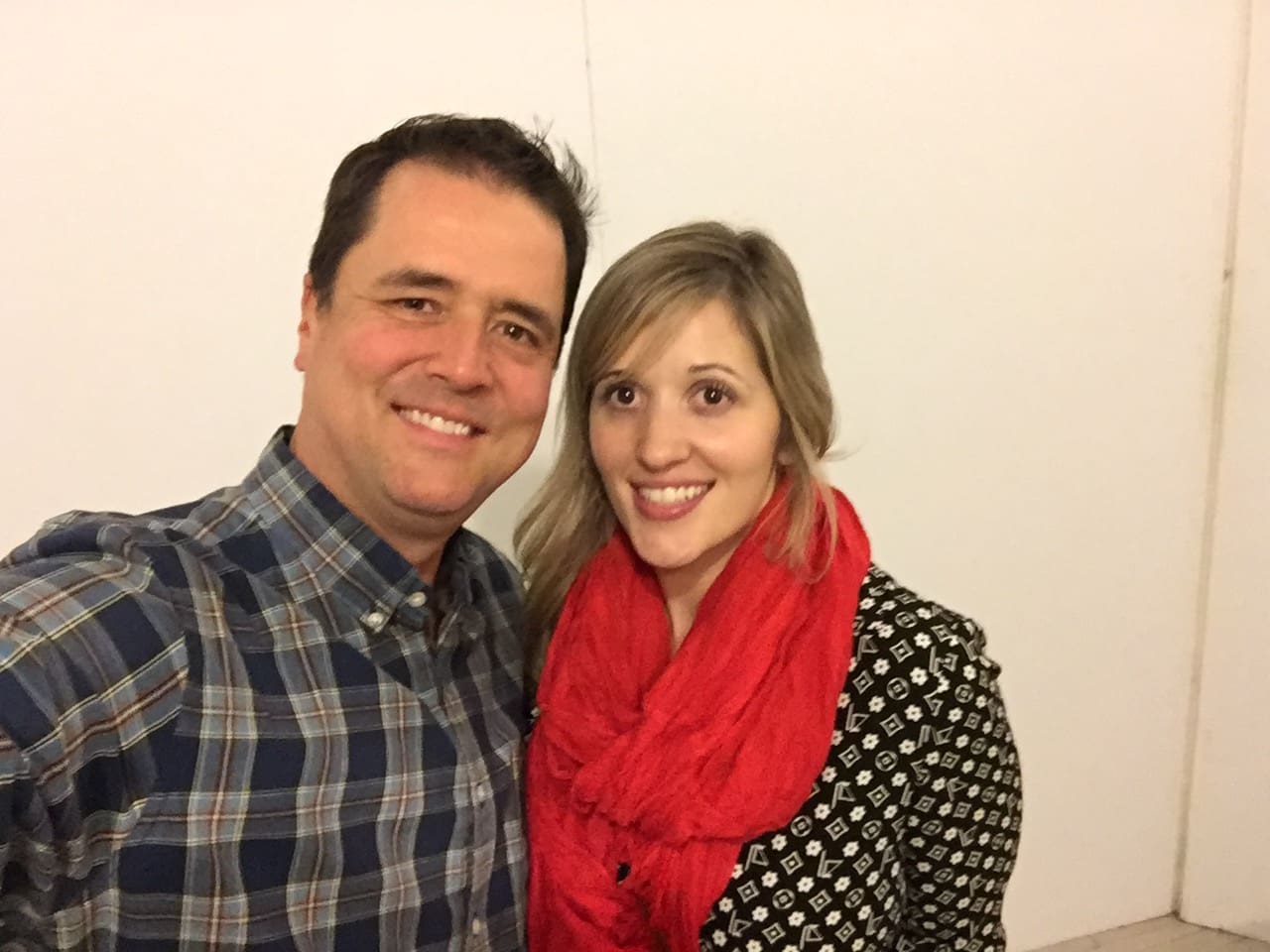
Comedian and writer Elna Baker sits down with John Dehlin at the 2016 New York City Mormon Transitions Retreat for a candid look back at the seven years since she stopped actively practicing Mormonism. Baker, author of The New York Regional Mormon Singles Halloween Dance: A Memoir and a contributor to the podcast This American Life, walks through what her faith transition actually looked like day to day, not just the version that made it into her book and radio work.
Baker describes a "tremendous amount of suffering" after leaving, much of which she now sees as unnecessary, and the strain it put on her relationship with her family. She talks about a period of feeling unmoored — going out and trying things she’d never been allowed to as a Mormon, at 28 — and about finally reading Fawn Brodie’s "No Man Knows My History" a decade after a friend first gave it to her. She’s frank about ongoing complications with her parents even as a married adult, including a "contraband bag" of condoms, a vibrator, and alcohol the family still hides during visits. Baker also traces how being bullied over her weight as a child shaped her early belief that her worth was tied to marriage and family, and reflects on rebuilding a personal moral framework — landing mostly on the golden rule — after leaving the structure the church once provided. She closes with a 2016 statement of what she still believes, built partly on a moment of feeling her own heartbeat while buried in sand at the beach.
What’s covered
- 00:00 Welcome and conference opening
- 02:04 Elna’s background and Mormon singles life
- 07:37 Storytelling career and This American Life
- 09:34 Overview of Elna’s faith transition
- 20:03 Family relationships after leaving the church
- 30:46 Exploring spirituality and new belief systems
- 32:53 Stories about Mormonism and early doubts
- 43:22 Honesty with family about the transition
- 52:39 Rebuilding a personal moral framework
- 57:22 Breaking free from religious constraints on sexuality
- 1:04:06 Grief, growth, and looking back with compassion
- 1:04:35 Faith transition and shifting views on gender
- 1:11:34 Final reflections and audience questions
Related episodes: 380: 2012 New York City Conference Pt. 2 with Elna Baker
Episode Transcript
Host: John Dehlin · Guest: Elna Baker
This transcript is machine-generated and lightly edited for readability. The audio is authoritative. Please excuse occasional errors in names and spelling.
Introduction and Mormon Singles Life
John Dehlin [00:00:01] We are now very excited to have with us the wonderful and the fabulous Elder Baker. Let's see how.
Elna Baker [00:00:13] Before we start, I want to say how just incredible this weekend has been. I feel like the things each one of you has shared. I honestly feel less alone in the world because of your courage to speak up and talk. And yeah, I'm really grateful for everybody and for what.
John Dehlin [00:00:40] I feel the same way. The truth is, I used to really stress out about these events because I wanted to make sure that they were really good. And I realized that in some ways I could cheat because you guys bring so much to these events that if we just sort of get out of the way and let you guys be who you are and share and connect, you'll derive a lot of value out of that, whether or not our content is flawless. And oftentimes people enjoy the breaks more than they do the actual sessions. So, yes, you guys have made this all wonderful. I agree. So let's see. Elvin Baker will be able to introduce yourself better than I can. What I can say is tell us the title of your first book.
Elna Baker [00:01:33] The New York Regional Mormon Singles Halloween Dance. Did anyone go to that? Was anyone here? They had that. It was the tri state area. All the Mormons in New York, New Jersey and Pennsylvania. Everyone came out and it was just a real shit show, guys. And I did not know. I would love to be driven by.
John Dehlin [00:01:55] And tell us what, Tell us just briefly what the book's about. Like your elevator pitch for the book.
Elna Baker [00:02:00] Oh, it's been. So I wrote, I guess it came out about six years ago. I wrote the book as a practicing Mormon. I had a lot of questions, but I was active, faithful, and in a way, writing the book was an opportunity to grapple with that. But it was also a comedy. I mean, one of the stories in it was one year I went to the church dance.
Elna Baker [00:02:24] I wanted to meet, of course. So funny how much my old narrative used to be about meeting a man to be married to. But that was definitely a huge driving force in my life as a young woman. So I went to the dance hoping to meet a guy every year. And I decided, like, this year is the year and I have to have the best costume ever. And it hit me like a flash of light. I was like, oh, I'll be a fortune cookie. And when you pull out the fortune, the fortune will say, you will meet a beautiful woman tonight. At which point I'd be like, look no further.
Elna Baker [00:02:59] I basically filmed this intensely super crafty giant, giant fortune cookie costume on the way I took a subway and I remember people like laughing at me and screaming at me. And in one of the I got on the one train, I had to just take it two stops. And this woman from across the train was like, oh, no, no, no, no, no, no. She's like, I got children with me. I got children.
Elna Baker [00:03:24] She was so upset to figure out why. Get to the lobby of the building after I push the elevator and happened to glance into that figure they have there. And I was like, oh, no. I mean, it was improbable how much I looked like a vagina.
Elna Baker [00:03:51] My movement had made it like flat. And there were all these like intricate screens and the centric and I had full, very accurate, impressive. I'm like, do I stay? Do I leave? Like, the one is supposed to be upstairs, but the one.
Elna Baker [00:04:14] So I, I, I took my vagina, I stashed it in a broom closet, which is like basically what we do every time we church. So I had told that story on stage. And anytime I said to anyone who wasn't Mormon, you know, most of the people no, I. Whenever I would say the New York region, you know, I was going to the New York Regional Mormon Single Pallo Museum, people would always laugh. And I was like, why is that funny? That's what we call it. Weird. But yeah. So that's the origin of fun.
John Dehlin [00:04:57] Now you see why you invited a little bit. Is that clear? Beautiful. Had a lose writer book. Okay, go get her book now. It was a mainstream publisher, right? A big publisher?
Elna Baker [00:05:12] Yeah. Penguin.
John Dehlin [00:05:13] Penguin, yeah. Big time publisher. Really sold well, as far as I understand. So great book. Since then, Elva's been a lot. She wrote a really brilliant and vulnerable piece in which magazine thought about body
Elna Baker [00:05:28] Image Right now 29.
John Dehlin [00:05:33] Yeah, yeah, just about body image. And was there surgery was short picture. Talk about that.
Elna Baker [00:05:42] Yeah. You know, it's like we all have these identities. And in fact, I was reading recently that one of the biggest sources of a loss of confidence is a loss of identity. And I feel like I've grappled with my confidence because I lost my identity as a Mormon. But I also until I was in my early 20s, around 23, I lost 110 pounds. So I had existed in the world as one type of person. And all of a sudden I had to reinvent who I was based on literally how people reacted to me daily. And because I lost so much weight, I also had massive amounts of skin on my body.
Elna Baker [00:06:24] So I wrote an article about getting surgery and show the pictures in the article of what it Looks like, in a way, we were just talking about the notion of illusions and these illusions you buy into. And I feel like going through my loss of faith in Mormonism and the illusion of the church has also helped me see the illusion that I've gone into as a woman and the need for a perfect body. So I write about that as well.
John Dehlin [00:06:54] Yeah, the pictures are really powerful, as is the writing always. So just a little bit of an introduction. Now, Elmo, you are a producer for this American Life. What's the title?
Elna Baker [00:07:06] I am producer and a scout. I find stories for the show.
John Dehlin [00:07:09] How many of you have listened to this American Life? Yeah, it's definitely one of the most popular, successful podcasts on the planet, next to Mormon stories,
Elna Baker [00:07:19] right? Yes, definitely.
John Dehlin [00:07:24] So, yeah. And as you know, Ella's working on developing the tv. Talk about that for a second.
Elna Baker [00:07:32] Yeah, I have been writing. I stopped writing about being. I wrote a lot about being Mormon. It was really like any comedian who would just talk about themselves in their life. When I stopped being Mormon, I felt like I couldn't talk about it anymore. And I stopped writing for, like, six years. And I realized that this is still a part of who I am. And I've been writing about it again for the last year and with this intensity. And it's as if I can't stop writing, which is a wonderful feeling. If anyone who's tried to write knows that is so rare.
Elna Baker [00:08:07] And so I've been writing this a lot of the stories out, and then with my friend Eric, who came first night, Eric made the show Roseanne, and we pitched this TV show and sold it. So I'll be writing a show about just the really truthful. The only thing I know is my own experience. So I'm going to be writing about my own experience.
Elna Baker [00:08:34] But being here and being around others strengthens. I think sometimes we don't feel like we're allowed these feelings or that we're ungrateful. We had. Often we had happy childhoods or happy families. Sometimes we didn't. But there's. Doubting your doubts is a common thing that's come up here. And I think we also doubt our own feelings and right to speak about them. Thank you.
Overview of Elna Baker's Faith Transition
John Dehlin [00:09:03] So, Ellen, tell us a bit if you had sort of a title or a theme for our discussion today or set of themes. Give an overview, and I'm going to have you do that so then I can explain how the texting is going to work.
Elna Baker [00:09:15] Okay, cool. So I. What I wanted to talk about was with that loss of identity and actually I think Tyler covered really the arc of what I've been through in my transition out of Mormonism, just in terms of the steps of it, the stages of it. I've been not Mormon. I think I still am. But I left being an active member of the church seven years ago and have experienced a lot of suffering during that time, a tremendous amount of suffering. And I'm just seeing now that a lot of that suffering was unnecessary.
Elna Baker [00:09:55] And if anything I would want to impart here is that it's going to take time. Whatever you're going through is going to take time. But I think that it could have taken three years instead of seven. And everyone is on their own schedule with whatever they're processing. But I think that we punish ourselves in this journey and we don't need to. And so I wanted to talk through sort of the stages of my leaving. And I'll be telling a couple of stories. John will ask questions. But I also wanted to open it up to a discussion with everyone because I think that this will be the time will be best used if I'm talking to you about what you're going through and finding the commonalities.
Elna Baker [00:10:40] And so if you. If you want to raise your hand and ask a question, when we open it up to questions, that's an option. But also, I was gonna give out John's number and people can just start texting questions. So if you're too shy to ask something or you just don't want it to be, you know, it's like the anonymous box, which also. I always got burned at the anonymous box at school when it was like sex ed. I was the one who put the question in that the person would be like somebody professional.
Elna Baker [00:11:10] So there are no judgments here. I have the inappropriate question and I want to let you guys have that same freedom. So, John, will you tell. Tell people your phone number?
John Dehlin [00:11:21] So my phone number is 435.
Elna Baker [00:11:26] Where do you get your phone?
John Dehlin [00:11:29] 435. 881. 5809. I'll repeat, 435881. 5809.
Elna Baker [00:11:44] And really, you can ask me personal questions or you can ask questions about what you're going through. There's like, I promise I'll answer. I mean, there might be some really inappropriate questions about my own personal life that maybe I'll not answer, but I kind of feel like I will.
John Dehlin [00:12:02] Yeah. So cool. So this is good in the Kim and text. Text them anytime. We will not be able to get to everyone's text. I'm assuming that I'll get more than we're able to handle, but text anyway. We'll get to the things we can. I may throw a question or two in as we're going. Not just wait till the end. It just depends on what comes through.
Emotional Roots of Mormon Belief
Elna Baker [00:12:25] Okay.
John Dehlin [00:12:26] So, Elma, where do you want to start in the stages of your transition? Where do you want to start?
Elna Baker [00:12:32] I think I'll start. I feel like I was emotionally converted to Mormonism. I had a very big spiritual experience, which I would always go back to, which happened at Trek Mormon Trek. We all had to go out into the woods and get a spiritual experience. And I accomplished that and then shared this testimony meeting. But I also feel like that experience was very real for me.
Elna Baker [00:13:01] I was 16. I was about 265 pounds. I struggled with a lot of feelings of lack of self worth. And I went out into the woods and I remember sitting on a rock and just saying, like, God, are you real? But also like, do you love me? Like, am I worth anything? And I literally started. I looked up and I saw the sun, like sort of part through the clouds. And then I just felt physically, I began to rock back and forth, like someone was comforting me. And it was the most love I ever felt.
Elna Baker [00:13:39] And I think now I can say there was a connection to some sense of being that I will always feel was true in that moment. And that truth was then attached to Mormonism is true. And so I questioned it many, many times. But I could not deny the truth of that moment that I felt.
Elna Baker [00:14:02] And that moment stabilized a lot of my doubts. But then I think I was emotionally deconverted. When I was around 24, I met this guy who was an atheist. I totally fell super hard for him. He challenged a lot of my beliefs. We tried dating and then we broke up for. I broke up with him for Mormonism. And that planted the seeds of doubt. And, you know, I tried to double down. I started dating a Mormon guy. I moved to Utah. I almost married him.
Elna Baker [00:14:38] And the next seed of doubt was planted when I had gone to the temple, prayed to see if I should marry this guy, and got a very strong answer from God that I should. And after I went there and it totally blew up in my face, it took a couple months, but I remember one night, wait, that answer I got, why did God give me that answer?
Elna Baker [00:15:01] I don't think that I was meant to be with this person. I don't even think it was a very healthy relationship. And then I began to think about all the pressures in my life at that time to get married, from my family, from the church, from all my female friends also looking to get married. And I began to see that I had convinced myself of this answer because it was what I was supposed to do. And it's a very betraying feeling to realize that you might not have your own best interests at heart.
Elna Baker [00:15:34] And that made me look at every time I got an answer and asked myself, what is truth? And do I have an. And that's actually been a huge challenge, is that when you realize that you have been able to trick yourself, it's very hard to trust yourself in the future.
Elna Baker [00:15:55] So I grappled. But then, of course, I stayed Mormon. And I was Mormon until I was 27. And I wrote my book, and I spent about a year and a half on this book, really writing all of these things out, actually looking at my life and trying to express these stories. And one night I had just basically finished. I had all the stories written out on note cards on my wall. And I looked up at these stories, and it was like I could see my life from above for the first time. And I recognized the pattern. And the pattern was that I would question the church and then double down on it and then have some, like, give me a spiritual experience.
Elna Baker [00:16:42] Give me a sign, God, and I'll stay. And then I would get that external, that sign, and I would stay. But it would only last for so long before all the doubts and the things I questioned came up again. And when I recognized the pattern, it was like I was looking at a character, and I thought, oh, this character has a problem in their life, and the problem is that they're Mormon.
Elna Baker [00:17:06] I was like, oh, shoot. And so I decided to take a break from being Mormon for one year. And I borrowed it from seeing the Devil's Playground, the documentary on the Amish where Amish kids get a rum springa. And so I set out on this rum springa for one year, where I told myself I could try anything, everything. I'd been in school, and I don't know if anyone who's experienced that I'm suddenly allowed to do something.
Elna Baker [00:17:37] I at least thought that giving myself permission would create action. And instead, giving myself permission created an extreme sense of paralysis. And it took many months, I would say six, maybe nine months, to take a single action. And I began to see how conditioned I was during that time period when I had permission, because I would, like, go to, say, order a drink, or I would even order a drink, the drink would be in front of me, and I couldn't Reach out and drink it because I would think about my own willpower and how the adversary wanted me to drink this. And then if I did drink it, I would become in a way, like a slave to Satan's power.
Elna Baker [00:18:23] And like, you know, by the time I was like, it's really not worth it. It's just. And so I, it took a lot of baby steps to begin to have fluid action. And so I think that was like the first stage, even getting the courage, like you think every action means that this guy will fall and learning that the sky wasn't going to fall. And then after that it was my family. You know, it was like, okay, this seems real. I really, I've been deluding myself. I've tried to create this safe space of questions and actions, but if I'm being honest, my world that I'm trying to straddle are getting further and further apart.
Elna Baker [00:19:09] I'm trying to have a foot in the Mormon world, a foot, foot outside. It's getting too far apart. And when you actually make that decision, it isn't until you make the decision that you realize the full impact of that decision, which, you know, how many of you feel like your relationship with your family is difficult now.
Elna Baker [00:19:32] And I feel like I love my family so much and that was why it was so hard for me to leave. And then once I did leave and my relationship with my family complicated, I feel like I just was like out long enough to go through in a way, like a bender of trying all the things I hadn't been allowed to try or do. And my friend Karen Duffin, who used to be Mormon as well, she explains it well because, which is like as a Mormon you think you have a sense of the world, right? Because you live. We're not like other like really orthodox religions where we're in these secluded communities.
Elna Baker [00:20:14] It's like we grow up on the same block as the world so we think we understand it, but really we have like a seventh grader's understanding. And so going out and trying things As a 28 year old woman, I was so clue. I mean it often felt like I was an alien, like wearing a human body suit and that people would like, you know, I would try to order coffee and say like a map sheeta like the words, the words are so complicated, they're not in English.
Elna Baker [00:20:46] And like every single thing you could possibly do wrong or embarrass yourself at. I feel like I did, I didn't know how to do anything, whether it be with guys, whether it be, you know, Ordering a drink even. I still get made fun of my friends who were over and I was like, oh, we have alcohol in the fridge.
Elna Baker [00:21:10] We don't call it alcohol. G. Wine drink. Like, there's just these natural things that I don't know how to do. And then I feel like a lot of my behavior, unfortunately was a little bit destructive. To prove to myself, I didn't know this at the time, but to prove to myself that what I was taught was true was more important than protecting myself. So I went from, you know, I lost my virginity at 28. I slept with one person, I got in a relationship with another person. And then when I was out of that, I just was like, I slept with everyone I knew in like a two month period.
Elna Baker [00:21:55] And then I was like, this feels horrible because it would. It's just too many people. And I was just sleep deprived, right? And really, like, that was my main. And then I, you know, I met my husband shortly after that. And I feel regret that my main sexual experience, experience or exploration in the world was one of trying to hit rock bottom as opposed to joy and exploration.
Elna Baker [00:22:26] And then I also feel like I forgot my mission statement. I forgot my intention when I left the church. My intention was, I want to figure out who I am and what I believe in and I want to be true to myself. And then I left, and I went from defining myself as a Mormon to defining myself as not a Mormon. And I was just running, hiding, pushing it away. And for me, the biggest part of that was my relationship with God going back to that moment when I was 16.
Elna Baker [00:23:02] That presence of God and the love I felt from God created a best friend dynamic with God in my mind. And I would talk to God all the time, not just when I prayed. It was just like walking down the street, I'd be like, you saw that, right? Like, we just talked a lot. And which, you know, now could potentially be perceived as insanity. But I maintained a wonder with life because I was watching it and sharing it with God always.
Elna Baker [00:23:35] And so then when I decided I was going to leave the church and commit sin, I feel like the hardest part for me about that was that the notion that if you love me, you will keep my commandments and my love of God.
Elna Baker [00:23:50] It felt like a huge betrayal to do anything wrong when I knew without a shadow of a doubt what I was doing was wrong. And so in order to get permission, I had to bury God, pretend he was gone, erase him from my mind.
Elna Baker [00:24:07] And I was talking to Gina about this last night, but I feel Like, I can say I spent five years like Jonah and the whale, just buried in something without a pursuit of my own being or any sense of spirituality. And one night I was at the beach working on a work assignment, stressed out, and I decided I need to just take a walk. And when I was born, I used to always look up at the moon and say, hi, God. Like, I looked at the moon as if it were God in my mind.
Elna Baker [00:24:44] And I was walking on the beach, and I looked up and accidentally said, hi, God. And then burst into tears and was like, I'm so sorry I'm such a bad friend we have to talk to. Everything I want to say to you, I don't care. Realized how much I missed that relationship until it just started pouring out. And I was crying and walking on the beach, and I just talked at this thing for like an hour walking on the beach. And then I felt a sense of real peace come over me. And I walked back to back the hour I was walking. And when I went to turn back off the sand to go onto the street, I turned around and the moon, which to me, it felt like an hour further down the beach was where we had this conversation, the moon and I.
Elna Baker [00:25:32] The moon was, you know, exactly right next to me because that's how the moon works, right? And I looked up and I had this thought, which is, no matter if you're walking away from God or walking towards him, he's always in the same place.
Elna Baker [00:25:47] And that was truly profound for me because I felt like I was telling myself this story that I was running and that I was unwanted and that I was bad and that I deserved to suffer and that I was in the. I used to live in the light of God, and now I live in the shadow. And actually we were always standing in the same place. Nothing moved. The way I saw it changed.
Elna Baker [00:26:16] And I think that to break bad is really difficult, especially when you have a very strict understanding of what good and bad is supposed to mean in me. And in the last several months, actually, I've started to reopen my life to a sense of spirituality and spiritual meaning. And I haven't felt happier in years. And I don't have definitive answers, but I do know that that's a part of who I am. And so that's, I think, kind of the summary of that time period. Now, questions I'm asking.
John Dehlin [00:27:12] Okay, so that. That was your. That's sort of the stuff that you prepared for. And now you want to go to the Q and A.
Elna Baker [00:27:19] And I have a couple other Thoughts to share, little stories here and there. Great, great.
John Dehlin [00:27:24] No, we've already got some good questions rolling in. Let's see. Let's begin with this one. What. What do you think? What do you think about the concept of writing as an approach to self therapy when navigating an identity tradition?
Writing, Journaling, and Self-Reflection
Elna Baker [00:27:48] Yeah, one thing that came up this weekend that I forgot who said it, but we were talking about journaling, right? And how you guys were talking about this. Right. But, like, how have you guys stopped journaling, too? Like, when you're Mormon, they're such a pressure to journal all the time. And I didn't even realize that was a morbid thing. But I have, like, a tremendous amount of journals, and I no longer keep a journal.
Elna Baker [00:28:13] And yet I go back and I look at those journals, and they don't feel true to me. It feels like I'm writing a journal in case someone reads it, as if I'm tracking that I am good. They don't feel like I'm really telling the truth. And for me, a huge breakthrough in my own writing has happened because of this prompt that I will put at the top of a page, which is, if no one were to ever hear or read this, what would I really say?
Elna Baker [00:28:46] And I think that I've felt moments where I have saved myself and found a reason for some of the hardest things to have happened, have come at the end of the journey when I've written through it, processed it, and it's as if I can look at my younger self and say, thanks. Thanks for going through that because it gave me something here now. And I highly encourage you to write and to write with them.
Elna Baker [00:29:21] That freedom of not looking at it, just not stopping. There's a concept of morning pages. Anyone who's read the artist's way. I used to do this a lot, but you wake up in the morning and the first thing you do is you write three to four pages without stopping.
Elna Baker [00:29:40] Free form. And it does have this power to release you from some of the demons in your head. And you can go out and live that day without such a strong voice narrating your life.
John Dehlin [00:29:53] Nice. All right, next question. My boyfriend is religious, and I want to go to church with him. Not Mormon and not much more open, but it causes anxiety and fear. Any advice?
Elna Baker [00:30:15] And it's going to a different religion than Mormonism. You know, I feel like I really enjoyed Gina's session, which is this idea of the light and the shadow and being able to look at things full on. And one thing that I've discovered about My own relationship to Mormonism, which feels like a way that I told myself very similar concepts, is this idea of there's like two tracks of your life, like the good and the bad. And when you're believing in Mormonism, every time a prayer is answered, every time you have a spiritual experience, it goes on this track. And you have to push the times that didn't work down here and delete them from your memory.
Elna Baker [00:30:58] And I eventually just got sick of, you know, putting it in a cupboard and closing the cupboard. And I wanted to see both tracks at the same time, the good and the bad. And so going to another religion with that in mind, I think is a really beautiful way to approach meaning.
Elna Baker [00:31:21] I do find for me, nothing I have been, you know, I've tried going to other churches. Weirdly, nothing has been able to quite replace Mormonism for me. But going to other churches has helped, has strength in me. It's never a bad thing.
Elna Baker [00:31:40] And just be aware of your own. It's easy, I think, as a woman especially, but also as a Mormon, to take on the agenda of others and so be aware of your own sense of truth. And not to be on his agenda.
John Dehlin [00:32:02] Okay, how did you eventually come across the historical and doctrinal inconsistencies within Mormonism? And then how long afterwards did it take for you to come to the conclusion, assuming this is the conclusion you've arrived at, that the truth claims aren't true?
Elna Baker [00:32:22] Great. Actually, this is one thing I told. The first big story I told of the moth that was on the moth radio was about being Mormon and falling in love with this guy who was atheist. And George Green, who runs the Mock, came up to me afterwards, invited me out to dinner. And then when we were at dinner, he gave me Fawn Brody's book, no Man Knows My History.
Elna Baker [00:32:46] And that was when I was 24, and that book sat on my shelf for 10 years. I would not read it. And I just finished it two weeks ago. And I think I had an idea of what that book was going to be. It felt to me a little bit more like the Boogeyman. Like, I thought it was going to be really negative, anti Mormon. And so when I was Mormon, I wouldn't read it. And I look at these memories because I live in a tiny apartment of, like, kneeling on the ground, praying earnestly, grappling with my faith, crying, begging for answers. And now I can look back and say, oh, that book was 10ft away.
Elna Baker [00:33:29] Like, I was always 10ft away from answers. I just wouldn't open. I had Such a fear of knowledge and looking into it. And then when I stopped being an active member, my brother stopped shortly after I did, and he stopped because of CES letter. And he did all the research, and he was like, on ex Mormon Reddit every day, still is. And he got really angry, and he created a rift with my parents. And I saw their relationship weakened. And so I decided I wasn't going to be one of those Mormons. I was going to be one of the people who was, like, more peaceful and not angry, and I wasn't going to let it overtake my life.
Elna Baker [00:34:14] And I saw his anger as if he'd been overtaken by it, Right? And then it was only recently that I realized that there's something healthy about what he did that I didn't do, which is he kind of killed Santa Claus, right? He, like, did the research. He looked into it. And I have spent seven years feeling. And I talked about this on the first night, but that feeling of I wasn't good enough to cut it. I wouldn't look at the full story. I wouldn't tell myself everything about the church. I wouldn't do the research to be able to make a conscious choice. I just wanted to blame myself.
Elna Baker [00:34:56] I used it to blame myself. And so, in reading no Man Knows My History, it was a real relief for me. And if anything, it actually, I feel like it gave me a testimony of Joseph Smith, the man I always grappled with, understanding Joseph Smith and feeling like he was on par with God and Jesus in terms of my testimony I gave in church. And I feel like you're kind of in awe of him when you read the book. You're in awe of what he did and his audacity.
Elna Baker [00:35:30] But I had a really powerful moment towards the end of the book. Joseph Smith is basically about to go to jail, and he's about to be assassinated, and he knows this. And Vaughn Brody writes these accounts as he came back up the river, basically walking towards his death. He was very uncharacteristically solemn and observant, and he kept looking at trees or different things and saying how beautiful they were. And it made me profoundly sad and empathetic towards him in this moment, that thought of, I wonder if he was thinking like, what did I do?
Elna Baker [00:36:12] I spent all of his time making this thing, and now I'm not going to be alive anymore. And he did make the ultimate sacrifice. He gave his life, and yet I am still giving a portion of my life every day to this story that he told us. And my energy is sucked up by it, and I'm using it to feel unhappy often.
Elna Baker [00:36:39] And when I shut the book, I made a decision that I was going to shut the book on that part of what I was doing in my own life, and. And to just appreciate the living and the chance to be alive. Cool.
Family Relationships and Church Doctrine
John Dehlin [00:37:05] All right. So this question was, did you find any problem with the church doctrine early, or was it just not for you in general? Sounds like you've. It started out not being for you, or you notice finding your fit, and then eventually it moved to doctrinal problems.
Elna Baker [00:37:22] Is that right? Yes. Yeah.
John Dehlin [00:37:27] Okay. Tell us a bit about your family relationships when you chose to take a year off.
Elna Baker [00:37:37] I feel like a lot of you I've talked to are kind of in a similar position right now, where you start taking. Living your secret life, and you feel this burden of that. And I definitely felt a tremendous burden. And I actually feel like that distanced me from my parents in general, because I was treating every call with suspicion.
Elna Baker [00:38:01] And also, I mean, this went on beyond the first year. Like, my brother and I joke, because when we go visit my parents, they live, like, 45 minutes from any place you could shop. And so once I started drinking coffee, like, I love coffee now I definitely need coffee when I wake up in the morning. And so every time we would visit in the morning, my brother and I would be like, oh, no, I have to go buy tampons. My brother would get, like, really excited. Yeah, I'm gonna go in Velma to buy tampons for 45 minutes, get coffee, and come back.
Elna Baker [00:38:38] But, like, every single day, I needed tampons. That was the best route. But this last year, my father was like, hey, look, I know you're not buying tampons. I'm not an idiot. And so we just want to spend time with you kids. So why don't you.
Elna Baker [00:38:58] I'm going to buy a Keurig machine, and you can have coffee while you're here. And I was like, oh, so surprised by that. That's like, a huge step for my parents. And then I was like, no, no, no. I just also imagined because we don't come that often. Like, the whole year, it'd be like Satan sitting at the corner.
Elna Baker [00:39:16] But I was like, how about I just. I have a little homemade little machine thing. I'll just bring that. And so we brought it. And that first morning of my brother and I having coffee in the kitchen, the whole family's, like, hanging around the kitchen island. We're drinking our coffee. It was, like, scenic. Like, A happy family commercial. I was like, it is possible to bridge these two worlds.
Elna Baker [00:39:38] And then I just noticed my mother walks in, and she went and just walked straight to the kitchen window and, like, stoically looked out the window for, like, five minutes. And I was like, mom, are you okay? This okay? And she turned around and said, honestly, your mother didn't consult me about it.
Elna Baker [00:40:00] I'm not taking this away. But I'm just. It's just going to be really hard for me to have this in my home. Then my dad, like, pulled us aside and was like, look, I really blew it with your mother.
Elna Baker [00:40:18] I really screwed up. You can have coffee still, but, like, don't make such a huge production. I was like, what did I tell you? You just had coffee. And so then the next day, we get woken up with a pounding. I get woken up with pounding the door. My dad's like, your mom's walking the dog. Holy freaking dog.
Elna Baker [00:40:38] My mom and I make it coffee. My dad pours apple juice into a stove pan and starts boiling apple and opens every window, and he's, like, walking. And then the apple just boils over. My mom comes back, and we're still obviously drinking coffee. And my father's just like, this just makes such a huge production.
Elna Baker [00:41:03] And then the Thursday, my mother. My mother, we came downstairs, and we couldn't find my coffee maker anywhere. So we looked in every cupboard, and I finally was like, to my brothers, you know, she hid it like there's.
Elna Baker [00:41:19] Unless we asked her. And so we went. Finally we asked my dad. She said, don't ask your mother. I'm gonna do such a production. We asked my mother, and my mother was like, oh, I did see that. So where did I see that? And, like, as if it was a bit on Saturday Night Live. She walked through the kitchen down the hall. She's like, I saw that somewhere. Opened the first garage, walked into the second. Where was that? The furthest shelf was his little coffee maker. She's like, oh, here it was.
John Dehlin [00:41:56] How did we get there?
Elna Baker [00:41:59] But I feel like it's never ending. And, like, we're. I'm not at them. I think one of my goals at this conference is that I'm at, like, in terms of honesty for 1 to 5. I'm at, like, a level 2 to 3 with my family right now. And I am trying to work up the courage to be honest with them. And I do feel like even the notion of not writing some of the things and now writing it and wanting to put it out in the world, the biggest Fear of speaking my truth is that I will once again put my relationship with my family at jeopardy. And to me that's one of the most tragic things about the situation of leaving the church is we lose. We feel like we're going to lose our families.
John Dehlin [00:42:51] So I have a couple follow up questions. It's a bit bizarre for me to hear you say you're an two on the openness and honesty scale with your family since you've written a memoir about yourself that was published by a major publisher, you've published articles. Okay, yeah. And you've been on the moth and you've talked about your faith journey. So to us it might seem like you're like super transparent.
Elna Baker [00:43:22] No, I mean my husband and I, my parents, when they come and visit, we have a contraback is what we call it. It's like a backpack that we just put anything like condoms or. We're married too. I don't know why I still do this. Like condoms, a vibrator, alcohol and what else? Everything goes in the contra bag and we hide it in the basement.
Elna Baker [00:43:46] And I mean, honestly, it's more out of. I see how my parents respond to seeing things like that and so I just want to like protect them from feeling uncomfortable or feeling worried. It's not out of shame or that I think these things are so wrong like I once thought. But I mean, I actually totally admire people who are like at my wedding, couldn't have, couldn't have. I wanted to have wine with my friends and I didn't out of respect for my family and the Mormons who would be there.
Elna Baker [00:44:22] But most of the people at my wedding weren't Mormon, you know, And I feel like I'm constantly trying to be so conscious of my parents feelings, but I want to honor who I am and I'm not quite there yet.
John Dehlin [00:44:41] The budding comedian in me wants to ask where you you where you store your vibrator so that you have to put it away when your mom comes.
Elna Baker [00:44:55] I have a shelf of vibrators on display. It's cute when you say my brainer John.
John Dehlin [00:45:10] So even though maybe they don't know fully where you've been with the church, they've been a part of your act or your writings or your routine. Do they follow your work? And has that ever been an issue of them? Number one, when you're with them, clearly you're paying attention to what's going on because it's material. Has there ever been that meta realization between you guys that you're probably taking notes as the apple. As the apple juice is boiling over, because you're going to use that in a bit. But also, do they follow what you're doing? And is there ever that conversation about the fact that they're a part of your material?
Elna Baker [00:45:57] So with some of my new writing that I'm doing, I feel, because I'm trying to be more honest about where I stand with my feelings on the church. And it's also, you know, just about what it's like to try all these things for the first time. I feel like, in a way, I had felt a level of being told what to do by the Mormon Church, and now I'm being told what to do by the world. And, you know, you're supposed to enjoy these things and do I know.
Elna Baker [00:46:26] And so I, in writing truthfully about what my life is actually like and who I really am, I think that there are going to be things that are very difficult for my family. Like, any parent doesn't want to read some of the things that I should be writing or saying. And so I grappled with a tremendous amount of anxiety and fear. And, like, I couldn't sleep at night. I was so stressed out about this. And I woke up in the morning, one morning while we're working on this stuff, and I had a. The first email in my inbox was from Con Edison, which is the electrical power here.
Elna Baker [00:47:00] And the subject line was, protect your family. And I was like, con Edison knows that. Like, I should protect my family. What am I doing? Your family is the most important thing. Like, you're expressing yourself or like your career. It's not as important as your family.
Elna Baker [00:47:19] Stop. Stop doing everything you're doing to protect your family. And I told this to one of my co workers at this American Life, Nancy, who's just such a smart woman. And she said to me, she was like, you know, I think. What does it even mean, protect your family? I think that we are trying constantly to protect people of things that they don't need to be protected of. You never know.
Elna Baker [00:47:42] You actually don't know. And there was a story, having mocked, about my parents used to live in Russia, and Bodhi Moth is like a storytelling show. And I flew to Russia to tell my parents that I'd lost my virginity because I wrote an article for Glamour magazine about losing my virginity, and I didn't want them to find out.
Elna Baker [00:48:06] And so I flew there to tell them in person. And I kept chickening out. In the story, there's this line. So I've been on the break from being Mormon for about a year. And I had told my parents this. And so we were in the car and the driver was this Russian man. And he said.
Elna Baker [00:48:31] He asked my parents if there was anything about Russia they would change. And they instantly said, well, the alcoholism, it's ruining the country. And the driver said, but how do you change that? My father was like, well, you never take the first sip, because once you take the first sip, you're hooked. And he's like, I know me, I can't just have one brownie.
Elna Baker [00:48:49] And then I'm sitting in the front and I sort of pipe up. Well, you know, like, I drink and I feel like you told me this all growing up, but it's possible to drink in moderation. And I turn around, my parents races were white and they were like, what you drink?
Elna Baker [00:49:09] I'm on a. Remember I said I was on a break for more. Like, what did you think that meant? We thought it meant you just weren't going to church on Sunday. And I was like, oh, we are not on the same page at all.
Elna Baker [00:49:24] So anyway, when that story came out, and there's more to this story, but when that story came out, I was very nervous about my parents hearing it for totally other reasons. And I told them not to listen to it. And my dad listened to it and he called me and he was really upset, but he was upset not because in the story I also talk about my sexuality and sexual exploration. He was upset because of the line about him only having, like, him eating brownies. I could have controlled when I crack.
Elna Baker [00:49:58] What that is not on my radar. I don't think. We know it's never possible to know the mind of another human being. And a lot of our fear is generated from our. From an individual place of a belief that you're not worthy of being accepted and that your parents won't accept you. And I think that I. I say this is someone who's at a level two of honesty with my parents, but I think to get to a 5, I have to believe that I'm worthy of being accepted.
John Dehlin [00:50:36] This is a semi appropriate question, and I won't reveal who it is that sent it, but feel free not to answer. Did you get any tattoos since becoming. Since your transition, and if so, what and where?
Elna Baker [00:50:52] I wish I had. I actually could lie right now. I have one on my butt. All right, good luck. Next question.
John Dehlin [00:51:21] How do you put a tattoo on a hole?
Elna Baker [00:51:33] That is the deepest question in the past.
John Dehlin [00:51:38] Let's just take a moment. Oh, thank you for that question. How do you Make. How do you make. How do you make moral decisions? Are there tools, patterns, feelings, and all that frameworks that you have established to decide what you will and won't do in life?
Finding Morality and Identity After the Church
Elna Baker [00:52:08] That's a really good question. I think that a lot of the framework of Mormonism is still. It's just, you know, being good to other people, being kind. And I feel like there's a level of honesty and hard work that we all got from our church. And so I feel like in terms of making moral decisions on a daily basis, for the most part, I'm still kind of on autopilot of being a kind person and the golden rule or whatnot. I think that the challenging part is defining your morality with things like, I feel like drinking, for example.
Elna Baker [00:52:54] It has been a very challenging thing. It's a minefield for me where it's like, okay, I drink. This is supposed to be cool and fun. And then I remember when I first really, like, got drunk and had a hangover. I was like, what? I just did not meant to do this. How do people do this? And then asking friends, they were like, yeah, we feel the same way. And I was like, so why do you do this?
Elna Baker [00:53:22] And, yeah, just figuring out why you're doing things is important to me. Like, am I doing this to numb out my pain, my emotions? And I would say across the board, for all the times that I've gone out and gotten drunk or had a drink, I could pick out some real moments of joy there. But I also. I think the baseline was about numbing myself out and not escaping my brain.
Elna Baker [00:53:56] And so as I approach that, it's challenging because I'm allowed to do this now. And when it was an instant, no, I didn't have to work through that. And so I might set the intention of, like, well, I don't think I want to go and have a drink, but then I will drink. And so it is.
Elna Baker [00:54:19] There are a lot more opportunities to feel that remorse the next day. Like, I didn't make the choice I set out to make. And I think just being honest with yourself and noticing the pattern and not. I think initially I was living my life in a reactionary sense, and I wasn't being thoughtful or compassionate to, like. Like, I remember I started smoking, which is so stupid. Like, you know, I feel like the research is really solid on that.
Elna Baker [00:54:59] But, yeah, I started smoking because the first time I had cigarette, this was about a year and a half into this break I had missed. So I used to always pray before every decision. That was a big Decision like, should I move here? Should I do this? I would want the feeling of the Holy Ghost. And I had trained myself to really be able to recognize it. And for me, the way it manifests was I would close my eyes and I would feel like an elation, as if a cloud was bursting in my brain and a feeling of calm. Right. And the first time I appropriately, like, actually did it right.
Elna Baker [00:55:38] I tried to smoke before, and I did not do it right. But when I first smoked a cigarette correctly, I felt the same exact feeling I felt when I felt the Holy Ghost. I felt like a. And then like a calm wash over me, and then I missed the Holy Ghost. And so I would sneak and have cigarettes to feel the feeling of the Holy Ghost, which is so illogical that I began the habit with the desire for that mental release from thoughts, whatever it is, but I didn't look at what I like. I could have potentially.
Elna Baker [00:56:16] Now, one of my regrets is that smoking for a year could have potentially affected my health, that I won't live as long on this earth. Right. But I wasn't seeing that at that time intentionally. And so I think when we talk about the notion of morality, it's, for me, a lot about seeing both of those traps. Not deleting things to achieve an end, but looking at things straight on.
Navigating Sexuality Outside Church Constraints
John Dehlin [00:56:51] Can you talk more about the months you were paralyzed after you gave yourself freedom to act outside the church constraints? What was the first thing you did to break your paralysis?
Elna Baker [00:57:03] I actually have a really funny story, but it's so inappropriate. Do it.
John Dehlin [00:57:09] Apparently, we like inappropriate things.
Elna Baker [00:57:12] I'll try to do it a little. I'll be a little. I'll allude to something. But in the midst of that, I got my friends set me up on. So I was totally paralyzed with this. And my friend, this guy who was a writer, who had been Orthodox Jewish, been raised in a really strict community, and had also, like, kind of entered the world at 28. And he was 10 years older than me, and he had made it through and really adjusted. So they're like, you should go out with Ethan, and he can just walk you through what it's like to, you know, break away. So we're on this date, and he is talking to me about.
Elna Baker [00:57:56] Both of us initially were, like, talking about why we loved our respective face. And then he asked me, like, how the break was going, and I was like. I told him how paralyzed I was, and he was like, don't worry. That's totally normal. That's like, one of the early stages of It. What have you done? You know, have you tried drinking? And I said, no. He's like, what about drugs? And I was like, no. He's like, well, what about sex? Like, have you had sex? And I said, honestly, I have no idea what to do with a penis. Like, literally no idea. And so he looked at me and was like, well, do you want me to show you?
Elna Baker [00:58:31] No. And I was like, yes. Community certification. So we get in a cab and we get back to my apartment, and I. And it was like, super, honestly, almost like a kind gesture. You know, the lights were on. It was very like, we're sitting on the couch, takes his penis out. Like, this is a penis. Like, I. The first thing I said, like, blurt it out without thinking was I said, it's so big.
Elna Baker [00:59:10] He's like, wow, you're already good at this. Natural kids are natural. And then, you know, as he showed me what to do, how to touch it, like, not so soft or hard, you know, figuring out logistics of this thing.
Elna Baker [00:59:27] I leaned in and kissed him for the first time. And as I pulled back, I. I looked in his eyes and I said, do you ever get over the guilt? And the penis was like, I thought I didn't understand them. So I was like, what's happening?
Elna Baker [01:00:00] So he was like, I think I should go. I'm sorry. And, like, you know, zipped up and left. I was like, I mean, it was like, the shame. First of all, that's embarrassing. But also just the shame of we all know, like, all things that were built into, like, how wrong he was and like, to me, the direct action of, like.
Elna Baker [01:00:24] And weirdly, I was talking to someone who's a writer, who had dated a lot of Mormons, and he said, mormons. And I was like, oh, this is so true for me. When we explore our sexuality, we will let people touch us or make advances, but we won't make advances ourselves.
Elna Baker [01:00:42] It's like there's some. You delude yourself into me. I didn't do it wrong. I didn't do anything wrong because I did. So you're just constantly tripping and falling on things. Oh, gee, how did your head get on my boob?
Elna Baker [01:00:55] There's, like, a level of a sin of, like, contrition versus omission. Yeah, it's the same kind of idea. But, yeah. So then I. The next morning, I woke up with that, like, tremendous Mormon guilt of what did I do last night?
Elna Baker [01:01:17] And I literally had to pep talk myself. Like, you're still alive. It's okay. You're alive. You didn't die, like, it's not the end of the world. And then I climbed down the ladder of my loft bed, and by the time my feet touched the ground, I remember I fell to the ground crying because of this sin I had committed. And in that moment, I made up this, like, I invented a ritual, essentially. But I.
Elna Baker [01:01:44] We had gone to the Jerusalem center to visit my sister when I was 18, and we'd gone to the Garden of Gethsemane. And in the Garden of Gethsemane, in the tour they gave us, they were like, this dirt is the dirt that Jesus bled and died in. And for whatever reason, at 18, I was like, this dirt.
Elna Baker [01:02:04] Save some of that for later. So I took that dirt from the Garden of Gethsemane, and I had saved it for the 10 years in this vase, in my. On my dresser. And in this moment of, like, such grief, I had a thought, and I went over to the vase and I, like, prayed for forgiveness and said that through the blood of Jesus that is in this dirt, and through the atonement, like, forgive me for what I've done. And then I poured, like, the Jesus blood dirt into my hands, and I rubbed them together, like, into my penis touching hand, rubbed them together over the trash can and then threw the dirt away.
Elna Baker [01:02:46] Like, it was this. I sacrificed some of my special dirt for this forgiveness. But then. And weirdly, I invented a thing that worked a little bit. Like, I didn't feel the weight of all that guilt. But then I also was on this road of sexual curiosity. So, like, not three weeks later, where once there was Jesus dirt, I was like, yet another penis in my hand.
Elna Baker [01:03:15] I, like, went home and I did the same thing again. I poured more dirt. And, like, over the course of a year, basically just been tiptoeing. I eventually started running out of dirt, and then I was, like, rationing the dirt. I would just, like, pour a couple. Like, just tiny, tiny bits. Because I was like, I'm running out of dirt.
Rebuilding a Self and Looking Back with Compassion
Elna Baker [01:03:36] And I look back at that girl now with compassion. Like, it all seems. It's silly. Like, we're laughing at it. But it wasn't silly. It was hard. And if anything, don't be so hard on yourselves if you're there right now. It's hard to be reborn at 28. Yeah.
John Dehlin [01:04:04] There's a series of questions about gender, sort of how your faith transition, you know, impacted your perceptions around gender and your role in your own life, in your relationships, in your marriage, with career. So talk about any insights or thoughts you have or perspectives on gender.
Elna Baker [01:04:32] I think that, in a way, one of the hardest things that happened to me as a child is also one of the luckiest things, which is because I was a fat kid and bullied or boys didn't like me, it instantly shifted me into this thought of. I saw at church that my function was to get married and have a family. And I was also being told by the world that no one wanted to marry a fat girl.
Elna Baker [01:05:04] And my worth was supposed to be that I was gonna marry and have a family at the same time. I was also being told, that's never gonna happen for you. And so I had to, in between these two ideas, carve out a place where I was figuring out that I had worth, aside from being a mother and a wife being chosen. And I feel like it pulled me away. I honestly feel like if I. Because I was so boy crazy at that time, like, if I had had guys interested in me, I might have bought into it a little bit more.
Elna Baker [01:05:46] But then I feel like once I lost weight and once I did start having more relationship opportunities, I became really obsessed with getting married to someone in the single board, which, you know, is so difficult. There are, like, five people to choose from, and, like, what are the odds that you're going to have things in common with them and that they're going to have things in common with you? And I look back at my journals, and so much of it was like, bless me with a husband. And I think my patriarchal blessing played a big part. I find patriarchal blessings so fascinating that each of us has this document, that it is our destiny.
Elna Baker [01:06:28] And in fact, my patriarchal blessing says, many will sit at your feet as you speak truths to them. Right. But I feel like when I wanted to get involved in comedy or when I was trying to figure out what I was meant to do, I did that because my patient. So a lot of my courage to do what I do for a career came from a blessing someone gave me. Someone else gave me that idea, in a sense.
Elna Baker [01:06:58] And my control was talked about getting married to a young man who would love me dearly. And so I felt like I was constantly searching for that. And then when I had to break, I realized it was playing so much a part of my constant framework. Thinking about it, thinking about it, thinking about it, that I eventually said, I'm done. I'm done obsessing with this. And I want to stop feeling bad about myself because I can't get someone to love me or, you know, get married in the temple. And my.
Elna Baker [01:07:35] I feel like, my life opened up because of that. But then the flip side was that when I did meet my husband, I really, like. It was really hard to get married. I, like, resisted it so much because I talked myself out of it. I was like, I do not need this.
Elna Baker [01:07:52] And so, I mean, I certainly went to the wedding, like, kicking and screaming. I was really resistant. I think I also feel a resistance to the idea of men controlling me because I was so, so raised, as everyone here can attest to, with this, everything that I was able to do had to go through a man. And I just don't believe that. Does that answer the question?
John Dehlin [01:08:20] Sure.
Elna Baker [01:08:20] Okay.
John Dehlin [01:08:24] What did your boyfriends think about dating a Mormon? Did it bother him? You were a rookie with drinking, sex, et cetera,
Elna Baker [01:08:35] Nothing. It bothers men if you're a rookie. I mean, I think I built up a lot of anxiety around that. Like, that sort of middle school sense of I can't do anything or know anything. My husband is like, he's pretty game. Like, he really enjoys, like, going to see my family. He goes to church with them more often than I do.
Elna Baker [01:09:02] He likes to do this. He likes to very. He does his fake. I'm gonna do my Mormon testimony. And he'll be fair is test. And he certainly will sit through things like, my mother will pray for. Honestly, I timed her once. She can pray for like eight minutes. But her prayers are very.
Elna Baker [01:09:19] It's like her prayers show a level of, like, guilt to them, where she'll be like, oh, bless the Syrian refugees. And then she's like, oh, where are the refugees? Bless the refugees. Like, she just asks every country in the world, like, who has refugees? And then she'll bust one of her kids, for one thing. And then she's like, oh, gosh, I have all these other kids. And then she'll accidentally mention an aunt, and then she has to get through all the ants.
Elna Baker [01:09:44] It's as if she's starting to invite people to a party. And then the party just explodes. I have to invite them, and I have to invite them. And so we'll, like, you know, it's fun to have somebody who opens their eyes during the prayer and smiles at you. And I think that sometimes when I'm mad at him or, like, frustrated, I will say this thing to him which is, you don't understand me. You'll never really be able to understand me because you're not Mormon is the implication.
Elna Baker [01:10:19] And I think that we built up this idea of, like, I think women do this in general. Everyone does this, but the Idea of the love of your life is supposed to be this match and this complete thing for you. And actually, part of what helped me realize I wanted to get married was that I have the love of my life. But it's not just him. It's all the people in my life. And that there are people in my life who understand what it's like to be Mormon, and they're who I should talk to about and I should hold my husband accountable for not knowing any of this stuff.
John Dehlin [01:11:00] Okay, we'll get you out of here on this question.
Returning to Testimony and Closing Reflections
Elna Baker [01:11:03] Okay, cool.
John Dehlin [01:11:08] What beliefs have you either held onto and or acquired? So in other words, give a. Give us a 2000. Bear us a 2016 Elder Baker testimony of what your truths are now, and you can borrow from what you used to believe that you still believe along with things you value.
Elna Baker [01:11:30] Okay. I recently had this experience where I were at the beach and I got buried in the sand. Like, deep, deep buried. Have you done this as an adult? It's incredible. So I got buried in the sand, and because there was so much sand on me, I could feel like, a pulsing in, like, my feet, my knees, my hands, my hips, and, like, I could feel my heart beating. I just felt like a.
Elna Baker [01:12:01] And then I realized what I was feeling. This. I said to my husband, I was like, oh, bury my head. Mostly I want to feel like at the top of my head too, if I can feel this, like, moving inside of me. So he buried my head, except for, like, right here around my face. And I could feel this energy, feeding, pulsing inside of me. And it made me super emotional, but also connected to an awareness that I am alive.
Elna Baker [01:12:27] And I got really connected to that feeling and realize that I think that I don't appreciate living. I don't. And I don't appreciate the living like that all of you are alive. And then we only have, like, this little window here.
Elna Baker [01:12:49] And I think as a kid, I entered the world with a sheer love of life. And then I think I found out about death. And I was like, I knew this was a trip and. And it pushed me into this place of.
Elna Baker [01:13:05] I was so in love with the chance to be alive or whatever that I. The knowledge that someday I wouldn't made me try to say, I'm not going to get too attached to this. And I feel like I approached life. Have been approaching life, especially since I left Mormonism, with more fear and disbelief.
Elna Baker [01:13:28] And in this moment, I realized that I want to approach life with wonder and curiosity. And when I say appreciate the living, I mean, like, Appreciate the moments I have with my parents and not constantly pick at what's different between us. And so I have a testimony in the. The miraculous opportunity to be alive. Thank you.
John Dehlin [01:14:13] Beautiful. How do those of us want to follow your writings, your creative works? How do they stay in touch?
Elna Baker [01:14:21] I'm actually kind of bad at self promotion, but I friendly on Facebook. I don't tweet much. I feel like that stuff distracts me too much. But yeah, check me out on Facebook. Elnabaker.
John Dehlin [01:14:36] Okay, so you don't have like a website or any blog or anything?
Elna Baker [01:14:41] Not really. I think I used to have a website at mine. Eldabaker.com See if that's still on or not.
John Dehlin [01:14:51] And if we're, you know, we're all cheering that this TV show makes it to production. Tell us what we can expect if it all progresses as you're hoping.
Elna Baker [01:15:03] Basically, I've gotten the opportunity, like the contract to write the pilot. And if they like the pilot, then I write the first 10 episodes and then if they like that, they shoot it. And then if they like that, it goes on tv. So I am at the beginning stages of a lot of moments to, you know, prove myself. But I think if all that were to happen, it would probably be in about a year, it would be on tv. So. Yeah. And I honestly feel like part of what's brought me back to caring about my beliefs, looking into spirituality, it came when I stopped running and looked at everything I'd been through and wrote about it, started processing it, and that there truly is a way to heal that is available to you through you.
John Dehlin [01:16:03] Elder Baker, everybody. Thank you, Elma. Sometimes I feel like the role. You can't be here.
Elna Baker [01:16:20] Oh, sorry.
John Dehlin [01:16:21] I'm just gonna praise you for a second. Sometimes I feel like I'm so busy in my world and I'll put a big comma there. A lot of the people that I talk to are so busy in theirs that they really don't have time for self reflection. Like there's a lot of people where they'll say, I really need help. And I'll say, well, this is what you do to need help, to get help. And they're like, no, I'm too busy. And they just kind of go on with their life. I think the role of a writer, it seems like one of the roles of a writer is to kind of do the introspection for us that we don't take the time to do for ourselves.
John Dehlin [01:16:55] And I think you provide a lot of wisdom and insight that I wish that I wish I had more. I wish I made the priority to spend more time doing so. On behalf of sort of your people, our people, thank you for being willing to do that work so that we can not only enjoy understanding your life, but maybe understand our own lives a little bit better. Thank you.
Transcript © 2026 John P. Dehlin. All rights reserved. Brief quotations are welcome with attribution and a link to mormonstories.org; all other use requires written permission.


3 Responses
Elna, you are a crack up and have some great insight on life and Mormonism. You are also a beautiful young woman and I would love to hear about your journey to lose the weight you talked about as a teenager. That is a major accomplishment and to keep it off and redefine yourself and your self-image is a great thing. I have really enjoyed the two podcast/interviews from last week’s New York Mormon Transitions Retreat. I’m grateful for this online community where I feel like I’m not alone in this journey to a new non-orthodox Mormon. My spouse is still devoutly TBM, which makes life at home very challenging as I walk on eggshells so that I don’t rock her testimony more than I already have. I’m happy for you that you have found your way and have support from your husband. I wish you the best!
Elna’s website seems to be down due to high traffic. That’s cool! Can’t wait to see what else she’s been writing about.
Thanks for your beautiful testimony and spiritual journey and jon for involving those of us who live abroad to be involved with these post Mormon retreats, it’s so refreshing, please keep them coming, thanks again.