
For the inaugural episode of the new “A Thoughtful Faith” podcast, Micah Nickolaisen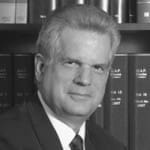 interviews Greg Prince. Greg is well known for his historical contributions and grassroots activism within the LDS Church, and is an advocate for better curriculum, scholarship, gender equality, and open dialogue within Mormon discourse and church policy. Greg sits on the board of directors for Dialogue Foundation, as well as the Madison House Autism Foundation.
In this interview, Greg and Micah discuss:
- Dialogue, one of Mormondom’s oldest and most controversial publications, and what role it will continue to play in the Internet Age
- The contributions of Chieko Okasaki
- Women and the priesthood
- What practical solutions are available today to affect positive change in Mormon gender equality
- Greg’s role models
- How we should take ownership of the future of Mormonism
- Greg’s admonitions, which range from influencing curriculum, creating better scholarship, and how to navigate the political intrigue of church service
- Greg’s newest project, the Madison House Autism Foundation (MHAF), which he and his wife JaLynn co-founded in 2009
Links:
Greg Prince’s Manifesto Speech
Dialogue: A Journal of Mormon Thought
Madison House Autism Foundation
Episode Transcript
Host: Micah Nickolaisen · Guest: Greg Prince
This transcript is machine-generated and lightly edited for readability. The audio is authoritative. Please excuse occasional errors in names and spelling.
Introduction and Welcome
Guest [00:00:01] Come, thou fount of every blessing, Tune my heart to sing thy grace.
Guest 2 [00:00:11] A Thoughtful Faith Podcast is a production of Mormon Stories and the Open Stories Foundation. All donations to A Thoughtful Faith are tax deductible and go directly towards keeping the podcast alive and towards building a community of support for Mormons like you. To support the podcast or to join the community, please become a monthly subscriber today@athoughtfulfaith.org.
Micah Nickolaisen [00:00:45] Hello and welcome to our inaugural episode of A Thoughtful Faith. I am Micah Nicholson and I will be your host today. My guest should be no stranger to most of our audience. I'm honored to have with me Greg Prince. Greg, thanks for joining us today.
Greg Prince [00:01:01] You're welcome. Nice to be here.
Micah Nickolaisen [00:01:04] A little bit of background about Greg. He is a renowned pathology researcher, business executive, and is well known in the world of Mormonism for his contributions to our history, including his books which include Power from on High, the Development of Mormon Priesthood, David O. McKay and the Rise of Modern Mormonism, which he co authored with William Robert Wright. Greg also sits on the board of directors for Dialogue foundation and also contributes to other nonprofit organizations. Greg is married to his lovely wife, Jillian Prince, and together they have raised three children. Did I miss anything?
Greg Prince [00:01:42] That's a pretty good summary of the things that count.
Micah Nickolaisen [00:01:45] Great. Well, Greg, to get started, I wanted to talk a little bit about Dialogue, which is one of the oldest and certainly one of the most controversial Mormon publications out there. How would you describe Dialogue for some of our listeners who may not be familiar with it?
Dialogue Magazine and Mormon Intellectual History
Greg Prince [00:02:05] I'm shocked that you would say it's controversial, Almost speechless. Dialogue was started in the mid-1960s by a group of graduate students at Stanford. They had encouragement from some of the older professional historians, Leonard Arrington being one of them, and they decided to embark on this audacious venture of creating an independent journal that would treat the issues that they felt were important.
Greg Prince [00:02:46] Some of those issues were historical, some of them were doctrinal, some of them were social, some of them, some of the contributors wanted an outlet for their literary production, be it fiction or be it artwork or poetry. And so Dialogue really became an intellectual catch all and has survived through all these years in spite of a decline of interest in print media in general.
Greg Prince [00:03:21] And we're still out there after over 45 years turning out really good content and in the process building a database that scholars are going to in increasing numbers. The Dialog database is the go to place for anybody anywhere who is doing Mormon studies.
Greg Prince [00:03:46] They may branch out to other sources after that, but that becomes their Starting point. So we feel that what we have been able to do with the print journal and more recently with our web presence is not only helping to address a need now, but it's going to be continually addressing a similar need into the future as future scholars keep dipping back into what's been done. There are not very many of the burning issues that face the church today that have not been treated in some form in the pages of Dialogue.
Micah Nickolaisen [00:04:23] Gotcha. So with, you know, with the rise of sort of the online underground alternative Mormon community, with organizations like Mormon Stories, for example, plus the dozens and dozens of blogs and other groups out there, you still feel that the Dialogue will have an important role to play in the future to Mormonism?
Greg Prince [00:04:47] Oh, I do, yes, absolutely. In part because it's been around for so long and in part because it still has the deserved reputation of being the go to place not only for the consumers, but. But also for the producers.
Guest [00:05:02] Right.
Micah Nickolaisen [00:05:04] Well, very good. I was on the website for Dialogue recently, and I noticed that your interview with General Relief Society counselor Chiko Okasaki is on the front page of the website. And the reason this stuck out to me is I know Exponent also recently dedicated an entire issue to President Okasaki. And. And the reason that strikes me is because such a tribute to a member of the Relief Society presidency is somewhat uncommon and rare in the Mormon faith. In your opinion, why was President Okasaki such an important figure in modern Mormonism?
Greg Prince [00:05:44] I think there were a couple of reasons. One was the racial one, that when she became a member of one of the other general boards, and I can't recall if it was the primary or the young women or the Relief Society, she was the first person of color ever to sit on one of those general boards.
Greg Prince [00:06:04] And that really was groundbreaking. Then later, when she became a member of the General Relief Society presidency, she brought forth a Persona that was so refreshing, was so genuine, and that so directly addressed some of the most pressing issues for women of this church that the women throughout the church in particular, embraced her in droves.
Greg Prince [00:06:33] She did not set out to attract a personality cult, and yet she became a rock star in that venue. I got to know her because I called on her once when I was going to be in Salt Lake and said, could I come over and visit? She said, sure.
Greg Prince [00:06:51] She knew of me through the McKay biography. And almost from the minute that I sat down in her living room, when we started to talk, we were on a level of communication that I love to reach but generally don't. And that is there's no holds barred. It's just a conversation, as if we had known each other for decades.
Greg Prince [00:07:15] I only met her one other time, and that was about a year later. Again, I was in Salt Lake. Called her in advance. She said, come on over. And when I walked in, she said, I love it when you come into town because you're the only one I can talk to. Candidly, I thought, whoa, isn't that interesting?
Micah Nickolaisen [00:07:34] Yeah, that's very cool. What years? For those who may not know, what years was President Okasaki, and I'm not gonna put your feet to the fire here and remember the exact dates, but what part of modern church history was she part of the release?
Greg Prince [00:07:50] Yeah, it was in the early 1990s. It may have started in 90 or 91. I believe she had been in for a little bit before the sesquicentennial, the Release Society, which was in 1992. And I think that that presidency was in for four or five years, something like that.
Guest [00:08:11] Okay.
Greg Prince [00:08:13] It was an extraordinary trio of women. You can read more about the relationship there in other sources. Elaine Jack really didn't know that well, the two women that she chose as counselors. And yet the chemistry between those three women and what they were able to accomplish was not only extraordinary, it was almost unprecedented, I think, in the history of the entire Relief Society.
Micah Nickolaisen [00:08:42] I think it'd be fair to say that, you know, the legacy of that presidency, of Sister Jack's presidency, and also the influence of Chico Okasaki, I think you can definitely see the legacy of that today amongst the Mormon women movements that we're seeing now.
Greg Prince [00:09:00] Absolutely. And what still is so refreshing about these women, and two of them are still very much alive, Elaine Jack and Elaine Clyde, is that they are so constructive in what they have done and continue to try to do for the church.
Guest [00:09:18] Right.
Gender Equality and Women's Roles in Mormonism
Micah Nickolaisen [00:09:20] Well, piggybacking off President Okasaki, I'd love to get your thoughts just on a more broader sense of gender equality within Mormonism. I understand that you have met several times with leading Mormon feminists over the years to discuss their efforts in the church to bring women's issues sort of to the forefront of the alternative Mormon conversation. What are your impressions regarding the effort by many women to build a more equal relationship between genders in the Mormon faith?
Greg Prince [00:09:55] Oh, I think it's a direction we desperately need to move in. How we get there, I think, has yet to be negotiated. I think we need a lot of ideas from a lot of people and a lot of experimentation to try to figure out how we're going to get to a better place in this church. I don't know very many people who, if they really think about it and really speak candidly about it, are going to tell you that women in this church are exactly where they need to be going forward. I think even the very conservative voices will acknowledge that we're still not yet to where we need to be, even if we don't know where that is. So a lot of work yet to be done.
Micah Nickolaisen [00:10:41] So how well do you think we've done as a faith community in responding to this issue?
Greg Prince [00:10:48] What I found out over the years, and I am 64 years old, so at least I've seen a few things for a few years, is that you have a broad diversity within the church that we don't usually factor in.
Greg Prince [00:11:07] I gave a high Council talk last year, and the whole thing was about diversity. And the basis of the talk was Paul's discourse, I think, in First Corinthians about the church being likened to a body and the head and the feet and the other body parts, recognizing that all parts have a function. And even as it says, the less comely ones may have ultimately the greater function.
Greg Prince [00:11:39] Well, what that turns out to be is that we view the world very differently as church members, one from another, but we don't act like that. And so our curriculum materials, very often our sermons from the pulpit make it seem as if there's a monolith out there, but there isn't. So you have some women who I think are very satisfied with the status quo and wouldn't want it to change. You have other women sitting side by side with them in the pews who are outraged that things aren't in a better place already. And. And yet there they are in the same ward, consuming the same product all of the time and coming down in very different places on it.
Greg Prince [00:12:28] Well, whatever we do moving forward, I think needs to take into account that there is that diversity, and there is no single sweet spot that we're striving to reach. Diversity is going to be the rule from now on. And as the church becomes more and more integrated internationally, that conclusion is just forced more and more heavily upon us. And yet we still haven't accounted for that.
Micah Nickolaisen [00:12:54] Right, right. Kind of going off in that same vein. One thing I thought would be interesting to get your opinion on, and I'm sure you're aware of this situation, but recently there was a young Mormon man who identifies himself as an active and worthy Mormon, posted a video of himself bestowing the Melchizedek priesthood on A woman. Now, I don't know how much traction that video has received, but I wanted to ask your opinion about Mormons in good standing who take such drastic measures like this in order to make a statement.
Greg Prince [00:13:36] That type of a statement has never appealed to me. Clearly, it appeals to other people. Similar things were done prior to 1978 with blacks. We didn't have the Internet then, and so it couldn't go viral. Such a concept didn't even exist. But nonetheless, there were instances where somebody had taken it upon himself to ordain a black man to the priesthood. Okay. I don't know that it accomplished anything other than muddying the waters locally. It certainly didn't affect church policy. It had no bearing on what President Kimball ultimately did and how he did it and why he did it.
Micah Nickolaisen [00:14:23] You know, I hadn't heard about that incident. Do you remember when exactly that happened?
Greg Prince [00:14:31] No, I just know it was prior to 1978.
Micah Nickolaisen [00:14:34] Yeah, that is an interesting and very applicable correlation there. Where do you see. I mean, this is obviously isn't a new concern for women. You know, the exponent 2 has been around for decades, but there seems to be a growing concern for it over the past decade or so. Where do you see this movement going in the next few decades?
Greg Prince [00:15:01] I don't have a high enough pay grade to answer that one. I'm not trying to avoid the issue. I just flat out don't know. It's not my call. As to what the brethren ultimately decide to do in response to the question of should women hold the priesthood, Frankly, I think more and more that that is less and less a question that even concerns me. I'm much more concerned about the role of women functioning in the church. And to a large extent, that sidesteps the issue of priesthood. Now, what does that mean?
Greg Prince [00:15:39] Look at what women could do in the church that would change their status, that wouldn't require ordination to the priesthood. And the answer is quite a bit could happen. For instance, a bishop or a stake president could easily call the voice of Women into deliberations that he and his counselors would be making. If I were a bishop, I don't think I would make a single staffing decision for the entire ward without getting the input of the Relief Society president. At the very least, I can't imagine why I would want to turn away from the most knowledgeable person in the ward.
Greg Prince [00:16:25] Well, that wouldn't require the priesthood. I think what's really missing in the church that could be fixed, and it could be fixed without even addressing the issue of Ordination is voice. Do women currently have a real voice in the church? Now, you're going to get various answers from various people on that. My answer is that until they have both a voice and a vote in policy matters, and that includes staffing, then they fall short of where they could be. Does that make sense to you?
Micah Nickolaisen [00:17:01] Yeah, yeah, absolutely. Absolutely.
Greg Prince [00:17:04] And I don't see that there are very many meetings held in this church where women could not be present and active in the discussion. And none of that would require ordination to the priesthood.
Micah Nickolaisen [00:17:18] Right. You know, it's interesting. Coincidentally, Peggy Fletcher Stack just published an article in the Salt Lake Tribune today that deals with some of the things you're talking about here. And I'm glad that you talked about making a distinction between advocating priesthood ordination and more about creating general equality in the general discourse of the church amongst women. And I think that's a key first step. So thanks for sharing that.
Greg Prince [00:17:49] Well, now as a man, I can't climb inside the psyche of a woman and so I don't pretend to speak for them on this issue. That said, I think that the question of ordination of women is a huge distraction that could easily derail what might otherwise be a very productive discussion.
Greg Prince [00:18:14] Because if people become fixated on that one issue, then nothing else is going to happen in the meantime and it may turn out to be a food fight eventually, which doesn't get us anywhere. I would much rather concentrate on how can we work to effect change locally that would give women the greater voice that they certainly deserve.
Greg Prince [00:18:40] Now, having said that, I would say that's a starting point and not an ending point because I think there is a lot that can and should be done in the church and can and should be done locally to improve our Mormon quality of life.
Greg Prince [00:18:57] I wish I had been smart enough to coin this phrase, but my friend Paul Edwards in the Community of Christ got there well before I did. He was lamenting their worship services and said, we practice Christ centered boredom.
Micah Nickolaisen [00:19:13] Right. Sounds familiar.
Greg Prince [00:19:16] Yeah, he coined the phrase, but they don't monopolize the effect. And that's one thing that really grieves me, that our worship services, which could be invigorating, they could be energy laden, they could be battery charging experiences usually fall well short of that for those of us who are older. We were brought up in an era where religion was a bit of a hair shirt, meaning it wasn't supposed to be fun. You did it because you had a duty to do it. And we signed on to that primarily because of our heritage. Our parents said this is the way you're going to approach your religion.
Greg Prince [00:19:58] That worked okay for previous generations. It doesn't work for the generations now. So when I look at my kids who are in their 20s, and I look at teenagers, we're losing a lot of them because they are not engaged. It doesn't take their attention.
Greg Prince [00:20:16] And part of that is the boredom aspect. Part of it is the issue of women in the church, and part of it is going to be other things. We need to do a better job. We are losing so many of our people and it's preventable.
Local Engagement and Church Curriculum
Micah Nickolaisen [00:20:35] What do you think people can do at their local level to have an effect on the curriculum and the discourse and the Christ centered boredom that you referenced?
Greg Prince [00:20:46] Well, it's always going to be a balancing act if you're looking at something like curriculum because you have vested interests there who want to maintain the status quo, even if the status quo is boring everybody. And a direct frontal assault on that tends to be counterproductive. But I think that many bishops in this church, maybe most bishops, would welcome some really thoughtful input from members of their ward that would help them solve problems that they know are out there but aren't able to solve themselves. And the boredom that so many of our members experience is one of those big problems. If I were a bishop and I had an individual or a small group of individuals from the ward come to me and say, bishop, we'd like to be the solution to the problem of boredom, I'd throw the door wide open and say, come on in, I've been waiting for you.
Micah Nickolaisen [00:21:48] What do you think that would look like in the context of the normal LDS meeting block?
Greg Prince [00:21:55] Well, we're constrained on the length of the meeting block because of the policy that is set in the central church. Even if you say, all right, we'll work within that three hour block and not try to shorten it, you can still look at the worship service itself, the sacrament meeting, and say, how can we get to a better place than where we are now? Well, music would be a big part of it.
Greg Prince [00:22:25] Mormons don't know how to sing. I would love to take any Mormon ward down the street and have them go into a Methodist meeting and then they'd start to learn how to sing. You don't have to change any doctrine to get us there. I think also that the type of music that is presented in our worship services needs to improve the choral music, the instrumental music. I think that we have a lot of strength in being a church run by the laity, but that's also A weakness, because most people in this church don't know a thing about preaching.
Greg Prince [00:23:04] They get at the podium and they chat with the congregation. Well, that's not the purpose of a sermon. And so I think we need to revisit something that we used to spend a lot of time and a lot of emphasis on, and that is teacher training and speaker training.
Greg Prince [00:23:24] You don't get to be an effective preacher just by getting a call from the bishop saying, will you talk in church next Sunday? And you see the result in all the heads that nod off when some of these talks go on endlessly and never get anywhere.
Micah Nickolaisen [00:23:42] Right.
Greg Prince [00:23:45] I would put scripture reading and commentary as part of our worship service. We talk about the Scriptures, but we really don't take them very seriously. Let's start taking them more seriously and get some serious commentary from the pulpit as part of the worship service. So there are a lot of things that you could do that don't require any doctrinal change or even any policy change in the church. It's just a question of taking a step back and saying, why are we boring people to death in these meetings, and how can we fix that? And if you could find a solution that would work in one ward, it wouldn't be long before that started to go viral, because every congregation struggles with this, and they would love to have a better solution than they've got now. Right.
Micah Nickolaisen [00:24:41] I also don't think it would hurt to have some guitars and some drums in there, too. You know what I mean?
Greg Prince [00:24:47] Oh, I agree completely. I think that local culture is going to be the spice that will flavor the stew anywhere in the world. And we still are not to the point of allowing that local culture to come in. One of the high marks to President Hinckley's administration, in my opinion, was when the temple in Ghana was dedicated and the temple in Sao Paulo, Brazil, was rededicated, because he asked in advance that the saints in those two areas have a celebration in advance of the dedication or rededication, and to do it according to the local customs. And I saw some of the photographs of those. It was amazing.
Greg Prince [00:25:39] I think it was the first time that these African or Brazilian saints had been asked, particularly by the president of the church, do it in your fashion that will express to God your joy in your religion. And in this event, we need to do a lot more of that. And if drums are part of the respectful religious culture in another country, I'm all for it. Go for it.
Micah Nickolaisen [00:26:09] Right? Yeah. That's really cool. I mean, and it seems that what you're saying is we're starting to see the injection of culture, local culture in interactions that take place outside of the chapel. But maybe we need to do more to get that stuff inside the chapel during our worship services. And I think that's great.
Greg Prince [00:26:29] Yeah, it's spotty. I was a missionary in Brazil from 1967-69. That was before Brazil took off. When I went down there, there was only one LDS stake in South America. So it was a pretty rudimentary setup. And there were no stakes in my mission until many years after I came back.
Greg Prince [00:26:52] There were only two Brazilian national missionaries out of about 180 missionaries in our mission. You go down there now and I understand the majority are Brazilian nationals. There were. No, I don't think there were any Latin American nationals as mission presidents in all of South America when I was down there. Well, that's changed. Now you have area 70s who are foreign nationals spread all over the world. It hasn't worked its way up to where I hope to see it during my lifetime, and that is that we would have Hispanics and Africans sitting in the quorum of the 12.
Greg Prince [00:27:36] But it's moving in that direction, and I think that's a very healthy thing. As you get more of those people in those leadership positions, it's inevitable that you'll start to see more of those cultures show through in their worship services and in the way those people live their religious lives. We still haven't gotten to the point in this church of sorting out what has to be there and what was there because this was a Great Basin church.
Micah Nickolaisen [00:28:05] Right.
Greg Prince [00:28:06] It sounds like it would be an easy thing to sort through, but it turns out that it isn't so easy. Right.
Guest [00:28:15] Cool.
Micah Nickolaisen [00:28:15] Well, those are some great thoughts. Thank you for sharing that. And sort of moving still within that vein of talking about change. You know, Greg, you've shared so much with our little alternative Mormon world over the past several years, and you've shared a lot about your personal story and perspective and obviously, of course, your research in Mormon history.
Micah Nickolaisen [00:28:47] And I want to point out that we'll make sure to provide links to some of those contributions on our website. More recently, specifically last October, you hosted and gave a speech at the Mormon Stories conference, the Washington D.C. conference. In that address, you laid out a path that individual Mormons can follow to effect change and also maintain their faith. In chapter five of that speech, which you called what Remains for your to do.
Micah Nickolaisen [00:29:20] That section of your talk has been passed around faithful Mormon groups, shared in Elders quorum lessons and discussed in bishopric meetings. In fact, I think it's pretty safe to say that you and I wouldn't be having this conversation today if you hadn't given that talk. Can you tell us what led to you sharing those thoughts during that Mormon Stories Conference?
Greg Prince [00:29:40] Well, when John Dehlin and the organizers of the conference asked me to give the keynote address, they said, here are some of the topics we'd like you to discuss. And it was a natural outflow from their suggestions. I thought if I'm going to make any comments, we might as well give the so what? And the so what is, where are you going to go with this? We're not just here to talk to each other.
Micah Nickolaisen [00:30:07] Well, if it's okay with you for the next little bit, I'd really like to go through some of the points you made.
Greg Prince [00:30:13] Sure.
Micah Nickolaisen [00:30:15] In that particular section, I've heard it referred to as the Section 5 manifesto.
Greg Prince [00:30:20] Really, this is the first I've heard of this kind of stuff. That doesn't offend me.
Micah Nickolaisen [00:30:27] Well, you know, I think it's really important, and I think a lot of us have taken that talk as sort of a rallying cry and as a manifesto on how to proceed and how to further the discourse and modern Mormonism. The first thing you admonish us to do is to own your religion. Previously, in your personal history, you've described how groups of alternative Mormons found each other at places like Stanford, and in your case, at Dixie College and Now in Washington, D.C. and how the strength of these small groups of Mormons gave you the tools you needed to own your religion. And what's so remarkable today, with the advent of technology, it seems alternative Mormons can now find each other with relative ease. How do you see advances in the Internet and technology changing this alternative Mormon movement?
Greg Prince [00:31:35] Well, as you. As you rightly point out, it's much easier now to find kindred spirits, and that's an advantage. But it's even more of an advantage if those kindred spirits happen to be within commuting distance of you. Because there's something about physical community that works and that doesn't work with virtual community, doesn't take away from the virtues of the virtual community.
Greg Prince [00:32:05] But having people get together, pressing the flesh literally adds something to the mix. If you think about religious life in general, there are really two components to it. One is your inner religious beliefs, thoughts, meditations, prayers, whatever. And that can be done in isolation. And that's what monasteries and convents were invented to do.
Greg Prince [00:32:36] But the other part of it is living out that religion in a community of believers. That's what makes it complete. And so that's the shortcoming of the virtual community that you get online. For whatever its strengths are, I welcome it. I think it's a terrific advance. But it doesn't fill the bill completely.
Micah Nickolaisen [00:32:59] Right. Sort of that fifth element that completes it.
Greg Prince [00:33:03] Yes.
Micah Nickolaisen [00:33:04] Gotcha. You know, you've mentioned to me, as we've been sort of corresponding with each other, that you refer to the Internet as the, quote, elephant in the room in relation to modern Mormonism. What do you mean by that?
The Internet's Effect on Mormon Community
Greg Prince [00:33:20] This is primarily a cautionary note, and that is that in the decades prior to the Internet, going all the way back really to the formation of the church in the early 19th century, the institutional church pretty much controlled the data.
Greg Prince [00:33:42] When you think of this mountain of information that the church has compiled almost since day one, it's extraordinary. And yet most of it was held very tightly and was not available even to scholars. When you control the data, you control the message.
Greg Prince [00:34:05] In an Internet age, what has happened is that the data have become democratized and the amount of data not available to the public through the Internet has diminished to the point of being functionally insignificant. In my mind, so much information is out there, it is so readily accessible, and it is talked about and spread around so readily because of the Internet that it has been a dramatic and permanent game changer. The institutional church no longer controls enough data to make any difference, and it never will. Now that means that the old paradigm of controlling the message because they control the data is gone and it's gone forever.
Greg Prince [00:35:00] So now the institutional church finds itself not just on a level playing field, but on a playing field where the other teams are already out there dressed in brighter uniforms, with better equipment and learning to play the game better.
Greg Prince [00:35:18] So we've got a lot of catch up to do, and that's going to mean that we've got to become much smarter as individuals and really owning what this church is all about, or we're going to get overwhelmed out there. You see it already.
Greg Prince [00:35:34] And this has become a real crisis within the church. The term that's kicked around that John and his people have used is faith crisis. And that's not an overstatement. We are losing a lot of people because in the past, where they may have gone through their entire lives never being aware of what some of these dilemmas are, now they're faced with them directly. They hear about them, they go to the Internet for solutions, and the odds are that they're going to wind up on an Internet site that is not friendly to the church. And in many cases they blow up, they don't know how to handle it and they say, I'm out of here.
Greg Prince [00:36:16] That's what I mean when I say that the Internet is the elephant in the room and it's going to remain the elephant in the room. It is a permanent and dramatic game changer. I view it as an optimist saying, wow, bring it on. The more data the better. But you see, I have lived in a profession that requires you to generate and to evaluate data. I'm a practicing scientist.
Greg Prince [00:36:41] And so the more data points that I have when I'm tackling a problem in science, the better equipped I am to try to figure out the right answer to it. Well, same thing happens in religion. More data that you have, the more capable you are going to be of getting it right, whatever right means.
Owning Your Religion and Navigating Church Politics
Greg Prince [00:37:02] Now let me go back to a phrase that you have used and it is a correct phrase and that is owning your religion. I don't recall that I had heard that phrase until I was a consultant on Helen Whitney's PBS documentary on the Mormons.
Greg Prince [00:37:18] She used that and I think when she first used was in relationship to Mitt Romney. Now this goes back to 2007. So it's the year before the previous election cycle, but it was clear that he was a candidate for the presidency. She was talking to me and she said, this is a good religion.
Greg Prince [00:37:45] She said, Mitt Romney needs to own his religion. He's hiding from it. And I thought about that and thought, you know, you're absolutely right. Well, if anything, here we are five years later and he's owning it even less and hiding from it even more.
Greg Prince [00:38:05] So what I mean when I say owning it, and what Helen meant is first of all, you got to know what the religion is in the first place and most of us are really ignorant. And then the second is be willing to embrace it for whatever it is and go for it.
Micah Nickolaisen [00:38:24] Right. I think a lot of people perceived what you alluded to about Mitt Romney sort of hiding from his Mormonism. I think a lot of Mormons see the publicity for Mitt Romney as a great opportunity and sort of a coming out moment for Mormons, but that's almost kind of downplayed by the fact that that Romney doesn't want to talk about it.
Greg Prince [00:38:51] Well, I think that the results to date are not favorable for the church's case. I think that the general perception in the public is that there must be something sinister, something wrong with this religion if its first candidate ever in A major political party for the presidency is running from it as fast as he can. Now, I don't question that he believes in his religion. That's not the issue here. The issue is that in an era where transparency becomes the norm and where we have the Mormon moment not just because of Romney's candidacy, but certainly that's part of it. There is not just an expectation, there is also an obligation to that he is going to own it publicly to the extent of saying, yeah, I'm a Mormon, and here is how it has shaped my life. But he won't do that.
Micah Nickolaisen [00:39:50] So you seem to think that if he was more open, it would actually help the message and help the Mormon moment, rather than the, as you've alluded to, that hurting it, as his actions have done so far.
Greg Prince [00:40:05] Oh, I do, absolutely. Helen Whitney and I went on the Record last week with an article in the Huffington Post, and it was basically an open letter to Mitt Romney saying, look, as a former bishop and stake president, you have held a higher ecclesiastical office than any major party candidate for the presidency in the history of the United States. You have not just an opportunity, you have an obligation to explain to the electorate how your religion has informed and would inform your administration were you elected to the presidency. Now, we don't expect him to answer that, but it's important for us to get that out in the public square. Right. And there was. There was a very, very large and variable reaction to that column.
Micah Nickolaisen [00:41:03] What kind of response did you get?
Greg Prince [00:41:05] Responses were all over the spectrum. You had some people who bore their testimonies for whatever reason, and that's fine. But you had a lot of people who very thoughtfully read what we wrote and said, you know, these questions are relevant, they are respectfully asked.
Greg Prince [00:41:27] And we, too, think that he has not just an opportunity, but an obligation to address these questions. We weren't asking him either to explain or to defend the church's doctrinal and policy issues. The questions that we asked had to do with how he came to be where he is in life because of his religion, and how his religion either has influenced him in ways that would affect the way he would govern the country, or may have raised implications that he would have to address to safeguard people's concerns. For instance, if your church doesn't ordain women, and we're not the only church that goes down that road, how can you as president, reassure the women of this country that you and your administration will be proactive in addressing their rights and their concerns? We're not asking him to defend his church's policy of not ordaining women to us. That's irrelevant to the presidential race,
Micah Nickolaisen [00:42:39] right? Yeah. Well, I hope, I hope he becomes more open and I hope he in some way responds to, not necessarily your question specifically, but just sort of the general public, because I think it is important to explore those aspects and somebody who wants to govern the country.
Greg Prince [00:43:00] Well, you asked about the responses, and a third major area of responses was people who either were railing against the church or just venting in general. But what those responses in their totality told us was that it validated why we wrote the article in the first place. And that is, number one, there is unprecedented interest in this country in Mormonism, not necessarily from a standpoint of proselytizing it's curiosity. And number two, there is an extraordinary and perhaps unprecedented amount of mystery, misunderstanding, suspicion about this church, which just says we got to do a better job of getting our message out there because the message we would like people to have is not what they do have.
Micah Nickolaisen [00:44:00] Right. And I think the problem that Mormons will encounter is if they just give the, you know, the typical Sunday school answers to, you know, really not only valid but truly challenging issues that are going to come up. They just, they just kind of look stupid. You know, they do look like they don't know their religion when they don't even have an awareness of the issues that are causing concern.
Greg Prince [00:44:27] You have to have both the awareness and the vocabulary. And we generally are really crappy at both of those. Meaning most Mormons don't even know their own religion. And even if they did, they don't know how to talk about it to a non Mormon in a language that makes any sense.
Greg Prince [00:44:47] I was on Huffington Post live this morning. There were four panelists. Two of them were women. One currently is a Relief Society president, the other is an ex Mormon. And they started going at each other. And the male commentator, who is not lds, was asked, did you understand what they said? And he said, I don't have a clue.
Greg Prince [00:45:13] And it's because we don't stop to think that other people out there don't use the same religious vocabulary that we do. So we've not only got to get our data points right, we got to figure out how to communicate them in such a way that people understand what we're saying. If they don't understand it, they'll tune out. You get one chance to make a first impression.
Greg Prince [00:45:33] The same thing happens on the Internet. I know the church takes great pains to try to improve its Google profile. So that when certain search terms are entered, lds.org or one of their other websites will be at the top or near the top. That's great.
Greg Prince [00:45:56] But the next thing that's going to happen is that somebody is going to click on that site and you got one chance to make your first impression. If the first impression is, well, this is just the typical PR propaganda, then you've lost, and they'll leave that site and go down to the next one on the list.
Greg Prince [00:46:16] Chances are that one is not going to be a very sympathetic one. And then what have you gained? So we've got to be out there giving an answer that is credible, that is going to compete favorably with answers that are out there from unfriendly sources.
Greg Prince [00:46:37] And it's also got to be dressed up in clothing that's going to be appealing because we are on that level playing field. And the competition can speak with a really sexy voice and divert all of the attention in its direction. It doesn't matter how correct our message may be, you also got to dress it up so that it's attractive.
Micah Nickolaisen [00:47:03] Right.
Greg Prince [00:47:03] Does that make sense?
Micah Nickolaisen [00:47:04] Yeah, absolutely. And one thing that came to my mind while you were talking about that is just I've heard a lot of people talk lately, just about. You know, you can almost make a similar correlation with how our missionaries present themselves. You know, our missionaries still dress like 1950s insurance salesmen. And, you know, it's great for branding purposes, I guess, but I think a lot of people don't view the missionaries as approachable because of how they present themselves and also probably because of the script that they follow too well.
Greg Prince [00:47:37] And that has a rebound effect as well. You're probably aware of it, you hear of it anecdotally, that we're losing an astounding number of our returned missionaries. Why is that happening? I got to think that a fair amount of it is that they are meeting with more and more rejection on their mission. And what was set up as the best two years of their life, if it doesn't pan out that way, can be a real downer. We can do better on that.
Micah Nickolaisen [00:48:09] Right. And I think a lot of the issues we're talking about here, you know, connect and interweave with each other. For example, you know, if there are issues with the vocabulary we use and the depth of knowledge that we have, that also goes back to a curriculum issue. You know, if you're taught the same lesson since you were age 12 from the same manuals, you know, it's no wonder that you can't have a You know, sophisticated adult conversation with somebody about your own religion.
Greg Prince [00:48:36] Well, you. You have heard, I'm sure, the phrase milk before meat. All right, that. That's okay, except where's the meat? And if you live on a milk diet for your entire life, that doesn't get you to a real good place. You have to progress, We've heard that word before, to a better level of data acquisition, of understanding, or it just isn't going to work out for you.
Guest [00:49:08] Right.
Greg Prince [00:49:09] I was involved last fall in what I think is a fairly broadly known now meeting with a former Area 70 from Sweden who had a real crisis because as an Area 70, he encountered some of these doctrinal and historical questions for the first time himself. And going to the Internet for answers, he almost blew up. He didn't know how to deal with it. Well, we got to do a better job than that. If you have church officials at that level who haven't been exposed to this stuff at all, this is a real problem. We have to instruct people at an early age to tell them, here are the real issues and to help them negotiate some kind of understanding of them. Even if that understanding is. There's a lot of uncertainty here. We don't have all the answers. We learn to be comfortable with ambiguity because that's what faith is all about.
Micah Nickolaisen [00:50:22] Well said. Well said. You know, it's interesting, we started talking a little bit about politics. For me, one of the more controversial concepts you present in the manifesto is to be political, meaning involving yourself in the political intrigue that happens in wards and Stakes. You even even compared the Mormon political games to the Vatican. And I really liked how you invoked Christ's admonition to be wise as serpents but gentle as doves, as counsel for how to be politically involved in the church. But for me personally, I am horrible at politics of any kind. And I think in the context of Mormonism, this is such a slippery slope for many saints to navigate. How do you think alternative Mormons can know when they have crossed a line or are hurting themselves, their cause, or other members? When trying to play church politics, if
Greg Prince [00:51:22] your head is suddenly handed to you, you may decide that you didn't play the game very well. If you step on a landmine and suddenly find out you're missing a leg, you figured out a little bit too late in the game that you shouldn't have stepped there.
Greg Prince [00:51:42] I can't give you an easy formula on how to negotiate this, because there is no easy formula. But I can tell you that if you don't sharpen some political skills. If you don't acquire some of the instincts that will alert you to danger, that will allow you to do whatever you do in a way that gets you across the finish line instead of going to jail, to use the monopoly analogy, you're going to have some problems and you may not last.
Greg Prince [00:52:20] And I think that's very tragic. But you cannot assume that just showing up is going to get you to the right place. Showing up is essential, but you got to be able to have the skill set that if you really want to help effect change or if you really just want to survive, you got to have some smarts in how you do it.
Micah Nickolaisen [00:52:46] Have you ever had any experiences where you found yourself stepping on a landmine, so to speak?
Greg Prince [00:52:54] I think I've been pretty fortunate and nothing really comes to mind. But I also had some really good tutors. Some of them were active tutors and some of them were passive tutors. Now, what does that mean? Well, one of my earliest passive tutors, though I didn't understand it fully at the time, was Juanita Brooks.
Greg Prince [00:53:20] When I was a student at Dixie College Starting in 1965, I was living with my grandparents. Will Brooks, Juanita's husband, who was then 90, was our home teacher, and he drove halfway around the block to Home Teach Us. But the two lots adjoined at the back, so Juanita lived that closely to me. I didn't appreciate then the full magnitude of what this woman was and how important she was in the overall scheme of Mormonism.
Greg Prince [00:53:57] But over the years, I have learned more and more to appreciate how she lived her life and how skilled she was in avoiding the land mines. She simply refused to abandon the pews. It was essentially a case of her saying, I paid for the pew. I'm sitting here. I'm not trying to bring the walls of the temple down on everybody.
Greg Prince [00:54:26] And it doesn't matter how much you shun me, I'm not going away, and neither are my kids. And all of her kids remained rock solid in the church for the rest of their lives, as did she. But she also figured out, in part, as she said, because of wisdom that her father granted to her, that Juanita, if you want to change the church, you have. It's like a herd of cattle. You can't be outside of the herd and steer it. You can't be right in the middle of it and steer it, he said. Where you want to be is on the edge, because then with a little nudging, you actually can steer that entire herd. That's pretty Good wisdom. And you don't get trampled in the process, Right?
Micah Nickolaisen [00:55:16] Well, for people who have found themselves trampled and people who have found that they may have overextended themselves and perhaps jeopardized themselves politically, what's the best way for them to get that political capital back?
Greg Prince [00:55:33] I don't know how to give them general advice that's going to be applicable across the board. It's a good question, but I think you've got to take it on a case by case basis. I have seen some people who, to me, represent the analogy of a moth and a flame. They are so attracted to that flame that they fly closer and closer, but they don't sense the danger. And if they finally encounter the flame, then there they go. And I've seen that happen a lot. I mourn when that happens because we've lost a lot of good people for having flown into that flame.
Micah Nickolaisen [00:56:17] You don't have to answer this, but would you consider Lester Bush as one of those people that got too close to the flame? No.
Greg Prince [00:56:24] Okay. No. No, I don't. And Lester has been for almost 40 years and remains one of my closest friends. And I think I can speak with some authority in talking about him. This was a case where he did things right, but the institutional church responded in such a way that gradually just undermined his confidence in that institution. It was mostly a case of shunning. It wasn't necessary. It was preventable. And at one point, I talked to the stake president, who was our neighbor, and said, if you act now to correct this, then we'll have one outcome. If you don't, then we're going to have a different outcome. And he didn't act.
Micah Nickolaisen [00:57:22] Gotcha. I see.
Greg Prince [00:57:24] And it's a real loss to the Church that this man, who has had a greater influence on the entire church than most people we will ever meet within the Church, gradually withdrew from it.
Guest 2 [00:57:42] Right.
Unfinished Business in Mormon Scholarship
Micah Nickolaisen [00:57:46] Well, thank you for sharing those thoughts about church politics. One of the other points you make is about the unfinished business of Mormon scholarship, specifically advocating for people to contribute regardless of their academic background. And I think as someone who cured diseases, runs a multinational corporation, sits on the boards of half a dozen NGOs, and in his spare time writes best sellers about Mormon history. You obviously practice what you preach there. But speaking for myself, as someone who can easily feel very overwhelmed by church callings, by career, by having kids and a family, I'd love to know your secret to finding the time to research and write.
Greg Prince [00:58:40] Boy, I don't know if there is a Secret to it. A lot of it has to do with how do you organize your time and how do you perform within that time. I think my father was a pretty good role model on this.
Greg Prince [00:58:56] He was a dentist and he certainly influenced my brothers and myself. All three of us went into dentistry, teaching us how to manage our time in treating patients. Well, that spills over into other avenues of life as well. And I think I've been able to make pretty good use of my time. The priesthood book and to a large extent, the McKay biography were researched largely in 5, 10, 15 minute chunks spread out over 18 years between dental patients that I had my computer set up in my private office.
Greg Prince [00:59:38] And if a patient was late or if I finished early on one or at noon, I could go in and put a page or two at a time of source material into the computer that became the database for those books. Well, if you multiply five or 10 minutes to sometimes one or two or three or 5,000, you can get a lot done and never did I have an extended block of time to do that. I just kept chipping away at it.
Greg Prince [01:00:12] Now, not everybody wants to go into the research and writing business within Mormonism, and it's not necessary that they do. But what I was trying to get at in that part of what you call the manifesto is that any of us who are involved in the church are going to have callings or opportunities that don't rise to the level of callings, where by giving a little bit of thought and by working in a little bit different manner, we can do what the good book calls, magnify our callings.
Greg Prince [01:00:52] We throw that term around. But I don't think most people have a clue what that really means. To me, what it means is you look at whatever the stewardship is that has been granted to you through that calling and say, hmm, how can I make the best of this?
Greg Prince [01:01:09] And then you go out and you be creative, you be energetic, and you just see where it's going to lead you, and then you go for it anxiously engaged.
Micah Nickolaisen [01:01:21] Right.
Greg Prince [01:01:23] I think that's part of it, yeah. Okay, cool.
Micah Nickolaisen [01:01:26] Well, I think that's a. That's a great clarification. I actually think that's actually really good advice for many people.
Greg Prince [01:01:33] It's not ever going to rise to the level of something that you put in print. For others, it may. Juanita Brooks and Lester Bush were both very, very strong role models for me in the sense that each of them produced published works that changed an entire church.
Greg Prince [01:01:54] And neither one of them was trained as a Historian. Right. Juanita had, I think, a master's degree in English. Lester is a medical doctor. But they're very smart people and they use the tools from whatever discipline they were trained in and. And brought those tools into a different arena and turned out to do the job better than the professionals did. If they can do it, that means there's room there for the interested and energetic amateur. You don't need to sit back and say, the professionals will do this.
Greg Prince [01:02:33] Now, going back to my statement about the Swedish Area Authority, in preparation for that meeting last fall, John Dehlin was involved with others in taking a survey through the Internet of people who had left the church or felt marginalized and at risk of leaving the church, and asked them to list the reasons for their withdrawal.
Greg Prince [01:03:03] Then they tabulated all of those data and came up with these prioritized list of policy and doctrine and historical issues that had troubled people enough that they had changed their relationship to the church. Well, if you look at that list and that list is floating around out there, those are topics where we need the best minds weighing in in order to get us to a better place.
Greg Prince [01:03:35] And those minds can be anywhere in the church and they can exist at any level of the church hierarchy, including those who have no formal calling. That's what I mean when I say get busy and do something. See where your aptitude is, see what your tools are and look at the questions that are facing the entire institution. Do something about it.
Patience, Faith Challenges, and Mentorship
Micah Nickolaisen [01:03:57] Your last point in the section 5 manifesto is to be patient. Obviously, you've been at this much longer than myself and probably many of our listeners, and you've lived through some dark times at the church with the priesthood ban and with correlation and whatnot. How do you maintain your patience with those aspects of Mormon culture that bother you?
Greg Prince [01:04:32] I think it gets back to that phrase of owning your religion. It's not just gaining knowledge about it. It's that this becomes my religion and therefore I'm going to live it the way that I understand to live it, and then I'm comfortable living it.
Greg Prince [01:04:49] Once you do that and truly make it yours, then a lot of this other stuff doesn't really need to derail you. Yeah, you wish it would be better, but part of that is just growing up and realizing that as an adult, you live in a world where not everything is going to be the way you want it, and even things that change generally aren't going to change fast enough and far enough. But you do the best you can and you be a good citizen and try to help Change the system in the right direction and then be patient. This is a huge, huge battleship that's chugging along at a slow speed on a big ocean.
Greg Prince [01:05:34] And if you're going to change the direction, you can move the rudder, but it may be miles and miles farther down the ocean before you see the ship actually turning. On the other hand, the farther it goes, the more it will turn.
Micah Nickolaisen [01:05:53] Gotcha. You know, Obviously, David O. McKay is a big influence in your life, and I think it's safe to say that probably your most well known contribution to Mormonism is your biography of President McKay. While reading your book, I find myself repeatedly in awe of that kind of leader that we had in McKay. And I'm curious as to whether you see any Hope for a McKay like figure emerging from within the modern institution we have today.
Greg Prince [01:06:32] I think you've got an absolutely fascinating personality sitting in the First Presidency right now in the person of Dieter Uchtdorf. This is a man who has many of the characteristics that I saw in President McKay, both as a child growing up in the McKay church and later as his biographer.
Greg Prince [01:06:57] And some of this has to do with an inborn quality that we call charisma that you don't bring on yourself. You either got it or you don't. You can polish it if it's there to begin with. This man is a truly charismatic person.
Greg Prince [01:07:18] Jalynn was honored a year ago at BYU with a distinguished alumna award. And as part of the weekend festivities out there surrounding homecoming, we were invited to sit in the President's box at the BYU football game. We were in there when President Uchtdorf and one of his sons walked into the box, and I watched and particularly the heads of the ladies turned and Jillene said, I've been in the room when Bill Clinton walked in. She said, this is the same thing.
Greg Prince [01:08:00] What that means is that there is a quality about him and aura is not overstating it, that gets people's attention without him saying a word. That is very, very rare. But this guy's got it now. You can already see that even though he is second counselor in the First Presidency, he is putting his imprint on this entire church.
Greg Prince [01:08:28] Where that's going to go, I don't have a clue. But I really cheer the fact that we've got that kind of personality sitting up there right now.
Micah Nickolaisen [01:08:39] I would agree with you. Yeah, I'm a huge, huge fan of President Uchtdorf.
Greg Prince [01:08:43] Yeah. It's not to take away from the other guys. It's to say this guy, somehow, through perhaps no Fault of his own was minted in a different version. And it's a version that we rarely see in society in general and even rarer in Mormon society, but there he is.
Micah Nickolaisen [01:09:08] Cool. Yeah, I think you're right. I think having leaders like Uchtdorf, you know, it does give a lot of hope for, you know, the type of changes you and I have been discussing.
Greg Prince [01:09:23] Yeah. Now that having been said, I look back over my lifetime, the least likely president to have effected significant change in this church was Spencer Kimball. You talk about a non charismatic guy. I talked to his son Ed frequently over the 10 year period that both of us were working on the respective biographies.
Greg Prince [01:09:51] And Ed said, you know, until Harold B. Lee died, my father was the best follower in the church. He wouldn't have changed, he wouldn't have dared to change anything. But then the day after Harold B. Lee died, he woke up and realized there's nobody for me to follow anymore.
Greg Prince [01:10:12] Now I have to lead. And he led and changed the entire church in a way that nobody, I think even he himself could have predicted. So as much as I am enamored of Dieter Uchtdorf, that's not to say that there couldn't be somebody else either in those red chairs right now or to assume one of those red chairs in the future who could surprise everybody and take us to a place we need to go in a manner we couldn't predict.
Micah Nickolaisen [01:10:50] Yeah, I think that's, I think that's very fair to point out. You know, I think a lot of people like to speculate about ex apostle, how they would run things. But you know, and I think Ezra Taft Benson is another great example of that where people had a very specific expectation of the type of leader he was going to be. And that ended up not being the case as well.
Greg Prince [01:11:14] Well, I go back before that. People had very similar feelings about Joseph Fielding Smith. Many people were scared to death of what would happen when he would become the president of the church. That this man would be a hard liner and that there would be a reign of terror. And it didn't turn out that way at all. He was a very, very pastoral person in the short time that he was president of the church. And there wasn't a ripple.
Micah Nickolaisen [01:11:46] Right. Well, I think we live in an exciting time, not only just in the world in general, but I think especially in Mormonism. I think we are in the midst of a scene change that it will be interesting to see where it goes. And you know, I don't think we can overstate your contributions to those changes. Greg. And we really appreciate that. Before we wrap things up, I did want to take a moment and talk about one of the nonprofit projects that you're involved in. You and your wife established the Madison House autism Foundation in 2009. What can you tell us about MHAF?
Family, Autism, and Personal Faith
Greg Prince [01:12:30] It is named after our youngest child. Madison is our 22 year old son. He is autistic, probably on the lower functioning part of the scale. We got a preliminary diagnosis when he was about three at a time when not a whole lot was known about autism. When he was 6, we had enough specialists weighing in on it that then they gave us the definitive diagnosis which was like a dagger through the heart. And it's a name that you don't want to hear, especially when it relates to your own children, but there it is. Nobody knows what causes it, nobody knows why it's on the increase and there is no effective treatment nor cure for it. The reason that we established the foundation was that as we saw our son aging through the school system, we realized that when he would turn 21, he would step off into an abyss.
Guest [01:13:35] And.
Greg Prince [01:13:35] And that was an abyss that was common to hundreds of thousands of people throughout the country and a number that was going to increase rapidly as we moved forward. And yet virtually no attention has been paid to adults with autism.
Greg Prince [01:13:51] In a way, it's what Gillen terms the puppy syndrome, that every puppy is cute. When they grow up, they may not be quite as cute. And so an autistic child has a certain innocence and, and a certain likability that may not be there when that child turns into an adult. And yet that person is going to be an adult for three times as long as he or she was a child. So we're trying to figure out what can be done nationally to address this issue, particularly in terms of long term housing. Any parents with an autistic child spend a lot of their time worrying about what is going to happen when we are not here to take care of our child.
Greg Prince [01:14:35] So that's what we're trying to do. It's a huge task. We're working with some very smart and we think influential people to try to influence national policy.
Micah Nickolaisen [01:14:47] Wonderful, wonderful. So as a parent and also somebody with your background in pediatric disease research and also as a Mormon, would you mind sharing with us the impact autism has had on your life?
Greg Prince [01:15:05] Well, I don't think it has had much of an influence on my religious life. I think it's the other way around, that the religion is where you dig deeply to try to get the reserves the strength to deal with it. It's there, it is what it is and you just have to learn how to cope. It has never in our experience worked adversely on our religion to have us shaking our fist at God and saying, why did you do this to us? That's just never been an issue for, is for other people. I understand that and I really sympathize with them. When that's the case, it is a permanent, life altering phenomenon for the entire extended family.
Micah Nickolaisen [01:15:54] Right, right. I spent some time on the, on the website for Madison House and I came across a quote that your wife Jolynn said and I, from what I understand, it's becoming a rather famous quote regarding autism. She said, quote, individuals on the spectrum, their families and our communities across the nation are facing a growing crisis with devastating human, social and and economic costs. Solutions exist, but we must act now. Aging parents, overwhelmed health providers, passionate educators, and most importantly, those with ASD are depending on us. What are some of those solutions and what can people who don't deal with autism and their immediate families do to help?
Greg Prince [01:16:40] A centerpiece of a long term response. I don't know if you can call it a solution because the solution to me has the connotation of somehow curing autism and I don't see that in the office, but dealing with it on a long term basis. The centerpiece is going to be housing.
Greg Prince [01:16:57] Where is your child going to spend the rest of his or her life, which may span 60 years, in an environment that is going to be supportive, protective and conducive to continuing growth. You want them to be someplace where they have quality of life, not just a place where they get parked and placed in front of television set seven days a week.
Greg Prince [01:17:22] Once you get the housing part a little bit under control, then you bring other elements into it. You address issues of specific medical needs, of continuing education, of vocational support, of social support. But all of that can be done. And the model that we are trying to develop is basically to look at elder care and tweak it.
Greg Prince [01:17:49] Elder care in this country works primarily because you have a large variety of options that are set up on a for profit basis. In other words, the private sector comes in, it puts up housing, you've got as many flavors as you can imagine and you pick your flavor and pay your money. And that's the level and the quality of elder care that you or your parents or extended family are going to get. We don't see any reason why this can't be done with autism. And the key is going to be to develop that model on a for profit basis so that the private sector can go in and put up this housing that is going to need to meet the needs of at least a half million adults now with autism and a population that will grow at a rate of 50,000 per year as far as the eye can see.
Micah Nickolaisen [01:18:43] Right. So for those of us that don't have a lot of interaction with autism, what are some things that we can do to help?
Greg Prince [01:18:56] Well, in a church environment, to become aware not just of families who have autistic children, but families with any children who have special needs and be proactive, approach them, ask them to tell you about their child's disability. That won't be an intrusion into their privacy. They welcome that because that allows them to tell you where they are in life and where there may be an opening for you to help them.
Greg Prince [01:19:27] So don't be shy about that. One of the things that we are going to be working with the Congress on, since we live just a half hour away from the Capitol, is to try to get legislation that would provide some tax relief for families so that they could set up a special needs trust for their child or for a member of the extended family or for friends. And that's where your question what could friends who don't have autism in their family do? If we can get legislation that would essentially create a 529, a program that would be like the 529 program that exists now for funding college educations, then I think we could lay the framework out for families to begin paying into a special needs insurance trust as soon as their child has the diagnosis, which now is at about age 1.
Greg Prince [01:20:24] And after 20 years of family and friends paying into this and getting tax deductibility for their contributions, I think that there would be sufficient financial resources to take care of that child for the rest of his or her life.
Greg Prince [01:20:41] So we have some ambitious things outlined, but they're realistic as well. We've already had meetings with the tax person on Orrin Hatch's staff and got a fairly favorable reception to the idea of what we're trying to do. Great.
Micah Nickolaisen [01:20:57] Well, that's really important and thank you for sharing that. We are going to put some links up with the podcast to MHAF as well as the YouTube channel for MHAF. And you know, I would like to just take a moment here to personally encourage our listeners to visit MHAF's website. This is not an endorsement made on Greg's behalf, although I'm sure he would appreciate the publicity. And Greg had no idea I was going to ask him about MHAF today. But as we were doing research for the interview, I became aware of Greg's and his family's great work with adult autism. And I, you know, it was a really eye opening experience for me. And so, and I'm sure that this means just as much or perhaps more to you, Greg, than your other contributions, even within Mormonism moving forward.
Greg Prince [01:21:47] It certainly does. And I would add also that this is a situation that will affect more and more Latter Day Saints, because the most recent statistics from the Centers for Disease Control say that Utah has the highest per capita rate of autism in the country now.
Guest 2 [01:22:04] Really?
Greg Prince [01:22:05] And nobody knows why. And the estimate is that it will affect one in every 57 live births.
Micah Nickolaisen [01:22:13] Really?
Greg Prince [01:22:14] Which that overwhelms all other developmental disabilities combined.
Micah Nickolaisen [01:22:22] Well, obviously it's a growing problem and I'm glad that there are people like you out there to address it. And we wish you the best of success with that.
Greg Prince [01:22:33] Thank you.
Micah Nickolaisen [01:22:34] You're welcome. The last thing I wanted to touch on is something we started talking about earlier. You mentioned that there is a notion that people are leaving the church in Mass, and that is something that I have been hearing for a long time. But it wasn't until Elder Marlon Jensen last winter actually came out and said that people are leaving. He referred to it as an exodus unlike anything we have seen since the, the Kirtland banking crisis. And I think within this sort of underground Mormon community, many people choose to leave after experiencing one or more faith crises and, you know, simply because it's too painful, either intellectually, emotionally, spiritually. They just don't feel like they can stay. The first question I want to ask about this is, what do you say to those Saints who are having a hard time finding the willpower to stay in the church?
Greg Prince [01:23:42] I hope that they can find some kind of support mechanism to hold them in, whether it's institutional, whether it's one of these virtual groups that you mention over the Internet, or whether it's a friend, either local or distant, who can take them by the hand and say, hang in there. It does get better. I really mourn when I see friends of mine who have left. And I know they represent only a microcosm of the total departure from the church. I think it's a real tragedy, a huge tragedy. And I also think, for the most part part, that it's avoidable and that it's fixable, but we haven't done it.
Micah Nickolaisen [01:24:35] Greg, when was the last time you had what you would consider a Serious challenge to your faith in the truthfulness of Mormonism.
Greg Prince [01:24:44] Helen Whitney asked me the same thing. I got to know her two years before her documentary was broadcast. And I got to know her because of the McCabe biography that one of her former colleagues in PBS had sent her the galley proofs of the manuscript, unbeknownst to me, and then called me and said, you may hear from her. And I did, but I was a background resource for her for almost two years. And then she said, all right, it's your turn to be on camera now.
Greg Prince [01:25:22] Which I appreciated because number one, she said, you'll be under the lights for four hours. And four hours turned into six. And number two, she took all the junk questions that everybody else had ducked because I was just about her final interview, and she threw those at me. This is what friends are for.
Greg Prince [01:25:43] Nice, but. And I don't think it was on camera, but in that same time frame she said, okay, everybody I've interviewed has had a crisis of faith. What's yours? And I said, helen, I'm boring because I can't think of having had one. And I really can't.
Greg Prince [01:26:05] And it's not because I was smart. If anything, it was because either I was lucky or somebody or something was watching out for me because I had the right mentors at the right time. So that these issues never became crises for me. In some cases, they became crises for my mentors.
Greg Prince [01:26:29] I was exposed ultimately, I think, to all of the burning questions. This survey that I told you about from last fall that preceded the meeting with the Swedish 70 had a whole lengthy list of all of the questions that had been blowing people up. And I looked at them and I didn't see one thing that I hadn't known about for at least 20 or 30 years.
Greg Prince [01:26:56] But somehow I had managed to deal with all of those questions without blowing myself up. Didn't mean I had the answers, because for many of those questions we don't have an answer yet. You just got to learn to deal with the ambiguity.
Greg Prince [01:27:12] And I'd been able to do that. So that's a long answer to your short question. But I can't put my finger on any real crisis point in my spiritual life. Again, I'm just boring.
Micah Nickolaisen [01:27:26] Well, I don't think you're boring. And that was going to be my follow up question was, what about your experience? Experience and perspective has made you immune to having faith crises? And I guess your response that you just gave was having good mentors.
Greg Prince [01:27:47] Well, let me correct you. I don't think for a Minute that I'm immune going forward, you never know what else is out there. And I don't have any type of arrogance that would say to me, you're in. I don't know what bumps there are on the road, but so far as I look backwards, I've been able to negotiate the bumps of the road without getting knocked off the road.
Micah Nickolaisen [01:28:16] Very good. Now, do you think that given the correlated interaction we have amongst the church, the. Whether it's the curriculum or the discourse amongst members of the church, do you think that in this environment, and I'm not talking about sort of the underground alternative Mormon scene that's on the Internet, but within the mainstream church, do you think that there is the same kind of access to that kind of mentorship that you benefited from?
Greg Prince [01:28:51] No, no, not at all. And for the most part, I had no control over the mentors who came into my life when I moved to Maryland. Well, even before that, when I went to Dixie and lived with my grandparents, I had no control over the fact that Juanita Brooks lived across the backyard line and that she would later become such an important figure in my life. When I moved to Maryland, we bought a house in Gaithersburg Ward.
Greg Prince [01:29:25] That happened to be the ward that Lester Bush had moved into a year previously. I didn't know that. And yet he quickly became my closest friend and probably my most important mentor ever. Later on, Tony Hutchinson moved into our lives as a graduate student at Catholic University and the brightest theological mind I've ever seen within Mormonism. We lost him eventually. He's now an Episcopalian priest, but he had an enormous impact on my life, and it was purely coincidental that he moved into my life at all.
Greg Prince [01:30:06] He was a graduate student and started showing up at the Dialogue work meetings where I was also working on the editorial staff. Those are three of the most important mentors that I've ever had in my religious life, and I didn't have control over any of them.
Micah Nickolaisen [01:30:24] So if we have less access to that now, where is our hope then for getting that in the future?
Greg Prince [01:30:33] I think that a huge advantage that the current generation has over ours is the Internet, that you can tap into the best minds and the best spirits in the church through a few clicks of the mouse, if you're lucky, and that the discourse that goes on over the Internet is a huge life support system to those who are able to tap into the right sources.
Greg Prince [01:31:04] I think that the amount of data now available, both in the print journals and over the Internet is astounding. There are very few questions that face the church today that we haven't wrestled with in the past, and yet most people are not aware of that. They think that they are the first ones to confront these questions.
Greg Prince [01:31:31] Well, even though we don't have all the answers, the fact that there has been that much wrestling done in the past gives you a departure point that's way ahead of where we were a generation ago. So taking advantage of data and of personalities via the Internet gives you a huge advantage over where we would have been a generation ago.
Micah Nickolaisen [01:31:57] Cool. I like that. Thanks for sharing that. Well, Greg, I want to thank you from the bottom of my heart of taking the time to speak with me and answering my questions and having this conversation with me. Before we wrap up, is there anything else you'd like to share with our audience?
Closing Reflections
Greg Prince [01:32:16] I think you picked my brain for more than is in there in the first place.
Micah Nickolaisen [01:32:22] Well, I think we had hoped to keep this around an hour, and here we are almost an hour and 45 minutes later. So I really appreciate you spending time with us, Greg. We will post some links on the website connected to the blog. We'd like to get everyone's thoughts and opinions and continue this conversation on the blog. Greg, thank you so much for your time.
Greg Prince [01:32:49] You're welcome. And if it helps somebody, then it's worth it.
Micah Nickolaisen [01:32:52] I think. I know it will. And so thank you very much, Greg Prince, everybody. And I think we are done. Thank you.
Guest 2 [01:33:09] Thank you for joining us today on a thoughtful faith. To discuss this podcast, check us out@athoughtfulfaith.org the music from this podcast was generously donated by Lisa Frazier. Hear more from her@lisafraser.com Melodious Son by
Guest [01:33:27] flame I'll praise the mountain. Here I raise my echo me thy help I come and I hope by thy good pleasure Safely to arrive at home Jesus stranger wandering from the fold of God Here to rescue me from danger in suppose his precious blood O to grace how great a debtor daily I that come straight to me Let thy goodness like a fetter Mind my wondering heart to be prone to want the Lord I feel it prone to live the here's my heart O take and seal it seal it for thy corners above O come to wonder Lord, I feel it come to thee the God I love oh here's my heart or taken.
Transcript © 2026 John P. Dehlin. All rights reserved. Brief quotations are welcome with attribution and a link to mormonstories.org; all other use requires written permission.


9 Responses
This idea that Romney needs to address all the non-progressive church policies and explain how he won’t model his presidency after those policies… well… it sounds to me like a horrible idea. If most Americans don’t know much about Mormons, why open the conversation by highlighting the church’s supposed shortcomings? Then again, when I listen to Greg Prince talk about social issues, why do I get the idea he doesn’t really want ANY Republican to be elected president anyway?
I am curious why Greg compared looking into disturbing Mormon issues to a moth getting too close to a flame. What does he think will happen if someone chooses to leave the church? Does Greg believe that person will forgo real blessings in the eternities? Or does he mainly just feel a general sense of loss because someone is leaving the group, much the same way remaining members of any group would feel when someone leaves?
I don’t know if Greg will get on to respond to comments. But I have met him several times, and perhaps have a feel for his perspective.
I think he acknowledges there are very real and serious problems to be faced within the realm of “disturbing Mormon issues.” He seems like a very practical and down-to-earth man. That analogy jumped out at me too when I was listening to the interview.
I would guess he was thinking more of the latter — that it is a real loss when our religious community fails to address these things leaving people open to disappointment and loss of faith. I think sometimes we can get so wrapped up in the disappointment and hurt, that it does in fact burn us in a way. The anger is justified … but at some point we have to find a way, some acceptance or closure, or else it begins to eat us up.
Thanks for a very good interview. The LDS church could do with many more individuals like Brother Prince. I would like to just mention one thing that rubbed me the wrong way, and that is his reference to some individuals who encounter the “real” history of the church “not knowing how to handle it” and “blowing up.” That seems a little judgmental in that anyone who lands outside the church must have come to the wrong conclusion, or must have been weak in some way. If they simply “knew how to handle it,”then all would have been well. As John Dehlin has pointed out many times, fair minded individuals can and will decide, based on the new information, that the church just isn’t what it claims. While I understand Bro Prince’s desire to build up the church and strengthen membership in it, why alienate those who may be on the fringe with that choice of words?
I’m starting to see this reaction among more progressive LDS quite often, including Terryl Givens. They assume that people leave because they were shocked and overreacted by the discovered information. It’s better than the trite charge that those who leave were “offended” or wanted to sin, but it still doesn’t acknowledge the many sensible people who (while perhaps experiencing some initial shock) examined the evidence dispassionatly over many months/years and no longer found the Church credible.
I am basically never bored by LDS services….there must be something wrong with me.
I assure you, there is.
Why would there be something wrong with you? Maybe you’re just different than people who often find LDS services boring. There is quite a bit of variation in us humans.
Greg Prince is so intelligent, congenial, and I love his thoughtful, understanding approach to Mormonism. I agree that ordination of women is too big of a fight (for now), whereas increasing women’s ‘voice’ seems to be a doable goal that would not require large structural changes.