Edward Kimball, Son of Spencer W. Kimball | Ep. 137-138

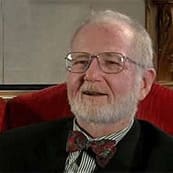
In this 2-part interview (audio and video), I speak with Edward L. Kimball: son of the late LDS Prophet Spencer W. Kimball.  Edward Kimball is a retired law professor from Brigham Young University, and author of two biographies on Spencer W. Kimball: Spencer W. Kimball and Lengthen Your Stride, the Presidency of Spencer W. Kimball.  Edward has also been an active supporter over the years of both Dialogue: A Journal of Mormon Thought and Sunstone magazine.

In this interview, we discuss:

  • What it’s like to grow up the son of an LDS Prophet
  • An intimate look at Edward’s impressions of President Kimball
  • The 1978 Blacks and the Priesthood Revelation and the Equal Rights Amendment fight within the church
  • Thoughts in reconciling the intellect with faith and the spirit

Episode Transcript

Full text · 15,400 words · 12 chaptersHost: John Dehlin · Guest: Edward Kimball

This transcript is machine-generated and lightly edited for readability. The audio is authoritative. Please excuse occasional errors in names and spelling.

Introduction and Edward Kimball's Background

Part 1 of 2 · Ep. 137

Guest [00:00:00] Mormon Stories podcast takes a ton of work and depends solely upon listener support to keep this program alive. Please consider a donation today@mormonstories.org.

Guest [00:00:22] Come, come ye saints, nor toil nor labor fear. Come.

John Dehlin [00:00:39] Edward Kimball, welcome to Mormon Stories.

Edward Kimball [00:00:41] Thank you.

John Dehlin [00:00:45] I'm really excited to have the opportunity to interview you. I've been wanting to interview you for a long time, ever since Dan Witherspoon told me about your book. I think I'm going to go ahead and hold up your book for our audience. The book is called Lengthen youn Stride the Presidency of Spencer W. Kimball. I remember hearing about this several years ago and really, really enjoying and appreciating what you did. But this is a biography. It's your second biography on Spence W. Kimball, is that right?

Edward Kimball [00:01:19] The first was published in 1977 and it covered his life up to that point. This covers all of the presidency years from 1973 to 1985. 12 years.

John Dehlin [00:01:34] And I guess it should be stated that you are the son of Spence W. Kimball.

Edward Kimball [00:01:40] Yes, I'm the youngest of four children.

John Dehlin [00:01:43] Youngest of four. Well, let's talk about your life and your reflections and impressions, if that's okay.

Edward Kimball [00:01:51] Sure.

John Dehlin [00:01:52] Maybe let's start a little bit about your father. What can you tell us about just a quick five minute version of his upbringing and maybe what type of background led to him being prepared to become prophet for the church?

Edward Kimball [00:02:14] He was born in 1898 in Salt Lake City, Utah. And when he was three years old his father was called to be stake president in Arizona. Uprooted his family, moved there like a mission calling. But he was there the rest of his life until 1923. 25 years he had spent in mostly in Arizona. And my father went to school there and married there, went into business there, established an insurance and real estate agency. And In I think 1936 he was called to be stake president over the area where his father had been stake president.

John Dehlin [00:03:04] What part of Arizona again?

Edward Kimball [00:03:05] This is in the Gila Valley. There's a new temple being built in the town adjacent to the town of Thatcher, which is where he lived for his early years and within a couple of miles of the place where we lived until 1943 when he was called to be a member of the quorum of the 12. His life was that really of a small town businessman who was active in the church. He was acquainted with other general authorities. His father had been a friend of Heber J. Grant when they were boys and

John Dehlin [00:03:51] he

Edward Kimball [00:03:51] was the grandson of Heber C. Kimball, as was, well, J. Golden Kimball. Was a son of Heber C. Kimball. So that was his uncle. So he was not an anonymous person. He was somebody who was known. So that when they called him to be a member of the quorum of the 12, they were not dealing with a stranger. He had, among other things, been instrumental in dealing with a flood in Duncan, Arizona on the Gila River. That sort of brought attention to him because he had successfully managed the welfare effort to try to rehabilitate the town that had been severely damaged by flooding. And he had recruited church members to help bring back the town and what was a suffering community. So in 1943 he received a telephone call from Salt Lake City asking for Spencer Kimball. And I was answering the phone as a little boy and said, here he comes now, or something like that. He had come home for lunch and he received the phone call, slumped down to the floor, unbelieving that what he had been asked, he was told by J. Reuben Clark, who also was his cousin, Was told that the Quorum of the twelve and the presidency had decided to call him. So the family moved to Utah. He pursued his life and assignment as a member of the quorum of the 12 for 30 odd years until 1974 when President Lee died. He, as the senior apostle became president of the church.

John Dehlin [00:05:59] Do you get a sense that in his formative years, even as an adult, as a father, that he exhibited

Edward Kimball [00:06:10] unique

John Dehlin [00:06:11] or remarkable traits of. Of integrity or of strength or of faith? Is there a sense that he was just one of many could be called, or that maybe there was something special about him that really did set him apart?

Edward Kimball [00:06:28] It's a little hard for me to answer. He was a people person. If there was a party, people would be gathered around him having conversation. If they were going to be singing, he would go to the piano and play to accompany the singing. I remember being told by a child of stake president in those earlier days, people often had guest books where they would have people who came to their home sign a guest register. And in this one case there was a place for entry hobbies. And this was Spencer W. Kimball hobby was I love people. And she said that many years later he came back to the same home and wrote the same hobby. But he really was a loving person and I think a very accepting person. He loved his family and we certainly loved him. He was a soft parent. I didn't get scolded by him very often because I was such a good kid, maybe, but he was. He was affectionate physically. When we met, we kissed. So those are things that may not seem Very important. And yet a personality that is full

John Dehlin [00:08:13] of love

Edward Kimball [00:08:16] to the degree that he did is really a little bit unusual. He was energetic, he was athletic, He was a voracious reader. He didn't read fiction, but he read a lot. He was self educated in that sense because he had only one semester of college before he met, was called up for military service and married. Another characteristic, as I think back, that he was willing to do things that were unusual. Someone told me that when he was state clerk, this is as a young man that he for stake conference created a big chart that showed statistics in the stake. I mean, so this was not something that was required. It was just something extra that he did. And throughout his life he was willing to tackle new things, different things. He was not afraid of change.

John Dehlin [00:09:38] And you were born in Arizona?

Edward Kimball [00:09:39] I. I was born in Arizona in 1930, so I'll soon be 80 years old. And I was 11 years. No, I was 12 years old when we moved to Salt Lake, when he was called as a member of the Quorum. And I remember it was a very distressing situation. I thought that I was much imposed upon to have to leave my childhood home and go to the big city. But we got along.

Growing Up with an Apostle Father

John Dehlin [00:10:12] What's it like to have your dad called his prophet or apostle? Let's start with apostle.

Edward Kimball [00:10:18] Well, as I say, I was devastated. I thought that was a terrible thing to have happen to our family.

John Dehlin [00:10:24] Really? When the news came, you were devastated because you had to move.

Edward Kimball [00:10:27] Because we had to move.

John Dehlin [00:10:28] You just had friends and loved Arizona.

Guest [00:10:30] That's right.

Edward Kimball [00:10:30] I had never lived anywhere else. A small town, you get pretty well integrated. The town of Safford, where we lived in the Gila Valley, just a couple of miles from Thatcher, where he had grown up. The town's about 2,000 people nowadays, maybe a little bigger now, but it was a county seat. It had a main street. You could look down Main street to the courthouse and often happened there was nobody between you and the courthouse down the end of the street.

John Dehlin [00:11:07] So what did you love about it? Just friends and.

Edward Kimball [00:11:09] Just friends. School.

John Dehlin [00:11:11] But what about. I imagine you were a faithful, believing member. You know that there's a prophet in the Quorum of the twelve apostles and now your dad's becoming one. Certainly that would be remarkable or fascinating

Edward Kimball [00:11:27] or spiritually validating or may seem like it should be. But I didn't think that big that broadly. You said I was a member of the church, but I grew up in the church and it all seemed pretty natural.

John Dehlin [00:11:43] Like when, you know, didn't you Want to, like, see the general authorities and see the prophet and.

Edward Kimball [00:11:50] Not that I can recall.

John Dehlin [00:11:51] The Mormon Tabernacle Choir and.

Edward Kimball [00:11:55] No, I'm afraid not.

Guest [00:11:57] No.

Edward Kimball [00:11:58] And I suppose maybe people assume that a person who is good enough and qualified enough to be general authority is somehow a different sort of person than their neighbors. My experience has been that in any ward I have ever lived in, there are people who have the same good qualities that have the faithfulness and are devoted and believing. And they just happen not to have been called. So he was called. It was his turn to take on that responsibility and seemed sort of natural, not remarkable.

John Dehlin [00:12:45] This is a bit of a slightly sensitive topic. Maybe. Maybe not for you, but you walk with some crutches.

Edward Kimball [00:12:53] Crutches?

Guest [00:12:53] Yeah.

John Dehlin [00:12:53] Tell us about.

Edward Kimball [00:12:56] Just as I was turning three years of age, I was stricken with polio. Polio? Myelitis. And I was hospitalized in California. My parents didn't know what it was at first. Doctor had no other cases. It was not an epidemic at the time. But just suddenly, out of the blue, they have a child who is paralyzed partially. And I had a series of operations on my legs to make it possible for me to walk. The necessity for crutches is largely an old age characteristic. I walked without crutches most of my life, though awkwardly. Still, I walked. The crutches are necessary now. I can't walk without them. But I don't think it's affected me very much in my life.

John Dehlin [00:13:55] You've done okay.

Edward Kimball [00:13:56] I've done okay.

John Dehlin [00:13:58] Do you know if it was ever a struggle of faith for the family? Wanting this not to be. Or trying to.

Edward Kimball [00:14:08] Within polio?

Guest [00:14:09] Yeah.

John Dehlin [00:14:10] Like, do you have a sense that your parents tried to.

Edward Kimball [00:14:14] No. I remember there is. In early documents of my life, there's a note that they asked Elder Callis, Charles A. Callis, a member of the quorum of the 12, who was visiting the stake in Arizona to give me a blessing in which he blessed me that I would recover fully, which didn't happen. And my mother reported that she had friends who said, why did this have to happen to you? You're such a good person. Her response was, it happened to me because I got a germ. She was not equating this difficulty and disability of her son with some sort of sinful conduct or desserts of a.

John Dehlin [00:15:01] And never a frustration that God wouldn't answer the prayer or heal?

Edward Kimball [00:15:07] No. Some people thought that it might be either a cause of discomfort. I've never thought of it as anything except what happened. Not connected with faithfulness or not.

John Dehlin [00:15:23] And Never cursing God or questioning God for.

Edward Kimball [00:15:27] Not on that account, no.

Family Life, Mother, and Schooling

John Dehlin [00:15:28] Tell us about your mother.

Edward Kimball [00:15:31] My mother, Camilla Eyring, of good heritage, her name is better known now than others, Elder or president. Eyring is my first cousin, and his father was Henry Eyring, a noted scientist. My mother was the oldest child of the family, and Henry Eyring attributed a lot of the incentives that he had to get a good education on the fact that his older sister was much, often encouraging him to increase his educational opportunities. This is coming out of a little town of Pima, Arizona, which not much more than a crossroads.

John Dehlin [00:16:20] So I'm sorry, how was Camilla related to senior Henry?

Edward Kimball [00:16:24] Senior Camilla is the older sister of Henry, Irish scientist.

John Dehlin [00:16:29] Gotcha. Okay, so she was encouraging him and he.

Edward Kimball [00:16:34] She was encouraging him as. That he ought to get all the education he could.

John Dehlin [00:16:38] And he's an Arizona boy.

Edward Kimball [00:16:40] He was an Arizona boy, yes. Ended up in Utah much later after having lived in other. Other parts of the country, in Princeton particularly. Right.

John Dehlin [00:16:56] So your mother.

Edward Kimball [00:16:56] My mother. My mother.

John Dehlin [00:16:59] Sometimes people joke that it's the woman that makes the leader, the man.

Edward Kimball [00:17:05] Well, that's sort of. My father used to, I think, rightly attribute some of what he was to the kind of woman he married. He on more than one occasion said to missionaries when he met a group, he said, take note of my wife. This is the kind of woman you should marry. She's never allowed me to be satisfied with mediocrity. She was like him, self educated because she read a lot and she was a teacher. She was a teacher in the academy, the church owned high school in Thatcher, Arizona. That's where she met him. And they got acquainted. After a very short courtship, they married. And he was expecting to be called up in the military at the time. And so they married probably a little sooner than they would have otherwise. But she was a hard working, small town lady who had more smarts than money. They got along okay. The depression was on when I was a boy. They managed all right, though it was a close call sometimes, but she always encouraged her husband and he figured he could do whatever she would support him to do.

John Dehlin [00:18:40] She's strong.

Edward Kimball [00:18:41] Strong, yes. Yes. I was very close to her partly because she did a lot with me as a child and as a result of the polio that I had massages and heat treatments and exercises and operations recovering, we spent quite a bit of time in California, just she and me together. So that was very close to her, more than I think I would otherwise have been if I had not had polio.

John Dehlin [00:19:21] So Your high school years were in Utah?

Edward Kimball [00:19:24] Yes.

John Dehlin [00:19:25] Which high school?

Edward Kimball [00:19:26] East High School.

John Dehlin [00:19:27] East High School.

Edward Kimball [00:19:28] Actually, we came here. I was in junior high school, Roosevelt Junior High School, and then East High School, then the University of Utah for two years, Then a mission to the Netherlands and back to finish college. And then law school, University of Utah Law School. And then I went to the University of Pennsylvania for graduate work in law. Got a job teaching, first at University of Montana, then called Montana State University, and then the University of Wisconsin, which was a step up professionally. And then in 1973, when the law school was organized at BYU, I was recruited to come and be one of the original faculty. And my wife persuaded me that this is where we ought to be for our family's sake and because both her mother and my parents were aging and it seemed like a good time and place to be. So I spent the time from 73 till I retired in 1995 as a faculty member at BYU. Go, Cougars, go. Actually, I'm always torn a little bit. I graduated from Utah and only taught at byu.

John Dehlin [00:21:03] That's twice the teams to love, right?

Edward Kimball [00:21:06] I do. Yeah. I root for Utah anytime. Except when they're playing byu.

John Dehlin [00:21:14] Me too. So what's it like having a father in the quorum of the 12? I imagine he's gone all the time.

Edward Kimball [00:21:25] Well, he was not really gone any more than he had been as a businessman.

John Dehlin [00:21:30] Meaning all the time?

Edward Kimball [00:21:31] All the time. Most of the time. Much of the time. He was gone on weekends, but he was there during the week most of the time. There were times when he met on a mission tour that he was gone for a couple of weeks, for example, but when he was home, he was home. He might be working, he might be reading, but he was accessible. And he didn't sleep much. He was diligent.

John Dehlin [00:22:05] How many hours a night do you think he slept?

Edward Kimball [00:22:07] Well, I was asleep part of the time, so I'm not sure, but he probably slept six or seven hours, sometimes more, sometimes less. But he was busy in the sense that he was occupied. His mind was occupied with his responsibilities. But as I say again, not to the neglect of family. I never felt neglected anyway.

John Dehlin [00:22:39] Did you feel like you could talk to him about personal things or was there a distance?

Edward Kimball [00:22:44] I think he was not very comfortable in debating religion with his children. It was too important to him. I think he felt much more comfortable doing talking religion to a stranger or to another church member, then to his family. I tried out my heresies on my mother. She was the one who was open to that kind of Subject discussion.

John Dehlin [00:23:09] When you were a teenager?

Edward Kimball [00:23:10] Yes, when I was a teenager.

John Dehlin [00:23:12] So you had a curious mind.

Edward Kimball [00:23:14] Thank you. Yes, I had a curious mind.

John Dehlin [00:23:18] And your mom was there to.

Edward Kimball [00:23:20] My mother was the right person to talk to. She couldn't answer the questions. She often admitted ignorance or incapacity. One of her phrases was, I'll put it on the shelf. You know, the idea of saying, if I have a question, I can't resolve it. Now, I'll not deny the proposition, but I will wait and see. And she said, later on I'd take it down. Sometimes it was answered, other time it was no longer important. And still other times had to put it back on the shelf again.

John Dehlin [00:24:00] Do you remember the types of questions you would have been asking her?

Edward Kimball [00:24:03] Oh, my. You name them. I mean, polygamy, evolution, blacks in the priesthood. You can name any controversial subject. And could there really have been a flood that covered the whole earth?

John Dehlin [00:24:23] You're hitting your mom with these in her teenage years, huh?

Edward Kimball [00:24:26] Yeah. I didn't always get an answer, but I appreciated the fact that she was open to any kind of heretical viewpoint that I might espouse.

The Distance and Demands of Church Leadership

John Dehlin [00:24:38] Did it ever frustrate you that you didn't feel comfortable or weren't able to talk to your dad? I imagine from my perspective, I would think, well, dad, he's there. He's close to the top. He's got the direct access. He's the man to ask. But you felt like you couldn't. Did you ever try?

Edward Kimball [00:24:58] Never that I can remember. That is. Just seemed like she was the one to talk to. Maybe it was by designation, maybe it was by nature. Some things in family dynamics I can't reconstruct. You know, when I was a kid, I was seeing things through a kid's eyes, and I no longer can see things the same way I saw them then.

John Dehlin [00:25:23] But it wasn't like you tried to talk to him.

Edward Kimball [00:25:25] No, No, I was never rebuffed.

John Dehlin [00:25:26] He shamed you?

Edward Kimball [00:25:27] I was never rebuffed, no. Yeah. It was not that. He rejected my asking. And he would answer and try to give explanations about evolution. He would say, I don't know. However it was done, the Lord did it.

John Dehlin [00:25:50] Really simple.

Edward Kimball [00:25:51] When we're able to understand, he'll reveal more to us. His answers would be that way, reflecting a willingness, and yet not a comfort in arguing or debating with him, his children, or exploring. We didn't explore together. He would give me his best answer, and then I would go argue with my mother.

John Dehlin [00:26:17] And she would argue with you.

Edward Kimball [00:26:19] She would not, in a harsh sense of the Word. But she was open to talk about possibilities. Good for her. Good for her.

John Dehlin [00:26:30] Those of us who have never had a close family member serve at a really high level in church leadership, Even a father who's a bishop or stake president can only imagine what the home might or might not be like. You could imagine everyone walking five inches off the ground with halos and fam home evening every week reliably, and scripture study reliably and prayer reliably and never an ill word spoken. Or you could imagine the most dysfunctional of all possible families where people can't talk and there's meanness and cruelty and pressure to conform.

Edward Kimball [00:27:08] And it was a healthy, happy relationship. There was no kind of magical superiority. As I said, in every ward I've lived in, there are people as good as. As competent as any general authority. My father was a good man. He was as good as anybody I know. And yet he didn't walk off the ground. He did the best he could. Even when he became president of the church, he did think of himself as somebody special. He thought of himself more as a person whom the Lord chose to do a job. And he said in one of his sermons, he said that the Lord determined who would lead the church by governing life and death and that there would be the succession when it came to him. He accepted that it was his responsibility because he said, it's the Lord's choice that I survived and that Harold Beale died maybe because it was something for him to do that Harold B. Lee

John Dehlin [00:28:27] couldn't do during the years he served as a member of the quorum of the 12.

Edward Kimball [00:28:34] 43 to 73.

John Dehlin [00:28:36] 43 to 73. That was a pretty. I imagine David O. McKay was prophet for most of that time.

Edward Kimball [00:28:43] Was president for most of that time. Most of the time.

John Dehlin [00:28:46] Are there any events or happenings that kind of stand out in your mind as being important for him or that he was a really important part of or tough or challenging before he became prophet. Any events or things stick out during

Edward Kimball [00:29:06] that 30 years, you mean?

John Dehlin [00:29:08] Yeah, I mean, I'm sure there's a lot. I'm sure there's a lot you could.

Edward Kimball [00:29:11] Well, I was pursuing my life while he was pursuing his. And there's not as much that I was not an insider. He didn't consult me on my opinions as to how the church should be run. I would have been glad to give a little bit of advice had I been. As a matter of fact, I sometimes offered advice unsolicited, but no, I was going through school, going on A mission, pursuing a profession, career. And while we had friendly family relations and affectionate, I was not involved in his ministry. I don't think I ever went with him to a stake conference. If I did, I've forgotten, and

Guest [00:30:11] so

Edward Kimball [00:30:13] I have less basis for answering than you probably assume.

John Dehlin [00:30:19] Do you ever remember him telling stories about, you know, President Benson, or, you know, Elder Benson is saying these things I wish he wouldn't say, or, you know, President McKay's considering the blacks in the priesthood thing? Like, would he ever tell stories or express dynamics?

Edward Kimball [00:30:45] When dad was president, my mother said, he never tells me anything because he can't remember which things are confidential and which things are not. He never says anything. There was a certain compartmentalization. There was a family and there was the church assignment, and he was not one who told tales about what had happened and who said what. And his journals are not as inclusive of detail as I would have wished. As an historian, I'd love to have been present when some things were discussed by the First Presidency. Like Greg Prince had the luxury of journals of President McKay that were much more detailed, much more inclusive of what you'd call tales.

John Dehlin [00:31:49] Did you have a sense for the origins, the sources of his testimony and faith? Was it some big spiritual experience? Was it just feelings? Was it intellect, other things?

Edward Kimball [00:32:05] He said at least once that he didn't ever remember not having a testimony. He didn't struggle with faith. He had faith and it was his life. His father was faithful, his grandfather was faithful, and he was faithful. I think my mother had more questioning. She was more open, as I said, to discussion. He's not having the doubts himself or having had the doubts himself, at least as far as he ever divulged to me. It was just part of his being.

John Dehlin [00:32:52] Do you have no sense that he ever had a crisis of faith, for example, or deep, dark moments?

Edward Kimball [00:32:57] No, I don't. Well, he said things like, I wonder why the Lord would call me a country boy to be president of his church. But that's actually a statement of faith that the Lord did call him, though he may be surprised at why the Lord called him, but he didn't doubt the nature of his call.

Race, the Priesthood Ban, and Its Origins

John Dehlin [00:33:23] Let's talk about that. A lot of people, you know, sometimes people, when they're referring to religions, like to use this wizard of Oz kind of metaphor, that there's some wizard behind the curtain who isn't what he or she might claim to be, and he is propelling some image of something that he really isn't. But it's for the Good of the people and you know, that you know sort of this noble lie sort of dynamic and a skepticism as to the sincerity of the beliefs of the leaders. That's what some people do. And then in addition to that there's an expectation that when you become called as a prophet, seer and revelator, an apostle and then as the prophet that you would have some type of personal visitation with Jesus. And it's all people's speculation and their questions. But what do you make of those expectations and speculations and how do they fit with what you know of your dad's experience?

Edward Kimball [00:34:31] I can say that from long years of experience and exposure to my father, I haven't the slightest doubt about his faith, that is that he believed he was called of God. So the thought that he was acting hypocritically just boggles my mind. Knowing the man, this was a man of consistency and, and credibility as to supernatural experiences. He would talk sometimes about developments that he felt good about, felt were divinely encouraged or sponsored. An example might be the Indian student placement program over which he had some responsibilities. I think he felt that the Lord had given him the assignment to see to an improvement in the well being of the Native Americans. And he invested huge amounts of energy in the development of that program. He didn't ever attribute it, that I know, to some sort of voice from heaven. But he felt that it was what God wanted him to do. And that kind of feeling seems to me has to be the substitute for some grandiose vision. I don't know whether he had visions of the kind you mentioned. He didn't tell me about them. If they did, he I think would have characterized them as highly personal. Individual blessedness.

John Dehlin [00:36:32] Sure. About the Indian placement program, I once had a professor, not LDS and not at byu. It was shocking to me they referred to programs like that. And she was Native American, she called it cultural genocide because language, apparently people are taken from families, languages have died from the various tribes as it's been hard and there was a lot of anger there. Have you ever heard comments like that

Edward Kimball [00:37:10] or thought about whether that's oh yes, legitimate or not? I think I'm going to project now. My father's answer to that was that at the time when those programs were developed under church auspices, the conditions of literacy, health, so on, on the reservations were pitiable. The government had made so many promises that they did not keep that the natives Americans were made to suffer greatly and this was a step in the direction of giving them opportunities. Racial genocide.

John Dehlin [00:38:01] Cultural.

Edward Kimball [00:38:02] Cultural genocide would Be a person's perception that it's clear that the motivation of the program was affirmative, was positive to give. It wasn't so much to take away the Indian nests as it was to give some of the opportunities in a white society that they were entitled to and thought he not only would not object to the characterization that there was. Problem, but he would say that he was doing his best to help solve the problem. Others didn't appreciate it, but should have.

John Dehlin [00:38:55] Did you see a lot of good fruits come from that program?

Edward Kimball [00:38:59] I have. My sister had an Indian girl living with her. I had no connection. We were living in Wisconsin and elsewhere during those times. I think that there may have been some good and some bad have come from it. I don't have a close enough connection with it. I know there was controversy and I know what the motives were from at least my father's side.

John Dehlin [00:39:27] Were there quotes about. And this is some of the harder stuff, I think. Were there quotes. I think I remember quotes in the 60s about, you know, Native American skins turning light or something to that effect by mixing with the whites.

Edward Kimball [00:39:42] And he did make a statement to that effect. And I don't believe that, but I don't know whether he was taking that literally or this was kind of a rhetorical statement. But he did say that intermarriage or rearing in the gospel culture would change the color of skin.

John Dehlin [00:40:07] So he wasn't opposed to interracial marriage.

Edward Kimball [00:40:12] Yes, he was opposed to interracial marriage in the sense that he thought it added a complication to. To marriage, which is already a difficult relationship. But he would emphasize that there's no sin in it. It's not evil. It's simply like a rich girl marrying a poor boy. That's going to be one extra thing they have to worry about is money management, which probably produces nearly as many divorces as other causes. That clearly was his view. I remember hearing overhearing a telephone conversation where he was at home and someone was talking to him about interracial marriage between a Native American youth and engagement. Was it a fiance? And the answer was clearly nothing immoral or improper about it. It's just unwise unless they have sufficient power, wisdom, self control to overcome the antagonisms that might be aroused. Right.

John Dehlin [00:41:34] When we read. Race is obviously one of the central. You know, one of the things, I guess President Kimball's administration is most remembered by because of the 1978 revelation. But when you. When you jump back 100 years in the church's history and you read what the prevailing Thoughts were about race just in the United States in general. I mean, of course slavery was allowed, but you know, even so, among Brigham Young and others, a lot of comments that would be viewed as racially offensive today. Your father was raised in a time where those sentiments were still quite prevalent. And you know, the folklore.

Edward Kimball [00:42:18] Are we talking about Indians now?

John Dehlin [00:42:20] Blacks? Just white superiority or racism against blacks or whoever, Any race, really. Do you have a sense for

Edward Kimball [00:42:32] your

John Dehlin [00:42:32] father's view on races just throughout his life in general? Did it change? Would he have been like Brigham Young in some ways, progressive, less progressive relative to us today?

Edward Kimball [00:42:46] I assume that he was less progressive than a lot of us today would think we are. But he was open to. To people without regard to color, as far as I was ever aware. When he was in Arizona as the stake president, for example, there was a black school and they wanted to use a church chapel for a graduation ceremony in this little black school. And he authorized that. I mean, it would have been a simple thing to say, sorry, we don't have that available to you. But it's one feather on the scales of suggesting that he was not as biased as many of his contemporaries. To say that he had no biases would probably be to deny the obvious, that he was a person of his time. And it was not so much, I think, antipathy as simply an assumption that there were different levels of society. There were those who were more blessed and those who were less blessed with intelligence, with economic opportunities, with education, and certainly members within the church who were black, like. Droskrie or Fleming. I forget his first name. Brother Fleming, who was employed at the Hotel Utah, was one my father knew well. And when they organized the Genesis group, I know that he attended picnic that they had in the summer as opportunity allowed him to interact with American Indians, blacks or Latinos, or any group that was. Identified by the community at large as somehow lesser. He resisted that. He said after the revelation on priesthood that he had had to fight with some things, that is his assumptions from his time and place, and that that was part of his struggle to determine what it was that the Lord wanted done with respect to priesthood. So he was open to change. If he had biases, he would be the sort of person who would fight against him, who would consciously seek to make a change.

John Dehlin [00:45:45] I'll ask one quick question about this and then we'll turn a bit. There's the quotes that you might read, let's just say from the first edition of Mormon doctrine that talked about the less valiancy and the pre existence of some of the races and that's why they were assigned a darker skin here. There's the Book of Mormon curse of the darker skin. Do you sense that he would have been typical in his belief or willingness to accept what I think now the church might call folk folklore? But do you think that was pretty much commonly believed, the pre existence attachment of worthiness to skin color? Do you think he would have shared that just as a contemporary?

Edward Kimball [00:46:33] I think he would have shared that as an assumption largely unquestioned through most of the church's history. I mean, there weren't very many blacks in the church and there was not a clamoring at the door to let us in. So that the motivation for change came out of some notions of fairness and then the folklore about pre existence. So it fits that it provides an answer to the fairness argument. I think he was satisfied with that for a long time, as was I. I mean that was part of what you were taught and assumed as you grew up. And then maybe you began to think about issues of fairness then. Those are times when I would write my father and say, don't you think we ought to be praying for a change? And he would write back saying what is needed by the prophet is not a complaint or criticism, but it is loyalty. If there's to be a change, the Lord will see that it happens, but it's not for us to demand change. There was that kind of thing that was moving him, I think, to give traditional folklore answers to the question when he was a follower in the quorum of the 12 and, and not in charge. It's not for him to criticize either. When he became president of the church, it was no longer somebody else's leadership responsibility. Now it's his responsibility to know, to find out what the Lord wants done with this. It was clearly a problem. Civil rights movement came into being almost in a finite period of time and the pressures were on the church to change. And the leaders felt the pressure, but they resisted it, as did he as far as his correspondence with me was concerned. But it came to be his burden to know what the Lord wanted. And I think at a time before I realized it, long before I realized it, he was seeking an answer to the question of whether it was as it must be or whether this was something that could change. And if so, if it could change, should it change, and if it should change, then it was for him to do it rather than wait for somebody else to do it. That's one reason I think of him as his openness to Change was a characteristic that made it feasible for him to overturn, if you will, the long standing assumptions that I had. We had that even though it didn't look right, somehow it had to be right.

John Dehlin [00:50:01] There are a couple elements that I've read in Greg Prince's book and maybe some of Michael Quinn's work. I'll just ask you a few of them that are listed as dynamics or events leading up to that decision. I believe Michael Quinn wrote about deliberations as early as the early 1960s about overturning the priesthood ban and that Hubie Brown seemed to be advocating and even indicating in the press that the ban might be lifted as early as the mid. Early 1960s. And your father would have been in the discussions about that?

Edward Kimball [00:50:46] Yes. And I was reading just the other day in Quinn's biography of J. Reuben Clark that President Clark had once proposed as kind of a junior priesthood, a second grade of priesthood for those that weren't entitled to the full range of priesthood. Sounds interesting and curious now, but that's simply another indication that it was a live topic probably ever since Professor Nelson's article about blacks in the priesthood, which was in the 40s.

John Dehlin [00:51:30] Nelson, who would that be?

Edward Kimball [00:51:32] I'm sorry, I forgot his first name. That's a professor at Minnesota.

John Dehlin [00:51:37] Oh, okay.

Edward Kimball [00:51:37] Wrote a Mormon. Mormon, lds, LDS sociologist who had been asked to make some inquiries about whether Cuba would be a place congenial to missionary work. And he learned in the process, or at least became conscious in the process of responding to that inquiry that blacks did not. Could not hold the priesthood. And he wrote an article about that and that sort of triggered awareness that hadn't really been at the public level before. And then you trace through Lester Bush's important article that dealt with the history and I think may have been very influential. That's partly based on inference. I don't have any knowledge. But I think that was important to show that there was another way to think of this restriction that didn't come out of scripture that was historically based on.

John Dehlin [00:52:58] Yeah, sometimes we can have some amnesia and forget that in the early years of the church blacks were ordained to the priesthood. And somehow my guess is that it disappeared from the. I mean it's probably not even in the general public consciousness today of church members, maybe more so. But my guess is in the 50s and 60s people didn't remember Elijah Abel and have his name on the edges of their tongue.

Edward Kimball [00:53:28] I think that's probably too. And Elder Lewis. I didn't become aware of that until fairly long in my life. That's another major church, local church leader who was black and who was in Nauvoo as a visitor and therefore was not some kind of strange phenomenon at the time.

John Dehlin [00:54:01] I think I also remember Quinn's book talking about like 1968ish when David O. McKay was sort of fading, Hubie Brown was kind of leading. And they all actually took. Took it to a vote, as I understand it, and it almost passed. But then something about Harold B. Lee coming in from out of town.

Edward Kimball [00:54:24] As to that, I don't recall.

John Dehlin [00:54:26] You haven't heard that.

Edward Kimball [00:54:27] But I do remember New York Times article quoting Hugh B. Brown as saying, we're considering making the change. And I think he was probably criticized as talking out of school. I think there probably were discussions. How could there not be? Because it was a major political and social issue in the country at large.

John Dehlin [00:54:55] But

Edward Kimball [00:54:58] it was, I guess, just seen as untimely until they were ready to make the decision. They shouldn't be talking about making the decision in public. I think that's a question of organizational dynamics.

John Dehlin [00:55:15] Sure. There's also this discussion about because of your father's love for Native Americans and his participation, particularly in growing the church in Latin American, in Brazil, and the complexity with so many Brazilian saints being baptized and then later discovering and be given the priesthood and then later discovering that they had African ancestry. I've even heard people characterize it as that was going to become a can of worms. That was going to potentially be embarrassing.

Edward Kimball [00:55:51] Well, I don't have any of this from my father. This is stuff I've gathered from talking to other people and reading what there is written about it. But I think that's probably true, though. I recall asking my father about the Sao Paulo temple and wouldn't that create problems because of the uncertainty about ancestry, racial ancestry? And he said, I guess we'll just have to be more careful. That's a dismissive answer. And yet I think if it doesn't portend a change, at least it seems to be recognizing the complexity of the issue and the possibility of change to some extent. We're putting our own gloss on things after the fact without having good information. But how I'd like to think that it was sort of a precursor, that is the fact that the issue was thought about and talked about.

John Dehlin [00:57:05] There's sort of this mythic expectation that members of the quorum of the 12, and especially the Prophet almost have like a bat phone in their communication with God, that when a revelation is to happen, the phone rings. You know, the Prophet Picks up the phone, he's told what the new change is going to be, hangs up the phone, calls the secretary dictates it, and a new section of the Doctrine and Covenants is added. A very literalistic, concrete form of communication, I think, is sort of the folkloric expectation.

Edward Kimball [00:57:51] As far as I know, that's not an appropriate characterization. Right.

John Dehlin [00:57:56] So I'm taking it extreme. But I guess let's talk about what led to the revelation. Whatever you want to talk about the Revelation itself.

The Process Behind the 1978 Revelation

Edward Kimball [00:58:07] All right. I think it might be responsive also to the point you just made about what is the form of revelation. One thing we know now that I didn't know at the time is that my father was talking about change in the restriction on priesthood long before I was. Long before the Revelation, which made the whole thing public. When he was giving me the traditional viewpoint in our correspondence, he was talking to other people more seriously about, where does this come from and why are we doing this? We know that he engaged the Presidency and the quorum of the 12 in discussions of the issue for many months before the Revelation. When I asked him about how it came to being, he said something like, I would sometimes lie awake at night thinking about all the complexities and the issues, the problems that it would present for the Church to make the change. And that over time, as I contemplated these changes or matters, the difficulties, the conundrum would seem to shrink into insignificance. And what I was left with was the impression that I was to make the change. And Francis Gibbons, in his biography of my father, says that on 3-23-78, dad said to his counselors that he had come to the conclusion through his prayer and his study and. His seeking to know the Lord's will, that he was to make the change. And they said they would support him in that. But he didn't announce this at that time. From March 23 until June, he continued these discussions with the Quorum of the Twelve and engaged in continual visits to the temple where he would be alone and engaged in prayer. So then it came to the first of June, and he determined that he wanted and should have a definitive answer to whether, in fact, the impression that he had already received and had accepted was what really was wanted. And on that day, after the general meeting with all the general. With all the general authorities, their first Thursday traditional meeting, he asked his apostles, the 12 who were there, there were two missing, whether they would stay with him and the presidency to seek a definitive answer from the Lord. And they agreed. Engaged in a prayer circle and in the course of that, they individually group had a confirmation, as they perceived it, of the decision that was placed before them. Sort of like Oliver Cowdery trying to translate the Book of Mormon. He said, you thought you just had to think about it, but you've got to study about it, pray about it, and then I'll give you the confirmation if what you want to do is the right thing to do. And it seems to me that's a pretty good pattern for the way I understand the proceedings went here, where there was a problem, a decision and an A seeking for confirmation of the resolution that they proposed and that there hasn't ever been published, a really detailed person by person account. And yet the ones I talked to talked about a feeling of unity that was unusual to them. One spoke about, for him it was sort of like the rushing of wind. And others didn't characterize it except to say they knew what the implications were, that they were confirmed in their decision that this was the right thing to do. And so they waited a week, decided how best should be announced, then called together all of the general authorities, told them what had happened and what the resolution was the proposal was. And then it was announced to the world and we rejoiced.

John Dehlin [01:03:34] Were you proud of your dad?

Edward Kimball [01:03:36] Yeah, I was. I was pleased first of all with the. With the substance of the revelation, the change that was taking place. It was very satisfying to me. But I was also pleased for my father, who I think deserved any kind of satisfaction that could be brought to bear as a result of that revelation. So I was pleased with that aspect of it too, and the notion that for those who believe in continuous revelation, continuing revelation, that this was an instance of it in our own time. You don't have to look to Joseph or to Moses for instances of the. The Lord influencing human events by prophetic acts, pronouncements. So I had several reasons to be pleased.

John Dehlin [01:04:41] Did you ever have a sense that this was a burden for him that he carried before?

Edward Kimball [01:04:45] Yeah.

John Dehlin [01:04:46] And that maybe there was a sense of relief after?

Edward Kimball [01:04:49] Oh, I'm confident now that there was a great relief. I was not conscious of it at the time. No, he bore his. My mother was concerned. She said, he seems to be distracted, concerned. She wondered whether there was some trouble with one of the general authorities or what it was that made him so concerned. And Arthur Haycock, Dad's secretary, responded to her question about what it was, saying, it's not anything that you have to fear. So he reassured her that it was not a bad thing that was happening. Arthur was very close to my father and sort of really at his elbow all the time. He deserved a lot of credit for taking good care of the leader, Arthur Hancock. Arthur Haycock.

John Dehlin [01:05:52] Yeah, Haycock.

Edward Kimball [01:05:53] Haycock.

John Dehlin [01:05:53] Okay.

Edward Kimball [01:05:55] And President Hinckley, I think, deserves a special vote of approbation because of the way he led the church during the last five years of my father's life, when he was really not effective in initiating things. He could respond, but he could. He was not able to initiate. President Hinckley was really, because the other counselors were themselves aged. He carried the burden, and not only for those years of Dad's life when he was now a third counselor, but also President Benson. He carried the load there and then again during his own presidency. Marvelous man.

John Dehlin [01:06:42] Did you get to meet President Hinckley and get to know him a little bit?

Edward Kimball [01:06:46] I don't think I ever met President Hinckley. I don't think I ever met. Well, I did meet President Benson because they lived just half a block from where we did for a period of time, but I don't think I ever met President McKay. You'd think I was close enough.

John Dehlin [01:07:08] I would think there'd be apostles going in and out of your house all the time.

Edward Kimball [01:07:12] No, not true.

Guest [01:07:13] No.

John Dehlin [01:07:14] So that's not what the home is necessarily like.

Edward Kimball [01:07:17] No, that was work, I guess. I think President Smith, Joseph Fielding Smith, was. I met him when I was married and he came to the reception, so.

Guest [01:07:33] Right.

Edward Kimball [01:07:35] So

John Dehlin [01:07:37] do you have the sense that your father was an important part of the revelation happening?

Edward Kimball [01:07:43] I believe so.

John Dehlin [01:07:44] So it wasn't just the bat. Phone rang and, oh, it's time to make the change. It was at least in part his desire and efforts.

Edward Kimball [01:07:53] Oh, I think in great part that's my perception. Maybe I'm influenced by what I wish were the case, but I really believe that part of his openness to change, his comfort with people of other races, his loving people, and his belief that he was called of God to do a work, I don't think that he knew in advance or what that work was to be, but I think he believed that he was there by design and that when he was persuaded that a change needed to be made, then it was for him to make it.

John Dehlin [01:08:44] Do you have the sense that some of his motivation was a love for all people and social justice and equality?

Edward Kimball [01:08:52] Yes, I believe that was a major factor.

Guest [01:08:56] Thank you for joining us today on Mormon Stories. To comment on this episode or to provide feedback, please check us out@mormonstories.org if

John Dehlin [01:09:05] you want to help keep Mormon stories

Guest [01:09:07] alive, please consider either making a financial contribution or spreading the word about this episode through your blog, Twitter account, Facebook page, family newsletter, or through your Ward

John Dehlin [01:09:17] Bulletin and Ward newsletter.

Guest [01:09:19] Just kidding about those last two. Music on this episode was provided by Clayton and Sky Pixton. Check them out@claytonpixton.com or skypixton.com that's sky with an e s k y e pixton.com thank you.

Guest [01:09:45] Hearts will swell, all is well all is well. Do this and joy your hearts will swell all is well, all is well all is well all is well all is well all is well.

Part 2 of 2 · Ep. 138

Guest 5 [00:00:00] Mormon Stories podcast takes a ton of work and depends solely upon listener support to keep this program alive. Please consider a donation today@mormonstories.org.

Guest [00:00:23] Come, come, ye saints, Nor toil, nor labor feed thy.

John Dehlin [00:00:39] Do you have the sense that some of his motivation was a love for all people and social justice and equality?

Edward Kimball [00:00:47] Yes, I believe that was a major factor.

John Dehlin [00:00:52] He had that inside of him. Because my listening viewing audience is diverse, faith wise. I have listeners who are very faithful and traditional, moderate, and some that are skeptical. And those who are skeptical, they would probably paint a picture like this that maybe the revelation would have happened in the 60s, but there were some, you know, for any significant change to happen, there needs to be total unanimity between the First Presidency and the Quorum of the twelve. And there were clearly apostles who were opposed. And so they couldn't achieve unanimity back then. And when the combination of the civil rights movement flaring and the protests against BYU and the black wristbands and the sort of the PR nightmare that it might have been, there's rumblings of like the church's tax exempt status being threatened. And just this sense that once the right apostles die off, then it's easier to build this consensus that then you could achieve unanimity. Sort of a very cynical, naturalistic explanation. How would you?

The Equal Rights Amendment and Church Politics

Edward Kimball [00:02:12] I mean, I'd say I see no inconsistency. I mean, that's what I think. All of those things are true.

John Dehlin [00:02:19] Even the tax exempt status part.

Edward Kimball [00:02:20] Sure. I mean, those are factors that made people think about the issue and the consequences of making change. And it doesn't, to me, run counter to the real reality of revelation. It just describes the circumstances in which the revelation came. And if it takes some apostles to die before the time is fully ripe, well, that's just the way it is. Maybe I'm missing your point.

John Dehlin [00:02:57] No, that's a great answer. But some would say if this is God's one and only true church and God is not a respecter of persons, our church should have been marching with Martin Luther King in Selma, Alabama, and leading the civil rights movement, not following. And they would say, if this is God's church and he's at the head, he could have had those apostles die earlier and he could have just sent the bat phone in the 50s or 40s. You know, there's sort of this impatience in this, and it flies against the human condition that bad things happen and that things are imperfect and messy sometimes. But I would love your response to those expectations or hopes or wishes.

Edward Kimball [00:03:45] I agree with nearly Everything you've said that is, I believe that it's too bad we didn't act sooner and more energetically in favor of civil rights. You have statements at General Conference in favor of civil rights for blacks. So it isn't that there was no inclination on the part of the church, but the church is made up of people who are fallible. And I don't know why bad things happen to good people. This is just part of the picture that either we believe that the Lord orchestrates every item of conduct so that all things come together to fit the pre written scenario, or we declare ourselves incompetent to answer the big question. And that's where I am. I recognize the difficulties. I empathize with some of the criticisms or questions that are raised. And yet I believe and hope that we're ultimately going to get there in the right place, but that it doesn't happen magically and it doesn't happen at the same pace. Fits and starts. But I guess all I can say from my exposure to my father and a slight extent to others of the church leaders, that they're men of goodwill and they deal with these big issues out of their own understanding and misunderstanding. So I'm. I guess I'll take the middle road.

John Dehlin [00:06:01] I love the middle road. It's my favorite road personally. Your dad also was president during the Equal Rights Amendment. Do you have any recollections or memories about his feelings about women, about feminism, about his role in that whole deal, or his reflections upon it?

Edward Kimball [00:06:26] The Equal Rights Amendment is a little bit of a puzzle to me because I think that the church believes in and did believe in the equality of women. And you'd say, why object then to articulating what you believe? And there was a feeling in the leadership of the church that there was more to this than simply the almost platitudinous saying we believe in equal rights for women, that there was something that was likely to go amiss. And this is just me. I don't have anything official to do this, but that's the way I rationalize the objection to the era, that it may have had something to do with a denigration of the family. We been pretty big on family as a central thesis theme for the church. And I think we may not yet have seen what dangers lie ahead for the family. The Equal Rights Amendment didn't pass, but I think that the sentiments that it reflected have general currency. But so I'm a little puzzled myself about it. Why the desperate fight against it? Why make it a political battle? That didn't appear to do us any good. The only answer I have to offer is that. It didn't come out of a denigration of, and I offer as some evidence of that the fact that this same leadership, the presidency of Spencer Kimball, institutes a women's meeting like General Conference, a young women's meeting in the spring, like we're about to have again, things like allowing women to pray in sacrament meetings, things that had been part of church practice. These are little things. Instructions to the bishops that they should recognize girls achievements equal to those that they acknowledge are boys achievements. And some of the articulation of the ideal of women being equal to men and women gets expressed in General Conference. I think if with a little effort I could make a long list of smaller items that are taken together an endorsement of the fact that we had been backward in recognizing women's equality and that it was time that we took steps to improve. Oh, women leaders of the women's auxiliaries sitting on stand General Conference Women leaders in the church speaking at General Conference. So those. And there are surely others that reflect a willingness and an eagerness to see happen the same things that the Equal Rights Amendment was supposed to help.

John Dehlin [00:10:16] Were you disappointed when the ERA Amendment went down at the time?

Edward Kimball [00:10:20] No, I didn't care very much. I guess I thought it was simply a statement of a truism.

John Dehlin [00:10:29] I see.

Edward Kimball [00:10:31] I haven't been politically involved very much.

John Dehlin [00:10:34] But you supported the principles of equality behind it.

Edward Kimball [00:10:36] Oh, yes, you bet. And if I thought that the Equal Rights Amendment was necessary to achieve that, I would have taken that position. But it seemed to me mostly a tempest in a teapot.

Church History and the Arrington Era

John Dehlin [00:10:52] I see a lot of our listeners are. Maybe some of them are familiar with the Leonard Arrington administration in church history. I believe that started around 72, which would have been before.

Edward Kimball [00:11:06] What started 72?

John Dehlin [00:11:08] Leonard Arrington's administration as church historian's historian's office.

Edward Kimball [00:11:11] Okay.

John Dehlin [00:11:12] I believe that started around 72 and I believe it ended around 82. So it wouldn't have started in your father's administration, but it would have ended in your father's administration. I believe you were a former board member of Sunstone. Yes, I was in your office and big stacks of dialogue journals along your floor. I've seen you present at Sunstone conferences and the church has probably, I don't want to say had a love hate relationship, but for lack of more eloquence, I'll just say has had a love hate relationship with intellectuals. And it seems like a lot of this we'll call it modern intellectual germination kind of began in the 60s, but it really started taking hold in the 70s when your father was president. And a lot of my listeners will be aware of Leonard Arrington being made church historian, but then having his program kind of shut down and being dismissed and having the professors move to byu. And that was, by some historians count, a real disappointment. That on the one hand, to the church's credit, there was openness and a willingness to. To face tough questions and to publish credible history. On the other hand, maybe it was deemed a failure by some because ultimately it was scuttled and projects were cut and Leonard Arrington was dismissed quietly, without any real public acknowledgement of his efforts. Or at least that's how the historians who I've read have characterized that era. And that happened during your dad's administration.

Guest [00:12:57] So.

John Dehlin [00:12:58] And I know that you, just as we were talking before you were in the Institute with Lowell Bennion and T. Edgar Lyon, and you know, you are clearly. I don't know if you would self identify, but I would think of you as a believing Mormon intellectual, someone who.

Edward Kimball [00:13:16] Thank you.

John Dehlin [00:13:18] So talk about your reflections. If you remember that era with Leonard Arrington, whether that was. Was disappointing to you, if you know anything about your father's involvement in that, your dad's general impressions of intellectuals and Sunstone and dialogue and whatever you're comfortable with. That's a big question. Occasionally I ask those, but.

Edward Kimball [00:13:40] Okay, let's give it a try. I think I once accused my father of being an intellectual and he rejected it. I said, but for me, an intellectual is somebody who earns his living by his words, so to speak. And he didn't want to be called an intellectual. And yet I characterized him because he had wide ranging interests. He read a lot and he wrote quite a lot. And I think wrote well. Those are things I think of as part of being an intellectual or being in the intellectual sphere. But he was. Ambivalent, I think. I think he would have preferred that people followed along, believing and not questioning. And yet he knew that that was not the way the world works and that people have a range of attitudes from the most believing to the most skeptical, and he just couldn't have his druthers. So I think with respect to Dialogue and Sunstone, he knew I was involved. He never was critical of it. I think he would have wished it otherwise, but was accepting of it as far as Leonard Arrington is concerned. Leonard told me that he felt my father was appreciative of his work. And I, infer from some of the statements that it was as though he didn't want to spend his capital on fighting Leonard's battles, that they weren't important enough to him to try to dictate a different result. There clearly were several general authorities, apostles who were hostile to what I think of as appropriately liberal history. And I'm inferring that my father felt sorry that there was opposition, but that he wasn't about to dictate to these other people to close down their viewpoints. I sometimes wish that he had been a little bit more dictatorial, saying this is the way things should be, but he lived largely by consensus. I think the question of priesthood and the blacks took years of time for the circumstances to coalesce so that it was feasible to do it in unity. And I think that much of the delay was. Was a seeking for unanimity and achieved ultimately. Leonard also said that when he proposed to dad the publication of Brigham Young's biography, the American Moses. Yes, American Moses, that dad said he didn't want it published by Deseret Book or some other, but by a national publisher press. And he wanted it to be a book that the church could be proud of as a representation of its scholarship, its ability to tell the story fully. So anyway, that suggests a general favor. And he also. There's a quote in the book about his dad's telling Leonard that he thought the Lord was pleased with what he was doing. Now, you put those things in the opposition that there was for more open history together. And it looks like there are differences of opinion going on. And that doesn't bother my faith anymore. But it just annoys me sometimes when my views don't dominate. You mentioned Lowell Binion and T. Edgar Lyon. Those are men whose memory I treasure. I was a student in the Institute of Religion at University of Utah during the time those men were the principal teachers there. And I sat in their classes and had more to do with Lowell Bennion and have a reverence for him and his memory that is important in my life story.

John Dehlin [00:18:58] Do you sense that your father had affections for Brother Bennion or did they know each other?

Edward Kimball [00:19:06] I'm trying to recall. I had personal contacts with him and I know that they were acquainted, but how close their interactions were, I don't know.

John Dehlin [00:19:18] You used the word capital and how your father didn't feel comfortable using his capital in defense of. It's a touchy subject, but I think it's a real one. I think that again, when I talk about the superficial, simplistic perception it's that the prophet rules the church. And whatever he says goes. To use the word capital indicates that there's a political nature, there's an administrative nature that you have to, as you said, build consensus that it's not just, okay, here's what we're doing this year, and here's what we're doing this month, and you leave these guys alone and I'm supporting these guys. And you would think that to be honest, that almost speaks in both your father's favor and the Church's favor, that that's not when someone assumes the role of prophet, that they don't become a dictator. But why don't they? And how do we get comfortable with the notion of not jockeying, but diplomacy and capital and negotiations and coalitions? How do we get comfortable with that? How do you get comfortable with that?

Edward Kimball [00:20:38] I don't know. I am comfortable with it. And I suppose I am the product of my parents and my education and my friendships, and I guess asking hard questions has not been a problem. I'm quite content to say, maybe you think that the flood covered every inch of the earth's surface, but I'm sorry, I don't get that one yet. I've got lots of questions. I'm a believer doubter. I try to believe as much as I can, and what I can't, I don't. But I'm unable to write a prescription for somebody else. I can suggest that it doesn't bother me, that there are a lot of things I don't know and that it shouldn't bother them. But that doesn't really change people very much. I think most of it comes from inside. It comes from a desire to. To want to believe, maybe to want the obvious sociological comforts that there are in a community that cares about one another. But how else? How else? I remember as a boy lying on the grass and looking up at the stars and thinking, what is there beyond the stars? I couldn't conceive of an end to the stars, nor could I conceive that it didn't somewhere end, that there was no end to it, that the simple impossibility of believing both of them and unwillingness to believe none of them leaves me without answers to a lot of things.

Faith, Doubt, and Personal Belief

John Dehlin [00:22:58] So what, like, I assume you're familiar with the more challenging aspects of our church's history?

Edward Kimball [00:23:08] I think so. I'm. I consider myself an amateur historian.

John Dehlin [00:23:13] So, you know, there's Joseph Smith's polygamy and the polyandry, there's the Masonic stuff that's in relation to the temple ceremony. There's the blacks in the priesthood thing. There's. There's DNA in the Book of Mormon challenges to the historicity of the Book of Mormon. And many of the people that I interact with, those factors become overwhelming to their shelves and their shelves that you referenced cave in. They find that their shelves can't support the weight of all those tough questions. So somebody who knows all these issues but still remains a believer can seem not only curious, but somehow, I don't want to say unbelievable, but just like marvelous or incredible. So I'm always fascinated in hearing people talk about how their shelf keeps from caving in and what the pillars of their faith are. Are you comfortable sharing yours?

Edward Kimball [00:24:36] Well, I'll try a stab at it. A question like that deserves a lot more articulation than I can give it. But much of my reaction to the question is that I simply do believe. It isn't just a question of choosing. I can choose to try. I can choose to act in a way consistent with the gospel's truth, the church's validity, but ultimately it. It is a question of whether you allow yourself to be overwhelmed by the doubts and the difficulties, or you say, those are things I don't understand. They're mysteries to me. And if I'm going to be wrong, I'd rather be wrong on this side of the fence than on the other side of the fence. But, you know, there's some things. If you talk about pillars of my faith, one thing that's always intrigued me and give me some support is chiasm in the Book of Mormon. I've worked at that and tried to write some myself and find that to create a credible chiasm, of which there are great many in the Book of Mormon just is not the job of a boy, not even the job of a man or a wise man. It's an incredible task. And the Book of Mormon as an artifact, just as a thing to think about, to say, where did it come from? What produced this? Those things are sufficient to me to call for reserving final judgment, saying, I accept knowing that I could be wrong. I don't know anything. I believe quite a lot of things, but I don't bear my testimony very often because I'm reluctant to say I believe when people expect you to say, I know. And I. So I keep my counsel most of the time. I'm being pretty public about it today, but I don't do that very often. I do it because you ask sincerely and it exposes me. It means I have to concede the real limitations on both my intellect and my spirit. And I don't know how to persuade anybody else to believe me or follow me in my course. But people have to make their own decisions. I'm open enough to think that many people are better off Catholic and Baptists or atheists and Mormon. Each person's life is made up of surprising variety of circumstances. And I was delighted by the statement from the first presidency about 1980. I think it was from your father. Yes, from my father. That said, basically, we believe that Mohammed and Confucius and Socrates, Aristotle, had portions of the truth and that what they had was good for them. So it points to an openness, again, of spirit. They might not want to say it the way I said it, but I think. I think one could make a case that to be a good Baptist, it's better than to be a bad Mormon, and by a long shot.

John Dehlin [00:29:00] Sure, there's some talk as the historicity of things is challenged and as the literalness of things gets challenged. There's a lot of talk these days of believing the Book of Mormon is inspired, but not necessarily historical, of seeing the church as inspired, but maybe not uniquely so. Maybe our church is inspired, but other churches are inspired as seeing priesthood in our church, but as seeing God's power in other churches in other ways. Sort of a Unitarian Universalist strain. Maybe this isn't new, but there's a. A lot of talk of it these days as people are trying to figure out if there's a middle way between rejection and literalistic traditional orthodoxy. And, you know, there's even people who say, I don't necessarily think this is the one true church, but this is my tribe and my people, and this is where I want to express spirituality. And there's inspiration here, but an unwillingness to rank our church or authority relative to others, maybe even a lack of concern about whether the Book of Mormon is what it claims to be. Maybe it's just good enough that it inspires. Do you have thoughts? I know that this is asking a lot, but do you have thoughts on that as being valid or invalid?

Edward Kimball [00:30:31] Well, with. With some qualifications. I agree with that. I am kind of a universalist, hoping at least that God will help us all to get where we will want to be. And as I said, if somebody is better suited for Catholicism than for Mormonism, they ought to be where. I don't know that I've ever expressed that directly before, but that's. All of those things that you said are true, including that this is where I am. This is where I'm comfortable. This is where my belief, my faith feels at home. A lot of things I don't believe and understand and don't believe affirmatively that other people do. They see some things as Mormonism that I think of as folklore. I think certainty is a burden. I'm one who is more comfortable being less sure. Ambiguity is not a threat to me, but it's a kind of a challenge, a kind of a pleasure. And I don't want to change. And there's no reason I should change because if this isn't true, it's the next best thing to true. It's the only thing I know that is closest to true. I'm more comfortable saying this is the most true church than that this is the only true church, in spite of the fact that I understand the implications of that.

John Dehlin [00:32:45] Even saying most true can be viewed

Edward Kimball [00:32:46] as

John Dehlin [00:32:48] relegating others to an inferior status.

Edward Kimball [00:32:51] Oh, I think it is from my point of view. I think this is the best church that I know anything about and I would not choose to change until I found something I like better.

John Dehlin [00:33:05] Haven't found it yet.

Edward Kimball [00:33:07] You're 80. 80.

John Dehlin [00:33:08] Chances are decreasing. The likelihood that's decreasing.

Edward Kimball [00:33:12] I hope I make it till the next 10 years.

John Dehlin [00:33:19] 10 more. How about 20?

Edward Kimball [00:33:24] I don't want to be doddering any more than I am already. Okay.

Family Members Leaving the Church

John Dehlin [00:33:29] You mentioned, and this is on a more serious note, many of my listeners have either left the church or have loved ones who have left the church. It's, I guess almost 2/3 of our membership have gotten active at some point or another as I understand the statistics. You mentioned that you had a brother who struggled as the son of a prophet. I want to believe that maybe having you share some of his story at a minimum would give courage or encouragement to other faithful saints whose loved ones have have left to know that even a great set of parents can have a child to go astray. But are you comfortable telling something about your brother to help provide some context? And also you shared some reflections about your father's maybe regrets and how he handled that.

Edward Kimball [00:34:29] My parents had four children. I'm the youngest. My oldest brother, Spencer L. Kimball, named after his father and I think always had a kind of special place in his parents life. Their pride and joy was clearly the brightest of the four. He was a faithful church member up through primary mission, marriage in the temple, teaching Sunday school class. And yet at some point along the road, but really after adulthood, he came to the conclusion that it wasn't true, it wasn't what he believed. And so around what year would that have been? Oh, dear.

John Dehlin [00:35:24] Would it? 70s, 60s? Just decade.

Edward Kimball [00:35:26] I'm not even clear of that. It would be 60s, I guess.

John Dehlin [00:35:30] So before your father had become prophet.

Edward Kimball [00:35:33] Yes. Oh, clearly. Clearly before. Right. So he stopped going to church. His children are all but one of them out of the church. His wife also followed him, and he's now deceased. But he was a good person, brilliant and thoughtful, kindly. I'm amazed how, though kind of a gruff exterior, his children seemed to adore him. So there must have been some good there that I couldn't see. We got along fine because I didn't push and he didn't pull. But it was difficult for my father, above all for my mother, too, but mostly for my father, that his son had gone a different road. And it made my father feel a failure as a father that he had. He who had belief had not been able to inculcate that in his son. Firstborn father pushes and says. One time, I remember the phrase, he said, haven't you eaten husks long enough? Alluding to the prodigal son parable. And it got so that at one point my brother wrote a letter saying, I can't maintain any relationship with you anymore. I need to free myself from you. But he didn't send the letter. And I think he didn't send it largely because he wanted to maintain a relationship with his mother, who was more accepting of him, though sorrowful that he had abandoned what she believed and felt important. So it was the most traumatic experience of my father's life to find this beloved son slipping away. It was hard, I think, on both of them, both sides.

John Dehlin [00:38:06] Was he ostracized? Was he distanced? Was he pushed away? Was he shunned at all by his parents or siblings?

Edward Kimball [00:38:14] No, no, I think not. They were. Things were always cordial. And of course, we all had lives in different places. I don't often see. I didn't often see them at the same time or at all because we were apart.

John Dehlin [00:38:48] There were regular family reunions where everyone.

Edward Kimball [00:38:50] Family reunions, type things, my parents, 60th wedding anniversary kind of thing. He wrote an autobiography in which he tells his story. And some of the things, like not sending the letter are things that he has expressed. I think he regretted the fact that his parents didn't see the same way he did. Egotistical enough to be sorry that they were caught up in something that he thought was not true. I think that was distressing to him, but not much. I think it was mostly he just Ignored the church after he decided that it was wasn't for him. Though he did ask that there not be a funeral service when he passed away. And so there wasn't a formal. We met at the mortuary and said good things about him. And one of the things I said was that whenever my family went to his home for dinner, we used to live in Wisconsin at the same time for a while. He always called on me to pray over the food. So, I mean, there was no hostility he was quite comfortable in, according me my thoughts. And I never challenged him over his. We had a detente.

John Dehlin [00:40:24] Do you sense that your father regretted how he pushed? Maybe.

Edward Kimball [00:40:28] I can't answer that. I'm sure he regretted what the outcome was of the pushing. But I think he would have if he realized that it really was alienating his son. I think he would have done differently. He tried, but he just seemed unable to resist that. One more plea. Son, this is too important for you to ignore. I'm sorry, because I saw a lot of pain on both sides. And I think in my own view, that it would have been better to leave his son alone. With respect to the question that divided them so severely.

John Dehlin [00:41:19] Did you try and be there for your brother?

Edward Kimball [00:41:21] Did I.

John Dehlin [00:41:22] Were you there? Did you try and be a support to him?

Edward Kimball [00:41:25] To him? No, I just. He went his way and I went mine. As far as church was concerned, I loved my brother. He was good to me and good for me. We had the same profession. So I think he related more to me than he did to the other two children. And we were further apart in age, which may have helped.

John Dehlin [00:41:52] That must have helped. There's some discussion, I believe, in your book about the book, the Miracle of Forgiveness and how maybe a short story about how, I mean, some history is sort of sometimes referred to the book as being a bit harsh. It may be a little bit like maybe encouraging the same types of feelings that your brother had. Possibly some harshness, some strictness, some severity.

The Miracle of Forgiveness and Its Legacy

Edward Kimball [00:42:28] The Miracle of Forgiveness is a much distributed book, mostly by people who think somebody else needs it. But it's a book that is challenging, demanding, as you say. Some may think even harsh. It's the result of years of dealing with people with troubles. In the old days, people used to walk into the church office building and say, can I see Brother Smith? Or is one of the apostles available? And walk in and be counseled. Or the telephone rang at home and it was somebody who was in trouble. Over years, dad crystallized a kind of approach to problems that people brought to him and it became first a list of scriptures to read and study, ponder, and then it ultimately became a book, a big book, which got cut down to the size it is now. And it's been, I think, quite influential in the sense that a lot of people read it and they have different reactions. You've mentioned that some are called to repentance and change their lives and are grateful for it. A lot of us see ourselves depicted as sinners and wishes it wouldn't be said even if it's true. But I found it personally harsh in that sense that it identified all the weaknesses that we have physical and spiritually, without. Without enough of grace and forgiveness. The only thing I have to point to my father's attitude, that is the anecdote you refer to when his former bishop was called into his office to receive some sort of calling in the church. And the bishop told me that as dad showed him around his office, there was a row of books, the Miracle of Forgiveness in different languages, I don't know how many, 20, 30 languages it's been translated into. And the dad pointed them out and commented on them saying something to the effect that he thought sometimes he should have written it a little softer. I believe that and I hope it's true because suits my own inclinations. But I think like with my brother, sometimes we achieve more by silence or by a soft word than we do by the harsh.

John Dehlin [00:45:56] So I want to thank you so much for your willingness to share with us some reflections not only about your father, but your own impressions and feelings. I think in many ways some of your own comments and feelings are going to be potentially even most helpful to some of the people in my audience. So I just want to thank you for that.

Edward Kimball [00:46:15] You're welcome.

Reflections and Closing Thoughts

John Dehlin [00:46:17] And maybe I want to end asking you maybe a two part question because I'm good at multi part questions. The first is you've talked a bit about kind of what you want, your. What you would want your father to be remembered for. You talked about his love for people and his openness to change. I'd love a story that maybe you could end with that sort of can leave us fresh with an idea of how he embodied those ideas.

Edward Kimball [00:46:58] Sure.

John Dehlin [00:46:58] And then any personal account, you might have a shining moment in your life of fond reflection about your interactions with him if something comes up, if not

Edward Kimball [00:47:10] just general impressions with respect to the openness to change. I think the revelation on priesthood is the obvious example of that and I leave that at it. With respect to loving people, he was truly such a person. With respect to loving People. One story that I have appreciated is of a time when he was anonymous. We expect leaders to be good because they're on parade. But on one occasion, my father was in o' Hare Airport and there was a woman who was shoving her baby on the floor along with her foot as she tried to get to the ticket counter to get a ticket because her flight had been cancelled. And she said the elderly gentleman asked her if he could help. He picked up the baby and held it, asked if he could give it some gum. And then he went ahead of her in the line and explained to the other people that were waiting there her predicament. And they were apparently cooperative. He got her to the head of the line, got her started with her ticket, and then left her. Then some days later, this young woman in Michigan saw a picture of the man and recognized him as Spencer Kimball, though she didn't recognize him in the airport. This was a small deed of generosity, of concern for other people that he extended himself to when other people did not. But I like it because nobody was watching who knew him. He was doing it out of his love for mankind, really. So I like that story. Do you have a shining gem?

John Dehlin [00:49:25] Do you have a. What's your fondest, best memory of your dad? You personally? We'll end on that.

Edward Kimball [00:49:32] When I was about 16, my father and I were in Southern California, and President George Albert Smith had a car there, Lincoln Continental, that he wanted to have returned to Salt Lake so he could go on the train. My father and I were asked to drive, and I was taking a turn. We were out on the desert. I went to sleep behind the wheel of this big old car and drove off the side. The crunch of gravel woke me, and I stopped the car, pulled off, got out and said, I guess you want to drive? And he said, I don't think you'll go to sleep again. I didn't sleep all the way back. My father was away from family a lot, but he also felt obligation to his family. When I was about 16, he spent a week with me. We took a vacation to the Pacific Northwest, just father and son. I think the only time I ever had, really, an extended time alone with him, and it was a precious time.

John Dehlin [00:50:52] He's a good dad.

Edward Kimball [00:50:55] Yeah. Maybe you'll tear me up.

John Dehlin [00:51:00] Oh, well, Ed Kimball, I just want to thank you so much for coming on Mormon Stories. I very much enjoyed hearing your stories, learning more about your father, and especially about your own reflections and impressions, because I think I've derived an incredible amount of value from the wisdom you've been able to share, so I thank you for that.

Edward Kimball [00:51:22] You're welcome.

John Dehlin [00:51:24] I want to just make sure and note to our viewers and listeners that your book does a great job in discussing the presidency of President Kimball and sharing a lot of great scholarship and reflections about his life. And so I just want to make sure I note that and encourage listeners who are interested to check that out. It's also maybe worth mentioning that Benchmark Books, is that right?

Edward Kimball [00:51:55] Yes.

John Dehlin [00:51:56] Put out a special limited edition of your book that included the full author's original working draft. Deseret book did the traditional editing.

Edward Kimball [00:52:08] That's right.

John Dehlin [00:52:10] But this is the full deal and it actually has color coded the parts that were edited out so that the reader can know which parts made the cut and which ones didn't.

Edward Kimball [00:52:23] And you should make clear that it's out of print.

John Dehlin [00:52:27] Yeah, I talked. Is it Kurt? It's Kurt, right?

Edward Kimball [00:52:30] Kurt Bench.

John Dehlin [00:52:32] He only printed like 400. 400 copies. So it's going to be a rare book from the start, but for those of you who are able to get a copy, it looks like a fascinating book. So once again, Ed Kimball, thank you so much for your time. It's been a pleasure and best of wishes to you.

Edward Kimball [00:52:50] Thank you. Good to meet you.

Guest [00:52:52] Come Come Ye Saints.

Guest 5 [00:52:55] Thank you for joining us today on Mormon Stories. To comment on this episode or to provide feedback, please check us out@mormonstories.org if

John Dehlin [00:53:04] you want to help keep Mormon Stories

Guest 5 [00:53:05] alive, please consider either making a financial contribution or spreading the word about this episode through your blog, Twitter account, Facebook page, family newsletter, or through your ward bulletin and ward newsletter. Just kidding about those last two. Music on this episode was provided by Clayton and Sky Pixton. Check them out@claytonpixton.com or skypixon.com that's sky

Edward Kimball [00:53:28] with an E S K Y E pixton.com thank you.

Guest [00:53:47] All is well. Do this and joy our hearts will sing all is well all is well all is well all is well all is well all is well all is well.

Transcript © 2026 John P. Dehlin. All rights reserved. Brief quotations are welcome with attribution and a link to mormonstories.org; all other use requires written permission.

Part 1

Download MP3

Part 2

Download MP3


Part 1 Timecodes (for YouTube Video):
00:00 Introduction
10:00 Having your dad to be called as an Apostle
12:33 Edward walking with crutches
15:18 Edward’s mother
19:10 Education, mission, and job history
21:07 Having a father in the Quorum of the Twelve
22:28 Edward’s contact with his father and mother
23:22 Putting things on the shelf
24:28 Feelings about contact with his parents
26:10 What his family life was like
31:38 Origins of his testimony and faith
33:12 Expectations and speculation from the outside world
36:23 Indian Placement Program, race, and interracial marriage
41:12 Father’s thoughts on church history and race
45:39 Race in doctrine
49:50 Dynamics leading to decision on priesthood ban
55:07 Brazilian saints being baptized and given the priesthood
1:04:30 Was the decision process a burden? Was the decision itself a relief?
1:07:26 His father being a part of the “revelation”

Part 2 Timecodes (for YouTube Video):
00:47 Edward’s opinion on more skeptical views on the decision process
05:56 What Edward’s father thought about the equal rights movement
10:44 Reflections on Leonard Arrington administration
19:08 Thoughts on his father being the prophet and his personal beliefs
22:47 Edwards thoughts on more problematic issues in church history
28:52 Seeing the church and the BoM as inspired. Looking at other churches
33:18 Story about his brother leaving
41:44 The book ‘The miracle of forgiveness’
45:46 An example of his father’s openness to change
49:15 Fondest memory of his dad
50:52 Thank you!
52:43 End titles

Mormon Stories Thanks Our Generous Donors!

Support us on Patreon
Donate through PayPal
Donate through Venmo

Help us continue to deliver quality content by becoming a donor today!

Our Platforms:

YouTube
Spotify
Apple Podcasts

Social Media:

Instagram
TikTok
Discord

Contact us:

MormonStories@gmail.com
PO Box 171085, Salt Lake City, UT 84117

A supporter is worth a thousand followers

Your generous donations ensure we can continue to provide support for those transitioning. Help us keep these essential discussions alive and accessible to all by making a donation today.

similar episodes

32 Responses

  1. John,

    Great podcast!

    I enjoyed it very much. As always thank you for all your hard work and dedication!

    Your friend and fellow traveler,

    R.Walker

  2. Fantastic interview and what a great opportunity to talk with the son of a church president with questions that we would all like to ask. John you are a master of diplomatically asking the probing questions and showing great respect for those you are interviewing.

    While I am a congenital skeptic, I found Brother Kimball open, honest and refreshing. He is they type of church member that we need more of.

    However, I find it difficult to understand how he did not take the opportunity to sit down with his father and pose some frank questions about the mechanics of being a prophet. To use John’s analogy of the “bat phone” to God, if my father were prophet I would be pushing him on every detail about his “discussions” with God. I would ask him outright if he had ever seen God or Christ. I would want to know what he really thought about the origins and evolution of blacks being denied the priesthood and many of the other wacky parts of LDS history.

    He left the impression that most of his deep discussions took place with his mother. I just cannot imagine being the son of a church president and not pushing hard for some honest answers to some tough questions. I also would not accept placing anything on the “theological bookshelf of the unknown” to be addressed at a later time coming from the president.

    My summation from the interview was that Spencer Kimball was an ordinary man with an ordinary family who ended up in an extraordinary position in the LDS Church.

    Thank you John for pulling these interviews together.

  3. I couldn’t get enough of this interview! It was fascinating. I would love to hear more from family/relatives of LDS prophets. Wow. It’s wonderful to hear that perspective. Thank you for the interview. I absolutely love them all.

  4. This was a masterful podcast, John.

    Also, more in line with the agenda of ‘Stay(ing)LDS,’ while at the same time not avoiding to probe some of the more troubling issues that certain members may be burdened with.

    Great contrasts and harmonizations manifested here, and again, masterfully orchestrated and edited.

    Kudos!

    Best,
    Paul B.

  5. Great job, John! You have a great way of talking about the tough subjects in an open honest way without being threatening. I wish that more of the people in the church could discuss things in this way. I don’t think it would cause me to regain any of my demolished testimony back but it sure helps me to feel better about people when I listen to you and Edward Kimball. Listening to someone like Brother Kimball vs. listening to people like most of the apologists is the difference between feeling understanding vs. feeling bitterness. FAIR and The MADB need to listen to more of your work. Thank you so much to both John and Edward Kimball for a most enlightening discussion.

  6. Fantastic podcast John!

    I did want to let everyone know, however, that the special edition of “Lengthen Your Stride, the Presidency of Spencer W. Kimball” printed by Benchmark Books is completely SOLD OUT. However, if someone is interested in this content, it is available on the CD that is included with the Deseret Book edition.

  7. Amazing podcast. Thanks so much for doing it (both of you!) I especially liked Edward’s approach to dealing with the difficult historical issues….and that if he was going to be wrong, he’d rather err on being inside the Church. Such a humble attitude.

  8. Beautiful interview. I have nothing much to say other than it was insightful. Edward’s middle road approach is refreshing. His commentaries were insightful and candid.

  9. Ditto to everything said above. For as cynically hardened and skeptical as I can get sometimes, this really got to that gooey Mormon center in me. My grandparents grew up in that era in Arizona — in fact, I think my grandmother even babysat Edward when he was a young tyke (back in the day when they used words like “young tyke”). It touched a real emotional chord in me to think about how different their world was just a few generations back — and once again I sort of ached for that innocent childlike faith — the time behind when my mind wouldn’t push those precious things away. Great job — again.

  10. What a gentle, wonderful man. What would the church look like if it were filled with people like him? Heck, I might even still be active. I really enjoyed this interview — fascinating insights.

  11. What a great interview. He sounds like a great guy. I never grew up with President Kimball but it was interesting learning a little more about him. I loved the beginning of Part 2 where you where talking about the concern that decisions are sometimes made through capital and that the right people have to die, etc. And he said “I see no inconsistency, I think all those things are true… It doesn’t, to me, run counter to the reality of revelation.” It seems like we often have a over-simplistic understanding of revelation. It’s like how Karen Armstrong says we talk about God in a way that is “facile”. Jacob encountered God by “wrestling” with him all not long. Revelation can be more of a battle than a conversation on the bat phone (great term by the way).

    Thanks for your hard work.

  12. Excellent work John!!!! That podcast shot up to my Mormon Stories top 10 list.

    It was touching on so many levels. I particularly enjoyed Edward’s reflection on the book “Miracle of Forgiveness.” “We achieve more by a soft word rather than we do by the harsh.” I look forward to hearing the “soft word” this weekend, but I’m sure someone will sneak in some “harsh.”

    People like you and Edward Kimball give me hope that I may reach that middle road someday.

    Thanks John!!!

  13. This was great! President Kimball died when I was about 4 years old, and at the time I didn’t really know what a prophet or a president of the church was (my parents were still pretty new to the church at that point, so I didn’t spend my childhood playing “conference bingo” like some of my friends did). But I can remember being sad that he died because he looked like a nice man, and I’ve always been interested in his life. So it was nice to hear about him from his son.

  14. That was a fantastic interview. I think one of my favorites, if not the favorite. His love for the Church while seeing things as they really are (and still hopeful and faithful) is where I’m trying to be. I felt like I was listening to a friend during the interview.
    John, you ask all the right questions and you ask them the right way. Thanks for all that you do!!!

  15. Enjoyed it thoroughly. I guess we don’t realize that having a GA in the family might not be as special as we all dream it would be. Sometimes a dad is just a dad…..

  16. How wonderful to have Ed Kimball’s thoughts, perspectives and reminiscences memorialized in this way. I doubt the Church would do it, so thank goodness for John and Mormon Stories.

  17. Absolutely the best interview John.

    Ed Kimball is very comfortable being interviewed and you ask great questions.

    I listened to much of the interview twice because of the gems I found.

  18. Fascinating, touching interview. Ed Kimball’s kind demeanor, gentle tone, and insightful comments give me the impression that he has lived a rich, interesting, harmonious life among the people and culture he loves. What a wonderful life that would be. On the other hand, he declares that he believes because of his desire to believe and in spite of conflicting evidence. Isn’t that the definition of intellectual dishonesty? I don’t know how to get comfortable with that.

  19. This was a great interview. Ed Kimball is a fascinating man who was fortunate enough to live a remarkable life. The bow tie says it all. I can’t help but wonder what President Kimball would have to say about his son’s “middle road” (this is the most true church)/universalist approach.

    It was interesting to learn about how one of President Kimball’s sons left the church and he was unable to persuade him to come back.

  20. Spencer Kimball spoke at my father-in-laws funeral. They were relatives. We meet with him the next day in church
    headquarters at his office. He looked directly at me and said, “Have you read my book?” I didn’t answer that question directly, instead I offered my young son and announced he was named Spencer. He laughed, and admired the baby.

    I like Ed Kimball. Better yet, I like his middle road approach. He sounds like a cultural Mormon. That’s me also.
    Thanks for the interview. It brought back so many memories.

  21. Not only do I look like Ed Kimball, but I think like him. This is an awesome interview and shows the diversity of opinion in the church (often unexpressed). No matter what your circumstance, we all have to deal with the big questions and come to our own conclusions. Bless you John for being so honest in your approach. It is a soothing balm.

  22. One thing not touched on in this interview was Spencer W Kimball’s attitude towards homosexuals. in the late 70’s he concluded a Conference address, which I was listening to on radio, by saying that some homosexuals were born that way (exact word were something like, “some unfortunate individuals may be born that way”). I was thoroughly impressed, but when I looked at the conference edition of the Ensign, it had been edited out. The original comment was at least an example of how SWK was open to ideas and loved all people.

  23. Fabulous! Thanks John and thanks Brother Kimball. I liked how he described himself as a ‘doubting believer’. I can relate to that. I also thought that he would have stories of mind blowing spiritual events. It was refreshing and honest. It was also refreshing to here that President Kimball didn’t know every answer to every question, that he was more akin to the rank and file than we might have expected. I’ve tried telling people at church about this but they don’t want to know. Blows the mind.

  24. John,

    What a gift! This interview was tremendously enriching and faith-promoting. There were so many aspects of Brother Kimball’s faith and testimony that touched me. His willingness to share so much of his rarely-expressed personal beliefs is a testament to your skill and earnestness as an interviewer. Thank you for your work in broadening the spectrum of Mormonism.

  25. Dear John,
    I occasionally listen to a Mormon Story Podcast. I sometimes enjoy them but often don’t. I skip around looking for ones that are not run of the mill faith crisis stories. This is the first time I have commented. Most of the stories I hear of people having crisis of faith don’t relate to me because they are so different from my Mormon journey. However Ed Kimball ‘s interview was the first person I related to; at least in part.

    First of all, my faith is based on a series of personal experiences. I have had somewhere near a dozen or possibly more spiritual experiences through my lifetime that can only be described as God intervening to my benefit. These experiences have resulted in a belief in Jesus Christ. So when I hear stories about Jeffrey Holland equivocating or a Mission President approving ridiculous youth baptisms in Honduras, they do not create a crisis in faith for me. My faith is based upon Jesus Christ so when men in positions of religious authority make mistakes or even deceive, it doesn’t result in my faith to imploding as I realize they are the mistakes of fallible men. Jesus Christ doesn’t falter.

    I have a masters degree from the U of U and did relatively well academically. I am not especially intellectual but am well read enough in Church History to know and understand all of the problems that have caused others to abandon the church.

    Ed Kimball’s handling of theses questions in his interview was refreshing. I wish you could have more of these kind of people. It’s easy to understand how people’s faith implodes when confronted with troubling historicity but it’s much more interesting to understand why other people (who are obviously intelligent like Ed Kimball) confronted with the same troubling historical events can maintain their faith.

    I’m not talking about people who privately don’t believe but stay active due family or social concerns. I’m talking about people like Ed Kimball who can articulate a rational basis for continued belief in light of difficult historical events.

  26. Thank you so much for this interview! I had been struggling with my testimony of late, and the wise words spoken by Edward has brought me the peace I was seeking.

Leave a Reply

Your email address will not be published. Required fields are marked *