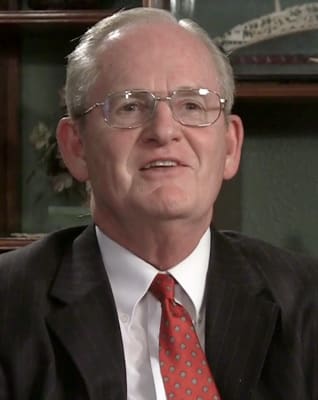
Dr. William Bradshaw: A Life of Science, Service, and Compassion. Ep. 209-213

In this episode, John Dehlin interviews one of his former professors and mentors, Dr. William Bradshaw, on a wide variety of topics. Dr. Bradshaw has just recently retired from a rich and fulfilling career as a molecular biology professor at BYU in which he influenced thousands of students to continually be open to the best thinking of the sciences while still nurturing a robust, mature faith and spiritual life. Many report Dr. Bradshaw’s classes and their various interactions with him as pivotal to their finding a way to value the wisdom generated in both their heads and their hearts.

In this far-ranging discussion, Dr. Bradshaw takes us through the arc of his life, including his mission, experiences at Harvard, the circumstances of his career choice, and the surprise call he and his wife Marge received to serve as very young mission presidents in Hong Kong, during which service they had to wrestle with opening and closing missionary work in Vietnam. Dr. Bradshaw relates stories from his career at BYU, talks about science and religion issues, and reveals the way he faces challenges to his faith from Mormon history and scriptural studies.

Many Mormon Stories podcast listeners will already be familiar with one aspect of Dr. Bradshaw’s life from Episode 191, which featured a recording of the most recent lecture he gave at BYU on the biological origins of homosexuality–a lecture he has arranged and given every year for the past several years. Dr. Bradshaw first became prompted to study the research on this subject when his son Brett came out about his homosexuality. Since that time, the Bradshaws have been active members in various LDS groups for families working to support their LGBT children. They are currently serving as the presidents of LDS Family Fellowship. Brett and his partner are married and living in California, where they are raising their daughter.

Part 1 – My Early Years, Harvard and the Hong Kong Mission
Part 2 – Opening Vietnam to LDS Missionary Work
Part 3 – Reflections on My Career as a BYU Professor
Part 4 – Homosexuality and the LDS Church
Part 5 – Reconciling Thought and Faith as a Believing Mormon

Part 1 – My Early Years, Harvard and the Hong Kong Mission:

Episode Transcript

Full text · 8,000 words · 5 chaptersHost: John Dehlin · Guest: William Bradshaw

This transcript is machine-generated and lightly edited for readability. The audio is authoritative. Please excuse occasional errors in names and spelling.

Introduction and Early Life

Guest [00:00:01] Mormon Stories podcast is made possible through the financial contributions of its listeners to keep it alive and available to future generations. Please consider a donation today@mormonstories.org thank you

John Dehlin [00:00:14] for joining us today on Mormon Stories. I'm John Dehlin. Today we have with us a very special guest and someone who has meant a lot to me personally throughout my life, but especially during my time at Brigham Young University. His name is Dr. Bill Bradshaw.

John Dehlin [00:00:31] He was a biology professor for many years at byu, and he was a biology professor while I was at byu. I'll never forget coming home from my mission and having Biology 100 with Dr. Bradshaw. He did several interesting and inventive things in class, including sacrificing a mouse in front of the class. And that may sound disrespectful, but actually it was done with much reverence. And maybe we'll talk a little bit about why he did that today. But more importantly, I was able to take several honors religion classes from Dr. Bradshaw at a time when I really needed some spiritual support and mentoring as I was struggling with stuff from my mission.

John Dehlin [00:01:11] And then, of course, some of you will remember when I wrote that letter to Elder Oaks about what happened on my mission, Dr. Bradshaw was kind enough to help me draft a kinder and a gentler and a more thoughtful letter that maybe would have a better chance of being received well by the authorities. So Dr. Bradshaw's teachings have been really important.

John Dehlin [00:01:33] Today we're going to cover several things. Dr. Bradshaw's life, his experiences as a teacher at BYU, his thoughts and feelings around biology and evolution and science as it relates to faith and religious issues. We're also going to discuss homosexuality. Dr. Bradshaw has a gay son, and we're going to talk a little bit about his experiences with that.

John Dehlin [00:01:59] And then finally, we're going to talk about maybe some issues regarding reconciliation of faith and intellect. Dr. Bradshaw is a former mission president. He's a former member of a stake presidency, and he's just a dear man. So with that, Dr. Bradshaw, thank you for joining us on Mormon Stories.

William Bradshaw [00:02:19] You're very kind, John. It's nice to be with you again.

John Dehlin [00:02:23] How's that for an introduction? Did I embarrass you sufficiently?

William Bradshaw [00:02:26] Yes. And looks like the tables are turned now. I'm on the other side of the lectern, as it were.

John Dehlin [00:02:33] This is your exam.

William Bradshaw [00:02:34] Okay.

John Dehlin [00:02:35] All right. Well, Dr. Bradshaw, there's so much we want to cover, but I think a discussion about sort of your early years at Harvard and even before that and, you know, a discussion about some of your times at BYU would be in order. So let's just maybe ask you to start. Tell us a little bit about your early years as it relates to the church and maybe some of the meaningful milestones along the way that might be of interest to our listeners.

William Bradshaw [00:03:06] All right, please interrupt with questions when comes up.

John Dehlin [00:03:12] Okay, I will.

William Bradshaw [00:03:14] Well, I'm approaching my 73rd birthday. I was born in Salt Lake City. I'm a brother to two younger sisters and a son of school teachers. My dad taught biology in high schools in the state. He was at West High for a very, very long time. Came to East High when I was a student there.

John Dehlin [00:03:40] He defected.

William Bradshaw [00:03:42] He did, I suppose on the side he was a taxidermist and taught students how to mount specimens. In fact, one of the things he was allowed to do was to shoot a couple of seagulls and make a replica of the top of the seagull monument.

William Bradshaw [00:04:05] For a long time that was on display in Temple Square before new museum buildings were built. And in order to afford to teach school, my dad did construction work. So my father and I have spent lots of time together on roofs of houses, putting on composition shingles. He worked for an insurance company and we repaired fire damaged homes. My mom was an elementary school teacher before she had her family.

William Bradshaw [00:04:43] So it was really important at our house to do well in school. There was a dinner out for the family if you brought home straight A's and lots of pressure not to do otherwise. Our home was a very pleasant place for me as I remember it all.

William Bradshaw [00:05:05] So I graduated from east high school in 1956. I tried to do well in school and I enjoyed athletics. I was a quarterback on my football team. Brag a little bit. We never lost a football game in three years of our school, our class and school. This is East High at East High and beat Murray 24 to nothing in a state championship as quarterback? Yes, three years. Quarterback. Well, one year as a senior quarterback.

John Dehlin [00:05:42] Not a bad year.

William Bradshaw [00:05:43] It was a good great time for me. I didn't plan for college very well and I guess in an unspoken way assumed I would go to the University of Utah. It was 10 minutes away by car. But during my senior year we had people come representing schools around the country, recruiters, trying to interest people in applying. And I applied to several schools outside of the state and got accepted to all of them, surprisingly and chose without much preparation or forethought to go to Cambridge and attend Harvard College.

John Dehlin [00:06:35] What's Harvard like for a wet behind the ears boy from Utah?

William Bradshaw [00:06:41] A different world to begin with. I didn't even look the same as the rest of them. That's an exaggeration. But there were lots of Brooks Brothers clothes from young people who'd gone to prep schools to Andover and Exeter.

William Bradshaw [00:07:00] I had yellow pants, as I remember, and a red parka. Harvard was a great experience for me and I became close friends with two other of my roommates. There were four of us in my freshman dormitory, which was 30 steps away from where the subway emerged in Harvard Square.

William Bradshaw [00:07:38] One was from Boulder City, Nevada. So I had a Westerner as a friend to help me confront all of this preppy Eastern elitism that I was being exposed to. I wasn't ready to compete academically and I've never been able to be against affirmative action because I always thought I was the recipient of that.

William Bradshaw [00:08:07] I have to believe that I was accepted because of some kind of regional quotas or at least regional acceptances that would bring people from diverse parts of the country with different experiences to the Harvard freshman class. I was at Harvard for two years and then received a mission call to go to the Southern Far East Mission in Hong Kong.

John Dehlin [00:08:37] Let me stop real quick and ask you a quick question.

William Bradshaw [00:08:39] Sure.

John Dehlin [00:08:41] What was the topography of your testimony up until the point of your mission call? Was it traditional, true believing, excited young kid? Had you had testimony struggles? Was there just certitude?

William Bradshaw [00:08:57] I didn't have struggles. I accepted the church, but without much thought. I did everything I was supposed to do. I got all the awards. I was an Eagle Scout. Our bishopric gave lovely books at the end of every academic year, at the end of every year to those who achieved so much attendance at meetings. Though I was a hundred percenter, I think I began to give talks a little bit differently when I was in high school.

William Bradshaw [00:09:37] I didn't just quote, sort of made up my own words. And that was helpful because I began to seriously consider what I believed and what I didn't believe. But that was magnified enormously when I went to Harvard. I had a very important spiritual experience with the Book of Mormon when I was a freshman.

William Bradshaw [00:10:15] Our dorm room had two bedrooms, bunk beds, top and bottom, four for two, total of four in our room. And I remember starting to read the Book of Mormon not because I was supposed to or I was going to get a prize, but because I decided I wanted to.

William Bradshaw [00:10:34] And one particular evening I had a spiritual confirmation about the divinity of that book. And I remember at least in part the feelings that I had. And that was a very important. The beginning of a series of important kinds of spiritual confirmations for Me that have kept me in the church.

John Dehlin [00:11:08] Was there a particular verse or chapter that was a part of that?

William Bradshaw [00:11:12] Yeah, it was Second Nephi. And it was Nephi after his father's death and the very personal and emotional tone of his own, coming to grips with his religious feelings. I remember putting the pages down and saying to myself, how could anybody else say something that so closely mirrored my own experience, my own sense of inadequacy?

John Dehlin [00:11:47] Is this chapter four?

William Bradshaw [00:11:48] Yeah.

John Dehlin [00:11:49] A little wretched man that I am.

William Bradshaw [00:11:51] Yes, exactly right. I think I arrived on a Tuesday. The way that I got from Utah to Massachusetts was that a friend of mine, a very close friend, our student body president, was going to Yale. We looked in the newspaper. Somebody was advertising a need for drivers.

Education, Mission Preparation, and Cambridge

William Bradshaw [00:12:19] So we drove to Springfield, Illinois, with this fellow and then on to Washington and took the train to New Haven. And I stayed the night in the YMCA and took the bus the next morning to Boston. Got a taxi and was let out in Harvard Square with my East High letter sweater on and my portable typewriter and a small suitcase. And for the next two months had to pinch myself daily to realize that I was somewhere different than I'd always been in my life.

William Bradshaw [00:13:00] But I think it was Tuesday. And so in the evening I went to find the church. So I walked down Brattle street to the Cambridge Chapel, and the place was alive. People were planting flowers and polishing the doorknobs and cleaning. And it turned out that this building had been.

William Bradshaw [00:13:24] The construction had been finished recently, and it was going to be dedicated the next Sunday. I was an usher at the dedication of the Cambridge Chapel, and David O. McKay came and dedicated that chapel. That was the beginning of an important realization for me. I had never experienced how important the church was to other people who hadn't had all of the advantages of Utah Mormonism.

William Bradshaw [00:14:02] If I walked slowly from the front door of my home in Salt Lake, I could be in my church in three minutes. And here. These people had never had a chapel. And some of them had lived decades. And they had attended church in unfavorable circumstances. And they were.

William Bradshaw [00:14:26] A minority, a strong minority. And missionary work in the New England Mission was tough. And this was their own building. And there were tears, and there was. I could see it all around me, how important this was. And that had a strong impact on me.

William Bradshaw [00:14:47] I spent a lot of time at church. Interestingly, before I left, my teacher's quorum advisor was Duff Hanks. Elder Marion D. Hanks. He was a good friend, and he said something to me that he gave me Advice that would probably surprise people.

William Bradshaw [00:15:18] He said, don't spend all your time at church. I think people would have expected a general authority to say, make sure you don't lose your testimony among all those terrible influences back East. And he gave me the opposite kind of advice.

William Bradshaw [00:15:44] I would like to say that I visit Duff on occasion. Now he's incapacitated with Alzheimer's, seriously. And I go to the place where he's staying and visit for a few minutes. I'm uncertain that he recognizes me, although on occasion there's a glimmer that he might.

William Bradshaw [00:16:13] And I read a few pages from the Book of Mormon to him and kiss him as I leave. I'm very grateful for him. But I did spend quite a bit of time at the Cambridge Chapel. I went there Sunday and during the week.

William Bradshaw [00:16:41] There were meetings for students. The Cambridge Chapel, the Cambridge branch at that time was a very interesting combination of local New Englanders, transplanted Western Mormons from several decades earlier, and a whole lot of Mormons who were there for study. And there were a lot of prominent people, people who became prominent in the

John Dehlin [00:17:19] church subsequently, people we know.

William Bradshaw [00:17:22] Yes, Truman Madsen was there in philosophy and subsequently in another discipline. I used to hold street meetings on the Boston Common with Steve Covey. I should tell you a minute or

John Dehlin [00:17:39] two about that experience as missionaries or as just zealous churches.

William Bradshaw [00:17:46] Covey was in the MBA program and he'd come from Ireland and sometimes on his mission in Ireland he was a one man show. And he'd go to a certain place in Belfast at a certain time on a certain day, and people would be waiting.

William Bradshaw [00:18:08] You have to understand that the British culture permits people to talk and argue with each other in public without taking on the appearance of being a kook. So Steve got permission from the New England Mission president to hold street meetings.

William Bradshaw [00:18:33] So we'd go down in his car, lift up the. The trunk, get out an old wooden rickety chair and sing. Was usually high on the mountaintop. One verse harmony. No, that's the only song Steve knows. Unfair but almost true.

William Bradshaw [00:19:01] And. And then we take turns and we'd stand up on the chair. And on Sunday afternoon in the Boston Garden and the Boston Common, there are a lot of people. So the garden is on one side of the street and those are where the duck boats are and Robert McCloskey's make way for Ducklings book that I subsequently read to all the kids. On the other side of the street is the common, and there are thousands of people on Sunday afternoon enjoying the garden and the Common and people of various religions came and set up shop and talked to whoever would listen.

William Bradshaw [00:19:50] So the Salvation army was there and Sam from Saugus was there, who had established his own breakaway Protestant church. Father Feeney was there. Father Feeney was an apostate Catholic priest. He was a one time advisor, Catholic advisor to Harvard students.

William Bradshaw [00:20:13] He had formed his own group. They were called Slaves to the Immaculate Heart of Mary. And at a certain time every Sunday they would begin a procession across the garden, cross the street and pass right in front of Steve and I and proceed down the sidewalk of ways. They were dressed in black.

William Bradshaw [00:20:37] The men had big heavy black overcoats and the women dressed in a costume that was much like the Salvation army ladies costume of the day with a bonnet and cape, all black. They had in the procession a crucifix and some other banners.

William Bradshaw [00:20:55] And they would form a circle of 50 yards away from where we were. And immediately four or five squad cars of Boston policemen would pull up, get out of their cars and link arm to arm in a cordon around the slaves to the Immaculate Heart of Mary. This is heady stuff from this kid from East High School.

John Dehlin [00:21:18] Why were the police involved?

William Bradshaw [00:21:20] Well, you only had to listen to the first minute of the anti Semitic stuff that came out of the mouth of Father Feeney and his henchmen, his followers, to understand why this was potentially a dangerous circumstance. The Jews are the enemies of God.

William Bradshaw [00:21:50] Look at that filthy Jew down there in the audience with the big nose. I mean, I had never been around anything like this. The Jews crucified the Xavier. The Jews are the enemies of God. Now, Norman the Mormon, alias Steve Covey, did down here says that we should love our enemies. Steve would always come up with a particularly appropriate New Testament scripture about love when Father Feeney was passing.

William Bradshaw [00:22:30] Well, that was my sort of quasi missionary experience on the Boston Common. And two or three times I should say that the New England mission headquarters was in the Cambridge chapel. And on occasion when missionaries working in the office, when one of them was ill, I was allowed to go, I guess on splits is what we would say today with one of the elders and had a chance to go with them while they were teaching investigators.

William Bradshaw [00:23:09] One of the people that I remember teaching was legally blind. He could read a little bit. He had a large print copy of the Bible and a very large magnifying glass. He was a devotee of Oral Roberts, listened to the Oral Roberts television evangelical program.

William Bradshaw [00:23:31] A couple of weeks after I went, I got a letter from Oral Roberts greeting me as an associate in Christ. So I had a little taste of missionary work before my call to Hong Kong.

John Dehlin [00:23:50] Real quick, I remember a story telling about a roommate coming home late from a party. Did that happen before or after your mission?

William Bradshaw [00:23:59] Before.

John Dehlin [00:24:01] Do you remember that story?

William Bradshaw [00:24:02] Oh, yes.

John Dehlin [00:24:02] Comfortable sharing it and what it meant to you particularly?

William Bradshaw [00:24:06] I'd be happy to. So I mentioned Will from Bowler City, Nevada, and Rob Coe was from the Washington, D.C. area and Al Grossman was from New York City. And Al was a very, very, very, very bright man. He wrote for the Harvard Crimson.

William Bradshaw [00:24:31] I think he went to Bronx Science, which is about as good as you can get as a preparatory school at the high school level. Al and I were roommates. Al wasn't very close with the other three of us and he had close friends in another group.

William Bradshaw [00:24:57] And. Al smoked. Al drank a lot. So one night I'm up studying at Saturday night. See, I thought the one advantage I have was that I was a hard worker. Yeah. So all of the guys from Exeter and Andover could get by with all of their.

William Bradshaw [00:25:30] Improved education, but I could stay up all night and sort of hang in there. I remember the first time I was up all night finishing a paper and I walked out into the Harvard yard. Every light in the place was on. Everybody else was up. I had no advantage at all with respect to being a hard worker. So it was Saturday night and Al came home and he was.

William Bradshaw [00:25:58] He was really soused and he was supported unsteadily at two friends, one on either side. He sort of waved incoherently and they dumped Al on the bottom bunk of his. Of our bunk bed. So I don't know, 3 o' clock or something like that. I thought I'd go and get a couple of hours sleep before heading to priesthood meeting and went in and Al had recirculated all of the beverages from the night before and it was all over and it was a mess and it was awful and it smelled and I was irate and I closed the door and you know, how could, how could Al be so inconsiderate?

William Bradshaw [00:27:06] Didn't Al know that if you turned down drinks when you were a Mormon youth in beginning a race, you were going to win the race because you honored your commitment to the word of wisdom? I mean, my self righteousness knew no bounds.

William Bradshaw [00:27:26] And I don't know, a half an hour later something happened and I went in the room and got all the towels from the bathroom and cleaned up Al and cleaned off the floor and cleaned up the sheets and did the best I could and made multiple trips and washed it all out and then it was time to go to church. And. Somehow the experience helped me to be a little less self righteous. Jettison a little bit of pride.

John Dehlin [00:28:12] What kept it from confirming your righteous indignation?

William Bradshaw [00:28:17] I don't know, John. Just something happened. I'll probably be fairly accurate by saying it was a gift from my Heavenly Father. Al never said very much except that night stopped me and said, thanks, Bill. We never became close. That may not have been particularly easy. We were quite different people and had different friends and different interests. And I should say that I know that a whole lot of parents send their Mormon kids to BYU hoping that they'll never have that kind of an experience. And I don't. I'm not extolling that kind of experience from anybody else. But for me it was a great blessing and I'm grateful for it.

John Dehlin [00:29:30] Thank you.

William Bradshaw [00:29:31] You're welcome.

Missionary Service in Hong Kong and China

John Dehlin [00:29:33] So how was your mission experience?

William Bradshaw [00:29:38] Well, I was called for three years. The church in Asia had two missions. The Northern Far East Mission, which was Japan and Okinawa and everything south was the Southern Far East Mission. Mission had been open three years. I arrived about a month and a half before the first missionaries who had been called and served there their three year terms left to return home.

William Bradshaw [00:30:11] My mission president was Grant Heaton. He'd been called at age 26 to preside over the mission. He served in Hong Kong in 1949 for about a year. In 1950, the Korean War broke out. Concern over the safety of missionaries resulted in those early missionaries. There were only four of them. I think they were pulled out of Hong Kong, spent some time in Hawaii and then finished among Chinese people in San Francisco.

William Bradshaw [00:30:50] Hong Kong was four and a half million people, plus or minus a million because it was full of refugees. People lived on the streets, people lived in unbelievable hovels on the sides of the hills. People were swimming across the border into Hong Kong, dying sometimes from mainland China. Yes.

John Dehlin [00:31:20] Communist China.

William Bradshaw [00:31:21] Yes. So 1949 is when Mao sweeps down from the north and Chiang Kai Shek and the Nationalists go to Taiwan. The single biggest. Group of unemployed people were ex Kuomintang generals and Nationalist generals in Hong Kong. And my first real experience out into away from the mission home.

William Bradshaw [00:32:04] We stayed in the mission home for several days. This is truth, right? So I have to tell you that in Hawaii there were four of us who went. We surfed in Hawaii for a day and a half before our plane to Hong Kong.

William Bradshaw [00:32:26] And two of my companions were from BYU and they'd been out in the sun and it didn't matter. Whether I was out in the sun or not, I was white as a sheet. And after not being very thoughtful and lying on a surfboard on my belly after doing what was forbidden, which was to swim, I was terribly sunburned and so was one other of the four. And on the prop plane of 20 hours from Hawaii to Japan we were in misery.

William Bradshaw [00:33:07] After my whole backside peeled off two of the elders took me out to Hong Kong, to the real Hong Kong. To this day I don't know whether or not this was a put up job. They were probably trying to show the greenhorn the worst possible place of the colony and get him to decide to go back home.

William Bradshaw [00:33:37] Not me. We walked through this market. It was incredible. There were thousand year old eggs they call them. They'd been covered in soil for really long periods of time. There's squids and there's betadim or sea cucumber and there's pressed chickens and there's this whole wonderful smorgasbord of Chinese things to buy in the market. And I loved it. I loved the spell and loved the people.

William Bradshaw [00:34:14] It couldn't have been more exciting. I guess the two were disappointed that they didn't get me to react negatively. So my mission was extraordinary. Ms. Up to the time when we arrived or shortly before, missionaries had stayed in the mission home for a year learning the language. They were tutored every day by someone teaching them Cantonese. But they changed that system. It wasn't very effective.

William Bradshaw [00:34:50] Elder Yule was my first companion. We had a meeting at one of the branches Chapels. We got on the bus. He told me how to say get on the bus, get off the bus. His language wasn't very good technically.

William Bradshaw [00:35:08] So as you know, Chinese is a tonal language. You have to say things right or you say something wrong or embarrassing. So he taught me how to say get on the bus and get off the bus. And we sat there going to the apartment. He taught me how to say the Romanization for Joseph Smith and Jesus Christ and the name of the church and a little bit about the money. We got to the apartment, there was a young sister there.

William Bradshaw [00:35:36] The first word she taught me was cockroach and how to take a bath. There isn't time to tell you about her story but she and her husband now are the temple presence in Hong Kong and before that mission president. And one day I went with her to her Methodist school because she'd been kicked out for joining the church, tried unsuccessfully to talk to her headmaster who was not sympathetic.

William Bradshaw [00:36:11] It was a great start. My second companion whose Name was Larry Browning. Knew more technically about Cantonese than anybody else. So the words that Elder Yule taught me, Elder Browning could reteach in terms of the correct tones. Loved the language.

John Dehlin [00:36:34] Did you guys experience much success in terms of baptisms and growth of the church?

William Bradshaw [00:36:41] The year I was there, the Southern Far east mission was the most productive mission in the Church of Jesus Christ of Latter Day Saints on a per missionary basis. And for three months we were told we had to stop proselytizing because people were in the church and we didn't know what to do with them. There wasn't anybody with any much experience in the church. And so we all had. All the missionaries had an assignment to try to do something to build up the organizational structure of the church. So my job was in the Sunday school and.

William Bradshaw [00:37:14] And John, some of the ideas I have now about teaching started to be formulated there. And advice we tried to give to teachers of Sunday school classes and primary classes, something about how to try to teach people. So the other thing about that experience at the time was that missionaries were very close to the members of the church.

William Bradshaw [00:37:52] We knew the vast majority of the members of the church by name. They knew all of us. We were very close. But the best thing that happened on my mission was that I met my wife. Marge was lady missionary. We were actually in the same group in the Salt Lake mission home. We didn't arrive at the same time. She had to wait in the States for a month or something for visas, travel documents.

William Bradshaw [00:38:23] But. She's a terrific lady and I knew that. And at the time that she went home, I was in the mission home working on a language textbook. I was an assistant to President Taylor before she left. I told him I was interested in her.

William Bradshaw [00:38:48] When she left to go home, they went out of the mission home. He was taking her to the airport and he said to her, now, Sister Gardner, take a last look at the mission home before you come back. With all the little Bradshaw, I could have killed the man.

William Bradshaw [00:39:06] It was terribly embarrassing. Anyway, My mission cemented my feelings for the gospel, my love for the scriptures. I found the woman that I fell in love with. Everything right happened to me.

John Dehlin [00:39:30] So how soon after coming home did you seek out?

Guest [00:39:33] March.

William Bradshaw [00:39:39] During the time I was there, the mission call was changed from three and a half years to two. So I sort of split the difference. Came home In January of 1960, 61. It was cold. Drove to Afton, Wyoming, Just after I got home. It was our state conference. Harold B. Lee was the visiting authority. I was sitting in the Audience, he said, elder Bradshaw has just returned from Hong Kong. Will you come up and bear your testimony in Cantonese?

William Bradshaw [00:40:14] I did. After the meeting, my mom went with me and we drove to Afton in the cold and snow of mid January, southeastern Wyoming. I went to the University of Utah for two quarters and then proposed to Marge out in the snow of the place that was once her family homestead. Almost dropped the ring in the snow, it was so cold.

William Bradshaw [00:40:50] She said, yes. We got married in June. We served a mission to the Salt Lake Valley Chinese community. Went back to Cambridge in the fall. In the middle of that missionary summer, Gordon Hinckley came. And we knew him from when he had visited Hong Kong. He invited Marge and I to his home.

William Bradshaw [00:41:20] President Hinckley at BYU a year before he passed away. Came and gave an unusual kind of devotional. It wasn't thematic. He didn't talk about doctrine. He talked about his experiences. And I knew an experience with him that he didn't talk about. And I shared it with students in my class that day.

William Bradshaw [00:41:40] So Marge and I went up to the home and knocked on the door. And Elder and Elder and Sister Hinckley greeted us. We sat down. She went back into the kitchen. He turned to us and turned to me and said, now I want to know what went on between you two in the mission field.

William Bradshaw [00:42:02] Sister Hinckley comes roaring out of the kitchen. And she looks at him. Gordon, that's none of your business. You leave those two alone. He shut right up. It never came up again. Had a lovely meal. He never forgot Marge. Because during the time he was visiting in a testimony meeting, one of her companions referred to her.

William Bradshaw [00:42:29] She was the supervisor of the apartment. She was the Mother Superior of the apartment. We went back to Boston. He came to state conference. We went up to say hello. He looked down and said, well, if it isn't the Mother Superior. An extraordinary memory. Well, I. Go on. Excuse me.

John Dehlin [00:42:49] Oh, it's okay. How'd you go from. Were there any other formative experiences at Harvard or in your graduate work that were important to the development of your testimony or faith? Any crisis of faith, for example, intellectually, or was it pretty smooth sailing between that and your time as a mission president?

Faith, Doubt, and Personal Crises

William Bradshaw [00:43:18] John, I'm not exactly sure that I've ever had a crisis of faith. I've had a crisis. I've had a number of crises. Crises of feeling inadequate and. Clearly not living to the standard that I espouse intellectually. Maybe what I should say, however, is that as I've matured, My perspective has changed somewhat.

William Bradshaw [00:44:13] So I suppose as I look back in an earlier time in my life, after we were married the first 10 years before we were called back, when I was 33, to be a mission president, I probably thought I had it all figured out.

William Bradshaw [00:44:35] Ask me some doctrinal question, I'll know the answer. Well, There are a whole lot of things that I don't know the answers to now. And the paradox is that with a recognition of. The depth of what I don't know and the number of questions that I don't know the answers to, there's been a greater faith.

William Bradshaw [00:45:18] So I suppose at one time in my life, I suppose that I viewed faith as a sort of. As a commandment, language of the 42nd section of the Doctrine and Covenants. Have faith in Christ with the sort of.

William Bradshaw [00:45:43] Because if you don't, something unfortunate follows, so you better do it. I have a different view. There's no alternative. It's not that God demands it of you because he's trying to see if you're obedient. There's no alternative in life, given our weaknesses, our uncertainties, our propensity to blow it, to fail, there's no alternative but to have faith in Christ.

William Bradshaw [00:46:34] It's not an injunction. It's the best advice because it's the only advice. So Marge and I went back to Cambridge. We finished two years. I graduated in biology. I had always said I wanted to go to medical school.

William Bradshaw [00:47:03] I applied for five graduate programs in Chinese and one graduate program in biochemistry at the University of Illinois. And they answered first and said yes. And I said, okay. I've never been very thoughtful about. I've sort of fallen backwards into what I did in life and been fortunate that it turned out well, in large part.

John Dehlin [00:47:31] I remembered you in Washington for some reason.

William Bradshaw [00:47:34] Yes. So we lived in Cambridge, Urbana, Illinois, Seattle, Washington, Oak Ridge, Tennessee, and Orem, Utah, in that order. And in the first five of those, we had a child at every stop. Yes. Bill was born at the bottom, Boston. Lying in hospital in Boston, part of the Harvard Medical School complex. And you walk out the door and the nurse says, look down. And if you're standing on the stork that's presented in a mosaic tile, then you'll be back in a year.

William Bradshaw [00:48:21] And a year later, Bart was born in Salt Lake. As we transitioned between Massachusetts in Illinois, I started in biochemistry at the University of Illinois, was there two years. Becky was born, began research on the biochemistry of the embryonic pancreas.

William Bradshaw [00:48:44] The man with whom I was working left and went to the University of Washington Medical School. We followed. I was there for three years, finished my PhD. Brett was born, went to Tennessee to do a postdoc at Oak Ridge National Laboratory. Ben was born.

William Bradshaw [00:49:06] I was, however, old. I was a father with five kids and I never had a job. And we came to BYU as a professor. Yes.

John Dehlin [00:49:21] So that's the only place you've ever really taught.

William Bradshaw [00:49:23] Yes.

John Dehlin [00:49:24] Outstanding.

William Bradshaw [00:49:26] I should tell you my Ernest Wilkinson story.

John Dehlin [00:49:29] Oh, please.

William Bradshaw [00:49:31] So we were in Seattle and I got a call from the dean of biology at byu, Lester Allen. And he said, would you consider a faculty position at byu? And I said, that's very kind of you, but I want to do a postdoc. I'm at least two years away from accepting an academic position. He said, well, would you be interviewed anyway? I said, yes. He said, paul Dunn is going to be in Spokane next Sunday. Will you get on a bus and go talk to Elder Dunn? I said, all right. So that was Friday and Saturday morning we got the Seattle paper and the headlines on the bottom half of the paper was, the headline was, Spy Ring Disclosed at BYU University President. Attempts to Impose His Political Views on the Faculty. Something like that. So I take the newspaper and I take the bus to Spokane and I talk to Paul Dunn.

John Dehlin [00:50:45] What's he like? What are your memories?

William Bradshaw [00:50:53] Kind, gentle, honest, thoughtful. He made a believer out of me. I said, elder Dunn, what's all this about? He hung his head and was embarrassed. Apologized multiple times. So the quick history, which many people know and I won't, most won't, actually, I won't.

William Bradshaw [00:51:32] Take too much time. He was a conservative man. He was a conservative Republican. He was an anti government ideologue. He was an iron fisted kind of administrator. He took pride in coming home from Salt Lake late at night and running the red light at the intersection into BYU and then going the next morning and paying the fine.

William Bradshaw [00:52:09] He did push ups in front of the student body in forums. Interesting man. But he had personally set up a system where a group of students in various classes would target certain teachers. And he wanted to find out what political views they were espousing in the classroom. And especially he wanted a response to a forum talk that he had given on political ideas.

William Bradshaw [00:52:46] He was not a Keynesian economist. This happened. Ray Hillam was one of the targets. Russ Horiuchi was one of the targets. Two men became dear friends of mine. There were others. One of the students spilled the beans. It came out, you know, and it was BYU's Watergate. So what year is this? 60. Must have been 61 maybe. No, no, no. No.

John Dehlin [00:53:36] Was this your last year at Washington?

William Bradshaw [00:53:40] This is 62 or 63, because we went to Oak Ridge next from Seattle. And I remember Kennedy's assassination clearly the following year. So Watergate is exposed during the time we were in Hong Kong presiding over the mission. But I'm sorry, it had some of the same elements and Wilkinson tried to cover it up and tried to escape responsibility. And Elder Dunn said, no, it's true. He's behind it.

William Bradshaw [00:54:24] I said, what's it going to be like if I go to BYU and teach? He said, I will try to promise you that it won't like that, that the atmosphere won't be like that. There are people at BYU who believe.

William Bradshaw [00:54:40] I'm paraphrasing, but I'm awfully close. There are people. I'm speaking for Elder Dunn. There are people at BYU who believe they talk regularly with deity. Take Cleon Skousen and his historical books about religious history of the pre Christian era.

William Bradshaw [00:55:04] But Brother Skousen may not have it, all right? He may have said it in stronger ways than that. So he was encouraging. He was apologetic. I got on the bus and went back to Seattle and said, well, maybe I'll still think about going to byu.

John Dehlin [00:55:26] Did a good enough job of convincing you.

William Bradshaw [00:55:32] I think he was honest with me. I came away feeling astounded that a member of the first council of 70 would be so candid with me. Who comes out of the blue and he doesn't know anything about. I felt he was candid with me.

John Dehlin [00:55:51] This is a potential big sidetrack. But since we're talking about it, I have to ask. Some who only know the superficialities of Elder Dunn's story would say that honesty and Elder Dunn might not fit. Do you have some experience or some impressions or some insight where people might want to take a second look other than a superficial one at how his story kind of ended? Not to sidetrack. I'm just curious if you have.

William Bradshaw [00:56:18] I don't know enough to say anything very meaningful, John. But. Most of us do good things and most of us do stupid things. And I don't think that necessarily one strain of our character dominates everything we do at the exclusion of some other facet of our frailties as human beings.

William Bradshaw [00:56:50] I was really sorrowful when it came out that Elder Dunn had exaggerated his war experiences. But that didn't cause me to lose respect for him or to invalidate my perception of my brief experience with him. Everywhere we went, we added another child to the family and we were engaged in the church. Marge was in Relief Society presidencies. Everywhere we went.

William Bradshaw [00:57:33] In Boston, she was a counselor to Ann Madsen in the Mission Relief Society. Truman and Ann had now been called as mission presidents in New England. I was a counselor to Henry Eyring in the New England Mission presidency. In the New England Mission MIA presidency, we did similar things.

William Bradshaw [00:58:00] I bought Elder Eyring's suit at the Relief Society bazaar. I don't have it anymore. If I still had it. No, it wasn't a swap. If I still had it, he could get in it. And I couldn't get in it. He could still get in it.

William Bradshaw [00:58:18] He was at the Harvard Business School at the time in Seattle, I was the elders quorum president. In the student ward. There were 100 families, 98 elders, and two high priests who got called to be counselors to Bishop Ellis.

William Bradshaw [00:58:45] There were a lot of pressures on those families. Seemed like a third of the members of the ward were in dental school. But the men, I don't think any of the women were students, but the men were in graduate school.

William Bradshaw [00:59:04] They were in Spanish or dental school or medical school or philosophy or something. And the women were at home with one and a half kids and no money and living in subsidized housing and going to hearing Relief Society meetings, presentations about what to do to gladden the home for Thanksgiving and Christmas and remembering how their mothers did it up and they couldn't do it that way. None of us could do it that way.

William Bradshaw [00:59:38] A lot of strains, Marital strains, concerns about unrealistic expectations, and especially. A need that was not always met for husbands and wives to share intellectually. You know, you're off in graduate school and as a man, it may be hard, but there's also.

William Bradshaw [01:00:20] It's ego boosting. I've never seen anything ego boosting about cleaning poo poo diapers. Women can talk all they want about. I don't want to be misunderstood. I think women are terrific mothers. But you do what you have to do, and it's not glorious and I don't think.

William Bradshaw [01:00:53] And you have to be loyal and you have to do a lot of things you otherwise wouldn't have to do. And if somehow you can feel that that's spiritually enriching, well, God bless you and good for you. But it's not that way for a lot of people.

Church Leadership, Tensions, and Reflections

William Bradshaw [01:01:13] So to stop meandering quite so much. Here I was in a church position where I began to see some of those tensions and began to be a little bit more realistic about what living the gospel might mean and how challenging

John Dehlin [01:01:33] it might mean, and that which you just spoke about women and mothers is to say that maybe we don't grasp how difficult motherhood could be sometimes and it merits special appreciation. Is that kind of the sentiment that you were trying to convey?

William Bradshaw [01:01:49] You can say that marriage is a partnership, and it should be, but making it a partnership is not easy. And. My extraordinary wife is more responsible than anyone else that I know of for the fact that the Hong Kong mission became a stake. A year and a half after we left, we applied, we went through the process of putting in an application.

William Bradshaw [01:02:29] We worked very hard to shift responsibility entirely to the local saints. We had a district council and a presidency that were fully functional. But Marge had Relief Society bazaars and she worked with the sisters. She had five little kids.

William Bradshaw [01:03:00] We never converted. Very many couples, husbands and wives didn't join the church together. The people who joined the church in Hong Kong were 12 to 23 year old single people. And we decided if we were going to have Mormon families, we were going to have to make them.

William Bradshaw [01:03:22] I married 14 couples while I was a mission president. And we had a dance festival. And it was on the grounds of the mission home where the Hong Kong temple now is. And Marge made little simple costumes for all the girls. A bandana kind of cap and a neckerchief or sash around the waist or something. And I taught round dancing and square dancing and Shottish and I got the MIA dance program. That's what I was when I was called as a mission president. I was the dance director of my Orem 25th Ward. That was my ecclesiastical preparation for being a mission president.

John Dehlin [01:04:07] That was a calling, huh?

William Bradshaw [01:04:09] Now, I don't want to lose the point about my wife and about women. If you read Lanny Britch's book about the church in Asia, you'll see my name and you'll see what happened during the time when President Bradshaw presided over the mission. Nothing about Marge, and that's not unique to us, that's not right, that perpetuates in the church a failure to fully recognize the contributions of women. And that's hurt my wife. She has some justifiably, she has some feelings about personally for herself and more broadly for the church at large. And you can say that men and women are partners in a marriage and in the family, and they should be. But making it happen in a way where there is mutual satisfaction and recognition fails a lot, I'm afraid. End of sermon.

John Dehlin [01:05:39] So it's something we should try and be more cognizant of and sensitive to and creative about.

William Bradshaw [01:05:46] Yes, sir.

Guest [01:05:48] Thank you for joining us today on Mormon Stories. To comment on this episode or to discuss it with others, please check us out online@mormonstories.org if you want to find other friends, family members, former missionary companions, or ward members who approach Mormonism like you, consider adding me, John Dehlin, as your Facebook friend. This may seem like a strange idea, but many of my closest friends have discovered that they are not alone in their thoughts or feelings or family or even word situation through discovering mutual Facebook friends. Finally, to keep Mormon Stories alive, please consider a donation@mormonstories.org music on this episode was provided by Clayton and Sky Pixton.

John Dehlin [01:06:31] Nearer my God to thee Nearer to thee Even though it be across the

Guest [01:06:41] heart

John Dehlin [01:06:45] still all my song shall be Nearer my go to thee Nearer my go to Nearer to the.

Transcript © 2026 John P. Dehlin. All rights reserved. Brief quotations are welcome with attribution and a link to mormonstories.org; all other use requires written permission.

Part 2 – Opening Vietnam to LDS Missionary Work:

Part 3 – Reflections on My Career as a BYU Professor:

Part 4 – Homosexuality and the LDS Church:

Part 5 – Reconciling Thought and Faith as a Believing Mormon:
Download MP3

Download MP3

Download MP3

Download MP3

Download MP3

A supporter is worth a thousand followers

Your generous donations ensure we can continue to provide support for those transitioning. Help us keep these essential discussions alive and accessible to all by making a donation today.

similar episodes

68 Responses

  1. I cheated. I went immediately to Part 4 and listened to Dr. Bradshaw’s comments on homosexuality. I am in awe of him. I can only imagine the love their son has for his parents and their activism. I pursue the same role, but are as a ‘stand alone’ parent and thus not nearly as effective in witnessing to my community and my ward. I thought also, that your comments and directional control were inspired John.
    May the Dr. Bradshaw’s multiple a thousand times over in the LDS church of tomorrow, before anymore darkness closes in.

  2. I’ve only listened to the first part so far, but can’t wait to comment. I mostly just want to say thank you, Dr. Bradshaw. Your voice is one I need to hear right now.

  3. “In spite of…” “I mutter on…” The doctor puts almost a nostalgia to his current path, a yearning for return to or of some past period or irrecoverable condition. He explains that recollections of the goodness of past associations, often with high level LDS, binds him with the church of an earlier time. I think, I hope, I understand. I want my grandchildren to feel the emotions I experienced in old Mormonism too,
    but I also want them to practice critical reasoning. In the end, I recognize that the best place for them, is to live in the immediate here and now. I can slip back to a simpler time, while they explore the galaxy. I (being old), can see the assemblage of brilliant or noted persons or things. “The Glory of God is intelligence” can ring in my ears, while a different forward drummer of the Cosmos can be heard in theirs.

  4. The twinkle in Dr. Bradsaw’s eye was gone by #5. Dr bradshaw’s contence seemed to change from #1 and #2 to #5? If one of the best minds in the church is left to mutter along. What am I to do with my un educated mind with regaurds to all the tough questions John asked? If someone as great as Dr. B is left to mutter a long and think foundly of the past. What are the un educated of this church left to do, but be depressed?

  5. I’ve admired Dr. Bradshaw since I took Bio 100 from him at BYU – even though I didn’t do so well in his class. His care for each student was apparent, which really says something when you’re one student among hundreds in a section. I very much appreciated his insistence that the gospel could be compatible with scientific truth and seeking. It’s influenced me ever since. Thank you so much for this interview!

  6. It was heartening to hear Dr. Bradshaw describe his gay son’s wedding ceremony and party celebration with such love and admiration. The irony was not lost on me, however. As a parent who was “not worthy” to attend my son’s temple wedding last year, I thought, “wow! isn’t Dr. Bradshaw lucky that the gays don’t have the same exclusive policy regarding their weddings that the Mormons do.”

    The irony of the situation being that here we have the gays (who according to the Mormon Church are undermining my marriage by their marriage) demonstrating Christlike love and acceptance by inviting Mormons to their wedding and yet Dr. Bradshaw’s gay son would not be able to witness a beloved family’s mormon temple wedding.

    My son had literal strangers worthy to witness his ceremony but the Mother who bore him, loved and nurtured him, paid for his schooling and wedding and honeymoon expenses was not allowed to witness such an event. Insult to injury was that my “unworthiness” came from a place of integrity. My husband and I had just found out the Church’s lies to us about JS’s polygamy, Book of Abraham, multiple First Vision accounts, etc. and could no longer be true and faithful to a Church who did not accord us the same honesty it required of us.

    I, like Brother Bradshaw, also know a lot of gays and disaffected members who live much more honest and Christlike lives than a lot of members of the Church – especially the dishonest and judgmental members of the Church hierarchy. Yet, these are two groups that are ostracized and judged so harshly and wrongly by “men of God.”

    Very sad and very distasteful to say the least and i seriously doubt Jesus approves. It’s just not Christlike to exclude any family member from any joyous and momentous family event. My son was very sad and yet had no choice to do anything but what the Church said to do. Get married in the temple even if it excludes your wonderful and loving parents – making it a bittersweet day for all instead of a joyous one.

    I commend Brother Bradshaw for his Christlike love and acceptance of his gay son, husband and daughter. I’m glad he was not excluded from his son’s joyous and loving event.

    Thanks for the great podcast, John, and also for being my Christlike friend in real life.

  7. Thank you for a wonderful podcast. Dr. Bradshaw’s example uplifts me in so many ways. Thank you John, you are appreciated more than you know.

  8. Thank you so much for this interview. I didn’t have Prof. Bradshaw when I was at BYU, but I did work with him from time to time during my job. He is a great man, and its a pleasure to listen to someone who still holds to his testimony of the Book of Mormon while wading through the other parts of the gospel. I also had a spiritual experience with the Book of Mormon at a young age, and I can’t quite let go of Mormonism because of it. Yet, I don’t know if that experience was because God used a man made text to reach me, or if Joseph Smith really translated gold plates.
    Thank you for all the work you do John. I am sure his family will love to add this to their family history collection as well.

  9. I really enjoyed this interview. Dr. Bradshaw has so many wonderful stories and insights. I echo the sentiments that by the end, he sounded kind of sad and it listening to the end of the interview a couple times, it makes me still feel sort of bleak about the future. Like these questions that John and others are raising don’t really have many satisfying answers; like those of us who wonder about these things and who struggle with our faith are going to continue to be left our to dry by the church.

    I still am happy to know of people like Bill Bradshaw, and that gives me a fraction of hope. However, it is kind of disappointing to feel like 40 or 50 years from now I am not going to have any more answers than I do today. It really makes me wonder how I might reevaluate why it is we do what we do as Mormons.

  10. An incredible interview! I know that there are no easy answers to the tough questions but I would have loved to have had 1 more hour with Dr. Bradshaw where he could take stabs at how he reconciles the tough questions. I appreciated his honesty and openness of his life experiences. I can only hope for a future of more openness and less fear-based thinking/preaching within the Church. There is so much good in the world to be explored.

  11. Very nice interview. I appreciate Dr Bradshaw’s honesty in response to John’s questions in #5. He stated that he “cant go there” (address head on all the paradoxes, false history, unjust doctrines), at least this is honest and I respect this view.
    I am reading Sidney Rigdon, Portrait of Religious Excess by Richard Van Wagoner, and having the “true” history laid out before me, I wish at times I was still blissfully ignorant of these facts but alas I have “gone there” and cant go back. There are days I say as Dr Bradshaw, “I just wont go there” but I cant shake the implications of what I have discovered. With each interview of an intellectual such as Dr Bradshaw I am so hoping they have an answer or explanation for all the discrepancies but I have learned after listening to some great minds on these podcasts that there isn’t an intellectually honest explanation. There are no argument that can be made to dispute the real history of the church. The only real way to reconcile these things is to just “not go there”.
    He states, “if I believe my Mormonism all people of the earth are equal in the sight of the beings that put us here…the nicest things that happen to me are when I share love with people who think like I do and people who don’t think like I do. I can respect this. Thanks for the interview.

  12. This interview is tied with that of Carol Lynn Pearson for my favorite Mormon Stories ever. Thank you John and Dr. Bradshaw!

  13. What a wonderful series. Thank you for the time and effort. Dr. Bradshaw, to me, exemplifies the Good Samaritan. He is a wonderful example of one who loves the Lord with all his heart and loves his neighbor…

    He has inspired me to be a more thoughtful Christian and brought back some of the bittersweet lessons learned during my time at BYU (87-90).

    Thanks to both Dr. Bradshaw and John Dehlin for the gift of this podcast.

  14. What an example of how to live a decent life! People like Bill Bradshaw are why I choose to stay in the church in spite of all of the issues. Thanks a bunch to both of you!

  15. I’m confused…
    I hear President Packer speak about Homosexuality and then listen to this almost opposite take. I have only listened to a few podcasts but I get the feeling that this show is on the verge of anti-mormonism. I hope not to sound closed minded but I am just curious. Can anyone help to clear this up for me??

  16. @Taylor

    I don’t think that the podcast attempts to be pro or anti, it only tries to interview interesting people about their personal experiences in Mormonism. Dr. Bradshaw may say some things that at least appear to contradict what Elder Packer or others have said but I don’t think that makes it “anti-mormon”. It is just an honest expression of one’s thoughts and beliefs. With his professional experience, I think Dr. Bradshaw is uniquely able to speak to many of underlying scientific beliefs about homosexuality that influence our perception of it.

  17. Thanks T!
    I can say after listening to the whole Dr Bradshaw episode that without question he is a neat man with great experience. I just strongly disagree with his stance on homosexuality and that’s fine. Maybe it is the close-mindedness in me that wonders how you can have a testimony of the Church and have those views on homosexuality. What is to be said of the Proclamation? Anyway…very interesting stuff.

    1. I can have a testimony of the BOM and the Church without the belief that everything that comes out of a Church leaders is from God. The belief that God moves an apostle’s or Prophet’s lips and forces everything out of their mouth is against the concept of Agency. no LDS person believes everything that comes out of their leaders mouth…even the most ardent believers. How many modern LDS believe that Polygamy is required to reach the highest kingdom? How many LDS believe previous leaders when they said that black people are stupid and lazy from the preexistence? How about when a prophet told the saints that man would never go to the moon? How many LDS people today would accept the fact that Joseph Smith used a seer stone in a hat to translate the BOM? The BOM says not to trust in the arm of flesh. now, where does that leave us when it comes to accepting the Prophet and apostles as mouth pieces of God? Well, it comes to the idea of personal prayer and praying for confirmation about the truth of statements from Prophets. We are said to do it about the BOM (Moroni 10:3-4) and the Bible (James 1:5).

      Why do we feel a need to put our spiritual muscles on hold when it comes modern leaders? is president Monson better and less fallible than Moroni or Moses or Paul? This is not a church of blind faith. It is a church of light and men and women of the church need to learn to pray and rely on the spirit to guide them in all things. Even leaders make mistakes (remember the tile of the BOM where it says “If there are mistakes they are the mistakes of men?”

  18. @ Taylor

    There are lots of interesting interviews on the subject of homosexuality on this podcast. Listen the the interview with Carol Lynn Pearson for a viewpoint you (an many like you) have never considered. Definitely meant to combat close-mindedness. Remember, “The only enemy is the person whose story we have not heard!” Welcome aboard!

  19. @ Taylor

    It is interesting that you mention Elder Packer and the proclamation since both were edited last conference from the spoken to the print version. Elder Packer’s rhetorical question of “Why would our Heavenly Father do that to anyone?” was removed and the proclamation was downgraded from being a “revelation”. I think it is likely that these changes came after the speaker was “tapped on the shoulder” by other general authorities. It may be very controversial to say but I think history shows that there is not always universal agreement among the Brethren on many controversial issues including homosexuality. You may want to listen to the second MS podcast about Greg Prince, part of which details how the change with blacks and the Priesthood came about. It opened my eyes to the process…

  20. I finished listening this evening. Thank you for a thorough, well thought out interview that explored many complex issues.
    Dr. Bradshaw exemplifies how a thoughtful, curious, faithful, studious, and loving individual can live gracefully in the vast expanse between black and white.
    I especially liked Dr. Bradshaw referring to deep spiritual experiences which he interprets as divine sanction of the Book of Mormon, missionary work, and priesthood blessings. Bradshaw contrasts his spiritual experiences with the frustration of being wronged by black and white thinkers who are unable/unwilling to see/exist in a world of nuance.
    I find myself agreeing with Dr. Bradshaw, when confronted with the most difficult of mormon theological problems, he pauses, sighs, and (I think cheerfully and wistfully) says: “I don’t know.”

    @Taylor: Just because it deals with Mormonism, a thing does not have to be classified as pro or anti Mormon. Sometimes it just is. Like us people.

  21. @Taylor

    I would second the recommendation to listen to the Carol Lynn Pearson podcast. It was the first one I listened to I so far my favorite (I have almost listened to all of them now). I was always a bit divided in regards to homosexuality. On one hand I believed that we have living prophets but on the other I could not rationally condemn homosexuality without saying “because God says so”. After searching, pondering, and praying I became comfortable with the idea that although the Church is a good institution and that the leaders are often inspired, they are not immune to cultural prejudices. I believe that Homosexuality is one of those cultural prejudices that have bled into our doctrine. This is not the first time this has happened and it is not the last. The church is usually a bit slow at correcting these issues. For past examples of this I would recommend reading Lester E. Bush’s study of the priesthood ban (you can find it on google), study how the church has changed its treatment of homosexuality and explaining its origin, how the church has dropped the doctrine of plural marriage (compare some of the things John Taylor said to what Pres. Hinckley said to Larry King), study past teaching on birth control, womans place in society, slavery, Laminates/Native Americans relationship, ect. I do not bring these up to destroy testimony but to show that we should never just take what our leaders say at face value. We should study the issue for ourselves and seek personal inspiration to confirm what our leaders teach. The prophets do not have a perfect track record so we should not treat them as if they did. They are men and when it comes down to it we should ultimately not put all of our faith in the arm of the flesh. It is difficult to have absolute faith in something that has occasionally made mistakes. Holy heck this was a long comment. Sorry.

  22. I just finished listening to this Mormon Story. I couldn’t “not comment” if forced to. I feel spiritually enriched and uplifted in a way that I haven’t in a long time (probably since Carol Lynn Pearson;). In these 5 hours I have developed a great love, and admiration for Dr. Bradshaw. The only satisfying answer that one can give me in response to these difficult questions are the kind of answers that Dr. Bradshaw gave, i.e. “I don’t have the answer, its so personal, it feels right” and “I recognize that I could be wrong, having considered all the issues, but I’ll move forward with humility and faith in what feels so personally right and applicable in my life.” I love and admire that humble kind of faith. Dr. Bradshaw, your son sounds like a great man. It is obvious that you feel lucky and proud to have him and have learned from him. He is soooo lucky to have you. Thank you both for this great work. I LOVE MORMONSTORIES!!!

  23. I loved this podcast, thank you so much. This is the kinds of tvinga that gives me hope, and helps me eldige mormonism a little longer. I appreceiate dr bradshaw’s humility, and his attitude of posphoning judgement. We know so very little, the more I learn about things as they really are, the more I realize how little I know, and how little we as a human family know about the godly and spiritual.

    We need to put away our differences and just be loving, accepting, optimistic and stop judging. The less informed we are the easier it is to be judgmental towards others. Mormonstories has really helped me widen my world view, see other perspectives and let go of many predjudiced ideas. I shudder at the thought of how judgmental I was just a few years ago. With a widened world view comes the temptation to judge those we perceive with a more limited view (which we often recognize to be those who hold to our own previous view)… I just hope more people will get more informed in the church, even though the retoric from the pulpet often feels like an admonition to stick your head in the sand, and raise high fences against the perceived ‘enemy’.

  24. Great interview . . . can I just say that I so appreciated Dr. Bradshaw’s comments about women at the end of section 1. What he was saying seemed more nuanced and went much further than most people will. I am a stay at home mother and I can testify that there is very little honor to be had in changing poopy diapers and not much intellectual growth either. I also know that a HUGE portion of what the church is and accomplishes is due to the unsung work of women. They should be spoken of, honored, and given positions that name their work and give it the prestige it deserves. Thanks to Dr. Bradshaw for speaking up.

  25. I remember well Dr. Bradshaw’s honors class in ’93. We were debating the Iraq War, I was chosen to argue in favor of it and demolished my opponent and felt sick about it since I really opposed the war. That’s when I decided law school wasn’t an option for me, since I never again wanted to be in a position to argue something I didn’t believe in. Nice to see Dr. Bradshaw again.

  26. I am another student that was inspired by Bill Bradshaw. His pedagogy and calm promotion of evidence in pursuit of the truth about evolution and homosexuality has had a great impact on me.

  27. We all need to be more informed as church members about these issues. It seems we never address or try to understand UNTIL it affects us personally. I’m a better church member since I have opened my eyes, ears and heart. Thank you John and William!

  28. May heaven’s blessings find you in abundance, Brother Bradshaw. I resonate to your son being a catalyst to accepting and loving our homosexual brothers and sisters. When my gay brother described how the attitudes and words of “red-necked church leaders” in his town convinced him that there wasn’t a place for him in the church anymore I was stunned. God’s organization for promoting the salvation of my brother convinced him that happiness lay somewhere else.

    Since then I’ve felt a need to affirm, if only to myself, a genuine, open-hearted respect and love for our homosexual brothers and sisters. Christ is the gold standard and only the pure love of Christ will endure. To the extent we embrace it we’ll find ourselves loving the whole human family if not all of their actions. Thanks for sharing your friend, Dr. Bradshaw, with us, John. A disciple of Christ.

    1. When I started teaching sections on the old and new testaments in my world literature course, I was not then much of a biblical scholar. I knew if I were to be taken seriously by my colleagues ana students, I had better become a better one, so I made a massive study of both testaments. Even though I had read the bible from cover to cover twice, i had never studied it well enough to teach it professionally. One important thing that I learned was the nature off god. From his own words in the old testament, i learned that he was
      a narcisisitic, murderous,jealous, vengeful, and unusually cruel being. He is the one who said that any man that lies down with another man is committing an abominable act and just be destroyed. Yes, that is a paraphrase of Jehovah’s words to his chosen people. They sound quite cruel and literal to me. // My study of the new testament taught me that Jesus Christ is no other than Jehovah of the old. Therefore, he is the same person who declares that any man who who lies down with another is committing an abominable act and is worthy of destruction. My admonition to those of you who believe that being cruel to homosexuals is not being Christ like May need to reconsider your position on the issue in it’s entirety. // By the way, my deeply-involved studies of the bible have lead me to similar studies of mormon sacred books, which in thier entirety have lead to me becoming a non belierver of any religion.

  29. Dr. Bradshaw is already beloved in our family mythology as one who kept me IN*: his humble honesty about his Mormon scientific experience and belief in me as a young scientist and his student was critical to my development as a thinker and believer at BYU. And unlike an earlier commenter, I’m not discouraged by his admission that he doesn’t have all the answers yet. I’m learning comfort within paradox and uncertainty. I’ve been often buoyed by my memory (and frequent repetition) of the last line in a lecture I heard Dr. Bradshaw deliver (memory paraphrases it): “It will be right there on the big bulletin board in a heavenly hallway, a small white card advertising a fireside: “Christ: How I did it”, and I’ll be right there in the front row, between Charles Darwin and Bruce R. McConkie. And we’ll all be amazed.” Patience, a willingness to be wrong, and a heart that yearns for and celebrates truth: all well modeled. I was so excited to see these interviews. Thanks, John (*the other major reconciler in my life was the colloquium you often mention with Drs. White, Lyon, and England. You were one of our TAs)

  30. Br. Bradshaw is a courageous and compassionate man. Any of us who have taken our Church experience seriously can relate to the challenges he has faced. Having heard his lecture on the biological influences behind homosexuality, I knew it wouldn’t be long before john steered the discussion towards this area. When I heard these lectures I was unaware that Bill had a gay son, so wasn’t sure of his motivation for the research. i think he shows wisdom in advising research into other explanations of the narrative. I’m disappointed to hear disaffected Mormons say they lost their faith when they read a book by a an apostate, without considering the accuracy of the research in the book. It’s amazing how many errors are glossed over. The church now has a body of intellectuals who can usually point out the errors or offer explanations to the evidence. I have mixed feelings on the topic of allowing same gender parents to raise children. I believe every child deserves a mother and father. it’s one thing to say Bill’s grand-daughter is being raised by a loving biological father and step father, but who will be the mother? What will happen when the girl matures and realizes that she has been deprived of a normal upbringing? This is a difficult one for me as I have a gay daughter raising my grand daughter after the break up of an abusive marriage to a man. Would i be saddened if she decided to have an engineered child to a lesbian partner? I think I would, but there are so many worse situations in which children are raised these days. I’d be interested in seeing how children who have grown up in this type of family have turned out. Maybe John could run a podcast interviewing such children. I’d be interested!

    1. Terry, Dr. Bradshaw is my uncle, and rest assured that his granddaughter Madeline is being raised by two wonderful, conscientious parents. I haven’t seen Brett, Jeff and Maddy in several years, but when I met her (she was somewhere between 8 and 10) I was very impressed with her. Homosexuality isn’t something you can be taught or tempted into. Maddy is growing into a fine young woman because she has two parents who wanted her, planned for her, are devoted to her, as are their extended family. And she does have various female role models in her life. To date, the research on children raised by same-sex couples is very positive as to how the children are turning out. Now, will she someday resent her parents for something? No doubt! What kid doesn’t? But Brett and Jeff are both very fine human beings and Maddy is in good hands. We should all be so lucky. As to “an engineered child,” Maddy is the product of the union of sperm and egg, like any other child. The process of her conception was no more technological than that of countless children of heterosexual unions where there were fertility issues. Get over it.

  31. This interview left me baffled. Dr. William Bradshaw was presented with the situation of having a gay son that forced him to consider the teachings of the church in depth on the issue of homosexuality. His extensive research on the subject has allowed him to put what church leaders teach as truth aside on this issue, and still feel that he can participate as a fully active LDS.

    Dr. Bradshaw is clearly a very intelligent, thoughtful man with extensive life experience, yet it seems after this life lesson he failed to extend his investigations into the teachings of the church any further. He now knows that what Packer et al teach is God’s word on homosexuality is not. It not only conflicts with science but with human empathy, compassion and even common sense. Why then has Dr Bradshaw given church authorities a free pass on other difficult issues that may no affect him so directly? Why has he decided to allow these men to LIE, alter doctrine without any claimed revelation, pretend their new approach was there all along, and ignore facts, then attribute these actions to human imperfections? Men who speak with Christ would not act this way. These are not errors or human frailties at work, they are pro-active obfuscations and distortions of facts in order to manipulate the masses. They are planned and executed with eyes wide open. They are dishonest, and not the mark of a true church.

    I don’t know what Dr Bradshaw experienced at college that makes him able to accept all the contradictions, errors, plagiarisms, nonsense and irrelevancies of Mormon scripture, or the utter filth spoken by the “Lord’s anointed” in his name concerning women, non-whites and gays, but I assume it was what is considered a “warm fuzzy”. It must have been one heck of one for a man of such intellect to turn his back on this God-given gift and ignore TRUTH.

    I’m happy Dr Bradshaw found the truth regarding homosexuality, but that is just one step on the ladder out of the pit of suspended disbelief, fear of saying what is right, and the widening of knowledge. In a true church, ALL things will point to it being true. There will be no need to ignore abject nonsense and feel afraid to speak facts. In God’s church, rubbish is tossed aside, not ignored by those who should know better and taught by those who don’t. In God’s church, all knowledge could be discussed, not stifled. Is the glory of God intelligence or not?

  32. I loved this podcast. It was fascinating and enjoyable from beginning to end. There were some professors at BYU that really shaped my view of the world, and I never even heard of Dr. Bradshaw the entire time I was there. That’s too bad.

    I remember seeing that billboard in Salt Lake. “Somebody You Know And Love Is Gay” – Or something along those lines. At the time I remember thinking to myself something like: “Wow, the gay people are at it again. They’re determined to cram their worldview down our throats. They’re advertising. They’re recruiting. These are the last days! Here we come Sodom and Gomorrah.”

    I’m really grateful for the last several podcasts discussing homosexuality with actual people, and actual data about it. As a heterosexual guy (I don’t even understand what women see in men) I have a very hard time –as Dr. Bradshaw stated– having empathy for the absolute dilemma faced by gay and lesbian Mormons. But these podcasts really have helped. Thanks John.

    I remember a few years back eating lunch in the Wilkinson center, and overhearing a BYU student expressing dismay at the intolerance toward gays, and how gay marriage isn’t a threat to anybody etc… I totally interrupted and tried to explain all the ways it was an actual threat. The look on that kid’s face brings me feelings of regret now.

    I’ve been surrounded by such great people, who are smart, and hard working for all of my life. How is it that I completely echoed the ‘pro-family’ propaganda? How come it took me so long to get hold of basic information?

    This is my favorite podcast on Mormon Stories so far.

  33. I am a grown man, and this series literally brought me to tears. Thank you Dr. Bradshaw, for putting yourself out there for the rest of us that echo your sentiments. Thank you John, for allowing the rest of us along on your journey.

  34. Dr. Bradshaw is filled with compassion and kindness and a mature faith which recognizes a clear line between intelligent questioning and the kind of reading “from the lamp of one’s own conceit” which marks the intellectual’s road to apostasy. His “I don’t know” to loaded questions is so refreshing,(see 1 Ne 11:17)particularly compared to the answers posited by so many who seek to find fault with the church, claiming superior research and intellectual enlightenment. The interviews were well done, mostly listening to one from whom we may learn much. But the last of John’s questions seemed to me to be posed not from a genuine desire to tap Dr. Bradshaw’s experiences and insights as much as to invite Dr. Bradshaw to rise and stand on John’s soapbox and ratify the interviewer’s position. Dr. Bradshaw has a depth of faith and integrity which kept him from rising to the bait. Would that we could all recognize the strength that comes of real humility. Thank you, Pres. Bradshaw. Gaan jeung louh, heung gong chuhn douh bouh 1971-73

  35. This interview was wonderful. We need more LDS people like Dr. Bradshaw to find a voice in the public sphere: they are the hope for our future as a religion that values knowledge and integrity as well as faith (instead of merely paying lip service to the former two principles and redefining the latter to mean “believes whatever 15 old men say, regardless of personal experience”.

  36. I would like to comment about the comments first.

    For a group that attempts to view things in a unique way, I felt that like a traditional cultural Mormon, the previous group of comments fell into a deep dogmatic funk, perhaps even more than is common amongst the traditionalists. This is a serious counter culture, determined to be unique, but so opposed to critical thought when it comes to metropolitan issues. The only opponent is conservative Mormon ideology. The stance of the rational mind is epistemological anarchy, yet nearly every statement is dogmatic. Dr. Bradshaw takes little time in either of the presentations on Mormon Stories to look at cultural theory, battle queer theory and nearly all of the social science’s analysis. The materialist/positivist approach to this question is a joke, as if there is a silver bullet to solve this question. If he does demonstrate that both homosexually and heterosexuality are natural, we are still in the same philosophical position. To me it seems that he is seeking after justification–if this is what you are looking for, you have found it. Every gay man or woman will tell you that this issue is not simply about the physical. The physical is only the tip of the iceberg. Admittedly, it is refreshing to here an active LDS man embrace the reality of same-sex attraction, but I think he missed the boat. Biology as ideology has nothing to do with humanity. There is a deeper more meaningful way to go about this and methodologies that require us to examine structure and biochemical interaction take us further away from the real issues. Reality is not found by pinning down nature and capturing her secrets. If you describe the basic fabrics and materials used to make a blanket, you have not understood warmth. Reality is found through a much more serious study of the divine, understanding self, teasing out causation structures within humanity, uncovering a space where reality is our values, relationships, ethics and spirituality. I am sure the biology of sexual attraction will matter more as soon as we have dissected social, religious and cultural realities. Furthermore, seeing homosexuality as a separate category from heterosexuality and discovering the physical differences between them simply makes gay men and women an even smaller minority. Empathy is good, but what he has done is a form a segregation.

    1. OK, if he missed the boat, what’s the boat? He didn’t say that homosexuality and heterosexuality were two distinct states, but that they’re both on a spectrum of human sexuality. Perhaps you missed that.

    2. given that the basis of your argument is correct and his explanation further separates the difference between homosexual v heterosexual attraction…isn’t he allowed the opportunity to make sense of something in the language that he speaks? I don’t think he is trying to say it is the ONLY way to explain the differences, it’s just what he needed to do to help him break from what he had previously thought. We should all be allowed to let our thoughts evolve without being attacked for being incorrect. 

      When we move from one school of thought to the other, we very rarely are transported there, it’s a gradual movement, a slow walk, maybe a run, regardless we don’t just appear at the new thought, we must travel there.

  37. I found the interviews with Dr.Bradshaw engaging and captivating – particularly when talking about the beautiful wedding his son experienced. Thanks for bringing such an wonderful Mormon to our attention.

  38. I enjoyed this very much. I think Dr. Bradshaw seems like and incredible soul. I understand somewhat his difficulty with John’s last question about Ocam’s razor and all the conflicts. I also understand how Dr. Bradshaw relies on his prior spiritual experiences. I find myself doing the same though I think I am more along the lines of knowing the Mormonism is not what it claims but still that there is powerful inspiration in it from some higher power if there is one. Even with all its foibles it works for me. I just wish we could be more open about many things. That is why I love and support Mormon Stories.

  39. I’m still surprised at how much I love Mormon Stories podcast!!! I am a non-Mormon, atheist Jew, and a member/leader of several secular-nontheist groups. I attribute my interest in the podcast to John’s interview style and the quality of his guests. I have been especially impressed with Dr. Bradshaw, even suggesting his discussion of homosexuality (Episode 191) to several of my GLBT activist friends and secular associates. While much of the MSP content is of particular interest to Mormons and ex-Mormons, the issues of religion, religious doctrine/dogma, culture, faith, “god”, “God”, rational inquiry, skepticism, intellectual honesty, family/society dynamics, etc., etc., etc., are of interest and concern to us all. Dr. Bradshaw demonstrates a wealth of maturity and intellectual curiosity. He is respectful of his own insight and experience, and strives to have a similar respect for the insight and experience of others. A great role model. This gives me GREAT confidence that we can move forward together in creating a more loving and just world as we necessarily agree to disagree on some of life’s most profound questions.

  40. Thank you John for this wonderful interview. I enjoyed every minute of it. Dr. Bradshaw’s faith, love and compassion come out beautifully in this interview. He is a wonderful man. I sometimes struggle with all of the things that I see in the church that are very frustrating to me. I loved Dr. Bradshaw’s explanation of faith. I too, am finding that it is the only option as there is so much that I do not know. I often have a hard time getting up in testimony meeting because I don’t feel that I can honestly say that I “know” most of the things that others profess to “know”. It seems that the more I learn, the less I “know”. Faith is definitely a gift from God, and I seek that gift.

    1. so is murder, yet God blessed Nephi with the impression that it was the right thing to do. Sometimes we are faced with making decisions in the face of what we can not understand.

  41. Thank you so much for this in-depth interview with my Uncle Bill. How I wish I’d taken classes from him when I was at BYU. His gentle, humble spirit is so heart-warming. In my mind, he is the model of a truly Christ-like person.

  42. This guy needs to go around and give fireside talks to people in the church. This is good stuff about homosexuality that all members church need to hear!

  43. I just felt so much for this man at the end, because despite his optimistic outlook, there was evident pain from all that he’s been through and from which he continues to struggle.

    I also find it interesting that he is quick to state statistics defending homosexuality, yet when faced with evidence surrounding actions of leaders and the Standard Works, he excuses himself by saying he’s not smart enough to comprehend the answer.

    It’s a true testimony of the impact of familial and emotional ties binding one to something.

  44. I just felt so much for this man at the end, because despite his optimistic outlook, there was evident pain from all that he’s been through and from which he continues to struggle.

    I also find it interesting that he is quick to state statistics defending homosexuality, yet when faced with evidence surrounding actions of leaders and the Standard Works, he excuses himself by saying he’s not smart enough to comprehend the answer.

    It’s a true testimony of the impact of familial and emotional ties binding one to something.

  45. Dr. Bradshaw’s candor, reflections, and insights were very appealing. His willingness to state that he is not interested in seeking answers to certain questions was very frank and refreshing, and I appreciate his openness. His views on sexual ethics was a bit troubling. If a person is ethical in other parts of their lives, does this transform their immoral acts into ethical behavior? President Kennedy was an excellent president but does this mean we should celebrate his adultery? Also, I would disagree with Dr. Bradshaw that the desires of adults outweigh the needs of children.

    I would also like to add that the younger generation not supporting marriage, i.e., anti-prop. 8, does not speak well for the merits of same-sex marriage since this is the generation with the least experience with marriage, nor did they hear the arguments for no-fault divorce (such as, children of divorced parents are as happy, or happier, then children of married parents) and so do not realize that those faulty arguments are being regurgitated today in support of same-sex marriage.

  46. In my world lit class, which included sections on the old and new testiment, I felt woefully unprepared to teach those sections, so I did a massive amount of study about the bible, trying to find the most respectable scholars I could. Even though a true believing mormon, I tried to find religion-neutral scholars because as an employee of the state, I could teach the religious literature of any group,past or present, as long as I could remain neutral and not advocate for a particular religion, including my own, in class. // Although, in my personal studies, I had read all the sacred literature of the church, including the bible twice, it wasn’t until my study got intense That I started to pay closer attention to what I read about the god off the Old Teastament. ( permit me an aside near ) Whenever I began a class on religious literature,.I told my students that we were only going to read and interpeate the actual words on the page and not depend on any particular religion’s interpretations. // If bible passages say god is jealous or envious or mysogynistic or vengeful, then that is what the passages mean. If god in his anger kills many thousands of people, his own as well as foreigners, we can be lead to believe he’s a psychopathic murderer, so when that god declares that any men who “lie down together,” i. e., To have sex, which he declares abominable and worthy of death, we either believe he means what he says or that he is homophobic. This horrible god’s name is jehovah. The truth is that the old testament portrays Jehovah as a terrible being. As child in Sunday school and primary, the things I learned there often confused and scared me. I much preferred the loving, forgiving kinder stories about Christ from the new testament, until as an adult when I was taught that christ was the jehovah of the old testament. In time, when I finally understood what that message meant and it’s ramifications, not only could I no longer trust the words of jehovah, but also I could no longer believe the words of christ. Finally, I could no longer believe any institution advocating belief in any god. // Now when I hear of people using religion to justify their hate and prejudice, I feel the people are dangerous to the society they share with all other human beings. I especially feel this way about the general authorities of the LDS church and those of us poor souls who once did or still continue believe them.

Leave a Reply

Your email address will not be published. Required fields are marked *