
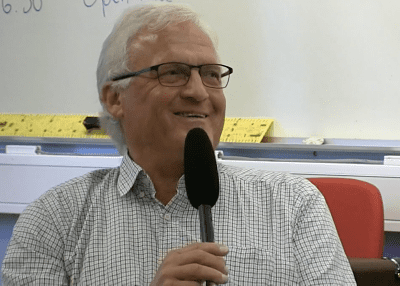
 In November 2010, an emergency fireside was held in Stockholm, Sweden by Elder Marlin K. Jensen (Church historian at the time) and Elder Richard Turley (assistant Church historian) to address the faith crisis that ensued among an entire group of members and leaders in Stockholm including a stake president and Hans Mattsson, an Area Authority.
About 25 Swedes attended this fireside including all the local bishops and stake presidents. Those in attendance were those that were knowledgeable about the Church historical issues that were troubling many Swedes. The Swedes formed their own local Mormon Stories group and had over 600 Facebook members. They would openly discuss these issues amongst themselves.
Join us as we visit Sweden and relive the “Swedish Rescue” with a panel (Parts 1 & 2) including Hans Mattsson and his co-author of the book, “Truth Seeking: The Story of High-Ranking Mormon Leader Hans Mattsson Seeking Sincere Answers From His Church but Instead Finding Contempt, Fear, Doubt …and Eventually Peace
A recording of the original “Swedish Rescue” that was recorded covertly may be found here:
https://www.mormonstories.org/podcast/swedish-rescue-audio/
Episode Transcript
Host: John Dehlin · Guests: Anna Palm, Christina Henke, Hans Mattsson
This transcript is machine-generated and lightly edited for readability. The audio is authoritative. Please excuse occasional errors in names and spelling.
Introduction and Opening Music
Part 1 of 3 · Ep. 980
Christina Henke [00:00:11] Your mom and me, we've seen this life with eyes that only see in black and white.
John Dehlin [00:00:21] Mormon Stories is a production of the Open Stories foundation and relies solely upon the support of people like you, its listeners. To help keep the podcast alive or to become a member of the community. Please become a monthly subscriber by visiting MormonStories.org and clicking on the donate button on the right side of the page under support. All contributions to Mormon Stories are completely tax deductible in the United States and go towards producing the podcast and building communities and programs of support for Mormons like you. Thanks for your support.
Christina Henke [00:01:03] Tune me out if you must
Guest [00:01:09] I
Guest 2 [00:01:09] know you've heard enough
John Dehlin [00:01:14] But I sing
Christina Henke [00:01:15] this song Just because I hope you'll be wiser than your daddy was I hope you'll be wiser than your daddy
Guest 3 [00:01:29] welcome. I'm really, really glad that this event actually took place. I think it was six months ago or so. I actually contacted John Dehlin and said, hey, Hans Mattsson just released a book in Swedish. Did you know about that? And then things started to sort of roll and eventually we got here. Before we start, I'd like to thank a lot of people because of course there's been a lot of people have done a lot of work to make this happen. So first of all, I'd like to thank Hans and Birgitta and Christina and Rudolf for everything that you've done to be able to make this event possible, to be in this venue. And you will see many other things that they've done as the event goes along. I also like to thank Christopher, wherever he is there, who's been helping out with a lot of things that I can't do myself. And also Stefan, who's been helping with some things. I think he's here somewhere. And Jonathan and Ieva Bautista, who's been helping to welcome the American guests while they're here. And of course John De Lin and everyone else from Mormon Stories who are here today. I mean, this wouldn't happen if you weren't here. So thank you very much. I'll leave the time to John Dehlin and our first happening, the Sweden Rescue panel discussion. Thank you.
Welcome and Panel Introductions
John Dehlin [00:03:29] Hello everyone. My name is John Dehlin, for those who don't know. I am so very honored and moved that so many of you are willing to take some time out of your lovely weekends to join us. My understanding is that we have people here not only from Sweden, but also from Denmark and from Norway and from Finland. Are there any other countries that I am neglecting in The United States, Ireland, Any other. Did we get it? Okay. Raise your hand if you're from Norway. Welcome. Wow. Norway is well represented. We need to do one of these events in Norway.
Hans Mattsson [00:04:17] Welcome.
John Dehlin [00:04:19] Several people from Norway. Raise your hand if you're from Sweden, I think. All right. Is there any Denmark? Okay, there is Denmark here in Ireland, in the United States. Raise your hand if you're from the United States. All right, excellent. And we also want to. What? Finland. From Finland. Finland, yeah, Finland.
Guest [00:04:42] Okay.
John Dehlin [00:04:42] Okay. Okay. So cool. So exciting. Go Scandinavia. Part of my ancestry comes from Great Britain in England, but a quarter of my ancestry comes from Sweden, so I actually hail from Scandinavia as well. My ancestors. And so it's particularly special for me. And I've never actually been to Sweden before. I've flown through the Copenhagen airport, but I've never been to Sweden. So it's really nice to be in touch with part of my homeland. It's very moving. So we also want to welcome the people who are joining us on Facebook Live. It's very early in the United States right now. Is it something like 6:00am or 6:30 by now? So thank you for joining us. We would really love to have your participation as well. If you want to make comments, ask questions. We'll do our best to monitor this live stream. Some of you will be viewing this later in the day as well. And we just want to thank you for joining us through Facebook. We'll be posting this to YouTube as well, and most people will be consuming this via audio. People will be listening to this, obviously, through the podcast once it's released. So we want everyone to know that this will be recorded. And so if some of you have sensitivities, but hopefully there's enough of you who are comfortable speaking, being seen and speaking publicly, because we just want to show how important Sweden and Scandinavia is to Mormonism. So let me just circle back to that point that there's a reason why. And I need a copy of your book. Will somebody grab a copy of Hans book and bring it here? Let me just. That's the Swedish version. I'll take that. But also an English version. Good. Okay. So there are several reasons why we're hosting this event, and the main reason is. And this is something very important. And I want to thank Travis as well, Travis, for helping make this happen. But Many years ago, 2005, we started Mormon Stories Podcast, and we had no idea to what extent it would have an impact, to what extent it would reach people, to what extent it would help play a role in transforming the lives of Mormons and the Mormon people and post Mormons. But when we started Mormon Stories, we had this hope that together, if we could get a listening and a viewing community together, we could support each other, we could provide meet each other's needs, provide a forum where people could share information, share experiences, and most importantly, connect with people around the world who were struggling. I went through a faith crisis around 2001 when I was working for Microsoft, and it was very traumatic. There was nothing on the Internet available to support people. After I tried to talk to my bishop and family members and members of the ward, even people where I worked at Microsoft, nobody wanted to talk about it. My family didn't want to talk about it, the bishop didn't want to talk about it, members of my ward didn't want to talk about it. And so I suffered for several years feeling completely alone. And so started Mormon Stories with the idea, this is unacceptable. There needs to be a way for people to share, to learn to support each other. And so we started around 2005. And it wasn't within a few years where I started hearing from people all over the world. But for some reason, a particularly high level of people from Sweden started reaching out. And I believe it was Christina who reached out to me, Christina Henke who reached out to me very early on and said, you have a number of listeners in Sweden and we just want to let you know that we're here and that we're paying attention. And that was very exciting for me. And what that did is it grew. It grew to where not only was there a Sweden Mormon Stories community very early on, there were several other Scandinavian Mormon Stories groups that emerged, but something very special that happened in addition to Sweden holding eventually its own Mormon Stories event. But of course, something very magical that happened was Hans Mattsson, who had served as an area authority from Sweden for at least five years, along with his dear wife Brigitte, joined in with the Swedish Mormon Stories community. And that escalated to the point where once Hans and Birgitte went through their faith crisis and, and started speaking openly and speaking publicly in Sweden, it started making the LDS Church very nervous and concerned. And Hans ended up reaching out to Marlon Jensen, who had served here in the area. And they had a meeting in New York where Hans basically expressed concerns to Marlon Jensen. Several of us ended up putting together a survey of over 3,000 people who had left the church so that we could share with the church the severity of the situation, the significance of the problem of people suffering. And Hans and Travis and Greg Prince ended up meeting with Marlon Jensen in New York, shared the concerns not only on behalf of Sweden, but of the entire world of people who are leaving and struggling with Mormonism and in pain and who are suffering. And it moved Marlon Jensen, who was church historian at the time, but also a general authority, to take these concerns back to the LDS Church where he could communicate to the Brethren the severity of the problem. And we'll be getting into this over the weekend. But what that led to was actually Travis taking this presentation to Salt Lake City, presenting the results to several departments within LDS Church headquarters. And Marlon Jensen, as I understand it, used all of this information to help convince the Quorum of the Twelve in the First Presidency to release the Gospel Topics essays that then, along with Rough Stone rolling, have had an incredible influence in awakening Latter Day Saints Mormons across the world to the historical problems that face Mormons. And. And so for over a century, people did not know the truth about Mormonism. Members were not made aware of even the most basic historical facts, like Joseph Smith being a polygamist, polyandry, the Peep Stones, the translation, the Book of Abraham problems. And all of the sudden, because of, you know, all of the things that preceded Mormon stories, but then Mormon stories, but then the Swedish Mormon stories group, and Hans Mattsson and Brigitte and all of your efforts in Scandinavia as well, that led to a groundswell that has really helped transform the Mormon Church today as we know it. And I can't go to a single city in the world where I meet with Mormons, where they don't mention Mormon stories or the Gospel topics essays as being a significant factor in them awakening to seeing the Mormon Church for the first time for what it truly is. So, Sweden, Scandinavia, you guys played a critical role in transforming of the experience of not only a global religion, but also of tens, if not hundreds of thousands of Mormons worldwide. And that's what we're here to celebrate is your role in transforming a world religion. So I just want to applaud you, applaud you for. For your role. And so this event's going to be over two days today. We are going to have two parts. We are going to do a panel to kind of retell that story. We've never had Hans and Birgitte and the members of the Swedish community on video before. We did do an audio recording of Hans and Birgitte several years ago when the New York Times ran their story, but we've never got them on video before, so that's something that's new. And then this Story the Swedish Rescue has never been told by the people who were part of it. And so we are going to be talking about the Swedish Rescue, which I didn't mention in my intro, but one of the very important parts for our listeners of this whole story was when once Marlon Jensen and Richard Turley and church headquarters found out about the Mormon Stories Sweden group and how that was starting to grow and how the entire country was starting to be traumatized by the faith crisis of several Swedes. The LDS Church sent Marlon Jensen and Richard Turley as sort of a SWAT team, as they would say in the United States, to help try and rescue Sweden from what might become the opposite of the second harvest, which was an unharvest de harvest of the Swedish people. And so what we're going to be doing now is we're going to be for the first time telling the story of the Swedish Rescue from the standpoint of the people, some of the people who. Who were involved. Is that right? Is that. Is there anything else I need to do before we launch in? Okay, so without any further ado, I'm gonna take this microphone. Is that okay? Are we getting good feedback from our listeners? Are there any. Are they listening? Are they able to hear? Okay? And I need someone to come over to this camera because it's right. Do you guys mind scooting over? Everyone scooting over one chair. Everyone scoot over just one chair. I need someone to just be at that mic and to re level the mic at the camera just to make sure that it's panned out to all five of the participants. So just. Is everybody in the shot? Is that okay? Okay. All right, so we are now ready to actually launch into this discussion. And we have our microphone. And so we're going to talk about the history of the Swedish Rescue now. So let's begin by having each member of our panel introduce themselves and just tell us really quickly, just in a minute or two, your name, where you're from, and just give us a small sense for your background in the church.
Hans Matson's Background and Faith Journey
Hans Mattsson [00:15:33] Okay? My name is Hans Mason and Hans H. Matson. I'm married to Begita Matson. And maybe, no, maybe a lot of you know my story, but I was born and raised in Ytuboi, or Gothenburg, in English. And now I live in Spain, enjoying the sun and warmth. And I've been taking a really long time to struggle with the faith crisis I've been through. And the first five to eight years I was fighting for the answers that still prove for me that the shoot was Right. But then on a journey from Gothenburg to Stockholm.
John Dehlin [00:16:14] But tell us really quickly, just give someone a 30 second sort of what your life was like before the Swedish rescue started. So before your faith crisis, basically. For those who haven't listened to your story, just say, I was born here. I served a mission. You know, I served in these callings.
Hans Mattsson [00:16:31] I was born in a faithful Mormon family. My father was the second generation. My granddad Oscar was the first one to join the church with Hildegard, his wife. And we grew up in Herbert Matson family as very loyal and faithful and really, really believing and enjoying to be special people, to be selected to have the truth, the only truth that were on the earth. So we were quite happy about that. And of course there was some time at school and so you were the only Mormon, but you were kind of proud of it. So then I went on my mission to England, Birmingham mission. And I served after two years. And after that I went to the military service. Had a blessing from my dad that I will meet someone that will convert to the church. And I did. It was Pegitta. She was serving in the kitchen there. And she's still doing it, but in our home. And we were married in the temple. And I was really, really scared to take her to the temple because I had a terrible experience in my own endowment.
John Dehlin [00:17:53] And we'll get more into your story, so just tell us. Just list the callings you had up until.
Hans Mattsson [00:17:58] Yeah. I was called as a branch president, a bishop in Kongsbache. I was called the first councillor in the state presidency in Gothenburg. I was called as a stake president in Gothenburg. And we moved to Stockholm. And I was called to be a counsellor to the mission president, take care of the northern part of Sweden, like Luli Umi and so on. And then I was called to accept the calling as 70 in the third quarter. Model 70 as an area authority for five years. And there my journey started.
John Dehlin [00:18:39] Okay.
Hans Mattsson [00:18:40] All right.
John Dehlin [00:18:40] Thank you, Hans. Thank you very much.
Guest [00:18:43] Thank you.
John Dehlin [00:18:44] Tell us your name.
Guest [00:18:44] And my name is Per Ingeberjerson. And I joined the Shirt as a convert when I was about 25 or 26. Quickly thereafter I met Anga, who was with me here today. We married in the temple. I had many different callings in church. I started out as an elder quorum president. And then I worked for a long time in the district as a counselor to the district presidency in the south of Sweden. We were in a situation where we tried to get into a situation where it became a stake. So we were very ambitious and Worked really hard to get more members and more activities. And after that I was called to become a bishop. So I was bishop for about seven years. And during that time I also was working as a president for a company. We also have moved around quite a lot. We were renovating houses and doing a lot of things and had a private company. And then suddenly we moved to China because I got a new position abroad. And that was the first time in a very long time I got time to think. Before that I must be running. But suddenly it hit me. I had time to think, not only do what I was supposed to do, and there came up a lot of different questions in my mindset and I started to search information Internet. I started to order books from on Internet as well. And I think I have a whole bookshelf at home with different books written by Queen and a lot of different people.
John Dehlin [00:20:24] And so around what year did your faith crisis happen?
Guest [00:20:27] Start 2000. 2000. So before.
John Dehlin [00:20:30] Yeah, okay, let's not go into that yet, but we got a sense. So you served as bishop?
Guest [00:20:35] Yes.
John Dehlin [00:20:36] For how many years?
Guest [00:20:37] Seven years in.
John Dehlin [00:20:38] Where was that?
Guest [00:20:39] In Lund, in south of Sweden.
John Dehlin [00:20:40] Okay, excellent. All right, good. Let's keep going with the introductions.
Remaining Panelists Introduce Themselves
Christina Henke [00:20:45] I'm Christina Hanke, the co author of Truth Seeking the book. I met the Mormons when I was 16 and was baptized as a convert at the age of 17. And I really wanted to serve the Lord, so I even went on a mission. And I was in London 71 till 73. And that's really where my faith crisis started, because it was a really odd mission and we were taught all sorts of strange things that I had no idea about and I guess nobody else either in Sweden at that time. I was rather devastated, I should say, when I came home. But I had nowhere to turn. Where could I turn? My parents was against the church, of course. I was 22 years old. I had nowhere to go, so I stayed. And then I met Rudolf and we married in the temple and we moved to Hoenigen. And I had those doubts in my mind. But I really believed that every person over 25 in the church must have some preparedness inside, deep inside, that the church might not be true. That turned out not to be true. I have served with young women both at the ward and stake level. I've been a primary president for several years here in Honinge. And when I made my doubts official In 2003, I was the Relief Society president of the biggest ward in Sweden. That was hard. But today my whole family, my husband is out and also our four children. So I'm happy with that.
John Dehlin [00:22:35] We'll get there.
Christina Henke [00:22:36] Yes.
John Dehlin [00:22:36] All right. Thank you. Welcome, Christina. And per Enga. Is that close to how to pronounce it? Okay.
Hans Mattsson [00:22:42] All right.
Guest 2 [00:22:45] Yung Natan Bautista. I'm second generation Mormon. My parents converted when I was about 4 or 5 years old. Grew up in the church from Gothenburg originally, and then I moved to Stockholm because I married a girl from Stockholm. I've served in different callings during my time in the church. I've been as a world mission leader. I've been in as an elders quorum president. I've been Sunday school teacher and in primary as well, and also in young men's presidencies. I served my mission in London south between 96 to 98. And I've been. My journey started when I was young, so I had a hard time telling that I knew the church was true when I grew up. And that was an expectation. So I would struggle with that and then basically went on my mission because I wanted to really give the church 100% of my effort and then didn't turn that well out. But I left the church around. Just.
John Dehlin [00:23:40] We're not there yet.
Guest 2 [00:23:41] Okay.
Hans Mattsson [00:23:41] No, no.
Christina Henke [00:23:42] Yeah.
Guest 2 [00:23:42] Okay. Okay.
John Dehlin [00:23:43] Take us up to. Take us up to when the Swedish Rescue started. What were you at the time the Swedish Rescue started?
Guest 2 [00:23:49] So at that time, I was critical about things in the church. And then I. At the time, I served as a Sunday school teacher. And basically I lived with a compromise, personal compromise with the teachings of the church.
Guest [00:24:01] Okay.
John Dehlin [00:24:01] All right. So we've given the backgrounds. We've got Hans, Peringa, Christina and Jonathan. Okay, let's start by when did. Let's just say when was the first time any of you remember talking to each other about challenges or issues? Let's just start when the community started forming. So who would have been the first two people to actually talk? Who can tell. Who can tell that story? I want to start understanding how the network builds. Right.
Hans Mattsson [00:24:35] The first time I was really active, I just released as a 70.
John Dehlin [00:24:39] So you. So from 2000 to 2005, you were a member of the third quorum of the 70s?
Hans Mattsson [00:24:44] Yes. And this is 2005 and 6 or something.
John Dehlin [00:24:48] So after you had been released.
Guest [00:24:50] Yeah.
Hans Mattsson [00:24:50] The stake president called me, said, can you go with me to Sudetelje to meet Perigny? He has some questions about the church. I think you'd be the right man helping.
John Dehlin [00:24:59] You were going to help Peringa?
Guest [00:25:01] Yeah.
Early Doubts and the Path to the Swedish Rescue
John Dehlin [00:25:01] Okay, so we've got Hans to the rescue. Hans, this is the first sweetest rescue. So you were struggling by 2005, 2006. Tell us where you were at.
Guest [00:25:13] I had been struggling in China for many years, actually, before I came to Sweden. I came back to Sweden, and I know something was wrong. I felt completely devastated because my whole family were members. The only person I could speak with was my wife. She was very supportive, and I'm very grateful for that, I can tell you. And I came to Sweden and I made a list of like seven to 10 questions. I said, I need to get these questions.
John Dehlin [00:25:41] Tell us what some of those questions were. Hold the mic. Right towards your mouth.
Guest [00:25:44] Yeah. It was, of course, historical questions about Joseph Smith, about polygamy. There was about the book of Abraham and. And, yeah, a number of others. I mean, these are just examples. I think these are the questions we all ask ourselves if we start to study the history of the church. And I made a list, and I said, actually, if I should continue to be active in the church, I would like to have some answers on these questions. So I went to my bishop, and he called the stake president and Hans came in and I was there.
John Dehlin [00:26:11] Who was your stake president at the time? If you want to share his name, you don't have to.
Guest [00:26:15] Yeah.
John Dehlin [00:26:16] What was the name
Guest [00:26:19] you want to stool? Don.
John Dehlin [00:26:20] Okay. Did you just say a name?
Guest [00:26:22] No, no, no. I was just confused. Tried to pick it up first. And I have to say one thing. I was very confused about Hans when he came into the picture, because I understood he was there to convince me about something that, you know, give me answers or something. But in the whole discussion, of course, I could feel that he was partly on my side, if I say so. I mean, I could feel he.
Hans Mattsson [00:26:48] I always liked the truth.
John Dehlin [00:26:49] Yeah.
Guest [00:26:51] I was so confused to start with. Now, why have they sent him to talk to me when he at the same time have a deep understanding of my questions and no answers? I was just confused.
John Dehlin [00:27:04] So the stake president brings Hans. Hans. What was that? So what was it like? What did you feel when the stake president comes to you and says, help me with Piringa. I need help?
Hans Mattsson [00:27:15] You know, before that, I had El Tom Perry telling me about the book that we solve all the problems and I'm gonna need follow them.
John Dehlin [00:27:22] And he was referring to Rough stone rolling by Richard Bushman, I think. So tell us what. What Perry had told. Had said to you. Well, tell us the suitcase story.
Hans Mattsson [00:27:31] Yeah. As a 70, we were in the stake and we had the stake president worrying because he had a lot of questions from some members about the book of Abraham the polygamy, polyandry and so on. And he called me because I was a 70, and I didn't even know the questions. So when I went there with Elton Perry, he was assigned as an apostle to serve in Europe for a year. And we went there, talked to the stake president, there were only three of us. And the stake president explained, this is the problems, you know, and then Elton Perrott with a loud voice said, you know, I have in my briefcase a manuscript that will answer all your questions, and we're going to prove them all wrong. And we're not only going to prove everybody wrong, we're going to go after them and we're going to nail them. You know, he was really loud, and I thought, that sounds good. I didn't know what it meant, but to nail someone, it must be good. Anyway, so after a while, we never get any answers, you know, So I called down to Frankfurt and asked for the book that he had in the briefcase. And we got a very lovely, careful answer. You're not supposed to ask general thought those kind of questions, and that's trigged me a little bit. So when I talked to Peringy there, I was really confused, you know.
John Dehlin [00:29:14] So you had hoped that this book would solve all your problems when you were an area authority, but then you asked for it. They told you, stop asking questions. And so it's a couple years now since you're not area authority anymore. You're still waiting for the questions, you're still struggling with the confusion. And the stake president brings you to solve Puringa's problems, to help him, and
Hans Mattsson [00:29:34] has the same question. And Elton Perry had it in the briefcase still, I guess, but he's dead now, so I can't have him.
John Dehlin [00:29:43] Christina, are you wanting to.
Guest [00:29:44] Yes.
John Dehlin [00:29:45] Okay.
Christina Henke [00:29:46] And I think that the next connection was between Hans Matzson and myself. We were neighbors.
John Dehlin [00:29:50] Okay, wait, wait, wait. So what happened at the end of. Let's just hear what happened at the end. So in that intervention, Paringa, you were confused that he seemed to have as many questions as you. How did that meeting end?
Guest [00:30:00] Yeah, I mean, it ended in a kind of confused way because he didn't have an answer for me and was just confused where he was. He didn't really clearly tell me openly that he had the same doubts as I had, and he also found no answers, but he had no answers to give me. And I basically said to Hans and to the Stake Presidency and to my bishop. And now if I have seven, eight Christians here, if you only can prove Me wrong in one of them I would be happy. Only one is enough for me to have a feeling that there's something true in this church. But I got nothing.
John Dehlin [00:30:35] They picked the wrong guy in Hans to help solve your problems. Hans, you didn't do your job.
Hans Mattsson [00:30:40] They picked the right guy because I like to be honest and seeking only the truth.
John Dehlin [00:30:47] So how did you feel when that meeting ended, Hans?
Hans Mattsson [00:30:50] I feel really dizzy. And I talked to the stake president on the way home to Stockholm and he said, well, at least we have eternal marriage. That's what he said. And I said, well, yeah, he said,
John Dehlin [00:31:04] at least we have eternal marriage if we can't answer all the historical problems. Okay, okay. So what was the next step in the story that meeting ends?
Hans Mattsson [00:31:12] Well, the next step. Is that what Christina like to tell you? But Pering is coming up again. Kristina, you tell her before that.
Christina Henke [00:31:23] The next step, I think was that the bishop was inspired as well. Because I was an apostate, but my husband and children were still active and we heard nothing from the church. You know, I had no visiting teachers, no home teachers. But then the bishop was inspired to call Hans as my home teacher. That's great. That was so cool. And I. I felt the same as you did. Something is not right here.
John Dehlin [00:31:53] So what. What was the next step in the Swedish rescue? So you. The group formed. Did you guys talk? Was that the next step?
Hans Mattsson [00:31:59] Kirstina and I talked about it. And we also found out some members knew about it.
John Dehlin [00:32:04] How did.
Christina Henke [00:32:05] Who.
John Dehlin [00:32:05] How did that happen? Where you guys felt comfortable Tell the story of you guys feeling each other out. To know if you could talk to each other.
Hans Mattsson [00:32:12] You tell it.
Christina Henke [00:32:14] We have known each other for a long time, since we were 17. So I knew. I know Hans family and Birgitta. And so we felt quite comfortable with each other. But of course, when I first started to notice that Hans had the same questions, it was a real surprise. Is this real? And I remember one incident when I was stopping by Hans house on my way to work here. And he came out and we were standing by the car and he looked at me and he said, Christina, you are not crazy. Things are like this. That was great.
John Dehlin [00:32:55] How'd that feel, Christina?
Christina Henke [00:32:56] It's. Of course I. I knew that I was not crazy, but it was great to be validated anyhow.
John Dehlin [00:33:02] Okay.
Christina Henke [00:33:03] And. And I knew that Hans, of course was very known to me. He's not the area representative. To me he's Hasse Hans Matson.
John Dehlin [00:33:12] Which means what?
Christina Henke [00:33:13] Which means that we can communicate on an equal basis. I would say we shared books and ideas.
John Dehlin [00:33:22] Okay, so how did it go from you two being open and honest with each other to a group forming? How did the network grow?
Guest [00:33:30] I just know that Hans. I think Hans called me one day and said, we are going to have a small meeting with a few people who have the same questions as you have and around.
John Dehlin [00:33:39] What year was this? Was this 2006? Was it 2007?
Christina Henke [00:33:42] I think it was later.
John Dehlin [00:33:45] Do you have an idea what year that first meeting was?
Christina Henke [00:33:48] I have an idea what year it was because I met this. I think this at the same. It was my daughter's wedding, and that was in 2000. And when was she married? Nine.
John Dehlin [00:33:59] Okay, so three years went by where you guys were doing what. What were you doing?
Christina Henke [00:34:04] Surviving.
John Dehlin [00:34:05] What were you doing during those three years in terms of your doubts, your questions, your faith?
Hans Mattsson [00:34:10] Reading. Reading. What were you reading?
John Dehlin [00:34:12] What were you reading?
Hans Mattsson [00:34:12] We're reading all the books Sekastina had, like Rough Stone Rolling.
John Dehlin [00:34:17] What else?
Hans Mattsson [00:34:17] We're reading about Emma Smith, the Enigma, Mormon Enigma. Mormon Enigma. I'm reading about polygamy, Compton's Satan, Reagan's
John Dehlin [00:34:30] autobiography, In Sacred Loneliness by Todd Compton. You're reading books.
Hans Mattsson [00:34:36] And we listen to John de Lynn. Okay.
John Dehlin [00:34:38] Who was the first. Who was the first to discover podcasting? Which of the.
Hans Mattsson [00:34:43] Christina.
John Dehlin [00:34:44] Okay, Christina, talk about that. So how did you hear about Mormon Stories podcast?
Christina Henke [00:34:49] No, I was probably just googling around and found you.
John Dehlin [00:34:52] Okay.
Christina Henke [00:34:53] And then you had this program, Stay lds. And at that time, I was still kind of hoping that there would be a way to return. And I listened to you, and I listened to your podcast about your mission in Guatemala, and there were many similarities to my own. So that's why I felt kind of connected to you.
John Dehlin [00:35:15] In London.
Christina Henke [00:35:16] Yes.
John Dehlin [00:35:17] Okay. Because that's where the baseball baptisms happened in London.
Christina Henke [00:35:20] Yes.
John Dehlin [00:35:20] So there was a direct tie between the London baseball baptism types of shenanigans and what I experienced in Guatemala. Not that you had baseball baptisms. You were there about 10 years after the baseball baptisms era, but the memories
Christina Henke [00:35:32] were still alive, right?
John Dehlin [00:35:34] Oh, yeah. Yeah. Okay.
Christina Henke [00:35:35] Yeah.
John Dehlin [00:35:36] So you discovered Mormon Stories podcast first and started listening.
Christina Henke [00:35:38] Yeah, until Hans. Because I knew that he. He still had hopes that you. He could transform the church and stay and that it would be all right. And you hope for that for many years.
John Dehlin [00:35:52] So it was stale DS that, particularly this vision of liberal progressive Mormons staying in the church and trying to make it work, but make the church better. Is that right? That was intriguing to you?
Christina Henke [00:36:03] Yes. So you shared that with Hans Yeah, I did. Maybe he had more hopes than I did, but I still. I still loved my tribe, you know, I missed them. I still actually.
John Dehlin [00:36:15] Right, okay. So Stale ds. So, Hans, you started listening as well, and there was reference to that in your book.
Hans Mattsson [00:36:21] Yes.
John Dehlin [00:36:22] You started listening to podcasts, and it was kind of annoying to Birgitte.
Hans Mattsson [00:36:25] Is that right? Yeah, because I was so into it that I nearly forgot that I was married to Birgitta and she thought I was married to you, but she was wrong. But when she said, you know, every time I go to bed, I can hear John de Linds voice. And I'm so tired of that, you know?
John Dehlin [00:36:48] Sorry. Brigitte, where are you?
Hans Mattsson [00:36:49] Brigitte? She's up there.
John Dehlin [00:36:51] Sorry.
Hans Mattsson [00:36:51] Still alive and. Of course. But we also found that there were some people found out that we were talking about things you can't talk about in church. And Pering and his wife met, and we had some from Finland who used to be a missionary in Sweden, who also come and talk to us. And that led up to Swedish Rescue.
John Dehlin [00:37:17] So there was a first meeting at someone's house, Is that right?
Hans Mattsson [00:37:21] Yes.
John Dehlin [00:37:21] Can you talk about that was in 2009.
Hans Mattsson [00:37:25] Yes.
John Dehlin [00:37:25] Talk about that meeting now. So who was there and who called the meeting and where was it?
Hans Mattsson [00:37:31] Christina? We had that in your home. So you are so welcome to tell everybody about.
John Dehlin [00:37:36] Yeah. What were you thinking? Why have a meeting? What was your goal?
Christina Henke [00:37:40] No, but the first meeting we had was with this Finnish missionary that had been here. I met him at my daughter's wedding and he couldn't stop talking to me. So I had to say, I'm at my daughter's wedding. Please come home to me and discuss this. And I told him about Hans Matzson. So of course he wanted him to be there as well. So that was our very first meeting, just Hans and I and this Finnish missionary.
John Dehlin [00:38:04] Okay, and then what was the goal of the meeting?
Christina Henke [00:38:07] He wanted to talk and talk. You know how it is, don't you? You just want to talk about this.
John Dehlin [00:38:12] Okay, so you want to.
Christina Henke [00:38:14] You want to test your experiences and your questions against other people.
John Dehlin [00:38:19] Okay, so you guys had that first
Christina Henke [00:38:20] meeting, and then shortly after that.
John Dehlin [00:38:23] How did it grow? How did it grow? How did Piringa get involved?
Christina Henke [00:38:29] So you arranged that meeting rather that autumn as well.
John Dehlin [00:38:32] So there was another meeting with Piringa.
Guest [00:38:36] Actually several meetings in a row. I don't know how many it was, but maybe five, six, seven meetings.
John Dehlin [00:38:41] And this was just Swedes talking about the problems with church history.
Guest [00:38:44] Yes, absolutely.
John Dehlin [00:38:45] So that happened several times over several months?
Guest [00:38:48] Yes.
John Dehlin [00:38:48] Several meetings?
Guest [00:38:49] Yes. Correct.
John Dehlin [00:38:50] Okay. How did that grow into something that the church leaders started getting alarmed about? When did the local leaders start getting alarmed?
Hans Mattsson [00:39:01] The whole time.
John Dehlin [00:39:02] Okay, so as you guys are meeting
Hans Mattsson [00:39:04] and talking, they understood that something was happening because I also asked the same question at the priesthood meeting and Sunday school meeting. I didn't tell them that were wrong. I asked them, what would you think about this and things like that in your ward? In my ward. And the state president and his counselors come home and forbid me to talk to my wife about my questions.
John Dehlin [00:39:27] What they say?
Hans Mattsson [00:39:28] They say just that you're not allowed to talk to your wife about the questions. You're not allowed to talk to your children or any members about it.
John Dehlin [00:39:38] So they told you to be quiet?
Hans Mattsson [00:39:40] Yes.
John Dehlin [00:39:40] And how did you like that?
Hans Mattsson [00:39:42] I didn't.
John Dehlin [00:39:43] Why not?
Hans Mattsson [00:39:44] Because I said, you know, you can think that, but I still ask questions because, you know, that's what Joseph Smith did before he has his vision. And. And my wife also heard that they were talking to me about it and she was like a tiger coming out like a roaring Thai lion and said, get lost in tetan and something like that.
John Dehlin [00:40:11] What is it like to the Swedish culture to have someone say, be quiet, don't talk? Does that run in counter to kind of Swedish culture to be told to have a Swede, tell another Swede be quiet and don't talk to anyone about your problems?
Hans Mattsson [00:40:26] It's like you put a red button.
John Dehlin [00:40:28] Which means what?
Hans Mattsson [00:40:29] It means you got fired up and you got demotivated to find out why. And you think that the one person there, or I don't know if you can explain that in English, but he's more or less an idiot.
John Dehlin [00:40:44] Okay? So you come in.
Hans Mattsson [00:40:47] You don't come into my castle and tell me to be quiet to my family because I'm the head of the family and we always talk about everything. Whatever it is, we talk about it. We let the kids know. We don't have secrets for them. Maybe we do, but not all of them. But this is the best thing you can have to get you going.
John Dehlin [00:41:13] Okay. So you got excited, you were told to be quiet. So what did you do about that?
Hans Mattsson [00:41:19] Just ask questions and still going around and meet more people. And of course, I have a twin brother was really worried, so he contacted Salt Lake City and some of the high guys up there that I used to serve with SSMITE general authorities.
John Dehlin [00:41:37] So your brother calls Salt Lake City and says, we have a problem. Salt Lake City, we have a problem.
Hans Mattsson [00:41:41] Yeah. And I Said you really have.
John Dehlin [00:41:46] Okay. Christina, did you want to add something?
Christina Henke [00:41:48] I just want to add that I can understand the church leaders as well. We were annoying.
John Dehlin [00:41:56] Yeah.
Christina Henke [00:41:58] It was their meeting, their building, their church.
John Dehlin [00:42:01] Right. And you guys were causing trouble.
Christina Henke [00:42:03] Yeah. So I can understand them as well. What can they do?
Jensen and Turley Arrive in Sweden
John Dehlin [00:42:09] So what year did Turley and Jensen come to Sweden for the Swedish rescue?
Christina Henke [00:42:15] November 2010.
John Dehlin [00:42:16] Okay, so from 2009, where you're told to be quiet, to 2010, what were the activities that led to Jensen and Turley coming after you had been silenced? How did they get here? What were the steps that led to them actually coming?
Hans Mattsson [00:42:32] Well, I had a call from my friend. Rasband is his name. He's now one of the apostles in the church, but he was a general authority there and we have been serving together. He comes over to Sweden. To Sweden.
John Dehlin [00:42:52] Neil Rasband comes to Sweden.
Hans Mattsson [00:42:54] Yes. And we met on a restaurant in downtown Stockholm.
John Dehlin [00:42:59] Just Rasband and you and your brother, right?
Guest [00:43:02] My.
Hans Mattsson [00:43:02] My wife and I and my brother and his wife. And a raspberry.
Guest [00:43:08] Okay.
Hans Mattsson [00:43:09] And then he was very nice, very open minded and we could really talk like friends about my issues. The questions and, and. But there was still was no answers to really the questions. And, and that place we try like one example, we talk about why do we have. I asked, why do we have 50 men that are prophets here and revelators? And we don't have any. No one see anything. We don't reveal anything. And so no prophecy, no revelation. And he said, well, I was there personally when I present him glad of revelation. And I good, tell me. Because I said, my daughter is married to a man. He is Pentecostal. And when we say that, we have a prophet ask, oh, what did the prophet say? And I said, let's go shopping. Well, there's nothing really that reveal like you need a prophet. But he said, well, I was there when President Hinckley said we should build a smaller temple. What?
John Dehlin [00:44:30] He listed that as a revelation?
Hans Mattsson [00:44:32] Yeah. And I said, you know, both you and I being in the business world, we're sitting with councils with high positions and this is a normal way to look how you do business. If it's too expensive to have large temples, you build smaller ones. We don't call that revelations. We call it inspiration then. And we go on business and then.
John Dehlin [00:44:58] Right, Good business.
Hans Mattsson [00:44:59] Yeah, very good business. Yeah.
John Dehlin [00:45:01] Okay.
Hans Mattsson [00:45:01] And then he said, well, before this year is ended, I will send Elder Jensen, who is the head of the historic, and he will have one of the best historicians with him to Meet with you.
John Dehlin [00:45:15] So Rasband promises an intervention from Salt Lake City.
Hans Mattsson [00:45:19] Yeah.
John Dehlin [00:45:19] Jensen and Turley.
Hans Mattsson [00:45:20] Yeah. And before he left, he didn't have any answers, but he gave his testimony that he know the Mormon spoke was true, that Joseph Smith was a true prophet. This is only true living church and so on, so on. And I was kind of frustrated over there because I thought he was saying that because if you don't warn your neighbor, the sins will be up in your head. So kind of he was not God. Can't blame him for not testify for me. So I had a problem. But he said something very interesting in the end, I also have a brain.
John Dehlin [00:46:01] So he looked, he turned to you and said, I also have a brain.
Hans Mattsson [00:46:03] Yeah.
John Dehlin [00:46:04] What do you think he meant by that?
Hans Mattsson [00:46:06] I'm still wondering, but I hope it means that he can also think like me. But he's not allowed to say it, but. I know, I don't really know, but.
John Dehlin [00:46:16] Because what I thought of when you told me that story was the comment Elder Holland made when he was being interviewed by PBS where he said, I'm not a dodo, I've read a few books and I went to a pretty good school. And he's basically saying not everyone who's intelligent leaves the church. There are thoughtful, intelligent people who know all these things, but still remain.
Hans Mattsson [00:46:40] I guess that's part of it. Yeah. I'm glad you told me. At least someone having inspiration.
Organizing the Group and Preparing for the Meeting
John Dehlin [00:46:48] Okay, so anything between Rasband leaving and the Swedish Rescue. How did you guys hear that they were going to come? So tell us about when you found out that the Swedish Rescue was going to happen.
Hans Mattsson [00:46:59] Can I ask you, do you know anything about this?
Guest 2 [00:47:02] When?
Hans Mattsson [00:47:03] Before the Swedish Rescue.
Guest 2 [00:47:06] So I guess my situation, I was in silo in parallel, so I was studying together with my wife. And then I don't recall the year, but if it was 2009, the rescue was. I think we were doing it quite. So we were doing it hardcore from 2008 on Earth, you know, just me and my wife, we got access via a friend to really some old records, first hand records from the U.S. so we had, you know, an interesting time going.
John Dehlin [00:47:33] So your faith crisis started how?
Guest 2 [00:47:35] Yeah, so my started way back when I was younger, but so I came across things during my mission and made a compromise that I'm going to live my life in the church. But then my wife, she was faithful, so I didn't want to disturb because I brought it up with her several times but she didn't want to hear about it. So I made this compromise and then suddenly, via a friend, she. She got into it. And also by the Proposition eight, that got us attention, we couldn't really explain
John Dehlin [00:48:00] in California in 2008. That's the right timeline.
Guest 2 [00:48:03] Yep, yep. So that. That. That really got us because we couldn't stand for that.
John Dehlin [00:48:07] And during 2008, 2009, 2010, did you know that Hans was having a faith crisis? Did you know about Baringa? Did you know Christina?
Guest 2 [00:48:15] Yeah.
John Dehlin [00:48:16] So how'd you hear about them?
Guest 2 [00:48:18] Yeah, so Hans used to be my stake president when I grew up in Gothenburg. Yeah. But we heard this rumor about Christina, that she wanted to start her own little ch. A rumor. And we also heard about Hans, that he's. He's losing his mind. And I had an experience when I was going to church and I met Hans in the hallway because I was a Sunday school teacher at that time. And I just met Hans and he just seemed distressed. And I just took. He didn't go into detail, but he just seemed. He wasn't content being in church at that time. So he was basically walking in. In the corridor.
John Dehlin [00:48:49] Same word in Gothenburg.
Guest 2 [00:48:51] No, this was in Stockholm now.
John Dehlin [00:48:52] In Stockholm?
Guest 2 [00:48:53] Yeah.
John Dehlin [00:48:53] You moved to Stockholm. You live in Stockholm.
Guest 2 [00:48:56] So what happened then was when we were studying on our own then I'm gonna call Hans. So I called Hans up and then I got. Okay, so he's on the. My wife claims she was one calling Hans, so maybe that's probably the truth. Yeah.
John Dehlin [00:49:08] Yeah.
Guest 2 [00:49:09] So she called Hans.
John Dehlin [00:49:12] But Hans, who called you, you don't remember? Yeah, he was Eva. Wives are pretty much was. Right.
Guest 2 [00:49:20] So. But in that scenario, we understood that, you know, there were other people that knew what we knew because obviously we found out during our mission. But there came a lot of new stuff when the Internet opened everything. So polyandry was a big thing. I never heard of that before 2008, I think.
John Dehlin [00:49:35] Okay, so at what point did you get joined into this group?
Guest 2 [00:49:39] I guess we were fairly early since we contacted you. So I guess we were at this meeting at your house as well. And I just want to say that when we studied, at least I still studied in a way. I wanted to find out that it was all true. I didn't want to find faults. I was just digging more. There needs to be answer to this. So during this process, we talked to all our friends in the church. Do you know about this? And you know about that? And we're not going to brag here, but I'm not bragging, but quite a few of our friends started getting questions alongside with Us.
John Dehlin [00:50:10] Due to that, we talked to everyone here in Stockholm.
Guest 2 [00:50:12] Yes. And also in Gothenburg. And I mean, Anna is here and Morgan is here. That was due to our information.
John Dehlin [00:50:17] Your missionary work.
Guest 2 [00:50:19] Yeah. So we have a. We have a lot of people on our conscience here going down the. Down the road.
John Dehlin [00:50:24] Okay, so at some point you joined in the questioning.
Guest 2 [00:50:27] Yeah, the weekend, Fairly early, maybe 2008, I think we were. We were co. Writing with you from 2008. So we were also invited to Swedish Rescue when that. So basically Hans enabled that Swedish Rescue and we were invaded alongside with some other people that were, you know, also questioning things.
John Dehlin [00:50:41] So who first found out the. That Turley and Jensen were coming in? The dates. Who was it that first found that out? So, Hans, tell us that story of. Of how it actually rolled out.
Hans Mattsson [00:50:55] The Area Authority, Ingvar Olsson. He. He was calling on a secret meeting
John Dehlin [00:51:04] and he said, hans, there's a secret meeting.
Hans Mattsson [00:51:07] And I said, I can help you because I know all the ones you should call to come. And he said, no, I go through the bishops and they will call the ones that will be on that meeting.
John Dehlin [00:51:20] So he wanted to control who could attend.
Hans Mattsson [00:51:23] Yes. And he sent out a letter to invite all of us to come to this meeting. We didn't call it Swedish Rescue then. We called it the meeting with the professionals of the church historical department. They can answer all the questions.
John Dehlin [00:51:38] So people received a formal written letter in late 2010.
Hans Mattsson [00:51:43] Yes. It must be about October.
John Dehlin [00:51:46] Okay.
Hans Mattsson [00:51:47] Yeah. But I also helped them, but I didn't know about it because we had an extra meeting with Christina, inviting all of us that have questions and were excused to be the voice of the devil and follow his path. So we were there talking about this event and prepare to.
John Dehlin [00:52:12] So did you guys actually get together and plan how you would approach the meeting? Talk about that meeting, the pre meeting. Where was it and who.
Hans Mattsson [00:52:20] Well, we thought that when they come all the way from Salt Lake City to meet us, we thought it was wonderful because now at least we will have answers to our questions because they were historians. They know everything and we know, but they know even more, as we understood. And we like to be organized, so we don't talk about this and talk about that.
John Dehlin [00:52:46] So what was your plan going in? What plan did you have?
Hans Mattsson [00:52:50] Now Christina will give you the plan.
John Dehlin [00:52:52] Okay. Okay.
Christina Henke [00:52:54] Yes. The meeting was in our house just about, I think, a week before the actual Rescue Sweden meeting.
John Dehlin [00:53:01] Were you there, Jonathan?
Christina Henke [00:53:03] Yeah, you were there? Several of the people.
John Dehlin [00:53:07] Was Puringa there?
Christina Henke [00:53:09] Were you there?
John Dehlin [00:53:11] Okay.
Christina Henke [00:53:12] No, I don't Think. No, I don't think.
John Dehlin [00:53:14] Okay.
Christina Henke [00:53:14] So in the pre meeting, it was about 10, 15 people there, half women and half men, as I remember it. And the women were all. Oh, they were. We were. It's not true. That's great. But I think the men still hope. Hope that somehow. So I don't. I did. I, I didn't share your hopes anymore that they would give us any answers.
John Dehlin [00:53:37] So the men were hoping that they would give good answers.
Christina Henke [00:53:39] Yeah, yeah.
John Dehlin [00:53:40] And the women were basically saying this, this proves it's not true.
Christina Henke [00:53:44] Yeah, yeah.
John Dehlin [00:53:44] Okay.
Christina Henke [00:53:45] Yeah, that's great.
John Dehlin [00:53:45] The women were the pessimists.
Christina Henke [00:53:47] So we were discussing what questions, what questions were we going to bring up and how we were going to behave. You know, like we're going to be polite, we're not going to be aggressive and things like that. And also the questions that we had, that's. You were there as well, Jonathan. Do you remember anything else?
Guest 2 [00:54:04] No, but I think that that basically was the summary. But in retrospect, I think the meeting didn't turn out that great because it was too many questions. You know, we, we covered too much space. So we, we just. It just.
John Dehlin [00:54:18] So you put a big list of questions together and you're thinking there was too many questions.
Guest 2 [00:54:22] And in retrospect.
John Dehlin [00:54:22] Well, we'll talk about the meeting now. Okay, so you got all ready, you got your list of questions. What tone were you going to go into the meeting? What tone did you decide to have during the meeting? A hostile tone? Not a hostile tone.
Guest 2 [00:54:32] No, no. From my perspective, I thought this was a great opportunity. I thought it was a great sign of good faith from the church. They brought actually their chief historian and also brought a general authority and they came genuinely to respond to our questions. That was the. With the spirit. I went into that meeting and I had genuine hopes that I would get some sort of answers that could satisfy me. But most of all because this was the time, every time you brought up this thing with anybody believing in the church, you always got the question back that, are you sure this is really correct? Are you sure? You know, you got some right information? So what I went into, I wanted to have the information validated for that was, I guess, one of my key,
John Dehlin [00:55:10] because we're all primed to think that it's anti Mormon literature. Anything that causes you to doubt that sounds uncomfortable, that makes you feel uncomfortable, that must be Satan. And the material is labeled as anti Mormon literature, so that then it's viewed as dangerous and so you want to leave it alone. So you are just wanting to be validated. Is this stuff legitimate? Are these questions legitimate? Are the historical problems legitimate?
Guest 2 [00:55:35] Yeah. And could there be some good arguments and reasons for why it happened?
John Dehlin [00:55:38] So give us something.
Guest 2 [00:55:39] Yeah. So polyandry, for instance, that was one of my biggest issues. And every time you brought that up with anybody active, you said, no, that's impossible.
John Dehlin [00:55:48] There's no way Joseph Smith married other men's wives.
Guest 2 [00:55:50] There's no way he could marry somebody else already married. There's no way he could send away a missionary and marry his wife while he was away. And when I heard it the first time, it just. That really rocked my world. So, I mean, like, basically for all other issues I came across, I found at least explanation that I could live with. But for that point I just couldn't be satisfied by, you know, there was nothing that really could justify that.
The Swedish Rescue Meeting Described
John Dehlin [00:56:15] Okay, so the meeting was held where. Where was the Swedish rescue held? Who wants to.
Guest 2 [00:56:20] It was in the Westerhorninge chapel.
John Dehlin [00:56:22] And that's here in Stockholm?
Guest 2 [00:56:24] Yeah.
Christina Henke [00:56:24] Yeah.
John Dehlin [00:56:25] Okay. And was it morning?
Guest [00:56:26] Evening?
Guest 2 [00:56:27] Evening.
John Dehlin [00:56:28] Evening. And tell us the setting. So around what time is everyone showing up?
Guest 2 [00:56:33] So I think it was at 7ish or something.
John Dehlin [00:56:35] Hold the mic. Towards your mic.
Guest 2 [00:56:36] It's about 7ish if I'll do it. So it was a surprise. All the people that had questions, we gathered there and we then found out that all the bishops and all the stake presidents that were associated with us. So from my ward, if I was there from a ward, my bishop would be there and my stake president would be there and they would sit in the back and they didn't say anything, but I knew they were there. So that was a surprise.
John Dehlin [00:57:00] How did that feel? To know that you want to have this genuine exchange, but that your bishop and stake president are watching everything you say? What was that like?
Guest 2 [00:57:09] I actually didn't think much. I thought it was positive because then I thought they will also now understand that what we're talking about is actually for real. And I have a small episode around it, because before the meeting I've heard that one of the. One of the highest leaders that still believes he talked to a friend of ours. And I know that my friend told me that he had asked him, you know, what is going to come up on this meeting, because I don't know anything.
John Dehlin [00:57:37] So a lot of the bishops take presidents.
Guest 2 [00:57:38] I don't think they had a clue,
John Dehlin [00:57:39] didn't have the background.
Guest 2 [00:57:40] No. So I thought it was good. Now at least they can. They can understand that we're just not Making things up here.
John Dehlin [00:57:45] Okay.
Guest 2 [00:57:47] But in the aftermath, I get another perspective on why they were there, because they basically. We can go into that later, but
John Dehlin [00:57:53] like ecclesiastical monitors, right? They were watching you.
Guest 2 [00:57:56] They basically wanted to give us an ultimatum at the end.
John Dehlin [00:57:58] Okay, we'll get there. Okay, so who wants to tell us about the. The opening to the meeting and kind of how the meeting started and how it was approached? Who can tell us who's the best to kind of tell us how the meeting started, who conducted and how it progressed? Okay, so how did it open? So you think about how many people are there total?
Hans Mattsson [00:58:22] Well, we reckon that we have about 20 of us.
John Dehlin [00:58:26] And then 20 questioning Swedes.
Hans Mattsson [00:58:28] Yes. And then you had more or less the same from bishops and about 20 bishops and presidents and some other enthusiastic people there, like my brother enthusiasts.
Guest [00:58:43] Okay.
John Dehlin [00:58:45] Jensen and Turley.
Hans Mattsson [00:58:46] I was out there to meet Elder Jensen at the door and hugged him. I said, I'm glad to see you. And I said, well, I'm glad you're here. You probably can help us a lot. I thought the third time, you know, third person like to help me from me have helped me. But anyway, we come in there.
John Dehlin [00:59:04] I wonder what he meant by help us a lot, because you hadn't been able to help Paringa very well.
Hans Mattsson [00:59:09] But he didn't know that.
John Dehlin [00:59:10] He didn't know where you stood.
Hans Mattsson [00:59:12] Well, he know what I stood because I was there. But we had good experience together, 70s, and he knew who I was and what I like to say and why. I said, okay. And he. Yeah, he was a little bit nervous, I guess. So. Yeah. So we were sitting there and Ingvar Olsson, who's the leader of the meeting, who's the area authority, present? Everybody. And we also had the president of the Europe area. Kupiski. Kupiski. And he was there as well. And we took about one hour to present who we are. My name is Hans Mason and I've been in the chair for so many years and so on and so on. And all of those guys were telling me it took so long time. So I tried to interrupt and said, hey, can't we start to ask questions soon?
John Dehlin [01:00:15] So an hour was burned up with everybody introducing themselves.
Hans Mattsson [01:00:19] Is that right?
John Dehlin [01:00:19] An hour was.
Christina Henke [01:00:20] Was.
John Dehlin [01:00:21] Go ahead, John.
Hans Mattsson [01:00:22] Take and take.
Guest 2 [01:00:23] So one thing was that they. Beside the point that we all introduced ourselves for a very long time. I mean, Elder Jensen took a significant time in the beginning just to set the tone. And he talked about the spirit of the dead.
John Dehlin [01:00:35] Before the introduction.
Guest 2 [01:00:35] Before the introduction.
John Dehlin [01:00:37] Tell us what Jensen said.
Guest 2 [01:00:38] Okay. So he started off introducing. And we're here together to answer question. And then he started, you know, there's two spirits, the spirit of the truth and the spirit of the devil. So he set the tone, you know, that you could either be on that side or that side. And while we approach these issues, we should do it in.
John Dehlin [01:00:54] How did you like that framing of Jensen? Beginning by framing it as you're on the side of the Lord or on the side of the devil.
Guest 2 [01:01:00] I thought it was great. No, no. But it's.
John Dehlin [01:01:06] How did that feel? What did you think?
Guest 2 [01:01:09] Well, I was still at a positive mode, so I didn't think to. But obviously points to the direction that, you know, if you don't agree or if you don't come with the right answer, we would obviously be on the wrong side of the line. But it's just. Yeah, it was. It kind of put a tone of. Not threatening, but, you know, tuning up the volume a little bit or turn up the pressure a little bit. That is serious stuff. And that we have a responsibility to also lean towards the good side, irrespective of what the answers were. You know, we have a personal responsibility to. To see it either in the light of faith or in the light of darkness.
Guest [01:01:45] Yeah. As far as I remember, it was a clear signal. You can't stand the middle ground and ask these questions. You have to choose. You have to go on this side or this side, and this side means you're out and this side you're in.
John Dehlin [01:01:54] How do you like that?
Guest [01:01:56] I mean, for serious people, like all of us. I mean, if you have very serious questions, which almost your life depends on, you don't feel very versatile, very respected. If you are treated that way, I think that's completely the wrong way to do. I just can't understand it. I have to say that because anybody going through this faith crisis, I did it alone for many, many years. Besides, my discussion with my wife was the only person I could talk to. I didn't talk to my children. I didn't talk to anybody else for many, many years. And that takes a long time. That's a very deep thing within you when you go through this faith crisis and then be treated that way. That was ridiculous.
John Dehlin [01:02:43] Thank you for joining us today on Mormon Stories. If you enjoyed this episode, please help us make more like it by becoming a monthly subscriber@mormonstories.org but I sing this
Christina Henke [01:02:54] song just because I hope you'll be w wiser than your daddy was.
John Dehlin [01:03:02] Wiser is a song written and performed by Mormon Stories listener Russell Ash a message intended for his children to have love and kindness be their guiding star.
Part 2 of 3 · Ep. 981
Christina Henke [00:00:11] Your mom and me, we've seen this life with eyes that only see in black and white.
John Dehlin [00:00:21] Mormon Stories is a production of the Open Stories foundation and relies solely upon the support of people like you, its listeners. To help keep the podcast alive or to become a member of the community, Please become a monthly subscriber by visiting MormonStories.org and clicking on the donate button on the right side of the page under support. All contributions to Mormon Stories are completely tax deductible in the United States and go towards producing the podcast and building communities and programs of support for Mormons like you. Thanks for your support.
Christina Henke [00:01:03] Tune me out if you must
Guest [00:01:09] I
Christina Henke [00:01:09] know you've heard enough
John Dehlin [00:01:14] But I sing
Christina Henke [00:01:15] this song just because I hope you'll be wiser than your daddy was I hope you'll be wiser than.
John Dehlin [00:01:26] I'm just gonna say that I've met Marlon Jensen. I had lunch with him. I've met him several times. There's sort of this dark and light side to him that I've started to pick up on, because when you meet Marlon Jensen, you can't feel anything but love. He's like the most charitable, loving, eloquent, articulate, compassionate human. And that's. I've never met a person that didn't feel that way about him. But to start. But to start a meeting that way, it's either the side of the devil or the side of truth. That's a very different human at that point. And he would have never said that to me in private. He would never have started a meeting that way in private. In private, he would have said, your questions are important, you're important. We value you. There's complexity here. There's nuance. And so it's almost like there's this public Marlon Jensen and. And this private Marlon Jensen. And what you experience at that point is a very different Marlon Jensen. And it's almost like he turns on the church official mode, but then when the camera's not on or the public isn't watching, he's able to switch to the private mode. And he's lovely in both senses. But that's a different human who would start a meeting that way. Am I wrong? Go ahead, Christina.
Christina Henke [00:02:48] I felt like they were deliberately wasting time.
John Dehlin [00:02:52] They were stalling.
Christina Henke [00:02:53] Yes, they were. I asked Marlon Jensen later how they felt about the meeting and why they had come. And he said, we were terrified for this meeting, so I think they just wanted the time to pass on.
John Dehlin [00:03:09] So with the introduction, with. With. With Marlon Jensen's introduction, and then with everybody introducing themselves what are you an hour into the meeting now? Okay, anyone else want to talk about Marlin? Go ahead.
Reflections on Questions Asked and Answers Given
Guest 2 [00:03:20] I just want to add that my impression from Martin was just what you said. He was eloquent and, you know, he very nice and polite, but he, you know, what he said is basically what you've been taught in church every day. So he said that in a very loving tone, even though it just contradicts, but he never came across as threatening in any way. So I got a very good impression from him, even though he told us these things, because it was just. This is what you taught at church. And I kind of sensed and felt that, you know, he had the area authority behind him. Kopischki. He didn't come across as nice,
Christina Henke [00:03:54] but
Guest 2 [00:03:54] I think it also. It was. It was just part of the package that he needed to do in order to have this meeting. I think you kind of sensed that it was part of the package that he needed to present to us before getting into the questions. So after that hour, he just said, okay, let's. Let's get together and let's get some questions from you here. So then we just went around.
John Dehlin [00:04:10] Say something really quick.
Guest [00:04:12] Yeah. And I just would like to say that I think also he was very respectful in the meeting, and he treated us a very respectful way. And my take of the meeting was that I actually got the confirmation that there were no answers. Okay, okay, okay, okay.
John Dehlin [00:04:26] Okay. So, so the introductions are done, and then they. They start by saying, let's collect questions. Is that right?
Guest 2 [00:04:33] Yeah. So then it was open to anybody to raise their hands, and they just wrote down the question on whiteboard, and then they didn't have a bunch of questions.
Christina Henke [00:04:42] Yeah.
Guest 2 [00:04:43] And I think it turned out to be 12 or 13.
John Dehlin [00:04:44] But, like, tell us some of the questions.
Guest 2 [00:04:46] I asked a few of myself, but one of. Well, you know, the peep stone, the translation of the Book of Mormon was one. Polyandry was one. The Book of Abraham was one. Temple. Yeah. Book, Historic history, the polygamy. You know, big topics. DNA was there that. Yeah, yeah.
Hans Mattsson [00:05:04] The Book of Abraham was also a really big topic.
Guest 2 [00:05:08] So, you know, it's impossible to cover that. So we pro. Yeah. So that's why we just never got time to go around any of the topics, really.
John Dehlin [00:05:14] Okay, so each of you share reflections on the answers that were given. So we'll just pass the mic from person to person. Tell us one of the questions that was addressed and how you felt about their answer, and we could just take turns. So, Hans, pick one of the questions that they tried to answer. Tell us what your memory was of the answer and how you felt about their answer.
Hans Mattsson [00:05:37] My question that I remember quite well is the polygamy and if the church still believe in it. And after asking him four times about the same question, he said that we believe in it.
John Dehlin [00:05:56] So how is he obfuscating? So you asked, do we still believe in polygamy? And the answer would be, what is that?
Hans Mattsson [00:06:02] He would answer, say, we don't practice it. And I said, well, but do we believe in it? Well, you know, we don't practice it. Yes. And I said. And he said, you know what I mean? And I said, no, I don't know what you mean. But I also said, I have a friend in Kungsback. There his wife died and he married again in the temple and he had two wives sealed to him. And I asked, what do you call that? And I said, we don't practice it. And I said, are you not allowed to say the word? And then I said, well, we believe in it.
John Dehlin [00:06:48] So eventually he agreed.
Hans Mattsson [00:06:49] Yeah.
John Dehlin [00:06:50] Now, Jensen had hoped that you would help them. Didn't you start out, say something very early on that would have sent Jensen the message that you weren't sort of on his side early in the meeting? Is that right?
Hans Mattsson [00:07:03] Yeah, I think you remember that. I gave it to the sweet lady here.
Christina Henke [00:07:09] Thank you. I remember Elder Jensen saying to Hans, I'm so relieved that you are here because you will help us. Something like that. He said. And Hans said, me, I just want the truth. That's what you said.
John Dehlin [00:07:27] And Jensen slaps.
Christina Henke [00:07:28] Yeah, he backed off.
John Dehlin [00:07:29] Yeah, he would have backed off. Okay. Other people want to share their reflections on questions that were addressed.
Christina Henke [00:07:39] I have two very distinct memories. One was questions about lgbt. And we had one person giving her very strong emotions about this. Her sister was married to another woman and they were all thrown out of the church. And now she hears this polyandry. 14 year old ones. But her sister is author's what's the word?
John Dehlin [00:08:06] So why was Joseph allowed to marry other men's wives to have 30 wives? But her sister, who had one female partner, was being kicked out of the
Christina Henke [00:08:18] church and she was very strong and very emotional.
John Dehlin [00:08:21] And what was their answer that you remember?
Christina Henke [00:08:24] I don't remember any reaction from them. What could they say? Yeah, and I also remember, I think that the only time that they were aggressive, that's probably against me. That's why I remember it. I asked the question about lying for the Lord.
John Dehlin [00:08:38] What'd you ask?
Christina Henke [00:08:39] What about it? I asked. I said, that during my mission I was learned the important principle lying for the Lord. Is lying for the Lord still something that we practice in the Mormon Church. That did not go over well with Victory. When he started to accuse me, he said, well, if I was going to kill your child, wouldn't you lie as well? And I'm so regret I should have said, shall I take that as a yes?
John Dehlin [00:09:07] But they basically acknowledged that they have practiced what they did, that sometimes it's better to lie than to tell the truth if you're trying to put the church in its interest.
Christina Henke [00:09:19] But I felt kind of an aggressiveness when they answered me, actually.
John Dehlin [00:09:23] Yeah, because that's not fun. Who else wants to share reflections of the actual content?
Guest 2 [00:09:28] Yeah, so there were two questions that I, I remember particularly. One was the translation process of the Book of Mormon that it's. I, I share the view that I thought that it was depicted wrong in, in what we learn in church. You know, you see pictures of Joseph Smith and Hyrum Oliver Carter sitting with the place and this thing and then in fact it was a stone in. In a hat. And basically the answer was, yeah, sometimes we're not in control of what actually the painters do in a way. So, you know, they live in separate lives. How people depict things is not actually. Maybe the church actually wanted to be so then they didn't take full responsibility of it. That was my sense that I got from there. The second one was about polyandry and I was very content with that, actually. They just confirmed that yes, it did happen. And I asked them, I think if it was a mistake by Joseph Smith. And he said, no, we don't believe that it was a mistake, more in some other wording. But basically they confirmed that it was something that was practiced and we just had to live with it. But the common theme to all the big questions was that, yeah, there's a big book coming out about that and we're going to, you know, you can dive into that and we have some links here that you really can get some good answer on that. And we don't have much time to go into the depth of that topic and looking at the whole meeting, you know, the time we spent on introducing ourselves and hearing about the risk of us going to hell. I mean, I guess it was bit of mismanagement of the time.
John Dehlin [00:10:59] And also referring you to future resources, wasn't the Mountain Meadows Massacre book about to come out? And so they, they referenced the upcoming Mountain Meadows Massacre book that it will have the answers for that issue.
Guest 2 [00:11:10] A lot of Great research was about. A lot of great research was about in the pipeline to.
John Dehlin [00:11:15] Answers are coming. Right? Answers are coming. Pinga, what was your impression of the content of the meeting? Any particular questions?
Guest [00:11:25] No, I can take a particular question, but the content was that basically all our questions were confirmed. It wasn't anybody saying that we were wrong in our questions. They were all real and existed and there were no simple answers to them. Then he of course confirmed that all these things were issues and there were really no answers. He kind of tweaked a little bit around and basically also said that we just don't have answers to everything. I still remember that. That was a very common answer when we brought our questions up. Personally, I asked about the Book of Mormon and archaeology, that all civilizations we know have existed on this earth. They have all left traces and a lot of traces, actually. I mean, even very small civilizations, you find traces from them because you cannot hide. There are things they've used or tools, there are wagons or whatever, but there are not a single trace from all the people described in Book of Mormon.
John Dehlin [00:12:24] Nephites, Lamanites, etc.
Guest [00:12:25] Yeah, yeah, there's nothing. Not a single trace confirming that what's written in the Book of Mormon and the tools they used and the lives they lived that ever existed.
John Dehlin [00:12:37] And their answer was.
Guest [00:12:39] I have to admit, I don't even remember the answer now. I don't. I mean, what. What can you say? There are no traces, there's nothing.
Guest 2 [00:12:48] They spend an awful long time discussing DNA, if you remember. So he went on this theory about how the DNA proofs that we have for that DNA actually in South America come from Asia. He spent a long time going on a theory that, you know, there could be different explanations to that. So that was a long time spent on that topic. That didn't just amount up to anything really, but just that there was a different viewpoint on it.
John Dehlin [00:13:12] What about Book of Abraham?
Guest 2 [00:13:15] What I recall there is that basically they just said that it's a way of. It was a tool of inspiration. It's a classic one. And they also said, I made the comment in the beginning about the Book of Mormon. What was the need for the plates? You know, if he's just going to use a stone, you know, people died for those plates. People were killed and they were. And you said, well, he needed those plates to get source, you know, so they needed to be in the room and then he could get inspiration from the plates via the stone. So they were needed. That was basically the answer to that.
Hans Mattsson [00:13:47] Can I just say Also they also tried to explain what translation is. And it's nothing to do what we think it is. It's more inspiration revelation. So like if you are dead and you will be alive again, that's a translation that you go from one part to something else. But I have to just say one thing more is that you know this. Where were 20 priesthood holders, bishops, stake priests, and all of them told us was sitting there, we were deceived that they were anti Mormons literature, this is not true and so on. And here they are general authorities and historians telling you. Right, but they are sitting there telling us we were really, really far out, space cadets can away. And I think that's a very. Both important to understand that they confirmed what we. And we were really. We were really knowledgeable about it. We were organized and we know what we were talking about. So they couldn't get us like a wave. Wherever the wind goes, the wave goes. So I think that's important. And I think the last part of the Swedish rescue is very important to discuss as well when we come there.
How the Meeting Ended and Its Aftermath
John Dehlin [00:15:22] So anything else you guys want to say about the actual meeting, including how it ended?
Guest 2 [00:15:28] Well, my view was that it was a good tone overall. I think it got a bit tension when you pressed him on the polygamy thing, because you had to press Jensen to commit or to say that. Yeah, we believe it. So there were a lot of questions back and forth we avoided. So in that moment it was a bit tense. And also it was a bit more tense when you talked about the temple experience. You know, how can we know? The paradox is that if you feel that something is bad, then you know it's not from God. But if you feel that while you're doing church service stuff or ordinances in the church, you feel something's bad, then you should go and pray more about it. You know, that's a. It's difficult to manage that. So if you come across something that's bad in life and you feel bad about it, then you know that's from the devil or that's not good for you. But if you feel that same in the temple, then you just need to. To practice it more and pray about it.
John Dehlin [00:16:16] Because you had gone through the temple back when they had the penalties and it made you feel how Hans?
Hans Mattsson [00:16:21] Yeah, well, I told the story how I felt the first time I went to the temple. I was terrified. I was. I couldn't sleep that night and I. I couldn't get my mind around this, what I have experienced that day. And it was really, really, really tough. And I saw devils and I saw weird clothings and nothing to do. What I learned about the gospel of Jesus Christ. And I told that experience. I said I didn't feel any good. I said, this is not good. Get out of here. And I said, could you say, Elder Jensey? Do you think this is the spirit of the Lord testifying for me that this is right? I felt the opposite.
John Dehlin [00:17:06] And what did he say?
Hans Mattsson [00:17:07] Well, I have a daughter, have the same experience. And they say, well, it takes time. You go there again, you go there again, and you go there again. And finally you get it. So probably you will understand it and feel good about it.
John Dehlin [00:17:22] And what that really is, is conditioning. You condition yourself to feel comfortable with something that you naturally feel very uncomfortable.
Hans Mattsson [00:17:28] But that's what I told him. You can do anything with that principle. You can say, I'm a Nazi. And you try to do it quite a while. You can probably feel very good about it eventually.
John Dehlin [00:17:39] If you expose yourself to Nazi teachings and behavior over time, you can condition yourself to be okay with it.
Hans Mattsson [00:17:46] Sure.
John Dehlin [00:17:46] Yeah.
Hans Mattsson [00:17:47] Or you could be American president and believe in him.
Guest [00:17:49] Sorry,
John Dehlin [00:17:52] we're not going there. We're not going there today. That is outside the scope of this meeting. Okay, so the meeting ends. Anything else you want to say about the actual meeting? Anybody else? Do you. You feel like we've covered it?
Christina Henke [00:18:05] No, there was one more part. We were preached to again before the
Hans Mattsson [00:18:09] meeting at the end.
Christina Henke [00:18:10] Yes.
John Dehlin [00:18:10] What? They say the same thing. If you do not live up to everything.
Christina Henke [00:18:14] Right.
John Dehlin [00:18:14] Know what they say?
Christina Henke [00:18:15] You have to make a choice. Now, either you're in or you're out. Make a decision.
John Dehlin [00:18:20] That's how it ended.
Christina Henke [00:18:22] That's how. And how that don't talk to anybody.
John Dehlin [00:18:24] They said that?
Christina Henke [00:18:25] Yep.
John Dehlin [00:18:26] They said don't talk to anyone.
Guest 2 [00:18:28] No, they said, don't worry your friends and family about these issues. So telling you we shouldn't concern our friends and family within the Church about these issues. Make up your mind. You're either in this or you leave.
John Dehlin [00:18:43] And that really does make sense. You think about it. The Church had this expense of sending Jensen and Turley here. They met with the problem people. They gave their best answers. And those two responses make perfect sense. Which is either a, get back in line and be quiet or leave. Because we don't want this infection spreading to the entire country. Right. So that makes perfect sense. It's choose now. Your leaders are all here watching you. Your bishops and stake presidents are here. They know where you stand. Make your choice and either get in line and be quiet or get out.
Christina Henke [00:19:22] Yes.
John Dehlin [00:19:23] Was that. Is that how it was this day? Say it again.
Guest 2 [00:19:26] Choose ye this day. Yeah, but the point before that, this is Kopischki finishing the whole thing. So, you know, we thought, we have to break off now. We don't have more time to go through the question. Then Kopischki goes on, and he goes on for another hour on his own.
John Dehlin [00:19:39] What does he say?
Guest 2 [00:19:40] And he gives the parable about Corihor. He just tells us the Corrihor story. And that just was fantastic. No, no, but I mean, I talked to some of our. Of the people there afterwards, and they were really upset about this ending. You know, everybody knows about the Kori story. So basically we were in that analogy.
John Dehlin [00:19:59] Tell us about Kori. Just for those who.
Guest 2 [00:20:00] Yeah, so in short, you know, Kori Horror questioned God and questioned everything, and he died. Yeah.
John Dehlin [00:20:08] An ignominious death. Is that the right one? Is that Korihor was the ignominious death? Raise your hand if you were at the Swedish Rescue meeting. Raise your hand. Okay, so there's about. There's about eight or nine people here who are actually at the meeting.
Attendees Reflect on the Experience
Guest 2 [00:20:23] There's an interesting person here who was there. You won. He was actually there as a bishop, right?
Guest 3 [00:20:29] Yes.
Guest 2 [00:20:29] Yeah.
John Dehlin [00:20:30] Okay. Is there anybody who's in the audience who wants to come up and share any other quick either reactions or insights or important things that we missed? Some of you may be scared to actually be on the camera and talk, but for the seven or eight of you who were there, is there anyone who wants to come up and just share? Okay, Would you mind coming up really quick? Anyone who wants to share something, just come up right here and stand in line and I'll move and you sit in my chair right here and just share whatever it is you want to add, just so that we get a bit more of a round picture. So sit right there and. Yeah, go ahead. What are we missing that you want to add?
Guest 2 [00:21:09] One thing that made me.
John Dehlin [00:21:11] What's your name?
Christina Henke [00:21:12] Anders.
John Dehlin [00:21:13] And what was your position at the time? Had you served in callings?
Guest 2 [00:21:18] I have been in very many callings. As advice?
Guest 3 [00:21:26] Counselor.
John Dehlin [00:21:27] Counselor in bishopric.
Guest 2 [00:21:28] Yes, Priesthood. What I reacted to at the end was. I think it was Marlene Johnson said, we know all these questions you have, and we know a lot more questions, but we still are still faithful and believe.
John Dehlin [00:21:52] And what did you think about that then?
Guest 2 [00:21:55] I thought, you can make yourself sort of. If you have that mindset, you can think you believe anything. Turley made a point that he Also talked while going through the questions, and she said that, you know, I can make a great career outside the church, but, you know, I know the answers to these. I know the questions, and I still believe, and I have no personal gain of just staying within the church and dealing with these things. I could pursue a career outside the church that would be much more beneficial for me. So basically, giving that his life would be a testimony of that, you know, the church was true in a way.
John Dehlin [00:22:31] It's basically an appeal to authority, which is, I have a PhD. I'm really smart. I could go make money doing other things. I. I know more than you. So if smart PhD me, who knows more than you still believes, you can believe, too. Is that what you're saying?
Guest 2 [00:22:46] Exactly, yes.
John Dehlin [00:22:47] Okay. And you didn't like that?
Guest 2 [00:22:50] No, I still don't.
John Dehlin [00:22:51] Okay. All right, let's give him a hand for participating. Anybody else want to share or is that. Did we cover it? Is that good enough? The bishop. Does the bishop want to speak? The former bishop? No, he does not want to speak. Okay, that's fine. No problem. Okay, so the meeting was over. What happened then? Who wants to talk about what happened? What was the fallout? Did you all. Did you all choose and did you shut up or not? So what did each of you choose? Well, at the meeting, actually, let's just talk about each of your emotional reaction at the end of the meeting. So, Hans, what was your emotional reaction, your intellectual reaction at the end of the meeting? And then we'll go to each of you first.
Hans Mattsson [00:23:36] I'd like to say I was really upset that they took all the time to not answer and discuss the questions that we really, really were prepared to talk about. But I was also happy that I confirmed that the questions were there and they were accurate and they were really serious questions. But I was so upset that they said, you will sit by yourself, as El Kubiska said, like in. In a mountain and look out at the sea, and you and God and the Scriptures will solve these problems and these questions. And, I mean, that was my. My. And I come home to begin. And she was. She can see that I was really frustrated.
John Dehlin [00:24:26] What didn't you like about that?
Hans Mattsson [00:24:28] Because you're not allowed to talk about questions you have. You can only ask questions like, help me to understand how the Booker moment will bless my life. Things like that. You know, you don't question things that are hard. Really, what they do say, we don't have any answers to it. So don't ask us because we feel like fools, because we can't answer it, and I'm not happy about that.
John Dehlin [00:25:00] Okay. Paringa, what was your intellectual and emotional reaction to the meeting?
Guest [00:25:05] Yeah, my feeling was that we have been able to ask these questions. They didn't spend enough time when I agree to that. But they all confirmed that there were no answers. That made me kind of happy. Because if you have been lonely and you question yourself and thought, maybe I'm crazy, who. I even think about these things and I may be completely wrong, and then they confirm that, no, I was not crazy. I was not wrong. All these questions were valid, and they had no answers.
John Dehlin [00:25:36] So you felt better about your position?
Guest [00:25:39] Kind of. Kind of, Kind of. I got confirmation that I was a mentally healthy person who continued to ask these questions, right?
Christina Henke [00:25:47] Yeah.
John Dehlin [00:25:48] And did they persuade you to want to stay in the church and recover your testimony?
Guest [00:25:52] No, not more than what I heard. No. Actually, I heard very little from my bishop and from Stake President after this meeting. They didn't put any pressure on me. I have kept a fairly low profile. I'm very open. I don't. I don't accept callings. I. I go to church with my family.
John Dehlin [00:26:06] You still do?
Guest [00:26:06] I do.
John Dehlin [00:26:07] Okay.
Guest [00:26:07] I go. I'm still a member.
John Dehlin [00:26:09] But leaving the meeting, they did not convince you to keep believing?
Guest [00:26:12] No. No, no. At all? Not at all.
John Dehlin [00:26:14] Christina, how about you? What. What were your reactions after the meeting?
Christina Henke [00:26:18] I think my emotions were rather mixed, and I agree with you. I was happy for the validation, and I was happy that overall they did not try to lie too much to us. I think that was great. But I sort of felt sorry for ourselves. At the same time, I felt sorry for those bishops and stake presidents. How must they feel? And I felt sorry for ourselves. And I sort of felt sorry for Dick Turley and Marlon Jensen as well. I spoke to Marlon Jensen after the meeting because he was asking questions about my mission, because he had heard about this England east mission in the 1970s, and he wanted to know more. And we spoke for some time, and he asked me, so he understood that I was beyond redemption of the Mormon Church. And he asked me, what do you do now? And I said that, well, I'm a Christina today. And he said, to my enormous surprise, I said, I'm a Christina. And he said, good for you. Good for me. I said to him, what do you mean? Didn't I just hear you say that following anything but the Mormon Church is to follow the devil? And he said, nah, never mind. Good for you.
John Dehlin [00:27:40] So he basically admitted that what he had said, that's What I meant by the public and the private Marlon Jensen, because he had stood up and told everybody Satan or Mormonism. But then when he's off public, he tells you privately, I'm okay, that you're okay.
Christina Henke [00:27:56] Yeah. He told me. I've met him after that. And.
John Dehlin [00:28:00] And it's not that he's a bad guy, it's just there's public Marlon Jensen and private Marlon Jensen. Private Marlon Jensen is tolerant, is progressive, is open minded, is universalistic.
Christina Henke [00:28:11] Yeah.
John Dehlin [00:28:12] But then he switches to public Marlon Jensen and it's Satan or the Mormon Church.
Christina Henke [00:28:16] And that's why I felt sorry for him. You know, he must be caught in a kind of trap.
John Dehlin [00:28:22] Yeah.
Christina Henke [00:28:23] Because to be two Personas like that, and he would never have dared to say that from the pulpit. Never mind that. Good for you.
John Dehlin [00:28:33] And I had the same experience with Elder Jeff Holland when I met him in private, you know, at a lunch table in Salt Lake City. I'm telling him my doubts and problems. He's like, evolution. You can believe in evolution. That's fine. And LGBT people, we need to treat them better and repair the therapy is bad and. And all your doubts and questions are legitimate and we're here to help you, and we want you in this church. And within a couple months of that lunch, he gives his Book of Mormon talk in general conference, where he says, you have to crawl over, under, around the Book of Mormon if you're going to leave the church. That's a very different human than what I experienced. One to one. And that's what these. That's how these leaders have to be. Your reactions, Jonathan.
Guest 2 [00:29:15] Yeah, so it's pretty much the same, but it had an immediate. So I was happy about the validation of the questions. I knew that the questions were real and the issues were real, but I was also not frustrated. But I realized that it's going to be down to interpretation. There are no clear answers. And I kind of felt sorry for them that they actually knew that there weren't no good answers coming into this meeting. But the immediate impact was that, you know, that evening my wife decided to resign from the church based on the. The. The challenge.
John Dehlin [00:29:47] Were you there, Eva? You were at the meeting.
Guest 2 [00:29:49] Okay. And her friend did as well. I resigned a bit later. But, I mean, that was the immediate impact of that meeting that we knew, you know, you're in or you're out. So, okay, then we're out.
John Dehlin [00:29:57] So when they make it in or out. And that's why they excommunicate people, because they want to say, get out of Here, if you can't toe the line, believe, support the orthodox viewpoint, get away or shut up or get away. But we can't have, you know, anything but that.
Guest 2 [00:30:13] So that was my summary and understanding after the meeting is that that I thought it was the purpose of it was to get damage control from a church perspective. They wanted to know who actually was questioning. And I think most of us were confronted by leaders.
John Dehlin [00:30:28] Talk about that. So what was your interaction with leaders after the meeting? Who wants to share?
Guest 2 [00:30:32] Yes, I was confronted to ask him, are you for or are you against?
John Dehlin [00:30:36] By who?
Guest 2 [00:30:38] A local leader.
John Dehlin [00:30:39] He calls you in.
Guest 2 [00:30:40] No, I was meeting him anyway due to that.
John Dehlin [00:30:41] He's a bishop?
Guest 2 [00:30:42] No, he was the bishop, but not my bishop, but I know he was in the stake.
John Dehlin [00:30:46] Another bishop calls you into a meeting.
Guest 2 [00:30:48] No, no, I was there doing some because we knew each other, we're friends. So I was doing. Going by his house and then he brought, hey, Jonathan, what about these things? Are you four? Because he was at this meeting as well. Are you for or are you against? And then I said, what do you mean for or against? Well, are you going to talk about this or not? Well, I'm going to continue to ask questions. I don't think, you know, if this is true. I see no problem sharing it with anybody. But he didn't tell me that you need to leave. But he basically wanted to feel me if I was, you know, in or out or for or against. And I also had another friend afterwards confront me saying, so are you now against the church? And if that would have been the case, he wouldn't spend more time with me. But I kind of said, I'm not against the church, but I had no problem talking about history as I understand it to happen. And that was, I think, the big positive that came from this meeting. Before the meeting, everybody questioned that the history was just made up. But after that, I think they changed their approach more that they could understand that people had issues with history before that. They just. We were, you know, two different worldviews colliding.
John Dehlin [00:31:57] Anti Mormon literature.
Guest 2 [00:31:58] Before.
John Dehlin [00:31:59] Afterwards, it was legitimate history.
Guest 2 [00:32:00] Exactly.
John Dehlin [00:32:01] And the result for you was resigning from the church?
Guest 2 [00:32:04] Yeah.
John Dehlin [00:32:04] Okay. Others, what. How did your membership with the church and relationship with leaders evolve?
Christina Henke [00:32:11] I was still a member at the time. I had some emotional attachments to the church and I was called to the bishop and we had a nice chat for about an hour. But I knew that. I knew what he wanted.
John Dehlin [00:32:24] What did he want? What did he want?
Christina Henke [00:32:26] He came at the end, he said, I have to Say this. Either you resign voluntarily or we have to make disciplinary counsel against you. And I said, well, as the good Mormon wife, I am, I am still a member because my husband doesn't want me to resign. And he said, oh, that's good, that's great, let's forget this. And I think that he was pressured from somewhere else to get me out. But my husband changed. So I was thinking, do I want a disciplinary council? Then I have to. Then I can tell them again what they heard. But my husband changed his mind. So shortly after that, I wrote my resign letter.
John Dehlin [00:33:11] You resigned?
Christina Henke [00:33:12] Yes, I did.
John Dehlin [00:33:13] And did your husband resign?
Christina Henke [00:33:14] He resigned a couple of years later.
John Dehlin [00:33:17] Okay, so you resigned, Jonathan resigned, Christina resigned, Piringa.
Guest [00:33:23] I never heard a single word, actually from either my bishop or from my stake presidency afterwards. They haven't asked me any questions, anything. I remain, how should I say, passive member of the church. My wife is still active in the church in all aspects of life, and my children are active in the church with their families. I have not been able to attend my own daughters and sons temple weddings, which has been a very sad story for me, Actually. One of my daughters here, She begged me to try to get a temporary command. And of course I spoke with my bishop, both in Portugal, since we lived there, and my bishop in Sweden, actually. And of course, I mean, I cannot lie. That's not possible for me. I cannot lie, not even for that. So I had to wait outside the temple in each single wedding my children go through. And you feel like you are not part. And you feel like you are not okay. That's. I have to say. You do. That's been very, sort of been the hardest thing for me. Otherwise, I'm fine. I go to church with my family very frequently, almost every Sunday. I'm there because when I'm in Sweden, I'm there for my grandchildren, happy to see them. And actually, this may be very different than for most of you. I'm happy that my children and their families continue to go to church because I think it's good for young children to have that stability in life and for the families to have that stability in life. I just would love the church to be true, but it's not. That's my problem. I have no problems with rules in church. I think that regulations and rules and recommendations are good for people and for families. But I cannot lie to myself. That is my problem.
John Dehlin [00:35:29] What keeps you from being concerned that your grandchildren are learning things that aren't true and learning to believe things that aren't true? Is it sort of a utilitarian approach where you're just saying the harm of my grandchildren believing things that aren't true is outweighed by the positive elements of their participation?
Guest [00:35:47] Like that? Yes.
John Dehlin [00:35:48] Is that how it is? I don't mean to put words in
Guest [00:35:49] your mouth, but then that's. That's true. That's true.
John Dehlin [00:35:51] You're saying good. They get from it. So why don't you do that? Why don't you just stay in? Because the good outweighs.
Guest [00:35:57] I can't. I can't. I can't. I can't lie to myself. I cannot. I cannot stand up and have a. Give a. Give a class in Sunday school or priesthood and now tell stories which is in the book, which are now not true. I just can't. That's impossible for me. I can go to church, I can listen to speeches, and from every single speech you can get something positive out of it. It's not so. I have no bad feelings. Sometimes it's hard for me to keep my mouth shut and sometimes I don't. But in most cases I go there and I listen and I get. Always get to know people and get something positive out of it. And I'm happy to see that my grandchildren and my families in my family. Family have stability in their life. They all know where I stand. We have discussion about that very openly in our family. We can talk about these things.
John Dehlin [00:36:48] Your grandkids know where you stand.
Guest [00:36:50] Absolutely.
John Dehlin [00:36:51] That's important.
Guest [00:36:52] We have very open discussions in the family the whole time, very often, actually. And I have other members of my family have also very big doubts. And that's very obvious in our discussions. But they also think then that the positive thing outweigh the negative thing and they don't want to cause problems in their families.
John Dehlin [00:37:11] Christina and Jonathan. Jonathan, how does it feel to know that you were sort of given the ultimatum of in and out, but Pouringa was just allowed to continue? Do you guys feel angry about that? Do you feel jealous? Are you? No. Hold the microphone. Because you two were told in or out, but he was left alone. That's not consistent.
Christina Henke [00:37:30] No, but maybe it depends on the attitude. I think that Peringa, he still supports the church in a way. In a way you do. And I did. Not the same way. And then I think in a way they had the right to kick me out. I openly said this is not true. I openly talked to people and I was openly confessing another faith.
John Dehlin [00:37:59] And Puringa, you've kept it more to yourself. You haven't been Speaking openly outside of your family. Even the microphone, if you don't mind. Have you kept it a little bit more?
Guest [00:38:07] I bring up questions sometimes in Sunday school and so I do, I don't do that in a provocative way and I do not go around and talk to people in general. Certainly our friends know where I stand and some of them have actually moved away from me very obviously. I can feel that and see that I'm not invited any longer because I see me as a risk factor. I mean, I was a bishop for seven years. People respected me a lot for what I've done for the church and suddenly I choose to take a step outside in a way. Even if I am not officially left the church, I can feel they are scared for being with me or for their relatives being with me, even if I'm not very outspoken. But I have no problem at all to take up a discussion and I do.
John Dehlin [00:38:53] Did you want to. Jonathan, do you want to share?
Guest 2 [00:38:56] Yeah, I just have a few comments. I never felt that they basically told me you need to leave, but I got that from the meeting, so. And also I realized that I couldn't stand for the church anymore. But I've actually heard from some friends, one that's not a member of the church, that his wife is a member of the church and he talked to a person in jbory and when he mentioned that he knew me, they commented, well, he's a nine time Mormon these days. That was the comment that, that, that he was told. So I guess I've been quite vocal in the beginning especially because I just wanted to make clear that, that my view was that the church had whitewashed the history and that they didn't have an honest version of the history but they've amended that now, I think so. So I was quite vocal in the beginning online especially that I, you know, trying to, to make points to people, understand what, what really happened in the past. But I think now everybody, due to the essays and the information is available for those and people don't question the difficult aspects the same way they did.
John Dehlin [00:39:58] We'll get to that. We'll get to that. Okay, so I'm going to just. We have over 150 people joining us live right now in the United States and across the world. I want to thank everyone who's joining us live. I've got this live stream on my little phone, so if any of you want to ask questions of the audience, I'm inviting you now to go ahead and post those as comments and I'll try and Use those with the audience so that we can have some interaction with the live audience. Hans, why don't you go ahead and tell us how your membership played out and your interaction with your leaders. Post the Swedish Rescue meeting itself. So the meeting ends. Did you meet with leaders after that?
Sweden Mormon Stories and Church Membership Decline
Hans Mattsson [00:40:42] The meeting ends. And we, after that, organized the Sweden Mormon Stories. And what was that?
John Dehlin [00:40:50] What was Swedish Mormon Stories?
Hans Mattsson [00:40:52] We organized that. Of those. The group who was at the Swedish Rescue, was that a Facebook group that was created? Yes.
John Dehlin [00:41:01] You created a Facebook group called Sweden Mormon Stories. And what was the purpose of that?
Hans Mattsson [00:41:05] There was the purpose that because you were not allowed to speak and ask questions in the church, you should have a safe place to ask your own questions and not be worried about it and you can comment it. And so that where it started to grow a lot.
John Dehlin [00:41:24] And that would have been in 2011. We would have created all the 75, 100 different Mormon stories groups on Facebook across the world and put a centralized directory for those groups on the Mormon Stories page. And so you guys created that in 2011.
Guest [00:41:42] Yeah.
John Dehlin [00:41:42] And how was that group used by the Swedish Saints? Swedish Mormon Stories listeners, the one who
Hans Mattsson [00:41:50] knows about it joined it. And Jonas Baptista and his wife were very good missionaries there to help. We call it the second harvest.
John Dehlin [00:42:02] Okay, tell the story of the second harvest, because people are laughing. But what was that? What was the first harvest? What was the second harvest?
Hans Mattsson [00:42:08] Well, when I had about two weeks on my mission together with my twin brother, we were together for six weeks serving. And Elder Hinckley then was an apostle.
John Dehlin [00:42:21] President Gordon B. Hinckley.
Hans Mattsson [00:42:23] Yeah. He visited Birmingham and we had a meeting with the missionaries. And when he was talking and teaching us, he stopped and looked at us. We are sitting in the front like you Norwegians there, and said, you are the twins from Sweden, aren't you? And I said, yes, we agree. And he said that Sweden had in harvest, a lot of members come in. The blood of Israel is running in the Swedes. And a lot of them converted and moved to America. And now we know there will be a second harvest. And he said, it took a glass of water. There's nothing happening really in the Scandinavian countries. Had Norway get something there, and in Sweden, he just. Nothing happened. But there will be a second harvest. And I give you the role to go home and prepare and teach about this. And we were so happy, you know, wow, we're going to be the part of the second harvest because there's still the blood of Israel in the Swedes.
John Dehlin [00:43:35] So they promised from the 70s they promised a second harvest where Swedes would flood into the church.
Hans Mattsson [00:43:42] That would flood into the church. No one will be inactive and they will be fantastic. And we need more bishops and stakes and it will be a wonderful way to live in the church.
John Dehlin [00:43:57] And so you guys, Swedes have been waiting for that second harvest since the 70s, right?
Hans Mattsson [00:44:02] Yeah, we've been preaching it. They come like the spring comes, you know, when the flowers started come up. And every 10th year it started again. And the people. Oh, we heard about the second harvest. Maybe this is the time.
John Dehlin [00:44:16] Maybe this is the decade. Maybe the 70s, maybe the 80s is the decade of the second harvest. Maybe the 90s, right.
Hans Mattsson [00:44:22] And one of the apostles, Elder Renlund was here. Renlund Renlund, yeah, In the spring and said the second harvest is not ended, it starts. It's the best time ever in Sweden. And I agree, we have never been so many the Mormon stories in Sweden as we are now.
John Dehlin [00:44:37] So for you, the second harvest is the. The growth of people leaving the Mormon Church of Sweden. I mean, so talk about that. So what after the Swedish rescue, what has happened to the membership, the Mormon membership in Sweden? Do we know?
Hans Mattsson [00:44:53] I don't think we really know. I just know that in my. My old war that I was the bishop, there is only about 50 active now, and we used to be 120 or so.
John Dehlin [00:45:06] And so your ward is less than half of the active members that it used to be?
Hans Mattsson [00:45:10] Yes.
John Dehlin [00:45:12] Others of you have reflections on the growth or the shrinkage of the church since the Swedish rescue?
Hans Mattsson [00:45:18] I mean, more or less thousands.
John Dehlin [00:45:20] Stockholm, you guys are here. You guys know
Guest 2 [00:45:25] my view is that there, you know, we're quite a few people that has left, or if we haven't left, there are a lot of more people that are not willing to spend as much time or commitment within the church. I would say, but I don't know the figures, but I would say that probably maybe 20% of what? Of the total membership in the church is probably 900,000. Yeah. So, yeah, probably 20% of all the members that have been active are not active anymore in one way, shape or form.
John Dehlin [00:45:52] So you're saying the church has lost about 20% of its membership in Sweden since the Swedish rescue.
Hans Mattsson [00:45:57] I did a calculation. I think about thousand people are left
John Dehlin [00:46:02] because at the max of membership in Sweden it would have been what, about 10,000 people?
Hans Mattsson [00:46:08] 9,000 or something.
John Dehlin [00:46:09] 9,000. And you're saying about a thousand have left since.
Hans Mattsson [00:46:13] What I mean left is that they also could be less active.
John Dehlin [00:46:16] Less active.
Hans Mattsson [00:46:17] A lot of them also resigning less
John Dehlin [00:46:20] Active or attending, but not really believing, probably not paying their tithing.
Guest 2 [00:46:25] But on that note, I mean, those 10,000. On that note, those 10,000 people, not all of them are active from the start. So I would say. How many active has there been? 5,000 in Sweden?
Hans Mattsson [00:46:35] 4.
Christina Henke [00:46:36] 5,000.
Guest 2 [00:46:36] 4,000 that active. And I would say maybe a thousand of those are not as active as they were before.
Hans Mattsson [00:46:43] But there is something very special, though, is that Stockholm and Western Honing has the Swedish temple and a lot of older people move up to be close to the temple to serve here. So they are growing here not because of baptism, but people moving in. And we got less people in Malmo and Gothenburg and in Nordland.
Guest 2 [00:47:07] But we're just guessing. I mean, we do know, but what we do know is that a lot of friends and acquaintances are not active anymore. That's what we know. But we don't know if they have a lot of baptism. I don't know anything about that.
John Dehlin [00:47:21] Okay. Were you going to say something, Prenga?
Hans Mattsson [00:47:22] Yeah.
Guest [00:47:23] I'd like to say that I do agree with you, first of all, we just don't know. And I think there's some impact on some wards and no impact at all on some others, but it certainly affected individuals everywhere.
John Dehlin [00:47:35] So we're thinking there's around 4 to 5,000 active Swedish members of the church by this point, we're estimating. And that the church probably lost a good thousand, a good 20% of their active membership as a result of the Swedish rescue and the. And the activities that have followed.
Hans Mattsson [00:47:52] No, not because of the Swedish rescue, because the church has not been honest telling their story. And when people find out that they take a decision, they can't trust the church because they're not being honest.
John Dehlin [00:48:05] How many stakes are in Sweden now?
Hans Mattsson [00:48:07] There's four of them.
John Dehlin [00:48:08] Four of them? Have they closed any stakes?
Hans Mattsson [00:48:10] No, not yet.
John Dehlin [00:48:11] And missions, how many missions are in Sweden?
Hans Mattsson [00:48:13] There is one mission.
John Dehlin [00:48:15] And do. Do you get a sense that missionaries are baptizing a lot of new people?
Hans Mattsson [00:48:19] Well, there is a few people coming from Africa and Arabic country. They are baptizing.
John Dehlin [00:48:25] So the missionaries would target people from other developing countries. They're probably not baptizing a lot of Swedes.
Hans Mattsson [00:48:31] No, they don't.
John Dehlin [00:48:32] They don't baptize a lot of Swedes.
Guest 2 [00:48:34] That's been the case for decades. I mean, yeah.
John Dehlin [00:48:37] I mean, this. There is a broader trend in Western Europe, Scotland, England, Germany, even Russia, where the church is contracting. In all those countries, it's shrinking. So while in the United States, growth has slowed now to about 1%. And what drives the 1% growth in the United States is birth rate. Because Mormons on average have three children per family. And so that extra third person allows them to replace death. Right. And have very, very small growth. But the church in the United States is at about 1% or less growth. And in Western Europe it's actually shrinking. Western Europe is shrinking.
Christina Henke [00:49:18] In the Mormon Church, I believe that we cannot give all the credit to the Swedish rescue. I believe that the church as an organization is a 19th century culture thing. So many churches are shrinking. It's the new times. We organize ourselves in different ways than the way the church is organized. So it's kind of outlived itself maybe.
Guest [00:49:51] I wouldn't say that people have left to be inactive due to Momo stories. I don't see it that way at all, actually. I see that people have been helped and felt whole in a way and accepted due to Momo stories. The information on Internet and other things cannot no longer prevent people from the truth. And when they start to start to doubt, they start to search information, they find out that something is wrong here and then you start to question yourself. But due to the moment stories, they get the confirmation that they are okay. They hold. And I think that's the big thing here. Very, very positive.
Guest 2 [00:50:32] Yeah, I would agree with that. So people find their doubts on their own and they use Mormon stores to help them. But one thing that I've noticed. So I live my life around families, direct members. A lot of my good friends are still active and you know, they're great people. A lot of Mormons are great people still, of course. But what I found with the church is that they're more liberal now in their approach to us. So I think there's been the transition in the way they view people that leave. And I think that's a positive. You can actually, it's not as tense anymore. And they're more accepting and they're more understanding and they're more compassion and more patience with us that don't believe anymore. Whereas in the beginning it was more, you know, that we were following the dark side of the force. Now we're all, I don't know what we are.
John Dehlin [00:51:19] So for those who are posting questions, the way the interface works on my iPhone, it only lists the first three lines of your question. So some of you are writing longer questions or statements that I can't read. So if you want to repost what you were asking, just make sure and make it really short. But we have had a few questions from Our listeners. One person writes, have any family members or the members of the church in Sweden distance themselves from you since leaving the church? So how are family members and former ward members or community members treating you since you've stopped believing and or attending? Anybody want to take that?
Family Relationships After Leaving the Church
Guest [00:52:01] I can answer from my point of view. No family members. We have a very good relationship in my family and everybody knows where I stand and we have good discussion about this. I have had a feeling that our members in at least my previous ward where I was a bishop, who have distanced themselves from me. Yes.
John Dehlin [00:52:18] So people.
Guest 2 [00:52:19] So I think it comes down to if you're a liberal Mormon, if you're a hardcore Mormon, that's different for different families. So I'm good in my situation. I do know that my parents, especially my mother, she mourns, so she puts my name in the temple probably every week.
John Dehlin [00:52:34] But she still talks to you and you still have a relationship?
Guest 2 [00:52:38] Yeah, we don't talk about religion that much, but yeah, we have no issues with that. But it is a big elephant in the room sometimes. We tend to avoid certain topics because it's inflammatory. So out of respect to each other, we try to avoid. We have a big thing now soon, that one of my sister's children are going to get baptized. And we have made a stance in our family that we will not support. We don't want to support that. So we won't go to baptisms due to that. We feel that it's wrong to baptize a person 8 years of age.
John Dehlin [00:53:11] Pass that mic to Jonathan really quick and then I'm going to come to you. But that's very different. So Paringa, he attends, he sometimes speaks up and he's being very supportive. You're saying that for you, you don't even feel good about attending a baptism because you feel like it's implicitly showing support and you are opposed to people getting baptized or what?
Guest 2 [00:53:32] No, I just think it's dead wrong that you baptize an 8 year old and have them commit to those commitments at that age. So principally I'm just against that. I can't stand there and support that. That's the way I view it.
John Dehlin [00:53:45] How does your family feel when you guys just don't show up?
Guest 2 [00:53:47] So we don't actually. I haven't told them that, but we don't show up. And I guess they, they realize it's because of that. But I don't want to, you know, it's important for them and we just hope they have a nice birthday and we just don't show up on those. But I have. I'm not the similar problem with a blessing, for instance, because they need a name, one way, shape or form. So I can go on a blessing, I think. But when it comes to baptism at age of 8, I think it's wrong. So principally I'm not as positive to the church as you might be. My main issues with the church is the time it consumes from the family. It eats them up. And it's also the shame and the blame that you put on children. I don't think that's good for you. But I can agree to some principles. But on average people, my view is that people are better without the church. But having a person live their whole life in the church is a different story, because that. That could be painful. So I don't want to disturb my parents, for instance. I think they're actually better off at this age to stick around in the church than leaving. But for anybody that is experiencing it or exploring it, I hope they. They can find peace elsewhere.
John Dehlin [00:54:54] Okay, we have several people writing in. Did you want to. Hans, were you going to say something about how family and ward members and leaders have treated you and Brigitte?
Hans Mattsson [00:55:08] Well, the leaders after this being quiet, I only met Ella Jensen on my own initiative, but Ras Band and the other ones, it just quiet. Nothing but our immediate family, my own sons and daughters, my wife are quite happy. All of us have left the church, so we don't have any issues there. But my own family with my brothers, I think two of them, 50% of my brothers are. Well, we don't have any really good relationships anymore because two are believing and two have left. Two of them. Two are believing. Two are left. Yeah. And I have really, really good support from my. One of my brothers and his family. And some of them are here today.
John Dehlin [00:56:05] So it's kind of split your family in half.
Hans Mattsson [00:56:07] Yes. It's hard to meet again.
John Dehlin [00:56:10] What's that like to have your family split over the church? How does that make you feel?
Hans Mattsson [00:56:15] The feeling is that you've lost touch
John Dehlin [00:56:18] with your nieces and nephews, I'm assuming.
Hans Mattsson [00:56:20] Yes, yes.
John Dehlin [00:56:20] And those two brothers that you were close to.
Hans Mattsson [00:56:22] Because I think the family should be family. Because we are brothers and sisters and not depending the church or not. But this is. I mean, for them and maybe it was for me as well. The church is more important than the family. So if you choose something, you choose the church and don't involve with those who have doubts. And that's tough, you know, because like My twin brother, we grown up together, we spend so much time together, sometimes we even have the same girlfriend. But he didn't know that.
John Dehlin [00:57:04] You were always the sketchy one.
Hans Mattsson [00:57:10] But now it's hard. We can't even talk about it, you know, because I'm responsible the whole Swedish thousand people living. And he knows that I will stand in front of Jesus the Christ and he will destroy my life there and I will be responsible for it. So. Well, that's his way to look at it. And when now I've written a book, is even less chance to have a discussion or talk.
John Dehlin [00:57:40] He's mad at you for writing the book.
Hans Mattsson [00:57:42] Yeah, I mean, it says Hans Matzon on it. Then the matzo name should be honored, you know.
John Dehlin [00:57:48] So Pouringa, whether it was your moving comments about not being able to attend your own daughter's, you know, weddings in the temple, or Jonathan, you basically saying that these important family events you don't feel like you're able to attend and celebrate along with your other family members, or Hans, you saying your family's literally split in half where half of the brothers don't really have much communication with the other brothers and all the nieces and nephews are sort of cut off from their uncles and vice versa. I'm guessing your believing brothers aren't as close to your children and to the children of your brother who has left. And what that speaks to is how on the one hand, the Mormon Church says family is the most important thing. Isn't it about family? Family, it's about time. On the other hand, how that plays out is that religion ends up fracturing and weakening and in some cases destroying the family. And what would it be like if the church were to take a change and to say family first. Even if you're a believer, you love your siblings that have lost their faith. You be an uncle or an aunt to your nephews and nieces. Never let the church come between family relationships. Wouldn't it be wonderful if the Mormon Church would take that stance? Yes. Whereas as it is now, this thing that's supposed to be what strengthens and unites families becomes this massive burden to fraction families and to alienate people from each other.
Christina Henke [00:59:23] But for us who are converts, it's the other side. It's the other side. You know, we can reconnect better to our siblings.
John Dehlin [00:59:30] You're reuniting with your never Mormon siblings and family members for the first time.
Christina Henke [00:59:35] My siblings have read the book and we have started to discuss those years and the church with my siblings in a quite New way. And that's great.
John Dehlin [00:59:44] Were you gonna say something, Jonathan?
Guest 2 [00:59:46] Well, in my situation, I feel that I think it comes down to each family, how they are. So I would say that I'm just as close to my family still, even though we believe different things, but every time you believe something different from another person that's significant, it creates distance in some aspects of life. But it's always with all religions and all whatever ideas. It's how you interpret and how you decide to choose to follow those rules. So I think the church can be a divider if you want to go hardcore, but it could also, you could manage it if you're more liberal in your viewpoint. So.
John Dehlin [01:00:18] So for those who are leaders in the church, or liberals or progressives, please change how you approach religion and make sure that you, as a believer, as an active member, are going to do everything you can to not let religion come between family members. Juliet says church should not be more important than family. Really quickly, Matt wants to know if your lives have gotten considerably worse or better since leaving the church. Give a really brief answer. So, Jonathan?
Life, Marriage, and Happiness Since Leaving
Guest 2 [01:00:46] Well, I'm. I'm much happier because I don't live with an inner conflict these days.
John Dehlin [01:00:50] So you're happier, Your marriage, your children? We're good.
Guest 2 [01:00:53] We left together, so I think that helped. And. Yeah.
John Dehlin [01:00:57] And it just.
Guest 2 [01:00:58] One extra day a week also makes a difference to improve life, and that's better.
John Dehlin [01:01:01] You like having the extra Sunday, an
Guest 2 [01:01:03] extra day week is always good.
John Dehlin [01:01:04] Good income, the 10%.
Guest 2 [01:01:06] Well, never. You spend those 10% on other things, I think. But. But it's good to not to be able to support something that you. You don't feel comfortable with. So peace of mind is my, my, My best outcome of all of this.
John Dehlin [01:01:19] And are your children thriving or are they falling apart? Humans?
Guest 2 [01:01:22] Well, it depends who you ask, but I think they're doing okay.
John Dehlin [01:01:25] You don't feel like your children are lesser for your family having left the church?
Guest 2 [01:01:30] No, I think we're doing okay.
John Dehlin [01:01:32] Okay to the United States means not so good.
Guest 2 [01:01:34] No, no, we're good. We're great. Come and visit us
John Dehlin [01:01:38] because they're okay. I don't want my kids to be okay.
Guest [01:01:41] No, no.
John Dehlin [01:01:41] But we want my kids to be fabulous.
Guest 2 [01:01:43] We're a happy family. And my children are happy. I mean, especially my oldest son, he's an atheist and he never. He could never feel at home or at peace at church. So he was really happy when. When we left the church. We have one episode when we went to visit a blessing, and we were sitting There. And his younger brother asked, do I need to take the sacrament? And my oldest son told him, no, it's just bread and water, just like in prison.
John Dehlin [01:02:14] Oh, oh, we're not supposed to laugh at that. How are your children, Christina? How's your marriage? How's your children? How's your mental health? How's your marriage?
Christina Henke [01:02:26] I was going to comment on my marriage, actually. I think that. Where is my husband? Oh, fine. I think that our marriage is better because now we are equal partners. As before. He is the head of the family. I am supposed to be the follower. But now we're equals and I think it's been really great to accept that.
John Dehlin [01:02:49] All right. And your children, you have a child who works, can I say, like, they have some pretty cool jobs. Right. What do your kids do for a living now?
Christina Henke [01:02:57] We have one at the European Union in Brussels and one in Google in Dublin.
John Dehlin [01:03:00] One who works in Google in Dublin. That's a pretty. I mean, I wish I worked for Google, so. I mean, that's pretty impressive. So they're not.
Christina Henke [01:03:08] No, they were.
John Dehlin [01:03:09] They're thriving.
Christina Henke [01:03:10] Yes, they are. But it was hard in the beginning because they all turned against me. That was real hard because it's the children that are supposed to object and to make rebellion. And now their 53 year old mother was rebelling. Yeah, they said, you are the teenager, but we are okay now. So it was some real tough years.
John Dehlin [01:03:35] For several years they remained faithful. But then what happened?
Christina Henke [01:03:38] Yeah, I think my husband was first. He was grateful. After couple of years or so, maybe more, he read, for instance, Grant Palmer's book and he gathered the children and he said, now I understand mother has more on her feet, as you say in Swedish. She has reasons for what she says and believes and we ought to respect her for that.
John Dehlin [01:04:05] That's what your husband said.
Christina Henke [01:04:06] Yes.
John Dehlin [01:04:07] And then what happened to him and them?
Christina Henke [01:04:10] I can't remember actually, but they left.
John Dehlin [01:04:12] They eventually left.
Christina Henke [01:04:13] He left, but he had the same problem as Bighita. He was employed by the church.
Guest [01:04:17] Oh.
Christina Henke [01:04:18] So there was some other problems, but I think it was great. But there were some really lonely years.
John Dehlin [01:04:25] And then eventually he left and your children left.
Christina Henke [01:04:27] Yes.
John Dehlin [01:04:27] And now the family's united.
Christina Henke [01:04:29] Yes.
John Dehlin [01:04:29] Okay, good. All right, thank you. How about your marriage and your. Your mental health and your children?
Guest [01:04:35] Yeah, my mental health is fine. I feel good about myself because I know I've been honest to myself. That is very, very important to me. I cannot lie to myself and it has no impact on my marriage. I think we have a very good relationship.
John Dehlin [01:04:49] You're in a mixed faith marriage. You're in a mixed faith. So your wife is still a believing and you're able to navigate a marriage where you don't believe what she does.
Guest [01:04:59] I feel very well respected for my standpoints and my questions and my issues. And I try to respect her as well. Even if I try sometimes to convince her a little bit that there are some strange things going on here. And she listens to me. She's sitting over there. She listens to me and we have good discussions.
John Dehlin [01:05:15] Wave is that. Oh, okay. Blessings for you for being here and being supportive of your husband. For those who didn't hear, tell me your name says that her husband says to her that she has her own church within the church and you won't be on the camera. But what does he mean by that?
Guest 3 [01:05:43] I think that he thinks that I interpret things differently than the church do. That I interpret the scriptures differently. That I interpret them the way I want them to be interpreted, not the way the church interprets them. But I'm happy in the church. I'm free in the church. I actually feel free in the church, which I feel that very many members don't. I feel that they are in bondage. I think that slavery. But I don't. I feel free because I know Christ and he is. He is my light, not the church. Christ is my light. And Christ or the church is a tool to get to know Christ. And if you don't get to know Christ through for the church, then skip the church.
John Dehlin [01:06:21] But having an apostate husband, how do you deal with that?
Guest 3 [01:06:25] Well, we have very interesting discussions. And not only him and me, but also the whole family. You know this. You talk about the second harvest. I think this is the second harvest. I think this is what it is. This is purifying. And you know, I'm not protecting anything. There's nothing to protect here. I'm not protecting the church. Christ doesn't need to be protected.
Guest [01:06:53] Whoa.
Guest 3 [01:06:55] He stands for himself.
John Dehlin [01:06:57] Wow.
Guest 3 [01:06:59] And the church doesn't need to be protected. It only needs to tell the truth. And I also seek the truth. But I can live with. I study human mechanisms. And I can understand why the church does what it does. I can understand why Elder Jensen comes and speaks the way he does officially. I can understand all those things and I can understand the fear, because fear is what drives it. But I refuse to live by fear.
John Dehlin [01:07:31] And how have you kept from looking down and disrespecting your husband for having different beliefs than you? What's kept your Marriage strong. And your respect for him when he lost those beliefs.
Christina Henke [01:07:44] Ooh.
John Dehlin [01:07:46] Or do you not still. Do you?
Guest 3 [01:07:47] I would. I would. He is very easy to respect.
John Dehlin [01:07:52] Why?
Guest 3 [01:07:55] Because he stands for what he believes in. And to me, that's much more important than believing what I believe. It's important that he is true to himself and that he allows me to be true to me, myself. And that's what he does. And he's definitely worthy of my respect and everybody else's. And I think that's why people leave him alone, because he's an authority in himself.
John Dehlin [01:08:25] So for you, it's more important that he is a man of integrity than that he believe as you.
Guest 3 [01:08:31] Much more important.
John Dehlin [01:08:31] And for you, it's more important that he be loved and respected than that he agree with you.
Guest 3 [01:08:38] Absolutely.
John Dehlin [01:08:39] And that he respects you.
Guest 3 [01:08:41] Yes. Which he has had.
John Dehlin [01:08:43] Someone wants to clap. Do you guys want to clap at that? Yeah. What an example. What an example you are. What if believers all over the Mormon church and other orthodox religious traditions decided that they were going to respect integrity over agreement? Thank you, thank you, thank you. That's beautiful. That was very powerful. Okay. And your kids are your kids.
Guest [01:09:07] Okay?
Guest 3 [01:09:08] They're wonderful. We have wonderful discussions at home. Everybody knows what he believes in and stands for, and everybody knows what I believe in. And they still. Even my children say, I have my own church within the church.
John Dehlin [01:09:18] But yeah, that's so valuable that in your home, each of you can represent your own viewpoint. And then the kids are left to decide what they want to believe. Instead of you trying to keep him from talking to the kids and you being mad that she's talking to the kids. And your kids become footballs in a war of the parents battling each other. Instead, it's just each parent shares what they believe. The kids can learn and make their own decisions. That's a beautiful model for mixed faith families that I want to bring you guys on Mormon stories and tell that story. But thank you. That's beautiful. Let's give her a round of applause.
Guest 2 [01:09:58] Well, my experience of all members of the church during my life and on my mission is that there are as many Mormon churches as there are Mormons. I would say that all members of the church interpret the gospel in different ways. So that's why all people live in different ways. And I think the church leaves leeway for interpretation to some respect. You can interpret everything. So there would be as many my mom lives as special way of relating my father another one and friends differently. So there are as many different viewpoints of Mormonism as our members, I think.
John Dehlin [01:10:31] Beautiful. Anything else you want to say, Peringa? Is that good?
Guest [01:10:36] No. I appreciate, Angieta for what you said, but there is no doubt that, for instance, that our two youngest children are no longer active in the church because of me. I mean, I think if we would have been active together, would maybe have had a different situation. They have chosen to kind of glide away from the church, if I say so. But the others are active and some kids remain.
John Dehlin [01:11:00] Some kids have left. All right. Hans, is there anything you wanted to say in closing? Just.
Hans Mattsson [01:11:05] We are quite happy, Birgita and I, and we love our kids and grandkids, and they are quite happy and they enjoy an extra day and they prioritize the family now, and they have at least a chance to do it.
John Dehlin [01:11:21] So your family's unified and your kids are doing okay?
Hans Mattsson [01:11:23] Yeah, doing fantastic. Good.
John Dehlin [01:11:26] And how's your marriage to Brigitte?
Hans Mattsson [01:11:27] Oh, you don't know? It's still. Still a dance on roses.
John Dehlin [01:11:36] Okay.
Guest 2 [01:11:37] I just want to close by this. The extra day is not the key thing here. I think what. What this reflects is if you have peace of mind, you become happy. And nobody is happy living with a conflict within themselves. I think that's. That was my takeaway, so, you know, that I can reconcile with, you know, integrity. I think anybody that can live with integrity is at peace. And I think anybody who lives in a situation where they have to compromise about values, when they have to support things that maybe not agree with, you know, that creates conflict within themselves. And in the long run, you have to balance things up. But it usually doesn't make people feel that good.
Hans Mattsson [01:12:13] So.
Guest 2 [01:12:13] So that's obviously why I'm happier now than I was before.
John Dehlin [01:12:18] Beautiful. Okay, so really quickly, many of you in the audience are asking about Hansa, Brigitte. They're asking whether they've resigned. They're asking about your second anointing, which you did come out. Okay, so I'm going to plug the books really quick as we close. So one of the main reasons we came to. To Sweden was to promote Hans and Brigitte's new book. So I can't read. What does that say? Will you read the title in Swedish, Hans, really quickly to the microphone, please. And what does that mean?
Hans Mattsson [01:12:55] It means you was seeking the truth, but you found doubts.
John Dehlin [01:13:01] Okay, so this is a new book. This is your autobiography. Christina, you helped him write this, Is that right? You wrote it. So you interviewed Hans and then you wrote it. And Brigitte. Brigitte's words are in here as well. She interviewed Hans and Brigitte for hours wrote this book. And then it was a Gene Bodi who translated the book.
Hans Mattsson [01:13:27] We actually have four people helping us with that. Jim Boddy and his. Her friend Harv was the one who put the right words.
John Dehlin [01:13:38] Which camera am I looking at, Travis? Okay, so this is the English version of the book Truth Seeking Hans Matzson with Christina Hanke. And it talks. It talks about Hans story, a Brigitte story. And in it, Hans revealed for the first time that he did experience the second anointing, just like Tom Phillips. And a lot of people are asking about that. So what I want to say in close is a couple things. Go right now and buy this book in Swedish or in English. Go buy it and go to Amazon and do a positive review of the book. The more people that do positive reviews of this book, the more it's going to get out there, be known and be shared. This is an amazing book which chronicles a lot of the story that we've told. This needs to get out there. All of Europe needs to read it. All the United States needs to read it. Latin America, Asia, Africa. Am I forgetting it? Eastern Europe, Australia, Brazil, Australia, New Zealand, everybody needs to read this book. So the way that the rest of this event is going to go, for those joining us live, we're going to take a break. What's the cultural little get together we're about to do right now with coffee out in the. What's it called?
Hans Mattsson [01:14:50] Fika.
John Dehlin [01:14:51] Tell us what the fik.
Hans Mattsson [01:14:53] Fika is a wonderful time for where you can take a cup of coffee and some cinnamon rolls and you sit down and you, you know, express yourself for different feelings and. Yeah, that's Fika.
John Dehlin [01:15:06] So we're doing a Fika right now and which means we're going to stop the live stream, but don't go away. At what time, at what time here are we going to resume again?
Guest [01:15:18] What's that?
John Dehlin [01:15:20] At 4:15 here? 30 minutes, which is what time in Utah? In a half hour. In a half hour to 45 minutes from now, we're going to start up a second session. And in the second session we're going to have members of the audience come up and sort of give their experiences or their stories or their testimony. Well, I want to hear from Norway, I want to hear from Germany, I want to hear from Finland. I want to hear from. Who am I forgetting? Scott? Ireland, Denmark? We want to hear from you. We're going to have people share their testimonies. So we're going to stop the feed, but we'll start it again and we're going to have a testimony meeting or experience sharing. Then tomorrow we're going to come back, I'm going to present some stuff, Jeremy Runnels is going to present some stuff. And then we're going to end with an interview of Hans and Brigitte where we're going to ask them about the second anointing. We're going to ask them about their experience, what's happened since then. And we're going to get Hans and Brigitte for the first time in video sharing more about their personal story. Is that okay? So is there anything I'm forgetting before we close? Okay, then I just want to thank, can we thank our panel for telling us their stories? Jonathan, Christina, thank you for being a part of our panel. Thank you, audience, for being a part of this experience. Please share this on your walls. Let everybody know that in about 30 to 45 minutes we're going to continue. We'll have as many people as possible tuning in. And then please join us tomorrow for the closing parts of this wonderful conference in Sweden celebrating the Swedish people, the Scandinavian people, the Swedish rescue, and of course, Hans book Truth seeking, which all of you need to buy and read and do a positive review on Amazon. Thanks to everyone who helped us technically and let's have a fika now and we'll see you guys soon. Thank you so much, everybody. Thank you for joining us today on Mormon Stories. If you enjoyed this episode, please help us make more like it by becoming becoming a monthly subscriber@mormonstories.org better sing this
Christina Henke [01:17:35] song just because I hope you'll be wiser than your daddy was.
John Dehlin [01:17:43] Wiser is a song written and performed by Mormon Stories listener Russell Ash, a message intended for his children to have love and kindness be their guiding star.
Hans Mattsson [01:17:55] It.
Part Three Opens with Music
Part 3 of 3 · Ep. 982
Anna Palm [00:00:11] Your mom and me, we've seen this life with eyes that only see in black and white.
John Dehlin [00:00:21] Mormon Stories is a production of the Open Stories foundation and relies solely upon the support of people like you, its listeners to help keep the podcast alive or to become a member of the community. Please become a monthly subscriber by visiting MormonStories.org and clicking on the donate button on the right side of the page under support. All contributions to Mormon Stories are completely tax deductible in the United States and go towards producing the podcast and building communities and programs of support for Mormons like you. Thanks for your support.
Guest [00:01:03] Tune me out if you must
Guest 2 [00:01:09] I
Anna Palm [00:01:09] know you've heard enough But I sing
Guest [00:01:15] this song Just because I hope you'll be wiser than your daddy was I
Anna Palm [00:01:24] hope you'll be wiser than.
Live Music and Songs About Leaving the Church
Guest 3 [00:01:26] Okay, so welcome back, everyone. Welcome Nutty Box Allemans. I'm really glad to introduce a singer, a musician, a student at Royal Academy of Music here in Stockholm, Anna Palm, that will play and sing for us. And after that we will have a short open mic meeting where we will be able to present different feelings about our faith journeys. Very short, brief moments for about two minutes or so. And you're all welcome to share whatever is on your mind. But first of all, a big round of applause to Anna Palm.
Anna Palm [00:02:27] Thank you, Victor. Thank you very much. Just checking, is the volume good back there when I speak like this? Yes, yes. Good, thanks. Okay, so just first of all, thank you for this opportunity and for this. What do you say, arena, to just do this? I left church about. It's almost four years ago and I resigned three years ago. It was on the day, one year between those two, actually my daughter's birthday. So in November, I stopped going. And November next year, I resigned. And I'm a musician, I sing, I do different things. And my, my process out of the church, it really. It wasn't that much of the historical issues for me because I, my, my dad is the master apologetic. So I kind of grew up, grew up with all of the. Those things and all the explanations and like, it was not a big concern for me then, but it was my psychological process. And I was like, if this is the only true church, I should be happier. Like they teach me that this is the only way to true happiness and I'm not happy. And that was many things. It's a long story, but things eventually pushed me over the edge and I stopped going. And it's been, I can swear it's been hell of a ride to just reshape the whole mental structure of. Of life to just reason around life and death and relationships, you know, everything just in a different way. And I've done that through music and music lyrics a lot, and poems and art. So I just collected three songs that I'm going to perform for you. And I'm not gonna. I mean, I can. I can write pages and pages about my thoughts about every song, but I'm not gonna. I'm gonna let you have your own experience of them. So first is a poem by an American poet called E.E. cummings. And that poem was set to music by a Swedish jazz pianist who's called Elisa Ena Stotte. So it's kind of nice actually, to have the American and Swedish come together like that, like we're doing here. So here is my heart, it's called. Is that too loud? It was loud in my ear.
Anna Palm [00:05:27] Sorry. May my heart always be. Open them to little birds who are the secrets of living. Whatever they say is better than to know. And if men should not hear them, men are old. May my mind stroll about hungry
Guest 4 [00:06:11] and
Anna Palm [00:06:12] fearless and thirsty and supple. And even if it's Sunday, may I be wrong. For whenever men are right,
Anna Palm [00:06:30] they are not young.
Anna Palm [00:06:35] And me myself do nothing usefully. And of yourself so more than truly. There's never been quite such a fool who could fain pulling all the sky over him with one smile. May my heart always be open. And love yourself with one smile.
Anna Palm [00:07:46] Thank you. Thank you.
Anna Palm [00:08:01] Something always brings me back to you. It never takes too long. No matter what I say or do. I still feel you here till the moment gone. You hold me without touch, you keep me without chains. I never wanted anything so much than to drown in your love and not feel your rain. Set me free, leave me blee. I don't wanna fall in love. Your moment in your gravity. Here I am and I stand so tall. Just the way I'm supposed to be. But you're on to me and all over me. Oh, you loved me cause I'm fragile When I thought that I was strong. But you touched me for a little while and all my fragile strength is gone. Set me free, leave me be. I don't want to found another moment in your gravity. Here I am and I stand so tall. Just the way I'm supposed to be. But you're on to me, me and all over me. I live here on my knees as I try to make you see that you're everything I think I need. Here on the ground you're neither friend no fo Though I can't seem to let you go. One thing that I still know is that you're keeping me down. You're keeping me down. Oh yeah, you, You're on to me, on to me and on over. Something always brings me back to you. It never takes too long. Sam. Samsung.
Personal Testimonies from Conference Attendees
Guest 3 [00:14:35] Dura Wartour now it's our turn. So I've said I'd be the last before we turn off the live stream. So after me it's safe to say whatever you want. And you will stay in this room but before that it will be live streamed so you will share whatever feelings you have to the world.
Guest 5 [00:15:03] Hello, my name is Bjorn. I left the church about 13 years ago and most of this time I haven't really given thought church so much thought. But in recent years I have begin to like research what I have been brought up with because I'm second generation Mormon and I am so like overwhelmed with feelings and trust me, I'm not a guy that usually overwhelmed with feelings but it brings back so many memories being a guy in the UTP ward in Gothenburg and I was like, I had so much question and feeling and I felt so much shame and I was like thinking that everybody else seems to know the truth and seems to know all the answer. It's only me that doesn't think so and that's not the case. So I'm very, how do you say, I'm not so concentrated now. But I just want to say it's been a real great to be here and it feels, feels good to heard hear everyone's question and I'm so thankful for that. Thank you.
Guest 6 [00:17:04] Hi, my name is Johan Andersen. I'm originally from Norway, though I've lived in Sweden and Denmark for many years as well. And I served on the High Council with Hans and we served as bishops at the same time. I was in Gothenburg, you were in Koospiker. Then I moved to Denmark and I served on Stake Presidency there. And I never had time to actually think about some of the important, important things in the gospel because I was always too busy either with work or with church. So many of the fundamental things in the church and in the gospel was left for many, many, many years. I'm here with my wife Sinette. She's not a member of the church. She never has been and never will be. But when we met and I was, I left the church and we met and she said where are all your friends? I left them. Why? Because the church was so time consuming and so took so much of my resources That I didn't have time to. Anything else. Work and church. Church was my home, my family, my friends, everything. So. And I think that's one of the reasons why it's hard for many members to actually leave the church, because it's their whole life and they have to leave or they have to pay a price which is for many of them, very, very high to. To pay. The. The Sweden. What's it called? The Swedish. Swedish Rescue is very much based on. Close my crutches. Very much again. And they get used to them based on questions about historical facts in the church. The Book of Mormon, the. The Book of Abraham and other things. To me, those things come second. There are other things that are more important. I think you wrote the CES letter, which I think is absolutely fantastic. If you haven't read it, read it. Because it touches on some of the things that Swedish Rescue does as well, about the historical facts with polygamy and things. But also other. Very important to me, even more important, spiritual things, revelation, priesthood, Jesus Christ. Are not so much hooked on the way that the church addresses facts and historical facts are more interested in the way the church treats people and questions. We always. When I was this little, I was asked to. I was told to ask questions, but it had to be the right questions, not the questions that the church doesn't want. And it's always been like that. Sometimes I get answers, sometimes I don't get answers. But as I grew older and presided in a ward and I was a bishop and I was sitting there with maybe a young man who was homosexual or had homosexual feelings, it was way too easy, like the church did. It's a sin. It's unnatural. The church is supposed. Well, life is supposed to be based on families. And I could sit there, talk with a person who was outraged, so sad, so unhappy, he wanted to kill himself. And the only thing you get from church is a sin. You can't do that. There's a Swedish film, I think it's called Source of Me Himlen, if you haven't seen it. It's about a famous choir conductor, goes out to the world, comes back again to his little Swedish community, starts conducting a very small choir. And it's all about attitudes and feelings and hypocrisy. One of the members of the choir is. She's married to the local priest. And there is. There's a dialogue between those two, which I think is one of the most beautiful things ever in a movie where he. He's a hypocritical man. So when he's, he's on his own, he's porn. And he, he sort of lives his own life. And him and his wife has an argument and he says to her, well, let's hope God will forgive you. And she says, God doesn't forgive.
Guest 7 [00:21:32] Why?
Guest 6 [00:21:33] Because he doesn't condemn. And I think that's the kind of attitude we need in the church and need to have as human beings, both members and non members. And I would just, I'd like to close by saying if I got all the answers, like the Swedish rescue, if the church came out with all the good answers for me, and I would nod and I would say, yes, I accept that. Yes, I accept that. Yes, I accept that, would I go back to the church? No. Why would I go back to church? Because it's based on a lie to me. It's like I said to someone else, if I have a car and it is black and I repaint the car red, it will always be black underneath. And to me it's the same thing with the church. I think it's great that the church changes women, priests, a greater or better attitude towards all things that are happening in the world. But when I go back to church, no, I'm happy I found the truth. I found someone I love. I still have so many questions to ask, but I ask fewer and fewer questions because I'm so happy with the life I have. So thanks for this event. I think it's great. I know so many of you from my many, many years in the church and I know some of your parents as well. And I hope we'll have two great days together. Thank you.
Guest 8 [00:23:12] Hello everyone, my name is and I'm from Norway. Nice to see you all. And hi to all the online people that I don't see. I just wanted to say a few words. My faith journey kind of has two chapters. The first one was a briefer one, but it started in maybe 1996 in Bosnia, where I, as a true believing Mormon at the time, went to a place and I found that at least from my perspective, the God of lost car keys was not present. And at that time I still felt that the church was true, but it didn't fit with what I observed. And the result was that I kind of vanished for some years away from the church. But I did get back and I married and have a family with four children. And now I'm in a mixed faith marriage. The reason for that being 11 years ago, two of my close friends in church who happened to go to BYU came back and Suddenly they didn't believe anymore and they had some issues. So I decided, what's the problem there? The gospel is true, the church is true. So I will just help you. Tell me what the problem is and I will help you. So basically they told me what the problem was and I decided I was going to find answers after about one year. It was a gradual process, but then I discovered that this hole has. It's enormous and there are no good answers. I did the normal venue that probably all of you have done, going with Fair and Farms and first turning to the church and then turning to the documents, then turning to the historians and after a while just figuring out that there are people that know everything, that still believe, but what they believe, it is not like anything official. Most people don't know much. Some people know bits and they accept explanations. But for those that know everything, very, very few have what you can call a traditional faith. From my perspective, I just want to say thank you to John and thank you to Mormon stories. It was part of the journey and without it, I think a lot of people would be alone, isolated and more lost because the church at the time at least didn't want a platform where people like us could unite and synergies could start to develop as they are and have. And Hans Matzon in the group. Thank you Sweden and Go Norway.
Guest 9 [00:25:58] Yeah.
Guest 4 [00:26:10] Hello, my name is Ryan Garrison and as you hear, I don't have as much of a Swedish accent though I have a little bit of one. I've lived here for 16 years, plus two, which would be 18 to 2 as a missionary. I was. My father was on his mission here in the 70s and he was really into Sweden. So we came here pretty much every summer. I went to spoon with a lot of you. I was a bit of a rebel though, and I was semi active growing up. And then I hit like a crisis in my life in high school where I felt like I needed to figure out if this is true. My father was also in the us, part owner of Aspen Books at one time, so publishing church literature or church related literature. And on my mother's side, I'm related to President Monson. So the church was a big deal in my family. So I prayed and prayed and prayed and prayed over and over again until I got an answer, or at least I believed I got an answer. I also had very tripped out dreams that felt like I was on drugs. But it was an intense period of my life. I went on my mission, but prior to going on my mission, I had a friend of Mine that was Christina. Take up all of these issues that we've all talked about, a lot of the issues that you've wrote about. And I was like, no, that can't be true. That's anti Mormon. No way. And so I went to my mother and I told her all of these issues. I went to my bishop, told them all of these issues, and they actually confirmed to me this was in the 90s. This is anti Mormon literature. It's not true. And that was. I said, okay, I'm good. So I went. I went on my mission. I came here to Sweden. I served in Stockholm, inner city and Jepping and Siunsvall and Rabo, pretty much six months in each place. And I had, you know, I had a great time on a mission I really dedicated myself to. During my mission, my father had a mental breakdown. A lot of you probably know about it, because it hit the news in Sweden, because my dad, with his mental breakdown came to Sweden and thought for some reason that he was in the CIA and he got arrested at sepo. It was in the newspapers here. Some of you might remember it. I was serving here as a missionary at the time when it happened. I was quite, you know, new. So they actually asked me if I wanted to be transferred missions because my father was now imprisoned here in Sweden. I was bought that whole second harvest thing, like hook, line and sinker. I was just waiting for the day that all the Swedes were going to start just flooding into the church. I said, I can't leave. God called me here. I have to serve the Lord. And even though my. My grandmother died, my uncle died, and my dad was now in prison, I was like, I'm staying on my mission. And I did. I served all the way through and ended up marrying one of the girls that I baptized and lived in Arizona for a couple years. And then we came back here. We later divorced. I'm remarried now, but along that way came this book, Rough Zone Rolling. And I was just interested in reading it. I had a lot of concerns. I don't have time to go into all of that. But once I read that book, I was like, all this stuff that my mom and bishop told me was lies is true. And it hit me so hard. I felt like I had been lied to the whole time. I gave two years of my life. I left so much. College scholarships and I had a rock band and it was signing a signing with that. I left a lot of things and I was just like, wait. And now I live in Sweden. I'm away from my family. And I gave all of this for what. And, I mean, it just hit me like crazy. So I live up in Dala, and I've been there for a long time now, and I felt quite alone because I didn't know who to talk to about this. I tried to talk to people. So I just. I made a new life. I really did. And I didn't tell anyone I had ever been Mormon. I kept it a secret. I made up weird stories about I was only here because I had been. You know, I'd been to Sweden a lot as a child, which was true. So I wasn't lying. I just left out the whole Mormon thing. But then my friend, who I know from a child, Adam, he told me about this group and about John's podcast. And after being, like, living in denial of my heritage, I finally was like, wow, there's other people. It was very emotional. And so I just. Thank you all for that. That's my testimony. Amen.
Guest 10 [00:31:27] All right, so another American here, and I took notes, so I would hold to two minutes. So born in America, but with Swedish and Danish ancestry that actually went to America as they joined the church in Scandinavia. And I want to tell you a little bit about how I came to Scandinavia both to lose my faith or to gain my faith. And to lose my faith. I returned to my Swedish roots as a high school student, an exchange student in Gothenburg, partly motivated by a Swedish girlfriend at the time. And it was there, away from expectations of family and friends, that I had to choose do I want to live as a Mormon? And had a lot of good friends, was in the church choir and. Yeah, loved that atmosphere. I loved returning to my roots. These familiar rituals that we had every Sunday. Yeah, it wasn't about doctrine or a testimony of some sort of truth, but the fact that I wanted to live as a Mormon. So at 18, I chose to live as a Mormon and returned shortly later to Norway as a missionary. And it was interesting. As a missionary, I focused on the importance of family. I grew up in a divorced household with single mother and broken home, I would say. And so I. I really felt for children that were experiencing the same and loved hosting or putting on family home evenings for children like that, and felt a lot of warmth in the church and being able to provide an experience like that. So just before the end of my mission, I had a providential experience where I believe it's the current prophet, Russell M. Nelson. Is that right? Yeah. Okay. Just after a while, you kind of lose track. But anyways, he made a Surprise visit to Trondheim, Norway, which is in the middle of nowhere, first of all. And he gave a one hour meeting to the 10 missionaries that were there. I still to this day do not understand why or how or anything, but it was the strangest thing to be in a nuclear bomb shelter basement there and have who now is today the president of the church, give a short speech and then open up for questions. And of course, because of my love of families and the church's involvement, I felt like that's where the church was true was its focus on the family. And so I want to find out about this proclamation to the family that was relatively new at the time. So I asked, tell me about how that came about. Tell me about that revelation. Tell me about Jesus coming to you and telling you about this in the temple. But what was I instead told about was a legal drafts committee's very corporate process of creating this document. And I left quite shook, but came home off my mission. And you get busy with marriage and life and university. But I had a lingering question. It was actually quite strange. It was about the treatment of American Indians in residential schools. And it's strange the things that break your shelf or get you thinking. And for me, that was it. Why would a church that was led by God and Jesus make such misery for children? And I had some extra time at the beginning of one of my terms at the University of Copenhagen and started researching in depth. And at the end of that two hour session of researching, it was like I was born again. I realized this is not a church of God. This is not. They're not talking to Jesus and it's not true. And I came home to my wife and I boldly proclaimed the church isn't true. And you can imagine how that went down. But now I've moved back to Scandinavia, living in Norway, I've become a humanist. And I love having a home and a forum for my beliefs. My thoughts. I'm a course leader for young adults going to confirmation when they're 15 instead of a church confirmation. They can do this as a humanist. So very proud about that. And. And even though I don't believe in an afterlife, I like to believe that my Scandinavian ancestors are applauding my return back to their homeland and for following my faith wherever it takes me.
Guest 2 [00:36:21] Two minutes. Give a Chilean two minutes and he will give you four minutes. No, I will really make this short. So my faith crisis began really young. 13 years old. That's when I discovered I was bisexual. Could not tell my parents they were truth believing Mormons My dad, he speaks the letter of the.
Guest 5 [00:36:41] Of the.
Guest 2 [00:36:41] What do you call it? The belt. And my mom speaks the spirit of the slipper. You can't tell to them that you're bi. And I don't want to lie. So if they would ask the question, I would probably do my usual lying page. Like, no, no, I'm not.
Guest 6 [00:36:57] I'm not that good.
Guest 2 [00:36:58] But my bishop had an interview for me. I was gonna get the. I was gonna become. I think it was gonna be given the priesthood or something. I can't remember quite. But I said straight away, like, are you involved in this? And I'm like, yeah, actually, one, I like a guy in my class and we have an intimate relation. Oh, sorry, can't do nothing. But I can give you a blessing and pray it away from you. I'm like, what, are you gonna kill my friend? No, I understand what you're meaning exactly. You want beat stuff, but why? I have no problem. I don't feel it's a sin. But I had to lie. I had to keep it hidden from my parents. I didn't tell my dad till 2012, and he said, that's cool. Is it okay with you? Yes. I'm like, yeah. And I thought that if I was diligent and did all my scripture study and went to church, it would all turn okay. I was lying to myself. I thought if I went to a mission, it would be even better. The irony, hanging out with guys when you're bisexual, a mission, it's hugely problematic. And especially when I think the mission is like the movie the Wolf of Wall street, but without swear words, nudity, and the cocaine. It's a pump and dump scheme. And I had difficulties with my mission because I lied. And there my conversion, even towards going out from church became even better. Knocking on the door, I talked to a young person and I say, I promise you the message I bring to you will give you happiness. I have a message too, that will bring you happiness. He comes back with a book. The book was the God Delusion by Richard Dawkins, my missionary companion. He said to me, you can't read that book. That's not approved missionary library. You can't read that. So I wait till he went to sleep and I read it. And it helped me to understand some bits that the way that sometimes organized religion can. It can sometimes be so heteronormative if it gets minorities. And when I came back from my mission, I started slowly doing my journey to get out of church. Not feeling shame for being bisexual, not Feeling ashamed for anything that I like. I shouldn't be judged based on the person I am. And that was all my truth. I wanted to tell you. Thanks.
Guest 7 [00:39:48] Time to represent the sisters in the room again, I think.
Anna Palm [00:39:52] Okay.
Guest 7 [00:39:53] So I think I am a person that always. The things I do, I do wholeheartedly. And I always get into things with both feet. Some people would call me impulsive. I like to think of myself as spontaneous. You know, it can be either. But when I was 19, I met the missionaries. I was working as an au pair, a nanny in Dublin. And they knocked on my door and they Heather Mission Miracle. And I was the first one for a year for both of them who actually joined the church. So that was a big deal to them and to my family, who very much did not like me to become a Mormon. But I had to do it because I just felt I needed to do it. I came back to Sweden and I came to Erbru, and I met Ryan, who was there as a missionary. This is so cool. Anyway, I started helping the missionaries and I really wanted to convert everyone, including my family, but I didn't have much luck there. So I started getting into genealogy because I felt like if I can't convert my living family, at least I can help convert my. Or help convert my, you know, dead ancestors. So I got into that with both feet and spent hours upon hours searching for ancestors that I could get to the temple. And I got quite a few names to the temple. And at one point I found out that I was. I had relatives in common with Hans, which was interesting. So kind of. What? Anyway, one thing that I did find out when I was searching was that I actually did have a member of my family who had been a Mormon before me. It was my great, great grandmother. And I was so excited. I told everyone in my family, did you know that Lydia was actually a Mormon? And they were pretty sad about that, too. I was really excited because I wasn't the only one anymore. So I tried to get to know more about her. And I found out that she actually was very ill when she joined the church in Sweden in the 1800s. And she would be confined to a hospital bed very soon. And she actually ended up sending her daughter with the missionaries back to Spanish Fork. And I thought that was so. I didn't know what to think about that. I thought maybe she just had such great faith and I was so impressed by her. But my sister, she almost started crying when I told her because she felt so bad for her that she had sent her daughter to live across the, you know, on the other side of the world. Shortly after finding out about Lydia, my faith journey started taking me away from the church for different reasons. One of those reasons was that I felt that my daughters, my two daughters, were kind of limited in their possibilities in life, partly because of the church in my mind. And so when I told my branch president about my faith issues, a week later, senior authority of the church came to my branch in Lisby and he told me to be careful with what I said to my children. And he told me to think about my beautiful children and not, you know, start searching too deep into these issues. But that actually had, of course, the opposite effect on me because I felt that, yeah, I need to think about my children. I can't stay here. So a close member of the family told me the same thing. Can you at least think about your children? And so I just felt I'm not going back to church because I couldn't do what Lydia did. I didn't want to give the church my daughters or my other children either. So that was a big part of my faith journey. Thank you.
Guest [00:44:30] My name is Adam Keane, the one who introduced Ryan to Mormon stories. I am born and raised third generation Mormon. And my story is basically that I've had an issue with the church ever since I can remember, which did not go well with my extremely true believing Mormon family, especially my mother. In my teenage years, I was,
Guest 6 [00:45:05] I
Guest [00:45:06] was about 14 and I went to my mom and I told her about that I did not want to go to church anymore. This did not go well. She got so upset that she basically left for the entire weekend. And at that moment I basically decided that I was going to create a different personality, that I was going to be the best Mormon I could be outside. The conflict inside though, basically tore me apart. I've always had an issue with a lot of the questions in church. A lot of it has not been. I try to look at things logically and it never really worked out and it never really gathered, you know, it never really made sense to me, you know, that sex before marriage was the same kind of sin as murder. I mean, having that kind of in your teens, being taught that those two are the same kind of screws with your mind and especially when you have to go to the bishop. My parents caught me watching porn and so I had to go to the bishop. And then of course I get all these very detailed questions of what did you do? How did you feel? What, what, what did you, you know, all these detailed questions. This unfortunately did not go well with my psyche, which I've had a lot of issues with. Even in my adult life. I've dealt with a lot of depression because of these issues. The thing I. I left the church 17 years ago. My real faith journey, I guess, really started when I was about 25, 26 though, when I started learning about the non transparency of the history of the church, I guess. And I went about it all wrong. I went to my older sister and I was like, how can you believe this? This and this and this and this and this. And my sister, she is an amazing loving person. She is the most amazing person ever. And she was just like, whoa, whoa, wait, what? And she's like, I don't have the answers, I don't. And I just kept on pushing. I was really, really aggressive. And I. After a few months, I had to really ponder about myself and what this really meant to me. And is this issue really more important than having a relationship with my family? And so I apologize to her. And so today my family and I, we have gotten to the point where I think we are as close as we have ever been, which is amazing. And I. And I have to give them props
John Dehlin [00:48:18] for
Guest [00:48:20] giving me the chance of redeeming myself out of that aggression because I did wrong. I'm not respecting them and their belief, even though we have different views, because they've really respected mine. And so I just want to end with that, that the really important thing is relationships with your family. It's just so important. Thank you, guys.
Guest 11 [00:48:59] I decided to say something. After all, my name is Johan Haldian. I'm. I guess I'm a third generation too. I went on a mission to St. Petersburg and I guess I always saw myself as a really spiritual person and really believed everything. But for various reasons, I got to a point where I, at one point in my life, started doubting enough to not pray and not go to church for I guess, two months or so. And I moved out to an island to get some space with my family. And it was really like my brain got unlocked. Finally I could see clearly on certain issues and really had emotionally almost already left the church when I heard about all the historical stuff. This was 2003. So the book of Abraham came like a meteor hitting my everything, among other things. And my bishop called me up. I had sort of told one person about what I found and that came to the bishop immediately, of course, and he said that, will you stop spreading this misinformation about the church? I'm not spreading it. I got Asked by one person and I told what I knew. Either way, he was kind of. He wouldn't. He was unrelenting. So he told me he was my bishop and I. Well, that doesn't mean anything to me anymore. I can call myself the emperor of Sweden for all this. So anyway, I left once I got those final bits, everything just unlocked. And I think it took a day for me to unravel everything of the. I guess what I feel was a mind control of some sort. So I was an atheist for several years and I didn't have Facebook. I got Facebook rather late and got in contact with one of my friends, Christopher Haglund. And right at the start I told him, well, just so you know, I'm an atheist. I thought all my friends were still true believing. And he responded, so am I.
John Dehlin [00:52:04] What?
Guest 11 [00:52:06] And by the way, we have this meeting at Yuna Taneva, an Ms. Meeting in 2 days. Want to come? Sure. So that was. I don't know what year that was, but. But I want to end with something. At first I felt the freedom of being released, the true happiness and freedom. But then came the sorrow and the. Self analysis of who am I now? And all that. But through all that I feel really that the taking off this holy armor, not having the truth anymore is so wonderful. It's so beautiful. I have this. I read a lot of poetry and I have one of my favorite poems, Poetis Yeats. And this poem is called the Cloths of Heaven. Had I the heavens embroidered cloths and wrought with gold and silver light, the blue and the dim and the dark, cloths of night and light and the half light. I would spread the cloths under your feet. This would be my. The power of being a member, the power of having a faith and knowing everything. I was invulnerable, truly, that's how I felt. But now. But I, being poor, have only my dreams. I have spread my dreams under your feet. Tread softly because you tread on my dreams. And being that naked and open has made all the difference in my life. You're wonderful. Thank you,
John Dehlin [00:54:27] Tim.
Guest 12 [00:54:28] This came surprising to some of my friends, but you know how that spirit works. Your heart starts to pump. And that is exactly how I feel right now. Isn't that funny? I'm a fifth generation Mormon, which isn't very common in Norway. Most would immigrate to the States during that time. I don't think my ancestors had a good reason to do that because they were wealthy and I come from strong family, which I love more than words can express. They have taken my journey. Or they used words and they say, christopher, you've brought us with you on your journey. And so I just cannot applaud them enough for being willing to explore and accept and listen. It's quite amazing. I just want to be very brief. I'm gonna try. I believe my journey started about five or six years ago. On a unconscious level, I think there were many things that I didn't appreciate about our culture, but they became shelf items, and they were just the way I felt, that we dealt with all sorts of topics and issues. I just felt uncomfortable. Someone on Mormon stories said that it felt kind of like having a shirt that is too small to carry that on. And then me and my family and I know that what I'm going to say now can be used against me, but I can't control what people out there in the audience may think. This is my story, and I'm sticking to it. We moved up north to Hammerfest in Norway for two years, and that's where my journey became very conscious. It began very spiritual. I made the journal entry at the beginning of our stay up there where I said things to myself, like, finally, the business of life is gone. The business of church callings is gone. It's much lower pace here. Finally, I can connect with God. I can find God in my life, and I can connect. I've been. I've been practicing my beliefs. I've been serving in my callings. I've been having my friends and networks, but I felt disconnected to God. And believe you me, I did everything I could to connect to him in the Mormon frame, and he did not answer my prayers. At the end of our stay, I read this journal entry to my dear wife. I was sobbing. We were moving back down because I had full belief that it would happen, it would happen, it's going to happen. But it didn't as we came down. And I think that I've been exploring the topics on a very high level before or during, but that wasn't my thing. We moved back down here again, and then I start to go. I mean, I felt like, all right, I've given it a proper try to do the way that we're supposed to do it now. Truth must be able to stand investigation. If it is true, it must be able to stand investigation. And there's no one silver bullet for me, but it is the accumulation of so many things that just have me. It's impossible for me to fit that into a conviction or belief. And I became open quite recent. And that's why I feel that maybe this is a little premature, but I. But I'm doing it because I came out public ish to my family. December 2017. I'm in a mixed faith marriage. I attend church every Sunday. I'm at home. But I'm sharing this and I'm kind of glad that the camera is not off because I was going to wait. But I'm sharing it because I know that there will be people in Norway or anywhere in the world that will be going through this again and again and again and I am more than willing to sit down and listen. I'm not going to tell you what to do, but I will listen. And there are many, many that are willing to do so. And you're not alone and that's me wanting to carry your burden with you. And yeah, thank you.
Guest 9 [00:59:54] Hi, my name is Elizabeth. I'm a comer to the church. I've been a member for eight years. One month ago I resigned using quit Mormon.
Anna Palm [01:00:06] And
Guest 9 [01:00:09] one thing, I really enjoy church. For the first few years I did everything, I learned everything, went through the temple, got a testimony of everything basically. And it was exciting and it was new. Then after some time I started to feel that I changed in my thoughts, in my thinking and it was like us versus them. I didn't like the way I became as a person and I felt kind of mind controlled and I started looking up mind control and I found the bite model from Steve Hassan, I think. And I also didn't feel like there was a lot of Jesus in the church, the biblical Jesus in the church. And so that's how it started for me. And then I started to hear about a second anointing and the polyandry and all of that. And I thought the church was a place where people were honest. I think the members are honest, but the leaders are not honest. And I think it's quite. It's not a place that's good to be if you can't be yourself and you can't share your feelings and questions and you'd be shamed. And I also really don't like the treatment of people who question or the treatment of youth. I didn't know people got interviewed. I became a member quite late in my life. So recently, like in the last year, I found out about the youth interviews. And just to have the word worthy placed on you, it's very damaging because you are worthy for who you are regardless. And so I think the last draw for me was the Sam Young case and I'm still following it. And it's just I still believe in Christ. I do very much. But I don't feel that the Mormon Church is for me. And I like that there's a big community for people who question and for people who are having a fake crisis. And I'm very thankful for this opportunity to be here and to meet everyone. And thank you very much to John de Lynn and everybody. Thank you.
Closing Remarks and Farewell
Guest 3 [01:02:48] Okay, so thank you very much, everybody
Guest 11 [01:02:52] for
Guest 3 [01:02:54] being some, some kind of organizer and at the same time being able to share something. It's not always that good, but I'd like to say something because as many of you discovered, issues of the church. It might be the church history, it might be LGBT issues, it might be gender issues and things like that that set off the faith crisis. My movement have been a little bit different. Basically it is the kind of restless soul that I always have been and always and still are, have not been able to fit very well in the church. Sometimes it might have looked that way because I think I'm pretty good at putting up a good surface. But there is a restlessness there and some people might think that's negative. For me, it's the very life force that I live by. It's the energy that makes me happy to be able to move constantly. And that's very difficult to do when you're in a system where it's important to be able to say, I know. I usually say to my students at university when I teach that I know is the worst attitude you can have when you're supposed to learn something because you're closing yourself. And I mean, I can talk about issues, but that single thing is pretty much the biggest drive for me to finally say that, well, I need to move beyond. It's not so much about leaving or giving up, but for me it's to move beyond. To be able to let go of this practice of saying I know and instead just live the question or live in questioning constantly. So by saying that, I also like to thank all of you that have been there, been here today, particularly those of you who have shared something. Anna, for sharing your music. There is something truly holy and divine in music, I think, and if there is spirit, it doesn't need to be that sort of metaphysical ghost that we're looking for. Sometimes it might be just those extremely strong passions that we can feel in connected to art and literature and music. So thank you. And I'll leave a minute for John. Thank you all for coming here and thank you all the who have traveled so far for coming here. Thank you.
John Dehlin [01:05:49] Just to conclude for everyone here, for everyone listening and for everyone viewing on Facebook, we want to thank you all so much for joining us today. This is going to complete today's activities. I would encourage people to self sort of form groups to go out to dinner tonight, to hang out, to visit, you know, as much community and as much sharing and friendship as we can foster here. We want to. For those who are listening, please know that tomorrow we will be coming back who anyone who wants to catch the livestream. And for those of you who are coming back tomorrow, I've been asked to present a few thoughts on navigating a mixed faith family and communicating with believing family and friends. If that's what you guys want me to talk about, I'm happy to talk about that. Jeremy Runnels will also be speaking to us and we're really grateful to have Jeremy here. Many of you have been inspired by Jeremy's work. And then tomorrow also I'll be interviewing Hans and Brigitte and doing an update with them. We've never had Hans and Brigitte on video to tell their story and we feel like having an update that includes everything that's gone on since then is something that everyone's going to appreciate. And I just can't end without plugging. You know, one of the main reasons we decided to come to Sweden was to, was to promote Hans new book in Swedish. I can't, I can't recite that title, but this is what it looks like. For those of you who are from Sweden and then for those of you in the United States, please, right now go to Amazon and purchase Truth Seeking with Hans Matzson and Christina Henke. And this is a really important book. We have copies out in the lobby. If any of you want to purchase this, share it with friends and family, make a positive review on Amazon because the more people who learn about truth seeking and about the story of the Mattsson, I think the better off we'll all be. So I just wanted to make sure and make a quick plug for that. I want to thank, you know, Victor and Christopher and everyone who has helped today, who's helped make this possible, our wonderful panelists, all of you for attending. I wish that I could do interviews before everyone leaves. I would love to do an hour with people from Norway, an hour with people from Denmark, an hour with people from Finland. I would love to be able to give each country the present of an hour of people telling their stories on Mormon stories. I don't know if we can pull that off. Maybe on Sunday. But if anybody's interested in sort of representing their country so that we can have a Mormon Stories episode that carries the name of your country in the title, who knows what missionary work that can accomplish if we had something like that? So think about that. If any of you are interested or willing to do an hour on Mormon Stories, maybe a little panel, maybe we can set something up on Sunday. I don't know. But that could be really fun. If not that, I would love to have each country have an episode on Mormon Stories. So be thinking about if any of you or your friends or family are willing to do an episode, because I think each time a country becomes visible, that helps share the information, share the energy, share the inertia of helping people discover truth. And our goal is not to cause people to leave the church or stay. It's just to help people come to know what the truth is for themselves and all the information so they can make informed decisions. So be thinking about that as well. Thank you again for coming. We have to be out of here in 30 minutes. And a huge thanks to Christina for arranging this venue. Can we give her a round of applause?
Guest 8 [01:09:28] Thank you.
Guest 2 [01:09:29] Thank you.
John Dehlin [01:09:35] Thank you for joining us today on Mormon Stories. If you enjoyed this episode, please help us make more like it by becoming a monthly subscriber@mormonstories.org. Wiser is a song written and performed by Mormon Stories listener Russell Ash, a message intended for his children to have love and kindness be their guiding star.
Anna Palm [01:10:06] It.
Transcript © 2026 John P. Dehlin. All rights reserved. Brief quotations are welcome with attribution and a link to mormonstories.org; all other use requires written permission.
Part 1 – Our panelists retell why a “Swedish Rescue” was needed:
Part 2 – Our panelists describe what happened at the “Swedish Rescue” meeting:
Part 3 – Our live audience is invited to share their experiences:
Part 1
Part 2
Part 3


5 Responses
I served in Sweden from 1998-2000. I loved seeing some familiar faces in these videos. I just want to say that the genuine warmth and awesomeness of the Swedish people keeps me from altogether regretting my decision to give up two years of my young life on behalf of an institution that has misled and makes continued attempts to mislead.
Varma hälsingar!
What are the five websites Jensen and Turley recommended for church research?
Good to be reminded how Shocking the church history of polygamy and polyandry can be. Bro Turley probably does know much more historical problems that he is able to ignore. What are your thoughts on Sweden’s new “Religion of Humanism” the feel good act of welcoming a flood of immigrants that do not share their Christian values? Any Prophet from Bible would prophesy on such an epic change of culture, . But the “Corporation of the First Presidency” builds a Humanitarian (Refugee) Center and changes the hymn books . Thank You for standing strong in your inquiry for Answers
Watching Part 2:
Well said, Agnetha! The church is only a tool to help us come to Christ. Great marriage! You allow each other to be true to themselves.
Respecting integrity over agreement. Yes, John, they should be on Mormon Stories.
Nice to see Christina. We corresponded a couple of times via Email. She and Hans got this whole thing going.
All those who spoke their minds and hearts in this podcast struck me as very sincere, open, honest, earnest, courageous, lovable, intelligent people. Even if you erase the past 979 podcasts, this podcast alone should make it obvious to anyone watching that there has to be something very wrong with a church that is losing so many people of such good character. In stark contrast, the posture (at least publicly) of the top church leaders seems insincere, evasive, deceptive, cold, ignorant, fearful, unmovable, and at times delusional. Perry’s secret manuscript in his briefcase might have worked to confirm the bias of TBMs, but to use it on people who have doubts and questions was not a good call. I guess he thought it was worth a shot, because at some point, every Mormon has swallowed the story of the gold plates that Joseph would not let anyone see, so why not Perry’s “manuscript?” It is both amazing and disturbing how our emotional and social needs can override our intellect and allow us to embrace absurdities. Knowing that the leadership is playing upon our human vulnerabilities to perpetuate a fraud, I could not trust them and could not remain associated with the church. How can we allow our children to sing, “Follow the Prophet?” I agree that it is not just church history, but how people are currently being treated that breaks shelves. Forgiving and re-baptizing pedophiles while keeping their confidences and letting innocent families and children be unknowingly exposed to them, campaigning against same sex marriage, permanently excommunicating homosexuals, restricting children of homosexuals from baby blessings and from baptism until eighteen then changing that policy only after many people took their own lives in despair, ignoring, dismissing or sweeping under the rug the abuse of women, trying to silence and discredit anyone with doubts and questions, keeping nonmember family members from attending temple weddings, the blaming and guilt that breed shame, silence, and isolation . . . all of it put together is just too much.