
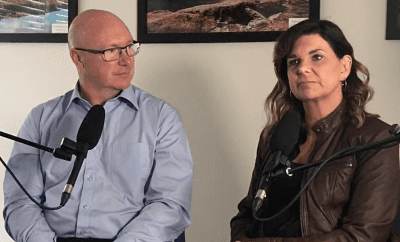
 This international edition of Mormon Stories Podcast includes our interview with Amanda and Matt Ireland about their experiences as Mormons in Australia. This story includes their relatively recent faith crisis, and their being threatened as apostates by their local leadership for speaking openly about their doubts/questions with the church. Amanda and Matt also speak openly and bravely about how they dealt with issues of mental health in their marriage and how they now find happiness in life outside the Mormon faith.
_______________________________
Part 1: Amanda and Matt describe their Mormon background
Part 2: Amanda and Matt describe how their faith began to unravel
Part 3: Amanda and Matt discuss possible disciplinary action as a result of this interview. They also discuss their life now in terms of spirituality.
_______________________________
Episode Transcript
Host: John Dehlin · Guests: Amanda Ireland, Matt Ireland
This transcript is machine-generated and lightly edited for readability. The audio is authoritative. Please excuse occasional errors in names and spelling.
Introduction and Episode Overview
Part 1 of 3 · Ep. 897
Guest [00:00:00] We like to throw rocks at the people who don't see the world in the way we do.
John Dehlin [00:00:11] Mormon Stories is a production of the Open Stories foundation and relies solely upon the support of people like you, its listeners to help keep the podcast alive or to become a member of the community. Please become a monthly subscriber by visiting MormonStories.org and clicking the Donate button on the top right side of the page. All contributions to Mormon Stories are completely tax deductible and go towards producing the podcast and building communities and programs of support for Mormons like you. Thanks for your support. Hello everyone and welcome to another edition of Mormon Stories Podcast. I'm your host, John Dehlin. The day today is March 26, 2018, and we have a very important and interesting podcast for you all. Today on Mormon Stories, we're going to be interviewing Amanda and Matt Ireland. They are listeners of Mormon Stories Podcast from Australia. They're going to talk to us about their life as Mormons in Australia and they're going to talk about a recent faith transition which they've experienced and kind of where they've come out. Before we actually jump into that story, however, we have a lot of news and so we want to cover it all. First and foremost, we're really proud to announce that we have made public our sexual harassment policies. So but probably half a year ago we got some feedback from some listeners, from some former listeners, and we realized that in this Harvey Weinstein MeToo era, it was just really important that we did all we could to make sure we were thoughtful and mindful and compliant about how we handle matters of sexuality and sexual harassment. We hired a consultant and over the course of several months worked with the consultant to come up with a sexual harassment policy that has been made public. So if you go to openstoriesfoundation.org you can click on the sexual harassment policy and read about it. This is just one small thing we've done, along with our board of directors, to make sure that we are responding as we should to just this increased awareness and sensitivity towards matters of sexuality sexual harassment. We've also released our financial report in the Open Stories foundation for 2017. So if you go to openstoriesfoundation.org, you can find the financial report there's that's us living up to our commitment that we've had for years and years to be financially transparent as a 501c3 nonprofit. You'll find in that report more than the IRS requires us to disclose, and we invite our donors to check that out to get a clear sense of where their donations are going. Even more importantly than that, we have some other news so many of you have been listening following we covered last week the Joseph Bishop scandal where Joseph Bishop, the former president of the MTC audio recording was leaked of his and we interviewed Ryan McKnight of Mormon Leagues to discuss that. We have had more news break to follow up on that. So the first thing we wanted to make sure you all knew about last week on Mormon Stories podcast, I believe it was on Friday we interviewed a man named Christopher Swallowed. Christopher Swallow is the second story that we've shared on Mormon Stories podcast now about church cover ups and sexual harassment. So what Christopher told us in his story, which is not released yet as a proper Mormon Stories podcast episode, Cody's going to be editing that soon. But what you can do is go to the Mormon Stories podcast page and you can view Christopher Swallow's story. In that story he tells us about a man that he interacted with, a family member named Lowell Robison. Lowell Robison was a prominent businessman in the Provo community. And Chris talked about he and his brother and another person close to their friends and family were all groomed and sexually abused by this man, Lowell Robison, who later was called as a mission president. And so when Christopher and his brother went to Salt Lake City, spoke directly with Earl C. Tingey, who was a general authority at the time, and reported that this pending mission president had sexually groomed and abused these young men. Earl Ctingey did nothing about it. And this man, Lowell Robinson, ended up serving three years as a mission president. So it's a second instance that we have where the church is, has suppressed or covered up sexual abuse of its leaders and protected the abusers at the expense of the abused. Christopher also told a heartbreaking story about how he received no support from the church. All Elder Tingey wanted to do was to get the information and silence it. And to this day, Chris Swallow has received no support from the church in terms of the abuse that he experienced and at the hands of Lowell Robinson. And then this morning, Mormon Stories podcast has now released a third instance of the LDS Church covering up sexual abuse and a sexual abuser. We just learned from one of our listeners that a man named Richard Sampson, he was a physician in the Provo Orem area. He served as Bishop from 2005 to 2010 and he also served for we don't know how many years as a physician or a doctor in the Provo mtc. We just found out that he was convicted of sexual abuse in 2013, 2014 timeframe. He is now serving time in prison, I believe. But what we know for sure from our tips as that this story was suppressed and covered up. You won't read about this former MTC physician anywhere in the papers, this former Mormon bishop anywhere in the papers. But we do have his mugshot on the MormonStories.org website. If you go to MormonStories.org news, you can find this story. It shows his mugshot, it shows his criminal record. And what we're trying to figure out is how much of the abuse happened before he was a bishop, how much of the abuse happened while he was a bishop, how much of the abuse happened while he was a physician with the mtc. And what this represents is a third story that we're finding of COVID up of sexual abuse. And what we want, the reason why we're doing this is not actually to call out abusers. We obviously condemn abuse here on Mormon Stories podcast. But at the same time, our focus isn't really to punish or even malign former abusers. But what we are trying to call attention to, number one, is the very damaging teaching that the LDS Church has that its leadership are called of God. What we're finding are numerous former and current sexual abusers that are being called as bishops or MTC presidents. And something that the church needs to do away with immediately is teaching its members that its leaders are called of God. Because when these men are called and members believe that they're called of God, that gives them far more power than they should have when they're sexual predators. So we're calling on the church to change that. We're calling on the church to stop this practice of covering up and protecting sexual abusers at the expense of the abused. We, we found out now that with the Joseph Bishop case, the victim that recorded the audio, Joseph Bishop had been reported to the LDS Church somewhere between five and seven times by two different victims. And so we know that for many, many years, the LDS Church has known about Joseph Bishop as an abuser. They've done nothing about it. They kept him in callings, even including in the Sunday school. And it's just unacceptable that the church knows about these abuses. They cover them up at the expense of the victims. And it needs to stop. Another thing that needs to stop is the LDS Church doing what it did in January, which was to approach the Utah state legislature and try and get the Utah state legislature to pass laws making audio recordings with bishops and stake presidents a felony to release. We think it's kind of despicable that when the church was handed this audio recording of Joseph Bishop that it immediately went to the Utah state legislature and tried to manipulate the sovereign state legislature into making it a felony to share such audio recordings in the future. The church has to stop that. And then, most importantly, the church needs to start believing sexual abuse victims and providing aid and comfort to them. And instead of only providing a hotline for the bishops to Curtin and McConkie that Curtin and McConkey can then use to protect, further protect the abusers at the expense of the victims, offering very little to no support for the abuse victims themselves. So what we're calling with Mormon Stories, we're calling an all out sort of spotlight investigation where we're encouraging Mormon stories listeners, their friends, their family to email us@mormonstoriesmail.com tell us of any instance you're aware of where someone has been sexually abused and it's been covered up by the Mormon Church. We are going to keep telling these stories over and over and over again until the Church fixes the problems that I just outlined. And so if anyone has any information related to Dr. Richard Sampson, what we know again is that he was bishop of the Provo Peak 7th Ward from 2005 to 2010. What we know is that he was a doctor at the mtc. And we are trying to find out was he disciplined? Was he disfellowshipped, Was he excommunicated? When did these abuses happen? Before or during or after his time as bishop? Before, during or after his time as physician to the MTC. Any information you can give us on Dr. Sampson would be super helpful. One tip that we've already received is that at least one ward member, his temple recommend, was taken away by Dr. Sampson for masturbating while Dr. Sampson was bishop. So here we have a known convicted child molester taking the temple recommend away of one of the members of his ward for masturbating. That's just one little tip that we have. Any other tips you have regarding Dr. Sampson or any other sexual abuse case we would love for you to share with us. Email us at MormonStories. Okay, well, that's a really long sort of set of news to introduce a Mormon Stories podcast. We really want to welcome everyone who's joined us live on Mormon Stories Podcast. We really love having live listeners joining us and we hope that you enjoy this new setup. We have a new setup. We're in Mormon Story Studios in Salt Lake City and we have a three camera setup now where we're hoping to give you better cinematic, video, graphic sort of quality and audio quality with our interviews. So we hope that you enjoy the video and audio quality. But most importantly, we're very eager to have those of you who have tuned in with us live share comments and questions in the Facebook newsfeed. So, so please do share anything you have with us. If you have any other feedback, suggestions, whatever, please, please do share. So without any further ado, we want to welcome Amanda and Matt Ireland to Mormon Stories Podcast. I hope you're okay with that very long preamble.
Matt Ireland [00:12:51] Yes, that's fine.
John Dehlin [00:12:52] John.
Matt Ireland [00:12:52] Thank you very much for having us all the way here from Australia.
John Dehlin [00:12:55] You too, Amanda. Welcome.
Amanda Ireland [00:12:56] Thank you.
John Dehlin [00:12:58] So we, we always like to cover international stories on Mormon Stories podcast. We also have been covering several couples who have gone through a faith transition. That's something that's really relevant, but we're also just relevant to understand kind of your experiences as Latter Day Saints in Australia and have you share anything else you want to share. So welcome. Thanks for joining us.
Matt Ireland [00:13:20] Thank you very much, John. We're happy to be here.
Matt and Amanda Growing Up LDS in Sydney
John Dehlin [00:13:22] All right, so let's see, how do we begin? I think, Matt, since you, you actually were raised lds, Amanda, we know that you were a convert and we'll talk about that later. Maybe, Matt, we can start with your kind of LDS background and what you want to share about that as a precursor to your story.
Matt Ireland [00:13:44] Sure. I was born in the church. My family was converted by American missionaries, which they predominantly all were back in the 50s when my parents parents were converted and tracted out in a suburban part of Sydney. They joined the church. My father was baptized with his brother and the rest is sort of history from there. From the 50s, mum and dad met again. They lived in a very suburban part of Sydney, which is a lot smaller back in those days than what it is today. They were raised in the church and did everything in the church. We obviously came along. We lived in a very large ward for the area. Mum, I think, was primary president at one stage and she had I think about 100 children in the primary of which there were four of her own children there as well. So it was a very growing area, very bustling sort of family area. Being raised in the church myself did all the standard things, primary young men's going through the church. There's probably nothing unremarkable or anything different to anyone else's upbringing. Our parents did their best to raise us and try and have family home evening with three crazy boys and one less crazy girl. Trying to listen, but we did all the things, scripture study and family prayer and all those sort of things that we all do. Sort of growing up unremarkable otherwise, but probably a little bit different in the sense that we're a long way removed from here in Utah. So everything that was happening in the church was happening somewhere else other than in Sydney.
John Dehlin [00:15:52] So did you love your upbringing in the church?
Matt Ireland [00:15:54] Absolutely. I had a very, very positive time. Lots of friends, lots of activities. Things were a bit different back then. And I know some of the people on the podcast here have mentioned, you know, the differences sort of in the 70s and 80s growing up, a lot of road shows and even athletics carnivals and all those sort of things that the church put on. It was a very different cultural upbringing back then as it is now. A lot of dances and social activities. Again, sort of throwback from what was happening here, but a very, very positive experience and. And had a really good time.
John Dehlin [00:16:34] How would you say your testimony as a teen was sort of formulated? Did you feel like you had a literal testimony of the church's truthfulness?
Matt Ireland [00:16:43] And if so, yeah, it developed. I was always a bit of a questioning type of person, and so it didn't come naturally to me to have the testimony that some people talk about, I guess, sort of forwarding through a little bit. Just before my mission, my bishop suggested that I read the Book of Mormon. I had read it before, but that I read it and ask if it's true, as in Moroni's promise in the end, which I did. And I had a very positive experience from that. And so that was probably the. The birth of my real testimony in the church. And subsequent to that, I served a mission.
John Dehlin [00:17:33] And so you probably would say that you believed the church was true and knew it was true and testified that it was true and all that.
Matt Ireland [00:17:42] Yes, absolutely.
John Dehlin [00:17:43] Okay.
Matt Ireland [00:17:44] It was something very literal. The Book of Mormon was literally true. The things that we believe in the church were. Were literally true. And I was happy to go along with that line.
Amanda's Conversion to the Church
John Dehlin [00:17:58] Okay, Amanda, so you were a convert. How in the world does someone convert to the church? What decade were you convert to the church?
Amanda Ireland [00:18:10] So I joined in the 90s, early 90s. So initially when I was 17, I was finishing up high school. And I think it's quite normal for adolescents to start to question, yeah, what am I here for? What do I want to do? Those really critical life questions are about your identity. And the church ran a television ad campaign for what then was the video Our Heavenly Father's Plan? And to my Knowledge. It was their first TV series like that. And that ad had those questions about why are you here? You know, is there a purpose in life? And at that time that really spoke to me. And so I called up for the video and missionaries, you know, dropped it in and started to meet with the missionaries. My family were immediately really concerned. I'd been Catholic but wasn't raised active Catholic. But there were times as a Catholic in mass that I would think, I don't think that God would run a church this way. And so I think that helped me search for something else. I did want to do what God wanted me to do. And so seeing that ad just touched me and went, this could be it. But the negativity from my family around the church, they felt that I was being taken advantage of by young, good looking Americans that are coming to your house and visiting you a few times a week and, you know, lots of involvement. And my mum especially saw me as a naive, young, vulnerable person. And so it did take me about two years to join the church. I ended up because of the really strong hostility at home about it. I moved out of home so I could pray and find out if the church was true. I was at college full time, I didn't have any money. But I've read in the Bible where it talks about if anyone loves their father or mother more than me, they're not worthy of the kingdom of God. And so I took that literally and moved out of home and left my family. And within a week I was baptized.
John Dehlin [00:20:50] So did that leave you estranged from your parents for getting baptized?
Amanda Ireland [00:20:55] It was a very strained relationship for maybe even for years. For years it was very difficult. And at one stage I was advised by a bishop who clearly doesn't or didn't understand the level of conflict that the church had given put in between my family because the church celebrated that I'd left my family, that I'd put God first, that that was a noble thing to do. And my family felt very betrayed that I'd chosen a church above them. And so a bishop assured me, you move home, they'll see that this is a good thing for you. And I was really going back into highly stressful, conflicting, difficult relationship, which was not healthy probably for either my family or myself. But yeah, I believed that that would happen if I went home, that their hearts would soften, they would see that I was the same Amanda as I was before and they would be proud that I'd made a good choice. But that that took many years to, to heal that. But I loved, I loved the church. I didn't, I didn't regret for a second the choice that I'd made. I. When I was finally baptized, I'd been meeting with sister missionaries and they were just beautiful. And when I thought, how do I want to be? That was how I wanted to be. They were kind and funny and intelligent and just lovely, lovely girls. And so I could relate and went, that's how I want to be. And therefore the church is a good place. And so I loved it and I really believed it with all my heart. And I felt so grateful to have felt like I'd found the truth.
John Dehlin [00:23:04] Would you have had any exposure? I'm thinking the early 90s, maybe a lot of the kind of spotlight related information relative to the Catholic Church maybe hadn't come out yet. The news reports about the sexual abuse by the priests, would that have been anything you were exposed to?
Amanda Ireland [00:23:23] No, no, not at all. Not at all. I was aware of other abuses within the Catholic Church, church that had directly affected my family. Not of a sexual nature, but of a physical, physical abuse. And so I was aware of that side of it. But Mormonism to me just felt like this breath of fresh air. It was this, it was a different time. And the culture really around that time was there's a plan of salvation and you're special and God loves you and has a plan for you and families can be. It was around the time that they released Together Forever. So the idea of when you're, you know, 19 years old, of having an eternal family, being able to be married and have that marriage continue forever, that's a beautiful idea and concept. And so I felt very, very, very blessed and glad that the church had come into my life.
John Dehlin [00:24:34] Excellent.
Matt Ireland [00:24:35] And certainly looking back at that time, John, it was a very different time in the church for me, as I guess we've all sort of lived in roughly the same time frame, that it was a very positive message that the church was sharing. As Amir was saying, it's all about families. And I remember the videos that we show on our mission about what is real. And all those ones that I'm sure you've seen a very positive message of. You can find the truth and the truth is about families and positiveness. And that's what they were pushing. And I thought that was a very positive, very positive message. Unlike some of the messages that we've heard today that you've mentioned and other things that are sort of happening in the church and the thrust of where the church wants to go with how it wants to be viewed is very different, I think, than how it was in the late 80s and the early 90s when we were in our sort of formative years in the church. It was a very, very positive time to be a member of the church.
Amanda Ireland [00:25:38] It was exciting and it really did feel like. And we were being told that this gospel is sweeping the earth and this is a message for everybody that you have a father in heaven that loves you and that you can have an eternal family and that people would be converting in droves across the world with this beautiful message.
John Dehlin [00:26:01] Yeah, yeah, they. I remember. I remember those videos like Families Are Forever and Our Heavenly Father's Plan. They're so slick. They had Michael McClain music. They made you feel what you thought was the Holy Ghost. And they would tell you this message about babies dying and families being forever. And, you know, with these clean cut, fun, charming missionaries coming by, I can just see how that could make someone susceptible to a message. Real quick. I have the perception for some reason that Australia and New Zealand are more secular than, let's just say the United States and maybe other areas. Is that true?
Matt Ireland [00:26:43] We were talking about that last night.
Amanda Ireland [00:26:44] Absolutely.
John Dehlin [00:26:45] Would that have been true when you guys, you know, kind of grew up?
Matt Ireland [00:26:49] Perhaps to a lesser extent, but like everywhere. I mean, we've travelled a fair bit here in the US and the amount of churches that are around are far more than what there is in Australia and New Zealand. Very much more. A secular society. Yes, by a long, long way.
Guest [00:27:08] Yeah.
John Dehlin [00:27:09] Well, go ahead.
Amanda Ireland [00:27:10] I was just gonna say, having said that, though, when I was at college, because that's sort of. I was at college when I joined church and even though it's secular and a lot of people don't believe, everyone was very supportive of me joining the church. You know, there was this. Just because other people aren't religious, I still felt extremely supported in my right to choose to be religious and to live that way. So there's a lot of acceptance to. For whether you want to attend church or don't. It's not at that stage. Definitely not looked down upon.
Matt Ireland [00:27:51] I think that's probably more our culture. She'll be right, mate. Whatever you want to do.
Amanda Ireland [00:27:54] It's probably changed a bit more now. Yeah, but at that time. Yeah.
Matt Ireland [00:27:59] Very secular.
John Dehlin [00:28:02] Yeah. It makes you wonder what. How kind of with the Internet and with the modern age, how anyone could end up sort of potentially joining. But we'll talk, we'll talk more about that later. So, Matt, let's go back to you. Anything you want to talk about your mission, that's of note.
Serving Missions in Australia
Matt Ireland [00:28:18] I served in Brisbane mission 91 to 93. I still have contact with some of my mission companions. It was a wonderful time. I was district leader for most of it and zone leader for a little while. So, look, it was a very positive experience. I liked my mission. I liked sharing the gospel. It was very positive. Like any mission, people do things wrong. There's plenty of stories there, but probably no different to any other mission. But a very positive experience. And I think in a lot of ways it prepared me a lot for life. Serving a mission is all about talking to people about something that ultimately, at least for most of it, they don't want to talk about. And that's a good skill to have, I think, in most jobs and those sort of things. So I look back positively at that experience and I appreciate the skills that it gave me as I move forward. Having said that, the only caveat on that is that obviously with having left the church and not going anymore, there's a sense of. I was going to say guilt, but maybe that's not the right word. I didn't know anything different at the time, but a sense of something. As I look back and I've tried to contact a couple of the people that we baptized and to my knowledge, actually all of them have left the church. But I've contacted a few of them and had a chat about their stories and I've chatted about mine.
John Dehlin [00:30:08] We can talk about that at the end. But you had a great mission.
Matt Ireland [00:30:13] Loved it, enjoyed it. Fantastic.
John Dehlin [00:30:15] And Amanda, when you chose to serve a mission too, is that right? And that would have been back in the 90s, maybe, when it wasn't common, as common for women to serve missions. What made you decide to be a missionary and how was that experience for you?
Amanda Ireland [00:30:29] I think probably because I joined the church when I was 19 and so I finished college when I was 21. And so it was kind of perfect timing. And I really loved the message of hope that the church presented. And so because of the joy that I felt that it had brought to my life, I really wanted to share that with other people. So I was called to the Provo, Utah mission and was very excited. If there was conflict with my family prior or around me joining the church, it amped up significantly in preparation for my mission. If my parents had the views that I'd joined a culture, having their young daughter now taken off to Utah and they had fears of, you know, me being forced into some polygamous marriage and they'd never see Me again. So they were extraordinarily worried about me serving a mission in Utah. It probably would have been an easier pill to swallow had it been somewhere else. But the Mormons dragging their daughter off to Utah was, was, yeah, not, not, not seen as a comfortable thing. The. I think that really impacted my experience in the mtc.
John Dehlin [00:31:59] So overall, how would you rate your experience as a missionary?
Amanda Ireland [00:32:07] It was extremely difficult from the beginning when at the mtc, when our bishop or branch president over the districts that you have when you're in the mtc. My story of, you know, leaving home to join the church and this sense that I'd sacrificed so much to join the church was held very highly. And so on one hand there was sort of a sense of almost status and I'd. Before my mission I read the standard works. I'd done everything I could to prepare for my mission. And so I was kind of held up like, you know, this is someone that we should try and be like that sacrificed so much for the church. The difficult for me was on one of the evenings there was a fireside or a meeting where a leader talked about unresolved sin and that if anyone had unresolved sin that they needed to go talk to their. I think it's called a branch president in the mtc. I'm not sure what it's called, but the equivalent of your bishop in the mtc. And so I was very racked with guilt. There was, I guess, two incidents of what I would consider minor violations of the law of chastity. But I just felt so guilt ridden around it. In order to meet with that bishop, I had to go through my district president who was in my class, who is, you know, some 19 year old kid and you're having to ask permission for him to contact the bishop, for you to meet with the bishop so he knows that you have an unresolved sin. And then you're having to confess that to the bishop, which was just absolutely mortifying. And so I felt from that I went from, you know, being sort of an example or you know, that I'd done so I'd given up so much for the church and all of a sudden that was destroyed because I was having to confess over said what I considered minor chastity violations. And that was just humiliating. And how it led me, you know, made me feel. And from then on I felt judged differently. I felt that instead of that praise and respect that I was marked, you know. And I was also worried that the bishop would then contact my mission president. So we've got this sister that who has confessed to this. You're going to have to keep an eye on her or whatever. And so that guilt and shame that I hadn't felt prior to the MTC was really difficult. And to know that I was so isolated, separate to being isolated, in a different location, another country from my family, the way I had left and how estranged our relationship was put me in a really vulnerable position to feel really isolated and to not really have anybody to talk through any of that or to support me through that. And so that was really difficult for me.
Mental Health Struggles During Mission
John Dehlin [00:35:57] Did that follow with you throughout your entire mission, that the fog of that experience?
Amanda Ireland [00:36:03] It did. As a result of that and only I was able to stay on my mission for four months. I didn't realize it at the time, but I was experiencing classic anxiety and depression symptoms. When we would teach, my companion would have me retell my conversion story. And so over and over again. A conversion story should be positive, but my conversion story was traumatic because of what it had done to my family and how painful that was. And so you're being asked over and over and over again to retell. I mean, I was glad I joined the church, but it was still a highly traumatic experience and to have to keep reliving that over and over again was. Was horrible. I started to not be able to get out of bed, to have no energy, to feel overwhelmed, to not feel like I wanted to go out of the apartment and meet with people. I was sort of forcing, just sort of white knuckling through it. I met with my mission president after a Zone conference and said, I'm really struggling here. I feel extremely unwell. I said, can't get out of bed. And his solution was to send me. So a missionary couple took me to Salt Lake to meet with an Elder Stanley. I think he was in the first quorum of 70. And so to talk to him about what was happening and whether I should go home. I shared with him the exact same symptoms and it is probably typical of the time, but due to no mental health knowledge, neither my mission president, neither or the general authority I met with recognised that my symptoms were classic anxiety and depression. And had I have been able to receive treatment on my mission, I'm confident I would have remained on my mission. But that remained undiagnosed and I went home after four months and I was a mess
John Dehlin [00:38:42] real quick. Sometimes when a convert becomes someone exchanged from their family for converting, they're actually celebrated and they're encouraged to tell that story because it sounds so good. It's almost like you were so courageous, you were so noble, that you were willing to join the church even in the face of adversity. Did your story get received that way? And did that. Did that complicate at all, your telling of it?
Amanda Ireland [00:39:14] Yeah, absolutely, it did. Unfortunately, there's a. There's a. I can't think of a different word but a status to it. And, you know, you want to do the right thing. You want to. Yeah, it really fed into. Fed into that. And I felt such guilt that on one hand, I was so grateful for the gospel. I wanted to force myself to stay and work with people and share this message, but I was just so unwell and didn't know what was wrong. And so that was very difficult. So it was sort of years before I actually found out what was wrong.
John Dehlin [00:40:06] I'm so sorry.
Amanda Ireland [00:40:07] So, yeah, I wish it could have been diagnosed. And I hope that mission presidents now and just general church leaders are more aware of basic symptoms of things like anxiety and depression, which is so common and so common with missionaries. Based on the environment of the mission, it lends itself to missionaries feeling isolated from their families. And they're young and they're vulnerable and they work long hours. And so it's sort of a bit of a perfect storm if you have that sort of predisposition or it puts you at such a greater risk for those mental health issues to come up on your mission.
John Dehlin [00:40:58] I know that in my mission, in so many missions, kind of the wife of the mission president is viewed as sort of the mother of all the missionaries. And if that mission president's wife happens to have weird or unscientific or goofy or unhealthy views on physical and mental health. Sometimes missionaries physical and mental health needs can be either completely neglected or improper. Recommendations can be made. And we don't know how much training mission presidents and their wives receive related to physical and mental health. And so we could do a whole Mormon story series on physical and mental neglect of Mormon missionaries.
Amanda Ireland [00:41:51] If I'd have even been sent to a general practitioner doctor. I'm not sure what you call him here, but at home we call it just a general doctor. Any doctor would have seen, heard the symptoms, and said, yeah, we need to. And maybe even just knowing that that's what was happening would have assisted me in going, okay, right.
Matt Ireland [00:42:17] I think there was some, you know,
Amanda Ireland [00:42:18] what you're dealing with.
Matt Ireland [00:42:19] I think there was some document. John, did you release, or was it WikiLeaks about mission presidents training? A whole PowerPoint series of PowerPoint slides. And I have an interest in mental health, and I think some of the slides were to do with mental health, but from memory they weren't. They were there, but they weren't great. And they're only recent ones. So I think, unfortunately, mission presidents, if they don't have any prior training in mental health, probably don't have very much more now than what they did back then.
Marriage, Family, and Early Church Life
Amanda Ireland [00:42:54] Right,
John Dehlin [00:42:56] so you both come off your missions. Who wants to tell the story of how you met and got married?
Matt Ireland [00:43:03] Maybe I'll tell it. So I didn't know Amanda before I left for my mission. You had heard of me. So my dad was the ward mission leader at the time, and sort of towards the end of my mission, he had a very sprightly young lass as a ward missionary. That was Amanda. And so in the letters that we would exchange between my family and I, I was told about Amanda from my parents. Oh, this lovely young lady. Maybe you might want to meet when you come back. Interestingly, my patriarchal blessing says that my wife will be for my choosing. And I sort of feel that maybe my parents chose her for me, but maybe we'll claim each other now. But. So I came home from my mission, Amanda came home from hers. We dated other people and whatever else, but after a fairly short period of time, we met. I remember meeting at Mum and Dad's house. I think you were there for a mission meeting or something with dad. And I'd heard all these things about Amanda and I think she'd heard some things about me. And we finally met, and I don't know if it was love at first sight, but it was pretty close. I saw her and was just amazed at how beautiful she was and how much she glowed. And I remember that very, very much about our first meeting, how long after that? Maybe you can help me with the dates.
Amanda Ireland [00:44:45] We were friends for a little bit, but once we started dating, we were engaged after two weeks and married nine weeks after that.
John Dehlin [00:44:53] What? Nine weeks? Engaged after two weeks, married after nine weeks. That's not just Provo. That's.
Matt Ireland [00:45:01] No, that's Provo Plus. I think we both look. I guess ultimately people do that and marriages don't last. We're just celebrating next month, our 24th wedding anniversary. So at least at this stage it's lasted. And we planned on making it last a whole lot longer now. But look, we felt right about each other and we felt that that was the right thing to do, and we did it. And doesn't mean we haven't had hard times, obviously, along the way we certainly have. And the first part of our marriage was very, very difficult, particularly with some parts of Amanda's family and others in just that transition to being married in that sort of environment. That was really, really tough.
Amanda Ireland [00:45:54] I think when we got married. The rule in Australia, like a lot of countries, is that if you choose to not get married or sealed in the temple first up, you have to wait a year. So if you just have a legal marriage, then you have to wait the year to be. Be sealed. And we didn't want that. I knew that, you know, Matt had been raised in the church to temple marriage first. And so we made that decision. But of course, what that decision meant was that my family were not going to see me get married. I tried to. I'd read, you know, Boyd K. Packers. I think it's the holy temple. It talks about how to include people that can't go into the temple. I tried to do that with my family and involve them in wedding reception afterwards and things like that. But my family, yeah, my family were just too hurt. They couldn't understand why if we could get married civilly first and they could see it, and then us to be sealed 12 months later, why would we deliberately, or why would I deliberately choose a wedding that would exclude them? And so as a result, it was just too distressing. So none of my. My. None of my family at all participated in any way on our wedding day. And. And I was glad that, that I married Matt, but it was really the saddest day of my life. It just broke my heart. I hoped that my family would eventually would say, look, we disagree, but we love you enough to be there in whatever capacity we can, but they weren't able to do that. And so it was very, very sad for me to be in a sealing room with a room full of, you know, some of the people I barely knew, acquaintances, because they were all sort of Matt's family. And other than Matt, there was not one person of significance there for me. And that was really sad. And the. The resulting sort of impact of that extreme sort of hostility and resulted in a really, which is when I finally got diagnosed with depression, a really significant depressive episode which basically lasted two years and resulted in me barely being able to get out of bed. And so we went from 11 weeks of hardly knowing each other to Matt being married to a woman who could barely get out of bed. We still attended church and the best we could and. But it was. Yeah, it was really, really difficult. And Matt had. I mean, I was used to an emotionally turbulent family. Matt wasn't. And so he had no idea how to manage a wife who's so unwell. I even ended up the, the stress resulted in me getting severe dermatitis which was so severe I was hospitalized for 10 days. And it was, it was really difficult. Quite interestingly around that time, Matt decided to study psychology and started his undergraduate in psychology after. So some good came out of that, but.
Matt Ireland [00:49:56] Yes, but it was really hard to see Amanda go through that. And as you know, John, with anything to do with mental health, there's not a whole lot you can do other than just be there from a spouse point of view. And we got counselling from Amanda and medication, whatever we needed. But from my point of view, it was really hard to see the woman I loved go through something so difficult as a result of actually trying to do the right thing. And that was, that was, that took a while for us, I think, both to work through. And that was probably the hardest time of our marriage, I would suggest.
Amanda Ireland [00:50:36] And really it was grieving for all of the conflict that had occurred since investigating the church like the temple. Marriage was the final, the final straw in what was years of extreme stress in trying to negotiate the church and family.
John Dehlin [00:51:02] So some people's depression can be just very biological. It can be inherited, it can be just sort of what they bring chemically and neurologically to their lives. And then other times depression can very much be situational and it's probably impossible for any of us to know to what extent either are really playing in. But is it your impression that your depression, anxiety really was tied to these experiences you were having with the church?
Amanda Ireland [00:51:33] It's definitely very tied to, to traumatic or really difficult events. Medication never worked for me. So there was never sort of a physiological brain, you know, chemical imbalance that medication would help. And it really was probably depression. But two years of grieving and getting through that extreme pain and also feeling, you know, the bishop I'm sure had good intentions, but his advice for me to return home into such a tumultuous, highly emotional and conflicting, not the greatest idea environment was extremely detrimental to my mental health.
John Dehlin [00:52:33] I'm so sorry.
Amanda Ireland [00:52:34] Really detrimental.
Matt Ireland [00:52:35] And I think that goes towards, you know, the discussion about, you know, however, as Amanda said, well intentioned bishops are maybe stick to the, to the spiritual side of things and let others negotiate the complexities of mental health and all the other things that are in life that they're not trained. Sexual assault, all those other things that have experts in the field ready and willing to help people in that you needed that. And as I said, I think that idea represented a fairly big downhill start.
Amanda Ireland [00:53:15] I think the intentions, like he's a good man, the man that we had Bishop as the time. But I think when we come back to absolutely believing that this man is called of God and what they giving you is revelation from God, then if you believe it, how. Why would you do anything differently? So that wasn't an intellectual decision for me. I complied with that out of faith. I'd been given a direction by a bishop, I believe he was called of God. This was revelation. This was the right thing to do and it would have the outcome that he told me it would.
John Dehlin [00:53:58] So tough early years with the church, Amanda, but my guess is you still. You internalized it as you're experiencing adversity for the truth. Is that right?
Amanda Ireland [00:54:10] Absolutely.
John Dehlin [00:54:11] So did that make it better? Did that carry you?
Amanda Ireland [00:54:15] Yes. Yeah. I. I felt. I felt very. I think at that time too, there was a culture around this idea that we really control our own thoughts and that if I just had worked harder, done more, been more somehow more diligent in some way, I wouldn't have experienced that. So there was still this feeling of I wasn't good enough and that's why I couldn't conquer it. Your prayers, yes, you're praying, but they're not good enough. They're not diligent enough, they're not grateful enough. Maybe you're not reading the scriptures with enough intent. So it's quite easy. And I think depression can mean that you turn the guilt back onto you. So it's not the church's fault that you're not coping. It's your fault.
John Dehlin [00:55:07] That makes it worse.
Matt Ireland [00:55:09] Not good for somebody with depression.
Amanda Ireland [00:55:11] No.
Years of Deep Service and Involvement
John Dehlin [00:55:13] So you guys, you've been married 24, almost 24 years. So that's a long time in the church.
Matt Ireland [00:55:19] Yeah.
John Dehlin [00:55:20] So I'm assuming that intermixed with the depression and anxiety, there would have been a lot of years of having kids and serving in church callings. Is that true?
Matt Ireland [00:55:31] Yeah, we both.
Amanda Ireland [00:55:32] That's wonderful.
Matt Ireland [00:55:33] Yeah. We had a wonderful. We don't want to downplay. I'm happy to call. Good, good. And we had a wonderful, wonderful time raising our children in the church and serving in the church. I served in most callings as Amanda. We had a great time. We've moved around a little bit with work. I was a branch president for about five years down the south coast of New South Wales. A lovely coastal little fishing village there. Interesting story about getting called our district president, who's a Lovely, lovely man and his wife and family came down to the hospital where we had just given birth to number three and I think 33 years and she was a day old, I think we were still there at the hospital and we're exchanging gifts and as it turns out, he says, oh, Matt, can I, can I have a chat with you for a second just in the next room? I said, sure, sure, no worries.
Amanda Ireland [00:56:39] So we, I thought how generous they were to have travelled over an hour to come and visit us, visit us in hospital after giving birth to our baby.
Matt Ireland [00:56:48] Little did we know.
Amanda Ireland [00:56:49] Yeah.
Matt Ireland [00:56:51] And he asked how I was going. And at the time we were living about two and a half or three hours from my work. So I'd travel up for a block of days at work and then come back for a block of days at home. So that was pretty hard on our family. He then proceeded to call me or to extend the call to me as the branch president. I was surprised that he would, given my home situation and how little time I was there and not all together there for Sundays either. Some Sundays I would be working, I'm a shift worker, so it made it a bit difficult and I was a bit surprised that he would extend that call. But he knew that and I explained to him that as long as he was happy to call me on that proviso, that I was happy to serve. And so with two other little kids and a one day old and a recovering wife in hospital, I accepted the call to serve in that capacity. It was a little branch. It was a lovely little branch, full of wonderful, wonderful families, but it was small and we were meeting at that time. And perhaps this will show a bit of our experience from our country and perhaps those others around the world that have sort of fledgling units in the church, very much unlike here in Utah where you've got. I think we were driving and we passed about 25 chapels on the way here in a half an hour drive. And Amanda was suggesting that, you know, perhaps three or four different wards might meet at each one. And so very, very different layout. So our branch had about 20, 25 people in it, a number of inactive people throughout the area. And we were meeting in the high school and so we'd have to get there and sort of clean it up and set up the room and the graffiti and chewing gum all over the chairs. And it wasn't ideal. And so after being sustained in that calling, I felt very strongly impressed to get us a new place to be. I can be fairly persuasive at times and I knew some people in the church facilities department in Sydney and we got someone to come down and have a look. And we ended up renting an office space and having them spend some money to convert it to a functional little chapel. And in such a small location, with such a small amount of people, we were able to perhaps get a little bit more than what we deserved down there. And so we had this wonderful, wonderful building, all brand new inside and new paint and everything, and carpet was lovely. And so over the course of that five years of service there, we doubled, nearly tripled the size of the active attendance of a Sunday. We had new people move in, we had reactivated a lot of the old people that were on the books but not coming. And we had a very, very vibrant community down there. And we were known in the community as being a church that you could go along to and enjoy. And the families were positive and good and it was a good time and it was a fantastic little part of our lives down there and a fantastic service. And so, yeah, all the things that you do as a branch president, we did, and Amanda probably was my real first counsellor. I think when you're in such a small branch like that, you rely very heavily on. On each other. And we did, and we had firesides and youth activities and all sorts of things down there.
Amanda Ireland [01:00:58] And we went from the community not having a very positive view of the church at all, to really turning that around. I know, you know, considering at one stage, you know, we might have had 30 active members, we had a Christmas party that had 85 non members attend and have a fantastic time. And so it was.
Matt Ireland [01:01:23] There was more non members there than there were members.
Amanda Ireland [01:01:25] Yeah, it was. It was wonderful. And our kids enjoyed and enjoyed that and.
Matt Ireland [01:01:32] And I think you realise too, when you're in a very small branch like that, again, unlike, I guess, a lot of the experience here, you do multiple callings, you do sort of a little bit of everything. It's a very different type of service. And in Sydney, we're currently in a large ward now. It's very, very different. And again, those that around the world listening to this, in countries that have very small branches will perhaps know what I mean in relation to that. It is a wonderful and very insular, but very tight. And you grow to love people very differently, I think, in a very, very tight sort of way, where you get on with people because you're doing everything together and it's a real sense of community and we really enjoyed that part of our lives.
John Dehlin [01:02:23] And that's something that can be. Well, it can be wonderful. And it can be a little bit disorienting when you have a faith crisis. Because just because you have a faith crisis doesn't mean you didn't have some incredibly wonderful years. And I'm getting a sense from you both that your time serving in the church in that branch were like Camelot years, to use a us metaphor. Were wonderful. Right?
Matt Ireland [01:02:49] They were. And we look back and we talk about those times very fondly together, both serving in the church, but also how we grew together during that time. And so that was good for us personally, but also it was good in our church service. And again, I think we both choose to look back on those times, even though we've both gone through a faith cross or transition, whatever we call it these days, not with cynicism or anything like that. I think we both grew together. We both grew individually. We had some wonderful experiences. We got to meet some wonderful people. And I'll take that. And I'll take that for my life.
Amanda Ireland [01:03:36] I think that because although we were, you know, extremely active and enthusiastic and believing, Matt was always a slightly think out of the box kind of person.
Matt Ireland [01:03:49] And that's a nice way of saying I'm a bit weird.
Amanda Ireland [01:03:53] No. And so. So one of the programs that he started down there was what became KFC Home teaching, Where once a month. Yes. They had fried chicken. Yeah. Kentucky Fried Chicken. So all of the young men and the members of the priesthood would meet and they would go out and everyone would do their home teaching that night. And then they would turn it into an active activity where they went back and had Kentucky Fried Chicken together. And the young men loved it. Everybody loved it. It was said thinking outside the box, not running home. The home teaching program, how it was normally, traditionally run. But it worked. So he had the. Matt had the freedom to not always stick to the rules, but get the spirit of the job done.
Matt Ireland [01:04:48] And because no one was doing their home teaching, it was zero. Zero.
Amanda Ireland [01:04:52] Yeah.
John Dehlin [01:04:52] That's not just a us thing.
Matt Ireland [01:04:54] No, no, no, that's not. We realized that.
Amanda Ireland [01:04:56] And then, of course, I did the typical thing of. Because it was so small, I had 14 sisters to visit on my visiting teaching list. And of course, was doing my visiting teaching, dropping off my message when I went into early labor. We're driving to the hospital and we're dropping into all of my sisters to drop in, you know, cards and cookies and stuff. So we were. We were. We were all in. And we loved it. Absolutely loved it.
John Dehlin [01:05:32] Thank you for joining us today on Mormon Stories. If you enjoyed this episode, please help us make more like it by becoming a monthly subscriber and@mormonstories.org. Rocks is a featured single on Angela Soph's upcoming album, Second Wind, inspired by her struggle with the faith journey out of Orthodox religion. You can find and follow her on social media as Angela Sofband. That's S O F F E on Spotify or angelasoaf.com.
Guest [01:06:21] Cast me your stones I will lay them back at your feet Take my head lets walk among us we like to throw rocks at the people who don't see the world in the way we do I don't know why we all stand in a circle and point a finger or two Tell me how can you see what is buried between Beneath a mountain of smiles we're all thrown in the same blue water of the unknown so leave your rocks at home. The truth is not what but it seems we are told to just be believing the story has never been told and we all need someone to listen to hold our hearts is there. More than we see but we like to throw.
Part 2 of 3 · Ep. 898
Amanda Ireland [00:00:00] We like to throw rocks at the people who don't see the world in the way we do.
John Dehlin [00:00:11] Mormon Stories is a production of the Open Stories foundation and relies solely upon the support of people like you, its listeners to help keep the podcast alive or to become a member of the community. Please become a monthly subscriber by visiting MormonStories.org and clicking the donate button on the top right side of the page. All contributions to Mormon Stories are completely tax deductible and go towards producing the podcast and building communities and programs of support for Mormons like you. Thanks for your support. So maybe this will be part two of our interview, kind of the second segment. So why don't we start by just kind of saying, when did things start turning south in your Australian Mormon experience? It sounds like it was, aside from the early stuff and the challenges with your family, Amanda, it sounds like in so many ways it was idyllic.
Matt Ireland [00:01:22] Absolutely. Absolutely was.
John Dehlin [00:01:23] You both would say that.
Amanda Ireland [00:01:24] Absolutely.
Matt Ireland [00:01:25] Yes. And the fact that we went through that didn't make the church any less idyllic. That was our lives that we were. We didn't use that to look at the church in a negative way. That was something that we were sort of going through at the time.
Amanda Ireland [00:01:40] So, yeah, I never blamed the church or the leadership or had it. That was always about me. So those difficulties were never because of the church. It was the price I paid willingly to be a member and to be true and to put God first in my life.
Matt Ireland [00:02:01] And so I think that makes it all the harder when we went down a different road. So I guess starting in, I don't know, maybe 2013, somewhere around there, I became aware. So obviously that's when the bloggernacle and a lot of the podcasts and you'd been around for a little while, then had started to really take off a little bit. And so people are talking about Seer Stones, people are talking about polyandry, people are talking about.
Beginning of Faith Crisis and Doubt
John Dehlin [00:02:37] So what year was this about for you?
Matt Ireland [00:02:39] About 2013.
John Dehlin [00:02:40] Okay, 2013. How do you hear about Mormon Stories or the Bloggernackle or any of that stuff?
Matt Ireland [00:02:45] Yeah, so a couple of people that I knew and some members of my family had listened to various podcasts. I came across yours, I came across other blogs, all the big ones, by Common Consent and Feminist Mormon Housewives was around then and Times and Seasons, all the big blogs that you read and they often will have links to other, other blogs and we'll talk about you and, you know, it's a pretty small world really. There's a Few blogs, but there's not that many big ones and ones that I was reading, but I was reading a few of them and they would talk about things that I had never ever heard of. They were talking about Joseph Smith with 30 Something Wives, they were talking about aspects of the church's financial position and what they were doing with money. They were talking about first vision accounts, they were talking about early things that happened in church history. I had never heard of many of these things, most of them I had not heard of. And that concept or that idea of hearing things about the church, you hear things in history like, oh, this meeting occurred or whatever, that's not particularly concerning. But when you hear something as significant as, you know, Fanny Alger or, you know, the polyandry, those sort of things that I had not even ever heard of, not even a part of, you think, here I am as a, at least in Australia, a generational member of the church, raised by parents who were thoughtful and intelligent and well read on the church, did four years of seminary and institute, served a mission, been a branch president, subsequently been on the High council. How do I not know about these things? And so obviously you delve deeper into them and you have a think about them and you read about them and you realise that what we had been taught was not what the truth was. And so that process became, for me, starting to unravel from about the sort of 2013 mark onwards. And so there'd just be one after the other. It'd be, you know, learning about the polyandry, then you'd be aspects of church history, mountains, mountain, meadows, massacre, Meadows, massacre, all the various things that happened. And so one after the other and you think it's like being like almost like a voodoo doll and someone's sticking a needle in or something like that. You can probably handle a couple, but as it goes into dozens and dozens and dozens of them, you start to feel a little bit of pain. And that's ultimately what I felt. So you get to a point and you say, well, what do I do about this? How do I make sense of this in my church experience? And so I started blogging and writing as a means of trying to express what was going on up here for me and trying to make sense of it and get people's commentary on how I was going to make sense of it.
John Dehlin [00:06:20] At first, were you hopeful that you could remain believing with all these problems? Were you optimistic?
Matt Ireland [00:06:27] Absolutely. I was confident, like probably everyone would be in my situation, or most people are, that there was a good answer to to whatever question I had. I remember being on my mission and coming across people who had lots of questions and saying, I can answer all of them and if I don't know, I'll go and get the answer. And so I was confident that somebody else could do that for me. Unfortunately, over time, well, they did find answers for me, but they weren't the answers that I had sort of wanted or expected. The answers were some of the things that we'd been taught. And I know Amanda has had experience in this too. Some of the things that you taught were lies, actually weren't lies. And so the church has not been forthright in a lot of those. And you realise these things that I've been thinking haven't been right. And there becomes a cascading element of that over a couple of years for me. And so, as I said, that's why I started blogging, started writing about it, started thinking more heavily and started getting more exposed to again. Your podcast, a lot of the guests that would come on would speak about very hard things in relation to the church. And it came. It was. It was very hard. I think it became very hard up until a point it's, yeah, we'll get answers. And then it sort of reaches this crescendo of a point where maybe it's not possible to come back from this. And so I became very disillusioned and. And distrustful, I guess, in a sense, of what the Church was saying to me. And that was hard. That was brutally hard after our experience.
Communicating Doubts to Spouse and Leaders
John Dehlin [00:08:30] So how did you handle communicating with Amanda? And how did you handle communicating with leaders, bishops, stake presidents?
Matt Ireland [00:08:39] Yeah, well, to answer your second question first, because that's a lot quicker, I didn't speak to bishops or stake presidents. I didn't. My previous experience with that type of thing was not that they were going to be of very much assistance to me at all. Occasionally I'd raise things in high priests and often be shut down as being, nah, that's not, you know, that's not right about polyandry or whatever. People would just say, no, that's not true, that's anti Mormon stuff. You shouldn't be saying that sort of stuff. And even sometimes I had several experiences where I was basically laughed out of the class in high priests and ridiculed for holding what actually is a true belief in some of these things. It was just that people didn't know about it. So they were mean, they laughed. Yeah. And I don't think they were laughing with me.
John Dehlin [00:09:41] So they're laughing in a Hurtful way.
Matt Ireland [00:09:43] Yeah, well, I think so, yeah. But that was. That is what it is. I've got pretty thick skin, so that didn't so much bother me. It surprised me a bit that people would do that.
Amanda Ireland [00:09:55] But a lot of times, like we had a. One of the high priests in our ward worked for CES and was very experienced and knowledgeable. And because Matt was only sharing things that were in the essays, when people would laugh or ridicule him, there were times where, you know, this brother, it'd say, no, well, actually, Matt's right on that. And so there were times when it was corrected, but people were still very.
Matt Ireland [00:10:33] People don't know about this thing. If you're in the church and you don't really want to ask the question, then there's no reason why you would know about Joseph Smith's polyandry or whatever it is that, you know, is a bit the fringe stuff historically. But I didn't get any sense that speaking to leaders about any of these problems was going to be of any assistance about how I dealt with it. With Amanda, I didn't want to come off as being overly preachy, and I didn't believe that I had everything right. And so I. I would just mention things in passing about whether she knew about a particular topic. I'd have her read something or, you know, if something was really interesting, or watch something on a podcast or something like that from time to time. But I didn't want to because I knew how difficult it was for me to process this. I didn't want to say, here's 500 pages of stuff. Have a read and see how you feel after that. That's not something that I wanted to do. So we'd talk about stuff, and we'd always talk about church stuff and, you know, stuff in the home. So that was not unusual to do just in that time. It was about different topics and stuff that was pretty hard to hear. But I don't know if that was your experience in me doing that.
Amanda Ireland [00:12:02] No, I felt Matt definitely used the breadcrumbs, you know, little tiny. That weren't overwhelming. And I think, like Matt, at no stage at that, you know, at that point did we actually ever consider that there wasn't legitimate answers. Like, we both, and I think most even members that leave that in that process, people are generally reasonable where they're happy. They don't expect everything to be perfect. You know, they expect with any religion that there'll be times where there's. The religion says, or church says, this is our stand on this and not everyone's going to agree with it and that's okay. We don't expect to have to understand or agree with every aspect of the church to engaged successfully and faithfully within it. I think it ended up being the sheer number of issues and the depth of them. I think part of as these things were coming up, I think what was difficult for me was when I was first joining the church, I was given anti Mormon literature that talked about, you know, us becoming gods, that, that, you know, God lived on a planet, that Joseph Smith had multiple wives. Some of the more interesting statements of Brigham Young and when I raised that with the missionaries, they, that's all lies. That's anti Mormon lies. And they probably didn't know any better than that. So you know that. So, but not one of those things were lies. They all ended up being true. And the answer was ignore that stuff, read gospel principles, just stick to the, stick to that, stick to the standard. And unfortunately that, yeah, those, those claims weren't true. And I, I don't know whether it's worth bringing up now around said on the whole our, our church journey up to that point had been positive. And then we had a few issues with our, with our children. As our son went into ctr, like in preparation for, you know, that age group to prepare for baptism. His teacher pulled me aside at the end of his primary class and said, you son doesn't understand the law of chastity and you need to teach him about that. And I said, well that's because he doesn't actually isn't developmentally at the position for us to talk about the more accurate or descriptive, you know, to go into sex education with him at that time that in the sense of what
Matt Ireland [00:15:17] he was talking about.
Amanda Ireland [00:15:18] Yeah, he wanted us to completely have that conversation including issues like masturbation with our son. And as parents like I refused to do that, I felt that that was not age appropriate for him to have that sexual knowledge and that to be teaching 6 year olds explicit sexual details to protect them around keeping the law of chastity was, was inappropriate. He didn't have that conversation with my son, thankfully. He, he had that with me. But that, that, that was awkward and uncomfortable and then, but once again I, I didn't see that as an issue or a fault of the church. That was that person, that was that person's choice or view around, around that issue. And it wasn't, it didn't reflect the church not being true. It was just a person.
John Dehlin [00:16:28] Right.
Amanda Ireland [00:16:30] We then had as our Girls went into teenage years, we had lots of issues around modesty and so there was inappropriate lessons around chastity that children, multiple children came out of that and felt uncomfortable around those conversations. On one occasion my daughter wanted to bring a friend to a church dance. It resulted in a lot of anxiety. There was young people not being gained admittance like being sent away from a dance because their clothes weren't viewed as modest enough. And because this friend was a non member she ended up sending 10 different photos to my daughter to see if it was modest enough to be able to get into a dance. And it wasn't and ultimately resulted in my daughter having to lend her address to go to a church dance. And they were still very anxious that they would not be allowed in. And our daughters dressed modestly like they're skirts were to their knee. But the anxiety around being drawn attention to what they were wearing. And when my daughter and her friend actually attended this church dance there was always leaders at the door monitoring what they were wearing. And this particular our Stake Young Women's president looked up and down the girls and my daughter's non member friend said I don't ever want to come here again. The way that lady looked at me made me feel really, really uncomfortable and that it wasn't appropriate.
Matt Ireland [00:18:27] There were men there doing the same thing.
Amanda Ireland [00:18:29] Yeah.
Matt Ireland [00:18:29] As well.
Amanda Ireland [00:18:31] And so it wasn't. There was something different about that experience. Like you know, when kids go to concert, like music concerts and things like that, there's door and there's security to check that they're you know, not, not bringing in things they shouldn't. And so being checked going into a dance is a reasonable, you know, that that happens. It was the way it was done. And I was really upset to feel or to find out that my daughter's friend felt so uncomfortable and she used the word inappropriate and felt violated the way she was looked at. And her mother contacted me separate about this and I met with the Stake Young Women's president about this and said it was described as feeling creepy uncomfortable. You know, is there a way that we can. That you can still ensure those without. Without engaging in a way that's going to lead to children feeling so uncomfortable and so fearful that they may not be allowed in the dance. And this then followed into. But once again that that wasn't a church issue for me. That was an individual, you know, isolated. Our girls went to FSY like for strength of youth activity had very, very strong. It took on the same dress standards as byu so no short like shorts had to be below the knee. And our girls said, even though they had modest stresses, were very, very anxious about going. One of our daughters had a dress that was to her ankle, but had a split up to her knee. And at the activity, as she went into the dance, they took her into what was called the solutions room, where a leader basically pulled up her skirt and pinned the split. And that felt extremely uncomfortable for my daughter. She. She ended up calling us in tears. So on one hand, we're teaching. The church was teaching modesty and about chastity. And then you're taken into a room and having a complete straight touch your thighs and adjust your teenage daughter's dress.
Matt Ireland [00:21:25] So I guess from that, and that maybe sets up where I had a bit of an issue. This was across the board and this sort of very fanatical adherence to modesty stuff was not something that I felt was contributing to the betterment of my children. And actually, to the contrary, it was. It was harming them. So on, on that note, I did go to my bishop and express the concerns, the two main concerns that I had. One was that the. The standards of our. Of our stake appeared to be higher than the standards in the For Strength of Youth pamphlet. So just without harbouring on it too much, the Strength of Youth pamphlet talks about not having short shorts or short skirts. It doesn't define what they are. And yet our stake was defining what they were. They were saying to the knee, which again, I think is BYU sort of stuff or whatever. That was one concern that I had, that the church, that our stake standards were higher than the church's. The second one was about the whole way that the FSY program was being run, that modesty part of it. There was a whole bunch of other stuff that was. That was completely inappropriate. And so I realised that this was probably going to go a little bit further than just my bishop. But I realised I needed to go to local leaders first. So I approached my bishop. He was hopeless. I went to a councillor in the stake presidency, the guy that looked after the youth. He's a lovely, lovely guy and listened to my concerns, but realised that it was above his pay scale. So he referred me to the stake president. I spoke with the stake president and whilst he listened to my concerns, was like, these are general. The issue of the stake he addressed. Cause he's the stake president, he can address that. And he said to me that he was going to. So I was satisfied with that. The idea of the way that an FSY program is run is beyond his. It's not his purview. So he said that he couldn't do anything about that. So it was then, and this is, I think early 2015, give or take. I contacted my area president who at the time was Kevin Pearson. He's a general authority. He's, I think, a member of the first quorum of the 70. And I've actually got the letter that I wrote to him here outlining my concerns about our stake and about the FSY program, expressing to him that I had tried to resolve this with local leaders of the church and have been unsuccessful because predominantly it wasn't their job to fix. He got back to me after. After a little while and he said some very, very positive things. I never spoke to him, but I corresponded with him directly by email to his LDS email account and perhaps I could just read a paragraph, John, if that's all right, please. Of his response, please, which are very good. He says your letter, blah, blah, blah. Your letter was well written and helpful in understanding your concerns about these issues and the impact they are having on your family and others. In fact, I think you some very strong points which deserve some investigation and response. With your permission, I would like to forward your letter to those in Australia and New Zealand charged with overseeing the FSY conventions and request from them some response to the concerns raised by our letter by your letter. Furthermore, I would like to forward these same concerns to the priesthood department of the Church and to those who oversee FSY within the priesthood department to inquire about the wisdom and necessity of creating dress standards for FSY that are above and beyond those specifically outlined in the For Strength of Youth pamphlet. In doing so, we would be happy to mask any identifying information, et cetera, et cetera. Do you feel comfortable with that approach? So I was satisfied, actually, I was more than satisfied with that response to have a general authority to be in direct communication with me and suggest that he was going to forward my letter to what is a general committee of the Church that has apostles on it, I thought was something very exciting and I didn't think that that would happen. I think he'd just say, oh, we'll look into it and we'll get back to you. But he was very specific with the things that he said that he was going to do. Time went on from that and I didn't hear from him and I presume that it just went into the black hole and nothing was done. Fast forward to the early part of last year. You and I were previously in discussions
Concerns About Church Culture and Policy
John Dehlin [00:26:43] about possibly, should we mention the November 2015 policy.
Amanda Ireland [00:26:49] Yeah, we can, we can do that chronologically.
Matt Ireland [00:26:51] Yeah, yeah.
Amanda Ireland [00:26:51] So I think if we're. So as Matt was kind of struggling with some of the issues with church and I read making sure I was still completely believing and so I didn't want to read anything that wasn't church approved. So I read the church essays. I, Todd Compton's In Sacred Loneliness was used as a resource or reference in one of the essays. So I felt comfortable reading that, you know, saying it was, was quoted in the essays and, and I had concerns about it but I, I still thought that there was, you know, reasonable answers around, around that. And so, you know, sort of, I was sort of moving slowly around that. Yeah. Then the, the exclusion policy of November 2015 came out and I remember Matt calling me at work and it came at quite a, an interesting time for me with. I work for the government and part of that role is collecting or putting evidence before the court. And whenever you put evidence before the court you can be cross examined on, on that evidence. And so I was preparing to be cross examined on evidence that I'd provided. And as part of that process, my lawyer, our government lawyer indicated to me that in being cross examined that the opposing counsel there job was to do everything they could for me to lose credibility so that the evidence which was strong and you know, would be ignored and instead by destroying my credibility, keep the focus on me and not, not the evidence. And, and she, she said to me, you know, Amanda, you've told the truth, you don't have anything to worry about. Just tell the truth and you'll be all right. But expect them to try and do that so that the judge or magistrate isn't remembering the evidence. We're not going to reinforce the evidence, we're going to make it personal. And so when the church first responded with their first statement questioning your credibility, for me, that instantly raised alarm bells because you only need to do that if you're trying to distract people from the actual evidence. So the second that your name came up first, I'm like, why would they need to do that? You just own the policy. You say this is what we're doing. Not everyone's going to like it, not everyone's going to understand it, but this is revelation from God and we stand by it. But they didn't do that. And so instantly, yeah, those alarm bells went off around. That's a deliberate tactic to not focus on the evidence.
Matt Ireland [00:30:23] And I couldn't believe it when I, when I read it. I had to read it about 10 times. Before I thought what it was, was actually what it was. Neither of us could understand why the church would even go close to doing anything like that, given the perhaps positive strides that they'd made up until that point with some of the things that they were doing. So we just couldn't, couldn't get to a point where we could understand what benefit that was to the church. And perhaps the legal stuff people talk about, you know, protecting the church illegally or whatever, I sort of get that, but at the end of the day I don't think that's really right. But it shook us. And that policy really, I think for us marked the, perhaps the point of no return. And we were already tenuous at that point, but that really tipped us like it has a lot of other people right over the edge. And so we, we, we struggled with, with understanding that. And that was just out of the, out of the blue.
Amanda Ireland [00:31:30] And the way it was managed like it was at D. Todd Christofferson's interview the next day. And to say that this is about protecting children because we, you know, we, we love children. And it, he looked at it was just, it was just terrible. And then for it two weeks later, for it was Elder Nelson at the time to say, now it's revelation. So the process separate to the policy, the process of the way the church negotiated that policy was embarrassing, was, was just terrible. And Sid, I just wished in the beginning that they'd have just said this is what it is. And so there was that issue around why. So the infallible leadership for me suddenly was put into huge question because of the way they managed it separate to the policy itself because it was just a mess. And so they should have just stood by and said, we have authority from God. This is the revelation. Sorry, people won't like it, but this is it full stop. So that process was difficult. And so then you met with Bishop. Yeah, and so there was issues around for me, ethically around why gay marriage is an automatic. You know, viewers are now labelled as an apostate behaviour, but not if you murder, not if you're sexually offended.
John Dehlin [00:33:21] Rape is optional. A disciplinary council is optional for rape, mandatory for same sex men.
Amanda Ireland [00:33:26] So suddenly that's the worst thing that you can do. The other side of it is, you know, within my role, we, as the organization I work for, we work under the banner of the United Nation Convention on Rights of Children. And that just, it just does not sit. And when we, at times we would play in primary to help out. And I remember one day they announced a baptism and some of the kids were so excited. They jumped up on the chairs and were so excited. This child was getting baptised. And it broke my heart because I thought, what if there's a child that has gay parents? There they are. How does that child feel? How can they say that? It's that they're doing this to protect or, you know, because we love children so much and to know that they're not going to be baptized at all until they're 18 and only under certain conditions, they're not going to receive the priesthood like the. I just. I just could not sit with that being fair or reasonable to put a
Matt Ireland [00:34:51] child through or necessary.
Amanda Ireland [00:34:53] Or necessary it was. And for them to dress it up that way was offensive to me. I. I couldn't sit. Sit with it. I wrote a letter to my bishop and met with him. The letter said, I acknowledge the church's right to have that doctrine. I acknowledge the Church's right to develop policies that I maybe don't agree or understand. That's okay, but this does not sit well with me. And this is why, at that stage, he had no idea of the policy, so he had to read it. But he kind of got back to me with the D. Todd Kristofferson spin of, you know, we love children and, you know, it is what it is. And I had no further plans about what we were doing about that. I was earnestly trying to understand the policy and find out from some of the couples that we associated with at church that were good friends about how they process it. We've got some. Some reasonable, kind, thoughtful, introspective friends. And so in trying to process this, we talked to people, you know, people. And it was no more than six people. At various times when a couple had come over and it would come up, and it was never this. This is bad or terrible. It's like, so what do you think? How can. Because I was quite happy for somebody to be and open for somebody to say to me, yeah, that's tough, but this is the way I think about it. And for me to go, oh, okay, I hadn't thought about that. So I was open. And my intent in talking to anybody about the policy was to understand it and see, can I make this work? Unfortunately, I thought those conversations were reasonable and appropriate, but it seems that some of those people were concerned about my engagement in the Gospel and in this issue and went to the bishop about it. I would have probably liked it for them to say, amanda, I'm a bit concerned. Can we have a chat about this? But they didn't do that as a result of only conversations in my own home. I never discussed this at church. I never raised this issue in a lesson, in a talk online in any way. And the bishop still deemed it as me behaving in an apostate manner and started to pressure to meet with us on, to, I guess, give direction and to address this issue of apostasy. He was very, very.
Confrontations with Local Leadership
Matt Ireland [00:38:05] So you met with him? You met with him?
Amanda Ireland [00:38:07] Yeah, Well, I met with him because. Sorry. Because of the amount of pressure he was starting to apply. So we were getting lots of emails from him demanding to meet with us. Matt said, I'm not going to engage with that because I'd started the process with what was a really respectful letter and it was causing me a lot of stress, these constant emails and pressure from the bishop. I met with him, and when he accused me of apostasy based on no more than three conversations with, you know, three couples in my own home, I indicated to him that that did not fit the criteria for apostasy. And he basically said, bad luck, and I'm directing you to not have any further conversations with anybody in any way in relation to this issue.
John Dehlin [00:39:17] So he wanted to silence you.
Amanda Ireland [00:39:18] Yeah. And I said, but I've said nothing publicly. Are you telling me what I can and can't say in my own home? He said, yes, I'm telling you and directing you. You cannot talk about these issues in your own home. And I said, you know, it upsets people. And I said, well, I'm not going to agree with you can't. It's unrighteous dominion to tell me what I can and can't talk about in my own home. And then he went a step further to include, which is interesting because I still really hadn't done that either, the information in the essays. And I said, so you're telling me that I can't talk about information on lds.org in my own home? He said, yes, and I'm directing you not to do so. It might upset people, so don't say anything that might upset people. And I said, well, I don't know what's going to upset people. I don't know who's read the essays. I don't know. And so essentially, if I do not comply with that direction, that, yes, I would be disciplined.
Matt Ireland [00:40:39] And just as an addendum to that, too, we had one of my daughters graduated from seminary and did you come along to. Were you there as well?
Amanda Ireland [00:40:50] I can't remember.
Matt Ireland [00:40:52] And we were there, and he pulled me Aside in the hall. And I don't make a habit of speaking. I didn't make it a habit of speaking to him much during this time. But he said to me, look, Matt, just about all the things that are going on, he said, look, just don't talk about it to anyone. So he directed me as well during that time. So he'd spoken to her about not saying anything to anyone and then he spoke to me about not saying anything to anyone.
Amanda Ireland [00:41:20] And at least for me, like there'd been nothing, nothing public whatsoever. What that did do is then if I'm directed to not say anything that might upset people, I therefore can no longer visiting teach. I can't teach a class. I can't have any engagement with anybody because I don't know what I'm going to say, that my aunt upset people. Up till that point, I thought my conversations had been supportive and positive and reasonable. And so it was like this. It felt for me like this ticking time bomb. Unfortunately, I'd felt comfortable about having that, although I was hesitant having that conversation with him. In my profession, I'm used to having tough conversations. I was confident that I could have a reasonable conversation. However, when he actually accused me of being an apostate and that this behaviour being such a. I broke the rule that I'd had for myself and I just wept. I absolutely lost it. I burst into tears. And the reason he probably thinks I did it because I was crying because I'd realized, you know, my folly or whatever. But I absolutely wept because at that moment I knew that he did not have authority from God. Because if he did, and there was a God, God knew that my heart was not the heart of an apostate. My heart was of an earnest, honest, seeking soul that only wanted to understand this, that only wanted to. It didn't. And so I was devastated at that moment because my Mormon dream ended right at that moment.
John Dehlin [00:43:35] What do you mean it ended?
Amanda Ireland [00:43:36] I knew it wasn't true anymore because if he represented God and he would have at some level, even empathetically understood what was in my heart and mind. I was not. Not only did I not fit the criteria of an apostate in my heart, that was not right. And so I knew that he did not speak for God.
John Dehlin [00:44:07] So sorry.
Amanda Ireland [00:44:07] It was.
Amanda Ireland [00:44:08] It was. And it was. It was really awkward because being a male, he. Well, you know, he couldn't comfort me in any way. So I'm just sobbing and. And I was so. I was so upset that because it had never crossed my mind, the church Wasn't true. It was about trying to make it, like, understand it. If I understand it a certain way, it was never on my radar as that it was, okay, the church is true, but there's some imperfect stuff going on and that's all right, we can work through that. But yeah, I sat out in the car for a good 20 minutes. I couldn't drive. I just. I just absolutely wept. And I went, I went home in a mess. And she was said my, My Mormon dream ended.
Amanda's Decision to Leave the Church
John Dehlin [00:44:57] And it must be partially complicated by the fact that you had made such sacrifices to join. So I can just imagine in your brain sort of all the pain and anguish around your family and even the wedding and your parents being excluded, all of that coming back to you and saying, at least at some point, oh my gosh, like, what have I done?
Amanda Ireland [00:45:25] Well, even my mum, I felt, you know, she'd warned me all those years ago and when I actually told my mum because my dad has passed away, but when I told my mum that I'd left the church and I was really waiting for the biggest I told you'd so ever. And my mum wept and she said, but Amanda, that meant everything to you. That was who you were, that was your identity. And so at some level, at some stage, she realized that and it caused her such sadness for me to lose something that was me, that was part of me that I loved. And so I was so grateful for her seeing it that way. But yeah, she. She got that it was everything to me. It was a part of every part of who I was, of every second of every day. And it was gone.
Matt Ireland [00:46:35] And seeing Amanda come home after that too, John, was. Was very tough because those are the things that she was talking about, about. It's, it's. I'm done. This is. This is not something I can make sense of anymore. And in some sense, I don't know if I'd got to that stage myself, but she had. And that was, that was tough to, to see for her. I guess the, the interesting thing post that I think our bishop might have realised something's going on here with these two. This is not good. And so over the course of the next couple of days, he engaged in contact with me at a level that towards the end of it at least, bordered on harassment. I work in law enforcement, so I know a little thing or two about how people can engage in that type of behaviour and when it constitutes an offence. And I had explicitly said to him, because what he wanted was he wanted for Amanda and I to meet with him post Amanda meeting with him to clear the air, to sort it all out. I said, under no circumstances do I want to meet with you. And even more than that, I don't want to receive any communication from you at all. Don't contact me, don't SMS me, don't email me, don't call me, don't do anything. I'm not interested in any way. Do you understand what I'm saying to you? I'm saying don't contact me. Please don't do that. I'm asking you now. And he continued to contact me after that a number of times. My last email to him was, you are now on notice that if you contact me in any way, I'm blocking you from every way that I technologically know how to. But if something gets through, you send something to me, I'm going to obtain legal advice and probably even independent of that, I'm going to get a restraining order against you. Fortunately, he didn't contact me after that because I would have. And I had got to the point where his contact to me, I was doing work. I was trying to work. You know, I've got a busy job dealing with people and all the things that we do. I had no intention, time or inclination to be dealing with emails and harassment from a bishop. So I put it on the line for him and thankfully for him, he decided not to further contact me. But that's the point that it got to where I was threatening legal action against my priesthood leader for contact. And that was not a fun thing to do.
John Dehlin [00:49:33] And how long ago was this part?
Amanda Ireland [00:49:36] This was like April 2016, early 2016,
John Dehlin [00:49:41] still a couple years ago.
Matt Ireland [00:49:42] Yeah. Yeah.
John Dehlin [00:49:43] Okay.
Matt Ireland [00:49:44] So he thankfully decided to stop contact after I made it explicitly clear what the consequences of him doing that was. And I felt a bit bad using that language, but I felt harassed and I had no inclination to meet with him. So his continued behaviour was not welcome. And I tried to give him that indication.
Amanda Ireland [00:50:10] And we'd reached out to the stake president to intervene. Like we'd followed the correct priesthood channels of saying, you know, we're having a problem with Bishop. We've engaged with Bishop to the best that we can.
Matt Ireland [00:50:25] It's not working.
Amanda Ireland [00:50:26] But the stake president just referred us back to the bishop.
Matt Ireland [00:50:31] That was not helpful either.
Amanda Ireland [00:50:32] And I think based on what was a false accusation of. Of apostasy and the way I was treated to then expect Matt and I to meet with him again. Yeah.
Matt Ireland [00:50:50] So we cut off contact from him there. We were still getting some visits from some people in the church, which I got to the point, and I know a lot of people have this particular problem where they have unwanted people coming and visiting them from the church. So I wrote a letter to our bishop indicating in the clearest possible terms that I could muster about setting up boundaries about contact. And I think for anyone. I have heard a few people talk about it, but if there's certainly anyone out there that continues to get contact from the church, if that's not something that you want, my advice to you is, and it worked really, really well in our circumstance, to write a letter to your bishop, outline the exact contact that you want or don't want, copy it to the stake president, and make sure you enforce the conditions. And we wrote that letter and received probably about 99% success rate. So that was something that was really good for us, because what we didn't want, if. If Amanda and I were being accused of apostasy by talking to people about that, why would we want. How could we negotiate contact with members of the church and have conversations about hard issues or any issues without potentially putting ourselves in that position? So, unfortunately, what the bishop did was set up a situation where he virtually cut off our ability to have contact with members of the church. We couldn't speak to anybody because any conversation that we had with them may be deemed to be prostate or on the hard issues or.
Amanda Ireland [00:52:37] Absolutely then was a direct violation to the direction I'd been given.
Matt Ireland [00:52:45] So we're in a bit of a tough spot. And I felt that, at least for me, and Amanda wrote her own letter, but at least for me and the visits that I wanted, I. I had to be very, very clear about. About what I did. And again, that. That worked pretty well.
John Dehlin [00:53:00] That's great advice. Thank you. So two years between then and now, how did things proceed? So did you guys just both stop attending at that point? You were done with Mormonism?
Navigating a Mixed-Faith Marriage
Amanda Ireland [00:53:11] Yeah.
John Dehlin [00:53:12] You'd both lost your faith completely and it stopped attending?
Matt Ireland [00:53:15] Yes.
Amanda Ireland [00:53:16] Yeah, we were lucky. Our kids. Our kids held the same, I guess, social views that we did, especially about the November 2015 exclusion policy. We have a lot of. Especially in my workplace and otherwise, a lot of gay friends. And so the children, they've got a very progressive school. There's transgender children at this school that are being respected in there, in that journey. I'm sorry, that journey and process. And so. So initially, the only. Our second daughter hesitated a bit in leaving. We said to her, we would support her 100%. We would take her. We've put them in this position. You Know, we'll take them to church, take her to church, we'll do whatever she wants to do and support her in that. But fairly soon she was out too.
Matt Ireland [00:54:15] And what we ended up deciding to do was sitting the kids down.
John Dehlin [00:54:19] And how old were they at the time? Approximately?
Amanda Ireland [00:54:24] Yeah, 18 to 14, 15 around there.
Matt Ireland [00:54:28] So all thinking teenagers and got their own opinions on a whole lot of stuff. But it got to a point where we needed to be honest. I certainly felt, and Amanda agreed, that we needed to be honest with them about our position and where we sat and for us to express that to them, for them to express their feelings to us and to work out a way forward. And we were able to do that. And however nervous I was about meeting with the kids in that sense, and a lot of people talk about, you know, their own journey is fine and they can negotiate that, but the kids are the difficult part, I felt that too. And I didn't want the kids to. To lose respect in me, and I didn't want to cause difficulty in the family in that regard. So, as Amanda said, we sat them down, we expressed our feelings, they responded really, really well. They shared some of their own concerns about the church, which they hadn't shared before, which was nice. And we worked out a way forward. And we said to them, as Amanda said, whatever involvement they want in the church, we would be 100% supportive of that, because that's their journey. And we didn't want to stifle that or change that for them in any way, given the way that they had been raised. As it turned out, they made their decision to not attend anymore, and none of them do now. But that was a positive experience for us. And I think maybe not all families have the same experience, but I guess we're lucky in a sense that that's the decision that they all came to. And we would have been supportive whichever way they decided to go. But as it turned out, we were. We were happy with our way forward. And however hard that was, it was a discussion that we needed to have.
Amanda Ireland [00:56:24] And I think Matt, that Matt ultimately took that same process with me that helped me never feel threatened. It's hard when you're a believing member to hear things that upset that apple cart a bit and can set off that defensive, you know, fight, flight sort of thing and process. And so I think that Matt did it, shared his views slowly in a. In a conversational discussion type environment, said little tiny bits. But there was always a feeling that whatever I chose to do, he would support me in it. So I never felt threatened in that way about what they meant. There was a period of time where I really, he would go to high priests when we're active and I would say to him, and I'm ashamed of it now, but I would say, hun, please don't say anything controversial today. Just, I didn't listen to her, please just toe the line. And so I wanted to keep our little Molly Moorman family and resented that he was threatening that. And then I came across, and I came across a comment that he'd written in a post around being bullied in high priests being laughed at. And I had no idea that that was going on. And I felt terrible that he had been going through this alone, that he'd been told that any comments he was making was being monitored by the Stake Presidency. So his safe space in the blog world of being able to process and negotiate these church issues was shut down. And I wasn't listening either. And so when I read that, I felt sad that I hadn't. He'd been extremely thoughtful of mine views, but I had completely ignored his. And so that changed for me and I started to listen and I started to think, he's a sensitive, intelligent, thoughtful person and I trust him. Maybe I should have a real serious listen to what he's saying. And, and if the church is true, when you pull it apart, it should go back together. It's like the, you know, if the, if there's truth, you know, it can't be harmed and if it isn't true, it ought to be. And so it was kind of like this puzzle or Lego set. You should be able to pull it apart, look at it and put it back together. Unfortunately, when you pull it apart, it doesn't go back together the same way. Some people might be able to get it back together in a way that they can still work it. For me it didn't, but I felt really sad and really shocked that a group of high priests who are adult men, we're not sort of talking about 12 year olds in young men's, not that bullying's ever okay, but you know, to have adult men laugh and be dismissive and rude and bullying was, was just appalling. And so if that's something that I wish I'd have done differently, is actually listen. And that comes from a space of people feeling threatened and what they know, their Mormon world, which takes up everything, is being threatened and that's scary, but you can still listen and find a space where you don't actually feel threatened by that. Like why are we threatened by an alternate view? Why can't we just say, yeah, it's okay that you believe this and I believe that. Why? You know, the fact that it sets off such strong defense to it is probably obvious, but also sad.
John Dehlin [01:00:49] Yeah. Well, that's neat that you were both able to get on the same page, and that must have felt. How did that feel for you, Matt?
Matt Ireland [01:00:57] Well, I started before she did, and then she finished before I did. So in true, you know, pragmatic woman style, she got the job done in probably a third of the time than I did, but I took a little bit longer. But it was interesting seeing her more rapid progression. And I guess she joined the church quick and she married me quick. So maybe leaving the church quick was not unexpected, but it was hard, I think, for both of us, seeing that the pain that we were going through. If the church was not something we cared about at all, as you say, we'd just be stopped going. We wouldn't be here talking to you. But it's something we 100% cared about and were engaged in and was a part of our life and part of who we are as people. And so it made leaving all that more difficult for both of us. And perhaps us seeing each other go through that was hard. But we were there to support each other. And I felt that Amanda did that for me, and hopefully I did that for her as well. But
Amanda Ireland [01:02:04] I think the work that you do and some of the. There were some really profound stories that really helped. And I think one of the things that I learned from the stories that have been shared through Mormon stories has been around expecting a grieving process. So when that happened and you go through the anger and the sadness and all of those things, that wasn't a shock to me because it was being discussed here. I could see it coming. And when it comes, you can accept it and say, all right, it's okay to be angry. One of our daughters was particularly angry. She felt a bit sort of ripped off about her teenage years. And it's like, anger's a stage. It's not a destination. It's a stage. And so I think that sort of information helped. I know Marisa Calderwood's story around having the courage to actually say, is the church not true? And that's a really interesting type of faith because you're putting. You are stepping into the unknown and being willing to take whatever answer that is. And so that gave me the courage to ask, what if it isn't true? I know she spoke about having headaches all the time. And I had same thing, headaches every single day. I didn't realise how anxious I was. I thought I was happy as a Mormon, and now I can see how life really is happy. And although we had great experiences, I definitely wasn't as happy as what I thought it was. I was. And there's a high cost of living, the extreme rules and demands that religion can place upon you, and that you end up feeling like it's your fault that you can't meet those demands and you're never good enough.
John Dehlin [01:04:23] Sorry.
Matt Ireland [01:04:23] Sweet.
Amanda Ireland [01:04:24] Sorry, honey.
Matt Ireland [01:04:24] Sorry. I guess as you were talking there, I remember listening to that podcast in bed from Marissa and hearing that comment about her saying that, you know, just give space, you know, that maybe the church isn't true. And I remember how much that affected you at the. At the time. And Amanda spoke about that for weeks afterwards. And it was just something very critical that gave her space to go through what she was going through. And I think that's the good thing about this type of podcast. And I guess part of the reason why we're coming on, sharing our experience, is that that's how we all get through this, and we're all going through it together in our own ways and being a little bit isolated from all the stuff that's happening here in Australia. And there would be other people isolated in other countries far away here as well, maybe getting this and learning from each other. And that's a really good part. So the Maloof story, Lance Miles and his wife, just some wonderful, wonderful, heartfelt podcasts, and the Calderwoods and the Mattsons really inspired us and helped us to go through what ultimately is a really difficult process to answer your question about the next couple of years and what gets us to this point, I guess a lot of that has been sort of negotiating with our family, our respective families. Amanda's spoken a little bit about her family, but also my family, who are all still attending the church. So that's been a little bit difficult. I'm the oldest son. Perhaps there's something there, I don't know. But obviously it's potentially very disappointing for a parent to learn that their child is no longer believing or attending. And so negotiating with families is one thing and something very difficult. That's probably what we've done over the last. Over the last little while. I guess I got to a point where I felt that I needed to inform my family. There's kids and parents sort of geographically, all in different places. And so I chose to send them a letter and that was probably about the best one. I know a couple of people have done that in various forms. And I found that to be something that was really good because it enabled me to get my thoughts down. I could change it. And then when I pushed send, I was. I had to be happy with it at that point. But I had time and space to share my thoughts and to go down that road of telling them in a way that I wanted them. Wanted that information rather than have an argument with somebody or not that they particularly do that. But I didn't want to have to feel like I'd defended myself. What I had done, I had done and I wanted to just share that.
Amanda Ireland [01:07:28] It was fairly short. Like it wasn't a, you know, rundown of every problem we had. It was a really. And it was. Was well received. And when was that letter sent?
Matt Ireland [01:07:41] I sent that, I think around about the time that we had the problems with bishop. So maybe that April. Yeah, May time of 2016.
John Dehlin [01:07:52] Okay.
Amanda Ireland [01:07:53] And Matt's family, we couldn't of their reaction and support said I'm sure inside they're sad, but they couldn't have behaved any better. We feel love. We feel supported by them. We still are happy to attend, you know, baptisms or when we're there, we'll ask about and genuine interest in, you know, how's your calling going? What are you doing now? So that they know that we're comfortable that the church is important to them. They're important to us and we're happy to hear how that is. We don't. If they want to ask us about some of the issues, we're happy to discuss it, but we generally don't. We don't force any of that information. If they want to know, they can ask us and that's been working well.
Matt Ireland [01:08:48] I think we're very lucky in that sense to have a family that can be sad, but perhaps. But also supportive. They're not some things that go easily together. I think for a parent seeing a son do what I've done in leaving the church.
John Dehlin [01:09:11] Thank you for joining us today on Mormon Stories. If you enjoyed this episode, please help us make more like it by becoming a monthly subscriber@mormonstories.org. Rocks is a featured single on Angela Soph's upcoming album Second Wind. Inspired by her struggle with the faith journey out of orthodox religion. You can find and follow her on social media as well. Angela Sof Bam. That's S O F F E on Spotify or angelasof.com.
Amanda Ireland [01:09:57] So judge me, cast me your stones I will lay them back at your feet I see. Take my hand let's walk among us we like to throw rocks at the people who don't see the world in the way we do I don't know why we all stand in a circle and point a finger or two Tell me how can you see what is buried beneath a mountain of smiles? We're all thrown in the same blue water of the unknown so leave your rocks at home. The truth is not what it seems we are told to just be believing the story has never been told and we all need someone to listen to hold our hearts Is there be so much more than we see.
Part 3 of 3 · Ep. 899
Amanda Ireland [00:00:00] We like to throw rocks at the people who don't see the world in the way we do.
John Dehlin [00:00:11] Mormon Stories is a production of the Open Stories foundation and relies solely upon the support of people like you, its listeners to help keep the podcast alive or to become a member of the community. Please become a monthly subscriber by visiting MormonStories.org and clicking the donate button on the top right side of the page. All contributions to Mormon Stories are completely tax deductible and go towards producing the podcast and building communities and programs of support for Mormons like you. Thanks for your support. So I get the sense that you fear potential disciplinary action as a result of this interview. Is that true? And if so, where do things stand now with your leaders?
Matt's Resignation and Interactions with Authorities
Amanda Ireland [00:01:10] We're aware that that could result for Matt around. After hearing Amy and Jake talk aloof after their excommunication, I actually ended up messaging Jake and getting a lovely response. I knew that I had to resign. I no longer wanted to worry about somebody reading comments or anything like that. I wanted to let that go. I was also very concerned about the rate of suicide and harm among the LGBTQ community. And so ethically I did not want. I felt that I was still complicit in that by having my name associated with the church. So I wanted that to end. I was also, as part of work and going to court. You know, there's a lot of discussion around being honest and I felt very upset that for all of these years I had testified that the Book of Mormon was translated by gold plates by Joseph Smith and all of these things that weren't on, that weren't. I didn't know that I wasn't telling the truth. But how many hundreds of times, maybe thousands of times, had I borne a testimony that some leaders would have known was not true and not one person corrected me? And so I felt like the Church had put me in a position of lying and I didn't want that. And so around the anniversary of that policy. So a year later, we had an awesome Stake President. So I got a resignation letter from a friend and organised to meet with my Stake President. I just didn't want to send it off because I was upset about the Church feeling like the Church was complicit in getting me to lie for so many years and teaching things that weren't true. I felt like I wanted to actually tell the truth back to the church and have my voice. So I met with the Stake President on the way overmat came with me and as we were driving over, even though we both didn't believe anymore. I did say to him, you know, that by my resigning, we won't be sealed anymore. I won't be sealed to my children. Are you still okay with that? And he was supportive of that. And, yeah, I met with the state president. He hadn't ever had anyone resign before, so the letter was new to him, but it was really lovely. He, of course, opened with a prayer and I thought, I'm just going to rip this band aid off. And I looked him just as you would. It reminded me of my mission. And just when you bear your testimony and you look in somebody's eyes. And I said, I absolutely know with no doubt at all that this is not the true church of God and his kind of. But I felt relieved that I was telling the truth in the church. After all of those years, I was finally able to tell the truth. And even then, there was still that little part of me. There's a picture of the Saviour behind him, and I'm still sitting there going, okay, God, this is your last chance to get me.
John Dehlin [00:05:12] You know, I'm here to message an angel.
Matt Ireland [00:05:16] Give me a sign.
Amanda Ireland [00:05:18] Flaming sword. Yeah. And. And I knew it was the right thing to do. And the Stake president was just beautiful about it. He said, you're a thoughtful person. I can tell that you're. I'm not going to try and talk you out of this. I can see that you've given this a lot of thought and spoke a little bit about what had happened with the bishop by then. We haven't had a new bishop and he said. Had a discussion around
Matt Ireland [00:06:00] it.
Amanda Ireland [00:06:00] Yeah. He said, I'm sorry that you were treated that way by the bishop. And he said, what would have helped may not have changed the outcome, but what would have helped? What did you need? And so we were able to say that. I was able to say, you just want to be heard and someone to listen through that and apostasy for having a private conversation. That's right. And he said, amanda, I'm going to guarantee you that I'm going to train all of my bishops in how to deal with people with love and without judgment that have questions, because that's what we all deserve.
John Dehlin [00:06:46] Maybe he'll come on Mormon stories.
Amanda Ireland [00:06:48] So he was exceptional. And he said. And he just said, amanda, you've done a lot of good in the church. You just go out and keep doing good in the world and I know you'll do great things and you're always welcome at my house. You can come back, visit any Time. And because the feeling, it was emotional. We both had tears in our eyes in a good way. It was a significant moment. There was that strong empathy there. And I said to him, using language that I know from the church, and I said, I'm feeling the spirit right now, which for me is empathy, but that tells me that this is absolutely the right thing to do. And he said, amanda, I don't understand it either, but that's how I feel too. I love you. Go do good. And he said, he said, if I wasn't your stake president, I would give you a hug. And I said, well, I've resigned. You're not my stake president, so I'm going to give you a hug. And so, yeah, it was. Had a lovely hug. He came out to the car to.
Matt Ireland [00:08:07] I gave him a hug too.
Amanda Ireland [00:08:09] Same. And it was beautiful. And if. And if one person or one bishop engages with more love and less judgment on people that have honest questions, that's a good thing. That's a good thing. And so to. Not many people leave the church feeling loved, supported and accepted. And so I'm so grateful that my stake president allowed that to be the experience. And so it was a beautiful experience.
John Dehlin [00:08:50] That's great. And a lot of our listeners are making really lovely comments. Brian writes, isn't it interesting how loving the leaders become once they know you're going to be out of their hair? Okay, that wasn't as affirming. Trudy writes, that is beautiful. I'm so glad that you were treated with kindness and dignity. Morgan writes, I'm jealous of your Amanda ability to be so honest with your church leaders. I still feel like a. A little nervous kid about these things with my own local leadership. So not everyone feels as comfortable as you. You two do to be honest and open.
Matt Ireland [00:09:29] It's very nice.
Amanda Ireland [00:09:30] It was scary like it. Which is probably why I, I opened like, I knew it was going to be a hard. It was less of a hard conversation than I thought, but I thought, if I'm going to be honest, I'm going to be honest upfront. And. And that helped.
John Dehlin [00:09:50] So, with such a lovely stake President, Matt, how in the world are you worried about your status as a. As a member?
Matt Ireland [00:09:57] Well, or.
John Dehlin [00:09:59] Or a disciplinary council for apostasy for doing this podcast.
Matt Ireland [00:10:03] Yeah, look, it. It may happen. It. It may not. Am I worried about it? Not really. If it happens, it happens. I have no ill feeling to our stake president or our current bishop. We had some significant dramas with our previous one, which we've outlined, but our current experience is very good. So perhaps in the roulette scheme of things, we've done all right and it'll all go smoothly, but at the end of the day, you know, I'm happy to talk about the very good things in the Church, of which there are some, and I'm happy to show our experience and some of the things in the church that aren't. And nothing in life is all good or bad, and the Church is no different to that.
John Dehlin [00:10:54] And so do you. Have you been warned not to speak? Is there still a warning out for you? Is there still sort of threats of apostasy that have been looming?
Matt Ireland [00:11:06] No, not, not. Not since our. Not since our previous bishop. But again, I guess if we're. If we're talking about, you know, people who are area presidents and those sort of things, you know, maybe. Maybe something might happen from that, but at the end of the day, what, what, what will happen, will happen. I haven't been back to church in a couple of years now, so I'd rather do it on my own terms, but if they gave me a call, I'll answer their message.
John Dehlin [00:11:39] Anything else you want to share about communications with area authorities, general authorities, from your experiences?
Matt Ireland [00:11:47] I guess only to follow up as we go chronologically. So not long after that, we started to communicate with you, John, about possibly coming out to Australia to do a retreat out there. Unfortunately, we didn't get the numbers. We're a lot smaller country and whatever else.
John Dehlin [00:12:08] Let's not give up.
Matt Ireland [00:12:09] No, maybe. I know. Put out the word to everyone in Australia.
John Dehlin [00:12:14] We want to do Mormon Stories workshop or retreat in Australia. We needed 20 people to sign up and we fell a little bit short.
Matt Ireland [00:12:21] We were.
John Dehlin [00:12:22] But we'll keep trying.
Matt Ireland [00:12:24] Yeah, sign up, people.
John Dehlin [00:12:25] Yeah. Email us@mormonstoriesgmail.com if you want to. If you want to be a part of Australia, New Zealand Mormon Stories Workshop
Matt Ireland [00:12:36] retreat and people from here and all across the world are invited to come to our country too, and partake in all of what we have to offer. It'd be a fantastic retreat and we haven't given up on that. During the organisation of that, you mentioned my name on one of the intros, I think, to one of the Mum Stories podcasts,
Amanda Ireland [00:13:03] which was fine.
Matt Ireland [00:13:04] Which was fine. Yeah. No dramas. And we were trying to get people to come along and get along to the retreat. And so we were right in the sort of organisational phase of that. That time was early last year, from memory, which was about a couple of years after I had originally contacted Elder Pearson. I hadn't heard from him in that time. About two weeks after my name was mentioned on this podcast, I got a call from our Stake Executive Secretary, which was really odd because I hadn't been to church for a while and I almost guarantee they weren't offering me a calling. And they said, we want to make an appointment for you. And he wasn't completely forthcoming with who the person was that I presumed it was going to be the Stake President. And I thought possibly some sort of disciplinary issue was looming. But he responded by saying it was Elder liota of the 70, Johnny Liotta. He's not a general authority, but he's a member of the fourth or fifth quorum of the 70, I think, and he wants to meet with you. And I thought, what the hell is this? What does he want to meet with me for? So I was a little bit confused. But I made an appointment for him the following week and met with him. He warmly welcomed me into his office. In the Stake President's office. We had a chat for probably 45 minutes an hour. Of all the people that I've ever met with. He was such a nice guy and he was happy to listen to my concerns express what appeared to be genuine concern and emotion about our concerns. So these were dating back to the. The treatment of our kids at FSY and all the modesty sort of stuff. That's what he was responding to. And so we chatted for a little while. I expressed my concerns and he said, look, the reason why I'm here, obviously I've been in contact with Elder Pearson and he wanted me to meet with you, just to follow up with you and see how things were going, but also to, you know, offer, you know, to say that we're, you know, we're looking into this and think we're going to get back to you. And I said, that's great. Thank you. It's sort of out of the blue, but I appreciate you getting back to us and it's important to us. And even then, when we weren't going to church, that sort of thing is still important to me. And if we can get some change going, that's a great thing. And so he left me with the impression that they were going to follow that up and it was going to be done in accordance with what Elder Pearson had suggested prior, which was that he was going to table this at a. At a general meeting of a general committee of the church. A couple of weeks later, I think it was, I got an email from Elder Liota, and basically in that email, he said, look, I'm not sure what you took away from our meeting, but what you. I do have the email here, I'll just use his word so I don't mess it up. He said after our meeting at the chapel, I remember my parting comment to you was that if Elder Pearson wanted to contact you again, I would leave that to him. But rest assured, your concerns have been gratefully received as previously expressed by Elder Pearson in his earlier correspondence with you. And this is the part that sort of threw me a bit, he said, please accept our face to face meeting was on behalf of Elder Pearson and that no further action from him. I sincerely apologise if I did not adequately convey this message to you. So I got from that that at least in our meeting that he was going to make some more inquiries. I got from that that it was basically a shutdown and that that was the finality of the matter. I guess what I worked out later, and I guess the content's not all that important, but I found out later that Elder Pearson is on the Strengthening the Church Members Committee. So having been my previous area president and now on a committee that I understand monitors your podcast and other things, it then became no coincidence to me that after nearly two years of nothing, of absolutely nothing, no contact, that within a two week period that I was sitting in a stake President's office talking to a member of the 70 about communication that had occurred, you know, two years prior and with the end result of that being consider the matter finalised. Thank you very much. So that gave me a bit of a sour taste, a bit of sour taste in my mouth after what way?
John Dehlin [00:18:15] What's your reflection? Why sad or sour?
Matt Ireland [00:18:18] Because Elder Pearson, in his first, he's a person of some influence, he said that he was going to do something. I have no indication from Elder Liota or from him that the things that he said that he was going to do have been done. And so, without referencing anything current, having church leaders say we're going to do something about your concerns and then not doing anything about them to me lacks integrity. And if you don't want to do anything, just say you're not going to do it. And I'm happy, you know, I'm satisfied that that's your response, might not be happy with it, but if that's what if you're going to say you're not going to do anything, then that's fine, but just don't say that you're going to do something else and then perhaps go about doing something in A way that sort of brushes people off. So I felt a bit particularly something as important as modesty issues for the youth. This is a massive, massive issue. I've heard of kids contemplating suicide and self harm behaviours, anxiety, all sorts of things around the modesty stuff, which to me is so unnecessary and damaging in so many ways. And to have somebody according to him articulate that concern in a reasonable way and then him saying we're going to throw this up to a general meeting of the church that has apostles on the committee. I was quite happy with that for that to be discussed at that level. But then for the only communication I had with him was ultimately it would appear, and maybe I'm wrong, but it didn't appear as a coincidence after two weeks after my name was mentioned that I get a.
Amanda Ireland [00:20:08] And especially seeing we were aware and the Stake presidency had informed us that they were already monitoring Matt's comments and posts on Wheat and Tares and different blogs, which really isolated Matt. And I think that's the sad thing is these actions that when leaders say negative things about people leaving the church, when they monitor what you say, we know that isolating people, you know, is really, really dangerous to people's mental health. And so when you're in a situation where you have questions about church, you can't talk to family, you know, you can't talk to other ward members, usually your friends are all in church as well. It puts people in a really dangerous position and I think can make people's recovery and ability to process these issues, whether they stay in the church, whether they become less orthodox, whether they leave, whatever that is, that that process is harmed. People are harmed by being isolated, by being told you can't talk about this, by knowing that you're. And being told that you're having your comments read and monitored. It's, it's so. It's just not right. It's not right, it's not helpful and it's dangerous to people's mental health and it hurts them. And so without spaces like you provide and different support groups that are around, you know, people are left on their own. And so if there's something that we've, that we've learned is as you go through that grieving process and decide how you're going to move forward with your future activity, whatever that, or lack of in the church, what that looks like, these sorts of podcasts, different support groups, therapy, all of those things, finding new community, Mormonism. In some ways a strength can be feeling part of a community and you lose that community the second you stop being orthodox. And so seeking and finding out new communities is really, really crucial to trying to get through this difficult process the best way possible with the best mental health outcomes and future well being and wellbeing for your relationships with your family and your friends. But that's difficult. But there has to be this type of support because we can't get it within the church community at all.
John Dehlin [00:23:25] So anything else? I want to talk kind of about where you guys are now and how you're doing now. Anything else you want to tell about your transition, your story before we talk about the present?
Matt Ireland [00:23:38] Let's go.
John Dehlin [00:23:38] No. Okay. Lots of comments about how courageous and poor poised and thoughtful you guys are. The listeners are just very grateful. Thank you.
Matt Ireland [00:23:48] Thank you guys.
Life After Leaving and Current Beliefs
John Dehlin [00:23:51] So someone asked where you guys are with religion now. Do you go to other churches? Do you still have religious beliefs? Is there anything you want to share about that?
Matt Ireland [00:24:00] Do you want to go first or do you want me to go first?
Amanda Ireland [00:24:03] Yeah, I mean, I think, I think it's. You let you, you change your belief in stages, like, like the grieving stage, you also go through a change in belief. And so I know a lot of people find it beneficial to try other churches and to do that as part of their transition. I went back to a Catholic mass once just to sort of see how that felt. But I guess at the moment I'm not sure where I sit on God. With God. When I left I was going to. I couldn't imagine not believing in a God. But as I've processed things, I'm actually sitting quite comfortable with that. I at the moment don't see evidence of God. I'm happy for that to be changed in the future. I'm open to that. We've found, I guess secular Buddhism and ideas around.
Matt Ireland [00:25:06] Shout out to Noah.
John Dehlin [00:25:06] Thanks.
Amanda Ireland [00:25:07] Yeah, secular Buddhism, Pradas is awesome. But the idea of instead of living commandments, you're finding values and you're deciding what values. I've learned you don't need religion to be a good person or to identify values that you want to live by. And so I think that's something that we're teaching our children is around what values are important to us and how we're going to implement that. And so that's been a helpful thing. So no commandments. It's sort of your values that are driving the way we live. And on the whole, other than not attending church where it's still the same, the same people and you know, like, like most people, we want to help each Other and support other people and do what you can to work and support people in the community and to be honest and to have those values have been important.
Matt Ireland [00:26:22] I think for me, probably agnostic, I would say, would be the best descriptor of where I sit with religion and God as a whole. I don't think there's a way that you can find out if there's not a God. So if he, she, the whatever is there, I'm happy for that to occur. I don't think there's a way for me to know that for sure either way. So I sit quite nicely in the middle if that's where it is on God. I have very little interest in any other religion or anything like that. But like Amanda and I think I've sort of talked her into the secular Buddhism type of philosophy, I found that sort of post Mormonism as being very, very helpful and sort of meshes very nicely into a sort of a post Mormon type where you end up going post Mormon fits very nicely, I think, with that philosophy. So I've found that very helpful. And thank you for sharing Noah's wisdom in his podcast.
John Dehlin [00:27:41] We love Noah. Shout out to Noah.
Matt Ireland [00:27:43] Yeah, good on you, man.
Amanda Ireland [00:27:43] Thanks.
John Dehlin [00:27:47] We had a listener write in and say, my friend who lives in Sydney is having the same issues about feeling isolated and feel shut down when she speaks at church. What can people in Australia, New Zealand, to the extent that, you know, how can they find better support? What resources are out there or what resources do we need to create?
Matt Ireland [00:28:09] There's not a lot, to be honest. There. There are a few. So if you go into, into Facebook and have a look at various ex Mormon groups, there are some in Australia. So search, search those out if that person wants to.
John Dehlin [00:28:27] Are these Mormon spectrum communities? So if you go to mormonspectrum.org map you can go to anywhere in the world and find Facebook groups, meetup groups, etc. And so there are Australia Mormon spectrum
Matt Ireland [00:28:42] groups and some New Zealand ones as well.
Amanda Ireland [00:28:44] And we have different, we get together with different people in different faith transitions out of Mormonism, different stages. Some have been out for a long time. So there is a network of people that get together and meet and I'm happy for people to message us.
Matt Ireland [00:29:05] Yeah, send us a, send us a
Amanda Ireland [00:29:06] request to have a chat to refer people onto the different options or if
Matt Ireland [00:29:12] they're close by in Sydney, we can come over and have a chat.
Amanda Ireland [00:29:14] Yeah, happy to. Yeah. And that's what we've done from time to time.
Matt Ireland [00:29:19] Reach out.
Amanda Ireland [00:29:19] Yeah. So that's.
Matt Ireland [00:29:22] But There is a little bit. It's not. It's not. And the problem with Australia is that it's. So it's as big as the United States in size, but not in population. And so you have people isolated by distance a lot of the time, which can be a bit prohibitive. But hey, that's why someone invented the Internet. You know, we can chat and support each other and live stream stuff and do all that sort of stuff, which we've done. It's been very helpful for us and a big shout out to the community in Australia for looking after us as well as we've all sort of tried to look after each other. But there is support.
Amanda Ireland [00:30:00] Yeah. So we're happy to refer people onto some of those groups for them to have a look at and see if that's a fit for them. And some of the groups aren't for only ex Mormons. There are, you know, people that are still attending, but just, yeah, need that space to ask those questions and have those conversations in a safe, confidential space without, you know, having anyone push an agenda of where people should go. Just accepting and supporting.
Finding Happiness and Closing Reflections
John Dehlin [00:30:35] Are you guys happy now? Are you happier than before? We know that it was hard to join the church at first for you, Amanda, but that you guys eventually had these amazing years, even decades at the church, and now that wonderful thing that you were a part of has kind of evaporated. How are you doing now and how have you. If you're doing better or happier, how have you achieved that?
Matt Ireland [00:31:06] I'll just qualify your question and I don't mean to do a Bednar thing, please don't, don't let me change the question. But the church is not as wonderful as what we thought it was. And so there are aspects of it that are very, very. That are just wrong and there are other sort of cultural aspects that are very damaging. And so I guess coming to a point of realisation of that, if it was still this sort of glorious thing that we had lived for so long, believing it perhaps would have been harder to be happy outside that. But being more sure of the reality of what the church is helps put it in a bit of perspective for me to more directly answer your question. I think. I think we are happier where we are. Amanda can speak about a couple of things she's sort of already spoke about. I think from our family point of view, we're closer as a family. Would you say that with the kids
John Dehlin [00:32:08] and that the kids have agreed, so the family's closer?
Matt Ireland [00:32:12] I think so, yeah.
John Dehlin [00:32:13] How does the family get closer.
Amanda Ireland [00:32:14] By leaving the church, we're spending less time in the car, just driving children to an activity to go to youth for an hour and a half so that we can, you know, get in rush from dinner and rush them to youth and then come home. And we're actually spending that time with the children. Instead of Sunday being wrapped up in meetings, we're wrapped up doing things together, whether that's going for a walk or whatever that that might look like. So we're actually spending more quality time together. And the kids have acknowledged that, spoke about that and said they. They really enjoy that and that, yeah, we have become. Become closer and I think without it. I'm trying to think of a less patronizing sort of example, but it's kind of like when you believe in Santa Claus and that's a really lovely story, when you believe in Santa Claus and there's something magical about it and there's gifts and all of that kind of thing, but once you no longer believe in Santa Claus, you might grieve that for a while, but it doesn't, you know, your life isn't terrible after that. You're just living something. That's true. I know for me, the anxiety that I felt around trying to be perfect and to meet all of the standards and expectations of the church, I didn't realise the impact that was having on me. And so a lot of people comment that I'm so much calmer that I'm just happy. And even last Christmas, my mum, who doesn't usually get emotional or in that way, she quite tearfully said, amanda, I feel like this is the first time I've seen you happy in over two decades. She goes, and I. But I thought I was happy, but just to be living honestly and authentically, having the option to say, yeah, what are our values and what are we going to keep? How. What kind of person do I want to be and how do I want to live my life? At first, that's really, really scary because church gave me those answers and I didn't have to think too hard. It can be scary to have to negotiate and make those decisions, but it's really nice when you grow up and you realise what a wonderful opportunity that is and that we can create the life that we want and we're choosing to do things that we wouldn't have done as members of the church, that because there's no guarantee of a next life, we love and appreciate and enjoy the only thing that we have, which is right now. And so we do crazy things like get married in Vegas.
John Dehlin [00:35:20] And so you were just married in Vegas?
Amanda Ireland [00:35:23] Yes.
John Dehlin [00:35:24] So tell us about that.
Amanda Ireland [00:35:25] What'd you do?
Matt Ireland [00:35:27] So we wanted to renew our vows just, just shy of 24 years of being married, as you said before. And we wanted to do something crazy.
Amanda Ireland [00:35:36] Yeah, we actually read, I was reading online that the church ceiling, the temple sealing ceremony, doesn't use the word love. And I'm like, that can't be right. That can't be right. And when I. I looked, I realized, and I thought, I can't believe that I married this incredible man because I loved him and love him. And that word wasn't mentioned once. And then when I looked further, even though I've resigned legally, we still made those vows. And so there was part of those vows around. There's a part of it around, you know, Matt accepting, receiving me unto himself and. And me giving myself to him as part of that sealing. And that was not the marriage that I wanted anymore. We wanted a marriage that has love in the vows. That's a partnership. That's a companionship. I'm not a gift to be given and to be received. We can probably give ourselves to each other in a way. And so I, while resigning, I also wanted Mormonism and what I was told to have as my wedding vows out of our marriage and for us to create our own vows and our own promises. And so.
Matt Ireland [00:37:08] So what better place to go to than Vegas to sort that all out, John?
John Dehlin [00:37:12] No better place.
Matt Ireland [00:37:13] I think so.
John Dehlin [00:37:13] I can't think of a better place. So.
Matt Ireland [00:37:16] And so we went.
John Dehlin [00:37:17] Were you friends there with you in Vegas, or was it just you?
Matt Ireland [00:37:19] It was just us. And that was deliberate.
John Dehlin [00:37:20] You should have had a party.
Matt Ireland [00:37:21] Okay, well, we had our own party. We had a good time and we wanted to pick, you know, somewhere classy, you know, somewhere, you know, sort of out of the way. So we went to a little white chapel. If it's good for Elvis, then it's good enough for me. But no, we.
Amanda Ireland [00:37:41] But we didn't have Elvis.
Matt Ireland [00:37:42] No, we didn't have Elvis. No, but he was married there. But we went there and we had a ceremony which I think we both thought was going to be a bit more fast food type ceremony than what it was, but it was actually really nice. And Amanda wrote our vows, which were absolutely spectacular, and they did contain the word love, and we did say them to each other, and it contained all the things that were missing from our temple marriage. And that was actually quite emotional for both of us and quite special as well, that. Because now that ceiling is now not operative in our life, but was still there. We wanted to replace that with something that was more meaningful to us. And it was nice.
Amanda Ireland [00:38:39] It was wonderful. Even the minister was emotional and it was perfect.
Matt Ireland [00:38:47] It was really nice.
John Dehlin [00:38:48] Yeah. I think this should become a thing. So all of you out there who are in marriages you still treasure, but the church is no longer working for you, let's start to follow the Ireland's example of remarriages or exchanging of vows or ring ceremonies. I think that's a beautiful way to sort of re up your marriage, recommit to each other, move on from the past in a very healthy and positive way. I love that. Show us your rings again. Let's get a good photo shot. Are these new rings?
Matt Ireland [00:39:19] Yes, they are new. Yes.
John Dehlin [00:39:20] So you both got new rings and there they are. And the old rings.
Matt Ireland [00:39:24] Gone.
Amanda Ireland [00:39:24] I've got one of them.
Matt Ireland [00:39:27] Mine's gone.
Amanda Ireland [00:39:28] It just means that. Yeah, you can. If we were talking about values, you're moving forward together with your values. Not some values that someone has given to you. Their values that you've decided are important. And.
Matt Ireland [00:39:42] And what we'll do, John, to. To. To maybe start it off is on the Facebook thing. We'll post a. We'll post our photo, one of our photos that we took from.
John Dehlin [00:39:50] And your wedding vows, if you want. If you want to share your wedding vows as well.
Matt Ireland [00:39:54] She's got the copyright.
John Dehlin [00:39:55] If she wants to share, send it to Cody. And Cody will upload.
Amanda Ireland [00:39:58] There you go.
Matt Ireland [00:39:58] We'll start, people.
Amanda Ireland [00:39:59] I'll put a copyright down. The.
John Dehlin [00:40:02] Rachel writes, yes, Marriage for love, exclamation point. Chelsea writes, I totally want to do this. So many regrets about our wedding day. And then Melissa writes, I love this. Yes. So a lot of mostly female residents with this idea.
Matt Ireland [00:40:19] Unfortunately, John, they're the ones. They're the ones agreeing to give themselves away to somebody else. And. And that's not something that you or I had to do. And so I think it's. It was appropriate for us. Maybe not for everyone, but we had a ball, went out to dinner afterwards. We had such a good time there. And it was just us. And we had a truckload of people like our. I posted some of our photos on my Facebook profile and. And we had. Those people were with us, but they weren't with us. And we wanted to just do it by ourselves. And that was important for us.
Amanda Ireland [00:40:58] We walked down the aisle together. We admitted husband and wife. We didn't want that, especially, I guess, with. Well, in Australia, we've just passed marriage Equality for same sex marriage. And so, yeah, we didn't want the husband and wife. We want to be partners and companions and that's what everyone should have the right to do.
John Dehlin [00:41:23] I love it. So it seems like. And mentally, depression. Do you agree with your mom that, Amanda, that you're healthier than you've ever been?
Amanda Ireland [00:41:32] Yeah, absolutely.
John Dehlin [00:41:32] Did this resolve, in many ways the depression and anxiety you experienced?
Amanda Ireland [00:41:36] Yeah, it'll be something that, that, you know, it's not perfect, but it's. I'm so much healthier and happier than I was.
Matt Ireland [00:41:47] The severity of it is vastly, vastly different. It was very constant and very high. Now, if it's there, it's manageable. And sorry if I'm speaking for you, but from what I see, it's far more manageable for her. And I've seen her smile, which is a beautiful smile when she does it. I've seen her smile so many more times in the last little while than I've ever seen her smile. And I tell her I love it
Amanda Ireland [00:42:20] when she smiles and I think we're closer. I never realised it at the time, but patriarchy, both partners lose in that. Even. Even if Matt never treated me as second best or anything like that, but it's still there. And the real joy happens when you are equal partners and that. Yeah. So, yeah, so happy. Definitely, definitely happy. Our kids are happy. We're closer than ever.
Matt Ireland [00:43:00] And another 24 years, 24 more.
John Dehlin [00:43:05] That's all we ask is, 24 more years.
Matt Ireland [00:43:07] Not much, is it?
John Dehlin [00:43:09] All right, well, you guys have been lovely to have on Mormon Stories podcast. So many people are inspired. Is there any final things you want to say or do you feel like you said everything you wanted to say?
Matt Ireland [00:43:19] Only John, that from. And maybe I don't speak for all people in Australia, but from us over there and being somewhere remote, having this as a resource, being so far away, has been Mormon Stories, you mean? Mormon stories has been absolutely instrumental. And I don't think there's many that I haven't listened to. I've gone right back to the start and it's just been instrumental for us. So just from Amanda and I and maybe all the others that feel the same way, thank you for providing a space that seeks to give voice to the experience of what we've experienced. People have said it before, but knowing that you're not alone is the first battle to overcome, I think, and then you get to the rest. But thank you for that. We hope that we've been able to contribute a little bit of our story to those that may be in a similar circumstance and might find something inspirational that we've said or take something away or join a group or do something or whatever, or just reach out. And I'd invite anyone to contact us. If there's anyone back in Australia that wants to do so, please feel free to contact us and we'll speak in the right direction if we can.
Amanda Ireland [00:44:35] And thanks, like, separate to the forum and support you create. We're so grateful for all of the brave people that have come on and been interviewed and have like, we're lucky Matt's family are good and able to manage this. But people have come on and interviewed at such personal risk and cost with family and friends and put so much on the line to be brave and tell their story. And so I'm very, very grateful for you and for all of those people that have shared their story. And I do believe it significantly has supported people in a healthier transition, healthier mental health, and. And I'm certain that it's saved lives.
Matt Ireland [00:45:28] Thank you, John.
John Dehlin [00:45:29] Well, what a wonderful way to pay it forward then to share your story. That's just going to pay forward the joy. And you guys were every bit as courageous and as eloquent as articulate and as passion as the Maloofs and the Calderwoods and the Matsons. So we're in very. You guys are very worthy to stand shoulder to shoulder with those great people. So thanks for paying it forward.
Matt Ireland [00:45:56] Thank you, John.
John Dehlin [00:45:57] Barbara says looking forward to the Vegas wedding photos.
Matt Ireland [00:46:01] Yeah, we'll pass the couple. Good on you, Barbara.
John Dehlin [00:46:04] Yeah. And so thank you so much. I just want to thank everyone who's joined us today live on Facebook. Your comments and questions always make it more interesting. I want to give a shout out to Cody Layton, who has been helping always with the audio video production. Amy Grubbs, who is the director of operations for the osf, she keeps us rolling. Sharon Price helps with events. I won't give last names, but special shout out to Tim and Ann for their help today. We had some additional production help. I want to thank all the Open Stories foundation donors. We have this amazing setup. I almost wish we could pull back the ipod and just kind of show everyone this amazing setup. Maybe you can, Tim, just kind of pull it back and we could just show you. We've got multiple professional camera lights. We've got multiple shotgun microphones. We've got Cody running the visual display, switching from camera to camera. We've got three cameras in the shots. And this is all because people donate to the Open Stories foundation. They make this possible. And then we're able to have a staff and sometimes even volunteers to help out. So all of this is possible thanks to you guys. So I just want to thank everyone for tuning in and making this possible. Everyone who donates to the Open Stories foundation, if you want to see this kind of stuff continue, we've got much more to cover. So many more topics. We had so many great topics planned besides all the sexual abuse stuff. Now we've got to cover the sexual abuse stuff. We're proud to. Please email us if you know of some sexual abuse scandals where, where the victims have been. Where. Where abusers have been protected at the expense of victims. Please email us@mormonstoriesmail.com we want to share these stories. But as well, we have so many other topics to cover. So please go to mormonstories.org you can donate at the top right button. Click on the donate button. 10, 20, 50, $100 a month. Whatever you can afford. We're transparent in our finances. Again, as we mentioned, we just released the 2017 financial report for the Open Stories Foundation. You can check out how we're spending our money. We just released our sexual harassment policy. So we're going to do our best to sort of exhibit best practices in that regard. And we're just really grateful for everyone who continues to support us. So please continue to support us. There are other ways you can support us that isn't financial. You can like our Mormon Stories podcast Facebook page. You can give us a positive review on the Mormon Stories podcast Facebook page. So many people give us nasty reviews, or at least a few do. We're at a 4.9 rating. We want a 5.0 rating. We want to get that back up. If we have more people give us positive reviews on Facebook, that'll help. We also have a lot of meanies on itunes giving us mean itunes reviews. We only have a 4.5 rating on iTunes. So if any of you want to go up to your itunes account, log in, go to the Mormon Stories podcast page, give us a positive review. That'll help bring our rating up on itunes. And of course, you can follow us on Instagram, Mormon Stories and Twitter Mormon Stories. And please forward these interviews to friends and family, ward members, stake members, whoever you think could benefit. We want them to know about this and they'll learn about it through you. So thanks everyone for tuning in. Please join us again soon for another episode of Mormon Stories Podcast. Love you guys and take care. Thanks again.
Matt Ireland [00:49:40] Thanks, John.
John Dehlin [00:49:40] You guys take care.
Matt Ireland [00:49:41] Thank you.
John Dehlin [00:49:46] Thank you for joining us today on Mormon Stories. If you enjoyed this episode, please help us make more like it by becoming a monthly subscriber@mormonstories.org. Rocks is a featured single on Angela Soph's upcoming album Second Window, inspired by her struggle with the faith journey out of Orthodox religion. You can find and follow her on social media as AngelAsofBam. That's S O F F E on Spotify or AngelAsof.com.
Amanda Ireland [00:50:32] So judge me Cast me your stones I will lay them back at your feet Take my hand let's walk among we like to throw rocks at the people who don't see the world in the way we do I don't know why we all stay Stand in a circle and point a finger or two Tell me how can you see what is buried beneath a mountain of smiles we're all thrown in the same blue water of the unknown so leave your rocks alone. The truth is not what it seems we are told to just be believing the story has never been told and we all need someone to listen to hold our hearts is there beating with so much more than we see.
Transcript © 2026 John P. Dehlin. All rights reserved. Brief quotations are welcome with attribution and a link to mormonstories.org; all other use requires written permission.
Part 1:
Part 2:
Part 3:
Part 1
Part 2
Part 3


10 Responses
Thank you Jon for another really refreshing interview, l thoroughly enjoyed listening to Amanda and matt and there sincerity and warm, they sound like a very loving caring couple, thank you for sharing your beautiful honest journey, l wish you both all the very best in your spiritual journey, would you mind me emailing you Amanda?!, that would be nice to be able to talk to you more, all the very best. please keep more of these faith journeys coming jon.
Hi Beth. Thank you so much for your very nice words. Please feel free to friend either Amanda or I on Facebook and we can speak either through there or via email. Thanks again and I look forward to hearing from you. Cheers. Matt IRELAND.
From another remote continent, and from someone whose life was certainly saved by the brave people interviewed by John, my love and gratitude. I also discovered I could do more good in the world outside of the church. I wished I didn’t need family validation at the time, I would have recovered faster! As a convert, I lost my voice for many years, but I got it back, thanks to the voices on this podcast, and Lindsay Park Hansen, Gina Colvin, Margi Dehlin, Deb Diener, the MamaDragons, not enough space for everyone, but you know who you are! Is this called doxxing, or can I put more names here?
Anyway, thanks Matt and Amanda, you bring light.
Hi Matt, it was great to hear from you, thank you for caring, l will definitely email or face book you both, l really enjoyed listening to you both and would so love to keep in touch with you both, especially by email. Your story really touched me, l so admire and loved your honestly and genuine sincerity and l would love to talk more to you both about your own spiritual journey’s, thank you for being so honest and for showing such courage, for reaching out to people like myself, you are such a great strength and source of support to us who are struggling, l will be in touch with you both soon.
Only through the first part so far. It was interesting to hear about life in a branch. My wife and I joined in a very small ward in a town with two gas stations and two stores but only 14 kids in the grades 1–6 school. A Jack Mormon owned one store and station while the bishop owned the other. It was a great place to start in the church. We had been married in a Protestant church 2 years before at the age of 23. When we were sealed in the Logan Temple, the bishopric and several members were there and that was after we had all driven from 50 miles south of Idaho Falls to Logan. The love was so great in that small ward.
After two years of cold weather like snow in July even, we returned to Washington and a small branch, the only one in our county made up of 172 islands, we living on the one with the town of 600. We met in a house owned by the branch president and we, just like the Australian couple, had amazing experiences like the entire branch taking a boat ride to another Island to meet up with an dependent branch, and lots of beach picnics.
Then we moved to a big ward but after a few years returned to our island branch and stayed there for 13 years in a house at first and then a new building that was built by the members. We were only there a few weeks when I was called to be an EQ President. In a branch I was over the elders, the seventies, and the high priests. I also had to go to every 7:30 AM branch presidency meeting. I held more than one job at a time. I loved all the time I spent in our branch and had we remained there, we would probably still been members. But we moved and boy, did things change!
Thank you Amanda and Matt for your great story so far! I can relate a bit to your mental health issues. We have been married 50 years but it is hard and it took me a long time to finally realize that my wife has disorganized schizophrenia. And I kept believing for so long that I needed to go through this and that on the other side she would be normal.
Matt and Amanda, Thank you for your thoughtful and personal approach toward this piece. I am profoundly impacted with the contrast between your (Amanda’s) mother’s loving and empathetic response to Amanda’s transition out of the church. Whereas Amanda was expecting an “I told you so” what she received was a concerned, loving and supportive response from her mother. Contrasting this with the ” no apologies” and “the caravan rolls on” rhetoric of the church, it doesn’t take a rocket scientist to figure which of the two approaches is in harmony with the teachings of Christ.
Part 2, around 44:45: when Amanda says “my Mormon dream ended,” that’s exactly how I felt. I realized that’s how I felt when I heard the lyrics for “Spare Me” by Faded Paper Figures.
Also, there was an Australian senior couple in my mission (Poland Warsaw, 2009). There last name was Ireland. I only met them one time but I wondered if it’s any relation.
Thank you for the heartfelt, level-headed, and down-to-earth interview. You two are wonderful people.
To me this is a tragic story. I kind of regret listening. Amanda gave up everything to join. They both did a fantastic job while Matt served as branch president. They were able to get a new building and quadruple the membership, etc. Somewhere along the line Matt was exposed to hard questions. He ended up losing his testimony and the whole family was soon out. I’ll admit that I don’t understand it. How can people be members that whole time and not have unshakable spiritual reasons?
I listen because I’m curious to see why people leave the church. (FYI- I’m a practicing member with zero authority or positional status).
Only a couple of reasons were really shared by Amanda. She mentioned the translation of the BOM and then the policy on children of gays. I don’t find either compelling reasons to quit over. For the first point, I’m assuming she is referring to Joseph translating by spiritual methods instead of in the normal sense of the word. She presumably feels misled because, at times he buried his head in a hat. True, that wasn’t common knowledge. It is strange, but really is not when you take into consideration he was seeing words and needed to block out the light. Did that really change how the words spoke to you? I’m not being judgemental, that’s just how I feel. I don’t see how it changes anything. It is of secondary importance. Whatever the method was to translate, the proof is in the pudding. I don’t have time to get into the policy right now.
In conclusion, as far as the bishop goes who accused her of apostasy, I don’t agree with his methods as stated in the story and it sounds unfortunate, but why not wait it out? I don’t see how one mistake that someone else made is earth shattering. It happens. Name one person who is perfect.
With that being said, there are plenty of options out there in the world. It’s ultimately up to you to decide.
One final thought, I’ve listened to several stories and neither provided a definitive or explicit reason for leaving. It was more like someone offended you or you didn’t like how a situation was handled. That’s been my experience everywhere, family included. I just have to remember to forgive others.
Wonderful people wonderful interview very inspiring and insightful it is obvious that the pressures and expectations of the church affect women throughout the world not just in Utah
She is such a positive loving person and forthright about the truth she has found in searching about the church she has a lot of love and a lot of courage I just feel such a connection with her
You folks came across as so considerate, gentle, and kind in your interview. Best wishes for you and your families