
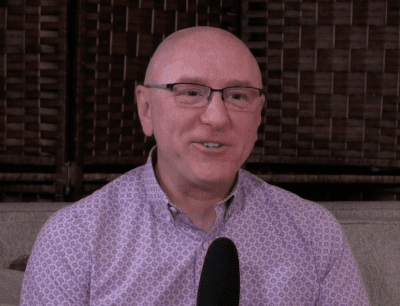
 Presented by Anthony Miller at the June 2019 THRIVE Conference in Salt Lake City, Utah.
NOTE: If you enjoy(ed) this presentation, please join us November 17th for THRIVEDAY2019. THRIVEDAY2019 will be an entire day dedicated to healing, growth, and community beyond Mormonism. Confirmed THRIVEDAY2019 speakers include Wayne Sermon (Guitarist, Imagine Dragons), Amber Scorah (NYT Bestseller “Leaving the Witness”), Christian Moore (Author/Speaker: The Resilience Breakthrough), Stephenie Larsen (Encircle), Mindy Gledhill (Musician), Liz Dalton (Rise Strong After Divorce) and many more. Register here for THRIVEDAY2019!
Part 1: This transcript is machine-generated and lightly edited for readability. The audio is authoritative. Please excuse occasional errors in names and spelling. Anthony Miller [00:00:03] Shapes. Society loves their shapes. John Dehlin [00:00:09] Mormon Stories is a production of the Open Stories foundation and relies solely upon the support of people like you, its listeners to help keep the podcast alive or to become a member of the community. Please become a monthly subscriber by visiting MormonStories.org and clicking on the Donate button or on the right side of the page under support. All contributions to Mormon Stories are completely tax deductible in the United States and go towards producing the podcast and building communities and programs of support for Mormons like you. Thanks for your support. Anthony Miller [00:00:56] In the sky. John Dehlin [00:01:03] So welcome back to Mormon Stories Podcast. I'm your host, John De lin. It is August 19, 2019 and we are so thrilled to have Back on Mormon Stories Podcast. Anthony Miller and those of you who listen in sequence will have just listened to Anthony Miller's 4, 5, 6 hour depending on how you count interview. I lost track. But talking about navigating Mormon faith crisis gracefully, as illustrated through his own story. Now we're going to shift gears and we're going to share with you a presentation that Anthony gave at the thrive conference in June 2019. And let me just give a quick background. What is Thrive? Some friends came to me and said, hey John, we need to create some events that sort of show progressive and post Mormons how to heal and grow and find community and ultimate find joy after Mormonism. We don't need more, you know, presentations about Oliver Cowdery. We don't need more angry speeches. You know, we just need a conference or spaces or events dedicated to joy or healing, growth and community in post Mormonism. So we organized the first Thrive conference in June 2019. I invited some of my favorite people in the world to come present. Anthony made the cut. And you know, we've already shared Natasha Alfred Parker's talk on sexuality, Christian Moore's talk on resilience, Margi Delin's talk on, you know, rebuilding a life or coming home. I shared a talk. We're going to be sharing Jeff and Chelsea Gardner's talk on Word of Wisdom 2.0 and there are some amazing talks like with David Bachavoy and others that we're just not going to share for whatever reason. You know, Alan Mount and Katie, we did share their talk on mixed faith marriages and you can go to Mormon Faith Cris or the Gift of the Mormon Faith Crisis podcast for all those episodes. We also co release them on Mormon Stories. But this Thrive thing is going really well. We have another Thrive event planned for November 17, 2019. We're super excited about that. Wayne Sermon, who's the lead guitarist of Imagine Dragons, is going to be keynoting that event. He's going to be talking about his feelings and thoughts around Joy after Mormonism. He's amazing. We all have heard about Dan Reynolds. Maybe not enough of us have heard about Wayne Sermon. And he's worth, he's a very deep thinker, thoughtful guy and he's worth hearing from. So he's going to be speaking. We're also bringing Amber Skora, author of Leaving the Witness. She's, you know, just like Tara Westover, kind of sweeping the world in popularity with her New York Times best selling book Leaving the Witness. We're bringing Amber Skora to Utah for the first time to speak at the Thrive Conference. But we've also got Stephanie Sorenson Larsen from Encircle. We've got Christian back, we've got Natasha again, we've got Donna Showalter. She's going to be speaking. My dear friend Spencer Nugent. So many cool speakers on tap. Liz Dalton. We're going to have a great lineup for November 2019 thrive. So go to Thrive Beyond Mormonism to register. We're pricing it at $15 a person. We are probably going to lose a crap ton of on this event, but because we have great underwriters like Clint at, you know, worse, we're going to break even to the huge financial loss of somebody. But Thrive isn't about making money. We've committed to that from the very beginning, although I don't think there's anything wrong with sustainability. But we're probably going to lose a crap ton of money on thrive. So $15 a person for like a full day of some of the greatest speakers you can think of in post Mormonism. Think of it as like a post Mormon general conference with talks you'd actually want to listen to and be inspired by and learn good things from. That's going to be Thrive Day, November 17, 2019. So check it out. But with all that introduction, today we are going to have Anthony talk about his Thrive June 2019 presentation called Growing Beyond Loss and Betrayal after a Mormon Faith Crisis. And he's got some slides to share with us. So Anthony, take it away. Anthony Miller [00:05:25] Thank you very much. So you just read the title. So what I'm gonna make sure and do is I'm gonna read what's on the slides for people that are on in the podcast form as opposed to watching on YouTube. So the, the main slide is Growing Beyond Grief, Loss and Betrayal. And the next slide is kind of the explanation for this session and so I'll go ahead and read that. Among the most precarious and painful challenges of leaving the LDS faith include our experience to diverse stages of grief along with a sense of loss and betrayal. The anger and depression stages of grief may not simply be bypassed, however. They aren't healthy places to reside long term. At the same time, a sense of self, community and institutional loss and betrayal can leave us feeling stuck. This discussion based Q and A session will discuss strategies to process and grow beyond grief, loss and betrayal in healthy ways. So that's what we hope to accomplish in our discussion today. The next slide is a meme. I don't know who said it, but it's a pretty helpful meme. It's a black and white picture of a book that's opened up and the meme says forgive yourself for not knowing what you didn't know before you learned it. Forgive yourself for not knowing what you didn't know before you learned it. For a lot of us, when we're processing grief in a faith crisis, we have the experience of beating ourselves up. Why did it take so long for me to figure this out? Why was I 49 years old when I was ready to unpack Book of Abraham issues when I had been, you know, introduced to it years and years before? Or why did I do things or say things that would have been unhelpful and in my blind spots with regard to LGBTQ issues or, or women's issues or other other kinds of things? So what I want to express is that we need to be gentle to ourselves and we need not hold ourselves hostage to our past and forgive ourselves for the things that we did when we didn't know any better. So the next slide was the format of my presentation. First of the first thing I did is share my story. And then the second thing was to share resources and principles that helped me traverse personally grief and betrayal in ways that I felt that for me led to growth, peace and confidence. And then we had a discussion led by questions of the members of the of the session. So for those of you that have watched my interview, I'll and if you haven't watched my interview, I'll just kind of give you the kind of the brief summary. I grew up in the church. My parents joined when I was three. The church provided a tremendous amount of benefit and privilege in my life. We were poor. The church supported me. I have ADD type tendencies. I don't have add, but I have tendencies naturally to add. And I ended up going on a mission. It helped me navigate and Work through those in a way that helped me come back and go to school and be successful educationally and in a career. And I had significant opportunities to serve in the church as a straight, white, never divorced male, had opportunities to serve on the high council, high priest, group leadership and so forth. The church worked really, really well for me. And then about not quite 40 months ago, our then 22 year old son came out to us as gay. And I had very, very heavy shelves. But I had a very strong sense of belief and certainty in the truthfulness of the church based on what I believed my spiritual experiences meant for me, that they were reliable divine witnesses of truth. And that evening In April of 2016, I went online to search for resources to support our gay son. And in doing that, I stumbled across the Gospel Topics essays and then Mormon Think and Mormon Stories and the CES letter and Fair Mormon's debunking of it and Jeremy's debunking of Fair Mormon's debunking and Fair Mormon's big long list of everything. And it was a pretty acute three day period that led into an extreme sense, extreme, acute existential faith crisis. When my construct of spiritual experiences crumbled, several things happen. The first thing that happened is my construct of my spiritual experiences was how I knew and perceived God. And when I recognized that my construct of my spiritual experiences, excuse me, being divine witnesses of truth, crumbled, my construct of God totally crumbled too. And so I experienced a sensation of the heavens closing, or it can also be referred to as a divine absence or God leaving the corner of the room where you once knew him. And it was an extremely acutely painful experience with significant grieving. And it opened me up to want to try to figure out how to make the church true again based on how it was true to me before. And the more I studied and the more I prayed and read scriptures and got blessings and counseled with my leaders who are my friends, and tried to make traditional apologetic reconciliations work for me. It just didn't work. And so it was an extremely painful experience. It resulted in depression and disassociation, even one day of the pretty significant suicidal ideation because I couldn't understand why God would all of a sudden abandon me. It was extremely painful experience. And as human beings, we at least first half of life using Richard Rohr's language, and it kind of equates to Eckhart Tolle's language as well, and secular Buddhism is that we have this tendency to equate our identity to being Our experiences. So as a man thinketh, so is he kind of thing from the Scriptures. And so a significant part of my identity was wrapped up in my constructs for God, my reputation and relationships in the church, my sense of values and meaning in life and so forth. All this was wrapped up as part of my identity. And so for me, and I think the experience is not uncommon for a lot of people when they go through a faith crisis, at least if it's an acute faith crisis, it's not only a crumbling of loss of belief, it's a crumbling of sense of personal identity. And a lot of times when human beings, when we experience grief, it relates to. And again, I'm not a professional like you have a PhD in this stuff. I don't. I'm just a financial planner that tries to figure this stuff out. So this is my personal experience and observation. But a lot of times when we experience severe grief, there seems to be this relationship to a loss or a threatening absence or something like that of our own identity. And so when we lose a loved one, that loved one was part of our identity, and we grieve the loss of not seeing that person again. But it's also extremely painful because that person's role in our life was a significant part of our identity, and that's crumbling, too. And when we go through a faith crisis. You know, one man that reached out to me after my interview last week, after watching it, he told me he's. I think it's 12 years ago, yeah, 12 years ago, his father died. And then recently he went through a very, very painful divorce. And he told me that his faith crisis was more painful than those two things combined. That's how much grief he experienced and, and, and fear of, you know, this sense of that I'm the human being that I am because of what my father and my grandfather did and the stories that they told and the example that they had, and it was all in the constructs of the church. And so if I don't have that, like, how am I going to carry on that legacy? How am I going to be the kind of man that my father and grandfather have been to me or that they were to me, how am I going to be that for my kids? All the above fear of loss of relationships and so forth. So a faith crisis, in many cases, particularly if it's an acute, is a very significant grieving process that we go through. So as we negotiate these things, there's another slide that I'll read for you as well. And the slide is A guru, a dark skinned guru, bearded, and he's speaking with a man in a suit with a white shirt and gray hair. And in this slide, the, the suited up man asks the guru, what is the secret to eternal happiness? And the guru responds with, to not argue with fools. And in the next underneath in the meme, the, the suited up man says, I disagree. And the guru says, yes, you are right. John Dehlin [00:15:59] So don't argue with fools. Anthony Miller [00:16:00] Don't argue with. Yeah, yeah. Not, not trying to be unkind to people. But it's generally not helpful as we're negotiating grief to try to argue with people. It's just generally just not helpful. People, people who perceive things or have different experiences that are quite differentiated than ours, without a tremendous amount of work, they're going to have a very hard time empathizing with the experience that we're having. And if they reconcile things differently than us based on their personality type and how they think about things and their experiences that they bring to the table, their propensity is going to be to have a very hard time understanding and empathizing with what we're experiencing unless they put in a whole lot of work. The other thing that tends to happen with us is for many of us, our past faith before faith crisis worked really well for us if we were a very linear black and white thinker. So things are right or wrong, or like in the Book of Mormon, everything's from God or it's from the devil, you know, or Hinckley saying either the first vision happened exactly as Joseph said it did, or it's a big fraud kind of thing. And so for people who are more black and white thinkers, the black and white messages that they received in Mormonism really worked for them. And if that's their propensity to as to how they process things, if they go through a change of faith, their propensity to look at things from a black and white, linear, concrete thinking way doesn't necessarily change. It just flips to the other side. So instead of the church being true, now it's the devil kind of thing and it just flips. And one thing that's unhelpful in the grieving process is to get in arguments with people when we're continuing in that same black and white thinking just flipped on our experience and it just results in my experience in more wounding. So in the next slide, I've mentioned a few of these things. I'll read the slide for the listeners on the podcast. The slide is titled Contributors to Grief during a Faith Crisis and The bullet points include, first, we have a often experience a crumbling of our past constructs of our identity. And I mentioned how important that is. We also experience a crumbling of past sense of trust. So we trusted our leaders, we trusted the material that we received in the correlated curriculum, and we trusted ourselves. And so sometimes we feel a violation of that trust. And when we experience a faith crisis or grief in a faith crisis, often we go and we seek help with expressions of vulnerability and seeking intimacy. And for people that don't have the capacity to sit with us in those experiences, that can also contribute to our grief because we're going and we're grieving and we're angry and we're feeling depressed and we're feeling betrayed and we're speaking with emotionally charged language because we're in the grieving process and we're doing so with vulnerability, seeking intimacy and help. But sometimes that isn't met very well. And so that results in more grief in our faith crisis because we feel ostracized or abandoned. In the Thrive conference in the first evening, there was an exercise where people shared their stories. And the most painful stories almost invariably were feelings of being isolated from family and not trusted anymore, and people being accused of some great sin or being taken over by Satan or something like that. That loss of intimacy with people that we love in our family and our community is a significant contributor to grief in a faith crisis. The next bullet point is that we often sense institutional and self betrayal and abuse. And we're processing those kinds of things to different degrees depending on our own individual experiences a primary emotion of fear. The next bullet point is that we fear a loss of relationships, community roles and reputation. Again, that goes back to our sense of identity in our first half of life, that our roles and reputation are part of our identity. We fear a loss of trust from others who don't reconcile things the same that we do. The next bullet point is our shame based conditioned ego voice, or our egoic voice is often programmed to blame the loss of belief on ourselves. So it's our fault if you experience a divine absence. If God leaves the corner of the room where you once knew him, if the heavens could closed, it's your fault. You must have done something wrong. And so we struggle with that. It might be our fault that we experience a divine absence. Often times when we go and we seek help from defenders of the faith, our experience is often they blame us too. Like you've mentioned before, that it's a common thing for some of the defenders of the faith or People that have had a totally different experience. So they have a blind spot for those who decided to follow the brethren and be in the mainstream of the church and not have gospel hobbies or study things on the periphery. They might say, you know, Fawn Brody's book has been out the Gospel Topics essays. You know, they were started to be released in 2013. Rough Stone Rolling is out there. If you read different Mormons studies journals and so forth, all this information has been out there. It's your fault, because you must have been lazy that you didn't know about this and that you feel betrayed by the institution for that. And that contributes to a sense of grief. And it feeds into the narrative that it's our fault that we're experiencing grief, and that's not helpful. The next bullet point is some people experienced deep trauma from the institution, from the culture and the teachings, without any compassion, acknowledgement or apology from the perpetrators. You know, and there are many examples, but I just give one example for individuals who are lgbtq. They might have experienced a sense of trauma either from the institution, the culture, or the teachings, and then they go through a faith crisis, and they recognize that along the way, there isn't any really sort of compassion, acknowledgment, or apology from the perpetrators of that abus. And many people experienced this when the November 15, 2015 policy was reversed. It was just reversed with no acknowledgement of the effect that that had on people. And so that contributes to grief. But there are other kinds of trauma that people experienced. And when there is no repentance or apology or acknowledgment or compassion from those that perpetrated abuse or harm or other kinds of trauma, then that contributes to grief. I've often heard this, and I said this myself as I was going through a faith crisis, is that sometimes it feels like I was the faithful spouse who was deceived and abused. Like, I felt like I was faithful and I would have given everything to the church. I covenanted to give everything to the church. And I felt like I was the faithful spouse, but that I was abused. And whether or not that actually was the case, that's the experience, the lived experience of many people. And then finally on this slide, sometimes we experience. I mentioned this before, but sometimes poor treatment and gaslighting from the institution and. And the defenders of the faith that we would call apologists who are supposed to have the answers, sometimes we end up with poor treatment from those individuals or from the institution, and that contributes to ongoing wounding and a sense of trauma. So in the next slide. The title of the slide is Relational Differentiation. So as human beings during our lives, we experience differentiation of experiences because we all process things differently. And sometimes differentiation of experiences and how we reconcile things can be very painful and sometimes not very painful. So some examples of differentiation between. In my story, my wife is an active, nuanced, believing member and I've resigned from the church. I'm no longer a member of the. So we've had that degree of differentiation. But there are kinds of differentiations that aren't painful. So for example, music, she might enjoy totally different music than me. And that doesn't need to be painful, you know, usually isn't painful unless someone really hates country music and her spouse loves country music or something like that. Or, or, or the kind of punk rock that Brian Whitney loves. Like I love Brian Whitney, but I don't love his punk rock. I think it's pretty cool, but I can't listen to it. So. Or we have differentiation of hobbies, you know, so I have one friend who's whose wife loves crocheting and those other kinds of things and doing that as a shared together activity. And he wants to go jeeping and rock climbing in his rock buggy and that's the hobby that he really likes. So, so we have this differentiation. Another differentiation that can be very tender until we figure it out is the five Love languages. So the five Love languages is a model to explain how we express and receive expressions of emotional intimacy. And I won't go into a significant amount of detail, but just to say that for some people, love and emotional intimacy has to do with attentive physical touch. For some people, it has to do with shared quality time activities together and listening. For some people, love and emotional intimacy is manifest through acts of service that we give to other people. For some people, love and emotional intimacy has to do with the attentiveness behind gift giving. Not the economic value of the gift, but the thoughtfulness behind the gift. And for some people, love and emotional intimacy has to do with words of affirmation, kind and affirming words, and so forth. So generally, for some reason, we tend to marry people that have different primary love languages than us the majority of the time. Although there are some couples that get lucky enough to marry someone that speak the same primary love language as they do. And so at some point, if we're going to navigate a marriage, we have to figure out that love and emotional intimacy mean something different to my spouse than I do. And so if I want to connect with my spouse What I need to do is learn how to be fluent in that love language. And maybe I have children that have different love languages than me. So if I want to emotionally connect with my children, I need to become multilingual in the five love languages. And I need to learn how to express love and emotional intimacy to my children and what love and emotional intimacy means to them. That kind of relational differentiation doesn't need to be painful. John Dehlin [00:27:57] Doesn't need to be, but it can Anthony Miller [00:27:58] be until we figure it out. John Dehlin [00:28:00] If somebody insists on giving in ways that the other doesn't experience as love, it can be super painful because in effect, people don't feel loved, even if their partner's trying to love them in a way that doesn't speak to them. So. But it's important to figure out. But it doesn't need very pain. Anthony Miller [00:28:16] Yeah, it can be very, very painful John Dehlin [00:28:18] if someone needs touch, but all they get is gifts. And they don't care about gifts, but they want touch. Anthony Miller [00:28:23] Yeah. John Dehlin [00:28:23] The gifts can be given all day. The giver thinks they're amazingly generous. Yeah. And the receiver is like, I just want you to. To touch me. Anthony Miller [00:28:30] Yeah, just hold me. John Dehlin [00:28:31] Just hold me. Anthony Miller [00:28:32] Yeah, just hold me as I'm waking John Dehlin [00:28:33] up in the morning or other things, Anthony Miller [00:28:34] or slap my behind when I'm walking John Dehlin [00:28:36] down the road, or make passionate love to me. Absolutely. Anthony Miller [00:28:38] Yeah. Yeah. Right. So there are many different kinds of things. And so, yeah, absolutely can be painful. But differentiation in. In a faith, a relational differentiation in a faith crisis situation can be extremely painful. And so the story that I told at this point in the presentation is I could have a neighbor who's a Jehovah's Witness and that neighbor who's a Jehovah's Witness in their devotion to the divine, they might believe that God wants them to not celebrate birthdays and holidays. And while that wouldn't be how I experience devotion to the divine, I could almost see some beauty and faithfulness in that person's devotion to the divine through something that feeds them and means something to them. Whereas if my wife and I are active, believing members of the church and we get married in the temple, and we have this common shared story and narrative of what our expectations are about life and how divinity works and our connection to God works. And then at some point along the way, my wife goes through a faith transition and she converts to the Jehovah's Witness faith. And before this happened, a significant amount of our family history and our story and our sense of spiritual connection was significantly tied to birthdays and holidays. And the shared experiences that we had in those things, maybe even if my primary love language was quality time. And so I had emotional connection, not just spiritual connection, with birthdays and holidays. And if my wife goes through a change of faith and becomes a Jehovah's Witness, and then she subsequently comes to me and she says, you know what? But in my sense of devotion to God, now I can't participate anymore in birthdays and holidays. That can be an extremely painful sense of differentiation. Number one, because it might feel like she's depreciating what we had as shared spiritual language that was very treasured to us, and now it feels like she's abandoned that or left that. Number two, that might be very painful because I might think, well, if she can all of a sudden, out of nowhere change her beliefs about God, maybe she can change her beliefs about me, you know, and her relationship to me. And what if I don't come to the same belief system as her? Like, is she going to leave me for a Jehovah's Witness spouse? You know? And so that can be very painful and threatening. And so that can be extremely painful, that kind of relational differentiation. And so that is part of a contributor to the grieving process. As we're going through this with regard to relational differentiation, the next bullet point on the slide is that we need to consider individual autonomy and authenticity versus systemic integrity and authenticity. So an example of that is I might have had a particular experience in Mormonism and a particular reconciliation of what the Temple meant, and then gone through a faith crisis and come to a different belief of what the Temple means and where it came from. And it might all of a sudden become a very traumatic thing for me to consider the Temple. But if my active believing wife still finds spiritual value and connection, and she thrives in her participation in the Temple, that differentiation can be tough if I impute my experience on her. So if my experience of trauma with regard to those symbols or participation of those things, and then she goes and participates in them, that can be very painful from an individual standpoint, unless I come to the reconciliation or realization that we can have different meanings for symbols, and I'll share stories with regard to that. And the second thing can be that if I imputed a particular meaning on the Temple and in terms of consecrating everything to the church and sustaining the brethren, all those kinds of things, I might perceive that my wife's participation in the Temple is a manifestation of those very same things that I believed. And her experience might be totally different than that. And so a lot of the differentiation based pain can be that we're imputing our experience or perception of what things mean, of what symbols mean on our spouse, when our spouse might not even be holding those meanings for those symbols. It might be totally different than ours was or than ours is now. And that can be very different. And so. It can help in the grieving process to trust that our spouse can have a different experience or our loved ones can have a different experience, and that what those experiences mean for them might be different than what they used to mean for us or what they mean for us now. John Dehlin [00:33:50] Another example I get is I've had several women come to me in faith crisis when their husbands get called as bishop because they have their feminist awakening and all of a sudden are really angry about the patriarchy. And then their husband sort of assumes the chief position in the congregation or in the ward as head of the patriarchy. And it can be catastrophically traumatic to a woman in that situation. And then to have to, how do you fall away as the bishop's wife? And the bishop can be bishop not because they want to support the patriarchy, but because they want to help the LGBT kid who otherwise would be marginalized or the masturbating pre missionary that might otherwise be shamed and kept from a mission. So it's important to go deeper to understand people's motives and framing, because you can be bishop or whatever, go to the temple for very different reasons. Anthony Miller [00:34:48] That is an excellent and amazing example because that bishop, the symbol of that calling and what he does might be totally different than her experience of what that is. And he might be doing actually some amazingly good things. John Dehlin [00:35:02] Crucial things. Anthony Miller [00:35:03] Crucial things. Change people's lives. John Dehlin [00:35:06] Saving lives. Anthony Miller [00:35:06] Absolutely. John Dehlin [00:35:07] Yeah. Anthony Miller [00:35:08] And so in any event, so the next bullet point, point in this slide is that research suggests that relationships that are able to most effectively differentiate utilize the following skills. So there are three skills listed. The first is patience. So we need to have patience with ourselves and with others because there are going to be some stumbles along the way and we just need to hold space. That's going to be messy. Right. The second thing is curiosity. We need to. It's helpful to get curious because that's how we begin to understand who others are as individuals. And so in the example that you gave with regard to the wife, that goes through a feminist awakening that triggers a faith crisis, and the husband, who's not a super literal black and white person, that's doing amazing things as the bishop, the only way that they're going to be able to increase their comfort level with differentiation of their experience is they need to get curious about each other's experiences, right? So the bishop needs to understand that he has blind spots, that he might not fully appreciate what his wife is experiencing. And so he needs to get curious in her experiences. And he needs to get curious about what feeds her and about what wounds her. And on her side, if she wants to nourish the relationship as well, she needs to get curious about her husband's experience and trust that if he says, this is how I process or view this thing, that it could be different than what she does. And so that can be helpful. And then the third thing is that we need to have a willingness to tolerate tension. We need to tolerate tension because things will get tense when we bring up differences. So sometimes we need to have safe words. You know, in our family, my brother in law, I told him this, so this won't be bad. Our safe word in our family is Uncle Joe. So I love my brother in law, but somehow when, when our kids were younger, if, you know, we would tickle them or tussle them or whatever, somehow Uncle Joe became the safe word. You know, so if we were tussling as a family or we're having a conversation that was, I hope we're not taking Joe your name in vain. But if we come across something and we needed a safe word, we had a safe word, it was Uncle Joe. It was like, I need a timeout, I need a boundary or whatnot. So whatever your safe word is, whatever you need to set boundaries, those are going to be helpful with regard to relational differentiation conversations, like asking my active, nuanced, believing wife, you know, as I was going through my faith crisis, what was your biggest fear? And for her to be able to express to me this was my biggest fear when I went through this. And for her to get curious and ask what was my greatest fear as I was going through my faith crisis? Being able to have those kinds of conversations and then setting boundaries. And so for human beings, Brene Brown talks about boundaries. As human beings, in order to have a safe place with the people that we love, we do need to set boundaries and express that if you went beyond this boundary, it would feel like a betrayal of trust or it feel like something was happening that wasn't a safe thing for me. And so for my wife and I, I think she'll be fine if I share this. For my wife and I, when we were talking about negotiating boundaries, my wife's boundaries was for me to not do things that would crash our daughter's testimony, to overwhelm her with uncorrelated church material or something. And my wife needed me to respect that boundary for my wife to feel safe. And likewise, interestingly enough, my boundary for my wife is I needed her to not do things or sustain things that I felt would harm our gay son and his partner. And so those were examples of boundaries that we set. But we have to be patient with each other, because sometimes there's going to be tension. Sometimes we're going to encounter things that are going to cause tension with regard to differentiation without realizing, oh, that is a boundary. We need to establish that as a boundary so that we can feel safe where we're at. And then I shared in my Mormon Stories interview that as I was processing my faith crisis, there was a period of time that I felt like since my wife was my person, that if I was venting about or processing, you know, things that I was stumbling across that were very upsetting to me, that I needed to be able to discuss these things with her and process these things with her. And at times, that led to wounding conversations between the two of us, either because she wasn't ready to talk about those things, or she processed those things differently, even having studied the same information as me. And so sometimes it ended up in wounding conversations that weren't helpful. And early on, as I was processing grief, she said, you know, I trust that this is your experience. I know you're hurting. What I need you to do is I know you need to vent about and process these things. So I need you to go find places and people and groups where you can process these things and vent about these things so that when you're with me, you can be with me. And so setting those kinds of boundaries can be actually quite helpful. All right, so moving on to the next slide. As we're processing grief, and I would mention at this point that we all process grief, and it's not Satan. Everyone listening or watching is going to have a loved one die. Everyone watching is going to die someday. And we're all going to have things in our life that are going to trigger grief. And grief is part of life, and we need to get good at processing grief. We need to be aware of why we're experiencing grief. What can we learn from that grief? What are the support resources that we can access to help us process grief, to recognize that if we try to skip stages of grief, all we're going to do is delay healing. And if we place ourself in a situation. So, for example, if you take somebody who's in a faith crisis, and they're in an acute faith crisis crisis, Acute faith crisis. But they are not. They're wanting to avoid processing the anger and depression stages of grief because it makes them uncomfortable. And the narrative is that if that discomfort is Satan, then then that's what's contributing to their faith crisis. And so they're trying to avoid. To skip this processing and traversing the stages of grief at the same time that they're continually getting re wounded and they're feeding themselves the narrative that it's their fault that this is happening and it's their responsibility to fix it. And they have a divine absence because of something they did. Somehow they can. They can remain in an acute faith crisis for a really long time. And that's extremely destructive. And so we need to recognize that that is not healthy. And so in any event. All right, so in this slide, the title of the slide is Common Emotions that surface when we're processing grief. The first emotion is fear. And I mentioned that a little bit before. And that's a. Fear is a primary emotion. A secondary emotion that comes out of fear is anger. And so a lot of times when we're interacting with our loved ones and we're going through a faith crisis and they're not, and we're expressing anger or they're expressing anger to us, really, that's coming from a place of fear. And it's helpful to recognize that that's the case, that maybe our loved one isn't necessarily angry with us or hates us or has got to a point where they don't love us anymore, but really they're coming from a place of fear or we're coming from a place of fear, and that's manifesting itself in anger. And the next bullet point under fear is that by our very evolution, we are hardwired for connection. And that connection that we have with other human beings is what we needed to survive. And I feel like it's what we continue to need to survive and thrive. And one of the biggest fears is loss of that human connection. If my wife went through a change of faith and became a Jehovah's Witness and didn't want to celebrate birthdays and holidays anymore, a significant part of that grieving process and. And fear would be a sense of loss of connection because we don't have that shared spiritual experience of holidays and birthdays and so forth, and our ancestral history that's all tied up in those kinds of experiences. So other emotions that surface in the bullet points on this slide are a sense of betrayal, personal betrayal, institutional betrayal, a sense of shame, like we should have figured this out before. We're not gentle with ourselves. We hold ourselves hostile to our past experiences, a sense of loss, loss of identity, loss of community, and so forth. And then we experience multiple grief cycles as we revisit or find new things to unpack. And so a lot of times what I've observed is when people process grief of a faith crisis, they maybe feel that if I just resign or if I just do this, like, then I won't have this grief anymore. And that's not how it works. The stages of grief aren't linear. We get to re traverse things and we get new things to grieve. And so, you know, I remember my initial acute phase and then a couple weeks later unpacking doctrine covenants 132 and then grieving the reconciliation that my marriage had nothing to do with, the NC132 and eternal marriage. And then I remember my first Christmas and my first Easter. You know, as I was unpacking these things, I had new things to grieve. And so we need to be tender with ourselves and recognize that we're going to encounter new things to grieve. Even you having gone through this for, you know, more than a decade, you're going to find new things to grieve from time to time. And we just need to realize that this is part of life, it's part of the process. John Dehlin [00:46:03] One emotion I would add that that for me is very core and primary is just sadness. Just being sad. Anthony Miller [00:46:10] Yeah. John Dehlin [00:46:11] You know, sad that things aren't like they were. Sad that, you know, you don't have the same, maybe things in your life. Sad that the dream that was so beautiful in so many ways died. I think along with fear, sadness are the two main emotions I, I identify. Anthony Miller [00:46:31] I, I totally experience those things, you know, and, and we experience those things when a loved one dies. Yeah, right. And we experience these things when we have other things to grieve that are loss of connection, identity, whatnot. John Dehlin [00:46:46] Yeah, I, I, I always say I didn't leave the church. Well, I didn't leave it. They kicked me out. But I didn't leave it because I hated it or it had mistreated me in some fundamental way. I super loved it. Anthony Miller [00:46:57] Right. John Dehlin [00:46:57] I was into it. Anthony Miller [00:46:58] Yeah. John Dehlin [00:46:58] And so I, I still, to this day, people get mad or don't understand, but I still miss it. Anthony Miller [00:47:04] Yeah. John Dehlin [00:47:04] I miss a lot about it. Well, I do. Anthony Miller [00:47:06] I mean, you and me too. Yeah, we. We. It worked for us. John Dehlin [00:47:10] Yeah. Anthony Miller [00:47:10] We came from a place. John Dehlin [00:47:11] Our privilege was a big part of it. Anthony Miller [00:47:14] We had all these blind spots of people experiencing trauma, and what. Even though we experienced trauma, it was totally different than the trauma that they might have experienced. John Dehlin [00:47:23] So. And I. And I missed, you know, and I. I feel like I got better about those blind spots, and that's what developed the tension. But even as I was suffering for LGBTQ people and women and people of color, and even as I was still attending and suffering for those people, I was still enjoying it, and I felt guilty about enjoying it. Anthony Miller [00:47:43] Yeah. John Dehlin [00:47:43] Because the church is kind of made for guys like us. Right? Anthony Miller [00:47:46] Right. John Dehlin [00:47:46] Yeah. Anthony Miller [00:47:47] Yeah. So it's helpful for me. But then I feel guilty because it's harming. It's like, if you have, like, it's not Uncle Joe, because Uncle Joe doesn't hurt people. It's not you, Joe. But if you have a. If you have that uncle that, like, is doing things and you dearly love this person, but you disagree with them. And I don't disagree with Joe. You know, that's. There's tension in that relationship that people that you love, that an organization in terms of the community and the experiences in that community that you love are also harming people who you love. That's very, very difficult. So we recognize that there's grief. And so the question is, we sit through it and what are some of the helpful things in order to be able to process grief? And so on the next slide, what I have. And so we're going to jump back and forth between two slides. The next slide that I have, the title of the slide is Nourishing Spiritual and Emotional Intimacy, you know, as part of healing and growing through a faith crisis. And so the first bullet point question on that slide is to ask what are the things that feed you spiritually and. Or help you sit in the present and recognize that your egoic voice is not who you are? Basically, what are the things? Not the shame based voice, not the conditioned voice that says it your fault and you have to fix this and you should feel guilty and all these kinds of things. What are the things that help us to pull ourselves into the present, you know, to sense spiritual connection, to grow, and to give us some relief from the sense of grief. And people have a number of different things that help them. So music, you know, like there's certain violin solos, you know, in classical music that totally bring me into the present of the emotion of the music. I had my faith crisis playlists you know, that I listened to over and over again. Like the Mumford and Sons one, or Tyler Glenn's album came out, or Mindy Gledhill's, you know, album, or Angela Soph her album. These can be helpful things. Music can help bring us into the present. There are a number of different activities that can bring us into the present. I won't say it right, but there's like an. Is it eschatic dancing or something like that? Anyway, there's like dancing that people do that. The effect is it just brings you totally into the present moment. There are a lot of different activities. And it seems that if we can find things that feed us, whether you want to call it spiritually or elevation, emotion, or whatever it is that you want to call it, a sense of connection with individuals, nature and with yourself, those kinds of things can help you as you're processing grief. John Dehlin [00:50:49] And they're core in human needs. Anthony Miller [00:50:51] These are core human needs. John Dehlin [00:50:52] Yeah. You need uplift and energy and flow. And if you don't, if you don't replace what the church used to provide, you're going to stay not well, you know, you got to get that. Anthony Miller [00:51:04] Yeah. I didn't insert this slide, although I'll talk about a little bit in our Sunstone presentation. Janice Spangler and Sarah Zabow and I did a Sunstone presentation just this year on post Orthodox Spirituality and Growth and. And we had two slides where in the first slide we listed an example of all the things that spiritually fed us or connected us when we were Orthodox members. So fasting and hymns and service to others and reading and pondering sacred texts, you know, like the scriptures and contemplative experiences that are either individual or together, like going to the temple or prayer, whatnot. If you sat down and made a list of all the things that gave you a sense of spiritual connection while you were an Orthodox believer, you know, then the next slide was a list of things that could give us a sense of spiritual connection post Orthodoxy. And the irony is there were a lot of similarities. So music, reading and contemplating sacred texts or thought leaders. Brene Brown, whatever, You know, things or sacred texts from other traditions, service to others. For some people, they find divinity in spending time in nature or fasting. Maybe if prayer isn't there is no longer a helpful practice for them, maybe meditation and mindfulness practices. So if we go back and we do an inventory of the things that really helped us and spiritually fed us when we were Orthodox believers, sometimes what we can do is we can find that there. There are Kind of some mirrored types of activities that would be helpful for us that have a tie to what those things were and why they were helpful for us. And we can adapt those things and get creative into how they can help us Post orthodoxy. So in any event, so the next bullet point on this slide is to ask the question what are the individual and shared values and activities that feed you? And at this point I'm going to jump forward a slide to a spiritual values exercise. And I didn't do this during the session, but I referred to it. So on this slide I'm not going to read all of them, but what I will do is Sarah Hughes Zibawa. I co presented with her in this session on post Orthodox growth and spirituality. She's placing this into a single page PDF Spiritual Values exercise. She'll have her contact information on it and so forth and she'll upload it and host it on her website and I'll link to it on mine. For people that want to go through this exercise. So for the listeners, what this slide is is a list of a number four columns of a list of different spiritual values that might feed you or give you a sense of meaning and connection. And I'll read through some of them like honesty, openness, willingness, hope, commitment, courage, humility, unconditional, love, awareness, vigilance, self discipline, trust, responsibility, positive thinking, kindness, compassion, selflessness, contemplation, abundance, calmness, charity, curiosity, empathy, ethics, inclusiveness, happiness, growth, grace, generosity, loyalty, making a difference in other people's lives, open mindedness. So in the spiritual values exercise, what we do first is we'd have you go through and circle all the ones that have a fairly strong connection to you. And then the second part of the exercise is to go through and identify the top three. The reason that we choose three is the studies show that if people make this super long mission statement or have this value statement with like a huge list of all these different values, there's dilution that happens and a loss of focus. And if we can narrow down to our primary things and focus on those, some of the other values that connected to us will participate in those things as a byproduct of our primary ones. So if I were to go through this gratitude making a difference in others lives, and then I would add a sense of integrity or authenticity that I'm the same person in private than I am in public. And so those would be my three gratitude, making a difference in other people's lives, which could include service and my sense of what integrity means. Those are my three and my spouse could go through this and she might choose, I don't know if she would choose these things, but loyalty might be one of them, you know, and she might have three ones that are separate from me. So the purpose of this exercise, number one, is to identify what are the things that really feed you and then to recognize that activities that are related to your core spiritual values or your core values of meaning, purpose and life activities related to those, are they going to be the things that spiritually feed you or help you grow and sense connection? And then if your spouse or loved one can go through the exercise, if you can understand, identify what your spouse's three core values are, number one, it might be pretty cool if you have some things in common, right? So you can have shared spiritual languages or values or practices. But number two, this goes to the curiosity of being able to support each other in differentiation of belief and spiritual practices, to recognize that my spouse's three primary core spiritual values might be different than mine and that I could see that she's fed in those things and I can support her in those things and that she could see that mine are different than hers and she can support me in those things. So just like my wife knows that love and emotional intimacy for me is for her to slap me on the behind when I'm walking down the hall and hold me when I'm, I'm waking up in the morning, you know, or run and jump into my arms when I, when I come home. Because physical touch is my primary love language. She could also recognize that if my core spiritual values had to do with gratitude, making a difference in other people's lives, and a sense of integrity and authenticity, then she can hold space for what mine are. And then the next step in this is then with those closest relationships that you have to go through and work and find what those, what shared spiritual language languages might be. And then there might be some commonality with your top three or there might be other ones that are further down on your list, but there are things that you can share. So in any event, like I said for the listener, Sarah is going to create a PDF with this exercise so that you can do it individually with your loved one and your family and talk about shared values shapes. John Dehlin [00:58:42] Thank you for joining us today on Mormon Stories. If you enjoyed this episode, please help us make more like it by becoming a monthly subscriber@mormonstories.org Anthony Miller [00:58:53] inspection John Dehlin [00:58:56] to rabbit hole, an album chronicling the heartaches and rewarding discoveries of her Mormon faith crisis. You can purchase her album on itunes or by visiting mindygledhill.com. Anthony Miller [00:59:21] It doesn't matter now it's all just poison in disguise Teacups for love candy coated Poison in the sky. John Dehlin [00:00:03] Shapes. Anthony Miller [00:00:05] Society loves their shapes. John Dehlin [00:00:09] Mormon Stories is a production of the Open Stories foundation and relies solely upon the support of people like you, its listeners to help keep the podcast alive or to become a member of the community. Please become a monthly subscriber by visiting MormonStories.org and clicking on the Donate button on the right side of the page under Support. All contributions to Mormon Stories are completely tax deductible in the United States and go towards producing the podcast and building communities and programs of support for Mormons like you. Thanks for your support. Anthony Miller [00:01:03] So, going back to the slide Nourishing spiritual and emotional intimacy, the next question is are you truly invested in the wellness of your loved one? And I shared this story in my Mormon Stories interview, but I'll share it here again So a little over a year ago at the Affirmation Conference, this is the King Solomon analogy. Affirmation is an LGBTQ related affirming type of organization and it was held directly before the Sunstone Conference last year. And at the end of a question and answer session there was what we might call an act of believing Mormon or true believing Mormon woman that came up and and through tears asked a question and she said, I just don't know what to do. I'm experiencing a tremendous amount of pain and fear of loss because my daughter is lesbian and it's extremely painful for her to go to seminary and to go to church. And she tells me if she goes like, it'll kill her. But I'm afraid of her losing God and I'm afraid of what this means if she doesn't come. And I need her to come. I need her to be part of the church. I need her to not lose God. And Derek Knox shared this analogy. He's a theologian, a gay man who joined the church not too many years ago, actually as an openly gay man. Not in a relationship at the time, I don't think currently. Anyway, he shared this story, he said, in the Book of Kings, and I'll do injustice to it, but I'll do my best. In the Book of Kings, there's the story of these two women and they each have a child and one of the infants dies and the two women argue between each other over whose child the surviving infant is. And they're arguing over it and they go before King Solomon and King Solomon listens to their arguments and thinks about it. And in the story, what King Solomon does is he requests his servants to bring him the cutting device, whatever it would be a sword or something like that. And he said, this is the solution, we'll cut the baby in half, and each of you can take half of the baby. And. And one of the women who seemed to be more concerned about winning or something like that said, okay, I'm fine with that solution. And the other woman. And we tend to believe that it was the actual mother, but it's not really clear in the story it could have not been the mother, because sometimes our family members can be more concerned about winning than, than. Than what this story is representing. The one woman said, no, I would rather that this child live. So give the child to the other woman so that the child could live. And so Derek explained, you know, this is this story that sometimes we're faced with this decision that our loved ones could grow up in a different home than ours and live. And he asked this woman, do you love your gay daughter enough for her to grow up in a different spiritual home as yours and live versus needing her to be in your spiritual home? And it could harm her and even kill her emotionally, spiritually, culturally, and maybe even physically, do you love your daughter enough that she could grow up in a different spiritual home? And the woman, through tears, said, absolutely, absolutely I can. And so this was a very helpful story and analogy that Derek shared. And it was helpful for people that were in the audience. And one of my friends who was in the audience is an active member of the church, nuanced, believing, married to someone that doesn't have the same degree of orthodox belief. And it was really important to him that she sit with him in church, you know, and that she be part of the spiritual home of the family. But what this story did for him is it helped him reconcile or recognize that his wife might thrive and grow more in a spiritual home that's different than his, and that he could actually see that and hold space for her in that and trust that if she's dying sitting next to him in church, you know, if she can sit next to him in church, that's great. But if she's dying sitting next to him in church and that she would thrive elsewhere, that he can hold space for her in that. And we used this story and shared it, that it's not only applicable to express to the more orthodox believing member that you need to hold space for the less or non orthodox person, that they could thrive in a different home than your spiritual home, but it's also helpful for those of us who have lost literal belief that if our spouse thrives in the church and we see that, you know, and they're not harming other people and they're not harming themselves to a degree that would necessitate intervention. We should be able to hold space for them and support them in that, that they can grow and thrive in the place that they're planted currently. So the next question on the slide is then how can I support you in spiritually and individually thriving? And then there's the cross story. And I shared this in my Mormon Stories interview, but I'm going to share it again here. To understand that part of processing grief and part of nourishing spiritual and emotional intimacy that helps us grow through grief in a healthy way is to understand the impact of symbols in our lives. So in our local Mormon spectrum group, it's a support group that I created and co lead in Billings, Montana. There's a member of our group who grew up in the church and she married a non member and throughout her life her greatest desire and she would plead to God and she would go to the temple and fast and pray for God to soften her husband's heart so that he could join the church so they could be a together family. She had a tremendous amount of investment and desire to God for this and it didn't happen. And then she went through a faith crisis and she lost belief and she has multiple children and one of the daughters is still a believer in the church, went on a mission, came home from a mission and was going to get married in the Billings, Montana temple the first Saturday of May. And what this dear sister in our group asked our Mormon spectrum support group to do is she asked if we would go on a Friday afternoon and go to the temple and walk around the temple grounds and, and sit where she was going to sit during the temple ceiling to which she and her husband and two of her children would be excluded and process what she was going to feel and experience so that that day that she could do better support her daughter in that experience. And so several of us showed up, five, six of us or so showed up on a Friday afternoon and we went to the Billings, Montana temple and it was the first time this dear sister had been back on the temple grounds since her faith crisis. And, and we walked around, we talked and we cried and we hugged each other. But there was something that came out of that conversation, out of the curiosity that happens in these support groups. And I don't know how exactly we got to to this discussion, but somewhere in the discussion we started talking about symbols. And I shared that, my perception that as human beings we have symbols, symbols that mean a lot to US of devotion to the divine. You know, the flag is a symbol. My wedding band is a symbol for active leaving members of the church. Their garments are a symbol. You know, we have different symbols. And for evangelical Christians, at least the ones with whom I've spoken, the symbol of an empty cross is a deeply meaningful symbol because Jesus isn't on the cross anymore. So it's a symbol that Christ has risen, that there's hope, that there's atonement, that there's resurrection. It's the symbol of an empty cross is a deeply meaningful symbol for evangelical Christians, it's a symbol of the love of God. It's a very deeply meaningful symbol. And for my friends who are Catholic, the symbol of the cross with Jesus on the cross, suffering on it, is a deeply meaningful symbol for them, at least the ones with whom I've spoken, because it's the symbol that the very creator of the universe, God will, would take on the form of man in Jesus and suffer and die for us on the cross. So it's this deeply meaningful symbol of love, of the love of God, of a sense of connection to the divine and significance. And although in Mormon history, the cross was a significant part of our history until the early 1900s, since the 1900s, the symbol of the cross in cultural Mormonism has been the cross is a murder weapon. So it's a symbol of apostasy, of victory for Satan, of how Jesus was killed. It's a symbol used by churches that the narrative was that the churches were born out of the apostasy. It's a very negative symbol. And so it's the same symbol, but there's different meanings. And so what I asked this dear sister, as part of this conversation, I asked her, if you were to imagine, back when you were a true believing, active member of the church, if your daughter had gone through a faith transition and become an evangelical Christian, and the most meaningful symbol to her, of devotion to the divine in connection with God that you could give her would have been maybe a bracelet with an empty cross on it. Could have you had the capacity to buy that cross or that bracelet with an empty cross on it for your daughter, if that was her most meaningful symbol of devotion to the divine. And my friend, this dear sister, Sister thought about it for a little bit, and she says, you know what? I could. I could do that. I could give her a bracelet with a cross on it. And I pointed at the windows on the temple building, and two rooms away from where we were standing was the ceiling room where her daughter would be Sealed to her exclusion, to the exclusion of this dear sister and her husband very painfully. John Dehlin [00:12:06] And. Anthony Miller [00:12:06] And I said, that's your daughter's cross. That's all it is. It's just a symbol of devotion to the divine. So if you could have held space for your daughter and bought her a bracelet with an empty cross on it, can you hold space for this cross for her symbol of devotion to the divine? And she thought about it, and she says, yes, I can. I can do that. And she said, you know what else I can do? She says, I like this idea of the bracelets. And so what she ended up doing is she ended up getting bracelets for the girls and tie tacks for the men with symbols on it that represented their family. And what she did is she ended up giving that bracelet to her daughter and told her that when you're in the temple that day, kneeling across the altar, holding your husband's hand in that ceiling ordinance, you, in that very moment, I want you to look down at the bracelet with these symbols on it and know that that's us there with you in that very moment. And it was a very deeply meaningful discussion for the members of our group that were there in that experience. It was very deeply meaningful for all of our group. And since that time, I've shared the cross story multiple times. In an interview with Gina Colvin, I shared the cross story and. And the most significant feedback that I received from people with regard to that interview had to do with the helpfulness of the cross story. And so as we're going through these things, we need to recognize that the meanings for our symbols evolve and they change. And it can be very painful as they change, but we need to recognize that they're just symbols and recognize that they can change. So a couple other things on this John Dehlin [00:13:56] slide Anthony Miller [00:13:58] would be to visit with your loved ones about how to let them know how you can support me spiritually and individually as I seek to thrive post belief. And then to get curious about how we can support other people. And then we need to have times. The next bullet point is we need to have times with our loved ones as we're processing these things to have connection without tension. So we need to have date nights that are free from hard conversations, and we need to have different times where the discussion isn't dominated with processing, grief, and things like that. All right, so just as a time John Dehlin [00:14:43] check, I think we can go another 30 to 45 minutes, but you've got a lot of slides, so balance all that, because there's a lot of Good content here. Anthony Miller [00:14:50] I got it. Yeah. John Dehlin [00:14:51] Okay. Anthony Miller [00:14:52] Yeah. So the. Thank you. So the next slide is a quote from Brene Brown. And the slide is a Brene Brown quote about spirituality. And I'll read it for the listeners. Spirituality is recognizing and celebrating that we are all inextricably connected to each other by a power greater than all of us, and that our connection to that power and to one another is grounded in love and compassion. Practicing spirituality brings a sense of perspective, meaning, and purpose to our lives. And for my atheist friends, you call it elevation of motion and dopamine, you know, whatever it is that you want to call it, it could be spirituality, it could be the divine, it could be dopamine. Whatever it is we do as human beings, sense spiritual connection with each other. In the next slide is a quote from Henry Wadsworth Longfellow. And the quote in the meme is, the best thing one can do when it's raining is to let it rain. A lot of times when we're processing grief, we're trying to stop the grieving process from happening, we're trying to stop things from happening. And sometimes we just need to recognize that we just need to set with it and be okay that it's raining and there's nothing we can do about it. So let's just let it rain, and then let's observe what's happening and then make decisions going forward. John Dehlin [00:16:07] And I love both of those quotes. You know, so many ex Mormons, post Mormons, become so allergic to this idea of anything that was related to Mormonism. And so the word spirituality can be very triggering. Anthony Miller [00:16:20] Yeah. John Dehlin [00:16:20] And they also can associate spirituality with some sort of metaphysical worldview that there's, you know, spirits or some type of theology or something outside of the perceived physical experience. And spirituality can just literally mean connection to something higher, be it community, be it nature. It doesn't have to involve actual spirits or a belief in God or an afterlife. Anthony Miller [00:16:44] It can be a dopamine released in your system when you're petting your dog or you're spending time with people. Whatever it is, whatever meaning you want to attribute to that experience, those experiences do happen. John Dehlin [00:16:53] And we need. But. But more importantly, we need that. Anthony Miller [00:16:56] We need those. John Dehlin [00:16:56] And so if we think we don't need spirituality, once we, you know, after we encounter faith crisis or even once we've lost our belief in God and Jesus, I think we're neglecting one of the primary holes that. That opens up in us when we have a faith crisis. Anthony Miller [00:17:11] Yeah. John Dehlin [00:17:11] And then the other one about just sitting with pain, you know, we just don't, we don't, we're not used to that idea. We're used to self medicating in whatever way we can, whether it's drugs and alcohol, whether it's avoidance, whether it's Netflix, whether it's serving a lot in a calling, anything we can do to avoid actually experiencing or feeling what we're feeling. And that's one of the things I love about secular Buddhism or mindfulness or, you know, Eckhart Tolle, is this practice of just sitting with and being with our pain and suffering, leaning into the sadness or the anger or the grief. We're going to work through it when we do, but we have to first realize that sitting with something as awful as it feels is the first step to growing beyond it and avoiding the feeling, avoiding the sadness, avoiding the anger, suppressing it, packing it down, spending eternity on Reddit without ever really processing anything. You can just get stuck in the sadness or the anger and never really Anthony Miller [00:18:15] grow and rewound yourself and be. Yeah, it's not healthy growing through grief. I mean, we need to vent and process things, but we need to not get stuck. Yeah, and this goes back, and I'm glad that you brought this up, because it is a Buddhist discussion or thought, and Eckhart Tolle has popularized it, you know, in New Earth and others, is that our inner being or consciousness is what our identity is. Our identity isn't form. It's not roles or responsibilities or experiences or the labels that we put on ourselves. That's not our identity. Those are simply our experiences and our identity as our being. And one part that I think has been helpful for a lot of people, at least in the discussion at the Thrive conference, and it was helpful for me, is to recognize that when we're experiencing a grieving process, this is an experience that we're having. It's not our identity. So Eckhart Tolle would say when you're experiencing anger, it's more helpful to recognize is that there's anger within me or that I'm experiencing anger, that I'm angry. It's not my identity. John Dehlin [00:19:24] Right. That's huge. Anthony Miller [00:19:25] So I'm experiencing anger, there's anger within me. Why am I experiencing this? What can I learn from this? To sit for a moment with mindfulness techniques or focus on your breathing or whatever the case might be and sense, okay, I'm experiencing some anxiety, I'm experiencing a tightness in my chest, I'm experiencing anger or depression. And then to sit with that and then ponder and get curious about why am I experiencing these things right now, what can I learn from this? And so forth. So the next slide is a slide from Richard Rohr. And the quote is the best criticism of the bad is the practice of the better. And that just goes to a reinforcement of these other things that I've been talking about is that part of processing grief is to, is to find new things to grow beyond. Lindsay Hansen Park. When I was going through my faith crisis and she sat with me back In June of 2016, she expressed that anger and depression is part of the grieving process because it burns the ground to make place for new growth. So part of the grieving process is to plant new growth there. You know, so practice. I'm going to not spend any time on the seven stages of grief with the Kubler Ross model. You've done an excellent job with that in your gift of a Mormon Faith Crisis episode. John Dehlin [00:20:46] So we'll just refer people to that. If you go to give to the Mormon Faith crisis. Me, Natasha and Margi spent a few hours talking about the important, strategic, crucial role of grieving and anger and sadness in a faith crisis and how so many ex Mormons, post Mormons, are stereotyped as never being able to get beyond the anger and the grief. And then many just appear to be stuck in it. So it is important. So thank you for referring to that. You can list them though, just for those who don't know. Anthony Miller [00:21:15] So the seven stages of grief are shock, which is initial paralysis, then denial, trying to avoid the inevitable, and then anger, which is a frustrated outpouring of bottled up emotion. And then we bargain. So we're trying to negotiate, seeking in vain for a way out of our, of our grief. Then we experience depression, which is a final realization of the inevitable. We test, trying to figure out realistic solutions going forward, and then finally acceptance, where we finally find a way forward into new growth. And these stages are not, like I mentioned, they're not linear. We get to revisit, we get to re traverse things and we get to traverse the stages of grief about new things. So you might have traverse the stages of grief with regard to your lost constructs about God or belief and faith in the church, and then, and then months later find a new thing to grieve. So you know that we need to get good at processing grief because we're all going to experience it. John Dehlin [00:22:18] And not just with the faith crisis, with the death of a loved one, with divorce, with all sorts of things. We need to learn how to grieve. Yeah, this is another thing. You can go through 50 years of Mormon curriculum, Sunday school, priesthood, Relief Society, seminary institute, and never once do they talk about grief. The stages of grief. Anthony Miller [00:22:36] Right. John Dehlin [00:22:37] Yeah. Anthony Miller [00:22:37] It would be a fifth Sunday presentation or homemaking. John Dehlin [00:22:41] Yeah, it's not in the curriculum, anything. We need to become grief literate. Anthony Miller [00:22:45] Yeah. John Dehlin [00:22:47] Just like we need to become intimacy literate. Anthony Miller [00:22:50] We need intimacy and grief literate grief. When other people experience grief, it makes us uncomfortable. So, you know, sometimes if we have a loved one who has someone that's died, we need to figure out how to support that person and mourn with them. Sometimes we do unhelpful things like, you know, try to minimize their grief by saying, oh, God, just must have needed him on the other side, or you're going to learn from this, or whatever. We're trying to minimize their experience rather than just sitting with them and asking them about their experience. Experience. We need to get better at that. And. And there are some fantastic resources about learning how to mourn with people in terms of sitting with them, listening to their story, validating their experience, realizing that we don't have to agree with their experience to validate it, and so forth. John Dehlin [00:23:39] We don't need to try and fix people's problems. Anthony Miller [00:23:41] We don't need it. Yeah. John Dehlin [00:23:41] Just if somebody's suffering, you don't have to, like, resolve the CES letter for them or, like, tell them you're coming back to church. You can just say, this is hard. Let me sit with you in your suffering. Anthony Miller [00:23:52] Yeah. Tell me about your experience. John Dehlin [00:23:54] What's it like? How does it feel? I'm so sorry. Anthony Miller [00:23:57] Trust it. And then I shared in my Mormon Stories interview that when we're processing grief, our countenance changes. And from the outside in the dominant narrative, it might be that that is the buffetings of Satan, but it's not. It's just that we're processing grief. And so sometimes when we're processing grief, if we make unhealthy choices with regard to testing behavioral boundaries, and then we're angry and we're processing grief, and our countenance has changed, that feeds into the narratives that are unhelpful, that the reason why we lost belief is we just wanted to sin, or that Satan has taken over us and so forth. So we'll finish up with going through some of the participant questions, and just John Dehlin [00:24:41] so you know, I can go till about noon. So we do have 30 minutes left. Anthony Miller [00:24:44] Oh, perfect. Then you got to speak too, because I won't use the whole 30 minutes. John Dehlin [00:24:49] Okay, that's fine. Anthony Miller [00:24:52] The first question that we had in our session was how do we get not stuck in the denial or bargaining stages of grief? The answer that I shared, at least my perspective, is that as human beings, there's a tremendous value in the dynamic of interpersonal human connection in the grieving process. And, and that's why there are actual camps called comfort camps that are for children who are grieving the loss of a parent or a loved one, where children can go to these nonprofit camps and spend several days with a bunch of other children that are in the exact same circumstance. So they're around people that understand what they've experienced and they have grief counselors. And that experience of, of being together and having that shared in person interaction and whether you want to call it God or a dopamine release or whatever it is that you want to call it part of the healing process and being able to not get stuck in different stages of grief is to have in person support. And so in the session I talked about that and how things like Alcoholic Anonymous, you know, and others, these are different in person groups and support groups that can help us not get stuck in the grieving process. John Dehlin [00:26:11] Really quick, since you invited me to jump in a bit. Anthony Miller [00:26:14] Yes. John Dehlin [00:26:15] As we think about these stages as they apply to faith transitions, I often think about the denial or bargaining stages as our attempts to. And this is tricky because, you know, we're raised as very literalist Mormons, you know, Bibles, you know, the earth is 6,000 years old and global flood and you know, you know, all the literalistic stuff, One true church, all that Book of Mormon is the most correct book, prophet speaks to God. I mean, all these things are highly problematic once you barely scratch the surface. But as long as we're orthodox, they're all just absolutely true. So for me, I just think of denial or bargaining sometimes as that initial step into like, whoa, I didn't learn this stuff. It's problematic. Well, let me find a way often through apologetics to kind of like start softening the literalism enough to remain an orthodox member, you know, and to swat away all the critics arguments like flies, but to still kind of maintain my orthodoxy. And now I do believe that apologetics can go into legitimate progressive Mormonism where you say, hey, yeah, not very little to none of it's literal, but I find value in the participation. And that I don't necessarily think has to be bargaining. But I do view conventional Mormon apologetics as a form of bargaining in a faith transition. Do you? Anthony Miller [00:27:45] Yeah, so I do. So one thing that I would Say John Dehlin [00:27:50] is, it's the horse is. Maybe when they said horse, they mean, meant taper kind of thing. Anthony Miller [00:27:55] Right? Yeah. Right. So I would kind of separate in parts a little bit. If you find yourself stuck in a grieving process, then those reconciliations aren't going to be helpful because it's part of grief. If you're seeking those kinds of things not as part of a grieving process, then maybe you have a different experience with those things and those are helpful for you. John Dehlin [00:28:21] Yeah. Anthony Miller [00:28:23] All right. The next question was, how do we deal with the inner apologist's voice in our heads? How do we unpack the shame based scripted narrative voice and set boundaries for ourselves? And part of that are resources like Eckhart Tolle and secular Buddhism. And part of that is meeting in support groups and processing things so forth. The next question was, go for it. John Dehlin [00:28:48] Basically what they're asking is. And tell me if I'm missing this question. It's just we're conditioned that the church is true, that if we take off our garments, we'll cheat on our spouse or a bullet won't ricochet against our garments. And, you know, to fear that we're, we're scared that our kids are going to become, you know, evil if we leave the church or that our marriage will implode or whatever it is. And so there's just always this voice in our head that's, that's making a second guess where we are. And it's basically saying, how do you, how do you cope with that voice? Is it always going to be there? Does it weaken over time? And if so, how do you kind of make that annoying voice go away? Anthony Miller [00:29:29] Yeah, yeah. It's a, it's a blame or a shame based voice. It's your fault. John Dehlin [00:29:33] Or a fear voice. Anthony Miller [00:29:34] It's a fear voice. Yeah, it's your fault. John Dehlin [00:29:37] You can't be happy. Anthony Miller [00:29:37] You can't be happy. It's your fault. You need to fix this. You need to figure it out. If these apologists can figure it out, you should be able to figure it out. You're not dumb. You know, there must be something in your life that's not right. You know, that kind of voice. John Dehlin [00:29:52] Well, that. Will that voice always be with us or. Anthony Miller [00:29:56] So that's why you want to read or listen to Eckhart Tolle's A New Earth and then Oprah's Super Soul Conversation chapter reviews of each of those. Because Eckhart Tolle would tell you that that's your ego, that's not your being. And recognizing that that Voice plays a role, but that's not who your identity is. And you need to recognize where that comes from. And that's its conditioning. And it's something born out of protection, but it's not actually who you are. John Dehlin [00:30:25] And just to add my two cents, like, if you understand neurology and how the brain works, it works through associations. And you can't. There's no way to unlearn something. In other words, there's no way to go back into your brain and remove the associations that have been made. So in some sense, that voice will always be with you. The question is how strong and how bothersome versus how weak and sort of peripheral that voice becomes. And the secret to creating new associations is just new learning. So when you leave the church and you start raising good kids and you find out that they're awesome, or you start strengthening your marriage or finding joy or finding a new community or friends, you know, don't wear your garments and realize that you don't get shot by a bullet and die. And, you know, you're worried that you'll get financially destroyed, but then you get that promotion or that random check in the mail even after you've left the church. You create those new associations over time, and your brain will strengthen positive associations with the transition. And while that nagging voice in the background may never totally go away, it'll fade, fade, fade more into the background and it'll have less of a hold on you. So the trick isn't to make that voice go away. It's to create new associations so that voice becomes so weak and new, learning new, create stronger voices, positively reinforcing you towards your growth. That's my answer. Anthony Miller [00:31:50] Yeah. And Eckhart Tolle would say also, in addition to that is just to be observant, that that's a voice. John Dehlin [00:31:58] Yeah, yeah. And yeah, it's just a thought. Anthony Miller [00:32:02] That's a thought. Where did that thought come from? Yeah, why did I have that thought? What's the origin? Do I want to hold onto it or not? John Dehlin [00:32:08] And no, Rochetta is our own post Mormon version of Eckhart Tolle. And secular Buddhism focuses on this stuff as well. Really? Eckhart Tolle is just kind of new age popularized secular Buddhism. Anthony Miller [00:32:19] A lot of it. Yeah, it's very helpful. All right, so we kind of answered how to be peace with acceptance already. So we'll skip that question and we'll go to the next question. And the next question is, how do we increase our capacity to let go of others opinions of us and be comfortable with our own views and opinions. And the feedback that I got from this question answer was probably one of the strongest for the session. So how do I let go of other people's opinions of us? So Brene Brown talks about I'm reading from the slide for the listener. Brene Brown talks about not telling our stories until our own well being is not reliant upon the responses of others. The next bullet point is we need to understand boundaries and timing. It might be initially as limited as saying I stumbled across the Gospel topic essays and found some things I cannot reconcile and my views about the church have changed. I'm the same person. I love you. It doesn't change how I feel about you. So maybe that's a boundary that we set and that's how we deal with concern about other people's feelings about us. It's generally not helpful to come out fully when we're still in very, very deep grief because it's hard to not have our well being affected by others response. The next thing we've talked about a little bit before is the next step is to invite others into activities that feed us spiritually as shared spiritual languages. So that's some of how we get more comfortable with other people's views and opinions about us as we engage them productively. And we claim our own parts of Mormonism that work for us, whether it's service to others or time in nature, family time, and so forth, and that can help alleviate their concerns and deal with that. And then the next one is to come to a place where we can claim our own spirituality privately and collectively. And then to understand that a significant source of pain in these matters is how we impute upon each other attributions to our respective symbols instead of just trusting differentiated types of experiences. So those are some of the things that can help us. John Dehlin [00:34:24] So let me see if I understand. It seems like you're basically saying in response to the question, and this is huge, this I call this the Nepal Nephi complex. So many of us who leave the church over over social justice issues or intellectual issues aren't leaving the church because we cared so little or wanted to drink beer or wanted to look at porn or cheat on our spouse. We're going through a faith crisis because we cared so much about the church teaching us the importance of truth or kindness or charity or Christlike service or going after the one or whatever it is. And that leads us those values that, ironically we learn as Mormons lead us to care about gay and lesbian people or women or people of Color or lead us to care about the church's truth claims, and then it becomes our undoing. But my point is that so many of us are used to being the Nephi. We're the righteous ones. We're the APs and the zone leaders on the mission. We're the former Relief Society presidents or bishopric members or stake high councilmen. And part of that sort of like model is we were the good ones, we were the good kids, we were the ones that the parents said, oh, they're the strong ones, they're the Nephi's. I wish we had an analog to Nephi within the Book of Mormon of like a really valiant woman, but we kind of don't. But it's hard to get rid of that voice. That is one of the primary. If I'm guaranteed to see tears in a Mormon faith crisis retreater workshop, it's when I talk about this idea of the Nephi complex and how used to being the righteous one by the, you know, the father or the mother singling out their child as the righteous one and then they're the ones that fall away. It's really hard. Or just in the ward, like being perceived as the gospel doctrine teacher, the strong one, the bishop, the missionary ward mission leader. Like so many of us were the real valiant ones. And our egos got used to the positive social reinforcements of being perceived and having the reputation as being valiant. And so it is a non trivial thing to contemplate this idea of letting go of that voice in our head. And it really is ego. If you read Eckhart Tolle, it is ego attachment to form which is suffering Anthony Miller [00:36:44] identity in our role. John Dehlin [00:36:45] But it's so hard to do. And it's guaranteed to evoke tears. When we tell people, you need to learn to not care so much about what your dad or mom thinks of you. Anthony Miller [00:36:53] Right. John Dehlin [00:36:53] It's non trivial. Anthony Miller [00:36:55] But to narrow it down then is to say, number one, recognize that if you're going through grief and having this experience, it can be unhelpful to really unpack this publicly if you're grieving. But number two, as you move and grow forward, and that's why I spent time on these spiritual values and so forth. The significant answer to that is to do good and practice better and invite others into that. So you can just be a different kind of Nephi, you know, or Nephite or if you're a female and go, do you know like I did, I explained my Mormon stories interview that my wife and I created a GoFundMe and we raised $28,000 to buy a replacement trailer home for a woman and her disabled daughter. Like that was good. That was a spiritual practice that my wife and I shared and I was able to invite other people into that so I could just be a different kind of Nephi. John Dehlin [00:37:49] Yeah. So and just to kind of summarize, what I'm hearing you say is you're basically saying don't come out till you're ready. Don't, don't, don't come out when it's going to cause you to lose your job, when you need the financial support or when you need the familial or social support. Just wait to kind of start being vocal until you're in a safe place to do so. But then also live your values, live the goodness, live the light so strongly that it's almost confusing and disorienting to people. It's just like, how are you like even more amazing than you were and you left the church. I don't, you know, does not compute. I do not understand. Anthony Miller [00:38:32] So it's a play on third Nephi where, where the next version of Nephi and Lehi, you know, testified with such power and authority that the detractors could not disbelieve their words. You know, like it's you go do good things. So they can't disbelieve that there's light in you. John Dehlin [00:38:49] And they may. And again, you can't be attached to their opinion of you because they may. I like to say that a post Mormon could win the Nobel Peace Prize, could discover the cure for cancer and they're always going to be viewed as a disappointment by their parent. You can't do good things attached to the hope that your parents will all of a sudden value your path and validate your path. Because for many orthodox believing Mormons, that's just never going to happen. Anthony Miller [00:39:14] It can't be about accept being accepted. It needs to be about connecting and bringing other people in the experience. John Dehlin [00:39:22] And because it's your values, it's because your value, right? Anthony Miller [00:39:25] Yeah. John Dehlin [00:39:26] But it's fun and you have a chance of softening hearts and minds because it really, if you're a post Mormon that's angry and broken and dysfunctional and we've all been there, that's not going to be very appealing or attractive to anybody and that's only going to reinforce people's desire to stay orthodox if they were inclined to anyway. Just because like you're a mess and you're like becoming that cautionary tale and self fulfilling prophecy or A life unraveling and have compassion for yourself if you're there. But if you can get to a super healthy, happy, thriving place, that can speak way more volumes than the CES letter or some factoid about church history. You know, people see the light coming out of your eyes, and not all, but many will find that attractive and appealing, you know, and sometimes disorienting it can be. Anthony Miller [00:40:24] But don't beat yourself up over this. Find community. Realize that this is a process and we get to do it over and over again. John Dehlin [00:40:30] Totally. Anthony Miller [00:40:31] So the next question is how to accept that we are going to be a disappointment for others and who will experience pain from our changed beliefs. So it's kind of a continuation of the current discussion. And then. So one of the answers that I gave is. And I'll actually put it on the slide when there's a question, because we John Dehlin [00:40:55] hate to disappoint people, right? Anthony Miller [00:40:56] Yeah. So if there's a question that keeps you up at night, let's answer the question, and then you don't have to worry about it anymore. So in the financial crisis, I had clients, you know, who were retired that came to me. And clients owned businesses that came to me, and they were concerned about thousands of banks failing and what if the dollar fails? And, you know, what if we end up in a depression? And. And so they. There were these. All these questions that would keep them up at night. And so what I would. What I would say individually and even did group client meetings is I would say, if there's a question that keeps you up at night, let's answer the question. And then you don't have to worry about it anymore. So if thousands of banks fail and we go into a great depression, what would you do? You know? And one client said, well, it would be helpful if I had a cabin somewhere that had a source of, you know, fuel for heat, so wood and I could go hunting to eat, and I could fish and I'd have a source of water and I would go there with my food storage, and that's what I would do. And I said, okay, if all thousands of banks fail and it all crumbles, that's what you're going to do. Now you don't have to worry about it anymore because you've already answered the question. So in a similar standpoint in this discussion, in our session, I asked, you know, what are you going to do if your family thinks that you're the evil apostate and a disappointment? What are you going to do? John Dehlin [00:42:17] Yeah. Anthony Miller [00:42:18] So let's answer the question. John Dehlin [00:42:19] Yeah. Anthony Miller [00:42:22] And you might say, well, I won't come out when I'm deep in grief and I'm going to find shared spiritual languages and I'm going to invite them into things, you know, so that I can have a sense of connection. And in spite of all of that, they might think that you're the evil apostate. So what are you going to do? John Dehlin [00:42:37] Yeah. Anthony Miller [00:42:37] And then if you can answer that question, you can process it with other people in a group and so forth, then it doesn't need to keep you up at night anymore because we've already answered the question. John Dehlin [00:42:46] Yeah. And what I usually tell people is, and this is during my mental health portion of the retreats and workshops that I do, one of the fastest routes to mental health is acceptance. And this is Fundamental Core Buddhism 101. Life is suffering. Acceptance is your best shot at recovering from the suffering of life. And so I just tell people, you may always be a disappointment to your parents. And instead of trying to like, shake their faith so that they'll then be able to validate the path you're taking, instead of like trying to change their mind about you, what if you were to practice just accepting that you may always be a disappointment to your, your dad or your mom? And that's just the reality. You may, that will be sad. You'll have to grieve it. You may be heartbreaking for you, it may be a strike to your ego and your attachment to being the good one, but it may be a faster track to ultimate healing and health. Because once you've accepted that, like you say, this kind of worst case scenario, you've accepted it, then you can grieve it and then move on and build this big beautiful life. And you may always be a little bit sad that you're a disappointment, but by accepting it, that gives you the freedom to go build something better versus always to be resisting and fighting what's unchangeable and what's just going to cause you more suffering as you try and fight it. Anthony Miller [00:44:13] Yeah. Actually, this makes me want to share something from last night's meetup with John Ogden for his third Sunday meetup at Third Space Studios in Provo. For anyone that lives in Utah county, we had a discussion about our ancestral stories. And what was born out of the discussion is that if we go back in time, all of us have an ancestor that wasn't a Mormon that left their faith and was a cause of pain and disappointment to their family. You know, so when my parents joined the church, all my ancestors were Mennonite. It was a significant sense of pain and disappointment for my Mennonite family that my parents joined the church. But there's some beauty that came out of those stories. And so I think what I would draw from that is that we may be a disappointment, but we weren't the first ones, and we won't be the last ones. And part of the healing process can be to talk about our ancestral stories, maybe even with the people for whom we are disabled. Disappointment. John Dehlin [00:45:21] Yeah. Anthony Miller [00:45:21] And to say, you know what, our great, great grandfather or whatever, wherever that was, left Sweden when they joined Mormonism. They were a huge disappointment to their family. John Dehlin [00:45:31] And they were seeking truth, and they Anthony Miller [00:45:32] were seeking truth, and they made a choice, for better or worse. It seemed to have been helpful for them for a long time, but they were a disappointment, you know, so I'm not doing this to carry on the family tradition, but this is part of what life is, and sometimes it's helpful to even have those kinds of conversations directly with people. John Dehlin [00:45:51] Yeah, definitely. Anthony Miller [00:45:54] There are other things on this slide that we've kind of already talked about, so I'll go to the next slide. The last question or comment was when people are new to the grieving process. John Dehlin [00:46:08] Can I just touch on a couple things on that slide? Because I actually really like that slide. Anthony Miller [00:46:12] Yeah, let's go back. John Dehlin [00:46:13] So, yeah, so you're. Let's touch on them really briefly. Anthony Miller [00:46:19] Okay, I'll read them. John Dehlin [00:46:20] Yeah. Yeah. Anthony Miller [00:46:20] Okay. So the first one was, you know, when there's a question that keeps you up at night, let's answer the question and then we don't have to worry about it anymore. John Dehlin [00:46:28] The next kind of your worst case scenario. Anthony Miller [00:46:30] Worst case scenario, yeah. The next one is understand that our identity is not our role or in parentheses, our form or our story, or the roles that others impute upon us. That's not our identity. Our identity is our being, be, and things like Eckhart Tolle's A New Earth, plus Oprah's Super Soul Conversation chapter reviews on her podcast, One at a time with each chapter in the book. So gold that one. John Dehlin [00:46:57] And I. And I learned this from Noah that. That labels are chains. Roles and labels and stories are chains. They can be lead chains if they're bad labels or stories, and they could be gold chains if they're good labels or stories, but they're still chains. So learning to detach from labels, roles, stories, is all freeing, even though at the time it feels like some type of death. Anthony Miller [00:47:19] And that doesn't mean that we don't go to work or we don't thrive within our roles. It's just that we don't attach our sense of identity to our roles. So the next one is we are not responsible for others thoughts, feelings and behaviors, but we can have compassion for their experiences and be thoughtful in how we express, express ourselves to them. So if we have loved ones that experience a tremendous amount of pain or difficulty due to our changed belief, we're actually not responsible. That's their journey. We're not responsible for that. But certainly we can be compassionate with regard to what their concerns are. So I shared in my story last week that I put a lot of thought in my letter to my mother and posted on my blog, and some people found that helpful. Unpackingambiguity.com and one of the reasons is in that letter I tried to express and address what my mother's primary concerns might be about. What's going to happen to his marriage? Is he going to go off the deep end? Does he still seek divinity in his life? Is he going to support his wife and his daughter in their activity in the church? Those kinds of concerns. And so we can address people with compassion, but recognize that we're not responsible for their thoughts, feelings and behaviors. The next one is to proactively engage them. Many don't know what to do with us and they often withdraw. So I shared in my Mormon story last week that I actually, in addition to those who were assigned to me, I had about a half dozen of my friends reach out to me and support me and figure out how I was doing. And that was still painful because I had hundreds that didn't. And there are people in our Mormon spectrum group that had no one reach out to them. And I think it's helpful to recognize that many just don't know what to do with us or since we're not there, they don't see us anymore and they're so occupied that they forget about us. John Dehlin [00:49:17] Or they're terrified. Anthony Miller [00:49:18] Or they're terrified. I don't want to. John Dehlin [00:49:19] Because you're going to spread the virus. Anthony Miller [00:49:21] Yeah. If I get down in the hole. Yeah. If Anthony isn't, you know, simpleton and he can't reconcile this particular thing. Like if I sit down with him and talk to him about that stuff, what if I experience the same thing as he does about this? John Dehlin [00:49:37] Better stay away. Anthony Miller [00:49:38] Yeah. And so again, this is not easy to do when we're in the grieving process, but growing through and post grief is to actually reach out and positively engage with them in ways that are Helpful and let them know that it's safe. We can have a safe, shared experience together without talking about polygamy or Jewish origin myths. John Dehlin [00:50:03] And what I constantly try and tell people is, if you want to have a good relationship with believing family and friends and ward members, reassure them that they're safe, make them feel safe. Tell them, I will never do anything to challenge your faith. I'll never bring up challenging problems. I'll never bring up historical tidbits or, you know, you can be safe with me. And if you make them feel safe, then they feel disarmed, and then they feel like they want to engage with you. And you have to honor that trust as well. But you have a better shot at maintaining any of those friendships or relationships if you proactively go out of your way to say, literally, I don't ever want to talk about the church with you, even if you come and ask me about it, I'll probably just point you to other materials because I don't ever want to be accused of or in reality guilty of destroying your faith. I want you to have your own faith journey. I want to model the unconditional love that I seek. And so I'm going to totally respect your worldview, because I don't want you to agree with my worldview, but I want to at least not have you try and change my worldview or treat me like I'm broken because of my worldview. And so I'm going to model the unconditional love that I'm seeking. And you can feel safe with me. And oftentimes that's just what people want to know. It's like, oh, you won't try and convert my kids. You won't try and deconvert my spouse, who, you know, in their view as a porn problem or whatever it is. Okay, we can have a friendship again or a relationship. Anthony Miller [00:51:32] And you. And you don't have to do this. Like, if it's not helpful for you to rekindle past relationships, don't feel an obligation to do that. But if there are relationships that you want to keep and nourish, like, this is the model to do that again. This is on the back end of processing. John Dehlin [00:51:49] Right. Once you're safe and stable. Yeah, yeah, right. Anthony Miller [00:51:53] And then the next thing I shared a little, little bit before, but understanding how grief affects our countenances so that when we are grieving, our countenance does change because we're grieving and recognize that other people might perceive that as Satan or something like that, but sometimes it's actually helpful to point that out to people. And so in my Mormon story, I shared an example of a friend who didn't see me a lot during my faith crisis. He saw me before my faith crisis, and then he saw me about a year or so later. And he said, you know, there's light in you. I don't understand this. I see so many people go through faith crisis and their countenance changed. And it was helpful to have a conversation with him to express that what you're observing in these other people is that they're processing grief. And the reason that you see light in me is because I'm no longer processing grief anymore. And that was helpful for him, too. And then the final one on that slide is to recognize that their responses and perceptions are not going to be static, nor are ours. And so we might have a loved one, a family member, or a friend that has a very negative response to our change of belief, but recognize that's not going to be static. That's going to change over time to not hold them to their initial reaction and to recognize that our experiences and reconciliations aren't going to be static either. How I view these kinds of things will change over time as well. So next slide. So the next slide, actually the last slide before the last meme, is the quote, it will get better with time. I remember early on in my faith crisis, people told me, slow down, it's going to get better with time. You've got this. And there was a period of time that I actually kind of thought that was unhelpful because it kind of felt invalidating, although it still was helpful, and to recognize that if you're supporting people that are in the grieving process, that they might have that experience too. So if you're saying affirming things, and I think it is helpful to say, you've got this, you have all the resources, even though it feels like you're sinking in quicksand, you're standing on dry ground. To recognize, and I'll read the next bullet point, that sometimes a better response is to simply sit with people, validate their experience, experiences, ask them about their experiences, and unconditionally love them as they grieve. And if it's appropriate to say, you've got this, it'll get better with time. Do that. But don't have that be your sole response because it can be very invalidating for people. It can feel like, and that's the last bullet point. It can feel like minimizing the pain and grief that others are experiencing sometimes. So as we support people, we need to be careful and get better at supporting people. And then the final slide for the session was a quote by Anne Voskamp and I'll read it. The quote is, no amount of regret changes the past, no amount of anxiety changes the future, and any amount of gratitude changes the present. John Dehlin [00:55:19] That's good. Anthony Miller [00:55:20] Very good. So we need to not hold ourselves hostage to our past. We need to recognize that regret about the past isn't going to change the past. It's not going to help us in the future. No amount of anxiety about the future or trying to figure things out or what's my meaning and purpose in life now that everything's crumbled. No amount of anxiety about the future is going to change it. All we can do is live in the present and actively seek to connect with others and have gratitude in our lives. And those are the things that are going to change. We can only change the present. We can't change the past. And anxiety is not going to change the future. So that was my session. John Dehlin [00:56:04] I love it. We've had a lot of listeners tuning in live. We want to thank everyone who's joined us over these three hours or so. Kathy writes, Beautiful. Deb writes, using the term grief seems to be so disarming for everyone. So she's liking that idea of talking about grief because it's something everyone can kind of relate to on some level, hopefully if they're open. Ann is reflecting this idea that it's important to respect each other's differences. Ann says, this is good advice. Kimberly Anderson, shout out to Kimberly. Kimberly writes, I went back to that Mormon divergent point in my family tree and took that last name. It was heavily symbolic. That's powerful. Anthony Miller [00:56:56] That's pretty cool. John Dehlin [00:56:56] Yeah, yeah. And Kimberly, we love you. And we've had Kimberly on Mormon stories in the past. She has talked to us about the sort of experience of being a transgender person within Mormonism. And she's been fabulous to remind me to not. To not forget to speak up not just for LGB members, but also to not forget the trans experience. So I'm going to just explicitly mention that because I love Kimberly and I love our trans and gender non binary members of our community. Anthony Miller [00:57:34] Right. So Kimberly Anderson is a jewel and she listened to my interview and posted on my timeline and told people it's worth watching. She's a sweetheart and I'm interested in visiting with her about it a little bit. But I came from such a sense of privilege and didn't experience even Remotely anything like the trauma that she might have experienced. But it meant a lot to me that, that she. That she would connect to my experience and support my experience. And so I want to go back and listen to your interview with her to understand her experience, too. John Dehlin [00:58:07] Yeah, she's great. Same with Lori. Oh, I'm spacing. Anthony Miller [00:58:15] Oh, yes, the stake president. John Dehlin [00:58:16] Yeah, yeah, yeah, yeah, yeah. She's great. All right. Well, this has been amazing. We've had so many, many amazing listeners. Also, Sarah Hughes Zabawa posted a link to her blog. She's going to be working on a PDF of those spiritual values. So we'll get that out to people as soon as we can. But shout out to Sarah for her good work as well. And yeah, just a huge thanks to you, Anthony, for sharing your wisdom and perspective. Sean Escobar is. He writes, I've been out 15 months now. Things shift towards building back up what was lost. It's beautiful. Anthony has been a great resource. So love you, Sean, and your wife, Crystal. The Mormon enlightenment is a real phenomenon these days on Facebook. An incredible community of fun younger folk, from my perspective, younger folk all celebrating and healing and growing. So a shout out to the Escobars and their amazing work and another vote of affection from them to you. I love the Escobars for your great work. So, anyway, thanks to everyone for joining us today. Thanks for everyone tuning in. And most importantly, Anthony, thanks for sharing your wisdom with us. Any final words or resources or links you want to share with everybody? Anthony Miller [00:59:40] I'll just continue to post things on my blog. I'll share these episodes as well, and you'll still find me presenting at Sunstone or at Thrive conferences and things like that. So I'm. I just. This is part of what feeds me now. And I'm very, very grateful to be here and participate today. Thank you very much. John Dehlin [01:00:26] All right, well, we love you and we are grateful for you, Anthony. Come back often to Mormon Stories podcast. Keep up the great work. Anthony Miller [01:00:35] Yeah, will do. John Dehlin [01:00:36] And thanks again. So thanks everyone who joins us. Thanks to everyone who makes all this possible. For those who donate to the Open Stories foundation or Mormon Stories, thank you. We literally couldn't do this without you. Huge thanks to Cody Layton for his podcast production. Cody, you're amazing. And if you don't support the Open Stories foundation or Mormon Stories, we invite you to become a monthly donor subscriber by going to MormonStories.org and clicking on the Donate button. 10, 15, 20, 100 bucks a month. Whatever you can afford. We're financially transparent. We're here to help you. All the money goes towards this mission of providing resources, support, community healing and growth for people experiencing a faith transition. Check out the Thrive conference at thrivebeyondmormonism.com Sign up November 17th for Wayne Sermon of Imagine Dragons of Amber Skora, Jehovah's Witness, Natasha Christian. So many amazing people. I think John Hamer is going to be there. Spencer Nugent, Donna Showalter. Who else? You know? The Encircle, Stephanie Sorensen Larsen. So many cool speakers. Check out the Thrive Conference. We want to get 3,900 people there, max out the facility. We've priced it at $15 a person. You're going to get a full day of awesomeness for 15 bucks. So please, please join us at the Thrive Beyond Mormonism Conference and stay tuned for more cool stuff in the weeks and months ahead. Love you guys. Thanks again, Anthony. Take care. Anthony Miller [01:02:13] Thank you. John Dehlin [01:02:14] All right, and we'll see you guys all again soon on another episode of Mormon Stories podcast. Take care, everybody Anthony Miller [01:02:24] shapes. John Dehlin [01:02:31] Thank you for joining us today on Mormon Stories. If you enjoyed this episode, please help us make more like it by becoming a monthly subscriber@mormonstories.org. Rabbit Hole, an album chronicling the heartaches and rewarding discoveries of her Mormon faith crisis. You can purchase her album on itunes or by visiting mindygledhill.com. Anthony Miller [01:03:09] It doesn't matter now. It's not just poison in disguise. John Dehlin [01:03:21] Teacups full of candy Co Anthony Miller [01:03:28] in the John Dehlin [01:03:28] sky Teacups full of candy co. Transcript © 2026 John P. Dehlin. All rights reserved. Brief quotations are welcome with attribution and a link to mormonstories.org; all other use requires written permission.
Episode Transcript
Host: John Dehlin · Guest: Anthony MillerIntroduction and Episode Overview
Part 1 of 2 · Ep. 1166
Anthony Miller's Personal Faith Crisis Story
Sources of Grief During a Faith Crisis
Trauma, Relationships, and Differentiation in the Church
Communication Skills and Healthy Relationships
Processing Grief and the Emotions Involved
Nourishing Spiritual and Emotional Intimacy
Part 2 of 2 · Ep. 1167
Investing in a Loved One's Wellness
Spirituality, Anger, and the Grieving Process
Avoiding Denial and Silencing the Inner Apologist
Letting Go of Others' Opinions and Expectations
Supporting Those New to Grief and Loss
How Grief Affects Us and How to Support Others
Closing Reflections and Farewell
Part 2:
Part 1
Part 2


One Response
Excellent. Thank you, Anthony.
I was blessed to have an “idea” of myself, another spiritual identity, that was not attached to the LDS Church. I don’t know how I developed it. I was raised in a very devout LDS family. When I was willing to take the time, and had access to the internet, it was easy for me to research the LDS Church and I did not feel it was destroying me or my identity. However, there are people in my family that have their entire identity entangled with the LDS Church and they are true believers.
I found your information to be helpful.
Thanks again