
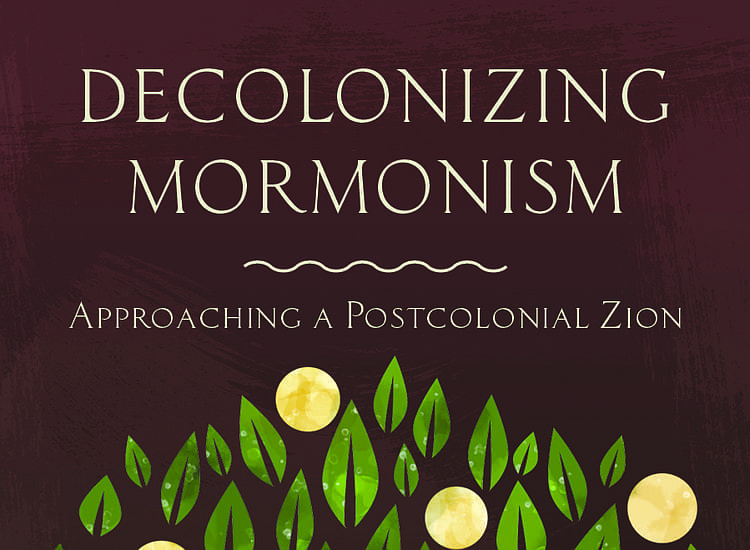
 In this interview, we visit with Angelo Baca, Sarah Newcomb, Cam Lebbon, Hyrum Joe, and Sheldon Spotted Elk about their experiences as Native Americans within Mormonism. As a framing, we utilize Angelo Baca’s chapter in the new book “Decolonizing Mormonism – Approaching a Postcolonial Zion,” edited by Dr. Gina Colvin and Dr. Joanna Brooks. The essay is entitled: “Porter Rockwell and Samuel the Lamanite Fistfight in Heaven.”
Episode Transcript
Host: John Dehlin · Guests: Angelo Baca, Hyrum Joe, Sarah Newcomb, Sheldon Spotted Elk
This transcript is machine-generated and lightly edited for readability. The audio is authoritative. Please excuse occasional errors in names and spelling.
Introduction and Guest Welcome
Part 1 of 3 · Ep. 1010
Angelo Baca [00:00:11] Your mom and me, we've seen this life with eyes that only see in black and white.
John Dehlin [00:00:21] Mormon Stories is a production of the Open Stories foundation and relies solely upon the support of people like you, its listeners to help keep the podcast alive or to become a member of the community. Please become a monthly subscriber by visiting MormonStories.org and clicking on the Donate button on the right side of the page under support. All contributions to Mormon Stories are completely tax deductible in the United States and go towards producing the podcast and building communities and programs of support for Mormons like you. Thanks for your support.
Angelo Baca [00:01:03] Tune me out if you must
Guest [00:01:09] I
Sarah Newcomb [00:01:09] know you've heard enough
Angelo Baca [00:01:14] But I sing this song Just because I hope you'll be wiser than your daddy was I hope you'll be wiser than your daddy
John Dehlin [00:01:27] hello everyone, and welcome to another edition of Mormon Stories Podcast. I'm your host, John delip in it's November 12, 2018, and I could not be more excited, as always, for today's interview. Today we have assembled a distinguished panel of Native Americans who were raised Mormon and we are here to talk about their experiences. Now, some of you are going to be familiar with with the Losing the Lamanites series that we did on Mormon Stories Podcast a year or two ago, where we had several people that would have been characterized as Lamanites talk about their experiences and their stories. Today, we're going to be taking a slightly different angle. Today we're going to be featuring a book that came out in the past few months. The book is called Decolonizing. It is edited By Gina Colvin, Dr. Gina Colvin, who runs the Thoughtful Faith podcast here for the Open Stories foundation, and Joanna Brooks, who was one of the original chairmans of the board of Directors of the Open Stories foundation back in 2011, 2012, they put together a really important, interesting book called Decolonizing Mormonism. And in that really amazing book in chapter three is an essay by Angelo Baca, who is returning to Mormon Stories podcast. We had him previously on Mormon Stories with Thomas Murphy to talk about the Bears Ears Monument. Angelo Baca, I think I should say Dr. Angelo Baca. Is that right, Angelo?
Angelo Baca [00:03:15] Not quite yet.
Guest [00:03:16] Okay.
John Dehlin [00:03:16] You're working on your Ph.D. is that right?
Angelo Baca [00:03:18] Yeah.
John Dehlin [00:03:19] Okay. Well, you wrote, Angela wrote an amazing article called Porter Rockwell and Samuel the Lamanite Fist Fight in Heaven. And this is basically one Native American's perspective, you know, who was raised Mormon, on the decolonizing of Mormonism, or if we want to say it in a different way, the colonization of Native Americans within the Mormon context. So today we are going to have Angelo Baca on and four distinguished panelists, two of whom are returning to Mormon Stories podcast and two who are brand new to Mormon Stories podcast. So why don't we begin by going kind of around the panel and have everyone just kind of give a brief introduction? And we'll start with you, Angelo. And let me unmute you because you're muted. There you go.
Panelists Introduce Themselves and Their Nations
Angelo Baca [00:04:14] There we are. Okay, sure. So yat a Angelo baka Yenishye. Hello, my name is Angelo Vaca. Chitni dasa che nakay dine dash. So I introduced myself in my clans. I'm Navajo and Hopi. That's how we introduce ourselves as clan wise to figure out who our relations are and who is connected to us in our communities. So in a traditional way, that's how I introduce myself, and I still do that. It is kind of part of that decolonizing process. I feel like those are the most important qualifications, not the letters behind the name. So I think for me, this has been a journey that's been both personal and professional. I did this research in my master's at the University of Washington, doing a film called In Layman's Terms, Looking at Lamanite Identity, which had me going across the country and asking about what is a Lamanite, and having that be my master's thesis film. And now I'm in a PhD program at NYU in the department of Anthropology, and did a film recently about Bears Ears National Monument called Shashat Bears Ears. And that's being shown all over the world in film festivals. And it gives the perspective of the indigenous grassroots folks and how they petitioned for the monument to actually become a success during the Obama administration. And I think all of these have deep ties to both Utah and Mormonism. So they are not separate from each other. They each informs the other. And it's still part of my ongoing work to address many of these issues.
John Dehlin [00:06:05] And I believe this movie is being shown tonight on PBS in Utah. Is that right?
Angelo Baca [00:06:11] Oh, I think that's the Battle over Bears Ears film.
John Dehlin [00:06:14] Oh, that's different than yours. Okay. You consulted on that film.
Angelo Baca [00:06:16] That's the KUED production that the University of Utah helped to produce. But I'm working with them to find out if we can do a dual screening of my film and their film on December 4th in Salt Lake City on the anniversary of Trump's announcement to reduce the monument. So hopefully, we'll gather a lot of people into the educational, informative space. They can see both of these films of how the monument came to be and then everything that's happened since then, which I think the other documentary does a good job covering.
John Dehlin [00:06:53] Excellent. Well, it's a pleasure to have you back on Mormon Stories Podcast, Angelo. Thanks for joining us.
Angelo Baca [00:06:58] Thank you.
John Dehlin [00:06:59] All right, I want to reintroduce Sarah Newcomb. Sarah is the reason why we're having this interview. She coordinated it, and she's returning to Mormon Stories Podcast. Sarah, welcome back to Mormon Stories.
Sarah Newcomb [00:07:13] Thank you.
John Dehlin [00:07:15] It's great to have you. Those of us who don't remember your interview, tell us a little bit about yourself, if you don't mind.
Sarah Newcomb [00:07:24] I am Tsimshian of the First Nations Eagle Clan. It is a matriarchal society, and the Eagle Clan in our society is passed down matriarchal and is a family identity. Also, I did. I've done the lamanitetruth.com website where I talk about different historical issues within Mormonism and how it relates to Lamanites. And I did. Yeah, one of the Losing the Lamanites episodes. One of the things that kind of hit home that Angelo already said was just some of the ways that he's. How he identifies himself is one of the ways that helps him connect. And that's something that's been true in my case, too. We have a saying in Tsimshian that's apaga na lepuletim, which means remembering our own. And that's definitely been a journey of reconnecting with language and history and remembering where I come from.
John Dehlin [00:08:36] I love it. Well, sir, it's a pleasure to have you back on Mormon Stories Podcast.
Sarah Newcomb [00:08:41] Thank you.
John Dehlin [00:08:42] Hiram Joe, welcome back and give us a quick introduction. Welcome back to Mormon Stories Podcast.
Guest 2 [00:08:49] Yeah, for sure. Absolutely. Happy to be back, John. Hiram Joe, My first clan is NATO Dene, tobacco people and red running into water people and born for the Ute clan. That's my father's side. Got a. Got a little bit of mixture there. Navajo and Ute. I did a podcast a couple years ago, was one of the most amazing experiences of my life. And I just want to say that I'm happy to be with the rest of you fine people and looking forward to good discussion, good talks, and hopefully we can garner up a lot of people for this, for this interview and podcast. So just happy to be here.
John Dehlin [00:09:34] All right, thanks, Hiram. Cam and I have known each other for several years now, but this is the first time Cam Lebin has appeared on Mormon Stories podcast. So, Cam, tell us a bit about yourself.
Guest [00:09:48] Hey, yeah, my name is Cam Lebben. I really appreciate you doing this, John. First of all, I just wanted to mention that it is Native American Heritage Month this month, and that's why I was. I was really excited to be able to do. Be a part of this podcast. I was actually born in Page, Arizona. My father is Illigana or white, and my mother is Navajo or Dene. And we actually, I try and say Dene. I don't usually use the white man term for our name, Navajo. So that's what I try and use as well. But I grew up in a small town in Utah, Delta, Utah. So I was raised with white traditions and really lost a lot of my native traditions. Would go back once a year, but really didn't know about the Navajo traditions and felt out of place as well as being in Utah. I felt at a place with my color and being the only native family in the city. It was really tough. So I really had some. Some tough times trying to just learn where I fit in to this world. And so. And I can speak a little bit more to that as we go on, but I went on a mission to Colombia when I turned 19, of course, and came back, got married in the temple and lived a Mormon life until I was about 38 years old when I found Mormon stories and a lot of other podcasts and a lot of books that it really taught me what I hadn't learned all my life and helped me to move out of the Mormon life and actually start finding my traditional life a little more. So I've kind of grasped onto the native ways rather than actually living a Mormon life.
John Dehlin [00:11:39] And you've invited me to come hang out with you and participate.
Guest [00:11:45] Yeah. You're going to do a sweat with us one of these times in Cameron.
John Dehlin [00:11:50] If I'm welcome. It'd be an honor, so thank you. All right, well, Sheldon, would you mind introducing yourself to us as another new guest on Mormon Stories podcast?
Angelo Baca [00:12:03] Yeah.
Guest 3 [00:12:03] Thank you for having me on, John. It's nice to meet you. Listen to you a couple of times. My name is Sheldon Spotted Elk. I'm Northern Cheyenne. We're the tribe that killed Custer. Us in the. In the Sioux and the Arapahos, we killed Custer. That's our gift to humanity. So you guys are welcome, but also originally from Montana, but I grew up most of my life in San Juan County, Utah, in Blandy, Utah, where my mom, she's white and she's Mormon heritage all the way back to the founding of the church and very proud of that Mormon heritage. A Belknap that came across the plains. And then my father, traditionally Cheyenne, grew up, traditionally participated in all our ceremonies and met my mom and had six kids, and we grew up. I think their marriage might have been the story of the flying fish and the sweeping crane. They never were able to really occupy each other's environment because we tried to live on reservations. We tried to live off reservations, but this border town, Blandy, Utah, ended up being the place where you could walk out my front door. You could see the Bears ears on the sunset horizon, actually, where I grew up. And so that's. And that ends up being like, one of the most racist towns when it comes to white Indian relations. And some of the hypocrisy that you could see within Mormonism and this Lamanite narrative that we're degenerates, you know, that we're degenerate Jews, you know, that this narrative that Mormonism. The central premise of Mormonism, some would say. But that's where I grew up. I'm a lawyer by trading. I do a lot of work with tribes. I used to represent kids in foster care and juvenile delinquency, but now I do some national work and get around quite a bit in Indian country. I haven't actually been inside of a Mormon church for about 10 years either, so it's been a long time. But I did go on a Mormon mission. I went to Chicago in 2000-2002. So I did the whole two years. And for that reason, I know I could do anything for two years. Doesn't matter. I can do anything in this world. I can go to prison for two years. I know that
Guest 2 [00:14:18] well.
John Dehlin [00:14:18] Welcome, Sheldon. Welcome to all of you again today. If I had to give an overview of what today's session is going to be about, well, we're basically going to be talking about colonization. We're going to give a brief overview of the colonization of Native Americans in the United States. Kind of take it up to the early 1800s. What would have been the social or cultural context that Joseph Smith would have grown up in, how that would have naturally kind of led to the creation of a book like the Book of Mormon and the myths and the legends around and the creation of the Lamanite identity. And then we're gonna talk about the legacy of that Lamanite identity from the standpoint of kind of Mormon colonization. And we're going to be discussing several of the tools or the negative outcomes of the Mormon colonization of Native Americans. Angelo is going to kind of lead us through that. But we're going to have the other participants again add color and perspective. I just want to read a couple things. Angelo, from this wonderful essay. Again, the book is Decolonizing Approaching a Post Colonial ZION, edited by Dr. Gina Colvin and Dr. Joanna Brooks. The essay is entitled Porter Rockwell and Samuel the Lamanite Fistfight in Heaven. The subtitle is A Mormon Navajo Filmmaker's Perspective. It's a wonderful essay. I highly recommend this book. I hope you all will buy it and support Gina and Joanna and all the authors. But there are a couple things I want to start with. Angelo, as a filmmaker, you mention in this book the importance of stories and oral traditions and storytelling, which obviously resonates with me on Mormon Stories podcast. But you write Film for me is closely aligned with storytelling in indigenous tradition. American culture doesn't understand the high value indigenous people place on our oral traditions. Storytellers and song keepers you go on to write. This is the primary mode of decolonizing our own stories, the opposite of the colonizing nature of Mormon co optation and appropriation of our histories in the Book of Mormon. And that's kind of where we want to begin. This is giving each of you a chance to tell Mormons a new Native American Mormon story and hopefully to claim back some of the power of your own narrative. So I thought, Angela, it might be good to begin with, and I know this is going to do it, a grave injustice, but kind of a brief history of Native American colonization and the background that listeners would need to know to then understand the context of Joseph Smith and the creation of the Book of Mormon. But before we dive in, do you want to do any framing or setup to this conversation so that it goes aligned with your desires and preferences and sensitivities?
Background in Storytelling and Native Identity
Angelo Baca [00:17:30] Not really. I mean, just to say that I do put a lot of emphasis on storytelling because that's really where I come from. My grandfather was a traditional storyteller in the community and it actually kind of dawned on me one day that I'm sort of doing the same thing that he did. I just use film to do it. So I'm sharing people's stories. I'm also trying to document oral traditions, history, culture, language, keep that and preserve that for our future generations, mostly for our community, because that's who it belongs to. And I also do work in terms of talking about traditional and indigenous intellectual property. And I know that's kind of a fairly new emerging field because, you know, historically the archives favor non indigenous people and they've co opted our stories, they've taken them, they've had them, you know, documented and given different names. Other authors, other people get credited for our stories or our images or even our medicines. So there's lots of these different issues of talking about why certain things are the way that they are in the world that we occupy and how these lived realities have multiple, layered meanings. It's kind of the reason why I sort of gave this a cheeky title. Right? It's like the play on the title of Samuel the Lamanite. And Porter Rockwell is basically from Sherman Alexie's title about the Lone Ranger and Tonto Fist Fight in Heaven. Because from that artistic perspective, you can see that these are two key figures in pop culture, and yet they're throwing
John Dehlin [00:19:34] together for our millennials out there. Tell our millennials who Lone Rager and Tonto were and what was kind of wrong with that representation so they understand the reference.
Harmful Native Stereotypes in Media and Scripture
Angelo Baca [00:19:44] I don't even know where to start with that. The Lone Ranger in Tonto did a terrible job as much as the book.
John Dehlin [00:19:50] It was a TV show in, what, the 50s?
Angelo Baca [00:19:53] Yeah. From black and white times. It basically pitted this white law enforcement ranger as the leader of this duo, and Tonto was this Indian sidekick who was basically reduced to, you know, just some Indian speak and grunts and groans to really emphasize that uncivilized characteristic of the savage nature of indigenous peoples. So I really kind of think it's quite fitting, actually, if you really think about how ridiculous it is. It's. You need one to support the other. There is no hierarchy, and there is no leader or dominance of another unless there's allowed to have an opposite. So they illustrated both the apex and the lowest level of civilization. And I think that's the same thing that happens here in terms of the Book of Mormon using indigenous peoples as Lamanites. It gives us a real subhuman position. And that's, you know, it's important for us to recognize the power of story for native peoples. This is key to our creation stories or oral traditions. Some of these stories have so much power that you can only tell them at certain times of the year. So, like, right now, we're moving into that phase of winter when you tell some of the most sacred stories that give you an insight into the world that are packed with cultural traditions, with lessons with history, and they give you many different cultural and spiritual insights. And I think that, you know, it's important for us to go back to those traditional stories and to know why those are important, because, you know, when I was growing up, the church had this huge influence of don't learn those traditions, don't learn those lessons, because those are the lessons of your ancestors. We have the truth. We have the real story, and you should listen to us. And I thought there was something fundamentally wrong with that from the very beginning. Just didn't know how to put my finger on it or articulate it very well. So hopefully, you know, trying to write that into the story, it will flip a switch on, into other people's minds when they read it if they also have similar questions. Because I'm really emphasizing the need for people to think, intellectualize their positionality in all of these traditions and stories and to, you know, understand where their hearts and their minds have to find a balance. Some people do that very well. Some people are both traditional and also Mormon. Some people reject it outright, or some people kind of go back and forth. You know, there's a story that, when I was over at the Hill, Cumorah, you know, guy we were interviewing said his aunt, she tried on several religions like they were outfits, you know, And I think this is. It's telling. It's really interesting for talking about religion and native peoples. We've always been accepting of many people's faiths. We've always been tolerant and inclusive and, you know, supportive of community and peacemaking processes. And I think if anything is untrue, it's that, you know, that we're filthy, that we're wicked, that we're savage. It's quite the opposite. We're the ones that have been extremely tolerant, inclusive and loving to many different backgrounds, cultures, people.
John Dehlin [00:23:40] Thank you. That's a great introduction. Angela, if it's okay, and this is really hard to do, but let's just say you're talking to some high schoolers or college students that haven't really had a decent American history course, and they have just a general understanding of American history and Columbus and, you know, the 17th and 18th, 19th century Western America. If you were to give them an overview of the colonization of Native Americans, you know, what would that overview sound like? How would you begin the story? How would you tell the story?
Angelo Baca [00:24:23] Well, I think that there are lots of places to start that story, but I think the challenge is that you have to meet people, no matter who they are, even if they're high schoolers or even if they're professors. You have to meet them halfway, and you have to figure out where are they in terms of knowing what the actual histories are and the facts, the data, the information that they can utilize to come to an understanding in a more comprehensive way. And I've been finding, because I've been doing both of those in these spaces, that it generally is almost nothing. They almost have no background. And you kind of do have to start from zero. And so the best way that I found to talk to people about it is to really think about things in a way that isn't just lineal. You know, just like here's the calendar, here's, you know, how these centuries have piled up, and here's where we are stacked in into history. There is no better example, I think, of a place that collapses the past, the present and the future than Bears Ears, because it has all of that. It has the petroglyphs, the rock art, ancestral sites, the medicines that we still use, you know, the animals that we're still hunting, the wood that we still are using today to keep us warm. And then the future aspirations of this place has medicine to protect and keep us all healthy and safe. And those things, I think, are a way to start having those conversations. Because you're talking to people who, in the dominant culture, are socialized and conditioned to think in linear ways. They're thinking very straight on very rigid and square box ways. Indigenous peoples don't think like that. We think in cycles and circles and a comprehensive whole. We're thinking about the part on this side, but then the part on the other side. And we know that nothing is separate. They're all connected and they're part of one thing. And I think that's a really important thing to understand and put your finger on. Locate it early with whoever you're talking to, because otherwise you can say anything that you want. They're just not going to get it because you haven't started from that place where you're both at the same spot to understand each other's perspectives.
John Dehlin [00:26:58] Makes sense.
Angelo Baca [00:27:00] Yeah, so. So again, it depends on who you're talking to. Right? It's like students. Okay, look, you know, let's tear down all the stuff about Columbus Day. Tear down all the stuff about what they know with the Pilgrims and Thanksgiving. Tear down all the stuff that they know about, you know, food and, you know, where these, these recipes and these people who claim certain, you know, heritages along these lines that have become popular in our culture. We go all the way back to the beginning. We show them this great civilization that we had. We had cities, we had medicine, astronomy, agriculture, we had mathematics. We had, you know, complicated, very intricate ways of knowing the world and had our own ways of documenting these things, whether they be on the wall or they be on scrolls, they were still part and parcel of that entire lived reality that we all shared here in the world. And those, I think, have to be. They have to start simply and first. Everything that people know, identify, got to go right to both the heart and the mind. So just understanding that we have family, we have relatives, and those plants and those animals, those are our relatives too. This river, that mountain, these rocks, these trees, those are our relatives too. And I agree with, you know, with what Hyrum saying is like, you know, dine. It's like that's the people, you know, it means the people. It basically means a human being. We would say dene be', eshkel, which is the five fingered people. Five fingered people really is the only difference between us and the other people. We have five fingers, we have the little opposable thumb. If we're going to talk from the anthropological perspective, we're the only ones that can utilize this for a lot of tool making, right? And that is really a huge marker. And that's about it. We're not any better, we're not any worse. We're all part of a larger family and those are our relatives and they need to be taken care of too. So for us as human beings, we'll identify ourselves as that too. So this is a really important perspective shift even at the beginning, before you have those conversations, because those other folks who don't come from those backgrounds or teachings, they're not going to understand that right away.
John Dehlin [00:29:28] Such a beautiful heritage, something to be so proud of and it's just so beautiful to listen to. Thank you, Angelo. Sarah, do you want to add anything just as an introduction sort of to what Angelo said?
The Lamanite Label and Native Heritage
Sarah Newcomb [00:29:46] Yeah, I have a couple comments. One, I think I shared it in one of the podcasts I helped with. But what he just finished with, one of my favorite quotes is Chief Seattle's of I'm probably going to get part of it wrong here, but humans have not created the web of life, but are one thread within it. Everything is, or whatever we do to each other, we do to ourselves. Everything is connected, everything is bound together. And that's and everything being all life. And that's definitely something that I've connected with just naturally as I've reclaimed my own identity. But I do see such a difference in how I believe versus where I came from and having some of the conversations that I've had with people from different backgrounds that there's. That that difference of thinking does create a challenge. The one thing I was going to add too was earlier this Year I had the opportunity to talk to a 19, 20 year old right in there missionary who told me that Native Americans didn't have religion when Columbus came. And that's why the restoration was so important. And so hearing her say that surprised me because obviously we are very religious people. But it helps me realize that that colonization of religion, which has been a huge part from the very beginning, and I think understanding that the people that came and colonized were extremely religious and viewed their religion as how they, how they thought it formed their viewpoint of everything that they had to deal with in life, how they saw other people. And that was one of the challenges, I think that was a massive challenge in the very beginning of colonization is not understanding our, our religions and our way of life, way of thinking. Connection to everything was demonized or talked down to instead of embraced or understood.
John Dehlin [00:32:29] Thank you. No, that's great. Yeah, that's great. I think in westward expansion and in the colonization or, you know, of the Native Americans and in, you know, the migrations of people from Western Europe over to North America and Central and South America, it was all about land and resources and building their civilizations. And I don't think it, I don't think they spent a lot of time trying to be empathetic or understanding of the cultures they were displacing.
Sarah Newcomb [00:33:01] No. And the, the drive to get resources and expand. In that sense, religion was used as a tool against the Native Americans and the indigenous people everywhere. To say, well, you know, you're not righteous enough. Within Mormonism, that was, honestly, that was one of my biggest struggles. I've still carried a lot of shame over this. This was one of my things that I had to get past. I know when we did my first interview, I talked a lot about skin color and not being able to dance or embrace cultural traditions as part of my colonized experience. And at the end of the interview, you asked me about heritage and how that affected me at the time. All I could think is, well, I'm proud of my Tsimshian heritage now. So I, I couldn't give you a clear answer because I was in a place of being proud of it. But what I realized is my Lamanite heritage, which is how I identified before I lost my. Once I found my way out of Mormonism, my Lamanite heritage affected me even more greatly. And this, this is kind of ties into how America was colonized, is the Book of Mormon warns the Lamanites that if they don't embrace religion and do what they're supposed to do, they're gonna lose their lands and be destroyed. And so growing up, having conversations with my family as I learned more about history, and I was getting into Native American history and hearing about different wars and massacres were always kind of traumatic. And I'd say, well, why did God let that happen? How could this happen? And of course I would have those lessons that tied it into the Book of Mormon. And so I have this shame over how could I write off Native American and indigenous deaths as something that was supposed to. To happen, as something that God allowed or commanded to happen in a way, because they weren't righteous. They lost their lands because they weren't righteous. The lands were given away. Even the song Book of Mormon stories, the children's song, talks about how the land welcomed all those who wanted to be free. It was. And there's a number of lessons that I've read, there's talks that I've read that address this issue of the Book of Mormon states, if the Lamanites aren't righteous, their land's gonna be given away, they're gonna lose their land and they're gonna be destroyed. And so seeing that having that be something God wanted definitely affected me. Instead of it being this is history, you know, humans do things and approaching it from a more intellectual standpoint, it's high God into it. And I think that's a tad nefarious too. But it's how America, you know, was colonized was through this same process of using religion as a reason to take the land.
John Dehlin [00:36:29] Thank you, Sarah. I want to get the other panelists in, but Angelo, are you comfortable just giving us a little bit of a. Let's just say that the common narrative that most Mormons hear is that Native Americans are the descendants of Lehi and Nephi who came over on a boat 600 years before Christ. Maybe there were some other small groups here, but basically the Native Americans that ended up bumping into or being dominated by, you know, kind of westward, you know, Western European expansion in the 1800s, et cetera. You know, Joseph Smith would have been bumping into or on the frontier, exposed to Native Americans. And you know, we all know from the Book of Mormon narrative that there was a light and dark skinned group over time that God cursed the bad ones with dark skin so that they'd be dark and loathsome, you know, to the lighter skinned Nephites. And eventually the light skinned Native Americans were killed off by the dark skinned ones. And that's who Joseph Smith and others in the 1800s would have been seeing. You know, that's just a really brief version of what most Mormons would think of with the Native Americans and that because of their wickedness, they fell into savagery and uncivilized behaviors. And you referenced that a bit. And so, Angelo, if you were to tell maybe a high level different narrative that would lead us up to why Joseph Smith would even be thinking about Native Americans and why he would attempt to write a book about Native Americans, can you paint us maybe a story that you would be more comfortable with in terms of what led to the Book of Mormon and Joseph Smith's teachings about the Lamanites?
Angelo Baca [00:38:42] Yeah. Can you hear me?
Guest 2 [00:38:45] Yep. Yep.
Angelo Baca [00:38:46] Okay. Yeah. Thanks, John. And first, you know, thank you, Sarah, also for sharing. I know that's really always tough to share those personal parts of you. I know that it took me a long time to even write those words down and then have that be included in the book. There's this great article that I always think about, too, about the anxieties of authorship, and it's because precisely that book, the Book of Mormon, existed and that Joseph Smith made up this entire story that I do have a lot of anxiety towards. People who just write these things as if they're truth, and then they take them literally as truth. And that has real consequences and can do real damage, violence, harm to people. And I think that there's no better evidence of that than the Book of Mormon. You know, I'm always curious to think what other people in the world think about Lamanites. Like, I know the. The church's efforts to convert people are pretty steady, and, you know, they're going full tilt over there in Africa. They've pretty much given, you know, up on Latin America because they've already done as much as they can in terms of pushing indigenous narratives against the wall with their own narrative about what a Lamanite is. And it just makes me think, why aren't they asking those questions? Why aren't they questioning their own indigeneity? Why aren't they talking about why Native Americans and their own culture are being appropriated and see how that they are also being utilized in this larger machine to justify many of the acts that have been done historically and contemporarily by using this narrative? And I think this is really something that it bothers me so much that, you know, it makes me think about the power of story. And it's not just in getting information right, which that's super important, but it's who's telling the story. You know, it's not The. It's not the river, it's the source of it, right? The source of its mouth. And you have to think about, why did Joseph Smith take these ideas, appropriate them, use them for his own? And the answers are really simple once you look at it. He was a grave robber. He stole things out of, you know, dead people's graves. He was convicted of these kinds of acts over and over again. There's court records of it. He was close to the Seneca and the Haudenosaunee countries. He knew about their culture. He knew about some of the things that they did. The kind of spiritual and cultural traditions that they had, having that direct connection to God, the one to one that you would have as a person to the Creator, and not having to go through some kind of hierarchy where it would be like, you know, the Pope or other priests or some pastor or something that you could directly connect to God. And there was all these things that talking about how these traditions were informing the conditions of the people in those places. And he would just start to utilize all of these large claims that he had no proof of. That sounded grand and sweeping because it was different. It was super different than anything else that existed in his town of Palmyra or New York or. Or even in any of the other states of America at that time. So it was, in a way, very attractive because in people's minds, it also. It was different, but it filled in a void about how did those American Indians get here? How did those indigenous peoples get here? Because we were told in the Bible it was Adam and Eve. And then we were told later that, you know, these migrations that were in the Bible are the truth. And so our literal existence, our physical embodiment of being present in the land was confusing and strange to these newcomers. And you have to remember, many of the people who came over to this country, they were already seeking refuge and asylum from their other countries because they were borderline religious fanatics, and they were doing this stuff on a regular basis and making it normal. And that's why it's really important to know the difference, because this country is so young, they haven't figured it out. The direction that they were headed in was incorrect. And it's the same in so many other human and, you know, communities that people displaced, people displace other people, colonized people colonize other people. And that is really the fundamental root of how the country got started. Because once they started doing that to us, and they had westward expansion, Manifest destiny, they were heading this way. The Mormons started to do that to indigenous peoples, too, they claimed to be, you know, marginalized, to be oppressed, but they were doing that to us, too. And I fail to see where they have any justification in doing those actions or making these claims. They actually have to see, all the way back to the beginning, even before they got here, about what the truth actually is of indigenous peoples.
John Dehlin [00:44:18] Just give people a sense for how Native Americans were treated. I know that someone who's done a little bit of studying of history will know that it is quite astounding and horrific. But can you give people a sense for what was going on in the 15, 16, 17, 1800s as the Western Europeans started colonizing north, south and Central America? What happened? What did they do?
Angelo Baca [00:44:47] So this is kind of just the standard. The reason why people came out here into the early Americas, into these indigenous spaces was because they wanted land, they wanted money. We're looking for precious minerals, anything that would make them rich or give them, you know, lands that they could own. And I think this has still been carried over into our modern way of thinking. We've really appropriated ownership and market capitalism as the way that we think things should be. But if you think about even all the way back to one of the early theorists about ownership, John Locke, he said in the beginning, all the world was America. That's a quote, direct quote from him, meaning that he was thinking that all the world was basically virgin land to be conquered and owned, to be cultivated and to be made property. And this is the mindset back then, and it's still the mindset now. So a lot of horrible things were done. Slavery, massacres, genocide, disease, warfare, famine, displacement, removal, internment. And a lot of these things can still be seen. The effects of all that historical trauma, the recovery of our generations, the injury that's been done to our elders, our traditional knowledge holders, and our sacred spaces. Even from the first week that people got here to these shores, here on the east coast of the United States, they began grave robbing. And they haven't stopped. And, you know, we've had to produce these new ways and these new cultural ceremonies and processes for things that had never been done before, because no one ever robbed the dead. No one ever dug them up, no one ever had to bring them back home. So these are things that we're still dealing with. And I think, you know, it would behoove a lot of Mormon followers and folks of the church to understand those atrocities of history and would give them a better idea of why we feel the way that we do and why their versions of history Trying to overshadow or appropriate our own are detrimental and very damaging. I'd like to hear from some of the other panelists. John, what do they think?
John Dehlin [00:47:17] Let's do it. Hiram, why don't you jump in?
Guest 2 [00:47:26] Yeah, absolutely. Wow. I'm super excited about what has been discussed so far from Angelo and Sarah. Good things. I'm pretty much on the same page as you guys. Gosh. As far as, you know, the colonization, you know, to go back in history. I'm glad to hear some of that coming from Angelo. I mean, you know, just to give you an example, I don't think it was until 1924 that Congress gave citizenship to the Native Americans, you know, as indigenous people. Like, that's just another example. And then in 1954, I believe that's when some states actually allowed, you know, some of us to vote. You know, you have that time period in history, and, you know, for me, that the whole idea, the Western kind of rhetoric, you know, as far as using the terms, you know, Native Americans being savages and murderers and thieves and beggars, I mean, you know, you can't help but parallel those derogatory terms with the ones in the Book of Mormon. You know, we're dark and filthy and loathsome and bloodthirsty, those type of things. And, you know, again, I mean, that's. It's hurtful, but as a member of the church, you know, you have to. You just kind of have to sweep that under the rug if it hurt you and just kind of go along with, you know, what's being taught at church, what's being spoken in general conference, and just kind of hide your pain and you suffer in silence. And I think, you know, we've all had to go through that, and, you know, that's what we felt for the longest time. But, you know, a bishop being non white, he's going to be non white. The stake president is going to be non white. The Aldous Corn president's going to not, you know, he's going to be, I'm sorry, non native. That's what I say. Not white, non native. And then, of course, we have the quorum of 12 apostles, and then we have the First Presidency. I mean, when's the last time a Brown guy has been in the First Presidency? So there's going to be no understanding of what we are going through. I mean, even if we wanted to, you know, visit with a leader in the church and say, hey, I don't like these terms, which I've done more than several times, there's just gonna be no, no validation. You know, I've had a bishop come in and had me mark out those derogatory terms. He had me mark out in the Book of Mormon, white and delightsome. And he had me change that to pure and delightsome, you know, those type of things, you know, and when it comes down to it, I just don't think they. They don't want to recognize that it's hurtful.
Guest [00:50:15] Right.
Guest 2 [00:50:15] Because if they were to agree with us or in a sense sympathize and empathize with us Native Americans when we have these issues, then the church starts to not become so true anymore. You know, those things in the Book of Mormon that are said, they can't deny. I mean, that's the scripture that comes from God. But for us it hurts. And so it doesn't affect the leaders of the church. And that's one thing I wanted to bring up. But just for an example, I have a little bit more to say about the Indian placement program. Whenever you're ready for that.
John Dehlin [00:50:51] Absolutely. We'll definitely get to that.
Guest 2 [00:50:55] In my hometown, there was a branch, part of our stake here called the Alma branch. And it was a Navajo speaking branch at the time. This was between 1980, roughly to about 1985. And you know, it was a branch that I never attended, but my father certainly had a part of that he attended. There had a grandmother who went probably full time, and basically it would be the same as Spanish breaking branch today. And when Spencer W. Kimball had passed on, I believe Ezra Tapp Benson kind of, you know, came down or sent representatives down here in this area and kind of just aborted that whole idea of having an Alma branch for the Navajo people. And I believe it was the same year they kind of got rid of the term Lamanite generation. And that turned into living legends, I believe is what it was. I don't know if that's still going on at byu, but it just, it kind of seemed like, you know, Ezra Taft Benson, I know he's related to you, John, but no, I'm not trying to do any hurt for that. But no, I believe he was kind of the one that took away that whole. You know, it felt like at that time we were maybe starting to blossom as a rose. As, you know, the promise says in Jacob and that the Lamanites were being validated. Like, hey, we have this branch for us, for our people. We have this organization at byu. This is for our people. And so it kind of goes along with the lines of, hey, you Know what? Maybe we are special. Maybe what our leaders are telling us at church really is kind of come to fruition. And it kind of did. It made the people in this area feel like, hey, maybe God is recognizing us through his prophet. But they did away with all that and Navajos became inactive. They. They stopped believing in the church. And, you know, I just, for me, you know, that's just an example of, you know, some of the things that happened. And so I went online, I googled the ALMA branch in Kirtland, New Mexico, where I grew up, and there's nothing. You can't find a thing on it. There's no history, there's nothing recorded. And talking with my dad the other day about it, he says it's just something that this town does not speak of. Nobody wants to bring that up. Kind of like, you know, the priesthood band with the blacks in the priesthood, that type of thing. It's just not going to be spoken of. So then again, it's like, well, you can't. You can't just. I mean, this is something that people have questions about and, you know, just. They just want to sweep for another rug type of thing. And that still hurts. It still hurts a little bit. But anyway, I just wanted to bring that segment up.
John Dehlin [00:53:44] Thank you. To reflect what you said, Angelo, when you were referring to Sarah's comments. It is a deeply personal thing to be sharing these sorts of stories. They're very emotional, they're very traumatic, they're very personal. And so for all of you, I want to reflect Angelo's sensitivities and say thank you for being willing to share such personal things. Thank you. Does anybody have a sense of a number of just how many Native Americans have been estimated to have been sort of killed in the colonization efforts or to have died, let's just say, prematurely in the colonization efforts that happened from whatever 1500 to 1900 or 2000. Has anybody an academic ever tried to come up with the number?
Scale of Colonial Violence Against Native Peoples
Angelo Baca [00:54:38] Those numbers are hard to come up with because nobody really knows how many people died prior to many colonies actually being well established. Earlier points of contact with scouting parties, people who are looking for places to build their plantations and all of that. They brought disease. And thousands of people, even estimated between 1 and 2 million from the tip of Cape Cod all the way down to Washington, D.C. died before people even came in mass to the shores. And so there are still great stories handed down from generation to generation of that great time of suffering. And a lot of people didn't know what to do. There was no cure for some of those diseases that wiped out large portion of the leadership. And you have to understand, it's not just the leadership that collapses. It's the social structures, the family structures, the community structures. So what you basically have in the aftermath of those epidemics that burn through communities are chaos. You have chaos and you have disorganization. You have desperation, a lot of sadness and grief. And so when you're faced with those choices, which are very limited, you do have to make decisions. And when people come en masse, especially when they're affiliated with churches or missions or they're trying to do conversion tactics on you, those choices look better and better than the live realities that you face. And that's not just in the early times of Indigenous communities in contact with those folks here on these shores, but that's from Central all the way down South America. Some of those folks, they still encounter a lot of that, you know, starvation, disease, displacement, removal. And then when these churches come in and they pretend to be your friend and they offer you food and shelter and protection and all these things, you take it very seriously. And then you begin to become incorporated slowly into that socialized and adopted culture that they want you to have. So it's complicated. You know, these choices aren't easy. And people make these choices for personal reasons and also for survival. It doesn't just have to be that part of the desperation of life or death, but could be financial, could be social, could be educational. It could be, you know, market economies that influence their decisions to affiliate themselves with one church over another. You know, these actually have real consequences into people's lives, but the things that really suffer at the hands of it are, you know, our culture, our language, our history or traditions, and those are encouraged to be, you know, slowly wiped away while these other new things are encouraged to be adopted. I just wanted to mention that just because, you know, it's not just about Native American or American Indian impacts. It's all of our indigenous brothers and sisters from all the way to the tip of, you know, the North Pole, to the South. We felt the impacts of colonization and religious conversion, which go hand in hand. They support each other.
John Dehlin [00:58:12] Love it. Thank you.
Guest 3 [00:58:13] I think there is two. There are some numbers on that. Oh, John, this is Sheldon. I'm sorry.
John Dehlin [00:58:17] Yes.
Guest 3 [00:58:19] And I've seen estimates, Conservative estimates, around 10, 10 million indigenous peoples, all the way up to 100 million indigenous peoples, with 95% of those being primarily epidemics that are going across. I think a good narrative of this is De Soto. He lands there in the banks of Mississippi. And he goes on this hike and he describes these cities that he's hitting just right after another in the Mississippi Valley. And these cities are bigger than any city that he's ever seen in Europe. He's saying these are massive cities. And he comes back years later and they're devastated. Nobody lives in these cities anymore.
Angelo Baca [00:58:54] They're.
Guest 3 [00:58:55] They're completely empty because of disease that was the domestication of animals and the diseases that Europeans had. Because of that, they ravaged these communities actually of indigenous peoples that were in the Mississippi Valley. So I think there. I wanted to hook on to one other point really quick, if that's okay.
Mormonism, Federal Indian Law, and Native Sovereignty
John Dehlin [00:59:14] Please, please.
Guest 3 [00:59:15] And it's that notion of the history by. And the real consequences that Angelo talked about, and there are real consequences is if you look at the history of America. And I think there's. It's interesting studying federal Indian law, if you look at you. You could put these timelines next to one another. You know, one of the very first cases that go up to the U.S. supreme Court that have to do with Indians, that usually starts the Marshall trilogy is what they call it, is Johnson v. McIntosh. It's a 1820 case, 20 years before the founding of the Mormon Church. This case goes up, and this case has significant impacts of land holdings here in America. And it's interesting. There's not an Indian in the case, actually. It's an argument between two white guys of who has the correct title to land. One guy's tracing his title to a trade that he made with the local tribe in Illinois, and the other guy's tracing his claim to the United States. And so could Indians give title through a session is really the legal. One of the legal questions that is up there. And the answer you get, all this racist. This racist notion of the doctrine of discovery that Indians are unable to hold land, you know, and all these notions that are talked about earlier before by some of our panelists, these ideas around Manifest Destiny and Christianity justifies all the negative things that come along with that Manifest Destiny because. Because the march westward, the march for land. And of course, you can see this in Africa, you can see this in the Americas, you see this all throughout the world of when others, when colonizing forces, interact with the other, quote, unquote, the other. There's this derogation, there's this appropriation, there's this assimilation tactics that they take. You see it clearly with Mormonism. Actually, I feel like I see it clearly with Mormonism. And when it doesn't work on the adults they start taking children. And I were going to talk a little bit about the Indian placement program. And eventually you could see history has taught us this time and time again. When all those things fell, it ultimately leads to genocide. And when we. And especially when it comes to these ideas around truth, existential truth, even, you know, like, what's. Where do you go when you die? You know, I think there's a lot of. Of people that have. There's. There's psychological anxiety around that. And if you disrupt that in somebody there, there's. There's a lot at stake right there. You know, there's so much at stake. And you can see that a lot with Mormonism, people that leave Mormonism, you know, like just that. How difficult it is to transition out. And so that there's some dynamics in that. I. One last point too, because I look at.
Guest [01:01:54] So my.
Guest 3 [01:01:54] My father who converted to Mormonism, I think maybe in the 70s or late 60s, and I look at that generation of American Indians that converted and we're taught the Lamanite narrative, quote, unquote, the Lamanite narrative. And you can see the similarities between this idea of liberation theology, because I think what the Cheyenne tradition, you know, he grew up traditionally Cheyenne. We have a cultural hero. You know, we have a religion. I know Sarah was talking about how missionaries were saying, hey, we don't have any religions. Like, we had a. Our cultural hero, Sweet medicine, you know, he taught us the way of life. He taught us our ceremonies. He taught us our government structure for Cheyennes. So my dad had all this in place. And I think being. And Cheyennes, we actually, and a lot of tribes actually, we were very wealthy. We lived very wealthy lives. And being placed on a reservation and seeing people die of hunger, you know, starvation, and seeing that was devastating, I could imagine, to our psyche, you know, like, it was devastating to see all these promises. And I think Mormonism offered that promise, you know, and I think my dad went to byu, part of the BYU outreach to American Indians. And I know a lot of American Indians actually, a lot of lawyers actually from that generation went to BYU for undergrad or law school. You know, like, it's interesting, this whole generation of older lawyers went. Were part of that, because I think it was part of this liberation. You know, here's a narrative that you're going to be running things at the very end, you know, that your Lamanites are going to. Hyrum mentioned that, you know, blossom is a rose, that promise which is. Should be in place before the second coming of Jesus. You know that Indians, we should be running things by the end of the end of the day. And I think that was something appealing to that generation. It's hard for me to speak exactly what my. For my father, but I. But I hear that a lot in a lot of what, older American Indians that converted to Mormonism. But there is that also idea. I'm going to throw another jargon idea. And there's W.E.B. du Bois. He talks about that notion of double consciousness, of being able to operate in this world where Mormonism sees American Indian and being conscious of that, of how Mormonism sees us as American Indians, as lost people, as far as fallen people, with heathenistic cultures, with savage cultures, you know, and so being cognizant of that and being able to operate around that, and I think a lot of people, like people that are exiting out of Mormonism, I think you could see a lot of communities that have been affected by. You could see the LGBTQ community, you know, the high rates of suicide, and being awake to that. You know, like, we could empathize around that. Of how Mormonism is both. The colonizing effect of Mormonism has affected both of our communities in very similar ways. Of course, there's nuance, but very similar ways of how it's affected in our psyche, of how we see ourselves when we look in the mirror, what we look at when we look at our skin, you know, so it's a significant thing. So I just wanted to add that in there. I appreciate you. Let me jump in.
John Dehlin [01:04:56] Love it. Thank you, Sheldon.
Guest [01:04:59] John. I grew up in that. That generation as well, where we were, you know, we'd go to Lamanite generation every year at byu, and we were very proud to see our heritage up there. And, you know, every Sunday, they would. They would talk about, you know, the Lamanites blossoming as a rose. But what does that mean, blossoming as a rose? I never was told what was. What it truly meant. We thought, okay, well, George P. Lee, he was a 70 from 1975 to 1989. I mean, he was one of the general authorities. Okay, there it is. We are starting to blossom as a rose. Maybe that's it. We're going to start having some more leadership in the church. And so that's why. But we never understood. But every time I would go to church, oh, you're a lame knight. You guys are going to be blossoming as a rose. What does that actually mean? One of the things that was written in the Book of Mormon that we haven't touched on is in the Very front, it says, the Book of Mormon was written to the Lamanites. And so I always felt, oh, this is my history. This is the book of my family. This is my historical book that I need to read and I need to pass on. And when I talk to my friends and family, I need to make sure that they're reading their history. And so the history was always, always different for me. But until I could truly understand where I came from, it was always the narrative of the church that was telling me where I came from and telling me how I'm supposed to live. So when George P. Lee was actually excommunicated, that really hurt my view on things because, okay, now we lost a general authority that was Navajo or that was Native American. Okay, now where do we go? So that was very tough on us. One of the things that he said that when he was quoted after being excommunicated was he said. He talked about the church. And he said that in the church, there's no room for righteous men and women, but there's plenty of room for those that love pride, arrogance, power, money, position, and exercising unrighteous dominion. He came from. His father was a medicine man in the navigable tradition. And he said when he was. Before he became a Mormon, he. He believes that there was a real need for a spiritual rebirth and that actually he was more spiritual before he became a Mormon as a Native American in his traditional beliefs. But that's one thing that when we talk about traditions being lost, that was really tough for me, too, because I didn't really learn the traditions of the Native Americans. But when I would go down, I wasn't taught. Just. Let's quick story. I was in a prayer circle, and in this prayer circle, there's only men inside this, in the hogan that we were doing it. And I was only about 12 or 13, but so they passed me a sack of pollen, corn pollen, and I put it in my hand because I was watching everybody else do it. So as I put it in my hand, I would look around, and I didn't know what to do with that corn pollen. I would see people go up and look towards the east and say some words, and I really, truly didn't understand. So I looked to my cousin who was sitting to the left of me, and I kind of shook my head and said, okay, what do I do with this? And because he was my cousin and he was teasing me, he said, just lick it. And so I did. I actually just licked the paw, the whole thing. Everybody just started laughing at me because I didn't know what to do. And I was raised. I wasn't raised in that traditional way. And so just something that I wanted to share is that we did. We've lost a lot of tradition because I was raised in this way. My mom wouldn't let us do the traditional beliefs. She would say, no, we have the priesthood. You got to do the Mormon way. You don't do this way. This is a lost way. This is not the right way of doing, praising God. And so, yeah, we lost a lot. So, like I said, it was a. I was very proud. Had a lot of pride in the Lamanite generation going through that every year. And when they changed the name, I didn't understand. I couldn't understand. And why would you change a name when that's who we are? We were Lamanites. Why would they say that? They called us that in the book Mormon, yet they changed it. They said, no, we're no longer Lamanites. You're something else. So it was really tough for me. Very tough.
Personal Stories of Faith, Doubt, and Colonization
John Dehlin [01:09:21] Cam and Sheldon, thank you both for sharing again such personal stories. This is very useful, powerful. It's very emotional to have you share such heartfelt stories. Thank you. Thank you for joining us today on Mormon Stories. If you enjoyed this episode, please help us make more like it by becoming a monthly subscriber@mormonstories.org but sing this song
Angelo Baca [01:09:54] just because I hope you'll be wiser than your daddy was.
John Dehlin [01:10:01] Wiser is a song written and performed by Mormon Stories listener Russell Ash, a message intended for his children to have love and kindness be their guiding star. Sa.
Joseph Smith, Grave Robbing, and Sacred Remains
Part 2 of 3 · Ep. 1011
Sarah Newcomb [00:00:11] Your mom and me, we've seen this
Angelo Baca [00:00:15] life with eyes that only see in black and white.
John Dehlin [00:00:21] Mormon Stories is a production of the Open Stories foundation and relies solely upon the support of people like you, its listeners to help keep the podcast alive or to become a member of the community. Please become a monthly subscriber by visiting MormonStories.org and clicking on the Donate button on the right side of the page under support. All contributions to Mormon Stories are completely tax deductible in the United States and go towards producing the podcast and building communities and programs of support for Mormons like you. Thanks for your support.
Sarah Newcomb [00:01:03] Tune me out if you must
Guest [00:01:09] I
Sarah Newcomb [00:01:09] know you've heard enough
Angelo Baca [00:01:14] But I sing this song Just because I hope you'll be wiser than your daddy was I hope you'll be wiser than your daddy
John Dehlin [00:01:27] I have a question for whoever wants to answer it, and I don't. I hope you'll forgive my going back to the history. I just want to, you know, we've all been told kind of a story that isn't true. We've kind of appropriated, you know, in some sense, your stories. And so an important part of this interview is to let you tell your stories. And you're all doing a beautiful job of that. I also want to re educate people about maybe a better story, an authentic story. And I think an important part of that is understanding Joseph Smith. Really quick, Angela, you said he was a grave robber. Now many people who have been listening to Mormon stories and reading books know that he was involved in this treasure digging thing where he would convince people that he could see buried treasure under the ground. And then he would get people to dig and dig and dig and they would never find treasure. But he was able to keep people believing that he had the power to see treasure hidden, buried treasure underground, even though no treasure was ever found. I don't think people have an understanding about Joseph Smith being a grave robber. Can you tell us a little bit more about what you meant by that? And then I have a follow up question about Joseph Smith.
Angelo Baca [00:02:46] Yeah, so he doesn't actually ever get to say how he acquires these objects or how he's thinking about these things that he describes later in the Book of Mormon, which are most likely because they come not because he has a tight relationship with the native people in the area, but because he finds them in the ground. And the best way that he finds them in the ground is most likely because he finds these areas where the graves are and they have the objects in them. A lot of folks who are passed on, they're buried with their materials. And some of those.
John Dehlin [00:03:26] What types of objects do you mean that he referred to?
Angelo Baca [00:03:30] So, like, you know, when he's talking about, like, the Urim and Thummim or some of the stones that he's looking at, where he's putting it in his hat and he's looking through it and seeing the translation come through the dark of the hat for the Book of Mormon, you know, these are. These are things that. Their materiality is based in reality. But his perception and interpretation of these things are of his own making. He's just influenced of the things that are around him in his environment. I don't think he spent as much time hanging around learning about cultural and spiritual traditions of native peoples as he did hanging around the churches of Palmyra figuring out, how can I make my narrative different? How can I make this enterprise successful? By making it distinctive, interesting, a little bit sexy? Because it's not exactly the same thing that you can produce over and over again out of one Bible. Like, well, what if there's a Bible for the Americas? I think that was interesting enough for him. But any of that that you question further in terms of the materiality, again, was. Was of his own making beyond the story. So if you're thinking about the plates, they didn't exist. They weren't in the Hill Cumorah. Even though Hill Cumorah was there. You could go there. I've been there. I've checked it out. Even as an anthropologist, archaeologist major, looking at things, you would see evidence of people there. You would see evidence of camps, of hundreds of people, horses, things that were grown, places that would be used for gathering water or for sewage or for garbage and midden, for broken arrows, broken wheels, chariots. Any of that stuff a tusk from an elephant that shows up in the Book of Mormon, something. Just give me something that says that what his story is is actually true and accurate, and it's not. And I think, you know, for much of what he is collecting in terms of his idea of what indigenous peoples are, does come from his environment. And you have to realize all the way up into that area from the northeast down to the southeast, was mounds. They had mound cultures. And you could see still some of those evidence of mounds that still exist. Everything that from sheep, of animals like birds or snakes. And those had a lot of burials in them, and they also had a lot of materials in them. They had things that came with those bodies, take them into the spirit world, give them acknowledgement, honor them with Those gifts, whatever it was that was, you know, affiliated with them. So it wasn't an accident. He didn't generate these things out of nowhere entirely.
Guest 2 [00:06:14] I was going to add. And of course, there's. I think Illinois even recognizes that the first archaeological dig is a mound that Joseph Smith and I can't. Zion's. My Mormon history here is gonna fail me here. Zion's March, Zion's camp. And they excavate and they quote, unquote, excavate a mound and find Zelf, the White Lamanite. He has a. They dig up this mound and they see bones, they see human remains, and he has a prophecy, and he says, oh, there's a great war here. You know, and this was a white Lamanite. He was a righteous Lamanite. You know, like, his skin turned and he was a righteous Lamanite Lamanite, and his name's Zelf. And all the dehumanizing activities that went around that as well, you know, And I agree with what Angelo was saying, and it's still alive and well today. Actually, there was In Utah in 2009, you know, like, just in Bears Ears country. You know, like, there was prosecutions. There were prosecutions. They all ended up not being prosecuted, but there were arrests that were made based upon digging human remains and funerary objects. That there's a culture in a lot of these Mormon areas around these notions of excavating. Not excavating, but digging graves. That is.
John Dehlin [00:07:37] Thank you. I'm guessing that none of you believe that Joseph Smith actually obtained golden plates or the sword of Laban or a Urim and Thummim from angel Native American. Is there anybody who believes that he actually did get those artifacts from an angel?
Guest 3 [00:07:55] Not anymore.
John Dehlin [00:07:57] Okay, so when you talk about grave robbing, it's just whenever he would be involved with coming upon these mounds and excavating or pulling whatever he found from them, and that would be something that would be deeply disrespectful and sacrilegious to a Native American. Is that right?
Angelo Baca [00:08:18] Yeah. And to put a finer point on it, if they did exist, if the plates are real, if the Urim and Thummim exist, they're ours. Those are indigenous objects, and they should be returned back to the people.
John Dehlin [00:08:32] Right.
Angelo Baca [00:08:33] So technically, we should repatriate that. If you have it, Mormon Church, if it's in your vaults, in your walls, bring it back to us then. Because he's right, man. He's talking about blossoming as the rose, that one day that we will return the truth back to you. Okay, well, then you got to return the truth back to us. You have to tell us what it is that you think that you have, and then we'll tell you if you have it. Because the real truth is, you know, we already have our own cultural and spiritual traditions, and we're happy to share that again with you because that is our truth. And in the end, I think respecting and acknowledging what our truth are will actually save them. And it will be us that will save them in the end, because that is. Those are the missing parts of their lives, the holes in their hearts and their minds, their spirits, where they come to us sick right now. They're coming to our doorsteps and our Native communities, and they feel like they have something missing and they. They don't feel complete and they're depressed all the time, and they have all these, you know, bad thoughts and feelings. It's the culture or the culture that they grew up in, the. The conditioning and the socialization of all these things that they feel like are acceptable, but it's not our way.
Sarah Newcomb [00:09:56] That right there. That right there. The coming to a sick. I've often thought about Joseph Smith and how, like, where the people that were coming over. You talked about how they were coming from trauma.
Angelo Baca [00:10:13] Yes.
Sarah Newcomb [00:10:14] And they were. It was traumatized people coming to America. And I've often thought about Joseph Smith. Am I angry at him? Am I not? Am I angry at him? Am I not? And so having read up on him and like, where did this story come from? Where did. Where did he come up with these ideas? I see this kid that was raised in a family that wasn't well respected, that struggled financially, that was religious, but had their own trauma they were dealing with. And I also see that even in the Book of Mormon, you see Lamanite Native Americans being romanticized as well as the conflicting side where it's, are we proud or are we ashamed? Are we proud or are we ashamed? And I think in some ways, that's where he came to Native Americans also is feeling that same type of hole in his heart or loss. And so it's hard to talk about Mormonism without talking about Native Americans when they are in Mormon history. You can't separate the two. Well, I just mean from a Mormon standpoint. It's hard to separate from the Mormon standpoint, their history as it connects to us and how much it was pulled into being narrated for us and the things that he did, but understanding that they came from a colonized people also. And it was traumatized people that Brought. Brought that trauma. I often think about also the, you know, missionaries now. I have major issues with missionaries now. Young. Young people that have in. In their own ways, been colonized, regardless of skin color, and they're going out teaching things that they don't understand or know. You know, I. I was triggered a bit by some of the conversations I had with missionaries earlier this year. And I'm like, these kids don't even know, you know, and there's just seeing that different side. I know. Angela also talked about how, as Native Americans or indigenous people, that everything we look at, we look at the other side. We look at the different angles from it. Everything's circular, not straightforward. And I feel the same towards. Towards people of every race, every religion. You know, there's so many sides to everything when it comes to colonization, too.
Guest 3 [00:12:47] Yeah. I would love those golden plates back. But they went back to heaven, though, right? They're in heaven, aren't they? No, just real quick, I just wanted to say a thing or two about Joseph Smith. You know, my history. I'm sorry, reading of history about him and how, you know, he came up with the ideas. Didn't he kind of do a spin off of the book by Ethan Smith, the view of the Hebrews? That was my. That was a little bit my research, where there were two groups of people who fought against each other. One was righteous, one was evil. So you got the Nephites, Lamanites type of rhetoric there. It makes sense to me that that's where he probably was influenced or at least one of his biggest influence was. I mean, I know it's a whole different chapter to talk about that issue, but for me, that's where, you know, America was at the time is they had this kind of fascination with where did these Native American people come from? And, you know, there was Christian preachers around that area that kind of, you know, were, you know, going off the idea that, well, maybe, you know, they're Hebrew descent. Hebrew descent. You know, make really sure. So there was this book and a view of the Hebrews that was kind of out there, and somehow Joseph Smith got his hands on it, read it and said, hey, this is kind of a good, you know, philosophy, good theory, and just kind of kind of went off that. At least that's my understanding.
John Dehlin [00:14:18] Yeah.
Sarah Newcomb [00:14:19] The history of Native Americans being romanticized and demonized.
John Dehlin [00:14:24] Yeah.
Sarah Newcomb [00:14:25] Not just Joseph Smith. It was. Yeah. Before him and all around him at that time.
John Dehlin [00:14:31] And I'm just. And yeah, I think you're right, Sarah. I think there were many people trying to come up with stories as to how, you know, where the Native Americans came from and why they were there. And the thing that I really wanted to tease out, if you think about the way that African Americans were treated, they were enslaved. And you think about when you take a group, a fellow group of humans that you're going to enslave and. Or, you know, kidnap and. Or enslave and. Or kill. You know, you have to be able to look each other in the eye and you have to kind of look your children in the eye. And you need some type of way to manage the cognitive dissonance of the fact that you're kidnapping, displacing, and murdering fellow humans. And so, you know, when I've. When I've looked at the Curse of Cain rhetoric around African Americans and I've thought about that, it's like, well, of course you're gonna come up with a story that explains why these people deserve to be kidnapped, displaced, killed and enslaved. And it's gotta come from a very high source because murder and enslavement is a pretty serious thing. And so you come up with a story about how they became dark and why they became dark and what their fate and what their destiny is as a result. And of course, it's gotta be their own fault, right? It can't be something that isn't their fault. And so you come up with stories about either their lack of valiance or their wickedness or their evil. And to me, that seems like a really subconscious or conscious effort to manage your cognitive dissonance about how you're treating a big group of people. And so what is it about the story of the Book of Mormon that might, you know, what purpose might it serve? When you think about the way the Book of Mormon describes Native Americans as dark and loathsome, as filthy, as unclean, as wicked, I just have to think there has to be some connection between that type of rhetoric that Joseph Smith ends up incorporating into the Book of Mormon and, you know, this sense of white American consciousness that's trying to grapple with the fact that they're displacing and killing and enslaving an entire group of people. Does anybody. Is anybody able or willing to talk about that? Does that make sense?
Cognitive Dissonance Reading the Book of Mormon
Guest 2 [00:17:08] Delvin said, I'll take it. I'll take it. You look at the history, and what I understand is some of my history, and I know there's better, probably Mormon historians on here than me, but some of the very first outreach actually was Cataractus Indians, actually to be. To Convert them to Mormonism. Almost at the very beginning of the first missionary outreach was Cattaraugus Indians locally. And there was a push to convert more American Indians because of this narrative. And I think there was a different. I would even say a different dynamic of colonization back at the time, because I understand some of the driving force behind that was to acquire land. Joseph Smith's main motivation behind that was to acquire land, to get in, infiltrate these tribes and be able to get some land in that. So greed and capitalism and some of these notions around that. It's interesting to kind of look at that. I think the very central purpose, and I think a lot of times current Mormonism has divorced itself from this. And I'm glad you bring up cognitive dissonance, because I think the current narrative of Mormonism, and I know Cam talked a little bit about that, the changing of the narrative around the way we look at American Indians. But I think right now we don't look at some of the very central premises and principles of the Book of Mormon is the explanation of American Indians and their need to become lightened to lights. And that might be one of the very. One of the foundational tenets of it, you know, that Jesus came here to America. He converted Indians. Indians knew about Jesus, but they forgot and they became loathsome. And it's the white guy's responsibility, Joseph Smith's responsibility, to bring this back. As a result, you see this work, this piece of. And so there's no confusion, this piece of 1830 fiction that was, however, acquired, maybe it was plagiarized or however it was acquired and made as one of the. As probably the most, for myself, the most racist book that I have ever read. I've yet to read Mein Kampf. But the Book of Mormon does stand as the most racist book, affirmatively. Say that's the most racist book that I read.
John Dehlin [00:19:23] What parts about the Book of Mormon bother you most, Sheldon?
Guest 2 [00:19:26] Well, you can look at two Nephi, chapter five, the whole chapter there. And we look at these ideas around race and around color, skin color. I know Hyrum talked a little bit about that earlier, about some of the edits that have happened and some of the reiterations behind it. Pure and delightsome versus white delightsome. But just those central principles. And you can see that narrative, that the stories, how they've evolved to justify that, especially through the placement program. I understand there's a quote by Spencer W. Kimball at the time of the placement program or something to the effect that he went to the. To the Hogan of Mary, who was placed with the Wright family up in Utah. And I go back to her home and. And you could see visibly that she is lighter than her siblings. You know, that the gospel has made her lighter than her siblings. And so you get these really direct notions that white equals right, brown equals bad, you know, so you get these direct notions of that that are explicit in the Book of Mormon as well.
Guest 3 [00:20:33] Yeah, but we're okay now because King Lamoni was converted, Right? There's no more cursing.
Guest 2 [00:20:43] And I forget the nuance, but yeah.
Sarah Newcomb [00:20:46] Well, I wouldn't say.
Guest 3 [00:20:47] I was told that. I was told that by a leader.
Sarah Newcomb [00:20:49] I wouldn't say there's no more cursing because the missionary I talked to earlier, I'm gonna do it verbatim here. I pulled it up so I could read it. She said, yes, the skin. This was this year missionary, an official representative of the church. Yes, the skin color change was just a sign of a curse, not the curse itself. And so I asked. So skin was darkened due to a curse. And she responded, a curse was put upon the people. The curse that would. The curse was that they were withdrawn from the spirit of God because they were wicked. And then she also says it would appear this was done to limit wickedness. The skins of the Lamanites were dark, that thereby the Lord God might preserve his people, that they might not mix and believe incorrect traditions. That was this year an official representative of the church. And you can't really separate the skin color or skin issues from also being swept from the land. So, you know, you talked, Sheldon, you said something about it being a land issue also. And even in ether it says, those that whoso should possess the land should serve him the true and only God, or they should be swept off. And I have a quote here by Marion G. Bromney that says, having proved unworthy of protection by the might of the God of the land, the remnants of these people dwindled in unbelief until they reached the degradation in which Columbus found them. And he's the one that quotes ether, that we should be swept off of the land. So it's all connected. And as much as we want to say that times have changed in regards to even just the same skin color, they're not changing it church wide. They're very quiet about it. They're changing a few things and not talking about it. I'd say they're not talking about it, but they're not correcting people. And so there's these young kids that have been born and raised being taught These things that go out to teach people. And she. I will say that this missionary wasn't aware of my indigenous identity completely. So she didn't know, you know, that what she was saying to me was painful. But it's still, it's still something that's current. It's not. And that's, I think, why we, we work so hard to bring light to these subjects. Because there's so many people still struggling with them silently. I think indigenous voices, there's, they've been silenced for so long that we're just barely starting to talk about stuff. And I know, Angela, you were talking about different indigenous people wanting to know what was their experience, how did they feel, why aren't people talking out? I think we're just beginning to see the beginning of people trying to. And it's extremely painful when your ancestry has been and your stories and your history have been taken and changed and narrated for you without permission. You know, I, I believed it 100%. I was very dedicated in, in my belief and in my, the way I was Mormon. And so I think it's very painful coming out and I think we'll see more people, especially as there's more voices to turn to that people can identify with.
Guest [00:24:12] I think one of the tougher things as well that was in the Book of Mormon, rather than just the skin color coming out, was also one of the parts that said, the curse shall be with the seed of those that mix us with their seed. So when I was of course in Utah with my darker skin, you know, dating, whether in high school or college, it was tough to. Because the parents would look at me, oh, he's got that curse. I mean, if you're going to marry that person, your kids will have that curse as well. Whether it's blessings or curse. I mean, it was still looked upon and the parents would look at me a little bit cross eyed and some wouldn't accept me as quickly as others. So it was prevalent in Utah. Very much so. Maybe not so much outside of Utah, but I lived it a lot daily.
Angelo Baca [00:25:09] Yeah, I really, I want to again commend them with their courage and bravery coming forward with this because, you know, it felt like 10 years ago when I did the film. I was just talking to myself. I didn't think anybody was listening or that anybody would want to talk. And the truth was that they really didn't. The ones that I got to talk were the ones who didn't actually know that much. They were just really saying things that were informed about their opinion in their own experience. And you know, I think the more that we're, we're starting to become aware and conscious of our positionality and the church's narratives and what they're doing in terms of, you know, treating indigenous peoples informed by their own belief systems, that leaks into policy making and then law. We're questioning and we're pushing back more and more. And I'm glad to see that's happening now here too on the ground in San Juan county in Utah, where we've had people actually become more diligent about having that representation in all the areas of their lives, including political leaders. For so long it's just been really dominated by really conservative, heavy Republicans, Republican, Mormon, non indigenous people. And you know, that's been sadly the case for pretty much all my life up until now. So I think this is really an interesting time that we're living in and I just want to encourage and thank all the folks here who are contributing to this conversation and being outward with it and being open and honest and having these talks because they help, they help a lot of people. I remember when I was doing the film, I would get random emails from native Mormons asking me to help them and I felt bad because I don't know what I can do for you. I can't help you. I don't know what I can do to help you get your baby back from, you know, the Mormon social services. We've lost them through the cracks. I don't know how to help you like figure out who your family is or what clan you belong to or it's like I'm just a young student, I don't know much of that. I'm finding out and learning it myself. So the more that we actually go and talk about these things and try to heal that trauma within ourselves and that historical trauma that the church has made with us in general, I think the better that our lives are going to be. So this is one of the very few things, and you know, commending you as well, John, for doing that, because not everybody would take the time to do that and support us in this way. A lot of Mormon folks have your ear, you know, they listen to you and they want to learn more. And I think this is the new direction. If the church wants to grow and expand and know about who their members are, they're going to have to look inward and go all the way back to the beginning, even before that, to figure out who they are as Mormons. So thank you for this opportunity. I think it's Great. And everybody's been sharing amazing stories.
John Dehlin [00:28:25] It's a real honor. Thanks to all of you.
Angelo's Lamanite Truth Project and Essay
Sarah Newcomb [00:28:29] I'd love to put a little plug in for Angela real quick if I could.
Guest 3 [00:28:33] Sure.
Sarah Newcomb [00:28:35] When I first came out, I was searching high and low for Lamanite stories. And you do help people, Angela, because I ran across your video, and it changed everything for me. When I talk about heritage and struggling with my heritage, it's not that everything that happened that bothered me. It's that I believed my ancestors caused their own demise, that it was their fault, that they caused. That they caused genocide. And I grew up in. I've lived in 19 states now. I grew up as a kid. I was living in Virginia, West Virginia, Pennsylvania. And so the history there I was very in tune with. And the stuff I'd learn at school, the historical sites, I grew up being faced with it very early. And so having that shame beyond my ancestors, it had a massive impact as far as heritage. And so when I saw your video, it was more than a voice. It was seeing your face. Films, man. Films are amazing because I saw your face. I saw the face of other people you were talking to, and it connected me to an indigenous community when I needed an anchor. So thanks for that. And I know in my interview, I talked about, in layman's terms, your video. So I, with Angelo's permission, just added it to the Lamanite Truth.com resource page for anybody that wants to watch it. He's the. It's at the very top of the page for anybody watching that wants to see Angelo's video. So.
John Dehlin [00:30:21] So that's available publicly?
Angelo Baca [00:30:24] Yeah.
John Dehlin [00:30:27] Oh, where can. Will you tell us, Angela, where someone can watch your movie?
Sarah Newcomb [00:30:33] That's what I like.
Angelo Baca [00:30:35] So Sarah was just saying she put it on her site.
John Dehlin [00:30:37] Right. I'm on there now, Sarah. Laymanitetruth.com resources under resources,
Sarah Newcomb [00:30:44] and it's the top one.
John Dehlin [00:30:45] All right, I'm gonna go ahead and paste both these links into the Facebook feed so that those who are there can access it. So thank you, Sarah. And, yes, thank you, Angelo. I can't wait to watch that and share it with my kids. Okay, so let's go ahead and just acknowledge that the bad that happened with, you know, early America, early Mormonism, is not just the genocide and the displacement and the slavery of natives. It's not just the racist language in the Book of Mormon. It's just this entire narrative that Native Americans were savages. It's erasing the level of sophistication, cultural sophistication. That they had achieved. And then it was sort of white people simultaneously enslaving and murdering and displacing and harming them and taking their land, but also assuming a position of superiority. And that's sort of some of the most insidious parts of the Book of Mormon. It's just this idea that we, the Western, the white Western Europeans, are supposed to come in and preach to the Lamanites because they need our wisdom, they need our Christianity, they need to be reclaimed, they need to be restored, because that whole narrative just completely erases and fails to acknowledge their level of wisdom and culture and sophistication that they had achieved. And all of that is a huge disservice. And what I'd like to do, as the last part of this interview, is to go through some of the elements in your essay, Angelo, and talk, give each of you a chance to address sort of the modern damage or the modern tools that are being used from sort of a colonial. Kind of a colonial perspective, and have you talk about how these things have affected each of you in your lives. And so the first element we have on our list is that Mormons, that these Western Europeans have assumed the power to name and claim Native Americans from a dominant societal position. Who wants to talk about what that is trying to talk about and how it has played a negative role in each of your stories? So the power to name and claim from a dominant societal position. Who wants to take that on first?
The Power to Name and Claim Native Americans
Guest 3 [00:33:45] I'll go. I have an answer, please. So, you know, the power comes from the power and authority of God. It's through the priesthood leadership that gives them a right to say, hey, you know, you are a chosen people. You will blossom as a rose. You are a Lamanite. You were a descendant of Father Lehi. And with that teaching, with that belief coming from our leaders, you know, we have no choice but to kind of bow down to that, you know, idea. Otherwise, you know, we're apostates. And so, you know, as members of the church, we have no reason to, or we have no. We have no option there. We have no choice. And I think, you know, it's. And it's not their fault. It's not the priest. It's not today's bishop's fault. It's not today's prophet's fault. I mean, this stems all the way back to Joseph Smith. And so, you know, that power is there to say, hey, this is who you are. This is where you come from. These are your people. And, you know, as members of the church, what are we. What are we to do? We're just gonna. We're just gonna suffer in silence and just go. Go with the flow.
John Dehlin [00:34:54] And Hyrum, how has it hurt you to be named a Lamanite and to have your history and your culture sort of erased and to be provided sort of a fictional culture and heritage in its place? How has that harmed you? If you're willing to share?
Guest 3 [00:35:15] I mean, you know, just the terms of the Book of Mormon is a good place to start, but it's the whole idea of, you know, the people there, Father Lehi and his family taking the boat trip to the Americas without there being any, you know, strong evidence, DNA wise, that these people actually came and settled here. You know, for me, you know, the more I grew older, as I went through my faith crisis, that was my belief that somehow, some way, these people came here and settled. And that's. These are my people. These are my, my ancestors. But I'm gonna look in the mirror and I'm gonna have people say, hey, Hiram, you know, you Asian, Are you Hispanic? Are you, you know, you look like a Filipino. I've gotten that many, many times. And I'm gonna put my face up to, you know, a Tibetan man or a Mongolian man. My grandfather's, you know, family members. We're of those people. And I've had numerous conversations with, with past bishop, former bishops who've tried to, you know, they want me to come back to the fold. And so, you know, we'll send, you know, he'll send Book of Mormon passages towards me, and I'll come back with, hey, well, look, wait a minute. These people out in Tibet have, you know, they're living in hogans. You know, they're wearing jewelry like us. They have turquoise. You know, they raise sheep and llamas, and they sell their jewelry and food on the side of the road. Like, you can't deny this. So. But the church is not willing to acknowledge any of what I have to say. And so that, I mean, it's either, you know, I'm gonna be, you know, kind of just put in the spot to where, you know, I don't have a say. I don't have a choice and just go with the flow or do I choose to be an authentic person, go with how I truly feel my heart and distance myself from that belief, and go with what feels right and what the history tells me. So, I mean, that's how I perceive the whole idea.
Guest [00:37:26] Hey, John, I used to get my hair cut by a guy from Jerusalem. He's Jewish every day. And I looked at him about 10 years ago, and I would look at him and I would say, how does that guy look even close to what I look like? How is my family from Jerusalem if I don't even look close to the people that are. That actually are from Jerusalem? Yet when I look, my mom would listen to the Athabaskan or the Inuit people up in Alaska. She would listen to their way they spoke on tv, and she would go, oh, my goodness, I can understand them. She said, the Navajo language is so, so close to the Inuit and Athabascan people. She can understand words. And I just didn't understand that. I'm like, well, that's so weird, because the Inuit belief is. Or their tradition is that they came across the land bridge. And so how is it that our language is so close to their language? And so that was one of the things. So the way it hurt me is that for 38 years, I believed I was Jewish. I believed. I thought, why did we lose the Passover? Passover tradition that's still here today in Jerusalem? Why didn't that get crossed over when Lehi came over? In fact, in my patriarchal blessing, it says, I'm a direct descendant of Lehi. So my beliefs were that, oh, my goodness, I am a direct descendant of Lehi. I am Jewish. I should be doing this Passover tradition. And lastly, when I went to the temple, I got my new name. It was Samuel. Samuel. And I was like, this has got to be true, because, you know, Samuel was a Lamanite. I believe that that name was given to me and only me that day because I was Lamanite, because I was from Laman and from the Lehi family. And so that's what hurt me was that belief that I carried with me for 38 years, thinking that I came from a different land, a different place, when in truth, I came from Mongolia, Asia, those places. That's where my family came from, other than my father, of course. But that's truly where I came from. And so now when I finally learned that and I could look at myself in the mirror or look at some other Asians and know, oh, my goodness, that's where I came from. That's where my DNA comes from. That's where my. My look comes from.
John Dehlin [00:39:44] Thank you.
Angelo Baca [00:39:45] So, John, one more quick thing on that, too, is, you know, there are many ways that not just Mormons, but, you know, Americans, United States in general, has really ripped the naming of indigenous peoples and places and replaced it with their own. And it Never became more apparent to me than when I was there in New York City in the Northeast, because even when they came to the country, they didn't have names. They didn't have any. Anything new that was like New Jersey, New York, New Derry, New London, because those were the places of their old country. And, you know, they simultaneously take the names of the people and the places while removing them and displacing them. So in a lot of the places that have indigenous names, the native people aren't there anymore. And so that's really one of the interesting things about this country and about the religions here, too, is they simultaneously take our names and appropriate their powers. And it really makes them a little bit more empowered about how they try to take on what they believe to be is our narrative by imposing their own. So I just wanted to put that forward, just because that still happens. I think a good example of it, too, is if you look over there, right in Salt Lake City, up by where, you know, the ski resort is, by Snowbird, up on there, and if you go all the way back on the top, there's a place called Devil's Castle. Nobody knows why it's called Devil's Castle, other than it has, like, this amazing rock formation with this beautiful little lake area, and there's this huge tree there that's growing really well and healthy. But more than likely, it's a sacred place. And it was probably called Devils because native people went there to do their offerings and their prayers. So they conducted ceremony and they would have a place where they would meet and take care of this place. And so anything that wasn't religious, that wasn't Christian, that wasn't Mormon, was seen as the devil's work. And all the heathens were coming there together to do their. Their little ceremonies. So in a lot of these places, especially in Northeast, you have that same thing. Devil's, you know, Devil's Canyon, Devil's river, all these places that are named after where indigenous peoples would go. And so that's not just in the renaming. That's also directly inferred in the intention of having these indigenous people seen as the opposite of them, which were wicked and heathen. So I wanted to bring attention to that because people, they often forget that it's not just about what a place is called, it's why it's called that. So I wanted to kind of just add that on top to what they're saying, because, you know, think about the places that you're in. These are all indigenous places. So why is that? Thing named that. So that's what I wanted to impart with you guys is think about some of the places that we go to all the time and why they're called what they're called.
John Dehlin [00:43:11] Thank you. Anybody else want to share the power, the negative power of an institution like the church, being able to name you and claim your heritage in ways that doesn't reflect reality and how that's played out in your lives?
Sarah Newcomb [00:43:35] I have one thing I could add, which is more how it affects me since leaving the church is I'm the only one of my family that's left and. Not being able to have a open relationship, you know, I. And this is. This is a lot my grandma's fault, probably because she taught family first so much. I've reconnected with a lot of family this year, and I've had uncles that have never called me call me. My Uncle Victor called and said, you are always my family. And I remember starting to cry when he said that. You know, somewhere in our conversation, my Uncle Bert said, religion doesn't matter. Family is family no matter what. And what. Some of the stuff that they taught me, which I grew up learning from my grandmother also is nothing. Nothing keeps family apart. You know, always, always love each other, regardless of each other's choices. And so you'll find a lot of indigenous people that come out of at least Mormonism and at least just in my experience. I don't know. I don't know about other people, but I assume I can't be alone in this, in that we have a great deal of respect for our elders, regardless of if they're still Mormon, if they're whatever religion they choose. And so we need to be sensitive. At least I feel the need to be sensitive to my family. And so I don't have in depth conversations about identity, but it has caused a disconnect kind of between. Between me and, you know, my parents. My own mother, she's full believing Lamanite, and there's a lot of. There's a lot of pain. I know a lot of people that leave religion have that same type of thing that happens, but there's like this extra. I don't know how to describe it, really. Maybe somebody can help me out with this. But where there's this extra, just frustration over loss of culture. And I cannot turn to my direct elders that I have always leaned on all my life for direction, to reconnect with a culture that they're no longer part of. And I still need to show them respect and honor them and and allow them to have their, you know, be a Mormon path or whatever path they have. So there's like this disconnect in leadership. And luckily for me, I have uncles to turn to and an aunt that my Aunt Marie helped me through. She's my. She's Navajo and she. She taught me a bunch of similar things. Brought me to tears this last year of just encouraging me to just love family as family, regardless of religion. So I'm getting this support from them. But I often think about how many people out there don't have that connection or support because everybody's. You know, I think about people in Polynesia, the Polynesian, the center. And, you know, there's so many generations of people that. That have been told a certain heritage and had their culture taken. And it's really hard when you don't have somewhere to connect, you know, your direct elders or your direct family that you also want to respect. I don't know. Does that make sense? Does anybody else experience that or is it just me? But yeah, so I. I would say that's an. That's something that's affected me with the Lamanite narrative since leaving. That's different. You know, I. I've expressed what affected me while I was in. But it's. It's hard having that disconnect from a generation that I need that guidance from and can't have it that I need a certain relationship with. But it's changed.
Guest 2 [00:47:37] I'll add on to that and that's. Thanks for sharing that, Sarah. That's, I know, very painful actually to look at that. But I know there's this idea, but positional superiority. And I think going back to that original called the question, you know, the naming and claiming aspect of Mormonism and how that's the American Indian erasure that's been connected to that. Like, I think there has been people that have forgotten about that. And this is not necessarily directly Mormonism, but colonization in general. For Cheyennes. When we were placed on a reservation in 18 in 84, that's when the Northern Cheyenne reservation was established. There's a prohibition for us to actually go to our sacred mountain, our temple, you know, Bare Butte, Norwus. In Cheyenne, you know, there was a prohibition against our Sun Dance. We couldn't practice it for 30 years. And so the loss that happens in the disruption in our leadership and our ceremonial ways, which is interesting. Quick departure from that idea right now. But it's interesting if you look at Cheyenne ceremony and juxtaposition that against Mormon ceremony, where I've been at both, actually. And so maybe I could even do this through my own eyes, you know, being able to do that. I think that capturing of the metaphor, where I don't think necessarily Western religion necessarily offers that as much. Where there is the literal, you know, like Mormonism is supposed to be true with a capital T. Scientifically, anthropologically, archaeologically, it's supposed to be true. You know, where I think ceremony, Cheyenne ceremony, it's intentionally to be symbolic and metaphorical for you to interpret into your own life. Another point connected to that is that all of us, all peoples, you know, people that are listening to this podcast now, you know, they were indigenous at one time. They were people of the earth that were colonized by Christianity. John, your people wore beads and feathers, you know, you were indigenous, you know, and the ceremonies that reaffirmed your connection to the earth and that reciprocity that you had with the earth. We developed those narratives in the ceremonies because it was part of our survival, you know, and that's very live and well in Cheyenne life in 2018, where I don't think. I think sometimes Mormonism in western religion in general and lives in this very isolated or insulated rather world where they don't have connection to the earth on a daily basis. You know, they don't know where their food comes from directly. They don't know where their water comes from directly. Where indigenous religion and ceremony provides that. And that's something that was taken away from us directly. That's what the impact is. Our leadership was disrupted. Our knowledge ways was. Were disrupted. What Sarah was talking about, the way we position knowledge is that, oh, this is Mormon knowledge. It gets the place at the table as opposed to traditional ways. You know, I'm not going to tell you those ways or those ways have been taboo where you look at language loss in indigenous communities, you know, like, once again, for my story, my father, first language Cheyenne, didn't learn English until he's 5, 6. My Cheyenne, not very much, if any, you know, so there's been just a. Largely because of taboo around how he spoke English, frankly, you know, of how he spoke English. He didn't want us to be able to have to suffer through learning English in those ways. I've heard him, I've heard that version of it, but there's probably a lot of other things that he's never told us. There's a whole period of boarding schools, you know, where we were forced and had our hair cut, you know, like. And you can imagine this. And I know, I heard you talk about your daughters, John, or your children, you know, like, and people that also have children. You look at the placement program and you look at these boarding school efforts of assimilating youth. I have two sons, you know, it would be devastating to me if somebody came and took my kids away and said, you know what? You're not cutting it as a father. Your kids are gonna have a better chance living with these people. And for my kids to affirm that, you know, for them to choose to divorce themselves from my culture or my identity, maybe change their last name from Spotted Elk to whatever, you know, that would be really devastating psychologically to me and harmful to me and my community, you know, and that. That was alive and well. Actually, when they did the survey, they passed the Indian Child Welfare Act. It's 40 years old, actually, 1878, they did all this research up to it where there was a Mormon Indian placement program exemption from that federal act that happened back then. But when they did those, they called all these tribal communities to get numbers. There was a tribal community in Utah, had 100% of their children, 100%. A community with no children that were placed off reservation for the school program. You know, so that was just. You could imagine the devastation that would take. And the things were still. Still have a lot of trauma from it, you know, the PTSD and also the. Not all post traumatic stress disorder, but also post colonial stress disorder that we all endure. You know, so those are some real and alive things that are happening in 2018 with. Within the American Indian community.
Brigham Young, Porter Rockwell, and Native Grooming
John Dehlin [00:52:58] Thank you, Sheldon. Angelo, in your essay on Porter Rockwell and Samuel the Lamanite, you talk about how Porter Rockwell, you tell a story about Brigham Young and Porter Rockwell relating to his long hair. And then you contrast that with BYU's policies around grooming for all its students, but included Native Americans. Do you mind talking about the contrast between those two things?
Angelo Baca [00:53:32] Yeah, sure. I just really wanted to put the juxtaposition about why the church would want natives to have long, short cut hair, as is required for the dress code normally in those environments. But just making the connection between. Also looking at Porter Rockwell, historically had long hair and he was, you know, very much a religious fanatic who was kind of a homicidal maniac on the arm of the church and was endorsed by Brigham Young and utilized quite a bit as really his. His right hand in terms of muscling people out. And I think that I really want to remind Mormons of that history. It's like these are people that you endorsed, cultivated, you know, grew as folks were coming over into this space and are still getting established. They're still making relationships with our communities. To not let them forget that they're still newcomers here and that we know these lands very well and we remember things that happened to us like this. Whether it was Porter Rockwell killing, you know, indigenous family members on various tribes within the Utah mountain range, or even the Posey wars that have happened here in San Juan county in the 1920s, which wasn't that long ago, had an entire posse coming after him, even though it was just one man. So I think there's so much that's not been addressed historically in this region in regards to Utah and the Mormon influence of violence that nobody really addresses these things openly. And they should, because things like the Bear River Massacre, Mountain Meadows Massacre, the Black Hawk wars, the Posey wars, these are all very influential into the present day, and they leak into policy and lawmaking. And I think those things have relevancy to our lives even today. They didn't just happen a long time ago for us, it was just like, you know, yesterday, like last week, because we see things again comprehensively in a very long timeline. And to us, it's like these Mormon white folks just got here. Like, who are they to tell us what to do, what to think, what to believe and how to be? Especially when it comes to our traditions and our hair. And we have, like, these sacred teachings around our hair, keeping them long, having it in these certain ways that we put them up and that we have them in ceremony, we have them with prayers. And for us asking us to do something disrespectful to ourselves or to our culture is. It's offensive and insulting. And, you know, I just wanted to keep bringing that point up because you can think about those things emotionally, but I wanted to make it not just a spiritual point, but an intellectual one. Want them to think about it, whoever's reading it, to think about why are they asking you to do this thing when if you thought about it more, it wouldn't make sense?
John Dehlin [00:56:50] So while Joseph Smith basically tells Porter Rockwell, according to legend, cut not thy hair, and no bullet or blade can harm thee, while he was running around killing, as you reported in this book, hundreds of people, Native Americans, who are taught that their hair length is sacred, whether they're in boarding schools, you know, the Indian placement program, or byu, are forced to cut their hair, you know, without any real regard for their sacred cultural beliefs and traditions. Is that kind of what you were saying?
Angelo Baca [00:57:29] It is. And, you know, when byu, not too long ago, decided Again, they still wanted to have that policy. I was disappointed because it's like, if you really want to include native folks into your church, then you should let them be native folks. Don't try to, like, condition and assimilate them into being your cookie cutter, homogenized version of yourself. That's. That has never worked historically, and it won't work. And so I think if people are really respecting that kind of diversity, they wouldn't ask that of us.
John Dehlin [00:58:03] Makes sense.
Sarah Newcomb [00:58:04] Sarah, has anybody seen the article that ABC4 did there on the BYU student that had to petition to be allowed to keep his long hair? Anybody read that? It was. His name's Michael Raphael Williamson Tobango, and he's of the Kichwa nation and the tribe, which both originated in Ecuador. And he's a believer. So you've got somebody that loves the church, is going to byu, but also wants to respect his culture. And so Tabango thought that the process of petitioning the code would be as simple as verifying his identity as a tribe member, but it wasn't. He says the petition since March when he admitted to the university was denied. But he also talks about, like he explained, their hair symbolizes a root system that connects them to their culture and to each other. Zebango said, I'm lds, so it's. BYU has always been one of my top choices. At the end of the day, I want to study in a place that respects my religious and my cultural values. So there was somebody this year. This was reported in August of this year by ABC4. So it's something that's still happening. It's current that. That misunderstanding. I think if. If the church could understand that there's faithful people that also want to honor their culture, they'd see a massive shift if they were able to just honor those people and embrace them for who they are and embrace those cultures rather than the colonized, you know, mindset that we've had to live with. You know, I think it. It can grow and it can change. And I think for those people that do want to stay in the church, that are indigenous, that there should be. They should be embraced and respected and loved for all parts of them.
Guest 2 [01:00:00] I think for. It's interesting. I reflect, as Sarah's talking, I reflect back to. So I went on a mission. Like I was saying earlier, I went on a mission and I remember going to the mtc and as context, I feel like I mentioned my father. I learned about sweet medicine at our dinner table. So I did hold these two beliefs.
John Dehlin [01:00:21] Medicine.
Guest 2 [01:00:22] What is that he's our cultural hero. He's the Cheyenne Jesus Christ, if you will. He's the one that taught us our way of life. That's current government structure, ceremonial structure, that the Cheyenne way of life was taught to us by Sweet Medicine, Sweet standing, direct translation from Cheyenne. So he was the one that gave
John Dehlin [01:00:42] us
Guest 2 [01:00:44] our religion, if you will. And so. But I grew up with those two things. And I remember Cheyenne identity was definitely part of who I am. My last name is Spotted Elk. I wore that on my name tag, you know, So I remember one having a conversation with another missionary in the mtc, making me choose. Like those two things couldn't coexist, you know, to be Cheyenne and be Mormon, I had to be a Mormon and not a Cheyenne. I had to give up being a Cheyenne, actually. And so, like, you have to divorce yourself. You have to give all that up, you know, cut your hair, lose your identity and become a Mormon. And so those two things couldn't coexist. And so it's interesting that this guy is petitioning BYU to try to make him exists. It's really hard for me, and I know that word decolonization, man, for me, it's almost lost its savior. It's used so much these days. But I. But I look at. With Mormonism, it's hard for me to put those two things together because I see Mormonism and religion in general, you know, legally, and I'm going to shoot from the hip here, and I could provide some argument to this as well legally, but. But the two drivers around the dispossession of American Indian land are we're looking at gold, we're looking at natural resources, and we're looking at God, those two. The two GS, you know. And so I think that at the very core is one of the tools of colonization and to try to salvage it in some ways of root it all out. I don't know if there'd be anything left necessarily if we say, oh, if we just. If Mormonism would just change this, then it would decolonize it. It would be more tolerant, you know, it'd be. It'd be great for Indians, you know, like, it'd be great. But I don't think the premise, the central premises of what Mormonism is built upon, it's at its very core to be a colonizer. You know, it's one of the three great American religions, you know, Jehovah Witness, Seventh Day Adventist in Mormonism. And I think Mormonism very specifically is trying to describe that angst around how did these Indians get like, what are these Indians here? And what is our rightful place in the United States? And there's narratives around it, like you mentioned John earlier about that. That solves the cognitive dissonance. If you start thinking too hard about all this stuff, you know, like, there's these stories that can make us forget about them, you know, so that fascinating stuff.
Decolonization as a Spiritual and Political Act
Guest 3 [01:03:06] Yeah, Sheldon, thank you for bringing that up. I wholeheartedly agree with you 100% on what you just said. You know, a quick point that I wanted to bring up, too, was, you know, it's interesting. People. People are making both work. They're at the church on Sunday, and then they have their native side they practice in. So I just wanted to bring something up quick. So in the native tradition, most native traditions, especially the Navajo way, we have certain ceremonies that, you know, we'll bring out the pipe and then we'll smoke tobacco. Whether it be, you know, a ceremony in hogan or sweat lodge, you know, we'll smoke. And of course, you know, we know, we as native people know what that's for, what that's like.
Guest 2 [01:03:52] It's peace.
Guest 3 [01:03:53] It's a sense of, you know, getting. Forming a sense of fellowship for us. There's a lot of different meanings behind that. But the tobacco smoke traditionally has no stimulants. It's all. It's a natural herb, comes from the mountain. Okay, so. So you get a Navajo Mormon who's going to attend the ceremony, and he's gonna smoke. But then, you know, what about the word of wisdom theory with the Mormon Church? I mean, say he say he goes in for a temple recommend interview, he's gonna be asked about the word of wisdom. What does he say to that? So going back to what Sheldon's saying, you really just can't do both. It's almost impossible. And that's just one example out of probably 100 different things. So that's the way I look at it. And, you know, I still talk to my leaders of the church in my word of my stake. And I just got a phone call from the secretary of my stake in Arizona, and the stake president wants to visit with me sometime this week. So I'm gonna take that as an opportunity. Not to necessarily take counsel from him, but I take these opportunities. The reason why I still meet with these guys is because it's an opportunity for me to teach a little bit. Not to sound arrogant, but it gives me an opportunity to present what we're here right now talking about. I mean, we talk about change, and we can Talk. We can talk and discuss all the things right here as much as we want, but until the leaders of the church hear what we have to say, you know, again, this is my opportunity to go into the Stake center, to go into the Stake President's office and say, hey, look, you know, thank you for what you've done for me as a Mormon church. It's benefited me some ways. But listen, this is a real issue, and this is what I have to tell you. And so I'm going to hold up a picture real quick of a. Of Navajo blessing. I hope this is appropriate, but I'm doing it more just to make a point so you guys can see that real quick.
John Dehlin [01:06:07] Yeah, keep. Keep showing it gonna hold.
Guest 3 [01:06:11] Gone. The medicine man doing a blessing on a patient there. You can see the sand painting on the floor. So as I've gone into different interviews with these leaders, I'll show this particular photograph to them. And my question is, does that look familiar? And they're dumbfounded. They're shocked. The first question is, well, where did you get that picture? Like, what is this of? And I'll explain to them what it is. But then I'll also come back and say, well, look, that certainly looks like a priesthood blessing, doesn't it? However you view this blessing here, this is a. This is a type of blessing that has been going on before 1000 B.C. this has been around for a long time, and it's going to continue to be around for a long time, long before Joseph Smith. And so I'm hoping I'll have the opportunity to share this photograph as well as many other different things that we've discussed with the state president this week. So, I mean, I just wanted to kind of point that out and, you know, we got to get the word out there.
John Dehlin [01:07:18] I love that. Thank you for joining us today on Mormon Stories. If you enjoyed this episode, please help us make more like it by becoming a monthly subscriber@mormonstories.org better sing this song
Angelo Baca [01:07:35] Just because I hope you.
John Dehlin [01:07:42] Wiser is a song written and performed by Mormon Stories listener Russell Ash, a message intended for his children to have love and kindness be their guiding star.
Part 3 of 3 · Ep. 1012
Angelo Baca [00:00:11] Your mom and me, we've seen this
Guest [00:00:15] life with eyes that only see in black and white.
John Dehlin [00:00:21] Mormon Stories is a production of the Open Stories foundation and relies solely upon the support of people like you, its listeners to help keep the podcast alive or to become a member of the community. Please become a monthly subscriber by visiting MormonStories.org and clicking on the Donate button on the right side of the page under support. All contributions to Mormon Stories are completely tax deductible in the United States and go towards producing the podcast and building communities and programs of support for Mormons like you. Thanks for your support.
Guest [00:01:03] Tune me out if you must
Hyrum Joe [00:01:09] I
Angelo Baca [00:01:09] know you've heard enough
Guest [00:01:14] But I sing this song Just because I hope you'll be wiser than your daddy was I hope you'll be wiser than your dad I really think, you know, everyone's comments here are very crucial for that kind of deconstruction of the colonial influence that has been happening and still happening. And I think what Sheldon's talking about is correct as well. And, you know, Elise brought this up in her piece, which is also in Decolonizing Mormonism as well, and her piece is called this is the Disrupting Mormon Settler Colonialism. Her assertion is basically that Mormonism is settler colonialism. It's really the embodiment and the. The actual enacting of settler colonialism, which is still present and alive and well. And I think that's a really bold position to take, but it's also very accurate. And my position right now is not one of trying to say that we are better than another or that we know better than anybody else due to all of these historical inaccuracies. I mean, at the end of the day, everybody has their own belief systems and everyone has their own healer, their own peace messenger, their own sort of archetypal Jesus Christ, whether it's Sweet Medicine or the peacemaker in Haudenosaunee, Iroquois Confederacy, or it's, you know, Muhammad or Buddha or Jesus, it doesn't matter. People still have very deep belief systems, and they still need to be respected. And I think this is the balance. Where we still have to figure out how to strike it very well is being heard, meeting people halfway, and figuring out how we can try to actually be listened to and taken seriously. And that's really, you know, it's part of the challenge of living where we do. I know Sheldon's experienced this here in rural Utah. It's difficult to get people to understand our side of it. We're expected to go to church, we're expected to go to school, we're expected to do a mission, we're expected to learn English, know all about all of the. The teachings that the missionaries give us, go to Sunday school, all of that. But they're never expected to come and ask us about our history, our culture, our language, our ceremonial ways. So I get when Hyrum's doing that or, you know, like, there's a whole, like, teaching aspect to it that's very important, but it's also extremely difficult, hard work. So this is why I'm always trying to see if other people would want to help in that effort who are not indigenous but are allies, accomplices, really, that want to help really get to the heart of the root of the issue, the source of the problem, and educate people, even themselves, because that's where it starts. So I'm trying to always, you know, encourage Mormons who are already in the church or are still followers to push themselves to learn about these things, to make themselves uncomfortable and to grow from it, and then to have these conversations with other people in their circles, because this is important. It's good to have all of us who are native here talking to each other, but they need to have those conversations amongst themselves, too.
John Dehlin [00:05:05] Thank you, Angelo.
Sheldon Spotted Elk [00:05:06] Hi, Adam. Just really quick. That's a good point. I appreciate that, Angelo, about that. I look at Christianity, it's unique in the sense that. And there's a few other religions that the evangelicism that is attached. Part of the drive of that. That the very nature. One of the very outwardly ways of colonization is to convert somebody to your beliefs. Where I don't think indigenous religions, if you will. That's a poor term. I know Angela was an anthropologist. Maybe he'd be able to give us a better term on that. But just. But I would never come to your house, John, to knock on your door and say, hey, let me tell you about sweet Medicine. I have a message for you. And that also is part of the identity aspect of it, as well as that cosmology that goes along with it, where actually, unfortunately, I don't even. I have practice ceremony, and my dad was practice ceremony, and now I would consider myself an atheist or a humanist, where I don't necessarily have any of those things. So I don't think I'm putting any hierarchy necessarily on one over another. I know their stories and stories do have power, as this podcast is showing and as our indigenous histories have. Have also shown. So I don't necessarily think it's about that. But I think also being able to see the human and outside of that paternalistic dynamic that is created within religion, especially Christianity, where the very creed of it is to go and knock on doors, which I did. Which I did for two years. You know, I went knocked on somebody's door and said, hey, man, I have a good, great message for you. And so. But juxtaposition that with indigenous religions, you don't necessarily see that with the evangelicism around it, where it might be a share. And that could be. There's a dynamic there of like, oh, this Hiram just shared about Navajo tradition, you know, and I. That's. We could have a respectful discourse about that, you know, like, I could listen to him, he could listen to me, and we could have a great back and forth and, wow, that's the same. Or that's different, you know, and, oh, that's good. You know, like, hey, that's. And there's a cosmology that goes with his identity with that. Likewise with Cheyenne religion, you know, So I. It becomes different when you see these Western religions, you know.
John Dehlin [00:07:33] Thank you. Thank you.
Hyrum Joe [00:07:34] I think the difficulty, though, is, yeah, Sheldon's saying we need to share what we're sharing today in this podcast to those that are either Mormon or Christians. Difficulty is, especially in Mormonism, is that there is a Mormon outline, there is a story. And if you go, if you sway from that story or if you start speaking away from what the teachings are, they shut down. They don't want to listen, and they say, you know what? You're wrong. And even with my family, I have brought up some of the things that I've learned, and they'll listen and they're respectful. But at some point, they start shutting down and they know, okay, well, he is in apostate now. He's gone a different route. So teaching them is. I'd love to be able to teach my family all the things that I've learned, but it seems like there's just a lot of Mormons are just not open to that. They're not open to it. And it, you know, it came to a point, especially within my life, where my wife was either sharing stuff with me that she was seeing or on websites and such that I had to be open to it. I had to say, you know what? Maybe, maybe this isn't true, what we've been taught. And that's the only way that I was able to open up and start listening to different ideas. Otherwise, what they teach in Mormon, in church and Sunday school, is what you're going to be is what you stick to. You're not going to be open to these different ideas.
Angelo Baca [00:09:07] I think we all have different goals too when it comes to sharing, sharing everything that we're sharing on here. I actually don't tell. I don't share anything of what I'm doing at all, not even a little with my parents or my siblings. I've worn them and then I don't include them in any of it. I don't send it to them, I don't tell them about it. And I think for me, at least personally, the whole reason I started my website one was I never got a chance to truly connect with my grandma in the last years of her life where my focus was all religion and I carried some emotions from that. But my main goal is actually to have a place for people that. Not to change believing Mormons points of view, but to be a place for those that have left that are indigenous or not to have a place to feel validated, especially in the indigenous community, since that was my experience. So I don't really, I don't tell active Mormons anything about what I'm doing. I don't try to convince them of anything because I want the same respect that I wish would have been given to indigenous people in the beginning where their beliefs were respected and their culture was respected. So I think everything that we're all doing is especially an extremely important in putting a voice and a face and sharing our stories where some indigenous person out there is able to connect and feel validated and anchored to some, some kind of guidance in, oh my gosh, I'm going through this. Am I crazy? Am I the only one experiencing this? So for me, it's not even about the active community. It is about the people that have experienced what we have that are coming out by their own choice, you know, and to me, I think that's pretty cool. That's where. Hiram, your, your art. I know, I know there's no words to it. And it's not the film that Angela does or the different things that people do, but your art, I actually watch for it and it, it is something that I connect with on, on that journey of just rediscovering indigenous cultures and how even though we're all from different cultures, we're all kind of connected and have this shared experience. And I want that for people in the Pacific Islands, in South America and all through the US because we've all had this common experience. So.
Sarah Newcomb [00:11:56] Yeah, thanks, Sarah. I want to say something to me too as well. So thank you.
Sheldon Spotted Elk [00:12:03] Really quick, though. And I put my foot in my mouth earlier, and I apologize to everybody on the panel, too, because I didn't. I realized what I just said there was a place of privilege, you know, as I don't necessarily. I'm glad, Angelo. It made me reflect on that, you know, And I know there's just recently. Let me explain what I'm trying to say. Just recently, I was on Reddit, you know, I went on ex Mormon form Reddit, you know, like, I was looking at that. And some of those stories are so painful. And it's easy for me to be detached and say, oh, man, why can't they be true? The Hamlet. Why to thine own self be true. Why can't they do that? You know, But I know there's these structures and towns that they live in and employment that they're connected to and marriages that they're in.
Sarah Newcomb [00:12:42] That.
Sheldon Spotted Elk [00:12:43] That denouncing Mormonism in very explicit ways and not trying to engage in that form of saying, hey, a politeful form and a polite dialogue. And I'm also sensitive to that as well. And I understand we need to build bridges in order to get everybody's learning to a higher level, my learning to a higher level, you know, so we could have a great human discourse, you know. And so I do want to apologize for coming hardcore there and just saying, hey, man, we don't. I live in Colorado, you know, there's not very many Mormons. I don't see Mormons at all, hardly. And so I'm not in those power structures where it would affect me in any way if I was, as opposed to if I lived where in San Juan county and to play basketball on the high school team. I had to do these things, you know, like, in order to be part of that structure in that community. Mormonism definitely was a part of that.
Angelo Baca [00:13:37] Well, I don't think. I mean, I personally just personally don't think you need to apologize because there is someone out there that's going to be going through something, and we need to have a variety of voices. Not all sound the same.
Sheldon Spotted Elk [00:13:51] I apologize to Angelo.
Angelo Baca [00:13:54] Yeah, I think what you say, though, is something that some people can connect with, too, in different ways, you know, so your voice has value.
Sheldon Spotted Elk [00:14:05] Thank you.
The Indian Placement Program and Foster Care
John Dehlin [00:14:06] I love this. Let me ask you guys a few final closing questions, if it's okay. Anybody want to make a comment about the Indian placement program? We had said that we might touch on that just a little bit. Some say it was helpful that it. That it brought improved education and cultural Opportunities to many Native Americans. Others say it was rife with abuse and with, you know, it was. It was an example of cultural genocide, yanking people out of their homes, putting them in. In situations where they were taught that they were lesser. Does anybody have a comment about the legacy of the Mormon Indian placement program?
Hyrum Joe [00:14:47] Hey, John. I'll start with that. This is kind of my Mormon legacy. My mother was 10 years old when she was baptized. She met some Mormon missionaries in Cameron, Arizona, and they were nice to her. And at that time, I guess they didn't have a rule where you had to have your parents signed to get baptized. They probably just. I think they just threw her in the water and said, you're baptized. Well, three years later, the option to be in a placement program came up, and she signed herself up and she went to five different families. And to this day, she still has. She has ties to those families, to three of them anyway. But she joined the placement program due to the physical and mental abuse from being raised on the reservation. It was a tough life in the 60s, 70s. Not every family was the same, and my mother had a tough time. And so there was a lot of physical, mental, and other abuses that were going on. And so the placement program for her was a good thing. It was a blessing. And so I actually was very happy that she had that option to go. And I think she had some good families. I don't know all the stories of the Mormon family she lived with, but she was raised more in a white tradition, a Caucasian tradition, with those families. So she did lose her traditions. She wasn't able to teach me the traditional Navajo beliefs when I got to an age where she was teaching me. And the other thing she did is because she was raised in those families, she didn't teach us Navajo growing up. So that was kind of the things that we lost. And so. And then after getting married to my father, she said she would never take us back to the reservation because she had such a hard time living there. So those were some of the things that my mother taught us, was that, you know, the harsh times of living on the reservation in the 60s, 70s, even in the 80s and 90s, was really hard. So she never wanted us there. And so that's kind of the way she was raised. And like I said, the placement program was a blessing to her.
John Dehlin [00:17:01] That's great. Others have feedback about it or opinions or perspective.
Angelo Baca [00:17:09] I have some stuff, but I wasn't sure if Hiram wanted to say anything.
Sarah Newcomb [00:17:15] Yeah, Sarah, I'd be happy to hear what you have. Yeah. No, just real quick. It's a topic I go on forever. No, I have an aunt and some of the relatives that had gone to the placement program. You know, I think it would. It's. Yeah, it was a good thing, but it was a bad thing as well. I mean, the whole cultural assimilation thing that, that took place. I mean, you go there, you feel the outcast. They felt, you know, the culture taken away. This kind of, you know, they're just so on an island there and. And then this feeling like, you know, foster brothers, foster sisters are kind of put above them in a sense. Like they're kind of left out. I think a lot of them did feel that way, but, you know, I guess some of them adjusted. And George Peeles book is awesome. I don't know if any of you guys read that, but he's got his whole experience written in that book. And it's really, really interesting how he's brought up. But, you know, he, He. Somebody like him did benefit. That was one of them. He learned how to adapt to kind of the Utah white kind of, you know, culture and family and the way they talk, you know, what they believe in, you know, dinner was different. Just kind of the structure in the home and they've kind of just adapted to it, I think. But, you know, I have an aunt that I visited with about this several months ago, and she. She was there for seven years. Seven whole years. She is somebody who now, I mean, she's just so social. She can just. She can adapt to anybody of any culture, you know, person of ethnicity. She's very educated. And I think a lot of that has to do with, you know, her experience with the. With the basement program. And she said that her last family there was her favorite for whatever reason. And she had a foster sister, devoted LDS family, church on every Sunday, you know, the whole works. And she was home with her foster sister. One day they were looking through the fish for something to eat, and her and her sister found a bottle of wine and in the refrigerator. And they were really shocked and taken back by that. And it turned out that they were. This was a married couple that attended their church services, you know, temple. But then we're having wine on the side, probably. She, she. She mentioned that, but, you know, she said it was really the coolest family that she was. She was down there with. So, yeah, I've got friends, relatives that have gone on. They shared some of their experiences. But yeah, a lot of good, but bad. I think it's probably a good thing that it's Done away with. Now though
Sheldon Spotted Elk [00:19:55] really quick. I just tag onto that. It's hard. It goes back to that idea about positional superiority. And it's interesting that I've met probably anecdotally here. It seems like about half of every person that I've ever met that went on the PLACE program, nobody in my family did. So I don't know from the personal level. Thank you for sharing the story, Cam and Hiram. So I don't know from that personal level, but it's interesting about half people say, hey, it was a great experience. It's really hard for me to reconcile that. There's actually a quick anecdote too is I was on this panel one time with other native professionals in Salt Lake City and I better not tell you what profession this guy was, but there was a guy on the panel and I was going to talk about some of the work I do in foster care. You know, where there is even currently there is a. There is disproportionality in the amount of American Indians that are removed from families. There's a time three disproportionality of American Indians in foster care actually. And so I'm trying to bring some heightened awareness to this issue and especially around that idea of the placement program where the central idea was assimilation. It's hard for me to salvage any good where the central and the notion of positional superiority where people will reconcile that by saying, oh, at least I got a good education. You know, I went to Timpanogos High School and I went to East High School and without that I would have never been able to go to University of Utah or byu, you know, and become a doctor, lawyer or whatever they wanted to be, you know. And so like. And that's the panel is they said what would be our advice to educators, educator, policy people, our advice of how they can make the system better and more accommodating to American Indians. And that was the response of like oh, bring back the Indian placement program, which is really terrible. Right. But of course there's another half to that and there's been lawsuits against the Mormon Church and Navajo Court actually of suing the Mormon Church over the placement program and the abuse similar that happened in other religions, but the abuse that's occurred in the placement program of these kids being unsupervised in strangers homes and. And really terrible things occurring in those homes.
John Dehlin [00:22:08] Thank you, Sheldon. Anyone else going to speak up about the Indian placement program?
Abuse Within the Indian Placement Program
Angelo Baca [00:22:13] Yeah, I had a few things just Sarah because of how much I research and I've written a little bit on it, especially the abuse that happened. I wrote an article on that. But a lot of times I do so much research. My original plan was to write weekly and it's been like every four to six weeks because I'm reading such painful stuff. I have to take breaks. And union placement program was interesting. There was a lot of painful stuff, but I am. I still connected. It froze.
John Dehlin [00:22:48] Yeah, you're here.
Angelo Baca [00:22:53] Even on the resource page, I attached two YouTube videos. One was of Mark Hubble, who is an active Mormon. And he was. He was treated amazing. He. He got into a great family. So I think there are those good experiences where they're not treated as someone less. And then there's another video that talks about, you know, some people that didn't experience what he did. And we can't. At least for me, I don't put. When it comes to the. To the families that they went to, I don't put them all in one box. There's going to be good families, there's going to be bad. But what really stood out to me with it was what Sheldon spoke about, which is the cultural assimilation. Recently I have an article from Elizabeth Hardin Perola. She writes for the Gallup Independent in Gallup, New Mexico, and she's covered some of the abuse cases. And there's also. Connor Richards covered some of them. But I'm probably going to mutilate this name. I hope somebody can help me. Bzhinlef Bishinliff B. Zehenlef. Anyways, Ba she is the last current Navajo defendant right now. Vernon was covering her abuse proceedings and she refused to settle. Everybody else settled and reading up on why she didn't settle. And, you know, I think there's a lot to be said for moving on and being able to just be done with it to some extent, whatever extent they can be. She was the only one that refused and proceeded to get. I think she's with a different lawyer now, actually. But she declined the settlement offer because this is what she says. She wants the church to apologize. So hers wasn't. They didn't apologize to anybody. And that's one of the things that is covered in the Gallup Independent is a lot of them were very disappointed that there was no apology for the Indian placement program when it came to the cultural assimilation. So it was more than just the sex abuse part. It was the whole thing that they found abusive and they wanted apologies. She wants. So she wanted an apology as outlined in her lawsuit, and she wants it to reform its practices in reporting and dealing with the abuse. And so there was, there was a number of aspects to it. I don't, I don't have any direct quotes ready. I should have, I should have gotten them. But I know, I know they really struggled with the cultural assimilation side of it as well in the legal proceedings and not getting an apology for everything that happened. So there's, there's compensation, money wise, but there's not that, you know, Christ, like a religious thing that they requested also in their lawsuit. It was part of what they requested in their lawsuit was apologies. And in the emotional sense.
John Dehlin [00:26:16] Feel free to send us that link, Sarah, of the lawsuit and the outcome. We can share that in the show. Notes.
Angelo Baca [00:26:25] I think her case is still active. I'm not sure why, you know, what happened there. I know he's got other cases and she went with someone. I don't know who her current lawyer is, but any information I have, I'll send a link to.
John Dehlin [00:26:42] Thank you. I wanted to ask a quick question about cultural appropriation. We think about maybe the Polynesian Cultural center or the Lamanite generation, which was sort of like young ambassadors at byu, but with, with Native Americans performing and singing and dancing. Do any of you have, you know, when we talk about colonialism, one of the ideas or topics or issues that comes up is cultural appropriation. Do any of you have examples or, you know, thoughts on that topic that are worth discussing real quick before we close?
Cultural Appropriation and the Hill Cumorah Pageant
Guest [00:27:24] Yeah, John, I really wanted to bring to the attention to folks here if they don't already know, they probably do that the Hill Cumorah Pageant is going to be done with in 2020. Thank goodness.
John Dehlin [00:27:37] Yeah. They're killing it.
Guest [00:27:38] Yeah.
John Dehlin [00:27:39] What does that have to do with cultural appropriation?
Guest [00:27:42] Because for a very long time they've been portraying Native peoples of this continent as savage, brutal, bloodthirsty people. And they've reenacted this genocide over and over again every summer to the delight of many non native Mormon families who picnic and have a good time building their own relationships with each other, but not with the Native community. So I think it's a huge win in terms of cultural appropriation and that it's. It's finally dawned on somebody at the higher levels of the church that this is a bad thing because you're doing real damage by taking people's stories and culture and their own representations, especially of their ancestors, and portraying them in a grossly misrepresented way and those things, you know, they have their roots from the beginning of this country, and a lot of people are still doing that. But they had never been so openly outward and proud in terms of an affiliation of a religious organization doing something like that. I don't know what the stance is for the Manti Pageant that they have out here in Utah, but, you know, I hope that one goes off to the wayside as well. I still can't believe that they do something like that here in the middle of Indian country where, you know, many of these tribes, they still do have that connection to the church, whether it be directly as members or just work with them inside and outside of their communities, because they exist here. So that's a really huge thing. I think it's kind of understated. They're not really telling a whole lot of people what the changes are that they're making in the church right now. But, you know, it's huge. As you know, John, there's a lot of stuff that they're taking out of the equation these days. The Boy Scouts, the high priesthood meetings, the. The Mormon Tabernacle choirs being renamed. They're not going to be reporting annual membership of statistics during general Conference anymore. Like, you know, these in the name of Mormons, right? They don't want to be Mormons anymore, which is funny to me, because they have a whole litany of things that have their own terminology that they use for themselves as Mormons. So I think these are kind of the moves that like a corporate entity would take. They're trying to reshape, rebrand, Reidentify themselves as something different, new, interesting, kind of like what Joseph Smith wanted to do for Christianity in an effort to retain, recruit and keep more of its members. Because they know they're losing the battle against actual logic and real history. And I think this is an interesting point that shouldn't be thrown to the wayside by native folks, that this is actually a good thing because then we can tell our own stories and tell them who we actually are.
John Dehlin [00:30:57] I love it. Can you just give us a quick one, you know, one minute description of what cultural appropriation is and just give us a few examples for those who don't even know what the term means. Angela?
Guest [00:31:15] Sure. Well, cultural appropriation is basically just having the cultural markers, identity, history, culture, language, you know, community, all these things that indicate what oneself is, their background, their ethnicity, where they come from, and. And those particular forms of expressions, whether they be material or intangible, like song, prayer, ceremony, language, these things are very important as distinguishing oneself from a different group of people. Oftentimes in a dominant culture situation, those can be taken, appropriated, carved up, piecemealed out to different purposes, repurposed, recirculated, and given a different pathway for communicating different messages to other folks who do not come from that culture. So it sounds kind of benign, but it's actually very damaging. And I think people.
John Dehlin [00:32:18] So a couple examples. Give a couple examples just so people. Can
Angelo Baca [00:32:23] I have an example?
Sarah Newcomb [00:32:25] Yeah.
Guest [00:32:25] Well, go for it, Sarah.
Angelo Baca [00:32:28] A couple years ago, right before I left, the young women's group in the ward I was attending decided to have a Lamanite princess activity where they did a ceremony and they had all the girls dressed up in native attire. I had to get up and leave. It was interesting, to say the least. And they were completely unaware, completely unaware of it being offensive because it was part of Mormon history. They were embracing Mormonism. They weren't trying to be rude to Native Americans. So there's just some disconnect.
Sarah Newcomb [00:33:09] Yeah, yeah. Be Navajo, be Lakota, be Apache. But on our terms. Right. I mean, John brought up Polynesia Cultural center in Hawaii. I've been there a couple times, and it's a. I love that place. It was beautiful. I love the dances, but you can sense the Mormonism. Even though it's a straight, full out hula dance, you still can. It's. This is Mormon influence. And then the living legends. Kind of the same thing. Yeah. You got the Palo dancers up there doing their thing. You got the hoop dancers jumping through the hoops and all that. But, you know, they still. There's a closing prayer at the end, and it's just. It's. It's not. I hate to say it that way, but sure, yeah. Be in your skin tone or skin color. Be Navajo, speak your language. But it's, you know, sorry, but it's gonna have to be on our terms.
Angelo Baca [00:34:01] Yeah.
Church Wealth Versus Native Community Investment
John Dehlin [00:34:04] Two final points that are made in the book that I just wanted to highlight. One is the contrast between the amount of money the church in modern times is willing to spend on large real estate development and commercial real estate, things like the City Creek Mall. To contrast that with the lack of just basic in some, let's just say, native territories or, you know, lack of clean water, lack of some basic, you know, conditions for, you know, that would enable someone to thrive. Does anyone want to talk about that? How, you know, frustrations with how the church uses its cash and its tithing funds relative to how it might be able to help improve the living conditions of its native members?
Sheldon Spotted Elk [00:34:58] I think I'll comment on that because I think it's fascinating. I know somebody brought up George P. Lee earlier And I've read a little bit about his history and his exit of Mormonism. It's been a few years, but I know there was quite a few things on the research around that. And I know this is what really upset him towards the end of his life. And I guess they started giving him restrictions on him, speaking by himself before he was excommunicated as a general authority, the only American Indian general authority at the time in the history of Mormonism. You know, they put all these restrictions on him. And part of it was, was not that Mormonism was the assimilating harmful effects of Mormonism, but that I guess maybe he was coming at it from this decolonization as well, is that Mormonism needs to invest more money into these programs that were, in his perspective, doing positive things. They need to invest more money into the placement program because it was on the decline in the 80s, I understand. And so also BYU. I know BYU started ending their outreach to American Indians and recruiting. Like my father, he went through that program or that outreach. He's part of that. That outreach that happened. And at one time, you look at the history BYU probably had, that was probably the most tribal college in the whole United States, more Indians going to BYU than any other university in the whole United States. And so his. His issue with that was that Mormonism needs to invest more of these resources into promoting this blossoming as a rose dynamic of positional superiority, becoming more white, becoming executives, becoming doctors, lawyers, all those different things, you know, and so that Mormonism should do that. But it's interesting to quote Vine Deloria. He wrote a book and he juxtapositioned, like the Civil Rights movement with the American Indians. And there's a lot of similarities between those two, the AIM movement and the fight for sacred land, sacred spaces. But I think they're one of the differences between, I think, American Indian experience and then other racial groups that have been dispossessed and been able to be discriminated against in our history is that American Indians. Binder Warrior says American Indians. Our main narrative is just leave us alone. Just get away from us. We don't want any of your. We don't want any of your stuff. We just want to be left alone. We have our own cultural heritage. We have our own ceremony. We have our own. And so with that said, I know Mormonism is really rich, so I guess they could throw some cheese my way.
Hyrum Joe [00:37:42] John One of the things that at least in the. Some of the tribes down here in Arizona could use is actually running water. And it wouldn't cost a lot of money. And some of those, I think it's just not a priority for the, for the corporation or the church to help in those with welfare resources in that way. But it wouldn't cost a lot of money to get, you know, some running water to some of these, some of these communities out there.
John Dehlin [00:38:06] Yeah.
Angelo Baca [00:38:06] One of the things that I think we could probably have a separate podcast somebody could about, about finances. But one of the things that always stood out to me personally on the wealth of the church and the contrast is temple locations. You know, you go out a few blocks and there's all these places that they'll put them and there's poor people all surrounded, you know, surrounding the lands around. And it just stood out to me, made me think of, you know, the story of Christ and what he said about temples and the poor not being allowed in them. And so, you know, I don't know that we could tie it in directly just to indigenous people here in America, North America, or just the Native Americans, but New Zealand and Hawaii and South America and Africa, everywhere they place paces, place these temples and buildings that they put all the money into. I'd rather see it going to the people, the people that, that are there. So. But that's, that's a whole. Nother whole, another episode.
Guest [00:39:12] I think you should do that podcast, Sarah. That would be a good. Yeah, I mean, because, like, let's be honest, right? Like, if they want to know what the truth is, we, the indigenous people, according to the first page and the introduction of the Book of Mormon, are going to tell them. So let's just tell them.
Angelo Baca [00:39:29] You know, I think it's not something that they don't know. If you come to the teachings of Christ himself, embrace them. That's who you represent. They want to get rid of Mormon. They want to be the Church of Jesus Christ of Latter Day Saints. Embrace those teachings about who if Christ was to come, he's not going to be hanging out with the higher ups. He's going to be. He's not going to be at the temple. He's going to be in all those places that none of the money went to. You know, I'm not religious, but, you know, just embracing that story.
Guest [00:40:02] No, and I think that's a good point because you, you globalized it. You know, it's not just about here in the United States, but it's really about, like, the ultimate investments of the church. Like, what do they prioritize? Because if those don't match up with what they, what they are Proclaiming their values and belief system is then to me that are automatically says, then why should I listen to you? You know, And I totally agree. I look around here and it's really easy. You could set up a water, you know, pipe system going across here to help my community across the canyon here in Blanding, you can set up some electricity. Like, there are some rich Mormons here who have huge houses and they are not. They are not inclined to help my community at all. And they can see them from where they live. They're just right there. It's really easy. All this infrastructure, like, if you proclaim to have these teachings and embody them, why aren't you practicing them?
Angelo Baca [00:41:12] I think that's frustrating for some of the members, too, because as a member, I remember running across people that were so giving and so compassionate. And then of course, there's people that aren't. I think. I think there's many active, believing Mormons that would be all for, you know, a lot of charity work. So, yeah, it's a tough subject because it is a corporation, it is a business.
John Dehlin [00:41:38] The. This kind of leads to the. To the last point that we had before. I'm going to have each of you kind of share your beliefs and practices now to close. And that's just this idea that we went from the early missionaries being sent to the Lamanite people, the Book of Mormon specifically being addressed for the Lamanites. The whole purpose of the Book of Mormon was to bring the Lamanites to Christ. That's the principal purpose of the Book of Mormon, according to its own forward. And so you have the Lamanites playing this really prominent role in the church all the way through the 1980s, and then with the death of Spencer B. Kimball and the discovery of DNA evidence and a shift in priorities for the church. We've gone from Lamanites being central for the church, for the Book of Mormon, for the missionary program, for the church's outreach, to disappearing. Now we don't know who the Lamanites are. Now we don't talk about them anymore. Now we don't have these programs for them. And it's like this really central part of our narrative and our purpose has just disappeared, gone down the memory hole. And now we kind of just. It almost seems, as you know, we've renamed the Lamanite generation. And now it almost seems like we kind of wish the Lamanites would just disappear because it's like that inconvenient stepchild that we don't want to acknowledge. And I'm just wondering if you guys have any final comments on who the Lamanites are and what it's like to have. On the one hand, you want to say, oh, it's great. This Lamanite term is false, and it's a false identity. And we've been given a fake heritage and a fake culture and a fake identity for well over a century. Hooray. Good riddance. Begone, Lamanite identity. You were never real to begin with. So on the one hand, you want to celebrate that. On the other hand, what do you do with the idea that this whole concept is now disappearing and the church is trying to act like it never existed? Anybody have a final thought on that? It's a little bit strange for me, growing up in the 80s in the
The Lamanite Identity Today and the Church's Retreat
Angelo Baca [00:43:51] church, I think they have to let it go quietly because dealing with it directly challenges the truthfulness of the Book of Mormon.
Hyrum Joe [00:44:02] They.
Angelo Baca [00:44:02] They can't. You can't talk about it in a straightforward way without saying, oh, well, we never knew who the Lamanites were. These people aren't. Even though we taught it. And we sent out missionary handouts specifically, you know, to the Navajo and to these different tribes that told them they were Lamanite, you know, official documents. It's from the very beginning, you know, Joseph Smith and every prophet all the way to now has at one point called people, specific people, Lamanites. And now they're saying, we don't know who they are. But they don't. Yeah, they can't deal with it directly. It challenges too much.
John Dehlin [00:44:42] And apologists are trying to say, well, the Book of Mormon never claims that everyone on, you know, all throughout the continents were all Lamanites and Nephites. Maybe, you know, the. Whatever populations that persisted in the Book of Mormon took place in this really small, narrow geographic area, and that their DNA got swamped and erased as they were killed off and absorbed in other peoples. You know, that's how apologists are trying to justify these very significant problems with DNA and a lack of archaeological or geological evidence, linguistic evidence, et cetera. Any others want to comment on the great disappearing Lamanites?
Sarah Newcomb [00:45:20] You know, it's funny that, you know, they're claiming that now we don't know who the Lamanites are, that they're the last people that we were scattered, were not just one people being the Hebrew people, because President Spencer W. Kimball was very adamant and testified over and over in conferences, even all over the Navajo reservation. I mean, there. It's in his books, his autobiographies. It's it's everywhere in the church. And you know, to hear that testimony come from him so strong, you know, that's what, that's the identity that we believe, you know, especially in the 80s, 70s and 80s when he, when he was in term, when he was in office. So, you know, that contradicts a prophet of God if the prophet today is going to say, well, you know, we really don't know who the Lamanite is anymore. So I mean, I, you know, it just depends on the person, though. I mean, for me, I don't know who to lay me who a layman out is. It's definitely not, you know, somebody who's of my heritage. I don't know. Again, that sounds a little bit ignorant, arrogant of me, but that's pretty much where I'm at with that term.
Sheldon Spotted Elk [00:46:31] It's interesting. I'll jump in it as well. And I know, I think you've had him on your podcast before is Tom Murphy. And it's interesting to read his work. And Tom Murphy, of course, he's one of the authors that debunked this whole DNA, well, exposed DNA. And it's interesting. The church was kind of behind a lot of that. They were investing a lot of money and saying, hey, let's find out Indian DNA, you know, because it's going to connect them to the Middle east, to the near east, you know, so this is going to be, be really great, you know, let's do all this research. But Tom Murphy, of course, he wrote that and he might. I remember back at that time, there was an article written about him being the Mormon Galileo. And I know there's some higher hyperbole about around that, but it's interesting. He might be actually, he might be the Mormon Galileo. You know, he might have been the guy that, that debunked this hole and pulled the chair out underneath Mormon identity. But it's really Lamanite identity. But it's really interesting. I remember talking to him really quick, connecting this altogether. I know I'm bubbling on, but babbling on. But I talked to him back in, like around the time he wrote that article. I went to Sunstone Symposium. It was in Salt Lake City. I went to Sunstone Symposium. He gave a presentation there. I went up to him afterwards and I asked him that question. I was fresh off my mission and at the time I was probably an agnostic, actually. Tell the honest truth, fresh about my mission. I said, hey, how would you define a Lamanite? And of course you. He gave me all these. He talked about Like, I'll put this in my own words. You know, I'm recounting this my own words. But he gave the preface that he didn't necessarily believe that Lamanites are, like, it's part of the Book of Mormon. But it would be any indigenous person from the northern peak of Alaska all the way down to the southern peak of Argentina, all the way across the Pacific, which kind of blows my mind because you do have traces or you could mark where prophets of the church have said, yes, these people are Lamanites. Or at temple dedications, they say, hey, this temple in Brazil, syndicated to the Lamanites that are here. In Mexico, it's Lamanites that are here. You know, San Juan county, there was a Lamanite ward there, you know, like, so that term would be thrown around all the time too. So it's kind of interesting to look at that and trace that. But he might be the Mormon Galileo, if that's the term.
Hyrum Joe [00:48:49] When you ask who the Lamanite is, John. I'm a Lamanite. I was called a Lamanite all my life. I have a patriarchal blessing, citing that I'm a Lamanite. And to find out that I wasn't actually was the deal breaker for me when having my faith crisis. It was so eye opening. And one of the books that really helped me was Simon Southerton Losing a Lost Tribe. That was amazing and so enriching. And I wish everybody could learn the facts of truly who. What type of either DNA or linguistic history we have, because it would change a lot of people's ideas that are still in Mormonism, whether my family or other members of the church to know that, you know what? We aren't Lamanites. We are not. There's no Lamanites out there. They're not. They're not to be found. So, yeah, this whole. Which then debunks the whole Mormon Book of Mormon to tell the truth. So, yeah. So, yeah, I was called a Lamanite all my life. I am not. I'm not.
John Dehlin [00:50:06] Go ahead, Sarah.
Angelo Baca [00:50:07] One of my favorite things that Simon Southerton said in his episode way back. What was it, 571. He said, the one thing that really bugs me about this is we are talking about people here. We are talking about Native Americans who have their own proud history and their own story. I believe the Mormon Church is robbing them of their real history. And that. That was something that I had to pause and rewind. And I listened to it three, four, five times because I was like, yeah, yep. Yep, yep. And so since then, I, I think a couple things. Like, one, we need to remove the term altogether American Indians from the title page. Like it needs to be gone. And two, missionaries need to be told, don't tell people who the Lamanites are. You know, like, embrace the fact that you don't know. You know, at least just don't. Don't teach new people and do that same thing that's already happened to so many because a brand new indigenous person might be taught that, having never heard it, and now we're colonizing somebody brand new, you know, that needs stopping now. It's hard. It's hard enough decolonizing people that have already experienced it, but the fact that it's still going on, that also bothers me. Missionaries need to be trained because these are young kids that are going to look back and they're going to be held account, you know, they're going to hold themselves accountable. I've had a number of missionaries that have expressed a lot of regret and frustration over the fact that they taught people they were Lamanites. So, and hearing, hearing Cam, I almost say, throw in making sure that nobody gets there. That Lamanite term put in patriarchal blessings. So directly telling people who the Lamanites are that that needs to stop. And they need to just embrace not knowing, because these are real people here.
John Dehlin [00:51:56] General authorities who travel down to Central and South America continue to do that as well. And I'm sure they're doing it in the position islands elsewhere. Hiram, go ahead.
Sarah Newcomb [00:52:09] Yeah, no, I was just gonna say it's not only colonizing, but it's also a sales pitch, especially to the Native American people.
Angelo Baca [00:52:14] Yep.
Guest [00:52:16] Yeah, I agree with that, too. I think that's, that's kind of the direction this corporation is taking in other countries. They're focusing on where their numbers are gaining in membership because it's really a long term investment for them to survive. Right. I mean, you're going to get consistent appearances in these meetings. You're going to have people who want to activate social, financial and cultural networks that will ultimately support them in whatever their endeavors are. And of course, they're, you know, they're going to try to be nice and do the things that are going to make sense to this, those people that they're recruiting. But in the end, I really doubt they're talking about Lamanites or indigenous peoples on the other side of the world to their new recruits. So for me, I don't consider myself Lamanite. I consider myself Dine. I'm Navajo. I'm Hopi. Those are my people. That's my heritage, my culture, my history, my ancestors. I honor them by telling people who my clans are. That's my connection to them. I don't speak just for me. I speak on behalf of them. I can't say that I represent all these other people. I'm not these other people. I'm only from these families, this community, this tribe. So for me, it's a huge responsibility by itself, that burden by itself, just to do good representation and, like, do good work in the world. That's a lot to carry for me. You can see even right here behind me on the wall, that's. That's my grandmother. She's been in my films. She's talked about Bears Ear. She's taught me the culture, the history, the language. And I honor her by saying who I am and speaking on behalf of my family and my culture. So that comes from myself, my own perspective. People can choose whoever they want to be. They can adopt a different identity if that's what they want. But I know who I am, and it makes sense to me.
Closing Reflections and Call to Self-Representation
John Dehlin [00:54:25] That's so powerful. Thank you. Angelo, let's end. I don't want to end, but we have hit the three hour mark, and I just want to say this has been so powerful, so moving, so courageous, and just a real honor to be able to hear everyone's stories and for you to be able to share such personal and very sensitive and sometimes painful and traumatic experiences and thoughts with us. If it's okay, let's go around the horn and have everybody share with us something that they believe in or something that they do to practice as they've come out of Mormonism. As a Native American, we don't have time for each of you to give a full set of practices and creeds that now represent your. Your approach to life. But I would love to end, as Sarah suggested, with, you know, just. Just a new belief or a new practice that you have or both that you found a lot of strength or solace or comfort or empowerment in. And maybe Hiram will have you go first. Is that all right?
Sarah Newcomb [00:55:33] Yeah. Yeah. Thank you. I actually have to. I'm in New Mexico visiting family, so I need to take about. Take off back to Phoenix. So thank you for letting me go first. Yeah. You know, my journey certainly, you know, was a difficult one, but ended up being, you know, on the upside and very positive and a blessing to me. You know, as most of you guys know, I'm an artist. I paint on canvas. I paint Native American history, predominantly Navajo people. Portraits, figures, you know, scenes of history. Anywhere from 1885, long walk period, all the way till now, more contemporary. And I've been doing this ever since I was 20, 21 years old. I'm 39 now. And so throughout being an artist and then being Mormon, you know, I had to kind of stay away from the. I felt like I kind of had to stay away from painting, you know, the ceremonial lifestyle of the Navajo, because that wasn't. That wasn't congruent or good enough with my Mormon faith. You know, all those things were kind of looked down upon by bishops and stake presidents and so forth. So I was very kind of careful what I was going to paint, but that limited me. That limited my artistic vision, and it limited, you know, the quality of art I was doing. And with my art as an artist, I don't necessarily feel like I speak very well, but as I paint, you know, that's how I communicate with people. And people can feel that, you know, a lot of artists, I think, are the same way. But, you know, but there was a point where I attended the sweat lodge, and I knew that there was just a different feeling versus being in the temple with the way the medicine man spoke his wisdom, his knowledge, and just kind of, kind of the whole atmosphere, you know, And I couldn't help at the time to think of a priesthood meeting in elders quorum and then sitting in this, you know, tiny little sweat lodge with like, eight other Navajo men in there who called me brother, who wrapped their arms around me saying, hey, we're going to pray for you, you know, whatever you're going through. I was going through a difficult time, you know, at that time. And the songs that we were sang, the spirit that was felt, the heat that came from the rocks, was what transformed me. It took the place of my feeling to be in the temple or partaking of the sacrament in church or priesthood meetings, because what the heat did for me and did to me was it humbled me. I complained in the beginning because it was too hot. If it's too hot, then there's something obviously wrong with me. It's not the rocks. And as we went on to, you know, the little ceremony that we had in the sweat lodge, I was a changed person. I was totally in this new person's body. It's hard to explain, but that was what converted me away from the Mormon Church and beliefs and then into my, you know, native tradition. And so, you know. But going back with being a painter, I knew that I had to Dig into my history. I had to learn the language, I had to, you know, knew what happened with the long walk. I had to learn of those atrocities that happened with other people. But then, you know, we're still here. None of that was congruent with my Mormon beliefs. And so it was either or we talked about before. So that's kind of how I came to come out of the Mormonism. It just can't do both. But so, so now it's, it's the sweat lodge, it's being out in nature, it's running, it's being with my children. And you know, they've done their own research. You know, there came a time where, you know, I knew that they were going to ask dad, how come you don't go to church on Sunday anymore? I had to be honest with them and I told him. And you know, a week later my son comes up and says, dad, I read this about Joseph Smith and da, da, da and about polygamy. Is this true? You know, and it's like I gave them the opportunity to kind of, you know, do the research on their own and they've been doing that and they have no interest in going to church anymore. It felt bad in the beginning, but now it's like, you know what, they're seeing that, but I have to be that, you know, so called priesthood holder in my home to lead the family and exemplify what love is and truth and honesty and hard work and responsibility is, it's hard, it's hard to come out of the Mormon church because you lose a certain sense of fellowship. But yeah, I mean, it's, you know, I have a quote here that I wanted to leave with real quick. It says we are spiritual beings having a humanistic experience. My God is different than what I, what I believed before. Within Mormonism, there's a Mormon, there's a Mormon God. Now there's just holy people, there's, there's, there's holiness in the sun and the moon. We're all about nature and being within nature and learning from the 4 and 5 elements that are out there. And you know, to be honest, that's all I really need and then just the good relationship with people around me. But you know, John, I'm, you know, we've visited a lot about this before in my last podcast and you know, I'm just, I'm trying, I'm like everybody else, you know, I have my struggles, but I have a lot more to learn. But for right now, this, this is what works for me. And I have my art. I love it. Thank you. Thank you for having me, Dawn.
John Dehlin [01:01:04] Sure. Hyrum. How does somebody check out your artwork if they want to support you and buy your art?
Sarah Newcomb [01:01:11] So, yeah, you can. I have a Facebook page. Just. Just type in the art of Hiram Joe and, you know, art show up. Or just Google my name, Hiram Jo Art. You'll see plenty there. I've got a couple of galleries in Santa Fe, New Mexico, and then in Arizona as well. Tucson or not Tucson. I'm sorry, Sedona.
John Dehlin [01:01:32] Excellent.
Sarah Newcomb [01:01:33] Oh, yeah.
John Dehlin [01:01:33] All right.
Sarah Newcomb [01:01:34] Google the name, you'll find something.
John Dehlin [01:01:37] It's an honor to have you back, Hiram Joe. Thanks for joining us.
Sarah Newcomb [01:01:41] Absolutely. Thank you, John and everybody else.
John Dehlin [01:01:44] Sheldon, what would you share with us to close.
Sheldon Spotted Elk [01:01:50] Get off mute here. I guess my transition out. And when you're talking about beliefs and practices now, it's been about 10 years since I. Over 10 years since I've been in a Mormon church. And I think one of the privileges that I had, and I mentioned that before, and I'll call it a privilege, is that I, like, I got to hear about my identity as a Cheyenne human being just alongside with being Mormonism. And I actually still, in some ways I see Mormonism as its family history. I mentioned that earlier, is that my identity also is. My mom's family goes all the way back to the founding of the Mormon church. You know, they came across the plain. That's part of my identity. They founded Hooper, Utah, you know, like Ogden, Utah, you know, like. So all that those areas right there were. That's part of my cultural heritage as well. So I. I do hold hands with those two things, but I practice Cheyenne ceremony, the Earth Sun Dance. I talked a little bit about that earlier and how the central tenet of that is not necessarily an invisible man in the sky. It's not built upon that. If you indulge me about that thought. The central tenet about that is our connection to the earth and connects to humanity. And I think that's a lot of the ways that I practice ceremony, if you will, now is by my connection to the earth, my connection to human beings and trying to be a positive person and somebody that stands for humanity and connection in that way and trying to promote that. And so that's my current ceremony now. That's what I try to do now and connect that and not trying to derogate into anybody else's religion or beliefs or anything like that. So I feel like that's the core, at least my iteration of what Mormonism is. And also what my Cheyenne belief is, those core tenets right there is about our connection to being good stewards of the land. Right. That's Mormon.
Angelo Baca [01:03:48] Right.
Sheldon Spotted Elk [01:03:49] And being a good brother, you know, Good brother to your family, you know, and so that's part of my core tenets, and those both cross both cultures there that I was raised in.
John Dehlin [01:03:59] Beautiful. Thank you, Sheldon, and thanks for coming on Mormon Stories. Is there any website or project you want to plug really quick?
Sheldon Spotted Elk [01:04:06] Nothing at all. I appreciate your work. I just. Promoting Indian child welfare and promoting tribal sovereignty. I guess if you want to promote anything, those are the two things that I really want to promote. So thank you.
John Dehlin [01:04:19] Thank you, Sheldon. It's great to have you. You were a great guest today. Thank you.
Sheldon Spotted Elk [01:04:23] Thank you.
John Dehlin [01:04:24] Cam, you're next. What do you want to leave us with, John?
Hyrum Joe [01:04:27] I just wanted to first thank you for giving us a voice. The native people, I think we have a lot to say, and sometimes we don't get the chance to say it. And I appreciate everyone that's come on today. I think I've learned a lot from them. One of the things that I went through was, you know, learning about the truth about our religion, about Mormonism, and it really affected me. But I want to. Three podcasts really came to mind when I was going through that faith transition was John Larsen at Mormon Expression and then Infants on Thrones and then also your Mormon stories, which was really, really, really helpful. But I think at this time in my life, what my beliefs are is what 50% of your belief. You mentioned 50% of your listeners. I'm a humanist and atheist at this point. And I also love to follow the native traditions, all the traditions that we do on the reservation with all of our traditional, whether it's the sweat lodge and.
Sarah Newcomb [01:05:42] And
Hyrum Joe [01:05:44] blessings or all the stuff that we do now. So that's kind of where I've ended up. Luckily, my wife and kids all came with me. We all decided to leave the church at the same time. And it was really. You know, one of the things they say in the Mormon religion is that you can't be happy, truly happy, unless you are Mormon and have the gospel. And I can say, for a matter of fact, I wasn't truly happy in the Mormon church. I didn't know who I was. And now that I found myself, I am truly happy. I'm happier than I've ever been, and I want that. I don't want to sound like a missionary, but I'd love that for everybody else. If you're happy in being a Mormon, then Stay Mormon. If you're not, then it's okay to leave and it's okay to find yourself, find something else. I think I listen more now to science. I study more science. I love learning about science, whether it's our Earth, whether it's the cosmos, whether it's any type of science. I just love learning now. And something that whenever I was learning something, I always had to equate it to the Gospel or what the Mormon teachings were to see if I could even learn that back when I was younger. If it didn't equate with the Mormon Church, then it wasn't true. So that's something that's been nice to be able to relinquish that and to not have that hindering my prosperity and my learning. But I want to thank you, John. Thank you for letting me come on here and thank you for sharing your time with me.
John Dehlin [01:07:23] It's a pleasure, Cam. I've been waiting way too long to have you on, so it's good to
Guest [01:07:26] get you on there.
Hyrum Joe [01:07:28] It has been. Thanks.
John Dehlin [01:07:29] Keep up the good work, Cam. Sarah, you made this interview happen and you've been on Mormon Stories multiple times. What would you like to share with us with some parting words as we? Thank you for making this episode possible.
Angelo Baca [01:07:44] Thank you for giving us all a chance to voice all this and have it be a sounding board for other people out there that might experience something similar. So means a lot. As far as my beliefs. I. Yeah, I also kind of identify also as a humanist and atheist, though when people ask me, I always say I'm spiritual. That's always my go to answer because there's so much that I think and feel and do that all come from this place inside me of just love and wanting people to be accepted and both Mormons and indigenous people and be supported. My views since, you know, just over these past few years has been a major journey. Like I even look back at some of the first things I wrote and I'm like, just already so different. But yeah, I spend. I think somebody mentioned running. Yeah, I think I've expressed that. I love to go running and just be in nature. And the way I view people, the way I view culture, the way I view animals, the Earth, everything's just so interconnected now. So I think it's important how we treat each other, how we treat the Earth, how we treat animals, how we treat other cultures, and how we treat each other in our own beliefs. Beliefs are so personal and I think respect and honoring each individual journey is important.
John Dehlin [01:09:09] So, yeah, thank you Sarah, it's great to have you back.
Angelo Baca [01:09:16] Thank you.
John Dehlin [01:09:17] Come again soon. All right, Angelo, you get to bring us to a close today. Thanks for your patience, and thanks for all your time. I know this is a busy day for you.
Guest [01:09:32] Yeah, it's always a busy day, but, yeah. Thank you, John. And thanks, Sarah, for doing this and for being supportive and encouraging. I think that really helps me. It makes me feel like I actually did something for somebody sometime. That's one of the things, you know, being a scholar and a researcher, you want your stuff to matter. You want it to be actually used and practiced and, you know, be useful somehow, and it makes a difference. You know, those. Those good words that you have for me. Thank you. And, you know, it's a. It's a kind of a strange question too, though. I mean, thinking about when someone asks you that straight up about your practices and your beliefs, it's like, what do you want, the long version or the short version?
John Dehlin [01:10:21] You know, it's none of our business, really.
Guest [01:10:24] That's exactly it. That was my thing is kind of none of your business.
Sarah Newcomb [01:10:28] Good.
John Dehlin [01:10:28] That's okay. That's a good answer. I'll take it.
Guest [01:10:31] And, you know, and for me, it has never been more no one else's business, because the way that, you know, I've been entrusted in working with a lot of traditional knowledge holders and leaders from our communities that especially do work around Bears Ears, that's not just from my tribe, but from the other Pueblo nations like the Hopi and the Zuni. There's a lot of the Ute folks here, and even our own Navajo practitioners, that knowledge is amazing and priceless and deserves respect, integrity, protection. And it's really kind of amazing that I even get those opportunities to learn from them personally and to work with them inter tribally. And the more I see that, and I'm close to it, the higher my respect is for it, and the more that I see that we are actually extremely advanced and way more sophisticated than any Western knowledge academy or organized religion. And, you know, nobody has to have the same opinion as I do, but I have come from any of these different places that these folks here on our panel have been talking about. And I've come to this over the years, and I knew that deep down inside, but just the more research I do, the more looking, more digging, more examination, the more I feel secure in knowing it. The things that, you know, my grandparents gave me, my community, my culture, I can't express how thankful I am, because even when the whole world was telling me that it didn't matter. And it was bad and it was wrong and it was incorrect. Deep in my heart, I knew it wasn't because these were people who loved me. And now it's the same thing that everyone else in the whole world is asking for. That's what they're asking for now, is to have that come back. Our language, our culture, our history, our knowledge. And it is exactly what's going to help everyone in the end. And I'm super grateful to know where I come from, who my family is, what my clans are, where my home is ancestrally, presently and in the future. So I just think that everyone's on their own journey. They have their own struggles. But, you know, I'm there with you. I know that you struggle and you go back and forth between your heart and your mind and your spirit all the time. And so that's. That's difficult. But you're not alone. And it'll be okay.
John Dehlin [01:13:10] I love it. I love it. Well, the book is Decolonizing Mormonism Approaching a Post Colonial Zion. And the essay by Angelo is a lovely essay. It's called Porter Rockwell. Porter Rockwell and Samuel the Lamanite Fist Fight in Heaven. A Mormon Navajo Filmmaker's Perspective. Really quick, Angelo, is there anything you want to plug? We're going to put a link to your movie, your first movie, up. Anything else you want to plug?
Guest [01:13:47] Not really. I just. I really want to encourage the readers here who are affiliated with you, especially John, to really access some of the things that have been written as well, including Sarah's website. Thomas Murphy, who's written. I Know He Was Brought up so Simon Southerton, Tom and I did a piece about rejecting racism in any form that goes to really deconstruct many of the assumptions that the church has about the kind of decolonial and rejection work that they think that they're doing when they're really not. And so just wanting people to open their hearts and their minds so, you know, just don't get stuck in either of them. I really want people to, you know, use their. Use their whole self and understand that there's many things to learn still.
Sarah Newcomb [01:14:46] And we're.
Guest [01:14:47] We're in a time of transition. And I think this is the more information, the more education, the better. And that's what we should have. We should know. Thank you.
John Dehlin [01:14:59] And Sarah, I forgot to give you a chance to plug lamanite truth. It's lamanitetruth.com Is that right? All right, check that out. Essays and resources from and by and for Mormon Native Americans, Post Mormon, Native Americans and Mormons and non Mormons. Everyone can probably learn a lot from these resources, so check them out.
Guest [01:15:25] Thank you.
Final Thanks and Encouragement to Listeners
John Dehlin [01:15:26] All right, everyone. Thanks to all our listeners today for joining us. Thanks to our panelists. Thanks again to Sarah for organizing this and producing this episode. And thanks to Angelo and the other panelists for making it possible. Thanks to all our donors. The Keep Mormon Stories podcast alive. Thanks to all our listeners who joined us on Facebook Live. And we've got a lot of really exciting interviews coming up, so please support us. If you can go to MormonStories.org, click on the donate button at the top right, 10, 20, 100 bucks a month, whatever you can afford keeps this podcast alive. It's all tax deductible in the US and goes towards the foundation and keeping things running. Thanks to Cody Layton for doing our post production and our board of directors that keeps the train on the track, so to speak. We've got a lot of cool stuff coming up, so thanks again everyone for joining us. And please tune in again soon for another episode of Mormon Stories Podcast. Thank you for joining us today on Mormon Stories. If you enjoyed this episode, please help us make more like it by becoming a monthly subscriber@mormonstories.org better sing this song
Guest [01:16:39] just because I hope you you be wiser than your daddy was.
John Dehlin [01:16:46] Wiser is a song written and performed by Mormon Stories listener Russell Ash, a message intended for his children to have love and kindness be their guiding star.
Transcript © 2026 John P. Dehlin. All rights reserved. Brief quotations are welcome with attribution and a link to mormonstories.org; all other use requires written permission.
Additional Links:
- Angelo Baca’s film, In Laman’s Terms: Looking at Lamanite Identity
- The Art of Hyrum Joe
- Mormon Stories interview, Losing the Lamanites – Hyrum Joe
- Sarah Newcomb’s blog, “Lamanite Truth”
- Mormon Stories interview, Losing the Lamanites – Sarah Newcomb
Part 1:
Part 2:
Part 3:
Part 1
Part 2
Part 3



7 Responses
Here’s a problem to the Book of Mormon story. https://m.youtube.com/watch?v=fRrYG4IE0C4.
Lots of love and shout-outs to my very distant cousins on this podcast (I have some Mayan and Aztec ancestry). The timing of this podcast wrapped up nicely with my current studies regarding Native Americans and Mormonism. Dr. Murphy and Angelo Baca’s essay below was my latest read. It served as good prep for lots of the discussion had amongst the panelists.
https://www.degruyter.com/downloadpdf/j/opth.2016.2.issue-1/opth-2016-0054/opth-2016-0054.pdf
I agree very much with the overall decolonization sentiment while accepting we may never see such a move from the church in our lifetimes. Rejecting racism in scripture and coming to terms with a fictional Book of Mormon narrative would be like removing the last Jenga piece from the base of a tower. The doctrinal structure would collapse and not much would be left. If this is to happen it will be in baby steps over many decades as the church deemphasizes any literalness of its historical claims. They’ll never deny historicity outright, but they may talk less about it.
For example, the church will no longer host the Hill Cumorah Pageant after 2020. One wonders what this means in the grand scheme of things.
https://www.whec.com/news/hill-cumorah-pageant-end-2020/5124928/
I highly recommend watching Baca’s documentary “In Laman’s Terms: Looking at Lamanite Identity.” It is rich with nuggets of cultural gold regarding Native American culture and the effects of colonialism. I for one learned that Native American tribes were not known for committing genocide down to the last person. That was a European custom. Seeing this in the Book of Mormon casts even more doubt regarding its historicity.
Violence is part of the human experience. Native Americans and Europeans share that experience as well as everybody else in the world. One of the things about this “de-colon-izing” movements that have appeared on the horizon is that they tend to muddle the water their way. Since you share some Mexica [aka Aztec in Colonial terms] blood then you are advised to read Guillermo Marin. Guillermo thru his references would take you places and to books that are quite interesting. I do not agree with Guillermo 100% of the time and he has a crack in the jar………his adherence to Castaneda [Carlos, of Don Juan’s teachings fame]. But some of his positions are entirely justified. Unlike Brother Baca, or former Brother Baca..post colonially… He is of mixed blood and like me of uncertain ancestry. One of the things which I did not hear from the panelists was the fact that in BoM canon, after JC visits the Americas and scares the be-Jesus out of everybody the Nephite and Lamanite civilizations converge into a homogeneous society. Said society comes apart not on the Lamanite’s watch but of the Nephite’s. I’m not entirely sure if in those 400 years part of that society was able to manage the archeoastronomy feats that most Meso American civilizations achieved but they might have done so. Clearly for people like Guillermo, perhaps Yourself and myself our identity was formed by The State. My State and Guillermo’s is keen on selling a grandiose Mexica “empire”. Brother Baca has the feats of Chaco and the Hohokam cultures to be proud of. Surprised that he did not mentioned them since I know Baca has been quite active in the Bear Ears monument controversy. Dineh people claim ascendancy from Ancient Puebloans although that is, of course, unlikely. But Baca is partly Hopi and they claim that ancestry too. The Lamanite portrait in the BoM is biased but even then that society eventually terminates the “better society” permanently. No small feat when the opponents are better trained than you are………
https://www.lds.org/general-conference/1998/04/removing-barriers-to-happiness.p5?lang=eng
Even being a Caucasian 5th generation Mormon with Danish heritage I still felt uncomfortable when Richard g Scott gave this talk in 1998. I didn’t fully understand why then, but I have a much better understanding now. Things can become so much clearer if you allow yourself to use critical thinking with regards to every aspect of your life including your religious beliefs, especially those that you were taught as a small child.
Here’s one more thing to put things in perspective.
What if somebody or maybe a religious group dug up the bones of Brigham Young, basically robbed his grave, and put his skeleton on display in a museum? How would you feel? What if it were the remains of Joseph Smith? Or maybe a more modern prophet such as Ezra Taft Benson?
If that would bother you then read this
https://www.blackhawkproductions.com/blackhawkwarutah.htm
March 2019
Don’t know if you will read this……
This is very important podcast. I would love to hear more I feel you just touched on the tip of the glacier… so much more for you to tell
I apologize for what TScc and this country has done to you. It is cruel…really horrible. Your Native American culture is amazing I love it.
One point I wanted to bring up. It seems pretty clear that part of jo Smith’s motivation was to get the Indians on his side — to get their support …see him as a prophet. To follow and even obey him as gods prophet sent to save them
Why would he do this? Well first bec his first goal was to get more power. He said that he wanted to take over the country, and with their support he could
The more people he could add to his kingdom the more power he had
What do you think? Have you heard this?
Please do more interviews with “ lamanites”— exmos I’m interested in Polynesian and the Hispanic population
I love Native Americans. Our ingidenous Maori people of NZ connect back to your people. I’ve never seen Lamanites in a negative term. There’s good & bad people in every culture. I’m sensitive of all the traumas that happened amongst your people & other indigenous cultures. Definitely connect to God.