
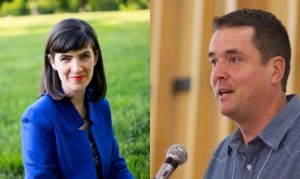
 In this series we share four interviews in response to John Dehlin and Kate Kelly being informed about pending disciplinary councils. The interviews include the following:
- Episode 476: A June 13th, 2014 interview with John Dehlin for Utah Public Radio.
- Episode 477: A June 16th, 2014 interview with John Dehlin and Kate Kelly for RadioWest.
- Episode 478: A June 17th, 2014 interview with Ally Isom, Senior Manager of LDS Church Public Affairs.
- Episode 479: A June 12th, 2014 interview with Jennifer Napier-Pearce of the Salt Lake Tribune.
Episode Transcript
Host: John Dehlin · Guests: Doug Fabrizio, Eric Hawkins (LDS Church spokesperson / Radio West), Jennifer Napier Pierce, Joanna Brooks, Kate Kelly
This transcript is machine-generated and lightly edited for readability. The audio is authoritative. Please excuse occasional errors in names and spelling.
John Dehlin Receives His Stake President's Letter
Part 1 of 4 · Ep. 476
John Dehlin [00:00:00] So you found out on Monday of this week that you had received this letter from your stake president.
John Dehlin [00:00:07] That's right. June 9th, I believe.
John Dehlin [00:00:09] Okay. And it just came in the mail to your home?
John Dehlin [00:00:12] Yeah, it was actually certified where I had to sign for it.
John Dehlin [00:00:18] Wow, interesting. And it came from your stake presidency, is that right?
John Dehlin [00:00:24] That's right.
John Dehlin [00:00:25] Do you mind if I just start at the beginning? What happened when you opened that envelope? What did you see?
John Dehlin [00:00:30] Well, my wife brought it to me, and, you know, I started. I started Mormon Stories podcast here in cache Valley in 2005. And, you know, it was a real powerful moment the day I released my first episode of the podcast, because I knew then that this was always a possibility. I. You know, I had read Sunstone magazine and Dialogue. I was at BYU in 1993 when the September 6th excommunications all came down in September of 1993. And so I knew that the church had a history of silencing or excommunicating people that ask hard questions before. And, you know, the Internet had been around for a while, but what was different in 2004, 2005, was web 2.0 was emerging. So, you know, web 1.0 was just static web pages, but web 2.0 was things like blogs and podcasts. And I was among the very, very first to blog and podcast within Mormonism. And so I knew that it was a new time and it was going to be a new experiment. And so I've been living, to be honest, with the fear of excommunication or some other type of harm that could come to me or my family for. For 10 years. And so it's a day that we had anticipated, but it's a day that we had hoped would never come. So you can imagine I'm sitting at my office desk, and my wife's handing me the letter and telling me to open it in front of her. And she kind of has this kind of scared, sad, but resigned look on her face. And we read the letter together. And for me, it always takes a couple days for the emotions to sink in. So I was just kind of, you know, not numb, but just kind of, oh, interesting. You know, But a couple days later, you know, the sick feelings in my stomach started emerging. And, you know, that's the best way to describe it. You just feel sick in your stomach and kind of nauseous and sad and really sad.
John Dehlin [00:02:44] Yeah. John, you mentioned in your blog that you and some of your listeners openly questions some of the doctrine of the church, including the idea that its Prophet and president has a direct link to God. You also dispute doctrines that are found in the Book of Mormon. And a couple of things I've been wondering, and I think listeners might wonder, with all of the questions that you have about the church, what has kept you in it all these years?
Why John Dehlin Stays in the Church
John Dehlin [00:03:16] You know, two years ago at Sunstone, the Sunstone Conference, I gave a presentation for why I Stay. I gave a presentation entitled why I Stay. And it's up mormonstories.org if you want to, if anyone wants to listen to it. But I saw that actually, yeah, basically I love this church and I love the members of the church and I love being a member of this church and I love going to church. I'm a fifth or a sixth generation Mormon. It's in my bones, it's in my culture, it's in my blood, it's my spiritual language, it's my spiritual home. And you know, I didn't ask, I didn't, you know, here's what happened. I'm called to be a seminary teacher in, you know, Issaquah, Washington while I'm working for Microsoft. And I want to be the best seminary teacher that I can be. And so I start studying church history because I want to teach the Doctrine and Covenants. And you know, Doctrine and Covenants is church history. And as I'm studying church history, I learned, for example, that Joseph Smith was married to over 30 women. Now, you know, it was, I was 31 or so the time and I had been through seminary and BYU and married the temple and you know, how many ever years of primary and Sunday school. And no one had ever taught me that. No one had ever taught me that Joseph had married other people's wives. You know, living men, you know, Joseph, men would come home from work and Joseph would be at the table with their wife. And the man would say to the wife, what was Joseph doing here? And the wife would say, he was asking me to be his wife. You know, I didn't, I didn't ask to learn that. That's just what the historical record shows. And we could talk about the Book of Abraham and how it's not actually a translation of the Papyru or, you know, the Book of Mormon that has no DNA evidence. Like, it's not like I'm sitting around going, hmm, let me find an excuse to no longer believe in Mormonism. It's more like, oh my goodness, I love this church with all my heart. And yet now, for the first time, when I'm 30 or 35, I'm learning these deeply troubling things that challenge the heart of Mormonism. And for me, the past 10 years, you know, it hasn't been so much trying to figure out how to leave the church. The past 10 years for me, even in Cache Valley, have been trying to find a way to stay in the church because, you know, obviously I started learning this stuff, you know, 1999, 2000, I could have left the church 14 and 15 years ago, but I didn't. Why didn't I? Because I love the church. And so another way to answer your question is to look at other faith traditions. Look at Catholicism, look at Judaism. You know, the largest branch in Judaism is Reform Reformed Judaism. Reform Judaism, you don't even have to believe in God. But why does Reform Judaism exist? Because religion is so important. Catholicism, you know, we all know the Catholic Church doesn't allow abortions and doesn't allow birth control. And yet, as I understand it, the vast majority of American Catholics support, you know, use birth control, and many of them support abortion. And so I guess what I'm saying is, you know, this is a young church, and older churches have learned to accommodate people of various shades of belief. That's just what. That's just what Catholicism is. You can doubt, you can question Judaism's the same way. They welcome doubting and questioning in many ways. But Mormonism is so young that it just, it's not there yet. And so the September 6th and Fawn Brody and, you know, Juanita brooks and the September 6th and now me and Kate Kelly, in some ways, we're all just casualties of a young church. But I can promise you, in a hundred years, just like polygamy is no longer practiced, just like blacks are allowed have the priesthood, you know, in a hundred years, gays and lesbians will be accepted in the church. And it may even be that the church acknowledges, maybe it renounces polygamy or acknowledges that the Book of Mormon is not a historical document. But many of us are just early in recognizing this, and then. So we're going to be punished for it, for coming to conclusions that in 100 years will be mainstream, I think.
John Dehlin [00:08:11] John, how do you square this notion that your stake president is a man who has been called by God and he has sent you this document? Is he less enlightened than you are? Are you at a level of understanding that lets you see these aspects of the church in a broader way?
John Dehlin [00:08:32] Well, you know, that would be an arrogant position to take. The best I can say, I believe I've never met him. First of all, he's never spoken to me. I'm still waiting for him to return. I've sent him two emails now saying, hey, can we meet? And I'm still waiting to hear back. So I guess I don't know him at all. But what I can say is, if he's anything like my other church leaders, he's an intelligent, bright, compassionate, loving man, because that's usually what LDS leaders are. All I can say is this. You know, if you opposed polygamy pre1890, you'd likely be excommunicated from the church. But in 2014, if you oppose polygamy, you're actually right there in the mainstream of the church. And in the 1950s and 60s, if you said black should have the priesthood again, you could be threatened with the disciplinary court. And in 2014, the church is now saying that its past leaders were wrong about the statements they made. And these were prophets, seers, and revelators. There's a first presidency statement in the 1950s where the first presidency says that the prohibition of blacks in the priesthood is doctrine and that it will not be overturned. And yet 20 years later, it was just that. Right? So I could be wrong. And I'm not going to sit here and say, he's wrong and I'm right. He's less enlightened and I'm more enlightened. I can just say that as I listen to what I feel as the Spirit and as I read history and as I try to listen to the divine or to God as best as I can, I feel like I'm following the Spirit in God. And so, of course, the majority of active members are going to side with my stake president. I don't fault them for that. I would just say that I'm standing where I stand out of conviction and out of a sense, for this is what I feel is true and right. And I guess we'll see in 30 or 40 years who's right.
The Church's Changing Positions and Growing Tensions
John Dehlin [00:10:40] John, there's a growing movement in the church that suggests that the church is changing and quite rapidly. So it has changed its position on. On homosexuality. It has backed off on its fight against gay marriage to some degree. So what we have seen in the last couple years almost seems like the church softening its stance on a few things, and then this. So what has changed? Why now?
John Dehlin [00:11:07] Well, so, first of all, you know, I don't know for sure, but I would bet to argue that it's initiatives like, you know, Mormon stories, like ordained women, like Sunstone, like dialogue, like the blogger Nacal, like all these podcasts, all the news coverage that comes with all of them, I believe it is these things that have precipitated the change. The church did not allow, you know, women to pray in General Conference in a vacuum. They did not allow women to sit in the center, you know, chairs at General Conference in a vacuum, or allow the priesthood session to be broadcast in a vacuum. And I know for a fact that the Church did not decide to issue these web statements in a vacuum. In fact, I spent two or three years of my life gathering survey data for the church. I met with Elder Holland twice. I met with Marlon Jensen once. I had a former general authority come to me who said he'd lost his faith. I teamed up with several people to administer a survey. And the survey was to find out why people are leaving the church. That survey was. The results from the survey were presented not only to Elder Jensen, but the church headquarters at multiple times. And I've been told by those inside the church that this work directly led to both Elder Uchtdorf's talk in the fall and also to the essays that have been released by the church. Now, of course, thousands of people over decades have all participated in this change. But I guess the first point I'm trying to make is that we are being punished. But what's ironic is I believe very strongly that we were some of the main reasons for the positive progress of which you speak and that if we hadn't have spoken out and all the others with us, we would still be back farther behind than we are now. So the second point, I guess I'm saying yes, I applaud the church for their progress. I'm happy to see the Joseph Smith Papers project, the essays, various books the Church has published, their progress on LGBT issues and on women, that all makes me happy. But I think that it's easy to over interpret the change that the church has made and to think that the church is on the fast track to progress. I think the church will always be on the slow track to progress. I think they will take two steps forward and one step back. Along the way, there's this notion of retrenchment where they'll open up but then they'll get a little bit uncomfortable and then they'll clamp down. And I think we'll see the church have good cops and bad cops. Elder Packer has been the bad cop for many in the past. It seems like Elder Oaks is now kind of playing the bad cop for many now. And President Uchtdorf is being the Good cop. And I think we'll see. Just, it's like a dance. They come out with the Mormonsengays.org website and we think, oh, the church is being more. They do Proposition 8, but then they back away. But now President Oaks, or Elder Oaks, is becoming more strident in his language against LGBT individuals and doubling down his efforts to fight same sex marriage. So I think it's going to be a slow process of a tiny step forward and a tiny step back, and it will be decades before we see real change in progress. But that's not to deny that we've made some small steps forward.
John Dehlin [00:15:00] So it sounds like if I had to sum up some of your comments there, I think you would argue that the church reacts to outside pressures more than its faithful members might think it does.
John Dehlin [00:15:12] The primary motivator for church activity going all the way back to Joseph Smith's founding, is outside pressure. If you look at the Doctrine and covenants section 89 with Emma, Joseph didn't just receive a revelation in a vacuum. Emma was complaining about the splatoons in, you know, the temple, and she hated cleaning them up. And there was a temperance movement where people were picketing against alcohol because so many people were. Were getting hurt over alcoholism. You know, the word of wisdom makes perfect sense if you just study the history that surrounded it. And do we think for a moment that the rev, you know, that the renunciation of polygamy in 1890 wasn't a direct result of the federal government threatening to close down the church and imprison all its leaders? The church, if anything, responds to external pressure. Sometimes it's a decade, two decades, three decades late. But that is, in truth, the main cause of any significant change in the church. Are we to think that the civil rights movement and all the protests against BYU didn't lead to the church eventually allowing blacks to have the priesthood? I would say that social, public relations, media pressure, and member pressure is the only real cause of change in the church that I've seen.
Kate Kelly's Letter and the Timing of Both Cases
John Dehlin [00:16:40] I want to ask a question about Kate Kelly now. So you received your letter from church leaders within days of Kate Kelly receiving her. You two are of course not related. Do. You're not associated personally, are you?
John Dehlin [00:16:55] No, we're friends, you know.
John Dehlin [00:16:57] Okay, friends.
John Dehlin [00:16:57] Yeah, she's been on Mormon Stories podcast a few times. She called me, she posted this week a very sweet message that I was the first person she called when she decided to. To do something about women's ordination. And so, yeah, we go back as friends. We've only actually met Face to face, probably two or three times.
John Dehlin [00:17:16] Okay.
John Dehlin [00:17:17] But we're friends.
John Dehlin [00:17:18] Sure. And so some people are speculating that there must have been some higher up planning to executing both of these disciplinary council orders so closely together. How do you take that?
John Dehlin [00:17:35] Yeah, you know, because the church doesn't talk to people. You know, the leaders don't talk or grant interviews. You know, we're all speculating. But, you know, I have a friend, you know, I have an associate who's the grandson or the son of an apostle who told me that I was on a list, that the apostle had named me on a list. I've had other people tell me that, you know, the apostles have been visiting, they've been having stake training meetings wherein Mormon stories and ordained women have been explicitly mentioned as threats to the church. Over the past six months, there have been many, many people who have had their temple recommends taken away for supporting ordained women or for supporting same sex marriage, but based on direction from the higher levels. And so I think it would be foolish to think that this isn't explicitly orchestrated effort from the very top echelons of the church. We shouldn't forget that another public blogger received his letter again on about the same days that Kate and I did. His name is Rookie Waterman. He has a blog called Pure Mormonism, and he also received a letter. And, you know, what are the chances that three very public figures on the Internet would all receive letters within a day of each other? You know, all three. I think it bears credulity. And I'll just add that when the September 6 events happened, the church claimed the position that it was a local effort. But then Ezra Taft, Benson's own grandson, had talks with Elder Oaks and Elder Maxwell and others, and it turned out very much that President Packer had been behind those excommunications. And Elder Oaks, I believe, even ended up acknowledging that he had not been honest about that and that in fact, apostles were behind it. So all the evidence points that this is an orchestrated effort from the top, as far as I know.
Is the Church Cracking Down on Dissent?
John Dehlin [00:19:51] John, I want to ask you this question. In my opinion, in interacting with members of the church and reading what I do, I think it's getting harder and harder to find a member of the church that does not have a single question or doubt about the faith. So now, in this world that we live in, where people blog and tweet and use public forums to communicate, if an everyday member of the church goes on to blog and starts discussing the questions and concerns they have about their own faith, is it open Season now on Doubters. Is the church on a hunt to find people that are speaking out?
John Dehlin [00:20:30] Well, in short, the answer is yes. And here's exactly how it works. Kate and I are excommunicated. Okay, we'll start there. Now, I hope that doesn't happen. My hope is that this all goes away. But if I had to guess as a non betting man, I would guess that we're excommunicated immediately. Mormon stories and ordained women are then labeled officially as apostate groups. And from that point forward, any member of the church that expresses their support for feminism, for the female ordination, for, for Mormon stories, or for the types of things that Mormon stories supports immediately. Church leaders, bishops, stake presidents around the world then feel like they have cause when they ask that question. Do you support or affiliate with any apostate groups they have now caused to deny temple recommends to members who not only support these groups, but who step out of line in any way, who tweet, who Facebook, who blog, who do podcasts, who express any personal opinions that in any way might start to deviate from the brethren. So this sends a chilling effect. This labels certain groups as apostates. Once these temple recommends get withheld, and let's be clear, they're already being withheld, then what happens is that these members of the church, let's say they have a son that wants to get baptized or a daughter who's getting married, or a nephew or niece that has a baby blessing. These good members of the church who just have sincere questions, are now going to be publicly shamed because they're not going to be able to participate in these very public ordinances. They're going to be shamed publicly. And that's the way that the church is going to try and clamp down and control the message and control thought and control feelings and control the expression. And, you know, my guess is that it's going to be at least somewhat effective in that effort because for many people, it's terrifying to be publicly shamed by not being able to attend the temple and not being able to baptize a child or so forth. But the only thing I'd say is that this is, you know, this is, as someone said, this is a 15th century solution, you know, to a 21st century problem. You know, this isn't the Spanish Inquisition. This isn't the 1800s. This is the Internet age. And the youth of today are more progressive. They don't respond well to coercive tactics and authoritarian tactics. People tend to recoil and reject that. And the era of controlling speech and information is really dead. And so already I've seen thousands and thousands of new people start listening to Mormon stories. It's not like the church has killed Mormon stories. The church has dramatically increased the audience for Mormon stories. And I am only guessing that they're doing the same thing with ordained women and with people supportive. Same sex marriage and LGBT people, you know, they are accelerating the things that they fear most, I think.
John Dehlin [00:23:59] John, I want to ask again about the specifics of this letter. So when do they ask you to appear at this council?
John Dehlin [00:24:07] No council for me has been scheduled yet. All the letter says is if you. It says, hi, you know, I love you. We've never met. I would like, you know, I'd like to give you the chance to resign. And if you don't resign, we're gonna. By June 18th, we're gonna have a court, you know, contact me if you want to talk. So I've contacted president. I believe it's President King. I've contacted him. I'm waiting to hear back. But that's the only date that's been set. It's sort of like a resign or I'm setting a court date. Okay. By the way, that's another indication to me that this is orchestrated from above. Because when in the world does the stake president not first do what the church claims that it does? The church's own statement about how it handles apostates and dissenters is it's only after we've worked with them on a local, personal level to try and reason and work with them. And again, I've never met my stake president. So that, again, is another indication that this is orchestrated from above, from the fact that he's never even attempted to contact me until now.
John Dehlin [00:25:15] John, I'm curious, how active in the church are you? Were you in church last Sunday and do you plan to be in church this weekend?
John Dehlin [00:25:25] So I have regularly attended church for most of my life. I can't say we attend every Sunday now, partly because this is so distressing on my family back in. You know, I've been investigated three times by the church over the past 10 years in my same North Logan 4th Ward. Every time I've been exonerated. But when the bishop pulled me aside in February and said he was going to start yet another investigation, it's really disheartening to me and my family. We feel judged. We don't feel loved. We feel it's more like the KGB or the FBI or the CIA. So it's not that we don't attend every week because we've been offended. It's just really emotionally difficult to feel so unloved and so unwanted. So, you know, my daughter was just made beehive president in our ward. You know, my daughters have spoken in church over the past six months, if my memory is correct. And we've attended in the past month, and we'll attend again, but I can't promise it'll be every week because frankly, sometimes it's just makes us sad to go to church. And so we still try and go, but we can't. We can't go every week sometimes and remain emotionally healthy. Right. At least not. At least not right now.
John Dehlin [00:26:47] Yeah, I understand.
John Dehlin [00:26:49] But we're still going to keep going. We're not going away. Even if I'm excommunicated, I will still attend church.
John Dehlin [00:26:56] Interesting. And, okay, how would you manage that? What kind of a relationship would you have with the church if you were excommunicated?
John Dehlin [00:27:07] It won't be any different than it is now, you know, because I felt the church doesn't like me, you know, the way I do things. You know, the truth is, I haven't been able to find a calling with the bishop where we both felt good about it. You know, either I'm not comfortable teaching everything in the manual, or he's not comfortable giving me exposure to certain people in the church. So I haven't had a calling for a while. Not because I don't want one, because we haven't been able to find one. You know, they have asked me to pray recently. I don't know if they'll do that again. But, you know, I haven't had a temple recommend lately because I no longer feel comfortable answering all those questions in an honest way. So the truth is, it won't be very different than it is now. I understand that if you're excommunicated, you can still take the sacrament even so. And I even know. You know, this is really funny. Elder Christofferson, he's an apostle for the church. He has a gay brother who's been excommunicated. His gay brother, Tom Kristofferson. He actually sometimes, as I understand it, prays in church, takes the sacrament, attends weekly. I think he may even play the organ. And I think he's even taught high priest group sometimes.
John Dehlin [00:28:22] Oh, that's interesting.
John Dehlin [00:28:22] And, yeah, and so, you know, I'm learning that actually with the right bishop in the right ward, you could do all sorts of things and be an excommunicated member. And so, to be honest, I don't think it'll be much different than that. If my son decided he wants to get the priesthood, which he would have been inclined to before this court, because we've. We've encouraged our kids to follow their spiritual path and to do what feels right to them. My daughter just got home from girls camp this week. You know, we're still very Mormon, and we're still going to encourage our kids to follow Mormonism, you know, to the extent that they feel comfortable. But if my son decides to go ahead and get the priesthood, I won't be able to, you know, ordain him like I was able to baptize him. So I guess in that way, it'll be different. I won't be able to perform the ordinances.
John Dehlin [00:29:12] I want to ask.
John Dehlin [00:29:12] That's really the only main change I can see.
John Dehlin [00:29:16] But like you mentioned at the beginning of our conversation, it's in your bones. You still see yourself taking part in the cultural and even religious aspects of Mormonism?
John Dehlin [00:29:26] I do. I love the Mormon Tabernacle Choir. I love music in the spoken word. I love the hymns. I even love the Scriptures. And there are parts of General Conference I always love. And I'm not going anywhere. You know, I am Mormon. They can't take that away from me. It doesn't wash off. It doesn't wash off. It can't be, you know, retracted. And, you know, I. You know, here's what I'd say. I'd say that any. Any God that I would feel comfortable believing in, and the Savior, as I understand it, would never do what's being done to me. And Kate, you know, the Savior would be patient. The Savior would be loving. The Savior would be forgiving. The Savior would say, judge not. The Savior would say, the eye cannot say to the foot, we have no use of thee. You know, the hand cannot say to the knee. You know, we have no need of thee. That's the Savior that I know, and that's the God that I could believe in. And so I don't believe that the heavens recognize these actions if they go forth. And so, you know, I guess that's extra reinforcement that I wouldn't change my behavior, you know?
John Dehlin [00:30:37] Yeah. Well, John, I think in the interest of time, I don't want to keep you for too much longer, so I'll let you go. Is there anything else that you want to mention or clarify or bring up that we haven't talked about yet?
John Dehlin's Beliefs and His Love for the Church
John Dehlin [00:30:51] You know, I can just summarize, and I would just say, number one, I love this church and its Members and its leaders and many of its teachings. I still retain belief in what I think the core teachings of Mormonism are. The church released a statement on Mormon doctrine that said Christ is at the center of our doctrine. And if Christ is anything, Christ is love and charity and humility and repentance and forgiveness and morality, you know, sexual, you know, chastity, word of wisdom. I still, I still believe in pretty much all this, what I consider to be the central tenets of Christianity and of the modern church. So I just want to. I want to also focus on what I do believe, not what I don't believe. I love the church. I don't want this to go through. I hope they call it off. I'd love nothing more than to have this go away. My biggest fear from a private perspective is that my wife and kids were be treated well by neighbors, by church members, that they'll be ostracized. So I'm pleading to Utah, you know, citizens, especially Cache Valley citizens, that they'll treat my kids and my wife with love. And then my bigger fear for the broader membership, you know, I've had thousands and thousands just go look on mormonstories.org Thousands of people have said Mormon Stories podcast has helped me stay in the church. It's been a lifeline. I've had probably over 100,000 listeners to Mormon stories. You know, that's probably two or three or four or five people in every ward. And my biggest, one of my biggest worries from this action is that the message that the church sends to others is that they're not wanted in the church. If they have serious doubts, if they have problems in church history, if they support LGBT people or allies, if they support same sex marriage or if they're feminists or intellectuals or scientists, I feel like. I feel like the church will send a message to all those people that they're not wanted. You know, I don't believe that. You know, I'm not calling for mass resignations. I don't want anybody to do that. But I just fear it's going to harm the church in very significant ways. And I just say, please talk to me. Please, let's meet, let's reason together, and let's avoid this train wreck, you know, if we can. Because I love the church. I love Mormonism, and I want to see us become better. We can become a 21st century religion that's stronger, it's more mature, that is more tolerant and accepting, and in my view, is more Christlike. And I would just call on all of us to try and grow in that direction instead of fall back to the 19th century or the 15th century and use more barbaric tactics in what should be a more enlightened age. That's my summary.
John Dehlin [00:34:05] Well said. Well, John, I want to say thank you for taking all this time today. We spoken for a good half hour here. So thank you very much for taking the time out of your busy day. And I know this is not personally an emotionally and easy time for you as well. So I wish you the best. And I want to ask you, before I let you go, do you think that a neighborhood campaign could reverse course on this? Or is the church, are they putting their foot down?
John Dehlin [00:34:36] You know, there is precedent for public action Halting disciplinary council. There's a man named buckley Jepsen in D.C. who married his gay partner in Canada. He was an active member of the church and when the media caught hold of it and certain people got involved, the council was called off and he was never pursued. There was another anthropologist in Washington. His name was Thomas Murphy. He started writing about how there's no DNA evidence to support the Book of Mormon. A bunch of press showed up at his disciplinary council and lo and behold, the disciplinary council was called off and he was never tried. So, yeah, I certainly believe that if enough people in North Logan rose up and expressed their concerns, if people wrote letters to Brian King I believe is his name, if people wrote their bishops and stake presidents, if people reached out to influentials within the church, I think that this could be stopped. So, yeah, I think, in fact, you know, that that's one of two reasons why I went to the media in the first place. Reason number one is because my stake president said in a letter that he was going to tell everyone in the stake if I was found to be an apostate or if I resigned, he was going to tell everybody anyway. So there was no point in trying to keep it secret. But those close to me said the only way to stop this is to go public with it. So some people will say I did this to get media attention. I did this to stop these efforts. So if there's any listeners that want to do their part to try and stop it, I don't want anybody to put themselves in harm's way. But if somebody feels strongly enough, absolutely the church listens to its members and I would love to see this stopped. So, yeah, that would be my answer.
John Dehlin [00:36:30] Okay. Okay. Well, John, we will have to be in touch here again in the next maybe week or so to see how this pans out. Because I know people across the country and the world, for that matter, are probably interested in the outcome of yours and Kate's cases. So can I. Do you mind if I reach out to you again?
John Dehlin [00:36:50] I'd love it.
John Dehlin [00:36:50] Okay. All right, John. I'll leave it there. I wish you and your family all the best. Thanks for your time.
John Dehlin [00:36:55] Oh, thank you so much.
Radio West) Part Two: Introducing the Activists
Part 2 of 4 · Ep. 477
Doug Fabrizio [00:00:04] From KUER News in Salt Lake City, this is Radio West). I'm Doug Fabrizio. Two prominent progressive Mormon activists have been called before their local leaders and threatened with excommunication unless they back away from their respective crusades and public comments criticizing church doctrine or leadership. As one letter put it, they're being asked to turn away from the current path they've taken. Today in the program, we're talking with these two. Kate Kelly, the founder of the group Ordain Women. It's an effort to get women the Mormon priesthood. And John Dehlin will also join us. He's the founder of a podcast that raises critical questions about church history and policy. Both are working from within the church right now. But what happens if they're not? If excommunication makes them outsiders to the faith, what then? Join us after the news. This is Radio West). I'm Doug Fabrizio. About a week ago, John Dhelin received a letter from a stake president. He was probably expecting the letter on his popular podcast Mormon Stories. Delin had been public and outspoken about his criticism of church policies and his skepticism about church history. In the letter, the leader asked if he wanted to just quit the church, have his name removed from the records, or if he wanted to fight it out, that is, respond to a church disciplinary council. At about that time, Kate Kelly got a similar letter from her own stake president. Kelly is the founder of the group Ordain Women. It's an organization and a website that lobbies church leaders to allow women to be ordained with the Mormon priesthood. Her letter told her to turn away from the path she was on. Another letter she received from her bishop mentioned that faced the possibility of excommunication. It's been a while, but these kinds of things happen from time to time. In the LDS Church in the 1980s, Mormon feminists were warned. In 1993, six outspoken writers and scholars were excommunicated, purged. Some are calling it. John de Lind says excommunication, or the threat anyway, is a way to release pressure. If you're a believer with a family in the church and most of your neighbors in the church, excommunication can be frightening and isolating. It's too early to say what will happen with Delin and Kelly. Of course, some wonder if all of this is just a scare tactic, just some way to get them to keep quiet, which is a little like a brushback pitch that you throw when a batter is crowding the plate. Dehlin and Kelly are getting maybe a little too close for the comfort of LDS Church leaders. Well, today in the program, we're talking about this story. John Dehlin and Kate Kelly will be joining us in a moment. Joining us first on the program for some perspective is Joanna Brooks, who blogs at Feminist Mormon Housewives. She's also the author of the memoir the Book of Mormon Stories from an American Faith. She's an associate dean of research and graduate affairs at San Diego State University, and she's joining us by phone from her office in San Diego. And Joanna Brooks, welcome back. Thanks for being with us, Doug.
Joanna Brooks [00:03:11] Thank you for having me.
Reactions to the Disciplinary Letters
Doug Fabrizio [00:03:13] So I guess the first question is, were you at all surprised by the news of these letters?
Joanna Brooks [00:03:22] I was. And I want to note that many people were surprised. The impacts of this news have radiated not only, you know, immediately to John and Kate and their families, but across many, many LDS people who have followed the Ordain Women movement or who have listened to John's podcasts, and even those who share silently in some of the concerns John and Kate have raised.
Doug Fabrizio [00:03:55] I wonder, one of the things you've written is the question you've talked about is what it is that these kinds of courts, these disciplinary councils, this threat of excommunication, what that tells us about what you've called the unwritten rules of Mormon life, this matter of when it's okay to ask questions and when it's okay to disagree and in what form you can do all of this, and then when you've crossed the line. What do we know now by these initial attempts to get Kate Kelly and John Dehlin into the disciplinary councils about what the boundary might be in the 21st century?
Joanna Brooks [00:04:33] Exactly, Doug. I think you've hit on the crucial point there. We know there is a long history in the LDS Church of using excommunication not only for sort of routine disciplinary matters in cases of serious transgression, but in also where cases of doctrinal disagreement or just in cases where individuals have brushed leadership the wrong way. I mean, this is a history that dates back to the 19th century. In the late 20th century, we saw excommunication levied, most notably at feminist activists like Sonia Johnson, who was excommunicated in late 1979 basically on the grounds of two speeches she had made that were misconstrued to accuse church leaders of misogyny. In the early 90s, the September 6, Margaret Toscano, Lavina Fielding Anderson, Maxine Hanks, there were doctrinal disagreements sometimes at the heart of these matters, or in the case of Lavina Fielding Anderson, raising questions about the church's surveillance of its membership through the strengthening the members committee. But this is the first time we've seen individuals brought up on excommunication publicly in the Internet era. And the questions are more complicated now. We've seen tremendous growth in online forums where complicated and controversial aspects of the faith are being discussed. This is what the Internet does. What are the rules now about how Mormons are to conduct themselves in this time? And is it inappropriate to imagine that excommunicating John and Kate will change, you know, the kind of discussion that's taking place on the Internet among Mormons today?
Doug Fabrizio [00:06:22] You know, one of the things that came out in the letter to Kate Kelly was her stake president wrote that this, that it's important that you understand you are not required to change your thinking or the questions you may have in your own mind, but you need to make it a private matter and work through this issue with your bishop or your branch president, which is saying in what in essence, Joanna Brooks, that it's okay to do this, but don't do it in public.
Joanna Brooks [00:06:53] This is one of the unwritten rules that those of us who tend to be more questioning in our faith have tried to abide or have picked up on. We saw, for example, during the Proposition 8 controversy, those who spoke out in opposition as Mormons to the church's support for an involvement in anti same sex marriage politics in California were actually silenced. And church leaders use that word, silenced by local ecclesiastical leaders who instructed them, often on penalty of losing their temple, recommends their access to participate in some of the most sacred rites in the faith, not to write letters to the editor in newspapers, not to publish opinion pieces online that differed from the official stance of the church. And there has been a quiet testing of those boundaries or actually very visible and vocal testing of those boundaries in every blog and Internet based movements in Mormonism, what is okay? And more importantly, does Mormonism as a faith have the vigor, have the confidence to withstand these inevitable explorations of complexities in its doctrine, policy and practice?
Doug Fabrizio [00:08:18] Do you have a sense of the answer to that?
Joanna Brooks [00:08:22] You know, I say yes all the time because I believe that Mormonism is robust enough and vigorous enough that those of us who believe in the power, I get emotional. But those of us who believe in the power of the restoration believe that there is nothing to fear. There is nothing to fear from honest exploration, even from people like Kay Kelly who organize led by conscience to press on issues where there is incompleteness and contradiction in our own doctrine, that this is the essence of religion and the essence of Mormonism especially, is the seeking spirit. So, yes, we are watching these cases with great concern, but also with fierce hope that the outcomes will be different this time than in 1993 or in 1979, that we as a people, and that our leaders who are tasked with this heavy, heavy burden of administering discipline and strengthening the members, will find a way other than excommunication, which wounds not only the individual individual, but the community, to resolve doctrinal disagreement, even in the most uncomfortable and aggressive circumstances. Because both John and Kate have been very vocal, very public. So there's got to be a different way to handle this. We can.
Doug Fabrizio [00:09:31] Do you sympathize at all with church leadership, a group of gentlemen who are of a certain age? They came of age, many of them, at a different time, certainly. And couldn't it be said that the success of Mormonism has come through its connection to orthodoxy and correlation and centralized power and, to be honest, probably intolerance of dissent, and that they're worried that this is going to change the essence of Mormonism, change how we define Mormonism?
Joanna Brooks [00:10:04] Oh, no. It is a fearful time. I mean, and so much of this dates back to long accumulated historical fears. Mormonism responded to the extreme duress it was placed under the extreme public persecution, political persecution in the 19th century by adopting, as you said, Doug, a very tightly managed corporate model of managing the church and its affairs during the 20th century. And we have seen the Internet change the way governments have to do business, the way, you know, industries have to do business. And it's going to change the way religion deals with dissenting voices, heterodox voices. And it's a difficult moment, finds itself in trying to adjust to the new ground rules of the Internet era.
Doug Fabrizio [00:10:54] I wonder, Joanna, and this is probably just speculation, but do you wonder? I mean, the question is, where did this come from? What the Church seems to be saying, the LDS Church seems to be saying, is that, look, these are local matters. But people are wondering, was it really that much of a coincidence that Kate Kelly and John Dohlin received their letters, you know, basically within about a week of each other? So who's controlling this? Who. Do you have a sense of that? And can you get any sense of what the factions are, the dynamic factions within Mormonism that might be, you know, the give and take of all of that? And do you think that's going on?
Joanna Brooks [00:11:38] Doug, you've asked the million dollar question that's kept the Internet aflaming for days. I mean, look, we have. There is much speculation, much hearsay, you know, what we face, whether or not it is a coincidence, a coincidence of timing, is the fact that even if this is a local decision, local leaders feel empowered, if not obliged to use excommunication as a tool when there is doctrinal disagreement that that becomes vocal in public. And the utility of excommunication and its damage to individuals, families, friends, communities, the body of the church and the reputation of Mormonism is what's at issue right now. Whether or not this was orchestrated, coordinated, it's happening. And it's happening in such a way that asks all of us to reflect on how we are to get along within this vibrant, robust and increasingly diverse faith in the 21st century.
Doug Fabrizio [00:12:45] It's Joanna Brooks. She blogs at Feminist Mormon Housewives, also is the author of the book the Book of Mormon Stories from an American Faith, joined us from her office in San Diego. Professor, thanks.
Joanna Brooks [00:12:56] Thank you, Doug.
Doug Fabrizio [00:12:56] We'll take a quick break and be back in a moment. You're listening to Radio west on kd. We are. This is Radio West). I'm Doug Fabrizio. Today in the program, we're talking about a story causing a lot of reverberations here in Utah, home to the Church of Jesus Christ of Latter Day Saints. Two prominent people in the progressive Mormon community have been called before their local leaders threatened with excommunication. They're both joining us today to talk about what all of this means for them personally, but also for the so called Mormon moment. John Dehlin is joining us now on the program. He's creator and host of Mormon Stories. It's a podcast that focuses on Mormon faith and culture. He's a PhD candidate as well in psychology at Utah State University. And he's joining us from Utah Public Radio in Logan. And John Dehlin, welcome back. Thanks for being with us.
John Dehlin [00:13:52] Thanks, Doug.
John Dehlin on Receiving His Letter
Doug Fabrizio [00:13:55] So you got this letter. You were expecting it?
John Dehlin [00:14:00] No, not at all. I felt, I felt really blindsided by it, I guess in the concreteness of it all. In the back of my mind, you know, when I started Mormon Stories nine years ago, I always thought that this would be a possibility. And of course, when I spoke with my bishop in either January or early February of this year, you know, he told me that he was going to be starting up what for me would have been at least a third investigation over the past 10 years. And I didn't know what that meant. I asked him, I told him after talking to my wife that we didn't want to participate in any more investigations because it was just too exhausting on our family. So I guess in the back of my mind, I knew that this was a possibility, but. But what I expected would happen would be that my stake president would reach out to me at some point if he was concerned, and we would have a series of conversations like I had with my prior stake president before any possible disciplinary council would be held. And so, no, I did not expect to receive a letter that basically said, resign or a disciplinary council will be held. Which is kind of what the letter basically said.
Doug Fabrizio [00:15:07] Well, what it said was this. Your stake president said, I need to know exactly where you stand regarding your membership in the church. Why doesn't that seem reasonable?
John Dehlin [00:15:18] No, it's totally reasonable. I don't think it's unreasonable at all.
Doug Fabrizio [00:15:23] What he seems to be saying is, so I know you felt blindsided, but he's seems like what he's trying to say is, look, do you just want to quit? Do you just want to have your name removed from the records, or do you want to keep going with this? Because I think we've reached an impasse, John, and now we need to go somewhere else because you keep saying these things that are confusing to us as ecclesiastical leaders among them. And this was in that letter, he said, you said that you no longer believe many of the fundamental LDS Church truth claims. So what are they supposed to do with that? Because I think they're as confused as some who are outside of the church who were probably asking, why does he want to be in this thing if he doesn't believe these basic things? People inside and out are asking that question.
John Dehlin [00:16:11] Yeah, well, those are all really good questions. I think I'm not alone in the church of having serious doubts about many parts of the Church's teachings. For example, the teachings about polygamy in D&C132. I have a hard time believing that polygamy is of God. And so that's a section of the Doctrine and Covenants that I just can't believe. I have a hard time believing the central narrative of the Book of Mormon, which is that God curses wicked people with dark skin. And I guess if I had a principle that I'm trying to stand on, it's that thousands and tens of thousands and maybe even all Mormons have serious doubts at some level about various aspects of church doctrine or history or culture or practice. And I just want to say I think that secrecy is one of the biggest problems in the church. And I think that our biggest problem in the Church is that we can't speak openly about our doubts and concerns, and even our Disbelief.
Doug Fabrizio [00:17:09] I wonder if that's the question. So within Mormonism, what is the place of doubt? I mean, if you have doubts, if you don't believe, is there no place for you in Mormonism? I mean, you want to believe or you're trying to figure it out, but you don't buy, for example, the Golden Plate store. You don't believe Joseph Smith translated these plates. You don't believe these particular plates even really existed. But something about it you like. I mean, so where do you fit?
John Dehlin [00:17:41] Well, you know, other religious traditions, Judaism, Catholicism, you know, there's a place for disbelief or questioning or doubt. I think that's just a healthy part of religious engagement. I just think. I think our church is a younger church and we haven't carved out a space yet for progressives, for disbelievers, and so we have a harder time knowing how to deal with them. So this is a maturity process. I think in 50 to 100 years this won't be a problem. But I'll just also say, if we want to talk about what's confusing, think about the messages, the private message that Elder Holland gave to me, which is that we want you in this church, the public message that President Uchtdorf and others have sent saying we want you even if you have doubts and disbelief. And so this is causing many to say, well, which is it? Is it, President Uchtdorf, we want you even if you have doubts or disbelief, or is it something else?
Were the Two Cases Coordinated by Church Leadership?
Doug Fabrizio [00:18:34] So what's your response to that? I mean, the church said, in effect, and if I get this right, that this was something of a coincidence that you were both called. You and Kate Kelly were both called in for disciplinary councils by local leaders, wasn't directed by the central leadership of the church. A lot of people have a hard time believing that. What do you make of that?
John Dehlin [00:18:53] Well, first of all, we have to acknowledge the history that when the September 6th stuff happened, you know, the Elder Oaks and others denied that this was coming from the top. And then later, Elder Oaks had to apologize, as I understand it, saying that he misled people. Then in reality, President Packer was involved in the September 6th. We also know that the church has a strengthening the Members committee where it keeps files on people and gives that information to local leaders. That's a matter of fact, that Elder Holland acknowledged even recently. So, you know, what's the purpose of that committee if it's not to influence what happens down below? But I also think that it can be very true. I think it's, you know, I have friends who have spoken with my stake president. I hope to speak with him later this month. But the friends that have spoken to him say that he sincerely says that no one has told him to come after me. And that may be true. But I also have been told that area authorities and general authorities have been going around to stake presidents and, and saying to them, if you have dissidents, if you have apostates or people who are causing problems in your local congregations, you need to not be afraid to hold disciplinary courts. And so my understanding it can be both. It can be that no explicit mandate was given from the top and that it came up from local levels. But also that influence from the top definitely has motivated local leaders to feel like they need to start coming out. And if those missives started coming out from area and regional and general authorities in a certain time frame, it's very reasonable that the process for Kate and the process for me were kicked off around the same time and that naturally they've evolved to where they are at a similar time. But, but if there was more transparency in the process, we'd know, but we don't have transparency and that's part of the problem.
Doug Fabrizio [00:20:46] Do you have a sense that there
Guest [00:20:48] is
Doug Fabrizio [00:20:51] a power vacuum within Mormonism right now? That, and when you've got a power vacuum in an institution, someone who can be, you know, in charge to direct or manipulate leadership, if the leadership isn't entirely in alignment and there's some sort of power vacuum going on that somebody can take advantage of that.
John Dehlin [00:21:15] Yeah, I'm cousins with Ezra Taf Benson and in, you know, September 1993, when the, you know, the September six happened, there was a power vacuum. It's well known that he was not able to lead the church. He died, you know, the year after. And you know, I've had many people, you know, I think it's fair for us to ask, is President Monson doing okay? I've heard many people report some form of dementia or Alzheimer's. And you know, the church is so powerful today that if it makes a misstep, it can wreak havoc not only in the lives of individual families, but for the church as a whole. So I think as the church has become a multi billion dollar global corporation, you know, can it afford to continue having 80 or even 90 year old men be in charge of the church when, if their health goes awry, it can create a power vacuum. And I'm speculating, but I think given the pattern here, I think it's a fair question to ask.
Doug Fabrizio [00:22:14] Spencer Kimball had been incapacitated by illness in the era of Sonia Johnson that Joanna Brooks referenced earlier, the era of Mormon feminism. In the so called Purge of 1993, you mentioned Ezra Taft Benson was incapacitated by illness. Today, as you said, there is some concern or certainly rumors making their way through the Mormon and ex Mormon blogosphere about Thomas S. Monson's health, whether he may have some form of dementia or even Alzheimer's, that he's been slowed by all of that and that there's a power vacuum here. And the same kind of thing may be happening with Kate Kelly and you and others. Again, this effort to sort of corral dissidents. Do you think that's going on?
John Dehlin [00:22:59] Very possibly. I've also heard that Proposition 8 was not a coordinated effort, that it was a single apostle or two that sort of felt really strongly about this and that led to Proposition 8 and that there was not unanimity in the quorum. And so, yes, I think our church history has a record of certain apostles feeling strongly and striking out on their own and doing things that end up damaging the church. And then the full Quorum in the first presidency has to deal with it later. I don't know if that's happening here, but I think it's a fair question to ask. Yeah.
Doug Fabrizio [00:23:31] How's your family taking all of this?
John Dehlin [00:23:33] You know, it's been really hard. There have been a lot of tears shed over the past week and I feel really guilty because in many ways I've brought it on my family. They've been super kind. It was really bizarre. Yesterday I attended church with my family. My. One of my daughters was set apart to be the Beehive president. And so it's really bizarre to still have your family be in the church in some ways, but to be kind of out and to be there in front of the ward members. So it's an emotional time, but my family's been very supportive. I love them very much. And even better, just the thousands of people, community, local, national, global, who have reached out. It's been really heartwarming. But it's hard. This is really hard. It's a shaming process and in some ways a smearing process. This whole thing about disciplinary courts and excommunication, I've heard some people say it's a 15th century approach to a 21st century problem. And I think the process of excommunication is kind of barbaric. And I just think it's awful. And I hope no one has to go through it.
Doug Fabrizio [00:24:41] Let me read a few emails. This comes From Mike, who writes the recent news about John and Kelly. Kate has really rocked me to the core. Mike writes, I've been trying to live as a New Order Mormon for the past six months. And now that these two advocates that people in my shoes look up to are being subjugated and coerced into submission and conformity. And I wonder if there actually is a place for people like me in the church. I'm not personally outspoken, although I would like to be. I'm too afraid to be met with retribution. So instead I simply try not to actively participate in the group. Think that goes on every Sunday. But I want to speak up now. Seeing these people who do speak up get reprimanded, I do not think I can continue to participate. How do you respond to that?
John Dehlin [00:25:26] Yeah, I think one of my biggest concerns is that by punishing Kate and myself, if they end up doing that, they do send a message to thousands. Kate and I have both been told that we've helped thousands of people stay in the church. Thousands of. And so if the church ends up punishing us, what they do is they send a message to these thousands of people that maybe they're not wanted in the church because I don't know what I've done other than try and ask questions and speak openly about both the good and bad that I see in the church. But even more importantly, I think it's important that whether or not this came as a coordinated effort from the top, the top could absolutely stop it. And we need to remember that they could stop it at any time they wanted to. And so they know now. And so I hope that they will stop this. That's my hope. But yeah, too many people are suffering. This is going to hurt everyone. It's not going to help me to be punished. It's not going to help Kate, but it's also not going to help the members. It's not going to help the church's image. This is a lose, lose for everybody. And that's why I'm calling on this just to stop. I hope they stop it. That's what I hope.
Prior Warnings and Escalating Church Pressure
Doug Fabrizio [00:26:33] You got a letter from your bishop not so long ago who I think the word de escalate. Let's back off a little bit. Let's cool this down a little bit. Do you want to say something about that?
John Dehlin [00:26:44] No, it was actually for my stake president.
Doug Fabrizio [00:26:46] Right.
John Dehlin [00:26:47] The man I still haven't yet met. And yeah, he did use the word de escalate. And we hope to meet on June 29th. And he's really upset that this went to the media. And I just say I talked to some very close friends about how to approach this, and the advice I got universally was, if you don't go to the media, you will be excommunicated. And my goal was to stop this because I felt like everyone would be hurt. And. And it's just the letter. The way the letter was crafted, it didn't. It. It just said, you know, resign or we'll hold a court. It felt like the decision had already been made, and that's why. But, yeah, he's upset that I went to the media, but he did say he wants to talk, and I'm hopeful that that's a sign that this can be stopped. I'll just say, though, I will feel awful if in some way, the dialogue with my stake president leads to me being exonerated, but if Kate still ends up getting punished because I support, you know, ordained women. And I would feel awful if, especially in a world where gender is such an important issue, I would feel awful if the man kind of got off, but the woman was still punished. That would make me feel terrible. So I'm really mixed about all this, and I hope it ends well for both me and Kate, not just myself.
▶ Video Clip 1Video Clip 1 [00:28:01] Let's go to the phones. Patrick's in West) Jordan. Welcome.
Video Clip 1 [00:28:04] Hello, Doug. How are you this morning?
Video Clip 1 [00:28:06] Fine, thanks.
Video Clip 1 [00:28:07] I appreciate you having me on. I'm a little befuddled by this. Being a lifetime Mormon. Why would you be a member of a church if you don't believe the underlying tenets of it, the foundational parts of the church? Why would you even be in it? Why would you cause yourself that heartache and the idea that somehow. Well, I just have doubts. You can't have doubts of the fundamental foundation issues and be part of it.
Video Clip 1 [00:28:35] Wait, wait, wait, wait. Patrick, Patrick, let me ask you this. You're saying you can't have doubts about those things and be a Mormon?
Video Clip 1 [00:28:42] Well, no. How can you?
Video Clip 1 [00:28:43] What do you mean?
Video Clip 1 [00:28:44] How can you sign on to something, be baptized into a religion when you don't believe, for instance, Joseph Smith and the golden plates? If that's not real to you, if you don't believe that, why are you being baptized into the church? Because it's nonsensical. Why? Why would you even do that to yourself?
Video Clip 1 [00:29:00] So all people who have doubts about those stories don't belong in the Mormon Church.
Video Clip 1 [00:29:04] From your perspective, if you have serious enough doubts that you think it's ridiculous, why would you do it? Why would you be baptized? In other words, why Would you proclaim your belief in something that in reality you don't. That's just the height of hypocrisy.
Video Clip 1 [00:29:19] But isn't it all based on faith? You know, not a sense of knowing something, but believing something, wanting to believe something, the process of working towards some sense of knowledge, some sense of testimony? I think, as you put it, isn't that also part of the process?
Video Clip 1 [00:29:37] Well, absolutely, but testimony comes from the Holy Ghost. And if you. If you honestly are saying in your interview for baptism that I want to do this, because they're asking you if you have a testimony of that, they're asking you in that interview, do you believe this, this? And if in your heart of hearts, you're saying, that's the stupidest thing I've ever heard. Golden plates guy being, you know, an angel, bringing these down. Come on. Really? And yet you honest, you honestly go ahead with that. I mean, that's just the height of hypocrisy, Doug. Why would you do that, John? Honestly, in my view, you know, if you come out against the church and those foundation issues and you put that in the media, it's right in the handbook of instructions that if you do that openly and you're mocking the church and you're obviously not believing in what you signed on to, that's there. That's apostasy, is it not, John Dehlin?
Video Clip 1 [00:30:36] Well, several things there. I was baptized when I was 8, long before I learned that the Book of Abraham was not a translation of the Egyptian papyra. Long before I learned that Joseph Smith didn't even use the plates when he translated the Book of Mormon, but instead he put his head in a hat with a peep stone, you know,
Video Clip 1 [00:30:54] so
Video Clip 1 [00:30:55] this notion about hypocrisy and the baptismal interview doesn't really apply to me. Specifically on MormonStories.org I have a Sunstone presentation I gave called why I Stay. But. But Mormonism does not wash off. It's not something that you can just throw off like a dirty shirt at the end of the day. I love the church. I love its people. I love the culture. I've had many spiritual experiences within it.
Video Clip 1 [00:31:17] It.
Video Clip 1 [00:31:18] It's part of my identity. These things don't just go away. And I'm informed enough to know other faith traditions where they're big enough. They have big enough tents for doubt and questions and even, you know, disagreement. And so I stay in the church partly as a. As an act of faith or hope that the church can grow and mature to. To want people like Me. And again, I can say I stay because President Uchtdorf said that and President Holland told me directly that they want people like me in the church. So I don't think it's hypocritical at all. And I just hope that the church is in this process of growing to be able to accept people like me, because the church is strong, the church has a lot of devout members, and I think the church will be stronger if it. If it shows the signal that it's strong enough to have people like us. And so I'm here as a matter of good faith, and I don't think we should be run out, you know?
What Excommunication Would Mean for Both Activists
Video Clip 1 [00:32:13] Yeah. Quick final question. What happens if you're excommunicated? What will it mean? Right now you kind of have standing to have this Mormon podcast to talk about your own doubts, your own concerns, but you're saying them now as a Mormon. What happens if you're excommunicated and you're on the outside? How will that change?
Video Clip 1 [00:32:34] Well, I see Mormon as more. As much a cultural identity as it is religious. Religious affiliation. So I still will very much consider myself to be Mormon, even.
Video Clip 1 [00:32:44] But. But it matters to you if you're excommunicated, doesn't it?
Video Clip 1 [00:32:47] Yeah. Yeah. I don't. I don't. I value my church membership, and I don't want to lose it. I'm sure that it will affect, to some degree my listenership. It'll affect how people treat me and my family. So, you know, the stakes are high. I think it'll reflect poorly on the church in some ways. So bad things will happen. I think if I'm excommunicated, I think many people will consider start asking whether or not they want to stay as members. I hope that doesn't happen. But. But in many ways, I don't believe that the heavens Register will register this event if it happens. I don't believe that my soul will be in jeopardy. I don't think that God or Christ are behind this. At least no God or Christ that I could believe in would be behind this. And so I. I'm going to continue doing exactly what I'm doing. I'll keep doing the podcast. I'll keep working as a mental health professional for Mormons in crisis. And I think someday what's going to happen is that if the church excommunicates Kate and myself, it's going to receive a backlash that's going to continue to grow, not just with us, but with others. And someday it will lead to the church making positive changes. So I think this will all end up positively for myself, for my family, for the church. That's my hope anyway, and I just hope that it doesn't come to that. I hope cooler heads can prevail, wisdom can be injected, and instead we can find a way out where the church shows itself to be more mature, more loving, more compassionate and more kind and more strong, frankly. And that's what I hope ends up happening. But I won't. I won't really change much. I'm just going to keep doing what I'm doing, and I hope to do it with a happy and a loving heart, not one that's angry or critical. That's my goal. I hope to be positive throughout this process.
Video Clip 1 [00:34:29] John Dehlin, creator of Mormon Stories Podcast, joined us from Utah Public Radio and Logan. John, thanks very much.
Video Clip 1 [00:34:35] Thanks, Doug.
Video Clip 1 [00:34:36] We'll take another very quick break and be back in a moment with Kate Kelly. You're listening to Radio west on kueer. This is Radio West). I'm Doug Fabrizio. Today in the program, we are talking about a story, as I mentioned, that's getting a lot of attention around here, home of the Church of Jesus Christ of Latter Day Saints. Two prominent people in the progressive Mormon community have been called before their local leaders threatened with excommunication. We talked with John Dehlin earlier on the program. Kate Kelly is the other one. She's joining us now. She's the founder of Ordain Women. It's a grassroots group of Mormons aimed at gender equality in the Church of Jesus Christ of Latter Day Saints. She's a human rights attorney and is living in Utah these days until she moves with her husband to Kenya later this summer. And and Kate Kelly, welcome to you. Thanks for being with us.
Video Clip 1 [00:35:26] Thanks for having me.
Kate Kelly on Receiving Her Letter
Video Clip 1 [00:35:29] When you got the letter, the first letter, I've been asking people if they expected it, and I guess I'll ask you that in a moment, but were you scared?
Video Clip 1 [00:35:39] When I got the first letter, I was just confused because I had already moved from the congregation where the letter was coming from. This was in Virginia and this was in Virginia. So I was just confused about what was happening. I didn't know that there was such a thing as a move restriction that they could put that on your records and impede you from moving to a new congregation, even though you had physically moved thousands of miles away. So I was just very, very confused and sad.
Video Clip 1 [00:36:08] So the letter from your stake president said that if you will turn away from the current path you have taken, as we discussed during Our meeting, I can help you, but you've been placed on this informal probation of your activities. And this is the thing that's also interesting is he made it clear in that letter that you can no longer represent yourself as a member in good standing.
Video Clip 1 [00:36:32] That's something that my stake president was highly focused on, is that he didn't want me to present myself. A lot of people are asking me, why did I come forward? Why did I come forward? My stake president actually said in an email to me, I, if I don't come forward, if I don't tell the media that I'm no longer a member in good standing, that he would. And so it wasn't really my choice to come forward. It was only my choice to present the story from my own perspective.
Video Clip 1 [00:36:56] But I don't get that. Why does he care that? Because it gave more credibility to what you were saying, that you were a Mormon, that you had a testimony, that you had all of these beliefs, except for that one thing or maybe other things, but certainly that principally.
Video Clip 1 [00:37:11] Yeah. And I think the thing that maybe to him or to other people that's so threatening is that this is coming from a very faithful, devout perspective. This is not a person. I think this is maybe where John and I are very different. Although I love John and I support him, I have never made any claim against the truth claims of the Church. I have never said that I don't believe in the Book of Mormon. I've never made any of these claims because those aren't my questions and doubts. People should be able to legitimately express doubts like those, but those aren't my doubts. And so I think the most threatening thing about ordained women to people in the power structure of the church is that it's coming from faithful, active, very devout, wonderful, courageous women. And that is more threatening than anything else could be.
Video Clip 1 [00:38:01] Because there's a perception, I guess, that when people are saying outrageous things like women should have the priesthood, that they're saying this from ex Mormon blogs or outside of the church. But when you're within, it means something entirely different, I suppose.
Video Clip 1 [00:38:16] I think it's. I compare it to a family, you know, when someone on an outside of a family is saying something about a family member, it's very, you know, you're angry and you can easily reject it and dismiss it. And you say, how dare you. But if I'm saying something about one of my family members, you know, I'm saying it with love, I'm saying it with nuance, and it's me investing in a Long term relationship that I'm committed to. And it adds an ounce of legitimacy,
Doug Fabrizio [00:38:41] I guess. So what's being expected of you? You were asked in the letter to refrain from the teachings and actions that undermine the doctrine of the priesthood, the church itself and its leaders, and that you were supposed to take down ordainwomen.org and then disassociate yourself from ordained women.
Guest [00:39:02] In the meeting, the one meeting that I had with my stake president before I left and before I moved, it was the week that I was actually packing up everything and putting it in my car and leaving.
Doug Fabrizio [00:39:11] Not a good week.
Guest [00:39:12] Not a good week. But when I did meet with him, I looked him in the eye and I said, I want to speak with absolute candor. I am not going to do what you're telling me to do. I am not going to take down the website. I am not going to step down from the poor to 14 women. I am not going to disassociate myself with the group. And this is why. Because what you're asking me to do is to live inauthentically. What you're asking me to do is show up at church, close my mouth and never say what I truly think. And that is not something that I can do. I wasn't taught to be that in young women's. I was taught to live with integrity. I was taught to do good works. And as a Mormon woman, I was taught to speak the truth. And that's the only thing that I can do.
Kate Kelly's Views on Women and the Priesthood
Doug Fabrizio [00:39:57] Do you believe that your religious leaders have an extra measure of insight into the mind of God?
Guest [00:40:04] I believe and I sustain the leaders of the Church. We've always said that we sustain Thomas S. Monson as a prophet of God. And that's why we're going through the church leadership structure. That's why the ask of ordained women has been to prayerfully consider the ordination of women. Because we acknowledge that that's how revelation occurs, that the prophet leads the church. And so I think that, you know, I think that our leaders are men. They are human, but they are given particular stewardship and I support and sustain them.
Doug Fabrizio [00:40:38] But they've gotten this one wrong.
Guest [00:40:40] My local leaders.
Doug Fabrizio [00:40:42] No, no, the broad leaders. What you're saying is you sustain and support them. But in regards to the way they believe, the place of women certainly related to whether a woman should be ordained in the Mormon priesthood, they're getting that wrong. They're not getting the right message from God.
Guest [00:40:59] What I believe is the ninth article of faith which said God will yet reveal many great and important things pertaining to the kingdom of God. That doesn't say God will reveal small cosmetic changes like putting up a photo of women in the conference center. That means that there are great, important, amazing, fundamental changes that God will yet reveal. And I think that's the most beautiful thing about Mormonism, that the canon is open, that the heavens are not closed. And I think for me, it's just a fundamental disagreement about how revelation occurs. For me, it's, you know, Emma Smith asking Joseph Smith about tobacco, and then we get the word of wisdom. It's all of these questions that people ask the leaders to take to the Lord. And I see this as just the part of the pattern of revelation that has been revealed in the scriptures and that we saw in the early church.
Doug Fabrizio [00:41:49] It seems like in some way there's this idea that. Kate, why can't you take no for an answer? Okay, you asked us, and I'm not sure if they went to God on this matter or however it works, but they seem to be saying, okay, we get it. And now, no, sorry, you got to take no for an answer.
Guest [00:42:08] I think the questions that we're asking, it's important to remember in the scriptures that we're told to weary the Lord with our petitions. It's important to remember in the scriptures that we are supposed to be ceaseless in our prayers, and that is what we see ordained women doing. We are continuing to ask and continuing to push because we have sincere faith. We believe 100%. I personally believe that despite this setback and despite my personal pain that women will be ordained. And I compare it to Shadrach, Meshach, and Abednego in the Bible. They go into the fiery furnace and. And they say that they have complete faith that they will be saved. And then they say, but if not, if not, they will continue to serve the lord. I have 100% faith that someday women will be ordained. I don't know when that will be. It's not my decision to make, but I'm going to keep asking this question.
Doug Fabrizio [00:43:05] There's a big question out there, Kate Kelly, about where this came from, whether this was a centralized issue of concern, whether general authorities, members of the Quorum of the twelve Apostles or members of the governing first presidency of the church sat in some meeting at some point or several meetings at some point and invoked the name of Kate Kelly and or John Dehlin and or whomever else and said, we need to do something about this. This doesn't look good on, you know, television news programs during general conference that Kate's standing there wherever she might be able to stand and trying to get into the priesthood sess. So do you think that they. I mean, the church is saying, technically it came from local leaders, but, you know, a lot of people are having a hard time believing that.
Guest [00:43:54] I mean, the process is so opaque that it's impossible for me to know exactly where it came from. It's impossible for me to inquire where the directive is coming from, and I'll probably never know. I hold no ill will towards my leaders. I don't think, you know, the Quorum of the twelve Apostles is conspiring against me. We have.
Doug Fabrizio [00:44:11] But are they talking about you? Are they talking about you?
Guest [00:44:14] I feel like there's a difference between talking about us and talking to us. We've requested five different meetings with all church leaders, including the female auxiliaries, and never received a response. I feel like if I could just sit down with one of the leaders and they could just see who I really am, and if they could engage in this conversation not about me, but with me and with us as sincere, faithful Mormon women, the outcome could be very different.
Doug Fabrizio [00:44:50] I wonder. This idea of just kind of. It seems like there's this message of, Kate, it's okay for you to feel this way, but just keep your mouth shut. Don't say it on a website. You can feel that. Why is that so important that you say this out loud?
Guest [00:45:08] I wrote an op ed in the Guardian today, and what I talked about specifically is in my letter, it says that I am no longer allowed to respond if I'm asked a question in church. I'm no longer allowed to read a passage out loud. I'm no longer to raise my hand and make a comment that is explicitly stated in my punishment letter. And I think that's emblematic of the problem that this type of disciplinary council is intended to do, which is to silence me and to, you know, my stake president said, you don't have to change your mind. You just can't say anything about it. And I think that's the most insidious, terrible part of this entire process, is to tell someone, you can think whatever you want, but you can't open your mouth. When I was a missionary, there was a slogan, and it was, open your mouth. That was what we were taught to do. We were taught to open our mouths, to speak, to engage with people, to teach people to learn about gospel topics. And everything I've learned as a Mormon woman teaches me that that is wrong. To silence someone, to push someone down, to make them close their mouths is not what Christ taught.
The Distance Between Church Leaders and Members
Doug Fabrizio [00:46:24] I wanted to ask you about something. I understand your parents who live in Provo, reportedly their bishop took away your parents temple recommends because they refused to disassociate with the ordained women movement. Now, that strikes some as kind of cruel.
Guest [00:46:41] I think it's so terribly sad. And for me, one of the most painful parts of this process that people I know and love and associate with are being punished for also speaking out. But I also think it speaks volumes about my parents. They taught me that it's okay to stand up to authority. They taught me as a young girl that it's okay to speak your mind. And they taught me to be who I am. So the fact that they are standing by me, I think speaks volumes about them and about the way that I was raised.
Doug Fabrizio [00:47:21] What do you think the effect is going to be, the public relations effect on Mormonism? I mean, orthodox Mormons may be applauding this clamping down that's going on right now, but what kind of effect do you think it has on the public image of Mormonism or those who might be on the fringes within Mormonism?
Guest [00:47:39] I think this has a very, you know, potentially has a very negative effect on Mormonism. I think it's important to keep in mind that the decision hasn't been made. Ostensibly, the council will consider the evidence that I provide and my letter. And it's not too late for them to do the right thing. And so the outcome is not yet determined. And I have faith that they will hear my pleas and they will understand me for who I am, which is a faithful, devout, considerate and Mormon woman. However, if the church decides to excommunicate me at this point, I think a lot of people are going to struggle. A lot of people are going to see this very negatively. And so that's my fear that it's not too late to do the right thing. But if they don't, it will reflect very poorly on the institution.
Doug Fabrizio [00:48:38] We're going to have a chance to ask representative of the LDS Church tomorrow. They've agreed to join us for the whole hour, which is remarkable and terrific and we're grateful for that. But you've talked about how you think there may be a firewall between leaders and laity. And this is the PR department of the church that in some way, maybe this is being driven not by the first presidency, not by the quorum of the 12 necessarily, but those who are managing the public image of the church.
Guest [00:49:07] I think in every institution, especially large institutions, there's a layer between the people in the general membership and the leaders at the top. And in our case, that happens to be the public affairs department of the church, led by Michael Utterson.
Doug Fabrizio [00:49:22] And.
Guest [00:49:23] And so far, they've been the only ones to respond. So I think I'm very justified in saying that they're the ones between us and the church leaders. And their responses have gotten increasingly negative, increasingly aggressive, increasingly characterizing us in a way that we're not very intentionally. And again, that comes back to the fact that the most threatening part about ordained women is that we are reverent, that we are respectful, that we are faithful, and that we will continue to be.
Doug Fabrizio [00:49:56] Let me ask you this. Finally, it's the same question I asked of John Dolan. Right now, you're in and you're making these comments from within. What happens if you're out? What happens if you get excommunicated? How does that change the dynamic? How does that change the way you see yourself?
Guest [00:50:18] This week has been a very difficult one for me because I've always felt that Mormonism is the most special thing about me. It's always the first thing I tell people. It's always a topic of discussion. I'm very, very proud of being a Mormon. So it will be very personally devastating for me to be excluded from the body of the church forcibly for the movement. I don't think it will negatively affect the movement. There's not just Kate Kelly. If it was just Kate Kelly, one person saying that women should be ordained, that wouldn't be a movement. There's hundreds and thousands of people behind us and more and more. We've gotten 75 profile submissions this week to ordainwomen.org we've had.
Doug Fabrizio [00:51:01] That seems awfully courageous in the scheme of things, doesn't it?
Guest [00:51:04] It's extremely courageous. And I think that's the difference between past purges and what's currently happening. That people are not backing down, that people want to live authentically, people want to be able to ask questions and engage simultaneously with the church. We love the church. For me, this is an investment in the church that I love.
Guest 2 [00:51:24] And.
Guest [00:51:24] And like John said, so many thousands of people have contacted us and saying, this gives me hope. This keeps me in the church. And I see Ordain Women as a retention effort.
Doug Fabrizio [00:51:35] It's Kate Kelly, the founder of Ordain Women, a grassroots group of Mormons aimed at gender equality in the Church of Jesus Christ of Latter Day Saints, moving to Kenya later this summer when we're
Guest [00:51:46] waiting on the visa so hopefully in July.
Doug Fabrizio [00:51:48] Good luck, Kate. Thanks very much.
Guest [00:51:50] Thanks so much.
Doug Fabrizio [00:51:50] Radio West), a production of Kueer News. You can continue the conversation, of course, by going to our website. The program produced by Benjamin Bombard. Andy Ling Clark. I'm Doug Fabrizio.
Radio West) Part Three: Context and Broader Implications
Part 3 of 4 · Ep. 478
Doug Fabrizio [00:00:05] From KUER News in Salt Lake City, this is Radio West). I'm Doug Fabrizio. The story that two high profile Mormon activists had been threatened with excommunication has become national news and observers are trying to assess what it all means about the intentions of the Church of Jesus Christ of Latter Day Saints. Whether they're trying to repress what seems like a growing movement of members who are raising questions about church history and church policies, or if all of this is just the natural consequence for members who publicly oppose their church. What has been missing in the conversation has been the particular perspective of the church itself. And today in the program, we're going to try and provide that. A spokeswoman for the LDS Church is joining us today to offer perspective to this story. So we'll ask about how church discipline works, about who's directing all of this. Also, we'll ask what is the proper forum for Mormons who want to express doubt or raise questions. Join us after the news. Hi, this is Elaine Clark, one of
Eric Hawkins (LDS Church spokesperson / Radio West) [00:01:03] the producers of Radio West). Our free podcasts are made possible by kueer's generous listeners.
Doug Fabrizio [00:01:09] If you're a fan, we hope you'll consider joining them. Become a sustaining member of KUEER for
Eric Hawkins (LDS Church spokesperson / Radio West) [00:01:15] as little as $5 a month.
Doug Fabrizio [00:01:17] Visit us online@kueer.org for details. Thank you, Doug. This is Radio West). I'm Doug Fabrizio. Today in the program, we're continuing a conversation we started yesterday. As you've heard, two prominent Mormon activists have been called before their local leaders and threatened with excommunication unless they back away from their respective crusades and public comments raising questions about church history or criticizing church doctrine and leadership. We spoke with those two yesterday. Kate Kelly, the founder of the organization Ordain Women, pushing for the church to give the LDS priesthood to women, and John Dehlin, the founder of a popular public podcast and blog that asks at times difficult questions about church matters. Today on the program, we're going to hear the perspective from the Church of Jesus Christ of Latter Day Saints. Allie Isom is joining us from the church's Public affairs department. She asked that we not take phone calls today, but you can participate by sending emails. We've already received a lot of questions and comments. Here's the address. Radio westueer.org Ellie Isom is senior manager in the Department of Public affairs for the Church of Jesus Christ of Latter Day Saints. She's spearheading a new LDS Church initiative which is focused on strengthening families and you may recognize the name. Before that, she served as deputy Chief of staff for Governor Gary Herbert and Ellie Isom. Welcome to you. Thanks for being with us.
Eric Hawkins (LDS Church spokesperson / Radio West) [00:02:40] Thank you, Doug. It's my pleasure to be here.
The Purpose and Meaning of Excommunication
Doug Fabrizio [00:02:42] Well, I guess I wanted to jump in and begin with this question, sort of general question of excommunication. The LDS scholar and blogger Joanna Brooks, who's been writing about what's been going on over the past couple of weeks, mentioned she described excommunication as a 19th century solution to a 21st century problem. And we received this comment from a listener. Excommunication does absolutely nothing to heal or improve a member. Its only use is as a tool of power, shame, guilt and fear. So I wanted to give you a sense to respond to, first of all, how you're thinking about the use of the word excommunication and how you're thinking about that term.
Eric Hawkins (LDS Church spokesperson / Radio West) [00:03:26] Well, if I might begin first with just an initial some context that while we can discuss process, the church is not going to publicly discuss private matters of faith between a specific church member and that member's local leader and God. That decision, that process remains confidential and we'll respect that. But there is one point that I think that, well, two points actually, I think we need to underscore. The first one being it is the desire of every church leader and member. Our most heartfelt desire is for anyone who's working through personal challenges with their faith or questions through a disciplinary process, that they turn to our Savior for answers and fully participate with us. We fully expect them to be part of the congregation and to remain in the body of Christ. That is our ultimate desire. The second point is that this process is not expulsion. And in some ways I hear the conversation framed as if excommunication is a foregone conclusion when in fact it is one of the options available to that local ecclesiastical leader. But it is at their discretion. And, and so I'm uncomfortable when that is the conversation where it focuses around the end consequence rather than the process of discipline.
Doug Fabrizio [00:04:55] No, it's a good point. But the word did come up in the letters to Kate Kelly, for example. And I know you don't want to get particular about her situation, but she was startled by the word. The word came up to John Dehlin as well, as you say, as an option.
Eric Hawkins (LDS Church spokesperson / Radio West) [00:05:07] Right.
Doug Fabrizio [00:05:08] But the fact that it is an option does raise the question about how it may work or how people are to work through it.
Eric Hawkins (LDS Church spokesperson / Radio West) [00:05:15] And I'm grateful that we have a chance today to talk about what that process looks like. So, first of all, discipline processes are not necessarily expulsion. It's not exclusion. It's rather an inclusion. It's meant to be a loving invitation to return to the Savior and in this process.
Doug Fabrizio [00:05:30] So wait, what do you mean? How do you mean it's not exclusion if you are excommunicated? You're not allowed to pray in public, you're not allowed to take the sacrament, you're not allowed to participate in meetings, you are excluded from certain things.
Eric Hawkins (LDS Church spokesperson / Radio West) [00:05:44] There are restrictions around participation, but participation remains essential. And we fully expect and hope that person to be in the pew the next Sunday. They have not been booted out of the congregation, as some would say. And in this process, the word discipline shares the same Latin root as the word disciple. It's meant to discern a true follower. Christ taught we need to be disciplined in thought, in word, in deed, and it's how we fully engage as a true follower in the body of Christ. And the process of discipline is never done hastily. It's not done vindictively. It's done in love. And I have had personal accounts where they have shared with me how deeply profound this experience of discipline was, where they didn't really understand what the Savior's atonement meant to them or how to personally apply that redeeming and that enabling power in their lives until they personally experienced this. This can be a beautiful, a meaningful turning point in someone's life. It's meant to be a loving invitation. And it's something that is done by that local leader in complete love and in infidelity, with a desire to act in the Savior's behalf and in harmony with Heavenly Father's will.
Doug Fabrizio [00:07:04] In a church statement referring to that idea that discipline shares that same Latin root with disciple, it also says that it should not be confused with punishment.
Eric Hawkins (LDS Church spokesperson / Radio West) [00:07:18] Exactly.
Doug Fabrizio [00:07:22] But why not just say they're being punished for going to stepping over the line by saying, too far, yes, you're inviting them to, but you're trying to correct their course. There's nothing wrong with saying that, is there?
Eric Hawkins (LDS Church spokesperson / Radio West) [00:07:31] No, not at all. And that is precisely what it's meant to be, is to correct their course so that they can align their behavior with the Savior's.
Doug Fabrizio [00:07:41] One of the reasons also given for church discipline, according to a statement that you sent us, was to protect the integrity of the Church. Give me a sense of what that means. Exactly. And I know you don't want to get particular about Kate Kelly or John Dehlin, but one of the aspects of what they did and what others have done who have been disciplined is that they went public. And I wanted to get you to talk about that. Is that where they crossed the line is when. Because we mentioned this in our conversation with Kate Kelly yesterday referenced a letter from her stake president who said it's important to understand that you're not required to change your thinking or the questions you may have in your mind regarding the ordination of women. You can still say that, but you need to make it a private matter. Is that where she crossed the line or is that where members in general, if you want to be broad about it, crossed the line?
Eric Hawkins (LDS Church spokesperson / Radio West) [00:08:32] Well, I can't speculate as to what the conversation has been between a specific church member and their ecclesiastical leader. That's just simply not my place. It's not my role. What I can tell you, where I can speak generally is in terms of apostasy. We define it as when our members turn away from the principles of the gospel or corrupt principles of the gospel, or make unauthorized changes in church organization or priesthood ordinances. It's one thing to make one's views known. It's quite another to actively draw others away from clear doctrine. And it causes concern because ultimately others lives can be dramatically influenced. I think President Hinckley probably said it best. He said that he's spoken before about the importance of keeping church doctrine pure and seeing that it's taught in all the meetings. And he conveyed that he worried about this. This is something that weighs on his mind as a steward of the doctrine, as the prophet of the church. And he said small aberrations and doctrinal teaching can lead to large and evil falsehoods. So it is something to which we want to be sensitive, that the doctrine, pure and clear and undefiled is the essence of the gospel. And it is the responsibility of our leaders to ensure it is kept in alignment with the Father's will.
Doug Fabrizio [00:09:55] One of the statements you read, I think goes along with what you're saying here, which is that sometimes I'm quoting here, members actions contradict church doctrine and as you said, lead others astray. While uncommon, some members in effect choose to take themselves out of the church by actively teaching and publicly attempting to change doctrine to comply with their personal beliefs. So if someone had a personal belief that God intends for women to also have the priesthood authority, that's what she's doing. She's trying to get the doctrine to kind of budge, to move, to fit that view. That's problematic, right?
Eric Hawkins (LDS Church spokesperson / Radio West) [00:10:32] It's problematic when it becomes something that you are using as a device to pull others away from the core fundamentals of the gospel. It becomes problematic when you go beyond assertion of your opinion and you want to actively change the church and its fundamentals. If I might, Elder Oaks was very clear in last April's General Conference when he stated on categorically that the leaders of the church don't have authority to change things. That at some point a disrespectful dialogue becomes replaced with some sort of repeated defiance and a denial of the truth that's been clearly espoused.
Doctrinal Basis for Excluding Women from the Priesthood
Doug Fabrizio [00:11:26] What does it say in Mormon doctrine that women can't receive the priesthood? You say it's doctrine. Where is that?
Eric Hawkins (LDS Church spokesperson / Radio West) [00:11:34] The priesthood is defined as an office. It's also defined as an authority and it's defined as power, where sometimes we use the terms interchangeably. We need to be sensitive about that throughout the Scriptures, in the Doctrine and Covenants, in the restored Gospel, we understand what are the different roles of the priesthood? The oath and covenant of the priesthood appears there.
Doug Fabrizio [00:12:01] But my question is very particular. Where in the Mormon Scriptures, the Doctrine and Covenants, or the Book of Mormon or any of the Scriptures, does it say that a woman is to be excluded from the priesthood? That that's. That she has other roles, very proper and very important roles, but that one is not for her.
Eric Hawkins (LDS Church spokesperson / Radio West) [00:12:18] I think you wouldn't find many things defined as. Not as something. It's proactively defined as something that it is. We know that the priesthood is the power to ask.
Doug Fabrizio [00:12:28] It's proactively defined as this is a. This is a job for a man. Women have other proper rules.
Eric Hawkins (LDS Church spokesperson / Radio West) [00:12:33] The way in which you're using the definition of the priesthood is in the offices of the priesthood. There is some discernment, though, in the application of that priesthood authority and the way it is utilized. We, through our covenants, through our baptismal covenants, through the temple covenants and ordinances in which we participate, women fully engage in the priesthood in terms of accessing its power and its blessings. And as a woman, in no way have I ever been diminished because I'm not a formal office holder of the priesthood. I have access to every single blessing and power I need.
Doug Fabrizio [00:13:13] I get that and let's stipulate that. But that's not the question. The question is where does it say in Mormon doctrine that women cannot hold the priesthood? There was an interchange.
Eric Hawkins (LDS Church spokesperson / Radio West) [00:13:23] It doesn't. You know, I think if that's because
Doug Fabrizio [00:13:25] you say that because. But for Kate Kelly or any woman who's saying is trying to urge leaders to change the doctrine, if it's a doctrine, it has to say somewhere that they can't.
Eric Hawkins (LDS Church spokesperson / Radio West) [00:13:36] Why must it be prohibited then why
Doug Fabrizio [00:13:39] would Kate Kelly be in trouble right now if it's not a doctrine?
Eric Hawkins (LDS Church spokesperson / Radio West) [00:13:43] The doctrine.
Doug Fabrizio [00:13:44] It is a doctrine. Right.
Eric Hawkins (LDS Church spokesperson / Radio West) [00:13:45] You're conceding that the doctrine, as presently prescribed, speaking to the offices of the priesthood, specifies that it is for men. The offices are to be held by men for the service of Father in Heaven's children upon this earth.
Doug Fabrizio [00:14:00] Right.
Eric Hawkins (LDS Church spokesperson / Radio West) [00:14:00] It doesn't diminish the blessings and value given women.
Doug Fabrizio [00:14:05] There are people like Kate Kelly who have seen in the past moments of policy, doctrinal change. The blacks in the priesthood is one that people bring up all the time, obviously. So don't you think it would be reasonable to some degree for someone like Kay Kelly or others to expect that if they pushed the issue a bit, there might be some room for change because change has happened in the past? What do you make of that?
Eric Hawkins (LDS Church spokesperson / Radio West) [00:14:37] Well, there are a couple of points that I'd like to make there. Yes. This is a church of change. We have seen dynamic change over time. That change does not occur necessarily because someone has petitioned or lobbied for it. The means of social change don't necessarily occur within the auspices of a church or the religion. The change occurs because God prescribes it to be so. So to lobby.
Doug Fabrizio [00:15:10] So all those people who are lobbying for the church to please change its position related to blacks in the priesthood, that wasn't the thing that changed it. It was God said. At least from your. If I'm hearing you right, God said, now's the time. 1978.
Eric Hawkins (LDS Church spokesperson / Radio West) [00:15:24] Yes. Because at that time we knew there were members of the church who were supportive of that. There were members of the church who were not. It wasn't a matter of public opinion. It's God's and it is. One cannot use a mortal lens to assert what is best. One cannot use a mortal lens to assess how the processes play out in the church. Only God understands this. They are his designs. And the bottom line is we trust him. We know that it is his church and he is in charge. And in his due time he will determine the timing and the content of any revelatory change.
Doug Fabrizio [00:16:03] But let me ask you this. There was a speech, sorry, an interview that President Gordon B. Hinckley gave back in 1997. I'm sure you're aware of it. He gave it to the Australian Broadcasting Corporation. And there was a man named David Ransom who was doing the interview. And he asked, is it possible the rules could change in the future related to women in the priesthood like they did with blacks? And President Hinckley said he could change them. Yes. If he were to change them, that's the only way that would happen. Which is essentially what you're saying. Yes, it could happen. If God said yes now, the women would do it. And then the interviewer said, so you'd have to get a revelation. And President Hinckley said, yes. But then he said this. He said, but there's no agitation for that. We don't find it. Our women are happy. They're satisfied. Now, isn't it fair to say that there are some women who are kind of agitating for it? So at least according to President Hinckley, if some are raising the question, as opposed to being disciplined for raising that question, shouldn't they be engaged in a conversation about it, whether they get it or not?
Eric Hawkins (LDS Church spokesperson / Radio West) [00:17:05] No, of course, the conversation is not the problem. It is not what is being said. It is how it is being said that becomes problematic. It is really the spirit of one's intent and one's heart that is the challenge. And our best example truly is our Savior. Numerous times he taught and exemplified placing the Father's will before his own. And when one's actions are no longer about thy will, when they are more about my will, we must really honestly assess where we are. Are we saying our way is better than God's way? Do we trust God? Or are we attempting in some way to counsel God? And it's really a matter of intent. It's a matter of method and conversation. The conversation is always welcome.
Doug Fabrizio [00:17:57] Let me. I wanted to ask you. I wanted to ask you. This question about. It comes from. We had a few comments about this, and I wanted to read them related to the idea of. Kate Kelly said in the. In our conversation yesterday that she had asked five times, I think, to meet with the public relations department. Five times was denied. I don't even know if they responded. She wants to have that conversation. She said she wanted to have this conversation, but she was turned down. Why?
Eric Hawkins (LDS Church spokesperson / Radio West) [00:18:31] You know, I really can't speak to that. It may predate my time. I've been on board an entire six months now, so I'm not really familiar with any specific requests from her or any of that.
Doug Fabrizio [00:18:43] But that wouldn't be an unreasonable request, right, for the Ordained women organization to say, all right, let me. Let me meet with you and talk about this.
Eric Hawkins (LDS Church spokesperson / Radio West) [00:18:50] What I can tell you is that right now is such an exciting time in the church. We are 15 million members strong, 30,000 congregations in 185 countries. It is a time of tremendous growth, and that kind of growth necessarily generates a conversation around what is culture and what is tradition versus what is inspiration and revelation and doctrine. And we are having these great conversations right now, especially around the role of women at various levels. We have in our department, as have other leaders within the church, had conversations around women and their concerns or their beliefs or their desires regarding some of the cultural traditions that are happening in the church. And we're talking about those. They are wonderful conversations. Quite frankly, I would not be in church employment right now if I didn't feel that this was a really wonderful, exciting time to be part of this organization.
Doug Fabrizio [00:19:51] But Kate Kelly's group didn't get a meeting because their proposal crosses the line. Is that.
Eric Hawkins (LDS Church spokesperson / Radio West) [00:19:57] Do you think that's fair when you use a grammatical ultimatum, ordain women?
Doug Fabrizio [00:20:03] That's the problem.
Eric Hawkins (LDS Church spokesperson / Radio West) [00:20:04] That is a doctrinal change. It presents some problems.
Doug Fabrizio [00:20:07] So change the name, change your approach, change your attitude, and then you can come on in and talk to us.
Eric Hawkins (LDS Church spokesperson / Radio West) [00:20:12] That's not for me to say, but I can tell you that there are a number of other feminists and activists with whom we've had conversations. Really meaningful, really important, really valuable conversations.
Doug Fabrizio [00:20:26] So the tone's important, the way you present.
Eric Hawkins (LDS Church spokesperson / Radio West) [00:20:28] Very much so.
Who Is Directing the Disciplinary Actions?
Doug Fabrizio [00:20:30] I wanted to ask you about this question, and this is a big one, obviously. And the question is, who's directing all of this? Who's directing? The church statement is very clear. It says local leaders have the responsibility to clarify false teachings and prevent other members from being misled. Decisions still quoting here are made by local leaders and not directed or coordinated. Coordinated by church headquarters. So the letter that Kate Kelly received, the letter that John Dehlin received, letters, I should say, were not directed by church leaders at the headquarters in Salt Lake City.
Eric Hawkins (LDS Church spokesperson / Radio West) [00:21:07] No, the determination around actions, process, timing, those are all made at the discretion of the local congregant leader, the bishop, or the stake president.
Doug Fabrizio [00:21:19] And they haven't heard from headquarters before they sent those letters related to disciplinary measures. It was completely. You're not saying that. They just.
Eric Hawkins (LDS Church spokesperson / Radio West) [00:21:32] Let me give you a little context around it. Because what I'm not saying is that there is no information provided from church headquarters. The information that they receive is standard leadership training that all leaders throughout the world receive as to process or how to conduct their stewardship. It is just more of a technical direction and guidance. But the individual determinations are made by that bishop or stake president. I can tell you in one of these instances where there wasthere was the assertion from one of the congregants that they were unable to attend their. That Specified time. The question did come back to church headquarters, could we make any adjustment? Can we adjust timing? What are my options there? And they were told that they could do it by phone. And they were even offered a video conferencing capacity that would be secure and confidential as well. That flexibility is within protocol. And it's sort of those kind of process and protocol questions that they're. Is some conversation back and forth necessarily. So this is a highly sensitive matter.
Doug Fabrizio [00:22:49] But you know what's out there? You know out there that people are saying this is the church is starting well, not a conspiracy, it's a purge. That you've got people that they're pushing a little. Kate Kelly's pushing too hard. John Dehlin's pushing. They're not the only ones. There are a number of them who have in the Mormon blogosphere, you may or may not be familiar with it, that are raising, you know, questions that are often.
Eric Hawkins (LDS Church spokesperson / Radio West) [00:23:08] I'm more familiar these days than I used to.
Doug Fabrizio [00:23:10] I'll bet, I'll bet. But the church is like, all right, we're done. We've had enough of this. We need to throw a brush back pitch. They're crowding the plate. We need to get them back in line. And that's the sense of it. And on the church website, there's a reference to a leadership training conference. Elder M. Russell Ballard and two other general authorities attended. This was a month ago or so they went to Northern Virginia. And others have talked about that in that meeting. And we're talking about Elder M. Russell Ballard, Quorum of the twelve Apostles. So it's a significant. And he actually there while having this training session with bishops and stake presidents about the concerns that some of the brethren have. And in specific, he mentioned ordained women. In specific, he mentioned Kate Kelly's name was referenced as well, in response to a question that came apparently from one of them. Now, isn't it reasonable to expect that a stake president who's sitting there in the congregation or a bishop wouldn't take that to heart and then a couple of weeks later she gets this letter? I mean, isn't that reasonable?
Eric Hawkins (LDS Church spokesperson / Radio West) [00:24:17] You're connecting dots that aren't there, but it is part of a standard protocol.
Doug Fabrizio [00:24:22] How are they not there?
Eric Hawkins (LDS Church spokesperson / Radio West) [00:24:24] Because you're making an assumption that I simply can't speak to, you know, I don't know what's in the mind of that local leader. You're asking me to speculate about his intention.
Doug Fabrizio [00:24:34] Good. I won't ask you to do that. Did Russell Ballard go and conduct a training Session in Virginia in May.
Eric Hawkins (LDS Church spokesperson / Radio West) [00:24:41] I'd have to check his calendar. I assumed you've got good facts there. So you know, I'm not going to deny that we do these trainings that are sensitive and we're very much aware of their relevance. It would be naive to assume otherwise.
Doug Fabrizio [00:24:55] Right.
Eric Hawkins (LDS Church spokesperson / Radio West) [00:24:56] But we are leaving it up to the discretion of that leader to act on the Savior's behalf and to conduct themselves as prompted by the Spirit and how they apply the process. There is in no way an implied wink, wink. Now's the time. Take action. I have been in more than one meeting where a member of the quorum of the 12 has explicitly reiterated to both staff and other leaders present that those at church headquarters are in no way to impact outcomes or to influence these processes inappropriately. There is actually a high degree of sensitivity around that and very much a hands off approach. Let us support you. But we will not tell you what to do.
Doug Fabrizio [00:25:37] But to see this.
Eric Hawkins (LDS Church spokesperson / Radio West) [00:25:38] It's a delicate. It's a really delicate act, isn't it? It's a difficult walk at times.
Doug Fabrizio [00:25:43] It is. But the second question is this. Why not? Why wouldn't church headquarters want to have a say in a process that has the potential to affect the public image of the Church, which it is. Why wouldn't leaders from headquarters want to assist a lay leader who may have ecclesiastical authority to act but maybe not the temporal skill set to deal with something so high profile as they. So explosive as they do.
Eric Hawkins (LDS Church spokesperson / Radio West) [00:26:07] They do provide the technical support and assistance. But it comes back to your other question about priesthood.
Doug Fabrizio [00:26:13] Yeah.
Eric Hawkins (LDS Church spokesperson / Radio West) [00:26:13] And offices of the priesthood. And it's very specific that it is within the purview of that bishop or that stake president and only their purview to be that judge in Israel and make that determination. So if it's their decision alone, I'm
Doug Fabrizio [00:26:27] not going to even say her name. If, if somebody is excommunicated if it goes that far or disfellowshipped or whatever. Because there are a range of possibilities here that doesn't have to be signed off on by headquarters at church that is completely within the purview and the stewardship of local leadership.
Eric Hawkins (LDS Church spokesperson / Radio West) [00:26:45] It is. And moreover it's in the purview of the individual themselves. Let's make sure we're clear on one thing here. The individual chooses how this process progresses. There is in no way that a letter is a complete surprise to an individual. They have been in months long conversations with their local leader. They know that this process takes time. It is never harried. It is never rushed. It is intentional and it is done in a loving way. It is never an ambush. It's not vindictive. And assert otherwise is misleading. These people in any of these processes, a disciplinary process. They have choices. It is their choice to remain within the congregation. It is their choice to remain in the body of Christ. And it is their choice whether or not they listen to the promptings of the Spirit and align their behavior with the Savior's will.
Doug Fabrizio [00:27:41] But the choice is then to keep your mouth shut about this particular thing or stop being so public about this particular thing. They do have to make that choice.
Eric Hawkins (LDS Church spokesperson / Radio West) [00:27:51] I can't say that that's the criteria that we're going to make. That's between them and their bishop and God.
Doug Fabrizio [00:27:56] Yeah. We should take a break. Let's. Ale Isom is with a senior manager in the Department of Public affairs for the Church of Jesus Christ of Latter Day Saints. And you can join the conversation. You can send us emails, radio westure.org we'll be back in a moment. You're listening to Radio west on kueer. This is Radio West). I'm Doug Fabrizio. Today on the program, we are continuing the conversation that we began yesterday about two high profile progressive Mormon activists who have been threatened with excommunication for raising questions about church policy. Times in the past we've had to rely on statements from the LDS Church to talk about their side of the story or the context. And we're happy to report that a spokeswoman, Ellie Isom, is joining us from the Church of Jesus Christ of Latter Day Saints. She's a senior manager in the Department of Public affairs and is joining us in studio. Is there an internal discussion going on that you're aware of among the leaders of the LDS Church? The First Presidency, the governing First Presidency and the Quorum of the Twelve Apostles. Related concern about the Mormon blogosphere, the questions raised about history. Is there some concern going on among the leadership within the church? Are they worried about these kinds of things?
Eric Hawkins (LDS Church spokesperson / Radio West) [00:29:23] Not that I'm aware of. In fact, quite the contrary. I think they recognize the Internet and the information available as an amazing tool, a powerful tool.
Doug Fabrizio [00:29:33] Wait, wait, wait. You're saying they're not worried about. They're not worried about it.
Eric Hawkins (LDS Church spokesperson / Radio West) [00:29:37] Well, let me finish.
Doug Fabrizio [00:29:39] Sorry, go ahead. Yeah, yeah, you should finish.
Eric Hawkins (LDS Church spokesperson / Radio West) [00:29:42] And it's not truthful to assert that they've I know on some blogs they've said that they've been discouraged from blogging. Church leaders are not asking people not to blog and they're not attacking the rights of this, of honest explorers of faith to have these conversations. And the so called blogger nacal. In fact, it was Elder Ballard in his speech in Hawaii several years ago who encourage members to share their faith on the Internet. So there's actually been an encouragement. I think it's really, it goes back to that question of it's not what you're saying, it's how you're saying it. It can be a really raucous place, the blogger knackle. It can be a place where identities are foggy and assertions are a little loose and we just ask that everyone engage with civility, with honesty, with openness. Having questions is the very foundation of the restored gospel. Joseph took questions into the grove. It is what drives one's testimony to ask the right questions. So exploring questions, having doubts, discussing issues is all completely not just important, but welcome and invited and expected. But let's do it in the right tone, with the right spirit.
Church Leadership, the Internet, and a Possible Power Vacuum
Doug Fabrizio [00:30:59] I wanted to ask you about one of those things, assertions that's out there in the so called bloggernacle or these things is this idea that there's a power vacuum within Mormonism going on right now and that there is because of that, that the Public affairs department of the church is sort of stepping in and sort of pushing leadership to act, to sort of squelch some of these more aggressive voices like Kate Kelly's, like John Dehlins and others. Michael Otterson, your boss, I guess he's your boss, right? Over at the Public Affairs. His name actually came up yesterday in our conversation with Kate Kelly and she talks about this and I want to play a clip of it because I want to get you to respond to this question because it is certainly out there, this idea that it's a lot of this disciplinary action or this move to squelch what might be dissent is coming from your department in the Church of Jesus Christ of Latter Day Saints. Here's Kate Kelly.
Guest 1 [00:31:59] I think in every institution, especially large institutions, there's a layer between the people in the general membership and the leaders at the top. And in our case that happens to be the public affairs department of the church led by Michael Otterson. And, and so far they've been the only ones to respond. So I think I'm very justified in saying that they're the ones between us and the church leaders. And their responses have gotten increasingly negative, increasingly aggressive. And again, that comes back to the fact that the most threatening part about ordained women is that we are reverent, that we are respectful, that we are faithful and that we will continue to be.
Doug Fabrizio [00:32:42] How do you respond to that? Have you heard that assertion? Clearly, that can't be near to you, this idea that this is being directed not necessarily from within, but maybe from, you know, church bureaucrats on the outside of the inner circle.
Eric Hawkins (LDS Church spokesperson / Radio West) [00:32:56] Well, first, let me be clear that Public affairs does nothing in isolation or insulation from our church leaders. We act at their explicit direction. In fact, we have a number of them who chair committee, who sit in council with us regularly and are well aware of our efforts. They're well aware I'm here today, and they are well aware of what the message would be going forward. We do nothing in isolation. And to underestimate the understanding of our leaders is a mistake because their hearts are in the right place. And this is about making sure that those who participate in the church as members, as followers of the Savior, have undiluted and accurate information coming from church leaders. We work very hard to make sure that it's available in, in thousands of web pages in many sources. So public affairs work in the church is an interesting dynamic, but it is not one that's separate and apart from leadership. It is actually a first presidency assignment, and we work in concert with them very closely.
Is Ordain Women's Advocacy Considered Apostasy?
Doug Fabrizio [00:34:20] Here's an email that came or a question that came from Christine, who writes, elder Whitney Clayton is reported to have said, and this is a reference to a story reported by KUTV News. And I think the context for it is that meeting we were discussing earlier in Virginia that Elder Clayton accompanied Elder Ballard and that he publicly made this particular pronouncement about Ordain Women, that website and that organization that we've been talking about. Christine says Elder Clayton is reported to have said that publicly advocating for women's ordination is an act of apostasy. And then she writes, because we live in a culture where the lines between public and private seem to be more fuzzy all the time, it seems more important to know what working definition of public members can use in expressing their opinions about church doctrine. Is a Facebook page public, she writes, or as a blog post, a profile on the Ordain Women website? Is that public? Here's the question. How and where may a member express doubts or opinions in good faith? It seems like what you were saying before is do it wherever you want, but choose the right tone, use the right questions.
Eric Hawkins (LDS Church spokesperson / Radio West) [00:35:38] Absolutely. It is really a personal question. I love what one blogger wrote to us recently when he said, when I sit down, I am prayerfully contemplative and intentional about what I write. I recognize words have power. I want to Bear testimony pure and clear. I want to share exactly what Elder Ballard characterized as my testimony on the Internet in a way that reaches so very many. I take it seriously.
Doug Fabrizio [00:36:14] But what if you believe, as some women do, that it's time for the church to give. Give women the priesthood? Where do you express that?
Eric Hawkins (LDS Church spokesperson / Radio West) [00:36:21] There are many avenues to express that and discuss that. No one's questioning their ability to discuss it. In a congregation, in a Sunday school class, in a congregation, in a Relief
Doug Fabrizio [00:36:32] Society class, in a congregation, a woman can stand up and say that she
Eric Hawkins (LDS Church spokesperson / Radio West) [00:36:35] could certainly have the conversation. In my Relief Society, we can. I love what Sister Burton just said. This very last Sunday, she talked about women.
Doug Fabrizio [00:36:43] Now remind us who Sister Burton is.
Eric Hawkins (LDS Church spokesperson / Radio West) [00:36:45] Sister Burton is the Relief Society general president. She's a wonderful example. She travels the world. She meets thousands of women and has very personal conversations with them. And she says in this really personal way. Women, shoulder burdens women. We come from so many backgrounds, but we have to be each other's safe space. It has to be through one another that we can have these conversations.
Doug Fabrizio [00:37:09] So it's okay for a woman in a Relief Society meeting to stand up and say, you know, within the proper context of the lesson or whatever it might be. Respectfully, of course. Hey, sisters, let's talk about the possibility that it's time now for church leaders, like they did with the priesthood and blacks, to change that. I mean, there were lessons from history where women reportedly gave blessings, and we did have this power and it sort of went away from us. And let's talk about that. Yeah, the church is cool with that.
Eric Hawkins (LDS Church spokesperson / Radio West) [00:37:42] The conversation is welcome. We've had a similar conversation in my Relief Society in Cavesville, Utah. We had a similar conversation about gay marriage in our Relief Society. My daughter in Palo Alto just had a very interesting conversation this very last Sunday. We have those conversations. It is a safe place.
Doug Fabrizio [00:38:01] So it was just the declarative ordained women that got Kate Kelly into trouble.
Eric Hawkins (LDS Church spokesperson / Radio West) [00:38:06] You know, I'm not going to speculate where the line was. You seem to ask me repeated questions about where is this line? And I get it, Doug. I know what you're trying to drive at. It is not for me to say. It is not for me to say. It is between Kate and her bishop and Heavenly Father to determine where that line is, because I don't know her heart and her bishop knows better than anyone else that is his stewardship.
Doug Fabrizio [00:38:28] But she's got a website that's raising that question. So she could do it in a Relief Society meeting, but you can't do it on a website.
Eric Hawkins (LDS Church spokesperson / Radio West) [00:38:37] You know, when you start to recruit people to participate in something.
Doug Fabrizio [00:38:42] But aren't you doing that in a meeting when you're raising these kinds of questions? So that's the.
Eric Hawkins (LDS Church spokesperson / Radio West) [00:38:46] A conversation is not recruitment. A conversation, a dialogue, asking questions. That's vastly different than an organized effort with six discussions.
Doug Fabrizio [00:38:56] Okay, so I'm not sure if you want to respond to the particulars of Elder Clayton's reported comment that this, in effect, is apostasy. Can you say that it is? Associating with ordainewomen.com is apostasy. Can you answer that?
Eric Hawkins (LDS Church spokesperson / Radio West) [00:39:16] I'm not sure that I can answer that question. It really. It depends on where that person is in their heart and what they've explicitly done.
Doug Fabrizio [00:39:28] So for some, it would be okay to go on that website and participate.
Eric Hawkins (LDS Church spokesperson / Radio West) [00:39:32] What do you categorize as participation? To read through their materials, to listen to their discussions, or to more specifically
Doug Fabrizio [00:39:39] post to create a profile? Let's just say that someone who goes on ordainwomen.com and creates a profile, is that an act of apostasy?
Eric Hawkins (LDS Church spokesperson / Radio West) [00:39:49] You know, I'm not really prepared to answer that question. It's not my determination.
Doug Fabrizio [00:39:53] Fine. But why then did Kate Kelly's parents get their temple recommends removed for supporting their daughter and. Or creating a profile on that website?
Eric Hawkins (LDS Church spokesperson / Radio West) [00:40:02] You know, I can't answer that question because that's between them and their bishops.
Doug Fabrizio [00:40:07] So there's no. So you can't answer broadly. So the question being, isn't that the
Eric Hawkins (LDS Church spokesperson / Radio West) [00:40:14] beauty of all of this? But isn't it confusing, broad brush here that it's individually applied, but there's either
Doug Fabrizio [00:40:21] a rule or there isn't.
Eric Hawkins (LDS Church spokesperson / Radio West) [00:40:22] There's either a savior knows you or he doesn't.
Doug Fabrizio [00:40:25] So you have to pray, receive some kind of spiritual revelation as to whether or not you should participate on this website of this woman who may or may not be excommunicated. Right.
Eric Hawkins (LDS Church spokesperson / Radio West) [00:40:35] Well, it would be my hope that anyone expressing an opinion in a public forum would be prayerful about that opinion and that they would pursue inspiration. And if they are, if they've. Where they've crossed a line is in the advocacy of a position contrary to church doctrine. We've clearly defined what apostasy is. We've clearly defined that it is seeking something contrary and then recruiting others. It's one thing for me to say here's how I feel. It's another thing for me to say, you should, too.
Doug Fabrizio [00:41:12] Ali Isom is with us. She's senior manager in the Department of Public affairs for the Church of Jesus Christ of Latter Day Saints. And we to need to take another quick break. Back in a moment. You're listening to Radio west on kueer. This is Radio West). I'm Doug Fabrizio. Back now with Ellie Isom. She's a senior manager in the Department of Public affairs for the Church of Jesus Christ of Latter Day Saints. She's spearheading a new LDS Church initiative which is focused on focused on strengthening families. Before that, she served as deputy chief of staff for Governor Gary Herbert. And she's joining us here in the studio just really to help us sort of continue this conversation that we began yesterday that is based or built around in many ways, the word that these two prominent Mormon activists had been called before their local leaders threatened with excommunication unless they back away from the respective crusades and public comments. So I wanted to get a sense of I wanted to play a clip, an excerpt from a speech given by President Dieter Uchtdorf, who is in the governing First Presidency of the Church of Jesus Christ of Latter Day Saints. And he addresses this broader question about those who have doubts. I think it's something that you've mentioned today, but it's something that something that you often hear referenced by those who are raising these kinds of questions about whether there is a place for them within the church itself. This is from an October 2013 general conference address, President Dieter F. Uchtdorf to
Guest 2 [00:42:50] those who have separated themselves from the church, I say, my dear friends, there is yet a place for you here. Come and add your talents, gifts and energies to ours. We will all become better as a result. Some might ask, but what about my doubts? It is natural to have questions. The acorn of honest inquiry has often sprouted and matured into a great oak of understanding. There are few members of the church who at one time or another have not wrestled with serious or sensitive questions. One of the purposes of the church is to nurture and cultivate the seed of faith, even in the sometimes sandy soil of doubt and uncertainty. Faith is to hope for things which are not seen but which are true.
President Uchtdorf's Speech and Calls for Inclusion
Doug Fabrizio [00:44:00] So I wanted to get to that this question. This was, I think, for a lot of people within the bloggernacle, as you put it, this was an important speech. It mentioned that there could be a place within Mormonism which is often defined as just a place. At least some people see it as either, look, you're orthodox in your belief and your perspective, or you're not. And if you're not, don't bother. There's other places you can go. And I think what people were hearing there from President Uchtdorf was that, no, there is a place here. Could you comment on that and your sense of that?
Eric Hawkins (LDS Church spokesperson / Radio West) [00:44:36] Well, the Savior's gospel is one of inclusion. And he so beautifully points out that this religion was founded on asking really hard questions and not having all the answers. And those questions are so fundamental to learning. I love what he said there about faith, because within one's earnest questions lay the seeds of faith. And the bottom line is this Gospel of our Savior, this restored Latter Day gospel, has the answers to so very many questions. Who am I and why am I here and where am I going? And we acknowledge there are some questions only God can answer. And we acknowledge that everyone is on their own very individual path, progressing in their own individual way. And we have to do a better job of being patient and loving and Christlike with one another as we each progress on that path. To judge is not our place. To make a determination about another person's place on that path is not our place. Occasionally it's within our stewardship, but generally speaking, it is ours only to encourage and to love and support and strengthen. It's why we participate in this community of Christ. In these congregations, we find hope and strength and peace. When I affiliate with my neighbors on a Sunday or throughout the week, I find strength in watching my neighbor battle bone cancer. I find strength in watching another neighbor wrestle with a child with addictive issues. I find peace in the Spirit I find there. I find renewal in the Spirit I find there. That is what the gospel has to offer us. And being on that path is what counts. Going in the right direction is what counts. And understanding what the Savior does for us, really believing Jesus Christ, not just believing in him, but believing his words that he will indeed restore us and make us whole. Believing him is what makes the difference. And if we do that, if we understand the atonement makes all well, at the end of the day, wherever that person is on their path, the atonement is going to rectify this situation. We're all going to be return as brothers and sisters to God's presence.
Doug Fabrizio [00:47:01] Again, I want to ask you, so you've been in this job now six months?
Eric Hawkins (LDS Church spokesperson / Radio West) [00:47:06] Yes.
Doug Fabrizio [00:47:08] So you don't have to share any sort of private conversation that you're having there within the Department of Public Affairs. But what is the church figure? How do you assess the public relations image of the Church of Jesus Christ of Latter Day Saints? Now, there are a lot of controversial issues that you're facing. Lots of questions being raised. And I know some are probably thinking about the questions of church history that are being raised that people have access to that raise questions about the story that you often hear in Sunday school. Questions obviously about the LGBT community, about gay marriage, same sex marriage. Obviously those questions are being raised. Now you're in the spotlight again, related to two prominent activists who have been threatened by their local leaders. Whether or not that had anything to do with church headquarters, which you say it didn't, but you're in the spotlight again. How are you assessing the public image of the church? The perception? What do you think people think and when you were brought in to do this job?
Eric Hawkins (LDS Church spokesperson / Radio West) [00:48:15] Hold on, I need to write all this down.
Doug Fabrizio [00:48:17] Yeah, write it down. So it's like a six part question, but the question's pretty basic given all of that context. Lots of controversy, lots of questions. What do you figure the image of the LDS Church is these days, more broadly? Not the message of the church. What's the image? What do people think of the church? The good and the bad?
Eric Hawkins (LDS Church spokesperson / Radio West) [00:48:39] It's such an interesting question, Doug, and it's one that I've contemplated for the last few months. More in depth, of course. It is an amazing time to be on this planet. With the advantages of electronic immediate communication. It makes sharing the truth in a vibrant, real way more possible than ever and more personal than ever. And that is so exciting to share the truth. It also means there's more cacophony. There is just more chaos as back noise and we have to help filter some of that out. It means it's more incumbent upon us as ever to be good consumers of information and discern truth. So it's a fascinating time. I think the church is pragmatic in understanding we don't exist in isolation. We are a player in terms of the world as a community. We understand that our members make a difference in local communities, we make a difference in neighborhoods.
Doug Fabrizio [00:49:46] But are you seen as stodgy, as too conservative, as you know, led by old men who are out of doubt?
Eric Hawkins (LDS Church spokesperson / Radio West) [00:49:53] There are old stereotypes that need to be redefined because they're simply not true. I think they're based on assumptions. And the value of this tremendous amount of information is that stereotypes can be broken down and people can see that these 15 men who sit in council really love us and care about us and agonize over the future of this planet and God's children.
Doug Fabrizio [00:50:20] So you're hate this last question because I'm going to mention Kate Kelly again. You don't want to get specific about her focused, man. Well, here's the thing. I mean, you know, she was on the program yesterday and she expressed this aside from this one issue, which is it is that issue this incredible devotion to her church, it's the thing that she says is so special about her is that she's a Mormon. That's my thing. I'm a Mormon. That's the thing. She's defined by that.
Eric Hawkins (LDS Church spokesperson / Radio West) [00:50:49] Yeah, I get that.
Doug Fabrizio [00:50:50] Wouldn't it be a shame if this impasse that she has, this question that she keeps raising were to cancel all of that out and she were to
Eric Hawkins (LDS Church spokesperson / Radio West) [00:51:01] be
Doug Fabrizio [00:51:04] have to leave the church? Wouldn't that be a shame?
Eric Hawkins (LDS Church spokesperson / Radio West) [00:51:07] It truly would be. It's her choice.
Doug Fabrizio [00:51:13] Ellie Isom, thank you very much for joining us. She's a senior manager in the Department of Public affairs for the Church of Jesus Christ of Latter Day Saints. I really appreciate you being with us.
Eric Hawkins (LDS Church spokesperson / Radio West) [00:51:23] It's my pleasure. Thank you for your time.
Doug Fabrizio [00:51:24] Today, Radio west is a production of K. We Are news technical direction today from Michael Havey. The show produced by Benjamin Bombard and Elaine Clark. I'm Doug Fabrizio. Sam.
Trib Talk: Faith and Dissent in Mormonism
Part 4 of 4 · Ep. 479
Jennifer Napier Pierce [00:00:01] Welcome to Trib Talk. I'm Jennifer Napier Pierce with the Salt Lake Tribune, a feminist and an LGBT advocate, both Mormons and both publicly asking hard questions about central tenets of the church that they love. They've both been summoned to account for their actions in LDS Church disciplinary courts. And Kate Kelly of Ordained Women and John Dehlin of the Mormon Stories podcast disclosed separately that their membership in the LDS Church is is on the line. Today. On the program, we're talking about faith and dissent in today's LDS Church. And joining us on the Google Hangout today is Kate Kelly. She's joining us from her temporary home in Provo. And Kate, great to have you. Thank you so much.
Kate Kelly [00:00:42] Hi, thanks for having me.
Jennifer Napier Pierce [00:00:44] Also with us, John Dehlin. He's a PhD candidate and joining us from his home office. And Logan. John, great to have you as well.
John Dehlin [00:00:51] Thanks, Jennifer. So happy to be here.
Jennifer Napier Pierce [00:00:53] And you can join our conversation today. If you've got questions or comments for, for Kate Kelly or John Dehlin or about faith and dissent in the Mormon tradition, you can send them to the hashtag tribtalk on Twitter and Google, you can put them in the comment section right here@sltrib.com you can also send us a text and the number 801-609-8059. Kate, I understand you received an email on Monday from your former bishop in Virginia that a council would be meeting later this month to discuss whether your activities in ordained women constitute apostasy. How did you react?
Kate Kelly [00:01:32] Honestly, when I first got the email, I was confused and kind of shocked. I was trying to figure out, okay, is this real? Last time I saw my bishop, I gave him a hug. He said, all right, have a great journey. It's been great to have you, and goodbye. And that was it. So when I got that email, I was really floored.
Jennifer Napier Pierce [00:01:55] The Encyclopedia of Mormonism defines apostasy as whenever an individual or community rejects the revelations and ordinances of God, changes the gospel of Jesus Christ, or rebels against the commandments of God, thereby losing the blessings of the Holy Ghost and of divine authority. Do you believe that your activities with ordained women meet those criteria?
Kate Kelly [00:02:20] Absolutely not. We've never spoken ill of any of the leaders. We've never rebelled. The majority of the women who are involved in ordaining women are active, faithful members of the church. And that's what I am, too.
John Dehlin's Council Date and Membership Questions
Jennifer Napier Pierce [00:02:36] John, on Saturday, you got a letter from your stake president asking if he wanted to resign your membership in the church and that a council would be held on the 18th of this month to discuss your case. The letter also outlined that earlier this year you asked to be removed from the ward records and from the lay responsibilities that that entails. So does this come as a surprise to you to get a letter summoning you to more disciplinary action?
John Dehlin [00:03:08] Yes, it did come as a surprise. I received the letter on Monday. I wasn't expecting it. You know, just a quick clarification. I've been investigated three different times in the past 10 years that I've lived here in Logan. Every single time there's been an investigation, I've been exonerated. I've ended the investigation in good standing. Two years ago, I met weekly with my stake president for over a year and at the end of it, he allowed me to baptize and confirm my son. I was in good standing at the time that that ended. And so my last correspondence with my stake president was that I was in perfect standing with the church. Now that Sikh president has been replaced by a new one. This new Sikh president's been in for about seven or eight months and this is the first correspondence I've ever had with him. But yes, when my bishop approached me earlier in the year and sort of said that he was worried that I might be a wolf in sheep's clothing, those were his words. He said, we will need to start meeting again for yet another round of investigations. I went and talked to my wife. It's so emotionally draining to meet week after week after week with church leaders when you've been doing it for 10 years. So I didn't ask. I didn't ask anything other than to be left alone. I just said, we don't want to go through another investigation. My beliefs have not changed since my stake president allowed me to baptize and confirm my son and exact same beliefs. And so we just declined to be a part of it and said, just please don't contact us if it's in this sort of scenario of an investigation. But I didn't ask to have my name removed from the records of the church. I still value my membership. I still consider myself a Mormon. I love the church and I feel like what Kate and I have been trying to do is to help people who are struggling. And it just, it feels like they're kind of shooting the messengers.
Jennifer Napier Pierce [00:05:05] In both cases, your letters came from local officials, those sort of on the ground with you in your congregations, but they did come in close proximity time wise. I'm wondering what's going through your mind. Coincidence or some sort of coordinated action from higher level Church, John, you know,
John Dehlin [00:05:26] it was a very strange letter. It begins from a man I've never met. You know, the church claims in its statement about dealing with people like Kate and I that it only does this sort of action after deliberate, specific attempts to engage with the person and counsel them. The stake president's never met me, and yet the first thing he says is, would you like to resign your membership? And if not, I will have a court. I will schedule a disciplinary council. That does not feel like a local initiative. It feels like this has been orchestrated by the church leadership. Of course I'm speculating, but of course, the fact that Kate and I received letters within a day or two of each other, and there are other letters that have been sent, as I understand it, makes me feel like this is a new initiative from the church leadership at the top levels to try and stem the tide of Mormons who are asking hard questions and struggling. And I worry that they're going to cause more damage than benefit themselves. But I do think it comes from the top.
Jennifer Napier Pierce [00:06:32] Kate, what's your take on the timing?
Kate Kelly [00:06:36] The timing for me is just a shock because my bishop who sent me the letter, ordained women has existed for over a year. Even before ordaining women launched, I emailed him and my stake president and my Relief Society president and said, this is what I'm doing. This is what it's called. And I said, if you have any questions, please come to me first. Let's have a conversation about it. And he literally never approached me. Every Sunday, week after week, I saw him, I interacted with him. I had a calling, and he never called me. He never stopped by my house. He never pulled me aside on any Sunday. We never had.
Jennifer Napier Pierce [00:07:16] He.
Kate Kelly [00:07:16] He personally never called me in to have a conversation about this. And so the fact that it's coming after I left, that they placed a move restriction on my records is just extremely bizarre and makes me think that it probably wasn't his choice. We had a good relationship. Like I said, I saw him before I left, I gave him a hug, and that was it. So it's. It's just so suspect to me. But the process is so opaque that it's very difficult for me at any point to confirm anything about where this is coming from. I have no say, I have no appeal. There's no due process. And so I can't confirm anything about where it's coming from. But I think the timing and the manner in which they're doing it is very suspect.
Jennifer Napier Pierce [00:08:07] And for the record, the church says that decisions are made by local leaders and not coordinated by church headquarters. If you're just joining us, we're talking about LDS dissent and what church disciplinary action means for Kate Kelly of Ordained Women and John Dehlin of Mormon Stories. And you're welcome to join us. You can send your thoughts to the hashtag tribtalk on Twitter and Google or put them in the comment section right here@sltrib.com what is the proper role for dissenters in the church today? I mean, what is the value of keeping dissenting voices within the fold as you see it?
Kate Kelly [00:08:46] Kate Kelly I think the people who have sincere questions are the ones who are really digging into the faith, who are really, really wanting to come to grips with the feelings and thoughts that they have and how to live their Mormonism. And you know, I said this in a Relief Society lesson a couple weeks ago. The people who go to church and everything they hear totally confirms the paradigm they had before. It's easy to go to church. It's easy to sit in a place where everything you hear totally conforms with how you feel. It's much more difficult to grapple with questions, to go and listen to something and say, you know what, I don't agree with that, or that's not how I feel, and still come week after week after week. So I think the people with sincere questions that are desiring to really engage with the church, like me, are people who have stronger faith because we continue to go and we continue to invest in the church that we love.
Jennifer Napier Pierce [00:09:46] John I mean, on your website you write that you have serious doubts. You write that you either have serious doubts or no longer believe many of the fundamental LDS Church truth claims. So why stay part of this faith? Why do you want to be included in a faith where a lot of those tenets don't jibe with your gut feeling?
John Dehlin [00:10:10] You know, I've met with many non LDS religious people and I've been surprised that they don't actually understand this question. It's a sign of how young the LDS Church is. But the Catholic Church has official positions on abortion and birth control. And yet a large majority of Catholics in the United States support abortions and or use birth control. At some level, having doubts about God is as natural as is being human having doubts about Christ. Other religious traditions have evolved to the point where it's completely normal and acceptable to not believe some or even all of the tradition. But you're still welcome as a member. I've heard, you know, I've heard a set of, of Jews, you Know, what do you call yourself if you don't believe in God or believe that Moses existed? You know, and the answer is a Jew. And I love Mormonism. I love the Mormon people. I'm proud of my heritage. You know, part of your question has to do with what you consider to be the central tenets of Mormonism. If for you, the central tenets of Mormonism are Christ, faith, repentance, humility, charity, then I'm very much a believer in the central tenets of Mormonism. But do I believe in Doctrine and covenants section 132 that commands polygamy? I reject that specific chapter. Do I believe in the central narrative of the Book of Mormon that God curses wicked people with dark skin? I reject that narrative. And I've studied so much about the science behind the Book of Mormon to realize that there are significant, incredible concerns about the historicity of the Book of Mormon. The Book of Abraham is not a translation of Egyptian papyrus as the Church claims. Any Egyptologist not in the church will admit that. And so, yes, I have sincere concerns and doubts about some of the Church's doctrine. But I still love Mormons. I still love my family. I still love singing the hymns in the Mormon Tabernacle Choir, and I still love being Mormon at some level. But so many thousands of Mormons now have doubts. It cannot be an excommunicable offense to doubt parts of Mormon doctrine and theology. And the Church itself is reversing many of its former positions. So I could say, which doctrine are we referring to? Because just 30 years ago, if you believe that blacks were less valiant in the pre existence, you were on solid ground with Bruce R. McConkie and Joseph Fielding Smith. Today you would be denounced as not following the Church's way. And the church is changing so much and they're renouncing so many positions. I would say it's such a changing playing field. How can any member who's trying to think about their religion ever have a solid view of what their beliefs are?
Jennifer Napier Pierce [00:13:11] Kate, do your questions extend beyond the women and the priesthood question?
Kate Kelly [00:13:17] Women's ordination is my passion, and John and I differ. I think in that respect that I've never questioned the historicity of the Book of Mormon. I've never, you know, I personally have never had a faith crisis. I think that the church should be a more open and inclusive place. I think it should be inclusive of women and that we should be able to serve in all leadership, communities, capacities up to the highest levels of the church. And I love the church. I served a Mission for the church and continue. When I was in law school, I gave a Book of Mormon to one of my law professors. And that was just a short time ago. But I think John is right. I think having questions and doubts is not an excommunicable offense. And if that's an excommunicable offense, that's going to be 95% of Mormons.
Jennifer Napier Pierce [00:14:15] Let's get to some of our questions. And we've got a lot of them, so I'm going to zip through a few and sort of group them together. Liberty forever. It's one thing to have questions about doctrine and privately deal with them. It's entirely another to actively proclaim your beliefs against current church doctrine and recruit followers to join your dissent. That's a theme that I'm seeing in a few of the comments and the tweets coming in. So I'm curious, why did you decide to go public? Obviously, this was a letter between a lay church leader and you, and yet you both chose to bring it out into the open. And Kate Kelly, maybe you can explain your motivation.
Kate Kelly [00:14:54] The reason I chose to come forward is because the entire disciplinary process is biased against women and this shouldn't be happening to me. Secondarily, I think there are 350 people with profiles on ordainwomen.org including John, And those people are also at risk. I have no right to remain silent. I am being targeted for the exact same thing that hundreds of other people are doing. They deserve to know what's happening to me. They deserve to know what the church is doing to us as a group. And so I don't have the right to go through that process alone because we all need to know what the risks are of participating.
Jennifer Napier Pierce [00:15:42] John.
John Dehlin [00:15:43] Yeah, I mean, one of the main reasons I went public is because the stake president wrote in the letter that the likely eventuality of this process is that he will be announcing to the entire stake the results of the action. So I'd rather be in front than. Than to have that come at me from behind. But a more important point, I believe I'm a mental health professional. I counsel people with depression and anxiety and religious issues. That's what I do for a living. And what I believe, after having counseled with thousands of LDS Church members, is that our inability to openly discuss difficult issues is probably the biggest problem in this church. When you pack things down, when you keep things private, it causes depression, it causes anxiety, it causes suicidality. All sorts of mental health problems come from suppressing and avoiding open, candid Discussions. And so for me, this is the whole point. If I can't speak openly about my doubts and concerns, then who else can? And then what type of congregations, what type of fellowship do we have as saints? If all we can talk about are superficial things or only one sided experiences, and it needs to be, we can talk about the difficult things as well. That's what I stand for. That's the whole point. But let me just be clear. I don't recruit followers to my point of view. I have a podcast where I ask questions and try and bring on both sides to discuss. I don't want anyone to believe in my point of view. I don't want anyone to follow me. I don't want anyone to resign because of this is happening to me. I just want people to be able to talk openly without a fear of a disciplinary action if they do, because I think that will help the church and its members, not hurt it.
How LDS Disciplinary Councils Actually Work
Jennifer Napier Pierce [00:17:32] Kate Kelly, you said that the process, the disciplinary courts that the church performs are biased against women. Before we get into that biased part, can you explain sort of the structure? How does it work for those not familiar with the process? What does a church council mean?
Kate Kelly [00:17:53] So first of all, I also wanted to say, like what John said, my stake president told me that he would go public with the information. He said, and I quote, because you have carried your campaign for ordination beyond the boundaries of our stake and have previously told the media and the public you are membering good standing, it may be necessary at some point in the future to correct the public record regarding your standing in the church. So my stake president threatened me and said, I will come public, I will come out with this and I will tell the media if you don't. So I didn't really have a choice. My only choice was to come forward with it on my own terms. And I think John could probably explain the disciplinary process better than me. He's had more experience with it and he's a Melchizedek priesthood holder. Women aren't permitted to read the church handbook, which is the rules by which we're governed. And so I haven't read the Church Handbook 1. I know that the disciplinary process for men and women is different in that for John it would have to be an excommunication, would have to be carried out by 15 men, the stake presidency and the High Council. Because he's a Melchizedek priesthood holder. Because I am not a priesthood holder, which is one of our main concerns at ordained women. I can be excommunicated by my Bishopric. So my council is being held with three people in absentia.
Jennifer Napier Pierce [00:19:14] In absentia. Why are you deciding not to fly back to Virginia to to be part of it in person?
Kate Kelly [00:19:22] There are a lot of reasons why I'm not going back to Virginia. One is I've already relocated. I'm in New Ward. I'm here in Provo. And there are several other reasons, including a recent medical emergency of a family member who I am helping care for. And so even if I had the money, I'm not able to return.
Jennifer Napier Pierce [00:19:41] Okay, John Dehlin, fill in the gaps on that disciplinary court. How does it work?
John Dehlin [00:19:47] Oh, you know, I've never been to a disciplinary council, so I would have to speak very vaguely. My understanding is just that it's the stake presidency, three men, and then the High Council, there's 12 of them. I understand that many times the decisions are often made before the council even happens. But I also understand that they very much restrict the participant in terms of how much they're able to talk. And so it's very tightly scripted, as I understand it. And I do understand that there might be sort of witnesses for and against the accused. And ultimately, after sort of the trial, the person's excused from the room, the stake presidency and the High Council vote and an up or down kind of a excommunication disfellowship or no action kind of determination is made at that time.
Jennifer Napier Pierce [00:20:47] I was just going to ask a question. I think it's a tweet from Ashley o'. Connell. Does John Dehlin plan to resign or face the council?
John Dehlin [00:20:56] John I will never resign from this church. I love this church. I love being Mormon. I want this to go away. I did not seek out this attention. I, I don't want it. And whether I attend my disciplinary court or not, you know, my wife doesn't want me to. My personality is that I do want to look them in the eye when they do this, but, you know, I haven't made a final decision yet.
Jennifer Napier Pierce [00:21:26] Lots of texts of support. San Jose, California texting. John and Kate, thank you for your words and actions. You've helped me feel like I have a place in the church. Lots of supporters. Jonathan Adamson from Salt Lake City texting. A lot of people are upset by this news because it reduces hope in a more progressive, welcoming, transparent, big tent church. What would John and Kate want their supporters to do with the anger that they're experiencing over this?
Kate Kelly [00:21:56] Kate so my bishop told me that I, since I'm not able to attend the council in person, that I can Submit a written record. If you go to ornamentwomen.org, you can find out how to submit a letter on my behalf. This whole record will be compiled and hopefully it will be a huge file in my support for the council to consider before they excommunicate me.
Jennifer Napier Pierce [00:22:24] It sounds like you are willing to be excommunicated. That's not a foregone conclusion, as John explained. I guess they sort through some evidence, they hear witnesses and then decide. But you seem a little resigned to that sober reality, Kate. Why?
Kate Kelly [00:22:45] I'm not resigned to the fact, and I will never resign. They're going to have to do this and they're going to have. It's going to be on them if they excommunicate me. The reason that I don't feel like this council is about listening to me is what they're accusing me of is all public. So they're accusing me of having a website. That is true. I have a website. They're accusing me of being associated with ordained women. That is true. I'm the founder of ordained women. So what they're accusing me of, I can't contradict. I have no way of saying I did not create that website. I am not the founder of Ordain Women. So when they're accusing you of having ideas and opinions and voicing those opinions publicly, there's really nothing you can do to counter that. At this point, it's the interpretation of what apostasy is. And to me, having a question and asking it publicly is not apostasy. I think that what we should do is and what I should do as an attorney, I plan on writing a brief on my own behalf and interpreting why I don't think what I have done is apostasy. However, my bishop is also an attorney. My stake president is also an attorney. And so at this point, I think it comes down to a definition. What is apostasy and their way of interpreting it and my way of interpreting it. If apostasy is saying that gender inequality exists in the church, then I am guilty because that is a factual assertion that anyone can confirm by looking at or participating in the LDS Church. So if I'm guilty of stating a factual assertion, I'm not sure what I can do to rebut that.
Jennifer Napier Pierce [00:24:26] John Dehlin I mean, do you see excommunication as the foregone conclusion here in your case?
John Dehlin [00:24:33] I don't know. What I do know is I've fought for my membership for 10 years and I have no interest in fighting in the sense of trying to make the church do something that it doesn't want to do. I'm more curious. I mean, was I sickened when I was told that I'm going to be potentially facing a disciplinary court? Yes, I was sickened. Do I want to be excommunicated? Absolutely not. But I'm mostly curious because what I see this is as a test for whether people in the church can speak openly about their doubts and concerns. For me, this is a litmus test. Kate and I are a litmus test not just for ourselves, but for the thousands of Mormons who are struggling, who are wondering, does the church want me? Will the church accept me? Can I openly discuss difficult issues? And I'm just curious if I'm excommunicated. The way that I'm going to interpret that is that the church does not want individuals who have doubts and questions, who support LGBT individuals or who support same sex marriage, who support the ordination of women, who are feminist. I'm going to take that as a clear signal from the church that those people are not wanted in the church.
Jennifer Napier Pierce [00:25:50] This is a tweet from Mormon News Report. John Dehlin mentioned others have received disciplinary letters. Can he give a number of how many? And others than you and Kate.
John Dehlin [00:26:01] So, John, So we know that Denver Snuffer, Salt Lake area attorney, was excommunicated last September. I see him as kind of the first of this wave. Personally, I know that Alan Rock Waterman, who has a blog called Pure Mormonism, is being told that papers are imminent if he doesn't bring down his blog, which references Keith's point about how being public is the problem. I actually met with Elder Holland twice for lunch, and in one of those lunches he told me, we don't have so much concern about doubts. You know, what he said to me was just please don't go and purchase a printing press. And what he meant was, don't be public about your doubts. And that's what Rock has done. So Alan Rock Waterman is another person. And then I've just heard rumblings, but no names firmly attached to other letters. Right now it's just rumbling. So that's what I've heard. So we would be four if you count Denver Snuffer and then others potentially to come.
Jennifer Napier Pierce [00:27:01] Have you heard anything?
Kate Kelly [00:27:01] There are a lot of informal consequences that members of Ordinary Women have been facing. So taking away of a temple recommend, releasing from a calling before it's time. There are a lot of informal consequences, including what's happened to my parents, which my parents were called in by their bishop about a week ago, and they were released from their callings and their temple recommends were taken away. They both have profiles on the site. That's not a formal disciplinary process, but that's extremely devastating to someone like my dad, who attends the temple every week and cherishes that as part of his worship.
Jennifer Napier Pierce [00:27:42] I'll just corroborate that technology is part of the issue here. I mean, you have a highly successful podcast. John de Lynn, you certainly used Kate Kelly, you've embraced technology in getting the ordained women message out. If you didn't have those tools, do you think you'd be in this spot right now? Kate
Kate Kelly [00:28:03] I think that's a major problem that the Church is grappling with in general is dissemination of information and control of information. The Church no longer has control of information. Just today, for example, I went to BYU campus to purchase a physical copy of the New York Times, and I found out that you cannot buy a copy of the New York Times on BYU campus. You can only get the Daily Universe and the Deseret News. So it's the control of information. I think that's emblematic of an attempt to control information. But unfortunately the Internet exists, and so it's impossible to control information at this point. It's impossible to keep people from communicating and organizing. And so I think that's how this scenario is different than what happened with the wave of excommunication in the 90s, is that everyone immediately knows everything that's happening. Everyone is able to participate in a live trip talk and ask questions of the people who are going through what's happening. And so technology really allows us to communicate our side of the story. And that's what we're doing on ordainwomen.org, that's the whole point of the profiles, is for us to affirmatively say, this is who we are. We are active, faithful Mormon women and male allies. And the Church can't take that away from us because that's who we are.
Jennifer Napier Pierce [00:29:24] Here's a tweet from Brandy Wayment. What does this mean for the organization ordained women, and what does it mean for active LDS women who support the cause?
Kate Kelly [00:29:34] Kate what this means for ordained women, I'm not quite sure yet. I know that we're going to continue. I know that I'm not going to resign from the leadership of the organization and that everyone in the organization supports me. I think it's important to note that not one single person has removed their profile from the site. And I think for me, personally that's very touching because that means that all of those people acknowledge the risk that they now face, but they still stand behind what we have been collectively asking for, which is that the leaders of the church prayerfully ask the Lord for revelation regarding women's standing in the church.
Jennifer Napier Pierce [00:30:16] John Dehlin, what does it mean for Mormon stories?
John Dehlin [00:30:20] You know, right now, what it means is a lot more listeners, because the thousands and thousands of people that have learned about Mormon stories through this has been, frankly, wonderful. It's sad circumstances, but I just plan to keep on doing what I'm doing, more interviews. I hope to keep it constructive, I hope to keep it balanced. But for me, it's just I'm going to spend the next 30 years of my life trying to help Mormons who are struggling. And I'll keep doing Mormon stories as long as I have listeners willing to support me.
Comparisons to the September Six and Historical Precedents
Jennifer Napier Pierce [00:30:53] People who observe Mormon issues will remember that in 1993, six feminists and intellectuals faced similar disciplinary actions. They were either excommunicated or disfellowshipped for their outspokenness. I'm just wondering how you see yourselves in sort of the big picture history of the LDS Church.
John Dehlin [00:31:16] JOHN well, I have deep respect for the September six. I've had many of them on Mormon Stories podcast, and it would be hubristic for me to try and associate myself with them. So I don't want to do that. I think there's something really special about Fawn Brody or Sandra and Gerald Tanner or Leonard Arrington or Lowell Bennion or Juanita brooks, somebody who 30, 40 years before us, before the Internet, before sometimes even before Sunstone and Dialogue, knew about these problems and was willing to be open and public and courageous about it. So Kate and I have the luxury of the Internet, of Facebook, of Twitter, of all these pioneers that have come before us that are just so amazingly courageous. I feel like I'm 20 years late to the game. But I'm still, I'm honored to be mentioned in the same name as them, but I would never want to claim that status.
Kate Kelly [00:32:18] And I think it's, you know, I admire all of the people and the pioneers who have come before us, you know, most especially Margaret Toscano, who has been speaking out on gender inequality in the church and Heavenly Mother and, you know, was supportive of foreign women and has a profile. But I think it's important to remember that just because we have the Internet now, it's not like people didn't know about the September 6th. Like, they were interviewed by BBC and CNN, and it was in The New York Times and people knew what was going on with them. They didn't have the Internet. But it wasn't a closed or secret process. It's not necessarily that exposure is going to protect us. And I think that's what Margaret has been very consistently saying to me personally. I think I was a little more optimistic that the time that we had gone past that era that the church was no longer targeting or disciplining people for speaking. And I was very, very, very optimistic about that. And Margaret was concerned and kept saying that exposure is not what's going to protect you because it didn't protect me.
John Dehlin [00:33:25] That's a good point. And I'll just add that it's not too late. I mean, if anybody's listening at church headquarters, call this off, because we don't want to be the next September 6th. We don't want to be excommunicated. We just want to be happy Mormons in whatever way we feel is authentic. So let's have it. Let's not be the next September 6th is my point.
Jennifer Napier Pierce [00:33:51] Here's a text from Phoenix. My question is for John and Kate, whom I support. If they are excommunicated, would they seek to rejoin the church at a later date? Do you think that these are problems that can be worked through and would you want that possibility open to you? KATE Kelly
Kate Kelly [00:34:13] One of the most important things to me in my life is Mormonism. You know, even from a young age, when I was in elementary school, they knew me as a BYU girl because I had BYU shirt, BYU school supplies, BYU folder, BYU backpack. I was always, always, always very proud that I was a Mormon. And I don't think the church can take that away from me. But this process, I think, sorry, this process, people have to understand how violent and hurtful and pain filled this process is. And I honestly, I'm just taking it one day at a time at this point. And I don't know what the future. Holtz,
Jennifer Napier Pierce [00:35:05] John de Lynn
John Dehlin [00:35:08] that was beautiful. Kate and I feel very similarly. Mormonism doesn't wash off. It's not something you just kind of take off like a dirty shirt. At the end of the day, I think I will always be Mormon. I think Kate will always be Mormon. I have respect for the church leadership, but in my heart, in my spirit, I, I do not feel like God is behind this at all. I don't think the Savior, if Jesus lives and exists, I do not think that Jesus would be doing this. And I don't think that the heavens will register our excommunications. As anything other than a tragic, terrible event. So I don't think I'll be asking to be rebaptized. I think I'll be saying, when will you undo what you did? Because I don't think I see this as legitimate in God's eyes at all. If God exists.
Final Thoughts on the Future of Mormon Dissent
Jennifer Napier Pierce [00:36:04] I guess my final question, you've both expressed that you think there may be some trickle down effects to this action, that people may feel silenced. If there is dissent within the LDS church, what advice would you give to people? Is it to keep it to yourself or is it to to proclaim it on a website? How do you advise people who are sort of facing a crisis in faith or are dealing with a serious faith question?
John Dehlin [00:36:32] John de Lynn yeah, my advice to people is do what makes you healthy and happy. I do not want people resigning their membership because of me and my name. Please don't do that. If you're thinking about it, about 100 people have suggested they might do that. Please don't. For me, I don't think people should put themselves in jeopardy or harm by being open in public if they're not in a life position where that will be good for them. I think people should tap into their center, to their soul, to their core, to the safety issues that surround them, to the relationships that are around them. If they're in a place where they want to speak out, then by all means, because that's, I think, the most healthy thing. If people feel like they need to leave the church because it's not healthy for them, then they should do that because it makes sense. But I don't think anybody should be falling on their sword. I'm not going to be saying go protest or march or storm the castle. I just want people to be healthy and happy and to live the life that's good for them. That's all I want.
Jennifer Napier Pierce [00:37:40] Okay, Kelly, what are you advising your supporters? And an addendum from Charlottesville, Virginia. How would you feel best supported right now?
Kate Kelly [00:37:52] I think it's important, like John said, for every person to find their own path. For me personally, sorry, I'm just like, it's a raw wound still. For me personally, the day that I launched ordainwomen.org was March 17, 2013, and I went to church and it was a Sunday and that was the most joy I had felt going to church basically since my mission. I felt joy, I felt happiness. I felt like I could be my true self. I felt liberated in a new, amazing way. And I felt the spirit. And so if you should do whatever makes you feel like that. I don't know what that is. That's different for every person. Every person is in a different situation. I don't want anyone to follow me. I don't want anyone to do anything on my behalf. I want people to do what's best for them, but I want them to live authentic lives. So what makes you feel authentic? What makes you feel like you're telling the truth? What makes you feel free?
Jennifer Napier Pierce [00:39:04] We're going to leave it there. Kate Kelly, John De Lynn, thank you both very much for your time and for sharing your insights. Good luck to both of you.
John Dehlin [00:39:12] Thanks, Jennifer. Thanks, Kate.
Jennifer Napier Pierce [00:39:14] And hopefully you will continue to talk with the media, particularly with the Salt Lake Tribune. Lots more religion coverage right here@sltrib.com I'm Jennifer Napier Pierce with the Salt Lake Tribune. Thanks for tuning in to Trib Talk. We'll see you next time.
Transcript © 2026 John P. Dehlin. All rights reserved. Brief quotations are welcome with attribution and a link to mormonstories.org; all other use requires written permission.

21 Responses
I had missed episode 476, and thus I am glad you are publishing. I hope you keep publishing them so that I don’t miss out on hearing the interviews you are giving.
There is an error with episode 479, can’t listen to it. Please fix!
Paul – It should be fixed now! Let me know if it’s not.
Loved the way the interviewer presses the church talking head. Also thought it was interesting that she served as a press secretary to Utah Governor. Perfect. She is absolutely qualified to represent the LDS business machine.
Interview with Ally Isom: The “Church” culture she described does not resemble the “Church” culture I have lived in for the past 50 years. Where is “her” Church… I would like to join IT?
That Women being ordained to the priesthood is discussed every week somewhere in the church is probably true, but the discussion goes something like “Those women who want the priesthood are crazy!” “Yep” It’s a very short discussion, and does not advance understanding or compassion.
I was really interested to hear this podcast – I can only imagine how hard it must be to have to face church disciplinary action in the way you have described. Thank you for not shying away from keeping the public informed on your situation. I think you have every right to react the way you have thus far and I can understand if the following comments because it’s much easier for me to commentate from outside the situation than being in your shoes. I get some conspiracy theorist vibes from your take on what the church is “trying to do” here. Particularly when you describe what is likely to follow your and Kelly’s excommunication, assuming it takes place. There are more realistic explanations that can account for the same evidence that you are examining, and it seems silly to jump to such big conclusions.
The second interview was interesting. The church spokeswoman was saying that things in the church aren’t changed because people petition it. Yes it does, how did we get a ban on polygamy, blacks and the priesthood. Even Joseph Smith got the word of wisdom because Emma was sick of cleaning up his tobacco.
The interview with the LDS PR representative is a clear sign where the LDS institutional church is. They are not prepared to create safe places for a variety of belief. And believing you have a direct line into God is signs of a fundamentalist religion. This is simply not a healthy place for rational, sain, individuals to be part be. You need to be willing to be controlled by men and their own personal ideology.
I am so sorry for devout LDS who are looking for a more reforming, open, loving institution. This is the clearest message I’ve heard so far – put up or get out. I’m grateful that my God and Jesus are different to the ones this PR representative presents. The fact it is even a PR representative giving the message says it all. The Christian message is simple, it is one of grace and love. Would Jesus have a PR – I think not. This is corporatiom Mormonism at its worst. You can present any evidence of Priesthood in the LDS church (in the past), and priiesthood in Jesus’s time (no links to the current model), show how the LDS have got it wrong in the past. They will still argue whatever suits the 15 men at the top at the time. Decent in numbers is the only thing that can influence. Power and money mean that nothing else will touch. I am so grateful our children are free – we have removed them from this so called ‘body of Chrsit’. We worship in a free church where they are allowed to develop faith however they wish. We do not even expect them to attend – the 16 year old does not. Questions are welcomed and the community is one of love, no judgment or control. Even though this has come at great cost to me and my husband our children are thriving like never before. We have a community without the control and damaging ideology. I am so sorry that for liberal LDS the faith tradition they love cannot love them. Tragic, arrogant and so misguided. It’s simply not acting as Jesus ‘s church,
The church spokeswoman interview was excruciating for me. Incredible that she could make the claims she made and when met with pushback from specifics that objectively prove things to be the opposite of her stated claims, that she can’t discuss or consider those points or events. Even the events that Doug wanted answers regarding that she could discuss on her own terms were avoided completely. Despite there having been set a precedent for social pressures as clearly being the catalyst for doctrinal and policy change on several occasions (some even openly discussed in church sunday school and accepted as such), she wants us to believe that they had no relation to the changes that were made. God’s approval of what was being asked for at the time just happened to coincidentally coincide with when social agitation or annoyance of a high-up enough person or active threats of the destruction of the newly-created theocratic state were at their peak. Whenever backed into a corner, there’s always the power play of calling devotion and commitment into question, quickly followed up by the gentle reminder that church leaders know what God really wants and the agitators DO NOT. And she ended up playing that card as well.
The idea that any individual still in the church with any level of critial thinking ability isn’t filled with an urgent need to extract themselves and their children from this hub of double-speak and memory holes is very distressing to me.
On the flip side, it gives me hope that so many can still succeed at the levels they do and create the exquisite art they do from within this organization despite it’s negative affects.
*effects
Ally Isom is claiming that excommunication is just one of a number of options that are available to the local leadership at that leader’s discretion. This might read as such in terms of policy, but is simply false in application. It is not local leadership that initiates the action, it is the top leadership of the institution that does. This was revealed when it was leaked that the Church had developed what it called the Strengthening the Members Committee, designed to seek out those who would call into question aspects of the Church that are unfavorable.
This is contrary to the direction given in Doctrine & Covenants as to how disciplinary proceedings are to take place. In fact, the apostles are to not have administrative or ecclesiastical authority greater than that of a Stake President where a Stake has been established. They are to be traveling with authority equal to that of Stake Presidents in areas they are laboring to establish a Stake in.
One of the greatest errors in The Church of Jesus Christ of Latter-Day Saints (second to correlating doctrine, maybe) is the conflating of the ‘hallowed’ Church Handbook of Instructions or Ensign magazine with the idea of “continuing revelation”. Where the Church has departed from founding principles and revelations there is a tendency to point to these documents as God’s continued will made manifest.
So it was once for apostles to travel, but now God’s content to let them sit atop an office building around a conference table. It was once ‘not by commandment or constraint’ that one should reconsider ingesting alcohol or hot drinks, but now it’s God’s will that we screen out these unsavory, outward sinners from our sanitized congregations. It was once instructed to hold marriages in public with the groom and bride standing side by side, but now God’s desire that we marry in temples excluding those same outward sinners from participating in what should be a joyous occasion. The Priesthood was once freely bestowed then later prohibited for over 100 years. Why? Not because God ordered it, but because it was a racist sentiment borne of a racist era. And where is the apology?
The Church of Jesus Christ of Latter-Day Saints is leaving in its wake a legacy of anguish. It is an institution that is content to hide from its own troubled history while hastily removing those who try to help it address these matters in an amenable and reconciliatory fashion. All in the name of God. This is what is meant by taking his name in vain, and it is a transgression that will not be tolerated. The cries of the very individuals Christ would have supped with ascend to his throne and they are heard.
I am an active member of the Church, born in the covenant, and native to Utah. I believe in the principles truth-seeking, faith exploration, and the cultivating of the Holy Spirit. In taking an objective view of the state of the Church I am discontent to defer to the Church Handbook of Instructions as justification for the departures from Joseph Smith.
We can return to a path to Zion, but we must repent and experience a change. We must stop purging the thoughtful Saints from our midst. God does not need nor want a mass of ‘Yes’ men and women.
Realistic in what way? John has been very forthcoming with his doubts and concerns, which places him safely under Uchdorf’s outstretched umbrella. Amidst his own doubts and struggles, he’s stayed and is doing his best to reconcile these doubts with a faith structure he loves. And above all else, he encourages others to stay and do the same.
Appears the comment I originally replied to has been removed… now I just look silly.
Point 1
There seems to be a common theme stated by church leades/pr people that LDS members need only to read and pray, seeking guidance from God to be led to “truth,” ie fall-in-line with Church leaders. Ok, I’ve done that nearly my entire life as a member of the Church, most of which was lived in UT. Then came Prop 8. From deep within my soul–came very strong feelings, which i took to God, that the Church involvement in the Prop 8 campaign was not in line with the gospel. It didn’t resemble the gospel in anyway, shape or form. (Not that it matters, but I am married, heterosexual and temple-endowed. I am not aware of anyone in my family being homosexual).
The bottom line is, people can pray, read the scriptures, serve, and come to very different points of knowledge and understanding. How do church leaders explain that? How does the church deal with that? How do individuals deal with that?
Point 2
Do church leaders really want lay members raising difficult questions in Gospel Doctrine and Relief ‘Society/Priesthood classes such as Joseph Smith’s practice of polyandry, denial by church leaders of the practice of polygamy and other difficult topics? Ally Isom suggests these are the appropriate venues for these questions.
John: wishing you, Kate and your families during this tough time. It can only get better from this point.
Ally Isom is so hard to listen to. Listening to her reminds me of why the church can be detrimental to people that simply think and feel differently. Excommunicate can’t change your inner conscience– your soul. It can suppress it or manipulate it but some beliefs seem to be innate and independent of environment— God-given and somewhat unique. Your inner conscience will nudge you and never completely leave you alone if you go against it— even when you go against it with 100% God-cleared Mormon orthodoxy backing you up. It is so distressing and torturous to have an overly compassionate and truth-seeking soul in Mormonism right now becomes it just leads to rejection and agony in so, so, so many social circles. The need TO BE FREE is so strong but the need to be socially loved and accepted can feel even stronger. But oh the desire to follow your heart even when it contradicts unwritten standing doctrine can be almost unbearable! Ally’s voice is so loving and she is beautifully articulate but all I feel as I listen to her reasoning is agony and rejection… hopelessness… being socially starved unless I take her image into my heart. I feel like I have to go against my soul! How long can people like me last! HEAVENS! I hope the end of the world happens soon. It is Hell to be a young sensitive and unorthodox LDS woman. You face two options if you truly feel and think differently: 1. go against your soul… or 2. socially STARVE! The only solace that I have is that the rising generations will continue to think differently until the church changes again for the better.
The iTunes link for episode 479 does not match the URL on http://www.www.mormonstories.org. My iTunes ap fails to download it, showing a 404 error. The episode number embedded in the file names do not match.
In iTunes, the link is: https://www.mormonstories.org/podcast/MormonStories-478-TribTalkDehlinKelly.mp3 (notice, 478 in the filename)
At the http://www.www.mormonstories.org website, the link is: https://www.mormonstories.org/podcast/MormonStories-479-TribTalkDehlinKelly.mp3 (notice, 479 in the filename)
John, I just wanted you to know I am grateful for the work you do. I had a crisis of faith in November of 2012 when I learned of Joseph Smith’s polygamy, then his polyandry, then the book of Abraham, and it all came crashing down. I wanted to tell everybody that we’ve all been lied to, I even invisioned putting a sign in my yard. When I tried to tell my wife what I found out, she completely shut me down and became very angry with me. Finding your Mormon Stories site helped me keep my sanity and prevented me from completely freaking out. I feel that it is because of your work and because of Mormon Stories that my marriage remains intact. I really appreciate your advice of taking things slow and not doing anything rash. My wife agreed to listen to the Hans Mattson podcasts sometime last year and since that time she understands that I have legitimate concerns and that I am not evil. She has respect for my position, and she does not want to hear anything else and wants to remain a believing member. I love her and respect her position and still am active in church and participate as much as possible with a supportive Bishop. I do believe in Christ and especially in His love and the concept of grace. I’m trying to find and promote that as much as possible in my ward and life. Not sure how this will all work out, but keeping it together so far. Thank you John!
I served a faithful full time mission, and taught for 2 years at the MTC. I left the church many years ago after researching on my own most of the topics contained within Mormon Stories. My journey was sparked back in 1997 while on a flight to China for a study abroad. I was reading the TIME Magazine “Mormon Inc.” article, wherein they revealed 0 DNA evidence to support Middle Eastern blood present in the Native American Indian population. Honestly, when the article transitioned into the DNA topic, my mind immediately became exited, because the “smoking gun” was finally about to be revealed. After reading the hard evidence to the contrary, I was blown away! My faith wasn’t totally shaken though…mainly because of the principle of faith. After all, God works in mysterious ways and is constantly testing said faith…right?! As time went on, I continued to find out more and more information through credible sources; sans Mormon hate literature.
The decision to leave the church was not an easy one. I am the last of 6 kids…and at the time, the only one who was questioning. I have 4 kids, only two of which have been baptized. I not only had to fight parent and sibling pressures, but I also had to face the reality that my kids would face scrutiny from my nephews and nieces (many of which are the same age as my kids). I decided to analyze the main reasons my parents raised 6 amazing people. My Mother would say the number one reason was the church. I respectfully disagree…my parents are two very emotionally intelligent people who naturally exhibit 3 strong qualities. Unconditional love, time and accountability. I feel my parents would have had the same success even if they weren’t religious. They weren’t the scripture reading, FHE having, non-coke drinking, no rated R movie watching, full tithe paying Mormons. I determined the church was not a necessary tool to be a successful parent. To me, not much else in life is as important as parenthood.
I feel the church is a victim of it’s own expectations. First of all, it was started by a boy who questioned things. Why then is it surprising certain people question? Second, every testimony meeting is filled with black and white verbiage like, “I KNOW this is the ONLY TRUE and LIVING church on the face of the earth!” It’s either true or it isn’t. That was fine 20 years ago, but in this age of information, the whole truth has driven many black and white thinkers away. Lastly, the Mormon church seems to have far more detailed explanations of prelife, mortality and afterlife. This is very attractive to thinkers. The problem is, thinkers aren’t content with stopping there…a thinker always wants to learn more. Isn’t it interesting that John’s chart of the recent church “apostasy” coincides with the advent and continued use of the internet? I do still use the christlike principles taught in the church, but they were engrained and solidified by parents who walked the walk!
Ally Isom made a profound point..it’s not the asking of question its how you ask the question that makes the difference. I am a great proponent of the presumption of innocence. When I listen to some of the pod casts on Mormon Stories etc.. I hear valid criticisms, but the tone of critics is one which presumes the church is wrong and it must prove its innocence. This is where IMO, where the line gets crossed, especially when such expression is public.
A better tack to take in my opinion is to present the question with the a presumption that the church is innocent. Same questions, different tone of the dialog..