
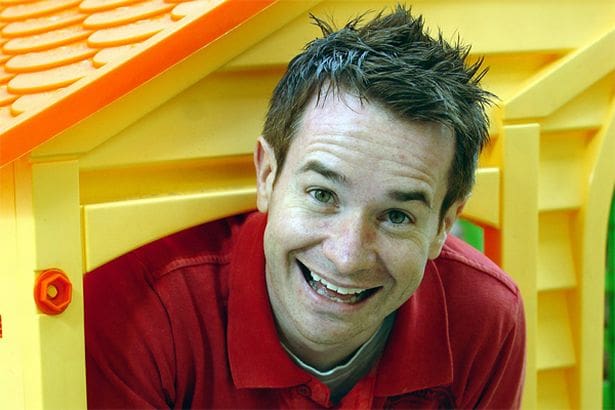
 As part 3 in our series on Mormons in the U.K. we interview BBC TV Star Alex Winters – who worked for seven years as a presenter on the BBC Children’s channel CBeebies (the U.K. equivalent to Nick Jr or Disney).
Alex was raised as a devout Mormon in Wales, U.K., served an honorable mission, and was married in the London temple. Throughout his adult life Alex has served in several significant ward and stake callings including ward bishopric and stake high council. As his acting career developed, Alex was so popular as a media celebrity within the U.K. that the LDS Church offered him a major role in their “I’m a Mormon” PR campaign (which he declined for professional reasons).
Over the past year or two Alex developed questions and concerns about LDS church doctrine (e.g., November 2015 LGBT policy) and history (e.g., Joseph Smith’s treasure digging, seer stone use, polygamy and polyandry) which led to his loss of faith in Mormonism.
This is Alex’s story.
Episode Transcript
Host: John Dehlin · Guest: Alex Winters
This transcript is machine-generated and lightly edited for readability. The audio is authoritative. Please excuse occasional errors in names and spelling.
Welcome and Introduction to the Episode
Part 1 of 2 · Ep. 669
John Dehlin [00:00:15] Hello and welcome to another edition of Mormon Stories podcast. I'm your host, John Dehlin. It's September. Did we just say 20th?
Alex Winters [00:00:22] Yeah, we did.
John Dehlin [00:00:22] September 20th, 2016. We're broadcasting or we're recording live from. What city are we in?
Alex Winters [00:00:32] I don't even know what city we're in.
John Dehlin [00:00:33] Somewhere an hour and 20 minutes southeast of Durham, United Kingdom, which is in England. And we are recording our second episode of our UK series, our series on Mormons in the uk. We interviewed Nathan Lisko a few days ago, and I can't tell you how excited I am to be interviewing our special guest today. His name is Alex Winters. Hello, Alex.
Alex Winters [00:01:01] Hello, John.
John Dehlin [00:01:02] Welcome to Mormon Stories.
Alex Winters [00:01:04] Thank you.
John Dehlin [00:01:06] It's like 11:30pm at night. We're at this beach house that we rented after I presented at the University of Durham on my LGBT research. So for all of you Mormon Stories listeners, you do not fund global trips. For me, I was in the UK because the University of Durham asked me to consult with them on how to help the Anglican Church deal with their LGBT members because the church is being ripped apart by that issue. So because they flew me out here, I've been tapping various British Mormons that I know to do this episode. What's so funny?
Alex Winters [00:01:47] I like the theater setting.
John Dehlin [00:01:50] Welcome to Masterpiece the. Your host, John Dehlin.
Alex Winters [00:01:55] Inside the Actor Studio, James Lipton.
Meet Alex Winters, BBC CBeebies Star
John Dehlin [00:02:01] Okay, so we're being silly because it's so late, but Alex Winters. Those of you in the States will have no idea about this, but Alex is actually a national television celebrity here in the uk. He. He's the presenter for a television, a children's television program called Sabibis. Think of like Sesame street or Mr. Rogers or Blue's Clues or whatever. He's kind of one of the celebrities or stars on that show. He's been doing it for about seven years. He's from Wales, served a mission church member. Something that's super interesting about him was the LDS Church recently approached him a few years back to actually be the face for their I'm a Mormon campaign. So he's definitely very well known. And we're thrilled to have you here, Alex, on Mormon Stories. So welcome.
Alex Winters [00:02:54] Thank you so much. I'm thrilled to be here. It's a pleasure to meet you.
John Dehlin [00:02:57] Likewise.
Alex Winters [00:02:58] You're much bigger in real life.
John Dehlin [00:03:00] I am a little bit tall.
Alex Winters [00:03:01] Yeah. And I'm a little bit short. So I'll try and sit up.
John Dehlin [00:03:05] I'll squatch. We are recording this on video, so if you want to watch on YouTube, you can. I met your Wife Jo, back in February. That's where I learned about you and I've been eager to get to know you ever since. So we're going to talk about your Mormon journey in the uk.
Alex Winters [00:03:20] Yeah.
John Dehlin [00:03:21] How does that sound?
Alex Winters [00:03:22] Perfect.
Growing Up as a First-Generation Mormon in Wales
John Dehlin [00:03:23] All right, let's dig in. So tell us a bit about your heritage in the church. Are you first generation, multi generation?
Alex Winters [00:03:33] So I was born and brought up in Cardiff in Wales, and my parents were converts in the early 20s, I think, and they were living in the valleys where the. Where the start of the coal mining sort of was quite famous valleys there. And it was a really small branch. In fact, when. When they were baptized, I think my dad was one of two males and then I think my mum was one of four females. So really small branch. And then they moved out. They moved to the city in Cardiff where I was brought up, which is in the south of Wales, the capital of Wales. And, yeah, all my brothers and sisters, we were all baptized and all grew up in the church.
John Dehlin [00:04:27] How many siblings?
Alex Winters [00:04:29] So we lost our eldest brother and then I have two sisters above me, then myself and then my younger brother.
John Dehlin [00:04:38] It's kind of a big family for England, right? For the United Kingdom.
Alex Winters [00:04:42] Oh, yeah, you got that right.
John Dehlin [00:04:43] Wales is not England.
Alex Winters [00:04:45] No, it's like America and Canada. Wales, England. It's quite a big family and I think my parents always wanted a big family because my dad's an only child and my mum is one of two and they're great parents and so, yeah, quite a big family for here.
John Dehlin [00:05:07] And how old were they when they joined? About.
Alex Winters [00:05:10] They were. There's an 8, 8, 9 year age gap, so I think my dad was late 20s and my mum was sort of earlier 20s.
John Dehlin [00:05:18] Okay, so you would have been born in the Covenant?
Alex Winters [00:05:20] Yes, yeah, I was, yeah, absolutely.
John Dehlin [00:05:24] So, so you grew up primarily in Wales then?
Alex Winters [00:05:28] Yeah, yeah.
John Dehlin [00:05:30] What was your. What ward were you in?
Alex Winters [00:05:32] So we were in Cardiff.
John Dehlin [00:05:34] Cardiff Ward.
Alex Winters [00:05:34] Yeah, Cardiff Ward. And the stakes changed because it's quite a. The church was quite spread out over Wales, so not. Not massive, you know, very well supported and so that, you know, that the members there were, you know, and still are, you know, wonderful members and hardcore and very proud of the sort of pioneer roots, really, of the church, because so many people from Wales followed the pioneers and went over.
Alex Winters [00:06:10] So maybe few in number but, you know, strong in heart when it comes to the church. So I would. I think when I was really young, the stake we were in spread from where I lived in Cardiff, which is south east Wales, right across to West Wales, which is a good few hours. And that was the one stake.
Alex Winters [00:06:33] There's now two stakes. And so the church has grown stronger. But we, you know, out in the real world, it was very much the odd one. Out there was me, my siblings and then one of the family in school who were, you know, members of the church. So it was, you know, we were still quite an oddity.
John Dehlin [00:06:54] How many members of your ward do you remember kind of as you were growing up?
Alex Winters [00:06:58] Well, when I was growing up, we had. We are quite a big. We had quite a big ward and I'd like to say we went through sort of various stages, but in general, I think, and this is from my days of sitting on the stand with the bishop as a deacon, counting, counting the numbers, walking up and down the pew, counting the members. I think we're about 120 to 140. So quite a big, quite a big ward for, you know, for Britain anyway. But out in sort of school and out in society. Growing up, you know, I was the only sort of Mormon where I lived in my age group.
John Dehlin [00:07:43] How did your participation in the church show up in your family? So were there traditions or weekly or daily activities that were Mormon that sort of, you remember as being part of your family's regular life?
Alex Winters [00:08:01] My parents were and still are, you know, really good members and they always tried, they always tried their best to do what was expected. So Monday night family home evening was very much a tradition. And I'm from a very working class family as well. My mum and my dad both worked so hard. I mean, at one time my mum was in three jobs. She'd be up at silly o' clock in the morning, off cleaning, then going to another job.
John Dehlin [00:08:38] Did you just say silly o'? Clock?
Alex Winters [00:08:39] Yeah, silly. Silly o'.
John Dehlin [00:08:41] Clock.
Alex Winters [00:08:42] Because it was so early. So early. And so whenever possible, we would have a home evening and then Saturday nights, although not strictly church related, Saturday nights would always be on the sofa together, I say, preparing for the Sabbath, but then it would be sitting on the sofa together and we'd make sure we'd have family time and it'd be watching the Muppet show and then the Dukes of Hazzard.
John Dehlin [00:09:11] Love the Muppet Show.
Alex Winters [00:09:12] It was brilliant, absolutely brilliant. And then off to bed and ready, ready for Sunday then, which. And those Sundays were always. War was busy. So nothing, nothing out of the norm, to be honest. You know, my parents tried really hard to do what was right. So family home evening.
Alex Winters [00:09:34] And my friends knew that Alex wasn't allowed out on a Monday night after tea because I'D have family night tea was at what time so dad would get home? Half five, six o'. Clock. And then I think me and my siblings used to try and make family home evening go on as long as possible. So we could stay up late, you know, if we got to stay up till half past seven, we were like, yes, this is late. And I always remember we'd always take it in turns as well to prepare a family home evening. And I remember that being an exciting, you know, an exciting thing, preparing a lesson and an activity and, you know, a treat afterwards. So, you know, you know, fairly standard Mormon fare, to be honest.
John Dehlin [00:10:18] So daily family prayer, I think.
Alex Winters [00:10:22] I think we were like many families, we'd go through phases, you know, we try. We try and do it in the morning and my dad would be gone and then with so many of us off to school at different times, and then we try at the evening and so, you know, we try to. We try our best. It was hit and miss, but, yeah, no, we had family prayer and often it would be round the table and my mum would often give a really long prayer blessing the food, and me and my brothers and sisters sort of sneaking one eye open because we were starving and wanting to just eat our meal. Mum was sort of taking that time to have a family prayer blessing the meal, but she's a wonderful woman.
John Dehlin [00:11:12] What were your fondest memories of, like, attending church and participating in church in Wales.
Alex Winters [00:11:19] So church was a funny one because I grew up and essentially there was me and one other lad and then another one joined a bit later and then two girls. So at times it almost felt quite lonely, even though I had some great times and youth.
Alex Winters [00:11:49] We had youth activities on a Wednesday and they would again be hit and miss. I used to look forward to a Wednesday if we could somehow gather enough kids together to play football or something, that'd be brilliant. You know, it'd be a great Wednesday night.
Alex Winters [00:12:05] But I do. I remember my parents trying hard to create things for us because, you know, unlike Utah and other places, we just weren't surrounded by members. So you'd have to. You'd have to sort of work hard to have some kind of activity, you know, or to be surrounded by friends. You know, it involved a lot of travel or.
Alex Winters [00:12:32] So my life was actually quite split. You know, I had just as much of a social life outside of church than I did in church, really, especially as a younger lad. It would just be with the boys who lived near me playing football over the field.
Alex Winters [00:12:51] But then I knew that Wednesdays, no Matter what was Youth Night. And then Sundays, it was expected of me to get up and go to church.
John Dehlin [00:13:01] Do you remember Primary songs? Learning Primary songs?
Alex Winters [00:13:06] Yeah. Do you know what? When I went for my audition for CBeebies, which is the children's channel on the BBC, they said, oh, could you sing a couple of songs? And I actually sang a couple of Primary songs.
John Dehlin [00:13:23] Popcorn popping.
Alex Winters [00:13:25] I've done popcorn. I did popcorn popping. And actually on camera, I did Sunbeam. If you chance to meet a frown do not let it stay. And I was like, that is perfect for children's television. And they were like, that's great. What are those songs? I was like, oh, just songs I know in the pick the box, just, you know, growing up here and there. And I think. I think a couple of parents caught me out on that. I was somewhere visiting a ward somewhere, and I think a couple of parents said, did we hear you sing a primary song on CBeebie? I was like, maybe.
Alex Winters [00:14:04] But no, I loved Primary and I was a bit of a singer when I was young. And I mean, my mum would, any opportunity have me singing solo. In. In Wales, we have something called an eisteddfod. Okay, an eisteddfod. We have annually, generally around St David's Day. Now, St David is the patron saint of Wales.
Alex Winters [00:14:29] So March 1, we'd have an astdfod and the church was big on this neistadv the congregation. And it'd generally be a stake meeting, so we'd get all the stake together and you would have singing. So there'd be musical competitions. So whether it was playing instruments, I played the violin really badly.
Alex Winters [00:14:51] I have awful memories of that, singing solo choirs, because in Wales, we're famous for our choirs. And then there'd be poetry and so I steadfast a Welsh social thing. It's not a church thing, but the church adopted it, and rightly so. It's a wonderful thing. And so, yeah, we were always singing. In fact, my family, we got the nickname the Von Trapp family, because we were always singing as a family here and very musical. And my sisters played the piano, One of them played the violin very well. Both good singers and. Yeah, so we were always very musical family. Very typically sort of Mormon that way, and.
Alex Winters [00:15:37] And still are, I suppose. We're still all very, very musical. But, yeah, I love the primary songs. There's some Belters, aren't there? There's some brilliant ones. And I love the church hymns as well. So, yeah, no, we had a very typical.
Alex Winters [00:15:52] I remember Mum and Dad scraping Enough money together to get a piano at home. And that was it then. There was no stopping family home evening. And in fact, we used to have the ward choir would come and rehearse in our living room.
John Dehlin [00:16:08] Was it like eight people?
Alex Winters [00:16:11] Yeah, I mean, 10 if we were lucky. But I just remember thinking, what are the neighbors thinking next door? As they could hear whatever it was. You know, I believe in Christ being sung. You know, all verses sort of thing.
Youth Activities and Church Culture in the UK
John Dehlin [00:16:27] So the experience that many of us had with like, youth conferences, temple trips, missionary weekends, stake dances, regional dances, Was that part of your youth?
Alex Winters [00:16:41] Yeah, it really was. And I think seminary, too. Yeah, absolutely. And I think I may be out of line saying this, but I think they might be sort of more important to us in Britain than perhaps in a place like Utah. And, you know, I hate to keep pointing the finger at you, Darcy. I know there's other places that don't have, you know, a dense amount of members, but especially in Britain, I think those things were really important because so many of us just felt on our own.
Alex Winters [00:17:13] Because even. Even within our ward and our stake, we were really spread out and were probably very likely the only kids in our school who were Mormons or. And so, you know, local dances, state dances, conventions, especially through youth as well. I mean, we made Britain. I know Britain is small, but we made it even smaller. And we would travel hours for a youth dance or.
Alex Winters [00:17:43] And that was actually. That was a really integral part of growing up in the church. I think, in Britain was the conferences and the dances. Because I just think. I think you were looking for that support, you know, because you want to feel like you're part of something. And that was hard to feel when there was perhaps just me and my best friend Ray. You know, it sometimes didn't feel like you felt part of something, or it felt like you just were part of something old.
Alex Winters [00:18:20] So, you know, going on Sundays and just surrounded by oldies and parents, which grief, you know, got a bit boring for me and Ray. The only sort of priesthood our age there at age 12 or 13 or 14, and feeling perhaps left out.
Alex Winters [00:18:39] So right through, you know, teenage years, those things like conferences and dances were so important. And it's how you met other people. And I think it's the reason that I got through church through my teenage years. And I think if I hadn't have had those dances or conferences and a sister willing to drive or my parents willing to drive, maybe I'd have left church as a teenager. Because socially, that's what was important then. I think my testimony I was just going on my parents testimony then perhaps.
Alex Winters [00:19:22] So they. I think they were really important to my. To my upbringing and for me personally as well. When I got to a certain age, in my teenage years, I'm a really big music fan, I would DJ some of those dances. So that was almost like a hook that kept me there. And I think.
John Dehlin [00:19:37] You were a dj?
Alex Winters [00:19:38] Yeah, yeah. How was DJ Weir?
John Dehlin [00:19:39] Yeah, yeah.
Alex Winters [00:19:40] What was your best tune? What was your big tune? What was your dance floor?
John Dehlin [00:19:43] Safety Dance.
Alex Winters [00:19:44] Well, I don't even know.
John Dehlin [00:19:46] Hickin dance if you want to. I think it's a British song.
Alex Winters [00:19:49] Safety Dance.
John Dehlin [00:19:50] No, I'm just. I love it. Rock Lobster.
Alex Winters [00:19:52] Oh. Oh yeah, the B52s. Love shack.
John Dehlin [00:19:54] Love Shack.
Alex Winters [00:19:55] Oh my gosh. Love Shack. That's a church dance song if ever, isn't it? And so I think that was. That was.
John Dehlin [00:20:01] What was your favorite song? What were your standards?
Alex Winters [00:20:05] I don't know. I was a real indie. I was a real indie kid. So I played a lot of British indie stuff, you know, Oasis maybe, you know, Oasis and Blur and all that. Stone Roses. Try and throw a bit of punk rock in there. I remember, I remember one time I played. Are you aware of the Prodigy at all?
John Dehlin [00:20:24] Heard it.
Alex Winters [00:20:24] Bit of. Bit of hard electronic sort of dance. And there was a song, Firestarter, which was, you know, a bit of an aggressive dance. And I remember State President pulling me aside. Alex, I'm not sure that's quite appropriate, you know. Do people know this? Do people know what songs you're even playing? And you know, I was trying to be cool. Yeah, this was number one in the charts. President. Honestly, everyone likes it and I think there may have been five people dancing. But those things were important in my social life, in keeping me interested in church. That and then, you know, stake athletics.
John Dehlin [00:21:05] What sports did they have?
Alex Winters [00:21:08] So our stake athletics, it was pretty. It was pretty thorough actually, because we'd have. We'd have indoor athletics and then later in the year in the summer we'd have the. Or indoor sports and then later in the summer we'd have the athletics. So we, you know, we'd hire out a local track. We do all the track races, high jump.
John Dehlin [00:21:27] Oh, wow. Like track and field.
Alex Winters [00:21:29] Oh, yeah, yeah. Track and field. That.
John Dehlin [00:21:31] Never heard of that. Never heard of that. That's cool. Yeah, we never did that.
Alex Winters [00:21:36] Yeah, we have. That's a massive thing in Britain because we'd have steak and then we'd have regional and then area. And so we'd be like, yeah, we're going to Birmingham. And we'd all be in a car or whatever and traveling two hours to go and run, you know, against the best of the Birmingham or whatever Mormons, you know, and that was.
Alex Winters [00:21:58] That was a big thing. And again, I think, you know, maybe you didn't have that. You're from Texas. I don't know. I don't know if that was, again, a British thing because it was something else to keep us.
Alex Winters [00:22:11] To keep us together. Because, you know, I can't stress enough. There's no dense population of Mormons. And so you really would be. And so, you know, it was, I think whether that was a conscious decision or not, I don't know. But trying to keep us together and as many activities as possible, which, you know, it was a good thing. And I have, you know, I have no bad memories of that. I used to love it being sporty as well.
John Dehlin [00:22:37] What were your events in track and field?
Alex Winters [00:22:38] To me, I was a sprinter. I was a sprinter, so. And I did long jump as well. I wasn't bad at high jump for a short bloke. I've got quite a good. I get good age on good day. I used to like playing basketball, so, yeah, track and field. I was a sprinter and I was a tidy footballer as well. So our indoor sports, we'd have five a side, volleyball, table tennis, and this would be ward against ward and things. And it, you know, it got. It got competitive. Let me tell you. There were some tempers lost at those things. I think it's like your. Your sort of church basketball. Church basketball and things like that. So, yeah, again, really, really important and a great way of meeting, you know, other members as a youngster.
John Dehlin [00:23:25] Sure, sure, absolutely. How about. Did you say outdoor sports besides soccer or football?
Alex Winters [00:23:32] Yeah, yeah, yeah, yeah. You know, rugby, we play everything.
John Dehlin [00:23:36] Rugby, yeah. That's intense.
Alex Winters [00:23:39] Yeah, I know it's. Wales is the home of rugby. I know some New Zealanders might argue against that, but Wales is the home of rugby. Yeah, but I think. I think sports have always been, especially in church in Britain anyway, really important. I mean, because there was. Back in the 70s, probably, there was the. There was something called the baseball baptisms. I don't know if you've ever heard of that or if you like things.
John Dehlin [00:24:06] Yeah, my first episode of Mormon Stories talked about that. Really?
Alex Winters [00:24:09] And did you have them in America or was it just about.
John Dehlin [00:24:11] I had them in Guatemala.
Alex Winters [00:24:12] You had them in Guatemala as well?
John Dehlin [00:24:14] In Japan, but in Guatemala it was soccer baptisms.
Alex Winters [00:24:18] Oh, was it?
John Dehlin [00:24:19] Okay. But in Japan it was baseball baptisms.
Alex Winters [00:24:21] Yeah, and I think anything to entice people in and to, you know, teach people about the church and so I think sport and church in Britain, anyway, I can only speak for Britain, has been sort of intrinsically linked in some way.
John Dehlin [00:24:37] That's awesome. So what, what teachings of the church or doctrines did you really identify with as a. As a youth? Were there any, you know, did you have a testimony? If so, what was it really rooted in? Was it stories of church history? Was it Book of Mormon where you just didn't care about any of that and it was just social? Do you remember? Was it your patriarchal blessing, you know? No. Did you have a testimony as a youth?
Alex Winters [00:25:10] Yes.
John Dehlin [00:25:11] What was it based on?
Alex Winters [00:25:12] I thought it did. I. Well, at least I bore a testimony, you know, and I don't want to retrofit anything. I believed I had a testimony and it was based. It was, you know, I had the cliche thing of. I think I rode along my parents testimony and again, I mean they're both still, they're still with us and they did wonderful things and gave great sacrifice and still do to the church.
Alex Winters [00:25:46] You know, my dad was in all kinds of callings, bishopric, you know, on the stake and likewise my mum. And I think I just went. I think it was very simple. I can't say that I had. Yes, there's wonderful testimony and I don't think it sort of mattered, you know, it was just based on what I thought felt right and what I'd been told.
Alex Winters [00:26:09] And at the time, you know, I didn't even question that as a teenager because I just felt, alright, I'm doing the right thing here. And then I just wanted to get on with playing football and, you know, being the next Bono, because that's all I wanted to do was perform and, you know, head up the next big rock and roll band until I realized I couldn't sing that well, you know, I just wanted to do other things. So I think it was. Even though I've said it was small because there were so many social things going on, it wasn't so. Because I am that kind of person, you know, I love being social.
Alex Winters [00:26:45] So I just think my testimony was very simple. So if I'm trying to think of principles and things like that, I'd be struggling because it was just a very simple testimony. And I thought that Joseph Smith was a prophet. I thought the Book of Mormon, he translated it, I felt good about it. And you know, I had some. I had spiritual experiences with my peers and it was any big ones that
John Dehlin [00:27:14] you Remember or is it just. No,
Alex Winters [00:27:20] I think it was the usual, which was, you know, at the end of a youth convention and everyone bears their testimony and you feel that spirit and I'm not going to deny that you feel that wonderful feel in the spirit and you're all bearing testimony and everyone's crying and at that moment in time it feels like the best thing ever. And that was good because that helped create sort of lifelong friendships, you know. But it wasn't till I was an older teenager that I really started to think about some things and sort of start having, having some questions that I perhaps didn't follow through with until later on in life.
John Dehlin [00:28:07] What were they?
Alex Winters [00:28:09] Do you know? The one thing for me, the one thing for me growing up and being very involved with drama and performance, I was out there in the world and I was amongst all kinds of different people.
John Dehlin [00:28:27] And this is high school now you're talking.
Alex Winters [00:28:29] Yeah, yeah. And I'm being very, very sort of predictable here. But it's true. Being in the theatre world, I was around, I had quite a few gay friends and early on I was concerned about the church's and the gospel's view of homosexuality.
Alex Winters [00:28:58] And I remember that being my first real question and something that I struggled with, not that I struggled with homosexuality, but having friends outside of church who were gay and me being friends with them, I felt like I was being two faced. Not that I was homophobic, never, never was, never have been.
Alex Winters [00:29:24] But really I think it was the first time I experienced cognitive dissonance because I knew that from what I'd been taught that homosexuality was wrong and it was not going to get me to celestial kingdom. The right way is man and woman, man and wife.
Alex Winters [00:29:48] And I had a really tough time with that. And I remember speaking to my mum about it and you know, she said everything that I would have expected. She said, they're still our friends, we love them, don't treat them any different and why should we?
Alex Winters [00:30:10] And I was sort of alright with that, but there was just that nagging. But that's not what the gospel tells us. The gospel tells us that it's wrong what they're doing. And I felt awful about that. I felt awful about that.
Alex Winters [00:30:27] And you know, I just had an experience on the weekend and we'll come sort of full circle back to that niggle I have about the church's view on homosexuality. And that was my first, you know, everyone uses the shelf.
Alex Winters [00:30:45] And that was the first thing that I just thought, okay, I'll put to the back of my mind but the truth is, it was never really sat back there. It's always sort of been at the forefront. And so that was the first thing that I really started to question and always have done.
John Dehlin [00:31:04] That was pre mission. That was high school.
Alex Winters [00:31:06] Oh, yeah, yeah, yeah, yeah. That was teenage years. I mean, I didn't go on a mission until I was. How old was I? 25.
John Dehlin [00:31:15] 25, yeah.
Alex Winters [00:31:16] I was in.
John Dehlin [00:31:17] Whoa.
Alex Winters [00:31:17] Yeah, because between there and there, you know, I've got a bit of a story, so.
British Pioneer Heritage and Testimony as a Youth
John Dehlin [00:31:22] Okay. So really quickly, was it part of your upbringing for stories to be told about the British, early British missionaries, the British Saints? Was that. I'm just curious of that sort of oral history of the UK's role in.
Alex Winters [00:31:40] Yeah, I think it was. Yeah, I think we. Yes, definitely, because we'd have Pioneer Day, you know, steak Pioneer Day, and we'd all. We'd all dress up as pioneers and, you know, I dress up in American pioneers. A lovely frock and bonnet I had only on a Thursday. No, we dress up as. Yeah, because, you know, a lot of the pioneer. Well, the pioneers came from Britain and Europe, didn't they?
John Dehlin [00:32:04] That's right.
Alex Winters [00:32:05] So, you know, there's no American pioneer.
John Dehlin [00:32:08] That's true.
Alex Winters [00:32:09] But yes, they were, especially being in Wales. And we're a very proud nation in Wales. We're proud of everything. Proud of being Welsh, proud of a rugby team, proud of our traditions, you know, and so in church, that was no different.
Alex Winters [00:32:24] So Dan Jones. I'm not sure how many people, how many members of the church outside of Britain really know about Dan Jones, but in Wales we certainly do. He was a wonderful missionary, a very successful missionary, who on his second time of coming to Wales, took thousands. Took thousands with him over to America and that. And this is where our real pride comes in as a. As a musical nation. You know, the Mormon Tabernacle Choir essentially started from the Welsh, because we really are a nation of singers and be a tradition of choirs. And so many were going over with him and they'd be singing on the journey and, you know, there's lots of records or writings, should I say, of, you know, these musical saints and these musical pioneers.
Alex Winters [00:33:17] And, you know, a lot of that was the Welsh saints going over to the States. So we're very proud of that. And not that it was taught any more than anything else, but, yeah, I think we were very aware of the pioneers. And, you know, even in recent years, in the past 10, 15 or so years, you know, we have the tall ships in Liverpool, so I think the Brits were Very, very aware and I suppose proud, you know, and there's the one quote and I think it was from Dickens. I want to say it was Charles Dickens and please correct me if I'm wrong, who was commenting because he was at the ports and watching these people go to the States and he said, you know, it wasn't just any old riff raff, it was the pride and.
Alex Winters [00:34:14] Pride and flower. The pick and flower of England is what you said. And again, if I'm wrong, I apologise. But it was someone like that. I'm sure it was Dickens. So, yeah, there is quite a pride. I mean, in one of the temple buildings or in the temple, there's a picture of Dan Jones teaching the people of Wales. And actually the second language that the Book of Mormon was translated into was Welsh.
Alex Winters [00:34:44] So I mean, back then in North Wales that would have been implicable, but in South Wales, I don't think, you know, the language was spoken too much. So the Welsh are proud of their, you know, their Mormon roots and I remember getting my hands on a Welsh Book of Mormon for my mission president because he was super excited to see, to see the Book of Mormon written in, you know, the Welsh language.
John Dehlin [00:35:09] Can you speak Welsh?
Alex Winters [00:35:11] Oh, only, only a tiny bit conversation.
John Dehlin [00:35:13] Do a little bit, just so we even know what it sounds like.
Alex Winters [00:35:15] Alex Dewey doing Boo Mankhanyan. So I said, exactly, exactly.
John Dehlin [00:35:22] What did you just say?
Alex Winters [00:35:23] I said my name is Alex and I live in Manchester. It's actually, it's a really, when you get going, it's a really beautiful language. I think there's a lot of, and, and people sort of. That grates with a lot of people, but it's a very sing songy. And outside of Cardiff, because Cardiff, because of the history of it being a big port, it's become very cosmopolitan, so we sort of lost our accent and things. It's a big melting pot of, you know, world nations. But outside, when you get towards the valleys, it's very, very Welshy, you know, like Tom Jones. Tom Jones, he's up here and down here when he's speaking inn, he see and it's not unusual to have fun.
John Dehlin [00:36:07] Was he Welsh?
Alex Winters [00:36:08] He still is.
John Dehlin [00:36:10] He's still alive.
Alex Winters [00:36:11] Tom Cossey is man.
John Dehlin [00:36:12] Yes.
Alex Winters [00:36:13] I had no idea.
John Dehlin [00:36:15] Thought he was American. I've only heard him sing.
Alex Winters [00:36:18] Tom, you need to hear him speak. But they know. So yeah, the Welsh, yeah, we are very. And the Brits in general, I think the LDS Brits are very proud of that, you know, that pioneer heritage and what, what We've contributed to. To the church.
Deciding to Serve a Mission
John Dehlin [00:36:37] So what took you so long to go on a mission?
Alex Winters [00:36:40] So I think. I think what I did was, you know, what. What many youth do before university. As a teenager, 17, 18, 19, you know, I went the way of the world, was more interested in rock and roll than passing the saccharine, perhaps. Not that I was a wayward child, but especially when I went to university, I went to a place where the wards I just felt was. It wasn't. Wasn't the strongest awards and there were just pretty much no young adults there. And so I just went off and I was inactive.
John Dehlin [00:37:20] This is in Liverpool?
Alex Winters [00:37:21] Yeah, yeah, I went to Liverpool and studied drama, theatre, stage studies.
John Dehlin [00:37:26] What university?
Alex Winters [00:37:27] Liverpool.
John Dehlin [00:37:28] The University of Liverpool, yeah.
Alex Winters [00:37:30] Okay. So I've got the Beatles stamped on my certificate. And so I became lazy and, you know, just chose not to. Just chose to do other things. And so for a good few years of my life, the church just wasn't important. You know, it took a back seat. Took a back seat. And then, you know, I sort of got myself in trouble and just became. My life got a bit of a mess and I think through some of my choices and there's a wonderful family in Manchester and I call them my. And I won't say the names on here, but I call them my second mum and dad. And they essentially saved me in that last year of university. And so I basically lived with them in Manchester and traveled back and forth to Liverpool.
John Dehlin [00:38:36] How far is that drive?
Alex Winters [00:38:38] I used to jump on the coach or the train. Sunny, half hour. Oh, okay. In Britain that's a long way, as you found out. You live half hour from your neighbors, don't you? In Texas. And so they sort of saved me, if you like. And so I would live with them.
John Dehlin [00:38:59] How'd they save you?
Alex Winters [00:39:01] Because, you know, living with them.
John Dehlin [00:39:05] They invited you to live with them?
Alex Winters [00:39:06] Yeah, yeah. They basically said, right, come on, come back.
John Dehlin [00:39:09] Because they saw you were down and out or what?
Alex Winters [00:39:11] Yeah, yeah. And I just. I just wasn't happy, you know.
John Dehlin [00:39:16] Was it just like alcohol? Yeah. Just partying?
Alex Winters [00:39:19] Yeah, absolutely. And I think it was that. And I think that's one of the. I'll be careful how I say this, but I think that's almost one of the dangers of having that repression as a youngster in life is that there's the. There's the potential to just when you're away from the church or in certain circumstances, just to go bang and go all out. And I feel that perhaps that's something I did it Was.
John Dehlin [00:39:45] And you weren't happy, or were you?
Alex Winters [00:39:48] No, no. And I think as well, I was also confused because there was guilt. And, you know, maybe that's because I'd. I moved away from the spirit, stepped away from the spirit, and I wasn't, you know, making correct choices. And so my second mum and dad, they came and saved me, if you like. And I'll always be grateful because I don't know. I don't know what state I'd be in now, where I'd be in life. No matter, you know, no matter my position with the church now. I don't know where I would be without them. So I love them and I'll always be grateful. And so in living with them, there were certain standards that I had to live to, as my parents at home would expect. And so I started. They got me going to Institute, and so I started going to Institute. Institute. And that's where I met Joanne, who's now my wife,
John Dehlin [00:41:03] in Liverpool.
Alex Winters [00:41:04] She was studying in Manchester.
John Dehlin [00:41:06] Manchester, okay. Yeah.
Alex Winters [00:41:07] And so I would just go back for my lectures and things in Liverpool that last year. And whilst in Manchester, you know, I was sort of becoming familiar with the church scene again. And it's, you know, our eyes met across a crowded room.
John Dehlin [00:41:29] I've seen that smile somewhere before.
Alex Winters [00:41:33] Please continue. And that. I think that changed me because I think I'd gotten myself into such a mental position just in life in general. I met Joe. She was funny, really smart. She's an academic and. But she. Man, she was hard work. I didn't know whether she wanted to talk to me, whether she liked me or anything.
John Dehlin [00:42:07] She wasn't easy.
Alex Winters [00:42:09] Her nickname was the Ice Queen.
John Dehlin [00:42:10] Oh, and Elsa. What is it? And. Oh, Frozen.
Alex Winters [00:42:15] Frozen Elsa. And Anna, she was. She. I mean, the Ice Queen. And no, you know, she doesn't have fools. Gladly. Although she humors me all the time now. And over a period of weeks and months, I just. I became obsessed with her and in a nice way. And I wanted to ask her out.
Alex Winters [00:42:42] And I started to feel like I wanted to change my life because of her. And I felt that the way my life was at the moment, there's no way she'd even look at me. There's no way she'd even consider going out with me. And so I tried to. I tried to change. And then, in a very Hugh Grant kind of way, asked her out one evening in. In the car as she was dropping me off. And I was all, if you'd.
Alex Winters [00:43:13] I mean, if you don't mind. I mean, you don't have to. And she reminds me of this now. SHE LAUGHS Took me like half an hour just to say, do you want to go to the cinema together? And then to my surprise, straight away she went, yes.
Alex Winters [00:43:25] Oh, really? Are you sure? And. And so we started dating. And to be honest, I forgot everything else because I just, I fell in love with her pretty quickly and so I felt like I was going to do whatever it took to be with her.
Alex Winters [00:43:54] And I think alongside that, going back to church, going back into routine, doing the things that I felt I should, I, yeah, I turned my life around and I think I needed that again. No matter what my position and thoughts are now. I think I needed that at the time and I will always believe that someone somewhere sent Joe to me, sent Joanne to me and she, she just helped me out and she didn't realize it at the time and I didn't tell her till later on.
Alex Winters [00:44:37] And so I. Then after I finished uni, I graduated. I started thinking, what. What does this woman need? What does this girl need for me? And I knew, really didn't have to ask the question because of her being, you know, active in church and just wonderful, that pressure started, I started feeling that pressure of, I need to go on a mission, I need to be a returned missionary, she's going to want to marry a returned missionary.
Alex Winters [00:45:11] And so for two years, because I couldn't go straight away, you know, I need to take. Sort myself out in the eyes of the Lord and my stake president and prepare to go on a mission, save a bit of money as well. Because, I mean, I'm used, I'm still useless with money, but, you know, my parents had to help me out with all kinds, get me out of this and that.
Alex Winters [00:45:35] And so I felt like a mission is what I should do. And a good friend of mine said, how do you repent of not going on a mission? And that just stuck with me for ages. And I was like, oh, grief, I don't go on a mission.
Alex Winters [00:45:53] How do I repent not going on one? You know, So I thought, oh, grief. So I went on a mission and ironically opened my mission papers and I actually read out, Reykjavik, Iceland. And my mum went, doesn't say that at all. What do you mean? Because I thought, I'm going to play a joke, I said, I said, obviously, Iceland, Reykjavik. Mum said, no, it says Leeds, doesn't it?
Alex Winters [00:46:25] And she was right. And that sort of irked me. How does she know? And, yeah, I was sent to the Leeds Mission and Jo is from a place called Hellersfield, which is in the Leeds Mission. And I was like, you're kidding me. I'm gonna be sent to where she lives. And so, you know, I prepared for a mission. I'm not sure how good my preparation was.
Alex Winters [00:46:52] I was never a scriptorian and I think, you know, I just went along with. I'm quite a passionate person and funnily enough, a fairly good public speaker and good at presenting. And I think, you know, that got me to my mission.
Alex Winters [00:47:11] And I thought doing this A, is the right thing and B, will mean that I'm giving Joanne what she deserves, you know, a return missionary, as a husband. So I headed off to the Leeds Mission.
Mission Experiences and Spiritual Highs
John Dehlin [00:47:30] Anything unique or important? Any really significant events in your mission that you want to kind of talk
Alex Winters [00:47:38] about or do you know what? I had a great time, but that first six months, I mean, that kicked my backside. I didn't know what I was doing. I had a tough time with my trainer, and I love him to bits. I'm in contact with him now.
Alex Winters [00:48:05] We had a great time, we had good fun, but at the same time we wound each other up. You know, we almost had a fist fight. I almost smacked him in the face. And we were in a place called Hull.
Alex Winters [00:48:22] Great members there, but it was a tough place and, you know, we just had zero success. So for six months I knocked door after door. We got nowhere. We had no success. And this is when I started to question, what am I doing? What am I doing?
Alex Winters [00:48:44] I wasn't enjoying was tough. Maybe this is the wrong. Maybe this is the wrong decision. Maybe mission wasn't for me. And even with age on my side, as a 25 year old and a more mature head, I genuinely thought in those six months I could just go home. Maybe I just go home, Joanne's there.
Alex Winters [00:49:09] And then all of a sudden, at the end of my time in Hull, the first area, I get a letter from Jo saying I'm going on a mission. And I was like, what? What do you mean? And so she then went on her mission to Dallas, Texas. So I almost felt like, okay, I'm in this for the long haul, you know, I need to stick this out.
John Dehlin [00:49:39] And if she went a year and a half, you'd be ending about the same time.
Alex Winters [00:49:43] Yeah. So when I got home, I got home about four or five weeks before she did. So I like to say to her that I waited for her for a mission, not the other way around.
John Dehlin [00:49:56] But.
Alex Winters [00:50:01] Again, I served a good mission. I worked hard. Yeah, I made some mistakes, but, you
John Dehlin [00:50:08] know, I was meaning Breaking the rules or what?
Alex Winters [00:50:14] Not really. I remember being sent a cd, Jeff Buckley CD by one of my really good friends from home who, who wasn't a member of the church. And this is the other thing that I look back on now. You know, I had some really good friends who were non members. I didn't really say too much, I just sort of sneaked off and I'll be honest, I was never.
Alex Winters [00:50:43] They knew that I was Mormon, didn't know what it meant. I didn't really speak about it, you know, and I think that was part of. I think it's because I felt uncomfortable with things, you know, I felt uncomfortable with whether it was, you know, that my beliefs should be this, about homosexuality. I think I genuinely felt embarrassed perhaps about saying to my mates, I believe that this guy was a prophet and saw God and Jesus. So I didn't really say too much. So they certainly didn't know what the rules of omission were. And so he sent me Jeff Buckley album, which is one of my favorite albums ever.
Alex Winters [00:51:29] And I listened to a couple of tracks a couple of times and I think that was as bad as it got. But I think my mission is where I started to be confronted with things that really challenged me.
Alex Winters [00:51:52] One of them being a guy we met who was homosexual and wanted to know, well, what is there for me in this life and what is there for me after this life? Should I be baptized? Shouldn't I? And.
Alex Winters [00:52:14] And I felt so torn. And I remember just not being able to teach him. I remember not being able to teach him and lying in bed thinking, why is this? Is this what I believe? Do I really think that a loving God would feel this way about homosexuality?
Alex Winters [00:52:42] And I felt that I wasn't being honest, perhaps being honest to myself, because the church teaches us almost what we should think and feel. And at those moments the church was telling me what I was feeling was wrong essentially and.
Alex Winters [00:53:08] But that's not integrity, is it? That's not integrity. My sort of secret thoughts, if you like, and feelings about homosexuality. Not that I ever felt that it was just in my brain because I'd been taught that there was just this big clash. And I remember, I remember avoiding this guy and he wanted, he wanted answers and I really struggled with giving him answers and that's always upset me.
Alex Winters [00:53:39] And then on my mission, because I wasn't a well read person, I've got to put that out there. I never spent any extracurricular time reading about the history of the church and any extended things. I, I just sort of Wasn't interested. I knew what the narrative was, what the general line was, and that's what I went with. And so then there was two other people that I met on my mission.
Alex Winters [00:54:12] One of them was a guy who was completely less active and who, on first meeting, went and visited with him. And he gave me a handshake that I recognized was not a normal handshake. And I was like, back the truck up here.
Alex Winters [00:54:33] What is that? You know, and being shocked by something outside of. Outside of the temple. And I remember him telling me a few things and me sitting there pretending that I knew what he was on
John Dehlin [00:54:48] about,
Alex Winters [00:54:51] especially with the temple telling me about the. The roots of the temple, all the. All the links to masonry, Freemasonry, and me winging it. Yeah. Yes. But look, let's get down to the real things here. Let's pray about this. Let's study about this. And I remember that sick feeling thinking, oh, hang on. Because I'll be honest, I never felt comfortable with the temple.
Alex Winters [00:55:20] The only time I felt comfortable with the temple was being sat in a quiet room. And even then, I felt uncomfortable. And for me, that never felt part of the church. And I came away the first time, and I remember looking down. Down the pews during the temple ceremony and sort of getting laughs and giggles and thumbs up from people I knew. And I just remember thinking, this is bonkers. This is absolutely bonkers.
Alex Winters [00:55:58] And I just kept holding onto what my dad had told me, which was, son, you won't understand. Everything, and everything is symbolic. Everything is symbolic. Okay? So just think about that. So towards the end of the ceremony, when I saw a black hand appear with a tattoo of lightning on, I was like, what does this all mean? Now? It just so happens that it was a black brother who happened to have a tattoo of lightning on his hand.
John Dehlin [00:56:30] He was a veil worker.
Alex Winters [00:56:31] Yeah, it was a veil worker. And I'm there thinking, what does that mean? What does that mean? Is that specific? Is it lightning? Do I need a tattoo? Has anyone else got tattoos of lightning? Am I gonna get one on the other side? I don't know. And so I just remember it being bonkers. And I can't pretend and say, oh, yeah, that was normal, and that was great. No, it was. It was bonkers. It was bonkers.
Alex Winters [00:57:04] And so to then get on a mission and be told certain things, well, you know, that's not this, and, you know that's not that. And do you know that the Freemasons have done this? And I'm sat there and I'm Looking at my companion and I'm thinking, you better say something because you're the senior companion here. Because I have no clue what this guy is on about inside. I am worried and I am nervous, but I'm just going to say the right thing and bring it back onto the track we had.
Alex Winters [00:57:36] So there was that brother and I won't mention he was gay. And I struggled with that. And then there was this guy and then there was hearing for the very first time. Yeah. So what about the four versions of the first vision?
Alex Winters [00:57:54] The what? The different versions of the first vision. There's no different versions. I know what I've been brought up with. I know what the MTC taught me. Joseph Smith went to a grove of trees, knelt down and had the experience.
Alex Winters [00:58:12] So to be confronted with that as a 25 year old as well, because I felt like I wasn't a kid, I wasn't an 18 year old or a 19 year old to be confronted with that again, I had a sick feeling and I just thought, what does this mean? And I remember speaking to the bishop of the ward at the time and he gave me an explanation which you get from, you know, the church's description. Well, you know, Joseph Smith, perhaps his memory wasn't too good or he was only 14.
Alex Winters [00:58:51] And so as a 14 year old having that experience, you know, that's a lot to take in and I could understand that. You know, when we read the first vision in Joseph Smith history, it sort of lasts a few verses, doesn't it? Well, yeah, maybe that whole experience for him lasted hours. And it was, you know, it was like a show. First of all, the heavens opened and then there was a choir of angels and maybe he had two or three numbers from the angels singing. And then there was this and that. And without being disrespectful to it, that absolutely could have happened in my mind.
Alex Winters [00:59:29] And I thought, you know what? Yeah, you're actually right. You know, this bishop explained this to me. And then eventually, at last, after this, this and that, the important thing happened, the first vision. And as a 14 year old, that would blow your mind, wouldn't it? And so of course he went home and just scrambled things down and then went back to it and refined it and refined it.
Alex Winters [00:59:50] Little did I know that that's perhaps not quite the case. And so I just put that to the back of my mind and. And I didn't even. Do you know what I didn't question. And my wife and I have spoken about this.
Alex Winters [01:00:15] We can forgive Joseph Smith for perhaps Having that poor memory and perhaps not getting it right or forgetting or choosing not to write this or that, but yet we're to believe that he could quote word for word exactly what God told him.
Alex Winters [01:00:36] You know, I struggle with that now. I struggle with that and never, never did I have the wherewithal to think back then as well. Do you know what? If God and Jesus ever appear to me, there's no way I'm forgetting that. There is no way I am going to forget that that happens.
Alex Winters [01:00:58] And there's no way I'm going to get it wrong in telling anyone. And that's really crucial for my transition. And so through my mission, there were a few things like that that I struggled with, just put aside. And I think that was because I was with really good companions, positive companions, and had a great mission president who got me through and I served a good mission and I was a district leader, a zone leader. I was ap, you know, woo hoo, hit the big time and had a great time. And I think I did that because I was older and you know, I consider myself a people person.
Alex Winters [01:01:44] I think my mission president saw that and thought he's a good one out there and you know, he's fun but also, you know, can bear his testimony.
John Dehlin [01:01:53] So any families or people you converted that you're. That was just a really amazing experience
Alex Winters [01:02:01] or do you know what? It was a tough time. And yeah, I had some, I had some baptisms and. I sort of feel quite bad now. And over the past year I've almost felt like I want to go back to those families and teach them again because I feel like I've deceived them.
Alex Winters [01:02:34] And that was really hard because I worked really hard as a missionary. I worked really hard and I did everything I felt was right. And I put those problems, those hiccups, those things aside and tried to forget them and I just did what was expected.
Alex Winters [01:02:56] And yeah, I feel like I want to visit those people and say, okay, let's start again. Let me teach you what I now think is the truth. Here's the narrative and if they still want to get baptized, great.
Alex Winters [01:03:17] But you know, I don't want to belittle my mission, but it's sort of hard not to. And that's really tough for me because I've been very proud of my mission and I felt like because of the way my life had been those two years was me giving something back to the Lord and showing, look, I'm trying to get back on track here.
Alex Winters [01:03:38] And so to now feel I've Gone out and perhaps deceived. And I know people will disagree with me and I don't mean to offend anyone that's listening, family, friends. But what do I really think? I really think that's the case now. I think I deceived those people unintentionally. Unintentionally. Just like I don't have any ill or negative feelings towards my parents because they taught me what they thought was the truth. And I likewise, that's what I did on my mission. So it's hard for me to think of big experiences.
Alex Winters [01:04:24] And that's another thing. Not one of those people that had massive spiritual experiences, never have done. You know, I've had just small things, Small things happen. And so my mission, I was really proud of it because I made it to the end Alive.
Post-Mission Life, Marriage, and Settling In
Alex Winters [01:04:44] And after 24 months, you know, and not early, and I just put those things aside and you do. You get carried away and you get lost. It's very easy just to be sort of focused on a mission, isn't it? As such.
Alex Winters [01:04:59] And so I came home, I waited for Joe, and in my patriarchal blessing, it said, you know, that I should take my girlfriend to the temple and marry this woman. And so she came home and for a few seconds, we just made sure. Hello, we hugged, and then it was really, let's carry on with life and let's carry on with what we should be doing. So we got married and married in the temple.
John Dehlin [01:05:35] How soon were you engaged? And then married after she got home.
Alex Winters [01:05:39] So I got home February 2004, and we got married in August 2004.
John Dehlin [01:05:46] When did she get home?
Alex Winters [01:05:47] She got home. Oh, she'll kill me for this. April.
John Dehlin [01:05:52] Yeah. So she got home in April. You were married in August?
Alex Winters [01:05:55] Yeah, married in August. But taking into account we'd met in 99.
John Dehlin [01:06:00] Yeah, of course.
Alex Winters [01:06:01] Dating since 2000. So I didn't feel like it was a typical Mormon shotgun wedding, which, you know, I see all the time. And I've always had issues with that. You know, so many kids just rushing in because of that pressure, that undeniable pressure to meet someone and get married. Well, I was 27 when I got back. My wife was 23, 24. And we'd been going out, we'd been dating for a couple of years and it felt right.
John Dehlin [01:06:36] So.
Alex Winters [01:06:37] So, you know, I didn't feel. Didn't feel it was rushed. So, yeah, we got married in August and that was a tough time because during those months, Joe's mum was diagnosed with cancer, breast cancer. So, yeah, that was really tough. And we lived opposite ends of the country. So, yeah, we got married and. And did all the right things. We did all the right things. Got married in the temple, which again, we both smiled at afterwards and thought that was bonkers. Nice, nice sentiment, you know, nice sentiment of being together forever. And to be honest, that even now, that's something I hold on to. I hope. I hope there's eternities, I really do, because, yeah, I do want to be with my family. But, yeah, we did what is expected and, you know, carried on and had three children and, you know, served in various callings through church.
John Dehlin [01:07:47] Not living in Wales.
Alex Winters [01:07:48] So we started in Wales.
John Dehlin [01:07:52] Brief drink of water.
Alex Winters [01:07:53] Excuse me, had a sore throat this week. Apologies. So we started in Wales and I was doing various jobs, nothing overly exciting. Worked in Cardiff arena where there was lots of gigs, music gigs and concerts, helping put on concerts, which was great for me because I'm a big music fan.
Alex Winters [01:08:13] And then I started my own picture framing workshop. Framing pictures, of course. So obvious, isn't it? I've got a drama degree. And then whilst we're in Cardiff, a friend from church, actually, who worked for CBeebies in London because it was based in London, told me that they were going to advertise publicly now for presenters. Now, the BBC never advertises for presenters. I don't think they ever have and they probably haven't since, I don't think. And she said, you should go for it.
Alex Winters [01:08:51] Because I have always wanted to be on television and when I was a kid, me and my sisters would actually, there's a famous children's program that's the longest running children's program and it's still going now today called Blue Peter and it's a live show. It's like a magazine show for sort of 10, 12 year olds and we pretend to play that. When I was kids, you know, I'd be the presenter and my sister would have a shoebox and toilet rolls, the camera, and then we'd swap, you know, so it's something I'd always wanted to do. So I went, I applied for the job, sent them a showreel that I just made up myself.
Alex Winters [01:09:36] And because I didn't have a showreel to show them, I'd been in an extra in a couple of things. Doctor who and Torchwood. I think Torchwood is. Is that in the States?
John Dehlin [01:09:49] Probably. I'm not sure.
Alex Winters [01:09:50] I think so, with John Barrowman. So. Doctor who, I know, yeah, that's a big deal. I was.
John Dehlin [01:09:55] You were in that?
Alex Winters [01:09:56] Yeah, there's an extra in the background, you know, somewhere. And people always ask me about that. So real geeks, you know, which episode were you? And I'm like, I don't know, was in the crowd somewhere. I was running through a mine somewhere and I got the job. They called me back for a couple of auditions, which is when I pulled out the primary songs again. And, you know, I was really lucky, blessed, I thought, and still think, to get the job on CBeebies because, you know, a couple of thousand people went for that and me and one other girl, Kerry, got the job. So I commuted for a while.
John Dehlin [01:10:45] Describe CBeebies for.
Alex Winters [01:10:47] So CBeebies is like the Disney Channel. So it's the BBC's children's channel. So it's all day, it's children's content. And I was a continuity presenter, so I was in between the programs. So these cartoons, are they. So everything from Bob the Builder to the Teletubbies to Postman Pat, you know, and other programs that I'm sure you won't know. So I lived in the CBeebies house, the brightest coloured set you've ever seen. And I was wearing the brightest clothes you've ever seen. And I dyed my hair and I bleached my teeth and I smiled all day long. And it just was. It was just the best job ever. Just the best job ever. And we were still. We'd had two children then. We had Grace and George by then.
Career on CBeebies and Living as a Mormon Celebrity
John Dehlin [01:11:42] Real quick, how many hours a day would you work? Was it 9 to 5?
Alex Winters [01:11:48] They were long days. But I was contracted for so many days a year freelance, so I'd be perhaps nipping off to London for two, three days at a time and coming back to Cardiff and, you know, still doing a calling in church as well.
John Dehlin [01:12:07] What was it like being a face on a national program?
Alex Winters [01:12:12] Do you know what my mission president had always said? He said, elder Winters, do you know what the church in Britain needs? The church in Britain needs Big Face. It needs a David Beckham. Yeah, this ain't no David Beckham, is it? And so I said, you know, when I got the job, that's all I could think about. And one of the first people I told was my mission president. And I said, do you know what, President Bowen, I can do that for you. Do you know what? I've got this, you know, I've got this position. I'm going to be, you know, known sort of nationally amongst parents and siblings. But ironically, I never said anything. And I look back at.
John Dehlin [01:13:08] Never said anything to.
Alex Winters [01:13:09] I never said anything to those workers, really, apart from the very. My very close friends, my co presenters, you know, I mentioned Mormonism, but very vaguely, you know, and I can't, I can't lie, I can't lie. I mean, I was. I was a useless sort of missionary.
John Dehlin [01:13:29] Oh, so you're saying the country didn't really think of you as Mormon?
Alex Winters [01:13:34] Oh, no, they didn't know. No, I was just, you know, I started this job and I didn't announce, you know, I just. Because especially when I started, we had lots of press interviews. Who's these new faces on CBeebies? Because it's like, I suppose Disney, you know, your Disney Channel. You, back in the day, you had all Britney Spears. And not that I'm comparing myself to Britney Spears and Justin Timberlake, but it's that same job, you know, and it's high profile. And no matter who's doing that job on CBeebies, most of the country know who you are. But I was never. I just kept it to myself in all the press and all the interviews and all that. I didn't tell anyone I was Mormon.
John Dehlin [01:14:12] Did CBeebies exist before you joined?
Alex Winters [01:14:14] Yes.
John Dehlin [01:14:14] How many years had it been going?
Alex Winters [01:14:16] It started in 2000. Okay. And I started in 2009.
John Dehlin [01:14:21] Okay.
Alex Winters [01:14:21] So it was very established, very popular. And so I was going into that.
John Dehlin [01:14:26] Okay.
Alex Winters [01:14:27] And I think, I think. I think I sort of kept quiet because I didn't want people to think of me as the Mormon one. I didn't want them to think that that defined who I was. Although it does, doesn't it? You know, ironically?
Alex Winters [01:14:48] And I wanted to make my own way in what can be a really fickle, you know, fickle business. Who knows? Maybe if I'd have told them, I'd have been there for 50 years, I'd never left, who knows? But I think, I think then I was starting to realise, and I would question it, I would think, why am I not telling people? Why am I not. I've served a mission where I knocked doors for two years in the north of England and tried to tell as many people as I could to be in quite closed about it and would tell people, you know, that were close to me, like some of the presenters who would perhaps come and stay at my home.
Alex Winters [01:15:33] And because you sort of have to. You have to prepare them. Oh, we're probably going to bless the food now. So this is what that is. And I remember them being sort of really. Oh, moment.
John Dehlin [01:15:43] Oh, right.
Alex Winters [01:15:43] Okay. So we then moved from Cardiff to London because I commuted for just over a Year. And that was just a real burden on my relationship with my wife, with my family. It was a lot for her just to have the two kids at home. So we moved to London and then the BBC relocated to Manchester, so we went to London.
John Dehlin [01:16:06] Where you met Joe.
Alex Winters [01:16:08] Yes. So we come full circle. Exactly.
John Dehlin [01:16:11] Is that family still there? Was the family.
Alex Winters [01:16:13] Oh, yeah, yeah, yeah, yeah. They're still there. They're still there.
John Dehlin [01:16:15] That's kind of magical, right?
Alex Winters [01:16:17] Yeah, it was, yeah. It's sort of serendipitous, you could say. And we had a year in London and we had the best year of our lives. And funnily enough, we speak about it now. Probably the worst bit about it was church, and I'm sorry if anyone's listening from that ward, but it was a bonkers ward. There were some great people. Great people, but there were some bonkers. And my first week being there, I was called onto the bishopric. You know, a week later I was like, good grief. I mean, you know, let me get my sort of feet wet here. And that was a tough ward. And then we moved to Manchester and in Manchester, that's where things started to change for me, for the church. Yes.
John Dehlin [01:17:06] We're going to talk about that in part two. Before we jump to that. What was it like being kind of famous, like, you know, were you tempted with things? Was there. Were you meeting celebrities? Were you on the red carpet? You know, like, was it sexy? Was it cool? Was it scary? Was it overwhelming? Are people snorting coke in the back room? Like, is it. What is it boring? Exciting? Something in between?
Alex Winters [01:17:37] I mean, it's children's television.
John Dehlin [01:17:40] You never know if there's a dark side.
Alex Winters [01:17:43] It was a nightmare. You are the things I've seen Images burnt into my mind No, I have no salacious gossip, but it is. It was and is, you know, because people still stop me in the street and ask for a selfie or an autograph or whatever, and it is very. It was very strange. And even though it's something I've always wanted to do the that side of things, it took me ages. I'm not sure you ever get used to it, just a random person in the street stopping you. Excuse me, It's Alex from. Hey, it's Alex from cb. Come on. It's Alex from cb. He doesn't mind having a.
Alex Winters [01:18:28] You don't mind having a picture, do you? Not that I ever had a chance to say anything. Come on, come in. Yeah, yeah. And, you know, I had mums, you know, coming up and just hugging me in the street. And you're like, what is this? I don't even. Who is this? And they were like, oh, sorry, you don't know who I am. But, oh, we love watching you on CBeebies. And then this one woman ran back across the road where she'd left her child in a pram.
Alex Winters [01:18:54] So she'd run across the road to me, chatted to me for a few minutes and then gone, oh, oh, my child's in a pram. I better go back. So, yeah, I had some interesting, interesting moments. You know, you get followed around places. And especially because I got young kids, we'd go to theme parks like Legoland or whatever. And the one time in Legoland, people. Now my peripheral is amazing. I can hear and see for miles around now because, you know, I'd just be in the supermarket and I could just hear.
Alex Winters [01:19:38] So, you know, I would just carry on. Or I could see. Is that. Yeah, you go and ask him. No, you say something. No, you, you. And often, especially if I was with Jo or the kids, once one person comes over, that's it, sort of like a floodgates. All people come over and my wife would just push the shopping trolley off and she'd be like, I'll see you at the checkout. And so we're at Legoland and we sat down and we're having lunch. We just got like a picnic lunch with the kids and I. Kids, I mean, because I'm surrounded by the viewers. Who's our target audience?
Alex Winters [01:20:14] Parents with not six year olds. And I'm sat in Legoland surrounded by them, you know, and this was quite early on and I'm like, this will be fun, this will be fun. And you do sort of get a bit paranoid and you're always looking round what they saying, what they thinking? They staring at me, they're staring at my wife, staring at my kids. They're taking pictures because they do. And you know, you sort of have people just sort of come up and often you're like, what is that all about? You know, do you mind if I just take a picture of you? And I'd be like, whoa, no, no, no, no, no, you can get in the picture with me.
Alex Winters [01:20:45] And. And we sat there and one person came over and boom, there was a massive queue and people thought I was there doing a personal appearance and my wife had to go and get staff from Legoland say, so this is really embarrassing, but my husband's gonna see babies and it's a really big queue of people there wanting to meet him. You couldn't help us. So that was really awkward. But it means that I get into Legoland for free from now on. So, yeah, that whole fame side of things. Strange. And yet some of the people I've met and become friendly with, it blows my mind.
Alex Winters [01:21:23] You know, some musicians that I've really admired growing up, music I listen to, and now, you know, being friends with them because of the CBeebies thing, because it's children's TV, we're a friendly face. And so people feel quite. So if I was some kind of a list Hollywood celeb, people probably wouldn't come up to me like that. And they sort of keep their distance. It's Brad Pitt. Brad Pitt over there.
Alex Winters [01:21:49] Whereas for us, they're coming up and hugging us in the streets. Or people who just walk past and go, hey, Alex. And then carry on, and then come back and go, oh, sorry, I don't. Actually, you don't know me. You're just the guy in the telly. Sorry. And then carry on. So that was a strange thing, especially if, you know, because I'd often be traveling around the country for. For jobs and recording here and there, so going to church in different places and walking in and seeing the primary go, what's he doing here? What's he doing?
Alex Winters [01:22:26] He's a Mormon. He's a Mormon. And so that was quite amusing. And walking around the temple grounds, having a nice peaceful, you know, spiritual walk around the grounds, and then hearing the kids shout, mummy, Mummy, It's Alex from CBeebies, he's at the temple.
Alex Winters [01:22:47] And that just made me smile. And in fact, one last thing, and it's the best. It's the best email. Although it really wound me up. My producer came to me one day and said, I've got an email and I need you to have a look at this.
Fan Encounters and the Impact of Fame on Family
Alex Winters [01:23:12] So I read it and it was, dear CBeebies, myself and my children were watching a link the other night with Alex and he was pretending to have a teddy bear tea party and was pretending to drink tea. We are members of the Church of Jesus Christ of Latter Day Saints and we happen to know that Alex is a member of the church.
Alex Winters [01:23:40] We think it's disgraceful that Alex was forced to pretend to drink tea when we know he doesn't drink tea because we have something called the Word of Wisdom. In the Word of Wisdom, we do not drink tea. Coffee, alcohol, drink. And they went on and they demanded an apology.
Alex Winters [01:23:59] I cannot tell you how mad I was that someone, a member, and if they're listening, please let me Know you are. Because I'd like to have a word that they complained because I was pretending to have a cup of tea at a teddy bear's tea party. And I just, you know, I can laugh about it now, but at the time I was, like, really mad.
Alex Winters [01:24:20] And this producer, she was saying to me, so you're a mom and you. Yes. Yeah. What's this word of wisdom thing then? So I explained the tea and coffee thing, but yeah, someone, a member, actually thought, this is teaching my children the wrong way. And that, I mean, that just. I just thought, what is wrong? What's wrong with members?
Alex Winters [01:24:44] That a member would watch that and think that I was confusing their children. If you can't parent your own children enough to say that Alex is just pretending he's having a teddy bears picnic, then I don't know. I'm not saying that's the reason for my transition.
John Dehlin [01:25:02] Two more questions. Did you love the fame and attention? Did you hate it or was it both? Just the people coming up, the crowds, the.
Alex Winters [01:25:12] Do you know what I mean? I like, was it fun?
John Dehlin [01:25:15] Was it awful?
Alex Winters [01:25:17] No, no. There's only a couple of times that it's been awful and that I've refused. Only once I've ever refused a photo. And that's because I was on my own with two of the kids. My youngest was in the pram screaming, and my little boy had fallen over and had a massive gash on his leg. And this person was really rude, just came over, grabbed me by the arm, come and have a photo. But I was like, what? And I refused. But what was nice, and what is nice is when there's a young child who's looking at me and they're like, this is my hero.
Alex Winters [01:25:56] This is Alex from CBeebies. And it's lovely. And it's nothing to do with ego, I don't think, because I know I've got an ego. Because just to perform, present, you gotta have something about you. And of course, I enjoy it. And it is nice to have people say, thanks. Thanks for what you do. It's great what you do. Like we all do, you know.
Alex Winters [01:26:18] But for me, when a child. Cause I remember as a youngster meeting someone famous, who I'd met on the television, seen on the television. And you do get excited, don't you? You think, wow. And so, yeah, that's nice that you know a child who recognizes you. So, yeah, I liked it. I'm not offended.
Alex Winters [01:26:39] Not offended by it. I don't think it's awful. But, yeah, I can't Say, oh, yeah, I love it, but it's nice that I sort of perhaps have had some kind of effect on that child's upbringing.
John Dehlin [01:26:52] Last question. Was it hard on your marriage and family for you to be famous and in this job? Or were there times when it was,
Alex Winters [01:27:03] yeah, oh, do you know what? Yes. And if my wife was here, she would say yes because it often felt like for her and the kids that they had to share me more than was expected because there were times where it seemed like I was an A list celebrity. There'd be occasions in a park or wherever it was where it just didn't stop.
Alex Winters [01:27:31] And I can understand why now, you know, someone like a Brad Pitt or Tom Goose, that they just have to leg it, that they can't just walk around in public, you know, because they just. They're just hounded. Now, I'm, again, I'm not comparing it to that, but actually there were times and I think it did have a.
Alex Winters [01:27:51] It did have a strain. And my eldest child, whenever someone would stop in the street, she'd say she worked this out on her own, which I thought was really quite a mature thing for such a little girl. Daddy, were they talking to Alex or were they talking to Daddy? So if they were actually a friend of mine, they were talking to Daddy. If it was someone, a viewer, then it was talking to Alex.
Alex Winters [01:28:19] And I can remember a few times where I hate turning people around, I hate saying no, I hate doing things like that. And a few times, maybe I just went on too long or maybe I just did a bit too much or went too far and, you know, let my wife, family down a bit and perhaps should have focused on them. So do you know what? My. Yeah, my poor wife. It's not been all woe is me. But, yeah, there have been times where it's been. It's been tough and I appreciate that my family have perhaps had to share me with the public, which sounds really weird and I don't mean it to be arrogant either, but actually it is the truth.
Alex Winters [01:29:03] So I think if I'd have had anyone else other than Joe, my wife, things, I don't know, maybe it would have been worse. Things may be tougher.
John Dehlin [01:29:13] All right, well, I think we'll come to the conclusion of this part. One of our interview with. With Alex Winters, who was the presenter with and still is the presenter with CBB's Seven Years, you said.
Alex Winters [01:29:29] Yeah, yeah, yeah.
John Dehlin [01:29:31] And so we're super grateful for you joining us on Warmer Stories. It's been a fascinating interview so far and now we're going to go ahead and close part one, and we are going to come back soon for part two. And in part two, we are going to hear about how his testimony of the LDS Church, the Mormon Church, sort of faced some serious difficulties and what that was like for him and how he has or has not resolved it and where he is now with the church. So, Alex Winters, thanks for joining us for the part one of your interview on Mormon stories.
Alex Winters [01:30:13] I'll see you in part two.
John Dehlin [01:30:14] We'll see you in part two.
Alex Winters [01:30:15] Cut.
John Dehlin [01:30:16] See you soon.
The Beginning of Doubt and Faith Crisis
Part 2 of 2 · Ep. 670
John Dehlin [00:00:15] Hello, everyone, and welcome back to part two of my Mormon Stories interview with Alex Winters, presenter on the multi year BBC television program called Sabibis. He's sort of a national celebrity. He was raised Mormon and this is all part of our series on sort of Mormons in the United Kingdom and we're super excited to be here. I think it's still September 20th if I'm. It's probably September 21st now. Yeah, because it's like 1:30 in the morning. And this is part two because in the first episode we talked about Alex growing up in Wales, we talked about his experiences in the church, including as a track and field star in his steak.
Alex Winters [00:01:07] Is that what I said? No, that's what I said.
John Dehlin [00:01:12] He's growing up in the church there, how much he valued it. Him sort of taking a little bit of a detour in his life, but then serving a mission when he was 25.
Alex Winters [00:01:22] Yeah, yeah, 25.
John Dehlin [00:01:23] And falling in love with Joe and getting married to Joe, having two kids, but eventually three.
Alex Winters [00:01:32] Yep, yep.
John Dehlin [00:01:34] And. And then we talked a lot about him getting his job with Sabibi's and what that was like for him and eventually what it's like to become a celebrity of sorts in the United Kingdom. And we talked about some of the doubts and questions he had on his mission, about the Masons and the Mormon temple ceremony, about the church's policies around gays and lesbians and other sorts of issues that sort of he put on his shelf and kind of let tick by. So that's kind of bringing you all up to speed. Go back and listen to part one if you haven't listened yet.
John Dehlin [00:02:14] But we're ready to start part two and this is going to be kind of where things start falling apart. And you already told us that you had served in a bishopric, served in High Council, so you were sort of living the dream in the church, a national celebrity, two kids at the time, a marriage where you were happy. The church had really brought you out of the gutter, so to speak, and really kind of made you who you were and a very successful person. So what in the world can go wrong?
Alex Winters [00:02:49] Exactly. What in the world can go wrong? John? How long have you got?
John Dehlin [00:02:56] Till three or four in the morning.
Alex Winters [00:02:59] So the story then. So we've been in London, we've lived in London for a year and the BBC relocated to Manchester and I basically said, are you coming? So we moved up north, back to where it sort of all started, where I met Joe, you know, where I met Joanne, my wife. So we went To. We went back to Manchester.
John Dehlin [00:03:21] Were you in the same ward as that family that had taken you in?
Alex Winters [00:03:24] No, different ward. Okay, yeah, different ward, different ward. But it was great to be back and to see old friends and some really good friends that I'd made, you know, earlier in life, see them again and see they're still in church and everyone's, you know, doing well.
Alex Winters [00:03:44] And it was business as usual for the first while. As soon as I got there, let me get this right. I think it was bishopric first and then then onto the High Council and then back onto the bishopric.
Alex Winters [00:04:01] And then. Then things started to happen. And I'd said previously that something I'd always struggled with was the view on homosexuality. And that had always been something that stuck with me. And then, so in the past few years, of course, we have the church releasing the essays.
Alex Winters [00:04:28] So, you know, I don't have anything massively unique here in my story, but it's my story and discovering things. And it was this that propped up again. So I had seen on Facebook someone, and I forget who it was, had posted an article and church had put up on the website and I'd had a look, and within there, there was.
Alex Winters [00:04:59] There was the phrase that people could be born gay. Now, this is something, actually, I'd always believed there was no way. I believed that my good friends who were gay were gay because of nurture. In my head, I just thought, no way. They were born this way, they were born this way. And I'd always thought that.
Alex Winters [00:05:30] But the church had taught otherwise, really, hadn't it? And since I've learned about, you know, aversion therapy and all kinds that the church was involved in, which, you know, I just think is horrendous. And so for me, seeing that. Whoa, hang on a second. So you can be born gay, which is great, and I agree with.
Alex Winters [00:05:58] But that was an about turn for me. Now I was all in with church and believed that prophets spoke to God, that they had revelation from God. This was what I'd been brought up and conditioned to believe. And I thought that that was literal. So for me, in what might be a throwaway line, was something that set alarm bells ringing. Because I thought, well, that means that God has changed his mind.
Alex Winters [00:06:37] That means that God's perhaps told it, is now telling us. Do you know what? Yeah, I used to think, I did tell you previously that people couldn't be born gay, but now they can be born gay. And this I could not shake this because for me, this meant a few things.
Alex Winters [00:07:02] The gospel, principles, doctrines are Changeable. Now, I know I could be challenged by that, by members, and they could twist and challenge it in all kinds of ways, but I still stand by that. For me, that means things are changeable. And I didn't understand that because for me, God was all knowing and alright, he might sort of give us here a bit, there a little, you know, but to have what I thought was a complete change of heart, complete change of mind. A complete change of what?
Alex Winters [00:07:43] And so I spoke to, spoke to my bishop about it and just thought, what do you think of this? And he, you know, he's a good lad and was ces and we had a chat and I thought, okay, yeah, I can perhaps accept it. But I didn't really, I didn't, I couldn't accept it. And from then on I started to look a bit more.
Alex Winters [00:08:14] I have never, I said previously, I have never been into sort of researching church history or anything like that from a questioning point of view, because why? What is there to question? I know what the narrative is. I know what I've been told. Joe Smith was an uneducated farm boy. He had the first vision. He received the plates, he translated them.
Alex Winters [00:08:37] So it was almost the church's doing that has sent me away, like many other people out there. And so when the essay started to be released and I started to read the essays, I was not seeing a refreshing way of presenting new things.
Alex Winters [00:09:01] I was seeing problems and issues that I was never aware of. So there was nothing sort of, oh, well, this is, look at this, this is exciting. Blacks in the priesthood didn't know, didn't know about that or this or this was what.
Alex Winters [00:09:23] Because I had been ignorant. And maybe that's, well, it's my fault because I looked into it. So if anyone, a friend said to me, don't you believe in having 50 wives and polygamy? I would answer the same trite, oh, no. Polygamy was back with the pioneers. And it was only done because, you know, the men didn't want a woman who'd lost her husband to be on their own with that big journey. It was just that, never really clicking that even in my adult years that, well, there is eternal polygamy. My mum and dad have spoken about it, but that's for the afterlife, you know, and my mum had always said, you know, what, if I have to share your father with and she would name a good friend of hers in the eternity so that she can have everything, you know, celestial glory, then so be it.
Alex Winters [00:10:21] And that's because my mum is honest and Pure in heart and would do anything. But I'd never thought, oh, yeah, oh, yeah, there is that. That's perhaps what we. What we believe. So I start to question things, and I think from these essays, I'm starting to think, is this me? Am I being daft? Have I missed this? Because I just wasn't listening in seminary and in Sunday school.
Alex Winters [00:10:51] So these questions are in my mind. And for some reason, I just didn't go to people. I kept it to myself, including my wife. I didn't speak to her about it, and perhaps I should have. And I read and read and I started to get concerns. And it's at this time that, you know, I also have church PR approach me about the, you know, the Mormon. I'm a Mormon campaign. And I was in two minds.
John Dehlin [00:11:24] How'd they tell you that?
Alex Winters [00:11:26] Did you know, someone appeared at my ward and spoke to me and then gave me a card and then emailed me about it. And, you know, Brandon Flowers did a video and they wanted me to do the same thing and then have my pictures around the place. I mean, it was massive in London. The campaign was absolutely huge.
Alex Winters [00:11:52] And I think because I was still in a sort of fledgling media career, I just thought, maybe it's not the right decision to do that now. But looking back, I think, well, if I was full in the church, why wasn't I loud and proud? Why wasn't I a Donny Osmond? Yeah, why wasn't I the David Beckham that my mission president said to me, do you know what?
Alex Winters [00:12:19] The church needs a British celebrity who's Mormon to, you know, help spread the word? And at the same time, I was having these doubts, and I thought, okay, part of the reason is because perhaps my career. But also part of the reason was I'm not sure.
Alex Winters [00:12:41] And I felt like a child, to be honest. I felt like I was back in primary, and I'm really not sure where to go with this. So then I start reading the wonderful Internet, and I can honestly say, like, I think many, many listeners to this podcast or many people I've spoken to who have grown up in the church or at least been in the church for a long time, I did not know any of these things that I now know. And so reading about the different versions of Joseph Smith visions that disturbed me no end.
John Dehlin [00:13:27] How was that? How is what you read different from the way you had reconciled it before with your narrative about. He was young and he was too big of a story, so he just
Alex Winters [00:13:41] wrote parts of it, because that's just not. That's just not there, is it? My. And I still say this to family and friends that I'm still telling about my experience. I was very careful to not read anti Mormon literature, you know, and that even just that as a concept, actually that was introduced to me at a very young age. I say a very young age. At a young age. I'd had a. It was one of my first girlfriends and she was part of a, I believe it was a born again religion and she knew that I was Mormon and she'd posted anti Mormon literature through my letterbox because she wanted me to know about it.
Alex Winters [00:14:30] And I didn't get my hands on it. My mum got my hands on it. My sister went, you don't need to read that. So I don't even know what it said. But I always had, from that moment, always had that feeling of stay away from anti Mormon literature. If you have any questions, ask your leaders. 30emmanuels.
Alex Winters [00:14:55] That kind of dangerous behavior, I think, you know, I think it's dangerous behaviour. So I'd always been wary. And so in having these questions, I was very careful of where I looked on the Internet because as much as it's a wonderful source of information, there is a lot of rubbish out there, isn't there? You know, as well.
Alex Winters [00:15:19] And there is anti Mormon stuff out there. You know, you can read articles on why we believe the moon is cheese and how we sacrifice virgins on altars and you're just like, that's just daft. So I wanted to read source material and for me, Joseph Smith's diaries, his mum's, the history of the Church, just reading those were in itself enough for me just to get out of there.
Alex Winters [00:15:53] But this process started and I'm starting to panic thinking, hang on, the four visions or the different versions of the visions, that's not what was explained to me. It was never explained to me that actually the first vision was written years later, that not everyone, he didn't go around and just tell everyone that actually he wrote that he just had a heavenly being and that there was no mention of God or Christ. And then you know, actually his, his change in view of Trinitarian, the Trinity and then go all this thing, it caused this panic. Like now I can't speak in senses almost. And this was what was happening in my mind.
Alex Winters [00:16:40] What, what, what is this? And there is that panic. And that I assumed was the dark side. And that panic, that feeling I had must be wrong. That sickness was obviously of the devil, because that's what I've been Taught the church teaches you to think for yourselves, to make your own choices.
Alex Winters [00:17:12] But I find that actually that whole Catholic guilt, you know, it weighed heavy on me, and I just thought, am I doing wrong here? Am I doing wrong? Am I reading this wrong? But this is source material. This was not anti. And this is where my panic really set in. And I went through those essays as they were released.
Key Doctrinal Issues That Shook His Belief
John Dehlin [00:17:38] Talk to listeners through, let's just say your top five issues. Give them 30 seconds on each issue.
Alex Winters [00:17:45] Well, do you know, I was always careful that in any decision, in whatever I was going to do, it all had to be based on Joseph Smith. Because I've got a lot of issues throughout the church. But as prophets of the church have said and have told me and have told members, it all starts and ends with Joseph Smith. If Joseph Smith wasn't a prophet and he didn't have first vision and he didn't receive the gold plates and translate them, then it's not true. And I know there are lots of people out there who have a different way of thinking and lots of people who perhaps are not sure about those things but still go to church.
Alex Winters [00:18:31] Well, at this time in my life, it was black and white for me. I said to myself, right, okay, let's read around this. Let's keep reading, and let's just focus on Joseph Smith. So my initial issues were the history of Joseph Smith, this uneducated farm boy. Well, I didn't know anything about him being a treasure seeker.
Alex Winters [00:19:01] Does that really matter? Could he still have been a prophet? Well, yeah, of course he could, but I didn't know that he was a bit of a fraudster and had faced charges here, there. So I thought, well, why would I have been told about that? Because I suppose it is pretty important. If I'm putting everything on this person, I still think their background is important, you know. And so the first vision, then finding about the Book of Mormon, the. The Seer Stone, I mean, that was massive for me.
John Dehlin [00:19:41] Tell the listeners what that is.
Alex Winters [00:19:43] So finding out that all this time I thought that Joe Smith had the plates and just like the pictures we had in Primary and grown up, he sat there at the table with gold plates, leafing through them and perhaps doing whatever he is to translate them, look at them, using the Urim and Thummim, the glasses, you know, and that's. That's what we're taught. That's the narrative. And then to find. Oh, hang on, elder Nelson in 91 or whatever refers to the Seer Stone, I'm like, what is that and then with, you know, the church essays and the Revelation, okay, it was a rock in a hat.
John Dehlin [00:20:26] What do you mean, rock in a hat?
Alex Winters [00:20:28] Well, he had his seer stone, and this was placed into a hat. And for us that know this, now know this, you know, is he put his face into the hat and the. The translation appeared. And as long as he was faithful and worthy, that translation of the plates appeared. So I started thinking, well, why has that been hidden?
Alex Winters [00:20:55] Why then do we have pictures in with the plates? Why did the plates. Why were they even necessary? Couldn't he have just had the hat and the stone? So I'm starting to see things that. Truths that have actually been completely hidden or just a lack of clarity.
Alex Winters [00:21:18] And for me, a lot of it rested on that because I started thinking, oh, hang on a second. Because if that thing is wrong, then it doesn't matter about everything else, because that means it's all wrong. And I think what's hard for some people now is when you see the church today, if we go to church on a Sunday, it's a Christian church, and it's full of lovely, faithful people. It has beautiful songs, has testimony meetings, Sunday school, where you search and see.
Alex Winters [00:21:54] It's all. It all seems great, doesn't it? But it's however many years on and it's progressed and it's morphed and it's changed into that which on the surface looks great. And I think that's why I've never been bothered about looking deeper into things, because why it's not necessary.
John Dehlin [00:22:14] Is it any other big issues besides Book of Mormon translation, first vision,
Alex Winters [00:22:23] prophets? So I believed, as I was told that and taught, that God would never allow prophet to lead people astray. Okay, man is not perfect. Prophets are not perfect. But I couldn't understand a prophet repeatedly doing things and being allowed to get away with it. So for me, Joseph Smith, the treasure seeking, the apparent lies with the first vision and then moving on to polygamy, the potential possibility of sleeping or having sexual relations with underage girls, the forced marriages, all these things with polygamy, I mean, that blew my mind. And I just thought, there's no way that the God that I've been taught about would allow a prophet to get that far down the line before removing him.
Alex Winters [00:23:42] And I just thought, wow, what is that? And then he's followed by Brigham Young. Oh, my gosh. And it gets even worse. So, you know, and specifically with his treatment of women, Brigham Young now, and polygamy and blacks, I mean, I feel ashamed now. I actually feel ashamed of someone like Brigham Young. And I want nothing to do with anyone that believes that he was a prophet. And it's all very well for what
John Dehlin [00:24:17] did he have to do with blacks? What did Brigham Young.
Alex Winters [00:24:18] Well, I mean, some of his corporations, quotes about blacks in the priesthood and saying that they would never have it, but also demeaning their physical features, their social standing. Sickens me. Sickens me. So here's someone who is, you know, his whole sort of adult life and from teenage years has had a problem with the church's view of homosexuality.
Alex Winters [00:24:55] To now find out that this has been the view of past prophets on because it wasn't just, it wasn't just Brigham Young. The two that followed were John Taylor. John Taylor as well. They as well. So I'm thinking there's got to be an explanation here. There's got to be an explanation.
Alex Winters [00:25:19] And I read some of the explanations and I find out that, well, it's all right because the blacks got the priesthood in the 70s and the beliefs of those prophets in the past and everything they said has been disavowed. Well, that now literally blows my mind because I'm thinking, what? Whoa, whoa. So where does that stop?
Alex Winters [00:25:46] Will in 20 years time, will we be disavowing the church's view now? So President Monson's view on the latest LGBT policy doctrine. Is it policy? Is it doctrine? Is it policy again? Will we be doing that? So I started to lose a trust in present day prophet. I've lost trust in the very first restoration prophet, Joseph Smith and the few guys that follow him.
Alex Winters [00:26:15] Things are starting to fall apart because then I find out about Spencer W. Kimball's involvement with homosexuals and aversion therapy. And now I'm really thinking and I'm panicking. And the more essays that are released by the church, the more I'm struggling.
Alex Winters [00:26:35] And of course alongside that, in the past couple of years, I, I then have access to various writings by, you know, people that perhaps a lot of people are aware of. You know, Fawn Brodie and then the work of the Tanners and then, you know, more recently, Jeremy Runnells.
John Dehlin [00:27:02] So,
Alex Winters [00:27:04] so I struggled with this for a year. And then I'm thinking, I need to do something here because I'm sitting on a Sunday in church, I'm on a bishopric. I don't want to be on this. I've got serious questions.
Alex Winters [00:27:23] I can't bring myself to bear my testimony about Joseph Smith because I'm really not sure that he's what I've been Told he is. And so what do I do? So I prayed. I prayed and I got released from the bishopric and agreed to teach Sunday school.
Alex Winters [00:27:48] And I said to myself, right, I'm going to teach this course. It's the Book of Mormon course, and I am going to throw myself into this and I will give it all I've got. It just got worse and worse because I was still, and I was studying my scriptures. I mean, I had to teach those lessons and people enjoyed the lessons and I enjoyed teaching them, but I was still reading as well. There was no way I was just going to stop reading source material material and what's going on. But then of course, there's the extended material that comes with that. So as I'm teaching the Book of Mormon, let's find out more about it.
Alex Winters [00:28:33] So I was blissfully unaware my whole life of the anachronisms, you know, the animals, the plants. Again, things that perhaps a lot of us are aware of now, those anachronisms, blissfully unaware. And then I think, all right, well, let's have a look. What was Joseph Smith's background?
Alex Winters [00:28:55] Could he really have. Well, no, of course he didn't because he was uneducated. But as I'm reading, I'm finding out about him as a boy telling stories about the origins of the Indians around the fireside every night, that he actually had a good memory for stories that actually they didn't have telly back then. So these wonderful Christians, it was not abnormal for men and women to be reciting and learning most of the Bible. And I can. And some people have said to me since, well, it's just ridiculous. Well, it's not because my companion, my trainer, who I spoke about, who had a hard time, who since left the church, he, instead of writing a journal every day, he learnt a verse or two or three of Scripture every day of his mission.
Alex Winters [00:29:54] He's got this wonderful memory. And you could test him on it. He pretty much had the whole Book of Mormon down like that. And that was as well as the New Testament. So I'm thinking, well, this is possible.
Alex Winters [00:30:08] And then I hear of the similarities. So things like Lehi's dream, oh, Joseph's father had a very similar dream. And then there's everything else around that. But I thought, okay, okay, let's just leave that a second, then let's carry on teaching this lesson.
Alex Winters [00:30:32] And as the year went on, I'm starting to find out about companions from my mission, close companions, people I served with, my trainer, other people who I won't name who are leaving the church. But these are bright people. These are people who I was in leadership with that I trust. And I'm thinking, what is going on here? So I'm trying to keep contact with them, I'm trying to ask them questions, but I didn't want, and I don't know why, but I didn't want anyone to know that I was doubting and having problems.
Alex Winters [00:31:09] And I think it's because I was scared and because I've always thought that with church, you're either in or you're out. And I thought, I'm in, I'm in, I'm still there. And as the summer came to an end, my really good friend, who I was on a mission with, the subject of these things came up in conversation, all these things that I'd found out about. And he said, alex, do you mind me, do you mind talking to me about Alex? Because do you know about this? And you could see, I know now that he'd actually been going through the same thing as me for the same amount of time, but he didn't want to tell me that.
Alex Winters [00:31:56] And it was a really sort of awkward conversation. Oh, really? Oh, no. And then we started to click. Hang on. Okay, what else do you know? Yes. And we started talking. I then was leaving home for a couple of months because I was going to do pantomime, Christmas time pantomime.
Losing Faith and Leaving the Church
Alex Winters [00:32:19] And I'd had a lot of panic. I'd gotten through. I taught Sunday school, and I was no closer. And by the way, I was not having answers to my prayers. I was not feeling that this was the wrong way, you know, that what you were doing. Oh, yeah, this was. I did not have confirmation that, no, the church is true, just stick with it. And so the shelf was breaking because it wasn't being strengthened by prayer. So I had two months away from my family pretty much in Sheffield.
Alex Winters [00:32:59] And this was when I was introduced to further things like grandpalma yourself. And I listened to so many podcasts. I read, you know, I read the, the CES letter Inside out. I started looking on reading from Reddit and all these things, Mormonthink, all these things, and finding out more and more and more and more.
Alex Winters [00:33:34] And over Christmas, I just had absolute heartbreak, heartbreak, sadness that the panic now was actually a panic about I've got to tell my wife and what is going to happen? What is going to happen to my life? What is going to happen to my children? What is going to happen to my family?
Alex Winters [00:34:02] Am I out of here? Because I could essentially be sending myself off to on my own in life and I should never have doubted my wife. So I get through Christmas and this
John Dehlin [00:34:19] is Christmas of 2015, right?
Alex Winters [00:34:21] Yes.
John Dehlin [00:34:22] So just last December.
Alex Winters [00:34:23] Yeah, that's right. I get home, I'm home in 24, 48 hours.
John Dehlin [00:34:31] So.
Alex Winters [00:34:31] Remember I told you about my second mum and dad who managed to save me. I'm not the only person that they've saved. They are a couple who just over the years have had all kinds of people in their homes. But this person in particular had been like a son to them and lived with them for years.
Alex Winters [00:34:55] He sends me an email out of the blue and he's been bishop in a neighbouring ward in my stake and we've been really good friends and we played in a band together but we'd lost contact for, you know, I'd not heard from him for a few months, you know, been busy, going our separate ways. He sends me an email.
Alex Winters [00:35:15] Sorry to do this on email, but you know how much I love you. You're a good friend of mine. I want you to know I was released as bishop before Christmas. I've left the church. This, this and that.
Alex Winters [00:35:28] This was my hallelujah moment. Not that I sort of rejoicing in it, but I just thought this is it, Winters, this is it. Because this is a man I love and still do. I love, respect. And I thought, oh my gosh, if he's gone, maybe, maybe it is right, because I think I was just holding just someone, someone just tell me, no, you got it wrong and I'll just go. I'll take a big sigh of relief and I'll just get on with life as normal.
Alex Winters [00:36:02] And my wife, if you speak to her, she would tell you that she kept over these, especially over Christmas. Are you alright? Are you alright? You won't know. This is what she's saying to me. And I'm. Yeah, because obviously I'm not able to hide it from her. And she could see that there's a worry in my eyes and when they were, because I'd see them every few days or maybe just once a week. You okay, love? You seem a bit off and I've got all this inside. And so at the end of January, I finally. I say, pluck up the courage. It was like a vomit.
Alex Winters [00:36:39] I was just in sort of physical and mental turmoil and I kept putting it off, putting it off. And I just sat down one night and I just went, okay, Jo. And she's like, what's wrong? I said, I don't think the church is true. I don't think Joe Smith is a prophet, and then just burst into tears. And I did not. I honestly thought this could be the end of my life as I know it, genuinely. And I don't mean that to undermine my wife or to doubt her, but my head was such a mess because this was such a massive thing. I just didn't know.
Alex Winters [00:37:16] And she just. She put her arm around me and she went, love, I love you. You're my best friend. And we'd been through some tough times, and she just said, let's talk about this. Tell me. And it was very Christlike reaction to have and was the reaction I knew deep down she would give me.
Alex Winters [00:37:47] And so I told her everything. I just blurted it all out. She's an academic. Her degree is in religion. Her master's is in indology and Indian religions. And yet she'd taught institute, had been teaching institute, and yet she did not know these things either. And so it was a lot for her to take in.
Alex Winters [00:38:11] And 24 hours later, I was gone for a couple of nights. I got back, she. I mean, she is unbelievable. She had read everything from the excerpts that I put together, links that I put together. She'd listened to one of your podcasts, she'd read the CS letter, and she. Within a short amount of time, she just said to me, I'm with you. I'm out.
Alex Winters [00:38:41] And the process has been a few months. But for me, that was such a relief. But there was still the fear of what will our family say? Because we've both been raised in church and her family is massive and well established in the church. And we then started a journey really of fear and not knowing what's going to happen. Not knowing, really not knowing. Even though we felt this was. This was the right thing for why you just can't get rid of.
Alex Winters [00:39:27] I feel like our life's falling apart. How do we tell the kids? Are we doing the right thing for the kids? Are we damning them to hell? Are we damning ourselves to hell? What do we do? And the realization that perhaps we've been caught up in
John Dehlin [00:39:48] a cult.
Alex Winters [00:39:49] I don't like saying that, but I think that's the. I think that's the reality. And it was hard because we'd not sinned. I'd not wanted to leave church. It's not something I was looking for, but I felt like no longer could I stand up for some of the attitudes and beliefs and principles that I'd found out about. And I felt deceived, angry, bitter. And together we continued and we read even more Fawn Brodie, Todd Compton found out more about these particular issues, and it just completely fell apart. Completely fell apart.
Alex Winters [00:40:41] And even though now I feel like I have some closure, I still can't forget that. Months and months of feeling like, what's happened? Why has my world falling apart? But also, why have I been lied to? And there were days where I just thought, I just want to tear down this church.
Alex Winters [00:41:07] My parents have been deceived, my family have been deceived, and I want to drag everyone with me. And that's how I felt. And I think even doing this is just part of my journey, is feeling cathartic about it and trying to come to terms with who I am, because I genuinely feel now, who am I? What do I believe?
Alex Winters [00:41:31] And I'm still looking for answers. So if you can give me any, that would be great. And I just. I think I just want people to know that it's okay to question. It is okay to have those questions. But I understand why some people don't, you know, Sadly. Sadly, one of my friends has gone through something very similar, and his wife hasn't reacted the same way. And it looks like his family will split, you know, but what I find frustrating has been the aftermath. I've not had anyone visit from the ward. I've not had. I've just not had contact. And I feel what's it like to
John Dehlin [00:42:21] give all those years for the church, all that service, to reach the point where the church is asking you to be its frontman, sort of for a global media campaign. And then when you start having a struggle, everybody disappears.
Alex Winters [00:42:42] I don't get it. I honestly, I don't get it. I don't understand. I gave. I gave everything I could. My time, my tithing, my. My physical body, you know, in helping and being at meetings, being at activities, doing service projects. I've been in a position on bishopric where people have needed help of her cushions. And I've been there for the bishop or I've tried to help people. I've been out there. And yet, in a time where perhaps I needed help, No one's come. And I don't. I don't understand that. And yet all I've heard is daft rumors that I just. I don't even want to get involved in. You know, we heard from someone in another part of the country say that. Oh, we've heard that Alex has left Joanne.
John Dehlin [00:43:44] What?
Alex Winters [00:43:45] That's ridiculous. Oh, we've heard they're very antagonistic.
John Dehlin [00:43:49] Huh.
Alex Winters [00:43:50] Well, I wouldn't mind, but no one's spoken to us to find out if we are antagonistic or not. And as for the, you know, leaving Joe. And I'm finding that people just would rather think something else than the truth. Because it's not like we were just sort of a quiet couple who would just sit in the back and we served in all kinds of callings. We were a prominent family, I suppose, you know, without sounding arrogant and yet to disappear and not have anyone apart. There's two people. But even then the reach out has been nothing to do with church per se. You know, no one wants to talk. What do I do with that? What do I do with that? Is that what you know? Is that what happened with you? Is that what you would expect?
John Dehlin [00:44:51] Yeah. Well, I guess the answer to that might be found in my question to you. Is there anything anyone could say that would change your mind
Alex Winters [00:45:02] now? No, no, but back then when I had questions, when did it matter what frame of mind I was in? Why? Why was someone, you know, not that it's an issue, but I do find that. I do find that.
Grief, Resentment, and What He Wanted From the Church
John Dehlin [00:45:25] What would you expect from a Church of Christ? What would you expect that you had given your life to? What would you want?
Alex Winters [00:45:31] A reach out?
John Dehlin [00:45:32] Meaning what? What would people do?
Alex Winters [00:45:35] Phone, be round? I mean, if I was the bishop, I'd have been straight round to me, I'd have been knocking on my door, going, winters, what is going on? What questions have you got? Let me help you, let me help you. But this is where I've come to a conclusion that in so many parts of the church now I can stand back, it's like my blinkers off that I can see it has, is there's so much conditioning and there's fear and there's, there's just surface, surface sort of feelings, but also there's definite reactions to things.
Alex Winters [00:46:18] So I've had. So telling my mum, bless her, the first thing she said to me was, have you been sinning? And no, no, no, I haven't. Questioning does not mean you've sinned, but that's the reaction. A lot of people have you been sinning?
Alex Winters [00:46:37] And I just, I don't understand it. I don't understand it. And now I do resent things. I feel like I've missed out on things in life. I really do. I think because of those sort of conscious and subconscious pressures of the church, my wife and I feel like we've missed out on things. She perhaps hasn't followed a career path. I would love to have been a stay at home dad, but there's that whole, I'm the priesthood holder. This is expected.
Alex Winters [00:47:11] This is what's expected of my wife. And so it's hard for me to not feel some kind of resentment. But at the same time, psychologically, I also don't know how to feel almost because I'm now in a position where I don't know if there is eternity.
Alex Winters [00:47:32] So if there's not, I feel like I've put things off. And I feel like in church we do. And they do put things off because this eternity, you can do it then. So I feel like I've not been able to properly mourn people that I've lost through death because I've thought like your brother.
Alex Winters [00:47:53] Well, Maud, you know what? My grandparents just recently, because I'll see them again. I don't have that now. I don't know if I will see them again. And so now I think I'm like thinking about it all again. It's almost like you're mourning all over again.
Alex Winters [00:48:18] And, you know, for my wife who lost a brother, she's now thinking, maybe I won't see him. It's given us an urgency in life, though, and I don't know if anyone else has experienced that. We do have this urgency that we enjoy this time now because we don't know. We don't know what it is next. So I am going to love my wife, my.
Alex Winters [00:48:45] My children, and I'm going to try and be the best husband and dad that I can be. Now, I've always tried to be that I've made mistakes, but now it seems like there's something different. But I do feel like
John Dehlin [00:49:01] I don't
Alex Winters [00:49:01] want to bring the church down, but I do want people to be aware that perhaps things are not what they seem. There isn't clarity. There hasn't been clarity. That there is conditioning and, dare I say, brainwashing, even though people will argue that I think is dangerous. But I do feel we feel a bit stuck now because we just. We're looking for people who are like ourselves, in our position because we're looking for help.
Alex Winters [00:49:39] So what can we do with our children? How do we teach our children this. These morals that. Morals which to an outsider, they might just be laughing at us because they manage it. But when you're brought up the way we are being told what to say, think, almost told how to think, it's like we're starting again in so many. In so many ways, and I find it really hard. But you know what? I feel like a weight has been lifted off my Shoulders and that I don't have to go through lots of mental gymnastics. And.
Alex Winters [00:50:20] And on the weekend, I was at a wedding of two friends of mine, two male friends that married each other and just that they had speeches and they spoke to each other from the heart. And I felt I had relief through listening to them because I felt I wasn't living a lie. I felt like I was being honest to them, even though they don't know the situation.
Alex Winters [00:50:51] And that was a good thing. And I suppose I want people to know that there is life after, you know, after church. Excuse me.
Reconciling Gratitude and Disillusionment With Mormonism
John Dehlin [00:51:07] So when you think about how the church kind of pulled you out of the gutter and really saved your life, number one, is it hard for you to now come out and kind of speak out against it when you kind of really. You met. You met Joe because of the church, this family and Manchester kind of pulled you out of a really dark time. The church gave you loving parents and, you know, got you to the point where you were a national celebrity. So, you know, how does it feel now to be kind of speaking difficult things about a church, which some would argue you owe a lot of goodwill and loyalty?
Alex Winters [00:51:59] Yeah, I really do. I've had wonderful experiences and friends and family have said to me, so are you denying that you've had spiritual experiences and. No, I don't, I don't. But I believe there's other things. I believe there's other things in play, you know, psychology and such.
Alex Winters [00:52:27] And it is really difficult. It is really difficult because I gave nearly 40 years of my life to it. I need 40 years of my life to it. And it gave me some wonderful things, but it wasn't honest with me, it wasn't honest with me.
Alex Winters [00:53:00] It wasn't as clear as I thought. And so that throws everything out. That throws everything out for me. And my mum says, you know, what if it's true? What if it is true? And I'm at a place now where, if it was true, I feel like I'd be able to stand in front of my heavenly father and just say in front of God and say, how could you do this?
Alex Winters [00:53:36] How could you allow a prophet to treat women like this? How could you allow a prophet to treat homosexuals like this? How could you allow a prophet to treat blacks like this? And I feel like I could do that. And so in that sense, that overrides any feelings that I have of having to continue to give something back because of what it's given me. I feel like I gave it that. And, you know, what if I would have had parents anywhere. I'd have met other people. Now, I'm not undermining what I have or not appreciating it. But for me, I can't think like that. I can't think like that.
Alex Winters [00:54:24] Otherwise, I'll never move on. I'll never move on. And I know it's difficult, and some people will struggle for years and years and will perhaps still go to church, just, you know, hedge their bets. But for me, I can't. It is sort of cut and dry in as much as if Joseph Smith is not a prophet, then the whole thing is gone. And I don't want that. And I don't want the darker side of things to be in my life. I don't want that mental control, don't want it over my children. I don't want my children to grow up thinking my friend's homosexual.
Alex Winters [00:55:12] I actually don't agree with that. I want them to be able to find out everything. And you know what? I will tell them about the church. The younger ones. I will tell them about church. I'm not going to hide it. I'm not all of a sudden going to deny my LDS roots, but I will want them to come to their own conclusions with the truth. And I think, now, this is my point as a missionary. If I had taught those people that I baptized, the real narrative that's out there, they'd never have gotten baptized.
John Dehlin [00:55:51] Sure. I mean, resurrection's a virgin birth is a pretty crazy story. Resurrection's a pretty crazy story. Moses, God in a burning bush is a crazy story.
Alex Winters [00:56:03] The ark, everything. Everything is crumbled though, John. And I think it's. And I think it's because I put those things aside, because I'd not given them thought. Because when it comes down to it, if I just moved away from the restoration, right now, I'm in the frame of mind where I could probably leave church just from those things. The earth, the lifetime of the earth, the creation, evolution, you know, Noah's Ark, the Bible. I can probably leave just on that. But for me, it was important to not do that, was to focus on what I had been taught and to find my true integrity. To find true integrity. And that's been really important to me. And I feel that I have that now. I feel that I have that.
John Dehlin [00:57:02] Why not stay silent? Like, fine, you don't believe anymore, fine, stop going. But why talk about it? Why ruin it for other people? Why not? It'll be good for you. Let them have their experience and just kind of stay especially Given that you kind of have notoriety and probably influence, why would you want to talk about this if it could cause others to question or doubt?
Alex Winters [00:57:31] Why? Because I think. Because I think we should be questioning if everything, if the church was up front about everything from the off, then I wouldn't feel the need to talk about it. A couple of close friends have said don't be that person that leaves church and can't leave church alone. And we've all heard that, haven't we? We've all heard that over and over and it's because it's repeated over and over.
Alex Winters [00:58:02] Well, I tell you why I will continue to read about things and I'm not going to go start knocking doors or start contacting lots of members and try and drag them away. That's not what I want to do.
Alex Winters [00:58:16] But for my own family, I want them to know these issues because a lot of members do not know these issues. They do not know them. And I know my mum, my dad do not know a lot of these issues still the actual those issues of my sisters, they do not know those issues. And I want them to know because that's the truth, isn't it? That's the truth and I'm not sharing anything anti. Just read Joseph Smith's diaries, just read Emma's diaries, read the history of the church, read conference talks from back then, read these things. There's nothing anti about that the prophets have told us to study so let's study it out and and told that it's not worth it.
Alex Winters [00:59:07] If it doesn't stand the test of trial then don't bother. And so I'm not gonna go railing on the church but what I am gonna do is make sure that my close family know why I have left. It's not because I want to just go and have a beer somewhere or go and do a sin or he just wants to go and do a sin. Yeah, no, it's not because of that.
Alex Winters [00:59:39] It's because I have real issues with clarity in the church, with the changing of minds all the time with. I just don't get it and I know what I'm doing and this could cause a fuss with people and I know the position I'm in as well, but I also find it cathartic because for quite a while myself and my wife, but myself especially, I just wanted to beat myself up all the time.
Alex Winters [01:00:19] I was just beating myself up. How can I be so stupid? How can I do this? How can I be part of that? How could I believe this? How could I have stood for that. And, you know, I've watched documentaries and read books of people who've come away from other groups, whether it be, you know, Scientology, Christian groups, anything, and have said similar things.
Alex Winters [01:00:45] It's okay because we, we did that too. We believe this, we believe that. And I think I was afraid of that. I think I was. I think I was afraid of telling people because I just felt stupid. I felt stupid.
Alex Winters [01:01:04] And I think it's important that anyone who's questioning that has these. Just gets support, doesn't get shut down, doesn't get turned away, doesn't get ignored, that they know it's okay, it's okay to have questions and you don't need to feel embarrassed because I can't change it. It's not my fault. I was born into this family.
Alex Winters [01:01:31] I love and appreciate my parents for everything they have done and they've brought me up with good morals, good values. But I want people to know that it is alright to question. It is alright to have a look. And you don't have to feel stupid. I still do sometimes when I'm telling someone new about the situation, but people shouldn't because it's what I was conditioned and brought up to believe. And it's just where I am now. So now it's just moving forward. And what do I believe? How do I want to find out what I believe?
Alex Winters [01:02:14] Do I study spirituality? Because I am interested in spirituality now, Because I would like to find out what made me have those spiritual experiences, but very simple things like what makes the Jewish person believe that Judaism is the right way? What is it that makes people believe that Islam is the right way or this Christian religion. So that interests me and I think I might, you know, study that more. But for now I just. I'm just trying to work out with my wife where we are and how we move forward with our children and looking, looking for help. Looking for help because I feel that there's perhaps not enough help out there.
Alex Winters [01:02:56] Which is why, you know, Mormon Stories podcast, they've been really important to me and have really helped me. And if I can help someone else feel it's okay, then job done. Even if it's one person, if everyone else has switched off hours ago, so be it. But if one person is listening, thinking, okay, I don't feel stupid, or I'm okay questioning that, or I feel at peace, then great. But I'm still.
Alex Winters [01:03:27] I'm not a finished article, whatever that is. I'm still trying to find my way and work out what I do believe. And that's a funny old journey, isn't it?
John Dehlin [01:03:39] Lately in the church and there's been a strain of this for a long time, there's sort of this movement to say, well, maybe the Book of Mormon isn't historical, you know, maybe the church isn't the one true church, but it's still a great place to raise your family. There's good youth programs, it's got good morals and values for the most part, it's my tribe. So yeah, it may not be true, may not be the true church, but it's a great place to seek after God or seek after spirituality. And it's your tribe after all. Why not take that path?
Alex Winters [01:04:19] I understand the notion of wanting to belong to something and feeling I'm a big sports fan. And so from a sporting point of view, there's, there's not much better than being stood with your fans at a game and you're supporting your team, you're all singing the song and you know, you've got the opposition fans there and you have that rivalry. So I understand that needs of belonging.
Alex Winters [01:04:50] But for me this is different because for me it's a belief system where it professes to be the one and only way, the true church. So for me, as simple as if I don't believe it is, then why hang around?
Alex Winters [01:05:16] Because funnily enough, I found out that outside the church there are other people who have morals as well. And so I don't not waste time because that, I mean, that's offensive to people. Yeah, to my family, friends who still go to church.
Alex Winters [01:05:41] But for me it would be a waste of my time. So if I don't believe it's true, then why go? And so I think for me it's a case of where do I find those other things for myself, for my children. I'm not going to deny that it was a great upbringing. It was a great upbringing for me, but I wish I'd known some of those historical truths a lot earlier and then I could have, you know, perhaps found my way in life and done other things. It's hard for me to not resent missing out on things. You know, I loved playing football. I was alright player.
Alex Winters [01:06:21] If I'd been able to play for a club, maybe I'd have been a lot better and could have pushed to do that as a career, but I couldn't because it was all played on a Sunday. You know, maybe, maybe I could have had a different parenting experience. Like I said, you know, my wife is a wonderful academic and had aspirations for career, but felt like she had to be a stay at home mum. Not that we resent the time we've had and she doesn't. We've had a great time. But actually it may have been a bit more balanced.
Alex Winters [01:06:56] And so it's hard to not resent those things. Things, but you can find these things elsewhere. And so for me it was sort of that cut and dry. If it's not true, then I'm not gonna go. And I would find it hard, actually. I would find it hard. And I don't know how some people do it, how they sit there through church or through an activity when they perhaps don't believe or have huge issues mentally. I think, I think for me I've just got to make that, you know, sort of cut myself off, not from the people. I wish that sort of hadn't happened. But you know, sadly, it seems like I've lost friends somewhere.
John Dehlin [01:07:45] Do you worry a little bit that now that you've spoken out openly, the church might come after you and discipline you and maybe even excommunicate you like they have other people?
Alex Winters [01:08:00] And I thought about that. All I've done is this interview. Does this interview mean that that happens? I don't know. It would be, it would be,
John Dehlin [01:08:18] it
Alex Winters [01:08:18] would be hilarious, ironic. I don't know if after having no contact at all to then have contact because someone heard a podcast. No, I'm not worried about those things. I'm not worried about those things. And my wife and I have just spoken about what do we do with our membership? What do we do? We stay members? Do we resign? So I'm not corriehor, I'm not here as an antichrist and I'm not anti Mormon, but what I am is anti hiding the truth. So let's just be honest, let's be honest with people, let's be clear with people. But if, for whatever reason, me speaking like this means that they want to come after me, it's very flattering, isn't it? No, I don't. I understand what I'm doing and some people might be unhappy, but no, I feel happy with my decision that I've made and I would, I'll deal with that if it was to happen.
John Dehlin [01:09:35] It's kind of a weird time because they excommunicate Kelly, they excommunicated me, they excommunicated Jeremy Runnels, but then Tyler Glenn has been left alone and it'll be interesting to see if they come after you, but it almost seems like there's not consistency and they do Some type of calculus where, oh, are they too famous? And if they're famous, then we won't go after them and we'll let them alone.
Alex Winters [01:10:05] I'm not sure I'm that famous. Do you know? I don't know. I'm not even sure I have an opinion on that because I don't even. I don't quite. I don't understand it. And that's other things. I mean, I could talk. I could talk for hours with you because I don't understand sometimes how the Church decides certain things. There seems to be inconsistencies with that as well, how they decide on things like that. But you know what, as well, I do think. And it all sort of seems very final and as though I'm, you know, down the line. But does that really matter?
Alex Winters [01:10:45] Does that matter? Because if I've. If I'm. If I'm making this decision, turning away, does it matter if I remember? Does it matter if I'm excommunicated or they treat me a certain way? Perhaps not really, because I don't. I don't believe it. I don't believe it. So, you know, if they come, they come. But maybe I'll have resigned before then anyway.
Finding Peace and Integrity Outside the Church
John Dehlin [01:11:13] What if someone were to call you a traitor? Like, the Church has been really strong in the UK for decades and decades. Again, it had so many good things in your life. It's helped a lot of people. What if someone just said you're a traitor to your people?
Alex Winters [01:11:33] Because I would say, well, to my people, people are just around me, my people and my family and friends. If someone genuinely thought I was a traitor, then I would have serious issues with that because I would have to hold up a mirror to the Church and to its leadership over the years and to some of its decisions, lack of decisions, definite decisions, and say, I'm not sure I'm the traitor. I think I'm the one that's being deceived. I feel.
Alex Winters [01:12:12] I do feel let down. I do feel that I've been let down the Church, and you can see now the Church are releasing essays. Is this coincidence, Is this coincidence that the Church are releasing all these essays anonymously? That they're trying to talk about certain issues because lots of people are leaving church, that they're starting to realize that perhaps there has been a lack of clarity.
Alex Winters [01:12:38] And so I'm not a traitor. I'm not a traitor to anything. They could say I'm a traitor to covenants, things like that, but I've given it all, and I don't feel that I was dealt with honestly and that my testimony or my experiences were based on truths. So if someone was to call me a traitor, I'd find that. I find that very sad and very unchristian.
John Dehlin [01:13:12] We're about to wrap up. If. Let's just say there's members of the UK or other people in the world who really haven't read or studied or listened to any of this stuff, let's just say they're hearing it for the first time and you want to give them a chance to be able to just learn for themselves. And like you said, if they stay, great. If they don't. But what, What? You know, let's just say pick five or ten things. You would sort of list off and say, read this or watch this or listen to this or do you know,
Alex Winters [01:13:46] I think my whole thing with my immediate family anyway, has been I think I've said this or alluded to it. They just need to have the facts, or as many facts as possible, source material. Because that's not the narrative we were told. It's not. Joseph Smith was not an uneducated farm boy. He wasn't. And so I would say to people, the irony is you can stick with church source material. Read. And I've asked my. I've asked my mum to read the church essays. So mum, just read the church essays.
John Dehlin [01:14:34] So these are LDS gospel topic essays. You can just Google LDS gospel topics. They're there. Book of Abraham, you know, polygamy. There's three or four essays on polygamy. Mountain Nose massacre. Yeah, all that stuff.
Alex Winters [01:14:49] But it starts to blow your mind.
John Dehlin [01:14:51] Race in the priesthood.
Alex Winters [01:14:53] Yeah. Book of Abraham was another one. You know, I didn't know anything about that. Certainly didn't know it had been sort of denounced as gobbledygook by scholars now that were able to. So I would say to members, read those essays.
John Dehlin [01:15:09] Read the essays.
Alex Winters [01:15:10] But also.
John Dehlin [01:15:10] But aren't they written to kind of hide, kind of give partial truths, hide the really bad stuff and create some sort of contextual spin so that a member would read them and not be troubled by them? I mean, isn't that how they're written?
Alex Winters [01:15:25] That's very controversial of you, Jon.
John Dehlin [01:15:27] I know, I know it's a little cynical. Let's just say that's what I hear from people.
Alex Winters [01:15:32] No, come on, let's be honest. They are written by someone anonymous in the church as a riposte to these issues. So, yes, they are appealing, apologetic essays. And for me, they are enough. They. They offer me more questions than.
Alex Winters [01:15:55] Than Any resolutions? You know, just reading them, I just think, oh, man, there's some serious issues here. So read them. Read the diaries, Joseph Smith, the Joe Smith papers, Emma Smith's diary. Read the history of the church now it's out there. There's a whole lot you can read. And none of that is anti Mormon. You know, if, if, if I'm accused of, you know, being an anti Mormon. Well, if Joseph Smith diaries are anti Mormon, then we got a real problem, haven't we?
Alex Winters [01:16:33] So I would say to people, read those because you need to be informed. You know, I can't believe that we would ever make a decision. If I just said to you, I'm going to sell you this car and you know nothing about it, would you buy it? Well, you're not just going, yeah, okay, here's £200. But you're going to find out about it, aren't you? Well, I feel that I wasn't allowed to open the bonnet of the car. I feel like I wasn't allowed to look inside, that I was kept at a distance.
Alex Winters [01:17:04] And that's just what I want for members. I don't want to bring down the church, but I do want to make sure that members and prospective members know a bit more than what missionaries we generally teach them.
John Dehlin [01:17:23] All right? So the way that we are was end of armor stories is to have our guests talk about what they do believe now. And that can be spiritual or religious beliefs, but it can also just be morals or values or lessons in life. So this has been a, you know, this is a tough interview. You're clearly love the church, you're clearly tormented about it, you feel disappointed. And a lot of people are going to, you know, take this probably pretty hard, especially given your profile. So let's end on a positive, upbeat note if we can. And are you, like, feeling like, dejected and sad that life is just kind of not worth living? Have you found some hope? What, what sort of. What's life about for you now?
Alex Winters [01:18:13] Do you know what? I. I feel so happy. I feel as happy as I have ever felt in life. I feel that I'm not. I feel that I'm being true to myself, that I have integrity, that I'm not having to cope with mental gymnastics, that I'm being who I feel I want to be.
Alex Winters [01:18:41] As for beliefs, as for, I don't know, I still have morals. I'm not going to all of a sudden lose morals. But for beliefs, I'll just take it one step at a time. I'm still trying to Come to terms with some of the things I've perhaps lost or the beliefs I've lost.
Alex Winters [01:19:01] But my wife and I feel happy. I love my children, I love my wife. And I think I'm just grateful as well for, for other people out there who have questions and, you know, for things like yourself and this podcast for the Tyler Glenn's out there, for the Jeremy Runnels, for.
Alex Winters [01:19:21] Let's go back to, you know, Fawn Brodie and the Tanners. You know, I'm grateful those people now have asked questions and have done that so that I can ultimately now be where I am. Even though it's been sad, heartbreak, I feel happy and I feel a weight off my shoulders. And, you know, I just want that for my children. And right now, what I believe religiously about God, about an afterlife, about creation, I don't know. And I'm just, I'm just putting that to the back of my mind for a second. Will I still get through? So, yeah, I am happy. And there is happiness outside the church and there is morals and good values and I don't know. I'll let you know in a year's time.
John Dehlin [01:20:15] Okay, we'll give you a little time. It hasn't been that long. Real quick. The November 2015 policy about same sex marriage leads to apostasy is grounds for apostasy. And children of same sex married couples can't get baptized unless they turn 18 and denounce their parents. How did you react to that?
Alex Winters [01:20:39] Well, of course, that was, you know, red rag to a bull. I just, I can't get my head around that. I can't see that as being, as being Christlike. And if I'm understanding correctly, you know, the whole disavowing the parents, the whole, I mean, that's just abominable to me. You know, I have friends who are married, who are gay, lesbian, who are great parents and who would make great parents. So it's just another thing that baffles me and I feel sad, actually. I feel sad because I think it's.
Alex Winters [01:21:24] It's just the way it was handled, the way it's still being handled. The unsurety, the surety, the unsurety. I just think what's happening there, what is happening? Who's leading who? And I don't know, but I just feel very sad that something I spent so much time with and loved and still, still do would have feelings like that towards same sex parents and to those children, putting those children in that position. That is not fair. And I don't believe that's Christlike, either.
John Dehlin [01:22:08] Last thing, what would you say to your parents or siblings who still believe, who are watching now? Maybe they're feeling awful. Or maybe they're proud of you. I don't know. But what would you say to them if they're feeling.
Alex Winters [01:22:25] No, sure, they'll. They would, they would be. They would remain heartbroken, upset. And I, I know they love me and they will, I hope, you know, they will treat me no different. They haven't treated me differently, any differently.
Alex Winters [01:22:46] And I'm sure that will continue and I love and support them, but I will always want them to go and find out what I have. Not come to the same result. I'm not saying that they have to come to the same conclusion that I have, but I want them to at least know exactly what their testimony is in. And if they, you know, if they still, if they do that and still remain in church, that's fine. But I love them. I know they love me. And I, you know, I hope that if anyone has seen this, that I is a member, an active member, that, you know, they're not, they're not offended and that they can understand where I'm coming from.
Alex Winters [01:23:37] And likewise, people who don't, but are going through the same situation know that there's people out there to love and support you and that it's okay, it's okay. And you will get through the other side because there were moments where I just thought I wouldn't and I didn't know what was going to happen. But you can. And it's alright.
John Dehlin [01:23:58] And it gets better.
Alex Winters [01:24:00] Yeah.
John Dehlin [01:24:02] All right.
Alex Winters [01:24:02] Yeah, it does.
John Dehlin [01:24:04] So really quickly. A couple other books that Alex mentioned were Fawn Brody's no Man Knows My History, probably the best biography on Joseph Smith ever written. And it's an amazingly enjoyable read.
Alex Winters [01:24:15] Yeah.
John Dehlin [01:24:16] In Sacred Loneliness by Todd Compton. It is original source material. It's the diaries of Joseph Smith's plural wives. So it's original source material and it's outstanding. Jeremy Runnels, CES letter cesletter.org all he cites is credible, original sources. And it's just like in 70 pages, spend a couple hours, you can pretty much learn everything Alex has talked about. MormonThink is a great website. Grant Palmer. Grant Palmer is a fantastic book called An Insider's View of Mormon Origins. He really explained if you're like, oh, the Book of Mormon is too amazing. No one could have written it. He tells you how someone could have written it and it gives a really plausible explanation.
Alex Winters [01:25:02] Yeah.
John Dehlin [01:25:03] For the Book of Mormon and helps you understand the Witnesses better and how that, how that could have been more of a creation. So, yeah, those are some of the sources you mentioned, and we want to make sure listeners can get the information along with the essays.
Alex Winters [01:25:21] That's important.
What Comes Next and Closing Reflections
John Dehlin [01:25:23] All right, Alex Winters, so what's next for you, CBeebies? Are you talking about next steps or are you just gonna kind of see how things go work for us?
Alex Winters [01:25:30] No, no, no. So CBeebies is coming to an end for me now, and I've started an events business with a family member. And who knows, maybe in a few years you'll see me in Hollywood.
John Dehlin [01:25:46] Yes. Come to Utah. Start a new Hollywood in Utah.
Alex Winters [01:25:50] Okay, you're on. I can do that. I can do that.
John Dehlin [01:25:52] All right, well, good luck. Hi, Joe. We love you and your family. All right, so thank you for joining us today on Mormon Stories. It's been a real pleasure to be able to do a couple interviews here in the uk. We do want to do a few more interviews in the UK with some select people. We've got a couple people in mind, so look for a few more of these.
John Dehlin [01:26:15] We're really grateful to all of you. Please join us@mormonstories.org to comment. If you have questions for Alex. Comments. If you want to make nice, constructive comments or questions, please do. If you want to be mean or nasty or rotten, just don't bother. I'll delete the comments if you do that.
John Dehlin [01:26:37] I can't always end a podcast without thanking anyone who contributes to Mormon Stories financially to make it possible. We're able to do this because some of you take the time to go up to the website MormonStories.org you can do it at Mormon Matters with thoughtful faith, Mormon transitions, Mormon mental health, you go up to the right, click a monthly amount, click donate and that money goes to a non profit. It's tax deductible. We have fixed salaries and it's all transparent. And your money goes to make all this possible. So if you value these interviews, please contribute.
John Dehlin [01:27:14] And thanks to all those who do. Again, we're grateful for all our loyal listeners. We've got a lot of really great interviews in store. You ain't seen nothing yet. So please, please keep supporting Mormon Stories. Tell others about it, share this interview on Facebook, on Twitter, go up to itunes and like Mormon Stories or give it a good rating, five stars.
John Dehlin [01:27:37] And that just helps get the word out. And again, the goal isn't to get people out of the church. It's to just make people informed about what they're a member of or what they're considering joining. And then, yeah, then people can make whatever decision they want, but at least they do it from an informed perspective. And we want to thank Holly Alden for managing the camera today.
John Dehlin [01:28:02] So thanks to everyone and Noah Rachetta for giving us his Photo Pro camera tripod to use. Go Photo Pro if you want a really great tripod. So thanks everyone for checking in and please tune in again soon. Take care.
Transcript © 2026 John P. Dehlin. All rights reserved. Brief quotations are welcome with attribution and a link to mormonstories.org; all other use requires written permission.
Part 1: Alex’s Early Years as a Welsh/U.K. Mormon
Part 2: Alex’s Loss of his Mormon Faith
Part 1:
Part 2:


94 Responses
Thank you Alex. Your faith crisis mirrors mine, with the exception that my husband and I haven’t got an exit strategy yet. Hope to have your courage one day soon. Everything is such a muddle. Thanks John for all your work. Good to hear from some fellow Brits!
Thanks Shelley. It really is tough, heartbreaking and yes, a muddle. I’m not sure you need an exit strategy per se. Just do what makes you feel comfortable and ultimately happy and at peace.
Any organization that requires an “exit strategy” to leave is, by definition, a cult. Sooner or later you are going to have to bite the bullet and go. Delaying is not likely to make it better. And you have to leave completely and totally because they will do everything in their power to drag you back in. Good Luck.
John,
Can you please give us a story of someone who has lost their testimony of Joseph Smith, but who is still in love with the Lord? It seems like everything has been slanted toward skepticism recently. I recommend Andy Poland or Bart Pascoal. Andy’s story is out of this world. And you know Bart as the founder of Mormon Infographics.
Great interview! If only all Mormons could hear this, they could not help but be impressed with the honesty, integrity, and genuine decency of men like Alex. Wise men[and women] will lsten and consider what he has to say!
Thank you Frank. I appreciate your comments very much.
The pattern is almost always s the same. You discover the facts in your search for “further light and knowledge” and when you do, the realization of what you’ve put your whole life into is so mind boggling and painful. The key to making a successful trainsition seems to be when you do it. If you’re able to leave with your family intact and with some community, it makes all the difference in the world. Leaving without your wife and your children is mind numbing and heart wrenching.
Furthyer, it is so difficult to know where to fit in after the Church has been so much of your life. On the otherhand, the cognitive disonance is so overwhelming that it becomes a choice between your integrity and going along with the old narrative which just can’t stand up to any scrutiny at all.
I can empathize completely with his story. The fear, the pain and heartache. Pure hell for sure.
Thanks Bob. You’re right, it’s so heartbreaking and very tough. I’m lucky my wife is with me.
Alex, I really enjoyed your story. I also can relate to the surprise and feeling of upheaval when learning about the more complicated narrative of church history and doctrine. The sources that you referenced as being influential on you (Jeremy Reynolds, Fawn Brodie, the Tanners) argue for a position that the church is false and often with a lot of anger. I’ve noticed how it can impact one’s ability to process information in a fair and balanced way. So as I was listening to you I thought of the Mormon Matters podcast (a sister podcast to Mormon Stories) #304: Mormon History and Lying. I’ve including the link to that podcast and an excellent article written by a Mormon historian trying to put the past into perspective – which is often difficult for us non-historians to do. If you feel so inclined I think they may help you in your healing journey and perhaps allow you to give more grace to our past leaders.
https://www.mormonmatters.org/2015/11/03/304-mormon-history-and-lying/
https://www.withoutend.org/stop-weve-lied-to-church/
Unfortunately, people who value truth and honour cannot simply place falsehoods “into perspective,” as you appear to be asking readership to do. In real life, things either happened or did not happen. An individual can spin a nice story in order to salvage his or her faith, but if it’s false, it remains false. And being false, it has no redemption value and requires abandonment and getting on with one’s life.
The view of one being changed and saved through Christianity can be had in any one of many Christian sects. Mormonism is one of them, but is found only on the fringe of Christianity, its body rallying more around the hero worship of Joseph Smith than hero worship of Jesus Christ. I believe in neither. Joseph Smith, while real, was a fraud, a huckster, a carnival barker and snake oil salesman. Like Donald Trump, he was a womanizer and serial adulterer. And evidence mounts that the Jesus figure did not really exist at all. I’m afraid we’re left on our own to ponder the beautiful universe as it really is, and to help beautify the world for others. That is existence enough.
Great comments! Thoughtful and accurate! Kudos to you Michael!
You say “evidence mounts that the Jesus figure did not really exist at all”, but is that true? That’s not what Bart Ehrman, the atheist, says. According to Ehrman, no serious historian doubts Jesus’s historicity. (Quote here: https://www.youtube.com/watch?v=u9CC7qNZkOE.) I think you’re repeating a popular internet meme.
Actually, there are many serious scholars who question the historicity of the Jesus figure. Unfortunately, Ehrman is known to play the “True Scotsman”, where he defines the group “serious historian” as people who agree with him. There is plenty of valid debate going on.
Thank you Andrea. Appreciate you doing that xx
I’ve never heard even a trace of anger in Sandra Tanner’s voice or writings. Just the opposite. For example: https://www.youtube.com/watch?v=obgzDh0dX70
Hi Andrea, thanks for your comments, I appreciate you taking time out. Regarding sources, it’s more than possible I wasn’t clear. It was very late/early morning ;) Let me make it clear now, my journey or crisis as some people like to call it, started through church documents; The gospel essays, history of the church and Joseph Smith’s (plus Emma’s) diaries along with official church responses over the years were enough for me to amend my view of the church and some of it’s leaders. This then lead to the CES Letter etc So I didn’t start out with those things. I’m not sure there would be too much difference through to be honest. Im not sure they’re angry. But that’s beside the point. I just want to thank you for your links and time in replying. I genuinely appreciate it xx
Thank you, Alex. Many of us Americans are coming around and leaving LDS Inc. It is always nice to read a fresh story from elsewhere in the world. You are now a free agent. You’re life’s an oyster, as Falstaff reminds us. You need no help or instruction to beautify the world, to live your life, and certainly no help from unprofessional, untrained, and misguided clergy.
Thanks Michael. I can’t tell you how relieved I am to hear that ppl across the water are able to enjoy and perhaps relate to my story. Thanks for your support :)
Thank You Alex for following your heart and sharing your story!! Boy can I relate, Thank You!! I just thought I would share what has really helped me to find balance and put life into a purpose after the hellish journey of leaving this religion ( which is not a big thing now :) ) but at the time it was very hard facing reality and awakening out of all the fog!! If your interested I recommend talking to Shawn McCraney with Heart of the Matter (HOTM.com) He has written a few books but his latest “Knife to a gun Fight” is pretty cool, its also on his website recorded so you can listen to it. He has helped lots of Mormons transition out of Mormonism as he was once a Mormon himself. He is very Christ like and loving to all and helped me put the right perspective on life and God. I hope this information helps you!! God Bless you and your family and Thanks Again for sharing!!
Why thank you so very much Sandy. What a lovely thing to say and so thoughtful of you to suggest further reading. I really appreciate that. Much love and peace to you xx
Ful of hope after listening to this.
Thank you
Kristin, you’ve made my day. Those few words say and mean so much. I couldn’t wish for anything more than helping someone feel hope. Sending you love & peace xxx
Alex, your story has helped someone! Thank you for sharing. And thanks John for putting stories and info out there. Sometimes the truth hurts, but I’d rather be going through this than be misled for any more of my life.
JoAnna that ABSOLUTELY means the world to me. Thank you, I just hoped that it would help, support or validate someone xx
JoAnna that ABSOLUTELY means the world to me. Thank you, I just hoped that it would help, support or validate someone. Thanks for taking the time to comment. I wish you nothing but peace and strength xxx
Thank you for your video Alex, the parallels between your experience and my own is scary. I actually served 6 months of my mission in Cardiff ward in 1998. I’m from Sheffield but live just outside Belfast now. I served on a bishopric and taught Adult Sunday School. My feelings are the same as yours, I feel deceived, and stupid for falling for it all. Like you said most members don’t even know the issues exist and do not know what they are actually a part of. I have been out of the church for two years but I’m still struggling with what to do with my membership too. I too have not been reached out to and I have a good idea why, it’s because people like us who do not leave because of laziness or offence or sin, but because of reason can not be brought back and the church is conserved that if they try to bring back the ones who know the truth about the church they will teach that truth to others. They would rather loose a few than expose the membership to the truth. You and I my friend have become lepers and have been sent away to protect the general populace. I’ll include my e-Mail address on the form below. I’d love to hear from you.
Oh man. Nail. On. Head.
I’d be more than happy to chat. It’s important. Thanks for taking the time to listen to the podcast.
Great contact me on the email address I provided on the reply form and let me know how I can reach you.
Alex,
Thank you for being willing to share. You have such a kind and good demeanor. I can see why you were quickly snatched up to work with children. I am in the thick of it -good and bad. The church has endless resources for its believing members which used to work. There isn’t much for those of us trying this scary journey out. Some days I am desperate to hear people who feel like me. Your story calmed my soul today and I appreciate you bravely telling us in an open and honest way. Every time I hear those bravely speaking I hope I get a little braver. I wish you all the best to you and your family.
Alex, thanks so much for doing this interview. Please know that sharing your story and your thoughts about your experiences has helped me as well.
I related to much of your story, except that my wife is still fully in and I attend mostly for her. I’ve been doing that for a few years now, but listening to stories like yours in a way keeps me sane, and helps me process everything I have gone through and still am going through.
I served in the England Leeds mission as well (a little before you), so it was great to hear you talk about some of your areas. I have a great love for the British people, and have some very fond memories of my mission, including with some British companions.
I still have my Geordie dictionary. What a difficult language to learn. :)
Hi Alex,
i stumbled on your podcast yesterday, the Mormon gossip did not get as far as NZ to let me know you are out. I wish you and Jo well. it has been almost five years for me now and I totally identify with how you feel . I feel stronger and happier every day, the life I lkive now is on my own terms, not on terms prescribed to me, my children are able to make their own choices, Jonah is 18, flatting and enjoying life as a uni student with dreams of overseas travel, unburdened by mission expectations. Leaving the church is one of the best choices I have ever made, I totally identify with the feeling of fear, confusion when your shelf broke. It is a burden. I was not looking for evidence, merely did a search regarding something different, stumbled on the term polyandry and I was hooked, reading things I had never been taught. I too have fond memories of being raised in the church in Wales, the members remain wonderful people, but for me,life is so much more outside the box, I like spreading my wings. Good luck outside the box and I hope your extended family are well. This journey gets easier, the longer you walk it xx
Alex I’m so glad to hear a story from Cymru! My late father in law grew up on a farm near Lampeter and never spoke English until school. Best of luck in your new journey.
Alex is one of the nicest and most genuine people I know. His message at one level is so simple yet it actually serves to challenge the complexities of a broad range of issues that impact on so many people’s lives. His honesty and candid style mixed with his humour and natural ability to make others smile generates such love and warmth. John smiled nearly all the way through the interview , he laughed and he even ventured a bit of a sing haha, that’s got to be a first on MS. (may be not, as not listened to all yet) When people like Alex leave this so called true church, it speaks volumes about the organisation and everything that is wrong with it. There will be some who will seek to be critical of Alex but he nails the heart of the matter so square on that any attempt to challenge his position will require some significant nonsense-assimilation efforts often employed by the ‘ four legs bad two legs good’ brigade !
Well done Alex you beautiful man …….. oh can’t believe you did not mention the Manics !!!
Let me apologize for being so long-winded but this podcast has brought up so many deep feelings ….
First John you did a great job on this interview. you got a very good balance of how it feels to leave the church and you included the reasons for leaving!! thank you for going into that area!!
That is a big part of the problem. Members who listen to podcasts arent really interested in the process of our leaving the church– until they understand the reasons for doing that. that
Member attitude reflects in the lives of those who leave the church. Friends and family are not interested in our process of leaving the church until they understand the reasons –the facts
That’s why I feel so strongly with Alex
Ever since I discovered the truth!!
Your greatest desire is for your friends and family to know the facts. Then let them make their own choice……informed and independent
By learning the facts they will have a greater understanding of why we chose to leave the church–and hopefully compassion
Our plea to everyone—- please just learn the facts about the history of the church and Joseph Smith–The origin of our beliefs –then make your own choice
for you Alex and myself we have made that choice to leave because we believe the facts make it clear that the history and Joseph Smith is based on lies
It is difficult to answer the question, how is your life now that you have let go of the church?
I think a good way to try to explain it is this….
Before we were caring a backpack of huge rocks (which we thought was gold ) every day along the path of life—Church doctrine and expectations as well as false hope and trust provided by these rocks —
we carried that burden with friends and family along side of us who were loving and good and supportive……..
now we are relieved of that burden and feel so much lighter—although we don’t have that false hope –which feels like a loss
Remember Christ’s words “take my burden upon you it is light…….”
The downside of dropping that Burden is we cannot walk and relate anymore with the people we used to…..those who still carry that burden –we cannot enjoy the same kind of closeness and relationship with them because of their rejection of us —and that is a truly difficult loss
Sorry I am always so wordy–but like you I am very passionate about what has been such a powerful force in my life for 60 years –The Mormon church
One more point when people ask what if you later you find The church is really true and you’re wrong…….
This is why I have continued to read and study every day and to search my heart. I have tried to understand god by thinking with my mind and listening to my heart
For me the bottom line is asking ‘what God would say about the facts I found? what kind of God do I believe in?? And what does my heart tell me is really good
I have come to the point where I am very strong and confident that the church is based on lies and this is not what God would do or say–that is my testimony based on facts and the spirit of God –the spirit of truth
Therefore I know with even more conviction that this is not true— than I did when I used to say that ‘ I have the testimony it is true”
I have no fear– nor do I believe–there is even a possibility —that this Church could ever be found to be true, or of God –even in the next life
The burden is light and yet the pain that lingers is the loss of relationships
But the words that continually go through my mind and have become a mantra are from the young woman motto
I always remember for years saying it when I was a teacher in young women’s. together we would stand and say the words “stand for truth”… that is what I try to do every day and that is why I cannot be a member of the church. it takes courage to stand for the truth
But first you have to be willing to search for the truth !!
How can anyone say that searching for truth is wrong? Truth is light! truth is enlightenment! truth is always good! truth should guide us in all we do!
That is why it is so hard for me to comprehend how people would say truth is evil, and stay away and be afraid of it
What do you think Alex
Hi Alex, thank you for sharing your story so eloquently and honestly. Thank you John, for your dedication in assisting others to tell their stories.
Alex, all the very best to you and your family in your healing.
John, I cannot believe you thought Tom Jones was American, haha too funny. :P
Cheers,
Joanne
Alex, thank you for sharing your story. I find myself in the place you were 18 months ago, asking so many questions and not finding many answers. Polygamy has been a massive issue for me since i was an early teenager (I’m now 30) and the idea of it being part of the eternities makes me feel sick. I am married with 3 children and have tried to talk to my husband about how i feel. He has told me that if i left the church, he would leave me. He then rephrased it and said we would have to have a serious discussion.
I now live a life that lets me keep my family together, but not makes me happy. I am so glad you and your wife have been able to leave together and find happiness. I hope for the same some day.
Berrecka
You have really touched my heart. I understand first hand your pain and lived with it for many years. I am older and further along the path of life so perhaps some perspective may bring you comfort. The principle of polygamy is demeaning to women. To be told it is an Eternal principle and the order of God and that some day you will understand and like it is beyond comprehension. It simply is not so. You are looking to the wrong sources for answers. Protect yourself and your children from such destructive modeling. Study accurate history. You will find your answers. As a woman you are moving into the years of more maturity. It is fine to ask others opinions but only as a means to gather information not to make up your mind.
Joseph Smith liked women! He did not have a monogamous nature. He found polygamy and polyandry a way to satisfy his appetites and minimize children he might father. He wrote Section 132 to control Emma and still have his way. He then buried polygamy in masonic/temple ritual to silence members with penalty of death and hide his vices.
When your heart tells you so strongly something is not right trust it! Please do not waste another precious moment of your life in pain because of this nonsense,. I mean honestly….Who is this God???
This interview was so good and helpful to me. Thank you, John; thank you, Alex. This particular interview touched me very deeply. I love the honesty, the intelligence and the integrity shown by Alex. I wish you, Alex, your wife and your children the very best.
John, and Alex,
This was an interesting interview. I have listened to many podcasts, and read many things from different sites. I find myself looking at my life, and the influence the church has had on it, the experiences I have had, the things that have been taught, and I don’t find in my heart the same kinds of opposition to the leaders, the doctrine, or even the imperfect history that has been presented in and out of the church. I believe in the gospel of Jesus Christ profoundly. I find that the church teaches it better than any other group throughout the world and helps its members live it really well. That is not a knock to others who I admire, but I just don’t see the evidence of another group that teaches the gospel as clearly, and as powerfully as do the Latte-Day Saints. When people who leave the church say they still find good morals, and that they are still able to have those morals, I wonder if we were completely secular throughout the history of mankind would that still ring true. It feels to me that people say that to make themselves feel okay in their hearts, and while I don’t find anything wrong with holding on to an inner core, I just wonder if that core would even be there without a history of faith throughout the religious complexities of earthly life.
I believe there is real good and real evil in the world, it is palpable and literal and not just some idea I have been brought up with. It is just as real to me as the sun, the moon and the stars. And for me personally there is just absolutely so much of a good force and energy in what I have been taught and what I have seen in the church, that it is hard to understand how the foundations and the course the church has taken beyond its foundations could be rotten to the core.
In addition, the spiritual experiences that I have had have been unmistakable. Also, the evil in my life has been unmistakable. If I have wondered anything in my life, it is how can my core sometimes that desires to do good and right, make some of the poor choices that I have made. My questions in the church, are usually why do we do the things we do to ourselves and to each other when we have been taught the Christ-centered principles. So my beef with truth and veracity, is why have I not personally always stayed true to what I know to be good, and why have I fallen prey at times to things that I knew to be rotten. I have doubted infinitely more in myself then in what I have been taught. That is what sometimes makes church difficult for me is feeling like I am blessed with the very best recipe for a good, productive, peaceful, and charitable life, and a sure road-map to a Christ-centered life, but somehow my inner-desires of being good get trumped with my hypocrisies.
Can it be that the source of the church is Divine, and yet the hypocrisies of Prophets, Saints, and sinners alike are what sometimes make the building creak and crack, even to the point of making good saints and sinners feel betrayed? But is the Cornerstone stayed trued the entire time. I question why many and I can’t say the majority because I just don’t know and would be generalizing, but many people seem to stop believing in the Cornerstone of Christianity as well. And I just can’t wrap my heart or head around that. I have analyzed Christ’s teachings, and find them true and faithful, and just have a hard time understanding why often the ultimate undercurrent pulls people not only out of the church, but out to a lonely sea of complete disbelief in Christ’s teachings as well.
I am also not sure why we look at history with our current modern lens and try to put context into the past through our own more progressed understandings. Why can’t it be okay that Prophets were also imperfect sinners, why can’t the foundations of the early saints not be filled with the good, bad, and the ugly and yet still be amazingly inspired. Why can’t Prophets have wrong-headed opinions and still be led according to their faith and desires, and the willingness of a Loving God and lead us by the spirit towards Heaven. And in all this, the Latter-Day Saints don’t have a monopoly on the messy yet Divine foundations, teaching, and histories. The Bible, the Torah, the Koran, the teachings of Spirituality, the teachings of Buddhism, and Hinduism, and more than likely are all full of the same types of things, yet they all have good in them too. Do we leave all of it behind because it isn’t everything we thought it would be, or that those that held those traditions fondly and fervently taught them with rose-colored glasses?
I see a similar vein in the historical moorings of our countries foundation as well, and a similar movement towards tearing it down as well because it has not always been the more-improved union that it is now.
My heart longs to understand all of this, yet aches that what I find a powerful and deceitful undercurrent that ultimately pulls most away from everything we have held dear and true. I ramble, but at my inner core this is where I am in all honesty. I am not trying to be contrary to everyone’s experience, but I just have not contextualized myself away from the things I know are real to me, simply because of the truth that this life and the influence it has on all of us ultimately makes us all look a little fraudulent and hypocritical. Do we disavow ourselves because of it, or our imperfect friends, families, parents, our communities, our country, and our faith for the same? I actually see not just the Latter-day Saints getting rocked by these things, but all of society, and I just don’t really like the writing that is on the wall, and the inner voice that says that it is not right path to take.
I do admire an honest heart, and that is why I keep listening to the many differing voices. And though it concerns me deeply that people are getting hurt and confused by the voices, that I personally believe are genuine, yet in my estimation are also deceived, I believe that things will work themselves out and God won’t cast aside the honest in heart. That is the one thing that keeps me moving on in my own hypocritical yet honest struggle to do the very best I can with what I have been taught and given in life. I believe the Atonement of Christ has enough grace for my history, my doubting, my hypocrisies, and that His Atonement will have the same grace for the Church, it’s Prophets, it’s Saints, it’s Sinners and those of all other persuasions of life who are honest in heart.
David, you must be a Church apologist. As to the Gospel of Jesus Christs I want to relate a quick story. Two weeks ago I phoned a former friend, whom I had been very influential getting this young man to go on a mission, was extremely influential in helping him find his companion, and had toured some of the western U.S. with him playing music. On the phone, I asked him why he had had almost no contact with me in over four years. He replied that because I had stopped attending and had lost my faith, I had let him down. His comment still saddens me: “i will never, ever forgive you for dropping from the church.” Is this the Gospel of Jesus Christ from an active man from a very active family?
I, too, was very impressed with your humility, Alex, having been in that position some four years ago. You will probably remain a part of Mormon culture most of your life. I did, even if I have been shunned by most of my former friends. The first few years are rough but they do get better. The day my shelf broke, I drove around in a small town near my residence and I cried for many hours. Sure, my wife was with me, but I was like a boat adrift in rough waters. My wife and I are so much happier in many ways than we were with all the control, but it is still hard that our daughter’s family with 5 grandkids rarely visit us and we are pretty sure why. But life goes on. Like you, we will continue to love our fellow man because of how good that makes us feel.
Alex, your story should help many who have had or who will have questions about the church. You have done a terrific job!!! And thanks to you, too, John for helping all of us in all countries to transition out of the church and into a freer society.
not a church apologist, just a plain spoken regular run of the mill member who struggles just like everyone else and far removed from any ounce of importance in the church. I only seek understanding, not ever wanting to get into a place where I am mad at others, or have a heart that even feels like I have to forgive someone for choices I see as genuine. But seeing how the things discussed affect all of us in one way or another, I want to understand it. I do have people I love that have gone through some of this, and usually in silence, or usually not talking about it to me probably thinking that I will get too self-righteous and try to save them. I want to love them, understand, and develop a sincerity that allows relationships to exist, and even to grow and blossom no matter the choices people make.
I am not sure about someone letting me down….that is putting too much stock into my own self, and pitting myself over another soul. I probably fit into the category of more feeling like others feel let down by the church or by fellow saints, and that saddens me because the experience does not always have to be that way. We can learn from others and that understanding may make the future better even for those who find themselves hurt and doubting.
David,
You had a number of good thoughts, but I would like to comment on one that perhaps you could look at from another perspective. You stated: “My heart longs to understand all of this, yet aches that what I find a powerful and deceitful undercurrent that ultimately pulls most away from everything we have held dear and true.”
Your analogy of an undercurrent, gives additional food for thought. Growing up in Southern California, I spent many hours in the ocean body surfing, and on some days with large surf with strong undercurrents or rip tides as we also call them. We were taught and learned from experience, to not attempt to fight or swim against the undercurrent or rip tide, as it would cause quick exhaustion and possible drowning, as it has caused in many cases. It was best to actually go with the flow or swim out and away from the direction of the beach, into deeper water, until this undercurrent subsided. This course to escape the problem seems at first frightening perhaps, because we are going further into the unknown or deeper waters, and yet it ultimately can save you. The other way or choice to escape this undercurrent, which often occurred during large surf, could also be a bit frightening or challenging….that was to catch a large wave, that would carry you over the rip tide and to the safety of shallower waters, and a walk to the beach.
Likewise, this religious undercurrent of doubt, questioning and research, can be frightening, and we want to, at first, resist and fight against it. If we have the truth, what is there to fear? For many in the church, we are simply tired of fighting against these “undercurrents” or trying to use the mind games required to make them work and sustain them in our lives. We prefer to question, research, and swim into to deeper waters or risk catching a frightening large wave, to carry us to an eventual peace of mind.
Not all those who leave the church, “pull away from everything we have held dear and true”…..there is no “deceitful undercurrent” that is pulling us away, unless you are referring to the church now being more open and honest with its history. Are you suggesting the Church Essays are the “deceitful undercurrent”, or is it the “half truths” and “false narrative” of church history, that most of us grew up with. Alex gave us a perfect example of this, describing how the church, with illustrations, have shown Joseph translating the Book of Mormon, with one hand on the gold plates and a feather quill pen in the other hand, writing down the translation.
Alex, made it quite clear, as have countless others, that they are thankful for great parents that taught them good principles, found in all “pure religion”….such as the 13th Article of Faith, forgiveness, and faith, hope and charity…..not to mention all the great experiences as youth growing up with great activities and other kids with good standards.
I’m sure if you asked people of other faiths that have pulled away from activity or complete belief in their churches, that they still respect the good things that their faith or traditions taught them.
The sad irony of Mormon doctrine, (as with many totalistic religions), that promotes family togetherness for the eternities, is causing pain and division to families in the precious little time we have “in the here and now”. Just ponder the mental conflicts, family conflicts and pain that resulted from polygamy, polyandry, the priesthood ban, and the Temple experience, including Temple Weddings…..oh, we’re sorry Brother Brown, you won’t be able to attend your daughter’s wedding because you drink coffee. Or the bride and groom get to explain to their younger brother and sisters, that can baptize for the dead, but they can’t attend their wedding! Think about it….use your heart…does that feel right in your soul? For many past and current struggling members, the Temple experience is Not something they “hold dear”. How much more suffering will occur in the church, until the day will come when the Temple Wedding policy, will be added to the list of other past corrected revelations, or “mistakes of men.”
I, like Alex, and so many others, will always love our wonderful parents, for the great life we had along with all the good pure parts of the gospel principles, along with the love for art, music, nature, and all that is good. We will always hold dear, parents that lived the 13th Article of Faith, and that is what I’m sure Alex and his family will continue to do, as will I.
Keep up your desire to learn with an open mind….a great quality!
And Alex, if you read this, I thank you very much for your wonderful heart, courage, honesty, and love of life, and love for people, to care enough to share this with us!
good analogy and perspective, and food for thought. Thanks for being kind in your remarks. I don’t have it all figured out, glad there are communities in our day and age where dialogue can occur, and hopefully increased understanding and many sides of important issues. I have often wondered if our/mine/or both leaders at the local and general level ever look at sites like this, are reflective and prayerful and if so, I wonder what some of their thought have been on a whole range of these concerns and issues. I would love to spend a day or even a week seeing a respectful dialogue on the weighty matters. Everyone at the table, in a respectful way. I am curious how that would turn out, what would be learned by all concerned.
Thanks for your reply David. I don’t have it all figured out either….still just a work in progress at 64 yrs. young,
I’ll be honest, this has brought a genuine tear to my eye. So much is painful yet the world has never been more beautiful and wonderful to me. EET, I can’t thank you enough for your comments.
Thank you very much Alex, again, for your life and message of love.
My wife also enjoyed your story very much. Her parents served a couples mission in the Manchester area, back in ’83-’84, and years later we returned with them to attend a big church celebration in Manchester. President Hinkley spoke at that event. What I remember most, was hearing a wonderful rendition of England’s unofficial anthem, Jarusalem . . . a beautiful song with lyrics by William Blake. Thank goodness England, and all the great music that sprang forth from your great land!
https://www.youtube.com/watch?v=MKRHWT6xdEU
Thanks for taking the time to comment, I appreciate it. I’ve many ideas and responses to what you’ve said but for a while I won’t reply as it needs a lengthy riposte and for the next day or two I’m on my mobile, my thumbs wouldn’t survive!! Hehe. I just want people to talk and discuss and you’ve paved the way for that so thank you.
Hi David,
We appreciate your powerful response and agree with a lot of what you said! We are in the same boat as you. We see the deceit on both sides of this argument, affecting many we love and care about. We’ve been watching Mormon stories podcast and reading both sides of church history for over a year now. What we’ve come to realize is neither side is all the way right. Both sides have to do mental gymnastics to get everything to fit. It’s sad to see both sides subscribe to an “all or nothing” philosophy that has been passed down as truth. Like Joseph Fielding Smith when he said “there is no middle ground”. However, the church has so many problems, and so much good, there has to be middle ground.
You asked the question “Why can’t prophets have wrong-headed opinions and still be lead…?” Serious transgression such as polygamy, aka serial adultery, causes a loss of priesthood power no matter who you are, prophet or not. D&C 121:36-37 says that unrighteousness = “Amen to the priesthood or authority of that man”. However, we believe the church still kept the priesthood keys, and that is how the “cornerstone stayed true”, as you said.
It’s hard to see members of the church be bigoted with church history. However it’s also hard to see bias on the other end. We relate with the WHY of the path many have chosen when leaving the church and would be taking the same path except for a few variations in our paradigm.
One of those is Joseph Smith. It seems people either believe he was a con man or believe he was a prophet who did no wrong. We’re in the middle, all alone it seems, with the belief that Joseph was not a “false” prophet, but became a “fallen” prophet. And fallen does not mean that many things he did BEFORE he fell are now ruined or not true. Why do so many people believe someone can repent and become good but not believe someone can be good and then become bad / fall? And that person becoming bad does not erase the good things they did earlier in their life or change history.
Another variation in our paradigm is about the church’s claim that it is the one true church. It seems people either believe it’s 100% true or not true. We are also in the middle on this one. People from many faiths have testimonies that their church is true, so which one is true? We believe any church that is doing good things for humankind is inspired by God. Here’s one major paradigm shift we’ve had lately. The problem with using the word “true” to describe any church is that the word “true” is an absolute, black and white word. NO church on the face of the earth is 100% true / free from error. We cringe every time we hear someone say “I know the church is “true”. We believe the LDS church is the “truest” but definitely not 100% true. Where does the church get its claim that is it the one true church?
We think D&C 1:30 is an example of why many believe the church either has to be 100% true or not true. The tricky thing with this verse is it’s very similar to Jacob 2:30 – it contains parenthetical phrases and can easily be misunderstood. Many misread this and think that the Lord was saying His one and only true church has been fully restored. If you can get around the confusing parenthetical phrases, you can see the Lord is talking about a group of people (the early saints) that were given his commandments / the Book of Mormon and they would have power to “lay the foundation” of his church, and inferred is a construction project that would be a process. We can’t find a scripture where Christ has said His church is all done. If it’s not completed and somewhere between foundation and finished, then there’s going to be a lot of things that are not true. When Jesus Christ himself is speaking at the pulpit in the Conference Center, then it will be “the only true and living church upon the face of the whole earth.” And who knows how many other religions and groups of people He will include in His church. (An example of this taking place is in Fourth Nephi when all the people became united in one faith and there were no more “ites”.) This is one major reason we have chosen to stick it out with the church. We really feel like we are needed and can make a difference with this construction project.
The church is responsible for much of the stress and pain people go through when they find out about church history and find out how manipulated they’ve been. If the church would just be honest about its history it wouldn’t be such a big deal. It’s like the Primary lesson about the kid with the empty backpack that slowly piles up with rocks as he tries to cover up lie after lie. You’d think church leaders would listen to their own simple primary-aged teachings about telling the truth, and save their members from the stress of finding out they’ve been lied to. :/ We should say at the same time though, we believe the church leaders that have the power to make meaningful changes are somewhat like the rest of the membership, just keeping things on their shelf, and are afraid to look at them. So they may not be as guilty as we’d otherwise think. We like to give the benefit of the doubt Elder Ballard gave a talk in regional conference like 2 months ago admitting to this. He said something about how they outsource “scriptural and historical interpretations” to Fair Mormon. John Dahlin posted a recording of here on his site. So who knows how much they really know??
The last reason we are choosing to remain in the church we will post in a separate comment because we think this may be longer than the character limit.
The last reason we are choosing to remain in the church is the Priesthood Keys. If you believe Joseph smith was ever inspired, as we mentioned earlier, then many of the Sections in D&C are real, important, revelations.
We went and looked through every scripture in D&C and the BOM having to do with Priesthood Keys and Priesthood Authority. We have come to realize Keys and Authority have some unique differences from each other. Church leaders have used Authority and Keys interchangeably, the same way “priesthood” is used interchangeably with Power or Authority. We don’t have a problem with Priesthood as a synonym for authority or power. We do have an issue with the LDS.org definition of keys: “Priesthood keys are the authority Heavenly Father has given to priesthood leaders to direct the use of His priesthood on earth. Here’s one way Keys and Authority are actually really different. In D&C 121:36-37 it says that unrighteousness = “Amen to the priesthood or authority of that man”. Based off these verses, Joseph and the leadership of the early church would have lost the priesthood, the authority and power, because of polygamy. Yet if you search D&C for “Keys” you will find scriptures stating that “Keys” of the kingdom have been given to Joseph Smith and the Twelve, and will never be taken away (D&C 90:3 and D&C 112:14-15). These scriptures would cause the Lord to contradict himself, unless Keys and Authority are separate things.
Joseph dug in his heels towards the end of his life and claimed he had the Keys, and therefore the Authority. However, at that time Joseph was living polygamy and was unworthy of priesthood power and authority. Therefore we need to question his claim that holding Keys automatically meant he had Authority.
The church did lose its Authority.
But what about Keys?
We believe you can have Keys without having Power and Authority.
Jesus Christ himself holds all the Priesthood Keys. And if he told Joseph he wouldn’t take them away till he comes again (D&C 112:15), he either changed his mind, or the LDS church still has the Priesthood Keys. Righteousness isn’t a prerequisite to holding Keys, or he would have made sure to state that somewhere in a revelation to joseph like he did for Authority and Power (D&C 121). Less-than-perfect men holding offices in the church can pass on Priesthood Keys because they are not their Keys. They are borrowing them from Jesus Christ. One has to be righteous to know what to do with the keys, but we believe they were indeed passed down through generations to today.
We believe that the Lord does not take away Keys of the kingdom, but they can be lost, as with Christ’s original church. If the essential positions that Christ created, such as the 12 apostles, don’t exist, then who is there to hold the keys? In the case of the LDS church, the succession of Keys has not been broken since Joseph Smith.
In April 2010 General Conference, President Packer said “We have done very well at distributing the authority of the priesthood. We have priesthood authority planted nearly everywhere. We have quorums of elders and high priests worldwide. But distributing the authority of the priesthood has raced, I think, ahead of distributing the power of the priesthood. The priesthood does not have the strength that it should have and will not have until the power of the priesthood is firmly fixed in the families as it should be.” We believe this principle taught by Packer is true if the word “Keys” is used instead of “Authority”. Referencing back to D&C 121:36-37, there couldn’t be Authority out in the world at a different level than Power because Authority is taken away the same time Power would be, due to unrighteousness.
The lds.org definition of priesthood keys is almost right. This is how we would say it: “Priesthood keys when combined with priesthood power are the authority Heavenly Father has given to priesthood leaders to direct the use of His priesthood on earth.”
Here is how President Joseph Fielding Smith should have said it: “Keys are the right of presidency; when combined with power they give someone authority to govern and direct all of the Lord’s affairs on earth.” (Conference Report, Apr. 1972)
Power + Keys = Authority
Ryan and Carrine,
I have both seen the authority or keys of the Priesthood be exercised by inspired men and women and have also seen the power of the priesthood be exercised throughout my life both by absolutely refined men and women and also by those who had to repent along the way of things both big and small. Some of those experiences get lost when we start examining individual lives of Prophets, leaders, saints and sinners alike because we forget and don’t allow for the absolute truth that none are perfect practitioners of the gospel light, all fall short, and all sin. The balance of good and of the inspired is so large that it gives me pause as to the argument that it is all so corrupted/corruptible and that somehow despite the millions of reasons as to the worth and the truth and the goodness of the church and its teachings and its practices that it’s origin is a fabrication of the lowest order. As a very simple student in the gospel, I never had in my heart, nor was I taught that our leaders were infallible. In fact, I found it strengthening to my testimony that in the scriptures themselves that are not hidden to the world, that Joseph and the early leaders were chastised and rebuked and lovingly guided back on track on many occasions by the Lord himself. Most charlatans would have a hard time showing their failings to the whole world, and producing a portrait of reality that was less than favorable of themselves. To me it has always been so that throughout the history of the world imperfect, yet diligent repenters were called upon to do amazingly impossible and difficult things, to lead aright wicked generations, to introduce concepts and teachings that they themselves found strenuous and difficult, and much more than this as a means for the Lord to accomplish his marvelous work and a wonder in all of our lives.
There is a lot missing for me in analyzing the history of the church, first and foremost is context. I have my reality of my own experience, I have my judgement and my learning and perspective from today. My own experience lends me unequivocally to say that despite the failings of my own self and those on my journey that the gospel of Jesus Christ as found in the teachings and the practices of the modern day church saves souls and has real goodness and power that is unparalleled as a whole when placed in contrast to other organizations of faith. My judgement is not large enough to judge away the complexities of the past, but I do feel that learning from our past allows our faith community to become so much the better, and indeed our history shows that it has. Perspective also is important, it seems the co-mingling of our political experiences in this life are leading some to judge the past too harshly and to buy in to the idea that if something was truly inspired that it has to be at full throttle or at 100% understanding and implementation from the on-set. For example, blacks and the priesthood, or women and the priesthood, or LBGTQ saints acceptance in the Church. We are to impatient to be led 40 years in the wilderness to the promised land, and we judge those who lived the 40 years in the wilderness as not being led by God because of the lived experience of those being chastened, prepared and refined.
In any of this I am not trying to diminish those who feel betrayed, or who have come to conclusions that I have not, or feeling that what they have experienced and learned has been so traumatic and destructive to their once deeply loved faith that the only alternative is to step away taking the good and leaving behind what they feel is not so good.
I am a believer, a seeker of understanding, and just curious why so many are going through what they are going through. I don’t believe Joseph Smith was a fallen prophet in the sense that he somehow lost the power and the responsibilities of the Kingdom. I don’t believe Brigham or Wilford with their weaknesses, opinions or sins were fallen either. And my experience throughout my life is that on the contrary those who have led locally and generally throughout the church have blessed humanity and the church tremendously, and that power and authority and revealed truth has been present in word and deed. I also believe the power of the atonement has been work in their lives and in my own, not always full sway but magnificent nonetheless.
Every controversial issue that I have examined carefully, has led me to believe that we make mistakes and we are allowed to learn through them and from them, and though we have not arrived nearly where we could or should have arrived at in how we live and breath the gospel and how we carry and conduct and exercise the limited powers that God gives us, that the best is yet to come in how we love and treat each other and in our understanding of God’s love for us as His children.
In saying that, i also don’t believe that some of the things that hurt us are as well informed as we think they are. The learning of men is something both valued and warned against by God. Ignorance has no excuse, and over-playing what we think we know can have regrettable consequences.
Thanks for taking the time to share, you spent a great deal of time and heart into your thoughts and leanings. They are thought provoking.
Every time I read a long winded reply like this it leaves my brain in a knot!!!
Is God really this complicated???
Isaiah 43:10 paints a pretty simple and straight forward answer and also contradicts the Mormon theology on God or God’s……..God speaks loud and clear in this verse!! Simple, clear, easy to understand!!
Sorry for being kong-winded. Not sure I understand how that verse has any bearing to what is being expressed though…feels like an oversimplified disregard to having difficult conversations.
Really, you don’t understand it’s simple, it’s easy, it’s quoted from God. He is the only God “EVER” non before him non after! He knows no other God’s! Isaiah 46:9……Trying to justify the right or wrong in Mormonism or true prophet vs. fallen it doesn’t matter because these verses and others proves its all false another man made religion. Mormons teach and preach about God having a father and his father and we too can become God’s it not true along with all the other Joseph Smith made up theology. Doing back flips in your brain to justify whether Mormonism is right or true or whatever, only side tracks you from following the only ONE God and ONE true gospel that is NOT found in brick and mortar buildings or religions or through any prophets now days. The word of God was spoken by Jesus who was God in the flesh and it was simple. He taught LOVE, kindness, forgiveness, etc. NO religion!! Religions distort God and his gospel and change it to check lists, guilt and shame and a business. That’s not the gospel Christ came to give us and die for! It’s simple, it’s easy, find your relationship with only God and trust in only God! Then you will be enlightened and truly find peace!!
God Bless!!
Well said Sandy…and well quoted! Simplicity in relationships, whether with God, Jesus, or even just friends, is so much better when conducted in short, simple, comprehensive terms. What does wordiness accomplish? Usually nothing!
David,
I’m sure you have a good spirit, honest heart, and want to do what is right, and I am in no way questioning the good aspects of what can be found in the “pure religion” part of the gospel that you speak of. These basic humanistic gospel principles for most people commenting here, are not the problem. You also stated, “I am a believer, a seeker of understanding, and just curious why so many are going through what they are going through.” May I share some thoughts that I hope will help you with your understanding, or at minimum, seeing from another perspective.
First of all, perhaps the primary reason that you are “curious why so many are going through what they are going through”, is that these matters are not discussed at church…not from the pulpit, or in the various Sunday classes. Church is not the place for questioning, but rather to share faith promoting talks and lessons. If there are people at church with deeper questions, they soon learn it is best to remain silent, or at least very mild with their questions. Testimony Meetings, as well, are for faith promoting experiences, and not for sharing other deep concerns from the heart that question faith.
Your concluding statement was: “Ignorance has no excuse, and over-playing what we think we know can have regrettable consequences.” Consider your statement from another vantage point, as we have seen played out throughout history, with wars between and within religions, for what they “think they know”. This very warning or complaint has been leveled at Joseph Smith, by his own chosen leaders and followers in his own time, and it did have consequences. The truth of these matters will continue to be debated, questioned, abandoned, and embraced, long after we are gone.
Keep up the honest search!
thanks for being kind in your remarks.
Alex
Loved your podcast. Enjoyed your pure and honest expressions of seeing things for the first time with disbelief. Like the Church I am a part of believes “What?” Kind of sobering. It sounds like you are in the midst of deciding how these new/old facts will affect your life. It is so much an individual thing. Complete change can only happen when we knock all the blocks over and rebuild again in a new way. Some people don’t want to completely rebuild and others do. It does not matter as it is what is right for your life. Just because your decisions do not make sense to others does not mean they are not correct for you. There is no room in the Church for the individual who questions or challenges. Only complete obedience, silent voices, and agreement of thought is acceptable. Some people like that. They have found their place. Others are suffocated, conflicted, incensed and shocked. They also do not choose to give away their voice and mind. Be happy in your decisions. Change can be brutal but so liberating and when you can see the sun and breath fresh air again it is magnificent! My best to you and your family.
Thank you Janice. It really is a wonderful world and I’m embracing the here & now and the beauty of life more than ever xx
Thankful for this story and for all the Mormon Stories from UK. I have felt very alone for a long time. I have wrestled and still wrestle with my faith and have gained comfort from this site over the past years. I thought for so long it was only my American brothers and sisters who were facing these issues and I felt isolated. I feel these stories will pave the way for creating a community of support closer to my home in Ireland. Thank you.
Emma, there is lots of support out there. Don’t feel alone or like you can’t talk with anyone. It’s important you feel strength in your journey. There are plenty of ppl who would love to talk through things with you. It might just be reading or listening to podcasts that might help. Thanks for your support. I’m here if ever you want to chat :)
Thank you so very much for taking the time to reply. Thank you for your kindness :) I am plucking up the courage to talk more openly and it is such a relief. I will try and find strength in the journey.
I have the exact same story as you do. I thought you were reading pages out of my journal while you were talking. So amazing how people all around the world go through the same process. I love your wife’s response. I was lucky to have a husband who responded the same way. I knew I was finding the truth when he found it also. I don’t believe we both are wrong. Although it has been very painful, I am so happy that we went through it. Our lives are much happier now. Thank you to John because he has given us so much good, honest and correct information. Can we just have a big dance party somewhere and get all these great people together?
Hi Ksmith, thanks for taking the time to reply. I’m happy to hear you and your husband have been able to work through it together. That is priceless. Yep I’m always up for a dance!!
Eric’s humility and sincerity in searching for truth really struck a chord with me. I appreciate his example and am grateful that he was willing to share his story. His experience has helped soften the blow I feel I have taken from finding out about the true history of the church. (As a side note to John- I am yearning to hear more stories of women. I truly LOVE the work you do so please don’t think I am complaining. The stories you have put out there have changed my heart and provided comfort I haven’t been able to find from the church, but I was wondering if there are women out there who have stories that are similar to all the men you have had on. It seems like when I do get to hear women, it’s always in conjunction with their husband, which has been great, but I would love to be able to hear some stories from just women who navigate the waters of faith transitions. I’m wondering what perspectives and help they could share, especially for us women who are struggling. I’ve enjoyed the stories Gina has featured with women, but would love to see more women’s stories on Mormon Stories.)
Thanks for your excellent podcast. My wife, June and I, listened carefully to what you had to say. We can thoroughly identify with every aspect of your story. We live in Scotland, and my wife, myself and my seven children have all resigned from the church within the last 2 years. It has been a difficult journey/transition for us all and we empathise with your heartache and feelings of loss and regret. We have also felt these things. We believe that the decision that we have made to leave the church is right, and it brings us great happiness that we no longer belong to a church which whitewashes the past and teaches part truths. We just want to wish you and your family the very best for the future.
Alex, I served in Hull under President Bowen in 2001. It was my very first area and my first experience in England besides the Preston MTC (I’m from Utah). I had to smile when you talked about it. I adored the people! Did you ever meet Jon Sims? He was a Hull 2 member but he seemed to take in all the missionaries. Looking back that was my favorite area.
Anyway, I loved hearing your story and I admire your integrity. I wish you the best and thanks for sharing your experience!
John,
I’m loving the UK interviews, keep up the great work! It is so great to hear about the stories from across the pond. You’ve set a really high bar for yourself.
Thank you so much for the work you are doing.
Alex
I just wanted to thank you for this podcast. You were my favourite Cbeebies presenter, but I didn’t know you were a member. Your sincerity is so evident in this podcast. I wanted to thank you particularly for your comments about feeling embarrassed. That’s my big problem, 40+ years worth. Hard to work through. And guilt about teaching others, and also the comments about not grieving fully. Thank you so much for addressing these issues, I was shouting “yes!” at my screen, at hearing them addressed. Wishing you, and your wife and family, peace and joy.
Hi John,
If you’re not afraid of our position, then you should have no problem posting our comments and watching the dialog go. Our comments don’t fit your description of “mean, nasty, or rotten” and are constructive. If you weren’t willing to let both sides of the conversation be heard, then what good would Mormon Stories be? Many complain about the church narrative being biased. Do you want the Mormon Stories conversations to be guilty of being biased as well? Maybe you just haven’t had time to post our comment yet, we’ll give you the benefit of the doubt. We are sending another separate comment in a few minutes. We hope you will post it as well
Thanks, Ryan and Carinne White
Hi John,
Thanks for staying up so late to record this podcast. We listened to all 3 hours and really appreciate the work you’re doing. Thank you so much. It is clear to us that your ultimate desire with your work has been to create positive change. We can see how many have turned to you for healing. You have been an invaluable tool for many to make healthy, meaningful changes.
Alex, thank you as well for being so open and honest. You mentioned affirming spiritual experiences you’ve had. Jeremy Runnels and Chris Johnson dismiss these previous experiences as not much more than psychological self-fulfilling expressions and mind tricks or emotions. Can you imagine if those experiences you talked about were from a divine, perfect, loving, better than what anyone has described, source? What you could imagine by thinking of all the most positive, good, exciting, peaceful, happiest times you’ve experienced in this life, and what you’ve felt around the people you love? Even this is not enough to describe the real ultimate source of your spiritual experiences. Wouldn’t this be worth proving correct if it were real? If there was proof of this reality, hiding in the complex foundations of the LDS church? We believe that it can be found
You mentioned your reassuring belief that if you were wrong, you could appeal to God’s lack of intervention with prophets in this life. We had a similar thought process when we were first researching church history. However, we realized if we were going to purge beliefs, we needed to start more from ground zero.
For example, where did we get the idea that prophets are perfect or can’t ever lead us astray? Jeremy uses this assumed belief when commentating throughout his letter, but it’s simply not true. It has been incorrectly taught in the church for many years and perpetuated here. One main quote is from another Polygamist prophet who, like Joseph, was also lacking in priesthood power during the time he lived polygamy. The quote comes from Wilford Woodruff at the time of the Manifesto “The Lord will never permit me or any other man who stands as president of this church to lead you astray”. But his teachings also need to be questioned the same way Joseph’s should. Church leaders are not God-like, infallible men. They are mortal, like all human beings. God never has and never will take away the agency of any man, even a prophet.
To say that “God directs His prophets and wouldn’t allow a “big mistake” like polygamy would also be saying that God takes away agency when he feels it necessary. Taking away agency is not God’s way. God has allowed many sad things to happen to the human race throughout all of history because he allows everyone their agency. Prophets are no exception to the rule. They can make minor as well as major mistakes.
It seems that imperfect church leaders have been getting in the way of God’s will since the beginning of time. If the old testament has any truth, then it is full of examples like Jonah, David, Solomon, Jacob, Moses, Saul, etc.
When we started on our faith journey, we were looking for stability and settled reasoning. Jeremy Runnels and others offer a relatively quick and convenient path compared to starting from ground zero. Authors like Jeremy use a list of assumed beliefs that should instead be purged by the person reading through the material. The problem is, trusting their route requires you to not look under the bonnet of another clunky, junky car. Just taking Jeremy’s and other’s word for it that they’re selling you a good one. If we don’t question EVERYTHING, and take more responsibility for ourselves instead of relying on others to feed us “the truth”, we’re in danger of just trading one junky car for another. Many of Jeremy’s conclusions are true, but some are not. Many principles taught in the church are true, but some are not. We need to look under the bonnet ourselves for BOTH cars and not let anyone tell us they looked for us and it’s all good.
We have watched so many people, while questioning and researching, make the same mistakes we’ve made. One of the most obvious difficulties to us, came because we were taught so many mistruths from the church when we were young. The passing on of incorrect theological paradigms through generations is hard to detect in ourselves. Some people do not question all of what they have been taught when going through a faith crisis, and choose only some beliefs to purge, without even realizing it.
Another mistake we made on our faith journey was assuming all church leaders have the history figured out and are just being dishonest. While some may be more guilty than others, we believe many of them are just like the rest of us, with things on their shelves too, but a lot more pressure and support to not look at it. One way they remain this way is by hiring Fairmormon to look into issues and in turn are given a biased interpretation of the facts. Many are psychologically snapped and in a stop-thinking mind frame. They are not perfect, infallible people that see and talk with Christ every day. It’s crazy to realize the prophets and apostles today have been brought up “brainwashed” just like the rest of us. Many of their direct grandparents were leaders in the church. It would be even harder for them to step back and see things the way they really are than for most people.
Back to Chris Johnson’s video about spiritual experiences, and the CES letter. We really like Jeremy’s letter and his willingness to be honest on many issues. It has been a great resource for our own search for truth. But some of the material in his letter is twisted and not true. We have noticed Fairmormon do the same thing when they don’t have real answers.
Another problem in his letter is when he says God’s way of revealing truth is through feelings. We believe feelings / emotions can be a RESULT of a spiritual experience, or may accompany a spiritual experience, but they do not CREATE it. We have had spiritual experiences that are not just feelings. They are tangible and real, and feelings have come as a result of these experiences. The miracles we’ve witnessed, or the miracles Christ performed while on Earth are also very tangible and could never be created out of “feelings”. How does anyone explain all of this? They can’t, using Chris’s theory.
In Chris’s video, if we remember right there is not one single “testimony” example in this video that is free from extreme emotions / feelings. This does not necessarily mean these people had a “spiritual experience”, but may have gotten it confused with feelings. We hear this all the time on Fast Sunday when people get up and cry but what they’re saying has nothing to do with the gospel (telling a story about their dog, etc.)
On the other hand it’s very likely that some of the people in the video had spiritual experiences. Spiritual guidance is not exclusive to the lds church. The video mentioned how people from many faiths have gained testimonies that their church is true. We believe it. We believe any church that is doing good things for humankind is inspired by God.
Some of the people in the video may also have had these feelings come accompanying a spiritual experience from a negative source. That’s where you get creepy people that do bad things and think it’s ok. As a side note, the narrator himself is also over the top with the weird “emotions” he uses in his voice, thus influencing people to feel weird when they watch it. If he can get people to “feel” weird, or “feel” something, then they’re more likely to care about what he’s saying.
Alex, we posted a comment to David, another commentor on this page, explaining why we believe Joseph Smith wasn’t 100% good or 100% bad, but these are the only 2 main stories being told. It seems people either believe he was a con man, a prophet who did no wrong, or it doesn’t matter how wrong he was because he was a prophet. We’re in the middle, with the belief that Joseph was not a “false” prophet, but became a “fallen” prophet. And fallen does not mean that many things he did BEFORE he fell are now ruined or not true. The history is very difficult to figure out but we have a method to make it easy. We use a timeline of when he was worthy and not worthy as a filter. Why do so many people believe someone can repent and become good but not believe someone can be good and then become bad / fall? And that person becoming bad does not erase the good things they did earlier in their life or change history. We brought up this and a few other points to David that we think you’ll find interesting. We would love to hear your feedback and keep the dialog going.
My faith transition from the LDS faith was a gradual process. Difficulties in social things at church lead me to inactivity which I won’t go into here. Around age 29 I had an emotional collapse and I stopped attending. It was tough being inactive and sought positive internet places and happened unto John’s youtube video “why people leave”. I found “stayLds.com” in 2011. In 2014 I decided what to do with my involvement with the LDS church but felt I couldn’t stay involved for various reasons – one reason being how gay men and lesbian women are expected to live by the church, which I felt wasn’t fair of the Church.
Since then I questioned the validity of the Bible and that alone, if one does online research and other reading, I conclude is more a mythical story narrative. Things like the flood, Adam and Eve, ancient patriarchs living many hundreds of years, Moses parting the red sea, and so on make me question the origin of Christianity. It’s a great story.
I guess what does one do after you stop believing in Mormonism and even the bible ? I haven’t stopped believing that some “higher intelligence(s)” are behind how life got on planet earth. Whether that is God or alien life I don’t know. But one thing for sure I feel like I have been “unplugged from The Matrix” and I feel there are alternative explanations for how humankind got on planet earth and one can’t necessarily expect to lean on Mormonism or Christianity for that answer.
Hi John,
Thanks for staying up so late to record this podcast. We listened to all 3 hours and really appreciate the work you’re doing. Thank you so much. It is clear to us that your ultimate desire with your work has been to create positive change. We can see how many have turned to you for healing. You have been an invaluable tool for many to make healthy, meaningful changes.
Alex, thank you as well for being so open and honest. You mentioned affirming spiritual experiences you’ve had. Jeremy Runnels and Chris Johnson dismiss these previous experiences as not much more than psychological self-fulfilling expressions and mind tricks or emotions. Can you imagine if those experiences you talked about were from a divine, perfect, loving, better than what anyone has described, source? What you could imagine by thinking of all the most positive, good, exciting, peaceful, happiest times you’ve experienced in this life, and what you’ve felt around the people you love? Even this is not enough to describe the real ultimate source of your spiritual experiences. Wouldn’t this be worth proving correct if it were real? If there was proof of this reality, hiding in the complex foundations of the LDS church? We believe that it can be found
You mentioned your reassuring belief that if you were wrong, you could appeal to God’s lack of intervention with prophets in this life. We had a similar thought process when we were first researching church history. However, we realized if we were going to purge beliefs, we needed to start more from ground zero.
For example, where did we get the idea that prophets are perfect or can’t ever lead us astray? Jeremy uses this assumed belief when commentating throughout his letter, but it’s simply not true. It has been incorrectly taught in the church for many years and perpetuated here. One main quote is from another Polygamist prophet who, like Joseph, was also lacking in priesthood power during the time he lived polygamy. The quote comes from Wilford Woodruff at the time of the Manifesto “The Lord will never permit me or any other man who stands as president of this church to lead you astray”. But his teachings also need to be questioned the same way Joseph’s should. Church leaders are not God-like, infallible men. They are mortal, like all human beings. God never has and never will take away the agency of any man, even a prophet.
To say that “God directs His prophets and wouldn’t allow a “big mistake” like polygamy would also be saying that God takes away agency when he feels it necessary. Taking away agency is not God’s way. God has allowed many sad things to happen to the human race throughout all of history because he allows everyone their agency. Prophets are no exception to the rule. They can make minor as well as major mistakes.
It seems that imperfect church leaders have been getting in the way of God’s will since the beginning of time. If the old testament has any truth, then it is full of examples like Jonah, David, Solomon, Jacob, Moses, Saul, etc.
When we started on our faith journey, we were looking for stability and settled reasoning. Jeremy Runnels and others offer a relatively quick and convenient path compared to starting from ground zero. Authors like Jeremy use a list of assumed beliefs that should instead be purged by the person reading through the material. The problem is, trusting their route requires you to not look under the bonnet of another clunky, junky car. Just taking Jeremy’s and other’s word for it that they’re selling you a good one. If we don’t question EVERYTHING, and take more responsibility for ourselves instead of relying on others to feed us “the truth”, we’re in danger of just trading one junky car for another. Many of Jeremy’s conclusions are true, but some are not. Many principles taught in the church are true, but some are not. We need to look under the bonnet ourselves for BOTH cars and not let anyone tell us they looked for us and it’s all good.
We have watched so many people, while questioning and researching, make the same mistakes we’ve made. One of the most obvious difficulties to us, came because we were taught so many mistruths from the church when we were young. The passing on of incorrect theological paradigms through generations is hard to detect in ourselves. Some people do not question all of what they have been taught when going through a faith crisis, and choose only some beliefs to purge, without even realizing it.
Another mistake we made on our faith journey was assuming all church leaders have the history figured out and are just being dishonest. While some may be more guilty than others, we believe many of them are just like the rest of us, with things on their shelves too, but a lot more pressure and support to not look at it. One way they remain this way is by hiring Fairmormon to look into issues and in turn are given a biased interpretation of the facts. Many are psychologically snapped and in a stop-thinking mind frame. They are not perfect, infallible people that see and talk with Christ every day. It’s crazy to realize the prophets and apostles today have been brought up “brainwashed” just like the rest of us. Many of their direct grandparents were leaders in the church. It would be even harder for them to step back and see things the way they really are than for most people.
We had one more thought about Chris Johnson’s video about spiritual experiences we’ll post in a separate comment.
Alex, about Chris Johnson’s video, and the CES letter. We really like Jeremy’s letter and his willingness to be honest on many issues. It has been a great resource for our own search for truth. But some of the material in his letter is twisted and not true. We have noticed Fairmormon do the same thing when they don’t have real answers.
Another problem in his letter is when he says God’s way of revealing truth is through feelings. We believe feelings / emotions can be a RESULT of a spiritual experience, or may accompany a spiritual experience, but they do not CREATE it. We have had spiritual experiences that are not just feelings. They are tangible and real, and feelings have come as a result of these experiences. The miracles we’ve witnessed, or the miracles Christ performed while on Earth are also very tangible and could never be created out of “feelings”. How does anyone explain all of this? They can’t, using Chris’s theory.
In Chris’s video, if we remember right there is not one single “testimony” example in this video that is free from extreme emotions / feelings. This does not necessarily mean these people had a “spiritual experience”, but may have gotten it confused with feelings. We hear this all the time on Fast Sunday when people get up and cry but what they’re saying has nothing to do with the gospel (telling a story about their dog, etc.)
On the other hand it’s very likely that some of the people in the video had spiritual experiences. Spiritual guidance is not exclusive to the lds church. The video mentioned how people from many faiths have gained testimonies that their church is true. We believe it. We believe any church that is doing good things for humankind is inspired by God.
Some of the people in the video may also have had these feelings come accompanying a spiritual experience from a negative source. That’s where you get creepy people that do bad things and think it’s ok. As a side note, the narrator himself is also over the top with the weird “emotions” he uses in his voice, thus influencing people to feel weird when they watch it. If he can get people to “feel” weird, or “feel” something, then they’re more likely to care about what he’s saying.
Alex, we posted a comment to David, another commentor on this page, explaining why we believe Joseph Smith wasn’t 100% good or 100% bad, but these are the only 2 main stories being told. It seems people either believe he was a con man, a prophet who did no wrong, or it doesn’t matter how wrong he was because he was a prophet. We’re in the middle, with the belief that Joseph was not a “false” prophet, but became a “fallen” prophet. And fallen does not mean that many things he did BEFORE he fell are now ruined or not true. The history is very difficult to figure out but we have a method to make it easy. We use a timeline of when he was worthy and not worthy as a filter. Why do so many people believe someone can repent and become good but not believe someone can be good and then become bad / fall? And that person becoming bad does not erase the good things they did earlier in their life or change history. We brought up this and a few other points to David that we think you’ll find interesting. We would love to hear your feedback and keep the dialog going.
Forgive me for being direct Ryan and Carinne, I am not attempting to be rude – but your approach seems rather inane to me. So now you have decided that Joseph is a fallen prophet, but that doesn’t mean what he did previous to falling wasn’t good and true, if I am understanding your point correctly. Seems to me you are making things very complicated and twisting yourselves into pretzels in the effort to make everything come out right. Sorry, but I much prefer the direct reasoning of Alex, Jeremy Runnels, and those of similar ilk to the contortionist approach you appear to me to be using! Nevertheless, if it works for you and makes you better people as a result, have at it!
Hi Frank,
Yes that is exactly what we’re saying. We do realize this idea makes things “complicated” for people that have already committed to or accepted one of the two major narratives already established: The church’s narrative, or the narrative like Jeremy Runnels’. But it’s most definitely not complicated for us. It’s crystal clear. We think it could be beneficial for you to take a look at all of your pre-supposed beliefs that you’ve bought into with the narrative you accept, and realize some of them come from your prior belief in the church. For example, your belief that Joseph was all or nothing, true or false. That idea about prophets was fed to you from the church, and you forgot to question it. Also with a little introspection, you may realize your reply sounds a lot like a close-minded TBM’s might sound.
Exactly what is it that is “Crydstal Clear”? I am nnable to even determine [follow] what it is you are advocating!
Hi Frank, if you read through our first post to David and our first post to John and Alex and there is something that doesn’t make sense to you, we can clarify. What we are advocating is basically what we’ve written in those two posts.
Hi Ryan and Carinne,
I think a Christian response may go something like this, a belief in Christ does not require a timeline as Christ was perfect. Therefore build a direct relationship with him and not one filtered through a human being requiring uncertain timelines.
A timeline involving Joseph Smiths life is difficult as he would have done things that you cannot trace through historical sources. A belief that Joseph was a fallen prophet is well known in Church history eg William Law ( see ‘Rough Stone Rolling’).
I think you make a good point about people still adhering to their earlier black or white binary approaches. However does not the more ‘complicated’ approach lead one into ‘shades of grey’.
Good luck and God bless.
Hi Michael,
We really like what you said about building a direct relationship with Christ. It’s good advice we all need. It is true that a lot people know about Christ and if it weren’t for people that learned about him and shared it with others, many would not even know about Him. So everyone has to start somewhere.
It is true that church history is difficult to sift through, but it seems like most the big stuff is recorded and accessible, unless church leaders are still hiding stuff like the 1832 account of the first vision, hidden till the 1960’s. He was a very prominent figure and there is a lot more information about him than there is about most people, i.e. journals and diaries of the day.
We have read William Law’s letters and the Nauvoo Expositor. We appreciate his integrity and bravery in helping to expose Joseph as a fallen prophet. Unfortunately, church leaders tried to cover up the evidence, so the concept of “fallen prophet” never took flight within the church. Likewise it hasn’t taken flight today, with few people discussing it. And those few are not claiming the lds church still has the keys of the priesthood, as we are.
The timeline we’ve applied to church history using the polygamy unworthiness filter has actually made things much more clear to us. Using this timeline to reexamine our beliefs, we have felt an incredible freedom and happiness as each domino of false doctrine connected to polygamy, and Joseph’s unworthiness, has come tumbling down. It’s amazing to realize how many negative beliefs are purged. It has changed and is changing our lives profoundly.
Ryan and Carrine,
Not too long ago John Dehlin, did a survey on why people leave the church. I’m sure, most of these good people, like John himself, tried very hard to make it work….harder than we will know. They did not leave, because they “bought in to” (as you stated) the false narrative, after reading the CES letter, or the Church Essays. For many, leaving the church evolved over many years of experience, and for many, the questioning began, with their first trip “going through the temple”….often at the young age of a missionary.
The idea that Joseph was a “fallen prophet” is not breaking news, and has a small cult-like following. I agree with Frank be Frank, that this idea misses the real problem of the foundational truth claims that came forth before polygamy. Why try to continue building on something that has a very shaky foundation to begin with? You are at best, left with a building on a shaky ground, or no foundation at all. If the Book of Mormon was man-made “inspired fiction”, polygamy and all that followed is irrelevant, to any doctrines or priesthood that followed.
There are variations on this theme of the church going off track, starting not with Joseph Smith as the “fallen prophet”, but rather, the church left orbit with Brigham Young. The fun doesn’t stop there. Perhaps you’ve heard of Christopher Nemelka….a new prophet like character, who claims he translated the “Sealed Portion” of the Book of Mormon, and is the new messenger of the Real Truth, including authoring a number of books on the subject. You get the idea, and more examples are not necessary.
To end on a positive note, in honor of Alex’s great spirit, the spiritual and wonder in life is simple,..it is right in front of our eyes and ears, and as Alex stated in one of his comments, ” the world has never been more beautiful and wonderful to me”.
Very good comments, Enwood. You are obviously a very good, sensible, and I will bet, intelliget individual who knows how to keep it simple!
Thank you Frank (be Frank), for your thoughtful comments, in this forum of good souls.
After I found so many flaws in the Church’s historical record, I began to study the Bible in the same way. Along the way, I discovered that of all the world’s Christians, none were more open than those in the UK. The BBC has many, many discussions on the existence or non-existence of god. “The Big Questions” is one show that you need to watch online. In their discussions, you will hear from lady rabbis, Anglicans, vicars, Muslim experts, Catholic priests, homosexuals, black Christian fundamentalists who believe the Bible to be the inerrant word of God, atheists, agnostics, Quakers, and many more.
Of all of the Biblical scholars I have listened to, my favorite is Francesca Stavrakopoulou, a 40-year old Professor of Hebrew Bible and Ancient Religion at the University of Exeter, schooled at Oxford. She, along with Richard Carrier of Columbia University have determined that, outside of the Bible, there is no evidence that Jesus even existed. And if by some chance someone named Jesus lived in Israel at that time, he was only a rabbi, not divine. Both scholars talk a lot of civilizations which preceded the Hebrew Bible by many hundreds of years, and from studying their works you can learn that there have been many gods who die and were resurrected on the third day and of many other similarities not exclusive to the Bible. I would highly recommend you and Alex to research these scholars and watch “The Big Questions” hosted by Nickie Campbell.
So if Jesus did not exist, what does that tell us about Joseph’s declaration of seeing the Godhead? While in the Church, I never thought about researching the Bible and its origins, because I though we Mormons had the only truth on the earth so why study anything else. I want to thank those in the UK, for really opening my eyes, and giving me an interest to study the origins of both the Bible and Christianity. Alex, you have a great country where people are not afraid to openly discuss issues such as morality, church and state, God and gods, Islam, the Koran, Christian orthodoxy, evolution (which in itself destroys Joseph’s age of the earth number), and so much more. I wish the U.S. would take some lessons from our neighbor across the ocean!
I am an Evangelical Christian living in Northern Ireland. My husband and I have listened to several episodes of Mormon Stories and we have noticed that many of those who become inactive or leave the LDS church cite the Mormon Church’s attitude to women and the LGBT lobby. It seems to us that the LDS church is liberal on the issue of homosexuality and to back up our claim we cite Mitt Romney wishing the LGBT lobby a “great Pride weekend” back in 2002. Romney is pro-LGBT rights yet was never disciplined by the LDS church. Marie Osmond supports “gay” marriage and she has not been disciplined.The Marriott Hotels advertise lesbian and “gay” holidays and they were never disciplined by the LDS church. Salt Lake City recently voted to name a street after Harvey Milk so it appears that the LDS church is very liberal on the LGBT issue. Unlike miry Mormonism, the Bible is in no way liberal on homosexuality. The Bible, in the Old and New Testaments, describes that activity as an abomination, and my husband and I, as Bible-believing Christians, stand with the Bible. LDS doctrines such as polytheism, Adam-god, polygamy, temple ceremonies, mother in heaven etc., are not found in the Bible, they are the figments of Joseph Smith’s and Brigham Young’s imagination. It is these doctrines that should lead Mormons out of Mormonism and keep them out, not some imagined hard-line stance on homosexuality because as we have said, the LDS church is liberal on the homosexual issue, although in its public pronouncements it attempts to give the impression that this is not the case. In other words, in this matter, as in other matters, the LDS church speaks with forked tongue.
Susan Ann-White, since you and your husband stand by the Bible as believing Christians, why do you not follow all that God said in that book? Why pick only what you think will prove your argument? Maybe God was not happy with Romney because he did not go far enough. In Leviticus, God said that homosexuals should be killed. Do you not go along with God on that command? How about Leviticus 20 where God tells his believers to kill adulterers? And surely you do not approve of the holocaust, but yet in Joshua, God commanded the children of Israel to kill every man, woman, and child. And do you approve of slavery? It is rampant in the Old Testament and Jesus even clarified the behavior of slaves to their masters. If you say you are a Bible believer and follower, maybe you need to follow all rather than some.
And, although the story of creation seems to tell ecumenical fundamentalist Christians that the earth and humanity is only 10,000 year old, making the argument of evolution a moot point, yet according to the 20007 PEW Research report most U.S Christians believe in at least some form of evolution.
Some LDS members may support LGBT but only the President of the Church expresses what the Church believes, and the most recent policy statements are not pro-LGBT. I wish they were.
Well done, well stated, Not afraid!
Thank you very much Jon for another very interesting and eye opening interview, thank you Alex for sharing your insights, l found you warm hearted funny honest and caring and like most of us eager to learn truth at all costs, thank you Jonn for putting these uk interviews together, you are and have been doing such a wonderful job for all people out their and l do hope we get to learn more and more truth and that there is more and more transparency within the church, so that people can discern for themselves what to do with it, hi Alex to you and your lovely family from your fellow uk resident, l really appreciated your interview and by the way your a great help to those out there seeking, so thank you so much for sharing, l look forward to more similar interviews of this kind, when you go back to the states Jon you should interview Donny Osmond, that could be interesting in many ways, thanks again Jon and Alex it was great to listen to you, l wish you your wife and family every happiness and success in your future spiritual journey together Alex, god bless you all.
Alex, thanks for sharing your story. I had the opportunity to serve in your wonderful land. My first area was in Caerphilly and so we were in one of the Cardiff wards. This was back in 1987. Then I have a good mate that lives in Dewsbury or is in that ward and there are some missionaries who had served in the Bristol mission that were from the Leeds area. I too would like to go back and apologize to the British people that I taught and to the very few that I baptized that I deceived them. We would tell them how great our church was because we could be with our families forever but not telling them all the little conditions and events that have to occur before that ever happens. I feel guilty about the tithing issue when most Brits are dealing with the high cost of living. I regret that we made games and contests out of baptisms. However, I don’t regret serving there, meeting and talking to the people, and making life-long friends.
Thank you, Alex, from the bottom of my heart. I am always astonished when someone who is not gay is able to feel compassion and even a sort of empathy for those of us who are. From your interview, I learned that questioning the LDS stance on homosexuality was one of your first ‘wait a minute’ moments. And in the second part of your interview, you shared how you recently attended a same-sex wedding in a spirit of genuine celebration and joy. Bless you!
I was raised Mormon and went through the entire program, including mission. My family – good people, to be sure. But unlike you, not one (at least to my knowledge) has ever been piqued by the same ‘wait a minute’ questions and concerns. Their ability to love me now as an out, gay man, is strictly defined by the parameters supplied by the Church. What I wouldn’t give for a family member to simply say, ‘tell me your story,’ and believe me.
And that bring me back to you, Alex. Your words were like a healing balm. Not just for the LGBT aspect, but your entire interview – your sincerity, goodness, search for truth and desire to light the way for others. It inspires hope. We can do this together. Big hug across the pond.
Dear Alex,
I thoroughly enjoyed your story of discovering truth and finding your way out to spiritual liberation and a real shot at happiness for you and your family.
It always saddens me when I hear truly decent people (such as yourself) leaving Mormonism and then expressing doubt or disbelief as to whether Life After Death is reality or not and whether we will ever see our loved ones again after this Life. This is totally understandable when one figures out that the Church is a fraud, so then how many of its teachings having nothing to do with Joseph Smith are also BS? Fair question, to be sure.
My closest brother died a couple days before two Christmases ago. It was a deep loss for me and triggered me to go online to see what the current thinking about life after death was all about. I soon discovered a psychologist/author named Michael Newton. I read his books and was frankly blown away by his discoveries about Life After Death that have nothing whatsoever to do with any religion. He was an atheist without any interfering bias from a religious affiliation. What he discovered from more than 7,000 hypnosis clients in his office is what I would call the most startling and amazing discovery of my lifetime, Alex.
I wrote about my experiences with Michael Newton a year and a half ago on the exmormon[dot]org Recovery Board. I encourage you to read all about it here:
https://exmormon.org/phorum/read.php?2,1634572,1634913#msg-1634913
This information was a paradigm changer for me. See if my sharing resonates with you, Alex. If you decide to engage with Michael Newton’s writings, I think you will be more than pleasantly surprised.
Thank you again for sharing your story. You are helping more people in pain than you will ever imagine.
All the Best 2U and your family!
I don’t know if it is the British Accent, but I think Alex’s view is well-thought out, honest, and very well-said. I have been listening to Mormon stories for years now and it is still cathartic to listen to these interviews and reaffirm my conclusions on the church. Thank you a million times!
Hey John, why aren’t you posting our comment to Enwood? What we have to say isn’t anything to be worried about. If anything, what we’re saying could increase your audience on Mormon Stories by exponential numbers if the narrative we’re discussing catches on. It’s just like Clay Christensen said when you interviewed him, “News Flash, no one is watching Mormon Stories” [from within the church]. We think some are, but not very many, and this narrative is a way for members to look at church history and not feel threatened by it.
Would love to argue with you old boy. I take it you’ve been around the block a few times since I last spoke to you. Let’s do lunch you big juicy movie star you!