
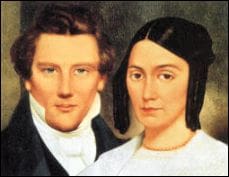
 This week The Church of Jesus Christ of Latter-day Saints released its long-awaited series of essays on polygamy in Kirtland/Nauvoo, Utah and post-manifesto polygamy, igniting a firestorm of discussion online.
In this episode, we bring together an all-star cast of Mormon Stories favorites to discuss the Kirtland/Nauvoo essay:
- Lindsay Hansen Park, who in the middle of an amazing and incredibly exhaustive project for Feminist Mormon Housewives in the Year of Polygamy podcast series.
- John Hamer, a well-known expert on Kirtland- and Nauvoo-period Mormonism, and a member of the Community of Christ.
- J. Nelson-Seawright, a political science professor at Northwestern University, frequent blogger and commenter on Mormonism and a favorite guest of Mormon Stories.
Episode Transcript
Host: John Dehlin · Guests: J. Nelson-Seawright, John Hamer, Lindsay Hansen Park
This transcript is machine-generated and lightly edited for readability. The audio is authoritative. Please excuse occasional errors in names and spelling.
Introduction and Welcome to Guests
John Dehlin [00:00:00] Mormon Stories is a production of the Open Stories foundation and relies solely upon the support of people like you, its listeners to help keep the podcast alive or to become a member of the community. Please become a monthly subscriber by visiting MormonStories.org and clicking on the Donate button on the right side of the page under Support. All contributions to Mormon Stories are completely tax deductible and go towards producing the podcast and building communities and programs of support for Mormons like you. Thanks for your support.
J. Nelson-Seawright [00:00:36] The kindly light amid encircling gloom
John Hamer [00:00:43] Lead
J. Nelson-Seawright [00:00:43] thou me on the night is dark and I am far from home.
John Dehlin [00:00:55] Hello and welcome to a special edition of Mormon Stories Podcast. I'm your host, John Dehlin. It is October 23rd and I am gathered with an all star panel of awesome friends and cool people within Mormonism. We are here to discuss yesterday's release of several essays by the Church of Jesus Christ of Latter Day Saints. Yesterday, the date was October 22, 2014 and they released upon the world three super important essays that were long awaited about plural marriage. In my count, that makes four total essays on plural marriage. And they sort of go as follows. There's an umbrella essay called Plural Marriage in the Church of Jesus Christ of Latter Day Saints which is kind of like an overview. And then there are three kind of sub essays. One is on plural marriage in Kirtland and Nauvoo. One is on plural marriage and families in early Utah, which I think has been around for a bit. And then it'd be nice if these essays had dates actually. But the final one that they released also yesterday was called the Manifesto and the End of Plural Marriage, which talks about post manifesto polygamy. And so we're here to talk about it today with three awesome people. We have ladies first, Lindsay Hansen Parker, who is a big wig at Sunstone Sunstone Education foundation these days. She also is the host of Feminist Mormon Housewives podcast and she's been getting incredibly positive buzz this year for a series she's doing on FMH podcast called A Year of Polygamy I believe it is. But she's basically going through and talking about each one of Joseph's Joseph Smith's plural wives in detail. So Lindsay Hanson park, welcome back to Mormon Stories.
Lindsay Hansen Park [00:03:03] Thank you. It's great to be back.
John Dehlin [00:03:06] And if you haven't heard Lindsay's interview on Mormon Stories about her experiences with eating disorders and perfectionism, it is a must listen by all accounts. So again, Lindsay, we're honored to have you back.
Lindsay Hansen Park [00:03:20] That is right, you should listen to me as much as possible.
John Dehlin [00:03:25] And by the way, you're welcome to cross post this on your podcast if you wish. You're totally welcome.
Lindsay Hansen Park [00:03:30] It would make a good addition to our series.
John Dehlin [00:03:33] Awesome. So also welcome FMH podcast listeners if you end up listening. Also, we have with us today John Hamer. John Hamer has been a friend of mine for, I don't know, nine, maybe 10 years. He's a former president or co president of the John Whitmer Historical Association. I believe he also was part of at least a contractor for the Joseph Smith Papers Project. He has a master's in history that specializes I think, in cartography and mapmaking from the University of Michigan. I'm just pulling this out of my brain here. And I think he created maps for the Joseph Parapish Project. And, and he's just sort of well regarded as one of the most knowledgeable, thoughtful, insightful people in Mormonism. And he's been on Mormon Stories several times about his journey out of Mormonism, his experiences as a gay post Mormon and Mormon, and his conversion to the community of Christ where he serves as one of the leaders of the Toronto Community of Christ congregation. Now, correct me where I got that wrong. John Hamer.
John Hamer [00:04:43] That sounds pretty good. Thanks so much. Great to be back.
John Dehlin [00:04:45] All right, great to have you. And then finally we have back a longtime participant in Mormon Stories, Mormon Matters, in one way or another. Jay Nelson Seawright is a professor of political science at Northwestern University. He and his wonderful wife Taryn have been on Mormon Stories several times. Originally, it's one of the first, I don't know, 30 or so episodes where they talked about their journey out and back into Mormonism. And then in the past year, they reappeared on Mormon Stories to talk about leaving the church after trying to make it work for a second time. Jason also appeared along with John Hamer in some of the early editions of Mormon Matters podcast, where I used to do kind of a panel discussion back before Dan Witherspoon took it over. And Jay Nelson Seawright, you're brilliant and it's an honor to have you back on Mormon Stories.
J. Nelson-Seawright [00:05:36] Well, thanks, John.
Overview of the LDS Polygamy Essays
John Dehlin [00:05:38] All right, so let's dig into the essays. And I guess I want to begin by offering anyone a chance to discuss just the hierarchy of essays and sort of the church's release of them and anything they want to say just about the release and the architecture of the essays themselves. Now, Jason, did you want to start with that?
J. Nelson-Seawright [00:06:01] Well, so I mean, it's interesting that first of all, the way they've set these up have to kind of know what you're looking for or you won't find anything. Which, for a major release of what must be a great deal of work by an organization like the church, is pretty unusual, right? I mean, with this, the film they put in theaters and we get 50 bazillion updates and emails through wards and whatever, this piece of text, which reflects almost certainly just as much work, shows up and then we find out about it for ourselves. That's always really interesting with these essays. But the other thing that's really interesting.
John Dehlin [00:06:37] So you're saying that there's no marketing involved in really advertising them, is that what you mean?
J. Nelson-Seawright [00:06:41] No, that's right. They kind of appear. Someone tells someone something, there's news, and it's all viral at most, but usually
John Dehlin [00:06:48] a Deseret article follows, right?
J. Nelson-Seawright [00:06:50] Yeah, sure. Peggy Fletcher Stack kind of always makes sure there's some news coverage. Right. But nobody seems kind of officially excited about discussing these, which is interesting to me. It seems like a chore that needs. Yes, exactly. A chore that needs to be done, but not a project they're enthusiastic about.
John Dehlin [00:07:10] And I think that's just the strategy, that they don't want to infect people with disturbing things. They want people to access these essays as needed, but not unnecessarily disrupt other people. Don't you think that's what it's about?
J. Nelson-Seawright [00:07:23] Well, I think that's true and I think we even see that in the architecture of this collection of essays itself. As you mentioned, there's this umbrella essay that is the first thing you see. And the other things you can only find linked through the umbrella essay. When I looked at it this afternoon, there was no direct link to the sub essays. So the umbrella essay is very short and sweet. I mean, it reads almost like the traditional story of polygamy that we've heard a million times before. And all the scary details are hidden off in the find out more at this link pages, so. So there's an opportunity for people to self select out, right? If they don't know anything and they find, oh, it's just more boring Mormon history, they can quit before they get to the stuff that would not be boring for them at all.
Lindsay Hansen Park [00:08:11] Well, I have something to say about that. I agree with that in part. But I also think that it's part of something larger. Just as someone who's gone through this history and it's taken me a year. I mean, it took us 52 weeks to get to through Nauvoo. Right. And that we were being super reductive and we were, you know, plowing through this as fast as we could. I think that, honestly, this is as general as most people are going to know, and most people want to know. So I don't think that it's necessarily something that they expect people just to find if they're looking for crisis. I think that this is, in part, what a lot of what I would expect leaders to know about polygamy. And I mean, I don't expect the quorum of the 12 to be combing through church history books all day.
J. Nelson-Seawright [00:09:00] No, you're absolutely right. I mean, the many hundreds of thousands of pages of primary sources and scholarly works on this, nobody who's not an expert needs to read it. All right. But at the same time, it's interesting that all of the big, controversial revelations are hidden in something you need to click twice to get to. And I guess that that's the point I'm trying to make.
John Dehlin [00:09:24] Yeah. Okay. And, Lindsey, I guess you make a fair point that people are coming to bishops and stake presidents, I think, every week now, wanting to ask some questions. And you're saying that there's an ecclesiastical intent with these essays to become sort of the primer, the polygamy primer, for the priesthood leaders on the ground who have to deal with these issues.
Lindsay Hansen Park [00:09:49] Yeah, I think it's that. And I also think, you know, for this essay to even come out, I guess from my perspective, this is the culmination of. Culmination maybe is the wrong word of so many amazing, amazing historians that have. That have found out this work. And I don't really see that acknowledged. I don't know how that could be acknowledged. But so for me, I don't know that nefarious. I mean, not that we're saying that it is nefarious, but I think that the Church is doing the best they can with what they have to work with. And I think it's super interesting that they're building on the backs of historians that they once rejected. So there's this weird, you know, paradox in them publishing it to begin with.
John Dehlin [00:10:37] Totally. I mean, I. We'll talk about. When we talk about the Post manifesto polygamy essay in a future episode. Someone's already made the comment that they're now releasing information that pretty much apparently got Michael Quinn excommunicated. Right?
Lindsay Hansen Park [00:10:53] Yeah. And so I don't know if I'm articulating this right, but I just think, like, this is the story. They're telling someone else's story, even though it's their own story. I don't know if I'm articulating that. Right. So, yeah, it's not the research that lot of them have done. Certainly there are great church historians like, you know, Leonard Arrington and Andrew Jensen and many others that have done some of this work. But this is this is not just their story that they're telling, and I find that interesting. And so I think that's part of it. I don't think the church has complete ownership over this story anymore.
John Dehlin [00:11:26] Yeah. I think it's worth mentioning that in the plural marriage in Kirtland and Nauvoo essay, at the very, very bottom, the very last sentence says, the church acknowledges the contribution of scholars to the historical content presented in this article. Their work is used with permission. So I think that's a nod to what you're saying, right, Lindsay?
Lindsay Hansen Park [00:11:46] Yeah, Yeah. I mean, I think it's a recognition, but I think this is not, I mean, the things that I've seen the church put out in the past, it's like, look how great we are. We're, you know, we're the church and God, the kingdom is coming together. And there's a certain amount of quiet shame, I think, that's coming out with these articles that I think is unnecessary. But I think that the shame for me that I'm perceiving in the church is that they weren't the ones leading the way on this.
John Dehlin [00:12:13] Right. John Hamer, you want to jump in at this point? Any, anything on what we've said so far or on the umbrella essay?
John Hamer [00:12:20] Yeah. Well, so for me, since I'm, I guess the question I guess I had was is this being used as a resource for. On the front end, you were saying, like on the front end battle lines or whatever for the bishops and branch presidents. So are they getting notifications that these resources exist in case somebody's coming to them with questions, or does it just appear and maybe they get it and maybe they don't, and maybe a bishop has heard that this exists and maybe he hasn't.
John Dehlin [00:12:48] I mean, there's all I think there's always that in the church. There's a lot of, you know, miscommunication or lack of communication or disorganization. I mean, I, I was so stunned when I met with my stake president a month or two ago to find out he had never heard of the Mormons and Gays website. And similarly, I've heard other stake presidents with the same type of thing. And so it's absolutely possible that there are stake presidents and bishops who still don't even know the essays exist. Having said that, there is a close friend of mine who was recently called in to a stake president where the stake president had never heard of, actually told him that he read a letter over the pulpit throughout all the stakes notifying the members that these essays existed. So I think the church is trying to let both stake presidents, bishops and members know that there are essays. They're just making it difficult, I think, for people to find it. Have you guys heard something similar about a letter being written over the pulpits?
J. Nelson-Seawright [00:13:51] There are definitely units where that hasn't happened. Yeah, I know for sure, sort of from some of my friends who are still church leaders. Still I say who are church leaders that not all of them have received any kind of notice or anything.
John Dehlin [00:14:06] So it's a little bit scattered.
J. Nelson-Seawright [00:14:07] Yeah, they probably. My guess is that they're sending it to the stakes where they know there's problems. But the fact is that there are problems in every stake in the church and you know, they're not getting it everywhere.
John Dehlin [00:14:20] Yeah.
Church Leadership and the Purpose of the Essays
Lindsay Hansen Park [00:14:20] Well, I have a question. I wonder, I mean, in the context you guys are talking about this, what is it about this that you think is going to help from a leadership perspective?
J. Nelson-Seawright [00:14:31] Well, I think it would be helpful if when someone walks into your office and says I'm losing my faith because Joseph Smith married all these other men's wives, that you've ever heard of that before. I mean, I think that that's the level at which this would be helpful. Is my experience during my period of crisis of faith within the church was that there was never a leader I could approach who'd ever even heard of anything I was worrying about, let alone had a good answer. So whether there are good answers in here, at least the fact that church leaders could read this and say, yes, I've heard of this polyandry thing, you're not making it up or being tricked by anti Mormons. That is by itself something that would be huge and positive.
John Dehlin [00:15:16] Yeah. With my friend's interaction with the stake president just recently he asked the stake president was giving him a hard time about some stuff and basically he asked the stake president if he knew that Joseph Smith had used a peepstone and a hat and the stake president had never heard of that before, ever. And this was last week, 2014, October.
J. Nelson-Seawright [00:15:36] So I guess that's your answer about the essays, John, because the essay's been out for quite a while.
Lindsay Hansen Park [00:15:42] Utility. So like. So I agree with you actually, because this. I had a similar experience myself, but I'm just trying to play this scenario out. So you go into your, the church office, you know, your bishop's office, and you say, I'm really struggling with Fanny Alger. And your bishop goes, who's that? And so you say, let me pull it up on my phone. And you pull it up on LDS.org I mean, what, what is the.
J. Nelson-Seawright [00:16:05] No, no, I agree. I mean, I argument. My hope would be that the, I mean ideally, I imagine the people who prepared these would think that, well, the bishops and stake presidents are going to read this and so you could go in and do the Fanny Alger thing and maybe they wouldn't recognize the name, but you give them context and they'd say, oh yeah, yeah, yeah, I remember about that. And then they might look it up and say to you, oh, this was a plural marriage.
Lindsay Hansen Park [00:16:28] But as far as we're aware, there's no directive instructing these leaders to read this. Right.
John Dehlin [00:16:32] I don't think they want to do that because think of all the leaders that could then be tripped into a crisis of faith. So I think, I think they want it to be available if the leaders need it, but they don't want to do church wide training on these problems. Right.
J. Nelson-Seawright [00:16:46] But I don't think that's going to work.
Lindsay Hansen Park [00:16:48] Anything that is shock factor for the leaders if they're finding out the first time in their office and someone googles it on their smartphone. That's the problem with this reasoning.
J. Nelson-Seawright [00:17:00] For me, this is absolutely a problem. I had an experience of talking with a stake president at one point and he asked me what some of the things I found challenging in the faith were. And I told him some things and he said, well, none of those are true. Right. And you know, my answer is, well, I think they're true or I wouldn't be worried about them. But he said, well, show me the sources that you've got. So I sent him, you know, primary sources and references to scholars and whatever and he got back to me and said, I need to pray about this. We can't talk about this for a while, I'm sorry. So I mean, that may not be a major crisis of faith, but that's clearly a crisis of faith. And, and this happens whether people get the information from lds.org or the Journal of Discourses or whatever.
John Hamer [00:17:47] Well, and actually as we're looking into this one, I was realizing that the Wikipedia article on this topic is starting to get pretty reasonable. In other words, so at a certain point all of these resources are so everywhere, ubiquitous that it's hard to not have any answer. So if your answer is apparently, famously before in the manual on Brigham Young, it simply talks about Brigham Young and his wife. If that's more or less your answer. The argument from silence, you're going to. At a certain point, you have to have something. Right?
J. Nelson-Seawright [00:18:20] Well, and the answer in the Gospel doctrine manual is usually a specific instruction. Do not discuss polygamy. So, you know, not just an argument of silence, but an argument to impose silence. This is a topic that historically the Church has simply preferred not to talk about at all.
John Dehlin [00:18:40] My guess is that this is baby steps towards this ultimately being introduced as a topic in Sunday school. What do you guys think?
Lindsay Hansen Park [00:18:47] No, no, I think we're talking too micro. I think for me, this could just be me filtering through my own lens. But had this been available a couple years ago when I was going through this and I would have known that the Church was validating it, I wouldn't have felt like the Church was trying to hide something. So to me, I don't think that they're necessarily caring if leaders get this or not. They're trying to say, look, we're not hiding anything. It's been here all along.
John Dehlin [00:19:16] So plausible deniability.
Lindsay Hansen Park [00:19:19] Yeah. I mean, I think it's a move towards openness. I definitely see these essays as a positive step.
John Hamer [00:19:25] But, yeah, it could be. That's a good point. Like answering this charge, which I've heard a lot of times people think, oh, I was lied to, or no one told me about this thing. Therefore, because I hadn't been told about it, I was being deceived. And so by having this. I don't know if you. I'm not saying, in other words, framing it more positively than plausible deniability. In other words, that they actually. It does exist out here so that people can point to it and say, no, it was there.
J. Nelson-Seawright [00:19:53] John, I want to take.
Lindsay Hansen Park [00:19:55] Sorry. There's an element of victim blaming. I remember, you know, being my. I was like, 20, 25 when I found out Joseph Smith had other wives. And it was really difficult for me. And I've talked to other, you know, Mormon scholars, and they're like, really? You never knew that? And I felt such shame for that, as if, like, there was something deficient in me because I didn't know that. And so I see this as potentially having that effect, saying, we haven't been hiding anything. How come you haven't been reading, you know, your history? How come you haven't been looking on the site?
J. Nelson-Seawright [00:20:24] No. So, I mean, I want to take John's. They didn't tell me, so I was lied to. Point. I was talking last night with a friend of mine who is saying that in her 45 years as a Mormon, she's read hundreds of books on church history published by the church and church authors and Deseret book. So the idea that she's not looking is false. But there was all this information that was simply and entirely absent and sometimes flatly contradicted. So the fact of the matter is she was lied to partly by omission, partly by commission. And this does help correct that.
John Dehlin [00:21:01] Yeah. And you know, the certainly the findings from our why why Mormons question study of a couple Years back of 3,000, you know, non believing Mormons was that the feeling of being betrayed or lied to was much more significant than any individual doctrine or historical nugget. So that would. Lindsay, I think that would totally make sense if that was really a primary driver of what's going on.
Lindsay Hansen Park [00:21:27] And I just want to point out, because I too have felt this. So I'm not trying to diminish or dismiss anyone's sort of feelings of betrayal because believe me, if you listen to my podcast, I cry about this all the time, literally. But I do think that there is not something it's not out of like this traditional dark evil dishonesty that the church hasn't been talking about this. If you know anything about the history of polygamy, there is such institutional fear and shame that has, you know, kind of developed into cultural fear and shame and almost biological fear and shame over this topic, that the church needed to be secretive about this for so long and then they had to outright deny it for so long. And I feel like they. A culture has developed around that. And so we're dealing with the remnants. So even though we feel betrayed and a lot of us didn't know this stuff, it wasn't necessarily someone saying, this is too scary. I'm not going to tell you now. We do know instances of like, you know, Mike Quinn and Packer, where the famous, you know, some things that aren't true aren't useful. However, I do think that, you know, that even the leadership is dealing with those remnants. We do not put this stuff out there for the public.
John Dehlin [00:22:45] Right.
Lindsay Hansen Park [00:22:46] Does that make sense?
John Dehlin [00:22:47] Totally.
J. Nelson-Seawright [00:22:47] No, absolutely. I mean, there are all kinds of ways this comes up. I mean, one of the reasons that the church has hidden the idea that Brigham Young taught the Adam God doctrine for so long is that they're worried that acknowledging that Brigham taught that will cause people to become polygamists. This is a Very live and pressing concern for the church. And so then it takes the other live and perhaps even more pressing, pressing concern of thousands of people leaving because of finding out this information to counterbalance that, I guess.
John Dehlin [00:23:17] Yeah. Okay, well, let me, let me jump to kind of my first question now just to give listeners an understanding. We're not going to be covering all the essays in this episode. We're only going to be covering, you know, now that we've talked about an overarching frame. We're only be talking about the Navu and, and the Kirtland and Nauvoo essay, which is the first one now. But with that, I want to start with an overall question that I'll throw to John Hamer first. To what extent do we give, you know, kudos to the church for this initiative or not? What's your take, John? And then we'll do Lindsay then Jason
Grading the Joseph Smith Polygamy Essay
John Hamer [00:23:57] Well, I think that, like I say in terms of this being over and above this, like where they're at with the manual, where they're just simply omitting this entire vast thing, I think that that's a little crazy. The old policy. So having gotten to a point where I think Lindsey was making this point that the new Mormon history has been happening now, it's not new anymore. It's been happening since whatever the 40s and 50s. And so all of this information has been around and it's there, it has to be dealt with. But now it's been able to come to a point where they're able to write essays that they're able to use the, I'll say they're able to use the scholarships that's there, the historical information that is there, but it's able to be maneuvered or massaged into a way where they can have still open the best possible reading imaginable within that framework of what the evidence is. And so in some ways, I think there's some kudos to it. But I think that for myself, we're still having the overarching problem of writing the essays with the goal of doing everything possible to keep Joseph Smith blameless and as perfect as possible, which I think ends up by, by doing that. I think it ends up having this leader focus or this focus or thinking that leaders are infallible focus, which I'm. That's not part of my belief system, but that's why I'm not in that church.
John Dehlin [00:25:38] And some say that's one of the biggest problems with contemporary Mormonism is just leader worship. And that if we want to progress that's one of the first things we have to get rid of. And it's something that the church explicitly, in some forums, even through its publishing of the Givens Crucible of Doubt book, they're trying, I think, to move away from in a gentle way. But for you, John Hamer, the essays still perpetuate that a bit.
John Hamer [00:26:01] Right. So the difference between where this would be at and where the community of Christ is at in its looking back at this time period in history is, on the one hand, communion of Christ has pulled back from saying whether or not whatever happened in the history that's not relevant to where we are today. And so not being so fully invested in the history on that part, but looking at it and saying letting the chips fall where they lie. So the historian of the Community of Christ Church, our version of Leonard Arrington or Elder Snow, has said that what Joseph's doing here in Nauvoo with engaging in these plural marriages is a abuse of his priesthood authority. So, anyway, so that's not the most positive spin imaginable. In other words, it's one where we're looking at it and saying, if that kind of thing is happening, you know, this is. This is what our. Or rather, given that it is happening, this is our conclusion from it.
John Dehlin [00:27:01] Right. All right, Lindsay, your reactions overall to the essays. Kudos. No kudos. Or medium. Kudos.
Lindsay Hansen Park [00:27:07] Oh, gosh. Well, that brings up an interesting point, because we're talking about. You said the biggest. Some say the biggest problem with the church is leader worship. And I would actually say, in my mind, the biggest problem with the church is sort of none of us know how to think anymore. I mean, we've relied on prophets and people to tell us what to think for so long that we just don't know how to think as a people. And so everything is really binary. And I think that's the biggest problem with the church. I agree with John completely that this. This is a very favorable view of Joseph Smith. Of course, it's an essay, and I do think it made enormous progress in some areas. I was shocked to see them talk about Helen Marr. I was delighted to see that they acknowledged that Joseph had sexual relations with some women. Because one of my biggest drums that I will beat that makes me super angry is when people try to deny that Joseph had sex with some of these women. These women in Victorian America went on the stand and talked about their sex life. Like, I don't think we can understand quite what a risky thing that was and to erase their narratives because we Want to privilege the reputation of one man is a huge problem for me. So I was really, I was really happy to see that. However, I would be shocked if I found out a woman wrote this essay. I think it's clear that this came through the male lens of history. Many of my most beloved heroes of history are males. I don't want to criticize men historians at all, but for women, this is such a deeply personal thing. Polygamy is often written through the lens of a man. And this essay is clearly, clearly through that lens. And so I find that to be a problem. And of course it privileges Joseph's reputation over all else. And I have a problem with that.
John Dehlin [00:29:08] Right. All right, Jason.
J. Nelson-Seawright [00:29:10] Yeah, I mean, so I want to, on the kudos or no kudos, I'm going to treat this. I was grading this afternoon, grading undergraduate papers. So I'm going to give grades here and I'm going to give grades two different ways. So I'm going to do, and I do this sometimes with students as well. I'm going to give a progress grade first. So if we take this essay and compare it to the contents of lds.org on the same material a week ago, this is an A triple plus.
John Dehlin [00:29:35] Nice.
J. Nelson-Seawright [00:29:36] The vast improvement in terms of what's actually available to church members through the official church, it really deserves a lot of credit. Now if I take away the progress frame and say, all right, does this meet expectations? This is about a D. The problem here is that, yeah, it's close to passing, arguably passing, but it's not, if you're looking for a straightforward historical treatment that tries to understand as best we can from the records we have what people who were doing these things thought at the time, this is very far from that. There's a great deal of anachronism, a great deal of projecting present day agendas back onto the past, a great deal of attention to solving current political problems. I mean, much of this essay reads like a way of trying to save the church's current politics about marriage equality from the fact that the church has had wildly dissimilar marriage practices over time, that those marriage practices have evolved in ways that don't follow the clear, rational revelation pattern that the church claims now as the basis for its politics. And this is a heavy handed theme throughout. I mean, this is the first sentence of the essay isn't even about polygamy or history. It's about marriage equality. And this is the driving frame in my reading for the entire essay and using that as a way of talking about Joseph Smith and Emma and these other women is a very strange and distorting frame, in my opinion. That causes a lot of other problems, but that's an overriding choice by the writers that I think really hampers the ability of this text to do what it should be doing.
John Dehlin [00:31:30] You're talking about the opening sentence which says, latter Day Saints believe that the marriage of one man and one woman is the Lord's standing law of marriage.
J. Nelson-Seawright [00:31:40] Yeah. If you read that sentence to Joseph Smith in the Nauvoo period, he would call you a heretic. I mean, this is absolutely not the case in the view of Joseph Smith and much less Brigham Young and others. Brigham Young, who we'll talk later on, I guess, would go on to say that polygamy is always and everywhere preferred. Right. So the viewpoint that's being reflected here is not one of building an empathetic understanding of a different time, to see the value system that made the decisions of that time make sense, and also to understand the pain and suffering that it produced. Instead, this is an agenda of saying, we have a series of facts that we want to deal with about the past, but we really want to solve them for problems today. And that's such an unfortunate way to set up history that even before we get into the details, the framework is really counterproductive and frustrating.
John Dehlin [00:32:38] Lindsay, did you want to say something to that?
Lindsay Hansen Park [00:32:39] Yeah, sorry, I didn't mean to interrupt. Yeah, I agree completely with what you're saying because they use modern language. And one thing that really struck me is I feel like this essay says it reveals a lot about not just the church's view of sexuality, but this whole Western view of sexuality. This essay is written for American Mormons. This. This is not written for anyone else in the world. There's just such this framing. This. This really, like, frontier Westernized, patriarchal framing that I don't think would translate into a lot of other cultures.
John Dehlin [00:33:18] Yeah, that's interesting. Interesting. Okay, so a D plus for. For Jason.
J. Nelson-Seawright [00:33:26] Well, I mean, on one grading system, I do want to recognize the progress. Right.
John Hamer [00:33:30] This is.
J. Nelson-Seawright [00:33:31] This is. This is a student who's made great progress, and if they continue along the same trajectory, there is hope.
John Dehlin [00:33:37] All right. All right. Okay. So, yeah, so. And that was one of the questions I had. I mean, the Lord's standard, like. And this is just repeating what you just said. But I just. If you read the comments made in the 19th century about how polygamy was required for exaltation by multiple prophets, even if you read doctrine and Covenants 32, which is still standing. Right. It's hard to reconcile that information with that first sentence. Right. For me, a little bit.
J. Nelson-Seawright [00:34:16] I agree completely. I agree completely. I mean, the essays finesse doctrine and covenants 32, and say that they simultaneously, simultaneously reveal plural marriage and eternal marriage. But if you read the text, it's not so much simultaneous as synonymous. So there isn't something where the Lord says in other news about marriage. The phrase the new and everlasting covenant of marriage is used as a descriptor, and there's no differentiation. So the idea that this is something that isn't an eternal and lasting and higher law is something that I think fits our worldview, but would not have fit the worldview of the people at the time. It's an anachronism. Right. And that's okay. I mean, it's fine that we think something different than they thought. That's good in a lot of ways. But if we want to understand how people did what they did at the time, understanding what they were thinking is always a first step.
John Dehlin [00:35:20] Yeah, right.
John Hamer [00:35:22] And the essay here is completely reframing that. So the Lord commanded the adoption and later the cessation of plural marriage by revelation. Right. Is the way that's framed here, as opposed to the Lord gave a new and everlasting covenant, which was suspended.
J. Nelson-Seawright [00:35:41] Which was suspended in a press release as well, by the way.
John Hamer [00:35:44] Yeah, right. So that's a very different. That's very different from the time how it had been framed and how it's framed here in this essay, which was adopted and then it was ceased. And those are exactly the same.
J. Nelson-Seawright [00:35:55] I want to sort of emphasize that this idea that plural marriage was over and was an anomaly and was never to return is not an idea I ever heard as a child in the church. The Mormonism I was raised in was a Mormonism where this was held in suspension until the world was ready for it, along with other things like the United Order. And so I had a great many nightmares and stress moments, worrying that at some point I would be asked to live the Principle when it was restored.
John Dehlin [00:36:25] Right, right.
Lindsay Hansen Park [00:36:26] You and me both, pal.
John Dehlin [00:36:28] Yeah, yeah. I mean, yeah, it's confusing, and it's sort of another example of kind of the graveyard of these really epic revelations that Joseph Smith received. Whether it's gathering to Zion or dynastic ceilings or, you know, eternal, you know, plural marriage that now are, you know, even the fact that we're Latter Day Saints anticipating an imminent return of Christ, there's kind of a boneyard for epic. You know, Joseph Smith Revelations. And it's clear that this is now kind of being heaped in the boneyard. John Hamer, did you have a final thought on this before we move on?
The Manifesto and Revelation on Plural Marriage
John Hamer [00:37:08] No, just like you're saying. So that essay leads to. So the manifesto, which led to the end of plural marriage, so you can know it's not suspended. So you guys are clear?
J. Nelson-Seawright [00:37:22] Sure, Absolutely. I wish someone had let us know that somewhere in the 120 years between the manifesto and today.
John Hamer [00:37:32] Right.
Lindsay Hansen Park [00:37:34] I don't know that we're going to get that either. I mean, I feel like the church left it open in some ways that kind of are disconcerting to it, especially a lot of Mormon women. But Julie Smith talks about this in her blog on Times and Seasons. She talked about. I don't know if you guys saw this, but she pointed out the really interesting thing about how revelation was talked about. Did you guys catch that?
John Dehlin [00:37:59] No, tell us.
Lindsay Hansen Park [00:38:00] Yeah, I mean, they call this, like this inspired. They call the manifesto sort of inspired, but they break it down as if it's not something like Monson doesn't go to God and God tells him something and then he changes it. It's like this process. It's this changing process, and it's ongoing and the doors are always open, which actually fits into Mormon canon quite well. However, that's not how Joseph saw things, in my opinion. That's not how many church members still continue to see things. So I think that's a really interesting development in this essay is the way that we talk about revelation, when, in
J. Nelson-Seawright [00:38:37] fact, the treatment of Joseph in this particular regard is, I'm going to say, outright schizophrenic. I mean, in the pop culture sense, right? There's two completely contradictory visions that we equivocate from one to the other over and over again. So there's this idea of revelation as a human and gradual process in which a lot of errors are made. And then there's the idea of revelation as a process in which angels with flaming swords show up and say words to you that are seared into your mind and you can recite them 20 years later and get them exactly right. And both of them are going on.
John Dehlin [00:39:15] Yeah. And this leads to kind of the next question that I had. There was a phrase in the essay that said, the Lord did not give exact instruction on how to obey the commandment. And I'm thinking to myself, myself, you know, John Hamer, you could probably highlight this. How many incredibly detailed and mundane and sort of tedious descriptions are offered in the doctrine and Covenants where you're just like wondering why this is even included in Scripture. Because it's so detailed. Like the word of wisdom is like saying it's listing, you know, vegetables and animals and meat and. And coffee and war hot drinks and beverages. I mean, it's going into all this detail yet, like one of the most important defining commandments. It's kind of like, yeah, well, the Lord didn't give a lot of instruction on how to do it. And I'm like, well, where was the Lord in this? John Hamer?
John Hamer [00:40:15] Except for when I read that. And what kind of stood out to me in my head was, well, wait a second. DNC132 LDS. DNC132 does have a lot of kind of crazy detailed instructions that are kind of embarrassing. Right. And so Amanda espoused version. And then if he espouses 10 versions, and then he asked his wife, his first wife, and if she give her consent, and if she give her not her consent, he's relieved from the law of Sarah, that kind of thing. And so. And so I think that in the course of all that, there is a little bit of a detailed. I don't know.
John Dehlin [00:40:49] Yeah, you're right. That's a really good point.
J. Nelson-Seawright [00:40:51] A wonderful thing about that is that literally every instruction that exists in that section, Joseph Smith violated.
John Dehlin [00:40:57] That's right.
J. Nelson-Seawright [00:40:58] Literally every one.
John Dehlin [00:40:59] Yeah.
John Hamer [00:41:01] Although the essay does try to weave him out of that. Again, at the end of this, there is a place where it's Emma's fault.
John Dehlin [00:41:10] Emma's fault.
John Hamer [00:41:11] Yeah. Well, that's essentially. Yeah. So in other words, this essay, again, because people have made that charge that Jay just made, obviously. And so therefore the essay kind of says, well, presumably, given that Emma had screwed up, like you say, the husband would be exempt from the la Sarah, presumably the requirement the husband gain the consent of the first wife before marrying additional women. Sorry, I'm trying to read this in the essay. So Joseph was placed in an agonizing dilemma. He was forced to choose between the will of God and the will of his beloved Emma. He may have thought that Emma's rejection of. Of plural marriage exempted him from the law of Sarah. So anyway, so in other words, it's explaining to kind of needle through the haystack here of how we can say, well, no, he was not violating what dnc.
J. Nelson-Seawright [00:41:54] But that really goes beyond the historical record. I mean, as far as we know, Emma never even heard about this directly from Joseph until after he'd married some women, which blatantly violates the law Of Sarah.
John Dehlin [00:42:07] That's a good point.
J. Nelson-Seawright [00:42:08] Not to mention, you know, one of the excuses people have always made for polygamy is that it's a great way to take care of all the widows. And I want to point out that DNC132 says that it's for women who've never been married.
John Dehlin [00:42:20] Yeah. Virgins, right?
J. Nelson-Seawright [00:42:21] Yes. Women that don't belong to a man.
Lindsay Hansen Park [00:42:25] Can I really point out something that really, really bothered me? Actually, when they talk about Joseph and Emma in this context, they say, yeah, like it was really hard. She went back and forth on this. But we really can. I think their wording is. We don't know, like there's nothing known about how they really felt about it or something. I'll find the exact wording.
John Hamer [00:42:44] How she really felt about it.
Lindsay Hansen Park [00:42:45] How she really felt about it. And that makes me so mad. I'm like, there's not nothing. I mean, we don't have a lot of firsthand sources there that I'm aware of.
John Hamer [00:42:54] Here it is. She left no firsthand accounts, making it impossible to reconstruct her thoughts.
J. Nelson-Seawright [00:43:02] Well, in fact, she did leave first hand accounts in which she lied a lot.
John Dehlin [00:43:08] Well, that was someone else who interviewed her. Right.
J. Nelson-Seawright [00:43:12] No, I understand, but I mean, an interview is pretty firsthand. In her own words, we know what she thought and she lied. And that's okay. But, you know, this is.
John Hamer [00:43:22] Yeah, okay, but that's already a secondhand account. And so.
J. Nelson-Seawright [00:43:25] That's right.
John Hamer [00:43:26] They're trying to. In other words, they've set up this incredible standard here. Therefore, for Emma, it's impossible for us to know her thoughts because there's no
J. Nelson-Seawright [00:43:33] first hand accounts because we don't have any autographs of Emma.
John Hamer [00:43:36] We also have interviews from William McClellan who said that he interviewed Emma and she admitted she didn't lie about it or she did admit to it and was very much opposed to it.
J. Nelson-Seawright [00:43:48] Absolutely.
John Hamer [00:43:49] And we have William Law's recollection of the same. So we have a lot of second hand accounts of what Emma is saying. And so we can reconstruct her thoughts.
John Dehlin [00:43:57] Right, right.
J. Nelson-Seawright [00:43:58] But her thoughts come from the Nauvoo period. And as this essay makes clear, I mean, polygamy started possibly in Kirtland. We'll have to talk about that.
John Dehlin [00:44:07] Okay.
J. Nelson-Seawright [00:44:08] Y bit in Missouri. And then so.
The 1831 Revelation and Early Polygamy Origins
John Dehlin [00:44:11] So who wants to jump in and talk about the, quote, 1831 revelation? Because there's a lot of. Isn't there a lot of questions or controversy about that?
J. Nelson-Seawright [00:44:22] Well, I can.
John Hamer [00:44:23] Yeah. And I think it's complicated here in this essay. This is one of the parts of the essay that is especially complex because all the way through it they just talk about the revelation. So the revelation on plural marriage was not written written down until 1843, but its early verses suggest that in part it emerged from Joseph Smith's study of the old Testament in 1831. So in other words, there's an idea here that D and C132, although it's quite late and definitely composed after Joseph has been practicing plural marriages for a whole long time. And certainly if we're counting the earliest stuff as being plural marriages, which they are in this essay. So it's also definitely penned after gotten going big time in Nauvoo too. So the attempt here is to go back and find an earlier precedent revelation. And there is some precedent for it, but it's not spelled out what that is in this essay.
Lindsay Hansen Park [00:45:22] Well, and I want to point something out. In the essay, they talk about how we do have some sources that Joseph married these women, but many of these accounts are from years later and so could be unreliable. Right. There's that line which is funny to me, because this 1831 revelation that they're talking about, there's an aspect of it that has to do with W.W. phelps. And he writes it down years later, and he asserts that Joseph was thinking about polygamy in 1831 because he asked people to marry Lamanite women as wives. And so I love this idea that, like it's. It's actually, I hate this idea that we can. If women are saying it, you know, on the stand in temple lot cases, we don't know how reliable that is. But if some dude writes down something he remembers, Joseph says years later, we're good to go.
John Dehlin [00:46:12] Yeah, so no, we just got through talking about Emma. We can't understand what Emma thought because of these second and third hand sources. And yet we're comfortable citing an 1831 revelation that's like how many years after the fact. Right. I mean, it's a recollection.
Lindsay Hansen Park [00:46:27] The recollection, it's not even firsthand.
J. Nelson-Seawright [00:46:30] Yeah, well, it's not. It's not even. It's not even. Not just firsthand, but it's also heavily inferred. I mean, the firsthand recollection is this statement about marrying Lamanite wives during a mission, which would have been plural marriage. And then from that they're extrapolating that while he was reading the Bible and translating it, he got a chunk of what would later become DNC132, which no one in the sources actually says. So they're going from something that is in the sources, even though it's dubious and has all kinds of retrospect, to something that is well beyond what the sources allow.
John Hamer [00:47:04] W.W. phelps would have been remembering it from having lived through Nauvoo polygamy anyway.
J. Nelson-Seawright [00:47:10] Yes, exactly.
John Hamer [00:47:11] So he's already got that frame anyway. The one thing that they do have that is going for this thing, though, that makes you don't want to just throw away. What W.W. phelps is remembering is that we also have an antagonistic source that is closer to being contemporary, which is that Ezra Booth, who is a early Mormon who leaves the church after one of these trips west and he ends up writing a whole bunch of scathing letters to Ebert D. Howe, and it's published in Mormonism Unveiled, so the first major anti Mormon book. And so Ezra Booth also remembered that Joseph Smith has this idea of polygamy in terms of. But it's not the kind of later Nauvoo polygamy. It's this idea of kind of a concubinage where there are going to be. You're going to marry Native Americans, and that is how, through intermarriage, that is how Native American progeny will become white and delightsome. And so I think that part of the reason why, although this is kind of cited in it, it's incredibly important to get an 1831 revelation here so that Joseph Smith's actions between 1831 and 1843 aren't totally in violation of this principle. That revelation is causing this. On the other hand, they don't want to cite what this revelation is because the framework for this 1831 revelation is so racist.
John Dehlin [00:48:31] Right, right.
Lindsay Hansen Park [00:48:32] We want to colonize people through sex. That's a problem.
John Hamer [00:48:36] Yeah, absolutely.
J. Nelson-Seawright [00:48:37] Well, not only that, but, I mean, the concubine inch thing was also important. The framework that people would later call spiritual wifery seems to have been a part of this. I mean, there's some, you know, this is a common thing that we see in new religious movements. So you can point to a ton of other examples that develop in similar ways, where you start with a system where the leader and his associates get to pick pretty much anyone and that person will be their wife. And then it develops into complex forms of marriage with actual institutions and rules. But there seems to be something similar here as well, where the early system didn't necessarily have ceremonies, certainly didn't have this idea of ceilings that comes to be attached with it later.
John Dehlin [00:49:20] And the Sealing authority doesn't even show up, apparently until, what, 36.
J. Nelson-Seawright [00:49:25] So this is an interesting and complicated part of the Scriptures.
John Dehlin [00:49:27] Okay, wait, wait, wait. Before we get there, just real quick, it's worth noting, and I don't know that this was mentioned anywhere in the essays, that the 1835 version of our scriptures explicitly forbade plural marriage. True or not true, Correct?
John Hamer [00:49:42] Yes.
John Dehlin [00:49:42] And was that mentioned anywhere in these essays?
Lindsay Hansen Park [00:49:45] They did talk about the Book of Mormon condemning it, but did they talk
John Dehlin [00:49:49] about the Doctrine and Covenants or the Doctrine and Covenants explicitly forbidding it?
Lindsay Hansen Park [00:49:55] I mean, they kind of dance around it. They talk about the way that marriage rumors and how the church sort of viewed marriage. But no, they don't talk about. But to be fair, I mean, that's a really complicated story to tell. Maybe not, but for me, it feels like there's a timeline involved and, you know, the articles of marriage are left in the scriptures for a long, long time, and then they're taken out. And I feel like that's something that needs probably more context than this essay could provide.
John Dehlin [00:50:25] Sure. But I mean, it's just worth noting that it was explicitly against the laws of the Church to engage in plural marriage According to the 1835 version of
Lindsay Hansen Park [00:50:35] the Doctrine and Covenants, and according to a lot of the things that Joseph was saying. I mean, in many ways, John Hamer and I have actually talked about this on a podcast at fmh, but Emma Smith used the Relief Study as a platform to root out this evil, right?
J. Nelson-Seawright [00:50:52] Absolutely. Cheryl Bruno has some really interesting work that she's been doing on exactly this, on the different moments and conflicts in the transcript of the Relief Society that are inexplicable if you don't correlate them with the timeline of polygamy.
John Dehlin [00:51:08] Yeah. Okay, let's jump to 1836 and the sealing authority.
John Hamer [00:51:12] Jason, let me give you your quote that you were wanting John from the dnc, because this is actually still in community of Christ. Dnc.
John Dehlin [00:51:20] Right.
John Hamer [00:51:22] So this didn't he had to rub that in.
John Dehlin [00:51:23] Didn't he had to rub that in?
John Hamer [00:51:24] Well, except for we don't use it. It's been superseded, but it's still in there. Okay. So in as much as this church is of Christ has been reproached with the crime of fornication and polygamy, we declare that we believe that one man should have one wife and one woman, one husband, except in the case of death, when either is at liberty to marry again. And so that part of it there, though, is kind of interesting and telling. Because that's 1835. And so they're saying already that the Church of Christ, which is what the church was called or whatever at the time, has been reproached with the crime of fornication and polygamy. So it's definitely in the air and buzzing around if they feel that they have to have the need of actually publishing a condemnation of it. And I say that we've changed in community of Christ, even though this isn't our dnc, because obviously we have marriage equality now. So it doesn't have to be. One man should have one wife. You can have one man can have one husband.
John Dehlin [00:52:21] Yeah. And, you know, we could always. We're not going to go there, but Grant Palmer taught us, talks a lot about some of the sexual, you know, allegations made against Joseph Smith that happened in the early 1830s that have to be a part of some of this rumbling. Okay, and that was section 101, right, John Hamer.
John Hamer [00:52:39] It's not in ours. But anyway, all the numbers have changed.
John Dehlin [00:52:42] Okay, that's fine. Okay, Jason, let's. Let's go to authority, 1836.
Fanny Alger and Joseph Smith's First Plural Marriage
J. Nelson-Seawright [00:52:47] So, I mean, there's two things that we need to talk about in parallel. Right. Authority and. And the possible first wife, Fanny Alger. Right. So, I mean, we have the. Because the timing on these is interesting and controversial, and the essay just completely suppresses that. So the essay says that Joseph Smith acted on the angel's first command by marrying a plural wife, Fanny Alger, in Kirtland, Ohio, in the mid-1830s. So mid-1830s is nice. But then on April 3, 1836, Elijah appeared to Joseph and Oliver Cowdery in the Kirtland temple and restored the priesthood keys necessary to perform ordinances for the living and the dead, including sealing families together. This is a power that Joseph didn't understand is actually including sealing families until several years later. That's not. I mean, this is not something he discusses or puts into action until the 1840s. So there's some period of time where he apparently owns the keys but doesn't know what they unlock. But the interesting point here is with contemporary or Mormon understanding of polygamy, polygamy has to be a ceiling for eternal marriage. And so when we think about Fanny Alger as a possible wife of Joseph Smith, it becomes important to people to decide whether that relationship started before or after April 1836. If it started before then, Joseph didn't have the sealing keys. If it started after then, he did. And it could have been a legitimate plural marriage. And so this is a question that becomes interesting and complicated because the timing is very close one way or the other.
Lindsay Hansen Park [00:54:32] Fanny leaves, I think it's September 1836 is when she sort of flees over this controversy. And there are some that say, I think it's Martin Harris, as early as around 18, 1833, starts accusing Joseph of these improper proposals to this woman. It was kind of this not secret, secret in the community.
J. Nelson-Seawright [00:54:56] Right. So this is the first case that we have a really good record of. I mean, there are a few earlier ones that you can poke at and they're tantalizing bits and pieces of evidence, even going back into Palmyra days of other possible relationships. But this is the first one where we have, you know, frankly, an eyewitness in Oliver Cowdery.
John Dehlin [00:55:19] And it's worth mentioning that Oliver Cowdery was excommunicated for accusing Joseph of adultery. Right, right.
J. Nelson-Seawright [00:55:26] He said that he'd had an affair with Fanny Alger, which Joseph flatly denied and that was it.
John Dehlin [00:55:32] Yeah. And so the church's argument would be, number one, the understanding of sealing and plural marriage was evolving. And so it didn't reach maturity until the 1840s. And that Joseph just felt like he had to keep it secret and so he couldn't share it with Oliver. Right.
J. Nelson-Seawright [00:55:48] And then we also have some very, very late testimony, although Lindsay, you'll be happy to know that it's from a man so we can take it seriously, that discusses this as having been a full blown wedding and gotten the permission of the parents and so forth. But that comes very late in the process when there's an interest in depicting Justice Smith as having been thoroughly polygamous. Very. And so, you know, because the controversy with Community of Christ was. Or. Well, the RLDS church at that time was live. And so there were political reasons why Utah Mormons would want to remember things in that way.
Lindsay Hansen Park [00:56:22] And so, like from Fannie's perspective, Don Bradley's done some great work. The persistence of polygamy. You can read his great essay on this. You know, there's rumors that Fannie was possibly pregnant. I think Chauncey Webb talks about it, that had Fanny have been pregnant, it makes sense that maybe Joseph would have gone through some sort of ceremony to make this better. That's one other argument for it. But I also think this is another instance where we privileged the reputation of Joseph. Like we're trying. We're struck in all of these ways. And we say this account of Emma supposedly finding them and celestializing. Best word ever in the barn. I just feel like, again, we are fighting. Would it be so bad to say, yeah, you know, Joseph Smith messed up. Community of Christ has done it. They did it and they went through it. But we have to have him be this upstanding Victorian, perfectly like righteous man. We're injecting our sexual narratives, like these Western sexual narratives. It's really, really weird.
John Dehlin [00:57:32] Even though he was really open about saying that he was deeply flawed. Right.
J. Nelson-Seawright [00:57:36] Well, and not only that, but, I mean, there's more to it. I mean, this is worse than Victorian. We're projecting 21st century and late 20th century LDS standards backwards. For a contemporary Mormon, having an affair is one of the worst things ever and you're going to get excommunicated and be delivered over to the powers of Satan. And things for Mormons at this point in time, in Kirtland, having an affair was treated much less heavily. So we're using a moral standard and thinking about this. That would not have been the moral standard of the people at the time.
Lindsay Hansen Park [00:58:12] Yeah, there are cases of Joseph being like, oh, you got this woman pregnant. Okay, you know better, and you can come back.
J. Nelson-Seawright [00:58:20] Yeah. Or people having an affair and being excommunicated for three weeks and then being restored to the quorum of the 12th.
Lindsay Hansen Park [00:58:27] We love to communicate people for sex stuff all the time. We like our sex stuff in the church.
J. Nelson-Seawright [00:58:31] Exactly. And so it's incredibly important for 21st century reasons that Joseph not have had an affair when frankly, having an affair is a completely reasonable interpretation of the evidence we have here.
John Dehlin [00:58:43] Martin certainly didn't care, apparently. Right. I mean, or at least he allowed. Allowed, you know, he still believed in Joseph even after that.
J. Nelson-Seawright [00:58:54] We think that he probably Oliver Cowdery or. Because Oliver Cowdery is the one who is most entangled with the Fanny Alger relationship.
John Dehlin [00:59:02] Yeah. I'm just saying that we had mentioned that Martin Harris had been saying that some of this might have been going on in the early 1830s, and Martin stuck with them.
Lindsay Hansen Park [00:59:11] Several people were talking about, but this is probably the most unkind thing I'm going to say to listeners out there. If you find yourself trying to struggle to prove that Joseph didn't have sex with these women, first of all, that's odd. They were his wives. Right. So what's the problem? And second, like, that says way more about our messed up sexual like, narratives than I think it does about Joseph's. And maybe that's really unfair. But I feel, you know, I see this, I see Mormon scholars and they're usually men arguing over Joseph's sex life. Like constantly. And to me, that's less interesting than the actual marriage part, you know, explicit.
J. Nelson-Seawright [00:59:50] To me, we get this in the, in the most extreme and bizarre way later in this essay too. So that's something to look forward to.
John Dehlin [00:59:57] Okay, so I'll jump to the part where it mentions that Joseph briefly mentioned ceiling to parley. Is there anything interesting about that that's worth noting?
John Hamer [01:00:07] Well, again, because that's an example. By mentioning that they're trying to show that that idea that sealing exists before the 1843 writing down of DNC 132. Right. And so the. But. And they again, retrojecting here this idea that the sealing keys are what's happening in this Elijah vision in the Kirtland Temple. But actually what's happening that's not thought of at the time of that vision. That vision doesn't include anything like that. It's later, as those ideas of sealing and keys are evolving, it's re remembered back onto that vision.
John Dehlin [01:00:46] Okay.
Lindsay Hansen Park [01:00:47] And it's really interesting like when we talk about the law of adoption, because Cheryl Bruner, you're talking about that her and Brian Hells had this debate about the law of adoption. And I believe the council of 50 minutes is sort of addressing like if Joseph instituted the law of adoption or if Brigham did. But it's interesting because if, if we're talking about these ceilings and it's meant to connect people, then why would Joseph have to be sealed to Helen Marr and not Heber C. Kimball? You know, that doesn't make any sense to me.
J. Nelson-Seawright [01:01:15] No, right. I mean, people are not pawns for the purpose of creating relationships between other people. That's gross. That's the sort of thing that happens under feudalism and enslaved societies. That's not the sort of thing that we would imagine happening in a Zion society. Women are not tokens of exchange for creating relationships among men. And that's the apologetic here. And my good friend Jay Stapley has been writing about this for lo these many years. And I think it's a true interpretation, but morally it's GROSS.
John Dehlin [01:01:49] That's so 21st century view, Jay.
J. Nelson-Seawright [01:01:51] I know. No, that's fine.
John Hamer [01:01:53] Yeah, I was going to say, I mean, it's maybe 21st century gross, but it actually might be reasonable interpretation here, given the problematic situation with the whole temple theology. So in other words, why can't Heber just be sealed to Joseph? And why does it have to be Helen? Heber's going to have to have his own world. He's a person who's in A position to be exalted, since he's a man, whereas the women are only in a position to be connected to someone who's fully exalted, which is to say a
Lindsay Hansen Park [01:02:23] man into something dangerous there. John Hamer, you're talking about the Adam God theory, which the Church doesn't want to connect, which is this idea that Adam was God and that Eve was the mother of our world. And actually this theology makes a lot of sense compared to what we're talking about. You know, Brigham believed that Eve was the plural wife for our world, and every plural wife you had would be like the heavenly mother and the Eve of that world. This is the Adam God there that we want to be away from, but we can't because it's implicit in women as chattel, women as property. We see women as pawns throughout history. And of course, it evolves. And I still see remnants of it today in these sealing practices where men. It's super unequal that men can still be married to more than one woman.
John Dehlin [01:03:15] Yeah. Okay.
J. Nelson-Seawright [01:03:19] There's another piece to that really quickly too, though, which makes this even more complicated, which is we have these. These theological scraps of the idea that there's not only these relationships that are family, but also relationships of dependence within dispensations. So that Joseph stands at the head of every family in our dispensation. Right. This is another 19th century idea that we see clearest in the Utah period, but seems to trace back to Joseph. So the idea that ceilings could only happen among people who could. Couldn't be exalted misses something because everyone has to depend on Joseph to get the authority to be exalted somehow.
John Dehlin [01:03:57] Yeah. Yeah. Interesting. Okay. Someone mentioned an interesting numerical point that the essay mentions 29 men and 50 women. But for 29 men to have two wives minimum each, that requires at least 58 women. Anyone have a thought on that?
Lindsay Hansen Park [01:04:16] I actually have the numbers. It might take me a while to pull it up on my notes because my notes are like 400 pages long. Like, this is Carmen Hardy and Jessie Embry and lots of other historians have done a lot of research on these numbers. These numbers become important. So if you want, I can.
John Dehlin [01:04:36] No, it's okay. But you noticed that discrepancy, right?
Lindsay Hansen Park [01:04:39] Oh, for sure. And. But this is another tactic, the church, that I'm surprised that we're still going with, where we really try to minimize the percentage of people practicing polygamy. I'm not sure why we do that.
John Dehlin [01:04:53] Yeah. What does it do?
J. Nelson-Seawright [01:04:55] Well, in the Utah essay, they back away from that. But this is yet another case of them having multiple messages in tension with each other. Right?
John Dehlin [01:05:04] Yeah. Okay.
John Hamer [01:05:06] And they're kind of crazy because, like you say again, here we have these really specific numbers. There's 29, 50, and then later there's at least 196 and 521. And yet, for some reason, throughout this whole thing, we can't have any kind of number of how many wives Joseph Smith might have had. So in other words, it's 50 women in addition to Joseph and his wives. And so the question throughout all of this, it says very clearly we can't know about how many Joseph had because the records are scarce.
J. Nelson-Seawright [01:05:40] We have an enormous amount of research. Right. We may not know the number, but we have a nice lower bound.
John Hamer [01:05:47] You could say at least 33 or something like that.
J. Nelson-Seawright [01:05:49] At least 33 would be acceptable. Everyone agrees on about 33.
Lindsay Hansen Park [01:05:53] I believe it's Jesse Embry who has done a lot of this research, and I've got to find it in my notes. But they get pretty specific. I mean, they have come through census records and diaries and everything. And there are charts and graphs. I mean, this is like a science to some of these people. And so it's not like this number that we don't know a lot about. There's actually a lot of evidence for this kind of thing.
J. Nelson-Seawright [01:06:20] Well, I mean, there's a range that historians have where, I mean, it's between about 33 and 48. And exactly where you fall in that range depends on some controversial interpretive decisions. But that's not a huge range. And it's a lot more specific than approximately 50.
Carefully Worded Denials and Spiritual Wifery
John Dehlin [01:06:35] Right, right, right. Okay. So it talks a bit about kind of carefully worded denials. It talks about spiritual wifery. And it makes this statement that the statements emphasize that the church practice no marital law other than monogamy, while implicitly leaving open the possibility that individuals under direction of God's living prophet might do so. So what about that stuff?
J. Nelson-Seawright [01:07:02] Oh, my gosh.
Lindsay Hansen Park [01:07:05] Yeah, that's one way to put it. I mean, how they worded it while implicitly leaving it open. If they mean, like, doing it while denying it, yes, because that's what was happening. Joseph was publicly denying it. And the spiritual wifery is like a scapegoat, in my opinion. It's the whole John C. Bennett term that. I mean, John C. Bennett was going to other towns and he was telling women, like, it's cool, you can sleep with me. You'll be my spiritual wife. And we condemn that and yet Joseph was doing the same thing. He was allegedly tarred and feathered for the same thing. And so it's funny that the church, now, Anne, back then, got really hung up on these terms like spiritual wifery and marriage and like celestial marriage. And Joseph depended on those terms to kind of do this double speak. Like when Emma was condemning polygamy to the Relief Society, Joseph was saying, yeah, yeah, polygamy is terrible, but plural marriage is awesome.
John Hamer [01:08:09] That's just in his head, though, that last part, but.
John Dehlin [01:08:11] Right.
J. Nelson-Seawright [01:08:11] No, exactly. Plural marriage is awesome implicitly leaves open plural marriage.
John Hamer [01:08:15] Right. Polygamy is awful. Polygamy is an abomination. And then that rest of that other part is in brackets in the brain.
J. Nelson-Seawright [01:08:24] I want to offer another sentence that's equally as valid as this one. Right. The statement emphasized that the Church practiced no marital law other than monogamy, while implicitly leaving open the possibility that Joseph Smith was a space alien who planned to take over the world. I mean, anything that. Anything that. If implicitly leaving open a possibility simply means not mentioning it in any way while seeming to completely deny it, then we can say that Joseph left open implicitly most possibilities.
John Dehlin [01:08:53] It's like the kids.
J. Nelson-Seawright [01:08:54] It's a pretty bad sentence.
John Dehlin [01:08:56] Yeah. It's like the kids who engage in alternative forms of sexuality. Leave implicitly open the possibility that other things, like intercourse may have happened.
J. Nelson-Seawright [01:09:06] Exactly. No. Can I give an example of one of the things Joseph said while implicit, leaving other possibilities open? A favorite of mine is that he says, all these people are accusing me of having multiple wives when I can find but one. Right. So There are another 30 some, but I just don't know where they are right now.
John Hamer [01:09:24] Right. What a thing it is for a man to be accused of adultery and having seven wives when I can find but one.
J. Nelson-Seawright [01:09:35] Isn't that amazing?
Lindsay Hansen Park [01:09:37] Yes. Yeah.
J. Nelson-Seawright [01:09:39] I found the number apparently was there with him at the time.
Lindsay Hansen Park [01:09:43] I found Craig Foster's numbers. I don't know if this is important, but they claim that between the years of June, 1844 and 1846, 160 additional prominent Mormon leaders would take around 400 plural wives in just years. So that's a 44 to 46.
John Hamer [01:10:00] Right.
J. Nelson-Seawright [01:10:02] And we know that it expanded exponentially as soon as Joseph died.
John Dehlin [01:10:05] But yeah, okay, so. So there was some dishonesty going on that the Church seems to want to not explicitly acknowledge.
J. Nelson-Seawright [01:10:17] Let's say rampant dishonesty. I mean, we can talk about the first people driven out of the Church for telling the truth about polygamy, not the last. But the first. Right. I mean, a good case would be that the laws and their collaborators were the first. The Nauvoo Expositor was destroyed, and this is the event that directly led to Joseph Smith's death. It was destroyed for telling the truth about the stuff we're talking about here. And Joseph condemned it as a lie and a malicious slander and so on and so forth when it was, you know, frankly, completely in keeping with what LDS.org now tells us.
John Hamer [01:10:50] Right, right.
Lindsay Hansen Park [01:10:51] And I'm not. I'm not an apologist by any means, but the term dishonesty, like what we view as dishonesty, I think is sort of our construction of this. I mean, I sincerely believe that many of these leaders sincerely believe that some things are just not made for this world. And so that is that space that is occupied between, you know, what we tell the world and what we're really doing. Some people have called it lying for the Lord or whatever, but Joseph did this. And then we see leaders continue to do this. And. And I feel like this essay is still doing it. It's this, you know, this idea of there's a lower order of marriage and then the higher order, we don't talk about it. This, the. The low order of masonry and the high order of masonry, which is the temple ceremony, that kind of stuff. And so we call it dishonesty. But I think that there. There is a historical argument to be made that
John Hamer [01:11:45] you're exactly right, that in other words, that they think, in other words, just Joseph Smith thinks he's justified here. So it's not that we're just questioning whether that we're questioning here from our vantage whether we agree with him. But I think that you're absolutely right that he thinks he's justified in saying these things. He thinks when he's saying, I can only see one wife, that he's telling this truth. It's just like Bill Clinton, I did not have sex with that woman, Monica Lewinsky, because I. I don't define oral sex as sex or whatever. So in other words, if you're walking along that line, I'm justified, and I'm justified, too, in saying this thing that otherwise might seem deceitful because the end here is more important than the means. So in other words, I have to save the church. That's the most important thing. And that then, like you say, comes down to this very day when I agree with you that the leaders in the LDS Church are still still largely doing this by wanting to preserve this idea that Joseph Smith could have been more perfect than he obviously was, and that frankly, leaders today are more perfect or infallible or whatever, and occupying this position where they maybe are talking directly to God and Jesus, whether or not they actually directly say it, they want to leave that open implicitly. And in so doing, they're doing this exact same thing. And the essay does the same thing. Just like you said,
J. Nelson-Seawright [01:13:10] what you're saying is right, but there's something else to it, which I mean, this points to one of the unpopular but wonderful aspects of Joseph Smith's personality, which is that throughout his whole life he's a kind of trickster character. This is a guy who uses cleverness and guile consistently and gets a palpable thrill out of it. Whether we're talking about his exploits moving the plates from one place to another to get away from mobs, or his clever discovery that you could run an anti banking society in place of a bank in Kirtland, and on and on and on. This wide swath of his history shows us a figure who enjoys bending and breaking the rules and getting around the corners to get the job done in a way that he feels is clever and sophisticated and sneaky. And I feel the joy of the trickster in these statements as well.
Lindsay Hansen Park [01:14:07] Well, I mean, I agree with that, but I think what John Hamer is saying. So, yeah, I can have an affection for Joseph and sort of this sort of larger than life personality, but I see this no different than Packer's famous speech that I quoted earlier. Some things that are true aren't useful. I really think that there's a strong case to argue. If you're cynical, you would say that dishonesty is inherently a part of, I don't know, Mormon theology. And I wouldn't say that. I would say there's this idea of higher law, but again, it's that weird space where we tell the world one thing and we don't tell ourselves, we tell ourselves something different. And that's really uncomfortable because, you know, when I grew up in the church, like, being honest meant like returning a candy bar. If you took it from the store or if someone gave you too much change, you bring it back to Walmart, you know what I mean? And this is a whole other level of truth telling, if you will. And I really think that it's so much a part of our culture and our doctrine and our theology that we're going to see it for a long, long time.
J. Nelson-Seawright [01:15:18] Of course, it's milk before meat, right? Right. It's the fact that the missionary discussions Teach a gospel that's fundamentally different than the gospel you learn in the temple. It is the way that masonry is built, and it's the way that Mormonism is built, and it is a way that a lot of societies are structured.
John Hamer [01:15:37] Right.
J. Nelson-Seawright [01:15:38] But it's a kind of a remnant of a secret society kind of flavor.
John Dehlin [01:15:42] And I'll just say that as a mental health professional, it has profound implications for. For one's mental health to. To sometimes get comfortable with. With different versions of truth and candor. But. But let's. Let's move on. Just because my wife is waiting for me and I want to get to bed as soon as I can. But. But I don't want to give short shrift to this. So what about. What about the time in eternity versus eternity only emphasis? I. I can't help but feel that that's got Brian Hales fingerprints all over it. But what did you guys think?
J. Nelson-Seawright [01:16:16] He's in the footnotes. Can I say just before we start the phrase eternity only, just listen to the words for a moment. Eternity only. I will not give you $1 more than infinity.
John Dehlin [01:16:31] Eternity only. But not now.
J. Nelson-Seawright [01:16:34] Well, I mean, I think there's an implicit understanding here, but just on its face, the language is preposterous is all I'm saying right now.
John Dehlin [01:16:43] Who wants to talk about that?
Lindsay Hansen Park [01:16:45] I mean, we see, like, even in Brigham Young's journal or William Clayton or anyone that wrote about this, there's this weird secret code, you know, where they would write. I can't remember the exact characters, like a T for time and an E for attorney. That's not it, but something like that. So I do think that they were concerned about it. I don't think it's like a modern construction. Like, I don't think think Brian Hales is completely responsible, is what I'm saying. But I do think it speaks to the thing we were talking about earlier. It gives people a loophole. It gives us space to kind of like when I look at Brigham Young having that space, what he did was say, yeah, all the old ugly women I don't want to have sex with, they're going to be this character. And all the ones I do are going to be this character. And every sort of profit interpretation, this practice differently. And I think that that is what this is about for me.
Time-Only Sealings and the Complexity of Practice
J. Nelson-Seawright [01:17:40] So I want to interrogate for just a moment the idea that this is a loophole. I want to think about what kind of loophole this is. So we're saying that there are some women that Joseph Smith married with the understanding that they would be married to someone else and be in a faithful, committed relationship with that person. But that relationship would have a deadline, and after a certain moment, that relationship would end and this person would go off and be with someone else. So this is a relationship where you say to your spouse, I love you, but you know, you're not quite good enough, and in 15 years, I'm going to leave you, but let's be together for the next 15 years. This puts these women and their other husbands in a situation of perpetual infidelity for the rest of their lives. I'm not sure how I see this as. I mean, what kind of loophole is this? Just speaking from a modern normative perspective. Right.
John Dehlin [01:18:32] I think it's a loop.
J. Nelson-Seawright [01:18:33] I'm not sure.
Lindsay Hansen Park [01:18:33] Whatever you want. That's the loophole. If you want to be with a woman temporarily for 15 years, there's your loophole. And if you want to, on a spur of the moment, when you're having a sort of jovial conversation with Brigham Young, say, yeah, seal me to your older sister that I will never sleep with. That's the loophole. You can do whatever you want. It's about power.
J. Nelson-Seawright [01:18:58] Oh, absolutely. I see. Absolutely the work this is doing for the men at the time. But what I'm wondering is, what's the work it's doing for us now?
John Hamer [01:19:05] Well, the loophole now, though, the work it's doing now is in the essay, is for the contemporary 21st century Mormon sexual whatever. We're at where people are very worried about sex in modern Mormonism. And so what the loophole is doing is saying, well, since we have these different types, we can say that we don't think that Joseph Smith was having sex with the women that were already married to other people. And we don't think that Joseph Smith was having sex with the extremely young girls that he's marrying. I think the loophole is being used here in that.
John Dehlin [01:19:45] Yeah, it is clear that this seems
J. Nelson-Seawright [01:19:48] to me to be just. I mean, there's some kind of huge privileging of the actual physical act of sex. And I think you're exactly right that that's what's going on. But the idea that.
Lindsay Hansen Park [01:19:57] No way.
J. Nelson-Seawright [01:19:57] Yeah, right. The idea that being married when you're 14, it's fine.
John Dehlin [01:20:02] Wait, not 14. Several months before.
J. Nelson-Seawright [01:20:04] Several months before you're 15. When you're 14. Yes. When you're 14, you get married, but it's fine because, you know you're not going to have sex for a while and you know you're married. And in fact, you know, you're married to a man substantially older than you, and you're married forever. But, you know, no biggie. You haven't had sex.
Lindsay Hansen Park [01:20:24] An argument. In Helen Marr's case, one of the most chilling parts of her story was when she talks about going to a dance and not being allowed to go to a dance because she's now a married woman.
J. Nelson-Seawright [01:20:33] Exactly.
Lindsay Hansen Park [01:20:34] Either way, whether she's having sex with Joseph or not, her sexuality is still being policed and controlled because of her marriage. And that, for me, is a huge problem. And there's. I also want to point out that they. They don't say, like. Like being married at 14 is okay. They use the word legal. And we got to remember, bigamy is illegal.
J. Nelson-Seawright [01:20:53] No, exactly. None of these marriages are legal. Joseph Smith's legal marriage was only to Emma. Right, Right. No, no, I think you're exactly right. Even if these marriages were not sexual, which in the case of Helen Markimbell, there's simply no reason to think it wasn't. But even if we think it was, it was a marriage in every other way, and the social and emotional and sexual consequences of that are huge and vastly overwhelm the other details that we somehow feel we're being spared.
John Hamer [01:21:31] I guess I also, with this time in eternity business, I also think that that also is a retrospectively cleaning up of a very messy bracket that was evolving in at the time period. And so at the beginning, when they're talking about this revelation, there's no idea in 1831 of time or eternity. There's no idea of eternity at all in these things. And so the idea that by the time you get a little ways in this essay, there's all of these weasel words or whatever that we're speculating. Well, maybe some were just for time, maybe some for eternity. Maybe if it's just for eternity, there was no sex. But then by the time the next paragraph you get to it, it's like. And so this one was an eternity one. So it's clearly there was no sex. You know, in other words, so they. Once they've set up the framework, then the conclusion is no sex. And that's obviously the goal that they're trying to get to with it.
J. Nelson-Seawright [01:22:19] Right?
Lindsay Hansen Park [01:22:20] And they do the same thing with divorce. Like, it's so funny. Like, they have this modern perspective of divorce because, like, they're talking like, Joseph married these women, and in your mind, you're thinking, like, they were his wives for all eternity, that, like, there were so Many failed marriages and women are coming in and out and they're coming back. And not just with Joseph, but with all of these men. Divorce was not the same thing as the essay is like saying divorce is. So that's a huge contemporary redirection of the term.
J. Nelson-Seawright [01:22:52] Well, and the treatment of these poly, I guess, poly everything marriages. Right. Because they're polygamous to begin with and then some of them are polyandrous. So these are just not network marriages or something. But we call them polyandrous marriages is extremely brief and kid gloves in this essay. So they want to say he was married to some women who are already married. And we don't know anything about this, although in fact we know quite a lot about some of the cases. I can understand why lds.org doesn't want to include the narrative that Joseph married a woman while her husband was on a mission that he'd call. Called him on, but that happened. These relationships are not simple, clean extensions of the story that Brian Hales likes to tell is of one woman who the man said, well, why don't you take my wife in the next life? Because he didn't apparently value the next life very much. And so it was kind of a joke in his mind and it's all fine, a kind of joke amongst friends. And then he marries the woman for eternity.
Lindsay Hansen Park [01:23:58] And it shows inherent sexism in the church to be afraid of this because we're more mortified that some other man's wife might be sleeping with some other man than we are. Like the abuses that a lot of these other women face, like about polyandry. And I understand, like, because marriage is a sacred covenant, but there is sexism. Like, oh my gosh, a man had to share her too.
John Hamer [01:24:22] What?
J. Nelson-Seawright [01:24:23] So Emma was aware of at most a handful of Joseph's wives, but she was being cheated on continuously through the Nauvoo period with her best friends. Yes, exactly. With her best friends, with women living under her house, women she took in herself. And this is going on constantly around her. And we're supposed to be disproportionately upset because of these women. I'm going to say, though, a couple of the polyandry stories are very hard. Ziana Diantha Huntington, Jacob Smith's young story is very hard. And what it did with her, more
Lindsay Hansen Park [01:25:01] of a man, then maybe this wouldn't have happened. Just us forgiven.
J. Nelson-Seawright [01:25:05] Of course. Of course. He was obviously a terrible failure and certainly undesirable in every way. I mean, that's obviously the historical record, right? But what happened to him is terrible. And the bits and pieces we have from Zina's perspective, that's a relationship that was broken not by their choice entirely. And that is tragic. But what happened with Emma and these many deceptions in many wives is, I'm going to say, an order of magnitude more tragic. And this essay wants to dance around that when this is one of our best documented things about polygamy in this period?
John Hamer [01:25:46] The essay actually says. Goes actually is. I don't know. I don't want to say. Has the balls to say. I don't have any chutzpah to say here, but Emma likely did not know about all of Joseph's ceilings.
J. Nelson-Seawright [01:26:01] Yeah, likely not.
John Hamer [01:26:01] Why do we need the word likely?
J. Nelson-Seawright [01:26:04] We can say that the historical record shows that Emma knew about a.
John Hamer [01:26:09] Right. Emma did not know. I mean, we could say. We can definitively say. In other words, I mean, often we can say likely is nice to put in there.
J. Nelson-Seawright [01:26:17] But anyways, we can add the historical record makes it likely that Emma chose not to know.
Lindsay Hansen Park [01:26:22] And I can understand that there is sort of this, like, victim blaming that they couch this in. Like, Emma really struggled with this. And Joseph did this to Emma, too. This whole gaslighting, like, you're not faithful, and if you were more faithful, you would be on board. But they. They seem to be like, yeah, she really struggled with it. That's why she couldn't know about this. I mean, it's kind. They don't say that directly, but I got that sense, like, yeah, you know, Emma, she just. If she had been more up there on Joseph's level, then maybe she could have handled it. And at least that is the framing that I take away from it, which is really offensive.
John Dehlin [01:26:58] Yeah. So the justifications that they give for polyandry were that the husbands were okay with it, that it was about ceilings and connecting a family, that it was actually. This is really creative. That it was a way to not have to have sex.
J. Nelson-Seawright [01:27:13] Yeah, that's actually a hilarious idea because, I mean, Brigham Young and many others had all kinds of wives they never had sex with without any polyandry involved. I mean, if this is all about creating eternal relationships, I don't know why you need sex.
John Dehlin [01:27:28] But then it goes on to say that the Lord forced Joseph to go back and have sex. Right. I mean, isn't that what the article suggested?
J. Nelson-Seawright [01:27:34] The angel reprimanded Joseph for having demurred.
John Dehlin [01:27:36] God gets mad that Joseph was not having the sex he needed to have.
J. Nelson-Seawright [01:27:40] Absolutely.
Lindsay Hansen Park [01:27:41] Luther 2 explicitly states that the purpose of this is to raise up seed. Right.
John Hamer [01:27:45] No.
J. Nelson-Seawright [01:27:46] So this is hilarious to me. Right, okay, I'm sorry.
John Hamer [01:27:49] Yeah. Because the article, like you say, the framework of the article at the end, when we get to. To the conclusion, it's the whole purpose of polygamy is to raise up seed. And yet the whole purpose of the article was to try to explain both sides. That Joseph Smith didn't have sex.
J. Nelson-Seawright [01:28:02] Exactly. Well, and there's something else that's funny here. So if polygamy is a temporary aberration as the article frames it, and if the purpose of polygamy is to raise up seed, then why should polygamy be an eternal relationship? You're taking a 20, 30, 40 year need to have a whole bunch of Mormon babies and then sticking a bunch of women in a polygamous relationship forever in order to meet that temporary need.
Lindsay Hansen Park [01:28:30] Mormons, you're drunk. Go home. I mean, I'm serious. Like, we know now that polygamous relationships tended to have less children than monogamous ones did. Right.
John Dehlin [01:28:43] Brigham had like one or two kids per wife, right?
Lindsay Hansen Park [01:28:46] Yeah.
J. Nelson-Seawright [01:28:46] And you know, on average they had. Right.
Lindsay Hansen Park [01:28:48] Brigham had like what, 56 kids, but he had 55 wives, right?
John Dehlin [01:28:52] Yeah, yeah, yeah, yep.
J. Nelson-Seawright [01:28:55] Well, no, it's natural, you know, you're not going to have quite as many kids if you have a whole bunch of wives. It's just the way it goes.
John Hamer [01:29:03] So the essay here suggests otherwise. You have to go through the footnotes and they footnote to the next one of the essays that you guys are going to talk about in a future essay. So the suggestion that they make demographically here is that, yes, all of the women in plural marriages other than the first wife have fewer children on average with the polygamist husband, but they tend to remarry more, which that may well be the case. And so then they remarry and then they have a bunch of kids in the whole course of the whole course of their life. So, I mean, one of the ways the demographic polygamous society's work is that the women are ultimately their polygamists with their polyandrists serially, because they'll marry an old high status patriarch when they're quite young, and then they'll become a widow very early, and then they'll have a succession of marriages and have multiple children by multiple husbands over the course of their.
Lindsay Hansen Park [01:30:00] Oh, good. That's what women on the frontier needed were more babies through the birth canal, with less medical treatment and with less paternal support.
J. Nelson-Seawright [01:30:09] Because if you're talking about this serial polygamy Thing. Not only do you have a father who shared with a whole bunch of other wives, you also in many cases have a father who was very old and died.
Lindsay Hansen Park [01:30:20] So what they're saying is polygamy doesn't work. That's what they're saying. They're saying, you know what, it's really for men to have children with these women, but these women are not actually.
John Hamer [01:30:32] Yeah.
John Dehlin [01:30:32] And then, and then the final justification they give for both polygamy and polyandry is that it was just a test and an opportunity for extra blessings. And I just have to admit, I hate that argument.
J. Nelson-Seawright [01:30:43] Well, it's, it's inarguable. There's nothing we can say to disprove that.
John Dehlin [01:30:49] No, it's true, but I just hate it. Reminds me of Jim Jones and how he used to, you know, test people that they might drink poison Kool aid before he actually, actually did introduce the poison Kool aid.
J. Nelson-Seawright [01:30:59] Oh, come on, let's have it remind us of something less worldly than that. It reminds me of the Oneida community and its incredible tests of faithfulness which I encourage all listeners to go read about.
Lindsay Hansen Park [01:31:12] I do have one thing. Can I say one thing about sources really quick?
John Dehlin [01:31:15] Sure, please. Yeah.
Lindsay Hansen Park [01:31:16] I saw John Hatch was talking about this. He was super frustrated that the church was apparently using closed archive sources. Do you guys want to say anything about that? Because there's a problem with not having sources that everyone can sort of peer review and check out for that matter.
J. Nelson-Seawright [01:31:32] I mean. Yeah, so with peer review there's the fact that they're relying on Brian Hales work, which is very new and controversial, and stating it baldly as a fact when it's a debated interpretation. And then there's the. Yeah, John Hamer, do you want to speak to the sources question?
John Hamer [01:31:52] You know, I guess I did not know. I mean, in some ways this is not a peer reviewed article, it's not an academic article. It's the Church. They're putting all these footnotes in to make people maybe feel that way. But this is the Church's own website explanation. So I don't know. In some ways I don't think that it's necessary for them to do that. Like I said, at the end of the day, this has the. This is a way to take the evidence that we have and try to walk through the landmine field and come out with the most positive interpretation you could possibly make. Or at least give Joseph an out at every turn. Even in some cases you have to give him like five different possible outs. You Know as they're kind of going through this essay. But that's not how history is done. In other words, history. Instead, what we do is we look at what's the. What's the most likely scenario, given the evidence. And that's not what's being done here, of course.
J. Nelson-Seawright [01:32:44] Yeah, absolutely.
Lindsay Hansen Park [01:32:46] This is going to be Lindsey Grumpy Cat. Feminist Women. Women lose.
J. Nelson-Seawright [01:32:52] No, it's for sure. I mean, this. Of the polar marriage essays, this is the best one for women because a lot of women's names are mentioned, but you don't even get quotes from the women.
John Dehlin [01:33:01] Mostly I was happy to see Todd Compton work referenced. Right. That was kind of a win, right? A little bit.
John Hamer [01:33:10] Well, I'm glad that they're referencing that. And I think that actually we were kind of referencing it, and I think that we should just remind anybody who hasn't read In Sacred Loneliness to go read it right now. It's amazing. If you want to know about this topic, you should be reading that book.
J. Nelson-Seawright [01:33:24] And in that book, you will hear the voices of these people and they will become individuals and not just a number. And that's something that I really, really do miss in this essay. I understand why it's not there, but, I mean, these women enabled Joseph Smith to live his prophetic calling, and they're every bit as much a part of it as he is. And it's not fair to not have them be more prominent in the discussion of their lives than this.
Lindsay Hansen Park [01:33:48] Well, it's okay, because they're more unreliable. We don't know if they're.
Essay Conclusion, Sources, and Final Reflections
John Dehlin [01:33:53] All right, so the conclusion, I'll just summarize it and then I'll have you guys each give your parting thoughts. The conclusion basically said, number one, it's important to note that church members no longer practice plural marriage, which I take exception to because they kind of still are, you know, people getting married and sealed for the afterlife, including a couple of our current apostles.
John Hamer [01:34:15] It says that in the very next sentence.
John Dehlin [01:34:16] No, I know, I know, but. But I mean, that was.
J. Nelson-Seawright [01:34:19] That was a late addition, I would note that was added after. After the first publication of this on the website.
John Dehlin [01:34:26] But it's kind of a contradiction. Two sentences that kind of contradict each other. I think a little bit.
John Hamer [01:34:30] It is, yeah.
Lindsay Hansen Park [01:34:31] Contradict or the higher law, remember?
J. Nelson-Seawright [01:34:33] Yes, that's right. You get the milk and then the meat. Right in a row, two sentences, one after the other.
John Dehlin [01:34:39] Yeah. You know, then it kind of ends by basically just saying, but don't worry, it's all going to be sorted out. In the next life and trust your heavenly father. And when they say that, they actually mean trust the current leadership. So that's kind of how I took the ending. Now what I want to do is give each of you guys a chance to give your closing statements about the essay or anything I've left out. And I want Lindsay to have the last word because she's an awesome woman. And so that means it's going to be Jay, then John, then Lindsay.
J. Nelson-Seawright [01:35:10] Okay. Well, I mean, I think we've said an awful lot of what there is to say here. I mean, I think, I think it's great that we're having a more honest and open discussion about what is frankly the foundational issue of the church. We like to think of ourselves as a church that's founded in the Book of Mormon, but the church as we have it today in the LDS Church is much more the church that came out of polygamy than it is a church that came out of the Book of Mormon. We can look at the wide variety of different kinds of churches that have descended from the Book of Mormon. That's the LDS church is very different from most of them. We are very much like the churches that have come out of the polygamous world. And this is our origin story. And the idea that we can at least talk about it at least once in a while on an obscure website is a huge step forward. I recognize the institutional political reasons why the text needs to be as frustrating and one sided and polemical in a way as it is. And I hope that people who are listening to this will have read a lot more and a lot better things than this. And if they haven't, they need to. Because you care, right? If you've listened to two hours of us talking, then you care. And there are better texts easily available. But I'm happy that this is put in a place where people will trust it.
John Dehlin [01:36:27] Beautiful. John Hamer.
John Hamer [01:36:30] Well, I guess we've talked, like you say a lot about a lot of these issues already, but one of the things we didn't about talk, talk too much about is how the characterization of Emma in this. And so as a person who's a member of Emma's church, the community of Christ, I guess I don't like Emma is just viewed here or constantly portrayed as someone who's just vacillating. First she objects to polygamy, then she is accepting it, then she objects to it, then she's accepting it. All those kind of things. That's one what it's kind of phrased here. And I think that it minimizes the incredible hardship that she is just faced with, and it also is busily making Joseph into equal victim with her. And so, anyway, this whole issue is also foundational for the other churches. It's foundational for community of Christ, because all of the people who remained very, very faithful to the restoration but did not go west because of this. They did not go west because of this issue. So they were opponents of polygamy, and that's. And that they stayed behind and that formed into the community of Christ.
John Dehlin [01:37:45] Beautiful. Lindsay, give us the final word.
Lindsay Hansen Park [01:37:50] Okay, well, to talk about the ceilings, I'm really glad that they acknowledged that we still have plural ceilings that contain. So one thing that I want that I. If I'm gonna, you know, be an activist on this, like, if we're saying that it'll all be sorted out in heaven, then why not, like, equalize a practice and let women be sealed to more than one man? Because it's all worked out, so what's. What's the big deal? But I agree, openness is always a good thing. I would encourage people to study and study some more, and we should always be studying this stuff. I think every Mormon needs to come to grips and dig through this history. Like, that's why I've been doing my series. It's critical, and we need to learn to think, and polygamy really helps us do that. And that's why I appreciate the community of Christ, because they have done the hard work. They are the ones that have accepted the flaws and the humanness of these people. And it's made them better. It's made them humble, more open, more kind, in my opinion, than a lot of LDS people that I know. And I feel like that's the work that we need to do as LDS people. We need to start instead of condemning people for their flaws, sort of embracing them and understanding that we're all that way. And I would really like to see the church take the lead on that.
John Dehlin [01:39:03] So, Lindsay, give us a URL for your podcast.
Lindsay Hansen Park [01:39:06] It's the Feminist MormonHousewivespodcast.org Catchy, I know. And it's the Year of Polygamy series John Hamer gave.
John Dehlin [01:39:14] Give us a URL for the community of Christ.
John Hamer [01:39:18] Well, it's seaofchrist.org seefchrist.org all right. I think so. The one here in Canada is communityofchrist.ca.
John Dehlin [01:39:29] anyway, and Jay Nelson Seawright, just give us a random website that you want to point us to.
J. Nelson-Seawright [01:39:34] Mormonstories.org all right, well, I want to
John Dehlin [01:39:37] thank you guys for joining us. I love you three. Immense, immensely. I'm proud to have you on. I love this discussion. I'm sorry I had to hurry, but my wife is about to kill me and I want my listeners to please go up to the website and comment if they have comments. We'd love to continue this discussion online. And most importantly, know that this is only the first of three discussions we're going to have with some or all of the current panelists where we're going to talk about the other two essays. So thank you all for joining us. Love to all the listeners and so stay tuned for more excellent programming on Mormon Stories. Thanks so much for everyone's support. Take care, guys.
Lindsay Hansen Park [01:40:12] Thanks, thanks.
John Hamer [01:40:14] Bye.
John Dehlin [01:40:18] Thanks for joining us today on Mormon Stories. If you enjoyed this episode, please help us make more like it by becoming a monthly subscriber@mormonstories.org music for this episode was provided by the Lower Lights and other sources.
J. Nelson-Seawright [01:40:33] Cease to make me whole
John Hamer [01:40:41] when with
J. Nelson-Seawright [01:40:42] a wounded heart, anger or malice
John Hamer [01:40:52] I
J. Nelson-Seawright [01:40:52] draw myself apart Searching my soul.
Transcript © 2026 John P. Dehlin. All rights reserved. Brief quotations are welcome with attribution and a link to mormonstories.org; all other use requires written permission.
162 Responses
The problem I now have is that as I ask my children about the topics of Joseph Smith practicing polygamy and polyandry, now that the Church is validating it, even on their own websites and my kids don’t even care. They’ve heard enough about “polygamy” in the past and lump it all together as if it’s all part of the same topic and it doesn’t matter.
I suspect it’s the same for most of the members of the Church which Jeremy Runnells refer to as “chapel Mormons”. Belonging to the Church and having their heads in the sand is a way of maintaining the status quo. Unless you know what you’re looking for, most of the membership doesn’t care.
My question now is how does the Church say that the standard for the Church as for marriage is one man and woman, no matter what past prophets have said. Why does this not invalidate any of the early leaders as prophets at all, in which case would that not discredit any of them as prophets and what does this do to the validity of the Book of Mormon?
Excellent post Bob! You hit the nail on the head.
What Bob said
Your kids don’t have their heads in the sand, they just aren’t stuck in the past. We’re getting far enough away from it that Joseph Smith might as well be Moses (talk about your crazy stores). From my experience, most Mormons understand their religion as what is happening now. Some insist that they ought to deeply incorporate Mormon history into their current spiritual lives. I get that. But asking them to fight the spiritual battles of all of Mormon history is not right. Understanding Mormon history brings important insights, but I worry that some insist (as i think is expressed here) that every Mormon that isn’t bothered by the past is somehow a non-thinking person and couldn’t possibly accept current church teachings.
That kind of insistence seems to me like a little child that insists that everything their parent says must have absolute consistency or else they won’t believe the parent at all. Church history is full of inconsistencies. Some people are able to see that as simply part of life, a part of the human condition. Something to ponder on but not to allow to overwhelm them.
I’m not sure how you can divorce modern church teaching from historicity. And it isn’t the inconsistencies that are a concern–it’s the dramatic departures. The church itself says that everything hinges on Joseph Smith and whether or not the Book of Mormon is an actual historical record. If he didn’t actually translate a book from ancient gold records, or another book from Egyptian papyri, then the modern church can be reduced to some warm and fuzzy ideas about the importance of family and sobriety. The skeptics are not holding the church to an irrational and unfair standard, but instead to the standard THE CHURCH SET FOR ITSELF (apologies for shouting).
When I went to the temple for the first time, it was a pretty bad night. I had no idea what I was walking into, and all the bizarre (to me) ritual was jarring and seemed very cult-like, in my estimation. My brother, on the other had, paid no attention to the detail of what he was doing and was just fine with the whole thing. Some people are literalists–I took seriously the oaths I was being asked to make in the temple and knew that I would not keep them, if asked–and some are not. Perhaps you are not, but I don’t think you can explain away the issues the church faces now as “inconsistencies.”
How can the Lord say it’s ok to commit adultery? Polyandry is adultery. What happened to the children born to the other women from Joseph Smith? There is no record of them, so… what happened? Were abortions performed?
So, explain to me why it was just Adam and Eve, instead of Adam and Eve, and Mary, and Susan…….? Adam and Eve would be the ultimate example of one man and one woman married. So, what happened with Joseph Smith?
Parley P. Pratt was shot in the back because he married another man’s wife. The wife was not divorced. I found that out from a descendant of Parley P. Pratt who lived in St. George, and verified it with research.
What about the mountain meadows massacre when Brigham Young destroyed the markers at the site?
I wish the Savior was physically at the head of the church and that the church was clean and pure. We all suffer at the hands of evil men. “When the wicked rule, the people mourn.”
The assumption of the first part is that polygamy necessarily undermines all other claims Joseph made. Or, that Mormons SHOULD believe that it does. There is a tendency for some to insist that Mormons should tie all of those things together. That one entirely disproves the other (this, of course, to say nothing of the fact that even despite new information many Mormons still believe that polygamy was actually inspired of God as did many Mormons at the time).
The second part here reflects what I think is a troubling idea. That is, those who think that temple ceremonies, etc. aren’t weird are obviously not paying attention. It’s the “head in the sand” idea again. Those who accept must just have their eyes closed and not be curious.
My temple experience was much different than yours. I thought “Finally! I’m part of a real religion!” When one has some experience with other religious traditions and practices the temple ceremonies don’t feel strange or out of place. They actually fit in very well. I find that its the people with the most understanding of religions traditions that have the best experience with the temple.
My point is that we need to stop assuming that those who are believers are such because they are not curious or they have failed to do their “research” or that they are just willfully closing their eyes to reality.
Unfortunately your “parent” example isn’t valid. Parents don’t tell their kids that it’s a commandment from God himself. In fact, I have told my daughter many times that I sometimes make mistakes.
I researched polygamy and found out that the women suffered from mental illnesses and depression, their children do not do as well as monogamous families; they do not obtain the same type of education or personal attention from their parents. The children and women suffer more abuse. Household wealth is less than an monogamous family due to more sharing one income. Anybody can say an “angel” told me….(fill in the blank). What happened to agency? So, the Lord would coerece and force somebody to engage in that? What about polyandry? That is adultery. Really? I would get excommunicated for that. So, a church leader that is heading the church does not have to answer for the same sin? Really? Sounds like the Warren Jeffs case. And why did just top hierarchy church members engage in that? Initially, it was a secret. Men also keep incest a secret. Church positions were used to cover up sins.
Why did Emma Smith maintain that Joseph Smith did not engage in Polygamy? Was it because he hid it from her so well? Or was she untruthful?
Why does the church hide the fact that Mary Fielding Smith was really married to Heber C. Kimball when she crossed the plains? Heber C.Kimball was also married to approx. 50 wives. Mary Fielding Smith Kimball married Heber C. Kimball after Hyrum Smith was martyed. Joseph F. Smith was baptized by Heber C. Kimball, and Mary F. Smith Kimball died in Heber C. Kimball’s house.
Why is it that so many church leaders have come from polygamous families?
The argument was that the women needed the men to take care of them. Really? How can a man take care of 54 wives and 56 children? Really? Besides, the men were sent on missions and left the women to take care of themselves.
If you look at demographics in America today, 1.08 males are born to every 1.0 females. So, if men have more than one wive, somebody is not going to have a wive. Researching the Warren Jeffs community, the younger males (approx. 16 years of age) were expelled from that community and became the lost boys of Salt Lake City, Utah; resulting in another social problem.
Wouldn’t polyandry be considered adultery? If Joseph Smith was having sex with other men’s wives, that would definitely be adultery. So, if your the prophet, or a friend of the prophet, it’s ok to do that? But if your just a lay member you would get excommunicated? What about if the lay member got married in secret too? People would end up having sex with so many people, all because an “angel” told them to do that. Wow!!!
I hope our church leaders never head in that direction again, I did alot of research on it, and polygamy is associated with alot of heartache. Financially, educationally, physically, and mentally; those who are monogamous will do better than those who are polygamous. The monagamous families will have more per capita wealth, be more educated and mentally healthier than the polygamists. Ultimately, being monagamous will lead to greater spirtual health.
@Debbie – I wasn’t under the impression the Church ever stopped believing in polygamy. My understanding was that the Church still believes in polygamy from a doctrinal point of view. Temples still seal people in polygamous unions (i.e. when a widower remarries he continues to be married to his first wife in the afterlife).
The only change in the stance towards polygamy was the Church’s decision to prohibit polygamy for the time being, given the existing governmental and societal attitudes. In other words, the Church hasn’t disavowed polygamy, they only asked members not to practice it in the temporal here and now.
If things were to change and society was more accepting of non-conformist spousal unions then the Church would almost certainly re-establish the call for practicing polygamy.
Who knows… Maybe the Church should be in the forefront of supporting the broadening definition of marriage with same sex spouses as part of a long term strategy to get society to recognize polygamy. Same sex marriage is legal today – tomorrow polygamy and polyandry.
Disgusting.
My brother is one of those widowers who is sealed to my sister-in-law who has pasted way, and also sealed to his second wife. he is a High Priest and also in the bishopric of his branch.
There is no polygamy in the Book of Mormon. Whether or not JSjr practiced polygamy, it does not have any effect on the period of time when he was translating the Book of Mormon under the guidance of the Holy Spirit.
there is every “effect” on the Book of Mormon. If Joseph Smith is found to be deceptive then it casts doubt on the credibility of his claims for the Book of Mormon. And he did lie about it, as did the institutional church until 1852. Susan you forget it was not just polygamy. He married and bedded other men’s wives. Read section 132 of the Doctrine and Covenants to find out when a man is justified in “espousing” another wife and when it would be adultery to do so.
We have evidence that Joseph Smith married many wives, but not evidence that he “bedded” those wives.
Amen, Susan! I totally agree with that statement!
Polygamy actually is mentioned in the Book of Mormon that specifically left the door open to the practice demonstrating Smith was considering the practice very early in his prophetic career.
Polygamy is mentioned 5 times in the Book of Mormon. Each time it’s a Big Fat NO.
The church has done an amazing job of getting people to operate in the “it doesnt make sense and thats ok…..someday it will” mode. I have recently discovered how shocking it is what can be overlooked using that umbrella. The church has positioned itself like a superstar athlete or entertainer who gets a free pass from justice.
It is hitting me like a ton of bricks the significance of teaching my children the life skill of critical thinking in ALL aspects of their life
Referring to polygamy from Eliza Young (Wife No. 19: The Story of a Life in Bondage):
” The Lord commanded it.” What a blasphemy and satire on Him who is the God of Love, that He should make His children unhappy, and wreck all hopes of peace and content, for His glory! It seems as though this one act of Smith’s alone should have opened the eyes of this deluded people, and shown them that their false Prophet was not taught of God, as he pretended, and they so fondly believed, but that he was impelled by the demons of covetousness and lust. But their eyes were blinded, and they could not see; their reason was enthralled , and they did not know it was bound; their wills were obedient to his, and he held them soul and body, and played with them as though they were so many puppets, helpless and lifeless out of his hands.
Young, Ann Eliza (2014-08-10). Wife No. 19: The Story of a Life in Bondage, Being a Complete Exposé of Mormonism, and Revealing the Sorrows, Sacrifices and Sufferings of Women in Polygamy (Illustrated) (p. 52). Enhanced Media. Kindle Edition.
Thank you for sharing that. Mary Fielding Smith also did not have an easy time with polygamy, as she was married to Heber C. Kimball who had approx. 50 wives. She had no help from him when she crossed the plains due to him being married to so many wives. She was just another number. Interestingly, lds.org does not even mention her being married to Heber C.Kimball, other research sites have to be researched to find it. However, her son, Joseph F. Smith, (who became a prophet) was baptized by his stepfather, Heber C. Kimball, and Mary F. Smith Kimball, died in Heber C. Kimball’s house. Interesting that the do not add her last married name of Kimball.
I enjoyed this podcast and many of the deep insights.
I would like a discussion on what I found one of the most troubling sentences in the essay: “After Emma opposed plural marriage, Joseph was placed in an agonizing dilemma, forced to choose between the will of God and the will of his beloved Emma.”
So Joseph was just an innocent victim caught between an angry God demanding he practice polygamy and his angry wife who was against it.
The problem I see is the church seems to have no problem throwing God under the bus. Instead of saying Joseph messed up and made mistakes, which for the life of me I can’t understand why they just can’t do that, they set up an unreasonable and angry God that so wanted polygamy he was threatening to kill Joseph to have it implemented.
I see that also with the black and the Priesthood issue. I hear members that have studied the issue say things like our noble leaders wanted to change it, like David O. McKay really did want to change it, but God told him no, not yet. So God was the one who was racist? Instead of saying DOM may have misinterpreted the will of God, it was God that demanded that policy.
So easier to blame all the problems on God than to admit a prophet made a mistake. We don’t claim infallibility but to me it seems when it comes to specific situations, we want them to be infallible. This seems dangerous to me and going against the commandment to not take the Lord’s name in vain (using God’s name to justify questionable acts.)
Does anybody else see it this way or am I off my rocker?
No, you are directly astride your rocker.
Everything makes complete sense if you give up the notion of a supreme deity. JS created a religion, not too much unlike the thousands of other religions that have sprung up since the beginning of time. During his reign, he fashioned his religion as he saw fit, and gave the whole enterprise respectability by claiming it was of/from god.
You are absolutely rigght about the church throwing God under the bus. Good insight. Poor Joseph. What else could he do?
So did Abraham throw God under the bus? I don’t understand why so many can’t see that God tests our faith in many ways. It is different for everybody and something like this is toppling so many.
Rock on Ann!
Ann,
You are not off your rocker. I liked your statement “throwing God under the bus”. You don’t know how many times growing up I struggled to love God because I didn’t want to attribute these types of things to a god that I was also taught was loving. How are any of these things loving? How do you expect the youth(and adults) to believe that he is loving when there is so much evidence that he isn’t that we want to stick to being HIS idea. So my struggle to love God instead of to resent him finally made headway when I was willing to say that none of these ideas came from God, but that flawed people used God as the scapegoat for these things. How many good people turn their back on this version of God because they can’t stomach that he can do these things to the children he supposedly loves and cares about as individuals? It’s much easier for me to not suffer so much turmoil in my desire to love him when I no longer see him as the author of inconsistency and confusion as I once believed him to be due to all the contradictory things I learned and studied as a child and a teen.
100 % with you !
29:51 They Are Confused – They Are Afraid (From The Power of One)
https://www.youtube.com/watch?v=3xPLSdj_6u0
Yes I see exactly what you’re saying… This is the point Lindsay was making about the critical thinking we all need to learn more about. They’ve dumb so many people down with double binds and qualifying for exaltation! We’ve given the gift of our own discernment within us away for being worthy to be included. Thank you for giving us this perspective so we can all see through the fog of dogma1
Ann,
I’d say you arn’t off your rocker, but you have gotten off that bus.
I see it this way too.
Mormonism begins with a moral dilemma. I believe the core problem with Mormonism is the idea of morality being defined by God. It should be the other way around: God is defined by morality. It is similar to a famous philosophical question posed by Plato around the same time as the fictitious Nephi. “Is what is morally good commanded by God because it is morally good, or is it morally good because it is commanded by God?” (Euthyphro dilemma: https://en.wikipedia.org/wiki/Euthyphro_dilemma)
Nephi’s dilemma: Nephi was reluctant to chop off the head of Laban. Nephi “felt” God insisting and so he carried out the heinous act. Nephi should have demanded an answer from God. Is something moral because it is the will of God or does morality exist independent of God? Putting it differently, can God do immoral acts – such as torture children, or chop off heads, command adultery? (If you answer “yes”, then God ceases to be moral. If you answer “no” then God ceases to be omnipotent – all powerful.)
If whatever God commands is considered moral, then morality becomes obedience to God’s will. God could just as easily be the devil. His commands could include all manner of things like chopping off heads, polygamy, Danite atrocities, MMM, racism, sexism, discrimination, etc. If we know God’s will through his prophets, then obeying these men is the same as obeying God. The Mormon God decides morality and without his human mouthpiece we would be lost. Mormonism, the culture of unquestioning obedience is born.
Ann, you’re a rockstar
I keep thinking about this Ann.
So, we see “God’s” church throwing its God under the bus in order to survive. In the process it alters that god.
You may have hit on the primary mechanism by which gods and religions co-evolved to produce diverse species of both.
Ann, I don’t think the church hierarchy believes Joseph made a mistake with polygamy. Furthermore Mormons believe in the God of the Bible, a God that ordered the genocide of the Canaanites, Hittites, etc. A God that set laws to kill your disobedient children, kill for blasphemy, and set laws governing slavery as well as polygamy. An angry God ordering Joseph to practice polygamy or die is small stuff and completely in the sphere of the God the Mormons believe in.
Anyone who thinks Joseph was pressured by an angel to live polygamy or that he would obey such an angel, does not understand Joseph Smith. He was far too smart too fall for an angel commanding polygamy, for Joseph knew that polygamy was evil and he even warned the Saints to not listen to even an angel who came preaching anything contrary to the scriptures or Christ, like polygamy was.
And it’s interesting that most people will believe anyone’s claims or hearsay about polygamy, yet hardly anyone will believe Joseph & Emma’s proven & published testimony from their own lips. I think it’s because most people want the vile stories about Joseph to be true, it gives them a pass to believe in polygamy too, rather then having to confront the idea that Brigham and Co. lied about Joseph, to try to cover for their vile acts.
So no, I don’t believe Joseph was caught between an angry God and an angry wife, but he was caught between alot of evil men on every side of him who were secretly living or desiring polygamy and who were frustrated that Joseph wouldn’t go along with it and allow it. Thus they sullied his name once he was gone.
Joseph’s word against multiple witnesses from the wives he was married to as well as multiple associates. Put emotional wishful thinking aside and approach logically you will come to the same conclusion about every one else had
Ryan,
I do not believe it is logical at all to believe that Joseph secretly lived polygamy. I believe it is wishful thinking to think he did. And not ‘everyone’ thinks he lived polygamy, many believe he was framed.
Lili, why would most historians and lay people looking at the evidence use “wishful” thinking that he practiced it? That is absurd. It is wishful thinking that he didn’t. The evidence is overwhelming, have you read Andrew Jenson’s interviews? Have you read Elizabeth Rollins or Zina Huntington diaries? All these women lying and Smith’s closest associates, both friendly and unfriendly, all lying too? Seriously? Apply logic rather than emotion based attachment to Smith combined with emotional hatred go polygamy.
Well, Lilli you are simply wrong. Joseph did and lied, and Emma lied about it as well, probably to protect JS III and David.
Robert,
You can think I am wrong, just like I think you are, but neither of us know for sure. For there is no proof either way. The best we have is just our opinions. If we don’t admit that, we really are deceived.
Lilli,
The church disclosed that Joseph Smith practiced polygamy! There’s your proof. You opinion on the matter is no longer relevant because the prophet has spoken! Now if you hold onto your opinion that Jospeh Smith did not prectice polygamy then you are calling today’s prohet and apostles liars. Are you?
Anybody can say an “angel” told me to do ….. Really? Polyandry is adultery. Besides, Emma Smith claimed she never knew anything about polygamy or polyandry. So, sounds like a secret too me. Just like incest. Men like to keep that a secret too.
Be careful with black and white statements. According to Debbie polyandry is adultery, I highly doubt Smith viewed what he was doing as adultery.
I have a question. Did Brigham Young frame Joseph Smith? Why did he change the doctrine and covenant 132 to include plural marriage after Joseph Smith died? What did Brigham Young do for a living to be able to afford approx. 55 wives and 57 children? Why was most people in poverty except for him, and was he using the tithing of the church for his living expenses and for his family? Why wasn’t he living the “United Order”? What was “blood atonement”? When reading about Brigham Young’s life, I wonder if he was an ambitious man to take over the church. Just imagine, having all the sex you could have with different women who will only be loyal to you, having fame as a “prophet” of the church, having a military at your disposal who are sworn to you by a “blood atonement”, which could be used to intimidate and frighten people into being obedient to him. ( Also, think of Mountain Meadows Massacre, mormons dressed as Indians ambusing people). Having as much money as a person could want as he received tithing from others, so there you have it, fame, fortune, sex, power, a military unit at his disposal, and living in an isolated area so that no one would molest him. Who really was Brigham Young? What happened to his descendants?
Smith gave himself a free pass on a lot of things. Women, wine and song. (well, song is ok). Oh, and smashing printing presses that print the truth. Oh, and the Danite thing. Oh, and telling people where buried treasure is, but never actually getting it.
I am just researching facts, and trying to decipher the truth, Brigham Young removed Doctrine and Covenants 101 which was published in 1835, and replaced it with Doctrine and Covenants 132 to reflect plural marriage and this was published in 1876. Joseph Smith died 27 June 1844. D&C 101 (Joseph Smith) condemns adultery, and marriage is between one man and one woman, D&C 132 ( Brigham Young) is plural marriage. Which one is the real culprit? or is it both and Joseph Smith married secretly without the sealing keys and without Emma Smith or the public aware? It was a secret until the saints moved to Utah then Brigham Young publiclly announced plural marriage (adultery). Incidentally, 98% of the LDS church does not agree with adultery.
What, so you’re blaming this on Brigham? I think quite a few early leaders were anxious to jump on the polygamy bandwagon, but according to written history, Joseph was definitely in the driver’s seat.
You asked the question, i’m answering. Purely and simply, i don’ see it your way.
God gives us free agency, except when he takes it away by forcing his prophets to have sex with underage girls or else one of his angels with a flaming sword should kill him.
And the essay fails to mention Joseph practiced polygamy SEVERAL years before he received the revelation.
Not sure what you mean by underage, you mean by 21st century standards. Most state laws had 13 as the age of common consent for females to marry and you will also notice age was not an issue brought up during the anti-polygamy campaign of the 1880s. I believe the essay mentions the common belief that the revelation was received in 1831 but not written until 1843. Considering polygamy issue is mentioned in the Book of Mormon it is obvious Smith had been thinking about as early as 1829.
The Book of Mormon prohibits polygamy.
Remember Mormons believe in the God of the Bible who had no problem with using force of death to the disobedient or those who were not descendants of those he made his special promises to.
Actually, it was the men who ‘wrote’ the Bible who didn’t have a problem with using force of death. There is no proof such ideas or commands came from God and they contradict everything God teaches. Unrighteous people almost always claim God told them to do what they do.
But we do have Christ’s words (and he claimed to speak for God) that God would not do such things. So, much of the Bible and Christ preach opposite each other.
Your reasoning is very circular. Yes men wrote the Bible and everything you think you know about what god teaches came from a man. So sure, what one man says about god does contradict what another says about god. All the words of Christ have come to you from a man telling you what he said, just those that said Yaweh commanded murder. My point is that the force of death is quoting Yaweh himself in the Bible and Mormons believe the Bible.
Also, if you do your research, the doctrine and covenants section 132 was changed after Joseph Smith died to reflect plural marriage. Brigham Young was divorced from some of his wives. If the doctrine was so true, why were so many wives so unhappy? Polygamy resulted in alot of poverty for those women. Also, Brigham Young used church funds to finance his household. How do you think he could afford 54 wives?
Can you provide a citation?
The law, however, was not binding upon all the Nauvoo saints. The revelation was not published openly during the Prophet’s lifetime, and was not binding upon church members until it was made public in the 1850’s. During the ensuing 4-5 decades, it was not uncommon for the leading Brethren of the Church to approach a monogamous brother and ask him to live the law, warning the brother that he would be under condemnation if he did not live the law. Here is the link:https://www.gospeldoctrine.com/content/section-132. Note that this revelation was not published during Joseph Smith’s lifetime. He died 27 June 1844. This D&C 132 was not published until 1876!!!! Way after Joseph Smith died!!!!!
Section 101 from the 1835 edition (and subsequent printings) was removed. Section 101 was a “Statement on Marriage” as adopted by a, 1835 conference of the church,[9][10] and contained the following text:
Inasmuch as this Church of Christ has been reproached with the crime of fornication and polygamy, we declare that we believe that one man should have one wife, and one woman but one husband, except in the case of death, when either is at liberty to marry again.[11]
This is from the lds church: https://www.lds.org/manual/doctrine-and-covenants-student-manual/sections-132-138/section-132-marriage-an-eternal-covenant?lang=eng: The revelation was not made public until Elder Orson Pratt, under the direction of President Brigham Young, announced it at a Church conference on 29 August 1852. The revelation was placed in the Doctrine and Covenants in 1876.
Hi L. Jones,
I did some research and got the sites for you, here they are:
“The law, however, was not binding upon all the Nauvoo saints. The revelation was not published openly during the Prophet’s lifetime, and was not binding upon church members until it was made public in the 1850’s. During the ensuing 4-5 decades, it was not uncommon for the leading Brethren of the Church to approach a monogamous brother and ask him to live the law, warning the brother that he would be under condemnation if he did not live the law. Here is the link:https://www.gospeldoctrine.com/content/section-132. Note that this revelation was not published during Joseph Smith’s lifetime. He died 27 June 1844. This D&C 132 was not published until 1876!!!! Way after Joseph Smith died!!!!!
Section 101 from the 1835 edition (and subsequent printings) was removed. Section 101 was a “Statement on Marriage” as adopted by a, 1835 conference of the church,[9][10] and contained the following text:
Inasmuch as this Church of Christ has been reproached with the crime of fornication and polygamy, we declare that we believe that one man should have one wife, and one woman but one husband, except in the case of death, when either is at liberty to marry again.[11]
When the Doctrine and Covenants were initially published, there was no polygamy, it was publically changed in 1876 to reflect polygamy, under the direction of the Brigham Young. Read on:
This is from the lds church: https://www.lds.org/manual/doctrine-and-covenants-student-manual/sections-132-138/section-132-marriage-an-eternal-covenant?lang=eng: The revelation was not made public until Elder Orson Pratt, under the direction of President Brigham Young, announced it at a Church conference on 29 August 1852. The revelation was placed in the Doctrine and Covenants in 1876.
Doctrine and Covenants 101 was basically what the proclamation of the family was as far as one woman one man. Section 101 was later replaced with Section 132 under the direction of Brigham Young.
hi Ann,
They can’t just do that because that would put in question Joseph’s ability to be a true prophet which would then question his ability to translate, lead the church, etc. It would probably drive members out of the church in droves.
Members are already resigning from the church in droves. There is that stuck between a rock and hard place again. It just gets more and more interesting.
For “chapel Mormons, you can convince them of anything if you just say that God was the source of the event. But then who was the “mouthpiece”? And how credible is he? Recently brother Turley, the Church’s assistant Church historian, silenced questions about Joseph’s polygamy and polygamy from Questioning members by saying well “he was a prophet wasn’t he?” If you buy that notion then anything a “prophet” may easily be accepted as coming from God Himself.
You are right on the mark. Excellent observation.
Quote:
“the Church permits a man whose wife has died to be sealed to another woman when he remarries. Moreover, members are permitted to perform ordinances on behalf of deceased men and women who married more than once on earth, sealing them to all of the spouses to whom they were legally married. The precise nature of these relationships in the next life is not known, and many family relationships will be sorted out in the life to come. Latter-day Saints are encouraged to trust in our wise Heavenly Father, who loves His children and does all things for their growth and salvation.”
Why is this explanation good enough for heterosexual marriage/plural marriage, but not for same-sex marriage? Am I right in seeing a double standard here?
Ummm yeah, Mormons believe homosexuality is a sin and heterosexuality is not and that god at times is ok with plurality of wives. That is well known, double standard it may be, but nothing confusing or unordinary about it.
Double standards ARE confusing.
What a thoroughly invigorating discussion. My only regret is that the four of you weren’t around back in 1970 when I began to lose my faith. The information readily available today was extremely difficult to discover or verify back then from a small farming town in northern Utah. Leaving the church was a very lonely endeavor for me.
Thanks to Mormon Stories for making these types of intelligent discussions available. I must warn you though, if this type of thing continues I may be forced to make a monthly commitment and if I keep making a monthly commitment to everything I find praise worthy I’m apt to run out of money. That would not be praise worthy. Good on you all.
Great interview! I enjoyed it so much. You all offered great clarity and perspective on so many things that I’ve been thinking deeply about the past two days since the essays were released. It’s so refreshing to hear your thoughts on all this that I find agreement and commonality with. You even made me laugh several times,which is something I’ve not done much of lately. I wish I could be surrounded by family and friends that I could actually discuss this stuff with. It can be depressing and isolating to feel alone in your family and social circle when you clearly are not matching the way the others around you are feeling and thinking. It has made me crazy how many of my family and friends say they had no knowledge of these essays when I approach the subject. Even when I inform them that these are put out by the church, they still seem so apprehensive or unwilling to check them out. They seem terrified to find out anything that might make them uncomfortable-even when the sources come from the church itself! It baffles me! I want so much to put this stuff out there everywhere-they need to be exposed to it. But it does no good if they are so scared and won’t touch it with a ten foot pole, regardless of the church being the one’s who released it. I am so annoyed that these good people don’t want to find “truth”. Why are they so afraid of it? These are the same people who seem so willing to jump on political issues, even get on board with conspiracies. Why can’t they apply that same level of scrutiny that they seem so willing to engage in politically, but not with their religion? They are so enraged by lack of transparency in the government or other public organizations. Why does this not concern them when it comes to the church? Is it because the government hasn’t ingrained into their minds their whole life that if they doubt or question or leave that it will affect their eternal salvation? Is that the single threat that scares them so badly that they want to hide their heads in the sand with the church when they don’t follow that mindset in the other areas of their lives? If you are concerned with truth and transparency, shouldn’t that follow through in EVERY area of your life? Why are they so willing to turn a blind eye and a deaf ear to the glaring inconsistencies and attempts to hide facts that exist in the church-things they would be vocally and publicly outraged about if these things existed anywhere else? Their hypocritical “pick-and-choose” style of what they are willing to investigate makes me nuts! I can’t figure out for the life of me how they are willing or able to live with this type of selective inner-denial.
“It can be depressing and isolating to feel alone in your family and social circle … They seem terrified to find out anything that might make them uncomfortable-even when the sources come from the church itself!”
Dear Square Peg,
Thank you for your comment. You are not alone.
Coincidentally, a couple of weeks ago the “Manifesto” came up when our home teacher was reading from the Ensign. (I quietly sit through these visits because the guy is both a friend and my dentist, and it would otherwise be awkward for my wife.) Against my better judgment I began responding to the statement, “polygamy ended with the Manifesto,” with a “Well, actually …”
The look on his face – a mixture of anxiety and defiance – stopped me short.
I’m not sure why I feel like such a self-indulgent prick every time my lips start forming faith-disrupting words, factual though they may be. Maybe it an empathic response to, or anticipation of, that anxiety I saw. Maybe I selfishly count the downside risk too high. Or, maybe it’s the same disposition that prevented me from going on a mission or bearing my testimony when I honestly believed there would come a time that I could.
I don’t remember the panelists mentioning “inoculation” as the function of these “essays,” But thought through this analogy when I first heard it. The analogy lines as follows:
Physical inoculation means injecting a blunted form of a pathogen into an uninfected body in order to “trick” it into building automatic defenses that kick in upon subsequent exposure to the pure pathogen.
“Spiritual” inoculation means injecting a blunted form of the truth into an innocent mind in order to “trick” it into building automatic psychological defenses that kick in upon subsequent exposure to the complete truth.
Perhaps we all protect ourselves from certain un-blunted truths by various self-inoculating mechanisms, conscious and unconscious. For instance, am I donating enough to Oxfam? No, I am not. Then I ask, what are we dealing with here? Perhaps what’s most important are the effects, whether they are harmful or benign.
I can only say that I did not experience Mormonism as benign – and that the un-blunted truth was the antidote for what was ailing me. But I can’t say with certainty that Mormonism isn’t benign – all things considered – for my home teacher, or my family. This uncertainty, which I acknowledge and respect more now than ever, might be what keeps my mouth shut, even though I also often find it “depressing and isolating.”
Great podcast! Among other topics, I was especially interested in the discussion related to giving or not giving “kudos” to the church for releasing this essay. I was involved in several disciplinary councils, or church courts, before and after I served on the High Council. I would say that the most important factor in showing “mercy” towards a fellow member before the court was, did that person come forward on their own or were their actions revealed by another source. In the Church’s case it appears they did not come forward out of a sense of honor and honesty but because they got caught with their pants down (no pun intended). Even in their essay/confession they are trying to excuse away most of the despicable behavior of Joseph Smith. This would not sit well in a church court so by their own guidelines I have to give them zero kudos.
I have a little story related to your discussion on how this particular essay helps the faithful membership, or at least helps deflect the sense of being lied too, as Lindsay described was her experience. I know of at least one member of the Q12 that has had a family experience with this issue.
My brother is a history teacher at a Jr. High in Northern Utah (I won’t say where). He is young, thoughtful, and a great teacher, who happens to be very well liked by his students. He is semi-active in the church but “uncorrelated” and aware of the problematic areas of church history.
A couple years ago there was a group of girls who liked to spend their open study time in his classroom (they could choose which class to go to). One these girls happened to be the granddaughter of one of the quorum of the twelve (I won‘t say who).
Anyway, one day they came into his class and were all excited about something. They asked my bro. “Did you know that Brigham Young had 55 wives?” (They were surprised by the number, not that he was a polygamist) My brother innocently replied, “Yeah I did know that, and I think Joseph had something like 25.”
But of course the idea that Joseph married other women had not been taught to them, and their reaction was pretty extreme. They all got very defensive and told him that he was wrong and there was no way it could be true. One said that she had just gone to see the “Joseph and Emma” movie and if it was true, they would have said something about it in the movie.
Realizing the bomb he had stepped on, my Bro. didn’t back track his statement, but tried to defuse the situation. He basically said that it was probably best not debate it, and they could talk to their parents or church leaders about it. The granddaughter of the Q12 said that her grandfather was coming for dinner that night and she was going to ask him.
Well, the next day they all came back chagrined to find out the truth. My bro. asked the one girl what her grandfather said. He had basically given her the faithful LDS response, but confirmed, of course, that Joseph had other wives. My brother didn’t a have a chance to talk much more about it, but could tell they were all pretty unsettle by it.
Anyway, I thought this was a funny, though very typical story, but interesting that a member of the 12 was involved.
Outstanding work and analysis to all of the panelists. Everyone needs to listen to this podcast in conjunction with the essay.
Now that the past has been deconstructed some, I would like to hear an extension of this podcast and a discussion of the current and future implications of these doctrines, as they are practically applied in the modern church. How are members of the church thinking about polygamy going forward? Specifically, as it could relate to the health of LDS marriages in general? Do these “doctrines” create a greater motivation for keeping strong marriages, or possibly undermine them? What about the implications from the plural sealing acknowledgement in the essay? What about the doctrinal ramifications of the historical polygamy essay read in conjunction with D&C 132? In other words, what types of conversations among faithful latter-day couples, who are comfortable with all of the historical issues, having now?
I don’t see why so many people find Joseph Smith’s polyandry so troublesome. Allowing women to have more than one husband seems to be quite progressive (as opposed to polygamy). In fact, it seems almost sexist to think that the eternal principal of polygamy (which the church believes in) is fine whereas polyandry is not.
Perhaps feminists (and like minded folk) should embrace the history of polyandry as a great example of how empowering the church is.
Excellent point Michael.
It troubles me that so many members are fine with the inherent sexism of not only the LDS church but Christianity in general, which I believe simply reflects of the societal sexism that was present when these churches were founded.
There is a fundamental “betterness” about God the Father, who is male vs. “Heavenly Mother”. Man can be sealed to any number of women. Why?
Men preside over the family, but they do not rule and women are equal partners. What exactly does that mean? I was okay with that once, until like so many things, I realized it makes no sense.
Why in the world do man and woman not both covenant to obey God? Why does the woman obey the man and the man obey God?
Examples go on, but they leave no doubt that despite careful wording and pandering to women’s sensibilities, Men are in charge, both here and in the eternity.
Why don’t we even know anything about this heavenly mother? We’ve been told because God doesn’t want humans abusing her name the way we do his. She got a glass jaw and needs protecting? Even that tender explanation is sexist!
I believe it’s because Brigham & Co. made up the whole ‘men preside thing’, along with polygamy & D&C 132 and he wrote the temple stuff because he liked and believed in controlling & ruling over women, but it’s all false and contrary to the teachings of Christ.
Joseph understood women’s equality alot better and did not believe in polygamy or men ruling over women.
But Christ was women’s greatest defender if you actually study his teachings instead of accepting 6000 years of men’s rule over women in almost every religion known to man. The teachings of Christ is where we learn that both men & women are to be completely equal in all things, in church, home & society, as per the Golden Rule and the laws of love.
Michael,
I do not think the principal of polygamy OR polyandry is fine. I don’t believe that men or women should have to share their affection, attention, etc. with more than one person. It is not fair to EITHER gender. And remember, polyandry was only allowed at that time. You do not ever see women now whose husbands die who are allowed to be sealed to another husband in the temple even though men are currently allowed to be sealed to another woman after his wife dies. So the way it stands in the church now-it is not equal or empowering at all.
Clarification from my last post: Polyandry was not allowed then, it was just carried out in cases that Joseph “felt” he needed to carry out. It certainly wasn’t the case that any polygamous woman could simply state that she wanted two husbands. That of course only occurred with the already married women that Joseph chose to include in his marriage pool for whatever insane reason.
Hi Michael,
Whenever discussing issues of feminisim and equality along with someone making a ‘choice’, some key points to consider are:
1) Where they able to make a choice?
My view is that any decision between consenting adults that doesn’t hurt anyone else (other than prudes that screw their noses up etc – them being offended doesn’t count), is fine in my book. So did these decisions get made between consenting adults or made ‘for’ the women by men with systemic power and dominion over them? It seems the later to me.
2) Was that choice respected when/if voiced?
In the case of Emma Smith, we know that it wasn’t. This sets up a great case study for why #1 wasn’t true for many/most. When you take the significant influence the church and it’s leaders had over women of the day, and see the ‘most powerful’ woman in the church structure loose out, it wouldn’t give much hope that things would turn out any other way for others.
To that end, and as a woman who grew up LDS, I can’t see the LDS church history as anything closely resembling ’empowering woman’ as you put it. Their views of women as possesions to be traded or controlled have cast a long shadow over many females lives, including my own. The experience was certainly not empowering. If it where, they wouldn’t excommunicate those who publicly identify as feminists and try to create equality e.g. Kate Kelly as the latest in a long line.
Well… I think one issue of polyandry is that Joseph was sealing himself to someone else’s wife – for eternity. The women were not sealed to both men, only to Joseph, NOT to their first husband. So, they could stay married (for time) to their first husband, but Joseph got her for eternity!! I know my husband would have a HUGE issue with that. Oh, and if she’s sealed to Joseph and not the father of her children, then that leaves the children unable to be sealed to both parents. Again… Troubling.
The women who engaged in polyandry did not INITIATE the process. J. Smith instigated these relationships, conveniently when several husbands were absent. The failed polyandry with Jane Law was a catalyst that led to his imprisonment and subsequent death. While I don’t interpret the Bible literally, there isn’t any Biblical precedent for polyandry (or ephebophilia). If Emma had acummulated 34+ husbands, then I would consider the practice progressive.
Michael,
For those who miss you’re smiley face, it’s worth thinking about the asymmetries that existed between the Mormon practice of polyandry and polygyny, and evidently, still exist.
Hi Micheal,
I recognise your Big Yellow Smiley ! Somewhere else on one of the latest podcasts you wrote, that beside the kids Joseph Smith had with Emma, all others who claimed to be great-gr-gr-grandchildren from Joseph, didn’t have the right dna-matches.
This statement you made was very important for me to finally make a decision in my troubled mind if Joseph had or had not sex with his ‘eternal wives’. Due to what you wrote I choose to believe he had not.
I like the article in abc-news, they share the same thought:
https://abcnews.go.com/Health/wireStory/mormon-founder-teen-bride-polygamy-days-26431929
I still have to read the statements of the church on there site. To me polygamy was nothing new when I became a member at age 14 in 1976, I read about it in all encyclopedias that I could get my hands on. My idea when I was a member was that plural marriage was about a higher mental attitude of respect and seeking to follow God in a pure way. Joseph having no other gr-gr-gr-grandchildren beside those of Emma, proves to me he had that same attitude of respect to the women he choose.
Is there a way you could share more info on this investigation that no other gr.grandchildren were found and maybe you got names and from which plural wives these people were who claimed they were family of Joseph Smith, but the dna-tests showed they were not ? I’m very interested ! :o)
I’m also listening to The Year of Polygamy from Lindsay and I have been very saddened with the attitude of Brigham Young and other churchleaders who used women this way cause of their lower behaviour. But to me Joseph Smith and Brigham Young are not the same kind of men. To me Joseph Smith had a higher vision and attitude. Offcourse Lindsay is shaking my conclusion by her statement that the women didn’t lie when they told they had sex with Joseph, but I believe they lied: these women were not free, I believe they told what they were told to tell.
I don’t want to look away from Joseph Smiths faults, but I simply believe he had a higher attitude. Sex can be easily used as a messy itchy thing to sensationally slam people in the face with, to give Joseph Smith a dirty look, as lower minded people like to do. It is said [in dutch] about gossip, ‘where smoke is, is fire’, but to me that fire is never about the person who’s name is used, but about the one who tells the gossip, whom is projecting himself on the one who’s name is used. Especially when you listen how hot and vibrant the gossip is told ! According to me I think what is said about Joseph Smith has nothing to do with him, but just the interpretation of the one who said so.
So, if one of these plural wives will have a great-gr-gr-grand child of Joseph Smith living today, my conclusion will be scattered and I’ll reconcider the words of Lindsay. Untill that day I believe and love to see the pure and higher attitude that I believe was the reason why Joseph Smith acted as he acted.
I must say I am very happy the church is throwing some pebbles in the water and create some frowns on our faces and make us skip, hop and run wild with our ideas about it ! I truly believe they are trying to do the right thing. I don’t mind if it is put in their own way, in the frame of thoughts that is close to their own. I’m also bound to my thoughts and interpretation of Joseph Smith, that keeps me loyal to him. I’m probably stronger tied to the testamony I had about him 30 years ago, than I should be as an ex-mormon.
I have to listen again to the podcast. As far as I understood it, I really loved it !
Micheal, I hope you can share more about Joseph Smith having no other gr-gr-gr-grandschildren except from Emma. It would really mean a lot to me !
Thank you ! :o)
Peace,
Adrie de Jong
The Netherlands
We had a lengthy discussion about the puzzling lack of Joseph Smith polygamous progeny on the LDSFreedomForum. You can find a lot more details about the DNA testing that has been done and the people who claimed to be Joseph Smith descendants there.
https://www.ldsfreedomforum.com/viewtopic.php?f=1&t=34284
I am still leaning towards the theory that Joseph Smith never actually had intercourse with his polygamous wives. In fact, I wonder if his polygamous marriages might not have been complete fabrications that were promulgated after his death to bolster the claims of the polygamous Mormons who followed Young.
It is highly suspicious that all of these claims of Smith polygamy came AFTER the emigration to Utah. Even the D&C revelation that commanded polygamy was release after Joseph’s death, and was written in someone else’s hand (i.e. his scribe).
It is VERY convenient for the polygamous practitioners to release revelations and affidavits after Joseph was dead.
Why is it that none of the people who did not follow Young out west ever believed Joseph either practiced polygamy or had received revelation about it? One would think that at least some people in the competing sects would have had knowledge of Joseph’s polygamy.
When coupled with the fact that DNA testing has been unable to find any polygamous descendants from Joseph one really has to wonder if it ever happened. Over 20 polygamous wives and not ONE confirmed descendant? I realize that there is one case where the subject has a genetic abnormality that makes it impossible to verify Joseph’s paternity but it beggars belief that there would be only a single polygamous descendant alive today when one considers all the wives Joseph was purported to have.
I don’t think you have looked very deeply into this issue. Accusations were made very early on in Mormon History of Joseph being involved in polygamy. Hence the article on marriage included in the first edition of D&C. This was written to combat rumors of the polygamous escapades of church leaders. All the evidence against Joseph is from the time he was living. I take it you haven’t read the Nauvoo expositor. From diaries to sealing records, it’s all there. Remember Oliver accused Joseph of a filthy affair with Fanny Alger. The one the essay lists as Joseph’s first plural wife. He married her before the sealing power had been restored, so the for eternity only defence falls flat on its face in this instance. Maybe you should read the Journals of the Partridge sisters who were sealed to Joseph twice. The first time behind Emma’s back. Again the evidence against him is undeniable.
Hi Micheal,
Thank you so much for the link ! There is so much information !!!!!
I bookmarked the urls and have to read them still. My english is not so good, got to translate certain words while reading, so, I’m slow.
To me the thought that Joseph had no sex with his plural wives is very new to me.
In every encyclopedie I looked up the word ‘Mormon’ I read about polygamy. So, I simply accepted, when I became a member in 1976, it had happened, as I had to accept no priesthood for blacks and women. I never thought I could see polygamy in a new way.
It’s only since I jumped into internet about Mormons last februari and got on this website, and also on other ones, that I learned about Joseph Smith not being sexualy active in plural marriage.
The reason why it is so important to me, is: I know how nasty lies and gossip is, trying to tear people down into negative looks and witholding people to get to know the real person for truth. All these words about making Joseph Smith looking like a lustfull man not being able to keep his hands to himself and giving himself way to catch as many women as he could, throwing God underneath the horse (did they have busses in his days? ;o) …), by using revelations to give him rights to follow his lustfull desires, it makes me feel too much like people gossiping and lying and projecting their own low lustfull feelings upon him.
Why was he running around telling he did no polygamy ? Why even risk jail by destroying the publisher of the paper full of lies? Why was Emma saying one thing or the other, like she was believing Joseph Smith one way and got influenced by the lies other way, not really knowing what to think her self sometimes ?
And like you say … why is there no offspring ? 33 Women should have brought forth more than enough of them ? Even those who thought they were, were tested negatively, except for two, … only two ????? You can’t say his seed was bad, Emma gave enough children to show otherwise !
Since the idea is so new to me I probably will be holding my jaws into the subject like a pitbull untill I find something that is really convincing me that Joseph Smith deserves to be called lustfull. And there is only one way to convince me: offspring !
To me Joseph Smith was a man with a high attitude, towards life, towards women, and in his way to try to follow God. I believe he had his faults, but does that necessarily have to be the lustfull thing ? There is too much going on with Brigham Young wanting to use Joseph Smith to make polygamy look right. I am easy to believe D&C 132 is fake, for The Church of Christ doesn’t use it in their D&C and do I understand correct that it is the only chapter from D&C not written by Joseph himself ? Well, all these things are discussed on the messageboard you shared in your link, and that might take some time for me before I have studied it all. :o)
I simply hold on to the first idea I had of Joseph Smith as a man with a high attitude and who had great respect for others, that he deserves in return. I geuss this new look on him only underlines this idea about him and that is very important to me.
I am glad we have dna research nowadays that could correct assumptions we had for a long time that simply were not true. Let the first gr-gr-gr-grandchild show me differently and I have to adjust my ideas.
Thank you so much for so much information ! :o)
You really gave me some meat to chew on ! :oD
Peace,
Adrie de Jong
The Netherlands
I have a question. Did Brigham Young frame Joseph Smith? Why did he change the doctrine and covenant 132 to include plural marriage after Joseph Smith died? What did Brigham Young do for a living to be able to afford approx. 55 wives and 57 children? Why was most people in poverty except for him, and was he using the tithing of the church for his living expenses and for his family? Why wasn’t he living the “United Order”? What was “blood atonement”? When reading about Brigham Young’s life, I wonder if he was an ambitious man to take over the church. Just imagine, having all the sex you could have with different women who will only be loyal to you, having fame as a “prophet” of the church, having a military at your disposal who are sworn to you by a “blood atonement”, which could be used to intimidate and frighten people into being obedient to him. ( Also, think of Mountain Meadows Massacre, mormons dressed as Indians ambusing people). Having as much money as a person could want as he received tithing from others, so there you have it, fame, fortune, sex, power, a military unit at his disposal, and living in an isolated area so that no one would molest him. Who really was Brigham Young? What happened to his descendants?
Thank you Michael!
So, was it a conspiracy from Brigham Young to blame Joseph Smith for polygamy? D&C 132 was changed by Brigham Young after Joseph Smith’s death. Brigham Young must have been a bully. He played a part in the Mountain Meadow Massacre. In his later years he became more monogamous with his favorite wife, I believe her name was Amelia, and she did not live with the rest of the wifes, but in her own home. Did church funds at that time go to support all of Brigham’s wives since he was the prophet and he got the tithing? I wonder. He was also divorced several times.
Look at my reply to Michael below. Again it is ridiculous to propose that these polygamous relationships did not include sex. Why do you think members were so troubled over this? Why do you think Emma was so opposed to this? Remember his marriage to Fanny Alger was before the sealing power was restored. Also consider D&C 132. These relationships are justified in order to raise up seed. This is explained as an eternal principle that existed before the foundation of the world. Nothing in the revelation implies unions for eternity only. Seriously if these were unions on paper only, then nobody would have been loosing sleep. The letters, journals and other writings are too telling. Furthermore in the revelation Joseph is inquiring about adultery in regards to these polygamous relationships. If sex wasn’t involved then why would he be worried about adultery?
Thirstforknowledge may be right. Joseph certainly may have been a practicing polygamist. I had been under the impression that most of the evidence for Joseph’s polygamy came after his death, from people in Utah. I had heard about concerns over his “affair” with Fanny even while he was in Nauvoo but didn’t realize people accused Joseph of polygamy prior to his death.
In any event, I still find it strange that not a singly polygamous descendent of Joseph has been found with DNA testing. In fact, many of the prominent claimants to Smith heritage were found not to be related to him after all. This is very strange. If Joseph had so many numerous polygamous liaisons why is there no progeny?
Michael,
I read stories of a doctor performing abortions for Joseph Smith. Is that true? Will we ever find out the real story?
@Debbie – I have no idea about abortions that may have been performed. Did any of the women who publicly acknowledged their polygamous/polyandrous unions with Joseph ever mention they had abortions? I have no idea.
In any event, I doubt very much that abortions were conducted very frequently in mid 19th century America.
@Debbie – A bigger point is that all the claims of living people to polygamous descent of Joseph have been disproven where DNA testing was done (which is most of them). There is only one exception due to a genetic anomaly that makes tracing paternal genetic lines impossible due to a genetic mutation the claimant has.
Still, I think it is very revealing to discover that most of the people who had historically claimed to be polygamous descendants of Joseph were not. Somebody had their facts wrong…
What about Dr. John C. Bennett? Joseph had him excommunicated. Do you think he performed abortions, and did he go about lying about Joseph Smith? Some people believe that Joseph Smith did not practice polygamy at all, so, did Brigham Young have a part in his assasination? What about the mountain meadows massacre? Blood atonement? is that a secret combination?
While allowing women to have more than 1 husband is more fair on a certain level, still, 2 wrongs don’t make one right.
More adultery by more partners does not make adultery any less hurtful, wrong or destructive to one’s soul.
So, if polyandry is introduced, then where is the sanctity of marriage? Why get married at all?
We’re also willing to throw Emma under the bus. She’s the monster making Joseph choose between God and her. Why are we content to leave polygamy in the past and not think about it? My wife prefers to just ignore the little nagging feeling that marriage and family are not what the current version of the church likes to publicly say: The two of you spending a blissful eternity together surrounded by your earthly progeny. The essay says that polygamy was part of a larger revelation that brought us the doctrines of eternal marriage and families. Today, the eternal nature of families is our main selling point. Boy, that image sounds good! Lurking behind that in a place most of us choose not to think about is the fact that plural marriage is still an eternal principle. So what if we can’t practice it in this life (I would say because societal norms and laws don’t allow it. we’ll see how this changes with the various same-sex marriage rulings)? If rank and file members were to stop and think (as many are forced to do when they remarry a man who is already sealed to deceased wife)they realize that to believe in the Church means to accept polygamy.
So while a belief in eternal families remains intact, what changes is the definition of a family in eternity. For one thing, our children resume their role as, not OUR children, but our siblings. What gives us any greater claim on them than we have on anyone who is sealed into the family of God? Maybe we just choose to hang out with them because of an earthly association we had. If that’s the case, why do we need sealing?
Another thing that changes is the blissful image two people have while gazing into the mirrors of eternity in an LDS sealing room. Just the 2 of us forever! We have no idea how many wives our God has. We don’t know how many spirit babies one woman can crank out. Maybe to endless increase, men need endless wives. At that point, what significance does my earthly wife have?
What if I say, “Sweetheart, neither of us wants more women in this relationship. Let’s just have as many spirit children as you can bear”. What if that’s not good enough? I’m not godlike because I didn’t do what he does and have numerous, possibly numberless wives? What if an angel shows up with a sword and forces me to take another resurrected woman as a wife? There certainly is a precedent for that right? Can I just say, you know what? Can I can go down a kingdom or two where my reward for living every CURRENT commandment during my lifetime, while secretly abhorring the thought of future plural marriage is not some jerk angel trying to force me to comply? Check our agency at the pearly gates? Where, by the way was Joseph’s agency when the angel came to compel him?
I’m writing all this like a guy who believes, but isn’t happy about what he believes. In truth, that’s they way many faithful mormons are, with or without consciously acknowledging it. And when you put all this in these terms, doesn’t it all sound crazy? Why can’t my loved ones step back and look at what they really believe?
I tend to believe there is no God, which is unknowable. But if I believed in a benevolent God and an eternal soul, I would have to say it’s probably as simple as I’m still with my wife and parents and kids for eternity because there’s a good place prepared for the good and we can choose who we associate with. IF there’s an afterlife, doesn’t that make a lot more sense?
You have to be smarter then the average angel. You have to come to understand truth enough to be able to discern truth from error, even from angels. You have to be able to decide who of all the voices on earth or from heaven, are right.
I for one believe in Christ and only in his words. I would not listen to any person, prophet or angel who came preaching or demanding polygamy, for Christ taught that polygamy was adultery and thus it would be impossible for God to send an angel to tempt, teach or force us to live polygamy. For it’s counter to God’s character to tempt us to do evil.
But Satan loves polygamy and continually sends his angels & prophets to deceive those who don’t know right from wrong regarding marriage. For he knows that most men will fall for or at least support polygamy, in some form, like most all men do today in the Church, where they allow ‘serial polygamy’, for Satan knows that polygamy appeals greatly to the natural man and only a righteous man who respects and loves his wife can see through polygamy for what it is, the abusive adulterous abomination, that Joseph Smith and Christ taught it was.
Prove all things & person’s before believing anything, by comparing it or them with what Christ taught.
What about Dr. John C. Bennett? Joseph had him excommunicated. Do you think he performed abortions, and did he go about lying about Joseph Smith? Some people believe that Joseph Smith did not practice polygamy at all, so, did Brigham Young have a part in his assasination? What about the mountain meadows massacre? Blood atonement? is that a secret combination?
Are you for real? Or are you just joshing? You’ve posted 3 times re abortion, and I think you should cite your source or just give it up.
I believe Emma Smith was a good woman. Do you think Brigham Young smeared her name because she wouldn’t marry him? Did Emma really know Joseph Smith practiced polygamy? I read a book, “Joseph Smith Fought Polygamy, Volume 1, Richard and Pamela Price, 2000, Price Publishing Company, Independence, MO that stated Joseph Smith did not practice polygamy. Who is really right? Why did Brigham Young change the Doctrine and Covenants 132 to reflect polygamy? There were many prophecies Brigham Young ascribed to stating that if the church did not embrace polygamy, it would be destroyed. Actually, the opposite would have happened if the church continued polygamy, the church would have been destroyed.
Polygamy is such a critical issue. Why was the “angel” not named that threatened to kill Joseph if he did not engage in it? All the other angels were named that brought about the restoration of the gosepel, i.e., Moroni, John, Michael.
Could it have been really Brigham Young that later changed history as he had the records of the church? Joseph never seemed to be one to threaten or force anybody, but Brigham did. Did Brigham publish that and changed church history? Brigham Young was the one that came out with it publically when the church settled in Utah.
I wish I could get the answers to these questions. Sometimes I really feel Joseph Smith was innocent, because there was no children by any of these wives. Who said he was married? Brigham Young? Do you think Brigham Young had his wives lie for him? Many of the women he married, were supposedly Joseph Smith’s wives. He seems to be an arrogant, intimidating, man. He has no mercy, (Mountain Meadows Massacre). He seemed self-absorbed. He didn’t treat the women well at all. He had 10 divorces For somebody who is a prophet of God, that seems to be alot of divorce.
These are great points. And to add to the conversation….if my husband becomes exalted and “a god” and I am perfected and become his “goddess” and then our two sons also become Gods….we then all go off to create our own worlds and rule over them….what becomes of our original eternal family? We won’t even be together because we are all on different planets! What’s the point in being sealed here on earth? “Families Can Be Together Forever “……really??
I just started listening (only about 30 mins in) but there was some discussion about who actually wrote this essay. I was told, by one of his colleagues, that it was written, by Jed Woodworth, who assisted with Rough Stone Rolling. I was told about the extent of the revision that goes into these essays before they are published so who knows how much of what he originally wrote is left in the essay.
So, Lindsay, you are right. It was written by a man.
Great podcast! Among other topics, I was especially interested in the discussion related to giving or not giving “kudos” to the church for releasing this essay. I was involved in several disciplinary councils, or church courts, before and after I served on the High Council. I would say that the most important factor in showing “mercy” towards a fellow member before the court was, did that person come forward on their own or were their actions revealed by another source. In the Church’s case it appears they did not come forward out of a sense of honor and honesty but because they got caught with their pants down (no pun intended). Even in their essay/confession they are trying to excuse away most of the despicable behavior of Joseph Smith. This would not sit well in a church court so by their own guidelines I have to give them zero kudos.
Wouldn’t people get excommunicated for polyandry? So, what was the church membership standing of the first 4 prophets? Would they have been excommunicated? So, only the leaders of the church can practice polyandry and polygamy? All others will get excommunicated? Allowing them to have church membership, is that rationalizing sin? I wish we could get answers.
I have to agree, this is one of the best podcasts to date. Timely, valuable, insightful, just so good; even though the subject matter is to me so sad. (Polygamy and Polyandry in general, and the very selective and oh so carefully worded essay.) I was sad when you all had to wrap it up, and I’m looking forward to the next installment.
I do have a question, and would love see the panel address it. That is, while the while the essay did acknowledge that JS “married” already married women, they didn’t address (I think for obvious reasons) that he didn’t even keep them between himself and there husbands. For example, Miranda Johnson Hyde became his “wife” after Joseph sent Orson on a mission (to Jerusalem and Germany). Of course, Joseph and Miranda had some history dating back to Kirkland, which nearly got Joseph gelded, but Joseph apparently wasn’t selfish when it came to Miranda, and let her also “marry” (read: borrow? Maybe a more extended example of Polyandry?) Willard Richards in the winter of 1842. Was this the only example? Here is a link to Devery Anderson’s Sunstone article about it: https://www.sunstonemagazine.com/i-could-love-them-all-nauvoo-polygamy-in-the-marriage-of-willard-and-jennetta-richards/
Thanks for getting this discussion put together so quickly after the essay was published… The point Lindsay made on several different levels about our need to utilize more critical thinking in our lives is crucial. Religions have been the enslavement mechanism for to much of our history. I hope we can all learn to think beyond the dictates and rationalizations of all man made religions, then move on with our own divine inheritance within each of us.
But this is supposed to be the true church! How will this apply to us today? What does this mean to us? What are we supposed to do with this information? Is this information correct? Suppose it isn’t and it was Brigham Young that changed church history? Then we will be mislead again!!! Ugh!!! Somebody please come out with the correct story!!!! I still don’t think that we are getting all the facts, but only what somebody in church hierarchy thinks that church members need to know for damage control. Maybe they should have kept it under the rug. It brings up more questions, and still no answers. For example, if Joseph Smith had more wives, where are the children?????? I still think Brigham Young could have had a part to play in a smear campaign blaming the polygamy on Joseph Smith, and then he changed church history and the Doctrine and Covenants to promote polygamy for his own selfish sexual desires. He didn’t treat his wives good, just Amelia, his last wive that was over 20 years younger than him!!!!
First, this was a fantastic discussion and analysis. Thank you all.
Second, I started reading Todd Compton’s In Sacred Loneliess this morning, taking J’s recommendation to heart. I was struck by his mention in the preface that many of Joseph’s “eternal” wives became proxy “in the flesh wives” to Brigham Young and Heber Kimball for the purpose of “raising seed.”
Well, it seems to me that Brigham and Heber were as much proxy husbands. And, if reality twists in that screwy direction, I am now, as an apostate, merely the proxy “in the flesh” husband for some yet-to-be-determined Mormon priesthood holder to whom the Lord will “gift” my faithful wife for all eternity.
This would bother me if it wasn’t so absurd. And for that reason I’ll not share this this inference with her.
Thanks John for another spectacular podcast. I was still feeling the endorphines from the Brent Metcalfe series, this was a good desert!
Althought there was really nothing new for me, this panel was able to encapsulate a couple of thoughts for me. I’ve had my issues with Lyndsay but her writing on this subject and efforts over at Fmh are impeccable. I really appreciated her perspective today, including the perspective made later in the podcast asking; “if this is about sealing peoples and families, why instead of being sealed to Helen Mar, Joseph could have be sealead to Heber?”. That was an excellent comment, one that I hadn’t thought of, and does make sense of the seemingly difficult understanding of why male sealings were practiced, especially with Brigham Young. I also appreciated the comment about why an eternal principle of Marriage would be employed by the Lord to solve a temporal problem like “raising seed unto me”? I hadn’t ever thought about that before and it makes a poignent and salient point, especially in the light that polygamous marriages produced less children, not more. I love the perspectives, the panel was perfect.
Let me ask thought. Are we discussing D&C 132 enough? I went through D&C 132 last night just out of curiousity and I am, like the last time I went throught (which had been awhile) always just stunned at how this cannonized section is so disconnected from our church and consideration. I think D&C 132 needs its own podcast to try and reconcile the paradox that lies in this section of scripture so widely unread, misunderstood, and yet so consequential to our history.
Keep going John. Your best work is unfolding.
I agree 100% about D&C 132. I would love to hear a podcast dedicated to that section. Every time I read it I can’t believe it is in the cannon. I think I read somewhere that Joseph F. Smith really regretted publishing it. A decision they made in effort to counter the Reorganized Church that sent missionaries to Salt Lake claiming Joseph Smith Jr. never practiced polygamy.
Brilliant! Brilliant! I was shouting Amen all through this podcast.
When you get to post manifesto polygamy, I hope one of your historian guests will be able to point out the lie that most “plural” marriages ceased after the second manifesto and that the Church began disciplining those who entered into plural marriages after that time. The essay (Church) wants to draw a line in the sand that shows the leaders got serious after the 2nd manifesto. Not so. My own Great Grandfather John Cannon married two additional women several years later than the 2nd Manifesto (1904) and he was never disciplined. The second wives and children were regarded as “Aunts” and “Cousins”. Joseph F Smith attended my Great Grandfather’s funeral and the wives were in attendance on the front row. He knew about them and John Cannon was a faithful mormon in all of their eyes. It is true that some were disciplined. But some were not. Who were the special ones that were privileged to live on in polygamy and the others were disciplined? There was tons of confusion during this time.
Great podcast! Among other topics, I was especially interested in the discussion related to giving or not giving “kudos” to the church for releasing this essay. I was involved in several disciplinary councils, or church courts, before and after I served on the High Council. I would say that the most important factor in showing “mercy” towards a fellow member before the court was, did that person come forward on their own or were their actions revealed by another source. In the Church’s case it appears they did not come forward out of a sense of honor and honesty but because they got caught with their pants down (no pun intended). Even in their essay/confession they are trying to excuse away most of the despicable behavior of Joseph Smith. This would not sit well in a church court so by their own standards I have to give them zero kudos.
Same bucket – different @#$!#@ ?
The integrity of the Leadership’s strategy remains a predictable constant.
Spin, weasel words and a few soft lies.
But weasel words can never camouflage the ugly truth that the character of Joseph is in question ! A true prophet must defend the character of God!
Sorry for the duplicate posts. I’m new and it took two days for the post to show up so I tried a few different avenues.
Great podcast! I think that these new essays on polygamy are devastating for the church. I do not really understand how active members can remain faithful knowing that Joseph Smith did things relating to marriage that were against the law, against the standards of society at his time, and against present moral beliefs. Like if God is eternal, then polygamy is always right and we would still have it. But if polygamy is wrong, then God would not have allowed his prophets to practice it and preach it.
Fascinating discussion on the implications of this latest information posted by the church.
Thank you!
I wish members of the lds church would stop trying to justify Joseph’s polygamy by saying that God commanded it in the old Testament. God did not command polygamy nor did He approve of it. Furthermore those who entered into it suffered greatly. If you’re really interested in understanding Biblical polygamy then you can down load an article from the link below that explains this issue wonderfully. https://www.dropbox.com/s/6yu98owvs77rcz2/OldTestamentPolygamy.pdf?dl=0
Understand that polygamy was a custom of rulers of the pagan societies. At times the rulers of Israel desired to be like those other Kings and they suffered greatly for that desire. Please take the time to read the article.
Thirstingforknowledge,
I totally agree. God has never commanded or allowed polygamy ever in the history of the world. But most men and many prophets have fallen for it because it’s so enticing to the natural man.
Most all men past & present have wanted access to multiple women or wives, either via prostitution, polygamy, divorce & remarriage, porn, affairs (emotional or physical), etc.
But Christ condemned all of those things and everyone from Adam to today must obey his laws in order to gain eternal life.
But it is and always has been ‘rare’ to find a man who is righteous, loving, respectful and completely faithful to one wife his entire life. Or to find a man or leader willing to do their #1 duty to respect the equality of all women and protect them from the abuse, abandonment and adultery of men.
Unrighteous people usually say or think that God has ok’d the evil things they do, that is nothing new. Everyone on earth, even prophets, falls for false revelation from the Adversary, thinking it’s coming from God.
Only Christ was perfect and He is the only one we can safely listen to and he condemned all polygamy and remarriage.
The only references I see in the linked document are to the Bible. Given that historians and archaeologists aren’t even sure Abraham was an actual person versus an amalgam of legend, how can we know the details of polygamy as an ancient practice? Are there other resources? Sorry, but I just can’t view the Bible as a historically accurate source of information.
I had a quick question on the practice of sealing to multiple spouses that is mentioned by Lindsay at the end of the podcast. In the current handbook 1 we read that the current policy allows a deceased woman, who was married to more than one man as a result of spousal death and whose husbands are all also deceased, to be vicariously sealed to more than one man.
Is the thought with this just as a, “Let’s perform the ordinance so that she will be given the opportunity to choose who she will be with” sort of policy? I assume so but is this, potentially, one of those “higher laws” that we just aren’t prepared to put into full effect yet?
I ask this question, of course, as a completely unorthodox member who has no faith in the current explanation presented in these essays about the practice of polygamy. I just wonder if there is something, potentially, that the leadership thinks will eventually come forward that expounds on this policy.
It appears that the Church is slowly admitting women’s equal rights and privileges in all things and though polygamy is against God’s laws, changing things to now allow women to be sealed to all the men they were married to during their life is evidence that the Church is softening on their stance, though they aren’t yet ready to say women will have multiple husbands in the next life too.
But soon polygamy, along with SSM, will be legal in the U.S. and then I believe the Church will quickly bring back polygamy in the Church (to help lift the financial burden off the Church to take care of all the single mothers) and allow women multiple husbands also, as well as admit women have the Priesthood and allow female prophets & leaders at all levels. It will be the only way to keep most women in the Church, at least those women willing to put up with polygamy.
For once it’s legal nationally for women to have multiple husbands, the Church would look really bad to deny that to their female members. What’s interesting, is that it will probably be the 1st time in the history of the world that polygamy will go ‘both ways’ in a major society.
And since most everyone in the Church & in the U.S. already supports or lives ‘serial polygamy’ (by divorce & remarriage), it doesn’t seem like ‘concurrent polygamy’ would be very hard for them to accept.
1st we abhore, then tolerate, then embrace.
The Mormon Theory of Mind:
And it came to pass,
The Priesthood of Melchizedek was a two-fur, both priest and king; all in one allows for concubinage and an excess of wives too. That’s why the Prophet, Joseph, fell into the burning ring of fire; he was a fool for the idea of Levitical Rites, or, THE DIVINE RIGHT RITE allowing for him to declare himself King of the Earth, etc.
It’s not the reserrection of Jesus that we need but Joseph Smith Jr. so he could further explain his prophetic reasonings and invoke justice to the apostate.
If Joe weren’t such a chauenist he’d have allowed for not only Sister Wives but Brother Husbands as well, but, that might have tainted his sexist track-record of getting it wrong most of the time.
With Brother Husbands, the Melchizedek Priesthood would be egalitarian and no one would know who is related to whom and both the Heavenly Father and his Mormon Restoration would be more corrupt than anything the Natural Man could dream up –– there would have to be DNA tests in the Afterlife before any tests of faith can be administered –– There would be Levitical Litigation that would go on for millennia until the crack of doom or Our Heavenly Father gets it all sorted out for all time.
The Melchizedek Priesthood gave Mormonism its plural marriage edict using the Divine Right Rite –– It is hoped with the proper sealing incantations it will all be sorted out in the end. QED.
What are you smokin Lilli? =) First you say you don’t think JS practiced polygamy and now you say “most everyone” lives serial polygamy by divorce and remarriage. 41% of marriages fail in America. Of those 41% only 71% of them remarry. That is not most. A lot? Yes. Most? No. Joseph Smith and plural marriage? Yes.
Kinglamoni,
I realize not everyone lives serial polygamy, but I said “most everyone in the Church and the U.S. ‘supports’ OR lives ‘serial polygamy’, by divorce and remarriage.
I don’t know of any LDS church leader or anyone personally who doesn’t support the divorces and remarriages of their relatives and friends and fellow church members.
I’m sure there are a few left who still stand up for what Christ taught but I can’t seem to find any, but I’m hopeful so that’s why I said ‘most everyone, not everyone.
La la land Lilli. You’ve been spouting your pro/sympathetic RLDS stance for a long time on these boards and your message is always on the edge of non-coherent evangelicalism. Okay we get it. You believe JS fought polygamy. Do you have any other message?
Legal polygamy will never fly. The current system allows for second, third, etc “wives” in fundamentalist LDS groups to apply for welfare (technically single mothers, you see.) If polygamy were legalized, the benefits go away. Polygamists would never go for that–they’ve got it made in the shade as it stands now.
The Mormon Theory of Mind:
And it came to pass,
The Priesthood of Melchizedek was a two-fur, both priest and king; all in one allows for concubinage and an excess of wives too. That’s why the Prophet, Joseph, fell into the burning ring of fire; he was a fool for the idea of Levitical Rites, or, THE DIVINE RIGHT RITE allowing for him to declare himself King of the Earth, etc.
It’s not the reserrection of Jesus that we need but Joseph Smith Jr. so he could further explain his prophetic reasonings and invoke justice to the apostate.
If Joe weren’t such a chauenist he’d have allowed for not only Sister Wives but Brother Husbands as well, but, that might have tainted his sexist track-record of getting it wrong most of the time.
With Brother Husbands, the Melchizedek Priesthood would be egalitarian and no one would know who is related to whom and both the Heavenly Father and his Mormon Restoration would be more corrupt than anything the Natural Man could dream up –– there would have to be DNA tests in the Afterlife before any tests of faith can be administered –– There would be Levitical Litigation that would go on for millennia until the crack of doom or until Our Heavenly Father gets it all sorted out for all time.
The Melchizedek Priesthood gave Mormonism its plural marriage edict using the Divine Right Rite –– It is hoped with the proper sealing incantations it will all be sorted out in the end. QED.
The Mormon Theory of Mind:
And it came to pass,
The Priesthood of Melchizedek was a two-fur, both priest and king; all in one allows for concubinage and an excess of wives too. That’s why the Prophet, Joseph, fell into the burning ring of fire; he was a fool for the idea of Levitical Rites, or, THE DIVINE RIGHT RITE allowing for him to declare himself King of the Earth, etc.
It’s not the reserrection of Jesus that we need but Joseph Smith Jr. so he could further explain his prophetic reasonings and invoke justice to the apostate.
If Joe weren’t such a chauenist he’d have allowed for not only Sister Wives but Brother Husbands as well, but, that might have tainted his sexist track-record of getting it wrong most of the time.
With Brother Husbands, the Melchizedek Priesthood would be egalitarian and no one would know who is related to whom and both the Heavenly Father and his Mormon Restoration would be more corrupt than anything the Natural Man could dream up –– there would have to be DNA tests in the Afterlife before any tests of faith can be administered –– There would be Levitical Litigation that would go on for millennia until the crack of doom or Our Heavenly Father gets it all sorted out for all time.
The Melchizedek Priesthood gave Mormonism its plural marriage edict using the Divine Right Rite –– It is hoped with the proper sealing incantations it will all be sorted out in the end.
Darwin mutters when speaking of mormon matters
Q.E.D.
James now that I’ve posted three comments, please use the last one.
Thank you James.
No one in the panel is an active Church member. No one has a Temple recommend. No one tithes. It’s a total sham to call this objective. It isn’t.
You could be right BB, but I find it rich that before the essays, before the church and its glacial pace of awakening there were a handful of us, even fewer decades ago like Brent Metcalfe that were articulating the problems and ideas and scholarship discussed on these various, troubling issues. It is just in the last few months that the church through its publishing of the essays is admitting that there just might be problems with its past narrative regarding race, polygamy, Book of Mormon historicity, Mountain Meadows, Temple Masonry. It has the effort of these early brave agitators and the painstaking efforts regarding the uncovering of truth that has kept these issues stone cold solid. Meanwhile back at the palace the Goliath that is the Mormon church seems to just realize that a stone is hurtling on its way.
Stop high centering on the people, and start thinking about the ideas presented here. I can tell you the church is, finally! (but hey, at least it’s on its “30 years behind” consistency)
Are you suggesting that a temple recommend makes someone objective here? For real? We’ve had that sort of “objectivity.” Nearly 100 years of it where the institution controlled the narrative. John didn’t bring us here to reflect polygamy apologetics. That schtick has been done for decades and it is moving on. hese essays reflect an attempt at just that. Get on board or be left behind.
As a Mormon woman I spent 30 years trying to reconcile this practice and frame it in a way that made God the good guy, and Joseph the good guy- the result of which made me always the bad guy for resenting it.
If you think a recommend makes someone qualified to speak on this topic, I worry that you are going to have a really hard time in this life. That’s a pretty low bar for objectivity.
BRAVO!
Actually, I think that holding a valid temple recommend does indeed bestow a certain level of credibility in discussions of Mormon theology and history when it comes to influencing other church members.
As much as ex-LDS members (like myself) want to think our opinions matter the reality is that most active church members won’t really give us much credence.
For better or worse no one can speak to church members with the same gravitas as fellow church members.
Yes, many people still hold to these paradigms that were gifted to them by extreme in-group/out-group survival strategies, but to believe them still, in this day and age when scholarship is so robust, thorough and far more scientific is just plain silly. For anyone to accept that binary perpetuates lazy thinking and plays into a false dichotomy that protects systems, not people.
Having a recommend has zero correlation with how valid ideas are. Zero. Currently recommends are linked more to behavior than they are to education. It’s an old cultural idea that is silly, antiquated, and I reject it. (So does the rest of the world).
Of course I have had experiences from people all over my Mormon community trying to tell me voice is less credible. It totally reminds me of this quote: https://i.imgur.com/FVJfxB5.png
My faith status doesn’t change the documentation it only weakens by ability to make excuses for it. Is that what we want? Excuses for bad behavior? For sexism and injustice?
The written record, or the vast diversity of interpretation out there. Just because someone believes something based on narratives of fear, shame, and protection for an organization, doesn’t change the vast scholarship that is out there. It just doesn’t.
You can question my agenda, or my interpretations, but I think the historical evidence in this case, even the essays by the church point to, that there is no way to explain away some controversial history. If having a recommend gives you the power to magically turn bad things into good, then I’d like to see that logic applied to more urgent corners of scholarship and theory, instead of arguing about the church’s well-documented, historical past.
I completely agree that the possession of a temple recommend in NO way makes someone more qualified to discuss church history or doctrine. Nevertheless, it is simply a fact that outsiders are not going to have the same amount of influence over active LDS members as a fellow member in good standing (i.e. with a temple recommend).
Mormon insularity is hardly unique. It is always hard for outsiders to get their voices heard by a tight-nit community. This is why it is often easier to make change happen from the inside.
i know i might get backlash for this, but one of the first thoughts i had was the hells angels motto: “when we do right, nobody remembers, when do wrong, nobody forgets.” this is not all encompassing, but just to the new articles by the church.
ill explain: from the many podcasts that ive heard here and other related podcasts and blogs written by progressive, post, and fundamental mormons and any non-tbm mormons, for some time there has been a cry for the church to come clean about its history. and now that it has taken a step in that direction, instead of being glad that the church has published this (something that no one ever thought they would do), people are looking at the negative aspects and continue to criticize the church leaders.
im not saying the church leaders are above reproach (i hate the leader worship mentality),but what im pointing out is that while some people may make comments and posts in the genuine desire for the church organization to progress and admit their mistakes, some are just looking to just plain criticize and will never be happy with any the lds organization does.
i think jim hits the nail on the head when he says the church gets an A+++ for effort and a D for content. are the articles written with an angle? absolutely. do they make assumptions and maybe side with joseph and leave women out to dry? “implicitly” yes. however, put yourself in the shoes of the church leaders. they are faced with an inherited daunting task when teaching church history. for years, their predecessors have told the story one way. now, even if they wanted to tell everyone “hey, church leaders actually werent telling the whole truth this entire time”, they are faced with telling this to current members who have lived their entire mormon lives with a different story. they probably fear these members will leave in bigger masses than they are now, so how can they be honest and not lose their members? this is a burden i hope to never have, but one which this article addresses. they tell the truth, but as a soft sell, and try to make it as easy for a tbm to accept and not leave. otherwise, all the tbms would leave and only progressive mormons would be left, and theyd really be in a pickle.
i appreciate these articles as a step forward for the church, a much needed one. this is just the beginning.
BB, as a longstanding member who has served as Bishop, High Councilman, Gospel Doctrine Teacher, etc., I have always agreed with you: people who are no longer active are simply not objective and often have an axe to grind.
However, I have to admit that when it comes to standing the test of time, we have enough history to know that as faithful, tithe-paying members, we have had to retract a lot of statements we thought were true. Gone are the statements the church, its prophets, me and the scriptures have made about blacks; the church disavowed them all. We are now admitting Joseph Smith did things that we used to discipline members for claiming that he did.
But the statements that people like the Tanners and John Dehlin have made over the years seem to be standing the test of time. The church is slowly admitting to them.
Eyes wide open eh brother Chris? And I would add, many if not most of the assertions of Faun Brodie.
if I was a man and wanted to have sex with multiple women and not have any consequences, polyandry would be the perfect way to do it. You get the sex but the legal husband supports the wife and any resulting children. It’s well known that polygamy is expensive, with the support of all those huge families. JS never was that financially secure. I hate to be cynical, but there you are. There is ample evidence that many women who turned him down had their reputations smeared so it also appears coercion was involved too.
Several years ago I too started to discover some of the ugly truths about the Church’s history. I started looking into every resource I could find to see what was true. Regarding Joseph not practicing polygamy, I have read many of the arguments supporting him including his own words which swear up and down that he did not. I have also read the overwhelmingly (and mostly objective) proof that he did. Either way, there is a problem. Either Joseph did not practice polygamy and was framed by a massive conspiracy which includes forging Doctrine, or he did practice polygamy and flat out lied about it. I’m not sure why it never is brought up that Joseph denied ever practicing it. It’s right there in the Church History archives, and completely contradicts what the church is now admitting.
Why would the Church ever admit that Joseph fought & preached against polygamy his whole life? Why would they want to help their members find out the truth and realize that Joseph and Brigham preached and practiced completely opposite doctrines? Why would they want people to find out that Joseph was probably about to excommunicate Brigham Young for adultery? Why would they want to end the gravy train?
But you are right, either way, whether Joseph lived polygamy or just Brigham, the Church cannot be true, for true prophets don’t lie, commit adultery or abuse their wives and women, etc. etc. They have to be Christlike and have love & live the Golden Rule & Christ’s commandments in order to prove they are really true prophets.
Polygamy is the complete opposite of love & the Golden Rule. What man would want or allow done to him what men do to women in polygamy?
Only people who do not believe in or live Christ’s teachings fall for the LDS leaders and their false doctrines.
The Observer,
Thank you for your comments. I have read many of the same information that you have read. In fact, I even wondered if Brigham Young was instrumental in Joseph Smiths death, so he could take over the church. The church was taken to Utah, so polygamy could be practiced there in isolation, think Warren Jeffs and San Angelo, Tx. Also, the D&C 132 was changed by Brigham Young after Joseph Smith’s death to reflect the polygamy attitude of that time. Was there a conspiracy? Either Joseph Smith really was a polygamist, or he was framed. He claims that he didn’t do it, and there are no children except from Emma Smith. So, what is the real story? Thank you for doing your research.
Hi all,
The Adam-God theory is mentioned.
Brigham Young said it came from Joseph Smith. May be it has to do with Joseph Smith: he might have heard something when he travelled through Israël.
The following might be interesting:
“Bible researchers have always assumed that there must have existed a ‘myth of Adam’ on which passages in the Bible about Adam and Eve are based. And now for the first time there also are tangible traces.
Vineyard of the great gods
“In the Ugaritic myth of the great gods the biblical paradise is ‘the vineyard’. Adam and his wife are among the gods who have access to the tree of life. An evil deity, Horon, wants to usurp the place of Creator God El, the highest god in the Canaanite gods world. El punishes him for this by throwing him off the mountain of the gods. In revenge Horon transforms himself into a giant snake who poisons the tree of life, which makes that all life on Earth is threatened.
The gods fear to lose their immortality and therefore give to someone from their midst, Adam, the power over the whole earth, with the intention of defeating Horon. Adam fails miserably, the snake buries his fangs in his flesh and Adam becomes a mortal being. The sun goddess offers humanity a consolation prize, though: via reproduction will man as a species yet remain eternal. To achieve this, she provides Adam with a ‘benign female consort’.”
[From discussion: ‘Most ancient version of Adam and Eve story discovered’
https://cassiopaea.org/forum/index.php?topic=34729.0%5D
This is the book from the translation from the Ugarit tablets:
“Book: The book Korpel and De Moor have written (in English):
Adam, Eve, and the Devil – A New Beginning
https://www.sheffieldphoenix.com/showbook.asp?bkid=271”
I still have to purchase it.
Here it is said that Adam is a God. Nice thing is the Goddess is nothing to blame, no apple is mentioned, instead she comes with a solution to help Adam to be immortal by giving children to him, so he can be eternal in that way.
It could be that this myth was heard by Joseph Smith. And Brigham Young made his interpretation of it: To be married for eternity and have children in the life here after and have eternal life that way.
Another thing, to me, like others, I also think it is horrible that men can have more wives through temple marriage after the first one died and the next one is married to him. This should not be the habit. It calls forth a nasty attitude of men: allways looking around for other women and not giving the best to the one he’s with. It makes the marriage unstable. And his love and attentions for the wife he’s with not exclusive like she does. If this wasn’t the case, I think Eternal Marriage is a very beautiful part of the church teachings.
Did I understand correctly, that without the Adam-God theory it wouldn’t have been there ?
Well, with this ‘new revelation’ of the Adam-God theory we may see it in a different light ? Eve, the Sun Goddess, rescues the God Adam with giving children so he can be eternal that way ! Instead of steeling apples from the Tree of Life and get punished for it !
Dearest brothers, correct thine negative ideas about females !
We deserve better ! lol ! ;o)
Peace,
Adrie de Jong
The Netherlands
If Joseph Smith was aware of the new and everlasting covenant (D&C 132) as early as 1831, then why did he begin practicing polygamy (Fanny Alger) prior to receiving the sealing keys (April 3, 1836)?
Honest Question,
D&C 132 was changed after Joseph Smith’s death by Brigham Young to reflect polygamy. And where are the children of Joseph Smith and the other women?
I thought the podcast was great. Note that the Church News issue for the week of October 26 features a prominent story–with pictures–inside the front cover about the two new essays. It also talks about the other essays and gives instructions on where to find them on LDS.org. I think we can all agree that the essays are imperfect in so so many ways, but at least they exist and the Church is promoting them.
I have heard comments that the articles aren’t prominent enough and that a notice should be read over the pulpit about them. To be honest, I think these are petty comments. We happen to be focused on historical issues, but the majority of the Church members are not. There are no letters over the pulpit about the new curriculum, films, humanitarian relief efforts, or dozens of other pet subjects. This is one rare time where I cut them some slack.
They’re screwed. This is the beginning of a steady, slow decline for them. Sure, most people aren’t the theoretical types and go with their feelings and experiences. But when their friends (the theoretical minority) keep leaving, their feelings take a hit. Just like a stack of dominos, pretty soon, you have an extinct religion. Just like all religions that preceded it. No religion can stand indefinitely without a coherent theoretical framework.
As always, a great discussion. As an outsider to your faith, and well-versed in other faiths, I am again reminded that religions are ALL created by human beings. Human beings that invest so much love and human and financial resources into their religion (the “faithful”) will do almost anything they can to save the religion, as well as their position in it. Who wants to be separate from the community they love, and that loves them? The community that orients their lives and gives meaning to their days?
I think it is important that the Church and its members deal honestly with history AND with our current reality (e.g. we have enough evidence to conclude that marriage helps families and that gay parents are no less effective, loving, “righteous”, etc., and their families are healthy when not actively hated and discriminated against). SO… I’m pleased to see that the church is at least addressing issues that have generated so much secrecy and lying, such as polygamy (which was a practice instituted by the very human JS, not by any kind of god or goddess).
But like all religions, over time, the religion will trail behind societal norms, and will change only when its members demand it. (Note the recent statements by the Pope) This is just further evidence that religion is created not by an all-powerful god, but by human beings that are learning and growing, generation after generation.
Thank you again for a great discussion and opportunity for learning.
Has anyone ever had the experience of dealing with a slick sales person who explains the product in glowing terms, and then has you sign a long contract with lots of fine print?
Have you ever had the experience of finding out later that the product didn’t perform as the sales person explained, so you took it back only to have the sales person point to a line in the fine print that ends your case?
Does the fine print lessen the feeling of betrayal and deceit, or does it increase the feeling that you’ve been snookered?
It seems to me that the essays are like that. They give the church a legal excuse, but they don’t lessen the feeling of betrayal and having been lied to because the message in the essays is hidden deep in the caverns of the Church, and are so very, very different from the weekly inundation one gets in church meetings.
I have done a ton of research since leaving the church. Joseph Smith had a string of criminal charges against him such as glass-looking and fraud. Why should anyone even question the fact that he was a liar and a megalomaniac who believed he was entitled to ruin the lives of young women in the name of faith, including daughters of his best friends. He accomplished this by frightening them to death. These girls and women were already second-class citizens who had no real power. He took advantage, period. What a guy! Give me a break.
Well said.
I am hurting. In pain. My faith is in a free fall. No one to talk to about my testimony.
I believe Emma Smith was a good woman. Do you think Brigham Young smeared her name because she wouldn’t marry him? Did Emma really know Joseph Smith practiced polygamy? I read a book, “Joseph Smith Fought Polygamy, Volume 1, Richard and Pamela Price, 2000, Price Publishing Company, Independence, MO that stated Joseph Smith did not practice polygamy. Who is really right? Why did Brigham Young change the Doctrine and Covenants 132 to reflect polygamy? There were many prophecies Brigham Young ascribed to stating that if the church did not embrace polygamy, it would be destroyed. Actually, the opposite would have happened if the church continued polygamy, the church would have been destroyed.
Polygamy is such a critical issue. Why was the “angel” not named that threatened to kill Joseph if he did not engage in it? All the other angels were named that brought about the restoration of the gosepel, i.e., Moroni, John, Michael.
Could it have been really Brigham Young that later changed history as he had the records of the church? Joseph never seemed to be one to threaten or force anybody, but Brigham did. Did Brigham publish that and changed church history? Brigham Young was the one that came out with it publically when the church settled in Utah.
I wish I could get the answers to these questions. Sometimes I really feel Joseph Smith was innocent, because there was no children by any of these wives. Who said he was married? Brigham Young? Do you think Brigham Young had his wives lie for him? Many of the women he married, were supposedly Joseph Smith’s wives. He seems to be an arrogant, intimidating, man. He has no mercy, (Mountain Meadows Massacre). He seemed self-absorbed. He didn’t treat the women well at all. He had 10 divorces For somebody who is a prophet of God, that seems to be alot of divorce.
Why does this weird question keep coming up? Your post is November 17th. The news about JS’s polygamy came out on November 11th. I’m no fan of Brigham, but you seemed determined to pin polygamy on him. They were both cut from the same cloth. Sad, but true.