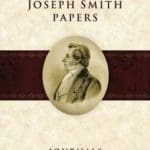
While much has been written about Mormonism’s founding prophet, there has never been a comprehensive edition of the first-hand documents produced by Joseph Smith Jr. (1805–1844), or for him by his scribes. With this in mind, the Historian’s Office of the Church of Jesus Christ of Latter-day Saints has enlisted a team of scholars to locate, annotate and publish The Joseph Smith Papers. The project, which is funded by Larry H. Miller, has received the endorsement of The National Historical Publications and Records Commission (NHPRC). The managing editor of the project is Ronald K. Esplin and general editors are Esplin, Richard Bushman and Dean Jessie.
In this episode, we interview Morris Thurston — a Harvard-trained lawyer, and one of the legal editors for the project.

Our Platforms:
Social Media:
Contact us:
MormonStories@gmail.com
PO Box 171085, Salt Lake City, UT 84117
Episode Transcript
Host: John Dehlin · Guest: Morris Thurston
This transcript is machine-generated and lightly edited for readability. The audio is authoritative. Please excuse occasional errors in names and spelling.
Introducing the Joseph Smith Papers Project
Guest [00:00:00] Foreign.
John Dehlin [00:00:21] Thurston, thanks again for coming back on Mormon Stories Podcast. It's very good to have you.
Morris Thurston [00:00:27] Great to be here.
John Dehlin [00:00:28] All right, well, today we're going to talk about two main initiatives that you're involved with. The first is the Joseph Smith Papers Project, and the second is your understanding of some of the important legal or extradition lawsuits that Joseph Smith was involved in during his time in Nauvoo.
Morris Thurston [00:00:47] Right. And that ties into the Joseph Smith Papers Project and the work that I'm doing on it.
John Dehlin [00:00:53] Yeah. So let's start. What is the Joseph Smith Papers Project that you can tell us? How did it start, what does it hope to accomplish, and what's your role in it?
Morris Thurston [00:01:01] Well, I think the purpose of the project is to assemble complete and reliable texts of all of the surviving Joseph Smith documents. And by Joseph Smith documents, we mean documents that Joseph Smith either wrote himself or were written for him by scribes. In other words, they come in the first person out of his mouth or in the case of the legal series, legal cases that Joseph Smith was involved in. And my part of it is I'm one of the editors, co editors of the legal series, and I particularly specialize in the Nauvoo period.
John Dehlin [00:01:45] Okay. And do we have a sense for the scale or the size of the project?
Morris Thurston [00:01:51] Well, it's a big project. There's a lot more to it than you might think it covers. In fact, let me just say some of the areas that it covers. First of all, there will be a series on the journals.
Morris Thurston [00:02:11] And by these, we mean the journals and the diaries kept by Joseph Smith or by his clerks. And those, I believe, will be about three volumes. When they're finished, there will be a document series that will include correspondence that Joseph wrote, revelations that he received, discourses, editorials in the newspaper that he wrote, things like that. And then there will be a history series that's going to take if any of your listeners are familiar with the big six or seven volume set of history of the Church that everyone used about 100 years ago.
Morris Thurston [00:02:47] That was done in Utah, but it drew from sources from the Nauvoo in earlier periods as well. And we're going to go back to the original documents, the handwritten text of that, and transcribe it and make it available, because there were obviously alterations and edits that took place as it became published.
Morris Thurston [00:03:10] And then the legal series will involve every case that Joseph Smith was involved in, either as a plaintiff, a defendant, or even as a judge. When he was in Nauvoo, he served as the Chief justice of the Nauvoo Municipal Court. And we're trying to uncover as many of the papers related to those legal cases as we can and then publish them and make them available to scholars. And there will be, I think, three volumes in that series.
Morris Thurston [00:03:38] Other things, an administrative series, perhaps a canonical series. People know that, for example, the revelations that are currently in the Doctrine and Covenants have had alterations made to them through the years. Most of them were made at the time of Joseph Smith, where they were simply revised. And most of the revisions, as I understand it, are wording changes. But we're going to go back and find the original handwritten texts and even each iteration of those, at least in the early days, and make those available so that people can compare them.
John Dehlin [00:04:16] Who's sponsoring this?
Morris Thurston [00:04:17] Well, it's sponsored in part by the church, and I say in part the church archives or the church history department is in charge of it specifically. Ron Esplin is the managing director, and of course, he works under the supervision of Elder Jensen, the church historian. The cost of it, though, is being picked up by Larry H. Miller, who's been very, very generous in underwriting the different historical historians that are working on the project. And there's a lot of people working on the project.
John Dehlin [00:04:57] Do you have a sense? Dozens, hundreds.
Morris Thurston [00:05:00] Well, at the archives themselves, I think there's probably 15 or so historians who are regularly on the staff there. But then there are others assigned to the project, professors down at byu, retired professors, retired church education service people, people like myself who and all of the legal editors are retired lawyers or lawyers some of us practice still. So there's a variety of people. And altogether, I think at least 50 historians are involved in the project.
John Dehlin [00:05:37] Wow. Now why? What's the motive behind this?
Morris Thurston [00:05:41] It's to. Right now, if someone's going to write a scholarly book about Joseph Smith, they pretty much have to rely on secondary sources or they have to spend half their life traveling around the country and finding archives with these papers and then reading them in the handwritten version, which is extremely tedious, and it's easy to make mistakes.
Morris Thurston [00:06:08] Our goal is we want the truth to be written. We don't want someone to rely on a secondary source and have it turn out not to be right. And there are a lot of mistakes that are made between primary and secondary sources. So one of the things we've been very, very careful about is making sure that we're as letter perfect as possible.
Morris Thurston [00:06:27] Every single document, you start out with a handwritten document. Every one is read by and typed up by an initial inputter who has expertise in interpreting old documents. And then a second level of review is undergone where the editor of the particular series, such as myself, will take the original handwritten copy and there will be a blind check. There will be a second person who will have the typescript copy. And I would read from the handwritten copy. And every time I say something different than what's on the typescript copy, the person who's reading that says, stop. Look at that word again. What do you really think that says?
Morris Thurston [00:07:10] And then I'll look at it and examine it, and between the two of us, we'll try to decide what the word really says. And if there's still any question about it, it then goes to a third level. All the places where we have questions will go to two or three people who specifically have advanced training in handling ancient documents. So by the time we're finished, we should have really as perfect a text as it's possible to make.
John Dehlin [00:07:37] That's a pretty massive undertaking, then.
Morris Thurston [00:07:39] It is, and it's been years in the making. And a lot of people have kind of complained that, you know, why aren't you publishing these things? And I think the editors are frustrated as well. But it is my understanding that we're very likely to have at least two or three volumes published in the next calendar year.
John Dehlin [00:07:58] So in 2008.
Morris Thurston [00:08:00] Yes.
John Dehlin [00:08:01] That's good. What else do you have to tell us about the project?
Scope and Structure of the Published Volumes
Morris Thurston [00:08:05] Well, included in the project will not only be the texts of these documents, but there will be an introduction to each volume that will put it into historical context. So a lot of time is being spent to try to do that. There will be very detailed annotations and footnotes. So every time, for example, in the legal series that you read about a lawyer or a judge that's involved in one of Joseph Smith's cases or even in one of the parties, there will be a footnote that will reference who that is, and then there will be a biographical directory at the end of each volume that will take the most important people.
Morris Thurston [00:08:42] And you can look that up. There will be geographical directories, newly rendered maps, glossary of terms that might be difficult, which is especially important in legal series, because they're using antiquated legal terms in a lot of these cases, and a chronology covering the period for each volume. So there will be a lot of added documents will be kind of fun for not only the professional researcher, but even for a casual reader. We don't expect that the casual reader will purchase the whole series. We're probably talking between 20 and 30 volumes. That will be something they would probably consult in the library. But amateur historians who have the funds, and certainly libraries and professional historians could be very valuable.
John Dehlin [00:09:30] And it'll be available in paper form, published form. I imagine it'll also be available on DVD and on the Internet.
Morris Thurston [00:09:39] Well, in the back of each volume we're going to have a DVD with the text of the documents. And in some cases there will be documents that are sort of peripheral and maybe don't warrant being included in the written text. And those will be on the DVDs as well. We are planning a website and eventually much if not most of these documents will probably be on the website as well. I will say this. I'm not the administrator of the series, so I'm just giving you my best understanding. And it could be flawed in some respects.
John Dehlin [00:10:19] No, that's good. What else? Any. Anything else you have? I have a couple questions, but I want to make sure you've covered other things that are.
Morris Thurston [00:10:28] Well, I guess the only other thing I would say is that during the coming year there's going to be a series of television shows that will be on Larry H. Miller's channel. And I'm from California, I think it's channel 13. It's the one that jazz is on.
John Dehlin [00:10:47] Maybe 14.
Morris Thurston [00:10:48] Is it 14?
John Dehlin [00:10:49] Maybe.
Morris Thurston [00:10:49] Okay. In any event, these will be, as I understand it, videos made from lectures that were given by the various editors of the project on a tour that was taken last fall. And it was a wonderful opportunity. I was there and all of our spouses were there, my wife as well. Larry Miller underwrote the cost of this. And we began at the birthplace of Joseph Smith in Vermont and followed his footsteps to all of the major sites of history involving Joseph Smith, all the way to Carthage, where he was murdered. And at each stop, editors of the paper were prepared to. To give a brief presentation, a 15 minute presentation on what happened at that particular place. And my understanding tell us some of
John Dehlin [00:11:46] the names of the people that we might be aware of in terms of who's involved. Who are some of the editors?
Morris Thurston [00:11:52] Well, Richard Bushman, for example, I think he's very familiar to most people. A lot of the historians who've been around for a long time, I think we'd like to pick their brains while they're. They still have brains. And I'm smiling as I say that. But people like Dean Jesse Milton Backman, Richard Anderson, these are some of the people that I look up to as been historians through the years, younger historians. I'm always bad when I have to call names out of the air, but Ron Esplin is certainly one of those. Bill Hartley from byu. Just a lot of really outstanding people.
John Dehlin [00:12:41] Wonderful. And so you got to hear a bunch of them present in their areas of expertise.
Morris Thurston [00:12:47] Yeah. And right on site, which is an opportunity that people almost never get. You know, usually you go to these places and you'll have a missionary who sort of has a set script, and it's pretty general, but these people were able to call upon years of scholarly research and get much more into it. So that's one of the things, I guess that's the last thing I really have to talk about. Unless you have other questions.
Difficult Historical Questions and the Church
John Dehlin [00:13:11] Well, yeah, let me ask just a couple questions that come to mind. Some of my listeners may know if they've read Adventures of a Church Historian or if they've listened to past podcasts or two, that when Leonard Arrington was called as church historian in 1972, one of the things he wanted to do was to create a multi volume set of a church history, like a 10 or 15 volume set that would cover many of the major eras of the church history.
John Dehlin [00:13:42] And his goal was to be as accurate and as you said, tell the truth as he possibly could. And those who have read the book autobiography realized that according to Arrington, many of the Brethren got uncomfortable with the history that was being written because it didn't always cast Joseph or the church or whatever, and always a faith promoting positive light. And so by the end, it seems as though Lynn Arrington was sort of forced to cancel that project. And then some of those authors independently published the books that they were going to use in the series. So, for example, Richard Bushman published Joseph Smith and Beginnings of Early Mormonism or whatever it's called, which had been intended to be part of the series, but instead he just published it himself.
John Dehlin [00:14:28] So, you know, that whole Leonard Arrington era seemed to have represented this intent to be perfectly honest and candid with history. But then, you know, I would say it appears as though some of the Brethren got cold feet. And I could be wrong, but that's sort of how I've sometimes felt. It seemed to have gone down. This seems to be sort of another attempt at doing that. But even in more excruciating detail, it reminds me a bit of the folklore I've heard about when some of the papyra were discovered in the 1960s or whenever that related to the Book of Abraham.
John Dehlin [00:15:08] It seemed as though the Church, since the Brethren have a conviction that it's true. And they have confidence that it's true. The attitude was almost, we have no fear in sharing the world this papyru, because Egyptologists are only going to confirm what we've always known, which is that these documents that Joseph Smith used to create the Book of Abraham were written, you know, and will reflect the text in the Book of Abraham. And it turns out that that's not quite what happened, that the Egyptologists sort of had a different interpretation, which cast the doubt and cast doubt in some people's mind on the authenticity of the Book of Abraham.
John Dehlin [00:15:50] Well, here we now have Joseph's diaries, his personal letters, you know, legal accounts, sort of every possible document ever, you know, primary document you could imagine on Joseph Smith now not only being made available in book form, but in DVD form and on the Web. You know, I guess I have two questions. Number one, is, is correlation involved at all that you know of, or are you able to talk about that?
John Dehlin [00:16:16] Because it seems like that's something that they would sort of potentially be concerned about. And then secondly, do you think that there's any, you know, is this. Does this pose the same type of risk for those who would want to bring the Church down that the Brethren would have felt in the late 70s that made them, you know, do what they did to the Leonard Arrington administration? It's a big question and. And I'm not trying to put you forth as the expert to either speak for the Church or this project, but any opinions or perspective you may want to share, that's cool. And if not, we can move on to.
Morris Thurston [00:16:53] Well, I don't have any problem giving you my opinions and understanding that they may not be the official opinions of the Church. My feeling is this is a very different project than what Leonard Arrington had in mind, is the first point. And I'll get into that in a minute. And the second point is I think we've come a number of years now since then, and I think as the Church matures and newer, more scholarly general authorities are put into positions of authority, perhaps they are coming to understand that scholarship is going to go forward whether the Church agrees or not. And so the thought with this is, why not at least make sure that the scholars who are working on these projects have the correct text and are writing correct things.
Morris Thurston [00:17:49] And that's the primary focus of the Child of Smith Papers. The problem with the Arrington series is that you had historians writing books, and whenever a historian writes a book, every historian has a bias in this case, whether it be a bias toward the Church or against the church. And even when one tries to walk that delicate middle line, as I think Richard Bushman did admirably in his rough stone rolling, he still gets pilloried by either side.
Morris Thurston [00:18:21] You can almost never have a non controversial history book, but you can have non controversial texts, ancient documents, because you're just doing the best you can to represent them and then allow the historians to write. And I think the thought is that the historians who are working on this project will in the future publish books. I myself have thought about perhaps publishing a book about Joseph Smith and the legal career, or maybe even more narrowly Joseph Smith and Nauvoo. So that's the difference that I think I see.
Morris Thurston [00:18:58] I really do feel particularly with Elder Jensen, who is very, very interested in history. This is not just something that he dabbles in now and then, but he really does enjoy history and he reads a lot. And I think that he's an ideal person as far as a general authority to be in charge of all this. And I think he will do the best he can to make sure we get everything that is necessary. Having said that, yes, I think there will inevitably be situations where the Brethren are going to be reviewing these volumes. And I'm sure that with regard to footnotes here and comments there, there will be give and take.
Morris Thurston [00:19:42] I have no doubt about that. But at least we'll have the underlying documents. And by the way, I'm not aware of any involvement with correlation in this, although I'm not on the inside of the Church, so I'm not sure what correlation does. But I have not seen any evidence that that's the case here.
John Dehlin [00:19:58] So you're saying you're not aware of significant instances where a document will be made available, but then there will be a decision not to publish the document because it doesn't, because the story tells is potentially too damaging?
Morris Thurston [00:20:16] Not that I'm aware of, but like I say, I'm not. I don't deal at that level. I know in the legal series we're struggling to find legal materials all over the country, and whatever we find, we're just excited to find and we publish it. But then maybe the legal series is less controversial than some of the others.
John Dehlin [00:20:38] Okay, that makes sense. So tell me if you agree that at a minimum this might represent two things. One is, you know, if we think we've had lots of books and scholarship on Joseph Smith in the past, this is likely to accelerate and even lead to a potential explosion of new scholarship and books on Joseph Smith. Is that true?
Morris Thurston [00:21:00] I think that's Right. And this type of work has been ongoing. There are a number of editors of books that are publishing books all the time that pull early church documents and put them in published form. But they tend to be more solo efforts. And as a scholar, you have to rely on the ability of that individual to put a really flaw free book out there. And it's a lot more difficult to do that when you're one individual working alone than when you have a number of people. And it's undergoing several levels of checking, but yeah, I think it'll make it.
Morris Thurston [00:21:41] It'll really open up a lot of stuff for scholars and particularly. I hate to sound like I'm tooting our own horn, but the legal series has been one that even the editors who are non lawyers have commented. For example, Ron Esplin, the managing director, I'll just read you something he wrote.
Morris Thurston [00:22:02] Understanding obscure references, trying to understand unusual settings, and exploring long forgotten history has taken us into many nooks and crannies, shedding light on things we didn't understand well before. Nowhere is this more true than with the legal series. There are several times more cases and other entanglements before the law than we knew about. And our legal experts are perhaps for the first time in a hundred years, coming to really understand the prevailing law in the jurisdictions where Smith functioned. Only now have we come to appreciate the extent of his legal entanglements and nearly 200 times before a magistrate as a plaintiff or defendant, and the time and resources these demanded.
Morris Thurston [00:22:43] And I'll just put an exclamation point on that. When we think of all that Joseph Smith accomplished in his relatively brief life, to have been involved in 100 to 200 legal cases on top of that. And that can be very time consuming and it can be stressful and difficult and have this going on at the same time that he was running the church, giving revelations, etc. Is quite remarkable.
What the Project Means for Faith and Critics
John Dehlin [00:23:13] So to sort of wrap this section up, it sounds like for those who are wanting to be detractors of the church, there will probably be new evidence or documents that would allow them to sort of try and make their case more in an amplified way. But even more interesting, perhaps the fact that the church is deciding to do this, it seems to represent a level of faith or confidence that the record overall is going to shine favorably upon the church and be good for the church in the end, or the church maybe wouldn't be sponsoring it. So this is sort of seems to me to be a display in confidence and of faith that the record is actually a favorable one for the prophet and for the church.
Morris Thurston [00:24:04] You know, as I look at it, I'm not sure that I would even say favorable, because those of us who've dabbled in the records know there are documents out there that make individual church leaders, including Joseph Smith, look bad from today's perspective. But I think the confidence is that none of this would take away from the overall mission and accomplishment of Joseph Smith. And to me, that represents a new maturity of the church. At least I'm hopeful that it does. Yeah, I think that's all I have on that.
John Dehlin [00:24:45] Well, that's fascinating. And we'll look forward to updates as they develop. So thanks for. Thanks for giving us the update on the Joseph Smith Papers project.
Morris Thurston [00:24:53] You're welcome.
Guest [00:25:28] Come, come, you saints. No toil nor labor fear but with joy when your. Though hard to use this journey may
John Dehlin [00:25:52] appear
Guest [00:25:54] Grace shall be as your day. Tis better far for us to strive Our useless cares from us to drive do this and joy your hearts will swell all is well. All is well. Do this and joy your hearts will swell all is well. All is well. All is well. All is well. All is well. All is well. Sa.
Morris Thurston [00:27:40] Sam.
Transcript © 2026 John P. Dehlin. All rights reserved. Brief quotations are welcome with attribution and a link to mormonstories.org; all other use requires written permission.