
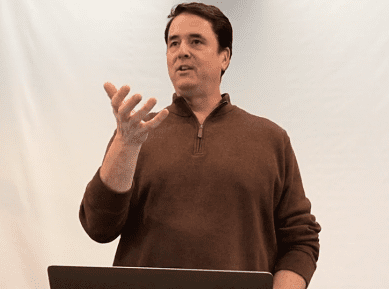
 On December 2, Dr. John Dehlin gave a “Mormon State of the Union” presentation to a group of Davis County post/ex-Mormons. This presentation highlights many of the major changes John has witnessed during his lifetime, especially those that have taken place during the past 14 years in the new Internet age. Part 1 focuses on the cultural and doctrinal LDS Church of the past, while Part 2 focuses on the LDS Church of today.
A copy of the outline for this presentation can be found here.
Episode Transcript
Host: John Dehlin
This transcript is machine-generated and lightly edited for readability. The audio is authoritative. Please excuse occasional errors in names and spelling.
Welcome and Introduction to the Event
Part 1 of 2 · Ep. 1023
John Dehlin [00:00:00] Sam, Thank you so much for inviting me here to speak today. It is not something that. Well, it's something that I feel very grateful and humble about to have people reach out and say, we'd like to hear you speak.
John Dehlin [00:00:47] So, with much sincerity, it's an honor to be here, and I'm grateful that you would take time out of your second Saturday to be here when you could be doing lots of other things. For those who don't know, my name is John Dehlin, and I am the host of Mormon Stories Podcast.
John Dehlin [00:01:11] And I've been doing Mormon stories for about 13 years. And the reason that I'm here is because I'm a huge believer in the importance of community. Early when I started Mormon Stories Podcast, immediately people started coming out of the woodwork, so to speak, seeking help. At the time, the reason why I had started Mormon Stories was because in 2001, I went through my own faith crisis while I was working for Microsoft in Seattle. And this was just as the Internet was starting to get really popular.
John Dehlin [00:01:57] It was before Microsoft had really embraced the Internet fully. And when I went through my faith crisis at the time, it was starting out as a seminary teacher and starting to study church history and reading the institute manuals and then wanting to learn more. And so I stumbled upon, you know, Leonard Arrington and Eugene England, and I wanted to learn more. So I would then read Michael Quinn, and I wanted to read learn more. So I would read, you know, Fawn Brody, and then I wanted to learn more. And so I found Simon Southerton and Grant Palmer. And it was sort of through books, this escalation of doubt and questioning and ultimately despair and depression.
John Dehlin [00:02:46] And by the time I was in a full depression mode, I had, you know, scraggly face hair, and I would wear Birkenstocks with socks to church and my family. I was. I would disappear for hours at a time reading and debating with people on chat boards on the Internet. And there was just no support. I couldn't find any support.
John Dehlin [00:03:10] No one wanted to talk about it. I went to family members, and they said, we don't want to talk about this. I went to bishop, we don't want to talk about this. Stake president, whoever. No one wanted to talk about it. Everyone was scared or uninformed.
John Dehlin [00:03:28] Eventually I said, well, I don't care how much money I'm making at Microsoft. This is a huge problem and it needs to be solved. And I was kind of unfulfilled in my work anyway. Not because it wasn't cool. It was super cool. I was traveling the world. I interacted with Bill Gates. I'd interacted with the CEO of Microsoft, Steve Ballmer.
John Dehlin [00:03:55] I was working at the highest levels of the company and very much excelling. But I was still depressed because I didn't have a real purpose for my life. I didn't have a real sense of meaning. And so the fruit or the blossoms that sprang out of this huge steaming turd that was my faith crisis was a purpose and a mission in my life.
John Dehlin [00:04:21] And so even though I went from $200,000 a year to $15 an hour, in 2004, I moved to Logan with my family and started searching for how I could make a difference in this arena. And Sunstone was the very first thing that I did. I attended Sunstone in 2004 and got to know people there. And through my first master's degree in instructional technology, I Learned about Web 2.0 and blogs and podcasts.
John Dehlin [00:04:59] I frantically searched for any Mormon themed podcasts, and it turns out there were a couple. Anybody here know what the very first Mormon themed podcasts were? Okay, there was one called the Church Is Not True. Can any of you guess who is the co host of the Church Is Not True podcast?
John Dehlin [00:05:20] Mike Norton, along with this Hiram, who was a pseudonym. But these two guys led the Church Is Not True podcast. They had a few episodes. There was another one called this Mormon Life. There was another one called Catholic Mormon, but there are only like three Mormon themed podcasts. And I'm like, I'm doing this.
John Dehlin [00:05:40] So in 2005, I launched Mormon Stories. And immediately people just started flying from all over the world, driving to Logan to have lunch or breakfast with me. And it was. I didn't expect that as an outcome, but people were just in quiet desperation.
John Dehlin [00:06:01] They had nowhere to go, no community, no one to talk to, and felt depressed and isolated. There's Sam Young's mom right there. Hey, Birdie. Anyway, sorry for that. Okay, so I started meeting with these people and getting really overwhelmed with all the things they would confess to me. They would confess depression and anxiety, marital distress, sexual addictions, as they called it.
John Dehlin [00:06:44] You know, closeted same sex sexuality, infidelity, all sorts of stuff, addictions. And I had no qualification. I'd been in high tech. I had no qualifications to talk to these people. And yet they wanted to disclose with me their deepest, darkest secrets.
John Dehlin [00:07:04] So a couple things came out of that. One is, I was surprised that I never got bored hearing people's stories. You would think I would get sick of hearing people's transition stories, but I have this weird Defect that I could hear faith transition stories all day, and they just don't. They never get old. So that was one thing I realized once people started reaching out to me. The second thing I realized was that I really love trying to help people. But the third thing I realized was that I had no ability to actually help people. No skills and no training.
John Dehlin [00:07:39] And then the fourth or fifth thing I realized is that there's no way eventually I would ever be able to help all the people who needed help. And I really got desperate to where I'd be flying to or from the airport, driving to or from the airport, and I would go on Facebook and say, hey, anybody who needs help, here's my phone number. Because I felt like I had to help everybody who was in need. And I was spending so much time answering emails and meeting with people, it was actually just starting to really overwhelm my life. And it got to the point where my wife and kids were saying, what about us?
John Dehlin [00:08:12] You know, you're. You're able and willing to help everyone in the world, but we're feeling a little bit neglected. So that's, you know, that led to a couple things that feeling overwhelmed and unable to really help people. The first thing it led to was me starting a PhD in clinical counseling psychology. So that's. In 2008, I applied to a bunch of PhD programs in clinical and counseling psychology.
John Dehlin [00:08:41] Finally got into Utah State and byu, and Margi made me choose Utah State. If I had chose byu, Mormon Stories would have gone offline for about five years because I actually shut Mormon Stories down in the application process because I worried that it would make potential grad programs not want to accept me in Utah. But Utah State accepted me. And after that first year, I just decided to bring more Stories back, as many of you know, as a way to make a living, because grad school wasn't offering me enough money to support my family. So I'm grateful that I chose Utah State over BYU for many reasons.
John Dehlin [00:09:25] So I brought that back. And the second thing that I did was in 2011, along with a volunteer, we created over 100 Facebook groups that were geographically based. So, like, there's probably an Ogden Mormon Stories group, right? There was a Logan Mormon Stories, Crash Valley, Salt Lake, Phoenix, Portland, London, you know, Washington, D.C. and that was back in 2011. And the idea was to create community because I realized that I. Even if I had a PhD, I. I still couldn't meet all the demand that was out there.
Building Post-Mormon Community
John Dehlin [00:10:04] And so we needed communities where people could get together and support each other, be friends to each other, answer each other's questions, provide support, provide mentorship, provide encouragement. And that's what this Davis county group is doing. And so that's why I'm here.
John Dehlin [00:10:21] I didn't need a honorarium to be motivated to speak here, although I'm grateful for. For that, if that's something you guys want to do. But I'm here because I believe in building community, and I hear really good things about the Davis county group, and I want to support it. How many of you are here for the first time to a Davis county kind of get together? See, that's awesome. Your job is to meet other people so that you start having friendships and community so that you guys can support each other. So I'm really happy and honored to be here. Thank you so much. And I thought it would be kind of cool to talk about kind of State of the Union and Mormonism.
State of the Union Format and Overview
John Dehlin [00:11:00] How many of you have already read the document that I put up online? Raise your hand really high. Okay, so I hope you guys aren't bored, but I thought it'd be cool to kind of think about how far we've come in the past 13 years, because things are way different in 2013 or 2018 than they were in 25.
John Dehlin [00:11:22] And I think it'd be fun to walk down memory lane and kind of celebrate our successes and think about where we are and where we want to go. I do want to leave plenty of time for questions and open discussion.
John Dehlin [00:11:38] How much time do these meetings usually last? Two hours. All right, so maybe I'll do 45 minutes or whatever of a talk, and then we'll do an hour of Q and A. Will that work? All right, well, I hope that's about one session of general conference. That's not bad.
John Dehlin [00:11:56] You guys are used to a two hour meeting, right? You guys are welcome to leave anything. Yeah. All right, so let's take a walk down memory lane. And a lot of this, I wrote it myself, but several of them, I opened it up to crowdsourcing, and we got a few extra additions from people.
How Mormonism Has Changed Over a Lifetime
John Dehlin [00:12:21] But I'm trying to think about the way Mormonism's changed in my lifetime. And so here's some things to think about. When I grew up Mormon, at least within my circles, no caffeinated beverages were allowed. Right. People used to brag that they had never tried a Coke or a diet Coke or a Pepsi, let alone ever try and tea or coffee.
John Dehlin [00:12:47] When I grew up, the general authorities in the church were very kind of confident, almost arrogant about the church's teachings. Bruce Al McConkie, Ezra Taft, Benson Boyd K. Packer, Mark E. Peterson. These men would stand up in general conference and very boldly declare what our doctrine was and wasn't. They would publish books like Doctrines of salvation, volumes 1, 2 and 3, man, his origin and Destiny, Mormon Doctrine, Right. Miracle of Forgiveness. And they would proudly and boldly declare what Mormon doctrine was.
John Dehlin [00:13:27] And we as Mormons considered these books almost more important than Scripture because the Scriptures said all sorts of confusing and contradicting sort of things, and a lot of the things the Scriptures didn't even talk about at all. But we could rely on Mormon doctrine or doctrines of salvation as the source for doctrine and truth.
John Dehlin [00:13:50] And we really looked up to those general authorities in the very early years. And I'm glad Sandro Tanner's here, and some of this was before I was even really conscious, but there was this embracing of science in the early 20th century and even mid 20th century, where the Church loved science, taught science in its curriculums and its priesthood and Sunday school curriculums, where Utah had the highest per capita scientists of any state in the country. Did you guys know that? In the early to mid 20th century, and you could read old priesthood and Sunday school manuals that talked about science and geology and astronomy and other sorts of things.
John Dehlin [00:14:39] And even pre BH Roberts, there was this excitement about how science was going to prove that the Church was true. Right? Which is why when the papyru were discovered, the Church's response wasn't, oh no, we've got something to hide.
John Dehlin [00:14:53] The response was sweet. Now let's get some Egyptologists to translate this puppy and we'll show the world that the Church is true. Right? And those, remember those Mesoamerican archaeological expeditions where they're like, woohoo, we're gonna find Zarahemla and the Waters of Mormon and we're gonna prove through geography and archaeology and anthropology that the Book of Mormon is true. You know, we're gonna find those hieroglyphs on the temples that show a white Christ or God in baptism. And oh, we found a baptismal font. Look, there's this thing that looks like a baptismal font in a Mayan temple or, you know, whatever. It was a little toy with wheels on it.
John Dehlin [00:15:32] And that proved somehow that the Book of Mormon was historical and valid. Other churches, other Christian churches were evil. What was the Catholic Church, the great and abominable Church? You know, evangelicals hated us, but guess what? We didn't love them very much either. Right? And we were proud to. We were Proud to describe our doctrinal differences, you know, and to highlight them and say, yeah, we believe that man can become God. We believe in a pre existence. We believe that Jesus and Satan were brothers, you know, whatever it is. We were proud of those differences.
John Dehlin [00:16:16] We weren't kind of ashamed of them. We were proud of our distinctive theology. We were proud of, you know, in some sense, we were proud of our polygamous ancestry. We really, you know, believed that these were the latter days. We really believed that Zion, the new Jerusalem, would be built upon this, the American continent in Jackson County, Missouri, and that the second coming was nigh and that we should prepare for it with gardening and food storage. Do you guys remember that?
John Dehlin [00:16:52] It's always been true that criticism of Mormon leaders has been forgiven, has been forbidden. And of course, there was little to no discussion about the imperfections of church leaders. Those the best that you could get in the 60s and 70s on that was from this woman right here and her late husband. The Tanners, they were willing. But what were we all taught about the Tanners growing up? Right? That they were evil and wicked and bad people. Right, bad people.
John Dehlin [00:17:22] And so, you know, we didn't have exposure to critics or questioners or doubters or even thinkers. We avoided all that. The church handbook of instructions was completely secret and private. We were taught that the Book of Mormon and the Book of Abraham were literal translations of ancient histories and ancient records.
John Dehlin [00:17:48] There was a real focus on the church being exclusively true. Right. The one and only true church. There was an emphasis on spiritual gifts that you could pray and receive a direct witness that the church was true. And on gifts of healing, we were encouraged to pray, to get healed and to do priesthood blessings to heal other people from their illnesses and weaknesses.
John Dehlin [00:18:16] We were proud of our Mormon heritage. You know, my wife Margi grew up with this song called I'm a Mormon. Did you guys ever hear that song? I'm a Mormon? Yes, I am. Right? Yeah. And we were proud. I mean, we were proud to call ourselves Mormon. The Mormon Tabernacle Choir was, you know, the most popular choir in the world. And they would be sat out at presidential inaugurations and, you know, we were proud of that term.
John Dehlin [00:18:56] Church pageants, you know, were a really important part of our culture and our heritage. The Manti pageant, the Nauvoo pageant, the Hill Cumorah Pageant, those were really important cultural staples. Yeah, I'm coming to that. Mormon wards and stakes were vibrant. You know, the cultural hall was named that because it was a center of culture for our people. Potluck dinners and road shows and wards and steak dances.
John Dehlin [00:19:26] You know, I remember Saturday's Warrior being performed, you know, for our entire stake. I remember dance festivals. I remember golden green balls. I remember, you know, all sorts of fun things where that cultural hall was always filled with vibrant cultural and social activities. And budgets were available to fund these types of activities. And they were locally controlled.
John Dehlin [00:19:51] The home teaching program was the pillar of Mormonism. And everyone was supposed to do their home teaching, and everyone was assigned a home teacher. And you did your home teaching, or at least you were supposed to. Elders in high priest quorums were distinct. They were vibrant and they were active. The Boy Scouts of America was the centerpiece of Mormon male, you know, development. Right.
John Dehlin [00:20:14] Women were kind of left out there a little bit, but, you know, they had. What did they have? Young women's. Yeah, something in the early years, like when I was 7 or 8. Before that, you actually went to church twice on Sunday.
John Dehlin [00:20:34] You'd go once and then you go home and then you go back again. Right. Then that was consolidated to three hours, but it was still a pretty substantive commitment. Primary on Tuesday. What's that? Primary on Tuesday? Right. Lots of activities during the week. We were always going to the wardhouse.
John Dehlin [00:20:53] I remember Gordon B. Hinckley doing extensive press conferences where he would meet with Mike Wallace of 60 Minutes or Larry King, and he would take hard questions and, you know, nowadays we may not always like the answers he gave, but at the time I was super stoked that our leader was willing to stand up to scrutiny and face the tough questions and answer them. That was really inspiring.
John Dehlin [00:21:18] You know, even though maybe general authorities weren't candid about what was going on behind the church scenes, you could always rely that they would, you know, keep journals. And then after they died, at least some of the journals would get in the hands of people like Michael Quinn or signature books or others. And we could read about decisions that were made and meetings that were held, you know, decades ago, but we could still be kept abreast of what was going on with general authorities.
John Dehlin [00:21:51] Of course, there were. There were dark sides about the church. You know, we didn't treat, you know, homosexuals very well. We taught that being gay just having gay thoughts or gay same sex attraction was evil and bad. We refused to acknowledge that there even was a gay or lesbian or bisexual identity. We encourage people to identify instead as same sex attracted.
John Dehlin [00:22:18] We definitely supported conversion therapy or repair therapy where groups like Evergreen were sponsored by the church. And those groups would encourage gay, lesbian, bisexual Mormons to go to Psychologists or go to retreats or workshops and to go through these therapeutic exercises to un gay yourself, to pray the gay away, to do shock therapy or aversion therapy or whatever it took to get to rid yourself of same sex attraction and to right yourself by developing other sex attraction. And if that meant being celibate for the rest of your life, that was one option you had. And of course, if that meant getting into a mixed orientation marriage where you marry a straight person and they have to suffer with you not really being attracted to them, and you have to suffer not being attracted to them, well, that was just the price you paid as your cross to bear.
John Dehlin [00:23:15] Just like other people who have cancer or who have alcoholism or some sort of addiction, being LGBT was a pathology that had to be cured. It was a defect and that was not fun. Parents would often side with the church over their LGBT family members. And if they had to, they would kick their LGBT family members out or estrange them or ostracize them if needed to make sure that they didn't. They were never confused with ever supporting or condoning immoral and unclean behavior.
John Dehlin [00:23:51] I remember in my youth the church claimed 6 million members. And there were these prophecies quoted from the Old Testament in Daniel, the stone cut out of the mount with out hands will roll forth and consume all nations. This sociologist named Rodney Stark, I don't know if you guys remember this sociologist, he did these mathematical predictions and predicted 20, 30, 40 million Mormons within 30 or 40 or 50 years predicted that Mormonism was going to become a dominant world religion.
John Dehlin [00:24:24] That was exciting. And church leaders were very thrilled to advance and evangelize those predictions. And we called ourselves the fastest growing church. And the church proudly and boldly shared membership statistics in general conference, right? At least once a year so that we could all get thrilled with how that number was growing and growing and growing and we were slowly taking over the world.
John Dehlin [00:24:53] The BYU football team was national champion in 1984, right? And with the Lavelle Edward years, BYU was just dominant in football and in basketball. And University of Utah and Utah State were sort of also rans and has beens, not to mention Weber State. I can't forget Weber State in this crowd, right?
John Dehlin [00:25:11] Mormon celebrities were viewed as being faithful and committed. Donny Marie and Steve Young and all, Ty Detmer and Sean Bradley and all sorts of other Mormon celebrities, you know, were always putting on a public face of devotion and faithfulness. And if any Mormon left the church, they sort of did it quietly and discreetly.
John Dehlin [00:25:34] Musicians like Julie De Azevedo and Mindy Gledhill were creating music for Efys that we all sang to and listened to and felt warm fuzzies as we listened to that stuff. Missions and temples dotted the globe and were growing at sort of an exponential rate.
John Dehlin [00:25:55] Mormons became dominant in the political sphere. If you remember, Gordon Romney became a major candidate for president in the 60s. Orrin Hatch and others became, you know, national political heavyweights. Even Mitt Romney, as some of you remember, on the tail end of this sort of Mormon moment, Mitt Romney becomes the nominee, the Republican nominee for president, John Huntsman Jr. Also, these were very heady times for Mormon politicians.
John Dehlin [00:26:27] BYU had, when I was there, very liberal professors and very liberal programs. You could do these honors colloquium classes where you could. You were taught about the age of the earth being millions and billions of years old. You were taught about abortion, and you were taught about ethical, medical, ethical issues. You were taught about polygamy, and you discussed those things openly, and you were encouraged to do so.
John Dehlin [00:26:51] And there was this optimism, heady optimism, that thought and faith could be reconciled and science and faith could be reconciled. And you talked about evolution and learned about evolution, and that was okay. And everybody somehow, or at least the thoughtful students felt okay about that.
John Dehlin [00:27:10] I remember a time when women weren't allowed to pray in Sacrament meeting. Do you remember that? And up until very recently, women had never prayed in General Conference before. If you think about that, that's in the past 10 years that women have been allowed to pray in General Conference for the first time.
John Dehlin [00:27:28] Women were scared to wear pants to church. That's still true largely, but it was even more true back then. Birth control and women working outside the home were condemned openly in General Conference by prophets. Women do not work outside the home. And again, birth control was forbidden.
John Dehlin [00:27:48] You wouldn't see a lot of women up in the red chairs during General Conference. You would just see the Q15 and some of the 70. Only men were encouraged to serve missions, right? And they had to go when they were 19. And if women were to serve, it was only after they had been sort of deemed unfit for marriage at that time. And they had to wait until they were 21, right?
John Dehlin [00:28:13] There was no missionary leadership for women. The church was able to hide troubling information from its members. Most of us reached the age of adulthood, never once hearing in a church service any mention of Joseph Smith's plural wife, plural wives, is that true?
John Dehlin [00:28:32] And we made it to sometimes age 30 or 40 or 50, never knowing that Joseph Smith himself The founder of our religion was a polygamist. When there was a book published in 1945 that made it very clear somehow the church was able to erect this wall of fear and of censorship so that people weren't willing to or interested in or aware of very basic facts about our history, including our polygamous past.
John Dehlin [00:29:03] Mountain Meadows Massacre was rarely spoken about and denied and, or denied by the members. The church had these sort of for hire apologists that were hit people. It started with Hugh Nibley and then Daniel Peterson kind of took over the realms and the Maxwell the farms was created and then it turned into the Maxwell Institute. Fair was created and these, these apologist types rose up like Lewis Midgley and you know who else? Daniel Peterson, Lewis Midgley. Wasn't Michael Quinn one of those very early on? Michael. Michael Ash.
John Dehlin [00:29:42] I don't know if Michael Quinn was ever an apologist. Sander wasn't. Didn't D. Michael Quinn take a shot at some of the stuff you and Gerald wrote years ago? Yeah, anonymously. Anyway, there were these apologists that basically used two tactics. They would use pseudoscience as a way to try and bolster Mormon truth claims science, whether it's on Egyptology or anthropology or archaeology. We're talking, you know, Sorensen or John Gee or others that would use shoddy science to try and bolster Mormon truth claims. Or they would just rely on the old ad hominem attacks where they would undermine the moral authority or the personal credibility of the attackers.
Church Control of Information and History
John Dehlin [00:30:38] And for a long time that worked and it kept a lot of critics at bay. Credible Mormon historians and critics were marginalized and silenced from Vaughn Brody to B.H. roberts to Fawn Brody to Juanita Brooks, Sandra and Gerald Tanner, September 6th, Brett Metcalf. They were all just sort of like discredited and dismissed and pushed aside and demonized. And you know, these people deserve so much of our respect and admiration for being willing to continue tenaciously fighting for truth and awareness and transparency during decades of derision and criticism and marginalization.
John Dehlin [00:31:30] Demonization that includes this woman. Excommunications for apostasy were relatively rare. You know, we know about, you know, Farm Brody and then there was a big gap. And then we know about the September 6th in 93. And there were a couple stragglers after that like Margaret Toscano and Brett Metcalf and a few others. But, you know, you didn't see sort of every year another round of excommunications.
John Dehlin [00:32:05] You know, the church was able to intimidate scholars and doubters into Silence. The only real outlets for open discourse were Sunstone and Dialogue, right? Sunstone magazine, Sunstone Symposium and Dialogue, a journal of Mormon thought. Again, there was excommunications, which set a chill in Mormon discourse. Every time there would be an excommunication, you would see this sort of wave of sort of like silence go over the intellectual Mormon community, and sometimes it would take a full decade to recover where people would feel safe and willing to talk again. And if you look at 1993 to kind of 2004, that's a classic example of. Of sort of a lot of fear and silence in Mormon feminism, in Mormon history circles, because we used to back down when excommunications happened and become fearful.
John Dehlin [00:33:01] We used to know who the Lamanites were, right? The Lamanites were who? They were Native Americans, they were Latin Americans, they were Pacific Islanders. And there was no question about who the Lamanites were. And we cared about them because, as the Book of Mormon says, they were the primary reason the Book of Mormon was written, to convert, you know, Lamanites to Jesus. That's like the whole reason the Book of Mormon was created. And so we had Joseph Smith, when he sent missionaries who were the first people he sent missionaries to, Indians, as he called them, on the frontier of Ohio or wherever, because that was the whole purpose or the main purpose of the Book of Mormon, right?
John Dehlin [00:33:43] And you saw programs for Native Americans all the way through, up until the late 20th century with Spencer W. Kimball, the Lamanite placement program. We would do all we could to enlighten, if you would like to use that term, Native Americans, or colonize, if you would like to, if you prefer that term.
John Dehlin [00:34:03] But at least we cared about them and were consciously trying to help them, even though oftentimes, you know, that that did more damage than good in terms of cultural genocide. But at least we were trying, right? At least we had a consistent doctrine and purpose around Native Americans, and at least we knew who they were, right?
John Dehlin [00:34:22] Of course, you know, there was a black priesthood ban, and even after that was lifted, it was still defended as doctrine, right? And of course, the Lamanite, you know, when you read the Book of Mormon about the Lamanite curse, there was no question about what that meant, right? It meant that their skin was turned dark because of their wickedness, right?
John Dehlin [00:34:42] And the good news was that if they could turn righteous and turn to Jesus, what would happen? That they would become white and delightsome and their skin would turn white and they would blossom like the rose or whatever. And that was the Hope that we all had to turn those.
John Dehlin [00:34:59] This is offensive language at the time. You know, we wanted to turn those dark people white. And we all knew that was the goal. That was the goal, and we all knew it. Interracial marriage was expressly forbidden. You know, over the pulpit, like, it was very clear. The temple ceremony was a little bit disturbing. Right.
John Dehlin [00:35:23] Very Masonic blood oaths. You know, wearing these weird ponchos where you're completely naked and exposed with these huge gaps on the side, and you'd walk through and some old person would touch you in weird places, putting oil on your body.
John Dehlin [00:35:39] Very creepy and weird and violent and barbaric. At least that's how it was originally. Some say it still is. But it's certainly those of you who are 49 or older know that it used to be a lot worse than it was.
John Dehlin [00:35:56] It was definitely more sexist. You know, before, where women vowed to obey their husbands as their husbands obeyed the Lord. Right. You know, I could go on and on. The temple ceremony was secret. It was not available. People didn't know anything about it outside of it. Garments were long. You could get garments that went all the way to your wrists and your ankles.
John Dehlin [00:36:21] Onesies you could wear, because that's how they were in the olden days. No one knew anything about the second anointing. Right. Yeah. The oath of vengeance is a long, long time ago. Right. Where you would actually swear to what? Avenge the prophet's death. And the people of Illinois were specifically mentioned in the temple ceremony. There was also a hymn in the old hymn book, by the way.
John Dehlin [00:36:50] What is it? The Hail of the Prophet. What's that hymn? Praise to the man used to say long shall his blood, which was shed by assassins. Stain Illinois while the earth lauds its fame. They took that out of the hymnal, but it used to say stain Illinois.
John Dehlin [00:37:08] That was in the hymn book. Right. So blood oaths were okay. Mormons stood. Mormonism stood for families and valuing families and good, clean American values. The church had a net worth of billions. Right. You know, Mormon testimonies were rock solid.
John Dehlin [00:37:30] The church was less strict about modesty. You could walk through the halls of BYU and you could see past homecoming queens and guess what clothes they're wearing in the portraits from the 50s and 60s? Spaghetti straps with cocktail dresses. And that's on the walls of byu. Right. Shoulders and shorts were somehow not pornographic.
John Dehlin [00:37:53] Back in the day, masturbation was forbidden and sexual shame was rampant. Children, youth, and adults were interrogated behind closed doors by men. And sometimes they were even abused and Nobody cared and nobody talked about it. And it was just something that we all accepted as the way it should be. Oral sex was prohibited, explicitly prohibited by a memo.
John Dehlin [00:38:24] Polygamy was this deep, dark secret. It's true. There was a memo. You guys seen the memo? Spencer v. Cable issued the memo. I didn't get the memo. You didn't get the memo? Polygamy was a deep, dark secret, right, that no one spoke about.
John Dehlin [00:38:50] Brigham Young. Polygamy was something Brigham Young and his successors did, and only because there were too many women and not enough men, you know, and that was the only reason that the church did it. You know, the Book of Mormon and the Book of Abraham were literal translations of ancient records, right? And the Book of Mormon was translated with the plates and a Urim and Thummim and an apron. And Joseph Smith was looking at the plates and translating them with the golden light, with. Yeah, with some sort of special power from God, right?
John Dehlin [00:39:23] And probably most poignantly, people who decided that they couldn't believe in the church or follow the church anymore suffered alone and in silence, and they would be kicked out of their families. They would be divorced from their spouses. They would be rejected and marginalized. Oftentimes they would have to leave the state if they lived here in Utah and go set up a whole new life somewhere else because their life here was completely destroyed and they had no community to go to. For many, many years, the only post Mormon community was this annual ex Mormon meetup that would happen in Vegas and sometimes here in Salt Lake City.
John Dehlin [00:39:57] And other than that, it was really hard to find any community at all for ex Mormons and post Mormons. And the ones that did exist were sort of secret and in the dark and sort of hidden, and people were unaware of them.
John Dehlin [00:40:10] Resignations from the church were relatively difficult to obtain, and they were rare, right? And then finally, being an ex Mormon or a post Mormon, like I said, was stigmatized. We were stereotyped as being weak, as being the least righteous or the least valiant, as having been offended or as having wanted to sin.
John Dehlin [00:40:31] And those sorts of stereotypes were carelessly advanced. That's sort of the world that I grew up in prior to 2004. How many of you resonate with everything I just read? All right, so I'm not totally off.
Celebrating Changes Within the Church
Part 2 of 2 · Ep. 1024
John Dehlin [00:00:00] Sam. Well, now let's celebrate change. Shall we do some change celebration. All right, I'm going back to the top of the list. Are you guys okay? All right. Now instead of caffeine being forbidden, it's being served at BYU right now. Instead of general authorities.
John Dehlin [00:00:53] Now instead of general authorities being proud and confident in their doctrine, books like Mormon Doctrine are being discontinued. Right. Miracle Forgiveness is sort of like slowly being marginalized and pushed away. Doctrines of Salvation isn't in print anymore. Journal of Discourses is now sort of forbidden from being used as a resource in church curriculum. Right.
John Dehlin [00:01:15] So all these sources of authoritative general authority utterances are now being marginalized and pushed aside. General authority is now sort of just largely speak general platitudes. They avoid discussions of doctrine or theology for the most part. Instead of all general authorities being proud and bold, we have general authorities starting to fray a little bit around the edges. We all wonder about what Elder Uchtdorf really believes and what he doesn't believe. Right. And we have, you know, former high level, higher level church leaders like Tom Phillips and Hans Matzson starting to be willing to speak openly about their disaffection and to talk about their apostasy openly and publicly, which is something I don't know that we've ever had a lot of before.
John Dehlin [00:02:04] Instead of being proud about the things they have to share with the world as prophets of God, general authorities are now asking people before they speak to not record anything they say and to keep it secret and private because they don't want many of the things that they say in stake and area conferences ever repeated outside of those private meetings. So they're becoming more secretive and actually private about. I thought, you know, you would think that prophets would want to boldly declare to the world God's truth, but instead they're becoming more and more secret and they're asking people, they're being concerned about even notes being taken about the things that they say.
John Dehlin [00:02:42] Many general authorities are now lawyers and PR people who focus more on Curtin McConkie protecting the assets and the reputation of the church and the businesses, and managing the multi billion dollar corporate assets and interests of the church instead of being sort of ministers and priests to help those who are in need.
John Dehlin [00:03:07] Science has not vindicated the church as the leaders had hoped, and instead it's cast serious doubt on the Church's timelines. The creation myth, the flood myth, the historicity of the Bible, of the Book of Mormon, of the Book of Abraham, all that stuff is now sort of being directly challenged and threatened and apologists have brought forth no credible evidence to support the historicity of the Book of Mormon, of the Book of Abraham, of any of that stuff. Even the Joseph Smith translation now has been shown to be plagiarized from a biblical commentary that was available during the time Joseph Smith was there. That was research that came out of BYU in the past few years, oddly enough.
John Dehlin [00:03:58] So science has not demonstrated the Book of Mormon anthropologically, linguistically, archaeologically, genetically. Pick your Lee, pick your scientific discipline. Science has not vindicated any of the Church's truth claims, let alone the Tower of Babel and the Jaredite migration or any of that sort of stuff that, you know, the entire Book of Mormon sort of depends upon. Now, instead of demonizing the Catholics and the evangelicals, we're trying to cozy up to them, we're trying to befriend them, we're trying to minimize the differences that we have between them and emphasize the similarities. We're downplaying all of our distinctive doctrine. And as Michael Quinn says, we're sort of selling our birthright for a mess of porridge by downplaying our distinctive doctrine and focusing on all the commonalities of our doctrine and theology with Catholics and with Evangelical Christians.
John Dehlin [00:04:58] Why? Because we need their political support to fight same sex marriage and to protect what we like to call, what religious freedom. Right? And so they become our allies politically. And in some sense, the enemy of my enemy becomes my friend.
John Dehlin [00:05:14] So that's a very different approach. In addition to our distinctive doctrine of theology being minimized, what has not changed is that authority, obedience to priesthood authority, has been exalted to the most sacred Mormon doctrine of all. There is nothing more important than obedience to patriarchal priesthood authority in Mormonism. It is the most sacred doctrine and theological. In some sense. It's the only, it's only true, immutable, important doctrine or theological component of Mormonism that we cling to tenaciously. Criticism is still forbidden, but there is, this is on the positive side. There is an increased willingness to discuss and admit the imperfections of church leaders. So you are still not allowed to criticize church leaders, as Bill Riehl recently shows when he called Elder Holland basically liar, liar, pants on fire.
John Dehlin [00:06:26] And it's still true, as Elder Oaks says, that it is wrong to criticize a church leader, even if the criticism is accurate or true. However, you have heard an increase in statements in General Conference where general authorities are willing to say, give Brother Joseph a break. We're not always perfect, you know, we deserve your slack. So we are members are Being encouraged to look with patience and forbearance on the weaknesses of their leaders. But they're not allowed yet to cross that line of actually openly criticizing them in public.
John Dehlin [00:07:03] Instead of the Church Handbook Obstructions being secret, at least a good half chunk of the Handbook of Obstructions is now publicly online and made available. That's and increase a step towards transparency. We've noticed that the headings to the Book of Mormon and the Book of Abraham have been conveniently changed in recent years. Right. So instead of the Book of Mormon being about the ancestors or the descendants of Lehi, it's now written about those who were among.
Shifts in Doctrine, Programs, and Identity
John Dehlin [00:07:35] Right. The people, the inhabitants of ancient America. And of course, that change was made in response to DNA evidence and other scientific evidence making it very clear that Native Americans came from where, Asia, not from Israel. Across boats, you know, across the Atlantic Ocean or Pacific Ocean or whichever ocean they, you know, mythologically traveled. And the Book of Abraham. I didn't realize that. The heading to the Book of Abraham has also recently been changed. Right.
John Dehlin [00:08:09] It's no longer written. Yeah, I don't have the quotes here, but it's no longer written by the hand of Abraham translating in ancient texts, but instead the foreword sort of mentions inspiration and revelation instead of translation. Basically saying, stop thinking of this book as a translation. So they're changing the narrative on the Book of Abraham past few years, I think.
John Dehlin [00:08:35] I think on the Internet over the past five years. So one of you look that up right now and let us know. But I think it's a relatively recent change. I could be wrong about that Book of Mormon translation. They're starting to use the word. I'm getting there. Oh, I'm sorry. I'm getting there. No, I'm. We're not even. We're not even close to done yet. Oh, no,
Guest [00:08:57] Roll.
John Dehlin [00:08:57] Okay. Instead of the church focusing on it being exclusively true. Right. In the one true church, now the focus is on staying in the bone. Don't leave. Doubt your doubts. Right. Focus on the goodness of the church, not necessarily the truthfulness of the church. Fear messages about what's going to happen if you leave.
John Dehlin [00:09:19] And a little bit more softening of the rhetoric through Terrell and Fiona Givens and others. Patrick Mason. There's truth in every church and in every religion. You know, we just have a few distinctive things like priesthood ordinances. That is our contribution to humanity. But other religions have their contributions to humanity a very different message.
John Dehlin [00:09:41] Instead of sort of, this is the one true and only living church on the face of the earth. We've moved away from that rhetoric. In many instances, we're de emphasizing spiritual gifts. I just, I didn't see General Conference, but I heard about this talk was from Bednar which basically said have the faith to not be healed.
John Dehlin [00:10:01] Right. So instead of an emphasis on having the faith to be healed, now the general authorities are saying have the faith to not be healed. Right. So they're changing that message. Why? Because so many people aren't being healed and they're talking openly about it. Right.
John Dehlin [00:10:18] That they have to change your expectations. So have the faith to not be healed. Right. And they're also changing the rhetoric about inspiration. They're lowering the bar about receiving some sort of really concrete witness. And instead they're telling you you knew it was true all along. Don't seek a witness. Right. You've always known it's true. Or it's just this sense of joy or peace that you get. It's not some overwhelming witness. Stop looking for that. That's not the message I got When I was growing up in seminary. I was taught that with Moroni 10 4, you would get an undeniable witness to the core of your soul and your heart if you read the Book of Mormon and prayed about it to know it was true.
John Dehlin [00:11:02] And it never came for me. And that's why that was one of the main impetuses impeti for my faith crisis. Instead of being proud of our Mormon heritage, bafflingly, we are now not only forbidding the identity of Mormonism and calling ourselves Mormons, but we're calling it, you know, we're claiming that Satan rejoices when we refer to each other as Mormons. And we're doing that from the Mormon newsroom. Right from mormon.org it's crazy.
John Dehlin [00:11:38] We didn't think this through. Right. Instead of boldly proclaiming the Mormon Tabernacle Choir, we're changing the name of the Mormon Tabernacle Choir. Satan is clever. Satan is super clever. Yeah, yeah. We're running away from our identity. That is one of the most mind boggling things. Identity is important. Identity is one of the most important things you can have as a human and as an institution. It's your brand. It's how you're known. When an institution starts to run away from its own, you know, centuries earned identity, it's a sign of significant distress and trouble. So that it will be interesting to see if that gets rolled back because that is a deeply troubling sign if it continues.
John Dehlin [00:12:32] Instead of having these wonderful pageants, it's almost like Christmas is canceled. We're canceling, you know, the Manti Pageant and the Hill Cumorah Pageant. You know, no more pageants. All these cultural activities that Sandra cleverly said earlier today, these were the things that she loved most about Mormonism. A lot of these things like roadshows and potlucks and temple trips and dance festivals are being canceled.
John Dehlin [00:12:59] And they're making smaller and smaller and smaller the opportunities for cultural engagement. They're being gutted or eliminated and budgets are being reduced and the money is being sent to corporate headquarters and not being invested in the local units to allow these cultural developments. The Home Teaching Program has been eliminated. What world are we in?
John Dehlin [00:13:21] They eliminated or renamed the Home Teaching Program to ministering. And this is a major shift in Mormon identity, Right? This is a major shift. Elders in High Priest Quorum have been merged. I don't know who's being punished more by that, the elders and high priests.
John Dehlin [00:13:40] But that's just inflicting pain all the way around. Unbelievably, our relationship with the Boy Scouts of America is ending in 2019. Thomas S. Monson is rolling over in his grave as we've eliminated a cornerstone to Mormon youth development, or at least male youth development.
John Dehlin [00:14:02] The church is being scheduled. The church schedule is being reduced to two hours instead of three. The amount of commitment that is being asked of the membership is being reduced. And any basic sociologist will tell you the more you expect from your members, the greater the commitment that they will exhibit and the lower the commitment you expect from your members, the lower commitment they're going to have to your organization. So they are weakening. By reducing that commitment, they are literally weakening the resolve and the commitment of their members.
John Dehlin [00:14:39] After Jeffrey Holland's debacle with the BBC, when he was interviewed on that segment called Meet the Mormons and he was so embarrassed by those journalists, you're seeing general authorities completely unwilling to meet with the media. We've gone from Gordon B. Hinckley meeting with Mike Wallace on 60 Minutes and Larry King to Thomas S. Monson pretty much never entertaining direct questions from journalists. And Russell M. Nelson did in that very initial sort of launch of his administration.
John Dehlin [00:15:09] But that was a disaster. Even church headquarters PR has admitted privately that, that that press conference was a disaster for the church and for Russell and Nelson. I don't think we can expect open Q&As with members of the press anytime soon.
John Dehlin [00:15:28] Mind bogglingly, instead of being encouraged to keep journals. And this is one of the most dark, sinister and disturbing elements on my list. General authorities are now being forbidden from Keeping journals, John.
Guest [00:15:45] There's part two of that. I don't know if I ever told you this. When a general authority of 70 is made emeritus, he goes through a lengthy interview process. His entire life history, all his memories. They take that, they document it, they edit it, put it in chronological order, etc. Go back and review with him multiple times, put it in big thick binders and say forever after, you will not speak of anything that is not already correlated and approved. That's documented in these documents.
John Dehlin [00:16:17] Yeah, it's a super Orwellian sort of approach to history where they're forbidding general authorities to keep journals, and they're doing everything they can to keep meetings from being recorded, to keep their own words from being recorded, and they're trying to put everything down the memory hole, which is really disturbing.
John Dehlin [00:16:38] Believe it or not, areas of same sex attraction or LGBT issues are actually a major highlight for this list. Thanks to advancements in research and advocates and evangelists over the past 10, 14, 13 years, the church is no longer teaching that being same sex attracted is sinful in and of itself. They're willing to say that the attractions themselves are not sins.
John Dehlin [00:17:06] They're willing to acknowledge LGBT identities for the first time. The Mormon and gays website was the first time the church ever officially was willing to use the term gay or lesbian or bisexual. Before that time, you could only say, you know, afflicted with same sex attraction. But now the Church is willing to actually say, heaven forbid, the word gay or lesbian or bisexual. That's progress to people who take pride in their identity.
John Dehlin [00:17:32] The church is no longer evergreen has disappeared since we did some research on reparative or conversion therapy and released that, and people started suing reparative therapy organizations for abusing their members. And they were exposed as fraudulent. Right, because all these people who were testifying to have been converted from gay to straight were secretly in illicit sexual affairs or would return to same sex relationships privately or secretly, or were lying the whole time anyway, that that sort of showed that these relations, these organizations were built on fraud. And so now these organizations are being sued and organizations like Evergreen have disappeared from the face of the earth.
John Dehlin [00:18:16] And that's a good thing. Now, of course, they've been replaced with organizations like North Star. Right? And celibacy and mixed orientation marriages are being indirectly encouraged by lifting up examples like Ty Mansfield and his wife and others through North Star as righteous, faithful people who are able to either be celibate or lived in a mixed orientation marriage. But at least there isn't an institutional recommendation for LGBT people to enter into mixed orientation marriages. And that's actually a positive step because the divorce registers and the mental health registers in the 50s, 60s, 70s, 80s and 90s were filled with the carnage of straight and LGBT Mormons who were pushed into mixed orientation marriages and celibacy and reparative therapy to their own detriment.
John Dehlin [00:19:10] So to the church's credit, they have made positive changes in this regard. The church has made the bold and courageous step to tell parents not to kick their LGBT children out of their homes anymore. And they've actually said, at least on the website, that we should lead the world in loving our LGBT sons and daughters, brothers and sisters. Now, of course, none of the members actually know the Mormons Engaged website exists.
John Dehlin [00:19:40] Right? And most bishops don't even know that that website exists. But at least the church is starting to make progress in this regard, and they deserve credit for it. Instead of parents just automatically siding against their LGBT children, we now have the Mama Dragons, this incredible, amazing organization of over a thousand women dedicated to supporting and nurturing and fighting for their LGBT children. That's an amazing innovation that social media and the Internet has brought about.
John Dehlin [00:20:16] Instead of 6 million members, the church is claiming 16 million members. But interestingly enough, they've started discouraging members to focus on statistics. And they've said, you know, we're not about statistics. That's not what the gospel is about. And they've even gone again to a very disturbing Orwellian step.
John Dehlin [00:20:38] After over a century, I guess, of reporting church statistics, just in the past year or two, they made the announcement to stop reporting their statistics in general conference. Now, why would they stop reporting their statistics in general conference?
John Dehlin [00:20:53] It's because the news isn't positive. The church is starting to grind. The church growth is starting to decline significantly. It's now less than 1%. It's not the fastest growing church in the world. Even though we claim 16 million members, estimates are that there are only 5 to 6 million Mormons in the world who actually identify as Mormon and attend church. Right? A good one third of that 16 million. We don't even know where they are or who they are. They're completely lost to our records. We keep people, by the way, on the rolls until they're 120 to pad our statistics. But for all the reasons, the church is no longer emphasizing growth.
John Dehlin [00:21:38] Growth has declined, and the church is in full free fall in Western Europe and in Japan and in Canada and even in the United States. If it were not for the birth rate of active believing Mormons, which averages three children per family, which is larger than the average in the United States. If it weren't for the birth rate of active believing Mormons in the United States, the church in the United States would be in decline.
John Dehlin [00:22:04] Right? And even so, predictions are within 20 years, Mormonism within the United States will actually level off and start to be in decline as well. Now, that's not just Mormonism. If any of you have studied the Pew Foundation's Rise of the Nuns, you'll see that religion across the board in Western Europe and in developed countries is on decline. And in fact, the largest and the fastest growing religious group is who?
John Dehlin [00:22:35] Those who no longer affiliate with any religious tradition. Right? That's the largest and the fastest growing religious group. So all religions are taking it in the shorts, not just Mormonism. And the church is starting to hide and hide its contraction by merging wards, by canceling wards, by canceling stakes, by canceling missions, by merging stakes and missions. And you're seeing the most important number to track is number of members per unit or ward or branch, or number of members per stake. And what you'll see, that number is going to grow and grow and grow and grow. And soon you're going to have thousands and thousands and thousands of members per stake because these people that are on our rolls are not active.
Membership Trends and Activity Rates
John Dehlin [00:23:28] And that's the way that you get to the real activity rates in the church. Some of you didn't like that I mentioned BYU football. It's not a big deal. I still like to cheer for the Cougars. But I think that you could argue that BYU football success could be a little litmus test or an indicator of the overall church health. And you would see
Guest [00:23:53] they should go independent.
John Dehlin [00:23:55] You would see that in the 80s, the church was at its zenith and BYU football was at its zenith. And right now, BYU football is the worst that it's ever been. And ironically, University of Utah just won the Pac12 South.
John Dehlin [00:24:11] Unfortunately, they lost the Pac12 Championship. What's that? Don't say anymore, okay? But that's a huge accomplishment. That's over ucla, that's over usc, that's over Arizona State. You know, University of Arizona. These are quality schools, right? And of course, Utah State was nationally ranked.
John Dehlin [00:24:32] Amazing football team, Weber State basketball just beat byu, right? So anyway, I think a sagging athletics. And by the way, it isn't just football, it's basketball. It's women's cross country. When my wife Margi ran cross country for byu, they were ranked fifth in the country.
John Dehlin [00:24:52] Not that highly ranked anymore. I Do think it could be argued that that's a symptom of overall church health? Some of you could disagree with that. Volleyball still thrives. Volleyball still thrives. Men or women. Did you play volleyball for byu? My sister coached that. Oh, she did.
John Dehlin [00:25:10] Instead of celebrities, either instead of Mormon celebrities just being faithful or going away quietly. What we're seeing for the first time in Mormon history is when Mormon celebrities disaffect from the church, they're willing to be open and public about it. You will remember Tyler Glenn, right, in his very public disaffection from the Mormon Church, which led to his album called Excommunication, which led to several music videos that were very, very critical of the church, including him spitting on the face of the prophet, stripping down those temple garments.
John Dehlin [00:25:44] None of which he's been excommunicated for, by the way. Which is very telling about the consistency and the integrity of the excommunication process. Right? That it is clearly a PR and a marketing move or a move of convenience, but not one of integrity and consistency.
John Dehlin [00:26:04] Dan Reynolds, when he loses his faith in Mormonism, creates an HBO documentary that ends up winning awards or at least accolades at Sundance and is now showed on hbo, right? And in. Mindy Gledhill and Julia de Azevedo, instead of writing EFY songs, are now coming on Mormon Stories podcast and talking about their faith challenges and their faith crisis. Mindy Gledhill is set to release an album fully dedicated to her loss of Mormon faith called Rabbit Hole. Check it out.
John Dehlin [00:26:35] Do you like that title? Yeah. Support Mindy Gledhill and her amazing work. Celebrities. Mormon celebrities are increasingly being willing to talk openly about their disaffections. And that's something that's changed and it's something that's going to continue. And they're not the last Mormon celebrities to fall. I will just tell you.
John Dehlin [00:26:58] Temples are still dotting the globe. But we know why, right? Because the church, number one, it becomes a phenomenal real estate investment for the church. Because if they can do engage in land speculation where they know ahead of time where they're going to announce the temple, they can themselves and or friends or family members of church leaders buy up all of the real estate around the area where the temple is going to be built and then they can announce the location of the building of the temple and then all the land values can go up because they're also going to probably build high rise commercial real estate in the vicinity of the temple, right?
John Dehlin [00:27:36] All of a sudden, everybody who purchases that property is going to have this huge Financial windfall. And this happens. And by the way, the church has successfully tied temple attendance or attendance of your own child's marriage or wedding to the payment of tithing. Temples become a very useful and effective way to ensure that members pay money to the church.
John Dehlin [00:28:03] And so that's why you're seeing wards and stakes collapsing. But temples being built at an increasing rate because it means more revenue for the church. And you saw this in the Going Clear documentary. Scientology is on decline in terms of membership. Right? Its buildings are empty, but it's actually increasing in revenue because as L. Ron Hubbard once said, if you want to get rich, start a business. If you want to get really rich, start a church or religion.
John Dehlin [00:28:36] And the church, you know, was once a billion dollar entity. Now it's a hundreds of billions of dollar entity and it's going to continue growing. And that's pretty stark to think about. Sixty years ago, the church was bankrupt.
John Dehlin [00:28:50] So it's gone from bankrupt to hundreds of billions of dollars in 60 years. They're doing something right. They have a lot of power, but their power in Washington appears to possibly be on decline. Mitt Romney didn't get elected as president. And one listener wrote in to say that the US Congress right now has the lowest Mormon representation in 30 years.
John Dehlin [00:29:25] And in Arizona, we even saw a ex Mormon atheist bisexual woman get elected as a U.S. senator. And don't forget, abroad we see an ex Mormon feminist working mother become prime minister of the country of New Zealand. Right?
John Dehlin [00:29:47] Yeah. So that's interesting. That's kind of cool. BYU is becoming more conservative, not necessarily in the internal thoughts and beliefs of its professors, because we all know that there are dozens and dozens and dozens of active BYU professors that no longer believe the church is true, but are simply remaining silent about their loss of faith because they know that they lose their salary or their job or their pension or their livelihood by being open. But BYU has become a less diverse intellectually and culturally environment than it was when I went there.
John Dehlin [00:30:28] Women can now pray in sacramenti Hallelujah. And they can pray in general conference, which is really nice. Some bold and courageous intrepid women actually wear pants to church, although few still dare to be so bold. Birth control is now no longer an issue, really, unless you have some really extreme and weird bishop or stake president. And working outside the home is no longer denounced for women. And in fact it's encouraged because, number one, to live in Utah, both parents kind of have to now work outside the home to be able to financially survive here. But maybe the church got smart and realized that it actually means more revenue if both members of the home actually work outside the home.
John Dehlin [00:31:11] Women are now more visible in General Conference. Women are now allowed to serve missions at a younger age. Instead of 21, it's 19. And women are encouraged to serve missions now because of sagging missionary rates and because of the fact that the church was losing its late teens and early young adults at massive rates. Something like 80% of church teenagers and young adults were leaving the church.
John Dehlin [00:31:41] The church lowers the missionary age and basically saying, we don't even want you going to college before your mission because we're losing too many people just to college. So we're going to get you on those missions immediately as our last best hope of keeping our young people from disaffecting from the church. And even at that rate, Greg Princes said that 50% of returned missionaries, something like 50% of returned missionaries have left the church within five years after returning home from their missions, by today's statistics. So that's kind of crazy.
John Dehlin [00:32:14] There's now more pervasive female missionary leadership within missions. The church is, to its credit, actually, it was forced. But the church has become significantly more open and transparent about its history. It sponsored and bankrolled, along with the help of Larry H. Miller, the Joseph Smith Papers Project.
John Dehlin [00:32:33] It publicized very openly and stridently, Rough Stone Rolling at Deseret Book. It finally was forced to release the gospel topic essays, probably more for legal reasons than for any other reason, so they could protect themselves against claims of fraud by deceiving and withholding information from its members. And that's why they released the information on the Internet, but did what?
John Dehlin [00:32:57] Made it super hard to find and didn't tell everybody. Right, because they wanted it to be there, but they didn't want anyone to actually read it. And so still to this day, social science research shows that most bishops don't even know those essays existed and have not read those gospel topics essays.
John Dehlin [00:33:14] But at least the church gets credit for being more transparent. It's updating its CES curriculum and its Sunday school curriculum. Now, some will say that it's done that to inoculate its members. And you can even argue that it's true that the youth that are coming, that they sort of. They sort of given up on the people in their 30s and 40s and 50s, you guys, the church has kind of given up on. But the church's bet is if we mention peep stones when they're 14 or 15, if we mention polygamy and Joseph Smith when they're 14 or 15 we mention the Book of Abraham and Papyru when they're young and impressionable.
John Dehlin [00:33:50] Then when they get hit with that later, they'll go, oh yeah, I learned about that when I was in seminary. That's no big deal. That's the bet that they're making. And there is some evidence that that inoculation is working, so we shouldn't think that that's a fool's errand. However, when I travel the globe, I am told repeatedly that Rough Stone Rolling the Gospel Topics essays were absolutely the impetus to many, many, many Mormons losing their faith. So at best, it's a mixed sort of strategy that's having some success, but also some failures. The church has quasi apologized for Mountain Meadows Massacre and it's even published a book about it.
John Dehlin [00:34:31] FARMS is dead. The Maxwell Institute is no longer an apologetic organization. And the church has moved from old style version one apologetics with that homonym in pseudoscience to more what I call neo apologetics, right? Which is Richard Bushman, Terrell and Fiona Givens, Patrick Mason. And these types of people are basically saying, forget about truth, focus on goodness, forget about science, let's focus on the humanities and warm feelings. No more ad hominem. We're going to be loving and pastoral to people who enter into a faith crisis. And we're going to tell you, maybe it's not about the church being true, but maybe it's about the church being good.
John Dehlin [00:35:13] And maybe it's not about the Book of Mormon being historical. Maybe it's Joseph. Maybe the Book of Mormon isn't a translation. Maybe the Book of Mormon is a revelation, right? And maybe the Book of Abraham isn't a translation, but instead the papyrus inspired Joseph to channel from God the revelation that became the text of the Book of Abraham. And it's changing. It's sort of bait and switching, changing the narrative very slyly.
John Dehlin [00:35:40] But also it's moving away from literalism. And that's something that is just a fact. Credible Mormon historians are now starting to be celebrated and even vindicated, right? And now all of a sudden, Richard Bushman, who's the person he quotes most in Rough Stone Rolling, Fawn Brody is his most quoted source. In Rough Stone Rolling right, people like Thomas Murphy are being invited to BYU to be a part of anthropology or archaeological sort of seminars. And people like Sandra Tanner and Michael Quinn and Grant Palmer and so many others posthumously, Fawn Brody and Juanita Brooks and Leonard Arrington and Eugene England and Lowell Bennion, they're all starting to be celebrated as Pioneers and as prophets, seers and revelators.
John Dehlin [00:36:36] Right. People who actually had courage and integrity and could see ahead and knew what was true and were sort of prophets in the wilderness. Right?
Guest [00:36:46] Yes. Another one that we've seen is Emma Smith. You think when we went to seminary, she was excoriated. Now she's being rehabilitated.
John Dehlin [00:36:57] Absolutely. Emma's gone from being the scourge and embarrassment and an evil Satan following woman. Now the church is calling her an elect lady and celebrating her. What's that? Movies this year? Yeah. We're putting out Hollywood blockbuster movies where Emma is just this loving, courageous, faithful person. Brigham Young is turning in his grave at our celebration and embracing of Emma Smith.
John Dehlin [00:37:25] Excommunications for apostasy have increased. But one of the things I'm most proud of is that we're turning excommunications into acts of courage and acts of celebration. And many of you are turning out to support the excommunications of Kate Kelly of me, of Rock Waterman of Denver, snuffer of Jeremy Runnels, of Sam Young, of Bill Real Carson, Marisa Calderwood, Jake and Amy Maloof.
John Dehlin [00:37:54] Tons of people. Yeah, absolutely. It's becoming a badge of honor to be excommunicated from the Mormon Church, and it's actually for apostasy, and it's actually becoming cool. And these people are becoming sort of cult or folk heroes where they're being honored and respected for their willingness to speak out publicly. And many of us are showing them love and support, which they deserve because it's still a barbaric, medieval, and violent, socially and emotionally violent act to excommunicate people for telling the truth. And as Bill Real showed in his latest excommunication, which was recorded on this device that's right here in front of you, by the way, What Bill Real is testifying, What Bill Real is testifying is, is that his leaders admitted that there's not one inaccurate thing he ever said.
John Dehlin [00:38:56] There's not one false thing that he ever said. And that every accusation he made about Elder Holland lying was actually factual and true. And what he was excommunicated for was for telling the truth, not for telling any lie. Right.
John Dehlin [00:39:14] It has not been announced. What's tomorrow? He's going to announce it tomorrow. He's going to announce it tomorrow. Of course he's been excommunicated. We'll see. We'll see.
Guest [00:39:24] This much hope.
John Dehlin [00:39:25] Okay, well, let's hope this much. Yes. Gina, Are we chartering a plane to New Zealand? Yeah, I would love to support I would love to support Gina. I've been waiting for the letter. Has she received her letter yet?
John Dehlin [00:39:41] Yeah. Let's not forget the amazing Gina Colvin. Yeah. New Zealand author podcaster, Gina now is being excommunicated. Elder Holland, on the one hand, will meet publicly with the leader of the Anglican Church and say, we love you. We're brothers. And then when one of its members actually communes with the Anglican Church to sort of serve in that community, we're going to quietly excommunicate them, but then publicly state that we're friends of the Episcopal or the Anglican Church. It's kind of a really severe act of hypocrisy. Do that. But much love to Gina. Let's show her our support as well.
John Dehlin [00:40:21] Instead of the church being able to intimidate and silence its critics and its questioners, and instead of the Church being able to hide information from its members for 40 or 50 or 60 years, we now have Mormon podcasts that are very pervasive, that are being downloaded at the rate of hundreds of thousands of episodes per month. Mormon Stories podcasts alone and the other affiliated podcast of the Open Stories foundation had 6.2 million downloads and views in 2017, Thanks to those who supported us. 6.2 million. That was like a 50% growth over 2016. So in spite of the excommunications, listenership to podcasts is increasing. And we have more and more podcasts that are out there.
John Dehlin [00:41:08] We have MormonThink, this incredible volume of resources of information about the church. We have the CES letter. We have letter to my wife. We have. What else am I forgetting? Mormon leaks. Mormon leaks. LDS scripture. LDS Scripture. We have ex Mormon Reddit. For the first time, Mormons have available, ready, available, instant access to all the information they need to make an informed decision. Our goal is never to lead people out of the church. All we want to do is awaken people to the factual, historical, cultural, social reality of Mormonism. Let them know exactly what they're actually joining or paying or supporting, and let them make an informed decision as to whether or not they want to join or remain a member.
John Dehlin [00:42:05] That's our only goal. Yeah. And tens of thousands of people each year are awakening to the realities of Mormonism, claiming their lives back and deciding what they want to do with their time and their money and their reputation.
John Dehlin [00:42:21] And that's a good thing. Let's see. The Lamanite generation has been renamed to the Living Legends. We no longer know who the Lamanites are. We're no longer really calling Latin Americans or Pacific Islanders, Lamanites. There are some exceptions, but generally we're just backing away from the use of that term.
John Dehlin [00:42:44] The Indian placement program has been canceled. All the programs Spencer W. Kimball Champion have been cancelled. Some might be sad about that. Others are saying hooray for the lack of cultural appropriation and the cancellation of cultural genocide. But as a church, we no longer know who the Lamanites are. The principal intended audience for the Book of Mormon now has disappeared, and we actually have no idea who we're supposed to be sharing the Book of Mormon with as the primary audience, which is really ironic and interesting.
John Dehlin [00:43:18] The black priesthood ban, of course, we all know that that happened. It's been lifted, but fortunately, it's now been denounced as bad policy. And that's something the church was hesitant to do. We went from the 50s calling it doctrine now to saying that the black priesthood ban, it was just a bad policy that never should have been implemented. Of course, throwing all those past prophets, seers, or revelators under the bus and never acknowledging or apologizing that the Lamanite curse is no longer about unworthiness and wickedness. Right. It's about the light of Christ that's within them. And when we talk about their dark countenance, we're claiming that that curse is about their countenance, not about their skin color.
John Dehlin [00:44:03] Right? That's the way that the Book of Mormon is being reframed. It's not about righteousness anymore and skin color. Interracial marriage is now accepted. It's no longer openly condemned. The temple ceremony has been changed dramatically. No more weird naked touching. No more slitting throats and disemboweling yourself and scooping out your heart. And these barbaric penalties for disclosing what goes on in the temple. No more awkward five points of fellowship sort of stuff between the veil now you just.
John Dehlin [00:44:36] We've erased all that from the temple ceremony, and pretty much everybody's happy about that. We've softened the sexist language, and women now hearken to their husbands instead of obey women. Is that an improvement? Raise your hand if that's an improvement.
John Dehlin [00:44:54] We got some work. We've got some work to do. The temple ceremony, instead of being secret and sacred, is now shared publicly on YouTube for all the world to see. Garments are getting shorter, and we're seeing women along the Wasatch front finding all sorts of creative ways to tuck their garments under their miniskirts and their shorter sleeved outfits. And the church is redesigning the garments to be more comfortable. They're actually taking away the stitchings of the little marks and instead they're making them silk screened imprints on the back so you can't even tell that there are marks on the temple. They're actually trying to make them comfortable and humane for the first time.
John Dehlin [00:45:37] For those of you still wearing garments, bless you. Bless you. Instead of the second anointing being this secret mystery, now we're having former high level church leaders talking openly and their wives talking openly about the second anointing for the first time, which is very significant, I think, instead of being viewed as this family friendly church and the church still loves a certain type of family and we're not going to ever question that a traditional, you know, family, the church is still very much in favor of. But the church, instead of being viewed as globally a lover of family, it's starting to be viewed as a bigoted organization towards non traditional families.
John Dehlin [00:46:28] And that's something that's staining the reputation of the church, especially with millennials. And it's leading to significant disaffection. So we're losing on the family front more and more each day. Again, instead of billions, the church has hundreds of billions.
John Dehlin [00:46:47] Mormon testimonies are starting to waver. There are tens of thousands of Mormons along the Wasatch front and across the world who no longer believe the church is true, but who are not able to be open and public about it, and who quietly attend sacrament meeting, take their callings and suffer in silence as on the face, active, believing, devout Mormons. But in reality, in their hearts, they no longer believe, they no longer believe the church's truth claims. They're having all sorts of behavior in private, you know, behind the scenes, sometimes with the knowledge of their spouse and family members, sometimes hidden from their spouse and loved ones.
John Dehlin [00:47:30] Either way, the average member, commitment, faithful member, commitment to the church, even amongst those who continue to attend the church, is weakening and waning within the church. And I think that's just factually true. The church is oddly becoming stricter in its modesty standards now. Shoulders are pornographic now. You know, kids in the heated summer of summer camp have to wear jeans outside because they are not allowed to wear shorts outside anymore because somehow shorts are pornographic. That's kind of weird.
Unchanged Teachings on Sexuality and Shame
John Dehlin [00:48:07] Masturbation continues to be forbidden and sexual shame is at its apex within Mormonism. And ironically, Utah by some accounts leads the nation in pornography use. So this epidemic of kids being depressed and even suicidal over masturbation and sexual indiscretions is a, is a phenomenon completely restricted to orthodox Mormon and Jewish and Catholic Institutions, other secular universities do not have counseling centers, you know, filled with suicidal masturbators.
John Dehlin [00:48:47] But we have that. We have that at BYU and we have that at Utah State, and we have that at Weber State, and we have that to some degree at the University of Utah, just not as much, thankfully. The Church is starting to change its practices of letting men be alone, thanks to the work of Sam Young and protect all your children.
John Dehlin [00:49:13] For the first time in history, the Church is starting to take note that maybe it's inappropriate for a 50 year old man to sit alone with a 12 year old girl and ask her where she touches herself and how often, or to ask a 16 year old girl or boy, how far did you go? Did you orgasm? Did you enjoy it? Was it under the clothes, was it out of the clothes, etc. All of a sudden the Church is starting to realize that those practices maybe aren't appropriate, maybe aren't healthy. Maybe they open the church to lawsuits and maybe they're incredibly damaging to the people that experience those things.
John Dehlin [00:49:49] Oral sex is no longer prohibited. Everyone knows about, you know, polygamy. What's that? What's that? That deserves more applause. I'm almost done. Knowledge about polygamy is pervasive now. And people are becoming familiar with the term polyandry. And you know your polygamy podcast and Todd Compton's In Sacred Loneliness and and Emma's book Mormon Enigma. Right? All these different books and all the other resources, Mormon Stories podcast and others are Mormon Think and CES Letter making everyone know about Joseph Smith's polygamy. And the Church is having to update its story and its narrative to acknowledge that polygamy happened and to figure out some way to reconcile that.
John Dehlin [00:50:43] Oddly enough, the only people practicing polygamy are the remaining fundamentalists that exist. And then people like Russell M. Nelson and Dallin H. Oaks. They are still practicing polygamy. It's just celestial polygamy and not earthly polygamy. But polygamy is still alive and well in Mormonism, let's make no mistake about it.
John Dehlin [00:51:04] Of course, the Church is now being willing for the first time to depict the Book of Mormon translation process in an accurate way. Where you're starting to see church sponsored graphical illustrations of the Book of Mormon translation. And guess what elements are appearing that we've never seen before.
John Dehlin [00:51:23] A hat and a stone. And guess what's missing? The golden plates. And all of a sudden the Church is willing to portray for the first time more accurately. South park led the way, but eventually the Church followed suit.
John Dehlin [00:51:47] Instead of ex Mormons and post Mormons and doubting Mormons suffering alone for the first time. There are hundreds if not thousands of Facebook groups and meetup groups and communities and local groups to support ex Mormons, Post Mormons, doubting Mormons, questioning Mormons.
John Dehlin [00:52:07] People who are struggling with Mormonism no longer have to be alone. And if you go to the website mormonspectrum.org map, you can find a global map of over 100 face to face personal communities like the Davis county meetup group, like Utah Valley post Mormons, like Wacca, Women's of a certain age, all of these groups, hundreds of groups all over the world, plus not to mention Mormon Stories, Podcast community, thoughtful transitions, Facebook community, the Thoughtful Faith Facebook community. There are so many Facebook groups that are there to support you in your faith crisis or meetup groups help you find friends, help you find mentors, help you find community to inspire you that you don't have to live sinful, evil, dark, depressing, drab, wretched lives if you leave the church.
John Dehlin [00:53:00] But in reality, you can actually improve your marriage, improve your parenting skills, improve your friendships, improve your relationships, and even improve your community relationships when you leave the church through the support of these communities and these resources. And all of a sudden, people are a lot less petrified and willing to let go if there's something else better, like the Davis county meetup group to hold onto when you let go of the chur.
John Dehlin [00:53:33] With QuitMormon.org Resignations are much easier and they're much more pervasive. I think there's at least 20 to 30,000 resignations each year that are happening. They're becoming more and more pervasive. And being an ex Mormon and a post Mormon is becoming normalized. We're becoming more visible. We're more and more willing to speak out, to speak up, to come out.
John Dehlin [00:53:55] And the stigma is being lifted. And what we're showing as post Mormons and ex Mormons is that we're not going away. We're not going to live filthy, wretched, debaucherous lives. Okay, some of you are. But for the most part, but for the most part, what we are doing is we're showing increased health, increased happiness, increased intimacy, better relationships, more longevity, all of all positive things, holding our heads high and standing firm and saying, I am no longer Mormon, but I'm healthy and I'm happy and I'm here to stay and I'm no longer ashamed. Deal with it, you know, deal with it, everybody. We're here.
John Dehlin [00:54:40] So that's what's changed in the past 13 years. And I think everybody here has played a part making these changes come to pass. Whether it's through your support of nonprofits, whether it's through your coming out publicly, private conversations, things you share on social media, you are all a small part or a large part or a medium part in helping to make these changes happen.
What Has Not Changed and Reasons for Hope
John Dehlin [00:55:09] Now. There are still things that have not changed. Patriarchy still rules Mormonism. Obedience to authority is still the most sacred thing within Mormonism. Utah is still the multi level marketing and fraud capital of the United States. Right? The church still requires 10% of your income.
John Dehlin [00:55:32] Masturbation and pornography are still shamed and forbidden. There's too much modesty, shaming and sexual shaming. Men can still meet alone with women and children and youth behind closed doors, which needs to change. And I don't think Sam Young and Protect LDS children are going away anytime soon.
John Dehlin [00:55:53] The Church still has many policies and teachings that are racist and sexist and homophobic. The Church still protects abusers at the expense of victims and the abused. This church is still unwilling to apologize and they're on record as stating we do not seek or give apologies. That needs to change.
John Dehlin [00:56:14] The Church is still skeptical of science and factual history and scholarship. It's still encouraging people to avoid anyone who leaves the church and to read any literature that would ever or podcasts that would ever cause you to doubt or question. By the way, that's the surest sign of a cult is any organization that will warn you to never talk to former members to read literature that's against the organization. That's the sure sign of a cult. So the church needs to stop doing that. It needs to stop labeling people who leave the church as anti Mormons or any literature that questions or criticizes the church as anti Mormon.
John Dehlin [00:56:50] Literature needs to stop that. It needs to stop discouraging reading, learning and thinking and talking about problems. It needs to stop excommunicating people who question or challenge or speak the truth about the church. It needs to stop that.
John Dehlin [00:57:07] And it needs to stop deceiving its members through works like the new book Saints. It's called Saints, right? Or these neo apologists that try and recontextualize church history in a faithful way by deceiving people, by omitting facts, and by spinning information away that's clearly deceptive. And the essays do that. And the snoop Saints do does that. It's a step. Maybe it's a half step forward in terms of transparency. Maybe it's two steps forward in terms of transparency and honesty. But there's still too much deception going on.
John Dehlin [00:57:43] Unfortunately, there are a few things that have gotten worse, believe it or not. Depression and prescription drug use and abuse in Utah has skyrocketed, right? There's an epidemic of opiate abuse and death in Utah. Suicide rates of youth in Utah have skyrocketed, doubled or tripled in the past 10 years.
John Dehlin [00:58:11] Utah leads the nation in suicides of youth between the ages of 15 and 24. And inexplicably, the church comes out with this policy in November of 2015, basically claiming that marrying, legally marrying your loved one is a sin more grievous than murder, rape or child abuse. Because guess what?
John Dehlin [00:58:46] Neither murder nor rape, nor child abuse, nor embezzlement of funds, nor financial fraud which ruins lives. None of those things mandatorily trigger a disciplinary council and excommunication. But inexplicably, the church passed a policy in November 2015 stating that the mere act of marrying the person that you love automatically requires excommunication from the Mormon Church when rape and physical abuse and murder do not.
John Dehlin [00:59:22] Completely inexplicable. And then it added insult to injury to say that the children of same sex couples cannot get baptized or confirmed in the church or blessed. And they have to wait if they want to be members until they're 18.
John Dehlin [00:59:41] And only can they become a member of the Church if they explicitly and publicly denounce the marriage of their parent, defying every Christian impulse or doctrine that any of us has ever been exposed to. It's completely mind boggling.
John Dehlin [01:00:01] And then of course, interestingly enough, five, ten years ago, there was this vibrant community of liberal and progressive Mormons. You would find their writings on a blog called Times and Seasons. Most of you probably haven't ever heard of the blog Times and Seasons before. There's another one called By Common Consent that's still like limping, you know, it's on life support.
John Dehlin [01:00:25] And there were these Mormon studies communities of all these leaders in the Mormon community, who were these intellectual Mormon types that were clinging to faith and thought, and these people have disappeared. Where are the faithful Mormon intellectuals other than Terrell and Fiona Gibbons that are on the payroll of the church?
John Dehlin [01:00:46] They have financial contracts to write their books. Richard Bushman these sort of liberal Mormon celebrities that are paid money to fly around the world and give these secret firesides to bolster faith? Other than them and a couple others, Patrick Mason, Spencer Fluman, the faithful intellectual Mormon studies community has disappeared. And I've gone to some of them and I've asked them where are the faithful liberal, progressive Mormon intellectuals? And they were all taken out by the November 2015 policy because that was just a bridge too far. And so the church is killing its own scholars and its own faithful, thoughtful members.
John Dehlin [01:01:32] So that's interesting. So I'll end by this. What gives me hope. So much gives me hope. That huge, massive laundry list that I just went through, that gives me hope. I used to think that the Mormon Church was the same yesterday, today and forever, that the church never changed. If we've seen anything, it's that the church changes massively, significantly, monstrously. The church changes. And the church is changing. And the list of negative changes is dwarfed by this massive list of what we would all consider to be positive changes. So the church changes. It just doesn't change through the direction of God. It changes through the gift and the power and the authority of Google and social media and podcasts and activists. And you.
Guest [01:02:24] We.
John Dehlin [01:02:24] It's grassroots revelation. We are the prophets, seers, and revelators in more Mormonism. We are the leaders of the church, and we are dictating the changes of the church. The church is changing, and we are the ones changing the church. And many of you may be disinvested in the church changing, but guess What? There's still 5 or 6 million people that are living within this system. And I think we all care about them on some level. Many of them are your own brothers and sisters, parents, children, siblings, cousins, aunts, uncles, or community members.
John Dehlin [01:02:55] So many of you might do well to be invested in the church changing. And 2018 above any year should give you hope and encouragement that if anything is possible, it's that the church can make positive changes if people are willing to be courageous and speak up and speak out and stand for something. If the past 10 years, 13 years, have shown us anything, it's that positive change can be forced within the church through the Internet, social media, and courageous activism. So that's very encouraging to me. What else is encouraging me?
John Dehlin [01:03:32] Broader social trends like the rise of the nuns. Millennials don't care about Bruce R. McConkie and Mormon doctrine and peevestones and polyandry. They're just bored with religion. It's irrelevant to them. It's just not relevant. And it's bigoted and racist and sexist and homophobic. I am encouraged by the younger generations. I'm not one of those curmudgeonly old people who's like the youth of today.
John Dehlin [01:03:58] My daughters and son are more enlightened than I am now. And they're in their late teens and early twenties, they bitch slap me every day about unenlightened things that I say, about racist and sexist and homophobic things that I say. Right. They are woke.
John Dehlin [01:04:19] The younger generation is woke. And we should be excited about that. Statistics encourage me the fact that my podcast downloads are higher than ever in 2018. Yeah. And that's true with your polygamy. That's true with Bill Real's Mormon discussions. That's true with Pick youk Podcast. That's true with Jeremy Runnels and CES Letter.
John Dehlin [01:04:50] The statistics show that people are becoming more and more. They're becoming awakened, they're becoming enlightened all over the world. Ex Mormon Reddit now has over 100,000 members and that growth is exponential. Right? You've seen those charts. It's expensive. Exponential growth.
John Dehlin [01:05:08] Communities give me hope. Communities like this. Communities like women's of a Certain age, where over a thousand women all across the Wasatch front and country and world are getting together to have book clubs and parties and discussion groups and Christmas parties and girls camp. Girls camp, whatever it is that they're doing. Women of a Certain age gives me waca, gives me hope in humanity. And if you are not, if you are over 39 and you're not a member of WCA, you are crazy. So contact Kim Sandberg Turner today and join WACA.
John Dehlin [01:05:43] If you are a woman over 39 and want and need support. There's even a 20s group. There's a 30s group. There are groups for everyone. But it's not just wca. There's the Utah Valley Post Mormon community. There's communities in Cache Valley, there's communities in here, Houston. All those groups in Mormon spectrum. They're vibrant, thriving communities all over the place. There's Salt Lake City Oasis, there's even a Davis County Oasis that's still, that's still existing and meeting still around. I was really happy to hear that.
John Dehlin [01:06:18] So many cool communities. There are communities that are secret that I don't even know about, that I probably don't want to know about, or maybe I do want to know about them. But there are so many cool communities these days to support Post Mormons. And that gives me hope. And the last thing that gives me hope is you.
John Dehlin [01:06:37] I have this amazing opportunity, this privilege to travel around the world and talk to and meet ex Mormons and Post Mormons. Just last week I got a group of 12 of them together and we took a bus down to St. George to support Bill Real and his excommunication. One of the people in that van is actually here. Tonight we karaoke all the way down and back.
John Dehlin [01:06:59] But these people don't just know how to party, right? Post Mormon, a sign of a cult is any group that thinks their group is better than everybody else. So I never want to fall privy to the temptations of a cult.
John Dehlin [01:07:13] Having said that, ex Mormons and post Mormons, my experience are some of the most strong, healthy, kind, compassionate, giving, fun, courageous and truth loving people that I've ever met in my life. So what gives me hope? At the end of the day, it's you. And that's the end of my presentation.
Transcript © 2026 John P. Dehlin. All rights reserved. Brief quotations are welcome with attribution and a link to mormonstories.org; all other use requires written permission.
Part 1 – The cultural and doctrinal LDS Church of the past :
Part 2 – The LDS Church of today:
Part 1
Part 2


16 Responses
To me, it was kind of a mixed bag. Overall, the church seems to be a less vibrant and healthy place today than it was years ago. All of the fun and speculation and certainty seem to have been sucked out of it. All of the fun programs have disappeared. Fewer resources are being invested in the remaining local programs. Growth is stagnating. More and more people are having faith crises, and dropping out. People within the institution seem to be less happy than ever based on all the statistics you quoted about society in Utah. Sure, there has been some progress regarding the way the church treats minorities and women and they are reluctantly starting a path to greater transparency regarding their history. Due to grassroots movements, they are taking baby steps to reforms. But they are doubling down on the LGBTQ community, modesty, loyalty signs, excommunications of dissenters and intellectuals, etc. Prophets are not sticking their necks out on any theological subjects. They are making it clear that there is no safe space for the open and honest expression of doubts, concerns, and independence. You even mentioned that the dismal state of the BYU sports program might be a litmus test of the health of the church. The only thing that seems to be getting better is the massive wealth they are accumulating. So if you are measuring the state of the union of the church, you have to give it very low marks. On the other hand, if you focus on the available facilities for doubting Mormons to get answers to their questions, to get support and community in their journey and transition, the happiness they are finding on the other side, the reduced social cost to make a transition, and the sheer numbers of people going through this, then yes, the state of the union of the NOM and EXMO communities gets very high marks and leaves much room for optimism.
I enjoyed this bird’s eye view very much. We really are living through a huge transition in the church. Some of it is infuriating, like the slow but steady changing of the narrative. I told my husband that what the church is doing with it’s history fits the famous “frog being boiled slowly” analogy used so often in the youth programs to a tee.
One thing that goes along with the scrapping of the pageants, but is more significant, in my opinion: in 2017 (approximately) the First Presidency sent a letter to local leaders informing them that NO church wide commemorations of upcoming 200 year anniversaries of church history milestones will be held. That is staggering to me. In 2020, apparently, the church will not have any celebration of the First Vision, nor any of the other foundational events that follow in the next 15 or so years. Just blows my mind. This, combined with the ridiculous forbidding of the use of Mormon, and the elimination of the pageants, is a rebranding of epic proportions, in my opinion. I totally understand why they don’t want to draw any attention to these problematic issues, but still. That’s a huge sign of institutional distress. Thanks again
Wow to the church NOT planning a 200 year celebration of the first vision. Thanks for sharing. I had not heard that.
Here is a link to an article about the First Presidency letter. https://www.google.com/amp/s/bycommonconsent.com/2017/01/31/significant-anniversaries/amp/
Blessings be upon your head, and the heads of everybody helping you. From far, far away, where missionaries still come for the vulnerable. All I do (not a lot, because ancient in years) is sprinkle sunshine on the heads of the hurt and the harmed. You guys are the real pioneers. 🙃🤟👵🏻💚☘️
Fear, censorship, and shaping a message that did not include many important facts has sadly been the history of Mormonism.
In the information age the expanding circle of light is bringing many facts to light for those who have eyes to see.
The reconciliation, including a “faith crisis” for many, is in cue.
Thank you Dr. Dehlin for adding insight, voice and purpose to this important chapter with the Mormon Church.
I would rather know all the facts than be unconscious to this generational history.
Very much enjoyed this! I am very much wanting to feel hopeful as well, but as long as the love of my life, one of my children and my parents, brother and many in-law’s continue to see me as deceived, misguided and problematic for having left-there will be no true peace. Yes, I know that what I did was right by leaving. I know I allowed my integrity to dictate the course of my feet. However, the depression that looms from living year in and year out having people you love more than life merely “tolerating” you and “pitying” and “praying” for you is very heavy to continue to carry!
I can respect myself and my decisions, but struggle to find happiness and full purpose in life when those closest to me see me as broken. I am doing the best I can to move forward, but due to the fact that I suffered significantly with depression prior to my faith crisis makes it that much harder to shake it now that I feel looked down upon and like I am a trial to these dear loved ones because of choosing to walk away from the church. I am constantly as baffled that the things that caused me to walk away don’t bother them as they are as to why on earth I would turn my life upside down by leaving!
It is not just the youth suffering with depression and suicidal thoughts. I am in my mid-40’s and it is a very REAL battle for me everyday. Yes, it is awesome to have the support groups of others who have left, but it pales in comparison to having those you love most be on the same page and share in the warmth of the respect I used to glean from our shared beliefs. I don’t want to spend the rest of my life being seen as weak and broken. That unsolvable scenario keeps me drained and overwhelmed. But, I do continue to remain grateful and appreciative of all of those like John who continue to speak out and help so many by doing so. Keep up the good work! Thank you!
So sorry for your suffering. Remember that we can always rise above the trials of life. Be a light and a beacon of truth to your family. Nothing can stop you from loving them. I started my faith crisis in the fall of 2017 and am gradually letting it happen, while loving my neighbors and ward & stake members, until I know for sure what I should do. My heart cannot tolerate deception. I love truth. I am sure that I will not be a member in the near future. We have depression in our family, so I understand. I am listening to the audio book “Mind Set”, and it begins mentioning the author’s depression. I believe it will assist you in your journey.
Concerning deception starting 57 min, do you feel like you should continue A Thoughtful Faith Group?
The above comment is directed to John Dehlin.
Until religions are financially transparent and taxed, they will remain extraordinarily rich and powerful.
To Mr. Dehlin,
You claim in part 2 here emphatically that “apologists have brought forth no credible evidence to support the historicity of the Book of Mormon, of the Book of Abraham, uh, of any of that stuff….” Sir, please back up your statement. I am a neo-apologist of a sort.
Mr. Dehlin, I acknowledge that my tone in previous messages was not the best, and I will try harder, as the tone in the Bill Reel interviews sort of rubbed me the wrong way, and I should have been better about that.
But now sir, I cordially say that I *invite* you to directly deal with the evidence that I have for the Book of Abraham and back up your statement.
It is in my paper linked to at https://egyptianalphabetandgrammar.blogspot.com
Thank you sir. Nobody from your side of things that I know of has dealt with my evidence. I invite scrutiny to this new evidence.
Ed Goble
Ed, as to the historicity of the Book of Mormon, it seems to me that the burden is really on you to demonstrate its historicity. There is a plethora of data demonstrating for objective viewers that it is a 19th century production. As to your site regarding the Book of Abraham, it strikes me as a snow job worthy of Hugh Nibley who famously obscured the issue by ignoring legitimate translations from the Egyptian in his published articles in the Ensign and his 1981 book “Abraham in Egypt”.
John, at the beginning of the talk, the second podcast you mentioned was called something like Catholic Mormon. Who ran that podcast? I’m having trouble finding it online. Thanks!
Thank You…HOPE is alive!
I appreciate your final remarks that encourage positive change to benifit all. Thank you for acknowledging the strength of those who choose the path that differed from the plans laid out in their youth.