
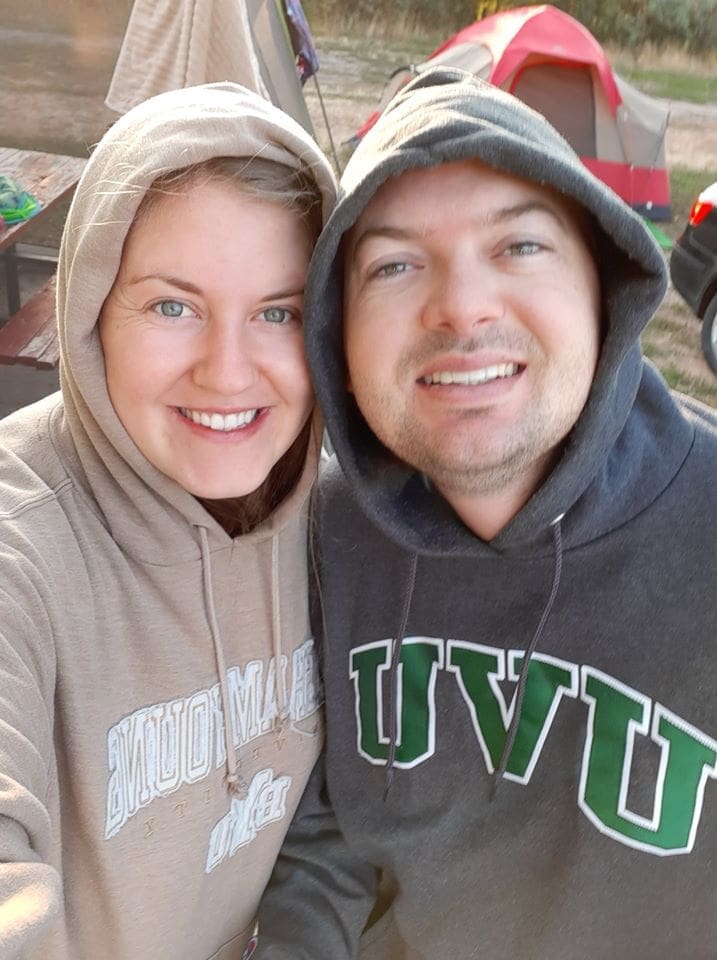
 Periodically on Mormon Stories Podcast I try to interview “normal” or everyday Mormons about their faith journey – and in every case these “normal” Mormons turn out to be extraordinarily thoughtful and courageous. Today’s interview is no exception to this rule.
Today on Mormon Stories podcast I am interviewing Kalin Orgill Organ. Aside from Kalin being a super thoughtful and courageous human, Kalin’s story includes several important themes in modern Mormonism:
- Kalin was raised in an orthodox Mormon home in California and in Highland, Utah – with seven siblings.
- She was sexually abused as a child, which possibly awakened her to her own sexuality early than other children.
- She began masturbating as a girl, before she even knew what the term meant. This instigated a multi-year effort between herself, her parents, and her Mormon bishop to try to stop the behavior, and to become “worthy” in God’s eyes.
- Kalin “lost her virginity” as a Mormon teen, which, along with her inability to stop masturbating, only made her feel less worthy.
- Kalin had doubts/questions as a Mormon teen, and even listened briefly to Mormon Stories podcast PRIOR to serving her mission. She fought hard to gain a testimony while on her mission.
- Over time, three of Kalin’s siblings came out to her as LGBTQ, which multiplied her confusion and doubt.
- After returning from a successful Mormon mission, Kalin married her husband Aaron in a Mormon temple, wherein they became to onlookers the “perfect Mormon couple.”
- Over time, after a lifetime of struggling to feel worthy, Kalin’s doubts began to consume her, and she began to contemplate suicide as a Mormon wife and mother of two children.
- Kalin is currently navigating a mixed-faith marriage, and remains an active non-literal believer in her Salt Lake City ward.
This is Kalin’s story – how she lost her orthodox Mormon faith, but found herself (and her own voice) in the process.
You will not be disappointed with this interview. I hope you will join us. And please spread the word if you can!
Part 1: Kalin describes a Mormon adolescence full of guilt and shame around her sexuality
Episode Transcript
Host: John Dehlin · Guest: Kalin Orgill Organ
This transcript is machine-generated and lightly edited for readability. The audio is authoritative. Please excuse occasional errors in names and spelling.
Introduction and Kalin's Reasons for Sharing
Part 1 of 5 · Ep. 1282
John Dehlin [00:00:04] Thank you for joining us today on Mormon Stories Podcast. If you value this podcast and want to see it continue, please become a monthly supporter@mormonstories.org hello, everyone, and welcome to another edition of Mormon Stories Podcast. I'm your host, John Dehlin. It is March 12, 2020. The coronavirus is raging in the United States, and that makes it a perfect time for us to have an amazing Mormon Stories Podcast interview from the comfort and the solitude of wherever you are right now, your car, your home, or wherever. My name is John Dehlin and we are super excited for the podcast today and for our guest periodically on Mormon Stories. What we try and do is just interview normal or average, average or everyday Mormons and to have them tell their story. And of course, we've never had anyone be on Mormon Stories who didn't turn out to be super thoughtful and even heroic. And I think today is going to be no exception. Is everything okay? Okay. I think today is going to be no exception to that rule. Today we are interviewing Kalyn Organ. And today's interview with Kalin has so many important themes that I think are common for Mormons in the 21st century, for Mormon women in the 21st century, and for families, I think there's so much to relate to. Kalyn's story includes being raised in a very orthodox Mormon home, first in California, but then in Highland, Utah, going to Lone Peak High School, which is significant in its own right. There's six siblings, seven siblings, seven siblings, eight in the family total. We will be talking today about female sexuality, Mormon female teen sexuality, including topics around law of chastity, masturbation, even as the church would call fornication, or losing one's virginity in a sort of a teen Mormon setting. Very vulnerable but really important themes to be talking about. Kalin struggled with questions explored and even maybe had some doubts prior to her mission at a young age. She may have even listened to a Mormon Stories podcast episode or two before leaving on her mission. But ultimately, she did serve a mission for the church, sort of in that wave of young female Mormon missionaries that came with once they change the ages and so forth. But then after Kalin returned home, over time, she's had three of her seven siblings come out as lgbtq, which is pretty significant in a Highland, Utah Mormon family. She's had to navigate her own questions and doubts around faith. She is married and she is in a mixed faith marriage. She and her husband have children, two children. And at present, and this is a theme that we will be exploring more this year and into the future Kaylan is choosing to remain active in the church as an, you know, unorthodox semi believer. I don't know, non believer. We'll have her describe her own belief status. But. But most importantly, I. I've just found Kalin to be really thoughtful and wise and courageous. There's also sort of. I don't know if millennial is the right generation, but kind of a millennial theme as well. So, so much important and interesting about today's interview, so we're really glad you could join us. And so, without any further ado, Kailyn, welcome to Mormon Stories Podcast.
Kalin Orgill Organ [00:04:23] Thank you. I'm honored to be here. John.
John Dehlin [00:04:25] So what's your maiden name?
Kalin Orgill Organ [00:04:27] Or Gil.
John Dehlin [00:04:28] Or Gil.
Kalin Orgill Organ [00:04:29] And then I married an organ.
John Dehlin [00:04:31] Okay, so it's Kalin or Gil, Oregon.
Kalin Orgill Organ [00:04:34] Yep.
John Dehlin [00:04:35] Is that right?
Kalin Orgill Organ [00:04:35] Yep.
John Dehlin [00:04:36] Okay. And I know that, you know, you have a lovely relationship with your parents and your family. Many people who love and care about you remain active and faithful and even orthodox in the church. So I think it's really important to begin by stating your intentions. There's a lot of misperceptions around Mormon Stories Podcast. There's a lot of people who think Mormon Stories Podcast is anti Mormon. They think that I'm trying to lead people out of the church. None of that's true. I love the church. I am very supportive of people staying in the church. And the purpose of this podcast explicitly is not to sow seeds of doubt, and it's not to take people out of the church. And I think you know that, and I think that's why you're willing to come on the podcast. So do you mind taking a minute to begin and sharing why you're not doing this podcast and then why you are? Just so people have a really clear sense.
Kalin Orgill Organ [00:05:34] Yeah. Not doing the podcast. I. I don't ever want people to come to the conclusions I've come to just for the sake of me being right or feeling justified. But it is important to me that the people in my life that I love and care about understand why it's reasonable that I've come to the conclusions that I have. I'm not crazy. I'm not deceived. I'm not unfaithful or weak, especially for my parents, my husband, and I think they're already at that place. But there's additional people in my life and, you know, in the church and my ward and from my mission that I wish they could understand better. But having said that, I don't think that's the main audience here. My Faith Journey was one of
John Dehlin [00:06:24] a
Kalin Orgill Organ [00:06:24] lot of loneliness, a lot of pain, a lot of heartache, and I felt like nobody close to me could really understand what I was going through. And so hearing stories from people that have come on the podcast, from people who are going through what I was going through, saved me sometimes in those. Those lowest moments. And I respect the heck out of people that have been able to share their story and give me hope for moving on and finding Happ again and getting through the lowest of the low. And so, for me, this is about camaraderie. It's about telling people, you know, this is normal for a lot of people. You're not crazy, you're not alone, and I'm here for you.
John Dehlin [00:07:11] I love it. So. So let's do it. Let's dive in. Everyone's got kind of their earliest Mormon memories, and I'd love to hear yours. Let's start there.
Family Background and Pioneer Heritage
Kalin Orgill Organ [00:07:25] Yeah. My family is incredible. My both. My parents are born and raised. Were born and raised in the church. Both come from pioneer heritage. My great, great, great grandfather is. He was C. Kimball.
John Dehlin [00:07:40] Oh, wow.
Kalin Orgill Organ [00:07:41] So I come from Valet, and I actually come from Helen Marr, too.
John Dehlin [00:07:44] Oh.
Kalin Orgill Organ [00:07:45] So a lot of heritage there. My dad is very, very proud of that heritage and kind of instilled that in us, hearing all the stories. And I remember growing up, him telling us, you know, if Fever C. Kimball had just been ordained a member of the Quorum of the twelve right before Brigham Young, then he would have been the prophet, and we would have had that namesake. But. And then on my mom's side of the family, we come from Nathaniel Ashby, if you're familiar. That's another pretty big pioneer name. So lots of pioneer heritage. Lots of definitely hearing those stories growing up and feeling proud of that and proud of the sacrifices that they made to follow their heart and follow what they believed to be true. Growing up, I really wanted to be a good Mormon. I remember I hiked Half Dome in Yosemite National Park. We went there every year growing up. We hiked Half Dome, and I remember learning the Articles of Faith on the trail on our way up and memorizing them in. In preparation for my baptism and being baptized. And I got my first set of scriptures, and I wanted to read three, three chapters every single day. And I never wanted to sin again. And I wanted to be clean and pure, and. And it felt good. It felt good to. To make the decision to follow Jesus and try to be a good person. My family did all the right things. We did prayer, scripture, study, family Home union. More than just daily scripture study. We had kind of a whole routine that we did. It wasn't just a five minute read, a few scriptures. Often it was 30 minutes of we're going to sit down and we're going to start with a prayer and we're going to start with, you know, a certain amount of scriptures. Then we're going to memorize scriptures. My mom comes from a family that was really, really passionate about memorization and poems and script. And so that was a big part of me growing up. My mom had a poem for every single scenario and we'd kind of roll our eyes like it would get a little bit funny after a while, how she would just always have.
John Dehlin [00:10:07] Do you have any examples?
Kalin Orgill Organ [00:10:08] Oh gosh, I'm gonna fail. My mom right now. I'm terrible. I have the worst long term memory. But I memorize a lot of poems growing up. But I'm trying to remember. There's the one about the holes in the boat. A man can't. Oh gosh, I'm gonna fail. I'm sorry, mom.
John Dehlin [00:10:32] But the poems are about what types of things?
Kalin Orgill Organ [00:10:34] Oh, anything about the church. About just like cute little things if you're feeling down, or all sorts of things.
John Dehlin [00:10:41] Not just about having a positive attitude.
Kalin Orgill Organ [00:10:45] Yeah, totally.
John Dehlin [00:10:46] And that's loving people and being kind of.
Kalin Orgill Organ [00:10:49] And that's totally my mom. I mean she is the most loving person, the most kind, forgiving person and really, really instilled that in us. And I remember this is kind of a funny story, but we were memorizing, I don't know if you know the scripture in the Book of Mormon that's like something the servants of Satan that uphold his work. And my parents would teach us like hand signals or some sort of action to help us learn. And we'd repeat like little parts of the scripture five times in a row and then add that to the next part. And we're all, in my family, all, all seven of us learning the scripture and we're learning this little part of it. The servants of Satan that do uphold his work. And the actions we were learning were like the servants of Satan or who do uphold his work. And this neighbor's walking by with their dog and we're all like servants of Satan who do uphold his work. We were all laughing like, they probably think us Mormons are pretty, pretty crazy. But that was, you know, that was my normal childhood. Just the gospel was everything. The gospel was every part of my life. And you know, my parents both, I think they can both count on one Hand how many times they've missed church throughout their life. On vacations, we always went to church, and not just for an hour, but all three. All three hours. And so, you know, that was just very, very normal for me. The very. We did all the things. We didn' not do any of the things.
John Dehlin [00:12:20] What was your dad's profession?
Kalin Orgill Organ [00:12:22] So my dad has worked in, I don't know if you'd say construction or. He's always owned like window business. Home improvement, I guess, is the. But he's done roofing, he's done windows, doors. So right now he owns a window and door company in. In Sandy. So he's been doing that for. He's always owned businesses. I think maybe just a couple years of my whole life. Did he ever work for someone else?
John Dehlin [00:12:48] And your mom was a stay at home mom?
Kalin Orgill Organ [00:12:50] Yes, my mom was a stay at home mom. Okay, is a stay at home mom.
John Dehlin [00:12:53] Still is. Okay. And so where are you in the birth order?
Kalin Orgill Organ [00:12:56] So I'm number six of eight children. Eight children.
John Dehlin [00:12:59] So there's all natural births?
Kalin Orgill Organ [00:13:01] No. So I have three adopted brothers.
John Dehlin [00:13:03] Okay.
Kalin Orgill Organ [00:13:03] So they are half siblings. So they all have the same mom but different dads. But they were all adopted when they were babies. So every time she got pregnant, she would. She would call my parents up and say, hey, do you want to have another. Another child? I'm pregnant again. And so all three of her natural born children went to my parents and my brothers actually just got to meet her in the last few years. She passed away.
John Dehlin [00:13:31] The mom.
Kalin Orgill Organ [00:13:32] The mom, yeah, she passed away just about a year ago. And I think maybe one or two weeks ago they went and did the work for her in the temple, which was really special experience for them. So.
John Dehlin [00:13:42] Okay, so is it. So five of the eight are.
Kalin Orgill Organ [00:13:45] Five of the eight are natural born from your parents? Yes.
John Dehlin [00:13:49] Okay. And did you guys like go on vacations together? Any fun vacation memories?
Kalin Orgill Organ [00:13:57] I feel like our vacations were always either to Yosemite or to Utah. Those are about the only two places we would go growing up because we had a lot of family in Utah and I grew up in Huntington Beach, California until I was 13. And then we moved to finally move to Utah. They'd been talking about it for years. They always wanted to do that, but finally made the. Made the move when I was 13. And so. But before that we just, we went to Yosemite every year and we went to Utah multiple times a year to visit family and see temple Square. And so it was very much a part of my growing up too. Just being here in. In the Great Salt Lake, the. The home of Mormonism.
John Dehlin [00:14:42] Nice. Okay, so your. Let's talk about your spiritual life. Do you remember, you know, primary and, you know, growing up in the church? Do you remember even what the church, the teachings, the songs, the ward, you know, participation, what that meant to you growing up?
Kalin Orgill Organ [00:15:01] It's hard for me to remember that far back because it just was so much a part of my life that I didn't really ever realize, you know, that it was anything different than what every other person in the world experiences. And so I just grew up knowing that I had a heavenly father that loved me and I had a big brother, Jesus, who died for me, and that, you know, I belong to the one and only true church. And I felt pretty. Pretty blessed to. To be a part of that. Like I said, I remember my earliest memories of spirituality were just around the time I was baptized and memorizing articles of faith and reading my scriptures for the first time and really trying to be good and do the right things.
John Dehlin [00:16:02] No. Favorite primary songs that you remember? Did you like the music?
Kalin Orgill Organ [00:16:06] I loved the music. Favorite primary songs? I have a lot. I'm a child of God. Families can be forever or together forever. I actually remember one time I was sitting in a sacrament meeting with my little sister, and I think we were maybe young teenagers at that point, but I put my arm around her and the song we're singing is families can be together Forever. And I'm looking at her, like, admiring or adding lovingly. And I say, you know, squeeze her shoulder. And she looks over and she says, it says, families can be together, not that they will. And so I loved that song. I loved A Child's Prayer. I loved. I'm trying to think what other ones. A lot of hymns too. Have I done any good? Did I think to pray? So those are some of the ones I remember. My mom would draw out these pictures on these big poster boards of the little pictures to help us learn the lyrics. And so those two songs specifically, I remember, can still visualize in my mind some of the images that she drew. And she's very talented artist and poetry. So that was really special that we got to do that. And I remember just being in primary and loving being there with my friends. I think I was a little bit of a rebel at times in primary and in church. I was kind of always pushing teachers buttons and I was a little bit boy crazy. Okay, maybe a lot of boy crazy. Since the time I was very little, maybe four years old. I remember standing on a picnic table and screaming that I wanted to kiss this boy. And so I was always very much aware of the boys in my. In primary. Even at that age, I was very much interested in being friends and flirty and that kind of thing.
John Dehlin [00:18:20] So. So as we've talked about your interview a little bit, it sounds like something kind of really difficult happened in your childhood that informed kind of the rest. Is there stuff you want to talk about there?
Childhood Sexual Abuse and Early Sexuality
Kalin Orgill Organ [00:18:32] Yeah, I mean, so there was one instance of sexual abuse when I was seven years old, and the instance itself didn't have a huge impact on me, but it did introduce me to masturbation. And that ended up playing a pretty big role in my childhood and adolescence. From the time I was seven years old, I started masturbating. And to me, that was. I didn't even know what I was doing. I didn't know that it was a thing. I thought it was something that my body magically did created this really good feeling. I had no idea that other people could experience that. It wasn't until I was, I think, nine years old, I was swimming with some friends in a pool and they said, oh, so and so's mom walked in on him masturbating. And I was like, what is, what is masturbating? And they described it to me and it was like this, aha. Moment of, oh my goodness, that's what I do. That's. That's what. What happens to me. That I guess that's a thing. And I had told my parents and I knew that it was something I wasn't supposed to do. But it wasn't until I was probably 10 or 11 that I realized that it was something that could keep you from going to the temple, it could keep you from partaking of the sacrament. It could really affect your worthiness and standing in the church. And that was. That was hard to navigate. As a young girl at 12, struggling with that and having my peers going to the temple and not being able to go with them at times, not being able to take the sacrament depending on the bishop. There's a lot of, you know, roulette there with how different bishops handle that specific issue. But every bishop I had growing up, it was always something that I discussed with them and always something I was honest about. And it was something I was always working on. I remember my parents trying to help me. We'd set goals and we'd have little prizes if I could go so long without slipping up. And we would, you know, one would be, if it's 30 days we can go to Rubio's and get tacos together. If it's three months, we'll get you a new shirt at Forever 21. And I.
John Dehlin [00:20:53] What age was this sort of goal setting happening with your parents?
Kalin Orgill Organ [00:20:59] My earliest memories were probably after I turned like 11 or 12 and was either preparing for. To go into the temple or wanting to be there in the temple and not being able to because of this thing that I was doing. And I felt a lot of shame about it because it didn't get talked about, not in young women's, not in. It was something that the boys struggled with, that, you know, it was normal to be discussed with boys, but I felt like sometimes bishops didn't really know how to handle that. With me being a female, I feel like it wasn't as common. And I felt like there was something really wrong with the fact that I was doing that, that I must be. I wouldn't. I wouldn't say bad, but why am I doing this? Why am I. I know this is wrong. And yet it was a constant battle and constant cycle of being so mad at myself and. And then, you know, trying to get worthy, trying to go a certain amount of time. It was always these timelines of how long I needed to go without slipping up so that I could go to the temple or so that I could take the sacrament or so that I could be in a young women's presidency, or not young women's presidency, but one of the class presidencies beehives my maids laurels. And so a lot of times I was not able to participate in those things because of. Because of this.
John Dehlin [00:22:29] So there's a great. There's a couple things. So first of all, thank you so much for being willing to talk so candidly and directly about this. There's some things about this that stick out for me. One is that this is in our culture, and probably not just Mormon culture, but it's just assumed that this is a boy problem.
Kalin Orgill Organ [00:22:45] Yeah.
John Dehlin [00:22:47] And, you know, I've heard this story 10,000 times with boys, but there's an assumption that girls don't, number one, girls don't really masturbate, and number two, that they certainly don't have this problem where, where it emerges really young and then, you know, where they're on this kind of performance plan of trying to stop something. So this is. I. This may be the first time we've. We've really been able to talk about this on Mormon stories. And my guess is that that's just wrong, that it's probably A lot more common than people think, but because. And you tell me if this is wrong as well. Maybe in Mormon culture, women aren't supposed to be sexual at all. And so women are just kind of ignored. And it's just assumed that that's not something. But it's certainly not something that's emphasized in young women's to the extent that it is in young men's. Do you have any reflections on that and how the perceptions versus the reality and then how that all played into your experience?
Kalin Orgill Organ [00:23:44] Yeah, absolutely. I don't want to downplay what boys in the church experience regarding, you know, kind of the shame with masturbation and pornography. But for girls there's a. There's a different element to the shame because it's something that is not normalized for women and it's not normal. At least it's not talked about. So it doesn't feel normal for me to be struggling with this in such a compulsive way that I was. And I had never heard of another girl struggling with it until I went to college. And my best friend told me that when she was 13 or 14, had masturbated once and it was kind of an accident, but I mean, she was sobbing when she was telling me this. She'd never told a bishop. And she felt deep, deep like she was the scum of the earth because she had done that one time. And I remember I started crying and I was like, oh, if you feel that bad about doing it one time, like I've been doing this since I was seven, on and off.
John Dehlin [00:24:46] Were you able to talk to her about it?
Kalin Orgill Organ [00:24:47] Yeah, oh yeah, we definitely talked about it. And she was finally went and told the bishop, and the bishop, I think, kind of laughed a little bit that she was confessing this sin that she had held so deep and inside for so long, you know, since masturbating one time when she was 13. And yet that was something she felt like she had to get off her chest and repent of. And so, you know, that was shocking to me to see how. How much shame that she felt for me. I guess because I started younger, my parents did a really good job of not shaming me. They didn't make me feel like I was a bad person, but they did very much try to help me to stop the behavior and to get worthy and to get clean. And so I feel like at that age it kind of put a lot of emphasis on this idea of worthiness. And it was something I thought about a lot. What does it mean to be worthy? And how do we balance worthiness with, with God's love? What does it mean for God to love me unconditionally but to also at the same time deem me unworthy of particular blessings? That was really confusing for me. And it was hard for me to navigate that space of feeling like God loved me, but also feeling like if I did this certain thing, certain privileges that would bring me closer to God would be taken away.
John Dehlin [00:26:07] And so yeah, and what was the, and this is going to sound like an obvious question, but like what was the function? If you're thinking back to your 12 year old self, 13 year old self, what, what, why did you do that? What was the, what was the draw? And again, this sounds like an obvious question, but I just want to talk a little bit more about that and I'll explain why in a second.
Kalin Orgill Organ [00:26:30] The draw. I'm too. Masturbation? Is that what you're referring to? Right, like to masturbate? Yeah. So for me, I think a lot of times it was a coping mechanism. It was a way to fall asleep. If I couldn't fall asleep, it would help me relax. My mom and I even had kind of a, a little agreement where we would, if I was feeling tempted, I could call her, text her, go tell her, hey, I'm feeling tempted. And she'd come down and give me like a 20 minute back rub to help me fall asleep. And that was kind of a way to replace that behavior with something that was also playing, helping me to, to meet that function of needing to fall asleep. So I think there was that part of it. I also feel like I was, I think because of my experience when I was seven, I was exposed to sexual things that normally seven year olds aren't going to be exposed to. And that brought up feelings and hormones and emotions for me that made me want to feel this pleasurable feeling that it brought me. And you know, for me it was, it was definitely sexual. It wasn't just, you know, trying to help me sleep, although I think that was a part of it. But it did definitely affect my interest in boys. It definitely affected my, my intimacy with boys and how quickly I would progress with boys in an intimate way that I was dating or sneaking around with or whatever.
John Dehlin [00:28:13] I mean, maybe it's just a higher sex drive. Is that.
Kalin Orgill Organ [00:28:15] Yeah, absolutely. And I think, you know, even in my marriage now, I think I, I do probably have a higher than average sex drive. And, and, and I've come to see that as a really positive thing and I'm grateful for it now, but as a kid, you know, sex is something that you shouldn't feel a desire for until you're married. And so, you know, it wasn't normal. It didn't feel normal for me to be feeling those things as a 10, 11, 12, 13 year old girl and
John Dehlin [00:28:40] then getting a sense for your parents and just what type of parents they seem to be. They, they don't seem to be a shaming type.
Kalin Orgill Organ [00:28:49] No.
John Dehlin [00:28:49] So, so here they are trying to help you stop, but not to be shaming and, and stigmatizing. Is that right?
Kalin Orgill Organ [00:28:56] Absolutely. And it's interesting because I remember one time it was like me and two of my other siblings were all lined up to talk to the bishop one day, and we're all confessing something or another. And, you know, my mom was feeling kind of sad, like all three of my kids are having to talk to the bishop about something or another. And, and the bishop talked to my parents after and said, you know, you guys are doing something right, because every single one of your kids had already told you before telling me what they had done. And that was very, that was not very common for that bishop to have a child. I have already spoken to their parents about their sins or whatever immoral thing that they did. A lot of times kids would say, but don't tell my parents, don't. And so, and there was very much a culture in my family where we were able to come to my parents and tell them what we were struggling with before we would ever, ever even go and confess to the bishop.
Parental Involvement and Navigating Shame as a Teen
John Dehlin [00:29:57] Okay, and what was it like to have your parents involved in your kind of sexuality at such a young age? To have to like, be reporting to them and setting goals and, and I guess that kind of makes sexuality kind of. How could you not interpret negative associations with your sexuality when it's something you're always trying to stop and avoid? Does that make sense?
Kalin Orgill Organ [00:30:26] Yeah, absolutely. And I mean, for me it was, it was normal because like I said, a lot of victims of sexual abuse, I think, have a really hard time coming forward. And I think maybe my personality and just, you know, the kid that I was, the, the day that it happened, I went and told my parents right away, hey, this happened. And you know, gratefully, it never happened again because I was able to come forward. And when I started masturbating again, I think I told my parents right away. I think I was very open with them. And so for me, it just kind of felt normal to have my parents involved in helping me overcome this thing. And I was Always open with my parents about different things I struggled with up until, you know, getting married. And they were always, always there to help me. But yeah, I think it, it definitely was hard for me to feel like I was a good Mormon or a good daughter of God when I did have a lot of hyper sexualization in my childhood, feeling like, you know, why am I this way? Why am I so interested in these things that I shouldn't be interested in and that, you know, are off limits and sacred? And I felt a lot of shame about that for sure.
John Dehlin [00:31:45] So as you tried to stop and you couldn't, how did that make you feel about yourself?
Kalin Orgill Organ [00:31:51] Bad. Really weak. I was just actually talking about this with my brother last night, and I don't know if we want to talk about other things first, but leading up to my mission, this was a huge barrier that I had to get over in order to serve a mission. And I think the requirement that my bishop had was three months. And I think different bishops had different requirements, but my bishop required three months from one mess up to the other before being able to put in your papers to serve a mission. And I would go like two and a half months and then I'd slip up and that would reset the clock. And so then I'd have to wait another three months. And then if I'd slip up, reset the clock. And so I hated myself after I'd slip up. I remember wanting to cut off my hand sometimes just like so mad that I would give in. And sometimes it wouldn't even be like this thought process that I'd fully go through. It was just like almost impulse to do it. And I would have a big kind of. I called it my battle plan of how I would resist temptation. And I would have a whole list of things first. Okay, get up, get out of bed right away, get a drink of water, read this scripture and that scripture. Text mom, text dad, call my sister. My older sister actually was really involved in helping me with this as well from a very young age.
John Dehlin [00:33:25] How would she help?
Kalin Orgill Organ [00:33:27] She. I remember specifically one time I was. I was definitely 9 or 10 or 11, and she was up at BYU. She's 10 years older than me. I remember her coming down and she made me this little plaque that said it. She just had her first baby. And it said the quote, don't. Oh, what is it? Don't give up what you want most for what you want in the moment. Or something along those lines. And it was a picture of the temple, and it was a picture of her newborn daughter to kind of help me, motivate me. And then she helped me memorize her phone number so that I could call her if I was ever feeling tempted and just have another person in my corner to help me overcome this.
John Dehlin [00:34:17] Looking back, and people are going to feel differently about this, but looking back, I just can't help but, you know, knowing as a psychologist, as someone who studied this, that this is just such a normal behavior that 90, 95% of young boys do and maybe 50 plus percent of young girls do. And the fact that they're not doing it may or may not be a problem, I'm not sure. But the fact that it's just really definitely normal behavior and yet it was seen as so problematic and such a constant weight on you as a young teen. I'm just trying to make sense of all the pain and the suffering and the effort based on, on actually how it's not a problem, but maybe even healthy. Have you, have you thought about that?
Kalin Orgill Organ [00:35:06] Yeah. I mean, my views on masturbation have, have changed quite a bit since my faith transition. And I wish I could go back and hug that little girl. I wish I could help her feel like what she was doing was not horrible, that it was very much a normal part of the development and that a lot of girls did it. I think in order to not normalize it and to not make it, you know, so I would justify the behavior. No one ever talked to me about that. Nobody ever really told me, hey, this is, this is normal. A lot of people do this. And so I felt very much alone in this behavior, that I was somehow more vile or more devilish than other girls my age. I don't know, that sounds extreme, I don't know the right word there, but that something about me was more of the natural woman than other people in my same, my same peer group.
John Dehlin [00:36:09] One of the members of our audience is wondering whether the, the sexual abuse kind of maybe led to a bit of a premature sexual awakening or an increased sexual awareness. And we, we're not, none of us want to dig or have you talk about more than what's comfortable. But, but clearly most people find their way to, to, to masturbation without any abuse. So, I mean.
Kalin Orgill Organ [00:36:33] Right. I think maybe it was a little premature. I think seven is probably on the younger age to start that. I think girls tend to be able to orgasm sooner than boys do, hormonally or developmentally. But I'm not a psychologist. I don't know why I, I have a feeling it probably definitely played a big part in that kind of sexual awakening. But I don't. I don't know. I don't know exactly what the. The cause was.
John Dehlin [00:37:02] Why, it's impossible to know.
Kalin Orgill Organ [00:37:03] Yeah.
John Dehlin [00:37:05] So how did that move into your. Your sexual experiences as a teenage Mormon girl? Talk about that transition.
Kalin Orgill Organ [00:37:13] Yeah. So, like I said, I was really boy crazy. I mean, anyone in my family can tell you that I was very, very flirtatious, very much. Always had a boy that I liked, always had a boyfriend. And I remember having my first kiss in sixth grade and even having a little bit of my first sexual experience before 13, before moving to Utah. Just a little bit of touching, kind of exploring with. With. With some boys from my school. But it wasn't until we moved to Utah And I was 14, I believe that I had a serious boyfriend in eighth grade, maybe ninth grade. And that's when I really started to explore sexually more. And I remember Mormon boy. Yes, this was a Mormon boy. And I remember confessing to the bishop after we broke up. And I remember feeling like while I was engaging in those behaviors, I. I never really doubted my testimony. I think I just knew because I was so into boys, I wanted that more. It was more important to me at the time than being right with God was. And I remember thinking, like, okay, like, I'm accepting that I'm gonna go to hell. Like, that's. That's just what's gonna happen. And I'm okay with that because I don't think I can live up to what's being asked of me. And, you know, I just remember feeling multiple times when I was engaging in sexual behaviors with boys at that age, feeling like, yep, I'm going to hell, but that's okay. I've accepted it, and I can move on.
John Dehlin [00:39:04] And it's part of that. Just. It brought you a lot of satisfaction and a lot of pleasure, joy, whatever.
Kalin Orgill Organ [00:39:09] Yeah, I think it was the excitement of. I think it was approval. I think very much. I was constantly wanting boys to like me. I was hearing, you know, music about girls being sexy, and I wanted. I wanted to be seen that way to boys. I wanted to be attractive. I wanted to be someone that they wanted to be with. And acting out sexually was kind of a way that I drew boys to me.
John Dehlin [00:39:38] And when you think back to those times, were they. Were they enjoyable? Were they fun? Did you. Do you think back, wow, that was actually fun or nice, or I liked it, or was it marred and scarred with thrashing between guilt and pleasure and happiness?
Kalin Orgill Organ [00:39:55] Yeah, there was a lot of the guilt. I don't know. I'm not necessarily. I don't really know how I feel about premarital sex at this point. I think I'd really like for it to be destigmatized and not as shaming because people. Kids are going to have sex, they just are.
John Dehlin [00:40:15] Even in Utah.
Kalin Orgill Organ [00:40:16] Even in Utah as much as we.
John Dehlin [00:40:18] Even in Highland. Even at Lone Peak. Right.
Kalin Orgill Organ [00:40:21] Well, it's funny because after that boyfriend and I broke up, I started dating another guy about six months later, and he actually wasn't a member of the church. And Lone Peak, I mean, it's probably 95% plus Mormons. And so when I started dating this boy, my parents were rolling their eyes like, of course you're gonna find the one non Mormon boy today. And he's actually the person that I. We both lost our virginity together. And at age I. It was right around my 16th birthday. I'm not sure if it was right before or right after, but I remember again that feeling of, well, I'm going to hell, but. But at least I get to be with someone I love. And I remember my parents there being times where they would kind of be skeptical about whether things were going on, whether we were, you know, being moral or if I was struggling with chastity. And they would say, like, we're gonna order your text message transcripts. And I remember just thinking like, oh my goodness, they're gonna find out and I'm. I'm gonna run away. I'm gonna. I don't care what they say. Like, I'm. I love this boy and I'm gonna do whatever I him. And they never did end up looking at my text messages. And so anytime they found out about things that I was doing, it was because I came forward and told them.
John Dehlin [00:41:41] So did you have to do a lot of hiding and, and absolutely lying. And I hate to use that word, but not telling the truth.
Kalin Orgill Organ [00:41:49] Yeah, yeah, no, I did.
John Dehlin [00:41:50] About what you were doing and where you were.
Kalin Orgill Organ [00:41:52] Totally.
John Dehlin [00:41:52] And how would you hide it?
Kalin Orgill Organ [00:41:54] I would tell them that I was with certain friends. I would. Would flat out lie all the time. I would. It was hard because our community, you know, my mom would get like a. What's the word? Anonymous letter in the mail saying, hey, like I saw Kalyn at Subway with this boy being really touchy feely.
John Dehlin [00:42:17] An anonymous letter in the mail.
Kalin Orgill Organ [00:42:20] Yep. So there were, there were people looking out for me, I guess. But. So I remember lying and I remember being really scared because my mom was really good at telling when I was lying. And she would always Say like the spirit is telling me that you're being dishonest. Or the spirit is telling me that there's more that you're not telling me. So I remember one time, and this is funny, but I, she picked me up from a friend's house and I had been alone with this boy. And so my mom starts going, quizzing me, well, how was it? What were you doing? And I'm like, oh my gosh, she's gonna know. The spirit's gonna tell her that I'm lying. So I start saying swear words in my head, thinking that if I was swearing that the spirit would leave the car. And then the spirit wouldn't be able to tell her that I was lying to her. And so I was like, you know, the S word or whatever, just so that she wouldn't be able to feel the spirit. Because in my mind, that's how the spirit works. The spirit can't be in environment where there's, you know, swearing or whatever. And so obviously that didn't work. But I definitely got away with, with some of it. And sometimes I got caught. But I was very manipulative, very dishonest in how I. But then I, I, it was always this roller coaster of I would have a few months of doing this and then I would try to repent. And I'd write on a piece of paper a big list of my sins. Everything I did. I wore a bikini. I did this. I, you know, did this with a boy. And I put it under my parents pillow. Just a big, long list of my sins.
John Dehlin [00:43:48] Like a confession.
Kalin Orgill Organ [00:43:49] Like a confession. And then they would talk to me and kind of build up, help me build up the courage to then go and tell the bishop. And same thing with the bishop. I would tell him this big, long assistant and he'd be like, kaylin, okay, I don't, I don't need to know all this stuff. I don't need to know that you wore a bikini or that you, whatever, took off your leggings when you got to school, when you're wearing your, your dress or whatever. And so, you know, but I was, there was a lot of, like, I felt like I needed to be really, really clean with God. And the only way to do that was to tell the bishop. The bishop was the one who just decided whether I was clean before God, who determined my worthiness and whether I could feel at peace with whether I died tomorrow, whether I would go to heaven or hell or make it to the celestial kingdom or not.
John Dehlin [00:44:35] You know, and in the past, obviously We've covered Sam Young and the Protect LDS Children kind of movement and we've talked about bishops that ask super inappropriate questions, or bishops that seem to want to get details, maybe even sometimes for their own gratification. And I have no idea how common or rare that is. Or just bishops that ask a 12 year old, do you masturbate or 12 year old girl? It sounds like your bishops were pretty reasonable and kind and loving. Is that right?
Kalin Orgill Organ [00:45:07] Yeah. I was lucky. I didn't have experiences that were really uncomfortable with bishops. The most uncomfortable I ever felt was I told a bishop, you know, I participated in oral sex. And he said, well, can you tell me exactly what you mean by that? And having to say out loud the words, will he put his mouth here? Whatever. Like that was, was really, really uncomfortable to say out loud. But I think it was more for him. I didn't get the sense that it was because he wanted details. I think he wanted to make sure we were on the same page of what oral sex meant so that he could appropriately, you know, discipline or whatever.
John Dehlin [00:45:46] And. Yeah, and so I guess it's good. You had pretty decent bishops. And I'm guessing most bishops are loving and kind and reasonable. It's just the bad apples that kind of.
Kalin Orgill Organ [00:45:55] Of destroy it. Yeah, yeah.
John Dehlin [00:45:57] And, and, and the context of a man evaluating your worthiness and that you need to confess to a man. I mean, there's a, there's a structural problem with that.
Kalin Orgill Organ [00:46:06] Yeah. And that, that for me was the biggest thing. I feel like that has continued to play a huge role in my life, is feeling like I don't know how to be okay with God if someone else is not telling me that God's okay with me. And so through my whole faith crisis, you know, obviously I felt like no one was able to validate my concern. So clearly God was not happy with me. And so that was hard. That's very much ingrained in me is the bishop decides whether I'm worthy and right with God.
John Dehlin [00:46:42] In Utah, I've noticed there's this weird dynamic where if a boy and a girl are being exploring sexually or even being sexually active, but the boy's supposed to go on a mission, and so the girl's got her bishop and the boys got his bishop, and sometimes they're not the same bishop. And then there's a matter of like, who confesses and then does one bishop tell the other? And then do the parents of the other kid get involved? And did. Were there ever those sorts of kind of complications or meltdowns or intricacies where like you weren't being honest, but then the boy told his bishop and then the bishop contacted yours or any of that kind of stuff.
Kalin Orgill Organ [00:47:19] So I had, I had a boy. The first boyfriend that I talked about after we broke up, he started dating another girl. And they were really, really mean to me. And she kind of blamed me for, you know, seducing him or whatever and causing him to commit these sins. And so they were harassing me quite a bit, calling me a slut, calling me a skank, you know, really, really horrible things. And I was devastated because I was still in love with this boy. And to this day that was by far my most devastating heartbreak. You know, you don't realize how much a 13 year old girl can feel. And I remember the day he broke up with me, just sobbing in my bed and I hear my door creak open and it's my dad and he just comes and lays on my bed with me and holds me and that was hard. To this day, you know, that really, really changed the way I viewed love and, and how boys could just change their mind in a second about me. I just thought our love was forever. Thought we were going to get married, but. So when he and his girlfriend started harassing me, my dad went to his bishop and said, hey, you know, this boy is being really, really mean to my daughter. And I was going to go. This bishop was actually a teacher at Lone Peak. And so my dad had set up for me to go talk to him and I never ended up going because. Because the harassment stopped and I was able to move forward. But it's interesting. So Aaron and I, and I asked him if I could share this and he was fine with it.
John Dehlin [00:48:46] Your current husband?
Kalin Orgill Organ [00:48:47] My current husband, yes. My only husband. When we were dating, we struggled to stay clean. Just like I think any BYU couple, but clean.
John Dehlin [00:49:00] I hate jokes.
Kalin Orgill Organ [00:49:00] I know, I know, it's funny hearing
John Dehlin [00:49:02] it now, that's the worst word in the world. You were never dirty.
Kalin Orgill Organ [00:49:06] You know what I mean?
John Dehlin [00:49:06] But, but I'm sorry, in the context. Struggling to follow the law of chastity.
Kalin Orgill Organ [00:49:11] Struggling to follow the law of chastity. Yes. Just in the sense that we'd get into really heated makeout sessions and again I had this feeling of I had to confess every little thing. And so I was going to my singles ward bishop and telling him, you know, like we made out like really heavily. And he's like, okay, like what else? I'm like, no, but it was like really intense make out. And he's like, Caitlin, if Every BYU couple came to me every time they made out. I would never be able to leave my office. But there was about a week before we were to get going to get married in the temple. You know, I don't remember what even we did, but it was something that was crossing a line. And so I felt, again, Aaron didn't really feel the need to confess, but I did. And I was like, I cannot get married in the temple unless I know God. I'm worthy. Because our ceiling's not going to count if I don't, you know, if I'm not clean. I really thought that it wouldn't be a valid ceiling. And so I convinced him to go to his bishop. And I went to my bishop and my bishop. Bishop again was very, you know, I'm not worried about it. You're fine. Good to go to the temple. His bishop, on the other hand, had waited to kiss his wife until over the altar on their wedding day and was really, really strict about sexual purity in their singles ward. And so his bishop was like, I don't know. I don't know if you're gonna be able to get married in the temple. He had to meet with the stake president. It was this big thing, and it was so hard for us. And I think it caused a lot of cognitive dissonance for both Aaron and I. Why is my bishop praying? And God is tell fine for us to get married in the temple, but Aaron's bishop is almost, you know, we might not be able to because of his revelation. And how. How are these two revelations conflicting? And, you know, and I think it was at that point that we realized how flawed that revelatory model process is. And so. But that was hard for both of us. But we ended up being able to get married in the temple, and it was, you know, it was fine, but that was the only time there was ever a situation like that with bishops feeling differently about the behavior.
The Church's Expectations and a Supportive Family
John Dehlin [00:51:15] So just to circle back, it sounds like your parents were just amazing. They are like, just like, as I counsel couples about parenting stuff, like unconditional love, just like, I love you no matter what, there's nothing you can do to change my love. Is that what you felt from your parents?
Kalin Orgill Organ [00:51:38] Absolutely. And I think. I think my parents felt like some of the bishops came down pretty hard on me. And, like, I remember when I was trying to go on my mission and I had slipped up and had been like two and a half months. I was so close, and I was just devastated that I was gonna have to wait three more months My bishop or my dad said, you know what? Like, I don't think this is right. And he went and he, like, pleaded with our bishop to change his mind. And he did. And I was able to turn in my papers so they. They really went to bat for me. I remember when I. The first time I confessed like, that I had had sex, fornicated, whatever. I was informally disfellowshipped, informal discipline by the church, you know, and I get this, like, formal letter explaining, you know, I can't have the sacrament, I can't go to the temple, all these different things for. It was supposed to be a year, about nine months. And so this. This part is kind of crucial in my story. So this was my junior year of high school. I had just broken up with this boyfriend. And I remember just sitting in seminary and realizing, you know, if the church is true, nothing else matters. And I've got to figure this out because I'm throwing it all away for. For what I call this, you know, my mighty change. And my life completely turned around. That's when I became Molly Moorman. And everyone in my life, my ward, family, my school. I quit playing sports. I joined choir. I joined, you know, I joined drama because those were better kids to hang out with. I started, threw away all my immodest clothes, threw away all my bad music. And I just, for the first time in my time in my life, really, really changed, turned around and changed who I was and what I was doing. And so I had had the confession to the bishop, and I had to wait a year. I remember nine months in a year
John Dehlin [00:53:38] to like, take the sacrament again or
Kalin Orgill Organ [00:53:39] go to the temple or hold a calling.
John Dehlin [00:53:41] Anything meaning baptisms for the dead at the temple. Yeah, we're hold a calling, like in the presidency's youth Presidency.
Kalin Orgill Organ [00:53:47] Yes.
John Dehlin [00:53:48] So I was 16, so almost a
Kalin Orgill Organ [00:53:50] year probation a year is what the letter said. And so I remember I have this huge, mighty change, and I am like, literally within three months a completely different person. And everyone is just like, coming up to my parents, like, what is on with Kay Lynn? Like, she's just a new person. And I'm. I'm spending probably two hours a day reading my scriptures, reading my scriptures, memorizing the scripture masteries, reading books. I read probably 30 church books that year. All Sherry D. Books, all of the. The books by the quorum of the 12. I would just really like scrupulosity with.
John Dehlin [00:54:30] I was about to ask you about scrupulosity.
Kalin Orgill Organ [00:54:32] Yeah. And I. I really struggled. I. I felt forgiven. I felt Like I was doing all the right things for the first time in my life. And I still had nine months to go before I was worthy to before God. And I, I didn't get that because I'm like, God knows my heart. I've changed my heart. I've had a 180 degree change in my life. Why can I not take the sacrament? Why can I not go to the temple? And, and, you know, my bishop tried to help me understand there's consequences and we have to pay for our, you know, we have to suffer the consequences of our actions. But about nine months in, I remember my bishop calls me in and tells me, hey, I want you to know that I've prayed and Heavenly Father feels like you are worthy and you're ready. And not only can you take the test or the sacrament, not only can you go to the temple, but I want to call you as the second counselor in the Laurels class. Pregnancy. I'm just sobbing. And I get out of that interview and I call my parents and my parents come home, we're all crying and they're hugging me. And, you know, it's this beautiful moment that I'm finally, like, declared clean before God. And that was from that point on up until I had my faith crisis. After my mission, I was, I was dedicated and I was faithful and I loved the gospel. I just became obsessed with it. It became my whole life. I no longer was going back. I was in and I was all in.
John Dehlin [00:56:02] I just have to say, after interviewing Lila Tuller and, you know, her dad was Hartman Rector and how he would speak for God to his children, you know, just those words Heavenly Father feels that your bishop uttered to you, on the one hand, what a love, what a powerful experience for you. You must have just loved, you know, being validated and like, you're worthy now and we take you back and you've paid for your sins. That must have been euphoric for you. You. But, but built into that structure is the idea that he's arbitrating your worthiness and that he knows God's. He gets to know when God's forgiven you that you don't. I mean, that's a theme you've already introduced, but we're coming back to it. He's the one deciding, not you, that you're forgiven and that you're worthy. You can't have that direct relationship with God. It's gotta be through a man, you know, who's over you in a patriarchal structure. And I'm just so mixed about that. You know.
Kalin Orgill Organ [00:56:56] Yeah, I. I feel mixed about it, too. At the same time, I want to honor that. That was a beautiful experience at the time, but that really affected the way I was able to understand God and. And how I wasn't able to trust myself. Just the fact that I felt forgiven, but I still had nine more months to go. It caused me to distrust what I felt it caused me to distrust because, you know, clearly I wasn't forgiven yet. Clearly I wasn't worthy. And the bishop, I think it caused me to rely on that external authority to decide all things, not just worthiness. I mean, this plays a role again and again in all of the decisions I make going forward, but this complete trust and obedience to what my leaders asked of me, and whether that be a bishop or whether that be the prophet or apostle from 1970 giving a talk. I mean, every single word was scripture to me and was God's will to me. And I didn't know how to differentiate between that and what I felt.
John Dehlin [00:58:06] Yeah, from. From the church's standpoint, I think it benefits the church because I think for churches to help to stay healthy and strong, they want people. People saying, hey, church, you're my inner. You're my connection to God. You're the broker for my relationship with God. So the church, and I don't think this is conscious or intentional, but they want you feeling like you need that priesthood leadership, you need that structure, that authority to be able to be right with God. And that kind of seals you to the church. And it probably did that for a while. Is that true?
Kalin Orgill Organ [00:58:43] Yeah, absolutely. It's interesting you bring that up. And I. When we. My Aaron and I came to the Faith Crisis retreat a few weeks ago, and my parents were watching our daughters, and I called my dad the next day, and Aaron and I were talking to him and just saying, you know, hey, like, it's really incredible how John is able to be so positive towards the church. And I think my dad is a little bit of a skeptic. And he was like, you know, I'm. I'm a little skeptical of anybody that that creates a problem that then has the solution to fix it. I said, kind of like, religion, huh? And I said that to him. I said, kind of like how we're told, you know, we're impure, we're unworthy, and we need religion to make us right with God. And so again, you know, I just. I think there's in. In lots of different ways. You. There's that aspect that. Yeah, absolutely. I felt like in order to be right with God and to feel clean. I needed somebody to say those words. I not trust myself. And to me, it was. It wasn't just about feeling worthy. It was about my eternal salvation. That was very real to me. If I wasn't doing certain things, every time I slipped up, I wasn't. If I died in that moment, I wasn't going to be in heaven. I wasn't going to be with my family like that was. I believed that literally that they were declaring whether I was worthy of the celestial kingdom. And as long as I could keep that.
John Dehlin [01:00:14] Coronavirus.
Kalin Orgill Organ [01:00:15] Oh, gosh. But, yeah, I needed that. I needed that to feel okay with God.
John Dehlin [01:00:23] Yeah. And this interview isn't about me, but, like, I. I just have to say, like, I didn't start Mormon story. I started Mormon stories to just try and help people stay in the church. And. And for years, I get so discouraged when people would leave and. And people were leaving before. And it's the church history that causes people to leave. It's being LGBTQ that causes people to leave. It's some of the church's behaviors. It's not me. So this whole becoming a psychologist and doing the retreats, that was an outgrowth of seeing how people became collateral damage when they started doubting and questioning their church, when it would jeopardize their marriage, they would become suicidal, the LGBTQ kids would want to kill themselves. That's why I got into psychology. I. I would have never done that. You know what I mean? So, yeah, I'm not trying to create a problem that I can then present myself as a solution for. I. I tried to help the church and help people stay in the church. And then I saw that it just wasn't too many people weren't able to stay. And when they tried to leave, it became catastrophic for their lives. And that's why I stepped in just for your parents, just for your dad. But I understand that concern anyway, so that's a powerful theme. And then. So does that mean that you were able to stop masturbating for those years prior to your mission from 16 on? Or, like, no messing around with boys and all that? That.
Kalin Orgill Organ [01:02:00] No messing around with boys. I never struggled with immorality again at all until, like, the little stuff with Aaron. But that was never anything major. That was just, you know, getting a little too intense, making out, but never struggled with boys. I had a couple serious boyfriends. I had a boy that I met at Trek that became my boyfriend. My. Not even my boyfriend. I refused to be his girlfriend because the prophet said, you're not supposed to have a boyfriend. And so, you know, I was head over heels for this guy. But we. I told him I only ever wanted a peck. I never wanted him to kiss me for longer than three seconds. And he. He was respectful of that. Never kissed a boy more than three seconds. And he was the only boy that I kissed after that. And so he was very respectful of that. I remember he asked me to prom, and he. He had moved back to Wyoming, which is where he's from, and so I flew out there and things started getting a little bit serious. And so I ended up breaking things off with him the end of my senior year because I. I wanted him to focus on a mission. I told him, you know, serve your mission, and then when you get home, I'll. I'll be here, and we can see what happens. But I was very, you know, dedicated to following the For Strength of Youth. I had my whole For Strength of Youth pamphlet marked up and highlighted and tabs in it. And I. I studied that often, and that became what I lived by. That was my. My gold standard.
John Dehlin [01:03:32] Did you identify with Alma the Younger at all?
Kalin Orgill Organ [01:03:34] Oh, yeah. Oh, yeah.
John Dehlin [01:03:35] Was he your. Was that one of your most.
Kalin Orgill Organ [01:03:37] Yeah. I mean, the mighty change thing. That was. That was my thing. I had had the mighty change. I went from Alma, you know, what he was doing. I was the horrible, you know, immoral daughter doing these horrible things to being, you know, someone that was gonna fight for the gospel the rest of my life. And, you know, another theme with. I know you've talked about on the podcast a lot is this idea of, like, feeling like the Nephi. And it's maybe hard to believe that hearing my story of rebellion, wretched past. Yes. But from that point on, I mean, my parents were so proud of how I changed. We're so proud of having gotten my. My life together and gained a strong testimony. And I was, you know, I was doing all the right things.
John Dehlin [01:04:30] And that feels so good as a teenager to have your parents just adoring you and proud of you. And it must. It's such a rush, right?
Kalin Orgill Organ [01:04:39] Absolutely. That became. I loved that it was the first time I'd ever experienced that because I had been so up and down throughout my whole life. It was the first time I felt. Felt what it felt like to be righteous and to have the people around me admire me and look up to me, to have my parents respect me and be so proud of me, to have my young women's leaders be so proud of me, to have my bishop to have people want to be around me and be friends with me and to have boys actually like me for me and not want to try to be.
John Dehlin [01:05:14] Get something out of it.
Kalin Orgill Organ [01:05:15] Yeah, get something out of it. And that was thrilling to me and continued to be, you know, as a missionary and all throughout and has been one of by far the hardest parts of it. Going through a faith transition is losing that.
John Dehlin [01:05:32] Thank you for joining us today on Mormon Stories Podcast. If you value this podcast and want to see it continue, please become a monthly supporter@mormonstories.org today's bumper music was composed by Ryan Nielsen and is performed by all of the Nielsen siblings. Ryan is featured on the Flugelhorn.
Choosing BYU-Idaho and Deepening Faith
Part 2 of 5 · Ep. 1283
John Dehlin [00:00:04] Thank you for joining us today on Mormon Stories Podcast. If you value this podcast and want to see it continue, please become a monthly supporter@mormonstories.org so I'm so torn about this because I lived a lot of chastity as a teen, you know, Margi, I saved myself, saved myself to marriage. Margi and I are faithful to each
Kalin Orgill Organ [00:00:25] other,
John Dehlin [00:00:27] and we all know about STIs and unwanted teenage pregnancy and assault and like, all the reasons why it's probably, there's probably a lot of good to the church encouraging youth to wait or encourage you to do their best to wait. And so I'm torn because I. The. There's something that's so beautiful, and I lived it of being that Mormon kid that's being righteous and reading the scriptures and serving and going to seminary and saying your prayers and doing good and just dedicating your life to purity or goodness or truth. And so I'm so torn because I don't love the collateral damage of all the youth that suffer and, and even get depression or anxiety or suicidality over not being able to live up. And yet when I hear you talk about turning around and becoming a righteous youth, I'm inspired by that. Like, I'm like, that's one of the best parts about Mormonism is they can pump out kids like you became. And like, I feel like I was for so many years. Do you feel mixed or ambivalent about that or not?
Kalin Orgill Organ [00:01:47] I do. I feel very conflicted because, you know, I, again, my experiences having sex as a teenager were not positive.
John Dehlin [00:01:56] They weren't?
Kalin Orgill Organ [00:01:57] No, they weren't. And, you know, I had. I had sex.
John Dehlin [00:02:00] Why not? Why weren't they positive?
Kalin Orgill Organ [00:02:01] The first boy that I, that we both lost our virginity, it was like one or two times and it was fine. There wasn't. But I started dating a boy who's three years older than me after that, who I also was intimate with. And he was very much selfish in. In the sexual activities. Very much made me feel very uncomfortable, made me, or wanted me to do things I was not ready to do or felt comfortable doing. And I. I very much wish that I had not been intimate with him. You know, comparing that now to what it's like to be with someone who you're committed to and who you're gonna, you know, know, really fight to make things work. And if you don't perform well, it's not going to change how you feel about each other. There's a whole different feeling that, that goes into that level of intimacy that you Know, has been so much better for me. So I feel, you know, like I want my kids as best as they can to wait. The thing I would change is the connection to your standing before God. Let's talk about all the benefits of waiting till marriage. Let's talk about some of the harms that happen with premarital sex. But let's not tie it your worthiness before God. Let's not have it be something you have to confess and be punished. You know, punished, lose privileges for that are pretty public. People see me not taking the sacrament. People see all the kids going on. On the temple trips, and I'm not there. You know, it's very much. There's very few things that. That keep you from doing those things, especially as a youth. And people usually pretty know it's either porn, masturbation, or some immoral sin. So let's. Let's cut that out of it and let's just talk about why it's helpful to wait. You know, that's my feeling now as
John Dehlin [00:03:54] I imagine church leaders sitting around trying to decide how to deal with these things. I imagine them saying, but, Kailyn, it was the punishments that got you to change. Yeah, if. If the church had just said, hey, try not to do that. You're still great before God, would you have ever had the motivation to change?
Kalin Orgill Organ [00:04:15] See, I feel like that's one of the lies that religion tells us that, that we're only good because we have to be for God. And again, that's something I want to talk about more with my faith transition. But I've learned that the goodness was in me all along. I am at my core, good. And I think had I been taught more how to access that internal authority and internal goodness, I think that would have been maybe just as effective, as effective, if not more. But we don't really teach kids how to do that. We don't teach them how to. To reach inward and access that. It's all external.
John Dehlin [00:04:59] So. And that's where. That's why I love the work of Shefali Sabari, Conscious parenting, the Awakened Family. What she talks about is it's connection that's most important, that if you can be connected with your children and then have your kids be connected with themselves, they can develop their own intrinsic sense of morality and standards and values. And it's driven from their core instead of from an external source. But you don't get that by rules and punishments and consequences. You get that from cultivating with them, again, an intrinsic sense of their own values, standards. And I Think we just, I think we make the assumption that kids can't do that. They're too young, their brains aren't formed, they, they're too wild, too many emotions. So we've got to give them, you know, crimes and punishments and. And I think what you're saying is there might be a better way.
Kalin Orgill Organ [00:05:55] Yeah, I think there is. And I don't know exactly what that is. I'm probably going to screw things up with my kids. But, you know, I don't think that was helpful. I don't think long term. I think that affected me in a lot more ways than I realized were happening at the time.
John Dehlin [00:06:13] Yeah. Okay, so I think now let's transition. You were. Unless there's anything else about your pre mission life you want to share? Anything else that's kind of. Oh, you. So let's talk about quickly your faith and how you even might have heard about Mormon stories prior to your mission and you know, kind of your faith questions. And then let's talk about the, the age change and the mission frenzy and your decision to go on a mission.
Kalin Orgill Organ [00:06:42] Yeah. So I graduated high school. I got into both BYU and BYU Idaho. I originally was planning to go to byu, but I felt like I wanted to be at the more righteous school. And so I chose to go to BYU Idaho. I liked the spirit there. I felt like people were more righteous. And again, for me it was, what's the best thing to do? You know, what's the most right thing to do? And so I decided to go to BYU Idaho. And the day that I was leaving for college, like I was going to go up and stay with my sister and then drive up to byui. My older brother texts me and says, hey, I want to talk to you about school. I said, okay. He said, let's go on a walk together before you leave. And so he comes over, he's at BYU at the time, and we go on a walk and he tells me that he's gay. Up until this point, I knew nothing about homosexuality. I had a gay cousin, but he was very kind of flaunted it. I felt like it was an attention seeking thing. I felt like it was a choice. But I didn't know gay people. I didn't know that it was as common as it is. I had no idea that, you know, I thought maybe a handful of people in the church struggled with same sex attraction. I had no idea that it was so common. So this rocked my world because my brother, he was a returned missionary. He was the most. He really struggled with the Scrupulosity all through high school to reading his scriptures. Never dated girls, never kissed girls. I mean, and me having been someone that struggled with immorality, like he was my hero, like, he did it all right. He didn't struggle with the things I struggled with. He was righteous. He served a mission and.
John Dehlin [00:08:38] And you internalized that as him being faithful, but really, he was gay.
Kalin Orgill Organ [00:08:42] Yes, exactly. And so I just. This rocked my world. And again, I was still in this mindset of no empty chairs, that you don't follow the path. You're not going to be in the celestial kingdom. And so I just was heartbroken that my brother. That and I had some other kind of rebellious siblings. And so he was one of the safe ones. He was the one. One of the ones that I knew was going to make it because, you know, he'. Righteous and he's so good, and so I never had to worry about him. And now all of a sudden, this hero of mine is telling me that I'm gay. And it's funny because he. His best friend at the time, Sterling, would always come to family gatherings. And I had the biggest crush on Sterling. I thought he was so attractive. And I would, you know, ask my brother, like, has Sterling ever said anything about me? Has he ever, you know, mentioned if I'm cute or whatever? Anyway, so I asked him, when he tells me he's gay, I'm like, does Sterling know that you're gay? And he's like, sterling's my bo boyfriend. So. So I was. Again, I was shocked. And I was like, well, are you. So you're, like, not keeping, you know, you're not keeping your covenants. You're not, like, being. You know, it's one thing to be gay. You can be gay, but you can't be gay and act on it. And so, again, that was heartbreaking to me. And I remember him telling me, you know, Keelin, like, I grew up hearing all these love songs, and they never really resonated with me. They never made sense. He said, until I kissed a boy for the time, and it was like fireworks. And all of a sudden, that moment, all the love songs made sense for me. And, you know, I knew my brother. I knew who he was, and I knew this was not a choice that he would make. And we had many conversations after that where he helped me to understand that even more about, you know, he begged and pleaded for God to take this away from him. He wanted so badly to marry a girl. He wanted so badly to. He just thought if he'd go On a mission, if he'd be righteous, that God would take this from him. And so this really, really screwed up the way I viewed gay people. You know, now all of a sudden, I've got this huge, gaping hole in the plan of salvation. Like, how does this fit? How does this make sense? How is God okay with this? And so I go to byu, Idaho, and I'm grappling with that, and I'm really struggling with that. But again, I'm faithful. I'm being, you know, true. I'm praying for him. I'm praying he'll see the light and come back to the fold.
John Dehlin [00:11:15] Did you see it, like, as you. As he told you? We're like, oh, yeah, I would have guessed that. Did you have any clue? Were there mannerisms, like, stereotypical things where you're looking back, it's like, oh, that was obvious.
Kalin Orgill Organ [00:11:27] Or now, yes, my gaydar is much more attuned now. But at the time, I had no idea. And he wasn't very feminine at all. Like, not very typical in that sense. But I mean, looking back, I mean, he was choir drama, did all the, you know, had all girlfriends. I didn't have many very close guy friends. So I see it now. But at the time, I didn't recognize what those stereotypes were. I didn't even know many gay people. Again, like, I just had no idea. And so that was hard. But I was, you know, I was going to figure out why it was the way it was, and I was going to stay true because obviously the prophet is right. And I remember him telling me, you know, I think the church is going to change his stance one day. And I was like, I thought he was crazy. I was like, are you kidding me? Like, no way. Like, that would completely destroy the plan of salvation. Like, they're not going to change their mind on this. So I go to byu, Idaho, I'm in my first science class, and I learn about evolution for the first time. And that was another thing that was so hard for me. And I remember my. My pyu, Idaho professor proposing some possible explanations that just seemed absolutely absurd to me. He was passing around these, like, these fake skeleton skulls of Neanderthals or some, you know, ancient human, homo sapien, whatever. And I'm learning about evolution. He says, you know, maybe God put these skeletons here for us just to challenge our faith and just to, you know, make us, you know, have to exercise more faith. And I just remember thinking, like, really? Like, did God really bring, you know,
Early Doubts and Preparing for a Mission
John Dehlin [00:13:18] and it's the trickster, trickster, trickster God?
Kalin Orgill Organ [00:13:21] Yeah. And I just. I remember reading, like, we were assigned to read different conference talks in addition to that. And like, President Nelson saying, you know, evolution is not true. Another prophet saying, if evolution is true, the church is false. Bruce R. McConkey, his seven deadly heresies, like, talking about evolution being one of them, you know, that like, absolutely not. Like, this cannot be. And I remember learning about the age of the earth. That was another thing I had never known. I don't know why at 18 years old, I'm just finding out these things. But again, it just starts to cause a little bit of cognitive dissonance for me. How do I reconcile these things? Do I have to just completely deny scientific evidence in order to keep my faith? And again, I'm operating this very, very black and white Mormon world. You know, it's all true. Everything any prophet or apostle has ever said in any general conference is the word of God to us. Like, they are the mouthpiece for the Lord. And so it had never occurred to me that they might say things in error or that something that they said, said might not actually be true. Um, so I'm grappling with this, and then I don't remember how I came across it, but I'm on YouTube one day and I see a documentary about the Book of Mormon or the Book of Abraham translation, and I watch it and it's two hours long. And that was very problematic for me because here we have this book that's supposedly a translation written by the hand of Abraham, and we have the papyri, and it doesn't match. It's not true. It's not a true translation. It's false. It's absolutely made up in the sense that the translation does not match what the papyri actually says or the facsimiles. Every single thing on there is. Is wrong.
John Dehlin [00:15:06] And the word Abraham doesn't even appear anywhere.
Kalin Orgill Organ [00:15:09] Yeah. In the timeline of, you know, when Abraham lived, you know, this was. It just didn't match up. And I remember reading kind of some, like, apologist stuff on Fair Mormon that my dad had directed me to. And they're saying, you know, maybe it wasn't a direct translation, maybe it was like a revelation. But in the documentary, you know, they talk about Joseph Smith having made an Alphabet of the characters and he translated, you know, in English, the Alphabet. So he didn't believe it was a revelation. He really thought that he was translating, you know. And so I'm thinking if. If we have the papyri and this doesn't match, we don't have the golden plates. God decided to take those back for some reason. But if we have this example of him making up a translation, what does that say about the Book of Mormon for something that we don't have the evidence to compare? And that was, that was very problematic for me. That shattered that black and white perspective for me. Something as simple as that. Then I remember I also did a quick Google search of, you know, problems in Mormonism or something, or why the church might not be true. And I found it was like this, 50 reasons why the church isn't true, or 50 things you, you didn't hear at church. And, and it was like stuff like Joseph Smith had 30 something wives. Joseph Smith married other men's wives. Joseph Smith drank alcohol. Joseph Smith had a gun at Carthage jail. Stuff that, like, again, I never heard any of these things. I had zero idea. And again, and some of these things aren't even problematic. Like, it's fine that Joseph Smith drank alcohol, but it's a problem because I grew up hearing the story of how he refused to take alcohol as a sedative for his, like, surgery, you know, and so it's like, I feel like I'm lied to. Like, why did we paint this perfect picture? And again, him having a gun in Carthage, also not a problem. Self defense. But why do we leave that out? Why is that not a part of
John Dehlin [00:17:09] the narrative and make him sound like a total martyr. I mean, he was a martyr, but it wasn't like a lamb. He didn't go like a lamb to the slum.
Kalin Orgill Organ [00:17:18] He went like a. Fighting. Yeah, exactly.
John Dehlin [00:17:21] And so that is different than what we were taught.
Kalin Orgill Organ [00:17:23] Yes. So I immediately, like, this is already, like, causing so much cognitive dissonance for me. And I'm.
John Dehlin [00:17:29] And you're 18, you know, 19.
Kalin Orgill Organ [00:17:31] Two months before my 19th birthday.
John Dehlin [00:17:33] Okay.
Kalin Orgill Organ [00:17:34] And right as this is all happening
John Dehlin [00:17:35] too much shy of your 19th birthday.
Kalin Orgill Organ [00:17:37] Yes. I was meeting with, you know, my, my religion professor, asking questions, I'm talking to my dad about this stuff. And right about that time, general conference comes around and it's announced that females can serve missions at 19. And at this point, I really wanted to serve a mission. I had been, you know, planning on it. I was gonna wait till I was 21. And for me, a big part of that was I had to somehow make up for the fact that I wasn't a virgin. No worthy Mormon boy was gonna want to marry a girl who lost her virginity, who didn't save herself from marriage. So I thought, you know, if I serve a mission And I'm proven worthy enough to go on a mission, maybe that might help a boy to look past my sexual indiscretions from younger, from when I was younger. So I put all of this on the back burner. Like, no, like, I've got to serve a mission. Like, you know, this stuff can't be true. And so I just kind of ignore it. And I just double down on scripture study and prayer and preparing for my mission and trying to be clean and not. Not slip up with masturbation. And I go to my bishop and tell him the day, like, the very day that the age change happens, I call my bishop and I say, I want to meet with you. And he says, you know, I. I thought I'd be hearing from you. And I go to him and he says, keelin, I don't know if you're gonna be able to serve a mission. You know, there's some guidelines in the church handbook that you don't meet. And I think it was people who either have more than one sexual partner or more than a few times have participated in the act, aren't eligible to serve a mission. And so that just crushed me. I was devastated. And I knew because I had asked him about it before the age change even happened. Like, if I want to serve a mission one day, will I be able to? And he said, you know, I don't know. So this happens. And he says, I don't know. We're gonna have to talk to the state president. We're gonna have to figure this out. So I meet with the state president, and I remember just telling him my story, having to describe in detail all the things that I did how many times with how many people? Every act and.
John Dehlin [00:19:53] Every act.
Kalin Orgill Organ [00:19:54] Yep, every act. I mean, I'm not saying like, every position or whatever, but like, you know, oral sex or intercourse or touching, all that kind of thing. And I remember him having to meet with me again. He had to. I don't know if he had to speak to a general authority or get special permission. I don't know what it was. But eventually the decision was made that I was going to be able to serve. That I had shown by this mighty change and having been clean since that time, that I was truly repentant and, you know, I was deemed worthy. But I had to go three months without slipping up with masturbation. So that was, you know, I was put on a timeline to try to make efforts. So it took me about nine months to reach the. The three month timeline that I had to. And even then I didn't. And my dad, like I said, went to bat for me and went and spoke with the bishop and said, come on, like, you got to give her a break. She went so long. It was a moment of weakness. She's trying so hard. Please just give her a chance. So I put in my papers. A couple months later, or not a couple months. A few weeks later, I get my call to Puebla, Mexico. And a couple months after that, the boy that I dated my senior year of high school dies from a drug overdose. And he was like, opiates. Heroin.
John Dehlin [00:21:23] Yeah, opiates.
Kalin Orgill Organ [00:21:23] Yeah. He had been in a fire. They lived in Mexico when He was about 14, and he had fallen into a fire and burned, like, half of his body and became addicted to pain medication and struggled with addiction. But he was the best human you'll ever meet. Like, literally so incredible. And so this was devastating not only for me. My whole family. My whole family adored him. My dad said that he mourned his death more than he mourned his own father's death. My dad, you know, helped prepare his body for burial. My dad spoke at his funeral. This was a big deal for me, and it was the first time I'd ever lost somebody close to me. And so all this faith crisis stuff starts coming back, because even though I'd always been taught about the afterlife, I felt like I was never going to see him again. In my heart, I didn't believe it. I didn't believe that I was ever going to. That there was anything after that. I. It just felt like he was gone, and he was gone forever. And that was troubling to me. Why am I not feeling like this hope and this joy of, you know, like, families can be together forever and we'll be reunited and, you know, whatever. So I'm really, really struggling now. Is God even there? What if God's just in my head? What if there's a scientific explanation for why I feel, quote, unquote, the spirit? And I don't research any of this because I'm terrified to, because I know there's probably information out there that's going to make this cognitive dissonance worse. That's when I find Mormon Stories podcast, because I have my mission call. I am trying to find ways to make this work with all these doubts I'm having, and somehow I come across Mormon stories. And I think you had, like. And I don't know if you still do, but on your page somewhere, kind of a list of ways to stay active in the church despite having it's called stale ds.com.
John Dehlin [00:23:19] yes, still there. And it's. It's a big essay that I wrote in 2007 After I had gone inactive for a year and then missed the church so much. I wrote a manual on how to stay in the church after you've lost your faith. And it's like a 60 page manual. You must have stumbled on that.
Kalin Orgill Organ [00:23:36] Yes, I did.
John Dehlin [00:23:37] Which we still maintain. It's still there and I'm still supportive of that. Mileage may vary, but.
Kalin Orgill Organ [00:23:43] Right.
John Dehlin [00:23:44] But if people can make the church work, I'm fully in support of that. So I'm. So that you found stale ds.
Encountering Faith Challenges Before the Mission
Kalin Orgill Organ [00:23:49] Yes, I found stale ds. And at this point, I feel so alone. I don't know anybody else that's ever gone through doubts like I was having. And I have a mission call. I'm supposed to go on a mission and I want to go because again, I want to find a righteous priesthood holder. And I feel like I can't do that if I don't serve a mission. And I wanted to go. You know, I had this spiritual experience and I wanted to share it with others. And all my friends were going. Of my graduating class, I think 700 of us, over half of the men and women in my graduating class at Lone Peak High School were serving missions. Like, everybody was going. It was the cool thing to do. And I remember praying and pleading with God and I felt nothing. I remember going to the temple. I got my endowments and my stake president challenged me to go 30 times before entering the MTC. And so I was doing it. I was going three times a week to the temple to do an endowment session. And I remember one day I'm like, I'm not leaving the temple until I get an answer. Like, I need something to help me. Like, I have the most pure intentions. I want to serve a mission. Like, if anyone has a sincere heart and good intent, it's me. Like, I want to go serve the Lord for a year and a half, but I feel like I can't do that if I don't get something to help me. And so I go and I'm there for four plus hours in the celestial room. Like, I am not leaving until I have a spiritual experience. Nothing. Nothing ever happens. And I just remember leaving that day feeling so deflated, so disappointed, so hurt that God was ignoring my prayers and wouldn't help me. But I decided to go. And I decide, you know what, God, if you want me to, I don't want to give up yet. So my mission is my Offering to you, please, like, by the end of my mission, I just want to know if it's true. I just want to have a testimony. And so I went into the MTC not even knowing if there was a God, but saying, this is my offering. And I feel like if I give a year and a half to you, like, you've got to give me something in return. I've got to have some sort of experience that is going to help me know that everything I read is false and not true and that the church really is true and God is there and I'm going to see this. This friend again. And so, yeah, I go into the
John Dehlin [00:26:09] MTC with that, and I really relate to that in my own story. Just 16 years old, totally living all the commandments, praying, reading the Book of Mormon cover to cover, praying and not getting the answer, kneeling down a second time, praying, not getting an answer. And you struggle between, is it real or am I broken? And I'm sure you probably wondered, was it your unworthiness, quote, unworthiness, that was keeping you from getting the witness that you want?
Kalin Orgill Organ [00:26:36] Absolutely. Up until, you know, years later, when I went through my second faith crisis, it was always, it's me. It's got to be some defect in me. And even being after being married three years, is it because I had sex as a teenager? Is it because I struggled with masturbation? Is it because I was, you know, immoral? Am I still suffering the consequences of those actions?
John Dehlin [00:27:00] Yeah. Yeah. That's super hard.
Kalin Orgill Organ [00:27:02] Yeah.
John Dehlin [00:27:05] And did you ever try and talk to your dad or anyone? Bishop, just maybe you've already talked about this a bit, but just like, why am I not getting an answer? And did they give you. Did they give you reasons? Did they try and like, there's always this sort of like, well, maybe I'm getting the feeling, but I'm just not recognizing it. Or maybe I'm looking past the signs, or maybe it's wrong to seek a sign and then ultimately you just end up, I did this, too. It's like, well, I'll just say I believe it. They tell you to do this. Say you bear your testimony to get a testimony.
Kalin Orgill Organ [00:27:40] Testimony is made in the bearing of it. Yeah.
John Dehlin [00:27:43] And technically, that's not being honest. If you're saying, I know it's true, but you don't know it's true. I mean, by any technical definition, that's dishonesty, but in a religious framing, it's like, no, it's not dishonesty. You're faith. It's faith, right? So that's kind of what you did.
Kalin Orgill Organ [00:28:00] Yeah. And I. I think I downplayed it a lot because, like I said, I had a mission call. I didn't want anyone telling me, hey, like, if you're struggling this much, you probably shouldn't go. Because I still wanted to go. And so I. I downplayed it a lot. But I was honest with my parents. I remember my dad talking to me and using the analogy of, like, a tree that, you know, in Alma 32, we talk about planting seeds, but a tree doesn't grow overnight. Some people struggle for years. And I don't know if you've ever read the Terrell letter to a doubter. There's a lot of. In. In his book Crucible of Doubt. He uses a lot of the same things in that book. But this letter came out way before that book that he wrote to someone that was.
John Dehlin [00:28:43] Yeah, I remember that letter.
Kalin Orgill Organ [00:28:44] Yeah.
John Dehlin [00:28:45] Yeah.
Kalin Orgill Organ [00:28:45] So my sister sends this to me, and my sister at that time, I don't know how much for it, but my sister had gone through a faith crisis, and I'll talk about that a little bit later. But so she sends me this letter, and it's all about this idea of, you know, like, there has to be ambiguity. There has to be uncertainty. And it's only in that place that we can really figure out who we are and what we truly want, that God sets it up this way so that we can truly find what's in our heart and what we. What we ultimately want out of this life and out of mortality. So I'm, you know, I'm clinging to that kind of idea. I'm clinging to some of the apologetics that I read. And in mtc, I'm really struggling. Like, you know, you have the mock investigators and you're. I just felt like a fraud, you know, and they. They tell you what kind of things to say. You say, hey, I know this is true, and you're testifying. I'm like, I don't know. How can I tell someone they're going to get an answer to a prayer that I haven't gotten? And I've been trying to get for months. Like, it felt very disingenuous to me to be promising these kinds of things to our fake investigators that I clearly was not receiving for myself. And I remember my dad sending me an email. I had left, like, one of my journals on my bed after I left to the mtc. And I guess my dad read it and he emailed me and he's like, I had no idea how much you were struggling. I'm so sorry. Like, I didn't know, like, the depth of your feelings and how much you were questioning. But towards the end of the npc, I have this experience where I'm reading dnc. I think it's nine about Oliver Cowdery. He's saying, like, if ask starting out in your mind, and if it be true, you'll have a burning in the bosom. And if it not be true, you'll have a stupor of thought and you'll forget the thing which was wrong. And I couldn't remember the things I'd read. I couldn't remember. The only thing I could remember was the Book of Abraham translation. I couldn't remember about the, you know, polygamy, all the other things that list. And so I was like. I read this and it was like this spiritual. Like, God is answering my prayers. It's not true. Everything I read is not true. Like, you know, I'm having this stupor of thought and I can't remember those things. So I also was able to get by on that. That kind of got me through the MTC and propelled me into the mission field. And so. But again, I still struggled with doubts. Probably the first six months of my mission were filled with. I remember just looking up this. Up at the stars at night and just feeling empty, you know, like, feeling like I want so badly to believe that there's something out there, but I don't know if there is. But I'm still every day testifying. I know the church is true. I know God loves you. I know if you pray that you'll get answers. And, you know, I'm. I'm doing exactly what you described that bearing my testimony. Just hoping that in time, you know, I'll. I'll get my answers.
Serving a Mission and Confronting Honesty
John Dehlin [00:31:45] I remember that moment in Guatemala where it's like the first time I'm actually teaching a real discussion. And because I took honesty so seriously, my dad would tell me, I'd rather you spit on me than be dishonest to me, than lie to me. So I just like, I can't ever lie. You know what I mean? I'm one of those weird guys. I didn't even masturbate before my mission or before my marriage. Like, I was just so. Like, I don't know how I was able to do that, but, like, so honesty was just really important to me. And so when I'm going into that first interview. No, that first charla, that first plactica, whatever it is, you know, the missionary Discussion. I'm thinking to myself, I'm gonna have to, like, it's one thing to be able to say that in the mtc. It's one thing to say that in a church setting. But now I'm teaching a real human, and I'm gonna be testifying about something that I'm supposed to say. I know, and I don't know. I still don't know. And I just remember, like, having to make that decision. I'm. I'm just gonna say, I know and I don't really know, and. And just trust heavenly Father that it'll all be okay. And that just started years, a couple years of just saying I knew and I didn't. Did you. Was it that conscious for you as well, or.
Kalin Orgill Organ [00:32:59] Yeah, no, absolutely.
John Dehlin [00:33:00] Yeah.
Kalin Orgill Organ [00:33:00] I knew that. I. Again, I didn't. I guess I didn't see it as being dishonest. I saw it as, like, you know, putting forward all my hopes and focusing on what I. I did believe or want to believe, rather than focusing on my doubts.
John Dehlin [00:33:13] It could be framed as an act of faith.
Kalin Orgill Organ [00:33:15] Yes, it was an act of faith, not of dishonesty. Yeah. And so I. I did that, and I. The mission field really was a perfect place for my personality. I just. I loved the numbers game. I loved getting the, you know, recognition. I loved feeling, you know, and at that time, they're. They're now having these leadership positions for girls, and I'm like, I want that. I want to be a trainer. I want to be a sister training, a sister training leader. I want to be seen as a really good missionary. I want my district leaders to be proud of me. When I turn in my numbers each Sunday, I want my zone leaders to be proud. And my whole mission, I kind of feel like I was straddling the lines of having good intentions and having. Wanting to be seen as good and wanting to receive praise for. For my numbers and for, you know, my. How I was seen as a missionary. And I remember my first few weeks. I mean, we were contacting, like, 100, 200 people a week, and that was, like, the highest in the mission. And we were, you know, having all these lessons. One week we had, like, 40 lessons, and my mission president even, like, brought us up as an example in one of the zone conferences. And I remember feeling, like, so much pride. And after three months, I get called as a sister training leader, and I'm learning the language or. Sorry, not as a sister training, as a trainer. So I become a trainer, and I.
John Dehlin [00:34:44] I train a new missionary, a junior companion Greenie.
Kalin Orgill Organ [00:34:48] Yeah, I trained. Yeah, A new. And I'm like, you know, I'm only three months into the mission, just learning Spanish. So then after three months after that, I get called as a sister training leader again. All of this, you know, really fuels my drive and my motivation. And I don't even know if I realized what was happening until I remember distinctly one week. We had 11 investigators at church that week, which was, like, unheard of. And, you know, everyone's like, praising us. And, you know, I just feel so happy. And I'm attributing, you know, miracles to God. And. And then the next week, we have these same 11 people committed to come, and only one shows up. And I'm angry, like, visibly pissed off that they didn't come. And I'm like, this is not good. This is not Christ. Like, that I'm feeling this way as a missionary. Like, this is not about their salvation. This is about me being disappointed that my district leaders are going to be like, hey, what happened? Last week you had 11 people at church, and now you only have one. And I was embarrassed. I was humiliated that, you know, that we were supposed to have all these people come. And. And so, again, I don't want it to make it sound like I was only that kind of missionary. I feel like I had good intentions and a good heart, but I get so caught up in that. And I would repent and really try to, like, focus on just loving the people and being a good person. And, you know, I was. I was constantly battling this in the mission while also battling doubts. And so, you know, it was interesting listening to your first Mormon Stories episode and seeing myself and some of those missionaries and feeling ashamed of. You know, that's sad that I. You know, it's easy to get caught up in numbers and feeling like attributing that to God when really, you know, a lot of the times we weren't really helping these people. We were trying to booster our numbers and our, you know, make ourselves look really good. And that's sad. So I'm really regretful of that because
John Dehlin [00:36:52] the idea is to bring souls to Christ, but in Latin America and other countries, you can get baptisms because these people could be so poor. And you're this tall, white, affluent American, and you can get them in the water, and you can sometimes baptize 5 or 10 or even 50amonth. And, you know, in your mind, you're bringing souls to Christ, but in reality, you're just getting a bunch of. It can be just getting a bunch of Latinos wet, but then they fall away immediately. But then your numbers are big and then you're successful and you're faithful and the Lord's blessing you and it becomes this weird ego kind of head trip of, of feeling like you're being righteous and being like this soul saving missionary when it's really just kind of a, kind of, it can be a bit empty and shallow. And then you see in Chile or Mexico or Brazil, like 10% activity rates, you know, in some of these countries and thousands of stakes being opened and closed. Because, because in some ways it's, it's what they call a Potemkin town. It's, it's a bit of a, A shell of reality.
Kalin Orgill Organ [00:38:03] Yeah. And by the time I served, quite a few things had changed. I mean, we had to have five, five weeks of attendance before that they could be baptized. So we didn't have those kinds of.
John Dehlin [00:38:14] Wow, that's great.
Kalin Orgill Organ [00:38:15] Yeah. So now they require days of attendance, at least sacrament. They can't just come to the second hour.
John Dehlin [00:38:20] Yeah, but that's you. They baptize without even taking them to church.
Kalin Orgill Organ [00:38:23] Right. Yeah. So that was really, really hard because you'll, you have six weeks in a transfer. So you've got to meet your investigators in the first week early.
John Dehlin [00:38:30] It's like a pipeline. You got to get them in the pipeline early.
Kalin Orgill Organ [00:38:33] Exactly.
John Dehlin [00:38:34] Or you don't get your own baptisms. Somebody else gets your baptisms.
Kalin Orgill Organ [00:38:37] And it's interesting because I had been so excited to serve a mission and you know, you learned in the NTC that like the Spirit is going to tell you what to say. The Spirit is going to like, like direct every word that comes out of your mouth and is going to help you find people. And people are going to like, be so moved hearing the story of the first vision. And this spirit is just going to like envelop the room. And I just didn't have that experience. I rarely if ever felt like God was telling me what to say in those moments. And again, I attributed that to my own unworthiness. I, I didn't feel like I was being guided all the time. I felt very uncomfortable inviting people to be baptized in the first lesson. Felt very uncomfortable manipulating people into trying to have spiritual experiences that they just weren't having. And you know, people would say like, I haven't had the experience you're telling me. And we're like, well, you know, tell me about what you're feeling. Like, do you feel like a better person when you read the Book of Mormon? Do you feel like, there's things that inspire you. Oh, that's the spirit. Like you are getting your answer. You did receive an answer. Like it's true. And, you know, I felt very uncomfortable with that. So I feel like kind of as a coping mechanism. Well, and then the other part of it is that you wonder, are we really helping these people? Because we're holding them accountable if they reject us. And it's like they're rejecting the gospel. If we had never come to them in the first place, they probably would have been right, innocent, better off and not held accountable. And so I struggled with that. I struggled with, you know, some of kind of the manipulation used in missionary work. And I. I think I just kind of numbed myself by stopping. Stop not caring. You know, like, I didn't feel like I was actually helping them sometimes. So it was easier to focus on some of these more external things like numbers and praise. Praise, yes, because.
John Dehlin [00:40:25] And leadership positions. Exactly right.
Kalin Orgill Organ [00:40:27] Because I really.
John Dehlin [00:40:28] Ego stuff.
Kalin Orgill Organ [00:40:29] Yes. And I struggled with that because I questioned how helpful we were really being. But I think all in all, I was a good missionary. I really, I think I tried my best. I don't know if you've. That Tad Callister, I think the consecrated missionary, he has a talk that he gave at MTC that I just. That was like my gold standard of missionary work. And it's very, very, very intense, that talk, and very specific about exactly what the best consecrated missionaries are. And I had it all marked up and I tried to emulate that. You know, we did not come home before 9am we never slept past 6:30 like that even, like doing exercise to me was about obedience. You know, you. You do your 30 minutes of exercise because that's what the white handbook says. And I was ob. Was hardworking. You know, from the outside, I looked like a phenomenal missionary and I was praised as being such. But I had an internal struggle that, you know, I didn't ever talk about with anyone because, you know, my letters home, I tell my parents, you know, I really cringe reading my journals and my letters because I wasn't completely honest with myself about what was going on internally. And, you know, I don't want to try to. I feel like sometimes we look back and jade our experiences, and I don't want to do that because I did have positive experiences and my mission was wonderful in a lot of ways, but I did constantly struggle with feeling like I was doing things more out of ego than out of truly wanting to help.
John Dehlin [00:41:59] Really quickly, three things. Number one, a lot of the men that we've interviewed are Mormon stories who struggled with masturbation prior to their mission. It was an issue about whether they did that on their mission. Is there anything you want to say about that?
Kalin Orgill Organ [00:42:13] So I went the first nine months, didn't slip up at all, which was the longest I'd ever gone my whole life. Yeah, since I was seven, since I started. And I was like, oh, my gosh, like, I'm cured. About nine months in, I think I had my first slip up. And I told myself, if I slip up one more time, I'll tell my mission president, because, again, like, I had to confess or else, you know, I wasn't worthy. And I don't even remember if I waited till the second slip up. I think the guilt got at me, and I felt because I had to wait three months to go on my mission, I thought I might get sent home. I didn't realize that there are people that struggle with that on a mission and are. And are fine staying out. So I told my mission president, and he was phenomenal about it. He gave me the book by Brad Wilcox, the Continuous Atonement, which is a phenomenal book and really helped heal me in a lot of ways with regards to, you know, feeling like God loved me through it and that it was okay that I was still struggling a little bit. But I think I maybe masturbated four times my whole mission. It was very, very infrequent and very much not a problem.
John Dehlin [00:43:21] Yeah, sounds like you just. You had great parents and you had great leaders overall, and I'm so. I'm happy for you.
Kalin Orgill Organ [00:43:28] Me too. I was. I was blessed in that way. But, yeah, my mission president definitely was very kind. He actually had me meet with a therapist, though, on my mission, which was kind of embarrassing because I'd like my companions. Like, why are you having to take time out of our day to, like, have this call with a therapist? Because I think he saw that this was something, you know, I'd struggled with since the time I was 7, and he thought, you know, maybe I needed a little bit. It was deeper than just. I don't know. But I met with a therapist once a week for about a few months, just over the phone, which is kind of interesting in Mexico.
Reflecting on the Mission Experience
John Dehlin [00:44:05] So two other quick themes I just have to reiterate, and we've talked about this before in Mormon stories. One is how beautiful the mission is. Just like we were talking about your conversion at 16 and how you were studying the scriptures in seminary and really in it to win it as A righteous Mormon youth. My heart still feels like that's so beautiful. And same with missions like, you learn a language, you're serving a culture, you're taking two years out of your life when you're supposed to be most selfish, and you're, like, serving truth and love and kindness and bringing people to Christ and gaining all these skills of assertiveness and communications and leadership, and what a phenomenal experience. I want everyone to have that experience, and that's part of how I feel. And I still feel that way. I still love my mission. I'm so grateful for it, and that there's no counter to that. The only other thing I was gonna say is that one of the hard things about the Mormon upbringing is that in some ways you're taught to lie. And I don't mean that in a mean way, but whether it's hiding, you know, you were scrupulous, so you couldn't lie to your bishop, and maybe you weren't honest with your parents for a while, but so many youth masturbate and just don't tell anyone. And so many youth mess around, but they just don't tell anyone. And so they learn the system sets them up to just lie. And then they don't ever have the struggles you did going on a mission because they just never told anyone. And so they just get to go. There's no spirit of discernment that keeps them. They just get to go. And there's that pressure clamp at the MTC where they try and guilt them into confessing. And if they confess, they go home and they. And sometimes don't come back, but sometimes they go home and then come back. But anyway, whether it's sort of hiding normal behavior, which is interpreted as sin, or this issue of saying that you believe when you really don't, or saying that you know things when you really don't. There's part of that that's learning to not always be honest and a system reinforcing that. And then there's part of that which is. And this is so hard, it's systematically disconnecting you from yourself. And so instead of just, no, I don't know, the church is true, so I can't go on a mission. The social pressures are so intense, and you want to please your parents and you want to be that good kid, and you see all your lone peak friends going on missions, and there's all that frenzy. Instead of, like, doing what feels really right and intrinsic to you, you kind of override that, push it down. I'm Going to be righteous, I'm going to be faithful, and you kind of disconnect from yourself. And I think that's. You picked the title of today's episode, and I think that's a core theme. So on the one hand, you're having this great mission experience. You're learning a lot. You're feeling inspired. I guess the other half of that question is, are you kind of disconnecting from your core self in that process? Is there a duality of beauty but also a little bit of tragedy for you as you think about that, or not? Is it just all good?
Kalin Orgill Organ [00:47:08] It didn't. It didn't feel like it at the time. At the time, I felt like I was finding my true self. Like I was. I felt like for the first time, I have journal entries where I'm like, you know, I'm finally the person I've always wanted to be. And, like, I remember being terrified of coming home from my mission of, like, revolt or, like, going back to having doubts or back to. And. And I don't know at what point in my mission. I can't pinpoint a day or a time because I never had a super powerful, overwhelming experience that changed things for me. It was just little by little, I just stopped doubting and I started believing. And by the end, I felt like I knew. I felt like I knew it was true. And. But I was terrified of losing that. I was terrified of, you know, because at the time, it felt like I'd finally found who the real Kay Lynn is. And she's this, you know, wonderful missionary, you know, for the gospel of Christ. And I didn't want to lose that. But I definitely, looking back, realize how disconnected I was with some of the things I was feeling at the time that I would suppress. I wasn't honest about in my letters home. I wasn't even honest about in my journals. But I. I know what those feelings were looking back, and I've been honest with myself since then that, you know, there was a lot of. Of wanting to do things for praise and not feeling like some of the things we were doing was actually helpful or was actually going to be beneficial for the people. In a lot of ways, it felt like we were tearing them from their belief system, their home, their families. That, you know, felt wrong. And later we, you know, when we talk about. More about how feminism plays into my journey, I really regret how I talked about, like. Like Maria and. And how I took away that feminine divine from people and labeled that as, you know, this is like a gold cow. And, you know, worshiping a different God.
John Dehlin [00:49:10] So when, when missionaries, when. When Catholics or former Catholics in Mexico would talk to you about their Catholic beliefs, talk about what that was like when you were. How you'd respond to that as a missionary.
Kalin Orgill Organ [00:49:25] Yeah, for me, it was all intellectual. I was very. I had a scripture for every question. You know, I had a Bible scripture. I wouldn't use Book of Mormon scriptures because I felt like that was kind of paradoxical to be like, oh, no, don't do that. The Book of Mormon says this. Like, so I had. I would have something from their scripture, which is the Bible, to support, you know, our theology. And so I was obsessed with that. I loved my personal scripture study because it was really, really fun for me to. To start see a pattern of the common questions that Catholics would have and then have a rebuttal to every single thing. Same with Jehovah's Witnesses. I loved when we'd run into Jehovah's Witnesses because I. I really, really studied some of their core beliefs and had a lot of different scriptures to throw at them if I could have the chance. But with Maria, I mean, Mary, I guess. Sorry, it's not Maria. Yeah, Mother Mary, I guess. Yeah, for me, it's Maria. But, you know, they would pray to her. And that was, for a lot of Catholics, that's, you know, their main form of worship is directed towards her. And, you know, I would always go to the Ten Commandments and be like, this is not what God wants. This is idolatry. And the only person we should pray to is God. And so it was interesting kind of going through my feminist awakening and really, really mourning not having a feminine divine and how jealous I am of the fact that have a motherly influence to pray to. So, you know, that's. I have some regrets about taking that from people, too.
John Dehlin [00:51:00] And there's something, again, it's so bittersweet looking back, because knowing the truth and sharing the truth and giving, you know, giving these natives or, you know, like, these are really colonialistic, insulting terms, but, like giving these poor, dark, you know, Third World. And again, I don't mean any of that, but like, in your mind, it's like you're blessing the Lamanites. You're. You're helping these poor people get the true gospel of Christ and to save them. And sometimes that even works out where the LDS Church really blesses their lives. There's another angle to that. Everything's complex in a spectral world where it's very much cultural colonialism. It's like yeah, we know how to read the Bible. You don't. We've got the truth. You don't. Our ordinances count, yours didn't count. And our God's the good one, and your God's like, idol. Right? And there's something so insulting about that now, thinking back when, at the time, it's so sweet and pure and naive. Like a Mormon missionary, unlike most people in the world, knows everything.
Kalin Orgill Organ [00:52:08] Yeah, well, and for me, too, like, the Catholic Church was the great and abominable church, you know, not. I knew technically it wasn't, but we would kind of have a running joke with the missionaries of, like, you know, know, Book of Mormon says it, not us. But, like, we saw a lot of similarities to how the Book of Mormon. But again, I had a very tainted view of Catholicism. You know, I see it very differently now than I did at that time. Just like you described. It was very, you know, so sad that they don't have the truth and, you know, they have all these false doctrines and the Bible's been changed and corrupted over time or whatever. So, I mean, that was, you know, it is what it is. And I don't. I don't think I really had that much success on my mission. So maybe my regrets are less than someone else.
John Dehlin [00:52:53] But not a lot of baptisms, is that what you mean?
Kalin Orgill Organ [00:52:56] No, I mean, my mission in general didn't have a lot of baptisms for being a Mexico mission, but I. I had a few. None in my first six months, and then I think two or three in the second six months. And then my last month or two in the mission, we had like six. So really maybe less than 10.
John Dehlin [00:53:15] My whole mission, I had 10amonth.
Kalin Orgill Organ [00:53:19] Yeah, exactly.
John Dehlin [00:53:21] Or more.
Kalin Orgill Organ [00:53:22] That's what I expected.
John Dehlin [00:53:23] Like, we had missionaries with 40 baptisms
Kalin Orgill Organ [00:53:25] in a month, and that was what was expected of us. We were expected to have one baptism a month. And we even had a general authority come and speak to the mission and basically tell us, like, oh, ye of little faith for not having at least a baptism a month. And there was a lot of pressure there from district leaders. You'd call and you'd give your numbers and, well, Sister, why. Why don't have anyone committed for baptism? Do you have the faith to. And my best friend. So that friend I was talking about that. We were roommates at byu, Idaho. She ended up serving a mission same time as me, and that almost destroyed her faith. She's now left the church, but her mission really, really destroyed her. The same thing, struggling with the same things. The pressure on missionaries and the focus on numbers and blaming missionaries for not having enough faith, the patriarchy, you know, she, she had issues with feminism long before I did. But, you know, that's just, sadly, that ruined the gospel experience for her, her mission. And she was one of, you know, the really devout good ones.
John Dehlin [00:54:33] And we, we've done some episodes on this. There's a super long history in the church of, especially in, in developing countries like Latin America and the Philippines, Mormon missionaries going bananas and baptizing 10, 20, 30, 40amonth and missions that baptize 700, 800 a thousand a month. And it's all fake because all these people never had testimonies and they all fall away. But then those mission presidents become general authorities and everyone feels good about themselves, but they've really done nothing of consequence. And then the church starts to implode because you've got all these wards and stakes where there's like 10 people attending your wardrobe, no priesthood leadership, and the stakes have to be collapsed and nobody can home teach. That's one of the reasons they got rid of the home teaching program. It was taking too much time for all the members to visit all the inactive members every month. It's just impossible. Once the church is at a 10% activity rate, 90% of the people on your ward rolls are not coming, but the 10% have to visit the 90% and everything buckles. So the way that they solve that is by getting rid of the home teaching program because at some point the numbers don't work anymore. But it's such a tough thing because these missions can get wrapped around in ego and numbers and stats and. Well, I just want to say that the church knows this is a problem. There were the baseball baptisms in Great Britain in the 60s, early 60s. Elder Holland was a part of that mission. There have been baseball baptisms in Japan. And then I, I wrote Elder Oaks about my mission and he wrote me back and said, I'll make things better. The church has known this has been a problem for a long time, but they don't fix it. They try, but it's just every single generation, missionaries have the same sort of, you know, same sort of situations where the numbers are emphasized and it's still problematic.
Kalin Orgill Organ [00:56:28] So anyway, yeah, I think things are evolving, like just since I've been home from my mission. You know, we had like 13, 14 key indicators that we reported on each week, and I think they're down to three now. I mean, they've completely re done how they do reporting numbers, which was like when We. When I. When we moved back east and I started going out with the sisters, you know, that was really shocking that. That change. But I thought it was phenomenal that they did change that because there was a lot of pressure, lots of different areas to. To evaluate your faithfulness and is how it felt.
John Dehlin [00:57:02] And so any other, any other stories from your mission you want to cover?
Kalin Orgill Organ [00:57:06] Just that. So my first phone call home about seven months after I was out for Mother's Day, my little sister was in an eating disorder recovery center. And so my dad drove over there so that she could say hi to me real quick, and she told me that she was dating a girl. So, so my little sister comes out to me. So now I have two gay siblings that I'm grappling with that as well. I talked to my mission president about it and his advice to me, you know, as he knowing now I've talked to him more about it since my mission, but he doesn't know very many gay people and doesn't have a lot of experience in that area. But his advice was, you know, just make sure your siblings know where you stand, make sure you're not condoning the behavior. So I was still grappling with that.
John Dehlin [00:57:51] So did you send her a preachy email or what'd you do?
Kalin Orgill Organ [00:57:54] Not to her, but shortly. So it was actually funny. So you and Kelly get excommunicated while I'm serving?
John Dehlin [00:58:00] Kelly, yes.
Kalin Orgill Organ [00:58:00] Kelly.
John Dehlin [00:58:01] And I hear about 2014, 2015.
Kalin Orgill Organ [00:58:04] Yes. Yeah, I hear about this. And this is really, really sad to me and really, really hard for me because I resonated a lot with your story and Mormon stories and Kate Kelly. I empathize a lot with her feminism. Feminism and movement. And although I didn't completely, and I agree with everything, you were in a
John Dehlin [00:58:24] leadership position partly because Kate Kelly and ordained women made such a big stink that the church had to start giving women missionaries more responsibility.
Kalin Orgill Organ [00:58:33] Right. And so, you know, I had before my mission.
John Dehlin [00:58:36] So you benefited from Kate's work, basically.
Kalin Orgill Organ [00:58:38] Exactly. And before my mission, I had gone on to ordainwomen.org and like, read kind of their. Their reasons why they were doing what they were doing and how women, you know, at one point in church history did. Did participate in blessings. And then there's Gordon B. Hinckley saying that, you know, women aren't pushing for the priesthood and women don't want this, they're fine. And, you know, so I empathize with her reasoning and why she did what she did. And so I was really sad that that happened, but what it made me do is buckle down. And that week that I found out you guys were excommunicated is when I sent an email to my family of saying, you know, this is really sad that this happened, but it just makes me think, like, where am I going to stand towards these latter days when all these people are falling away? And I just, like, I believe that, you know, marriage is between a man and a woman. I will stand by the church and the prophets. And so I didn't send an email directly, but I.
John Dehlin [00:59:30] Because the Mormon's a little passive aggressive.
Kalin Orgill Organ [00:59:32] Yes, that was my way of trying to make clear what I believed. But my, my sister, my older sister really helped me with this. And I don't know if it was emails or conversations before my mission, but she would, she said to me, you know, our gay siblings, they don't need to be reminded of what we, we believe. I mean, they grew up in the church. They know what women believe about, about homosexuality.
John Dehlin [00:59:55] Painfully so. Yeah.
Kalin Orgill Organ [00:59:56] You know, we don't need to be worried about coming across like, for heaven's sakes, you're a missionary. Like, they're not. They know what you believe. What they don't know is whether you're gonna love them despite your.
John Dehlin [01:00:07] This is your sister. Yeah, older sister. And she's cool.
Kalin Orgill Organ [01:00:10] She's amazing.
John Dehlin [01:00:11] I like her.
Kalin Orgill Organ [01:00:12] She's amazing.
John Dehlin [01:00:12] Can I meet her someday?
Kalin Orgill Organ [01:00:13] Yes. She's. She's incredible. But what they need to be reminded of is that you love them and they need to be shown that. Because I was struggling with, like, well, what if they get married? Am I going to go to their wedding one day? What if they have kids? Am I, am I going to be able to support that? You know, all these different specifics of how to. In my, My sister's emailing me about her new girlfriend, and it felt like even just listening to the emails felt like somehow I was condoning. And so having her tell me that really helped me to handle that better and to just lead with love and remember that, you know, they, they know what we believe. They know what Mormons believe. They need to know that I love them despite what I believe. So. So luckily, I think I, I didn't handle it as poorly as I probably would have if I didn't have that.
John Dehlin [01:01:00] It was that a believing, active sister who was telling you that?
Kalin Orgill Organ [01:01:04] Yeah, she's, she's very nuanced, but she's gone through a faith crisis herself.
John Dehlin [01:01:07] Okay.
Kalin Orgill Organ [01:01:07] But she's, she's still active, but she's played a huge, huge role in my. My experiences, and I'll talk a little bit more about her as we go along. But. But, yeah, that was. That was something I grappled with as a missionary, too. But again, in Mexico, it just. Number one, LGBT issues is not really at the forefront of. Of, you know, Mexican life, Pueblo life. Yeah. And same thing with, like, Mormon criticisms. I never met a single person on my mission that knew anything new enough to be able to challenge our beliefs. You know, I know missionaries go out into some of, you know, the missions here in the US or in Europe, and they get met with all these attacks of Joseph Smith this, Joseph Smith that I never had to deal with, that I was dealing with people who didn't even know how to read, let alone had any idea what kind of Mormon criticism there was. So I was in a very safe place to nurture my testimony, to not have it challenged, to not have it, to not have it cause me any problems. So by the end of my mission, I felt like, you know, I know this is true. And. Yeah.
John Dehlin [01:02:20] Thank you for joining us today on Mormon Stories Podcast. If you value this podcast and want to see it continue, please become a monthly supporter@mormonstories.org today's bumper music was composed by Ryan Nielsen and is performed by all of the Nielsen siblings. Ryan is featured on the Flugelhorn.
Returning Home and Meeting a Partner
Part 3 of 5 · Ep. 1284
John Dehlin [00:00:00] Foreign. Thank you for joining us today on Mormon Stories Podcast. If you value this podcast and want to see it continue, please become a monthly supporter@mormonstories.org you came home in your righteous glory.
Kalin Orgill Organ [00:00:18] Yep, I did.
John Dehlin [00:00:19] Having served the year and a half and been super faithful and devout and very convicted.
Kalin Orgill Organ [00:00:25] Yep. And I decided to go to byu.
John Dehlin [00:00:28] Provo.
Kalin Orgill Organ [00:00:29] Provo. I decided to transfer. And a big reason was because. So my little brother, he was like, so I already have my two gay siblings that leave the church, and that's devastating for me. I have another brother who was kind of out at the time, but is now since come back and is got married in the temple. But at the time, he was kind of a lost sheep, too.
John Dehlin [00:00:48] You had three of your seven siblings faltering or.
Kalin Orgill Organ [00:00:52] And my little brother was very much. I could see he was straddling the line, and I felt like it was my mission to save him and make sure that he got on a mission that he, you know, kept his testimony. And I wanted to be closer to home so that I could have more of an influence on him. And so that's what I did. I went to byu, and two months after I got home, my district leader, my first district leader, my first area reaches out to me and says, hey, I've got this friend that he just got dumped. He was engaged. They were gonna get married. You know, three weeks before the wedding, she breaks up with him. And he's like, But I keep feeling prompted that you guys should meet. And I'm like, this guy literally just got his heart broken, like, he is not gonna be ready for relationship. But that's how I met my husband. So we meet at byu, and three weeks later, we're talking about marriage and talking about, you know, telling each other. He tells me that he's prayed about marrying me and received an answer. I think I'd mentioned when I was 16 or 15, that first heartbreak I had really changed the way I viewed love. I just. I felt like love was not lasting in the sense that that infatuation, that falling in love with someone, I just. I didn't want that anymore. I wanted security. And with Aaron, I didn't care so much about falling in love with him as I cared about whether he was going to be a good priesthood holder and whether he was going to follow the prophet and whether he was going to be faithful, because I knew I already had some tendencies towards doubt. And so I wanted to marry rock, which obviously is the ultimate irony of this entire situation. But now it's being in a Mixed faith marriage. But, you know, I wanted someone that was not going to lose their faith in these trying times, the latter days, you know. So I definitely was falling in love with him. But for me, it was much more about does he fit the. What I want in a husband?
John Dehlin [00:02:56] What were. What were your check boxes and how did he meet up?
Kalin Orgill Organ [00:03:01] Some of them were weird. Like, I didn't want someone who was into material things like cars, or I didn't want someone who played video games. I wanted somebody who my. My mission president had sent. Had. Had mentioned while I was on the mission. He had this, like, list of a hundred questions to discuss with your future spous getting married. And so I had him go through every single one of those questions. And a lot of them are like, stuff about the gospel. Like, if the Prophet asked you to do something crazy, you know, like move across the country and leave your job, like, would you do it?
John Dehlin [00:03:41] Go to Missouri?
Kalin Orgill Organ [00:03:42] Yeah. Like, to me, like, I was very concerned about his dedication to the Prophet because to me that was the ultimate, you know, the ultimate indication of whether he was going to be faithful throughout our lives. And I remember on my mission there was a woman who was a member of the church, whose husband lost her faith. And I remember thinking, that would be the hardest trial out of all the trials you could ever go through. I think that would be the hardest. And so I didn't want to go through that. I didn't want to have someone lose their faith on me. And so I. Aaron fit all those boxes. I mean, he is faithful, he is devout. He came from a very orthodox family. I loved the fact that his dad was a bishop. Again, a lot of these exterior things. But what really sealed the deal for me was when I told Aaron I was not virgin. And I was terrified. I had kind of felt it out with other boys before my mission. Like, hey, like, would you ever marry someone who wasn't a virgin? And most guys said, no, like, if I'm going to save myself, like, I want to marry someone who saved themselves too. So I was terrified. And so I remember my sister and my mom and dad were going to fast for me because they were kind of scared too. Like, you know, maybe this boy won't want to marry Kalin if he knows, you know, that she's not a virgin. And so the day I tell him, you know, I'm crying and I say, you know, like, I. I lost my virginity when I was a teenager. And the only thing he says is, kaylin, do you feel forgiven? I said, yeah, I do. He said, then that's all that matters to me. And that was that. He never brought it up again. Never asked for details, Never asked, you know, just completely. It was all about, you know, if I felt like I had been forgiven. And that was enough for him. So that, like, really for me was like, wow, this guy. Not only does he meet the exterior, you know, requirements for faithfulness, but he, in his heart is just a good human being. And I remember our first conversations, like, our first date, the first time we meet, we're like, get into this really deep conversation about prayer. And then our second date, you know, I'm asking him, so, like, how did. And he always tells people this. You know, when I met Kalin, she skipped all the. So where are you from? What do you do? What do you like? And she went straight to like, what's your testimony of Christ? And I did, because that's, you know, I wasn't interested in dating someone who wasn't committed. And I had been dating a guy. He's actually the neat. The nephew of. Sure or not. Sure do. Yeah, sure do. I was dating him for a little bit before I met Aaron. And, you know, he just was a little bit back and forth. Wasn't as dedicated to scripture study. You know, he'd kind of been, you know, whatever, less than faithful or what I deemed as faithful enough. So for me, that was. He was faithful. It didn't matter. Like, we. I can make a marriage work with anybody. And so I feel like looking back, I think I fell more love with Aaron after we got married than before. But I'm. I'm very much in love with him now. And I. I very am very grateful I made the right choice because I think that could have ended very badly had it not been with the right person. But I got lucky.
John Dehlin [00:06:54] And Aaron's. Aaron's tuning in. Good job, Aaron. Way to. Way to respond in a loving, Christlike way to Kayn's disclosures. So thumbs up.
Kalin Orgill Organ [00:07:04] Yeah.
John Dehlin [00:07:05] To Aaron. And I've met Aaron, so.
Kalin Orgill Organ [00:07:06] Yeah.
John Dehlin [00:07:08] Okay. So he checks your boxes.
Kalin Orgill Organ [00:07:11] Yep.
John Dehlin [00:07:12] And so it's. It's fast tracked at that point.
Kalin Orgill Organ [00:07:14] Yep. And this is really hard for my little sister. So her and I were really, really close before my mission. And she'd kind of gone through hell while I was on my mission.
John Dehlin [00:07:23] But the one in the eating disorder,
Kalin Orgill Organ [00:07:24] she was in her eating disorder recovery. And like, I left on my mission when she was at her sickest point. Like, she was being told by doctors like you, your heart could stop at any time if you don't get help. And again, it's this black and white mentality of, you know, I read the scriptures and Christ says, like, you know, if someone dies, like don't go back and bury them, like leave the dead. I didn't think she was dead, but to me it was like, even though she was in pain and hurting, like it was more important for me to go and serve the Lord. And you know, I think that was hard for her. I think that hurt her in a lot of ways.
John Dehlin [00:08:02] And what hurt her?
Kalin Orgill Organ [00:08:04] The fact that I left when she was so.
John Dehlin [00:08:06] Oh, she felt. Because you guys were close, we really kind of felt abandoned.
Kalin Orgill Organ [00:08:10] Very, very close. Yeah. And she knew about my doubts. She was one of the people that I was very, very honest with because she was not in the church anymore. So I felt like I could be. So I would, you know, before my mission I would like.
John Dehlin [00:08:22] So she had stopped going to church?
Kalin Orgill Organ [00:08:24] Yes.
John Dehlin [00:08:25] Early.
Kalin Orgill Organ [00:08:25] Yes. She. Yes, she stopped as a teenager.
John Dehlin [00:08:28] That takes guts. It, you know, in freaking out Highland Utah in, you know, 2014 or whatever, like totally with devout parents and going to lone Peak, like what kid makes that decision?
Kalin Orgill Organ [00:08:43] Yeah, I mean, I think she kind of got into a little bit of like the, the drug crowd and marijuana or whatever. And I think she never felt like she fit in at church. I don't, I don't. I talked to her just recently. You know, I think she knew a little bit about her sexuality but hadn't quite completely understood if she was gay. I think at that point she knew, but she hadn't told me until that first phone call home.
John Dehlin [00:09:05] And what's tough, I'm just going to say living in Utah, I have to say this, I'm sorry. You know, when Margi and I, when I got kicked out of the church and, and Margi followed with me, my kids realized, you know, they were always active, you know, like my, my number two child was Laurel president. When we got excommunicated, when we got called to dismay council, my number three child was beehive president. They were faithful and they had all Mormon friends when we left the church. And then my kids felt like they couldn't stay active in the church. It was hard to find non Mormon friends because Mormon friends didn't want them around anymore. And then the only other kids that weren't Mormon because things can be so polarized in Utah, the kids that weren't Mormons sometimes were marginalized. And so if there was drug use or cigarettes or whatever, like acting out sexually, it's because we can create Utah can Create this weird counterculture. And a kid may not want to hang around kids that. You know, I think most of the kids, most of the teens who decide the church isn't for them probably would want to just continue living. Many of the Mormon standards, because it's not about the standards. It's about the church isn't working. But when somebody turns to a crowd where there may be drug use or whatever, it's often because that's the only crowd they see. And, you know, every kid's gonna be different, but I'm just. I have to say, I don't know if it's in your sister's defense or whatever, but sometimes it's not that they turn to a bad crowd. It's that that was the only crowd that was around. And so it's the only. It's the only choice you have, or to just be lonely.
Kalin Orgill Organ [00:10:44] Yeah, no, I think you're. You're exactly right. And I think both her and my little brother felt accepted by those people. They were the only people. They felt very ostracized at church. Very. And some of it, I think, is in our minds. You know, when I was going through my Rebel, I also felt very judged, and I'm sure I was a little bit. But I think maybe we imagine more than is actually happening. But she didn't feel like she fit in, and I think she felt accepted by some of those crowds. And. And she, you know, she had some really, really bad experiences with friends that were really unkind to her. And so, you know, we just had totally different experiences in high school. Um, I had a really. I was really involved in sports and all these extracurriculars, and she wasn't. And I think that that can really affect your experience at Lone peak.
John Dehlin [00:11:29] Yeah. Yeah.
Kalin Orgill Organ [00:11:30] So it's an interesting school. I loved my high school experience, but both her and my little brother did not have positive experiences there. So. So I. She's really struggling with the fact that I'm jumping into a relationship right after my mission, because it's like, finally she's getting her sister back, you know, and at this time, she'd been dating a girl for almost nine months as a Lone Peak student. No, no, no. She's graduated from. She's two years young.
John Dehlin [00:11:55] Okay. Okay.
Kalin Orgill Organ [00:11:56] So she's.
John Dehlin [00:11:56] She's out.
Kalin Orgill Organ [00:11:57] Yeah.
John Dehlin [00:11:58] And dating.
Kalin Orgill Organ [00:11:59] Yep.
John Dehlin [00:11:59] Okay.
Kalin Orgill Organ [00:12:00] And she has this girlfriend. And when Aaron and I meet, my dad becomes like a little puppy. Like, he's so funny with. He's always been, like, played a matchmaker, and he gets so excited about relationships. And he starts looking up Aaron on Facebook, and he and Aaron start texting each other. And my dad starts forming this relationship with Aaron. And he's done this with, you know, my brother's girlfriends, too. Not just with, you know, the. Because they're both guys, but he does this with whoever his kids are dating. But I remember my sister, like, just crying to me, like, I've been dating this girl for nine months, and Dad's never done anything like this with her, you know, and she's telling me, you know, like, mom and dad are never going to be excited about anyone I bring home about anyone I date. And they see, like, how excited they are about Aaron and I's relationship. And my parents are so supportive. I mean, a lot of parents would be like, whoa, whoa, whoa. Like, you've known each other for three weeks. Like, what are you thinking? My parents weren't. They're like, when you want to get married in a month, in two months, you name the date and we're. We'll. We'll pull it together for you. They were super supportive of this really, really fast engagement and wedding. And, you know, this really was hard for my sister. And I remember at the time, you know, I felt empathized a little bit, but I remember just feeling like, how can you expect them to, like, you know, what they believe? Like, of course they're never going to be as excited about someone, you know, felt a little callous and hard to feel that way at the time. Obviously, I feel very differently now, but.
John Dehlin [00:13:28] And your parents aren't to blame, like, if.
Kalin Orgill Organ [00:13:30] No.
John Dehlin [00:13:31] They're taught that a certain behavior is
Kalin Orgill Organ [00:13:33] wicked or sinful and only going to lead to misery. Wickedness never was happiness.
John Dehlin [00:13:37] Yeah. They're just looking out for the. From their perspective, they're loving your sister. They're looking out for her. They're not condoning wicked behavior, but from your sister's perspective, it's just. It's unfair. It's unkind. It's.
Kalin Orgill Organ [00:13:51] Yeah. And I have to say, my parents have. For having three gay children, have handled it phenomenally for believing orthodox members. I mean, so much better. Like, some.
John Dehlin [00:14:02] Some parents in Utah kick their kids out. The kids become homeless, like, or they shame them or.
Kalin Orgill Organ [00:14:07] No. Yeah.
John Dehlin [00:14:07] Send them to reparative or conversion therapy.
Kalin Orgill Organ [00:14:09] Like, or not even that sometimes it's just, you know, I love you, but you can't bring your gay, you know, significant other around. You know, that's. I'm not gonna allow that in my home. And my parents never did that. They would embrace my sister's girlfriend. Maybe they wouldn't be as excited about it, but they would, you know, acknowledge her as her girlfriend. Whereas her. Some of her girlfriend's parents would not even acknowledge Lorene as being her girlfriend. Just, hey, this is her friend. And they could never show physical affection around the parents, whereas my parents, you know, they. They never objected to that. And so they've. They've done a really, really good job. But at the same time, they've not changed their beliefs about marriage being between a man and a woman, which, of course, as much as, you know, your parents love you, that's hard. That's hard knowing, you know, sometimes you don't feel it as much. Just the fact that there's that belief there, and that's so hard. And I really, really struggled with that as a believing member before I had my faith crisis. Like, I wanted so badly to embrace my siblings, but I felt like I had to choose between them and God. And of course I was going to choose God. And it wasn't that I didn't love them. It was that, you know, like, I. How can I. How can you ask me to turn my back on God? And so I. I empathize a lot. I'm really involved in a lot of, like, LGBTQ activism now, but I really don't like the divisiveness on both sides. I don't think members are homophobes and haters.
John Dehlin [00:15:41] Right.
Kalin Orgill Organ [00:15:42] And there are some members that are, but the majority, I think, really struggle with it and are just trying their best to live their beliefs, even though
John Dehlin [00:15:50] they may not understand it, and to be kind, supportive. As supportive as they can.
Kalin Orgill Organ [00:15:54] Yeah.
John Dehlin [00:15:55] Yeah.
Kalin Orgill Organ [00:15:55] So I get that point of view because I had it for a long time. And I hated feeling misunderstood by non members or ex Mormons. I hated being called a homophobe or a bigot. I just. It wasn't who I was. And I. So I'm very careful to defend people. Even though I very much disagree with the church's position now, I. I still am protective of.
John Dehlin [00:16:17] Yeah.
Kalin Orgill Organ [00:16:18] Believing members position on that.
John Dehlin [00:16:20] Yeah, that's. That's good.
Kalin Orgill Organ [00:16:22] So that I bring that up just because, you know, I'm still struggling. And this is right to when the November 2015 policy of exclusion happens. And I defended it on Facebook. I just said, I testified. I looked it up the other day and I was humiliated seeing it. Just like I testify that these men are prophets of God. And even though I don't really understand this, like, just pray for yourself. I was very much in missionary mindset, like A video?
John Dehlin [00:16:50] You made a video?
Kalin Orgill Organ [00:16:50] No, there was, like, a blog post that was talking about how this is really for, like, the benefit of the children and, you know, this is actually to help families and yada. And so I posted that and then just wrote a comment like, you know, just, like, pray for yourself to know that they're prophets of God. Like, this is, you know, whatever. So I was still, you know, very much supportive of the church and the brethren.
John Dehlin [00:17:12] So the number 15 policy, you doubled. You doubled down?
Kalin Orgill Organ [00:17:14] Yep. I double down.
John Dehlin [00:17:16] And you had to. At the time, you knew of two LGBT siblings?
Kalin Orgill Organ [00:17:20] Yep.
John Dehlin [00:17:21] Did they see those blog posts? Did they?
Kalin Orgill Organ [00:17:23] They did. They never said anything about it again in there. You know, they are wonderful. And, like, especially my older brother, he's always been very, very compassionate with the church's position and hasn't tried to force people to change that. And, you know, it's hard for them, but they've accepted it as their reality that there's just always going to be that feeling like, no matter what I do in life, I'm not going to make my parents as happy as they could be if I was straight and married in the temple and done all these things. It's like in the movie Testaments where he says, you know, I'm happy because you're happy, but I'm sad because your happiness cannot last. So I think that's kind of the feeling both is that my siblings have expressed that. You know, like, I remember after my mission, my brother, his boyfriend of a few years breaks up with him, and he's sobbing to me and just expressing these things of just, like, no matter what I do in life, like, doesn't matter. I can be successful, I can make money, I can have a family. But it'll always be this tinge of sadness on mom and Dad's.
John Dehlin [00:18:41] Yeah, being a perpetual disappointment to your parents. I mean, we talked about it, how great it feels to have your parents support. Well, the opposite is true. If you have your parents disapproval, it's. It can be devastating. It's why it's the number one cause, honestly, I'm just being honest. Of LGBTQ suicide is family rejection. When family is deeply supportive of a kid, it doesn't have to. You don't have to agree with everything they do. But if you're just basically deeply affirming and supportive of their orientation and who they are, you know, things are very different than if you are rejecting or disapproving, and if you're rejecting or disapproving of their. Their identity, their sexuality, you know, risky sexual behavior skyrockets. Illegal drug use skyrockets, and suicidality, depression skyrockets. So what's ironic about how we treat our LGBTQ youth is, you know, we say, oh, look at the sadness and the. And the risky behaviors and the, you know, look at all that. But we kind of cause that by. By disapproving of them and rejecting them from our families. Whereas if we could just let them have normal dating experiences, let them, you know, feel like they're good, let them date and have normal developmental milestone experiences, feeling the full love of their family, but also their faith community, we would see just a lot more healthy, happy kids who just happen to date people of the same gender.
Kalin Orgill Organ [00:20:20] Yeah.
John Dehlin [00:20:20] Yeah.
Kalin Orgill Organ [00:20:21] And I think, you know, again, these are my perceptions of my parents feelings. I can't speak to what they truly feel. And maybe we're wrong. Maybe they are just as happy. But having experienced what that joy feels, feels like. The day I became clean, you know, and got my rights and privileges in the church back, the day I left for my mission, the day I got home from my mission, the day I went through the temple, the day I got married in the temple, I experienced what that joy and pride felt like. And, you know, with my faith crisis too, my parents have tried their very best to be supportive, but it's. It's not the same. It's just not. And it's not their fault, you know, it's. It's their beliefs. And I don't blame them for it, and I love them, but it's really hard. Yeah, it's really hard to lose that once you've had it.
Marriage, Family, and a Gay Sibling's Journey
John Dehlin [00:21:17] Tell us who Ken is again.
Kalin Orgill Organ [00:21:18] Ken? Oh, my uncle Kenna. Oh, Kenna. My sister in law.
John Dehlin [00:21:23] Okay. She says hi.
Kalin Orgill Organ [00:21:24] Okay. Yep.
John Dehlin [00:21:26] Sister in law, Kenna Orgill.
Kalin Orgill Organ [00:21:28] Yep. She's amazing.
John Dehlin [00:21:29] Okay.
Kalin Orgill Organ [00:21:29] Yeah. She's also very, very wonderful.
John Dehlin [00:21:31] She's married to a brother.
Kalin Orgill Organ [00:21:32] Married to my brother. Okay.
John Dehlin [00:21:33] Hi, Kenna. Thanks for joining us.
Kalin Orgill Organ [00:21:36] So, yeah, so that all happens, and I'm still struggling with this, but I'm defending the brethren, still very, very much believing that they see things that we don't see. Maybe I don't understand this, but they're. They're seeing something that we don't. And so I was just moving forward, trusting that there's got to be reasons that we're not picking up on. So.
John Dehlin [00:21:59] Okay.
Kalin Orgill Organ [00:21:59] And I operated in that space for a while. I got pregnant on my honeymoon.
John Dehlin [00:22:05] Married. In which temple?
Kalin Orgill Organ [00:22:07] Payson.
John Dehlin [00:22:07] Payson Temple. Pregnant on your honeymoon?
Kalin Orgill Organ [00:22:10] Yep. We. We were gonna wait a Little bit. But again, this feeling of I'd heard prophets say, you know, do not delay starting families. And so the right thing, the righteous thing to do was to not use birth control and to just start a family, even though I was just starting out my degree. And so I was a dietetics major, and I changed my major to Marriage and Family Studies because I was gonna be a mom now. And I needed to prepare to be a stay at home mom because that was also the only righteous thing to do. And I wanted to like my older sister. She has five kids, she's pregnant with her sixth, and she would write me all the time. And motherhood is very fulfilling for her. I know she has hard days, but she loves being mom. And I just, I thought that I would want the same thing. My mom's always been a stay at home mom and loves it. I think there's women that truly, truly love being at home with their kids. And so I just assumed, you know, that's the righteous thing to do. I'll love it, it'll be wonderful. And so that's what I did. And I started doing school from home once I had my baby and doing, doing the Mormon thing.
John Dehlin [00:23:16] And that's. You said it, the Mormon thing. Like, it becomes like a train on a railroad tracks. Once you get on the plan, you get that testimony. You go on that mission, you get married in the temple, you're, you're on the train, the train's on the tracks, and the train can't move if it's not on the tracks. And you're just going where the church wants you to go. And for some people, that may be really authentic. For other people, that's sort of decisions along the way aren't guided by sort of introspection and deep intrinsic values. It's like, wait, what does the church want me to do? Okay, I'll do that. Okay, what's my next step? Church. Okay, I'll do that. And that can work great for some people. And it can, at some point, the train can go off the tracks.
Kalin Orgill Organ [00:23:56] Yeah. And it felt authentic to me at the time because I had been taught, you know, we don't blindly follow our leaders. Anything our leaders say, we can pray about for ourselves and know if it's from God. The problem with that is that there's a caveat that God's never going to tell you anything that the leaders don't say. And so I thought I was being guided by God. I thought, you know, this is what the leaders say. But I'm going to pray about it. But I wasn't capable of receiving any sort of guidance that went against what they taught. I just wasn't. And so a lot of the decisions I feel like I made again were I couldn't trust myself. I couldn't trust my ability to connect with God. I had to have someone between us, and that person most always was an apostle or a prophet, and they've given their opinion on about just about everything out there. So between birth control or having children or getting an education or working outside the home, you know, I didn't feel like I had many options. You know, that was just what God wanted me to do. It wasn't what the prophet wanted me to do. It's what God wanted me to do is how I felt.
John Dehlin [00:25:03] Yeah. So this is gonna be a question kind of from out of left field, but I. When I friended you on Facebook, I looked on your timeline, and I saw that your family was involved in some sort of, like, Christmas YouTube dance sensation thing. Where did that happen in your timeline? And talk about that for a bit, because these are videos that have had millions of views.
Kalin Orgill Organ [00:25:24] Yeah.
John Dehlin [00:25:25] Do you want to talk about that? Maybe people will know what I'm talking about.
Kalin Orgill Organ [00:25:28] Probably, yeah. It's very clear that we're Mormon in the videos. I think one of them, like, you can see the. On the back, it says, like, families are forever. So we would get lots of comments. We'd be like, this family is totally Mormon. But. So it was when I was at byu, Idaho, before my mission. A bunch of my siblings were all together. My parents went on a date, and we're like, oh, let's, like, make a Christmas dance, like, for fun. And we grew up making movies together. We always made movies. We would do, like, dances and make music videos. But this was the first time we decided to do a Christmas one. And it took, like, two hours. And it was really goofy, really silly and choreographed. It was. It was super silly, and we.
John Dehlin [00:26:04] But it was super choreographed.
Kalin Orgill Organ [00:26:06] Yes. The first one was a little. Not as much, but. But it was fun. It didn't go viral or anything, but we shared it on Facebook with friends and family. Then the next year, while I was on my mission, they did another one. And then the year I got home, we did another one, and for some reason, that one went viral.
John Dehlin [00:26:22] That was 15.
Kalin Orgill Organ [00:26:23] 2015. Yeah.
John Dehlin [00:26:24] Same year. Okay.
Kalin Orgill Organ [00:26:25] Aaron was in that one. It's kind of funny.
John Dehlin [00:26:27] Yeah, he is. He is in that one.
Kalin Orgill Organ [00:26:29] He gets eaten alive on the Internet because he, like, messes up on his part in it. And people are, like, tagging their friends, being like, ha. Like, you're the bald guy. Like, that's totally you. Like, so he never. He hasn't done it since.
John Dehlin [00:26:44] But it's like eight of you. Like, it's eight or nine.
Kalin Orgill Organ [00:26:46] It started out, like, just whoever was available to do it, but now, like, everyone's been in it, and we've continued to do it. So I think we've done it seven years now.
John Dehlin [00:26:54] So it's just a choreographed Christmas song. What was the first. What was the one that went viral? What was the song?
Kalin Orgill Organ [00:26:59] It was the. It was a Justin Bieber one.
John Dehlin [00:27:04] I'm trying to remember the Christmas song.
Kalin Orgill Organ [00:27:05] Yeah, Christmas song.
John Dehlin [00:27:06] And you're all dancing around.
Kalin Orgill Organ [00:27:07] Yeah. And we make a dance. And it's mostly my older brother Ammon that choreographs it, and I've helped him quite a bit.
John Dehlin [00:27:13] And Ammon's been watching too, so. Shout out to Ammon.
Kalin Orgill Organ [00:27:16] Yeah, but he's kind of the mastermind behind it. But we like.
John Dehlin [00:27:21] And is he one of your lgbt?
Kalin Orgill Organ [00:27:22] Yes.
John Dehlin [00:27:22] Okay. Interesting. Yeah.
Kalin Orgill Organ [00:27:24] And he did drama and all that kind of stuff in high school, but he's quite the dancer.
John Dehlin [00:27:28] And what a Mormon name.
Kalin Orgill Organ [00:27:30] Yes.
John Dehlin [00:27:30] I wonder how Ammon feels having such a Mormon name.
Kalin Orgill Organ [00:27:33] He said for a long time it's annoying because, like, he lives in New York now, and so he, like, go to the bar and people like, Ammon, like, Amon, is that, like, is that from the Middle East? And he'd be like, no, it's the Book of Mormon. He's like, I have to talk about my Mormonism. Mormon upbringing. In the very first conversation with anyone name come from? Yeah. But now he kind of just owns it, and it's like, it's from the Book of Mormon. They're like, oh, okay.
John Dehlin [00:27:52] So.
Kalin Orgill Organ [00:27:54] But yeah, so it's. It's been super fun. We've been interviewed twice by the Ellen show. Like, they wanted to bring us.
John Dehlin [00:27:59] You were on the Ellen show?
Kalin Orgill Organ [00:28:00] No, we weren't. They vetted, like, their producers interviewed us, and. But for some reason or another decided not to have us on. And another TV show wanted to have us. We did, like, all these interviews, my siblings and my parents. And then they ended up not doing the TV show they were gonna do.
John Dehlin [00:28:15] And with millions of YouTube views.
Kalin Orgill Organ [00:28:18] Right? Yeah, yeah, yeah.
John Dehlin [00:28:19] Kind of YouTube famous.
Kalin Orgill Organ [00:28:20] That was fun when that went viral. But at the end, my parents always come out and dance a little bit, and it's always cute, so. So it's been fun. Like, I think it's a heartwarming thing to see a family. Everyone always is commenting like, oh, this is so beautiful. Like, adopt me. And it is very representative of how my family is. We're all really close and we have a good time.
John Dehlin [00:28:40] So does the group have a name?
Kalin Orgill Organ [00:28:42] We. If you just search eight Siblings Christmas dance, you can find it.
John Dehlin [00:28:47] I'm doing it now.
Kalin Orgill Organ [00:28:48] Got it.
John Dehlin [00:28:49] I'll share a link.
Kalin Orgill Organ [00:28:50] Okay. Sounds good.
John Dehlin [00:28:51] Yeah.
Kalin Orgill Organ [00:28:51] Yeah. But there's. There's lots of. There's like seven different ones now that we've done. And. And most since that first one went viral. They've all gone viral.
John Dehlin [00:28:59] So fun.
Kalin Orgill Organ [00:29:01] Yeah.
The November 2015 Policy and Its Personal Impact
John Dehlin [00:29:02] Okay, so you're getting married in the temple. Get pregnant. Double down on. On the November 2015 policy in it to win it.
Kalin Orgill Organ [00:29:11] Yep.
John Dehlin [00:29:11] What happens next?
Kalin Orgill Organ [00:29:13] But now I am in the world again. I'm no longer padded in Pueblo, Mexico, shielded from all of the politics and cultural stuff in the church and the, you know, the doubts and the blogs and Facebook and. And so, you know, that starts creeping in the. The policy of exclusion was really, really hard for me. Even though I, you know, doubled down on my following the Prophet, I was struggling internally and I was thinking about it all the time, the LGBTQ issue. Like, why does God have gay children and where do they fit into this plan and why is it wrong? And I kind of. So I don't know if you've heard of Josh Weed. Josh, have you had them on the podcast?
John Dehlin [00:30:00] I have.
Kalin Orgill Organ [00:30:01] I thought you did before. Oh, before. Okay.
John Dehlin [00:30:04] Yeah.
Kalin Orgill Organ [00:30:04] So I read Josh tell listeners who that is. So Josh and Lolly Weed are a couple that were in a mixed orientation marriage. So Josh or Josh is gay, Lolly is straight, and they got married and she knew he was gay when they got married and they put forth. They made a blog post announcing to their friends and family that he was gay right at their 10 year anniversary and they have children. And the blog post was very fair. I felt like, you know, they. They made it clear, like, this is not the path for everybody, but, like, we just want to be a voice of a couple that's done it and made it work and it's been beautiful and wonderful. And so for me, that was like, okay, like, maybe. Maybe God doesn't want his gay children to be alone. Maybe, like, the answer is mixed orientation marriages. Like, they can make it work. Like, you know, you hear about Tan Tai Mansfield and other more prominent, you know, people who have made mixed orientation marriages work. And so I kind of held on to that. Like, oh, like, you know, God's not so evil. Like, kid you know, it might not be the ideal, but like, mixed, mixed orientation marriages are a fine way to, you know, still be able to have companionship and children in this life. And I kind of just held on to that. I just, that really helped me with all of the internal struggle I was feeling about that issue.
John Dehlin [00:31:25] Because if Josh and, and Ty and others can do it, then, you know, your siblings, if they want to be faithful, they have that option. So.
Kalin Orgill Organ [00:31:34] But I was also very understanding of why, like, my brother and I had very open and honest conversations about why he chose not to go that path. Because, because he felt a lot of, you know, my dad really, really tried to direct him down that path. And I think he was kind of undecided for a lot of years if he could make that work and ultimately decided, you know, that wasn't going to work for him, but for him, he felt like, you know, if God expects me to give up love with someone I'm naturally attracted to, or to be celibate or to be alone or be in a mixed orientation marriage, like, I deserve an answer from God to tell me that, like, I deserve some sort of spiritual experience that, that I can know is God telling me that's a path. And he's like, I just haven't had it. I haven't had that experience.
John Dehlin [00:32:32] And you can relate to that.
Kalin Orgill Organ [00:32:33] Yeah. And he said, you know, I've, I've felt like good feelings. He's like, but everyone feels good feelings. Like, are good feelings really, you know, a good indication of truth? And for me, it's like, you know, the gospel. I still occasionally would have doubts, but if at the end of the day none of it's true, like, I will have lived a good life. But for him, you know, that's not fair to ask unless, you know, because if it's not true, he'll have given up everything for, for something that was never true to begin with. So I felt comfortable with his path and I felt like he was thoughtful about it and I felt like he was justified in. So I wasn't super worried about his salvation anymore. I started to become a little more nuanced and flexible in my view of God's plan. I started to see like, I feel like more like what the leaders are pushing these day, like, oh, they're all good kingdoms. Not everyone has to go the celestial kingdom, like, there's a place for everybody. And I started to see like, mortality more as like the sorting hat in Harry Potter. Like, maybe this life is really just figuring out, like, what kingdom will be Happiest in like maybe, you know, it's not about.
John Dehlin [00:33:40] Celestial is Slytherin. Yeah, Celestial is Gryffindor.
Kalin Orgill Organ [00:33:43] Exactly right. So maybe this life like depending on our choices, like maybe God is, is not punishing us by putting us in a different kingdom, but maybe some people will be really happier, like much happier in those kingdoms. So I started to like have this a little more unorthodox, nuanced approach of how I view the plan of salvation. And my older sister was very instrumental in this too. Like she felt like, you know, they're on their path and like she didn't worry about their salvation. And so that was comforting to me. You know, she was, has always been a huge role model for me. So if she can nuance her way through that, maybe I can too and I don't have to worry about them so much. But at the same time, Aaron and I are still working with my little brother and we're trying to help him like go on the right path. And my brother gets the priesthood, the Melchizedek priesthood. And he is getting ready to go to BYU Idaho. And we move into my parents basement and I find it was his room where we were moving into before and he was moving out to go to byu Idaho. And I find a ripped out piece of journal describing intimate experience with another man. And at first I think it's my older brothers that somehow like it got in there but, but some of the things in it made it very clear that it wasn't from my older brother, it was from my little brother Ashby. And I'm just, I'm hysterical. Like I am just broken. Like I have another gay sibling, like, and my parents don't know yet. He's, they've asked him because there were, they were able to recognize the signs at that point and he denied it over and over and over.
John Dehlin [00:35:20] This is normal.
Kalin Orgill Organ [00:35:21] And so I'm, I'm crushed because you know, I've been really trying. I felt like God wanted me to help him get on a mission. I felt like I was supposed to, you know, be an example to him. And I had been talking to him all about, you know, the gospel and I, I had even told him things like I just, you know, I've already lost Lorene and Ammon. Like can you. Like I just want so badly for you to be in heaven with me and horrible. Like I cringe thinking about it now, kind of the pressure that I was putting on him. But so I'm devastated.
John Dehlin [00:35:52] And so you talked to him about it?
Kalin Orgill Organ [00:35:54] Yes. And I. Well First I go to my parents. I don't give my parents the journal because I didn't feel like that was fair to him. But I felt like my parents should know, I guess. So they talked to him about it and he kind of downplays it. Like, you know, that was one time thing. And I'm not gay, I like girls. And so he still is continuing to go to byu, Idaho, and he does one semester there and then decides to leave the church. Just done. And he didn't tell me right away, but about a year later, he tells me about an experience he had. So right about that time when I find that letter, he had worked really hard to repent of any previous transgressions and he had just gotten worthy, just got in the Melchizedek priesthood because again, there's this thing like I can't get answers from God unless I'm worthy. So he's trying to get really worthy. And then he wants to ask God, should I stay in the church or should I leave the church? And he prays and he has the strongest spiritual experience he's ever had. God telling him that he should leave the church. And so that's what he does. And this is again problematic for me
John Dehlin [00:37:01] because immediately the Mormon raised says, yeah, well, that's not God. Yeah, that's the adversary.
Kalin Orgill Organ [00:37:06] That's the adversary.
John Dehlin [00:37:06] Because God can only give the answer that the brethren would approve of.
Kalin Orgill Organ [00:37:10] But I believed my brother. I did. And so that was hard for me. You know, why would God tell him to leave the church? And so again, it nuances even more the plan of salvation. Well, maybe other people have different, different paths, you know, and then I start to do the math in my head of, okay, like 99.98 of God's children are not members of the church. Like, there's gotta be more than this life to this life than just like making covenants and being Mormons. Like, there's a much bigger picture than what we're being taught and what were, you know, the simplified version that is given over the pulpit. So again, nuancing my way through all this, and I love my brother, I support him, and I, you know, it was a little surprising the fact that he waited so long to come out just because I already had two siblings that kind of had paved the way for that. Like, he knew my parents weren't going to reject him, but, you know, that was his path. And I think he just wasn't ready. And so.
John Dehlin [00:38:09] But we did it. We did an interview last week with a trans. With a Father who transitioned to female and a son who was experiencing transgender feelings as a youth, and the father who becomes a mother. But the father comes out to the son when the son's 16 and says, I feel like I'm a woman trapped in a man's body. The son was, was privately dressing in women's clothes at the time his father came out to him. And he still never told his dad. And they were estranged 17 years.
Kalin Orgill Organ [00:38:47] Yeah, I saw that part of that.
John Dehlin [00:38:49] And, you know, you don't come out, you're ready, even if you totally connect. And it's. And I don't mean to misgender the mother and the daughter as they now identify, but that's just to help the listeners understand.
Kalin Orgill Organ [00:39:02] Yeah.
John Dehlin [00:39:02] The story. So apologies, I don't mean to misgender anyone, but, like, you don't, you don't admit it, you know, until you're ready. And that's part of the self loathing, that's part of the homophobia or the transphobia or just fear about, am I going to be rejected by my family? Am I going to be shamed? Do I. Will it be disappointing my parents? There's just so many reasons why.
Kalin Orgill Organ [00:39:25] Right, exactly. So, so these conversations with my older brother who talks about, you know, that, you know, if God expects me to do this path, like, choose this path, I deserve more than like a fuzzy feeling in my bosom, like, I deserve something a little more than that. And then my little brother telling me that God has told him to leave the church and, and back to before my mission, when I'm questioning our spiritual experiences, even reliable witnesses of truth to begin with. And so this is what begins my, my faith crisis, my second faith crisis is this questioning. Can I rely on spiritual experiences to tell me of objected truth? Can I pray about the Book of Mormon? And can a peaceful feeling or a happy feeling truly be a reliable way of knowing whether Nephi was a real person and Lehi was a real person? And, you know, there were these wars and this book is literal history. And so I do a little bit of research and immediately my fears are confirmed. You know, there's tons of people who have written on this subject, who have created YouTube videos of people sharing their spiritual experiences from all walks of life, from all faiths, confirming that their faith is the one and only true faith, true religion. And so this is again, very problematic for me because I have doubts, but I've been holding on to these little feelings. Like, I feel happy when I read the Book of Mormon. I feel inspired when I'm at church, I feel like it's all about feelings for me. Because intellectually, I have some issues with the plan of salvation, with doubts that I have. So if I can't rely on feelings, then that's a big problem. And so again, I start going out with. We moved to Virginia, and I start going out with the sister missionaries there. And this brings back all the old feelings from my mission of feeling like we're manipulating people. I remember one lesson, I was just sick to my stomach after the sisters, they were teaching this guy that wasn't all that interested, and he was a little skeptical. And their transfer was in, like, three weeks. And they tell him, you know, they want to set a baptismal date with him again. This guy doesn't even. Like, he hasn't even started reading the Book of Mormon. He doesn't even know, like, if he believes anything they're saying. And they're wanting to set a baptismal date. Cause that's what you do as missionaries. You set baptismal dates and you invite people to be baptized in the first lesson. And this guy's, like, really pushing back, like, no, I'm not gonna commit to be baptized. And the baptismal date they're trying to set is for two weeks from then, right before their transfers, like, coincidentally. And they're telling him, like, we have prayed about this, and God has told us that you will be ready to be baptized in two weeks, that you will receive your answer. Do you have the faith to receive your answer? Do you have the faith that God will answer your prayers? And he's like, okay, like, maybe, but, like, I don't want to commit to that. And they're like, really, really pushing him hard on this. And I feel so uncomfortable. Like, I know that's not the way God works, because I've struggled with doubt and faith and answers to prayers. I know God doesn't answer prayers on this timeline that we set. And so, you know, I'm feeling very uncomfortable with this. And I come home and this is kind of the first time I express to Aaron that I'm struggling with doubts again. And I just like, this can't be right. This can't be the way God designed it to be. This can't be, you know, And I start to expressing him about, you know, my doubts about feelings. And for Aaron, this was very hard for him to understand, because for him, like, if you can't trust your feelings, what can you trust? That's what he would always say to me. Like, if you can't trust your feelings, like, Then what? You can't trust anything. And he just didn't think about these issues the way that I thought about him. For me, it was all about, you know, if, if feelings really are witnesses of objective truth, then why are people from other religions feeling the same thing, describing it in the exact same way about their religion and their spiritual truths and their truth claims?
John Dehlin [00:43:40] And the Mormon answer is, because Satan is close, can deceive them.
Kalin Orgill Organ [00:43:44] Exactly. And.
John Dehlin [00:43:45] Which is very insulting. But it's very convenient.
Kalin Orgill Organ [00:43:48] Yeah, it's very convenient. And my mind didn't like that explanation at all.
John Dehlin [00:43:53] Or the Mormon answer is, well, they're, they're gaining a testimony for the parts of their faith that are true.
Kalin Orgill Organ [00:44:00] Yes, absolutely.
John Dehlin [00:44:01] So it's the light of Christ versus the, you know, whatever. The spirit can still influence them even if it's not the full truth.
Kalin Orgill Organ [00:44:09] Right.
John Dehlin [00:44:10] It's partial truth. Yep, those are the two.
Kalin Orgill Organ [00:44:13] But then, but then at the same time, I'm also, there's that aspect of why are you. These conflicting things happening, but also how the brain works and just confirmation bias and, you know, how our hormones work and how, and, and later, you know, it becomes even more difficult when I go back to school and start taking science classes and learning more about this and how our brains work and do this. And I'm, you know, I read a couple just articles that different scientists had written about studies they've done about, you know, this elevation. What do they call elevation? Feelings or whatever. And so again, I have all these doubts about spiritual experiences. And like, as a missionary, that's what you really rely on because, you know, it doesn't have to make logical sense. Like, you don't learn spiritual issues by intellectual means. You learn them through spiritual means, through spiritual confirmations. And so if we can't rely on that, then I have to look at the church from an intellectual standpoint and I have to admit to analyze the truth claims from using reason, not spiritual experiences. So I'm really trying to figure this out and I'm really, really struggling with, with this. And so again, this is. Takes years to, to develop. And it's not just that I can't remember all the different things, but I'm constantly being just pulled in different directions. But at the same time, we're the perfect Mormon family to everyone else. Like, yes, I'm going out with the missionaries. I'm preaching the gospel to my neighbors. Like, they think I'm amazing. You know, we're serving in callings. We're, you know, we're doing great. And I, I don't want anybody to know that I'm struggling spiritually, you know, but I am. And Aaron knows it and I know it, and it's really, really hard at that point. But I'm refusing to look at any anti Mormon stuff. Like, I'm not going to go back to Mormon stories. I'm not going to read the CSA
John Dehlin [00:46:08] Mormon in air quotes when.
Kalin Orgill Organ [00:46:10] Thank you. Sorry. Anti Mormon. What? I thought because I had that spiritual experience on my mission, that that stuff was not true.
John Dehlin [00:46:16] Right, because you had forgotten it.
Kalin Orgill Organ [00:46:18] Because I'd forgotten it. So that was God telling me that stuff wasn't true. And I knew my testimony was already struggling. I didn't have the spiritual capacity to. To research these things. So again, struggling, but not really willing to consider that the church might not be true, to even start researching. Like, I'm staying away. I remember even seeing on YouTube, like there was this. Have you seen the I'm an ex Mormon videos? They're like, I'm the Mormon video, but I'm an ex Mormon. And I remember, like clicking on one just briefly. And I remember she's talking and she's saying like, how happy she is. And I have to turn it off. Because even that, the idea that an ex Mormon could be happier is very. Causes a lot of cognitive dissonance for me. And so I can't even look at that. And so, you know, again, I'm trying so hard. I'm reading Crucible of Doubt. I'm reading Planted, you know, these books that really try to nuance these, These issues that I'm struggling with. But, yeah, it's hard and it's. It's. I'm really struggling with it. And I have my daughter and I start to get depressed and I've never had depression in my whole life. And I get pregnant with my second daughter. Meanwhile, all this is happening. And after I have hers, when I. I had a lot of postpartum. I don't know if it was postpartum depression. I don't know if it was my doubts and struggling spiritually, but I was. It was debilitating. I couldn't function anymore. And so we decided to move back to Utah. We just purchased a house two months earlier.
John Dehlin [00:47:59] Oh, no, Maryland's not cheap.
Kalin Orgill Organ [00:48:03] No, I mean, it was, it was on, like, farmland. It was out in the boonies of Maryland, so.
John Dehlin [00:48:09] But still.
Kalin Orgill Organ [00:48:10] But we were planning to live there five years, and then, you know, I'm struggling. I'm super depressed. Aaron's. His work situation starts going downhill, and so we decided to move back to Utah. So this was in November of 2018, so about a year ago. A year and a half, A year and a few months ago.
John Dehlin [00:48:31] Thank you for joining us today on Mormon Stories Podcast. If you value this podcast and want to see it continue, please become a monthly supporter@mormonstories.org today's bumper music was composed by Ryan Nielsen and is performed by all of the Nielsen siblings. Ryan is featured on the Flugelhorn.
Kalin Orgill Organ [00:48:56] Satan.
Postpartum Depression and Returning to Utah
Part 4 of 5 · Ep. 1285
John Dehlin [00:00:04] Thank you for joining us today on Mormon Stories Podcast. If you value this podcast and want to see it continue, please become a monthly supporter@mormonstories.org and at the time, how. What did you attribute the depression to? Did you know?
Kalin Orgill Organ [00:00:19] I. I felt like it was postpartum depression, and I felt like it was, you know, some of my doubts that I was just. I felt miserable because the constant confusion in my mind was just always present, and I wasn't even. I didn't even know about the issue. Like, the real issues. Like, I was just struggling with what my mind was not able to connect the dots with. You know, I didn't even know about most of the really, really troubling stuff. Troubling stuff.
John Dehlin [00:00:49] Yeah.
Kalin Orgill Organ [00:00:49] You know, so this is even before that. And again, it's all my fault. This is all my fault. And. And Aaron, from the very beginning, and he'll be the first to admit he's come a long way, and this was so hard for him in the beginning, because just like, I wanted to marry a very, very faithful member who would never lose her faith like he did, too. And that was the deal. The deal was that we got married in the temple and we made covenants, and we were going to raise our family in the church. And you don't get to go back on that. You don't get to start having doubts. You fight those and you stay true. And. And so it was hard for him. He kept telling me things like, it's just a choice. You just have to choose to believe. And as hard as I was trying, I was still having doubts, and I felt like I was a horrible person for it. Like, God must be so upset with me after everything God's done with for me, letting me go on a mission, letting me, you know, these experiences I had on my mission, and yet I'm still doubting him after all of this. Like, God must be so disappointed.
John Dehlin [00:01:52] And that's so. You know, and it's. There's this book called the Backslider. One of my early Mormon stories episodes is with an author named Levi Peterson, who wrote a book called the Backslider. But it's this idea about a man who is. Is a Mormon man who's, you know, sinning, but then he becomes good and he becomes righteous, and then he backslides. Right. I just think about your story, and I just think about how for so many years, you're trying to pull it together, pull it together, then you pull it together, and then you're able to keep it together for a while. But then it's all, it's like it comes back and like, what's that gotta be like to like can I ever do this right? Can I ever make this work? What's wrong with me? Why, why am I, why can I not conquer this? I don't know. That would be heavy. Yeah, that would seem very heavy.
Kalin Orgill Organ [00:02:48] And I felt like I had already done the faith crisis thing. Like I've already been there. Like I, I thought I was unstoppable. Because you know, when you're going through a faith crisis, some people will tell you, you know, like I just know you're going to be so strong after going through this and it's going to strengthen your testimony even more. And I thought that's what had happened to me. Like I had found out some of some of the issues and to me that was like a full on faith crisis at the time. And so I thought like nothing can, can wait cause me to waver now because I already know the issues and, and I have them figured out. And so to have to still be struggling was really, really challenging for me. And yeah, so.
John Dehlin [00:03:25] And I could see where. And I'm not sure if this is true for you. Maybe, maybe you mentioned this how you could at some point start to get some suicidal thoughts just because it's just so many years of constant doubt and self doubt and beating oneself up and just feeling, just feeling like you're never gonna get this right and like you're worthless and broken basically feeling broken.
Kalin Orgill Organ [00:03:51] Yeah. And that was. And that happened. And that was the first time in my life ever that I wanted to not be alive anymore.
John Dehlin [00:03:59] So it did reach that point for you?
Kalin Orgill Organ [00:04:01] Absolutely, absolutely.
John Dehlin [00:04:01] Can you talk about that?
Kalin Orgill Organ [00:04:02] Yeah, I mean, I think it's a little bit more relevant as we get just a t. Okay.
John Dehlin [00:04:06] Okay. Okay, let's keep going then. Okay.
Kalin Orgill Organ [00:04:07] So we moved back to Utah.
John Dehlin [00:04:09] Yeah. After owning your house for two months. Two months. What a financial. Like you lost your down payment like.
Kalin Orgill Organ [00:04:16] So we rented it out for a year. We actually just sold it in January. We ended up losing quite a bit of money. But yeah, it all worked out.
John Dehlin [00:04:23] Yeah, yeah, it's just money.
Kalin Orgill Organ [00:04:25] But yeah, it was a bummer too. But it was good because we were moving back to Utah and we moved in with my parents which, you know, we were grateful to have a place to live because shortly after we moved in I decided to go back to school. And for me this was really, really hard decision to make because the prophets have said that, you know, women need to be in the home the mother needs to be in the home. And so the thought of leaving the home and putting my kids in daycare, even if it was just part time so that I could go and pursue an education in something that I could actually work in, rather than just marriage and family studies that, you know, I can't really do anything in that unless I go to graduate school. So now I'm choosing to potentially, because I'm depressed. I'm so depressed. I'm like, my kids are going to be way better off in daycare than with a depressed suicidal mom who puts them in front of TV all day. Like, this cannot be good for my children. And so for me, I justified it by saying, you know, like, this has got to be better for them than being having a depressed mom like this. And so even though it wasn't what I was supposed to do, I decided to do it. And that was the first time I'd made a decision like that that was against what the brethren had counseled. And I really, really struggled with that. I mean, Aaron, Aaron had to help me get past that. And he would tell me things like, kaylin, that's what they said in the 70s. They're not saying that now.
John Dehlin [00:05:52] You know, they're not saying anymore, exactly.
Kalin Orgill Organ [00:05:56] But I, and I was praying about it and I was trying to get a confirmation and I never did. I never felt like God wanted me to do that again. I couldn't get past what the prophets were saying. And so I, I went against God's will and decided to go back to school. And so this is really hard for my parents because they come from a very traditional household. My mom's a stay at home mom, my sister's a stay at home mom, my other sister in law is a stay at home mom. So all their grandkids are at home with their mothers. And now, you know, they adore my children and I want to put them in daycare, which clearly the worst thing in the world you can do to a child, you know, but it felt like that, you know, for them there's a lot of fear surrounding that. It was the unknown. And so I think there was some judgment there. I don't know, I can't speak for them, but I know they struggled with it because they said some hurtful things, but I think, you know, they've maybe changed their mind on that now and again.
John Dehlin [00:06:54] They're just doing what they think is righteous. It's what's tough is everybody's doing their best and everybody feels like they're doing what's most noble.
Kalin Orgill Organ [00:07:01] Right?
John Dehlin [00:07:02] So everyone's stuck in a system. It's the system, not the people, right? Yeah.
Kalin Orgill Organ [00:07:08] So in December, that's when I decided to go back to school. I don't remember what got me to finally decide to do it, but I finally decided to read the CS letter. And my older brother had read it, and he. Because when he decided to leave the church and be in a relationship with. With another man, it wasn't because the church wasn't true. It was because, again, if God requires me to do that, God needs to tell me. And so after reading the CS letter and seeing that there's actually a pretty good case for the church not being true, he found a lot of peace. And it was like, for the first time, like, oh, my gosh, like, the church was never true to begin with. Like, it was very freeing for him. Like, not only is he able to pursue, you know, be authentic and live his life, but it's. I can do this without always wondering in the back of my mind, like, but what if it's true and what if I go to hell? You know? So I was really happy for him that he was able to find that peace. But it sparked my curiosity, you know, Like, I just. I want. I don't. I felt like I was never going to have a testimony unless I did the research. I felt like I need to look at the issues because I can't ever stop doubting until I've really considered if the church might not be true. And it didn't feel like I could be honest with myself about having a testimony if I didn't actually give it a fair shot at, you know, what if it's not true? And so I decided to do that, and that's when it all falls apart for me. And it's not the CS letter even. It's. I mean, I guess it is. It's the CS letter. It's Mormon Think it's your polygamy podcast. It's Dear Mormon man, what would you do? Feminism. It's all these feelings that I'm starting to deal with that, like, I've been rejecting my LGBTQ siblings because that's what the prophet said. Like, not rejecting, but like, I've been holding to what the prophets have said. Like, I chose to have children right away because that's what the prophet said. I chose to get married in the temple because that's what the prophet said. I chose to be a stay at home mom because that's what the prophet said. And now I'm having to deal with the fact that, what if it's not true? What if this is not really true? Um, and now I'm married to this wonderful man who I am going to break his heart because I'm going to do the one thing I never would have wanted him to do. And I'm going to lose my faith. And I'm terrified. Um, and this is when I become really suicidal. I just. I can't do this to my family. And my parents. Hearts are breaking. You know, like, they're really struggling.
John Dehlin [00:09:51] They've already lost at least three.
Kalin Orgill Organ [00:09:52] Yes, three of my siblings. And I'm, you know, the one that made this huge turnaround in my life. And I served a mission and I got married in the temple. And I have children, like their grandchildren that they're worried about. So I can see how much they're struggling with. And we live with them. So it's very all up close. And they're witnessing my struggling. And I finally decide, you know, when I decide that I want to find out if the church is true, I'm going to figure out once and for all if spiritual experiences come from God or come from our brains. And so I decide I'm going to stop. Because I'd kind of have this, like, thing that I did when I kneel down to pray. I would imagine God. Sometimes I'd put on soothing music or church music. Sometimes I would try to imagine God stroking my hair or like, imagine what God would say. And of course, it was always like, things the prophets have said, like. And so I felt like maybe I was conjuring up these experiences for myself. Because I had had some experiences in my life that were comforting or I felt this overwhelming peace or happiness. So I start praying. But I'm not gonna do that anymore. I'm not gonna conjure this up. I wanna know if the church is true. And I want God to tell me. I don't want to make myself believe it's true. Like, I need to do this for me. Cause I'm never gonna have a real testimony if I do it that way. Cause I' back of my mind, you, you know, you conjured this up. So I wanted to have a real experience that was from God and not from me. And after doing that, the heavens were shut to me completely. And it felt like I didn't feel anything. And to this day, I haven't felt God in that way that, that I had in all the times I prayed before. I just. He was gone. It was like someone died. It was like this friend that was supposed to be a real person that loved me, that organized this church for us to have a living prophet to guide us. It was like it all died. And that was devastating. I mean I just, I was so angry. Uh, but I'd always go. It was like this constant mental hell of just like going back and forth. Well, maybe it's cuz I'm not worthy. Like it always went back to the unworthiness. I don't know if you remember the Renlunds talk at January of last year at. I think it was a ysa about be do not die, but be be believing. And they're kind of like mocking the Steve guy who's like playing spiritual whack a mole. And like, you know, he's just taking issues with all the different things and he refuses to, um, you know, have faith. Very, very shaming towards doubters. Very, very hurtful. And that talk was devastating.
Losing Testimony and Struggling With Church History
John Dehlin [00:12:48] Wasn't there a raft and a guy
Kalin Orgill Organ [00:12:49] on a raft and yeah, they're trying to jump out of ship rather than taking the ship that's going to take you to shore or whatever. And you know, I had, I had
John Dehlin [00:12:59] looked and criticizing the boat because there's rust on it.
Kalin Orgill Organ [00:13:02] Yeah.
John Dehlin [00:13:03] Sort of comparing some rust on a boat to the, to the doubts you were at.
Kalin Orgill Organ [00:13:08] Exactly.
John Dehlin [00:13:08] Right. It's just a blemish. Like you're throwing, you're throwing yourself in the ocean. You're imperiling your spiritual eternity, the future, your family for trivialities of like scratches on a boat. You're jumping out of the boat to die spiritually. Right. Yeah.
Kalin Orgill Organ [00:13:26] It's very much a little bit of a mocking tone, it felt like to me, but very much blaming the doubters. This is your fault that you're having doubts. This is your lack of faith. This is your sin. I remember reading like from Brigham Young's the. The Manual of the Prophets or whatever and there's a chapter all about apostasy and how he says like there's not a single case of apostasy. Apostasy that didn't first start with a transgression. And of course I'm not a perfect human, so of course I'm still sinning on the daily. Like I still have moments where I'm unkind or I have a bad thought or I. Whatever. I'm struggling with other things at this time. So I'm not perfect. So clearly the reason God's not answering my prayers is because of me and because I am flawed in some way. My mind goes back to the sexuality issues or the, you know, the Immorality issues from when I was a kid that like, maybe I'm still suffering those consequences. Maybe doing that is so bad that the spirit leaves you for so long, you know, and just feeling like this is me and my parents and Aaron, again, not intentionally, but they were perpetuating that same thing. Because God's not going to not answer your sincere prayers. And with, for my dad, I felt like it was very much, you know, you're spending so much time on these websites and these blogs and these podcasts, like, you're not giving even time to studying your scriptures. But at that time, like praying and studying my scriptures was agonizing, like, so painful. And I don't think people realize that when you're going through a faith crisis and you're doubting everything, like the confusion and the cognitive dissonance and the pain you're feel, feeling of abandonment by God, like, at least for me, I couldn't do those things in even increments. I couldn't spend as much time doing that.
John Dehlin [00:15:17] Why not?
Kalin Orgill Organ [00:15:17] Because I was. Because it was painful. It was painful.
John Dehlin [00:15:20] What's painful about reading the scriptures?
Kalin Orgill Organ [00:15:22] Because the whole time my brain's just like, this might not be true. And my brain's going to all the things I read in the CS letter and my brain's going to all the different things that don't make sense and I can't make sense of and polygamy. And everything is just coming to my mind as I'm trying to read this book that's supposed to be from God, but I know all these things about it now.
John Dehlin [00:15:40] Yeah, it's like, people don't get this. And this happened to me when I was teaching the Book of Mormon in seminary while I was going through a faith crisis. So you'd think, oh, what's wrong with that? Like, you'd be reading and Nephi cuts Laban's head off. And you're like, okay, wait a minute, was that God? Did God really tell him? Like, why did God tell him to cut Laban's head off, but he won't answer my freaking prayers about my own testimony. And then later on it's like, you'll be in Jacob and it'll say, polygamy is bad. Don't practice polygamy in the Book of Mormon. And then as someone who knows about the church, you sin. It's like, well, wait a minute, why is the Book of Mormon saying polygamy is bad? But then Joseph smith had over 30 wives and some of them were 14 year olds. And you know, and then just reading about the Lamanites and the dark skinned curse, it's like, oh, wait a minute, is that racism? Is that really God cursing someone with dark skin? Or is that just the racism of the 19th century bleeding into Joseph's fictional, you know, Bible fan fiction book? Because those were racist perceptions at the time. And people just don't understand that reading the Book of Mormon exacerbates the problem at that point. And, and, and makes it worse.
Kalin Orgill Organ [00:16:48] Yes. And, and like my dad, I think wanted me to spend equal time like when I would read Mormon think he wanted me to spend equal time on
John Dehlin [00:16:55] Fair Mormon with fair. And what was wrong with Fair Mormon?
Kalin Orgill Organ [00:16:57] And Fair Mormon was super triggering for me. Like I could not handle it. I just, I would be sick to my stomach reading Fair Mormon. Like the, it felt dishonest. It felt like I was twisting and bending my mind to make sense of the, the explanations they were providing. I mean, sometimes they have decent ones, but I would probably say the majority, at least of the ones I read were very, very, it felt disingenuous. It felt at times dishonest, felt like they were downplaying a lot of the issues. It felt like gaslighting. It felt like Fair Mormon. When I would get on there, I would just feel gaslighted. Like, you're crazy. I can't believe you're struggling with this. Like, this is not a problem. This is not an issue. Like, if you didn't know about this, this is your own fault. Like, oh, Joseph Smith peeps stone in a hat. Like, what's the problem with that? Like, God uses mysterious ways sometimes. But for me it's like, but if there's a stone in a hat, why did Joseph or why did Nephi cut off Laban's head to get the actual records? If that's how God operates, if God can reveal word by word on a stone in a hat, why the need for plates and be in the first place, why the need to go to such lengths to engrave the plates and to bring the plates and to bury the plates and to receive the plates if you're not going to use them? It just, it didn't work for me. Those explanations did not feel compelling to me at all. And I know that there. And I want to make this clear because I have a believing spouse and I have believing parents. There are faithful explanations that can work for people. And I, and I get that. But those explanations didn't work for me and I felt like I was crazy because they didn't. And it's Almost like, you know, I would feel like if Aaron just knew the issues, he would. He would get it and he would agree with me. But then I would tell him about something and I'd, you know, describe this issue. And I'm thinking he's going to be shocked and, like, jaw to the floor, like, oh, my gosh, I can't believe this. And then he'd be able to nuance it in some way or be able to, you know, the apologetic answers worked for him. And that was almost even more infuriating and frustrating and made me feel even more alone. Like, my dad, too. My dad, all three of his siblings have left the church, and he's very well versed in a lot of the issues, if not all of them, and yet he still believes. And so again, it's. It's this kind of gaslighting feeling of I know these things and they don't bother me and they're not an issue for me. So why. Why are you letting them get to you? Why are you choosing to. You're choosing to accept the unfaithful explanation, so you're choosing to not believe? And it didn't feel like a choice for me. Never felt like a choice for me. This was not what I was choosing. Yeah, I wanted the church to be true.
John Dehlin [00:19:46] Like, who would choose that?
Kalin Orgill Organ [00:19:48] Yeah.
John Dehlin [00:19:48] Given the adversity. Right.
Kalin Orgill Organ [00:19:50] And, like, I was terrified of losing Aaron. You know, we have two beautiful daughters together. Like, I don't want to lose my husband. I am so in love with him. I adore him. Like, he's a wonderful man. Like, he is going to leave me over this if I lose my faith.
John Dehlin [00:20:04] And what about the admiration of your parents? Do you want to lose that?
Kalin Orgill Organ [00:20:06] Yes.
John Dehlin [00:20:07] I mean, you love being Nephi, right?
Kalin Orgill Organ [00:20:08] Yeah. And I, you know, I.
John Dehlin [00:20:10] Making them proud, I mean, who wants to reject that?
Kalin Orgill Organ [00:20:13] Yeah. I had no reason. I had no, you know, I had no desire to sin. I still, to this day, I don't drink. You know, I'm not trying to. There wasn't some reason pulling me like that. I wanted to. I didn't want the church not to be true, I guess.
John Dehlin [00:20:28] Yeah.
Kalin Orgill Organ [00:20:28] But, yeah, I still felt blamed. I still felt crazy. Like, why can't my brain make sense of these issues the way that my believing family members can? And no matter how hard I tried, like, I just. I knew in my heart that I didn't believe it. I knew that, you know, learning about polygamy, I just. That that issue alone could be regardless of any other issue in the church, all the, you know, issues with Book of Mormon and a book Abraham transl and treasure digging and all the issues. If polygamy were a standalone issue, it'd be enough for me.
John Dehlin [00:21:05] Why?
Kalin Orgill Organ [00:21:07] That's not how God operates. You know, for me it comes down to not necessarily whether it's true or not, whether it happened or not. Maybe God told Joseph to marry a 14 year old and if he didn't, that he would, you know, come with a flaming sword and destroy him. But if it is true that God is not worth my time, my admiration, my. My loyalty. For the first time in my life, I realized just because there's a God doesn't mean that God is good. You know, and that had never occurred to me before. It was always like, either the church was true or God didn't exist. There was never a thought that God might be evil or manipulative or that he might not love us like we're told, because DNC 132 alone, you know, Emma, her husband is marrying all these women. She is heartbroken and struggling and suffering. And God comes to her and tells her, if you don't deal with this and accept his wives, I will destroy you and I will give Joseph all the wives he wants in the eternities and he'll have all of the this and that. Like, that is not the God that I want to believe in. I refuse to believe in that God, you know, that is, you know, regardless of any way you can nuance it of, you know, times were different or, you know, she had lots of chances, like, that's not Christ, like that's not empathetic. That's completely dismissing her feelings and this huge, like, if polygamy really did come from God, you would think that God would approach her in kindness and empathy and love. Like, I am so sorry that this is so hard for you, but like, help her to understand. And then again, it's just like this crazy feelings inside of this cognitive dissonance. Like all of a sudden I'm starting to like, understand maybe all along this God is this like mean, angry, like. Yeah, the God that like, doesn't really care about our feelings very much other than like, if we just do what he asks us, you know, I feel like it's almost impossible to internalize this idea of unconditional love from God while simultaneously being told that if you don't do what he says, you're gonna be cast off forever. And I just am starting to realize this theme throughout my whole life that like, I have been told, like my Parents have always told me God loves me, and yet most of the time I don't feel it. Because we're also taught the plan. And the plan, as we're taught it, is very black and white and very much about your actions, and your actions will determine your eternity, you know, and. And then Nelson gives his come follow me talk in April conference saying, you know, because before I'm like, God's not really going to separate families. Like, I didn't feel like that was a very explicit doctrine. That was kind of like maybe that's folklore, right? But then he, the prophet says, you know, there's other kingdoms, but this is not the place families will be reunited. Like, the most clear I've ever heard it. And again, like, that is not a God I want to believe in. That is not.
John Dehlin [00:24:22] That separates families.
Kalin Orgill Organ [00:24:23] Loving God.
John Dehlin [00:24:24] Yeah, it just because of, like, you had tried to believe, right? You had tried to believe. You had done everything you could. You couldn't get the answer. And now he's going to separate you from your family when he didn't give you the answers. That feels unfair.
Kalin Orgill Organ [00:24:39] Yeah. And I, you know, I'm just angry all the time. I'm angry at God. Like, I gave 18 months of my life, like, regardless of my flaws as a missionary, I tried my dang hardest and I dedicated that to the Lord. And so for him to ignore my prayers, like I felt like he was, and to expect me to set up his church in a way that looks like it's a complete farce. You know, there's a reasonable. There's a reasonable case to be made that it looks completely made up. You know, you look at Kinderhook plates, you look at the Greek salter incident, you look at, you know, Zelf and all the things that Joseph had a habit of kind of making up on the spot. And then the things that we, you know, we don't have proof of, like to say that, you know, those things weren't real, but the Book of Mormon is. The Book of Mormon is real history. Well, how convenient, because we don't have the plates to determine that. And so I just felt like if God is going to set up his church in a way that is so flawed is so difficult to reconcile these issues and expect me to believe anyways. And not only that, if I, if I get it wrong, he's going to separate me from my family for eternity. And, you know, like, I'm deceived by Satan. Like, if this is how the plan works, like, count me out. Out, I'm out I'm done with this God. Like, that's what it came down to for me. And, you know, I just constantly, every single day, this consumed me. I was, you know, doing nursing school, my prerequisites for nursing school. But like, I was up till 4am almost every night. Aaron would go to bed at like 10, and I'd be up studying, reading, praying, screaming at God, crying. And I just. I couldn't find a way out, you know, because I'm never going to be happy in the church anymore because I don't think it's true. And I don't know how to reconcile these things. And I'm never going to be happy outside the church because I'm going to lose my husband, I'm going to lose my family. And not only that, but I haven't brought this up till now, but I grew up in a very. With very strong fear regarding leaving the church. All three of my siblings, or my dad's siblings have left the church. And after they left, their lives were kind of. They struggled with divorce, with substance abuse, with infidelity. All of them had really, really difficult struggles after leaving. And so it was like always. But hey, this is what happens when you leave. You. You don't have any moral compass. You don't know how to be a good person. You don't care about your family anymore, so you go cheat on your. You. You know, I have all these fears and I'm terrified that, like, I'm never gonna be happy no matter what I do. If I stay in the church, I'm gonna be miserable. If I leave the church, I'm gonna be miserable. There's no way out. And, you know, that's when the suicidal ideation really, really takes off for me. And just every day I'm thinking about dying every day, you know, and I come up with a plan. And thank goodness, like, I tell my husband, like, we can't have guns in the house, like. Cause that was my plan, you know, because for me, the thought of all this confusion in my brain, the thought of blowing my brains out was peaceful. That I could end the cognitive dissonance that in one moment I could know if there was a God. I don't have to sit in this confusion. Like, either it's over and I'll never have to feel anything again, or I go to, you know, whatever the spirit world, and I realize it's all true. But. But this. The. The confusion stops. So in the.
Mental Health Struggles and Thoughts of Suicide
John Dehlin [00:28:21] In the retreat that we did that you and your husband attended, one of the participants asked us to address suicidality in the retreat because there were so many people in the audience who had contemplated suicide. And I remember talking about suicidal ideation and the accessibility of guns. And I remember you crying at that point in the retreat and I wasn't sure why, if, like you had lost somebody to a death by suicide or what. With a gun.
Kalin Orgill Organ [00:28:51] Yeah.
John Dehlin [00:28:51] But you were, you were actually thinking about those urges that you had in the journal.
Kalin Orgill Organ [00:28:57] I had with me that day. I had suicide notes to my kids and my husband. I'd forgotten about it.
John Dehlin [00:29:05] That you had written to them.
Kalin Orgill Organ [00:29:06] I had written to them.
John Dehlin [00:29:07] And to say goodbye.
Kalin Orgill Organ [00:29:08] To say goodbye. And when you guys started talking about that, I remembered that I had written those and I briefly looked over them and that's why I was crying, because I just. The thought that I could have left them and given up, you know, like, it really felt like the only option at that time. Like, I didn't see a way out because Aaron was really struggling and he hadn't been able to give me like a. He hadn't been able to affirm yet that he would stay with me no matter what. I mean, he never said, like, if you leave, I'm leaving you. But he never said, keelan, no matter what conclusion you come to, I'm here. You know, like, he hadn't. He might argue with me on that. Maybe he did. I don't know. I didn't feel it. I. I was still terrified. I was still terrified that I would lose him. And at this time, again, I'm feeling so blamed for my doubts. Feeling so blamed and feeling so mad at God. Like, how dare you expect me to reconcile all this? Like, I can't do it. Like, there's too many things that my brain cannot get past. Like, again, polygamy alone. Like my great great grandmother Helen Marr telling her that if you marry me, your entire family will receive exaltation. How? Like, even in the Mormon world, like, how does that make sense? Even within our theology, how in the
John Dehlin [00:30:28] world Joseph told Heber C. Kimball.
Kalin Orgill Organ [00:30:30] Yeah.
John Dehlin [00:30:31] That if they would give Joseph their daughter. Is that right? Or how.
Kalin Orgill Organ [00:30:37] But Helen Marr was told that too.
John Dehlin [00:30:38] So Justin tells Helen, marry me.
Kalin Orgill Organ [00:30:41] Yes.
John Dehlin [00:30:41] How old? 14. Marry me. 14 year olds. Like, what type of pressure? You're living in Nauvoo, you know, you're 14. This guy speaks for God. He's a prophet. He pulls you alone in a room or writes a letter, whatever it is, and says, marry me, I'm your prophet. And if you do, what, your entire
Kalin Orgill Organ [00:31:03] family will be saved. How Is that a choice? It's not a choice. And like the way, again, the way that's nuanced and the apologetics with that are infuriating of what do people say? You know, that like number one, they'll say that, you know, times were different then. That, that seems so like gut wrenching and disgusting to us now. But at that time, but to her it was great. Yeah, it was fine. But like I thought God was the same yesterday, today and for like, can we all agree today that God is not okay with men marrying 14 year old girls? Especially like that power dynamic of one being a prophet and being promised yourself. Like, can we all agree right now that that's immoral? Apparently this came from God. So like it doesn't matter what the times are because God doesn't change with the times. Right. Like I grew up hearing that all the time. God doesn't sway with the cultural whatever of the day.
John Dehlin [00:31:54] And so it's also dehumanizing to say a 14 year old girl in the 19th century doesn't have feelings like we do today, like they're still human 100 years ago, you know?
Kalin Orgill Organ [00:32:05] Yeah. And then the idea too that like, oh, but Joseph didn't sleep with these women, you know, it wasn't. Again, I just so infuriating.
John Dehlin [00:32:13] What do you say to that?
Kalin Orgill Organ [00:32:15] I just, I just think it's a load of crap. Why? Why? We know why God commands polygamy and it's for the raising up of seed. And so either Joseph Smith was disobeying God completely and the whole reason polygamy was ever to be instituted, it just, it doesn't make sense. Why? Why? We're perfectly fine accepting that, that he, Bruce Kimmel, Brigham Young, all the prophets following him and all the members of the church sleep with these women. And there's affidavits of women saying that they slept with Joseph Smith. And then these women are completely dismissed as, oh, they had an ax to grind with the church or oh, this is years and years later, you know, we can't really verify that. That, that's a huge thing with apologetics is this was, you know, we, we can't trust this person. We don't know if this was actually true. And so again, I just mourn for these women. Like their voices have been completely silenced. Like I listening to your polygamy podcast, like hearing these women's stories and hearing the deceit and the dishonesty and the lies and the manipulation, that is not how God works. Again, this is not a God that is worthy of my admiration or my worship. If this is truly how God instituted polygamy, I want nothing to do with him. And that's what it came down to for me. Like, it was weird because it was always, is it true or is it not true? And all of a sudden it turned to, I don't care if it's true anymore. I wasn't there. I don't know if a angel with a flaming sword came to Joseph, but if it is true, I want nothing to do with it.
John Dehlin [00:33:53] Yeah, yeah. And why, if, if, if all the other subsequent prophets had sex with their wives, why would we demand that Joseph Smith was the one exception?
Kalin Orgill Organ [00:34:09] It's because it goes to motive. Because if he had sex with them, then we can say it was about polygamy was about sex and polygamy was about Joseph Smith wanting to be with women. But if Joseph Smith didn't have sex with the women, then we can play it off as this was God's commandments, you know, but if Joseph Smith slept with them, then that's problematic for critics.
John Dehlin [00:34:28] But what, what, what? And this is where Brian Hales and others are just so disingenuous. We have Joseph's plural wives, you know, swearing in court that they had sex with Joseph Smith by their own, you know, affidavits, their own sworn.
Kalin Orgill Organ [00:34:43] Exactly.
John Dehlin [00:34:43] Testimonies. And then we're going to say they were lying, like, and the majority of Joseph's wife said they slept with him and all the subsequent prophets had sex with their wives. Then Joseph had sex with his wives.
Kalin Orgill Organ [00:34:55] Yeah. And I think about, of like all the, even faithful believing historians, the majority of them, I think maybe 12 out of 15. I know Jeremy Reynolds has some sort of image that shows it, but agree that Joseph Smith had sexual relations with his pilgrims wives. You know, there's enough evidence that, that it's very reasonable to come, you know, again, also believing the women themselves. It just goes to this culture, even in the church of this not believing women. And that that was infuriating for me to read the apologetics regarding polygamy.
John Dehlin [00:35:32] And there's just a. There's just sort of a mathematical problem with polygamy, which is just that if a man can have 10 wives, then a woman is worth a tenth of what a man is. And someone's going to say, no, that's not how love works. Love is bigger than that, but it kind of is. If a woman gets a tenth of a man's time and attention, she's worth a tenth of what the man is. There's just A structural problem, maybe.
Kalin Orgill Organ [00:35:56] Yeah. And it's. You know, it's a little ironic for me because I think. I think one of the biggest reasons people are. Supportive of the church's position on LGBTQ issues is because of the children. I know. You know, my dad and I have had conversations about this this week. I think for him, that's kind of the last reasonable reason, you know, why God would command this is because children need a mom and a dad, and yet we come from a history and a religion or, you know, a past where God commanded that men have 10 plus, 30 plus, 40 plus wives and 60 plus children. Did those kids grow up with a dad? No. You know, like my own history. Like, he was a Kimball. Like, his. His wives and their families did not fare well. He did not provide for them well. You know, they suffered in poverty and starvation, and, you know, they didn't have a dad. Half the time. They weren't even living in the same area of Utah.
John Dehlin [00:36:58] Helen Marr was reassigned right. When Joseph died. Wasn't she reassigned to bring him yet? Yeah. And that was that. Like, to be reassigned?
Kalin Orgill Organ [00:37:07] Yes, to be reassigned. And then, like, these men, you know, learning in your polygamy podcast that they kind of. They had children with these women, but those. Those children were Joseph children because Joseph was sealed to these women. So it was almost like they didn't take care of the children in the same way or. Or maybe resented the children because these are Joseph's children, not mine. The whole thing is just so bizarre. And so, again, I just. I cannot find a way to make that work.
John Dehlin [00:37:34] The Mormon answer is, well, God will make everything work out in the hereafter. I mean, that's what I'm sure your parents believe. It's just like, oh, well, you know, God's just and loving, and God will. God understands. It's God's ways, and he'll make it all right in the hereafter. And if. And if it was all a big mistake, Joseph will have to repent for his mistakes, and then it'll all be fine. What's wrong with that approach?
Kalin Orgill Organ [00:37:54] I don't know anybody that takes that approach.
John Dehlin [00:37:56] Okay.
Kalin Orgill Organ [00:37:57] I personally don't know the. The believing people in my family find, like, the idea that Joseph Smith may be aired in polygamy, I don't think that they are able to reconcile that, like, the idea of him being a fallen prophet, because that was something I considered for a long time. You know, maybe Joseph Smith was just a fallen prophet, and maybe God took him out in Carthage and, you know, for his sins or whatever. But, again, that's very problematic with the current teachings that the prophet will never lead the church astray. And it wasn't just Joseph that continued, you know, Brigham and the prophets after that continued polygamy. And so were they speaking for God or were they not?
John Dehlin [00:38:34] And DNC132 has never been rescinded, so. Yep.
Kalin Orgill Organ [00:38:38] And that's the other thing is, you know, like, polygamy was an eternal doctrine. You didn't become a God if you weren't participating in a poly. In polygamy. And so, again, to have us disavow that or say, you know, oh, polygamy is not required for salvation. It's just not true according to our early leaders. And so, you know, I. I get into debates with people all the time on Facebook when I'm in support of LGBTQ couples being able to be married. And, you know, and people are like, you know, the church is not going to change on this. Doctrine doesn't change. And yet there's very, very distinct examples in. Doctrine has clearly changed.
John Dehlin [00:39:19] Doctrine changes all the time.
Kalin Orgill Organ [00:39:20] Yep. And, yeah, and that was a whole nother part of my journey, you know, of realizing that, like, maybe polygamy is the pattern for eternity. Maybe the reason we don't know about Heavenly Mother is because she's one of hundreds of polygamous wives of God.
John Dehlin [00:39:43] And it's not Heavenly Mother, it's Heavenly Mothers.
Kalin Orgill Organ [00:39:45] Heavenly Mothers, yes. Um, and that. That kind of clicked for me all of a sudden of, maybe that's why we don't know. And maybe that's why in the temple, you know, because we're told, like, if. If we become righteous, if we're righteous, we keep our covenants, like, we'll become like God. And men know exactly what that looks like. You know, they. They watch the temple video and they see God creating worlds with Adam and Jesus and whatever. Um, but where's Heavenly Mother and all that? You know, I have no idea, you know, as a believing Mormon, what my eternity looks like. And I'm told not to worry about it. And then Oakes gets up, who sealed
John Dehlin [00:40:21] the two women in heaven, wants to
Kalin Orgill Organ [00:40:23] mock women's preoccupation with being concerned about the afterlife. I mean, I was so angry last conference when he.
John Dehlin [00:40:33] So he. So he sealed the two women because his former wife died. So is Russell M. Nelson. What did Oak say?
Kalin Orgill Organ [00:40:39] So in this last conference, he starts his talk with a story about a woman who is sealed to a man who gets married to a man who had been previously sealed she's all worried, you know, like, am I gonna have to live with this man? You know, with my husband, Share my husband with this other, you know, the other woman he sealed to? And Oakes laughs and says, you know, I told her, you know, we don't have to worry about that, you know, again, just like. And the whole audience starts laughing, and I'm just, like, like, seething in my seat like this. I know women in my life, myself included, who have been tormented by this doctrine. I mean, this is what almost caused my older sister to leave the church, you know, this is what caused her faith crisis. She was tormented for years. The thought of if she were to die and her husband was to get remarry remarried. So if it doesn't freaking matter, like, let's just seal everybody to everybody, or let's get rid of sealing altogether. Why do we put so much emphasis on temple work if it doesn't matter? It clearly does, because we still have very specific, strict policies on place on who can be sealed to who and after, you know, who dies or doesn't die or divorce. And so these policies are in place. So clearly, you know, it matters, because if it doesn't, then, like, let's get rid of it all together and stop torturing people with this fear of eternal polygamy.
John Dehlin [00:42:03] Yeah. And that's a great book, if you want a book on this. Carolyn Pearson's the Ghost of Eternal Polygamy, who's a faithful, active member of the church. It's a phenomenal book. Have you read that?
Kalin Orgill Organ [00:42:14] No, but I have not read the book. But I just. I think from listening to your polygamy podcast, she gives a lot of things that are in the book, so.
John Dehlin [00:42:22] Yeah. So you reached this point of suicidality. How did you survive?
Kalin Orgill Organ [00:42:32] It was hard. I.
John Dehlin [00:42:33] How long ago was this? How many?
Kalin Orgill Organ [00:42:35] So this was all of 2019, almost.
John Dehlin [00:42:38] So last year?
Kalin Orgill Organ [00:42:38] Yeah.
John Dehlin [00:42:39] Just last year.
Kalin Orgill Organ [00:42:40] Yeah.
John Dehlin [00:42:40] We're in March, so this is like last year.
Kalin Orgill Organ [00:42:42] Yep. So, again, I'm really struggling. Like, Aaron, again, is being as supportive as he can, but he's struggling too. Clearly, like, this is not what he wanted. This is not what he planned for his life. And I think the best thing I ever did for our marriage was to move slowly. I was. You know, I know there's people who read the CS letter, and three weeks later, they're done and out of the church. And I think their experience is perfectly valid. I knew that if I did that, I would lose him, and so I was very careful to really try to make it work. Like, I wanted him to see that I was trying so hard to reconcile the issues and to pray and to get answers. And, you know, he would just. He would see me doing that. He would see me heartbroken. Time after time of kneeling down, praying for 20 plus minutes, just begging and pleading and feeling nothing. And I think over time, that started to just. He started to feel greater empathy that, you know, Kaylyn is really sincere and she's really trying, and she, for some reason, God's not answering her prayers.
John Dehlin [00:43:48] It's like, yeah, and you didn't. And this is not to shame anyone's path, but. But sometimes a post Mormon is so. Or a doubting Mormon so distressed. They're like, well, okay, I didn't drink alcohol as a Mormon, so I need to go drink now. Or I, you know, we were monogamous, so I need to, like, sexually experiment now. Or I need to throw my garments off now or I stop paying tithing immediately. And whatever choices people make, it's not to condemn them, but in a mixed faith marriage context, big decisions like, or I have to resign. I have to resign now. That can cause a lot of trauma and distress to the marriage. And we don't fault anyone for making those sorts of decisions. But when you make big, sharp, dramatic decisions too quickly, it can distress the marriage to a breaking point. And you're saying you. You worked hard to not do that.
Kalin Orgill Organ [00:44:41] Yeah, and I constantly tried to put myself in his shoes. I just went back in my mind the moment on my mission when I'm listening to this woman describe her husband's loss of faith and the feelings I had of. This would be the hardest trial. Because when you're going through a faith crisis, you feel like the victim. You feel like, you know, I'm the one who's losing my faith. I'm the one who is deceived. I'm the one who's losing my faith. Like, this isn't about you. This is about me. And so I really tried to put myself in his shoes and try to be empathetic with. With what he was experiencing. Even though I'm feeling all this anger and hurt and pain, he was too. You know, this isn't what he chose.
John Dehlin [00:45:20] Yeah, he didn't sign up for this. No, you didn't want, you know, it's why he chose him. So that this wouldn't happen to you.
Kalin Orgill Organ [00:45:26] Exactly.
John Dehlin [00:45:27] And now you're doing it to him. You're doing to him what you never would have wanted him to do to you.
Kalin Orgill Organ [00:45:30] Exactly. And I would be. I would be Completely panicked. If I had been in his shoes, you know, because it's not just. Again, it's not just losing your faith. It's. Well, we have kids. What are we going to teach our kids? Are you going to start drinking? Are you going to start.
John Dehlin [00:45:43] Are you going to leave me? Stick around.
Kalin Orgill Organ [00:45:45] I mean, he's the same thing.
John Dehlin [00:45:47] Yeah.
Kalin Orgill Organ [00:45:47] You know, who am I? Because we felt a lot of people fall in love based on, you know, this long and enduring friendship. And we fell in love because of our shared spiritual foundation. You know, our marriage is a lot more than that now. But that's not why we got married. We got married because we were gonna be this power Mormon couple together, preaching the gospel, furthering the kingdom on earth. Like, and so, you know, that bishop
John Dehlin [00:46:16] and Relief Society president. Yeah.
Kalin Orgill Organ [00:46:19] And so there's a lot of questions and there's a lot of fears, and, you know, with kids, how are we going to do this? Because now I'm start thinking about all the things of my youth and hard stuff I went through and how I don't want my girls to.
John Dehlin [00:46:35] About masturbation or, Right. Sexual. Whatever, modesty.
Kalin Orgill Organ [00:46:41] So, you know, we start talking about some of these things, and little by little, I'll mention things like, okay, well, if I can't get my testimony back, like, I think we can make this work. I could still come to church and. And he would kind of just shut down. Like, I don't even want to talk about this. Like, this is. That's not going to happen. Like, and I think I. By April of last year, I kind of knew that I was. I wasn't going to be able to. To reconcile stuff. And I remember when they reversed the policy of exclusion, I cried all day. And I don't know why I had that reaction, because everyone wanted me to be happy. Everyone was annoyed that all these post Mormons are angry. Like, you know, you can't be happy either way. No matter what we do. You're just going to be mad at us. But I was.
John Dehlin [00:47:28] Can you describe why you were sad at the reversal?
Kalin Orgill Organ [00:47:31] Because I defended it, which I defended the original policy. And, yeah, people died, you know, like. And it just all of a sudden was this moment where I'm like, this is going to happen in the next 30 years in regards to LGBTQ people, and how am I going to feel then if I had stuck with them? And then all. All of a sudden they're just going to reverse it. They can just do that, and no one's going to question that. And that was almost even More infuriating was that no one was questioning it. It wasn't causing a faith crisis for all the members. Everyone was defending it. Just as, you know, I just the
John Dehlin [00:48:10] idea that it was revelation when the November policy was made, and now it's a revelation that they're taking it away. There's no accountability for the damage that
Kalin Orgill Organ [00:48:20] that had caused and no apology and no empathy for. For what that policy did to LGBTQ people. I just, it felt so wrong and it felt so crystal clear to me in that moment that I'm gonna start listening to Kalin. No more am I giving my authority to them, because they're just humans. They're just humans and they have their own biases. They grew up in a time where being gay was illegal and you could literally go to jail for having gay sex. And when it was considered a mental disorder, like, does that not affect. Like, let's say they do speak for God, does that still not affect them? Like, if bias affects me, I don't know. Somewhere along the line, we just believe that this revelatory experience becomes crystal clear and perfect. And it just hit me that, like, my feelings and experiences are just as valid as theirs, you know, and I.
John Dehlin [00:49:19] And that's so blasphemous from a Mormon perspective. You, a woman, a 25 year old woman. How old are you?
Kalin Orgill Organ [00:49:26] 26.
John Dehlin [00:49:26] 26. A 26 year old woman. What you're saying that your opinion, your perception of the divine, of God, of whatever, is just as valid as Russell M. Nelson or Dallin jokes. That's Mormon blasphemy. And what would you say?
Kalin Orgill Organ [00:49:42] I mean, Joseph Smith was 14 and God chose him to, you know, that was blasphemous for his time. I don't know. I don't think God is revealing specific truths to me that he's not to the prophets, but for me, it was just this moment that I'm not going to be looking back in 30 years and regretting that I stood by policy that turns out to be not the
John Dehlin [00:50:13] will of God that gets changed once they buckle to.
Kalin Orgill Organ [00:50:17] And I remember even asking my mom, like, how are you gonna feel if in 20 years from now they say, you know, God has revealed to us that gay people can be married. And she said, I'd be thrilled. I'd be. I'd be so happy, you know, which to her credit, like, great. But I was shocked. I was expecting her, you know, like, I'd be devastated. Like, I defended all this time and stayed true and faithful, and they're just gonna reverse it when all this time I could have been supporting my gay kids and in a different way, celebrating their partners. And, you know, so, I mean, I just. And then people will say, you know, well, maybe the, the world isn't ready for it yet. Maybe God waits for us and for the general membership to soften their hearts first. God didn't do that with polygamy. The world was not ready for polygamy. Church was not ready for that. It was not, not, you know, societal times. We're not prepared for that either. Like, I just, I feel like it's very, very convenient how we spin everything to, to work in our favor. And, you know, the policy I heard people say, you know, maybe God was, again, it was just, I don't know, a test or a. Whatever. It was like, I don't believe God works that way. I can't believe God works that way. It just seems cruel and evil and wrong.
John Dehlin [00:51:39] Ironically, a lot of people lost their testimonies when they read the Blacks in the Priesthood essay and the Gospel Topics essay because they had defended the church's stance on blacks in the priesthood prior to 78. And then in the essay they come out and say, well, it was just always policy. It was never doctrine, even though it was doctrine.
Kalin Orgill Organ [00:51:59] Brigham Young was influenced by the racist teachings of his time.
John Dehlin [00:52:03] And, and then all the people are like, wait a minute, you can just change that. And there's no accountability to what Brigham said or what all the prophets taught. And I defended it and we excluded people for a century and a half, and now you're just saying, never mind, forget it.
Kalin Orgill Organ [00:52:18] And we just.
John Dehlin [00:52:18] They're just men. They were just talking as men.
Kalin Orgill Organ [00:52:21] And we justified it by making them feel like they were, you know, they were not as valiant in their premortal life. So they deserved this. It's totally fair because, you know, they, they chose this.
John Dehlin [00:52:31] They chose to, to be lukewarm in the pre. Existence.
Kalin Orgill Organ [00:52:34] Yeah.
John Dehlin [00:52:35] Yeah. Well, the most important part of the story so far is what you just said about you made this decision, this pivot point where you're never going to give your authority away again. And that sounds, again, not only is that defying the church's prophetic authority, but you're a woman, so, like, who are you to claim your own authority? Like, you don't even get the priesthood. So what do you. What. So I mean, it's so counterintuitive for a Mormon to hear a woman stand up and say, I'm never giving my authority away again. Yet I think that's the most important shift that's happened for you, is that right?
Stepping Away From Activity and Belief
Kalin Orgill Organ [00:53:11] Yeah. And shortly after, and I, I, again, I'm still active in the church this whole time. I have a calling.
John Dehlin [00:53:16] I'm to today.
Kalin Orgill Organ [00:53:17] To today. Yeah, yeah. And, and so, but at that time, you know, I'm still a temple recommend holding, like, faithful member. I'm, I'm working with my bishop, trying to work through stuff. He's giving me, you, well meaning, but very, very unhelpful advice to, you know, focus on what I do believe and pray and read scriptures and, you know, and at this point, I decide and I, I remember asking him, you know, if I come to the conclusion, like, I don't, I don't know if I can get there with the church being true and with the restoration, like, can I still have a temple recommend? And he said, nope. And I know some bishops that do allow nuanced members to have them. And he said, no, you have to answer yes to those questions. It's yes or no. And so shortly after April, I decide again to claim, take back my authority. I take off my garments and I decided not to have a temple recommend. And that, that was huge for me
John Dehlin [00:54:22] because you would have had to lie again, right? You would have had to.
Kalin Orgill Organ [00:54:25] Yeah.
John Dehlin [00:54:25] Answer the temple recommend questions away. That wasn't authentic to you. And I think you're saying down. You probably didn't think of yourself as lying before, but you had these years and years of years of saying things that you didn't really believe or believing, saying, yeah. Of testifying to things that you really didn't feel right. And at some point, what's ironic is you become more honest by kind of rejecting certain parts of the church. It actually becomes authentic for the first time. Is that right, or am I putting words in your mouth?
Kalin Orgill Organ [00:54:55] No, no, you're right. And it was so freeing to do that, to finally say, I can be myself at church. I don't have to censor myself. They don't have a little card to hold again to hold above me to say, you know, you need to stop this or you need to be quiet or you need to take that down, that post down or you need to stop. And I got really, really into, you know, act speaking out more for LGBTQ issues. And I had, I started having spiritual experiences again regarding LGBTQ issues. I had again, I, I'm hesitant to call them God, but the way I was taught, God works the fruits of the Spirit. I was experiencing all those things as I began advocating for LGBTQ people and, and disagreeing with the church's position. You know, I remember being in the car, and this sounds so silly, but again, this is how spiritual experience has always worked for me. I'm listening to Macklemore's, like, Same Love, and I'm, like, sobbing, and I'm having all those spiritual feelings. The peace, the love, the, you know, all these fruits. And I'm wanting. I start, you know, volunteering at Encircle, and I'm there every week and with these kids, and I'm feeling the fruits of the spirit, and I'm like, what? I'm having the experience my brother had, and everyone's going to tell me that it's Satan. You know, God is confirming to me that he wants his LGBTQ kids to find love and happiness, that his plan is not celibacy. You know, and. And I'm feeling these things, and at the same time, I'm sad because no one's gonna believe it. No one's gonna validate my feelings as being legitimate, because, again, for the first time, I'm experiencing things that go against what the prophet says. And before this, I never would have been capable of feeling that way. And so that was really freeing to me to start speaking up about something that I feel really strongly. And it's not just about a feeling. I've. You know, I've studied that issue a lot, and I've prayed about it, and I've thought about it. You know, I've read Bryce Cook's article, I think, three or four times, and it's like 40 pages long. Do you know what I'm talking about? Yeah. And it feels right to me.
John Dehlin [00:57:17] And meaning same sex love.
Kalin Orgill Organ [00:57:20] Yes. That. That is not God's will for LGBTQ people. And again, I say God.
John Dehlin [00:57:29] Whatever that means.
Kalin Orgill Organ [00:57:29] Whatever that means.
John Dehlin [00:57:30] Yeah.
Kalin Orgill Organ [00:57:31] I. I was always told that faith is a choice, and that was so hard for me because, again, it felt like people were blaming me for not believing. And I read a quote. I think I wrote it, I typed it up. Someone said once, Faith is believing in things you can't see, not believing in things in spite of what you can see. And so, for me, believing in the truth claims of the church didn't feel like a choice because it felt like I was having to deny reason. I had to deny the conclusions that my brain came to. It just felt like I was. And someone said once, you know, it's like you're telling me that I have to say the sky is red when all of my logic and brain and eyes and senses see that it's blue. But when it comes to God I understand a little bit more, at least for me, this idea of faith being a choice because I have a lot of doubts about God. And I still, sometimes when I say God or use God to describe how I'm feeling or, you know, God is pulling me in this way, I don't really know what I mean by that. I, I have hopes, I hope that that means, you know, a loving parent, parents, you know, I like that idea. But I feel like faith in God is a choice for me because I don't personally feel like the evidence is overwhelming in there not being a God. For some people that it might be. For some people, believing in God might not be a choice, and I respect that. But for me, my brain can, can see enough ambiguity in the existence of God to choose to believe. And that's kind of where I'm at now is I'm choosing to believe there's a God. And so these feelings I'm feeling, whether it's, whether it's my own self or whether it's God, I'm having all those same spiritual experiences, but instead of it feeling like someone pushing me from behind feels like someone pulling from within feels different. They're similar, but they're not the same. They're different. I don't have this experience where I'm kneeling down and praying and I feel like it's overwhelming feeling of peace. It's like, I don't know, it's within me now. And that's been really beautiful to start to experience.
John Dehlin [00:59:57] So your beliefs in the history of the Book of Mormon and the one true church, the church of truth claims, the priesthood, you know, Joseph Smith is a prophet, Russell Nelson is a prophet. Is there anything you want to say or not say about that kind of all that stuff?
Kalin Orgill Organ [01:00:12] Again, I know that there are faithful interpretations of the facts, but those were not compelling to me. They were not. They didn't work for me. And I hope that my believing loved ones and friends will at least try to understand that enough to know that, you know, while it may make sense for them, I wanted it to make sense and I just couldn't get there. And for me, it, it really felt like choosing between life or death. I could continue to live in that space and continue to down the rabbit hole and trying to figure out the apologetics and trying to make sense of it all. I think I would, I would have, it would have drove me to killing myself because it was so miserable and, and I, I mean, I haven't even. Only Aaron and my brother know this, but in September of last year I August, sorry. This was before I started getting therapy. But we'd gotten rid of all the guns in our house. My brother, my husband gave all the ammo to my sister and brother in law. And I started changing my plan, you know, because I didn't have access to a gun anymore and started thinking about harming myself with, with medicine, pills. And one day I just. I had never acted on those feelings before and I just again feeling like there's no way out. Like I'm never gonna be happy again. And I'm hurting Aaron so badly and I'm hurting my parents and they're disappointed in me and I'm never gonna be the kind of mom my kids need. I went upstairs and I found my mom's pill drawer and I just found the biggest bottle of pills else I could find. Didn't even look at what it was and just started handfuls in my mouth, swallowing them. I swallowed every pill in that bottle and I started to panic. Thank goodness my little brother had just moved in with my parents. And I go upstairs and I'm sobbing and I'm like, I just did this thing. I'm terrified. Like I don't know what's going to start happening. I don't know how this works. Dying. I didn't know, you know how I was going to die. I just knew I was going to because I'd taking all these pills. And he helps me go like helps me. He takes me to the toilet and he's like, make yourself throw up, like stick your finger down your throat. And he helps me do that and I throw up. Probably most of them, if not all of them because this was within five minutes. And he goes downstairs and he finds the bottle and looks it up and thank goodness it was, I don't know, some anti seizure medication or something that was turned out to not, not be very harmful. I mean it probably if I had not thrown them up it would have been. But what left remained in my system. And he stayed with me the whole day. And it was kind of this paradoxical feeling of this little brother that I came home from my mission feeling like I was gonna save, was saving me that day. And he just stayed with me the whole day, canceled all his plans and just held me. I felt like I never really got to know that brother before. He's such an incredible human, like the most interesting person you'll ever meet. So passionate about the environment and about art. And he didn't fit what I thought a good Mormon should fit. He wasn't into the kind of things that good Mormon boys should be into. And I never took the time to get to know him anyways. Our relationship has fundamentally changed since that point, and I'm grateful to him. And, you know, I feel like in those moments, like, I don't know what it was. God, humanity, like, reaching out to me in love. I remember at the Mormon Stories retreat, we all shared our. Our stories, and there's this feeling in the room, you know, as in my believing days, I'd call it a spirit, but something that just connects us all in a way that feels transcendent, that feels bigger than all of us. And you said, you know, if you're looking for the divine, you don't have to look any further than this room. I believe that there's something within each of us, something about our humanity connects us in a way that it's really beautiful.
John Dehlin [01:04:43] Glad you're. I'm glad you're alive.
Kalin Orgill Organ [01:04:45] Me too. Yeah. And it gets better. Starts to get better.
John Dehlin [01:05:00] Thank you for joining us today on Mormon Stories Podcast. If you value this podcast and want to see it continue, please become a monthly supporter@mormonstories.org today's bumper music was composed by Ryan Nielsen and is performed by all of the Nielsen siblings. Ryan is featured on the Flugelhorn.
Navigating a Mixed-Faith Marriage
Part 5 of 5 · Ep. 1286
John Dehlin [00:00:04] Thank you for joining us today on Mormon Stories Podcast. If you value this podcast and want to see it continue, please become a monthly supporter@mormonstories.org My husband is incredible, and
Kalin Orgill Organ [00:00:17] he's come a long way, and I think you start to realize how nuanced he had been in his faith all along and how much, you know, I was so worried that he lived in the same black and white world that I did, that he was worried about this, you know, empty chairs version of heaven that, you know, Kaylyn's breaking her covenants and we're not going to be together as a family. And I asked him one day, you know, are you worried about me being with you? And he said, not even a little bit. I don't believe in that kind of heaven. I don't believe in that kind of God. But I'm like, but Nelson says, you know, if you don't keep your covenants, you will not be reunited. And he's like, that's Nelson's appearance opinion. And that was like, shocking to me because I, in my, you know, believing days could not have other ever differentiated between, you know, when a prophet was speaking for God and when it was his own opinion. So I respect Aaron's belief. I love him for his belief. I don't want or expect him to change his belief, but I don't think I can move forward in a marriage with somebody who thought I was going to hell. So there is some flexibility or who
John Dehlin [00:01:23] saw you as a disappointment, right?
Kalin Orgill Organ [00:01:25] Yeah. And I still. I still struggled with that for a long time, but, you know, because even though he doesn't think I'm going to hell, is he disappointed with who I am? But I think Aaron's perspective on my faith journey has changed, and we're both kind of feeling, you know, again with the perspective of choosing to believe that there's a God. The only way I can reconcile the fact that I felt so abandoned for over a year of praying and pleading is that God wanted me to be where I am right now. I had never thought that maybe God wasn't answering my prayers because he didn't want me in the church or didn't want me in an. With an orthodox belief like that never was a possibility in my mind.
John Dehlin [00:02:10] But as you've seen the fruits of that movement.
Kalin Orgill Organ [00:02:14] Yeah. I feel like now I can say I believe or I hope that, you know, God led me to where I am and that there's a reason he needs me here. He, she, it, they, I don't know. And Aaron sees that too. And Aaron, I think he really believes that. I think he believes that I and he are better for having gone through my faith crisis and my faith transition and that our hearts are bigger and more open and kinder. And I remember Wayne sermon. Do you mind if I read, please? Paragraph at The Thrive Day 2019. At the end of his talk, he says this. He says, I testify that the goodness is in you. It has always been in you and it never was and it never has been in your church. It's the biggest trick and the biggest con religion ever played that without Big Brother, our eternal watcher, we would never know how to treat each other. This is absolute nonsense. We are led to believe that religion has a monopoly on morals, that without it we are lost. It tricks us into believing that we have lost something that they never gave us in the first place, something that was never theirs to give. Your goodness is yours and it always has been yours. Don't go one more day thinking your morality left you when you walked out of the doors of your church, your synagogue or your mosque. You brought the goodness to your communities. You brought your goodness into the pews of your church. You bring it here with you today and you take that goodness with you when you leave. All the fears that I had about losing my sense of morality or my moral code or just going off the deep end. I don't say this to, to make myself like I'm better than my believing members, but I, I am a better person. For me, I'm. You're alive, I'm alive and I'm, I'm wanting to do good. I, I, those desires didn't leave me when, you know, even though I still don't know if there's a God, like it has nothing to do with God anymore. It's about me wanting to relieve the suffering of others. And that desire is stronger than it's ever been in my entire life. And, and I don't feel burdened down by the feelings of guilt. And like, I felt like I ha. I've always been a good person, but I felt like I couldn't be good because I was always feeling guilty for the things I weren't do. Wasn't doing. Always felt guilty because I wasn't fasting, fasting long enough or I wasn't consistent enough with my prayers in scripture study, or I wasn't doing enough missionary work, or I hadn't been doing ancestry work like my temple or my patriarchal blessing says I'm supposed to do family history work. I'm not going to the Temple every we. It's like it. It weighs you down so much that it's just like, why do anything at all then? And you totally miss the important stuff, which is to help other people, living, breathing humans. And I feel like I can do that now. I feel like I'm not boggled down by all the other things. And I remember talking with my dad one night and him just telling me, like, keelan, like, I'm really surprised. Like, I just, I feel like if I were to ever leave the church, like, I wouldn't be a good person. I wouldn't be, you know, have the desires that I have. And. And I think the church does, you know, work really well for my dad and makes him. He's a wonderful man. But I don't believe that that leaves you when you lose religion. And unfortunately, we kind of blame people for their lives going really poorly after leaving the church. You know, we say, oh, well, that's clearly the fruits of that decision. But Mormonism does not prepare people to again turn in inward for that moral code. It's all about external. And so when you take away the external, you take away a belief in God, you take away a belief in prophets, you're left with nothing. And so, you know, Aaron and I have talked about this, how if nothing else, like, if our. If our daughters are Mormon or not, great, like, it doesn't matter, but we want that authority and that morality to come from within so that no matter what their beliefs are, no matter how that changes and evolves throughout their life, they're able to do good and be good. And no one gets to tell them that they're not worthy. Nobody gets to tell me I'm not worthy ever again.
John Dehlin [00:06:50] Are you worried at all? The church has now renamed disciplinary councils to membership councils, and they've renamed excommunication to, like, removal or suspension of membership or something like that. Are you worried that even doing this interview and being honest about your feelings about the church's truth claims could lead to the equivalent of a disciplinary council and potentially the equivalent of excommunication? I'm not worried.
Kalin Orgill Organ [00:07:21] I feel like there have already been sacrificial lambs that have paved the way for people like me to be able to do this more safely. And, you know, my heart breaks that people like Lee and Cody Young had to go through that to provide a place, you know, to bring to light how harmful and unfair and not right that was. But I feel like I would be very surprised if that happened if that did, though, I don't care that would be sad to me because I feel like I'm in a place right now where I'm able to have a place in my ward and I feel like I am able to have great conversations with people. So I would. I would be really sad losing my membership and having people feel like I'm an unsafe person. But other than that, I. Doesn't really matter to me at all. And there's been times I wanted to resign and I may still do that one day. But right now I don't feel like it's necessary. But again, I don't see that with the new changes. I feel pretty confident that that's not going to happen. But if it did, I'm perfectly comfortable with the outcome.
John Dehlin [00:08:33] Okay.
Kalin Orgill Organ [00:08:33] I think I would resign before doing a disciplinary council.
John Dehlin [00:08:36] Again, I don't think for submitting to it.
Kalin Orgill Organ [00:08:38] Yeah. I don't.
John Dehlin [00:08:40] Sitting in front of 15 men or three men or whatever and have them judge your worthiness.
Kalin Orgill Organ [00:08:44] Yeah. Part of me would want to do it just so that again, more light can be brought to these unfair, ridiculous situations. But I don't think again, with how I feel now, I don't think I'll ever let anyone decide my worthiness before God.
John Dehlin [00:08:58] Yeah. So how. So at least two. Two kind of things we need to touch on. Lots of people are in mixed faith marriages and it's really hard. I have people close to me in mixed faith marriages. What time do you need to go? Are you okay?
Kalin Orgill Organ [00:09:13] No, I'm totally okay.
John Dehlin [00:09:14] We need to have lunch.
Kalin Orgill Organ [00:09:16] You're good.
John Dehlin [00:09:18] Do you have any tips on how to not handle a mixed faith marriage and how to handle a mixed faith marriage so that people can navigate their own relationships?
Kalin Orgill Organ [00:09:30] I think there's a lot of resources out there that, that do a really good job. Marriage on a tightrope. Different Facebook groups. For me, like I said, going slow and really trying to put yourself in your spouse's shoes. Like go back to your most orthodox black and white believing TVM days and try to picture what it would have felt like if your spouse was having doubts about the church. I think coming from starting in a place of compassion and empathy goes a long way, but moving slowly and yeah, being open and honest about your where. Where you're at and compromising. I think it's hard when you and I've struggled with this, like with both having been, you know, the marriage contract when we got married was like temple marriage, raising our kids in the church. And so when I lose my faith, Aaron feels like he's compromising on everything. Like oh, like Kayelyn wants to go to a church, a different church, once a month. Like, I'm having to give up all this stuff that wasn't in the original contract, whereas I'm feeling like I don't believe it all anymore. And I'm saying I'll go three times a month to your church. So, you know, really, who. The one who's compromising is me. And he doesn't see that way because the original contract was know that we go every week. So it feels like he's the one having to give something up. So again, you know, it's, it's difficult dynamics because I didn't choose my faith crisis. I didn't choose to lose my faith, and yet it happened to me. And.
John Dehlin [00:11:02] But also, the covenants you made, you didn't have all the information at the time you made them.
Kalin Orgill Organ [00:11:06] Right.
John Dehlin [00:11:06] And that's something that's, that's something that's just kind of tricky because the church has this notion of a covenant breaker. And yet, you know, if we'd known all the stuff we learned, maybe we wouldn't have made those covenants. And plus, oftentimes those covenants are made under slightly coarser circumstances. You don't know beforehand when you go in what you're promising.
Kalin Orgill Organ [00:11:30] Well, I was.
John Dehlin [00:11:31] And all your family's around, and are you really going to get up and leave when they give you the option to get up and leave and they give you that option to leave before they do all the weird stuff? And, you know, so, I mean, like,
Kalin Orgill Organ [00:11:41] you don't get an option at the end to be like, does anyone want to take this back? Yeah, you get one chance.
John Dehlin [00:11:45] It's only the beginning. Yeah.
Kalin Orgill Organ [00:11:48] Yeah. And I, I remember, like, I was still going through my, like, first faith crisis when I went through the temple for the first time. And I remember feeling like, you know, when they say that part of, Is there anyone that, oh, I wanted so badly to raise my hand, you know, but again, you're not going to do that because your whole family's there and everyone's excited for you and, you know, you're curious of what this thing is. You've. You've been waiting, anticipating your whole life. And. But yeah, I mean, I, I do feel like it's not fair to hold me to a contract I made under the, Under the beliefs that the church is exactly what it says it was, you know, and when I don't believe that it is anymore, I feel like that changes the contract. But again, but you're still married. Yeah. Putting yourself in your spouse's shoes, like, to them, that doesn't feel fair. And it doesn't. It's painful. And there's, you know, feelings of betrayal, which, again, were so hard for me. The fact that he felt betrayed. Felt was betraying to me. Like, how dare you feel betrayed? Like, I didn't choose this. I'm not betraying you like the church is betraying you.
John Dehlin [00:12:57] You felt. You felt betrayed?
Kalin Orgill Organ [00:12:58] Yeah, I felt betrayed. And so, you know, again, just holding space, space for your spouse's feelings. This is really, really hard for them, too. And sometimes there's going to be conflicting feelings. Aaron always tells me this. Like, I feel like your feelings can't be happening at the same time as my feelings because they're contradictory. And, you know, so I don't know. It's hard navigating that space, but compromising and patience. Like, I never thought that Erin and I would get to where we are. Like, one year ago today, I never would have thought. I mean, just this Sunday, Aaron went with me to. We went and tried out the Unitarian Universalist Church. And he went with me and sat with me the whole time and is very. Even said to me, you know, if we need to go to a different church for a few months, like, we can do that. Because I was really, really struggling this last week with the whole BYU fiasco.
John Dehlin [00:13:47] Yeah.
Kalin Orgill Organ [00:13:48] Yeah. So, you know, I never would have thought that would be possible. And I know not every marriage is going to get there. I know not every spouse is as nuanced as Aaron is. I just feel like if you can get your spouse to look at it logically, like, God's not gonna separate us, you know, that's just fear rhetoric. And it's if. If you truly believe in a loving God, like, even if Mormonism is true and I'm wrong, you know, that doesn't make sense. That doesn't make sense that God's gonna punish you even if you're being deceived by Satan. Like, that's not fair, you know, So I don't know. I just. I feel like for me, I wouldn't have been able to make the marriage work if Aaron bought into that doctrine that if I don't keep my covenants, I'm not going to be with him.
John Dehlin [00:14:35] So Aaron believes you'll be together?
Kalin Orgill Organ [00:14:37] Absolutely.
John Dehlin [00:14:38] Even though the church teaches something different.
Kalin Orgill Organ [00:14:40] Yeah. Even if I resigned.
John Dehlin [00:14:43] Love it. How have you. So somebody asked earlier, you know, once you learn about Fanny Alger and Kinderhook plates and Stone in the Hat and, you know, Book of Abraham, all that stuff. Masons in the temple, you want to like you. You want your husband to listen to Mormon stories or read CES letter, and you want. Not only do you want to expose them to all the information, you feel like that is what will. That will lead to them losing their faith. Because in your mind, any rational, thinking, honest, intelligent person is going to come to the same conclusions that I did. So how have you managed your desire for him to learn all the stuff you've learned, and then how have you managed to not disrespect him for not caring as much about the evidence and then not seeing the evidence in the same way that you do?
Kalin Orgill Organ [00:15:47] Hard place to. To be in.
John Dehlin [00:15:49] Why are you smiling?
Kalin Orgill Organ [00:15:50] Because I just. I remember feeling in the beginning like you just feel so misunderstood, you feel again so misjudged, and you just. It's not that you want other people to lose their faith. It's that you want to be validated in your conclusions. You don't want to feel like you're crazy for having this bother you. You don't want to feel like you're weak or unfaithful because you can't accept that God would command Joseph to, you know, do some of the things that he did. I just, you know, you want to be validated, especially by the people you love more than any anyone. By my parents and by Aaron, you know, I was okay with, with other people judging me. I could handle the bishop's misjudgments. I could handle ward members. I couldn't handle Aaron misunderstanding. And I just. I needed him to understand why a rational, good person can come to the conclusion that it's not true, you know, and again, it's. It's not about him losing his faith. Because I don't want that to happen, to be honest. I mean, I think there would be part of it, you know, there's.
John Dehlin [00:16:57] There's this part of you has to want that just part of the same
Kalin Orgill Organ [00:16:59] page, the easiness of it, that it might be easier to be on the same page, but at the same time, like, I still love a lot of parts of Mormonism, and I'm still kind of grateful a little bit that his belief forces me to hold on to those good parts, because I feel like I have healthier relationships with my parents and believing members having to navigate that space rather than. Because if it had just been me, if I was not married, I would have closed the book and been done in the beginning and never looked back. And I would have probably stayed angry and I Feel like I've had to. It's forced me to. To come to a better place with it all. Whereas I think I could. It could have been really easy to just stay angry and never work through it, whereas I feel like now I'm kind of forced to. To struggle and, you know. But I think one time in our marriage, I wrote him an email and said, hey, like, I'm making you a proposal. Just like missionaries, Like, I invite you to study and find out for yourself. Like that kind of thing.
John Dehlin [00:18:06] Commitment pattern, ye, prepare, invite, follow up.
Kalin Orgill Organ [00:18:09] And I was like, I will never ask you again. Like, this is my one and only offer. Like, I just want. I'll always wonder, you know, what would have been like if you had, you know, if you. If you had come to the same conclusions as I did. And he didn't take me up on it. But Aaron has over little by little. It's not like we sat down one time and read the CS letter together, but we have discussed at length specific issues. And again, you know, I think Aaron's gone through a little bit of a faith transition himself. I can't speak for him, but his faith is evolving. And I don't know if even he knows exactly what. Where he's at with everything, but he's become more understanding, at least that he, you know, listening to. He listened. I finally got him to listen to Bryce Cook's article about lgbtq.
John Dehlin [00:19:01] Where can you listen to that?
Kalin Orgill Organ [00:19:02] So it's. He just like, recorded himself reading it.
John Dehlin [00:19:05] Okay, okay.
Kalin Orgill Organ [00:19:05] So at the. At the very top, there's a link to him listening to it. And I had him listen to it because we were going to go meet with my mission president regarding LGBTQ issues and finally got him to listen to it. And I think at the end he just said, you know, if anything, like, it makes you just understand why people really struggle with this issue, and it makes you really understand why people have a hard time believing what the prophets say today and not question them. When there's a clear pattern of reversals, disavowments, you know, like very clear doctrinal changes over time. I think he gets that now and is able to empathize with how I came to the conclusion. Even though maybe he doesn't agree with it and he still holds on to the spiritual experiences he had, and his brain doesn't work the same as mine and doesn't have the same issues intellectually that I do, he can understand why. And that was necessary for me. Like, I needed him to at least validate. Hey, I can see why you came to this conclusion. I might not, might not agree with you, but I can see why. And I think that's all any ex Mormon or post Mormon or non believing Mormon wants is for their believing. It's so hard when, when the church puts so much fear around these issues, they won't even look at them. And then you're left feeling like they have no idea what's out there and they're still gonna judge me for being unfaithful or deceived. You know, there's nothing more upsetting than having a believing family member that will refuse to look at the issues while still maintaining that you are absolutely wrong. And luckily, you know, my parents and my husband haven't done that, and I'm grateful for that.
John Dehlin [00:20:52] So Aaron was able to read enough to be able to say to you, hey, I get it, I get why, yeah, you, you've lost your faith.
Kalin Orgill Organ [00:20:59] And his personal belief, you know, as, as far as what he's told me is that he feels like God has led me to where I am and, and feels like I'm, and he are better because of it. And so that's, again, that's great. I feel very, very lucky to have that. But I never would have thought a year ago. Yeah, so I don't know, I don't know if you'll always feel that, but I mean, I know there's mixed faith marriages that don't get to that place and, and that's a harder space to navigate, but I would just say have patience so hard.
John Dehlin [00:21:29] And, and how do you not judge him as being like a ostrich with the head in the sand or not courageous or true, non, non truth loving. All the negative things that a non believing, you know, Mormon can feel about a believer, like you losing respect for him for maintaining his beliefs. How have you avoided that? Maybe you've already answered it, but is there anything else you want to say about that?
Kalin Orgill Organ [00:21:55] I mean, I think having gone through like a mini faith crisis before my mission and then having been able to get by on apologetics, like, I don't judge that girl as being an idiot or stupid.
John Dehlin [00:22:06] Your former self?
Kalin Orgill Organ [00:22:07] Yeah, my former self, like missionary Kaitlyn, even though I was aware of some of the issues like Book of Abraham translation, you know, and I was able to nuance that. And so I also have read enough apologetics where I see where they're coming from. I see how they nuance these things. I see how they find faithful interpretations and reconciliations. But, and I desperately wanted those to work for me. But I finally just had to accept that they didn't. And they just caused me so much mental anguish that if I wanted to be alive and healthy, I needed to let go, and I needed to stop fighting to make those work for me. But I can respect that maybe for Aaron's brain or how his, you know, the way he draws lines between things. Like, I'm fine with him not having the same problem with it that I did. And sometimes I'm jealous. You know, life would be simpler if I could have reconciled things in the way, or, you know, like my older sister, I just have to give a shout out to her and her husband, too. They played a huge role in my journey and in the sense that I felt like they were the only people saying to me all along, you got this. You do you, whatever you, you know, wherever you land, like, we trust you. And I felt like they were the only people telling me that. Whereas everyone else, you know, whether directly or indirectly, it felt like, you know, trying to help me to reach the conclusion they wanted me to. And I felt like her and her husband were just like, hey, like, it's okay. Take a break from church. Don't stress. Like, you know, you don't have to figure this out tomorrow. And, you know, my sister is kind of in a place where I texted her one day right after I read the CS letter, and I said, if you knew. I said, like, you know, not just like, if you knew, without a doubt, like, God himself told you, like, the church is not true, like, would you leave the church? And she said, honestly, no. She's at a place where it's all about utility. And we've talked about this at the retreat, too. There's utility Mormons, and there's
John Dehlin [00:24:12] validity.
Kalin Orgill Organ [00:24:12] Validity, you know, and I think Mulaine wants and hopes a lot of certain parts of Mormonism is true, you know, but. But I don't think she has perfect knowledge, and she's comfortable living in that space. And I know a lot of Mormons from, you know, some of the online groups I'm in that live in that ambiguity and are comfortable there and, you know, not comfortable, I guess that's not a good word. But can. Can live there and be okay with it, and I totally respect that path, and I think it's totally valid way to live your life. If, you know the gospel helps you and makes you happy, like, do it. Great.
John Dehlin [00:24:44] Yeah, I agree. So if it makes you happy and healthy, live it, follow it, love it. I celebrate you. Absolutely. And there.
Kalin Orgill Organ [00:24:53] There.
John Dehlin [00:24:53] There are a lot of People like your dad, like your mom, that, you know. We learned this from Jonathan Haidt and the Righteous Mind. It's a book and basically he makes the argument that we don't arrive, we ultimately don't at our core life choices. Logically, we, we feel what, what's most right to us and then we use logic and reason and evidence afterwards to support the, the conclusions we arrive at emotionally. So it's really not about. For many people, maybe most. It's just not about the evidence, it's not about the facts. That's all just confirmation bias either way to justify we're doing something because it makes us feel good overall, makes us feel healthy and happy enough overall. And people leave the church to pursue happiness and health and joy and people stay in the church to pursue happiness and health and joy. And at the end of the day people are just tending to their own well being.
Kalin Orgill Organ [00:25:53] Yeah. And it really does in that sense I can see how it comes down to a choice because having been on both sides and I feel like I'm decently self aware enough to know that I have confirmation bias now on this side, you know.
John Dehlin [00:26:10] Yeah.
Kalin Orgill Organ [00:26:11] I, I see evidence or I'll hear about, read about a woman's experience with polygamy where she had either an angel or a really strong spiritual experience, said it was amazing, where God told her that this was the right thing. And I'm very quick to be very hesitant about that.
John Dehlin [00:26:26] Yeah. Or a woman just says it was great. I loved it.
Kalin Orgill Organ [00:26:29] Right. And I'm very, yeah, I'm very skeptical of that perspective because again, it's, it causes cognitive dissonance. And so in the end you really do. You can't live in that space, the confusion forever. I feel like you've got to come to a conclusion and just move forward. At least for me, I had to do that. You know, I can't live in that mental agony of weighing the back and forth and doing the mental gymnastics. Like for me the more logical and peaceful conclusion was that it's not true and for someone else it might be in both sides are gonna now pick and choose the facts that. That work well for that.
John Dehlin [00:27:03] Yeah.
Kalin Orgill Organ [00:27:04] That place we've landed.
John Dehlin [00:27:05] Yeah. So final, kind of the final thing I want to just explore before we wrap up. You've decided to stay active in the church and to keep attending as I don't want to say non believer, but is certainly not believing in the church's core truth claims.
Kalin Orgill Organ [00:27:21] And I'm not sure with non believer
John Dehlin [00:27:23] as a non believer, you're, you're staying active. And you say you have a calling, but, but you're not wanting a temple recommend. So number one, how do you do that? There's so many people that go to church and it makes them nervous, it makes them crazy, it makes them angry, it makes them sick inside. And so they just can't stand to be there and listen to it. How do you do that? But then going a step further, how do you serve in a calling? How do you navigate raising your kids? Like so many people are like, it'll ruin my kids. You know, how do you make church attendance work? For now,
Kalin Orgill Organ [00:28:01] I feel like I, I still experience all those things that you're describing. The pain, the anger, the frustration. I have to walk out sometimes. But I've, I've developed a few tricks that have helped me. One of them is when I go to church, I pretend like I'm attending a Catholic mass or I'm visiting a mosque or some other religion that I did not grow up in. And I would never go and sit in mass and feel angry. If they were teaching things I didn't believe or saying things that were historically inaccurate, I would just allow them to. And I might even admire their belief system without having to feel like it needed to be mine. And so having that perspective, going to church and just kind of observing it from like an outsider of, you know, like an anthropologist. Yeah. Like this is really interesting and, and it's fine that they feel that way, but I don't have to feel that way. Yeah, I really struggle. Like I just realized I'll get like so triggered by some little phrase or. And I have this mantra. I tell myself, just because someone says it doesn't make it true. And so someone will say something about people being deceived or about apostates or about doubt. And I'll, I'll start to feel like the redness in my chest and hot. And you know, I'll start to feel emotional. And I just start telling myself, just because someone says it doesn't mean it's true. And I don't know why that helps, but it does. It just reminds me that I'm not crazy and that, you know, just because there's cute little phrases people want to say and sometimes they don't think about the implications of what they're saying and how that's hurtful to me or my family or my mixed faith marriage, you know, just because they say it doesn't make it true. Okay, but it's hard to, to be in a place where everyone around you believes the same things. It's hard not to slip back into that place of feeling crazy. And so I think it's important and I've explored this a lot and I'm trying to find more communities. That's why Erin and I went to the retreat, is to find more people that I can feel validated around. And I can feel, you know, like they get me and listening to Mormon stories, surrounding myself with groups like that, I've got to counterbalance it because if I'm only ever around believing Mormons, I'll lose my mind. And it's funny because when we went to the Universalist or Unitarian Universalist Church, the entire sermon was on politics and it was all about like, how are we going to get Trump out of office? And my husband's not in a necessarily a Trump supported Trump supporter, but he's, I think he considers himself a constitutionalist and didn't really agree with a lot of the politics and it was a little frustrating for him and he felt a little alone in that setting. And so I said, you know, I don't, I don't agree with some of the things being said either, but I hope this experience helped you to feel what I feel every Sunday where everyone else is totally on the same page, like, nod in their heads, like, yeah, like, and I'm just living operating in a completely different worldview. And it's hard, it's hard to feel, you know, like, like I can contribute in that environment or be valued for. And it's really this weird thing because, you know, you study Fowler stages of faith, and in a lot of ways I feel like I'm, like, I'm in a better place than I was. I'm like moving along on the stages of faith and improving my faith. And yet because I don't believe the prophet speaks for God, I'm automatically, you know, seen as struggling and lower on the chain of faith. And so being in an environment where you're not valued for what you feel like is your self improvement and becoming a better person, but because you're struggling with truth claims, no matter what you do, you're seen as struggling with your testimony and your faith. And, you know, people kind of reach out to you in that way of, oh, like, let me help you. Like, I used to feel the same way and yada, yada, yada, where I'm like, no, I feel good where I'm at. I feel like I'm in a better place. I don't, I don't feel like I want to go back to where I was. And so I feel like it's hard feeling misunderstood in that way. It was really hard in the beginning, like not having a temple recommend. I knew that immediately coming out as a non believer, I've limited my ability to make a difference in the church in, in meaningful ways. I'll never have I. Unless things dramatically change or I have a very nuanced bishop, I'm never going to be in a really steady presidency. I'm never going to serve probably in a teaching capacity.
John Dehlin [00:32:43] I always thought it was kind of second class citizen. If you don't have a temple recommend, if you can't like for men, if you can't participate in blessings, if you can't ordain your kid, you know, can't baptize your kid, you know, whatever it is. That was always a problem for me. I'm like, I'll stay, but I don't want to be a second class citizen.
Kalin Orgill Organ [00:33:00] Yeah, that's exactly how you feel, is that you feel. And I didn't realize how much the approval of others and how much my church experience was about fitting in and feeling praised and feeling validated until I lost that. And then I realized how surfacy my church experience was to begin with.
John Dehlin [00:33:19] And that is the big loss is losing everyone's esteem and all the positive reinforcers. That's probably the big loss, right?
Kalin Orgill Organ [00:33:26] Huge. Huge.
John Dehlin [00:33:26] Being seen as special and righteous and noble and.
Kalin Orgill Organ [00:33:29] Yeah, and I loved that. That was a huge motivator for me to go out with the missionaries and to invite people to, to hear the missionary speak. It was all about, you know, being seen as a good Mormon. And so no matter what I do now, I, I'm not going to be seen as a good Mormon anymore. And I've had to sit with that and come to terms with that. And that's been hard. Really, really hard. But I'm feel like I'm getting to a place where I'm okay with that. I got up and bore my testimony what this, the, the beginning of this month and it went, you know, I don't really know what I believe anymore. The bishop had spoken first and I was, I was the second one to come up. And Aaron's like his eye. We just moved to a new ward and so he's like shocked, like what is she gonna say? Like why is she standing up right now? But the bishop had mentioned, you know, some different ways to describe faith. And I got up and just said, you know, the two, the two definitions of faith that resonate with me are one, to trust and two, faith is hope for things which are not seen. I said, you know, by that definition, I have a lot of faith. I have a lot of hope for certain things. I said, I don't even know what I believe anymore. I don't know about the divinity of Christ, but I respect the heck out of the guy. I said that I respect the heck out of the guy, and I want to follow his teachings. I don't know about, you know, the whole divinity thing. And I said, I hope there's something bigger out there, and I hope that something bigger takes the form of a loving father and mother. You know, that was kind of the. My whole testimony. But doing things like that, it feels good to be authentic. And there's going to be people that appreciate that, and there's going to be people who are like, oh, that girl really needs some help. And then I. I'm honest. In Sunday school, I'll raise my hand and I'll ask a question. I shared my brother's experience about being told that he should leave the church in Sunday school two weeks ago and just said, you know, because we were talking about Satan and deceiving us and how can we avoid the deceptions of Satan? And my question was, you know, my brother has this experience. I think most members are going to say, well, he was deceived, but how is that fair? Is he going to be held accountable for being deceived when he truly feels like he's doing what God wants? Is Satan that much more powerful than the Holy Ghost? You know, and so I'll ask questions like this, or, you know, I'll bring up LGBT stuff. And. And I think it makes everyone in the room a little uncomfortable. And I'm sure there's people that wish I would just leave the church and move on, but I don't know. I feel like that's where I'm supposed to be right now, with my husband, with my kids, and I'm trying to carve out a little space for myself. And I know I'll have varying degrees of success depending on the ward and leadership, but, you know, right now, it's the whole social circle. We just moved to this University of Utah family student housing. So our entire apartment complex is in the same ward. And, you know, to try to leave at that point, I just. How do you make friends? How do you. You know, so I'm trying to make it work. I really am, but I don't know. I don't know for how long. I could decide next week not to ever go back. So but right now, it's. It's working.
John Dehlin [00:36:51] So one of our viewers, November's OR name, wants to know what calling you have if you want to share.
Kalin Orgill Organ [00:36:57] So I did have a calling before. We just moved. So we just moved about a month ago. But I was the young women's sports director, which was the perfect calling for me because I love sports.
John Dehlin [00:37:04] What's your sport?
Kalin Orgill Organ [00:37:05] Volleyball.
John Dehlin [00:37:06] Okay.
Kalin Orgill Organ [00:37:06] Is my main sport, but I played basketball in high school too, but. So that was super fun.
John Dehlin [00:37:10] At Lone Beak.
Kalin Orgill Organ [00:37:12] I played volleyball at lone. Yeah, I did.
John Dehlin [00:37:14] That's a big deal.
Kalin Orgill Organ [00:37:15] Thanks.
John Dehlin [00:37:15] I mean, right? They're top in the state, right?
Kalin Orgill Organ [00:37:18] Yeah. Ours team took state my junior year, but then I quit sports and started doing all the other stuff my senior year. So. So I'm. I was the young women's sports director, which was seriously so perfect. I wish because our ward now doesn't have young women's, or else I would ask for that same calling. But I think I can serve in basically anything, like compassionate service or, you know, I like being a ministering sister. I like taking meals to people that, honestly, that's one of the biggest reasons I've decided to stay active in the church. As. As good as my heart is, as good as my intentions are, I feel like unless you have a framework to be able to serve, it doesn't go very far.
John Dehlin [00:38:00] Yeah.
Kalin Orgill Organ [00:38:00] You know, and I started volunteering in circle, and even though I felt in Salt Lake or. Salt Lake. Yeah. Even though I felt meaning in doing that, it felt like I wasn't, you know, it felt like I wasn't helping as much as I was hoping I would be. And the fact of the matter is, everyone. All humans are suffering. Mormons are suffering. You know, everyone has hard things. Having a baby is so hard. So if I can be in a community that provides ways for me to serve and reach out and help, you know, I'm all about that.
Raising Children, Finding Community, and Closing Reflections
John Dehlin [00:38:34] So Angela wants to know how you're going to allow your kids to be raised in the church knowing that maybe in some ways the church harmed you or might be harmful to them, especially if one of them turns out to be LGBTQ or. That's.
Kalin Orgill Organ [00:38:52] That's my one category.
John Dehlin [00:38:53] Masturbates or whatever, you know, or likes to wear a bikini, whatever it is.
Kalin Orgill Organ [00:38:56] Yeah. Thank goodness Aaron and I are both on the. On the same page with sexuality stuff.
John Dehlin [00:39:02] Meaning what?
Kalin Orgill Organ [00:39:03] We both think that the shame rhetoric in the church is very harmful, and so we're both very comfortable with teaching a much healthier view of sexuality for our kids.
John Dehlin [00:39:15] And Then if they're. But some would say, well, if they're still going to church, they're going to get exposed to the shaming messages, even if you're teaching a counter message. And that, that some would even say, and I don't believe this, but someone even say, that's confusing because they're getting one set of messages at home and then another set at church.
Kalin Orgill Organ [00:39:31] I think it teaches them about the real world. Like, even a mixed faith marriage, I think, is a great opportunity to teach kids that not everyone believes the same things, and that's okay, and you get to decide what you believe. And so for me, you know, Aaron and I are not always going to be on the same page with all the different things, but I feel like we're enough on the same page that we can move forward. And we've even talked about this, like, how are we going to do family Night? And are we going to use the scriptures? And I'm fine reading from the Book of Mormon. And if Aaron wants to talk about the historical part, I can talk about the application. What can we learn from this story? You know, what can we, what value can we draw upon from. From this? And I think, you know, I think there's ways to make it work. And Aaron can take, you know, the lead on some of the things I'm not comfortable with. And I, I'm totally for using whatever resource to teach values and good morals and ask hard questions. But what was I just gonna say about Aaron? And I, I mean, as you're thinking about lgbtq.
John Dehlin [00:40:36] Yeah, yeah.
Kalin Orgill Organ [00:40:37] That. I'm undecided on that. I don't know if I, if, if my child came out as trans or gay, I would have a very hard time allowing them go to church, like, letting them be raised in the church. I don't know. That's a tough one for me. And I haven't spoken about that with Aaron, so I can't say what our decision would be, but I would be very, very apprehensive to allow my child to be exposed to messages that, when they're that vulnerable and forming, you know, their sense of self to, to have any sort of message that they're not perfect.
John Dehlin [00:41:12] A lot of doubting Mormons worry that their kids will become believers and then look down on them or you as, like, faithful or as a project, it's like, oh, moms, mom's the doubting one. Mom doesn't believe. So either disrespecting you or trying to fix you or save you.
Kalin Orgill Organ [00:41:31] Yeah.
John Dehlin [00:41:31] Do you, do you worry about that, that they, that they will look down on you.
Kalin Orgill Organ [00:41:35] Yeah. In my mind that's worst case scenario. Like the idea of for example being excluded from my child's wedding. You know, when you're getting married, you don't think about your parents feelings, but becoming a mom and seeing like how much parents do for their kids and how much they sacrifice, like how dare you get married somewhere that I can't be. So that would be really hard. Gratefully the church, again, like I'm growing up in the best time to be in the position I am because the church has evolved and changed a lot of the really harmful, hurtful policies for people like me. So I would hope that my child would choose to have a ceremony outside the temple. But I feel like growing up in a very nuanced home, I would be surprised if my child somehow turned like developed this black and white orthodoxy. So again that's the worst case scenario and that'd be really hard for me. But I see that as being unlikely.
John Dehlin [00:42:34] If you're loving, if you're tolerant and accepting, if you model respect across the faith divide, if you model unconditional love. Yeah, it's going to be hard for your kids not to pick that up and want you at their wedding and love you no matter what and see that the family's gonna be great no matter what and that your soul will be in good hands no matter what.
Kalin Orgill Organ [00:42:54] Right, Right. And Aaron and I both are very on the same page about, you know, there's. The church does not have a monopoly on truth and there's a lot of valid pasts in this life and just logistically with the amount of children in the world and, or humans in the world and how many are in the church. I think it's easy to, to realize the flawed thinking if you really think that every, this whole life is about staying true to your covenants and the covenant path. It's just there's got to be more than it. So I would be surprised if our kids somehow came developed some sort of black and white. The church is the only valid path when having both parents be on the same page. Even my parents are, you know, nuanced in that sense that they're, they don't think the church has a monopoly on truth. And my dad kind of has the feeling of bloom where you're planted. You know, he blooms in the church because that's where he was planted. But you know, other people might do well just as well furthering God's work in some other religion or path.
John Dehlin [00:43:56] Yeah. So My friend Stephen is asking, and this is kind of ending where we began a little bit. And I want to also leave space for you to make any final closing remarks that you want, but Stephen joined us late, and he wants to know why you decided to come on Warmer Stories today. And now you've done four. Four hours and 50 minutes of an interview, like, and it's time for lunch, maybe go to the bathroom again. But. But you know, why. Why come on Mormon stories? Why. Why not just go through your own faith journey, but keep it to yourself? You know, the believers will say, why do you want to be on an anti Mormon platform? Others will say, why do you need to sow the seeds of doubt? Why can't you just have your own journey, but then not have to tell the world and proclaim it on the rooftops? Just keep it to yourself. I know you've already addressed this at the beginning, but since some people join Midway or don't hear the earlier episodes, and now that you've actually almost done it, why. Why was it important you to tell your story, and why tell your story on Mormon stories?
Kalin Orgill Organ [00:45:12] I felt again, I felt so alone in my journey, felt so misunderstood. So although the main audience here is not believing members, I know there will be.
John Dehlin [00:45:24] There are many. Yeah, bishops, stake presidents, they all listen
Kalin Orgill Organ [00:45:28] and, you know, I asked you to tag me on my Facebook page. Being authentic is one of my top values. I value it in other people, and I've always desired to have that value myself. And I feel like growing up in a Mormon context. I suppress that value a lot. As a missionary, as a mother at church, a wife, you want to put your best foot forward and make everyone think everything's good and fine and perfect and wonderful. So for me, this is living in accordance with one of my. One of my values, which is authenticity. And although I'm an active member of the church, I don't want to pretend to be something I'm not and to pretend to have the same beliefs as everyone that I sit in the pews with because, you know, I don't want people to be upset or hurt when they find out that I'm, you know, maybe acting a certain way. And when I speak about my beliefs, it means different than what they believe because there's kind of this just assumption. Everyone's talking about the same thing. And usually when I'm speaking, I mean something very different than what some people assume I mean. So for me, again, it's about being authentic. It's about hoping to have greater understanding from believing loved Ones of why I am where I'm. Where I'm at, and hoping that, you know, there's less judgment and more empathy, that this has not been an easy road. It's been painful, it's been heartbreaking. It's been devastating in so many ways. And I hope, if nothing else, people can hold space for that. And the fact that, you know, I've done my very best throughout this whole thing. Um, and then for those who are going through a faith crisis right now, you know, I'm starting just barely to get out on the other side of it. And so it was really, really necessary for me to hear stories of hope and stories validating my conclusions, validating my. My feelings. And I needed that. And so, you know, I appreciate the people that had the courage to share their story when I needed it. So I hope, you know, I'd have that same courage to. To be willing to share. And what was the last why Mormon stories? Oh, why Mormon stories? Thank you.
John Dehlin [00:47:56] I mean, you know how to use YouTube? You could just put this on YouTube, right?
Kalin Orgill Organ [00:48:00] And my dad actually proposed that to me. You know, I'll hire a videographer, and you can make your own YouTube channel. Clearly, John has quite developed quite the platform for people to be able to share their stories with a. A wide audience. And so I'm not going to get the same reach that I would on my own YouTube channel, unless it's that
John Dehlin [00:48:21] YouTube channel you post your true Christmas.
Kalin Orgill Organ [00:48:24] That might be a little unsettling for people to go from these happy Christmas
John Dehlin [00:48:27] dance to just a Bieber Christmas dance,
Kalin Orgill Organ [00:48:30] family dancing to my Mormon story. But also, I've just. I really, really feel at home with this community. Feeling. Watching the excommunications that you've highlighted has felt very personal to me. Has felt in a lot of ways like my church was excommunicating me. Someone who is a sincere seeker of truth, just trying to make sense of all of these facts that are really contradictory and really confusing and really hard to reconcil. I stand with this community, and I respect what you do. And I mourn with the people who have lost their membership and who have spoken out and been punished for it. And so, yeah, I. I believe in. In what you're doing and respect it a lot.
John Dehlin [00:49:23] So do you see Mormon stories as anti Mormon? And if not, why not?
Kalin Orgill Organ [00:49:28] Unless anti Mormon is the uncomfortable parts of church history that challenge faith, then no. You know, to me, growing up, anti Mormon were lies and people trying to tear down the church and had a vendetta and an ax to grind and possessed by Satan. So no, this is not anti Mormon. If your definition of an anti Mormon is anything that might possibly cause you to have doubts or question the common narrative, then I guess you could call it anti Mormon. But that's not my definition and I think most people wouldn't consider that the definition of anti Mormon.
John Dehlin [00:50:05] And we celebrate belief, we celebrate church activity. We support different paths. We have believers on, we have people in the middle, we have non believers. We just, we try and support mixed faith marriages and orthodox people. We really want to support everyone. We just want to people to be as informed and as healthy as possible and then make whatever decisions work for them. Sorry, that just had to. Had to make that plug. Okay, so you've been amazing. I'll just sum. I'll sum up our listeners. Emily Winkle writes, Kalin, you are amazing. Riley says. Hi, everyone. I'd just like to introduce myself as the founder of the Kalyn, Oregon fan club. If you'd like to join, let me know. All are welcome.
Kalin Orgill Organ [00:50:45] What's the last name on that one?
John Dehlin [00:50:47] Riley Haney.
Kalin Orgill Organ [00:50:48] That's my brother's boyfriend. Oh, yeah, yeah.
John Dehlin [00:50:52] So he's biased.
Kalin Orgill Organ [00:50:53] Yes, he's amazing.
John Dehlin [00:50:54] I love him. Hi, Riley. Thanks for joining us. You've got a fan club now. How does that feel? So how do you want to close? What did we not cover that? You want to make sure you end with and then what do you want to say? You know, some people are going to say wickedness never was happiness. You can't be happier now. You can't be healthier now. I mean, I think you're alive and that's saying something. But you know, if you want to say anything to that as well, just to give people hope about joy and happiness on, on the other end, that's always welcome.
Kalin Orgill Organ [00:51:30] Yeah. Again, I was so touched by Wayne sermons words at the Thrive Day about the goodness being within you. And I've come to really believe that. And I think there's even room within Mormon theology for that perspective. The light of Christ, your conscience, whatever you want to call it, that regardless of your beliefs, there's some deeper meaning that connects us all and that drives our desire for goodness and to help and empathize and relieve the suffering of other people. And so I just had so much fear about losing my faith of who I would become. And I'm okay with who Kaylyn is today. And that could change and probably will change and evolve some more. But I'm finally okay with myself. I'm finally okay with listening to my heart and listening to what's inside of me rather than all the voices externally. And if nothing else, my faith crisis gave me that and gave me back that authority and I'll be forever grateful for that. Sold on. Don't give up, don't give in to the thoughts you might have that, you know, it doesn't get better or there's no way out. You know, I'm a testament that there is and that it does get better. And I'm grateful. I'm alive and I'm here and I'm grateful for my husband for staying by me through it all and for his willingness to bend and flex for our, our well being and happiness in marriage and.
John Dehlin [00:53:24] And your parents for the unconditional love. Right. Shout out to your parents.
Kalin Orgill Organ [00:53:28] Yeah, they're incredible too.
John Dehlin [00:53:30] They're supportive siblings.
Kalin Orgill Organ [00:53:32] Yep.
John Dehlin [00:53:32] Gay and straight.
Kalin Orgill Organ [00:53:34] I do have quite a fan club in that sense. We're all each other's fan club. We're a really close knit, knit bunch. But you know, I just hope that people know that I, I truly do respect the entire spectrum of belief and if you can validate my journey, even if you can't, you know, I, I do believe that every path within without Mormonism is valid. And again, that's another one of those things that my faith crisis gave me that I'm so grateful for, that I no longer have to view people as a, a person I need to save or help, but that I can just embrace them and their path and their journey and support them on their, you know, their life path, whatever that that is for them. And I don't have to try to, you know, mold them into what I think God wants them to be. So there are a lot of positives to this. It's hard to feel it in the moment, but there are a lot of beautiful truths and perspectives that you get after going through this that I never would have had before.
John Dehlin [00:54:48] And knowing that for so long, you. Or beating yourself up over sexuality, beating yourself up over faith and doubt and questions and all that stuff. How's it been to let all that baggage go?
Kalin Orgill Organ [00:55:03] It's been incredible. Like for the first time, like all those feelings of God hating me, of not being worthy, just like I look back and I just feel love. I feel like that was never God all along. That was never God telling me those things. And if there is a God, and I hope there's a God, I hope there's something bigger than this life, you know, I think he's proud of the person I am right now and that's, you know, that's a big deal. Nobody has to tell me that. I just, you know, I feel it. That feels good.
John Dehlin [00:55:47] That's got to be the final word right there. So is it Kay Lynn?
Kalin Orgill Organ [00:55:52] Yeah.
John Dehlin [00:55:53] Kay Lynn, thank you so much for joining us today. You every bit fulfilled my hype that you were wise and thoughtful and compassionate and. And so many people are raving about your maturity. You'll have to come back and read the comments and all the people.
Kalin Orgill Organ [00:56:12] I will.
John Dehlin [00:56:13] Thanking you. And this is going to save lives. This is going to help people. This may even save marriages. And thanks to you. Thanks to Aaron, thanks to your parents and everyone who in one way or another supported you on this. And thanks for sharing your beauty and your wisdom with us.
Kalin Orgill Organ [00:56:33] Thank you, John. Thanks for having me.
John Dehlin [00:56:37] And listeners, thanks for joining us and support us if you can if you want to keep Mormon stories alive. About 1% of our listeners actually donate and we could really use your support. So go to MormonStories.org, click on the donate button, become a monthly subscriber, and we'll keep doing this for as long as we get the support. So thanks to those who support us. Please support us. If you don't, please spread the word. Please give us a positive review on Facebook. Mormon Stories podcast page. We've had some haters leave some really awful reviews. They got mad that Trump got mentioned in a previous episode and it's bringing our ratings down. So please give us a positive review on Facebook. Please give us a positive review on itunes. Those things make a difference. If you can't donate, at least give us a positive reviews like us on Facebook. Share this with others. Spread the word. And most importantly, just please live healthy, happy, thriving lives. Find what works for you. You're not stuck. You're not alone. You're not crazy. Find a community. Find support. Get the help you need. Find a therapist, a coach. I know that you guys, you and Erin have had a therapist. Is that right? And that's been helpful for you.
Kalin Orgill Organ [00:57:54] Phenomenal therapist. One specifically trained to work with faith crisis.
John Dehlin [00:57:59] Are you. Do you want to say who that is or do you know?
Kalin Orgill Organ [00:58:01] Sure. My therapist is Jeff Lundgren.
John Dehlin [00:58:03] Oh, okay.
Kalin Orgill Organ [00:58:04] He's awesome.
John Dehlin [00:58:04] Yeah, he. He tuned in a bit. He's in Sandy, right?
Kalin Orgill Organ [00:58:07] Yeah.
John Dehlin [00:58:07] Shout out to Jeff. He's great. Natasha, for Parker's great. Find someone to help you make a difference. Was the Mormon Stories retreat helpful?
Kalin Orgill Organ [00:58:16] Absolutely. Super helpful. Aaron and I both loved it. Yeah, we were really impressed with the tone and the environment and how we were able to feel safe, both of us, to share and enjoy that. So it was really cool.
John Dehlin [00:58:30] We may do some of those in the future, so stay tuned for that if you want to join. But thanks again, Kalin. You're awesome.
Kalin Orgill Organ [00:58:36] Thank you.
John Dehlin [00:58:37] Keep up the good work and we'll hope to bring you back. Someone asked already. They want you to come back in a year and see how things are. In a year. They're probably wondering if you could stay active.
Kalin Orgill Organ [00:58:46] Yeah, we'll see if you can.
John Dehlin [00:58:48] Could survive.
Kalin Orgill Organ [00:58:48] Yeah. I don't know. Could change at any time.
John Dehlin [00:58:53] All right, thanks again. All right, everyone. And also a huge thanks and shout out to Angela for producing today's episode. Thanks, Angela. You're great. It's her first one. And we'll see you guys soon on another episode of Mormon Stories Podcast. Thanks for joining us, those of you on Facebook as well. Take care, everybody. Thank you for joining us today on Mormon Stories Podcast. If you value this podcast and want to see it continue, please become a monthly supporter@mormonstories.org today's bumper music was composed by Ryan Nielsen and is performed by all of the Nielsen siblings. Ryan is featured on the Flugelhorn. There.
Transcript © 2026 John P. Dehlin. All rights reserved. Brief quotations are welcome with attribution and a link to mormonstories.org; all other use requires written permission.
Part 2: Kalin struggles with doubt and LGBTQ issues, but chooses to “repent” and serve a Mormon mission
Part 3: Kalin gets married, becomes the “perfect Mormon couple,” and then privately faces more serious doubts
Part 4: Kalin battles depression and suicidality due to her Mormon faith crisis
Part 5: Navigating a mixed-faith marriage, a mixed-faith family, and church activity as a “nuanced” believer
Part 1: Kalin describes a Mormon adolescence full of guilt and shame around her sexuality
Part 2: Kalin struggles with doubt and LGBTQ issues, but chooses to “repent” and serve a Mormon mission
Part 3: Kalin gets married, becomes the “perfect Mormon couple,” and then privately faces more serious doubts
Part 4: Kalin battles depression and suicidality due to her Mormon faith crisis
Part 5: Navigating a mixed-faith marriage, a mixed-faith family, and church activity as a “nuanced” believe



15 Responses
Thank you John and Kalin for this amazing interview – it resonated with my soul on such a profound level! Kalin put to words the deep feelings in my heart. You have been so validating to me! I appreciate your integrity, your honesty, your transparency and your tremendous courage. Although my story is a little different, we have traveled through the same rooms of doctrinal diligence and the blackness of hell though this faith transition/enlightenment. Thank you so very much!
Kalin,
Oh my goodness!!! I still have one more episode to go, but I just have to stop and say what a courageous, thoughtful, and articulate being you are!!! To be 26 years old and to be able to fluently and easily express what it has take 66 years for me to arrive at. This is a podcast that I believe my true, believing, member wife might possibly be able to handle at some future date if she ever gets to a space of having a bit of cognitive dissonance. Until then, I’ll just hold it in reserve. Thank you for being on Mormon Stories!!!
Just finished the last episode. All I can say is thank you, thank you, thank you! Your sharing resonated on so many levels!
Kalin,
Thank you so very much for sharing with us your experiences. I admire your strength and willingness to be vulnerable as you share your journey. I have a small brochure ( program) from a Mother’s Day program with a copyright dated 1930. It has a photo of Helen Mar and also a story written by her. I would like to share this document with you. In so many ways Helen Mar Kimball is my hero. She sacrificed her very hopes of love and happiness for something that she was led to believe would save those she loved most for time and all eternity. If I had to choose just one truth claim that broke my shelf it would be polygamy. I was divorced after forgiving my husband of 31 years for his affair just 7 years into our marriage, I tried to be Christlike and forgive and keep my eternal marriage and family together only to have him leave me saying he could be happier with someone else because he didn’t hurt them like he hurt me. Since our divorce he has remarried in the temple which makes me the polygamist wife for eternity. It bothered me that we were still sealed and I wasn’t eligible for a sealing cancellation. I started researching polygamy which has led me deeper and deeper down the rabbit hole.
Thank you Kalin for so articulately describing your journey out of systemic shaming to the wholeness of claiming your own authority. I was blown away by the insights you have at such a young age. It has taken me many more years, having come from a Mormon generation with no CES letter, no Mormon Stories, and no Thinker of Thoughts. The majority of the few who questioned Mormon doctrine and authority remained silent or quietly slipped away. Kudos for your courage in sharing so intimately, and for your willingness to shine a light for others.
Thank you for this podcast. Your vulnerability, transparency, and honestly about your experiences resonated deeply with me on every level. As a 46 year old woman who spent her life with depression either fixated on my past and feeling “unworthy” or anxiety ridden over the future eternities and feeling “unworthy”. And then just flat out 20+ years of crushing scrupulosity….to the point of being a suicidal mom of three… over “worthy”. I’ve come to detest the word “worthy”. I’ve had to reconstruct everything personally.
I still have my big toe in…. but I do things on my own terms now to avoid triggers and be cautious with my psychological well being. My faith transition is still an ongoing process.
Kalin, You are wise and so articulate beyond your years. I just finished all 4 hours and I am amazed at your courage and vulnerability. Thank you for having the bravery to share your story.
Kalin, thank you so much for sharing your story. I identified with so many of your challenges. I too recall having to miss temple baptisms while all my friends went- because I was struggling with occasional masturbation. I also had to wait to put in my mission papers because my bishop was so obsessed with this particular subject. I got choked up when you talked about wanting to go back and give the younger version of yourself a hug. I totally identify with this and wish I could go back and do the same for the good young boy I was. Thank you Kalin and thank you John for all you do to help folks like myself heal.
Kalin, I just want you to know that you have expressed every feeling I have been having for several years now. What is more impactful is that we are related…, closer than you know. I hope to some day have the courage to express myself as you have so eloquently. Bless you and your family
Kalin, during all of Part 4, it could have been me describing my faith crisis and my thoughts about honesty, polygamy, God, and Church history. I kept responding, “yes,” “yes,” “yes,” and “yes.” We’ve walked a similar path in many ways. More power to you! I’m happy that you have arrived at the other side. Keep growing.
I want to add that your experience is the first time I’ve had a glimpse of how a person could remain active after a faith transition. I felt as though I was going crazy as I continued to attend church, and I had to stop.
I have listened to every mormon stories podcast. That was by far was the best one yet. It resonated with me. It was so authentic and helped me with my pains. I sent it to my wife and she loved it also!! Thank you so much, Kailin, for being so open and honest!
Kalin –
As a never-been-a- Mormon who has stumbled upon Mormon stories, I just want to tell you that I loved hearing your story. As others have said, you are bright and articulate. I admire you for speaking so openly about all you have gone through. There is much even never-been-a-Mormons can learn from you. Thank you!
Wow, where can I find that talk you reference at the start of section 5? It is just exactly what I needed to hear today!
Found it: https://www.mormonstories.org/podcast/thrive-2019-wayne-sermon/
Last 3 minutes.