
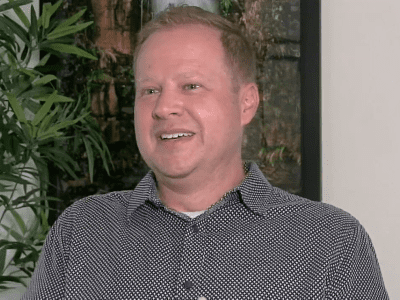
 Longtime friend of John and Margi Dehlin, Jeremy Young joins us discuss his pioneer ancestry, faith journey, ventures as an entrepreneur, and wine! Near the conclusion of the interview, we hear about an exciting scripted TV series on Joseph Smith and the founding of the Mormon church that Jeremy is undertaking with John C. Hamer and other brilliant collaborators.
Part One: Growing up deeply rooted in Mormon culture in Coeur d’Alene, Idaho, Jeremy felt the pressure to be perfect but realized early in his teen years that he didn’t quite fit the mold. From mimicking the edgy “Zestfully Clean” TV commercial in front of his entire high school – to performing magic tricks as an icebreaker for investigators on his mission – Jeremy had a playful approach to life.
Jeremy attributes much of his success in life to the values instilled in him by his Mormon upbringing. Jeremy served a French-speaking LDS mission in Québec, Canada, which he reflects fondly upon. Attending the temple was never a source of feeling the spirit for Jeremy like playing church music on the piano or attending church was.
Part Two: From climbing the ranks within telemarketing to building Rush Limbaugh’s early online store, Jeremy realized great success as a business person. He became a multi-millionaire by the age of 28 with over one hundred employees and multiple ventures under his belt.
After about 6 years of dealing with infertility, Jeremy and his wife Molly adopted their first child through LDS Social Services. Jeremy emotionally recounts the challenging and beautiful experience of growing his family and interacting with the birth mother of his adopted child. “It was a magical experience.” In total, the couple now has three children.
German board games became a passion for Jeremy, inspiring him to start a board game company. There, he created the game Settlers of Zarahemla. Jeremy came close to owning the rights to the game Ticket to Ride.
Part Three: After serving in multiple church callings related to music, Jeremy became the Elders’ Quorum President as a young father and husband. Jeremy found three of D. Michael Quinn’s books at his mother-in-law’s house. Jeremy describes the cognitive dissonance reading these books cause within him as “jolting.” Other influential books in Jeremy’s were Newell’s Mormon Enigma, Bushman’s Rough Stone Rolling, and Dawkins’ The God Delusion.
Around this time, Jeremy heard of John Dehlin’s work and Mormon Stories Podcast but was cautioned to stay away. Living in St. George, Utah at this point, Jeremy was grappling with his emotionally-taxing faith crisis.
In a temple recommend interview, Jeremy’s bishop questioned Jeremy’s tongue-in-cheek Christmas cards that he would send to hundreds of people, using this to threaten not issuing a recommend.
Living in St. George, Utah was a challenge for Jeremy during his faith journey. Perhaps the last straw that made him move was receiving a gift certificate for a massage. When he went to the massage studio, he was given a massage by a polygamist woman in full garb with a Massage Envy t-shirt over her dress. “We’ve got to get out of here!” Jeremy told Molly.
Expressing concerns about issues within the church prevented Jeremy from having a temple recommend, which strained relationships between Jeremy and his friends. Transitioning out of the church, what took Jeremy thirteen years, took Molly three days after reading Runnell’s CES Letter. Jeremy and Molly’s participation in Arizona LDS LGBT & Family/Friends and marching in Pride parades “caused all hell to break loose in the ward” and started untrue rumors that Jeremy is gay. The “November Policy” was a final straw for Jeremy and his family, causing the entire family to resign membership in the church through Quit Mormon.
Jeremy details how he and Molly have evolved as a couple, sought help from others, and have moved from “okay” to “great.” John and Jeremy share memories of a trip they took together with their spouses to Tuscany, Italy. There, Jeremy shared with John his love of the craft of wine – which John did not drink. The two discuss the role and risks of incorporating alcohol into life as an ex-Mormon.
Links to other topics referenced in this interview:
- TRS80, Jeremy’s first computer
- Bill Gates’ prediction in the 1990s that the internet would not be too big of a deal.
- Mormon Stories Podcast 938-939: Steven Hassan – What the Mormon Church can Learn from Cults to Do/Be Better
- John Dehlin’s “How to Stay in the Church of Jesus Christ of Latter-day Saints After a Major Challenge to Your Faith”
- Jim Brickman, a favorite composer of Jeremy’s
- Jeremy’s daughter Julia’s Instagram and Youtube channel
- To connect with Jeremy about his upcoming film project, write him at jeremy@young.org
- Find out more about Jeremy’s wine journey at MormonWineSnobs on Instagram
Part 1 – Growing up deeply rooted in Mormon culture in Coeur d’Alene, Idaho: This transcript is machine-generated and lightly edited for readability. The audio is authoritative. Please excuse occasional errors in names and spelling. Jeremy Young [00:00:11] Your mom and me, we've seen this life with eyes that only see in black and white. John Dehlin [00:00:21] Mormon Stories is a production of the Open Stories foundation and relies solely upon the support of people like you, its listeners. To help keep the podcast alive or to become a member of the community. Please become a monthly subscriber by visiting MormonStories.org and clicking on the donate button on the right side of the page under support. All contributions to Mormon Stories are completely tax deductible in the United States and go towards producing the podcast and building communities and programs of support for Mormons like you. Thanks for your support. Jeremy Young [00:01:03] Tune me out if you must I know you've heard enough But I sing this song Just because I hope you'll be wiser than your daddy was I hope you'll be wiser than your daddy John Dehlin [00:01:27] hello, everyone, and welcome to another edition of Mormon Stories Podcast. I'm your host, John delinquent. It is August 16, 2018, and we could not be more excited to bring to you another Epic Mormon Stories interview. Today we're going to be interviewing a dear friend of mine. His name is Jeremy Young. Jeremy's story is super interesting to me on a lot of levels. The most important thing is that Jeremy is just a great guy. He's a great human being, and I care a lot about him and his family and his wife Molly and his kids. And they've been friends of Margi and mine for many, many years, well over a decade. And so I just like to bring on quality people to interview. Jeremy's story is also interesting for a number of other reasons. I guess it's been cool to sort of, you know, there were times where Margi and I were going through what we were going through, where Jeremy was still very much in an orthodox position. So as I reflect on my history over the past 15, 20 years, Jeremy and Molly knew us. They knew us in Washington and in Seattle when we lived there. Did you guys know us in Dallas when we lived in Dallas? Jeremy Young [00:02:47] No, we met in Issaquah. John Dehlin [00:02:49] Yeah, so we met in Issaquah way back in the day. And obviously I went through my journey long before Jeremy's. But we're going to be talking about Jeremy's faith journey and how that affected his family. But there's some other strains that are really interesting. Jeremy has been an entrepreneur his whole life, and he's going to talk about his upbringing in the church and, you know, what it was like to grow up in this large Mormon family and to have to be scrappy. But he became what I would have called a leader, sort of in the tech world and even in the Internet world. You know, before I ever joined Microsoft, Jeremy was already doing interesting things, important things. And he's been starting and creating and running entrepreneurial businesses as a CEO for as long as I've known him. And so I just think it's really interesting to tie into a Mormon stories, the story of a real genuine entrepreneur. And that's what Jeremy is. In addition to that, something that we're going to talk about kind of towards the end. And this is going to seem a little bit weird maybe for some of you, or counterintuitive, and some of you are going to totally get it. Along Jeremy's journey, he's discovered a real passion and a love for wine. And he's actually in the process of becoming what I understand as a sommelier, which is a wine expert. And Margi and I were able to travel to Italy with Jeremy and Molly and get a firsthand sense of his expertise with wine. And, you know, one time Jeremy just sent me an email out of the blue and said, I wish sometime I could share with you and your listeners kind of what I've discovered about wine and how much I love wine. And this is not going to be alcohol evangelism. I still don't drink. I've never tried alcohol. We're not like, telling people they need to drink. But there's sort of this idea in Mormonism, you know, woe unto those who call good evil and evil good. And there are a lot of things the church has called good that, you know, many of us are discovering aren't so good. And I think in this case, there's something that the church has called evil, or at least in recent times, the church has called evil, that Jeremy has discovered in his life to be quite meaningful and profound enough that he wanted to share it. So towards the end, we're going to talk a little bit about that, and then we're going to talk briefly about a project that Jeremy, along with John Hamer and some other really thoughtful people, are engaging in. They're basically developing a proposal or a pitch and a script, a treatment for a documentary on the life of Joseph Smith that they're in the process of developing. And we're going to talk briefly about that at the end because it's something that if there's any interested listeners, creative people, people who have financial means and they want to contribute to something that could be really worthwhile, there are a lot of people that are saying that the Joseph Smith Story needs to be told. Richard Dutcher wasn't able to tell it with his document and Jeremy and a couple of his friends really want to do that. And so we want to let you guys know about it really quickly. Just a couple of quick announcements. I just want to announce that we're so super excited that we've been able to put up a billboard, a Mormon Stories billboard along the I15 corridor here in Salt Lake City. It's around 4900 south on I15 in Salt Lake City. It's facing south on the left hand side. So you have to be coming up from, you know, Draper Sandy Provo area. And as you're, you're coming around 5,000 or so, start looking to the left and eventually I think you go under an overpass or something. But you'll see this big billboard on the left hand side and it basically says on the left it's in green, it says know your religion. And then on the right hand side it says Mormon stories podcast. And we're really thrilled to have a billboard up. It cost us $4,500 to put up there for the time it's up there. As I understand it, we have had a few very generous donors that have made that billboard possible and we're thrilled about it. We have launched a campaign. You can find it@mormonstories.org Billboard what We Want to do is see if we can keep this billboard for multiple months. So we want to keep it for multiple months if we can. We want to get it situated at a better location because we've already received feedback that if it's on the same side as people are driving. So if it's on the, you know, if you're driving on the right hand side of the freeway, if the billboards on the right hand side or vice versa, it'll, it'll get more visibility if it's, if it's more easily seen. And so, so we want to have the billboard continue. We want to be able to switch it and that may cost us a little bit more money to switch it to a better location for a billboard that's more visible. And then finally we've had some people reach out to us and let us know that there's inventory available in St. George, Logan, Ogden, Layton, even Mesa, Gilbert, Chandler, Tempe, Boise, Idaho Falls. There are opportunities to put Mormon Stories billboards all over the place. And just imagine what would happen to a town or a city if a really prominent billboard campaign was made known and became visible and became important thing. My estimate is that maybe 2% of the average active LDS ward has even heard of Mormon Stories or John Dehlin or CES Letter or any of this stuff. So as far as we've come, 6.2 million downloads and views in 2017, phenomenal success with Mormon Stories and the Oba Stories Foundation. We've only scratched the surface and most people haven't heard of what we do. Certainly most people aren't listeners. And we've never really done marketing or promotion before, ever. This is kind of the first time. A few Facebook ads and that's about it. So if you want to support either the Salt Lake City billboard campaign to keep it going, to get it positioned in a better place if possible, or if you want to sponsor your own billboard and it can be as little as thousand bucks to have a billboard for a month in certain cities and towns, we want to partner with you. 100% of your donations will go to the billboard. We won't cut any out for staff or overhead or anything. 100% of your donations will go to the Billboard. Go to WarmerStories.org Billboard, make the donation. You can message us at StaffOpenStoriesFoundation.org you can let us know where you want the billboard or which campaign you want to support. And we will do our best to make it happen. So that's just a plug for the billboard. Folks will know that we are in September going to Sweden to honor Hans and Brigitte Mattsson. If any of you want to accompany us to show honor to the Swedish people, to the Swedish Rescue people, and to interview Hansa Brigitte for a Mormon Stories episode. We've never gotten them on video. You're welcome to join us, but you'll need to sign up today. We're also doing a Mormon Stories workshop in Switzerland for the European Saints. Faith crisis stuff. A generous donor donated the airfare for my flight, so this isn't coming out of the budget of your donations. And then I'm staying with members. So the travel is going to be very minimal expense. And what we're getting out of it is an interview with Honza Brigitte. We're going to show honor to the Swedish people. We'll get some interviews from the people involved with the Swedish rescue, hopefully. And we'll be able to do a workshop in Europe, not just only in the United States. So we're happy about that. Of course, there's the cruise in October to the Bahamas. That's more fun. Again, by your request. And then finally, and no, no osf, you know, funds are going to that. It's all paid for. The cruise is self paid for by the people who attend it, and that's by request of listeners. And then finally, in November, we're going to Sacramento for a workshop and retreat. Go to mormonstories.org events for all that stuff. And that's all our announcements for today. Thanks for your patience. All right, Jeremy. Jeremy Young, it is such a thrill to have you, a dear, dear friend, on Mormon Stories podcast. Jeremy Young [00:11:23] Thank you. You know the real reason for this podcast, though? So my family can stop blaming you for my faith crisis. Oh, that's the real reason. John Dehlin [00:11:31] You know, that's actually a real thing. People don't want to learn about it, they don't want to talk about it, and so they want to find scapegoats. But people who often want to do the interview, they just want a place to tell their story so that anyone who really cares can hear it from their own mouths. Jeremy Young [00:11:48] Absolutely. John Dehlin [00:11:49] Yeah. Yeah. Well, thanks. Is there anything you want to correct about my introduction? It was kind of a long one, Jeremy Young [00:11:55] but the only thing is, it's actually. The series that we're doing is not a documentary. It's actually a series. Think of like Deadwood meets big love, but 100% historically accurate. But we'll talk about that later. John Dehlin [00:12:06] Did I say documentary? I'm sorry about that. Yeah, yeah. It's dramatized. Jeremy Young [00:12:11] What would you say? Scripted series. Scripted television series. John Dehlin [00:12:14] Multi Episode. Episode. 10 hours. We need that so bad. Jeremy Young [00:12:18] Yeah, for sure. John Dehlin [00:12:19] So I'm super excited to plug that. All right, but let's get to your story. Okay, so tell us about your. We always start with kind of the Mormon cred. The Mormon cred scale. Tell us if you have, you know, kinds of Mormon pioneer ancestry. Jeremy Young [00:12:34] So last name's Young. So Brigham Young is my great, great uncle. John Dehlin [00:12:38] Oh, so you're. You've got genetic ties to the Young family. Jeremy Young [00:12:41] My grandfather's grandfather was Brigham Young's brother Lorenzo. John Dehlin [00:12:45] Okay. Jeremy Young [00:12:46] And so my grandfather actually met his grandfather, which was brother with Brigham Young. So, I mean, it's really close. My grandfather passed away maybe four or five years ago. So on my mom's side, your grandfather met. Who met his grandfather, which was Brigham Young's brother Lorenzo. John Dehlin [00:13:01] That is amazing. Jeremy Young [00:13:02] Yeah. So it's. I mean, just in time. John Dehlin [00:13:04] Did you know your grandpa? Jeremy Young [00:13:05] I did. Very well. Yeah. We lived. John Dehlin [00:13:07] You knew your grandpa, who knew Brigham Young's brother Lorenzo, but he didn't know Brigham Young. Jeremy Young [00:13:12] I don't believe they ever met unless he was a child when that happened. John Dehlin [00:13:15] Okay. Jeremy Young [00:13:17] And so I think there was a big age between Brigham and Lorenzo. But, yeah, I mean, it's so pioneer heritage. My grandfather built Coeur d', Alene, Idaho. He moved there in the 40s and built the first Mormon church and owned the Big Wolver Store, well known in the community. My mom's side, again, pioneer heritage, the Cowleys, the Riches. And so we both go all the way back to the founding of the church on both sides. John Dehlin [00:13:43] Yeah. Those are important names in Mormon history. Jeremy Young [00:13:46] Right. John Dehlin [00:13:47] Okay. Any important stories in your Mormon ancestry that sort of are important to your journey or are just really interesting stories that are worth hearing? Jeremy Young [00:14:01] Yeah. It's funny because we always grew up reading Sarah Dearman Rich's journal about how she met the missionaries, how she married into the church, how she crossed the plain. She was in Brigham Young's wagon train first coming to Salt Lake City. And so that was kind of a really important story within our family. It's interesting. I think, you know, this we do this Christmas thing every year at our house where we have a lot of people over. And I think you've come to some of those when we did it in Issaquah in Snoqualmie. But that started out as Joseph Smith's birthday celebration. And so back in Salt Lake City times, Joseph Smith's birthday was actually celebrated even more than Christmas was. And so my. John Dehlin [00:14:47] What was it? December? Jeremy Young [00:14:48] December 23rd. John Dehlin [00:14:49] 23rd, yeah. Jeremy Young [00:14:50] And so my grandmother, Mary Smith. Ms. Yeah, exactly. So my grandmother would always have these Joseph Smith birthday parties, and we'd get all the family and friends together and we'd sing songs and tell stories about pioneer ancestry. And and so we continued that on for years and years and years. And we still do it today. We don't do it on the 23rd now, and it's become more of a general kind of party get together where we play music and sing songs. But that's something that's continued on through generations and generations all the way back to Salt Lake City time. John Dehlin [00:15:19] And I remember first wondering about Mindy Gledhill when I heard that you were inviting her to one of your your parties. Jeremy Young [00:15:30] Right? Yeah. Yeah. John Dehlin [00:15:30] It made me wonder. Jeremy Young [00:15:32] Yeah. That's interesting because, you know, we were really good friends with the Nashville tribute band and Mindy Gledhill and Molly was doing her 40th birthday party. And so we I invited them to come and do this big surprise party where they both came. And I asked Mindy because Mindy used to sing on the Nashville tribute albums, and I asked Mindy if she would sing with you know, with the tribute band again, because Molly loved some of those songs. And she said, you know what? I really don' do the Mormon stuff anymore, but, you know, I have my own album, and I'd love to perform that, which was great. So I was kind of my first clue, and that was at the beginning of my transition with Molly out during her 40th birthday party when Mindy came and sang. So that's awesome. John Dehlin [00:16:16] Yeah. Okay, so those Christmas parties that you used to hold and Joseph Smith parties were kind of show how much. How important the early church leadership has been in your life. Jeremy Young [00:16:30] Absolutely. John Dehlin [00:16:30] Yeah. Jeremy Young [00:16:31] I mean, it was always talked about, was always mentioned. You know, you've got this amazing heritage, and you need to live up to it. And so it was always a lot of pressure, for sure. John Dehlin [00:16:42] All right, so what was your upbringing like? What were your parents? Tell us about your parents. Jeremy Young [00:16:46] Yeah, so my dad kind of worked the same job his whole life, so he was an electrical engineer, worked in Spokane, Washington. We grew up in Coeur d', Alene, Idaho. And so he would commute back and forth. We had seven children in the family, so I have two older brothers and four younger sisters. My mom just kind of wore the pants in the family. Very strong personality, super loving, but really strong in the way that she raised the kids. My dad was always really quiet. Just kind of came home from work and put his nose in a book. Loved reading Mormon history and any book he could get his hands on. Just kind of a normal upbringing. You know, we did all the church stuff. We did all the scout stuff. Even though I hated Scouts, I think I got up to be a star, and that was about it for me. But, you know, family home evenings when we could, family prayers when we could. I mean, a typical Mormon upbringing, you know, my dad was a bishop at one point after I went on my mission. He served on high councils, and my grandfather was the patriarch of the stake. John Dehlin [00:17:54] Now, let's talk about Coeur d' Alene for a bit. I grew up in Texas. I'm not even sure I've been to Coeur d'. Alene. Maybe I've driven through it. But it's known for two things. Well, three things. It's known to be this beautiful kind of resort like area in northern Idaho. Is that true? Jeremy Young [00:18:08] It is, yep. It's known even more so now. John Dehlin [00:18:11] Okay. It's known for sort of being. Being where Bruce. Bruce Willis and Demi Moore kind of settled. Jeremy Young [00:18:21] That's some valley, huh? That's some valley. John Dehlin [00:18:23] That's not. That's not Coeur d'. Alene. Oh, I was even wrong about that. Jeremy Young [00:18:25] Nope, that's some valley. John Dehlin [00:18:26] And then the third thing that I. Well, the. The other thing I remember being known for is being, like, the world headquarters for skinheads. Jeremy Young [00:18:33] That's true. John Dehlin [00:18:33] Is that right? Jeremy Young [00:18:34] That is absolutely true. John Dehlin [00:18:35] So what was. Jeremy Young [00:18:35] What's. John Dehlin [00:18:36] What's that place like? Jeremy Young [00:18:38] So the skinheads had a compound on Hayden Lake, and it was probably five or six miles from our house, but they were really isolated. They would have parades that every single year they would march downtown Chord Lane. I didn't see a lot of it. And so for me, it was almost not even known, other than there were some bomb threats that they would call into schools and people would blame it on the skinheads. Even though it was known for an Aryan nations area, I didn't see a lot of it growing up. But again, Coeur d' Alene is very white. I mean, there's. I think we had one African American kid in our high school, not a ton of Hispanics. And so it really was very white. And that's probably why they decided to start their compound up there. The compound no longer exists. They were sued by someone, and the government basically shut them down. And so that compound is not there anymore. But you still see that influence. I was over at Silverwood, which was a theme park, a couple years ago, at a family reunion, and guys were walking around without shirts. They had white power tattoos and swastikas. So you still feel that influence, but I didn't see it much growing up. John Dehlin [00:19:55] Okay, so what was your upbringing like in the church and with your family? Jeremy Young [00:19:59] Yeah, you know, just sounds scrappy a little bit. You know, we were all kind of entrepreneurs as kids. Like, my brother had multiple jobs, and I really looked up to my older brother. He's five years older than me, and he was always had nice cars and lots of cool things he would spend his money on. And so I always felt like I wanted to be an entrepreneur growing up. And my parents really allowed that to happen, which is kind of interesting because both my parents are not entrepreneurs. So one thing I asked my dad to do is could you stop at Costco in Spokane on your way home from work, buy tootsie Rolls, gummy worms? And I would put them in little baggies, and I had this coat with all these pockets, and I would stuff them full of this candy. And then I would go undercover in junior high, and I would say, sell this candy to kids. And I raised a couple thousand dollars doing that. And I would buy computer equipment. John Dehlin [00:20:59] Were you motivated by something specifically? Jeremy Young [00:21:03] I really wanted to buy computers. So my father actually, because of his work as an electrical engineer, he had access to a TRS 80. Do you remember those? Radioactive. John Dehlin [00:21:12] Joel and I had a TRS 80 and we programmed the TRS 80 and that was a big reason why we got interested in tech. Jeremy Young [00:21:18] Exactly. So six grade. We had a TRS 80 somehow in Dalton Gardens, Idaho. And so I looked at that and you know, the first games were just little pixels moving around and I was just fascinated by it. So my dad brought one home, I took a programming class, I built a Space Invaders game in sixth or seventh grade. And then I wanted my own computer with the VIC20. Commodore VIC20 was big back then, so I bought that. And it had the little cassette drive that I would store data on. Do you remember that? John Dehlin [00:21:45] Yeah, totally. Jeremy Young [00:21:46] And then eventually I earned enough after that, the next couple years to buy a Commodore 64. I must have been what, 1000, 1500 bucks to buy that. That's a lot of money back then. John Dehlin [00:21:54] If you adjust. Jeremy Young [00:21:55] Yeah, if you adjust for three or four thousand dollars. Now that's incredible. John Dehlin [00:21:59] So your love for computer technology, programming games, drove your entrepreneurial impulses as a child. Jeremy Young [00:22:08] That's right. And in fact, on the Commodore 64, I programmed this multi level game with ragtime music. I'm a piano player, so I'd always play play ragtime. And one of my really good friends was moving out of state, so I built this game with multi levels with different music. And it all was about his life. And I mean, it's kind of funny now to think about it, but yeah, I just loved computers. Loved it, couldn't get enough of it. I would spend hours and hours and hours in my room taking those games, magazines, and they would actually write the code. Do you remember that? They would write the code on the sheet and you would type it in. So I'd type, spend hours typing in all code, basic, basic code. It was all basic. And then you would run it and it wouldn't work. And you'd have to look through each line of code and try to figure out what went wrong. So I just loved it. John Dehlin [00:22:53] And then you could extend it and you know things and add things. Jeremy Young [00:22:57] It was 64k of memory, so you couldn't do much. But actually took that Commodore 64 to my freshman year at BYU and did all my projects on it. And when people had Macintoshes, I couldn't afford it. John Dehlin [00:23:08] So, yeah, I had a word processor. Jeremy Young [00:23:10] Yeah, yeah, just a basic, Basic word processor. John Dehlin [00:23:13] People have no idea what it's like to go to college without a word processor. Yeah, I got a word processor like, my junior year. And it was right before then it was typewriters. Right. Jeremy Young [00:23:24] Or. Exactly, yeah. John Dehlin [00:23:26] Or going to a lab somewhere, you know, but having your own laptop even was unheard of. Jeremy Young [00:23:30] Right. John Dehlin [00:23:31] Just while I was in college. Okay. So. All right, so love for tech. I love your kind of entrepreneurial inklings. What else about your. Jeremy Young [00:23:40] And love for music? It was. I'm a very creative person, very emotional person, and my mom always wanted each kid to have their thing. So my brother Jeff was guitar. My brother Jason was organ and violin. I was cello and piano. And, you know, Missy was piano, and then Mindy was sports. I mean, we all had our thing that we did that in Mormon culture, it's very performance oriented. Right. Everybody kind of has to perform and be this perfect student. And I felt that a lot growing up, needing to be perfect, needing to have good grades, needing to have jobs, support myself. And that was just kind of the feeling growing up that we had in our family. And all of us have been pretty successful in what we've done. John Dehlin [00:24:24] So was your first family sort of like the model family in the ward in Coeur d' Alene or in the stake? Were you guys putting up an image of, like, perfection or just internalizing that? Jeremy Young [00:24:36] I think I probably was internalizing it a little bit. Even though I feel like we were kind of a model family. I mean, we. Every single kid got married in the temple, and all the brothers went on missions, and my little sister went on a mission, and I was probably more the black sheep in the family, Even though, I mean, from any standards, now, that would be laughable. But I was a little bit questioning in my beliefs growing up and had girlfriends and was student body president and kind of didn't fit the mold of a typical Mormon necessarily. Even though now when you look back on it, you would say that I probably was. John Dehlin [00:25:19] So talk about your high school year and kind of the ways that you're a black sheep, but also what the church meant to you and any conflicts you may have had or inspiring moments. Jeremy Young [00:25:31] Yeah, yeah. So I remember when I was probably 13 or 14, you know, telling my mom that I just didn't understand how a religion could be based on this Book of Mormon. And I didn't know anything really about the Book of Mormon at the time, but just kind of having those doubts. And, you know, my mom, she parented a little bit by kind of shame and guilt. And so I got the. I can't Believe that you feel that way. You know, you really need to figure this out. You better start reading it and get this testimony. You know, this is. John Dehlin [00:26:04] Were you really wondering. I mean, were you really wondering it at that time? That's pretty young to feel, like, empowered to be even having those thoughts. Jeremy Young [00:26:12] Right. And then actually vocalize them. Exactly. And so, you know, you learn pretty quickly to not share those types of feelings in Mormonism because you get shot down pretty quickly. If she would have came to me and like, oh, my gosh, I know exactly how you feel. You know, I can totally understand how you felt that way. Why don't we figure this out together? You know, I'll help you read. I mean, it would have been a completely different situation than the kind of shaming. Right. John Dehlin [00:26:39] What'd you feel? Jeremy Young [00:26:40] I felt shamed. Oh, for sure. You know, I didn't know exactly how to deal with it, that situation. And just growing up in bishops interviews and, you know, you feel the need to hide. You feel the need to not communicate because you don't want to be shamed in front of your ward. You don't want to be shamed in front of your family. And so that definitely, growing up, you felt that shame. I mean, I did. Even though I had really good bishops. Really good bishops and stake presidents, I still felt that. John Dehlin [00:27:04] And articulate the doubt you were having. You were just questioning the historicity of the Book of Mormon. Basically. Jeremy Young [00:27:11] Yeah. Just. I didn't really understand what it was, but I just couldn't figure it out in my head why we had this religion. I was just young. I didn't understand it all. And so that was a memory that I have growing up about that. And then, really, there weren't a lot of members of the church in Coeur d', Alene, Idaho. I mean, they had one stake in a city of probably 30,000. So growing up, I didn't have strong Mormon friends. I had some rebellious Mormon friends friends. And so I got in a little bit of trouble. You know, I would go to some parties, and one time I went to a party around the lake, and the guy that was driving. Driving a car around Coeur d' Alene Lake, I told everyone to buckle their seatbelts because he was swerving on this dirt road. And as soon as we buckled our seatbelts, he went off the road and hit a rock. And, you know, if I didn't have my seatbelt on, I would have been dead. I was sitting right in the front seat. And so, you know, we had those types of experiences where My mom felt like I probably was kind of going off the deep end, even though I really. I wasn't drinking at that time. And so, you know, just. It was kind of a normal, I think, upbringing and hanging out with non members and going to parties, even though I wasn't necessarily partaking of alcohol or anything like that. But I'm sure it caused a lot of stress with my mom. John Dehlin [00:28:41] So you were just kind of getting into a little bit of trouble here and there, right? Jeremy Young [00:28:45] Exactly. Yeah. And she didn't like the way I dressed, even though most people thought I dressed fine. At one point, she thought that I looked like a drug dealer, even though I really was kind of dressing preppy or, you know, the styles of. Of the time in the. They graduated in 89, so in the 80s, but all in all, had a great high school career, I guess, and had a girlfriend for a couple years. Got into a little bit of trouble with her. But again, when I went to go see the bishop before I went on a mission, the way that he handled it was just awesome. There was no shame, there was no guilt. I mean, he was incredible. Bishop Asper. I don't even know if he's still alive, but he was. He was an amazing guy. Yeah, you're. John Dehlin [00:29:32] You're sensing every, you know, you believe it. You've got this heritage. You're sensing that maybe there are a couple things that are a little bit off. You're feeling like a little bit of a black sheep in your family, even though you're totally living the standards. And then, you know, you get in a little bit of trouble, relatively speaking, and even mess around with the girl a little bit. Talk about your spiritual life and your guilts, but also your beliefs as a team. Yeah. Jeremy Young [00:29:57] I don't know if I really had a testimony that strongly growing up as a teenager. I really didn't start to feel that until I went to byu. And at that point, you're immersed in the culture, you're immersed in your ward, and you see people leaving to go on missions or getting mission calls, and you start to think, think, okay, I should probably become more serious about trying to figure out if I want to do this or not. And so as a teenager, I couldn't. I don't think I would say that. I had a really strong testimony. What I loved is playing music in church. And so I would always really. If you know the feeling of the spirit. Right. I would. That would be something that I would love to do. And I felt connected to God, and I felt connected to the church, and even to the members through that, you get a lot of pats on the back when you're good at something like that. And so that really connected me to my ward, to my family, to God. And so music kind of led me through my teenage years, even though I didn't have a strong testimony. I don't even know if I really read the Book of Mormon during that time, but it really started to happen more when I was a freshman at byu. John Dehlin [00:31:08] Okay, so anything else about your adolescence before we go to BYU and your mission? Jeremy Young [00:31:14] The only thing is, when I was a senior in high school, I was running for student body president, and I went down to the junior high because the eighth graders were going to be freshmen. And I actually met Molly for the first time. And so I went into my old English class to talk to my favorite teacher, and Molly was a student in there. When I left, Molly comes running up to the teacher, and she's like, who is that? And the teacher said, oh, that boy goes to your church. And Molly's like, you got to be kidding me. I don't even know who this is. You know, there's not that many Mormons. And so that was the first time that Molly met me. And this is kind of an example of the personality that kind of got me in a little bit of trouble. For my speech, I had a. An overcoat on and then a towel around my waist. On the back of the towel, it said, vote for Jeremy. I had shorts underneath my towel. But when I did the speech, I turned around, dropped my overcoat, and I did the zestfully clean pose. So it looked from the audience level that I was naked. Right. And so it's just things like that that irked people a little bit in the church that I would be a little. Just a little bit crazy. John Dehlin [00:32:25] And it reminds me of your. That personality came through to your Christmas letters. Jeremy Young [00:32:29] You. John Dehlin [00:32:29] Later we could talk about your Christmas letters. But, yeah, that's all. It's always been a little bit irreverent. Jeremy Young [00:32:34] Is that fair to say? A little bit. Right. John Dehlin [00:32:36] Kind of potty humor, or how would you describe it? Jeremy Young [00:32:39] Right. A little bit. I mean, I don't know if it's potty humor, but just a little bit like. But at the same time, really funny. John Dehlin [00:32:46] Yeah, funny but not. But. But. But just kind of saying, let's not be too uptight. Jeremy Young [00:32:51] Right? Exactly. That's exactly right. Yeah. Yeah. John Dehlin [00:32:53] Like a fart joke or whatever. Jeremy Young [00:32:54] Yeah. And it's funny because when. When I live in St. George, that Christmas Hutter gets Me in some trouble. So. John Dehlin [00:32:59] Yeah, well. But, yeah, but that's always been with you. Is just. Jeremy Young [00:33:03] That's right. John Dehlin [00:33:03] Humor is important. Music is important. Not taking things too seriously. Jeremy Young [00:33:07] Yeah. And entertaining. John Dehlin [00:33:08] Entertaining is important. Okay. All right. So you meet Molly. Jeremy Young [00:33:12] Yeah. So we. And then. And then the next year, I'm sitting in seminary. We had early morning. Not early morning. We had release time. Seminary. And Molly is in my class and she comes up and sits next to me. And so that started this, you know, friendship that we were. We became best friends. I mean, she would hang out with me and my girlfriend and Molly's now my wife, so we'll get there. John Dehlin [00:33:34] Okay. So you end up going to BYU Provo. Jeremy Young [00:33:38] BYU Provo. John Dehlin [00:33:39] And Molly's younger, right? Jeremy Young [00:33:41] She is. She's three years younger. John Dehlin [00:33:43] So you would have left her behind, Gone. Jeremy Young [00:33:44] I did. John Dehlin [00:33:46] And eventually. Mission. Jeremy Young [00:33:47] That's right. John Dehlin [00:33:47] What part of the story do you want to pick up? Jeremy Young [00:33:50] So, you know, BYU was a great time again. Super. Had lots of creativity outlets for my creativity. My uncle and my brother were there at the time. My uncle had a house and a recording studio, and he's a great musician. So we hung out all the time, recorded music. John Dehlin [00:34:09] What year about were you there? Jeremy Young [00:34:10] This was in. This was in 90. John Dehlin [00:34:13] Okay. So I was there. Jeremy Young [00:34:14] Yeah. John Dehlin [00:34:14] I was off my mission by that time. Jeremy Young [00:34:15] Okay. And so, yeah, 89.90. And I mean, one time I went in front of my American Heritage class, if you remember that. Frank Fox, Big auditorium. John Dehlin [00:34:27] Yeah. Jeremy Young [00:34:28] There's like 300 people. John Dehlin [00:34:30] Joseph Smith building. Jeremy Young [00:34:31] That's right. And I got permission to set up this keyboard. This is so Mormon. And I. I was dating this girl named Lisa Wetstein, which. She lives like a mile from me now, which is ironic. And brought her up on stage and I unwrapped this keyboard and played a song and asked her to this dance. Right. I mean, it's so Mormon to think about now, but that's just kind of the personality that I was back then. So just had a great time, Loved school, loved the social aspect of being at byu. Didn't have any entrepreneur activities at that point, but decided that I probably wanted to go on a mission. And then came back home to Cord Lane, worked a summer at restaurants and then made the decision that I was going to go on a mission. John Dehlin [00:35:21] Did you like me? Sort of like, say. But I don't know. I don't. I believe it's true. I hope it's true. I'm living it. But I haven't ever gotten that Witness. Jeremy Young [00:35:31] That's right. John Dehlin [00:35:31] Did you Ever have that dilemma prior to. Jeremy Young [00:35:33] I did. For sure. For sure. John Dehlin [00:35:35] What was that like? Jeremy Young [00:35:36] It was scary. Like I didn't really want to go, but I thought, you know what? My brothers have done it, my family's done it for generations. My dad went to Argentina for three years. I just have to do it. John Dehlin [00:35:50] And all those kids at BYU are Jeremy Young [00:35:52] going, yeah, yeah, exactly. John Dehlin [00:35:53] What if I don't? Jeremy Young [00:35:54] Right? John Dehlin [00:35:55] Will anyone date me? I didn't have that. I was going. But a lot of people feel that way, right? Jeremy Young [00:36:00] Yeah, yeah, for sure. In fact, you know, my freshman roommate. So just. Just to go back a little bit. My best friend in high school ended up being gay. He comes out in college, and then my freshman roommate at BYU ends up being gay. Coming out after, he goes on a mission. And so I just kind of. Because this part of my story moving forward. I've always had these experiences with people who are gay that are just super close to me. And so my freshman roommate, Dirk, he's German ancestry, brothers went to Germany, father went to Germany on his mission. He's going to Germany. And so we all gather around and he's opening up this mission call, and it's Albuquerque, New Mexico. You can just see the pain in his face. I mean, the guy. I cried for days. Eventually he came home after a couple of months. And if Dirk is listening, I've been trying to find him for 20 years and haven't been able to find him even on social media. So if you're listening, reach out to me. I'd love to connect again. John Dehlin [00:37:00] So you end up. So did you try to get a testimony before you left? Jeremy Young [00:37:04] Yeah, I started to read the Book of Mormon and really pray and ask for that witness. And again, I think it was through music that I. That I felt like I had that witness. So I. For my farewell, I composed these hymns and I did this arrangement that kind of meant a lot to me. And I felt like I was feeling the spirit when I was performing that music. And I even feel that now when I'm performing. And it's almost like I get into a trance. Like something takes over and it's almost otherworldly. Like I don't even know what I'm doing. But something really magical happens. I don't even know if that makes sense. And even now I feel that when I play sometimes. And I believe that when I was playing that at my farewell and I felt the spirit of that and people came up and just how beautiful it was. And I made the decision to go and it just kind of felt like, it all came together at the right time and just was the right thing for me to do. John Dehlin [00:38:04] So you go on your mission. Where'd you go? Jeremy Young [00:38:07] I got called to Montreal, Canada. So I was French speaking. I left. John Dehlin [00:38:13] Cool. Cool area, right? Jeremy Young [00:38:14] Yeah, yeah, it was. It was amazing. Like, Quebec City is just beautiful, and the people were great. You know, the food wasn't super fantastic, John Dehlin [00:38:23] but it's not French influence. Jeremy Young [00:38:25] It's not a lot. It's more like shepherd's pie and horse. John Dehlin [00:38:29] British. Jeremy Young [00:38:30] And it's more British. More British. But loved it. Like, I. Even though it was just incredibly hard, I loved my mission. I had great companions, and I had really hard companions. So I think I was the type of elder where my mission president would give me someone that no one could get along with, and then I would deal with that for two or three months, and then he would put me with someone who was just awesome and just kind of give me a break, and then back to someone who was hard and. But, you know, my mission was interesting in that I always tried to find creative ways to do things. So, for example, I met a guy named Noblisse Francois, who I know. You know, Nablisse. So he's Haitian, Mexican, grew up in Salt Lake City, and he was a companion in a foursome that we had in Sherbrooke. And he taught me these magic tricks and got me into magic with, which I still do today, and he taught me these tricks. And so I thought, well, I'm just going to go buy some of these tricks at the magic store, and when my door approaches, I'll do some tricks at the door. Right? I mean, I thought that would be a great way of getting people's attention. I could relate it to something in the gospel so that I have something to talk about, and kids come to the door and they'll be excited about it. So I was all excited about doing this. I went on splits with the zone leader and showed him how cool it was and how it engages people. Zone leader tells President Dixon. And then all of a sudden, I get a call into President Dixon's office that's not appropriate for missionaries. And I'm. John Dehlin [00:39:58] What was the magic trick? Jeremy Young [00:39:59] Oh, I had, like, disappearing handkerchiefs and coins that I could put in my hand and make disappear. And, you know, I just wanted to capture people's attention. No one would talk to us. I mean, we knock on the door and they'd be like, are you Jehovah's Witnesses? No. And, like, we're Mormons. Same thing. And they'd Slam the door. My first area was Tedford Mines out in the middle of nowhere. 20,000 people. It's an old asbestos mine, and it's 30 below. I mean, literally, if it's in February and we have four elders in this little apartment, and there are four members of the church, and we're renting out a united church for our meetings, and it's literally knocking every single door of that town twice in a couple of months. And one of my second companion there was Stephen Miller, who was Larry H. Miller's son. And I remember him getting a package from his dad, and it had construction pictures of the Delta center when it was the Delta Center. And he said, we're calling it the Delta Center. They're a sponsor, but you can't tell anybody. So I thought it was really cool that the guy who owned the Utah Jazz was, you know, his son was my companion. And we'd always play chess and just had a really good time with most of my companions. I do have a funny Larry H. Miller story. All right, okay, so get off my mission. Steve Miller calls me and he's like, I'm getting married. I want you to play piano. It's gonna be at the Delta center in the reception area. And he's like, how much do you charge? And I said, well, you know, just pay me what you would pay any other piano player in this circumstance. I didn't know exactly. I mean, I figured it was going to be three or four hundred bucks. I'm a poor, starving college kid, just married. I practiced for a week, get all these great songs, asked him what his favorite songs were, prepared him. Probably spent 40 hours getting ready for this drive up to Salt Lake City with Molly. And there were literally thousands of people at this reception. I mean, it went on for hours. So I just sat there the whole time, played for four or five hours till late at night. There was a wall just stacked with presents. I'd never seen anything like it. And so at the end, I didn't take one break at like 11 o' clock at night, Larry H. Miller comes up and gives me an envelope. It's like, thank you so much for coming. I really enjoyed your music. So Molly and I are all excited. We go down to our car, opened up the envelope. $50. John Dehlin [00:42:18] Oh. Jeremy Young [00:42:20] And so I'm looking at it, like John Dehlin [00:42:22] 10 bucks an hour. Jeremy Young [00:42:22] Yeah, I'm looking at the envelope just like, this is got to be a mistake. And what was even better is it started to snow and blizzard. We get to the point of the mountain and we're just stuck. And so we had to go rent a hotel room. I mean, I actually. I lost so much money on that deal that it just kind of. It made me laugh that, I mean, Larry H. Miller is a billionaire, right? And gives me $50. John Dehlin [00:42:41] Miller family. It's now too late to pay what he deserved. Jeremy Young [00:42:46] Donated it. Donated to Mormon stories. John Dehlin [00:42:49] He could afford it. Miller family. All right, so did your mission change your testimony at all by the time you got home? Jeremy Young [00:42:57] Yeah, it did. In fact, I, you know, I had some really spiritual experiences in the MTC where I felt the spirit super strong. Like, you know, just that wave of emotion. You know, I feel things really strongly anyway, and I remember just sitting there, just feeling those waves where I, you know, this. It's got to be the spirit, right? Just the waves of emotion we had. I can't remember the name of the apostle at the time he came in and talked about this. He was in a coma or something. He had a vision of Christ. And I remember feeling just that testimony that he had. And on my mission as well, just, you know, when you're testifying of Joseph Smith and the first vision and the Book of Mormon, just feeling those feelings of, you know, this has got to be true. And so absolutely, like, felt it. Even even though I kept getting in trouble with my mission president over stupid things. We didn't have a great relationship. We had a better relationship. After my mission. I thoroughly enjoyed my mission. I learned a lot. I loved speaking French. I just loved meeting people. I mean, we met when I. I was in downtown Montreal for about nine months, and so meeting people from hundreds of countries. I had a map where we would put a pin in the areas of the people that we would teach discussions. And I had hundreds of pins from all over the world. It was just a big melting pot. In fact, we had some Nigerians that we were teaching that would come over and they'd make some. They call it fufu and chicken peanut soup. And fufu is just like a corn meal that you eat with your hands. So they make it really stiff so you could grab with your hands and dip it into the soup. And they'd play guitar. They were teaching me Bob Marley songs. And so just really, really fun times that I had with. With members and investigators that. That I'll remember forever. So really loved it. John Dehlin [00:44:54] I'm thinking about. This is just. I'm trying to think about what leads to someone becoming a successful entrepreneur. And then I'm thinking about my own life. And in some ways, I've been an entrepreneur Especially in the past 12, 14 years. But it sounds like a combination of kind of a free spirit, a creative mind, and kind of a desire to do something to make the world a better place or to bring joy to people or to. It sounds like those are some of the ingredients for an entrepreneurial. Jeremy Young [00:45:24] And learning how to work with difficult people, too. Right? Because I had some really hard companions, some really hard ones, and learned a lot from them. But learning how, you know, I've got to be with this guy for two or three months. How am I going to make it work? And I did you kind of figure out how to work with different personalities. And in business, you're dealing with narcissists, you're dealing with really lovely people, and you're dealing with people who are just mean. You're dealing with. I mean, you have all of these types of people that you're dealing with. And I think omission teaches you how to do that and teach you how to be persistent, how to get up on time, how to study something new, how to learn a new language, how to talk to people at the door, how to stop people on the street and engage them in a conversation. I think there's so many different ways that the Mormon Church could do things now for missionaries, that would literally change the church. If you're listening, Mormon Newsroom, here's an idea for you. Stop having people go door to door and stopping people on the street. No one wants to hear that message. Not one person. Instead, have them do service. Like do 50 hours of service. That will open up so many doors for proselytizing opportunities. Can you imagine if that's what we love to do, we love to go on these. You know, we go into hospitals. I would go into old folks homes and play piano. And then people would wonder who we are. We would do food kitchens, and it was wonderful. John Dehlin [00:46:50] Did you have success on your mission? Jeremy Young [00:46:52] Yeah, I did. In fact, I baptized almost 20 people, which was unheard of. I mean, most people maybe five or six. And so now I think there's one family that's still active out of those. He became a branch president in Sherbrooke. John Dehlin [00:47:07] That's not your fault. Jeremy Young [00:47:08] Yeah, but, you know, Carol is still my Facebook friend, and we still communicate. Lovely. And I don't know what her status in the church is now, but I think that if the church just stopped the proselyting and focused on service, they would have so many opportunities to teach the gospel. It would change the church and it would change other people's lives. John Dehlin [00:47:34] And looking back Regardless of the bad or the difficulties, would you say that your Mormon upbringing through your mission provided you with important foundational experiences, skills to help set you up for success as an entrepreneur, later, Communication, work ethic, whatever? Jeremy Young [00:47:55] I think so. You know, it's interesting because my parents were not entrepreneurial. And so my dad was an electrical engineer. Like he worked his 8 to 6 and that was it. There's not any entrepreneurism within my mom and dad really. I guess my mom a little bit, she would import some grapes and fruit and asparagus and she would sell it, but that's about it. But I do think that Mormonism in general teaches people to be self sufficient, right. So I knew that if I wanted something in life, I had to create it myself. I knew that if I wanted to go to college, I had to do it myself. My parents did, didn't have the funds to do it. And so anything that I wanted in life, I had to go get myself. And so I think Mormonism instills that, especially on your mission, you know, you have to go get it, you have to follow the rules and go make it happen. John Dehlin [00:48:50] I was listening to a podcast on Radio west with Gina Colvin and Joanna Brooks. And Gina noted that the current priority, Prime Minister of New Zealand, is an ex Mormon. And then I think it was Gina or Joanna that made the observation that she couldn't have become prime minister without being Mormon, having been Mormon, because she's like a single mom, has had a kid out of wedlock and is secular, but now she's prime minister of New Zealand at a really young age. And they made the point that she couldn't have stayed Mormon because of who she was. Jeremy Young [00:49:26] Right. John Dehlin [00:49:26] And so it was this weird combination of it helped make her who she became and who she became did not allow her to continue. Jeremy Young [00:49:35] Right. John Dehlin [00:49:36] Is that a foreshadowing for you? Jeremy Young [00:49:37] Absolutely. So, I mean, let's go back to Nablisse, Francois. So, I mean, we were just bosom buddies. I mean, we're soul brothers for sure. And one of my best friends to this day, and he, he was telling me about something new called a CD rom. And so I hadn't heard of that before, but he explained that you can store thousands and thousands of documents on this disk. And so we actually went into a mall in Sherbrooke and we were looking at the CD ROM and he was telling me about this new Internet thing that was happening. And so that was kind of at the tail end of my mission. And so that got me excited. Like, I knew that when I got home, I had to find the means to buy an IBM and to PC. PC to. And to actually get on the Internet, which would be a pretty hard task. Back in 93, 92, 93 timeframe. John Dehlin [00:50:26] That's right when it started. Jeremy Young [00:50:27] Right when it started, exactly. Yeah. I mean, colleges were pre aol, right? Yeah, exactly. Yeah. AOL maybe started around that time, but CompuServe maybe at the time, right? Yeah, Delphi at the time. But you know, it wasn't like the Internet that, you know now. It was more a dial in system where everything was. The content was controlled by AOL and John Dehlin [00:50:45] you had to call over your phone line. Jeremy Young [00:50:47] You did, yeah. John Dehlin [00:50:48] And your modem might go, Jeremy Young [00:50:53] How is that again? John Dehlin [00:50:56] And what was the connection rates of your bod modem? Jeremy Young [00:50:58] It was like 3200. I mean it was just kilobits per second. John Dehlin [00:51:03] Kilobits per second, exactly. It wasn't gigab terabytes a gigabyte or megabytes kilobytes per second. Jeremy Young [00:51:10] Right. And so, I mean, I can honestly say that everything that I am now and have become is because of my Mormon past and because of my mission, because of the friendships that I had. You know, I met Molly because of Mormonism. Right. I mean, so all of this, all of who I am now is because of my upbringing for sure. And my mom was super supportive. I mean, and my dad too, they just, they were great. John Dehlin [00:51:32] So talk to us about becoming an entrepreneur. I mean, you, you, you became financially successful, I want to say a millionaire or whatever, kind of early or at least. So how does, how does that, how do you go from like getting off your mission and becoming a millionaire in what it seemed like could be a few years? Jeremy Young [00:51:51] Yeah. So let's see. We got married in 90. So I got off my mission in January of, I'm sorry, in December of 92. So they let me off a few weeks early so I could be home for Christmas, which is nice. And because I needed to start a new seme. Byu. So I was really funny story about getting home off my mission. So I'm flying home from Montreal, talking to the people next to me and we're flying into Spokane and this guy's like, what are you doing? Oh, he's a missionary. Like, yeah, my whole family's gonna be out there waiting for me. This is gonna be so fun. I can't. I haven't seen these guys in two years. I'm on the last seat of the plane, I walk off and there's no one there. It was like The RM movie. Right. John Dehlin [00:52:33] And you've got like six siblings and parents. Jeremy Young [00:52:35] Yeah, exactly. And there's no one there. And so I'm, like, looking around. I walk down the terminal. I'm at baggage claim, and all of a sudden my dad comes up and he's like, hey, Jerems, how's it going? Like, where is everybody? Well, you know, we had a big storm and no one felt like they could make it. And was it hurtful? You know, maybe. I didn't. I didn't really think that much of it, I don't think. I mean, it was probably a little bit. Just like. That's kind of weird. But then Molly comes walking up. So she was getting home from BYU the exact same time I was getting home from my mission, just coincidentally. And so we, you know, she. She shakes my hand and. And says welcome back and. And that, you know, it was kind of fun to reconnect with Molly. But then I get home and my mom is. Is there and she gives me a hug, and all she could talk about was this Elder Cottrell that was. That was in the ward and how she thought that Missy would. My sister would be perfect for him. And so it wasn't even about me and my mission. It was kind of about this Elder Cattrall. It was just. Just a kind of a surreal, weird experience coming home from my mission. I mean, everything got really normal after that. But, you know, a couple of weeks later, I went to BYU and started dating Molly and got married in July. So it was very quick. But Molly and I wrote our entire mission, even though we weren't really technically boyfriend girlfriend at the time. So, yeah, we got married. John Dehlin [00:53:58] And let's have the end of episode one be everything up until you really start your entrepreneurial stuff. So anything you want to talk about? Kind of to conclude this hour that stops short of the beginning of your heavy entrepreneurial kind of activities. Jeremy Young [00:54:13] Right. One thing that I did not mention was my temple experience. So that. That was interesting for me and for Molly. I don't want to tell her story, but for me going through it, I missed the whole penalties by a week or two. John Dehlin [00:54:31] Yeah. So the old temple ceremony used to have the blood oaths. Jeremy Young [00:54:34] That's right. John Dehlin [00:54:35] The penalties, signs, a lot of the Masonic stuff. And I did experience that. Jeremy Young [00:54:40] Yeah, yeah. The five points of fellowship and all of that stuff. John Dehlin [00:54:43] And it was super traumatic. Jeremy Young [00:54:44] Totally. Yeah. John Dehlin [00:54:45] You're sweating your throat, you're disemboweling yourself with your hands. Jeremy Young [00:54:49] And I expected it symbolically because I was hearing from people that I worked with that. That's what was going to happen. And so, you know, thinking, well, you know, there's no way that that would be part of the temple ceremony. And then going through it and not having it and then still finding it very strange. Like, I remember going into the celestial room, and my oldest brother comes up and he whispers in my ear, the pele Alex. And he kind of faked slitting his throat. And I'm like, just as a joke. Yeah. I mean, my brother is kind of a jovial, joking personality. And he said, you know, we don't do this anymore. And so then I realized that what everyone was telling me about the old temple ceremony was actually true. And so that traumatized me even more. And I told my mom. I'm like, man, that was the weirdest experience I think I've ever been through. And she, you know, you'll get used to it. You just need to go more. And so it was traumatizing. I mean, moving forward, even as an act of Mormon, I never, never enjoyed the temple ever. I never felt the spirit like I did in sacrament meeting or when I was playing music. Not once. The only thing I loved about it is if I could. Molly loved it so much that I would like going with her because she loved it and then just sitting in the slusher room with her. Other than that, I never wanted to go. I never experienced that amazing joy that people say they have in the temple and how great it is. I just. I couldn't wrap my head around it. I just didn't get it. And I understand the reasons why now. You know, understanding where that all came from and what it was and what it is. I get that. But back then, I just. I didn't love it. John Dehlin [00:56:25] Okay? Jeremy Young [00:56:26] So it wasn't a good experience for me. And I think Molly had some of those same feelings when she went through for the first time. John Dehlin [00:56:32] All right, anything else you want to talk about before we start part two? Jeremy Young [00:56:36] I think that's it. John Dehlin [00:56:36] All right, so this concludes part one of our interview with entrepreneur Jeremy Young. And just don't go away, because we're going to jump right into how he kind of becomes a millionaire in a very short amount of time and his adventures as an entrepreneur, kind of where that's taken him. And then we'll talk about his faith journey and. And we'll end up talking about his passion for wine and becoming a sommelier. And we'll talk about his interest in a series on the early history of Joseph Smith and Mormonism that he's developing with John Hamer and other cool people. So thanks for joining us. Come right back for the next episode. Thanks, Jeremy. Jeremy Young [00:57:18] Thank you. John Dehlin [00:57:23] Thank you for joining us today on Mormons Stories. If you enjoyed this episode, please help us make more like it by becoming a monthly subscriber@mormonstories.org. Wiser is a song written and performed by Mormon Stories listener Russell Ash, a message intended for his children to have love and kindness be their guiding star. John Dehlin [00:00:11] Your mom and me, we've seen this life with eyes that only see in black and white. John Dehlin [00:00:21] Mormon Stories is a production of the Open Stories foundation and relies solely upon the support of people like you, its listeners to help keep the podcast alive or to become a member of the community. Please become a monthly subscriber by visiting MormonStories.org and clicking on the Donate button on the right side of the page under support. All contributions to Mormon Stories are completely tax deductible in the United States and go towards producing the podcast and building communities and programs of support for Mormons like you. Thanks for your support. John Dehlin [00:01:03] Tune me out if you must I know you've heard enough But I sing this song Just because I hope you'll be wiser than your daddy was I hope you'll be wiser than your dad John Dehlin [00:01:27] hello everyone and welcome back to part two of my interview with Mormon entrepreneur Jeremy Young. We've talked about his early years in the church growing up, his mission, his meeting Molly, his marrying Molly. We've talked about creativity in his life and the love of music and of people, of magic a little bit, and how his Mormon upbringing in some ways set him up to do some really cool things afterwards. So thanks again for joining us, Jeremy. John Dehlin [00:01:58] Welcome back. John Dehlin [00:01:59] And so how do you become a millionaire in kind of a very short amount of. As a BYU student in the early 90s, I remember meeting you and learning about you and wishing I had figured out how to do that because I wasn't in the same place you were at those early years. And I'm like, how did you do that? How did you do it? Jeremy Young [00:02:19] Yeah, luck. It really was a lot of luck and persistence. So Molly and I were both looking for jobs and we started out at the fundraising arm of byu, where we dial for dollars and absolutely hated it. And so did that for a couple months and then found another job where there were inbound calls at a telemarketing company led by a guy named Tim Stay. And he had a company called Marketing Ally Western Watts Direct, if you remember that. It's a big telemarketing company in Utah. And so applied got the job, did inbound telemarketing calls for TV and radio and catalog companies and eventually kind of I moved up the ladder very quickly into management positions. And at that time my lovely mother in law bought me a computer which I'm super, super thankful for. John Dehlin [00:03:15] Was it a 8088 NXT, do you remember? Jeremy Young [00:03:18] It was probably a, it was probably a 186 or it might be even a 286. John Dehlin [00:03:22] Compaq or IBM or. It doesn't matter. But I'm just curious. Jeremy Young [00:03:26] I can't remember, but I mean, it had like four megabytes of memory, and that was an upgrade that cost like $800. And I got a CRT 17 inch monitor, which I thought was just massive. I mean, it was top of the line stuff. And I ended up making friends. I went to the computer science area, made friends with people there, and they got me connected to the Internet through byu and so it was incredible experience. I mean, people don't understand it now, but that first time, when you open up Mosaic web browsers, before Netscape, before anything existed, and to load a picture that was from some server across the world, it was just basically pictures, text, and links. That's all we had back then. Right. Was just magical. I mean, it was magical. I couldn't believe what I was saying, that there could be communication around the world through a network of computers. I mean, now it's just, oh, yeah, you've got it on your phone, you have it everywhere. But back then, mind blowing. And so I knew that that was something that I could make money on just instantly. And so I went to Tim Stay and I said, hey, Tim, you know, we've got to create a new arm of this company, and we need to take and build websites for your clients, because this is. People are going to move. Everything's going to be done on the Internet. People are going to be shopping on the Internet. You know, we were taking inbound calls for Rush Limbaugh, so he would sell his ties and his books, and we would take the phone orders. I said, let's just contact Rush Limbaugh. Let's build out a website for him. We'll show his ties, people can order. We'll build out the shopping cart system. John Dehlin [00:04:59] And I was watching the Rush Limbaugh TV show while you were doing this. Jeremy Young [00:05:03] Yeah, probably. John Dehlin [00:05:04] I was a fan of Rush Limbaugh. Jeremy Young [00:05:06] Yeah. Yeah, so was I. I mean, it was totally the conservative talk radio, anyway, and so we. Tim says, let's do it. You know, he gave us the money and we hired a guy named Matt Mullen to help us. And Matt Mullen is still working with me today. He's been with me with every single one of my businesses. Amazing guy. He's a marketing genius. I hired a guy named Jeff Barrett, who really good friend of mine, and we basically started building websites and building shopping carts. I remember when ssl, the security protocol came out that we were able to actually take these credit Cards securely over the Internet. I mean, it was a game changer. And that's when Netscape was release and started slowly building up other people's websites. We did Megahertz and US Robotics modems. We did proform fitness treadmills, little window decals shop. We did a cremation urn shop, believe it or not. And so we would develop these websites for these companies. John Dehlin [00:06:14] Now was this before, you know, Dreamweaver? Was this before there were WYSIWYG website developers. So you're just doing raw HTML code. Jeremy Young [00:06:24] Yeah, just all hand by hand. John Dehlin [00:06:25] Some little editor. Jeremy Young [00:06:26] Yeah, just text editor. John Dehlin [00:06:28] Yeah. And then learning HTML and css. Jeremy Young [00:06:30] Yeah, CSS didn't even exist. John Dehlin [00:06:32] Okay. Jeremy Young [00:06:32] I mean, this was just. This was just basic HTML. I mean, really easy stuff. John Dehlin [00:06:37] Yeah, yeah. Jeremy Young [00:06:37] But you know, some of the code behind the scenes to. To for shopping carts was something that had to be developed. And we were one of the first. And. And so, you know, Rush Limbaugh would get on the radio and say, go to rushties.com. and here we are with this little server that we rented in downtown Salt Lake. And it would just melt. I mean, four megabytes of memory. And we're like, Tim, we need 16 megabytes of memory. Well, how much does that cost? It's gonna be $3200. You know, I mean, literally, for 16 megabytes, we're not even talking about gigabytes, we're talking about megabytes. And so, you know, Rush Limbaugh would be calling me on my phone and screaming at me. John Dehlin [00:07:12] So you've spoken with Rush Limbaugh? Jeremy Young [00:07:14] Yeah, he would call me. John Dehlin [00:07:15] Are you kidding me? Jeremy Young [00:07:16] No, no. He would call me between comm. You're like, what the hell's going on? John Dehlin [00:07:19] And I'm just. Jeremy Young [00:07:20] I mean, I'm a 22 year old kid, 23 year old kid, just so. I didn't even know what to even say to him, you know, I'm so sorry, Russ. And then his handlers would be screaming at me, and it was stressful. You know, that was my first foray into really dealing with people and clients. And we were actually renting our servers from a company called Iserver in Orem, Utah. And I got to know those guys really well because we would pay them for all of our clients websites every month. And it was a reoccurring revenue stream for them. And I really loved the idea of reoccurring revenue and web hosting. And so I actually went to him, went, went to Iserver and I said, listen, I Want to develop a private label of your services, and I want to call it Vservers, and would you allow me to resell your services? And so they did. And I was teaching HTML@byu at the time, and a guy named Steve Jenkins was in my class. He's getting his mba, needed a credit to graduate. And here he was. He owned a website called windows95.com and before Microsoft even thought about the Internet, Steve registered this domain name. If you remember Windows 95, they didn't even have a web browser included, so Steve registered the domain name. And it was a big shareware. People could download free software, drivers tips and tricks. And so Steve and I. John Dehlin [00:08:47] Not just that, but Bill Gates is sort of famous for having predicted that the Internet wasn't going to be that big of a deal. And so. And there was a reason for that, because the Internet posed a real strategic threat to Microsoft. Microsoft relied on you installing this massive operating system and then all these massive products like PowerPoint and Word and Excel all onto your desktop so that then you could do whatever you wanted to do. The promise of the Internet was all you needed was a browser and an Internet connection and a hard drive. You didn't even need a super sophisticated microprocessor. Jeremy Young [00:09:28] Gum terminals, right? John Dehlin [00:09:29] Yeah. Thin clients and gun terminals, and you could do everything you wanted over a browser. And I have to think that Microsoft. Microsoft delayed the progress of the world by fighting and challenging and delaying the interest in the Internet because it didn't want to lose the desktop licensing revenue. Jeremy Young [00:09:46] Absolutely. John Dehlin [00:09:48] So Microsoft was late to the Internet game. Jeremy Young [00:09:50] Right. Because, remember, when Netscape went public, I think that was the shot across the bow to Microsoft. I think at that point, they're like, okay, the web browser could become an operating system and everything could be run out of a Web browser, which we do now. And so that was the shot across the bow. John Dehlin [00:10:05] And so then Microsoft builds the browser into the operating system so that you need all of the thick, heavy client stuff to run the browser because they just don't want their desktop revenue going anywhere. And that led to a doj, Department of Justice lawsuit, antitrust lawsuit. That's a lot more detail than people need. We're geeking out here. But anyway, you jumped on that situation, you and your buddy. Jeremy Young [00:10:30] Yeah. So Steve had that windows95.com domain name. And so it was extremely popular, hundreds of thousands of users coming. And so I went to Steve and said, listen, I want to start reselling iservice services under the brand name of Vservers. I've created A website. I want you to market it so you have the traffic. Why don't you put advertisements and icons about vservers on windows95.com and that will push traffic to Vservers. And so he agreed. We started a partnership. John Dehlin [00:11:01] So just to kind of dumb it down into, like, language for people who aren't techie. You've got this friend with this Windows 95 website. Jeremy Young [00:11:08] Right. John Dehlin [00:11:09] And you want to create a hosting company. Jeremy Young [00:11:11] Yes. John Dehlin [00:11:12] Of virtual servers. So all these machines, you've done it for Rush Limbaugh. You're like, now I know how to set up a computer so that it can act as a server for websites. Jeremy Young [00:11:22] Correct. John Dehlin [00:11:22] Now let's create this farm of servers in some warehouse so that we can do this for a lot of people. Jeremy Young [00:11:29] Right. John Dehlin [00:11:29] And so we wouldn't host a lot of websites. Jeremy Young [00:11:31] Exactly. So we wouldn't. John Dehlin [00:11:32] Kind of like bluehost is now or. Is that right? Jeremy Young [00:11:35] Yeah. So we wouldn't. We didn't want to create the content, and I didn't want to create content that wasn't fun for me. I had Rush Limbaugh screaming at me all the time. What I wanted to do was actually have the servers and then have people come and build their own websites, host their email, host their E commerce on the websites that I can. The servers that I control. So basically, it's like GoDaddy now. So GoDaddy, they register your domain name. They give you a place to put your web pages. They make it super easy. That's what vService was. And so Steve had a lot of traffic. And so I remember sitting in my apartment on day one, right, where we opened this up, and I had no idea what I was doing. And Steve turned it on on his website. And all of a sudden I'm looking at my log files and I'm seeing traffic coming in, and an order appears. And with that order, we were profitable. From the first minute that we turned on that website, we were profitable because I didn't have any expenses. I mean, I. The hosting was being done by another company, even though it's rebranded as us. Everyone thought that no one knew it was Iserver doing it. They thought it was Vservers hosting because we were just white labeling it. And then another order comes in and another order comes in. John Dehlin [00:12:46] So you avoided all that overhead, capital, investment, cost by outsourcing that? Jeremy Young [00:12:52] That's correct. John Dehlin [00:12:52] You became a middleman. Jeremy Young [00:12:54] We did. At the time, we were a middleman. John Dehlin [00:12:56] Did you do that? Why didn't you want to build the. Get the capital Investment, build the server farms. Jeremy Young [00:13:00] I didn't know how to do all that. I mean, I had no idea it would have been a lot of money. And I didn't have the technical skills to even build it. John Dehlin [00:13:07] Was it smart to go that route for you? Okay, tell us why. Jeremy Young [00:13:11] Well, I mean, just like you said, there was. There was no risk. I mean, either you're profitable day one. Profitable day one. And so I could just sit in my apartment, do my schoolwork, and basically handle customer service. And away we went. And so Steve was pushing traffic, and it was fun. I mean, that was back when. That was 94. Yeah. No, no, no, that was. Yeah, about 94. 95 is when it was. Because in 96 we had hired a couple of employees. So a guy named Matt Smith, and he handled all the kind of technical support and helping people with their websites when they're having problems. And then Matt Mullen, he kind of did the same type of thing. And so those were our first two employees. Then Steve got a job at Microsoft and so left Provo. They hired him even though he owned this windows95.com domain. They hired him to kind of help them with that whole browser expansion and to help with some of the building of their operating systems. And so Steve contacted me and said, hey, you should really think about moving up here. This is kind of the tech capital of the world now. Everything is happening here on the Internet. Microsoft is exploding. They're starting to build web browsers. This is where it's at. And so Molly and I packed up and Matt and Mike, they followed us and moved up to Issaquah, which is where we met you for the first time. John Dehlin [00:14:24] So did you end up selling that business or what happened? Jeremy Young [00:14:27] We did. So we ended up back in probably 98, teaming up with a guy named Link Castle. And he had Internet access business. It was called Light Realm. And so he would provide DSL and point to point Internet connectivity and dedicated web hosting. He worked with Steven Spielberg on some of his nonprofits and connecting hospitals. And so we teamed up with them and they helped us create our own technology, which was pretty unique at the time, the virtual server technology to move off of Iserver and to put all of that content of all of our customers onto our own servers in Seattle. John Dehlin [00:15:06] So you ended up doing your own. Jeremy Young [00:15:08] We did, yeah. We built our own technology and we moved over. And that was in 98. And then in December of 99, we sold the business to Micron Electronics. John Dehlin [00:15:17] To Micron. Jeremy Young [00:15:18] Micron, yeah. So they were trying to do Internet John Dehlin [00:15:22] they were massive at the time. They probably still are. Jeremy Young [00:15:24] I don't know. Yeah, yeah, they were big. And so they knew that they wanted to get out of hardware, like computer hardware. They're still doing their memory, but they wanted to get out of computer hardware and they wanted to do a roll up of Internet services. What they realized was that the Internet was going all cloud based, that people would run applications through web browsers, kind of like what we talked about. And they really wanted to get into the space. So they acquired us a company called Host Pro out of la. They acquired another company out of Boise and after they acquired us, they did a roll up with a company called Interland down in Atlanta, Georgia. They moved everybody that wanted to go down there, shut all the other offices down and now it's called web.com, so still a big web hosting company that's publicly traded and doing pretty well. John Dehlin [00:16:11] And you, I guess you would have made good money from that. Jeremy Young [00:16:14] I did. John Dehlin [00:16:14] Sale. Jeremy Young [00:16:15] Yeah, yeah, yeah. I became multimillionaire at the age of 28. And it was surreal. I mean, it happened so fast. Right. And we, and yeah, that was four years. Like, yeah, four, five years. It happened very, very quickly. John Dehlin [00:16:29] And it wasn't through stock options or, you know, it was through a company you helped start. Jeremy Young [00:16:35] Yeah. And we had 150 employees. We massive office space in Bellevue on the i90 corridor. Just loved it. Just the best time of my life. I mean, just building this company with friends and had family working for me and it was just fun. But we were lucky because four months after that, the stock market crashed, the capital markets closed. We probably would have been dead. And so that timing was just incredibly, incredibly lucky. Yeah, yeah. So, and that, and then working for a publicly traded company, I realized quickly that that one, I didn't have the skill set as a, as an entrepreneur with, with not a ton of experience. I mean, I had some experience under my belt, but I was still very young to deal with people running a publicly traded company. And just the backbiting and the, the politics and the craziness that that existed within that. I, after I was supposed to be there for two years running that division and I negotiated myself out after a year, I couldn't do it. It was just too hard. John Dehlin [00:17:34] It wasn't the 911 that crashed the economy. Jeremy Young [00:17:37] What was the. No, this was just. Remember when the nasdaq, all the tech companies crashed. So the NASDAQ went from like what, 5500 down to 2000 or something in John Dehlin [00:17:45] a period of time 98. Jeremy Young [00:17:48] No, that was in the year 2000. 2001. And then we had another crash after 9, 11. So it was massive. John Dehlin [00:17:55] It was. The tech bubble burst, right? Jeremy Young [00:17:57] The tech bubble burst. I remember that. Yeah. John Dehlin [00:17:59] Okay. John Dehlin [00:18:00] And that's right around the time Margi and I moved to Seattle. So. Jeremy Young [00:18:03] Right. John Dehlin [00:18:04] So we were. We were in the same ward, right? Jeremy Young [00:18:06] We were in the same ward, yeah. Yeah. So also, we adopted our first baby. So McKenna was given to us through LDS. John Dehlin [00:18:17] So you guys had some fertility? Jeremy Young [00:18:18] We did, yeah, we did. John Dehlin [00:18:19] What was that like? Let's talk about that, because there are a lot of listeners that. Jeremy Young [00:18:23] Yeah, so we tried for. We probably tried to start having kids in 94, and we adopted in the middle of 99. So a good period of time where we were dealing with infertility for six or seven years. And it's tough. I think it would have been a lot harder if we were still in Utah than it was living in more of a progressive, liberal ward in Seattle, where I feel like our ward was more progressive in Seattle. In fact, I remember Phil Bussey, our bishop at the time, telling me that I wasn't drinking coffee at the time, but he told me if someone came in, was drinking decaffeinated coffee, he for sure would give them a temple recommend. That blew my mind at the time because he was a progressive Mormon and he wasn't black and white, which is incredible. We dealt with infertility for years. We went through. Not in vitro, but we did the artificial insemination multiple, multiple, multiple times. John Dehlin [00:19:22] What's that like for a young Mormon couple to deal with issues of fertility in a church where kids and family and posterity really mean everything? Jeremy Young [00:19:32] Devastating. I mean, really, it's like, you know, Molly has to see families and kids and people being pregnant weekly at church. And for her especially, I mean, for me, I was so busy with work and building this business career that I don't think it affected me as much. For me, I kind of liked the time alone with Molly. I mean, I felt that. I always thought it's crazy when people get married at 18 and immediately get pregnant. You just don't have a foundation to build a relationship on. And so for me, I considered it almost a blessing, even though it was starting to get a little long in the tooth because it was taking so long. But for Molly, it was just devastating, Just hard. I mean, she would. John Dehlin [00:20:16] She's probably watching women have multiple pregnancies. Jeremy Young [00:20:18] Oh, absolutely. John Dehlin [00:20:19] While she couldn't even have one. Jeremy Young [00:20:20] Absolutely. And so she would, you know, like amazing people like Kathy Bull Trevor Bull. I mean, they would basically just grab Molly and say, hey, you know, come with us. And Kylie, their first baby was almost felt like Molly's baby. I mean, she spent so much time and so, you know, we had great people surrounding us. The Warrens, I'm just, you know, down to earth, salt of the earth, Incredible, incredible Mormons. John Dehlin [00:20:44] But the other thing is to kind of be wealthy but not to be able to have kind of a thing that really comes easy to people. In fact, even like, you'll see, you know, parents who aren't responsible having kids or single moms out of wedlock. Yeah, that must be a tough contrast to like have everything you could want and not the most important thing. Yeah, that, that almost might make it worse. Jeremy Young [00:21:07] Yeah, you know, I haven't thought in that way, but 100% true. 100% true. And so felt like we had so much, but, you know, we couldn't have a baby. And so we lds, Social Services, back when they were actually doing adoptions, you know, we filled out the little scrapbook of our life and our travels and, you know, we were a pretty cute couple back then. You know, Molly's beautiful and young and she's adopted. And so, you know, we had multiple, multiple offers of babies and it came so fast. We were just shocked and we just didn't feel good about the first couple that were offered us. And we just. The adoption agency is like, what in the heck? That seems so strange. And so. John Dehlin [00:21:45] To turn something down. Jeremy Young [00:21:46] Yeah, to turn something down. And so eventually there was a woman in Boise that really wanted us and. We'd already been offered, offered another baby from that adoption agency. And she said, if Jeremy and Molly don't take my baby, I'm just going to keep her. And, you know, Molly had dreams about a baby girl with lots of dark hair. And so we turned down this baby that was offered to us. It ended up being a boy. And they said, well, you know, we were hoping that that would happen because, you know, this girl wants you to have, have this baby. And we just knew it was right. John Dehlin [00:22:49] And what's making you feel so emotional telling the story? Jeremy Young [00:22:55] You know, Lots of things. One is just how amazing my daughter is. Who McKenna. John Dehlin [00:23:06] McKenna, your oldest. Jeremy Young [00:23:09] Just amazing, beautiful, strong willed, smart, smarter than I could ever be and just can't imagine life without her. And the other thing is, you know, this birth mother actually handed us the baby and knowing the pain that she went through. To give us that gift, Pretty amazing. How do you repay something like that? So the pain that she was Going through. And the happiness that we were experiencing John Dehlin [00:24:03] was this. So it's an open adoption, then? Jeremy Young [00:24:05] It wasn't open. But, you know, we sent letters and pictures for a couple years. John Dehlin [00:24:10] You knew the address. Jeremy Young [00:24:13] We would send it to the adoption agency and they would send it off. And since then, They've connected somewhat. John Dehlin [00:24:20] McKenna with Herbert. With her biological mom. Jeremy Young [00:24:23] Yeah, exactly. And so they haven't met. You know, I think it's going to take some time for McKenna to be ready for that. And that's her story. And once she's ready, we'll support it 100%. But, you know, with Molly being adopted, she's the perfect mom for McKenna. I mean, she understands what she's feeling and going through. And, you know, it was just a perfect situation for what was happening. John Dehlin [00:24:48] How do you make sense, seeing how much you love McKenna? How do you make sense of the fact that it was the church that brought you together with her? Jeremy Young [00:24:58] You know, I don't have any bad feelings against the church, really. I mean, no, I would expect gratitude, so. Tons of gratitude. I mean, it's. It was just a magical experience. And, you know, everything from when we, you know, at six months, when the adoption was final and the sealing of McKenna to us, I mean, just lovely. I mean, just amazing experiences and so super, super thankful for that. I know they don't do adoptions anymore for a variety of reasons, but, yeah, it's just meant to be. So if there is a God, that was meant to be, for sure. John Dehlin [00:25:40] Yeah. Beautiful. And it's kind of sad the church doesn't do that anymore. Jeremy Young [00:25:47] Yeah. In some ways, I can see some of the damage it might do to some of these birth mothers who felt coerced into giving these babies up when they really didn't want to. And so in some ways, it's very beautiful on the receiving end, but on the giving end, I can see how difficult and how hard and how damaging that can be. And so I don't know how I feel about it now. I don't know if the church should be in the adoption business just from the coercion aspect of it. There was a lot of coercion. John Dehlin [00:26:19] I remember there was this, like, Janice Cat Perry, like, song that they'd play on all the church pop radio stations on, like, Sounds for Sunday. And it was basically a song about From God's arms to my arms to yours. John Dehlin [00:26:31] Yeah, yeah. Jeremy Young [00:26:31] Love that song. John Dehlin [00:26:32] It's a great song. Loved it. But it's basically like, give the baby away Give the baby away Give the baby away. And as Beautiful as it was, it almost felt like it was kind of like a PR move to generate supply for LDS family services. Jeremy Young [00:26:47] Yeah, for sure. And it's unfortunate because, I mean, the church is all about families. And you have these infertile couples that cannot have kids, and what are they going to do? You know, they have. John Dehlin [00:26:56] What's their plan? Jeremy Young [00:26:57] What's their plan? They have to have kids in order to fulfill their destiny and fulfill their. Their obligations within the church and to be this forever family. And it creates a lot of pressure, a lot of negativity, a lot of shame and guilt. And so for the. For the adoptive mothers who are giving up babies, a lot of shame and guilt. Tons. And then for us, the shame and guilt of not being able to have kids, and then the shame of guilt knowing what the adoptive mother, the birth mother's going through and giving us their baby. I mean, it's incredible. It really is. So hopefully it's a happy ending. John Dehlin [00:27:27] Loved McKenna and Molly and all the other biological kids. Jeremy Young [00:27:31] Yeah. John Dehlin [00:27:32] You ended up having. Jeremy Young [00:27:33] We did. So adopted in June of 99, and Molly got pregnant a couple months after. And so she actually cried. She was like, I'm having so much fun with my baby. I can't be pregnant. But Julia came in October of 2000, and then our son Kai was born a couple years after that. So three kids. Three kids. You know, it was funny because Molly looks so young. I mean, even now, we were just in Santa Barbara doing wine tastings, and people thought she was in her early 30s. And you can imagine back then, I mean, she looked like she was 16. John Dehlin [00:28:11] Yeah, she did. Jeremy Young [00:28:12] And here she was at Bellevue Square, liberal Seattle, pushing a son in a front pack, pushing a stroller with two kids, and everyone thought she was a nanny. And then when they would talk to her and find out they were the mom, they would just shake their head in disgust. So, yeah, we got them over with very quickly, and they're just wonderful, wonderful kids. John Dehlin [00:28:34] And I want to now kind of jump into the track of your kind of evolving faith, but just talk quickly about to kind of leave the entrepreneurial track. You started several businesses. Talk us just at a high level through just super high level some of the businesses you've created. Jeremy Young [00:28:52] So back in the late 90s, one of the struggles the websites had was determining the analytics portion of who was coming to their website. Where were they coming from, who they were, what browsers they were using. And so I contacted a friend of mine, Josh James, who I've met. Yep, yep. Good guy. And John Pastana awesome guy and created a company called Superstats. And it basically allowed anybody to take a piece of JavaScript, put it on every page of the website they wanted to track, and then we would create pretty graphs of the analytics in real time, which was kind of unusual. Most people would download massive log files, it would run overnight on a machine. Then we give an archaic report and it was already out of date by the time you looked at it. So we created a company called Superstats. Unfortunately, through some pressure that I had with my other business partners, not necessarily loving that I had a business outside of Vservers, I ended up selling that and that became Omniture, which went public and acquired by Adobe for $1.8 billion. So it would be a much different situation right now if I still had some of that stock. John Dehlin [00:30:03] That's part of being an entrepreneur. You buy and sell and you get in and out. Jeremy Young [00:30:07] But good on them. I mean, man, Josh and John, they were ready to go bankrupt at one point and figured it out. I mean they were literally ready to close their doors and they figured it out. And Josh is, he's a salesman, right. He's an amazing business guy and John is an amazing tech guy. And good for them. Now Josh is doing Domo and they just went public and you know, he's an incredible guy. John Dehlin [00:30:32] And the whole. For those who don't know, there's this whole Silicon slopes phenomenon now in Utah, where kind of, there are parts of Utah, maybe around Highland and Lehigh and Alpine, Thanksgiving Point, where they're building all these high rises and they're trying to create or are creating kind of a mini Silicon Valley here in Salt Lake City. And whether it's Qualtrics or Domo or the Adobe stuff, Serve Point, there are these sort of four or five, just high flying entrepreneur kind of million slash billionaires. I don't know if they're billionaires yet, Jeremy Young [00:31:08] but hundreds of millions probably. John Dehlin [00:31:10] It's certainly transforming Utah. Jeremy Young [00:31:12] Absolutely. John Dehlin [00:31:12] And driving up real estate value. Jeremy Young [00:31:14] And I feel like I had a small part in that, which is kind of fun. John Dehlin [00:31:17] You sure did. You absolutely did. John Dehlin [00:31:20] Yeah. Jeremy Young [00:31:20] And then after I sold my company, my friend Nablisse Francois again, he introduced me to these German games and we played Settlers of Catan dei, Siedler von Katan. And I fell in love with German games. John Dehlin [00:31:32] German board games. Jeremy Young [00:31:33] German board games. And so kind of the geeky European games that take an hour to two to play, that are eight and up. Strategy and luck, super great themes. Nothing like American games. Right. I mean, don't think about Monopoly or Clue or anything like that. I mean, these games are incredible. John Dehlin [00:31:49] Ticket to Ride, Carcassonne. Jeremy Young [00:31:52] Ticket to Ride was supposed to be my game. John Dehlin [00:31:54] Yeah. Jeremy Young [00:31:54] So let me tell you how I got to that. So I decided that I was just going to. I didn't know anything about board games. I was just to going. Going to start a board game company. I called it Uber Play. And Uber Play partnered up with the author of Settlers of Catan. His son Guido was my business partner, Klaus Teuber. And Guido, who was getting his MBA in George Washington University at the time, and Matt Mullen, who again, is someone I've worked with my entire life. And we started this company and I just flew over to Germany to one of these big board game conferences and started meeting game authors like Reiner Knitzje and Wolfgang Kramer and Stefan Dora and Alan Moon and Aaron Weisblom. I mean, all these great game designers that would design games for the German market. Because in Germany, board games are huge. So the Spielessen is the board game festival where there's about 100,000 consumers that come with families and they play board games for three or four days. You play all the newest releases. Think of it as E3 for board games. And so I went over there, started meeting everybody, met publishers, printers, and started to develop a business model where I would take prototypes or completed games that were sold in Germany and then publish them for the American market. And one of the games that we decided to do is take Settlers of Catan and theme it, retheme it for the Mormon market. And we created a game called Settlers of Zarahemla. And so our good friend Miles Germer, who, you know, he developed the. The graphics for the game and we launched it and sold, man, we sold probably 30 to 40,000 copies into Deseret Book over a couple years. It was our biggest hit. And the Mormons loved Settlers of Catan and they just fell in love with the Settlers of Zarahemla game. And we rethemed it where we added an extra thing where you could build a temple and all the playing cards had profits on them and, you know, Book of Mormon themed stuff. And it was a lot of fun. It was very creative. We did about 50 different games. We had Games Magazine Game of the Year for one of our games, but we could not make any money. We couldn't get distribution and we could not make any money with that game. John Dehlin [00:34:05] And as I thought about it then, as I'm thinking about it now, the profit margins in tech can be so large with software with write once and. And run multiple places. I just wondered, like, with board games, you're getting back to materials. Jeremy Young [00:34:21] That's right. John Dehlin [00:34:21] Warehousing. Absolutely. Like, profit. Profitability wise. I'm like, why did he go in that direction? Jeremy Young [00:34:26] Margins are super thin. John Dehlin [00:34:27] Yeah. Especially when you just love. You're just doing it because you loved it. Jeremy Young [00:34:30] Oh, yeah. Totally. John Dehlin [00:34:30] You just loved board games. Like, I remember when I first, like, I knew you and Molly, but we never hung out. Jeremy Young [00:34:36] Yeah. John Dehlin [00:34:36] I don't think. But then I think you had me and Joel over. John Dehlin [00:34:40] Yeah. Jeremy Young [00:34:40] We play games in our house, and John Dehlin [00:34:41] you showed us New England, which I ended up buying. And I think we. I played Carcassonne maybe for the first time with you. Jeremy Young [00:34:47] Okay. John Dehlin [00:34:48] I think. But anyway, I mean, we had a board game night. Jeremy Young [00:34:51] Yep. John Dehlin [00:34:52] And that's where I learned about your love for Joseph Smith. And I don't know if you had, I don't know, Truman Madsen tapes or something, but you seemed to really be into Joseph Smith. Jeremy Young [00:35:00] I did. John Dehlin [00:35:00] At that time. Jeremy Young [00:35:01] I did. Yeah. And. And in fact, I would listen. One. One thing I didn't mention is I fell in love with exotic sports cars. And so because I was a newfound millionaire, I was buying crazy cars like Ferrari A360 Spider and BMW Z8 and Porsches, and I just loved it. I mean, for me, it wasn't about, hey, look at me. I just actually just loved the driving experience of these cars. I always thought about it and dreamed of it as a kid, and it was just super fun. I did road rallies and across the United States and Ferraris, and that was a good experience for me. But ticket to ride. So Alan Moon, the author. Right. John Dehlin [00:35:43] It's a great game. Jeremy Young [00:35:44] Great game. John Dehlin [00:35:45] Train game. Definitely one of the best games. Jeremy Young [00:35:47] And so he sends me the prototype. So I've got it cut out. You know, everything is. Is just prototypey. I mean, it's just pieces cut in fake trains and, you know, cards that are handwritten. And so he sends it to me, and I'm leaving to go on a family reunion. So I leave it on my desk. I get back in two weeks, and game group comes up and we play it. And I'm like, this is genius. This is really, really good. Call Alan and say, alan, I want the game. And he's like, oh, I just sold it to Days of Wonder. I know, like, days before he sold it to Days of Wonder, it becomes the German game of the year. And it sold, who knows what, 8 million copies. Now, in other forms, what would it John Dehlin [00:36:26] have cost you to buy it Jeremy Young [00:36:30] so usually $1,000 down payment in royalties and 8 to 10% royalty on whatever we made. So if we sold it to a distributor at 50 to 60% off, we'd pay 8% of that to Alan. 10% of it, Alan. John Dehlin [00:36:43] So you would have made millions? Jeremy Young [00:36:46] Yeah, if we would have got German game of the year. Yeah, we would. Made millions. John Dehlin [00:36:50] Bummer. Jeremy Young [00:36:50] Yeah, yeah, it would have been good. John Dehlin [00:36:53] All right, so really quickly, just to close out this episode, your career, just talk through the different jobs, you know, kind of things you've started and anything you've learned from that. Jeremy Young [00:37:02] Yeah. So then I took my board game inventory that I wanted to liquidate and I started a company called Tenga, which is what I'm doing now. And it's a daily deal company where we sell. Used to be just board games and family entertainment products, but we've expanded into full fledged marketplace. So think of us as an overstock meets Groupon with daily deals and still continue to run that. And actually some cool things are happening that we'll be able to announce over the next probably a couple weeks. And so that's been the past 12 years of my life. And so really I've been focusing on that over the past 12 years. I own some clothing stores with my brother. He's a bishop in Layton. Great guy. And those clothing stores are here in Utah. I own part of a pawn shop up in Northern Idaho with one of my best friends I met on my mission, Forrest Anderson. Amazing dude. Just love him to death. What else? I got involved. You'll find this interesting. So I worked with Miles Girmer, who you know, and my friend John and Nablis, and we were developing a Diablo type video game for pocket PCs and really early. Right. If only we would have done that five years later when the iPhone came out, we would have had an amazing game company and we just couldn't get traction with it. But it was super fun. The technology behind it was unique, patentable, super fast, great graphics, and we had a great storyline that just couldn't get it off the ground. John Dehlin [00:38:29] So we're gonna. Part three is gonna be all about his faith crisis and his faith journey. And you'll want to stay tuned for that. But just to close out this chapter on being an entrepreneur, like, you've had downs too. You've had ups, but you've had downs. Jeremy Young [00:38:44] Absolutely. John Dehlin [00:38:45] Just for those who are like, wanting to be an entrepreneur or thinking about it. Reflections of an Entrepreneur to close out this episode, the positive, the negative, the good, the bad, the hard. Jeremy Young [00:38:57] Some of the worst down moments of your life will be an entrepreneur where you feel like you have lost everything. Because I've been there, I've been there multiple times where you feel like everything is going to collapse and disappear and you're going to have to start over. And you do. Somehow you figure it out. Like you just, you just make it work. You just. Something happens. Like you meet someone that's all of a sudden, yeah, I'm interested in giving you $100,000 to help you out. Or you have an idea that gets sparked and you act on it and it saves the company, or, you know, you. But you also have the most amazing highs as just building something from scratch and building businesses that support other people's families and creates value and provides you a lifestyle that you enjoy. I can't imagine doing anything else but just being an entrepreneur. And I haven't. I mean, I've been an entrepreneur since I've been in grade school selling gummy worms and Tootsie Rolls. And I love it. It's super hard. It can be hard on your family. Right. So there's times where I'm just non existent because there's crisis, there's travel and I'm not at home. And Molly's just. Oh, man, she's been amazing. Just great support has supported me in everything that I've ever wanted to do. And I don't think it would be almost impossible to be an entrepreneur without a wife like that. It'll be almost impossible. John Dehlin [00:40:21] So kudos to Molly. Shout out to Molly. Jeremy Young [00:40:24] She's awesome. Amazing, amazing person. John Dehlin [00:40:26] Yeah, but you loved it. Jeremy Young [00:40:29] Loved it. John Dehlin [00:40:30] Never going back to work for the man. Jeremy Young [00:40:31] Oh, man, not unless I have to. If I did, it would be in a partnership with the man where they could supply me money and I could build the business. That's interesting because I've always bootstrapped my businesses and it's hard. It's hard. And I think it would be fun to have a lot of money behind me where I could actually go out and build something really, really big. I mean, not that my other businesses haven't been big. I mean, a $50 million web hosting company is a big web hosting company. But, you know, I think I have the potential to build something massive. It'd be a lot of fun. John Dehlin [00:41:02] All right, well, that's fascinating. This concludes part two of our interview with Jeremy Young about his adventures as an entrepreneur. And I should just ask. You talk about incredible highs and then like lows. Feeling like you've lost everything. Is that a foreshadowing to your faith crisis journey a little bit. Jeremy Young [00:41:21] You know, it's interesting because at one point they kind of coincided and so. Yes, yeah, absolutely. John Dehlin [00:41:27] So that's a hook to come right back for part three, where we're going to talk about Jeremy's faith journey and where that's taken him in his life. So thanks for joining us on Mormon Stories podcast, and we'll see you on the flip side for part three. John Dehlin [00:41:46] Thank you for joining us today on Mormon Stories. If you enjoyed this episode, please help us make more like it by becoming a monthly subscriber@mormonstories.org. Wiser is a song written and performed by Mormon Stories listener Russell Ashe, a message intended for his children to have love and kindness be their guiding star. Jeremy Young [00:00:11] Your mom and me, we've seen this life with eyes that only see in black and white. John Dehlin [00:00:21] Mormon Stories is a production of the Open Stories foundation and relies solely upon the support of people like you, its listeners to help keep the podcast alive or to become a member of the community. Please become a monthly subscriber by visiting MormonStories.org and clicking on the Donate button on the right side of the page under Support. All contributions to Mormon Stories are completely tax deductible in the United States and go towards producing the podcast and building communities and programs of support for Mormons like you. Thanks for your support. Jeremy Young [00:01:03] Tune me out if you must I know you've heard enough But I sing this song Just because I hope you'll be wiser than your daddy was I hope you'll be wiser than your daddy John Dehlin [00:01:27] hello everyone, and welcome back to Part three of my interview with Mormon Post Mormon entrepreneur Jeremy Young. In parts one and two, we've talked about his years growing up in the church and his life as an entrepreneur, going from BYU student to multimillionaire in like four or five years, and all the different cool business ventures he's had and what that's been like. And it's super interesting and it's fun because Jeremy isn't just someone I've interviewed, it's someone that I've known as a friend since the late 90s, when Margi and I lived in Seattle. We were in the same ward together and we knew each other. And so it's just really fun to hear more about Jeremy's story and how he's found success as an entrepreneur and failure in his life and how he's bounced back. So we left a teaser at the end of last episode. He talked about the highest of highs and the lowest of lows where you feel like you've lost everything. And I think that's something that many people who experience a faith crisis also experience. And so let's talk about the evolution of your faith and let's just say while you're in Seattle, because I know that my big faith crisis hit. You know, I was probably a little bit edgy. I don't know if you remember any interactions with me and our ward or not. You can talk about that, if that's even relevant. But I know that I hit the full climax of my faith crisis 2000, 2001, and that lasted to 2004. I'm sure word got around a little bit. Maybe it didn't, but I know that at times we would have bumped into each other And I would have been in the full faith crisis mode, and I would have seen you bishopric kind of guy who's really into Joseph Smith. And I probably don't want to be fully honest and open with Jeremy. And I don't know if I would have tried to feel you out a little bit for if you were open to talking about this stuff or not. But what I know is that you were there parallel while all this was going on for me. Jeremy Young [00:03:21] That's right. John Dehlin [00:03:21] And it wasn't until years and years after we left Microsoft to move to Logan, where you and I reconnected. And I think that was when you were in St. George. But let's talk about your faith journey as in Seattle and as an entrepreneur and where that went over time. Jeremy Young [00:03:37] Okay. Yeah. So we made a bunch of money. And so, I mean, we were. We were just feeling high on life. I mean, as you can imagine, three little kids, beautiful wife, we move out to a beautiful home on the golf course in Snoqualmie. I'm driving a Ferrari. I mean. I mean, life is good, right? And I get called to be Elders Quorum president. And I've always. I've never had big callings in the church up until this point. I've always been the piano guy. Like, I've always been the person to lead choirs and play piano and play in primary and put together musical programs. And sometimes in young men. They call me young men, but I get called to be Helderscorn president. And I had some time on my hands, and I'm like, you know, I'm really gonna take the bull by the horns and I'm gonna be the best Elders Quorum president they've ever seen. And I think I was. I mean, I spent a lot of time visiting inactives and visiting members, and, you know, the bishopric would tell me they'd never seen an Elders Quorum president like me. I got a lot of kudos for it. You know, I spent a lot of lot of my money on helping other people within the ward. You know, I tried to be the best elders corn president I could be. And I was at my mother in law's house, and my mother in law, amazing woman, amazing. She's been incredibly awesome to me and Molly. And she owned a Deseret bookstore at one point. And she has always kind of played on the fringes of Mormonism a little bit. And even though she's very fundamental in her belief, she plays on the fringes when it comes to Mormon history. And I'm looking through her personal library and I see these three books by Michael Quinn, and I'd never heard of Michael Quinn, never even seen these books. And it's the Magical Worldview and the Mormon Hierarchy and the Origins of Power and the Hierarchy of Power. Right around what year this had to have been in? 2002. 2003. John Dehlin [00:05:27] Okay. Right around the time I'm reading Simon Southerton and Michael Quinn and Grant Palmer and that kind of stuff. Jeremy Young [00:05:33] Exactly. John Dehlin [00:05:33] Okay. Jeremy Young [00:05:34] And so I. I thought that I knew everything I needed to know about Mormon history. I felt. I mean, I listened to Truman Madsen, right. So. And I wanted to be Truman Madsen. I could see myself going to firesides and talking about Joseph Smith and making everybody feel the spirit. And so I thought I knew it all. And I started to leaf through a couple of these books, and Nona walks into the room and she grabs them from me and she says, you can't read those. And I'm like, what? She said, yeah, you can't read those. You'll lose your testimony. And so she literally took them from me. And so I. John Dehlin [00:06:07] You're a grown ass man. Jeremy Young [00:06:08] Yeah, yeah. I'm 30 years old and, you know, feeling pretty good about myself at that point. And I went and bought them on Amazon and they show up and I put him in my bathroom. And every morning I'm sitting on the toilet and I'm reading, reading these books and my mind is being blown like I've. It's hard for me to go back 12 or 13 years and know specifically what I was reading. But I mean, just in general, the Magical Worldview book. Right. Where Joseph's family believed in divining rods and seer stones and Jupiter talismans and parchments with occult symbols and how he dressed in black and went on the solstice to go pick up the plates with Emma and dog sacrifices and all of these things that I had never heard of before. John Dehlin [00:06:54] The treasure digs. Jeremy Young [00:06:55] Right, the treasure digs. John Dehlin [00:06:56] Excavations. Jeremy Young [00:06:56] Yeah, the excavations and the seer stones. And that was just part of that family's worldview, along with a lot of other people, I guess, at the time. But I had never heard anything of that. John Dehlin [00:07:04] But also how it was. It was intended to be a way to make money. Jeremy Young [00:07:07] Right, right. John Dehlin [00:07:08] That it was. It was kind of like a scam and that. I'm reading this book on counterfeiting now. We'll talk about it later, but I mean, in another episode. But it's like trying to make money in the early 1800s in New York when you're poor and uneducated. Sucks. But if you can convince farmers that there's this huge treasure to be found, because there's all these rumors about, like, Captain Kidd and lost treasure, they'll invest thousands of literally hundreds, if not thousands of dollars in this big excavation if they think they're going to get fabulously wealthy as a result. And so it was all this con. Whether it was intentional or not, the Smith family wasn't just like innocently trigger digging. It was this intentional massive con to make money. And there was never any treasure. But somehow Joseph had the ability to get people to believe that there was. I'm sorry, I'm reading a book. Had to share. Jeremy Young [00:08:04] That's right. Yeah. And I was reading this, I'm looking at the footnotes, and I couldn't believe what I was reading. I mean, it shocked me to the core. I mean, when you first start getting into this, you almost feel something inside of you jolting. John Dehlin [00:08:17] Yeah. Jeremy Young [00:08:18] It's almost like an electrical volt going through your body where you're just. Where that cognitive distance hits so hard that you cannot believe what you're reading. And so I looked through the footnotes and I started to do research on the footnotes and. Okay, is this true? Am I really reading this correctly? And then the hierarchy books again. I mean, one of the things I distinctly remember is how the revelation on the blacks in the priesthood came about. I mean, it wasn't a revelation. It was literally enough of the racist prophets and apostles died out where they could have a vote to pass it. And they tried for years and years to do it, but they kept getting blocked by members of the apostles. And that's just one thing out of hundreds that I learned in these books that I'd never heard before. And so it really started me on a quest for truth. During this time, I became a member of the bishopric. And so I love the people I worked with. Just amazing, amazing individuals. In fact, I think Seattle's just filled with those types of people. I mean, a little bit progressive, not as fundamental. John Dehlin [00:09:25] Smart. Jeremy Young [00:09:25] Smart. Open to questions. Right. Where they didn't shut you down if you had questions. I kept a lot of this stuff internal because I didn't one. I didn't have a community to go to to even discuss it. I don't even know. I mean, Reddit didn't exist. And if it did, I didn't know about it. You know, exmoron.org didn't exist. Mormon Stories podcast didn't exist. I mean, I didn't. I didn't have anybody to talk to. John Dehlin [00:09:50] Yeah. Jeremy Young [00:09:50] And so for me, that's why I started Mormon stories. Yeah. John Dehlin [00:09:53] Because nothing existed. Jeremy Young [00:09:54] Yeah. John Dehlin [00:09:54] I didn't even know I could talk to you. Jeremy Young [00:09:56] Right. And so I, I. John Dehlin [00:09:58] We were going through this at the same time. At the same time, but neither of us felt like we could talk to each other. Jeremy Young [00:10:02] Yeah. I mean, how would I even know? Really? John Dehlin [00:10:04] Yeah. Jeremy Young [00:10:04] And so you didn't. John Dehlin [00:10:05] You didn't know? Jeremy Young [00:10:06] I don't think I knew at that time. John Dehlin [00:10:07] Okay. Okay. Jeremy Young [00:10:08] No, I don't think I did. And so, you know, I remember reading some things about how Joseph Smith had a bar in his home. And then, you know, during. During Gospel doctrine, they were discussing Nauvoo time period. And I brought that up, and everybody's looking at me like I'm crazy. And. And so I would try to bring up things, and I would get shot down. And I started to feel like I was starting to get a little fringy, so I pulled back. I just didn't know what to do. For me, it was almost like a treasure hunt. I mean, no pun intended, but it was like a treasure hunt where I was. I was learning information that no one knew about. And it kind of made me feel special where I wasn't necessarily losing my faith, but I just thought, I can't believe that people don't know about this. Does that make sense? Because I didn't know how else to be. I couldn't leave the church. I'm in the bishopric. I couldn't talk to Molly about it because I'm not a good communicator at all when it comes to things like that, whether it's sex, religion, or anything, you just kind of keep it to yourself and sweep it under the rug. Because that's how I was taught as a Mormon. You don't bring that up, or you get shot down or you get punished. You get guilt and shame. John Dehlin [00:11:13] Like with your mom. Jeremy Young [00:11:14] Yeah, exactly. And with lots of experiences. My mission president, for example. And so I just learned to keep it all inside. And I never told her. Never told her. Even though these books were sitting around. I think Molly just thought, oh, these are just Mormon history books. That's kind of cool. Jeremy's really studying Mormonism. You know, he's in the bishopric. And I loved being in the bishopric. I really did, you know, just a great ward up in Snoqualmie. Great people. I love the camaraderie that I had with the. The members and the bishop and the stake president. The best stake president I've ever known in my entire life. Alan Dance. I mean, he Became a mission president up in Alaska. Just lovely, lovely individual. So I can't speak more highly about the people that I worked with. They were very kind to me and my family. And so anyway, I start to go down this road of reading and researching. I can't remember when Mormon Enigma comes out or Rough stone rolling, but I end up buying those books and reading more and more and getting deeper and deeper into Mormon history. And I hear rumor that I'm going to become the new bishop. And I just. I couldn't do it. I couldn't accept the call of being a bishop with the current situation that I was in mentally. And so Molly and I had been bantering about moving to Sun. The year we decided to move, we had 180 days of straight rain up in Seattle. And in fact, one time we flew down to Vegas and my son looks out the window. He was 3, and he asked what the glowy thing was in the sky. Three years old, he didn't realize the sun could be so bright. He didn't know what it was. And so Molly and I basically decide to move. And we looked around. I wanted to move to Arizona because I love Scottsdale. And she visited and it was just stark. I mean, you can imagine snow, quale, trees, mountains, beauty, grain, going down to desert, cactus and shrubbery. And so we're like, okay, let's compromise. We know friends in St. George. Las Vegas has a big airport that I can fly in and out of. I can start my business Tanga down there. And so in 2006, we moved to St. George, which was amazing for her and really, really horrible for me, even though there are some just amazing people that I met down there. The Platoists who you've met in Italy, the most amazing people, some of our best friends, and we just love them to death. A lot of my interactions with Mormons and members of the church down there was not fantastic, especially as I was continuing to dive deeper and going down the rabbit hole of my faith journey and reading more and more about Mormon history. And so we ended up moving down there. My kids were. Were in grade school, and I spent a lot of time just reading and researching to the point where it became an obsession. Molly just couldn't figure out what was wrong with me. Is he having an affair? Is he going through a midlife crisis? Why is he sitting there on the computer all the time researching and reading and not interacting with the family? And I was trying to build Tenga at the time, so I was spending a lot of time on Tenga and Then when I was at the office, I'd be on the Internet researching and reading and ordering more books to read. And at that time, I would travel quite a bit. And I actually met a few people that you and I both know from our Seattle ward. We were kind of doing the. Oh, where's everybody at? He had just come back to Microsoft and I was meeting him at Microsoft and talking to him about what he was planning on doing. Super successful guy at Microsoft. And I said, well, what's going on with John Dehlin? He's like, oh, John, yeah, that guy's gone off the deep end. He's playing on the fringes. It's not going to be good for him. I wouldn't recommend looking at anything he's doing. And I think. I don't know. When I found out that you were actually doing a podcast, it could have been during this time frame, that 2008, 2009 timeframe. And so what's funny is I never actually looked at what you were doing. I just knew about what you were doing. Even though I was kind of going through the same thing. I almost distanced myself from you because someone in authority that I trusted and loved and had a lot more success than I ever had, told me to stay away from you and not listen to what you were doing. And so I actually never looked at your podcast, which is just incredible to me. To me now. I think it would have saved me years and years of pain if I would have been able to join the community and listen to people's stories about how they stayed in the church because I was struggling. My faith was pretty much gone. I was doing music again in the ward. So I didn't have a high powered calling. I was just going through the basics in terms of Mormonism, still doing family home union, still doing family prayer, but not really being able to open up to my wife, which super unfortunate, right? I mean, I should be able to tell her everything and just those feelings of guilt and shame and what is she gonna think of me? What is the ward gonna think of me? What is my family gonna think of me? I can't have these doubts. I'm destroying my family. Right? John Dehlin [00:16:33] So just as a quick reference, it's perfect fodder for the Steven Hasson interview that I did on unhealthy organizations. I think it's called what the Mormon Church can learn from cults, but we learn about the bite model. Behavior, information, thoughts and emotion. Unhealthy organizations, they control your behavior, they control the information you're able to receive. And by doing so, they control your thoughts and they tell you who to stay away from, what information to stay away from. And then they use emotion of fear and guilt and shame. And it is kind of mind boggling that you're super tech savvy by this point. You and I spent years together. We knew each other, thought of each other well, and yet somehow I can be years into my podcast, you can know about it and not even and in a full fledged faith crisis and not feel like you were safe or interested or able to look into it. Jeremy Young [00:17:29] Fascinating. John Dehlin [00:17:30] I mean, other people emotionally won't care about this, but to me, I was just sitting there going, I know Jeremy's edgy. I know he knows what I'm doing. I remember him having questions way back then. What is going on? The math didn't add up for me as to how long it took you, frankly. Jeremy Young [00:17:51] Yeah. And in some ways, I love being Mormon. John Dehlin [00:17:53] Yeah, me too. Jeremy Young [00:17:54] You know, I loved it even though I hated the three hours. I hated the dressing up, but I loved playing the music. I loved a lot of the people that I was associating with. You know, I come from Brigham Young. I mean, it's just part of who I am. It still is even to this day. I just, I loved it. Even though it's hard and even though I wasn't necessarily a believer, I loved that aspect of it. And you know, the best thing is just sitting with your kids. And when do we ever get time like that, right? Where we get three hours or an hour of your kids sitting with you and connecting in that way. That's powerful. Right? And I think after you transition out of any religion, you still need to have those moments with your family. It's important. And so I love that. So in one way I felt like I couldn't do it anymore, and in other ways I felt like I couldn't live without it. It's a very interesting, I get it. Very, very interesting conundrum that I have in my head going forward. And so a couple of things led us out of St. George. We lived there for four years. One is just watching Mormonism from an aspect of living in St. George. It's very interesting because our ward boundaries had one non member in it and everybody knew what was going on in everybody's business. And you had some really shady aspects of Mormonism where you had these people building multi million dollar businesses, doing fraud stuff and they eventually got arrested and the guy's in jail now, but we call it the Mormon mafia, where you just kind of have this really kind of shady stuff going on in parts of Mormonism. And then you, the really self righteous Mormons and you have the great Mormons, you have all of these groups because it's so homogenous, everybody's Mormon. It was just interesting to look at it from a lens of a non believer and just kind of dissecting how everything was playing out. And it was hard for me to make sense of it all. Very emotionally taxing. And then I write these funny Christmas letters. And so that was kind of my thing. Every year I would, I would send out three or four hundred of these Christmas letters to friends across the United States that I had met. And they were a little irreverent but super funny. I mean, I had people just telling me how much they just love these letters. Don't ever take me off your Christmas letter list. I really want to get your Christmas letter. So I made the mistake of sending it to some of the bishopric members in my ward. And I get a call and I'm supposed to go visit the bishopric. And so I come in and meet these guys. And at the same time I needed to renew my temple recommend. I'm just like, oh my gosh, I don't know if I can do this, but I just got to get through this and get my temple recommended because I mean, you can't be a Mormon without it. And what would Molly think and what would my family think? And so I'm in there and before he whips out the temple recommend questions, he's like, I really have something important to talk to you about. And you know, this letter that I received from you is just incredibly offensive. And I can't believe some of the things you said in it. And give us an example of something John Dehlin [00:20:54] you may have said. Jeremy Young [00:20:55] You know, like one time Molly had, she's had a lot of laparoscopies because she's had a lot of problems with her ovaries and cysts and endometriosis. And so one time we got a picture of the ovary that was taken out and I put it in the Christmas letter and named it. And I mean just stupid stuff like that, right? And my mom had lost a lot of weight and so I said we were hiking in Zions and she fell off the cliff and she, you know, with the extra skin she had, she glided down to Hurricane and we picked her up at Hurricane. I mean so I mean it was, it was just kind of irreverent funny stuff. I mean, nothing really crazy, but. But this guy had a Problem with it, right. He did not like it at all and called me out on it and said, you know, he was really thinking about not giving me a Tempo recommend. John Dehlin [00:21:41] But it wasn't like, Joseph's a fraud Jeremy Young [00:21:43] or like, no, no, never. I touched on the culture of Mormonism. I made fun of the way that people speak and jello. Yeah. Like matin and mill, deal for meal deal. And so I would make fun of Mormon culture and the way Mormons are and the way they dress and their haircuts, but nothing to the point where I was like calling out leaders or saying that I didn't believe in the church. So it was nothing like that. But this guy just thought that it was inappropriate and didn't deem me worthy of having a temple recommendation. And I almost just got up and walked out. I should have. I just apologized and he gave me my temple recommend. And Molly found out about it. And through, not even from me, through other people found out that what had happened, I don't know how it got around the board, but the rumor mills and these words, especially when you're so close together, it's just crazy. Everybody knew exactly what was going on. So she felt embarrassed and I felt embarrassed and. And at that point I'm like, Molly, we gotta get out of here. I can't run my business out of St. George. I'm constantly driving to Vegas to fly out and I can't hire people here. There's no tech and I'm just not comfortable here. It's just not working for me. And the straw that broke the camel's back is she gave me a Massage Envy gift certificate for Christmas. And I go in to get my massage and I'm in the waiting room with another lady and in walks this really cute brunette and in walks a woman in a full on polygamous dress with clothes down to her wrists and a Massage Envy polo shirt over her polygamous dress. And she had the braid and she. I'm like, I'm going to get called by the polygamist. And so I thought I was being punked. And so I go in and I get this massage by this fundamentalist polygamous woman that happens to have a job at Misogyny. And she's literally rubbing me not with her elbows, but with her like cotton scratchy dress like as she's rubbing me. And I seriously thought I was being punked. Like I didn't even know what to say to her. So tell me about your family. Or, you know, I just sat there stone faced the Entire time. And so I go home, I'm like, molly, we are leaving St. George and we're getting the hell out of here right now. And so we moved. Like she said, okay, let's do it. So we moved down to Arizona and. And that's really kind of where my faith crisis. John Dehlin [00:24:00] Gilbert. Gilbert, right. Jeremy Young [00:24:01] We were in Gilbert. So we were back in the heart of Mormonville in a Provo, Arizona it is. And it's very wealthy area where all of the mission presidents, the stake presidents, and you know, the temple president's son lives there in our ward boundaries. And so right back into the heart of it. You know, I think when you find Mali wanted to live where there were going to be lots of Mormon kids. And I get it, you know. And so we moved down to Gilbert, Arizona and I continued my faith journey and I even started to research books on how the Bible was written, like misquoting Jesus and who wrote the Bible. And I just found that fascinating. Like I was using my mind of how I deconstructed Mormonism to see how Christianity was put together. And then I downloaded a few books on my Kindle from Richard Dawkins. So the God Delusion. And I had just opened up that book the night before on my Kindle. The next day Molly finds it. And so she opens up my Kindle and she sees the God Delusion sitting there. And so she googles him and realizes that I'm reading a book about atheism. And as you can imagine, I hadn't told her a thing up until this point. So I'd been in a faith crisis non believing for almost 10 years and I had not mentioned one thing to her. And so, you know, she sees this and I get home and she's acting weird. The kids go to bed and bam, she lets me have it. She's like, grabs my Kindle and opens it up and she's like, you know, how do you explain this? What's going on? And she looked and seen the other books. I had Mormon history books as well on the Kindle. And I was completely caught off guard. Like I'm not a good verbal communicator in conflict at all. Like I just shut down. And so I didn't know even know what to say to her. I just said, hey, you know, I've been having some doubts. And so I'm just interested in learning everything I can about what, what everybody's thinking about religion and even atheism. And I don't want this to scare you. I'm still all in don't worry about it. You know, I've found some things out about Joseph Smith's polyandry that I never heard about, and the race issues in the church, I just cannot accept. And I know that scares you, but I. I've been struggling with it. And that really, that's all that we said. There wasn't this because we didn't know how to communicate, we didn't know how to talk about it. And so the next day, she's a mess. I found out later, she's crying all day. She didn't know who to reach out to. She thought, my husband's going to hell. This is going to destroy our eternal family. And she's just a complete mess. And true to form, with our communication system style, I come home the next day and we really just kind of sweep it under the rug. And. And at that point, I. I just tried to tell her, hey, I'm going to figure this out. And so I reach out to you. So you get an email, and I'm John Dehlin [00:26:56] at Utah State University. Jeremy Young [00:26:57] Utah State. John Dehlin [00:26:57] Yeah. And in Logan. Jeremy Young [00:26:59] And. And I send John an email, and with like 10 minutes, you respond. Did you know what was happening when I sent you that email? No, because I just said, can I talk to you? I just need, you know, 10 minutes of your time. John Dehlin [00:27:12] Yeah, I wouldn't have known. Jeremy Young [00:27:14] And so I. I called John. John Dehlin [00:27:16] I probably thought it was something with Uber Play. Jeremy Young [00:27:18] Oh, maybe. John Dehlin [00:27:19] Maybe Joel or. I don't know. Jeremy Young [00:27:21] Yeah. I still hadn't listened to your podcast. I still had no idea what you were. I knew. I knew kind of what you're doing, but not really. And so, you know, John gives me his phone number. I call him and I said, listen, I'm in a. I don't know what to do here. You know, I haven't had to temple recommend for a couple years at this point, and I just didn't know how to handle the situation. And so John was awesome. Like, so this. I mean, I don't know if you remember the conversation, but you're like, okay, where are you at? What do you believe? What do you don't believe? What do you want to have happen? And I said, you know, I'm still holding on to some aspects of my belief, but it's pretty, you know, it's pretty much gone. I think the church could be a great place for me, my family, to raise the kids, and I want to support my wife and kids, but, you know, I can't go get my temple recommend because I can't answer these questions honestly. And you said, well, I wrote an article about how to answer the temple questions where you're honest with yourself, but the bishop may think something different, but you're being honest with yourself on how you're answering him. So we went through all the questions. John Dehlin [00:28:30] With me, that's the how to stay in the Church after crisis of faith essay@stay LDS.com. Jeremy Young [00:28:36] that's right, exactly. And so super powerful. I'd never seen that before. I'd never heard of it before. And I was just like, okay, this is exactly what I'm going to do, right? And during this time, before this happened, actually, the bishop calls me in. So somehow he gets word of my crisis and I get called in. And I thought I was just going to get another calling. And he sits me down and says, hey, I know you haven't had a temple recommend for a while, and I've heard you have some issues. You want to talk about it? And again, caught off guard. I shouldn't have been, but I just completely was. And I'm like, bishop, I'm struggling with some things in church history. You know, this polyandry, polygamy issue and Book of Abraham. And he just acts, like, shocked. Like, he gets a shocked look on his face. He's like, really? Like, yeah, really. And he's like, wow, you know, you're just reading anti Mormon literature and the history doesn't necessarily mean, you know, it could be interpreted in different ways. And you just need to get your testimony back. And I said, okay, Bishop, listen, I've been where you're at. I know what happens to people that come in and talk about this stuff. I said, please do not tell anybody in the ward. I don't want to be a project. I don't want ward council to know about this. I will deal with it and I will figure it out on my own, but please do not tell anybody. I don't want my kids to be ostracized. I don't my wife to be ostracized. I don't want me to be this scary person that people can't talk to. Please don't tell anybody. And he promised that he wouldn't. Well, that lasted for about two weeks. And then the missionaries start coming over every week and knocking on the door and how are you doing? And I get calls from the elders quorum president wanting to come over with a high council member, even though I was a high priest of at the time. I get calls from stake president. So all of a sudden this starts happening. When I asked the bishop not to say anything. And so that's when I reached out to you because I knew that I had to do something because everything was coming to a head. So it was either going to go really badly or I was going to figure it out. And so I come home that night, I'm sitting in bed with Molly, and I'm like, okay. I talked to John de Linde, and she's like, oh, no. And I'm like, no, no. I said, molly, he's totally helped me try to figure out how I'm going to make this work. And so I explained what happened. I went through the questions with her, and I said, are you okay with me answering it in this way? So I'm being honest with myself. And she's like, yeah, I. I totally, you know, go. Go get your temple recommend. I totally support you. And so the Gilbert temple was being constructed, and this. I wasn't going to be able to get my temple recommend in order to go to the dedication. And so my kids could all go, my wife could go, but Jeremy could not go. Right? And I get an elders quorum and high council visit, like, a week before the temple dedication in my home. And they. And this is. They didn't know that I was going to go get my recommend. I had told Molly a couple days before that. And so they come in, they're acting all nice, and my kids are. We're sitting on the couch, and my kids are at the bar eating with Molly in the kitchen, but they can hear everything. And all of a sudden, this creepy high council member, he gets really serious, and he looks at me, and he's like, tell me about the spirituality of your home. And he starts drilling me with questions like, why don't you have a temple recommend? And what kind of things are you doing that you can't have a testimony? It just threw me off guard. And Molly was listening to this, and the kids could hear it. And so after about the fifth or sixth question like that, where I was stammering and trying to explain myself, Molly comes over and she's like, you know, my husband's doing just fine. You know, you. You guys just need to leave him alone. And, you know, we're working on this together. And. And I said, listen, guys, because you had told me all these people want to know is that you're back in the fold. As soon as you have that temple recommend and you're back in the fold, they'll probably leave you alone. And so I. John Dehlin [00:32:36] And that you're not a threat. Jeremy Young [00:32:37] I'm not a Threat. And so I said, listen, guys, I've put a lot of that stuff on my stuff on the shelf, and I'm gonna go get my temple recommend next week. And they were just like, you know, the mood changed. They were like, buddy, buddy, let's play board games together. Let's do dinner. I mean, I could just see right through it. Molly could, too, for the first time. Molly's like, okay, that is unbelievable. What I just witnessed in front of my kids, what they just did to you. John Dehlin [00:32:59] How would she describe it? It was unbelievable. Why? Jeremy Young [00:33:02] Because they were asking inappropriate questions of me in front of my wife and kids about where I was spiritually. I mean, it was almost attacking me. That's what it felt. I felt like I was being attacked. And so as soon as I told them I was getting that recommend, they were just all buddy, buddy again. And Molly, I think, for the first time, started to think, I wonder if I should just talk to Jeremy about these issues that he's having for the first time. I mean, this was back in 2014. John Dehlin [00:33:35] That's only four years ago. Jeremy Young [00:33:36] Yeah. Yeah. John Dehlin [00:33:38] That's amazing. Jeremy Young [00:33:38] Yep. And so I go and I get my recommend. And the bishop says, well, what about all these issues you had? I'm like, bishop, I'm putting them on the shelf, and I just want to, you know, forget about that stuff. And I'm a Mormon, and I'm always going to be Mormon, and let's just move forward. And so he gives me my recommendation. So then I have to go to the state president. Well, Molly and I have a Bahamas trip. It's actually to Anguilla, and the Warrens are with us and the Pleiades, and my friend Josh and Michelle, who, you know, and we go on this couples trip every year, and Molly starts asking me questions for the first time, like, tell me some of these things that you're experiencing. And I said, you know, it might be best if we read this document together, and we can read it over this seven days. It's called the CES Letter, and it really encapsulates all of the issues that I have with the church and why that I can't have a testimony in this church, why it's so hard for me to believe anymore. And if you read it and we can discuss it, I think you'll totally understand where I'm coming from. And she was all on board. We put it on her iPad, and within three days, she took off her garments. She never put him back on. Like, three days. What took me 13 years took her three days. John Dehlin [00:35:00] Why is that emotional for you? Jeremy Young [00:35:07] All those wasted years John Dehlin [00:35:10] where we were Jeremy Young [00:35:11] totally disconnected because of our religious differences. If I would have just had the guts or the knowledge or the words to say to her and to talk to her about how I was feeling and talking about these issues, how much closer we would be. So much wasted time. John Dehlin [00:35:36] You're thinking about four year relationship with her? Jeremy Young [00:35:39] Absolutely. John Dehlin [00:35:40] It negatively impacted the growth that you could have had together. Jeremy Young [00:35:45] We could have been in such a different place right now. And I just couldn't tell her. I couldn't talk to her about what I was feeling and the doubts and, you know, she was amazing. I mean, she just got to figure this out. What are we doing next? What are we going to do? And you know, we have these kids, you know, they're teenagers and they're in John Dehlin [00:36:11] a high school that may as well be Orem High or Provo High. Right. Jeremy Young [00:36:14] They were in a charter school that was 90% LDS. John Dehlin [00:36:17] Yeah. So it's all their friends, everything, social network. Jeremy Young [00:36:20] I did not have a non member friend that I hung out with. It was. It's all members. Our entire neighborhood is filled with members, our schools, people I work with. And we, we had to figure out what we were going to do. And at first we thought we could make it work. Like, you know, the church is still a great place. Let's figure out how we can make this work. And then we started to get involved in Mormons Building Bridges and the all John Dehlin [00:36:50] group, which is Arizona. Jeremy Young [00:36:53] I don't know what it stands for. John Dehlin [00:36:54] It's LGBT affirming group. Jeremy Young [00:36:55] That's right. John Dehlin [00:36:56] It's Mormon themed. Jeremy Young [00:36:57] Yeah. The people are still active and trying to make it work. And the reason why we got involved is amazing woman named Lisa fry out of St. George. She was in my ward and she's part of the Mama Dragon group. And just on Facebook we saw that she was part of this group because she had a gay son. And we knew them really well. I mean, just amazing people. You've probably met Lisa before. And so we reached out to her and she said, oh, they've got these groups in Arizona where you can be an ally and you can go to these meetings and try to support people. John Dehlin [00:37:27] This is Wendy Montgomery. Meg Abbao. Jeremy Young [00:37:30] Exactly. We met Meg and Anessa the first time there. John Dehlin [00:37:32] Anessa Rachetta, which is Noah Rachetta's sister in law, Right? Yep. Jeremy Young [00:37:37] And just amazing people who had so much fun. The cooks. Right. And we went to the cook's house and really got to know some of these People who were trying to make it work and being lgbt. And we decided we were going to march in the Gay Pride parade, and our kids decided they were going to do it with us. And all hell broke from loose in our ward. The word apostate was being thrown around. Excommunication was being thrown around. We heard that a ward council, one of our neighbors that lived behind us, broke down crying and said, you know, I let down the youngs. I can't believe that this is happening. I should have been there for them. And we're just like. All we're doing is. All we're doing is hugging gay people. Like, we're just trying to. That we love these people and show them that they have value and that these are the most incredible people I've ever met. I mean, the gay people we know that are in our lives are the most sensitive, loving, caring, wonderful people that I've ever met in my life. And all we were doing is marching in a parade saying, we love you and support you, and all hell breaks loose on my ward. So the rumor goes around that the only reason that I'm struggling with the church that the. Is because I'm gay. Right? So that was the rumor that was going around the whole ward, you know, because I like to cook, I'm play music, I speak French. John Dehlin [00:39:01] Must be gay. Jeremy Young [00:39:02] Yeah, totally. So. John Dehlin [00:39:04] And LGBT affirming. Jeremy Young [00:39:05] Yeah. Yeah. So, you know, because I'm out there marching, I've got to be gay. And even. Even parts of my family, extended family, were on the bandwagon. You know, Jeremy's gay. Totally. And. And so that was just. It was just shocking to me that all of this was happening because we were trying to love a group of people that are ostracized within our community. Just shocking. And so that happened. Our kids still wanted to go to church, and so we supported them for months and months because they knew what would happen if we left, and eventually they wouldn't get up in the morning. And Molly and I were fighting and screaming at them and saying, hey, you got to get up for church. Come on, let's go. That lasted a couple months, and finally we just sat him down and said, guys, listen, we're only going because you want to go. And if you're not going to get up for church, we're going to stop going, if that's what you want. But this is what will happen. We'll lose all of our friends. You will probably have to change schools. We may even have to move. But if this is what you want, and this is how you're feeling. We support you 100%. And during this time, as we started to become more progressive in our Mormonism, my daughter, my middle daughter, she is with some friends at Barnes and Noble and they go and get a Starbucks vanilla shake, but it has a Starbucks symbol on it and they're in a Starbucks cafe in Barnes and Noble. Those two girls were no longer allowed to hang out with my daughter because they Instagrammed a Starbucks cup of vanilla shake. So those types of things kept happening more and more and we just didn't know how we could become, we could stay in the community that treated us that way. Jeremy's gay, Julia is an apostate for getting Starbucks vanilla shakes. You know, McKenna, this, you know, we didn't know how to deal with it all. It was just so confusing and so hard. And it started to make me want to lash out at the church in ways that I knew were unhealthy because of that crazy culture that I knew that it wasn't going to last. John Dehlin [00:41:13] Your Facebook post started to get more heated. Jeremy Young [00:41:15] Yeah. And I wasn't super heated until the November policy. That's when it really. I lost it. And in November 2015, I remember reading that policy and laughing out loud. Like, I remember, this cannot be real. Like, how could any Christian religion release a policy that says if you are a child of a gay person, you can no longer participate in the church, be baptized, have a blessing. And not only that, when you turn 18, you have to move out of your parents home and denounce, denounce them as a human being and as their parent. And then you have to get permission from the prophet to be baptized or go on a mission. I mean, I couldn't even fathom that something like that could even exist or happen. John Dehlin [00:42:07] It is ridiculous. It's ridiculous. Jeremy Young [00:42:08] It's the most crazy thing I've ever heard in my life. And so at that point, we sat down with the kids. We had been going to church for nine, 10 months, and we just said, listen, you know, this is what's just happened. How do you feel about it? And they were just disgusted by it. And. And we said, we want to resign. We want to take our names off the rolls. And we all agreed. And around November 15th to the 20th, we submitted our resignation through Quit Mormon and resigned from the church. We didn't feel like we could support an organization that had such hateful policies towards people we loved, you know? You know, we. When we were at the Mormons Building Bridges booth, we met this young man that Just got off his mission, and he's almost like a son to me. And he got off his mission at the age of 27. He went late, came out as gay. His parents kind of disowned him, and he was trying to go to school in Arizona, and he's become a part of our family, and he spends holidays with us, spends Christmas with us. Last year, actually, for several years, three years now, babies had our kids last week when Amali and I were in Santa Barbara. And he's the most amazing human being, and if they're going to treat him that way, don't want to be a part of it, couldn't be a part of it anymore. I didn't want to resign, but they forced our hand, and so I wouldn't change anything. So if they're going to. They're going to sort the wheat from the chaff, put me in the pile of the LGBT members of the church and their children. John Dehlin [00:44:19] Well, that's a dramatic climax to that story. How have things been since? Jeremy Young [00:44:26] You know, there's good parts and bad parts. You know, we. John Dehlin [00:44:30] What's been hard and then what's been the blessing. And that'll lead us to the sommelier stuff. Jeremy Young [00:44:33] Yes. So our kids lost their friends. They switched schools. We lost our friends. Even the most progressive of our friends that we would travel with, that we would. That we would. That we'd hang out with all the time. We lost contact with them, not from us. Not trying. I mean, I reached out several times trying to continue relationships, and we lost them all. And so we ended up moving. And it's been tough in some ways. It's been really hard for the family and the kids. And in some ways, it's been a blessing. It's interesting because our kids tell us everything now that we're out of the church. Our kids, more Molly than me, tell her everything. And so we're able to have these conversations about life, about sexuality, about dating, about anything. And our kids will tell Molly everything, and they will. You know, that relationship has just been super, super strong. And what's interesting is, you know, our kids still used to hang out with a lot of Mormon people. A lot of our daughter's friends are going on missions. And, you know, and you see some of these kids that are kind of Mormon royalty, and we know that they've been having sex with their girlfriend right before they went on a mission. And they, you know, they get in the MTC and they write my daughter's letters and ask for pictures, you know, nude pictures, and those Types of things are interesting because they consider my family and my kids the apostates, but yet some of these Mormon kids who are acting in a certain way that if we have missionaries that are riding my daughters from the MTC asking for nudes, it's a little ironic that my daughters are not doing anything that the Mormons would consider bad, but yet my daughters are a threat, my family's a threat because of our apostate views. I don't know. It's just ironic. It's ironic. And so in some ways, it's been great. In some ways, we miss the community. We miss that Sunday time with the kids. We've replaced some of that with watching Oprah Soul Sunday or doing something as a family on Sunday and trying to still have that time with the family. John Dehlin [00:47:11] So it's come at a cost. Jeremy Young [00:47:14] Yeah, in some ways it has. And in some ways it's been so great. I mean, just the communication that we have with the kids now, especially with Molly and the kids, how's that different? Well, I think in before, we would, especially me, might do the shame and guilt thing. Right. Because that's what I grew up with. And so if our kids came to them with a question about sex, it may be that we handle that completely different now, where it's like, okay, let's talk about it. These are the pros and cons of what you're thinking about, or this is the risks that are involved where now before it may be, hey, that's against the law of chastity. Don't you dare do that. We wouldn't even have a discussion around it. It's been much better on the communication, for sure. John Dehlin [00:48:05] So you feel like, and this is common, that if you handle it right, you become a better parent by not parenting through guilt and shame and control, but instead through emotional connection. Jeremy Young [00:48:16] That's right. John Dehlin [00:48:17] And you're finding that your emotional connection with your children has increased. Jeremy Young [00:48:21] Absolutely. John Dehlin [00:48:22] Yeah. And then oftentimes, you know, you got emotional talking about the lost decade plus of more healthy emotional intimacy with Molly. To what extent have you guys been able to start working to either repair some of the distance that grew between you? Jeremy Young [00:48:42] Sure. John Dehlin [00:48:42] But also improve your ability to talk about hard things and to be vulnerable. Talk about that. Jeremy Young [00:48:49] Yeah. It's still a struggle. Right. I mean, it's just core to who I am, not being able to talk about hard things. And, you know, and after our faith crisis, you start to. To ask yourself questions like, what do we really believe anymore? What is truth to us? What do we want to do with our marriage? Like, should we be together? Do we really love each other? Are we only married because Mormonism made us or put us together? And do we want to be married? Right. So there are all of these questions we've contemplated and we've talked about. John Dehlin [00:49:20] Sometimes it can even be the marriage was right for a time, but maybe it's not right for the future. Jeremy Young [00:49:25] Right. John Dehlin [00:49:26] And we tend to always talk about happy endings. Jeremy Young [00:49:28] Right. John Dehlin [00:49:28] But. But sometimes couples get to the point where they say, maybe it is, maybe it isn't. Jeremy Young [00:49:34] Yeah, exactly. Right. And, you know, we asked, we've asked each other those questions. And that's not easy. It's not easy, especially when you're not used to talking about really emotional, hard things like that. You know, we've, we've had therapists that we worked with. I mean, talk to you and Margi, which has been super helpful. We go to a therapist now. That more, I think, for me, helps me learn how to communicate. Molly's been through 20 years of therapy. She's a psychology major and she's really, really good at understanding herself. And I'm trying to play catch up now. It could take years, but it was tough. Super, super tough. You know, at some point did we think, we thought maybe this isn't going to work. And, you know, thanks to you guys and thanks to other therapists and I think we're starting to get to a place where we feel like things are going okay and moving towards things are going great. And we have those moments of greatness, as everybody does, you know, when you have business struggles and you have kids struggles and you know, your kids are struggling through their teenage years and. And it creates a lot of pressure and anxiety within a family unit. And so when you're dealing with a faith crisis and business issues and teenage issues and kids bullying my daughter Julia because of her blog and her YouTube channel and her Instagram, and you get all of this pressure that creates. It's hard to have a marriage in that type of pressure situation. And so we're rebuilding from scratch. Like, okay, what do we believe? What do we believe in Christianity? What do we believe in God? What do we believe in morality? What do we believe in the word of wisdom we had to look at. I've always been a conservative Republican my whole life. Like, straight ticket Republican after I left Mormonism, like, why am I doing this? Are there reasons why I'm doing this? Do I actually believe it? Or am I just following a party line that I've always followed? I gotta really dig into this and find out what my political beliefs are and what I find value in. So all of that had to be reconstructed. And it takes years. It really does. And we were still working at it. Still working at it. John Dehlin [00:51:44] Yeah. So talk about how this, how we take this straight laced conservative Mormon and now you're like, have this love affair with wine. I think it's weird. So I'll just say Jeremy and Molly were really generous. They actually sponsored me and Margi on a trip to Italy a couple years ago. Two years ago. You know, we was just finishing grad school. We haven't been able to afford trips like that. We still kind of can until just recently, but. So it meant a lot to us. And they take us to this beautiful vineyard in Tuscany. Tuscany. And we do this tour of the vineyard and we didn't drink. And I still don't like. For me, I've decided that alcohol isn't something I want or need to introduce into my life right now. I get a lot of crap for it. I get asked about all the time. So I don't want anyone to think this is like some, hey, everyone should drink alcohol. Having said that, Margi and I noticed just how much Jeremy and Molly loved the art of wine. I don't even know that it really was the. And Jeremy will talk about, you know, whether he likes the effects of alcohol in his body, but it was very clear that they have grown. One of the things that's emerged from your crisis is this passion for something, for good food and good wine and good friendships. So talk about how that happened. Absolutely. It's interesting. Jeremy Young [00:53:17] Yeah. John Dehlin [00:53:17] And you care about this? Jeremy Young [00:53:18] Oh, absolutely. Okay. A couple years after we left, we just decided. John Dehlin [00:53:25] By the way, it was only a couple years ago. Jeremy Young [00:53:26] Yeah. Yeah. It's only been a couple years. And so we, we decided that we wanted to try wine for the first time. And so what do we do? We book a trip to Napa Valley. Because we. That's where the best wine is made. Right. So we, we book a trip to Napa Valley, we check into the hotel and I go to the concierge. I'm like, listen, I am an ex Mormon. I've never had wine. I need you to recommend someplace where, you know, we can go tasting. We didn't even know what that meant. As a Mormon, you're driving past vineyards, you're not even seeing them, because it's just not even in your. In your worldview. Right. And so, you know, we go to this beautiful area of California. There's vineyards everywhere. There's these Big castles and chateaus and tasting rooms. We had no idea what we're doing. I didn't know a Cabernet grape from a Chardonnay grape. I didn't know. I didn't even know what the effect of alcohol would have on my body. Like, we knew nothing. And so she recommends this castle. It's called Castello de Amorosa, and it's in Castaloga. John Dehlin [00:54:24] Don't ask me. Jeremy Young [00:54:26] It's just right north of Napa. I can't remember the name of the city. But anyway, this guy imported, like, 29 containers of bricks and furnishings from Tuscany from a castle over there, and then recreated the castle in Napa. It's 110,000 square feet, like, five floors underground, where they keep the barrels and the tasting rooms and then the winemaking facilities, and they've got a dungeon and a chapel. I mean, even if you don't drink wine, you got to go tour this place. It's pretty fascinating. And there's vineyards surrounding it. It's just the most beautiful place. A lot of people now scoff that and say it's the Disneyland of Napa Valley. So they won't go drink there. But we just thought it was incredible. And so we're going to pay for our tastings. And they're like, would you like the standard tasting or would you like the reserved tastings? And we're like, give us the reserve. And we had no idea what that even meant. And so I pay my $30 per person, and they take us on this tour of this castle. And this gentleman that owns several wineries in Napa, this is his passion, and this is what he created. And this is how wine is made, and this is how long it takes. And the fermentation is this. And it's in these steel fermentation tanks for so long. And then the juice gets racked and put into barrels, and the barrels get. Get taken underground. And it was just fascinating. And we had never heard of any of this before. And we saw the passion of people creating wine and what drove them to do it. And so we get down to the bottom of this castle in the tasting room, and there is a tasting table, and there's 10 of us lined up, and they give us the sheets, and we're supposed to mark off the wines that we want to taste. And so we had no idea. Like, we had no idea what any of these wines were, what it even meant. And so we just start marking off. And they had some grape juice and dessert wine, so we made sure we took those so we knew we would like that. And so they give us our first drink, and it's a Chardonnay. We're looking at it and, like, checking people, okay? People are swirling it. So we're trying to figure out how that works. And so we're swirling, and you're supposed to smell it. We didn't know what we were doing. And we take our first sip, and Molly's like, ugh. She's like, this is awful. I can't drink this. And I'm like, well. And she's like, and what happens if we drink all these wines? Are we going to be drunk? I mean, we didn't know what it would do. Are you going to be able to drive? And I'm like, I don't know. And so we're all nervous, and I didn't really like it either. And I said, but they're going to pour another tasting pretty soon. And we're using the same glasses. And so there's a trash can in the corner. So I'm going to distract everybody. I'm going to give you this wine. You go over and dump it in the trash. And so I start telling a joke or something, and Molly goes over and dumps the wine in the trash bucket, comes back, and they give us our next one. Taste it. Another Chardonnay, same thing. She dumps it after, like, the third or fourth time. The lady that's giving us the taste, she's like, what are you doing? And we're like, well, listen, we just left the Mormon Church, and we've never had wine before. And everybody starts screaming, right? It's just like this. Oh, my gosh, I can't believe it. Like, we don't even know what we're doing or what we're tasting or what this even means. And. And so at the end, she gives us a dessert wine. She's like, oh, you're going to love this. And we did, and we bought some bottles of dessert wine and some grape juice for the kids. But that was our first experience of tasting wine, and that was three years ago, maybe. I mean, it's. It hasn't been that long. And so then I just say, okay, you know, there's got to be something to this. Let's continue our diving into the wine and figure out how it pairs with food. And so we spent years just listening to podcasts, and I read probably a dozen books on wine and the different regions and how wine is made and, you know, the different grapes and how tannic, which means tannin means, like, how Dry the wine is. And that means, like, when you. When you take a sip, it'll actually dry out your mouth. And that's, that's why they say it's dry and. Or how sweet something is or how acidic a wine is and how it pairs with food. And since I love to cook, I just dove into it and started pairing wines with everything that I was doing and just fell in love with it. And not only that, we travel so much abroad, going and visiting these wineries like we did with you. I think we went to Cetriolo. Susanna cooked us lunch right on her patio. John Dehlin [00:58:33] That's amazing. Jeremy Young [00:58:33] And so she. This Tuscan, we're in the middle of these vineyards in this forest. And this beautiful winemaker, Susanna, that took over her grandfather's vineyard, and her and her mother make the wines and they make 9,000 bottles. And it's her passion. She was a psychologist in Florence. She quit to come and take over her grandfather's vineyard because it's just her passion. And her and her mom do all the work, and they make these beautiful Chiantes Reservas and super Tuscans. And just to sit with her in her living room and hear her story and connect on that personal level while you're enjoying something that she's so passionate about, that she made three or four years ago that's been sitting in barrel and sitting in bottle. And to hear her story about that, about how she made that particular vintage and the problems that she had with it and how much it means to her. And it's just. It's a. It's a spiritual experience. It really is. John Dehlin [00:59:27] Okay, so, yeah, let me. Let me ask you directly. So from a Mormon's perspective, wine's evil, it's bad. You admitted it didn't taste good at first. Jeremy Young [00:59:36] Right. John Dehlin [00:59:37] And then we've got the problem of it potentially has some health risks. And then you've admitted that you've had to learn and develop and study it. That sounds like a lot of work. So someone would say, how do you get from that to this idea that it's beautiful and intimate and special? If it's dangerous, if it doesn't taste good, if you have to work, even let it taste good, good, and then you have to do all this work just to appreciate it. Doesn't that just mean it's bad? Why are you working to develop a love for something that someone might perceive as just being evil? Jeremy Young [01:00:16] I apologize about the sweat. It's like, about. It feels like it's 100 degrees in here. I apologize. That's our fault. John Dehlin [01:00:22] We turn off the ac. So the audio qualms. Yeah, exactly. Jeremy Young [01:00:25] And so you look great. So it's a good question. John Dehlin [01:00:31] One is like, there's a million things you could love. Jeremy Young [01:00:34] Well, the Mormon palate, right, is Diet Coke and sweet. That's the Mormon palate. Like sodas, Diet Cokes. Thank you. John Dehlin [01:00:44] Little water. Thanks, Tim. Jeremy Young [01:00:48] And so I think it was because of that palate. It's like the first time you drank coffee. If you were to drink coffee black, it would taste horrible, bitter. How does anyone ever drink this stuff? And so you add a little bit of cream, you add some sugar, and it's good. And then eventually you cut back the sugar, you cut back the cream, and pretty soon, you may be drinking cream with a dash of milk. I mean, coffee with a dash of milk and no sugar. I mean, that's how Mormon palates are developed, because we're so used to the sugary aspect. Well, wine's the same way. And so what you can do is you start off with a sweet Riesling, or then you move to a Sauvignon Blanc, or you drink a Moscato from Italy that's sparkly and fresh, low alcohol. And then your palate starts to change. You start to develop a sense for a dry, crisp Chardonnay from Burgundy, a white wine. And then eventually, you'll start to eat a steak, and you'll have a beautiful Cabernet that balances perfectly with the fat of the steak. And so it's a progression, right? And I think it's the same way with anything that you do. Pretty soon, I don't like the effects of alcohol on my body. It makes me tired. It makes me sleepy. What I do love is knowing where that bottle came from, understanding the story behind it, understanding the passion behind how that wine was made, understanding the heritage of the winemakers and how it's been passed on for 400 years from family to family, you know, father to son. And then how that wine interacts with the food that I'm drinking and reliving that experience of sitting in Susanna's home with her, having lunch, and drinking her wines. Molly and I get to recreate that every time we open up a bottle of her wine, I get to make a pasta, open that up, and we get to relive that experience with her. And in terms of, like, is alcohol bad? I mean, I don't know how much you've gone into it, but early Mormonism, I mean, people drink alcohol. The time we had, Joseph Smith had two bottles of wine smuggled into the jail the night before he died. He had a bar in his home at the Mansion House. Brigham Young owned distilleries and breweries and wineries all over Utah and in California. We even had a prophet of the church that was an admitted alcoholic because he drank too much beer. HEBER J. Grant so in terms of it being wrong or being evil, Jesus drank wine. And now that I know that it wasn't grape juice, like, Jesus did not drink grape juice, because grapes only mature to the point where you might have a week or two where you could squeeze fresh grape juice into a cup and then drink grape juice. They weren't drinking grape juice. They were drinking wine. I mean, this beverage has been made for millennia, and it's got a history, and everybody does it a little different. It is the most fascinating thing because it's always different. Every year is different vintage. Every year has a different flavor. The same location, the same grapes, a different vintage has a different flavor than the year before. And you could spend an entire lifetime learning about it and researching it. It's a fascinating thing. John Dehlin [01:03:54] And so what are the values that underpin your newfound love for wine and food? I don't think think it's. Somebody could say, well, yeah, as you're learning to like different types of wine, you're going down the slipper slope to hell of debauchery and sin. Right. But I don't think it's even about the alcohol. What is it? I think we've heard you say it, but if you had to summarize your love for alcohol and food, it's what. Jeremy Young [01:04:20] Yeah, I would even call it alcohol because I consider wine a food product. Right. I consider wine something that you just eat with. You get a glass with dinner, and it pairs. And it's actually part of the experience. It's about experience. It's about connection. John Dehlin [01:04:34] It's about connection with. Jeremy Young [01:04:36] Connection with the grape growers, connection with the people around you that you're sharing this bottle and telling the story. A lot of times we'll open up like we were just with Molly's birth family in Santa Barbara for her birthday last week. And I brought some 1974 bottles of Barolo and Barbaresco. And so we got to share stories about. Okay, what were we doing in 1974? Well, Molly was in utro. You know, the birth father was explaining what was happening before they gave up Molly for adoption. I was explaining my memories from 1974, because I have a few when I was little. And so when we opened up to 1993. Because we're also celebrating our 25th wedding anniversary. We got to explain what we were all doing in 1993. It's about connection. It's about sharing. It's not about the alcohol. I mean, even if wine didn't have alcohol, it would still be an amazing, amazing drink if people made it. I mean, for me, it's definitely not about the alcohol. I don't love the effects of alcohol. It makes me sleepy. It makes me depressed. John Dehlin [01:05:33] It's intimacy, isn't it? Jeremy Young [01:05:34] It's intimacy. Absolutely. Absolutely. And I think that's what's been missing my whole life, is that those intimate moments. Let me share one story. So we went to Lyon last summer. Lyon is in the south part of Burgundy in France. And we took my two daughters and I made an appointment with a Beaujolais producer called Chateau Tivan. And this guy has had this winery in his family for generations, probably seven, eight generations. And he didn't speak much English, but I was translating, and we were communicating in French. Nicest guy. Beautiful vineyards. His wines are distributed all over the world. And so he takes us down to his cellar, and he's telling his stories about his grandpa. And his grandpa had this beautiful truck, and it was still there. It's a citrien. And he would deliver wines to the neighbors and got to sit in the truck and take pictures. And then he takes us down into the cellars. And these cellars were built in the 1400s. So he's telling us the history of the cellars and his passion for winemaking and how he's passing that on to his family and takes us out to the vineyards. The same thing as he's showing us the berries. And then we go into his house. He takes us into his house. I mean, we don't know this guy from Adam. He sits us down at the dining room table, and he starts going to the kitchen. He cuts bread and cheese and meat and gives it to us. And he's opening up old vintages from a cellar. So he's got a 1990 and a 192009 that he opened up, and he's just sharing. I mean, he did not ask for a single dime. He spent two hours with us, the most lovely individual. It was all about connecting. I mean, why would anyone do that? There was no monetary gain for him to do that. These people are just so passionate about what they do that we got to experience something that no one else gets to experience. We got to connect with that lovely man about his passion of wine, his family history. The stories of winemaking making throughout the ages. He shared food with us at the end. My, you know, my daughters, they were 18 and 17 at the time. You know, they got to. They got to experience that. They got to taste the wine. They got to, you know, they were actually teary eyed and crying when we left because they had such an emotional amazing experience. And that's, that's how wine feels for us. It's about the experience and the connection. John Dehlin [01:07:50] And that's beautiful. And it's. You know, there are risks, but there's risks with water. There's risks with swimming. There's risks with driving your car. There's risks with overeating. There's risks with taking pain medication like sugar. Jeremy Young [01:08:04] How many Mormons are just overdosing on sugar and Diet Coke? Like. I know, I know. I think my bishop drank a 62 ounce thing of diet Mountain Dew every. Or diet Dr. Pepper every single day. I mean, there's risks with that. You just have to be smart and do it right. John Dehlin [01:08:18] Right. And so when the church says, woe unto those who call good evil and evil good, what you're telling me is you have found that wine can be a beautiful good thing in your life. You're bearing your testimony about wine. Jeremy Young [01:08:33] It's amazing. I mean, I just went to Cleveland, so I did a songwriting seminar with Jim Brickman. He's one of my idols. Just a couple weekends ago, Molly got up for our anniversary. I contacted a guy that I knew on a wine board named Lauren Sunken. He's a lawyer in Cleveland. Him and his wife went to dinner with me. They didn't know me at all. I just said, hey, I'm passionate about wine. These are some of my interests. They brought 700 to $1,000 worth of old wines for us to share. I mean, who does that? It was just this connection. We talked for five hours straight. We could have talked all night. And so now, I mean, this guy, if they ever come to Arizona, that's this instant connection with people. Just, it unites people. It creates stories, it creates passion. It's incredible. And Jesus drank wine. Joseph Smith drink wine. So if Jesus, the most perfect individual who's never sinned, and Joseph's number two, if both of those guys can drink wine their whole lives, I think I'm okay with a glass of wine. John Dehlin [01:09:29] Joseph drank the night before he was murdered. Jeremy Young [01:09:31] He did. He had two bottles of wine smuggled in and he drank before he was murdered. And so, you know, if Brigham Young can own breweries and distilleries and wineries in California. I think I can have a glass of wine at dinner. John Dehlin [01:09:45] Jeremy, we're going to have you back. Margaret and I are working on a new project called the Gift of the Mormon Faith Crisis. And it's going to be accessible@mormonfaithcrisis.com and we're going to be providing information to people going through a faith crisis to help them realize that even though this feels like a crisis and is actually terrible, it's an incredible gift. And one of the episodes we want is to do how to drink responsively and how to enjoy alcohol. And maybe I'll have you on to help talk about that. Jeremy Young [01:10:19] Sounds good. John Dehlin [01:10:20] So this is just an introduction to Jeremy's experiences with wine and the beauties of wine. Jeremy Young [01:10:28] Perfect. John Dehlin [01:10:28] All right, let's end real quick by talking about this exciting project you have with John Hamer about Joseph Smith. Okay, so three years ago, and you may. You're looking for what? You're probably looking for people that are interested in partnering with you or supporting it. Jeremy Young [01:10:43] Yeah. So three years ago, I was in contact with a really good friend of mine from high school, Anthony Nelson, and he was. He's into film production and TV production. He produced a Saturday Night Live type of deal in Seattle, you remember, almost Live. John Dehlin [01:10:58] Of course. Yeah. Jeremy Young [01:10:59] He was involved with that. John Dehlin [01:11:00] Bill Nye was part of that, right? Jeremy Young [01:11:01] Yeah. I can't remember the names of the guys who were in it long time ago, but. And then he's done something recently with the same group of people, but he's done lots of pitches to major networks. And so he was pitching me this idea of this religious themed movie or series that he wanted to do, which had to do with Christianity in Jerusalem. And I said, well, you know, I have left Mormonism. Do you know anything about Joseph Smith? And he said he really didn't. So I ordered him five or six books on Amazon. He spent a month reading these books. And he said, this is the most amazing American story that no one knows about. This guy was a genius, a religious genius, which I agree. I think he was. It's funny how Mormons try to make Joseph Smith to be this bumpkin country boy that has no education. And the guy was a genius. Literally, when you get to understand the history of Joseph Smith like I do, incredible what he was able to accomplish. And so anyway, I said, well, you know what we should do is create a series kind of like Deadwood or Big Love, but have it be the life of Joseph Smith and how Mormonism was created and have it be 100% factually. Historically accurate so we don't have to make stuff up. Like the story is so incredible that we don't have to make anything up. And it's not a hit piece against Joseph. It is. I think at the end of this series people will love him and they'll hate him. It'll be this dichotomy of, you know, I totally understand how he was able to accomplish what he accomplished. I totally get it. Right. You know, but it's got, it's got sex, it's got polyandry, it's got polygamy, it's got marrying 14 year old murder, murder. It's got the assassinated attempt of governor Boggs. It's got the day nights Danites. It's got wild west, the Wild West. He dies in a shootout. He was president, ran for president of the United States. He crowned himself king of the world. I mean it goes on a bank fraud where he loses everybody's money and is chased out of kirtland. I mean it's got everything that you need for this amazing story to be told and it's never been told. And so we have spent three years developing pilot scripts and outlines for a big beautiful, call it the Bible. I call it the Golden Bible. And it's, you know, the story outline of the series. We've got Hollywood writers working on it, we've got one of the best lawyers in industry, we have a showrunner that's looking at it that would be able to get this thing done immediately. And so we're just looking for, if anybody's interested, we're looking for a little bit of money to kind of get it across the finish line. I've put in a bunch of money over the past three years and a couple friends of mine have put in some, some money as well. And so if anybody's interested, contact me. John Dehlin [01:13:43] How do they get a hold of you? Jeremy Young [01:13:44] Jeremy? J E R e m y young y l u n g.org and then if you want to know about jeremyoung.org jeremyoung.org and then if you want to know, to contact me about wine on Instagram, it's Mormon wine snobs. Mormon wine snobs. And so contact me on Instagram if you have, if you have questions about wine or want recommendations or just want to connect, that's a good place to do it as well. And then my daughter Julia, Julia Chic XO on Instagram, she wanted me to plug her blog because she's amazing. John Dehlin [01:14:17] What does she blog about? Jeremy Young [01:14:18] Fashion and travel and food and so she does. Her YouTube channel is incredible. She does her own editing. She wants to. I want to help her with the business of producing makeup and things like that. John Dehlin [01:14:30] So spell it again. Julia. Jeremy Young [01:14:31] Julia. J u l I chic. C h I c xo Julia. Chic xo. John Dehlin [01:14:37] Okay. On YouTube and Instagram, you guys make chocolates together, too? Jeremy Young [01:14:41] We do, yeah. Yes. We. We make thousands and thousands of pieces of homemade chocolate. And she makes a lot of money, and I spend three days of my time. John Dehlin [01:14:50] So let's end with your kind of testimony of where you are now in your life. And you know what. What words of wisdom or perspective. There are a lot of people listening, some who still believe, some who are in a faith crisis, some who have left. What's some parting wisdom. Just some summary statements you want to make of kind of where you are now in your life and what. What wisdom you'd want to share. Jeremy Young [01:15:14] So where we are. You know, it's interesting because I probably. If I had to label myself, I'm probably a hopeful agnostic. Like, I would love for there to be an afterlife, but if there's not, I'm not going to know any different when I die. If there is, I will try to live the best life I can, helping as many people as I can, and hopefully that's good enough for our family. It's. You know, this crisis has brought our family together in ways that we could have never thought about or realized before we went through this process. John Dehlin [01:15:45] So it's been overall good for the. The health of your family members? Jeremy Young [01:15:50] Absolutely. Yeah. Yeah, absolutely. John Dehlin [01:15:52] And for the connections in your family? Jeremy Young [01:15:54] Yes. Yeah. It's been tough in ways, but it's been overall better. And we wouldn't change a thing. John Dehlin [01:16:01] You wouldn't go back in the box? Jeremy Young [01:16:02] No. John Dehlin [01:16:03] If you have the simplicity, but the compartmentalization and the distance, you wouldn't do it. Jeremy Young [01:16:08] I wouldn't do it. John Dehlin [01:16:09] Why not? Jeremy Young [01:16:10] Because it's just too hard. It creates too much distance with the connection between Molly and I. Create distance between kids, distance between friends. I don't even. I had good friends within the church, but now I've got amazing friends outside of the church. John Dehlin [01:16:28] Better friendships. Jeremy Young [01:16:28] Better friendships. Real friendships. We can actually talk about stuff that matters. We talk about real problems and real issues. We connect on a level that we've never connected before. And so I just think in Mormonism, it's very hard to do that. Everybody has to put on a pretty face. Everybody has to. I mean, there's a reason that Utah has the number one plastic surgery per capita. Right. You have to. John Dehlin [01:16:50] Or opiate. Jeremy Young [01:16:51] You opiate. Use. Exactly. You have to put on this amazing, beautiful face. And your kids have to be perfect for church. And, you know, make sure you get that Instagram picture of your kids before you, you know, in front of the garage before you head to church. And everybody looks perfect and happy, and inside they're dying. And what I want to do is show love to everybody. We want to be real. We want to be compassionate to everybody. It doesn't matter what they believe, who they are. We want to have love and compassion, and we want to experience life like, if this is all we have, we need to take advantage of as much as we can. That's why Molly and I try to travel so much. We want these experiences. We want to live life to its fullest. We just have to. Because we don't. We aren't guaranteed for what's coming up. And if it is, hopefully I've lived a good enough life with Christian values. That helps me out. John Dehlin [01:17:42] So it kind of sounds like you're saying, eat, drink and merry. Eat, drink and be merry, for tomorrow we die. Is that what you're saying? Jeremy Young [01:17:49] Love, show compassion. Eat, drink, and be merry. I think all of that encompasses then that. That's Christianity, right? Christ, That's Christianity. It's show love to everyone. Love one another, love your neighbor, love yourself, love God. And so if we're doing all of that and Jesus drank wine and we're enjoying good food and wine and we're making connections with real people by doing that, I think that's Christianity. So I think I'm doing okay. John Dehlin [01:18:20] I love it. Well, Jeremy Young, thank you for coming on Mormon Stories and being willing to share your lovely story, and thanks for your friendship and support over the years. You and Molly are dear to me and Margi, your kids, and we love you guys. Jeremy Young [01:18:34] Thank you. We love you, too. Yeah. John Dehlin [01:18:36] So thanks for sharing your story. Jeremy Young [01:18:37] Thank you so much for having me. John Dehlin [01:18:39] All right, all right, everyone. You heard it. This is the story of Jeremy Young. Thanks for tuning in. It's been great. I want to thank everyone who supports the Open Stories foundation and Warm Stories to make this possible. If you are a donor, thank you. You made this possible. The staff, the equipment, the technology, the software, the expenses, overhead, all that stuff, you've made it possible. If you don't. If you want to see this type of programming continue. If you enjoy this work that we do, please donate, go up to MormonStories.org, click on the donate button. And 10 bucks a month, $50 a month, $100 a month, one time donations, whatever you can afford. We're transparent in our finances. It's all tax deductible in the US and it goes towards our mission of providing resources, community and support for people experiencing a religious transition. Thanks for your support. Please do donate and support us. It makes a huge difference. If you want to support our billboard campaign, we'd love to put up billboards all over the Bible, the Book of Mormon belt. You can go to mormonstories.org billboard and you can donate to our Salt Lake campaign or you can designate other campaigns that you want to try and help jumpstart. As little as 1000 bucks a month gets a billboard possibly in your area. And we just love the support. We'd love to keep that going for as long as we can. If you need support in a faith crisis and a transition in your marriage, you can go to mormonstories.org events and there are all sorts of events coming up where we're supporting people in faith crisis. These events are rated consistently 4.9 out of 5. They've saved marriages, they've saved lives and they're fun and we karaoke and they're a blast. And some people drink wine, others don't, but they're really fun and we hope you'll come. They're safe for believers. We have people bring mixed faith marriages all the time to these events and Jeremy even sponsored one of these events in his home in Gilbert, Arizona and they changed lives and they saved marriages and believers feel safe, which is really important. So if you want us to schedule a workshop or retreat in your area, you just have to reach out to staffenstoriesfoundation.org and you can tell us where you want to bring a workshop or retreat and we'll bring it to you again mormonstories.org events for that as well. So thanks to Tim Corey for producing today's episode along with Cody Layton who does the post production. Thanks to the Open Stories foundation staff and to the board of directors that make all this possible. We love you guys. We've got over 100 cool episodes lined up that are fabulous. So stay tuned. For more stuff, go to MormonStories.org to comment. Check us out on YouTube, on Instagram, on Twitter. Share this Please like the Mormon Stories Facebook page. Please give us a five star review that helps. Please give us a review on itunes. Positive reviews on itunes make a big deal as well. Please share this stuff with others and give us your feedback@mormonstoriesmail.com if there's any questions or comments or ideas you have, we'd love to have it. That's it, everybody. Thanks again, Jeremy, and we'll tune in again soon for another episode. Take care. Thank you for joining us today on Mormon Stories. If you enjoyed this episode, please help us make more like it by becoming a monthly subscriber@mormonstories.org better sing this song Jeremy Young [01:22:06] just because I hope you'll be wiser than your daddy was. John Dehlin [01:22:13] Wiser is a song written and performed by Mormon Stories listener Russell Ash, a message intended for his children to have love and kindness be their guiding star. Jeremy Young [01:22:24] That. Transcript © 2026 John P. Dehlin. All rights reserved. Brief quotations are welcome with attribution and a link to mormonstories.org; all other use requires written permission.
Episode Transcript
Host: John Dehlin · Guest: Jeremy YoungIntroduction and Welcome
Part 1 of 3 · Ep. 968
Brigham Young Ancestry and Growing Up in Coeur d'Alene
Childhood, Family, and Early Church Life
High School, Black Sheep Tendencies, and Teen Testimony
Seminary, Young Love, and Pre-Mission Faith
Mission Experiences and Spiritual Turning Points
Early Entrepreneurial Drive and BYU Years
Temple Experience and Early Married Life
Part 2 of 3 · Ep. 969
Building a Multimillion-Dollar Internet Business
Infertility, Adoption, and Family Growth
Continued Entrepreneurial Career and Business Ventures
Part 3 of 3 · Ep. 970
Faith Crisis Begins and Searching for Truth
Navigating Life in the Church During Doubt
The November Policy, LGBT Issues, and Leaving the Church
Discovering Wine, Food, and Life After Mormonism
Creative Projects and Reflections on Joseph Smith
Current Values, Wisdom, and Where Jeremy Stands Today
Part 2 – Becoming a successful entrepreneur, husband, and father – The highest of highs and the lowest of lows:
Part 3 – From straight-laced LDS to learning the other side of life:
Part 1
Part 2
Part 3

16 Responses
Jacinda Ardern is not a single parent.
https://www.theguardian.com/world/2017/oct/19/who-is-new-zealands-new-prime-minister-a-profile-of-jacinda-ardern
Her partner is Clarke Gayford
https://www.theguardian.com/world/2017/nov/07/what-happened-when-my-partner-became-prime-minister-clarke-gayford-jacinda-ardern
Your second comment about “single moms, out of wedlock”.
John, this doesn’t seem to be your tolerant best.
Mmm.
John’s comment was in regards to couples struggling with infertility and seeing many women get pregnant . It brings with it feelings of sadness and sorrow seeing others get pregnant like teenagers or unwed mothers when it was perhaps an “accidental” pregnancy. Seeing this is very hurtful to a women desperately trying everything to get pregnant.
I didn’t think it was offensive.
Wow, love this guy. Talk about true “Christ-like” living, he puts his money where his mouth is. He is living and loving, not judging. He has a magnetic personality and I loved this podcast. Also, cannot wait for the Joseph Smith movie to come out! I’ll be first in line!! My guess is that it will be a hit. I also live in the Seattle area and I’ve noticed that more and more people are truly fascinated with the whole history of Mormonism. Even people that have never been Mormon and really don’t have too strong of an affiliation. People are truly interested because they cannot believe how crazy it all sounds yet there are still believers. I think people would love this movie!
Re: priesthood ban on blacks.
John or Jeremy, might you please also post a link, if it exists, to the letter(s) from Mormon GA’s in answer to local Mormon leaders who were doubting or questioning whether the priesthood ban was “policy” or “doctrine.”
Thanks.
Small world, the beginning of part 2 was a trip down memory lane. I was in the same ward as Mike and Matt, the 2 vServers employees you mentioned, when they moved to the Atlanta area. I also worked at Interland with them and played golf with your brother-in-law.
Great episode, thoroughly enjoyed it. Can’t wait to see the film.
John, One of the best episodes. I would personally speak with you a former bishop times 2.
Hi,
I’m hoping John or any listeners could tell me which book by D. Michael Quinn and what pages contain the story about how for several years Apostles had been trying to allow African Americans the priesthood but were voted by senior Apostles.
Thanks
Jeremy,
You mentioned Heber J Grant was a self admitted alcoholic? That he drank beer as Prophet Seer & Revalator!
Could you post the link to that article, history or source where you got that info I would like to add it to my collection of church history!
Thanks
Great interview!! I related so much with your story in relation to adoption.we were married 10 years before we adopted. The first word you spoke in regards to not having children in a family oriented church.. DEVASTATED. Truly that Word says it all. We adopted our daughter through Lds family services. I felt The feelings of having the baby placed in my arms from the biological mother, Knowing she’s Feeling pain and sorrow and we are feeling amazing joy. Unbelievable! Your story was just to similar. Thank you for sharing your journey and your story. We can all learn from each other as we are all more alike than different.
Another great interview of another of the “best and brightest” the LDS Mormon church has lost.
Once again, there are SO many things I can relate to in yet another one of these interviews. It’s SO reaffirming and vindicating! Thanks to Jeremy for sharing!
One comment on the JS movie idea, I’ve often had a similar thought; that you couldn’t write a better script if you paid all the writers in Hollywood. However; please, please don’t try to do this as a single movie or even three movies! This needs to be a two or three season Netflix or HBO series. Otherwise, I believe you’ll end up having to truncate/condense too much of the important detail.
+1
The JS story has everything to make a good story, from manipulation to power hunger to crime to sex. This could be made into a fantastic movie, if one simply stays with the facts, and the church does not manage to stop it, due to copy rights.
Thanks for sharing your story, Jeremy. Leaving mormonism can be a shattering experience. I’m glad to hear you and your wife have found your way.
I share your fascination with wine–it is history, chemistry, geology, microbiology, astronomy, physics, sweat, love, politics, family, money and religion in a bottle. Each one marking a time, place, and people on this earth; each bottle alive and changing year by year.
I do have one quibble, though. The word “dry” in relation to wine describes it’s lack of sweetness, or residual sugar after fermentation. It is not related to the level of tannin, which comes from exposure of the juice to grape stems, seeds, skins and oak barrels. Tannins have an astringent quality, and do, in fact leave your mouth with a dry sensation. But the word dry, as a descriptor of wine, means little or no residual sugar. Ok. Pedantic education is over.
Here’s to walking our path, finding connection with family and friends, and living joyfully in this life. Cheers!
I have listened to a lot of these podcasts, and as an outsider I continue to be stunned by how people’s circles of family, friends, colleagues, can just disintegrate based on the level of religious participation in this church. It is just outside by realm of experience to be completely surrounded in all these arenas by people who adhere to such a rigid standard of identity and connection to this church that it is so devastating to step out of it even temporarily and be harassed by others to prove their loyalty or be gone from their lives, even down to the children’s friendships.
I have listened to many “faith transition” podcasts, and have been enriched and taught. Thank you, for this forum. As a 43 Year Convert, who served in Church leadership, at several levels, the common experience of the guests on Mormon Stories is fascinating and supportive to me. I have an observation; one of the evolutionary products of Mormon Culture is what some have called “the Gospel of Prosperity”. It is an idea that if I do everything that I am supposed to do, my life will be blessed with everything that constitutes happiness. Obviously, the life of Joseph Smith is a problem for this philosophy. I have noticed that most (if not all) the guests on Mormon Stories seems to fall within this “all is well” narrative; families are intact and happier, since they left the church. The material condition of the family is alright or improving. What about the stories of the individuals that have lost everything? Those who’s faith transition has resulted in enormous difficulty? Perhaps, at some point, a little leavening of the podcast experience will be helpful to those of us who have lost more, as a result of “losing our faith”. There is much about my life that is good and getting better, but the cost has been immeasurable and still exacting a toll. Some of your guests have alluded to seasons of difficulty, but there is very little validation of the pain and suffering, as most podcasts are ex post facto (revisiting after) the trauma.
Part 3 demonstrates the Church’s overt cult behavior.