
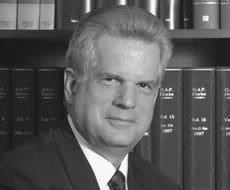
 Dr. Greg Prince is a dentist, a pathology researcher, and a Mormon historian, best known for his books, Power from on High: The Development of Mormon Priesthood, David O. McKay and the Rise of Modern Mormonism, and Leonard Arrington and the Writing of Mormon History.
- In Part 1, John talks with Greg about his formative years as a Mormon in Los Angeles, his mission to Brazil, his graduate work in dentistry and medicine, and his role in developing an immunization against Respiratory Syncytial Virus (RSV, a bronchial infection often fatal to infants), which has saved thousands of lives.
- Part 2: Greg discusses the challenges of raising a son (Madison) with autism, then discusses how he developed a gospel framework that allowed him to avoid a faith crisis, which led to his entree into Mormon history authorship. We end by discussing his book Power from on High: The Development of Mormon Priesthood.
- Part 3: Greg goes deep into how he maintains faith/belief in God/Jesus/Mormonism and activity in the LDS Church as a scientist, and after knowing so much troubling LDS history. He also lays out in detail his nuanced LDS testimony.
Show Notes:
- David O. McKay and the Rise of Modern Mormonism by Greg Prince
- Leonard Arrington and the Writing of Mormon History by Greg Prince
- Power from on High: The Development of Mormon Priesthood by Greg Prince
- The Mountain Meadows Massacre by Juanita Brooks
- Mormon Doctrine by Bruce R. McConkie
- Dialogue: A Journal of Mormon Thought
- “Lying for the Lord: The Paul Dunn Scandal” on Mormon Stories
Part 1:
Episode Transcript
Host: John Dehlin · Guest: Greg Prince
This transcript is machine-generated and lightly edited for readability. The audio is authoritative. Please excuse occasional errors in names and spelling.
Introduction and Mormon Ancestry
Part 1 of 3 · Ep. 658
Greg Prince [00:00:00] 1, 2, 3.
John Dehlin [00:00:07] Mormon Stories Podcast is a production of the Open Stories Foundation. All donations to Mormon Stories are fully tax deductible and go directly towards keeping the podcast alive and towards building a community of support for Mormons like you. To support the podcast or to join the community, please become a monthly subscriber today@mormonstories.org. hello, everyone, and welcome to another edition of Mormon Stories Podcast. I'm your host, John Dehlin. It's September 29, 2016, my daughter's birthday, and we're here in Salt Lake City, downtown. Very, very excited to have with us someone who will be familiar to our Mormon Stories audience. His name is Dr. Greg Prince. He actually was the first person I ever interviewed for Mormon Stories Podcast after my own episode number one, where I gave a little bit of my background. We interviewed Greg because he had just come out with a new book or was about to come out with a new book called David O. McKay and the rise of Modern Mormonism. And that was a really fantastic way to kick off Mormon Stories Podcast. Since then, Greg's been super busy. He helps out with Dialogue, the Journal of Mormon Thought. He is an entrepreneur. We're going to talk about the work that he's done, both in dentistry, but also in other areas of science and medicine. We're going to be talking about his life. But also Greg has recently come out with a brand new book. The book is called Leonard Arrington and the Writing of Mormon History. You've probably heard me mention Leonard Arrington in the past on Mormon Stories, but Leonard Arrington was church historian for the LDS Church, early 70s to early 80s, I want to say 72 to 82. Is that right? So we're going to be talking about all that stuff. And Greg is frequently asked to talk about sort of analyzing the LDS Church and where it is and where it's been and where it's going. We're going to talk about that. And just so happens that Greg has an autistic son. And we're going to be talking a bit about his experiences with that because it's also an area that he feels very passionately about, he and his wife Jillian. So, Greg, we're super excited to have you back. Welcome back to Mormon Stories.
Greg Prince [00:02:27] Good to be back and for the first time on camera.
John Dehlin [00:02:30] Yeah. Yeah. Well, it's long overdue.
Greg Prince [00:02:33] Thank you.
John Dehlin [00:02:33] So this is going to be. This is your life. Are you old enough to remember that show?
Greg Prince [00:02:37] I am, but I don't think you are.
John Dehlin [00:02:40] I'm old enough to have seen reruns. So we're going to be. We're going to be covering your life. I don't know that you've done an interview quite like this before where you actually talked about your life. So we're going to dive in. So to begin, talk a bit about. Do you have Mormon ancestry? Talk briefly about that if you do, and then talk about your childhood in the church.
Greg Prince [00:03:04] Yes. My ancestry in the church goes back to the early 1830s. The Prince line was converted in South Africa in the 1850s, when they were baptizing by the dozens down there. The South African mission consisted of three missionaries, but they interested the Prince family enough. They came to Utah, settled in Kaysville for a while, and then Brigham Young sent them down to St. George. Whether to reward or punish is up for grabs. But the Prince stayed in St. George until my father went to dental school in 1939. Then he stayed in Southern California. I was born in Southern California, and I stayed there until going back to Maryland in 1975 for a fellowship at the National Institutes of Health.
John Dehlin [00:03:50] So, LA area.
Greg Prince [00:03:52] Westwood.
John Dehlin [00:03:53] Westwood. Is that where the Lakers play?
Greg Prince [00:03:58] Well, the arena is downtown now. It used to be the fabulous Forum, which was in Inglewood. If you fly into lax, you go right over what used to be the Forum. Okay. It was a very nice place to grow up. I was actually blessed in the Beverly Hills Ward, which predated the Westward Ward. It met in the Beverly Hills Women's Club. And then shortly before the temple was completed, the chapel that's on the temple grounds was dedicated, and that became our home ward until I left the chapel
John Dehlin [00:04:31] on the temple grounds.
Greg Prince [00:04:32] Yes.
John Dehlin [00:04:32] Okay. And what was it like growing up Mormon in la?
Growing Up Mormon in Washington DC
Greg Prince [00:04:39] It certainly had the feel of being a minority. I lived right on the western edge of Bel Air. The elementary school that I attended, I never thought in terms of who was what. But looking back now at the roster, it was a heavy concentration of Jews. And so I grew up from very earliest age having as many of my best friends. It was never an issue for me, nor were Catholics or anything else, because there just weren't enough Mormons in that residential area to create any sense of an enclave. And we got along with everybody as a result. It also meant that the church down there, I think, may have had more of a familial flair to it than in more heavily Mormon areas. That when we congregated at the chapel, whether it was on Sunday or Tuesday night, which was mutual in those years, or Thursday afternoon, which was primary in those years, there was a sense of community there that I think was more acute because it didn't exist in our neighborhoods. But it was a wonderful upbringing and I think for that area it was a golden era. Westwood now is so high priced that it's undergone what a lot of urban areas have undergone and that is a thinning out of wards in the central cities. It has never regained the vitality that I think it had in the 50s and the 60s when I was growing up there. We see the same thing in D.C. that the inner city wards that used to be very vibrant are now very thinly populated. And some of them have to be dissolved or combined with others.
John Dehlin [00:06:28] What are some of your most fond memories growing up in the church in la? Like, you know, I would think of like primary or young women or young men's or whatever. What would be some of your memories?
Greg Prince [00:06:41] Nothing really strikes me as being ahead of the pack of other things. It was just a nice, continually comfortable environment. I felt that the people who were in the ward of all ages were very welcoming. I'm sure that that translated down from their relationship with my parents. But nonetheless they were always very friendly towards myself and my siblings. The proximity to the temple was nice. It also turned out that the temple and my junior high school were adjacent to each other. So by the time I got into junior high school, the Mormon thing was not a big deal for any of my classmates because they could see this big building next door and they pretty much got what that was all about. Certainly never felt any sense of persecution.
John Dehlin [00:07:34] Were you involved in young men's, young women's youth, youth activities? Oh, sure.
Greg Prince [00:07:39] I went through all of the hoops as a kid, Graduated from seminary, got the individual awards that they haven't given out in a long time.
John Dehlin [00:07:50] Did they have dances?
Greg Prince [00:07:52] They had dances, mostly steak dances.
John Dehlin [00:07:55] Did you enjoy those? Were you a dancer?
Greg Prince [00:07:58] Not a very eager dancer. I didn't fall over, but I didn't perform well.
John Dehlin [00:08:04] What kind of kid were you? Were you like a jock? Were you a nerd? Were you an intellect? Were you?
Greg Prince [00:08:09] My brother Steve, was the family jock really a very good athlete. My older brother and I found other things to amuse ourselves.
John Dehlin [00:08:21] What was your interest?
Greg Prince [00:08:25] I think I was more interested really in things of the mind. I didn't realize it at the time. I would hear about it at junior high school in particular. I can remember one teacher who talked incessantly about intellectual curiosity, thought, well, that sounds interesting, but. But looking back, those were the things that I was more interested in than getting out on the athletic field. I played church basketball and church baseball, but I Was never stellar in that. I tried out for sports in high school and didn't make the team, but it was no crushing defeat for me. Just thought, well, Steve did it, so I should at least try.
Early Intellectual Influences and Heroes
John Dehlin [00:09:05] Any favorite authors or books or intellectual heroes as a. As a young man?
Greg Prince [00:09:11] No, it was more, I think, just being immersed in the culture and dealing with people and ideas. I wasn't deeply read then. I don't know that I am now, because once I got into science, then all of my reading got channeled in that direction. And once I started to write books, then more than all of my reading was channeled into doing the research on the books. But it was a gradual process with no particular punctuation mark that I can identify of maturing intellectually. I think that that process really kicked into gear when I went to college. I had been an okay student in high school. I think I was in about the top 10% of the class, but I didn't really work that hard at it. It just hadn't latched onto me as to why this was important. I went to Dixie College. It's the only college that I applied to, but I had the familial connection there. My oldest brother had gone there, loved the experience. So I went from a high school of about 2,000 students to a college of 500 in a town of 5,000, and it was a perfect fit. Something happened from the time that I showed up there that I fell right into a groove of serious study. I would have class work in the morning to early afternoon, and then I'd go home and put in six to eight hours of study every night without anybody compelling me to do was a very dramatic transformation to what I had done as a high school student. And I still don't know what was the trigger that caused that to happen, but it did happen, and I did very well at Dixie, and it prepared me extremely well for what came next. I grew up in a family of dentists, father, uncles, great uncles, my cousin who was a dentist, and I sat down one time a few years ago and calculated there were at least 18 dentists or dental hygienists in the extended family. And so that was the natural course for me to take, although it wasn't the one that I stayed on. But I took the pre dental curriculum at Dixie over the two years that I was there. I was only 17 when I started in college, so I wasn't of age to go on a mission until a month before I graduated from Dixie with an associate's degree. But on the Basis of that two year degree, I applied to three dental schools and said, hold this for two years because I'm going to be in Brazil. And all three of them accepted me.
John Dehlin [00:11:58] As you were growing up both in LA and then at Dixie, describe what your testimony was like or what it was based on.
Greg Prince [00:12:06] Well, in la it was a very conventional, probably more rote type of testimony. I grew up in a very conservative family. My parents particularly my mother later became much more progressive in her thinking and I really welcomed that when I saw that happening. But I didn't really question anything. I just went with the flow all the way through high school. And Even at Dixie, St. George in 1965 was not a liberal community, still isn't. You should have seen it then. For a time I went to a barber who was overtly a John Birch Society supporter. And I did it just because it so intrigued me to hear where this guy was coming from. It had no allure to me at all. I just thought, wow, this is an interesting worldview that I haven't seen before. But it was that level of conservatism that was rampant, if you can call anything rampant, in a city that was only 5,000 inhabitants. But I wasn't questioning things theologically then at all. That's where my mind started to get opened to the scientific disciplines. And that seed was planted deeply and it sprouted while I was still there. I had mentors at Dixie who have had a lasting impression on me. One of them who's still alive in his late 90s now and still has his faculties about him. That's where I started to take on the worldview of a scientist. He pulled me aside one time and just suggested gently that he thought maybe I had an aptitude for doing research. First time anybody had said that to me. I didn't really know what it meant at that point, but that stuck with me. And so later, after the mission, getting into dental school, that came back into my consciousness and that launched me into a four decade career in science. But the questioning on theological issues wasn't there at all when I was at Dixie. Now it probably should have. I was living with my grandparents. Our back to back neighbor and home teacher was Will Brooks. Will was in his 90s, a magnificent gentleman. His wife had done some interesting things with her life too. Juanita. But I didn't know at that time what Juanita Brooks was all about. I didn't know what Mormon history was all about.
Juanita Brooks and Mormon Scholarship
John Dehlin [00:14:41] Tell our listeners really briefly who Juanita Brooks was.
Greg Prince [00:14:43] For those who don't know, I will quote Sterling McMurran, who said this to me, that in his opinion, Juanita Brooks was the brightest intellect that the state of Utah had ever produced. What can you say above that? But as a very bright and very inquisitive 20 something, she became aware through a very dramatic incident of something called the Mountain Meadows Massacre. She'd spent her entire life in the St. George area and never heard about this. That was the degree to which that incident had been buried.
John Dehlin [00:15:19] And how many miles away was that event from St. George?
Greg Prince [00:15:23] 25.
John Dehlin [00:15:24] Okay, so 30 minute drive.
Greg Prince [00:15:25] Yeah. And that's where 100 and what, under 20 something? Yeah. It was the largest case of white on white mass murder until Timothy McVeigh and Oklahoma City more than a century later.
John Dehlin [00:15:41] And unfortunately, Mormons participated in it.
Greg Prince [00:15:44] Yes, but Juanita was the one who first wanted to get the truth out and not to sensationalize it. So as an amateur, without any formal training in historiography, she just started digging and reading and asking and was not encouraged by the hierarchy of the church in what she was doing. But this was a steel backbone lady who had a strong moral compass and knew what it was that she needed to do. And she did it. But she did it at a time when her children were coming up through the ranks and made sure that nothing reflected poorly on them. When we moved to Maryland, just to jump forward, and then we'll go back about a year after we arrived there, we had a family move into our ward, and the husband was Tony Brooks, who was on sabbatical from one of the federal labs. I think it was Los Alamos.
John Dehlin [00:16:44] Is that his son?
Greg Prince [00:16:45] That was his son. Physicist. He was the youngest, and he was 12 years old when Mountain Meadows Massacre was published. The book, you would never have known even that his mother had done that, much less could you see any negative effect on him of anything that she had learned in her life or had written about her that he had encountered. It spoke a lot to the magnificence of her character that she was able to negotiate that very difficult balancing act of, on the one hand, dealing candidly with the darkest episode in Mormon history, and on the other hand, being part of the community and raising her kids in such a way that they became stellar in their own right.
John Dehlin [00:17:31] So he was faithful?
Greg Prince [00:17:32] Oh, absolutely. All of the kids were.
John Dehlin [00:17:35] And you bring this up because. I think what you said was, you should have.
Greg Prince [00:17:40] I didn't know who she was.
John Dehlin [00:17:41] Curiosity, but.
Greg Prince [00:17:43] Yeah.
John Dehlin [00:17:43] But you had no idea.
Greg Prince [00:17:44] Yeah. The most vivid memory I have of Juanita is that Dr. Barnum, the science teacher came into the lecture one day and said, on Friday night, whatever it was, you're all invited to dinner at Juanita Brooks home because one of the Dixie alumni who was a member of the National Academy of Sciences, is going to be in town. And she thought it would be nice to have the biology students interacting with this distinguished scientist. And we went over there. She cooked dinner and then we sat around and Jay Segmeller talked about his work in medical research. It was an amazing experience. But that's the lasting memory that I have of Juanita, that it wasn't just that she was intent on writing history in areas that interested her. She had a broad world vision and she wanted to help impart that on the younger kids. And she felt that this was a good way to do it. Just a magnificent gesture on her part.
Mission to Brazil and Early Faith
John Dehlin [00:18:46] So going into your mission, you were a traditional, orthodox believing, devout member.
Greg Prince [00:18:53] Yeah.
John Dehlin [00:18:54] And anything. I'm sure it was a wonderful mission. Any. Anything of note to mention there, here
Greg Prince [00:19:00] in Brazil, I would characterize it as a nest of liberals within our mission. It drove the mission president crazy.
John Dehlin [00:19:09] Around. What year is this?
Greg Prince [00:19:10] 1967-69. Southern Brazil. the time I went down, there were only two missions in the country. There was only one stake in South America. There were 20,000 church members in the entire country. A country that's larger than the continental United States. It didn't really start to take off until half dozen years after I came back. And then it exploded. I think now it's the second largest country in the church. If it isn't, it's right behind Mexico and it will surpass it shortly. But it was an interesting, wonderful experience. It was a cultural shock. Flew down there. I had never traveled outside the United States until that point. We spent the first night in a hotel near the mission home. And then the next day we were given our assignments. I was put on a bus and met the missionary that I was replacing. So he drew me a map. He says, here's the bus station. Here's where the missionary department is. What he didn't realize is it was a double city. It straddled the state line. And the bus station he wrote about was not the one that I was shipped to. So that was an interesting experience. Winding up there in the evening carrying two suitcases and not having a clue where I was going. But about a half hour after the bus ride began, the pavement ended. I was going from a city of a million to a city of 50,000. And for the next five hours we were on a dirt road. And that was the best road between those two cities. So my education of cultures other than American cultures began pretty early and pretty abruptly there. But it was a good experience down there. I would occasionally interact with some of these nestlings of liberalism down there, and it didn't ever upset me, but it just got me curious. They would say things and I would do a little bit of fact checking and thinking. Huh? Right. How about that? But it was never a crisis for me. I think the best metaphor for the transformational effect of my mission was that when I went down, I carried Bruce McConkie's Mormon Doctrine with me. When I came back, I left it there.
John Dehlin [00:21:34] You left it there? Had you read it?
Greg Prince [00:21:37] I had read enough of it to get a general flavor for it.
John Dehlin [00:21:40] And your reaction?
Greg Prince [00:21:41] It didn't appeal to me that much. The idea that something as complex as a religion could be reduced to one liners or to single paragraphs didn't fit within the worldview that I was developing. I think some of that had to do with my appreciation of science, even at that early stage, though I didn't become a de facto scientist until several years later. But it also didn't fit within my just life experience, even though I'd only had two decades under my belt, that any of the questions that could be asked could be answered so definitively in such a short space. Again, it wasn't a crisis for me, but it wasn't a book that just resonated with me. Later I moved into a Warden, Maryland, where the gospel doctrine teacher had had to rebind his copy of Mormon doctrine because he'd worn it out. Literally had worn the binding out. I wasn't cut out of that cloth. Nope. So I didn't really move from the conservative side to the liberal side in Brazil. But my roots, or for those who grew up in St. George, roots were loosening a little bit when I was down in Brazil. I think the big transformation came shortly after I returned. I got back in the late summer of 1969 and immediately enrolled in dental school at UCLA. Any of the University of California campuses, but particularly Berkeley and UCLA in the late 1960s were interesting places to be. You can go back and look on YouTube.
John Dehlin [00:23:32] Oh, I think I have a sense
Greg Prince [00:23:34] this is your life.
John Dehlin [00:23:35] Were you a Beatles fan?
Greg Prince [00:23:37] A what?
John Dehlin [00:23:37] A Beatles fan.
Greg Prince [00:23:38] Did you like the Beatles? Oh, yes, yes, yes. But I pretty much missed the wave of that because I was in Brazil from 67 to 69, and I think shortly, it wasn't late 68 or so that they broke up.
John Dehlin [00:23:51] I want to say they went into 71, but I'm not.
Greg Prince [00:23:53] I don't think they did. I think. I think they had pretty much disbanded by the time I came back.
John Dehlin [00:23:58] Woodstock and all that stuff.
Greg Prince [00:23:59] Yeah, Woodstock had happened before I got back. Brazil at that time, realized there was no Internet. We didn't telephone back and forth. So I was really culturally isolated and didn't realize how much. So until I got back, I missed the election in 1968, including the Democratic convention in Chicago in 1968, had no recollection of what was going on there. These were huge cultural upheavals within the United States. Vietnam really was going south while I was in Brazil. But I got back and for years after that I would hear about something or hear something replayed or hear a song and think, where'd that come from? Well, it all came from that two year gap where I was just totally out of touch with what was going on in the United States and most of the rest of the world. If you were to pick a two year gap where a lot of stuff happened, there would be a difficult choice in figuring out one that was more filled with important stuff than that two year gap.
John Dehlin [00:25:08] I want to say Martin Luther King was assassinated while you were on your mission. Bobby Kennedy was assassinated while you were on your mission.
Greg Prince [00:25:14] Lyndon Johnson announced he was not running again. Yeah, these were enormous. Nixon gets elected. Look at everything that's happening in Vietnam. It was state riots. Yes, yes. All of that was happening. And here I'm down in Brazil, clueless to what's going on.
John Dehlin [00:25:35] No, I was on my mission from 88 to 90 and the Berlin Wall fell like Tiananmen Square happened. Communism disbanded, and I was clueless in Guatemala. So I relate a little bit to that.
Greg Prince [00:25:48] And sometimes even a decade or two later, I would hear something and not be able to put it into context. And then I'd look into it. Yeah, it was in that window.
John Dehlin [00:25:57] Yeah, that's cool. So you're at UCLA in dental school. So talk about. So meeting Jillian.
Marriage, Dental School, and Career Path
Greg Prince [00:26:06] That's later.
John Dehlin [00:26:06] Okay. Okay. So anything notable about your time in dental school?
Greg Prince [00:26:09] Oh, yeah, absolutely. The UCLA dental school had open, opened just four years before I enrolled and quickly became, I would say, the top dental school in the country.
John Dehlin [00:26:21] Of course.
Greg Prince [00:26:22] Of course. But it was a very good dental school attached to a very good medical school, and that became important. I had been accepted down at usc, which is where my older brother went to dental school. Dental school. There was a separate building a couple of miles away from the medical school that would have Been a bad choice for. For me, considering where I finally went in my career path. Whereas at ucla, the center for Health Services is a huge, huge building, and everything was in there. Medical school, dental school, nursing school, public health school, hospital, all under one really big roof. And that became very important because later I started to shuttle back and forth between the dental school and the medical school school. That wouldn't have been possible in many campuses, but getting there in 1969, oh, my gosh. There were student protests on all sides. Governor Ronald Reagan called out the National Guard at one point to come in and calm the unrest on campus, even though there wasn't any unrest on campus, not of what he thought. And UCLA ward was an amazing place. The graduate students were primarily liberal. The few undergraduate students were primarily quiet because the graduate students had very large personalities. And we had some amazing near brawls in priesthood meeting in Sunday school that were wonderful. There was one memorable argument in Sunday school where people started fighting over what's the language of prayer? Do we use thee and thou? Do we use you and your. And at the end, they called on John Cooley, who was in a doctorate program in philosophy, to give the closing prayer. He gave the prayer without using a pronoun. And I thought, john, you're a genius.
John Dehlin [00:28:23] That's probably hard to do on the.
Greg Prince [00:28:25] It is hard to do. And he did it. And it was a beautiful prayer, but it was that kind of thing. You couldn't be in that ward without having your mental juices stirred up constantly. It was wonderful. The institute newspaper was called Polylog because it came on the heels of dialogue. And Dialogue at that time had its office at ucla. Bob Reese was the second editor of it.
John Dehlin [00:28:58] Was he your bishop?
Greg Prince [00:28:59] No, that was later that. He was bishop of the singles ward there. And then there was a regional independent LDS student publication called Contempo that at one point published a very scathing review of a book written by Ernest Wilkinson, who was the president of Brigham Young University. And that brought down the hammer of the hierarchy. And that thing went out of business. But nonetheless, it was really a fascinating place to be at that time. There were far more non health science graduate students than health science graduate students. And so you were exposed to a lot of disciplines that you may not have been in some other universities that might be near dental school or medical school, where there are a lot of LDs. People like case Western and Creighton are heavily populated with Mormon students and have been for decades. We didn't have that at ucla, so we got this broad exposure that certainly spilled over into theological areas. And that's where I really started to be awakened to the possibility that there was more than one way of looking at this religious belief system.
John Dehlin [00:30:15] Were you aware when Dialogue was founded and were you aware of Eugene England at the time? Had you met Bob Reese by this time? Were you plugged into Leonard Arrington, any of the Mormon intellectual movements that were stirring in the late 60s, early 70s?
Greg Prince [00:30:30] I saw the first issues of Dialogue when I was at Dixie because it came out in 1966 and I was there from 65 to 67. But I wasn't engaged intellectually in these issues at that point. And when I got home from Brazil, being plunged immediately into dental school was an interesting immersion. It's hard for anybody coming off a two year mission to get back into that academic groove. But if you're coming back into undergraduate studies, the groove that you're getting back into is, okay, I'll take, take 12 hours this semester and I'll be in class for three hours a day and then have the rest of the day. Dental school, it's a 40 hour week in class immediately. And I hadn't used those academic tools in two years. So it was an attention getting transition to get back into that groove. And I didn't have the time or the inclination to really broadcast my own reading. I was getting it peripherally from just bouncing around in the ward and talking to ward members. But I wasn't doing any kind of serious reading at that point and really didn't until after I got back to Maryland. I was just too consumed with being first a professional student, getting a dental degree and then turning right around and getting a PhD in pathology from the medical school.
John Dehlin [00:31:56] Talk about how that happened. Pathology. I mean, aren't you, I would think you just become a dentist just like your.
Greg Prince [00:32:02] That's what I thought your dad.
John Dehlin [00:32:04] How did, how did your interest in pathology spark.
Greg Prince [00:32:08] There have been times going through my life where things happened and I didn't realize until later how crucial they were. I suspect that this happens with most people, but they may not even be aware of it. And, and one of the crucial things that I did when I got my mission call was to buy a missionary diary and write in it. And I thought, okay, I'm going to write every day while I'm on my mission. A lot of those entries are really uninteresting, but that got me into a habit that I've continued to this point. So now I got my call in, I think it was April 67. So I'm coming up on 50 years of journal writing. Of journal writing. When you do that, number one, at the end of the day, you're reviewing what happened that day and you get insights that you didn't realize while it was happening. And as you read backwards later on, you pick up even more and you can see patterns in your life that you couldn't see when you're on the road, just plunging forward. Well, one of those crucial events over which I had zero control was that the dental school course in general pathology, which was a required course, was taught or was chaired that one year by Bill Carnes. Bill had been the chair of pathology at the University of Utah Medical School. And then there was a mass exodus from that department down to UCLA and he became the chief of the autopsies service there. Well, that one year in the entire history of the dental school, he was the chairman of the dental course. He put us through a more rigorous course than the medical students had that year. Rigorous enough that to pass the course you had to participate hands on in three autopsies and write up the reports, go through the microscope slides, the whole business. Well, there were 96 students in the class and I'm pretty sure the 95 of them complained. But to me it was a life transforming experience. I can remember very vividly the first autopsy that I witnessed because he had the whole class come in and the prosector was doing it, explaining what was going on. And I'm just riveted to there, to the whole scene, thinking, wow. And that flipped a switch that was never turned off. I got more and more interested in that, having done eventually three of those hands on. During the course of that semester, I went to the chair of pathology and said, hey, some of these guys who are doing the autopsies are medical students. And they told me that there is a program that they can take a year's leave of absence after their second year and spend it doing autopsy, pathology. Then they go back into medical school a year behind their original class. And you would think that would be a disadvantage. In fact, it was a highly competitive thing because it gave them such a strong base for any field of medicine they wanted to pursue. So I, not knowing that you shouldn't encroach on the time of department chairs as a dental student, I walked into the chair of pathology and said, any chance I could do that? He said, you're the first dental student who's ever asked, said, go talk to your dean, it's okay with me. So not understanding that dental students shouldn't go in and talk to Deans. I went and talked to the dean and said, this is what I'd like to do. And he said, let me make a phone call. So he picked up the phone while I was sitting in front of his desk. He called his assistant, said, do we still have some funds and such and such. So he put down the phone and he says, you're approved and we'll pay you to do it.
John Dehlin [00:36:06] Nice.
Greg Prince [00:36:08] How's that for a forward thinking dean? And that really became a crucial intersection in my life story. Their willingness essentially to take a bet on me doing something that no dental student there had ever done before. So I spent that next year doing autopsy, pathology, and again, one of the things over which I could have had no control at the beginning of that year, I was walking down the corridor towards the medical school and one of the dental professors was walking towards me. He stopped me and he says, I've been thinking about you. I'd had no personal relationship with him. He said, you're doing this pathology thing. He said, I think you can take the coursework of the third year of dental school and do that and finish with your class. What it would require is that you do all of your clinical work of two years in one year. He says, I think you can do that. He said, if you are willing, I will take this to the promotions committee and propose it. Be my guest. And that's the way it happened. So I actually finished with my class, but had a year of autopsy, pathology. One of the professors that I worked with, because you always had a senior pathologist going through the case with you and then you would do the actual pro section work, then you'd meet with the senior pathologist immediately afterwards and then work with him on the case until the final write up. We were doing a case one Saturday afternoon and we'd finished the work on the body and so we were back in his office going through the medical records and he said, almost as an aside, he said, I think you've got potential for research. Why would he say that? Because I wasn't doing any research.
John Dehlin [00:38:04] Sounded familiar.
Greg Prince [00:38:05] You'd heard that before, I'd heard that before. And he said, if you're interested after you finish dental school, come back. So I disappeared for a year, finished dental school and then went back and he said, I've been waiting for you. How do you script that kind of thing? And yet those were the crucial events that really shaped my entire profession.
Becoming a Scientist and Researcher
John Dehlin [00:38:29] So listeners may sort of be wondering why. Why are we digging into this? One of the things that I bet a Lot of people don't know about Greg, but that is super important, is that he ended up. And we're going to talk about this going on as a researcher to develop. I'm going to probably slaughter this, but develop cures for at least one very significant disease, which is rsv. Is that right? Which is a respiratory disease that kills infants. Is that right? And. And Greg, with other people, were responsible for developing this cure that saved the lives of, I don't know, tens of thousands, hundreds of thousands. And it's probably the main way that he probably generated whatever income he's generated in his life. So it's a really significant contribution to humanity completely outside of his academic and research and Mormon studies work. So. So for me, the history and immunology is important because it tells us how a dentist becomes a researcher that ends up saving tens or hundreds of thousands of lives.
Greg Prince [00:39:36] Well, it also gave me the toolkit that I used later when I started
John Dehlin [00:39:39] writing as a historian.
Greg Prince [00:39:40] Yeah. The pathologist who invited me into his lab was Dave Porter. As was the case with Andy Barnum down at Dixie, he became a lifelong friend and a mentor through life. These guys were covering for me. They were watching my back for decades after I went through their schools. And that's what the ideal mentor should be. I was very fortunate in having mentors like that and didn't have a clue at the time how important it would be or whether these guys would measure up to that. But again, one of the weird things, things that I couldn't have scripted just prior to my doing that pathology fellowship, there were four papers published in one scientific journal, the American Journal of Epidemiology, describing a vaccine trial for RSV that had been deployed about two years prior and that not only had failed, but had blown up. That the kids who got the experimental vaccine not only were not protected from infection, but when they got infected naturally, they came down with a more severe form of the disease. Two of them died. And this was a huge disruption for pediatric research. They had never seen something like this. And he came at it from the vantage point of a pathologist saying, why did this vaccine backfire? And realized that in order to be able to answer that question, you had to be able to develop a small animal model in which you could reproduce the enhanced disease before you could figure out what caused the enhanced disease. And there was no small animal model at that point. He had wanted to pursue that, but right at that time, his wife became pregnant with what turned out to be their only child. And he said later, I didn't want to be working around RSV and potentially take it home with me, literally, and risk infecting my infant son. So he said, I put that off and then you came along. Now, he gave me one of my two mantras for that really have driven my professional and even my avocational life ever since then. He said, work on something that's important. He said, I have spent nearly 30 years working on a disease that was interesting to me but not very important. It was a viral disease of mink. He said, I'm not going to let you do that. I want you to work on RSV because it's the most important virus in pediatrics. And he said, if you accomplish anything, you may make a difference. He said, if you're working on something else that's not important, it doesn't matter how well you do it, you won't make a difference. Well, that sounds like a simple lesson, but I have encountered very few people in my entire life who got that one right. Many of them have had the opportunity to work on something that was important. And for whatever reason, they didn't go that direction. They spent their entire career working on something that wasn't very important. And I don't think that it was very productive for them to have made that decision. So I felt very fortunate that that decision was made for me. And he said, this is what you will work on and this is where you will go after you get your doctorate degree. And by the way, you won't walk out of this door until your dissertation is filed. He was very tough, and it was appropriate for him to be that I never interviewed for my postdoctoral fellowship. He arranged it in a taxi cab drive in Manhattan. He told me later and says, here's your next step. This is where you're going. Finishing school. That's the ideal mentor. But that's what got me going into science. And when I went back to the National Institutes of Health, what was the second mantra? Second mantra was later, we can jump
John Dehlin [00:43:55] in, we to come back to it.
Greg Prince [00:43:56] The second one. Let's talk about that now. In the early years of my working on the McKay biography, I developed a magnificent relationship with Paul Dunn. And he was the second mantra, which was make it interesting, make it interesting, make it interesting from Paul Dunn.
John Dehlin [00:44:22] I love it.
Greg Prince [00:44:23] And whatever anybody might say about Paul, Paul was able to make it interesting. It didn't matter what he was talking about. You listened to. I asked him about that because just three months before he died, he and Gene came back and spent a week with us. And I can remember. We were at the base of the steps in our home. I could remember that vividly. And I said, paul, you came to my ward, Westward Ward, when you were an instructor at the USC Institute of Religion. I was a deacon. And you spoke to our mutual. And I can still remember that evening. I said, what's your secret? And he says, it's not really a secret. He said, I figured out early on that if I spoke to the parents or if I spoke to the kids, the parents would listen. I spoke to the parents. Nobody would listen. And so he constantly was trying to shape his message so that it would resonate with the youth. And he knew if they listened, if it was interesting enough for them to pay attention, he got the parents as a bonus. But those two simple things work on something important and make it interesting. You got it. But so few people are able to put those together. All right, so we jumped ahead. We'll come back to ucla.
RSV Research and Entrepreneurship
John Dehlin [00:45:47] Okay, so you got to your postdoc. Is that kind of where we were?
Greg Prince [00:45:53] Well, you'd asked earlier about Jillenne. I was in my senior year. Let me think this through. Yeah. Senior year of dental school. So it was late 1972. She had finished her Bachelor's at BYU and came down, got a job in LA and started to show up at UCLA Ward. There wasn't a designated singles ward at that point, so it became the de facto singles ward, slash student ward. And we met and had a very brief courtship. I proposed to her in 16 days.
Guest 1 [00:46:32] Whoa.
John Dehlin [00:46:33] Very Mormon.
Greg Prince [00:46:34] Very well. And then we got married about five or six months later. And then I had two years to finish my PhD there. And then we went back to Maryland. It's been a good marriage. 43 years into it.
John Dehlin [00:46:48] Congratulations.
Greg Prince [00:46:50] There are not a lot of those running around anymore.
John Dehlin [00:46:51] No, not a lot of 43 year marriages.
Greg Prince [00:46:54] Yep.
John Dehlin [00:46:54] So you went straight to Potomac from East.
Greg Prince [00:46:58] I went straight to Maryland, yeah.
John Dehlin [00:46:59] Okay.
Greg Prince [00:47:00] Okay.
John Dehlin [00:47:00] Yeah.
Greg Prince [00:47:00] We lived in another city in Maryland. And I spent eventually 15 years at the National Institutes of Health, mostly doing what I had done for my doctorate work with rsv.
John Dehlin [00:47:12] So they funded your continued research in rsv?
Greg Prince [00:47:16] Yeah. And even that was an unusual convergence of events that I couldn't have scripted that I wound up not working on anything dental. I'd been shipped back there to do a postdoc in the National Institute of Dental Research and had a very unpleasant experience there for a couple of years. But by fluke, met one of the fellows who was working for the guy who had discovered rsv. And it's just as an offhanded thing. I said, ask him if he's interested in having somebody come over and work on it. Because I was really upset with the way my program was going over in the Dental Institute. The guy came back the next day and said, yeah, he wants to talk to you. So I made that move seamlessly across the NIH campus and stayed in that lab for another 13 years, continuing the work that I'd started as a graduate student.
John Dehlin [00:48:13] So were you just a government worker, like a GS, whatever?
Greg Prince [00:48:19] For a few years? I was. Let me think if I was.
John Dehlin [00:48:26] Did you have a dental practice that
Greg Prince [00:48:28] came in along the way? I went there as a staff fellow, which is a postdoc, and then became a senior staff fellow, but by that time was really not enchanted with the way that the NIH system worked. The day that I started at nih, two other people started in the same lab that I was in. I had two doctorate degrees. They had one, but theirs was an md. They had zero laboratory experience. I had a dissertation under my belt. They didn't know what a test tube was. They were paid 40% more than I was.
John Dehlin [00:49:14] You didn't like that?
Greg Prince [00:49:16] I thought, this is not a good signal. And I later found out that that's just the way that the whole system had been set up there, that the hierarchy was stacked highly in favor of the MDs at one point after. It may have been after I left nih, but I sent a letter to Bernadine Healy, a very famous physician who for a while was the director of nih. And I just said, just for your information, here's my history, and this is something that I think you should consider trying to fix, because you've got PhDs and you've got dentists, and the system is stacked against them. And she wrote back a nice letter and said, basically, I feel your pain, but it would take a legislative change for us to be able to do that. In other words, it would take an act of Congress literally to fix that. I don't think they ever did, so.
John Dehlin [00:50:10] So how did you go from researching at the NIH to an entrepreneur that was able to be quite successful?
Greg Prince [00:50:20] Well, there's a missing piece in there that I'll fill in. After I finished dental school at ucla, I made sure that I took my boards so that I could practice on the side. And I practiced in my brother's office on the side for two years while I was in graduate school school, then moved back to Maryland, got licensed there and was just doing it part time, like on Saturdays. Another one of Those fluky things. I was at a meeting at the Rocky Mountain Laboratory, which is an NIH component in Montana. And Jalind called and said so and so in whose office I had been working on Saturdays is leaving town. I just drove over to his house to find out what's going on. He was packing his car. This guy had been in practice there for over 20 years. And over the phone we negotiated my buying his practice. Turned out the reason he was leaving town is that he'd been having affairs and caught up with him. He was also in the bishopric. So that was really my entree into having my own dental practice. How do you script that one? I did it on a part time basis. I had associates who would come in and. And fill in the hours that I wasn't there. But that allowed me to get a more decent living. I could put bread on the table. When I went back and started at nih having two doctorate degrees under my belt. I had an annual salary of $20,000.
John Dehlin [00:52:09] Yeah.
Greg Prince [00:52:11] Even back then that wasn't much money. And so this allowed me to supplement it. But it also took me into a different career path. So getting back to your earlier question. I don't recall that I ever had a GS rating. I always had these other kinds of appointments and for one period was put on a contract with Johns Hopkins University just to allow me legally to keep doing the work that I was doing in that lab. But the money was channeled up to Hopkins and then back to me. But it was a very good atmosphere for science at that time. NIH was well funded. We didn't have to go through a grant writing process that academic scientists have to do continually. It was a line item budget for our laboratory and so we could just concentrate on doing the work. And I was given enormous leeway. I'm still surprised at how little my lab chief was looking over my shoulder at what I was doing. Even though this was his pet virus. He was the person who had first discovered the virus in 1956. And I think he was questioning how useful my research was because it was going in a very narrow channel towards a practical outcome. You've been around the research institutions enough to realize that the study sections and the editors aren't interested in practical outcomes. They almost make an article of faith that they don't want to go in that direction. And they will downgrade your paper or your grant application if it looks too practical. Am I speaking incorrectly?
John Dehlin [00:54:00] So true. So true.
Greg Prince [00:54:03] And here I was. And I think it was mostly because I was a clinician. I was a practicing dentist. If you're a clinician, you're focused on two things. You either prevent something from happening that shouldn't happen, or if it's happened already, you try to fix it. Doesn't that pretty much sum up clinical work in general? And so I was very much in my professional life as a dentist focused on, all right, fix it. And I carried that over into the science. And the other scientists in that laboratory were interested in just pursuing science for its own sake. And you've heard that phrase ad nauseam, I'm sure, in your own career. But it turned out that the animal model that I had developed was giving me the right information, even though everybody else was charging off in the opposite direction. And eventually I walked into his office one day and dropped about 2 inches of papers onto his desk. And I said, here's what I've been doing. And when he read through that, a light went on in him and he realized, you're onto something in one minute.
John Dehlin [00:55:18] How would you describe your animal model or what you were doing or your line of research?
Greg Prince [00:55:24] Well, I'll back up and go back to that ill fated vaccine trial. In the late 40s, early 50s, polio was a terrible, terrible plague. Throughout the world. There were waves of epidemics that would just decimate communities. You would see pictures of the iron lungs and you would see people with crutches or in wheelchairs, and it was a horrible disease, but it wasn't endemic, it was epidemic. And you would have some years where it would just be like influenza can be, and just a devastating epidemic. Well, there were two approaches being taken simultaneously to try to fix polio. Albert Sabin wanted to weaken the virus so that it couldn't produce the disease, but it still still looked to the immune system like polio, so that the immune system would then mount a response that would effectively ward off any subsequent exposure to the virus. And we've got vaccines to this day that are of that variety. They're live, attenuated, weakened strains of the bacterium or the virus. The other was Jonas Salk. And what Salk did was to grow up a bunch of the virus in tissue culture and then add a very small amount of a chemical that would inactivate the virus. Formaldehyde in this case. But that wouldn't change it so much that it didn't look like polio anymore, because again, the trick is, if you inject that vaccine, the immune system has to think that it's the same thing as infection. And so it produces this response that then protects you from Subsequent infections. Well, it turns out that both of those approaches worked. Salks crossed the finish line first, and deployment of that vaccine began in about 1954. I can remember the first time that I got that vaccine was when I was visiting St. George on the summer vacation, and it had just come out, and we got it right there in St. George. I got it right there in my rear end. And I can remember having a brief argument with the doctor who wanted me to pull my pants down. I was in swim trunks and I said, no, I'll pull them up and I won't pull them down. Finally, I won. But what Bob Chanock, who had discovered RSV did was to take Jonas Salk's recipe and just move it over to a different virus, which made sense. So he grew up RSV in tissue culture and then inactivated it. Essentially, it was the same recipe that Jonas had used, but it's a different virus. There was no animal model for it at that time. So there was no way of doing any kind of safety testing before it went into clinical trials. That would be highly unlikely to happen today unless it were something that was so onerous, like HIV has been, or some of the things, like Zika, where there just doesn't seem to be enough time to do extensive animal testing. But there wasn't any animal testing done. And so that went into clinical trials, and the trials backfired. So my initial chore as a graduate student was to develop the animal model that would allow us to find out why the vaccine backfired. We still don't have a complete answer to that, and this is 40 plus years later. But along the way, having developed the animal model, I started to tinker with it and started to ask the question, okay, what defines immunity? Now, this goes back to my worldview versus the worldview of most basic scientists. They would be interested in studying immunology. I was interested in studying immunity. This is. Let's take one piece of the puzzle and study it to death. This is functional. How does it work? Not what are the components in it that are acting independently. And so it was in pursuing that line of research that it started to dawn on me that the dogma that had developed after the vaccine failure was totally wrong. And I could see how they had interpreted the data to go in that direction. But it was totally misunderstood by them, including my lab chief. That's why I had to wait until I had that study stack of data, because I knew I would be swimming upstream. He was the one who first articulated the doctrine that, and I'm Saying, no, it's this. But the data were so persuasive that he didn't buck me on it. He said, I think you're on something.
John Dehlin [01:00:27] And so how do you go from there to actually monetizing or commercializing your research?
Greg Prince [01:00:33] Another one of the fluky things. We took it to NIH and they said, this has no commercial potential. We'll give you development rights. So two pediatricians from the military medical school that was across the street at Bethesda Naval campus and I got together and put together a little biotech company, not having any idea that we would be able to succeed. But the timing was good. There was a startup company that was incorporated a year after we started ours. They knew the CEO and the chief scientific officer from their common military experience. And by that time we had advanced it through an NIH contract of a first year clinical trial sufficiently that this startup company said, we want to license this and we'll work together. And that turned out to be a very fruitful relationship. It put them on the map because they licensed the entire platform for us. And eventually they were sold to one of the real biggies, AstraZeneca, for $12 billion.
John Dehlin [01:01:43] 12 billion.
Greg Prince [01:01:44] 12 billion. That didn't come to me, but it showed what the value was that we had added to their company. But I hadn't gone into it with the intention of curing the disease. Disease. I'd gone into it because Porter said, this is a really important virus. We've got to figure out why that vaccine backfired or we're never going to get a vaccine. Well, we still don't have a vaccine. What we developed was what's called passive immunization, that if you get the right quality and quantity of human antibody and administer that to high risk infants, it will protect them from this virus. And that's the drug that exists to this day.
John Dehlin [01:02:21] And how is it administered to infants?
Greg Prince [01:02:23] By injection.
John Dehlin [01:02:24] Okay. And does every baby get it?
Greg Prince [01:02:26] No, because it's too expensive.
John Dehlin [01:02:28] So who gets it?
Greg Prince [01:02:29] It's only the high risk infants, the very low birth weight. The American Academy of Pediatrics has revised downward a couple of times its criteria for it. Now it's 32 weeks gestation and under. Or if there is a chronic pulmonary problem or congenital heart disease, they are candidates for it. Or multiple births.
John Dehlin [01:02:48] They get it in vitro?
Greg Prince [01:02:49] No, after. After.
John Dehlin [01:02:51] Okay.
Greg Prince [01:02:51] Yeah.
John Dehlin [01:02:53] And how many. What was the prevalence of rsv or infants dying from RSV prior to the development of your.
Greg Prince [01:03:02] The fatality rates really are not well defined because in most settings there was not the ability to diagnose the virus. Virus. In the early years when all this was going on, the only way you could really isolate the virus was to grow it in tissue culture and then have the right kind of reagents to realize, yeah, this is that virus. Very few centers in the country could do that, and certainly not the pediatric clinicians out there in their private office settings. So we don't know the answer to that. What we do know is that RSR still is the most prevalent virus infecting probably not just human infants, probably all of us, because it has learned over its evolutionary span to trick our immune system. We can't develop long term immunity against this virus. Whereas if we're infected with flu, we'll never see that strain of flu again in our entire lives. This one can reinfect us every year throughout life without changing. It has tricked our immune system instead of doing what flu has to do, which is mutate away from existing immunity every year in order to stay in business. So the answer is probably 50% of human infants are infected with this every year.
John Dehlin [01:04:22] And when an infant is infected in a severe way, what are the symptoms?
Greg Prince [01:04:27] It can go very quickly as we within hours, from sniffles to pneumonia. And pneumonia is the real thing that you worry about with rsv. That's what can take these kids into the hospital and it can kill them. Though the level of supportive care now is good enough that in most pediatric hospitals, most of the kids will probably come through. But if they got these CO factors like they're very low birth weight, or if the gut cross chronic pulmonary disease, or they got congenital heart disease, those amplify the risk to them of having a fatal outcome.
John Dehlin [01:05:02] And so pneumonia was the killer. And you don't have a sense for how many were dying before, but we
Greg Prince [01:05:10] just don't have reliable numbers.
John Dehlin [01:05:12] Would it be 1,000 in the U.S. would it be 5,000? You don't even know.
Greg Prince [01:05:15] Nobody knows.
John Dehlin [01:05:16] Do you have a sense for how many dosages of your vaccine or whatever would be per year?
Greg Prince [01:05:23] Yeah, it's in the neighborhood of a quarter million a year.
John Dehlin [01:05:26] A quarter million a year?
Greg Prince [01:05:27] Quarter million infants a year are treated with this drug.
John Dehlin [01:05:30] So that's 250,000 a year for now, yeah.
Greg Prince [01:05:33] Now AstraZeneca is currently testing in clinical trials what would be a third generation drug that would be potent enough that it could be given just once. Ours has to be given every month during the RSV season, which is in the Northern hemisphere. It's the winter. This could be given just once, and that would lower the cost enough that it might be the standard of care for all infants. So stay tuned. Yeah, it would work on all infants. The problem right now is the cost is prohibitive. So the cost benefit ratio is unfavorable for full term births. It's very favorable for the high risk.
John Dehlin [01:06:16] But you, along with your colleagues, ended up developing a cure or treatment for RSV that probably has saved tens, if not hundreds of thousands of lives. Is that fair to say?
Greg Prince [01:06:28] Yeah. How does that feel? It doesn't keep me up at night. I don't think my hat size changed.
John Dehlin [01:06:38] You didn't let your head get too big, you're saying?
Greg Prince [01:06:40] No. No. The most gratifying part, actually is that every now and then a parent, usually a mother, because men are useless, will find out what my role is and say, my twins, my triplets, my preemie. Got your drug. That's good. Makes me messed up. I'm sorry, but makes you what? It makes me get misty talking about that part of it. But that's the real payback, is to realize that it is making a difference and then to have that contact from the parents who will say, yeah, you made a difference. All right, move on.
John Dehlin [01:07:27] All right, we got a Misty. Got Greg Pritt's Misty. That's part one of my three part interview with Greg Prince. It's been fascinating to hear about that part of your life. I don't think most people know about that part of your life.
Greg Prince [01:07:40] I don't talk about it.
John Dehlin [01:07:41] Yeah, he doesn't talk about it, but he did today. So this is part one. Part two. We're gonna actually talk about a little bit about Greg's books that he's written, his entree into writing Mormon history. We're gonna dive right into his book on Leonard Arrington. And then we're going to close part three. We're going to talk about the state of the church today, the state of Mormon studies today, all the things that have been happening over the past 10 years and kind of where everything is going. So thanks for joining us. Comment on mormorestories.org if you have constructive things to say, positive or constructive. And join us back for part two. Thanks, Greg.
Greg Prince [01:08:24] You're welcome.
John Dehlin [01:08:25] See you guys in a bit. Thank you for joining us today on Mormon Stories. Music today was provided by the Saber Rattlers. Check them out@sabre rattlers.com the Mormon Stories logo was generously donated by StudioCase.com thanks for listening.
Guest 1 [01:08:46] Come, come ye saints no toil nor labor fear but with joy when you're away, though hard to you this journey may appear Grace shall be as your day. Tis better far for for us to strive Our useless cares from us to drive to the San Jo your hearts will swell oh, all is well, all is well. Why should we mo Lord, I think our lot is high Tis not so, all is right why should we think to earn a great reward if we now
Greg Prince [01:10:08] sh the fight you good up your love.
Part Two Introduction and Raising Madison
Part 2 of 3 · Ep. 659
Greg Prince [00:00:00] 1, 2, 3.
John Dehlin [00:00:07] Mormon Stories Podcast is a production of the Open Stories Foundation. All donations to Mormon Stories are fully tax deductible and go directly towards keeping the podcast alive and towards building a community of support for Mormons like you. To support the podcast or to join the community, please become a monthly subscriber today@mormonstories.org. hello everyone, and welcome back to part two of my second interview with Greg Prince, author of Leonard Arrington and the Writing of Mormon History. Also the author of David O. McKay and the rise of Modern Mormonism and another book that we'll talk about regarding the priesthood restoration. In part one, we talked about Greg's childhood growing up in LA area. We talked about him falling in love with science and going to dental school and eventually getting a PhD in immunology.
Greg Prince [00:01:02] Pathology. Close enough.
John Dehlin [00:01:03] Pathology. And eventually how he worked in Maryland with the NIH and others to develop a cure for rsv, a fatal respiratory illness in infants. And it's a fascinating story and something that people don't know about Greg. So in this part we're going to turn to sort of how he got interested in writing Mormon history. And also we're going to talk about his book before we, in part three, talk about where the church is today. Before we jump into all that, why don't you talk briefly? Let's see, do we talk about your son now or do we wait and talk about that after we talk about your Mormon history writings. Do you have a preference?
Greg Prince [00:01:56] Your choice.
John Dehlin [00:01:57] Let's talk about them now.
Greg Prince [00:01:58] All right. We have three children. The youngest is a boy, Madison. He's 26, about, I would say, months after he was born. We noticed that he wasn't developing the way that the others had developed, but we didn't know if that was alarming yet. My two partners in the biotech company were both pediatricians. One was the chair of pediatrics at the Military Medical School. They didn't see that anything was wrong. So, okay, we're fine. We'll quit worrying about it. But by the time he was two, it was clear that the speech was not developing. And then we started to get really concerned. Now, he was born in 1989. The state of the art in diagnosing autism was pretty minimal. Then we took him for tests to Children's Hospital in dc, which is a very, very good children's hospital. And at the age of three, they said, well, he's not developing normally, but we don't really know what it is. And so they gave it an awful label called pervasive developmental Disorder, which is jargon for something's wrong, we don't know what is. And that's not very helpful to parents. But at least it gave us enough of an indicator that we got him into special education. By the time he was three and a half, he was getting on a school bus every morning and going to a special ed program. It was when he was about six and a half that they finally put the dagger to the heart and said, you, child has autism. I barely knew what the word meant at that point. That's not a message that any parent wants to hear, but it's a message that's being heard more and more commonly now. If you go back about 30 years, the recognized incidence was about 1 in 2500 births. Now it's 1 in 68, which means that it's more prevalent than all of the other congenital disorders put together by far, and is creating really a national public health disaster that we have not been able to respond to yet. So as we have tried to figure out what's the course of life for Madison, we've become aware that we're not alone in this, but that what we're trying to do, we are alone in. There was not a single organization in the country that was addressing the issues of autistic adults. Autism Speaks is the big one in the country. They raise a lot of money. They do a lot of research. It's not going towards adults. Jillian, my wife, is affiliated with a government committee. It's called iac Interagency Autism Coordinating Committee. It's chaired by the National Institutes of Health, but it has other government components that have a piece of. Of autism within their portfolio. Just a week ago, they issued an internal report that in the most current or the most recent reporting year, between federal and private dollars spent for autism research, $308 million were handed out. 1% went to adult autism. And yet eventually, three fourths of the autistic people in this country will be adults. They have a normal lifespan, and so they're going to live to their 80s, and right now there's nothing out there for them.
Challenges of Raising an Autistic Child
John Dehlin [00:06:02] Talk about what it was like with Madison growing up. Try and convey in a minute or two the difficulties of raising an autistic child.
Greg Prince [00:06:13] It's hard to, through stories, to convey verbally how taxing it is on all fronts. He is low functioning. He has very limited verbal skills, and this is part of his what words can he say?
John Dehlin [00:06:27] Or as a child, what words?
Greg Prince [00:06:28] He has a vocabulary, but he won't either. Can't or won't Carry on a conversation. And most of his sentences will be very simple. Structure of objects or subject, verb, object.
John Dehlin [00:06:43] Give us some examples.
Greg Prince [00:06:43] Very few adjectives, very few adverbs. One of the hallmarks of autism is everything is concrete, everything is literal. So any notion of being able to capture emotions, being able to describe feelings, being able to talk about thoughts, it's almost impossible for somebody who is on the autism spectrum. Then there are behavioral issues, some of which come directly from frustrations. He knows that he can't communicate well, and it's both a receptive and expressive communication deficit. There's lack of abstract thinking. There's repetitive behavior. There are behavioral outbursts. And as they get into puberty, these tend to get magnified. You can have aggression, you can have anxiety issues, depression. And to this day, there's not a single drug that goes to the core of what autism is. Everything that's used is to treat these nagging symptoms, eating disorders, sleeping disorders, aggression, depression, anxiety. And most of those drugs have dreadful side effects. One of the most difficult thing is a lot of weight gain, but they're the only tools in the arsenal right now. So we have not only had to try to figure out, how can we have him live with us in a safe environment that's safe for him and for us, how do we negotiate that with his older siblings and what's out there after he turns 21? Because at age 21, your support from the government disappears. Until the age of 21, children with disabilities, by federal law, are in the care of the school systems, and they are required to give what supposedly is optimum setting for whatever that disability is. That varies in terms of how it's actually carried out. But when they turn 21, they drop off the cliff.
John Dehlin [00:08:49] So just to kind of bring it maybe to a slightly personal level, talk us about a story or two to illustrate the difficulty of raising an autistic kid that you and Jillian may have
Greg Prince [00:09:00] had to deal with. He used to have severe sleep disorders. He would be bouncing around until sometimes 2 or 3 in the morning, and then within a few seconds, he'd fall asleep, but we wouldn't, because we can't sleep through that bouncing around. And there were a couple of years there when I still had the dental practice. I would see my first patient at 7am so if I wasn't getting sleep until 3, and then I had to get up at 6, that's not a good way to live life. We finally found that a very simple remedy existed, at least for him. It's called melatonin. We Were using some artillery. Again, both my business partners were pediatricians and we were using some fairly heavy methods, drugs at times just to try to knock him out. But he would become refractory to those within days. You can't go down that road very far. And then somebody suggested try melatonin. So for a tablet probably cost three or four cents, we got our lives back. That he would then go into just a natural glide into sleep and would more or less sleep through the rest of the night. So that was a huge difficulty. When he was probably 6, 7 around there, he didn't have the vocabulary to express much of anything. One thing that we were sure that he enjoyed was little stuffed animals. So people would give him these gifts all the time. And he had a small mountain of these. Occasionally he wouldn't be able to find one and he would remember which one it was, but he couldn't tell us. He couldn't articulate that. And he would erupt into a full blown tantrum that would go on for hours and just about wear us out sometimes. He finally just wore down enough that it became a non issue. But most of the times we had to scour the house and finally find that one little stuffed animal that he was looking for. And that was an ongoing thing. Autism is a 247 dilemma for families.
John Dehlin [00:11:17] What about in adolescence? What's it like as it advances to adolescence?
Greg Prince [00:11:21] What are some of the difficulties? Yeah, you can generalize. That's one of the real difficulties with autism. People talk about autism spectrum. I've used that term, but that's a misnomer because if I say to you spectrum, you very likely will have a visual image of the spectrum of visible light that it goes from red on this end to purple on the other end. That's not autism. It's an array. It's multidimensional. And you have perhaps certain clusters within that array that would be more populated than others, but every individual is going to be different. There are certain hallmark characteristics of autism, but then everything else is negotiable. So some would go through adolescence and be fairly passive. Madison became more active, more aggressive, and it's just a continual battle to try to figure out how are we going to manage not just today, but the moving target that this is. And this is common for all parents who are dealing with autistic children.
John Dehlin [00:12:23] So by adolescence, was he able to read? Was reading just normal?
Greg Prince [00:12:27] He can read. He can read out loud and do pretty well, but it's very difficult to assess how much retention.
John Dehlin [00:12:34] He can read words?
Greg Prince [00:12:35] Oh, yeah.
John Dehlin [00:12:36] Okay, yeah, but he can't put a sentence.
Greg Prince [00:12:39] He can put a sentence, but it won't be a complex sentence.
John Dehlin [00:12:41] Give me an example of a sentence.
Greg Prince [00:12:42] And he won't. I want a glass of water.
John Dehlin [00:12:47] So he would say a full sentence.
Greg Prince [00:12:48] He can say that. Yeah.
John Dehlin [00:12:49] Okay.
Greg Prince [00:12:49] But he won't carry on a conversation with you. But the. The real nightmare for us in. In addition to just trying to live to the next day is what happens when he drops off the edge of that cliff. What are the services that are going to make his life dignified and meaningful?
John Dehlin [00:13:11] What cliff?
Greg Prince [00:13:12] Age 21.
John Dehlin [00:13:13] The Financial Services that are.
Greg Prince [00:13:15] The school. When he gets out of school, there's nothing there. The federal mandate ends. And so that's when. That's when he was in middle school. It came crashing down on us. As we later found out, it does on all parents at about that same time that whatever conditions are now, when he hits 21, those disappear. And so we decided that we would try to make a bit of a difference in the world and rather than just wrapping all of our resources around Madison, try to make a difference in a more global setting and address the issues of autistic adults. There was not a single organization in the country at that time that did that, and there still isn't. I don't think there's any other that focuses solely on the lifespan issues of autistic adults. And that's what we're trying to do.
John Dehlin [00:14:17] Did you ever get the sense that there was more in there, that he was able.
Greg Prince [00:14:21] Oh, sure.
John Dehlin [00:14:23] Was that what the frustration was about?
Greg Prince [00:14:25] I think that's part of his frustration, but you're guessing because he can't articulate it clearly. On rare occasions, something minor may happen and he'll suddenly sob, sob, sob. It's very rare. But when that happens, it just tears my heart out. And I think that's when he becomes more acutely aware of what a disadvantage he has in the world. But he doesn't have any way of rectifying that. I think that's what's going on there. But in a way, being a parent of an autistic child is like being a veterinarian. You're dealing with a patient who can't give you the feedback, and you just try to do the best that you can. But it wears people out. It destroys marriages, it wrecks sibling relationships. I suppose that there are some who would say this is a blessing. I'd be happy to sit down and compare notes with them, because it can be so destructive on such a broad front that you really have to wonder, what are the answers to those questions? But we don't have those answers. And so you deal with today, and you hope that you've got enough energy and resources tomorrow, and then you really hope that by the time that child becomes an adult, there's something out there that will give some meaning, some dignity to life, some relief for the parents. And then the ultimate nightmare for all parents is, what about when I'm not capable of caring for this child anymore or when I'm gone? And you don't want a sudden transition from having that child, perhaps still living with you, to being institutionalized? That's the ultimate nightmare, and we don't have good answers.
John Dehlin [00:16:21] He wouldn't know the difference. He's not fully in there.
Greg Prince [00:16:25] Oh, he would know the difference.
John Dehlin [00:16:26] He would?
Greg Prince [00:16:27] Absolutely. Yeah. He's a bright young man, and we can see glimpses of it. He has some amazing artistic talents, and we're trying to help him develop those, not only for his own satisfaction, but potentially to help bring in a livelihood for him eventually. Like drawing or painting? Both, Both.
Madison House and Autism Advocacy
John Dehlin [00:16:48] So what types of things can he draw or paint?
Greg Prince [00:16:51] He does some that are concrete images. He'll draw animals quite a bit, but it's his kind of animal. Sometimes it'll be abstract things. We're working now with a brilliant artist and entrepreneur who sees great potential in what Madison is producing. He says we can commercialize this because he is into something here. He's hitting on a note artistically that I haven't seen before, but that's Madison. And the next person down the bench may have a completely different skill set. One of the things that is very clear is that for all of the resources that are put into special education, all of the IEPs. You know that term individualized educational program that's required by law for all children with disabilities when they age out of the school system. Where does that go? Most of them become unemployed. And so one of the things that we're trying to start to figure out, and I had discussion this morning with Matt Holland down at UVU because I'm on his presidential advisory board, and he said, we're with you 100% on this to try to figure out what kind of assessment tools could we develop so that we can sit down with one individual and say, what are the core strengths, the core weaknesses? What's the potential for getting this one person into a situation of lifetime employment? Because it's not going to work with a one size fits all. But what's being done now isn't working. The unemployment and underemployment rate for autistic adults is over 80%. We're not getting the job done. And we don't just want to have these people sitting in front of a TV for the rest of their lives. That's violent to them. It's violent to society. So those are the kinds of things we're trying to figure out with Madison House. With Madison House, Yep. Madison House Autism Foundation. And we are trying to work on innovations that can be deployed nationally, maybe even globally. There's just so much that needs to be done. We need a housing model. 75%. It's a guess, but it's the best number that we have. Of autistic adults are living with aging parents with no prospect of any place to go when those parents die. That's a horrible situation. And yet we don't even have any answers on paper, much less deployable answers. So we've got the rest of our lives booked up already just trying to figure these things out.
John Dehlin [00:19:43] I've talked to you about maybe having Gillin back on and doing a series on autism within kind of a Mormon context. So let's put a pin in that and maybe follow up.
Greg Prince [00:19:54] Then you'd get it, right?
John Dehlin [00:19:55] Yeah. Yeah. So, Gillian, we're coming after you.
Greg Prince [00:19:57] I'm just the clumsy spokesman. I'm the dad. And men aren't worth much.
John Dehlin [00:20:03] So. I want to kind of branch into your Mormon sort of history career. I'm wondering, just really briefly, what's it like to be trying to develop a cure for an illness for a bunch of other people's children when your own son is struggling with a really significant condition? Was that emotionally difficult or taxing for you? Did you even tie those two together? Was that frustrating? Was it hard?
Greg Prince [00:20:39] No, because the important developmental work on the drug was done before we had the diagnosis of medicine.
John Dehlin [00:20:45] Okay.
Greg Prince [00:20:46] Life was difficult just because of all of the challenges that he brought into our lives. And I will say our other two kids are amazing. For all of the sacrifices that they had to make along the way for having an autistic brother, they were magnificent. And I think it goes a long way towards what they are now. Our daughter now works, as of about three months ago, for a relatively new news organization called Vice News. Millennials know all about it. The old folks say, what's that? But she spent the three years prior to that working at NBC in New York. She was hired to be on Ann Curry's production team of seven people. She was the only one who had no broadcast experience. She was 15 years younger than the next youngest. And I talked to Ann. At one point, Ann came down for Lauren's wedding, which is really cool. But she said Lauren didn't have the qualifications. And she said no. But when I talked to her and she was talking about her brother. But it can go the other way too, that it can destroy sibling relationships and can destroy marriages. We were fortunate on that account that it became a major piece of the character that Madison's two siblings eventually developed. And I don't think there's any shortcut to get that. I can put Lauren, particularly with her broadcast experience, in any situation, among any group of people, she will thrive. And it's because she's got that grounding. She's got a sense, a moral compass that is almost unparalleled in any age that I have seen. And it goes right back to her relationship with Madison.
John Dehlin [00:23:05] What about your other child?
Greg Prince [00:23:06] Chad went into a different arena. He's trying to get a foothold in filmmaking in Southern California and finding out how difficult that is. But he's got the depth there, too. He has a different personality than Lauren that doesn't interact with. With the public nearly as easily as hers does. But, yeah, it's there. And I will always be grateful that the two of them responded that way instead of the way I've seen other siblings respond. Now, one thing that I give Gillenfeld credit for is that at a fairly early time, I think Lauren was maybe only eight or nine and Chad is three years older than Lauren. Every year, Gillen would take the two of them on an international trip. I would be with Madison waiting for the T shirt that never came. And so their passports have three times as many stamps as mine. But that was their payoff for all the sacrifices they were making during the year because of Madison. And that also helped enormously to shape their worldview. And when you got a 9 or 10 year old who has been to some of the hot spots in the world and seen the grittiness of what's out there, that registers wakes them up. Yep.
Faith Development Through Personal Trials
John Dehlin [00:24:33] I want to kind of branch now into your faith development. And I'm wondering, and I don't want to just impose this, I'm wondering if your experiences with Madison at all influenced your beliefs, your questions regarding the church. But whether or not it did, let's jump to at what point did you sort of, number one, start really thinking differently about your faith and about the church? And then how did that parlay into wanting to write that first book on priesthood? And was there ever a faith Crisis in there?
Greg Prince [00:25:13] No. And that was a question that Helen Whitney asked me. I got pulled into her documentary on the Mormons because at the time she was in production, the McKay book was in press. Fred Esplin at the University of Utah had worked at pbs. So unbeknownst to me, he sent her a copy of the galley proofs. And then he called me. By the way, he and Jillian used to date, go figure. And said, you'll probably be getting a call from this producer in New York. She's working on a documentary on the church. And I did get the call, and that call lasted for about three hours. Over the next two years, Helen and I spent a lot of time together, mostly over the phone, but sometimes in person and along the way, towards the end, she said, okay, I've interviewed hundreds of Mormons and they all have had faith crises. What's yours? And I said, I'm kind of boring because I can't recall that I ever had one. And I will still stick to that. It's not that it's been a seamless life for me. There have been a lot of bumps in the road. There have been a lot of roadblocks, but I've never sensed that I was in a faith crisis. Now. One of the things that I think helped in that regard came about because Tony Hutchinson dropped into my life. Another one of those things that you can't script. Tony has, I think, the sharpest theological mind that I've ever seen within Mormonism. He got bachelor's and master's degrees at BYU in classical studies and then decided he wanted to do biblical studies. And credit to whoever it was, One of his professors at BYU said, then go to Catholic University because they have the best biblical studies program in the country. And he did. Well, there was a one year period where one night every week Tony would drive from Catholic University to my house, which then was in Bethesda. Lester Bush would drive home from Virginia to my house because both of them then were driving north to their homes. We'd have dinner one night a week and sit around for two or three hours talking mostly about what Tony was learning in his biblical studies. His mentor was Joseph Fitzmaier, who I think is still regarded as probably the best authority in the world on the Gospel of Luke and the Book of Acts, which were written by the same author. So Tony was telling us on a week by week basis, here's what I'm learning in school today. And it was just amazing to us. We'd never heard this stuff of how biblical studies had Advanced and what the tools were. And what Tony then started to do was to take those tools he'd learned in biblical studies and move a few degrees and apply them to Mormon studies in a way that most people haven't even figured out yet.
John Dehlin [00:28:34] Was this before you had written the priesthood book?
Greg Prince [00:28:35] Oh, yeah. This was years before.
John Dehlin [00:28:37] And tell us a bit about Lester. Lester Bush, he's pretty famous for.
Greg Prince [00:28:41] Yeah. Lester, in 1973, published an article in Dialogue on blacks and priesthood that changed the church. We wondered for years what was the effect of that on the church, particularly on President Kimball.
John Dehlin [00:28:56] Talk. Just a couple examples of what the
Greg Prince [00:28:58] article revealed about the most important thing was that it showed through meticulous research that went where nobody had gone before. This was never a revelation. That it was a policy. And it was a policy that began after the death of Joseph Smith. That there were in fact, blacks who were ordained to the priesthood while Joseph Smith was alive was with full knowledge. Those were the main findings there. Years later, in fact, in 2009, one of my friends hosted a couple from Salt Lake for the first Obama inaugural. And that couple included Jordan Kimball, Spencer's grandson. Brent said, jordan, I've always wondered about the effect that article had. And he said, you don't need to wonder. He said, after my grandfather's death, I was in my father's basement and found my grandfather's copy of that issue of Dialogue.
John Dehlin [00:30:00] This is Spencer B. Kimball.
Greg Prince [00:30:02] He said, my grandfather would always have a red pencil in his hand when he read, and he would underline things. He would write in the margins. He said, virtually that entire article was highlighted.
John Dehlin [00:30:15] So the idea is it's published in 73. Five years later, Kimball reads it. And that contributed to the yes.
Greg Prince [00:30:22] By no means was it the only thing. No, but it was an important piece of that puzzle. We moved back to Maryland, bought a house, had no idea what the community was, and found out that's the same ward as Lester Bush. So Lester became, in 1975, my closest friend and probably still is 40 plus years later. So here's Lester bringing that sophistication, being a physician with no training in history who. Who writes an article on history that changes the church?
John Dehlin [00:30:57] Didn't he work for the CIA or something like that? Or FBI or.
Greg Prince [00:31:00] I've heard that.
John Dehlin [00:31:01] Something to that effect as a physician and a historian, right?
Greg Prince [00:31:06] Not as a historian.
John Dehlin [00:31:07] No, no, no. I'm saying he was all those.
Greg Prince [00:31:08] Yeah, yes, yes, absolutely.
John Dehlin [00:31:10] Real briefly, what happened to Lester in the church? Was he treated well? His activity?
Greg Prince [00:31:15] No, he was shunned.
John Dehlin [00:31:17] Shunned by.
Greg Prince [00:31:19] In general, I think that. I think this is having a happier conclusion than we might have thought, that there's rapprochement going on there. I'm very pleased with that.
John Dehlin [00:31:33] But for at least several decades, he what, just quietly backed away because he felt mistreated?
Greg Prince [00:31:43] I think you'd have to ask him specifically. I'd love to, but certainly, certainly he was shunned, and that was most unfortunate. And I tried to do what I could, which was not much to rectify it, and it didn't happen. But you know, that that was right along the lines of what I'd seen with Juanita Brooks. Juanita was shunned. And I came to realize, if you're going to do things that make a difference, particularly in this church, don't expect to get accolades for it because you're probably going to upset somebody's apple cart and they're not going to be real happy about that. So you keep your eyes focused on what's the right thing to do, not is somebody going to like me for doing it? And that's where Lester was, and he is, and that's where Juanita was. And I don't think that they have any misgivings about what their life ended up being. But anyway, Lester and Tony and I would get together. This is where we started thrashing through all of the key issues that people are still angst ridden over today. We were Talking about these 30 years ago and knew what the stakes were. In some cases, Lester was able to commission researchers to do a story on this or that because we knew how important those were. One of the things that Tony made me aware of is a book written by an American who grew up in a missionary family in China. His name is Wilfred Cantwell Smith, and the book is called Faith and Belief. Because he grew up around Eastern religions, he had a very clear understanding of the difference between east and West. And the whole point of his book is Western religions muddy the water. If you want to see what faith really is, look East. He says the Eastern religions imbue intense faith in their community of believers, but they don't have a belief system. You don't have to sign off on articles of faith or a catechism if you're a Buddhist. And yet Buddhists often have enormous faith. So he says, what is faith? And he says, it has nothing to do with a belief system. It has to do. One synonym would be surrender your willingness to acknowledge the existence of a higher power and willingness to surrender your life course to whatever that power is if that works. And that made a profound impression on me. And I saw that for Western religions, and indeed, we do mix those two up. We confuse faith as, okay, I believe this, therefore I have faith, and it has very little to do with it. And maybe that's why I didn't have that faith crisis that so many others have had, because as I have looked deeply into faith crisis, and you and I have been in that boat together, going back to that magnificent online survey that preceded the meetings with Hans Matzon, so many people have experienced a faith crisis because one point of their belief system came unglued. And we quantified that. I think if they had been able to realize what faith isn't, they may not have had the crisis. Yeah, that's a long answer to your question, but that's important to your story.
John Dehlin [00:35:39] And I think a lot of people are going to find value in that. And I agree. I find a lot of value now in Buddhism and in Eastern religions and philosophies. I think there's just so much truth there. And you can even find that reflected in the New Testament and in the Book of Mormon, if you're looking for it. But what you just described isn't particularly Mormon, because I think what Mormonism and Joseph Smith held out is some of its distinguishing features is this is what God is. This is what you are to believe. This is what the doctrine is. This is what sets us apart. And so you're basically saying faith is attached to this sort of belief in a higher power, and the details kind of don't really matter. But Mormonism's hallmark is sort of saying, no, the details matter. And here's what the details are down to, saying, God has 10 fingers and 10 toes.
Greg Prince [00:36:31] Let's pursue that a little bit. Now, how much of that still reflects what Joseph Smith intended is something we could debate at a later time. To me, any religious leader, including Joseph Smith,
Guest 2 [00:36:48] is
Greg Prince [00:36:51] judged in terms of how effective he or she is, I think, on the basis of two things. One is, does that person have the vision with a big voice? In other words, has there been some type of unusual contact between that individual and deity that makes this relationship different? And number two, can that religious leader give the community of believers access to that vision? That's it. Joseph Smith was extraordinary, I think on both counts that you can either believe or not believe if he actually had these visionary experiences. But certainly the historical record is fully consistent with that. And from a very early date, people will argue, well, you know, he didn't name the angel until 1835. Yeah, but he was talking and it was printed in newspapers in 1830 that he was having converse with angels. So don't say that he just started to make up the visionary stuff later. Yes, the story was evolving then into historical narrative, but it started as an intensely theological event. But his real genius, because there were other religious figures at the time who were having similar visionary experiences, but they didn't launch these organizations that have endured, was his ability to put together a set of symbols that allowed the believers to have access to that vision, period. That's how I would sum up Mormonism.
John Dehlin [00:38:38] A set of symbols that provide access
Greg Prince [00:38:40] to that gave them access to the vision that became then part of what they were. That explains to me why these people who otherwise were sane, including my own ancestors, would accept a call to go down to St. George and almost die down there, but somehow make it work. It wouldn't have made sense except they were able to have access to that same vision through the symbols that he appropriated so that it became part of them. Helen Whitney told me right at the end, she said, I've interviewed 800 Mormons on this. And she said, you have a good religion, but you don't own it.
John Dehlin [00:39:22] You don't what?
Greg Prince [00:39:22] You don't own it. Said your people borrow it, they need to own it. I know exactly what she means. And those people did own it. So we confuse those symbols for the message. The symbols are just the conduit to get to the message. And those symbols can be statements of belief, they can be visual symbols, they can be canon, whatever. We stumble over those things when they don't exactly comport to the worldview that we have formulated. People get absolutely unglued if they perceive any threat to a non historical Book of Mormon. You deal with this all of the time. It's a hill they're willing to die on. And I'm sitting there thinking, that's a stupid battle. You missed the whole point. So I'll take exception with what you said about Joseph Smith and the beliefs. I think what he was doing, and probably with pretty good knowledge of it, was figuring out through trial and error often what's going to work with this community to convey my vision to them so that it becomes part of theirs. And he was extraordinarily successful at that.
John Dehlin [00:40:37] And what's the central message?
Greg Prince [00:40:39] The central message is to touch the face of God.
John Dehlin [00:40:42] What does that mean?
Greg Prince [00:40:45] That means that you have somehow access to the divine, to the infinite. What does it mean? That's as difficult a question to answer. As we have. That's what he wrestled with. How do I take the infinite and convert that into the finite? And the answer is, you can't. Now, a trivial example of this is when we sit in a testimony meeting. The people who are getting up at the podium are trying to impart to the congregation their own vision. Unless it's a travelogue, they're trying to say, this happened to me, but the only way I can share it with you is through these clumsy verbal symbols. But if you're on board, maybe you can pick up a little bit. And I think most Mormons have experienced that. They'll sit in those meetings and occasionally that connection is made and you're feeling something that that person at the podium is trying to convey verbally, but it can't be conveyed verbally alone. This is what Joseph Smith was trying to do and what he did extraordinarily well. He allowed his community of believers to touch the face of God. It didn't matter. It doesn't matter to me what that face looks like. It doesn't matter that in his telling of visionary accounts, the story changed. I got no problem with that, largely because of what Tony taught me about what biblical studies say about it. It's history becoming theology. Once it's launched into theological realm, don't try to hold them to historical criteria because something else has already happened there. But we get hung up on that all of the time, and I just shake my head and think, where are we going? You guys are missing the point on all of this.
John Dehlin [00:42:40] You're referring to people who leave the
Greg Prince [00:42:42] church, even those who stay in, but stay in at the cost of trying to convince everybody else that there's only one way to understand all of this, and it's extreme orthodoxy. That, to me, is as damaging as the people who leave.
John Dehlin [00:42:58] So I really want to dive into this discussion, but I'm going to hold off because there are a couple things we have to talk about first. So. But it's a really important part of your story because it obviously is what allowed you to remain engaged for as long as you have. And it's got to feed into why you wrote that first book. So I'm not going to let me
Greg Prince [00:43:19] just interject here that having.
John Dehlin [00:43:21] I'm going to come back to this discussion. So. So hold on.
Greg Prince [00:43:23] Having read the 40,000 pages of the David O. McKay diaries and the 20,000 pages of the Leonard Errington diaries, my response is, so what did you expect? Because by that point, I had come to realize how these things can be and should be sorted out. If you see people behaving badly, why would you be surprised? People behave badly and sometimes they behave well. And when they behave well, we are the beneficiaries of it. And when they don't, then we suffer. But we don't do ourselves justice by saying they never behave badly.
John Dehlin [00:44:05] All right, okay. We're going to come back so really quickly. We don't have time to dig too much in. Why did you write that first book on the priesthood? What was its title? What were you trying to do with that book?
Writing the Book on Mormon Priesthood History
Greg Prince [00:44:16] The title was Power from on High, the Development of Mormon Priesthood.
John Dehlin [00:44:22] And just in a sentence, what were you trying to say with that book?
Greg Prince [00:44:27] In one sentence or 2?
John Dehlin [00:44:29] 3 at the most.
Greg Prince [00:44:31] That book derived from my having been an Elders Quorum president. That's the whole cause of it.
John Dehlin [00:44:39] I was that traumatic, you had to write a book?
Greg Prince [00:44:41] Well, I was in the saddle for four years. That's highly unusual for elders corn presidents. They tend to get shot out of the saddle after about a year. But the longer I was in it, the less satisfied I was that I really understood priesthood. Now I had started building a library as a senior dental student. I taught early morning seminary for my last year of dental school. And at that time that was a paying job. I was paid $600 for the whole year. But since I was living at home finishing dental school, I thought, well, I'll just take that money and start to buy some books. Because the only book that I owned was the standard works. And then I became aware of out of print books and just kept going so that now my library is probably 11,000 volumes. But at the time I was Elders Quorum president, It was maybe 2 or 3,000. And so I started to read everything that I had that related to priesthood, John Widtsoe's priesthood and church government being high on the list. And I was very disappointed in that because it was just a scrapbook. There was really no analytical element to it and it wasn't answering the questions that I had about priesthood, about what it is, how it happened, how it functions. And after spending several fruitless years trying to find it in published materials, I finally decided the reason I hadn't found it is it wasn't there. I was hoping that the professional historians, which at that time was Leonard Arrington, this was the late 70s, would do the job. What I didn't realize is that his division was already being disassembled at that time. I didn't really realize that until I became his biographer. But in the midst of the disassembly priesthood was one of the topics that they were not allowed to delve into. They couldn't talk about Mountain, Mountain's massacre, they couldn't talk about polygamy, they couldn't talk about priesthood in any in depth sense. And so that's why it wasn't getting done. So I was Elders quorum president until 1981. I started work on the priesthood book in 87. So there's a six year window there. And I was doing a lot of grumbling and wondering. But I also had this role model, Lester Bush, who hadn't had training but had written something that changed the whole church. I wasn't trying to change the church, I was just trying to figure this out for myself. And if I was going to that much work, I could at least write it down and somebody else, if they wanted, could read about it.
John Dehlin [00:47:31] What were two or three of the main questions you were asking with the book?
Greg Prince [00:47:35] I wasn't clear what priesthood was all about. I'd heard the trivial definitions of it, but I didn't know what that meant. It turns out one of the trivial definitions is actually spot on, but people don't realize it. Power and authority to act in the name of God, but they don't know that those two words actually are very different from each other and what those relate to.
John Dehlin [00:47:56] Power and authority?
Greg Prince [00:47:57] Yes, yes.
John Dehlin [00:47:59] Authority is about keys, is that right? And power is actual ability to make things happen.
Greg Prince [00:48:06] Is that to draw on the powers of heaven? Yeah, yeah. And they're very different and they were not part of the package initially. What I started to do was what Tony had taught me. And that was if you're analyzing a body of scripture that what you want to do is go through earlier renditions of it and then put things in parallel columns and read across and see if there's been development. So I did that with the Doctrine and Covenants. I made my own mini Doctrine and Covenants and took all of the manuscript and published versions up through 1835, because that's when it stopped developing. And then put them in the computer in parallel vertical columns and started to read across and the answer started to jump off the page. If you read the current Doctrine and Covenants, you don't have any idea that some of those sections were compiled over several years with several different formulations. And you just look at the date that's in the introduction and assume that's when things happen. You'll never get there. So I went back to the beginning, went to primary documents, put everything in a database on the basis of when it was written, not when it's writing about. That was the key. Nobody had done that before. This is why BH Roberts, in the history of the church that he edited, has a footnote that goes on for several pages trying to explain why the Joseph Smith history would say that the June 1831 conference in Kirtland was the first time that the Melchizedek priesthood had been revealed. And everybody else is saying, well, wait a minute, that was 1829. And the answer class is neither. The term Melchizedek priesthood didn't exist until 1835. Everybody took a later term and applied it uncritically on earlier events where it didn't fit. And then we got stuck with that nomenclature. So what I did was just to ignore all of the secondary history, go back to the primary documents, put everything down in chronological order of when it was written, and then read forward. And once I did that, the story fell into place. Didn't have to hide any balls, didn't have to apologize for anything.
John Dehlin [00:50:21] Well, a lot of people, that's a real sticking point for them that I guess in their mind, Joseph made it up afterwards and then tried to retrofit it. Like when people have a problem with the restoration and when things happened, isn't the restoration of the Melchizedek priesthood a real problem for people? Because there's no date, right?
Greg Prince [00:50:38] Yeah, that's right. And the fact that he is not naming names early on and he is
John Dehlin [00:50:43] later, so they think he's kind of making it up like the first vision's growing, right?
Greg Prince [00:50:47] Yeah. I wish they would sit down with a biblical scholar and get schooled, because that's part of the historical precedent becoming a theological narrative. And whatever we have now, even though it's couched in historical language, tends to be a later theological embellishment of an earlier historical event. Now, we don't have access to the original events, the first vision. Date it when you want. 1820, 1823, you know, you know the controversy about that. Nonetheless, the very first account of it is actually hidden in plain sight. It's in section 20 of the Doctrine and Covenants, verses 4 and 5. But until you compare that to the 1831 account that was in the early church history, you don't realize, hey, he's saying the same thing in fewer words here. But even that earliest account is a decade after when we think the original historical event occurred. If there was this much change from 1831 to 1838, then how much change would there be between 1831 and whatever the original incident. And the answer is we have no clue. We'll never have access to what the historical event was or what he was saying about it at an earlier date. So you deal with what you've got and make the best of it there.
John Dehlin [00:52:15] But for you, the fact that it's changing, either the story of the first vision or the story of the Melchizedek priesthood, you don't care because that's sort of unknowable historical facts that informeth the eventual theology. And it's really the theology that matters, not the historical facts.
Greg Prince [00:52:33] Oh, I care a lot about it because looking at the evolution of it teaches you a lot about how this process happens. It starts to tune for you.
John Dehlin [00:52:41] It's not a sign of fraud or why not?
Greg Prince [00:52:44] Let me give you an example out of the Bible. Now in this case we're talking about multiple writers instead of Joseph Smith's first vision with one writer writing multiple versions. If you line up the books of the New Testament that speak directly of Jesus, basically you've got five. You lump the Pauline epistles together and those are the earliest. So we'll put them first in our timeline here. Then you put Mark, so Paul writing in the 50s, Mark in the 60s, Matthew and Luke writing at the same time in about the 70s, and then John sometime later, 80s, 90s, whatever.
John Dehlin [00:53:33] It wasn't really Matthew, Mark, Luke and John. It was of course not after they were dead. Oral tradition, people writing down what they had heard.
Greg Prince [00:53:40] He said, yeah, Robert's the pirate.
John Dehlin [00:53:43] What's that?
Greg Prince [00:53:43] Roberts, the pirate, Princess Bride. Yeah, yeah, yeah. The same way that Moses didn't write the Pentateuch, but it honors him by putting his name on the book. Alright, but we know that it was different authors and we know the timing of it with fairly high precision. So let's look chronologically at what these guys did with what's called Christology. Christology, meaning what was it that transformed Jesus from us to not us? That he became divine, that he was different? Ok, so what does Paul say about it? Well, Paul says nothing about the mortal Jesus and yet he was the closest chronologically to whatever that was. So he would still have been hearing the oral stories going around. He put nothing of that in there. Why? Because for him, the whole message of Jesus was Christ crucified and it was the crucifixion and the resurrection that made him God. Okay, now the next one's Mark. How does the Gospel of Mark begin? He goes down to Jordan to be baptized. He's an adult says not one word about him as an infant or a child. And what happens after the baptism? Voice from the heaven, the dove comes down. This guy is different. This doesn't happen to the other people who are being baptized. Now, the next two write at the same time, and that's Matthew and Luke. And how does their gospel begin? Well, we talk about it every Christmas, and we throw those two together and make this mishmash. That doesn't make any sense because it's not the same story. Several of the details are quite different. They're taking oral traditions and writing them down in their own gospel. But the thing on which they agree is the christological event is the birth. That's where the miracles happened. Then the last one to write is John. And what does John say? In the beginning was the Word with God, and the Word was God, and then he came.
John Dehlin [00:55:51] So they're filling in.
Greg Prince [00:55:53] The theology is advancing which one of those four possibilities is right, because only one of them can be. He doesn't become divine more than once. What's the starting point for that? There's only one starting point. And the answer is, take your pick. On a historical basis, who knows? But on a theological basis, what you're seeing is the evolution of the theology. So who's telling the truth? It's possible that all five of them are telling the truth. It's possible that none of them is telling the truth in terms of any historical event, we don't know. That's what our people have a difficult, difficult time trying to crack into. And I just want to scream at them occasionally and say, don't you guys get it? Why are you fighting these fights that have no meaning at all? You're missing the point entirely. When Hans Motson's story broke in the New York Times and sent a shockwave across the country that you felt out here, it elicited a letter to the editor about three days later from Harold Kushner, Jewish rabbi who wrote the book why Bad Things Happen to Good People. And he wrote that because he had a son with progeria, which is the accelerated maturation, and they die when they're in their teens, die of old age. And so how does he grapple with that? And that was why he wrote that book. But he wrote this letter to the Times, and it was a beautiful brief letter. He said, I have read the story of Hans Monson, and I would hope that the Mormons could learn from the Jewish experience of distinguishing literal scripture from allegorical scripture. And he was right. But we don't get that the class average among Mormons is. It's all literal. And that's only going to get you into a mess that you'll never get out of. It's time to grow up.
John Dehlin [00:58:02] We come by it honestly. Right? You write about it in your book. That's how CES evolved.
Greg Prince [00:58:11] Well, yeah. And I think that the genesis of it may go back to the teens. Somebody needs to do a better job than I've done on that. But in the first decade of the 20th century, there was an existential sized challenge to Christianity because of the development of biblical scholarship. Some called it higher criticism. And it's where frankly, the tools of science were brought to the forefront and applied to biblical scholarship. Scientific methodology is pervasive in this world. Most people don't understand that even literary criticism borrows those tools of science and then goes off in a different direction. But that's when it started to kick in full speed in biblical scholarship. And it scared the hell out of people, including our people out here. You know the story of the Peterson brothers and the Chamberlain brothers, both of whom, both pairs were fired from BYU at that time over that issue. They wouldn't budge on organic evolution. And that was part of this package because biblical criticism was attacking the creation stories as allegory and the religionists were saying, no, that's exactly the way it happened. So I think that the church response to that, particularly the church president, Joseph F. Smith, he was so shaken by that that his response was to go the fundamentalist route. And he wrote a book that was published shortly after his death, Gospel Doctrine that became, I think, the first real book that formalized Mormon fundamentalism and almost canonized it because he'd been the church president. And then that baton was passed his son to his grandson in law, Chris R. McConkie. And so you have a period of nearly a century where that is the central school of thought within Mormonism. It is so deeply embedded that it's going to take a long time for other alternatives to start to compete. I think we're going down that road now. The fact that McConkie's book was taken out of print several years ago is a sign that there is a shift. The fact that if you look at some of the materials that have been published lately that are reprints of earlier ones that have taken out bibliographic references to Gospel Doc to Mormon doctrine, you see, yeah, they get it. They realize they got to start dismantling what had been constructed before, but the construction a century ago made sense. They thought they were in a battle to the death with the biblical scholars not realizing that, in fact, that biblical scholarship would take the entire field to a higher and much firmer plateau, which is where I think Mormonism will get if we ever stop holding ourselves back.
Responses to the Priesthood Book
John Dehlin [01:01:26] Did you get any pushback about your priesthood book? Any concerns, any ruffled feathers?
Greg Prince [01:01:34] Those are different questions. Did I get pushback? No. Were there ruffled feathers? Yes. I don't know exactly whose were ruffled, but a little over a year after that book came out. So this would have been, I think, the December 1996 issue of the Ensign. Larry Porter down at BYU wrote what I think is the longest article ever published in the unsigned, and it was on priesthood restoration. A couple of months after that came out, I was in a setting where I was able to have a lengthy, really candid discussion with the general authority. And I said, larry Porter's article sounded to me like the church is saying in a loud voice, prince and his book don't exist. And he started to laugh and he says, you're a lot closer to the truth than you might think. So, yeah, it shook him.
John Dehlin [01:02:40] What was their concern with your book?
Greg Prince [01:02:42] Well, they never talked about it, so I don't know. I'd have to triangulate to it. Well, he was tabbed by them to write the orthodoxy in a louder voice.
John Dehlin [01:02:52] Was there a point or two he
Greg Prince [01:02:53] never mentioned the book existed?
John Dehlin [01:02:54] No, of course. Of course they don't do that. But was there a point or two he was trying to make in the article to respond to your book?
Greg Prince [01:03:00] No, no, he was not responding.
John Dehlin [01:03:02] He was trying to lay a different narrative.
Greg Prince [01:03:03] He was trying to restate the orthodoxy so that everybody got the right message. Now, what was the violence that my book did? I don't think it did any violence. What it did was to put this thing into perspective that finally people could understand. Namely, hey, revelation is incremental. It's line upon line. We've heard that one before, but we don't believe it, that it's evolutionary. And then getting back to that issue of authority versus power. The authority was there from the earliest time, 1829. And it was that quest for religious authority that drove Joseph and Oliver to do what they did. Think of all of the ordinances that you've ever participated in, witnessed in your life. How many of them invoke the priesthood authority of the officiator? All of them, almost.
John Dehlin [01:04:18] So the baby blessing, which isn't really an ordinance, but the baptism, that's an ordinance.
Greg Prince [01:04:23] Remember the real definition of ordinance, which is another Thing that the book did. An ordinance is something that we call an ordinance. It's the best definition because some things that look like ordinances, we haven't chosen to call ordinances, and some things that we used to call ordinances, we don't call them anymore. And some things that we didn't now are ordinances, the fungible term. And if you want your Trivial Pursuit question, what's the most recent ordinance in the church? And the answer is 1976, the dedication of graves, which in prior iterations of the general handbook, if you go back far enough, says, this is not an ordinance and it doesn't matter who. Who does it. And then later it says, well, it's not an ordinance, but should be somebody with the priesthood. And then finally, in 1970, this is a priesthood ordinance. So it's a circular definition, but it's the only one that fits. There are three that don't invoke priesthood, and they all predate the. Predate 1831, which is a crucial date.
John Dehlin [01:05:34] So baptism, confirmation. What?
Greg Prince [01:05:38] Because we don't have prescribed prayer for confirmation. And the only reason these three are, they were canonical before the Church got going. They're all in the Book of Mormon and in the Book of Commandments.
John Dehlin [01:05:51] What else?
Greg Prince [01:05:51] Two sacramental prayers.
John Dehlin [01:05:52] Ah, right.
Greg Prince [01:05:54] The P word is not in any
John Dehlin [01:05:55] of those because it evolved later.
Greg Prince [01:05:57] Yeah, they didn't use the word priesthood for the first two years, and then it didn't mean what it later meant. They didn't use the terms Aaronic priesthood and melchizedek priest until 1835. But that didn't just mean something that you could retroactively apply five or six years earlier.
John Dehlin [01:06:14] And someone's going to say, Joseph's making this up and making it up as he goes along for them. That's going to be a concern for you. You're just saying, of course he's making it up as he goes along.
Greg Prince [01:06:23] He's giving it flash as he goes along. Yeah, if you call that making it up. All right, he made it up, but he didn't make up the essence. He was working on the form of it, but the essence was there from the beginning. Now, what's the other half of that equation? The power. This wasn't on their radar initially in the fall of 1830.
John Dehlin [01:06:45] And when you say power to heal. Heal sick people.
Greg Prince [01:06:48] Yeah, they didn't talk about it. Fall of 1834. Missionaries go west. Oliver Cowdery is one of them. Parley Pratt's one of them. Ziba Peterson and one of the Whitmers they stop in Kirtland. Pratt was from a congregation that was headed by Sidney Rigdon. Rigdon gets converted. Four missionaries go out to Missouri. Rigdon and one of his parishioners, Edward Partridge, go east, and within three weeks of when he meets Joseph Smith. Sidney Rigdon is the scribe for what became section 38. Go to the Ohio, and there you'll be endowed with power from on high. Rigdon split with Alexander Campbell over the issue of gifts of the Spirit. Campbell said that was fine in ancient times. It has no part in the modern church, even though we are the primitive church, the disciples of Christ. Rigdon said, no, it's essential. It's one of the signs of the true church. That's why they split. That's why Rigdon joined up with the Mormons, because he sensed something there that played to his own biases. Now he's weighing in with Joseph Smith, and what he's doing is just pulling out of Luke 24, where the disciples meet with the resurrected Christ. And he says, go out and convert the world. But you can't do it yet. Tarry in Jerusalem until you're endowed with power from on high. Now, understand that Luke and Acts are the same author. So read two chapters beyond that. You're into the second chapter of Acts, Day of Pentecost. That's when they received the power. Then they were enabled to go out and preach the gospel to all the world. So Rigdon brought that second part of the equation to Joseph Smith. And that endowment of power from on high is the attempt to gain access to that portal up there, whatever it is. And that's what makes the difference. There was a 1931 article in the improvement era, written under the direction of the quorum of the 12, that says, why priesthood at all? Question mark. Look it up sometime. I've talked to the historians in the church history department. They've never noticed it. And basically what it says is, all right, is it possible that people who don't hold the priesthood would be able to tie into divine power, have their prayers answered to heal people? And the answer is yes. So what's priesthood? Well, it's an administrative thing. It's like having authorization as a government official to perform a function.
John Dehlin [01:09:34] Keys.
Greg Prince [01:09:35] It was very telling there, because at that time, if you go back and look at the priesthood manuals written around that article, they're trying to get quorums to function. They're looking at mechanics. So they're focused on keys. Yeah. On authorization to do this. Now, if you are authorized to perform an ordinance it doesn't matter if you're a rat. You may have committed adultery the night before you perform a baptism the next day. The church will not require that person to be rebaptized. Even though you clearly were unworthy, but you were still authorized. If you go to a cancer patient and promise a restoration of full health, you better have more than authority going for you or isn't even going to pierce the ceiling. And that happens way too often. That's the difference. And so what they were looking for is how do we tie into that divine power? And it's a question that we still grapple with all of the time, because it's not automatic. The authority is, how do we do that? They accessed it initially through that June 1831 conference in the schoolhouse in Kirtland. That was a Pentecost. You can read the accounts. I had probably 80 pages of first hand accounts that I compiled of that. And it looks very much like what Acts chapter two is describing. That's where the idea of endowment began. And it's an unbroken pathway from that to the present time. A lot of other things have been brought into that, like buildings that we call temples. This is 1831, folks. 1830, actually, when that revelation was given, we didn't have it building for another six years. And then the temple ceremony shifted dramatically when they got to Nauvoo and got other ordinances performed in there. But if you look going from June 1831 to the present, there's that unbroken line. And that's the last thing that we do before we send a missionary out. That man or that woman goes to the temple for that endowment. Most of them don't have a clue what that's really all about. And I doubt that any of them could trace that pedigree back to what Rigdon and Smith were talking about in 1831. But you put those two together, that's the complete package that should be priesthood. But it doesn't function that way nearly as often as it should. So those kinds of concepts were laid out in great detail in that book, but for some reason that shook them. Go figure.
John Dehlin [01:12:22] We won't dig into The David O. McKay book here. The only thing I'll ask is we'll refer you to episode two of Mormon Stories to learn about that book and the book itself. I've had people come to me and say that that book was the beginning of their faith crisis. Have you ever heard that? And what would your reaction be?
Greg Prince [01:12:41] I haven't heard that directly from any. I haven't even Heard it indirectly from people.
John Dehlin [01:12:44] What?
Greg Prince [01:12:45] No.
Guest 2 [01:12:45] Never?
Greg Prince [01:12:46] No. Maybe they're just being kind to me.
John Dehlin [01:12:49] I guess that's not a fun thing to tell somebody. I hear it all the time. Of course,
Greg Prince [01:12:55] it's the same dilemma that the Church has faced with the church history essays, that it's one thing to be able to write it, and even that is a difficult thing because they're addressing multiple constituencies with a single document. But then how do you deploy that in such a way that you're answering the questions of this group without knocking over this group? And the answer is you run a risk that some people will read it and get unhinged. Is it the fault of the document? If the document is telling untruths, then I think that there is a fiduciary responsibility that goes back to the author. If the document is firmly grounded in truth, then I think you better look at a different direction if you want to point fingers of blame. So if that was the beginning of their faith crisis, I'm sorry that they would have a faith crisis at all. But they were having it because nothing had prepared them for the frankly well known truths that are in that book.
John Dehlin [01:13:58] So it's kind of the Church's fault, not yours.
Greg Prince [01:14:00] I'm not pointing fingers.
Priesthood Blessings and Personal Reflection
John Dehlin [01:14:05] One last question for this segment. Did you ever consider trying to invoke the power of the priesthood to heal your son Madison, or did anyone ever suggest that?
Greg Prince [01:14:19] Yes. Yes. And we have never had a prompting in so doing that there was to be a healing in the sense of making him what his siblings are. It's not been there and I'm comfortable with that. I wish it were otherwise. I wish I could flip that switch. I have been witness, not in the field of autism, but in other circumstances where well intentioned holders of the priesthood made promises that didn't have a chance of happening. And those can be extremely destructive. If somebody gets unhinged by reading the McKay book, I'm sorry, it happens. But I'm not apologizing for just having written the truth about some very important things. If somebody gets unhinged because a priesthood holder has given that person a blessing that was vacated on the spot, then I think that's a real problem. And if I had been the one pronouncing that blessing, I would consider it a real problem on my part.
John Dehlin [01:15:33] And you never felt the impulse to try.
Greg Prince [01:15:37] We have given him blessings, but the message never was there that, okay, suddenly this is going to flip and he'll be neurotypical and life goes on without any bumps. It's not for lack of hope, it's not for lack of trying. It's that there's a reality there that we don't have the capability of changing, best efforts notwithstanding.
John Dehlin [01:16:06] So some would ask, what is that power? What's the. You know, you talk about having things be real and relevant and practical. You could probably take all the priesthood blessings ever given to heal, and either they would have gotten better or worse anyway, and any getting better and a bunch of them probably didn't come to pass. We've interviewed several people on Mormon stories where they were blessed to be healed from cancer or whatever, and they died. You know, so a bunch that didn't work, and then a bunch that hedged and said, whatever God's will, right? But the number where actual healings took place, that you couldn't just sort of say, we're either misdiagnoses or just the luck of the draw of what would have happened anyway without the blessing, you probably get down to very, very few where actually it's sort of a credible claim that significant healing took place. And one way to really say that quickly is you don't ever see someone who's an amputee getting healed. Right. Maybe cancer goes into remission, but cancer goes into remission without priesthood blessing. So you don't, you know, the real significant ones never get better. And so the ones that are questionable, it's either it's a test and that's why they died, or, oh, it's a miracle God healed them, but they may have been healed anyway. So I guess the way that we'll end this episode is what is the practical reality of that power for you? Is it real? And has it ever been real in your life?
Greg Prince [01:17:46] Yes. Yes. But it.
John Dehlin [01:17:48] And is it anywhere near what we
Greg Prince [01:17:50] think it is on a good day? Yes. And this is where we get confused because sometimes we're not having the good day, and sometimes it's not in the cards. This was brought up to President McKay and he's got a diary entry about it that his son, I think it was Robert, was going to a fireside. And he said, I got to tell you, Father, that there's a person there whose spouse or whatever you gave a blessing to, who died. What am I saying? That's a very tough dilemma. And I've seen several instances, looking at earlier church records, particularly diaries, where people who sat at a very high level in the church were continually giving the blessings, hoping, hoping, promising, and it didn't happen. And those are people who tied into things. I'll never tie into. So I think there is an element to it that sometimes it isn't God's will, but I think there's a zone that we tend not to inhabit. Some people will couch everything in qualifiers that render it meaningless. If this be thy will, well, why are you bothering to do it then? Say something or go home. And I feel very strong in that way about some of the things that I've seen. But there's that zone in there where that human intervention tying into whatever that conduit is, moves it from here to here. And I have seen that. I'll give you one example. You believe in that? Yeah, yeah. I don't see it enough, but yes, I do. I'll give you an example. And it's a name you're probably familiar with. Andrew Hamilton. Alright. Never met Andrew. I grew up with his father. His grandfather, his namesake was never a church member. Andrew's grandmother was a very, very staunch church member. While I was in dental school, Andrew, the grandfather, had a very severe heart attack. He was the director of public relations at UCLA and had a stellar career there. So he was in the UCLA Hospital. Well, UCLA Hospital is just down the hall from where I was going to dental school. So my father, who was then the bishop, had gone over with another member of the ward and had given Andrew a blessing. And I was just going over the next day to say hello to him and I walked in and he recognized me and he started talking. He said two men from your church came here yesterday. He didn't realize my father had been one of them. And he said they did something, some right and I didn't really understand what it was, but he said as soon as they did that, I knew that I was going to be healed. I knew I'd walk out of here. Now this was an agnostic and he didn't know what it was. But he articulated that without any prompting from me and said until then I thought I was going to die. Yeah. When you've seen things like that. When I've seen things like that, then I know there's something there. But I also realize it's something that is tapped into with difficulty and infrequently and much less frequent than we would hope. But there is something there. And that's what Rigdon was so intent on putting into the equation and got into the equation and it's still there, but it's not the automatic. And because of that it's often inaccessible to us. Because of us, not because of it. It is rare. It is rare. Yeah.
John Dehlin [01:21:49] All right. Brethren and sistren. We are concluding part two of our interview, our second interview with Greg Prince. We need to talk about his book, Leonard Arrington and the writing of Mormon history. And we need to talk about current events in Mormonism and where the church is going. And I have no idea how we're going to pack that in to an hour and 20 minutes, but we're going to do our best. So thanks for joining us on Mormon Stories for this part two. Comment on the blog@mormonstories.org if you want. And please tune in for part three, which will be coming around in just a second. Thanks so much. Thanks, Greg.
Greg Prince [01:22:25] You're welcome.
John Dehlin [01:22:29] Thank you for joining us today on Mormon Stories. Music today was provided by the Saber Rattlers. Check them out@sabre-rattlers.com the Mormon Stories logo was generously donated by StudioCase.com thanks for listening.
Guest 2 [01:22:44] Come, come ye saints. No toil nor labor fear but with joy wend your way though hard to you this journey may appear Grace shall be as your day Tis better far for us to strive Our useless cares from us to drive to the San Jo Hearts will swell. Oh, all is well, all is well. Why should we mourn? I think our lot is hard Tis not so all is right why should we think to earn a great reward if we
Greg Prince [01:24:07] shift.
Part 3 of 3 · Ep. 660
Greg Prince [00:00:00] 1, 2, 3.
John Dehlin [00:00:07] Mormon Stories Podcast is a production of the Open Stories Foundation. All donations to Mormon Stories are fully tax deductible and go directly towards keeping the podcast alive and towards building a community of support for Mormons like you. To support the podcast or to join the community, please become a monthly subscriber today@mormonstories.org hello and welcome back to another edition of Mormon Stories Podcast. I'm your host, John Dehlin. We just finished two segments with Greg Prince talking about his early years as a Mormon in the church. We talked about his time as a dentist, dental student, working in pathology all the way, culminating in his developing a cure with others for rsv, a fatal illness, respiratory illness for babies, infants. In part two, we talked about Greg and Jalind's autistic son, Madison, and what that was like for them and what they're trying to do to help parents with autistic children and autistic children. And then we talked about sort of his early years as an intellectual adult Mormon trying to understand the church better. Some friendships he had with Lester Bush and others that led to him writing a couple books on Mormon history, including one on the priesthood and then one on David O. McKay. What we decided to do, because we only have an hour and six minutes left, is we're going to push pause on our desire to talk about his book on Leonard Arrington and we're going to jump right to current events in the church and then we're going to come back and give his book on Leonard Arrington, hopefully another good hour or two at least, because it deserves that. So we're going to skip Leonard Arrington for now and come back to him. So, Greg, what role? I know that you're a modest guy and you're going to be uncomfortable with this question, but you're obviously trying to play a role in the development of the LDS Church and have an impact on its people. Like you said, with the two great lessons you learned in life, what was it? Do something meaningful and make it interesting. Were those the two things you're clearly driven by? Making a difference. And with your books and with your involvement in dialogue and kind of behind the scenes, what do you see your role in Mormonism as a player, citizen, soldier? What does that mean?
Motivations Behind Writing Church History
Greg Prince [00:02:48] That's the title of a book by Stephen Ambrose that is an amazing account of the post Normandy invasion. It's a companion to his book D Day, and he highlights in it that the real strength of the American army was not so much the officer corps as it was the soldiers in the trenches who walked away from whatever their current occupation happened to be as private citizens and became soldiers. And that turned out to be a decisive factor in the war. They didn't set out to be career soldiers, but when the call came, they brought whatever tools they had and those tools were good enough. So that's. It's one metaphor for it.
John Dehlin [00:03:35] What are you trying to do?
Greg Prince [00:03:38] Trying to take whatever gifts I might have and fashion them into something that I can, to use another metaphor, put on the altar, lay the gift on the altar, and then it's up to them as to what they want to do with it. It's not my call.
John Dehlin [00:03:55] And to dig one level deeper, you're choosing history. What are you trying to do with your history?
Greg Prince [00:04:02] The only one that I chose was Priesth. And that really chose me because I didn't ask to be an Elders Quorum president. And it all started out from that. I had no ambitions to write anything. My two least favorite subjects in school were English and history. I didn't like either one of them at all. Maybe God's having a chuckle over that now, I don't know. But that's where the road took me. The priesthood book came out of being an Elders quorum president. The McCaig book came out of the priesthood book. Through a whole series of, again, these improbable happenings. I became acquainted with the new mission president back in D.C. had he not had eight kids, I never would have met him because they would have lived in the mission home that was in a different part of the stake. But they had a family larger than that could accommodate. And so the church bought a new mission home that was in our ward. I was writing the chapters of the priesthood book. We struck up a friendship. I saw that he was a different kind of mission president, that he was very open to things. I gave a lesson in high priest on the priesthood revelation and talked about Lester Bush. That was my first encounter with Bob Wright. I remember him walking up the aisle afterwards with his black and white badge gleaming, thinking he's going to lay into me for bringing up controversial issues in priesthood meeting. And what he said was, that was fascinating. Is there any way I could meet Lester Bush? That's where that relationship started. And I gave him a couple chapters of the priesthood book. He read them, and the next time he and his wife came over for dinner, he asked me if I knew the name Claire Middlemass. And he said she was my aunt. She was President McKay's private secretary for 35 years. She never married. Bob was her favorite nephew. She willed her papers to him. Because she'd never had the chance to write the biography that she had spent 35 years preparing for. Her health deteriorated. So his question to me was, I've got two pallets of Claire's papers in my brother's basement. Will you help me write a biography? So that took care of that one. And when I finished that, Gillen said, so what's next? I said, I don't know, but it'll find me. And it only took a few months. I was lecturing in Logan. I don't know if you were in the tabernacle there on the McKay book. And afterwards, a woman walked up and introduced herself to me. She says, I'm Susan Arrington Madsen. Would you be available for breakfast tomorrow? We spent three hours at breakfast. And the bottom line was, my brothers and I enjoyed what you wrote about President McKay. Would you do Dad's biography? So all three of the books, I did not go looking for. I really didn't.
John Dehlin [00:07:03] But are there motives around trying to make the church be more honest about its history, trying to keep people from leaving the church? Any of those types of motives underlying your work?
Greg Prince [00:07:16] The second one of those statements is much more compelling to me, as it has been for you for many years. Try to help people negotiate that faith journey. Ideally, if they can stay in, then you work towards that. But it doesn't always work it that way. And what you're doing now in giving them a safe landing space, I think is of equal importance. My personal concern is to do the scholarship in the best way that I can and then trust that truth will prevail. That was the masthead of the Times and Seasons, the church's newspaper in Nauvoo. Times and Seasons. Truth will prevail. And I subscribe to that. Whatever else goes on. And this was. This was President McKay's favorite hymn. Claire wrote that in the diaries. O say what is truth?
John Dehlin [00:08:14] Tis the fairest gem that the riches of men can produce.
Greg Prince [00:08:18] And so I'm not writing with the agenda of boy. I'm going to show these guys something. I'm just taking again, going back to Dave Porter. I'm taking an important topic, and I try not to spend time on unimportant topics and giving it my very best shot. I have been assisted enormously with the two biographies from sources that I couldn't have predicted. The diaries were dumped into my laps in both cases. What do you do with that? How can you script that in the first place? So my response is to tell the truth and to try to tell it in a way that will engage the reader. That turns out to be an art. And I think I'm getting a little better. But it certainly wasn't born with that. I was writing scientific papers. Scientific papers don't have wide readership, especially among non scientists, So I had to learn to write differently.
Personal Beliefs on God and Jesus
John Dehlin [00:09:18] So in the spirit of telling the truth, and I made sure you're okay with this before we started, I think there's a lot of listeners who are curious to know your beliefs. So I think you've made it pretty clear you believe in God.
Greg Prince [00:09:32] Yes. Let's go back to interview number two of this threesome, separate faith and belief, because you just confused the two of them.
John Dehlin [00:09:43] Again, tell us the difference.
Greg Prince [00:09:45] The difference, faith is not adherence to a script of statements. It's acknowledgement of a higher power to which you can relate, and in essence, a willingness to surrender your life to that higher power to whatever extent that means. Now, clearly we all spend most of our lives directing those lives in great detail, but it's that openness to being willing to take that turn in the road when you come upon it, even though you wouldn't have done it on your own volition, and even though it doesn't look really appealing, and even though you realize, as I did with both the biographies, I'm signing over 10 years of hard work on these and I will get nothing out of it monetarily,
John Dehlin [00:10:38] you're not getting rich off your books.
Greg Prince [00:10:39] I'm not getting anything because I declined royalties for them. So, yeah, I think that's what part of faith is all about. And if it so be, then I can say that I am making a good faith effort at having faith in terms of individual statements of belief in the church. Bring out your smorgasbord and we can pick through it. I don't think that there are many of those statements that in my life make much of a difference once you have that fundamental statement of faith in place. And that's why I think I haven't had a real faith crisis, because Lester, flippantly, at one point early in our friendship, said that he used to have a firm testimony of Hugh Nibley, and he was saying it somewhat in jest, but there's a lot of truth to that, that a lot of people put their faith in places that it has no business going, and that's when they get into trouble.
John Dehlin [00:11:41] So for you, faith in a higher power, whatever that means, that's sort of this idea that there's some power influence that's guiding us if we're willing to pay attention and good things happen when you follow it.
Greg Prince [00:11:53] No, hopefully. No, that's not part of the equation. No, no. Go back and look at the part of the book of Job that none of our people look at.
John Dehlin [00:12:07] Bad things happen when you follow too.
Greg Prince [00:12:10] They'll look at the bad things happened to Job, a perfect man. Okay, but there's also the later part where it says, hey, why do the wicked go to their graves smiling? We never talk about that one. And then finally, Job shakes his fist at God and says, I demand to talk face to face. And the voice from the whirlwind basically says, fine, when you get a face, we'll talk. That's the message of Job. So if you think that the gospel is formulaic and that if you do A, you're going to get B, you're in for some tough sledding. Nobody has said, to my acknowledgement at least, that this is going to have a good short or long term outcome. The ultra long outcome is what you pin your faith upon. But I've seen way too many examples of people who follow the rules and they get slammed. If your motivation for following the rules is to have the happy short term outcome, it may work, but if it doesn't, it's going to be devastating to you.
John Dehlin [00:13:28] But still, in your mind, it's better to have faith than not.
Greg Prince [00:13:33] I think that we can learn a lot from two groups of people. One are the atheists and the other are the Jews. Because they have something in common. And that is either a lack of belief or outright denial of a post mortal existence. And yet these are people who, when they're dialed in, are spectacularly moral. They do the right thing through life. Why? Because it's the right thing to do, not because I'm going to be rewarded for it. We got to get off that wagon. We are so much into this rewards carousel in the church. It drives me crazy. And it drives. It's not part of the reality. Yeah, we'll point at the ones and say, well, he did this and got that. And you can scrounge up as many of those as you want. But those are more notable for being the exceptions. If you really cast a broad net and talk to people and say, okay, how'd this work out for you? Well, as a matter of fact, I did the right thing and the world caved in on me.
John Dehlin [00:14:44] So what's the point of having faith?
Greg Prince [00:14:46] The point of having faith is to try to slog through that and to say what Job said that. We also misquote, we talk about it as proof of the pre existence. You look at the modern translations and the best scholars of Job, and they say it has nothing to do with that.
John Dehlin [00:15:05] Where
Greg Prince [00:15:09] Job says, even though worms destroy my flesh, yet will I see God? Actually we use that as proof of post mortal life. Okay? It isn't what he's saying, and if you look at the best commentators on it, he is saying, look, even though all of these things have happened to me, worms have destroyed my flesh, they've taken my children from me, they've taken everything that I own. I will not cease to see the face of God.
John Dehlin [00:15:42] Which is what.
Greg Prince [00:15:44] That's what faith is. It means that no matter what happens, somehow you can reach through all of that darkness and see that there. Now what's the outcome of that? That's where we'll find out. But a lot of people have that as their guiding star, including me. And so far it's working. But it's not formulaic. And the people who want to reduce it to a formula, I think are at great risk of getting into a real crisis.
John Dehlin [00:16:16] So what does a person who have faith get that a person who doesn't have faith doesn't get?
Greg Prince [00:16:23] I think it's the internal peace and somehow that communion with the infinite that transcends whatever mortality brings to us. It's that transcendent state.
John Dehlin [00:16:35] So it's an internal sensation.
Greg Prince [00:16:38] I don't know how to describe it, and I don't know how much of it I have experienced myself, but that's what I'm hanging it on. And that gets back to your question about why do I do this stuff. It's not that I'm trying to push the needle of the church in a particular direction. I'm just trying to be that citizen soldier who says, okay, I've got some intellectual tools, I've got some resources, I've got some opportunities, many of which have been put on my plate and I didn't go looking for them. What do I do with them? Can I do something that goes beyond me, that may make a difference in the world? And I can do that without hanging my head in shame. If somebody gets ruffled at it, then I will say I'm sorry that it happened, but I don't apologize.
John Dehlin [00:17:33] So let's just take the resurrection of Jesus for a second. Is it important to you whether or not he literally resurrected after three days?
Greg Prince [00:17:42] Whether there was a bodily resurrection? The empty tomb? Yeah, it used to mean a lot more than it does now. The idea of physicality isn't important to me the way it used to be.
John Dehlin [00:17:58] So if somebody says, do you believe that Jesus resurrected? What do you say?
Greg Prince [00:18:01] Yes, but what did that mean? Does that mean an actual reunification of whatever this thing is called, spirit, with molecules of substance? It may, but that's not entirely clear from the biblical record either.
John Dehlin [00:18:19] But I'm talking about what you. Does that matter to you?
Greg Prince [00:18:22] What matters to me is that there is another phase in our existence that follows death that is meaningful, that is personality driven. Now, beyond that, I don't know the details, and I don't see that there's much need to fret about it.
John Dehlin [00:18:41] So you're saying you have. You believe or you have faith? I'm not sure what you'd say. That somehow some sort of essence of Greg Prince will exist after you die?
Greg Prince [00:18:52] Yeah, and I would put that in the category of faith rather than belief, because I can't fill in a form that says, okay, here's what I believe about the afterlife. I used to think, well, in the Mormon culture, you know, that certitude peaks at about 20 years of age, and then it gradually deteriorates from there.
John Dehlin [00:19:11] For some, not for everyone.
Greg Prince [00:19:13] Yeah. I have not found a person yet who could answer one simple question about afterlife. And if they could, then we'll have a greater discussion of this. Whose family or whose home do you go to for Thanksgiving? And you realize when you think about that trivial question, we don't know a thing about it, about the logistics of it, not a thing. Talk about families being connected in an unending chain. What does that mean? How does that function? Whose home do you go to for Sunday dinner? And how many roasts do you have to cook? I don't have a clue. But there are people who have made it a point of their lives to figure that out. One of the things that. That I thought was right on the mark when I was dealing with Paul Dunn, he said, after I became a general authority, I asked for an audience with President McKay, and he said, I spent about an hour and a half with him and said, I've been an institute teacher for 13 years. And he said, these college kids are smart and they ask tough questions, and I don't have all the answers. So I thought I'd come to the Source. And President McKay said, well, ask your questions. He said, about half of the questions that I asked him, his response was, I don't know. Lord hasn't revealed it. And then he said, so here the prophet didn't know the answers to these questions. But all my Sunday school teachers did.
John Dehlin [00:20:47] So if I ask the question slightly different, did a mortal human named Jesus die and three days later come out of the tomb and go to heaven? Your in terms of your belief, what
Greg Prince [00:20:58] do you say about it? In terms of my belief, I buy into that. To the details, I don't know.
John Dehlin [00:21:03] So you do believe that.
Greg Prince [00:21:04] Yeah.
John Dehlin [00:21:04] You do believe in a literal resurrection.
Greg Prince [00:21:06] Well, when you say a literal resurrection that can go two directions. One is that people think, one is that there is a personality driven existence beyond that. The other is does that mean it recombines with a physical body? But you even have to qualify that. You say, well if it's physical it's going to wear down. So there's something, there's a lot we don't understand about that.
John Dehlin [00:21:27] But for you there is a Jesus who exists somewhere in the universe that is his own being and he's governing the world somehow.
Greg Prince [00:21:35] Well, however that means, and I understand that a lot less than I used to.
John Dehlin [00:21:40] So when we talk about Joseph Smith seeing God and Jesus as The first vision, 1838 suggests, what does that mean to you and do you believe it or not or how do you look at that?
Greg Prince [00:21:57] Well, I actually published an article on that one.
John Dehlin [00:22:00] So give us the short version.
Greg Prince [00:22:02] Short version is I read the article, by the way, that you can't verify what the details were of his visionary experience and you can't even verify that there was one. How do you verify, using objective criteria, what is at best a non objective experience? So the best that you can do as a scholar is to say what does the historical record say about what he said and how did that change over time if it did?
John Dehlin [00:22:33] But I'm not asking you as a scholar, I'm asking you.
Greg Prince [00:22:35] No, no. But what that shows is that from a very early point, 1830, he is being quoted in newspapers as saying that he has conversed with angels. So it's not something that he suddenly made up in 1838 or even 1831. The story is there. It is also a story that's consistent with what was going on at his time and place. That there are many first vision accounts coming out of the burned over district. People who had visions that are materially almost identical with his. And I quote one in there from Levi Hathaway, which was published in 1820. Well, if you read through it carefully and you say this has got all of the elements that Joseph Smith's first vision had, so it's not like he was coming up with something that nobody else had thought of were they all fraudulent? It's hard to lay that on these people. They had what they felt were authentic visionary experiences and they tried to reduce those to words. Joseph did too. The added dimension of his was that it morphed from whatever the historical antecedent was into a theological narrative that went in lockstep with his developing theology of deity. So as that theology evolved, then whenever he retold the first vision, he locked it in at this level, not at this level. So if you do the parallel columns and read across, it's always consistent within a given frame of time.
John Dehlin [00:24:16] So whether or not he had ill intent, for many that just means he's making it up and adding to it and embellishing.
Greg Prince [00:24:22] Well, if that's the best they can do with it, I can't change that for them.
John Dehlin [00:24:25] What do you do with it?
Greg Prince [00:24:26] What I do with it is say, yeah, how would you expect it to be otherwise? How do you put onto paper an out of body experience that's totally non relatable to anything you have ever experienced before? Then couple that with founding a faith tradition that is evolving in its own trajectory and bringing those two together repeatedly over time. That's the story of the first vision. So yes, it is changing. And you've got two personages in where you had one earlier. Those aren't the most fundamental changes. The biggest whopper is, okay, the first account says, I already concluded from my study of the Bible that all the churches were wrong. 1838 says, well, I read the Bible and it was obvious. You couldn't conclude they're diametrically opposed. You can't harmonize those. But some of our friends try that. And so what drove him to the grove in the first instance was not that he figured that one out. He said, I was sinful. This goes right down the center of where all of these other first vision accounts were in that same time and place. What drove them to pray? I was a sinner. I wanted forgiveness of my sins. What's the message of the first vision to him? Your sins are forgiven. But then it became an institutional narrative. It became the creation narrative of the church. And so it changed materially. Now I can't figure out which church is right. I'll go ask God. And since God told me that they're all wrong friends, that proves to you that we are the right one wasn't there before.
John Dehlin [00:26:01] So where are your beliefs in regard to that narrative?
Greg Prince [00:26:04] My belief is that he had some authentic experience that channeled he was divine. Yes.
John Dehlin [00:26:12] And whoever God is and whatever Jesus is they did manifest themselves to Joseph
Greg Prince [00:26:18] or I don't know the details of
John Dehlin [00:26:21] that or what do you mean?
Greg Prince [00:26:22] Or. Well, because if the earliest account only talks about one person, it just says the Lord.
John Dehlin [00:26:29] So what do you hang your boots
Greg Prince [00:26:31] and do you recall the George Burns movie from, well, 35 years ago, oh God, where John Denver says, well, how can you prove to me you're gone? George Burns takes his card out and gives it to him and says, God, you know, is a kid going to say so are you really who you say you are? You think some of these things through and it becomes silly to make some of the leaps that we make of it. I don't know the answer to that. I'm trying to think of how a 14 year old or 15 year old or whatever, he was kidding, digest any of this stuff and tries to make sense of it, but as he comes back to it, he's making more sense of it as a theological statement.
Views on Joseph Smith and the Book of Mormon
John Dehlin [00:27:15] But I'm not asking you what happened. I'm asking you what you believe happened.
Greg Prince [00:27:18] Well, I believe there was an encounter between him and deity. Okay, Period. Okay, details. Stay tuned. I don't know. Okay, I know what the historical record says, but I don't know.
John Dehlin [00:27:30] So whether or not what he claimed eventually was that God said all the churches are corrupt and evil and whatever,
Greg Prince [00:27:38] that's the theological narrative at that point. And it's totally contradicted by the earlier accounts.
John Dehlin [00:27:43] So is that part of your belief that God told him that all the other churches were an abomination?
Greg Prince [00:27:48] No, but you see that he was to start the. That becomes a statement in a catechism rather than faith. And I'll look at that and say, no, it's clear from 1831 that wasn't the message, but it's clear why he would put it in there. And that is this is the creation narrative of his church. And what better way to legitimize it than to have God say all of the others are wrong?
John Dehlin [00:28:11] So Joseph had a divine experience, but you're not placing your beliefs that he was called to start the one true church.
Greg Prince [00:28:19] Well, in fact, if you look at any of the first vision narratives, that's not there.
John Dehlin [00:28:23] But that's what.
Greg Prince [00:28:24] Not any of them.
John Dehlin [00:28:24] That's what we all teach and that's what we all.
Greg Prince [00:28:26] I understand that. Understand that. Where did that mandate come from? It's later, okay?
John Dehlin [00:28:33] And I'm just talking about you.
Greg Prince [00:28:34] Well, I understand that, but there is no element in any of the first vision accounts that tells Joseph go form a Church.
John Dehlin [00:28:44] Right. Okay, so that's not part of your belief.
Greg Prince [00:28:47] Okay, That's a later mandate that you don't buy. No, I do buy, but it's not coming out of the first division. It's part of the Book of Mormon saga.
John Dehlin [00:29:00] Okay, so you're not.
Greg Prince [00:29:02] And even that's evolutionary because when he gets into the Book of Mormon, he's not obsessed with starting a church. It's at the tail end that then they get concerned about, okay, religious authority. Da, da, da, da. There's the implied authority there. Then they're looking for explicit rather than implicit authority.
John Dehlin [00:29:21] So for you, the idea that this, the LDS Church is the one true church, that's not part of your beliefs?
Greg Prince [00:29:27] I have interacted with enough other churches at a fairly sophisticated level. I'm the only Mormon who has ever sat on a steering committee at Wesley Seminary. And I still sit there that I'm not about to point fingers at them and say there's not truth there. Now who's got the most truth? I don't know. Becomes a question of show me the walk. And I find that I am usually greatly envious of other traditions because they're doing a much better job than I'm doing and that I see a lot of my co religionists doing. So I'm not going to say anything like that. If anything, I'm saying, help us to catch up with you.
John Dehlin [00:30:12] Did an angel deliver literal golden plates to Joseph Smith that were an ancient record of Native Americans that then Joseph translated into the Book of Mormon?
Greg Prince [00:30:24] I don't know.
John Dehlin [00:30:25] What do you think based on your review of the evidence?
Greg Prince [00:30:29] My review of the evidence jumps forward six years and then backtracks. I think the key to understanding the Book of Mormon is the Book of Abraham. And I'm surprised that people haven't gone that direction because to me it's obvious what's going on there. Look at the Book of Abraham. You have an ancient artifact papyrus, you have a prophet scribe, call him whatever you want, and you have a new text, and it's the interaction of the first two that produces the third. Okay, we don't have to guess about the papyrus. And it's baloney to say, well, we're missing that part of the papyrus. No, we're not. Because Joseph's Egyptian Alphabet and grammar makes it very clear. He's got the hieroglyphs in there and he's got his translation off to the side. And that's part of the papyrus fragment that we still have. So forget that one. Nice try, guys.
John Dehlin [00:31:35] So he didn't translate the papyrus.
Greg Prince [00:31:38] Well, he translated it in a word
John Dehlin [00:31:42] of translation that anyone would.
Greg Prince [00:31:44] That's right.
John Dehlin [00:31:45] Would mean.
Greg Prince [00:31:45] That's right.
John Dehlin [00:31:46] Which is the word we've been using and teaching for years.
Greg Prince [00:31:48] Yes. And so the Book of Abraham, in my view, is best described as Midrash. Midrash is the Hebrew term.
John Dehlin [00:31:58] It's channeling something from God.
Greg Prince [00:31:59] No, no, it isn't. It's the interplay between the scribe and the sacred text that leads to a new text. That's Midrash, this, the Talmud. That's what it is. The Babylonian and the Jerusalem Talmud.
John Dehlin [00:32:16] But that's not what he told us.
Greg Prince [00:32:17] It was understood. But you see, part of the essential function of a mystic is that he or she operates on a level not necessarily understanding himself or herself what's going on. So it's part active, part passive, what's happening there. But if you look at the Book of Abraham as the midrash that devolves from the papyrus, that doesn't have to have any material linkage to the content of the papyrus. There's the key to the Book of Mormon. For a year, our study group in Maryland was taught once a month by a professor of Hebrew Bible from Wesley Seminary. She is Christian, she's of the United Church of Christ, but her big deal is Hebrew Bible. And she read the Book of Mormon in preparation for teaching us. And she said one day, without any disparaging content to it, because she respects the Book of Mormon as an authentic American scripture. She said the Book of Mormon is Joseph Smith's book length midrash on the Bible.
John Dehlin [00:33:37] Right. But really, I imagine that you would worry that you would get in trouble for just really owning and admitting this. But what I hear you saying is you probably don't think that an angel delivered gold plates to Joseph.
Greg Prince [00:33:51] That part is inaccessible to me. So it doesn't matter what I believe about that. There is enough of a witness that there was some kind of artifact there, because several of the people who wrote about it say, well, the plates were covered with. But I could feel through them there's some kind of artifact in the room. He's not looking at it. None of the accounts of the translation process have him gazing at the plates. They got him with his face in the hat and the stone in the bottom of it. But nonetheless, there's still the linkage between an ancient artifact that he considers to be a source of canon and the process of him interacting with that, even though it's through the hat. And the stone produces the text.
John Dehlin [00:34:35] But he's telling us that he got gold plates from an angel that were an ancient record of Native Americans. We know that those. That what he produced in the Book of Mormon makes no scientific sense.
Greg Prince [00:34:47] Yep. And he may.
John Dehlin [00:34:49] Which means. Which means that he likely didn't have golden plates from an angel that were an ancient record.
Greg Prince [00:34:55] Well, you're connecting two dots that don't necessarily need to be connected that way.
John Dehlin [00:35:00] Explain to me what.
Greg Prince [00:35:01] Forget about the angel carrying gold plates to him for now, because that's inaccessible to us. Yeah, we have no idea, John.
John Dehlin [00:35:08] You do have an idea because you're a scientist and you know that.
Greg Prince [00:35:11] No, that's exactly why I don't have an idea, John, because I deal with data and that's not a data point. We've got accounts from third parties saying there were plates in the room. So there is your ancient artifact that corresponds with the Egyptian papyrus. Six years later, you've got not necessarily ancient.
John Dehlin [00:35:36] It could be something he made that year, whatever.
Greg Prince [00:35:39] But there's an artifact him, a new text. And that's the process. If you are able to work your way through that model, then you can look at the current Book of Mormon and if you see the historical anachronisms, you say, yeah, what do you expect? Look at the process. That's what happens with that. But
John Dehlin [00:36:00] you're using sophistication, philosophy, finesse. Whereas a practical person is going to say, is the Book of Mormon really what it claims to be? Because if it is, I'm interested. But if it's just Joseph thinking that he's channeling something that may or may not actually be, he's lied to us. Right.
Greg Prince [00:36:19] Well.
John Dehlin [00:36:20] And the story I've been told is wrong. And in a previous episode, I heard you sort of say, all these people that leave the church over these sorts of things, they miss the point. The point is the metaphor. The point is the symbolism. The point is your divine connection. And whether or not things actually happen doesn't matter. And it sounds like you're saying whether or not it happened doesn't matter.
Greg Prince [00:36:44] No, I think you have to decide which question you want to answer. Do you want to answer the question? Is the Book of Mormon a literal translation of an ancient record that describes the people who lived in the Americas? Which is what proposition number one claims
John Dehlin [00:36:59] it is and what Joseph Smith claimed it was.
Greg Prince [00:37:02] Proposition number two is, is the Book of Mormon scripture?
John Dehlin [00:37:08] Right. And on the first question, your answer is.
Greg Prince [00:37:12] The first question is that I'm not willing to say definitively that there's no historicity in it, but I am saying that the preponderance of evidence doesn't make it look good for the literalist, because I am a scientist and I do know something about things like DNA. The problem is that people get hung up on this model and when it caves in, they don't have anything left. What you have to realize is that scientists make their living by constructing paradigms and then moving to new paradigms when the old ones don't work. It doesn't mean that there was deceit in the old paradigm. It may mean. Usually it means that it's the best we could do given the data that we had and the instrumentation that we had. But it's time to move on to a new paradigm. To me, the paradigm of the Book of Mormon that has been mostly neglected is to say, so don't focus so much on what you think it is. Focus on what has done. Now, I have talked to a lot of people and it's scripted. If I ask them three questions, I know exactly what they're going to say on the first two, and then I know the third one will be an essay question or an essay answer. First question is, so did you read it from beginning to end? Well, no. It's kind of boring. It's hard to get through the battles or Isaiah. So what do you remember about it? Well, there are a lot of wars in it, and most people can't tell you that much more about the content, especially if it's been a while since they read it. Third question is, so what was the experience in reading it? Oh, well, let me tell you. And that's the part that gets thrown out with the bathwater. Since that book came into being, regardless of what it is or how it came into being, it has done something that probably only two other books have done, the Bible and the Koran, and that is that it facilitates that encounter between the finite and the infinite. Gets back to what I was talking about earlier with the mission of Joseph Smith. If you are a religious leader, you have to have the vision, but then you have to make that a vision accessible to your believers. He gave them that tangible access through the Book of Mormon. That was his very first symbol that he handed to them. They didn't know who this guy was, but the missionaries were deployed, they took this book, people read that book and something happened that changed their lives. And it sure wasn't Second Nephi. I presume you've heard that story of the guy who carried a Book of Mormon in his vest pocket, robbed one day, gets shot, saves his life Moral of the story, not even a bullet can make it through Second Nephi. But that's. So that's the part that doesn't enter the discussion. There's this ferocious fight between the literalists and the non literalists over the Book of Mormon. They're all on the same hill of historicity. And I just want to say, time out, guys, back off a bit and look at that book for what it does and then answer the question. So how does it do that? Even if you look at the other books like the book of Napoleon or the Great wars that are written in the same genre, they haven't done anything. So I'll turn that question around to anybody and say, okay, you give me an explanation of how that book has done what it's done. And let's not get hung up on talking about whether it's historical or not. I don't see it as an ancient history. I just don't see that it has a leg to stand on as being that. I've heard of hybrid explanations. None of them carry any water with me. I'm content to go with what Denise Hopkins, the professor of Hebrew Bible told me. It's a book length midrash on the Bible and I'm fine with that. Try to write a midrash on a sacred text and see where it goes.
Remaining in the Church and Its Future Health
John Dehlin [00:41:42] And yet, you know, there have been religious and political movements that have made enormous impacts on the world and that doesn't make them true or even good necessarily, but it sounds like you're making a whoa, whoa.
Greg Prince [00:42:01] Isn't goodness as goodness does, if it is impacting people and changing their lives in a particular path that points them towards good rather than bad? How can one speak disparagingly of that? Isn't that the whole point, to move people and society in an upward direction? Now there are a lot of religions that are not religions of the book and I don't have any nasty things to say about them because I know a lot about what they've done to move people up. Ours happens to be one of the book. But that book, in spite of being nearly two centuries old, hasn't lost its luster. You talk to the missionaries or you talk to the converts and more often than not, that was the key to them coming in. Now sometimes it doesn't hold them in. That's a different topic for a different time.
John Dehlin [00:43:00] So I get that point. I think it's reasonable. I think I had an interview once where Dr. Dave Christian talked about the sort of validity versus utility and you're basically Saying the utility is what matters. The fruits are. You know, the importance is in the fruits of what the book has produced. And whether or not the book is actually what it claims to be is a lot less important to you.
Greg Prince [00:43:27] By their fruits, ye shall know them. That's. I've heard that before.
John Dehlin [00:43:30] Yeah. Okay. So when somebody. I think that's a totally reasonable perspective and even an interesting and an honorable one. But it sounds like you're speaking disparagingly to the person who just basically says, number one, it's important to me that Joseph told the truth and that the book be what it claims to be. And if Joseph was making it up or envisioning some mystical thing, but there really weren't gold plates and there really wasn't an angel. I'm not interested in following this.
Greg Prince [00:44:02] Okay.
John Dehlin [00:44:03] And I can go and develop, be a Buddhist or meditate or join a secular community and live a noble and good life and even advance humanity.
Greg Prince [00:44:13] What aggrieves me, and if I have spoken incorrectly, I will correct it now, is not intending to speak disparagingly of that person, but of what has happened. I think that's tragic. I think it's avoidable. And I think to the extent that that person had control over the outcome, then it is very unfortunate and partly that person's fault. I think that we have a church full of lazy people, and I will stand by that because I have seen how shallow their understanding is of things that they could easily understand if they exhibited that much initiative. But they won't read if it's not on Facebook. A lot of people won't pay any attention to it. This gets back to what Helen Whitney told me when she was talking about the documentary. You people have a great religion, but you got to own it. And I don't see very many Mormons who really own their religion. I don't think they know what it's about.
John Dehlin [00:45:14] But I think what's built into your position is that leaving and following a secular life is inferior to staying and following a religious life.
Greg Prince [00:45:24] I don't say that across the board. I think if people find more answers and more direction outside than inside, then I can understand that they would leave. I regret that because I think that even if they are finding satisfaction, they're. There is a dimension to the religious life, and I don't mean the church life, to the spiritual life. That requires community. And when they leave, where is that community? They can still be pious, but I think that there is a dimension to their spiritual life that is going to be missing if they don't have a faith community in which they can act part of that out. And that's why I really mourn the loss of these people, because they and the institution would have been better off if they had stayed and built it. But they, by leaving it, are leaving something behind as well. And I don't see that many of them re engage in a new, vibrant faith community now. Maybe that's what you'll provide them with, what you're doing. I don't know.
John Dehlin [00:46:39] Not me.
Greg Prince [00:46:42] But religion can't be lived fully in isolation. It has to have the engagement of fellow believers.
John Dehlin [00:46:53] But what about someone who doesn't want to live a religion? What if it's someone who just wants to live a good life, serve others?
Greg Prince [00:46:58] I'm not passing judgment on that person.
John Dehlin [00:47:00] But it sounds like you're saying somehow more often than not, you see that somebody who wants to follow a secular life, to build community in secular ways, to find ways to meditate or pursue secular spirituality that isn't connected to a religion or even a faith or belief.
Greg Prince [00:47:15] No, no, no, not at all. I'm talking specifically about the people who have been in the LDS church who have chosen to bail out. That's it. Earlier on, I talked about atheists. I talked about Jews, whom I admire greatly, in part because of their ability to follow a strong moral compass with the absolute conviction in their hearts that there's nothing beyond death. They're doing it because it's the right thing to do. That's all the motivation they need. So people who are outside of Mormonism, who have found meaningful lives and are happy and are helping to build society, I have no criticism of that.
John Dehlin [00:47:56] But then you use the word tragedy. So what's the tragedy?
Greg Prince [00:47:59] I talk about tragedy for those who have bailed out of Mormonism because I have seen what a community that can be when it functions well. And I mourn that that is no longer accessible to them. It doesn't point the finger solely at them. The community has plenty of blame to go around as well, because we need to make it a more vibrant, attractive community than we do.
John Dehlin [00:48:23] So you're saying the community would be better if they had stayed in a healthy way?
Greg Prince [00:48:27] I think they and the community would have been better had they stayed. Sure.
John Dehlin [00:48:31] But then you're saying that them leaving, they go to something inferior. Because when you say better.
Greg Prince [00:48:36] No, no. What I'm saying is that by dissociating themselves from a community of faith, that I don't see that they have the complete spiritual life that they otherwise would have had.
John Dehlin [00:48:47] So it is inferior.
Greg Prince [00:48:51] All right, Incomplete, Okay? Incomplete. Because the part of it that they have may be superior to what I've still got, but it's only part of the package. Are we going to say this is better than that? I'm saying this is different. It's missing something. And if it had that, I think it would make the whole package better.
John Dehlin [00:49:12] I think you mean that in a really respectful way. I think you also might imagine that that could be experienced as kind of offensive to somebody who would say, don't tell me that I'm going to resign myself to an inferior existence and that I would have been better off.
Greg Prince [00:49:29] No. And I'm not saying it's inferior for them. What I am saying, and I'll hold by it, is I mourn our loss in their leaving.
John Dehlin [00:49:38] Okay?
Greg Prince [00:49:40] If they take offense in that statement, I'm sorry, because no offense was intended. And I don't think that there's any offense that is connected to that kind of a statement.
John Dehlin [00:49:50] But I think you really are saying that maybe for most people, if the church had found a way to be better and they had stuck with it, maybe for most people they would have been better off than leaving.
Greg Prince [00:50:01] That's my hope.
John Dehlin [00:50:03] Yeah, to me that's kind of. Yeah, it's kind of your.
Greg Prince [00:50:06] But it has so many elements to it that, yeah, I can't be individual. So all of us, I think the institution should always be going through a process of self evaluation and saying, are we doing this the best that we could? Are we really putting those souls first? Is the Sabbath made for man or man for the Sabbath? Those kinds of questions, I think need to be brought up continually as correctives, individually and institutionally.
John Dehlin [00:50:38] Sure. Tell me real quick what time you have to leave.
Greg Prince [00:50:42] It is a quarter to six. I'd better leave in about, let's say, I think if I leave by 6:15, we're okay.
John Dehlin [00:50:50] Beautiful.
Greg Prince [00:50:50] Another half hour.
John Dehlin [00:50:51] Okay. So you of all people, what I love about you is that you don't try and put rose colored glasses on how you see the church. So I don't have to tell you the harm that the church can cause, but I will for just a second. So there's the racism, both for Native Americans and for blacks, people of color. There's systematic, both in practice and in teaching. There's the sexism where women, for the perception of many are subjugated to a second class. There's the way LGBT people are treated, the suicides that you're very aware of. In writing a book about I think last time I talked to you anyway. And there's all sorts of ways where power and influence is wielded in ways that wreak havoc in the lives of the members. From covering up abusers and predators to shaming people about very common behaviors. There is a lot of pain that the church can inflict on people. And so the more, and this is not going to be news to my listeners, but the more that I have been involved in the mental health profession and seeing the depression and the anxiety and the divorce and the sadness that can come from religious affiliation, then I say, how do I maintain my membership in an organization? How do I give them my money? How do I give them my time? How do I give them my reputation, my name, when that is fueling this damage? Agreeing that there's so much good and beauty. So I don't want to say it's all bad, but the bad can be so egregious that I say to stay in. Aren't you being complicit in supporting that harm? What do you say to that?
Greg Prince [00:52:50] Now, are you asking me individually am I being complicit?
John Dehlin [00:52:55] I'm. Yeah, I'm asking how do you.
Greg Prince [00:52:57] Or you're asking it rhetorically?
John Dehlin [00:52:59] Both do it rhetorically and then personally?
Greg Prince [00:53:03] Personally, no. No, because I not only stay in because it works for me and it works for people who are dear to me, including family members, but I stay in because I see how much can be done and is being done in spite of the fact that a lot of things aren't being done the way they should be. Now, that equation to me gives an answer of stay. Other people with the same equation would probably say go. That's their choice. I mourn it when that happens because usually I don't see that there is a better alternative out there, or at least a better alternative to what the ideal can be. The reality may not be as good here as it is on the other side of the fence. I don't know. Rhetorically. No, I don't buy that. That people of goodwill staying in an institution that is trying to serve its people are being complicit in something evil. No, I won't even take a first step in that direction. If you look at the complexity of the world today, if you look at the complexity of a bureaucracy trying to run a 15 million-member church or whatever number you want to plug in there, and it's all being run by mortals who don't have real good toolkits, none of us, then sometimes it's surprising that it does as well as it does. It doesn't surprise me when it malfunctions. And having read 60,000 pages of diaries, I can footnote that to great detail of where it has crunched people. And I regret that that happened. And I think usually that would have been preventable, but it didn't get prevented. And so, yeah, there is a lot of harm that's done. I don't think most of it gets done in a spirit of malice. But to the person who's harmed, it doesn't much matter what the intent was was. If you've suddenly been crunched, you're crunched. If you're dead, it doesn't matter what the cause was either. And we've had way too many people check out. And I think that's an enormous tragedy and preventable. How do you get from here to a better state, though? There was a General Conference talk about a year after the priesthood revelation, and everybody seems to have forgotten about it. But it's worth going back and revisiting it. Spencer Kimball got up and he said the church has reached a certain plateau. And he said some changes have been made administratively. Duh. Like a certain revelation. But he said, in order for us to get to the next level, it will be dependent upon the church members to act individually. That struck me, and I'm surprised that it hasn't been repeated since then. But I believe very much that the collective health of the church rests on the individual health of its members and their willingness to be good citizen soldiers. I don't see enough of that going on. I see too many people who just show up and sit there. If they were thoughtful about it, if they were thinking, okay, how do I magnify my little C calling, whatever that is, then I think we'd be in much better position. That circles back to, why do I write books? Because it's something that I found that I can do that can make at least a small difference, and that difference seems to go in a good direction.
John Dehlin [00:57:03] So the young gay kid that kills himself, the man whose wife leaves him and takes the kids because he lost his faith, the woman who doesn't achieve maybe her potential because she was taught a certain thing. It sounds like you're saying the good outweighs the bad. And so those are kind of acceptable.
Greg Prince [00:57:20] No, those are not acceptable. Not one of those is acceptable. I think every one of those things is a tragedy. Every one of them is preventable and should be prevented. And the fact that they aren't being prevented is a shame on us. And how do we fix that so that that doesn't keep happening?
John Dehlin [00:57:37] But in terms of your membership and affiliation, it's not enough to shake that.
Greg Prince [00:57:43] And so far, 68.
John Dehlin [00:57:45] Because of the good in it for you and for the good it does to us.
Greg Prince [00:57:49] It's not just putting things in the balance and say, where does that needle on the scale reside? No, it comes from that deeper level of. Of this thing that we call faith. I'll be talking tomorrow night because I'm supposed to hand out the three awards at the Dialogue Banquet, but one of the recipients is Darius Gray. I brought Darius back to Maryland several years ago and said, we're going to get your story on the record. So I flew him back, and we spent a dozen hours recording his history. And I was amazed at the number of off ramps on his highway that he could and maybe should have taken along the way, but he didn't. Any rational assessment of it would say, you're crazy for having stuck with this thing.
John Dehlin [00:58:42] And this is a black man who joined the church before the Revelation, but
Greg Prince [00:58:49] he didn't join up because it had a system of beliefs that he thought was palatable. It was something deeper than that. And that has held him ever since then, against odds that, I don't know, I would be able to overcome. I don't have that level of empathy to be able to say, okay, I get it. This is what a black man in this church in 1964 would have been experiencing. It's inaccessible to me. What is accessible to me is a profound sense of awe that something deep inside him has allowed him to stay in. When all of the traffic signals said leave. And on a good day, maybe I'm a little bit of what he is on that, but I can't even carry his coat for what he's been through. So, yeah, I will stay in and continue to do what I do in good faith, meaning that I give it the best shot that I have, and then I put it on the altar and then I go and do something else. I'm not concerned about trying to force an agenda with anybody. But I think, and largely because of what I saw in my role models with Juanita, with Mountain Meadows, and with Leicester, with blacks, that really good scholarship over time is going to prevail. It will be informative, and it can inform at a high level.
John Dehlin [01:00:19] How do you assess the status, the health of the church today? Healthy and thriving, Flat or declining?
Greg Prince [01:00:26] I think we got some real problems. And the one that concerns me the most is the youth were hemorrhaging badly I can't put numbers on it, but it's part of a larger process. I co sponsored a seminar at Wesley Seminary two years ago. We brought in about three dozen people, including David Beck, who was then the general president of the Young Men. And it was a cross section of religious traditions that was focused on this issue of young. And the two things that came out of it were everybody's got the problem and nobody has the solution. So it's not just a Mormon thing, but we're not immune from it, and I don't see that we have done anything yet to address it.
John Dehlin [01:01:13] Do you have a sense for why that's happening?
Greg Prince [01:01:15] Inertia is a very strong force in this church. To try to get a full change in direction is very, very difficult. When I started working on the priesthood book, I was looking why youth are leaving. Why youth are leaving.
John Dehlin [01:01:28] Yeah.
Greg Prince [01:01:31] A simplistic statement that I think can apply to all ages now about religion in general is if it works, I stay. If it doesn't work, I leave. It's not working for them, that's why they leave. But it has to work on a level that's different than what we thought it was. They are not in there out of a sense of duty. They are not in their over truth claims. It's a very practical decision for them. If it's working for me, if it's helping me to negotiate a tough, dangerous world, then I'm in. If it's not, I got thousands of other alternatives.
John Dehlin [01:02:10] Are you concerned about 30 somethings, 40 somethings? Do you think that adults leaving the church is a problem or no?
Greg Prince [01:02:18] I think it is. I think it is. But I think it's less of a problem than the youth because that's your future foundation.
John Dehlin [01:02:27] So is the church overall hemorrhaging or is it just sort of acceptable attrition? That's been going on forever.
Greg Prince [01:02:33] I can't put numbers on it. My sense, just from doing a lot of listening and a little bit of talking, is this is a crisis. I think that's why what we did with Hans Matzson struck such a deep nerve. It wasn't Hans Monson. Hans was the public face of a deep crisis. That's why that resonated.
John Dehlin [01:02:54] But Hans had nothing to do with the youth.
Greg Prince [01:02:56] I understand that. I understand that it's happening at different levels for different reasons. I think the youth provide a particular cohort that responds because that's the way they view the world. Others are responding more, I think, over particular elements of faith claims or of historical claims that don't hold up. I don't think that that's an issue for the 20 somethings. I don't think they get that deeply into it. I think for them it's a very pragmatic approach to it that says either it's going to help me or I'm gone.
John Dehlin [01:03:37] So you've touched on this a bit. And, and I'm going to, we're going to redress this when we talk about Leonard Arrington, address this again. But you know, I think it's a reasonable question to ask. Leonard Arrington, Dialogue Sunstone, your books, all the New Mormon history. You know, the Brethren kept that away from the membership for a long time because they felt like it would damage the membership. I think someone can make a very compelling case that in fact the opening up of its history is severely damaging the membership and leading to the hemorrhages.
Greg Prince [01:04:15] Well, it is a problem because we created the circumstances.
John Dehlin [01:04:20] It's still a problem though.
Greg Prince [01:04:22] Yes, it is. I understand that. And it's not a problem that has an easy resolution. There's going to be fallout no matter how you address it. Because any response that you give to a group that questions will be a problematic response for the group that doesn't question. How do you keep those two groups segregated? You can't. They did the best they could, which was to bury the history essays deep in the lds.org website intentionally so that the true blues wouldn't stumble on them by accident. But that only buys you a little bit of time and then you're confronted with the power of the Internet. People can't escape the data and if they encounter data that are disturbing to them, they're going to get disturbed. We should have been there decades ago telling the story, but we didn't. You're right, we varnished it. We hit the ball. Now we're paying the price.
John Dehlin [01:05:19] But Arrington, Dialogue, Sunstone, your books, Mormon stories, they are damaging the Church.
Greg Prince [01:05:29] Do you think so?
John Dehlin [01:05:30] Aren't they?
Greg Prince [01:05:31] I don't think so, no.
John Dehlin [01:05:32] They're causing people to leave at a rate that you just said is alarming. Is it? Almost.
Greg Prince [01:05:38] I don't see that as damaging the Church. I think what that does is to focus our attention on. We've got to act quickly and decisively to try to reach these people and basically give them a MEO call and say, look, I understand why you want to leave. Please understand that we were acting in the best of intentions, but we damaged you by not revealing the truth to you before. So let's try to make that Whole.
John Dehlin [01:06:06] But you're not. You wouldn't agree that all these people leaving the church is damaging the church?
Greg Prince [01:06:12] Oh, I think it is damaging to
John Dehlin [01:06:13] the church, but I think because of the history.
Greg Prince [01:06:17] Yes.
John Dehlin [01:06:18] So the history is damaging the church.
Greg Prince [01:06:21] The history is not damaging the Church. It's the realization that there was a betrayal of confidence that is causing them. You saw it. This was the bottom line message of that survey. It wasn't a single statement here that took them out. It was the realization that one led to another and then my church has not trusted me with the truth. That's what took them out. It wasn't a simple statement of the Book of Mormon is fill in the blank. It was the betrayal of trust. And where that betrayal has happened, yeah, it has damaged the church and it's a self inflicted wound, but it's a wound now that is one that we're going to have to figure out how to heal because it's inevitable that this information will continue to be out there. The Internet has changed everything permanently, period. There's no going back. And so the only way that we can get the message out in a way that helps the Church is to get the full message out and in a package that makes more sense. We're playing catch up because we have been asleep at the controls. And those who would detract from the Church are very sophisticated in the information they put out, in the way that they put it out on their websites. And we no longer control the data.
Gospel Topics Essays and Online Mormon Communities
John Dehlin [01:07:51] What's your assessment of the Gospel topics essays?
Greg Prince [01:07:55] I think that it's a reasonable compromise given what all of the factors were that they were having to deal with. Meaning they had to get that through a group of 15 men, some of whom probably didn't want any of those to go out. And what went out sometimes bore little resemblance to what went in. And they're trying to deal with these two constituencies out there at the same time that can't be reconciled. So it's an impossible situation to negotiate without fallout. And we're seeing fallout. But rather than wring our hands over the fallout, I think we need to realize that that's the price we're now paying for the way that we handled things in the past. Let's get to better ground and we'll mourn those who were lost along the way. But that's what happens.
John Dehlin [01:08:53] Are you satisfied with the product of the essays?
Greg Prince [01:08:56] No.
John Dehlin [01:08:56] What's wrong with them?
Greg Prince [01:08:58] Because I think that they're only telling part of the story still. I can understand why they're holding back on other parts of it. So I will give them credit for how much they have done. And I applaud, really. If you look at some of the things that are in there, it's astounding that that would show up on a church website. So I don't want to take anything away from that. But you ask on a personal level, am I satisfied with it? No. I would prefer full disclosure. I would prefer that they do with all of these things what Rick Turley and his co authors did with Mountain Meadows. Put it all out there and they did and nobody died.
John Dehlin [01:09:34] How about apologize?
Greg Prince [01:09:36] Not my call. Institutions have to deal with that, how they deal with it. And very few institutions of any kind are very comfortable dealing with apologies. That's something they got to out figure out.
John Dehlin [01:09:49] How do you feel about, and this is just from a historical perspective, how do you feel about things like Mormon stories? Mormon think CES letter. Do you feel like there are good things, bad things, mixed?
Greg Prince [01:10:05] I am a firm believer in the First Amendment.
John Dehlin [01:10:09] I'm saying are they good, are they helpful? Are they moving the ball forward or not?
Greg Prince [01:10:13] Well, I. I think that that's going to be conditioned on who the observer is. Some people read those and are helped. Other people read those and they're harmed.
John Dehlin [01:10:22] But what do you think the overall benefit?
Greg Prince [01:10:25] I think the overall benefit is, let's
John Dehlin [01:10:27] start with CES letter. Is that a good thing for the church, A bad thing for the church, a good thing for the members, a bad thing for the members?
Greg Prince [01:10:32] Well, my gripe with CES letters, I think it's a pretty bad piece of literature.
John Dehlin [01:10:38] What's bad about it?
Greg Prince [01:10:39] It's just not written well. I could have done a much better job and gotten the same points across. I think more forcefully. I think it's shoddy scholarship. I don't say that he's wrong in it. I just think that as a package that doesn't rise to this level of achievement where I think it could have.
John Dehlin [01:10:58] So a lot of people cite that as being the reason for their exit.
Greg Prince [01:11:02] I know. And there's not anything in there that he was the first to point out.
John Dehlin [01:11:06] Of course not.
Greg Prince [01:11:07] And Grant was the same way. He just did a collation of things that are already around. There was no original scholarship in either one of those.
John Dehlin [01:11:14] And they're not claiming probably.
Greg Prince [01:11:15] No, I understand that it cycles back around to how do you deal with the full set of data that we are now being confronted with? And nobody is quite prepared yet to know exactly how to do that. Again, it's the power of The Internet, that the Internet has democratized the data.
John Dehlin [01:11:33] Data.
Greg Prince [01:11:33] The data are out there. It's the Wild West. And the one who is going to prevail is the one who comes forward with the most persuasive presentation of the data points, because nobody controls the data points anymore.
John Dehlin [01:11:47] And is your concern only with the level of scholarship and the writing, or are you dissatisfied with the contextualization of the information?
Greg Prince [01:11:57] Which information?
John Dehlin [01:11:58] For CES Letter, for an insider's view
Greg Prince [01:12:00] of Mormon origins, what I would prefer to see is the type of treatment that I have tried to do myself, as I did with the first Vision article. And that is put it all out there, don't hide anything, because it won't take long for your reader to figure out if you're doing that and then give it context. Say, all right, what does this mean? What's a model? What's a paradigm that allows us to deal with this information and to do it in an honest fashion. Now, two people of total integrity can look at the same data points and come up with different conclusions and still maintain their integrity. Somebody can look at Joseph Smith's Vision or the Book of Mormon and say, I see God in there. That's enough for me. Somebody else with equal intelligence, equal integrity can read the Book of Mormon and say, that's kind of boring, but okay, and feel nothing from it and conclude
John Dehlin [01:12:54] it's a fraud or not.
Greg Prince [01:12:55] True or not. Even just say. Not even go that far of trying to decide if it's a fraud or not. It just. It doesn't register. So a lot of it is in the eyes of the beholder. But I don't think that that was sterling scholarship. That would be my criticism.
John Dehlin [01:13:15] Do you think it's doing a disservice by leading too many people out? Do you see that? You said you're sad when people leave, you mourn it.
Greg Prince [01:13:21] Yeah.
John Dehlin [01:13:22] People are saying, CES letter, Grant Palmer, even Mormon stories are leading people out. So you do associate of or community property. You conclude that.
Greg Prince [01:13:30] I think it's. No, I think. I think it's sad that people would leave. But I don't condemn him and say he did a disservice. I think that the freedom of the press is one of the foundational pieces of our society. And I don't begrudge those who want to write what they want to write. I'm just the same.
John Dehlin [01:13:53] It's a good thing. Not if you think he has the right to do it.
Greg Prince [01:13:56] If it's a good thing for the church, for some of the members it has been a good thing for others. It hasn't. How do I make a single judgment on that? I can't.
John Dehlin [01:14:06] So it's been both.
Greg Prince [01:14:07] It's been both, sure.
John Dehlin [01:14:08] But overall you don't have a negative assessment in terms of its value to the church?
Greg Prince [01:14:13] My only negative assessment is I just don't think it was a very solid piece of scholarship.
Excommunication, Dissent, and Church Loyalty
John Dehlin [01:14:18] What do you think about Kate Kelly and ordained women in terms of the same sort of question, its value to the church?
Greg Prince [01:14:26] I think that remains to be seen. I don't know that that needle has moved much yet. And if it does move, will it be because of Kate and her movement or will it be because of other things? And the answer probably will be it's a combination. I don't know.
John Dehlin [01:14:39] Did it set feminism back in your view?
Greg Prince [01:14:43] Mormon feminism in my view, yes. And I told Kate that directly.
John Dehlin [01:14:47] Why?
Greg Prince [01:14:48] And I told her on more than one occasion because I had lived through the 70s and 80s when I saw the same thing happen over the era and that did set things back.
John Dehlin [01:14:57] What's the calculus and how it set things back?
Greg Prince [01:14:59] Well, there is a strong tradition in this church that if the brethren perceive something as a frontal assault, that they will dig in. And what I saw with the era movement back in the 70s and 80s, and we were right in the middle of it back there in Virginia, that's where Mormons for ERA was founded. That's where Sonia Johnson was that there was another example in 1998 where a committee had been formed to address the residual racism in church materials. You know about that and you probably know some of the people who were on that committee. There were some things in church published materials that were overtly racist. There were other things that a person of color would see as objectionable. A person not a of color is blinded to. And so there was a process of going through this and figuring out how do we get rid of this stuff? How do we deconstruct that scaffolding of folklore that supported a racist policy about priesthood for over a century. One of the members of that committee decided that things weren't happening fast enough. And so he went to Larry Stammer of the LA Times and Stammer published a front page LA Times article about the existence of this committee. The committee member apparently thinking that the way to nudge the brethren into action is to go public. It set the whole thing back almost 20 years. So yeah, it can that on the
John Dehlin [01:16:44] Brethren and not on the person who shouldn't they be doing the right thing regardless of the consequences.
Greg Prince [01:16:51] If I know that my taking a certain action is going to set the whole movement back, am I just going to sit there and blame the church for that? And this was not an act of total ignorance at all. We had lengthy discussions about this.
John Dehlin [01:17:15] Is that ordained women or the.
Greg Prince [01:17:17] I'm talking about ordained women now. On three occasions, lengthy ones. And the message all three times is this will cause them to go to ground, to dig in, and it will set the whole thing back. Blew it off.
John Dehlin [01:17:32] Do you feel like Mormon Stories did the same thing?
Greg Prince [01:17:35] No, I don't. I think that Mormon Stories has been, on balance, a very beneficial voice out there. I think that you have given voice to sides of arguments that otherwise would have been silent. Sometimes it's been edgier than at others. Okay, I'm a grown up. I can deal with that. Not everybody in the church views it that same way. But my gosh, there are going to be some people in the church who will be critical of anything. It doesn't matter what it is. Some people will say, this is wrong, you've done wrong, you've hurt somebody. Well, at some point you just have to figure out which voices you pay attention to. And are you going to let those few critics tell you what you're going to do with your life? My response is I'm acting in good faith. I'm a big boy. If I need to, I'll take it up to the floor on appeal.
John Dehlin [01:18:35] What do you think about the church excommunicating people like Kate or me or Grant Palmer or others?
Greg Prince [01:18:43] September 6th.
John Dehlin [01:18:44] Name your pick.
Greg Prince [01:18:46] I mourn all of those, every one of them.
John Dehlin [01:18:49] Do you think this should have happened?
Greg Prince [01:18:51] I think that excommunication is a procedure that should be reserved for only the rarest of circumstances. And in my worldview, that would be somebody who is actively trying to tear down the whole church. There have been instances of that. One that comes to mind was John C. Bennett, who was trying to destroy the Church. I think it would have been inappropriate not to excommunicate him. I don't see that in the modern era as having driven these people who have been thrown out. And I really mourn that that was the response to it, particularly in some of the cases where it eventually became apparent that this was not the result of a consensus, that it was not a local action, that it broke the rules. I think that was not the way that we should have responded. If you look in other religious traditions, excommunication is a really, really serious thing. But it's been used, I think, in Our tradition much too frequently.
John Dehlin [01:19:58] Are the brethren worthy of the members you talk about the red chairs. They're making all sorts of mistakes, but they're also doing a lot of good. Are they worthy of our continued affiliation?
Greg Prince [01:20:13] I don't know any of them well. Let me restate that. I know very few of them well. The ones that I know well I consider to be among the finest people I have ever met. And a couple of them I would put in a short list that would probably be fewer than 10 people that I have ever met. I don't know any of them enough to say, this man is bad. This man is destroying the church. I don't know any of them that well. If they're there, I'm oblivious to it. I think often, though it sounds like a trivial thing of the sign in the saloon says, don't shoot the piano player. He's doing the best he can and knowing a little bit about what they face, which I do not envy at all. And I say that on the basis of Having spent now 20 years deeply embedded in data that go right to the top of the church. I have sympathy for what they're trying to do. And you saw it in the Arrington book. You saw it in the McKay book. It's not white hats versus dark hats. It's all different shades of gray there. And depending on which side of the table you are sitting on, you might be perceived by the other side as wearing a black hat. But if you sit on the opposite side, then you see the world a little differently. I recall when I was working on the McKay book, I interviewed Mike Grillicus. Mike married Lorraine Day, who was a fairly prominent actress in the 40s and 50s, and they lived in Westward Ward the rest of their lives. But Mike said that when they built the Polynesian Cultural center and he was pulled in to be part of the management of that, he said the 12 was not on board. And I knew that McKay had said to Wendell Mendenhall, just build it, after the 12 turned it down. So Mike said, I picked Harold B. Lee up at the airport. He was coming back from Australia and he was going to speak at a conference in Laiea. So we're driving into the compound there, and there's all this construction going on. And he says, what's that? And I said, the Polynesian Cultural Center. He erupted. And the next day in the state conference, he erupted. He was furious that this had gone on after the 12 had voted it down. Now, you fast forward a few years, and Mike gets a call one day from Art Haycock, who is the secretary to the church president, Harold B. Lee. Mike, you're going to be in Salt Lake soon? Yes. Yeah. Lorraine's got a gig up there. We'll be up there. All right. President wants to see you. Come in. So he went in and he said, I sat down and President Lee says, I'm here to apologize to you, sitting president of the church. He said, I was not in complete command of the facts when I blew up in Hawaii. And Mike walked out of the room and turned to Art and said, what's that all about? And he said, I've been here a long time. He says, when they move from that chair to that one, they change. And that was a real eye opener to me that, yeah, we can get very critical. And I have dished out enough criticism along the way as well, but you're not seeing the whole picture. You might do it differently in that setting and I might do a different. But I'm willing to cut them some slack because of everything that I've seen and read and experienced. Now, Lee did a similar thing later on. Bob Bennett, the deceased Utah senator, was a very good friend. And he called me up after the McKay book came out and said, I just want to tell you how much I've enjoyed reading that. And he said, let me tell you a story. So I was in a hotel lobby years ago and Harold B. Lee was there and he said it was just the two of us. So we started to chat and he said, bobs, how's your brother doing? Well, he said, my brother had left the church. And I said, he's left the church? Well, why did he do that? He said he got too close to Power Saw how it was going. And he said, Lee just shook his head and he says, oh, doesn't he understand we're just human beings doing the best we can, but we don't cut him that slack. It's much easier to generalize and then to go shrieking through the corridors. And a lot of people do that. And I can understand that because I've seen a lot of what goes on and I'm not defending everything that goes because a lot of it is bad stuff and should be fixed. But I think it's got a better chance of being fixed if some of the brighter minds could stay in and produce the information that helps them to fix it without them understanding that that's what you're doing. That's the key.
John Dehlin [01:25:52] So you have to help them without them knowing you're trying to help them.
Greg Prince [01:25:55] Yeah. Paul Dunn said that President McKay called him in one time. He says, you're going to speak in general conference in the priesthood session. He said, I want you to scold the Fathers, but don't tell them that's what you're doing.
John Dehlin [01:26:07] So last, because you got to go. We got to end on this. We've got at least two or three hours more with Greg Prince. He's promised us. So I'm going to hold you to it in the next week or two. In the meantime, we'll get you out on this. There's three groups. I want you to give a parting message to Orthodox believers that are still in. What's your parting message to them? Struggling members who are questioning and doubting and considering leaving. What's your message to them? And people who have left who no longer believe, who are done with it.
Final Reflections and Closing
Greg Prince [01:26:39] Okay.
John Dehlin [01:26:40] What's your message to them?
Greg Prince [01:26:41] Yeah, to the Orthodox, I would say that I hope. One of two things for you, either that you can continue to reside in a spirit space that works for you, which means you're going to have to shut a lot of things out. But a lot of people do that and they're successful for the rest of their lives. If that's working for them, I'm okay with that. Because ultimately it has to work for them to be good for them, or that you'll be able to move safely if you can't buffer out all of these external data points. So that's my message to the Orthodox. To make that movement is going to be difficult. But to stay here and insulate oneself from everything that's out there is going to be really difficult, too. And it's made multiples more difficult because of the Internet. You can't escape it. You don't have to go looking for it. It'll find you. To the ones who are struggling, I would say do a self assessment and figure out why am I in this thing to begin with? Is it because I believe in this list of propositions up on the wall, or is there something deeper? If it's this, then you got a problem and you better start to try to fix it. You can get into this intellectually. That's what Leonard did. That was his whole approach to it. But it's not the only pathway to get there. And so they've got to assess both sides of their spiritual life and figure out what's faith, what's belief, what needs to get fixed if I'm going to be able to stay in here. To the ones who have left,
John Dehlin [01:28:24] I
Greg Prince [01:28:24] would wish them well. And offer them continued friendship and hope that they can make it work for them wherever they reside. I don't think that many, if any, of those are likely to come back in. I don't see that happening. I think that once they leave, they're gone. I'd like it to be otherwise. We don't have a good track record in this church of bringing people back in once they bailed.
John Dehlin [01:28:52] What about Maxine? Don Bradley?
Greg Prince [01:28:56] Out of how many? It can happen, but that's not what you're going to put your money. So those are the three that you've asked me to speak to and I've spoken to them.
John Dehlin [01:29:10] Well, Greg Prince, thank you so much for giving us good four hours on Mormon stories. This isn't his second appearance. He reminds me it's his fourth appearance,
Greg Prince [01:29:19] possibly, I think so.
John Dehlin [01:29:21] Please join us@mormonstories.org to comment, to give constructive feedback or questions. Those of you who support us financially, please know that that's what makes this possible. If you don't support us, please consider signing up for a monthly donation at one of our websites, including MormonStories.org it's all tax deductible. And know that in a few weeks we'll be releasing an in depth look at Leonard Arrington and Greg Prince's beautiful biography on this man who was church historian for 10 years. Thank you, Greg, for your words of wisdom.
Greg Prince [01:29:59] You're welcome, John.
John Dehlin [01:29:59] Contributions to Mormonism
Greg Prince [01:30:04] no Audience applause.
John Dehlin [01:30:10] Thank you for joining us today on Mormon Stories. Music today was provided by the Saber Rattlers. Check them out at Sabre Rattler. The Mormon Stories logo was generously donated by studiocase.com thanks for listening.
Guest 3 [01:30:25] Come, come ye saints. No toil nor labor fear but with joy wend your way though hard to you this journey may appear great shall be as your day. Tis better far for us to strive Our useless cares from us to drive to the San Jo. Hearts will swell, O I All is well, all is well. Why should we mourn? I think our lot is high. Tis not so all is right should we think to earn a great reward if we now shun the fight Give up your.
Transcript © 2026 John P. Dehlin. All rights reserved. Brief quotations are welcome with attribution and a link to mormonstories.org; all other use requires written permission.
Part 2:
Part 3:
Part 1:
Part 2:
Part 3:

150 Responses
I have great respect for Dr. Prince; as well as others (such as Richard Bushman, the Givens’, etc.) who are able to carve out unorthodox belief systems within Mormonism. To say that they are “nuanced” is, in my opinion, a bit of an understatement.
My observation is, however, that their belief systems become incredibly complex; looping in and out of hypotheticals, interjecting sophistication, etc. having eliminated the dichotomy of “True” or “False” within the entire narrative of the religion.
By the end of listening to this, I’m not sure exactly what it is exactly that he believes. It’s just complexity for the sake of complexity. Certainly doesn’t fit the dichotomous narrative of “It’s true or it’s false” that Gordon B. Hinckley (and others) have proposed.
In my life’s experience – Occam’s Razor has led me to correct conclusions way more often than not.
To people who are in faith crisis – I have a hard time thinking that alternative takes on Mormonism (such as Dr. Prince’s) are going to be very helpful. I’m happy that he, and others, are able to make it work; but the vast majority of those in faith crisis are not going to be able to make this work.
100%. The description of his history and science made perfect sense, but when describing his beliefs, it became a metaphore fest, to the point to where I could not understood what his beliefs were. His most emphatic statement was his desire to touch the face of god, an obscure passage from an obscure book written 70 years ago which can have any number of meanings. It reminded me of John Hamer’s description of his god. I have a very intelligent friend who understands all the churches problems who is very active and he begins speaking in metaphores as well rather than direct descriptions regarding doctrine/beliefs. It’s maddening.
Completely agree. Prince is trying to be too-clever by half. His prideful pseudo-intellectualism is just mind-numbing to listen too.
Disappointing interview, whereas John I usually love your material!
I pretty much had the same reaction to Dr. Prince’s interview, as you and you said it better than I ever could.
I got misty-eyed at the end of Part 1 also. My 15-year-old identical twin girls got RSV shots after they were born. They were born at 30 weeks and just 3 lbs each. They have grown into healthy, happy, talented young women who are practicing to get their driver’s licenses soon. :) Thank you, Dr. Prince for your life-saving work, and thank you, John, for bringing it to our attention. Glad I listened to Mormon Stories today.
I don’t know why Dr. Prince’s take on Mormonism shouldn’t be helpful or influential for those going through a faith crisis.
Here’s what I hear him saying: That Joseph experienced something miraculous and jarring and that he eventually came to understand in a particular way (i.e., revealing the corporeality of God, the nature of the trinity, and the need for the restoration). That Joseph produced a text based on some physical artifact that sought to shift the center of gravity of the Bible in an attempt to enhance its relevance for a people in a new world (both literal and figurative) and that Joseph believed that the best way to understand his scriptural project was through the lens of history (and possibly that this was the best way for third parties to experience the revelation in the way that he had experienced it). That theism is a preferable moral and ethical grounding to secular humanism. That Christianity requires transcendence but without negating what it means to be human, and that this balance is really hard to get right. That in trying to get that balance right, the church will inevitably make mistakes, creating sorrow and pain and suffering in many cases. That it’s better to try for transcendence and fail than to not try at all.
I must say that that strikes me as a pretty good way of looking at things.
Interesting way of looking at it but not remotely close to the sales pitch LDS missionaries give investigators. My wife and I were converted and gave 40+ years of our lives based on an “Ancient America Speaks” filmstrip and the teachings that all of Joe’s experiences were literal. Now we are supposed to simply transition into the belief it was all a metaphor? Instead we now recognize all of it as carefully honed and crafted lies designed to persuade us to give all out “time talent and everything else we received to the building up of City Creek Mall!”
I have some questions that I would like to see addressed in the future episodes:
1) Dr. Prince relates that he had warned Kate Kelly that a “frontal assault” approach on the issue of ordaining women would not be successful, and set back Mormon feminism (such as it is). The dominant fundamentalist/orthodox part of the church waged a frontal assault that promoted an anti-science, anti-sex, politically conservative, follow the prophet come what may agenda to the point where, practically, speaking most LDS people are not aware of any other approach to their faith. Why must people endure this kind of frontal assault, without being able to mount a counter offensive of equal weight that makes the leaders uncomfortable?
2) This is related to the first question. Dr. Prince seems to be asking those intelligent souls who have a different view of the LDS Church than what orthodoxy prescribes to remain in in order to influence change. Why should that person endure potentially decades of suffering in an organization that doesn’t seem to want them? Specifically, why should that person endure hours of meetings listening to things that they believe are factually untrue? Why should that person pay tithing despite not knowing how it is spent? Why should that person subject themselves to interviews with priesthood authorities asking questions that are none of that interviewer’s business? Why endure that–especially in the absence of any viable democratic process that could change those conditions?
3) When discussing the CES letter, Dr. Prince suggested that the letter constituted poor scholarship and poor writing. Would he please comment on 1) the fact that the CES letter is not, and never was, intended to be a scholarly work in the strict sense he seems to imply it should be, and 2) what are some of his specific criticisms?
4) Dr. Prince seems to suggest that we should appreciate the fact that the leaders of the LDS Church are human, that they make mistakes, and that members should acknowledge and tolerate this. However, those same leaders create the impression that they are more than that, and have sternly admonished members (beginning at a young age https://www.lds.org/friend/2001/08/sharing-time-watchmen-on-the-tower?lang=eng) to accept their counsel as the Word of the Lord for their lives. But when the counsel fails, we let them off as only humans who make mistakes. It sounds like “heads I win, tails you lose” for the leaders. How does one reconcile that? How are they accountable in such circumstances?
5) Dr. Prince suggested that members of the church who leaving in their 20’s are not concerned about the truth claims–ugh–Whiskey Tango Foxtrot. I left the LDS Church in my 20’s, and it was almost exclusively because of those concerns. John Dehlin just interviewed lots of bright young returned missionaries who have left the LDS Church. To think that people who devoted their lives to teaching Mormonism just get up and leave for no particular reason, or that Twitter or Facebook is more interesting, seems flighty and dismissive of their experience and reasons for leaving. I think the truth claims and the LDS Church’s socially conservative political positions have been of concern to many you people who leave. Your response?
6) When we lack data Dr. Prince seems to imply that we should trust Joseph Smith’s stories, but he showed himself to be manifestly untrustworthy in his money digging practices, his practice of polygamy, and in the case of the Kirtland anti-banking safety society. Why does he seem to deserve the benefit of the doubt to be viewed positively, and deserving of devotion and respect, when he is manifestly unreliable in so many respects?
Greg Prince is the Mormon embodiment of the “white moderate” MLK spoke of from Birmingham Jail
Not at all a fair comparison there. He is a thoughtful moderate.
Kate,
I felt similarly. I thought that Greg understood the “justice of the cause” from those who leave for principled reasons. After the 3rd episode of this series, I leave disappointed that Greg doesn’t understand at all. He think staying is the better way. Assuming I understood (admittedly at times he wasn’t consistent or clear), I was especially disappointed when he used the term “lazy” to describe those who leave (around the 45 min mark of the third episode). I didn’t expect him to ever agree with those who leave for principled reasons, but I did hope he understood and empathized. I was wrong.
Here is the quote I thought of based on the podcast and your comment:
“First, I must confess that over the last few years I have been gravely disappointed with the white moderate. I have almost reached the regrettable conclusion that the Negro’s great stumbling block in the stride toward freedom is not the White Citizen’s Council-er or the Ku Klux Klanner, but the white moderate who is more devoted to “order” than to justice; who prefers a negative peace which is the absence of tension to a positive peace which is the presence of justice; who constantly says “I agree with you in the goal you seek, but I can’t agree with your methods of direct action;” who paternalistically feels he can set the timetable for another man’s freedom; who lives by the myth of time and who constantly advises the Negro to wait until a “more convenient season.”
Shallow understanding from people of goodwill is more frustrating than absolute misunderstanding from people of ill will. Lukewarm acceptance is much more bewildering than outright rejection.”
…
“In spite of my shattered dreams of the past, I came to Birmingham with the hope that the white religious leadership of this community would see the justice of our cause, and with deep moral concern, serve as the channel through which our just grievances would get to the power structure. I had hoped that each of you would understand. But again I have been disappointed. I have heard numerous religious leaders of the South call upon their worshippers to comply with a desegregation decision because it is the law, but I have longed to hear white ministers say, “follow this decree because integration is morally right and the Negro is your brother.” In the midst of blatant injustices inflicted upon the Negro, I have watched white churches stand on the sideline and merely mouth pious irrelevancies and sanctimonious trivialities. In the midst of a mighty struggle to rid our nation of racial and economic injustice, I have heard so many ministers say, “those are social issues with which the gospel has no real concern.”, and I have watched so many churches commit themselves to a completely other-worldly religion which made a strange distinction between body and soul, the sacred and the secular.
So here we are moving toward the exit of the twentieth century with a religious community largely adjusted to the status quo, standing as a tail-light behind other community agencies rather than a headlight leading men to higher levels of justice.”
Martin Luther King, Jr.
“Letter From The Birmingham Jail”
April 16, 1963
Mr Snow, thank you for articulating your questions and thoughts so well. My thoughts magnify what you have stated so well. I enjoyed the interview and also want to thank Dr Prince for his hard work and amazing contribution regarding the RSV. My twins also received the shots. I am so grateful they had that protection.
Hmmm, the last 5 to 10 podcasts have been fascinating but I had a hard time following this one. I think this is a perfect example of the twists and turns the Church takes to spin people around. I think the bottom line is that if you WANT to still believe (scientist or not) you can bend/tweek/distort things in your mind to do so. I personally believe in faith but also facts and reality. John, your work is amazing, please keep up the great work. I always love seeing a new podcast!
I went on a really long (multi-hour) walk and just as I started, I noticed this had just downloaded to my phone. I can listen to Dr. Prince for hours and it goes by in minutes. Thank you Dr. Prince for taking the time for this interview. I can’t wait to read your book on Brother Arington, but my wife/accountant won’t let me buy another book until my unread stack of books is gone (which includes your book on David O. McKay).
In reference to Mr. Snow’s comment above and his questions #2 and #5. I am with you on question #2. I do agree with Dr. Prince that a good community is important for our social and mental health, but if you dread every single Sunday I am not sure it is worth it. I am glad it works for Dr. Prince and many others. I wish them well.
On #5 I do think that many of the young youth leave just because it doesn’t seem to help them in a practical sense as Dr. Prince has said. My sense is that when you move into the 20’s and especially when you are talking post mission, it quickly shifts into a lot more leaving over history/doctrine issues. At least that is what I am seeing.
I have attended a few other churches and the LDS church is doing a bit better than some other churches were I see almost nobody in the 15-25 year old range. But it does not take a PhD in statistics to realize if you lose >50% and you don’t have many converts – you are moving into a dying organization. It seems to me that in the US we are edging towards that. My sense is that in Europe that threshold has been passed. It is actually disheartening that even Dr. Prince says that he does not see we have done anything to counteract that.
There’s a joke that Actuaries tell: “What is two plus two?” Answer: “What do you want it to be?”
Greg Prince is saying the same thing as it pertains to Joseph Smith by using intellectual gymnastics: “What are the doctrines and History of Joseph’s restored Church?” Answer: “What do you want them to be?”
I wished the scholars and the apologist of the church would straighten the Brethren out and school them as to what the real History and doctrines of the Church are. I would love to see that on a Mormon Leaks YouTube video.
I”d pay a lot of money to see a video like that.
Nice work as usual, John.
I hope indonMt come off as a jerk here, but I am not even through the first episode and I cannot pay attention. I am sincerely grateful to Dr. Prince for his contributions to medicine (I used to work in a pediatric hospital myself and have seen the worst of the worst RSV). Certainly, he’s articulate and bright…
However, this man’s hubris is hugely unbridled. He went to dental school. Check. A lot of people go to dental school, especially these days. Not impressed. He went back for a PhD. Check state it and move on. It seems unnecessary for him to ramble on about how smart he is for over an hour. My husband and I have 8 degrees between us; 3 bachelor’s, 3 master’s and 2 PhDs. We’ve both always tested to be in the top 5% -10% of our classes all our lives. My husband’s research has saved lives and continues to save lives, too. I do not mean to do that which I accuse this man of doing, I am just trying to make a point. Tell us what you did and move on. It is difficult for me to want to listen to the next 2 episodes because I am so annoyed with the bragging.
I truly, sincerely want to hear what keeps him in the church. I am at a fork in the road right now and I need to understand his reasoning… But it is so flipping hard for me to pay attention to someone who is so self-congratulatory… I am losing my mind over here!
Sorry; obviously I am the only one who feels this way. Others seem to see it differentlyZ perhaps I really am the jerk.
I don’t think you’re a jerk, but I’d encourage you to get over whether he is or not. Plenty of people have overly high opinions of themselves without having accomplished anything – not only has he done something, but he’s done some amazing things. If he has any perspective that could be of help to questions you find important, I’d say just accept some annoyance and try to learn anything you can from him!
Wow! Completely different perspectives when we both listened to the same podcast. I didn’t sense hubris at all. Indeed, I thought he was pretty unimpressed with his achievements, mostly crediting them to following the advice of a mentor or having some “fortune” or “chance” drop in his lap. He seemed very grateful for those opportunities and gave much of the credit to what he learned from others and the guidance/mentorship he received. I’m not sure what you were listening to but maybe I just missed it.
Well no Ashley…. you don’t stand alone in your observation. First, I really like Greg Prince because he’s often taking an alternative perspective when he’s on the national media or within the small confines of Mormon history. However, this interview was less enjoyable than most I have listened to. I am trying to put my finger on it and frankly am left with the impression that he lacks empathy. He is definitely an intelligent man, however he has more certainty about his answers than I had when I was in my certainty phase of life around my twenties. I don’t hear him with questions, but pretty high confidence in answers. His answers are clearly slightly different from orthodoxy but his response is usually that our expectations are to high. I don’t hear an inquiry in his interview. He’s clearly in control of the conversation and frankly appears to be driving the interview. I was hoping for more. I was hoping for less certainty and more questions. I still hear a very sense of patriarchal authority clothed in privilege. I am attending services at a UU community in Salt Lake City where his sister is married to her partner and our minister. They both share the ministry to this UU conversation and his sister is clearly one of the most musically talented people I have ever met. She is a beautiful soul who graciously shares her gifts with our congregation and is making a difference in this community. However, my appreciation for her level of intellect and her empathetic heart left me wanting to discover these same attributes in her brother Greg. I left this series disappointed.
Wading through this was laborious to say the least, somewhat like the mental gymnastics that were displayed in Mr. Prince’s very unclear and evasive explanations of what he believes, for example. His ability to have many contradictory notions coexisting in his mind at one time don’t seem to bother him at all , but the longer he talked the less impressed I was with his overly complicated, intellectualizing of every word he used. It was exhausting and confusing.
I can live and let live as well as the next guy, but it would have been nice if he could have afforded the Jeremy’s ‘letter to CES ‘and Palmers ‘an insiders view’ even a portion of the deference he shows to the questionable motives of Joseph Smith and the deliberate deceptions of present day leaders of the church.
I felt the pains he was going to in presenting himself as the truly gifted genius with an open mind like no other, really fell apart when he couldn’t or wouldn’t answer Johns very patient and clear question about the benefit or harm these two people have done the church. Rather his response that he could have done a much better job at the writing was irrelevant to the question and betrayed an attitude of snobbishness and condescension that discredited what I think he might have been trying to accomplish.
What he managed to accomplish for me was a further confirmation that my decision to leave the church and unshackle myself of all this heaviness was a smart one. I don’t miss this kind of nuanced double talk and hidden meanings and mysticism.
Give me straight up honesty and integrity any day of the week. Give me people in my life that say what they mean, simply. It is no less intelligent! You can keep your Joseph Smiths and all their magical genius. It’s not a world I choose to invest my precious self in any longer. So thank you , Mr. Prince for reminding me of what it used to be like.
And John…I really appreciate the careful line you walked with him in allowing him to fully explain his ideas, while at the same time pushing him near the end of the third hr to answer what was being asked when he started trying to wiggle out by answering something different. At one point you got him to concede a point and he got irritated and said, ‘ whatever!That was well handled!
Amen, Lynne! Amen and amen!
Fascinating interview.
Whether one agrees with Greg’s religious worldview or not, one has to give him credit for taking his religion seriously enough to study the hell out of it and arrive at his own conclusions rather than simply accepting the official storyline.
I loved Greg’s comments and observations about the Pentecostal event that took place in June of 1831 at the Morley Farm.
Years ago after having studied the event and written several blog posts on it, I became convinced that it was one of the most significant events in the history of the church even though it is very seldom talked about, very misunderstood and generally mischaracterized in the official publications that do give brief mention to it..
Shortly after having studied the topic and written about it, I was visiting with a Community of Christ historian in Nauvoo and sharing some of my observations about the doctrinal and historical change of trajectory that the church experienced as a direct result of that event. I then asked him if he knew of any authors that took the event seriously and saw that event in a similar way. He he suggested I get Greg’s book on priesthood which I did.
It was gratifying to see a Mormon historian that actually takes the event seriously and acknowledges its profound significance and impact.
I would love to review the many pages of research that Dr. Prince has in his possession. What about it Dr. Prince?
I agree with him that the event represents the endowment of power from on high that Section 38 foretells.
Really loved the section of the interview
About collage and medicine I especially like the part about if you’re going to do something make sure it’s important. I also like the quote from Paul Dunn about make it interesting.
Kudos for making the church work for you.
The formula of this whole interview is Greg describes the church narrative as a fairy tail then John says, so it’s a fairy tail? Well not necessarily.
Ahhhh! This is maddening.
Greg essentially blows up the whole narrative and picks up a toothpick sized piece and says there still something here worth saving.
Huh?
Since leaving belief and religion after 50 years of being all in, I can truly say that the three words that bring me much more peace than anything I ever found on the inside are “It’s all BS.”
Just finished Part 2. Here are my thoughts:
It is interesting to listen to Dr. Prince. He has created a narrative that helps him understand mormonism. You can tell he has developed it through diligent study of the history of the church, combined with personal experience. The narrative works for him. But it is not the narrative that I have personally experienced or been taught in my 30 years of membership. I would propose that one reason Dr. Prince has never experienced faith crisis is because his faith is not built on the same foundation that many post mormons (myself included) had built their faith. I also found it interesting how when discussing his book about David McKay he suggests that the responsibility for a reader’s faith crisis lay at the feet of those leading the church. (will comment more as I finish part 3)
Apologists make my skin crawl. YIKES!
Apologetics and self-apologetics like this just make my head spin and ache. As he said several times – I just don’t get it. For example – many others from the burnt over district had similar experiences, so that is evidence that Joseph’s was true? No, it’s evidence that he made it up based on all the other false prophets of the time.
That being said, he seems like a great guy, a smart guy and I wish him well. Furthermore, I hope people like him could push the Brighamite church in his direction – towards the Community of Christ, but sadly , the current church is going into the direction of fundamentalism, and it is not going to end well for anyone that remains.
John I love to listen to you interviewing people I’m so glad you know what you want to ask and you don’t let them avoid answering
prince had a lot of very interesting and wise things to say but The reason I listen to Mormon stories is because I’m interested interested in the religious experience of your interviewees and how it has affected their lives —–so I got a little impatient waiting for the last episode–which became so frustrating I had to turn it off
when it came to the church he refused to take a clear stand. you’re right he would probably be disciplined by the church if he was straightforward and honest about his stand on the specific issues you brought up
he avoided saying clearly where he stood on his beliefs and instead danced around the issues–he tried to make your personal questions into an impersonal answer
It was pretty frustrating to see you continually ask the same questions over and over and he continued to avoid answering. at one point I actually laughed because it was so obvious
I don’t mean to be rude but I feel that Greg fallls into the category of several historians and many others who in their heart seem to know historical facts –But refuse to admit that it involved lies and deceit and even immoral acts–and take it a step further refuse to admit that it affects their testimony or causes them to doubt the church
….he wants to twist The facts around with lots of rhetoric to make it acceptable
Like bushman he has a big reason to stay respected and. active in the church—it makes it a lot easier to be successful when the members of the church respect and want to read your books
But like Nancy Kader admitted openly he continues to go to church and appearsto be a faithful Mormon
I think he even convinces himself with all his alternative interpretations
Again I think if he was truly openly honest about the facts and what they meant he would be disciplined by the church
For me it is sad because it is not being honest with himself, with others or being authentic.
Yes I had to made that choice and it has been a loss — to lose the community and even family support –but it also frees me to be who I truly am and not have cognitive dissonance. to me that is more important than living a lie so that I can have the social and family support, including status, praise and even financial benefits–I try to understand that this can be too difficult for many members
I had to stop listening on the last interview because it was going nowhere and I was so frustrated with his lack of straight answers and personal honesty
Sorry but I am just being honest about what I see happening
Emma,
Greg mentioned that he makes no money from his books because he chose not to get royalties. I understood you implying that he, Bushman, Givens and others of the ‘new age ‘apologists stay in the church for financial and other benefits they get from it. If you were not implying that, then I apologize for misinterpreting your statements.
I have thought the same thing in certain instances but with Prince and Bushman, I don’t believe that is relevant at all. Both have had successful careers and don’t need a little extra income from an LDS book nor do I feel they need the ‘esteem’ of the LDS people when they already receive great esteem and praise from others as a result of their successful careers. I could be wrong but I can’t imagine that writing books for an LDS audience is lucrative.
I am a sometimes a little more suspect of the motivations of apologists who’s income, and esteem is directly tied to the church such as CES, FAIR, BYU Studies, Maxwell Institute, etc….. That type of situation, in my opinion, makes it much more difficult to navigate. That’s also why such shoddy scholarship is associated with some of those organizations. Their incomes and esteem are tied directly to the church and that’s a difficult balancing act.
I just don’t believe Greg Prince, Richard Bushman, Terryl Givens, etc…. should be lumped into that category.
I have to say that I thoroughly enjoy the Mormon stories podcasts and they have been pivotal in helping me through my personal faith crisis but part 3 of this interview was frustrating at best. All I hear is a guy in denial about the veracity of the religion and completely unwilling to commit one way or the other. His constant barrage of big words used to dance around the question is disappointing.
Maybe I see things as black and white too much but in this case I think there is only one answer to the question “Is it true?” Either Joseph saw God or he didn’t. Either Joseph physically possessed gold plates or he didn’t. Either Joseph correctly translated Egyptian hieroglyphs or he didn’t. To Franks’ point earlier in the comments, two plus two is four. That is a truth that doesn’t change no matter what I want it to be. Debating a different answer is just silly. Abraham Lincoln once asked a question that I believe is relevant here. He asked “How many legs does a dog have if you call his tail a leg? Four. Saying that a tail is a leg doesn’t make it a leg.”
Greg asks us to look at what the BoM has done and I must say the fruits are quite damaging. The book has spawned, fueled and remained at the center of a religion/corporation full of lies, oppression, racism, sexism, homophobia and in my opinion, thievery. Sure, tithing is optional but so is paying for protection from the local gang in LA. When one is being intimidated by threats, whether physical or spiritual, the “donation” really isn’t optional.
I for one am unable to make the religion work for me anymore and am confused by those who have seen behind the curtain but still stick around.
I’m only 40 minutes into the third episode. The first two were interesting, but the last one seems to be an attempt to avoid questions. On this issue of Job in the Bible and Greg’s talk of his study of the Bible, I find that his understanding is based on a flawed assumption, that is the correctness of Biblical translations.
After I read “Misquoting Jesus”, by Bart D. Ehrman, I finally realized that one question must be answered before anyone can make any claim as to what the Bible says. If someone in the time that Jesus is supposed to have lived, wanted a copy of the original manuscript of Mark, how did he get it? No computer printers then. No printing press. Someone had to copy it by hand. Who copied the text? Was the copier literate? Probably not because since there were no books then, there was no reason for at least the general populace to learn to read. It would be like me copying a manuscript of Chinese writing. I could copy it but the chances are very good that I would make at least one mistake. So with the manuscript of Mark, say there was one or two mistakes. Another fellow wanted a copy for his group of friends so he or the owner of the copy would copy the copy and copy the mistake, and so on until scribes got more proficient in copying. Then maybe one learned scribe thought that maybe part of the script had been copied incorrectly so he changed it and then the next copier copied the change, whether it was changed correctly or not. This copying goes on for centuries until the printing press came along in the 1500’s. So now, in our day, what we have is a copy of a copy of a copy, etc How do we know what Jesus says in our Bible is what he really said? And the same method of copying the Hebrew Bible must have gone through the same procedure. So we cannot use the Bible as either spiritual or historical truth to any great extent. Do we have the original of either the Hebrew Bible or the New Testament? If not, how can we use the Bible as a source of spiritual truth? Or do we say that, though many Biblical manuscripts differ from each other, God forced the translators of the KJV to translate correctly so that we would get His Word? But if so, there goes the agency doctrine put the window.
Mr. Prince talks a lot about truth. Yesterday I visited my tbm Mormon friend and he couldn’t understand why I couldn’t realize there was absolute truth. I asked him what truth was and he said it was what the Church taught. When I talk to another neighbor, an evangelical, he also doesn’t understand why I cannot see truth. He believes very strongly that I cannot see truth because my 40 years in Satan’s church (LDS) has polluted my mind preventing me from acknowledging truth. It seems to me that there is “Mormon Truth”, “Muslim Truth”, “Christian Truth” and hundreds of offshoots of these religions and they each have their own version of truth and they all differ in some form from each other. So what is truth and who’s truth is the correct one?
Mr. Prince truly sounds like a church apologist. I listen and watch many atheist Christian debates as well as an occasionally LDS-mainstream-Christian debate. William Lane Craig has a PhD in philosophy and doesn’t seem to say anything. Sounds like a presidential candidate. Mr. Prince answers to John’s questions sounds like philosophy. He gives me the implication that he is using the scientific method and that scientists might be getting ideas and conclusions similar to his. Richard Dawkins is a pretty renowned scientist, an evolutionary biologist, and I have heard him say in debates that Mormonism is a joke.
So far in this interview, had I been an agnostic in regard to Mormonism, this would have put me into the atheist camp.
I will continue listening. Thanks so much for this John. I wish you could get Bart D. Ehrman on sometime.
John, thank you for another engaging interview. Although I find it difficult to hold a nuanced position within Mormonism, I appreciate the complexity of Dr. Prince’s perspective. For me, faith and belief does not fit into rigid black or white, true or false framings. This interview challenged me to be more open to ideas and at the same time more comfortable with where I choose to be. Thanks, again.
So much for the Gospel being so simple even a child can understand it… If my rationales for believing must be this convoluted, then I’m doomed. I’m a scientist too, for the record (MD & PhD), and generally I strive to deconvolute things in order to understand reality, not the other way around. …which is part of why my faith has faltered, I suppose.
This is what happens when someone looks beyond the simple. It either falls apart or the explanations become very complicated.
Or both.
I’m okay with complicated. I’m not okay rationalizing faith with hand-waving explanations that rely on hypothetical speculation and conjecture. To study something complicated, you have to go about it in a systematic way, step by step, controlling as many variables as you can, without jumping ahead or leaping to conclusions. Dr. Prince seems to pick a predetermined conclusion and try to connect all the dots in the middle with speculative theories of questionable plausibility. Science & religion are fundamentally different ways of thinking (and by no means are they mutually exclusive, but they are difficult to reconcile). Science seeks to interpret the evidence and determine what ideas it supports or refutes, while religion often seems to attempt to fit evidence into a preconceived ideology. Instead of asking, “What truths do the data lead me to believe?”, religion seems to ask, “How could the data support what I want to believe?” It’s a subtle difference, but a monumentally important one. It is a betrayal of fundamental scientific integrity to make claims that can’t be clearly supported by the data in order to promote a hypothesis that you want to be true. It’s true that one must speculate in order to generate new hypotheses, but you can only stretch it so far. If I tried to propose a hypothesis with so many twists and turns and layers upon layers of conjecture, that proposal would never lead to anything! Because, ultimately, the more conjecture there is in your hypothesis, the more likely it is to be wrong. It has to be founded on solid preliminary evidence that clearly leads to a testable hypothesis. Knowledge moves forward with small steps, not big leaps. I suppose this is part of why religion has historically thrived best whenever general access to information and education has been the lowest — fewer facts to explain away in order to foster faith among the masses. Because the more religion must rationalize, the harder it is for them to connect the dots and maintain a plausible set of ideas. Just read some of the literalist explanations of Moses and the Red Sea, for example. Anyway, I’m really just rambling on here… I really am doomed when it comes to faith, aren’t I? Thanks John for all you do! This has been an incredibly helpful outlet for me as I’ve gone through this process.
Great interview! These long form podcasts with some of the leading figures in mormonism have long been the stand out episodes of Mormon Stories.
However, I’ve got to say the Mormonism that Dr. Prince and others like him (Richard Bushman, Patrick Mason, etc.) describe, is a Mormonism that doesn’t the organization doesn’t want to exist. The leaders want a fundamentalist, literal church. They preach it and teach it, and warn against non-literalist interpretations. There is a little room for Dr. Prince’s views in the pews, but only because he supports and promotes the core church while his scholarship exists on the intellectual fringe.
These new mormon apologists take an amoral or maybe even immoral stance on religion. They believe the ends justify the means. It doesn’t matter how the church arose, what the historical falsehoods are, or the immoral teachings the church currently espouses (numero uno being obedience to them above all else). All religions have these problems, why should mormonism be different? Instead of concluding, yes, they all have these problems which is why they are all potentially dangerous!
I know it’s difficult making it intellectually and morally work, and to do so one needs to construct elaborate defenses, impenetrable to most and unrecognizable to all. To justify themselves, they have complex interpretations, unendorsed positions (moral atheists?), or outright rejections of core beliefs (what gold plates?). Only because they like this community where they fit in, are respected and looked up to.
I think this Sunday I’m going to say there is no chance the BoM is historical but rather Joseph Smith’s 1829 commentary on the Christian bible. Let’s see how that goes over.
My premi twins got the rsv shots. Thanks Dr Prince!
I hear brother Prince, bushman, Givens, Mason etc etc give their version of mormonism and I would love to find a way to make it work. It would save me a lot of family pain. However I wonder if they have attended a Ward that is average. If brother Prince gave any of these loose and unorthodox explanations in my home Ward they would run him out of town and he wouldn’t be allowed to return until he pledged allegiance to the orthodox narrative and Donald Trump.
In a recent interview with my SP I told him I found value in baptism, priesthood ordinances and that I had a hope in God but I couldn’t say we were the only true church on earth and that much of the scriptures were aligorical for me. He responded by letting me know if couldn’t baptize my youngest son or ordain my oldest. So it is nice in theory but just keep your mouth shut if you want to participate. Here in MT my experience on Sunday is a healthy dose of McKonkie. There’s no application of their version.
Tell him that if you can’t do it it’s not happening. That could change his mind. Also, sometimes it makes a difference how you phrase things. For example, instead of saying, I don’t believe the BofM is true, say, I haven’t received a confirmation yet but I have a desire to know of its truthfulness. How terrible of him to take that opportunity from you.
1. I can understand and appreciate the nuanced/metaphorical approach. For me, that is the only way that I could believe the LDS church were “true”- meaning that God communicated with Joseph Smith and that communication caused Joseph to form a church, and that it’s a good place for certain people; not sure how much further I can go than that. The problem with the nuanced approach though, is that for those born into the church, we were taught from the very beginning that the church was true from a literalist understanding. If the Book of Mormon is not a translation of a literal ancient artifact of a literal people, if the first vision account in our cannon is not literal etc., we have to also acknowledge that we have been intentionally mislead by Joseph Smith and either intentionally or unintentionally mislead by subsequent leaders up until now.
2. I’d love to pose this question to Dr. Prince. If we are to believe that the prophets and apostles are fallible, what would he do if he came to the conclusion that the general authorities had given instruction or commandment to the members that he disagreed with or refused to obey in good conscience. If we acknowledge their fallibility, we also have to acknowledge that there have been times that members have inavertidly made the wrong decision through pure obedience. Do we obey our conscience or do we obey the leaders?
3. Could Dr. Prince recommend any essential reading, other than his own books, that might help a struggling member to better explore his theological approach.
Dr. Prince recommended, “Faith and Belief: The Diference Between Them” by Wilfred Cantwell Smith. I just ordered a used copy from Amazon for $6.00.
Perfect, I must have missed that part. Thanks for sharing.
For a long time I have admired Prince for his frank criticism of mistakes made by the church and for openly encouraging people to shake off some of the crust of LDS orthodoxy in favor of moving in the direction of a more inclusive and open-minded approach to Mormonism. I’m no Historian, Scientist, or even a Dentist however and no matter how hard I tried, I couldn’t intellectually process new information I was learning about the church without feeling compelled to leave.
Even after listening to this latest in depth interview, it remains a mystery to me how he, and others mentioned in this thread (Bushmans, Givens, Kathleen Flake, etc) are able to square what the church teaches its members (including them) about itself with all the information that has been left out without flinching in their commitment. It became too much for me and I chose to follow my gut and leave, even though my gut was also very hungry…I still support his vision of what the church should/could be, even if he might consider people like me a lost cause to mourn.
I can understand the frustration at not getting clear answers from Dr. Prince (or other apologists). For anyone to “stay in the game” without being excommunicated over controversial views, they have to speak with a certain amount of ambiguity.
I also think people have outsized expectations for what apologists like Bushman or Greg Prince can offer. It’s incredible and rare for a person to make important contributions to even one area. Dr. Prince has not only made important contributions to science, but also to mormon history (even without any apparent formal historical training!). Bushman has obviously made important contributions as both an academic historian, as well as a historian of mormonism.
These prominent apologists, however, are mere hobbyists when it comes to theology. We expect too much to think that people who have made extraordinary contributions to two fields will also be the master of several more., such as theology and Biblical studies. The questions people are asking are really theological in nature. “Why Mormonism?” “Why would God do _______?” “How can God be in a Church that does ________?” “How could God ask _____ to do ______?” These are theological questions, not 19th century historical ones, and certainly not scientific ones. There’s no reason why Bushman, Prince, Givens, or many other famous apologists would have special insight into such questions, as none of them have any particular education or training in Theology, Biblical studies, Early Judaism, Ancient Near Eastern Studies, Early Christianity, or the like. They are extraordinary at what they do — science, 19th century Mormon history, etc. — but the truth is they don’t do what we want them to, which is to study the big questions about God and humanity.
We Mormons are paying the price for our hubris. We’ve been so enamored with our narrative of “restoration” and “apostasy” that we ignore the major contributions to thought that have been made by the other 99.9% of humanity through the ages. If you want answers to the big questions, don’t read Greg Prince, Richard Bushman, Fawn Brodie, or Dan Vogel. Read Plato. Read Erasmus. Read Luther. Read CS Lewis. Read Aquinas. Read Augustine. Read the Bible. Read Philosophy. Read Buddha. Read hundreds of brilliant authors from almost as many disciplines who have no connection with Mormonism.
Then “return and report” to Mormonism and be the one to get Mormonism out of this intellectual mess.
John,
Excellent interview. Your tough questioning of Mr. Prince made me appreciate how good you’ve become at interviewing and how much Mr. Prince trusts you.
Bottomline for me is, what would the brethren say about Greg’s interview? Would they agree with her personal spiritual positions are consider his them false doctrine? I suggest after the recent conference they would state the latter. People like Greg make questioning Mormons feel good about their struggles; however, in the end, it’s very clear the church Greg is describing doesn’t exist just because he wants it to. Ask Elder Ballard about the historicity of the Book of Mormon.
The Givens. Adam Miller. Greg Prince. Richard Bushman. These are the new apologists whether they see themselves as such or not.
On a positive note, I am going to buy Greg’s book on the priesthood tonight via Amazon. This is my Waterloo. It’s everything to me. It either happened the way the church says it did or the church is a fraud.
I am with Doubting Thomas. I just commented on a post by Patrick Mason saying I loved hearing what he has to say, but it sounded like he was describing a different church – maybe a branch off of the LDS Mormonism. What he described seemed so dissimilar to the Mormonism I have been taught and experience in my ward that I can’t reconcile the two.
Copying from Reddit:
I just finished listening to the most recent episode of Mormon Stories where Greg Prince is interviewed. In it Greg lays out his views of church history and doctrine. It’s along the lines of the new apologetic arguments advanced by Givens, Adam Miller, Patrick Mason et al. Essentially Greg sees the church as a way to experience the “divine” and pretty much backs off on all the major truth claims, such as a historical Book of Mormon, a literal First Vision, or even the resurrection of Jesus. He essentially says that all of us and current TBMS made the mistake of taking these truth claims too literally.
I have so many qualms with this new apologetic line of thinking. The first is that the Mormonism that Prince et al. describes doesn’t exist, except in their minds. It’s not our fault for taking the truth claims literally. We were taught they were literal since we were babies. We were told there was no other way to interpret them or else we were heretics. Openly admitting you don’t believe it is all literal is a quick way to get shunned and lose your temple recommend.
The second and most glaring problem with this line of thinking is that if the truth claims are not literally true, then the modern prophets don’t have the moral authority to tell members how to live their lives. Think of how many members relegated their consciences over the November policy because they think the Q15 have the authority to speak for God. Why should I listen to these guys about anything if none of the truth claims are literally true? If everything is just a metaphor, then TSCC is just another church and it should only be evaluated on its merits. None of these apologists will advocate this. They all advocate unorthodox, (even heretical) beliefs but suggest that we should only engage in orthodox living. It literally makes no sense.
I know others have brought up these problems with the new apologetic line of thinking, but listening to this Greg Prince interview (even though I have a lot of respect for him as a historian) is driving me crazy.
Well said. I am in full agreement! Drives me crazy too!
I get the frustration and believe that it is born out of competing paradigms.
The Church teaches things (history for example) in a certain way and Prince disagrees with it. I think you can see it throughout the episodes. As an example when he put out his book on the Priesthood, it seemed to be rejected from the higher ups. I don’t feel that he is covering up for the church, but is attempting to give back constructive, critical feedback to an organization that he cares for.
On the perspective front, Prince stated that very early he broke away from literalism (see the story of leaving Mormon Doctrine on his mission or reading and being influenced by the book Faith and Belief). With that foundation in his early years he is no longer irritated (bothered sill I am sure) by conflicts of belief between himself and the “orthodox” view perpetuated by the Church and many of its members. Faith is the core of his religious life, and not Faith in some list of tenets/dogma handed to him from the institution.
My two cents,
It’s hard to admit when we are wrong. A lot of us went through the “betrayal” and wanted to throw the baby out with the bathwater, but couldn’t find a better alternative. I loved what he said about Joseph giving us a set of symbols we can all understand to experience the divine. I’ve never heard that, but it sounds right. Dr. Prince is a Prince for showing me another way to process the same data that made me so mad in the first place. Herah for Israel.
Dr. Prince’s beliefs aside, I find his take on human interaction soothful. He doesn’t seem to be driving himself crazy, and as a borderline crazy intellectual myself, that seems like a smart first rule.
I’ sorry, but the mental gymnastics required to follow or accept Greg’s reasoning in part 3 is outside of my ability to navigate. It appears to me he has arrived at a predetermined decision to find some way to believe, regardless. To me, he plays games that I am unwilling to play!
I love Greg Prince. I have listened to dozens of hours of interviews and talks he has given. I love the fact that he tells it the way the record shows and does not apologize for that. What I am trying hard to understand from him is similar to the comments above from Ken and the copy from Reddit. I love Greg’s Mormonism and I think I could hang out in that world, but that world does not exist currently in the church. As Greg pointed out articulately, the church has required a literal thinking since Joseph F. Smith. You cannot be accepted (socially or as a recommend holder) unless you believe in a historical Book of Mormon, a Peter James and John visit, or an 1838 style First Vision.
It is not enough to say “There is good in the Book of Mormon, but I don’t believe Nephi ever existed.” It is not enough to say “I believe Joseph had an experience in the grove of trees, but I think it was more of a metaphysical feeling of his sins being forgiven rather than a literal visit from the Father and the Son.” It is not enough to say, “I believe the Priesthood can be an instrument for good, but I believe Joseph kind of made it up as he went along.”
If you want to be accepted fully by the group; if you want to be completely honest in your TR interview; you must say you believe in these historical events L-I-T-E-R-A-L-L-Y.
Where am I wrong. Trust me, the hell I am putting my TBM spouse through leaves me WANTING to be wrong. I can still find goodness in the church. I want to be able to attend and be open with my beliefs, but that is not allowed. I want to participate, but I cannot say I believe in the literal foundations. Consequently, I do not hold a recommend and it is killing my wife.
Greg: You have alluded to the belief that the BofM is likely not historical You have alluded to the belief that the priesthood was a process not an event. You have alluded to believing more in the 1830 account of the FV than the 1838. How do you do that in today’s church and still feel comfortable? I am not asking as an experiment in rhetoric. I really want to know. I look up to you, but I do not understand you. Because I am a man of integrity and cannot say I believe in the literal truth claims anymore, I fear for my marriage and other relationships. The church leaderships REQUIRES literal belief. Until they change that expectation, how can I expect to be a part of the “in crowd?”
Literal belief is NOT required for full participation, including temple attendance!!!! Yet, your comment helps me realize that thinking metaphorically does not come naturally to everyone.
Hi Jon, yet again a very good and interesting interview, but like most other listeners l felt that there was such a lot of mental gymnastics going on their through all that greg was saying, l do respect him for trying to put his point across and be as genuine as he thought he should, but even so there are so many hidden messages he was trying to go over, l didn’t hear once about the lds church being a church of revelation in the whole interview, it sounded like revelation in his opinion doesn’t even come in to the equation just decisions that are made through the brethren at any appropriate time, also patriarchal blessings and whether they are actually from god with divine inspiration or just words spoken from men, thanks again jon, your doing a wonderful job, keep it up. l agree with greg there, that Mormon stories is such a great help to supporting Mormons and no Mormons alike, keep going,
I am curious as to if Greg Prince still has a temple recommend. I don’t recall that being discussed in the pod cast. I don’t know how he could pass the temple recommend questions.
Cody – I think he could. He just says yes, yes, yes, yes, no, yes, yes, yes … as the way he views it his is view of things.
I finally went back and listened again to Greg. can I make several observations. he used the word data when referring to facts…..to make it look like it was not important. he used the word propositions instead of doctrine to make it seem less important
But the biggest point is this …..he’s a scientist and yet he tells us to set aside the facts and just go by feeling. if it feels good we should stay and forget what our head tells us
in the world of science fact is the same as truth
to me that seems so irresponsible for a scientist, to ignore the truth and just go by feeling
as we all know we can have feelings about many things
In the world of science and in discovering truth you cannot go by feelings you have to go by facts
Also I was very disturbed when he continued to say that the book of Mormon has been a moral guide and an inspiration…. John you forgot to bring up the fact that there is a lot of disturbing things in the book of Mormon such as racism and condoning killing —such as the very first part of the book of Mormon and Nephi cutting off a man’s head–is that what Christ would tell him to do??????
It’s bizarre and disgusting that Christ would condone the things that happened in the Book of Mormon
So I strongly disagree with Greg–there are many very disturbing things in the book
although at BYU I felt a lot of emotion when I read the book of Mormon I now understand the facts and what it was really teaching
God gave us brains so that we could figure these things out—- learn the truth and let that guide us. I don’t feel that Greg is letting the truth guide him but is rather ignoring the truth and going by feeling.
he insists that those of us who study and learn the facts or truth are weak because we choose to leave the church
I think it is just the opposite I don’t mean to judge but when people know the truth —the immorality the cruelty and the lies—- and they still stay and support the church —-I think that is a sign of weakness and fear of being on their own…. without social support of members and community of the church
It takes courage to stand for the truth—and let your choices reflect your inner beliefs
I believe Greg likes being a respected member of the good old boys club……
He walks a fine line where he can still be accepted by the leaders in the priesthood and yet tries to admit to the scientific community that these things are facts
I did think he was egotistical to criticize Jeremy CES letter which was never intended to be a document for the world to see–but rather personal questions about facts that concerned Jeremy. Again Greg focused on the format of the letter instead of the meat of the facts
Basically Greg is disingenuous and avoids The reality of how the truth—disturbing facts about the church— show us it iis not led by God and continues to cause hurt and pain in so many peoples lives
By unrighteous dominion
Can a person, especially a scientist, feel good about himself or proud of who he is…..when he is doing this??
It is just frustrating to hear people like him talk….. to refuse to make logical conclusions from the facts–and admit to the deceit lies and pain it causes
It is too bad he cannot be honest
Because he wants so badly to be part of the community
I would like to invite Greg to comment on any of this
Emma,
If the beheading of Laban by Nephi disturbs you, then it means one thing…
You never got past 2 Nephi :-)
What I find truly disturbing in the BoM is found in 3 Nephi: the massive carnage inflicted by Jesus himself as a prelude to his appearance to the terrified Nephites.
Was this a “midrash” on the OT account of the poisonous serpents who bit the Israelites during their desert wanderings? In that episode, we read of how many of them were killed and their bodies scattered in the desert because God was so enraged by their never-ending harsh criticisms of Moses. God however provided relief to these rebellious people by commanding Moses to raise the brass symbol of a serpent so that anyone who looked and believed would be cured of the snakebites. If 3 Nephi was a midrash of this narrative, then it fails miserably.
Not all midrash is good. There is such a thing as bad midrash, and Jesus himself condemns the Pharisees for their pharisaic casuistry where their midrash ends up subverting God’s moral laws. This is found in Jesus’ condemnation of the Corban rule where a Jew can excuse himself for helping his parents by telling them that his wealth is dedicated to God (Mark 7:9-13).
If we accept the destruction of the Nephites as a direct work of Christ himself then we end up contradicting everything Jesus taught in the New Testament. All those parables and teachings about mercy and being forgiving, forget all of that. The Jesus of the BoM subverts the Jesus of the Bible. The Jesus of the BoM cannot stand critics, therefore, they have to be erased first from the landscape before he can preach his gospel.
To believe in these two opposite Jesus is to compartmentalize your mind. And as many as we can see here, it is no easy burden.
When I reread the Book of Mormon a few years ago I was disturbed by how many things that had not disturbed me when I read it as a believer. A believer’s blind eye? A non-believer critical eye?
Of course, Christ burning innocent children alive (and crushed, drowned, etc.) as one of his first acts as a resurrected god-being, then flipping a switch to Jesus meek, mild, and emotionally, blessing the children is quite disturbing … especially with the additional twist of calling down some angels to “encircled those little ones about, and they were encircled about with fire.” Fire?
Speaking of fire, here’s another disturbingly rash midrash from Alma 14. To my mind, it’s a more insidious example – keeping in mind that Joseph Smith taught, “It is the first principle of the Gospel to know for a certainty the Character of God…”
10 And when Amulek saw the pains of the women and children who were consuming in the fire, he also was pained; and he said unto Alma: How can we witness this awful scene? Therefore let us stretch forth our hands, and exercise the power of God which is in us, and save them from the flames.
11 But Alma said unto him: The Spirit constraineth me that I must not stretch forth mine hand; for behold the Lord receiveth them up unto himself, in glory; and he doth suffer that they may do this thing, or that the people may do this thing unto them, according to the hardness of their hearts, that the judgments which he shall exercise upon them in his wrath may be just; and the blood of the innocent shall stand as a witness against them, yea, and cry mightily against them at the last day.
The Lord just gotta have that witness so he can dish out his just wrath!
Why did Greg keep referencing Paul Done?
Paul made a lot of money telling lies –insinuating that stories were true but they were fictional. why should he be referring to a general authority who did this? the leaders would have excommunicated him but paul probably had had the second anointing. the most they could do was take him out of actively leading the church
It’s fine if Greg was friends with him but he is not a person to reference because of his dishonesty! his desire for financial gain overcame his desire for truth!!
Is that Greg’s role model?
I think he is referencing him as a very influential figure in Mormonism, not as a Role Model.
Paul Dunn’s story is sad and he did a lot of damage ultimately, but at the time that Prince is mentioning him, he was a powerhouse speaker.
Personally, I think Paul Dunn, while a proven embellisher and liar said some true things every once in a while.
It seems nearly everyone needs miracles, perhaps to ward off the terror of our mortality, if not its sheer banality. The greater their need, and the greater their attendant ignorance, the greater the imposition their miracle claims make on objective reality.
Those with greater intellectual resources tend to make lighter claims; so light that they become indefeasible; such as “touching the face of god,” or sensing a rare causal connection in blessing/healing correlation.
Sure, religious faith can be divested from belief in grandiose miracles that don’t stand up to modern scholarship. But such faith remains a matter of believing things on weak evidence. For example, the belief that taking a right turn from accurate historicizing to arbitrary theologizing entails any less of a miracle to stay on the road to reality.
For some of us the need for miracles dried up. Yes, the process began with a shock of betrayal. But then it transformed into a courageous and often lonely response to the relentless insult of reality. If we were lucky it evolved into a deeper appreciation for a finite life. Along the way we mourned the loss of our miracles. I think we deserved this more than those who still cling to them, unless we were making the possibility of their own loss seem real.
John, will this be available as a podcast (audio only) as well? I use Pocket Casts to follow Mormon Stories and this one is not available yet. Thanks.
David – It should be there. Maybe refresh the app? Tons of folks have already downloaded. Let me know if you can’t get it to work.
Mr Dehlin, I watched your interview with the missionary from layton serving in california whom was sent home 3 weeks early by president Michael F. Marston from Bountiful, UT , This makes me sick inside to think this leader in the church didnt understand the SPIRIT of what he did and the long term effects of this decision. Had he been christ-like leader he would have taken another road, it not only might have saved this young mans testimony in the church but saved him from years of regret, what an a..hole Michael F Marston IS…. I personally feel like this story is more of a crisis in the church than the femanist movement and LGBT movement combined. I also feel like if a story like this was made public you would not only have non members, less active members but active members looking to the church leadership to change policy to make sure this never happens again. I do not care if you are a believer or not, anyone from any faith would understand that Michael F Marston and others in the church like him cause lifelong pain for good people. I also think you should use your relationship with leaders you are still freinds with in the church like GREG PRINCE to make spiritual murder like this stop in the church and make it known. Also as someone who will be sending a missionary out very soon if this had been my son I would have flown out to california the next day and sat down with that mission president and explained why we would help my son stay out 3 more weeks. Not sure who the idiots at church headquarters were but they would have heard me swear up a storm about this crap. No way in HELL would I have let my son been sent home when even he would have wanted to stay.
Science leads us to believe there is no evidence for God (as a person) and there is no evidence of an afterlife. Science also leads us down a slope where everything is driven by the actions of atoms and there really is no “free agency” and little meaning and value in life.
We need meaning or at least context and we also need to know our lives have value. The ideas of Mr Prince provide context in terms of a higher power and an afterlife and that what we do matters in terms of what happens in this life (offers peace) and the afterlife. He seems to be saying there is more than what we can see – our feelings and mystery matters.
Stuart Kauffmann has also offered ideas (context) on why life does have meaning and value without the need for a higher power or an afterlife. He explains that mechanistic science (physics and actions of particles) is not adequate to explain everything and that what we do matter in terms of the outcome in the universe, In his view free agency matters. Kauffmann argues for a new approach and recognition in science. He sometimes refers to his ideas as “emergence” and “the adjacent possible” or in other words what we do matters. We have meaning and value. https://www.youtube.com/watch?v=dH5m-lLgxsI and https://www.edge.org/conversation/stuart_a_kauffman-the-adjacent-possible
Matt,
Thanks for this reference. I read Kaufmann’s “At Home in the Universe: The Search for the Laws of Self-Organization and Complexity” many years ago, and found it a bit “out there,” partly because his projections for the fruit of his future of his research it seemed overly-ambitious and partly his stilted language. But then I had an occasion to meet and dine with the physicist Sean M. Carroll who said Kaufmann is worth taking seriously. So …
I see that Kaufmann has written a book that relates to your comment and reference. Here’s the title and Amazon blurb
Reinventing the Sacred: A New View of Science, Reason, and Religion.
Consider the complexity of a living cell after 3.8 billion years of evolution. Is it more awesome to suppose that a transcendent God fashioned the cell at a stroke, or to realize that it evolved with no Almighty Hand, but arose on its own in the changing biosphere?
In this bold and fresh look at science and religion, complexity theorist Stuart Kauffman argues that the qualities of divinity that we revere—creativity, meaning, purposeful action—are properties of the universe that can be investigated methodically. He offers stunning evidence for this idea in an abundance of fields, from cell biology to the philosophy of mind, and uses it to find common ground between belief systems often at odds with one another. A daring and ambitious argument for a new understanding of natural divinity, Reinventing the Sacred challenges readers both scientifically and philosophically.
Thanks John and Greg. I’ve been hoping to get more believing perspectives on mormon stories. I’ve missed the balance of the earlier days, but I realize the barriers for this given the the church’s treatment of John.
Did Joseph Smith allow his followers to touch the face of god? Did Smith give them access to the divine?
Did Smith appropriate certain symbols and use them to convey the “infinite” to his fellow man?
If he did, did he use a form that was wildly successful? That was effective?
I’ve read poems, listened to Jazz, looked at paintings, and watched children play that gave me access to what Greg calls the divine or the infinite. Was Smith’s appropriation of symbols (“mormonism”) effective and useful? In comparison to what I’ve experienced, I’d say Smith’s tool was a crude, limiting offering that blocks our view of the divine. Any divine and infinite that seeps thru the cracks of Smith’s mental yoke awaits, along with so much more, for anyone who wants to pull their head out of Smith’s hat.
Thanks John for giving Greg an opportunity to share his personal story and beliefs. Although I might not be as accepting of historical inconsistencies as Greg I appreciate his willingness to present his viewpoint.
I did think he was harsh with regard to the scholarly value of CES letter, as I do not believe that Jeremy’s intent was to produce a scholarly piece of work: he produced a succinct and accessible piece of work – I appreciate these things are not mutually exclusive, but they can be different nonetheless.
Ultimately if Greg has found a middle ground that works for his spirituality then that should be respected. What I really got from Greg was that he believes in something divine and can connect with the divine through mormonism, and he hopes that mormonism can improve – all of which I understand, and agree with. He seemed to be fairly respectful to people of all faiths – including those transitioning out of mormonism; as such he is equally deserving of my respect for his nuanced beliefs.
BTW John you hinted at some UK, Scotland podcasts ( I know Scotland is part of the UK but you did mention Scotland specifically), any moment on this?
‘movement’ not moment
I mourn the fact that Dr. Prince remains in an organized religion. At one point he states that atheists don’t believe in an afterlife. Says who?
Maybe folks in organized religions are just desperate for validation, and are missing out on quite a bit.
Bailed? Really?? I had no idea “bailing out” could be such a heart wrenching and painful process. Perhaps the connotations that I associate with “bailing” are very different from those of Dr. Prince.
To describe this choice I have made as “bailing out” … as though I were discomfited in some way and just blew it all off because that would make my life easier… anyone who has made this choice will understand how deeply this decision cuts… please use a word that honors the anguish and sorrow. If there was any way that I could have stayed without feeling like a total hypocrite, knowing what I know, and feeling as I do about LGBTQ policies and stances, I would have. It would have been so much easier and safer in so many ways.
We have not “bailed”, Brother Prince.
I like to think of “bailing out” in the context of a pilot bailing out in an emergency situation, like before the plane crashes. Or before a religion that squeezing my conscience and “crushes” my life.
(Here I go self-justifying by “re-framing”! – a mini-paradigm shift!
I may be employing a bit of wishful thinking, but I hope that your interpretation is closer to the context inferred by Dr. Prince as well. Thanks for your perspective – it is quite fitting!
Wow! After listening to everything Mr. Prince had to say and reading the comments I should probably just leave it at that because most of what I want to say has already been addressed by others. I would simply add that if the almighty is looking for intellectual contortionists Mr. Prince is a sure thing for the very highest kingdom.
In episode 3, I think Greg misses the point. All the talk of whether this or that necessarily needs to be literally true would make some sense. But, the Church has always insisted (through men claiming a direct line of communication with God), and continues to insist, that this and that is literally true.
I’ve read Greg’s books “Power From on High” and “David O. McKay.” They are both excellent. I particularly enjoyed reading about the very human side of Pres. McKay and seeing how sausage is made at the upper levels of the church. I appreciated Greg’s insight that the Book of Abraham and the Book of Mormon are related: that the Book of Mormon is a form of Biblical midrash. It gives me a new way of thinking about the Book of Mormon and a positive way of thinking about Joseph Smith’s prophetic process. He really was writing scripture the way it has been done from the beginning, from the Old Testament, to the New Testament, to the Koran and so forth. He was really quite brilliant. I also appreciate the example of Greg and the way he has found of being true to himself, yet maintaining his membership in the church, something I am struggling to learn how to do. Left to my own devices I would probably be gone, but because of spouse, extended family and friends, and their importance in my life, I am choosing to stay and it is very difficult at times to find meaning in meetings where I disagree with 95% of what is being said. I currently stay mostly silent in church, but would love to participate in a meaningful way that will help me to feel better about being there, but not alienating to everyone else that is there.
In episode 3, I feel like Mr. Prince misses the point. All the talk of whether this or that necessarily needs to be literally true makes some sense. But, the Church has always insisted (through men claiming to have direct communication with God), and continues to insist, that this and that is literally true.
Just a follow-up to my previous comment: I was reading in First Chronicles this morning in the New Oxford Annotated Bible. The footnotes indicate that much of the information is just the same information condensed from Genesis and Kings. Mark is the writing down of prior oral stories; Matthew and Luke have plagiarized Mark , added some oral stories, and then put their own spin on it, often changing the stories and the meaning; John has taken earlier written and oral sources and elevated Jesus to a pre-existent God, something that the earlier Gospel writers would not have recognized; and many of Paul’s letters were not written by Paul, but by people who came later, using Paul’s name and style. One of the fascinating things about Joseph Smith is that we see this Biblical process occurring close to our day and we can draw parallels to those earlier writings. Reading and learning and trying to understand in this way is a bit of salve to the bitterness, unhappiness and anger that easily surface when feeling duped.
In the New Testamen (NT), the scholarly consensus is that the NT authors were all working from earlier sources as they assembled their final writing. Please note that Jesus gave no command to his apostles about writing down his teachings. Rather, the urgent command was to preach, baptize, and make disciples because the kingdom is at hand. The NT books were written only later to address the needs of the rapidly growing Christian communities as the original witnesses who heard Jesus teach began to die and dwindle.
Paul’s epistles were considered to have been written first before the four Gospels. That Christ is equal with God is a doctrine already found in Paul (Philippians 2:6). This predates John’s gospel. Also, having been imprisoned and tortured a couple of times, Paul may have suffered a serious disability preventing him from personally writing, and thus he would need scribes to write for him.
It is easy to say that John’s gospel elevated Christ to God until you read that Mark too equated Jesus with God. “Why does this man speak blasphemies? Who can forgive sins but God alone!” asked the Pharisees. (Mark 2:7). They were right, only God alone can forgive sins. And if Jesus were not God, why then did he do what rightly belongs only to God? Good question! It’s so good that both Matthew and Luke would borrow the same dialogue (Matthew 9:3, Luke 5:21). What John did differently was not to elevate Jesus to a higher status, this was already evident in the synoptic Gospels. Rather, he wrote in order to amplify and magnify the fact that Jesus is indeed God.
The key to understanding the NT lies in understanding the men who came after the apostles: the Early Church Fathers (ECF). These were the men who inherited apostolic teaching. For example, St. Clement the Bishop of Rome, wrote to the Corinthians when a mutiny broke out in the Church at Corinth that resulted in a schism. This early epistle known as 1 Clement (dated AD 96-98) resolved the crisis. For that, the letter became famous and was spread throughout the churches.
By the 3rd century, many pseudo-Christian writings began to circulate and create confusion. The Church found it necessary to sift the wheat from the tares, and thus a process of forming the NT canon began. The final 27 books of the NT is the result of that sifting. Therefore what we have is what the 3rd century Church validated as apostolic writing. First Clement would’ve probably been considered scripture were it not for the fact that the Church knew it was written after the apostolic era had closed. To accept the NT canon is to accept the authority and judgement of the 3rd century Church.
In other words, the NT books did not produce the Church. Rather, it was the Church that gave birth to the NT canon. The same is true with Moses and the Israelites. God first raised Moses who led them out from Egypt, assembled them in the desert (ekklesia means assembly in Greek, from where the word church comes from), and then gave them the Law. The Ekklesia of Israel came to existence first before the Law of Moses was given. God creates the community first, and then He gives them his Word. That is the pattern in the Judeo-Christian tradition.
In stark contrast, Joseph Smith brought out the Book of Mormon first, and then afterwards the Mormon church came out of it. This pattern is similar with Islam where the Prophet Muhammad first created the Quran and from it a community of Muslim believers is born. Mormonism has more fundamental characteristics in common with Islam than with the Assembly of Israel in the Old Testament, or the Church of Christ in the NT.
For further information see:
Rediscovering the Historical Jesus
https://www.reasonablefaith.org/rediscovering-the-historical-jesus-the-evidence-for-jesus
Part 3 74:15 – 77:31
JD – What did you think about Kate Kelly and Ordain Women in terms of the same sort of question, it’s value to the church?
GP – I think that remains to be seen. I don’t know that that needle has moved much yet. And if it does move, will it be because of Kate and her movement or will it be because of other things? And the answer probably will be it’s a combination. I don’t know.
JD – Did it set feminism back in your view, mormon feminism?
GP – Uh, in my view, yes. And I told Kate that directly.
JD – Why?
GP – And I told her that on more than one occasion. Because I had lived through the 70’s and 80’s when I saw the same thing happen over the ERA. And that did set things back.
JD – What’s the calculus in how it set things back?
GP – Well there is a strong tradition in this church that if the Brethren perceive something as a frontal assault, that they will dig in. And what I saw with the ERA movement back in the 70’s and 80’s (and we were right in the middle of it back there in Virginia, that’s where Mormons for ERA was founded, that’s where Sonia Johnson was) uh, that pushed things back. There was another example in 1998 … racism … thinking that the way to nudge the brethren into action is to go public, it set the whole thing back almost 20 years. So yeah, it can
JD – Isn’t that on the brethren and not on the person who talked about it? Shouldn’t they be doing the right thing regardless of the consequences?
GP – If I know that my taking a certain action is going to set the whole movement back, am I just going to sit there and blame the church for that? And this was not … this was not an act of total ignorance, at all. We had lengthy discussions about this.
JD – With Ordain Women?
GP – I’m talking about Ordain Women now. On three occasions, lengthy ones. And the message all three times is, this will cause them to go to ground, to dig in and it will set the whole thing back. Blew it off.
YEAH KATE, you should know better. Men have been teaching women this lesson for ages. We all know it. It goes like this …
XX – What did you think about Jane Doe getting hit for talking back to her husband last night? Do you think it was her fault?
OO – Uh, in my view, yes. And I told Jane that directly.
XX – Why?
OO – And I told her that on more than one occasion. Because I watched her husband beat his first wife back in the 70’s and 80’s. And he hasn’t changed.
XX – What’s the calculus in why it’s her fault?
OO – Well there is a strong tendency with that man that if he perceives something as a frontal assault, he will dig in. And what I saw with his first wife back in the 70’s and 80’s (and I was right in the middle of it, he was my neighbor) uh, that he just kept hitting her. Don’t think that the way to nudge that man into being less violent is to talk back, she’ll just keep getting hit for the next 20 years.
XX – Isn’t that on the husband and not on the wife to not be violent? Shouldn’t he not be violent regardless of what she says?
OO – If you know that talking back to your husband is going to cause him to hit you, are you just going to blame the husband for that? And this was not … this was not an act of total ignorance, at all. We had lengthy discussions about this.
XX – With Jane Doe?
OO – I’m talking about Jane Doe now. On three occasions, lengthy ones. And the message all three times is, this will cause him to hit you. She blew it off.
Wow!!! On my mission in a Polynesian ward in the 80’s they taught that it was OK to hit your wife if you warned her three times. Apparently Kate has been warned three times and now the bad actions of the church are her fault. No wonder people are leaving the church. It’s not a FAITH crisis. It’s a TRUTH crisis.
Robert Brown, if there is one thing I don’t like about the Mormon Stories comments sections it’s that there isn’t any way to like the really good comments. Two thumbs up on your comment!
Love your comments RB! I would also add to your last comment, ‘it’s a human rights crisis’.
The Book of Mormon and The Book of Abraham were “sold” to us as literal translations. In fact phrases such as “most correct” and “by the gift and power of God” were bundled with that package. A Midrash is an interpretation or an opinion on a sacred text used to expand upon such texts without being seen as adding to such texts.
There is a difference.
These guys are back pedaling and looking for a place to land. A Midrash? Good choice. Even its definition is confusing.
Here is the text of the Improvement Era article at about 1:09 in part 2.
Why Priesthood At All?
CAN any one, without the Priesthood, pray and have his prayers answered? Or receive the Holy Ghost, with its gifts and manifestations?
The answer is Yes. Men, women and children who do not hold the Priesthood have had their prayers answered millions of times in the history of Christianity the world over and in the history of this dispensation. Men, women and children also receive the Holy Ghost after baptism through the laying on of hands.
May one have revelations and visions of heavenly beings, without the Priesthood?
Joseph Smith and Oliver Cowdery did so. In May, 1829, John the Baptist appeared to them, and that was before either of them had been ordained. It was John, in fact, who conferred the Priesthood upon them. This function of having visions, of course, was exceptional in their case.
If, then, one may pray, may have his prayers answered, may have the Holy Ghost bestowed upon him, and may exercise many of its gifts, without holding any Priesthood, what is the place of Priesthood on the earth?
Chiefly Priesthood functions in con- nection with organization. That is, the greatest need of Priesthood is where there is a service to be performed to others besides ourselves.
Whenever you do anything for, or in behalf of, someone else, you must have the right to do so. If you are to sell property belonging to another, you must have his permission. If you wish to admit an alien to citizenship in our government, you cannot act without having been commissioned to
do so by the proper authority.
Now, a religious organization, or the Church, is in the last analysis a matter of service. You baptize someone, or you confirm him, or you administer to him in case of sickness, or you give him the Sacrament or the Priesthood, or you preach the Gospel to him — what is this but performing a service?
Now, when it comes to earthly power to perform a definite service, we call it the power of attorney in the case of acting legally for someone else, or the court and the judge where it is
a question of acting for the government.
But in the Church of Christ this authority to act for others is known as Priesthood.
-Improvement Era, March, 1831, p.735
The priesthood is meaningless. My dad had the priesthood but he was abusive. Will the ordinances he participated in save him? When he’s standing next to a good man who wasn’t baptized by “authority”, which one will have more favor with GOD.
A Calvary Chapel pastor said it best: “Authority comes from the relationship with Jesus. It’s the relationship that matters.” If my dad had a real relationship with Jesus/God, he would have listened to the Spirit and not been so abusive. Rather, he tried to force his children into obedience through domination. Sort of like the Brethren. Don’t question, don’t honor your feelings, don’t ask too many questions, just submit to my priesthood authority. What a joke! There is no authority without a true relationship with divinity.
Thank you John Dehlin. You have restored my admiration in what you are doing. I’m sorry, but you’ve been on a negative jag for too long. This Dr Prince interview is another interview (in a long line of them formerly) that helps me process what is important. I can’t wait to read his priesthood book now. So, he’s your definite equal (a maybe even a bit superior in intellect based on long experience) which shows me you are a man of depth and integrity too for picking him. God bless you. “Good is as good does.” — Greg Prince.
Thanks John and Dr. Greg for this session. Looking forward to the next installment….
No doubt, we have many listeners here who are unhappy to hear what Dr. Greg had to say. Me too, I am not satisfied with his answers. Still, I will thank him for speaking and giving us a better picture of what’s it like on the other side. His position reminds me of the middle managers in the company I work with. They’ve got fire both on top and under. Dr. Greg’s got doubting members below who are just barely hanging on by their fingernails, waiting for honest answers to tough questions. Then there’s TBMs who must be sheltered and safely protected from discovering damaging truths. And then there’s the GAs on top who don’t want those truths to come out.
What’s an apologist supposed to do? Whatever he says, there’s going to be members above and below who will never like what he’s saying, even on the friendly side.
And just as I don’t get why anyone would want to be in middle management, neither do I get why anyone would want to be a Mormon apologist. For me, the motives are simply “not accessible” :-). However, the fact that we have Dr. Greg and others answering these issues is a sign that the problem needs to be fixed asap, and is just too big for the GAs themselves to handle. They simply don’t have the tools to fix it.
Again, the problem exploded not because the GAs were sleeping at the controls. Rather, because they weren’t trained to assess the problem when it was still starting. It’s like having a guy monitor a pressure gauge who doesn’t know what or why there are such things as pressure gauges. Even if he looks at it all day, he will never know it when the boiler is already bursting. And if he doesn’t like what the gauge needle is telling him, he might be tempted to twist it so it points exactly where he wants it to be.
This is why members feel betrayed. We’ve been all let down. This was supposed to be a church of contnuous revelation. When Joseph Smith needed someone to do something unpleasant, he could always count on angels with flaming swords to push him to push another person. These days it seems like even the angels have drawn back their flaming swords. They don’t threaten anymore, not even verbally. The only verbal threat we get is from Elder Ballard asking us where we will go, and what we will do. Nothing more. Not even a fork on hand. This is betrayal… BETRAYAL!
Perhaps next time, no GA should be called unless he holds PhD in philosophy, history, and theology. And they should constantly write and publish articles and books on church doctrine and history, even if it doesn’t make money. If the Tanners can do it from their garage, so should they.
It is obvious when the questions get uncomfortable and I hate to see someone answer questions with the reserve of what the consequences may be. He gave us a taste of what thinks but I do not feel that he fully, and openly gave us the answers he could have. Great progress will be made in religion when we can talk openly and dismiss error and embrace truth. We will see growth and progress at that point. It will be where science and religion will work together and truth with prevail.
If I were in conversation with Dr. Prince, I would ask how the Book of Mormon and the Book of Abraham match the genre of Jewish Midrash, and how they differ.
These would be among my questions:
Can one find in this literature any pretense of a comprehensive history of a tribe of Israel, independent of the Torah? Or original historicized stories about Abraham, Moses, etc.?
Do its authors ever attribute authorship to ancient prophets? In other words, do they ever explicitly and unambiguously claim they were translating words written “by the hand of” an ancient prophet?
Does Jewish tradition make a clear distinction between the Torah and the Midrash in terms of their scriptural (or authoritative) status?
Did any of the Midrash authors make explicit claims of divine revelation?
Dr. Prince implicitly based his acceptance of Mormon scripture as Midrash – or not being historical – based on the insights of modern Biblical scholarship. What does this imply? For instance, does it place the locus of authority on that scholarship or simply oneself? If so, how does what follows not theological relativism, or, more generally, post-modernism. *
Where does this line of interpretation end? For instance, since there is only a sliver of historicity about Jesus in all of Paul’s writings, and the NT Gospels were written decade(s) later, is there any reason not to treat these as Midrash?
I think I remember Dr. Prince saying he believed in the literal resurrection of Jesus. If so, then on what basis? And why is this necessary to his faith? **
It seems to me that any reasonable account for how Jesus’s resurrection could be pious fabrication is far more probable than its reality.*** For example, grief and cognitive dissonance could have caused Mary to hallucinate a risen Lord at the tomb entrance. Then, when she shared this with the other disciples, they too were primed to accept it, and enjoy their own “spiritual” experiences. Mutually affirming conversation then led to false memories that built up a sense-making narrative. Finally, the Gospel writers transformed their oral tradition into an elaborate pious pseudo-history. Joseph understood the power of pseudo-history in religion-making. And he had the audacity to push this precedent even farther, one-upping many Bible stories to even more miraculous proportions.
In the absence of answers, I do not begrudge Dr. Prince for making Mormonism “work” for him – particularly in the sense of it preserving his valued kin and community relationships (at least to the extent that they are benevolent). I also think he would acknowledge that his method would not work more broadly, despite his claim that both believing and disaffected members are “missing the point.”
———————
* That is, “broad skepticism, subjectivism, or relativism; or a general suspicion of reason; and an acute sensitivity to the role of [personal] ideology in asserting and maintaining [one’s own personal preferences]? (see https://www.britannica.com/topic/postmodernism-philosophy)
** He claims that faith is not about literal belief.
*** As reasonable as accepting other conclusions of modern Biblical scholarship.
I listened a few times, and came away confused about what Greg really believes, It sounded, at points, equally confusing to John. One minute everything is metaphor and the point is the fruit. The next minute he believes in the first vision. He seems to attribute the best possible intentions, along with blind faith to everything Joseph said. His positions seems contradictory and more than once he was equally unwilling to concede what he believes.
The story of his life seems like everything has lined up well for him and he was always able to step through the next doorway presented in front of him. He talks about doing important things and its fortunate for him that what was plopped in his lap was RSV.
To attack the CES letter on the point of how it was written is an easy cop out for a scientist/intellectual to make. I could give a crap if he could craft a more eloquent letter, or sprinkle it with fifty dollar words that nobody understands. My interest would be in how he deals with all the content in the CES letter. Had Jeremy written the CES letter up to Greg’s standards, then he would probably turn around and say it was not accessible, like he believes Joseph was doing with God.
By the way, Robert Brown’s comments relating the Kate Kelly exchange to domestic violence, were brilliant!!
I appreciate your tenacity to try and get Greg to actually admit something John. I believe his unwillingness to do so on many fronts is a picture of why he still clings to a belief system that he likely intellectually dismantled a long time ago. Otherwise he would have made strong powerful statements of his belief and not turned to descriptions like metaphor and midrash. I believe Greg is comfortable, and it is much easier to stay in, than to upset the tea cart and let life get a little messy.
I agree. Prince repeatedly contradicted himself and seemed utterly confused throughout this interview.
John looks annoyed, as so he should. Prince is embarrassing in his underwhelming and contradictory responses.
I didn’t think Prince contradicted himself at all or was confused. I think he was trying to delicately find language to express his views without a) damaging faith in those that are fine with literal views and b) the brethren, who might not appreciate it.
I think he made it clear. Joseph had a powerful interaction with the divine. That’s it. No other details or context is available to us. Everything else, is a matter of him providing symbols to his believers to help them access that interaction.
That’s not what is taught in the church. Your statements don’t represent the position of the LDS church or its doctrines.
And my personal experience with the divine tells me that deceit and marrying children are contrary to a life of a disciple of Christ.
I feel deeply about the behaviour of these so called voices of authority in this whole debate, both formally and informally appointed . Having listened to individuals like Mr Prince and other egos peddling interminable confusion on the circuit of nonsense it leaves me frustrated to say the least. This abstract construct as a concept of faith is so far removed from the reality of day to day lds members it renders no meaning or value whatsoever. It is also tantamount to intellectual snobbery where the condescending religious elite are given air time to prattle on from the pip-squeakery of life about matters so far removed from reality its mind boggling. Having thrown the towel in a year ago as a bishop in the UK where I experienced the church corporation in all its not-so-glorious attire I lament at the utter and woeful degrees of injustice levied by this organisation. The social cost to thousands of people is incalculable and the very idea that we can discuss matters of faith whilst standing in the shadows of the lds church’s disgraceful and embarrassing history is beyond the reaches of my sensibilities. The employment of language which ‘serves’ to shore up the faithful tbm position becomes acutely esoteric and holds little or no currency in the earshot or readership of day to day people. I would be fascinated in listening to the missionary discussions in this illusive gibberish. Just thinking in the context of someone in a UK city where the diversity of its occupants represent all corners of this wonderful planet. No wonder the poor young lads from US walk around like clueless sheep being told to push off at every encounter and frequently emerge as the butt of many jokes. No, they are not martyrs they are just misinformed, out of touch and victims of cultural entrenchment. They have nothing of value or relevance to say to people and what they do say that is relevant is absolutely not exclusive to the lds church. The foul doctrines and policies of this rightwing church would be of concern to many in my country in any reasoned debate both politically and legally, but because the church is so small and diminishing it is simply irrelevant , it does not even register in most public forums. But in reality lds dogma is simply another form of religious extremism which produces/encourages hate and division between cultures and races.
Lds apologists are well versed in Doublethink I think George Orwell nails this issue well in 1984. I think the following passage (pge 242 of penguin classics edition) provides brilliant insight.
“On the contrary, orthodoxy in the full sense demands a control over one’s own mental processes as complete as that of a contortionist over his body. Oceanic society rests ultimately on the belief that Big Brother is omnipotent and that the Party is infallible. But since in reality Big Brother is not omnipotent and the party is not infallible, there is need for an unwearying, moment-to-moment flexibility in the treatment of facts. The keyword here is BLACKWHITE. Like so many Newspeak words, this word has two mutually contradictory meanings. Applied to an opponent, it means the habit of impudently claiming that black is white, in contradiction of the plain facts. Applied to a Party member, it means a loyal willingness to say that black is white when Party discipline demands this. But it means also the ability to BELIEVE that black is white, and more, to KNOW that black is white, and to forget that one has ever believed the contrary. This demands a continuous alteration of the past, made possible by the system of thought which really embraces all the rest, and which is known in Newspeak as DOUBLETHINK”.
Appalled in the UK
What is it you are appalled about? Is it the ineptitude of the church in the UK, or is it Greg’s personal beliefs? Or is it because you see Greg as an apologist?
I am asking out of genuine interest, as Greg’s personal views do not bother me, yet the other aspects of your post I am in complete agreement with. This summer, almost by chance I reread 1984 (I originally read it as teen over 20 years ago), after immersing myself in church history in the earlier months of this year, 1984 was the most damning piece of ‘anti mormon’ literature I have come across.
I also am this side of the pond and I struggle to see what relevance the Church has in the UK. Once the church loses its literal position and becomes metaphorical, it can’t demand obedience – it is very much like the story of the minister who told his congregation that Shadrach, Meshach and Abednego weren’t really in the fire but they were next to, in the vicinity or somewhere around the fire; the minister was told by one of his parishioners after the service he (the parishioner) wouldn’t be in church next week, he would be somewhere around and in the vicinity.
So given the ubiquity of information that breaks the logical link of BOM, JS and the One True Church rhetoric; there are largely only social and altruistic reasons to attend. Well the church just aint fun enough (in fact it’s often bone crushingly dull), and it doesn’t do enough obvious good to qualify (and by good I don’t mean doing family history, going on teaches with the missionaries and sitting around with other saints patting ourselves on the back for being better than the evil world, or teaching each other that we need to wear long sleeves, write journals, and love everyone while being complicit in a homophobic and misogynistic institution, oh yeah and giving said institution 10% gross while paying off the janitors so we can roll up our sleeves and clean the restrooms ourselves [how the hell can the brethren not see that this is not a product that is going to sell?]).
Converts won’t stick, young people won’t stay. This is fast becoming a church for the over 50’s who still buy into ‘traditional values’ and are content to listen to authority figures tell them that looking at anything without the church’s rights reserved stamp is evil.
As much as I respect Greg’s opinion I should imagine for the average man in the street, or the average guy or girl in the pew who becomes exposed to LDS history, that a position similar to Greg’s is not possible or sustainable. I have no issue with Greg making mormonism work. My issue is with the institution not facing its demons, continuing to act with supreme arrogance, not working hard enough to be inclusive of all people, and sucking the resources out of its people in order to perpetuate a self-congladulatory sawdust factory.
I hope my comments haven’t went too far off the beaten path.
I really enjoyed this interview. Thanks. I put up some snippets from this, and some of my analysis in this post https://www.churchistrue.com/blog/greg-prince-on-new-mormonism/.
I think Greg does a great job outlining “intellectual Mormonism” or what I have called New Mormonism and Patrick Mason calls “sustainable Mormonism.”
The beautiful irony that our long-abused “so-called scholars and intellectuals” are now called upon to explain the concept of “midrash” to the membership and thus save the Church from literalism and destruction in this the age of the Internet
John,
In these “neo-apologist” interviews, there is a certain angle that is consistently left out — what do I teach my kids?
As a mother of 3 boys (12, 10, and 7 years old), I am straining to hold a nuanced view at a level they can understand when the Sunday to Sunday church/primary program rhetoric is black and white at their age level. How do I “stay in the church” and not have it become a Sunday to Sunday battle ground with the teachers and leaders that are feeding my children’s heads full of “un-nuanced thinking”?
Can you please address how all of this un-orthodox Mormonism is supposed to work in reality for a mother/father of young children?
I just don’t see how this line of thinking can fit in with good consistent parenting and regular church attendance.
I would love to hear a podcast about how others are dealing with this. Or if it is even possible? I am frustrated when these great un-orthodox thinkers do not address the day to day aspect with those of us that must raise the next generation. We are encouraged to “stay in” — but what about our kids?
My husband and I, personally, have had to take a break… otherwise, our Sunday afternoons were becoming a regular occasion of de-bunking what everyone learned in Primary today. Not healthy for anyone.
Thank you for all you do.
Nicole,
I think you hit the nail on the head with your comment. If we discovered the truth, our kids will too. John, I’d love to see a podcast on this as well. How can the Church continue to tell our kids these things when they know the truth? Will they integrate Church Essays into Primary? Joseph translated the BoM by looking into a hat? The first question a child will ask will be, “What is the purpose of the golden plates then? Why did the angel Maroni come down to tell Joseph about golden plates? I’m confused….” The TRUTH in the Church Essays regarding the Book of Abraham is so buried at the bottom, their efforts regarding disclosure and honesty is pathetic. These kids will go through the same process…believe, mission, truth, anger. A podcast regarding children and our role as parents in this mess would be great!
Nicole,
Before I reply to your message, I wish to express gratitude to John and Greg for this podcast. I found the interview to be enlightening. I appreciate the comments showing the different ways this was received. It expands my understanding of all sides of this issue.
I like your feedback, Nicole. I struggle like you with knowing how to teach the kids. Ours is a blended family of 12, with only 2 remaining at home. 3 of our adult children are no longer participating in organized religion and one son-in-law is going through a faith crisis after reading the CES letter.
I am the one in our marriage struggling with belief and don’t make any moves to make permanent changes due to my employment (working for an arm of the church) and being so close to retirement age. (Those golden handcuffs, you know) My wife is understanding of where I am and is more supportive than many spouses are. I am a lucky man.
My wife and I also team teach 14 year olds for Sunday School. I really struggle with some of the lessons. Some, I just hand off to my wife to teach when I just can’t teach it. Others, I go through an internal battle to make myself teach because I know that I can give the students the nuanced view they deserve and need. I work really hard to make certain I am true to myself. These students are still at an age where they have been sheltered and don’t question the church. (At least that we know of) Sometimes I play “devil’s advocate” (we need a new term for that, since we are trying to get to the truth) to get them to look at things differently. When we had a lesson in August on explaining the importance of marriage and the family and one of the first items was “Ask the youth if they have been asked to explain the Church’s position on same-sex marriage”, I went into a tail spin. I fought with myself about totally skipping this lesson, but felt that this is one lesson that I was supposed to teach. We began discussing this and I saw one girl’s face reflecting great stress. It could have been because one of her siblings is transgender. I talked about how we deal with the church’s position when we don’t necessarily agree with it. I spoke about the estimated percentage of people who are gay (citing about 4%) then equated it to a typical ward. (300 – 500 members equals 12 – 20 gays in an average ward) Then I equated it to their school. This made the statistics relatable. We talked about the fact that someone they likely know, or even someone in their family is attracted to someone of the same gender and how important it is to be sensitive to their position and not say hurtful things. That girl relaxed and by the time she left class, she was smiling. I imagine how she would have felt if she didn’t have someone who would challenge the hard line teachings of the church and was glad I took it on.
This last Sunday in our teacher council, I heard another teacher talk about giving the students correct information. Based on some other comments he made, I could tell he is like minded and it gave me hope for the future of teaching in the church. I know that there are many who are still teaching dogma. More of us who stay need to be willing to teach so we can adapt the lessons in a way that our children will get accurate information. We need to attend the teacher councils (even if we are not currently teaching) and bring these concerns up so that those teaching truths and engaging the children to think are greater than those who are spouting the whitewashed history and guilt-inducing lessons.
Nicole, I agree that a podcast would be helpful. I believe there are people who are much more experienced and knowledgeable that could give us better guidance. I envision John having a panel discussion on how to help our children get the right information from the time they enter the nursery without feeling like we are battling against the church on teachings.
Jimbo,
I agree a panel discussion on this topic sounds wonderful and is much needed!
Also, I empathize with you in the uncomfortable position we are placed in when teaching certain lessons to the children at church.
I was most recently in the Primary Presidency and happened to be in charge of Sharing Time for the entire month that was dedicated to The Proclamation on the Family. This was a real struggle for me. I found myself adjusting the lessons quite a bit, in order to square my words with my personal integrity. I also began to find many of the Primary songs distasteful and semi-propaganda-like. Also — is everyone aware that The Proclamation is now being taught and memorized as scripture in Primary? It was the Scripture of the Month for at least 3 months last year in the Sharing Time manual.
The Proclamation will be scripture to the upcoming LDS generations.
Dear John,
I absolutely LOVE your podcasts.
The one with Greg Prince I found distasteful- interesting , yet distasteful
He was pompous, egotistical, and full of himself.
I believe at least 50 percent of your audience is as intelligent as he thinks he is.
I would like to see a panel of 3 of your listeners debate Mr. Prince and you, John, can be the moderator.
Sincerely,
Barbara Hunt
Comments that Greg Prince is egotistical are ridiculous. John pointedly asked career questions and Greg answered honestly & fully. Where’s the egotism?
Wow! Completely different perspectives when we both listened to the same podcast. I didn’t sense hubris at all. Indeed, I thought he was pretty unimpressed with his achievements, mostly crediting them to following the advice of a mentor or having some “fortune” or “chance” drop in his lap. He seemed very grateful for those opportunities and gave much of the credit to what he learned from others and the guidance/mentorship he received. I’m not sure what you were listening to but maybe I just missed it.
Also, as the other commenter said, John was asking him detailed questions about his career!
I appreciate Greg’s years of study and honesty in acknowledging the issues; especially when it comes to some of the “canned” answers we were given in our youth. All of that said, I kept wondering what Mormon splinter sect he was raised in; because it sure wasn’t the LDS version of Mormonism that my wife and I spent 46 years in. We recently left after discovering the lies and the the cover up of the lies. Now the whitewashing of the lies using disingenuous essays only confirm that we made the correct decision. We continue to marvel at apologists, historians, etc. who know all the damning evidence better than anyone, yet still manage to make the evidence fit their preconceived notion of what is true. If you preach a completely different history, doctrine, and gospel than what the LDS version of Mormonism is, you ain’t an LDS. Simple as that.
Also, I’d like to add that I appreciated John’s repeated attempts to allow Greg to clarify his answers.
Last Feb 2016, in a speech addressed to CES educators, Elder Ballard said:
“In teaching your students and in responding to their questions, let me warn you not to pass along faith-promoting or unsubstantiated rumors or outdated understandings and explanations of our doctrine and practices from the past. It is always wise to make it a practice to study the words of the living prophets and apostles; keep updated on current Church issues, policies, and statements … and consult the works of recognized, thoughtful, and faithful LDS scholars to ensure you do not teach things that are untrue, out of date, or odd and quirky.
https://www.lds.org/broadcasts/article/evening-with-a-general-authority/2016/02/the-opportunities-and-responsibilities-of-ces-teachers-in-the-21st-century?lang=eng
His advice is generally understandable, until one arrives at the last sentence.
Who decides which LDS scholar is “recognized, thoughtful, and faithful”? Are they the ones who determine which faith-promoting narratives are “untrue, out-of-date, odd, or quirky”?
Do we no longer classify Mormon literalist-fundamentalists like Joseph F. Smith, Joseph Fielding Smith, and Bruce R. McConkie as faithful LDS scholars? These men lived nearer to the era of Joseph Smith. They had closer access to the faith stories of the first Mormons. They may not know the real score 100%, but they probably knew it at least 90% of the time. They also knew how incompatiblle Mormonism was with the progressive philosophies of their day, and sought to combat them.
Many listeners here, while they appreciate the neo-Mormonism of Dr. Greg as a fresh approach to reinterpreting church doctrine and history, also admit that it’s a new thing. They do not recognize it as the religion they grew up with. Yet, have them read passages from the works of the three Mormon general authorities above, and they will recognize them as their own.
Some of them have already voiced out the growing problem of teaching the Mormon faith to young children as well as the youth. It is a battle between conscience and duty. What typical Mormons know as Mormonism is not neo-Mormonism. And it is not something that will make sense to young people.
Why? Because young people are not modernists. A modernist is a person who “does not believe what he believes.” He can openly profess belief in, let’s say, the First Vision but… it is not the First Vision as it was handed down by Joseph Smith to the first Mormons. Rather, it is a First Vision that’s been modernized through cutting edge “biblical criticism”, allegorized using “Jewish midrash,” and reinforced to support “sustainable Mormonism.”
So when the facts say Joseph Smith translated the golden plates, he believes that Joseph truly did, but… the word “translated” does not mean translation in the normal sense. Joseph was not only producing a correct copy of an ancient source document, he was also correcting the source document itself.
Or when the facts say that the Book of Mormon is an ancient record of the inhabitants of the American continent, he truly believes it but… only as a metaphor or symbol for something more profound. The allegorical meaning is to be preferred.
Thus, when the typical Mormon stumbles and struggles with Mormonism’s historical facts, it’s because he doesn’t get the point. And the point is, the poor typical Mormon continues to hold on to “outdated understandings and explanations of our doctrine and practices from the past.” Therefore, he was run down and crushed by the inevitable march of Progress. It’s about time they modernize….
Modernist theology is not designed to help young children grow and mature in faith. It is designed more probably to ease the nagging pangs of guilt eating the modernist.
For more info, see “Liberal Christianity”
https://en.wikipedia.org/wiki/Liberal_Christianity
I would like to hear Greg Prince’s opinion of someone from another religion arguing for the truthfulness of their theology using his same arguments. I don’t think he would find them making any sense and maybe looking in the mirror that way would help him understand why he makes no sense to any of us.
Dr. Prince mentioned feelings of betrayal as a common cause for disaffection, and that these should not lead to a loss of faith, since that amounts to throwing the Gospel baby out with the obscurantist bath water drawn by “just so” fallible leaders.
I interpreted my own anger as betrayal. But then, after seeing this obscurantism as the well-intentioned strategy of deluded leaders, I understood that it was just masking my deeper feelings of humiliation.
I left Mormonism because I found it humiliating. I was the baby who needed climb out of, what had become for me, dirty bathwater.
After all these years of silence, I still wonder if admitting my humiliation to my believing family members would be more damaging to our relationships than thrusting the CES letter in their faces. I’ve erred on the side of silence – on the evidence that it would backfire.
Put another way, I just don’t trust that my motives are not selfish – or that my family’s best interests truly lie in that information coming from me.
So, in my own way, I hide information; and so I can empathize with the Brethren.
But there is a difference. I’m thankful that the Internet has made this information available to those who are ready to go looking for it, and even for those who stumble across it, assuming they can constructively deal with the humiliation.
Thank you for taking the time to be interviewed Dr. Prince. It’s interesting that, based on my interpretation, that you do not really expect much if any positive outcome as a result of your behavior based faith, which I too believe and is a super realistic expectation. Of the few portions of talks I listened to at the most recent conference, I particularly noticed everyone one speaking had words to the effect that happiness only comes from living the church principles, and that it’s basically a life of despair unless you do so, a direct cause and effect of faith based behavior.
Does this all lead an individual to receive a fullness of joy in the hereafter and give us salvation as to the plan of salvation, because if the book of Mormon is ‘nt literal and is just a help guide and all that’s been taught us about our eventual happiness in the three degrees of glory isn’t literal,
then where does this leave us as to truth and knowledge of our literal salvation as has been literally taught since we were all growing up in the church, thanks again Jon for all your hard work
Very good question Beth.
Most of us are richly rewarded and appreciate a certain degree of inspired fiction, that is not “literal”, such as novels like Les Miserable (by Victor Hugo) or the Trilogy (by J.R.Tolkien) or The Adventures of Hukelberry Finn), as well as other great “man made” achievements in art, music, science and literature….but when religion or scripture is shown to be man-made…..well we know how that works out….just ponder all the different religions and variations of religions and churches…. that all propose the right way to live.
This wondrous world has challenges, but offers so much joy for man, if we get out there and live, with a simple faith (if you require faith and hope for a “hereafter”), or if a non-believer, there is still so much in the here and now, and having great experiences with your loved ones along with teaching them good principles. I’m not saying to abandon religion, but seriously question religion that goes beyond so many limits of rational and honest soul searching, requiring self-deception, and fear, to maintain it.
After reading comments on Johns Facebook I want to comment
The bottom line is this— if someone knows the facts and the truth about the church—they know the lies and the deceit–the question is-if they are honest !!! they will admit it to others….
If they are authentic…..they will not
Pretend it is true!
But if a person is Outspoken about this information they will be rejected—
It’s a painful choice —-be authentic and true to yourself and be rejected —or lie and hide what you really believe to be accepted by members of the church.
it’s plain and simple
I don’t think I’m judging but I am stating a fact –that people are not authentic if they pretend to be something or believe something
I must admit it is especially hard for me to respect those in leadership positions who pretend –pretend to be something they’re not, in order to be socially accepted
What is it worth to be truly authentic?
What will a person sacrifice to be socially accepted?
It’s a painful choice —-be authentic and true to yourself and be rejected —or hide what you really believe to be accepted by members
What is it worth to be truly authentic?
What will a person sacrifice to be socially accepted
I know thy works, that thou art neither cold nor hot: I would thou wert cold or hot. So then because thou art lukewarm, and neither cold nor hot, I will spue thee out of my mouth. (Revelation 3:15,16)
Last one …
It strikes me as ironic that FAITH-promoting Mormon history always omits or distorts the facts precisely in the direction of making it appear more REASONable.
On the other hand, Dr. Prince’s approach accepts all the historical facts, but dispenses with the reason, in as much as he uses them as mere metaphorical supports for an arbitrary theological construct. I’m not sure whether he is bringing faith and reason into better balance or running them on different tracks. Is his a more rational faith? Or just a less irrational faith?
But I’ll grant that Dr. Prince’s approach is guided by the reasonable goal of enhancing and sustaining a community devoted to compassionate service, as he mentioned. And I suppose that promoting a milder strain of theism may be the best strategy for a person who wants to remain a member of his religious community. Or, it might be the only strategy for a person whose intellectual pruning of its implausibilities left a still small voice intact.
Nice perspective.
And could it be that Prince is knowingly opening the exit door to the mormon church and propping it open for members to leave?
Prince does criticize the mormon church in the interview a great deal. I think the only thing that keeps members from dismissing his criticism as anti-mormon is his periodic embrace of some metaphorical truth. If I didn’t know better, I’d wonder if he was purposefully exposing the truth in a gentle way.
Just finished all three episodes. I’m fascinated and thankful for this forum. I am sooooooo unsettled with so many thoughts. Here is one:
I can’t stand it when people say the church–gospel, doctrine, scriptures…whatever–is true but the leaders/members are only imperfect humans and that is whey it is ….
Is this Greg’s ultimate answer? Members are lazy? Members need to own/live their religion? Then we would all be able to see things as he does? As if this is some simple answer to all of the complexities and contradictions that we are all wrestling with.
I’ve come to believe the exact opposite of the above statement. The church is @#!$% crazy, but the members are incredible people who are doing everything they can to keep it going. I don’t know why we do it, but we do.
Greg is an example of an incredible person trying to reconcile @3%$! crazy.
I got the idea that Greg was skating around the subject when John tried to pin him down on specific subjects like his belief in the first vision, historicity of the BOM, the Book of Abraham and other subjects because he didn’t want the church to come after him. I was hoping to get some real concrete answers to how I can stay in the church and still live with my conscience and dignity. I was very disappointed in this interview. You tried John… not your fault.
Emma,
Truth and charity (aka, Love) go hand in hand. You cannot love truly without the truth. “Charity rejoiceth in the truth” (1 Corinthians 13:6).
Now, to present something as true when you know that it is blatantly false, well, there’s no true love there. That’s called iniquity. “Charity does not rejoice in iniquity”. To persist in a falsehood is really an offense against charity/ love. This is exactly why we feel betrayed upon realizing that the truth was denied to us. It really boils down to an utterly shameless absence of love from those in Church who knew the ugly truth but concealed it from us.
The close relationship between truth and love is something not fully understood by the LDS church. That’s why now, it is paying a terrible price for not comprehending it. The roots of the problem go all the way to Joseph Smith whose dark secrets, long witheld from ordinary members, are now being revealed. Had he disciplned and mortified his passions then he need not hide anything. Had he reined in his lust for wealth, fame, or power, none of these problems would have cropped up.
Joseph Smith tried to correct the defects of Christianity without trying to correct his own defects. He is in the same league as Martin Luther, the Protestant Reformer who didn’t reform himself. They never denied themselves to their lusts and passions. By their fruits ye shall know them. Both helped produce endless divisions within Christianity. Both were agents of confusion and disunity. Both made it more difficult to love another Christian. That is their fruits.
Compare that with those of St. Francis of Assisi (1181-1226) or St. Teresa of Avila (1515-1582), whose lives were marked by strict discipline, virtue, and holiness. These saints succeeded in reforming the Church without fragmenting it into separate conflicting sects. True reform preserves and strengthens the bond of love. And that is never possible without first submitting one’s will, the passions and lusts of the flesh, to God.
God is Love (1 John 4:8). The three Persons in the Holy Trinity love each other so intensely that they can only be called “One God”. And this One God wants us to love Him and be one with Him. He wants our communion. This was the death wish of Jesus:
“Neither pray I for these alone, but for them also which shall believe on me through their word; That they all may be ONE; as thou, Father, art in me, and I in thee, that they also may be ONE in us: that the world may believe that thou hast sent me.” (John 17:20-21)
“That the world may BELIEVE THAT THOU HAST SENT ME.” This is exactly why fewer and fewer people find it difficult to believe Jesus and his gospel. The deep divisions of Christianity is a horrible offense against the bond of love and the One God. As long as Christians hold to conflicting beliefs, true Christian love cannot be fulfilled. Non-Christians will see them as hypocrites.
Knowing the closeness of truth and love, what then needs to be done? Come to Jesus, because Jesus is the Truth. And anyone who wants to follow Jesus must deny himself and pick up his cross (Matthew 16:24). St. Francis of Assisi denied himself and picked up his cross. Three hundred years later, that formula never changed, St. Teresa of Avila would follow it. All Catholic saints before and after them followed it. It’s the only formula that preserves truth and love in the Church for 2,000 years.
Once you deny yourself and pick up your cross, all the other worldly concerns like social acceptance start to look really petty. Social acceptance was something impossible to think about as Jesus was hanging naked all bloody on his cross. In fact, he was nailed there precisely because he was not socially acceptable.
By sundown on Good Friday, all that really mattered was that he loved us first. This was the truth Pilate asked for but will never understand.
The cross is a bridge to a Love that calls and patiently waits for all of us….
There is no cure for RSV.
There are no effective antiviral medications for RSV. Infants who are hospitalized with RSV are treated with supportive care such as supplemental oxygen, suctioning of nasoparangeal secretions, and supplemental IV fluids. There is also no vaccine for RSV as there is for polio or mumps.
Synagis/Paivizumab is a monoclonal antibody that is used to prevent children at high risk from RSV, such has premature infants and infants with chronic lung disease and severe congenital heart disease, from contracting it. Because scientists have not figured out how to get individuals to make effective antibodies against RSV in response to a vaccine, a pharmaceutical company manufactures antibodies that are given to high risk infants.
My wife and I some 14 years ago , just a few years into our marriage, (and no kids yet) had the opportunity to vacation with family members Al and Juleen Jackson and their kids in North Carolina. One afternoon we spent many hours with the Jackson’s friend Jolynn Prince and her kids. Jolynn, I recall, was about as accommodating and kind and gracious as a person could be… Amongst other things we did in their company we had an enjoyable time waterskiing in their backyard in the marina. My wife particularly enjoyed sharing a large innertube ride with Madison. Little fella was fearless! :) Greg, I remember your wife telling me that you were in Salt Lake doing research and interviews for a book you’re writing. Brother Prince, I enjoyed much of what you’ve shared in your interviews with John. So much I positively would like to share in response to things you said. but I will say this –we do from my observation to an unsettling degree live below our blessings and potential within the restored gospel. In this tug and pull “fallen existence” that we inhabit, I have a firm witness as sure as the sun comes up in the morning and goes down in the evening that Satan and God exist.
John, if you would please allow me I would like to share my witness in the beginning stages of my conversion to Christ and how I know that God and his Son and the Holy Ghost exist? :)
My parents divorced when I was 10– resulting with my Father choosing to be absent from our lives. Regrettably, I chose to use my agency poorly in my teen years. Tragically, mom was diagnosed with a terminal cancer when I was 14. She was told that with chemotherapy and radiation she could possibly live 8 months. She explained to the doctor that she had faith she would live long enough to see her last children off. Very shortly after this, she was given a priesthood blessing that told her as much. Miraculously, her bone cancer multiple myeloma, went into remission. My sweet angel mother was about as perfect as mom (Child of God) could be. She was a fervent/faithfull follower of Jesus in word and deed. There was no duplicity in her; truly, this elect woman was without guile and was wonderfully filled with and emanated the pure love of Christ. Miracles too, were ubiquitous for this saintly woman.
So many over cast times in my life I would be healed mentally, emotionally, and lifted spiritually just being in her righteous presence. I will never forget a time in my life when I was 16 watching “Geraldo” (a tv talk show) downstairs in my room. The theme of the show that day was: people who were abducted by aliens and returned. Sounds so comical now, but, at that time of my life– it created a faith crisis. Geraldo’s guests were most convincing. As the show progressed, I became increasingly convinced these folks –had– been abducted. Panic filled my heart. The thoughts that raced through my mind were “how could the church be true– why would God allow these things to take place–Alien abductions were not supposed to be apart of the Plan of Salvation”!?
I knew I had to speak to the resident- spiritual authority in my home. Hollering to see if my mom was upstairs– She replied that she was. I wanted at some point in my life to embrace the faith that my mother so beautifully reflected. I knew that my lifestyle was practically void of the happiness and serenity she had in abundance. I was feeling very forlorn as I walked up those stairs. I most assuredly hoped, but was not so convinced, that she could pour healing oil on my troubled waters. When she saw me, she asked sweetly what she could do for me. I observed that she was sitting in her favorite dimpled leather chair reading her oh-so-loved-scriptures. Upon being in my mother’s presence I was immediately filled with incredible peace and joy. All feelings of emotional pain, anxiety, and confusion were completely taken from me. So thorough was this cleansing– that I didn’t even ask my mother a single question. Astonished by this beautiful and immediate result– I simply told her “oh nothing” turned around and went back downstairs.
Though I had this profound experience, numbskull me, Still chose to live a life That was unbecoming of a Latter day Saint. The 19th year in my life was approaching fast. I was settling in on the idea that a mission was going to be a part of my future. This was a strong wish and desire of my mothers. My mission call came. The day came for me to leave to the MTC. My angel mother passed that morning. My twin sister had already left the home. Departing to the MTC that morning, I was the last of her 9 children to leave. The power of this righteous woman’s faith, and the power / efficacy of the priesthood blessing she received– resulted in her righteous desire and wish being fulfilled –to the day–
At first, the Lord’s mission I was called to serve to was a difficult struggle. President Ezra T Benson talked about having a vision seeing an army of missionaries that could “match the message,” this–I was not. Growing spiritually during my formative by my choice was largely wasted. The lead surgeon in the county that we labored in — my first area– Invited us over to teach a friend. Introducing my companion and I– he explained in glowing details what a great missionary my trainer was. He explained with an unenthused tone that “Elder Beesley meant well as a missionary but was not quite up to speed.”
I was devastated. No doubt he was right. As we entered our apartment that night, I asked to be alone in the bedroom. Pouring my heart and soul out to Father in Heaven– I cried and cried asking forgiveness for not being prepared and pleading for help. That first area I nearly read the Book of Mormon 3 times. A miracle occurred. Nothing short of the Red Sea parting. Not only did the gospel make crystal clear sense, but my intellect (by my standards) soared! I went from an unorganized somewhat unkempt fella– all the sudden I felt to be organized and precise in my actions. So much fog lifted– my mind was expanded and made much more clear. My previous swollen twisted tongue shrunk to size and was “loosed” I truly was going through a glorious- spiritual rebirth. The last fast and testimony meeting before I was transferred to a new area this lead-surgeon member stood to bear his testimony. He stated that amongst other things helping him to know that the church is true– he testified that another feather in his cap of testimony was seeing a miracle with the transformation of Elder Beesley. He rightly knew that I was a lowly way behind the curve missionary when I first entered the mission field. He also knew that nothing short Of God’s tender mercy and miraculous help could have done for me what had occurred and was occurring.
I know unquestionably, nothing unlocked this door for me so profoundly as did the study of the Book of Mormon. Father in Heaven and my Savior Jesus Christ became so wonderfully real and close to me. I can honestly say that I read a total of 6 books in 19 years of living. The majority of those in the fourth grade. I gave little to no energy in my studies from junior high to high school. Suddenly, to study the Book of Mormon, a book littered with thee thou and thines etc –for it! to come alive! Wonder of wonders…
Studying the gospel, particuarly reading the Book of Mormon, I became infused with the Spirit of God. I truly became a “New Creature in Christ” (2Corinthians 5:17) born of god, having received a mighty change of heart! I do not know how many times I read The Book of Mormon on the Lord’s mission. I do know that it was approaching somewhere around 15 times. I read certain books with in the Book of Mormon a hundred times and more. I love the book of Alma. :) Joy and anticipation came arising in the morning to read the Book of Mormon. I could not wait to come home for lunch to read the Book of Mormon. I truly hungered and thirsted for the glorious affects that came into my life reading the great “Stick of Joseph” (Ezekiel37:19)
When you are near SPIRITUALY–blind, lame, deaf, and dumb and you discover sooner than later your relationship with deity/God and Jesus becoming so real and sacred for you–and you are suddenly given beautiful gifts and your known talents heightened–beautiful spiritual vistas are opened up to you–the voice of the Lord (via the Holy Ghost that blessed “Comforter” (John 14:26,27) is heard and obeyed–when great clarity of thought and speech increase and all of this from these fruits given through sincere study and application and prayer from reading a book! Incredible! What amazing love and appreciation fills your whole being…I always knew my mother “knew it” she truly was a mother “who knew” (Alma 56:47,48) I testify that to become a person “who knows” the expedited path is the path that leads you to the unending feast, even the great spiritual banquet –which is– the BOOK of MORMON–book of all BOOKS!
Sent from my iPhone
Not to belittle your position JB, it works for you and I suppose that is what matters. But from my position and perspective you are in a state of denial, living a fairy tale existence because it makes you comfortable and above [or at least ahead] of the masses. Fine, but I am unable [in good conscience] to join you. Have a good life!
God bless all who find Christ. Whether one is in the restoration camp or not there is power and efficacy to having growing relationship with our Redeemer. Thanks for the well wishes to have a good life! I wish the same for you.
Do you acknowledge the inspirational feelings, and views of what is “truth” that is experienced by millions of God’s children of different faiths and scriptures? What powerful “spirit” drives their convictions and good works? What “spirit” inspires great artists and composers or the inspiration for great scientific discoveries?
The word “truth” is highly miss-used in the realm of religion. “Believers” should remember, that it is Faith that is the First Principle of the Gospel. Even the 13 articles of Faith state that “We Believe”. Some humility is in order. Even scientists show hope and faith in the discovery of truth, and when their views are proven wrong by other scientists, they have the humility to celebrate a different “truth”, rather than dig in and defend something that is no longer defensible, in the views of so many past members, not to mention other religions, and non-believers, who love life just and experience just as much or more “joy”, than many of the Mormon Faith or other religions.
Great questions and concerns. I celebrate any and all who live lives that reflect morals of righteousness. There is life sustaining and benefiting TRUTH, everywhere! Those who have conviction to follow such truth and reap positive fruit as a result, beautiful! Beyond debate points to substantiate my convictions that I could offer you here on this forum– I would instead please direct you to a quick read / welcoming book “Journey to the veil” by John Pontious. Give it a chance…
JB,
Thanks for your response and clarification. On the “big picture”, we are in agreement, concerning moral living and the various forms of inspiration in life….basically the admonitions found in the 13th Article of Faith.
I imagine, that the general experience spoken of in Journey to the Veil, have been with man since recorded history and beyond. Philosophers and religious thinkers have filled book store shelves with these thoughts. The book Man’s Search for Meaning, by Viktor Frankl, a non-Mormon author, covers this subject quite well. For the LDS, the Book of Mormon, covers “the fullness” of these ideas, and it’s “author and proprietor” stated that “A man can get closer to God by reading the Book of Mormon, than any other book”. I’m not sure reading another book of inspiration is necessary for me….but I will consider it. I don’t mind the recycling of inspirational thoughts and experiences, as long as these efforts really do inspire people to action and “life before death”.
“Purer Religion”, the Golden Rule, and the good basic principles of Christianity do inspire, and can be “an anchor to the souls of men” (a scripture in the Book of Mormon….and oh yes, also in the Bible) . The problem is that man really knows how to mess up simple principles…. add extra rules and man made policies, embellish, “guild the lily”, push revelation that years later is abandoned, teach “half truths” (with good intentions)….on and on.
For example, how many good people have had their lives ruined or suffered great emotional pain needlessly, creating broken families and discord, due to “revealed” truth, that is not longer “truth”? Need I list all those revelations and policies that we have abandoned? I won’t, because you know. I am certain more changes will occur, perhaps not in our lifetime, but I can only hope that for those still in the church and out, that LDS weddings will one day, take place with entire families and loved ones together (in this life, not just the next) witnessing and sharing the love and joy of the happiest day in a couples life!
Keep up doing your best….
I’d like to hear Dr. Prince answer “Yes” or “No” to the following statement: “I know the church is true”
“I know this church is true” … isn’t that the most common testimony that comes out of the mouths of missionaries and members? I wonder what he would say. . .
To answer yes or to bear that testimony automatically implies a kind of superiority. Didn’t Jesus teach against that kind of religious division and self-righteousness? JESUS is the Way, the Truth and the Life.
If I’m a Mormon, I’m focused on the brethren, Joseph Smith and myself becoming a God some day.
Randy, there is a big difference between being a Mormon / member and an actual Saint. Sadly, not enough find and obtain- though it is in plain sight and readily accessible to obtain… The Book of Mormon is a prize jewel in understanding and helping to obtain the “transcendent” / converted life / becoming a Saint / born of God etc. It has every thing to do with Christ first and foremost…. Read Mosiah chapters 1-5 for clarity.
There is also a big difference in what you think is a “prized jewel” in regard to the “transcendent” and what others find inspiring, or lead people to Christ and Christ like living.
For some it is music, art, nature, or other “holy books” and even books of fiction. Some may find great joy in simply living the Golden Rule and living the 13th Article of Faith, which is a combination of all of the above.
JB,
I want to be respectful because your post was very heartfelt and truly an amazing story. I’m sorry for the passing of your mother, she sounded like a wonderful person. However, Randy has a very good point that you seem to ignore, just like Dr Prince did with his hard questions. There is a big difference from being a Mormon and an actual Saint. Many people are Saints (believers of Jesus) and not Mormon. The question Randy was asking is very clear- Is the BoM true? I think any person that has done any REAL research into the history of the Church knows it is NOT true. The Church has many, many amazing people in it and does great community work but the actual BoM was not translated by a “Prophet of God”. The Book of Mormon cannot be a “prized jewel” when the whole foundation of the book is not truthful. It is a very complex book made up by a very smart and creative man, not a prophet of God. Therefore it is not true.
I’ve just got to add my thoughts after reading through so many of the comments and having joined the complainers. I think Dr. Prince has a healthy way of making Mormonism work. That is the key. He’s making it work. He is a solution finder and a believer. Even if it doesn’t all make sense to everyone else, he is making it work in a reasonable way. It isn’t perfect but it isn’t deeply flawed.
There are too many people who just complain and critique to the point of disbelief. I’d rather sit with people who have found a way to make it work that sit with complainers and doubters.
If Mormonism doesn’t work for you, find something that does. But don’t expect everyone to agree with you. That’s the thing about a spiritual life. . . it isn’t an exact science. And there are no absolutes. Be a believer. Not a doubter. Find solutions. Don’t be a complainer.
You bring up an interesting point, Randy–one that I’ve weighed many times. I think that I am no longer Mormon because I choose not to be. It’s as simple as that. Greg Prince is still Mormon because he chooses to be. Perhaps you’re the same. I don’t think being a member of a religion is much more than choosing a path that makes you happy and fulfills you. There’s nothing wrong with that.
So, have I critiqued to the point of disbelief? Indeed, I have, and the church has not stood up well to that critique, in my opinion. I could choose to believe anyway, and I could construct some elaborate alternative belief system that enables me to stay, but I can’t see the point of doing that when that construct would be diametrically opposed to what the church has already told me is the truth. I was told about a literal history, literal interactions between JS and deity, literal trans-oceanic voyages, literal gold plates and literal American Indian ancestors. The way I learned Mormonism, there are absolutes; it is often presented as almost an exact science.
We will have to part ways on your characterization–and I don’t think this is being uncharitable–as this being a matter of belief and finding solutions versus doubt and negativity. I feel like I’ve judged the church by the standards they set for themselves, not some arbitrary litany of complaints I cut out of whole cloth. How is that unfair? We agree that a spiritual life is not an exact science, but I think that any kind of embrace of ambiguity by organizational leadership would naturally manifest as some flexibility in policy and treatment of members. I don’t see the LGBTQ policy or the recent spate of excommunications as flexible or understanding.
I have to ask, what would be the result of all members adopting Greg Prince’s studied, confident, comfortable-with-uncertainty approach to the religion he was raised in? We can leave aside the fact that the overwhelming majority of members probably don’t have the time or inclination to follow his path. But what if they did? I think we’d end up with a much less literal organization in which the current respect–arguably obeisance–toward authority would be greatly diminished, with other repercussions as well.
I both like and respect Greg Prince, the Givens, Dan Wotherspoon, etc., but it can’t be ignored that the approach they’ve both cultivated and promote is clearly outside church canon. How that’s tolerable among the brethren and explicable to the orthodox core remains to be seen. In terms of adding new members in the developed world and retaining existing members–what has to be the core concern for leaders from an efficacy perspective–I expect it will get worse before it gets better. There will have to be solutions, yes, but I seriously doubt “stop complaining” will be among them.
David,
I can certainly agree, support, even admire your honest approach and good sense, far more readily than either Randy’s or Dr. Prince’s. I must disagree with Randy’s observation that Dr.Prince has found a healthy way to make Mormonism work…to me he has found an unhealthy way to make it work!
Having said all that, though I much disagee with both the methods and the conclusions of the two of them, never-the-less I fully support their right to approach this problem any way they see fit.
I guess I need to clarify what I mean by not complaining and finding solutions. The big thing I want to avoid is negative criticism against the church like “It was all based on a lie”. Everything I was taught was deception. When I do that, it puts a gray cloud around the beautiful memories I have that were created in the presence of the Spirit. It’s kind of like when I look back at the Christmas morning I got a race track from Santa Claus. If I went online and said stuff like “It’s all based in a lie” it would change the memory and what would be left? Just a bunch of disappointment. I don’t go to church anymore because frankly I don’t believe in Sitting still and quietly knodding my head in agreement in Sunday school and priesthood.
I believe in keeping my good memories and the positive stuff as they are without changing their goodness with negativity. Solutions I’m talking about for me are yoga, quiet reflection, poetry, some Bible reading (sifting through the BS), music, surfing, cycling, and praying.
Randy,
While I think I understand where you are coming from, and respect your right to do so, I must state that I must take a different approach. I too have many good, fond memories of various church activities, friends, experiences, outings, etc., etc., etc.. While I am willing to discuss those with anyone interested, and at any time admit to them , I also believe in a very honest, direct approach to other aspects of the church and my experiences with them. I do not attempt to blend the two together, but rather to admit to the merits of, or negative aspects of each. I do not feel I throw the baby out with the bathwater, but I certainly do discard the bathwater! I feel this is basically the approach David Macfarlane takes and why I agree with him so often.
So far as Dr. Prince is concerned, while I do not in any way question his goodness nor good intent, to me he beats around the bush, never givesing a definitive answer to much of anything. For example, I don’t know if he really believes the church is true [is what it claims to be] or not. If someone asked me what I thoughtof Joseph’s first vision for example, I would state that I think he probably went into the woods to pray, did so, fell asleep had a dream, then later in life when he recalled that dream, he gave various accounts of it to various individuals based on the situation at the time. First vision problem solved…he had a subjective not an objective experience! I feel the same probably applied to the Nephi [later Moroni] event [vbisitation] as well. Can I state this is what happened as fact? Of course not, but no one would have to wonder what I really felt about it. Hope you get my point, and thanks for commenting!
I listened to the interviews with Greg Prince this weekend on a long road trip and enjoyed the discussion up until the third section, at which point I became very irritated with Dr. Prince. Thank you for your efforts, John.
I see Greg Prince as a person for whom the Church works. Doors open, appointments land in his lap, his career takes off, and aside from his difficulty with his autistic son (my deepest sympathies on this point), he leads a golden and charmed life as so many men in the LDS Church manage to do, without the least little hiccup or misstep. He even finds a way to remain a faithful member and be able to reconcile his scientific beliefs with LDS doctrine without being shunned or excommunicated. Good for him.
So how come I never had any of the same options available to me? Was it because I grew up female in the 1980’s in a very conservative Southern Idaho town? I had to leave the Church to be able to reach much the same allegorical and pragmatic view of liberal Christianity, after many years of soul-searching and casting around for a comfortable church home. I had to make many career mistakes and detours before hitting my stride professionally in my late 40’s.
Because I can definitively state that, to my knowledge, there is no place in the LDS Church for someone like me – a well-read, open-minded, idiosyncratic, politically and religiously liberal woman. (who likes to drink coffee and wine, listen to rock music and watch and read whatever movies and books I damn well please. )
There was no place for me growing up in the fundamentalist Bruce R. McConkie regime of the 1980’s, nor at BYU, nor as a single mother. The Church essentially looked me over, found me unworthy and spat me out, without a single second thought. I was never excommunicated, I just walked away with my children and never went back.
I would challenge Dr. Prince to explain, given his privilege and prestige in the Church, exactly what good the LDS Church has to offer me and people like me. Because as far as I can tell, the only reason I was ever in the Church, to “bail out,” was because of some English and Scandinavian immigrants who had a religious and economic conversion that involved moving to Utah in the late 1800’s.
No one ever offered me a choice in the matter, so I took matters into my own hands, figured out my own beliefs and morals and am a much, much happier person for having rejected the oppressive and puritanical morality of a backwards-looking, reactionary organization.
There are so many things wrong with the Church – its faulty truth claims, its numbing conformity, its lopsided patriarchy. If anything good is to be found, I would say it is because of the members and in spite of the Organization.
So good on you, Prince, but spare me the lofty mental gymnastics. Talk to actual former Mormons and develop some empathy.
Well stated Tammy! Interesting that you pointed out episode 3 [as I did] as being the point where you especially had difficulty with the Prince position. From my perspective, you did well with your analysis of his “mental gymnastics” [your term]!
As someone who still goes to church I think the church must change the story and become more christlike in doing so, if not most active members will start thinking the church is just a social network of good people and stay for the personal fullfillment of heathly living, just like going to the gymn everyday. nothing more. I will say having known people who work at church headquarters its a corporate giant that will never go away so those of you that think it will are wrong. Its here to stay. I plan on staying but with a freed sense of being independent and I will teach my kids the same.
Hi. I’m interested in reviewing some of Greg’s comments in text. Are there transcripts available from the interview?
I love MormonStories – I love the way John has had such a variety of people on the show. I was really looking forward to hearing these 3 shows with Greg Prince. I wanted to be able to tell my LDS friends that they could watch this show and see that he respects and understands those that leave.
I am sincerely grateful for his research in the medical field. I thought he might be smart enough to say something to my LDS friends to let them know it is OK that I don’t want to come back to the “fold” but I still want them as friends. I didn’t hear that.
I did hear – through the mumble jumble that he thinks a community is important – being there with friends and family is important and in my opinion that is why he stays – he knows all the history – so why else would he stay. Wonder how many yawns he has during church services! And by the way – there are plenty of WONDERFUL communities for ex-mormon’s to be a part of.
Dr. Prince seems like a wonderful person and talented seeker of truth. However, I think he has made the mistake of conceding too much, just as the church historians who have over the years conceded now genetically disproven claims to offspring of Jospeh Smith through plural marriages.
Looking to have a mormon historian work with my group on a magazine we are putting together called Sub Rosa. The goal is to inform ppl on topics that are not relected accurately in mainstream media/sensibility.
One of our founders is a mormon and a few years back brought me to the attention of John Dehlin, as well as the American experience documentary.
Anyway, we’d love to affiliate our magazine with the principles of the mormon church.
We are located in Chicago, Illinois.
I look forward to hearing back
Sincerely,
FM Perotta
Nice job at this interview John. I am more than confused with this gentleman’s thought processes. He is obviously well read and has an eclectic understanding of many theological understandings, but seems to be unable to connect the dots that are simple to understand. There seems to be a motive to obfuscate the natural thought process …or there is a convoluted mind manipulation that I am unable to process. The tenor is solipsistic.
I’m seeing this topic years later, but I can’t keep from addressing the many comments who castigated prog-Mormon intellectuals such as Dr. Prince, especially historians, for “too many gymnastics” etc. I’m a Ph.D. historian also, and I take much the same view as he, the Bushmans, and Dan Wotherspoon do. There’s a reason we humanists often fall into this category: our graduate training and ongoing work forces us to confront a level of truth-claim ambiguity that is simply not present in most peoples’ lives, and we confront it on a daily basis. It’s hard to actually do significant work in documentary archives (in any area–my area is early modern England) with all their very human messiness and unreliability, and then look at Church history as a black-or-white issue. Once you’ve seen into the abyss, you just can’t muster the kind of righteous indignation I’m seeing in most of the comments here. You come to realize that neat and tidy narratives are never correct–and that includes not just “the Church is the only true and living organization approved by God on the face of the earth”, but also “the Church is nothing but a tissue of lies run by liars”. As professionals in this business, we probe, we analyze, we assess from every possible angle, because only then can we arrive at the best approximation of truth. And it will always be little-“t” truth; in history, there’s no such animal as the final, authoritative last word about anything. In this endeavor, there is just as much room for the nuanced believer as for the unbeliever. For example, in an annotated bibliography of American religious history, Patrick Allit of Emory University, who is either agnostic or pure atheist (I’m not sure which, but he was raised Anglican and is certainly not that anymore) praises Richard Bushman’s early book _Joseph Smith and the Beginnings of Mormonism_ (or something like that) for making a genuinely good historical case for the angel Moroni. If a nonbelieving scholar of Allit’s stature can say that, it behooves the folks making these comments to have a bit more humility. I know that the pain from the church’s own neat and tidy narrative can run deep, and the persistence of that narrative does frustrate me a great deal. But as Margaret Young once said on another of these podcasts (either here or Mormon Matters), what do you expect from an institution? As Max Weber taught us, that’s the very nature of large institutions with big bureaucracies. It’s naive to expect anything else. That doesn’t mean we don’t press for change, of course. Just be honest about the nature of the beast–it doesn’t suddenly cease being that type of beast and pooping that type of poop even if God is the one walking the dog. Dogs require tedious training and there are frequent screwups and messes inside on the carpet along the way.
I don’t agree with everything Dr. Prince said; I am a good deal more troubled by the dog’s messes–the mistakes made, the coverups, and the harm done by church policy in a number of ways. I could never and would never subject myself to a job at BYU (shudder ** cringe). But one of my areas of secondary specialization is the philosophy of history, and in my hopefully at least somewhat professional opinion, Prince’s general approach is epistemologically sound. If you want to live in a more black-and-white world, well, that’s your choice. But know that it is a CHOICE. In an objective sense, it is not capital-T Truth.