
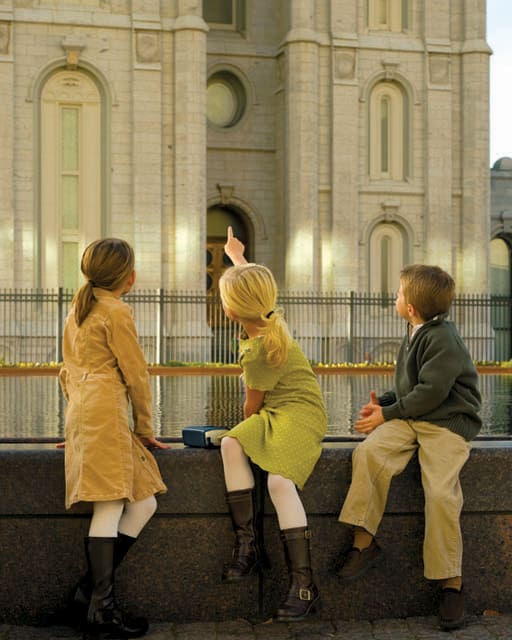
A father who had to ask someone else what his own child’s wedding was like: that is the image Jean Bodie opens with, and the reason four active, believing Latter-day Saints join John Dehlin to make the case that the church should let couples marry civilly before a temple sealing without a one-year wait.
The panel spans three countries. Stephen Wellington, a newly qualified physician in the UK, describes the civil ceremony he and his wife held before their sealing as “absolutely lovely” and says he felt a spiritual confirmation there. Walter Von Baek, an anthropologist and former stake president in the Netherlands, recalls a morning civil wedding, a chapel celebration full of non-member relatives, and a sealing in Switzerland days later; he says the missionaries had never had so many referrals. Rock Waterman, a retired legal researcher who writes the Pure Mormonism blog, argues that marriage and sealing are two different things and that conflating them elevates a policy above doctrine. Jean Bodie, a returned missionary and former temple ordinance worker who organized the episode, explains the current rule in North America and elsewhere: a civil wedding first means a year’s wait for the sealing, so obedient young couples exclude non-member and unendowed relatives because they believe it is doctrinal.
John steers the conversation toward who is harmed and how the church itself would benefit from a change, which the panel frames as good public relations, fewer wounded families, and more open doors. Stephen relays his aunt’s message to any leader listening, “help us to stay,” and proposes an internal survey like the one before the 1990 temple changes plus a look for middle ground. Jean reads from the 1960 Handbook of Instructions, which allowed a civil ceremony followed shortly by a sealing when parents could not enter the temple, and asks why that policy cannot return now that the church is worldwide. The episode closes on common consent, inspiration flowing bottom-up as well as top-down, and a story about Brigham Young and Bishop Edwin Woolley.
What’s covered
- 00:00 Personal stories of temple wedding exclusion
- 14:00 Current church policy on temple weddings
- 16:41 How the Netherlands handles civil weddings and sealings
- 21:01 Who is harmed and why the policy should change
- 47:15 Appealing to church members and leaders for reform
- 1:02:00 Common consent and closing reflections
Related episodes: 463-464: Rock Waterman and Pure Mormonism · 545-546: Rock Waterman’s Church Disciplinary Council Interviews · 546: Rock Waterman (and Connie) Reports on his Mormon Excommunication
Episode Transcript
Host: John Dehlin · Guests: Jean Bodie, Rock Waterman, Stephen Wellington, Walter Von Baek
This transcript is machine-generated and lightly edited for readability. The audio is authoritative. Please excuse occasional errors in names and spelling.
Personal Stories of Temple Wedding Exclusion
Jean Bodie [00:00:00] He said to them, how was it? And they said, oh, it was wonderful. And he was the dad and he had to ask somebody else what his own child's wedding was like. I think this is very painful and I don't think it's necessary.
Guest [00:00:13] I'm John Dehlin. Next on Mormon Stories podcast, we investigate the church's current policy in many countries, including the US of holding a combined civil marriage and temple sealing ceremony in the LDS Temple, thus excluding non member family and friends, as well as unendowed LDS Church members from participating. And we discuss how church policy differs in other countries like England, where couples can be married civilly first and then be sealed in the temple.
Stephen Wellington [00:00:40] We had a civil ceremony first and it was absolutely lovely. I got a real spiritual manifestation during the civil ceremony, you know, that I was meant to be marrying my wife and it was just a great experience.
Walter Von Baek [00:00:51] Our family as well, they loved it and actually did. The missionaries have never had so many referrals. It opened doors more than anything else we did.
Guest [00:01:01] We discussed the perception among some members that allowing civil marriage will lessen the focus on and even the sanctity of the temple ritual.
Walter Von Baek [00:01:08] And in our experience, that was not the case. It brought out into perspective what you were going to do in the temple. It made it clearer. It made it more significant.
Guest [00:01:18] We also discussed the history of civil marriage and temple sealings in the church and the difference between church policy and church doctrine.
Rock Waterman [00:01:25] You got married and then later you got sealed in the temple for time and all eternity, but they're not the same thing. By conflating the two, we have raised policy in a position above doctrine and we should never do that.
Guest [00:01:37] We talk about ways that the Church can begin to open doors with family members of other faiths and the good that could arise from a shift in its policy towards greater inclusion.
Walter Von Baek [00:01:46] There are many, many stories of couples who have been alone in the temple and if you ever should not be alone, is it during your own wedding.
Guest [00:01:53] Temple Weddings with Gene Boddy, Stephen Wellington, Walter Von Baek and Rock Waterman Next on Mormon Stories Podcast. Mormon Stories Podcast is a production of the Open Stories Foundation. All donations to Mormon Stories are fully tax deductible and go directly towards keeping the podcast alive by and towards building a community of support for Mormons like you. To support the podcast or to join the community, please become a monthly subscriber
John Dehlin [00:02:31] today@mormonstories.org hello and welcome to another edition of Mormon Stories Podcast. I'm your host John Dehlin and today we have a very important topic to discuss. And that's the topic of temple marriages. And specifically we're going to be talking about the church's current practice, I think, predominantly in the United States, of only allowing active temple recommend holding members of the church to attend temple ceilings. And we're going to try and do this in a very careful way. Our goal is to be constructive and positive, not to be negative, not to be critical in the sense of just sort of tearing things down. We believe that this is a really important topic, but we want to be constructive about it and we want to talk about it in a way that will have a greater likelihood of leading to positive change and to having people's hearts and minds be open. And so with that, we brought on some very special guests. Stephen Wellington is a longtime friend of mine. He's a physician, just recently got his degree. He lives in the uk. He's a fully practicing member. Welcome, Stephen.
Stephen Wellington [00:03:37] Hello, John.
John Dehlin [00:03:38] Walter Van Beek is from the Netherlands. He's an anthropologist. He's also an active member of the church. He's currently a high priest group leader, but he served as stake president in the Netherlands. I believe he's published in Dialogue in the International Journal of Mormon Studies. So he's here as well to talk to us. Hey, Walter.
Walter Von Baek [00:03:54] Hello, gentlemen. Happy to be here.
John Dehlin [00:03:56] And we have Rock Waterman. He's a retired legal researcher. He calls himself a normal average Mormon, and we all agree that that actually doesn't exist. But Rock is also an active believing member. He considers himself devout and he has a blog called Pure Mormonism. Hey, Rock, thanks for joining us.
Rock Waterman [00:04:12] It's a pleasure to be here. John, thanks for inviting me.
John Dehlin [00:04:15] My pleasure. And finally we have Jean Boddy. Jean is somebody who has been a champion of this issue for a long time. She's a returned missionary, a former temple ordinance worker, and an all around passionate and thoughtful woman. Jean, thanks for joining us.
Jean Bodie [00:04:29] Thanks very much, John, for doing this.
John Dehlin [00:04:31] All right, so we're going to begin this discussion with Stephen. And what we thought we'd do is start just by having Stephen tell us about some experiences his family's had in the UK around weddings and, and the purpose for Stephen's segment, and we'll have Gene follow up a little bit, is just to help us, you know, those of us who haven't experienced this issue in any way that really touches our hearts to sort of try and get our minds and our hearts in the mindset of those who are excluded from these marriages or these ceilings or these weddings. And then we're gonna, once we've sort of tried to tap into your hearts and minds. We're gonna have a hopefully very constructive discussion about why everyone feels strongly about this, who we feel is being har the policy. And it is a policy. It's not doctrine. And we're all going to make our case for how we think the church could benefit from making a change. So that's what we're going to be talking about today. But let's start with you, Stephen. So as I understand it, there are a couple stories that you can share from your own family that would help sort of touch our hearts and minds about how this policy can sometimes be hurtful. So why don't you just tell us a story or two.
Stephen Wellington [00:05:43] That's right. John, thank you very much for inviting me on.
John Dehlin [00:05:45] My pleasure.
Stephen Wellington [00:05:45] So the first story would be in regards to my own marriage. In the uk, we are married civilly before we are then sealed in the temple. And this usually has to occur on the same day. So I was married in the LDS Church civilly and I was able to have all of my family and my friends there. I had many non member friends, having grown up in the uk, having gone to boarding school here, and I also have many non members in my family. And so we had a civil ceremony first and it was absolutely lovely. I got a real spiritual manifestation during the civil ceremony, you know, that I was meant to be marrying my wife and that, you know, she was the answer to my prayers. And it was just a great experience then going to the temple. I only had one family member there with me, so it was quite a big contrast between the civil ceremony and the temple ceremony. Some of my family members weren't able to come. Some of them, like I said before, weren't members and some were just unable to go to the temple or they were either unendowed or just unable to go in for other reasons. And so luckily for me, I had been able to focus on the civil ceremony a lot. Looking back on my marriage. And so this is a reason why I've wanted to take up or focus on this cause is because I feel for people who may not have been able to do that if they had only had one person there. And I've asked permission to use this story. And in fact, my sister is an example of the person who had no one there at her temple ceiling. She is from the UK, but she got married to a member of the church in Utah. And so she being in America, they had to have a marriage ceremony in the temple. And I was unable to go because of studies. My Sister was also unable to go. So my father flew out all the way there to Utah, and he was unable to go into the temple at the time for various reasons. So my sister had the ceremony with not a single family member there on her side. And my father had sacrificed, you know, his money and his time to go out there to support my sister and was unable to. To see her get married. I was speaking to my family yesterday, and my sister said, you know, it's every little girl's dream to be able to be given away by their father at their wedding, to be able to walk down the aisle in front of their family, in front of their friends, and to have that experience where they see their husband, he lifts the veil, and they're able to then exchange vows in front of their loved ones. And there was a lot of pain there on her side. She cried and she said, I'm sorry, Steve. This is just such a raw nerve for me, this thing or this topic here. And most of my family were in tears when we were talking about this, because it was just. It was very painful, the idea that she had no one there and she felt alone. And, you know, she did say, you know, that through various choices that my father had made, that may be why he wasn't able to attend, which I thought was a very valid point. But, you know, considering that, I think he has helped me stay in the church many times. He's helped me to curb my doubts. And him and I, we absolutely love your podcast, John.
John Dehlin [00:08:32] Thanks.
Stephen Wellington [00:08:33] Been a bishop and a stake president, and he's just such a rock in our family's life of somebody that is absolutely dedicated 100% to the church, that it was just hard that the circumstance had arisen. So it was a painful experience and still is, I think, for our family.
John Dehlin [00:08:48] Has your dad been able to talk to you about what it's like to not be able to attend his daughter's wedding?
Stephen Wellington [00:08:52] I mean, he was. He was there when we were having the discussion. And I could tell, though he didn't shed tears, I could tell that it hurt him, and he did feel, you know, remorse for the situation. The thing is, though, you know, we all go through ups. We all go through downs as support, not to judge, but I think for him in particular, I think it was very painful. And he is a big advocate of this cause as well. He thinks it's such a great idea to allow people to see the ceremony or to have a civil ceremony or something where family members can see their relatives being given away.
John Dehlin [00:09:22] So he's Supportive of this?
Stephen Wellington [00:09:24] Yes, very, very much so.
John Dehlin [00:09:25] Okay. So clearly in your family it's been difficult to have these very important moments in your life and yet to not be able to have the people who are closest to you actually be there. It's hard people getting married and it's hard for the people that are being excluded. It's probably hard for the people that are able to attend as well because they know that they have loved ones that aren't there. So, Gene, let's go ahead and bring you on. And do you have any other stories, you know, just maybe a story or two that you could add that would help illustrate the type of sadness or pain that sometimes this policy causes?
Jean Bodie [00:09:59] Okay. When Michelle and I started the temple wedding petition, we had a place for comments and people left comments and they left stories. And some people in particular went into it in great detail. And this one lady talked about how she was good enough in quotes, good enough to give birth to her child, to go to all of her games and to put her in dancing and do everything that a mother does because they love their daughter. And then when it came time for the wedding, she was able to make the dress and decorate for the reception for afterwards and all of the things that mothers do because they love their kids. But she wasn't good enough to go to the temple. She wasn't worthy to go to the temple. And there's another lady who told her story and she's a Catholic and she lives in Arizona. And her son was a convert to the Mormon Church. They weren't very happy that he converted away from their faith. And I think as Mormons, we understand what it's like when our kids leave the faith that we believe in and go to another one. So they were very hurt over that, but they got over it. And then he went on a mission and they dealt with that. The lack of contact the missionaries have with their family, which is very foreign to a Catholic. It's not the way that they do things, but they lived through that. And then he came home and he met this lovely girl who was a member of his same church, the Mormon Church, and they decided to get married. You can imagine that the parents are going to feel a lot of joy for their children when they find somebody to love and they're ready to settle down and get married. And they were. And then they discovered that they couldn't go to the temple. And she actually discovered it on Facebook. She heard her daughter in law take talking about being married in the temple on Facebook and knew that she wouldn't be able to go. And it was just absolutely heartbreaking to her not to be able to be there. And she said, it's to be there for that moment when your kids are making their vows to each other, which other religions do, where the young couple says, I, in my case, Jean, take the Jim to be my lawfully wedded husband, etc. And they were going to miss that moment where that couple was looking into each other's eyes and saying that they love each other and that they pledged to be with each other and be true to each other. They missed all of that. And all they had to do was wait for the person to come out. And another person mentioned that when the people came out and he was waiting outside, he said to them, how was it? And they said, oh, it was wonderful. And he was the dad and he had to ask somebody else what his own child's wedding was like. I think this is very painful and I don't think it's necessary to do that. So there's a lot of pain, A lot of pain caused. I had nobody from my family at my wedding. I had met my husband's aunts and uncles and his mom and dad and people like that. And some of them were considered worthy to go to the temple, but I didn't really know them. I just met them, but I didn't have a moment. Dad, brother, sister, anybody. They weren't members of the church. And that's why I couldn't invite them to come all the way from England to Canada to just be outside the temple. I couldn't do that. And so I had nobody there either. And I think it's just a very, very sad thing that we have that kind of policy.
John Dehlin [00:13:24] Right. Okay. So what's important to understand, it's interesting because Stephen and Jean both had sort of non U.S. weddings, although Stephen's sister was married in the U.S. but, you know, it's probably just worth noting that in the US they discourage. Do they discourage or prohibit sort of civil ceremonies in addition to the temple ceremonies?
Stephen Wellington [00:13:43] Jean?
Jean Bodie [00:13:44] They prohibit it. You're not allowed to have anything that looks like a secular wedding, though the policy has changed quite a bit over the years that we can get into later if you want to. I've got some evidence here of changes from 1960 on.
Current Church Policy on Temple Weddings
John Dehlin [00:14:00] Well, let's talk about what the rule is right now. So the rule is right now, right
Jean Bodie [00:14:04] now, you cannot have a civil wedding and then have a temple wedding. It's not permitted.
Rock Waterman [00:14:10] Okay.
John Dehlin [00:14:10] And if you do choose to go ahead and Have a civil wedding, then you have to wait a year, right?
Jean Bodie [00:14:14] That's right.
John Dehlin [00:14:15] And what's the problem with that?
Jean Bodie [00:14:17] What's the problem with waiting a year?
John Dehlin [00:14:19] Yeah.
Jean Bodie [00:14:19] Young couples have been taught since they retired that the temple is the only place to be married. That's a very American thing. Because obviously in Steve's country and Walter's country, that's not the case. You don't get married in the temple, and you don't actually get married in the temple. In North America, the ceiling and the wedding thing are kind of rolled into one. And so because Americans are used to it being that way, they think that it is the way to do it. It wasn't that way with Joseph Smith, but for a long time it has been that way because the church was mainly in North America, and so they had their own rules, and everybody just kind of did it that way. They just took it for granted. You go to the temple and you get married, but it's not that way throughout the world, Right?
John Dehlin [00:15:08] Yeah. But what I was trying to get at is what's wrong with just, you know, with the option of our young people just getting married civilly and then waiting a year. Why is that problematic?
Jean Bodie [00:15:18] Because they've been taught that that's not the way to do it, and they're afraid that they're breaking some doctrinal commandment. They do not realize that it's a policy.
John Dehlin [00:15:28] Right. That people assume that the reason that they're not getting married in the temple is because they've been unworthy, probably sexually active. Is that probably fair to say?
Jean Bodie [00:15:36] Yeah. Could I read you something that came on our website? We had from all over the world, but this one in particular, like the others, we've got Sweden, Germany, Norway and so on. And they're all agreeing that it should be the same for everybody all over the world. But this one person from Utah said, I believe that maybe have the traditional ceremony first, but with no honeymoon, spend the night in the same bed until you are sealed in the temple. So somehow in America, the. They've got the idea that if you don't get to the temple first and then you have sex before you get to the temple, that you're doing something wrong, that you're somehow cheapening the temple experience. And I'd like to ask, if I can ask a question, Steve and Walter, do you feel that way? Do you feel like it was cheapened? I know that you went to the temple right away, Steve, but in some places, people cannot go to the temple immediately, and they do.
Walter Von Baek [00:16:36] We didn't go right away. We took a few days to travel because we had to go to Switzerland.
How the Netherlands Handles Temple Sealings
John Dehlin [00:16:41] So, Walter, why don't we have you jump in at this point and tell us how your wedding happened in the Netherlands and give us a sense for how things are done outside or can be done outside of the U.S. okay.
Walter Von Baek [00:16:51] At the time I was wet. It was quite some time ago, actually. We had a civil wedding first in the morning and then went to the church and had a celebration of our wedding in the church. Actually in another church, because it was in the early days of the mission in the Netherlands. So we were married in Ironhem in the east and went to the Hague because there was a larger chapel there. And then all our family gathered and it was full with people. Most of them were not members of the church. All of my family were not. And the same for my wife. So we had a celebration with speeches, et cetera, singing inside the chapel. And then we went on our trip with some friends who were members of the church, went to Switzerland, and I think two days later, our marriage was sealed in the temple. We experienced all three of them extremely significant and relevant. The first, of course, was the legal one, when you became men and wives. The other one is the public one, because a wedding in all cultures, and that's me as an anthropologist speaking in all cultures, a wedding has to be public. People have to know that from henceforth, this boy and this girl are now husband and wife. And then, of course, we had the eternal one, the ceiling. So we experienced it as a very significant trio, actually. And our family as well, they loved it. And actually think the missionaries have never had so many referrals as from that particular social wedding in the church. Well, that social wedding in the church has been abolished. And we were very sorry to have that. It was abolished in the about, I think, about five, 10 years later, because it will do away from the solemnity of the temple. And in our experience, that was not the case. It brought out into perspective what you were going to do in the temple. It made it clearer. It made it more significant. And I had the same experience with other people having the same kind of weddings. Right now we have the civil wedding and a little bit like in England, only in England, you can have the civil wedding inside the church, which is not possible in the Netherlands. You go through the city hall, but they have beautiful halls for that one. And they make it into a nice ceremony. And you can add your own speakers, add your own touches as you like. And then we go to the temple which is now in the Netherlands, and you have to do it the same day, which I think is a pity. I saw that in my ward that also for young brides going to the civil wedding and on the same day going through the temple for the first time and then have your marriage sealed is much too much to take in one go. They are completely washed out afterwards. So I think, first of all, I think the civil wedding is an excellent idea. My family spoke about it for a long time. They had never been in the church. And from that time onwards, my parents, who were Protestants, came to the Mormon Church quite naturally. They liked it there. It was not theirs, but they liked it there. It opened doors more than anything else. We did.
John Dehlin [00:19:43] Got it. Okay, so that's really interesting. In your experience, you were able to have the civil wedding, then have some type of. Not necessarily ceremony, but some type of activity in the church for all communities.
Walter Von Baek [00:19:54] It was a ceremony. It was. We call it the service. A marriage service. Why not?
John Dehlin [00:19:58] Okay, so it was a marriage service in the church. And that way believers, non believers, members, non members could all attend and be a part of it. And then.
Walter Von Baek [00:20:06] And they loved it.
John Dehlin [00:20:07] And then you had the ceiling afterwards.
Walter Von Baek [00:20:08] Yeah.
John Dehlin [00:20:09] Okay. So that's another way that this can be done. And in fact, in areas all over the world outside of the US this is sort of how weddings happen. Because, you know, many, many countries require that the civil marriage happen first. And so it's just kind of in the US where this rule reigns so heavily. Okay, so we've talked a little bit about, you know, Stephen's story about how this can be hard. Gene's helped us with a few supplemental stories to get a sense for the pain. And now Walter's talked about how it has been done in the Netherlands and how it sometimes can be done elsewhere. Why don't we spend a little bit of time. Let's just really get narrow on who's being harmed. And I'd just like to go around the horn and we'll start with Stephen, and I just want to hear each of you talk about who do you think is being harmed by the church's policy? Go ahead and give us your thoughts, Stephen.
Who Is Harmed and Why the Policy Should Change
Stephen Wellington [00:21:01] Well, I think the church is harming itself with this sort of policy. And I can go and talk about a bit more about how it would benefit from such changes. I think that if the church were to change its policy, it would be fantastic PR for the church. In times when the church is getting a lot of PR with Mitt Romney, I think it would be a great Change to advertise something that we do so well as Latter Day Saints, which is marriage. Now, in terms of who is being harmed, I also think that church members are being harmed, particularly members who find themselves outside on the day of the sealing. I also think that non members are also being harmed. I was speaking to my aunt, who is a member, but she's married to a non member, and she said that she thought that if my grandparents weren't able to see my mother get married civilly because they were non members, my grandparents were non members, my mother was a member. And my aunt said that she thought that if they hadn't been able to see him get married civilly, she would never have forgiven the church. You know, perhaps they would have said, you know, all that church, they didn't let me see my daughter get married and they would never have forgiven the church for that. Does that make sense, John?
John Dehlin [00:22:05] Yeah. Yeah, it does.
Stephen Wellington [00:22:06] And so that's how. And so that's how people outside the church, non members who could be harmed and the word would get round. I mean, that BBC Panorama with John Sweeney, that caused a commotion amongst some church members. They interviewed family members of people who. And they expressed their sorrow that they weren't able to attend to see their children get married. So I think it is harming people inside the church. It's harming people that are on the fringes who aren't members, but who have family members who are. And I think as well, it is harming the church as well.
John Dehlin [00:22:33] Okay, Gene, why don't you weigh in and add to what Stephen said?
Jean Bodie [00:22:37] I think the harm is definitely there. And I do think in a public relations point of view, it really is bad for the church because people who belong to other religions believe that their religions are right too. They don't look at the Mormon church and think, oh, it's the only true church on the face of the earth. They believe in their own. And to be left out says you are less than, you're not as good as us, you can't come. And I've never promoted the idea that somebody should be allowed into the temple if they're not a member. I think that a church has a right to have its sacred spaces. I just think that the policy of temple weddings. And by the way, John, I just want to make a little correction. It's not just the us it is Canada, it's Germany, it's South Africa. Now, as marriage laws change in countries, then so do the church policies. They change also to reflect the fact that they now can make the, the wedding and the sealing in one ceremony. So it's not just the us, it really is spreading out. And so we're affected in many places. And because it's a worldwide church, you're going to have part member families all over the place. And if they find that they're being excluded from their family's weddings, their loved ones weddings, it's not good for the church and it's not good for those people because they hurt and then they think this is not a good church. They think that they're right, but they're hurting family members. And I know that this is how the lady from Arizona felt about it. It didn't warm her up a tiny bit to the church because she was so badly hurt. So I just think that nobody wins in this situation and the young couples are just obedient because they think it's doctrinal.
John Dehlin [00:24:28] Got it.
Walter Von Baek [00:24:28] Okay.
John Dehlin [00:24:28] And that's interesting. So it sounds like wherever the church is able to restrict the marriage ceremony to inside the temple, they're moving in that direction, Is that what you're saying?
Jean Bodie [00:24:37] Yes, I know it's happened in South Africa since Steve and I served in the same mission, actually the South Africa Cape Town mission. And back in those days you had to have a wedding in a public place for it to be classed as legal. So they couldn't do it in the temple, but the wedding laws have changed there now the marriage laws. And so now the church can insist that the couple gets married civilly and then goes to the temple right away or they have to wait a year and you know, they can change the rules on them now too.
John Dehlin [00:25:09] Right, okay. So Walter, why don't you add to what Stephen and Jean have said, who's
Walter Von Baek [00:25:15] harmed, of course the family, but also the couple itself is harmed because. Because they are alone in the temple. And if you ever should not be alone, eat it during your own wedding. They may have some friends, but there are many, many stories of couples who have been alone in the temple. And of course the non member families, which is standard in Europe, more or less, and the friends who cannot be there, etc. The main thing is, of course, I said a wedding should be public and that's not lacking here. And it drives a wedge inside the family. And we are a pro family church and we split the family at the doors of the temple. So it drives a wedge in the family because one major experience of your sons and daughter cannot be shared by the parents or by other family members. But in the end, I think Stephen put it Very well. It's the church who's suffering more than anything else. I am in the Public Affairs Committee of the Netherlands and quite often I have to counter some newspaper articles where routinely we are called a sect or a cult. And I can easily counter that. But if someone comes with this particular argument, I once noticed someone who could not be at her daughter's wedding because of the temple, then I have no argument any longer. Then we are a cult or a sect. And there's no way in which you can counter that kind of very emotional but very strong and very rational emotional argument that this makes us more than anything else a section.
John Dehlin [00:26:44] It makes us appear cult like to some.
Walter Von Baek [00:26:46] Definitely, definitely. And I have no arguments left.
John Dehlin [00:26:50] Right.
Stephen Wellington [00:26:51] John?
John Dehlin [00:26:51] Yes, Steven?
Stephen Wellington [00:26:52] Do you mind if I just briefly build on what Walter had said there?
John Dehlin [00:26:55] Please.
Stephen Wellington [00:26:56] Walter said something really fantastic and I had that in my notes here. You know, saying that they do see us as cult like. And it is so right when he says that, you know, people that aren't members who then have family members who are getting married, I guarantee they will be worrying, you know, what is my daughter committing to? Is she entering into a polygamous marriage in there? You know, because they still have polygamy on their minds. As much as we want to say they don't, you know, they do. They'll be thinking, what kind of commitments is she making inside of there? And they will see us as more cult like and more strange if we keep the policy that we do.
Walter Von Baek [00:27:28] Right.
John Dehlin [00:27:28] All right, Rock, let's bring you in. Tell us your thoughts on who's being harmed. In addition, if you have anything else to add to what everyone else has
Rock Waterman [00:27:35] said, I agree with the others that the participants are harmed. But I think more than anything else, it's the. The entire religion is being harmed. Anytime you take a doctrine and put it below something that has become a mere tradition, I think that harms the religion. It dilutes the religion. I maintain a blog by the name of Pure Mormonism. And the reason I created this blog a couple of years ago was to create a forum for discussing what is pure Mormonism, what's doctrinal and what isn't. Because we seem to have glommed onto all kinds of things that aren't brought to us by the Lord or through revelation. Now, Joseph Smith, what is doctrinal, according to Joseph Smith, and as was in the original Doctrine and Covenant, section 109, was that all marriages in this Church of Jesus Christ of Latter Day Saints should be solemnized in a public meeting or Feast prepared for this purpose. Now, in addition to that, the prophet said, the persons to be married are to be standing together. The man on the right and the woman on the left. Now that's a wedding. Okay? Wedding is supposed to be a public thing. Now, a ceiling is something else entirely. A ceiling takes that wedding and seals it. Takes that marriage and seals it. It takes something that was on earth and now seals it in heaven and seals of fraternity, they're not the same thing. They were never intended to be the same thing. I think Walter, in one of his writings, pointed out that a temple wedding isn't a wedding in the first place. It's only a ceiling. There is nothing to wed two people together. So what we've done, and this is something that's taken place pretty much in my own generation, I'm a baby boomer. My parents were married civilly with all their friends present, and then they went to the temple afterwards. This was pretty much what people did. And depending on how old you are, your parents, grandparents may have done the same thing. It was not considered the only thing to do to be married in the temple. You got married and then later you got sealed in the temple to seal that marriage for time and all eternity. But they're not the same thing. By conflating the two, we have raised policy in a position above doctrine, and we should never do that by adhering to traditions and just these things that we've been doing because we're doing so long, that dilutes our religion. And so I think that's dangerous to the religion itself.
John Dehlin [00:29:51] Got it.
Rock Waterman [00:29:52] Okay.
John Dehlin [00:29:53] So we've told a few stories, we've talked about who's being harmed. And now I want to turn the conversation, you know, in the most constructive way possible, to our best arguments for how the church and its members and non members and everyone would benefit from making the changes. So let's go back to you, Stephen, and let's just have each of you build on each other's statement and tell us how the church could benefit from making a change.
Stephen Wellington [00:30:18] Well, I think it would be great PR for the church if they were to make a change. I think, you know, as Gene had said earlier, we're not necessarily arguing for or hoping for people to be allowed in the temple. There are many middle ground options. And talking about the middle way Buddhists allow non Buddhists into their temples if they're seeking higher power or seeking to get closer to the heavens. So this is something that would benefit the church generally in terms of the pr, I think, especially in These times it would also benefit the members who would find themselves at the moment with the policy as it is on the outside. Say if we were to have a middle ground, so have a civil ceremony or allow a civil ceremony or even also in regards to the members who are finding themselves outside with the policy as it is, and this is something that I know that you care about a lot about John, is stigma and the social stigma that's attached when you find yourself on the outside. Now, as a newly qualified doctor, having been five years in medical school, we do have to study stigma and the social effects of stigma and how that affects health. When people are stigmatized, they will lose their status, potentially they could lose their income and then they could develop illnesses, mental illnesses or physical illnesses. And it's almost like a self fulfilling prophecy where if you stigmatize people, their physiology changes that will then affect their mental wellness and also their physical wellness. And it's important that the church addresses these policies that they have that stigmatize people, that they need to avoid these as much as possible if they want their membership to be well. And so I think it would benefit both the church and these people that find themselves on the outside if they were to re evaluate this policy.
John Dehlin [00:31:59] Very good.
Jean Bodie [00:32:00] Okay, Jean, I've been thinking a little bit about some of the reasons why people go along with a policy. And I think, as I said before, it's because they believe it's a doctrine. It's in the handbook. All of these instructions about weddings and what you can do and what you can't do are in the handbook. But nobody says that the stuff that's in the handbook is a Thus saith the Lord. It's something that people decide on. They say this is the way it's going to be. And if it was the same throughout the world, which we are told that the church is the same everywhere, then North Americans and people from other countries that have this policy in place wouldn't be saying, well, I like the way, way that they do it in England or I like the way they do it in Holland. I've heard of people talking about going to another country to be married and then go to the temple, you know, to have their wedding first. And so I got to looking at the Young Women's Manual and lesson manual 2, which is online right now, contains a story by President Spencer W. Kimball about a young couple who, for reasons of their own, which is, it's actually quite nebulous in the story, whether he knows the reasons or not. But anyway, they were married Civilly and on their way to their honeymoon, they were killed in a car accident. And he said they are no longer, they're not married for eternity. And he uses quite strong terminology. He says they thought they loved each other, they wanted to live forever, but they did not live the commandments that would make that possible. But as we have demonstrated, I think it's a policy, not a commandment to be married in the temple. Because Steve was not married in the temple and neither was Walter. They both went to be sealed in the temple. And so President Kimball continues, so death came in and closed that career. They may have been good young people, I don't know. And then he says they will not be gods and goddesses and priests and priestesses. And so that fear that young women get from age 12, well that book two, manual two gets taught next year. So anybody who's got a 12 year old daughter, an 11 year old daughter is going to go into young women's next year she will be getting that lesson. And that seems to be teaching that it's doctrinal. And President Kimball says it so strongly that sometimes we have people who say, oh, someday I'll go to the temple, but I'm not ready yet and if I die, somebody can do the work for me in the temple. And that should be made very clear to all of us. The temples are for the living and for the dead. Only when the work could not have been done, do you think the Lord will be mocked and give this young couple who ignored him, give them the blessings. So when they hear it that way, as though it absolute doctrine that you must have it done in the temple and then you find out in other countries they don't have to go to the temple. The temple sealing provides the way for the formation of eternal families. Whereas marriage for time is dissolved at death. Marriage is a legality. Sealing is a religious rite of passage. So I just wish that the young people could understand that their agency does give them a choice. And the other part of it too is a couple that wrote to me said they were both returned missionaries. So they were both temple worthy and they fell in love and they decided to get married. But they wanted their family to be there. So they got married civilly and they had to wait a year before they could be sealed. But during that time they were still temple recommend holders, still were the still able to go to the temple and be sealed by proxy for people who had died while they were not allowed to be sealed for themselves. And that's incongruent to me it just doesn't make any sense that you could go to the temple and be sealed for other people, but not for you because you chose to include your family. I think that, you know, there's a commandment in the Old Testament, there's a says, honor thy father and thy mother. And I think, you know, if you have to choose between church policy and family, I think we need to choose family.
John Dehlin [00:36:13] Right. So any other things, Jean, regarding the question of how the church could benefit from changing?
Jean Bodie [00:36:19] Well, I agree with the things that the other panelists have said, that by making it the same across the board so that it's the same everywhere, we can. You can have more people into the church. They're always asking us to invite people to baptisms and this and that, you know, so that they can be exposed to the church. And a wedding is a wonderful way to expose people. And a temple ceiling that excludes people is a wonderful way to show that we don't have this love for everybody, no matter what their religious beliefs are.
John Dehlin [00:36:54] Okay, so it'll help with missionary work. It'll help with public perception. That's what I'm hearing you saying. All right, Walter, why don't you jump in and add your two cents on how the church might benefit?
Walter Von Baek [00:37:04] I think it will be a great benefit. Well, of course, it won't change too much in Holland, because we have it already, but our point of it is well put already. Yes, it will be a great point. It also will help the leadership. We are the church, and you have the leadership. Help the leadership come out of some kinds of isolationist thinking, because this kind of rule works well in situations where everybody is a Mormon, which is what the Wasatch front situation is. There it can work, and it might help people to stay within the bounds, say, of marriage preparation. But in all situations where the church in the minority, which is the majority of the situation, it is a problem and establishment. The church is moving in to be a world church. It is not yet it is American church moving into the world. Leadership has to acknowledge the fact that they are not a kingdom isolated, but a denomination among denominations, and that you have to allow for the plurality of the society people live in. And I think that might be very helpful if this is a key for the leadership to recognize that they are no longer a desperate kingdom, but they are moving in to be temple church. And there is also a kind of a siege mentality. Sometimes I see in the leadership being on the defensive. And I think that time is over, should be over. There's no reason anymore to be on defensive and for that siege mentality, and maybe this kind of policy change will help to do away with it kind of siege mentality in the church.
John Dehlin [00:38:40] Got it. Okay, Rock, what do you think?
Rock Waterman [00:38:43] Well, the solution to this whole problem is built right into our religion. When we have questions as to how we should do things and how things should be run, we should look to the prophet Joseph Smith. And has he said anything on it? And in this case, he has. He's made it very clear that weddings are to be public. So that should not be contradicted unless a new revelation appears to state otherwise. So I think the way that this problem is already being overcome is because young people today, more and more young couples are deciding, you know what? We're going to do it the right way. We're going to do it the way the prophet teaches and not the way we've come to understand it to be.
John Dehlin [00:39:19] So did we already read that quote from Joseph Smith?
Rock Waterman [00:39:22] I did. I'll read it again. All marriages in this church of Christ of Latter Day Saints should be solemnized in the public meeting or feast prepared for this purpose. Now, that was presented in conference and voted on. It was published in the Doctrine and covenants, the section 109 that was removed in 1876 without any reason given. It was simply removed because at that time, that's not the way weddings were being promoted. But it has never been rescinded. It's never been superseded by revelation. So the way to handle this problem is young couples should just say, you know what? This is my wedding. I'm going to do it the way we're supposed to be, not the way we think we're supposed to be. And I'm seeing more and more people doing that now. And the problem, as it's been pointed out by the others here, is the stigma that's placed upon couples who don't get married in the temple. Because then suddenly everybody's wondering why that happened or why that didn't happen. And I'm seeing more and more people say, I don't care what people think. And I would advise. I got this question. Somebody said, you know, we'd like to get married in the church, but how do we tell people why we're doing it and that we're still. We're worthy enough to be in the temple? I said, why don't you just reprint my piece on it? I wrote a piece called go ahead and skip that Temple Wedding. I said, go ahead. Why don't you print that up and toss it in all the envelopes you send out with your invitations and explain to people, this is why we're doing it. We're doing it the way our religion teaches us we should. Now, having said all that, I don't have a problem with a waiting period, because I think the best preparation for a temple marriage, marriage. So I think you should be married for a little while. You should. You should get those first few fights out of the way, get in a lot of loving, become physical. Because there's an ineffable spirituality between two people who have experienced physical and spiritual closeness. So that by the time you're sealed in the temple, I think it's much more meaningful. What I disagree with is some authority figures telling you that you have to wait a certain period of time because that's your punishment. It should be up to the couple when they feel ready to be sealed in the temple. But by all means, it's doctrinal. I keep repeating this Mormon doctrine is be married in public, be sealed in the temple, and that's the way I'd like to see it done.
Stephen Wellington [00:41:39] I think my fellow panelists raises such a good point. From my personal perspective. I wasn't able to really take in the temple ceremony. I was so exhausted. We drove down at the end of the day, it just seemed such a rush. And then, you know, we had to quickly drive three hours back to get to the reception. It was just such a mad rush on the day we couldn't really appreciate what the temple marriage was. I mean, if we were able to, I mean, looking back, maybe we should have waited a year, you know, but if we could have just done it on a different day, had a bit more time to appreciate what the ceremony was, what the sealing meant, I think it would have been a better way to start.
Rock Waterman [00:42:15] Precisely, Steve. And that's one of my problems with this, is that a temple ceiling is an important solemn priesthood ordinance, and it gets lost in the hustle and bustle of planning a wedding, planning receptions, thinking about the honeymoon. I mean, my gosh, two things are going through the minds of the couple being married. The bride is usually thinking about the reception that's going to follow, and the groom is thinking about what's going to happen after the reception. If you cram that ceiling in on this day, there's just too much noise. It needs to be a quiet, solemn, valued ordinance. And that should only take place after the wedding, after the physical union has taken place.
Walter Von Baek [00:42:56] And then, if I may come in, it would be wise not to have your first endowment at Your wedding anyway.
Rock Waterman [00:43:03] Oh, yeah, gee, definitely.
Walter Von Baek [00:43:05] You should have that before and just ponder on it and then go into the sealing ceremony. I think we should refrain from ever saying something as a temple wedding again. The ceiling has no likeness to a wedding. It's not public. There are no two families involved. There's no feast, it's not a rite of passage, whatever the handbook says. And there's no exchange of vows, of rings, whatever. There's no symbolism, external symbolism attached to it. So it's a ceiling. And one of the advantages of having it separated, and I agree, separated as long as feasible, is that we get a better understanding of what's happening in the temple because people understand pretty little of it. Both the initiation, which is called endowment, and the sealing of the marriage are very, very significant and beautiful ceremonies and can stand on their own feet. And what he says. I have the same in Holland where young couples go from the one serum to the other. And afterwards when I speak about him and I have to do now giving the temple lessons, I have to see them afterwards and say, what do you remember? They don't remember a thing. It was a complete, complete washout. They were tired, etc. And they were thinking, like Rock said, about completely different things.
Rock Waterman [00:44:22] Yeah, almost everybody I've talked to can't recall much about the sealing ceremony, whatever happened on that wedding day.
Jean Bodie [00:44:29] Can I interject here, please? I did go to the temple the week before my temple marriage because it was all in one. But I do agree with Walter that it is just a ceiling really. But I went and have my other ordinances done first of all. And it meant so much to me at the time. It was really important to me. When I was told that I was free of my sin, I felt like such a good person. I felt much more acceptable for my good Mormon husband who I don't think led the kind of life that I had. Not that I'd been really awful, but I grew up outside of the church so I didn't have those same values as he did. But after I received my washing and anointing, I felt like I was sin free and much more capable of taking in what happened the next week when we actually went and were sealed together. Now some people try to fit in a temple session again before the wedding because they feel like if they've traveled a long way to go to the temple, which we did. It takes about six hours roughly to get to Cardston from Edmonton. So if you're down there and then you're going to go down the next week and, and then you might not be down there again for another few weeks because it's a long way. You sort of think that you should do another session while you're there. And I think that is a mistake too because I agree with the other panelists. To make it just be your ceiling to your partner makes it so very, very important. So I would recommend in our culture where we have to do it this way, if you have to, is to go and get your endowment first of all.
John Dehlin [00:46:14] Right, okay. Well, this has been, I think we've had a really good exploration here. I like the fact that Stephen, Walter and Rock are all active, believing members that they have the church's best interests in heart. I know that Gene cares a lot about, you know, the members of the church and the non members and everybody involved. Why don't we just take a moment to conclude this discussion by having each of you share, I don't want to say a testimony, but a final thought or appeal. Let's just say that there are some church bureaucrats who are listening that are willing to consider this idea. I've even heard rumors frankly that this is something the church is actively considering. I don't know if you guys have heard that, but I have heard that, that this is something on the table at church Headquarters for Change and they're just trying to figure out how to do it. So if we could end with, you know, your best shot at an appeal for why church leadership should consider making a change to this policy. You know, let's have each of you close with your thoughts. So, Stephen, why don't we start with you.
Appealing to Church Members and Leaders for Reform
Stephen Wellington [00:47:15] I was speaking to my aunt over the weekend. I was able to go and visit family and ask them their feelings about this topic. And we talked about Mormonism in general. And my aunt said, steve, if you're on the podcast with John and if by chance someone in the leadership is listening, please let them know that all we are is asking for them to help us to stay. Just we want to stay. Please can you make it easier for us so that we can stay in the church? And if I had the ear of someone in the leadership, I would ask for two recommendations. The first would be that they carry out an in house survey similar to the one that they did in 1990 before they made the changes in the temple ceremony. Then I would recommend that they do something like that to see how the membership felt about it. And then the second recommendation I would make would be to consider the middle. You know, similar to what Dieter Uchtdorf said in the Ensign, this month, consider the middle ground. You know, if the leadership feels and the membership feel that they would like to see that the temple is still exclusive to consider the middle, to consider that there are other options available just to consider, you know, if children can go to see their parents get married, why can't parents go and see their children get married? There may be middle ground here. There may be that we could have a civil ceremony. You know, we could. We could have something where I think only endowed members are allowed to go into temple ceilings. So a lot of people are even left out there and excluded who are members, fatal members of the church who may not be endowed. So there's a lot of middle ground here that could be worked with.
John Dehlin [00:48:54] Got it. Okay, good. Look for the middle ground. All right, Gene, what would you say?
Jean Bodie [00:48:59] I just want to point out that in the Handbook of instructions in 1960, they had this rule. Permission may be granted to couples who have been married by civil law to have their marriages solemnized in the temple at such time as the stake president and bishop feel assured of their worthiness. Where parents are not eligible to enter the temple and yet insist on witnessing the wedding ceremony of their son or daughter, bishops must apply to the first presidency for permission, if it is so desired, to hold a civil ceremony first, to be followed shortly after by the sealing in the temple. So if they could have a policy like that before, which obviously was a change from the way it was before that, why can't they make the change back again? Can we not consider those policies that they had before, look at them and say, did they have any merit? Do they have more merit now that the church is a worldwide church? Because back in the 1960s, I would say probably most of the membership was in North America. But now that it's not, do we need to revisit the 1960 manual and policies and say maybe we should. Should do it that way again? And if I had the ear of the church leaders, that is what I would ask for. Because I don't want to be excluded from the weddings of the people that I love. I haven't excluded myself of my own choice, but because they will think that it's right to do it in the temple. They will leave me out. They will make me second and put the church first. And it's painful to know that I won't be able to experience those grandmotherly joys. My kids are pretty much settled down, married, so I don't have to be thinking about them. But I can see the writing on the wall for the future. And I can also see it for Michelle, my fellow petitioner, who has kids, none of whom have been married yet. And they're being raised half time in the church with their dad and half time with their mom, who goes to a Christian church. And so her kids are going to be divided there. They're going to have to make a choice between what their dad believes and what their mum believes. And it doesn't need to be that way. If there's no policy that puts a stigma on them or punishes them or whatever. It's very hard to wait that year when you feel like people are looking down on you, that you've made a choice that's against what the brethren say. And you're not doing that. You're just making the choice to include the people that you love.
John Dehlin [00:51:32] Got it. Okay, Walter, what would you add, addressing a general authority?
Walter Von Baek [00:51:36] Well, there's one general authority I have some contact with because he comes often here, which is one of the apostles. And I would say to him personally, I said, trust your temple rituals. Trust your temple ordinances. They are powerful, they are special, and they can stand on their own feet. There's no way in which these ordinances will be diluted by having a civil marriage first. On the contrary, the experience of people elsewhere is that the proper qualities and the proper message of the temple ceremonies will come into more perspective if they are put behind as a culmination of civil service and or a social service. Don't be afraid of the temple rituals to be diluted. They will never be, and they will be into much more detail and they will be elevated by having another ritual first.
John Dehlin [00:52:35] Got it? Okay, Rock, you want to give us your thoughts?
Rock Waterman [00:52:39] Public weddings are so ingrained into, into our historical and social history. I mean, the entire history of the world. Let me tell you about a short incident. My daughter, who's now 25 or 26 and a normal married housewife, was the ward hellion. By the time she was 13. The bishop and her teacher came to me and said, you know, they asked me not to bring her to class anymore. She was too disruptive. They didn't want her in class. She was. And she wouldn't mind me telling these stories. She became a runaway. She got pregnant by the time she was 15. We decided, well, you know what? We're going to have to get these two married. So we set up a wedding for the bishop to conduct the wedding in the chapel and there would be a reception in the cultural hall. The reason I tell you about her background is it Was amazing how the entire ward came out and pitched in. We had to do this on a shoestring. So everybody helped. Everybody joined in decorating and getting things set up, and everybody came and filled that chapel to see a wedding for somebody that most of them didn't know or care about. They were so hungry for a wedding. A wedding in this society that we have become, we are lacking one of the major social functions that bring people together. And so I think we need to get back. And again, I'll harp on this till the cows come home. Public wedding is doctrinal. The ceiling afterward is doctrinal. You don't have to conflate the two of them, and you shouldn't. It's harming the church. It's harming the people. And we are seeing a massive exodus and members of the church for many reasons, and this is one of them. As Walter has pointed out, when somebody calls the church, points to this and says, this is one reason the church looks like a cult, he has no answer. There is no answer because it's. In the first place. It's not what we should be doing. It's not part of our religion. Why don't we break away from it? All right, I'm done.
John Dehlin [00:54:31] Beautiful. Well, I just want to thank all of you for being willing to treat a sensitive topic in a way that I feel is constructive and, you know, respectful as well. And so, Gene, I want to close with you. You've been sort of a pioneer in this issue. What would you recommend people do if they want to see, you know, if they want to help motivate change in this area? Do you have any final suggestions for people on how they can help make a difference?
Jean Bodie [00:54:57] Well, because it's a policy and not a doctrine, people need to be educated to that. So I hope they listen to that and realize that it is a policy. It's not a thus saith the Lord, It's a policy. And in policies, if you want to wear two pairs of earrings, you might be looked down on, but you can still wear two pairs. And it's the same with a wedding. If you want to have your family there, do it. Have it your own way. And have your family there. And ask. Ask the church for special permission to do so. That's what they used to do. So ask the church, say, I really want my family there. I love them. They've been so loving and supportive to me all through my life, and I can't bear to not have them there. So please give me permission to do it. I'm not being political here, but because Mitt Romney is a candidate now that lots of stuff is made public about him. And, and he got special permission obviously, because after that thing that I was reading about where you could ask for special permission if the parents insisted. Ann Romney's mum and dad were not members of the church and they were married in the east and then they flew the next day to Salt Lake City where they were sealed in the temple. And that was after that policy was taken out that gave parents that right to petition. And so it really needs to be the same for everybody. And couples just need to realize that they do have agency. They can choose to love their families, have their family there and still be very respectful of their church leaders. And you know, they don't have to throw it in their faces, but they can keep petitioning the members. I don't mean with a petition, but they can ask them, can you do this for us? Can you help us? Like Steve said, help us to stay in, help us to love our families, help us to show love to our families. We don't want to leave them out. And so that's my suggestion is young couples just keep trying to make it so that everybody can be loved and accepted, no matter what religion they are, what belief they are, whether they smoke or they don't or whatever, it's your wedding, it's not your ceiling, it's your wedding. And then afterwards go to the temple and have your private personal sealing. And that was what I experienced when I went to my niece's wedding in England. She was married in the chapel, I was there, my other non member sisters were there and non member nephews, nieces, friends, everybody were there. We had a lovely wedding, they had a short reception and then they had to rush off to go the temple. So Steve was talking about how hard that is to do that all in one day. I think that the church should let up on that a little bit too because it's not a sexual purity issue. If you're married, you're married. You know, I was married before this husband, like long, long ago. And I wasn't unworthy because I was married. If I had gone to the temple with him, nobody would have said you're unworthy because you're married and you've had had sex already. So once you're married, it's legal to have sex. It's got nothing to do with going and being sealed. And I think that really a lot of members are hung up on that part. We got that from more than one person that, you know, there shouldn't be any sleeping together stuff. First of all, and I'm not sure why the church makes it so that you have to go so fast in England that you have to be there that very day. I think Walter said that they, they didn't go the very same day. They had a few days. I won't ask you if you had sex for us, Walter, but that happens. It's one of those things that happens. You're married, it's legal.
Walter Von Baek [00:58:38] We choose not to, realizing that there was no problem in doing so.
John Dehlin [00:58:43] Oh, wow.
Jean Bodie [00:58:43] In fact, you realize there was no problem in it.
Walter Von Baek [00:58:46] No, there was no problem.
Jean Bodie [00:58:47] Yeah. This is agency, this is choice. And that's what I like about the church before was the agency and the choice. And I just feel like the noose is tightening and there's less choice today than there used to be. It's, I want to be with you for eternity. Let's do this special ritual so that we can be together for eternity.
Rock Waterman [00:59:09] Exactly.
Jean Bodie [00:59:10] Yeah.
Stephen Wellington [00:59:10] But I was lucky enough to see my sister in law get married to an Australian guy who had come over. He was, I think he's playing Polynesian and his parents are both Tongan. And it was a beautiful, you know, English summer's day. It was a garden ceremony. Wasn't a cloud in the sky. The birds were chirping. You could hear that, you know, church bells and all this. You know, what you think of as a pleasant English summer's day. And honestly, I got a glimpse of heaven. And when his father got up to talk and he's a stake president, he said, you know, here we are. This is what the celestial kingdom would be like. And heaven is the coming together of families now. That's what he said. And I was so glad that I could see that civil ceremony happening because for once I got a glimpse of what I hope heaven would be like.
Walter Von Baek [00:59:55] Maybe the general authorities should be urged to ask their wives whether mothers should be excluded from the weddings of their children. I think it will change quickly then.
Jean Bodie [01:00:07] They don't ask women.
Walter Von Baek [01:00:08] I know, but I put a petition in Utrecht at the Relief Society and at the Priesthood Truth to sign. All the Relief Society sisters immediately signed. Among the priesthood. There was a discussion whether they all were in favor, but whether a petition was the right way to address the brethren. Well, it was a nice discussion. In the end, they also signed.
John Dehlin [01:00:31] Right.
Jean Bodie [01:00:31] Of course, you can't reach the leaders of the church because. Because the ordinary people are told not to contact the brethren. So if you want special permission to do A ceremony the way that you want to do it so your family can come. How would you do that? I mean, we talked to Michael Otterson, who was extremely nice to us. Michelle and I met with him. And also my husband and I met with him this year when we handed over the rest of the petition names. And he was very, very nice. He was just helpful and sweet and very charming. And so he'll probably hate me for telling people to do this, but maybe write it to Michael Otterson and hopefully he can pass it on. Because your letters don't get to the general authorities. You cannot reach them, you can't get their ear, which is really sad when we're talking about policies, because we make up the church, the members make up the church, and if the members have no input into policy, then it's not by common consent. And I thought that was one of the things that the church had is common consent. We raise our hands to sustain leaders and things like that, but we need to have some input. We vote for our governments, and we can have input into all of that. But policies in the church, we have no input on it. We're not allowed to say anything. We're just told to obey what Rock is stressing.
Common Consent and Closing Reflections
Walter Von Baek [01:02:00] The original way of inspiration is not only top down, it's also bottom up. And the inspiration is coming from both ways. And it was already so in the days of Joseph Smith.
John Dehlin [01:02:11] Right.
Stephen Wellington [01:02:11] It reminds me of a story I read in the Adventures of a Church Historian by Leonard Arrington between Brigham Young and Bishop Edwin D. Woolley. Brigham Young says, well, I suppose you are going to go off and apostatize. And Bishop Woolley says, no, I won't. If this were your church, I might, but it's just as much mine as yours.
John Dehlin [01:02:30] Right. Well, I think that's a great story to wrap up with this podcast. And so I want to thank the listeners for tuning in. I want to thank Gene for helping me organize this, and I want to thank Stephen, Walter, and Rock all for coming on to share your perspectives. I think that this is a change that would help the church, would help its members, it would help non members. I think it's something that everyone would benefit from. And I think you guys have offered a lot of insightful and compelling thoughts about why we ought to consider making the change and what we can do to change it and how everyone might benefit. So thanks again to all of you for coming on Mormon Stories podcast. Thanks, John. Yeah, absolutely.
Walter Von Baek [01:03:11] You're welcome.
Rock Waterman [01:03:12] Thank you.
Jean Bodie [01:03:12] Thank you, John.
John Dehlin [01:03:13] My pleasure. And we'll encourage you guys to go up to MormonStories.org and please share your feelings or thoughts as well. We'll invite you to join us in that conversation there as well. So again, thanks for listening. And thanks again to all of you for helping out.
Guest [01:03:30] Thank you for joining us today on Mormon Stories.
John Dehlin [01:03:33] Music today was provided by the Saber Rattlers. Check them out and saber-rattlers.com the Mormon
Guest [01:03:39] Stories logo was generously donated by StudioCase.com thanks for listening.
Guest 2 [01:03:45] Come come ye saints. No toil nor labor fear, but with joy when you're away Though hard to use, this journey may appear Grace shall be as your day Tis better far for us to strive Our useless cares from us to drive to the San Jose, your hearts will swell. Oh, all is well, all is well. Why should we mourn? I think our lot is high Tis not so I All is right, why should we think to earn a great reward if we now shun the fight? Gird up your lo fresh courage take our God, God will never us for sake soon we'll have tale to tell. Oh, all is well, all is well oh, all is well, all is well. And should we die before our journey is through Happy day, All is well we then are free from toil and sorrow too with the just we shall dwell but if our lives are spared Again to see the saints, the rest obtained I will make this chorus sway well oh, all is well, all is
Jean Bodie [01:07:32] well,
Guest 2 [01:07:34] all is well,
Jean Bodie [01:07:38] all is well,
Guest 2 [01:07:41] all is well oh, is well Will.
Transcript © 2026 John P. Dehlin. All rights reserved. Brief quotations are welcome with attribution and a link to mormonstories.org; all other use requires written permission.
47 Responses
I would give anything to be able to go back in time and NOT get married in the temple for the simple reason of how much is hurt my dear parents. As a young, naive, 22-year-old I had been convinced by the church and my member in-laws-to-be that this was the ONLY way to marry the man that I loved – that to be married anywhere but the temple was for those who were less than worthy. As the only daughter of non-member parents (I joined the church when I was 21), you can imagine their dismay when I told them they would not be permitted to witness my wedding. My parents are not very emotional people, but I clearly remember tears rolling down my father’s face when he realized he would not be walking me proudly down the aisle like in a traditional wedding.
For the following 16 years that I spent as a very committed TBM, I could never shake the sickening pit in my stomach every time I attended the temple. I knew it was because it brought up reminders of my wedding day and all the sadness that surrounded it for my family. What a horrible feeling to have when remembering what is supposed to be the happiest day of your life!
Now that I have resigned from the church (3 years ago), I find that hindsight is 20-20. I am so angry that I was somehow convinced that keeping my parents out of my wedding was in some way justifiable. I was young and naive, and very much in love. Shame on the church for convincing its members that this is ok.
Thank goodness my parents forgave me.
Maybe one day I will forgive myself as well.
If I had it to do over again, I would marry civilly first. My husband was an adult convert and no one from his family was in the temple. I didn’t understand at the time, having been raised in the church and having my own family present, how painful this was for his mother. This single act of exclusion remains a stumbling block in my relationship with her and in her acceptance of the church. It did not have to be so but I didn’t know better and I prioritized my desire to conform to US LDS culture above the righteous desires of this loving mother. It was not a Christlike act as He put people first, touching lepers, dining with prostitutes, teaching Samaritans, healing on the Sabbath, and even disrupting the activities in the Gentile court to make sure that access to the House of God was available even to those outside the tribe.
If people are concerned it would seem better to get married in the Relief Society Room or Chapel and be sealed before baby number one pops out. This seems infinitely more practical than passing out temple recommends to everyone who would actually like to see your first kiss. As though it were your first. I don’t even remember kissing over the alter. We marry when we are young and when young lack wisdom.
My wife has not attended church for several years even though I remain active. I have assured her that I will be together with her on the day each of our three daughters is married whether they choose to marry in the temple or not. My kids know that and I don’t envy the decision each of them will have to make when the time comes. When we married in the temple there was no trouble because most of our family was able to attend. I am looking forward to the conversation. Thanks in advance!
My ex’s family was non-members, she was a convert. When we got married, she was angry that I would even consider a temple wedding. I was OK with that, despite the indoctrination, and I agreed that it would be selfish and ignorant and inexcusable to exclude her family from their only daughter’s wedding. I was happy that we made that decision when we were sealed a year later, only to find out that the temple ceremony was creepy and sickening and literally felt evil. Swearing to self-mutilate ourselves, being touched innappropriately semi-naked. It sickened me and I never returned. When her mother (a wonderful woman I loved dearly) my oly consolation was that I did not let the LDS church treat her like dirt by not letting her attend her daughter’s wedding.
It is easy to just blame the church and its indoctrination, but the people that exclude parents must accept responsibility for their selfishness.
I disagree. I married in the Temple, though it broke my heart to exclude my entire family. Canuck-Aussie, I was not acting out of selfishness. I was told that this was what God wanted me to do. He wanted me to prove my faithfulness by marrying in the Temple rather than civilly. You can accuse me of conforming to LDS culture or of being naive, but not selfishness. I wanted my family there more than anything and am now so ashamed that I put the church before my family. Also, as for those who say “just have a ceremony afterwards” we tried that, but our stake pres plainly stated that we could not have a ceremony. We had a little ring exchange, but the SP made sure to tell everyone there that this was not the marriage ceremony. That had happened in the temple.
This was a very illuminating podcast,one that brought out most of the essential points. The key point was that it is not doctrinal, merely policy and it actually goes against the doctrine as taught by Joseph Smith. It goes against the doctrine of families. It goes against the doctrine of kindness and instead is cruel and heartless. Why does the church have this policy if it only hurts people? I think it is because it brings in millions of dollars in tithing. Bishops can extort “back tithing” and couples and families will ensure their tithing is fully paid. When did this church become so hung up on money? I guess it has been since the days of Joseph. And they wonder why the rest of the world calls the LDS church a cult.
Agree totally JHB.
This is another example of policy dressed up as doctrine!
It is a very scary entity that has no rules that cannot be usurped by current leadership. This seems to be the only revelation going on in the church… Policies that control members.
Only in our church do we find commandments broken by leaders (polygamy), and suggestions for healthy living turned into commandments (Word of Wisdom).
I regret being married in the Temple. Sealing would have been okay.
DT
My husband and I were converts to the church when we were married in the Ward Relief Society room. Our non mormon families were with us. Being married in the chapel was not allowed and we did not question authority. About 1-1/2 years later we made our trek to the temple with our baby daughter and were sealed. This arrangement worked out for us and gave us time to concentrate more on the temple endowments. If my children who had joined a new church had come to me and discussed what they had learned in the temple including giving all their time, talents and everything else they owned to this new church and if the information was revealed, how their lives would be taken, I would have said to run not walk from these people. I didn’t question it though. I believed this was Jesus Christ’s Church on the earth with the information I knew at the time. It wasn’t until years later when studying deeper into church history that reality set in and the house of cards came tumbling down. I was taught about free agency in the church, but it’s a form of coercion to manipulate people with temple marriages this way in a double bind situation.
One year wait rule in civil wedding countries:
In those countries, ie Mexico, Brazil etc the church demands that the sealing be done on the same day or next day if travel is needed to reach the Temple, otherwise the one year rule applies too. Then if you marry civilly in Brazil (which you have to there) and go off on a honeymoon, then you need to wait a full year for the sealing.
Note that Elder Ballard’s father in law also couldn’t enter the Temple so he had to wait outside back in the 50’s when his daughter married Ballard (from podcast they did at ldsradio) so the top authorities know about this pain from way back but insist in keeping the policy. What seems to happen is that top authorities reason that celestial marriage is akin to entering exaltation and there the couple will be alone too, or missing their non-member family who don’t reach exaltation, so they should get use to this separation from day one.
So, if I understand correctly, the argument is that we will have pain in exaltation so we might as well just have some pain today as well. Wow, what an uplifting belief system. I am left speechless.
Well, in a way. Few make it into heaven and the highest levels although in the “belief system” those that do can visit those that don’t but not the other way round. But it’s about getting used to that separation which will happen in most families. Very, very few families will be all together in exaltation and it all starts here on earth with the Temple ceremony.
However there are alternatives the church could adopt and which I’d personally prefer like dropping that one year wait for sealings. Joseph Smith never envisioned that type of punishment and it shouldn’t happen today in church -in my humble opinion….
There is a post below that says, “I love your humble opinion.” It was meant to post right here. You are obviously a believer with an open mind and heart and that truly is humility.
Cheers Jean…. I’m not sure the ‘humble’ label fits in my case but I do hope to be open minded always….
This crusade you are on is one I agree with and hope that Dehlin is right that the church is re-considering this issue. Like we say there are other options available and it could become a missionary tool instead of a painful episode for part member families.
I would love for a discussion about the emerging policy of canceling church and allowing only “temple worthy” members to attend regional temple dedications on those Sundays. What kind of stigma ensues in that situation?
At Joy,
What policy is this? I’ve not heard of it.
She’s referring to the transmissions to LDS church buildings of Temple dedications and re-dedication. Usually it applies to the Temple’s district, for example next week will be the re-dedication of the Buenos Aires temple by President Eyring so all chapels this Temple services, and have satellite capacity installed, will become an extension and part of the Buenos Aires Temple for that day. Then to enter the chapel next Sunday members will have to show valid recommends to the high counselors who will man the doors. Other chapels will be closed entirely so members are only attending the re-dedication, the actually ceremony inside the Temple, which will be viewed live via satellite. People who do not have valid recommend can not enter then the chapel area nor see any service on that Sunday but do go to Saturdays cultural night off course.
However when the Nauvoo Temple was dedicated, because of the historical significance of the event, president Hinkley had the dedication ceremony relayed to all satellite capable chapels around the world and the same system applied ie high priests guarding the entry to the chapel where the live feed was shown.
Charlie,
Thank you for this.
Have you noticed how they have replaced “unworthy” with “temple worthy?” All they’ve done is put the sock on the other foot. They no longer exclude the “unworthy” from things having to do with the temple so much as they only allow the “temple-worthy” to participate. The corporate and jurisprudent church is keen on semantics. The New Testament featured people who did similar things who hedged and hawed over semantics and The Law. Hmm, I’m trying to remember what they were called…
I love your humble opinion.
That reply went to the wrong person; not that you do not have a humble opinion but the comment was made for a different post and the page started jumping around, I don’t understand these things.
My niece was a convert for one year prior to her wedding. Both of her parents were not able to go to see her be married. I helped her in the temple playing the role of her mother. Which was wrong. They did this weird ring ceremony before the reception, but it was not the same. They did not declare in public that they promise themselves to each other. My daughter was married two weeks ago and we had an amazing civil ceremony followed by a really fun party where all of their friends and family were able to attend. All of our Mormon family thought it was so wonderful and like a fairy tale….which is every little girls dream. The temple is not a castle and the wedding ceremony inside is generic. Usually performed by someone you don’t know. My nieces wedding felt like watching them herd cattle through the shoots. Many girls are also not allowed to even wear their wedding dress that their parents just spent a lot of money on.
Re Michael “In countries such as Argentina, however, no religious marriages are recognized by the state, so ALL marriages are contracted civilly before the religious ceremony – no matter what church.”
This isn’t the full story. My wedding in Argentina caused the same pain and criticisms from non-member family even though we married civilly in the morning down at the registry office and then had the reception that night before travelling 5hrs to the Temple to be sealed Saturday morning. The problem was that the culture there is that few relatives see the civil wedding in the morning but everyone goes to the church wedding at night or Sat afternoon. So we were strongly criticized for not letting her mother and grandmothers -nonmembers- see our church wedding when all other mothers are in the front row at the church wedding seeing their daughter walk down the aisle, being given away by the dad etc…..
The only way this problem will be solved is if the church grants Bishops or SP priesthood authority to marry -which had to have been the case in biblical times at least- and then hold a wedding in an open and public church setting, as Joseph wanted, either before or after the civil wedding if one is required by law. Currently the only priesthood office in Mormonism which can marry are apostles and those who they delegate the sealing power to. Currently bishops, high priests etc do not have priesthood authority to marry anyone and can’t marry unless the secular state government gives bishops that authority, as happens in most US states. But only adding a civil wedding as they do in Latin america won’t solve this mess because we suffered the same criticism part-member families face in the US because non-member family couldn’t see our church, ie Temple, wedding.
But bishops, at least, and possibly stake presidents CAN marry. But one of my most recent experiences with an LDS non-temple wedding was pretty bad. It has to be performed in the cultural hall or in the RS room because apparently the chapel is forbidden by the Handbook. (No bishop will dare tread against the Holy Handbook.) Then just like a funeral is more about trying to preach Mormonism rather than talk about the life of the deceased, an LDS non-temple wedding is supposed to be a lesson about how the couple should have gone to the temple instead. So this last wedding made people squirm because it seemed to denounce the happy couple for their poor judgment of marrying outside the temple rather than just be happy for them. And the man wasn’t even a member, so why even bring up the subject.
My sister was married in an LDS chapel back when it was allowed, when you could be walked down the aisle, have flowers, choose an organist to play what you wanted played, throw rice, and everything. Of course, those were the kinder, gentler, happier, and more polite pre-correlation days.
I was married in the church in the early 80s. We were married in the chapel, as was my brother. That angers me SO much that weddings are not allowed in the chapel anymore. The church has become such a joyless controlling greedy organisation that I would leave it even if I didnt know that Joseph Smith was a fraud. This is just one more evidence that all the LDS leadership care about is money and control. I curse them all.
They are not banned from the chapel but some conditions like not video taping inside the chapel and no wedding march inside the church building are banned, as they actually always were.
The reason given in book 1 is that weddings should be “simple, conservative and in harmony with the sacredness of the marriage convents. There should be no extravagance in decorations or pomp in the proceedings” One may agree or disagree with this but truth is that one can still be married in the Chapel as long as the Bishop is a legal marriage celebrant in your state.
The can marry only if the state they live in grants them secular, governmental authority to do so on the states behalf ie if civil law authorizes the official to marry, as book 1 says. For example Arizona and Utah’s governments authorize bishops as wedding celebrants, give’s them a number to use etc. But the church doesn’t grant them priesthood authority to marry so in all of latin america bishops and stake presidents can only do those ridiculous ring ceremonies, since the state doesn’t grant them authority to marry nor does the church.
Handbook doesn’t ban marriages from the Chapel, I’ve just checked, it’s section 3.5.3 to 3.5.5 In fact they prefer marriages to be done in a chapel rather than an outside hall. What it bans is wedding receptions inside the chapel and video recording inside the chapel, and they do ban the wedding march inside the chapel (go figure!). Maybe the people you saw preferred the cultural hall to be able to tape their wedding? But that part of it is a give and take situation.
Now that I am 29 years into my mormon story I can say I feel remorse for excluding my non-LDS parents from my wedding. But at the time I was way over the top, dedicated, literal member of the church. I feel sad now looking back on my sweet mom and dad waiting outside. It breaks my heart now and I think next time I speak to my mom I will apologize. What even breaks my heart worse is the potential that that may happen again as I face my own evolution of belief that as it takes its natural course may see me on the outside with my own children.
I too worry that the tables will be turned on myself. I have “evolved” in how I feel about the church and probably cannot secure myself a recommend when my children are married. I am angry that I will be on the “outside” of my own children’s weddings just because I no longer agree with everything I did when I was willing in the past to exclude people from attending my temple ceremony. I can’t tell you how much sadness this causes me. But I am not willing to “fake” who and what I am just to be allowed to go in-although it is tempting. I’m so glad these things are coming out so that all suffering these emotional burdens do not have to feel like they are alone. How I wish changes could come about though.
Ok, I am going to ask a really stupid question, but I am curious to hear people’s opinions.
Nobody in the podcast brought up the possibility that temple weddings be opened up to non-members. What would be wrong with allowing any invited guest, as detailed by the bride and groom, into the ceremony? This would get the Bishop and Stake President out of the business of determining who can go to a wedding.
Now, I know what your are thinking… but give me a chance here.
The temple itself is sacred. We do not want to “pollute” (ouch) the building with non-worthy people. I understand this. But, when I go to the Salt Lake Temple to see a sealing, I walk down a very secular long tunnel to a very bland waiting room. No “sacred” spaces here. Then I go up a very normal elevator or take a very normal staircase to the sealing room where I see a hallway in the temple. More sacred, but still quite bland. The sealing room is a very simple space with chairs on two sides and an altar in the middle. Again, nothing that gives away any of the “sacredness” of the building. The whole physical experience feels very “herded” and the access to the facility is very limited.
The text of the sealing prayer is sacred. Family members that are invited guests of the bride and groom are not going to make light of the text. If they are there to support their family members they are going to understand that the text is sacred to their loved one and they are going to respect it. If a person wants to be disrespectful, the text is publicly available on the Internet. Anyone who wants to find out what the text contains can do so easily.
Our temple clothes are sacred. Funerals and viewings are done with the deceased wearing their temple clothes and anyone can come pay their respects.
PROs
The bride and groom have the right (and responsibility) to invite respectful people that they love.
Seven year old sister Jane could see her older sister married.
Non-members now have a way to enter the temple if they are deemed by their relatives as “worthy.” The perceived “weirdness” that surrounds the Temple could be reduced because non-members can say they have been in there and nothing too strange happens.
CON
A person that is disrespectful may gain entrance to the temple. I think this would be an infrequent event. Also, it can already happen with today’s policies. A malevolent actor may gain a valid temple recommend, enter the temple, and create a scene.
I know this is “radical” but I don’t see why it could not work. I think the Church could get some long term positive PR. It would be perceived as being more welcoming to all peoples. The stigma about the “weirdness” that goes on inside the temple would be reduced. The Church no longer would have to say, “only worthy Church members can go in there.”
Possibly, the middle ground here is that the bride and groom would only be allowed to extend the “non-Mormon” invitations to immediate family members. If this is the case, I think the CON listed above totally goes away because parents and siblings will respect the decisions of their loved ones.
Bak Irish,
I think that is a wonderful idea!!!! I wish they’d ever consider something like that.
Biggest reason I can think of this not being OK’d would be the way that the bride and groom hold hands over the altar. Since endowed members are under covenant not to disclose the tokens, certainly non-members attending a sealing, and seeing the way the bride and groom are holding hands, would constitute “revealing” a token, correct?
Yeah I forgot about that part. However, I think the whole notion of “revealing” tokens and signs is a mute point since it is all easily obtained in public domain knowledge bases.
For me, the “revealing” part of the promise boils down to my personal actions and attitudes surrounding protecting the signs as sacred and not flaunting or making light of them. Non-Mormons already know the whole story. Having them see a sign in practice, in the proper place and time, to me is not a “revelation.” I believe the vast majority of loved ones would show respect and reverence toward it.
Also, given the changes that were made to the endowment ceremony a decade or so ago, the Church appears to be moving away from the strict penalties associated with revealing signs and tokens. Maybe they can take another step…?
I believe parents that are allowed into their child’s wedding are going to feel more accepted and “loved” by the Church. It could even be a great missionary tool.
On the other hand, if we keep the status qou, we know that many excluded parents become angry and many become vocal opponents of the Church. And, in my opinion, rightfully so.
How can the Church claim to be THE “family” church and break up families during the most fundamental familial ceremony? As the King of Siam says… “It is a puzzlement…” to me.
I thought it was interesting that Mitt and Ann Romney were married in Michigan one day and sealed in the Salt Lake Temple the next day… maybe two days afterwards.
Was this the policy back in the late 60’s?
This is just the worst thing the church does. Looking back on my own personal situation I am stunned at the lack of compassion I had for my family that were not able to attend my wedding.
No the policy when the Romneys married was as it is now – a one year wait for choosing to honor their parents before a church policy. So, how come the rule was waived for him? In the 1960 Church Handbook it says if parents ‘insist’ on being at their children’s weddings, the bishop or stake president should seek special permission from the first presidency, but that was no longer in the hanbook when the Romneys married civilly first with Ann’s non religious family in the East. Then they enjoyed the privilege that we cannot have, of being married in the Salt Lake Temple. This is just fine in my books, this is not my beef, but why do the members of the ‘royal families’ get better treatment than the rest of us?
Thank you for doing a podcast on this subject. I have been hoping for one. This was done from a loving position, and seemed so reasonable to have hope for a change in the policy to allow civil marriage outside temple and then be sealed, without a punishment period of time. I would love for your voices to be heard from those who make the policies. Is there a way we can have our voices make a difference? Should we write letters, sign something, anything?
In my second marriage we got married civilly first only because I had to wait for a sealing cancellation from my previous marriage. I remember being secretly happy because I could include everyone in our families, especially my daughter. Children need to be present the most so they can bond as a new family forms. I was also secretly happy I could have the big normal wedding. My Dad has 7 kids and I am the only child he got to walk down the aisle or witness their marriage. My mother is a convert. Her and her kids are the only members in our entire extended family. When we attend a cousin’s wedding it is so beautiful and special for the whole family. When they come to one of or weddings it is awkward as we all separate at the temple. My poor Grandparents.
When my sealing cancellation came through my husband and I had to wait a few more months before we were allowed to be sealed to make it 1 year. We both maintained our recommends through our engagement and marriage. I thought it strange we could go to the temple to do sealings for the dead but not for ourselves. Who thinks this makes sense?
On another point about my situation. If I had been a man I could have just been sealed right away and not had to wait for the cancellation of my previous sealing. Please help me understand that?
Again, loved this podcast. I feel strongly about wanting this policy to change. If they allow people in other countries to be married civilly first, (without the year probation) then it should be a choice here as well. There were many good, valid points in this podcast and I really hope it will make a difference! Thank you!
You had to have your previous sealing cancelled before being sealed to someone else because women are only allowed to be sealed to one man, alive or dead. Men, on the other hand can be sealed to multiple women. I have a friend who got a legal divorce from his first wife, but never a temple divorce (i.e. sealing cancellation), then got sealed to his second wife. From an eternal perspective I suppose he is actually married to 2 women because he is still sealed to both of them. I assume this is quite common in the church, especially as divorce rates climb. Members of the mainstream LDS church make a big show of abhorring polygamy, but as far as the temple/celestial kingdom is concerned, polygyny is alive and well. Polyandry, on the other hand, seems to have ended with Joseph Smith.
“I thought it strange we could go to the temple to do sealings for the dead but not for ourselves. Who thinks this makes sense?”
No one thinks that makes sense, because it doesn’t.
Your story shows why the one year wait should be scrapped and the ‘legal wedding’ separated from the ‘sealing’ as Joseph Smith apparently wanted it to be.
Re Men who divorce: they need a sealing clearance which is processed just like your sealing cancellation was. Widowers though don’t need anything and they can go and be sealed to a second wife. The first wife is still sealed to that widower therefore celestial polygamy still runa in Mormonism….
“If they allow people in other countries to be married civilly first, (without the year probation)…” this is slightly misleading because the one year wait does apply if the Temple sealing isn’t done at the first possible and practical opportunity in those countries which do not recognize LDS weddings. If one marries civilly in Brazil, as you have to by law, and then go off on your honeymoon, then you need to wait a full year before being sealed in a Temple.
Great podcast. The one thing I thought it needed was an exploration of the history behind the policy – when it started and why, and how it has evolved. As I recall someone started to bring it up early in the podcast but they never came back to it. Otherwise, great job!
Loved this podcast, and LOVE the idea behind it. As the youngest of 5, I had to sit in the lobby with all non-endowed extended family members while my siblings married.
One note: it may be worthwhile to point out that the Joseph Smith quote about marriage being public, which was part of the original D&C 109, was from 1835 at the latest- years before temple sealings and endowments were in the picture. It makes sense that once the “higher law” was given, things changed.
At least, that’s what I’d say if I wanted to spend time defending the church in all it’s inconsistency… but thankfully I don’t bother with that anymore;)
Rock, could you post that passage from Joseph Smith stating that weddings should be public? I was driving while listening and didn’t catch the source?
Thanks.
John,
I don’t get it. Why will the church allow unendowed children to be sealed to their parents in the temple, yet won’t allow these same children to see the marriage of a sibling, other relative or friend in the temple.
I enjoy listening to Mormon Stories. Thanks for your contributions.
I am certainly in favor of inviting with love those not of our faith who are parents of the children being married to witness the sealing. They should re-work the temple prep class so that parents and loved ones who want to attend the sealing can be prepared and learn more about our ordinances and doctrines pertaining to family and marriage before witnessing the sealing.
I haven’t read these comments (reading comments is so exhausting!) and I know I’m a few weeks late to the game here, but I wanted to add my thank you for this particular podcasts. I learned new things that I had previously thought of as “doctrine”. I’m so glad that I am educated now. Thanks again!
This was an exceptionally well done podcast, with very credible participants and reasoning. Add this to Daniel Peterson’s similar sentiments from his podcast with Dan Wotherspoon, and one is left wondering how the brethren can not make this change. It would be so beneficial to the members and the Church. Fine job, John. Thanks to you and Jean for putting it together, and to the other panelists for their excellent contributions.
This episode hit home on a few levels for me.
I was married in the temple about 2 years ago. Luckily parents on both sides were able to attend as well as 2/4 sets of grandparents. In fact, my husband’s grandfather was able to preform the sealing which was very special for us.
However, neither of us had siblings present and only one member of the wedding party (i.e. our closest friends) was able to come inside the temple. It felt wrong knowing that siblings, cousins, aunts, uncles, and many dear friends were left waiting outside. Many had come from far away and at great personal expense only to sit around in a crowded visitors centre.
But at the time, I felt I was doing the right thing. In fact, I’ll even admit that I felt better than them in a way. I know I shouldn’t have felt “holier” than them and I don’t suggest that the church necessarily encourages that. However, how could I not feel that way? If they really were as wonderful as me, why weren’t they in attendance?
Less than a year after getting married, my husband and I left together for various reasons. Now I see things from the other side. Now I realize how hurtful it was to my family to act the way I did. It’s amazing how my eyes have opened. Now I think about my three siblings who are yet to be married–two of whom will likely get married in the temple. I can’t image not being there. I hope things change before that happens or that they are smarter than I was and realize that getting MARRIED in the temple is not the only option.
To be perfectly honest, the temple sealing ceremony was a bit of a let-down. It was nothing special. I felt light headed having to kneel for that long. I got bored. I HATED the fact that there were only “old” people in the room with us. Where were all my friends? It was very special to have my husband’s grandfather seal us and he did add a personal touch. But let’s be real, he was reading a script.
When my husband and I were engaged and planning our wedding, I wrote him a heartfelt letter about how lucky I felt to have him. At the end I expressed sadness that we wouldn’t have any chance to exchange vows and this is what I would have said to him at that time. I know we could have had a program at our reception which included vows but it didn’t feel the same to me.
Looking back now, I would say one of the best parts about getting married in the temple was the fact that it was free. We were (and still are!) young and on a budget so it was nice to have a beautiful building to get married in that didn’t cost us anything. At least not directly–we were both life-long full tithe payers.
This podcast was wonderful. Some very good points were raised and I hope to share this with others. Thanks for tackling the hard stuff!
I know I’m a little late on this, but in 1981 I was not a member for a year yet and my bishop performed the marriage ceremony for us. A year later we went to the temple. I’m really glad we got to do it that way because my mom and dad got to be there. I’ve read Rock Waterman’s website on this subject, but will be listening to the podcast too. Now, how to get around this issue because I have a son and daughter. Yeah, I hold a recommend (credit card as one person said) but I would like to see others come and take joy in the event. I find it funny that people excuse this by saying, “well, it’s only because it’s so sacred of an event.” It doesn’t make it any less sacred. Policy and politics.