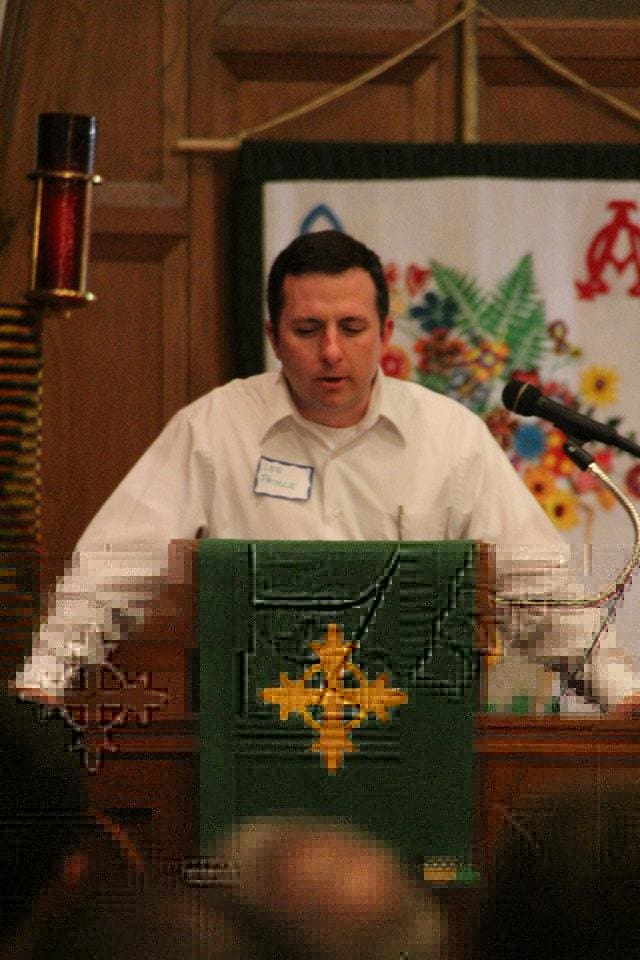
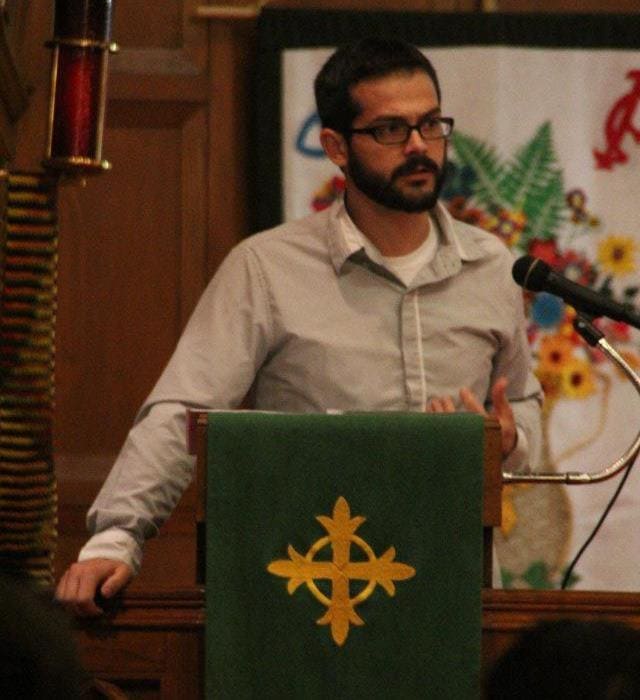
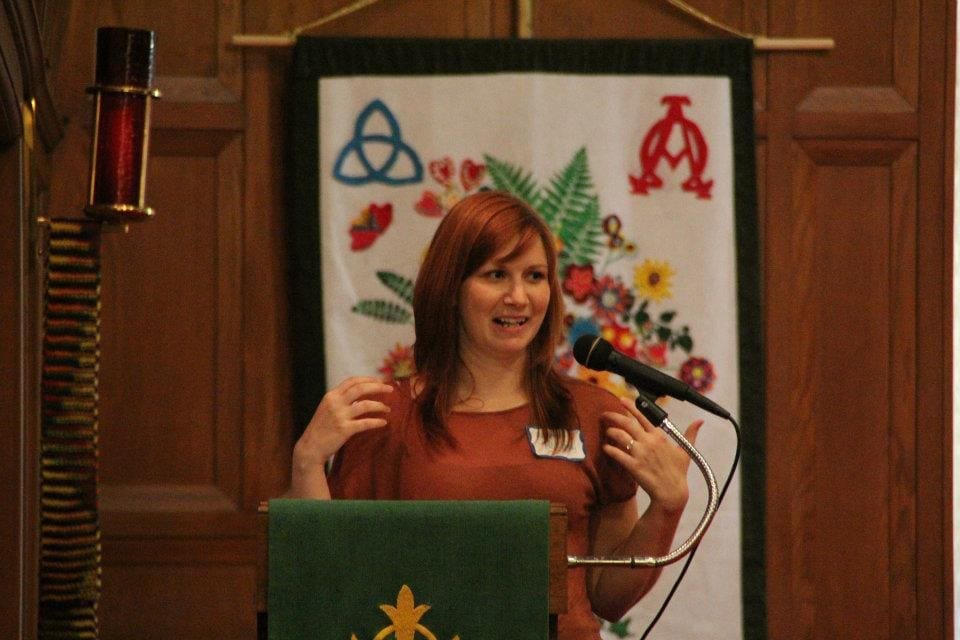
This episode was recorded as part of the January 2012 Mormon Stories regional conference held in Houston, Texas dedicated to the topic of “Maintaining Positive Relationships Through Empathy and Dialogue.” Speakers in this episode include: Lee Prince and Matthew Nokleby.
Episode Transcript
Guests: Jason Moore, Lee Prince, Matthew Nokleby
This transcript is machine-generated and lightly edited for readability. The audio is authoritative. Please excuse occasional errors in names and spelling.
Conference Introduction and Welcome
Guest [00:00:00] The following episode was recorded as part of the January 2012 Mormon Stories Regional Conference held in Houston, Texas. To join or form a regional Mormon Stories community or to organize a conference like this in your neck of the woods, please check out the Support communities tab@mormonstories.org and thank you for listening. Mormon Stories Podcast is a production of the Open Stories Foundation. All donations to Mormon Stories are fully tax deductible and go directly towards keeping the podcast alive and towards building a community of support for Mormons like you. To support the podcast or to join the community, please become a monthly subscriber today@mormonstories.org welcome back everybody.
Guest 2 [00:00:52] Welcome to the second session. I don't want to do a lot of introduction. I think Ashley did a wonderful job introducing this conference. I want to thank her. She lives in Oklahoma and Matt and I live here and so she was it was so wonderful her to take care of a lot of the organization even though she didn't live here. And we just kind of got to go along for the ride. But this has been great. I just want to take the minute. I have to thank everyone for coming and to thank you for being you last night. And then today has just been such a wonderful, fulfilling experience and I feel like I have like 50 best friends now and I love it. So we in this session we're going to have three TED style talks. I'm going to introduce them all. First we'll be hearing from Lee Prince. His talk is called I beseech you in the Bowels of Christ, Think it possible that you may be mistaken. Lee Prince, we those of you who were at the Moore's last night, got a little introduction to him. He grew up in Katy in the ward that John Dillon grew up in, and later attended BYU and came back to do law school here in Houston and now works here as a trial lawyer. And then you'll be privileged to hear from my husband, Matthew Nakobe. He's going to introduce himself a lot in the Talk, but he grew up in Tacoma in a typical Mormon family and later went to byu where we met and got married about three and a half years ago and we've been here in Houston since. He is pursuing his PhD in electrical engineering at Rice and I've approved everything that he's going to talk about. And then his talk is entitled It Gets Better Navigating a Mixed Version Faith Marriage, Mormon Marriage. And then we'll be hearing from Jason Moore, who doesn't really have a title for his talk, but he is a real estate agent in Sugar Land, Texas, working in a family real estate business. He was born and raised here in Houston, served Mission in Utah, went to Rick's and finished up here at Texas A and M. And I don't want to take any more of their time. So we'll invite them to come up and give their talk in that order. And then after they are done, we'll be hearing from Erin Hill and Tim Cooper Johnson, who will be playing Beautiful Savior, a musical number. Thanks.
Lee's Talk: Maintaining Faith Through Doubt
Lee Prince [00:03:43] Good afternoon. It's great to be here. I also would like to thank everyone who has taken their time to put this together. I think it's a wonderful event and I'd like to say from the beginning that I don't know about the rest of you, but I feel an overwhelming sense of love and of the spirit here today, and I'm grateful for that. And I'm sure that it comes from the feelings and the catharsis and the communion that we're all enjoying with each other. So I hope I can continue that spirit. Full disclosure As I prepared this talk is one of the hardest talks I've ever had to prepare. And I decided that I was just going to use my own terms, my own pronouns, my own language. And I hope that you can take that at face value. I am what you would call a true believing Mormon. I've never had a faith crisis. I've been exposed to lots of the questions and issues that many of you have and never founded a faith crisis. But I have engaged in many discussions, Mormon discussions, and discussions with family, with dear family among these issues. So the topic is very dear to my heart and I do have some strong opinions about the right way and the wrong way to talk about these issues with each other. So I'm arguing today in favor of a Mormon approach to having discussions about a crisis of faith. Let me make it clear, however, that I'm not trying to say that by virtue of being a Mormon that you'll have certain views about polyandry, or when the Melchizedek priesthood was restored, or if it was, or Proposition 8 or Heavenly Mother. What I'm talking about is the way that we talk about these issues with each other. And the title of my talk is a quote that I'd like to remind all of us of from Oliver Cromwell, who was a statesman in England and in the 17th century, who made a famous speech to a group of people in Scotland who he disagreed with about the decision they were making. And he said, I beseech you in the bowels of Christ, think it possible that you may be mistaken. And that quote cuts many ways. And so I encourage you to think about it from your own perspective that you may be mistaken, whether you are member of the church, who believes all the way down the line about issues and context and history of the church, or whether you're someone who's left the church, or whether you're someone who's in the church. I think all of us benefit from taking an approach that we might be wrong. It was the great judge Learned Hand who wished that this quote, this plea from Oliver Cromwell would be written over the portals of every church, every school, every courthouse, and, may I say, of every legislative body in the United States. So what I'm urging here is that there's a Mormon way of engaging in these discussions. And also, like every other activity that we participate in, our bearing and our demeanor in discussions about faith and difficult issues should be informed by our understanding of the atonement of Jesus Christ. And so I have three ideas about how we can make the atonement of Jesus Christ a part of what we discuss in these issues, and they are first, that people are more important than the truth, that questions are more important than answers, and that agency is more important than outcomes. So I'll just take it from there. I think one of the things that touches me about the gospel of Jesus Christ and about being a Mormon is the primacy and the durability of personal relationships. There's a focus in Mormonism on families and on relationships, and, of course, teachings that those relationships can endure beyond just this life. So we know from the story of Adam and Eve that in that story, Satan's objective in the Garden of Eden was to divide men from women. And just a casual glance at the history of the world reveals that this same tactic of dividing people one from another is still well used. And the fault lines that are used are wealth, race, language, religion, culture, sexual orientation, and the list goes on and on. But I don't think it overstates the point to say that wherever we see division, animosity, we see that same handiwork. In his translation of the Bible, William Tyndale came up with a new English word to capture this idea of reconciliation, which the King James translators then later adopted. And that word is atonement, or at 1 ment. So by contrast to the story in the Garden of the Devil's plan to divide men and and women from each other, it's the work of Christ to bring people together. And his at onement in the church a lot of times gets focused on Us and our own spiritual and personal journey and how we can go back to heaven or become perfect or live with God again. But there's also kind of a horizontal component, and I think a more important component of the atonement, and that is that Christ will unite us with each other as human beings as well. Joseph Smith called this the sealing power. And he made it clear that the great objective of the restored gospel was to seal all humankind. He said. A quote that's often you've probably heard is that friendship is one of the grand fundamental principles of Mormonism. And he taught that it's designed to revolutionize and civilize the world and cause wars and contentions to cease and men to become friends and brothers. So that's kind of an example of men, of course, women, too. Don't persecute me because of my pronouns. How good and glorious it is seen unto me. This is a quote from Joseph Smith with some ellipses in. But I won't tell you where they are. How good and glorious it has seemed unto me to find pure and holy friends who are faithful, just and true. In the name of the Lord. I feel it in my heart to bless them, these that love the God that I serve, and they love the truths that I promulgate. I prayed for them with anxious and fervent desire. They shall not want a friend while I live. No wonder that he could truthfully say, let me be resurrected with the saints, whether I ascend to heaven or hell. And I hope that as I flesh out some of the details of these principles, that we can take that as a framework so people are more important than the truth. I heard that couplet or that phrase first when I was a student at BYU and Robert Millett was my stake president. Some of you probably know Robert Millett from kind of the infamous video about lying for the Lord as a missionary. But he's an accomplished Mormon thinker and someone who has a lot of experience in reaching out to different communities to try and build relationships of understanding. And he told a story of being on the stand at a stake conference and a general authority on the stand with him. And he was not a stake president at that time. He was some other position on the stand. And somebody said something from the stand that was controversial or that wasn't. You know, it wouldn't. It seemed like it shook everyone or made a ripple through the crowd, and the person who was presiding, it wasn't. The general authority, stood up and corrected them kind of in a harsh way, and only to sit down and on the stand be firmly rebuked by this general authority who told him that people are more important than the truth. And I think for me, the most touching and salient example of this teaching comes from Jesus Christ himself, who in the New Testament gave a parable of the sheep and the goats and goats on the left, sheep are on the right. And everyone's curious and anxious, I'm sure, to find out why they ended up in these different piles. And so you all know the scripture, he says, the king says to those on the right, the sheep come, ye blessed of my father and inherit the place that was prepared for you from the foundation of the world. And pay attention to why they get to inherit that. For I was an hungered, and ye gave me meat. I was thirsty and ye gave me drink. I was naked and ye clothed me. I was a stranger, and you took me in sick and in prison and you visited me. Now, I think that clearly the criteria was not for I taught a certain principle and you believed it 100%, or for I told you not to smoke and you didn't, good job. But the criteria that the Savior used was how we treat other people, and specifically, not just how we treat other people, but how we treat those who are most in need and not just physically. I think the scripture transcends our physical needs when we're hungry spiritually, or when we're spiritually in prison. As John talked about this morning, being in a dark, cold closet. That's the time where our true Christianity is tested and when it's most incumbent upon us as Mormons, for whatever reason we call ourselves, that to not be known by what we do and don't do with respect to substances or promiscuity, but to be known by how we reach out to those who are on the fringes, who are marginalized. And I think that that's one of the reasons that I'm touched here today. I'm certain that if Jesus Christ were here in Houston, Texas today, he would not be at a Mormon chapel or any other chapel, but he would be in a hospital or at a place like this where there are those who are hurting and in need of his love and embrace. So in your Mormon conversations, whether you're a stalwart, true believing member of the church, or whether you are not a literal believer, or whether you are in a crisis that is causing you to seriously consider leaving the church, remember in your conversations that the people you're talking to are more important than whatever truth claims that you're discussing. So second Questions are more important than answers. I took a Latin class in byu. It was the dumbest thing I ever did. Felt like being underwater for an hour a day, five hours a week. But one of the words I learned was educare, which is the root for education and it means to draw out. There's a rich tradition from the Sacred Grove all the way to dialogue and continued here today, of asking good questions in Mormonism. And I think that that's an important tradition to continue, but why not focus on the answers? And I think that for me it harkens back to the title of the talk, which is entertaining these things with a humility that recognizes that I don't know everything, despite what I might have been taught in the three hour block or what I might have grown up with. Don't know the answers. There's some tough issues and questions out there that I think Dan correctly identified that we need to wrestle with. It's important and there's a value in wrestling with those questions. But I think that we do ourselves harm sometimes when we obsess about arriving at the right answer. I think much more sustainable is to have a working model and be willing, as the church's kind of crystallized in an article of faith, to accept all that God has revealed, all that he does now reveal. Be willing to believe in your own life that many great and important things are yet to be revealed and that you probably don't know them yet. I think that that ensures that we approach things the way God wants us to and we don't wrest truths or scriptures to ourselves. Last, agency is more important than outcomes. This is hard, and I'll speak from my own perspective. This is hard as a person who believes in the church and witnesses people that have crisis of faith that are close to you want to leave. You want to try and control their outcome. And I would venture to guess, even though I haven't been there on the other side, that it's probably hard when you feel like you know all this stuff and you want to enlighten people about the things that you know that they don't, to keep yourself from wanting them to have the same outcome that you have, wanting them to understand and learn and leave too, or at least understand and know and validate where you're coming from. So again, it goes both ways. I want to read a passage from the devotional that was given by Terrell Givens at BYU a few years ago called Lightning in a Bottle or Lightning from Heaven. I can't remember the exact title of it, but it's great. You may have heard Terrell Givens podcast with John. He's a fantastic thinker and he has this to say about kind of the equipoise that exists as far as evidence goes. You know, like there's a lot of evidence that maybe this is all hokey and made up, but there's probably a lot of evidence too, when you get right down to it and think about it. There's reasons to go both ways. I'll just leave it at that. He says it better than I can, and he also says ass, so I want to be able to read that a few times. I believe that we are as reflective, thinking, pondering seekers, much like the the proverbial ass of Buriddin. If you remember, the beast starved to death because he was faced with two equally desirable and equally accessible piles of hay. Having no determinative reason to choose one over the other, he perished in indecision. In the case of us mortals, men and women are confronted with a world in which there are appealing arguments for God as a childish projection, for modern prophets as scheming or deluded imposters, and for modern scripture as so much fabulous fiction. But there is also compelling evidence that a glorious divinity presides over the cosmos, that God calls and anoints prophets, and that his words and will are made manifest through a sacred canon that is never definitely closed. There is, as with the ass of burden, nothing to compel an individual's preference for one over the other. But in the case of us mortals, as opposed to an ass, there is something to tip the scale. There is something to predispose us to a life of faith or a life of unbelief. There is a heart that in these conditions of equilibrium and balance, and only in these conditions of equilibrium and balance equally enticed by the one or the other is truly free to choose belief or cynicism, faith or faithlessness. And I say that not to weigh in on the truth claims of the gospel for my own sake. I'll bear my testimony at the end, but I come down a certain way. But I think it's important, as we're engaging in these discussions, to remember that there's a real person on the other side of the aisle and that that person doesn't deserve to be characterized or painted with broad strokes one way or another. I think as people who stay in the church, we often wrongly attribute people's faith crisis to sin. They must be looking at pornography or cheating on their wife. They must not be praying as much as they should. They must not be listening to the right answers. And on the other side, I think that people who are struggling in a crisis of faith or leaving the church often painted us members with a broad brush as well as simpletons or people who haven't thought through the issues or clearly can't have internalized these things, or else how could they stay? And so it's with that that I give this idea of this equipose. But if God is real, then he is supremely invested in our agency, and I think we should be too. So what does this look like? Well, it looks like the scripture in Doctrine Covenants 121. It looks like long suffering and patience and kindness and love unfeigned. It looks like listening. It looks like not trying to get someone to come back in the church or not convincing someone else to leave the church. It looks like curiosity, and it looks like humility, and it looks like love.
Jason Moore [00:22:05] So
Lee Prince [00:22:08] let me conclude with this. One of my favorite people on the Internet to read is Roger Ebert, film critic and he very, very talented writer. His former partner, Gene Siskel. Siskel and Ebert, two thumbs up, had a thing that he would say when he would interview people, kind of at the end he'd say, what do you know for sure? And I've thought about that a lot speaking to this group, and so I whittled it down pretty good. But I just want to share. What I know for sure is that Jesus Christ is real and that just like we've talked about today, he has the ability to heal us and to help salve and save our relationships, regardless of what path or what outcome we decide for ourselves, or what path or outcome someone else who we love decides for themselves. I believe that the Book of Mormon was ancient scripture, and I'll leave it at that. But what I also know is even through connections on Facebook or the short, brief interactions that I've had with all of you, I know that I love you and. And I feel your love and I feel your respect. And I think it's remarkable. And I want you to know that I'm always around to chat or talk or bounce stuff off of, and I would love to hear what's going on in your life. And I appreciate you guys being willing to be part of this group. I think that the vibrancy and the texture and the richness of the group is enhanced by the different folks that we have here. And I say those things in the name of Jesus Christ. Amen.
Matt's Talk: A Couple's Journey Away from the Church
Matthew Nokleby [00:24:05] Good afternoon, everybody. It's great to be here. I really appreciate Lee's remarks. He and I have apparently very different opinions about the truth claims of the church. But I think our messages are really compatible and I really appreciate the approach that he took. I want to begin my remarks with two disclaimers. The first is that while I'm the one who's standing up here, I'm telling our story. I'm certainly telling it from my perspective. I'm telling our story. This is a story about Amanda and me. It's a story about how I left Mormonism, how Amanda has remained an active member, and how in spite of our faith differences, our marriage, our relationship has survived. It's a story about both of us and it's too bad that it's not possible for both of us to come up here and tell our different sides of it. And it's kind of strangely anti feminist, especially for a Mormon stories group, that the man is the one who's picked to be up here. But here we are. The only consolation prize is that we get to break the usual sacrament meeting convention. Usually the wife comes up, she introduces the family, and then the husband gives some deep doctrinal talk. Here I'm the one who has to introduce the family and, and she gets to do all the important stuff. The second thing I want to do is to dispel the idea that we have marriage advice to give out. We don't. We know that we got off easy, we're young, we don't have kids. Our situation is a lot less complex than a lot of people's and we appreciate that. But what we do want to do is to tell our story, share some of the insights that we've been through, and hopefully share it in a way that some people can derive some benefit from their predictive value or the applicability of our insights. That's not something that we're trying to claim because we simply can't. So with those out of the way, the message that I want to share today is pretty simple. It's that stable, healthy marriages between ex Mormons, disaffected Mormons and active believing Mormons. Those marriages are possible. It's common for a new apostate. I know, I felt this for a while, is that the only way to save my marriage was to find a way to deconvert my spouse. I find this idea to be not only false, at least in most circumstances, but I believe it to be very harmful. And I also believe that some of the things that an apostate learns along the way, or at least some of the Changes in worldview that had to happen for me to leave the church are exactly the things that can help stabilize a mixed faith marriage. And so there's two principles that I want to harp on for the next 10 minutes, which are things I had to learn to leave the church and which I think are things that helped me to approach my relationship with Amanda in a more healthy way. Number one, belief doesn't have very much to do with intelligence. Number two, belief doesn't have very much to do with morality. With that out of the way, I'll just tell our story. So I'll start with me. My Mormon upbringing was pretty ordinary. I was born, like Amanda said, in Tacoma, Washington. My parents both have pioneer ancestry. My dad worked in business. The mom stayed at home with the five kids. We were loyal Republicans. We did all the usual things, and I hit all the usual milestones. I was baptized at 8. I was ordained to the Aaronic priesthood when I was 12. At 18, I graduated from high school and I was shipped off to byu. And then I picked a safe, marketable major. I was going to be an engineer and have a nice, stable career. And then after my freshman year, like so many other people, I put in my papers and I was called to serve a mission. I went to the Australia Perth Mission. And I had always believed in Mormonism. I had felt like so many people that it was obviously logical. It made sense. We had the right interpretations of the scriptures, yada, yada, yada. And I also believed in the Mormon epistemology, which was that we could know certainly these things through what I guess I'll call spiritual sense experience, that we could have this manifestation of the Holy Ghost and that we would know these things that also make sense are certainly true. And I never received that kind of a witness, at least nothing strong enough that I was willing to hang my hat on. And so I left my mission not knowing that the church was true in the sense of having had a spiritual witness. But I had every expectation that I was going to receive such a witness. And the truth is, I wasn't disappointed. I had some pretty powerful experiences when I was a missionary. They were always teaching experiences. And there were always times when we would testify of the truth and the people that we were teaching would accept it. They would listen to our testimonies, and they would accept our testimonies. None of these people joined the church. This is Australia. We didn't really teach very much. And this happened maybe three, maybe four times. But when that happened, there was this really profound, naked human connection that happened between us and the people that we were teaching, that was very powerful. Even now, I'm an unbeliever. I'm a thoroughgoing materialist. I don't really believe in the supernatural, but I consider these experiences meaningful and I consider them in some sense transcendental. As an idealistic young missionary who was hungry for spiritual validation, I thought it was, I don't want to say more, but certainly different, which is that it was an indisputable manifestation of the Holy Spirit, that this was what I'd been looking for. And so I finished my mission and returned to byu. And I was confident that I knew I didn't merely believe. And I was confident that my faith was going to last me throughout the rest of my life. I was wrong. My faith endured for maybe a couple more years. And the transition was a really subtle one. It happened as I made the transition from undergraduate education to graduate school. So I did a master's degree at BYU after I finished my bachelor's. And so I was still at byu. I was studying engineering. I wasn't studying anything that was going to hurt anybody's faith. I wasn't learning any difficult facts or anything like that. But for me at least, the transition from undergraduate work to graduate work was enough to force a really deep self skepticism on just about anybody. It's hard to explain, but I think most of any of you who have made this transition will probably know what I'm talking about. In undergrad, you're used to being the guy who knows how to master the difficult concepts, you know how to solve the difficult problems. You can do the exams, et cetera, and suddenly you're the guy who is suggesting wrong, bad, not so smart ideas to solve research problems. I went from being somebody who was almost never wrong about his area of expertise to somebody who's wrong every single day. And I came to learn that this was really normal. This wasn't because I was stupid or anything like that. Being wrong was part of the program. And that's when this first insight that I want to talk about started to set in. When the questions are hard, even smart people are wrong all the time. In other words, belief has very little to do with intelligence. Now, around this time, I met Amanda. Her upbringing was a lot less stereotypically Mormon than mine. She grew up in Dallas. Her parents are converts to the church. They joined the church in the mid-70s. And by Mormon standards, they are politically left of center, which just means that they didn't read Kleon Skousen. And in their household for example, they were allowed to. The belief in evolution didn't really contradict belief in Mormonism, which especially at the time, I think was rare. Gays and lesbians were regarded as good, decent people. And although you might have a difference of opinion with them, there wasn't any reason to avoid them or to particularly condemn them. It was still a traditional Mormon household in terms of belief, but it was a lot less rigid than many of her peers and certainly much less so than my upbringing. And so when Amanda and I met, she had just finished her degree at BYU in anthropology. We met some random encounter at the pool at our apartment complex. I made some jokes, she laughed at some jokes, and we talked about her academic aspirations. It was a really good start. And so I got her phone number, I asked her out. And for the next two years we dated off and on. And around the time I was getting ready to finish my master's degree, we started talking seriously about getting married. And in the intervening period, my self skepticism had put down very deep roots. I could be wrong on technical things, that's fine, but I started to realize what else could I be wrong about? I could be wrong about almost anything. And I really started to re examine my entire worldview. And for the first time I consciously admitted to myself doubts that for a long time I had sequestered in the subconscious. I doubted that my missionary experiences were necessarily divine manifestations. I doubted that a few million Mormons out of the billions of humans on the earth had any credible claim to exclusive truth. I doubted that there was a life after this one. And I doubted that there exists a God at all. But it turns out you can rationalize anything when the stakes are high enough. And this is exactly what happened to us. We talked more and more seriously about marriage. And I confided in Amanda that I did have doubts. She knew what I was when she picked me up, you might say. But we looked at the problem from a very, very Mormon perspective. It wasn't that I had authentic doubts or reasonable doubts. It was that I was struggling with my testimony. These doubts are something that I was going to overcome. In other words, we assumed that the right answer, at least from a strictly moral perspective, was that I was going to find a way to continue believing. And for a while I did. Of course I did. I was in love. I wanted to get married, and overcoming my doubts was a necessary precondition for our getting married. And so I found a way to continue to believe. We got engaged a few weeks later. We got married a few months after that. And immediately afterwards, we left for Houston, where I began my PhD work at Rice. It was another six months before my doubts would resurface. And when they did, they came back with a vengeance. Somewhere in those six months, the second insight set in, which is that belief doesn't have very much to do with morality. Unfortunately, in this case, I can't say exactly what caused it. Maybe I just needed to get out of Provo for a little while. Maybe just being forced to interact with a bunch of smart, very decent people who came from a variety of cultural, ethnic, religious backgrounds made me realize that there was nothing inherently moral about the Mormon worldview. But regardless of the cause, I no longer believed that there was a morally right answer to my doubts. I gave myself moral permission not only to doubt, but to completely disbelieve. And so I began, this time a more serious and, in my opinion, more honest re examination of my beliefs. I confronted issues with Mormonism that most of you are probably familiar with. And after a few months, I came to a conclusion, which is that I no longer believed in the truth claims of Mormonism, and I no longer wanted to affiliate myself with the church. Breaking this news to Amanda was obviously not very easy. She'd seen it coming, of course, and of course it was something that she didn't want to hear. But she also knew that she couldn't in good conscience pressure me to continue to be active. And so I left. And to her credit, she came to terms with it relatively quickly. She was too tolerant a person she had been raised to be, too tolerant to buy into the rhetoric that apostates are evil, morally degenerate people, and all she had to do was observe. Once it became clear to her that I was the same person as an ex Mormon, she accepted the fact that I had left and I probably wasn't coming back. In spite of her acceptance, though, things remained tough. And looking back, I realized that that was mostly my fault. I was decent enough that I didn't try to actively deconvert Amanda. It wasn't that I was on a quest to get her out of the church, but I did hold out hope that she would leave. And sometimes opportunities would come up to say something, and I took them. And this led to a few really nasty disagreements. And I'll share one of those with you. One evening we were at Arby's. We were having a really classy night out, and somehow we got to talking about Warren Jeffs and the FLDS Church. I think it was in the news at the time. I don't exactly Remember? And I saw the opportunity and I couldn't resist the urge. I stuck it to her and I pointed out that the FLDS members bear a testimony of Warren Jeffs that really isn't very different from the testimony that Mormons bear of Thomas S. Monson. And I put the question to her. How could Amanda have any confidence that her convictions were any more justified than. Than those of an FLDS member? No amount of beef and cheddar could salvage our evening. It was a small thing, but arguments like that happened often enough, and they were deep enough, severe enough, that they created a sense that our differences were fundamental, that they were differences that were preventing us from having a deep, emotional, intimate relationship. And because of that feeling, it was a bleak several months or so, a time in which we both worried that our marriage was in jeopardy, that Mormonism was going to come between us. The turning point came in October. October of 2010. We were sitting in our living room. Amanda was listening to conference. I was sitting on my laptop. I had my laptop in my lap, sitting there doing something on the Internet. Actually, I think I was on an ex Mormon forum at the time, as conference was being played right next to me. And Boyd K. Packer got up to speak. Maybe you guys remember the talk. I know this will sound strange, and here we are. I know that talk caused a lot of harm, but Packer's crotchety intolerance may well have saved our marriage. And for that, I could kiss him on his gruff old mouth. Amanda was very upset at that talk. As I said, she was raised to be too tolerant, especially towards the gay and lesbian community. She had known too many gay Mormons personally and had seen their struggles to listen to somebody she regarded as an apostle of Jesus Christ indulge in rhetoric that she felt to be hurtful and knew to be false. Now, I want to emphasize this wasn't a turning point because Amanda's beliefs began to change. Because that's not what happened. Her beliefs didn't really change. This is a turning point because it gave us an opportunity for common ground. It was something that we could talk about with regards to Mormonism that we could discuss productively. We were both upset by the damage being done to gay and lesbian Mormons and hope for something better. And then just by nature of having something to talk about, it almost doesn't matter what the topic was. But just because we talked about something productively with regards to Mormonism, I came to a realization that was long overdue, which is that I had seriously underestimated Amanda's relationship with Mormonism from both an intellectual perspective and both a moral perspective. And so I took those two. I realized that those two principles that led to my apostasy, that had gotten me out of the church could be applied to believing Mormons. And this is true in a way that I just. I just couldn't. I don't think I could bring myself to accept when I first left the church. There are legitimate reasons to believe. Don't get me wrong, I think that the evidence weighs rather heavily against the most natural reading of Mormonism's truth claims. But even so, there are intelligent, thoughtful, authentic reasons to believe. Belief has little to do with intelligence. Even though Mormonism can do a lot of harm, there still remains tremendous good to be found in it and to be done by means of it. Belief has little to do with morality. I came to respect Amanda's belief in a way that I really hadn't been doing before, and I came to accept and even embrace that. Just as I might never return to Mormonism, she might never leave. And after that realization set in, Mormonism was never really a wedge between us from that point on. Now, since then, Amanda's beliefs have continued to evolve further. She has sort of begun to deal with her own faith crisis, and she's gotten a lot more unorthodox in her beliefs, interpreting some of the truth claims of the church, more figuratively, getting involved in activism for LGBT Mormons, and even participating. I mean, here we are, participating in Mormon stories. But those facts don't make me breathe a sigh of relief, at least as a relates to our marriage. It's nice. It gives us more common ground, and maybe more to the point, it makes Amanda's happier as she's gone through some of this. But I no longer feel like her faith transition is essential to our relationship. If tomorrow she returns to orthodox belief, if she swears off John Dehlin and decides she's never again going to listen to a Mormon stories podcast, that would be too bad. But it wouldn't have much of an impact on our relationship. So I don't know where our faith journeys are going to take us. Amanda probably has an unpredictable road ahead, and that's not to say that I have any idea where I'm going to end up in the years that follow. But we've got to the point where we don't worry anymore about what that might do to us. Our marriage is no longer predicated on shared religious belief. Respect for each other's intelligence and each other's goodness is what's essential to our relationship and our particular beliefs don't say. Sorry. That our particular beliefs don't say very much about our intelligence, our goodness. Thank you.
Third Speaker: A Personal Faith Crisis Story
Jason Moore [00:42:19] All right. This was the moment I've been dreading. So I want to thank Lee and Matt. Very, very good talks. Enjoyed. I love the contrast, and it's a really good. It's a good point that Lee makes that I may be wrong. And I've thought that way my whole life. I may be wrong. Whatever it is I believed I would always think in the back of my head, what if I'm wrong? And that's. When you're growing up as an active Mormon, that's not a good feeling to have. You don't want to have that feeling. I guess as you get. Maybe as you. As you get a little older, a little more mature, and particularly maybe with Lee, he's probably can. Knowing some of the things. He knows he's able to have that. But, man, I hated having that feeling. And I have. So I'm going to share a little of my personal story and then talk about my family. My parents and I have six younger brothers and sisters, and we have a little bit of a unique story in the church that I'm going to share and kind of talk about how our journey has been, some of the things we've learned from it, and how to better our relationships as a family. So get a little water on my dry throat.
Janet's Story: Faith, Mission, and Family Conversations
Guest [00:43:47] So
Jason Moore [00:43:50] I have a fairly typical story growing up in the church. My parents joined the church when my sister Molly and I were very little. And so there was just the two kids. And they joined the church in the 70s, kind of in the what I would consider kind of the heyday of conversions. It seemed like the church was really growing in the 70s and maybe 60s, 70s and into the 80s. And we was here in Houston. We joined the church here in Houston. We were in the Maplewood Building, which is, I believe, where Matt attends church. And, you know, one of the funny things is we had the. So my parents had the two kids, and my mom. And my mom noticed a lot of families had a lot of kids. And that made her a little. I think it made her a little antsy. And I think at one point she went up to the bishop and said, I want you to know I'm not having more than two kids. And he said, no problem, just more. That's fine. Well, she had five more kids, so I'm not quite sure. I don't know where that came from, but I think when you get in that culture in that group, you know, it's a very convincing. It's very convincing to follow, but it's a blessing. You know, I've got six brothers and sisters because of it. We were very active in the church. My dad was bishop. He got called to be bishop five years after he got baptized. And it was in a very big ward. It wasn't a branch or a little small ward. It was just a big ward with a. And I remember being really, really excited about that, that my dad was bishop. I was about 8 years old, and I was thinking we were pretty cool. So the early years of my growing up years, it was pretty strict. My parents really tried to really follow all the rules. You know, the reading of scriptures and the family prayer and the family home evening. And. And, you know, no TV on Sunday. I can remember one night they came home from some event Sunday evening, and I turned the TV on, and I think I was wanting to watch Roots. You know, just. It was the. It was the show at the time. And the first thing they did when they came home, they came and checked the TV to see if it was warm, see if I'd been watching tv. And I got caught like, oh, dang. I was just watching Roots. It's just an educational show. But that was. They were really strict on tv. Family home evening was obviously a chore with seven kids or, you know, five, six, however many it was at the time. But it became a deal of couldn't keep. You know, it was hard to keep the kids interested. And so there was lots of. There was lots of spankings and whippings going on during family home evening. And again, this is in the 70s when this was pretty typical. I got split spanked at school all the time. And in Texas, that's a. That was. I don't think they don't do that now, but they did that a lot back in the day. So one night, you know, we'd had several weeks of probably bad family home evenings. And my mom says, okay, kids, let's gather around for family home evening. And I said, hey, everybody, it's whipping time. Let's go. So and so my mom says, we're doing this wrong. This is it. This isn't working. So I don't know if that was. I don't know if that was a changing point, but over time, they. They mellowed with. With the rules. And my brothers and I have two brothers, and we love watching sports, and of course, there's always good sports on Sunday. And so we just. I think they got tired of Fighting that battle, you know, wanted to watch the Astros or the Oilers or whoever. I remember having to sneak. Sneak into my closet to listen to the Astros game on the radio. I'd go in there and shut the door and just, you know, and if I heard steps up the stairs, I'd quickly come out. So once I became into the youth program, that's when you start having all the bishops interviews. And at that time, we actually moved from the Maplewood building out to Sugar Land. So I spent the rest of my youth years in the Sugarland Ward, which I'm now today. I'm in the Sugarland 2nd Ward today. So I'm still home. But I had a very strict bishop growing up. I mean, just very strict. He was the kind of the Bruce R. McConkie mold. And I think my experiences with him kind of in some ways set a tone for me in a kind of a way that I viewed Mormonism. And I always kid my brother in law, Jared, who's here, that he grew up in a completely different church than I did, even though he grew up in the Mormon Church because he, his bishop growing up was just completely different. They didn't have the discussions that my bishop and I had. And my bishop, he had me reading Miracle of Forgiveness, which if any of y' all have read that that book shouldn't even be titled. Forgiveness shouldn't be in the title, because it's not about forgiveness. It's about, you're doing lots of things wrong. You know, he's like, whatever you said. I remember in his office, he had a little chalkboard, and this is a one on one meeting, me and him. And he's. He's. Oh, yeah, it's a one on one meeting. So he writes in there, the degrees of sin, and they're least up to the worst. And so he had several things, and he wrote, you know, necking and petting, which I have always hated that word, petting. And then. And then, of course, fornication, and then adultery and then murder. And so he looks at me and says, look how close to murder that is. And I'm like, whoa. You know, just going, you know, you're thinking, I'm really messed up, man. I'm almost a murderer.
Lee Prince [00:49:45] So.
Jason Moore [00:49:51] It is funny, really, but it's. It's funny. It comes full circle. My little. My oldest daughter is 12 and had her first interview with the bishop. And I went in and talked to him and said, I really want to talk to you about my experience. And I don't want anything like that going on with my daughter. I wanted it to be real. Real on the base level and real sweet and happy. And he was very. And he promised me, you know, he'll keep it real, real good. So. So I got through the youth program, and, you know, I felt like this is where I'm supposed to be. This, you know, the church is true, and this is where I am. And so I went on a mission, went to Utah, had a really good experience, met a lot of cool people. I remember being in the MTC and really struggling with my testimony. Just kind of wanting. Wanting to really believe the whole everything. I wanted to be a good missionary. I wanted to really make a difference. And for everybody that's been in the mtc, it's a really. It's an interesting environment because it's like everybody's talking about spiritual experiences. It's like everywhere you go, it's like I felt the spirit here, and people are talking about. I remember one guy gave a story about how he had a vision that angels were surrounding the mtc. And we had one guy in my district that everyone kept talking about how this guy's testimony was so incredible, and he would get up and just weep and pound the pulpit, and I'm just sitting there. This is nuts, man. I wasn't feeling it, but even though I was enjoying myself, I just wasn't. I wasn't. I remember one time we're in a meeting and we're talking in our little district, and this one sister stops the conversation and says, do y' all feel that? I'm like, what. What is going on?
Matthew Nokleby [00:51:47] So in some ways, I felt a
Jason Moore [00:51:49] little like I'm missing something. I mean, I'm not quite right. But it was. It was just setting the tone for me, I guess, in some ways to feel like maybe I don't feel the spirit very well. Although I think into my mission, I had some pretty good experiences. And so, you know, they were select. There weren't a lot, you know, And I think that's maybe sometimes what happens in church is we go to church, we hear. We only hear the good stories, the really powerful spiritual experiences, and we think those things happen a lot. But in reality, and everybody knows this, I don't have to tell this. They're very, very rare. For the most, even believing member, they're rare experiences. And I think sometimes that should be emphasized more. But I had a great mission. I had. It's funny, one of the biggest challenges on my mission, and it's kind of funny, is it's in Utah, but there's a lot of anti Mormons in Utah, a lot of people that are very, very against the church. And as a missionary, you're bumping into these people all the time. And that was hard because I never really had that experience before my mission. And I remember just praying all the time because they, you know, they'd say, they would always try, they would say things to you like, you know, Joseph Smith did this, or, you know, Brigham Young said that. I remember the one thing I always heard was Brigham Young said that Adam was God. And of course they're, they're reading it from the journal discourses and they're showing me. And I mean, that was like, that was heavy. And I'm thinking, okay, they're not making that up. So he did say it. And I remember struggling with that on my whole mission. That one little thing that just bothered me and I had a hard time getting past that. But it's interesting how your mind can work and you can have these problems, but you can still plug ahead and, you know, and make the best of it. And that's what I did. So got home from my mission and my first night home, I went to the little workout club in our neighborhood. And I mean, that's weird. You're just sitting there by yourself without your companion. And I was talking to one of our friend of mine who was actually my sister Molly's good friend. And I bet she was a good friend of mine too. I knew her and I knew my sister Molly. She's the one right below me. I knew that she had been having some disagreements with my parents and there was a little bit of some conflict, but I didn't really know what was going on. In fact, she even wrote me a letter on my mission saying, man, I'm really struggling. And she didn't really give me much detail, but so I knew something was going on. And so this friend of ours, I said, what's going on with Molly? She seems like something's up there. And she says, well, I've heard that she's gay. I was like, what are you talking about? She's not gay. That was like she could have. It was like she told me Molly was a boy or I didn't believe it for one second. And that issue to me was so far off the radar that it's. Didn't. I didn't. I kind of shrugged it off a little bit. But of course I found, I guess maybe I think I might have approached her and asked her about it. And she told me. And that was very that was a, it was a surprise and I was, it was, I don't know how I felt, to be honest with you, looking back on it, but I remember just being sad or disappointed or. It was just, it was hard. It was hard. And I kept my thought in my mind. I thought, well, I can probably talk her out of it. I can kind of tell her, I mean, I know her so well, I'll be able to talk to her. And we had some, I remember having some good conversations. But so that's kind of a. It's funny though, that experience did not impact my testimony at all. I looked at it completely separate issue from the church, but it was hard, it was hard to accept. And so I'm going to come back to her here in a minute. So the one thing I remember feeling very good about serving the mission and feeling very like it was a good thing, but also feeling a little bit like I don't want a little bit fake or phony or something because I just felt like my testimony wasn't quite, quite what everyone else's seemed to be. And it's just, that was, that was a constant battle. But again, I kind of plugged through it, went to college, got married in the temple and kind of started living, living the standard Mormon life and, you know, good life. I love the Mormon community. I've always liked it to this day. I love the Mormon community and I love the people. I feel like I really relate to Mormons and I'm sure a lot of y' all can feel the same way. That's probably why a lot of y' all are here because there's that connection. It's kind of a. We were talking the other day about this. It's kind of like a, it's kind of a double edged sword because I feel so connected to Mormon people and people with Mormon backgrounds. But at the same time I have a hard time connecting with people that aren't in that, that don't have that background. So it's like a blessing and a curse at the same time because I feel like in that community there is an instant bond you have with people that you don't even know very well. It reminds me of a funny joke I heard. I hesitated if I should share this or not, but I'm going to say it real quick. I hope you all think it's funny. And my missionary companion told me this joke so I would not tell this joke in sacrament meeting. So this kind of reflects how I feel about the Mormon community. So there's a guy Getting on a bus. His bus stop. He gets on the bus, it's real crowded. And he walks down the aisle and sees an empty seat next to a real pretty girl. And so he sits down next to her, and he notices that she looks very down, very depressed. And he strikes up a little conversation and says, hey, what's wrong?
Navigating a Sister's Coming Out in a Mormon Family
Matthew Nokleby [00:58:00] You look really sad.
Jason Moore [00:58:01] And she says, well, I just got through seeing my therapist. And he says that I'm a sex addict. And he's like, well, you know, that's not that big of a deal, is it? I mean, sex is a good thing. She says, well, my problem is I'm only interested in Jewish cowboys. And he says, allow me to introduce myself. I am Bucky Goldstein. So I sometimes feel like I'm only interested in Jewish cowboys, Like Mormon people. I just. I like them, you know, I feel that connection, you see, so. But I actually have lately really been trying to be better, going outside my comfort zone. And having a gay sister helps me do that. Now, once. Okay. So early in my marriage, this is probably like the. In right around the year 2000, I had constantly battling these thoughts in my head, what I believe and what's true. And I had heard about Bill Prince's story, who last night we heard about. And I knew a little bit about him because he did some CPA work for my dad. And so I knew that there was this guy named Bill Prince and Katie that left the church and that he was in the Stake Presidency. And that was bothersome to me. I really. I never even really met him. And for some reason, his story's bothering me. So one day I decided, I'm gonna call him. And so I called him up and left him. He didn't answer. I left a voicemail, and I said something like, hey, I really. You don't know me. I'm Bill Moore's son. I'd really love to find out why he left the church. It's been something that's kind of bothered me a little bit. If you feel open to talking about it, I'd love to talk about it. Will, after seeing Bill last night, you can tell he's a good talker, and he likes to talk. So he returned my call, and we talked for probably a couple hours, at least an hour. And that was a very hard conversation for me, and it was a good conversation. But I remember hanging up that phone and feeling very, very depressed. And the last thing he said to me, and this is not Bill proselyting me. Obviously, I called him.
Guest 3 [01:00:24] So.
Jason Moore [01:00:24] And I know he's he doesn't like to. He's made clear he's not trying to get anybody out of the church. And I believe that. So I remember the last thing he said to me. I said, so after all the conversation's over. And I said, okay, now I want to figure out. I want to sum this whole thing up. So what you're telling me is you don't believe the church is true? And he says, I know it's not true. And I remember, oh, gosh, that just hit me so hard. Just. It's like it was a very, very hard thing. And the thing that was so difficult is he was telling me about all these really good spiritual experiences he had had during his lifetime. And that was just so hard for me to reconcile. So I know it's kind of weird that I'm going to let one conversation really affect me that much. So I remember over about the next two weeks, three, four weeks, being just very, very depressed and thinking just basically in my head, my thought was, man, I don't believe it anymore. But somehow I was able to put it aside. I don't know exactly how and when it happened, but I just got rid of it. I just let it go. And I was able to kind of lose the depression and get back to a normal. Get back to feeling normal again. So flag me down if I need to stop, and I'll wrap it up here. So let's see here. So several years go by from this conversation with Bill, and I'd say about 2008. Yeah, about 2008. I get an email from my friend named Dave Taylor, who is here in the audience. He's probably surprised I'm even mentioning him in this talk. So he was my roommate at A and M. He sends me this email and says, hey, this is a pretty cool essay that I found. And it was. We have a. Dave and I have a mutual friend named Adam who had been meeting with his bishop up in Dallas. And Adam was struggling with the church, and his bishop gave him John deland's essay, how to stay in the church after losing your testimony or after having. You know. So John writes this essay and lists things, areas you might struggle with in the church. And then the conclusion is, it's okay. You can choose a middle way. So Dave sent me this essay, and I click on it and start reading it. And it's like, it's a watershed moment for me. It just. I'm reading this going, that's me, that's me. Boom, boom. Just going down, man. It's just. It's it was big. And. And so I sent John an email like that day, probably asked him 20 questions like, you know, what man? Do you home teach? You know, do you pay tithing? Do you have a calling? You know, what, how do you. What do you do? How do you work? Make Mormonism work for you? Well, everybody knowing John like you do, he called me and we talked and had a great conversation. It was kind of a short. One of us had to leave. And so he ended up calling me back that night. And I was a Young Men's president at the time. And one thing I should say is the thing that got me to this point where I was about to explode was I went probably for about an 8, 9 year period with having a lot of real busy callings. You know, I was Elders Quorum president, Elders Quorum presidency, executive secretary, Young men's president, gospel doctor and teacher. And it went down the whole line. And I was really getting burned out. Just burned out, just tired of it. I remember driving to meetings and just feeling that dreadful just feeling. And I know that's not the case for everybody, that just my feeling. So I lost my train of thought there. But. So.
Matthew Nokleby [01:04:20] Oh.
Jason Moore [01:04:21] So that night I had a young. I was at Young Men's. We were having some kind of a court of honor, and so. And John actually called me when I was there and. But my phone, I didn't answer my phone. But I remember walking in that night after reading that essay and having talked to John for a little bit, and I was a different person. I was a different person when I walked in there that night. It was a weird feeling walking into this group of all of these peers of mine in church and having this feeling of, I'm a different person now. I'm looking at the world differently. And it was a good feeling in a lot of ways. I actually felt excited. I had a feeling of excitement. And not. Not that I knew something, not that I was smarter, just something felt better. It felt okay to doubt at that point for me, I felt. And it was a small. It was just a. So we ended up talking later that night for a while, like late into the night, probably one in the morning. And that was kind of just the. The opening of the. Of the window. And. And then of course, I got hooked on the podcast and started listening to podcasts and I listened to them all just. And that was still. In the time when he was. He was still kind of in the early stages of them, so I was waiting for the new ones to come out. But so Sometime in this time frame, my youngest sister, Nancy, I found out that she was gay. And she didn't come to me directly, but she had gotten divorced. She'd gotten married very young and had not maybe the best marriage and got divorced and had moved away to San Antonio and decided she was gay. But then, I don't know how long it went, but I'd say another six months to a year later. She had kind of a change, kind of a mighty change in her life where she decided, and I think she even says she had some kind of spiritual experiences where she decided that she needed to come back to church and not be gay. And so. And then she ended up moving back to Houston. She met a man, got married, and life seemed great. And I'm seeing this happen to her, and it's affecting me in a way, thinking, man, there's something to the church. You know, it's bringing her back. And she realized that was a wrong thing. And of course I'm thinking, seeing that my other sister, she probably shouldn't. Shouldn't be doing that, shouldn't be gay. But at the same. I mean, and I wasn't. I don't even think I had in my mind. I think by this point in my life, I was accepting the fact that some people are just that way and there's not necessarily anything they can do about it. But I was excited that Nancy had had this experience. One of the things that's very hard for me to.
Matthew Nokleby [01:07:07] To.
Jason Moore [01:07:09] It was very hard to take is she had a very. A very, very big trial. She's had a very big trial. She's after. Once she. After she's gotten married for the second time, she. She couldn't do it anymore. She. The. The. Her inner self was. Was a lesbian. And she's had been very depressed. My mom had told me she was just very, very. Felt very, very bad. And she. At one point she had in her mind that she was going to have to move away and start her own life on her own because the family would reject her, which wouldn't have happened. But the despair in her mind and heart was there. And it made me feel very, very sad. And I actually called her and just said, please, Nancy. When I found that out, hang in there. Don't do anything. Stay here. We're your family. We're with you. So. So the real. The real game changer for the Moore family was when the third sister came out. So my. I have a. This is. Her name is Carrie, and she. This was the. Probably the. The one that. That really made my parents really step back and. And reevaluate their whole view of the world. Carrie was a returned missionary and super, super active in the church and had graduated from college, had a good job, and she was dating a whole lot. We just kept thinking she's real picky and she'll eventually meet somebody. So, you know, and everyone's just probably hassling her constantly because she's probably getting into her mid late 20s, which in Mormonism is like 40, you know, you got to get married young. So everyone was worried about her. But so. And I'm. This is all pretty fresh for the family and for the. For my sisters. So I'm. I'm not even 100% sure how much I'm allowed to even say up here, to be quite honest with you. And we might have to talk about if this gets recorded and puts on. And put on the Internet, because it might not be time for that, but we'll see. One thing that made me feel really good is because I had already kind of. I was showing, I think the family, or at least my sisters kind of knew that I was a little bit more of an unorthodox type Mormon. Carrie actually came to me and came out to me before anyone else and came to my house one night, says, I gotta talk to you. I gotta tell you something. So we went out on the back patio, and I remember it's funny because my wife Deanne was in the house just sitting there going, what the heck? Is she coming over and meeting Jason on the back patio for here? So we're back there and so she starts to tell me, all of a sudden she just starts to cry and I'm like, what is going, what the heck? And so she, she tells me, this is what's been going on with me. I'm having these, and I'm probably sure it's a. She viewed it as a struggle. And that was a mind blower to have that come out. It was about the same as when I heard about Molly. So it's just. But I was very understanding. I said, hey, you know, you got to do what you got to do. You follow your heart, you do what works. You got to follow yourself. And I think she kept that. She finally came out to my parents pretty soon after that. And then. Ultimately, I don't want to get into the whole. All the details of where everybody's at with their belief, but the blessing to me is the three. Because of that, I think there is a big acceptance now in the family for everybody. And I feel Like Molly, because she came out 20 years ago, she was kind of the lone wolf and kind of was, you know, maybe looked at as a little bit of the black sheep of the family. She wasn't shunned and we interacted and got together but there was probably, there was a barrier. There's a little unsaid thing that's you're not quite like us and, and it could go the same. It goes the same for say if you have someone in the family that doesn't believe in the church. There's a lot of times those people get wedged out. They're just not fully accepted. So the blessing of having the third sister come out has rallied the troops. It said okay, particularly for my parents, it's like okay, how we view everything maybe not might not be quite correct. So we've got three daughters here, we've got to love them all and not let a religion dictate how I'm going to treat my daughters and I'm not. And I think it's possible to be a super duper true believing Mormon and totally accept your gay daughters. I just think it's rare. I think it's hard to do. I think it's, I think there's people that do it. I think if Lee had a gay daughter, he would love her like his regular straight daughter. I'm sure of that. But I think he's a little bit of a rare case. I don't know that that would happen, you know, more than 10% of the time I don't know. But it's rare. So I feel I'm very grateful. The family we went this summer, we went, had a big family trip. We went to Lake Travis in Austin and all seven siblings are there with all spouses, gay or straight, no issues. It's just everyone loves each other. I don't know that that happens without the parents completely just saying forget all the other stuff. The churches good. But it's not, doesn't define everything. This is the family. Let's work. Let's make this work. So that's the story. And I see I'm the one that didn't have a title on the talk and so I don't even. But I guess the theme is that family is more important than church. And I think church is important, religion is important. There are certain things, but I think you've got to. And like one thing that Bill said last night that was interesting is, you know, his dad always said the family's most important. But if you're, if you're going out doing your church work, then you're. That's. That's more important because you're really doing that for your family. And that's a really twisted way to really look at it, if you think about it, because it's just not you. You can't. You can't do it that way. You've really got to put the family there and then you go from there.
Closing Reflections: Family Over Church
Lee Prince [01:14:07] So.
Jason Moore [01:14:08] So thanks for letting me talk, and I look forward to meeting everybody afterwards. Thanks,
Guest 3 [01:14:33] Sam. Ram. Sam. Sa.
Matthew Nokleby [01:18:26] Sa.
Guest 3 [01:18:53] Sam.
Guest [01:19:24] Thank you for joining us today on Mormon Stories. Music today was provided by the Saber Rattlers. Check them out@sabre-rattlers.com the Mormon Stories logo was generously donated by StudioCase.com thanks for listening.
Closing Hymn and Farewell
Guest 3 [01:19:39] Come, come ye saints no toil nor labor fear but with joy wend your way Though hard to you this journey may appear Grace shall be as your day Tis better far for us to to strive our useless cares from us to drive do the San Jo hearts will swell oh, all is well all is well. Why should should we mourn? I think our lot is hard T not so all is right why should we think to earn a great reward if we now shun the fire Gird up your lo fresh courage take Our God will never us for sake soon we'll have let's tell it tale oh, all is well all is well oh, all is well all is well. Sam. And should we die before our journey's through half a day all is well we that are free from toil and sorrow too with the just we shall dwell but if our lives are spared Again Just be the same the rest obtain I will make this chorus well. Oh, all is well all is well all is well all is well all
Jason Moore [01:23:35] is well
Guest 3 [01:23:39] oh, all is away. All is well all is. Sa.