
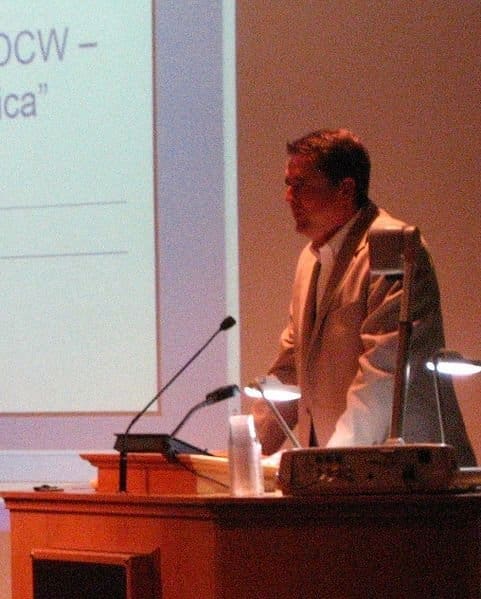
 On March 26, 2011 Mormon Stories held its first regional retreat/conference in New York City. This presentation exploring the future for uncorrelated/non-traditional/unorthodox Mormons was given by John Dehlin. The PowerPoint file for this presentation can be found here.
The music for this episode was generously provided by the Sabre Rattlers.
Episode Transcript
Host: John Dehlin
This transcript is machine-generated and lightly edited for readability. The audio is authoritative. Please excuse occasional errors in names and spelling.
Announcements and Conference Introduction
John Dehlin [00:00:00] Hey, Mormon Stories listeners, just a couple of quick announcements. First, please mark your calendars for the two upcoming Mormon Stories regional conferences. The Salt Lake City Conference will be held the weekend of June 10, 2011, and the San Diego Conference will be held the weekend of July 22, 2011.
John Dehlin [00:00:17] Please join our Mormon Stories Facebook group to learn more about these conferences. Next, if any of you are interested in locating other Mormons like you amongst your family, friends, etc. Or in your local community, please friend me, John Dehlin on Facebook. And also, more importantly, visit the Support communities section of MormonStories.org to locate the Mormon Stories Facebook support group in your city. Currently, we have over 40 support groups worldwide and are hoping to create many more. Finally, Mormon Stories is made possible by listeners like you to keep it alive along with all these other services. Please become a monthly subscriber today@mormonstories.org thank you very much.
Guest [00:01:22] Come, come you saints. No toil nor labor.
Building Local Community for Uncorrelated Mormons
John Dehlin [00:01:28] All right, well, I feel really bad because I prepared this presentation and I don't think it fits for this group. I think you guys are kind of way beyond this presentation. So I'm gonna fly through it really fast. Like I'm gonna do like 60 slides and hopefully like 20 minutes or 30 minutes, but they don't have a lot of words on them.
John Dehlin [00:01:49] This is. I'm. I don't know. Have any of you ever seen the multi multimedia presentation I did several years ago called why People Leave the Church and what we can do About It? I'm trying to do a new version of it because it's been seen by like a hundred thousand people and a lot of people have found it useful in helping to explain to their believing family members why people go through the struggle.
John Dehlin [00:02:12] So I'm just kind of developing this with that in mind. I'd love your feedback and support on this if you have ways that I can improve it. I don't want to get in debates and criticisms now, but if you have thoughts or ideas on how I can enhance it, that would be helpful. A lot of you don't need this, but maybe some of you would find it valuable.
John Dehlin [00:02:33] I won't embarrass the people that I am speaking with, but when I came in Thursday night, we had great conversation with some friends about all sorts of topics from Mountain Meadows Massacre to, you know, masturbation. It was a lot of fun.
Guest [00:02:50] Is there a connection?
John Dehlin [00:02:51] No, no, it's just lots of fun. No, it was a great conversation. But. But I got a little frustrated in a friendly way with the group because I don't know, I've been thinking about these issues of history and historicity and truthfulness and truth claims and validity probably for 12 years now, like really seriously. And I'm kind of tired of that conversation, even though maybe there's a lot of rich septics there. For me, there's really only one question as it relates to Mormonism going forward, and this is the question. I'm going to start and end with this question.
John Dehlin [00:03:45] You guys may not care about this question, and it may be that nothing ever comes of this, but I want at least one time to be able to be in front of people and articulate what I'm feeling and ask some questions and brainstorm on some ideas, because I think this matters.
John Dehlin [00:04:02] This question really matters. It may be the most important question we could talk about, but it doesn't seem like there's anybody really talking about it in any substantive way. How do we create local and global communities of support for uncorrelated Mormons?
John Dehlin [00:04:20] I think this is a super important question and the reason why I think this is so important. And there's the image that I shared with you. So I didn't envision this when I started the podcast five years ago. I started this podcast because I was studying instructional technology. I was getting a PhD in instructional technology. I was learning all about the Internet and wikis and podcasts and blogs, and I just thought, I want to practice and learn how to do this stuff. So I started a podcast and had no idea what would come of it, how many people would listen to it and what would happen.
John Dehlin [00:04:57] And the most significant thing that happened as a result is that people started coming to Logan to have lunch or dinner with me, calling me on the telephone to have conversations, or asking to meet with me in whatever cities I travel to in my work with MIT to discuss some of their most severe and traumatic life problems. From marital things, divorce, substance things, sexual things, things psychological diagnoses.
John Dehlin [00:05:26] I've definitely had well over a thousand, maybe close to 2,000, direct personal interactions with people like you over the past five years. This trend started where three to five times a week I'd get a phone call or an email from somebody in your shoes whose wife is about to leave them, about to lose their children in a divorce dispute, who's struggling with depression or addiction or some type of mental disorder or sadness in relation to sort of them being a non traditional Mormon.
John Dehlin [00:06:05] And I've tried my best to support all these people, but I've gotten to the point where I can't even answer the emails anymore. There's just too many. And there's really no. Definitely no formal structure for these people within the church and the informal structures. You know, there are forums out there, there are blogs, there are communities, but they're pretty fragmented, and they're not trying to offer kind of a comprehensive solution to all the many gaps and voids and vacuums that sort of arise when traditional orthodoxy leaves evaporates. And so my question for all of us here is basically, is there anything we can do about this so that these people can get their needs met and I can finish my graduate work and stay married and stay healthy?
John Dehlin [00:07:02] So I thought I would really. I've tried to do some analysis on some of the stages that I'm seeing. These are going to be familiar to all of you because most of you have been through them or been through most of them. These stages may not fit many of you.
John Dehlin [00:07:17] You may disagree and think that there are other stages. There are probably variations on all these things. But I just want to quickly go through what I'm seeing and what I'm experiencing, and then we'll end by talking about what the needs are.
Stages of Mormon Faith Transition
John Dehlin [00:07:34] So most of the people that I talk to start in the phase of being a true believer. And I think there's a lot of validity and belief, as Dave talked about. I was in a little dinner group with Phil Barlow last week. He's the Leonard Arrington Chair of Mormon Studies at Utah State University. We have a little study group in Logan, not a study group, like a dinner group. And he gave this quote last week that I thought was. Was pretty, you know, insightful, and that was, to believe in God is impossible.
John Dehlin [00:08:06] To not believe in him is absurd. And I think there are some of you who would disagree with both those assertions. But I think that this strikes at the heart of a dilemma that we're all kind of caught in.
John Dehlin [00:08:21] You know, it's easy when we become liberal and skeptical and thoughtful to just stop believing. But at the same time, you've heard the phrase that there aren't atheists in foxholes, and we can academically argue that point. But the truth is, I think religious disaffection is a luxury.
John Dehlin [00:08:40] I think that if you are mentally ill or poor or sick or in desperate need, often religion is the only thing around to really help you. And so it's easy for us to wax philosophical about how we can, you know, cavalierly leave the church behind.
John Dehlin [00:09:00] But the truth is, I think any of us, in the right set of circumstances, if we feel confident in Our disaffection would run back to the church with a full embrace again, under the right circumstances, if you get desperate enough. And that's just because mankind hasn't fully figured out how to, how to replace this need for the transcendent, for God, for spirituality, for beliefs. And maybe it's not even something to be transcended, maybe it's something to be embraced, I don't know. But what I do know is, is that religion's sort of always been with us as long as we've been historical preachers. And I don't think it's going away anytime soon.
John Dehlin [00:09:36] And so, but at the same time, individually, a lot of our beliefs are evaporating. But there's a reason why religion is here. And Voltaire also said that if God did not exist, it would probably be necessary to invent him or her.
John Dehlin [00:09:54] And so I want to just kind of start there. You all know what the true believer is. These are just some high level points. You know, God lives, he speaks to us through scriptures. Jesus died, and that's the way to get back to God. Our church leaders speak for God.
John Dehlin [00:10:09] The church members are the chosen people, and the church is true. And that's an oversimplification, but we're short on time. It's beautifully simple and it's simply beautiful. And I was in this phase until I was about 21, and to me it was a beautiful thing.
John Dehlin [00:10:29] I loved it, I was very happy with it in spite of all the challenges. I still look back on that time of my life very, very fondly. And it's been likened unto the iron rod. It's just something you can close your eyes, hold on, and you know where you're gonna go and you're gonna be safe, or at least you feel like you're gonna be safe. And life is really good. And that's kind of how maybe many of us started.
John Dehlin [00:10:51] And I could think of 16 million reasons why we could love Mormonism if we wanted to. And I really believe that if I could have stayed in this stage, I probably would. I mean, I don't, I don't want to go back now, but I think if I could have stayed in this stage, I probably would have. From the sense that it just, it was so much, it felt so much easier when life was simpler, but then life got complex.
John Dehlin [00:11:20] And so the next phase that I kind of have noticed is kind of the traumatized believer. And, you know, this is where those of you who haven't even entered this phase yet are going to start feeling uncomfortable because it's never comfortable and easy to talk about disbelief. But I would just challenge you to remember the example that Jesus showed us in spending so much time with people like the sinners and the publicans, the prostitutes and the lepers and all the people that were undesirables. It's easy to view apostates or liberals or intellectuals as lepers.
John Dehlin [00:11:56] And I would just one thing I would love to do is to help faithful people be more thick skinned and tolerant of disbelief. It's almost like atheists have become sort of the last great pariahs in society. You know, even. Even, you know, well, there are just plenty of other minorities that seem to be in better status than atheists and disbelievers, even among liberal believing Mormons.
John Dehlin [00:12:22] Liberal believing Mormons are still very uncomfortable with disbelievers and atheists and are uncomfortable being often in their company and are often uncomfortable letting them express their feelings and thoughts without feeling defensive and alienated and sad. I hope we can get better at that. You guys probably know better than me all the different issues that can lead to disaffection. In my why they Leave presentation from a few years back, I pretty much only focused on the historical issues. And one of the biggest pieces of feedback I got is you're missing so many other reasons why people leave. So these are some of the historical issues that people find troubling when they study the Church.
John Dehlin [00:13:02] Multiple first vision accounts. Joseph's use of folk magic that then crept into how the Book of Mormon got developed with the seer stone and the hat. The connections between the Masonic Lodge and the church temple ceremony, polygamy and polyandry, but also the denials of it and the confusion around it and the deception about it.
John Dehlin [00:13:21] The Kinderhook plates in the Book of Abraham which directly challenge Joseph as a translator. The Church's history with race, and that includes blacks and Native Americans and others. The disempowerment of women, mountainous massacre, and I would say just a general lack of candor about history from church leaders. Those are just some of the big issues that seem to be really taking people down.
John Dehlin [00:13:48] The second one has to do with thinking about doctrine and theology. This is something that John Larsen from Mormon Expression has really helped me understand. If you look at any piece of church doctrine with a lot of scrutiny, sometimes things tend to unravel really quickly. But because we often don't scratch below the surface, things don't seem to really bug us that much. But you know, I was reading quotes on the Internet. One of the things that I read is that the fastest way to become an atheist is to take the Bible seriously and read it cover to cover.
John Dehlin [00:14:21] And I think that's true. I mean, all the sexism and racism and homophobia and elitism and genocide in the Bible is just crazy. What's that?
Guest [00:14:30] Incest.
John Dehlin [00:14:31] Incest? Yeah. I mean, it's just. And that doesn't necessarily disprove the Bible, but it certainly becomes troubling to people when they start to think of the full implications of pretty much all the scriptural texts. A lot of people get hung up on just the need for an atonement at all. Why does God have to create us as imperfect beings and then choose someone to punish and inflict pain upon so that the rest of us can be made whole? Why is that even necessary?
John Dehlin [00:14:59] It's a fair question. I don't mean to be disrespectful about the atonement, but, you know, there's a lot of people who just think that that doesn't make sense. Why couldn't there have been a better way? A lot of people get hung up on this idea of one true church with exclusive authority. Given that we're less than 1/2 of 1% of the world's population, how can it be that God would have this franchise that he would license out to such a small group of people? And then if you think about the apostasy that Christ would set his church up over a few year period, and then it would quickly go into apostasy and then leave God's children for another, what, 1800 years without, you know, his church upon the earth.
John Dehlin [00:15:38] That just seems so, like, exclusionary and inefficient. And you could get in discussions about free will and how God is bound by law, but in the end, it just starts to seem really ludicrous to some people. The Book of Mormon. I have a hard time taking the Book of Mormon seriously.
John Dehlin [00:15:57] A historical document. It doesn't bring me any joy to say that, but there's a podcast that I'm releasing next week that Casey Kern developed, which I think is a fantastic podcast with Brent Hardy, a real Mormon intellectual. But he even admits in the podcast that there's really no archaeological evidence that's credible for the Book of Mormon or geography or other types of. Of things. And I don't mean to dismiss the Book of Mormon. I think it's beautiful in many ways, and I'm still leaving that door open. But I think many people get caught up on this, and I think credibly so.
John Dehlin [00:16:35] The idea of proxy work for the dead, that this plan is so inefficient that we have to now spend the rest of a thousand years of the millennium doing this work for people. Why couldn't God figure out a way to just let them say, yep, I'm in, and they're in and we all are, okay, why the need for these ordinances? And then why do them if the people don't accept, why are we doing them for everybody and then giving them the chance to accept? Why can't we just wait till there's a final list of everyone who accepts, do the work for them?
John Dehlin [00:17:07] But I understand that if you're a believer, that God allows things to happen. So. But to a lot of people, this stuff doesn't make sense. And so you start to wonder, is the church really led by God or is this just big one cluster mess?
John Dehlin [00:17:23] So here's some of the other ones that I neglected. Spiritual issues. Many, many of the people that I talked to took Moroni serious, took Moroni's promise seriously. And they prayed and they prayed and they never got a spiritual witness.
John Dehlin [00:17:43] And these are some of the most honest and courageous people because I think there's a lot of us who just said, I'll just say that I know, because it's socially expedient to do so. But those who are willing to say, you know what? I'm still waiting, but I'm going to stay in the church active, but I'm still waiting. That's a real act of courage.
John Dehlin [00:18:03] And it happens. There's a lot of people who just don't feel spiritually edified or reward in the church. They try really hard and it just doesn't feed them. It's just not uplifting. It's like, it's like eating Styrofoam. There's just no nutrients for them.
John Dehlin [00:18:22] Some pray, take Moroni's promise seriously and the Spirit tells them to go elsewhere, to go to other faith traditions or to leave the church. And it's easy for us to dismiss any conclusion that doesn't come, confirm our conclusion, and say that they're under the trappings of Satan. But the truth is, when you meet these people, they're living very wholesome, righteous, worthwhile lives.
John Dehlin [00:18:45] And I think those paths are worth respecting and they deserve respect. A lot of people just totally redefine their epistemology completely and they re evaluate what it means to know something and they just decide that what really happened was I was conditioned to feel the certain set of emotions as it was paired with a certain narrative. Within a church context. And I became to associate warm fuzzies with that church. And that's how I and I was taught to say and believe that it's true because of that pairing. And I'm not trying to reduce people's testimonies to that, but a lot of people re evaluate and realize that lots of people and lots of faith traditions believe lots of things.
John Dehlin [00:19:29] And those men who flew the planes into the towers, you know, they probably had a pretty strong conviction of what they believed as well. And how do you know whose convictions are valid and whose aren't? And just like one's empathy for LGBTQ people is often associated with actually coming to get to know one and having someone that you love identify as lgbtq, that's gay. For those of you who don't keep up with the politically correct terminology, once you have one of your loved ones become disaffected, that can be a real game changer for you. I'm in this study club that I'm in.
John Dehlin [00:20:18] There's a wonderful woman who's the daughter of a general authority, and her life was wonderful until her oldest son lost his faith. And they did everything right growing up. The parents did everything right. And that child, the church didn't work for that child. And that was a real crisis of faith for this woman.
John Dehlin [00:20:37] So those are some of the spiritual issues that affect people. The cultural issues are also very significant that are to be ignored. Once you start to develop true sort of egalitarian feelings towards all races and classes of people, then the church's, you know, the verses in the Book of Mormon about curses and skin color, or the church's prior assertions about valencing the pre existence and the Negroes becomes pretty offensive. And you sort of have a hard time believing that God would have anything to do with that at all.
John Dehlin [00:21:13] This is one of the most neglected things to often discuss. But some people really feel like women deserve equality, equal treatment, equal consideration, and should be equally valued. And, you know, as you notice, these are again, the trend of the great three enemies of the church lining up at the top of the list. But, you know, intellectuals, feminists, and gays, once you start developing sympathy for those points of view, it becomes very hard to maintain a traditional faith in the church or at least a respect for the priesthood authority that hasn't always come down on the progressive side in those issues, to put it delicately.
John Dehlin [00:21:56] Liberal political sympathies are becoming an increasing reason why people are leaving the church. Sometimes people feel like this is the church of gladiators. Beck and Ezra Taf Benson. And sometimes that's even in progressive cities, you know, large urban centers, people feel like their politics, their progressive politics, their liberal leaning politics just aren't very welcome in their tradition. And that makes them feel very uncomfortable because other people can talk about their political views, but they can't and still feel like they're an enfranchised member of the community.
John Dehlin [00:22:31] And one of the most dangerous things that could ever happen to you is extensive exposure to non members who are also really awesome. Mark Twain once said that. Mark Twain once said that the greatest cure to prejudice is what? Travel.
John Dehlin [00:22:51] Something like that. Travel is the greatest cure to prejudice. Once you get around and see wonderful Buddhists, wonderful Hindus, wonderful Muslims, wonderful Jews, wonderful Catholics, wonderful atheists, then you start realizing that you ain't got the corner on morality that you thought you did. And it makes you realize that there's a big beautiful world out there and you're just one small corner in it instead of, you know, the center of it.
John Dehlin [00:23:18] Organizational issues are really trapping people up these days. Some feel like the church has now adopted sort of an IBM corporate culture mentality with the suits and the white shirts and the ties that the churches run based on authority and rules and unquestioning obedience. Kind of like the Sadducees and the Pharisees. And it's just all about how many earrings do you have? And you know, do you check the checkboxes of temple attendance, the regular this or that?
John Dehlin [00:23:50] And some are feeling like the spirituality and the autonomy and the freedom of their spiritual worship are slowly being siphoned away and depleted. Some are concerned by the culture of patriarchy. If it's not unfair to characterize the church leadership in those terms, that some of our brightest and best are just sort of left out of the decision making process altogether.
John Dehlin [00:24:13] The final decision making, decision making process, I should say, even though I know many try to include women as much as possible. And this mall thing is actually becoming a real issue for people. The fact that the church would invest 4, 5, 6 billion dollars in a mall is bothering a lot of people.
John Dehlin [00:24:30] So it's getting its own bullet today. Hope that's okay, but it's a problem for some. I'm sure that I left out other important factors or groups of factors. So if you guys have ideas on things I left out, I would love your feedback.
Common Reasons and Non-Reasons for Leaving
John Dehlin [00:24:48] It's very important in this juncture of the narrative to list what the non reasons for trauma are. And these are the ones that are found maybe to be most offensive to those who have lost their faith, that somehow they're weak, that somehow they're feeble, that somehow they just want an excuse to sin, that some somehow they got offended.
John Dehlin [00:25:10] The truth is, if sin or being offended were the things that led people away from the church, no one would be Mormon. Right? And the last bullet is probably the most offensive of all. Because if there's one thing that I've noticed as a consistent factor in those who leave the church, it's the people who were elder scoring, presidents, relief society presidents, seminary teachers, mission, you know, assistants to the president, MTC instructors. It's the people who actually cared about integrity and took the truth propositions seriously and cared enough to really read and investigate, to find out what the facts and the truth really were that ended up being the ones who decided that it wasn't what it claimed to be.
John Dehlin [00:26:00] And so assertions that they were just weak or feeble or uncommitted are not only offensive, but they're just totally baseless because in many cases, it's the people who cared the most or they wouldn't have bothered looking in the first place.
John Dehlin [00:26:13] Now, I will acknowledge that there's no single smoking gun. And instead what it ends up amounting to is a mosaic or a smell test. It's just you size up all the different factors that we just listed, and I guess from Dr. Christian's past presentation, you look at both the validity and the workability. What was it?
John Dehlin [00:26:40] Utility. And for many, the church ends up failing on both sides of the equation. It just fails to. It fails to pass the smell test when you give it a full consideration. And it's not fun to say that, but that's just what I'm learning from the people that I talk to. I think these issues are credible.
John Dehlin [00:27:05] I think that the people who have these issues are credible. And for many, it's the church's credibility that becomes the problem. And what that often leads to is integrity. And that's often what drives people to start becoming a liberal believer, which is the next phase when people become confronted with these tough issues. There are different types of responses, and this is one of the first things that I tried is to become sort of a disciple of Lowell Bennion, Eugene England, Leonard Arrington. Is there a female version of those three men that we can list?
Guest [00:27:46] Who?
John Dehlin [00:27:46] Carolyn Pierson.
Guest [00:27:47] Carolyn.
John Dehlin [00:27:50] Any others? I love Carolyn Pearson. I think her beliefs are maturing and evolving, and I don't know how traditional she is anymore. Any other, let's say more traditional believers that are kind of patron female saints for Liberal belief.
Guest [00:28:13] Valerie Hudson.
John Dehlin [00:28:14] Valerie Hudson. Jill Moly Dirr He Said. Margaret Toscani I got a podcast for you to watch. Well, so liberal believers sort of take this position that the gospel is still mostly true, but the church leaders aren't perfect. They decide that they're going to be a buffet Mormon, and they're going to take the things that they like and they value, and they're going to leave behind the stuff that they don't like. They put up a shelf for all the things that they aren't able to reconcile, and they just kind of make the pragmatic decision that they can't know and know everything. And so they're going to put some things on the shelf and come back to them at a later date.
John Dehlin [00:29:00] They really become invested in symbolic and metaphorical beliefs. All of a sudden, all these doctrines that were literal become symbolic and metaphorical, and that can extend to the Book of Mormon itself. And, you know, they often come up with the phrase, this is where God wants me to be. This is where I feel called to be. This is where the Spirit tells me to be. I think that's all totally valid, and I really tried hard to make this work work for many, many years.
John Dehlin [00:29:30] And I'm still open to coming back to that approach. But there are some challenges to that phase, and some of you may consider yourself in this phase if it's not offensive for you to have me call a face.
John Dehlin [00:29:46] The problems are that the church is led in a somewhat authoritarian, literalistic way. So you may. You may interpret everything metaphorically and symbolically, but that's not how it's. That's not the verbal currency, that's not the cultural currency of what you're going to be experiencing in church. And so you get continually bombarded and barraged with, this is the one true church. This is the one true church. Obey, obey, obey. Follow the prophet. Follow the prophet. And that gets hard to do for some people.
Guest 2 [00:30:13] And
John Dehlin [00:30:17] so there's a huge disconnect between how you live your religion and. And how people express, you know, the flexibility or lack of flexibility that is allowed. And so as a result, you constantly feel like you don't belong or fit in, or you have to develop new coping mechanisms so that you can feel like you belong and fit in. And sometimes those work for people through the rest of their lives, but sometimes it wears people down.
John Dehlin [00:30:47] And another thing that's hard is just by nature, once you become liberal and progressive, you become a questioner, you become a doubter, you become a skeptic, you no Longer just believe. And so you're continually having to evaluate and decide what you're going to accept and what you're not going to accept. And it becomes tiring. I think that that little U shaped curve that Dave showed in the previous presentation, I think that's part of why you get that dip when you're blind starts to fall. You now have to decide every single step you take. Do I believe this? Do I not? Is there credibility for this?
John Dehlin [00:31:19] You know, is there historical precedent? Is there data? Why do I want to follow this or not? And that's a lot of work. It's so much easier to close your eyes, hold on to the iron rod and let it carry you forward or to just leave it. But to just sit there and have to negotiate this middle with all this cognitive dissonance and guilt and feeling out of place, it just really wears you down.
John Dehlin [00:31:41] Generally, liberals who are open are not appreciated in authoritarian organizations. That's just kind of how authoritarian organizations work. So you're just. What's that? Oh, okay. I said, is that not true? Yeah, so, so like you're just, you're, you're, there's a, there's a. You're setting yourself up for clash.
The Dark Night of the Soul and Crisis of Belief
John Dehlin [00:32:04] Because what the organization wants is generally obedience and submissiveness. And I don't mean that in a critical way. That's what makes it so. When there's a flood or a cancer victim, there are casseroles on your doorstep for three weeks straight. And that's one of the most beautiful things about the LDS Church is the structure and the obedience and the leadership. So I'm not saying that's a bad thing. I'm just saying that it's hard for liberals sometimes.
John Dehlin [00:32:34] It's also very hard to live in a place where you can't be authentic, where you have to hide who you are, where you can't talk, but others can, where they get to say what they feel. But if you say what you feel, you feel ostracized, like a sore thumb.
John Dehlin [00:32:51] And sometimes for these people, it becomes too great. And that leads to a stage I'm calling evaporation of belief. This is different than becoming liberal. This is the dark night of the soul. This is where you hit this point where not only do you start to question the Book of Mormon and then Joseph Smith and then Thomas S. Monson and priesthood authority and the entire restoration, but it goes much deeper. That's just where it starts. It goes to Jesus, it goes to the Bible, it goes to God, it goes to pretty much every single foundation that you had. And this is the point where your entire epistemological foundation is raised to the ground. Who has experienced this?
Guest [00:33:36] John, are you saying that there was a progression? Sounds like you're speaking of phases as you go through these. There's something after this you're going to go to.
John Dehlin [00:33:45] Well, or are these categories, you know, I have no idea about? So these are just, these are some memes that I'm starting to develop. But what you're going to see in the very next slide, two slides ahead. some point you can go back. You can go back to previous stages. So this is just memes at this point. Please don't get caught up in the order or the descriptions or whether I'm elevating one is superior to the other. I'm not. I'm just describing what I've experienced experience in working with a couple thousand people.
John Dehlin [00:34:21] Just anecdotally, do you see any correlation between the intensity of a person's dark night of the soul experience and their literal commitment beforehand when they were a true believer? Yes. Yeah. The more, I mean, the more dogmatic about orthodox, rigid that they were, the more severe their, their, their distress afterwards. In my experience, it's just like the credit card. Just like these credit card.
Guest [00:34:51] Also the practical circumstances you're in with your family and the double binds that you're put in while you're going through
John Dehlin [00:34:57] this can intensify or could help alleviate some of the.
Guest [00:35:02] Right.
John Dehlin [00:35:03] Yeah. And I just want, if I could, if I could do one psychological research project, I would like to research the full range and spectrum of psychological distress caused by this stage. My guess is it would rank comparable to anxiety disorders, depression. It would probably be comorbid with several of the diagnoses in the DSM iv because it's very severe. This is a very severe thing. It's terrible. You don't have. You feel like you don't have a moral framework. You feel like your spouse may leave you. You feel like your parents may no longer love you. You don't even know if God exists. You don't know what's gonna happen when you die. It's terrible. It just can be terrible.
Guest [00:35:56] I recall you saying at one point that there was in one of your podcasts and that this type of experience is usually triggered by an event.
John Dehlin [00:36:02] Something happens at church.
Guest [00:36:04] Something happens that shakes you emotionally, that then causes all the dominoes to start falling.
John Dehlin [00:36:09] Yeah, there's usually a trigger and it's usually related to those issues that I showed before. You don't get the Witness. And that can trigger you. You get abused by someone in priesthood hierarchy. You stumble upon. You Google, you know, you go to a Broadway musical, and all of a sudden your whole life is deteriorating before your eyes.
John Dehlin [00:36:43] You know, many of you have been here. If you actually are with someone as they're going through this, you feel it. It's palpable. It's palpable what they're going through. It's significant, and it's real. And I think, I've beaten a dead horse at some point, and I was guilty of this.
John Dehlin [00:37:02] You stare into the abyss and it stares back at you. And you realize that, look, belief was crazy, but this is crazier. And so you go back to a previous stage. Some people try and entrench in orthodox, literalistic belief. Again, that's very hard. Some people go back to liberal belief. Some people just take a pragmatic approach and say, I'm going to be pragmatic.
Guest [00:37:31] This is where you either take the red pill or the blue pill.
John Dehlin [00:37:41] That's right. And if I could do a second research project, it would be to come up with a formula to determine whether someone is going to stay in the church or not. And I think that it could actually be reduced to a mathematical equation. It has something to do with some type of ratio of adding where their spouse is, whether their spouse is going to leave them or not if they leave, or what type of distress that's going to put on their marriage, how confident they are in whether they can raise their kids. Without that sense of moral structure, to what extent are they going to lose the esteem of their immediate and extended families?
John Dehlin [00:38:21] You know, mom and dad are old and they're feeble, and the church means everything to them. And the last thing I want to do is break their heart. So I'm just going to kind of keep going. All my friends are in the church. I live in Utah. Like, if I leave, I'm going to have no friends.
John Dehlin [00:38:35] Everybody's gonna, you know, ignore me, and I'll be a pariah. Have you had a death in the family? Someone that you're deeply mourning, and you love the idea of seeing them again, and you don't want to face the idea of never seeing them again. That's one of the great bonuses of religion. It solves that problem for you, concerns about your own death. And maybe you have a job with CES or, you know, a construction contractor in, you know, the Wasatch, you know, Valley. There's certain jobs where you just. You don't want to leave the Church, basically, you know, you can take sort of all these things and add them up, and you could have a pretty good probability of predicting whether somebody is going to make that jump or not.
John Dehlin [00:39:19] And if they don't make the jump, I would say a lot of times it has to do with these. A combination of these factors. And what we know by confirmation bias is that if you want to get a spiritual experience to get you back in the church, these are some good motivators for that spiritual witness to return.
John Dehlin [00:39:42] Not to be cynical about it, because I still believe in spiritual witness, but those are some pretty big motivators. Now, this is a stage that has been my most recent stage, and it's the one that I started when I started the staleths.com website. It's basically saying, who cares about truth? It's kind of a postmodern thing. What's true, anyway? We don't know.
John Dehlin [00:40:05] It works. It's functional. You don't have to believe. Works for me. I enjoy it. I can't find anything better. So I'm just gonna stay in the church and make it work. And there are people who do that. There are people who do that without much belief at all. And I actually think that's totally awesome. I support it. But it often breaks down.
John Dehlin [00:40:27] And it breaks down for some of the same reasons that being a liberal Mormon can often break down for people. It usually involves staying silent about your true beliefs, and that's never comfortable. It leaves you feeling inauthentic because all your relationships are kind of based on mirage or a charade. You basically led people to kind of think or believe that you believe and think things that you really don't, or you've chosen to be a pariah in this community that you're not going to spend three hours with every week.
John Dehlin [00:41:02] And that's not a recipe for psychological health for many people. There are others who are very charismatic and funny, and they can be sort of the jolly atheist in the crowd of an otherwise orthodox Mormon ward. But that takes a pretty remarkable personality type to be able to pull that off. I've met a few of those people, but they're rare.
John Dehlin [00:41:25] And what often happens is you just say, I'm going to hunker down. I don't want my wife to leave me. I don't want my parents to die of premature heart failure because of my decisions. So. So I'm just going to hunker down. And when you hunker down, what happens is you just start stuffing the pressure and the anxiety as far down as you can, and you pack it and you pack it and you pack it down. And that builds pressure and it builds resentment and it results in bitterness. And one of the most dangerous things psychologically, and I don't have any data for this that I've seen, is living a double life.
John Dehlin [00:42:03] Is presenting yourself as one thing to the people you love and care and trust and then being someone completely different when you're away from home or the workplace or church. I don't recommend that to anybody unless you know, there's no other option. But those are all things that just wear you down.
John Dehlin [00:42:23] And eventually what kills people is the integrity question. They feel like on the one hand I have to lie to get a temple recommend, to be able to attend my daughter's wedding or my nephew's ceiling, whatever. I have to lie or I have to be a second class citizen in the church and like not be at the priesthood blessing or sit in the crowd while everybody else gets to ordain or not get to go to the temple night or whatever. And that's just a really terrible thing to have to confront. And in many ways this very much parallels the experience of the gay Latter Day Saint in many, many ways. Were you raising your hand? Oh, okay.
Guest 3 [00:43:06] Yeah.
John Dehlin [00:43:06] I mean, I think it's about as tight of a parallel as I've ever been able to come across as a husband and father.
Guest [00:43:13] Gay husband, gay father.
John Dehlin [00:43:14] Right?
Guest [00:43:15] Same thing.
John Dehlin [00:43:15] Yeah. Right. So this leads to the ex or post Mormon phase. For many people. This is a phase that no one but ex or post Mormons really like to talk about or think about. Again, even liberal Mormons aren't comfortable usually with this topic. In my experience, I just want to repent for my past transgressions of sort of downplaying or dismissing those who have decided to leave the church as being weak or as being not courageous
Guest 2 [00:43:50] or
John Dehlin [00:43:51] is not being as creative or innovative or sophisticated as I was able to be when I was in my stay all the S phase. Because in reality I think that leaving the church under these circumstances is an incredible act of courage. You literally subject yourself to the loss of spouse, children, family, the esteem of your parents, potentially for the rest of their living lives.
John Dehlin [00:44:17] You risk job, you risk all sorts of existential benefits that the church provides. It's an amazing, massive sacrifice that people would only do for the sake of health and integrity. No one, just like, you know, there may be people here who would say they would choose to be gay. I don't know, I can totally conceive of that. But it's often, you often hear, why would I have chosen this? I did everything that I could to not be this way. Why would I choose the pain and the derision and the scorn that society has heaped upon me? I would never choose it. And the only reason someone would choose this path of an ex or post Mormon is because they have integrity and they want to live in a truthful way.
John Dehlin [00:45:00] And they believe so much in being honest and straight with people that this is the only way they can make it work. A great sacrifice. So those are some of the stages. And I just want to reiterate the fact that I've met many people, many people who have resigned from the church or been excommunicated from the church, who two, three, five years later asked to come back in and sign back up again and got re baptized. And I myself jumped through many of these stages. And I don't set this up as a literal progression where the apex of existence is atheism and secularism. You know, I'm not setting this up as a hierarchy as well.
John Dehlin [00:45:45] So please keep that in mind. These are just the stages that sort of naturally I'm seeing progress for many of you here and others. So here are my conclusions that I just want to leave you with. There is a significant trend towards disbelief and disengagement or uncorrelation in the LDS Church. And credibility and integrity are the two big issues.
Broader Decline of Institutional Religion
John Dehlin [00:46:12] This trend is much bigger than just the LDS Church. This is happening to churches worldwide. People are becoming less and less committed to churches, at least in the US
Guest [00:46:23] in relation to the LDS disinfection. Is there any, any data out there, any good numbers they would back that, that claim up?
John Dehlin [00:46:34] I agree with you.
Guest [00:46:35] It seems true anecdotally, but is there any explicit logic, demographic data,
John Dehlin [00:46:43] just activity? I just earlier today heard a statistic that at present the activity rates in the church are around 18% once a month. Where's the source, John? I can't quote the source.
Guest [00:47:05] I was told that by a patriarch who was then commissioned president in 1995.
John Dehlin [00:47:11] And the interesting data was that it
Guest [00:47:13] was 18% and interesting. Very similar number regardless of continent.
John Dehlin [00:47:21] Yeah, yeah, yeah. Well, an activity not measured as we would usually measure activity. This is once a month. If you're showing up once a month, which is like 10 times a year, you're considered active in these numbers. Yeah, so it was someone. It's someone who. It's someone who currently works at the highest levels of the church.
Guest [00:47:44] From this same source, did you get any sense of the fact that this
John Dehlin [00:47:48] is causing them pain. Yes, because we're not.
Guest [00:47:50] I guess the people down below are not feeling it or noticing.
John Dehlin [00:47:54] Yes. The leaders are deeply alarmed and concerned. They're trying to figure it out. I would challenge you. I will make this challenge.
John Dehlin [00:48:05] What's.
Guest 4 [00:48:05] What'd you say? I said there's lots of numbers around that. The young women between the ages of 18 and 31, about a 70% attrition rate. Among that group, the returned missionaries, we're losing about 25% of them within two years of returning home to the missionary. The law of numbers, and I heard 40% in total.
John Dehlin [00:48:26] And then activity retention rates of new converts in Latin America and Africa and the Philippines has got to be 10%.
Guest 4 [00:48:33] It's.
John Dehlin [00:48:37] And then they don't ever take those people off the records of the church.
Guest 4 [00:48:40] No, no.
Guest [00:48:40] So, yeah, but if you're saying that the leadership is aware of this crisis, are they saying it's because the world is becoming more wicked and we're just not righteous and this is the sifting process, or are they recognizing that there
John Dehlin [00:48:56] are some significant issues with the history
Guest [00:48:58] of the culture and there are some issues. It's not just, well, you're not righteous, which is what I would expect them to probably sick.
John Dehlin [00:49:06] It probably varies.
Guest [00:49:08] This is the sifting process.
John Dehlin [00:49:09] Oh, well, no, I think they're trying to do all they can to make it better.
Guest 4 [00:49:14] Another interesting number is that if you leave and the church loses track of you, they assume you live to be 110 years old.
John Dehlin [00:49:19] That's right.
Guest [00:49:20] So, John, make your challenge so they keep you on.
Challenges and Opportunities for Church Reform
John Dehlin [00:49:22] Okay, I have a challenge. I have a challenge. Here's my challenge. For those of you who think the church should change, I challenge you to come up with any recommendation that would improve the church. From your liberal, progressive perspective that would lead to. That would also lead to either a maintenance or an increase in attendance rates and tithing.
Guest [00:49:50] Call some women as general authorities. I mean, I'm as a joke, but I think that opening up.
Guest 4 [00:50:00] What's that watch tithing contributions from the Wasatch front drop through the floor.
John Dehlin [00:50:05] We shouldn't solve this here. I challenge you guys to send me an email and tell me a recommendation to improve the church that would lead to more tithing or the same amount of tithing and more or the same amount of attendance. I think it's really hard. And that's why I've stopped trying to be an armchair quarterback for how the church should improve. I think they have the hardest job in the world right now. Personally.
Guest 2 [00:50:27] Dave, here's an idea. My wife and I for a while attended our local Presbyterian church. We had friends there and they came
John Dehlin [00:50:34] up with what I thought was a
Guest 2 [00:50:36] fairly creative solution to this problem. They had the basement for it. And the symbolism didn't escape me. Those who. And we had. We had folks who were atheists and very liberal Christians and non Christians. But they all, they showed up and they'd go down to the basement. Everybody would have Sunday school and their usual meetings upstairs and there's a basement group. Coffee was better down there too. But they'd hang out down there and they'd have their own little groups and there was a very lively society and the folks upstairs knew about the basement group and after church everybody get together and they. Presbyterians were able to pull it off, but they have a lot less complex
John Dehlin [00:51:13] dynamics than the LH Church there are.
Guest [00:51:16] So maybe something along those lines. If I could attend church and go to a gospel doctrine where we actually got to talk about something that was actually substantive that wasn't at an 8th grade level.
John Dehlin [00:51:27] All I can say is I think there's a reason why the church frowns on uncorrelated material. And I think it's because I don't think awareness of the facts and candid open discussion and consideration and thinking about the facts and people's circumstances leads to an increase in faith.
Guest [00:51:52] But like I think you were saying earlier, the, the Internet and the dissemination
Guest 2 [00:51:57] of information, they can't control it anymore.
John Dehlin [00:51:59] So the best you can do is try and plug the, the, the hole
Guest [00:52:03] in the dam, turn the Internet off.
John Dehlin [00:52:04] I mean, just do. Do your best to plug the hole. In correlation to that, everyone I meet here and Dustin, everyone. That group already exists. It's called the Facebook group. Yeah, it's called John's Facebook group. I found Dustin than a lot of people, I'm just like, wow, there's a whole other group that exists. Yeah, so it's a pickle.
Guest [00:52:24] I think there's a difference though between
John Dehlin [00:52:26] meaning just, you know, over the Internet or whatever.
Guest [00:52:33] The thing that's interesting for me is just observing what I thought it would be like.
John Dehlin [00:52:42] You know, I felt comfortable leaving because I had this. I have my company and all my clients.
Guest [00:52:46] I have all these deep relationships. But there is something, there's something different about the, the in person social connection
John Dehlin [00:52:55] that you give in the church that I've never been able to place. That's where we're going. That's a great segue. We're coming. We're coming. Right to that point. Remember that first question that I began this presentation with it's right where we're going. This trend is much bigger than the LDS Church.
John Dehlin [00:53:13] There's probably little to nothing that the church can do about it to stop it. I believe to meaningfully stop this trend. The church is always going to exist in some way for the next millennia. If the Catholic Church can survive, we can survive. The question is how vibrantly we can survive in the United States, which is where 80% or more of the tithing comes from in the church.
John Dehlin [00:53:39] So one reason why you should care about this is if you haven't already become an uncorrelated Mormon, you likely will. And if you don't, the majority of your children or loved ones who are LDs likely will, Right? So you better. I mean, this is.
John Dehlin [00:54:03] This is going to come one way or another, and you can pretend it's not a reality, but it's a reality and you need to learn to deal with it or you're going to just suffer more pain down the road.
John Dehlin [00:54:13] And the final thing is, the point I've already made is becoming an uncorrelated Mormon causes a major disruption in one's life and often leads to having the PowerPoint get cut off. When you wrote something often leads to a significant vacuum in the lives of someone who is active in the LDS Church. How many of you experience this vacuum?
John Dehlin [00:54:40] I assume that's why you guys were willing to come here. So that is the only thing that I care about when it relates to things that don't relate to my family. Basically, this is the only question I think about. This is why I am pursuing a PhD in psychology. This is how I plan to spend the next 40 years of my life. And I don't know if anybody is interested in also thinking about these questions, but I figured this would be the time in my life where I issue this question.
Filling the Gaps After Disaffiliation
John Dehlin [00:55:13] And that is, what do we do about the gaps that get created when somebody becomes an uncorrelated Mormon and these gaps show up even if you're active in the church? How many of you are active in the church and feel some of these gaps?
John Dehlin [00:55:30] So what happens when you lose your spouse? What happens to these people? What happens when they lose their children or lose custody of their children? What happens when they no longer have the primary and the young men's young women's program to help them raise their children?
John Dehlin [00:55:51] What happens when now they have this cold distance from the people that they loved most, friends and family, and oftentimes a complete lack of support. I talked to a guy today who told his mother in law that he no longer can believe in the church in a traditional way. He got the call this morning. She was supposed to come over and babysit their child. And the mother in law said, I don't feel comfortable coming over to your house right now because I just don't feel comfortable being there. And, you know, maybe she'll wise up. But just think about that for a second.
John Dehlin [00:56:25] Your mother or your mother in law now won't come watch your child won't support you because of you pursuing what you feel like is your integrity. It's a terrible thing. What happens when you no longer have this moral framework that you relied upon.
John Dehlin [00:56:47] You were committed to your spouse because the church told you that if you committed adultery, you'd be going to hell. Well, guess what? Now you don't know if God exists. Why would you want to be faithful if you can travel around and have lots of fun?
John Dehlin [00:57:02] It's a real dilemma for people. It sounds silly, but it's a real dilemma. And that applies not just to adultery, but to all sorts of things. When you have a strong moral framework that now is designed, you no longer have an identity, or you have an identity that you're ashamed of, or you have an identity that it's not safe to tell people sometimes. And then what about spirituality? Like, how many of you who no longer are active in the LDS Church still consider spirituality to be an important part of your life?
John Dehlin [00:57:37] Yeah, what do you call it? Cool that it's still important. I mean, it's still an important part of many people's human existence. And, you know, what do you do when you lose jobs or income over this kind of stuff as well?
John Dehlin [00:58:01] So here's my question to the group, and this is a really long way of asking these questions. Would it make any sense at all to create together some type of support for uncorrelated Mormons? I'm not talking about a church. I'm not talking about new ordinances, not talking about new doctrines and theology, not talking about only for people who aren't actively engaged in the church.
John Dehlin [00:58:30] This is something that I conceive of being compatible with full church activity and commitment. But can we create sort of guidelines for a moral framework that no longer is based on the patriarchy and authority of books that are 2,000 years old and to be, you know, honest men who are 90 years old?
John Dehlin [00:58:57] Can we develop some alternative forms of spirituality for people who aren't being spiritually edified by their current church participation? Are there some best practices that we can share with people where they can still nurture and develop their spirituality outside of correlated Mormonism. Can we create a dating service for singles and divorced, uncorrelated Mormons? Because you would think that the last thing you'd want to do is marry someone who has anything to do with Mormonism. But as I learned, for many people who are divorced, sometimes the only person who can really get you is somebody who's kind of been there. And they. They will understand why you stay on the web for as long as you do and why you get together on a sunny day in New York with a bunch of other people when you could be seeing a really good Broadway musical and they won't be frustrated at that.
John Dehlin [00:59:53] They might even come with you. Can we create local communities so that those who aren't able to engage in the ward experience can have playgroups for their children with people with whom they share values? Can we create youth programs or even, especially for youth, annual activities where youth get sent to a centralized place and learn a slightly different set of values that are still wholesome and supportive and uplifting to help their kids get the support they need to make it through what really is a difficult time to be a teenager culturally, in my opinion. What if at BYU and University of Utah and Utah Valley University and Harvard and Yale and wherever else, what if there were little Facebook groups or communities where our children could date each other and find people who wouldn't have as crazy of in laws as they otherwise might have if they were able to find somebody who was the product of someone as screwed up as we are, basically.
John Dehlin [01:01:00] And what if we could create local groups where there could be study groups, book clubs, dating groups where people like us could get together? This is happening in kind of a fragmented way, but I would. I would say it's rare that it's happening in a way like groups that I respect, like ex Mormon and post Mormon, they do this kind of thing. But it is totally understandable. But a lot of times those activities take the shape of reactions to the Mormonism that they used to be, instead of aspiring towards a more enlightened, developed human that they could be, the potentiality of what they could be instead of a reaction from what they were.
John Dehlin [01:01:45] And I don't mean to paint them all with the broad stroke, but I've never seen any type of organization develop that basically said, let's help you be a better person than you ever were in a comprehensive way. And so is that possible? And, you know, again, identity is important. Judaism was able to figure this out. And maybe it's A bad analogy. But you know, Judaism created some varieties within its faith. Now it's not a top down authoritative structure. And I'm not sold on the possibility of a new church ever being possible based on the restoration because I think that when, when somebody becomes disaffected from Mormonism, the restoration loses its credibility for enough of them that trying to rebuild something on that foundation or even with pieces of it that smells anything like a church or religion is distasteful to so many of them that I'm skeptical that this is possible. Believe me, I've thought about it.
Guest [01:02:57] You know what? This to me was the single most poignant point made by the musical last night. At some point there was a line about creating your own path and someone whooped. And I bet they're in this room right now. You know that whoop. Did you guys remember that?
John Dehlin [01:03:14] Someone whooped? Yeah, he was here.
Guest 3 [01:03:16] He was here.
Guest [01:03:16] He had to die right? Now we know, right? Because I think he enthusiastic about this and I would be too.
John Dehlin [01:03:25] Yeah, I mean, do Scientologists not need this? Do Jehovah's Witness not need this? Every church is experiencing disaffection. I guess that's my point. I'm not basing it on a belief system. I'm just saying why don't we think about basing it on just so we build a model that works for us and then help other groups replicate it. And my guess is the product of this group becomes a less and less Mormony thing and becomes more and more. It's almost utopian. So I started. I don't know if I just like sent out an email to New York in general and said, hey, John De Lynn's coming. Let's all get together. I think there's something, there's something that we all share that brings us together. So I don't know if we can do it, but I think that there's enough that we need in terms of understanding about our paths. I wonder. Robert, just two quick comments.
Guest [01:04:18] I think if it's just for kind of social support, I think you can help a fairly large group of people together in that heading. I mean, I think this group can come together and have a good time, friendships. But I think the particular needs of each of those groups that you've delineated can start to diverge pretty quickly. I mean, if you are a liberal group and you're really looking for reasons to stay and people to help you and support you in that proposition, those needs are going to be very different from somebody who's at the end stage, who's looking for another kind of sense of morality and investigating other kind of systems. And I think that there's just a basic Christian idea of support there, but
Guest 4 [01:04:56] I just think that.
Guest [01:04:57] And maybe the organization where they kind of set up when it starts is kind of all encompassing, but I can see those branches kind of background.
John Dehlin [01:05:06] Yeah, I think that this is a fool's errand. And the question is whether we want to be foolish. My punch is if you were to fool a large number of atheists, you
Exploring New Community Models and Alternatives
Guest 4 [01:05:23] would find out that they are having
John Dehlin [01:05:25] trouble keeping their kids in the fold.
Guest 2 [01:05:29] And a lot of the problem I
John Dehlin [01:05:31] think we see is whatever the group is, their dilemma is what worked for
Guest 4 [01:05:37] them is working for me.
John Dehlin [01:05:39] Whoever the them is and whatever the
Guest 4 [01:05:41] them was doing in this country, you've
John Dehlin [01:05:45] got about double the number of people who self identify as spiritual, that self identify as church. So it's not that the hunger isn't there, it's that you're not being fed.
Guest 2 [01:05:59] And that's the great dilemma that all of the churches and the non churches
John Dehlin [01:06:03] as well are facing.
Guest 2 [01:06:05] They're all concerned about the younger generation.
John Dehlin [01:06:09] How do you feed them in such a way that they get nourished and we're not doing any better than the rest, and maybe we're doing worse than the rest.
Guest 4 [01:06:20] I would suggest that folks who come out of a reasonable, complex theological background, Mormons, Catholics, find that these kind of general types of groups feel rather thin. And my experience, you know, you go and you meet with the Presbyterians, you go meet with the Episcopalians or whatever, and you spend much time with them. You go, this is pretty shallow. I'm not going to find the kind of support or meaning here because I come out of this other tradition that I'm more comfortable with. And so I don't think you're always going to just say, let's just create a kind of a generic spiritual thing because it's not going to meet the needs. I think the folks have been entrenched in this other true.
Guest [01:07:10] Did I just hear you say you thought it was a fool's errand? Why do you say that? Do you mean that facetiously or that it's audacious? Is that what you mean? That it's. That it's a big, hairy, audacious kind of thing? They're problem children? Is that what you're saying?
John Dehlin [01:07:32] Compare the organization of the Republican Party with the Democratic Party.
Guest [01:07:35] Yeah, that's.
John Dehlin [01:07:37] I'm just saying you're kind of starting in a difficult place.
Guest [01:07:39] Certainly. Okay. Okay, that's all I was.
John Dehlin [01:07:42] So they cut you off from certain. No, no, no, you couldn't. That's all I wanted.
Guest 3 [01:07:48] Organizations are successful and perpetuate themselves based on three things, really. You have the charisma and the gravitas of a founder that can attract people. If they're successful in fundraising or have a large endowment, the money can then buy employees and longevity.
Guest 3 [01:08:05] And then the only other thing is true belief. People that really, really believe in the mission of the organization and in Mormonism. I think that part of the problem has been there are two successful organizations, the church and those that define themselves as ex members of the church have had some staying ability and lasting ability. And instead of trying to organize around principles of general societal interest, which I think would immediately dissolve into the Blob, which there are lots of good organizations out there and we could become another one, we should focus on why we're here. And that's because we're Mormons. And I think a lot of this discussion has taken the term the church and the term Mormon and talked about them in ways that are synonymous.
Guest 3 [01:08:50] And I think the key becomes decoupling those and saying, we are Mormons. For better or for worse, we're Mormons. And we. We might not want to be members of the Church of Jesus Christ of Latter Day Saints and buy into all that that entails. And so let's create a new dynamic and a new ethic and a new structure in the same way. I like the analogy to Judaism, because liberal Jews are Jews. They might not believe a single word of the Old Testament to be literally true. And they might be agnostic or atheistic, but they're Jews. And they can organize in synagogues and even keep some of the ritual of the historical tradition to give themselves meaning in their lives as signposts, because there is power in ritual.
Guest 3 [01:09:32] But they define themselves as Jews, even if they believe completely different things in the same reformed congregation. And so to organize around any principle other than the fact that we're all Mormons, I think is doomed to failure because you just get absorbed into every other good organization out there. And unless somebody has the money or you want to spend your charisma and time in leading the organization, and then it will still die unless you're able to raise the money to keep it going. We're Mormons. Let's be Mormons. Even if that means outside of the Church of Jesus Christ of Latter Day Saints.
John Dehlin [01:10:05] Just pass the mic.
Guest 2 [01:10:12] Over the past 20 years, my wife and I and our kids have on and off been participants in the Unitarian Church, which for those of you who haven't visited is an interesting experiment in what you're proposing. In fact it's a very old experiment. Those who are interested in this probably ought to take a few lessons from the Unitarians. They're a very diverse, very liberal group. The largest single component of the Unitarians worldwide are humanists who don't have a specific. Essentially atheists who want to do good in the world, don't have a specific belief. And the rest are people who have left other faiths but still have some of those components with them.
Guest 2 [01:10:47] So I think there's some good things we can learn. We also some things we want to steer clear of. Just this last week I finished, I decided to sign up for their build you'd own theology course, which was a 12 week course. This is how liberal these folks are. Come on in and they'll give you some materials. And they've been at this for a long time. And that's essentially what many Unitarians do. And it was an interesting process, I enjoyed it. But so here's the strength frankly in our local congregation of Unitarians in Logan, Utah. The single biggest growth, the single biggest group of people we have coming into that are ex Mormons.
Guest 2 [01:11:20] They are way out represented. And you might guess that from the demographics of our valley. So many Mormons do find something there. This is not a plug for the Unitarian Church by the way, but we can learn something. And these folks are very good at creating a safe place where people can do what they need to do. They do good work with the youth. For example, they have the best sex ed program in the entire valley and, and it's through the church and I've run my kids through it and boy, let me tell you, it's funny because my kids peers who are Mormons will say if you need to know something about sex, ask Katharine Christian.
Guest 2 [01:11:53] This is high level quality education for the kids who want it. Now here's the downside though. It's what John's talking about. When you've got people that are this liberal, it is extremely difficult to keep them organized and focused because of the personality types that are attracted. They're intellectual, they're questioning, they question authority. I happened to be at that church last week and one of the directors of the board was kind of fussing and fuming after church and I said bill, what's wrong? And he said it's time for the board to meet and we can't even get the board to show up at church because ski season is still open.
Guest 2 [01:12:29] So there's the challenge that you run into. The birds that you're attracting here are, by definition, layers. Liberal critical thinkers. They don't follow authority readily. These are cats, and they don't herd well. But the Unitarians, I have to say, do give us some. You may want to look to them or go attend a congregation long enough to see what they're doing. Learn from their mistakes, but also learn from what's been working for them for three or four hundred years now. These folks have been around, and this is kind of what they do. It's a model to perhaps learn from.
John Dehlin [01:13:05] Well, I appreciate your patience in letting me go through this exercise in thought and either futility or. What was the euphemism you used? Audaciousness, depending on your point of view. I just felt like. I just felt like we needed to throw the idea out there. And if it has legs, it'll have legs.
Guest [01:13:25] The only way you can know is to do it. Just do it right. Take the next step, Start defining it. Try it somewhere. Pilot the idea. Basically, you know, treat it just like I treat a product when I'm doing my job. You know, create it, pilot it somewhere. See how it works, see what people think.
John Dehlin [01:13:44] So that was kind of my idea when I created this little event. I was just curious to see whether people would show up, whether they would enjoy it, whether they would want to do it again. If others are willing to take a sizable part of this type of endeavor, I'd be willing to use whatever power, influence I had to be a part of supporting it. So, anyway, that's my presentation. Thanks for your patience with it. And we'll take a short break and we'll come back to hear the great Greg Prince. Thank you.
John Dehlin [01:14:21] Thank you for joining us today on Mormon Stories. Music today was provided by the Saber Rattlers. Check them out@saber rattlers.com the Mormon Stories logo was generously donated by StudioCase.com thanks for listening.
Closing Hymn and Reflection
Guest [01:14:36] Come, come, ye saints no toil nor labor fear but with joy wend your way though hard to you this journey may appear Grace shall be as your day Tis better far for us to strive Our useless can from us to drive to the San Jo Hearts will swell oh, all is well all is well. Why should we mourn? I think our lot is high
Guest [01:15:41] Tis
Guest [01:15:41] not so all is right why should we think to earn a great reward if we now shun the fight? Gird up your Lord fresh courage Take our God will never us for sake soon we'll have tale to tell oh, all is well all is well oh, all is well all is well. And should we die before our journey's through Happy day All is well we that are free from toil and sorrow too with the justice we shall dwell but if our lives are spared again to see the saints the rest obtain I will make this chorus swell oh, all is well all is well
Guest [01:18:26] well
John Dehlin [01:18:29] all is well
Guest [01:18:32] all is well oh, Is well Ra.
Transcript © 2026 John P. Dehlin. All rights reserved. Brief quotations are welcome with attribution and a link to mormonstories.org; all other use requires written permission.

92 Responses
It felt good to have a pat on the back from you and an acknowledgment of people like me who choose to happily walk away and move on. I am thankful for every piece of mormonism that culminated to what I am today. I applaud you for your work and honestly don’t know what my experience would have been without Mormon Stories podcasts to listen to. I’m one of the lucky ones who has a supporting spouse. I know my actions have hurt people but it is not my responsibility to worry about everyone and make my decisions on such a delicate personal matter based on others feelings. I don’t consider myself brave but I do consider myself a valiant soul standing for truth and righteousness against all odds! Someone keeps yawning periodically through the podcast and I thought that was humorous!
Thx, Sophia. I do believe that leaving the church can be an act of great
courage and integrity.
It’s time to drop that false stigma.
For those interested, don’t forget to check out the PowerPoint presentation linked to above.
I have unzipped the PPT download but cannot view it. What version are you using?
The PPT should be fixed now. Let me know if it doesn’t work for you…
I too have unzipped the Powerpoint, but am having trouble viewing it. Can you post instructions for computer illiterate people like me? Thanks.
Let me know if it doesn’t work for you now.
John, your project of creating a uncorrelated mormon community seems to be a logical and organic culmination of your years of dealing with these issues through thousands of personal conversations and hundreds of podcasts. It is for this reason I feel this particular endeavor for you is more of a “calling” than just a project. I always say it’s a beautiful thing when someone finds their “calling”. Kudos to you for finding one more of yours. I suppose I’m envious in a way, I have two such “callings” in life about which I am passionate and both also relate to mormonism. However, sadly I have yet to find the time and resources to realize them. Hopefully that will change soon. Best of luck John and I look forward to participating in the uncorrelated community.
Great podcast. Thanks.
BRILLIANT! TOTALLY BRILLIANT!
An idea to change the world as we know it!
I wish you all the best in your endeavour and wish to be involved.
Good luck.
Steve Bloor
Really good to hear many issues that I have had to deal with spoken about so openly.
Thank you so much.
I have no words to describe the kind of good that I believe you are doing.
John is there any chance of getting the powerpoint presentation in an unzipped format? I’ve tried downloading them in zipped format and they’re unviewable…
It opens up fine with Keynote (Mac OS), if that helps you.
Should work for you now, Jack. Let me know if it doesn’t.
Working fine now thanks John, this is a brilliant presentation that is so helpful. Thanks so much for putting this together…
John,
Thank you for your dedication, time and effort. I’m inspired by your vision. Recent episodes have been absolutely brilliant (Grant and Heather Hardy, Phil McLemore, Dr. Stephanie Buehler, Mormon Matters …).
I’m in my mid 30s, married, and father of 5. I had an outstanding mission and YSA experience. I’ve stayed active; however, I experienced a slow religious/spiritual decline over the past decade. Church became lifeless and uninspiring. I felt no spiritual nourishment. Sacrament Meeting = a wrestling match with my children mingled with hymns quietly sung at half tempo. I wonder if the Twelve ever anonymously observe the average LDS church service, or do they only experience what would be to us a very infrequent, exceptional occasion?
Then came the crisis about 3 years ago: My sister confessed that she was being physically/emotionally abused and financially controlled by her husband (with 2 young children and pregnant, he cut her account access and forced her to dilute their children’s milk with water). Finally, she sought counsel from her bishop and was told that because of her “eternal marriage covenants” she needed to “endure to the end” and not give up on her marriage.
This crushed me. My faith in my LDS church leaders was shaken. I turned to Google and a few searches later my whole religious foundation was obliterated. I lost the connection with my community and for the last few years I have felt very alone.
This changed when I discovered Mormon Stories about a year ago. Through yours and this community’s effort, my spiritual journey has been revived. Thank you!
I feel that the church, through correlation, starves its members. It has been years since I have felt any spiritual nourishment from the church. Sunday School is over simplified, repetitive and dreadful. It doesn’t have to be this way. In contrast, I recently discovered the book “Radical, Taking Back Your Faith from the American Dream” by David Platt and his semi-annual “Secret Church”. https://religion.blogs.cnn.com/2010/12/23/my-take-why-my-church-rebelled-against-the-american-dream/.
John, thank you again. This community has my support and prayers!
‘Amen’ to your comment about the Mall being a factor in disillusionment. I am an active Latter-day Saint and The Mall (City Creek Center) is a big issue for me. Before the Mall, I paid greater than 10% tithing and a monthly contribution to LDS Humanitarian Aid. Now, I have reduced my tithing payment to less than 10% and have cut all contributions to LDS Humanitarian Aid. Instead, I pay the balance (and more) directly to the Red Cross. This is done with a clear conscience and confidence that I am still a “full tithe payer”.
The Mall, especially at this time, is shameful. I pray for the day that the church will treat us as “full citizens” (Ephesians 2:19) and be financially transparent. The contrast across South Temple Street is disturbing. On one side you have the “Tree of Life” and on the other “The Great and Spacious Building.” Do General Authorities even read the Book of Mormon?
I take offense to this label. I am a correlated-uncorrelated Mormon. There is nothing uncorrelated (or correlated) about me.
“Using data from MRI scans, researchers at the University College London found that self-described liberals have a larger anterior cingulate cortex–a gray matter of the brain associated with understanding complexity. Meanwhile, self-described conservatives are more likely to have a larger amygdala, an almond-shaped area that is associated with fear and anxiety.”
To wit: Uncorrelated Mormons? Mmm… not cortexy enough. Might I suggest a more erudite moniker? Hence, how about: Anterior Cingulate Cortex Mormons, or for those warm, sunny beach days requiring more revealing nomenclature attire: Grey Matter Mormons?
Psychologist Jonathan Haight and Cognitive Linguist George Lakeoff have done some of the most interesting work comparing liberals and conservatives, which “correlates” with various flavors of religiosity.
As a starting point I recommend the following podcasts:
1. Pont of Inquiry Podcast: George Lakoff – Enlightenments, Old and New April 25, 2011, Host: Chris Mooney
https://www.pointofinquiry.org/george_lakoff_enlightenments_old_and_new/
2. Beyond Belief: Enlightnment 2.0 Symposium (produced by the Science Network): Jonathan Haidt Lecture
https://video.google.com/videoplay?docid=-3896569197654224883#
Article: https://faculty.virginia.edu/haidtlab/articles/haidt.2001.emotional-dog-rational-tail.pub022.pdf
John, this was a beautiful and accurate breakdown of the stages of de-correlation. It was fascinating for me to think back and recognize when I was going through the same phases. What I enjoyed the most was how clearly you defined the real problems that people will inevitably end up facing when they head down this path (integrity). Truthfully it was hard to listen to because it made me realize that I am procrastinating dealing with the real problem. I don’t want to face the fact that my double personality is going to eventually be exposed.
I suppose I am currently the pragmatic, non-believing participant but there is a deep feeling of isolation and inner-conflict that is churning and coming to a head. I’m genuinely scared about where I am headed but honestly no one in the church seems to respect this position. No honest, responsible seeker of truth wants to continue being viewed as a pariah. The hardest part is when your own family and in-laws still refuse to address your struggle after they have clearly become aware of it. The judgmental silence is just as hurtful as any words could be. I know they are just confused themselves but the silence seriously sucks.
I don’t know how these uncorrelated Mormon communities could work out but I want to see them succeed. The online forums have been a great start but we are still very scattered and even though you can get validation online, you need to eventually return to the world of being an outsider. I hope these groups help solve this problem. Thanks for sharing this presentation.
Chris – Wonderful words. Let’s make it happen….happy to have you in the
community.
John, if you are going to be so bold to create something like you describe, why don’t you just boldly and directly approach some Church authorities and see if some kind of compromise can be made to have Church sanction for a support group for people that are struggling after the image of the Genesis group rather than starting your own religion. I mean, you might as well come out and say it. You are proposing the creation of an apostate sect of Mormonism for the uncorrelated, another thing without authority. That is all there is to it.
Your “collective identity” entity is just a politically euphemism for a new religion. It obvious what it is that you are proposing. You might as well come out and call it what it is. There are already plenty of reform Mormon sects, and I fail to see how yours will be any different. You can dress it up in a pretty package. All of the issues you talk about are real. But you are going to get yourself into some Church discipline for attempting to do this.
It would be different since it is different. I think he’s addressing an evolving need, which is an organization that feeds human religious needs without being based on traditional religious ideologies. Wouldn’t you like something like that? As an agnostic/atheist, I can say that I hate being a minority with nobody to stick up for me (not that I don’t stick up for myself, but groups are better). And it feels good to be part of something. I don’t know if I would join this group due to location/don’t know what it is/etc., but I would if it was effective enough.
Scott, just so you know, there are literally hundreds of atheist and agnostic support groups to stick up for you. Let me know if you want me to refer you to one in your area. John’s support groups, I think, offer support to a wide range of believers and non-believers within the context of Mormonism.
i agree, unfortunately John if you lead it you will be discipline, this talks to the orthodoxy of the Church and attacks the strategic leadership of the priesthood. I am with you on the idea, just be aware of the consequences. In my opinion… who cares? as the Church is no giving space for not correlated mormons, is either a new forum or total apostasy… I may vote for the last. lol
While I feel very liberal, my life on the outside just screams “conservative!” I have found great insight and comfort in Mormon Stories, in finding people who think as I do. However, I would hesitate to join an “Uncorrelated Mormon” community. I am a liberal Mormon, working through things, believing less and less in the “truths” I once embraced, yet finding enough comfort and happiness in raising my family in the Mormon Community to keep me in it. I feel that by defining a new group of “Uncorrelated Mormons,” you may be leaving some of us like me behind. Instead of finding support from Mormons who also struggle with their faith, I am again left on the fringes, not enlightened enough to take the leap of becoming secular or atheist, which is what the “U.M.” label seems to stand for to me. I may be wrong in my interpretation. I just can’t bear to be a fringe member of another organization; I have enough fringy-ness in trying to live out my life as an active yet doubting and seeking Mormon mom. These are just my thoughts and I’m curious if anyone else feels the same.
I don’t know how you stay in it since that involves maintaining a fake persona (I’m not trying to offend), bearing fake testimonies, saying fake things to the bishop, etc. How do you do that?
Scott, I am one of those who has chosen to stay in the Church. I am grateful to John because his support groups encompass people like me who choose to stay in the Church (i.e., those that don’t want to “throw the baby out with the bath water”). People like me are often accused by ex- and anti-mormons of being disingenuous or lacking in integrity. Your question is very valid, and I will attempt to answer it from my perspective. First off, I do not maintain a fake persona; however, I’m sure there are many people who do. Secondly, I do not bear false testimony. If I am called to or inclined to offer my testimony, I either decline, or I offer a testimony of what I DO believe in (after all, we are not all complete atheists :). Also, I do not say “fake things” to my Bishop. Luckily, unlike a fast and testimony meeting, a temple recommend interview does not require one to say the words “I know.” Yes, the first three questions of the temple recommend interview are tricky for me. I am honest with my Bishop about this. Personally, I have spent many hours in my Bishop’s office discussing what it truly means to “have a testimony.” Testimony, to me, is as much about experience as it is about faith and belief, and my current Bishop agrees with me on that. I’m sure there will be a day when a Bishop will not share these sentiments and may deny me a temple recommend. Or, I may continue into a deeper state of disbelief, and I may have to give up my temple recommend. I think these support groups will help me to prepare for these possiblilities, as well as support me on the path that I am currently on. Best of all, they will not judge the broad spectrum of belief that the members are on. I think John’s PowerPoint just begins to scratch the surface on potential “levels of belief.” This is irrelevant though. What is important about the “Uncorrelated Mormon” groups is they will not judge their diverse subscribers.
Scott, maybe Thisiscrazy28 helps clarify. . . Your attitude towards me and why I stay is exactly why I think an “Uncorrelated Mormon” group would exclude me. I find joy in living the gospel of Christ. Yes, it may be a twist on the version of what TBM Mormons live. However, I have found great joy in following Christ’s teachings and I don’t feel fakey. I feel real. I feel hope. I feel doubt. And to me, that is okay. It is part of my journey. I have thouroughly enjoyed and benefitted from these podcasts, mormon matters, etc. and I would hate to see it go ex-mo. My feeling that with the creation of “U.M.” this is where it’s headed. I think we are all on our own journey. Scott, your journey is not mine. Mine is not yours. This is what I have loved about Mormon Stories. I don’t know where I’ll be down the road, but I am content to journey as a thinking, hopeful Mormon.
walktheline,
All we’re hoping to do is create a community of support for non-traditional
Mormons, and it is an explicit, primary goal of mine (and ours) to ensure
that faithful, believing members feel welcome in these communities (whether
you feel like you need such a community or not). It’s not always easy to
get exMo’s and active Mo’s together in the same room…and to have both feel
validated and accepted…but that is our goal.
And for the record…I’d rather retire Mormon Stories or create a separate
podcast than to have it go “anti-“. If I stray from this promise, you let
me know, k?
Thx for being honest. I hope we can continue to meet your needs.
John Dehlin
Hey, you know, I’m just giving you the same attitude my bishop gave me. I’m sorry about that.
I have some of the same sentiments as ” Walk the line”. It feels like unless there is some top down (from salt lake) acknowledgement of the very real issues that we outliers struggle with, we will be consigned to “acceptable collateral damage” on the road to the day when the church is forced to redefine it’s truth claims. I sincerely admire and applaud John’s efforts in our behalf. MormonStories and MormonMatters have been wonderful resources for me. I particularly believe the fact that John, Dan et al consistently maintain a kind and civil tone in all their efforts, paves the way for any progress that may come.
John, I’ve just listened to this for the second time, I hope some of your ideas for the future come to fruition, many of us need them to, however I think the brethren will see us searching for ‘alternative forms of spirituality’ or ‘alternative approaches to a moral framework’ as apostasy. Don’t you think the suggestions you’re making will get you noticed on the radar at the COB if they haven’t registered you yet..?
What could they possibly do? Anyway, if he does get noticed, that’s a good thing. But I thought they already knew about John and just felt best to leave it alone.
They definitely know about John, but if they get rid of John they get rid of me…and I don’t think I’m the only one they’ll lose.
They’re right not to address it right now (game of power), but I see that they might have to address it soon. I’ve built many other sites that aren’t religious, and I know Mormonstories has been out since 2005, but based on these trends I see it growing rapidly within the next few years… much more than before. This format has probably been the most effective format ever presented for educating people about the issues, and for this reason, might become viral.
Love this podcast! I agree that there are two directions we go when we loose a testimony. One is that we decide we cannot be part of Mormonism any longer and the other is that we want to be part of Mormonism, but we have to re-invent what Mormonism is to us. I chose to leave simply because I felt I couldn’t be honest with myself and part of the Church. There are many like John in the Church that reminds me that while I may feel resentment towards the Church, there are many good people that are still part of it that will treat me like an equal irregardless of my choice to leave. I think Mormon Stories has greatly helped me, not in leaving the Church, but in helping me to not be angry at it. We all feel betrayed when we start learning about and dealing with the difficult issues of Mormonism, but like John said, while we have found memories of Mormonism before we started looking deeply into it, none of us would ever want to go back and erase what we have learned. As we learn more, we became better individuals. There is something very liberating about thinking for ourselves and being open with what we learn. Mormon Stories allows for open discourse which many of us really need.
Aaron – this is spot on for me. I don’t want to be angry either, though I let myself feel that emotion if need be & evaluate & grow from it. Our stories and journeys are all very intricate and fascinating. Being Mormon created some of the parts of me I still really like. Leaving Mormonism with my two children and husband has been liberating, refreshing, and scary after 44 yrs. of going to church every Sunday. This podcast has helped me to see that there is an incredible journey on the other side.
I love ms, mm, me, nom etc. They have all helped me along my path. I suspect I am slightly older than most of the people who are in this community so my neeeds and wants may not be what the rest of the community would like but I’ll just add my 2 cents anyway.
I would have loved a group that had some programs (steps) attached to it. Dare I say, and although I’ve never been, I think something along the lines of AA. I would like the purpose to be to help people transition to the next phase in their lives whether back to church or elsewhere.
The programs/steps I would love to participate in would be something around helping people through the shock, grief and anger.
I could use a program helping me in my relationships with others (members) by establishing boundaries and learning acceptance of my own beliefs and theirs.
Lots of us write exit and/or resignation letters I would like to see a program that would help us write a “why I’m glad I am/was a Mormon” or “what I have learned” letter.
This may just be wishful thinking. I could see conferences and socials going along with this kind of group. I can also see people continue to heal by returning and helping others go through this.
This is the type of group that would interest me.
Whatever happens I am so grateful to you, John for all the work you have done on this.
Thanks, Kathy. Great feedback. We’ll work on it! We might be able to use
your help, so please keep in touch.
Johjn
Kathy, I would also like to refer you to the the podcasts on Fowler’s Five Stages of Faith (if you haven’t listened already). I think Fowler is an excellent resource in providing a systematic understanding of the different levels of faith as well as the feelings that may accompany each phase.
I agree Thisiscrazy28. Fowler’s stages made sense to me and helped me understand a little more about what I was going through.
(I don’t know if I’m just lazy or dense or whatever but I really like things that are broken down into how to steps.)
After writing that I wonder if I really know what stage I’m in.
If I donate (monthly, or whatever), does that money pay for you to fly out to and stay in New York (for example), John? Honestly. Is there any way for donors to know how much is in the kitty and what it is used for exactly? Thanks.
Barb,
I’m a staff of 1 and I’ve hired an accountant to generate a financial
report. We filed today w/ the IRS…and I’ll publish a report as soon as I
can.
For the record, when I went to NY I used a frequent flyer ticket from my
days in business and stayed with friends while in NY. No hotel fees. Very
little food expenses.
Contributions to MS primarily go to pay for operational expenses, and to pay
for my time. A big chunk of the salary I draw goes to paying for my family’s
health insurance. I’m happy to be open about my expenses.
Right now I make the equivalent of about $20,000/year for running the
foundation.
As we do hold conferences, the foundation will likely pay for my travel as
an expense (when I attend)…but that’s true of all foundations, no? I hope
to always stay w/ listeners on these conferences.
Thx for asking.
John
Very interesting. Thanks for the reply.
Coming soon.
John, your work always amazes me…you certainly have a “calling” for this, it seems!
I am still quite supportive of this project, but perhaps from an oblique perspective. Back in the early/mid 90s, as I went through my faith crisis, there wasn’t much around as far as support goes. Without it, I had a pretty hard bottom. My way “back up” took much more work and time than what one has available today…and I credit your projects for this. For me, it took a drug addiction, divorce, bankruptcy, and felony conviction to push me to get to my authentic place. I can look back on it now and be grateful for the journey…but it was painful during the process.
I guess one point I would make is that for some like me, leaving mormonism behind was/is the best thing. The dual life was not worth it in the end, and despite the painful process of rebuilding my entire moral paradigm, purpose for living, and establishing a whole new family of friends, I am happier and more peaceful in my spirituality today than I’ve ever been. Leaving is one option that should always be on the table, IMHO.
I see your work for many as giving them the self-worth and confidence to choose a faith journey that really is best for the individual…and that’s always good!
Thanks, Rick! Hope to see you in June!!!
John,
Thanks for the all of your work!! and adding another great insight into the many paths available for those of us who can no longer tolerate a correlated, plug & play life..
On question though — the audio was a bit rough at times.. But I swear I heard you say the activity rates a crossed the board is currently around 18% — did I hear that correctly ??
I have one question from the presentation. It is about the 18% activity rate overall for the church. That seems amazingly thin. I keep asking myself… Is that real or is that one of those BS statistics? Don’t know why I got hung up on that one thing. It really surprised me.
Also, as far as making a bigger landing pad for uncorrelated Mormons, John you have been 10 steps ahead of me this whole time. When I first started to have my faith getting peeled away layer by layer, I found myself wishing I could go talk to several prominent players in the LDS world. When I stumbled on Mormon Stories it was a project I would have liked to do myself, only John had already been doing it. So John, thanks for that, seriously.
As far as relating to the church goes, the word I keep coming back to is “Recontextualization”. The church has already done a lot of this on its own. It has already recontexualized ‘celestial marriage’ to mean ‘temple marriage’ rather than ‘plural marriage’ and has already made a lot of steps in the right direction. But whenever I think too much along the lines of trying to effect change in the church ‘from within’ I look back all the corpses of lives that have tried to do that already. It doesn’t fill me with hope. Yet, I am stuck on it. There are family members of mine entering the missionary program, who desperately need a good strong dose of recontextualization medicine. It would be very damaging to try to talk them out of going on a mission. And at the end of the day, a mission will probably do them a lot of good to serve, just like it was good for me to go on a mission. And yet… not everything is good. But the bad stuff could merely be recontextualized out of the experience. It feels like a fools errand, that nobody called me to do. But for now, I can’t let it go. This is what I kept coming back to in my mind as I listened to John talk about different stages of disaffection. How to recontextualize and simultaneously raise sacrament meeting attendance, and tithing revenue. LOL. Not sure that is even possible.
In reference to “re-contextualization”, if we delve into historical accounts of the early LDS church we should attempt to better understand intentions relative to motives based upon points of view (the comprehension of meaning, and/or knowledge within a particular system of education, culture, modes of socialization and innate personal nature or character traits of the people) and other various systems and circumstances of the time. This is what I have come to regard as ‘the necessity of pertinence to the historical contextualization of data’. In other words, to arrive at an accurate conclusion about an historical account of or statement by some authoritative individual that was perhaps deemed as an immutable doctrine at the time, it is necessary to understand what the intentions were relative to the motives based upon the points of view at that particular time or locus. This is often difficult to determine or come to terms with because of our own personal, societal and subjective prejudices, biases and limited knowledge and understanding of the total sum of past issues or circumstances.
Hence, one ‘medical’ remedy for an ailment of ‘truth dis-ease’ with regard to ‘modified truth,’ is to place little to no emphasis on the notion that there is supposed to be only one capital “T” truth. All ‘truth’ is in flux and is subject to change; it is a constantly moving target. Better to call truth “the historical contextualization of data,” which is just another way of affirming what the Savior might have meant as stated in LDS doctrine, “And truth is knowledge of things as they are, and as they were, and as they are to come;”.
Unfortunately, though, that paradigm with regards to truth is one you can drive a truck through, or even get run over by it.
Yes Paul, I agree that it is important to use presentism as it relates to Joseph and his activities. Since we really have no way to get into their heads today, we can only use what evidence and records we have. From my limited studies, I think an area many today don’t take into account is the way he, and others in his day, viewed spiritual experiences. There was an excellent presentation given at Sunstone a few years back on Joseph’s use of entheogens (hallucinogenic substances). There is significant evidence that Joseph used various plants/herbs to induce visionary experiences in the early members, and these experiences stopped after his death.
As we view that process through today’s lens of evil “drugs,” it appears that using natural plants in and around the areas where Joseph lived, and from his exposure to Native Shamans, it is entirely possible that the powerful experiences these substances induce(d) may have been viewed as true heavenly messages. The understanding of hallucinogenics from a scientific perspective didn’t come until years later, and I am completely comfortable with the possibility that members, the witnesses, and maybe even Joseph himself may have seen the induced hallucinations as confirmatory witnesses of God’s guidance in his work. The actual processes surrounding the “restoration work” may be inconsequential if you view the powerful experiences they had around it as truly from God.
So it may help to view “intentions” from that angle, since the evidence indicates that he DID use various entheogens ( peyote, datura … and Amanita muscaria mushrooms) at specific events where it was helpful for Joseph to have the members present to experience a “vision” that would confirm that he had God’s mantle of power and authority. Certainly from our understanding of drugs today, we view this process as deceptive and manipulative. But do we really know the intention of how it was done then?
Here’s something to think about as an adjunct to theories in consideration of Joseph Smith’s views about (and possible use of) certain entheogenic substances, which he may have considered necessary to enhance God’s ‘magic’: Think about a particular accouterment that is part of the male’s costume worn for the purpose of a particular LDS ritual. Think about the shape of this small costume item, especially when it is enhanced with a round, plastic insert. What’s the visual?
Now, do some research on mushroom cults and religious worship.
“There is a world beyond ours, a world that is far away, nearby, and invisible. And there is where God lives, where the dead lives, the spirits and the saints, a world where everything has already happened and everything is known. That world talks. It has a language of its own. I report what it says. The sacred mushroom takes me by the hand and brings me to the world where everything is known. It is they, the sacred mushrooms, that speak in a way I can understand. I ask them and they answer me. When I return from the trip that I have taken with them, I tell what they have told me and what they have shown me.” — Shaman chant of the Mazatec North American Indians
Exactly, Paul! That’s my point…from the perspective of what Joseph had been exposed to, this manner of “reaching God” may have been totally ethical and kosher. It certainly was a powerful experience, and left an indullible memory of visions that could not be denied. How can they be faulted for their attempts to have a spiritual witness/experience and testifying of it for the rest of their lives?
Understanding this possibility allows us to be more compassionate and empathetic to the plight of the saints for what we see today as conflicts. They had their experiences and did the best they could to explain them according to their knowledge at the time…
Right, just like Moses was taking “herbal remedies” in Sinai… this is very fashionable! :D
Now Joseph is not just a folk magician, he is also a Native American Witch Doctor! And he had some now unknown contraceptive, because there are no known children from of his from anyone else but Emma…
I’m glad you’re interested in true unbiased history, Velska. Come back and talk after you’ve studies these things a bit. Oh, and don’t just study Mormon.org.
Laurel Thatcher Ulrich, Claudia Bushman are fairly traditional believers, yes? I enjoyed my morning with you today! I can’t wait for Salt Lake!
Laurel Thatcher Ulrich and Claudia Bushman are both fairly traditional female believers, no?
I thoroughly enjoyed my morning with you today, John! I look forward to Salt Lake!
Nice! Agreed! Thanks, Ash! Hope to finally meet you soon!!!
I love where you are taking this John!
I’m a big fan of Jon Haidt’s moral foundations theory (https://faculty.virginia.edu/haidtlab/mft/index.php) and Peter Block’s work on Community. Let’s get great questions about how these communities can foster a sense of belonging (back) into the lives of unplugged Mormons.
This is really a meaningful project and I would love to help in whatever way I can. I’ll start with a monthly membership :-)
The Mormon Stories podcasts have very informative to me, an active Mormon, and I have hoped that they would remain Mormon-friendly in order to educate other active Mormons. I am afraid that developing this more structured support group will appeal to “uncorrelated Mormons ” only. I certainly don’t want to hear this litany of everything that is wrong with Mormonism over and over again. The recent podcasts have addressed specific issues and have been great. I wish that Mormon Stories would focus on education and not on social structure.
LOL, I didn’t realize I was a Liberal Believer!
Also, politically liberal…
Also, in my community there are 110 active members in an area of 200,000+ people, so I have plenty of exposure to non-Mormons.
Also, I never thought Scriptures are to be taken fully literally; I’ve always thought of many Scripture stories as metaphorical/symbolic, before and after membership.
In the interest of aiding understanding – because I think that if you truly want to succeed at producing the sort of self-sustaining support community you’re talking about it is vital to have as much information and as deep an understanding as possible – I would like to strongly refute your opening point about ‘no atheists in foxholes.’ The assumption that all skeptics, all agnostics, all atheists would, under enough stress, revert to a faith in God is, to my sure and certain knowledge, utterly false.
I am what I call a ‘natural atheist.’ I have no instinct for faith in god – or gods. Having been raised Mormon in this circumstance and been told that righteousness necessitates spirituality (and, by corollary, that sinfulness equates with a lack of spirituality or spiritual experience) was crippling for me. I did not experience real peace and happiness until I left Mormonism and, almost immediately, recognized and accepted my lack of belief in god.
Years later I went through an unbelievably painful, difficult and stressful experience – one that demolished every part of my life, every solid foundation, everything I cared for. This experience was my foxhole. I know my TBM mother was confident (utterly confident) that I would return to faith and the church. Instead I found myself profoundly grateful for my lack of belief. With all that I was going through at least I did not have to find some justification for god in all of this. I did not have to discover some excuse as to why a benevolent deity would put my family through the torture we were experiencing. I did not have to assume some unbearable burden of guilt for myself or for my loved ones (that somehow this was a result of sin) nor did I have to try to discover some lesson that I had to learn, a lesson that could only be taught with torment.
If ever there was a time that would have uncovered an innate instinct for faith this would have been it. I would certainly have been willing to discover that faith (as you say, the consolation of life after death is a very attractive thing); there was no room in that extreme experience for anything but utter honesty. But I found that at my very core, all the way through, I am an atheist – and I am perfectly, deeply happy with that.
Of course I know it’s not necessary to say this, but I want to state anyway that I remain a deeply moral person with a strong set of ethics I have thoughtfully and carefully derived through my own experience and beliefs. I have forgiven, really truly forgiven, the unknown people who caused me and my loved ones so much pain – not because a set of scriptures told me I must, not because I was told it was necessary to please God, but because it is the right thing to do. Morality comes from my humanity, not despite it.
I’m curious John, at which point in these “stages” you describe (and I was grateful that you were clear in the podcast that they weren’t necessarily a linear progression) one becomes “uncorrelated.” It wasn’t one of the stages, so I’m curious where you think that comes into play?
This is my first time listening Mormon Stories. I found it rather interesting. I’m wondering which numbered podcasts have discussed the supposed fallibility with the Bible (taken literally or figuratively). I have personally gone through LDS belief, agnostacy, and am now questioning my previous, yet unresearched doubt of the Bible as a historical and potentially inspired document by itself. Thank you.
I am so grateful for you John. You have helped me so much in clarifying my experience. Bravo!
I think I may have stumbled on MormonStories several years ago. I seem to remember the time when it went offline for a couple of weeks. I listened to part of the soccer baptism podcast. I think I must have filed it under “weird” and “That is disturbing if that is true”. For Christmas 2009, I got RSR. I read it over several months. It was a turning point for me. I had to recognize several very troubling parts of Mormon history and not shrug it off as untrue or exaggerated. I eventually shelved it.
It was earlier this year that a friend of mine switched from identifying as a TBM to an atheist, natural humanist. His experience caused me to look again at those things I had shelved. More of this story is at https://richalger.blogspot.com/2011/02/truth-will-prevail.html
Now several months later I still consider myself a believing Mormon. There are things that I had believed before that I am not so sure of. I am a temple-recommend holding, born in the covenant, mission serving, seventh generation Mormon. I believe the Book of Mormon is the word of God and that a man will get nearer to God by abiding by its precepts than any other book.
I want to say how much I appreciate the courage John Dehlin and others have had to do these podcasts. I would not place myself in the same place as most of what I have found here but I respect their experiences. From what I can gather, it seems that most of them are following what they believe their conscience or Holy Ghost has led them. There seems to some of the fruits of the Spirit here.
I am not sure where my journey will take me. I do believe that things will ultimately work themselves out. God is just and merciful. I need His mercy and am grateful for it.
Thanks, Rich!!!
Evolution is something you missed. That’s a big one for many people.
RE: Motivators for staying in the church. It would be so easy for me to leave but something keeps me at church. I hear about temple marriage and that the purpose of life is to have children; I am not married in the temple and I have no children, and I have no family of origin in the church. So why do I stay? What would be the formula as to why I am here? I’m not afriad of death. My spouse supports me in whatever I want to do in and out of church. Yet, I feel as intense in my journey as those who have the same issues probably feel.
John,
I have an answer to your challenge, what can the church do about all this disaffection. I wrote an essay about it last week as an exercise to convince myself to stay active, and may try to get it in Exponent 2. If you’re interested I’ll send it to you, just let me know at valkirisong@yahoo:disqus .com.
As thousands have echoed, thanks for your work!
I’d love to read. Please send. Thanks!
And oh, the name of my essay is: The Church Is Dead, Long Live the Church!
Eventually, if the LDS Church wishes to maintain a committed membership, it is simply going to have to change its positions and teachings on a multitude of issues. Stop condemning masturbation, period. Stop the overbroad condemnation of pornography, and recognize that it actually has beneficial uses. Admit that denial of the priesthood to blacks was an error of men, and not a doctrine from God. Admit that coerced polygyny was an error of men, and not a doctrine of God. Admit that the BoM may not be what it purports to be, even if it does contain the word of God and true teachings. Actively encourage members to fully consider church history, and concede the points that must be conceded. Abondon the condemnation of homosexuality, and allow God-sanctioned civil unions between committed gay couples. Accept that the law of tithing does NOT demand that people in difficult financial circumstances donate 10% of their income in order to be worthy to participate in temple ordinances. Give women true leadership positions in the church and seriously consider giving them priesthood ordinations. Stop branding people as apostates just because they voice their honest opinions which happen to contradict church leaders. End the cult of personality surrounding the 15 apostles. Get political on the things that really matter- hunger, poverty, slavery, war, disease, corporate greed and corruption, etc. Stop pressuring young, naive people to marry prematurely.
If I were the president of the LDS Church, I think those are just some of the things I would do. The church would likely lose some conservative members, but I believe its membership would explode overall because it would be able to reach the hearts of many more honest people out there who are wanting a church whose values are not so repulsive to secular humanism.
William James
philosophypoliticsandreligion.blogspot.com
John, you asked about other reasons people leave the church. What started me questioning was learning about methods of psychological persuasion (I read Influence: The Psychology of Persuasion by Robert B. Cialdini) and realized that the church uses a lot of them!
I’m not sure I understand what “uncorrelated” mormons is supposed to mean. I have been true and faithful to my covenants regardless of what history I have learned about the church. You can’t expect it to come out with all its dirty laundry! I am willing to bet that each of you hides your dirty laundry in a hamper like my wife does ours.
How about washing it out, so it can be useful, and stop smelling up the house?
I’ll admit to not having listened to/viewed any of John’s podcasts to date (a fact I need to quickly alter) but, as a Reform Jewish convert to the Church more than 35 years ago, is it too much to hope that a parallel formal service-holding ‘Reform Mormon’ community might emerge in the foreseeable future? I truly would love to see this happen. Failing that, those who wish the only real organized liberal ‘mormon’ alternative is the CofC….
I have just now viewed the powerpoint presentation and lo and behold, it was gratifying to me to see that Reform Judaism was indeed mentioned. I really think this could be the way to go! Problem for me, is that I live in Melbourne, Australia and I’m by nature more of a follower than an ‘initiative-taker’/leader……but perhaps there may be a small handful of Mormons/PostMormons etc. interested in the concept of Reform Mormonism? Probably wishful thinking on my part. Time will tell.
If Reform Judaism can come out of a heritage/tradition of being God’s chosen people, surely Reform Mormonism (or whatever) could come from a heritage of the Restoration. That’s where our tradition begins, whether we believe in it literally or not.
Thank you for your presentation, John. Your suggestion that the day is coming when we all will find ourselves uncorrelated Mormons was a stunning moment of insight for me.
Something you said about your own doubts caught my ear and reminded me of one of my favorite Mormon Stories podcasts. You confessed to being troubled that there has never been any evidence found supporting the historicity of the Book of Mormon. It’s true—not a shred of evidence has been found in MesoAmerica to support the Book of Mormon. However, if you take a look at Rod Meldrum’s work exploring the evidence of the Book of Mormon taking place in the central United States, you may find what you’re looking for. https://www.bookofmormonevidence.org/index.php Rich, delightful evidence on many fronts await your exploration.
When I heard you mention how this troubled you I immediately thought of your podcast interview with the master Mason who is also a member of the Church and how his information put to rest any doubt or concern for you over the intertwining of Masonry and Mormonism. For me, Meldrum’s work has done just that for the question of the historicity of the Book of Mormon.
Kevin, what’s even more fascinating than Meldrum’s priestcraft is reading the Maxwell foundation and Fair LDS articles completely condemning the “research.”
The Fair LDS articles can be found here: https://www.fairlds.org/DNA_Evidence_for_Book_of_Mormon_Geography/
The Maxwell Foundation article can be found here: https://maxwellinstitute.byu.edu/publications/review/?vol=22&num=1&id=793
I’m content to let the MesoAmerican partisans stake their opinions on the wrong side of history. We all get to choose. It’s odd, however, that they would ignore Joseph Smith’s opinion that the Book of Mormon took place in the central United States. It’s a pity to see so many experiencing a crisis of faith in part because there is no physical evidence of the Book of Mormon in MesoAmerica. It’s like becoming disgruntled with Boston because an urban legend placing the Statue of Liberty there—could never be verified.
To me what’s more interesting even than Fair LDS and the Maxwell Institute beating up on Meldrum’s ideas is the corroborating research supporting Meldrum’s conclusions emerging from a number of non-member scientists in a variety of fields.
I think Mr. Dehlin should just be honest and admit that he wants to set up, for all intents and purposes, another church separate from the LDS one.
Thanks, but hardly. The last thing we need (in my view) are more churches.
Plus I still attend the LDS church, and am hopeful that the LDS church will keep making positive strides.
John
Mr. Dehlin, I might be out in left field, but your response does not seem to square with what I see presented here or your statements in other forums. We could argue over the semantics of the word ‘church,’ but I’ll stick to a literalist translation of the Greek word meaning a community of believers and suggest that your efforts look increasingly like a movement towards creating a new and separate community of believers. Or more precisely, it appears that you would like to form a new sect within Mormonism. Maybe you don’t have plans or even the inclination to formally organize a separate corporate entity, but it isn’t a stretch to predict that some of your sympathizers might be tempted to make that move. In fact, at a certain point, if your proposed communities of support reaches a certain number of members, I fail to see how they could reject the ‘authoritarianism’ of the existing church and still maintain a desire to be connected to it. So please explain to me, if you wouldn’t mind, exactly how you want to build communities of support that leave behind the “less desirable” things you don’t agree with while still being connected to source of those less desirable things, especially given your view that most Mormons will unavoidably become uncorrelated in the coming years. I believe that your Power Point presentation may have inadvertently omitted that part.
dpc,
All I can say is that I have zero intent or desire to form a church. Zero.
John