
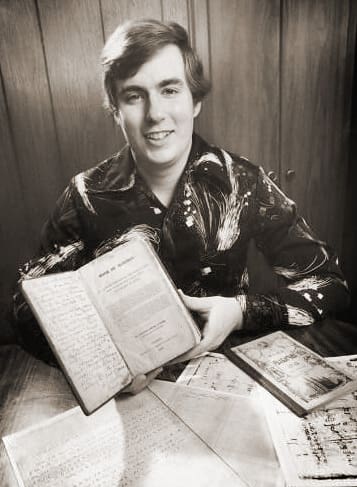
 Dan Wotherspoon interviews Allen D. Roberts and Curt Bench about the lasting legacy of Mormon forger, con man, and murderer Mark Hofmann.
Exactly twenty-five years ago, on the morning of 15 October 1985, Salt Lake City was rattled—both literally and psychologically—by the explosion of two bombs which each killed a person. The next day brought a third explosion, nearly killing Mark Hofmann, a well-known dealer in Mormon documents. Because of clues at that scene, investigators soon realized that perhaps Hofmann was not so much a third victim but the person actually responsible for all three bombs. In the course of the investigation, the tale of Mark Hofmann as a master forger and con artist began to unfold.
In this podcast, we examine the long and complex legacy of these murders and forgeries, as well as their continued reverberations even today. Although it is still unclear if Hofmann’s intent was to bring down Mormonism through creating documents that challenged traditional presentations of early Church origins, he definitely was a serious student of Mormon history and knew where various controversies lay—which he then exploited through the forged letters and documents he produced. This case has also presented challenges to some Latter-day Saints because of Hofmann’s various meetings with Mormon general authorities who failed to detect that he was deceiving them, as well as because of the Church’s practice of sometimes obtaining controversial documents and then suppressing them.
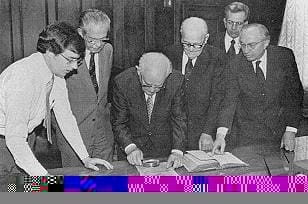 Joining Mormon Stories host Dan Wotherspoon to tell the story of these tragic murders and complex issues are two terrific guests: Allen Roberts, who co-authored with Linda Sillitoe the book Salamander: The Story of the Mormon Forgery Murders, which is widely regarded as the most thorough account of the Hofmann saga, and Curt Bench, who at the time of the bombings managed the Fine and Rare Books department of Deseret Book’s flagship store in downtown Salt Lake City in which he dealt regularly with Mark Hofmann and even considered him a friend. Linda, Allen, and Curt all ended up playing important roles in helping investigators ultimately make their case against Hofmann and untangle the threads that had led him to murder.
Part 1 This transcript is machine-generated and lightly edited for readability. The audio is authoritative. Please excuse occasional errors in names and spelling. Dan Wotherspoon [00:00:01] Mormon Stories podcast is made possible through Allen D. Roberts [00:00:03] the financial contributions of its listeners to keep it alive and available to future generations. Please consider a donation today@mormonstories.org Dan Wotherspoon [00:00:15] welcome everyone to another edition of Mormon Stories. I'm Dan Wotherspoon. Today we're going to talk about a story that began almost exactly 25 years ago. On the morning of October 15, 1985, Salt Lake City was rattled both literally and psychologically by the explosion of two bombs which each killed a person. The next day brought a third explosion and it was clear that a serial bomber was at work. And no one knew who the next victim might be at first because the first two bombing victims, Stephen Christensen and Kathleen Sheets, had been connected through marriage to a high finance company that was in crisis. The primary motive for the bombs at first was thought to be related to revenge for bad investment deals and things like that. But when a third bomb exploded and nearly killed Mark Hoffman, definitely the focus changed. Mark Hoffman at this time was a well known document dealer, both in Mormonism as well as on the national stage, who had built quite a reputation for finding some rare and very interesting documents. But because of this connection with Mormon history and Steve Christensen, the first bombing victim's interest in Mormon history and his role in having obtained some documents and things for the church in the past, all of a sudden it was clear that the motives for these bombs had to do something with Mormon history. And it soon became clear that there was this set of documents called the McClellan Collection that may have been a big factor in this. And we'll talk more about that as we go. Anyway, from clues in Mark Hoffman's car where the third bomb exploded, investigators soon realized that perhaps he was not so much the third bombing victim as the person responsible for this particular bomb, as well as the two that exploded the day before. And in the course of the investigation, a story of Mark Hoffman as a master forger began to emerge. As I mentioned before, Hoffman was already known within Mormon circles as a discoverer of high profile documents related to Mormon history. Now, a few of these are a document known as the Anton Transcript, which was the sheet of paper that had some Egyptian characters that Joseph Smith was said to have copied off the golden plates and given to Martin Harris, who then took them to Professor Charles Antonio. I believe it was Cornell University. It's a pretty famous story in Mormonism. Anyway, one of these documents was supposedly this actual piece of paper that Anton authenticated. Another interesting piece was called the Josiah Stowell Letter, and it was a letter supposedly from Joseph Smith to Josiah Stowell. And in it Joseph, you know, through the different things that he says, revealed to, you know, Mormon historians and those that were interested in the document, a bit more of the extent to which Joseph had been involved with money digging in his early, early life, his pre prophetic career. However you'd want to put that another interesting document and the one that may have the most confusing title for some of you until we we get going here in the podcast is called the Salamander Letter or the White Salamander Letter. Now this was a letter that was supposedly written by Martin Harris to William W. Phelps. And in it, Harris is telling Phelps about meeting Joseph Smith and the different stories that Joseph Smith had told him about how he had received the golden plates. And needless to say, and we'll certainly uncover as we go what it is, this version of events where it was much more based in folk magic and has no mention of an angel Moroni and things like that in it. So it really quite challenged the initial version, the version that we have canonized in Mormon history today. Anyway, in the course of our discussion today, we'll discuss each of these and several other high profile documents. We'll talk about the McClellan collection and we'll focus on these documents because even though they turned out to be forgeries, they were each in their own way highly influential in some of the directions that Mormon history has taken since this time. It's unclear if Mark Hoffman's intent was eventually to bring down Mormonism through creating documents that challenged the way we normally tell church origin stories. It is clear that Mark Hoffman was a serious student of Mormon history and he knew where the controversies lay and he exploited those. Through these controversies, through the letters and the documents he produced, he kind of created items that he knew that many historians expected that, that they expected to surface someday. And he also created documents that he knew that either the church itself or Mormon collectors would pay top dollar for anyway. Following the bombings, it took several months for investigators to build a case that have enough evidence together to charge Hoffman for the bombing murders, as well as for a few counts of forgery. But Hoffman eventually was charged and about a year later, he was sentenced to five years to life in prison in a plea bargain deal that allowed Hoffman to avoid the death penalty. The condition for this plea bargain was that Hoffman would fully disclose the entire story of the murders as well as his forgery techniques. As you can imagine, he had fooled many experts throughout this time and they were very interested in learning how he did things so they could better detect Forgeries in the future anyway. Today, Hoffman remains in maximum security prison at the Utah State Penitentiary. Still, rather than this case simply ending with Hoffman sentencing and incarceration, you have to say that these crimes still continue to reverberate today. For instance, just a few weeks ago, another Hoffman forgery came to light. And this one was an affidavit related to the Mountain Meadows Massacre. It didn't turn out to be earth shattering or to retell the story in any major way, but it just goes to show that there's still plenty of Hoffman forgeries out there that are occasionally surfacing. But really, the story continues to reverberate for other reasons. For instance, for many Latter Day Saints, the Hoffman documents not only shined light on some areas of Mormon history that don't jive perfectly with, you know, the story that we tell in Sunday school and in seminary and institute, but some members still feel that it is a betrayal to have learned through this case that the church sometimes purchases historical documents and then suppresses for others. One of the big issues is that Mark Hoffman met several times with certain high profile church leaders, including President Gordon B. Hinckley, who was then an apostle anyway, and these church leaders failed to detect sitting with them and showing them these documents was somebody who was a complete fraud. And others are troubled by the fact that church leaders seem to be less than fully forthcoming with information or they purposely drag their feet in cooperating with the murder and forgery investigations that the police were trying to do. So anyway, it's a great story. Not great in the terms of it's a fun one to tell because two lives were lost and absolutely we never want to lose sight of the fact that these were terrible crimes committed. But it is a fascinating story with many tentacles even down to today. And I'm really grateful to have two excellent guests to help tell the story. The first guest is Alan Roberts and Alan is an award winning architect whose specialty is preserving and restoring historical buildings. He and his firm have wonderful reputation nationally and internationally for their work. But we chose Alan specifically for this interview because he is the co author with Linda Sillitoe of a book called Salamander, the Story of the Mormon Forgery Murders, which I absolutely love and which is widely regarded as the most thorough account of the Hoffman saga. Many of you listeners may also recognize Alan as one of the co founders of Sunstone and an early co editor along with Peggy Fletcher Stack. They were an editing team in the early going as well as he was a former co editor with Martha Sontag Bradley of a journal of Mormon thought. So Alan has long and deep roots within the Mormon studies circles. My second guest is Kurt Bench, who is interestingly one of the players who was actually involved in the events 25 years ago. Kurt is the founder and owner of Benchmark Books in Salt Lake City right now. But at the time of the bombings, he managed the fine and rare books department of Deseret Books, flagship store in downtown Salt Lake City. And it was in this capacity that Kurt met regularly with Mark Hoffman, did a lot of business with Mark Hoffman, and even considered him a friend. And so it was a tough row for Kurt to get his mind around, along with the same way that it was for many other people to believe that their friend and this soft spoken guy, Mark Hoffman, could turn out to be someone capable of murder in this way. But one of the neat things about Kurt too is almost all the investigators, I mean, I shouldn't say almost all the investigators spoke very highly of him as a person of integrity and someone who really, through the different clues he was able to offer, helped them, you know, untangle the various motives and things that were at play in Hoffman's life that may have led him to do those murders. Now, before we start the interview itself, let me interject a brief word about the production of this interview. What you're hearing right now is a re recorded intro that I've inserted at the beginning of the interview in order to give a more complete overview of the events surrounding the bombings and all the different issues that they raised. As you know, I'm just beginning here as one of John's New Mormon Stories correspondents. And the problem was I didn't really fully prepare Kurt Bench and Alan Roberts quite as well as I should have about the listening audience and the need to assume that only very few people who are listening will know much of anything about the Hoffman case. So what happened was the three of us ended up sitting around in a room together. We all knew the different facts of the case and so there was occasionally some shorthand and whatnot that was employed in the early going of the interview. So it's my fault, I didn't prepare them well enough. We do get the interview story rolling and I think at the right level, where there's no more assignments, assumptions of knowledge ahead of time that maybe some of you don't have. But anyway, I just recorded this intro that has a little bit more complete details of the story arc so that in those first 15 minutes or so of the of the interview you're about to hear you may not feel quite as lost. And I do promise that there's still very many interesting things that come up in these, in these first 15 minutes. So I definitely encourage you to keep going and stick with it. Thank you for listening to this re recording. I am excited for us now to launch the interview and I know you'll enjoy it and I look forward to your comments and for some good discussion later on the Mormon Stories discussion list. So please enjoy. Alan, I wanted to start with you as far as our discussion goes today. If you clue us in on what drove you to become part of the project that ended up resulting in Salamander. Tell us about your relationship with Linda. For those of you who are out there may have not heard, Linda tragically died earlier this year at age 57. Allen D. Roberts [00:12:37] She was about a year younger than I am. I'm 62. Dan Wotherspoon [00:12:40] Oh, okay. So she's in her early 60s. But sadly a big loss for us here. But why don't you just tell us before we start the actual story itself, what led you to become involved with the story? Allen D. Roberts [00:12:50] Well, unlike Kurt, I did not know Mark Hoffman personally, although I met him at different places. I never really knew him at a level that you did. On the other hand, I knew many of the key people in the story. Steve Christianson was a good friend of mine. I was designing his house at the time and meeting with him and going over drawings and. And one of the features of that was a two story library that would have rolling ladders like Mark Twain's house because he had 8,000 books and filing cabinets full of manuscripts and was a major collector of Mormon Americana literature, especially history. And he and I would have lunches together over at the Judge Building and talk about Sunstone and Dialogue and Mormon issues and Mormon history. And he was one of the early donors to Sunstone. I remember the day while we had our offices in the Newhouse building, he brought over a big box of books, duplicate books. I think Brett Metcalf was working with him and kept buying the same book over and over unawares. And so he had all these extras and that became the basis of our Sunstones library and then later on contributed financially as well. So I knew Steve well and I knew Al Russ, the coin dealer quite well because I collect coins. I knew the church historians very well through my work with them at Sunstone and Dialogue. I knew some of the kind of back of house church people like Don Schmidt and some of those who dealt with documents. I knew a couple of Hoffman's partners, Lynn Jacobs and Brent Metcalfe, quite well and turns out many other people too. One day, October 15, 1985, I was in my office and downstairs we rented space to Dialogue. Actually, we donated space, if truth be told. And Linda Newell, who was co editor with Jack Newell at the time, I was one of the associate editors, called up and said, do you know where our Steve Christensen's office is? And I said, sure, it's in the Judge building on the sixth floor. And then she sort of screamed and she just told me that there had been a bombing and that he had been killed. And this was horrible news. Then, of course, in the next hours, we found out about Kathy Sheets. And then all of a sudden my phone was just flooded with calls from all kinds of people. Being involved with Dialogue and Sunstone. You become sort of a conduit for all kinds of trafficking of Mormon information. And one of the people that started calling me early on was Linda Sillitoe. She worked as a reporter for the Desert News, and she was on this story right away. So I started receiving a lot of information. She did. And every day we talk to each other two or three times a day, just calling. I knew Linda because of John. John had been on the board of Sunstone back in the 70s, the mid-70s, when Peggy and I took it over from Scott Kenny of 78, when Scott decided to give it up. And John was on the board then, so he had been a friend. And I knew Linda through John. And Linda had been a debater in high school, same time I was a debater in high school. We had that in common and we had this sort of respect of each other's background and our worldviews were similar, religious views and so forth. So over time I started getting enough information that Utah Holiday asked me to write the first major article on this subject. It was a couple months later called Bombs and Historical Bombshells. And I actually came up with the idea for the front cover. I'm on the front cover pretending to be Mark Hoffman, and I dressed in a suit and I got a big book from Sam Wellers that he gave me, and I hollowed out the inside and put Mormon history on it. I made a fake bomb out of stuff in my basement, put it in there, and that was the first major article. So I got a call from Signature Books a little later. I was on the board of Signature Books and had been from about 1980, about a 12, 13 year stint as a board member and reader, and was asked by George and Scott Kenney in the group if I would author a book about this. And this was just a few months after the story broke. His guilt had still not been established because he had passed a polygraph test. And polygraph tests, four different things, perspiration, respiration, some other things. It's very hard to pass it entirely. But he was, I would say, so good, so pathologically a liar that he was able to pass that test without any problem. So that threw some questions as to his guilt initially, until the evidence started piling up. Anyway, I said, well, I'm a full time architect. I don't have time to do this. I can write articles. I can't really do a whole book. Signature said, find a co author. So I called a few people and they all turned me down. They were either too busy or afraid of such a project, just didn't want to do it. I asked Linda and she initially turned me down too, saying, well, look, I'm reporting this for the News. I can't author a book too. But she called me back a few weeks later, changed her mind. They had taken her off the story and she was very unhappy about that because she thought she was doing a very solid job of reporting accurately and being objective and doing what investigative journalists is supposed to do. But the News wanted to spin it certain ways and I think her dogged honesty really wasn't valued as much as somebody who would represent the story would put the Church in a better light. And it was interesting throughout the couple of years after that. I subscribed to both the News and the Tribune at the time. And the headlines on the same exact subject would sometimes be diametrically opposed in terms of how the Church would approach a story and the Tribune as well. So you could see the issue. So she said, did she step away Dan Wotherspoon [00:19:43] from the Desert News? Allen D. Roberts [00:19:44] She quit her job at the Desert News, never went back, and from that time became a freelance writer. So after Salamander, which took us 27 months to do, we had an 18 month contract and the story just kept unraveling and revealing more documents and more people and more complications. So we went 27 months. That would be the interviewing and the writing and the editing and all of that stuff together. After Salamander, she went on to write some novels, some books of poetry and other things and just stayed on her path as an independent writer. And she died only two or three months ago. And I think it was a big loss for the Mormon literary community as well as the fact that she was big hearted and large minded at the same time. So we took this on and how we did the work, basically, we each knew different parts of the story and different parts of the Mormon community. So I interviewed all of his missionary companions. I found Jeff Salt, who was his junior high and high school buddy and really one of his closest friends. And he was invaluable. He gave us a lot of important things, including the David Freed coin story and a lot of other things. I interviewed Al Rust and Christensen, people she took on the Sheets family. She did a lot of interviews with the police, with people like Mike George and Ken Farnsworth Curt Bench [00:21:24] and me. Allen D. Roberts [00:21:25] And you. I talked to you a lot, too. And I talked to Brent Methcalf for hundreds of hours and the Mormon historians. And sometimes she and I would interview together. And a lot of times we get interviewed separately, and we'd get together about twice a week. She rented an office over on 13th east and no, on 13th south and State street by that restaurant. And that became our kind of little headquarters. And we had a big timeline on the wall which had all the different events. And we were trying to figure it out. We were trying to figure it out at the same time. The place police were trying to figure it out. We were investigating it simultaneously and in parallel. And to their credit, they didn't interfere in what we were doing, and we didn't try to interfere in what they were doing. And the key event was when it became clear that he had done these very brilliant forgeries. And I'm talking about not just the ink and the paper and the postmarks and the envelopes and the handwriting, all of that stuff, which is tough enough to get right, as it turns out. He got a lot of it wrong, but enough of it right that he had sort of leapfrogged ahead of the art of forgery detection. But also the content. Initially, the documents were not threatening at all. They were pretty mundane. The content didn't raise any red flags. Wasn't controversial in the early years of his work, which started really after, in 1976, 77, 78. He was not very good then at calligraphy and hadn't really figured out his strategy, but each year he got better at it. And then the documents started getting a little zingers, little sentence or two or word or two, until we get something like the Salamander letter eventually. But the Josiah Stowe letter, those things came later. Dan Wotherspoon [00:23:16] And we'll talk about all those as we go. So you and Linda are writing the book, and you're. You say you had this aha moment about. Allen D. Roberts [00:23:23] Well, what happened is, I thought, you know, he's in his Own words. If you read what he said during the depositions afterwards, the things that got into the plea bargain. He was asked if he was out to whether his motive was to make money or to embarrass the church and bring the church to its knees and change Mormon history. And he denied that. He said he was just producing documents that were consistent with Mormon history, and he was just emphasizing things that the church wouldn't emphasize. I have the quote in here from the deposition. I thought, where did he get this information? He must have done research. One of the things that occurred to me because of Jeff Salt was he said, even when they were in high school, they were going up to the U. Western Americana and doing research up there. So I thought, let's see what's up there. So. So I sent one of our researchers up there, and we got the call slips, and we found where he had checked out a number of documents. And ironically, he was sometimes doing research on Saturdays the same time Steve Christiansen was up there doing research the same place, the same hour. And whether they had met there or were sitting on opposite ends of the table checking out different things, I don't know. But they were both about the same age. They had strong interests in Mormon history. It's just that Hoffman was on the dark side of it and Christensen really was on the other side. So we found, I think, where he got information for things like the Joseph Smith, the Third Blessing, Lucy Mack Smith, and other things. I think some of it came from his research up there, but I think he researched other things too. But the important discovery was how he signed the call slips. Some of them were signed by Kaufmann, some were signed Mike Hanson. We're talking about 1976, 10 years before the bombings. He used the same pseudonym, the same alias to buy bomb parts. He was trying to hide his research trail even back then, 10 years earlier. We turned that information over to the police. That became a big deal with them. In gratitude, Ken Farnsworth and. And he's passed away as well. So I can tell this about him without injuring him. He shared police information with us. So he would come over to the Silito house. So the other time a week, we would meet. We'd meet once at Linda's office, and then once on Sunday afternoons, he would come over, ring the doorbell. Linda and I would sit at the dining room table. He'd come and just leave a stack of police interviews and photos and things. And he would just. Without saying a word, he would walk downstairs and watch football game with John. And he'd put his gun up on the shelf and they'd watch the game for three hours. Then he'd come back upstairs. No words were exchanged, ever. And he would just pick up the binders and then go. And we could do whatever we wanted to in the meantime. So we were copying everything and reading everything. So a lot of our inside information, I mean, we did. I think we interviewed 4, 400 people, probably many of them multiple, multiple times. But some of the information actually came directly from police sources. So that then connected us to police. And then we started kind of talking with them and exchanging ideas back and forth. But that was after probably a year of getting into it. Dan Wotherspoon [00:26:45] And I want to steer us back towards. We just need a backup. We just have to assume for the purposes of this that any of these names are names, that we have to let people know who they were and stuff. So I think from the context we've got there. But why don't we go ahead and tell the story of the bombs and that first initial chaos, and then we'll just kind of take it through, take it through there as a story here just to sort of let things go. Kurt, as you listened to what Alan said, was there anything that you'd want to add in before we just start saying Tuesday morning, October 15, 1985? Curt Bench [00:27:22] No. But I was fascinated to hear about the sharing of the police records from Ken Farnsworth. But I have heard that he had shared things here and there with people. But. And by the way, he was. He was as good a guy as you'd ever want to. Allen D. Roberts [00:27:40] Very good guy. Yeah. Curt Bench [00:27:41] Really liked him a lot and. And respected him. No, I don't really have anything to add. Dan Wotherspoon [00:27:48] Well, good. Well, then why don't we just start with what happened when you guys maybe Allen D. Roberts [00:27:52] even go back before that. Who was Mark Hoffman? I got a call today from Chris Smart of the Salt Lake Tribune. He wants to call me later and ask the question, who was Mark Hoffman? Because for him, he's still kind of enigma, kind of a mystery. And maybe we'll come up with good answer today for that question as well. Mark was one of several kids born to Bill Hoffman, William Hoffman and his wife, a German whose father was an architect actually in Germany. And I think one of his legs was blown off in World War I. And kind of strict in his Mormon practice. And I think the grandfather and the father, and according to Brent Metcalfe and Jeff Sowell, people that knew him early, Mark became disillusioned with religion pretty early on and told Metcalfe that He became an atheist around age 13, which is really pretty early to make a conclusion like that. But he was very interested in Mormon history. And I read several books on criminal behavior. And they have checklists for psychopaths and sociopaths as children and then checklists as adults and for example, as children. Interest in incendiary devices, cruelty to animals, habitual lying and fantasy telling. You could take these two lists and apply them to Mark. And you could check most of the boxes is on the childhood list as well as the adult list. In fact, we didn't say this in the book, and I'm almost reticent to say it now, but in the assumption that this listening audience is limited and maybe it won't get back to the family. There were cousins of his age who also had problems like this. Check forgeries and other kinds of more petty criminal behavior. But he and the other boys around his age from that family had some similar characteristics. It's just that he exceeded them all by far. But we were able to document things he did when he was a child that showed this behavior. Coming up through the ranks finding he collected coins. And so we would put a lot of his old coins in an antique bottle and bury it in neighborhood. And then he'd be with his friends and then he'd find it and he'd be the hero, that kind of thing. The mint mark on the coin that he claims that he sent to the Treasury Department and things like that. Cruelty to animals we were able to document. We also interviewed his first serious girlfriend, the one he didn't marry because he married Dory. But he had this other woman he had been with in his college years who was a very bright person and probably would not have been a good wife because I think she would have questioned and challenged him on a lot of the stuff he did rather than let it slip by. She told us some things too. I think that he had this intention to have a career as a forger quite early on, probably before his mission. Because even during his mission he was sending boxes of old books and stuff home in crates, sending them to his home, the pages of which got cut out and ended up being used for some of the forgeries. His researches at the U. Prior to his mission, while he was still in high school. I mean, he graduated in the bottom third of his class. So you think this guy's not all that sharp, but he was one of those kids in high school. Probably wasn't that motivated by most of the subject matter, but he was categorically bright in some Ways Very, very bright. And then his research is after his mission and then his discussions with Jeff Simmons at usu. I think Jeff was sort of a mentor, unfortunately. Dan Wotherspoon [00:31:50] And Jeff is an archivist. Allen D. Roberts [00:31:52] Archivist. Curt Bench [00:31:52] And he. Allen D. Roberts [00:31:55] It looks like he turned the gas on and it's house and blew himself up and committed suicide. And whether part of this is guilt over his participation in Mark's formation, I don't know. Or whether he was just depressed from other things. It's hard to know now. But I think one of the stories is the big impact Marc has had on individuals. The victims are legion, not just the church and some guys who lost money, but there are all kinds of psychologically damaged people who are victims of Mark Hoffman. So this forgery career got going in little steps. Early he read the book the Word by Irving Wallace Jr. Which is a story. I think it came out in 1978 or so, so it was fairly fresh. And then there was the Name of the Rose by Umberto Eco that came out in 1980. Well, both of these were historical novels that had to do with forgery. Historical forgeries that became controversial and ended up in the death of People. In the Word, there was a French prisoner who was released on the condition that if he went into the French army, he'd be exonerated if he survived. And he did survive, but a priest then betrayed him and he ended up going back to jail. So when he got out, he did these two forgeries. One was James, the brother of Jesus, and one was like Petronius, who was a guard at the crucifixion. And these two books he forged and then buried in an archaeological dig, and they were discovered years later and then created this big rift in Christianity because they secularized and humanized Jesus, just like Joseph Smith was done by. Hoffman did essentially the same thing with Joseph Smith. So I think he got the ideas from books like that and then started trying out in little steps. The stuff he sold early was like $60, $100, and then it was $1,000 and $2,000, and then it was $20 and $30. And then it got into the Oath of the Freeman. We're talking about over a million dollars. So he was successful. Even forgery detectors like Kenneth Rendell and George Hamilton, who were the two leading American forgery det. Between them, they've written over a dozen books on forgery. He sold them his forgeries and maybe half a million dollars. Curt Bench [00:34:18] Charles Hamilton. Allen D. Roberts [00:34:20] Isn't that what I said, George? Oh, that's the actor, Charles. Charles Hamilton. So even those guys Were persuaded that his stuff was authentic, but his real authentic stuff was minor compared to the big dollar thing. So he got into it, and then the story about. Dan Wotherspoon [00:34:38] So, yeah, we need to get up. I want to get up to the bombing. But he was a known person in Mormon circles for a couple years before Allen D. Roberts [00:34:46] the bombing, had his picture taken with President Kimball, ended up dealing with Hinckley directly on the Josiah stole letters. Dan Wotherspoon [00:34:53] Okay, so we're gonna either need to deal with those right now or have to deal with those later. So I'd rather just deal with them as we go through the story, if that's okay. Just because I want to make sure that our listeners. This is a whole generation. Has passed since I happen to be here in 1985. So it's a fresher on my mind. But there's a lot of people coming to Mormon studies who really have maybe only this is a vague footnote. So I really think we owe it to them to tell the story the best we can, to humanize the story as much as we can, because that's certainly the most compelling thing. But in everything that we do, I neglected to say this up there. I never want to take this away from the fact that this is crimes that innocent people. As Alan mentioned, there's lots of different victims, but two murder victims that absolutely were wonderful people who deserve to live. And so any of our celebr. Anything that sounds like celebrating or talking about his geniuses is within that context of crime telling and things like that. Allen D. Roberts [00:35:55] Well, Kurt, maybe you should explain your version of why you think the bombs occurred. And I can add or subtract. Dan Wotherspoon [00:36:03] Yeah, I think so. I love everything Alan is saying. Allen D. Roberts [00:36:08] So up to 1985, for about 10 years, he had been forging things and either selling them to people who donated them to the church or selling them to the church or donating them to the church or dealing with you in a lot of different ways. And he had a lot of other clients besides the church. And I think what you said before was right. He was like a chameleon. He took on the color of whomever he was dealing with. So with the anti Mormon, with the Tanners, he was sympathetic with them. And with church guides, he was sympathetic with them. And he's going to protect the church against these damaging documents. So you can put him in the vault and hide him away, and I'll help you to do that, because we don't want the bad guys to get them. So he really worked everybody by being sympathetic with whatever they needed. And then you get up to 1985 in the McClellan collection. Why don't you lay out the outline of that and I'll add in. Curt Bench [00:37:01] Okay, I will. But I want to just say by the time I met him, which was, I can't remember exactly but somewhere around 1980 might have been early 81, he was already kind of a celebrity and he had already made headlines. You know the anthem transcript, which I guess we'll talk about. Dan Wotherspoon [00:37:22] Well yeah, we need to talk about now or then, but I just don't want to. I want us to all be aware that we just can't throw something like the Stoll letter or the Salamander letter, the oath of a Freeman out there without at some point knowing that we need to at least talk. Curt Bench [00:37:37] Well, I learned this one years ago. I was asked speak to a group up at Ricks College and they asked me to talk about Mark Hoffman and I just launched into this and I saw all these puzzled looks on the students faces and I stopped and said now how many of you don't know who Mark Hoffman was? And probably at least two thirds of the kids raised their hand. So it told me that yeah, they really didn't. And that was several years ago. So now we've got a whole new generation that doesn't know much. And in my store I run into people all the time that really know very little or they, they remember some things vaguely, but yeah, it is. So we do need to make sure we set the groundwork. But I just wanted to say when I first met him, he came into my store and it was, I was almost feeling like I had met this rock star and wow, finally now I'm going to be able to do business with the famous Mark Hoffman. Famous in a local sense at that point really, but in Mormon documents circles and in rarities and artifacts and things like that, I mean he had really started to establish quite a name for himself and had launched into this business of documents that nobody had ever really done before, not in the, in the Mormon field. I mean certainly document dealing had been going on for who knows how long, hundreds of years, if not more, but not in our business, not the Mormon rare book business. So immediately we started doing business and I thought Mark was an average kind of guy and looks and he was soft spoken but he had a sense of humor, he was very low key and I saw immediately that this was somebody that I felt I could do business with, especially because he had already established his reputation. He was beyond reproach, he was already trusted, trusted by the church, trusted by the church. He was. He had been. When was the photograph, the famous photograph taken? Allen D. Roberts [00:39:58] It was the anthuntranscript. And so I think prior to 1980, because he was already famous for that when he spoke at the Mormon History association meeting in New York. Dan Wotherspoon [00:40:09] Okay, so he just to say the Antha transcript. Okay, we'll get to what that is. Curt Bench [00:40:14] Well, I was just going to say there's and all that maybe Alan could describe that. But he had been seen in what is now a famous photograph presenting this document that we'll soon explain, with the First Presidency, the church and some other church officials standing by, showing them this document. And it had been completely accepted. And so by the time I met him, his credibility was fully established. And the trust. There was automatically trust there. And I didn't have any reason, nor did anyone else to not trust him or to think that anything was awry or anything questionable. But. Yeah. Why don't you tell us a little bit about the Anthony manuscript. Allen D. Roberts [00:41:02] Well, Mark claimed to have found a Smith family Bible, which in itself was considered to be a remarkable find. And later when he kept finding more and more things, people said, well, how can you do this? And he said, well, I spend full time. This is what I do. And I do reverse genealogy. I find people who are now living descendants of famous Mormon figures. And I work backwards and I try to find things in their attics or Thomas Bullock and Brigham Young. And he had provenance stories. Curt Bench [00:41:34] Tell them what that is. Allen D. Roberts [00:41:36] Provenance is basically the documentation of the origin of a document from its beginning to the present. So if it's a piece of art by Van Gogh and it's in an auction, you want to see who owns it now, where did they get it from? And they. And they back to Van Gogh and have evidence of each of the transactions that can be documented. And sometimes providence is hard to come by. And the more provenance, the more valuable something's going to be, whether it's a coin or a piece of art or historical document. He came to understand the importance of that. So he would try to establish documentation by these stories of his research. Curt Bench [00:42:20] By the way, let me just say that to help establish that he really was doing this, he hired someone who actually worked for me for a while, who was a genealogist and told him to research family lines so that he could contact them to see if they had documents. And then this may come into the story later, but I think he actually bounced a couple of paychecks to this guy. Allen D. Roberts [00:42:44] Well, what I thought you were going to say is that sometimes to establish provenance, he would create other forgeries that helped him establish the provenance of another forgery. Dan Wotherspoon [00:42:52] Or he just this letter refers to that letter. Curt Bench [00:42:55] Or he just made things up outright and we didn't check him. Allen D. Roberts [00:43:00] It's hard to prove or disprove that he found something in an attic and then the person died and he got it through a grass or got it Curt Bench [00:43:08] from the family, some family member that was nameless. Dan Wotherspoon [00:43:11] But this myth fan of the Bible, Allen D. Roberts [00:43:13] eventually in the Bible, was hidden glued between some pages. The Anthem transcript. Well, this goes back to the Book of Mormon and Joseph Smith purporting to translate the Book of Mormon through the Urim and Thummim and various stones and hat various means to create the published Book of Mormon, which came out in 1830 and was the foundational scripture for the LDS Church. Anthon was a scholar during that time period who evaluated the Book of of Mormon and issued an opinion about it. That was very important at the time. And he wrote it out. But the original of that had disappeared, as was the original contract for the Book of Mormon with the grand and Company that disappeared. And Hoffman came up with that and other early items that would be of great interest to the church. He began to find them gradually, not in a big rush, but. But every year he'd get something pretty important. When that was discovered, he had a meeting with President Kimball and his counselors and several other people, had his picture taken. It was in the newspaper. Kimball asked him if he could borrow the document. And Mark said, for how long? And Kimball said, for a year or two so we can authenticate it. And Mark said, okay. And so they did have it tested. And it did test out to be okay with the limited kinds of testing they had at the time, the paper, Dan Wotherspoon [00:44:46] the type of thing. Allen D. Roberts [00:44:47] But like the Book of Mormon contract he actually found, I think maybe while he was back at the mha, found a blank piece of paper that had a Palmyra printing press watermark on it from 1830. And he used that to do his forgery of the Granding contract. And then on the back he found an advertisement for the Granding company and somehow did a duplicate of it and had it imprinted into the back kind of on an angle because it looked like this contract had been set down on an empty crate of typesetting and then something heavy put on it. You could only see it under a microscope with light coming from one direction. It was such a small, subtle, perfect kind of way of authenticating this as an authentic Grandin thing that Don Enders is the one who actually discovered it and only kind of by accident. And he didn't even have to go to that trouble. Everybody was convinced already without that subtle thing. So some of his forgeries I classify as brilliant and others were downright careless. Where he used modern inks on the Spanish for co op notes, which were supposed to be from the 1890s, but the ink had only been made after 1953. It's easy to get lost in the details. The details of this story are just fascinating. 1985, what happened? Basically, Mark was not a good businessman. He was very poor. And he didn't write down his checks. He bought a Sendak painting once for the 20,000 or 30,000, forgot to put it in his checkbook. And then his checks were bouncing all the time. A lot of people were after him for, you know, bouncing checks. And he made a lot of money with these forgeries. Our account, we came up with something like $3 million worth of forgery sales in the last five years. And we only knew about a fraction of them and more coming out all the time. So the question is, where was he spending all this money? And maybe you have some insight. Some people think he had a Swiss bank account. We know people that he talked to about, people like Randy Rigby, other people that he talked to about Swiss bank accounts. But anyway, he claimed to have the McClellan collection. William McClellan was an early apostle in the first group of apostles with Joseph Smith and the church, 1830s we're talking about. And then he became disaffected. And it was known that he kept records and that there was a collection and it was believed to be maybe in Texas. And so Hoffman claimed to have come up with this collection. Ironically, as it turns out, the church actually owned the McClellan collection already at least part of it. And the other part was with the Trauber family in Texas. They had some, but the church already had a bunch of it, but didn't realize that at the time. And nobody, nobody had the corporate memory to know that they had it or even bothered to look it up. But he claimed that it consisted of a bunch of little journals of McClellan's from 1830-36, I think, plus some speeches and talks that he had written, some commentaries about Joseph Smith, which he claimed weren't too critical. But the church was interested in getting them. But he needed money to get the collection and he didn't want it to fall into the wrong hands. So he talked to Steve Christensen. Steve Christensen talked to church leaders, Hugh Pinnock was a director at a bank Dan Wotherspoon [00:48:16] as well as a general authority. Allen D. Roberts [00:48:17] And he was a general authority. He arranged to get an unsecured, uncollateralized loan of $185,000 for Hoffman to get the collection. And then he was supposed to pay it back at a certain time and the collection would end up at the church. Well, Hoffman didn't produce the collection, and frankly, I don't know why he claimed to have it because it would have taken a huge amount of work to produce all those journals and to have everything in them be accurate. And then all the speeches and everything and the handwriting to do that. That was bravado, that. I mean, I think he must have thought by that time he was invincible because he'd gotten away with everything. But to claim to have it and then not produce it, that I don't understand. But he didn't. And so they kept pressuring him. And Steve Christiansen was the point of pressure. Steve was a bishop. He had just been called to be a stake president, I believe. Stake president, was it? A counselor? Yeah. He lived in Farmington. Steve worked for a company called cfs, which was a development company, the president of which was Gary Sheets. Gary Sheets was the husband of Kathy Sheets, who was the first bomb victim. Dan Wotherspoon [00:49:28] Second. Curt Bench [00:49:28] Second. Allen D. Roberts [00:49:29] Well, yeah, okay, right. Both in the same morning. And I learned about them in, oh, reverse order. Anyhow, so we think that the bombs were done, and he had planned this months in advance. I mean, the evidence shows he. Receipts had been found and information that he had been actually strategizing on this for some time. So it was definitely a premeditated pair of murders. One bomb was set at the Sheets home, and anybody could have picked it up. It could have been the paper boy, the milkman, one of the other neighbors. Gary. It happened to be Kathy who went out that morning, and she's the one who picked it up, and it killed her instantly. Then Steve Christiansen came to work. He had an office on the sixth floor of the Judge building downtown, and he picked it up and it blew him in half, basically. Then the next day, Mark himself was badly injured by a third bomb. He had parked his car on a sloping hillside by the desert gym. It was one of these bombs that has a little glass tube with mercury in it. When the mercury goes from one side to the other, it makes a contact, an electrical contact, and then it ignites the bomb. We don't know exactly what happened, but he could have hit the steering wheel or maybe he didn't account for the angle and he tipped it too much the wrong way. Fortunately for him, his car door was open so it blew him out of the car and didn't kill him. If the car door had been closed, it probably would have killed him. We believe that the third bomb was intended for Brent Ashworth because he met Brent everywhere in the United States to Curt Bench [00:51:17] tell who Brent was. Allen D. Roberts [00:51:18] Now Brent Ashworth was an attorney for Nature Sunshine which is a company down in Provo. He's a Utah county resident. But what his real passion was was historical documents, Mormon documents. And he, he had done all kinds of dealings with Hoffman over the years, most of which had frustrated him enormously. And I think Hoffman had clear disdain for Brent. Came out during the interviews and I think Brent was in a really good position, as were you, frankly Curt, to tell the police about the shady nature of Hoffman's business practices and document dealings. And we have, in the very end of our book we describe a scenario that we think was what Hoffman had in mind, which was to meet with Brent and then have Brent get into his car and the bomb would be sitting there and he'd ask him to move it to the back seat and he would blow himself up. And then Hoffman would basically these are all stall tactics or decoy tactics to keep the church pressure off of him because he couldn't produce the McClellan collection and he couldn't produce the 185,000 again. I suppose if he'd given it back the pressure would be off and he could make up some story about somebody offered him 300,000 and he needed the money so he sold it. But we think he was just trying to stall for time and the way he chose to, to do it were the three bombs. Curt Bench [00:52:50] And I think he said it was to get him out of a jam. Allen D. Roberts [00:52:53] Yeah, exactly. Curt Bench [00:52:54] Very callously explaining why people could die so that he wouldn't be caught in his schemes, basically. And we should also indicate that Mark was under, as you were saying, some serious financial distress and he had to come up with a lot of money fast. One of the things we haven't done other than mention it is the Oath of a Free man, which was a document that was the first printed item in America. And I don't think an original had ever been found, but the text of it had been known. Mark was, had created this document using the text that had been found for it. But nobody knew exactly what it would have looked like. But they knew the printer, they knew the style that he used. Stephen Day, wasn't it? Allen D. Roberts [00:53:55] Yeah, it was a 6 by 6 inch broadside first printed document in the United states in the 1600s. Curt Bench [00:54:02] So it had enormous value rather than America. And this same printer had printed the Bay Psalm Book, which is an incredibly rare and valuable early book. So he was trying to sell this creation of his as an original, obviously, Dan Wotherspoon [00:54:25] and really had an agreement from the Library of Congress to buy it. Right. Allen D. Roberts [00:54:29] At one point, there were two agreements. One was to sell it for a million dollars to. Was it the Smithsonian or the. Curt Bench [00:54:36] Well, afterwards, it was the American antiquarian. Allen D. Roberts [00:54:39] That was the second, because he made multiple ones of these, which of course, he didn't tell to either one of the potential buyers of the value would have gone down. Dan Wotherspoon [00:54:48] But he thought this sale was going to go through and it would have solved all this financial pressure that you're talking about. And that kept stalling, Right. Curt Bench [00:54:56] And then just became more magnified as people were demanding their money. At Deseret Book, he owed us a very large amount of money. I don't know how much detail we want to get into about the various documents and so on, but we don't want to confuse the listeners. But basically he was trying to get out of this jam, as he put it, by coming up with the money that he needed to pay everybody off because. Because of his scams with different individuals promising them large amounts of money that he had used of theirs. He was trying to take care of them, and he was trying to make sure nobody knew about the other people involved. He was very good at that in compartmentalizing. If he could have sold the oath of a Free man to the Library of Congress or to the American Animal Aquarian Society or whoever, he would have had enough money to take care of all those who are demanding it. And then he would have been off the hook. And as far as we know, no one would have died. Allen D. Roberts [00:56:04] And you could tell he was desperate because he jumped the price from a million to a million and a half with the first Oath sale. And he also borrowed money from Al Russ, the coin dealer, for the McClellan collection. Right. Dan Wotherspoon [00:56:19] He sold it to 185 for the church. 154 or something. Allen D. Roberts [00:56:23] Yeah. So he had multiple deals going out. He got into very confusing financial messes and owed hundreds of thousands to multiple people. And George Throckmorton wrote a little book after we did, and our book was the first of about four or five that were done. And his book has a different theory. Apparently, one of these investors got so angry at Mark that they beat him up in a parking lot. Curt Bench [00:56:52] We hate to say it, but it was the One armed man, right? Allen D. Roberts [00:56:55] Yeah. And Throckmorton's theory in his book is that Mark did the bombings in part because of this physical threat and that he owed this guy money, too, and he just had to do something. And I would let George speak for himself, but he's got even another version of why the bombs occurred. Dan Wotherspoon [00:57:16] Well, let me. In the interest of trying to. Let's cover the story. No more than 15 more minutes if we can, and then we can kind of talk about how it's reverberating with us. The three bombs, two on the first day, Stephen Christensen, Kathleen Sheets. Second day is Mark. At first, on the first day, they thought it had to do with the CFS Financial that you mentioned. And so the classic. Curt Bench [00:57:38] That was one of the financials, the Dan Wotherspoon [00:57:39] Sheets one was this idea that, oh, it must be these investors who've lost their money and they're getting revenge on this company. But you, Kurt, I mean, I know you talked to Mark Hoffman within an hour of learning about Steve Christensen's thing, and you were already saying, I wonder if it has to do with Mormon documents. Curt Bench [00:57:56] Well, the speculation was already started about whether it had to do with Mormon documents. And, yeah, it was very confusing, and so much happened that day. But I don't know if you want to hear how I even heard about it, what happened. But I was going to work down at the Deseret Book Downtown and heard on the news that a bomb exploded in the Judge Building. And they didn't identify the victim, but they actually mentioned the suite number, his office. And I only knew one person in the Judge building, and that was Steve Christensen. So when I got to work, the first thing I did was look in my Rolodex, and sure enough, the office number for Steve Christiansen was the one they had mentioned. I just felt sick. So his father, Mack Christensen, is known Dan Wotherspoon [00:58:49] to a lot of our listeners as Curt Bench [00:58:50] Mr. Mr. Mac owned clothing, a line of clothing stores. And his main store was in the ZCMI center where I was. And I went up to try to find out if indeed something had happened to Steve. And when I got to his store, he was talking to a couple of men, and tears were running down his face. And I knew then that it had to be true. So when I got back to work, I immediately called my friend and one I had done so much business with, Mark Hoffman to let him know what had happened. And he sounded genuinely shocked. And I said, you need to be careful because this could be related to Mormon documents. We just don't know. And he sort of pooh poohed it and downplayed the importance of it. I said, be sure to stay in touch. And we did. Allen D. Roberts [00:59:48] But the historians were frightened. And I know several who packed up their families and moved out of state for a week or two. Ron Walker and people like that thought maybe there was a bomber trying to get at Mormon historians. And so several of them. Dan Wotherspoon [01:00:02] The sheriffs came to your house, Kurt, and looked through with bomb squad stuff. Curt Bench [01:00:06] Yeah, we went through that. Was this after March 2nd day? Dan Wotherspoon [01:00:09] Yeah. So then. So at first there were some of you that were at least saying, I wonder if this is the motive. Then Mark had obviously set the second bomb as a diversion away from what it really was all about. And trying to say it was this CFS financial. But then when Mark gets heard the second day, we were saying, okay, it's got to be the documents. Allen D. Roberts [01:00:28] We had had a bomb threat, a dialogue, which was not from Hoffman, Some anonymous person. Well, we assume it wasn't. Some mail called the bomb threatening. And sometime before that. So we shut down and everybody was checking under their car wheels. Is anything under the fender. This went on for a week or so. Curt Bench [01:00:47] Yeah, it was a very confusing, frightening time. We didn't know what was going on. Dan Wotherspoon [01:00:52] But fairly quickly after the bomb, especially with. Before even Mark got blown up, there was a description of somebody who was dropping off a package. Curt Bench [01:01:00] Well, that night on the news. Well, I might just say that night when they were giving the story of these horrific bombings, they described. The eyewitness had described this man on the elevator that had this package, and he mentioned that he had a letterman's jacket with no letter on it. Dan Wotherspoon [01:01:20] A green one? Yeah. Curt Bench [01:01:22] A green one, yeah. And I turned to my wife and I said, do you know who they just described? She says, who? I said, mark Hoffman. And she just said, no way. But from what they had said, it sounded just like Mark Hoffman. But I didn't believe that it could have been right. Dan Wotherspoon [01:01:35] And a few other people in the book all had the same thing. So now Mark is injured, and fairly quickly now the police are saying this guy is not just a victim, he's the bomber. And it was from. Basically, from some of the evidence that was at the scene, he had some Allen D. Roberts [01:01:49] things in the trunk of his car, which again, was the jacket, Leatherman jacket. Wearing that was. Was really foolish. And having some things in the back of his car. There were three different items that they could associate with having a bomb. Dan Wotherspoon [01:02:03] And then they eventually get to his house and they find this secret basement where there's. Curt Bench [01:02:08] Well, it's not a secret basement. There's an office. Allen D. Roberts [01:02:11] It's a workshop that he had a padlock on. And he said to his wife, well, there are valuable documents we don't want the kids getting, and there are chemicals that I treat with, and they could get in. So he had a reason for keeping it locked and secret. So she never really knew what he was doing down in this workshop. Dan Wotherspoon [01:02:25] So the police get there, and they're pretty sure that this guy. Curt Bench [01:02:28] Well, the ATF agent who first looked at the bomb scene, Mark's car, where it happened, he determined right away that he was the bomber. And especially since it conflicted with what he had already, I guess he had Allen D. Roberts [01:02:44] already said he made some statements right afterwards, and he was kind of dazed Curt Bench [01:02:48] and they didn't have morphine or something. Allen D. Roberts [01:02:52] And I think he actually did a confession earlier on and then. Yeah, exactly. And then they tried to. Yengich, Ron Yingich, the attorney, who's a criminal defense attorney, he and Brad Rich became Hoffman's attorneys early on, and then Yengich tried to quiet him down and disallow any confessions. And Yengich is sort of known as the samurai attorney, if he, you know, the top criminals. Curt Bench [01:03:18] But the ATF and others quickly determined that he actually was the bomber himself and that he was not a victim, per se. And so then when it was mentioned that he might be guilty of this, that's when a number of us decided we needed to go to the police and tell them what we knew. Dan Wotherspoon [01:03:40] Different pieces, knowing that he was just a couple days before trying desperately to raise 100,000. And a bunch of other things. Curt Bench [01:03:48] Yeah, there were a lot of things. And then they told us during the interviews that he was their man, that they knew he was, but none of us believed it at the time. It took a long time to be convinced. Allen D. Roberts [01:03:59] So financial fraud, I think, was the first motive. And then the forgery motive came a little later out of that. So. And of course, like I mentioned, he passed the polygraph test, so that also people like me, I was slower to believe he was guilty than Linda was because I was talking to Metcalfe and you and people, and I was getting a lot of, no, he couldn't be the guy in the early weeks and then came to be persuaded later on. But the forgery thing then played hugely into it. And that's where Throckmorton and Flynn, William Flynn, Flynn from Arizona, come into play. They're both forensics examiners, forgery examiners, you know, checks and things like that, mostly. And they're the ones who eventually discovered the phenomenon of the cracked ink and several other things that caused. Dan Wotherspoon [01:04:48] So just to kind of get the arc of the story, it took about three months before the police and the prosecutors felt like they could build a case that could convict him. Right. So it wasn't until January. So this happened in mid October, and it was in January of the next year that he's finally charged. Then there's a trial year. I know, Kurt. Allen D. Roberts [01:05:07] Well, actually a preliminary hearing. Well, preliminary hearing, that's the whole point, is that it never went to trial. Dan Wotherspoon [01:05:12] It never went to trial. And eventually Mark just let people know he pled guilty finally to reduce charges Allen D. Roberts [01:05:20] as a plea bargain based deal based on him disclosing through interviews, the police, his career as a document forger and his motives and his techniques, which he never fulfilled. He did initial interviews and then at one point the interview team wanted to bring a policeman into the interview and Yengich refused to allow that. And then Mark refused to do any more interviews. So in a sense, he never completely fulfilled his end of the bargain, which is to debrief on everything. We still have, I think four or five hundred pages of manuscripts of what he did divulge. And he covered a lot of the documents, but he wouldn't get into detail on some of the documents and he wouldn't get into enough detail on the murders either. One thing I want to bring up, which you underscored, is that these murders were calculated and premeditated and cold blooded. I went to the. The sentencing hearing at the prison. Linda and I both went. So picture in your mind up at the front of the room is Vicki Pelayos and two other people who were the Board of Pardons, who set the dates for which a person can be considered to be paroled. Okay, and then you had Mark and Dorie. Dorie with her head on his shoulder and supportive of him. And then that was all in that row of chairs. The next row had only Bill Hoffman, who I think never blinked once during the whole thing. I think he was just in shock. I think this realizing what his son was, I think led to his untimely death, frankly. And then Linda and I were sitting directly behind Bill Hoffman and there were some other people back there, and they, the parole board asked him about the murders. And I'll never forget, he said it was just a game. He said that two or three times. It was just a game. He had no remorse. He had no feeling or empathy or anything at all. I mean, very much like a psychopath who divorces his murderous actions from the content of the importance of a person's life had none of that, he said. Steve could have been run over by a car on the way to work that morning. Life really isn't that valuable because he Curt Bench [01:07:35] had determined that there was no God and there was no purpose to life, and it was all pretty empty. Allen D. Roberts [01:07:42] It comes from that point of view. And so the parole board just threw away the key. I mean, they basically said, we're going to make an exception here. If it hadn't have been for this plea bargain, this premeditation, this would have been a capital crime. It could have been the death penalty. And there's not going to ever be a date at which you'll be even considered prohibited for parole. Life in this case means life, life forever. Some Future Parole Board 30 years from now could reverse that if he's a model prisoner and all of that. But I would be very surprised, in fact shocked if anybody in the next 20, 30 years ever advocates for his release. Thank you for joining us today on Mormon Stories. To comment on this episode or to discuss it with others, please check us out online@mormonstories.org if you want to find other friends, family members, former missionary companions or ward members who approach Mormonism like you, consider adding me, John Dehlin, as your Facebook friend. This may seem like a strange idea, but many of my closest friends have discovered that they are not alone in their thoughts or feelings or family or even ward situation through discovering mutual Facebook friends. Finally, to keep Mormon Stories alive, please consider a donation@mormonstories.org music on this episode was provided by Clayton and Sky Pixton. Dan Wotherspoon [01:09:03] Nearer my God to thee Nearer to thee Even though it be a cross that raised me Still O my soul song shall be Nearer my go to thee Nearer my go to thee Nearer to thee. Dan Wotherspoon [00:00:01] Mormon Stories podcast is made possible through the financial contributions of its listeners to keep it alive and available to future generations. Please consider a donation today@mormonstories.org Dan Wotherspoon [00:00:14] so we kind of told the story the best we could in sort of a roundabout way. In the, in the first episode and this episode, let's pick up some of those pieces and really talk about where these stories have intersected primarily with Mormonism. One thing I wanted to bring out, maybe I'll just ask you, Alan. We're going to focus on Mormonism. But Mark Hoffman's career was in Americana too. Just the whole American history documents. Who are some of the famous names and signatures and documents that Mark Hoffman. This is just to show he did Allen D. Roberts [00:00:49] forgeries with using the names of famous Americans. Betsy Ross, Jack London, Lincoln, people like that, Daniel Boone, George Washington. So sometimes he found a document that was signed Betsy. It was a letter and it was dated 1837 or something. And he changed one number maybe to a three, and then put Ross at the end of Betsy and now it's Betsy Ross. He got a copy of Call of the Wild and, and put an inscription in there from Jack London and his dog Buck. And he wrote a poem. I think it was an eight line poem by Emily Dickinson. Emily Dickinson, that was good enough poetry to be considered an authentic Dickinson poem. Now, whether he copied it from another time period piece by some less known author is unknown or whether he actually composed the poem, I don't know. But he was getting into Americana. And this author, the Free man, would have been the really famous piece. And the question is whether he was trying to eventually change American history, whether he would have done what he did with Mormon documents, have sort of innocuous content initially and then gradually change our view of the Revolutionary War or how the Declaration of Independence came about. Whether these guys were inspired or just greedy, I don't know about that. But I think there is some sense that he definitely was trying to change perspectives on Mormon history. And one thing we haven't talked about is the 116 pages of the Book of Mormon. Joseph Smith, when he began translating, did an initial set of 116 pages and they were handwritten by his scribes. And Martin Harris, one of the early church leaders, was one of those scribes. And his wife. Harris wife became displeased at all the time that Harris was spending with Joseph Smith working on the Book of Mormon project. So she asked Harris to get some proof of what he was doing. So Harris went to Joseph Smith and said, I'd like to borrow These so I can show them to my wife. Joseph Smith was extremely reluctant to do so, but eventually succumbed to the pressure, let Harris take these pages, and he did show them to the wife. And then they disappeared. And we still don't know what happened to them. Well, they've never turned up. So when the police got into Mark's workshop or lab, they found some pages that it turns out might have been his drafts or early versions of some of the lost 116 pages. The value of them monetarily would be incredibly great, and he could have sold them off a page at a time or half a page at a time. But the interesting part was what these pages said, and they dealt with Lehi and Nephi. This is the early part of the Book of Mormon, and portrayed. Portrayed them as treasure seekers and money diggers, gold diggers and so forth, which was how he was portraying Joseph Smith as well. So I think he was not only secularizing Joseph Smith and making him less divine and more human than the church portrays him, but probably doing the same with some of the Book of Mormon characters. And so had everything played out for another year. It would have been interesting to see what he produced in terms of those pages as well. Curt Bench [00:04:16] And didn't he say that he was. At first he said he wasn't trying to change Mormon history, but then he reversed himself and said, well, maybe I was trying to. But he said that he thought he wanted it should conform to what he thought really happened. Allen D. Roberts [00:04:33] He did say that in his debriefing with the police. Dan Wotherspoon [00:04:37] And part of that is because his stuff did resonate. That was some of the reasons that these forgeries were so good, weren't they? Because historians sort of knew that Joseph Smith was, you know, certainly into folk magic and all that stuff. They kind of sensed it, but certainly nobody. It hadn't officially gotten out in any kind of deep way, the extent of it. And so Mark produces. Let's start with the Salamander letter. And maybe some of our listeners are even wondering why your book was called Salamander at the first. This is one of those documents. Why don't you describe it for us, Alan, and the timeline. And I know Steve Christiansen was involved with this, so kind of located that Allen D. Roberts [00:05:19] letter for the Salamander Letter is another name for Martin Harris to W.W. phelps letter. Martin Harris was one of the original witnesses to the Book of Mormon, an early church leader, pretty important figure. And W.W. phelps was a literary figure in the early church. And it describes Joseph Smith's seeking the gold plates and Turns the story on its head. Because the official version, and by the way, there are several different accounts of the first vision. I think some people have numbered them as high as 9. Jim Allen, a church historian, wrote an article in the Ensign magazine that covered, I think, maybe six of them. But there are several different accounts. They're all similar, but the early ones are shorter, less detail, and the later ones more dramatic, more elaborate, in slightly different detail. Two people, one person, three people, things like that. So the official version has Joseph Smith encountering this angel Moroni, who is actually one of the characters in the Book of Mormon, the last living person and the final writer of the Book of Mormon who lived, who ended up in New York where the plates were then buried by Baroni. And so instead of in the salamander letter, instead of Joseph Smith encountering Moroni, he encounters a white salamander. And there are some references to enchantments and things like that too. Curt Bench [00:06:53] That's in the hole where the, where the plates are. Allen D. Roberts [00:06:55] So the plates are buried. He opens up, takes the COVID off the stone hole where they're in and the plates are there and there's this white salamander. Why a white salamander? Well, those who researched it later find out that that was a symbol. Sometimes it's a divine symbol. Salamanders are known not to burn. They were believed mythically not to burn in fires. So you've got these companies that sell what they call salamander safes. I mean, obviously salamanders do burn, but it was thought that they didn't. And so instead of this divine creature, you've got this magical, more of a magic again, it's white magic coming forward. And people like Leonard Arrington, other historians, thought it was a plausible story, thought that, I mean, they didn't, they weren't shocked at this as much as common members would be shocked. And again, it downgrades the Book of Mormon Genesis story from a divine angel to a magical figure. And that's a faith destroying or faith challenging thing. This was just one of many that Josiah stole. Letter, which is nicknamed the Money digging letter. Same thing. It portrays Joseph Smith as a professional money digger who would use propitiations of chickens and incantations and peep stones and hats and other white magical means to find buried treasure, Spanish treasure or maybe Indian treasure buried in these mounds that were all through the New York area. Curt Bench [00:08:31] And that was also one of his Allen D. Roberts [00:08:32] forgeries, which he was a forgery. And this is one that he went to Gordon Hinckley to directly. Gordon Hinckley was a counselor in the church presidency. Ezra Taft Benson was actually the church president. But Hinckley was effectively running the church because of Benson's age and frailty, as Dan Wotherspoon [00:08:51] well as his counselors. Allen D. Roberts [00:08:52] Yeah. So Mark, I guess, dealt with him directly. And Hinckley purchased the document and then it went into the vault. And Mark had promised never to disclose its content, but in fact he had made a typescript of it and circulated it around. I got a copy of it. I'm sure you got a copy of it. So Mark was playing both ends. I mean, he was circulating and creating a controversy and then promising President Hinckley that he would sell the church the letter and it would never be known of again. And he was having his way both ends. So those are some of the things that the content of those documents brought into question. The traditional story of the beginnings of Mormonism, Joseph Smith's divinity, the divinity of the Book of Mormon. Joseph Smith being portrayed as a money digger. Well, the fact is that he had a career doing that. It's well documented. He was arrested and brought to trial some 26 times for a variety of alleged crimes, some of which had to do with this money digging career he had where he took money from people like Josiah Stowe, but never did find any treasure. So they considered it kind of fraudulent representation. So Hoffman thought, well, that's who Joseph Smith was. I'm just telling the truth about who he was. And the historians that are well versed, like Michael Quinn, would know that this is in fact true. So it shouldn't raise that many red flags with them. But the members, of course, would be challenged by this kind of thing. In fact, Linda Newell and Val Every, in their book on Emma Smith, they quote Hoffman documents would turn out to be forgery. Al Rust's book on Mormon coins and currency had six or eight different currencies and coins that were forged by Hoffman and many. I myself had given a paper on the Salamander Letter and the money digging Letter to the Utah Westerners, scholarly paper analyzing the content and all the historical context and what did it mean for the church. And I didn't know they were forgeries at the time. Fortunately, I didn't publish that paper anywhere. But already Mormon history was being changed by actual printed books. And Hoffman's philosophy was. And he stated it having to do with the mint mark on the coin. He said once he sent it to the treasury and they authenticated it, then it became an authentic coin. Curt Bench [00:11:20] So if everybody believes it's authentic, it's authentic. Allen D. Roberts [00:11:23] Yeah. So I Wrote a dialogue article called Truth is the Most Important Thing, because that's a quote from him. He basically said once a document was authenticated, even though it was forged, it became a true document. And then if it's quoted, that became the new truth. So he was, in effect, creating new truth through forgeries, which were based on old truths with some, you know, lies mixed in as well. I think he was having a great time manipulating church history and making a lot of money doing it. And maybe he would have done the same for American history. Who knows? Dan Wotherspoon [00:11:54] Let's talk about a couple more famous of his forgeries, too. And then let's really talk about how that has. Allen D. Roberts [00:12:01] What does it all mean? Dan Wotherspoon [00:12:02] Yeah, let's talk quickly about the Joseph Smith the Third Blessing. This is another little angle in Mormonism that there's rumors of something. Do you want to tell it, Kurt, or should we turn it back over to Alan what the Joseph Smith III letter was all about? Or not the letter that was the blessing? Was it the blessing itself? Allen D. Roberts [00:12:21] Yeah, go ahead. It doesn't matter. Joseph Smith left, according to Michael Quinn, an article that he wrote eight different succession possibilities. If he were to die, who would take over the church? One of them was the head of the Quorum of the Twelve Wood, Brigham Young. And then there were all of these others. He was very unclear about it, or let's just say he let lots of possibilities be out there. So there was quite a fight after he died for control of the church. Lots of people stepped forward and said, I'm the legitimate heir. I should take it over. Brigham Young went out over these others, but one of them was that his son, his oldest son, would take it over, so it would stay in the Smith family, what was then known as the Reorganized Church of Jesus Christ of Latter Day Saints. They subscribed to that option. They felt like Joseph Smith made it clear it should stay in the Smith family, but they didn't have solid documentation for it, and there was contrary documentation going the other direction. So Mahoffen comes up with this Joseph Smith the Third Blessing, which was a blessing by Joseph Smith to his son, Joseph Smith iii, essentially anointing him as his successor as the president of the church. Well, when the Reorganized Church heard about this document, of course this validated their claim and made them look like the true church based on this. And so, of course, it had to be authenticated and all of that. And then who should own it? And what was the LDS Church going to say in response? So it was very controversial as well, Dan Wotherspoon [00:14:01] and didn't Mark, sell it or attempt to sell it to both without the other one knowing that he had made the offers. Allen D. Roberts [00:14:07] Yeah. And he could work both ends. He could say to the Utah Church, well, I'm going to let the other guys get it. They're really pressuring me. They think they should be the ones that own it. They're going to offer this big amount. And then he could go over there to Independence and say the same thing to them. The Utah Church would really like to have have it and dismiss it, but Curt Bench [00:14:25] the LDS Church ended up with it. And then to get it, our LDS Church offered to trade an original Book of Commandments, which was a very valuable rare book, for the blessing, which they did. And there's a whole story that comes out of that later that has to do with me. But it's not pertinent to this, but it was valued at about $20,000. And for that period, that was an enormous amount of money. Still is, but. Dan Wotherspoon [00:14:56] Yeah, but now a Book of Commandments would get a million dollars, Right? Curt Bench [00:14:59] Or more. Dan Wotherspoon [00:15:01] Yeah. This for the listeners who don't remember, this is when the printing press was destroyed and these leaves were flying all over when the mobs came. And this was the two sisters who gathered up the leaves. And they were only able to assemble. They were only able to assemble. Curt Bench [00:15:15] Yes, a very limited number of copies. Dan Wotherspoon [00:15:17] 30 or something, right? Curt Bench [00:15:18] About 30 copies. Dan Wotherspoon [00:15:21] A couple more, just again, to give you the scope of the different things doing and again, to make the point of Mark Hoffman, you know, forging documents that fit a truth that he believed was perhaps more accurate than the church's, you know, sacred narrative about origins and things like that. There's two more that I thought we'd talk about for sure. One is a letter from Carthage Jail, supposedly, that challenges the idea. The last letter that Joseph Smith write instead of like a lamb to the slaughter, is basically Nauvoo Legion, come get me. Right. Curt Bench [00:15:57] To Jonathan Dunham, who was the head of the legion. And yeah, basically that was it. Come and rescue us. Allen D. Roberts [00:16:05] It's known as the Dunham letter. And there's a lot of back and forth on the dealings for that letter as well. Curt Bench [00:16:11] It's pretty complicated. Dan Wotherspoon [00:16:13] But another one just where he's tweaking the story in a plausible way, but not necessarily in line with the sacred story version. Curt Bench [00:16:23] And one of the key factors about that, as it played into the whole story toward the end, was the enormous amount of value given to it. And I was involved with that part. It sold for ultimately $100,000. And that gets complicated. Allen D. Roberts [00:16:42] Too. Curt Bench [00:16:42] And there's twists and turns to that story, but that was the highest amount of money ever paid for a Mormon document. And that was, of course, one of his creations as well. Allen D. Roberts [00:17:00] In our book, we call it Joseph Smith. The Jonathan Dunham letter, dated 27 June, 1844. Purchase price $60,000. Curt Bench [00:17:11] Well, the first purchase price. Allen D. Roberts [00:17:13] Yeah. Curt Bench [00:17:14] It later resold. Allen D. Roberts [00:17:16] And then there are 1, 2, 3, 4, 5, about seven different tests that were done on this letter, which was more tests than done on most of them. And it was positive for forgery on all but one of the tests. So there were several, several things wrong. The blue haze, the unidirectional running of the ink, the bleed through of the ink, the alligator ink, solubility. Curt Bench [00:17:39] None of which we've talked about. Dan Wotherspoon [00:17:39] None of which we talked about. There's a whole forensic end of this story that we're not going to deal with. Okay, One more letter or one more document, again, just to show a way of shaping Mormon history that he had. And this would be a land deed that has. That bears the two names that are Solomon Spalding. And maybe our listeners have heard of the Spalding theory of Book of Mormon, you know, influence on the Book of Mormon. And the other name is Sidney Rigdon. And this is a. What is a land deed document that has notaries. Allen D. Roberts [00:18:17] It's dated 1822. It sold for $400. Introduced in 1985, July. So just just before the bombings. And the significance of it, of course, is that it links Solomon Spalding, who questioned, really challenged the authenticity of the Book of Mormon, and Sidney Rigdon, who was an early great religious influence on Joseph Smith and a member of the church and an early church leader. And it puts together these two guys. I mean, it's dated 1822, so this is earliest before Joseph Smith gets going in his career. I mean, Joseph Smith was born in 1805, so he would have been 17. So it shows that. I mean, again, it brings into question whether Spaulding gave ideas for the content of the Book of Mormon, just like Ethan Smith in view of the Hebrews. The secular theory is that Joseph Smith made up the book from source material that he had available to you. Him. And Dan Vogel writes in his book about the Book of Mormon and American Indians that There were like 40 different other sources with the story of Jews coming across the ocean to South America or Central America and then becoming the Native Americans. And Joseph Smith could have picked that up from any number of places. And so this land deed, which seems insignificant in itself just because of the 20th people that were party to it then makes that Spalding theory a possibility. Dan Wotherspoon [00:19:50] I'm going to provide for you the missing link that shows these two men knew each other. Allen D. Roberts [00:19:54] Exactly. Curt Bench [00:19:55] And that actually was one of his sloppier forgeries. The date was obviously changed. I think that's exactly what he was trying to do, is establish that link, But I don't think it ever played a huge role. Allen D. Roberts [00:20:09] It didn't. It wasn't known by people and the historians weren't even really talking about it. Dan Wotherspoon [00:20:14] So it was proven to be a forgery before it really had a chance to gain some traction. Allen D. Roberts [00:20:19] Exactly. Dan Wotherspoon [00:20:19] And stuff. Okay, great. Well, anyway, that's just to kind of give the flavor to our listeners here of the Mark Hoffman subversive of at least the official Mormon claims, providing historians with these tantalizing documents that were certainly plausible within what they had known and sort of knew that there was more complexity there. And so Mark, in many ways was playing right into their hands. So let's talk about that. How has Mormon history and the types of questions and the shaping of the story that we now tell compared with what we did then? How has the Mark Hoffman affair sort of been a spur to the new Mormon history? Allen D. Roberts [00:21:09] Like one of the interesting things that happened was during the time of these events, the finger pointing that started, some of the attorneys for the prosecution, the county attorneys and so forth, were making verbal accusations basically saying that the Mormon historians were responsible for, for Hoffman getting the idea for these forgeries and that this kind of new Mormon history that was coming out, that was exposing some of these traits and backgrounds of Joseph Smith as money digger, for example, stimulated Hoffman to create the forgery. So there were some blames right at the beginning. Then church leaders, I think, were also putting blame on Mormon historians. This golden era, the Arrington era, this idea of not just having faithful history, but having objective, accurate history, that attempt was then, I think, thwarted somewhat and the Arrington era came to a close and he ended up down at BYU and the history stuff went to BYU instead of being in the church office building and his picture was taken off the wall and he was told that he never was really the church historian, despite the fact that he was actually brought before the General Conference and sustained, sustained as such in conference. And then the 16 volume church history that Arrington and his group had planned, that project was canceled. So there was. Dan Wotherspoon [00:22:47] And you're saying all this, you could draw a direct line. Allen D. Roberts [00:22:50] It was a media impact, I think. And so it's one thing to say you guys shouldn't have endeavored to write these kinds of histories. Look what it created. I don't think it's fair to blame them for what Hoffman did, frankly, any more than it's fair to blame President Kimball or President Hinckley for not discerning that the documents that they had in front of them and the dealer that they had in front of him was a crooked dealer and forged documents. I mean that. That's another. Dan Wotherspoon [00:23:20] Yeah, let's deal with that one. Curt Bench [00:23:22] Some of those things happened before. I mean the cancellation of that the history came long before the bombings and arrington left in 82, so three years before. Yeah, these. Allen D. Roberts [00:23:36] You're right. You're right. Dan Wotherspoon [00:23:38] But yeah. So you're saying from the end, the side of the church, there were people that were already nervous about the story that was emerging. Allen D. Roberts [00:23:47] The things that were more complicated that Kurt mentioned happened in 82 was just confirmed. I think the church leaders felt validated in their decision. Because here's another example of the history faith conflict exploding on us and the fact that Hinckley bought documents directly without telling anybody. That came up in a church PR conference or PR press conference. I don't know if you read about that, but there were a couple of different ones. The one I remember the most is when Jerry Cahill and What's the other guy's name? Lindsey Wagner? No, Curt Bench [00:24:30] not Roberts Lindsay. He was the author. Bruce Lindsey's father. Allen D. Roberts [00:24:35] Anyway, there are these church PR guys and they were asked in initial press conference about the money digging letter and they basically denied that the church knew anything about it. And then Hinckley had to come by later and say, well, actually I do know about it and I've been dealing with Hoffman and I purchased it and we own it. So the second press conference, other questions like that came out. I remember Jerry Cahill saying when he was asked about another document, I don't know and I'm not going to find out. Which is an unbelievable statement for a of piece our guy to say. But it was causing internal difficulties as well. The right hand and the left hand didn't know what each other was doing. And that's because of the secrecy involved with obtaining these often documents. Curt Bench [00:25:20] Well, and we know that there were some documents, but I think people get the wrong idea and think that this was happening wholesale in large numbers. The church was just. Allen D. Roberts [00:25:31] Only happened a few times. Curt Bench [00:25:32] Yeah, it only happened a few times. And that was very unusual. It was not according to the usual procedure. But it wasn't this picture that some people have painted that the church was just acquiring documents by the score and salting them away, never to be seen again. I mean, we do know that there were a few transactions like that. But I think it's unfair to say that there was this big conspiracy to hide all of our history and to not let anything out. That was because the atmosphere was already changing. There was more openness, especially under Leonard Arrington. So I think it creates the wrong impression to think that church leaders were involved in some vast conspiracy. And there are even wilder accusations that have been made that are just unfounded. Allen D. Roberts [00:26:22] But it only takes one example to create that impression and to start the rumor mill. And the, the document, the Josiah Stowell money digging letter was a significant document. And that one example alone. And I think there were really maybe only two or three total, but they did that. The rest of them they vetted through the church history guys or through owners who and Hoffman would often offer to share the cost of authentication, which gave him more credibility. If it's not authentic, then I won't sell it to you. If it is, then I'll split the costs and you can have it. Curt Bench [00:26:55] The only thing I'm pointing out is the exception rather than the rule. Allen D. Roberts [00:26:58] I think that's legitimate. But that exception became kind of a sticking point, I think, with people. Dan Wotherspoon [00:27:07] All right. Yeah. So the three main. Would you guys agree? And we're kind of. I don't know if we want to get into that particular one more, but the three main claims that have come out of the Hoffman thing is in terms of real negative PR for the church are this one that you guys are just now talking about. We're purchasing documents and deliberately hiding them from our people. We don't want the sacred narrative that we've spent 175 years building up as the truth, the Sunday school version. We don't want that to be complex. We're not denying that this is an authentic document, but it just. Is it our members are too tender or what are they trying to do? They're just trying to protect the membership of the church from the truth. So that's one. Let's deal with the other one of how on earth can these guys be claimed to be prophets of God and to dealt with this guy over and over again and their power of discernment wasn't on in terms of the documents go. Or was it on in terms of I'm basically dealing with an immoral, you know, black hearted deceiver right here. You know, the snake in the garden kind of kind of thing. Lay out what you've heard either one of you on that. What's the scope of the claim? Allen D. Roberts [00:28:33] After the book came out, even before, when we started doing more articles for Eatah Holiday, we started being invited to see speak all over the place about this. Linda and I, sometimes we speak together, sometimes separately, especially at universities. And that question would come up all the time from faithful members. And I don't think we wanted to be in the position of representing the orthodox point of view really or defending the church leaders. But my own thought would be that Joseph Smith said and President Kimball said and others have said that a prophet is a prophet when he speaks as a prophet. So this idea that the power of discernment should be on 24 hours a day and that they're in constant communication, even the church leaders themselves don't claim that for themselves. So it placed an unrealistic expectation on them to think that they could always know every bad thing that happened. I just think that they defined the role of prophet much more narrowly than that. Even the Pope, he's infallible. But the rest of that line is in matters of faith and morals. Well that doesn't have to do with what he eats for breakfast, Cheerios versus Wheaties or any number of other things that are normal secular lives. So I think people who were stunned by that probably put unrealistic expectations on their church leaders and ones that the leaders didn't claim for themselves. Curt Bench [00:29:56] Well, look at our the founder of the religion, Joseph Smith. I mean he was not always the greatest judge of character. He chose John C. Bennett to be, you know, his right hand man. And he turned out to be quite a scoundrel. Dan Wotherspoon [00:30:15] He couldn't discern the kinderhook plates, the kinderhook. Curt Bench [00:30:18] I mean he first of all, I believed this for a long time that before were anything else. We're human. We are limited in our ability to figure things out. Sometimes we know we're flawed and we have foibles. But I would like to weigh in on this because I, along with so many others was completely taken in by this man who had an uncanny ability to fool people. And the church leaders admitted, Gordon B. Hinckley admitted that, that they were duped as well. And one thing that Dallin Oaks said at a symposium after all this came out and the church finally started to speak up on some of these things, he said that they as church leaders approach people on the basis of trust unless they know there's a reason to not trust someone. Well, that's the way I conducted business and that's the way I've conducted my life, unless someone shows me a reason that they can't be trusted, I generally do trust them and I totally trusted Mark. Dan Wotherspoon [00:31:21] And you mentioned in Salomon, or at least you're quoting Salamander, there was no in Mormon document dealing history. There really was never any forgeries before this that anyone knew. Curt Bench [00:31:29] Right. This was all new territory. It was exactly right. We had no reason to think that anything like that was going on or could go on really. But I, you know, I believed Mark when he told me things because he had already been established as a credible source and as an expert and so on. When he approached church leaders or anyone else, they looked at it the same way that here's a proven quantity. He's, you know, and he generally quite often would follow through on what he said he would do. But I feel like I'm in good company having been taken in and duped buying because he did the same thing to everyone, including his wife, his parents, church leaders, everyone around him, even professionals, Allen D. Roberts [00:32:22] the Antiquarian Society, the Smithsonian, the FBI lab, all of those professional groups, Rendell and Hamilton, the forgery detectors, they were all fooled. The businessmen that he dealt with, they were fooled. He gave forgeries away, his Christmas gift gifts, books of Mormon with Brigham Young's signature, they were fooled. Like I said, he was an equal opportunity con man. He got everybody. He got everybody. Curt Bench [00:32:48] Well, and so the question still is in some minds, why couldn't they, with this special spirit of discernment, see through him? Well, because they weren't looking for anything like that to begin with. And of course I don't have that same model in my mind that people are given these. Well, how would you put it? I guess it's a supernatural gift, but I think that we 10 times heightened Dan Wotherspoon [00:33:17] over the average person's. Curt Bench [00:33:19] Yeah, I think we're largely left to our abilities to judge character. And I don't think they turn on that filter when dealing with certain individuals to see if they're telling them lies or certainly they weren't going to be thinking that he was a forger or a murderer or anything like that. So I cut him a lot of slack because he fooled everybody else. And I don't think we should ascribe to these men abilities that people generally don't have or at least function most of the time. Dan Wotherspoon [00:33:54] Well, let me just ask again, I don't know necessarily disagree with either of you guys. Let me just ask a question that I know that a certain segment would then say, well then why don't they do a better job at general conference and stuff of reminding us over and over again that these guys are men instead of we're special witnesses of the God, the uniqueness of the Mormon claims, you know, this is Jesus Christ's church. That rhetoric sets up these expectations. And so is it fair to blame somebody who's lost their testimony or something over it when the church has contributed to the rhetoric that they had bought into and therefore now felt completely betrayed when they learned that these guys couldn't see the snake for what it was? Allen D. Roberts [00:34:39] No, I don't think it's fair to blame members who have lost their testimony. I don't think it's because they were weak. But I think the. The issue comes down to the problem in the church of history and faith. When you go to testimony meeting, members bear testimony of historical facts being true, but they weren't around when those events occurred. I know Joseph Smith saw an angel, and the Book of Mormon is an ancient document. And I know Joseph Smith did this and this and saw God. They testify as true to things that they couldn't describe, they weren't around to see. So they're actually saying what they believe. They're making statements of faith and belief, not truth statements. But people mix those two together, they combine them. They assume that their beliefs are true. And so the church, Joseph Smith, said the Book of Mormon is the most accurate and true document there is. Curt Bench [00:35:39] Most correct book, Mormon. Allen D. Roberts [00:35:40] Most correct book. And you can, you can test the church using the Book of Mormon as the test stone. And so when you find out that it's not an ancient document that is faith shattering, you come to that conclusion. But that's the conclusion Joe, I think Mark Coffin was pushing toward. He was trying to. And the fact that people have lost their testimony because of the lack of discernment of church leaders probably makes him happy in a way, because that. That achieves a goal he was trying to do through the documents. If the church archives have been limited or if church historians have been punished unduly as a result of this, if they've gotten the blame. I'm not sure he's real sad about that either, frankly. But you said there were three things, and you mentioned two of the three. I thought maybe the third one was, well, what about how responsible are the historians? Is the limitation of the archives fair? Is it limited? In fact, has it reduced Mormon studies in some way? Dan Wotherspoon [00:36:48] Well, as well as has it spurred. In some ways, yeah. Curt Bench [00:36:53] And I would argue for that as well. Allen D. Roberts [00:36:55] I think it's both, actually. I think an immediate outcome though was church historians were painted with a black brush. And I think the archives were more limited for a time, but I think more recently they've been more open and now they have a new building. And frankly, I have to say I'm quite impressed with the new book by really Mormon historians on the Mountain Meadows Massacre. A lot of people thought that that book which followed Will Bagley's book Blood of the Prophets would be kind of a self censored, controlled, you know, because the Church, the church had Roberts Turley, Richard Turley came out with a book on the Hoffman story. I read a draft of the book before it went to press. I haven't read it since it came out. Curt Bench [00:37:38] Victims. Allen D. Roberts [00:37:39] Yeah, victims. And you know, trying to essentially portray the Church as the biggest and most important victim in this and not complicit in any way, which I think is. And it's a big thick book full of footnotes and they had access to things that we didn't have access to and nor did the other authors of Hoffman books have access to. But it was sort of a self defensive book. This Mormon Meadows, Mountain Meadows Massacre book by three Mormon historians I think is more open and more honest and more self deprecatory and self blaming than the Hoffman book was done, the victims book by the Church. Curt Bench [00:38:19] And none of us could have predicted that such a book would be produced. I'm referring to Massacre of Mountain Meadows that he's talking about. I would have never thought that three who were employed by the church would be able to produce a book like that. And I think it shows that there have been enormous strides in openness and trying to deal with our history because there isn't any blacker event, if you want to put it that way, in our history. Darker. And the fact that they were able to paint that in such an accurate way and doesn't try to vindicate the Church in any way, that's quite an enormous change. It's a sea change in my opinion. And we're seeing more and more of that kind of thing. The Joseph Smith Papers project is another example. And I think you're right, Dan. I think in some way I think the whole Hoffman legacy has helped lead to more openness and an expansion of our desire to dig deep and to bring out the history and all of its richness as well as some of the warts. Allen D. Roberts [00:39:34] Yeah. Dan Wotherspoon [00:39:34] One of the points we might make along those lines is obviously Richard Bushman, who was assigned to do one of the 16 histories under Leonard Arrington's thing, resulted in the book Joseph Smith and the Beginnings of Mormonism, which came out the same year as the bombings. And it had quite a bit of a little more openness about the folk magic and the extent of that. And then immediately after the bombing is didn't Mike Quinn draw a direct line saying it was the Salamander letter And it was this sort of stuff that led him to dive in full and come up with the early Mormonism and the magic worldview, which. Allen D. Roberts [00:40:11] Right. I was one of the readers of that and we actually took out about a third of the content of that book. Dan Wotherspoon [00:40:16] So it would have been even better. Allen D. Roberts [00:40:18] Yeah, because Hoffman. And we thought some things were too far out, too speculative, too undocumented. And so that book was actually. And he still got a lot of blame for the book anyway. But that book was, I think, in the works. And we talk about Quinn's reaction to some of the documents. Dan Wotherspoon [00:40:34] So it was already in the works Allen D. Roberts [00:40:35] before in terms of his writing of it, researching of it and stuff like that. Dan Wotherspoon [00:40:39] But it certainly made it more timely. Allen D. Roberts [00:40:41] But I think there was initially, I think, church leaders main message to members was don't depend on historical documents for your faith, so we can see how fallible those documents are. Base your faith on these other things other than history or historical documents. And if you don't, and then don't rely on historians either, base your faith on the things we tell you to base it on. I think that was the initial dance with God and I think sunstones and dialogue. I think history writing took a hit early on. I think people, young historians, I think, were given a message, don't go there. But I think it was overcome in more recent terms. I think the first decade after that there was sort of a depression, but I think the last decade was much more open and the electronic age, I think, is a large part of it now. Anybody interested in the church can research it electronically and they can find pros, cons and everything they want to find on the Internet now. So I think it's going to be pretty hard to suppress people interested in history. Dan Wotherspoon [00:41:48] But at the same time, what's missing from at least a lot of these discussions for me is the difference between a sacred narrative and the touchstones and actual fact that you do it. And so often if what we see as the actual historical things don't match up exactly with what is basically a myth which gives meaning and orientation and it's geared towards helping you know who you are and your eternal destiny and all that stuff. So the story is obviously shaped and it's constantly being reshaped and that's natural and that's healthy for any community that their sacred story would find its tweaking. And yet as soon as these factual things come along, so many people say, wow, I'm lied to. But the Church is hiding, isn't depending Allen D. Roberts [00:42:38] on intellectuals to make up its core membership. It's really, as we all know, the church membership is now more than 50% non English speaking, more than 50% in other countries other than the United States. And the lesson manuals have been simplified and the Church ed people are no longer supposed to participate in Sunstone symposia. There are still some things the Church, I think it was the Presiding bishopric's office sponsored 30 years ago, this minimal Mormon study where they were trying to identify what it took to be a Mormon minimally in terms of economic contribution, belief system, knowledge, participation, activity. And they kept narrowing it down. Correlation, I think, was part of the attempt to do that narrowing. So I don't think the Church frankly cares that much about people whose approach to Mormonism comes from an intellectual foundation. I think they're more interested in the social value, the spiritual values, the basic gospel principles. That's the emphasis. Dan Wotherspoon [00:43:44] And so of course the Sunday curriculum would be for those things. And it's not, I guess it's not a deliberate attempt to hide other things so much as if you're going to get a worship service together, they know Allen D. Roberts [00:44:02] what they want to emphasize and the details of Mormon history aren't what they want to emphasize. So I think there is a deliberate attempt to make it very basic because if they're taking it to people in Africa and people in South America and so forth, the complexity isn't the rich stuff. I mean, for us that's part of the richness of it that really stimulates our interest. But for a typical person encountering two young missionaries, that's not where it's at. And back in Liverpool in 1840, I think there was actually. I think it's interesting to compare messages back then with messages now. They didn't really use the Book of Mormon in proselyting in the early days very much either. Dan Wotherspoon [00:44:47] So I guess I just wanted to kind of tie it back, back to this idea of. It's hard for us to blame the Church for wanting to shape their message a certain way, but it seemed like what you're talking about with the more openness and the access to documents and the availability and a book like Richard Bushman's Rough Stone Rolling, which I think Allen D. Roberts [00:45:11] could have gone further than it did. I think it was very much tame and controlled and conservative, but still there Dan Wotherspoon [00:45:17] as a message of, yeah, if you want to dive deeper, we're not going to try to try to block you at every turn here, but please pay attention to all the factors that would go into why a church message would be this way and actual facts. Allen D. Roberts [00:45:36] I would like the church, if you want a personal comment, I would like the church to be even more open and more apologetic about things it should apologize for. I mean, even the Pope, Catholic Pope has apologized for. Even this extremely conservative Pope that we have now has apologized for the child abuse stuff. And they finally let Galileo back into the church. It took him 359 years, but they finally exonerated him for his belief that the earth actually rotates around the sun instead of the other way around. I think the church could say more about mountain meadows and other things and then it would be said and life would go on and people wouldn't continue to criticize him for it. I think the archives could be more open even than they are. There are still certain documents that are not accessible to people, legitimate scholars, even the George and other things that even the family can't get to. So I think there's still some paranoia on the part of leaders that letting open access to things would be harmful to the church. I mean, it's self protection. Every organization does this. This is Organizational Behavior 101. It's not just Mormons, it's the Catholics, it's the Chrysler Corporation, it's baseball teams. Everybody wants to control their history and limit negative perceptions of things. Curt Bench [00:47:03] Well, Boyd K. Packer says that things happen in the church one of two ways, slowly or not at all. And these things do take time. I'm just greatly heartened by the fact that things are changing. They are becoming more open. I think people in important positions in the historical department are helping make those things happen. And I see these as very positive changes. And I think the momentum is such that it will continue to be that way. Dan Wotherspoon [00:47:37] We're in a trend. The trend is looking towards openness in some categories. Allen D. Roberts [00:47:44] Yeah. But I think even still, I think Sunstone dialogue groups like that are not, not appreciated by the church. They would prefer that church and people and members don't participate. And they've said so. And you know that as well as I do the proclamation. The fact is that if you added up all the readers of Sunstone Dialogue Journal, Mormon history and signature books products and put them all together, it's like maybe 30,000 people. And that's like.0003 of the church membership. It's infinitesimally small and so frankly I don't think they're too worried about it. But when they make an open proclamation, you know that they're somewhat concerned. And I think the fact that they were willing to buy at least even one controversial document and put it away that suggests again there is a paranoia there. So there's still, I think the resolution between church and faith and church and faith and science issues is still not fully resolved. It's just going to play out forever. Dan Wotherspoon [00:48:43] One more thing, and actually this was the third thing I was going to mention even though I definitely wanted to get into where we just went was the perception that church leaders obstructed justice during the investigation of the Hoffman thing. How would you describe where that criticism comes from? Allen D. Roberts [00:49:01] Some of the book authors and there have been some other book, Lindsay's book Gathering of Saints and Nathan Smith's book the Mormon Murders. Those are two books that came out after. Ours are shorter. Our book was reviewed by the New York Times Book Reviews and I've read the other books. I think Lindsay's is a fairly good book, 150 pages. Mormon murder is not a very good book. They hated Utah and everybody in it and everybody was a bad guy. So I think they implied, if not some said directly that the church obstructed justice if not conspired to obstruct. We didn't find evidence of that in our research. We did document in here about the early interviews with President Hinckley. He wasn't president but Councillor Hinckley. Curt Bench [00:49:49] Well, still called President. Allen D. Roberts [00:49:51] Yeah. And how he couldn't remember all of the meetings he had with Hoffman and he claimed not to keep a daytimer and he didn't remember having many conversations with Steve Christensen. But the police had records of all of that. They had phone records. So Mike George and Ken Farnsworth and Stott and some of the attorneys, they came out of that very angry because they thought that they were not being dealt with truthfully. And then when they went to interview the Mormon historians down at byu, Arrington and others, they felt like they were stonewall error. But that was just at the beginning. I think over time with repeated follow up interviews and things, I think the church's involvement became clear and I think it became clear to the police and to the attorneys prosecuting and to ourselves that there were no conspiracies going on. The church really was initially defensive because they were involved in this, you know, McClellan deal and there was Pinnock doing something that maybe wasn't totally appropriate as a bank director, as a church leader. And I think there was some idea of maybe protecting him until he found out what was really happening. I think that was pretty natural not to be totally open, forthcoming. I don't think there was any lying or deception or hiding evidence or anything that could be criminal or even slightly criminal. Curt Bench [00:51:17] Just say, sorry to interrupt, but there was a point when Mark Hoffman came to Dallin Oaks. I think it was. Was it the day of the bombings? I can't remember for sure. But he said he thought he was going to be questioned by the authorities, you know, either. I can't remember if it was the police or FBI or someone. And he said, what should I do? And he said, and Dallin Oak said, tell the truth. Allen D. Roberts [00:51:39] Tell the truth. Curt Bench [00:51:40] He never told him to hide anything or just you just tell them the truth, whatever it is. That was very early on. Allen D. Roberts [00:51:48] So I think eventually the church leaders and the historians produced what they were asked to produce. I think there were some subpoenas though, because I think there was reluctance. I wouldn't confuse reluctance with criminal conspiracy. I think there's a natural reluctance. Dan Wotherspoon [00:52:02] Yeah, I want to move on and kind of bring this to a close in the next 10 minutes or so. But what I'm hearing from both of you who know this story inside out, personal experience with Steve Christiansen to Alan, massive investigations, four hundreds of interviews, Kurt being in this world and whatnot. If Mark Hoffman's legacy is people are losing their faith over this, neither of you have for wherever your own faith stands. And maybe we'll do separate interviews about your own faith journey someday. It isn't tied to loss of faith over the Mark Hoffman affairs, the conduct of leaders, the issues about Mormon history or whatnot related to the church. Or would you. Allen D. Roberts [00:52:49] I got asked that a lot by groups I spoke with and people who I talked to individually. They said, was your faith altered, testimony shattered? And I always had the same answer, which is no, because I'd already come to my conclusions about the church, its history, its theology, its political policies and everything else. I'd already come to that, as had Linda. So our opinions about the church weren't changed at all. But I know other people who were quite shaken by it. But again, that's because I think I remember as a missionary somebody saying that your testimony is like a tripod and one part is your spiritual experience, one part is the social value and the other part is the empirical truth based history and theology. That part. And you pull one leg out of the triangle or the tripod and the whole tripod falls. But I know for my parents, for example, I don't think there's any historical document, even if there was a rumor once that I think Hoffman probably circulated that there was a document found in a piano in New York. Have you heard this one? That was a letter from Sidney Rigdon to Joseph Smith where they conspired to come up with the Book of Mormon as a way of making Mormon. Curt Bench [00:54:12] I think I've heard that one. Allen D. Roberts [00:54:13] And Hoffman was on the verge of obtaining it. And again, so my parents, who are in their 80s and 90s, they. There is no historical document that could change their faith because it's not really based on that. But a lot of other people who are really into the theology and into the history, when they find out that what they were told isn't true, they feel betrayed. And that betrayal can go deeply enough that they can say, this isn't what I signed up for. I thought it was this and now it's this. So people like that leave the church. And I don't blame them. I don't blame for staying, I don't blame for leaving. I think everybody has to. You know, my kids evolved. Some are active, some are not. So I think it's an individual choice. What you think is important about your religion. It could be its history and its theology, or it could be the social value you get out of it. And the Beatitudes being trot over the pulpit and in Sunday school class, maybe that's more important. Curt Bench [00:55:17] I think I was hurt by him for other reasons, not my personal betrayal, the fact that he lied and deceived and cheated and then ended up killing a friend and a good man that I'd come to admire greatly. So the damage. My faith wasn't based on any of that. And I don't base it on any one person, not even Joseph Smith. But he hurt a lot of people in a lot of ways. And it's true a lot of faith has suffered because of that. But I think a lot of that is due to the fact that people don't know their own history history or have unrealistic expectations. Ironically, it was while I knew Mark shortly before that and the whole time I knew him, that I was becoming more and more aware of our history and studied it in more depth than I ever had. And he and I actually had discussions about a lot of the issues of church history and so on. So all during this time, I was. I think you would say that my journey had taken a Different turn, perhaps, as I learned more and more. But my faith wasn't based on the history. Allen D. Roberts [00:56:44] I agree with your comment about expectations. I think it's all about that. Any member of any church who believes their leaders are infallible and perfect will be disappointed at some point. Any member of any church who thinks that their history is completely clean of any problems will be disappointed at some point. And if any person in any church thinks that their theology is foolproof and beyond any criticism or problem or their social policies even, they're going to be disappointed. So it's about expectation. If you have reasonable expectations, I think you'll be okay. But your point, Dan, if the church sets up these impossible expectations, the more impossible they are, you should become perfect, that leaders are perfect, that our history is flawless, that our theology is impeccable, then if that's the setup, then if you're a thoughtful member, you're going to get a hit. And then it's a matter of is your faith based on that or is it spiritual or something else? Dan Wotherspoon [00:57:49] And I was echoing somebody else. That wasn't necessarily my argument. I was for the sake of a certain segment. That's certainly their claim and partly what I was trying to do when you guys both said, if you base your face on this, sometimes people believe too much. But what they believe, the too much that they've put their faith into. Me again is that sacred narrative, the overarching narrative. And so when that is not set up, has history, that is set up as sacred story. And if you can kind of understand the dynamics between that and actual events, I think it goes some way to protect you. Curt Bench [00:58:24] Well, and some people live in a really black and white world. And there are a lot of those people in the church that either can't or won't see areas of gray. And I think, if anything, Hoffman taught us that there are white areas of gray and that things aren't clear. They weren't clear to any of us, including the leaders of our church, but that's to be expected. I don't come out of that being terribly surprised by most of the difficulties that people went through and the confusion and so on. But again, back to those expectations. If you expect everything to be be exactly according to the model you've created, or maybe the church does help this model, but I think if you quiz any church leaders, none of them is going to tell you that they are perfect or that the prophet is perfect and that the church, they would say, is perfect in its organization and so on. But people aren't and as I said, we're all humans first and then Mormons or whatever later. Allen D. Roberts [00:59:33] I think other churches, though, do provide models for their leaders that are more human, and they're not. So the Lutherans, Luther was a very flawed guy despite his many virtues. And Mary Eddy and Ellen White and the Popes. Look at the Popes. And so I think those people don't leave their religions because of the imperfections of their leaders unless it comes to childhood abuse or something like that. I think Mormons are taught. I remember what I was taught, and Dan Wotherspoon [01:00:07] it was that they're a different class of human beings. Allen D. Roberts [01:00:10] Yeah, they're in the spiritual stratosphere and we need to be too. So I think that is setting up some people for disappointment. So there's a lesson. I think we did learn something from Hoppa and I agree with you about that. Dan Wotherspoon [01:00:25] Well, thank you, both of you, for joining us on Mormon stories. I had asked Kurt to kind of prepare a little bit about the different books that are available out there. We've kind of talked about them. I'm 100% recommending Alan and Linda's book Salamander. I know it's out of print. Allen D. Roberts [01:00:42] No, it's not out of print. Dan Wotherspoon [01:00:44] It's reprinted in paperback. Allen D. Roberts [01:00:46] About two years ago, they came out with a six by nine, so one with a different cover. So this is the third format it's had and it's pretty bulky. The original, the one I have here is 556 pages or something. And the other one, the new one, is even thicker because they use different paper. But it's available from you, I think. Yes, and maybe Weller has it. I think. Curt Bench [01:01:06] I think we're the only ones listeners Dan Wotherspoon [01:01:09] need to go to www.benchmarkbooks.com. Allen D. Roberts [01:01:13] don't go to Amazon. Dan Wotherspoon [01:01:14] It will take weeks. You'll have to pay for it. Curt Bench [01:01:16] And you would probably lose your faith if you ordered from them anyway. Dan Wotherspoon [01:01:19] There's a cute picture. Allen D. Roberts [01:01:20] The one and only bookseller is Benchmark. Curt Bench [01:01:25] If one had to choose one book to read and only one, then I would choose Salamander because I think it does the best job in presenting the story in understandable terms and focusing on the areas that need focusing on and the story is told. Well, it's very. I mean, we can. We could spend five minutes just reading the blurbs by critics and others saying how wonderful it was and so on. I do think maybe Alan and I disagree a little bit. I do think it's important to read Victims by Richard Turley because. Allen D. Roberts [01:02:02] No, I think it's important to read Curt Bench [01:02:03] it because the church's piece. Exactly. He did have access to a lot of material that nobody else did. I think Rick tried to be as fair as he could. I know Alan sees a little more, maybe his apology or defense, but it's an enormously important book. In fact, I recommend that people read Salamander and Victims, and I wouldn't hesitate to tell them to read A Gathering of Saints by Roberts Lindsay as well. I think for an outsider especially, I think he did a good job. I'm sure if he spent more time, he might have been able to do a little more in depth, but I think it's a credible job. Allen D. Roberts [01:02:41] He's insightful. He's a stringer, New York Times stringer out of San Francisco. And he wrote Falcon and the Snowman, which became a movie. So I respect his work and he Curt Bench [01:02:51] tried to be very. I mean, he viewed me at length and many others. I think he did everything he could to look into it and to do an in depth job in research. And he's an excellent writer. And then, as you said, the Mormon Murders is a terrible book. Dan Wotherspoon [01:03:08] Naphi and Smith, Nancy and Smith. And then Simon Worrall did A Crazy Murderer. Curt Bench [01:03:16] I think his Mormon history, part of that book is terrible. Allen D. Roberts [01:03:20] Yeah, the Tanners wrote something as well, Tracking the White Salamander, their version of it, which probably is hard to, you know, you can probably get it directly from them and that's the only way you can get it. And then Throckmorton's small book on kind of his theory as to why Hoffman was motivated to do the bombings. I don't remember the name of that Curt Bench [01:03:40] motive for murder, the bombs, the Mormons and the Salamander. Well, I think it's motive for murderers. Dan Wotherspoon [01:03:46] No. Curt Bench [01:03:47] So I did the Gary Sheets even did a book with somebody else in the form of a novel about his life. But it includes a lot on there. There have been a number of things, but I think the ones we've mentioned, especially the first three, are certainly the most important and the best. Dan Wotherspoon [01:04:06] Great. Well, on this 25th anniversary, I hope you listeners have enjoyed our conversation. I'm not sure we told the tale in the most linear way and I hope that you weren't lost too many times, but I think we got to complicated. We got to the key issues and it is a complex. Allen D. Roberts [01:04:22] Read the books right before we published, we cut out 100 pages and another hundred characters and another hundred documents. I mean, otherwise it would have been 700 pages with another zillion documents and people. And we found there were so many people that a lot of them had the same name. Like, there were two detectives called Don Bell and two Jeff Salts, and there were like four pairs of people. When we got to that point, we thought, nobody's going to keep this straight without, like the biggest scorecard in the world. So we simplified it. And it's still very complicated and it's still playing out. I mean, this new document. Dan Wotherspoon [01:04:57] Yeah, I was just about to mention that three weeks ago from when we were recording this, a soul to say in early September, Mountain Meadows document related to, you know, it wasn't one that changed or altered the history or anything, but again, it's one that's quoted even in the church's book on Mountain Mez Massacre, on the Will Bagley one on the Mountain Meadows massacre. This Hoffman forgery that has just been determined in the last few years. Allen D. Roberts [01:05:22] I should read you the last paragraph of Salamander because it says summary. And this is really Throckmorton writing. He says, during the one and a half year investigation in the Mark Hoffman documents, more than 6,000 documents reportedly dating from 1792 to 1929 were examined. Of that total, 443 documents came from Hoffman. So let's just deal with those. Of these, 268, or 60%, were 40 found to be authentic, mostly public court records and other historically insignificant items. Another 68 documents, or 15%, could not be proven either genuine or forged. However, 107 documents, or 24%, were found to be forged. And these were the documents with the highest dollar value. And they had the most controversial content and some Americana, some Mormon content. And this was in 1988. Well, since then, Throckmorton has been asked to look at many, many scores of other documents, of which this new one is just an example. So, I mean, Hoffman was at it for a long time, and I think they'll keep coming out and surfacing, But I think on an American level, document dealers across the country and even internationally now are more wary, more careful, do more tests, because you never know when another Hoffman is going to surface. Curt Bench [01:06:43] And I'm afraid the legend and the legacy of Mark Hoffman are going to continue. Dan Wotherspoon [01:06:51] That's a good note to end it on again, though, with a reminder that whatever you hear a term like legend or master forger or something like that, this all came from a person who was a sociopath, a black heart, and he killed two great people, and wounded psychologically and financially and PR wise and everything. So many people in a very negative way. And I think we all wish that this episode never happened, but it's important to understand it and it's important for you as listeners and people who may be coming to Mormon Studies early in your career. It's good to get a feel for this, so I'm really grateful for both of you spending the time with us. Allen D. Roberts [01:07:34] Thank you. Curt Bench [01:07:35] Thanks, Dan. Dan Wotherspoon [01:07:37] Thank you for joining us today on Mormon Stories. To comment on this episode or to discuss it with others, please check us out online@mormonstories.org if you want to find other friends, family members, former missionary companions or ward members who approach Mormonism like you, consider adding me, John Dehlin as as your Facebook friend. This may seem like a strange idea, but many of my closest friends have discovered that they are not alone in their thoughts or feelings or family or even word situation through discovering mutual Facebook friends. Finally, to keep Mormon Stories alive, please consider a donation@mormonstories.org music on this episode was provided by Clayton and Sky Pixton. Dan Wotherspoon [01:08:21] I got to thee Nearer to Thee Even though it be across that raiseth me still all my song shall be Nearer, my God, to Thee Nearer my God, to Thee Nearer to Thee Sa. Transcript © 2026 John P. Dehlin. All rights reserved. Brief quotations are welcome with attribution and a link to mormonstories.org; all other use requires written permission.
Episode Transcript
Host: Dan Wotherspoon · Guests: Allen D. Roberts, Curt BenchIntroduction and Episode Overview
Part 1 of 2 · Ep. 203
Guests Introduce Their Connection to the Case
Who Was Mark Hofmann?
Why the Bombings Occurred
The Murders and Criminal Investigation
Motives: Financial Fraud and Forgery
Hofmann's Most Significant Forged Documents
Part 2 of 2 · Ep. 204
The Spalding-Rigdon Document and Its Implications
How the Affair Reshaped Mormon History
The Church's Response and Spiritual Discernment
Openness, Transparency, and Lessons Learned
Personal Faith in the Aftermath
Recommended Books and Closing Thoughts
Part 2
39 Responses
Does the Utah State Prison allow lengthy visits/ recorded interviews? A Mormon Stories interview with Mark Hofmann himself would be legendary!!!
Mark Hofmann will not do any interviews and worked a little with investigators and police after he was sentenced but refuses to do so now. There are still some mysteries surrounding him that he remains tight-lipped on.
Another page with some good Mark Hofmann information is at
https://www.mormoninformation.com/hofmann.htm
This is AWESOME! It sounds like a Richard Dutcher film to me!
I was on my mission when this happened. A close relative of one of the victems was also serving at the same time and I remember vividly him being called out of a zone conference to be told the news. Truly frightening. This was one of the seminal moments of my beginning to question not only the judgement but the authority of The Bretheren. In my 19-year old mind I thought that surely inspiration should have kicked in to avert the entire fiasco. I recently picked up a copy of “Salamander” by Sillitoe and Roberts in the freebie bin at the local library. It is now on the top of my reading list. Looking forward to the interview.
Wow, it’s been 25 years!!!!! Great idea John & co!!! We all need a refresher on this. I’d pay 8 bucks to see a Dutcher film on this…..to bad it wouldn’t be enough. :-) Can’t wait to hear the interviews.
Dan,
You did a great job with the interview. As was pointed out many times it is a complicated story. Even though I have read most of the books available on Hofmann I learned quite a bit from the interview. I think you should feel this was a major success.
If this interview can get the young generation reading “Salamander” you have done a wonderful service. When I read it in 1988 it changed me. I was hooked on the New Mormon History, and to this day I still get excited finding new things from the history books being published today.
Thanks for doing a great job.
Thanks, everyone, and Joe especially for the very kind words about the interview. Glad you are finding the Hofmann saga fascinating still and worth revisiting!
Let me quickly echo what Joe says about Salamander. It is a fantastic read, always keeping the human drama foremost while still handling complex topics clearly. Lots of ways to get the book if you don’t already have it, but I recommend throwing some business toward our interview guest Curt Bench’s store: Benchmark Books. 801.486-3111. https://www.benchmarkbooks.com/
I find it amazing that people can excuse the inability of Mormon leaders to recognize that Hofmann was a forger. Moroni 10:5 says that if you have the Holy Ghost, you will “know the truth of all things.” “ALL THINGS!”
The men interviewed here excuse Hinckley and other church leaders for not realizing they were being duped because “they were not looking for that.” Does Moroni says you will know the truth of all things only if you are already suspicious and looking for deception?
They also excuse the church’s questionable history by suggesting that all churches have such historical black marks. But isn’t the Mormon church supposed to be different? Shouldn’t “God’s one true church” be different from the “abominations” of other churches?
No wonder that many members became disillusioned and left the church after the Hofmann affair.
Amen, this portion of the interview rang hollow to me. It was like everyone suddenly put their brains on the shelf.
@Richard Packham
I remember listening to GBH making a reference to the salamander letter during GC and he specifically said that it didn’t really matter whether the document was real or a forgery, as it related to the Restoration claims. From this I gathered that they weren’t convinced if its authenticity. I don’t see why they had to receive a revelation (or at least publicly say so) when the forgery was eventually uncovered anyway. Revelations are not always necessary when we can also use our own resources.
“it didn’t really matter whether the document was real or a forgery, as it related to the Restoration claims”
this is absolute hogwash. with that logic, anyone can make anything, tell the church it is a forgery and still expect the church to pay them lots of money for it as long as it “relates to restoration claims”. c’mon, stop deceiving yourself. they were duped into thinking it was real that’s why they “bought it”. there’s no magical holy ghost that uncovers hidden truth, this is just one example to support that. there are no consistent, testable, supernatural powers.
“Revelations are not always necessary when we can also use our own resources.”
then apply that reasoning to the rest of your life.
Doctrine and Covenants Section One:
24 Behold, I am God and have spoken it; these acommandments are of me, and were given unto my servants in their weakness, after the manner of their language, that they might come to understanding.
25 And inasmuch as they erred it might be made known;
26 And inasmuch as they sought wisdom they might be instructed;
27 And inasmuch as they sinned they might be chastened, that they might repent;
28 And inasmuch as they were humble they might be made strong, and blessed from on high, and receive knowledge from time to time.
I think you’re pretty naïve to think that LDS church leaders are suppose to be infallible. Not even the most arrogant of leaders would claim that. In any event, did the church fall because of this sordid affair? No. It’s still intact and quite healthy with millions of ardent, believers in its ***faith*** doctrines and other aspects of the religion notwithstanding. The same with Mountain Meadows, J.S’s polygamy, and a whole lot of other obvious and perceived errors, sins, etc.
A few historical documents that surface doesn’t make the church true or false; even if a letter, hypothetically, were to surface bearing J.S’s signature stating he made up the story of the plates, the first vision, etc. Why?! Because it would be an historical document — it’s history — we don’t know and NEVER will know the WHOLE story. Even court cases today have condemned totally innocent men to death or life imprisonment on so-called irrefutable, forensic evidences and ‘proof,’ which certainly isn’t ancient history.
There is no perfect knowledge as to LDS historical matters, and there certainly aren’t any omniscient LDS church leaders.
The criticism for me is not that Prophets and Apostles got duped. I’m perfectly willing to let people be human and stupid at times. Everyone is. I’ve was always taught the pseudo-doctrine that Prophets are only perfect in teaching doctrine…(yeah, I know that one has issues too.)
For me, the biggest issue was and is that the Church censors its history by preventing access to historical documents. To me, this is dishonest, bordering on lying, to its members and the world.
If knowledge is light, why is the Church hiding it under a bushel?
I remember hearing Charles Larson (author of “By His Own Hand Upon Papyrus” and “Destroying Angel”) speak at the 2009 Ex-Mormon Foundation Conference. During his remarks he mentioned that at one time in his life he was a prison guard at the Utah State Pen. and guarded Mark Hofman on many occassions. He was able to have many interesting discussions with him and learn some details not generally known about his forgeries and the bombings. See https://www.exmormonfoundation.org/audio2009_low.html
I agree with Patrick. I’m not overly concerned that the Brethren didn’t see that Hoffman was a fraud. I personally think the idea of spiritual discernment (outside of the intuition we all have) is fiction to begin with— so I don’t really expect these men to be any more informed than I would have been.
I am extremely bothered though by the fact that there was a move by the highest levels of LDS leadership to hide documents. Even if it was only been 3 or so documents the deception was intentional and premeditated— and it appears to have been done in the cases where the documents were damaging to the Church. It was all about the Church controlling information so it supports their faithful narrative.
Boyd K Packers 1981 comment was the GAs guiding principle “There is a temptation for the writer or teacher of Church history to want to tell everything, whether it is worthy or faith promoting or not. Some things that are true are not very useful.”
I also disagree with your two guests that things are much better 25 years later. The Church still fights to control the information and the message.
I suspect the Church would be even less forth coming than they have been but they are if they could could control and shape the flow of information as they once did. Rather than just dealing with the Tanners or Ed Decker the Church is now up against the Internet.
Just listened to this today from PRI’s Radio West with Doug Fabrizio. I found your podcast fascinating and was glad I was able to listen to this first before hearing today’s radio cast. https://www.publicbroadcasting.net/kuer/news.newsmain?action=article&ARTICLE_ID=1714085
Very sadly fascinating!
Great podcasts. Just one comment. I’m always mystified by remarks referring to these poor simpletons who are just so “black and white,” or “naive,” and who think that their leaders need to be “infallible” and so go scurrying away out of the church at the first sign of disillusionment. Pardon me, but is this not the same church whose leader stated “either it’s true of it’s a fraud.” Virtually every utterance from the top seems to support a “black and white” and “naive” mindset. And although leaders do not claim infallibility, they demand that members obey their leaders as though they were.
I understand that there are many whose beliefs have become nuanced to the point that such literal beliefs are no longer necessary. That’s all well and good. Personally, I think having such a mindset within mormonism, where there is really no room for metaphorical thinking, is a recipe for unhappiness, but to each his own. However, to, in essence, blame people for believing literally (as they were taught), then leaving once disillusioned, is hard for me to comprehend.
I found that interview difficult to follow, like easesdropping on a private conversation about Hofmann rather than an explanations of the events surrounding his forgeries and murders.
I don’t find the LDS church’s leaders at fault for failing to spiritually discern the fraud. After all, they are men just like any others. What I find troubling foremost is that they knew that the history Hofmann was peddling was plausible because the church leaders were familiar with the shortcomings of Smith and knew that it was very possible that those forgeries could have been true. If find it troublesome that despite knowing about Smith’s personal shortcomings and his treasure hunting, these same leaders continue to public promote a false view of Smith and punish those who speak out within the ranks.
Richard Packham’s comment is getting a lot of attention. :) I think he makes a good point. While I personally don’t interpret Moroni’s promise to be so all-encompassing, I have to admit that the church does promote this image that the direction that Christ gives to the brethren is more direct than it actually is. Primary songs like “Follow the Prophet” greatly over simplify the reality of revelation.
Just my 2 cents.
What reality of revelation, exactly? What revelation is guiding the church today? The leaders are “infallible” when they want to be, and defer to the experts (such as on the buildup to the Iraq war) when they don’t want to stick their necks out. Really, the excuses people make for the behavior of the GAs are just stunning. You wouldn’t accept them from any other kind of leader. At what point do you just stop and realize, “this doesn’t add up”?
I was really fascinated by this podcast. I knew a little about this event, but not much, so thanks for the great interview!
Personally, I don’t fault the LDS church leaders too much for filing away some of the more “sensitive” material, in reality that is a very natural and protective response (doesn’t mean it is always the best response). When someone finds things that are contrary to their beliefs, values, etc they will often “put them on the back burner” to deal with later…or sadly, forget. For instance, the WWII Japanese Internment Camps in the U.S. (1942) are an example of something that our government and many other people seemed to forget. It wasn’t until 1988 that the issue was confronted and an official apology was made.
P.S. – The “Follow the Prophet” song makes a great Halloween song if you slow it down a bit and change up the words.
“Ghosts and goblins come out on Halloween night
They are so scary, they’ll give you such a fright…”
If sped up it also makes a great Bar Mitzvah song!
Although I was in far-off California, the events of October 15th, 1985 traveled from LDS household to household like a wildfire. I lived in Mormon Acres, where appropriately 30 LDS families lived in a three block acre. People visited together that long evening, wondering who the mad bomber was, when he would strike again. Californians called Utahans, and one of us had lost a family member. In a way, Hoffman changed Mormons, we trusted less or became a bit jaded. For LDS history buffs, things would never be the same. Thanks to all for this amazing Podcast. We must never forget that evil can dwell amongst us.
I think the lesson of Mark Hoffman is that we have a very white washed history that the Brothern are willing to use less than honest means to protect. Are there legitimate troubling facts about our Church’s history? Yes. However, as others have mentioned, the New Mormon History is so valuable are tackling these issues. When I studied the religious fervor and magical thinking of 19th century Americans, the historical facts of Mormonism made all the sense in the world. By having this rich and complex understanding of our history, the faith feels more powerful to me. However, when we have a white washed historical understanding of these events that shaped our Church, troubling facts or forged documents can trouble us deeply. Mark Hoffman understood the Mormon culture and was able to exploit it. Why he did it? I am not too sure, but the fact was that his actions revealed a terrible flaw in our community.
Did not find out the details of this story until after I left the church. One more confirmation that I made the right choice.
Marsco
Hypothetically, what if Mark Hofmann’s salamander letter was actually a letter by Joseph Smith admitting that the BOM was a fictional creation and that the first vision was a lie? If the church were true, wouldn’t church leaders know that this document could not possibly be a valid historical document? Why would they purchase such a letter if they knew that the church were true and that Joseph Smith would never make such an admission? There is a difference between black marks on our religious history and evidence of patent falsehood. My opinion is that the church would have purchased this kind of salamander letter and would have invented an apologetic for it.
Cultural mythology is both existent and necessary in every culture. Unless you are a community full of David Humes, you need some sort of history, true or false, to cling to. It’s completely human to want to feel part of something that has a rich and positive history. Unfortunately, nothing does (and I’ll answer to anyone who says there is a religion or culture that isn’t full of spoils after you start investigating). Mythology is not necessarily always false, but it is a simplified construction so that we can inherit something from the past. I think the GA’s understand this and want to help members feel comfortable with their mythology. We let it happen to our children in schools daily, yet we’re completely comfortable with historians feeding us watered down mythology. Should we teach our kids from a young age about Agent Orange, or Japanese Internment Camps, founding fathers with syphilis? Keep complaining about “whitewashed history” but I think all of our history is watered down. I’m not saying it’s good or bad, but if we’re really on a truth crusade here, the church should be the least of our worries.
Wakka Wakka I’m sure you are correct that all religions have blemishes or spoils. I can deal with human weakness and mistakes. I don’t believe that any prophet is perfect. You can see that when you look at the apostles in the New Testament. But the church does not present its history that way. Instead they show a version of Joseph Smith as a man that is nearly as perfect Jesus himself. Look at the film Legacy (I think that is what it was called). I guess what I am saying is that instead of the church handing me what they thought was faith promoting I would have preferred the option to look at the whole picture, warts and all, and choose for myself if I believed in this story.
And when it comes to mythology, the rhetoric of the leaders is not, ”This is the one and true Mythology”. They expect us to believe literally in this church.
I think that a whitewashed history whether it is in this church or our nations history does no one any good.
Enjoyed the podcast and was nice to get more information on the Hofmann saga.
Alot was said at the end about having unreasonable expectations and this being the reason for disillusionment. I agree, but I don’t think it was emphasized enough that it is the church that is responsible for these unreasonable expectations. Its the church that raised me with a literalistic belief that this is God’s one true church with His one true authority. This isn’t presented as myth. Its all literal. How can one grow up in the church and not have these unreasonable expectations? Its close to impossible.
Just finished the Hofmann interviews. Good interview, Dan. I remember the time and my husband even did a research paper on the subject. This extra background information was fascinating.
Dan, is there a comprehensive list available in one of the books or elsewhere listing the forged documents? This would be valuable when reading older Mormon history, if some of the sources used actually came from the forgeries. I understand one of Quinn’s books might have used some of these documents as sources. Were there others? And how would we know?
Eric Comstock- here’s the thing. History is not by itself connected. History is a bunch of events that we chain together through causality. That’s a historians job. In other words, history, as it is taught, is a series of decisions on what influenced what. The fallacy is shown in a World Civilization class. How are you supposed to teach a class about the history of world civilizations? You pick the “most important ones”.
Are you suggesting that we teach history “as it really was?” Or simply show the dark underbellies of the history of our country and religion? Should we teach the next generation that Martin Luther King was a plagiarizing adulterer with a righteous facade, or should we share with them the ‘I Have A Dream’ speech, talk about his life and contributions to society, and leave it at that?
Thank you for sharing the interview, gentlemen. Good questions and great insights. The topic is a timely reminder that an open approach to Mormon history is still a worthy goal. That Hoffman’s work continues to bubble to the surface is intriguing.
Am I the only one who noticed striking parallels between Mark Hoffman and Joseph Smith?
One of the guests mentioned how Hoffman was able to convince “experts” that his forgeries were true. Once those experts said his forgeries were authentic, they became “true”.
Thus, Hoffman’s forgeries became “true” simply by convincing enough people that they were “true.”
In the end, both Mark Hoffman and Joseph Smith were their own undoing.
Whitewashing history is distinct from summarizing events of the past. Someone has to reduce the complicated history of the past to make it consumable. They do not have to selectively leave out things to reinforce a particular perspective. History books reduce complexity by summarizing details and inevitably leave out stuff. I don’t think this is what the Mormon Church does.
The problem with how we recieve church history is that there is a conflict of interest. The Church is the basically the primary source for all information about its own history. (Although, we have had some great historians piece stuff together for us in the last 30 years or so.) Furthermore, the Church discourages members from exposing themselves to “anti-Mormon” literature. What is “anti-Mormon” is broadly defined by most faithful Mormons as anything that diminishes faith. I think the General Authorities promote that definition.
In summary, the arrangement isn’t much different than letting the car salesman be your primary source of information about the car he wants to sale you. You should probably look around other places. Read reviews in magazines and on the Internet. Ask your friends and family. Let sources that have no interest in shaping a particular viewpoint be your primary guide. All the salesman wants to do is sell you a car. Unless he’s completely honest, he’s probably willing to bend the truth and leave out things to make that sell. That’s whitewashing. That’s the history of the church I learned.
A film is being made titled “Salamander Letters” or “Letter Bombs: the True Story of the Mark Hofmann Murders”. It is now (early 2011) in pre-production. It is not being done by Richard Dutcher but by a small production company in L.A. (NOT going to tell you the name). It will be a “straight to DVD” film so it won’t be in cinemas. Perhaps on HBO or some other cable channel, but not in cinemas. Expect it to be in stores sometime in 2012 hopefully.
Just listened to these. Fascinating, thanks for this. I never really got the whole story before.
I would just like to point out a major flaw in the thinking expressed at the end of the first segment, I don’t know by who, to the effect that Mark Hoffman’s atheism led to his attitude that nothing mattered, hurting people didn’t matter, and he had no remorse for his actions. (I’m paraphrasing of course.)
Hoffman’s actions were those of a sociopath, not an atheist per se. Atheism doesn’t drive one to forgery, bombing and murder. Insinuating otherwise is a completely baseless insult to the vast majority of atheists, agnostics, secular humanists etc who live very moral lives — not because of desire for reward in heaven or to avoid eternal damnation, but because society doesn’t work, life doesn’t work, without morality.
To the question, “where do atheists get their morals?” the answer is, the same place christians do, from ourselves. Our evolution as a social species led to adoption of rules for acceptable behavior. Humans created god as well as morality. Atheists simply take the latter without the former.
wow…gordon b hinkley looks so young, he dosent look a day over 75 in this picture.
It seem that I remember reading that Steve Christensen had acted as an liaison between the LDS Church and a donation from a private individual / collector from overseas. A lawyer also acted as an intermediary on this side of the pond and was questioned by police concerning his contact with Christensen. The lawyer reported that metal plates had been donated to the church but did not elaborate further. I read both Salamander and the Mormon Murders many years ago. Can anyone tell me which book mentions that story?
It saddens me to tears that this is what love of God has created in man. Control of others thoughts is not of God. I am sorry for those who suffer from being forced to live in a way that goes against their Spirit.