
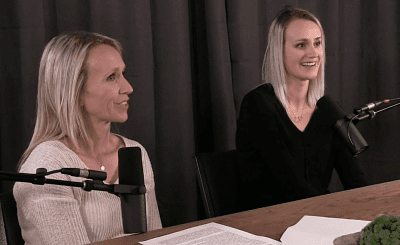
I am truly humbled and honored to release my recent Mormon Stories Podcast interview with Dave, Keri, and Alyssa Witbeck – three phenomenal humans and dear friends – as they share with us their personal navigation through Mormonism as a family of very conscientious members. Themes in today’s episodes include:
- The potentially toxic combination of religious orthodoxy and perfectionism within Mormon families,
- Supporting your adult child with an eating disorder,
- The reality and dangers of spousal abuse and marital rape,
- Supporting your adult child in a divorce, vs. forcing your adult child to remain in an abusive marriage due to societal or religious pressures, and
- Navigating a faith crisis as parents while your children remain orthodox believers.
This interview follows in the tradition of my interviews with a) Paul, Kyle, and Lisa Swain Hacking, b) Leah, Cody, and Brinley Young, c) Scott, Joanna, and Maddy Purves, d) Donna and Michael Showalter, and e) Jared, Gwen, Madison, and Taylor Lusk – wherein we interview parents along side their children.
I am incredibly proud of this authentic, powerful interview.
I hope you find value in it.
Part 1 – Dave and Keri reflect on their Mormon upbringing, up to their marriage and raising Alyssa: This transcript is machine-generated and lightly edited for readability. The audio is authoritative. Please excuse occasional errors in names and spelling. John Dehlin [00:00:00] Sam. Hello, everyone, and welcome to another edition of Mormon Stories Podcast. I'm your host, John Dehlin. It's January 10, 2020. Happy New Year. We are super excited to be kicking off Mormon Stories for a new year. We just interviewed Joe Tippetts a couple days ago. Hope you enjoyed that episode. And, and today we've got an amazing episode. Today we're going to be interviewing the Witbeck family. John Dehlin [00:00:59] So a couple years ago, I'm guessing I got, I started to get to know Kerry Witbeck and Dave Witbeck actually a year ago. And they're amazing family. And one of the most requested topics or subjects that we get on Mormon Stories podcast is to just interview normal families. And that's impossible because every family is different and dysfunctional or healthy in its own different ways. So there's no such thing as a normal family. John Dehlin [00:01:32] But, you know, we're going to be interviewing just lots of families in 2020 that try to represent the spectrum of the types of families we have in Mormonism. And the Witbeck family is an amazing family. Not necessarily celebrities, but just super high quality people. And we hope that this is the type of stuff our listeners want. We are live streaming today, so we're very excited to have any of you who are able to join us live on Facebook Live. John Dehlin [00:02:03] But today, just to give you a heads up or a sense for kind of what we're going to be doing, we have Kerry and Dave Witbeck in studio, and then we have their daughter Alyssa. So just like last year, we kind of kicked off last year with Cody and Leah Young, along with Brinley, doing kind of the parent child combination. John Dehlin [00:02:23] We're doing that again because that young episode is definitely one of the most powerful and impactful Mormon stories interviews of all time. And so we're gonna be doing more of that as well, trying to get more families interviewed and then also bring in teenagers or children or young adult perspectives as well. John Dehlin [00:02:45] So we've got Dave, Carrie and Alyssa in the house. The types of themes that we're going to be covering today span a lot of really important topics that I know are going to be relevant. So we're going to be talking about, you know, growing up in the church. We're going to be touching on themes of growing up in particularly orthodox or conservative homes. John Dehlin [00:03:10] That's going to be a major theme. We're going to be talking about parent child dynamics and particularly just like having teenagers and how that can be very stressful and hard or young adults, but also trying to navigate a faith crisis as parents, when you've got kids who are still believing. That's a really important element that we're going to be talking about. John Dehlin [00:03:31] We're going to be talking about the themes of perfectionism. There are maybe one or two members of this family that at times have had proclivities towards precision or perfectionism. So we'll be talking about that. We will be talking about marriage and particularly sort of this idea of getting married young right after a mission and the complexities of young marriage. And then we're going to be talking about a very serious topic which is spousal abuse. John Dehlin [00:04:02] So for those of you who might be triggered by that or need to practice self care or filtering, please just know we will at some point be talking about spousal abuse along with divorce and ecclesiastical abuse. Sometimes how the priesthood, in a scenario of, let's just say, poor mental health or unhealthy behaviors, sort of combining unhealthy behaviors in a new marriage with, with the priesthood can be deeply problematic and damaging and harmful for people. John Dehlin [00:04:39] We're going to be talking about depression and eating disorders as well, and of course, just navigating a faith crisis as parents with kids who are believers, but then also just as an entire family. And then we'll end by doing something that we're just going to start doing in 2020. I've put together a question, a series of, let's just say, 15 questions. I'm calling them the thrive questions, but, but just sort of a tight set of questions that deal specifically with how people navigate their faith transition and how they move from orthodox Mormons to post Mormons in a scenario where healing and growth are paramount. So we're going to end in a very, very constructive way. John Dehlin [00:05:25] After covering some sensitive and deep topics, we'll end by really focusing on healing and growth and how this wonderful family, I would say, is maybe healthier than ever and happier than ever, even though they've been through a lot. Is that a stretch? Keri Witbeck [00:05:43] No, that's true. John Dehlin [00:05:45] So stay tuned and fasten your seatbelts, Mormon Stories listeners, because it's gonna be a great day. Now I have to pause and just say another super exciting thing about this interview is that it's the first interview in our new studio. So we. Now that's not totally true. When we interviewed Joe Tippetts, we interviewed in this room or in this building, but we have. Thanks to the support of generous donors, we have built out a new podcast interview studio. John Dehlin [00:06:20] When I interviewed Wayne Sermon, he made an interesting observation. He's like, hey, John, I'd be more comfortable if we did an interview where we're sitting at a table and we have microphones in front of us instead of trying to sit at couches or on cushy chairs or whatever. And as we looked around and as I looked at other podcasts like Joe Rogan or whatever, and as I consulted with Cody and Tyler, two of my production engineers or supports, we decided that in this new Thrive studio that we were able to move into thanks to the generosity of Clint and Jenny Martin, we wanted to go ahead and get some high quality microphones that are more podcast like Build Out. John Dehlin [00:07:04] Just a one stop shop production studio where we're all sitting at tables, sitting in front of these really high quality microphones. So we don't know if the sound will be different. For those of you who just listen, it seems about 60% of you just listen through audio. John Dehlin [00:07:18] Hopefully the sound will be better than ever because we've got great mics. But also for those of you who are watching us on Facebook live or on YouTube or Facebook later, you'll notice kind of a change in our setup where we've got these beautiful lights, beautiful microphones, we're all sitting at a desk kind of across from each other, and we're excited for this new format. So I just had to mention it because I'm a podcast nerd a little bit. John Dehlin [00:07:41] So Happy New Year. Buckle your seatbelts. We're going to have an amazing interview today and this is going to be one of those multi hour, as if there's any other type of Mormon Stories interviews. This is going to be one of those multi hour interviews. So all the long form that you like. So welcome Carrie, Dave and Alyssa Witbeck to Mormon Stories Podcast. Alyssa Witbeck [00:08:05] Thank you. Keri Witbeck [00:08:05] Thanks, Josh. Thank you. Alyssa Witbeck [00:08:07] We're honored. John Dehlin [00:08:08] Anything you guys want to correct about my intro or add to or. Keri Witbeck [00:08:12] That was pretty accurate. Yeah, that's good. Sounds good. John Dehlin [00:08:16] Yeah, Dave, we're good. Okay. All right, so. So let's begin. And I think it probably makes sense to start with who's the oldest. Is that Dave? Alyssa Witbeck [00:08:26] That would be me. John Dehlin [00:08:27] All right, Dave and I kind of gave the setup in the sense that one of the major themes is kind of growing up in a really super conservative, orthodox Mormon home. And I think that's where you begin. Is that right? Yep. Alyssa Witbeck [00:08:41] That's where I began. So I was born in Utah, grew up in Utah. I was born in the late 60s. My parents built a house in the west side of the Salt Lake Valley. They built it a few years before I was Born. And that's where I grew up. And that's where I lived my entire life until I moved out after high school. My parents were multi generational Mormons. Mom tells me stories of people that trace clear back to Joseph Smith. Like for example, John Solomon Fulmer was in the Carthage jail with Joseph Smith the night before he died. And I've got another great, great, great. I don't know. John Dehlin [00:09:28] And his blood's running through your veins. Alyssa Witbeck [00:09:30] Yes. John Dehlin [00:09:30] Okay. Alyssa Witbeck [00:09:31] And then there's another great, great. I don't know how many greats Grandpa. That helped Joseph Smith. Shortly before he passed away, mom tells a story about how he, he needed to cross the river and so he gave him a ride in his boat, but there was a hole in the boat so they had to bail water out the entire time. Alyssa Witbeck [00:09:51] So mom tells me stories of pioneers and, you know, just have a long Mormon history. My parents, as we mentioned, were very active in the church. They taught their us the gospel. They lived the gospel. They believed it with all their hearts. Alyssa Witbeck [00:10:15] All of my relatives are LDS. Dad came from a big family. There was 11 siblings. Most of them lived in the Salt Lake Valley. And so I got to know them and we'd go to baptisms and baby blessings. So we're always seeing the relatives. Alyssa Witbeck [00:10:34] Mom's family was also very active and so we'd go to the same type of events with them. So essentially everybody I knew, I mean, we lived in a little subdivision in Utah. Everybody you know is Mormon. And so I guess my point is that was my entire world. Alyssa Witbeck [00:10:54] Mom was a schoolteacher by trade. She quit teaching school when she started to have kids so that she could be a stay at home mom. And dad was a general contractor. Spent a lot of time framing houses. Mom took the role upon herself to teach us. Before we started kindergarten, we didn't go to preschool. Alyssa Witbeck [00:11:17] I remember she'd sit with us in the living room every day and she'd teach me how to read. She'd read Dr. Seuss books to me and then she'd read illustrated Book of Mormon books and the Bible and the way that. John Dehlin [00:11:30] Do you remember the picture? Did you have the New Testament version as well? Alyssa Witbeck [00:11:32] We did. John Dehlin [00:11:33] Do you remember the version with like John the Baptist head on the plate? Do you remember that? Alyssa Witbeck [00:11:36] Yeah, I do. John Dehlin [00:11:37] Those were intense. That was a part of my upbringing. Just those illustrated books of Mormon and New Testament, Old Testament. Alyssa Witbeck [00:11:44] Yeah. Before I was old enough to really understand the dialogue or the words in the book, mom would just kind of. We'd flip through the pages and mom would Tell me the story in her words. But the way that I was learning this was honestly all the stories in the Book of Mormon and the Bible were just as real as gravity or the fact that the sun's going to come up every day. And there was nothing in my life to lead me to believe any differently. Alyssa Witbeck [00:12:14] Essentially, the message is that I grew up in a very stable environment, you know, and in thinking about this after John asked us to do this, you know, it gave me the opportunity to really think about what my childhood was like. And I realized that, you know, I grew up in Utah. Alyssa Witbeck [00:12:32] You know, there's a lot of places in the world that are, you know, not nearly as kid friendly as Utah. But I lived in one house. My parents never moved. My mother still lives in the same place that they built before I was born. Alyssa Witbeck [00:12:45] My parents loved each other. They were never divorced. They loved me, they loved the family. I was taught that I had a loving heavenly father, that our family was going to be together forever. I never had anybody that I really knew that died. So I didn't have the trauma of losing anybody. In fact, I made it all the way through high school before I ever lost anybody that I really knew. Alyssa Witbeck [00:13:10] And as I mentioned, my parents teachings were very consistent with everything that I was taught. And so, you know, this is my world. As I mentioned, you know, everybody around me I'm sure was Mormon. But when I was in elementary school. Am I going too far here? John Dehlin [00:13:33] No, go ahead. Alyssa Witbeck [00:13:34] Okay. I guess I'll just kind of ramble until you stop me. John Dehlin [00:13:38] No, be as intentional as I know you are. Alyssa Witbeck [00:13:42] Okay. So when I was in elementary school, I didn't feel like I really fit in with a lot of the other kids because there was a lot of kids that I'm sure they were Mormon, but they swore they used language that I didn't use. And so I thought, well, they must not be Mormon. And so I just thought, you know, in my brain that just didn't really work with, you know, it was so foreign to me to do some of the things that some of the kids did at school. And so I felt at that age that I didn't quite fit in. Alyssa Witbeck [00:14:19] My parents, you know, I mentioned they lived the gospel, just I guess as I grew up, we had daily prayers, we had family home evenings, we went to church weekly. Now, I don't want it to sound like I was in an environment that was super strict. Alyssa Witbeck [00:14:38] My parents believed in free agency. They taught us what we needed to do, but I never felt like I was being forced to do Anything. I remember when I was in elementary school, I had friends that I'd go out and roam the neighborhood and play, and I had friends that would always have to go ask their parents if they could go play. And. And I felt like, no, my mom doesn't make me ask if I go out for or whatever. So it wasn't a strict environment, but it was very orthodox, John Dehlin [00:15:13] so not strict. Did it. Did it have all the normal things we would expect in the. I'm guessing you. 80s was kind of early. 80s was kind of your high school years. So did you have the family prayer, like the family evening? You know, obviously, church every Sunday? Oh, yeah, all that stuff. Yeah, totally. Alyssa Witbeck [00:15:34] Yeah. Mom taught. Mom did most of our family home evenings. And she'd make a big deal out of it. Like, for example, every time it was somebody's birthday, she would. We had these three big beanbags in our family room, and so she'd stack the three bean bags together and she'd put a gold tinsel around the bean bags and kind of make a throne for whoever's birthday it was. And so we'd celebrate whoever's birthday. It was that way. When I got the priesthood, mom made a chart for the family and taught the lesson of the priesthood and showed my, you know, that my priesthood went clear back to Joseph Smith and then back to God beyond that. Alyssa Witbeck [00:16:10] And so mom made a big deal of that. You know, dad was, as I mentioned, a general contractor. Spent a lot of time with him. Mom had dropped me off at the job sites and I'd help him for, you know, it seemed like a long time, but I was probably only out there for a couple hours at a time, but it was probably. I probably wasn't as helpful as I thought I was. But I love spending time with dad, loved going on hunting trips and camping trips with the family. Just things were good. John Dehlin [00:16:51] How many siblings? Alyssa Witbeck [00:16:52] I had four siblings, five of us total. Okay. I was. They're all girls, so I was the only boy. John Dehlin [00:16:58] Oh, wow. Alyssa Witbeck [00:16:59] Second to the youngest. Keri Witbeck [00:17:00] Okay. John Dehlin [00:17:03] And so if you were just to kind of look back as objectively as possible, was it kind of like the Mormon dream? In what ways was it kind of the Mormon dream? And then was there anything that, looking back now, you might say whatever you're comfortable sharing about how maybe there were some parts that weren't ideal or even healthy or if you're comfortable. I know your parents are. Are your parents alive? Alyssa Witbeck [00:17:36] And my mother's alive. John Dehlin [00:17:37] Okay. And so I'm not trying to, like, hurt her feelings or anything as if she wasn't. Alyssa Witbeck [00:17:43] You know, when you say the Mormon dream, this was just my life. I didn't really look at it as a Mormon life or. John Dehlin [00:17:49] No, I mean, looking back now, in Alyssa Witbeck [00:17:51] looking back now, I would say yes, John Dehlin [00:17:55] it's like Believe it to Beaver. Alyssa Witbeck [00:17:58] Yes. John Dehlin [00:17:59] Mormon version. Alyssa Witbeck [00:18:00] But things were different, you know, back in the 70s and early 80s, Keri Witbeck [00:18:08] the Alyssa Witbeck [00:18:08] church was a bit different in that a lot of the activities that we did, you know, it seemed like the activities were more focused on social events. I spent a lot of time with dad at state farms picking tomatoes or at steak farms. Yes. John Dehlin [00:18:26] So like every steak, we had peanut butter. Peanut butter manufacturing in Houston. Your steak had. Alyssa Witbeck [00:18:33] We had tomatoes and corn. John Dehlin [00:18:35] Like, like farms. Like farms as part of church owned. Alyssa Witbeck [00:18:40] Yes. John Dehlin [00:18:40] And so you would go and do what? Alyssa Witbeck [00:18:41] And so we would go pick the tomatoes and deliver them to the bishop storehouse. John Dehlin [00:18:46] Do you think they still do that today? Pick tomatoes? Alyssa Witbeck [00:18:49] I don't know. I haven't heard of them. John Dehlin [00:18:50] They probably. It's probably subdivisions now. Alyssa Witbeck [00:18:52] Yeah. John Dehlin [00:18:52] Where those. Alyssa Witbeck [00:18:53] Well, those places are all subdivisions now. But I liked it because I was probably 10 years old and dad let me drive the truck when they were picking the tomatoes. So he'd put it in the granny gear and I'd drive across the fields while people were putting tomatoes in the back of the trucks. John Dehlin [00:19:08] And what would the church do with the tomatoes? Alyssa Witbeck [00:19:09] They would take them to the Bishop's storehouse. And I didn't really ask because we John Dehlin [00:19:15] didn't pick the peanuts, but we made the peanut butter. So I'm guessing they might have gone to some other ward or steak who would have made like spaghetti sauce or tomato paste or. Right. Alyssa Witbeck [00:19:25] Could have done. John Dehlin [00:19:25] Yeah. Yeah. Alyssa Witbeck [00:19:26] It was like I say, you don't know. The thought never crossed my mind. It was just, I have to pick John Dehlin [00:19:30] the corn, get the, get the corn, get the tomatoes. Alyssa Witbeck [00:19:32] Right. John Dehlin [00:19:33] Okay. Alyssa Witbeck [00:19:33] And so. John Dehlin [00:19:34] Yeah, but isn't that like. I wish I had that experience with my son, like, or my daughters. That's not been. I mean, obviously I'm not in the church, but even if I were in holiday, I don't think, I don't think in the holiday water steak, they're picking tomatoes or corn. Right. So that's kind of cool. Like, that seems like I'm a little bit sad that our modern youth don't have. Or children don't have that experience. Maybe as much. Alyssa Witbeck [00:19:59] Yeah. And we had road shows and, you know, it was. It just seemed like a different environment. John Dehlin [00:20:04] Back road shows. Tell, tell listeners what road shows are. The younger people or the Non. Mormons will never. Mormons will. Alyssa Witbeck [00:20:12] Basically, it's just each word in the stake would put together a 15 minute show for everybody in the stake to watch. John Dehlin [00:20:23] Kind of like musical theater kind of stuff. Alyssa Witbeck [00:20:25] Skits. Yeah, just skits. John Dehlin [00:20:27] Plays. Yeah. Alyssa Witbeck [00:20:29] There was usually some message involved. John Dehlin [00:20:32] Singing and dancing, right? Alyssa Witbeck [00:20:33] Yeah. But it seemed to me like the messages were presented more subtly. Like, for example, you know, when I went to scout camp, it was just camp and, you know, now they try to bring in more scripture, you know, I don't know. John Dehlin [00:20:52] But back then it was just scouts, right? It was just scouting. Alyssa Witbeck [00:20:54] It was the scouts. John Dehlin [00:20:55] Yeah, yeah. Alyssa Witbeck [00:20:56] And so the church for me at the time, although I knew without a doubt that it was true, it was just more the social. Keri Witbeck [00:21:05] Yeah. John Dehlin [00:21:05] Was it so in your face about truth claims, right? Alyssa Witbeck [00:21:08] Yeah. John Dehlin [00:21:08] It's like popcorn popping on the apron. Tree is not a religious song. Right. If you chance to meet a frown do not let it stay. Like a lot of these primary songs weren't about, like, you must have a firm testimony of Jesus. I mean, there was I hope they call me on a mission, but there wasn't Follow the Prophet. Right. So it was a totally different mentality in the. In the 50s, 60s and 70s. Keri Witbeck [00:21:30] Yeah. John Dehlin [00:21:30] People don't understand that. They think that always to get more modern means to get more liberal. But in the church, the church has gotten more conservative over the past several decades. Theologically, in some ways. Keri Witbeck [00:21:44] True. Alyssa Witbeck [00:21:44] Yeah. John Dehlin [00:21:45] Yeah. Is that kind of what you're saying? Alyssa Witbeck [00:21:46] That's kind of what I'm saying. John Dehlin [00:21:47] That it wasn't as Mormony as we might think. Alyssa Witbeck [00:21:50] Yeah. It wasn't about. The gospel. I mean, the gospel was more about bringing people together or at least it just felt different. John Dehlin [00:22:06] Yeah. Interesting. That's really interesting. Alyssa Witbeck [00:22:07] That's my perspective. John Dehlin [00:22:08] That's cool. I had the same experience. Yeah. Like the church is true, we operated under that assumption, but then it was just about, like much more about just living a happy, healthy life, a little bit less about other sorts of things. Alyssa Witbeck [00:22:23] One of the things I remember about my dad was that. But he was brutally honest. He taught me honesty. And a story that I remember was when I was probably about 14 years old, I went to. It was dad's birthday and mom decided she wanted to buy a tool for dad. And like I say, he was a general contractor. So he had this place that he would shop for tools, just a small tool company. Alyssa Witbeck [00:22:46] And mom and I walked in and the owner of the store came out and he knew who we were. And we said, we're looking for something for dad and the owner of the store said, I would give your dad every tool in the store and not worry about getting paid. Alyssa Witbeck [00:23:03] And that type of thing meant a lot to me. And so that was the environment I was raised in. When I was in high school, dad was put in to be a bishop. I didn't like that very much. Alyssa Witbeck [00:23:15] I felt like, you know, I thought he'd do a good job of being Bishop, but for me, I felt like I saw what Bishop's kids were supposed to be like, and I thought, I'm not that kind of a person. Alyssa Witbeck [00:23:29] And, you know, in looking back, I think that was kind of a theme for my life, is that, you know, I mentioned earlier that when I was younger, I felt like I didn't quite fit in with the other kids in school because, you know, they weren't consistent with their values, didn't seem to be consistent with what I'd been learning. Alyssa Witbeck [00:23:45] But it worked both ways. You know, if I was in an environment where I felt like I was expected to be beyond what my, you know, I guess, to use a church term, I was expected to be more righteous than I was or better than I was, then I was uncomfortable that way as well. And so I just. I didn't like it because I felt like there's going to be certain expectations put on me, you know, as a. As a kid. But I never drank alcohol or did anything, you know, in high school or drugs or anything like that. I made it, you know, went all the way through high school without having any of those kinds of issues. Alyssa Witbeck [00:24:27] I didn't really like high school very much. You know, I didn't really see the point. For me, there was one class that I failed in my life, and it was math when I was in high school. John Dehlin [00:24:43] And, no, you know, that doesn't. Alyssa Witbeck [00:24:46] Ironically, I. Well, that was because I didn't really realize how important math was. When I was a senior in high school, I took an electronics class and I learned that there was actually a point to math. It could actually be useful. And so once I learned that, that I could design a circuit and calculate all the voltages and currents throughout the circuit. And that put math to a real use. I loved it. In fact, I got a minor in math in college. Alyssa Witbeck [00:25:16] I'd always planned on going on a mission until I got to be that age, and dad was a bishop, and everybody just expected me to go on a mission. And essentially my attitude was when people would. Rather than asking me if I'm going to go on a mission, they would ask me when I'M going to go on a mission. Alyssa Witbeck [00:25:36] And so my thought was, if you're just going to expect it, my answer is, not a chance in hell. I don't want to go on a mission. So anyway, that's kind of where I guess. I guess me through high school. How far do you want me to go here? John Dehlin [00:25:56] That's good. So you did go on a mission or you didn't? Alyssa Witbeck [00:25:59] I did. John Dehlin [00:25:59] Okay. Alyssa Witbeck [00:26:00] I guess I can continue the story to get up to the mission here. Graduated high school. Like I say was. I'm certainly not going to claim that I was a goody two shoes by any means. I just felt like, because I wasn't a scriptorian, I didn't. Alyssa Witbeck [00:26:18] I didn't. I loved the church, that it was true, but I didn't really care about, you know, it was kind of like I knew that gravity is true, but I don't really. I didn't care to learn everything there is to learn about it. Alyssa Witbeck [00:26:34] So I never had any doubt that it was true. But I didn't spend a lot of extra time studying it. After high school, I did start to get in a little bit. I had kind of a wild streak. Alyssa Witbeck [00:26:45] I did start to get friends that drank alcohol and, you know, tried some things that I'd never been comfortable with. And so I went down that path for a little while, started doing things that were probably illegal but not harmful. Alyssa Witbeck [00:27:07] And I remember I'm not going to tell this story, but I told mom some of the things that we had done, and she says, one day you're going to call me from jail. Anyway, that day did happen. Too long of a story now. John Dehlin [00:27:23] I'm dying to know, like, what types of things, right? Like. Well, like pushing over cows. Are you knocking over mailboxes? Like, blowing things up, setting things on fire? Alyssa Witbeck [00:27:34] Those kinds of things. I went to Lagoon with a couple of friends and lagoon closed. And we climbed up on top of the roller coaster. And we're running up and down the roller coaster. John Dehlin [00:27:45] Oh, wow, that's intense. That's intense. Alyssa Witbeck [00:27:48] We broke into a water park and ran up and down the slides and those kinds of things. Keri Witbeck [00:27:53] And then you paid for it later. Alyssa Witbeck [00:27:55] Well, there was literally people. Keri Witbeck [00:27:59] Exactly. Alyssa Witbeck [00:28:00] Yeah. One night, I don't know if I should say this or not, but this was a long time ago. We went up to the Alpine slide up in Park City and we decided that we'd hike up to the top of the slide and the cars were sitting up on top of the slide. So we rode down the slide and we thought that was so much fun. We went back up and did it again. Anyway, I felt guilty about that. Not too guilty, but like probably 10 years late or 10 years ago I took the family to the Alpine Slide and I paid for an extra ticket for the Alpine Slide just to kind of make up for. For our free rides 20 years earlier. John Dehlin [00:28:45] That sounds like that's what we call scrupulosity in my business. Alyssa Witbeck [00:28:50] So anyway, started to get into some of those kinds of things. Like I say, I wouldn't say that was anything that was harmful to anybody, but probably. Well, obviously it wasn't legal because it did get me in jail. But that was about the time I decided I was gonna really change my life. John Dehlin [00:29:14] Going to jail? Yeah, Alyssa Witbeck [00:29:18] yeah, I was sitting there. John Dehlin [00:29:21] Do you remember which jail? Like which county? Alyssa Witbeck [00:29:23] Salt Lake County Jail. John Dehlin [00:29:25] Is it still there now? Alyssa Witbeck [00:29:27] I don't know. I haven't been back. But I do remember sitting in there thinking, this is not my life, this is not what I want, you know, because I'm. Look, I felt like I'm ready to go home now, you know, it was just. I was out with friends in the middle of the night and we're doing things we shouldn't have. And anyway, I didn't like that. And I decided that this is a pretty good time to make a change. So I ended up going to Utah State University. John Dehlin [00:30:00] Woohoo, go Aggies. Show me the Scotsman. Alyssa Witbeck [00:30:07] So up at Utah State, I found kind of the same friends. Had a lot of fun up at Utah State. My first year, it was kind of John Dehlin [00:30:17] useless Alyssa Witbeck [00:30:19] and met a girl and got serious with her and anyway, remember that feeling like my life was probably not what it should be still. And I had some aunts that had, you know, they weren't married. One of them had never been married, but the three of them drank coffee and I think that's what pretty much kept them out of the temple. And they decided that they wanted to change their lives and so they secretly went to the temple. Alyssa Witbeck [00:30:47] And there was just something about that that hit me hard. I just felt like, you know, they did what they were supposed to do and I felt like maybe I needed to turn things around a little bit. So I stopped doing the partying and I got my life straightened out. Alyssa Witbeck [00:31:07] In the grand scheme of things, it probably wasn't really that far off track, but it felt like, according to my conscience, that it was probably further off track than it should be. John Dehlin [00:31:19] Did you confess to your bishop? Alyssa Witbeck [00:31:20] Oh, yeah, yeah. We went through everything and I decided to serve a mission. John Dehlin [00:31:29] Those experiences with your bishop Were they positive? Were they healing? Were they punitive? Alyssa Witbeck [00:31:37] You know, it felt more like just a necessary step. You know, it's hard to go in and tell the bishop that you're not perfect and, you know, lay everything out. It was a difficult thing to do. You know, it's. I look at it now and think it was really none of their business. But still, that's what I was supposed to do. It was a necessary step. And so I do it. I leave it. You know, I did what I needed to do to go on a mission and feel like I was worthy. I don't know if I like that word anymore, but according to the church, I was worthy. And I went. I was called to the Texas Dallas mission. John Dehlin [00:32:26] Nice. Alyssa Witbeck [00:32:27] Yeah. John Dehlin [00:32:28] What year? Alyssa Witbeck [00:32:30] Well, I was kind of a late bloomer. You know, as I mentioned, when I was back then, the mission age was 19. And when I was 19, I was doing my other things and I said that I wasn't going to go on a mission. I think one thing that made a difference for me was dad said, no, you shouldn't go on a mission. And once he said, no, you shouldn't. John Dehlin [00:32:52] Reverse psychology. Alyssa Witbeck [00:32:53] Exactly. John Dehlin [00:32:54] Bill Cosby has a skit on that. Oh, it's not good. To quote Bill Cosby. Keri Witbeck [00:32:57] Yeah, it's not good. John Dehlin [00:32:58] I take that back. Scratch that. Alyssa Witbeck [00:33:00] But it wasn't them that were. My parents weren't really pressuring me to go in the first place. They wanted me to go. I knew they wanted me to go, but they never. They didn't ever pressure me. It was really just other people that would. It was the expectation that I was going to go. It was just kind of the rebel side of me that, you know, if you're going to ask me when I'm going to go rather than if I'm going to go, then I'm not going to go. I mean, for a long time I was kind of wishy washy about it. And I went in and the bishop called me in and said, I want you to go on a mission. Alyssa Witbeck [00:33:27] Or the Lord. I'm sorry, the Lord wants you to go on a mission. And I said, well, I got to think about it. And so he called me in, you know, every couple of weeks and say, have you figured it out yet? And finally he said, I need an answer. And I said, well, if you need an answer now, then the answer is no. So you probably kind of sensing a little bit of a stubborn streak here. John Dehlin [00:33:49] You're stubborn, Dave. But Alyssa Witbeck [00:33:53] anyway, so anything, typical mission, anything John Dehlin [00:33:59] like, really important about your mission that you want to convey. Alyssa Witbeck [00:34:02] Well, probably not about the mission, but I did go through the temple before I went on mission. John Dehlin [00:34:09] Okay. And. And you're older than me, so you would have had the real experience. Alyssa Witbeck [00:34:14] Yes, I had the real experience. John Dehlin [00:34:15] The pre God makers experience and all that that entails. Alyssa Witbeck [00:34:19] Right. So I went to the Salt Lake John Dehlin [00:34:23] Temple, which is a live. Which was live. So there's no film. It's actors acting out the entire. For those who don't know. Alyssa Witbeck [00:34:33] And I went with usually old men. John Dehlin [00:34:35] Right? Alyssa Witbeck [00:34:36] Yeah. John Dehlin [00:34:37] Acting out all the parts. Alyssa Witbeck [00:34:38] Yeah. And I think any other temple would have been a better choice. For me, that was a challenge. I remember when I was in high school, before I went on the mission, one of my priesthood leaders made the comment that when you go to the temple, you're going to wonder if this is the same church you grew up in. And I felt that way. And my parents are there and I'm watching my mom and dad do all this stuff in the temple and I'm just blown away. I mean, it was just not a good experience. But I had, you know, excuse me, I had to do it to go on a mission. I wasn't excited about the whole garment concept. I, you know, it was just. It just didn't really mesh with me. John Dehlin [00:35:36] And this comes into play later in Alyssa's story. Is that right? Maybe Carrie's too. We'll see. Alyssa Witbeck [00:35:40] But so anyway, did the temple thing. I did the Provo Temple after that when I was in the mtc and it was a little bit easier because John Dehlin [00:35:49] Gordon Jump was in the movie and he had been on WKRP in Cincinnati. Do you remember that? Alyssa Witbeck [00:35:54] Yeah. John Dehlin [00:35:54] Gordon Jump, the actor, played Peter in one of the original temple films. Alyssa Witbeck [00:36:01] Good times. John Dehlin [00:36:01] Nice to see a friendly face. Michael Balam was Satan, right? Alyssa Witbeck [00:36:05] Yeah. John Dehlin [00:36:05] These are fun times. Mormon pop culture. Alyssa Witbeck [00:36:08] Yeah. So I went to Dallas and when I first got there, you know, I had decided to go, but part of my hesitation was that I never felt like I was missionary material. You know, I felt like I just looked at missionaries, you know, with a certain high standard, and I thought, that's not me. Alyssa Witbeck [00:36:31] And so for the first two weeks I was out there, I didn't even unpack my bags. My. My trainer thought I was a little weird because my bags are still or all my stuff is in the suitcase. He made some comment about it and finally I decided, I guess I'll unpack my bags anyway. But I really got into it. Alyssa Witbeck [00:36:51] I learned what the Book of Mormon was for the first time, even though my parents had taught me what it was, I really dug into it and figured things out. I read every book that they'd let me read. Jesus the Christ, Articles of Faith, Miracle John Dehlin [00:37:07] Forgiveness, Marvelous Work and a Wonder. Yep, those are the four. Alyssa Witbeck [00:37:10] Exactly. John Dehlin [00:37:11] Yeah. Alyssa Witbeck [00:37:12] So first half of my mission, I was a little hesitant, but I started to slowly get into it. And by the time I was done, you know, I think that some of the missionaries looked at me as a little bit more relaxed. You know, for the first year I was out there, we did some. You know, I wasn't a real strict rule follower. By the end of the mission, I was a pretty strict rule follower. John Dehlin [00:37:40] You got converted. Alyssa Witbeck [00:37:41] I did love it. That was the point, wasn't it? John Dehlin [00:37:45] So, yeah. Yeah. That is the point of missions, to convert the missionaries. Right. So, yeah. Cool. So finished your full two years and had a great experience? Alyssa Witbeck [00:37:56] Yeah. John Dehlin [00:37:57] Okay. Okay. Alyssa Witbeck [00:37:58] I did. It was a good experience. To this day, I look at it as a good experience. I'm glad that I did it. You know, I know it's traumatic for some people, but I think there was a lot of skills that I learned on my mission that are still useful today. It worked out well. John Dehlin [00:38:18] How do you describe. This is gonna sound like a weird question. I probably never asked this before, but how do you describe your personality type? Alyssa Witbeck [00:38:26] Like introverted, probably. Yeah. John Dehlin [00:38:31] And would you say high anxiety, low anxiety, medium anxiety? Alyssa Witbeck [00:38:35] It's a good question for Kerry. Keri Witbeck [00:38:37] Kerry, that's pretty valid. John Dehlin [00:38:40] Go ahead, Kerry. What were you gonna say? How would you describe Dave's personality? Like his base personality? Keri Witbeck [00:38:45] I think he's got more. More anxiety than he thinks he does. John Dehlin [00:38:49] And the reason why I'm asking is, like, for someone of your personality type, it seems like the church could be very bad or very good. And when I say very good, what I mean is it would force you to do and learn and try things that you. In no other context would you otherwise possibly do. And so what I'm getting a sense for is that maybe there are ways that the church is really good for you because it got you out of your shell, got you to try things and do things that maybe your personality type wouldn't have allowed you to do otherwise. Is there truth to that or not? Alyssa Witbeck [00:39:22] I think it was the thing that was probably. I think that one of the big hindrances for me with my personality is that if I look at someone, If I look at. I don't know how to. I guess what I'm trying to say is. Alyssa Witbeck [00:39:51] Let me jump forward a little bit and tell you a little story just to explain how I think, I feel, years later, I was an Elders Quorum president. And as an Elders Quorum president, I had one of my counselors that came to me one day. I was just in my office at work and he came to me and sat down and said, I can't do this. Alyssa Witbeck [00:40:17] I feel like it's not that it's a difficult thing for me to do but it represents something that I'm not. And for me, I think that with my personality, honestly, I was jealous of the guy. I thought, you're spot on. I mean, I wish I had the courage to basically step out of things that aren't me, but sometimes I felt like I had to, you know, just go through the motions. Alyssa Witbeck [00:40:47] And so my personality is that I feel like I have to be consistent with who I am. And. And it's hard for me to play a role that I'm not, if that makes sense. John Dehlin [00:41:03] Yeah, that's an important theme. So consistency, authenticity. Alyssa Witbeck [00:41:07] Yeah, right. Yeah. John Dehlin [00:41:09] Okay. But up through your mission, you were. You were becoming consistent and authentic. But. But the gospel was kind of focusing you in healthy directions, fair to say? Alyssa Witbeck [00:41:20] I think so, yeah. You know, I. As I mentioned, you know, I go through high school and it wasn't. I didn't. It's not that I loved it, but I felt like. I felt like my parents raised me such that things weren't strict but there was some definite strict boundaries. You know, when it came to alcohol, very strict boundaries. When it came to girls, very strict boundaries. Pretty much anything else, you know, they didn't push me. They gave me my free agency. But anyway. John Dehlin [00:41:55] Okay. All right, so we'll pause there. Is that all right? Alyssa Witbeck [00:41:59] Yep. John Dehlin [00:41:59] Kerry, it's your turn. Keri Witbeck [00:42:00] Oh, dear. John Dehlin [00:42:01] I get a sense you didn't have quite the same experience as Dave. Keri Witbeck [00:42:05] No. And it's funny because I know that, but as I'm listening to him, I'm thinking very opposite. Very opposite. John Dehlin [00:42:13] Yeah. So tell us about your background. Keri Witbeck [00:42:17] Well, I grew up. My mom was a convert. She went to Rick's College as a non member. Go figure. Back in the, what, that had been 60s, I guess. John Dehlin [00:42:28] She grew up in Idaho. Keri Witbeck [00:42:29] She grew up in. Well, she was born back east in Boston area. They moved to Idaho Falls for a job that my grandpa had. So she went to high school there. And then I guess that's probably why she went to work because I was close by. Met my dad, who My dad. My dad's family is a lot like Dave's family. Very orthodox, pioneer stock. You know, the whole nine yards. In fact, my grandma, my Dad's mom is the first person I thought of when I met Dave's mom because I'm like, you are exactly like my grandma Morgan. Like, they're just super, super, super orthodox, very gentle, kind of. Keri Witbeck [00:43:09] Anyway, just I think one of my ancestors was a bodyguard for Joseph Smith at some point. And anyway, very, very Mormon. My mom's family was very Catholic. In fact, you know, my grandmother's name was Mary, you know, and she went by her middle name. And that was just kind of how that whole side of the family was. Keri Witbeck [00:43:30] But my mom wasn't. But they weren't really practicing. They were just. She's pretty non religious. But anyway, so she married my dad and they divorced when I was 6. And my mom had kind of a weird experience with the ward when they divorced. Keri Witbeck [00:43:51] And so she pretty much left the church at the time. So my dad was hardcore active, my mom was not. And I spent. My sister and I spent most of our time with her. We see my dad like every other weekend. Luckily they stayed in the same town. They were very, they stayed good friends and it was all cordial and good that way, but very opposite. Keri Witbeck [00:44:16] I mean, my mom was just free spirit. She was kind of hippy, just very loving, free spirited type. And my dad, not the kindest person you'll know. Very, very Mormon. So we would, like I said 80% of the time was with my mom, so that was kind of the main influence. And then, so the church wasn't really. I mean, I was baptized when I was 8. I wasn't a convert, but I felt like one because it wasn't really part of my. I didn't have the road shows, I didn't have the girls camp, steak dances, any of that stuff. I just, I think I went, I did actually go once, but that was not for the right reasons. Keri Witbeck [00:45:01] So anyway, so I just grew up. Our mothers are both extremely kind people and about as opposite as you can be. So that was my basic childhood. John Dehlin [00:45:17] Okay, so not an orthodox Mormon, Mormon outbreak. Keri Witbeck [00:45:21] No, I mean it was nominally Mormon, vaguely familiar, you know, like I'd heard things and my, but I think my dad just recognized that that wasn't, he just didn't push it. So they, he, he remarried and they all, they were active, went to church. My stepmom was young women's president and he was in the bishopric and they were. But they didn't really say a lot to us about it because I think they just kind of let my mom do that. So. So yeah, I was vaguely familiar, but John Dehlin [00:45:51] not very, so not a Was religion a part of your upbringing at all? So a secular upbringing? Keri Witbeck [00:45:56] Pretty secular, yeah. John Dehlin [00:45:58] Where it was like, we don't believe in God or we're atheists. Or was it just. Keri Witbeck [00:46:01] It wasn't even. I don't even remember even being really addressed. It was just. Wasn't really a thing. It was just. My mom was good and kind for the sake of being good and kind because she just was. It wasn't because she was told to or because she was looking for something. No. It's just who she was. And so I did. I honestly just didn't really ever. I remember having a couple of family prayers with my dad, but, like, it just wasn't. It was pretty secular. John Dehlin [00:46:27] Was it a Mormon town? Keri Witbeck [00:46:29] Boise area. John Dehlin [00:46:29] So what percentage of your friends would have been. Keri Witbeck [00:46:32] Very few. My high school was very. Yeah. John Dehlin [00:46:34] Why do I think of. Boise is still like 40% Mormon and it. Keri Witbeck [00:46:37] Maybe it is. My high school was not. Not. I mean, there were a few, but it wasn't strong at all. I mean, Christian. There's a lot of Christian general, but I didn't know very many Mormons. John Dehlin [00:46:51] Were you pretty happy? Keri Witbeck [00:46:53] Yeah, very happy. It was a happy childhood. Oh, yeah. My mom and my sister and I. People called us the Three Musketeers because we were. We looked very similar and we were together all the time and. John Dehlin [00:47:02] And there's no guy around. Keri Witbeck [00:47:04] She remarried and divorced. John Dehlin [00:47:07] Okay. Keri Witbeck [00:47:07] So then when we were in high school, it was just the three of us. John Dehlin [00:47:11] That's interesting. Keri Witbeck [00:47:12] It was really fun. John Dehlin [00:47:13] But you loved it. Keri Witbeck [00:47:14] Loved it, loved it. We were super close. And then my sister moved out, moved to college. It was just my mom and I for a couple of years. I mean, she was dating a guy by then, but I just had lots of time with her. And I was really close to my dad. We just didn't. Church wasn't really ever a thing, so. John Dehlin [00:47:34] So everything was good. Keri Witbeck [00:47:35] Everything was great. Yeah. I had a great childhood. It was just. John Dehlin [00:47:38] What happened? Keri Witbeck [00:47:41] What are you trying to say? Alyssa Witbeck [00:47:43] She met me and I messed it all up. John Dehlin [00:47:44] You messed it up. So somehow this got messed up? No. Keri Witbeck [00:47:47] Okay. When I got into high school, when I got later into high school started, I mean, I definitely had my rebel. I didn't really feel like a rebel. That was. John Dehlin [00:47:56] I just experimentation. Keri Witbeck [00:47:58] A little bit of experimentation in the world. You know, dramatic and huge. But, like, you know, had some party friends and. It was great, though. I mean, I thought they were great. John Dehlin [00:48:06] A lot of fun. Keri Witbeck [00:48:07] A lot of fun. Moved to usu. The only reason I moved to Utah was because I Was in a car accident just after graduation and I was. I broke my collarbone and I was still pretty laid up. And this was the only. At the time they were on the quarter system. So school didn't start until 1st of October, end of September. So I had an extra month to heal. So I'm like, okay, I'll go there for a year. Just so I go and don't skippier. And then I'll go back to Boise. John Dehlin [00:48:37] Because it could have been Boise State. It could have been University of Idaho in Moscow or it could have been. What's the other one? Keri Witbeck [00:48:44] My friend and I were looking at Oregon. Yeah, we were actually looking, but I probably would have been a Boise State, I'm guessing. But yeah. John Dehlin [00:48:50] So why Utah only. Keri Witbeck [00:48:53] Only because that late start date, that was the. That was the only reason. It was close to gone. My dad. My dad. John Dehlin [00:48:59] It's kind of a weird reason to go to a university. Is that rude to say? Keri Witbeck [00:49:02] No, it is. I just knew my. John Dehlin [00:49:05] Yeah, you didn't want to wait. Keri Witbeck [00:49:06] Well, my. Yeah, I didn't want to wait. I honestly thought if I waited I wouldn't go. I was kind of floating personality at that time. I hadn't found myself. John Dehlin [00:49:15] Did you know what you wanted to study? Keri Witbeck [00:49:17] Not really. I mean I. I always liked. I started in interior design because I enjoyed that and I kind of end up flipping that to my minor. But that was that or I wanted to be journalist. So ended up majoring in journalism. But anyway, I. I just thought if I go, if I go there. My dad went for a year. He had some Utah State experience, so he said it's great. I'd never even been to Logan when I literally had. Was driving there to live there. I had never even been there. But I thought it's a year, it's. It'll just give me something to make sure I go and then I'd go back. John Dehlin [00:49:59] How much exposure had you had to Mormons? Keri Witbeck [00:50:01] Very little. John Dehlin [00:50:02] So you didn't know much about the church? Did you identify as a Mormon? No, didn't identify as a Mormon. Keri Witbeck [00:50:07] In fact, my roommates. I just answered an ad for somebody looking for a roommate and they were all Mormon. But I didn't. They were nice. They were. Of course I was the non member, so I mean, I was a member, but they. Anyway, so you go to Utah State. John Dehlin [00:50:22] Go to Utah State, go to Logan. Keri Witbeck [00:50:24] It was great. The first year was kind of like Dave's and then it was kind of useless. I just pretty much was all social and didn't get a Lot of schooling. But after about the end of my first year, I was feeling like I needed to get some direction. And of course my roommates were there to offer that. John Dehlin [00:50:47] What do you mean get direction? Keri Witbeck [00:50:49] I just felt like I was kind of floating. I mean, I wasn't like Dave's always been. He's known what he wanted to do since he was 12 years old and I just didn't. I felt like I was kind of. John Dehlin [00:51:02] Were you studious? Keri Witbeck [00:51:04] Not really. I mean, I like to learn, but I'm not. Well, thank you, but I mean, my Girls are the 4.0 students. I wasn't. I enjoyed learning, but I wasn't very right brained, so that's why I wanted to do the journalism thing. I enjoyed school, but I. I don't know, I wasn't. I didn't love the tests and the stress, but I enjoyed the classroom and the environment. I just, I did get a little stressed out, but I was just feeling like I was kind of unsure about. I was feeling a little stressed out with my major. I didn't really know what I was doing. I felt like I was hanging out with all these frat people and, you know, I'm like, maybe I need to like get more of a direction. So my roommate started taking me to church. John Dehlin [00:51:51] What year was this? Keri Witbeck [00:51:53] 91. John Dehlin [00:51:54] 91. Okay, so, all right, so I'm. I'm a sophomore, junior at byu. All right. I'm just kind of getting the timeline going. Keri Witbeck [00:52:03] All right, so. John Dehlin [00:52:04] So your, your roommate says come to church and what goes through your mind? Keri Witbeck [00:52:08] Like, I was resistant at first. I was like, that's. I'm not. John Dehlin [00:52:13] What did you think about Mormons? What did you think about Mormons? Keri Witbeck [00:52:15] I didn't really know any except for them. And they were nice. Okay. And I, I knew like one or two. John Dehlin [00:52:20] They were weird Mormons. Keri Witbeck [00:52:21] They were weird. John Dehlin [00:52:22] No, they were super Molly. Conservative. They were just normal kids. They were, they were cool, but just nice. Keri Witbeck [00:52:26] I knew like a couple in my high school and they were the super Molly. So that. Anyway, it was nice to meet some that seemed more like me. And so I kind of jumped onto that. That was really. I was like, wow, this has all these answers. It's basically this handbook for life. I don't have to think about anything. I just do. Look, it's all spelled out for me. And then I meet Dave who's got it all figured out and he's. And so I just jumped on the bandwagon and so. John Dehlin [00:53:03] So you're in the singles ward and you start getting Exposed to the teachings, the doctrine, the theology. You see these cute boys and in your mind it's like, oh, yeah. And so do you start getting. Becoming intellectually spiritually curious? Keri Witbeck [00:53:19] Yeah, that's about when the work in the glory books came out. Do you remember those? And I read them all. John Dehlin [00:53:27] You read them all? Keri Witbeck [00:53:27] I read them all twice. John Dehlin [00:53:29] Whoa. Keri Witbeck [00:53:29] There's like nine of them. John Dehlin [00:53:31] So that's like your exposure to church history. Keri Witbeck [00:53:32] You didn't go to seminary, right? Exactly. And fast forward a little bit. Went through the temple and was completely freaked out and confused. But this was history. So, I mean, it was. It was, you know, historical element. Right. Alyssa Witbeck [00:53:49] In quotes. Keri Witbeck [00:53:50] So I could understand that. That felt like. And I really just fell in love with Joseph Smith and just thought that whole thing was so beautiful and wonderful and just happy and neat. Little bow on the plan of salvation. John Dehlin [00:54:05] You're like, did you. Did you take the discussions from the missionaries? Keri Witbeck [00:54:08] No, I didn't. I know I should have. I just. Alyssa Witbeck [00:54:11] This is already a member. Keri Witbeck [00:54:13] That's true. Alyssa Witbeck [00:54:13] They couldn't count. John Dehlin [00:54:14] Oh, that's right. Oh, yeah, you remember. You were about to remember. Keri Witbeck [00:54:16] So I just. Yeah, I just. John Dehlin [00:54:18] Did you ever call home and say, mom, why didn't you raise me in this? This is great. Keri Witbeck [00:54:21] I did, actually. She said the only thing she really ever said to me about the church was I never bought the Joseph Smith story. I'm like, well, you need to read the work in the glory then. So. John Dehlin [00:54:34] So your mom wasn't freaking out, like, don't do this. Like, ah, stay away. It's a trap. Keri Witbeck [00:54:39] She freaked out a little bit, but she didn't know any of the stuff that I would later learn. She just said the two things that bothered her. Well, one, she never really bought the Joseph Smith story, she said. And the other thing was the priesthood ban because she was married to my dad in the early 70s, before the John Dehlin [00:54:57] blacks got the priesthood. Keri Witbeck [00:54:58] Before the blacks got the priesthood. And she said the day. She remembered the day that the ban was released, and she said, I was in my. She described. She was in the kitchen and she just fell to the ground and sobbed because she was so happy that, you know, that was always a big barrier for her. And it was for me too. I mean, that always bothered me too. But John Dehlin [00:55:23] so. So your mom was kind of smart and sensitive to social issues, apparently. And that's. That's interesting. Keri Witbeck [00:55:31] She was. John Dehlin [00:55:31] Yeah, that's what takes people out. So. But that wasn't enough to keep you out. Keri Witbeck [00:55:37] No, because she didn't say a lot. She was very. She Also could see that I was happy. And I think she wasn't just trying to not taint my experience. So I think she. She told me that. But she also was supportive and just kind of let me. John Dehlin [00:55:52] Yeah. When your kid's in college, you just want them to be happy. Keri Witbeck [00:55:55] Yep. John Dehlin [00:55:55] You want them to, like, get along and do well and feel good, Right? Keri Witbeck [00:55:59] Exactly. John Dehlin [00:56:00] And I can see why. As long as there wasn't any big, huge red flags. Keri Witbeck [00:56:04] It's just like, I don't think she ever really thought there was. I think it was just. For her, it wasn't a good fit. She didn't really, you know, have all this information. John Dehlin [00:56:14] She was like, the church is not true. Keri Witbeck [00:56:15] Don't join. John Dehlin [00:56:16] No, it's just like, Lutheran, Presbyterian, Methodist, Mormon. Like, if it's working for you. Church. Keri Witbeck [00:56:21] She was. John Dehlin [00:56:22] Go to church. Keri Witbeck [00:56:22] She was disappointed about the wedding, that she'd be standing outside the temple. And that was the most she ever said was that, you know, are you sure? Can you just get sealed later? And just kind of. But it was, like, one comment, and then she really didn't push it after that. After that, she was just super supportive. John Dehlin [00:56:40] And what was it like for you? You were so close to your mom and sister. What was it like for you to contemplate them not going? Or were you so caught up in the dream, you were like, oh, sorry, guys. Keri Witbeck [00:56:49] I was just caught up in the. I was caught up in the dream until we'd been engaged for a couple of months, and I kind of started having a freak out about that. But we just decided, no, we got to start things off on the right foot. We're going to do it the right way. We'll be blessed, all of that. And I just. So I'm sobbing on the inside the temple, and my sister and my mom are sobbing on the outside of the temple. Alyssa Witbeck [00:57:17] And so all this was happening. Sorry to cut you off. I was probably a little bit insensitive because I felt like anybody that wants to go in the temple, kind of do it, you know, they just have to. John Dehlin [00:57:28] Yeah. He's like, they're not keeping her out. She's keeping herself out. Alyssa Witbeck [00:57:31] In fact, they want her to come in. They want everybody to come in, join, you know, join the church, get. Do whatever you got to do. Come to the temple. Keri Witbeck [00:57:37] Yeah. Alyssa Witbeck [00:57:38] And. And later, my attitude changed quite a bit. We'll get to that. Keri Witbeck [00:57:42] But I kind of bought into that at the time, too, because I felt she was a member. She, you know, like, it wasn't this horrible experience. I'm like, My sister never really was active, but I don't know, that was. I still feel this, like, punch in the gut about that day. And that was 26 and a half years ago. John Dehlin [00:58:02] So we'll come to that really quick. What'd you love about Dave and what, What, What? Yeah, what was he. Keri Witbeck [00:58:07] Well, the rebel streak didn't hurt you? Like, I liked that. John Dehlin [00:58:11] How did that come through? Once he was post mission, he would have been all Peter Priesthood, because he Keri Witbeck [00:58:15] was very Peter Priesthood when we met. And that was the. The kicker with Dave was that he had it all figured out. He was. I mean, he knew what he was doing in his life. He had it all. He had his crap together. But at the same time, there was this edge part that was in there. So I'm like, that's a good balance of he's fun and he won't think I'm a heathen for my past. But then he also has his stuff figured out. So it felt like a good. John Dehlin [00:58:42] Because what you're learning about the law of chastity and all that and the word of wisdom, you're like, oh, well, my past, all of a sudden, now my past is bad. Your past was bad. But then if you knew that Dave had a past too, he wasn't going to judge you for it. Keri Witbeck [00:58:55] Exactly. When Natasha and we could together go, John Dehlin [00:58:57] yeah, so that was nice that he had a past, but he knew where he was going. What about his personality? What about his personality drew you to him? Keri Witbeck [00:59:06] He's very stable, very calming. And I am more high strung. I'm more outgoing, but I'm also more emotional. So he kind of leveled me. John Dehlin [00:59:16] I haven't seen that part of Carrie. Keri Witbeck [00:59:18] The what? John Dehlin [00:59:18] That's true. Keri Witbeck [00:59:19] It's there just. John Dehlin [00:59:22] You've always been pretty, like, really stable when, you know. I'm not saying emotional is unstable, but like, yeah, our interactions have always been very straightforward. Keri Witbeck [00:59:31] Well, I'm glad I don't come off. I definitely am more high strung than he is or compared to Dick, so. So I feel like I kind of boost him a little bit and then he levels me a little bit. John Dehlin [00:59:39] Good. Yeah, that's. That's, that's how it should work. So you like the stability, his focus? Keri Witbeck [00:59:43] Yes, because I felt like I was just. Didn't. I was just sort of floating and so he really sort of grounded me. It was. John Dehlin [00:59:51] And coming from a family where your mom had been divorced a few times, were you kind of worried about marriage and whether it would last or you'd Keri Witbeck [00:59:59] think I would be. It's weird. You would think that I would have been more worried than I was. But you weren't. John Dehlin [01:00:05] You were excited. Keri Witbeck [01:00:06] I was. John Dehlin [01:00:06] And he was your man. Keri Witbeck [01:00:07] He's my man. John Dehlin [01:00:08] And you knew it from the start. Keri Witbeck [01:00:09] Yeah. John Dehlin [01:00:10] Yeah. Keri Witbeck [01:00:10] Yeah. John Dehlin [01:00:10] Okay. Dave, what did you love about Carrie? Alyssa Witbeck [01:00:16] Oh, goodness, everything. I think probably the best way to say it is we would talk a lot, and it just felt like we really synced. When we got married, for example, we went on a honeymoon to Oregon, and, you know, we drove the whole way. I remembered when we got back, realizing that we'd never turned the radio on even once. We just talked the entire time. And that's just. And we still do that. We drive down to St. George quite a bit, and we talk a lot. John Dehlin [01:00:55] That's good. That's called emotional intimacy. Alyssa Witbeck [01:00:58] And so she had really nice legs. Still does. John Dehlin [01:01:06] Is that weird to hear your parents talk about each other that way? Keri Witbeck [01:01:08] I'm not a hero, man. Alyssa Witbeck [01:01:12] No, it just. I just felt like we made a connection. I was head over heels right from the start. John Dehlin [01:01:22] Did it bug you at all that she came from a, quote, broken home? I come from parents of divorce, so I'm putting that in air quotes for those listening. Broken home, like, family that didn't. Weren't super orthodox. Like, you had the ultra orthodox upbringing. She didn't come from that. Was that a problem, or did you like that, or was it something you looked overlooked or was willing to tolerate? Alyssa Witbeck [01:01:45] It wasn't a problem at all because I was probably a little bit naive in thinking that I thought I knew what marriage was supposed to be like. And so I looked at my parents and thought, that's marriage. And so once we get married, that's life. And I didn't stop and think that other people might have a different perspective of marriage or life or anything else. And so I wasn't worried because I, you know, I knew we had this strong connection. I knew that I loved her, and I knew that, you know. No, it didn't bother me. Didn't worry me. John Dehlin [01:02:27] Good. All right. And something that I don't know that's going to be able to come through in this interview, but I'm just going to say it like, I personally have a huge respect for entrepreneurs, people who are able to build interesting and successful businesses. And we don't have to go into the details about your business, but you guys have built a cool. A really cool business. A business that, like, when I've learned about it, I'm like, this is freaking cool. And it's in Cache Valley, and. And it Comes from an engineering background. Right. John Dehlin [01:02:56] So I'm just curious, like, as you were, like, starting to study at Utah State, when. When did you realize you wanted to be an engineer? And was that something that you knew by the time you met Kerry? And what vision did you have? Did you. Did you have, like, a career or a professional role model that you were kind of shooting towards? Alyssa Witbeck [01:03:14] I knew that I wanted to go into electronics when I was in ninth grade. John Dehlin [01:03:19] Did you get a Radio Shack, like, circuitry board thing? You did? Alyssa Witbeck [01:03:22] I did. John Dehlin [01:03:23] I pulled that out of nowhere called Alyssa Witbeck [01:03:25] a 151 electronics project kit. And I built projects. I took a little class in junior high school. In ninth grade, we built things out of kits. It wasn't until I was a senior that I realized that you had to really be. To be good at math, to really excel in electronics. That's when the first class that I had taken that actually used math and electronics. But my attitude was, if I have to learn math, then I'm going to learn math because I want to do something. Electronics. I wanted to build electronics. My attitude at the time was when I was in high school is I don't care about the degree. I don't. I just want to learn electronics and I want to start a company and build really cool electronic gadgets. John Dehlin [01:04:11] Like what? Alyssa Witbeck [01:04:13] Well, at the time, I wanted to build audio amplifiers. John Dehlin [01:04:16] Because you liked music? Alyssa Witbeck [01:04:17] Because I liked music. John Dehlin [01:04:19] So, like, PV or whatever. Alyssa Witbeck [01:04:20] Yeah, I mean, I'd go down and, you know, it was a time when people would put big amplifiers and speakers in their cars. And so I was into looking at all the specs and finding the, you know, the perfect amplifiers and. Alyssa Witbeck [01:04:34] And, you know, I wanted to do something better than what was out on the market. And that was my. That's what got me moving in that direction anyway. But I started out at Utah Technical College. It's now Salt Lake Community College. And I didn't see a counselor or anybody. I just signed up. I just thought, I want to learn that. So I'm going to sign up for that class. And then I went to another class and signed up for that one. And I remember I went to one class where I had a German instructor, his last name was Zeissler. Alyssa Witbeck [01:05:08] And first day in class, I go in and sit down, and the guy's got a really strong accent. And I thought, there's no way I'm going to learn anything from this guy. And so I had kind of a bad attitude, but realized I needed to learn this stuff. And so after a couple of days, I Got used to his accent. Alyssa Witbeck [01:05:26] And I realized that he was really a good instructor. And I was asking a lot of questions. Like I say, I didn't. It wasn't the grades or the. It was just I wanted to understand the material. And so I remember sitting in his office one day and I'm asking him all these questions. He said, you know, if this is what you want to do, if you really want the answers to these questions, you should go to engineering school. And so, you know, in my mind, I think it was like a week later, I signed up for Utah State. John Dehlin [01:05:54] Oh, wow. Alyssa Witbeck [01:05:55] And so I just. John Dehlin [01:05:56] Because Utah State's had a pretty strong engineering program. Yes, historically. Yeah. Go Aggies. Alyssa Witbeck [01:06:01] So that was kind of what pushed me in that direction. It wasn't because, I mean, I knew what I wanted to do, but I didn't really think about how I needed to do it. And so I. You know, I appreciated this guy for giving me the nudge I needed to go in that direction. John Dehlin [01:06:16] That's cool. Alyssa Witbeck [01:06:17] And then when I was at Utah State, I had the same attitude. I mean, I did first year, I didn't do all that great. Like, I say, it was social and so on and so forth. But when I came back from my mission. And that's one of the things that was awesome about the mission is it really taught me some discipline. I hit it hard. I wanted to. I mean, my focus was school, and I wanted to learn this stuff. I didn't. You know, I did get good grades. I got really good grades after the mission. And this was, you know, it just. I think the mission was. Was good for me at that time because it gave me the. The transition between not taking life so seriously to, you know, let's just hit it hard. John Dehlin [01:06:55] Right? Alyssa Witbeck [01:06:56] So. John Dehlin [01:06:57] Okay. All right. So you're studying engineering. You meet Carrie. You guys got married. What year? 93. That's the year Margi and I got married. Alyssa Witbeck [01:07:08] Awesome. John Dehlin [01:07:08] Just a few months before Margi and I got married. And you still had a couple years to go, or you're pretty close to Alyssa Witbeck [01:07:15] being done A couple years ago, yeah. John Dehlin [01:07:16] Okay. And by then, did you have a major, Carrie? Keri Witbeck [01:07:19] Journalism. John Dehlin [01:07:19] Okay, you were journalism. You were electrical engineering. Okay. And you got married. Okay. So did you want to talk about what the temple is like for you at all? Do we already talk about that? Keri Witbeck [01:07:29] We didn't talk about it, but it was just. John Dehlin [01:07:31] Was it a thing or not? Keri Witbeck [01:07:32] Yeah. No, it was not. Good. Alyssa Witbeck [01:07:35] You know, the funny thing is it never crossed my mind that I should John Dehlin [01:07:38] go with her when she was taking out her dumb. Keri Witbeck [01:07:40] Right. John Dehlin [01:07:41] Okay. Keri Witbeck [01:07:42] And I had no family, obviously. John Dehlin [01:07:44] She went alone. Keri Witbeck [01:07:45] My roommate took me through my dam. John Dehlin [01:07:48] Wow. Keri Witbeck [01:07:48] Ridiculous is that. I know. And I. John Dehlin [01:07:52] You would have missed the weird stuff because 93 was. Keri Witbeck [01:07:55] Thank goodness. John Dehlin [01:07:55] I mean, it's all weird, but, like, you would have. You missed the violent stuff. Keri Witbeck [01:07:59] Yes. John Dehlin [01:08:00] For those who don't know what we're talking about, look it up. Look up new name Noah. Early temple ceremony. You could blood oaths and, you know, penalties and really bad stuff. But you missed that. Keri Witbeck [01:08:12] Okay, I missed that. Thank goodness. John Dehlin [01:08:14] But there were still the feminism problems. Would you even been tuned into that at the time? Keri Witbeck [01:08:18] Yes. Well, I was, but I. I didn't realize I was building a shelf from the very beginning. But it was kind of. I blamed a lot of my. I mean, I walked in the temple with my roommate and we sat in the. You know, got changed in our white clothes, sat in the chapel, and I was like, this is amazing. Like, this is so peaceful and wonderful. And this is what they're talking about. When people talk about how wonderful and peaceful the temple is. It's just going to get better from here. And it didn't. It really didn't. And so. And then the ceremony starts and I'm just. So it went from being really nice and peaceful to just confusing and boring and sexist. And I just. I couldn't. And I'm sitting there with my roommate. I. John Dehlin [01:09:11] Did you like the fact that. Which parts? Keri Witbeck [01:09:13] Just that you have to hearken to your. That God goes directly to the man, but then the woman has to go through the husband. John Dehlin [01:09:20] So the husband vows, makes a vow to God, but the woman vows to the husband. Keri Witbeck [01:09:26] Right, right. John Dehlin [01:09:27] To hearken to the husband while he hearkens to the father. So your covenants with your husband? His covenant's with God. Okay. Keri Witbeck [01:09:34] And that was. John Dehlin [01:09:35] Yeah, that bothered you? Keri Witbeck [01:09:36] That bothered me because I. John Dehlin [01:09:37] Obviously, I'm a man, but I didn't notice. I'm like, oh, that's fine. You know what? Keri Witbeck [01:09:40] It bothered me more later because at that time, I was a convert pretty much. And so I hadn't been around the culture long enough to recognize how much of the culture is that way and how much is geared toward the man. And the woman has to fall in line. And so it bothered me, but I kind of blamed it on the fact that I was a newbie and I didn't grow up with this stuff. It'll come. I'm sure that I'm just behind on this whole spirituality thing. And the longer I'm in it, the more I go, they say, then I'll get it. So it bothered me. But I kind of. It's the right thing. It's true. I mean, I really believed it was true. So it was my. John Dehlin [01:10:24] Yeah, it's our problem. Keri Witbeck [01:10:25] It's my lack. And when I'm more faithful, when I've been there enough, when I've put in the time and whatever, then it'll click for me. Okay. So, yeah, it wasn't great, but I just kind of figured next time it will be. John Dehlin [01:10:37] And then your mom and sister. Was your dad there? Keri Witbeck [01:10:41] He. This is kind of funny, is when I got engaged, he's the one person that I thought would be because we decided to get married in the temple right away. He's the one that I thought would be because he was in the bishopric when I left. And I called him like, dad, we're getting married and we're doing it in the temple. And he was like, oh, congratulations, I won't be there. I was like, what? No, this. You're the one person that was gonna. So he has his own whole story. But by then he had read Mormon Enigma and was kind of on his John Dehlin [01:11:16] own church history path. Keri Witbeck [01:11:18] Yes. John Dehlin [01:11:18] Rabbit hole. Keri Witbeck [01:11:20] But this was in the early 90s, so there wasn't. He didn't know. John Dehlin [01:11:24] This was the year the September 6th were excommunicated. Keri Witbeck [01:11:26] It was just a couple months later. So it was all books for him. Right. John Dehlin [01:11:31] But because there was no Internet. Exactly. 93. Keri Witbeck [01:11:34] Exactly. He's a reader and he'd been reading stuff and interesting was. So he said he ended up being there. He ended up. John Dehlin [01:11:42] He didn't say, stay away from the church. Keri Witbeck [01:11:43] It's not true. John Dehlin [01:11:44] He didn't. Keri Witbeck [01:11:44] He was just like my mom and just so supportive. And I can see that you're happy, so I'm not gonna mess that up. Which now I'm like, we've had some really good conversations. John Dehlin [01:11:53] You wish he had told you. Keri Witbeck [01:11:54] I do. John Dehlin [01:11:54] Okay, But. Because that's an argument like, if they're happy, leave them alone. But you're saying you wish he had told you. Keri Witbeck [01:12:02] I do, but as a parent of adult children, I understand. It's so hard. I mean, I'm in that position now. And I mean, you just want to support him. And he was. He was always very supportive. So I just. So he ended up being there, but he told me later, basically, I just had to catch up on my tithing and then I could come pay my admission ticket, is how he put it. So he was there, but that was it. That was the only family I had there. John Dehlin [01:12:28] So he was there. Keri Witbeck [01:12:29] He does. John Dehlin [01:12:29] Okay. But not taking you through. No, just at the. Keri Witbeck [01:12:32] Just my roommate was the only one that was there. John Dehlin [01:12:36] That's a totally different experience, like, not having any family there, really. Keri Witbeck [01:12:39] I know. I hear all the story. Yeah. After that and. John Dehlin [01:12:43] And Dave probably had this huge entourage of, like. Keri Witbeck [01:12:45] Oh, and at the wedding. And the wedding, it was just. Yeah, huge. John Dehlin [01:12:50] It was full all the way back. Like a couple. Keri Witbeck [01:12:56] It's just me. John Dehlin [01:12:59] Okay. So I want to get Alyssa in, but. So you guys got married, and I know you've had an interesting career. What do you guys want to say about your marriage and kind of like your relationship and the role the church played from the time you got married to when your kids started coming? Keri Witbeck [01:13:17] I think we were living the Mormon dream. John Dehlin [01:13:19] Okay. Keri Witbeck [01:13:20] I mean, we were doing it. We were just. I was in the primary presidency. He's the Elders Quorum president because I guess it was a few years later. But we were just very, very faithful. John Dehlin [01:13:30] We have a couple's prayer. Were you praying as a couple every night? And were you having family home evening even? Keri Witbeck [01:13:36] We didn't, but we did it. Alyssa Witbeck [01:13:38] Not tell the kids, but we were Keri Witbeck [01:13:39] really good about it when they were little. When they got bigger, we kind of did a Monday night. We're all together. But we didn't necessarily. But we did, really, when they were little. John Dehlin [01:13:47] Scripture study together as a couple. Alyssa Witbeck [01:13:50] On and off. Keri Witbeck [01:13:51] Yeah. John Dehlin [01:13:52] Nobody's perfect at that stuff. Personal prayers, all that living the word of wisdom. Alyssa Witbeck [01:13:57] I think we probably spent out of the 24 hours in a day, probably, what, two hours a day, praying? No, it felt that way sometimes, though. There's a lot of prayers in the church. John Dehlin [01:14:07] There are, yeah. And was it a pretty traditional, like, male breadwinner? He's going to have the career. Keri Witbeck [01:14:14] You're going to get pregnant the very beginning. I worked full time while he finished school. John Dehlin [01:14:20] You put him through? Keri Witbeck [01:14:21] I put him through. I got the PHT agreed. Alyssa Witbeck [01:14:24] They gave me. John Dehlin [01:14:24] What is that? Keri Witbeck [01:14:25] Putting him through? They actually gave me that at graduation. John Dehlin [01:14:28] I don't think I've heard that before. Pht, that's new. It's hard to get. Alyssa Witbeck [01:14:34] Feel good. Keri Witbeck [01:14:34] I know you're trying to make me feel good, but that was not good. But anyway, it was nice. Just. John Dehlin [01:14:38] Why wasn't it good? Keri Witbeck [01:14:39] I just felt. It felt undermining. It was like. I don't know. John Dehlin [01:14:44] At the time. You felt that way? Keri Witbeck [01:14:45] Yeah, I just felt like it's all about. I don't know. But he was the one that knew what he was doing. I Didn't. So it made sense that he was the one doing. John Dehlin [01:14:54] Did you want to go work for the New York Times or be some journalist? Barbara Walters? Like, did you have heroes? Keri Witbeck [01:14:59] Did you? John Dehlin [01:14:59] Did you? Keri Witbeck [01:14:59] Yeah. Not in particular. John Dehlin [01:15:01] Journalist, hero. Edward R. Murrow. Who was it? Keri Witbeck [01:15:03] Not. Not really any one in particular. I just loved journalism. Journalism. John Dehlin [01:15:08] But you didn't consider a career? Keri Witbeck [01:15:11] I really didn't because at the time, right after we got married, I stopped getting help for. I didn't help with school from my family, so I didn't get any help with tuition. We're paying for his. It seemed really stupid to pay for both of ours. And we just decided that when we have kids, I'm gonna stay home. So why do I go into so John Dehlin [01:15:33] much debt that's affecting me? Does it? You're. You're nodding, Alyssa. Why are you nodding? Keri Witbeck [01:15:36] Yeah, I think it's just, you know, sad that that's kind of. So when they. When our kids were going to school, I'm like, I don't care what happens. You'll have our support all the way through your degree. John Dehlin [01:15:46] You do. Keri Witbeck [01:15:46] I mean, and they have. They're both graduating in May, but they. Yeah, I was. We made dang sure that they didn't feel that way. John Dehlin [01:15:53] So looking back, you regret it. But at the time, you also weren't. Keri Witbeck [01:15:56] At the time. No, at the time, it felt like the thing to do because I was. Again, I was floating. He was sure that was going to be the breadwinner. I was going to be. Why. Why should we go into all this debt? Just so that I can check a box? John Dehlin [01:16:09] Just so a woman can. Keri Witbeck [01:16:09] Just so I can be educated. John Dehlin [01:16:11] Why. Why bother? I mean. And folks now won't realize that there were these cultural wars going on in the late 80s and early 90s where, like, Ezra Taf Benson would give a general conference talk and say, the woman's place is in the home. Right. And women who work will deprive their children of the nurturing and the loving that they need. And even back then, women were still working outside the home, but it just made everybody feel awful. And it was just like this cultural clampdown. And I imagine you were living in the wake of that. Keri Witbeck [01:16:45] Yeah, absolutely. John Dehlin [01:16:45] Is that true? Keri Witbeck [01:16:46] Absolutely. John Dehlin [01:16:46] So that would have influenced you? Just this guilt and shame, and it's like, it's not. Keri Witbeck [01:16:51] If I even love my kids at all, then I'll, you know, oh, it hurts. John Dehlin [01:16:56] If I even love my kids at all, I won't have any type of interests or pursuits other than motherhood. Keri Witbeck [01:17:02] Pretty Much. Alyssa Witbeck [01:17:03] Oh, see, I kind of missed the boat on that one. John Dehlin [01:17:05] What do you mean? Alyssa Witbeck [01:17:06] What I mean is that in my mind, you know, we're one and we're going to, you know, we need to figure out how we're going to, you know, get through this life and pay for things and whatever. And I had all that figured out and she was gonna. I looked at it like it was. I had my role and she had her role. John Dehlin [01:17:30] Yeah, of course you did. Keri Witbeck [01:17:31] Well, of course. Alyssa Witbeck [01:17:34] And I'm saying this, like, I realize that the impact that it had on her now, at the time, I didn't. At the time, I felt like this is the plan. You know, what's wrong with. It's a good plan. What's wrong with the plan? Keri Witbeck [01:17:47] He's got the engineer brain. It's just. It makes sense. It just logically makes sense. John Dehlin [01:17:51] Okay, I have a question. Keep going. And then I want to. Alyssa Witbeck [01:17:54] Well, I was just going to say, but now I realize that I wish we would have been able to do that. I wish we would have let her or figured out a way to make it work at the time, because I know that it would have made a difference for the rest of her life. And I didn't recognize that at the time. John Dehlin [01:18:17] Yeah, so what was going through my mind is the fact that you about her family was like, they could come to the temple, they just need to get worthy and get baptized. Right. Like, that attitude, like, I've known you for a while and I'm always like, oh, Dave's great. That part of how you were probably then wouldn't have, you know, if I went up back then, wouldn't have bugged me as much. But like, I'm wondering if that was hard to live with. Like, you love Dave and obviously you chose him. But like, there's a strictness, there's a harshness, there's almost like engineering. Plus Mormonism can be kind of pharisaical, right? Keri Witbeck [01:18:55] Very much so. And it validates, I mean, the Mormonism kind of validates everything that he's thinking. I mean, he's got this very orthodox upbringing. I have this hippie upbringing. And my mom's very. Just love and love and love everyone and we're all good. And, you know, so I think that personality difference was the heart was the key of the core of any of it was that I tended to be a little more free spirited that way. And he was so rigid. Alyssa Witbeck [01:19:28] I thought there was one way to do things. Keri Witbeck [01:19:29] Exactly. Alyssa Witbeck [01:19:30] Essentially there was one. Keri Witbeck [01:19:31] And the church validated that it backed it Up. Yes. There's one right way to do things, and we'll tell you exactly what that one right way is. So. John Dehlin [01:19:39] And, like, there's a value to that because there's just, like, an order and a structure, and everybody knows their role. And there can be efficiencies because you're doing the career and you're taking care of the family and the home. And in theory, it can all work out great. Keri Witbeck [01:19:52] Right. John Dehlin [01:19:53] But my 2020 sensibilities, it really rubs me wrong because it's like you're just having it. Like, I'm thinking about your personality, your free spirit. You're more emotional, number one. You're just. You're having to pack all that down and, like, submit, which is literally the words that were used. You're submitting. And then also. And we'll get to this, maybe with Alyssa, but, like, the way that the orthodox, conservative Mormon pathway leaves young women so vulnerable, you were just going right into that slot of, like, no education, completely rely on him. And if he was an abusive, you know, kind of priesthood authoritative jerk, your life becomes hell. Keri Witbeck [01:20:38] I was. John Dehlin [01:20:39] So nothing you can do. Keri Witbeck [01:20:40] Exactly. And I was so lucky that he wasn't. And not everybody is that exactly. John Dehlin [01:20:44] So he. He was pharisaical, sadistaical, or strict or harsh engineering, but also kind. Keri Witbeck [01:20:51] Right. John Dehlin [01:20:52] Loving and reasonable. Or I don't. I should be letting you. Keri Witbeck [01:20:55] That's true. John Dehlin [01:20:56] Okay, so you were kind of lucky. Yes, and unlucky. But more lucky than unlucky. Keri Witbeck [01:21:01] Yeah, for sure. Alyssa Witbeck [01:21:02] So just to clarify here, John Dehlin [01:21:05] now that we've made you out to be a Alyssa Witbeck [01:21:06] monster, my mindset has changed. Changed? Keri Witbeck [01:21:10] Yeah. John Dehlin [01:21:10] Yeah, yeah. Well, did you. So what I was going to ask you, Carrie, is, was it a problem? Was his engineer brain plus conservative Mormonism, did it start emerging early in the marriage as like, oh, my gosh, he's really strict, or he's really linear in his thinking. Keri Witbeck [01:21:29] It did. It didn't. I noticed it the most when the kids were little and we were starting our business, and he was so focused on getting this business going that, I mean, he gets a little tunnel vision and can focus on one thing at a time. And that was like, life. I mean, he was just so consumed by that that I felt very much like, I'm taking care of the kids. He's got that going, and it all makes sense logically. You put it all out, he's like, well, I'm doing this now so we can have this security later. And that all makes sense. So I could rationalize it that way, but I did Feel there was a lot of lonely times, that I felt kind of like a single parent. But then, you know, we'd have our. We always made sure we had our Saturday date night. We did that our whole marriage, really. Always. John Dehlin [01:22:21] That's cool. Where'd that come from? Keri Witbeck [01:22:23] We always did something for our anniversary. Like overnight we would go away for our anniversary and we did Saturday night dates every week. Always. That's great. We just always did that. John Dehlin [01:22:30] Where did that come from? Keri Witbeck [01:22:31] I don't even know. John Dehlin [01:22:31] You didn't even know something a seminary teacher said or your parents as role Alyssa Witbeck [01:22:36] models or like to be together. Keri Witbeck [01:22:38] We just. John Dehlin [01:22:39] So that's really important. Keri Witbeck [01:22:41] But the Saturdays always kind of helped. I mean, we always had really good times on our dates and we'd bond and kind of gear up for the coming week that I would feel pretty John Dehlin [01:22:51] depleted and worn out. Keri Witbeck [01:22:53] But as the kids got older, they became my. I mean, they were my absolute best friends. And it worked. I mean, it worked. I was packing things down. Whoops. But it worked. John Dehlin [01:23:05] When Leah Young talked about her time with Cody, there was sort of this, like, if ever there was a difference in opinion about what should be done, especially if it had some sort of gospel or church element to it, an example would be like, should we go out to eat on Sunday or do we need to go to church on our vacation? Those sorts of things. If Cody Young came down and said, yep, this is the. She had to submit because the husband said it was there. That sort of thing where you guys might have had differences. Keri Witbeck [01:23:32] Yes. But it wasn't in a. Like, he was never, like, that's just the way he was always very mild and very kind. But I did always feel like he got the last word. And like I said, it wasn't because he was some tyrant, you know, tyrannical. He wasn't. It was just, I think my. I wanted the piece. And he knew again, he always. He always had things figured out. So I was like, well, he's got it figured out. We'll just let him go with it. You know, it's just. Makes sense. John Dehlin [01:24:03] Yeah. In some ways it's so counter to sensibilities in 2020, but in some ways it. It is efficient. Right. And so for you, do you think of those early mid. Mid years as like oppressive, or do you think of them as hard work but really fulfilling? Like, how do you. Living in the Mormon patriarchy with someone raised in a very conservative home, how do you reflect back now on how you were feeling then about it all? Were you quietly depressed? Were you loving it like what? Keri Witbeck [01:24:36] I think a little of both. I mean, I think I was a little bit. There were years that I think I. That were harder than others. I think for the most part, it just. I just. It logically made sense, so I just made it okay. And then we'd have such, you know, like I said, we'd have our dates and things would be great and that would kind of keep me going for. And I mean, there's. Of course any woman's gonna feel a little bit. I mean, when the kids got a little bit older, I started feeling it more because I felt like I didn't have this education background to help them and to. So, I mean, a little both, I guess, to answer your question. John Dehlin [01:25:27] Yeah. Okay. So you guys are having a couple kids. Did you decide only two? Did you want more? Was that a thing? Keri Witbeck [01:25:36] That was one thing that I won on because he wanted more. But I just said, I know my personality and I know I can do two. Well, I don't know if I can do more than two. John Dehlin [01:25:46] Well, but you came from five. Keri Witbeck [01:25:48] He came from five. And I. John Dehlin [01:25:49] So that. How did you capitulate on that? Like, for me, Margi wanted two or three and I'm like four. And I won because. Patriarchy, right? Keri Witbeck [01:25:59] That's true. That's the one thing that I definitely trumped on that. John Dehlin [01:26:02] So how'd you back down on that, Dave? Come on. Where's your. Where's your priesthood cajones? Alyssa Witbeck [01:26:11] Well, I'm just kidding. John Dehlin [01:26:14] That's interesting. That's interesting. Keri Witbeck [01:26:15] Okay. John Dehlin [01:26:16] I was figuring I'd hear like a fertility story at some point. Keri Witbeck [01:26:19] Nope. It was just y. Alyssa Witbeck [01:26:21] That's what Carrie wanted. I mean, we talked about it occasion and. And she said, that's where I'm at. And so he never fought me on it. Keri Witbeck [01:26:27] I mean, there was a few times that he was like, well, it would be nice and you know. But he never pushed on that. He. I think he figured I was giving birth, so. John Dehlin [01:26:38] So we're about to bring Alyssa in. Any big events or church related stuff or faith related stuff, Bumps, Life. Critical life events prior to having Alyssa kind of jump in with her side of the story? Keri Witbeck [01:26:52] I think. So. Can you. I think. John Dehlin [01:26:53] Are you mostly in Cache Valley this whole time? Keri Witbeck [01:26:55] I was in Cache Valley the whole time until. Well, we moved up. Windlass was little, but yeah, up until then we stayed in Cache Valley. John Dehlin [01:27:01] Okay. Keri Witbeck [01:27:03] We were pretty. Alyssa Witbeck [01:27:04] She was born in Cache Valley and then we left for a little while and then went back. John Dehlin [01:27:07] Came back. Keri Witbeck [01:27:07] Okay. John Dehlin [01:27:08] All right. Keri Witbeck [01:27:08] I think that's it. Keri Witbeck [00:00:00] Sa. John Dehlin [00:00:30] All right, Alyssa, you ready to come in on this? Alyssa Witbeck [00:00:33] I'm ready. John Dehlin [00:00:33] Okay, so what are your earliest memories of this idyllic Mormon family with too few children? Alyssa Witbeck [00:00:39] Well, very idyllic, definitely. I mean, I think I always was under the impression that we were doing the Mormon dream. Everything was good. Church was always a thing since I can remember. We tried. Well, my sister and I were very adamant about trying to bring in scripture study, and so we kind of pulled the reins on that a little bit and did church the whole way through. John Dehlin [00:01:05] So do you remember family home evening and that sort of stuff? Alyssa Witbeck [00:01:09] Yep. Yep. We did family home evening pretty consistently, especially when we were younger. And I feel like we always did at least something. We were really strict about having family prayer morning and night every day for. For my entire life, prayed at every dinner. We always had family dinner together. Dad always chose who said the prayer. You know, kind of followed those basic Mormon steps really well for a while. John Dehlin [00:01:35] And you were super close to your mom. Do you feel like. Alyssa Witbeck [00:01:37] Oh, yeah, I feel like I was really close. I feel like our whole family was really close. I felt really close to my mom, really close to my dad, really close to my sister. We were all just, you know, happy and seemed like everything was great. And everything was great. John Dehlin [00:01:49] Did you like primary? Alyssa Witbeck [00:01:50] I loved it. John Dehlin [00:01:51] What were your favorite parts of primary? Alyssa Witbeck [00:01:54] I loved giving talks. I loved being the one kid to answer all the questions. John Dehlin [00:02:00] You studious? Alyssa Witbeck [00:02:01] Studious. John Dehlin [00:02:02] You like to learn? Alyssa Witbeck [00:02:03] Oh, yes, I always liked learning ever since I was little. I was always really into grades, really into. I was. I mean, I was a perfectionist since I was little, and so I always liked to feel like I was smart. John Dehlin [00:02:14] So you were that eager, earnest little girl that wanted to answer all the questions and, like, the teacher had to say, stop raising your hand so much. Keri Witbeck [00:02:20] She was the girl primary that every month for fast and testimony meeting. She wanted to be the first one up to bear her testimony, like, for years. This. She was. Yeah, very. Alyssa Witbeck [00:02:32] As soon as I bore my testimony the first time, I was like, well, everyone was so proud of me. All the people in the ward came up and were like, alyssa, you're so strong. And so then I had to do it every month after that. Guest [00:02:43] Every month? Alyssa Witbeck [00:02:44] Every month. Guest [00:02:45] Why don't you tell the story of what are her teacher said? Keri Witbeck [00:02:48] I'm sure we'll get there. John Dehlin [00:02:49] Okay. Okay. So super eager, super earnest, perfectionistic. Did you have favorite, like, Book of Mormon characters or scripture stories or, like, any heroes? Alyssa Witbeck [00:03:01] Yeah, I love Nephi. I mean, the whole. John Dehlin [00:03:04] Did you identify with Nephi. Alyssa Witbeck [00:03:05] Oh, yes. And the thing is, my parents, they were so active, but I still felt like I was a little better than them. John Dehlin [00:03:11] Why? Why? As a kid. Alyssa Witbeck [00:03:14] As a kid? John Dehlin [00:03:15] Yeah. Alyssa Witbeck [00:03:15] Why? John Dehlin [00:03:15] How are they slacking? Alyssa Witbeck [00:03:16] They. Well, so any. I had to be the one to repel us, to read our scriptures, and my sister and I felt like that shouldn't be my job, but here I am reminding us. Read our scriptures. And we would. Guest [00:03:29] So she's gonna undo everything we've already said. Alyssa Witbeck [00:03:32] And we would go to Salt Lake often on Sundays, and they would stop at the gas station, and they would want to get gas or they'd want to get a drink, and Kendall and I would refuse, you know, to get a drink, or we'd throw a big fit about stopping, getting gas, and we'd. My dad would say, well, what are we supposed to do? Stop on the side of the road? And I said, you should have got gas yesterday. And so that was. Keri Witbeck [00:03:56] Wow. John Dehlin [00:03:56] Were you, like, really annoyed or just. Alyssa Witbeck [00:03:58] No, I was very, very annoyed. There was. John Dehlin [00:03:59] You were annoyed? You felt like your parents were slackers? Alyssa Witbeck [00:04:01] Mm. Yeah. Keri Witbeck [00:04:02] We were traveling. Was it when we went to Disneyland when they were little and we. It was a Sunday when we were driving home and we stopped to eat dinner. Guest [00:04:10] I mean, probably, like, in Provo or something. Keri Witbeck [00:04:12] Yeah. And Alyssa and Kendall both refused. They just sat there. Didn't. Wouldn't. Guest [00:04:17] They knew we only had a couple of hours to get home, so we'll Keri Witbeck [00:04:20] just eat when we get home. John Dehlin [00:04:21] Okay. Guest [00:04:22] So. Keri Witbeck [00:04:22] Because it was Sunday, so. John Dehlin [00:04:24] Yeah. So from what I hearing, you guys were a orthodox Mormon couple. Keri Witbeck [00:04:30] Yeah. John Dehlin [00:04:30] You weren't, like, loosey goosey slackers, so you didn't get that from them, but you weren't slackers. So where did this come from? This sort of sensibility that everyone's not doing it right, we're not totally living up? Where did that come from? Alyssa Witbeck [00:04:48] I think I just took everything that anybody ever said extremely seriously and very literally. And so if in church on Sunday, a leader said, hey, you should read your scriptures, I said, okay, that means I have to read my scriptures every single day. And I didn't miss a day of scripture study for four years. And they say you should, you know, avoid going to the store on Sunday, I said, okay, I will never, ever go to the store on Sunday for the rest of my life. You know, I take every kind of flippant comment really, really seriously from everybody. John Dehlin [00:05:17] So is that just a personality type, you think? Alyssa Witbeck [00:05:19] Yeah, okay. We're working on that. John Dehlin [00:05:21] Okay. Alyssa Witbeck [00:05:22] Yeah. John Dehlin [00:05:23] So the. So we have a Term for this in the psychology field, it's called scrupulosity. Have you heard of that term before? I'm not diagnosing you, but I'm saying that hyper conscientiousness is a. Is a thing in the mental. It's a. It's actually an anxiety disorder. Keri Witbeck [00:05:41] Got that? John Dehlin [00:05:41] But what's weird about that is it's. It's. It's reinforced in a religious context. So you get. If you're like, if you are that way, even though it could reach the level of a disorder, everyone's going, patting you on the back, patting you on the head. Oh, she's so righteous. Oh, she knows all the answers to the questions. Oh, she's so stalwart. Right. And so it can get this little. And I'm not trying to get ahead of ourselves here, but I'm just saying, from my experience, it can create this little culture where you're. You're reinforced into a disorder. Keri Witbeck [00:06:13] Right? Yeah, I think that's very accurate. John Dehlin [00:06:16] Am I. Am I projecting? Alyssa Witbeck [00:06:18] No, that is. John Dehlin [00:06:19] So is that what happens? Alyssa Witbeck [00:06:20] Oh, yeah. John Dehlin [00:06:21] Okay, so keep going. Alyssa Witbeck [00:06:22] Yeah. So, I don't know. You want to. You want to tell the. Keri Witbeck [00:06:27] When she was in, was it first or second grade? She had the same teacher for both years, but I think it was first grade. Cause it was one of the first parent teacher conferences I ever went to. And her teacher said to me, I hope that you're not too hard on her at home, because she's really hard on herself all by herself. And I'm like, no, we're not. We are anyway, because she said she will. I'm like, in first grade, she's, like, beating herself up for little mistakes. And he's like, she's really. So that was. John Dehlin [00:06:56] And do you remember what that was? Like, do you remember, like, as a first grader, second grader, like, you're learning the church, you're learning the gospel, you're learning about the world. You're trying to figure out your place, what's going on inside, what the ruminations or the feelings are. Alyssa Witbeck [00:07:10] Oh, yeah. I mean, it was just highly anxious. And I think I took everything that I learned about Jesus seriously. And one thing that made me nervous was Jesus suffered for all of our sins. And so if I don't sin, then that will mean he suffered less. And so I tried and somehow involves John Dehlin [00:07:28] time travel, if you think about it, Alyssa Witbeck [00:07:30] but through a child brain. John Dehlin [00:07:32] Totally not a child brain. It's like, I'm hurting Jesus. An extra whip or an extra thorn or an extra, like, nail through the hand, that's me. Right. So you literally felt that. Alyssa Witbeck [00:07:42] Yeah, yeah. And so that kind of. That translated across basically everything. I was really intense about the church. I was really intense about grades. I was really intense about sports. Really everything I just took very seriously, I was very perfectionistic about it all the way through. John Dehlin [00:08:00] And so do you look back now and think, I was a miserable child or if you're trying to put yourself in the brain of your 8 or 10 year old self and say, how much is she enjoying this? How much was I enjoying this? Were you loving it or hating it or. Alyssa Witbeck [00:08:13] I was. I would consider myself a very happy child with a lot of anxiety, basically. John Dehlin [00:08:18] So just anxious all the time. Okay. Alyssa Witbeck [00:08:20] Yeah. And I think I was genuinely happy. I was genuinely enjoying things because I think I didn't realize how intense I was or how anxious I was. That just was normal to me. And so it was just kind of part of it. John Dehlin [00:08:37] Have you ever talked to Maya about this? Alyssa Witbeck [00:08:38] A little bit, yeah. John Dehlin [00:08:39] Because Maya, I think, probably shares some of these traits. Yeah, yeah, my daughter. I'm talking about my daughter. Hi, Maya. If she's listening. Because I think of Maya as very conscientious and sometimes anxious as a child. So. Alyssa Witbeck [00:08:52] Yeah. Guest [00:08:53] So are you going to read that story about your baptism or do you think it's too long? Alyssa Witbeck [00:08:57] Well, whatever you would like. John Dehlin [00:08:58] So. So leading up to your baptism, anything you want to say leading up to eight, about your childhood, that's basically just what I said. Alyssa Witbeck [00:09:04] It was just kind of all the same. John Dehlin [00:09:05] Okay, good. Alyssa Witbeck [00:09:06] But. John Dehlin [00:09:06] All right, so set up the story if you want. No, I'm going to say this. So. So one of the things people love about Mormon stories is that it's just conversational and freeform. However, we're also a huge believer in the power of the written word. And Alyssa is an aspiring author writer. Is that right? And she's done a lot of important creative writing and she hopes to do more. And so I wanted to interweave her love for writing, her passion for the written word with this interview. And so I asked her to bring a couple samples of her writing for those of you who are listening. John Dehlin [00:09:42] Some of you realize that the written word can be really powerful because it's concentrated, deliberate thought put to paper. Others of you sometimes write it and say, I'm annoyed. Why is she reading? I have asked her to read some of the things she's written because I think it will provide extra depth and perspective and power to this interview. So I'm just going to ask you in advance, please don't write in that you're annoyed. She's going to be reading a couple things because she's a good writer and we want to hear her writing and we can be flexible on Mormon Stories Podcast. Okay, so now so go ahead, tell us what you're going to be reading and the story that leads up to it. Alyssa Witbeck [00:10:23] So basically I'm writing my master's thesis, creative writing thesis on, you know, myself, I guess. And this is just the first couple of pages. It's still a draft, so I'm sure there'll be some changes. But I entitled just like this portion Becoming Good. And so it kind of reiterates my intentions of becoming good and this desire for purity and how even when I was doing everything that I possibly could, I still felt like I was lacking in some way. And so that's what we're trying to get across. John Dehlin [00:11:00] All right, so here we go. Alyssa Witbeck [00:11:02] All right, an eight year old girl, I twirled in the floor length white dress, spinning and dancing in the church's building's women's locker room. The brightness of my dress stood out against the light pink walls and matching backsplash tiles of the tiny bathroom. I already felt pure. My mother squeezed my shoulder. The comb she'd used to brush my hair into a tight ponytail a few minutes earlier peeked out of the tip of her faux leather purse that hung on her shoulder. We hugged each other and she flashed a quick thumbs up and then jogged to her front row seat to watch the baptism. Alyssa Witbeck [00:11:35] I poked my head through the door of the locker room that led straight to the font, waiting for my moment to enter the water. The font, essentially a large bathtub, rested beneath ground level so that all those baptized descended as Jesus humbly descended for his baptism. A few steps to reach the water. In place of a wall, a large glass window rose above one side of the font. My family and friends huddled in a small room behind the window and folding chairs to watch my cleansing. Following the tradition of Mormon baptisms, a small cluster of children not yet old enough for baptism themselves crowded on the floor near the window to peer at me, their close up view of an example to follow. Alyssa Witbeck [00:12:13] Mormons baptize their newest members when they're eight years old, the age referred to as the age of accountability. Mormons believe the eight year olds choose baptism, thus choosing Jesus Christ. They also consider 8 year olds old enough to make mistakes and sin, so they need baptism to wash them clean. My 5 year old sister Kendall, my only sibling, hunkered among the other children near the window. She stared at the font with wide blue eyes, her hands held up to her chest like a kangaroo, the way she always held her hands when she felt nervous or shy. I watched her from the top step that led to the font, my feet still inside the locker room. Alyssa Witbeck [00:12:45] I pictured Kendall wearing the exact same dress that draped my body when her baptism day came. Most children wear a frumpy white jumpsuit when baptized. Luckily for me, a woman in my congregation, a seamstress, decided to create something a bit more feminine than the frumpy jumpsuit for girls to wear. As the next child in the congregation to turn 8, she took my measurements and created a dress for me and for all the girls after me in the neighborhood to wear during baptism. Although many others wore the dress over the years, the dress fit only me perfectly. I bunched the fabric by my thigh and my fist, squeezing, then releasing a few times to calm my nerves. Alyssa Witbeck [00:13:22] I wanted the baptism to go perfect. It's time. My father, a tall man with broad shoulders and dark hair, mouthed to me from the opposite side of the font. I looked away from my sister and turned toward my father. He held the priesthood, God's power given to worthy men, so his authority allowed him to baptize me. Like me, he wore all white. I nodded back at him, then took a small step into the font. The moment the chlorinated water rushed the tops of my feet for what I considered the most important event of my life so far, I tried not to frown. I I expected the water to feel bathtub warm, or perhaps even hot from the Holy Spirit warming the tank that held me while my sins washed off my body. Alyssa Witbeck [00:13:58] Instead, the lukewarm water's inability to warm me disappointed or warm disappointed me when I reached the lowest step and stood waist deep still, I smiled while my family stared at me, not wanting them to sense any disappointment or unworthiness, I walked to meet my father in the center of the font, the cool water lifting the hem of my dress so that it rippled near my ankles, and I forgot about the chilliness after the first step, and I instead felt like a goddess as I moved through the water, the lifted hem becoming a train from my imagined gown. When I reached him, my father grasped my right wrist and I clutched his left one. Alyssa Witbeck [00:14:31] He raised his right hand, closed his eyes, and voiced the baptismal prayer. Alyssa, he said, having been commissioned of Jesus Christ, I baptize you in the name of the Father and of the Son and of the Holy Ghost. Amen. Alyssa Witbeck [00:14:44] He then lowered the rest of my body into the water. I plugged my nose and felt my ponytail's hair wave under the surface like a mermaid whose slowing locks let sin shake from the strands and land on the floor of the pool. A quick moment later, too quick, as I wanted more time to relish my sins washing away, my father pulled me up out of the water. I exhaled water, dripping out the end of my stiff, wet ponytail while I wiped my eyes with my soaked but not yet pruny palms. I was clean. I hugged my father and then looked out at the crowd on the folding chairs who watched me in reverence. Alyssa Witbeck [00:15:16] I thought the moment deserved applause, but to keep the sacredness of the event, the audience met it with silence. I paused, waiting for the burning power of purity to hit me. Instead, I just felt soggy and uncomfortable and my now weighted with water dress. A few minutes later, dry and clothed in a ruffled white and pink dress, I sat in a chair while several men, my father, uncles and bishop circled me and laid their hands on my head. All the women in the room remained seated, watching me and tending to the small children. Through prayer, the men told me they gave me the power of the Holy Ghost, God's spirit. Alyssa Witbeck [00:15:48] The Holy Ghost now planned to guide me for the rest of my life so long as I remained worthy. To maintain that spirit, to remain worthy, I needed to follow Jesus Christ and go to church and keep the commandments. If I broke commandments and lost my worthiness, the Holy Ghost needed to leave me until I repented and God granted me forgiveness. After the prayer, the bishop turned his attention back to the small crowd. Alyssa is now the newest member of the Church of Jesus Christ of Latter Day Saints, he said. Although my parents raised me Mormon my entire life, it took baptism to make it official. Alyssa Witbeck [00:16:19] She is now erased from all her sins and is perfect. He looked at me and smiled. Of all the people in this room right now, you're the closest to being like Jesus Christ. I, the 8 year old with the wet shoulder length hair that left water droplets on my shoulders, officially dubbed the purest person in the room. Alyssa Witbeck [00:16:36] Baptism washes away all of your sins and imperfections. The bishop lowered his voice. Now, Alyssa, you won't stay perfect. You will make mistakes. But because of the atonement of Jesus Christ, you can be forgiven. You can repent and be clean again. Christ already suffered for all the mistakes you will ever make. You can turn to him. I looked down. I hated thinking of Jesus suffering. It made me sad to think I contributed to his pain. I reasoned that the longer I held off for making a mistake, the less Jesus suffered. The longer I held off for making a mistake, the more special that made me. Alyssa Witbeck [00:17:07] I liked my specialness. I liked perfection. Immediately following the baptism, everyone caravanned in their Sunday best to my childhood house in Logan. We lived less than a mile from the church as Mormon church buildings peppered the northern Utah landscape every few blocks. Our home, set on a lot a bit larger than an anchor, housed 93 pine trees that lined the rainbow shaped driveway and fenced yard. Due to the stormy April weather, our family spent the past week cleaning up pine cones and pine needles to make our house look nice for the big day. In our family room, my mother had set up long tables dressed in red plastic tablecloths for a luncheon that honored me and my baptism. Alyssa Witbeck [00:17:44] While scooping potato salad and plopping pork into bread rolls on paper plates, family and friends congratulated me on my decision to officially join the church and admired me for my perfection. Of course, I never actually considered not choosing baptism. I also never considered the Mormon Church as anything other than true. In my highly religious town, baptism acted more as a rite of passage than anything else. For me and many eight year olds, the actual baptism decision meant little more than nearly everyone I knew mingling in my house, and I liked attending such a big party held just for me. Even my non Mormon grandparents and cousins traveled five hours to congratulate me, and I wanted my new cleanliness and example to inspire them to choose baptism and demormonism for themselves. Alyssa Witbeck [00:18:27] In an attempt to act mature, I mingled and moved between groups of people, sure to give everyone a chance to give me a gift and share their testimony of Mormonism. I reveled in knowing my pureness beat everyone else's and wanted that feeling to last forever. My paternal grandmother, a devout and lifelong Mormon, gifted me a new set of scriptures. The set included Mormon scripture in its entirety, Bible, Book of Mormon, Doctrine and Covenants, and pearl of great price. Green leather bound the scriptures, and I noticed my full name engraved on the COVID I am so proud of you, she whispered in my ear. If you read and mark these every day, you will stay close to Christ and His Gospel. Alyssa Witbeck [00:19:01] I promise, Grandma, I said. With baptism I covenanted to follow God and keep his commandments. I promised to choose the right and not sin. I hugged my new scriptures to my chest. In church, I learned about the similarities between thoughts and action. If a person thinks a bad thought, they need to repent, as if they actually committed the bad deed. Walking between tablecloth tables, I wondered how long I could go without sinning. Maybe years, maybe Longer. I smiled a little wider, silently rededicating myself to a lifetime of happiness and pure thoughts. At 8, nobody ever told me what exactly constituted a dirty or bad thought. Alyssa Witbeck [00:19:35] Thinking something mean? Thinking a swear word. I knew very few naughty words. I only knew one swear word. Damn. As long as I lasted the rest of my life without thinking the word damn, I saw myself remaining righteous and perfect. Alyssa Witbeck [00:19:49] Damn. In that moment, that one bad word I knew burst through my mind. A light, a lit sign. Neon colors flashed in the abominable world. Keri Witbeck [00:19:56] Word. Alyssa Witbeck [00:19:57] I viewed thinking the word just as bad as saying it out loud. Damn. Damn. Damn. Immediately my purity left me. Jesus suffered for my dirty thought. He bled and cried in the garden of the Gethsemane, left alone by his apostles and in deep hopeless pain to redeem my soul from that swear word. Damn. I imagined dark strands of sin tightening around my unrepentant ankles and wrists and darkening my white and pink dress. Heavenly Father, I immediately prayed and repented in my head, trying to unshackle myself. Please forgive me. It was an accident. I didn't mean to think the dirty word. I am so sorry. Yet I kept thinking it. Alyssa Witbeck [00:20:29] The swear word pulled me down and I imagined Satan throwing the word, that word at me over and over again, mocking me. How embarrassing that I thought myself able to stay pure forever. I sinned before the end of my baptismal luncheon. I am so proud of you, my mother said, walking over to me and wrapping her arms around me. The pink and both of our dresses blended together while we embraced. I smiled, but inside I collapsed in my mind, a dirty girl dressed in ruffles and bright white shoes crumpled to the floor. John Dehlin [00:21:01] What are your. What do you want to express after reading that? Just like. Alyssa Witbeck [00:21:08] Yeah, I think that just kind of. I mean, the goal is to encapsulate what it's like for a kid who has been told their whole life that this is the only way and this is right. That the tiniest little mistakes, you're going to, you know, if you tell yourself not to think a swear word, you're of course going to think a swear word. And then, and then I think having such a strict regimen and then falling from that gives, you know, an idea of hopelessness. Even though the atonement is taught and even though repentance is there, I think with. With only one right way, there's no real way to feel whole. John Dehlin [00:21:53] Yeah. Just as so we don't miss the comments, we've got saris writing, washing an eight year old of their sins kind of Question mark. Like what sins does an eight year old have or need? So thanks for that comment, Saris. Saris also writes this writing is amazing. I'm so glad she's sharing this with us. Lynn Wright's excellent writer. A lot of positive feedback from our listeners to your writing. I'm sure you don't need that, but no thank you. People are loving it and so. And Dave Wright, she's impressive. So lots of love for your. Alyssa Witbeck [00:22:32] Well, thank you everybody. John Dehlin [00:22:34] Writing career. So I alluded to the term scrupulosity and what's complex about it is that for someone with an anxiety disorder or for someone with a lot of anxiety like you probably had as a kid, on the one hand, structure and ways to be positively reinforced and to feel secure and safe because you're fitting in to a system that can all actually feel really good and reassuring. So like you said, I imagine as a kid there are things about the church that you love. It's like I can be Nephi, I can be that. I can be righteous and tell me what to do and I'll do it and maybe I'll feel safer in the world and maybe more accomplished like a good girl if I'm doing all the things. Is that right? Alyssa Witbeck [00:23:19] Yes. John Dehlin [00:23:20] So on the one hand, that's all good. There is a point where it can turn really dark and actually unhealthy and potentially fatal. That formula that can work really well can turn really dark and unhealthy. I'm guessing that maybe a little bit of the latter for you over time. Okay, so just take us in the story. So from eight years old, you're. You're baptized, trying to be worthy. How did it go? Alyssa Witbeck [00:23:45] Yeah, well, I thought the one bad word and it's all downhill from there. John Dehlin [00:23:49] No, I should just say that that's one of the traps of this idea that thoughts are bad because, number one, we can't control our thoughts. Our brain subconsciously generates thoughts without our control. And for someone with an anxiety disorder to tell them not to have a thought, even someone without an anxiety disorder, you tell someone not to have a thought. Don't think of the pink elephant. You're gonna think of the pink elephant 15 times in a minute. Once I tell you not to think about it when you had spent your whole life never thinking about a pink elephant before. And with someone with an anxiety disorder, that's just amplified. John Dehlin [00:24:22] So this is textbook, classic scrupulosity. And I treated clients who, when they'd go into the temple, the F word would just come into their brain. And it wouldn't stop. And you may smile or laugh or say, that's cute, or whatever, but if you're, like, hyper conscientious, or people, like, there's a Catholic client who, anytime they would go to the bathroom, in their mind, the picture of the Virgin Mary would show up in the toilet in their mind. And so they're urinating. So, like, do they not go to the bathroom? Or if they do go to the bathroom, they're urinating with the image of Mary in their mind. John Dehlin [00:24:59] And, like, again, for some of you, this may not just seem bizarre or weird, or it may be even fun funny. But if you're hyper conscientious and then you're desecrating what is most holy to you, it's what is it like? What's it like? Alyssa Witbeck [00:25:14] ALYSSA well, very stressful. I mean, as far as, like, the F word thing, that definitely happened. Anytime I took the sacrament, and then I would feel really guilty, and I would take notes, and I'd read my scriptures and I would repent over and over and over again. John Dehlin [00:25:27] But, but even that idea of, like, say, a hymn or read the scriptures, when you have the bad thought, what that does psychologically is it creates associations, so that if every time you think of a swear word, but then you think singing, I'm a child of God, what you do is you pair in your mind, you create associations between the swear word and the song, such that anytime the song gets sung, what happens? Alyssa Witbeck [00:25:50] Anything. John Dehlin [00:25:51] The swear word, the swear word comes up. I'm not trying to project again, but, like, this is the trap that someone with the high anxiety disposition can get into in a high demand, intense religion. And by the way, that's not to say that religions are evil or that religions cause anxiety disorders or OCD or scrupulosity, because what I learned in my training is that if you hadn't been raised Mormon, it may be that your OCD just would have been around other things, but it's just simply around things that are most important to you. Cleanliness, safety, religion, order. Whatever it is, it's not necessarily religion's fault. John Dehlin [00:26:32] Although in my experience, religion could exacerbate high anxiety. And sometimes I've seen people get real relief once they separate from their religion. And I'm getting ahead of ourselves here, but okay, yeah, sorry, I just had to do. I have a training in obsessive compulsive disorder and anxiety disorders and psychology, so. Guest [00:26:52] So it's interesting that you mentioned the F word in the temple. I'm going through the temple and I've got all these thoughts going through my mind, including that word. And years later, I asked my bishop. I said, when I went through, I had a bad attitude and my thoughts weren't all that clean. Did I basically mess up my endowment? Of course he said, no, you're fine. John Dehlin [00:27:15] So do you think Alyssa gets a little bit of her disposition from you? Maybe. Keri Witbeck [00:27:19] Probably. John Dehlin [00:27:19] Yeah. Carrie's naughty. Guest [00:27:23] I don't mean for it to be that way. John Dehlin [00:27:25] Yeah. Yeah. Keri Witbeck [00:27:25] Okay. John Dehlin [00:27:26] Okay. So how did childhood go after that? Alyssa Witbeck [00:27:29] Yeah, well, I was lucky. My parents noticed pretty early on that I was very perfectionistic, very anxious, and so they always tried to do the opposite. They'd always encourage me, you know, to be softer, to spend less time on homework. Keri Witbeck [00:27:45] I would take her book away and say, go out with your friends. Stop studying. Like the opposite of what most parents are doing. And, no, you cannot take more college credits this semester. You can take one per semester. And that was it. A lot of parents were trying to get them to take all college. And I really tried to temper it because I was in Young women's. I was in the presidency of Young Women's when they were young women. And I remember it just seemed like. Keri Witbeck [00:28:10] And I don't have my own young women background to reference, but it just seemed like the emphasis on modesty was really, really strong when my kids in there. And I would come home and do damage control. I try to do damage control after certain lessons because I'm like, okay, let's talk about what we heard today. Yes, you don't want to be promiscuous. Are your shoulders inherently evil? No. Like, tried really hard to, like, kind of temper some of that stuff they were hearing because I worried about her, but she told me recently that she's like, yeah, I just pretty much blew that. All that stuff off that you said, the bishop trumps you, basically. Keri Witbeck [00:28:45] I'm sorry, but if I hear it from. I mean, I tried so hard to just. Well, they know me. They know that I'm not. I mean, I'm pretty hippie. Yes, we're living the gospel. But I'm also. But she would just. Nope. John Dehlin [00:28:59] And I just want to refer listeners to the first episode I did on scrupulosity. I don't know, back in 2011. Just Google it. Mormon story, scrupulosity. But it's powerful because nothing that anybody says necessarily matters. Like, there was this. There was this. The guy that I interviewed early in Mormon stories, he had impure thoughts as well, but he also had this paranoia that he had touched someone when he shouldn't have. And anyway, he was so obsessed about thoughts that his bishop sat him down before his mission and gave him a blessing and wrote down what he said, which is, you've been forgiven. Because hyper confessing is another form of, of scrupulosity where you're always confessing to the bishop. John Dehlin [00:29:42] Every week I got more, more. And the bishop's like, you're fine, stop confessing. And you're like, no, no, no. I had this thought and I may have done this thing. And anyway, the guy that I interviewed on Mormon Stories previously was hyper confessing so much prior to his mission that his bishop actually gave him a blessing where he said, in the name of Jesus Christ, I tell you you're forgiven of every sin you've ever committed. Because the guy wasn't going to go on his mission because he didn't feel like he was worthy. And he kept going, well, you said I'm forgiven, but I forgot to tell you this thing and I forgot to tell you that thing. John Dehlin [00:30:13] And maybe you're not, you know, maybe, maybe it's you and God feels differently. But the bishop gave him a whole written out blessing, promising in the name of Christ that he had been forgiven for everything. And that lasted like a day before his mind took over and he was tormented again. So like reassurances, in other words, don't work and oftentimes make it worse. Is that right? Alyssa Witbeck [00:30:37] Yeah, oh, definitely. John Dehlin [00:30:39] But I was gonna say it's nice that you as a mom and you guys were relatively high achieving people, you strove for excellence in your life. I think it's kind of unique and rare and I think you may have been kind of lucky that they didn't turn their achievement orientation and sort of reinforce that. I don't know. Where did that come from, Carrie? Just mother's instinct, I think so. Keri Witbeck [00:31:02] I think mother's instinct and you know, like I said, my mother was so free spirited and I think I just really tried to be like your mom, be a parent, low key. And then I just, I saw in her, I could see some of this. I mean, like I said, her first grade teacher was concerned about her and I could see her being very. In everything she did. She was, you know, 4.0 student and just everything was so. She was so high achieving that I felt like I had to. I just felt like I had to calm her a little bit. John Dehlin [00:31:32] Interesting. You may be kind of lucky. Alyssa Witbeck [00:31:34] Yeah. Oh, very lucky. Definitely. John Dehlin [00:31:37] So, okay, so where did it go? So from there. Alyssa Witbeck [00:31:41] So from there, you know, continued on doing all These great teenage Mormon Y things. John Dehlin [00:31:47] So you were young men's young women? Alyssa Witbeck [00:31:50] Yep. I was the president of various young women. I don't know what they're called anymore. John Dehlin [00:31:54] Organization. Auxiliaries. Guest [00:31:56] Organizations. Keri Witbeck [00:31:56] Yeah, whatever. Alyssa Witbeck [00:31:57] Beehives my maids, President of my seminary class. John Dehlin [00:32:01] Oh, yeah, in high school. That's a big deal. Alyssa Witbeck [00:32:03] Oh, I thought about the Mountview. John Dehlin [00:32:05] Skyview. Yeah, Skyview. Alyssa Witbeck [00:32:08] I loved that. I, you know, did baptisms for the dead really frequently with friends and with my ward. And every time I went, the people there, the temple workers, would comment on how I seemed so happy and how I seemed so pure. And so then every time I went, I had to make sure that I carried this happiness and this pureness because they thought they saw it one time. And so then I had to keep doing it. And so then I just kept being, you know, kind of the perfect child from the outside, you know, making sure I'm checking all of the boxes, doing all of the right things. Alyssa Witbeck [00:32:44] I was a figure skater, competitive figure skater in high school that I loved. It was a really big part of my life. And there was a big, big competition on a Sunday and I refused to do it. And I actually ended up. I had to compete at a higher level because that was the only option for a Saturday. And I ended up having the best skate of my life and I won the competition. Keri Witbeck [00:33:07] So, of course, that just reinforces. Alyssa Witbeck [00:33:11] God told me not to skate on Sunday. I made a promise I wouldn't skate on Sunday, and now I win. And now I. I skated a higher level and my jumps were the best they've ever been. Probably all downhill after that. But no, it was good. John Dehlin [00:33:23] And if we had asked you at the time, sophomore, junior, senior years of high school, were you loving being Mormon? Alyssa Witbeck [00:33:28] Oh, yes. John Dehlin [00:33:29] You were loving it. Alyssa Witbeck [00:33:30] Oh, yeah. John Dehlin [00:33:31] What about, like, the. Any. Did you ever have any confrontations with the law of chastity stuff or word of wisdom stuff in high school? Did you stay as far away from that as you could have? Alyssa Witbeck [00:33:40] Very far away from word of wisdom stuff also. It's far away as I could have with the law of chastity. I did have a boyfriend that I met at efy. EFY was my solace. I rocked efy. John Dehlin [00:33:52] Yeah. What'd you love about it? Alyssa Witbeck [00:33:53] I love John, by the way, like, oh, yes, all, like, the funny songs. And I would bear my testimony every time and took so many notes and made so many friends and I loved it. John Dehlin [00:34:03] Was it usu, EFY or byu? Alyssa Witbeck [00:34:05] I did USU and BYU both. Oh, yeah, I did four years Every year, that was. That was what I looked forward to every summer. That was the main. John Dehlin [00:34:14] And for those who don't know what EFY is, tell them what that is really quick. Alyssa Witbeck [00:34:17] Especially for youth. It's a week long kind of camp for Mormon youth. Lots of kind of indoctrination, cheesy, totally indoctrination. John Dehlin [00:34:28] Lots of talks, lots and lots of Alyssa Witbeck [00:34:30] talks, but in like a really fun atmosphere. And so you feel good, you make friends, you've convinced yourself you're feeling the spirit, and then you. Never leave is kind of the idea. John Dehlin [00:34:40] Never leave what? Alyssa Witbeck [00:34:40] The church, it's like the goal. John Dehlin [00:34:42] It's kind of like a mission. It's like, it's that level of sort of binding you to the church by just generating as many positive feelings and relationships as you can in a week for a kid. Alyssa Witbeck [00:34:54] Yeah. Oh, yeah. John Dehlin [00:34:55] And you said you met a cute boy there? Alyssa Witbeck [00:34:56] Met a very cute boy there. He's my. He's my first boyfriend, which felt. John Dehlin [00:35:01] Did he live in Cache Valley? Alyssa Witbeck [00:35:02] He lived in Washington. John Dehlin [00:35:03] Oh, no. Distance. Alyssa Witbeck [00:35:06] And so this was. I thought the Lord was giving me a blessing because you're not supposed to have steady boyfriends in high school. You can date, but it needs to be casual is what I was taught. And so by meeting this boy that lived in Washington, that was God's way of saying, this is the man for you that you will marry, but I will put you 800 miles apart for high school so that you can still, you know, be a regular high school student while you have, you know, the relationship. And so I went and visited him a couple times. He came and visited me. It was very romantic and the high school dream. He wrote me poems and I was sure we were going to get married. And I mean, I met him at efy, so he was so righteous and great. John Dehlin [00:35:56] But were you guys worried parents? Guest [00:35:58] Oh, yeah. John Dehlin [00:35:59] What were you worried about? Guest [00:36:02] Just the typical parent things. When she wanted to go to Washington, you know, you don't want to send your daughter off to another. Keri Witbeck [00:36:08] Well, we were going to go with her and then Dave had an emergency surgery, eye surgery, come up. And so we couldn't go. But so I called his parents and we had a whole. Anyway. John Dehlin [00:36:17] You weren't excited for her to have a boyfriend? Guest [00:36:19] Well, it was senior year. Keri Witbeck [00:36:22] She hadn't had any boyfriends up to that point. So I kind of felt like it's okay to have a little bit of a boyfriend. I just didn't want to get him too serious. But he was in Washington, so. And his parents were super Mormon and We talked to him. Guest [00:36:34] Anyway, he reassured me that everything's gonna be fine. He said, and it was. We live in a three story house. She'll be on the top level, he'll be on the bottom level. John Dehlin [00:36:41] There'll be a whole level between us. Keri Witbeck [00:36:42] Yeah. And all was well until he. Yeah, until they decided they could go to the same college and then they could meet up and. Yeah. John Dehlin [00:36:50] I just have to say this is gonna be a total diversion. But there's this super weird thing in Utah culture that I didn't know about because I grew up in Texas, but parents are so freaked out. I think about their kids having boyfriends or girlfriends in high school that. Okay, so you guys know that in high school there's like, you know, homecoming. There's like Sadie Hawkins or girls choice. You know, there's various dances every year. And in Utah, there's this huge culture around going to dances in high school. But there are a couple really weird rules. John Dehlin [00:37:23] And the number one weird rule is that you always go in groups. So it's always like, what group am I going with? Am I going with this group? Am I going with that group? Did a group ask me to go? And so kids will go, like five, six couples all together. But the other weird thing is there's this rule in Utah, and I don't even know if it's explicit. You're never allowed to go with the same person twice in a given calendar year. So even if you have a girlfriend or a boyfriend that you're totally with, you only get to go to one dance a year with them. John Dehlin [00:37:54] And then if you're like in a relationship, which you're not supposed to be, but if you are, you have to go to dances with other people that aren't your boyfriend or girlfriend. And I don't know why I'm getting on this rant, but you're like, we're at that time. And my daughter's lived through that. Do I have it right? Keri Witbeck [00:38:10] Because if you don't go with the same guy, then it's not a serious relationship. John Dehlin [00:38:12] That's the whole kicker. But there's something weird about that because we're kind of discouraging real emotional intimacy. It's like, keep it surface. Yeah, keep it. But anyway, I don't mean to rant. Keri Witbeck [00:38:21] No, but you're totally right. John Dehlin [00:38:22] Was that right? Is there anything I forgot about the weird. Guest [00:38:24] That wasn't the rules when I was. John Dehlin [00:38:27] So that's new. Guest [00:38:27] So I grew up in Utah. John Dehlin [00:38:28] We get more conservative in this journey. Keri Witbeck [00:38:30] Exactly. They dropped the road Shows and added the weird rules for. John Dehlin [00:38:33] So you remember that? Yeah, I didn't make that up. Keri Witbeck [00:38:35] Yeah, no, that was very. Alyssa Witbeck [00:38:37] Definitely. Keri Witbeck [00:38:37] It wasn't for me in Idaho, but it definitely was here, definitely. John Dehlin [00:38:41] So. Okay, so tell me. So just pull the microphone a little bit closer. Okay, so. All right, so you had the boyfriend. Alyssa Witbeck [00:38:48] Had the boyfriend. John Dehlin [00:38:49] And so was that good or bad? Alyssa Witbeck [00:38:50] It was both. I mean, it was both. So we had. I mean, he was my first kiss, and he kissed me on a cliff overlooking the ocean. Right. And so it was in Washington. In Washington. And so I thought I was the luckiest girl in the world, but he was a little bit more liberal physically. And so he would kind of try to, like, push things, which even in Mormon standards weren't very bad. But I was so paranoid about keeping the law of chastity. That made me feel really uncomfortable. Alyssa Witbeck [00:39:24] And so that was kind of always a thing. He would always kind of try to push, and I would always try to stop. And I just never really understood what consent meant or even what the law of chastity meant. I had the. For the Strength of Youth pamphlet that I would always quote, you know, all the specific rules in there. But even then it was, you know, don't be passionate, and I don't know what passionate means, and I always get kind of panicky. And so I think that had a little bit of both. And especially that first year when I was in high school, it was mostly good. It was just kind of a sweet relationship. And then decided to go to BYU together. Keri Witbeck [00:40:05] And that's a whole nother story. Alyssa Witbeck [00:40:06] It got worse. Keri Witbeck [00:40:07] Alyssa was gonna go to Utah State. She had scholarships, multiple scholarships. And at the last minute, and I'm guessing partially because this boy was going, but the other reason was because she heard rumors that BYU is hard to get into. And so she's like, oh, I'm just gonna apply because I want to feel the warm fuzzy that I got in, and. And then I'll just go to Utah State. I've got this full ride, and I'll just do that. But so she got in, and then she went. We're like, no, you weren't supposed to do that. But so that was a whole nother story. So anyway, so she went to BYU one semester. John Dehlin [00:40:45] All right. Okay. Alyssa Witbeck [00:40:47] Yeah. John Dehlin [00:40:48] So where. Tell us where to. Where to go in the story. Alyssa Witbeck [00:40:50] All right. I think that's basically everything with high school. So now off to byu, going to Lord's school. School, you know, ready for this? John Dehlin [00:40:59] So was a. Was it a happy childhood, overall, a happy adolescence? Alyssa Witbeck [00:41:02] Yeah, I was. John Dehlin [00:41:03] So the scrupulosity wasn't. Wasn't negative. It wasn't a bad thing. Alyssa Witbeck [00:41:08] It was. It was intense. It was intense, but it was manageable and it was fine and it. No real major harm came from it. Okay, so. John Dehlin [00:41:18] So everything's good. Alyssa Witbeck [00:41:19] Everything's good. John Dehlin [00:41:20] All right. Alyssa Witbeck [00:41:20] Yeah. I graduated from seminary. You know, I spoke at state conference in the Tabernacle. So I was doing all the good things. Had good scholarships, ready to go. John Dehlin [00:41:33] So it sounds like you had a happy, healthy childhood. Alyssa Witbeck [00:41:35] Yes, happy. John Dehlin [00:41:36] In adolescence, the scrupulosity didn't drag you down into depression and misery and toxic behavior. So you go to byu. Alyssa Witbeck [00:41:45] Yeah. John Dehlin [00:41:46] You're living the dream. The dream continues. Alyssa Witbeck [00:41:48] Yes. It's a work delay. John Dehlin [00:41:49] So what happens from there? Alyssa Witbeck [00:41:50] So I make it down to byu, and I guess one thing that I'll kind of reiterate from my childhood in high school is I was always really active, really into sports. I mentioned that I was a figure skater. I also ran track. I was really into track, so I was really into different athletics and things like that. Very competitive, Very competitive in most things. And so that was a big part of my routine. I really liked my routine. I would, early in the morning, I would go to figure skating practice before school. So about six, seven in the morning, go to school. John Dehlin [00:42:23] That Eccles Ice arena in North Logan. Alyssa Witbeck [00:42:26] Yep, yep. Have school. And I would, instead of hanging out with my friends during lunch, oftentimes I would go work on homework during lunch and hang out with my teachers in there, which was, you know, that was probably not the best, but I thought it was nice. And then I would immediately go to track practice for a couple of hours after school. And then from track practice, I would sometimes go back to the rink, get another little bit at the rink, and then I would. And then go home and finish off homework. And so very rigid, very structured. And I really liked that. John Dehlin [00:42:56] I just have to say, there are certain. I found there's certain athletic pursuits that really fit well with the high anxiety kids. So it's cross country, track, my wife, Margi, gymnastics, you know, ballet, dance and ice skating. So your personality type fit well with ice skating for good or for bad, right? Yeah, but it was for good. Okay. Alyssa Witbeck [00:43:22] Yeah. Yeah. John Dehlin [00:43:22] But there's also a lot of eating disorders. Not to like, steal thunder, but, I mean, anxiety. Plus any of those sports sometimes can create a culture that encourages eating disorders. But in high school, was that ever an issue? Alyssa Witbeck [00:43:36] Nope, not an issue at all. John Dehlin [00:43:37] Interesting. Alyssa Witbeck [00:43:37] Yeah, I was really interested. I wanted to perform well athletically and so I knew that I had to nourish my body to be able to perform well. And so with figure skating, jumps I viewed as the most difficult. And so jumps are my favorite part. John Dehlin [00:43:50] Did you ever do a triple? Alyssa Witbeck [00:43:51] No, I got doubles. John Dehlin [00:43:53] Triples are hard, I guess. I mean, we see those triples and quads. You know, that's obviously the thing. But tell us, to someone who's tried them, how freaking hard is a triple? Alyssa Witbeck [00:44:02] Very, very difficult. John Dehlin [00:44:03] Yeah. Alyssa Witbeck [00:44:03] Lots of falling, lots of bruises, lots of cuts, all of those things. John Dehlin [00:44:07] But. But doing a double, is that super hard? Alyssa Witbeck [00:44:09] Yeah. Oh, yes. Yes, that takes. John Dehlin [00:44:10] But you did a double. That's impressive. Alyssa Witbeck [00:44:12] Yeah, that was. That was fun. Guest [00:44:14] She was very good. Alyssa Witbeck [00:44:17] Yeah. So really into that. And then with track, I was into hurdles because I viewed sprinting and jumping as, like, the two hardest things. So if you combine them, it's what I interpreted to be like the most difficult event. And so that's why I was really into that. So, anyway, so kind of in a structure into competitiveness, all of these good things sort of go to byu, and my structure is a little bit different now. And so now I have school, and I cared a lot about school. And I originally wanted to go into the medical field. So I was taking this just pre med bio class, and the instructor was kind of put in last minute, and he was not the normal professor, and so he wasn't used to teaching and he wasn't great. Alyssa Witbeck [00:45:01] And everybody in the class really struggled with his teaching style. And so I didn't do very well for a while. And the. The average for the first Exam was a 60%, and I got like a 30%, which really threw me off. That was the first time I'd ever failed anything. And so I was extremely panicked. And I started studying biology, specifically for about eight hours a day, every day. John Dehlin [00:45:26] That's intense. Alyssa Witbeck [00:45:27] And it was. Guest [00:45:28] Yeah. Alyssa Witbeck [00:45:28] And I had all these other classes that I also spent a lot of time on, but biology, I had to figure it out because I had to get an A. And so I was really intense about that and started to get anxious and panicked. Alyssa Witbeck [00:45:41] And I started kind of making my own regimen, which included, you know, going on runs every morning. And I would kind of progressively make them a little bit longer and wake up a little bit earlier just because I was trying to be good. You know, I've studied a little longer, a little harder, and attempt to be good. Alyssa Witbeck [00:46:00] And I started being really picky about what I was eating just because I'd never really eaten away from home before. So everything had always been prepared. You know, I never really wondered what I was going to eat because, you know, my mom made dinner for us. We had family dinner every night. And so that was kind of explanatory, expected. Alyssa Witbeck [00:46:21] And now I had to make my own decisions. And so I wanted to make the best decisions as possible. So I started making really healthy. What I saw as healthy food options. And at first they were. And around this time, roommates and my boyfriend, I started noticing that they had different food habits. They would, you know, go out to eat a lot and eat kind of junk food. And it was fun and it was playful, and it was freshmen in college. And that scared me. And they would just kind of start teasing me when I wouldn't participate. John Dehlin [00:46:52] Why'd that scare you? Alyssa Witbeck [00:46:54] It scared me because it seemed rebellious. And I didn't want to be rebellious. I wanted to be good. I want to do everything right. And eating junk food is kind of seen as gluttonous. And I didn't want to do anything gluttonous because I wanted to be good. John Dehlin [00:47:09] There's also. And tell me if this was any part of it. Obviously there's social pressures around women and appearance. And then there's like, that freshman 15 joke about how, like. And there's that awful term co ED@BYU, which is like, means woman. I don't know why co ed means woman, but there's this joke about how women gain weight at byu. Was that at all part of it? Alyssa Witbeck [00:47:30] Oh, definitely. I was really scared of the stereotype, and I didn't want to fall into the stereotype. I didn't want to be a partier my freshman year and lose all my scholarships. I didn't want to gain the freshman 15. I wanted to do everything right and be able to do everything good. So I put a lot of pressure on there. John Dehlin [00:47:47] Okay. Alyssa Witbeck [00:47:47] Yeah. Yep. So I started being kind of aware, and then people kind of started to make kind of silly comments like, oh, you eat really healthy, you know, And I. I felt a little embarrassed, But I also liked it. I liked being kind of dubbed as healthy. And my boyfriend at the time started right before this, the summer before. Alyssa Witbeck [00:48:09] He started commenting on my weight and would say, oh, I think you've gained a little bit. Like, ooh, like, your cheeks are kind of chubby. And he probably just didn't realize how toxic that is to somebody, but he would comment on that. And then when I started eating really healthy at byu, hey, you look a little thinner all of a sudden. And I loved that. That felt really powerful to me. Alyssa Witbeck [00:48:35] And one of the first weeks at BYU is fast Sunday. And we, you know, our ward did a break the fast together, as a lot of YSA wards do. And for those who don't know, in John Dehlin [00:48:46] Mormonism, once a month you fast for two meals on the first Sunday of each month. So break the fast would be after you fasted for breakfast and lunch, Right? You would then have a meal that breaks the fast, right? Alyssa Witbeck [00:49:00] Yes. John Dehlin [00:49:00] Sorry, I just had to explain that. Alyssa Witbeck [00:49:01] No, that's great. Yeah. John Dehlin [00:49:03] And at BYU you do everything together. So, like, you would do that as a group because everything is a group at byu, right? Alyssa Witbeck [00:49:08] Everything. Everything's always a team. And they had their plan for the break the fast as later in the day than when my family growing up, we all. I fasted every month. Whoops. Growing up, I was always fasting. You know, that was just part of it. But we usually ate dinner around like three. It was like a late lunch. You know, we did that on Sundays anyway. And so we did that on fast Sunday as well. And then at byu, they did their break the fast meal in the evening. And so it was the entire day without fasting. And I hadn't really done that before. And I was nervous because sometimes when I go a long time without eating, I'll get dizzy or tired, and I think that's probably pretty standard. Alyssa Witbeck [00:49:47] And I was nervous that I would get really sick, and I did, and I was really nauseous, and my roommate actually kind of had to help carry me down the stairs to get to the break the fast meal by the time it came. Alyssa Witbeck [00:49:57] But I did it, and I'd gone so long without eating, and I felt really powerful, and I found that I could survive going really long periods of time without food. And then when I did eat, it seemed like more worth it for some reason, because I could enjoy it more because I'd gone so long without eating. And so this pattern is kind of starting to emerge where I'm starting to cut back on portions, starting to go longer lengths of time without food, things like that. John Dehlin [00:50:32] And you're 18, is that right? Alyssa Witbeck [00:50:34] Yep. John Dehlin [00:50:36] And sometimes more severe mental illnesses do emerge around 18. And I don't know why, but, I mean, sometimes it's right around puberty, and then sometimes, whether it's schizophrenia or OCD or eating disorders, for some reason, kind of that adulthood can be a time where something just emerges. Keri Witbeck [00:50:54] I was shocked at how fast it happened because she moved out in August and I was in close contact with her. We texted all the time and talked on the phone, and I Knew she was stressed, but I didn't, since I had no idea the degree. But we went down to pick her up because she didn't take a car because she was in the dorms. So we went down to pick her up for the pumpkin walk. Remember the pumpkin walk? And Logan. John Dehlin [00:51:16] Yeah. Keri Witbeck [00:51:17] So this was like mid to late October, and that was our family's tradition. We did that every year. And so Lissa wanted to go, so Kendall and I drove down to pick her up. And so it had been two months since I saw her. And she opened the door and I hardly recognized her. She looked so different. John Dehlin [00:51:36] How was she different? Keri Witbeck [00:51:36] She lost a ton of weight. I don't know, £20 by then, something. John Dehlin [00:51:41] She probably was heavy when she went. Keri Witbeck [00:51:43] She's always been thin anyway, so she didn't have, she didn't have that to lose. So it was shocking. Kendall and I, she let us in, and then Alyssa went back to her room for something. And Kendall and I both were like, what's going on? We both just immediately, like, what? John Dehlin [00:51:58] So she went from healthy to scary health wise in two months. That's a fast slide. Alyssa Witbeck [00:52:04] It is, yes. John Dehlin [00:52:06] And do you. And how'd you feel? What was your. Keri Witbeck [00:52:09] We were terrified. We just. But we talk. We. But of course I sit her down, what's going on? And she assured me that she's just been stressed out and now she understands and she'll do better now. And I've got it. I, you know, I knew about this class that was stressing her out, and I knew about the boyfriend that was kind of putting a lot of pressure on her. And we talked about, I mean, we just had a lot of. We had really open relationship. We talked a lot about. She promised me she was going to do better, and she recognized it now and whatever. So we, so she went back, just got worse. John Dehlin [00:52:41] So there's no way for you to know how to answer this question, but I'm gonna ask it anyway. If you had to sort of choose between, like, it really was just biological, developmental, just what my brain and chemicals and body did at some point psychologically, versus I was in this highly charged, religious, cultural, toxic, pressureful environment. Like, do you have anything you can sort of say, I really do think it was this or that, or do you have just no way of knowing? Alyssa Witbeck [00:53:12] Yeah, I mean, I think it was a perfect storm. I think that if I was taken out of byu, taken out of some of these high pressure environments, an eating disorder may have come, but I don't think it would have been as intense. John Dehlin [00:53:24] So what Was it about BYU that made it more intense? Alyssa Witbeck [00:53:27] Well, I think a lot of it was. Everything around me was intense also. And so some would think, oh, BYU John Dehlin [00:53:36] is like Happy Valley. It's just like Leave it to Beaver. It's just people being happy and having fun. So what's intense about byu? Alyssa Witbeck [00:53:42] Yeah, and I mean I wasn't there for very long and so people can have completely different experiences. John Dehlin [00:53:47] But no, but I mean like on the surface what I'm saying is it can look just happy and all the kids having fun. What can it be like? Describe how it can be intense from someone on the inside. Alyssa Witbeck [00:53:58] Yeah, I felt a lot of competitiveness between students and that's something that I hadn't really felt before. In high school, like in classes it seemed like there was, at least for me, less camaraderie and more competition. John Dehlin [00:54:11] So academically demanding and intense. Alyssa Witbeck [00:54:13] Yes. John Dehlin [00:54:14] Right. Alyssa Witbeck [00:54:14] Yeah. John Dehlin [00:54:15] And BYU is getting harder and harder to get into. So just to get in is hard. Keri Witbeck [00:54:19] These days she'd overhear people talk about oh so and so's here and they only got whatever on the act, haha, you know, like. And she's thinking, I mean, I mean that's what I got or whatever. So I mean it's just pretty. John Dehlin [00:54:31] Yeah. Okay, so it's academically intense. Alyssa Witbeck [00:54:32] Yeah, academically intense. Between PRs, professors would make comments frequently about how they were similar to an Ivy League school, you know, and so they would kind of like to amp it up. And so then I took it as really serious. And then also I mean, serious academically serious from the professors. Serious in church, you know, we have the, you know, religion classes that you have to take and there's so many church events and activities that are going on 24 7. And some of them are fun, but a lot of them are spiritual. And there's devotionals, you know, multiple times a week. And so basically every day there is some big church thing happening that I felt pressure to participate in to be really good. John Dehlin [00:55:18] So religion and spirituality is always in your face. What about the like boy girl appearance, Mormon girl kind of culture? Alyssa Witbeck [00:55:25] Yeah. John Dehlin [00:55:26] What's that like? Alyssa Witbeck [00:55:27] Yeah, well that's, I mean there's a lot of just jokes about appearance, about oh, BYU is known as like the hot school. And so there was a lot of, I think with the honor, the Playboy John Dehlin [00:55:39] has rated BYU on multiple years having the hottest, really hottest chicks or the best looking women on campus in many years that I recall. Yeah, so there is a thing about all the girls at BYU are good looking. What does that do when you're there. Alyssa Witbeck [00:55:52] Well, I'm walking around and I see a bunch of girls that are good looking and I feel like I don't fit in. And there's also such a strict dress code. I mean, not that much stricter than Mormon has always been, but now you can kind of get called out on it. John Dehlin [00:56:07] Or if you go to the testing center. What? Alyssa Witbeck [00:56:09] Yeah. Well, if you go to the testing center and you have an extra piercing or a knee is showing, they don't let you take your test. John Dehlin [00:56:15] A knee showing? Is that what you said? Yeah, yeah, yeah, yeah. So like really strict dress code. Or if you go to. If you go to the canon senator, the cougar, eat to eat and you're not dressed right, they'll turn you away and send you back. Alyssa Witbeck [00:56:27] Yeah. John Dehlin [00:56:28] And when we say not dressed right, I'm not talking about bikinis. I'm talking about like shorts that are a little bit too. Not long enough. Right. Or a shoulder showing or whatever. Yeah, that's intense. Alyssa Witbeck [00:56:39] Yeah. And so I think just focusing on clothing and appearance, even if it's intended to be in a righteous way, puts a really high pressure on your body. At least it did for me. And I know that that is not it. I know I'm not completely an anomaly there. John Dehlin [00:56:56] No. Alyssa Witbeck [00:56:57] So. John Dehlin [00:56:57] Yeah. Guest [00:56:59] Didn't you say that you felt like there was some people that really felt like they were at the Lord's school? I mean, so they're members of the Lord's church and they're at the Lord's school. And so it's. That just kind of ups the. I don't want to use the word arrogance, but with some people. Alyssa Witbeck [00:57:17] Yeah, absolutely. Everyone. A lot of people that I. At least the people in the circle that I was with, felt smart, felt righteous, felt like the prime cream of the crop. John Dehlin [00:57:29] And that can make you feel what? Alyssa Witbeck [00:57:31] Like I'm less than. Like I need to step it up, need to do more. John Dehlin [00:57:36] So for you, it became a pressure cooker. Alyssa Witbeck [00:57:38] Yes, definitely. John Dehlin [00:57:39] And your parents had probably worked to keep the pressure and intensity low and you were able to excel when the pressure was low, but when the pressure got too high. Yeah, then it kind of. Do you think that's what happened? Alyssa Witbeck [00:57:51] Yeah. Oh, definitely. And I think, I think the pressure still got high when I was at home, but anytime it kind of started to rise, someone was there to kind of push me back down. But here I was by myself and so I could let it rise and rise and rise and rise. And I could do more and more and more anxious or damaging behaviors and Nobody noticed and nobody really cared. And so I could just kind of take off with some of those things. Yeah. John Dehlin [00:58:17] So by the time your mom shows up or your mom and sister show up to take you back for the pumpkin walk, did you know there was a problem? Alyssa Witbeck [00:58:26] I didn't, no. I was still convinced that the freshman 15 was a thing and I didn't have a scale. And I remember that we just had a bathroom scale at my parents house. And I remember I didn't. I just decided I was gonna weigh myself and say, oh my goodness, here comes a freshman 15. It's happening. And I lost quite a few pounds and I was like, oh, hey, I'm kind of onto something. This is kind of fun. This is kind of rewarding. And so I was really surprised that I hadn't, you know, gained 10 pounds. And so I didn't really realize what was going on. So then it just kind of. The intensity just kind of kept amping up from there. John Dehlin [00:59:06] So by the time they pick you up, are you like, I'm worried that they're going to see me. I'm worried. Alyssa Witbeck [00:59:11] No, I didn't think there was a problem. John Dehlin [00:59:12] Oh, you didn't think there was a problem at all? And you didn't think you were sick? You didn't think, but you were you sick? Alyssa Witbeck [00:59:18] Oh, yes. John Dehlin [00:59:18] By then? Alyssa Witbeck [00:59:19] Yeah. It was not crazy severe yet, but I was definitely. John Dehlin [00:59:23] You're just like, this is great. I'm super thin and I'm people, you know, people responding well to that and. Okay. Keri Witbeck [00:59:30] And then another two months later when she was. Really. Got really sick. Yeah. So didn't take long. John Dehlin [00:59:35] So she. You come home, did you. You had an intervention? Keri Witbeck [00:59:39] I tried, yeah, we. I tried to. Alyssa Witbeck [00:59:41] In October. Keri Witbeck [00:59:42] In October. I mean, I really. We had a good heart to heart, but she assured me that she was. She. Okay. Yeah, you're right. I get it. Okay. John Dehlin [00:59:50] Okay. Keri Witbeck [00:59:51] So she went back and then when we brought her home for Christmas, it was, you're not going back. John Dehlin [00:59:56] Was it worse by Christmas? Keri Witbeck [00:59:57] It was so much worse. John Dehlin [00:59:58] Worse than October? Keri Witbeck [00:59:59] So much worse. Alyssa Witbeck [01:00:00] Yeah. Guest [01:00:00] Yeah. We went down to St. George for a few days to just spend the holidays in southern Utah. And Alyssa and I do a lot of mountain biking together and I took her on a mountain bike ride and I really wanted her to eat enough protein to survive the ride. And I couldn't for the life of me to get her to eat well. Keri Witbeck [01:00:23] And I remember I didn't even want you to take her because I'm like, she's gonna snap in half. Like, she can't handle a mountain bike right. She's. But. Guest [01:00:30] But it was kind of a big. Keri Witbeck [01:00:32] We didn't know. We didn't understand. Guest [01:00:34] It turned out to be a big deal. I just said, you gotta eat something before we go. And she wouldn't eat a granola bar or a banana or anything. John Dehlin [01:00:44] And had you guys either had any experience or learning about eating, I had no idea. Keri Witbeck [01:00:49] The only thing I ever heard about an eating disorder was what you see on tv. And I just thought, oh, some girl is just obsessed with her body and she wants to be skinny. And I had no understanding of the mental everything that comes with it and the control and the power and all of that that's involved. And I had no idea. Alyssa Witbeck [01:01:07] So I want to back up a little bit kind of between October and December, like, how it got. John Dehlin [01:01:12] Yeah. Alyssa Witbeck [01:01:12] So, like, what was different? John Dehlin [01:01:14] Yeah, please. Alyssa Witbeck [01:01:14] And so I think one thing that is interesting to reiterate, it wasn't just prior to October, it was kind of fun. It was kind of fun and exciting to see that I was losing weight and have people comment on it. And it was kind of just kind of cool and empowering. John Dehlin [01:01:32] And were people telling you, you're cuter, you look great, you're so skinny. Alyssa Witbeck [01:01:37] And so I think at that point, it was disordered, but it wasn't an eating disorder. There's a difference between having disordered eating and having an eating disorder. And I think a lot of that is. Well, there's a lot of technical things. Alyssa Witbeck [01:01:49] But basically, post October, I really lost control of the eating disorder. And so at that point, I wasn't able to stop. It wasn't even so conscious anymore. It was an inability to eat, and it was inability to feed myself, where I remember trying to eat a bowl of cereal and being completely unable to swallow because it. The anxiety had taken over so much that it wasn't that I didn't want to. I was very hungry, and I was even interested in it. But at that point, it was like my body was rejecting it for me. And that was a bizarre feeling. And there was another time when it was late at night and I was starving and I was shaking because I was so hungry and I wanted to go get a snack, and my roommates had made brownies, and I was craving a brownie, but instead I grabbed just a couple of carrots and I counted them out, and I thought that would be just as satisfying as a brownie, which it was definitely not, but I had, like, a couple. Alyssa Witbeck [01:02:50] And the amount of just complete panic and a full panic and crying and shaking because I had six carrots was. It was like I couldn't control it anymore. And so anytime I tried to eat something, the result was my body would kind of start to shut down, and my brain would go crazy, and I would kind of be choking and, like, almost unable to swallow and, you know, things like that. And so at that point, it was less that I was like, ooh, it's kind of fun to not eat, or to be the slowest or the smallest eater in the room. It was even when I was trying to eat something, I couldn't. Alyssa Witbeck [01:03:34] And so by the time I came home in December, it was way past, oh, well, maybe just eat a granola bar. Just, you know, just try a little bit. It was so extreme that I was. My body was shaking and panicking, and I was unable to really do anything about it at that point. John Dehlin [01:03:52] So were you worried about it at that point? Alyssa Witbeck [01:03:55] I was like, hmm. Keri Witbeck [01:03:58] But she wouldn't admit that to us. I told her, you're not right. You can't go back to school. And she's like, yes, I can. I mean, she still wouldn't admit it. John Dehlin [01:04:05] So there's this complicated set of terms in psychology. Ego dystonic and ego syntonic. Ego dystonic is a disorder where, you know there's a problem. So the disorder is something that you're like, I don't know how to get rid of this, but I can't stop. And it's a problem. Ego syntonic is where you've got a serious problem, but you're like, I'm fine. What's wrong? There's nothing wrong. And it's not so much denial. It's just that the way you're experiencing it, it feels like everything's normal and okay. It sounds like it was a little bit ego syntonic for you. You weren't totally realizing there was a problem. I realized, and I think that's common for eating disorders. Alyssa Witbeck [01:04:44] Yeah. I realized that there was something different. I recognized that I was maybe taking this healthy eating thing a little far. John Dehlin [01:04:53] When in reality, you're dying. Alyssa Witbeck [01:04:54] Yeah. Guest [01:04:55] Yeah. Alyssa Witbeck [01:04:55] And at this point, I would still. I would exercise every day really intensely. And I remember my mom, in October, she was panicking that I was losing weight. And so she said, promise me you won't go on runs anymore. And so I said, okay, that doesn't work. Keri Witbeck [01:05:14] But the time, I'm like, promise. Guest [01:05:16] Okay. Alyssa Witbeck [01:05:17] So for a couple of days, in an attempt to be honest, I would just do other forms of exercise. I would run up and down the stairs Or I would hop up and down the stairs, the stairwell of the dorm, because I'm not running. I'm hopping. Keri Witbeck [01:05:31] That's why I say, did you. Did you. Yeah. She's like, nope, I didn't run, Mom. Alyssa Witbeck [01:05:35] Yeah, so it's like, you know, kind of things like that. Keri Witbeck [01:05:37] This is a girl that. I mean, we, we were. She told me everything. I mean, we've always been. So it was. I just, I didn't understand why she wasn't telling me. But I called our family doctor. Guest [01:05:49] That was after Christmas, though, right? Keri Witbeck [01:05:50] After Christmas. John Dehlin [01:05:52] Is there anything else you wanted to say about pre Christmas? Keri Witbeck [01:05:55] Oh, I was gonna say. And I just. I didn't know what was going on. And I just said. And I just said, what? Here's. What's. Here's a few things. And he's like, carrie, she's in trouble. And that was the first time that I really. It was like, oh, my gosh. This is a real. Anyway, I just, I didn't grasp it before that. Guest [01:06:12] Yeah, the Christmas break was pretty intense. I mean, we spent a lot of time talking about this. We were doing anything we can to. Anything we could to help her. I mean, we said, you know, if we don't. You know, if you don't get past this, you can't go back to byu. Keri Witbeck [01:06:27] We put these. Yeah, you have to eat this meal and that meal and show us. Show us that you're going to do this because you told me before and you didn't do it. So show me now. Guest [01:06:35] And she couldn't. I think she did just enough that we drove back, dropped her off at byu. Her little sister. When we went back to byu, her car was. It was in the middle of the winter. Her car needed to be charged or needed to jump start her car. So I went out to jump start her car, and she was just sitting in the truck with her little sister. And she told her little sister. What'd you tell Kendall? I think he said, I'm not ready. Keri Witbeck [01:07:06] Yeah, she wouldn't tell us that. Guest [01:07:08] And anyway, so we dropped her off the next day. That's when you called our family right after we left. Keri Witbeck [01:07:13] I said, I'm gonna be back here tomorrow. I just knew it wasn't gonna. Anyway, Go ahead. Alyssa Witbeck [01:07:18] I just say I want to back Keri Witbeck [01:07:19] up a little bit. Alyssa Witbeck [01:07:21] So kind of like in December around this time, my boyfriend was starting to notice that something was wrong because my clothes weren't fitting me anymore. And so now he's starting to get a little bit nervous. And so I think a lot of people were realizing that there was a problem, but I didn't realize the severity. But when I went to. We went to St. George over Christmas break, and this is when my parents said, okay, you have to gain 10 pounds to go back to BYU. And this was kind of a really arbitrary number, but they just thought that if I could gain some form of weight, that that would be a symbol that I was willing to try. Alyssa Witbeck [01:07:58] And so I did a lot of sneaking. And my dad would hand me a milk box or a granola bar, and I would take a bite, and. And when he wasn't looking, I would spit it out, or I would fold it up, and I would put it in my pocket, or I'd flush it down the toilet, or I'd do all these things. So I wasn't really eating hardly anything. And I have this really visceral memory of getting on the scale toward the end of the break, trying to see. Because at this point, we also didn't realize that getting on the scale perpetuates an eating disorder. Alyssa Witbeck [01:08:25] And so we had to get rid of that eventually. But at this time, they were still weighing me to kind of see what was going on. And my dad was convinced that the scale was broken because I hadn't gained any weight, and I'd actually lost weight. And they said, well, my dad kept saying, I've seen you eat. I've seen you eat. Like, that doesn't. This doesn't make any sense. And I said, actually, you know, I've been flushing it on the toilet. And of course, I didn't tell him this, so I don't know. That's weird. And so my dad said, the scale must be broken. So they went to the store and they bought another scale, and they came back, and I weighed the same amount. Alyssa Witbeck [01:08:59] And, oh, man, this scale's broken, too. So they threw it away, and they went and they bought a third scale. And we got three scales. And so then the whole family was, like, getting on the scale, trying to see if their weights were oddly, like, 20, 30 pounds lighter than they actually were, but everybody else's numbers were right. And I think it took that before everybody realized. And at this point, when they're arguing about whether or not the scale was broken, I went in the other room and I Googled, you know, do I have an eating disorder? And I started. John Dehlin [01:09:30] That was the first time. Alyssa Witbeck [01:09:32] Yeah. John Dehlin [01:09:32] Wow. Alyssa Witbeck [01:09:33] I started taking all these online quizzes about anorexia, and all of them came back really severe. And, like, go to a treatment center or call a therapist. And I was like, hmm, maybe something's wrong. But I didn't tell them that I did any of the Googling or that I looked at any of this. Alyssa Witbeck [01:09:51] And I'm also talking to my boyfriend, and I'm saying, hey, my parents are worried about me. They think they might have to pull me out of school because they thought that if they pulled me out of school, they could fix me if I went back to school, maybe that would break me more. And he said, whatever you do, I don't care what you do, but don't let them. Alyssa Witbeck [01:10:08] Don't let them take you home. You have to come back to BYU with me. We waited a whole year of long distance, and I'm going on a mission after this, and this is our only year together. John Dehlin [01:10:17] Is this the Washington boy? Alyssa Witbeck [01:10:18] Okay, I don't care. I don't care what you have to do to tell them, but make sure that you come back to byu. And so I said, okay. And so at this point, I'm starting to realize that there's a problem. But I was having. I didn't want to go. I didn't want to drop out of BYU because BYU is a symbol of success. And so I thought, well, I need to do the BYU thing. I need to be successful. And so, yeah, so I didn't want to drop out, and my boyfriend didn't want me to drop out, and there was no real good reason to go home. I figured if I. If all I have to do is eat more, I can just do that myself if also I didn't want to eat more. So that was part of it. John Dehlin [01:10:57] But anyway, my daughter Maya just joined. Hi, Maya. She's saying, I love you so much. Did she call you Liz? Keri Witbeck [01:11:05] We all call her Liz. Alyssa Witbeck [01:11:06] Okay. Guest [01:11:07] So. John Dehlin [01:11:07] Hi, Maya. Thanks for joining us. So that's so weird that you got so severe without ever having asked yourself the question of, do I have a disorder? Like, that's. And I'll just have to say eating disorders are amongst the most serious mental illnesses there are. They're the most fatal and the hardest to cure. And, you know, that's ocd. That's, you know, anxiety disorders, depression, they're serious. Keri Witbeck [01:11:31] And we learned. And we learned quickly after that. That doctor told me that it's one of the worst because it affects every system in your body, Right? John Dehlin [01:11:40] And so it was nervous, digestive, respiratory, cardio, home. Keri Witbeck [01:11:45] And she was in the hospital pretty quickly with a low heart rate. And, I mean, it was. It was. She was shutting down. John Dehlin [01:11:53] You start losing your. Was your hair started to fall out, your Hair starts to fall out. Yeah. And did you ever consider, like, so restricting is. Is restricting the intake, and that's associated with anorexia. And then there's purging, which is associated with bulimia, which is either, you know, throwing up the food that you eat or hyper exercising to an extreme degree. Was there any purging component if you're. Alyssa Witbeck [01:12:17] I was definitely doing the hyper exercising John Dehlin [01:12:19] as a form of purging. Okay. Alyssa Witbeck [01:12:21] And I tried to throw up, but I couldn't. John Dehlin [01:12:23] Okay. So I didn't get to that. Guest [01:12:26] So I was just thinking just to shed a little bit more light on the situation after we dropped her off. I mean, we weren't comfortable with the situation, but, you know, as parents, we didn't know anything about this. Keri Witbeck [01:12:40] She said all the right things. Guest [01:12:41] And so we didn't know if we were being, you know, hyper paranoid or what the deal was. We looked at pulling her out of BYU as being a pretty serious. Pretty serious step to take. And so we were hesitant to do that. But Carrie called our family doctor, and I'm just thankful that he said, this is serious. Pull her out. Keri Witbeck [01:13:00] I'm so glad he did, because, I mean, I think he saved her life. Because if she'd been another semester, I don't think. I mean. Guest [01:13:06] Oh, absolutely. She came in and she was in for a physical or something or. I mean, because I think you went to a dietitian that wanted you to get checked up. Alyssa Witbeck [01:13:16] They did an ekg, and they did Guest [01:13:18] an EKG and transferred her part of the treatment. Yeah, they just transferred her directly to the ER because her heart rate was so low. So she was in the hospital. John Dehlin [01:13:27] Your heart rate was 26. Yeah. Keri Witbeck [01:13:29] So after that, I was. So we did pull her out, and she collapsed. She was really mad at us, but I just. We just. Yeah, I just canceled everything myself and went and got her, and then. John Dehlin [01:13:44] That's so hard for a perfectionist. Oh, yeah, you failed. Keri Witbeck [01:13:47] She was. John Dehlin [01:13:48] You're getting pulled out, right? I'm not telling you what you were Keri Witbeck [01:13:50] thinking, but, like, absolutely was. And so January was a lot of frustration and a lot of tears and a lot of. Why? Just eat. Just eat. I don't. John Dehlin [01:14:01] Stop it. Keri Witbeck [01:14:01] I didn't understand. Like, you know, you can't do this. Like, just seriously, just eat this yogurt. I'm not asking you to eat a fried chicken. I'm saying just eat this yogurt so you can, like, live. I'm not asking you to. You know, and it was just your rational common sense just doesn't. It's not there. John Dehlin [01:14:17] No. Keri Witbeck [01:14:18] So that was January, and then Kendall's 16th. My youngest daughter's 16th birthday was February 4th. And that morning, Lissa was up making French toast for her birthday, and she collapsed on the kitchen floor. Alyssa Witbeck [01:14:32] That is also an eating disorder. Behavior is making lots of food for other people and never eating it. And so I love to make fancy food for Kendall on her birthday. Keri Witbeck [01:14:41] Kendall's birthday was at the hospital. We were all. So she spent a couple days there. And that's. John Dehlin [01:14:46] You literally collapsed. She literally collapsed from just a low Keri Witbeck [01:14:49] heart because her heart rate was. Yeah, below 30. Alyssa Witbeck [01:14:51] It was 20, 26, and then it got down to 24, which is why they made mistakes. Yeah. Keri Witbeck [01:14:56] At the hospital, they said we put pacemakers in people for this. Like this. And so anyway, she was there a couple of days. We brought her home, and I slept with her for month or two because I would take her blood, her heart rate, like, every hour. I just set my little alarm and just kept watching it. Alyssa Witbeck [01:15:13] They said, can I talk a little bit about the hospital? So at the hospital, there was a lot of conversation about going to a treatment center, like an inpatient treatment center, which is extremely expensive and it's like a two month minimum. But the local treatment centers were full. John Dehlin [01:15:31] That was Avalon Hills, right? Yeah. Alyssa Witbeck [01:15:32] Yep. No beds available. It felt very merry and Jesus y. No beds available. John Dehlin [01:15:38] No room in the end. No room in the end. Very Christmas appropriate. Alyssa Witbeck [01:15:42] And so, yeah, it's good timing. And so they also considered life flighting me out to a treatment center in Colorado. But my parents were, like, tentative because last time I went out of their sight, I got worse. And so they were kind of scared Keri Witbeck [01:15:55] about even the center, mixed things about those centers. So we were really. We didn't know what to do. We just felt. We were just overwhelmed. Alyssa Witbeck [01:16:04] And so anyway, basically, we made a really extensive outpatient treatment plan to try until the bed opened up was kind of the thought. And they said, okay, well, you guess you can leave the hospital. But part of the appeal of the treatment center is they keep a really close look at your vitals. And so my mom just laid in bed with me, and she took my heart rate every hour. And the doctor said, if her heart rate goes below 30, then come back to the ER and that will be your vital check, basically. And it got. It was like, hovered at about 32 for, like, a long, long time. Keri Witbeck [01:16:41] And it would go down, be like 29, and then I'd wait another hour and then be back up to 30. And then it was just right at that Anyway, critical stage. John Dehlin [01:16:49] But how often were you checking her heart rate? Keri Witbeck [01:16:53] About hourly. For. John Dehlin [01:16:55] For how long? Keri Witbeck [01:16:55] For a couple of weeks. John Dehlin [01:16:58] That's grueling. Keri Witbeck [01:16:59] It was awful. John Dehlin [01:17:01] What's that like? For mom? Keri Witbeck [01:17:03] It was the most. I don't even know how to put it into words. It's like you're helpless and it's. I'm just Googling constantly, trying to learn. She was going to. I mean, three or four days a week. She was either. She had a psychiatrist and a dietitian and therapist and then just a regular doctor. And it was just every day we were at doctors, and then we'd come home and we'd see. Sit. We had this one little heater in the family room that we'd sit. Her and I would just sit on this heater and literally. So she would eat. I mean, we'd put nuts in yogurt, and that was the one thing I'd get her to eat that had a lot of protein. Keri Witbeck [01:17:40] And it would take her an hour or two to get that yogurt down. And we'd just sit on the heater because she was freezing all the time. Because she didn't. I mean, she'd wrap in blankets and sit on the heater and eat yogurt and go to the doctor. And that was life. And then for a month or two, and she started to gain just enough that her heart rate was stable. So I didn't sleep. I didn't check it every hour, but I still slept in there for a couple months, just checking it every few hours. And because it just got out of control so fast that I didn't dare, I couldn't let it go very long. John Dehlin [01:18:19] As a parent, when something like this happens, especially number one, if you're living. If you're good parents and you're conscientious and you're loving and kind, there's like, this shouldn't happen. And then if you've got the gospel elements, like, we're living the gospel, we're being righteous, this really shouldn't happen. Keri Witbeck [01:18:36] Exactly. We prayed. We prayed hard. Before she went to byu, should she do this? Should she. You know, and. John Dehlin [01:18:44] Yeah, she's supposed to go to byu. God said so. But then, like, once it happens. I'm sure you're saying a lot of prayers. Keri Witbeck [01:18:50] Oh, we're constantly. Blessings and prayers and. John Dehlin [01:18:53] And then what happens? Keri Witbeck [01:18:54] And it just gets. John Dehlin [01:18:55] Keeps getting worse, and it's just like, what's going on? This is. This is not how it's supposed to work out. We're a happy family. Keri Witbeck [01:19:01] Exactly. We did everything right. We did everything right. John Dehlin [01:19:03] Yeah. Keri Witbeck [01:19:04] We followed the plan. John Dehlin [01:19:05] Yeah. Keri Witbeck [01:19:06] So, yeah, that was. Yeah. Overwhelming the whole year. Well, it was about eight months like that. That was just very slow. But she started making little tiny bits of progress. And, I mean, it was a roller coaster. Lots ups and downs. John Dehlin [01:19:24] What was it like for you, Dave, to see not only your daughter having these experiences, but to see Carrie? Guest [01:19:30] It was tough. Carrie's just. She should get an award for the world's greatest mother. She put. She dedicated her life to taking care of Alyssa, and that saved her. John Dehlin [01:19:50] Do you feel like your mom saved your life? Alyssa Witbeck [01:19:52] Oh, absolutely. Guest [01:19:54] I. Her birthday is at the end of March, and we went canyoneering. She wanted to go canyoneering down in St. George for her birthday, and so we took her down, and I was looking at pictures the other day of her coming down, rappelling down, and she was just skin and bones, and I'd Alyssa Witbeck [01:20:15] already gained, like, 15 pounds. Keri Witbeck [01:20:17] She gained enough that we thought, we're Alyssa Witbeck [01:20:18] taking her a little trip. Guest [01:20:19] Yep. That was the requirement. I mean, she gained enough weight that we'd be comfortable with that. But, I mean, she was just skin and bones, You know, it was all new territory for me. I wasn't. You know, I didn't know what to do. It was a scary time. John Dehlin [01:20:37] How does it feel to hear your daughter say you saved her life? Keri Witbeck [01:20:41] Feels good. I mean, it was. She's a fighter. She saved her own life. She really did. John Dehlin [01:20:48] She did. So how so? Other than the miraculous intervention of your parents and the medical profession? Keri Witbeck [01:20:57] Yeah. John Dehlin [01:20:58] How did you get. Come back from something that many people never come back from? Keri Witbeck [01:21:03] Yeah. John Dehlin [01:21:03] How'd you do it? Alyssa Witbeck [01:21:05] Well, I mean, I think it's. It's all a process, and I think that's something that I'm still. I still see a dietitian every week to make sure that we're moving in positive, healthy mental directions. But I think it's just a matter of just kind of. John Dehlin [01:21:19] Is this the type of thing you never recover fully recover, like alcoholics? Even if they stop drinking, they're still an alcoholic. Is it. Is it that type of thing they Alyssa Witbeck [01:21:26] say, like, you should never diet. I was. Had this. I was wanting to possibly go vegetarian or vegan for environmental purposes, and my dietitian was like, nope. Like, that's not any sort of restriction or rules on something is just not a headspace that I will probably ever really be able to get into in the foreseeable future, at least. But I kind of just came down to a matter of necessity, which was, John Dehlin [01:21:56] did you Hit rock bottom. Alyssa Witbeck [01:21:57] Oh, yeah. John Dehlin [01:21:59] What did rock bottom look like for you? When I say rock bottom? Like we've been talking about it, but like. And by the way, Margi's joined us. Hi, Margi. We love you too. And listeners may know this. I've mentioned this before, but Margi experienced an eating disorder in high school. And I think some of my kids may have too. Maya says she's ugly. Crying. So this is a family affair. Hello, Margi and Maya. Thanks for joining us. Sensitive topic. Margi made a comment. Carrie. That she's. She said so tender. Carrie. So anyway, we're friends with the Witbeck, so Margi's all sharing the love here, but was there a moment where for you, you kind of, whoa, this really is rock bottom. I need to change. And if so, what was it? Or were there a series of moments? Alyssa Witbeck [01:22:47] There were a couple. At one point I went. So my dad, with his logical engineering brain, his favorite line was just eat it. And this was pre therapy, realized that that might not be the best option. John Dehlin [01:22:59] Don't say that, guys. Don't say that at all. Keri Witbeck [01:23:02] It makes sense. Alyssa Witbeck [01:23:03] Yeah, but it was. He was just. John Dehlin [01:23:05] Engineer. Alyssa Witbeck [01:23:06] Engineer. I was so flabbergasted. John Dehlin [01:23:08] Flip the switch. Guest [01:23:10] You don't eat, so eat. Alyssa Witbeck [01:23:15] And so at one point, my mother and I, we went down to St. George just for a weekend with just us because we thought that would be healing. And we spent a really long time in a chick fil a line trying to find something. Keri Witbeck [01:23:26] On the way down is when we got you to break up with. Alyssa Witbeck [01:23:29] Oh, yes, I did break up with you. With my BYU boyfriend at this time. John Dehlin [01:23:32] Okay, you got. Got her to break up. Like, tell me why you felt like that. Keri Witbeck [01:23:36] Well, he. When she moved home and was in treatment, he was being really. This is when this dark side of him came out. John Dehlin [01:23:44] I mean, this was the Washington. Same Washington boy. Keri Witbeck [01:23:46] Okay. John Dehlin [01:23:47] EFY boy. Keri Witbeck [01:23:48] He was a charismatic, funny, nice guy. Alyssa Witbeck [01:23:51] And he was in a weird spot. Keri Witbeck [01:23:52] And he was. John Dehlin [01:23:53] And we're not blaming him. Keri Witbeck [01:23:54] No, not at all. Because he didn't know. I mean, none of us knew how to. What to do. John Dehlin [01:23:58] He just wants a hot girlfriend. Keri Witbeck [01:23:59] Exactly. And he was. And he was basically kind of guilting her into coming back. And I mean, he was just. It was all about him. And I was like, you gotta. This is about you right now and you need to. Okay, so she. She believed me. Guest [01:24:12] Can I interject one thing real quick? While she was in the hospital, doctors were coming in and out. And one of the doctors. Was it the psychiatrist that Came in anyway, the message that we were getting from the doctors that there's only one way she's going to get out of this, and that's to go into a treatment center. She said the chances of Alyssa getting through this without actually going into treatment center were almost zero. And so we were wanting to do that, but I also had some hesitations because she's sitting in the hospital, she was losing weight in the hospital, she had an iv, and the doctor was. I was kind of joking. Well, not really joking. I said, you know, just put some nutrition in that. And he says, she's getting plenty of calories. Keri Witbeck [01:24:56] I was like, no, she isn't. Guest [01:24:58] You know, anyway, but the fact that she got through that without going into the treatment center is miraculous. Keri Witbeck [01:25:06] Yeah. Alyssa Witbeck [01:25:06] But if anybody out there has an eating disorder, treatment centers are helpful. Keri Witbeck [01:25:10] Yeah. Alyssa Witbeck [01:25:11] Yeah, that's always good. John Dehlin [01:25:13] Before you talk about rock bottom a bit more, how did it feel to know that you were requiring so much of your parents? Did you even notice that? And if so, did you feel guilt or shame about it? Alyssa Witbeck [01:25:28] Oh, yeah. John Dehlin [01:25:28] I felt that the level of stress and commitment that was required of your family to keep you alive. Alyssa Witbeck [01:25:34] Yeah. I felt incredibly guilty. And it was. I felt like I'd always been a relatively selfless person. But the eating disorder, a lot of those behaviors caused me to be more selfish, where I was being dishonest and I was okay with, you know, seeing my mom and my dad and my sister all crying. I hated it, and I felt awful, but. But I didn't stop. And that was a. Kind of pulled out a weird, ugly side of myself. I mean, a lot of it was from the disorder, and there was less that I could do, but still, it was. That was really painful. My little sister is like a saint, and she was so sweet, and she would always, like, leave little notes on my bed to try and make me feel better. John Dehlin [01:26:19] It's gotta be hard for her. Alyssa Witbeck [01:26:20] Oh, so, so hard. Yeah, kind of. Everybody's falling apart, and the 16 year old has to be, like, the strongest of the family. Keri Witbeck [01:26:29] She used to glue more than once in our house. Alyssa Witbeck [01:26:31] Yeah. John Dehlin [01:26:31] How is she the glue? Keri Witbeck [01:26:33] She's just so calm and so steady and just so. She's just love. I mean, that girl just knows how to love like nobody else I know. And so she would just. You didn't have to with me. I was, like, trying to fix it and trying to. And Kendall would just. She would just sit and cry with her and just love her. And that was her. I mean, she helped. She helped so much that's beautiful. Yeah. John Dehlin [01:27:01] So rock bottom. Alyssa Witbeck [01:27:02] Yes. Yeah. So I was with my mother. We were trying to get lunch, and I was basically refusing to eat anything on the menu. And my mom kept being like, you know, we have, like, you don't have a choice. You have to eat something. Alyssa Witbeck [01:27:16] And several employees and managers kept coming over and asking if we were okay because we were taking a really strangely long time looking through a somewhat small menu, and eventually we just left. And my mom was panicking because she felt like she didn't know how to fix it. And I was panicking because I didn't know why I couldn't eat anything. And I was angry at myself, and I was angry at my mom for trying to get me to eat food. And we went back to our house down there, and my mom was like, decided to make me a piece of peanut butter toast. Alyssa Witbeck [01:27:49] And both of those food items were very scary for me. I wouldn't eat bread for a long, long time. Wouldn't eat peanut butter. My mom scooped out what I thought was a gigantic amount of peanut butter. It was probably somewhat normal, but it looks enormous and just kind of like in this rage she made. And my mom doesn't get angry. She's very calm. And so this kind of showed me that she was reaching her breaking point, which made me realize that was at my low point. She was trying to get me to eat this piece of toast, and I just refused. And she's crying and saying, eat this piece of toast, and I just completely refused. And she threw the toast across the room, and peanut butter landed on the walls. Keri Witbeck [01:28:28] And not my best moment. Alyssa Witbeck [01:28:31] And. But that really showed me, like, this is. Keri Witbeck [01:28:33] And then we both sat on the Alyssa Witbeck [01:28:34] floor tearing everything apart. Like, the fact that I am completely unable to swallow a piece of toast, and I'm more willing to watch my mother completely break down shows. I was at a really low point that I never thought I would get to. John Dehlin [01:28:58] Kendall's joined us, so. Hey, Kendall, so glad you're able to join us as well. Good job. Being loving. Love you. Okay, so are you feeling emotional, Carrie? What are you feeling? Keri Witbeck [01:29:12] Just bringing it all back. John Dehlin [01:29:14] Yeah, it's intense. So, really quick, I have to ask, did the gospel play into any of this for you? Were you praying? Were you trying to get better? Were you asking Heavenly Father to help you? Were you frustrated that you weren't getting help or not? Or did he carry you through? How did the gospel play into this disorder for you? Alyssa Witbeck [01:29:36] It played into. I think, at the beginning, the gospel propelled the eating disorder. This idea of sacrifice and consecration I took really seriously, and so that I really used to repel. And then as we're getting to the severity, I realized maybe I'm taking this probably further than the church intended. So I'm praying extensively. I'm reading my scriptures every day. And this was always a pattern. This was a pattern pre eating disorder. But now I'm. I'm praying like I'd never prayed in my. You know, I wasn't that. I'm not bold. I'm praying like crazy. And I really, really felt like the God was there for me and that any positive movement I attributed to him and I attributed to prayer and things like that. So that was helpful for me. John Dehlin [01:30:26] Okay, so it wasn't at the time causing a faith crisis or doubts? Alyssa Witbeck [01:30:30] No, not at all. It was like I was the opposite. John Dehlin [01:30:32] Did it help you? Do you feel like the church helped you get through this then? Alyssa Witbeck [01:30:36] Yeah, I. Well, I think I was at a point where I didn't. I wasn't able to rely on myself. And while I love the idea of being able to rely on myself, I couldn't. And so I. Feeling like I had a supernatural being to rely on helped me feel like there was something bigger than myself, which was good. John Dehlin [01:30:56] And that's. Alcoholics Anonymous has that idea as well, that you have to surrender to a. You can't do it on your own. So that's ironic that in some ways, religion got you through it. Alyssa Witbeck [01:31:07] Yeah. Yeah, definitely. John Dehlin [01:31:08] We're gonna admit it. If it's true, we're gonna admit it. Good job, Mormonism. Keri Witbeck [01:31:15] But wait, there's more. John Dehlin [01:31:20] Okay, so. So if someone said, well, how'd you get better? What would you say? Alyssa Witbeck [01:31:24] Yeah, I would probably say time. I mean, at this point, I tried to work. I got a job, and I worked for two days, and then I was in the hospital. And so we realized that I was not able to go to school, I wasn't able to work. And so recovery became literally all I did. Alyssa Witbeck [01:31:41] And so, you know, there kind of wasn't a lot of option when I have doctors every single day and family swarming. And at this point, I was recognizing that there was a problem, and I was praying extensively for help. And so I'd eat just a little bit. I would eat a bite, and then I would cry and cry and cry, and then I would eat a bite, and then I'd spit it out, and then I would eat another bite, and then I'd throw my whole meal in the garbage can, and then I'd make a new one that Was kind of. Was how the pattern went for a little bit. Alyssa Witbeck [01:32:16] And then after a while, I started throwing less food in the garbage. I started, you know, spitting out less food. And so just kind of throughout those few months, it. It was. I think mentally I was still, you know, had a lot to work through, but physically I was restoring enough that my functions were coming back. Alyssa Witbeck [01:32:42] My hair was basically permanently ruined at that point, but my heart rate was improving, my kidneys were improving, my bone density was getting back to normal. And so we were. I think it's just kind of time. John Dehlin [01:32:57] And so you just fought. Keri Witbeck [01:32:59] Yeah. John Dehlin [01:32:59] You just fought back. Alyssa Witbeck [01:33:01] I kind of have white knuckled it and. John Dehlin [01:33:04] Day by day. Alyssa Witbeck [01:33:05] Day by day. Yeah. John Dehlin [01:33:07] So how long was it from like, when you hit rock bottom and decided you were gonna fight to get better to, like, where you felt like you started to be healthy, get back to a healthy range? How long was that time period? Alyssa Witbeck [01:33:19] Yeah, I would say that was probably. So if I started losing weight in about October, it was probably the next August. Keri Witbeck [01:33:25] Well, August is when you move back out. Alyssa Witbeck [01:33:27] August is when I moved back out. Keri Witbeck [01:33:29] Okay. Alyssa Witbeck [01:33:30] Yeah, I moved home. I think that's been mentioned. But I stayed home for the summer. Keri Witbeck [01:33:35] She moved home right after Christmas. John Dehlin [01:33:37] So it's kind of like an eight month. Eight month intense. Alyssa Witbeck [01:33:40] Yeah. John Dehlin [01:33:41] Recovery. Alyssa Witbeck [01:33:41] Yeah. And it was. It was like full time. Keri Witbeck [01:33:44] Full time all day and night. John Dehlin [01:33:45] For you and her. Alyssa Witbeck [01:33:47] Yeah. John Dehlin [01:33:48] And Kendall. Keri Witbeck [01:33:49] Yeah. John Dehlin [01:33:49] And Dave a little bit. Keri Witbeck [01:33:50] Yeah. John Dehlin [01:33:50] When you're not working. Keri Witbeck [01:33:51] No. Dave, too. John Dehlin [01:33:52] Okay. Keri Witbeck [01:33:53] Okay. John Dehlin [01:33:54] So I'm glad you made it through. Alyssa Witbeck [01:33:56] Yeah, me too. John Dehlin [01:33:59] Yeah. Anything you want to say to people with an eating disorder? You staring at the camera? Alyssa Witbeck [01:34:04] Yes. John Dehlin [01:34:05] What do you want? What do you want to tell them? Alyssa Witbeck [01:34:06] Anybody that feels like they're struggling with an eating disorder, get help. Go find somebody. Finding one confident can be extremely helpful. You're never, I think one thing that I thought was, oh, I'm not sick enough or I don't have enough of a problem to need to fix it. As soon as you start to notice, that's enough. You don't have to prove that you're sick enough or prove that you're sad enough or prove that you've lost enough weight to be considered an eating disorder. You can. It's a real thing, and it's a real thing from the beginning. John Dehlin [01:34:40] Beautiful. Okay, so should we pivot to the. Your faith crisis stuff, or is there more that we should. Keri Witbeck [01:34:49] Yeah, that's probably pretty good timing, actually, because that started just a couple months later. John Dehlin [01:34:54] So what year are we at right now? In the story. Alyssa Witbeck [01:34:57] 2015. John Dehlin [01:34:58] 2015 what month? Keri Witbeck [01:35:01] August. John Dehlin [01:35:01] Okay, so this is six months after my excommunication. I'm just. And I'm in Cache Valley. Guest [01:35:05] Right. Keri Witbeck [01:35:06] And we're in Cache Valley. You're in our state. John Dehlin [01:35:08] I'm in Cache Valley. Keri Witbeck [01:35:08] And we don't know you. John Dehlin [01:35:09] I've been excommunicated. We're in the same state. So this is all happening, like, down the road. Maya and Anna and Adrian and I and Margi are riding our bikes in front of your house, and you don't know it, but we're all there. Would you guys have heard about my excommunication or any of that stuff? Alyssa Witbeck [01:35:26] I've heard about it. Keri Witbeck [01:35:27] Listen. Knew more than anybody. I didn't. I knew more. John Dehlin [01:35:31] I just want to just note this. We're in the same stake, right? We're in the same city, in the same town, in the same steak. My excommunication is covered in the New York Times. It's global news. Keri Witbeck [01:35:42] There's a vigil going on. There's vigil a mile from my house. A half a mile from my house. John Dehlin [01:35:46] And the Mormon bubble is so strong that this family had not heard of any of it. Yeah, it's crazy. I had to make that point. I don't mean to bring it back to me, but I like to just kind of, like, in my mind, know where I am in the timeline. Keri Witbeck [01:35:59] The worm bubble is so real. Alyssa Witbeck [00:00:00] Sa. John Dehlin [00:00:31] So, okay, so it's 2015, August. She got better. Now it's where the faith crisis journey begins. This is part, what, three of the interview, maybe. Where does it go? How does it start? Keri Witbeck [00:00:44] Well, I mean, I had always had things about Mormonism that I absolutely loved and things that I struggled with. I mean, having two daughters, you know, I noticed the patriarchy stuff pretty strong. And I remember telling. I would point things out to Dave, and, you know, it's kind of like you said with the temple, you don't really notice it if it doesn't affect you. And he'd kind of like, yeah, it's too bad. But he didn't really get in. Keri Witbeck [00:01:10] But, like, friends of scouting would come by, and even when I was super completely inactive, I couldn't even be in the room. I'm like, until they have fundraiser for women, for the young women, you can write the check if you want, but I can't even. I couldn't even. It was so frustrating to me that I just. I would have to leave the room and he would answer the door and do that. So, I mean, there were things like that. I told you the blacks in the priest had always bothered me, but again, I kind of blamed it on my being a convert. Ish. Keri Witbeck [00:01:45] And I just figured at some point I would get it and it would make sense. And meanwhile, it's true. So you just do it and you just keep going. And I focus on the things that I loved. I loved the promises of family. I loved the, you know, concepts of teaching honesty and service to your neighbors and friends. And, I mean, I could totally get on board with all that. So I just focused on that part. Keri Witbeck [00:02:13] And I avoided the temple at all costs because it was weird and always. It never was good for me. I just would let Dave ounce the door on the scouting stuff, and I just kind of. We just kind of lived that way. I mean, it was fine, but I had a shelf that was building that I didn't really realize. Keri Witbeck [00:02:30] And then Alyssa moved out in August, and she promptly met. I started at usu, started at usu. So we were. Yay. She decided to come back home. John Dehlin [00:02:43] Go Aggies. Alyssa Witbeck [00:02:43] Go Aggies. Keri Witbeck [00:02:47] And things were good. I was really nervous to let her move out, but I knew that we were five minutes from campus. We were in really close touch, and she was 20 years old. She wanted to start over. She wanted to. Or I guess you were 19, and she wanted to. So I didn't want to hold her back. Keri Witbeck [00:03:08] So she did. And everything was good at first, and then she met this charismatic, handsome man, and we. She brought him home. And we liked him at first. He was, like I said, very charismatic, very outgoing. Seemed to be really good to her. Keri Witbeck [00:03:37] And then they got quickly engaged. And immediately after they got engaged, I started noticing a real shift in Alyssa again. She was doing so good. She was thriving. After everything she'd been through that year, she seemed happy and good. And then it was like, all of a sudden, there was this crash again. And I. I assumed it was eating disorder. At first I was like, okay, what do we do? How do we. It didn't occur to me that it was him at first, but then we learned that he. Well, at first, he was just. I think he just stopped trying once they were engaged, which they got engaged in November. Keri Witbeck [00:04:22] And I think he just. He just seemed like he stopped trying. He didn't really care about her. He just seemed like he got her. She's committed now, so he just kind of turned it off. And that frustrated us. But we tried not to judge too much. We tried to trust her. John Dehlin [00:04:40] Let me ask Alyssa. So you meet this. Is that okay? Keri Witbeck [00:04:43] Yeah. John Dehlin [00:04:43] Pause for a couple. Bright. Alyssa Witbeck [00:04:44] That's great. Keri Witbeck [00:04:45] Yeah. John Dehlin [00:04:45] So you meet this boy. You've had this. You were at byu, you're switching to usu, had this eating disorder. You're kind of. You went through this massive journey to get better. You're better. Guest [00:04:56] So. John Dehlin [00:04:57] So what do you think in your mind about boys in your future? Like, just take us to that. Alyssa Witbeck [00:05:01] Yeah. John Dehlin [00:05:01] What's going through your mind? Alyssa Witbeck [00:05:02] So at this point, I think I was tentative about boys because of my Washington boyfriend. John Dehlin [00:05:11] Do you feel like he. Did you kind of, in your mind, feel like he maybe exacerbated it or was part of the. Alyssa Witbeck [00:05:16] I think so, yeah. John Dehlin [00:05:17] Not to blame him. Alyssa Witbeck [00:05:18] Yeah. John Dehlin [00:05:19] No. Alyssa Witbeck [00:05:19] But definitely you felt like the way John Dehlin [00:05:21] he approached body image and your appearance was. Was not healthy for you, and so you didn't want to get into that type of thing again. Alyssa Witbeck [00:05:29] I didn't want to get into that again, but I'm going to Utah State, and Utah State is not the same Mormon intensity as byu, but the YSA is pretty similar as far as, like, the main goal, and that is given in talks by the bishopric excessively, is get married. Get married. And so I think that message was still really strong to me. And so while I came in a little bit tentative, I started dating a lot, and I had a broken leg at the time. And so I started. Keri Witbeck [00:06:02] She didn't need that on top of everything else. But, yeah, she broke her leg right Alyssa Witbeck [00:06:04] before I broke My ankle right before school started. And so I was on crutches starting school. And a lot of people, men use that as like a leeway or as a segue to me. Yeah. And so I was in the YSA ward and I was dating a lot. I was going on like dates with different people, like five times a week. And it was a little overwhelming, but I felt like I didn't understand that I could say no. But also it was just kind of part of it. And so I was tentative but also confident because I was still really following the path and believing that the path would work. Keri Witbeck [00:06:43] Okay, so when she got engaged. John Dehlin [00:06:45] So you met the guy. Alyssa Witbeck [00:06:46] So I met the guy. John Dehlin [00:06:47] What'd you like about him? Alyssa Witbeck [00:06:48] I. He was very charismatic. We met at church and he's returned missionary. Returned missionary. He went to Sweden and he was the guy in the ward that a lot of other girls in the world noticed. And there was a lot of kind of gossip about him because he was good looking, charismatic. And so when he noticed in me, I was extremely flattered. And that was really the first thing John Dehlin [00:07:12] that must have been validating after you've been through such a hard thing then to have like the really cute boy liking you. Right. It's like, oh my gosh, my dreams are coming true. Alyssa Witbeck [00:07:22] Yeah. And I think one thing with eating disorder people might not quite realize is a lot of times people think it's like a disease of vanity. It's a disease of wanting to be skinny and being attractive. But I thought I was the most atrocious creature ever. And I found myself extremely unattractive and gross and sickly and all of these things. And so being sought out by the boy that a lot of girls liked was really flattering to me. And so, like I said, he was charismatic and he was chatty and he was very, very, very into the gospel. And that, I think is what was the most appealing to me was he always talked about the church. Alyssa Witbeck [00:08:02] And when we first started going out, it was he would bear his testimony and he would give me blessings, which I thought was romantic. And he loved Jesus and would talk about this all the time. And so I think I associated from all my years in young women's and just being in the church, that a good man equals the gospel. And so if you are a godly returned missionary, priesthood holder, that also means that you're kind and you're honest and you're sweet and you're good and you're, you know, good to people. And so if you are good in the church, that means you're also good in all of these other aspects. And even if you're not, you must be because you care about the church. And so I think I associated all that with him. John Dehlin [00:08:48] So obviously, from the introduction, people are going to know this relationship doesn't end well. Were there signs? Was it just amazing in the courtship? How long did you date before you got married? Alyssa Witbeck [00:09:00] We dated for two months. John Dehlin [00:09:02] Oh, no. I was like, surely it won't be two months. Alyssa Witbeck [00:09:05] It was definitely. Keri Witbeck [00:09:07] I can't imagine how we were feeling. John Dehlin [00:09:09] So you dated him two months? Alyssa Witbeck [00:09:10] Yes. John Dehlin [00:09:11] And so before he got engaged, before we got engaged, were there signs during those two months or only after? Alyssa Witbeck [00:09:16] At the time, no. But in hindsight, yes. And so the things. So, for example, I was like, okay, John Dehlin [00:09:23] wait, can I pause? Alyssa Witbeck [00:09:23] Oh, yes, please do. John Dehlin [00:09:24] So, first of all, do either of you need to take a break? Keri Witbeck [00:09:27] No, I'm. Are you? John Dehlin [00:09:28] Okay. Okay. So we are going to now talk about a marriage that went really wrong. And we're also gonna be talking about spousal abuse and ecclesiastical abuse and other types of abuse. And I don't know if the person that we're gonna be talking about ever listens to this, but I just wanna say the following. This is not anyone. This is not to blame anyone. This is not to harm anyone. John Dehlin [00:09:52] This is because if we don't talk about things, we don't learn. Right? And I'm a believer that everyone does their best. Even when they're doing awful things in their own minds, somehow they're just doing their best. And so I just. I don't know if this person or anyone who knows him is ever going to listen to this. But I just want to say, and you guys can tell me if you agree or not, this is not to pile on. This is not to defame anyone. This is not to hurt anyone. This is not to say that this person is the same. We don't want anyone to sort of believe anything or take our word for anything to take sides. John Dehlin [00:10:25] It is just one person's experience of what happened. And this is talking openly about it purely with the intent of learning so that we can all do better. And that's the only spirit. And so we hope that everyone can kind of understand that from a spirit of love and compassion and from no other position. Is that okay that I said that? Do you guys want to add anything or. Keri Witbeck [00:10:48] No, I think that's good. Alyssa Witbeck [00:10:49] Yeah, that's great. John Dehlin [00:10:50] I hope I didn't. Alyssa Witbeck [00:10:51] No, that's great. John Dehlin [00:10:52] Okay. So, okay. Were there signs? Alyssa Witbeck [00:10:55] Yeah. So again, it was something that at the time, I thought it was all great. But then, in hindsight, a few things kind of started to seem weird. One of the biggest things, I think, was he started to discourage me from other friendships and other relationships, and this increased in severity. But before we were engaged, this kind of started to happen. So, like I said, I was dating a lot, and I had a lot of friends that were male and a lot of friends that were female. And the more serious we got, he would say, hey, I don't really want you talking to so and so. Alyssa Witbeck [00:11:28] And I would really feel more comfortable if you didn't spend time with this person. And at the time, I was. I had, you know, a little bit of a skewed perspective of what a relationship meant and what that meant. If I was in a serious relationship with someone, I was like, okay, if he says, I'm not allowed to talk to any boys, okay, I guess I will just. Keri Witbeck [00:11:46] You're just so vulnerable in general. Alyssa Witbeck [00:11:48] Yeah. And so there was, you know, one guy in particular that I was good friends with in our ward, and he would say, please just don't look at him if you walk past him. And we. We've been really close. And so there are a couple times when. When he wasn't. When Luke. I'm gonna just use his first name. He wasn't there. That I would, like, make eye contact or say hi to these other people. But I'd feel really guilty, and I would feel like I was, you know, almost cheating on him for saying hi to people. And so. So some of these things kind of started to happen, but I thought it was a sign of devotion or, you John Dehlin [00:12:22] know, a sign of, he really loves me. Alyssa Witbeck [00:12:24] He really loves me. Exactly. And I was like, well, you know, this is just what happens with exclusivity. You know, that's just what it means is when you become exclusively dating somebody, then you lose these other relationships. John Dehlin [00:12:35] That's commitment. And he said, cling to each other and none other. Right. Alyssa Witbeck [00:12:39] You. Exactly. And like, to use scriptures that would reiterate that point. And anyway, so just kind of, like, things like that. And he was pushing the relationship really quickly. Right. Two months. That's, I would say, reasonably fast, except not for Mormons. Right. So it was. At the time, I was young and it was fast, but it wasn't unheard of. John Dehlin [00:13:01] Yeah, no. Alyssa Witbeck [00:13:03] Like, whoa. But also wasn't like, holy cow, you're going off the rails. This is crazy. And I mentioned to him, like, maybe we should, like, slow it down a little bit. And his response was, well, if we know it's, we know we're right together. Why would we? I've prayed about it. God wants me to marry you and the longer we wait, the more likelihood we'll have sex. And so we better hurry. And I'd say, well, I don't like, why do we have to hurry? It hasn't been very long. And then his response would be, if you don't want to hurry, does that mean you're questioning things? Does that mean you don't love me anymore? Does that mean you think that there's a problem? And so no, I guess I do want to marry you, so I guess we should move quickly. And so anyway, that's kind of signs. John Dehlin [00:13:42] And there's one dynamic that I want to call out that may or may not be relevant here, but I've heard it several times, which is a girl, a Mormon girl is dating a Mormon returned missionary guy and he gets the inspiration that God says we're supposed to get married. Well, revelation, if it exists at all is tricky because how do you know if it's real or not or just your emotions? But anyway, so like there's the Mormon teaching of personal revelation, but it's super messy in the best of circumstances as it's lived out in people's lives. But the fact that we live in a patriarchy where men have the priesthood and women don't and men served missions and so they have this sort of extra credibility and experience along religious matters, but in many cases the woman doesn't. John Dehlin [00:14:35] I can just imagine that there are these scenarios where a girl is just trying to get to know a guy, but he's like, throws down the God told me we're supposed to get married card. And then the girl's like, well, God's not going to lie to him and he's a righteous priesthood holder and subconsciously we're in a patriarchy and, and I just wonder how many people end up in marriages where that dynamic has undue influence in the decision making process. Am I projecting or no, that definitely was. So tell me how that was or wasn't. Keri Witbeck [00:15:04] Well, and if I can say one thing, I also think that, I mean, she hadn't been to the temple yet, as most women at that age, where the men have, because they've been on missions and they've heard the women will hearken through the man and they've heard that rhetoric already. John Dehlin [00:15:17] So I think Luke, coming back to your story. Keri Witbeck [00:15:19] Exactly. I think Luke used that very, I mean, he'd been through and he, you know, a lot and he took that very seriously, very literally. She was to submit to him. John Dehlin [00:15:30] And so in men's lives, he's the Keri Witbeck [00:15:32] one that has the direct connection to God, not her. Right. John Dehlin [00:15:36] Ooh, that's so hard. Keri Witbeck [00:15:37] And he learned that in the temple. John Dehlin [00:15:39] Right. So it's. So do you. Oh, go ahead. And then, Melissa, I want to hear you. Guest [00:15:45] So you're asking about signs. You know, all of us have different perspectives. The signs that we saw as parents was Alyssa completely changed. Up until the time they got engaged, Alyssa was Alyssa. But then once they got engaged, everything just changed. She was just a lot more distant from us. We could just tell that something was wrong. We'd ask her about it, and, you know, everything's great. You know, she had just come through that eating disorder. I mean, she was still. John Dehlin [00:16:17] Or you were suspicious of that response. Guest [00:16:19] But I thought, well, the signs for me were just that Alyssa wasn't Alyssa. Now, Carrie saw a lot more than I did because I was trying to be on board and let her make her own decisions. Keri Witbeck [00:16:37] I just had mother's intuition or whatever. I just started having really weird reactions around him. And, yeah, I just. I guess I was in tune to something because he started. Anyway. Guest [00:16:51] I know when we went on a daddy daughter date, another mountain bike ride, and it was so different. You know, we. That's one of the things that we do together, and we have fun together. And Alyssa was just so different. She was just. She was not having a good time. She was not talkative. You know, usually when we go on these things, Alyssa will talk and tell me all about what's going on in her life, and it's a good time for us to. Keri Witbeck [00:17:20] Alyssa usually will talk your ear off sometimes. Guest [00:17:21] Yeah, she'll talk my ear off when we're out together, and I enjoy that. Keri Witbeck [00:17:25] That's great. Well, to tie the faith crisis in a little bit when she got engaged was what really kind of catapulted Dave and I into getting really. Because we'd always. I told you, I'd always had issue with the temple. But, I mean, otherwise we were super faithful and in. But that always was. That was a big thing for me. But we're like, okay, she's getting married in the temple, and we want to not only be there, but, like, be there and really be and to get it and to support her and be fully on board. So we committed that we were going to go every week from the time she got engaged until she got married in March. John Dehlin [00:18:02] Because you were feeling what? Keri Witbeck [00:18:04] Because we were feeling like she had just Been through hell. Here's this guy who initially I thought he's an answer to our prayers. Like, we are. All we want is for her to be okay and have a normal life. And here's this seemingly, like she said, this guy that everybody thinks is so great, and he's, you know, it's all just lining up and it's all, you know, she got through this for a reason. And now we're gonna, you know, you're John Dehlin [00:18:32] thinking, we don't want to screw it up. We want to be. Keri Witbeck [00:18:33] We want to screw it up. Exactly. John Dehlin [00:18:35] We as parents, want what? Keri Witbeck [00:18:37] We want her to have a happy, successful, happy life. And we just really felt like we're going to get serious about this guy. I mean, we've always been in, but, like, we're going to kick this one thing that's always been hard for us, the temple. The temple, we're going to go. Because they always say the more you go, the more you understand. Right. So, I mean, I had periods where I would go. Like when I was in primary presidency, we'd go as a presidency. And like. But I always hated it. And I always hated it. And so I was like this. We are going to be there for our daughter because she is, you know, she's. Keri Witbeck [00:19:10] Honestly, in my mind, I thought she's the most righteous, one of the most righteous people I know. And she's going to have the great experience in the temple that I always wanted to have. So I'm going to be ready to have it with her, be there with her. Guest [00:19:25] And we wanted to make it good. Keri Witbeck [00:19:26] We wanted to make it good. We wanted it to be. She'd been through so much. We wanted this to be. This was. So we started. Anyway, so we started going to the temple every week. Guest [00:19:35] So for me, I remember, I mean, every week, every month in sacrament meeting, at fast and testimony meeting, people would get up and say how awesome the temple is. And, you know, I'm thinking, are they going to the same place I am? You know, I just didn't get it. And I always thought it was just me. Guest [00:19:55] You know, that's kind of what you do in the church is if you're missing something, it's that you're doing something wrong. You know, you just need to be more faithful. You need to read the scriptures more, pray more, whatever. In my case, I thought, you know, I need to just go to the temple more and then I'll get it. And so I think that's why we'd made the decision that we're just going to Hit it really hard. And Alyssa's gonna love this. We don't want to do anything to take anything away from her. Guest [00:20:23] You know, it hasn't been our thing, but it's a good opportunity to make it, to really. To really understand it and figure this out. John Dehlin [00:20:33] I remember feeling that, like, even. Even after I'd lost my faith, I'm like, this time I go to the temple, I'm gonna enjoy it. Keri Witbeck [00:20:39] Yes. John Dehlin [00:20:39] Okay. This time it's gonna really click for me. Keri Witbeck [00:20:42] I have really close attention, and I won't follow. John Dehlin [00:20:44] I won't go. Keri Witbeck [00:20:45] And, yes, I'll really have a prayer John Dehlin [00:20:47] in my heart this time. And I remember just these type, okay, didn't work, but maybe next time. Keri Witbeck [00:20:52] Yep, exactly. But we were. Yeah. John Dehlin [00:20:55] So you're in it. You're really doubling down on the temple thing. Keri Witbeck [00:20:58] Yes. John Dehlin [00:20:59] I asked you that question before about, like, his revelation impacting your decision making. Did that. Was that relevant in your case or not? Alyssa Witbeck [00:21:07] Yeah, definitely. It definitely was. And I think he was very outgoing and extroverted, like we've said. And I was a little bit more. I'm very introverted. And so I was okay with him kind of taking this power, and he was very okay with him taking that. That role as well. And so he would say a lot and kind of projected onto me, like, don't you feel this? And he would give me a lot of blessings of if I was flustered or if I was having questions or if I felt like we were going too fast, he would bless me to feel what he felt. And so it would kind of convince me that he was having the experience, but I could have the experience too. And so that's kind of. John Dehlin [00:21:48] Yeah. And so you almost feel like Robin to Batman, like, the priesthood holder is Batman, and you're kind of his little sidekick spiritually. Alyssa Witbeck [00:21:59] Totally. John Dehlin [00:21:59] Is that fair? Alyssa Witbeck [00:22:00] Oh, absolutely. John Dehlin [00:22:01] Okay, so how'd that go? And by the way, I just have to invoke we had a similar situation when you guys got married. Right. But because Dave was fundamentally a good guy, healthier, I'll say, or kind or whatever we want to say in a better place. It wasn't so awful for him, but the same situation where you're going down to the Robin status with. To Batman, you're going down to second class. It's great if you're with the right guy, but if you're with the wrong guy, it can become a nightmare. And that's. This is. So you start to slide into the nightmare. So how did the nightmare proceed? Alyssa Witbeck [00:22:39] Well, at this point, basically, yeah. Keri Witbeck [00:22:41] Exactly. Alyssa Witbeck [00:22:42] Kind of just keeps going. I'm starting to relapse with the eating disorder a little bit. Not horribly, but a little bit. And one thing that I really liked about Luke was he was the only person that I talked to at this point that had had mental illness struggles. And so a lot of, like, I didn't really talk about it with very many people, but my family, they could sympathize, but they couldn't empathize. And while he didn't have an eating disorder, he had other mental health issues. And so feeling someone that could empathize at that was really, really appealing. And so I think I thought that him being this strong priesthood holder who could empathize with me, that would really be the final thing to cure any residual effects of the eating disorder. Alyssa Witbeck [00:23:27] And so I thought getting married to him was a symbol of not only following the Mormon dream, but as a symbol of recovering from anorexia. And it was a symbol of being on the right path and making everything work perfectly, like finishing the fairy tale. John Dehlin [00:23:43] It's almost like the gay guy who gets married to a woman to cure him of his gayness. Right. Even though you'd recovered, you're probably holding on, and it's like, how could it not help cure me to get married in the Lord's temple? Right. Okay. Alyssa Witbeck [00:23:57] Yep. John Dehlin [00:23:59] So how'd that go? Alyssa Witbeck [00:24:03] So I guess now we're about to get married, we go through the temple. Keri Witbeck [00:24:06] Well, let's back. Alyssa Witbeck [00:24:06] Let's back up on her. Keri Witbeck [00:24:08] When she went through the temple. This was. I probably had too much writing on this, but we'd gone through every week from November through March, and she was going through on March 3rd, 2nd. This was 2017, 16. And so I felt like. Like I said, I felt like it was my failing that I wasn't super into the temple. It was my. I didn't grow up in it. I don't understand. I don't have the, you know, I don't understand the symbolism. I don't have the background. But my daughter, she does. This is the girl that was up every week doing her testimony. This is the girl that was. I mean, she was the most righteous. Both my girls just so wanted. They were just so good and just wanted to be good and wanted to do the right thing. And I thought, this is where it's going to come through her. Guest [00:25:04] So next month she's going to be in testimony, bearing her testimony of how great the temple is. Keri Witbeck [00:25:09] Exactly. Exactly. So we are on our way up to the temple, and Luke goes with us. We're all in the car. And I can sense Melissa's little stressed. And as we're walking in, she just seems even more frazzled. And I'm like, do we need to not do. Listen, we can postpone this. Can we? And she's like, mom, I'm getting married in two days. Like, I don't have a choice. I have to today. So I'm like, well, how about just tomorrow? Like, I'm feeling like you're really not ready. But she. Anyway, we went through. And this is the girl. But I mean, we'd just been through hell together. Not to mention her whole life, we've just been just close as can be. And she will not look at me the whole entire ceremony. I'm like, reaching over. John Dehlin [00:25:56] She's taking out her endowment. Keri Witbeck [00:25:57] She's taking out her endowment? John Dehlin [00:25:58] Yeah, Doing the cap and the robe and the. Keri Witbeck [00:26:00] And the whole thing's flustering shoulders anyway. But like, even just. She just is. She's just deer in the headlights straight ahead. And I'm like, trying to hold her John Dehlin [00:26:07] hand and like, give her a touching Keri Witbeck [00:26:09] moment, like, you know, and she's just. John Dehlin [00:26:11] So what's going through your mind? Keri Witbeck [00:26:12] Nothing. John Dehlin [00:26:13] What's going through your mind? She won't even look at me during the endowment ceremony. What's going through your mind? Alyssa Witbeck [00:26:17] Yeah, I was really freaked out and I. I noticed the sexism right away and I. John Dehlin [00:26:21] Well, what about the sexism and what was freaking you? Alyssa Witbeck [00:26:24] I noticed the hearkening and the veil. Really? John Dehlin [00:26:26] So the hearkening again is that men, men covenant with God, women covenant to hearken. Now they've changed that language. So, you know, it took basically a century and a half of people complaining, but like the past 15 years of just people raging, feminists raging for the church to change that. So it's so weird, something that causes so multi generational trauma that's supposed to be revelation from God given like scripture to the prophets. And then the church could just change it. It's almost a form of gaslighting because it caused so much trauma. And then the church changes it, and then everyone in the future is gonna be like, what are you talking about? John Dehlin [00:27:08] There's no language about hearkening. You know, but for you guys, right? Just like for me, it was the slitting the throat and the disemboweling. Well, no one's been through that if they are, you know, under 50 years old. And so they have no idea what we're talking about. But it's weird how the church can just kind of silently just change things Keri Witbeck [00:27:26] and that was a big issue for John Dehlin [00:27:27] me that we could talk about later. Keri Witbeck [00:27:28] But. John Dehlin [00:27:29] Okay, so the hearkening thing where you had to hearken to him. Keri Witbeck [00:27:31] She told me later she was worried that he was hearing this. I mean, yeah, not that he hadn't heard it before, but she's thinking Luke is hearing this. John Dehlin [00:27:37] Hearing what? Keri Witbeck [00:27:38] That she's supposed to hearken to him. John Dehlin [00:27:40] Oh, so it was bugging you that he would. What was bugging? Keri Witbeck [00:27:43] Because I didn't really realize what was happening yet. John Dehlin [00:27:44] Why was harkening buggy? Alyssa Witbeck [00:27:46] Yeah, so I. So Luke, I noticed some sexism early and he. Well, more like he hated feminism, and that was a four letter word for him. John Dehlin [00:27:57] And did you identify as a feminist at the time? Because that's kind of a. No. No. For Mormon women. Alyssa Witbeck [00:28:01] Yeah, it had been something that had been important to me. But then when Kate Kelly was excommunicated, I felt really guilty and kind of like stopped those things, but I definitely had some of those. John Dehlin [00:28:12] So you were aware of ordained women? You had heard about that how? I don't know, just Internet, I guess. Younger kids are more connected. Alyssa Witbeck [00:28:20] I'd heard about it and I had actually had a conversation with my dad a couple years earlier, like, why can't women have the priesthood? And my dad, in his sweet patriarchal way, said, they get to have the babies. Keri Witbeck [00:28:34] The very Mormon answer. Alyssa Witbeck [00:28:35] And I said, well, non Mormon women get babies. And I was really flustered about it. John Dehlin [00:28:41] Uh, oh, you're bringing logic to this thing. Alyssa Witbeck [00:28:44] And then when I heard about Kate Kelly mentioning the priesthood, I felt really guilty because that's what I thought when I was younger. I was like, wait, I thought women should have the priesthood. And now she's getting excommunicated. So anything feminism, I need to shut it down because it must be really bad. And so I'd had that as like a kid. I kind of had a few of these things and like a few little conversations and a few things I was kind of snarky about. But when I realized that, you know, people were getting kicked out of the church for it, I was like, okay, Alyssa, you need to back off with that. Alyssa Witbeck [00:29:12] And so. So I didn't identify with that term because, you know, evil, but I kind of like resonated with some of the ideas. And he would bash on those ideas a lot and how, you know, working outside the home is so ungodly and, you know, things like that. And so there was a little bit there and I felt uncomfortable with it, but I felt guilty for feeling uncomfortable with it because he was always backing up any of those notions with the church. And so then when it's being backed up with the church again in the temple, I was like, oh, no, maybe he was right. Alyssa Witbeck [00:29:48] And that's scary. And I don't want him to take it too far because he would always say, you don't understand as much as I do because I've been through the temple. Once you go through the temple, like, then you'll understand me and then you'll see that I was right. And that was a conversation we had very repeatedly. And so then when I was there and I realized that he was right with those things, I was really flustered. John Dehlin [00:30:16] So the way the temple ceremony originally or historically has been structured, it puts the woman in her place, which is secondary, subservient to the man. And even if they've taken that out of the temple ceremony, it's still embedded in Mormon culture by virtue of the fact that women don't get the priesthood still. So we've still got that problem even if they tweak the verbiage of the temple ceremony. Thank you, Russell. Keri Witbeck [00:30:42] Exactly. John Dehlin [00:30:43] And so but while you're hearing this, you're getting nervous. Like, I don't want to encourage this anti feminist husband that I'm about to marry. Yeah, so you started. That makes you nervous. What else about the temple ceremony? Alyssa Witbeck [00:30:53] Yeah, I think it was. It was just weird. I hated the veil thing. I hated being distanced from God. I was so. My hat kept falling off and that was so frustrating because I have a small head and my bonnet kept hitting the person behind me and I felt like ruining the spirit because I keep putting it back on. And the prayer circle really freaked me out. That was really uncomfortable. John Dehlin [00:31:18] Why? Alyssa Witbeck [00:31:19] It was just eerie. The chanting was eerie. I couldn't see because I had the veil on my face and I couldn't breathe because I had the veil on my face. John Dehlin [00:31:26] The fact that you're wearing a veil right now, did they take. They changed that too. Keri Witbeck [00:31:30] They don't cover it. John Dehlin [00:31:30] Women don't wear the veil anymore or Keri Witbeck [00:31:33] don't cover their face. But still, like you said, this same thing, still there. John Dehlin [00:31:37] But when they make those changes, they don't apologize. It's not like, hey, women, sorry we made you wear a veil and hearken to your husband while he hearkens to God for a century and a half. But we'll just tweak it and nothing ever happened. There's no apology. So anyway, so your face is veiled. Alyssa Witbeck [00:31:51] Face is veiled. John Dehlin [00:31:52] Everyone's chanting, feeling creepy. Alyssa Witbeck [00:31:54] Feeling creepy. And I Have, like, a temple worker going with me. Right. Because it's my first time, and they go through and, you know, try to help you, and I'm, you know, freaking out. And she kept saying over and over again, don't focus on what is being said. Focus on how you feel. And I was like, I feel very bad. You don't want me to focus on how I feel. And that was just stressful. Then we went into the veil. That's what it's. Right? Veil ceremony. Yeah. And Luke was the one pulling me through, which, I mean, that is already strange anyway, pretending to be God or John Dehlin [00:32:33] whatever, but he's taking the place of God to bring you into the celestial kingdom. Alyssa Witbeck [00:32:37] And there was something that really, really rubbed me wrong about his tone when he started talking, because he kept trying to interrupt the temple worker and show the temple worker that he could remember John Dehlin [00:32:47] the words, like, I don't need you to whisper in my ear. Alyssa Witbeck [00:32:50] And that, like, really, really bugged me. And it was a very authoritative tone, and that. I mean, maybe if you don't have him taking you through, maybe other people would have a much more positive experience of, like, a nicer tone or the way he talked really felt extremely condescending to me. And the words were also a bit condescending. And so I just felt off from all of it. John Dehlin [00:33:13] And then there's that weird thing where you get this new name in the temple, and he gets a new name in the temple. And apparently in Mormon culture, the woman's allowed to share her name with her husband. Alyssa Witbeck [00:33:24] She's required. John Dehlin [00:33:25] She's required to share her name, but the husband's not supposed to share his new name back with her. Is that right? Did you notice that? Was that weird? Alyssa Witbeck [00:33:33] Yeah, it was really frustrating. John Dehlin [00:33:35] So you get a new name, you share it to him, but you can't know his. How messed up is that? So messed up. Keri Witbeck [00:33:41] It's so messed up. Okay, so we get home. Alyssa Witbeck [00:33:45] Oh, yeah. Keri Witbeck [00:33:45] And Kendall is there waiting because she's. John Dehlin [00:33:47] Is there anything else about the temple you want to say, or. Alyssa Witbeck [00:33:49] Nope. Keri Witbeck [00:33:49] That's good. John Dehlin [00:33:50] Okay. Okay. So you get home. Sorry. Keri Witbeck [00:33:51] Sorry. No, that's good. Kendall's there waiting, and we walk in, and she's expecting us. We just gone from the temple. You know, she's expecting all kinds of smiles and happiness, and, you know, we walk in, and she's like, how was it? And Lissa just walked right past her and into her room and shut the door. Not a word. John Dehlin [00:34:09] Kendall, why. Why'd you do that? Keri Witbeck [00:34:10] She was like, what happened? Alyssa Witbeck [00:34:11] I was just in so much shock. I think I felt really guilty for not enjoying it, and so I didn't. John Dehlin [00:34:17] It's supposed to be this amazing. Alyssa Witbeck [00:34:19] Exactly. Keri Witbeck [00:34:20] Incredible experience my whole life, and testimony how wonderful it is. John Dehlin [00:34:23] And instead, it's like this creepy cult thing. Guest [00:34:25] Yeah. Alyssa Witbeck [00:34:25] And I see my younger sister, and I want to be an example to her. Right. Because that's what I am told, that I'm her example. And so I can't tell her that I hated it. So instead, I'll just say nothing. Just kind of, like, run off. Keri Witbeck [00:34:38] So I follow her in there, and she's not just sitting in her room. She is under her covers, completely cocooned, pulled the covers up around her head and in the fetal position, sobbing. John Dehlin [00:34:51] No. Keri Witbeck [00:34:52] Yes. John Dehlin [00:34:53] Sobbing. Keri Witbeck [00:34:53] Sobbing. I'm like, honey, what? Are you okay? You know, I mean, she wouldn't talk on the way home. She was just very. You know, she was just kind of deer caught in the headlights. And I thought, I know. It's kind of hard and strange. And I'm thinking, oh, my gosh. And. And she just kind of peeks her little eyes out, they're all teary out of the covers, and says, that was so scary, Mom. Like, what did I just do to my child? I mean, I was so. It was such a shocking moment for me, because up until that moment, I legitimately really thought it was me. It's all me. Everybody else loves the Temple. Everyone else gets it. If anyone's gonna get it, it's gonna be her. And I just had this. It was this super hard moment of, this isn't just me. Something's wrong. Something's wrong. John Dehlin [00:35:42] And it also means you passed it on. Right? It's not just that you. Actually, there was something to your concern that you stuffed down. But now whatever difficulty and trauma that you experienced, you've just passed it to the next generation. I don't mean to reject. Keri Witbeck [00:36:00] No, it's true. And she didn't. I mean, we never went, but I never told her that I had a bad experience. I mean, I always just said, oh, it's a little bit different, but it's great. And whatever. I mean, I never. We wanted her to have. John Dehlin [00:36:10] Because you can't badmouth the Temple. Keri Witbeck [00:36:11] Exactly. John Dehlin [00:36:12] And you're not even allowed to talk details about it. Guest [00:36:14] Exactly. Keri Witbeck [00:36:14] You can't say anything. I warned her a little bit. It's a little bit different than what you're expecting. That's good. I mean, I. It's. John Dehlin [00:36:20] So now I feel tiny bit different than you might think. Keri Witbeck [00:36:25] It's comical now, but we really, really want her to have a good experience. I mean, we never said anything bad about it. We didn't. I'm sure she noticed we didn't really go, but we were super active every other way. You know, I tried to make up for it in other ways. John Dehlin [00:36:38] Yeah. Keri Witbeck [00:36:39] And then. John Dehlin [00:36:40] So when that happens or what do you feel like? Keri Witbeck [00:36:42] So that night, Dave and I are Googling. Guest [00:36:45] So that's where. John Dehlin [00:36:46] That's where the faith crisis starts. Keri Witbeck [00:36:48] That's when it hit hard. Alyssa Witbeck [00:36:49] We have to say what Luke said. Keri Witbeck [00:36:50] Yes. Oh, we didn't know this. John Dehlin [00:36:52] Oh, he came, right? Keri Witbeck [00:36:53] We didn't know this. Didn't he come to the house until they were divorced? But he. After I left her bedroom to come out and get dinner ready because we were all mean for dinner after he went back, went in her room, and I didn't know he said this to her, but. John Dehlin [00:37:05] Okay, wait, wait, wait. So he comes in the room. Alyssa Witbeck [00:37:07] Comes in the room. I'm cocooned and crying. John Dehlin [00:37:09] And you're still crying, still doing that. Alyssa Witbeck [00:37:11] And he sits on the bed, and he's mad because he says, I thought I was marrying a righteous girl. And that stung because I also thought I was a righteous girl. And so I think at that point, I had. I was freaked out, but I was like, oh, no, I'm not righteous anymore. John Dehlin [00:37:30] I'm gonna lose this handsome man. I'm going to lose this. Alyssa Witbeck [00:37:35] I'm broken. Something's wrong. I better get this figured out in the next two days before I get married in the temple. So we'll just stuff it down anyway. John Dehlin [00:37:43] And that's so much, so intense, especially after all you had dealt with, with the eating disorder and everything, and with Mormonism, because it's like, celestial kingdom, God, one true church. The stakes are just amped up to 11. Everything's at 11. Keri Witbeck [00:37:59] Yes. John Dehlin [00:38:00] Right. So, like, you're. That's just more trauma. Let's give Alyssa more trauma. The last person who needs trauma. Let's amp it up. Let's turn it back up to 11. So you're feeling. What are you feeling? Alyssa Witbeck [00:38:11] Very, very guilty. And I agreed with him that I was no longer the righteous person that I thought I was because I had a bad experience in the temple. And so now he seems even more righteous. And now I think I'm almost more willing to submit because he had a positive experience, and he's more whole now, John Dehlin [00:38:33] so it exacerbates the power differential. And again, I'm not trying to speak in his defense, but one thing I've learned from talking to feminists and I identify as a feminist. Is that patriarchy's bad for men. Right? Because, like, it hurts men. Like, men. In many ways, it hurts men, but men don't benefit from treating women poorly. And it didn't turn out well for him. And so, like, in some ways, he's a victim. We're all victims of the patriarchy. And. And it's not just Mormonism. It's. You know, we still haven't elected. It's 2020. We still haven't elected a woman president. Right. Like, or governor in Utah. Like, so, I mean, patriarchy hurts everyone. And I'm not trying to justify. But I mean. Alyssa Witbeck [00:39:19] No, but it was. John Dehlin [00:39:20] He is a victim. We're all victims. So, anyway. But that was an awful thing for him to say. And now the power differential is even worse, and you're feeling bad about yourself, Alyssa Witbeck [00:39:29] which is ironic, because my concern was feminism, but then I used that as a way to submit more. So I'm not really sure how that ended up happening, but. John Dehlin [00:39:37] And what's most awful is you guys were both right. It is weird. It's a creepy cult thing, but you're feeling bad and bad about yourselves for actually identifying the truth. Alyssa Witbeck [00:39:49] Yeah. John Dehlin [00:39:49] How twisted's that? Keri Witbeck [00:39:50] Right, Right, Right. John Dehlin [00:39:52] Yeah. Okay, so what did you say to him in that time, or. Yeah, I'm sorry. Alyssa Witbeck [00:39:59] Like, sorry. You're right. I thought I was, too. I'll do better. We'll go together. I'll pray some more. Keri Witbeck [00:40:10] Like, you say the differentials. John Dehlin [00:40:13] Okay, so where does the story go? Guest [00:40:14] So that's where the faith crisis starts to really hit. John Dehlin [00:40:19] For who? Keri Witbeck [00:40:20] For Dave and I. John Dehlin [00:40:22] For who first? Guest [00:40:22] Probably me first. John Dehlin [00:40:23] Okay, so what happens, dad? Protective dad. Keri Witbeck [00:40:26] Exactly. John Dehlin [00:40:27] I'm patriarch dad. Guest [00:40:30] I'm trying to figure out what's going on. You know, I did not expect that. I thought Alyssa would have a great experience in the temple, and I wanted to understand it even more. I mean, I'd been going, but at that point, I think I got to the point where I was just fairly neutral. I didn't feel like I had really gotten any answers from the temple, from all the attendants we'd done recently. But the interesting thing with the temple is that if you want to learn the temple, the church doesn't really provide any place for you to learn about the temple. John Dehlin [00:41:06] You're not supposed to talk about it. Guest [00:41:07] Right. There's no books that the Church produces, or there's no articles. You can't go on the Internet because if you go on the Internet, you'll find things that you're not supposed to talk about. John Dehlin [00:41:18] And I'm just going to say, historically, there's got to be at least two reasons why. Number one, and it's a direct relic of Joseph's experience with the Masonic Lodge. And the Masonic Lodge temple ceremony was top secret with death oaths. And so go back to like episode number three or four of Mormon Stories, where the Mormon Temple ceremony comes directly from the Masonic Lodge, which is top secret, but in 2020 or 2000 and whatever. It's just super culty and weird. And so I think part of the reason why there's so much secrecy is. Cause it's so freaking culty and weird. The church doesn't want people talking about it, but we inherited it from Joseph Smith and Brigham Young, and so we're stuck with it. John Dehlin [00:41:57] We can't get rid of it, but we don't talk about it. Cause if we talked about it, we'd find out that everybody hated it and thought it was weird and creepy. And so it's top secret and so no one can be prepared. It's just like everyone's shell shocked. Or if they hate it, they can't tell anyone. Yeah, right. Okay. Sorry. I just had to add. Guest [00:42:16] So I wanted to figure this out. Yeah, but John Dehlin [00:42:20] that's your first mistake. Guest [00:42:22] But I didn't want to do anything that was inappropriate. I didn't want to Google things, you know, I didn't want to google temple ceremony. I did start digging through the scriptures and try to, you know, look in the Old Testament, and I wanted to figure out where the temple ceremony came from. I didn't find a lot of information in the scriptures about it, but I decided I was going to Google things like temple experiences because I thought, you know, I don't want to study the ceremony without being in a temple, but I can study how people feel about it. Keri Witbeck [00:42:58] Did you try to help Alyssa? Guest [00:43:00] Right. I wanted to figure out, are we the only ones that have experienced it this way or what's going on here. So I started searching as softly and safely as I could. And I did stumble onto a podcast called Mormon Stories. Keri Witbeck [00:43:18] Oops. John Dehlin [00:43:18] Seriously? Just like Google. Guest [00:43:20] Yeah. John Dehlin [00:43:20] Now, had you heard of Mormon Stories or me prior to that or. Not really. Guest [00:43:24] A couple years earlier, I think I stumbled onto your podcast and I listened to it for a few minutes. I felt really guilty, but everything that was said made sense. Keri Witbeck [00:43:36] Oh, yeah. Guest [00:43:38] And I didn't dare to tell Kerry about it. John Dehlin [00:43:40] But you probably don't remember which episode it was. Guest [00:43:42] I don't. Okay. I wish I could. It was a while ago. John Dehlin [00:43:45] Okay. Guest [00:43:46] But Anyway, so you Stumble on Mormon John Dehlin [00:43:49] Stories podcast, searching to learn about the temple. Guest [00:43:52] Yes. John Dehlin [00:43:53] Was it the Greg Kearney episode? Guest [00:43:55] No, it was actually Jeremy Runnels. John Dehlin [00:43:56] Oh, oops. Oops. Guest [00:44:01] So I listened to that one, and he talks a little bit about what he has in the CES letter. John Dehlin [00:44:08] But what does that do with the temple? Guest [00:44:10] I don't know. That's just what came up. So I listened for a little bit, and I didn't trust anything that wasn't produced by the church. John Dehlin [00:44:18] Yeah, because you're Mormon. Guest [00:44:21] But there's a few things that he said that I could verify. For example, he talks about how in the Book of Mormon, there's scriptures that come directly from the New Testament. Yeah, the New Testament. And, you know, I can verify that. I look in the New. I opened my scriptures, I got my paper copy because I wanted to see exactly what it said. So I compare the two. And then the problem with that is that the scriptures that are quoted in the Book of Mormon from the. From the Bible, were actually later corrected by Joseph Smith, saying that they were wrong. Now, that really bothered me, because if they were wrong in the Bible, why weren't they wrong? Why weren't they corrected initially in the Book of Mormon? John Dehlin [00:45:06] Because the Book of Mormon just takes long passages out of the Bible, even like errors in the edition of the version of the Bible that Joseph Smith had makes it into the Book of Mormon. Which a scientist or a skeptic would just say, well, Joseph just copied the Bible into the Book of Mormon, which he did. But then if he then later retranslates the Joseph Smith version or the inspired version of the New Testament and makes those changes, corrects them, why were they wrong in the first place? He must not have thought that through when he did the inspired version. Guest [00:45:39] And that doesn't work with my engineering brain. I'm looking for consistency. John Dehlin [00:45:46] Oops. And you had never noticed how inconsistent the gospel was before because you were in the bubble. Guest [00:45:53] Honestly, in the bubble. Every time I'd have a question, I would. You know, I'd think about it and study whatever I needed to study, and I'd always find an answer. I felt like no matter how deep it was. But my questions were, you know, I wasn't a scriptorian. My questions usually weren't anything more than social issues and, you know, things that John Dehlin [00:46:17] you were busy building a business. Guest [00:46:19] Yeah. And so I wasn't digging into church history or a lot of the issues that people talk about that cause stress and bring them out of the church. I'm just saying that Everything that I'd wondered about, I found a satisfactory answer. And this was probably one of the first times I'd ever found anything that just seemed. I mean, that's just wrong. I mean, Joseph should have gotten. If the Book of Mormon was translated the way that I've always known that it was translated, then this text should be correct. Guest [00:46:53] I started studying things like the Joseph Smith papers that's on the church website. I found the. You know, Jeremy had mentioned the multiple testimonies of the multiple accounts of the first vision. That one hit me hard. The 1832 edition. The 1832 account of the first vision hit me really hard, because when I was on my mission, I think I told that story. You know, it seemed like a thousand times. And I would go in, and there's certain things that I would emphasize. Guest [00:47:26] You know, Joseph was just a young boy. He assumed that, you know, that one of the churches was true. His only purpose in going out to pray was because he wanted to find out which church was true. That was wrong. Guest [00:47:41] You know, this was the first time we'd learned that God and Jesus were two separate beings. The assumption for a lot of people was that he was one. And there's just fundamental things like that. He said in the official Joseph Smith history that after he had this vision, he told everybody about it. I'm thinking, you know, he's just an innocent kid. You know, he doesn't know any better. So he's going out and telling everybody. And so it just kind of starts to, you know, raise all this attention. Guest [00:48:15] Everything I learned was that it was at least the first account was very different than that. You know, he didn't mention anything about two personages. He mentioned. John Dehlin [00:48:25] He just says the Lord, right? Guest [00:48:27] He just says the Lord. The reason why he goes out to pray was because he wanted to seek forgiveness for his sins. He had already assumed that there wasn't a true church. You know, that's pretty different than anything I'd ever learned. And then I later learned that nobody really mentioned anything about him seeing this, having this vision for years later. You know, what about all the people that he told? And they were. John Dehlin [00:48:50] It wasn't until, like, the 1840s that it appears in a church publication. Guest [00:48:54] Yeah. John Dehlin [00:48:55] So, like, insane. It's not part of anyone's narrative. And his family, they're like, we never knew about this. Keri Witbeck [00:49:00] You know, I just always assumed he just comes running out of the woods saying, you guys talk to God. There's two. John Dehlin [00:49:05] We're starting a church. There's two. Keri Witbeck [00:49:07] Like, this is huge. That's huge. John Dehlin [00:49:09] Yeah, it's totally different. Guest [00:49:10] So I started digging into some of those things, and then I started asking other questions, like, you know, why did the three witnesses really leave? So I found more information on the church website and talked about. Well, it wasn't a. I found some documents by David Whitmer talking about the priesthood and how he didn't really know anything about the priesthood for. Anyway. John Dehlin [00:49:33] Yeah. And just for those who don't know that, like, if you've ever noticed, we celebrate the birthday of the Aaronic priesthood every year, but we never celebrate the birthday of the Melchizedek priesthood. Why? Because the Melchizedek priesthood didn't exist in the early years of the church and in the founding of the church. That wasn't a thing. That's something Joseph added later. And whereas he claimed to sort of have, you know, received the Aaronic priesthood at some point, there's no evidence that he ever actually received the Melchizedek priesthood. And there's a point where David Whitmer is like, I don't know where Joseph Smith got this Melchizedek priesthood stuff. That was never part of what we were doing. So, again, it's something Joseph added later. Guest [00:50:18] Right, Right. So these are the kinds of inconsistencies that really bothered me. John Dehlin [00:50:22] Okay. Guest [00:50:23] I'm learning that there's a lot of things in history that are different than. I mean, I'd been a member all my life, and I'd heard these stories a thousand times, but this is the first time I'd ever heard this version of these stories. John Dehlin [00:50:34] Yes. But let me ask you one other question, because this is, for me, this is like the thing. It's like, what makes someone open to the information? Because they're lots of people that stumble on lots of things on the Internet and they're like, oh, I get a bad feeling. I'm gonna not look at this, or, oh, this has to be anti Mormon literature. I'm gonna shut this off. Can you pin or can you identify? Was it the eating disorder? Was it the temple stuff? Was it, like, something that had been bugging you for a while? Was there a shift that made you open to learning? And considering at that point when you may not have been open before, the Guest [00:51:12] fact that Alyssa didn't have the experience that I thought she have was one thing that really motivated me to start John Dehlin [00:51:18] looking her not enjoying the temple. Guest [00:51:21] Right. But I didn't look at anything other than what I found, what was on the church website. Like, I say, I'm looking at my scriptures and they're scriptures that I've been encouraged to read all my life. It's just that I'm looking at them from a little bit different perspective now. I'm seeing that there's some inconsistencies. And I shared some of this with Carrie and she just kind of went to town and started studying. Keri Witbeck [00:51:49] Well, John Dehlin [00:51:51] okay, but just to be clear, so you were at your core, bothered that she didn't have a good temple experience? Guest [00:51:57] I was. John Dehlin [00:51:59] And why was that sort of serious for you? Guest [00:52:03] Well, because I'd spent my entire life trying to, you know, feeling like the reason why I didn't have a good temple experience is because I wasn't good enough or I didn't put enough effort into it. I knew that she had. I knew that she had done everything that she needed to do to go to the temple and have a good experience. And, you know, that was just an inconsistency. I'm hearing all these people, like I say in past and testimony meeting, saying, oh, what a wonderful experience it is and how awesome it is. And so after years of hearing that, you know, I'm thinking, well, the problem is me. But I knew that in this case it wasn't or the problem wasn't. Alyssa. John Dehlin [00:52:45] There's something really mind boggling and kind of powerful about this idea that you've got two parents living as devout as they can, but never having a good experience, thinking that it's them that is the problem, and then looking to their child as like, well, we can't figure this out, but it's gotta be our fault. So this child who we raised, who's way younger and inexperienced, she'll figure it out. Isn't that kind of profound? Keri Witbeck [00:53:14] It really is. Guest [00:53:15] Yeah. John Dehlin [00:53:15] About how we. I don't want to use the word brainwashing or cult, but, like, I don't know how the brain works. How did the brain do this? Keri Witbeck [00:53:23] I felt like for me, it was kind of. I'd spent a lot of time kind of trying to. Now that I'm. I've just read a book about confirmation John Dehlin [00:53:33] bias and mistakes were made, but not by me. It's a great book. Keri Witbeck [00:53:36] And that whole section, I was like, oh, my gosh, this was me for so long. Because I felt like I'd made this huge decision to marry in the temple, have my family outside choose this life. It damn well better be true. It better be everything it claims to be. Because I have had this. I mean, my family, we've always been close, and that has never changed. But I do feel like I put A barrier there that didn't need to be there. It was kind of this. I don't want to say I felt bad for that. I kind of did. I kind of felt like they're awesome, but they're inferior. They could be better. It could be better if they just. John Dehlin [00:54:16] They don't have the light. Keri Witbeck [00:54:17] They know. They know. I mean, I just. And now. And so it's like, the fact that I ever even thought that now just is mortifying. But I feel like at the time, I just needed it to be true. It had to be. And so everything was riding on what happened with. John Dehlin [00:54:35] That's a lot of pressure. You blew it. Keri Witbeck [00:54:39] Well, because I could. Yeah. Well, if it was me first, I'm like, well, I can't get there with the temple, but I can do it with everything else. Anything that felt weird, I could just push it aside because it has to be true. I did all this. I'm here. It has to be true. John Dehlin [00:54:53] But the whole idea that somehow she's gonna figure it out when you guys couldn't. Alyssa Witbeck [00:54:56] Right. Keri Witbeck [00:54:56] I just thought she'd have a spiritual experience. It's not that I thought she'd. Alyssa Witbeck [00:54:59] I just thought that's how good I am. Keri Witbeck [00:55:01] I just thought she would feel what I didn't feel. She would feel like, I don't get it, Mom. But I'm focusing on what I feel. Right. Just like the temple worker said, I feel great. It's good. It's confusing, but it's good. And then. But. John Dehlin [00:55:13] Okay, were you gonna say something before we jump to. Alyssa Witbeck [00:55:16] Nope. John Dehlin [00:55:16] Okay. So, Alyssa, what's it like to have your righteous priesthood holder guy questioning and starting to question? Keri Witbeck [00:55:23] Well, the first night, he said, that was the night that she went through the. Actually, no, it was a couple nights later. She was on her honeymoon. Guest [00:55:32] It was after she was married. Keri Witbeck [00:55:33] Yeah, she was on her honeymoon. And so the next. Yeah, that's true. The next day, we just kind of focused on the wedding stuff, got her married. They went off on their honeymoon, and then that's when we really started digging, and they were on their honeymoon. And I was just climbing into bed one night, and he was in there on his laptop, and he just said. As I'm, like, falling asleep, he just said, why would there be mistakes in the. In the. You know, why would there be Bible mistakes in the Book of Mormon? And I was like, what? I don't. I don't know. Like, just go to sleep. Keri Witbeck [00:56:08] I was so exhausted from the wedding and everything that had happened. And anyway. And the next morning, I was like, Wait, what did you say last night? I'm something, you know? So he explained what he meant, and then that's when I. It was like this moment of that makes so much more sense. There were so many things that I shelved for so long that suddenly it felt like, well, it makes a lot more sense that maybe it's not true than all this shelf stuff. So I just was obsessed. So I just started digging. John Dehlin [00:56:37] So what'd you do? Keri Witbeck [00:56:38] I just did read voraciously. I was on Mormonthink. Read pretty much that whole website, which is. John Dehlin [00:56:45] How'd you find it? Keri Witbeck [00:56:45] Fantastic. John Dehlin [00:56:46] How'd you hear about it? Keri Witbeck [00:56:47] I think I just Googled it. I'm trying to think where I even found that. Guest [00:56:50] We both went to town. We were both reading everything we could get our hands on. Keri Witbeck [00:56:52] We did. But honestly, the stuff that hit me the hardest was the essay. The church essays that are on lds.org and restone rolling. Because even though CES letters is more succinct, the essays pretty much say the same thing. It's just that they're more whitewashed, but the information is still there, and it was coming from the church, so that was harder for me to. John Dehlin [00:57:18] And again, what. Because there are people who will read the essays and say, well, they must be anti Mormon literature. Someone must have hacked the church's website like people do. People do feel that way. That's real. So again, why for you, wasn't what had changed for you such that you were willing to consider that question of whether it's really true and willing to read things that would make you feel dark and uncomfortable versus just shut it off and say, I'm going back to faithfulness. Right. What was it? Keri Witbeck [00:57:47] I think it was just watching everything Alyssa had been through and then seeing from a different angle some other information that was verifying that. Like I told you, I felt like this really strong, something's wrong, something's not right. This isn't just, I don't know what it is, but something's wrong. Something's. And then it was to have the confirmation from church sources say it's not. At least it's not what I thought it was at the very best case scenario. It's not what I thought. Maybe it's still there's truth in there somewhere, but it isn't everything like I thought it was. John Dehlin [00:58:22] So the big issues that you discovered that were really problematic, what were they? Is it too much to list? Keri Witbeck [00:58:28] It's a big list, but I mean, the Book of Mormon, historicity problems, all the Anachronisms horses, things that don't belong John Dehlin [00:58:40] in the time period. Keri Witbeck [00:58:42] Here's this civilization that's still smelting, chariot driving, temple of Salt, building Christ worshiping, Christ worshipping, pre Christ birth, numbered in the millions. And there's no sign of them anywhere at all whatsoever. John Dehlin [00:58:58] Archaeological evidence of any of that. Keri Witbeck [00:59:00] And I read about, one of the first things I read about was Thomas Ferguson and how he went down to South America and spent 10 years trying to find evidence. John Dehlin [00:59:08] Like a BYU archaeologist goes down, tries to find Zarahemla and he finds nothing and then he loses his faith. Right, right, right, yeah. Keri Witbeck [00:59:17] So those kind of stories. Polygamy was always a really big thing for me. In fact, I went in and talked to my bishop and my stake president. Well, stake someone in the stake presidency about polygamy in general. Because I was so bothered by trying to just tell me something that makes me in it. And well, for one, my bishop, I said, I'm really bothered by polyandry. And he said, who's that? John Dehlin [00:59:38] Tell our listeners if there's a listener that doesn't know what's polyandry? Keri Witbeck [00:59:41] Polyandry is. Well, Joseph Smith married women who are already married to other men. And not just at first I thought maybe it's just non member men. And he thought he had to. He was married to some of these women, were married to faithful Mormon men. And he'd. Joseph Smith would send the husband out on a mission and then marry their wife. And so it's basically the wife that has multiple husbands is polyandry. Keri Witbeck [01:00:05] But he didn't know enough to help me. And the stake presidency member I spoke with did know about that. But he said, well, some of those marriages were just for eternity only like that doesn't make me feel better. It doesn't make me feel better. That's not, that's not the eternity that I want. I don't, I don't want anything to do with that kind of heaven. So anyway, that really bothered me and I just kept feeling like, I don't know, there's a lot of things with the church leaders that always frustrated me. And I've seen more of that since we left with. They changed policies. Like you said, no apology. Keri Witbeck [01:00:43] No, like the thing in the temple. The thing in fact, after Alyssa, I guess we won't get there yet. They do things without apologizing and then they pretend like it's always been there. Like the title page on the Book of Mormon that used to say that they were the principal ancestors of that John Dehlin [01:01:02] the Book of Mormon was written for the Lamanites, who were the principal ancestors. Keri Witbeck [01:01:06] And now that DNA can prove that they weren't. They just go in there and add the Native Americans right now they can prove that they weren't from Jerusalem. John Dehlin [01:01:14] Because the DNA and archaeologists, they change the title page, but they don't tell anyone why. Keri Witbeck [01:01:19] Right. It's just there. They just change it quietly. And then you don't even know it's there. Unless you were to go back and look at your scriptures, pre 90, whatever it was that they changed it. And that kind of stuff just felt dishonest to me. And it just felt like. I just felt like I'm always told to just be quiet and just know your place. Just, we got this. Just trust us. Do your thing. And I just. I got to the point where, you know, God will work it out in the end. Was not an explanation. I can. I just can't live with that anymore. So. John Dehlin [01:01:50] So how long was it from like that first Google to like, you don't believe anymore? How much time was that? Keri Witbeck [01:01:58] Almost a year. John Dehlin [01:01:59] Okay, so this is a long process. Keri Witbeck [01:02:01] It was a long, tedious process. Guest [01:02:04] We understood the gravity of the situation. I mean, this is our eternal lives we're talking about. I'm not going to let some website or podcast or whatever. John Dehlin [01:02:14] Don't wave at me like that. You just waved at me with your backhand. Some podcast. Guest [01:02:21] I love your podcast. John Dehlin [01:02:24] Not gonna listen to podcast. Guest [01:02:27] I'm not gonna derail your eternal salvation. John Dehlin [01:02:29] Right, exactly. Of course. Guest [01:02:30] And so hope you would. Keri Witbeck [01:02:31] And we had these two daughters that were totally active, so. John Dehlin [01:02:36] Yeah, yeah, yeah. Keri Witbeck [01:02:39] But in the middle of all this, I'm noticing as we're digging and my world is collapsing. I'm also seeing my daughter change, and she all of a sudden is not Alyssa anymore. Like I said, I'm kind of blaming the eating at first, but I found out pretty quickly that it wasn't that. John Dehlin [01:02:59] So should we switch back in here? Okay. So how was your honeymoon? Alyssa Witbeck [01:03:03] Very bad. John Dehlin [01:03:05] So what happens? Alyssa Witbeck [01:03:06] The wedding was nice. We had strawberry milk. There's some really cute cookies I'm trying to glean to the pot. Keri Witbeck [01:03:14] The reception was cute. We did a good job on the reception. Alyssa Witbeck [01:03:17] It was cute. So I think. I think one of the big things right in Mormon marriages is sex. And that was a huge pressure the whole time. And Luke was very paranoid about breaking law of chastity prior to marriage. Hence a great reason why I moved things along so quickly. And he kind of did the hyper confessing thing, and so he'd go to the bishop. Really Frequently when we were engaged, because he was so panicked that we were going to do something wrong. Alyssa Witbeck [01:03:50] And we weren't. We were. Not at all. But the bishop told me, he said, alyssa, you need to make sure that you are, you know, doing your part to keep Luke off of you, basically. And so this kind of is kind of perpetuating this idea that men are hypersexual and women have a zero sex drive at all. And so prior to the marriage, I kind of took the role of making sure that nothing bad happened. And he took the role of being the uncontrollable man who just was barely able to make it to the temple. Alyssa Witbeck [01:04:27] And so we kind of just sat in those roles. And that wasn't great, but I just thought that was normal. And so then the night of our wedding, when we were free, things changed really dramatically. And I expected a positive experience, but he was very aggressive and very angry with, like, how it was going. And so that was a little bit weird at first. John Dehlin [01:04:51] Like, it wasn't meeting his expectations. Alyssa Witbeck [01:04:53] Yes. And so. And then on our honeymoon, we went to Florida, and so we were on the beach. And I don't mean to be vulgar, but things got significantly worse. He was really, really wanting to have sex a lot. And so he would be to the point where I wouldn't want to, and I would say, that's hurting me. Please stop. I would kind of start crying. I'd be nervous. It'd be a lot of times in a day, he would. We. He would push me onto the bed and we'd walk past. And this was just in the first couple of days of being married. And so I wanted just to basically stay on the beach the whole day, because nothing can happen when you're on the beach. Alyssa Witbeck [01:05:34] But he would find reasons to go back to the room and again, kind of, like push me on the bed. And I would kind of start crying and say, no. But then I would feel guilty because he would say, we're married now. This is what I've been looking forward to. And so things are starting to get a little bit weird there, like, right away. Alyssa Witbeck [01:05:53] So that was honeymoon. And then after that, things just kind of propelled in every direction, I guess, as far as I mentioned that when we were engaged, he was kind of encouraging me to not talk to very many friends. And at this point, he was also encouraging me to not talk to my family. And so because I've had a close relationship with my family. Right. And I think that's been established. Alyssa Witbeck [01:06:20] And he was concerned about that because we are married. Now and he would quote scripture saying, you know, leave your parents and cleave unto your spouse. And so he would say, you need to leave your parents and cleave unto me. Alyssa Witbeck [01:06:31] And by doing that, you need to only talk to your parents X amount of times in a week. And if you don't do that more and don't visit them X amount of time, and, you know, things like this, putting really strict rules on it. And my mom would text me and I would see her name and I would hide my phone and Luke would say, is that your mom? Are you talking to your mom again? Like, I thought we kind of established that we weren't going to be talking that much. And so my mom just saying, hey, how are you? Turned into like this really sneaky secret thing that I was doing. Alyssa Witbeck [01:07:04] So I started responding less and I think this is when my parents started noticing the distance happening. Yeah. And then so I'm flustered and I got a job on USU's campus as a writing center tutor that I loved. And I was really excited about it. And he was really upset because he was worried about me having this job that I loved. And around the same time, I also got a job as a figure skating coach, which I also loved. And he was worried about that too because he said, I don't want you to get too attached to anything. Alyssa Witbeck [01:07:36] You need to make sure that you are, you know, staying emotionally ready for our children. I said, well, we don't have children. And it was basically, you need to do all of your wifely things starting now. And we hadn't. Somehow I didn't realize that he didn't want me to ever work before we were married, probably because we didn't have a long enough engagement, even get to that conversation. Alyssa Witbeck [01:08:05] And so it was very much like, let's kind of put your education on the back burner, put your jobs on the back burner because you're going to be a stay at home mom and that's going to happen soon. Alyssa Witbeck [01:08:15] And so there's just kind of like a lot of things happening that are getting kind of weird. And so I started having a relapse with the eating disorder because high stress. And there was one particular day where he came home from work and he brought home some cake from work and then he left for whatever reason. And I had a couple bites of a piece of cake and I felt so guilty that I'd had a couple of bites of that. I had a really, really strong reaction and I started panicking and I started like pounding on the Cake with my hand, like kind of going crazy, pounding on the cake with my hands and smashing it. Alyssa Witbeck [01:08:53] And I dumped water on it to try and destroy it. And he comes in and he sees me and I'm crying and like, trying to destroy this cake, which was kind of a weird sight, I guess to him. But he pulled me aside and his attempt to be comforting was, I love you. And it's a really good thing that you married me because there's nobody else in the world that would put up with this. You are broken. You will always be broken. Alyssa Witbeck [01:09:21] And you are so lucky that I am here because you are so unlovable that I'm the only person that could ever be okay with you. And so that message was being like, really strong. John Dehlin [01:09:36] So how does that, what does that do to you in your day to day life when you start getting that message more and more that you're lucky, that you're less than, that you're broken? How does that change or what does that do to how you act? Alyssa Witbeck [01:09:49] Well, I agreed with all of it, especially because it was especially told in moments where I was highly vulnerable. And so I started feeling like I was less than. And I started really closing up socially and emotionally. And I had very few friends at this point, and I was getting more distant from my family. So I was also relying on him a lot to fulfill everything. And so I was just kind of getting more and more anxious, more and more sad. Lower and lower confidence, all these things, John Dehlin [01:10:22] and only talk about what you're comfortable. But this, this dynamic of him being pent up sexually, and then all of a sudden now he can have sex. And so he's wanting to have it all the time, but you're not necessarily wanting to. And maybe it's hurting, but then he's making you feel bad about volume and frequency, but you're not really wanting it. But then you're feeling bad about yourself. How are you managing that? How? Like, are you sitting alone thinking, man, I need to be more available for him, what's wrong with me? Or are you thinking, wow, he's being a jerk, I don't want to be with him. Like, how are you processing his pressures around sexuality? Alyssa Witbeck [01:10:58] Yeah, at first I felt just guilty and I agreed that I needed to be more available, be more into it, all these things. And we were married for a really short time, only four months. And for the first two months, probably I was like, yep, this is my fault. I will try to, like, do more. Alyssa Witbeck [01:11:21] But things started ramping up as far as that goes. And it Turned into a lot more aggressive. And it was to the point where I would be sleeping, and he would start pulling my clothes off, and I would tell him to stop, and he would keep going. And I would be lying there in bed, trying to hold my clothes together, and he would keep going. And I realized that was a pretty serious problem. Alyssa Witbeck [01:11:45] And again, it was the point where it was, like, pushing me onto the bed, and I would be crying and telling him to stop. And at that point, I realized, okay, this is not a difference in sex drives. This is. Might actually be abusive. And I have. I remember the first time I thought that I was sitting in my room kind of like, secretly googling, what is spousal rape? Alyssa Witbeck [01:12:10] Kind of similar to the time I was secretly googling, do I have an eating disorder? And so. And the same thing. All of these, like, academic articles came up with all these different signs. And I realized that we matched every single one. And that was really scary to me. But I think at that point I realized that it probably wasn't me. John Dehlin [01:12:30] And I'm sure this is a minority of my listeners, but there's probably maybe a couple listeners who are like, what? Rape? You're married. There can't be rape. Right. I mean, that's awful and offensive to think, but we all have maybe had that thought. But consent is required in marriage and outside of marriage. Right. It's always required. Both parties need to be willing and consent. And so, yes, you can rape your spouse, and no, you shouldn't force anyone, married or not to have any sex with you if they don't want to. So I just wanted to be explicit about that. And I'm so sorry that happened. Alyssa Witbeck [01:13:04] Yeah. And so again, like, I kind of got to the point where I tried to do things to avoid it, where I would, you know, make sure I wasn't changing in front of him or things like that to try and stop it so he wouldn't think I was asking for it or, you know, all of these things. But. But it still happened, usually multiple times a day. Alyssa Witbeck [01:13:25] That was that I was very audibly not wanting it to happen. And I remember one night, he was visiting some friends, and I was home by myself, and I. It was late at night, and I thought I heard the car pull into the driveway, and I panicked, and I jumped under the covers, and I just was fully clothed, and I just, like, pulled the blankets around myself, pretending to be asleep so that hopefully he would come in and not notice me. Alyssa Witbeck [01:13:51] But then I realized it wasn't him. But I laid there in bed for like 15 minutes, just waiting to make sure he didn't come before I was willing to, like, get out of bed because I felt like too vulnerable being outside of bed. So things are peaking. Things are not going very well. John Dehlin [01:14:08] Yeah, yeah. And I have to. You know, one of the things we've covered a lot on Mormon stories is just this porn problem in Mormonism that we're against porn. But then we start talking about porn when kids are three and we're talking about it weekly, multiple times weekly by the time they're teenagers. And it's so readily available that we're forced, almost shoving our young men and sometimes women into becoming compulsive porn viewers. And so he must have been bringing to the marriage this long history of porn and shame about porn and shame about sexuality and sexual repression of himself. But then all these images of how sex should be based on how the porn movies go. John Dehlin [01:14:51] And then he's wondering why you're not acting like Bambi or whoever the porn star is of the day. Right. And you're not responding that way. So, like, what's wrong with you? You know, why aren't you responding like Bambi? Right. Alyssa Witbeck [01:15:04] No, definitely. And I think. And this is kind of when he starts using the church and using the priesthood to justify things that are happening. And so any. We read our scriptures and pray together every night. And that was like a very habitual. Every time after we read the scriptures. And by us reading the scriptures, I mean that he read them out loud to me. I was never allowed to read them, but that doesn't matter. Well, it kind of does. Anyway, so he would read them out loud to me and then we would pray. And then always after that, it would be, you know, an assault that I would again make sure saying that was I was scared of. Alyssa Witbeck [01:15:41] And so at this point, anytime we're having any sort of sexual interaction, it was non consensual because I was terrified. And so it wasn't like, sometimes it was good and sometimes it was bad. It was every single time I was panicked and scared and like, something's really wrong here. And it was. And so he would sometimes use scriptures. He found some scripture that talked about a wife's duty, you know, and things like this to kind of. And he would give me blessings and say what? And say things like, I know you're upset and I know you're scared, but I bless you to trust me, or I bless you to not be so emotional. Keri Witbeck [01:16:17] Or things like that kind of reminds me a little bit of DNC 132, when Emma's commanded to forgive Joseph, and I mean, he flat out should forgive him and get on board with the John Dehlin [01:16:30] polygamy, you know, so using pulling the God card, pulling the priesthood card, pulling the authority card to kind of get your way sexually, basically. And that's just really twisted and wrong. Keri Witbeck [01:16:42] And I remember when we were over moving her out, he had left the scriptures open and had highlighted the part about Christ's suffering and how basically implying that she wasn't righteous enough because she wasn't willing to suffer for relationship, I guess. John Dehlin [01:17:03] And someday the church will incorporate the idea of consent into its teachings, but our young men and women, just the words never come up. It just doesn't exist in the Mormon lexicon. So we don't teach our kids what consent is and what it isn't. And, you know, we don't talk about sex. We don't even use the word sex. You have to call it intimacy because we don't even want to utter the word. And so these kids are rushing in to marriage as children with no sexual education, and it's just all a disaster for many. Yeah. So I'm so sorry. Alyssa Witbeck [00:00:00] Sa. John Dehlin [00:00:31] So how did it resolve? Alyssa Witbeck [00:00:34] Well, this point, I think. So I'm realizing quickly that things are weird. And his family is also really intensely religious. His dad would hold what he called sermons to kind of try to teach the family these really intense, almost like fundamentalist, kind of Mormon doctrine. Alyssa Witbeck [00:00:57] And Luke would kind of use those things to propel whatever it was, you know, what he was doing in the relationship. And we had a lot of conversations, and I think for a long time, I still felt really guilty and very broken because of the eating disorder. And I didn't want to feel like it was all of his fault. And he would always say, it takes two to tango. Like, I'm not being abusive. You are. That was a conversation that happened a lot. Alyssa Witbeck [00:01:23] But I started. So when I Googled what is spousal rape? I started realizing that things were a problem. And at this point, I still wasn't really talking to my family very openly. I think they could tell, and I think there was, like, a little bit. Keri Witbeck [00:01:38] That's when we could definitely tell that she wasn't bubbly. Alyssa. She was definitely looked down a lot. She just felt. She just. You could just see her, you know, very visually just kind of submissive and. And she just. I would just drill her all the time. What was going on, what's happening. I could tell something's wrong. And she just. Well, marriage is hard. The first year is the hardest. I mean, all the stuff that you Alyssa Witbeck [00:02:06] hear, this truth, that's what he would say all the time. Keri Witbeck [00:02:09] And so that's what the whole thing was like, these little elements of truth or little elements that she'd hear in church or hear from us or whatever. And then he would take that and then use it to manipulate. And so I'm like, yes, it's hard, but it's not hard. Like, there's a difference between hard and abuse and unhealthy and damaging. I mean, yeah, she was going downhill fast again. Keri Witbeck [00:02:35] So we were just beside ourselves. We didn't know what to do again. It just felt like it's a situation that is absolutely impossible and overwhelming, and we didn't know what to do. We just felt completely helpless. And so I tried to kind of start, but meanwhile, we're going hardcore down the rabbit hole in our own faith crisis. Keri Witbeck [00:02:57] So life's just really hard. And I. So I start telling Alyssa, but I can see that she's. Luke has to be the center of attention always when they come over, and it's like Lissa has to just kind of, like, shush, and he's the center of attention. I just. I felt like he was kind of just trying to get rid of her, absorb her identity. I mean, it was almost like anything that he was resentful of any success that she had, anything that she did, and he would just try to very much build himself up. Keri Witbeck [00:03:29] And so we just. Anyway, I tried to start talking to Alyssa and tried to just help her get some of her power back. And so the first thing I did was we told her to read the Dear Mormon man essay. John Dehlin [00:03:46] Nice. You heard that on. That's Amy McPhee all the best Mormon Stories episode. Keri Witbeck [00:03:51] Oh, that was before that. Anyway, sorry, go ahead. John Dehlin [00:03:53] No, that's a Mormon Stories episode. That's a good one. Keri Witbeck [00:03:55] It is a really good. John Dehlin [00:03:56] I would say Amy McPhee, all the best. Check it out. Dear Mormon Man. Keri Witbeck [00:04:00] Go ahead. Yeah, so I guess that was a little bit later. But I wanted her to feel like there's a reason why you feel this way. There's a reason why you feel pushed down and kind of suppressed. It's because, I mean. And that's not an anti Mormon essay. It's very. John Dehlin [00:04:13] She's active. Keri Witbeck [00:04:14] She's active. She's just saying, look at it from a woman's point of view. If everything was always about a woman hierarchy, if women were always in charge and women, you know, you prayed to a woman and you always got your permission from a woman, and the woman was presiding and the woman was, you know, then how would you feel after a while? So I was trying to kind of empower her a little bit, and she would have nothing to do with it. Dave Witbeck [00:04:37] But now, had we told them where we were at, that we were kind of going down the rabbit hole by then. Keri Witbeck [00:04:42] We told them in like, February. Ish of. So not. Not until after she left because her Dave Witbeck [00:04:51] guards kind of went up after that. Alyssa Witbeck [00:04:52] No, because I knew that you'd taken your garments off. Keri Witbeck [00:04:57] She knew that we were having a crisis. She knew I wasn't wearing my garments. She confronted me about that. Alyssa Witbeck [00:05:01] And because Luke told me that the spirit left your home. Keri Witbeck [00:05:04] So you have to talk about. Yes, about that part of it. And about what your bishop, when you started having issues and what the bishop Alyssa Witbeck [00:05:09] said that was still. Keri Witbeck [00:05:11] Yeah. So anyway, we tried to. Tried to have some conversations, but I didn't know what was going on. She'd give me little, teeny little things. I'm like, well, that's weird that he says you shouldn't text me as often or whatever. But I didn't quite, quite understand the alarm for a little while. John Dehlin [00:05:28] So okay, so how'd you get out? Alyssa Witbeck [00:05:31] Yeah. John Dehlin [00:05:31] Or what happened? Alyssa Witbeck [00:05:32] Well, I. So I'm starting to realize that something is a problem. And once I, I had a therapist for the eating disorder. And so I started, I was like, by the way, I think, I think something's wrong in my marriage too. Alyssa Witbeck [00:05:47] And so we talked about it a little bit and he was pretty concerned. Mostly he was concerned about this severity and the quickness, which is fair. And I think I started getting really nervous about what would happen if I were to have a child. I was really nervous about getting pregnant and having him be the father. That really scared me because I knew that something was wrong with him or not wrong with him, but was wrong with our relationship. And I thought I would be okay to kind of put up with it, but I didn't want to or child to ever have to put up with it. Alyssa Witbeck [00:06:20] That really scared me. But we were. There were a few times where things would really escalate and I would say, hey, I feel like this is a problem and I feel like this is abusive. Which that's not like an easy thing to hear. And so he didn't take that well. Alyssa Witbeck [00:06:34] But his response was, well, Christ suffered and he was abused. And if our goal is to become like Christ, then we need to be okay with, with abuse and we need to be okay with these types of things happening, you know, so you're being more like Jesus. And that was kind of bothersome. Alyssa Witbeck [00:06:54] And so there were a few times where I would leave for a night or two, I'd go to my parents house or I go somewhere for a night or two to get some clarity and think about it, because I'm starting to consider leaving him. Alyssa Witbeck [00:07:07] And then one day we met. Well, we both decided we were going to meet with our bishop to talk about our marital problems because a super qualified bishop is totally the person you talk about marital problems with. At least that's what we were told. And he talked with him first and he told the bishop that my parents were having questions. And so my parents didn't tell me the severity of their issues. I didn't know about the history or anything really at this point, but I did know that there was some questions happening and which bothered me and which really bothered Luke. And he told the bishop that. Alyssa Witbeck [00:07:43] And he told the bishop that I was, I don't know, crazy or something. And then I met with the bishop myself to talk about our problems, I guess. And he was just asking me some questions and asked me, hey, are you as active as your parents are? Alyssa Witbeck [00:08:02] I said yes. And he said, because, you know, if your parents are losing their activity level, I don't know if they're the best person to take advice from about, like the relationship or about anything. And so he was really trying to the bishop and Luke to discredit my parents because they were starting to have questions about the church. And so that meant that they didn't understand any healthy relationships or something. Alyssa Witbeck [00:08:27] And then so I was kind of flustered in the conversation. And at one point I put my head in my hands and I tell the bishop, I don't feel safe at home and being a bishop. He said, well, are you reading your scriptures every day and are you praying? And it was. He didn't ask any follow up questions. It could have been, you know, he didn't ask, you know, really about anything. And so I realized at that point that, okay, maybe this bishop isn't the safest person to talk to. And maybe Luke has already kind of, you know, given him the idea of what he should think about me and why you should think about the relationship. Alyssa Witbeck [00:09:06] Why should I think about my parents? And I was so flustered that I decided after that I was like, that's it, I'm done. And so I went to my parents house to stay the night before I decided to talk to Luke about getting divorced. John Dehlin [00:09:19] So yeah, wasn't it like, was there a story about leaving the home or fearing leaving or being safe to leave and go home? I'm trying to remember. Keri Witbeck [00:09:32] No, no. I mean, we moved her out when he was gone. John Dehlin [00:09:35] You waited till he was gone and Keri Witbeck [00:09:38] so yeah, we went and that was a hard day. That's one thing you never, as a parent, that's a, a thought that never occurs to you that you have to go move your 20 year old daughter out of in the middle of the night or I guess it wasn't the middle of the night, but it was late at night. John Dehlin [00:09:56] Like four months after their temple marriage. Keri Witbeck [00:09:57] Four months after their temple marriage. John Dehlin [00:09:59] Yeah. Dave Witbeck [00:10:00] So she had told us what the bishop had said about us probably not being the best resources to discuss our marriage with. And you know, obviously we weren't real happy to hear that, but we knew that Alyssa would respect authority if somebody in the church told her something then at that point she was at a point in her life where that would mean more to her than what we were telling her. So we had talked to somebody in our stake presidency. One of the counselors used to be our bishop. And we knew him well and just asked if he would meet with her. Dave Witbeck [00:10:41] And so we thought, well, if somebody in the stake presidency meets with her, then maybe it'll be better than her meeting with her bishop. So she went and talked to him, and he told her that we have her back and her parents are a good resource to talk about. And we really appreciate that. Keri Witbeck [00:10:58] We really appreciate. Dave Witbeck [00:10:59] Because he had known where we were. I mean, we'd actually gone, and he'd asked us to come in because he knew that we were going through a faith crisis. And. And so we'd met with him, and so he wasn't telling her that without a knowledge of where we were, but he still told her that we'd be a good resource. John Dehlin [00:11:18] Thank goodness. Dave Witbeck [00:11:19] Yeah. John Dehlin [00:11:20] I know this guy, right? Keri Witbeck [00:11:21] Yes. John Dehlin [00:11:23] In another way. Dave Witbeck [00:11:24] Yeah. Keri Witbeck [00:11:25] Leadership rule out in different ways, right? John Dehlin [00:11:28] Yeah. Dave Witbeck [00:11:29] It wasn't the stake president. John Dehlin [00:11:30] No. He was in the state Kiking stake presidency that excommunicated me, but it wasn't the stake president. Keri Witbeck [00:11:36] So. Yeah. John Dehlin [00:11:38] Cool. So you come home and how was that for you emotionally, to. I mean, I guess you were ambivalent. Right. You're fleeing something terrible, but it's another failure from the Mormon perspective. What was it like for you? Alyssa Witbeck [00:11:53] It was. It was awful. It was. It was really awful. And the conversation that I had with him where I told him that I was leaving was. Was one. I mean, that's the hardest conversation I've ever had for sure. And he quoted. I can't remember which prophet said something about how two righteous people can make any. John Dehlin [00:12:11] Like Spencer B. Kimmel said that any two righteous kids can have a great marriage if they follow the gospel. Alyssa Witbeck [00:12:17] And I said, if you. So you're saying you'd be just as happy if some random girl on the street. And he was like, yeah, so we might as well make this go. And that was. It was just awful because, you know, I'm closing the door on what I saw as eternity. And he made it clear that once we get divorced, we are both divorced Mormons, and nobody wants a divorced Mormon to marry. And he said, I will tell every man in five cities what you do to people if you leave me. So you will never find anybody else. And I believed him. And I believed that I wouldn't find anybody else because I was broken and I wouldn't find anybody else because now I'm divorced, which adds an extra. Alyssa Witbeck [00:12:58] I'm broken and from the eating disorder, and I'm broken from the marriage. And so I go home and I'm. I mean, in some ways, I'm relieved because it was my choice, and it was something that I wanted to have happen. But. But mostly I just feel broken and like, I failed the Mormon path. I'm only 20 years old, and I've already, like, you know, broken all these plans and things. And so I basically was like, well, whoops, looks like I messed up Earth life. Hopefully the next life is better. Was kind of where I was at. John Dehlin [00:13:35] And for a perfectionist, this has to be a really extra hard thing. Alyssa Witbeck [00:13:38] Oh, yeah. Yeah. John Dehlin [00:13:44] So. So Alyssa's home now. Keri Witbeck [00:13:47] She's home now. John Dehlin [00:13:47] And you guys have lost your faith or you're losing it, or. Dave Witbeck [00:13:51] It was a process. Keri Witbeck [00:13:52] Still mid losing it. John Dehlin [00:13:53] This is like the Mormon nightmare. It's like a Mormon triple nightmare. Keri Witbeck [00:13:57] It is. It was just. It was intense. We were still. We were right in the middle of our research. We were both just hours a day reading and listening to podcasts and trying to get. Because I felt like. John Dehlin [00:14:11] I mean, for me, you know, what can I pause? You just say his behavior is. I mean, we have to say it. What. However he is now, the. The behavior he was exhibiting is it just classic narcissistic behavior and classic abusive behavior in the sense of building himself up, but building you way down and abusing you by making you feel worthless. John Dehlin [00:14:36] And that's how they get power over people. And if you're in that relationship, do your best to get safe and get healthy. Reach out, find support. Don't. Don't be in a relationship like that, or if you can find a way out of it. John Dehlin [00:14:52] But it's hard, right, because you feel so worthless and you feel like no one will want you and you feel unlovable. Right. So I'm so grateful your parents were there to support you and that you guys weren't like, you go back and make that marriage work. I mean, how many women or men get stuck in awful, toxic marriages because their parents are like, either Mormons, don't get divorced, or you're not going to bring that shame on our family. Or we don't give up or we don't quit. Like, I'm glad you have your parents, Alyssa. Alyssa Witbeck [00:15:22] Oh, yes. Dave Witbeck [00:15:23] We just wanted her to be happy. Keri Witbeck [00:15:25] Yeah. Just want her to be okay. I just want her to be okay. John Dehlin [00:15:28] Yeah. Okay. Sorry, I didn't want to interrupt, but I said narcissistic, abusive relationships are not good. Find out how to identify them and get out of them. Keri Witbeck [00:15:38] Yes, absolutely. John Dehlin [00:15:39] Or get help. Keri Witbeck [00:15:41] So we're just trying to figure our lives out at that time. And I felt like Alyssa needed to get some of her power back. I guess that's when I gave her the Dear Mormon man, essay. And she. What'd you say? Or. No, it was the podcast. Right. Alyssa Witbeck [00:15:56] It was the essay. Keri Witbeck [00:15:57] And you listen to it for just a few minutes and turn it off Alyssa Witbeck [00:16:00] because, well, I turned to my parents and I said, hey, I'm kind of concerned that maybe the church is sexist. Will you help me? They're like, yeah, here's an essay. I was like, wait, no, this is the wrong. John Dehlin [00:16:12] I get a bad feeling. Exactly. Keri Witbeck [00:16:14] Maybe you get a bad. Maybe the bad feeling isn't Satan. Maybe the bad feeling is that this is really bad. Maybe this is bad. You know, this is a bad thing to. Sexism is a bad thing. John Dehlin [00:16:26] And I hate to say this, but ironically, the church can sometimes model that same type of behavior that we were talking about, your marriage. Not to say the church is abusive, but, like, it's always the church and then you. And then part of the way religion can function, unfortunately, is always with the guilt and the shame. You're always feeling terrible, like, you can't be happy, you can't be healthy, you can't thrive, you can't raise good children without the church. So in some ways. And if there's a problem, it's always you. If you're with a narcissistic person, if there's ever a problem, it's always you. And unfortunately, I think, unintentionally, the model of church membership is similar. Keri Witbeck [00:17:11] Yeah. Yeah, it is. John Dehlin [00:17:13] Sorry. Keri Witbeck [00:17:14] And you just. You have to turn your own brain off and listen to follow their plan. John Dehlin [00:17:20] Yeah. Keri Witbeck [00:17:21] Even if it doesn't make sense. Dave Witbeck [00:17:23] And so we did have a good bishop. Keri Witbeck [00:17:30] We did phenomenal. Dave Witbeck [00:17:32] We went in a couple of times and talked to him about some of the. It wasn't. We didn't really go in and lay it out. You know, here's the CES letter. What do you think about this? It was just more of a. We went in and told him that we were having concerns and, you know, just basically that we're pretty much feeling like we're on our way out. Dave Witbeck [00:17:52] And I remember the bishop, he was also an electrical engineer. He drew a graph on his whiteboard and showed this exponential curve and said, you know, put a little point on the curve and said, or curve and said, here's where we're at, which was very low on the curve. And he said, here's where we're trying to get. And pointed to the top of the curve. And he just said, there's so much distance between where we're at and where we're trying to be. He says, I think that the Lord, you know, obviously he knows everybody individually and he loves everybody and this is the goal. And he said, there's such a big difference between where we're at and where we're going to be. Dave Witbeck [00:18:31] There's going to have to be a lot of stuff that happens after this life to get us there. And he said that. I don't know why the Lord is leading you on this path, but I think he knows you and he thinks this is what's good for you. Dave Witbeck [00:18:45] So if this is the path he's leading you on, then, you know, I think it's gonna. He says, I don't have any concerns about your eternal salvation. I think you're gonna be okay. Which I thought was. He said, I'm probably gonna get struck by lightning for saying this, but, but, but we really appreciate it, but we appreciated that. John Dehlin [00:19:00] Thumbs up, Bishop. Dave Witbeck [00:19:01] Yeah. Keri Witbeck [00:19:01] That was amazing. John Dehlin [00:19:01] Who shall not be named. Keri Witbeck [00:19:03] That was amazing. John Dehlin [00:19:04] Way to have a way to be a good bishop, really. Keri Witbeck [00:19:06] That was just absolute. Felt like he was just caring for us. John Dehlin [00:19:09] Yeah, some Mormon bishops are awesome. Keri Witbeck [00:19:11] Yeah. John Dehlin [00:19:12] Yeah, that's great. Okay, so your starting to be concerned about the church not being good for women. Your parents are in full faith crisis, free fall. They're trying to share with you some stuff and you're not loving it. So how are you guys navigating this very sensitive time of you guys losing your faith? Dave Witbeck [00:19:33] We didn't share a lot, but her John Dehlin [00:19:35] being in a sensitive. Keri Witbeck [00:19:36] I did a little bit because I could tell something was wrong. This is before she left and I'm in the middle of this and I was trying to reach her and so I shared a little bit, but not after that. We kind of realized we need to just support them, support both our kids. I mean, our youngest was still completely active. She's a senior in high school. She's, you know, we just decided we needed to just support them, have our own experience and just keep open communication and just back. So we just tried to just kind of support her in general and didn't talk about church, but then about February. Keri Witbeck [00:20:14] So this was in July. June, July. So then you went back to. She was home for the summer, moved back out again to go to school. And Kendall was a senior in high school and we were going to church with her, but it was getting harder and harder me to. Especially for me to sit in church. Keri Witbeck [00:20:39] And so about February, I think we sat him down and just said, in fact, I used. I had just heard Noah Rashetta's podcast with you and started listening to the secular Buddhism A little bit. John Dehlin [00:20:52] So I'm thinking 2017 now, beginning of 2017. Keri Witbeck [00:20:57] And I just loved him, and I started listening to a little bit of his podcast, and it was so healing and soothing for me. I just loved the concepts of Buddhism that are. To use Buddhism as a placebo to help you kind of realize your own internal. It's all internal in your own mind, recognizing, you know, your own mental suffering. Whereas I'm used to the model of it's all about obedience and, you know, obedience to authority other than yourself. And anyway, I really started resonating with some of his podcasts, and there was one analogy that he gave about the kite. Do you remember the. Where he talks about how, you know. Keri Witbeck [00:21:47] And that really reminded me of Mormonism, because he said, you know, people say that rules. Or, you know, in this case, the church is like the strings on a kite. And you think that they're holding you back, but really they're guiding you. And if you don't have the strings and the kite's gonna fly into a tree. So it's a good thing you have these strings. And. Keri Witbeck [00:22:08] But then he said, but what if you're a bird? The strings are gonna kill you. And so anyway, that's exactly. That's how we told the girls that we were having a faith crisis, is. I just told them that analogy. And I said, I feel like I'm a bird and the strings are hurting me. John Dehlin [00:22:25] And so who said that? You said that to the girls? Keri Witbeck [00:22:29] That's how we told them that we were basically. John Dehlin [00:22:33] And so how'd that feel, Alyssa? Like you're just trying to keep it together. Alyssa Witbeck [00:22:38] Yeah, exactly. I was really flustered about the whole thing. I mean, the analogy was cute, but I didn't. It's very sweet now. I like it now, but at the time, I was. I just felt like they were, you know, ruining the. Keri Witbeck [00:22:55] It meant a lot to me, and I felt like it was a soft way of telling them that it's okay to be different, and some people can benefit from it, but some people can't. I was trying to also make it feel like if you're a bird, too, it's okay. So they weren't buying it, but they weren't happy. Alyssa Witbeck [00:23:09] You know, prior to this, I'd had a fair amount of conversations with my mom about church things. She kind of panicked and shared some things with me, which I. Like I said I didn't receive very well, but we go on walks together a lot, and we've gone on several walks, and I was really. I was really Pushy with what I would say. And I kept asking, well, are you going to leave the church? Are you going to stay active? Are you ever going to not become active? Are these just issues or is it actually going to pull you out? And I don't know, we'll see. And I think, I mean, she was probably further along than she would let on, but. Keri Witbeck [00:23:44] Well, but you were fragile. Alyssa Witbeck [00:23:47] But I think that was, that was what I was so upset about was I'd had issues since the temple and I felt like all Mormons probably have some sort of problem, but you gotta stay in the boat. You have to keep it together. And so by, you know, telling us that they were going to stop attending felt like giving up to me. And that was really painful because I Keri Witbeck [00:24:10] was like, well, they acted really good at the time, but then I heard later they were both talking and they weren't very happy. But. But we told Kendall that she was. We wouldn't let her be. We'd keep going to church with her sacrament meeting anyway, because I'm like, she's just about to. She's gonna move out in the summer and go to a student ward and she can do her thing. So the last few months of her living at home, I didn't want her to feel like, you know, she was everybody's the words project, you know, she's going to church by herself or I also. And I just didn't want her to feel alone and feel. So we continued to go to sacrament meeting with her. John Dehlin [00:24:49] So you guys took it slow. You took it slow and careful. Keri Witbeck [00:24:52] Very slow. Went all the way through till August till she moved out. And then that's when we stopped going. Dave Witbeck [00:24:57] So during that time you start noticing things when you get into this mindset that you hadn't really noticed before. And one thing that I remember was in sacrament meeting, all the kids were moving up to the next level. I think there were several that were 12 year olds or just turned 12. And so the bishop called up several boys and several girls and he did it all at the same time. And I'd never seen him do it. Keri Witbeck [00:25:24] Usually they don't do it at the same time. Yeah. Dave Witbeck [00:25:26] But anyway, he just talked about how they were all moving up into deacons and young women. Young women's, anyway. But then of course, he had to have everybody raise their hands in a vote of sustaining way. Keri Witbeck [00:25:44] Well, he turned and shook the girl's hands. All right, now the boys and the whole congregation supports and sustains. Dave Witbeck [00:25:51] And so just in doing that, it was such a contrast between how the boys moved up and how the girls moved up, and I'd never, you know. You know that that's what happens. Keri Witbeck [00:26:00] It's a very visual. Dave Witbeck [00:26:01] But having both of them up on the stand at the same time was. Was extreme. It was. It was eye opening for me. And so I'm starting to go through this. This time when I'm, you know, things that hadn't bothered me before, I felt like it was a paradigm shift for me. Things that I hadn't noticed. I'm starting to notice, for example, the November 2015 policy with the homosexual kids in the church. Dave Witbeck [00:26:36] I remember right after that happened, our bishop had announced that, or he read a letter in sacrament reading, and he seemed a little bit stressed about it. I kind of sensed that. And we were in for tithing settlement after that. And he said, so does that concern you? And I just said, no, that's consistent with what the church has always done. Dave Witbeck [00:26:55] But then after that, I think it was a podcast that I. Mormon stories podcast. I heard the story from a different perspective, and I don't remember all the details. I just remember somebody was telling the story about from a kid's perspective. And I realized that from a child's perspective, they're being punished. You know, if they can't have the priesthood, they can't do temple baptisms, or there's a lot of things that they can't do because of their parents. Dave Witbeck [00:27:25] And, you know, the articles of faith say that, you know, we're punished for our own sins and not for Adam's transgressions. And so that really bothered me because, you know, this is people that are being punished. This is an example within the church of people that are being punished for nothing that they had anything to do with. Dave Witbeck [00:27:42] And so those are the kinds of things that we could go on and talk about probably every little part of the church. And it seemed like the more I dug, the more holes I found in it and things that were inconsistent with what I'd always known. But anyway, that was the process. John Dehlin [00:28:02] So in you being so faithful, coming from such an orthodox family, what was it like to see your faith slip away and to realize I got to tell mom or I got to tell my siblings. Dave Witbeck [00:28:16] It was stressful. It was. John Dehlin [00:28:19] Or, this isn't who I am. This isn't me? Dave Witbeck [00:28:22] It was at the time, I felt like I was losing what I'd had for my entire life, which I was. I felt like I'm rejecting what my parents had given me. I'm rejecting the baptism or the priesthood that my dad had given me. It felt like a betrayal. At the same time, I felt like things are really making sense. Some of the things that I might not have even realized didn't make sense before were starting to make more sense now. And so, essentially, a lot of your guests say it's like knocking this big wall down and you have to rebuild the whole thing. And so as I'm doing that, I'm feeling good about the new puzzle that John Dehlin [00:29:25] I'm putting together because it's more consistent. Right, right. Dave Witbeck [00:29:28] It's more consistent with me. I'm feeling like I'd gotten to a point of where I'm not so worried about fitting into the mold anymore. And I liked that it felt like I could be myself. So, you know, it's the struggle between what am I doing to my family. I think the biggest concern that I had was how it's going to affect my kids. Because if I have a faith crisis and lose my faith, I can take it slow, I can control my fall. You know, it doesn't have to be a free fall. But I don't know what's going to happen with the kids. I don't know if they're going to basically turn against me and we're going to, you know, sever this relationship, which I certainly didn't want, or if they're going to embrace the new things that we're learning and go off the deep end and be drug addicts, prostitutes. John Dehlin [00:30:35] We always go there. I think that's my fault. I think I've conditioned. Dave Witbeck [00:30:39] You never know, you know, and so it's always an uneasy feeling. And at the same time, it's fascinating. I mean, we're reading all these things, and it's the first time I've really dug into church history. John Dehlin [00:30:55] Yeah. Dave Witbeck [00:30:56] And I'm learning all these things that, you know, it's a new story over the years. Every week, I'm hearing the same story over and over and over. So this is interesting. This is a different story than I ever heard. So, you know, all kinds of emotions. There's some excitement in the newness. There's some fear. What happens, you know, now I don't know what happens after I die. Keri Witbeck [00:31:20] I used to have all the answers. Dave Witbeck [00:31:21] Yeah, I used to have all the answers, and I liked having all the answers. But I also lost my feeling that I was superior to everybody else around me because I have something that they don't. I'm less judgmental, anyway. So all this, you know, this. It wasn't an overnight thing. It was, you know, at least Two years during this time. And it was a long process and a lot of different feelings and emotions. John Dehlin [00:31:58] Part of the devastation and the elation of a faith crisis. For someone who really wants and craves consistency, and they want it all to make sense, and it's kind of disorienting. I remember feeling this way, and I'm pretty sure you probably did, too, probably both of you, is you go for so long trying to make it all make sense, trying to put things on the shelf, trying to ignore. But the miracle of a faith crisis is it is the one answer that. That causes everything to make sense all of a sudden. If the church isn't true, every single thing that's a problem makes sense. Polygamy was wrong. You know what I mean? The temple is weird. The patriarchy is harmful. All those things that were bugging me Keri Witbeck [00:32:47] now, God loves all his children the same. Doesn't matter your race or your sexual orientation. It's the same. And the church should have been in the forefront of all those things instead of way behind. John Dehlin [00:32:58] But that's the miracle. It's like, whoa, now it all makes sense. It wasn't true. Keri Witbeck [00:33:03] That's why they were in the forefront. John Dehlin [00:33:06] And so that's exciting, because it's nice to have everything make sense. Keri Witbeck [00:33:09] Yeah, it is. John Dehlin [00:33:10] But then it's devastating because your entire world now collapses. Keri Witbeck [00:33:13] Right, Exactly. Exactly. John Dehlin [00:33:16] Okay. Keri Witbeck [00:33:17] Yep. John Dehlin [00:33:17] So I'm gonna. We're gonna go for, like, 20 more minutes, then we're gonna have dinner, stop for dinner, and figure out what to do after that. Okay. So. So I don't know if the next step is to talk about your remarriage or if it's to finish. Is that next? Keri Witbeck [00:33:34] I'm trying to think. Yeah. John Dehlin [00:33:35] Okay. So that marriage ended in 2016, and then you. So, like, I would think, is she gonna, like, date again? Never want to date again. Like, you've been through a lot. So how did that go for you? Alyssa Witbeck [00:33:51] Yeah, well, the original plan was to never date again. That seemed like a good option, but I was just with some friends who knew what had happened. Some new friends, because I didn't have friends before and made some new friends at work, and they just invited me over just for some games with some friends. And this was really shortly after the divorce, but Cade was there. John Dehlin [00:34:16] What's it like to feel like a divorced person at age 20 in a Mormon context? Alyssa Witbeck [00:34:21] Very awkward. It was something that I felt like I could never tell anybody. It felt like a scarlet letter. It was something that was, like, this secret that I felt like I was Holding. I felt like I was holding the secret of the eating disorder because that made me crazy. And the secret of the divorce, which also made me crazy and broken and unworthy. Yeah. And so I think when I was in these interactions and people are light and people are talking about dating and people are talking about all these happy things, I felt super weird. Alyssa Witbeck [00:34:55] And the first day that I moved out, I was wearing garments because I've been through the temple. Very first day, brand new roommates. And one of my roommates is like, are you wearing garments? I was like, yep. They're like, did you go on a mission? And I was like, nope. Alyssa Witbeck [00:35:14] And she. And you know, most of the time you just stop at this point. But she said, oh, my gosh, were you engaged? And I was like, nope, I was actually married. And it got super awkward after that and they're like, oh. And it was just bad and it ended up being fine. But so it was like this weird, really weird dynamic happening. Alyssa Witbeck [00:35:41] So shortly after I met Caden, he became my husband and we were just friends for a long time because I wasn't wanting to date anybody and he was really shy and so it's not like he was going to ask me out and I wasn't going to ask him out because I didn't want to date anybody. Alyssa Witbeck [00:35:58] But he was. Shortly after we met, he became the elders quorum president for our Ysa ward. And there was another guy that was interested in me and he knew that Cade was as well. And he. In an attempt to kind of like make me seem less. I don't exactly. Not exactly sure why, but he said Cade, by the way, like, she's divorced. Alyssa Witbeck [00:36:26] Which I think when I said that, it felt like a scarlet letter. So did other people, you know, and so. And it was kind of like this hush, hush under gossip thing that people would tell each other and that people in the war had found out. And so it was this really, really weird dynamic that I hated. John Dehlin [00:36:45] So how long did you date or know Kade as friends or. Dave Witbeck [00:36:49] Yep. Alyssa Witbeck [00:36:49] So we were friends. I don't know, four months. Ish. And then we went out a little bit and then we dated for about a year and then got engaged. John Dehlin [00:36:59] That's a little better. That's a little bit better. Dave Witbeck [00:37:04] Yes. John Dehlin [00:37:05] Five times, six times as long. Keri Witbeck [00:37:08] Exactly. John Dehlin [00:37:09] So you're able to make friends with somebody and get to know and court. Alyssa Witbeck [00:37:15] Yeah. Keri Witbeck [00:37:15] He's amazing. Alyssa Witbeck [00:37:16] He is. He's amazing. And. And I was really nervous to tell him about the divorce. I thought that would. Turns out he already knew, you know, because Someone else had told him, but, you know, he's. He's just a very gentle person and a very non assuming, non pushy person. And so. So when we first started dating, I struggled a lot. I would have a lot of random triggers and I would push him out and tell him I didn't want to see him anymore. And that happened repeatedly. And he would say, okay, so he would leave or whatever, and. And then I would kind of get off of the. Alyssa Witbeck [00:37:50] The anxiety would leave and I would feel okay again. But. But that was a kind of. That was a hurdle to get past when we were dating, for sure. And. But again, he's just very patient and we had a lot of open communication. So he was okay that he was okay that I had this past trauma, and he was okay that I had an eating disorder that I was working through and he didn't understand. I mean, he'd never been married, but he was. Alyssa Witbeck [00:38:19] Would listen to whenever I would just start crying. And the first. You know, about a month after we started dating, I saw Luke in public for one of the first times, and I had a full, like, panic attack. I started shaking and crying, and we had to leave where we were. Alyssa Witbeck [00:38:33] And I was like, that's gonna scare him away. But he was really patient and just kind of sat there with me for a while. So that was really appreciated. So then we started talking about marriage after a while, I guess. And I realized that if we were going to get married, then the temple might come up again. And I hadn't gone to the temple since that first time because it was freaky. Alyssa Witbeck [00:39:01] And now I realized, crap, I need to, like, figure this out. And so I invited my roommate. Okay, bye. I told my roommate I haven't been to the temple in a while because it kind of freaks me out. Will you go with me? Alyssa Witbeck [00:39:13] And we made several days to go, and every time I went, I panicked. And I would. Or before. Before we would actually go, I would panic and start crying. And I just lay on the floor of my room and saying, I can't do it. So we wouldn't go. And that happened multiple times in a row. And I just had such a weirdly visceral reaction. Alyssa Witbeck [00:39:29] Finally we would go, and we just did initiatories. So we'd kind of try to ease my way into it. And then we finally did go to the whole thing, but I never felt good about it. And so I started telling Kate. I was like, I think I have, you know, I think I have some issues with the church. Alyssa Witbeck [00:39:47] And mostly it was just the temple and with the patriarchy at this point. And so we did what made the most sense to us, which was go talk to the stake president. And we were able to talk to the stake president because Cade was the eldest quorum president. So he had, you know, some nice in with the stake president. So he would basically talk to me whenever we needed to. So we'd visit the stake president like once a week. And at this point I heard some things from my parents and I'd read some or I'd felt some things in the temple and I had some issues, but I was hoping that it was fine. Alyssa Witbeck [00:40:26] And so Kate and I would meet with the stake president. And I brought this whole chart of all my issues to the stake president. I actually brought it because I thought it was cute. This whole color coded. John Dehlin [00:40:36] Show the camera, show the camera. Alyssa Witbeck [00:40:38] It's like four pages of color coded based on severity issues I had with the church. And I sat down with the stake president and I was like, all right, here you are going to fix my problems. And I told the stake president and I was like, I think the church is sexist. Alyssa Witbeck [00:40:54] And this white man in authority turned to me and said, no, it's not. And he was like, well, maybe give me some proof. And I was like, yeah, okay. And so I brought the Dear Mormon man article and I sent it to him and he read it and then he said, this is anti Mormon literature. You should not be reading this. Alyssa Witbeck [00:41:15] I was like, oh, no. And so anyway, so I was flustered about that, but we still kept meeting with him, you know, every week and I'd ask him questions about Joseph Smith and about polygamy and about the temple and about previous traumas I had with Luke and like he was justifying it based on the church. That doesn't seem like it's okay. Alyssa Witbeck [00:41:37] And it wasn't okay. But he just kind of tried to give me answers and they were, they were okay. They were never super satisfactory, but they were okay. It was enough to feel like I could hold out for a bit. Alyssa Witbeck [00:41:52] When I wasn't there, he did warn Cade about me. He said that Cade should be wary of me because I was on the dark path, which was really flustering to me because when I'd. I had to have my sealing to Luke taken out cancelled. Alyssa Witbeck [00:42:14] And when I talked to the stake president about that, he was really open and he kept telling me that he wanted me to find a worthy priesthood holder and he wanted me to find somebody good and that I deserved so much and I deserved such a good man after this, and that. That never should have happened. And then I find the Elder Scorn president, which is exactly who he wanted me to find. But as soon as I start having questions, now he's worried about me. And so I felt a little, like, betrayed by that because he was the Keri Witbeck [00:42:41] same way I felt when your other state prisoner warned you about. Alyssa Witbeck [00:42:45] Because he was, you know, really on my side. And then as soon as I was open about these things, he wasn't anymore. And I think. I mean, I think he's a victim of the system too. I mean, I think he's good, man, but. Keri Witbeck [00:42:57] Yeah. Alyssa Witbeck [00:42:58] Anyway, so. John Dehlin [00:43:00] So how'd you resolve. What'd you end up doing? Alyssa Witbeck [00:43:02] Well, I was like, I will be a progmo forever. John Dehlin [00:43:05] A progmo? What is that? Alyssa Witbeck [00:43:07] Progressive Mormon. John Dehlin [00:43:08] How did you. How did you learn about that term? That's not a term floating around your issue. Alyssa Witbeck [00:43:13] Well, at this point, I was. I was visiting with a lot of people that I knew that were feminists, that were active Mormon women. And I was eating lunch with them and trying to talk with them and asking a lot of people questions about how they handled the church. And so that was a term that came up through one of them, which was basically like, yep, we believe the church, but we believe that there can be change in it and we can change it from within. John Dehlin [00:43:35] And so that sounds familiar. Alyssa Witbeck [00:43:39] And so I was like, yeah, totally. I'll, like, get on this bandwagon. My parents have left. And I think that's not the right. I don't think that's the right answer, but I do think the questions are valid. And so I will just keep on fighting and try the apologist route because, like, it's true. John Dehlin [00:44:00] Were you worried about them or were you like, oh, they're fine. We're just differentiated. Alyssa Witbeck [00:44:06] I was worried. My sister and I talked and we were worried about. Basically, the church teaches that it's either true or it's not true, and you're either smart and you're in the church or you're deceived. And they kept telling us that leaving the church was thoughtful. And that was frustrating for us because I felt like I couldn't validate their thoughtfulness because as soon as I validated their thoughtfulness, that was devalidating the fact that there was nothing thoughtful outside of the church. And so I was flustered about that, and I was hoping that they would come around and do the progmo thing with me was kind of the goal at that point. And, well, it did not work. John Dehlin [00:44:55] So what happened? Alyssa Witbeck [00:44:55] Yeah, so we decided to get married in the temple. John Dehlin [00:44:59] And by this time, did you guys still have temple recommends or. Dave Witbeck [00:45:02] We did, technically. Yeah. John Dehlin [00:45:03] You had them. Keri Witbeck [00:45:04] They were. For two years. So we had just gotten them before for the marriage. John Dehlin [00:45:08] Yeah. Keri Witbeck [00:45:09] So they were about to expire, but John Dehlin [00:45:10] the idea of going back to the temple. Keri Witbeck [00:45:12] Oh, I couldn't even. I Even just walking into sacrament meeting, my heart would just race and I would sweat, and I just had a very. It was hard for me to even be there. So. And then. And the kids knew where we were, and so it felt super weird to have them know we were. We were. Didn't believe it, but we're there. It just felt, like, disrespectful and just. It just didn't feel right. It felt so. John Dehlin [00:45:43] So one option is for you to try and convince her not to get married in the temple. Another option is for, you know, which. Keri Witbeck [00:45:50] That was really tempting. But we didn't. Dave Witbeck [00:45:52] But we didn't. We just said, we'll support you. We won't be there, but we'll support you. John Dehlin [00:45:59] So this is history repeating itself. You kind of did it to your mom. Keri Witbeck [00:46:02] I was just about to say something. John Dehlin [00:46:03] Oh, go ahead. Yeah. Keri Witbeck [00:46:04] So I thought I knew what to expect because I'd done it myself. John Dehlin [00:46:07] Yeah. To your mom. Keri Witbeck [00:46:09] To my mom and my sister. And so here's Lissa's mom and her sister and her dad sitting outside. We drove all the way to San Diego because they wanted to. Instead of having a reception, they wanted to just do a beach. Immediate families on the beach, which was. They had the most beautiful wedding pictures because of that. Keri Witbeck [00:46:26] So we drove all the way there and heard. But all her whole entire family was outside. And that was. I mean, I really thought I knew what to expect. And it was so much worse than I. It was just. I don't even know how to describe it. It was just. I just. That was another moment, was like, this is not right. This isn't right. This isn't. That was the first time I really felt like, there's no way that God. This isn't from God. This isn't. At least not the God that I know, not the God that I was raised to know. So that was a hard day. But the beach was awesome. We had beautiful. John Dehlin [00:47:04] How'd you feel? Keri Witbeck [00:47:04] Especially after all we'd been through. It just felt like we needed to be with her. John Dehlin [00:47:08] How did that feel to Dave, his dad, to be outside the temple? Dave Witbeck [00:47:11] I mentioned that. What was it 25 years earlier when we got married? Carrie's family was outside, and I Was a little bit shallow and naive. And I thought, if they want to be in here, they can be in here. It was kind of a cruel area. It was an eye opener. I mean, I was unprepared for how I felt. It was our daughter's wedding, and I felt like even though technically we could have been inside, I felt like if I can't answer the questions, then I'm not gonna. It's just an integrity thing or whatever. I just felt like I can't be inside, so. Keri Witbeck [00:47:56] Well, at the time, I thought both our girls were super active still, and I thought, my recommend expires in a week, and I will have been to two of Alyssa's weddings, and I'll be at zero of Kendall's wedding, because I thought for sure she was gonna be getting married in the temple. So it felt, you know, that was another reason that was like. It was just like I didn't want her outside alone again. I wanted to. It was just. It was. There's so many factors. It was just so complicated. Dave Witbeck [00:48:25] It felt wrong. Keri Witbeck [00:48:26] It felt wrong. Dave Witbeck [00:48:27] It felt like we were outcasts. It felt. You know. I don't know how to describe it. It was just. It was probably a good thing for me to experience because of how I felt before. John Dehlin [00:48:44] It's weird. Twisted Mormon karma. Keri Witbeck [00:48:47] Exactly. Right. John Dehlin [00:48:48] Coming back, it really was. Dave Witbeck [00:48:50] I mean, I wasn't sitting out there thinking, well, this is a good experience. I was feeling. I was hurt that I couldn't be in my daughter's wedding. Keri Witbeck [00:49:00] But then we heard what the sealer said, and it was probably a good thing we weren't in there, because we would have been really mad. John Dehlin [00:49:07] What do you say? Keri Witbeck [00:49:09] Let's talk. Alyssa Witbeck [00:49:12] Yeah. So got married in the temple, and I had been considering, vaguely considering not. But that felt like a really big step to not get married in the temple. And I didn't think I was quite ready for that. Alyssa Witbeck [00:49:26] And at that time, you still had to wait a year to get sealed, and so that just seemed so extreme. But I also wasn't totally wanting to get married in the temple at this point either. It was a really weird mix. And the morning of the wedding, I really panicked. Alyssa Witbeck [00:49:43] Because of the temple specifically. I had my pragma for life plan going, but the morning I suddenly broke down because I was like, what if in 10 years that changes? What if in 10 years I realize I can't stay anymore? What's that going to do to Kade? What's that going to do to our relationship? And, you know, this is not exactly something to figure out like the morning of. Ideally, you know, you would have a little bit more time. But I think it kind of just came down to like, well, I've seen how Cade handles conflict and can't, can't try to plan everything out ahead of time. Alyssa Witbeck [00:50:24] You know, you never know what will happen. And so hopefully we all stay. And anyway, and so I was kind of not excited about getting married. I was excited about getting married, but the temple was still kind of iffy. Alyssa Witbeck [00:50:41] And then we go in there and it's just all of Kate's family and zero of my family, which was really, really hard. The sealer was basically everything that I've been worried about with Mormonism come to life. And it was. Alyssa Witbeck [00:50:59] He was this nice old man who had zero awareness of like what was going on. And he gave like a 20 minute speech beforehand, as they sometimes do, about how you are now going to join the John Cade Alexander kingdom and you. Keri Witbeck [00:51:19] Whoa. Alyssa Witbeck [00:51:21] Yeah. And I was like, I want my own kingdom and Karen, like the Alyssa and Cade kingdom. But no, I am joining the Cade Alexander kingdom. And I was like, that is ridiculous. And so I was really mad and really flustered. And so I just start bawling, which I think he thought was the spirit. He's stoked. John Dehlin [00:51:42] He's like, I'm doing great. Keri Witbeck [00:51:43] This is a good. John Dehlin [00:51:45] I'm killing it. I'm killing this crowd. Alyssa Witbeck [00:51:48] And so he kind of just keeps going and he tells me about how I'll be Kate's counselor and how help meet. Keri Witbeck [00:51:56] Did he say help meet? Alyssa Witbeck [00:51:57] Yeah, he did say. He said help meet and counselor. And I was like, I don't want to be here to help meet. And so I'm freaking out and I'm considering walking out, but also I'm getting married and I can't walk out and my parents aren't there and it's just awful. And he said something like, don't worry and don't think this is unequal because like you, it's your job to keep Kate on the right path, you know, and so that's where your power is or something like that. Keri Witbeck [00:52:29] And you get to have the babies Alyssa Witbeck [00:52:30] and I get to have the babies. Yeah. So it's kind of is like that domestic angel idea of the women is the holder of the man's virtue and his goodness. Anyway. And so it was just very icky and I'm crying and not sure what to do. And then we got married and the ceiling itself was, you know, that was nice. But then I go and I'm in my annoying hat and my bonnet and my temple clothes. And I have to have, you know, my mother in law and my sister in law help me get ready for the getting, like, change into my wedding dress and help me put on my wedding jewelry. Alyssa Witbeck [00:53:07] And that was really sad because I wanted that to be my mom, you know, And I love my mother in law and my sister in law, but it's. This is not my mom. My mom is 30ft away, you know, like, and she's just sitting there and I'm. Keri Witbeck [00:53:19] I'm crying outside and she's crying inside. Just like 25 years before. Alyssa Witbeck [00:53:23] Yeah, so that was. That was not great. And then we, you know, went to the beach and had a little mini reception and it was beautiful. But then we were driving off to our honeymoon and I turned to Kate and I was like, so, you know, all this stuff the sealer said, you don't actually believe that. Right? And so basically I kind of view that as the moment that my shelf really crashed and just kind of went downhill from there. Or uphill, I guess. John Dehlin [00:53:54] Yeah, I would call it uphill. Yeah. And I met you guys shortly after that. Was that. Keri Witbeck [00:54:00] Yeah, that was December 2017. So we met you in October, the year after. John Dehlin [00:54:05] Yeah. Dave Witbeck [00:54:06] Okay. John Dehlin [00:54:06] Okay. Well, it's about seven. So we've been going for, I don't know, five or five and a half hours. Str. So listeners, you've been wonderful. We've had a really large audience this whole time. You guys have been great. John Dehlin [00:54:20] You guys have been great. Cody's been great. But we need to go have dinner and I tend to be inhumane and just go like 15 hours straight. Not good for anyone, including myself. So we need to talk about how we're gonna finish. But right now it's time to pause. So we're gonna pause the interview. We're gonna think Alyssa, Carrie and Dave and Cody for staying late on a Friday night. All our listeners as well. And all we can say is stay tuned and we're going to figure out how to end this whip back story. But will you guys. Are you guys okay if we have a little more to go figuring out how to do that? Keri Witbeck [00:54:55] You bet. Dave Witbeck [00:54:56] Yeah. John Dehlin [00:54:57] So it's like a Batman episode where there's a cliffhanger where Batman and Robin are hanging by their fingers on the ledge, about to fall to their death. And they're saying, join us next week to find out how the story ends. But it's been really powerful. So thank you guys so much. Dave Witbeck [00:55:14] Thank you, thank you. John Dehlin [00:55:15] And thanks for sharing so many hard, vulnerable things. I think this episode is going to help a lot of people. So we'll finish up talking about how your family processes the faith crisis, and then how your marriage and everything. And then we'll talk about how you guys have risen like phoenixes from the ashes to be happy and healthy and strong. Alyssa Witbeck [00:55:40] Great. John Dehlin [00:55:41] Okay, we'll do it. Is that all right? Keri Witbeck [00:55:42] Sounds good. John Dehlin [00:55:43] All right, everyone, thanks for joining us, and we'll see you guys again soon to finish up this story. John Dehlin [00:00:00] Sam. Hello, everyone, and welcome back. My name is John Dehlin. It is January 8th, right? 10th, 10th, 2018. January 10th, 2018. It's a Friday night. We've done five, six hours with the Witbeck, and we just had dinner. And we're here to finish our interview with Dave Carey and Alyssa Witbeck. John Dehlin [00:00:55] So for those of you who are bored on a Friday night or super fans of Mormon stories podcast and who are going to be joining us for the close of this interview, we just spent five hours interviewing the Witbeck. It's an epic story. I'm not going to repeat it. John Dehlin [00:01:13] Suffice it to say, it was really powerful and important, and you should all go back and listen if you haven't yet. But where we left off, Dave and Carrie, who are here with us, Whitback. They had lost their faith in the church, and as a parting act of karma, they were able to go to San Diego to watch their daughter Alyssa, or actually to stand outside the temple as their daughter Alyssa got married to Cade in the San Diego temple. Is that right? So that's where we left off. John Dehlin [00:01:58] And I think as you guys were driving away on the honeymoon, you, Alyssa, said that you said something that. Cade, can you remind us what you said? Alyssa Witbeck [00:02:06] Yeah. So we'd had the sealer make some commentary that we didn't love, and I said, so you don't actually believe that stuff? Right. Which is probably a little bit anticlimactic coming straight from the wedding, but. Yeah. John Dehlin [00:02:25] And so. But also, it seemed like you were basically starting to have serious doubts by the wedding, by the end of the temple wedding. Is that right? Alyssa Witbeck [00:02:37] Yeah. John Dehlin [00:02:38] So let's pick up there and just tell us kind of how things progressed, knowing that your parents were kind of seriously, apparently done with the church, but you and your sister, you know, at that point were still in. How did. How did things evolve for you guys? Alyssa Witbeck [00:02:56] Yeah, so it was kind of back and forth. I felt like after the divorce, I realized some toxic elements of the church. And so I thought, the church is 100% true, but maybe it's not all the way good. Alyssa Witbeck [00:03:08] And then when I started learning about some feminism and things like that, I thought, maybe the church isn't all the way true, but maybe it's good. And so I just kind of flipped my ideas. And so after the wedding, I was starting to have a little bit more doubts about the truthfulness, but was trying to hold on to the goodness of the church, that I was trying to really hold on to something there. And so after This, I was just really thrown off by the sealer, and I think that kind of just led me into a free fall of the rabbit hole of history and podcasts and all of the good things that happen with the faith crisis. John Dehlin [00:03:49] Let me ask you kind of a bit of a hard question. It's really not a fair question, but I think it's the way many thoughtful, you know, Mormons who question or doubt or leave the church, especially in a parental kind of authority role, you would maybe, if you're just thinking purely logically, you would think, parents are smart, parents are experienced, parents are loving, parents have really taken care of you. They leave the church. It's pretty easy. You go, oh, my gosh, why are you leaving? I want to learn everything that you've learned, and I'm leaving, too, if you're leaving. But. But it wasn't that easy for you, and I think we all know why. But I just want to hear you articulate why it wasn't that easy for you. Alyssa Witbeck [00:04:36] Yeah, well, I mean, at this point, I wasn't. My testimony wasn't because of my parents. It was something that I had built on my own. And so I thought that they just got it wrong this time. And I'd had my own spiritual experiences confirmed that the church was true. And so. Yikes. Parents might not be as perfect as I once thought that they were. John Dehlin [00:05:00] So is that simple? Alyssa Witbeck [00:05:01] Yeah. John Dehlin [00:05:02] So you had your own testimony you had to deconstruct. Okay, so how did it deconstruct? What was the process? Alyssa Witbeck [00:05:09] Yeah, so it really started. It started with trying to find answers to some, like, questions of, you know, temple things, feminism things, and a few of the basic history things, like multiple accounts of the first vision, polygamy. And I don't mean simple as in simple, but the first things that I guess a lot of people learn in a faith crisis. And we would go to church, Kate and I, after we were married, and we'd go to second meeting, and we'd go to Sunday school. And I felt like they never addressed anything that I was worried about. So I'd sit there for, you know, the length of church and not feel like anything that really mattered was being discussed. Alyssa Witbeck [00:05:48] And so eventually it kind of turned into we would just go to sacrament meeting, and then I would spend a couple of hours doing my own study. I would be reading general conference talks and scriptures and praying and all of these things to try to find answers to the hard questions, the deep doctrinal questions, but I never seem to find anything. John Dehlin [00:06:08] But it sounds like you didn't it sounds like you didn't kind of run to your parents and say, hey, guys. Okay, I'm going to start questioning two, and I just want to let you know it sounds like you didn't take that approach. Alyssa Witbeck [00:06:22] No. John Dehlin [00:06:23] And again, if we're just thinking logically. You think that's what you do? You just run to your parents and say, no, I'm questioning. Tell me everything. Just spell it out first. Why? That wasn't your approach? Alyssa Witbeck [00:06:33] Yeah, well, I think I was still under the impression there was some answer there that I would find. And I knew that my parents were all the way out. And so I thought, maybe the church isn't true and maybe it's not good, but it has to be at least something positive. And so I want to make it stay so I want to talk to people that are staying, not talk to people that have left. John Dehlin [00:06:57] So they had lost some credibility. Isn't that kind of weird? Keri Witbeck [00:07:00] Can I interject? We intentionally didn't tell the kids anything. I think we were taking the approach of we want them to take their own path. I didn't want to sit down and tell the girls everything that we found that was wrong with the church. Dave Witbeck [00:07:20] We probably almost did that to a fault because Kendall actually one time said, stop pushing me to go to church. Like, I think we just overcompensated on our fear of. John Dehlin [00:07:29] What was your theory behind that? Dave Witbeck [00:07:31] I think we just didn't want to be. We wanted them to have their own journey and not do something they'd regret later because of us. John Dehlin [00:07:39] Did you appreciate that, Alyssa? Alyssa Witbeck [00:07:41] Yeah, I did, definitely. At first. I think they definitely took it more so. John Dehlin [00:07:47] What do you mean? Alyssa Witbeck [00:07:48] Well, by the time I actually was questioning, and this is jumping forward a few months, but we can wait. John Dehlin [00:07:53] We can wait then. Alyssa Witbeck [00:07:53] Okay. John Dehlin [00:07:54] Okay. Okay. But you're glad they gave you space. Alyssa Witbeck [00:07:57] Yep. At this point, I was glad they were giving me space. John Dehlin [00:08:00] Yeah. And I'm just gonna say, from someone who's been at this for a while, if you push people, you create what's called the backfire effect, which means they hold tighter to their beliefs, they have a reaction where they maybe even become more zealots where. Or more strong in their beliefs if you push. So if you are a doubter or a non believer and you're trying to figure out what to do with your believing family, the answer is not to push, not to prod, not to poke, but just to find a way to process your stuff and to let them have their journey. If you want to have the best chance of a good outcome. Dave Witbeck [00:08:35] Is that okay to say as a parent of daughters? That's hard, though, because especially with all the patriarchal stuff I already saw her go through. Like, you really want to be, like, give her all the reason in the world to question that and to not have blind faith and. Yeah, but it's still. Ultimately, I don't want to resent me. John Dehlin [00:08:54] Yeah. Dave Witbeck [00:08:54] So. John Dehlin [00:08:55] So you wanted. You didn't really trust them as much, and you wanted to talk to faithful people. Alyssa Witbeck [00:09:00] Yep. John Dehlin [00:09:00] So who'd you talk to? Alyssa Witbeck [00:09:03] I talked to lots of friends, family. I didn't tell them that I was questioning, just asked a lot of people about their testimonies. Basically, I listened to Gina Colvin's podcast, John Dehlin [00:09:13] A Thoughtful Faith that's an Open Stories Foundation. Alyssa Witbeck [00:09:16] I probably wouldn't have listened to it. Yeah. But that was really helpful because it was, you know, had a little bit more of a thoughtful spin. And I listened to. John Dehlin [00:09:29] Isn't Gina great? Alyssa Witbeck [00:09:30] She's fantastic. I love. John Dehlin [00:09:32] So intelligent and witty and strong. Dave Witbeck [00:09:35] She is. Alyssa Witbeck [00:09:35] Yeah. Mormon Matters. John Dehlin [00:09:37] That's Dan Witherspoon. Alyssa Witbeck [00:09:39] Yeah, I listened to that a bit. John Dehlin [00:09:40] That's us, too. Alyssa Witbeck [00:09:42] I didn't know that. John Dehlin [00:09:44] I started Mormon Matters. Alyssa Witbeck [00:09:46] Cool. John Dehlin [00:09:46] Yeah. Alyssa Witbeck [00:09:47] Yeah. So I was doing. I was doing some of those, reading the essays, you know, all these just slightly more safe things. And I was talking with Cade, and Cade was a little bit hesitant. And so the first part of our marriage, he was. We were on a little bit of different pages with that. I was leaning more toward out, and he was leaning more toward in, which was, you know, that's hard right off the bat, but. But then he was leaning more out. More in. John Dehlin [00:10:15] I was leaning in. Alyssa Witbeck [00:10:17] Yeah. Yeah. And so he. I mean, he had had questions growing up and things, but. But not the same that I was at this point. I was definitely a lot more into studying at this point than he was. And there was a time where I was like, maybe I'll give Mormon Stories a try. And then I tried listening to Amy McPhee's. Alyssa Witbeck [00:10:43] Yeah. Because I read her essay. And then I started listening to it, and I just was on a run, and I started crying, and I was like, oh, no. Once I start down the Mormon Stories path, that all hell will break loose. And so I turned it off, and I found a talk from Elder Holland that I was listening to, but I found that there weren't topics addressed by church leadership that was really addressing what I was concerned about. And so even no matter how many times I was googling all of these things, trying to find topics the only places that they were talking about these issues was in the, quote, unquote, anti Mormon area. That was really frustrating time. John Dehlin [00:11:24] Yeah. Okay. Alyssa Witbeck [00:11:25] Yeah. So then President Monson dies and President Nelson is put in. And this was a really hard transition for Cade because revelation was a question that he had. And he learned about how the president of the church is chosen and is based on, like, seniority rather than Jesus coming into the temple and crowning a new prophet. And so he was really flustered about that, and so that kind of started his own faith crisis. And so at this point, this is, I don't know, February maybe. So this is kind of. We were married in December. By February, we're both kind of on our own faith crises with different things or different trajectories and different problems. John Dehlin [00:12:09] But still, this is last year, right? A year ago? Dave Witbeck [00:12:12] 20 years ago. 18. Alyssa Witbeck [00:12:13] Oh, yeah. John Dehlin [00:12:14] Okay. Okay. Alyssa Witbeck [00:12:15] So, yeah, two years ago. Dave Witbeck [00:12:16] I just remembered the other thing that happened in the temple, other than the sealer with you that made you question them with your name. Alyssa Witbeck [00:12:23] Oh, yeah, that's pretty important to hurry. Dave Witbeck [00:12:25] Quickly. Alyssa Witbeck [00:12:26] Really quick backstory. Yeah. And this. This was another thing that kind of started the questioning. So I was in the temple for the wedding back in December of 2017, and I have to tell Cade what my new name is. Right. So that way he knows how to call me through, because if he says, Alyssa, no one's going to come. And anyway, and so I'm sitting there and I tell the person the name, and the temple worker gets really, really flustered. He's like, that's not the name. Alyssa Witbeck [00:12:56] Because he thought that I was going through that day for my endowment, but I'd had my endowment taken out a couple years before. And so he kind of threw a fit about how I was saying the wrong name. And I was like, no, I remember. I was told that if I forget, that's a really big deal. I remember. And he went and talked to some people, trying to figure out, you know, if I was saying the wrong name or not. And at this point, I was kind of like, I don't even care. Just call me whatever you want. And that was the closest. John Dehlin [00:13:25] Oh, my gosh. Dave Witbeck [00:13:25] Yeah. Alyssa Witbeck [00:13:26] To like, showing that maybe I didn't quite believe it if I was willing to have him call me some random name instead of my actual template. Dave Witbeck [00:13:33] Do what you got to do. Alyssa Witbeck [00:13:34] But eventually realized that I had. Was actually not getting my endowment out that day. And that's when I realized how, you know, everybody on the same day gets the same name. And that was really shocking. And because you want to. John Dehlin [00:13:48] You want to think it's super personal. Heavenly Father's giving me my personal name. And then you find out it's like, okay, what's the day? You're Susie, you know. Dave Witbeck [00:13:59] Yeah, exactly. John Dehlin [00:13:59] You're Eve, you know, Exactly. Dave Witbeck [00:14:01] Yeah. Anyway. Alyssa Witbeck [00:14:03] Yeah, so that was kind of. Kind of weird. John Dehlin [00:14:05] Yeah. Dave Witbeck [00:14:07] Humbling. Alyssa Witbeck [00:14:08] Yeah. So Kade and I were going through our own different faith crises, but we're trying to have balance is how we put it. And so we're like, well, maybe it's not all the way true, but maybe it's partially true is kind of where we were at. And so starting in March, we started, like, drinking coffee, and we drink coffee in the morning, and then we go to church, and then we. You know. And that was kind of our way of trying to be soft and also be involved. And. Alyssa Witbeck [00:14:39] And so they're trying to be as gray as possible because we'd had such a binary perspective for so long. So we were trying to be more balanced, I guess, but that didn't really work either. And so we tried that for a while, but by the time the summer came, we both had studied enough and learned enough that we realized that we couldn't keep it up anymore. Dave Witbeck [00:15:06] So. John Dehlin [00:15:06] So what'd you do? Alyssa Witbeck [00:15:07] So we. John Dehlin [00:15:08] What about your sister? Alyssa Witbeck [00:15:09] Yeah, so my sister is still very, very in. And I had promised my sister that when she went through the temple, I would be there with her, because she saw me panic at the temple, and then she saw her parents leave, and she's freaked out because she hasn't been through any of this and doesn't know what the problems are. And I told her, I promise you that when you go through the temple, I will be able to go through the temple with you, and I'll make it not scary. Alyssa Witbeck [00:15:32] And so I was felt, really. And so I took a long time before I would take my garments off, because I thought that shows that I can't go in the temple, even though coffee. You're not supposed to go to the temple either. Alyssa Witbeck [00:15:43] But I thought that as long as I could keep wearing them, maybe then when Kendall would go through the temple, that I could be with her. And so this was really propelling me for a while. But Kendall apparently had actually started having her own questions, but she didn't tell anybody. Dave Witbeck [00:15:58] And so we all had just the same. We end up in the same place. We all had very independent journeys. It's kind of interesting, you know, an John Dehlin [00:16:06] organization is unhealthy if children can't talk to their parents about something really important or if parents can't talk to their children or siblings can't talk to each other. And it's just one of the most dumbfounding, frustrating, scary parts about the Mormon experience is that, you know, number one is how hard it is sometimes for just regular Mormon families to be open and honest and talk to each other. In your case, you guys had probably close to an idyllic Mormon family in the sense of your ability to be honest and open and talk to each other about everything. And that started with your relationship, you know, and yet, in spite of having all that ability, once the most important things are happening, you're not able to really talk to anyone in your family about it. John Dehlin [00:16:53] You're scared to tell your sister, you're scared to talk to your parents. You don't trust your parents, you don't feel good about it. Like, what kind of organization makes it so family members just can't be honest with each other? Dave Witbeck [00:17:04] It's like the number one thing is that you're all the same, that you're all doing the same thing. Not that you're all doing good things and happy and whatever. It's that we're all. I remember Christine Clark in her interview saying that everyone, you know, after testimony meeting, it was the high five, high five, high five. Like we're all in the same. We're all confirmed, we're all the same. Okay, good. Now we can. That seems to be, at least in my experience, really important in Mormonism. Everyone has to be on the same page. John Dehlin [00:17:33] It's kind of, it's just all about agreement, right? It's all about reaffirming each other's pre existing beliefs. Dave Witbeck [00:17:40] Right? John Dehlin [00:17:41] So you guys hit that summer and you're not able to stay. So how'd you break the news to everybody? Or how did, how did it, how did it progress? Alyssa Witbeck [00:17:51] Well, I started probably towards the end of spring talking with my mom and my dad a bit about kind of like my thoughts and things. And this is at the point where they're both starting to play the devil's advocate and they're trying to tell us all the positive things about the church, especially my dad, he was almost acting like he wanted us to stay Mormon, which was very sweet, but he was very much. It's actually smart, like, you know, proposing all the positives and well, what about this and what about this and what about this? And so at least we know that Dave Witbeck [00:18:26] you had well thought out. Alyssa Witbeck [00:18:28] Yeah, yeah, definitely. And so I think at that point it took a while before I told Kendall, but I kind of softly told my parents over the span of maybe a month or two and every conversation I was like, yeah, you know, I think it's getting more difficult to go and the belief is kind of, you know, it's barely hanging on. And then, so then by the time that it was off completely, they were, you know, wasn't shocking at that point. Keri Witbeck [00:18:59] She prepared us. Alyssa Witbeck [00:19:00] I prepared you, yes. John Dehlin [00:19:02] And what were you guys saying to each other? As you hear the cracks are starting to form, what were you saying to each other? Dave Witbeck [00:19:09] Dave was a little worried because again, like I said, he just was so worried about influencing him the wrong way. John Dehlin [00:19:15] But was it. Wasn't there a part of you that's like woohoo, yeah, they're coming. Dave Witbeck [00:19:18] I was, I, yeah. And, and eventually I think he got there. But I, when we left and we had the whole kite discussion, we, I mean it took us a long time to say anything because we literally thought, okay, this is. We're going to be the bad grandparents. We're going to be the grandparents that our kids like to shield their kids from. We're never going to be part of baby blessings and baptisms and we're going to be the kind of othered. And we just knew that was our future and we didn't want to go there so we just kind of avoided it and just tried to until we finally told them. Dave Witbeck [00:19:54] But so then to see that it wasn't going to be like that, that maybe that was, it was. I was sad for her because I knew the road that was ahead of her. It's hard to, it's hard, it's. It's painful to lose your faith. John Dehlin [00:20:10] Yeah. Dave Witbeck [00:20:10] You wouldn't wish it on and I don't. We didn't want her to go through that. But I also knew for me at the end how, how much better I felt and how much more I felt like just less judgmental. I felt like suddenly my mind was. I wanted to learn from other people instead of feeling like I had something to offer them. Like we go to different countries and different cultures and I'm like, I want to learn from you. Like you tell me what you have rather than me thinking I have a thing to give you. So that was really, that felt really good to me and I loved that feeling and I was excited for them to feel and not feel pushed down by patriarchy or to feel like they had to somehow make things like marrying like Joseph smith, marrying a 14 year old girl fit somehow make that okay. Dave Witbeck [00:20:58] Like you don't have to make that okay. It wasn't okay. And that's. You know, I was happy that they could think that way and they didn't have to try to make yucky things good. John Dehlin [00:21:08] And I don't want to project or implant something that's not true. But when I think about, you know, your mom passing to you kind of, or you assuming the role of kind of submission within the patriarchy, and then you having to experience your daughters submit to the patriarchy, and then you have to think about, wow, will their children, you know, will it just keep getting passed down from generation to generation because of those feelings about patriarchy? It's got to feel good to. It must have felt good to consider the fact that maybe the chain would stop and break, right? Dave Witbeck [00:21:52] Yeah, for sure. That was huge for me. And to see Lissa have her feminist awakening was just fantastic for me. I just loved that so much. After everything she'd been through, I was just. John Dehlin [00:22:03] It's like, it stops now. It stops with our generations now. Dave Witbeck [00:22:07] Exactly. She's a strong girl. So. Alyssa Witbeck [00:22:10] Yeah. John Dehlin [00:22:11] Okay. Okay. Keri Witbeck [00:22:14] It was a little scary. I wanted to support Alyssa in whatever she wanted to do. You know, on the one hand, if she's in the church, it feels like the known path, the safe path. I mean, safe in a way. I mean, obviously, we've talked about a lot of things that weren't safe for her, but it's the one that I was most familiar with. And so if she stayed in the church and she chose to stay in the church, I would have been okay with it. However, you know, there's pros and cons, and so I just. You know, I didn't really try to push her one way or the other on that. You know, I just wanted her to make her decisions based on her experiences and her journey. So I didn't have any strong feelings, you know, because, like I say, I can see the pros and cons both ways. Dave Witbeck [00:23:08] But we did learn that there isn't just one sure fire path that's gonna lead. We did everything right. Alyssa did everything right. They went exactly the way the church told us to do it. So we knew that that wasn't a just guaranteed road to happiness. So we knew that. That taught me, anyway, you have to. For some people, that works, and for other people, you have to find your own path. John Dehlin [00:23:32] Yeah. Oddly enough, after I got excommunicated, I was hoping my kids would stay in the church because I still had this Mormon wiring, this priesthood wiring, that kids won't be healthy and happy outside the church. They won't be like we said, they'll become drug addicts and prostitutes, and they'll lose their way and they won't have any morals. And so I've experienced this weird sadness when Margi resigned, and then the kids started dropping out because we did the same thing. We didn't push them out. We were like, that's your journey. Whatever you guys want. And they tried to keep going for a while, but it didn't last. John Dehlin [00:24:07] But anyway, I relate to that feeling, like, make your own decision, because I'm not sure you're gonna be okay outside. How did you guys acquire the confidence that. Cause you were pretty new. How did you guys acquire the confidence that you and your kids and your family could be okay without the church? Dave Witbeck [00:24:29] I think I just felt for me, personally, I mean, I know my journey is different than Dave's, but I felt like I recognized myself again. John Dehlin [00:24:40] You lived it. You grew up without the church, and your mom's awesome. Dave Witbeck [00:24:44] And I tried. Exactly. And I just felt like. But I really, really believed it was true. And so. So I needed to fit into this box that I didn't really naturally fit in. So I felt like I. There were parts of it that fit me well, but there were parts that really didn't. And I felt like I was just always stuffing myself in this box that didn't really work. And so it was. So for me, it was just like this load off that I'm like, I remember. This is so cheesy. But I remember just seriously looking in the mirror and being like, there you are. Like, I haven't seen you in a long. I mean, I seriously felt like I don't have to be. I could just be me again. And so for me, it was. John Dehlin [00:25:24] It's like coming home. Dave Witbeck [00:25:25] Yeah. So I felt like it was just. It was liberating for me. John Dehlin [00:25:32] So how about you, Dave? Keri Witbeck [00:25:38] For me, the church had to be true for me to stay in. I spent an incredible amount of time and effort trying to figure out, you know, whether the church was true or not. And I found an overwhelming amount of evidence that led me away from the church. And, you know, it kind of goes back to the integrity thing that we've been talking about or that we've talked about. You know, I have to feel like I can't. I think I would feel like I was living a lie if I stayed in the church, and I couldn't do that. So stepping outside, you know, whether. You know, it was an unknown, but it was what I felt like I had to do. John Dehlin [00:26:26] There's no option that engineering Brain does not compute. Keri Witbeck [00:26:29] Yep. John Dehlin [00:26:30] It's not structurally sound. Keri Witbeck [00:26:31] Yep. So John Dehlin [00:26:35] what about disappointing parents and siblings? Keri Witbeck [00:26:37] And that was a major factor in, you know, where I've been. I feel like I'm probably disappointing my mother. She's very. She's a great person, and she. She likes to put on a strong front and tell me that she's not disappointed in me. But I think the church doesn't really offer her any option. I mean, she wants. Her family is the most important thing in the world to her. Keri Witbeck [00:27:20] And with that being the case, if she has kids that leave the church or people that, you know, the church says that you have to be in the church to have a forever family. But I just felt like I had to do what I had to do as far as siblings go. Keri Witbeck [00:27:44] I haven't really had any conversations with any of them as far as exactly where I'm at. I've opened the door. I've mentioned things. They know that, you know, that there's. We're not gunning for bishop or Relief Society president or anything. You know, they know we haven't been attending, and that's. You know, they haven't really asked any questions as to what. To why or how far we've gone or. Keri Witbeck [00:28:16] And so I've just decided that if they want to talk, I'll be happy to talk to them. And like I say, I've kind of presented some opportunities here and there, but it hasn't gone very far. And that's okay. John Dehlin [00:28:28] Most don't want to know. Dave Witbeck [00:28:29] Yeah. John Dehlin [00:28:30] And they don't want to talk about it. Keri Witbeck [00:28:31] Yeah. John Dehlin [00:28:31] Yeah. So how'd you. What about Kendall? How'd you guys finish it off? And then was there some culminating sort of, like, cinematic sort of coming together where it's like, we're all out, you know? How did that. Dave Witbeck [00:28:48] She. Let's see, that would have been summer. The summer she graduated. The summer 18. So let's see. She graduated in 17. So it was before you got married. I was thinking it was. Anyway, so I guess it was the year after. So it was right when you were starting your little crisis. She came to me and said. Dave Witbeck [00:29:09] She came to me and said, I think I should consider whether or not I should go on a mission. And so we're all like, whoa. Because, listen, Kate are starting their crisis, and we're pretty well through our crisis. But Kendall been holding on, and she said, I'm not saying I'm gonna go, but I. Basically, girls. A lot of girls are going now. I should probably decide whether I'm gonna Go or not. And so. And we talked about it, and I asked her if after a few days, it was like, well, do you actually want to share the gospel, or you feeling like you're 19 and you want to get out a little bit and kind of spread your wings? And she's like, yeah, more that. Alyssa Witbeck [00:29:48] I think it was both. I think she wanted to help people. Dave Witbeck [00:29:50] Yeah, she did. That's true. She did. Alyssa Witbeck [00:29:52] Yeah. Dave Witbeck [00:29:52] So we came up with a. She went. Did a humanitarian trip to Thailand, and I said, do that, and then we'll see how you feel after, you know, if you. John Dehlin [00:30:00] Best money you ever spent. Dave Witbeck [00:30:03] She came back and had just an amazing experience and just said, I met all these people from all over the world, and not one of them was Mormon, and they were all so good. And that just kind of opened her mind to goodness all, you know, in lots of places. And so that was kind of the beginning for her. And then, honestly, she didn't do, like, podcasts or research really, at first. She just started having a hard time in her student ward. Like, she listened to the Renlunds devotional, and that really stressed her out, the whole how they vilified people who have questions in the church, and that really upset her. And she was just watching a devotional. She was just trying to be, you know, active, and that really had the opposite effect on her. And then she's just kind of gradually. Go ahead. Alyssa Witbeck [00:31:01] Kendall's just an extremely thoughtful person who's really aware of, like, the humanity in people. And I think that was something that had always been hard for her in the church of, like, social issues and members of the LGBTQ community and things like this. And so I think some people leave for history, some people leave for other things. And Kendall has such a big heart, and I think she. I mean, I don't want to speak for Kendall, but I do know that part of it was she felt like she couldn't love everybody equally in the position that she was in. And she, you know, that was her life goal, is to help people and be kind to people, and she felt like she couldn't do it there. Dave Witbeck [00:31:43] There's no judgment or any of that. Yeah. Alyssa Witbeck [00:31:46] And it was painful. Dave Witbeck [00:31:47] It was. Yeah. But John Dehlin [00:31:51] so was there that moment where, like, you all come together and say, Dave Witbeck [00:31:55] we're all out, you know, not really. I mean, it was all just so gradual. But now we've had. There's been a few times we've been in the middle of a conversation, and we've stopped and said, wow, it's really nice that we can just talk about this church stuff, and we don't have to filter for anybody or be. So we've had a couple of those moments, like, wow, this is really nice that we can talk about this. Alyssa Witbeck [00:32:17] We've done, like, Sunday morning coffee shops. Dave Witbeck [00:32:19] Yeah, we have done that a couple times. That's been fun. Alyssa Witbeck [00:32:21] That's been like, hey, we're all here. But. But I think it was gradual enough for everybody that there wasn't a moment that we all realized at the same time that we were all in a similar place. Dave Witbeck [00:32:32] Right. John Dehlin [00:32:35] So. So, I guess. I mean, is that a happy ending? Is it a happy. Is it not a happy ending? What is it? Dave Witbeck [00:32:43] I think it's a happy ending. Yeah. John Dehlin [00:32:45] For you guys, it's a happy ending. So maybe I'll just ask a couple more questions then. Is there anything you miss about being in the church? Alyssa Witbeck [00:33:00] I miss everyone thinking I'm on the right path. John Dehlin [00:33:05] Kendall just texted. Yay, we're all out. Hi, Kendall. Dave Witbeck [00:33:13] Hi, Kendall. Alyssa Witbeck [00:33:17] Yeah, I mean, I mentioned at the beginning that I bore my testimony, and everybody told me how awesome I was, but not that many people are like, man, you're so awesome. Dave Witbeck [00:33:25] Nobody gives you accolades for just, you John Dehlin [00:33:27] know, people are like, your word didn't come celebrate with you. Alyssa Witbeck [00:33:30] Yeah, I'm like. Dave Witbeck [00:33:31] I said I liked it. Alyssa Witbeck [00:33:33] Yeah. Dave Witbeck [00:33:34] Yeah. The accolades are a thing especially for. Alyssa Witbeck [00:33:37] And there's so many check boxes that I don't have, and it's healthier out, but sometimes it's like, man, I like. I like the checkboxes sometimes. John Dehlin [00:33:46] So the structure. Alyssa Witbeck [00:33:47] Mm. John Dehlin [00:33:47] Yeah. Alyssa Witbeck [00:33:48] Both a good thing to leave and a painful thing to leave. John Dehlin [00:33:52] Do you miss the community at all? Keri Witbeck [00:33:57] Kind of. Dave Witbeck [00:33:57] I always felt a little bit like I didn't quite fit in, so, I mean, I had friends, people I absolutely loved, but I always felt like the relationship just kind of was about to this level, and it just kind of stayed there. Wonderful. People loved him to death, but I never felt like it was really my. Like, I really belonged. I always felt a little bit. A little bit out of it anyway. I mean, I didn't quite fit. Keri Witbeck [00:34:22] I felt the same way. I felt like, you know, you look around at different ward members and feel like they're in a little bit different spiritual plane than you are now. I don't want to give the wrong impression, because I think when I look back, that I think I was probably a lot more spiritual than what I was giving myself credit for at the time. I think that I had, you know, I was living the gospel. Keri Witbeck [00:34:54] But still, when you compare yourself with other people. You know, you always feel like other people are. There's always people that you feel like you're doing better at different things. One of the things that I noticed about myself was that when we were. Keri Witbeck [00:35:13] I felt like a lot of the time over the last 25 years, I was working on building businesses, building our business and school and different things. And so I was pretty busy. And I was a little bit introverted. Keri Witbeck [00:35:33] I felt like. I mean, I would do all the callings that I was given, but sometimes I'd kind of try to fly under the radar a little bit because it felt like every time I got to know somebody new, I'd get a new calling. Keri Witbeck [00:35:48] I'd be put in with that person for whatever. And so it's like I'm just going to quit meeting people because I need to focus on my other stuff. And so, I mean, that wasn't, you know, that was my fault. But I'm just saying that sometimes it felt like when I got involved with the community, it just made my time busier and busier. Keri Witbeck [00:36:11] And that probably sounds bad because I'm a big advocate for service. I love serving people. But, you know, if you feel like, you know, if you do too much, you're going to get sucked in, you get sucked in further and further. I mean, I was kind of on that trajectory for a while. Keri Witbeck [00:36:32] You know, I was called into the Bishop Brick, but I felt like that didn't really represent where I was at, so I didn't do it. It was one of the very few callings I ever turned down. But I just felt like that's. I'm just not comfortable going there now. I look back and think, maybe if I would have done that, you know, I probably would have just kept moving up and maybe I'd have more Mormon cred right now. But it didn't feel like it was. Dave Witbeck [00:36:58] He's always very integrous. I mean, he always just. He doesn't feel like he's not doing it, so that's a good thing. John Dehlin [00:37:08] So some of the things people miss, some people miss the identity. Some people miss the sense of meaning and purpose. Some people miss community. Some people lose friends. Some people miss the certainty about the afterlife or resolutions about death. Some people get confused around morality. Some people miss the spirituality and the sense of connection, the opportunities to serve you talked about. Anything else you guys want to say about, like, if there's anything you miss? I'm not trying to fish for that. I just want to make sure. Keri Witbeck [00:37:44] I mean, I definitely liked the idea that I had it all figured out. John Dehlin [00:37:48] The certainty. Keri Witbeck [00:37:49] The certainty. I liked the idea that I knew that. I mean, I love my family. I want to be with them forever. And the church offers this opportunity for me to be with my family forever. And. And, you know, if. You know, in a lot of ways, I wish. In a lot of ways, I wish the church were true. That I. The church that I knew was true. You know, the church that I knew didn't have polygamy. It didn't have, you know, Joseph Smith wasn't a polygamist. And some of the issues that I'm aware of now didn't exist. John Dehlin [00:38:29] You like the whitewashed church, the one Dave Witbeck [00:38:32] where polygamy was used to get across the plains, and that's it. That was the only reason. Keri Witbeck [00:38:36] And that was the church that I knew. And that church was great. Dave Witbeck [00:38:41] I miss the certainty, but I also really embrace. I've learned the last little while to really embrace not knowing. It's kind of. I mean, this is maybe my hippie, my mom coming out, but I like the idea of maybe there's something that. Something I haven't even thought of yet. Who knows what the afterlife is? Maybe there is one, maybe there isn't one. But it's kind of comforting to me to not know and to not feel like I have this unimaginable thing to live up to my whole life to get there. It's just. I don't know. We'll see. John Dehlin [00:39:14] You know, a lot of people, they're not. I mean, that's how I feel. It's like, who knows? No one can know. So if it happens, it happens. If it doesn't, it doesn't. But I'm not going to spend a lot of time. Dave Witbeck [00:39:26] Right. John Dehlin [00:39:26] Focus. Dave Witbeck [00:39:26] I do know I have right now. So. Yeah. John Dehlin [00:39:28] Yeah. And that's. That comes out of Buddhism and mindfulness and that kind of stuff. But there are. There are some people that get panicky. It's like, wait, what happens when we die now? I don't know. Why am I even here? Life is painful. John Dehlin [00:39:42] There's no point. If there's no point in this life, I don't want to be here. You know, they get really. You guys. That's not how you guys felt. None of you. Okay, so anyone else have responses to those things about what you miss or. You're good. Okay, so one of the questions I like to ask is kind of what was hard, hardest about the transition? John Dehlin [00:40:07] I mean, this was a very long transition, and in the end, you were all kind of out. And so maybe some of those hard things, like being in a makes faith marriage, or disappointing your parents or being ostracized from your kids, that kind of all got resolved. John Dehlin [00:40:22] So is there anything that you haven't already talked about about the hard parts about the transition, or did we pretty much already cover that? Keri Witbeck [00:40:29] The hardest part for me was just hurting my family. Just the thought that I. You know. And we've covered that. John Dehlin [00:40:37] Okay. Alyssa Witbeck [00:40:39] Yeah, I think we've covered that. And I think for me, it was hard to feel like I was disappointing people. And even though I wasn't disappointing my immediate family, there was still. I mean, all of my extended family on my dad's side is in. And so I felt like I was disappointing them. And, you know, same with Kate's family. And that's. I don't, like, feel like I'm disappointing anybody. And friends, I never really lost friends, but. Oh, thanks. But I have worried about that, and I think I haven't really had a lot of conversations with friends about it. And so that was kind of stressful feeling, like I was going through something really big that I was talking about with only a select few people. And so that was hard. Dave Witbeck [00:41:26] One thing that's been hard now is for me is I look back and think I spent so many years making sense of things that didn't make sense. And now that I know the truth, it feels like I feel kind of like I sold my soul and it wasn't even real. Dave Witbeck [00:41:53] It's kind of a weird feeling. And so, like, when the leaders do things like reverse the gay policy and then act like we should be grateful that they reversed it for me, it's like it just feel. It hurts because it just feels like, no, you know, how hard it was for me to rationalize that and how hard it was for me to. And I made sense of it and made that okay in my mind. And now. Now you're saying you're just kidding. So now I feel like I betrayed myself. Does that make sense? I mean, so those feelings are. And I feel that way with a lot of different things that they've done, and they're just kidding. Dave Witbeck [00:42:30] It's fine. It's like I should be happy, and I guess I am. That it's changing, but it also feels like a stab in the back a little bit. It's just like, how can you just. You hurt people. You hurt me a lot. And you just act like it didn't happen. And that's been the hardest part for me. John Dehlin [00:42:50] It's a little bit. It feels. Some people feel gas lit, you know? Dave Witbeck [00:42:54] Yeah. John Dehlin [00:42:55] It's just, like, very much changing the church. No apologies. Everything's fine. What's the problem? Dave Witbeck [00:43:00] Sneak the essays in without even putting date on them and just slide them in there. Pretend like they've always been there. John Dehlin [00:43:04] Think they've always been there. Dave Witbeck [00:43:06] Change the title page of the, you know, Book of Mormon, like we said. Change policies and act like we should be happy. It's just like, wait, let's talk about why it was even there in the first place. Yeah. John Dehlin [00:43:16] So what about the grieving process? Like, you talked to. Touched on it a bit, but just the anger, the remorse, it's like, I'm sure you guys paid a little bit of tithing. Dave Witbeck [00:43:27] Oh, yeah. John Dehlin [00:43:28] You know, you. You didn't listen yourself. You subjugated yourself to the patriarchy. You talked about maybe college or career, you know, other things you would have done. Like, have you guys had to deal with anger? And if so, how have you dealt with it? And, of course, you know, Alyssa, with. With your husband and the marriage and rushing into a marriage too quickly and suffering at the hands of an abusive spouse, you know, have you guys dealt with that? Dave Witbeck [00:44:02] Definitely had my angry streaks, and I. The whole stages of grief. I mean, it's like losing a loved one, losing your faith. And so I feel like I've gone through the stages multiple times. I feel like I think I'm through the anger. Everything's good. I'm feeling good, all right. I'm thriving. I'm enjoying, you know, and then something will trigger, and I'm like, where'd this anger come from again? I think there's just a lot of, you know, resentment that gets built up that you don't even realize is there until. So, I mean, it's. It's a process. I think the grief process will be. I feel like I've come a long way, but it's not over. John Dehlin [00:44:43] Alyssa. Alyssa Witbeck [00:44:44] Yeah. And I think even though I left when I was younger, you know, in my early 20s, it was still everything that I knew for my entire life, and it was still. I gave it everything I possibly had, and I did everything to the fullest extent, and then 10% more. Alyssa Witbeck [00:45:03] And so that was really hard because that was all I knew. And I was angry. I was angry about. I was really angry about my parents being outside of my wedding, and I was angry about the abuse of marriage, and I was angry that I felt like I had to explain it all away. And I spent a long time in my childhood kind of just assuming that one day I would find a man and he would be able to protect me. And so I think there were a lot of. And even though some of those messages were more implicit from leaders than explicit, and my parents tried to give me the opposite message a lot of times, I think there was a lot of time when I, you know, just expected that I to go into a role, and I didn't really consider anything else. Alyssa Witbeck [00:45:52] And so, like, when I left, I hadn't really given serious thought to a career. I hadn't even given real serious thought to myself, which was scary. And that was hard. And I was mad that I hadn't learned about, you know, sex ed when I was 13. Instead, I have to, like, learn about it after abuse and things like this. And that was really frustrating. John Dehlin [00:46:16] Dave, you want to pile on? You had to do some grieving or not so much. Keri Witbeck [00:46:22] I don't think I went through as much grieving as Kerry and Alyssa did. John Dehlin [00:46:27] That's because the church is made for us. Keri Witbeck [00:46:29] Yeah. I think we've got the good end of the deal. John Dehlin [00:46:33] I don't mean to joke about that. Keri Witbeck [00:46:35] No, it's just, you know, there's things that I look back and think I could have done things different, but I hate to play that game because I don't know how things would be if I did anything different. You know, I look back at just years of growing up and we didn't do family or, you know, we would never go out to restaurants as a family on Sunday. Keri Witbeck [00:47:07] You know, maybe we could have had some. Some good times, and we would have had a little bit more latitude on. On things like that. But like I say, you know, I can't look back and wish things were different. So I just try to look forward and, you know. You know, every once in a while, I'll read an article about something that's going on in the church, and I'll look at comments, and I get a little bit frustrated, thinking I roll my eyes and get a little bit frustrated at the way some people look at things. But I'm guessing they probably get frustrated at the way I look at things. So, no, I think I've actually been. Okay, John Dehlin [00:47:54] so you've touched on this a little bit, Carrie. But in what ways are things better? So, like, how is your individual health? Better? Worse? The same. How's your marriage? Your marriage? How's your marriage? How's the overall family dynamic? Anything you guys want to add about how things might be better or even better than you thought they could be? Keri Witbeck [00:48:22] So I just want to mention one thing. As far as the anger thing, Real quick. Alyssa's situation is probably the thing that was the most frustrating for me. I mean, there's things that, you know, I can't entirely blame the church, but, I mean, you know, so I'm not. I didn't mention that before because I'm not looking at everything that she went through as a church thing. I mean, there's some individual issues that. John Dehlin [00:48:48] There's jerks outside the church, too. Keri Witbeck [00:48:50] Right, right. But I'm just saying that. Yeah. Dave Witbeck [00:48:52] That certain things exacerbated. Keri Witbeck [00:48:55] That gets my blood pressure up really fast. There's things that, you know, as a father, that's very stressful anyway, but I guess since I'm talking, I'll just keep going and answer your question here. For me, our marriage is awesome. John Dehlin [00:49:17] It was already good, so it's kind of the same or better. How could it be better? Wickedness never was happier. You've heard the scripture. Keri Witbeck [00:49:26] I know. I don't know what the deal is. Dave Witbeck [00:49:28] I guess I was wrong. Keri Witbeck [00:49:32] Carrie and I have. I've mentioned that we've always been able to talk about, and we've always had a lot to talk about, but we have even more to talk about now. I mean, you know, we'll read things together and we'll discuss what we're reading, and we both have different opinions. And, you know, there's sometimes we were having some discussions about coming on this podcast, and there's times when I was wondering if we should be on Marriage on a tightrope instead of this one. But, no, just. I think for the most part, both of us enjoy our conversations a lot. I guess I'll let her speak for herself on that. But she's able to wear a lot more fun outfits now. John Dehlin [00:50:29] He means underwear. You know, I shouldn't speak, but often people say being able to wear your own. Choose your own underwear can be nice. Right. Keri Witbeck [00:50:40] And I think, you know, Carrie's a lot happier just because she's in her own skin now. I'm a lot happier. I feel like I can be me. I don't have to. You know, I mentioned that I've always felt like if I'm around people that are doing what I feel like I'm supposed to be doing, and I'm not feeling like I'm measuring up. You know, there's a little bit of anxiety there now. I don't feel that. I mean, I honestly don't. I'm just. I'm a lot more relaxed, so I think my blood pressure's got to be better, so my health has got to Be better. I get weekends off and a 10% raise. Things are good. John Dehlin [00:51:30] I'm going to ask this question to kind of both of you, but we'll let you start, and then I want you to take over. Some could argue that leaving the church is a demotion for the man, because in the patriarchy, we have a higher status. And all of a sudden, if you leave the church and their feminist sense of abilities incorporated within that departure, then all of a sudden, you don't have that superiority. You don't have that hearkening mandate. And so, like, in some ways, either she's elevated or you're demoted, but you're certainly not over her anymore. And I don't mean to be flippant about that, and maybe this isn't even a thing, but was it? But I know for some men, it's hard to let go of the patriarchy, and I'm wondering if it was hard for you. Keri Witbeck [00:52:20] It took some adjustment. You know, Carrie's made it clear that we're equals, and I can honor that. I appreciate that. You know, I went through a lot of years. Alyssa mentioned that we'd have our nightly prayers, and I was the one that selected the person to say that. You know, I just kind of led the family, and I was used to being the leader of the family. And that was one of the first Dave Witbeck [00:52:53] things that we kind of. Even before I really consider us in a crisis, I started saying, can you just see if. Can you just wait and see if someone volunteers? Can we just, like. So I started saying, rather than say that, how about, can I just say, does anybody want to say the prayer? We're going to just do that. We're going to offer that first. If nobody, then you can. You know, I'm like. That was like this little tiny baby step of breaking that. Keri Witbeck [00:53:16] But we're a team. Dave Witbeck [00:53:17] Yeah. Keri Witbeck [00:53:18] And so just because it took some adjustment doesn't mean that it was a bad thing. I'm. Dave Witbeck [00:53:27] I would think it's a good thing. He told me he. He feels like he's married to the girl that he felt that he knew met in college. Now, again, that's nice. Keri Witbeck [00:53:36] So, yeah. Dave Witbeck [00:53:38] Because I'm definitely more that way now than I've been for a long time. Yeah. John Dehlin [00:53:41] So anything else you want to say about what's better individually, collectively, I think Dave Witbeck [00:53:45] I pretty much covered it. John Dehlin [00:53:46] Okay. Dave Witbeck [00:53:46] Yeah. I like being able to, like, I'll go volunteer where I want to and where I see a need. And, you know, it's very fulfilling to have that freedom to give to Charity where I. Where I want to. What looks like like a good need to me and not just where I'm told to do it and spend my volunteer time where I want to spend it. John Dehlin [00:54:10] Like the Open Storage foundation, for example. Exactly, Exactly. I didn't mention this, but Carrie's on our. I don't know if you want me to say this, but Carrie's on our board of directors. So Carrie and Clint Martin are on the board of directors. And it's been an amazing year. One of the best years ever. Probably the best year ever. So we're super grateful to have you, I can tell you that. Dave Witbeck [00:54:30] Well, good. I'm happy to do it. So. No, I think that pretty much covers it. Just feel authentic. Feel like I can, like I said, be myself and be more myself than I've been a long time. John Dehlin [00:54:42] Alyssa, you dealt with a lot of perfectionism and anxiety and, you know, a tough marriage. Like, how are things for you individually and in your marriage and emotionally and all that stuff? Alyssa Witbeck [00:54:55] Yeah, a lot better. I mean, I think people. Perfectionism and anxiety is still a part of my life, and I think it probably always will be. But it's really refreshing to not have this outside layer that's propelling that and is telling me that those feelings are good. And I think that was something that I kind of struggled with in the church, was, you know, I'd learn at church, read your scriptures more, do more things, do more things, do more things. And my parents would always say, how about you just do the opposite of what they say because you're so, like, high strung that your personality needs the opposite. And I always felt a little bit guilty in the church setting of feeling like I should do the opposite. Dave Witbeck [00:55:33] In our defense, I would say that about school too. No, definitely. When they're pushing homework, you need to do the opposite. It wasn't just church, but. Alyssa Witbeck [00:55:39] Yeah, but it was. It was like they're propelling anxiety. Do the opposite so you can diminish anxiety. And I think in a church setting, that felt made me feel guilty. And so it's really nice to be able to take that shame off. Alyssa Witbeck [00:55:51] And I think that's something I'm still working through. I think I still have a lot of Mormon shame pent up in there, so keep on working through that. But it is extremely liberating. And I think it's been amazing for me to feel like I can actually ask myself what I want to do and I can have conversations with Kade about how we want our future to look. And that's kind of Scary at first, but it's been really healthy for us to be kind of have an open slate, and instead of knowing that he's going to. He has to find the best job ever so that I can stay home. Alyssa Witbeck [00:56:22] We can both find things that we like, and we can supplement each other, and I think that's been a really healthy way for us to be able to find a balance. And I think it takes the pressure off of him and it takes the pressure off of me, and it's letting us both kind of live our authenticity a little bit more, and that's been really healthy. John Dehlin [00:56:43] And any. Dave Witbeck [00:56:44] Any. John Dehlin [00:56:44] Any guys want to speak for Kendall, how she's doing? Dave Witbeck [00:56:47] She seems to be doing great. From. From my observations. You agree? Oh, yeah, yeah. She's happy. She's a happy kid. But, yeah, she seems to be. Alyssa Witbeck [00:56:58] She graduates. Dave Witbeck [00:56:59] She graduates in May. Alyssa Witbeck [00:57:01] I graduate with my master's in May, Dave Witbeck [00:57:03] and Kate graduates with his undergrad in May. So we're gonna. Big party in May. But, yeah, Kendall seems to be doing well. She's. Keri Witbeck [00:57:09] She's really good at just kind of going with the flow. Dave Witbeck [00:57:13] She's very adaptable girl. So. Yeah. John Dehlin [00:57:17] All right, well, I guess we're kind of coming to the end. So is there any. You know, there are different things that we have done to kind of end advice for people. You've given some of that already, but also kind of your testimony now, or what you believe now. Do you know, sometimes people want to know if you still believe in God, if you go to another church, if you still believe in Jesus, if you are godless atheists, like, you know, like. And how you stay moral or what your life philosophy is. So I guess I can. I'll ask each of you to kind of like, bring up whatever your closing. You want your closing statement to be. Dave Witbeck [00:57:54] Okay. John Dehlin [00:57:54] Is that all right? Alyssa Witbeck [00:57:55] Yeah. John Dehlin [00:57:56] And because we want to. Dave Witbeck [00:57:58] Oh, unless. John Dehlin [00:57:59] Oh, and you're going to read. Dave Witbeck [00:58:00] Yeah. John Dehlin [00:58:01] Okay. That can be yours. Or we can do whatever. Okay, so what we'll do. Dave, any final things you want to say first? Keri Witbeck [00:58:08] Sure. John Dehlin [00:58:08] Because you want to save the best for last. Is that okay? Yeah, for sure. Dave Witbeck [00:58:11] She needs to call me. Keri Witbeck [00:58:13] So. When you asked me to do this, you know, it was a tough decision, but I appreciate it because, you know, I still have people that I love dearly that are in the church, and I don't want to harm the church. Keri Witbeck [00:58:33] And so that hasn't been my goal at all. My goal has just been to tell my story. I'm grateful for my Mormon upbringing. I'm grateful that My parents taught me the way they did. I'm grateful for the opportunity I have now to live my life without the church. Keri Witbeck [00:58:56] I feel like I've got a wonderful family. We've always been a really close family. My mom's referred to our family as a Mary Poppins family because we've always been able. We've always been close, and I think we're just as close or closer than ever now. Keri Witbeck [00:59:19] I'm at peace with things. This wasn't a being. Where I'm at was not a light decision. I've emphasized that I understand the gravity of the situation and the responsibility for me to lead my family. And my mind was so great. I didn't want to do something that not only compromised my eternal salvation, but my family's. And so I certainly didn't take it lightly. But, you know, I didn't go through all the bullet items of all the things that I found. But there were numerous things, and they've all been talked about on Mormon stories, podcasts. But there's a lot of things that led me to where I'm at. Keri Witbeck [01:00:10] But now that I'm at where I'm at, I'm happy. I mean, I can genuinely say. I don't look back and feel like maybe I made a mistake. I'm not questioning it. I'm trying things that I hadn't tried in the past. I joined a book club. Awesome. Book club. John Dehlin [01:00:29] Sounds dangerous. Keri Witbeck [01:00:31] I've actually gone to some karaoke parties that. Dave Witbeck [01:00:36] It's been a stretch. Keri Witbeck [01:00:39] And, you know, I've been able to look at life with a different perspective. John Dehlin [01:00:46] Don't go too crazy. Keri Witbeck [01:00:48] I feel like, you know, I mentioned my perspective when we first got married about Carrie's family and how it was a little bit, you know, how casual I felt, like, naive and casual. But I felt like their decision to be outside the temple was their decision. And now I have a completely different perspective. And so I'm really appreciating this new perspective on things. I feel like I'm a lot more. A lot more. I think I'm just a better person, honestly. I feel like, you know, I'm not judgmental, and I didn't realize how judgmental I was before. But anyway, I'm really happy with how things are, and I've, you know, I look forward to the rest of my life. John Dehlin [01:01:49] Nice. Keri Witbeck [01:01:51] Oh, I. As far as my other beliefs, I do believe in God. I know that's one of the things that a lot of people lose when they leave the church because you pretty much have to deconstruct everything. I won't go into all the details, but I just feel like there are just so many systems in place that there's a lot of strong evidence that for me, that the God that I believe in now may not be the God that Joseph Smith described. Keri Witbeck [01:02:25] He or she may not look like a human. It might be a force. I'm just saying. And he may or may not be involved in my life as much as I used to think that he was. But there's just things that. Keri Witbeck [01:02:43] Have just led me to believe that this is what we have has got to be done by design. I think I'm going to give you one example. And I realize that everybody's got different opinions on things, but just to really quickly give you one example, you know, I look at, you know, at the Big bang, you know, it may have been an accident, it may have been intentional, whatever. Keri Witbeck [01:03:16] Anyway, bottom line is we end up with some living organisms. And for me, having this desolate Earth and having some living organisms that survive, I can't even keep a plant alive. And so to have things just continue to grow and grow and turn into what we have now just feels like it has to be something more than just chance. Keri Witbeck [01:03:42] And let's say we have humans on Earth and everything's. You've got all the systems in place. You've got the reproductive system in place. I've told Kerry that we wouldn't have kids unless I had this God given attraction to my wife. Even if we had all the facilities to have kids, you've got to have the attraction. And what I'm saying is, for me, there's just a lot of things that lead me to believe that there's just. There's gotta be something. But. But you know, I'm also open to the idea that I've missed the boat there too, because I've been wrong before. So. John Dehlin [01:04:17] Okay. So maybe you will see your family again. Keri Witbeck [01:04:21] I hope so. I don't think that the church is the. Will be the vehicle that would do it, but, you know, I certainly have hopes to see my family again. John Dehlin [01:04:32] So you're keeping that. You're keeping that eternal families part? Keri Witbeck [01:04:35] I am. John Dehlin [01:04:36] That's good. Keep the good, right? Keri Witbeck [01:04:38] I'm keeping the good. John Dehlin [01:04:39] All right. All right. Thanks, Dave. Keri Witbeck [01:04:42] Well, thank you, Carrie. Dave Witbeck [01:04:45] Well, I think I kind of covered it a little bit before as far as the God question. For me, it's trying to make sense of why. And this may just be that God is something different than the Mormon God. Dave Witbeck [01:05:03] But according to the Mormon God, I can Pray. And he will help me find my keys. He will comfort me if I'm stressed about a test or whatever. But yet the things that. The number of children that have died since we've been talking in the world, and I just can't make sense of that. I can't. Dave Witbeck [01:05:27] And the whole free agency thing just doesn't. It doesn't ring true to me. So it's easier for me to believe that there isn't one than there's one that would do that. But again, I'm kind of in the headspace of I don't know. And I like that I don't know, because then I'm not bound to one, you know, particular thought. So it's nice for me to be able to. Dave Witbeck [01:05:53] My thoughts kind of ebb and flow a little bit, and we'll see where it goes. Right now, I'm just comfortable saying I don't know, and I'm happy and life is good, so I don't have to know. John Dehlin [01:06:09] All right, thanks, Gary. Dave Witbeck [01:06:11] Thank you. John Dehlin [01:06:12] All right, Alyssa, bring us home. Alyssa Witbeck [01:06:14] Okay, so I have this letter that I'll read that I wrote to my parents. I just want to reiterate really quickly that this is just my experience, and this is not an experience of, like, anybody in my family or anybody else, but just me. And just what I feel like is the best for my journey. So just kind of is a quick synopsis, I guess, of where I've been and where I am now. And so if you don't like listening to reading, you can just turn it off now, I guess. John Dehlin [01:06:45] Don't go away. Dave Witbeck [01:06:46] Don't. It's so funny. John Dehlin [01:06:47] She's an amazing writer. So you want to stay tuned for the big finish? Here we go. Take it away, Alyssa. Alyssa Witbeck [01:06:54] No pressure, okay? John Dehlin [01:06:57] You push it forward if you want. Alyssa Witbeck [01:06:59] Forward. Okay. Dear mom and dad, on June 22, 2016, a bishop told me that it was risky to trust you because you were less active in Church. On June 22, 2016, I put my face in my hands and told the bishop that I felt unsafe. His response was asking whether or not I was consistently reading my scriptures and praying, both of which I was doing almost obsessively. On June 22, 2016, a bishop clarified my fear by reiterating that the temple teaches that the man is the head of the household. On that same day, I started to tell a bishop what was happening in my own home, but he cut me off to tell me that he had already heard a different story. Alyssa Witbeck [01:07:37] He indicated that my narrative didn't matter. It was up to me to decide that I didn't have to believe the story my bishop tried to create for me. On June 22, 2016, I left the office of a man I was taught to respect. Realizing that although he should have been called of God and should have the spirit of discernment, I couldn't trust him. I got into my car and didn't go home. On June 22, 2016, I decided to leave a relationship that was increasingly becoming dangerous to me emotionally, spiritually, and physically. During the summer of 2017, I laid a paper with a checklist of questions about the church, ranging from history to social issues, on my stake president's day desk. Alyssa Witbeck [01:08:13] All of my questions were color coded according to severity, and although he tried to provide me with good answers, I had a rebuttal for every justification he made. I was desperately hoping he would make me feel better, hoping he would have an answer to my thorough prodding. He didn't. Although he was kind, and to this day, I respect him. He warned Kate about me because I asked questions. He marked me as unsafe, contrary to my strength. In 2016, in the summer of 2017, I left an office clean, clutching a wrinkled piece of paper with unanswered questions, Thinking I had to conform to someone else's box to be truly happy. Alyssa Witbeck [01:08:46] For the next six months, I squeezed myself into the box, vaguely aware that I might not be able to stay there forever, vaguely aware that someday I would have to break out. During the summer of 2017, that same stake president challenged me to go to the temple again. To get over my fear, I invited my roommate to go with me. But the day came, and I sat on the floor of my room, crying and shaking because I didn't want to go. During the summer of 2017, I rescheduled to go with her, going multiple times praying that I would find solace there, even though I never did. Alyssa Witbeck [01:09:14] That summer, I thought about walking away from the temple and the church, but I was too scared of the consequences. That summer I stayed, even though I knew that the church was hurting me. In June 2018, I left what some people call the covenant path by taking off my garments. In some ways, garments felt like a safety net. People didn't suspect my loss of faith when they saw the lines in the middle of my legs. It kept me part of a tribe, but I stopped wearing them because I couldn't keep holding a lie so close to my body. June 21, 2019, was the summer solstice, the longest day of the year, the day with the most light. Alyssa Witbeck [01:09:46] It is the marker of summer. It is the marker of change. For me, it was a day that the past three and a half years led up to. It was a day where, after years of questioning, leaving and resolving, I had the most light daylight of any day of the year to pause and see if I truly wanted to embrace the change that had been coming. Most members of the church associate the church with light, but for me, vulnerability and authenticity are brighter. On the longest day of the year, the day before change, I decided how I wanted to pursue light. On June 22, 2019, I left. Alyssa Witbeck [01:10:15] Officially the thing I'd held on to the longest. I submitted my resignation to the church in January of 2019. I knew I wanted to resign, but I decided to hold off a while to ensure that what I was choosing was really what I wanted. Alyssa Witbeck [01:10:29] I didn't want to leave out of spite or anger or frustration at a specific talk or doctrine. So I sat for about six months seriously contemplating, just quickly removing my records multiple times. But I never did. On June 22, 2019, I didn't believe. I didn't leave because of the solstice or the bishop or an unhealthy relationship. I didn't leave because I was mad, or because I felt influenced by you, or because I felt rebellious to hit the submit button. I didn't leave because I disliked the culture or because I was trying to prove a point to people who are still in, or because I hated the history of Joseph Smith and Brigham Young, or because I no longer believed the Book of Mormon to be an ancient text, or because I learned Masonic roots of temple ordinances, or because you were kept out of my wedding. Alyssa Witbeck [01:11:10] I didn't even choose to resign because I learned the church isn't true. I left because for me, the church did more harm than good and I am strong enough to step away from things that cause me pain. I have learned over the years. I am strong enough to pry myself away from things that hurt me even if I love them. Not because I'm offended, but because I can love myself and take care of myself and not revel in self pain. That's why I'm sitting here and drinking an almond milk latte with lavender and splitting a lavender lemon scones. My love Kate Even though these treats make me uncomfortable and it would be less scary to just have something with zero calories that are delicious. Alyssa Witbeck [01:11:42] I choose to take care of me. I choose to push myself into spaces that will help with my progress even if those spaces spaces are unknown. I choose to prioritize moments with those I Care about more than what I'm scared of. I'm writing you a formal letter because I don't want leaving something that was such a huge part of my life to be a casual conversation topic or a quick click or a flippant decision. I've debated for a long time whether resigning was necessary. Would it be more balanced to just walk away informally and silently? Eventually, I decided that formally resigning would be the best form of graduation growth for me personally. Alyssa Witbeck [01:12:15] It doesn't have to be the choice for everyone who walks away from the church, but it was mine. And to add ceremony to my decision, I submitted my resignation at Westside Coffee, a place that I felt calmness and spirituality apart from the Mormon religion. I love you both very much. Thank you for supporting me. John Dehlin [01:12:32] Beautiful, huh? Keri Witbeck [01:12:35] Well written. John Dehlin [01:12:39] Well, that's beautiful. Thank you for sharing anything. You want to end with that or did you want to add anything to that? Alyssa Witbeck [01:12:45] Yeah, no, that's basically all I have to say. John Dehlin [01:12:48] She basically. I'm going to change it to me. She basically just dropped the mic. She dropped the mic. All right, we're back. Well, we did it. We made it through. It looks like it's about six hours, maybe six and a half. I don't know, but went by fast. Thank you so much for your courage and your vulnerability and your authenticity. And I know it's going to help a lot of people. So many important themes. Kade's here. Cade, thanks for everything. I was telling Kade at dinner just how nice it is for a father to have a young man come into your daughter's life and help be a part of her healing. Dave Witbeck [01:13:31] It is. John Dehlin [01:13:32] And that's what Jeff has been to my daughter Maya, and that's what I think Kate has been to Alyssa. So kudos to you, Kade, off camera. And, yeah, and Alyssa, you're a warrior and a champion and super resilient. So we want to follow all your good things. Will you stay in touch? Alyssa Witbeck [01:13:53] Yeah, for sure. John Dehlin [01:13:55] Let us know all the good things that are happening. Lots of positive comments. I'm not going to read them, but you can come back and read them later. People loved your essay. And, you know, Dave and Carrie, it's just such a pleasure to be your friend and to know you guys and good job. Dave Witbeck [01:14:11] Well, thank you. John Dehlin [01:14:12] Keep it up. Dave Witbeck [01:14:13] Thank you. John Dehlin [01:14:14] Yeah, thanks so much. Dave Witbeck [01:14:16] Thanks, John. John Dehlin [01:14:17] All right, so listeners, thanks for joining us. Those who tuned in, thanks Forever news listen on YouTube or Facebook or whatever. Thanks for supporting Mormon Stories and the Open Stories Foundation. If you enjoy this programming, if you want to see continue and you feel comfortable or moved to. We would love to get your support because it's the only way we can have this studio and pay for these facilities and make it all happen is through the support. So that thanks to Carrie for serving on the Open Stories foundation board. John Dehlin [01:14:51] Thanks to Tyler and Cody who helped make this possible, Clint and others, but also thanks to all our donors. And if you want to support Mormon Stories, please go to MormonStories.org, click on the donate button and become a monthly subscriber. And we'll do this for as long as you guys are willing to support it. So please support us if you can. And if you already do, thank you so much. John Dehlin [01:15:15] Please spread the word. And if you love this episode, please share it with people you think it might be useful to. And most importantly, just keep on healing and growing. For those who don't know, there's going to be a Thrive event, I think, February 1st in Phoenix. For those of you who want to go to Phoenix and meet with some people, you can go to thrivebeyondmormondism.com and learn about that event. There's also going to be a Thrive Chicago in April. John Dehlin [01:15:41] For those who want to come to that. I'll be coming to Chicago for that one. And we just are excited to encourage progressive and post Mormons to learn and heal and grow. And so that's your job. Thanks for tuning in. We'll see you guys again soon on another episode of Mormon Stories podcast. Good night, everybody. Keri Witbeck [01:16:02] Good night. Dave Witbeck [01:16:03] Good night. Transcript © 2026 John P. Dehlin. All rights reserved. Brief quotations are welcome with attribution and a link to mormonstories.org; all other use requires written permission.
Episode Transcript
Host: John Dehlin · Guests: Alyssa Witbeck, Dave Witbeck, Keri WitbeckWelcome and Introduction to the Witbeck Family
Part 1 of 5 · Ep. 1236
Growing Up in a Stable Mormon Household
Mission Experiences and Early Devotion
Kerry's Background and Path to Mormonism
How Dave and Kerry Met and Married
Living the Mormon Dream as a Young Couple
Alyssa's Childhood and Scrupulous Faith
Part 2 of 5 · Ep. 1237
Scrupulosity, Anxiety, and Religious Perfectionism
Alyssa's Adolescence and Struggle with an Eating Disorder
The Eating Disorder Deepens and Family Responds
Recovery, Rock Bottom, and the Role of Faith
Alyssa Meets a Returned Missionary and Gets Engaged
Part 3 of 5 · Ep. 1238
Warning Signs, Pressure to Marry, and the Temple Ceremony
Distressing Temple Experience and Its Aftermath
Seeds of Doubt and Discovering Church History Problems
A Difficult Marriage and Loss of Belief
Part 4 of 5 · Ep. 1239
Leaving the First Marriage and Coming Home
The Family's Faith Crisis Unfolds
Alyssa Meets Kade and Navigates a New Relationship
The Wider Family Transitions Away from the Church
Part 5 of 5 · Ep. 1240
What the Family Misses and What Has Gotten Better
Grief, Anger, and Life After Leaving
Final Reflections, Advice, and Closing Letters
Part 2 – Alyssa reflects on her upbringing, as well as her experience with an eating disorder while attending BYU:
Part 3 – Dave and Keri share how cracks developed in their faith, while still-faithful Alyssa was suffering through an abusive marriage:
Part 4: Alyssa shares how she escaped her abusive marriage:
Part 5 – The Witbecks conclude the interview by giving a current status update on their spirituality and path forward:
Part 1
Part 2
Part 3
Part 4
Part 5



22 Responses
I have ti sat grateful I am for my mother. That she had the courage years later to tell me. You don’t want to go through the Temple…it is so weird. I look back and think how scary that might have been for her to share such honesty. Kudos to this wonderful family…you did this…you did this…all the good was ot because God answered your prayers. You did this. Survived and became the wonderful people that you on your own.
Thank you so much for your kind words :)
It’s difficult to express how thrilled we are that our family is now out all of the church. It breaks my heart how much suffering this family endured as they struggled to make things work. The trials they endured served the purpose of bringing them to this point where they can now heal from the toxic and damaging effects of Mormonism. The Witbeck’s truly gave it their all, for many years they went the extra mile in their faithfulness. But at some point the church’s deceitfulness became too much to ignore. It took great courage for them to step up, proclaim their freedom, and take back their lives.
.
All of our children and grandchildren are now totally out, and it is thrilling to know our posterity will be free of the endless demands for unachievable perfection. No more guilting, no more shaming, no more never being good enough, no more lies and coverups of church history, no more leadership worship. No more having to justify the hypocrisy, the hateful teachings, and the endless gaslighting perpetrated by Mormon leadership. We’re done.
WE ARE FREE!
Beautifully said, thank you so much for your kind words & endless support :)
Hi Dave and Keri, so glad you did this with Alyssa. We loved meeting you on the cruise and getting to know you a couple years ago. Molly and I really liked you guys! The podcast really went into detail…thanks for being so brave and vulnerable with your and Alyssa’s story. Wow. Amazing. Some of us are still too chicken to share our story in public. Alyssa is fantastic. You are lucky to have her in your life.
Thank you so much, Nate! We so appreciate what you said. We thoroughly enjoyed meeting you both as well :)
Amazing interview! Thank you for your time and openness…
Thanks so much for your support :)
Not quite to the end, so maybe you say this, but is there any legal action being taken against the ex-husband? Rape? Assault? Abuse? It really sounds like a horrific experience.
Cory,
At the time, we were terrified & just put 100% of our energy into getting Alyssa to safety. We absolutely wanted to press charges, but didn’t want to drag anything out for her. All I could think about was helping her put it behind her. In hindsight, we’ve sometimes wished we had pressed charges. I think it would’ve been healing for Alyssa in some ways if she had. However, she is thriving now- so I guess we can’t regret that decision. Thank you for your comments & support. :)
Sincerest thanks to the Witbecks, especially Alyssa for their courage and candor in sharing their story. I’ve referred a nuanced loved one to the episode discussing the onset of the eating disorder as they deal with it in their family. Best wishes going forward!
Thank you for your comments, Casey. Best wishes to you as well :)
I was in an abusive marriage, much like Alyssa’s, for 33 years. I know – that’s a really long time to live in dysfunction! It took such a toll on my psyche and sucked the joy out of my life. We were married in the temple, totally devout in the Church, and my husband was my Bishop during five of the last six years of our marriage. I am so happy for Alyssa, that she acknowledged the dysfunction early on (before children came along) and got the heck out of that toxic relationship! Whenever I had questions about gospel teachings, my husband would angrily shame me saying, “If you have faith, you don’t question anything!” I think it’s natural and healthy to question anything and everything. After the divorce in 2015, I decided I needed to really know my religion, and I delved deeply into studying. I was shocked and horrified to learn the truth, but even more so, about the leaders of the Church hiding the history (Joseph Smith, temple ceremony, Book of Abraham, polygamy, etc.) from the members. Later the same year, I resigned my membership in the Church. It was a hard road to walk alone after leaving my marriage and my religion, but I am still 100% sure it was the right thing to do for my self preservation. Four years later, I am more joyful and confident than I have ever been! LIFE IS AMAZING!!!
Thank you for your comments, Sandy. I’m so sorry to hear about what you went through. And I couldn’t agree more, not only is it natural, but very healthy to question everything. I’m so grateful that both you & Alyssa were able to free yourselves from toxic situations. Life really is amazing, isn’t it? :)
Great Interview! Many of us Exmos & PIMOs have So much in common with these fine folks! Truly Successful Cult Survivors!! Good on ya!!
Thank you so much for your kind words and support! :)
Dave, Keri, and Alyssa,
I have two more episodes to go and I can’t refrain from just pausing and thanking you all for sharing your stories. Every minute is so healing for me. I love all the Mormon Stories episodes but I do have a list of favorites. Your episodes have made it on my “Favorites List.”
Thank you all so much, I am so looking forward to the final two episodes!
Garth
Garth,
Thank you so much for taking the time to post your supportive comments. The whole reason we did this podcast was to hopefully be a support to someone, I’m so happy to hear that it was healing for you in some way.
All our best to you,
Thank you for sharing your story and journey in truth. We have a young child with tendancies to hyper focus. We have thought for a long time that organized religion would be a dangerous path for her and your story gives us peace with our decision to keep her far away. Your unconditional love and support for each other is inspiring. Also i think we are related, my mom was a Witbeck .
Yolanda,
Thank you for you kind words & support. Your daughter is very lucky to have parents who are conscious of what may be harmful to her personally.
Who is your mother? We may very well be related.
All the best to you,
The Witbecks,
I really appreciated your willingness to be on the podcast. As someone who is still trying to sort out his faith and in the midst of a faith crisis I particularly resonated with David’s approach to this process. I know you all did lots of research which is where I am at in this whole process. I was wondering if you wouldn’t mind sharing with me some of the reliable resources you found while you were going through this process. I greatly admire your courage and willingness to share.
David Waters
Thank you for your comments. Originally for me, the only “reliable” material to study came from the church or sold at Deseret Book. For example, I looked up the various accounts of the first vision in the Joseph Smith papers. The church talks about them in the essays but I wanted to read the accounts directly from their source. I wanted to learn more about why the three witnesses left the church so I searched for documents written by them (I only remember finding something written by David Whitmer). I did read the CES letter but I only focused on things that I could verify using trusted material. For example, in the CES letter, Jeremy talks about scriptures that were copied to the Book of Mormon verbatim from the King James version of the Bible, but those same scriptures were later “corrected” in the Joseph Smith translation of the Bible. When I learned that I pulled out my Book of Mormon (paper copy) and Bible, and compared those scriptures for myself. I also read books like “Joseph Smith Rough Stone Rolling” by Richard Bushman because he is still an active member and his book was available at Deseret Book so I believed I could trust it. I also listened to a lot of Mormon Stories podcasts and found it helpful to hear how other people, once stalwarts in the church, would process all of this new information that I was finding. As time went on I began to trust materials from non-church sources such as Fawn Brodie’s, “No Man Knows My History” and Grant Palmer’s book. Today I find inspiration and knowledge from many other sources.