944-946: Joseph Smith’s First Vision, and how the Church and its Apologists Mislead

In response to a recent article published in the Deseret News titled “Defending the Faith: The supposed scandal of multiple First Vision accounts” by past Mormon Stories guest Dan Peterson, we assemble an all-star panel to conduct a deep dive into: 1) The multiple and conflicting accounts of Joseph Smith’s first vision, and 2) How the Mormon church and apologists mislead church members about the issue. Our panelists include Sandra Tanner, Mark Crego, Warren Ludlow, and Johnny Stephenson.

Learning that his article has caused a commotion of both scorn and support, Dan Peterson wrote the following response.

Part 1:

Episode Transcript

Full text · 27,200 words · 15 chaptersHost: John Dehlin · Guests: Mark Crego, Sandra Tanner, Warren

This transcript is machine-generated and lightly edited for readability. The audio is authoritative. Please excuse occasional errors in names and spelling.

Introductions and Episode Overview

Part 1 of 3 · Ep. 944

John Dehlin [00:00:11] Your mom and me, we've seen this life with eyes that only see in black and white. Mormon Stories is a production of the Open Stories foundation and relies solely upon the support of people like you, its listeners to help keep the podcast alive or to become a member of the community. Please become a monthly subscriber by visiting MormonStories.org and clicking on the Donate button on the right side of the page under Support. All contributions to Mormon Stories are completely tax deductible in the United States and go towards producing the podcast and building communities and programs of support for Mormons like you. Thanks for your support. Tune me out if you must

Sandra Tanner [00:01:09] I

John Dehlin [00:01:09] know you've heard enough But I sing this song Just because I hope you'll be wiser than your daddy was I hope you'll be wiser than you hello everyone, and welcome to another edition of Mormon Stories Podcast. I'm your host, John Dehlin. It is June 5, 2018, and we are emotionally exuberant, very excited to have with us today a really brilliant panel. And what we're going to be doing is we're going to be talking about Joseph Smith's first vision. We're going to be doing a deep dive into that, but we're also going to be talking about how Mormon apologists in the LDS Church mislead or deceive its members. And anyone who's learning about Mormon history regarding the the First Vision and other sorts of things, that's going to be what we're talking about. This is in response, at least originally, to an article published on May 31, 2018 in the Deseret News by Daniel Peterson called Defending the the Supposed Scandal of Multiple First Vision Accounts. A lot of people felt like that article was dishonest and misleading and harmful to even to people of faith. And so we're going to be talking about it today with a really brilliant panel. Before I introduce my panelists, I just wanted to make a few really brief announcements on Mormon Stories. With the Open Stories foundation, we try regularly to hold at least once a month some type of workshop or retreat to support people who are struggling in a faith crisis. Many of you know that going through a faith crisis, leaving Mormon orthodoxy can be extremely traumatic for your marriage, for your individual mental health, for your relationships with immediate and extended family, for friendships, et cetera. And so we have been holding workshops and retreats across the country to provide support for people who need it. So I just wanted to make just let everyone know if you are interested in any of these events, you can go to mormonstories.org events and check out the information about the upcoming events and sign up for them. And without going into the details on dates, we're going to be in Park City next weekend, June, this, this coming weekend and we hope you'll join us there for two and a half day retreat. In July we are going to be in Houston, Texas in, in August we're going to be in Idaho Falls and also I believe in Portland, Oregon. That's a new event that we just announced. Then in September we are hoping to go to both Sweden and Switzerland. We're going to have a Swedish rescue. Rescue. No, I'm just kidding. We're going to visit Hans Mattsson, visit with the Swedish Post Mormon and progressive Mormon Saints, help Hans and Brigitte promote their newest book and just kind of share the love. We're also hoping to do a little getaway to Switzerland. Not because I wanted to go to Switzerland, but because some people in Switzerland reached out and asked if we'd come. I Switzerland is great. I've been there. But we're there to help support people who are struggling. It'll be a lot more work than it will be fun. I can guarantee that October will be the Mormon Stories cruise to the Bahamas that again, people requested. And then in November we're planning on a trip to Sacramento, a workshop there. So please check out mormonstories.org events if you or someone you know or love is in need of support. The types of issues we cover are rebuilding a life after a crisis of faith, rebuilding spirituality and mental health after a crisis of faith, Healthy marriages, healthy relationships, mixed faith marriages, raising your children after a faith crisis, building community after a faith crisis. Those are the main things we cover. They're always rated super highly, 4.9 out of 5 almost always. And we'd love to have you there. So please spread the word and check us out. All right, so without any further ado, we will get to the topic at hand. So we have assembled a brilliant panel, two of which are names that some of you will be familiar with and two are names that many of you won't be familiar with. But let's introduce each one. The first person that we're going to interview that we're going to introduce probably needs no introduction. Her name is Sandra Tanner. She is definitely on the top 25 all time most downloaded and listened to episodes of Mormon Stories Podcast. Sandra Tanner, welcome back to Mormon Stories Podcast.

Sandra Tanner [00:06:08] Hi, glad to be here.

John Dehlin [00:06:09] Can you just give us a little bit of introduction about yourself for those who don't know You?

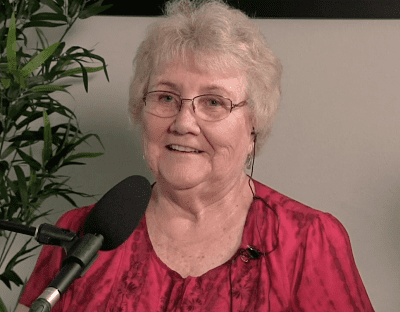
Sandra Tanner [00:06:13] I'm the great great granddaughter of Brigham Young. Brigham Young the Apostle was my great grandpa. My folks married in the Salt Lake Temple, and when I was a teenager, my mother started struggling with Mormonism and made me aware of problems. Then I met Gerald, my future husband, and he made me aware of even more problems. And we ended up leaving the church, doing deep historical research, and ended up spending our whole lives writing and researching on Mormonism.

John Dehlin [00:06:47] That's a long time to spend on one sort of thing. Are you tired yet?

Sandra Tanner [00:06:52] Yes, I'm ready to move to Hawaii and unplug.

John Dehlin [00:06:55] Are you going to do that?

Mark Crego [00:06:56] No.

John Dehlin [00:06:56] Why not?

Sandra Tanner [00:06:57] But I'm ready.

John Dehlin [00:06:58] Why not? Because you're having too much fun.

Sandra Tanner [00:07:01] Well, yeah. Well, too many people keep calling me and wanting to talk.

John Dehlin [00:07:06] Okay, well, we think you're brilliant and courageous. You're a hero and a pioneer for many of us. I know you probably don't like that hyperbole, but it's true. So welcome back to Mormon Stories.

Sandra Tanner [00:07:18] Okay, thank you.

John Dehlin [00:07:19] All right. Our second return guest for Mormon Stories podcast is none other than Mark Crego. Mark Crego is a brilliant human, thoughtful, but he is also one of the main moderators for the Facebook group A Thoughtful Faith, which is a Facebook group which is strenuously curated for people who are looking to stay constructively engaged with LDS church activity. But, Mark Crego, welcome back to Mormon Stories and give us a little bit of an intro, please.

Mark Crego [00:07:53] Well, thank you. Well, you took half my intro that I wrote out about.

John Dehlin [00:07:56] You know, reread it, because you probably say it better than I did.

Mark Crego [00:08:00] No, that's okay. I'm broadcasting live from my simulated sacred grove here in Fairfax County, Virginia. Like John said, I moderate with others a thoughtful faith support group, one of the open stories groups, and I try to support those who try to stay constructively engaged in Mormonism because I myself am active LDS in my professional life. I retired from Accenture last year, and I focused on human identity programs around the world, which gave me a chance to live in India, to work in China, and particularly in the Middle east as well, where I could. I've experienced how the one true church is a common theme among all religions. Everybody thinks that they have the one true church, and all of them have their foundation stories. And so it's interesting to come back to my own and see how much is similar and how much is in that similarity to understand how our foundation stories form who we are. But if I'm talking to somebody from another religion, particularly when I was talking to somebody about Krishna and I told them about how he allegedly died. In other words, I thought everybody thought Krishna was a mythological figure. But no, Hindus take that very seriously, as do Mormons. And so that's my perspective is that we can look at these religions and understand them better when we open our minds minds and look elsewhere. And it informs who we are and how we can learn to live better together in this world and increase our faith.

John Dehlin [00:09:33] Well, Mark, it's great to have you back and you've done a lot of the heavy lifting preparing for this episode along with the others. So we just want to tell you thank you for joining us. All right, so the other two guests that we have that might not be names familiar with you guys, the third, the first of the two is Warren Ludlow. Warren, tell us a bit about yourself and welcome to Mormon Stories podcast.

Warren [00:09:59] Thank you, John, appreciate being here. I'm a longtime listener of Mormon Stories. First time participant, I'm calling in from Fort Worth, Texas. I'm a lawyer by profession for two more days. I'm actually retiring in two days and looking forward to that. Out of all the members of the panel, I'm the non brilliant one. I don't consider myself particularly a scholar, but I have interest in some of these topics and so hopefully today I can provide maybe some perspective of the non scholar person interested in the church. Born and raised in the church, but never a total believer. I have tried to be one of those that on the progressive side, trying to get the church to be a little bit more inclusive. That backfired and there were some circumstances that essentially caused me to leave. And so I have not attended church much recently but would still like to see the church do some good.

John Dehlin [00:11:04] Warren, are you able to tell us just a tiny bit about the stuff you've been involved with in Dallas or do you need to not talk about that?

Warren [00:11:14] Oh, well, I'm happy to talk about that.

John Dehlin [00:11:17] Specifically with the prep that you did for this first vision ties to what I'm talking about.

Warren [00:11:22] Okay, sure. Our stake is doing something that's a little bit unique. We are having a gospel topic discussion class, a study group, even though they are supposedly evil. Our stake president is heading this up and each month we take one of the gospel topic essays and have a discussion about it. It's attended by the whole spectrum, everyone from who's a faithful believer to those that are questioning, those that are out and everything in between. I was asked to lead the discussion, the very first one we had, which was on this topic, and I was asked to prepare the materials for that discussion. And so that's why I guess I'm here on this panel.

John Dehlin [00:12:07] And I just think that's super cool that in various places within the LDS Church in 2018, they're experimenting with Sunday school classes that tell the truth and that allow for open inquiry and discussion. I think we need to shout from the rooftops that that's happening and hope that other stakes follow suit. What were you going to say?

Warren [00:12:29] I was going to say calling it a Sunday school class is a little bit misleading because we do it at night. We tried to have some of these discussions in our Gospel doctrine class, and I was the teacher at that time, and because of some of the things I brought in, I was summarily released from that calling. But we were able to pick it up in these evening discussions.

John Dehlin [00:12:51] But it is stake sanctioned, right?

Warren [00:12:53] Yes, yes. Our stake president is very supportive of it. We hope it continues. We're worried that it might not. We've gone on hiatus for the summer, and we're worried that maybe it won't pick it back up in the fall, but we're hoping that it does.

John Dehlin [00:13:12] All right, so kudos to that stake and stake president. Do you want to mention the stake or stake president? Would you rather not?

Warren [00:13:18] No, I'm happy to do so. I actually asked him if he had a problem with me mentioning his name in the stake, and he did not because he's been very supportive of this. This is the Colleyville stake in Texas, which is in the Dallas area. Mark Godfrey is the stake president, and essentially it was his idea and very supportive. We're worried that he's maybe getting some pressure from above. He has sent out a survey to see how this class may be strengthening ties to the church. And I get the sense, and this is just me speculating, that maybe someone is putting pressure on him and he's trying to show that this is a worthwhile program.

John Dehlin [00:13:58] And my own personal shout out to Mark Gottfredson. When I worked at Bain Co. From 1993 to 1994, Mark was one of the managing partners there at Bain. So Mark and I go way back. So. Hi, Mark. I hope you're listening. Much love from the former Bayney.

Warren [00:14:14] Yeah, he's a good man.

John Dehlin [00:14:16] Also, shout out to Jamie Hannis Handy, who's joining us as one of our listeners. We love Jamie. She's in Dallas as well. She says that, Warren, you did a great job preparing those discussions.

Warren [00:14:27] Thank you. Jamie.

John Dehlin [00:14:28] Jamie, we want you back at Mormon Stories. Where have you been? Okay. The final panelist that we want to invite today is the person that I know least anything about. I think I know literally nothing about this person other than their name and the fact that they made some really interesting posts in the Mormon Stories podcast community. His name is Johnny Stevenson. Johnny, who the. Who are you?

Guest [00:14:56] I'm an independent researcher and writer on Mormon history. I was a member of the church years ago, left the church in the

John Dehlin [00:15:09] 80s

Guest [00:15:11] over some doctrinal differences I had. And I've just. Just been writing and researching Mormonism and been published in the John Whitmer Historical Journal, and that's about it.

John Dehlin [00:15:30] And your topics of interest have been what your publications have been around, what

Guest [00:15:37] baptism for the dead, polygamy, things that are interesting that we know, maybe not all of the history about it. Dang it.

John Dehlin [00:15:53] All right, all right, Joni. Well, we're really glad to have you here, and we look forward to your participation. We also want to thank everyone who's joining us live on Facebook Live. We've got almost 100 people joining us live right now. That's a good number. We hope that number climbs. If you want to right now, listeners, please post to your Facebook page, your profile or whatever. Hey, there's an awesome conversation going on right now about the first vision with some amazing people. We'd love to have as many people joining us live as possible because we want to hear your comments and questions, your feedback, your perspective. It just makes these conversations much more interesting. And there's always amateur professional historians out there that can add to the conversation. So James says, hello, greetings from Clearfield. Julie says greetings from the UK and we just encourage everyone else. Thomas says, great topic, fantastic panelists. So please share your comments and questions with us. And now we'll dive in. So I think it makes sense to go ahead and begin by reading this article. That kind of caused a bit of a, I don't know, indigestion or outrage. I don't know which one we want to say, but it's an article that gives us a good excuse to do a deep dive into the first vision, which we want to start doing. A lot of people on Mormon Stories podcast are feeling like we've stopped covering the truth claim stuff, and that's true. So it's time to get back to them. So over the coming months, we're going to be doing more episodes like this with your support, so look forward to that. But what I'm going to do is I'm going to start reading this article by Daniel Peterson, and the first thing I want to do is Go around the panel and ask everyone to give sort of a few sentence summary of what they didn't like about this article, just at a very high level. In other words, emotionally. Why did this sort of pique your interest or concern? Sandra, we'll start with you if you had to summarize.

Reacting to the Apologetic Article on the First Vision

Sandra Tanner [00:18:00] Well, the first paragraph just really grated on me because he said that the critics are inventing problems and there wasn't any cover up of the first vision story. And my experience in the 50s and 60s is completely opposite of how he's portraying things.

John Dehlin [00:18:20] So Daniel Peterson's article made you feel what?

Sandra Tanner [00:18:24] Angry.

John Dehlin [00:18:25] Angry. Okay, so we've got an angry Sandra Tanner here. That's never good. This is a woman you don't want to make angry. Mark Kriegel, what was your emotional response to this article?

Mark Crego [00:18:35] Yeah, I felt like I was being gaslighted a bit, you know, like, hey, there's no problems. We've known about this for many years. You know, this was widely published in the 1960s. So what's your problem? Get over it. No, no, I'm sorry. There's, there's a lot to be understood and learned from the first vis. And, you know, just pasting over that and then using the straw man of how critics are always gleefully, you know, pointing things out and relishing over the differences. And no scholars do that.

John Dehlin [00:19:05] So it was really.

Mark Crego [00:19:07] Yeah.

John Dehlin [00:19:08] So when you're gaslighted, Mark Kriegel, you feel what?

Mark Crego [00:19:11] Well, I feel like my opinion doesn't matter. Just get in line.

John Dehlin [00:19:16] Okay. And you don't like that feeling? No. All right. Warren Ludlow, how did you feel reading this article?

Warren [00:19:23] Two things. I agree with Mark. I agree with Mark. As far as the gaslighting. In our class, we sort of informally asked people when they first heard about the various counts of the first vision, and maybe a fourth of them were aware of it before the last 10 years, but the overwhelming majority knew nothing about it until CES Letter and the Gospel topic essays came out and so forth. So I was disappointed about that because it made many people feel very marginalized. And the other thing I didn't like about it is he says, well, all these accounts are consistent, and the two main accounts that we'll talk about more today are anything but consistent. And so I took that as just basically a misleading.

John Dehlin [00:20:17] Okay, misleading. And that made you feel what, Warren?

Warren [00:20:22] Disappointed. A little bit angry. As a lawyer, I thought, okay, that's, you know, basically you're, you're stating a position that you think you can defend, but you really Can't I get tired of those kinds of stances?

John Dehlin [00:20:37] All right. And you, Johnny, how did you feel when you read this article?

Guest [00:20:43] Well, I, I felt like Dan Peterson wasn't, you know, being thorough enough with his, the way that he presented it. I was disappointed in the way that, that he omitted things or glossed over things. You know, he quotes a person that says, well, the Savior appearing in the 1832 version without the Father is really much ado about nothing. These kinds of things, just shoving things to the side and not really addressing them. The article was not long too, you know, there was nothing there in terms of, you know, references or explanations for things. It was a very short article that just, I think he just wanted to poke at critics of the first vision.

John Dehlin [00:21:49] All right. Okay. Well, let's get into it. Thanks for everyone for giving your kind of emotional reactions. Let's go ahead and start reading the article. We're going to, this is what we're going to do. We're going to read the article. We're going to pause at various points, give our assessment of unfair or dishonest or unkind or deceptive tactics. We're not going to dive into the actual first vision in that part, in this early part. And then as soon as we're done sort of unveiling the deceptions, the disingenuousness of Daniel Peterson and apologists like him, then we're going to do a deep dive into the first vision history and talk about what are the accounts, what do they say, why they matter, what matters, what doesn't, why this is or isn't a concern. And we may even get to a part where we can discuss, you know, for people who no longer believe in the LDS Church, why that's a credible, you know, why this is a credible concern for them. But also, I believe we can also get to, for those who do believe or do want to stay engaged. You know, in Mark Kriego's case, Mark helps co manage a thoughtful faith, which is for people staying constructively engaged. Why someone who even cares about people staying engaged in the church feel like a different approach needs to be taken to the first vision, a more helpful approach. So we're going to get to all that. So this will be a multiple hour surprise. This will be a multiple hour Mormon Stories podcast episode. Maybe we can do this in two hours. We'll see. All right, so the article is defending the faith, the supposed Scandal of Multiple First Vision accounts. Published by DeseretNews.com on May 31, 2018 at 12:32pm and Mark, I'm going to ask you to stop me each time. And we'll just do a round robin with the panel for each little part that I read. Let people give their reactions. Don't add. If somebody's already said something, feel free to skip that part and just say me too, or add, but let's try and not have it. So the panelists are kind of repeating what's said. All right, so Daniel Peterson writes, certain critics of the Church of Jesus Christ of Latter Day Saints gleefully point out that at least four different first person accounts of Joseph Smith's first vision are known to exist. This, they argue, demonstrates that Joseph simply couldn't get his story straight, which in their minds suggests that he was just making it up on the fly. Moreover, they claim the LDS Church has sought to hide these differing accounts, which proves it to be dishonest and thus unreliable in its assertions. Not only on this subject, but more generally. I will now pause.

The Scandal of Multiple First Vision Accounts

Warren [00:24:51] So.

Mark Crego [00:24:52] Right. So I like what Sandra said at the beginning is that affected her, that first paragraph. And I see this as being a caricature of the evil apostate. In other words, this is something that I've seen our friends from the apologist community do quite often. They create a caricature strawman of the apostate and then using a ridiculous argument to dispel the apostate. No, scholars actually, you know, believe all the things that he's saying in this first paragraph. They certainly don't go around gleefully, you know, enjoying the multiple visions they're puzzled by, like many people are. And to caricaturize the critic that way kind of diminishes our feelings. Sandra, what do you think?

Sandra Tanner [00:25:40] Well, I think if you look at our earliest publications when we were struggling as just a young married couple trying to figure out what really happened at the beginning of the church. And you see what we write at that time period in 1959 and 1960, this was a serious study. It was not something we were just gleefully throwing out a bunch of ridiculous arguments on. This was a serious study on our part. I mean, it led to meetings with my bishop, letters to Joseph Fielding Smith, interview with Le Grand Richards. We were trying to find what the earliest records were. It was, I mean, we may have gleefully later written about some of this, but at the time it was a serious study that we were staking our religious position on. Were we following the truth? This was a very serious thing. And to have Peterson dismiss all of that as though everyone was just gleefully inventing things is I find very disrespectful to the serious study that we really

John Dehlin [00:26:53] did and continue to try and do.

Sandra Tanner [00:26:56] Yeah,

John Dehlin [00:26:59] brilliant. Warren, do you want to add anything?

Warren [00:27:02] Well, I agree with what's been said. I guess I would only emphasize that, you know, most of the people I know that are, that have gone through or are going through a so called faith crisis, I mean, they don't see themselves as critics. They are searching for truth. And to be sort of thrown into the category with very anti Mormons really bothers me. And secondly, the second part of that, I truly disagree with the church being open up front because that certainly has not been my experience as far as this coming out timely. And even when it first came out broad publication, we still haven't seen anything about those different accounts of the first vision in any of the correlated materials. So I'd look at that as just absolutely a false statement.

John Dehlin [00:27:54] All right, Johnny, do you want to add anything?

Guest [00:27:58] He generalizes too much to begin with. He says four different first person accounts. Well, if you take the 1838 account, there's actually many drafts of that account. So would each draft be considered a first person account by Joseph Smith? Since he probably dictated all of it and put it together, the rest of it has been answered very well.

John Dehlin [00:28:26] And Mark, you talk about the straw mans that he tries to assemble or the straw men that he tries to assemble here in this first paragraph that Joseph couldn't get his story straight. That suggests that Joseph was making it up in the fly that the church sought to hide. That proves it to be dishonest and unreliable. Are there straw men in that that bother you?

Mark Crego [00:28:56] Well, it's how you assemble together to characterize that this is what certain critics are embodying. And Dan is nothing if not subtle about it. But ultimately what he's trying to construct is that if you're in this category of holding any of these things, then you're one of these critics that ridiculing the first vision. So the straw man is the assembly of that and characterizing of that as being what the critic's position generally is. While the word general doesn't appear there, it's the first paragraph, it's presenting his argument, it's his hypothesis about here's what critics say and what I'm going to submit is very few critics take all those things and lump them together into one gleeful bundle. And that's the straw man is when you put it all together and you characterize that as being the prevailing critics

John Dehlin [00:29:46] argument and isn't that a way to kind of poison the well? To basically say absolutely, go ahead.

Mark Crego [00:29:51] What do you mean absolutely? When I say poison the well? It basically says when somebody is gleefully rejoicing in Mormons displeasure about something or discomfort about something, then they're one of them, the dehumanized critics, the apostates, the anti Mormons, those others that don't get it, you know, so it's, it's very much of a dynamic of trying to create this divide between the faithful, the believing ones, in fact, you'll use that term later on, and the ones that are not. And therefore if you're not, then there's nothing valid that you can say.

John Dehlin [00:30:29] And Mark, if you didn't reiterate this, I want to. If you didn't. If you didn't mention this, I want to reiterate it. You still attend the LDS Church, right?

Mark Crego [00:30:37] Oh, yeah.

John Dehlin [00:30:38] And you still consider yourself a believer, at least in some shape or fashion, right?

Mark Crego [00:30:44] I use the term faith. I'm not sure that belief is part of what my spectrum is, but I have faith, which is the ability to work in a community on the basis that I don't know the answers and I'm willing to work with that.

John Dehlin [00:30:57] Yeah. So it's not like, at least in your case, you're, you know, as he would dismiss an ex Mormon with an axe to grind. You're an active member, you know, with the church membership and who is not only constructively engaged in the church, but actively encouraging other Mormons to constructively stay engaged with the church. Is that fair to say?

Mark Crego [00:31:21] If that's the choice that works for them, that's fine. There are those, for example, my gay family or friends that can't do that. I don't recommend trying to make it work when it's something that's toxic for you. No, if it's working for you, then there's ways to find ways to make it work. And the same here with this first vision. I think that when we look at the all or nothing proposition, I'm saying that faith is not to have perfect knowledge. It's that we hope for something and importantly, that we can't see. Which means that it's not an objective empirical problem, but it can't be false. So to have belief in something false cannot be faith according to our scripture. So to me, that's what the difference between faith, faith and your normal Mormon testimony is, that too often we know things that are simply not true, cannot be true.

John Dehlin [00:32:17] Right. And my only point was in terms of credibility the fact that you're an active, engaged member, encouraging others who feel called to do so, to stay and remain active and engaged in constructive ways, I think that's meaningful. And Warren, you're still a member of record, is that right?

Warren [00:32:35] Yes, that's correct.

John Dehlin [00:32:36] And you do attend on. Still attend on occasion?

Warren [00:32:39] On occasion, yeah. I. I still love the. Still love the community and the people there. So I have. I've not given up on that. At least not totally.

John Dehlin [00:32:48] Okay, let's jump to the second paragraph, which is one sentence. On the whole.

Mark Crego [00:32:53] You can read the next two. Okay.

John Dehlin [00:32:55] On the whole, though, such. This is Daniel Peterson. On the whole, though, such. Such critics are creating difficulties and fomenting scandal where, in fact, none exists. Two accounts of the first vision, which is when he prayed in a grove of trees about which church to join, and Heavenly Father and Jesus Christ appeared to him, were published during Joseph's lifetime. One generally known today as Joseph Smith History, was canonized as a part of the Pearl of great price in 1880 and is accordingly, by far the most familiar retelling among church members.

Mark Crego [00:33:34] Mark, Good place to pause. I mean, so I'm going to have two quick things to say about this. The idea that he's saying critics are creating difficulties in fomenting scandal when there in fact, none exists. Well, there are differences and there are difficulties in the various narrations. And for him to dismiss that is, again, gaslighting and just simply not true. I think he is correct in pointing out, however, that the first vision that is, is the one that we all accept as members of the church is really pivotal. In 2002, Gordon B. Hinckley basically said that narrative is pivotal to our understanding of the church. So he's putting his anchor into that first vision, that story that we have in our scripture, which Gordon B. Hinckley says that he's either true or false. It's either the one that we accept or it's all fraud. And I think that we're going to find in our discussion later in this, we're going to find that to be problematic. So he's presenting the case that this is the first vision that everybody knows. And I like what Warren said, is that in the correlated curriculum, that's the only first vision story that exists. And I think that's important.

John Dehlin [00:34:49] There's also very much. These are not the droids you're looking for attempt in that first sentence. Right. Fomenting scandal where in fact, none exists. It's a very invalidating statement, basically saying anyone who's concerned about this is just making stuff up. Sandra, do you have a response to those two paragraphs?

Sandra Tanner [00:35:11] Well, that's exactly the problem we had when we raised questions about the First Vision. It was gaslighting to us. Just, there's no problem here. Just move on. And when we tried to see original documents, then if they weren't available, they're too sacred to get out or it'll damage them. There were all sorts of reasons why no one could get into the documents. We were just told to accept the current position and move on.

Warren [00:35:42] Yeah.

John Dehlin [00:35:42] And if there's no scandal, why is there an essay on the first Vision? Why is this listed by ex Mormons and questioning Mormons as one of the biggest issues facing them? Why was it in the CES letter like it's clearly an issue? Warren, do you want to add anything?

Warren [00:36:00] No, I think Mark and Sandra and you, John, covered it pretty well.

John Dehlin [00:36:04] Okay, Johnny, All I have to say

Guest [00:36:07] is that if we're the ones that are creating the difficulties and scandal, why has the Church been so slow to release documents? Why did it take until the 2000s for the Joseph Smith papers to begin releasing all the documents that have to do with Joseph Smith? I think that the problem doesn't lie with the critics, it lies with the Church. And though they're slowly rectifying that, it took a long time for them to do so. And I think there was difficulty and they had to work through some issues before they could release this stuff and let us know what was going on. One set of documents, a draft of the first vision, wasn't released until 2005 because it was in the First Presidency's vault. So there are problems here and they're not being created by critics of the Church.

John Dehlin [00:37:04] And we're going to get into that because he seems to suggest in this article that. That the Church has been very forthcoming. So we'll talk about that. So I'll read the next paragraph. Two other accounts recorded in Joseph's earliest autobiography, as well as in a later journal were essentially lost and forgotten until the 1960s, when historians working for the LDS Church rediscovered them and very quickly published them. Since that time, these various narratives of the first vision have been extensively discussed by Latter Day Saint leaders and scholars, not only in academic journals and books published by Brigham Young University and other Church affiliated presses, but beginning at least with James Allen's April 1970 article on the subject in the Improvement Era in the Church's official magazines. So take that, Mark Crego. This has been discussed as early as the 19 as 1970 in church publications.

Mark Crego [00:38:09] Right. So that's true. James Allen did publish in the improvement era in 1970. However, the idea that the version that we're going to be talking the most about in this discussion later on was lost and forgotten until the 1960s, and then, when discovered, was very quickly published by the Church is a blatant false statement. It is a lie, a complete lie. Sandra, just briefly highlight this because we'll go into it later. But just why do we know that that's false?

John Dehlin [00:38:49] Summarize the lie for us, Sandra.

Sandra Tanner [00:38:52] Oh, wow. Don't know where to start with all that.

John Dehlin [00:38:57] And we'll get to it more in detail later.

Sandra Tanner [00:39:00] Well, I asked for a photocopy of Joseph Smith's first vision in a copy in his own handwriting from Joseph Fielding Smith, clear back in 1959, and was just castigated for asking questions and was refused to give any documents about the first vision. So by who? By Joseph Fielding Smith.

John Dehlin [00:39:27] You had a direct exchange with him?

Sandra Tanner [00:39:30] My bishop sent a letter to Joseph Fielding Smith for me in which I requested a copy of the first account of the first vision in Joseph's handwriting and was told no, he wouldn't give it to me because he says, would that solve anything? No, she wouldn't believe no matter what I showed her. Kind of thing. Well, not seeing the first vision account, one doesn't know whether it would help me or not. When we later saw it, we realized why he didn't want to show it to me because it didn't help.

John Dehlin [00:40:01] Did. Did he write you directly or write the bishop directly? And did the bishop give you the letter or let you read the letter or.

Sandra Tanner [00:40:08] I was called into the bishop's office to be able to read the letter, and then I asked the bishop for a copy of it, and I received a typed copy of the letter. Okay, so they did not want to even give me a copy of the letter with his signature on it.

John Dehlin [00:40:23] Yeah, so. So, according to Sandra Tanner's story, we've got Daniel Peterson lying here. How would you say Daniel Peterson's lying then, based on what he wrote here versus your story?

Sandra Tanner [00:40:34] Well, it wasn't just that, but it was for the next 10 years, how they manipulated their history, how they told it, how they covered up. Okay. Cheeseman finally publishes the first vision in his 65 thesis, and he wants to say that from then on, the Church was openly discussing this whole thing. Well, I think the only reason Cheeseman got To see the 1832 account was because Fawn Brody and Lamar Peterson and us were all hammering them on first Vision issues that they realized they better get that account out there.

John Dehlin [00:41:12] Got it.

Warren [00:41:14] Okay.

Mark Crego [00:41:15] That was known about since 1943 or earlier. I mean, there's evidence only a couple

Sandra Tanner [00:41:20] of people knew about. I mean, well, the church historian's office knew about about it, but outside of that, just a couple of people.

Mark Crego [00:41:26] What I'm saying is lost and forgotten.

Sandra Tanner [00:41:29] This comment that's deliberately lost.

Mark Crego [00:41:31] Innocent. Innocent. Oh, no, we didn't know about this. Well, in fact, we have documentary evidence that they knew about it back until 1943. And I might also emphasize that the church historian, the person who managed the keys to that vault, was Joseph Fielding Smith, and he was church historian from 1921 until 1970. He was the person over this for the entire period and had no interest in getting that information out.

John Dehlin [00:41:58] And this is the account that apparently was ripped out of the book and hidden. Is that right?

Sandra Tanner [00:42:05] Right.

John Dehlin [00:42:05] And then later was taped back in.

Sandra Tanner [00:42:07] Right.

Mark Crego [00:42:07] Correct.

John Dehlin [00:42:08] Okay, we'll talk more about that. All right. Warren, you want to add anything?

Church Suppression and the Ensign Article

Warren [00:42:13] Yeah, just a couple of things. First of all, this was the paragraph of the article that I struggled the most with for a number of reasons. One, when you look at the Allen article that was published in The Ensign in 1970, he has a nice little chart in there that, if you're a casual reader, what he does is he puts little X's on the similarities between the different accounts of the first vision. If you look at that chart and nothing else, you say, oh, yeah, they were all basically consistent, but you have to really dig in to see where the differences are and if those differences are important, and I think they are.

John Dehlin [00:42:54] Secondly, you're saying the Improvement Era article by James Allen in 1970 was misleading.

Warren [00:43:01] Well, I don't know if it was misleading, but it was incomplete, and it focused only on the similarities, not on the differences. And of course, it's the differences that are important. The other thing about this paragraph that I really disliked is the comment, and I'm paraphrasing here, that once it came out, we've been very upfront and open and so on. Well, you have the article in 1970 in the Era, and I don't think anything of an official church publication about these really came out until the Gospel topic essays. But for the casual person, they don't know that they. Casual person, meaning the casual member, they don't know that they exist. Even when you go to look for them, they're hard to find. You have to really know what you're looking for, and so on. And as a perfect example, in a conversation with my bishop. I asked if he had read the essays, and he said no. So saying that it's widely known and widely disseminated information, I think is just

John Dehlin [00:44:05] inaccurate, what if someone's to say, well, that's your bishop's fault that a lot of apologists do this. They say, look, it's the church's job to put it out there. It's not the church's fault if the members aren't curious or if the members don't read or if the members don't care. That's on them, not on church leaders.

Warren [00:44:25] Well, I think members do care, and I think if they knew some of the discrepancies or some of the differences in the accounts, they would be more interested and would want to search further. And that's what a lot of people, as we know, have done. And look where we are.

John Dehlin [00:44:41] Okay, Johnny, do you want to add anything?

Guest [00:44:44] Nope.

John Dehlin [00:44:44] All right, we'll keep reading. Mark Kriego stopped me when you want to, Kay. Critics of Mormonism observed Stephen Prothero, a non Mormon scholar of religious history at Boston university, in his 2003 book, American Jesus how the Son of God Became a National Icon. So critics of Mormonism have delighted in the discrepancies between the canonical account and earlier renditions, especially one written in Smith's own hand in 1832. For example, in the 1832 version, Jesus appears to Smith alone and does all the talking himself. Such complaints, however, are much ado about relatively nothing. Any good lawyer and Warren, you can confirm this. Any good lawyer or historian, John Johnathan Johnny, would expect to find contradictions or competing narratives written down years apart and decades after the event. And despite the contradictions, key elements abide. In each case, Jesus appears to Smith in a vision. In each case, Smith is blessed with the revelation. In each case, God tells him to remain aloof from all Christian denominations as something better is in store.

Mark Crego [00:45:55] Well, there's so many problems with that, it's hard to begin.

John Dehlin [00:45:58] He's appealing to a non member to make our case. That's novel, right?

Mark Crego [00:46:02] Well, that's novel, but it's saying the same thing that he's saying instead of gleefully. It's to have it delighted in the discrepancies. No, it's understanding the difference. But let's look at a couple other things. First of all, you did miss a paragraph just before that. And the statement that I want to read from that is, Peterson. There has been no scandal, no suppression, and the often exaggeration of not altogether, if not altogether invented, discrepancies between them that have been thoroughly examined. And we'll see in our later discussion how that's simply not true. But there's some. Something's really, really important that Stephen Prothero is making that's just not true. God does not tell Joseph Smith to remain aloof from all Christian denominations. In the 1830 account, he's only forgiven of his sins. He is told that the. That all people have gone astray. But so also does the Old Testament say that all we, like sheep, have gone astray. So it's a scriptural admonition that, you know, humankind tends to go astray. Great. There is nothing about this, that there's. That there's no true church on the earth. Joseph Smith had already made that conclusion before he went to the 1832 Grove, you know, vision sort of story. And there is nothing in any of the accounts that talk about as something better is in store. There's no promise of a restoration of the gospel here. It's simply that the churches are wrong. And so there's a lot here that even this quote that Dan is using is simply not accurate to what the vision stories are and certainly negates the differences that we'll see later on.

Guest [00:47:49] Well, it seems to me that what the apologists try to do.

John Dehlin [00:47:55] Am I. Yeah, go ahead, Johnny.

Guest [00:47:58] Yeah, it seems to me that what the apologists are doing is they. They find somebody that's kind of sympathetic to their. To what they want to explain and they plaster it all over the Internet. I've seen this quote by Stephen Prothero everywhere in every First Vision article or, or defense of the first vision because it's sympathetic to what they're trying to explain. But Prothero I don't think, knows a lot about Mormon theology or history. I think that he wrote a few things about it, but he hasn't studied it in depth or he wouldn't make the statement that he's making that just Jesus appearing to Joseph Smith is much ado about nothing. The fact is, is that they were teaching in 1832 in the church that the Father and the Son were one person. So it is much. There is much ado about it. And the other thing is that they seem to want to go to a secular argument when it suits them, for example, the lawyers and the memory. Yet Joseph Smith and others teach that the Holy Ghost can bring all things to your memory, that you would remember everything that God says. I have some quotes I'll give later, but I was thrown off by how they want to do secular and religious things. And when the religious argument doesn't work, they turn to secular arguments, Right?

John Dehlin [00:49:41] Yeah. They're not going to turn to Michael Coe to discuss Book of Mormon, Mesoamerican archaeology and anthropology. They're not going to turn to. Is it Michael Rittner? Is that his name? Rittner, the Egyptologist in Chicago who could speak very well to the validity of the Book of Abraham. They're going to pick secular people. Cherry pick secular people who are often some of the least informed about a particular issue, and only if it bolsters their cause versus a fair treatment of. Of the issue with experts who would know.

Mark Crego [00:50:20] It must be phenomenally difficult to find any. Any expert anywhere that can attest to the Book of Abraham, by the way.

Sandra Tanner [00:50:26] I mean.

John Dehlin [00:50:26] Yeah.

Mark Crego [00:50:27] Anyone.

John Dehlin [00:50:28] Yeah. So, Warren, any good lawyer would expect to find contradictions or competing narratives. Anything to add from what we've already said, given you're a lawyer and a good one, I'm assuming.

Warren [00:50:41] Yes. From the lawyer perspective, he's right. In that narrative testimony, you just can't rely on it because unintentionally, we as humans tend to make things up. We fill in gaps, we. We want reasons for why things happen and so on. And so as a lawyer, you're always looking not only for the narrative testimony, but for corroborating evidence as well. But the problem with the statement, or one of the big problems with the statement, is if you have to rely on memory for your witness, you would rely on the one that was closest to the event and the one that was handwritten by the person experiencing it. And therefore, we should have more faith and trust in the 1832 version than we should in the later version that the church now relies on.

John Dehlin [00:51:34] So any good lawyer would say, trust the earliest account.

Warren [00:51:37] That's correct.

John Dehlin [00:51:38] And I would add, any good historian would do that as well.

Warren [00:51:42] That's correct, yeah.

Guest [00:51:43] And the name of the Egyptologist that you were referring to, John, is Robert Ritter.

John Dehlin [00:51:48] Robert Rittner. Apologies. I've actually reached out to Brother Rittner, Dr. Rittner, for to come on Mormon Stories. So we'll see if that happens. Thank you for joining us today on Mormon Stories. If you enjoyed this episode, please help us make more like it by becoming a monthly subscriber@mormonstories.org. I hope you'll be wiser than your daddy was. Wiser is a song written and performed by Mormon Stories listener Russell Ash, a message intended for his children to have love and kindness be their guiding star.

Examining the Gospel Topics Essay on the First Vision

Part 2 of 3 · Ep. 945

John Dehlin [00:00:11] Your mom and me, we've seen this life with eyes that only see in black and white. Mormon Stories is a production of the Open Stories foundation and relies solely upon the support of people like you, its listeners to help keep the podcast alive or to become a member of the community. Please become a monthly subscriber by visiting MormonStories.org and clicking on the Donate button on the right side of the page under support. All contributions to Mormon Stories are completely tax deductible in the United States and go towards producing the podcast and building communities and programs of support for Mormons like you. Thanks for your support. Tune me out if you must

Sandra Tanner [00:01:09] I know you've heard enough

Mark Crego [00:01:14] But I sing

John Dehlin [00:01:15] this song Just because I hope you'll be wiser than your daddy was I hope you'll be wiser than your daddy okay, should I keep going, Mark?

Warren [00:01:30] Absolutely.

John Dehlin [00:01:31] In fact, this is Daniel Peterson. In fact, some criticisms of the first vision accounts, and perhaps Protheroe's own sympathetic observation itself, reflect simple logical error. For example, if the 1832 account mentions Jesus only, that doesn't mean, contrary to certain critics, that the Father didn't appear. And if an account describes a vision of angels, that's entirely compatible with the vision of the Father and the Son also, in fact, the Lord himself is sometimes referred to biblically as an angel. As a parallel, if I say that I met Frank at the party, I'm not thereby denying that I also met John, and for that matter, Jane, Bob, Ellen, and Stan as well. Sandra, you want to start with that one?

Sandra Tanner [00:02:18] Okay. When I went and talked to Legrand Richards, and we later wrote up about our event of meeting with him and where it was all about the first vision. But when I wrote up the story, I only say that Legrand Richards is there. So then, if some years later, I wrote up the account and I said, oh, by the way, the president of the Mormon church, David O. McKay, was there as well, I would think people would be a little skeptical that I hadn't mentioned the first time around that the president of the church was sitting in the room with Apostle Richards. It just seems incredible to me to think that if you were really the only person in history that sees the Father and the Son, that you wouldn't mention the Father. It just is beyond my comprehension that something that astounding could be passed over so glibly as, oh, well, whether it was Jesus or angels, you know, it doesn't matter. It's all same thing, right?

John Dehlin [00:03:18] And, you know, Richard Bushman even makes this sort of argument, but you're right. And we'll talk later about why God wasn't mentioned. There's actually a very concrete reason why he didn't mention God in the 1832 account. Correct? Mark, do you want to give a foreshadowing there and then we'll go into it more?

Mark Crego [00:03:34] Right. So Sandra's point is correct, is that the most material and distinctive aspect of having God as a physical presence is with body would be a non trivial sort of thing. It's not something that somebody would overlook. And he certainly would have had an understanding of God that would be consistent with that from that moment forward. And what we're going to find from the evidence is that Joseph had no such perception about the nature of God all the way until at least 1835. And then even then it was distinct from this two physical personage until it's fully documented in the 1840s. So we'll trace that later on. I think we can move on John and finish up the article because I think that the major issues are going to be repeating themselves. But the important thing is in the next little bit what Dan is doing is he's quoting the Gospel Topics essays. And the Gospel Topics essays, for all intents and purposes are a collection of the same apologist arguments about the first vision into a coherent and church approved narrative. So when we say that if the apologists themselves are misleading, if Dan Peterson is misleading, we can say, well, that's not an official spokesman for the church. Well, in fact the Gospel Topics essays echoes these same same misleading statements. If you want to go ahead and read that last portion of the the

John Dehlin [00:05:01] official Gospel Topics essay on the subject from the LDS Church and online@ LDS.org titled First Vision Accounts provides a judicious and historically informed perspective. Quote this is quoting the Gospel Topics essay on the First Vision. The various accounts of the first vision tell a consistent story, though naturally they differ in emphasis and detail. Historians expect that when an individual retell and experience in multiple settings to different audiences over many years, each account will emphasize various aspects of the experience and contain unique details. Indeed, differences similar to those in the First Division accounts exist in the multiple scriptural accounts of Paul's vision on the road to Damascus and the Apostles experience on the Mount of Transfiguration. Yet despite the differences, a basic consistency remains across all the accounts and of the First Vision. Some have mistakenly argued that any variation in the retelling of the story is evidence of fabrication. To the contrary, the rich historical record enables us to learn more about this remarkable event than we could if it were less well documented. And I've even heard people say the fact that his account changed proves he wasn't making it up. Because people when the accounts are too similar, then it suggests a rehearsed account versus someone sincerely giving their best effort at an account. But what's relevant about this part, Mark, is that now it's not Daniel Peterson. This is something published by the LDS Church. So how is the LDS Church misleading us in this account? Who wants to be the first to take a stab at it?

Sandra Tanner [00:06:50] Sandra no, go ahead, Mark.

John Dehlin [00:06:53] Go ahead.

Mark Crego [00:06:53] Warren.

John Dehlin [00:06:54] WARREN

Warren [00:06:56] well, I was just going to say I think Mark basically said it. I mean, the essays really just regurgitate what the apologists have said and therefore, you know, I don't think there were being totally honest when we look at the gospel essays. Sorry, I didn't say that very well, but I think you got the point.

John Dehlin [00:07:26] And is that the church's fault? If they're just regurgitating apologetics, is it the church's fault or do we just blame that on the apologies John, you cut out?

Mark Crego [00:07:37] No, I think it's not necessarily the church's fault to do that. I think that there's really two dimensions of this when we're looking at it from the perspective of did the first vision happen at all? Was there a first vision? Was there something that happened that had spiritual significance to the life of Joseph Smith? That's one question. And I think what Dan Peterson is taking as the perspective here is that the differences say that that could never have happened. So in other words, the critics are making the argument that Joseph made it up. Some in our group here will have that position, others will not. So I mean, we come from a spectrum of belief with respect to the first vision. But the more important question is completely glossed over by this argumentation. And yes, because it says it tells a consistent story, then people will revert to the 1838 version as being that is the definitive record of what happened and the others are just minor variat from that. But no, the first vision stories do not tell a consistent story. They are wildly different in purpose, in doctrine, and in intent and meaning. So we'll look into that in our next section here. John but the point being is that it's misleading because the purpose of the Gospel topics essays, for all intents and purposes, is to inoculate and say it's okay. All these wonderful scholars have looked at this and said it's okay, and they're smarter than you are. So you member can be assured that The First Vision is exactly how we said it is in our scripture. And I think that there's something very, very different that we can learn if we do a deeper dive.

Mark Crego [00:09:29] And plus, I believe that the topics were all approved by the hierarchy of the church.

Mark Crego [00:09:38] Sure.

Sandra Tanner [00:09:40] Yes. The writers of the Gospel Topics know who their employer is, and they're going to write their article to address the conclusions of the LDS Church. And while the Gospel Topics essay on the First Vision does link you to the Joseph Smith papers, where you can see some of the different accounts, the average reader doesn't have the background to see what the problems are by just looking at the raw data. They've been trained to think in terms of looking for the similarities. They haven't thought about or been challenged by what are the differences.

John Dehlin [00:10:28] Very true. All right, any final comments from our panel? We're going to read a few comments from our listeners, and then we're going to actually end this segment and start segment two, which will be the deep dive. So any final comments from our panelists before we read a few listener comments or questions?

Warren [00:10:49] Just one comment, John. An experience in our class that is focused on the Gospel topic essays. No one wants to just in that class, no one wants to limit the discussions as to what's in those essays. So every person who's led the discussion has done this deeper dive, and that's where the learning, that's where the real discussions have taken place.

John Dehlin [00:11:16] All right, anyone else?

Sandra Tanner [00:11:17] I can't imagine any stake here in Salt Lake doing such a study.

John Dehlin [00:11:24] Actually, I am aware, at least in Alpine, of a ward that has done kind of a more nuanced Sunday school. They've at least experimented with it. So it has happened. I don't know if it's still happening. If any of our listeners want to let us know if it's happening in their ward or branch, we'd love to know about it. Okay, well, I'm going to just share a few comments that have been shared by our listeners. Let's see. So Melinda writes, there's a reason he only mentioned Jesus in his first account. She's giving us a foreshadowing. As would be the custom in traditional Christian teachings, if you saw Christ, you would have seen the entire Godhead. They were all three parts of the same being, as stated in the fifth lecture in the Articles of Faith. In the Lectures in Faith, he thought he was mentioning all three entities until his doctrine later changed. Melinda, you're foreshadowing the next discussion. Thank you for being so brilliant. Mark reminds us that It's Robert Rittner, not whatever I said. Martine writes, once again this is about the American church, not the worldwide membership. BYU Studies and other independent publications were not and still are not available to non English speaking members until the Internet. They were not even available to members in the UK or Australia or any other English speaking members not in the US or Canada. A perfect example is Hans Mattson who was interviewed on Mormon Stories podcast and will be interviewed again if I have anything to do about it. Hans Mattson served a mission in the uk fluent in English, but couldn't really access non correlated materials until the Internet and he became an area authority. 70 for the church. Former Stake president Right. If he didn't know, I don't think we can always blame the members for not knowing. So that's gaslighting and disingenuous apologist Daniel Peterson for making that sort of claim. Blaming members for not being aware is disregarding the facts of church membership outside the Wasatch front, says Martine. Every members in other parts of the US wouldn't have been aware. Even members outside sorry, even members in other parts of the US would not have been aware. Martine went to church every Sunday, read correlated materials during the week to prepare for teaching next Sunday. All right. John Hicks writes, if I tell people I met the Vice President at a party, everybody can then correctly assume I also I didn't also meet the President. That's what John Hicks says. That's reflecting the point that Sandra made. Mark says, I'm sorry, if I see God, not Frank, I'm going to remember that this is God G O D and if I see a son, that is earth shattering. Amen. Sandra. So Mark, Sandra, Mark agrees with you. How does that feel to have Mark agree with you?

Sandra Tanner [00:14:18] Right on.

John Dehlin [00:14:20] Marie writes, I'm a non member who married into a very conservative Mormon family. I have quite a varied view of what I hear and experience. The family is kind to me, so I have nothing negative to comment about them. But as for the Church's teachings, when I attend baptisms or other occasions, I feel they teach unworthiness to outsiders. I hear what they say and know the family is oblivious to the effect it gives out. I am also constantly snubbed by some, including bishops. This is why I listen to your podcast, to get more understanding. So glad you're here, Marie. Thank you. Mark says, true different tellings may emphasize certain aspects of history. However, material and even key elements, if discussed, should be consistent. Daniel, one of my favorite listeners writes, yes, if documents are identical, then there And Daniel has a Ph.D. by the way. If documents are identical, then there is likely copying, not remembering, but, and I learned this from studying the Crusades, I think Daniel's an expert in the medieval sort of era in the class Classics. If the level of detail and particularly particularity continues to grow across time, that usually means the story is likely being supplemented by inventions. So if the story grows over time, that that suggests fabrications or inventions. If it. If it reduces some of the details, that might not be so alarming, says Daniel. Daniel Trevor writes, Taper Dan's response is gaslighting at its finest. Calling him Taper Dan is a reference to the apologetic argument that maybe when the Book of Mormon says horse, it really means tapir, because we can't find any horse bones that match the Book of Mormon time period. So maybe, maybe it was tapirs.

Mark Crego [00:16:12] Yes, I would emphasize that Dan tends to discredit that argument, but, you know, and he thrives on sort of this spin about that stuff, you know?

John Dehlin [00:16:22] All right, so, Trevor, you've been. You've been rebuked by Mark Kriego. What? Did someone else jump in? Johnny, did you say something?

Mark Crego [00:16:30] Yeah, People just don't forget that.

John Dehlin [00:16:32] Yeah, that's true. Jesse writes, love Sandra Tanner. Tammy writes, with Joseph Smith's experience with religions from a very young age. It seems that even he would have known how groundbreaking seeing both God and Jesus would be. And we're going to get into what Joseph Believed in 1832, Tammy. That's crucial. And then finally, Trevor writes, the whole idea that someone can claim that the information has always been there and has always been available is a huge slap in the face. Saying that the church hasn't suppressed information and that there is much ado about nothing is a bit confusing when one realizes that the 1832 version of the first vision was locked in a safe for decades. He says, years and years. I say decades. Thank you, Trevor. All right, those are comments from our awesome listeners. Don't go anywhere listeners. We are just going to thank everyone who's participated so far, and we are going to end just verbally this episode of Mormon Stories podcast and thank everyone for listening. And please tune in again in just five seconds on the same channel for part two of our deep dive into Joseph Smith's first vision. We've already covered how Daniel Peterson and Mormon apologists and the LDS Church deceive or mislead its members and the rest of the world, and we will now be going to a deep dive into Joseph Smith's first vision and the multiple accounts therein. Talk to you guys in just a second. Thanks. All right, everyone, welcome back to part two of our deep dive on Joseph Smurf, Joseph Smith's first. Did I say Joseph Smurf? Joseph Smith's first Papa Smurf, Joseph Smith's first vision. We are talking about how Daniel Peterson and Mormon apologists and the LDS Church mislead and deceive its members through apologetics and specifically throughout around his treatment of Joseph Smith's first vision. We have discussed Daniel Peterson's article in length, how it misleads, gaslights, and deceives people in ways that are not only saddening and angering, but also are perceived as gaslighting. So that's what we covered in part one. Please go back and listen to part one. Read Daniel Peterson's article in the Deseret News so you can see how even the Deseret News is complicit in this misleading and deceiving people. We are joined on June 5, 2018. I'm Dr. John Dehlin. We are joined by an illustrious panel of brilliant, thoughtful people, including Sandra Tanner, Mark Crego from a thoughtful faith Facebook group. We have Johnny. It's Stevenson, right, Johnny?

How Many Versions of the First Vision Exist

Mark Crego [00:19:24] Yep.

John Dehlin [00:19:25] And we have Warren Ludlow from Dallas, who's a lawyer and a lay member who cares about this issue. We spent our time in the first episode critiquing apologists and apologetics in the LDS Church and the essay on the first vision. Now it's time to turn to the actual details on the first vision and Joseph Smith's multiple accounts. And we're just going to do that deep dive. So, Mark Crego, where do you want to begin as we discuss the multiple accounts of Joseph Smith's first vision?

Mark Crego [00:20:00] Right. It's a good point. I think that the first thing to do is to highlight really the two principal versions. I mean, how many versions panel are there of the first vision out there extant? Joni, you probably are a historian.

Mark Crego [00:20:16] Eight or nine.

Mark Crego [00:20:17] Eight or nine.

Warren [00:20:21] I've got a listing of 10.

Mark Crego [00:20:23] Yeah, but I mean, principally the two that we've looked at as being most Significant is the 1832 version, which is the one that is in Joseph Smith's own handwriting. And I will send you, Tim, the link on Joseph Smith papers for that so people can look at it. It's in the chat box there if you want to send that out to people. So the 1832 version, the major differences, and this is kind of the critical thing that we need to focus on is how different these things really are. So in the 1832 version, there are a number of things that aren't there. Now, we can say absence is not absence of evidence or whatever the reverse of that is. In other words, the idea that something is missing doesn't mean it didn't happen. We'll accept that as being a valid criticism. However, when you look at what is there, there are some fundamentally different things. The 1832 version, Joseph Smith has already decided that all churches are false. And so he turns directly to the Lord. Not for an answer to the question. There's been no. He makes no claim about the fact that there's some revival going on, an unusual excitement around religions. He doesn't talk about the going to the grove. That's fine. That's not really significant. But it is significant that he does talk about the fact that he'd been thinking about this for about four years, from the time he's 12 to the time that he's 16. He says he's in his 16th year. He is around 16 years old when the first vision is happening. And we do know that the only revival that really has evidence where Joseph Smith family actually started adhering to either the Presbyterian or the methodist happened in 1824, whereas the timing of the 1838 version of the first vision happened in 1820. So there's a real disconnect between the historical narrative of what's going on. So in the 1832 version, Joseph Smith has already decided that all the churches aren't true. And he says that in his thing, he goes to turn to the Lord not for an answer to that question, but to receive a forgiveness of his sins. So there's difference in timing, but most importantly, a difference in purpose. The second difference that we see in the first vision is the meaning.

John Dehlin [00:22:46] Mark, really quick, really quick. Is it a big deal that 16 versus 14? I mean, I remember when I read these accounts thinking, if I saw God when I was 14, that would be different than if I saw God when I was 16, and I would remember the years and how old I was and the time and the place and the details. Is that age thing a big deal? And I'll ask the panelists, too.

Mark Crego [00:23:10] It actually is. And I think Johnny's got the answer to that question, because as you approach the 1823 period and the 1824 period, which is when this is starting to happen now, you're getting into the exact same time frame that he has the first encounter with. First of all, he calls him Nephi and. And then he calls him Moroni. In other words, There's a conflation now when he's starting to talk about being 16, 17 years old, he's talking about the same time frame as the vision of the angel. Johnny, do you have some thoughts on that?

Sandra Tanner [00:23:46] Well,

Mark Crego [00:23:49] it's difficult to really match up Smith's timeline because he himself gave us clues as to when it really. As to how events actually transpired. And there is a lot of evidence to show that his encounter with Moroni or Nephi or the Treasure Guardian, however you want to phrase it, was his first encounter with, with the divine or of that kind of a nature.

John Dehlin [00:24:30] And Johnny, part of, part of the reason we think that is because there's no record of Joseph ever telling anyone that he had this first vision until 1832, including his own parents or siblings. Is that right?

Mark Crego [00:24:43] Yeah, there's no evidence out there. Now. There's, there's some that very credible scholars call like autobiographical echoes in the Book of Mormon. In the actual Book of Mormon. In the Book of Mormon, there is a reference to Mormon who grew up and had a vision of Jesus when he was 15 years old. Now, scholars like Brent Metcalfe, who I spoke to on this, have looked at that chapter and saw a lot of similarities with Joseph's actual life. And so they think that there's something to the story, that something happened with him when he was around 15 years old. So that could be construed as evidence as far back as 1829 that something was written down by Joseph Smith. But Joseph Smith could also have gleaned that from the different people that were around him at the time, like Asa Wilde and a few other people who were having these experiences and published them. He could have read them and later on incorporated that into the Book of Mormon or Mormon story. He might have taken some things from his own life and some things from what he observed. So the way that I look at it, I don't see how one can determine which are autobiographical and which are not totally.

John Dehlin [00:26:24] But regarding just the basic timeline, as far as the burned over district and the revivals and his age, Even with the 1832 account versus the 1838 account, we've got major timeline discrepancies and problems. Is that true?

Mark Crego [00:26:40] Not so much with 1832, because there's not too much mentioned about the context of the time. It's simply that he has been studying this for some time. And we know that the Smith family did study the scriptures quite voraciously. They were, you know, into folk magic. They were religious people. So it's something that Certainly was on his mind. So the 1832 version actually is quite helpful. It's probably more consistent with the time. The 1838 version has a number of problems.

John Dehlin [00:27:12] Right, right, right. I was comparing 32 to 38. Yeah, but yeah. Was someone going to say something?

Sandra Tanner [00:27:20] Well, I think that when you. I think when you look at the 1832 account, you have to keep in mind what the understanding in his community was about God. And they all, at that time would have been preaching and teaching that the Father, Son and Holy Ghost were one God. That was the Book of Mormon. God, one God. They would have not resonated with someone claiming they saw God and Jesus as two separate people. That wasn't a concept in Mormonism at the time. Which says to me, the 38 vision is an anomaly because it presents a view of God that would not have been current in the earliest period of Mormonism.

Theology of God and Jesus Across the Accounts

John Dehlin [00:28:10] Right, so talk to us about what just really quickly, just really spell it out. So people's understanding of God and Jesus at that time, in 1820, 1830, 1832 would have been what?

Sandra Tanner [00:28:22] Well, the early converts into Mormonism all came from Protestant backgrounds where they would have been taught on the Trinity, the Father, Son and Holy Ghost are one God. And that's why you read the statement of the witnesses at the front of the Book of Mormon that the Father, Son and Holy Ghost is one God. And the preface to the book Mormon, the very starting page, supposedly by Nephi, said the book came forward to the convincing of Jew and Gentile that Jesus is the Christ, the eternal God. So for Joseph to be saying something about the Father having a physical form would have gone against the earliest teachings that were in the movement.

John Dehlin [00:29:03] And in fact. But also, well, someone could say, well, but Joseph, he may have only said the Lord, but he knew that God and Jesus were different. But he was keeping that to himself because the members weren't ready for it yet. Is there. What's the evidence to suggest that both the Book of Mormon and Joseph Smith shared that the view, that the trinitarian view that God and Jesus were the same.

Mark Crego [00:29:28] Well, what's interesting is that in the messenger and Advocate, I mean, in the Evening and Morning Star In 1832, in July of 1832, they published this. Through Christ we understand the terms of which God will show favor and grace to the world. And by him we have ground of a paraiso. Access with freedom and boldness unto God. The Scriptures discover not only matters of importance, but also the greatest depth and mysteriousness. There are many wonderful things in the law of God, things we may admire but are never able to comprehend. Such are the eternal purposes and decrees of God, the doctrine of the Trinity, the incarnation of the Son of God, and the manner of the operation of the Spirit of God upon the souls of men, which are all things of great weight and moment for us to understand and believe that they are, and yet may be unsearchable to our reason as to the particular manner of them. So they're advocating the doctrine of the Trinity in the 1832 Evening and Morning Star.

Mark Crego [00:30:33] That's fascinating.

John Dehlin [00:30:35] Mark, were you gonna say something?

Mark Crego [00:30:38] Yeah. Sandra, do you want to say something, or is it okay if I.

Sandra Tanner [00:30:43] Go ahead.

Mark Crego [00:30:45] Yeah. So I really appreciate what you were saying, Sandra, in terms of that the environment was trinitarian. Although I would say that Joseph's understanding of Trinity wasn't exactly orthodox. His understanding initially was modal. Modal monarchical. In other words, the idea that God is one person in three modes. So the Book of Mormon is very clearly in the 1830 edition of the Book in Mormon, it is very clearly that God and Jesus are one person. God incarnates himself as Jesus Christ. That's why in ether, when Jesus reveals himself to the brother of Jared, he says, I am the Father and the Son. Of course, that's echoing a bit what's in John in the Gospels, but it's throughout the Book of Mormon. The 1830 version says pointing to Mary in prophecy, Mary is the mother of God. And later, in 1837, as you pointed out to me before this podcast, Joseph Smith revised the Book of Mormon in 1837. And in those four instances where Mary is referenced in that form, Mary is the mother of the Son of God, of the Son of is added into the Book of Mormon at that point in time. But there are many cases in the Book of Mormon where God and Jesus are a single person. God the Father is a spirit, God the Son is that Spirit, that same spirit incarnated as a person. And therefore you couldn't have, in at least the theology of the Book of Mormon, two persons side by side, even if they're one, is a spirit and one is a resurrected being, which is the later version in 1835 that is in the lectures on Faith. So there's a very different theology, a very different definition of God in the 1832 version. And that cannot be pasted over. It's not just in the version, but it's in every other piece of doctrine that is written about during that period of time. So if Joseph Smith, like you said, originally Saw Father and Son. There's no way that any of that doctrine would have been proposed from that point until 1838.

Sandra Tanner [00:33:08] Right.

Mark Crego [00:33:10] Joseph was doing a translation of the Bible at the time that he wrote the 1832 account, and he changed something that's very significant in the Bible. It's Luke 10:22 in the King James Version. It says, all things are delivered of me, of my Father, and no man knoweth who the Son is but the Father, and who the Father is but the Son, and He to whom the Son will reveal it. Well, Joseph Smith changed it to read, all things are delivered to me of my Father, and no man knoweth that the Son is the Father and the Father is the Son, but Him to whom the Son will reveal it. So that makes it perfectly clear that Joseph Smith considered them at that time to be one person.

Sandra Tanner [00:34:00] Right. And that. And they seem to move away from that when you get to the lectures on faith in the 1835 Doctrine and Covenants, where you have the Father presented as a personage of Spirit and the Son presented as a personage of tabernacle and the Holy Ghost, the mind of the two. So Joseph seems to go through this morphing of his view of God. The Book of Mormon is kind of a mixed bag on whether it's trinitarian or modalism. It's what you would expect from a young man who was not trained in theology of trying to explain the nature of God. But it clearly is not the view of God that the Mormons put out today. And it wasn't the view of God in the early 1830s of church literature. So the whole context of the Church at that time would say, his 1838 account wouldn't fit. That would not have been the theology he was promoting at the time.

Mark Crego [00:35:09] I think that even though he said

Mark Crego [00:35:11] later that it was. That he always thought that they were three distinct personages.

Sandra Tanner [00:35:16] Yes. For the history of the Church says no.

Mark Crego [00:35:21] Why is this so important? Why is this difference so foundationally troubling to us? And, I mean, I say it's troubling. It's not a trivial difference. It's not just saying, hey, well, just because he said the Lord didn't mean that he didn't see the Father as well. Yes, it does, because every other piece of evidence about what he wrote about for the next seven years or, you know, during this period or five years confirms a very different view of God. If Joseph Smith saw a physical being of God, the Father and the Son, then none of those other things could have been written. It is not just that he was omitting something. He would be.

Warren [00:36:07] He would.

Mark Crego [00:36:07] He would be unable to make those statements. And what Johnny pointed out in Luke, he would have never done if he knew that God the Father and Jesus Christ were two separate beings. It's just impossible. So the evidence points strongly that in the Joseph Smith's own first vision, he saw the Lord.

Sandra Tanner [00:36:27] I might also point out that the earliest criticisms of Mormonism were never pointed at the Mormon's doctrine of God. They criticized the Mormons on their Book of Mormon, on their communal kind of setup, having a prophet, having new scripture. But the early criticisms of Joseph Smith were not that he was teaching against the Trinity and teaching that the Father had a physical form. You would have thought his critics would have brought this up, in fact, if that was what he was saying.

Warren [00:37:04] So, yeah, from a. I was going to say from a pure logic standpoint, it's just. Just doesn't work. And what I mean by that is if he really had that first vision as he described it in 1838, how come it was not a big deal even in the church until after his death? He can't really have it both ways. It either happened and he wasn't bashful about bringing out other things that were revolutionary and contradictory to what most churches believed at the time. Why wouldn't he have done the same thing with this? It seems to me that if this really did happen as he described it, that would have been a major point that he would have wanted to emphasize immediately and gone from there.

Mark Crego [00:37:54] Well, that's a great point, Warren. My question back to Sandra is. Let me ask a question. Looking at these two first vision stories. The 1832 version is one where a young man goes to prayer. He has an experience, a vision, a pillar of light. The Lord appears to him, whatever that means, and he gets forgiven of his sins. The 1838 version has a physical visitation of Father and son, or so we think. A physical visitation of father and son. Let me set that one aside. Let's talk back to the 1832 version. Is this a singularity? Is this something that was that people didn't have in those days or even today? Is this something that would be a defining event for the foundation of a religion?

Sandra Tanner [00:38:50] No, it wouldn't have sounded any different than many other people's stories at the time. We know of a number of stories of people through the revival meetings that spoke of having a conversion experience where they saw Jesus, where they had a pillar of light, where they went and had this marvelous experience of forgiveness of sin. If he were simply telling the 32 account at the early stages of Mormonism, it would have not raised any particular attention. It would have sounded like a dozen other people's stories of seeing Jesus in some sort of vision experience and gaining forgiveness of sin. So that story would not have raised any eyebrows.

Warren [00:39:39] Yeah, there was a great article published, I can't remember. Let's see, it's in the Journal of Mormon History. And a couple of English professors, I believe, at Brigham Young, looked at Joseph Smith's experiences compared to experiences in the area at the time and found that it was very consistent with what other people in the area, particularly Methodists, were saying about the experiences that they were having. Let me just read one because I thought this one was particularly interesting. This is from Philip Gatch, and I think. I think. Well, it was about the same time, I think, 1816. But he says this. The Spirit of the Lord came down upon me, and the heavens opened, shone around me. By faith I saw Jesus at the right hand of the Father. The Lord said, by his Spirit, you are now sanctified. Seek to grow in the fruit of the Spirit. So, I mean, well, I thought it was interesting that he mentions both the Father and the Son. So even that may be what isn't as unique as we think it is, but a very similar experience to what Joseph Smith claims he had in 1832.

Mark Crego [00:40:51] Well, two things that are interesting about that is that Joseph Smith went to great lengths to say how he was persecuted for relating something that was quite common in that era of time. And then we have Joseph not telling it, or there's no evidence that he told it to any of his close associates, that he was telling it to Methodist ministers, to everybody else, but those that were close to him. And some people that I know that are great historians say that, well, this was such a common experience that he did tell them, but they didn't feel the need to relate it because everybody was basically doing it. So it wasn't something that was so unique that they would recollect it or write it down like Lucy Smith. So there's both sides of that argument which are interesting, but that would depend

Sandra Tanner [00:42:00] on whether you took the appearance of the Father and Son as being physically present as opposed to a vision experience. And I think the account that was read was of someone who was having a vision experience. And a Christian would view that, like Stephen getting stoned in the Book of Acts, looking up and seeing Jesus on the right hand of the Father. They would have viewed that as just A vision experience. The difference comes in whether you make the first vision tell you something specific about the Father as to physicality. That's where the real problem is. Just having some sort of vision experience wouldn't be so upsetting as when you say it taught you something about God's physical presence.

John Dehlin [00:42:47] And Mark, I know you want to. I know you want to. I know we're kind of stealing thunder for future sections.

Mark Crego [00:42:51] No, that was a great transition into that topic.

Apologist Arguments and Their Weaknesses

John Dehlin [00:42:54] But I just wanted to summarize for. For apologists for the Gospel topics essay on the first vision for the LDS Church. When you try to say that the 1832 and the 1838 were complementary, you are being deceitful, you are being dishonest, because you know that Joseph Smith believed that God And Jesus were one in 1832 and in 1820. You know that the Book of Mormon has God and Jesus as one. You know that the lectures on faith have God and Jesus as one. So the reason that he didn't mention God the Father And Jesus at 18:32 was because he believed they were one. And there's no reason that he or others would have ever accepted the idea that they would be seen as two individual personages in terms of some sort of communication. Is that an okay summary?

Mark Crego [00:43:47] Oh, I think it's a very good summary. I, you know, as I'm constructively engaged in Mormonism and I'm active in it, I'm not going to impute why they're doing it or there's deceit involved. I think that what they're doing is they're defending a position. And I think it's important to read what that position is right now because Gordon B. Hinckley pretty explicitly states what the position of the Church is with respect to the first vision. And he says, we declare, and this is in 2002 General Conference, October, marvelous foundation of our faith. We declare without equivocation that God the Father and his Son, the Lord Jesus Christ, appeared in person to Joseph Smith. Our whole strength rests upon the validity of that vision. It either occurred or it didn't. If it did not, then this work is a fraud. If it did, then this is the most important and wonderful work under the heavens. The truth of that unique sense, singular and remarkable event is of pivotal substance to our faith. So the position of the church has built this thing that says this is absolutely a singularity and it is. The idea of two gods physically presenting to a monotheistic religion is not found anywhere else in scripture, experience or anything else. So it is a singularity. And therefore, as a singularity, it means that the physical manifestation of a physical father and son is pivotal to the way the Church views its position today. And therefore this article needs to defend that position. Now, whether that's called deceit or is it called defense, apologetics, by definition is defense of a position, even if it doesn't make any sense.

John Dehlin [00:45:40] Absolutely. Yeah.

Warren [00:45:42] Okay.

Mark Crego [00:45:43] Mark, what Sander said earlier is correct. The people who wrote these Gospel topics essays, and I thank them for doing it within the swim lane that they had available to them, were constrained about. Were constrained to write that which defends the dominant narrative of the church. And that dominant narrative was explicitly defined by Gordon B. Hinckley. But he wasn't the first and he certainly wasn't the last that has made that all or nothing statement either. The first vision happened exactly as we believe it did. And the problem is that the evidence doesn't support that truth. Cart. In other words, when we say that there was a physical visitation by the Father and the Son. We've already talked about the father and son problem, but I think what Sandra was just pointing out is the next topic is about the visitation part of it. So coming back to you, John, is that a good summary of where we are and where we need to go?

John Dehlin [00:46:44] Yeah, I just think that if you're going to try as the church or apologist or Daniel Peterson to talk about the 1832 account, if you omit what we know, Joseph, the Book of Mormon, lectures on faith, all agreed, you know, in terms of a trinitarian God, if we know that that's what they all believed and wrote about and thought at the time. That's why God and Jesus weren't written about as separate beings in 1832. Not because he's just, you know, not telling the full story.

Warren [00:47:15] Okay.

Mark Crego [00:47:16] Dan is hired by the church. He's a professor at byu. His salary comes from the church. You're not going to go against that.

John Dehlin [00:47:21] Right. Okay, what's the next major portion of this discussion, Mark?

Mark Crego [00:47:26] So I want to pursue what Sandra was just saying. So what's the difference between a visit and a vision and a visitation? Does the word vision ever imply actually or mean a physical manifestation of something, Sandra?

Sandra Tanner [00:47:42] Well, it doesn't to me. And the church certainly is making a difference when they rephrase the vision experience as being a visitation as opposed to a vision.

Mark Crego [00:47:58] Yeah. So the word commonly meant that which is seen by a trance of dream, something called second sight. And in the case of Joseph Smith and most of the people in that time they used something called second sight or spiritual eyes. So in Moses, in the book of Abraham, you know, again, Moses is what Joni was talking about. Joseph Smith's inspired version, translation of the Scriptures. He's looking in Genesis and in Moses, Moses is saying, I have just seen God, but I did not see God with my physical eyes. I saw God with my spiritual eyes.

Mark Crego [00:48:40] That's what Martin Harris said about the angel Moroni and the gold plates. And he was shown them. He said, I didn't see them with my physical eyes, I saw them with my spiritual eyes.

Mark Crego [00:48:54] So they were talking about something that is other than an objective physical. They knew the difference. Yeah. And we interpret that language today as being they physically saw something. When this language of spiritual eyes and second sight and even the term vision, the term vision, I would argue looking in the Oxford English Dictionary, never ever meant anything associated in that historical context with a visitation. So to call the first vision a physical visitation and manifestation is to stretch the truth beyond its ability to withstand reason.

John Dehlin [00:49:34] Any comments, Warren, you got anything on that?

Warren [00:49:38] Not really. Although I guess from a. From a non scholarly point of view, the differences between a visitation and a vision, that doesn't really mean much to me. But I think the substance of whether it was a vision or a visitation is the important thing. And we still have the problem of the 32 account versus the 38 account and whether it was a vision or a visitation. What did he see and what does that mean? And I think we can't ignore the differences between the two, regardless of how we saw it.

The 1832 and 1835 Accounts Compared

Sandra Tanner [00:50:14] Well, I think in relation to that, you have in 1835, Joseph Smith telling how Mormonism got started and defining it as a vision of angels. So you have this oddity in between seeing Jesus in the 32 account to 35 seeing angels, and then in 38 writing about two beings that resemble each other. The one saying, this is my beloved Son, hear him. So I think you have to factor in the 35 references to see how this whole story is changing as he goes along. It wasn't just one story like the church wants to make it seem. It was an evolving story, evolved as to who was there, what was said, what year it happened, why he went to pray, what he concluded from the vision. It all changed through the years.

Mark Crego [00:51:15] Also, Joseph Smith set it all up in terms of the 1835 diary. He writes the 1832 account. He for some reason, is not satisfied with it. It's in a book that he purchased to write his history that he wanted to publish. They get about nine pages into it, and they abandon it. The book is flipped over and used as a letter book. And nobody bothers to look in the back of the book. You know, it's just, you know, an obscure, you know, exercise and futility. Joseph Smith never refers to it, but Joseph Smith wants to come back to that history. So what does he do? He has Oliver Cowdery help him write a history in 1834. And that history mimics what all of the missionaries and everybody's been teaching all along, that the first time Joseph had a vision was in 1823, and it was an angel. And I'd like to get more into that, but I want to make the point about the 1835 diary, which is really interesting because what Joseph did in 1835, the year after the 1834 history was published, is that he bought another book to write a history in. And what he does at the very beginning of that book is he includes that account to Robert Matthews where he separates the deity into two persons. He puts that in the very beginning of the diary as kind of, this is where we're going with this now. And then, instead of copying the 1832 vision, he takes all of Oliver Cowdery's letters that he wrote, the 1834 history, and copies it into the 1835 diary, that history book that he wanted as a history. So he obviously saw that the Cowdery version had value to him, but the 1832 vision history, he just never refers to it again. And so he had planned this out. And this is how he transitioned from the monolism or the Trinity in early Mormonism to the two personages which he got when he started studying Hebrew with who was it? Josiah? So that's that.

John Dehlin [00:54:02] Joni, really quick, I think you were saying you wanted to touch on this. We had our listener write, Peter Bowater interviewed Joseph in the Whitmer's home in 1828 about the origin of his quote, system of religion. Joseph answered by retelling the story of the angel and the plates, not the first vision. We referenced this in the first segment to John Hicks. This is evidence of absence, not just absence of evidence. So did you say you wanted to talk more about this idea of an angel versus God and Jesus?

Mark Crego [00:54:36] Well, here's the thing about the Peter Bouder interview, which is really interesting. In fact, I have it right here. I will name some of the particular discoveries which, through divine providence, I was favored with an interview with Joseph Smith Jr. At the house of Peter Whitmer in the town of Fayette Seneca County, State of New York in October of 1830. I called it Peter Whitmer's house for the purpose of seeing Smith and searching into the mystery of his system of religion, and had the privilege of conversing with him alone several hours and of investigating his writings, church records, etc. I improved near 4 and 20 hours in close application with Smith and his followers. He could give me no Christian experience, but told me that an angel told him he must go to a certain place in the town of Manchester, Ontario county, where was a secret treasure concealed which he must reveal to the human family. He went and after the third or fourth time, which was repeated once a year, he obtained a parcel of plates resembling gold, on which were engraved what he did not understand. Only by the aid of a glass which he had obtained with the plate. By means, he was enabled to translate the characters on the plates into English. There's more there, but basically the first vision stuff lines up exactly with what the missionaries were teaching in 1832. Here's what Samuel Smith and Reynolds Cahoon were teaching. It says sometime in July 1831, two men, Samuel Smith and Reynolds Cahoon, came to Paris and held an evening meeting. Only a few attended, but amongst the others I was there. This is in the. This is William McClellan, who was later an apostle. They delivered some ideas which appeared very strange to me at that time. They said that in September 1827, an angel appeared to Joseph Smith in Ontario County, New York and showed to him the confusion on the earth respecting true religion. It also told him to go a few miles distance to a certain hill and there he should find some place with engravings which if he was faithful, he should be enabled to translate. So there is another reference first person account contemporary with the time that shows that Joseph was telling the story that the confusion of religion that he had led him to the angel and not to the Father and the Son.

John Dehlin [00:57:06] And why, why is there confusion around whether the angel was Moroni or Nephi? Where does that come from?

Sandra Tanner [00:57:12] Well, the problem is Joseph Smith of how. What? He's the one that changes the use of Nephi and Moroni.

John Dehlin [00:57:21] When and how? Does anyone have that information, just to summarize?

Mark Crego [00:57:25] No, I don't.

Sandra Tanner [00:57:26] Well, I think the early ones have at Moroni and he later switches to Nephi so that you have the. First printing of a story. I believe it says it's Nephi and

John Dehlin [00:57:43] it's because Joseph was, for whatever reason

Sandra Tanner [00:57:46] he changed his mind. Instead of having the last guy show up, he decides to have it the first guy, which doesn't make any sense. It made more sense to have it be Moroni.

Mark Crego [00:57:55] Well, there was 1842 publication that had Nephi in it, I believe what happened

Mark Crego [00:58:02] is that is that Lucy Smith and

Mark Crego [00:58:04] some of the earlier

Mark Crego [00:58:07] persons who wrote about Joseph's history claimed that it was Nephi. And then what happened is that Joseph used the name Moroni. He started using it around 1834, 35. And he wrote a change to, I believe it was DNC27, which Sandra has on her site shows all the changes. And he wrote in Morona, the name of the angel was Moroni in 1835. Then in the Elders journal he claimed it was Moroni. But then we had this strange thing happen when he starts Compiling his 1838 history, he writes the name Nephi in there and it was written by the scribe James Mulholland, I believe. But what's interesting is that another scribe, Howard Corey, who we didn't learn, wrote a manuscript that wasn't released to the public until 2005 by the First Presidency. In his manuscript, which he says Joseph dictated to him, it also has the name Nephi. So it wasn't just a typo or it wasn't just a mistake. Printed in the Times and Seasons, I believe is where it was printed in 42 millennial Stark in these draft copies of his history.

John Dehlin [00:59:29] Well, I guess Daniel Peterson would say both Nephi and Moroni appeared to him. It just, you know, it was interchangeable because they were both visiting.

Mark Crego [00:59:37] Yeah.

Mark Crego [00:59:38] And that's.

John Dehlin [00:59:39] I'm being a bit of a smart aleck.

Mark Crego [00:59:40] I don't see it as a very. I don't think it's that important because he claimed that he saw angels and perhaps Nephi originally appeared to him and then Moroni gave him the plates. I don't know how he was going to explain it, but it's kind of baffling that he would bounce back and forth like that.

Mark Crego [01:00:04] I put a link into the chat here or into the stream that has an explanation of all the references. The Nephi versus Moroni.

John Dehlin [01:00:21] Thank you for joining us today on Mormon Stories. If you enjoyed this episode, please help us make more like it by becoming a monthly subscriber@mormonstories.org. Wiser is a song written and performed by Mormon Structure Stories listener Russell Ash, a message intended for his children to have love and kindness be their guiding star.

Part 3 of 3 · Ep. 946

John Dehlin [00:00:11] Your mom and me, we've seen this life with eyes that only see in black and white. Mormon Stories is a production of the Open Stories foundation and relies solely upon the support of people like you, its listeners to help keep the podcast alive or to become a member of the community. Please become a monthly subscriber by visiting MormonStories.org and clicking on the donate button on the right side of the page under support. All contributions to Mormon Stories are completely tax deductible in the United States and go towards producing the podcast and building communities and programs of support for Mormons like you. Thanks for your support. Tune me out if you must

Sandra Tanner [00:01:09] I

John Dehlin [00:01:09] know you've heard enough

Mark Crego [00:01:14] But I sing

John Dehlin [00:01:15] this song just because I hope you'll be wiser than your daddy was I hope you'll be wiser than your daddy well, where do we go next, Mark?

Mark Crego [00:01:32] Oh, okay.

John Dehlin [00:01:33] So

Mark Crego [00:01:36] that was good, Johnny. And now I was paying so much attention, I've lost track for where we were.

Vision, Visitation, or Second Sight

John Dehlin [00:01:42] So we were talking about the vision versus second sight versus actual visitation. Right.

Mark Crego [00:01:48] I think the thing to realize is, to my mind, and I think to Bushman and to Greg Prince and to many other modern scholars, you know, you might call them apologists or neo apologists, but I would call it people who are doing what I'm trying to do, which is to understand how to make this thing work. And they've come to the conclusion that the 1832 version of the first vision is likely more credible than the 1838 version. And I'm going to sound myself like a bit of an apologist, and I apologize for that. Yeah, there's a double meaning of that word going to divorce myself from the idea that that matters for a moment. They're two different stories, and they serve two distinct purposes. So when we look at the 1838 version, we see some very, very significant things that are in it that are not in the 1832 version. For example, the 1838 version is about which church is true. It condemns the creeds, says that they're an abomination. It says the professors of those creeds are all corrupt. It also says that they teach for doctrine the commandments of men, which is to quote Scripture. But these are fighting words. These are things that are going to be offensive to people. So you have to ask yourself the question, what is this about? And why is this coming up in the 1838 version? So the 1838 version is not only a singularity, which places it as a physical visitation of a physical father and a physical Son, it focuses attention on the condemnation of world religion, which, if you're another religion, and I've said in interfaith councils, this is patently offensive. To say to somebody that their creeds are all an abomination to God, that the professors of your religion, otherwise known as ministers, are all corrupt, is basically to say that we're not going to have a dialogue. So why was this happening in 1838? And what was the context of why this thing was derived? Now, that's a rhetorical question. And while I may have an answer to it. Warren, Johnny, Sandra, what was going on in 1838?

Sandra Tanner [00:04:13] Well, they were having a crisis of leadership in 38, where you had the witnesses leaving the church, the Kirtland bank failure, all sorts of problems where he has to reassert his authority and establish his claim as prophet of God. So I think that's when he comes up with this new account. If he had just stuck with the 1832 account, that wouldn't have been any more upsetting to people than the other ministers of the day that claimed to have a vision experience.

Warren [00:04:45] Well, actually, I think Joseph came up with the account in 35. He had pretty much perfected it when he wrote it into his journal in 1835. The conversation with Robert Matthews is quite similar to what he was writing in 1838. I think he was anticipating the fact that he wanted to get his history out and he wanted to show that he had authority from God. It was also the same thing in 1832. He was. The church had split into two factions, if you want to call it that. Not opposing, but different, because we had the church in Missouri, and you had the church in Ohio, and you had Edward Partridge down there, and you had others like Oliver Cowdery who were in certain ways challenging Smith's authority. And so he wanted to write a history where he says, all the marvelous things that happened to me. I was chosen by God. He bestowed the priesthood on me. All of these things, all these keys were given to me. All this stuff happened to me. And he wanted to write that down. But when he did it in 32, he really didn't think through the timeline. And I think that there are very big problems with the timeline that Joseph Smith had to overcome in 1832, and that's why he abandoned it then.

Guest [00:06:14] And if his theology had developed to that point where he had come up with a new conception of God, what a great way to announce it to the world that it was, hey, it was this way all along, from day one. This is what God and Jesus were like.

Sandra Tanner [00:06:31] Well, I don't know in 38 if he still had it that firmly in his mind that the vision was to prove God's physicality.

Mark Crego [00:06:40] Exactly. I think, Joni, I really appreciate that you're bringing up the 1835, but at the same time, in 1835, that was the same year as the Lectures on Faith. Yes. Now, God is two persons, but in a trinitarian or benetarian sense. And the benitarian being that God the Father is a spiritual personage and the. The sun is a personage of tabernacle. Those are two beings. And he can write now. I mean, in a spiritual vision, one could see a spiritual God and the Spirit of Jesus Christ. I mean, the one could see that in vision. So I'm not. And of course, the 1838 version is not necessarily physical, though we make it such. But I appreciate the fact that you pointed out that in 1832 and 1835 and 1838, there was an increasing need to assert authority. And it really is about authority to be able to say, okay, if you accept the first vision as a singularity, then the authority of God is only through this person who has received this singularity and his successors. Whereas. Go ahead, Johnny.

Warren [00:07:52] Well, in the 1835 account, you have to read it. I mean, he says a personage appeared in the midst of this pillar of flame which was spread all around, and yet nothing consumed. Another personage soon appeared, like unto the first. He said unto me, thy sins are forgiven thee. He testified also to me that Jesus Christ is the Son of God. I saw many angels in this vision. I was about 14 years old when I had first communication. All the elements of the 1838 encountered

Mark Crego [00:08:22] there, plus some stuff.

Sandra Tanner [00:08:25] Yeah.

Warren [00:08:26] And so I think that he had developed this before 1838.

Mark Crego [00:08:31] I don't think. I think I'm with. You know, I mean, we could argue it, but I don't. I think I'm with Sandra on the lack of physicality. I think physicality, you know, section 130 and 131 of the doctrine and Covenants being very, very clear about the physicality of God being quite distinct from the Lectures on Faith. They're two completely different versions. So somewhere along the line, he developed physicality. But I don't see it in. Because Lectures on Faith is 1835. Make sense.

Sandra Tanner [00:08:59] Yeah. And the 35 account that he gives are not presented as a Father and Son because he sees many visions, many angels in this vision. And the second being that shows up testifies that Jesus is the Christ, so that can't be Jesus. It's a second person saying that Jesus is the Christ. So he has two beings, but they are not the father and son.

Mark Crego [00:09:29] Right, let's change the topic because we're going to come back into how the apologists play into this a little bit, because there's something significant that I see in 1838 going on that particularly affects the first Vision account and affects how it's used in the church today. So I was saying that this is a polemic. It's fighting words. It's something that is used to tell somebody that they're wrong, and it's certainly there. And if that's evolving during the process, I think that's important to see. But the 1832 account has none of that polemic sense to talks about how the whole world lieth under sin. Granted, your sins are forgiven. Great. That's part of an epiphany. And, you know, during that period of time, you know, Oliver Cowdery, the witnesses, Whitmers, Thomas P. March, all the witnesses except the family of Joseph smith in the 1838 time frame, they're all being pushed out of the church. They're the dissenters. And an interesting thing happens in 1838. Joseph Smith, as Sandra mentioned, has now left Kirtland in the midst of the Kirtland bank fiasco and scandal. And he's coming with Sidney Rigdon separately. And they eventually merged together and they come into Missouri. The Missouri Saints had established peace in the land with the Missourians by staying in their one county. Well, with the migration of the Mormons from Kirtland now into Missouri, they needed more Lebensraum. They needed more room to grow. And so what they did is they started getting aggressive, and they said, no, we're not going to just live the way we, you know, in this one county. We need to spread out. And so they caused some real dissension. And they also demanded that the people that were living there share all their property and everything with these people that had come from Kirtland. In fact, they were essentially suggesting Joseph and Sidney, the same kind of economic model, the Zion model, the United Order model, to turn over all their goods and everything to Joseph and Sidney. And basically, most of the Missouri Saints would have nothing to do with it. They didn't like that assertion of authority. They wanted to see common consent. They wanted to see something a little bit more democratic in the process. So what happens is there's a real division in the church at the same time. Yeah, Warren do you have a.

Guest [00:11:57] No.

Mark Crego [00:11:59] So at the same time, There's a group formed of vigilantes called the Danites, and this is organized under Samson Avard to include Hyrum Smith. And they did everything they could do to defend the prophet. And In July of 1838, Sidney Rigdon gets up and gives two discourses that essentially threatened the lives of all the original believers in the church. And this Danite organization, vigilantes, volunteers, defenders of the faith, did everything they could to defend the faith from these dissenters. Now, of course, they went out and threatened assassination. They stole property, they burned the city of Gallatin. They did a lot of really nasty stuff. But this was the context of 1838 upon which this vision, this new vision is emerging as being fighting words. And the defenders are on the side of this, defending these fighting words. If you see where I'm going with this, that's how I see the rhetoric today as emerging. The 1838 version essentially is repeating the Missouri experience. Not in killing people, not in taking their property, not in burning cities, but in pushing out dissenters and making it very clear it's all or nothing. It's either our way or the highway. It's either all true or all fraud. This is where I see this 1838 vision and the way that it's treated by the church and by the apologists as being very, very harmful to those of us who see things in a very different light. Warren, did you have something that you wanted to share that.

Guest [00:13:44] No. You basically said it well, and I would agree with you. It seems like clearly not in a physical sense today, but in a very real sense, spiritual and community sense. The same things happen today. I mean, I'm one of those that have felt like I've been pushed out of the church because I'm, you know, I'm not a rock solid true believer. And I, you know, and if that's what the church aims is, I think they're doing a pretty good job of it.

Warren [00:14:13] Well, to add on to what Mark said there, what's interesting is that when Sidney Rigdon and Joseph Smith got to Nauvoo, the first or got out of Missouri, the first thing they started, and this was April 27, 1838, was a history of the church. And they wrote the very first part, the history that we have now up until about the restoration of the priesthood that they claimed or their baptisms by John the Baptist, that area is where they left off, and for some reason, they didn't continue. And Joseph hired James Mulholland to Continue the work. And he started writing in 1839. And this is. We don't have the draft that Joseph and Sidney did. It's gone, or it's still in a vault somewhere. But we do have what they call draft one, which was Mulholland's draft, which picks up at the baptisms of Joseph and Oliver in the Susquehanna river, all of that stuff. And from there on. And then Mulholland wrote another version, which is the version that we basically have today. But in the meantime, and this is what is really interesting, I guess, Joseph read that and felt for a time that it was a poem, like Mark says. And so he went and got Howard Corey to help him write another draft and to take all of that stuff and rewrite it all. And what Corey was doing was he would take, like, the word mob and, you know, they would call people mobbers. And he erased those kinds of words and those kinds of things in it. He toned it down a lot. And then he puts Nephi in there. And Corrie claims that Joseph came to him, said he wanted him to do this work. And Joseph then decides not to go with it. And they abandoned it. And Corrie had made two manuscripts. These were kept by the Church, and they were locked up until 2005. We had no. You know, nobody saw them until the Joseph Smith Papers published them. But what's interesting is that here's what he says. I was then requested by Brother Joseph to undertake, in connection with Edward D. Woolley, the compilation of the Church history. This I felt a decline as writing books was something in which I had no experience. But Brother Joseph insisted on my undertaking it, saying, if I would do so, I would prove a blessing to be as long as I should live. His persuasive arguments prevailed, and accordingly, in a short time, Brother William and myself were busily engaged in compiling the Church history. But Joseph abandons it and goes back to the history that Mulholland had compiled, and that was picked up by another scribe after he died. And so that's the one that we have now, which is the one filled with, you know. Well, how did you put it, Mark?

Mark Crego [00:17:44] Fighting words.

John Dehlin [00:17:46] Polemic.

Warren [00:17:47] He said, yeah, fighting words.

Mark Crego [00:17:50] The simple term is fighting words, you know. So,

Sandra Tanner [00:17:55] I mean,

John Dehlin [00:17:58] so what you're basically giving us, Mark Kriego is a. Is a motive for the changes in the 38 version over the 32 version. It wasn't just, oh, he's just remembering different details. It's that his theology has evolved. There's a crisis in the Church. He's got to Try and pull the ranks together. He's got to solidify his power. It's do or die. And the changes that we see in 38 are a direct result of that context. Is that what you're saying?

Mark Crego [00:18:28] That's what I'm hypothesizing. And obviously it's something that is an opinion. The evidence of history often is written by an agenda, and in this case, the changing narrative have significant differences between them. And that's what the apologists are trying to say. And the Church essay is saying there's no differences. And I'm finding in the differences something significant, something to be learned from those differences. There are two narratives, and these narratives serve two different purposes.

Warren [00:19:02] What's really strange is that in the Corrie manuscript, Joseph's age is 15. In the Mulholland manuscript, it's 14, and in the 32 account, it's 16. So it's like the ages were all over the place.

Mark Crego [00:19:20] Not sure that's significant, though.

Memory, Theology, and Changing Narratives

Warren [00:19:22] Yeah, well, this leads me to something that I wanted to bring up, that Peterson brought up. That and Prothero brought up was that this is all about memory and that it shouldn't be surprising to see all of these contradictions or all of these confused dates and everything. But what did Joseph claim about memory? That I think you have to take either one side or the other. You can take make a secular argument, or you can argue that Joseph was a prophet and that he had the power of God in the priesthood. Joseph taught. Let me see here, this is 1839. He said there are certain characters that walk with God, saw him, conversed about heaven, etc. But the comforter that I will send shall teach you all things, who he that loveth me, etc. This shall bring all things to remembrance. Whatsoever things I have said unto you, he shall teach you until you come unto me and my father. So we have Joseph saying that the Holy Ghost can help bring all things that I have said to you. And if you have a visit from God, then you would know everything about it because the Holy Ghost would help you to remember. So either Joseph was a prophet and could tap into this, or he was just a man like everybody else and had a faulty memory.

Mark Crego [00:20:50] But aren't you making an all or nothing argument there? I mean, aren't you creating the same type of splitting that we accuse the Church of doing? Is to say that just because he couldn't get the year right, or in the various versions of it, then he must not have been a prophet, because a prophet would get it all right, I don't think that's how it works.

Warren [00:21:09] No, I'm saying the contradictions. There wouldn't be contradictions. The story would be the same because he would have. If you look, for example, they talk about the story of Paul, but if you look at the New Testament, the basic story is the same in every verse. There's three versions in the New Testament. And he says that he saw Jesus. He says he saw a person. And this person goes, who are you persecuting? And he says, it's me, Jesus. And that's basically his story. And they're all the same except for the last one where he adds a few things. But the thing is that there's too many contradictions in these stories. Everything changes. Would.

Mark Crego [00:21:56] Well, again, I don't want to be accused of being the apologist, but the reality is, if I look at the four Gospels, Matthew writes prevailingly from a Jewish Christian perspective. Mark is the earliest Gospel and it's kind of the saying source. And Luke is the Mark companion who's writing it from, you know, from Paul's perspective. And John is coming from a very distinct perspective of a post, you know, post overthrow of Jerusalem community that has lost its way and is reasserting a mystical kind of interpretation of things. They're telling the accounts of Jesus Christ. Of course they aren't. None of them are firsthand. But they all have a specific agenda. There's a different purpose for those narratives.

Warren [00:22:46] But this is the thing. This is the thing is that of course we know that that's how memory works, but this is not what Joseph was teaching. He was teaching that he had the Holy Ghost. That was his right hand man. I don't know how many times he said it in sermon after sermon.

Mark Crego [00:23:04] Yeah. And he changed the Revelations and he changed the Book of Mormon many times.

Warren [00:23:08] So he would be giving a speech and he would start translating, say, I'm going to translate this from the German. And he would in the middle of that go, well, the Germans had it the closest, but the Holy Ghost tells me this. And then he would go off and explain something that had nothing to do with the translation itself and say, this is how it's supposed to be. Because the Holy Ghost told me so.

Mark Crego [00:23:33] Yeah. And he could translate an Egyptian funerary document and make it the Book of Abraham or the Book of Mormon by

Warren [00:23:40] the gift of the Holy Ghost gave him all of that. And this is what I'm saying is that in the case of these accounts of the first vision, no one seems to want to step up and say, Joseph was claiming to be a prophet here, so why doesn't he use his prophetic gift? That's my point.

Sandra Tanner [00:24:05] I would like to jump in here. First off, when you mention different gospels, they all agree and are saying that Jesus died on the cross and resurrected. There's differences in the storyline, but they all have that seminal event as being the same.

Mark Crego [00:24:25] It might have been added to Mark. Sandra. So.

Sandra Tanner [00:24:28] Oh, well, yeah, if you take the. Don't go with the long ending. Right. You're right. But the others all have the resurrection. If I describe an accident and I say at one point there was only one car in the intersection and he ran into a tree, and the next time I tell it, well, there were two cars and they hit each other, and the next time I tell it, there's three different cars, you would say, there's a problem with my story. But if you have three different people standing on three different corners tell the story, you would expect to see some differences in how they would relate it. But you don't expect the one person to come up with totally different narrative each time he tells it.

Warren [00:25:11] And I think, just to interrupt. I'm sorry, Sandra, this is really important. Here is how Joseph worked. And this is from Howard Corey, the one that wrote the history that was abandoned. This is what he said. One morning I went, as usual into the office to go to work. I found Joseph sitting on one side of a table and Robert B. Thompson on the other side. And the understanding I got was that they were examining or hunting in the manuscript of the new translation of the Bible for something on priesthood which Joseph wished to present or to have read to the people. The next conference. Well, they could not find what they wanted. And Joseph said to Thompson, put the manuscript to one side and take the paper and I will tell you what to write. Brother Thompson took some foolscap paper that was at his elbow and made himself ready for the business. I was seated probably 6 to 8ft on Joseph's left side so that I could look at almost squarely in the left eye. I mean, the side of his eye. Well, the Spirit of God descended upon him and a measure of it upon me in so much that I could fully realize that God or the Holy Ghost was talking through him. I never, neither before or since, have felt as I did on that occasion. I felt so small and humble, I could have freely kissed his feet. Now, this tells you how Joseph did things. You know, if he couldn't find it in a manuscript or he would just have a revelation, though, if. If He. If he's not really having revelations and he's just making this story up, as Daniel Peterson says, everybody's saying, then that's how you get discrepancies in your accounts. Because Joseph just gets impatient, says, you know, put that aside. I'll dictate it. This is what I want to dictate. And he just goes off.

John Dehlin [00:26:57] Got it. Well, Mark, since we're kind of circling towards, you know, some. Some final closing thoughts, can you take us through just some of the other main points that you've outlined that you think are really essential to this discussion so that people get a good overview of what's going on?

Personal Implications of the First Vision Discrepancies

Mark Crego [00:27:17] No, I think we've covered most everything. I think the real thing that we should. We're kind of doing that. And that is. So for each of us, the implications of the two first division accounts and what the first vision means is very different. So, you know, Johnny's pointing out that, you know, it's a credibility issue. I see it as, in part, a credibility issue, but I also see it as being distinctive narratives for different purposes. And I'd like to hear what Warren has to say about it and Sandra has begun to say about it. So why don't we go through first with Warren putting you on the spot a little bit. What does this discussion lead us with? What do we go away with when we're thinking about the first vision? How do these differences affect you and what do you do to make it work, or how does it affect you?

Guest [00:28:21] Hard questions. It's not just the first vision, but so much in the church history is so messy that it's hard to try to make it all work. I remember when I was a teenager, I think it was a Sunday school teacher said, well, you know, we weren't there in the grove of trees with Joseph during the first vision, so we really can't know what took place there. The only way you can find that is if you go and ask God and get a testimony of that. Well, I've been trying to do that for my entire life, both on the first vision, the Book of Mormon, other things about the church. And I cannot honestly say that I've had a spiritual witness that those things took place. So for me, the historical truth claims maybe aren't as important to me as other people, because that's not what kept me in the church. But what I would like for the church to do is, for my church is to rely less on its truth claims and more on its goodness claims. And what I mean by that is I want my church. I'd like my church to be both true and good. I'm not sure I can say that it is true or that it's even good right now. And so for me, the only hope I see is if the church sort of takes the position of elder Oaks in connection with priesthood and apologies and so on, although I do think they should make some apologies for certain things. But I would like the church to come out and say, yeah, our history is messy and some things we can't really know for sure. But by golly, this is a great institution and we're going to help you to be better people. And that's the only church that I can continue to support. And right now I'm not sure they're doing that. So for me, it is tough to try to navigate this. I would like more emphasis to be on, okay, what do you have faith in? Not necessarily what you have a knowledge of, but reflect. Referring to the temple recommend questions. I want to believe. I want this church to be good. But right now I think it's a real struggle. And the more the church tries to just blow us all off, the more people like me are just going to say, I give up and walk away.

John Dehlin [00:30:51] So, Warren, you've got your stake president trying to support private evening discussions. You've got the church selling rough stone rolling in Deseret book. You've got the first vision essay along with all the other gospel topics essays. You've even got general authorities now apostles saying in general conference that church leaders are imperfect, that the church leaders make mistakes. How is that not enough for you?

Guest [00:31:23] Well, from a personal standpoint, it hasn't worked that way. As I referred to earlier, without going into all the details, because I didn't follow the line, so to speak, I was released as gospel doctrine teacher. I was told that I couldn't hold the temple recommend because I can't say that I know A, B, C and D. And so a person like me feels like they're not really a member in full faith and fellowship, if that's the right term. And so we're sort of standing on the sidelines looking in. I appreciate what, what President Gofferson is trying to do, because that's exactly what he's trying to do, is expand the tent so people of various views, various persuasions, whatever, can all be as part of this organization and learn from each other and move ahead. And so there's little pockets of that. But I think when it comes right down to it, most individual members who are in a situation similar to me, don't feel that way.

John Dehlin [00:32:21] Got it. Okay. Sandra, do you want to tell us what it all means for you?

What the First Vision Tells Us About Joseph Smith

Sandra Tanner [00:32:28] It all says to me that the whole system of Mormonism is man made, that Joseph Smith was raised in a family divided over religion, and he tried to find a personal solution for the family by coming up with his own religion, which he did get his family involved in. But to accept Mormonism is to accept his books of scripture, which clearly are his invention. Whether you say he did it on good intentions, they were still presented to the world as historic documents, as actual real time events, which they don't match up to. The theology changes through his scriptures, through the years. It's all so nebulous. I see nothing there to embrace it. Why not just stay standard Christian? Joseph Smith says he was trying to figure out which church to join. He didn't give us a good answer. He came up with a changing, evolving church that did a lot of harm, not just good. It did a lot of harm, and it continues to do harm. I can't endorse Joseph Smith as a good man. I see him as a very manipulative, dishonest man. He might have been nice to people around him. I'm sure there were days when he was very nice to Emma. But he also put Emma through some terrible heartaches, claiming that God told him to take these different women and breaking his wife's heart. I hardly can see that as a work of God. So obviously I walked away from Mormonism and had to take my stand with my family that I couldn't embrace it anymore. I was fortunate that many of my family still talk to me. Others have had more troublesome experiences with their family, but it just doesn't work. It's too much change, too much invention for me to give it any credibility.

John Dehlin [00:34:41] Sandra, we talk about this a little bit more in depth in my interview with you, but I had Bart Ehrman on Mormon Stories podcast recently. We've been looking at historical criticism of the Bible. Why? You know something? Bart Ehrman basically has written several books about how the Bible contradicts itself. Matthew, Mark, Luke, and John weren't necessarily even written by the people whose names bear the book, that those books contradict each other, that they've changed over time. And you only have to look to something as simple as, you know, in one version of the New Testament, Peter dying by hanging himself, and then in another version, Peter, you know, following along.

Sandra Tanner [00:35:24] You mean Judas?

John Dehlin [00:35:25] Right, sorry, Judas. Judas hanging himself, Judas running along in a field, falling down, and his bowels Gushing out, the sign above the cross is different. What's written on it is different in all four versions. And then Bart Ehrman would say that in the four Gospels, you actually have significant contradictions. Why doesn't this same logic for you invalidate the Bible? Are you giving Joseph a double standard with the first vision that you're not willing to apply to the Bible?

Sandra Tanner [00:35:57] Joseph Smith makes specific claims for his position that the Bible is not claiming. No one said that. There can't be two different accounts of what was written above the cross. I don't think the Bible makes that kind of demand of every single word agreeing between one guy and the next guy. Joseph is the one that's making it out like God's telling him every step of the way. But I think the historical context of the New Testament does show a reliability of the text. And yes, you have different views from the different authors. But I'm not saying Joseph isn't true because there are different tellings of the story. It's because the whole story contradicts itself. It's of a level in nature beyond anything that we see of the problem for the New Testament.

John Dehlin [00:36:53] Got it.

Guest [00:36:53] Okay.

John Dehlin [00:36:54] Well, if you want to hear more from Sandra Tanner about how she can possibly do what many post Mormons can't do, which is reject Joseph, but embrace the Bible and the New Testament in Jesus, check out Sandra Tanner's amazing interview on Mormon Stories podcast.

Sandra Tanner [00:37:12] Okay.

John Dehlin [00:37:13] Joni, how about you? What is this whole first vision story, then, in summary, in detail, sort of mean for you and Mormonism, the LDS Church, Joseph Smith is credibility, etc.

Warren [00:37:26] I'd like to make a comment about what Sandra was getting at. And I think that the problem that I see between what we have as the Bible and what we have from Joseph Smith is that, number one, we don't have the original documents from the Bible. We don't have the original manuscripts. I mean, the first fragments of the Gospel of John, I think, are the oldest. And those are, like, dated around, you know, 80 or 90 A.D. they're fragments. We don't know exactly if those accounts were copied correctly. But with Joseph Smith, we have the original documents, and we saw how his. We saw his methodology and how he crafted things. And that brings me to the first vision. It's like, I can't wrap my mind around the fact that Joseph Smith had this vision. The reason why is that the timeline, I gotta come back to the evidence and the timeline now. When I left Mormonism, I joined it at a very young age. I was preteen and I went to seminary and I went to church, and I went on a mission and I came back. I went to byu. You know, I did all my due diligence with it. But when I started getting into the history of the church, I ran across Adam, God. And that was a great stumbling block to me. And eventually it drove me out of the church. But, you know, and then I had nothing to do with it for like 25 years. And then some Mormon missionaries knocked on my door around 2008, and they got me me interested. We had a lot of discussions with them. And I got interested in the history of the church again. I was like, well, and I found a lot when I went online, I found there were so many things that weren't available when I was a member back 30 years before that were out there. And it was like this flood of information was out there. And I just started reading and reading and I got really interested in doing research and writing. But to come back to the first vision, it's like all of the elements of it are from 1824. He conflates everything with 1824. I don't understand how he could do that. Even in the 1832 account, he says, after he has the vision, my soul was filled with love for many days, and I could rejoice with great joy and the Lord was with me, but could find none that would believe the heavenly vision. Nevertheless, I pondered these things in my heart. Then he has a line that he starts which says, about that time, my mother end. And then that's crossed out. And the Joseph Smith papers claim that this canceled fragment may refer to the Presbyterian affiliation of Joseph smith's mother and three of his siblings. In 1838, Joseph Smith recounted that they were proselytized to the Presbyterian faith. This Joseph Smith in 1832 says that this happened right after the first vision. But we know that they were proselytized in 1824 after the death of Alvin. So even in 1832, he's giving us clues that this doesn't add up. And so, you know, I can't wrap my mind around the fact that this isn't just what I would call pseudepigrapha. It's simply Joseph writing something religious that he could give to his followers that many did in the early church, in the early Catholic Church. In that period of time, there were many books that came out Nagamadi text. All of those pseudepigrapha books that people who were pious felt that the need that they had to write as Mary Magdalene or someone else. Joseph Smith is producing Pseudepigrapha here. And whatever his motivations were, whether you want to believe he was a fraud, whether you want to believe that he was a pious fraud, or whether you believe that he was a prophet and did everything according to God, I can only look at the evidence, and it just doesn't add up to me. So that's my opinion.

John Dehlin [00:42:02] All right. Thank you, Joni. Thank you, Warren. Thank you, Sandra. Now, Mark, I really do want to spend a little bit of time with you. On the one hand, you know, you are constructively engaging Mormonism attending. I think you said at the beginning you have faith in some of the aspects of Mormonism. That's how you said it, right?

Moving Beyond All-or-Nothing Faith Frameworks

Guest [00:42:23] Faith.

Mark Crego [00:42:24] Correct.

John Dehlin [00:42:26] And what's interesting is I don't think you're in the reject all this is hogwash camp, but I also think you're in the camp that Daniel Peterson, the apologists are actually harming, you know, people that otherwise might be willing to give the church, you know, a look in spite of these problems with the account. So can you first start by saying, how is Daniel Peterson fair? You know, the Maxwell Institute, whoever, the LDS Church essay, how are they harming the situation? Given that you don't want to run people out of the church, instead you want to help those who want to remain constructively engaged find a way to remain engaged. How are they doing harm? How is the church harming?

Mark Crego [00:43:19] Well, it's a good question and it's an important one. I think that the, the Korihor narrative comes to mind. In the Book of Mormon and Alma 30, Korihor is portrayed as being the quintessential apostate. And of course, Korihor is like no apostate. I know he's not logical. He's not a good lawyer, Warren. I mean, he's really not very effective in his argument. But the argument is there because what he does, although he questions whether Christ will come, he questions the things that we may ask questions about. But he goes, more than that. He basically gives the same flip side of an all or nothing question. He says, you can't know about the future. Well, no, you can't be certain about the future, but you can point to things. And prophecy is certainly, if we have faith, we think in terms of prophecy as being the possibility. Prophecy doesn't always come to pass. For example, when Jonah prophesied the destruction of Nineveh, it didn't happen. And Jonah was pretty pissed off about it, you know. So the point being is that Korihor is portrayed as being this apostate, but the term used is Antichrist. Now, the Antichrist term has a specific baggage associated with it. I mean, the Antichrist in Revelation is the one who is destroying the church of God and everything else like that. So what I see happening in this dynamic, particularly around those who volunteer to serve the role of Danites in trying to cleanse the church of dissenters or people that are doubtful, is an all or nothing proposition that is equally flawed on either side. And so when Gordon B. Hinckley and Bless his Soul, is stating that the first vision requires an all or nothing proposition, the problem is the evidence is, is that it isn't all. Therefore he paints it as being fraud. And that conclusion, I think, denies the way the Spirit works with us. I think, going a step further, when Dan and his group of apologists published their first version of their interpreter, they put out an article calling those of us that are in Mormon stories and elsewhere antichrist. That that's the proper name for us. And that type of language makes it so that we can't have a narrative. It turns our families against us. It makes it so that we can't have a constructive conversation about these things with anybody because it becomes a polemic, a fighting words narrative between us and them. And that is exactly not what I believe Christ is all about. Christ is about coming to one another, to having a dialogue. Christ did not agree with his church leaders. I would note. Christ was somebody who was very much out for the small person who is, who is doubting, you know, lord, I believe, help thou my unbelief. I mean, it was, it was very much of a how can I come to Christ if it's an all or nothing proposition? And this is where to me, John, the first vision is most important. First of all, I'm so thrilled and honored to be on the same panel with Sandra. And I mean that absolutely sincerely, because thank God for what she did in the 50s, because in the 60s, because if it weren't for her questions, if it weren't for the fact that somebody gave her a copy of Paul Cheeseman's master's thesis, this would have never seen the light of day. The 1832 version would still be buried today if it weren't for the work of Sandra Tanner and Gerald Tanner. So thank you very much. We come to different conclusions. But the idea that the church at the time, when you had questions and really wanted to understand this theology and then to go out after you and do the straw man against you, calling you the critic and saying that nothing that they would do would ever cause you to believe and everything else like that. That doesn't create dialogue, does it, Sandra?

Sandra Tanner [00:47:40] Nope.

Mark Crego [00:47:41] Yeah. So to me. So here's where. The 1832 version of the First Vision is phenomenally important. When we listen to Richard Rohr, to Rob Bell, or any of the people that are in this world of really looking at spiritual experience seriously, when we look at William James on the variety of religious experience experience, the 1832 First Vision Account is very much of a personal spiritual experience. It's accessible to anyone who seeks it. Not everyone is going to have the same kind of spiritual experience. It's an invitation to come to the Lord and ask for forgiveness of sins. And it's possible that in the various ways that we have spiritual experiences or that we just come to a realization of who we really are, that we can have this experience. But one thing about experience, it really can't be described in words. Once we do, we're no longer in the experience. And therefore I can forgive in a big way. Variations of describing the spiritual experiences. I've had spiritual experiences that I can't describe. I certainly can't place in time or place. But I do know that a voice told me at one point in time that I needed to go on a mission. A real voice in my mind came there. Now, once I say that, I'm taking myself out of that experience. So I'm generous with the idea that there is a spiritual experience. And while I don't know if Joseph Smith had one or not, I'm willing to grant that he did. And the 1832 version sounds very authentic to me. May not be for everybody, but it sounds very authentic.

John Dehlin [00:49:25] Which version?

Sandra Tanner [00:49:26] 32.

John Dehlin [00:49:27] 32. 32. Not 38. Right.

Mark Crego [00:49:29] Yeah. I'm sorry. 1832 version sounds very authentic. It sounds very accessible. It sounds like something that I may have had. And indeed, when I was in the depths of my struggles in the past, I had such an experience where I believe the Savior came to me not in a voice or not in a vision per se, but certainly I had this completely out of world experience and understanding that my life could be different. And it was. That was 30 years ago. So, I mean, to me, that's my witness. And the church was not very receptive to that to me. So that's kind of what put me onto this journey. But at the same time, I've realized that the institutional church is not the thing that I rely upon for my spirituality. The first vision, 1832 version says that I can have an unmediated experience, experience with God. I don't have to be perfect, I don't have to be sinless. I don't need a priesthood authority to mediate that for me. I don't even need to have the priesthood later in life. Joseph Smith would say that without the priesthood you can't see God, but he did. So the story to me is the 1832 version is very authentic for what it says to me. And now I move to the 1838 version and I says it says something else, but it doesn't say it to me. It's a remarkably self projecting criticism of the church as I see it today. For example, it says that creeds are an abomination. When we look at what Joseph Smith said about creeds three times in his records, he talks about creeds as being the things that bind belief to a specific narrative and prevent us from accepting other things that could be revealed. His problem with creeds wasn't what they said was their very existence in locking down belief. And today we have correlation that locks us down into a certain set of beliefs. He talked about the professors being corrupt. Was it the professors of religion or was it those who profess creeds as being the definitive truth? And do we get, do we not get corrupted by professing creeds as being the truth when it's just the opinions of men codified by committee? So there's some criticism in the 1838 verse vision that's very, very important for us. The last part of that would be the criticism that when we teach for commandments, we teach for doctrine, the commandments of men. That's a profoundly troubling statement. It's in the Bible as well. And when we look at it as to say, well, when we go to a conference and everything we hear is a commandment, well, whose commandment is it? We're supposed to keep the commandments. Obedience is the first law of heaven according to many in the church today. Obedience to what? What commandments? Well, whether by mine own voice or the voice of my servants, it is the same. No, it's not the same. It is not clearly a commandment of God that blacks could never have a priesthood. It is not clearly a commandment of God that polygamy was a divine principle. It is not clearly a commandment of God that lesbians, gays, transgender and queers and others can't have a spiritual life in full membership in God's kingdom. These are commandments of men taught as doctrine. And I think we're very troubled when we get into this path, when we look at their scriptures. I seek a church where we can look at our own behavior and be self respect, reflective, where we can look at the things that we're doing wrong and we can accept them and apologize for them. And I don't see that today. And the word apology does appear in scripture, it means defense. But the word that we use as apology today in Scripture is called repentance. And the entire Bible is about repentance and atonement and reconciliation. So, yes, repentance and apology is an essential part of the gospel, not just for the individual, but for the church as well. And as long as apologists continue to push their point, to make it so that we who question, we who doubt, we who criticize, because we are trying to understand when we are pushed out of the community, the community is lesser for it. I seek a community where we can be honest with each other. And in that sense of truth, I can have a conversation with Sandra Tanner and maybe we will disagree with all the outcomes. But I will guarantee that in this session today, we've had an experience where I've learned from somebody who really does have the spirit with her. And I hope that we've been able to share something that edifies each one of us. And that's the gospel to me. Does that make sense, John?

John Dehlin [00:54:43] Amen. Preach it. Brother Mark Crego. Can I get an amen from you, Sandra Tanner?

Sandra Tanner [00:54:48] Well, to three fourths of it.

John Dehlin [00:54:52] You got it. You got a 75% amen from Sandra Tanner. That's pretty good.

Mark Crego [00:54:56] I'll take it, Sandra.

Sandra Tanner [00:54:58] Well, if the church would just switch to the 1832 account, it would go a long ways to helping them tell an honest history.

Mark Crego [00:55:07] Amen to that.

John Dehlin [00:55:09] Well, mark your. Your words, as were yours, Sandra, Johnny and Warren, all of your words today have been really insightful, really thoughtful. I think we've given the. The first vision, Joseph Smith's first vision, a really good treatment in this almost three hours that we've recorded today. I just really want to thank all of you for being willing to come on. Martine is telling us that it's Chessman. Paul's last name is pronounced Chessman, not Cheeseman.

Closing Thoughts and Listener Appreciation

Mark Crego [00:55:41] Okay, thank you.

John Dehlin [00:55:42] She says he was my father in law's missionary companion and our mission president in Louisiana.

Warren [00:55:50] Good to know.

John Dehlin [00:55:51] Thank you.

Mark Crego [00:55:51] Well, he passed away some time ago. From what I can tell and rest his soul and hope, hopefully he's not

Warren [00:55:56] too angry with me.

Guest [00:55:59] Yeah.

John Dehlin [00:55:59] And we just want to thank all of the people that joined us Through Facebook Live. Your comments and questions enriched our conversation. We want to thank everyone who's joined us asynchronously or who will join us through our MP3s, through YouTube, through Facebook video later. And we want to just take a quick moment to thank everyone who donates to Mormon Stories Podcast or the Open Stories Foundation. We're a transparent 501C3. Our mission is to support people in transition, to save marriages, to prevent, you know, depression and anxiety and even sometimes suicidality as a result of the difficulties and challenges of experiencing a faith crisis. If you don't support us, but you enjoy this programming, please go to MormonStories.org and click on the donate button at the top right of the screen. Make a monthly contribution, $10, $20, $50 a month, $100 a month. Whatever you can afford. It will go a long way towards keeping this podcast alive, towards supporting the staff. We at the Open Stories foundation, we have three full time employees now, myself, Tim Curry, Amy Grubbs, our. Our compensation, if you value what we do, depends on your support. All the equipment and technology that we use to make all this happen, the Internet services, the accounting services, the marketing, all that we do, we rely on your support. So please support us. If you can remember our workshops and events, we've actually had several people recently generously donate to our event scholarship fund. And in that event scholarship fund, we have donors who have made it so that if you want to go to a workshop or retreat but you don't have the funds or the full amount, you can apply for a scholarship by emailing staffopenstoriesfoundation.org and you can apply for a scholarship and we'll make sure you get to those events. So thank you to the donors that have donated to the scholarship fund and a note to anyone who wants to attend who can't. There are scholarships available. We want to thank Cody Layton, Amy Grubbs, Sharon Price, and everyone who makes all this possible, including the board of directors. And we want to just encourage you to please continue supporting us. There are lots of ways to support us. You could like our Facebook page at Mormon Stories Podcast, you can give our Facebook page a positive review. You can follow us on Twitter or on Instagram. You can post these episodes to your social media so that your friends and family can forward it or text it privately so that you can share this information. And then of course, we always really appreciate positive reviews. On itunes, you can go to itunes, give us a positive review. Five stars. That helps spread the word. So thanks to everyone who's participated. Special thanks to Sandra Tanner, Mark Crego, Johnny, and Warren for their stuff today. If you want more episodes like this where we cover Mormon history, let us know. Email us@mormonstoriesmail.com Let us know you like this. Comment on our MormonStories.org page and give us feedback if you want to be a panelist, if you want to produce or support like Mark Crego did one of these episodes, email out to us and we'll cover Book of Abraham. We'll cover, you know, polyandry will cover any of the big issues, race or gender. If you want to cover any of these issues in depth on Mormon stories, please reach out and we'll make it happen. Any final words, panel sounds good? No.

Guest [00:59:43] Thank you, John. Appreciate being here, Gabe.

John Dehlin [00:59:47] All right. And then you too, Johnny. Thanks for joining us. It was great to have you as well.

Warren [00:59:52] Thanks a lot, John. I really appreciate you making the offer. I appreciate it meant a lot to me.

John Dehlin [00:59:58] Warren, you're awesome.

Mark Crego [00:59:59] Good to get to know you, Johnny.

Warren [01:00:01] Yeah, I've enjoyed this a lot.

Mark Crego [01:00:03] It's fun.

John Dehlin [01:00:04] All right.

Mark Crego [01:00:04] Thank you, Warren.

John Dehlin [01:00:06] Warren, give our best to your family in Dallas. Thank you. Mark, you're amazing. Keep the good work at a thoughtful faith. You're helping a lot of people along with Jerry Lee and all those who are doing good work.

Warren [01:00:17] Sandra, it was really good to get to see you.

Sandra Tanner [01:00:22] Yes. It's good to see all of you. Nice to put faces to people that I see on the Internet.

Warren [01:00:28] Oh, yeah.

Mark Crego [01:00:30] See you at Sunstone.

Sandra Tanner [01:00:31] Okay.

John Dehlin [01:00:32] All right. And thanks to our listeners. We have Rachel saying, thank you. We have Carrie saying, love this. Thanks you all for your knowledge and hard work. Karma says, I want to see your words in print. Mark, I agree. Dana says, thank you for the great discussion. John. Mary says, wonderful to hear you all. Lots of love from the listeners. So, listeners, lots of love to you back and viewers. We'll see you guys all again soon on Moment Stories podcast. Take care and check in again.

Warren [01:01:03] That was the tip of the iceberg.

John Dehlin [01:01:05] Just the tip of the iceberg.

Sandra Tanner [01:01:07] Okay.

Warren [01:01:07] There's a lot more of the first vision.

John Dehlin [01:01:09] There's a lot more. We just barely scratched the surface.

Warren [01:01:12] Wow.

Guest [01:01:14] Okay.

John Dehlin [01:01:19] Thank you for joining us today on Mormon Stories. If you enjoyed this episode, please help us make more like it by becoming a monthly subscriber@mormonstories.org better sing this song just because I hope you'll be wiser than your daddy was. Wiser is a song written and performed by Mormon Stories listener Russell Ash, a message intended for his children to have love and kindness. Be their guiding star.

Transcript © 2026 John P. Dehlin. All rights reserved. Brief quotations are welcome with attribution and a link to mormonstories.org; all other use requires written permission.

Part 2:

Part 3:

Part 1

Download MP3

Part 2

Download MP3

Part 3

Download MP3

A supporter is worth a thousand followers

Your generous donations ensure we can continue to provide support for those transitioning. Help us keep these essential discussions alive and accessible to all by making a donation today.

similar episodes

21 Responses

  1. If it’s not an issue and the church is so open with this information to all members why can’t we speak of these things in church?

    1. We talk about these things extensively in my ward amongst Bishopric, High Councilors, and Stake Presidency. It was published in the Ensign in 1970.

      1. If these things are talked about extensively in your ward amongst Bishopric, High Councilors, and Stake Presidency, I’m sure it is through side conversations rather than correlated meetings. I am personally aware of Bishops and Bishopric Councilors that have only recently heard about the Gospel Topic Essays. And once they hear about the Essays they only skim a few as a general overview. Until the information in the Essays is published in correlated lesson manuals, the church is still banking on people being gas lighted when family/friends/Ward Members tell them that the information has been well published and documented on LDS.org. A Bishopric councilor recently praised me for the knowledge about church history that I have gained over the last 6-8 years through the studying I have been engaged in. He then said, “I don’t want to know what you know.” I think that is very telling.

        A good thing about Daniel Peterson’s article is that it causes people to talk, and the podcast machines to churn out great discussions like this one. Thank you Daniel Peterson by helping more people to understand that a rabbit hole exists. We desire all to see how far down it goes.

    2. Because the things we talk about in church are to build faith and learn how to become more like the savior. Church isn’t an open forum. Great questions in a religion class in college, or Institute or Seminary, but church is not the place for it.

  2. Great job
    Sandra’s suggestion that the Church should change to the 1832 version was hinted at in 1966 by Jim Allen, supported in 1969 by Dean Jessee, presented to the non-Mormon community in 1976 by Arrington and Bitton,definitely promoted in 1982 by Marvin Hill and throughly documented in 2014 by Stan Larson as the best way to go forward

    1. I wonder if it would just be better to move to the Community of Christ in that case? Maybe not…that would be a major and much harder shift for members.

      1. Interestingly enough in 1974 my wife and I visited the Kirtland temple and listened to the RLDS tour guide talk about Joseph Smith’s “experience with God” after he prayed in the sacred grove. We thought that was a very vague way to describe the first vision. Now in hindsight, I can see that the RLDS historical department under the leadership of Richard Howard, Robert Flanders, Paul Edwards, Bill Russell etc were coming to grips with “New Mormon History”. Leonard Arrington during the “Camelot decade” always reached out to the RLDS community and appreciated their “experiences with God”. John Dehlin’s interview with the Community of Christ President Stephen Veazey showed that that is still a good approach. Mark Crego’s reference to William James’ book The Varieties of Religious Experience is right on point. One of James’ students at Harvard, Levi Edgar Young, when he became a general authority started the ball rolling on First Vision research when he asked for the sources referred to by BH Roberts in his published historical works. Joseph Fielding Smith told Young he would need First Pres authorization. Young got it from Heber J Grant, J. Rueben Clark or David O. Mc Kay. He read the 1832 account but could not use it in public. Lamar Peterson came to Levi Edgar Young with questions of historical difficulty and Young referred to the strange account of the first vision. Peterson waited until Pres Young died ( I believed at his request) to share this with the Tanners…….now we have access to many of the religious experiences of the early LDS leaders. We thank the Tanners and the Larry H Miller family for making this happen. Johnny Stephson’s reference to the Howard Corey draft of “The History of Joseph Smith” was a treat. I had read it when it was published in 2012 but had forgotten about it. Thanks again to everyone for this fair and even handed approach to Joseph Smith’s revelations.

  3. First Vision Reflections

    Thank you for this podcast! If this was covered in one of the 3 episodes and I missed it, please forgive me. I would like someone out there to please help me with my thoughts on all the “to do” about the multiple first “VISION” accounts. Please, correct me if my thinking is flawed in some way, my feelings won’t be hurt. The question I always ask myself is that if this event really happened to Joseph in the physical realm in a physical grove where he actually wrestled with some real being that was from the “unseen world” and if this encounter with an actual being or beings that descended in a pillar of light actually spoke to Joseph like Christ spoke to a multitude of people in the ancient Americas and put children on his knee and blessed them and actually had the multitude come and feel the prints of the nails in His hands and in His feet, why on earth do we keep calling Joseph’s experience in the grove the First Vision? Why isn’t Joseph’s experience in the grove called the First Visit? We refer to the encounter that the ancient inhabitants of America had with Jesus as the “Visit of Christ to the Americas”. If it happened in the mind’s of the people we would probably call it the “Vision of Christ to the Americas”. Perhaps the Church is just trying to be very honest by continuing to call the experience in the sacred grove a vision, something that happened in Joseph’s mind, and not an actual visit that was filtered through one or more of Joseph’s five physical senses. If it was an actual visit that was filtered through Joseph’s five senses, I’m thinking it would have been nice if Jesus would have allowed Joseph the same tactile experience that he gave a multitude of men, women, and children 2000 years before, especially since he was the future translator of that ancient account. If it was a “vision”, one that was perceived without out the earthly five senses, I’m willing to give Joseph a bit of leeway. I think multiple versions of a “vision” perceived in the mind carries a different weight than multiple versions of a visit perceived through the five senses. So, as long as the Church continues calling the encounter in the grove the First Vision, I’m going to take the Church at its word, that it was a vision or communication to Joseph’s mind through another sense and not a visit that Joseph perceived with the five physical senses. Please, someone out there, if my thinking is off, give me some help by referring me to an article or something to rearrange my neurons. Maybe I’m the only one in the Church that based my testimony on the foundation that Joseph actually saw and heard Beings with his physical eyes and ears. All I ask is no gas-lighting please, give me something to work with and really meditate about. I’m doing enough mental gymnastics with other things on my shelf like: Why is it that the living prophets after Joseph Smith are not having similar visions or visits? Why in these latter days does the burden have to rest on just one man’s “vision”? Please forgive me, that’s a whole other issue. For now, I’d like to deal with First Visions First!

    1. Garth,

      I appreciate your question – it is a good one. Joseph (not the modern day LDS church) called his experience a “vision.” It really doesn’t make a difference if we debate the semantics of what it is called now, as he was the one to name his experience this.

      We can try to dissect it to determine if it really was what we now consider “a vision,” or in other words to determine if the experience was something that he perceived with his five physical senses. For example, in Joseph’s words he relates that he heard a noise like someone walking behind him (auditory) He says he saw two personages (visual) who spoke to him (auditory.) He asked them which church he should join and they answered. So, he conversed with them. Seeing, hearing, and conversing with beings does not constitute a vision in my book, so I can understand the confusion around this.

      You say, “maybe I’m the only one in the Church that based my testimony on the foundation that Joseph actually saw and heard Beings with his physical eyes and ears….” Nope, I would say that you are not alone in this interpretation. The way Joseph described his “vision” and the way it has continued to be born witness too, i.e. “I know that Joseph Smith saw God the Father and Jesus Christ,” gives weight to the fact that it was a real physical event and not simply a “vision.”

      Since Joseph seemed to have described the event as a physical event, but actually called it a “vision,” I’m not sure we can really get anywhere now, in 2018, by trying to determine what Joseph meant by the word vision. So, when you say that you are “taking the church at it’s word, that it was a vision or communication to Joseph’s mind through another sense and not a visit that Joseph perceived with the five physical senses,” I’m not sure I agree. I think “the church,” like Joseph, call the experience a vision because that is what Joseph named it, but it is still discussed (and born witness to) as if it were an actual event that he experienced through the sense (visual and auditory.)

  4. Great discussion, great panelists, great format. Do this for every “Gospel Topics Essay”, please.

    One question I have was whether Daniel Peterson was invited to be on the panel? If so, how did he respond?

  5. Also, just a general comment to Dan Peterson: Thank you for doing something the Brethren have not done: publicizing to the general membership the fact that there are SO MANY DIFFERING VERSIONS of the First Vision. Be careful, though, you might get exed for leading people astray! 😂

  6. Responding to some guy named Dan Peterson?
    What next? Responding to cheesy infomercials and direct response TV ads?
    A certain segment of the population will continue to buy the thighmasters, shamwows, ginsu knives and clappers, as well as Dan Peterson’s boorish homilies.

  7. Thank you Jon, Sandra and all the panellists, l loved Sandra’s honesty, integrity, sincerity and desire for truth, l would love to hear back from Sandra and keep in touch. l really appreciate all of your important work Sandra for all of us ex mormons and Mormons alike who are searching out for truth and honesty of the churches truth claims. l too feel that the lds church does do more harm than good, partly because it the leaders are just so scared to face the truth of all that should be taught from what joseph really heard and saw and they just don’t want to loose members or money, the truth will always set you free if you are willing to hear it, plural marriage has always been such a damaging practice joseph unnecessarily brought in his religion and l for one feel that it is one of the most harmful things joseph could have put forward to his church members. Thank you for always being so willing to stand up for truthfulness and honesty within the church, l hope more and more people will listen to you Sandra, you are a good person and l admire you and Gerald.

  8. One doesn’t go looking for something one doesn’t even know to look for. I was taught that the foundation of the church was the first vision. I believed and trusted that I was being taught the truth so again why would I go looking for something else. And I know I am not alone. Church members are taught to believe and trust, so to say it was there all along, it had even been published, to me is a stab in the back! Reading the essays in 2013 ended it all for my husband and I and our children. When I read the first vision essay the first thing I said was oh my gosh it’s all a lie and for me it was that simple. And then of course I studied church history because I knew to!

  9. The differing accounts of the first vision is only one problem of many in Mormonism. There is also the lack of DNA and archeological evidence. There are the anochronisms of horses, steel and plants. Then there are the kinderhook plates, an admitted fraud by the perpetrators, that fooled JS. Oh yeah and the total mistranslation of the papyrus JS said was the Book of Abraham. The list could go on further but I will stop here. For these issues apologetic arguments are heavy on supposition and short on logic. So for me it all comes down to not truthfulness but goodness. And Mormonism woefully falls short in that too.

  10. This was an interesting discussion. At one point John comments to Sandra re how she remained a Christian while a large number of ex Mormons become atheists. This subject could be an interesting topic for a podcast (aspects of it have been touched on in other podcasts). When raised as Mormon the existence of a God is an unchallenged given, so there was a lack of deep thinking and reasoning on why one should have a belief in a God (at least that was my experience). Christian physicists such as the English writer John Polkinghorne have published interesting books on the ‘anthropic principle’., ie evidence pointing to a God. Chris Hitchens even acknowledged that the anthropic principle needs to be taken seriously. It would be interesting to have someone like Polkinghorne on the panel (although he’s very elderly now).

  11. These were very interesting episodes. Whenever you have a panel it can get chaotic with people talking over each other. If that happens too much I usually quit listening. But you, John, did well by calling on the panelists to comment individually. As for the topic, the panel brought out a lot of very good points and presented the evidence in a convincing manner. Thanks, all!

  12. Really great podcast very interesting would love to actually go into it a little more in depth loved loved love Sandra Tanner you had some very educated people giving some insightful information thank you

  13. scriptural – in the patterns of all others in the bible- you see Christ first, then he introduces you to the father later- but thats a higher step on jacobs ladder. If God and Christ came to Joseph than they would be breaking that pattern and by so doing breaking their own laws which if God is real, he does not do. So the original version in Josephs handwriting makes the most sense if there is validity to it at all.

    Also the fact that he was asking for forgiveness follows patterns of other prophets as well – he was not just asking a question.

    This is so damaging because the church teaches that God is no respecter of persons- so we should be able to in theory have the same experience Joseph did- but then the fact that he was not just asking a question but he was at the end of a long soul-searching journey and was asking for forgiveness and then saw Christ (similar to biblical / bom prophets) so when lay members pray with the “if any of you lack wisdom let him ask of God who giveth to all man Liberally and upbraideth not” and then got a visitation when asking “which should I join” – well this doesn’t happen- and it leads all who attempt to receive a similar experience to certain failure. God doesn’t work like this. Then members are left scratching their head and saying why? what do I lack? am I not good enough? Do I not have enough faith? etc.

    I guess they changed it because it was just “a better story” but they are doing more damage than good…

  14. I’ve never thought it made sense that only Joseph was allowed to speak to God and get answers. To me, the First Vision account was an invitation to seek our own answers. If Joseph could question the status quo, and talk directly to God, and get answers that didn’t jive with current accepted theology, why is it so horrifying if the rest of us do the same? The lesson of the First Vision, to me, seemed to be that we could.

    If we accept the official narratives about them (and the Church does), then Jesus was a religious maverick, Joseph was a religious maverick,…why does the church seek to silence religious mavericks within it’s ranks?

Leave a Reply

Your email address will not be published. Required fields are marked *