
 Join us now for this Mormon Stories Podcast episode, where historian John Hamer offers his theory as to how the Book of Mormon was created. These episodes are best seen as a continuation of our discussion from earlier this year wherein John Hamer provides a 19th Century context for The Book of Mormon.
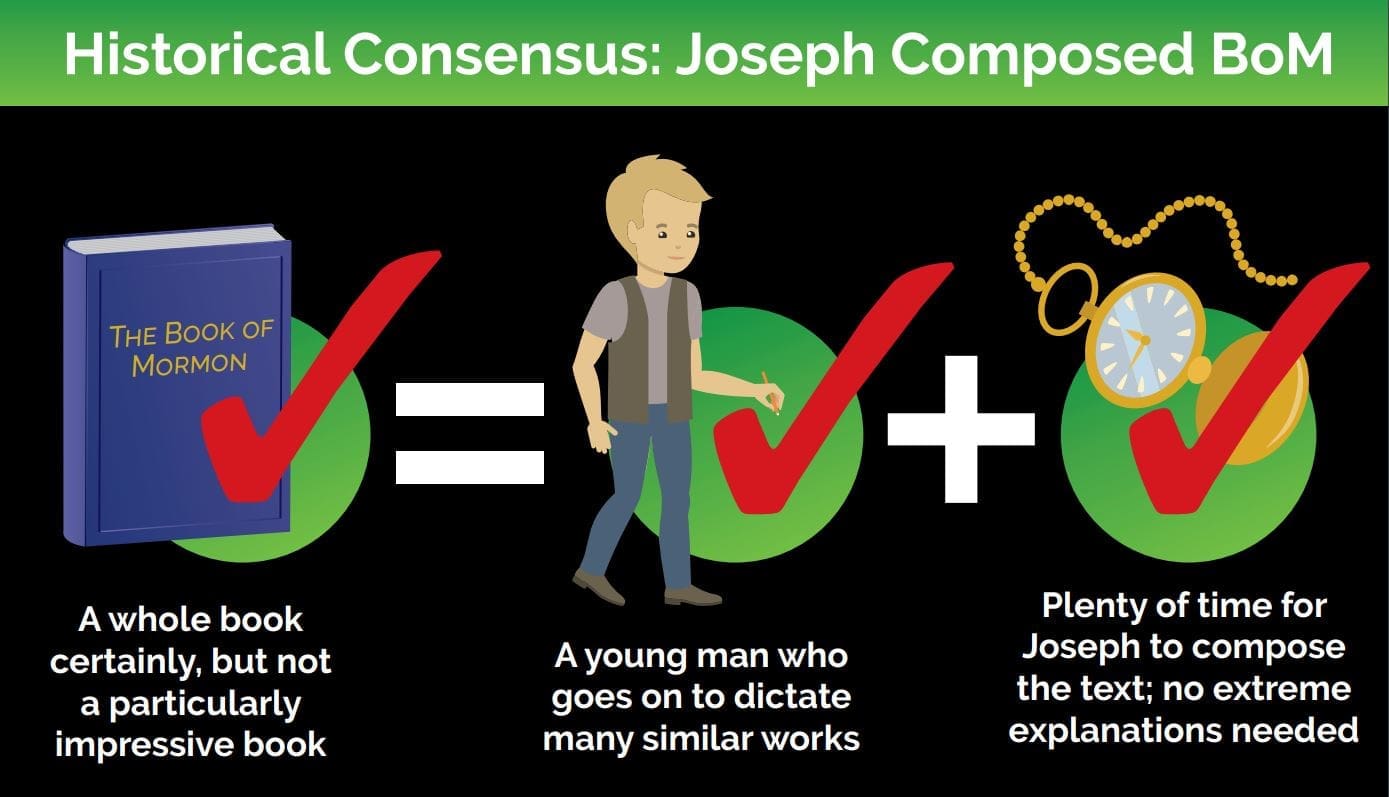
John Hamer graciously created a number of slides that give important visual cues to his research.
___________________________________
Episode Transcript
Host: John Dehlin · Guest: John Hamer
This transcript is machine-generated and lightly edited for readability. The audio is authoritative. Please excuse occasional errors in names and spelling.
Introduction and Guest Background
Part 1 of 2 · Ep. 1082
John Dehlin [00:00:31] Hello everyone, and welcome to another edition of Mormon Stories podcast. I'm your host, John Dehlin. It is March 15, 2019 and we are super duper excited for today's episode. Today we continue our series on Mormon truth claims. You will remember our interviews with Dan Vogel over the past month or two.
John Dehlin [00:00:53] You'll remember our interviews with John Hamer and others where we've been talking about various aspects of the LDS Church's truth claims. We covered treasure seeking and folk magic in our first month and in this second month we are covering Book of Mormon authorship. So we've already talked to Dan Vogel about this. We talked to John Hamer earlier about the cultural context that informed the Book of Mormon. And today we are so super excited to have John Hamer back. And John is going to be giving us his visual sort of theory as to how the Book of Mormon was created, or Book of Mormon authorship as he calls it.
John Dehlin [00:01:35] Just to remind everyone, if you go to mormonstories.org Truth claims, you can find a whole host of essays that have been that were written by an amateur historian. They've been edited and posted on the MormonStories.org website, and now they're being updated and edited by a professional editor and historian. And the whole purpose is for the Mormon Stories website to have lots of content for anyone who wants to learn more about the LDS Church of truth claims. A lot of people have donated to a billboard project.
John Dehlin [00:02:10] We've had great success with that billboard project. It's probably going to end here in March or early April, but we're really grateful to everyone who's donated to that billboard. As of now, we've seen somewhere between a 20 to 30% increase in new users year over year. So huge shout out and thanks to everyone who's donated to that billboard project.
John Dehlin [00:02:33] Going forward, we're going to be just continuing to enhance these essays and we're considering a digital marketing campaign where basically we use Google Ads or Facebook ads to promote these essays to anyone who's interested. We were very grateful to see that FairMormon has invested in a website and in a campaign to bring more attention to our essays. So we're thankful to them, but we will continue with the marketing of these, of this wonderful content, the truth claims content. With your support.
John Dehlin [00:03:10] Right now, the best way to support that would be to go to mormonstories.orgbillboard and make donations there. If you want to see a digital marketing campaign continue, we'll just use that same accounting place to track contributions. We would love to see your contributions in fact, we have a donor who stepped up and who said every donation to the billboard or the digital marketing campaign will be matched with his donations. So please go to mormonstories.org billboard and make a contribution if you want to donate to a digital marketing campaign going forward on the Truth Claims project.
John Dehlin [00:03:48] And we'll just keep releasing more and more Mormon Stories episodes to match the essays that have been put out as we improve the essays as we go. So that's all the introduction that we have for today. And now I want to welcome back to Mormon Stories podcast one of our favorite guests of all time, John Hamer. John, why don't you tell our listeners who don't know about you a little bit about you. All right.
John Hamer [00:04:18] Well, I'm very, very happy to be back. I'm really excited to be continuing our talk on this particular topic. In terms of my background, people maybe know my background is in history. It's actually medieval, European and ancient history. But in the last 20 years or so have done a lot of reading and research in the field of restoration history. My background was raised in the LDS Church, left as a teenager and then subsequently as an adult, joined Community of Christ. And I now serve in quorum of 70 in community of Christ and also pastor of the Downtown Toronto congregation.
John Dehlin [00:05:00] Yeah, and you also have quite a background in Mormon scholarship. Can you just talk a bit about your background in Mormon studies and in Mormon history and Mormon scholarship?
John Hamer [00:05:14] So I'm a past president of the John Whitmer Historical association, which was founded by largely by members of the RLDS Church, but it has grown or become the history society that studies especially all of the, you know, the early period, of course, but then all of the branches of the Restoration that are outside of the mainline LDS Church, of which there are many. And so if you're aware of everything from the fundamentalist Mormons, polygamists in the Utah region to the people like the Temple Lot Church, the Strangites, the Bird Christianites, the Cutlerites, all of the members of the Reorganization. It's that sort of study of all of the different diverse expressions of the Latter Day Saint movement.
John Hamer [00:05:59] And my main book that I worked on, other than I've done a bunch of different Community of Christ work, is my main other book is a book called Scattering of the Schism within Mormonism. And in terms of any big research, I did a lot of work on the Strangites especially. And then I'm also a map maker. And so I've had, I don't know, Mormon history maps published in hundreds of books and journals and everything from Oxford University Press to Herald House to the Church of Jesus Christ Latter Day Saints Historian Press.
John Dehlin [00:06:38] Yeah, you've been, you've been a consultant or hired even for the Jill Smith Papers project, is that right?
John Hamer [00:06:44] Yeah, well, yeah, not a cons. Well, whatever contractor to do maps.
John Dehlin [00:06:50] So a well respected historian and an active, faithful member of the Latter Day Saint or the Restoration sort of community, I'd say.
John Hamer [00:07:00] Right? Yep.
Overview of the Book of Mormon Authorship Topic
John Dehlin [00:07:02] All right. Well, you've been on Mormon Stories many times and most recently to give us a really important discussion around the cultural context that informs the Book of Mormon. And your specialty is often in visuals in addition to your deep knowledge of history. And so today is no exception, you have created a set of slides to help us understand Book of Mormon authorship. And I just want to tell our listeners who are joining us just through audio, this stuff is worth seeing. The visuals are really, really interesting and important. So you can go to the Facebook Mormon Stories podcast page and check out the video there. You can go to our YouTube channel, Mormon Stories YouTube channel, to watch these videos. They're worth checking out. We'll also share the PDF for those who want to download the PDF and look at it. Is that all right, John?
John Hamer [00:07:57] Sounds great. Yeah, no, I, I'm pretty happy with these ones. So I make slides generally, but these ones kind of. I've been wanting to do this presentation for a while, but I felt like I've, you know, we've done, I don't remember if the last sessions that we've done got broken up into like seven episodes or something. Maybe, maybe not that many.
John Hamer [00:08:14] I felt like there was a lot of context that we needed in order to get to this place. And then now I think that this is going to be kind of a really pivotal one. And then we put a bunch into the context, like you said, of both Joseph Smith's background as a treasure seer and then two, the general context of what European Americans believed to be the history of the Native Americans as of the 1820s or so. And so I think that both of those were kind of essential in order to get to this place. And that I'm excited for this presentation because I think it'll be kind of a neat pivot.
John Hamer [00:08:51] And then we have a little bit more, maybe one more session to talk about what do we make of the text now that we have it, understand it.
John Dehlin [00:09:00] I love it. Okay, so without any further ado, I'm going to share the screen and our viewers should be able to see it. And why don't you Take us through your presentation and I'll jump in where and as needed.
John Hamer [00:09:15] Sure. So we're calling this Book of Mormon authorship, and we're talking about the actual and I guess the composition process and the time period for it and how people have understood it and argued about it. And so, you know, just here for the title slide, I use the characters transcript, which is. It's not really sometimes called the Anthon transcript, but it's probably not the one that got taken to Charles Anthon, but it has similar characters. There were multiple ones of these, probably, you know, where essentially Joseph Smith had written out what an original maybe, and these are copied from that of what he's suggesting the characters of the Book of Mormon would have been.
John Dehlin [00:09:58] All right, so Book of Mormon authorship. Okay, jump in.
John Hamer [00:10:02] So just to recap from our last presentations, we had talked about the idea of literary criticism and literary dependence. And so we had shown essentially that because the Book of Mormon is literarily dependent not just on the Bible, but on a very particular iteration of modern King James Bible, that the text itself of the Book of Mormon, it's not just the quotes, but actually the storylines, the sermons that the different speakers have, they're all quoting Christ, of course, they're all quoting and rearranging text that is literally dependent on the King James Bible. And so therefore, the text is inarguably modern because of that. So that's all that we need in order to show its textual dependence.
John Hamer [00:10:57] So we're not questioning, therefore, antiquity anymore. That's not in question. If you want to argue for antiquity, we'll go to the next slide. What you have to do is understand then that we have a 19th century composition of the Book of Mormon in its present form that is based literarily on the Bible. And then if you want to assert that there's some sort of hypothetical ancient source, you know, that tells some kind of true history of Nephites or something like that, then what you have to do is show how that, using literary criticism, that source can be teased out of the part that is not literarily dependent on the King James Bible.
John Hamer [00:11:37] So where are the seams here that are showing this hypothetical ancient source embedded in it or something like that? In any event, the text as we have it, all the stories, the quotations, the sermons, all of these kind of things, it's all a modern text, and that's not actually in question. And to argue for the other, you have to admit that and then get. Tell us what your. Why you think there's an ancient source is necessary.
John Dehlin [00:11:59] So there's no escaping the fact that the King James Version of the Book of Mormon and you could even argue a particular year version edition of the King James Version Bible is a critical component to the creation of the Book of Mormon.
John Hamer [00:12:13] Right. And so it's composed after that was published, not before and not just in English.
John Dehlin [00:12:18] And with it and with it. Because we know that some of the errors in whatever version Joseph was using made it through, right?
John Hamer [00:12:26] Oh yeah, plenty.
John Dehlin [00:12:28] Yeah. So it's basically the King James version Bible plus some other source.
John Hamer [00:12:34] No, no, it doesn't necessarily have to have another source. I'm saying if you want to argue that there is an ancient source, you have to, you know, approach it honestly by admitting that it's a modern composition that maybe includes your ancient source.
John Dehlin [00:12:48] I mean, another source, either Joseph Smith's imag imagination or.
John Hamer [00:12:52] Oh, I see, okay, yeah, sure.
John Dehlin [00:12:54] Or as you're going to talk about some group that may have, you know, some conspiracy that may have colluded with him.
John Hamer [00:13:00] Right. There's no. Yeah, whatever else is that is there is going on. It's a modern text, it's written and it's dependent on the King J Bible. But yes, like a modern author.
John Dehlin [00:13:08] Got it. Okay.
The Book of Mormon as a 19th Century Text
John Hamer [00:13:09] And the other thing then that we talked about last set of episodes was this idea that the Book of Mormon is actually narrating the history that all European Americans essentially believed about North America. So this idea that there had been this ancient lost civilization of mound builders that had raised earthworks all around North America that was probably a. Was a civilized people, highly agricultural and therefore Based on the 19th century worldview, a white race or a lighter skinned race that was then killed off by barbarians who 19th century European Americans who assumed were the ancestors then of the Native Americans that they knew about. In other words, that the ancients, this ancient lost civilization was not in fact the ancestors of the Native Americans.
John Hamer [00:14:07] And so in fact that is the again and again and again. And we read all of these different examples of that. That the Nephite and Lamanite story that is embedded in the Book of Mormon and seems so alien and weird now is in fact just what everybody believed at the time. And it's simply providing details and characters within and storyline for the history as everyone understood it.
John Dehlin [00:14:32] Absolutely. And please check out our past discussions with John Hamer and Dan Vogel. And Dan Vogel's got a really great book about this. I think it was his very first book, right? Yes, John.
John Hamer [00:14:43] Yeah, absolutely.
John Dehlin [00:14:44] Recommend that where he talks about the. The Native American mound builder myth and how that, how that was a, was a critical inspiration for the Book of Mormon. Okay,
John Hamer [00:14:57] okay, so next slide. So then now we're getting to the fact, okay, so we have a 19th century text, we understand that. So who composed it and how did he do it? That's the, and I'm just going to concede here that it's a he, not a he, he or she. So anyway, but anyway, how did the author compose this text and who is the author? And so we'll go ahead and frame this, go to the next one. How this is normally, how this is normally looked at is sort of, with a kind of a authorship equation. So we have the book and as it was published initially, I guess it has about 270,000 or so words.
John Hamer [00:15:31] So it's a good length book. Not the size of the Bible, but you know, not a, anything to sneeze at. And then next in the equation we have Joseph Smith, who at the time is a 23 year old guy. And then finally we have the time frame that was around for him to compose it. And however that would be if we're looking at him as the author. And so let's make the next little part here is that the equation is normally looked at is that we have Joseph Smith, we have the amount of time and the result is this book. And, and when people are trying to do this kind of math and when they do that, then they look and we'll go to the next one, they think, okay, we got this book.
John Hamer [00:16:15] This book must be super duper hard to write that Joseph Smith here has a very tiny education and very little writing capacity. And finally the composition process just took an impossibly small amount of time. And so when they do this, they make a not equal sign there because they think, how does it add up to have this guy with a very tiny education and little writing capacity in this very short amount of time create this super duper hard to write book. And so then they say, okay, that's just not possible. Right.
John Dehlin [00:16:48] And historically it's been Mormon apologists that sort of make this claim. Joseph was an uneducated yokel farm boy, he did it in 30 whatever days. The Book of Mormon's too amazing. And now we have general authorities sort of echoing these sorts of arguments in general conference. And so it's a really important, I don't know, argument to be addressing because it's gotten, gotten around and you know, now Mormons, you know, active orthodox believing Mormons will echo this argument as if it's sort of prima facie. As if it's just to be accepted on face value. Right?
John Hamer [00:17:23] Sure. Yeah. I mean, that's just the way it's usually set up. Right. And so when we have this, and we'll take the equation a little bit bigger. And so, you know, if you have something where it doesn't add up like that, then you need to add something else. Right. So something else has to be added in order to get this equation to work, where this guy who's uneducated in no amount of time makes this super duper hard to make work. And so what is that thing? And so one of the things that people who are not, like you say, those general authorities or active Mormons, lds say is that, well, there must have been some alternative author, somebody who has, like, much more writing capacity, so there must be some other primary author behind Joseph Smith.
John Hamer [00:18:07] And Joseph Smith is like the front person for him. And usually historically, people have looked to Solomon Spaulding, this kind of failed novelist who died in 1816, you know, so actually a fair amount before when the Book of Mormon is brought forth, and just say as a side note for the manuscript of his that we actually do have, he's actually quite a bad writer. So it is a kind of a problem in terms of somebody with a better writing capacity. But the guy had gone to Dartmouth, and so he's more educated and that kind of thing. And so people have looked to that as an option.
John Hamer [00:18:47] But one of the problems with that is because of this time frame between when he died and when Joseph Smith is composing the Book of Mormon, there's. You can go ahead and put that. That part of the slide is what I needed. So, yeah, is that there's a conspiracy needed. So, you know, in addition to Joseph Smith, obviously there's the person who needs to steal Spalding's manuscript, Rigdon. It's got a cowdery who's part of in on it. Pratt, who has to be in on it too, because he's. He's anyway, Rigdon's guy, who is, as the first guy who Joseph Smith interacts with. And so anyway, maybe isn't David Whitmer in on it? I don't know. So in other words, it starts to become a big conspiracy.
John Dehlin [00:19:29] Some people want to say Lucy Smith. There's the Lucy code. Someone to put Lucy in there as well.
John Hamer [00:19:35] Sure, yeah. So why not? Once you have a conspiracy. Right. You know, so.
John Dehlin [00:19:41] Okay.
John Hamer [00:19:42] Okay. So, okay, if we're not going to go down the conspiracy route, then the other route, as you're saying, for like General authorities and the LDS church and, and other Mormons will say that what's needed is God.
John Dehlin [00:19:57] Right.
John Hamer [00:19:57] You know, so obviously God can do anything. And so that just is going to make this equation balance. Right. Without any problems.
John Dehlin [00:20:03] It's the God of the gaps. Right?
John Hamer [00:20:05] There we go. There was a gap and boom. We have now filled that gap in the equation.
John Dehlin [00:20:10] Okay, okay.
John Hamer [00:20:11] So in the same exact way we might use an equation like this. So pyramids, so those are super duper hard to build. Right. And if we look back, we think of ancient Egyptian engineers, they certainly must have lacked expertise to build big stone objects. And Egyptian workers, you know, how ancient people, maybe they lack the ability to move big stones around. It's very hard to lug those things. And so it must have been aliens. People have always done so. There's another way. Essentially you take an equation, it doesn't seem to be adding up for you, and you add to it. Right.
John Dehlin [00:20:45] And by the way, that's not a joke. There are people that believe that the pyramids were help, that were the creation of the pyramids was assisted by aliens. You're not.
John Hamer [00:20:55] No, no, I think, I think you could probably, you could have that affirmed for you on the History Channel fairly regularly. History's mystery. Right?
John Dehlin [00:21:05] I mean, so, okay, so again, it's the, it's the aliens of the gap.
John Hamer [00:21:10] That's right. In this case, aliens of the gaps.
John Dehlin [00:21:13] Okay, all right, okay.
Academic vs. Non-Academic Explanations for Authorship
John Hamer [00:21:16] But what I'm going to suggest here is that these aren't the tools of academic history. Alien intervention, conspiracy theory and divine interventions. And so I'm going to instead try to paint a picture of how we can do this equation without relying on extreme explanations.
John Hamer [00:21:35] All right, okay. So if you are going to want to prove. I love science fiction and you know, if you want to prove that aliens intervene in our history and everything like that, the Nazca lines or whatever you, Atlantis, whatever you want to have it be, you don't actually, a historian isn't actually of pretty much any help at all to you to prove that aliens intervene. Rather, the person you actually want, I would argue is a physical scientist. So a physical scientist is going to be able to provide proof as opposed to, you know, just speculation that people like to do about history. And I'll explain here why.
John Hamer [00:22:14] So if, yeah, go ahead. If you can prove that alien intervention, if you, you could prove that if you found, for example in ancient Egypt that one of the mummies is actually has, you know, tissue that's completely different biology than let's say Earth based DNA so maybe it's a, I don't know, trilaterally symmetric alien that, you know, is based on silicon instead of carbon. And with whatever blood or whatever, you'd be able to tell pretty easily, you know, our physical scientists would be able to unwrap that three, three handed mummy, you know, and say, wait a second, this could not have evolved on Earth. There isn't anything in our entire, let's say DNA and background, evolutionary history and fossil record or anything like that to allow for that.
John Hamer [00:23:00] Another thing that you could do is it turned out if that giant stone artifact, I'm sorry, of the pyramid itself was like being held up by some kind of, you know, impossible artifact, like The Monolith from 2001 A Space Odyssey, where we can't even, it doesn't even reflect any of our instrumentation, so we can't tell how it can even exist and be in space and any other kind of thing. So if we had something like that, where we found some kind of an artifact whose technology itself is superior to anything that we have right now, that would pretty well prove that we have some kind of alien encounter.
John Hamer [00:23:36] And that's what's going to do it, as opposed to anyway, let's say reading through historical texts or something like that, as a historian would do.
John Dehlin [00:23:44] Right, okay.
John Hamer [00:23:47] And so likewise, I'm going to argue that if you want to prove divine intervention, history is also a historian is also not what you want to go to for proving divine intervention. Rather, the specialist here is a. And we'll go to the next one, theologian. Right.
John Hamer [00:24:07] So theology is the study of God and divine interventions and all those kind of things as opposed to history. And so I want to talk just a little bit about this study of theology. So if your position is you can believe in divine intervention, there's nothing stopping people from that. If your position is that God intervenes in the physical world, this is an argument that you're making as a theologian rather than as a historian. There's nothing wrong with doing theology. But the problem a lot of times when we are talking about this in terms of the Book of Mormon is you shouldn't be masquerading your theology as if this was academic history, as if what you're really trying to do here is history. You're actually trying to back up a theological proposition using anyway, not real history.
John Dehlin [00:24:56] Right.
John Hamer [00:24:59] And so in the Western tradition, even so back in the Middle Ages, Judeo, Christianity, Christianity, the monks, you know, were in fact the scientists and the historians and the theologians and oops, lost, there it is, you Know they theologians back then, and actually all the way back to Aristotle and Plato ascribed as the first cause of everything, the source of causation, the prime mover, the unmoved mover. That's understood to be God, right? So God is. That's one of the definitions of God. But even medieval monk historians agreed that if you could find secondary causes, so if you, if all of those trains. So God maybe is what caused the first thing to occur, and then there's a chain of cause and effect and cause and effect thereafter.
John Hamer [00:25:59] A historian's goal is not to simply list every single thing that happened that year, in the year 1200 or something like that, and just say God did it. Rather you would say, you know, that King Richard did something or other, and you would talk about that as secondary cause, as opposed to just describing everything to the first cause for an explanation. Right. And so again, there's a separation between history and theology, even among medieval clerical history and theology.
John Dehlin [00:26:28] So even they didn't just sit satisfied with the God of the gaps five, 600 years ago, they were still looking
John Hamer [00:26:35] for the second cause, secondary causation, right? Which is to say everything else is happening besides what God is doing. And so got it. And so even back then, then the history was called the handmaiden of theology, which meant that, frankly, what it meant was that history, you don't use history to prove theology, rather theology comes first. And so the idea that Aristotle had was that there's a hierarchy of the sciences and the peak science is your theology or your metaphysics, and after which things like history, which are subordinates, can be used.
John Hamer [00:27:13] Once you prove something in your theology, then it's proved for your history. But if you prove something in history, it doesn't do anything to affect your theology. And so you have to start anyway with what are your theological ideas or premises, what are your metaphysics. If you're making theological arguments and history doesn't really do anything or help you about that, there's all kinds of different ways that we can do the theological exploration of things. Like for example, this premise that God is intervening in history at different times, like for example, in order to help compose a book in the 19th century that is textually dependent on the King James Bible, but maybe it has some memory of some ancient people or not.
John Hamer [00:28:01] If God is going intervening and doing that, and maybe is personally composing it as a. To Joseph Smith or whatever, again, there are theological implications of that and that you should have a discussion of that theology. I mean, one of the core immediately brings up one of the core implications of theology, which is sometimes called the problem of evil, which is if God is good and omnipotent and omniscient and is intervening occasionally in history because it's God's will to do so, then how is it then not the case that every single bad, horrible thing that happens, why didn't God intervene to make that not happen or whatever.
John Hamer [00:28:45] And there are ways that you get past that. That's part of. But that's a theological argument. And so I'm saying that this whole thing could be. If it's a theological proposition that you're making, then it should probably be held over in the theological realm, which is perfectly reasonable place to debate things. But it isn't something that again, history is like proving your theology. Rather you should bring your theology up first.
John Dehlin [00:29:11] Got it. So don't use science as a justification for something that really should have its basis in theology.
John Hamer [00:29:18] Well, they're two different sciences, right? So the science of theology versus anyway the academic tradition of history. So finally, I'm just going to say, whereas there are legitimately conspiracies in human history and politics and everything like that, so conspiracies do exist. The problem is that there's a difference between, you know, when there's an actual conspiracy and then using a conspiracy theory as like you have just been describing as a magic in the gaps or a aliens in the gaps or God in the gaps. So conspiracy theory is for a whole bunch of people's thinking, just another way of filling in a gap with something that we have therefore no evidence for. And so when you're using that same kind of thing, it's almost exactly the same process. And it's also not how history works.
John Dehlin [00:30:11] So for people who really value, you know, history, logic, science, whatever, anytime you're invoking God as an explanation, aliens or you know, conspiracies in specifically groups of people all conspiring to solve a problem, you should have pause and say you're kind of potentially on very shaky ground.
John Hamer [00:30:33] Yeah, absolutely. I think as a, as a theologian, as an historian, I would say that historians have to always argue from secondary causes. Even if you believe that God is the primary prime cause or the first cause or anything like that. And so it's same same way with aliens. Same way, you know, no matter how much I love science fiction, you know, it's not, you know, using aliens as your explanation or conspiracy theories as your go to. And so in the particular conspiracy theory that has been so popular in terms of Book of Mormon authorship, so to My knowledge, you know, all historians of all stripes, ex Mormons, non Mormons, Mormons, you know, whatever, everybody, have concluded that there isn't any merit to the idea that a conspiracy involving Smith, Rigdon, Cowdery, Pratt Whitmer, Lucy Mack Smith, whoever you want to throw in there, contrived to make remake a Solomon Spalding text, a lost hypothetical Spaulding text, into the Book of Mormon.
John Hamer [00:31:31] So it's a popular idea, it's a pop conspiracy theory. But I don't know that there's any defenders who, let's say, are historically trained and who were academically making an academically defensible case. And this is a giant field, so.
John Dehlin [00:31:48] And what if somebody says that's a bit of an appeal to authority. In other words, you're basically saying that if Von Brody and Dan Vogel and John Hamer all denounce, you know, the Spalding manuscript or conspiracy theories, then, you know, you should consider denouncing them, too. What would you say to that?
John Hamer [00:32:04] Yeah, so this one bullet point is an appeal to authority. So I agree with you. What I'm saying here is, you know, I'm not a specialist in nuclear physics or whatever, but when that comes up and then I defer to the entire consensus of the nuclear physicist community. Right. That doesn't mean that they have to be right about everything, but it's something where you can defer on that point. But I am going to spell this out, why this is the case. But I'm just saying, in general, this is the kind of place where you don't have to have an appeal to authority, but there is an appeal to expertise and scholarly consensus in a particular field, within the field of expertise.
John Hamer [00:32:44] And so in this particular case, I just suggest that it's. It's worth at least noting if you don't, if it doesn't convince you, you could at least, you know, say, okay, that doesn't mean that's some kind of interesting.
John Dehlin [00:32:58] Incidentally, one of our listeners has asked if you're in the cockpit of the Millennium Falcon.
John Hamer [00:33:03] I am.
John Dehlin [00:33:03] The lights behind you?
John Hamer [00:33:05] Yeah, yeah, I'm here at Toronto Centre Place.
John Dehlin [00:33:10] No, yeah, he's at the Community of Christ, you know, office building in downtown Toronto, Canada.
John Hamer [00:33:17] Yep.
John Dehlin [00:33:18] Okay, next slide.
John Hamer [00:33:21] So what I'm going to say, though, is that what has happened about this particular conspiracy theory, because historians haven't provided, you know, anyway, they're not saying what people popularly would like. So it's a popular idea. They want the conspiracy theory to be the case. Historians aren't actually providing any, I guess rope for that. So instead people have turned to different kinds of specialists, specifically computer scientists. And so in this particular case, we'll look at what they've been doing.
John Hamer [00:33:51] So the idea is that there's some kind of computer Aided Authorship study that's been popularly called wordprinting. And those seem to provide scientific legitimacy. But my. So in a lot of cases, when we first heard about, when people first heard about computers, they were actually popularized, like in the 1950s and 60s on game shows where they would take, let's say, mathematicians with slide rules or engineers, and they would try to do a calculation and have to figure out calculus using a slide rule or something like that. And then they'd ask the ENIAC computer and the computer would be able to answer questions. And so essentially a computer became popularized as something that you could ask a question to and it would always give you the right answer.
John Hamer [00:34:36] And that's certainly how in old Star Trek, in the 1960s, Captain Kirk would just ask absurd questions to the computer and it would say affirmative, you know, or whatever. You would know the answer, you know. And so in that same way, people kind of think, oh, well, if a computer said it's right, then it's going to be a right answer. But the reality is that computers can only provide answers based on the parameters that are programmed into it. And so if you program in your word analysis, whatever, and you have the potential answers, the computer may well, based on its programming, assert that the Book of Mormon was written by Shakespeare.
John Hamer [00:35:11] But the problem with that is that there's no historical basis to be able to make that claim. So I'm just suggesting that this isn't anyway a first line of research. What it could do is potentially supplement when there is a historical basis. And so to just conclude on this little tangent, go forward one, you know, before we were to go into like something like Wordprint, we actually have to have. This is something unlike with your theology. When you're doing your theology, theological argument, theology has to come first and then history. In this case, in terms of working out the history of something like that, you have to have a historical basis first. And then you can go and look at other things like studies or something like that that might do that.
John Dehlin [00:35:57] And for those who aren't aware, we're referring to the work of like Chris and Dwayne Johnson, who compared the Book of Mormon to the late war and I think another book called the Book of Napoleon or something like that. And you've also had other professors like Larsen and Rencher and others who have Done wordprint analysis of the Book of Mormon and some have tried to tie certain books of the Book of Mormon to let's say Spalding or Rigdon or Cowdery or Smith or whoever.
John Hamer [00:36:25] It's, it's just been very popular since like the 80s and especially for the Book of Mormon for some reason. And so people have gone down this path. But what I'm just going to suggest is that it's. Anyway, we need to look at the history before we go into anything like that.
John Dehlin [00:36:39] Right. Because it's again, it's another thing to be wary of along with aliens and God.
John Hamer [00:36:46] Well, it's not as conspiracy, different level, but yes. Okay, so what I'm going to suggest what we're doing with history then is looking for the, you know, the most likely clause. So what is the. We are not finding with history truth or proof 100% or anything like that. But rather what we're doing is we are looking at sources, we're reading them against each other. We are looking at their inherent biases. We are weighing them against one of each other and against the historical record in order to try to determine what the most likely scenario for any particular thing is based on the whole rest of the historical context.
John Hamer [00:37:30] And so for example, then if we are doing this thing just to talk about these extreme explanations, if it's possible, you know, as far as the world of academic history is concerned, if it's possible for humans to for example, build pyramids or to write a book, then we are not going to go and seek extreme explanations. Those extreme explanations aren't necessary because we are able to explain building a big stone pile of stones and also writing a book. You know, we're able to do the explain those things in human terms. We don't need aliens to do it.
John Dehlin [00:38:06] Right.
John Hamer [00:38:09] And so we go back here to our explanation that we had about the pyramids. So if we are trying to use history to prove alien intervention, actually what instead we'll do is history is actually would be used to explain how you've misframed your equation. So we had this equation. Pyramids, hard to build. Egyptian engineers lack the expertise, the workers lack the ability. And so aliens must, that must prove there were aliens. So instead let's reverse those things.
John Hamer [00:38:40] So go back. No, no. Oh, I was assuming one at a time. So anyway, the pyramids, they're actually, the engineering about making a pyramid is actually similar. It's a simpler form than you might have originally thought. The next one, the engineers, they actually had more know how than you would have Thought the workers.
John Hamer [00:38:59] It actually turns out ancient people were pretty good at dragging rocks around. And so by conclusion, aliens are totally unnecessary to solve this equation. Right. So it was that you have misbalanced your equation to begin with in order to create this gap in order to make this thing and try to prove this thing that actually history can never prove, because history always asserts that by making that gap that your equation was wrong.
John Hamer [00:39:29] And so the same thing here with Book of Mormon authorship. So we've had this thing. It's super duper hard to write Joseph Smith, no capacities. Now instead we see, okay, we're going to do it that way, super duper hard to write. And so we'll go ahead and in fact, it's much less of a big deal than it's made out to be, composing this book. And we'll go into it. Joseph Smith, you know, he's actually smarter and more knowledgeable than he's made out to be, at least at this stage in life. He's made out to be, you know, not as smart as all that same thing.
John Hamer [00:40:01] The time frame here for composing the text, I would argue is completely doable. And so then in terms of divine intervention or conspiracy theories, you know, these extreme explanations aren't necessary for understanding, you know, how we can get the hold of this book.
John Dehlin [00:40:17] So you're, in a sense, you're rejecting this framing that A, that A, Joseph Smith was incapable and B, that the, that the timeframe had to be super short.
John Hamer [00:40:29] That's right.
John Dehlin [00:40:30] And then C, that the Book of Mormon is this amazing feat that is just too amazing to have created without divine intervention.
John Hamer [00:40:39] Right. Just like with the Egyptian example, what it shows is that the equation that you've set up is false to begin with. So by having an equation that doesn't balance that requires this vast gap, what you really are, I think, showing here is that you have really misjiggled this and in fact, actually apologetically deliberately misjiggled it so that you can create the gap and fill it yourself with what you want it to be filled with.
John Dehlin [00:41:05] All right, that sounds great. So let's look at each part of the equation.
John Hamer [00:41:10] Exactly. So anyway, we're just looking at all three and we've just iterated those. So first one, writing the book. So the Book of Mormon writing books doesn't require miracles. So it doesn't require divine intervention in order to have a book. I Googled it this morning. Google says that people have written about 130 million books so far, so probably going up much more rapidly than it used to. Because it's becoming easier all the time. But in any event, that's not. Anyway, it's not like it's a huge hurdle or threshold, you know, to have created a book. You know, there's a lot of, A lot of people have done that. Yeah, go ahead.
Literary Complexity and Simplicity of the Text
John Dehlin [00:41:49] Now I can hear a lot of, you know, orthodox Mormons saying, oh, but the Book of Mormon is too amazing. It's not just any book. It's got complex currencies and timetables and geographical locations and plots and characters and hebraisms and chiasmus and all these things that make it one of the most complicated books ever composed.
John Hamer [00:42:13] Well, we'll go into, we'll go into some of those details briefly. But, you know, in that same thing, Muslim friend of mine was here at Toronto Center Place on, on Tuesday for a lecture I gave at our history theology philosophy group. And he was, you know, very intently and fervently making the proposition to me that, you know, that it's absolutely impossible for Muhammad to have composed the Quran because Muhammad was essentially illiterate and the Quran perfect. It's so complicated, it's so poetic, it's so artful that it is absolutely impossible for anyone for Muhammad to have composed such a thing. And that I have to, you know, my only alternative as an intellectual would be to intensely study the Quran in order to disprove that claim that he's making that it must therefore be essentially God's true one perfect revelation to the world.
John Hamer [00:43:17] And I must therefore, you know, take that as a proposition seriously and disprove it by proving internal consistency or something like that, whatever he would like in the Quran. And I, my response to him was that, in fact, actually we're. You're making again, a theological proposition. And I disagree with your theology and the, the proposition that you're making in the first place. So I don't believe that that's how revelation works. And I. So I don't actually have to go and listen to every single one of these challenges like that. That's not the point. But in any event, this idea that those Mormons that you're talking about have is not unique to Mormons. So there's all kinds of people, there's a billion Muslims who maybe might argue similarly about their holy text and prophet.
John Dehlin [00:44:07] Right.
John Hamer [00:44:08] So I'm going to argue. Yeah, here's the next slide. Yes, I'm going to argue that the Book of Mormon is pretty ordinary, although, like you listed off some, some details that you think make it more impressive. It doesn't describe no, not that I
John Dehlin [00:44:19] think that other people argue.
John Hamer [00:44:21] I'm sorry, not that you think that other people have argued. Make it impressive. All of the scions and aunties and whatever the coins all are. I don't know. Yes. So the Book of Mormon as a sequel to the Bible, so set at this moment, this actually pivotal moment in biblical history, when the Babylonians destroyed Jerusalem, you know, in the year 587 BC. Nevertheless, this text knows nothing, almost as far as you can tell the Book of Mormon about anything about that's even in the Bible. So it's like someone writing a Star wars sequel without having really known anything more than just the. I don't know that the Death Star got blown up, but really not knowing any of the characters.
John Hamer [00:45:09] You don't even reference anybody in the movie, but just move on to, you know, some. Some new thing. So for a sequel, it's a. It's a bizarre. It displays bizarrely little biblical literacy given all of the different characters, kings and everything, prophets, Jeremiah, contemporaries, Baruch, all of these people that are characters in the Bible at the time. And you have none of that. Instead, you have this guy Laban, who is he in charge of Jerusalem, what's going on? You know, it isn't even clear how it's even set. The setting you could easily believe, since the setting seems to be written by somebody who isn't particularly biblically literate, at least in terms of the history and stuff like that.
John Hamer [00:45:54] The person is certainly used to, I don't know, different texts that are things like Paul's sermons or some of the. Some of the more adventure stories from Acts and also from Judges. So those kind of things are in there. But in terms of the actual pertinent biblical literacy that you'd want, I mean, you could just as easily believe that this author wouldn't know whether Jerusalem had walls or not, because they don't really know anything about the details of Jerusalem or Judea at the time, 587 BC. So I'd say that that's a kind of a really weird thing. If you, for example, had gone to Dartmouth and really were a scholar in all this.
John Hamer [00:46:39] Another thing that is definitely true is that once they, you know, once the. These people who are Jews get out of Jerusalem, the book is not knowledgeable about Jewish practice as described in the Old Testament. So again, the people are very quickly portrayed as being functionally like. Mostly like Christians in Acts or something like that. But you could learn just from what you could get out of the Bible. You don't have to be a historian or anything like that just get. From being more biblically literate, you could expect way more in the Book of Mormon.
John Dehlin [00:47:15] Now, the Book of Mormon is aware of Adam and Eve and Noah and Moses and, you know, Abraham obviously, and a lot of some of those basic Old and New Testament characters and stories, right?
John Hamer [00:47:28] Yeah. I'm not saying that it's ignorant of the Bible in any sense. What I'm saying is that if you were writing, if you were really biblically literate and you were writing a sequel set in 587 BC, you know, or that kind of time period, there would be so much more you could draw up on just from like a close study of the Bible. That's what I'm suggesting. And so, yeah, the person, this person is very familiar with biblical preaching with essentially Christian Second Great Awakening Christian preaching that is based on kind of Pauline Protestant interpretation of Paul's preaching and things like that. So there's. And then like you say, some basic Bible stories.
John Hamer [00:48:07] That's not, that's not in question. It's part of the biblical worldview, but it's less aware of it. I mean, people know those Adam and Eve stories. Now you would think that in the 19th century people would be maybe more biblically aware. This person would be.
John Dehlin [00:48:21] Got it. Okay. And are you gonna be. We've already talked ad nauseam about anachronisms.
John Hamer [00:48:28] It's next slide.
John Dehlin [00:48:29] Okay.
John Hamer [00:48:29] Yeah, I think it's the next one. Okay, maybe the next one. But anyway, we'll do it right here for this one will be the anachronisms. So, yeah, this one, I'm just gonna say the text is very much more simpler than it first appears.
John Hamer [00:48:40] So I mean, people have commented a bunch of different ways that the characters are all one dimensional. They're all either really good guys or they're really bad guys. The plots are really wooden. The good guys essentially always succeed. The bad guys are always found out and punished.
John Hamer [00:48:56] There's bizarrely things like very few color adjectives, there's hardly any women. There's all kinds of different reasons why it's. It's surprisingly limited in its characterization and storytelling and plotting all through the whole thing. Although, and here's to your point about things like the currency system, although there's something like a complex system of currency that expounded at a certain point where they go through and they talk about what each one of these are. Those are, those are usually written out or listed out and then completely forgotten. And so they'll say that kind of thing and it's not like that's like used consistency consistently throughout the entire text, like you would expect, like from a fantasy world like Tolkien where he's created whole languages and then the people use that language all the way through, or they.
John Hamer [00:49:46] Or there's internal consistency in that way. There's all kinds of places where, you know, they have all of these systems of weight and measure and money. And then even when Christ comes and is quoting the Gospel of Matthew, he'll use things like shekels and talents or whatever. So he's not using. He's not translating it to the system that has essentially been expounded and forgotten by the author who made it up at that one moment. And so therefore it isn't complicated and you don't have to keep it in your head because you say it all and then it's gone. And so anyway, that kind of thing.
John Hamer [00:50:19] Same thing with the places and the characters. There's a zillion characters, but you only ever have to keep a couple of them in your head in terms of what the current story is, because you, generally speaking, aren't going back to any of them. And so you tell stories with the handful of characters that you have. You move on to the next generation. There's a whole set of new characters, and you have those in your head.
John Hamer [00:50:36] Likewise with the geography. I'm a mapmaker, as I've said. I've gone through and done pretty extensive looking at the Book of Mormon for its geography. There's very, very little geography actually in it that is used, frequently referred to, and it itself has inconsistencies where when you go back to it, it's named slightly different things, like it's the land of Lehi and then Levi Nephi and all these kind of different things like that. But also, whenever there's going to be details where there are a whole bunch of cities are listed off, they're often listed only the one time, and then they're never heard from again. And so again, it's the kind of thing that happens if you.
John Hamer [00:51:14] An author orally composing can make up a bunch of different names, but then doesn't have to keep them in his head because he doesn't ever go back to them.
John Dehlin [00:51:22] Okay,
John Hamer [00:51:24] so it's simpler than it first appears. Next, this is the anachronisms, I think, that you're talking about. So obviously then also the problem with this text in terms of it being perfect and hard to write and that kind of thing, is that the text was even more so before and is still replete with errors. So the original text had thousands of grammatical errors that were subsequently corrected in later editions in Joseph Smith's lifetime.
Errors and Revisions in the Original Manuscript
John Hamer [00:51:54] There were also a bunch of substantive errors. So for example, in the composition saying King Benjamin, when you meant to say Mosiah and any other number of things like that, where there's a substantive error that's introduced the entirety of the text is we talked about anachronisms. Right. So everything is anachronistic from the animals, the crops to the metals, to the fact that everybody is quite focused on 19th century Christian topics that weren't issues until, let's say, the few decades or century before the text was composed in the 1820s.
John Dehlin [00:52:31] Just knowing the name of Jesus is something that even the Jews didn't have the luxury of knowing, let alone baptizing in his name prior to his birth, right?
John Hamer [00:52:41] Yeah, absolutely. So, I mean, there's no example of prophecy written before the fact that has anything like that kind of detail where, I don't know, I mean, like you say everything down to the name, everything down to Columbus, all these kind of things, these don't exist prior to the fact. Those are always prophecies that are written after the fact literally.
John Dehlin [00:53:01] And you know, you just bring up a really good point. If you, if people were only to read the original manuscript that remains, I guess, remind us, if there's a full version of the manuscript, the original manuscript of the Book of Mormon, does that exist?
John Hamer [00:53:21] Oh yeah, it's printed a lot of places. Yale has a great edition, Skousen edited, and there's the Joseph Smith Papers.
John Dehlin [00:53:30] But if you read, if you read through that, all of a sudden the book immediately seems a lot less impressive. Can you tell us why?
John Hamer [00:53:38] Well, because the grammar errors are what we kind of think of as like Yosemite Sam or hillbilly speak, you know, the Lamanites, they was a coming up to battle and they, you know, reckoned they went to here and there, you know, this kind of the hour and that, this kind of thing, you know, where it's like anyway, it's old timey, that kind of country talk.
John Dehlin [00:54:02] And so if you were to actually read that original manuscript that allegedly was a translation that Joseph saw word for word coming out of a stone, it makes no sense that those are the words with all those grammatical errors and all the textual and substantive errors, it just starts to make a lot less sense that this is, this is a translation of a coherent, you know, extant writing.
John Hamer [00:54:31] You know, as we've said right at the beginning of this, we said, even have shown it's an original composition in the 19th century. And we've shown that through literary dependence. So there's no way that we can dismiss this idea, apologetic idea, that it's a word for word translation, or, you know, if it's in that case, like you're saying God is composing it in the 19th century, word for word, then God had the same kind of backcountry way of talking that Joseph Smith had, since it's coming out in Joseph Smith's words.
John Dehlin [00:55:01] Right. And where can someone see, I guess, just Joseph Smith Papers Project would have the original manuscript that they could read through if they wanted to actually see the original text, how it was written? Right.
John Hamer [00:55:12] Yeah. There's all kinds of facsimiles printed. There's online. It's all over the place. You can.
John Dehlin [00:55:17] Okay.
John Hamer [00:55:18] It's very available. Okay, okay. All right. So just to. That was that first component of that, you know, so although I think people have imagined that composing this text was a very impressive feat. And so you're saying that, like at first, you know, when you haven't ever written a book before yourself, maybe, and you, you really think, whoa, this thing is amazing. And there's. Who could have ever come up with all this stuff?
John Hamer [00:55:46] Generally speaking, although a lot of people kind of feel that way in terms of the apologetic battle to get on that equation that we were showing at the beginning, generally speaking, apologists have largely conceded otherwise. So, for example, on these kind of unending number of these kind of Hugh Nibley challenges, where Hugh Nibley, early quintessential apologist, kind of said, issued this kind of challenge, well, could you write the Book of Mormon?
John Hamer [00:56:12] But it's not you because you have to limit yourself in all kinds of different ways. So I wouldn't qualify for even trying the experiment because I'm too educated or any number of things too old and not, you know, all the different kinds of things that dismiss everybody from being able to make the attempt even to show, because more or less they concede that I could write the Book of Mormon or actually a book, you know, that is actually substantially less anachronistically problematic, probably that is more artful, that has deeper meaning, that is philosophically, I don't know, I would be able to take that challenge and fulfill it.
John Hamer [00:56:47] It's not an undoable thing. So instead they have to say, well, I'm not John hamer, you're not 24 or 23 or whatever, all those kind of things. And so they more or less concede that the hurdle of actually writing the thing isn't the big deal. And so they want to instead put their thumb on the scale of how uneducated Joseph Smith was, which is our next one of the criteria.
John Hamer [00:57:10] And so, you know, for many Mormons, at the end of his life, 38 year old Joseph Smith was this theological genius who's giving the King Follet discourse. He perceived and articulated the plan of salvation and how all of the heavens work in a way that is clearer than ever perceived before by any prophet, barring maybe only Jesus. Right.
John Hamer [00:57:38] And likewise, you know, if we even go back before the Book of Mormon composition process to the 15 year old Joseph Smith who talked directly to God and was able to receive revelation and perceive really that all the world's religions were in error. So we have, you know, those two bookends of Joseph Smith's career. And nevertheless, if we go to the middle part, somehow the same Joseph smith at age 24 is imagined to be this kind of illiterate who's unable to even compose stories orally.
John Hamer [00:58:13] And so I'm just going to argue in this that in fact, actually his background was neither especially educated or uneducated. He's not illiterate. He definitely can read. He has been studying the Bible. That's been kind of his focus and interest and things like that. He's gone to all of these revivals. He's been going with Methodists and the Presbyterians. He's been interested in hearing all of these different controversies.
John Hamer [00:58:39] In the year that he was recovering from his leg surgery, he was tutored by Hyrum, his older brother, who had previously been at the poor academy that was associated with Dartmouth. And so essentially all of the kind of theological training and things like that that they were teaching that is wildly aligned with early Mormon doctrines and the book Mormon and everything like that. The mound builder myth that was being taught at Dartmouth is presumably then relayed by Hiram to young Joseph. So he's, you know, anyway, he is definitely having a vernacular country education, but it's not the kind of thing where he, I don't know, somehow is this guy who at 24 is just so illiterate that he can't sign his own name. And then just a couple years later he's studying Hebrew in Kirtland.
John Dehlin [00:59:40] Yeah, and I would just want to add, and this is something that Dan Vogel talks about and that you and I have talked about previously, I think, and you'll probably mention it later, but I think it fits here. He's also, according to Lucy, from a very early age is thinking about and dreaming about and envisioning because of the mound builder myth, because of the folk magic and because of the treasure digging and just the existence of Indians and Indian burial mounds and folklore all around him, he's telling stories about, you know, ancient Americans or Native Americans, you know, where the family's all sitting around the fire and he's able to captivate family members for long periods of time. Am I right?
John Hamer [01:00:27] Right, exactly. So that's recounted that he has this gift that is largely fallen by the wayside in the 21st century, where we now, you know, have. Get our entertainment by the fact that we have Netflix and HBO and all this kind of thing. And so in the same way that we don't have to sit around the piano and have the one person who knows how to play piano and we all sing together, we listen to recorded music, the same thing. Now, instead of having.
John Hamer [01:00:52] Since we have television and movies and everything like that, what they had back then was storytelling. And, you know, this is something that my great grandfather, who grew up, you know, in the backwoods of southern Illinois and just was this amazing storyteller.
John Hamer [01:01:13] And so he could just go on and on and on and just compose or retell or essentially make all of these stories that are hilarious. And unfortunately, because we have, you know, genealogy and family history in the family, my mom recorded all those and transcribed them. And so we actually have a book of it. And it's just amazing because the art, you know, is very quickly lost. You know, we just don't have. It's not that my mom isn't a storyteller like that. I'm not a storyteller like that. So it doesn't. Anyway, so it doesn't translate down to where we are, but it was certainly a thing that people did. And Joseph Smith, you know, very clearly we have, like you say, reminiscences of him having that gift.
John Dehlin [01:01:52] You know, before he ever had access to the plates. Right. He was telling long stories about, you know, Native Americans.
John Hamer [01:02:01] I don't know if that's the case. I think that. I think that from the. From her man Lucy's manuscript, I think that it's. She's refer. Well, before he had access to the. Yeah, I'm sorry, he's. Before he had access to the plates, but not before he'd heard of them.
John Dehlin [01:02:14] No, no, no. Yeah, yeah. Before he had access to the actual plates.
John Hamer [01:02:17] Yeah, I'm sorry, I get what. Yes, yes, absolutely. Before he had the plates, he's.
John Dehlin [01:02:21] He's telling these long stories, captivating his family members around the Fire at his home.
John Hamer [01:02:25] Right, Yeah, I just, I'll just point out, though, that the plates, the plates are never necessary for anything other than inspiration. So there is never. Despite the pictures that, you know, that they'll make in movies or something like that, of Joseph Smith poring over plates and looking at them or reading it or doing anything, the plates are only ever, you know, are only ever a source of inspiration. That it's always, the medium is always through Joseph's mind sometimes then focused, using the hat, the stone, and everything like that. But it is not something that. It doesn't matter if he has access to the plates or not, frankly, I would say.
John Dehlin [01:03:04] But to summarize this slide, he's a gifted orator, a gifted storyteller with a gifted memory, and probably a better than average, if not a gifted knowledge of the Bible. Right?
John Hamer [01:03:19] Yeah, perfectly. I mean, so perfectly in keeping with what I described before, which is to say, not a person who. Who'd studied it and was biblically literate on the particular history and things like that that you might do if you were a scholar and were trying to make a scholarly sequel to the Book of Mormon, but perfectly aware of, let's say, what a Methodist revival preacher would have preached for hours and hours at a revival out of the Bible. So very familiar with all that kind of biblical speak.
John Dehlin [01:03:43] So, yes, and as one of our awesome Mormon stories listeners, Aaron Gluth Spencer, writes, he was in fact a Methodist exhorter. So he in fact, again, prior to obtaining the plates, had the ability to give long sermons as a Methodist exhorter in his local congregation.
John Hamer [01:04:01] Right, yeah.
John Dehlin [01:04:03] Okay, thank you, Aaron, for that filler.
Joseph Smith's Broader Creative Output
John Hamer [01:04:06] Okay, so we'll also point out then, in terms of Joseph Smith afterwards. So after the Book of Mormon, the Book of Mormon is not an isolated production. So Joseph Smith continued to display this capacity to compose texts throughout his career. So beginning all the way in terms of dictating revelations that ultimately became the Doctrine and Covenants. He did that while the Book of Mormon is still being composed. And indeed the earliest DNC sections are before any component of the Book of Mormon as we now have it, were composed. And so it's after the loss of the first draft, the 116 pages, so called. But it's essentially he's doing the same exact thing where he's composing long bits of text that are done the same way, either with hat or then later without using any kind of implements that are just outside of.
John Hamer [01:04:59] Through the medium of his own dictation. And so then after the Book of Mormon is published, obviously there's continued to be Doctrine and Covenants compositions. He also, though, immediately launches into dictating the Joseph Smith translation, which is almost exactly the same as the Book of Mormon, because the Book of Mormon includes long passages, for example, of Isaiah that are edited in such a way to especially change, especially the italics of the King James Bible. The JST does the same exact thing, only does it actually differently than the Book of Mormon does it. So different changes are made. You might think that they would be the same if they're being corrected to what it should be.
John Hamer [01:05:41] But in fact they're both idiosyncratically changed in the same kind of style by Joseph Smith. And there's again, long compositions, so the City of Enoch story, Moses stories. So there's additional texts that are stories that are just like. Anyway, like the Book of Mormon, obviously, later the Book of Abraham. And by the time of Joseph Smith's death, he's also dictating his own life story. So he largely does all of these by dictating aloud. He's not so much a writer where he himself is personally handwriting all these things he can write, but he. Anyway, that's not his chosen medium of composition. Usually he is orally composing and dictating aloud and then scribes are writing it down and he does that then to the ever after.
John Hamer [01:06:33] So there's not, it's not like the Book of Mormon is out of keeping with the rest of the production, literary production of Joseph Smith's career.
John Dehlin [01:06:42] Right. And if you were to kind of think about the convenience, isn't it convenient that whatever method he was required to use to produce the Book of Mormon involved him requiring a scribe because he didn't have the capacity to write it himself?
John Hamer [01:06:59] Yeah, I mean, and that's, that's how he. But that's how he did it with all of this stuff. Right. So he's not, he's not a handwriting kind of guy. He is a guy who orally composed. And so like I say, every one of these, you know, I mean, it's similarly, I mean, whether or not there's a. Like in the case of the Book of Mormon, where the plates, although you don't actually look at them, are essentially the source of inspiration. Or the Book of Abraham, where the hieroglyphs, which have nothing to do with the actual text that gets composed, are the source of inspiration. Or for example, he gave another example where there was this scroll that he never saw that supposedly hidden in a cave that John the Revelator had written.
John Hamer [01:07:42] And that's translated so without anywhere being anywhere near to it. So whether or not there is an inspiration of a text that actually there is a physical text that doesn't have any basis for any relation to the actual composition, as in the case of the Book of Abraham, whether there's a text like the Bible that's being played off of in the jst, whether there's a book like the Book of Mormon where there's technically meant to be a plates artifact, but it's not actually consulted in terms of the actual composition, or whether it's something like the Doctrine and Covenants, where there is no source other than direct inspiration, it all works exactly the same way.
John Hamer [01:08:23] And so there's no particular reason why we should single the Book of Mormon out and say this one must have been written some other way, since it's completely in keeping, or there had to have been a conspiracy to make this one or anything else, you know, so for the people for whom this is a divine or a theological claim, these do all work together because you can just say, well, this is, you know, God, but for the conspiracy guys, this is. It doesn't make a lot of sense.
John Dehlin [01:08:46] And it's also just worth noting, and you've already said this, but I'm just going to say it very directly and try and make it very clear that even though with both the Book of Mormon and the Book of Abraham, there's this elaborate description of this mechanism of translation to produce the book which required the original source text, be it the papyru or the gold plates, and a seer with the ability to magically translate ancient text into modern text, there's no evidence that in the Book of Mormon's case, the golden plates were ever used in the translation, which is highly suspect. Which would beg the question, why did God require that the plates were handed down, that they were written, that they were abridged, that they were buried, that they were found, if they weren't even going to be actually used?
John Dehlin [01:09:39] And of course, why describe that as a translation for, you know, a century and a half when there's no way to reasonably call that a translation? And then same with the Book of Abraham, and then you have the Kinderhook plates on top of that. And so it just sort of. It should raise real serious flags for someone who's trying to take seriously, you know, the ways that it was described as having been produced and what we know about its actual content and how that all doesn't fit.
John Hamer [01:10:15] Yeah, and so I think that that's. I'm actually want to spend more time. So I appreciate that all that you brought up there and I think that actually how you want to spend more time on it in the next one of these lectures we do because I want to talk about all those and translations.
John Dehlin [01:10:26] Okay. So we'll always have you back. John Hamer, a couple quick questions from our listeners. Aaron, let's see. Cheryl Brecht writes, did Joseph Smith actually join the Methodist Church after the first vision? My understanding is no, he didn't actually get baptized. What do you understand?
John Hamer [01:10:43] JOHN Amer so he joined the Sunday school, the Methodist Sunday School. And so he has his name on the Sunday school. But they, but they, I think kick
John Dehlin [01:10:57] him out or whatever. Right?
John Hamer [01:10:58] Yeah. So I don't think that he, I don't think that he's joined I don't think he's formally joined the Methodist Church as much. My recollection, I don't that's my understanding is that he's flirting with it, but no.
John Dehlin [01:11:10] And then Kristin Gluth Craney, who we always love to have on as well, she asked to John Hamer, the Joseph Smith translation was from Adam Clark's Biblical Commentary, not a dictationary. And what would you say to that?
John Hamer [01:11:27] So most of it, like I agree, is not a dictation because most of it is where you are going through like the existing Bible and you're just making marks and fixing it and things like that. And so what I'm suggesting is that that component of it is the same as what would have been done in the the long components of the of the Book of Mormon where Nephi says things like my heart delighteth in Isaiah and just quotes like full chapters of Isaiah that what will happen there. Some people who are very fixated on the idea of Joseph Smith and his face in the hat wonder if he's got like the text in the hat there with him or something like that.
John Hamer [01:12:06] I don't think there's any reason to imagine that they're going through the pretense of the hat thing at that point for that component of the work. Instead, he and Oliver Cowdery have the Bible open and are going through and doing that. And that's the precursor to that kind of major, the main component of the Joseph Smith translation changes in the Bible. What I was suggesting that the other component that does exist are the ones that are the long freeform stories that are not simply that are not simply fixes like the bulk of the jst, and that would be things like the story of the city of Enoch and things like that.
John Hamer [01:12:42] That. That would be more, again, like the composition, like, of the Doctrine and Covenants, the Book of Mormon, where there's a full story, but those are rarer in the jst.
John Dehlin [01:12:53] Got it. All right. Someone's asking, is there any evidence of the Jerusalem king in 600 BC as described in the beginning of the Book of Mormon? Do you even know that?
John Hamer [01:13:05] The Jerusalem king.
John Dehlin [01:13:07] Yeah.
John Hamer [01:13:08] Did they have a king in the.
John Dehlin [01:13:10] Zedekiah, Is it.
John Hamer [01:13:11] Oh, Zedekiah. Yeah, yeah. So they say in the reign of King Zedekiah. Yeah, but I'm saying that that's not a character who figures in. So, yeah, Zedekiah. I mean, that's the name traditionally, but he's a character. But there's a whole bunch more going on. That's all I was saying. That again, it's not like they've mined this and figured out what's going on with Zedekiah and Zedekiah's court or something like that. Instead, it's revolving around this story of this Laban guy. Anyway. And so anyway, there's all these other characters in the Bible that did not get included at the time.
John Dehlin [01:13:48] Okay. All right. So it was not an isolated production.
Evidence That Joseph Smith Composed the Text
Part 2 of 2 · Ep. 1083
John Hamer [00:00:31] Okay. And then two, the text as we have it. I think it's pretty clear that Joseph Smith wrote at least some of the text as we have it. So as we've talked about, it's a modern compilation, it's a 19th century text, it's dependent on the Bible, the King James Bible, but it also includes a bunch of Joseph Smith isms. And so pretty famously, you know, we're aware that the Lehi's dream, as recorded in First Nephi Chapter 8, parallels directly one of the many, actually the principal dream of Joseph Smith's vision. So Joseph Smith had dreams, and I'm sorry, Joseph Smith Sr.
John Hamer [00:01:10] That Lucy Smith recounts. And so those had been important in the Smith family. And essentially Lehi, who's showing up as essentially a alter ego of Joseph Smith Sr. In the text, also then has the same vision that Joseph Smith Sr. Has. And so it's pretty hard to argue that that isn't coming from. That's coming from Solomon's balding or something. In other words, I think everybody would agree that that's coming, that that's Joseph Smith material. As is, for example, in the second book of Nephi chapter three, when there's a long talk about in the patriarchal blessing of the Joseph character in the Book of Mormon, where it's saying that Joseph of Egypt from the Book of Genesis foresaw a time when there would be in the latter days, essentially a choice seer who's also going to be named Joseph, the son of Joseph, so Joseph Jr.
John Hamer [00:02:03] So essentially the prediction of Joseph Smith himself, you would imagine that that's Joseph Smith who's writing that, as opposed to Solomon Spalding or anything else. And then again, there's this in second Nephi chapter 27, there's the. A long story that predicts the Martin Harrison and Charles Anthon story. And so again, he's writing some of this book. So you would have to be aware that because of. You have to make this text, again, like I say, this case literarily of why you.
John Hamer [00:02:36] You think that someone else or there's some other big source here, whether it's Solomon Spaulding or some other conspiracy or whatever the component of it is, when in fact it's very clear that some of this is coming from Joseph Smith, since it's talking about you.
John Dehlin [00:02:50] Right, Absolutely. Go ahead.
John Hamer [00:02:55] Oh, I was gonna say. So I was just gonna read that. This component where it has the Anthon story out of the Book of Mormon, because I just always find this amazing. See if I can.
John Dehlin [00:03:05] Yeah. When the Bible predicts something you think of like Isaiah and a lamb shall come forth from the mountain. And. Or if you look at Revelations, you know, the beast with the eyes will. It's always these really predictions that are just very vague. Right. It's not like telling actual stories and naming names in very detailed ways.
John Hamer [00:03:31] Yeah. In terms of anything that's in Isaiah that Christians read to predict Jesus, it's all revelations.
John Dehlin [00:03:36] Right.
John Hamer [00:03:36] Amazingly vague. Well, so some of revelations. Some of Revelations, for example, is predicting Nero and things like that because it's written after Nero. And so same thing. Some of the Book of Daniel is predicting the particular activities of the Seleucid king Antiochus the Fourth Epiphanes of Syria. And so it predicts it just spot on like nuts crazy until at a certain moment then it starts to really, you know, go way off the mark and actually mispredict. And so what we can tell from that is that the Book of Daniel was being written at the reign of Antiochus IV Epiphanes, and it had just barely all those things that they had predicted.
John Hamer [00:04:19] So spot on in a kind of a crazy literarily perfect way where you know is when it had the book had been written and then it's published or whatever and then it's being done being written and then the new next things that happen it predicted wrong because at that point it's making like you say predictions that the author's not aware of that are more vague and then actually in a lot of cases get disproved. So that's the kind of thing that is with the way things work in the Bible. So if it's a prophecy where the prophecy is way ahead of time, it's been written in the ancient past and then people see fulfillment in Jesus or any other number of things, it's like you say quite a vague thing that you have to kind of make Jesus to fit the prophecy.
John Hamer [00:05:02] If it's something like it's perfect and spot on. It's a literary prophecy that's being written after the fact. And that's true of the Book of Mormon as well.
John Dehlin [00:05:12] Right. So let's talk about this actual prediction.
John Hamer [00:05:15] Yeah. And so this is a prediction. So. And it shall come to pass that the Lord God shall bring forth unto you the words of a book, and they shall be the words of them which have slumbered. So these are the words of the Nephites and Lamanites who have all slumbered in their graves now. And now that God is going to bring forth that book, and behold, the book shall be sealed, and in the book shall be a revelation from God from the beginning of the world to the ending thereof. But the book shall be delivered unto a man, and he shall deliver the words of the book which are the words of those who have slumbered in the dust.
John Hamer [00:05:54] And he shall deliver these words unto another. So man gets it, and then he's going to give it to another person. But the words which are sealed, he shall not deliver, neither shall he deliver the book. For the book shall be sealed by the power of God, and the revelation which was sealed shall be kept in the book until due time of the Lord that they may come forth. And behold, they reveal all the things thereof, from the foundation of the world to the end thereof. So there's the sealed book. And you aren't gonna. Even though when you get a hold of it, you aren't to give it to the other guy, you know, so you're gonna give him the.
John Hamer [00:06:33] You know, the words. But anyway, he won't be able to be sealed. And then we. If we go like we remember the Martin Harris story, you know, Martin Joseph said that Martin Harris told him that Charles Anthony told him, I can't read a sealed book. When he's presented with a transcript similar to that character's transcript we had at the beginning of this presentation.
John Dehlin [00:06:54] Right.
John Hamer [00:06:57] And then after that, though, after that whole Anton incident, then the prophecy goes, on the day cometh that the words of the book which were sealed shall be read upon the housetops. And so everybody, the Book of Mormon will be published, and it'll go everywhere thereafter. Wherefore? I'm sorry, Wherefore at that day when the book shall be delivered unto the man that I have spoken, whom I have spoken, the book shall be hid from the eyes of the world, that the eyes of none shall behold it, save it be, that three witnesses shall behold it by the power of God, besides him to whom the book shall be delivered, and they shall testify to the truth of the book and the things therein.
John Hamer [00:07:36] So, you know, essentially this prophecy, you know, I've kind of mentioned at the. Like, at that version in the Book of Daniel, this prophecy is written into the Book of Mormon after the Anthon incident has already happened. And so it is reflecting upon that, and then it's before they've decided that they're going to pick three witnesses, but then they are able to fulfill that prophecy themselves. And so the book itself is interacting with what they're doing. So, like I'm saying is that this book, you know, the composition process in so many ways is unfolding right in front of us. And so having to have it be by somebody else is such a, an unnecessary addition to this, to this explanation that it's crazy.
John Hamer [00:08:24] So again, I recommend Dan Vogel's book Joseph the Making of a Prophet, which just in almost too much detail describes this whole process and how you can understand what was going on at the time and how the Book of Mormon here is directly. The text is directly interacting with what's happening at the time, including the contemporary DNC sections that are being revealed and back and forth and what they're doing, you know, in the present. The idea that, you know, the idea that, for example, the Book of Mormon talks about reformed Egyptian, again, probably is something that is a reaction to what Anthon may have said.
John Hamer [00:09:10] If he said that the characters, when he saw them maybe looked, some of them looked Egyptian, some of them looked Chaldean or whatever, you know, that they weren't all anything in particular, but he could say that one maybe looks like the Egyptian character of this or that.
John Hamer [00:09:23] Harris got excited, he brought back that information and then the book then includes that detail afterwards, you know. So again, anyway, it's pretty clearly being composed and influenced by the contemporary activities that we're aware of happening at the time of the composition process.
John Dehlin [00:09:43] Right. And I hope it's okay to bring out the kind of the Grant Palmer thesis here. You've covered a lot of it. But one of the, I think a really important book that made a really worthwhile attempt at explaining the text of the Book of Mormon, you know, was the Grant Palmer Book, an Insider's View of Mormon Origins, where he basically lists several key sources of inspiration, including the King James Bible, Joseph Smith's own biography, sermons that were given, Protestant sermons in the burned over district that were given throughout the time, the Masonic legends and all the Masonic controversies.
John Dehlin [00:10:34] That in Grant Palmer's view is sort of played out in the discussion of the secret combinations and the, I don't know, the robber. What are they called? Robbery, Gadian Robbers, Gideon Robbers and all that, you know, if you actually look at, oh, and of course the mound builder myth, when you add all those things together, the New Testament mound builder myth, Joseph's own biography, all sermons that were being given, plus the Masonic sort of narratives. You kind of can find many of the major sources of the Book of Mormon right there in Joseph Smith's grasp. Is that.
John Hamer [00:11:18] Oh yeah, yeah. So all of those are showing again that entirely rich 19th century context. The Book of Mormon is a product of its time. It speaks so directly to 1829, that it's very hard to imagine a book that is more wedded to its exact moment of composition than the Book of Mormon. I just am identifying this particular point here that we're talking about because of how there could have been any number of people that were aware of those Protestant sermons or something like that in the year 1829. I'm just showing here how this is specifically Joseph Smith material. So the text itself is narrating events that happened to Joseph Smith and his contemporaries. But. Yeah, absolutely right. Great, important work.
Conclusions on Authorship and Alternate Theories
John Dehlin [00:12:02] All right, so your conclusion up to this point is what?
John Hamer [00:12:07] Regarding the author, no alternate author is necessary at all. So trying to come up with, you know, a Solomon Spaulding hypothetical lost text or whatever adds absolutely no explanatory power at all to our understanding of other texts. So given the fact that Joseph Smith continued to compose text that is Book of Mormon like, and in a manner of how he does compose the Book of Mormon, he stopped using the hat and the stone, but in any event is still orally composing revelatory text, inspired text.
John Hamer [00:12:42] So the fact that he clearly has composed some of the text, so it's referencing him, it's referring to things that he knows and does, There isn't any need to imagine that he's editing this lost hypothetical manuscript just as an additional. I mean, it's our basic principle of parsimony.
John Hamer [00:13:02] If you have to add this thing that there's no clear footprints to in any way, and then when you add it, then you suddenly have to add in the idea that Rigdon had purloined the manuscript, and then you had all these other conspirators, and it just. It has no explanatory power and in fact, actually is way less likely to have happened because of all that.
John Dehlin [00:13:26] You're basically taking Occam's Razor to the Solomon Spalding or Sidney Rigdon kind of theories.
John Hamer [00:13:32] Yes. Yeah.
John Dehlin [00:13:34] All right, so we've. We've addressed, you know, whether the whole book is as impressive as apologists and general authorities like to make us think it is. And you've addressed whether a young man of Joseph's intellect and background could author the book. What does that leave us?
John Hamer [00:13:56] Well, so then that the last part of the equation is the time frame that we have in which to compose
John Dehlin [00:14:01] the text, which is, you know, what, 30 days? What's the straw man?
John Hamer [00:14:06] Well, we'll look at it, right? So how much time did it take to compose? And so that's. We'll go ahead and look at it. So it's often argued that the present text, or the bulk of the present text is composed after Oliver Cowdery arrives in Harmony, which is around April 5, 1829, and then completed, let's say, by the end of June of that year. So that different. Different people give different time frames. I think it's maybe Jack Welch said 85 days here, so I just use that number. So depending on what you're doing, that kind of time frame of maybe you've only got 85 days or less to compose the text.
John Dehlin [00:14:46] Calendar days.
John Hamer [00:14:47] I just use that. Calendar days.
John Dehlin [00:14:48] Yeah. Okay.
John Hamer [00:14:51] Okay. So I'm just gonna talk about the tiny way this text is composed. So it's dictated, which I'm suggesting here. It's composed. Being composed orally, which is completely alien to us right now, but because we primarily. I mean, the way I made all these slides, I used a word processor.
How Long It Would Take to Dictate the Book
John Hamer [00:15:11] And so one of the things that happens when you have a word processor is you go back and you. You know, you delete things and go back, and they always continuously changing. And also, word processor especially allows you to move the order of paragraphs and slides. And so I made some of these slides, and then I went back and changed it and that kind of thing. And often, if you are writing a. Let's say a whole long book instead of a slide presentation like this, you might have a. You might just make a written outline. That's a very normal thing for how we compose text, where we use paper, again in order to.
John Hamer [00:15:43] Instead of mentally composing it, we actually compose our thoughts using those kind of tools, word processing and paper. But in the past, actually, oral composition was the norm. So obviously, word processing was not the norm until, you know, the 80s, you know, when it started to become possible.
John Hamer [00:16:03] Even if. Even when I was in school, they researched. Writing was taught by using note cards. I don't know if you remember that if you had note cards. And so anyway, that was still how we were ordering things using, you know, because paper had become cheap, but we didn't have word processors. But if you can imagine, if you remember back to, like, I don't know, the kind of old movies that are Hollywood classics. And they'll say, Ms. Jenkins, come in here. I have to dictate a letter. You know, and they say, and he says to the president of the General, you know, Dynamics Corporation, and then he'll go ahead and just compose in a whole letter.
John Hamer [00:16:35] And he isn't sitting around with some kind of a. He has. It's not just babbling. He isn't consulting A written outline. He's pacing back and forth, looking up, and he's writing a, let's say, a logical, coherent essay about why he wants to talk to this particular person. Right. And so that's how.
John Hamer [00:16:56] That's why they had Dictaphones. That's why that was an important invention, because it was recording a person's capacity to compose text orally. Right, right. And in the 19th century, you know, we've talked about Grant Palmer recording or showing us some of these sources of sermons by 19th century preachers. Some of those were composed ahead of time. And so we actually have them, a lot of them, like for example, the King Follett discourse. The way we have it is because lots of people were trying to take it down at the time. And they've gone through all of the different scribes who were listening to it, preached, and they put assembled it together so that we could reconstruct what the text would have been.
John Hamer [00:17:43] But it was very much the norm in these revivals. Like Joseph Smith describes as being influential to him the Palmyra revival, where revival preachers would just go ahead and give sermons for hours. And they would do that without a pre prepared thing, without notes, because oral composition is how was quite the norm. They were able to expound for a bunch of hours like that. It was completely possible contemporaries, black freedmen, preachers, who maybe weren't literate, actually weren't literate, would still be able to compose sermons orally like that and give long oral performances. And it's not just babbling or something like that. It is actually a process of how people organize thoughts and without notes.
John Hamer [00:18:35] And you've also mentioned the example, and I also recounted with my great grandfather the example of oral storytelling as a major form of entertainment about how people just routinely told tall tales, nighttime around the fire and things like that as a major form of entertainment. And it was a skill that people had and people homed. So this is how I'm arguing this text is composed. So the Book of Mormon has all kinds of different ways that show that it's essentially there are signs that it's an oral composition as opposed to notes, and certainly described that way because Joseph Smith is described as speaking and then the scribes end up writing it.
John Hamer [00:19:20] There's all kinds of different places where it'll. Where it'll say things like, I don't know, but I was talking about this and it'll, you know, kind of go back to, you know, back up to where a tangent had been that show kind of a person speaking as opposed to a written style composition.
John Dehlin [00:19:42] All right.
John Hamer [00:19:45] Okay. So if we go then thinking about that oral composition and we take that length. So we said that the text is a little over 270,000 words long. We said that there's 85 days to do the bulk of it. So we don't even worry about, like, any amount of it that was written before Oliver Cowdery showed up or anything like that. Let's just take it. This isn't even bothering taking out the Isaiah quotes. Let's just take the whole thing, you know, and all that kind of thing. Not even counting.
John Dehlin [00:20:11] And all the Sermon on the Mount stuff that's in Third Nephi.
John Hamer [00:20:14] Right, right. So not even worrying about direct Bible quotes. Not worrying about anything that was written. Let's just take.
John Dehlin [00:20:18] And Joseph. Joseph's own biography. That's sort of Lehigh's dream.
John Hamer [00:20:24] Well, those he'd have to compose orally. Right. I'm saying that the quotations, you'd just be able to copy directly pretty fast. Right. You can copy faster than you could. Then you could compose potentially anyway. So if we take that 85 days and you take the whole thing, what it means is that you have to compose a little over 3200 words a day.
John Hamer [00:20:44] And so that seems like an awful lot. But let's break that down. So if you were just speaking like we're speaking right now. Speakers talk. They spent they usually. They speak between 7,500 and 9,000 words per hour. So obviously you're talking way faster.
John Hamer [00:21:04] What will have done at the end of this podcast is more than what I will have said at the end of this podcast is more than I will have had to compose for my Book of Mormon quota for the day because this is lasting longer than an hour. And so I will have probably however long this is gonna be. I don't know. Anyway, I will probably said, let's say 18,000 words at the end of this podcast. And so that will have gotten me through six days worth of, you know, what I have to do for my. This quota of this component of the Book of Mormon.
John Dehlin [00:21:32] Right.
John Hamer [00:21:34] But okay, that's just me talking. If you had to be sitting here writing John instead of just recording and transmitting it across. So if you're having to use handwriting like Oliver Cowdery. Yeah, I would have to talk a lot slower and I would have more time to think about where I was going in terms of my composition. I'm working from notes. That's allowing me to go a little faster. Although I wrote all these slides today, so it still counts in terms of how much, how my day works anyway, the legible handwriting, this is not for a transcribe, this is for the average person, person to adults who write something out.
John Hamer [00:22:14] I don't know, people are so much worse at writing now than they used to be. But anyway, apparently contemporarily, if you were going to write an hour, you can get about 1200 words legibly written at the end of the hour. So that's kind of the limiting factor for how many words you can do an hour.
John Dehlin [00:22:33] Okay.
John Hamer [00:22:36] And so if we're doing that, then the pair together. So Smith and Cowdery with that Cowdery top Cowdery writing speech, which is maybe six or seven times slower than Smith dictation speed, they would have to work around for that 85 days. They'd have to work around if they were at the top speed that Cowdery can write, they would have to work for two hours and 40 minutes a day. However, given that they're engaged in this project full time, you know, they might have spent let's say a full eight hour day composing at a slower rate than that. Right. So anyway, it's not super slow, but it's not, you know, we're not having to require here to be a miracle to admit this to happen. Right?
John Dehlin [00:23:20] Right.
John Hamer [00:23:21] So the time frame is relatively brisk. It doesn't, it's, it's doable by human beings. You know, we're not having to sit around and, and say, well maybe aliens wrote this or we have to, we've proved here supernatural explanation. That's not, you know, that's not necessary for understanding this. And so therefore history doesn't require it. History of course doesn't ever anyway isn't about proving these kind of things. That's theology again. So Joseph Speed here, when in terms of his composition, so we, you know, Oliver Cowdery speed, okay, that's probably at the limit that he can type. Right. Anybody can write like that. And he doesn't have to be especially transcribed.
John Hamer [00:23:59] Joseph Speed, however, is aided probably by the experience that he gained in 116 pages. So he got experience telling that. And then as you had already mentioned before, you know, he'd been contemplating this project for five years at least. So all the way back to when he reported the first Moroni visit in 1823. And so he's had a lot of time to think about these stories and compose them in his head. I'm going to read that quote that you have now from Lucy Mack Smith. This is actually his Mother. His mother, out of the notes. So they've. In Lavina Fielding Anderson's book, there's the actual transcript of the notes of this, as opposed to the heavily edited published versions of this.
John Hamer [00:24:48] So she writes from this time forth. So which is to say, right after she reports the Moroni vision. Joseph continued to receive instructions from time to time. And every evening we gathered our children together in the course of our evening conversations. Joseph would give us some of the most amusing recitals which could be imagined.
John Hamer [00:25:10] He would describe the ancient inhabitants of this continent, their dress, their manner of traveling, the animals which they rode, which, by the way, they didn't write animals. But anyway, the cities. But anyway, as he understood it, the cities that were built by them, the structure of their buildings, with every particular of their mode of warfare, their religious worship, as particularly as though he had spent his life with them. The angel informed him at one time that he might make an effort to obtain the plates on the 22nd evening of the. I'm sorry, on the 22nd of the ensuing September. So, like you were pointing out, this is before.
John Hamer [00:25:48] Before the actual obtaining of the. He said that he had obtained the physical artifact of the plates. He is already entertaining in nightly recitals the family with every particular of Nephite and Lamanite culture.
John Dehlin [00:26:04] And people who are trying to be open and objective just have to be able to answer that question. How is it that before he ever receives the plates, before he's ever gotten any direct, you know, text or information about these civilizations, he's able to talk in detail about the structure of the buildings, the mode of warfare, the religious worship? It makes no sense that he can. And to hold people captive for hours telling these details means that he must have this creative imagination and must have spent a lot, a lot of years, you know, just like, creating stories to entertain people around the fireplace.
John Hamer [00:26:51] Yeah, well, specifically speaking to. I would say that this is not proving. This isn't proving, because this source, this recollection, comes after Joseph Smith's death. Right. And so. And so, I mean, it could be. It could be in terms of trying to. Since it's not before the Book of Mormon was published, it doesn't disprove anything about the Book of Mormon, but what it actually does is that last part that you were saying as a recollection, it informs us a bunch of things about, you know, given the fact that the text is 19th century, that it is composed by Joseph Smith, it explains how he was able to do it rapidly.
John Hamer [00:27:32] He's already thought of all these stories and all these particulars. He's already honed his storytelling abilities. And so it is easy for him to. You know, he's speaking at nightly recitals at a lot faster than Oliver Cowdery writing speed. Right. He's speaking. Speaking at storytelling speed. And so as a result of that, the idea that, you know, at Oliver Cowdery writing speed, in three hours of work a day, that you can get through this thing, I mean, it's just clearly very, very doable.
John Dehlin [00:28:04] Right. What about the possibility that he could have written notes or outlines or have, you know, spent time composing some of the book even before the starting date that you mentioned?
John Hamer [00:28:20] I just don't think it's necessary to bother with paper outlines. You need an outline, John, because you've been trained. You've trained your brain to export things like lists and structure to paper so that you can. So that you. Because you've been trained to do it that way. I just think that a person whose brain is trained for oral composition does not require those kind of notes in order to have thought up these things and to have housed them logically in their brains and been able to then pull from these kind of particulars and tell these stories when called upon to do so. I don't think it's necessary. So, yeah, could he have done it?
John Dehlin [00:29:06] Sure.
John Hamer [00:29:06] You know, all that meaning we don't need to say so or not, because we don't have those notes. And so until such a time as those scraps of paper or whatever were to somehow appear, and they would be therefore amazingly priceless artifacts, that we don't need it as an explanation. It could just have been in his head.
John Dehlin [00:29:26] Got it. So going back to the original formula,
John Hamer [00:29:30] there we go, and we got it. So we have why this is the historical consensus. So everybody who is not working, let's say every historian who's not particularly working from an apologetic bent in order to try to prove their theology, all quite agrees here with the historical consensus. Joseph Smith composed the Book of Mormon. It's an entire book, certainly, but in the end of the day, it's not a particularly impressive book that we can't imagine somebody like Joseph Smith writing in. In point of fact, it has his fingerprints all over the whole thing. And it seems to have composed not only in the year that it was composed, but by the type of exact type of person that Joseph Smith was, which is to say a young man who then goes on to dictate many very similar works in very similar ways.
John Hamer [00:30:24] And finally, as we've shown with the mass, there was plenty of time for Joseph to compose the text. And so therefore there's no reason for us to have recourse to extreme explanations. There we are.
John Dehlin [00:30:37] Ryan writes. An eight hour workday also allows for the scribes to read the text back and Joseph to edit as at least one person described the process. Thoughts on that? John Hamer?
John Hamer [00:30:49] Sure, yeah. So I'm not saying one way or the other about how that goes. I mean, whether, however the editing process works, you would have to look at the. Unfortunately, we mostly have the printer's manuscript. You can look at the different scraps of the composition text that we have and then try to, try to come up with that and decide how much editing there's been in the original.
John Hamer [00:31:13] But yeah, it's not a. I don't think it's a hugely tough thing. Like I said, although people think that you have to have in this oral composition the entire cast of characters of the entire book and exactly what every one of the weights and measures are and what every city is. In fact, most of those are not called upon at any given time in the narrative. At any given point of the narrative, we're only moving forward with a small number of characters, a small number of places and things like the units of measure and currency are totally forgotten and made no use of. So it's more or less a matter of simply telling simple stories with a small number of characters who then usually are spending most of their time either giving sermons that are all remarkably similar, essentially revival, second Great Awakening, sermons about how you need to understand that you have to take upon you the name of Christ in order to be redeemed and all those kind of things.
John Hamer [00:32:09] And then two, a bunch of, you know, kind of warfare stories especially that are quite closely modeled on, I don't know, Judges, the Book of Judges. So anyway, there's not a. It's not, it's not so tough. But yeah, you could have. There's plenty of time to reread what you wrote.
Use of the Bible and Oliver Cowdery's Role
John Dehlin [00:32:26] Aaron asks, what about having books open? We know the Bible was. Responses to that.
John Hamer [00:32:33] JOHN Hamer yeah, so I don't think there's any problem to imagine that the Bible, the Bible certainly is open when they're doing the Bible parts. And what I would suggest to that is, I would think that that would seem to the people at the time.
John Hamer [00:32:47] So when he's doing that initial, the descriptions that we have of him with the head and the hat and things like that, a lot of times that's during the slow part of the process, when he's Working with some of the early scribes like Martin Harris and things like that, we don't have descriptions of every last point of what's going on. The entire time he's with Oliver Cowdery. We have way less descriptions from Oliver than we have with these earlier scribes. And so there's no reason particularly to think that they have to have recourse to the hat or anything like that during much of this faster time period that he's working with Oliver Cowdery.
John Hamer [00:33:18] Clearly because of the literary dependence where the Bible is clearly open and being transferred directly in some components of the Book of Mormon at some point or other, that text at least is open. But I would argue that that isn't necessarily viewed as cheating because that's also how these revival preachers are preaching their four hour long sermons. So one of the ways that they're doing that is that they have a passage of the Bible open and they'll read one little bit of it and then they'll expound on that for 20 minutes or something like that. Then they might go back and they might read a few more words of the Bible and then they'll go ahead and do that again.
John Hamer [00:33:55] And so having the Bible open is only another allowable, authorized source of inspiration that would be in the minds, I think of Joseph Smith and Oliver Cowdery completely as licit as the inspiration of the plates off in the forest or whatever. In other words, the Bible is also from God.
John Dehlin [00:34:16] Now that works both ways though, right? Because if it's true that he could have had other books open, I guess it's possible that he could have used the golden plates as part of the translation process. Is that fair to say?
John Hamer [00:34:29] So if you're suggesting that there is an ancient source and the golden plates are that source, then like I say, that's the discipline of literary criticism. So identify the part of the text that isn't 19th century, that's actually ancient. The ancient text is embedded in the text. It's very easy. If somebody has taken a 2000 year old text and embedded it in a modern text, a literary critic can tease that out. Usually, I mean, it'll have seams that show the difference between the original author and the contemporary author. So I haven't seen anybody do that. And the reason why you can't do that, I would argue, is because it doesn't exist. There is no ancient, ancient source. It's all a modern, except for the Bible, you know, in terms of direct source.
John Dehlin [00:35:19] Okay, let's see. LDS discussions writes, and I want to invite our live listeners on Facebook to please post any questions you have to John Hamer right now and we'll include them at the end of this broadcast because we love this interactiveness of our live listeners. LDS Discussions writes, this is what a lot of critics miss. It's actually quite easy to explain how Joseph did it without needing to focus on plagiarism. And in doing so also shows why a lot of Joseph's other mistakes come from his imagination, understanding of the Bible, parentheses, Book of Mormon, seeing Elias, Elijah, even though they're the same person, et cetera. Any response to that?
John Hamer [00:36:06] Yeah, no, good point. I think that people, I didn't put it into my equation right at the front, but in the same exact way that you have the Book of Mormon, really tough to write, Joseph Smith really bad, no time. And then we put in either conspiracy theory, God or aliens. You can also put on it plagiarism, all of these other sources and everything like that. They must be all of these other sources. But in fact, the book is quite composable as it is. And as LDS discussions highlights here, this is one of the reasons why the book is replete with the kind of errors that it is. There's no reason why it can't have been composed, you know, without recourse to all that.
John Dehlin [00:36:48] And for a really good treatment of anachronisms both in the Bible and in the New Testament and in the Book of Mormon, please check out my David Vacavoy series. It's brilliant. And he takes the understanding of anachronisms and textual criticism to a really deep level. It's great stuff. Kristin Gluth Cranny writes, what about the relationship between Oliver Cowdery and Joseph Smith? Would you say it's probable that the two were connected and were contemplating producing the Book of Mormon together several years prior? According to Kathleen Malonakis, who we've had on Mormon Stories podcast, Joseph Smith Sr. And Oliver's father were members of the Woodscrape group together. So Smith and Cowdery families were connected. Question mark. What would be your response to Kristin Gluth Craney?
John Hamer [00:37:42] So, yeah, there's a. It's a pretty small world there in Vermont. There are all kinds of different connections that Oliver. I mean, they're even cousins to a certain extent. And also Oliver Cowdery is in the congregation that Elias Smith was in. You know, the view of the Hebrews guy and everything, all those kind of things. So there. And as we mentioned, Hyrum went to the school, the poor boy school associated with Dartmouth, who. Where that same curriculum was taught to Solomon Spalding, who also went to Dartmouth. It's a tiny little world there, and there's a lot of overlap. I don't think that there's any reason, though, that that means that we need to assert a premeditated plan between Oliver and Joseph before that occurs, anytime before Oliver actually shows up.
John Hamer [00:38:35] I don't. I don't think it's necessary. Again, we don't have any. Anything. We don't have any. Any text or anything historical way to show it. And since it's not necessary and we don't have anything in the historical record to show it, I would. I would just say there's no reason for us to even add something that doesn't add anything. So Oliver Cowdery can just as easily have heard about this thing, thought it was super important and neat because of how excited the Smith family were when they were talking about it, wanted to go there, hear about it. He could have been immediately caught up with Joseph Smith's enthusiasm, which, you know, lots of people were captivated by Joseph Smith and his charisma, his enthusiasm.
John Hamer [00:39:18] There's no particular reason to think that Oliver Cowdery couldn't have been, well, be. For a young man just to seem like he's gotten involved in something that was very meaningful and inspiring and important. And so I should think that that's probably the most likely scenario with him. And so then he's there.
John Hamer [00:39:36] As soon as he kind of gets comfortable with it and starts to think this is. Maybe first thinks this is really weird. How is this. He's got the hat thing going to start out with and everything like that, and he's taking it down. And on the one hand it's. It's sort of amazing, but he also has his doubts. But after time he becomes maybe very convinced of the process and that it's godly and of God and divine and to the point where he also maybe also is slightly closer into how the sausages are being made. And he thinks that maybe he can do the composition.
John Hamer [00:40:09] And that's certainly. We have the stories about that. Right. And so that's all in the historical record. And I think that that adequately describes what Oliver Cowdery's doing. So I don't think that we need to have had him have some kind of premeditated conspiracy of which we don't have any. Anything in the historical record that. Where they're talking about that.
John Dehlin [00:40:31] Let's see. Kristen writes, I always learned that Oliver just magically shows up in Pennsylvania to be a scribe.
John Hamer [00:40:41] So, yeah, I think that it's that he showed up in Palmyra, and so he first talks to the Smith family, then they are talking to him about how excited they are, and they also kind of see in him the potential that he could be a big help. And so I don't think it's. I don't know that it's magical. But anyway, it's a. What I always say with opportunity is that people have this idea that opportunity only, you know, knocks once, this kind of thing, but that opportunities are actually all around in front of all of us when we're open to them. And. And so this is the kind of thing that Oliver Cowdery was open to.
John Hamer [00:41:19] And it was certainly a need that had been around for Joseph Smith for a couple years. He'd been sitting around trying to get somebody who was a decent scribe to write for him. And he, you know, at a certain point cajoled his wife to do it, only because she's the best one he had to do. And wasn't that. That wasn't her first. Her first love or concern or anything like that. And so Sud, he gets somebody who is really into it. And so then everything takes off and it goes very, very fast. They're able to speed off and get the whole ball rolling really fast. So is it magic? I don't know. I mean, it was a. Whatever you want to say.
John Dehlin [00:42:02] Got it. Okay. And then a couple other two similar questions. One from my good friend Lindy Johnson. Hey, Lindy, she asks, what would you say to those who say, but the Book of Mormon has been proven to have many authors or literary styles. And then Ryan Janai Kurth writes, I learned in seminary that according to studies, different books of the Book of Mormon appear to be written by different authors. Is this true or fabricated? What would you say to Lindy and Ryan?
Computer Wordprint Studies and Multiple Authors
John Hamer [00:42:30] So these are both. We had slides earlier about this computer analysis, this word printing. And so people have, for whatever reason, the Book of Mormon has attracted just not so levels of computer analysis that is not done to any degree. If you type in wordprinting in Google, the amount of responses that come up from Book of Mormon as opposed to anything else, it's just this path because some early guys in BYU did this in the 1980s. It was already published in a farms book at.
John Hamer [00:43:04] I don't know. As a kid I gave a talk on this when I was like 12 or something, which is. That's like 1982, so 1983. So this has been around for a while. And so people have been enamored with it. And so I, so I already. So one of the things I said at the beginning of this is that prior to going anything down the line of where a computer aided analysis is going to be helpful, you first have to have the historical basis for it. So I don't actually think that these studies are valid or useful or add anything. They're all contradictory to each other.
John Hamer [00:43:38] They all have different explanations. And what they largely prove, I think is that you can program a computer to give whatever results that you want based on the parameters that you kind of program into it. And essentially the ex Mormons come up with the one that show that it's all written by one guy and that guy is Solomon Spalding or somebody like that. And the, and then the Mormons, right, you know, come up with one that. No, no, no, it's all written by a thousand different, you know, whatever, 12 different people who have very distinct voices. I don't think, why would I say is that we probably, if to the extent that we get completely contradictory results like that we probably don't have enough text of any of the given offer authors to say anything meaningfully.
John Hamer [00:44:21] What you can do in terms of literary analysis that doesn't, it doesn't waste your time with computers that isn't telling us anything. But instead you look at, let's say, voices and the fact that for example, throughout the entire centuries of when the Book of Mormon is occurring and all the different authors that are supposedly writing and yet they never have any interest in women characters. And so there's no, so there's no women. So that again, it seems to speak to one author. People have noted, for example, that there's almost never any descriptive adjectives that use color where we're not saying, you know, that he was wearing a blue, blue cape or something like that.
John Hamer [00:45:00] It's just lacking and it's maybe it's an idiosyncrasyncrasy of this author who has a singular voice. You read the whole thing. It all sounds like it's written by the same guy, in my view. And so anyway, computers aren't aiding past that at this point yet. So I would just ignore all of the computer studies. They're not helpful at this point.
John Dehlin [00:45:23] John William Uller writes, what about the most perfect book with the fullness of the Gospel from God to Joseph, no need to change anything that God revealed to Joseph. Many changes throughout history. What would you say to John?
John Hamer [00:45:38] Well, yes, exactly. So yeah, we had the slide where we talked about the grammar errors and how there had been 4,000 corrections or so within Joseph Smith's lifetime from the first edition to later. So I don't know, this has been a, this has been an apologetic claim that goes all the way back that it's a, you know, the most correct and perfect book. But it, I don't know, this is one of those things where you, you complain too much, right? So you make a, you, you make a. When something is clearly it's like that in that case, it's like the big lie theory. If you, you say something that's clearly not the case, then people, people believe you more when you say it. I don't know, something that's obviously not the case. So anyway, like you say, it's not a reality based claim. So.
John Dehlin [00:46:24] And the fact that it, it, you know, not to pile on, but just because we're at the end and we got the main stuff done. But, but for those who are new to this whole discussion, in case there's a few of you out there, when you add the fact that the Book of Mormon, number one, prohibits polygamy when later it was allowed, then number two, the Book of Mormon has a trinitarian sort of conceptualization of the divine. In other words, God and Jesus are one, are united.
John Dehlin [00:46:56] And you consider the fact that none of the later doctrinal innovations that emerge from three degrees of glory to exalted godhood and theosis to temple work, baptism for the dead, you know, the endowment, you know, there's so much in John Hamer, you can probably name other later Nauvoo innovations that are completely a Melchizedek priesthood. Right. That are completely absent from the Book of Mormon. You also have, if you put it in the context of Joseph's own timeline, you have to wonder how convenient it is that it doesn't provide us with any other doctrinal information other than a few coming down on one side or another of a few of the debates that would be raging in the 1820s.
John Dehlin [00:47:49] It happens to address those issues, but fails to predict any of the later doctrinal innovations that come out through the Doctrine and Covenants, Pearl of Great Price, Book of Abraham, Nauvoo, etc. Is that, did I get that right?
John Hamer [00:48:04] Absolutely. Yeah. So that's, I mean, just one of these. Amazing. That's why I kind of have said like the Book of Mormon is so much more completely embedded in its own time of exactly 1829 than you can. That is almost imaginable. But so, yeah, certainly that's also true. In Mormon doctrine. So all of the core things that become so important to Utah, Mormonism, all the late Nauvoo theological developments, everything like that, like you just listed off, none of those are in the Book of Mormon. But actually even more, I mean, even is just as stark. Or what is even more amazing is when I was talking about essentially how the Book of Mormon itself during its composition process is actually tracking Joseph Smith's own life and where they're at in terms of the church.
John Hamer [00:48:47] So when they start in these sermons, King Benjamin's sermon and everything like that, Benjamin is essentially at telling everybody that they have to become Christians and become saved. But he says nothing about getting baptized or having anything. And there's no sense of baptism at all. And this is at a time period when in the Restoration, Joseph Smith and Oliver Cowdery, they hadn't decided on a need for baptism. But it's only then when they decide that they need to get baptized. That's when Alma and the Waters of Mormon happen. And they have a very completely different idea of baptism than then later happens in the LDS Church.
John Hamer [00:49:26] But anyway, you know, but again, it's just tracking. Suddenly that need for baptism is in front of them and then it occurs in the text or it's happening at the same time. And so, and so the text is tracking with the developments of when it's being composed. But like you say, it does nothing to predict what all the developments are going to be in the next 14 years of Joseph Smith's life.
John Dehlin [00:49:50] And that's what the second half of Dan Vogel's book, Joseph Smith and the Making of a Modern Prophet. It's just like it takes the Book of Mormon authorship chapter by chapter. You know, book by book, right?
John Hamer [00:50:01] Yeah, it's amazing.
John Dehlin [00:50:02] Yeah, it's amazing. And it's like it's, I don't want to say tedious, but it's a. Well, is that, that's just an in depth grind of an analysis. That's, that's, you know, really solid. But yeah, it's everything you want.
John Hamer [00:50:17] It's everything you want. And then more and then more and then and more and more and more. That's way more than you wanted.
John Dehlin [00:50:25] Yeah, but he doesn't leave a lot of stones unturned. Right.
John Hamer [00:50:29] Doesn't leave you wanting more. You want less.
John Dehlin [00:50:32] So Richard Range writes, it's always puzzled me why believing Mormons have not questioned the fact that the Joseph Smith translation of the Bible differs in many places to the same passage recorded in the Book of Mormon. Both are claimed to have been the true original text, then surely they would have been the same. Thoughts on that? John Hamer.
John Hamer [00:50:54] Yeah, it's weird, right? So if you, if you had that, if you started from that, that idea or pretense or faith claim and then you look at it and so this is again, something that you don't have to, you don't have to be on uncorrelated material in order to see. Just look at the Book of Mormon and just look at the JST and just see how they both treat Isaiah. And so in so doing you would find out, oh, it actually are both idiosyncratically changing the King James version of Isaiah in similar and yet different ways. And so it. So then you have to wonder why, why, like you say, why don't regular believing Mormons care about that? You would think that that would be sufficient for anybody who's like say, doing their own personal study of. Without using any uncorrelated material. They could come to that conclusion quite quickly.
John Dehlin [00:51:44] And again, not just Isaiah, but the New Testament as well. Right?
John Hamer [00:51:47] Yeah. Yeah. Yep.
John Dehlin [00:51:48] Yeah. Okay. Matthew writes, I've heard a lot about the significant Book of Mormon changes. For example, after the 1838 first vision account was written, some Book of Mormon verses were changed to reflect moving away from the Trinitarian view to Jesus, Elohim and the Holy Ghost being three separate beings. How did the early Saints react to these significant changes? Did anyone even notice how big those changes were? That's a good question.
Listener Questions and Final Discussion
John Hamer [00:52:18] Yeah. I'm trying to think if there's
John Dehlin [00:52:21] major
John Hamer [00:52:22] complaints about editing the Book of Mormon. I know probably David Whitmer might complain about it. I know that of early members, David Whitmer is especially vocal about his objection to changes and that just the much more massive re edits to the personal revelations that are initially published as the Book of Commandments. And then, you know, actually there's a manuscript, they're heavily edited, published as the Book of Commandments. Then from that publication they're heavily edited and published as the Doctrine and Covenants. And so since those are so vastly changed that, you know, lots of early members like David Whitmer reacted quite negatively to that and published big diatribes against that.
John Hamer [00:53:11] And so as a result, several of the Latter Day Saint tradition churches who look back to David Whitmer for that inspiration, for example, the Bickertonites, just to say the Church of Jesus Christ with headquarters in Monongahela, Pennsylvania, and also the Hedrickite Tradition Churches, the Temple Lot Church and the associated churches, all reject the Doctrine and Covenants as a standard work of scripture because of, you know, essentially David Whitmer's testimony. And they also have looked at it. Those are published. You know, Book of Commandments was published and the Doctrine and Covenants was published. So anybody again doing research on church published material could see just heavy edits that are not just grammar.
John Hamer [00:53:52] They are changing theology, they are changing teachings, they're changing commandments. It was called a Book of Commandments. Now the commandments have been changed ex post facto. So it offended a lot of people.
John Dehlin [00:54:03] Yep. And it's also. And again, if it were just the first vision story that we're changing, that would be problematic, you know, but maybe some might find it excusable. But when the Book of Mormon is being re edited to change according to the changes that are also occurring as they rewrite the first vision story, that becomes doubly problematic.
John Hamer [00:54:29] Right, well, well, they wouldn't have known about changes to the first vision story because they wouldn't have heard of it.
John Dehlin [00:54:34] No, I mean, for us now, looking.
John Hamer [00:54:35] Oh yeah, for us. Yeah, for us now. Yep, yep, yep.
John Dehlin [00:54:38] Yeah. And it's probably worth mentioning that the Book of Mormon was not nearly emphasized as heavily in the 1830s or 40s as it was after Ezra to have Benson beat us over the head with it.
John Hamer [00:54:52] Right, yeah. So in that regard, then, in that sense, maybe the changes that occurred in the editing wasn't as big a deal for people as the changes to the Doctrine and Covenants, because the Doctrine and Covenants was also viewed as the law and constitution of the church. And so making those changes was important to church, you know, the actual operations and doctrine of the church.
John Dehlin [00:55:14] Right. So Kevin Lacey writes, I mean, they're all speaking fairly similarly considering it's over a thousand freaking years. What's your response to that? Is he talking about the difference between sort of, you know, old English, like in modern English? Is that what he's talking about?
John Hamer [00:55:37] Maybe, but I just thought that he's, I guess I was interpreting it to be the authorial voices. So I mean, in a sense that Nephi, who's kind of like a proxy for Joseph Smith, and Moroni, who's like a proxy for Joseph Smith, they're quite similar to the way they speak and write and think, you know, and indeed the voice, you know, throughout Mormon's abridging voice and the, and the underlying voices are all, you know, very, very similar. One of the things that's true in a person's, you know, first novel is that you tend to make it autobiographical. So you have all of the things about Lehi and his family and all that kind of thing.
John Hamer [00:56:14] Brothers who were, who are, you know, you're feeling like you're being persecuted and those kind of things. And then you also have simultaneously you tend to not have as sophisticated variation in characters because you're. Anyway, it's your first time. Doesn't always happen. But anyway, in this case it's all pretty one dimensional and wooden and an
John Dehlin [00:56:36] apologist would say oh but, but moron, I abridged it all. Or Mormon abridged it all. And so, and so he would write it all out in a common kind of style. But then that's another problem. What's up?
John Hamer [00:56:48] A common style that's dependent on the King James version of the Bible. So Mormon wrote it after, you know, after 1800 or whatever, after the late 1700s.
John Dehlin [00:56:58] And that's again a major problem is why is the Book of Mormon written in Old English period? It makes no sense for it to be having these and thous in it.
John Hamer [00:57:11] Well, it's just, it's just how, you know, because of the King James time in that exact time period in 1820s, people, you know, people would maybe do in the Quakers would do preaching in that, you know, that kind of these and thou's and people would pray in that because they, they read the Bible and it's sort of a Bible talk. Right. And so that's, that's why. But anyway it has nothing to do like you say the way you would do an actual translation. So any more than you would use kind of backwards language. They was a coming up into battle and all that kind of thing like the Book of Mormon has.
John Dehlin [00:57:40] Yeah. And just you know, for anyone who, just to reiterate a point I just made, if anybody's read Beowulf, you know, you can speak English now, but when you go back and read Beowulf, which was written a 'Thousand, you know, plus years ago, you can't read it. You don't know what it means. And more than Moroni would have had those problems. Right. Well, because, because of the way language evolves over time.
John Hamer [00:58:06] There was no English when.
John Dehlin [00:58:08] No, no, no, no. I mean, I mean, I mean, you know, reformed Egyptian for a thousand years. How would that transform. Right, sure.
John Hamer [00:58:18] Yeah. Well, I guess anyway, they're not as aware of. He's not as aware of. The author is not aware of linguistic evolution. Right. So.
John Dehlin [00:58:28] But that's an important thing to consider.
John Hamer [00:58:31] Yeah, that would be another thing if we hadn't already demonstrated without equivocation that the book is a 19th century text. There's all kinds of different ways that we could show that there's no possibility that it's history.
John Dehlin [00:58:44] Kevin just reminds us that the Book of Mormon doesn't mention the temple at all or any of the temple ordinances. I referenced that. But he just makes it much more succinct and clear. Kristen Cranny writes, nothing Mormon is in the Book of Mormon. What's your response to that, John Hamer?
John Hamer [00:59:00] Well, this is why, you know, through the entire history of the Reorganized Church, that there's, you know, the Reorganized Church was able to have a completely Mormon Latter Day Saint tradition church that is upholding the Book of Mormon and being a very anti polygamy, being trinitarian and all those kind of things without, you know, without any of the late Nauvoo stuff. Because none of that late Nauvoo stuff is actually in the published scriptures, you know, except for when, you know, the later additions to the DNC that get published afterwards, like for example, the polygamy revelation, which is not published until whatever the 60s or 70s or whenever it is long after the breakup of the church. So
John Dehlin [00:59:44] Ryan asks a question that only you could answer. John Hamer, as a Mormon scholar and as a Star wars fan, are you more of a Star Trek fan than a Star wars fan?
John Hamer [00:59:54] Yes, but anyway, I'm also aware of Star Wars.
John Dehlin [01:00:00] I wonder if David Whitmer would not have liked George Lucas going back and editing Star wars episodes four through six.
John Hamer [01:00:07] Yeah, David Whitmer would have penned an address to all believers in the Star wars canon. You know, stand right beside his, addressed to all believers in the Book of Mormon. And you know, anyway, by the way,
John Dehlin [01:00:20] most, I'm guessing most, you know, orthodox and definitely liberal progressive Mormons have no idea what that pamphlet is. Describe that really quickly because it's a. It was a whopper to my testimony, honestly.
John Hamer [01:00:32] Yeah. So late in life, David Whitmer, who again is one of the three witnesses, who's a very important leader at like at the end of Zion's Camp. So this early military encampment, Joseph Smith appoints him that he would be his successor if at some time in the future Joseph Smith fell. And so he was the first president of the church in Missouri, as Joseph was president over all the church and also in Kirtland. So he's a very important early leader.
John Hamer [01:01:06] He breaks with Joseph Smith in 1838 during the events that lead up to the Mormon Missouri War and does not follow everybody to Nauvoo and so just continues to live in Missouri for the rest of his life where he's a respected small businessman, but he also ultimately reorganizes his own restoration tradition church called the Church of Christ. So in other words, going back to that very early Latter Day Saintism, before even the word Latter Day Saint, he rejects that. He rejects non scriptural priesthood, things like first presidency that doesn't exist in the Bible. So he rejects it. And so he more or less says, if you believe this testimony that I have in the Book of Mormon as a witness of the Book of Mormon, which I fervently do, and I fervently attest to it, then you also should believe my testimony about all of these changes, about all of these ways that the bulk of Latter Day Saints, all of you stupid people in the RLDS Church and in the LDS Church who have gone astray from the true original principles that we all had together.
John Hamer [01:02:20] And so he published a very, yeah, like you say, a series actually of very influential pamphlets that, you know, still get republished today for that reason.
John Dehlin [01:02:32] And you may have already mentioned this, but doesn't it basically say Joseph created or made up things after the fact that weren't actually.
John Hamer [01:02:41] Oh, yeah.
John Dehlin [01:02:42] Like the way history happened when it actually unfolded, like the Melchizedek priesthood.
John Hamer [01:02:46] Right, right. Yeah. So he definitely confirms what the rest of the historical record shows, which is that there is no, there is no understanding of Melchizedek priesthood. This idea that if you go to Harmon, you see the kind of traditional spot now of the restoration of the Melchizedek priesthood, or you go to Salt Lake and see the statue of that on Temple Square, that, that is a story created after the fact to describe developments in priesthood that didn't happen until 1833.
John Dehlin [01:03:15] In beliefs about priesthood. Right.
John Hamer [01:03:17] And beliefs about priesthood.
John Dehlin [01:03:18] Yeah, yeah, yeah, yeah. And that's why we have no date, conspicuously. We have no date.
John Hamer [01:03:24] Right.
John Dehlin [01:03:25] For Melchizedek priesthood restoration. Because it actually happened.
John Hamer [01:03:29] It didn't happen.
John Dehlin [01:03:29] Right. David Whitmer, one of the, if you, if you believe in David Whitmer's witness of the Book of Mormon, then you have to ask why he's testifying also that there was no Melchizedek priesthood restoration. Right, that's a problem.
John Hamer [01:03:44] Yeah. And like I say, as a result of that, many of the churches accepted that testimony, including the Whitmerite church, which has now gone extinct, but also the Bickertonite churches. The Bickertonite Church and the Hetrickite churches. And so those churches don't have, you know, these. Anyway, not necessarily Melchizedek Greece, but they don't have several of these offices that David Whitmer complains about, like first Presidency and things.
John Dehlin [01:04:09] All right, well, John Hamer, we've exhausted your amazing slides, okay. And it looks like we've exhausted the questions that our listeners have. So I think we've done our duty for today.
John Hamer [01:04:23] Well, wonderful. Thanks for having me for this one. This has been one I've wanted to do for a while, but I felt like we couldn't, like, you know, until we put the pieces together of some of the context that we already did. We wouldn't, we couldn't, you know, hit all of these major points that we had on this session today. But I still got one more in me on the Book of Mormon that we I'll have to come back for which we'll talk about what do we do with this thing now that we understand it as a 19th century book for sure. And also Joseph Smith as its author.
John Dehlin [01:04:56] I love it. All right, so just to remind our listeners, please share this episode on social media. For those of you who support the Open Stories foundation and Mormon Stories Podcast as donors, thank you. For those who enjoy this programming
Closing Remarks and Farewell
John Hamer [01:05:12] but
John Dehlin [01:05:12] who aren't supporters, we definitely need your financial support to keep the Open Storage foundation alive and to keep this content coming. Whether it's paying for accountants or infrastructure equipment or the lease on our office space or my compensation, whatever it is, we need your financial support. So please, support, please. Also, I don't know, do you want to give a plug for Community of Christ John Hamer? You guys aren't really a missionary church, but do you want to give a plug anyway?
John Hamer [01:05:41] Sure, if you enjoy the kind of discussion that I'm having here. Every Tuesday at Toronto Center Place, I have discussions that are kind of wide ranging on all topics of history, theology and philosophy. You can go to Centerplace ca, our website, and follow us on Facebook. We do the lecture at 7:30 Eastern every Tuesday night.
John Hamer [01:06:04] The the last one that we did this week was who Wrote the Bible? And the one we're doing next Tuesday is an exploration of the lost Gnostic Gospels. So those are always, they're always fun, interesting topics and things like that. And so you can go ahead and follow those. And then if you are in Utah and in person, for example, there's a really great congregation of Community of Christ in Salt Lake. And if you're looking around in general about it, you can go to ladder-dayseekers.org and there's all kinds of information about people who are Mormon or post Mormon who are interested in finding out about Community of Christ.
John Dehlin [01:06:42] Love it. And then finally, if you like this series, if you check out the Mormon Truth Claims project, go to MormonStories.org Truth or Truth Claims. You'll find a bunch of really good essays on everything from the Book of Abraham to the Book of Mormon. Several essays on the Book of Mormon, on masonry, on tithing, on, you know, Kinderhook plates, the temple priesthood restoration. You'll find essays on all that stuff. Go read it, give us feedback on it, share it with others.
John Dehlin [01:07:16] And as we go, we're gonna keep refining these essays. We're gonna make them better and better. We are going to record episodes, Mormon Stories podcast episodes on a good chunk of these topics. We appreciate that and we are hoping to do a Digital Media Campaign Looks like the billboard campaign is coming to a close at the end of Kind of March. Ish. We've loved the billboard. It's helped a lot of people. It's increased new visitors to our website by between 20 and 30%. So we want to thank everyone who donated to the billboard campaign. If you want to see us do a digital marketing campaign where we advertise through either Google Ads or Facebook, or if you want to sponsor a billboard in your local town.
John Dehlin [01:08:04] It's 5,800 bucks a month to do a billboard in Salt Lake City, but it may only be 600 bucks a month to do a billboard in Pocatello or Idaho Falls or Rexburg or let's just say Mesa or Gilbert or Chandler or Tempe or St. George or Logan or Franklin or any heavily populated Mormon area. If you want to sponsor your own billboard, please email us@mormonstoriesmail.com we can get you the digital rendering. All you have to do is find a billboard company and be willing to raise the donations from your local area to pay for the billboard. But we would love to have more billboards pop up all over the country as people are interested in supporting that.
John Dehlin [01:08:51] But if you also want to support the digital marketing campaign, you can go to MormonStories.org billboard and donate. And we will use that money to fund ads through Google Ads, through Facebook, et cetera, so that we can spread the word about these essays that are great and the podcasts that we're recording to correspond with the essays. So please support us if you can.
John Dehlin [01:09:15] And please check us out soon on Mormon Stories for more episodes. All right, everyone, thanks to our live listeners for their wonderful questions. And again, John Hamer, somebody above wrote that you're a gift to us all You're a modern miracle. No. People love you, John Hamer. So thank you so much for your willingness to share your gifts with us.
John Hamer [01:09:34] Well, thank you so much for having me on, and thanks to everybody for putting in the time to go through this all, and I hope you enjoyed it. Thanks again.
John Dehlin [01:09:43] All right, everyone, you guys take care, and we'll see you again soon for another episode of Mormon Stories podcast. Take care. Thanks again, John.
John Hamer [01:09:49] Bye. Bye.
Transcript © 2026 John P. Dehlin. All rights reserved. Brief quotations are welcome with attribution and a link to mormonstories.org; all other use requires written permission.
Part 1:
Part 2:
Part 1
Part 2
John Hamer is no stranger to Mormon Stories Podcast. Past episodes including contributions from John may be found here:
- 116-117: John Hamer – The LDS Succession Crisis of 1844 and the Beginnings of the RLDS Church to the Community of Christ
- 422-423: John Hamer on Returning to Mormonism Through the Community of Christ
- 503: Discussing the New LDS.org Polygamy Essays Part 1 — With Lindsay Hansen Park, John Hamer and J. Nelson-Seawright
- 526-527: John Hamer on Community of Christ as a Church Home for Transitioning Mormons
- 612-613: Reviewing 2015 with J. Nelson Seawright, John Hamer, Jamie Hanis-Handy, and Marisa Calderwood
- 796-797: LDS Church Purchases Printer’s Manuscript of Book of Mormon for $35M and BYU Now Serves Coke
- 1008-1009: Folk Magic, Joseph Smith, and Mormon Origins with John Hamer
- 1063-1065: The Book of Mormon’s 19th Century Context – John Hamer
___________________________________
17 Responses
How do we KNOW that Joseph Smith Sr’s dreams preceded the publication of the Book of Mormon? Is there evidence they were discussed before Lucy mentioned them decades later? Bushman suggests that Lucy herself may have fabricated aspects of the dream to parallel Lehi’s dream in 1 Nephi 8 in order to bolster the status of her husband and make him more like Lehi as the predecessor and father of Nephi/Joseph Jr.
As John Hamer points out oral dictation only seems impressive to us because we’ve never trained ourselves. A 45 year old blind friend is dictating her novel. She’s been at it for about two months and plans to submit the last part of her 400 or so pages to her editor next week. She works on it from 8am until noon five or six days a week. I’ve read parts.. like many books it’s much better written than the BoM. She’s a riveting storyteller by the way..
John Hamer is excellent!
What about the influence of The Late War and Captain Kidd’s adventures on the content and style of writing of the book of mormon?
This podcast makes it very difficult to distinguish between opinion and referenced fact. Podcasts make it very easy to state an opinion as fact because words float by quickly and the opportunity to ponder them and read references and other sources does not exist. If this podcast truly wishes to be fair and honest, they need to hold themselves to the same standard they hold The Church of Jesus Christ of Latter-day Saints. All podcasts need to be transcribed and cross referenced.
Great work John. I think the presentation could have been much shorter, especially for this audience but a good introduction this aspect of BoM authorship.
My thoughts…
Why is it assumed if the Book of Mormon was based on Manuscript Found that anyone other than Sidney Rigdon and Joseph had to be involved? Why does the conspiracy have to involve John Whitmer and others? Could Sidney and Joseph have kept the authorship secret to themselves? I think this is a plausible option.
I agree 100%, the wider the conspiracy theory, the less likely it is to be true but limiting the conspiracy to two people is reasonable to me.
Also, why limit the basis of BoM to Manuscript Found? Rigdon and Joseph could have gotten influence from multiple sources. I think most people would agree this is likely given all of texts on the topic extant at this time. I think there is basis for a spectrum of sources and scenarios involving Joseph and Sydney. On one end Joseph being influenced by Sydney all the way to Sidney being the primary author. I can see Joseph and Sydney having discussions about the source of the native Americans and various texts of the day on that subject and those discusssions could have included Manuscript Found.
Ignoring Manuscript Found means that all of the affidavits of all of the wittnesses need to be explained away. It is entirely possible of course that Hurlbut lead all of his witnesses to believe a false memory.
Joseph writing the BoM on his own is the tidiest solution and certainly satisfies Occam’s Razor but is not the only plausible option.
Justin,
Occam’s Razor is a great problem solving tool but when I think of various conspiracies and plots, especially political “gates”, they often involved multiple individuals out of necessity. Granted they’re just shows, but think of Ozark or Breaking Bad where their efforts to pull off a crime/fraud often required others involvement or inadvertently exposed their machinations to others which then required complex wrangling to contain.
I am also a proponent of the Spalding-Rigdon theory as it seems to bring together seemingly unrelated data points, like changes in certain revelations when comparing BC and D&C. I think Cowdery was likely involved, even perhaps Emma and some Whitmers. Also that the Book of Mormon was born from multiple source texts. I see Manuscript Found, or even Manuscript Story as a rough backbone, add in some Late War, First Book of Napoleon, maybe View of the Hebrews, and lastly some error prone KJV Isaiah, Malachi, and Matthew and you have yourself a Book of Mormon.
I disagree vehemently with your graphic that the Book of Mormon is not very impressive. It is extremely impressive. You couldn’t write the likes of it in a short amount of time it a long amount of time. Just because you hate everything related to The Church of Jesus Christ of Latter Day Saints doesn’t give you the right to disrespect something so very important to millions of people. You are, of course, entitled to your own opinion. As am I. My comment is given with love and respect.
There are LDS scholars who would dispassionately disagree with your assessment that the Book of Mormon is extremely impressive. Elder B. H. Roberts is the first name to present itself to my recollection:
“In the first place there is a certain lack of perspective in the things the book relates as history that points quite clearly to an underdeveloped mind as their origin. The narrative proceeds in characteristic disregard of conditions necessary to its reasonableness, as if it were a tale told by a child, with utter disregard for consistency.” —Studies of the Book of Mormon, p. 251
Can you speak to or explain the supposedly important “Discovery” of Chiasmus in the BoM and how JS could have known to use it…?
Mormons have this impression that “chiasmus” is a Hebrew thing. It’s actually a Greek word like anastrophe or syllepsis that are used to describe literary and poetic forms that are commonly used in poetry, whether it is Hebrew, Greek, Latin, French, or English. Chiasmus is a regular form in English poetry, an example would be “The Lamb” by Joseph Smith’s contemporary, William Blake.
Joseph Smith wouldn’t have known the word chiasmus. To the extent that chiasms exist in the Book of Mormon, I think these are sign of its oral composition. In composing stories aloud orally, Joseph was relying on the storyteller’s art which includes different sorts of repetition and circling back to what you were originally talking about. This happens less in written composition where a person is working from a logical outline.
The more extreme chiasms that people create for the Book of Mormon are largely the invention of the people making the ABCDEFGHGFEDCBA charts. Generally if you look at the original text, lines are omitted and it turns out that D doesn’t line up with D at all, nor F with F, so the apparent complexity is actually an illusion.
What Hamer said about history and theology is confused and is in need of cleanup by someone who knows the philosophical underpinnings of language. What if God- hypothetically- actually did exist? And what if God- hypothetically- wanted to produce something like the Book of Mormon? I think the evidence indicates that the Book of Mormon is a fiction, produced in a 19th century context. But that’s because it’s what seems to be true based on my reasoned evaluation of the evidence. People who say things like “a miracle, by definition, is the least probable event” are completely missing the point of what definitions are about. Words are meant to signify the concept or thing that the person speaking or writing wishes signified. You can define the word “miracle” as “apple pie” for all I care. The question isn’t about what concepts we associate with a given set of letters, but the internal quality of that concept which is signified and its coherence (or lack thereof) with the evidence. That is *not* what religious folk, including Mormons, mean by miracle. If you think that a divine act *is* the most improbable option in any given set of circumstances, that’s fine- but your argument must be predicated on the intrinsic character of the concept of divine activity. For example, perhaps there is something about what a person means by “divine” that renders it incompatible with what we mean by “action” and “in history.” If that is the case, the argument will be based on the nature of the concepts and not an attempt to define one’s way to victory. I could define John Hamer as “a big liberal liar” and insist that this definition holds true because that’s what I mean by these particular sets of letters/sounds. But such a definition would lack connection with the living, breathing, thinking human being named John Hamer- and it’s the concrete world which we are talking about, not the network of signs and symbols that we call language.
Theology, yes, is the consideration of God and divine activity. And history can mean a number of related things. We could, for example, mean “the practice of investigation what happened in the past.” In this case, we’re talking about a methodology- a methodology which was not engraved on gold plates from Heaven, but which might be subject to correction, critique, and improvement. Or, we might be talking about “what happened in the past” as in “Joseph Smith was born in the 19th century.” That happened *in history* and we can learn it *using history* but this sentence uses history in two distinct ways. If our method is sound, then if the Book of Mormon was produced naturalistically, we will learn that by historical investigation. But when we learn what we learn, it won’t be because someone decided that any explanations involving divine activity are out of order because it violates some unwritten rule whose actual legitimacy and logical foundation remains unknown and unstated. It will be because the methodology reliably correlates with the knowledge of reality. All disciplines, if they touch on matters of truth- whether that be necessary truths like mathematical reality or contingent, particular truths like the structure of an atom or Joseph Smith’s birthday- are connected with each other. Any argument based on reifying a wall between two disciplines is a very poor argument *unless* that wall has logical justification from the nature of the concepts.
All of that said, thanks for the podcast. I am a believer (though not in Mormonism) who will have disagreements with some of the things said, but this remains the preeminent podcast for academic investigation of Mormons, Mormon history, and Mormon scripture.
In part 2 it was mentioned that David Whitmer said that the priesthood ordination never happened. What is the reference for that? I want to look that up and read more about it .
I’m confused because John Hamer is a pastor for the Community of Christ church, which believes the BOM is divine scripture. so..?????? so confused!
THE TESTIMONY OF THREE WITNESSES
Be it known unto all nations, kindreds, tongues, and people, unto whom this work shall come: That we, through the grace of God the Father, and our Lord Jesus Christ, have seen the plates which contain this record, which is a record of the people of Nephi, and also of the Lamanites, their brethren, and also of the people of Jared, who came from the tower of which hath been spoken. And we also know that they have been translated by the gift and power of God, for his voice hath declared it unto us; wherefore we know of a surety that the work is true. And we also testify that we have seen the engravings which are upon the plates; and they have been shown unto us by the power of God, and not of man. And we declare with words of soberness, that an angel of God came down from heaven, and he brought and laid before our eyes, that we beheld and saw the plates, and the engravings thereon; and we know that it is by the grace of God the Father, and our Lord Jesus Christ, that we beheld and bear record that these things are true. And it is marvelous in our eyes. Nevertheless, the voice of the Lord commanded us that we should bear record of it; wherefore, to be obedient unto the commandments of God, we bear testimony of these things. And we know that if we are faithful in Christ, we shall rid our garments of the blood of all men, and be found spotless before the judgment-seat of Christ, and shall dwell with him eternally in the heavens. And the honor be to the Father, and to the Son, and to the Holy Ghost, which is one God. Amen.
Oliver Cowdery
David Whitmer
Martin Harris
Yes, David Whitmer wrote the history of the Church and exposed a lot of what Joseph Smith was lying about and hiding. Martin Harris was also a witness for other supposedly ancient texts of more than one break-off movement of the Church, which he never recanted.
What does that say about him?
3 Behold, I would exhort you that when ye shall read these things, if it be wisdom in God that ye should read them, that ye would remember how amerciful the Lord hath been unto the children of men, from the creation of Adam even down until the time that ye shall receive these things, and bponder it in your chearts.
4 And when ye shall receive these things, I would exhort you that ye would ask God, the Eternal Father, in the name of Christ, if these things are not true; and if ye shall ask with a sincere heart, with real intent, having faith in Christ, he will manifest the truth of it unto you, by the power of the Holy Ghost.
5 And by the power of the Holy Ghost ye may know the truth of all things.
Thanks for sharing! Most of our readers/viewers are VERY familiar with these verses.
But did you know that ANY belief, no matter how provably wrong or evil can be “strongly felt” to be true via feelings? Perhaps there is a better metric than feelings to know what is really true?
What do you think?