
 In these important episodes of Mormon Stories, we interview JaLynn Prince – President and Founder of the Madison House Autism Foundation and wife of our frequent past guest on Mormon Stories episodes as a Mormon scientist and historian – Dr. Greg Prince.
We focus on JaLynn’s background in the LDS Church and how she learned her son Madison was a child with autism. We also have a discussion on some of the general characteristics of autism and other related disabilities, and how the LDS Church serves these individuals. We then have a frank discussion on possible areas of improvement in the LDS community to offer more support, opportunities, and hope for adults with autism. In our final segment of the interview, JaLynn fields questions from our live listening audience.
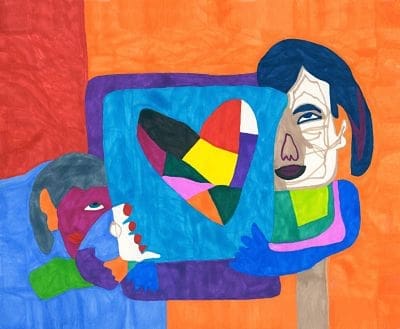
Our featured image is the work of Madison Prince, an artist living with autism. The image communicates the idea of people that are not fully seen in our society, including those that are adults on the autism spectrum.
Part 1: This transcript is machine-generated and lightly edited for readability. The audio is authoritative. Please excuse occasional errors in names and spelling. Guest [00:00:00] We like to throw rocks at the people who don't see the world in the way we do. John Dehlin [00:00:11] Mormon Stories is a production of the Open Stories foundation and relies solely upon the support of people like you, its listeners to help keep the podcast alive or to become a member of the community. Please become a monthly subscriber by visiting MormonStories.org and clicking the donate button on the top right side of the page. All contributions to Mormon Stories are completely tax deductible and go towards producing the podcast and building communities and programs of support for Mormons like you. Thanks for your support. Hello, everyone, and welcome to another edition of Mormon Stories Podcast. I'm your host, John Dehlin. It's February 21, 2018, and we are very excited to be broadcasting to you live on Facebook from our new studios, if we can call it that, in Salt Lake City. We are here to interview someone that I've wanted to interview for years and to talk about a topic that I've wanted to discuss for years on Mormon Stories. And. And it's finally coming together. Today we're going to be talking to JaLynn Prince. Jillian is involved with a very important nonprofit called Madison House. Is that right? JaLynn Prince [00:01:41] Madison House Autism foundation, yeah. John Dehlin [00:01:44] And welcome to Mormon Stories. JaLynn Prince [00:01:47] First of all, thank you so much. It's nice to have you host me. I appreciate it. Exciting for me to be here. John Dehlin [00:01:54] Well, we're excited to have you. Mormon Stories listeners will remember that our very first interview on Mormon Stories that we did was with Greg Prince, who's written several books and he's a noted historian. Jillian is married to Greg, but that's just a small part of why we have her here today. So today we're going to be talking about autism, and specifically we're going to be talking about Jolynn Prince's story, raising a son with autism within a Mormon context. His name is Madison, who is the namesake of the Madison House Autism Foundation. Yes, we're going to be talking about a few things. We're going to be talking about what it's like to have a child with autism, what it's like to raise a child with autism in the Mormon context. And we're also gonna just be talking about autism today, specifically adult autism, Jillian's nonprofit. And we'll hopefully be taking questions both from people who have already sent questions and also from our live viewing audience on Facebook Live. So we're just really thrilled to have you join us and to be back in the saddle doing Mormon Stories podcast live interviews. I do wanna mention to our listening audience that we have some events coming up through the Open Stories Foundation. Next weekend we will be in Phoenix, Arizona for a Mormon Stories workshop and that will be combined with a Sunstone event where Lindsey Hansen park and Infants on Thrones and Ryan McKnight and several other really cool people are going to be doing a really fun event in Phoenix. So that's next weekend and actually it's this weekend. Wait, what day is it? Is it this weekend? It is this weekend. I should have had the dates pulled up, but go to mormonstories.org events and if you're interested in attending Mormon Stories Workshop where we support families struggling with faith crisis, mixed faith marriages, mental health issues. These workshops can be super helpful and healing. Come to that or come have fun with us that same weekend to enjoy Lindsay Hinson park and Sunstone. We also have several other events coming up in the months. Coming up, we will be coming to Houston. We'll be doing a retreat in Salt Lake City. Idaho Falls is also in the works, plus our cruise in the Caribbean in October. So check out mormonstories.org events to join us. And we're really excited about that. So we also just want to welcome our live listening and viewing audience on Facebook. We want you to know that we will be checking your questions and comments and integrating them into this interview as we can. We like to make these interviews as interactive as possible. So we want to encourage you guys to make comments and questions. You can always join us@facebook.com MormonStories and that's where our live events get streamed. So that's enough of an intro. Again, Jillian Prince, we're just so happy to finally have you on Mormon Stories. JaLynn Prince [00:05:16] Thank you very much. It's a delight to be here. John Dehlin [00:05:20] So let's just begin. Tell us just a little bit about yourself and your background, kind of maybe just a tiny bit about your early years, but also your connection to Mormonism as sort of a backdrop for the element, the biographical elements of your story. JaLynn Prince [00:05:39] Wonderful. Thank you. I feel very much at home right now because I grew up in these mountains and it was delightful to arrive in the middle of a snowstorm and a big one. And it reminded me very much growing up in the Park City and Heber area. And my family brought skiing to this area. And so when I see the mountains, it brings back a lot of memories of childhood and my grandparents. John Dehlin [00:06:05] So your grandparents literally, like, started one of the first ski resorts. JaLynn Prince [00:06:09] Well, one of the first ski jumps, Ecker Hill, which is over on Jeremy's ranch. If you're on the way to park City City from Salt Lake was my grandparents. They started that. And there was an end there because my grandmother came from Scandinavia and had been involved in a candy store. And as things evolved, it was kind of the hospitality center for all of the Scandinavians that came to this area. And it was when it was a spectator sport and later on, after it dropped off with World War II, it became a participant sport and changed. And where the ski jump is for the Olympics was my childhood backyard. John Dehlin [00:06:53] Oh, wow. JaLynn Prince [00:06:54] So. John Dehlin [00:06:55] So kind of Park City. JaLynn Prince [00:06:56] Park City. And then we moved over to Heber Valley. So I had kind of an interesting background between being in a. As I was growing up in high school and a very orthodox Mormon background. And then Park City had been looked at in a very suspicious way by Brigham Young because their livelihoods came out of the ground. He liked people who had their livelihoods that came from on top of the ground. And so there was a big division philosophically and it was interesting to have one foot in each area. John Dehlin [00:07:28] So tell us just a little bit about kind of what the church meant to you growing up, the Elias Church. JaLynn Prince [00:07:34] It was a very interesting background because I think part of it stemmed from my grandparents. They had to do a lot of entertaining on Sundays because that's when a lot of the competitions, the ski competitions were. So as far as a traditional going to church every Sunday on a particular time. And that hierarchy was not necessarily part of my grandparents background. But my grandfather had been a missionary and my grandmother had actually come here because of a missionary, although she didn't marry him. Because there was a little bit of an interesting story. He didn't treat his mother well. And so she said, I'm not marrying you. And she was a very determined lady. But they got involved with the skiing situation and were very sympathetic toward things with the Mormon Church. I became much more involved when my father died when I was 11. He died of cancer very young. He was 50, 51. And I had a lot of friends pulling me into the church at that time. And I was super orthodox. We would have a conference and stake conference and there would be three sessions and most people would go to two, but I made certain I went to three because somehow I felt that I maybe had to compensate a little bit from my father not being necessarily as involved in a traditional fashion as far as character and values. He was right in there. Kind of an interesting hodgepodge of things. John Dehlin [00:09:18] So where'd you go to college? JaLynn Prince [00:09:21] I went to Brigham Young University. John Dehlin [00:09:23] Okay. JaLynn Prince [00:09:24] And I was close because Heber, we kind of viewed Provo as a suburb of Heber. And I went there and I was there for five years with several different majors and from there had a summer stock theater. It was my first entrepreneurial endeavor with two other partners, and it was in competition with Robert Redford's summer stock theater. John Dehlin [00:09:51] Nice. JaLynn Prince [00:09:52] And then after that it took me down to Los Angeles. But growing up in Utah has been wonderful. And I love the freedom, I love the people and I love the opportunities. And I can see now that I had disproportionate amount of opportunities as compared to many of my friends in Washington John Dehlin [00:10:12] D.C. a lot of privilege. We have a lot of privilege. JaLynn Prince [00:10:15] We do. And sometimes the privilege was just taking bicycle and being able to ride all day around town and your parents not being able or not worrying about you. John Dehlin [00:10:26] Yeah, it's. That's less of a luxury sometimes we have these days. JaLynn Prince [00:10:30] It is. John Dehlin [00:10:32] So. So maybe, I guess. Did you meet Greg in Los Angeles? Is that where you guys met? JaLynn Prince [00:10:40] I did, because as I was finishing one season with our summer stock theater, I was asked to work with the motion picture division of the state of Utah with a movie that was being done here. And they wanted somebody that understood theater and filming and so forth. And when that completed with their filming here, I went down to Los Angeles to work. And that's where I met Greg. He was finishing out dental school and just beginning a PhD program right in the middle of dental school. John Dehlin [00:11:11] Was that a singles award or what was it? JaLynn Prince [00:11:13] It was. It was a UCLA award. John Dehlin [00:11:15] Okay. JaLynn Prince [00:11:16] And we had no idea when we met that we would be developing along similar paths, though we were two very distinctly different types of people. He was very involved in science and analytics, and I was very involved in the arts and kind of had a little bit of a pre law and politics component to my personality, which was not necessarily that. That was imbued in a scientist. John Dehlin [00:11:46] Yeah. So you're. You're both thoughtful and you're both emotional, but maybe you played a tiny bit more of the artistic emotional role in the relationship or was it equal or. JaLynn Prince [00:11:57] Yes, I think. I think in the beginning, I think Greg has very much developed his own voice and really has put that out there on his own. But I was probably a little bit more out there than he was and being involved in various causes. John Dehlin [00:12:14] Yeah. Well, that must have been intense. So did you. So tell us about the work you did in Los Angeles, you know, during those early years. Did your work with film continue? JaLynn Prince [00:12:26] Well, I worked with film a bit, but then I went into management consulting. John Dehlin [00:12:30] Oh. JaLynn Prince [00:12:31] Which was an entirely different arena but had an interesting opportunity there and happened to hear my Mormon voices in my ear that somehow it seemed appropriate that as soon as I got married that I'd give up my job. Now, we didn't have children, but, you know, that's kind of what we thought was the path that I should be taking. And later on, we started analyzing a whole lot of different things and figuring out what was right for us and what the voices were in the community and where they came together that made sense and where the abilities and the sensitivities that we hope were God given could be manifest. John Dehlin [00:13:15] Yeah, that sounds. That sounds fascinating. And I think a lot of people have shared some of those experiences in terms of trying to struggle with the messages we were all receiving about gender roles and families and relationships and child rearing and. But you did have a taste of a career for many years. JaLynn Prince [00:13:38] I did. I did. And then we moved to Los Angeles with what Greg had promised would be two years. We're now there about 43 years. And children didn't come along for 11 years. And I had an opportunity of working in broadcasting. I did a number of theatrical types of things, produced some movies and some TV work, and then happened to work on Capitol Hill for a period of time and then headed as a public relations director, a historical group that was involved with the bicentennial way back then. So I've had my finger in a number of pies and then got involved actually in design and then decided. Well, I didn't decide. I was pulled very much in the direction of theology. And I had at one time approached people at BYU because I wanted to learn more about theological study in a much broader sense, not necessarily going after a professor or personality of a professor and that type of thing, which was very prevalent at the time. I wanted to have just a broad, honest cross section. And I went to the division where seminaries, you know, teaching people how to be seminary teachers. And one person kind of crossed his arms and looked at me and said, sister Rasmussen, men do this, not women. And we don't have a place for women here because men become seminary teachers. Well, two years later, I found myself as a seminary teacher in Los Angeles, and I kind of smiled about it. And later on in Washington, I kept driving past Wesley Theological Seminary and something always pulled and said, maybe this is the place that you can get involved in the studies. And by an interesting set of circumstances, found myself studying theology. John Dehlin [00:15:35] Now, these things have happened over the past several years, right? Not all before you started having kids. JaLynn Prince [00:15:41] Well, we had. When was it, yes, we did have kids. The things that my exploration and wanting to get in on serious theological studies had been with me long before we had kids. And before kids came along, I was working in radio and all of these other types of things. It was after they were born that I ended up going to Wesley Theological Seminary and was the only Mormon that had ever been enrolled at Wesley Theological Seminary and found it a very interesting place to be because I was much more interested in the journey than the destination. John Dehlin [00:16:29] Yeah, sure, sure. Meaning just learning and studying and learning and studying. JaLynn Prince [00:16:35] And the thing that I found very interesting with my studies there, because there's a broad cross section of Christian traditions. It is a Methodist seminary, but there were a lot of Episcopalians and Catholics and evangelicals. And it was interesting to see how scriptures were presented in a way that wasn't necessarily trying to prop up any particular religious group. John Dehlin [00:17:07] Yeah, that opened your mind as a Mormon, right? JaLynn Prince [00:17:09] It does, it does. And when you start to understand how things have been translated and what the attitudes, it was very revealing to find out world history. And I would recommend highly to people who want to study world history and especially European history to get into theological studies, because so much of the governmental decisions were made because of church connections one way or another, and how it impacts us even today here in America. John Dehlin [00:17:41] Totally. Okay, so where was Madison in the birth order? JaLynn Prince [00:17:46] Madison was number three. John Dehlin [00:17:48] Okay, so talk just a little bit about maybe that sequence. JaLynn Prince [00:17:53] Well, in our journey, my mother moved to Washington D.C. and lived with us. And my mother was just ready to turn 80 in December and Madison was born in November. So we had almost an 80 year span in our household and two children in between, and then a very busy husband that was involved in a lot of things and I was still involved in a lot of different community activities. So Madison came along and it was very interesting to have such a complex family and taking care of the needs with someone who was aging and then having a child who we probably had indicators that he was autistic before he was born. John Dehlin [00:18:44] So how old were the first two when he was born? JaLynn Prince [00:18:48] Four and five. John Dehlin [00:18:49] So you had a five year old. A four year old, and then Madison was born. And how was around that. And how was. How did you experience motherhood prior to Madison being born? JaLynn Prince [00:19:01] Oh, I loved motherhood, loved motherhood. And I had always thought that I was going to be a teacher, you know, doing all of these things. And I found myself a student again, and that was absolutely wonderful. And I loved what they taught me. And it was interesting to combine again the Generations and take children to museums as well as an aging mother and doing different types of things. But I loved it. John Dehlin [00:19:30] Caretaking for an aging mother can age you. JaLynn Prince [00:19:36] Yes, it can. I think we had to develop a lot of laughter. And that was kind of a survival technique. And especially when she could only hear part of the story and you'd be going through McDonald's and somebody would want something, and then she would make a comment about, well, why is it that you don't like the shirt that he's wearing? Mom, I didn't mention the shirt. Oh, I thought that's what you were talking about. No, I was talking about the hamburger that he wanted. So there were a lot of interesting little things that were happening. There was a dynamic there. Sometimes because of aging and being hard of hearing. Later on, she did develop some dementia. And that made it even more challenging with computer working with a baby and then finding out when Madison was about three that he was diagnosed as otherwise not specified. Nos. John Dehlin [00:20:32] Right. Okay. So backing up a bit. Were there any indications in his sort of zero to three years? What. How did it. How did you start detecting that there was something different with Madison? JaLynn Prince [00:20:45] Well, that's a very good question. John Dehlin [00:20:49] Or did you? JaLynn Prince [00:20:49] Yes, and part of it was looking back on it now. I'd had difficult pregnancies, well, at least morning sickness. And the blender was one of my very good friends because I could make things that I could eat. And so I would go to the blender and I would put things in the blender. And just about the time I was put my finger on the on button, I would turn away because I knew that this high powered motor was going to wake up the baby. And that was something that I experienced. And then when Madison came along, I would go to do the same type of thing. And I would notice that there was no startling, there was no kicking. And that was probably the first indicator because right after he was born, he was in my mother's apartment in our home, and a door slammed. And usually when there's a sharp noise with an infant, they will track and follow or look over toward where the sound came from. And I noticed that he hadn't moved. And so my mother had a bell collection. So I got a couple of her bells, and I started ringing the bells one side or another. And Madison wouldn't track in the same way that my other children had. And we took him to the pediatrician immediately. And there was an evoked brain stem hearing test where there are electrodes put on the head to see if Madison could Hear. Because we thought that he was deaf. And they said, no, he can hear. He's just selecting to ignore you. And I thought that was a very interesting comment by the audiologist. And as things continued on and around. John Dehlin [00:22:35] What year is this? Five years into his. I know. I'm asking to. JaLynn Prince [00:22:38] No. When that happened, he was probably about 6 weeks old. This is really early on. John Dehlin [00:22:43] And he was born what year? JaLynn Prince [00:22:44] Approximately 89. John Dehlin [00:22:46] Okay. I'm only asking because I'm sure the field of autism has had its own development. JaLynn Prince [00:22:51] Oh, it has. John Dehlin [00:22:52] So I'm sure it was less developed then than it is now. JaLynn Prince [00:22:55] Much less. And the interesting irony, Greg was in the middle of research, working on a drug that helps infants with rsv, and we had so many pediatricians in our lives at his office, and then dear friends that are pediatricians, and they were in our home. And as Madison was developing, I kept getting statements like, einstein didn't talk before he was 3. And there were other people that were very slow in speech. And these trained, caring pediatricians weren't picking up on any of the indicators at that time with autism, because it was just becoming more. People were becoming more aware, including pediatricians. And so we maybe had 15, 20 pediatricians around us of different sorts, but still no diagnosis. Until we had a friend's sister who was a special needs instructor in Texas visiting us. And on Christmas Eve, if you can imagine, she was over to our home for a Christmas party, and some of the kids were downstairs, and Madison was about 3 at the time, and she whispered to my friend something. And as my friend left, she said, my sister thinks that there's something wrong with Madison. You may want to check him out. John Dehlin [00:24:15] That's got to be horrifying as a mom, right? JaLynn Prince [00:24:18] It's horrifying. It was on Christmas Eve, and all of a sudden, I recall the Christmas lights didn't look as bright. And, yes, it's totally devastating. And it was the first time that there was a frankness about some of the little behaviors with spinning. Spinning items and his lack of verbalization were kind of focused on. And it was shortly after that that we ended up with the diagnosis. And shortly after that, he began school. He was on a school bus going to school at three and a half. That's a tough one. John Dehlin [00:24:58] Yeah. Three and a half. JaLynn Prince [00:25:00] At three and a half. John Dehlin [00:25:02] So you said the diagnosis was autism nos? JaLynn Prince [00:25:05] Yes. Pervasive developmental delay, NOS or otherwise. John Dehlin [00:25:09] Not specified PDD nos. JaLynn Prince [00:25:12] Because I think they were afraid to say autism to us. John Dehlin [00:25:15] The dsm, by that point, had a autism diagnosis. JaLynn Prince [00:25:19] You Know, that's. That's a very good point. I checked back on that because. I don't know, because the DSM has changed on a lot of things. John Dehlin [00:25:26] Yeah, it has. Yeah. So it's pdd NOS for. JaLynn Prince [00:25:29] For Madison. John Dehlin [00:25:30] At least at the beginning. JaLynn Prince [00:25:31] At least in the beginning. And when he started in classes at school. John Dehlin [00:25:36] So normally. No, sorry. Normally there's verbal. Kids start speaking at one, you know, 12 months. Right. So was there any verbal communication? Up to three. JaLynn Prince [00:25:45] He could understand things and very little. Maybe a word or two, I can't even really recall. But there were no sentences, there were no questions. The types of things, you know, mommy, why? Or, you know, ice cream or, you know, any of those things. He wasn't asking for those things. John Dehlin [00:26:08] And by three, you would. Okay, yeah, yeah, yeah. You'd be aware. You'd be like, okay, yeah. JaLynn Prince [00:26:12] And then the reassurance by the pediatricians of that, oh, no, this is. This is okay. Just. Just be patient. John Dehlin [00:26:19] Okay, so three and a half. Madison's on a school bus. JaLynn Prince [00:26:24] Madison's on a school bus and going to school. And Montgomery county in Maryland had been wonderful with children and with identifying them, and I still was not willing and ready to admit autism. I had the feeling, since we'd heard this, NOS and, you know, pdd sets of initials as identifiers. I thought, Madison isn't autistic, but if he learns in a class that is geared toward those with autism and that's best for him, go ahead and be in a class. And it took quite a period of time for us to come to grips with the idea that Madison was autistic. And it's nothing that happens overnight. And then having the vague wording that the doctors had given us didn't help. But it probably wouldn't have changed anything because the people that heard about his symptoms and this made open a space for Madison. John Dehlin [00:27:30] So you would have wanted to resist that sort of reality, is that right? JaLynn Prince [00:27:36] Yes, because one of the only images that time that was very clear in my mind happened to be medical story that had been on tv. And there was the head of this one medical division, and he lost his wife, and he had a son at home, and the son was autistic. And the doctor would come home and the child would be in a corner, rocking and not saying anything and not really recognizing dad as he came home. And I thought, no, that can't be our future. That can't be Madison. And Madison didn't manifest in quite that fashion. He had some of his own manner, essence. But that was My image of what autism was, I didn't even really think about Rain man or anything like that until a little bit later, which would John Dehlin [00:28:29] be more the high functioning autism or Asperger's as it's been known. JaLynn Prince [00:28:33] And the interesting thing is, I had a chance to talk with the fellow's father that Rain man was patterned after, and he made an interesting statement. He said there was never an autism diagnosis for that gentleman. And they happened to. The father lived here in Salt Lake. John Dehlin [00:28:51] That's right, yeah. That's a Utah story. JaLynn Prince [00:28:53] Uh huh. It is, yeah. John Dehlin [00:28:55] So just as a pause, tell us what some of the very typical traits, diagnostic features of an autistic child are. If you know to the extent that you have some of them, you talked about spinning things, you talked about rocking, and not. Not even necessarily just Madison's experience, but, you know, for a parent that wants to sort of start paying attention to this, what are the things to look for that come to mind? JaLynn Prince [00:29:26] I would say if you have older children, kind of remember where their milestones were and see if things may be parallel, although we are all very different. And when I think of Madison's milestones or the things that I hear with others, the eye contact may not be as great. The mannerism in which toys are played with may be very different. John Dehlin [00:29:54] Talk about that. JaLynn Prince [00:29:56] Madison never wanted to stack things where kids would play with building blocks and they would build skyscrapers or whatever, and they'd get stuck so tall and they'd knock them over. He was much more interested in lining things up. And then he would line things up according to the spectrum. He would have the colors lined up. He would do things with all of his stuffed animals. He would line them up around him. It almost looked like he was a teacher and he was teaching the animals. But to play with trucks or baseballs or any of the other types of things that might have been in his environment, he had all sorts of different types of toys. Not as interested. He still is not as interested in those types of things. And as adult, he needs to be shown how to use these things. It doesn't necessarily become innate. Where other children would pick things up and put the square peg and the square hole and the round things in the round hole had no interest for him. John Dehlin [00:31:03] Tell me if arm flapping is sort of a common trait or other types of arm flapping. JaLynn Prince [00:31:09] It is. And sometimes he would do a little bit. That wasn't as much his mannerism. And it may have been too, that the teachers that he had early on were instructing him or Giving him other things that he could do with his hands. So that wasn't necessarily the patterning that he developed. But that's very common. Spinning things can be very common. We didn't know about that. And grandparents would even give him pieces of fabric because they would see how he would spin things around in a circle and they thought it was so amusing. They wanted to give him something that he would play with. And so sometimes it would be a cloth or a towel or something like that. And it is something that is often an indicator. But it's hard to really diagnose some things with autism because it's not necessarily a blood test. And although there's some word out of England that's just barely starting to come out that there might be some tests like that. But which type of autism that that would be testing for, I have no idea. And it looks like there's many types of. Of autisms. John Dehlin [00:32:19] I've heard the saying, when you've met one person with autism, you've met one person with autism. Is that, is that something that can vary wildly between person to person? JaLynn Prince [00:32:31] It is a spectrum. In fact, my husband prefers describing it as an array rather than saying, here's a rainbow and there's this many, this percentage in this slice and they all resemble one another and their behaviors. It's more somebody is good here and this subject and not so good there and prefers this and not that. So it's kind of all over the place. And people are very individual with it. There's some things you can kind of generalize at times, but it is not clear cut. And it kind of gets back to something that we, that I was just mentioning. There's probably several different types of autisms and there are some indicators right now that that's the case. And it's going to take us a while to get to that level of research. John Dehlin [00:33:22] Got it. I'm looking at the DSM criteria, the diagnostic and statistic manual criteria for autism. And it mentions in two broad categories, persistent deficits in social communication and social interaction across multiple contexts. And it talks about social emotional reciprocity. It talks about deficits in nonverbal communicative behaviors. And social interaction talks about deficits in developing, maintaining and understanding relationships as the first sort of main diagnostic criteria. And then the second is restricted, repetitive patterns of behavior, interests or activities, including stereotyped or repetitive motor movements, use of objects or speech, insistence on sameness, inflexible adherence to routines, highly restricted fixated interests that are abnormal in intensity or focus, hyper or hypoactivity to sensory input or unusual interest in sensory aspects of the environment. JaLynn Prince [00:34:23] Those all fit Madison. John Dehlin [00:34:25] Okay. JaLynn Prince [00:34:26] And sometimes the sense of sensory things happened to be. One of the things that he had loved was Fantasia, and he'd watched that again and again and again. He loved the classical music as part of it, although there were portions of it that scared him then and still do. And Here he's now 28 and processing different types of things in his environment. It's not a typical way. And formulating relationships. He wants to know people's names, but that's about as far as he wants to go. Okay, your name is John. Okay, that's enough information. John Dehlin [00:35:00] That's good. So as he's developing as a child, going to school, how does that progress? And then what's that like for you as it progresses? JaLynn Prince [00:35:13] It. Hugely challenging. Hugely challenging. Again, complicated by the fact that there was an elderly individual in our household. And I joke right now that Greg is the chef in our home because for a period of time, I was cooking for an elderly mother. I was doing things for Madison because he wanted a different diet. I had two kids that would come home from school, and then I would try to cook something for Greg. And so in about a 15 year period, you could say that I did maybe about 65 years worth of cooking. And so I don't care if I ever cook again. John Dehlin [00:35:57] Not big on cooking anymore. Cooking got a little spoiled for you JaLynn Prince [00:36:01] because it was something that needed to be done and there wasn't really an opportunity to sit around the table together because everybody had to eat at different times. And, you know, high school school schedules and elementary and middle school schedules too, changed things greatly. And then travel was a challenge. We could go to places like Disney World. That was a place that Madison could easily identify with because another thing that he. And many people that are on this spectrum and certainly I'll never say all because you clarified that nicely. He liked a lot of videos, and a lot of those were Disney characters. And that's in fact, Live Animated, which is a movie that was premiered here at Sundance, was written about a fellow who started to communicate because of Disney cartoons and so forth. But it was hard to go places and to do things and. And it ended up manifesting itself in such a way. Greg would travel for business, but during the summer, he would stay home with Madison and I would take our two oldest children. And the other thing that I failed to mention is that I'm a photographer. And it took. John Dehlin [00:37:21] There we go. JaLynn Prince [00:37:25] I would take Lauren and Chad with me. The first time I went was on a biblical archaeological dig with Chad to Jordan. And it was fun starting to photograph that and bringing him and bringing Lauren along every summer to different places and traveling with a purpose. Not going from hotel to hotel or beach to beach. We would go to interesting places and learn about the culture. And Greg would stay at home with Matt a second. But it gave me an opportunity for them. It gave me an opportunity to be with them away from the demands of both my mother and of an autistic son. And we could concentrate on each other. We could concentrate on being in new environments and exploring new languages together, trying to make it through airports and with strange lettering and signs and so forth. It was a very interesting way of combining things and. And Lauren and Chad still to this day, I think, are continuing with some of the things they'd learned there. One being in broadcasting, another being in filmmaking. John Dehlin [00:38:34] So something that you're highlighting that I think is probably really important, or at least two things. One is division of labor and parenting. It must be an incredible. I've heard divorce rates of parents of autistic children can be quite high. Have you heard that? JaLynn Prince [00:38:50] Yes. And there are some studies that bear that out, and there are some studies that say it's kind of typical. I see huge stresses on families, and I tend to think that it is a higher rate because there's just abnormal stresses. Now, there could be abnormal stresses, and they don't have the energy to get an attorney either, and to go through the process of divorce. But it is challenging to rear a child when the process of rearing that child goes against everything that you were conditioned for because, you know, a baby is put in your arms and you view what their future could be. You see the first day of school, you see playing with the neighborhood kids. You see Christmas, you see high school, you see college, you see weddings. And then you start to understand that many of these things interpreted in the way that most neurotypical individuals do, it is not necessarily in the cards for your child. And how does the family readjust themselves to allow those that would have that more typical path to enjoy that without guilt and to also accommodate somebody that perceives the world very differently. It's a critical way of having a family look at the world differently. And to divide the labor between the parents because one parent on duty all the time is almost impossible. And Greg was able to do some traveling with his business, so he had a chance to get a break. And sometimes he'd stay an extra day or two wherever he was going, if it was in Europe or if it happened to be at other conferences, and then we would do the same with the kids during the summer. But it's a balancing act, and it's not just the parents that are impacted. It's the siblings, and I think that's a highly neglected group. John Dehlin [00:40:58] So it sounds like at least two important parts of how you and Greg chose to manage the situation was, number one, to really try and divide the responsibilities. And it sounds like. I mean, I can imagine in a patriarchal sort of traditional us or even Mormon household where there's a couple where the husband works, the husband might go, oh, my gosh, this is too hard. I'm going to conveniently become a workaholic. And the burden of raising the autistic child would primarily fall to the wife. I could imagine that happening, and it JaLynn Prince [00:41:39] would have probably been our situation if we hadn't really examined things way back at that one point that I had mentioned. Why did I quit working the moment I got married? Because I had heard these voices. We started to examine what it was that was important to both of us and what happened with family without family. And I think that helped us later on because we were able to say, okay, the regular rules don't necessarily apply here. And Madison really magnified those things, But I think it was a very healthy conversation. And I see a lot of millennials and a lot of my daughter's friends now examining right from the. The onset, do we go into typical roles or do we see what the person is good at, what they prefer, what they like? So the man prefers cooking and the woman doesn't, and the woman is better in law than the husband is or whatever those roles and things happen to be. I think there's a greater opportunity to examine that, but we were kind of forced into that. John Dehlin [00:42:49] So Greg is a pretty good cook. JaLynn Prince [00:42:51] Oh, he's amazing. John Dehlin [00:42:52] What are your three favorite dishes that Greg makes? JaLynn Prince [00:42:54] Oh, I love salmon with honey mustard. That's excellent. He does a mean meatball, and. Oh, and then he does a beef that is absolutely amazing on New Year's. John Dehlin [00:43:08] Greg, Greg, you're gonna have to cook for me. You're gonna have to. You've never cooked for me, and that's a problem is get. Guest [00:43:14] So. John Dehlin [00:43:15] So we're gonna have to fix that. Okay, well, good for you, Greg, and good for you. I also love that you seem to be focused on making sure that the children had the other two children, you know, to the extent that you could, that they had rich experiences that weren't always limited by whatever the limits might have been with Madison. That's. Yes. JaLynn Prince [00:43:38] And that was probably exaggerated because there would be so many situations where Madison would have a hard time sleeping at night, so we wouldn't want to disturb him. But then also an elderly mother and I didn't want to have Madison wake up and the kids wake up and the mother to wake up because nobody would be in good shape the next day. And so we saw that there were a lot of other stresses. And so at times we needed to just get away and just have a different schedule and just see that the totality of this world wasn't defined by one location and one set of people in your lives, that there is a much larger world and that there's a way to interplay with those things. And siblings that have to give up their childhood because a sibling has a disability of one sort or another, that's a big sacrifice. And especially if you look at the situation where often siblings become caregivers of adult siblings. So in a way, they have given up childhood twice, once theirs and sometimes their children's childhood as they're taking care of uncle so and so or aunt so and so or whatever. And people may do this willingly, but I think as a society, we. We need to be aware of those stresses because the stress on caregivers is immense and how we maintain good mental health for the entire family. I think it helps too, with the individual that is on the autism spectrum. If there is a more solid base at home, they have something in which to rely because their perception of their world is very different and very frightening often. And to have that stability is critical. John Dehlin [00:45:37] That makes sense. And then another thing that I heard was how you developed photography and travel as your. As. As a personal interest. I wonder how important it was for your health and stability to not just be defined as a caregiver to Madison, but to be developing your own creative pursuits and power as a human. JaLynn Prince [00:46:01] Yes. And it was a wonderful way to have a voice. And I had studied. One of the things that I pursued in my undergraduate work happened to be art, and I'd worked in arts administration. That was something I hadn't mentioned before, but photography was a familiar area, although I had. Had not necessarily enlarged that. But it became something that was so wonderful because it was mine and I had an opportunity to take a lens and look at other people. And I've got to admit, there's an advantage of being a woman and being a global photographer because I could admire children and a mother would allow me to take pictures of her. And her child. And I've traveled with some noted photographers. In fact, my mentor is a fellow by the name of Steve McCurry. If you've seen Afghan Girl. Yeah, he's the photographer that did that on all the National Geographic things. And I've had the opportunity of traveling with him and it's been interesting. He, he can get in to take pictures of so many interesting people here. He's phenomenal. But very often with children there's a bit of a barrier. And here is one of the most noted photographers in the world ever. And sometimes I could sneak in and get pictures of children and things like that and he'd say, how are you doing that? But I think it was because I was a woman and I could relate in a non threatening fashion and I was able to record things with mothers, children, health care, micro industry and some political things that were happening in various countries and had tremendous access to those things. John Dehlin [00:47:54] How important was that to your self esteem, your confidence, your overall joy versus kind of depression as it related to sort of having Madison. Do you see that? JaLynn Prince [00:48:06] It was a different part of my brain and it was nice to exercise a different part of my brain. John Dehlin [00:48:11] I would think so. JaLynn Prince [00:48:12] And I think that's very helpful or healthy for everybody to examine what those things are that bring you joy. And photography brings me great joy. Put a camera in my hand. John Dehlin [00:48:21] Oh yeah, I was just thinking you were, you were dealing with so much with the aging, with your aging mother and with Madison. I can just imagine depression and hopelessness setting in if you didn't have some of those creative pursuits to self develop. JaLynn Prince [00:48:38] And I think you're right there, that there was kind of a double advantage with photography and going into developing countries. And I think this is something that was very helpful for my children too, that you could go and you could say, well, you know, life at home can be challenging at times. It's challenging with mom, with grandma or with Madison. But you get into a developing country and you may be in Lithuania and you would be talking to people who had had real life experience of being held captors and people that they had lost in the not distant past or that you could go to Africa and that you would see poverty on very different levels and you'd see that there could still be a joy too. Even though you were taking pictures of very difficult situations or schools that had no desks or septic fields right adjacent to the schools, you'd see all of these things and it was a tremendous way of putting the world into perspective. Saying things may be challenging at home. But there are huge challenges around the world that need to be addressed. John Dehlin [00:49:52] Gives you perspective. JaLynn Prince [00:49:53] Oh my gosh, it does. Yes. John Dehlin [00:49:55] Let's check in with a few of our listeners really quick. We're grateful for those joining us. On Facebook Live, Sarah talks about how tough it is to trust your child with a babysitter when you have a child with autism. So that's Share a little bit. Sarah also writes that her child was diagnosed and put into therapy at age 3 and is 10 now. She's stressing the importance of early intervention. JaLynn Prince [00:50:21] Yes, wholeheartedly. Don't let your insecurities. If you, if you feel that you've got a child on the spectrum and there's educational opportunities for early intervention, the worst thing that could happen is that they learn good things anyway. You know, there's not really a downside. John Dehlin [00:50:40] No downside. JaLynn Prince [00:50:41] But if you delay, the opportunity for the most fruitful life may be hampered. John Dehlin [00:50:47] Right. A different Sarah writes that her son with Asperger's is extremely picky. So she's relating to the cooking aspect. Kimberly wants us to talk about grief. We're gonna. Kimberly, we're gonna wait on that, but we will come back to grief. Okay. And then also Mark says he has a four year old and he's still waiting for an official diagnosis. So can diagnoses be hard to come by? JaLynn Prince [00:51:11] It can be. And if you've tried one area and you suspect that that may be the case, I would try more than one area to get a second opinion opinion and to go with the instincts of a parent. A parent often knows, I think there are instincts that tell us to investigate something because there may be something wrong. That is much better to do that than to be in denial and to rob your child of the opportunities that may be available to them. John Dehlin [00:51:45] So I just have to do a shout out for, for my alma mater, Utah State University, actually worked for a year at the center for Persons with Disabilities and they have a fantastic autism diagnosis clinic and then also some early intervention programs as well. So if any of you are in Utah and you can get up to Logan, there's some great resources for people with autism there. And I'm sure there's some here in the Salt Lake Valley as well. JaLynn Prince [00:52:12] Yes. And it is developing and it goes from early childhood into things happening at Utah Valley University where there's a new autism center that was opened in April, helping individuals that can go on to college and training people to be in professions working with autism. And they're working with children that are on the spectrum in real life situations, John Dehlin [00:52:37] kind of vocational rehab kind of stuff. JaLynn Prince [00:52:40] Well, from my understanding of the program that there are children that will come in from the community and many of the students are able to work with the children. But then the advantage is there are students that are of peer age that are there in some of their programs or one of their programs that are perhaps Asperger's or higher functioning. I hate utilizing those terms, lower support needs that they're in the same space together and how can they learn from one another and the lessons that can be learned. So it's kind of an interesting project there and there's a number of things happening throughout the state and Utah State has been absolutely wonderful with what they're doing. John Dehlin [00:53:31] So I'm loving the questions. Oh, Mark writes, don't be afraid to trust your instincts. We held back our son from starting school against doctor's advice. That was interesting. Mark's perspective thank you for joining us today on Mormon Stories. If you enjoyed this episode, please help us make more like it by becoming a monthly subscriber@mormonstories.org. Rocks is a featured single on Angela Soph's upcoming album Second Wind, inspired by her struggle with the faith journey out of Orthodox religion. You can find and follow her on social media as Angela Sofbam. That's S O F F E on Spotify or angelasof.com I don't measure up Guest [00:54:24] and it hurts to let them down so judge me cast me your stones I will lay them back at your feet Take my hand let's walk up my we like to throw rocks at the people who don't see the world in the way we do I don't know why we all stand in a circle and point a finger or two Tell me how can you see what is buried beneath a mountain of sun smiles we're all thrown in the same blue water of the unknown so leave your rocks at home. The truth is not what it seems we are told to just be believing the story has never been told and we all need someone to listen to hold our hearts is there breeding with so much more than we see. John Dehlin [00:00:00] We like to throw rocks at the people who don't see the world in the way we do. John Dehlin [00:00:11] Mormon Stories is a production of the Open Stories foundation and relies solely upon the support of people like you, its listeners to help keep the podcast alive or to become a member of the community. Please become a monthly subscriber by visiting MormonStories.org and clicking the donate button on the top right side of the page. All contributions to Mormon Stories are completely tax deductible and go towards producing the podcast and building communities and programs of support for Mormons like you. Thanks for your support. So let's jump and talk about Madison within the Mormon context. So let's go back to around seven or seven years old, reaching eight, I guess. Let's begin. How did you handle baptism with Madison? JaLynn Prince [00:01:14] Well, part of that may have come from a bit of my theological training. John Dehlin [00:01:21] Was this an existential crisis for you, having a child with disabilities? Was it, was it shocking? Did you pray to try and did you have him blessed with priesthood blessings to try and have him fixed? Like, how did your religiosity affect those early years of how you looked at and coped with and experienced, you know, these experiences of medicine? JaLynn Prince [00:01:44] Very good question. We were probably so busy that we couldn't get into some of those things in a way. John Dehlin [00:01:51] So the why me and why God and right do that didn't. JaLynn Prince [00:01:57] Well, I think at 2am on some nights everybody kind of says, you know, why me and why, why this situation? Why Madison? I think is a much more important question. Yeah, yeah, yeah, you know, why, why did it happen to me? It's not me, it's, it's Madison that may be experiencing life differently than I perceived he should experience life. Now, we can get into a lot of other things about that, but as far as the religious nature of things, I think we have had a way of looking at different types of things and a different type of expectation in a way that things happen. There are things in the course of creation that happen. And rather than going woe is me, it's more what, what do we do about this? To kind of a problem solving mode. And that seemed to be healthy for our family. The hard parts were some of these milestones. And you talk about baptism, the theological training that I had put a great seriousness on so many of the things that were milestones in the general Christian community. And even though usually it isn't baptism at age 8, there are other types of things and people taking on responsibilities and commitments we didn't see with Madison that he could really understand some of the things that we felt were core for him to go through that type of a commitment. Because I do picture baptism as a commitment. I remember the day I was baptized and my mother said something to the point of, you know, you're now responsible for and accountable. When I do ask you to do something, you know, it was kind of like you had a free ride. I'd correct you, but, you know, things are a little bit different now. And to place that on Madison, I thought was unfair, and I think Greg did. And if we have the belief system that we do, you know, if I wanted to draw on that, then I think some things are taken care of in due time. But the idea of saying he has no icons or no concept of what this religiosity is about. How do you describe something to someone who is very concrete? This is another thing that is one of the qualities with somebody with autism is that try not to use too many metaphors. If I said, it's raining cats and dogs, some people look at and see if animals were falling from the ceiling or from the sky, literally. So there are things about Madison and trying to explain to him that there was somebody that you have never seen, that lived 2,000 years ago in a distant place that you wouldn't really know about, that did something that might be able to save you from doing the bad things in life and that you'll be happy ever after. How do you wrap that package up and deliver it to somebody who can look at something and say, yeah, I can see that you've got your hand up, and it's concrete, it's there, it's real, it's in my existence. But to say, you know, somebody in the next room is putting their hand up and they. Big deal. Then to put that in a religious nature onto someone, I don't know if that is a fair act. Action to take. John Dehlin [00:05:44] So did you guys decide not to baptize Madison? To this day, he's never been baptized. Okay. JaLynn Prince [00:05:51] And we didn't. John Dehlin [00:05:52] Was that. John Dehlin [00:05:52] Was that a problem with the bishop or anyone? Did anyone. JaLynn Prince [00:05:55] No, everybody was very accepting. John Dehlin [00:05:57] Okay. JaLynn Prince [00:05:57] Now, probably with me mentioning this, there will be some very zealous person saying, why don't we. You know. But it was a conscious effort at the time. And maybe as Madison develops, because we do see continual development with him, he has been severely impacted with his autism. We do see development with him. And if he can get to the point where some of these abstractions may make more sense to him, that may be an action that we would Want to take. John Dehlin [00:06:29] But he's 20. What? JaLynn Prince [00:06:31] He's 28. John Dehlin [00:06:31] 28. Okay. So tell us about. Was there a point where you did sort of intellectual IQ test? Is he. Were you ever able to assess his intellectual functioning? Cognitive functioning? Is that. Is that a sensitive thing to ask? JaLynn Prince [00:06:49] No, it's not a sensitive thing to ask. In a way, it's kind of amusing because it's all over the place. You were saying that you don't meet two people that are the same. There are some ways that Madison has an understanding that is incredible. John Dehlin [00:07:07] In what kind of areas, if you don't mind sharing. JaLynn Prince [00:07:10] This is probably the only real glimpse that I'd ever seen with Madison that he understood a concept, but in a way, it was kind of a concrete, even though it was an abstract concept. When my mother passed away, we were just getting ready to close the casket. John Dehlin [00:07:31] Who's. JaLynn Prince [00:07:32] How old he would have been? 11. John Dehlin [00:07:35] Okay. 11 ish. JaLynn Prince [00:07:37] 11 ish. John Dehlin [00:07:37] Okay. JaLynn Prince [00:07:39] And John Dehlin [00:07:42] 11. JaLynn Prince [00:07:43] 12 ish. And we were just ready to close the casket, and we had each said goodbye. And Greg said, is there anything you want to. Just to do Madison? And he goes up and he looks at my mom and says, goodbye, Grandma. Goodbye forever. And we were absolutely bowled over with this particular concept because we'd never really mentioned anything of that nature or putting death in that type of a context for him. And he understood that there was some sort of a finality to that. So Madison has kind of spotty learning in some ways. He is very bright and cunning and fun and a tease. And in some ways, he hasn't got the faintest idea of the demands. He'd have no idea what's on CNN or MSNBC or anything like that today. That would not be his world. He would not even understand the concepts of those things. But then at times. And his sensitivities with maybe putting a hand out or giving a glance or in his artwork, and he does some rather excellent artwork, and you start to see what is in the autistic mind through his art. And he is working with a wonderful Russian lady who will go out with him in the evenings, and they will sometimes go to a restaurant and they'll stay and he will draw. And the perceptions that he has had in looking at maybe a suggestion of something to draw give you an insight that is uncanny in how he perceives space, how he perceives relationships, how he perceives color. That is far superior to most artists that I have ever encountered. John Dehlin [00:09:44] Wow. Okay. That's powerful. JaLynn Prince [00:09:48] And it is. And I've been in arts administration for A long period of time to make that type of a statement. Is it reflected in a naivete? In a way, yes. But when you look at it, there is something astounding there. So it's one of those other mysteries about autism. John Dehlin [00:10:05] Do you have some of his art hanging in your home? JaLynn Prince [00:10:07] We do, and actually we're doing a campaign with our foundation and his artwork is going to be the centerpiece of it. It has two individuals that are kind of holding up a board that has a heart on it, and the two people are behind the board, so you can only see part of their places. And it's about the idea of the unseen population being seen. And the heart is kind of representing the community. And he did that without even being asked. And it just happened. And it represents things in such a profound fashion that it's rather incredible. John Dehlin [00:10:44] Send us a photo of that, if you will. We'll add it to the car. Is that all right? What would his. Do you even have a sense for his verbal vocabulary, like how many words he's spoken, different words or any, just to get a sense for how his autism manifests? All right. JaLynn Prince [00:11:04] Madison can read and he. John Dehlin [00:11:07] Do you have a sense for the level? Could you even. JaLynn Prince [00:11:10] It's interesting. He could read something like Ronald Dahl, Harry Potter. Now, whether he understands that, but he can read the words and sound the words and sounds. Very typical in somebody reading, you know, one of these books. But if you turn to Madison and you said, how do you feel about something? He'd look at you like. Or if you say, how was your day? Good day. But whether that's autistic or if that's male response, you know, I don't know. I have to smile at that one. Because sometimes my male neurotypical son coming home, it was hard to get answers out of him. How was your day? Fine. So it. John Dehlin [00:12:03] What about expressions about emotion or feeling or happiness or sadness? JaLynn Prince [00:12:08] One of the things that has happened several times during Madison's life, and this was probably the most heart wrenching thing, I would go into his room sometimes at night and he had a mattress on the floor because he kept rolling out of bed. So we decided that we were going to keep things closer to the floor so there would only be 8 inches of detriment. And I would go into his room when he was young and that was the case. And sometimes he would just be sobbing, and I could kind of see that he was seeing the actions and the activities of other people and kind of saying, I can't do what they're doing. John Dehlin [00:12:55] So he had some sort sense of self awareness relative to other people. Yes, you suspect? JaLynn Prince [00:13:03] I suspect. And that he would see things and I think he wanted to do things and he realized that he couldn't do things. And then I think he pulled back a little bit from some of those other types of things that he had seen. And maybe it was seeing a baseball team being selected at the elementary school and he happened to be with other people and that wasn't his experience or whatever it happened to be. And that has happened periodically, even up until today, that sometimes he will have tears of just why and not necessarily verbalizing those things, but being around somebody that long. I kind of boast that we probably have about 30 PhDs in Madison. When you think about 28 years, 24, seven. How many years does it take to get a PhD? John Dehlin [00:14:02] Four to six. JaLynn Prince [00:14:04] So we've got several to eight to John Dehlin [00:14:06] 10, depending on the person. Right. JaLynn Prince [00:14:09] So we've got a few doctorates in Madisonology. Um, so I think we can read some of his things relatively well. But his art gives us an insight into to that a little bit. He doesn't necessarily draw the things that you think he would want to do, but he gives us insight to some of these feelings. And we intentionally have not guided him and saying, okay, we're going to give you art classes and you're going to learn perspective. And here's a dot. The roads all go this way and. Or here's a circle and if you shade it this way it's going to look like it's round. And here's a triangle. Shade it this way, it's going to look like a cone. We've never done that. We've let him express very immediately what he sees, what he feels, how he perceives color and shape. And it's really astounding. John Dehlin [00:15:04] Have you ever tried sign language as a way of communicating? Is that typically done or. JaLynn Prince [00:15:10] That's. Very often that's done in classes. And some of that happened when he was in elementary school. They tried that and it wasn't one of the preferred ways of communicating. There were pictures for a while. He does happen to take speech classes right now from a very interesting woman. And there aren't many people that are speech teachers working with adults and especially working with adults on the spectrum. There may be people that work with brain injury or accidents or things like that, but not necessarily with autism. But we found this woman. His vocabulary has increased greatly. I don't necessarily have a count of the words, but he's not going to sit down and Say, gee, Mom, this is what happened today. And let me tell you how somebody was mean to me or how I saw something. John Dehlin [00:16:00] What would be some of a day's typical verbal communications then? JaLynn Prince [00:16:06] How was your day today, Madison? Good. Where did you go? Museum. What did you see? Pictures. Waterfall. People. But the thing that I see, even though that sounds very simplistic, he has been able to alert us when there's been unkindnesses or there was one person that was being a little bit abusive to him and he was able to give us. John Dehlin [00:16:30] How would he communicate that JaLynn Prince [00:16:33] one. His physical reaction when somebody came into the house. John Dehlin [00:16:38] You watch that? JaLynn Prince [00:16:38] Oh, yeah. John Dehlin [00:16:40] And because a caregiver could be mean. JaLynn Prince [00:16:42] Right. John Dehlin [00:16:43] You know, when someone's not watching. JaLynn Prince [00:16:45] Right. The. The care giver could be taking somebody out into the community to Madison. Out to the community. And how could Madison necessarily come home and tell us? But by watching things and then doing some more investigation under the surface, yes, that was a case. And needless to say, that person was only with us for about 10 minutes after that, just long enough to get his coat and get out of the house. But Madison will communicate different types of things. John Dehlin [00:17:14] His. JaLynn Prince [00:17:15] His hopes, anxieties. He becomes very frightened with bad movies. And. And I will tell you something here. I'll get into the bad movies in just a minute. I have found something with Madison that I suspect with many other individuals on the spectrum because of this propensity to, like, animation that I think through the autistic eye, that when you see something that's on camera, like I'm looking at you right now, and you have blinds behind you and there's a light over here, and you've got a microphone and you've got a computer. And I think very often with autistic individuals, they take into their mind everything that they see, and they don't know how to eliminate the background, eliminate the computer, eliminate the microphone, and get into the face that it's hard to sort through those things. And with animation, your central character is always being followed, and you can see it in one frame and then another frame and who they're talking to. And there's not as many extraneous things. And I think that's one of the reasons and one of the magics behind animation. And I know autistic individuals that are in their 60s that prefer animation as opposed to regular movies. John Dehlin [00:18:38] Interesting. JaLynn Prince [00:18:39] There should be a study in there someplace. John Dehlin [00:18:41] Yeah. So in terms of what his behavior would be like in a church setting, is it disruptive? Is it quiet? Is it, like, impossible? You Know, would he sit for an hour in primary or two hours or talk about and start childhood and then how it progresses in adolescence? And even now, what would. Was church even a possibility? And if so, what was his experience at church? JaLynn Prince [00:19:10] It was very mixed all along. And I think of one story, and I. I hate to tell stories like this and embarrass our kids, but I'm. I'm going to tell this story. There was a lovely lady that handled the nursery at church, and we took Madison and we'd had a little bit of encouragement of, yeah, she'll be able to handle things and things will be fine. And you go into the other meetings. Well, a little while later or a few minutes later, we hear this woman going down the hall, and you could hear fast footsteps saying, madison, Madison, come back, come back. She had tried to change his diaper. He got up and he took off. And she had a claim. In the other hand, he's running naked through the church. He was commando. John Dehlin [00:19:55] Just born at what age? JaLynn Prince [00:19:57] He was probably about three and a half at the time. And so I thought, well, this is kind of interesting. And we had that type of an equivalent several times in his life, and there were never any things made available for Madison. And it. It's interesting when you think about it, in the church, say a congregation is 300 people. Typically it's 2% of the population that's on the spectrum. So put down six people, and then you put two parents. And I joke with the rest of the country, you'd say two siblings. In Utah, you'd say maybe five. So in a congregation, you would have 30 or more people impacted by autism. When Madison was diagnosed and when he was young, there were a couple of other cases that were kind of emerging, but no one really stepped forward to say, I know you've got a challenge here. You know, can we help? There was a psychiatrist that happened to be in our ward, and he came over one Sunday and talked to me to see if there was something that he could do to be helpful. But Taylor making anything specific for Madison was never really done. And so that inclusion was very, very hard. And there was never really a place for him. And young men, young women, the leaders didn't know how to deal with it, and so they wouldn't reach out. So there wasn't a space. There wasn't a space in scouting. There were opportunities to try to take him to Sacrament meeting. But again, if you're hearing about somebody that died 2,000 years ago and, you know, people are bearing witness of all of that stuff. And you're sitting there and you're saying, what do I like? And it might just be the music. It's hard to sit still. And so it became less and less frequent that Madison would go to church because there were other things that he could benefit from and enjoy. And sometimes it was playing some nice music, sometimes it was playing the Tabernacle Choir. But it was his way of connecting with things and not necessarily being in with the group and forced to conform with the group. John Dehlin [00:22:23] Were there instances where you tried to have Madison, you know, at church and members seemed annoyed or frustrated or angry? JaLynn Prince [00:22:34] Yeah, there was a lot of question about it, you know, and people didn't like the extraneous noise. And there were times that he would sit next to the wall because we try to keep him a little bit contained, and he would start to pull off the drywall. And that wasn't necessarily, you know, the favorite thing, people taking care of the chapel. And there was a situation, it was on an Easter, and we happened to have general conference that day. And because I was part of the Wesley Conference community, I was invited to an Easter service at what had been the Clintons congregation because my friend happened to be the musical director there. And we went to the services and Madison looked around and he wanted to sit up front because it was a huge space. And Greg was kind of saying, don't do it, don't do it. I said, well, I think you'll be all right. Even though we're on the front row and after all of the good music and the pastor stands up there after my friend's beautiful performance for Easter morning, that Madison looks up at him and looks over at me and says, go home now and set it to the top of his lungs. Just as this fellow is getting up to give the Easter sermon, and we start to go out some doors, and it happened to be into a corridor that was locked. And so we have to make a retreat and then, you know, wind our way all through the congregation. And I could see very bitter looks from that congregation as well. I don't think it's something that is necessarily confined to our tradition, but people have a hard time, I think, not dealing or dealing with people who are at a different pace. Sir Ken Robinson, and I'll often look at him, he did a thing on education, and he made statements about the education system that we are processed through our education by date of manufacture. So if you're 6 years old, you're in first grade. By the time you're 12 years old, you're here by the time and that we all process through by date of manufacture until we graduate either college or university. And I think something with Madison, he would show us the date of manufacture didn't make any difference because sometimes he would learn faster, sometimes he would learn slower. But maybe the thing that's the important thing is not necessarily if you're on time for every one of those milestones, but whether you achieve those milestones on whatever your timetable happens to be. And I think that has probably been the most difficult thing for most of the people in our congregations, everyone in our ward to understand that Madison wasn't going to be hitting all of those things and he wasn't going to be ordained at a particular time and that he wasn't going to be passing the sacrament at a particular time. And how do you make special allowance for a boy of 13 when he's not doing the things that the other boys are doing? And I think that can be hard. John Dehlin [00:25:56] Would there have been a point where you or Greg might have thought maybe he can pass the sacrament? Let's give it a try. Oh, I guess he hadn't been baptized, so no priesthood. Right. So that wasn't even a possibility. JaLynn Prince [00:26:06] And isn't there something that is really profoundly significant about passing the sacrament? If you really look at it, you are doing something that is very sacred because you are representing the body and the blood of Christ. Would Madison understand that? And is there an obligation to have some sort of an understanding if you are going to share that within community? So those are some big questions. I don't say that ours is the right answer. Ours is our answer. John Dehlin [00:26:41] So did you and Greg end up tag teaming on Sundays where one would stay home with Madison and one would JaLynn Prince [00:26:45] go, yes, that's exactly it. And then we would get these things of. I think that couple is partially active and we say, oh, they have no idea how active we are when we're not, you know, and what we're doing. And so we would tag team very much. And then there were times Madison really wanted and needed to have both parents around on a quiet Sunday morning. And if you can't minister to your own child and their needs, I think your actions fall short with others. John Dehlin [00:27:19] Did having Madison ever affect what callings you and or Greg were ever able to accept? Did you ever turn down callings? Would that have been something you were comfortable doing? Greg at least has served on a high council at one point. So that shows some level of engagement. That's pretty intense, right? JaLynn Prince [00:27:39] And it had been. And I think there's probably a lot of other reasons that people are saying, you know, well, I'm not quite certain where they stand on other types of things. It may have affected things. I don't know how it could have been that I would have either been a Relief Society president or he would have been a bishop and still take care of the kids and an aging mother. There's only so many hours to in the day, although I did work with the Cultural Arts Committee at the Visitors center in Washington D.C. but that fit within my professional aura as well. And I was involved with that for about 16 years. But I can do that at times. When Madison was at school, I could arrange things and I could organize things and do a number of those things and then Greg would be with Madison if I had to be to a performance. John Dehlin [00:28:29] So you weren't able to accept many of the normal callings that you might have otherwise, is that fair to say? JaLynn Prince [00:28:37] Right. I was never involved in young women or things of that nature. But again, it may have been more that she's been in a seminary now. Why is she doing that? Is she looking someplace else? Isn't she pleased with where she is? Isn't this her home? You know, I think there may have been more questions about my involvement in the seminary and maybe some of Greg's writings more than some of the other types of things. So I don't know what it is, but I know it can interfere with a lot of people. I know there have been a lot of families where there have been church ambitions and they would have liked to have followed a particular course of action like their brother or sisters have been doing, and they're not able to do it because they're very busy and taking care of things and issues at home. John Dehlin [00:29:30] Did that ever make you or Greg feel like a second class citizen at church? A little bit or. Or did it make you feel like, yay, we don't have to do a bunch of stuff that we don't want JaLynn Prince [00:29:43] to do well at times. And I think sometimes it's your perception of things and I guess in a way it was very liberating being able to be around other religious traditions and so forth, that we felt very much like the Mormon community was our community. But we also saw that there were other communities as well, and there were some beautiful communities and, and so feeling a second class citizen maybe in some ways, but then understanding that those things happen in other traditions as well. Sometimes there was a bit of a sting to it, but we were too busy getting on with life. But I know a lot of other people who have found it a tremendous pain. And then I think sometimes in adult life there are those things with date of manufacture, okay, by end, the this time you're an elder, by this time you're, you know, progressing through here and you're a high priest, and then you're in a bishopric and you're da, da, da, da, da, da, da. And I think it's very hurtful for those people who had pictured themselves in those roles by particular times and they can't manage it. And I think of a young family that was on in our ward who had two children now not with autism, but very disabled, both requiring very specialized wheelchairs and different types of things. I can only imagine two, because they were very. They were much more traditional in their religious activities than probably Greg and myself. But I think they would have felt rewarded somehow if they would have been able to accept some callings. But it was very hard for them. John Dehlin [00:31:32] Did members ever try and reassure you or console you or even advance theological ideas or speculations, talk about ways that members maybe were helpful or not so helpful in their comments to you? JaLynn Prince [00:31:51] I think sometimes in our morning, and sometimes with disabilities, there can be some very well meaning comments that can sting. And the idea of, well, things aren't good for Madison here, but they will be later. I say, well, but it's right now that we want to deal with and that there are other people like Madison that are hurting and don't we have an obligation to help people now rather than just saying, oh, it may be miserable now, but it's going to be good somewhere somehow on the other side? And maybe it's just a view of life, that life is very precious and that we need to embrace what life is right here and right now. That's what we know and that's what's at hand. And people have made all sorts of different types of statements about, oh, but he'll be perfected. And that comes into another very interesting thing. John Dehlin [00:32:59] Yes, the doctrine would be that in the resurrection he would be made whole. JaLynn Prince [00:33:04] Right. And that can be extremely offensive to a lot of folks that are on the autism spectrum, and especially maybe more within even the Asperger's range of things, because people identify very often who they are by how they perceive the world. And some people feel that if their autism was cured that they would not be who they are. And they feel that who they are is very important and very proper. And so sometimes having statements of, oh, you have this challenge right now, but you will be perfect on the other side is tremendously offensive. And that is why, though. John Dehlin [00:33:55] Why isn't it hopeful? It's meant as a message of hope. JaLynn Prince [00:33:58] It's meant as a message of hope, but it's saying, you are imperfect here. You have struggles here. Something is not right with you. And I have things that are right with me and they're not with you, and I can look at you differently, but somehow on the other side, you'll be equal to me. And I've had people express that type of feeling about what it means when people make those types of statements. John Dehlin [00:34:24] So can I. I'm gonna do something that I do sometimes, which is either to act a little thick or to ask a question that I wonder that a listener might be asking. JaLynn Prince [00:34:34] Okay, great. John Dehlin [00:34:34] What if a listener says, well, there is something wrong. There is a deficit. So what's. And I know that's probably really offensive, but help listeners understand. JaLynn Prince [00:34:48] All right, let me give you a metaphor that I've used. And it was when my son and I went to Jordan, and we were working on a biblical archaeological dig, and we had been introduced to this place where we were going to be staying for the next several weeks. And there was a long counter that had wash basin in it. And so I went in right after our trip and arriving to go in and wash my face. But I knew that there was limited water and that you'd only use a quick amount because all of the water had to be put up on the roof. Well, I turn the water on, and what do I feel on my toes? It gets wet. And I look underneath the sink, and I see that the pipe is only about this long. It doesn't have that curve that we're usually accustomed to. And the water would drop down, drop into a trough, and then go out an opening in the wall. And the water would go out, and before it would even hit the ground, it had evaporated. That has become kind of a symbol within our family as we look at that. They answered a lot of right questions. They didn't have to pay for extra pipe. They don't have to pay for plumbers and things evaporate and are taken care of. It would not have been the right answer in Salt Lake City, but it was the right answer in Jordan in that particular environment. And it became a metaphor that there's often more than one right way to do something. And if you free yourself up to know that there may be more than one right answer, the answer may be A, B, and C. And if you look at people and you look at the importance of people. And somebody may process something differently, does it mean that they're broken? Not necessarily. It may be that they have a different operating system. What is best, PC or Apple? There are two different systems. John Dehlin [00:36:55] Depends on what you're doing right. JaLynn Prince [00:36:57] But they can both answer questions and they can both be the right answer. And so somebody having a different operating system, does that mean that they're broken? Does it mean that maybe they answer questions and look at life differently than you do? That may be one of the major gifts that some people on the spectrum can give to the rest of the world. There's more than one way of looking at things. We probably have artwork in the Sistine Chapel that was done by individuals that were on the spectrum. They may not have been produced otherwise. Steve Jobs most likely was on the spectrum. You probably wouldn't be utilizing that or you wouldn't be utilizing other technology without a different view of the world. So I think we need to be careful. And if we do have the theological beliefs that we do and God creates people to be who they are, do we need to give greater allowance and maybe learn to look through a different lens at times? And so that type of a statement of saying you're broken, is it that the person that they're referring to is broken or is it that their lens is broken and they don't look at two right answers to some situations? Now, indeed, with autism, there can be some very dramatic things. There can be people that are self injurious. There can be people that have violent outbursts and different types of things. Those types of things are not good for the individual or the people that they're around. Those types of things may be things that we need to address, but when it comes to everyday life, maybe there are other right ways of doing things. Does that answer your question? John Dehlin [00:38:44] Yeah, it's really powerful. Really powerful. And I know my question. I made some comments. I asked some questions about Greg during my interview with him recently that really offended people. And I know that some of these questions are going to sound sharp, but I don't know how else we learn. JaLynn Prince [00:39:02] Ask the questions. John Dehlin [00:39:03] Yeah, I don't know how else we learn if we don't even ask the hard stuff. JaLynn Prince [00:39:05] No, you have to ask the hard questions and not be afraid of where truth takes you. John Dehlin [00:39:10] Yeah, so, but, but in Mormon theology, you know, if you look at kind of Saturday's warrior theology, we were all spirits or intelligences and then spirits and we all kind of chose what was going to happen when we came to this earth. Then we'd come here and have the experience, and then we would die, and then we would. Our spirits would continue on, and then we'd be resurrected and sort of wholeness. That's. I think that's pretty much what Mormons think is the plan of salvation. JaLynn Prince [00:39:45] And it could be, but that's a play that was written by a person or people that I happen to know. And I think it is a wonderful metaphor. I think it's comforting for a lot of people. I think there's a lot of literature that is comforting to people, whether that happens to be factual or not. I think sometimes people see a simple answer and they want that to be incorporated in their lives, and that's how the world must function. But at least in my life, I found that there's a lot more nuance, there's a lot more areas of gray than I had ever anticipated. And this is coming from somebody that was extremely orthodox. And in some ways, I still feel that I'm quite orthodox. When I'm around my friends in Washington, D.C. d.C. I seem very conservative. I come to Utah and people look at me like, maybe not so much, but we need to look at. At what things are and what the implications are. Saturday's warriors was a great musical, but so was the Sound of Music, you know, and that talked about war and giving and struggles and unity and all sorts of other things. I think there's a lot of things that we can learn from, but. John Dehlin [00:41:06] So you've done a lot of, you know, digging into theology. What is your theology around Madison if it's not the typical Mormon plan of salvation, or do you have one? I do, if you're comfortable sharing. JaLynn Prince [00:41:24] Oh, yes. Yes. I live with a great deal of hope. I'm very much an optimist, but I think I'm somewhat of a realist as well. And my hope is that human potential, and I think this is a huge component of Mormon theology, and sometimes we neglect it, that people have great potential. And I think if we can work with people in helping them reach their potential, that that is a gift to them, and it is a gift to us. And I hope that things on the other side are taken care of. And I have a great hope that some of the things that we try to implant on God aren't necessarily the case, but that there are other things that may be even more powerful than we have ever even considered. And I hope and I trust that there's an afterlife. And I think Madison plays into that. But I get up every morning asking, what is my obligation to Madison today. And I have to deal with today and alleviate the pain that I can today for both him and all the Madison's that I can possibly reach and help. And I see my work as being much more immediate because I know what's here and now on the other side. I hope there's some wonderful things, but within our theology there's still a lot of stories that I, I can't quite buy into that. Some people do. John Dehlin [00:43:04] Why not though? Well, because it would give you hope. I think that's why these stories are created, to give people consolation and hope. JaLynn Prince [00:43:10] But see, I do have hope, right? John Dehlin [00:43:14] But, but why not? Why not just grab onto these stories because they're Mormon and they're hopeful? JaLynn Prince [00:43:19] Well, because that's the easy way out. John Dehlin [00:43:21] Why? JaLynn Prince [00:43:24] Because I think sometimes if we grab onto a story and we say, well, we're told that this is something, or we're promised that this is something, it gives us a crutch and sometimes we need crutches. And we can all need assistance at different times and at different stages in our growth and progress. But if it keeps us from thinking and from grappling with what really could be or what is, I think we fall far short of reaching our potentials as human beings. If we say, oh, I've always been told that, okay, I'll just accept it and I'll go on. And when you're confronted with something like a disability, with dementia, with death, I think sometimes our answers are a little bit too simplistic to give credence to the gift that we've been given. And that is the gift of life. And sometimes I think we trivialize life by putting some of these stories on top of them rather than really jumping in and saying, okay, I've got a friend who is going through a very tragic situation. I need to be there by their side, listen, understand and love and not necessarily say, well, I've got the answer, and it's just that everything's going to be fine. On the other side, I think one falls shallow and misses the mark. And at least for my life, I feel that I have to go a bit differently. Again, there may be two right ways of doing things. John Dehlin [00:45:05] Sounds like if I had to summarize what I hear you saying, you're saying maybe we don't really know for sure how everything's going to flesh out. So let's be okay, let's be optimistic, but be okay with saying, who knows for sure, other than having a hope that things will be made right somehow and then not letting Some superficial, overly simplistic vision about the afterlife take us away from doing all we can in the present moment. Where we have the most power, right? JaLynn Prince [00:45:39] Where we have the most power. Power. And where we may need to roll up our sleeves and grapple with issues. Sometimes it's very easy to say, well, so and so had the answer. And I'm going to quote so and so, so I don't have to think about it anymore. And I think because they want to John Dehlin [00:45:55] get rid of the sadness or the pain or the guilt, right? JaLynn Prince [00:45:58] Or they want to go and watch TV and not have to think about it. And that was kind of a flip answer on my part. But sometimes I think the grappling brings us closer to the divine and brings us closer to God. And if we make things too simplistic, I think we make God in our own image and make God far too simplistic. And I think that's doing a huge disservice, at least the way I view the world. John Dehlin [00:46:28] Lisa writes. Wow. I never thought about it as an easy way out or a crutch. Makes so much sense to Lisa. JaLynn Prince [00:46:37] We should talk, Lisa. John Dehlin [00:46:39] Thanks, Lisa, for writing. Okay. Did has any of these experiences with Madison challenged your faith or your Mormon faith or, you know, your orthodox faith? Did you ever have a dark night of the soul or, you know, a lot of people that come on Mormon stories have had faith crises or have lost their faith altogether. Sometimes it's from reading books or studying history. Sometimes it's from how they're treated at church or how they perceive others to be treated at church. Have you ever experienced any of that to the extent that you're willing or able to share? JaLynn Prince [00:47:17] Yeah, I probably experienced all of those things. And Sometimes it's that 3am moment where a lot of things are in question and whether one's faith is in question, whether you see that you hope that there's justice within your community, and you question whether justice is really there and if it's valued, whether compassion in a very real, immediate sense is there. And sometimes you question. I've got to say that looking at the Mormon community, the Mormon Church, I see a lot of good, positive, incredible things. And those are part of my heritage. They're part of my belief. They're part of what has opened the door for me to be able to communicate with God. Now, do I see that there's sometimes some silliness and some trivialities that surround that? Yeah, I do. I see it sometimes laid at the feet of families that are dealing with disabilities, people can be well meaning. But I hope we can help people to become more sensitive and to go into another level in dealing with some of these things and the practicality. I think we all become winners in this and I don't think it diminishes God. I think it brings us into a reality of looking or brings us into a position where we hope that we're encountering the reality of God and all of the power, all of the greatness, all of the love that is incorporated with having a faith. John Dehlin [00:49:11] So if you're. If your faith and theologies were kind of a pie chart, what percentage of it is sort of orthodox Mormon versus more Protestant, Christian, mainstream Christian versus Unitarian and not even particularly Christian, would you even have a way to kind of. JaLynn Prince [00:49:31] Well, I would say so much of my world is colored by the palette that was presented to me as I grew up. And I feel very, very valid now. I may turn that around to say how do other people perceive me? And they may perceive me as being either a lot more liberal or at a slightly different point. I think I'm at a slightly different point, but I think it's because of examination and taking this thing very seriously. That's the reason that I ended up on the, the doorstep of this person at BYU is that I wanted to learn, I wanted to understand there was a driving thing within me. So within that pie chart I understand where a lot of other people and a lot of other faith traditions are and I'm sure pretty probably not as great a missionary because I can see a lot of people that are happy within their traditions and that their families and a number of things that they hold very important. I don't feel that I necessarily need to extricate them from that and have them sit on the pew next to me and that somehow they're better off being with me and designing their families and so forth or the heritage that they have been brought up with. I have a problem personally. Am I happy to share some of the things that I think are so glorious about Mormonism? Yeah, and I've talked to a lot of people about that. So I probably have a foot in a couple of different camps and I've got a lot of friends in many different camps. And I am so glad because they help me see that in so many arenas and in so many questions there are multiple answers. And I think that we tend to look at things as either being one way or another. I think my relationship with God has given me great latitude in those things that is working for me. I can't necessarily Put that on somebody else. But I think working with Madison and I see shortcomings in some of the ways we deal with disabilities. I wish there were more ramps going up to the podium. A simple fix that would help a lot more people in our community make that standard. John Dehlin [00:51:57] Every chapel has ramps. JaLynn Prince [00:51:59] Remove the sacrament table. In the old ones, we don't have a secretary or not the sacrament table, but the secretary's table. We don't use that anymore. Put ramps in there. Let's people with disabilities have easier access to get up and share their experience. And maybe we're a little bit reluctant or we feel that we are a little bit more powerful because we lift somebody in a wheelchair up to the podium, but that's making them dependent on us rather than them reaching their potential and having us see them in front of us. And I think we need to be reminded that this mortal thing is very ephemeral. And I worked with a woman when I represented the country as one of the mothers of the year. The two of us both worked with disabilities. And she's the only casting director in Hollywood that works with casting individuals with disabilities in roles that. That are about individuals with disabilities. And she taught me a great deal. And she said, people that seem a little bit smug about disabilities or feel like, oh, that poor brother or the poor sister or that poor so. And so she said, you know, be careful, because were only a moment or two away, any of us from having a disability, we could walk out of here, we could fall, we could injure our back and be in a wheelchair for the rest of our lives. It is near us. How do we deal with those that we encounter? How would we want our futures to be if that had happened to us? And I think that may be the way that we need to look at autism and dealing with individuals on the spectrum or dealing with any one of a number of disabilities and to not necessarily look in pity, but look with potential. John Dehlin [00:54:02] What else could the church or members or leadership do to make the Mormon experience more friendly, supportive of individuals with disabilities with autism or the families who support them? JaLynn Prince [00:54:19] Well, I think maybe making it. Seeing that disabilities are a normal part of the human condition and treat it more that way, that, yes, we need better access so you can get up to the microphone so you can speak, so you can bear your testimony. So that family that I was telling you about with the two kids in the wheelchairs, they always had to stay down by the pews when all of the primary children were singing because there wasn't an easy way to get them up there, and if they were up there, there wasn't a space for them. So how can they fully participate? Can we think of that with those with autism or any disability? How can we help people more fully participate and what we feel is important, if we feel it's important, we should be able to share that. Why is it more important to feel that we can convert somebody than it is to accommodate those that are under our own roof so they can fully participate in our religious experience? John Dehlin [00:55:28] How would a ward effectively care for a child or an adolescent who had, let's just say, more cognitively impaired autism? Would it be a special primary worker specially assigned? Would it be just nursery? Would it be hire a special needs expert? Like, what could a ward creatively do to provide services so that a family could just fully enjoy their church experience and not have to trade off like you and Greg so often had to do? JaLynn Prince [00:56:07] That's a wonderful question. I think something that I probably would have benefited from would have been having a group of the sisters come over and sit around and say, look, we know that there's some challenges here. We have challenges with our typical kids, you know, and you've got a few extra things going on here. What can we do and what can happen? And can we help? Can we help our kids that are your kids age be more inclusive and maybe make that phone call or say, you know, I haven't seen Madison out to church for a while, but would he be able to come to a birthday party? We're having one out in the backyard, and he may enjoy that moon bounce. He may enjoy that pony. Can he come over and join us? Those phone calls never came. John Dehlin [00:57:00] Never came, never came. And this is sort of suburban Maryland, mostly. Good people. JaLynn Prince [00:57:07] Good people. John Dehlin [00:57:07] My wife, Margi, actually was raised in the Potomac, Maryland ward. Yeah. JaLynn Prince [00:57:12] Wonderful people. You know, it's not a fault. And so sometimes when people don't know what to do. So I would pose that there have been situations. I know one fellow, he isn't lds, but he was able to gather several of his friends around and say, you know, if I'm not around or if something happens to me, I want you to know my son. I want you to know what he likes, what his abilities are, where he is in school. Because if I needed it, could you step in and between the five or six of you, could you each do a little bit of fathering? How powerful would that be? And we have an environment within our wards and in our stakes where we could do that. And even if somebody moves out of a Ward, could they still stay in touch? Because we have aunts and uncles. I mean, our families are dispersed. Why couldn't we have that type of a support team? That when Ralph, when he is six, people come together and say, I'm going to be part of this child's community. That's what people usually do at weddings and in the Jewish community, when there's bar mitzvahs or batmet, people gather together saying, we're part of that community. You are part of us. Can we do that in the disability community? We have it within scouting, you know, oh, let's all go for a camp out. Let's all do this. And there's a type of bonding that happens, but sometimes with a disability, and I'm saying there are times that there are breakthrough things and there are good things that happen. But if we could have that more as the norm, I think it would help a lot of families, and I think it would help siblings feel a little bit more comfortable rather than saying, oh, yeah, my brother is always the one that's making the noise, or, oh, I always have to push my sister in the wheelchair because it's hard for her to navigate in between people, you know, going into the chapel. But to say, is it my turn? Can I help you with your sister? Or how is your sister doing today? Oh, hey, this is cool. Are you guys going someplace after church or, you know, what did you do yesterday? Just so there was a more natural type of flow. I think it could do a great deal for both the congregation and for the families. John Dehlin [00:59:47] So are you saying that maybe sometimes it's easier for ward members to just kind of either ignore it or say, well, that's their issue and just to kind of avoid it? JaLynn Prince [00:59:59] Yeah, sometimes when you don't know what to do, you know, how do you do something? In fact, we were working with something right now in trying to inform the country, because of the foundation that we have, that autistic kids grow up to be autistic adults because there's an unemployment rate of 80 to 85%. But how can you offer jobs to. To people or have job slots open in your law firm or your business or your restaurant or your computer company or whatever if you don't know those people exist? And so we're trying to shine a light on adults with autism and say, yes, that movie that you saw with somebody on the autism spectrum going across getting their diploma, that's not the end of the story. They have just completed maybe one quarter of their life, and now they've got the other three fourths that they're going to be facing, and how do we help in that? And how do we make that part of our community, a viable part of our community? John Dehlin [01:01:11] So talk about kind of the main initiatives of the Madison House Automation foundation and the ways you're trying to make a difference. JaLynn Prince [01:01:20] Well, we have Our Autism After 21 campaign where we've had April 21, the middle of Autism Awareness Month declared as autism after 21 day. And we're going to be having an event here in Salt Lake in the fall. We've got some activities in Washington and other states are starting to. To participate with that. We have within the foundation, the Autism Housing Network, and that has examples of different types of housing options across the country that go beyond group homes. Some people want to have community. Some people like the idea of a group home or an apartment. But there's such a wide array of individuals, there have to be more answers, because there is. For the neurotypical population, we could live any one of a number of different environments. John Dehlin [01:02:17] And we're talking about how group homes fall short. What are some ways that they can fall short? JaLynn Prince [01:02:20] Oh, that's a beautiful question. Their intent is very well placed, but in a way, it is a reaction to early things with institutions. And we recall some of the movies, One Flew over the Cuckoo's Nest, and, you know, where people were in mistreatment, misuse, treatment, neglect over medication, all sorts of very bad things. And Eunice Shriver, who happens to have been a friend, that is Sergeant Shriver's wife, Kennedy sister. John Dehlin [01:03:02] Okay, right. Yeah. Okay. JaLynn Prince [01:03:03] And she was a neighbor of ours. John Dehlin [01:03:05] Oh, wow. JaLynn Prince [01:03:06] But she had gone into a number of these places. There was footage about some of the neglect that happened. And so the pendulum has swung over to the other direction and saying people need to be right in the middle of the community. And that can be very important for some people within a typical community. And if that's where somebody wants to be and that's where they can best manifest their abilities and their skills and where they want to be. But a group home may have three to four people living in it. It may be people you want to live with. And the goal would be, well, when somebody arrives here, the neighbors come over with a plate of cookies and welcome you there. And when there's a neighborhood barbecue, come on over. That's not necessarily the case. And group homes are often regulated throughout the country of sometimes having to be a quarter of a mile away from one another. So there's not too much of a density. What if we said that all males that fit your profile had to be separated by a quarter of a mile. You couldn't have a neighbor that fit your demographic. And that's happening in the disabilities world. And so we're trying to open up options for community. It can be smaller communities, it can be larger. We want to have the integration in it with the neurotypical population as well. But that's one of the initiatives that Madison House is working on. We are encouraging colleges and universities to make it possible for people to have education that can go on to college. And sometimes it means sometimes an accommodation or two that can make things flow better and that people can have success. It may be extended test time, it may be not having classrooms with fluorescent lights. It could be any one of a number of things. Sometimes they're not huge solutions, but they can all make a huge difference. And we were gifted the equity in a 400 acre farm in Maryland. And we're trying to combine the autistic population, veterans and the neurotypical population into work training, therapeutic writing, and sometimes a healing experience of just being, you know, in the country. So there's a number of initiatives that we're working on and we're hoping to improve the world for Madison and all of the Madisons and the Melinda's and everybody out there. And it's been a very interesting process. We're the only organization of its type in the country. John Dehlin [01:05:51] Is the farmland or the acreage, are there residents living on it right now or is it. JaLynn Prince [01:05:59] Well, we've got 10 building lots that we may be able to put the housing on. We do have people living and working on the farm. We've got people on the spectrum that are working there. And we did have. And this, this comes into a glorious portion of, I think, Mormonism. There was a mission president out there that saw that there were some missionaries that had greater challenges going up and knocking on doors and being involved in that type of an environment and saw that they could benefit being in a more agricultural environment and then still go out in the evening with the other companions and work with the discussions. And we've had missionaries volunteering at the farm. And this mission president also had a number of his missionaries volunteering there, assisting with therapeutic writing and making that environment very hospitable to those with disabilities who were coming out for various experiences and some therapies. And I think that's. And there's also Just Serve, which is a kind of an offshoot that was put together by the prices about service. And it's in Another community doesn't have anything really to do with the church, but a lot of the people from Just serve who are LDs have come and spent time in service on the farm, which I think helps bring a new normal because people are working side by side with those with disabilities. And I think that translates into Sunday and every other day of the week within the congregations as well. John Dehlin [01:07:45] Any other activities or goals or pillars of the Madison House Autism foundation before we maybe talk a little bit more about Madison, do we cover pretty much the main. JaLynn Prince [01:07:59] That's it. And just making certain that the nation is aware of this population and that we can open doors and make certain that their talents, abilities, and challenges are recognized. And you notice that I use those three words. Not everybody is a savant. There may be some that are, but there's a lot of abilities. But there are challenges as well. John Dehlin [01:08:23] Got it. So to end this second segment, what. What has Madison's sort of adult life been like? Is he still living at home? I remember visiting Greg once, I believe, when he cooked for me. But I believe he had to, like, turn the gas off, because, if I remember right, a fire hazard, you know, just leaving the ability to start fires could be a fire hazard. Am I remembering right? JaLynn Prince [01:08:55] You are. John Dehlin [01:08:56] Is he still living at home? JaLynn Prince [01:08:57] He's still living at home. But there had been an interesting situation. Madison had gone away to summer camp because there's a wonderful camp in upstate New York, and it's about the only time we ever get a break. But Madison. Madison loves it, and he learns a lot while he's up there. But one of the things that he had learned one summer was to make fires, because it's a really good way to have hot dogs and marshmallows. And when he came home, he liked the idea of fires, and we were trying to take away all of the matches and so forth, because he wasn't necessarily differentiating between having a fire in the house or out of the house, because there were fireplaces that were in shelters at the camp. So Madison was starting to take the large pretzel logs, you know, the ones that are about 12 inches in length, and was trying to light those and would go over to the stove. This is the ingenuity of him trying to light those, to take them out, build a fire with pretzel sticks so he could roast his marshmallows. And when you don't have many logs in your living room or in the backyard, I thought it was really rather ingenious because they did look like logs. And that was probably about the time that we were trying to turn off the gas so Madison wouldn't be roasting marshmallows. But yeah, there are some challenges. John Dehlin [01:10:22] Is there an extent to which Madison is a, you know, could present safety difficulties to himself or to other members of the family? And if so, can you talk about that? JaLynn Prince [01:10:38] Madison will probably never be able to live totally on his own. He has a fair amount of freedom around the house and things that he can do. And he goes out into the community and he has some wonderful tutors, and we call them tutors because we want them to work with lifelong learning and not just be people that take somebody out into the community, spend a little bit of time and bring somebody home. Now, continue with your question because I would. John Dehlin [01:11:10] Has he ever presented himself harm or others in the family with harm? JaLynn Prince [01:11:14] If he has been in a position where the medication weren't working correctly, sometimes he would have outbursts and he would have meltdowns and meltdowns. Could be in the middle of the John Dehlin [01:11:29] community and as a full grown man. JaLynn Prince [01:11:31] Oh, yeah. John Dehlin [01:11:33] Can you talk about what that might be like? John Dehlin [01:11:36] Yeah. JaLynn Prince [01:11:38] There was a situation where he was out in the community a few years ago and my husband and I happened to. Happened to be going to another event and thought everything was taken care of. And he became very frustrated and put a hole through the wall of the library and was very upset about something. I don't know what the antecedent was to that having happened, but the police were called. And so here we're on our way to this event and we're told that we should get to get back quickly. And it was a point of frustration for Madison and it warranted having the police there. Now, is that what Madison is all of the time? No. But are there times that there are things of that nature that happen? Are there things that could happen if he didn't have people in his environment? Probably. And so for his safety in large part that he is going to need somebody to be with him sort of 16 hours a day, 24 hours a day. I mean, you wouldn't want somebody to wake up in the middle of the night and not have anybody there. And I was talking about some of the scary movies and so forth. Some of the things from Fantasia Night on Bald Mountain and there's a couple of other Hanna Barbera cartoons that are really quite dark. And if he watches those, he has nightmares and wakes up in the middle of the night and he can't watch a lot of destructive things that's not within who he is. So he will most likely need to have someone, unless over the next few years, as the brain changes and things that he's probably still a part of, if they happen in such a way that he can be more independent, we would love that. And we're working toward formulating as much independence as possible, because the more independent he is and the more he can express his desires with what he does want to do and doesn't prefer, the happier he is. But that's true with all of us. You know, if we can have input, then our lives are a lot different than if we don't feel that we have any control at all. John Dehlin [01:14:04] What would a typical adult day for Madison look like these days? JaLynn Prince [01:14:07] Well, that's another interesting question, because we have just started in on a new set of programming. We have somebody that's had about 16 years experience working with young adults and putting together things, anticipating what his behaviors, but also pushing him to achieve more and more things. Because I think sometimes it's easy with caregivers to say, as long as I can make certain that we leave the house, things go smoothly and we can get back, that's a successful day. John Dehlin [01:14:42] If he's not harmed. JaLynn Prince [01:14:43] If he's not harmed and he does no harm. But we're saying no. Madison has a lot more capabilities than many people have seen in him. And now is the time if he's going to develop these particular skills that we've got to provide that opportunity and we've got to be strong. Because he's going to say, no, I don't want to do it like all kids. And the more independent that he can become, the healthier he's going to become. And we look at things too. And I'll bring things up with health. It's $300 billion a year in care for those with autism, with direct services and lost productivity when parents have to drop out of the workforce. That's about half the defense budget. That's a lot of money. John Dehlin [01:15:43] $300 billion. JaLynn Prince [01:15:44] $300 billion. And that comes out of UC Davis, those statistics. And if we can help Madison be more independent and participate in the community, the less likely he will be to have heart conditions, diabetes, or the things that are related to overweight with arthritis, and all sorts of different types of things. So I think there's an imperative for us to make certain that individuals can participate, whether they're wonderful in working with Microsoft and doing those things, or whatever level of ability somebody has so their health is better and is going to cost the country less. And I think that's something that we've got to emphasize with policymakers. John Dehlin [01:16:36] What are, what are the chances that Madison will outlive you and Greg? JaLynn Prince [01:16:43] That that's the thing that we get the question on a daily basis with the foundation by parents, what's going to happen when I'm no longer around? And that's going to happen with Greg and me. As much as we would like to deny it, you know, each day adds another day to our age. And Madison, we want to have him as independent as possible so he could tell someone that he wasn't being treated well or kindly or to express his desire that he would like to do something for Christmas or that he would like to see, see a particular movie or that he would like to work at a particular place. The more independence that we can give him, probably the better the outcome for him. But we don't know what the future is going to bring. And that's the travesty. Most parents have no idea. Although there's a very wide range of capabilities, A lot of people can live by themselves. But people still wonder, will there be somebody that is going to love my adult child? And that's not necessarily a given. And is there a place for my adult child and is there a place for my adult child to work? That's what falls on the greater community and that's also what falls onto the religious community. And the thing that I was talking about with this fellow that had brought his friends around to say, if I'm not around, can you help? Can you be there? Now one of the inherent things there is that they're all going to be aging. And so if they're all 80 years old and there is an active 50 year old, it may be harder for them, but maybe we can supplement that community or that group around the individual so somebody can check in or somebody will notice if the meds aren't working right or that there are some additional bruises on somebody and to work in taking action to make certain that they're safe. I think that's part of our obligation as a community. John Dehlin [01:19:00] Have you contemplated having one of his siblings take over care for him? I imagine that's a tremendous responsibility. JaLynn Prince [01:19:07] Well, it's a tremendous responsibility. And when someone has been a sibling and they've given up, and I started getting in on this a while ago, when somebody has given up their childhood, John Dehlin [01:19:20] that's the extra childhood. JaLynn Prince [01:19:22] Yeah. That the. By the time do the grandkids have to give up their childhood so uncle so and so can be in the house or that mom or dad is always over there because there's so many problems. Do we need to help solve that? Because it was not the child, the sibling, the sibling didn't arrange for the other sibling to be born. And if they have been contributing in the well being, what is that ending point? Or is there a point where, where society has some responsibility? And I'm not saying that most of the siblings would even want to abandon their sibling, but what does it mean to take on that responsibility? Does it mean bringing them into their home? And what does that look like? That stuff? And even for. I know a lot of neurotypical siblings that wouldn't want to live in the same house. John Dehlin [01:20:24] Most. John Dehlin [01:20:25] Most. JaLynn Prince [01:20:28] So it's nothing that is really out of the norm, but we just don't think about it in the same way. John Dehlin [01:20:36] So are you able to tell us what your specific plan is for Madison? If you guys pass away? JaLynn Prince [01:20:41] And it is evolving, it is evolving. And that is one of the hardest questions, because do we sell our home and get a smaller place that has an apartment area for Madison? Well, then what happens? If we pass away, does that mean that our son or daughter moves into that house so Madison has a stable place? Or do we work with maybe some of these communities where there may be several individuals that are on the spectrum where we would hope that we would be able to have an atmosphere where there would be responsible people in the community as a natural flow that could help look after Madison and that we hope that we can provide that he would have some additional care by planning with life insurances and things like that. That's what families need to look at as well. In fact, if you even think about it, that's a very practical service that somebody in a ward could do is to go over and talk to somebody if they happen to, to be in the financial area and say, let's look at this special needs thing and see what the implications really are. Because the earlier you can start planning, the better the outcomes are going to be for the family. So those are some of the practical things that a congregation could do. John Dehlin [01:22:00] So that's one of the big challenges is figuring out, and it changes, like you said, day to day, what, what you will leave for Madison. JaLynn Prince [01:22:10] Yeah, because there have been times in his life where he has been so frustrated that literally he has pulled handfuls of hair out of his head and he's had challenges. And it was near the end of high school because you knew that he felt some very deep, real things. I don't think that's going to be a behavior that he'll repeat. But there may be some other types of things, but who will be there to address that and to address that in compassion? John Dehlin [01:22:47] I think one of the things I maybe said in Greg's interview that was most offensive to some that were paying attention was just this sort of devil's advocate, naive sort of question of, well, if he's not verb. If he doesn't have a verbal vocabulary, if he's in a home versus staying with you, would he even notice? And of course, you've. JaLynn Prince [01:23:07] Oh, my gosh. John Dehlin [01:23:08] And I don't mean that as an offensive question. JaLynn Prince [01:23:10] No, no, no. John Dehlin [01:23:11] You sort of addressed it when your mother passed away. He obviously knew. But who's taking care of him? He must be very sensitive to. JaLynn Prince [01:23:19] And in some ways, Madison is very smart, and in some ways he's. He. He's oblivious to certain types of things. But. Reword that again, just so. John Dehlin [01:23:35] So he's. I'm asking you to describe the extent to which he's very aware of who's. Who he's with and who's taking care of him and what it would be like for him to have. To have a major disruption. JaLynn Prince [01:23:48] I think that, yeah, continuity is a huge component. And I think very often people tend to look at people, maybe in wheelchairs and say, you're in a wheelchair, so thus you can't speak. And somebody may go into a restaurant and turn to the person that is with the individual in the wheelchair and say, well, what would they like? Because sometimes people assume that because there is a disability, that there isn't an intellectual capacity. And it is surprising how much more people can accomplish with disabilities than people often give them credit for. And I think we need to really be aware of that, because people feel the pain, they feel the neglect, they feel the yearnings. There are all of these things, including cognitively impaired. John Dehlin [01:24:46] Even cognitively, profoundly cognitively impaired individuals still have a sense of people, of relationship, of environment, of care, of emotional needs, even. JaLynn Prince [01:24:59] I had a person tell me about their sister who the family had been told to institutionalize as an infant because I guess there had been a lot of brain damage. And they said, just put her in an institution and walk away so you can have a normal life. And this person found out that there was a sister in their life when they were in their 20s and started a relationship with a sister and nobody else in the family ever had. And she started to understand the things that the sister liked to do and wanted to do and found joy in doing because she was there, and she was there in the moment. And this person that had been totally written off by the rest of the family, this sister could see what she needed and what she wanted and was able to provide that until the sister passed away. So there is a lot more there than most people realize, and it's going to be with the individual. And if there's, you know, different types of learning disabilities and with autism, it doesn't necessarily mean that there is a lack of cognitive things Now. There can be comorbidities. It's like, if you have a broken leg, does it mean you can't have a broken arm? Yeah, you can have two things happening at once. And so sometimes with individuals with autism, that's the case. Sometimes there are some cognitive things. Some, you know, you. You have to look at the individual, much to the point that you brought up in the beginning. John Dehlin [01:26:45] So to close this second segment of the interview, if you had to kind of summarize you, you know, your reflections on Madison, who he is, who he's been, what he's meant for, for you and your family, and some final remarks just about Madison personally. How would you kind of. How would you even attempt to try and distill what Madison has meant to you and to your family? JaLynn Prince [01:27:29] I will mention something, in a way, and I want to be very clear about this. I don't feel that anybody is ever given a challenge, a physical challenge, an accident or whatever to teach somebody else a lesson. No, that's not part of my theology. You know, I need to learn a lesson. So you're going to suffer? No. With that being put aside, I do see that there have been some incredible things happen within our family. I see his sister and brother both as extremely compassionate, caring people that see the world a little bit differently, more because of the autism and who Madison is and potential. And they're just compassionate, caring, good people. Many of their friends, although they've got some cool friends, they've picked cool friends. But many people their age don't have the wisdom that these two individuals do. And I think Madison helps shape that. That was a fringe benefit to go along with all of the challenges, because there's been the parties that weren't held. There were the sleepovers that weren't had. There were the family trips that weren't taken. There was the silence that was broken. There were a number of things. It shaped our family, and it's really shaped my life in the last 10 years because we took on this idea, which started with the idea of maybe doing a school for autism. And we were guided by a national and statewide and local investigation to see that working with the adult autism population. It is one of the most difficult things I've ever taken on in my life. If it hadn't been for Madison, there's no way in the world I would be in this arena. But it has shaped me. I hope I have helped shape others. So Madison has had a broad reach within our family and teaching us more about the complexities, about how there's often more than one solution, and that if there is a challenge in your world and if God has given you the opportunities and has made available certain resources, then maybe there's an obligation not only in helping yourself, but seeing if you can put the oxygen mask on someone else. And he's opened up a lot of doors by just who he happens to be. And my. My hope for him is that he will be the best Madison that he can be. But I hope our daughter is the best Lauren she can be and that his brother can be the best Chad that he can be. And we all have our different challenges, and that's what I hope for him, and that's what I hope the future would bring. And those are the contributions that Madison has made. He's having an indirect impact across the country and even in some other countries. John Dehlin [01:31:20] Beautiful. Thank you for joining us today on Mormon Stories. If you enjoyed this episode, please help us make more like it by becoming a monthly subscriber@mormonstories.org. Rocks is a featured single on Angela Soph's upcoming album Second Wind, inspired by her struggle with the faith journey out of orthodox religion. You can find and follow her on social media as AngelAsofBam. That's S O F F E on Spotify or AngelAsoaf.com. John Dehlin [01:32:08] Let them down so judge me Cast me your stones I will lay them back at your feet Take my hand let's walk we like to throw rocks at the people who don't see the world in the way we do I don't know why we all stand in a circle and point a finger or two Tell me how can you see what is buried beneath a mountain of smiles we're all thrown in the same blue water of the unknown so leave your rocks at home. The truth is not what it seems we are told to just be believing the story has not never been told and we all need someone to listen to hold our hearts Is there be so much more than we see but we like the. JaLynn Prince [00:00:00] We like to throw rocks at the people who don't see the world in the way we do. John Dehlin [00:00:11] Mormon Stories is a production of the Open Stories foundation and relies solely upon the support of people like you, its listeners to help keep the podcast alive or to become a member of the community. Please become a monthly subscriber by visiting MormonStories.org and clicking the donate button on the top right side of the page. All contributions to Mormon Stories are completely tax deductible and go towards producing the podcast and building communities and programs of support for Mormons like you. Thanks for your support. JaLynn Prince [00:00:58] You ask good questions. John Dehlin [00:00:59] Oh, wow. JaLynn Prince [00:00:59] Wow. John Dehlin [00:01:00] Thank you, thank you. And you're doing great. This is so inspiring. I want to thank our listeners for tuning in. We still have people joining us a couple hours later, which I'm not surprised, but it's always pleasant. Patricia writes, there's so much to consider with each family and individual, so it will look very different in each case as far as their future and what will and could happen. I have so older children. I have some older children that already told us they would take care of younger siblings with special needs. Lots of communication, always. Jaina writes, these are all heart issues I'm dealing with. Who will help my son after I'm gone? He does have seven siblings, but still hard stuff. Thanks for joining us, Jaina and Patricia. So I'd like to welcome everyone back for part three of this interview with Gillian Prince, talking about raising three children and one Madison, who experiences autism or has autism, along with her husband Greg Prince, who we've had on Mormon stories several times in the past. And parts one and two talked about their stories raising Madison and then their experiences with Madison, you know, in, in the Mormon context for part two and as an adult. What I'd like to do now, just for the remaining time we have for the next 30 minutes or so, is address some of the questions and comments that we have. JaLynn Prince [00:02:39] Good. John Dehlin [00:02:39] From our listeners. JaLynn Prince [00:02:40] Would love that. John Dehlin [00:02:41] Yeah, there's, there's a lot of intense kind of questions and comments and good forward. Yeah, let's, let's talk through some of them. Becky Reed Linford wrote, love to Greg and Jill and Prince as they fight for a positive, loving, supportive future for their son. They are miracles. JaLynn Prince [00:03:01] Back at you, Becky. You're wonderful. John Dehlin [00:03:03] Do you know Becky? JaLynn Prince [00:03:04] I sure do. John Dehlin [00:03:05] Okay, so shout out to Becky. So is it true that Utah has one of the highest prevalence rates for autism? And if it is, do we have any idea why? JaLynn Prince [00:03:17] Well, that is another very good question. Let me answer some of this Broadly through the cdc, it looks like the prevalence rate is a bit higher. There's a couple of other measurements, and it depends on how that is measured. If it's measured through school records, if it's measured through any one of a number of other assets through the CDC, they pull 15 states and then they take an average. And Utah and New Jersey were two of the highest rates with that one. But right now it looks like about 2% of our population is on the spectrum. John Dehlin [00:03:57] So the. And as you mentioned, the stats are all different, but the report that I pulled from the CDC said about 1 in 68 children have autism. JaLynn Prince [00:04:06] Right. Those are a little bit older. Those are older stats, and that's through the cdc, but the Department of Health has a slightly other metric that they've used. John Dehlin [00:04:16] So are more current numbers, Is it more or less prevalent? JaLynn Prince [00:04:21] Well, if it's 1 in 50, it's more than 1 in 67. But some people have said, you know, 1 in 47, you know, and I don't know where those numbers come from. John Dehlin [00:04:31] There's always a range. JaLynn Prince [00:04:32] Yeah. John Dehlin [00:04:33] And then this report said that autism is almost. Is it three, three times more likely in males than in females? JaLynn Prince [00:04:45] I think it's more like four to five. John Dehlin [00:04:47] Yeah. Four to five. Okay. Yeah. So it's four to five times more likely in boys than in girls. So here it says 1 in 42 for boys and 1 in 189 for girls. JaLynn Prince [00:04:56] Right, right. John Dehlin [00:04:58] So boys. That shows that there's some sort of biological clearance. JaLynn Prince [00:05:02] Well, and it could be because there are many different biological markers that can react to one another, biological factors that can with one another. And whether autism is more prevalent. I would say there may be an indicator in the state of Utah because there's a higher birth rate. John Dehlin [00:05:27] But these are ratios. JaLynn Prince [00:05:29] Well, those are ratios right there. But you were also asking about the prevalence in the state of Utah, too. And there may be something about the age of the parents when a child is born. And if you have a larger family, your child producing years are going to be, you know, spread out more. John Dehlin [00:05:48] So possibly the older a parent gets, the more likely autism might. JaLynn Prince [00:05:52] And there are some theories on that. But if we look at it, and I, I know people cringe when I say this sometimes, but let me use the example. With cancer. Many years ago, there was a big C and everything kind of fit under it, you know, you'd operate with for it. And there were few options for the treatment. Now we've gotten so specific that we've had leopard ones who've had very Rare types of cancer that they can identify sometimes the causality, but they can find out how to best treat something very specifically. And that there's a difference between melanoma and carcinoma and breast cancer and prostate cancer and leukemia, and on and on and on. We may find that type of thing with autism. And there's some breakthrough bits of research coming and it looks like there could be a genetic component, there could be some things that are in the environment or maybe have been in the environment one and two generations earlier that are being manifest now. John Dehlin [00:07:02] Things like toxins or pollution, possibly. JaLynn Prince [00:07:05] Right, right. And we may not know what that is because how do we go back and look and see what maybe my grandmother was exposed to either in Norway or. So if it happens to be my grandmother. So there's a lot of different variables. There may be other conditions. Maybe it's something during gestational period. It's not necessarily clear. But it does look like there are different types of autism. There are some that have more gut problems and there's a lot of sensitivities, a lot of sensitivities to touch and foods and so forth. There's other populations or parts of the population that those aren't the. So the prevalence rate and the type of thing is extremely variable. It seems that there has been an increase to a degree, but people weren't necessarily keeping the records. And then with the DSM that you had mentioned, they have picked up Asperger's and put it into the pot with autism, which makes sense in some ways. It probably sells a lot more DSMs as well. John Dehlin [00:08:18] But as I understand it, they've tried to sort of neutralize or eliminate the term Asperger's and they've called it now high functioning autism. JaLynn Prince [00:08:28] Well, yes, but there's a lot of individuals that identify themselves as being Aspie or Asperger's and there's a lot of different nomenclatures. We can maybe get into that in a minute. That want to maintain that identity because they feel that that describes them more without qualifying different types of things. And I think people have a right to identify as a select. John Dehlin [00:08:55] And I think I caught you not liking the term high functioning because it implies low functioning, which is kind of right. JaLynn Prince [00:09:01] And then some people will get into. No, it's the level of supports, high support needs or low support needs. And there are people that want to be called autists rather than autistic, or some people want to be referred to as an individual who has autism rather John Dehlin [00:09:19] than, you say the person before the Description. JaLynn Prince [00:09:22] Right. Person before the description, or some people say, is so much a part of me that, yes, I'm autistic. I'm not a person with autism. That's who I am. So sometimes within our foundation, we will find that we will word things differently. So either we're equal opportunity acknowledgers or offenders, depending on how you're looking at it, but it's kind of a fluid language as it is with many different populations and how they try to identify themselves. John Dehlin [00:09:51] Sure. And just to conclude, New Jersey, according to this report, has the highest prevalence rates of 1 in 46, according to this report. North Carolina, 1 in 53, and then Utah's 1 in 54. I imagine those numbers change, but. JaLynn Prince [00:10:09] But now they're thinking one in 50. John Dehlin [00:10:11] Yeah. Nationwide or in Utah, JaLynn Prince [00:10:15] from the latest word that I have had and I still need to look at, but it's right around the 2% for the nation. John Dehlin [00:10:23] Okay. So it might be more prevalent in Utah now than 1 in 52, maybe. JaLynn Prince [00:10:29] And it may be about the same. John Dehlin [00:10:30] Okay, so you've already addressed this, but Mehdi writes as an autist myself, so hi, Mehdi, shout out to you. JaLynn Prince [00:10:40] And I like her writing. John Dehlin [00:10:42] She's a great writer. JaLynn Prince [00:10:44] Very impressed with her. John Dehlin [00:10:45] Super smart, super good writer. Really. National, national author. JaLynn Prince [00:10:49] Yes. John Dehlin [00:10:50] Bishop's wife, I think, is one of her most known books. JaLynn Prince [00:10:53] Oh, yes, yes, yes. John Dehlin [00:10:54] She said, I'd like to know about her, about Jillian's views on being healed in the next life. I found this doctrine personally thorny, a rejection of my way of being in the world. But recognized caregivers may feel differently. You've already addressed this, but is there anything else you would add to Mehdi's question statement? Yeah. JaLynn Prince [00:11:13] Where is it that we allow ourselves to have uniqueness and value that and maybe we need to examine what our prejudices are saying if someone's not like me, either they're different or less or something else. Maybe it's just different but equal and that should be acknowledged. And with people trying to make comments like, well, you're not quite like the rest of us, but on the other side you will be. If somebody has unusual abilities and a good self identity, why would they want to say, oh, well, maybe I'm not right, I'm going to be better somewhere else. Whereas they may be very valid right here, right now, and doing the things that, that they should be doing and can be doing, it's just acknowledging people where they are. And I think we need to do more of that. John Dehlin [00:12:07] The first time I remember thinking about this was When I heard a friend named Clark Pingree, who was gay, say, who says I want to have my gayness taken away in the afterlife? Has your experience with autism made you more or less sensitive to the LGBT population both within the church and outside? JaLynn Prince [00:12:24] Oh, it's made me aware of so many, so many other things because how can I defend a population and represent them well with ignoring others? And when I can see that within the scope of creation, people are created differently, who am I to say where that begins and ends? But I can have the responsibility of loving, caring for and supporting people. And I think that's what my obligation is. And it's not defined by gender, it's not defined by disability or ability. John Dehlin [00:13:09] Yeah, makes sense. Mark Peterson writes, the two hardest things I've dealt with in my life are going through a faith crisis and raising my 5 year old son who is on the autism spectrum. Both experiences have brought a tremendous amount of uncertainty along with a renewed outlook on life. My son is non verbal and has difficult times sitting still and learning anything in classes at church. What advice would you give a parent like myself about the benefits and drawbacks of raising someone with autism in the church? JaLynn Prince [00:13:44] In some ways you can't find a more loving community and in a way you can't find a community that has a harder time grappling with some of this. You know, we're human. I think it's important to have that grounding situation for both the parent and for the child. We need a home, we need a spiritual home, we need a place to call our own in many different fashions. I would recommend perhaps being a little bit more proactive in his ward and saying, let's have a few firesides and let's talk about this. Let's have one for the youth, let's have a gathering for the primary, let's have a gathering for the parents. Let's not stop at that. Maybe let's go in and talk to the Stake president and let them know what life really is like to have a child on the spectrum and that it isn't that we need pats on the back, but we need to have the door open and people that are understanding and not trying to dismiss things because they don't understand it. That may be the practicality of where we need good sermons and good talks and to say, let's deal with the realities of this right now. We can have our hope system, but what is it that our neighbor is experiencing today? John Dehlin [00:15:10] It's a little bit sad for me to think about the extra burden That a parent of an autistic child or a child with autism might have to also now be educating all the ward. And it's kind of sad. Is there any training, should there be special needs training of church leaders? Are you aware of any? JaLynn Prince [00:15:29] Oh, I. John Dehlin [00:15:31] Or is there none? JaLynn Prince [00:15:32] I don't see. See a whole lot. I think there are some people, because of their professions or something, may be able to enter in this arena more fully. I would say that I did see a miracle happen in my children's lives. They went to a public school, but it was a small one. It was kind of out on the country, and there was a woman there that wanted to take on disabilities. And so every year she convinced the school to have disabilities Week. And leading up to it, there would be readings of different types of things from Helen Keller, who happens to be interred in Washington. So there were field trips and all sorts of different types of things. But the school would talk about the different abilities and accepting classmates that had different abilities. And maybe they wouldn't run as fast, maybe they wouldn't read as well, maybe they had speech. Whatever it was a greater acceptance. They would bring in for school assemblies, individuals that were in wheelchairs, that played basketball or volleyball and that were champions in their field, people that would have physical disabilities or may have been on the spectrum. It was interesting to see what happened in that school and the support that our children had by their classmates because this one teacher stepped forward to educate the school community and the parents of the kids got involved in it too. So it was a really interesting, transformative thing. Why can't we have that type of thing to some degree in our wards and our stakes? John Dehlin [00:17:17] So like a ward special needs specialist or a state disability specialist possibly, is that. That could be like a calling? JaLynn Prince [00:17:28] It could be a calling. John Dehlin [00:17:29] We have employment specialists, we have PR specialists. Why not a disability specialist? JaLynn Prince [00:17:34] And, and, and I think that could be a very wise way to move forward with this. We could maybe do something that would be. John Dehlin [00:17:43] They could train leadership, they could train low level leadership, mid level leadership, parents. JaLynn Prince [00:17:48] But maybe we could be more. Organic in what we're doing. Could there be conversations in the Cub Scout pack or the Boy Scout pack? Could there be opportunities of taking the young men, young women, and going to children's hospital? Could there be an opportunity of putting on a prom for individuals with disabilities? Could there be different events where people are interacting and that they can see a new normal and that they can appreciate people and that they don't talk to the person pushing the chair, but the person in the chair, literally and figuratively. I think there's a lot of. John Dehlin [00:18:39] How about service? JaLynn Prince [00:18:40] Service projects? Yes. Yes. There could be so many different types of things that can be done. John Dehlin [00:18:46] And in the curriculum lessons, priesthood lessons, re. Society lessons, youth lessons, primary lessons that maybe went a little deeper. JaLynn Prince [00:18:56] Right. And I'll probably get called out on this one. But maybe a few less lessons or few left. Fewer lessons on obedience, but more on taking initiative in the appropriate ways that we should to include our brothers and sisters. And that could be having talks about things, but let's make certain that we look at our language, too. So it's not. I've been asked to give a talk about those with disabilities, and there was this sweet little person there and that sweet little person. And we know that. That no talk to give the real life experiences and how somebody has encountered somebody and how they feel and maybe share the podium with somebody with a disability and that they could both be talking about something. So you create a new normal and so people can be seen and heard. John Dehlin [00:19:52] One of the most moving memories I have of my time in Logan, there was a family, the Christiansen family, with a child named Shani, I believe, who is severely disabled. And I don't even know what exactly the condition was, but she was in a wheelchair, and her. Her hands were kind of shaped in this sort of way, and she. Her speech was. Was very difficult to make out. But she had an iPad with. With little icons, and it was kind of programmed, and she could communicate with that. So she could bear testimony and say, you know, push the button. I'd like to bear my testimony. And then she would say, I love my family. And then she would say, I'm grateful for the Scriptures and I love Heavenly Father. And it was always one of the most moving parts of testimony meeting, when she would bear testimony. JaLynn Prince [00:20:47] Love it. John Dehlin [00:20:48] Love it. And Keith built his own ramp in our chapel. JaLynn Prince [00:20:55] Love it. John Dehlin [00:20:55] They let him build a ramp. JaLynn Prince [00:20:57] Love it. John Dehlin [00:20:57] So the Shawnee could go right up JaLynn Prince [00:20:59] and could we make building a ramp a project that the young men and John Dehlin [00:21:02] young women could do or an Eagle Scout project? JaLynn Prince [00:21:04] Or an Eagle Scout project. John Dehlin [00:21:06] Wouldn't that be great? JaLynn Prince [00:21:06] Oh, it certainly would. John Dehlin [00:21:08] Love that. JaLynn Prince [00:21:09] See, you're thinking in the right direction. John Dehlin [00:21:11] You're helping us all think in the right direction. So thank you. All right. So there, you know, I grouped a bunch of questions into harm and sort of positive. And there's so many people that have had bad experiences. It's kind of shocking. But like Pete writes, the church was a terrible place for my son. The Guilt and shame I feel for exposing him to that environment follows me still today. What do you think Pete might be talking? We don't speak for Pete, but I don't know. JaLynn Prince [00:21:46] I. One thing that I. I think we haven't necessarily addressed and that's bullying. And I think sometimes rather than not doing anything, that an action that is taken can be a damaging one. Oh, you can't do this. Oh, you can't do that. Oh, you're too fast or you're too slow or too, you know, put up whatever it is, or just being mean, playing tricks. John Dehlin [00:22:15] Oh, yeah, and then calling names and JaLynn Prince [00:22:18] then having the parents of the perpetrator saying, oh, but boys will be boys. Pardon me, but I think boys can be very well behaved boys if they understand what's in their environment. That very often I think these negative behaviors are because of fear, are not understanding something. And if somebody understands something and that there is human feeling behind their actions or that somebody could suffer as a result of their actions, that the individual learns more and that the individual that could be the target may have a much more hospitable place. So I don't know if that's what he's talking about, but I would say less. Watch our language and let us not enable people to be unkind. John Dehlin [00:23:07] That's kind of Christianity 101. Yeah. JaLynn Prince [00:23:09] Basically it is no one to whom. John Dehlin [00:23:12] Yeah, Candice. This is kind of heartbreaking. She writes, I raised my 23 year old son with autism in the church. There were some good and some very bad experiences. Teased and bullied and excluded. He's moderate to severe and will always live with me. I have many things I could touch on, but the biggest regret I have in staying so long is the shame and guilt he has about masturbation. He questions whether he will go to heaven all the time because he was taught this is not acceptable to Heavenly Father. Teaching any young man or woman that they're unclean because of masturbation is so sad. But placing the pressure on the shoulders of mentally handicapped youth that will never experience sex in a relationship, that they must go their whole life in abstaining can cause harm beyond comprehension. I've spent years. We stopped taking him four years ago because of the stress it placed on him. And I left permanently a year ago, reassuring him that it's his body and that it's okay. He still feels the need to confess to me. There is a deprogramming process that has to happen for us all that leave. But for someone with autism and the ocd, that usually occurs with the disorder. And it can make that process extremely difficult. JaLynn Prince [00:24:24] Oh, my heart goes out. This is the type of frank conversations that we need to have. And it's the type of a conversation that bishops and stake presidents need to be part of. Because I think we need to examine things very, very deeply. I think a lot of the things that we deal with today were feelings and conditionings of a bygone era and people not necessarily understanding the broad implication of their narrow language. I am so sorry that there is this pain for this young man. And what are the alternatives and what is the pain? This is a conversation that we can take a long time to. To work on that is very common within the autistic population because some people are. Feel that there is a need for physical companionship. And there was even a nice movie done. Autism and love. And there are all sorts of other types of things that might be appropriate answers. That if you try to put somebody into a pigeonhole and say, this is how I've been conditioned, so I've got to condition you to where I've been is very unfair. And we could get into a whole lot of things. This may not be the time and place to do it, but there are serious conversations around all of these issues. John Dehlin [00:26:02] I think the thing I'd love to hear you just respond to is it's one thing to be neurotypical and to have these doctrines and policies that sometimes wreak havoc on all of us. Right. But I wonder if there's sort of this inability to grasp metaphor and abstract versus concrete where some religious teachings can become horrific. JaLynn Prince [00:26:27] Oh, yes. John Dehlin [00:26:28] To a. To a person with autism. JaLynn Prince [00:26:29] Oh, yes. John Dehlin [00:26:30] Does that make sense? JaLynn Prince [00:26:31] It certainly does. There are things. If you are limited in your reactions to another individual and you aren't able to really formulate a relationship and that is part of your wiring of who you are. Who is it to describe Maybe what happens in one's own bathroom? I couldn't be a monitor, but I don't know if there's a right for anybody else to be a monitor either. John Dehlin [00:27:14] And I'm also talking about death in the afterlife. JaLynn Prince [00:27:16] Oh, yeah. John Dehlin [00:27:17] And just all these doctrines that can be harsh, but might even seem harsher or the judgment day. I just wonder how a person who's less of an abstract thinker might receive just some of the fundamental teachings, biological JaLynn Prince [00:27:34] needs that God has given you and you feel like you're going to be damned. That's a heavy load to carry throughout John Dehlin [00:27:42] one's life because maybe a neurotypical person might go, well, they don't know for sure. But maybe, maybe someone with autism might not be able to do that sort of distancing that might that make any, any sort of sin or any mistake or any extra burdensome. I'm just speculating. JaLynn Prince [00:28:00] I, I think you're on to something that is a huge topic that should be addressed and it would, I think, take a long conversation to examine the nuances of that. But I am so sorry that that has happened and let's hope we can get past it. John Dehlin [00:28:24] There's a lot of comments about members looking strangely or members being annoyed about the disruptions. Would it be reasonable for a member to say, look, it's nice that you want your son or daughter here in sacrament meeting, but truth be told, they're probably not getting a lot out of it and it's making it so the rest of us can't just enjoy the peace that we've all come here to enjoy. What would you say to someone who, I mean, no one would ever say that, but I can tell you people would think it. And if somebody thought that, how would you gently coach them? JaLynn Prince [00:28:58] Well, I think there's a number of things and I'm trying to remember the scriptural reference about making joyful noise unto the Lord. Who's to say how somebody expresses themselves in an environment? It may be that somebody has worked so very hard to put aside all of the stimulus that has been hard for them to be able to come into a quiet environment with everybody sitting stone cold silently, and that they worked as hard as they possibly could and that it is many times greater effort than the person in the adjacent pew. Where is the greatest devotion maybe being found? Is it in the effort of trying to somehow conform or to be in a space where the encounter with the divine is hoped for? And maybe we need to look at our tolerance level in certain types of things and that people may need to separate the difference between somebody doing something because it's a neurological situation or an ill behaved child. And yes, I have had both in my life and I know that there are kids that sometimes push the issue and maybe they're reacting, thinking that if you just discipline this child, everything would be just fine and I would be comfortable if you would do your job. We've got to get past that and to give allowance to people. John Dehlin [00:30:40] Laurie writes something sort of. She encapsulates some of the things you've mentioned, but it's strong and it's kind of heart wrenching. She writes, my experience with raising an Asperger's child in the church has been overwhelmingly negative. I found that most people act like autism is some animalistic disease that is contagious. I still can't understand this mentality. We decided to be advocates in our ward for spectrum disorders. We tried to use our callings to help people to understand autism and how they can help families with disabilities with no success and continued mockery of our son. We realized that the LDS Church was not the place where our son could succeed. He hasn't been to primary in over two years and no one primary bishop, scout leader, primary teachers has asked about him. It's like he had nothing to offer so he didn't exist. I know others who have similar experiences and others who have opposite experiences. Ours broke the camel's back. Our advocating for our child created wedges between us and our ward members, mostly made by us. I admit my ideals of a community that wanted and was willing to be a part of raising our children were crushed. Not having a sense of community made it easier for us to leave after finding out it was all lies anyway. What would you say to Laurie? JaLynn Prince [00:31:59] I would say Laurie is writing beautifully. I would like to see her send that letter to her bishop or bishops and to the Stake Presidency. They need to hear it. I would hope that she may be able to find comfort within the community, but if not, I would hope that she might be able to share enough that others don't experience her pain. And we all need a place to belong and we all need whatever type of a spiritual home we want. And to have some people deny that. I think it's a point of education and I don't think it's necessarily her responsibility to be the educator. I applaud her where she's done it, but I think some well placed letters and some sensitivity could go a long way and I would hope that they might receive her letter and do some self examination. John Dehlin [00:33:07] One more sort of on the negative side. Then we'll do some positives because there are those as well. Frederick writes, I'd love to hear your thoughts about adults that are on the autism spectrum. I'm married to a woman who's on the spectrum and is a recovering Mormon, meaning she's left the church or post Mormon. The Mormon Church has devastating effects on my wife. Any thoughts she could share about adults would be greatly appreciated. So I guess this is probably a higher cognitive functioning person with autism who maybe has been racked as an adult but with torment from their participation in the church. That may not be your experience with Max. JaLynn Prince [00:33:43] Well, but there's some commonalities we're women. And put on top of that autism. I think there could be some huge things. And if you think in a more concrete way, I think maybe some of the things that we accept on face value could be very problematic to somebody who has a slightly different worldview. And again, is it right, is it wrong, or is it just a different way of looking at things? And I would hope that there's enough space in the tent for all of us. And I don't know if I could offer any advice. I can say that it must be very hurtful and I don't know, sometimes it's hard for neurotypical individuals to cope with either priesthood or relief society. When Mormonism is at its best, it is glorious. But with our expectations of things being wonderful, when it falls short, I think it is extra painful. And I don't know if that's what she's experienced. John Dehlin [00:34:58] To end on a, you know, at least to end on somewhat of a, of a positive note, There are many people who express that the church has been a very positive thing in their lives. Ezra writes, someone had written something really negative earlier about sort of the church being an awful place for people with autism. And he writes, I'm not sure if you're aware or trying to be self conjecturing or not, because this person had also said all autistic people are different. And he basically notes, but I find it funny, you start off by saying one very important thing to remember is that every single person on the autism spectrum is different, but then conclude that Mormonism sucks for all of them and their families. Actually, as evidenced by my brother's family who has an autistic son. That's simply not true. So Ezra's saying that for some autistic kids or some autistic families, they have good experiences, right? JaLynn Prince [00:35:52] And I think there are some very good experiences. And I know some situations where families have been enveloped with a great deal of caring and that there has been an inclusion. I think even though within the good aspects of inclusion that there's still more that can be done that would be positive. But I think, think there's some good people doing some good things and sometimes we hear more about the negative things and we tend to, well, even in the news, if it bleeds, it leads. You know, we, we talk more about the difficult things sometimes and the positive things, they're there. But the church, like I say, at its best it is absolutely wonderful. But then we have some variables and that happens to be people. But I think people can be taught And I think people themselves have the potential to learn. And I would hope that podcasts like this and other conversations that we could have in the church would help us to fill the greater measure in being an inclusive community where all can worship. John Dehlin [00:37:05] Amy writes, I feel grateful for my autistic son being raised in the church. He has a very close group of friends he socializes with every day. They all met in primary. My son would not have close friends if it weren't for the church. He does not naturally go out of his way to make friends. He's in 10th grade and still very close with these guys. The church also gives him opportunities to serve and other things that have helped him grow. I do not know if he will stay in the church as an adult, but so far I see only good things from it. JaLynn Prince [00:37:34] I love it, I love hearing that and that's when it's at its best, John Dehlin [00:37:41] Kevin writes. And I just want to give equal or at least good go back and forth. Kevin says, I have a friend whose adult son was embraced by their ward. He was included in all activities and passed the sacrament with great reverence. The bishops he'd had treat him like family and have been supportive through thick and thin. From the time of his birth, the ward surrounded the family with love and encouragement. I was also in this ward and although I'm no longer active, I still feel loved and supported. So yeah, so the good things too, right? JaLynn Prince [00:38:18] Yeah. JaLynn Prince [00:38:18] And there are variables. We're human beings and we talk about the spectrum and maybe this is where we can learn something from the spectrum. That there is a great variability in the profiles of individuals on the spectrum. There is within the church as well, in the neurotypical population. And maybe we can learn from this more exaggerated, concentrated situation for greater tolerance for everybody and to open our minds and open our hearts. Wouldn't that be a positive thing to come out? John Dehlin [00:38:55] I love it. Couple more quick questions. This is a specific one about missionary service. How did the parents and children reconcile the every worthy, able bodied issue for serving missions? I have a young boy on the spectrum and I'm terrified of this teaching as it applies to him. I've never had the courage to ask others in the church their thoughts. I'm wondering if he's worried that when the time comes for the boy to be considered considered for missionary service, he'll be deemed unfit to serve and what that would be like for a parent or a child either to worry about that or to experience it. JaLynn Prince [00:39:27] Well, there are some positive things that are happening and I think we need to have even more. But there are various types of missions that people are being called to, and sometimes those are local, where somebody can live at home and they can work in different situations. I know of one situation where a young fellow was working with a cannery and he would spend a portion of his time there and that he would be home and that he would go out, I think sometimes with some of the missionaries on some calls and I think they were measured to some degree, but I think there are some accommodations and sometimes staying a little bit closer to home is one of the answers. I do think that some of the people that we saw within this whole bevy of missionaries that came out to the farm, that there were some that were on the spectrum and some performed much better in a more protective situation or a more control situation. And if we can see that there maybe are many different ways of filling successful missions, we may need to look at our definitions of what success really is. And if somebody is working three times harder than somebody else, but they're not appearing to be the same as somebody else again, who, if we're looking at that reward system, whose reward is going to be greater? And then do we have the right to criticize because the measuring stick that is being used may be an inappropriate one for everybody. John Dehlin [00:41:16] This is probably the hardest question I'll ask you. It's kind of harsh. It's from November and she says, I turned down amniocentesis with each of my five pregnancies because I believed what I was told, that we all get the spirits we are supposed to and that abortion is murder unless your life as a mother is in danger. When I miscarried, I was made to feel unworthy by my bishop and also told that my child was a perfect spirit that didn't need to be tested by others. Now I realize that much of these so called perfect spirits can be attributed to genetic and environmental factors and have nothing to do with my worth as a human, nor did they have anything to do with my worth as a Mormon. Also, looking back, if she had been told it was as hard as it was to raise kids with autism, would she have gone through with her pregnancy? What if she had been convinced that she would not go to hell or be a murderer? If she hadn't, would that have changed her choice? What beliefs did does she hold that helped her to make decision regarding her child that she may have ultimately changed or that she feels would not have changed? And I think a way to summarize that is, you know, with medical advancements, we may be able to detect autism in the, in the ember, in the womb. And if there were an option someday of aborting a child if autism could be detected, do you have thoughts around that? Like, and I imagine as a progressive person, you are pro choice maybe in terms of abortion. And so do you have thoughts or opinions around all? I know it's super intense and complicated. JaLynn Prince [00:42:53] It is a very complicated one. And I would say I'm basically against abortion and very much in favor of choice, both because I do know of situations. I had one friend whose child, upon ultrasound they detected there was half of a head and my friend was getting older and the decision was made that the pregnancy would be terminated because the child would not be born alive or they didn't think it would be born alive or immediately upon birth. Their decision happened to be that they the pregnancy would end because she would have more of an opportunity to heal and be able to have children and to have a family where it may have been in question. So it wasn't exactly the life of the mother, but it was the life of the family. I'm never in a million years ever going to default or criticize her decision. I do think a lot of things are done casually right now. There isn't a test for autism that is prenatal. There isn't one after birth either. So we're always away from this, how's the baby behaving? You know, because so many of the indicators are behavioral. John Dehlin [00:44:35] Right. JaLynn Prince [00:44:38] But I think these are very personal decisions between the woman, the family and God. And I can't step in on it. I just can't. And I think with a lot of prayer, a lot of faith that the right guidance can be had, whatever that decision is. Now, I've got to say, in our situation, even if I would have known that there was autism, so little was known about autism, how would I have had any idea what the path would be? And Madison is a vital part of our family and of who we are. And I can't picture our family without Madison. John Dehlin [00:45:26] So in a fictitious world, if a parent could come to you and say, I've been told that I'm going to, to receive an autistic child, but I have the choice of not having it. And let's just say they weren't a person of means. Let's just say they were flat middle class and it was going to be a significant, not only physical burden, but maybe even a significant financial burden. JaLynn Prince [00:45:50] And how do we know? Because she could give birth to an individual who may never be able to communicate and be in a corner. Or she could give birth to a Michelangelo or Steve Jobs. We don't know. That happens to be part of the birth lottery of any child. And right now, that's exactly what it is. Within the autism framework, there are some very gifted and incredible people. There are some people that suffer absolutely greatly. We don't know enough about it. So I cannot formulate an opinion without knowledge. John Dehlin [00:46:29] But could you look this parent in the eyes and say, I would much prefer to have had my life with Madison than without Madison? JaLynn Prince [00:46:40] Oh, yes. Yes, that's what I would say. I would say that. Exactly that. Because of who he is. And I see the gifts that he's bringing to this world and I see the lives that he is touching in many different ways and through his art and through who he is. And I see him as a gifted teacher. He's been teaching us incredible lessons, and I could not picture life without him. And, yes, I would do it again. Now, some of the things that I did along the way, I would change. I would go for more earlier intervention. I would have jumped in with more of the classes. I would have pushed more for better speech development. Maybe I fought for it, but I didn't fight, I guess, hard enough. I think there's a lot of battles I would have waged to help with even a stronger outcome for Madison. But I think the world's a better place because Madison's been here and you John Dehlin [00:47:46] and your family are better people because of it. JaLynn Prince [00:47:51] I hope so. I can just hope so. But he's a pretty incredible kid in many ways. And it doesn't mean that there aren't those moments at 2am that you're saying, this is really hard. Really, really hard. But neurotypical kids? How many parents have lost sleep over their kids? Does that mean we wouldn't have any children? John Dehlin [00:48:21] Right. This has been such a beautiful and a powerful and a wise interview. I'm just so thankful. And I'm thankful to all those who joined us on Facebook and who are joining us asynchronous as well, I guess. I just wanted to thank you for being willing to share Madison's story and your story and Greg's story and your family story with us. Thank you for all the work you're doing on behalf of people with autism. It's been a real honor to have you share these things with us. Really sacred and to close, I guess. Are there any final words you would want to share with our audience? It can be from a faith or religious perspective. It can just be from an autism perspective, from a wisdom perspective. If you had final comments just to share, what would you say? JaLynn Prince [00:49:19] First of all, I would like to say thank you for giving voice and for opening up a couple of your sessions here to addressing this issue because more needs to be done. I think if anything, with dealing and working with autism, I would say let's learn. And let's learn that maybe there's more than one right way to do something. And maybe our autistic children or brothers and sisters, sisters both as siblings and as members of the church, may have lessons for us to learn. And if we can assume the role of being a student and not feel that we have to be the one that's always right and the teacher. But to learn, I think there's a lot that heaven may make available to us and we all might be just a little bit better having been on this planet. John Dehlin [00:50:32] All right, well, Jillian Prince, it's been a real honor to have you on Mormon Stories. I want to thank everyone who's joined us on YouTube, on Facebook or through itunes or your podcast app of choice. I want to thank everyone who supports the Open Stories foundation to make all this possible. Your donations literally keep us alive and support the staff that makes all this possible. So if you support us, thank you. If you aren't yet supporters to Mormon Stories of the Open Stories foundation, please go to MormonStories.org, click on the donate button. 10, 20, 50, $100 a month. Whatever you can afford really makes the difference. So please, if you enjoy this programming, if you value it, if you want to see it continue, please do support us. Also want to thank Cody Layton for his work with audio, visual and production. We were grateful to have Shea Allen help us a little bit with our cinematography. So shout out to Shay. Thank you to her. Thanks to everyone, the OSF board and staff, Amy Grubbs, Sharon Prince for all that they do in the Open Stories Foundation. And please tune in again for more Mormon Stories. Please email us if you have ideas for topics you want to see us cover. Please share Mormon Stories with friends so that we can get the word out. Please like us on Facebook. Our Facebook page is Mormon Stories Podcast. Please give us positive reviews on Facebook. Also please give us positive reviews on itunes. You can go to Mormon Stories Podcast, give us a five star rating and a positive review. Those really make a difference as well. Check us out on Twitter MormonStories and also on Instagram MormonStories and we're just always grateful for your feedback and support. So thanks for joining us sure. Love you guys and we hope you'll join us again soon for another episode of Mormon Stories podcast. Take care everybody. Thanks Jillene. JaLynn Prince [00:52:25] Bye. John Dehlin [00:52:30] Thank you for joining us today on Mormon Stories. If you enjoyed this episode, please help us make more like it by becoming a monthly subscriber. And@mormonstories.org. Rocks is a featured single on Angela Soph's upcoming album Second Wind, inspired by her struggle with the faith journey out of Orthodox religion. You can find and follow her on social media as Angela Sofban. That's S O F F E on Spotify or angelasoaf.com. JaLynn Prince [00:53:19] Cast me your stones I will lay them back at your feet Take my head lets walk among us we like to throw rocks at the people who don't see the world in the way we do I don't know why we all stand in a circle and point a finger or two Tell me how can you see what is buried beneath a mountain of smiles we're all thrown in the same blue water of the unknown so leave your rocks at home. The truth is not what but it seems we are told to just be believing the story has never been told and we all need someone to listen to hold our hearts is there breeding with soul more than we see but we like. Transcript © 2026 John P. Dehlin. All rights reserved. Brief quotations are welcome with attribution and a link to mormonstories.org; all other use requires written permission.
Episode Transcript
Host: John Dehlin · Guest: JaLynn PrinceIntroduction and JaLynn Prince's Background
Part 1 of 3 · Ep. 867
Growing Up in the Mormon Church
Marriage, Family, and Finding Meaning
Madison's Early Years and Autism Diagnosis
Understanding Autism Traits and Diagnosis
Raising an Autistic Child: Parenting Strategies
Art, Advocacy, and Finding a Voice
Part 2 of 3 · Ep. 868
Autism, Baptism, and Church Participation
Emotional Expression and Social Challenges
Madison's Mixed Experiences at Church
Callings, Faith Struggles, and Theology
The Madison House Autism Foundation
Safety, Independence, and Daily Life as an Adult
Long-Term Care Planning for Autistic Adults
Reflecting on Madison and Closing Part Two
Part 3 of 3 · Ep. 869
Autism Prevalence, Utah, and the LGBTQ Connection
Bullying, LDS Doctrine, and Supporting Autistic Members
Positive Possibilities and Missionary Service for Autistic Members
Final Reflections and Closing Thoughts
Part 2:
Part 3:
Part 1:
Part 2:
Part 3:


4 Responses
Thank you Jon for another very interesting interview, god bless you jay lynn with your son for the future, may you continue to receive all the help you need and more.
Awesome interview! Thank you for opening up this topic and thinking about how to involve those who are not fully seen. I have a 14 year old daughter who is mostly nonverbal. I struggle to communicate with her every single day despite developing a mean arsenal of impressions (Elmo, Barney, Snuffy, Bert & Ernie. Etc). She’s growing up but the characters give more incentive for her to talk rather than just Dad. My goal is to reach out to others this year and be more pro-active in helping with her social skills. That’s great that you have done so much for Madison. It breaks my heart to see my girl withdrawing more as she’s getting older (15 in a few weeks). Thank you for sharing all you have in this interview. Thanks John for all you do too!
Thank you both for some wonderful insights.
I’m thinking this could be the beginning of a new miniseries on Mormonism and its relation to other forms of “neurodiversity,” (besides autism) since I’ve known a number of LDS people that fall into this category — schizophrenia, bipolar “disorder”, ADD, etc. (to name a few).
For example, in my case, being told by a former bishop that I should not go to the temple at times when I’m suffering from depression (or when I feel like I might have an emotional meltdown during a session) was probably the beginning of the end of my membership in the Mormon church (with a very long and complicated story in between, ultimately resulting in my resignation). Since my episodes of depression are unpredictable, and since I’m never sure what might set them off — not even the temple was a safe place — he was effectively telling me that I couldn’t go to the temple at all anymore, until and unless I was “cured,” and there has never really been any lasting “cure.” It’s the way I’m “wired.”
In all fairness to him, it probably was not his intent to exclude me from the temple “forever.” He apparently had the mistaken idea that medications could “fix” me, not realizing that I had already tried enough of them to know that they either make me crazier than I already am, or they don’t work at all.
I believe that there are many “non-neurotypical” people who could live happy and productive lives if they could just find (or be placed in) an environment that both accommodates their “disabilities” and allows them to use their unique abilities. I have seen it go both ways — some seem to get their needs met very well in some LDS communities, but others are sometimes dealt with in ways that aggravate their condition and/or taught beliefs that are not healthy for them. Lots of room for improvement if church leaders are willing to listen…
Very interesting, I wonder how many of the people that experience a faith crisis are on the autistic spectrum since there are studies that show high functioning autistic people are much more likely to be atheist than are neurotypical people.
https://csjarchive.cogsci.rpi.edu/proceedings/2011/papers/0782/paper0782.pdf