
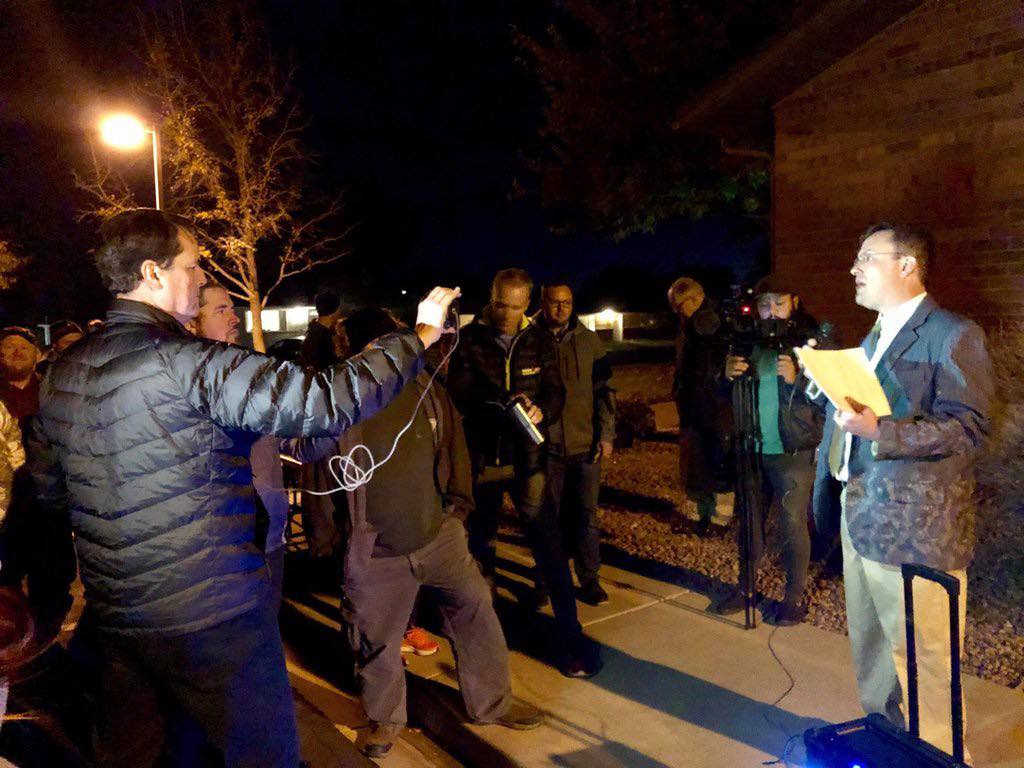
 On December 2, 2018, Mormon Bishop and podcaster Bill Reel was excommunicated from the Mormon church for apostasy. In this Mormon Stories Podcast episode we speak with Bill about the disciplinary council. We will play the recording of his disciplinary council defense, and allow Bill to offer a play-by-play commentary. We will conclude by discussing Bill’s reactions to the verdict, and talk about what comes next for Bill and Mormon Discussions.
Hat tip to Miles Germer for editing the disciplinary council audio.
Links discussed during the interview:
- Bill’s 24 questions his Stake President admitted he could not reconcile
- Bill’s 5 questions sent up the leadership chain with no one willing to respond
- Bill’s Appeal of Disciplinary Decision to the First Presidency
- Link to Joseph Smith Papers Bill discussed during the interview
Part 1 – Events leading up to the disciplinary council: This transcript is machine-generated and lightly edited for readability. The audio is authoritative. Please excuse occasional errors in names and spelling. Guest [00:00:11] Your mom and me, we've seen this life with eyes that only see in black and white. John Dehlin [00:00:21] Mormon Stories is a production of the Open Stories foundation and relies solely upon the support of people like you, its listeners. To help keep the podcast alive or to become a member of the community, Please become a monthly subscriber by visiting MormonStories.org and clicking on the Donate button on the right side of the page under Support. All contributions to Mormon Stories are completely tax deductible in the United States and go towards producing the podcast and building communities and programs of support for Mormons like you. Thanks for your support. Guest [00:01:03] Tune me out if you must I know you've heard enough But I sing this song Just because I hope you'll be wiser than your daddy was I hope you'll be wiser than your daddy John Dehlin [00:01:27] hello everyone, and welcome to another edition of Mormon Stories Podcast. I'm your host, John Dehlin. It is December 12, 2018, and we are very excited to bring back on our show Bishop Bill Real and podcaster Bill Real. He is the host of Mormon Discussions podcast. He's been doing that for several years. We've featured that work on Mormon Stories in the past. I think I feel a little bit of pride in helping discover Bill Real in the sense that I brought him on Mormon Stories podcast while he was a sitting bishop. We've had him on a few times since then. In some ways, Bill Riehl filled the gap when I got excommunicated and when Mormon Stories probably turned a little bit more critical and a little bit less objective as a result of my own issues and my own journey. Bishop Bill Real filled that hole with his Mormon Discussions podcast and for many years led a podcast that he subtitled Faith Seeking Understanding, where he sought to be that moderate, faithful voice within Mormonism. And he did that for many years, but of course had his own journey of his own faith journey that many of us have, where it's just harder and harder to fill that role. I think when you see the pain and the difficulty that so many experience as a result of Mormonism. And and so as Bill's podcast became a little bit more edgy, a little bit more strident, a little bit more critical, he ended up receiving a very similar fate, as did I, which was receiving a letter in the winter of 2018 summoning him to a disciplinary council. We've already covered that in an episode. A few episodes back on Mormon Stories podcast, he ended up calling out Elder Holland for several dishonest statements he's made publicly, and he chose to title it Liar Liar, Pants on Fire. But the evidence was there that Elder Holland has been deceiving or making dishonest statements. So it wasn't that he made that statement without support. And so promptly thereafter, he received the letter for his disciplinary council, which was held. What was the date of your disciplinary Council? Bill Reel [00:03:53] Bill November 27th. John Dehlin [00:03:56] November 27th. And so we covered that in depth on Mormon Stories podcast. But what we like to do is shine a big fat spotlight on disciplinary councils. Having been through one myself and having covered and attended several others, we find them to be medieval, we find them to be barbaric, we find them to be spiritually abusive. And of course, we know that Dr. Gina Colvin from New Zealand, the wonderful podcaster for a thoughtful faith podcast, is also set to be excommunicated. I believe that date is December 20th. So in 10 short days, Dr. Gina Colvin will also be excommunicated. And of course, this is all followed by Sam Young, who is excommunicated Bishop Sam Young for trying to protect LDS children. And of course, we know about others, including Jeremy Reynolds, Kate Kelly, Marisa and Carson Calderwood, Rock Waterman, Denver Snuffer, and several others in the past several years who have been excommunicated, all for telling the truth, all for fighting for marginalized or disadvantaged groups within Mormonism. And so we're going to keep shining a spotlight on these communications until the Church stops them. We recognize the Church's right to excommunicate people, but we think it's damaging and barbaric and spiritually abusive. So we're going to keep doing it. So without any further ado, Bishop Bill Real one last thing. We want to welcome all our Facebook Live listeners who are joining us. We have 160 people now joining us. If any of you who are listening want to help Bill Real Help Mormon Stories Podcast and help the cause that we're all fighting for. We would welcome you now to please share this video on your Facebook feeds, on your desktops, on your walls, in groups that you're a member of. It would be great to get that live viewing number up to three or 400. And it would be great to get some believing Mormons on because in so many ways they're our audience. We just hope to build more awareness about the church, its leadership, and help improve the church by shining a spotlight on the things that it needs to improve. So if you're willing, please do share right now this feed and also please share your comments and questions in the chat group because we really want to make this interactive. And we really want to incorporate your comments and feedback. What we're going to be doing during this episode is interviewing Bill about the moments leading up to his disciplinary council, the days and hours leading up to his disciplinary council. Then we're going to actually play the recording of his disciplinary council, because this disciplinary council was recorded. And we'll be pausing it throughout that recording to kind of do a play by play analysis and also to let Bill comment on the disciplinary council. And then we'll end that segment by allowing Bill to talk about his reactions to the disciplinary council, how he felt when he left, what the crowd was like, and then what the general reaction has been to his excommunication and kind of what's next for Mormon Discussions podcast and for Bill Real. So without any further ado, Bishop Bill Real. Bishop and ex Mormon Bill Real. Welcome back to Mormon Stories podcast. Thanks for joining us. Bill Reel [00:07:25] Once a bishop, always a bishop, right? John Dehlin [00:07:27] That's right, yeah. Bill Reel [00:07:29] Grateful for the chance to sit and talk with you. And again, as I said earlier, I think this is an important, important conversation, how disciplinary councils happen in terms of those charged with apostasy and what it means for those of us who have been through this faith journey. John Dehlin [00:07:46] All right, well, let's begin, Bill, by just talking about the days and hours leading up to the disciplinary council. What was that like for you and Amanda and your family? Bill Reel [00:07:57] Yeah. So again, what I said earlier, backing up maybe a couple of years, smart guy. I've got really smart friends around me, and we knew that this day was coming at some point. So we had been talking about what that would look like for a couple of years at least, just knowing kind of how the other ones have gone, what kind of procedural things they do in those excommunications of public voices for apostasy, and how we could, I don't want to say, like, manipulate or anything, but certainly use to our advantage those procedures. And so this wasn't something that caught us by surprise. My family actually handled this really well. My wife and my kids disconnected from Mormonism long before I did. And so they weren't as emotionally tied into this as I was. A couple days before the disciplinary council, I started to get really emotional. I spent one morning, probably for about an hour, just crying. And it wasn't because my membership was coming to an end. It was because I was being flooded with messages through email and Facebook, instant messages on my phone, text messages, things like that, where people were just saying, look, we've been listening to you for years. You've represented at least a part of our story. You've saved our marriage. You've helped my kids better understand me. You've helped my parents better understand me. And those messages, 48 hours before the disciplinary court began coming in about once every one to three minutes. And touching. I mean, deeply touching, to have that many people reach out and say, like, we love you and we're on your side, and this journey is our journey. So got a little emotional, and then it suddenly hits me, like, wait a minute, they're putting on this vigil, and I haven't heard anything about who's doing what. So I reached out to my friend group down here again, about 15 of us, and just said, hey, I mean, I've got. I've got all this kind of going on. I don't know what's going on with the vigil, but I want to at least give you guys the heads up that that's happening, if there's any way you can help. And my friends, the Bloxoms, Wayne Hepworth down here, Chris Finnegan and Jen Finnegan, Michael and Kelsey, just good friends of mine and just said, you know, here's what's going on. And all sudden, they kicked it into gear. They brought heaters, they brought tables for that night. They made hot cocoa, they brought donuts, they brought cider. And it allowed me to be really calm through that experience, knowing that my friends were looking after the people who were outside. They went out of their way to listen to those folks stories and to make them make it feel important that those folks showed up. And it meant a lot to me. That's probably the most emotional part of this whole process, was watching those who showed up and watching my friends take care of them. I should mention, too, before this disciplinary court, we had a dinner at. In the upper room of Rigotti's and just a pizza place here in Washington, Utah. John, you were there. There was probably about 60 of us there, and it was just a fun meal, a chance to break bread with people who had been on the journey, who had watched these excommunications take place, who knew my story and had come to watch one more. John Dehlin [00:11:32] And just a quick shout out to the karaoke van group that I had the pleasure of traveling with from Salt lake down to St. George. We had a great time, and I'm really grateful that some people from Salt Lake were willing to make that trip to support you. Bill. That was really cool. Bill Reel [00:11:48] Yeah, we had people. Yeah, we had people come as far as, I think, Illinois. If somebody came further, I'D love to know it, but, man, to have. I think at any given time, there were about 125 people there that night, and people were coming and going. So there was certainly more than that in totality. But to me, that just a huge show of support that was deeply touching to me and more importantly, my family, deeply touching to my wife and kids. My kids got to see. My kids got to see the effect that this journey has on people and the value that their father has to this group. And that was just amazing. Excuse me. John Dehlin [00:12:33] Yeah, well, it was a sacred. You know, one of the things I really feel strongly about is that the intent of an excommunication so often is to shame. It's to publicly shame. It's to stamp this big scarlet letter because it's not about your beliefs. There are all sorts of people who are active Mormons who don't believe in the Church anymore. The Church doesn't care about that. Of course they would want people to believe, but that's not why they're excommunicating people. They're excommunicating people because they've reached the level of having such an impact that the Church is uncomfortable with their impact. And the purpose of the excommunication is to stamp a big scarlet letter on their forehead to say they're an apostate, they're dangerous, they're dirty, they're evil, they're to be shunned and stayed away from, and the intent is to beat you down. And something that I feel very strongly about, when I saw the September 6th get excommunicated in September of 1993, I saw them kind of, in a large sense, disappear from Mormon discourse for a decade or more. Now, that's not to say that they all went silent. They still spoke out, but it had an effect of shaming them, putting a dark mark on them, and then silencing the discourse. And so something I feel very strongly about is that we need to turn these acts, of these attempts at shaming and into a celebration where disciplinary councils become not only a sacrament, as I think Paul Toscano once said. I think Paul Toscano once called Mormon excommunications the highest sacrament of Mormonism. In other words, let's turn these things into celebrations of courage for people who have shown a spotlight on the church and stood for truth and for integrity. Let's make it a celebration of courage and a sacrament of love and support where we can show our love and support for these people, but also stand tall and say, yeah, you can not. It's just like, you can throw us in jail, you can beat us down, but we're not going away. We're going to stand taller and firmer than ever. What do you think about that, Bill? Bill Reel [00:15:11] We have tons of stories, and I say this in the disciplinary council, we have tons of stories of people who come into our church, and we praise them for their courage, for the bravery, for leaving Catholicism, for leaving their evangelical church, for leaving whatever church it is, or maybe no church at all, and coming in. And then the moment somebody on the journey of truth seeking leaves. Every single story we tell is unhealthy. It shames, it belittles, it demeans, it makes them less than and broken. And all they did was go through the same process of asking questions, truth seeking and looking for answers and looking for truth. It's how you know an unhealthy system when everybody who comes in is looked at as the best thing in the world and everybody who goes out is somehow less than and broken. John Dehlin [00:16:05] Yeah. Another way I like to phrase that is that quote I heard from Thomas McConkie. And, you know, we don't like to call the church a cult, but a sign of a cult is any organization that won't let you leave with your dignity intact. Bill Reel [00:16:18] Yeah. John Dehlin [00:16:19] And so while I don't think it's constructive to use on this podcast to call the church a cult, I will just say that the church needs to stop this because it makes the church look cult. Like when it does these sorts of things. Bill Reel [00:16:32] Yeah. Yeah. It's certainly an unhealthy mechanism. John Dehlin [00:16:35] I love the comment from N.A. johnson, who writes, the church was on trial during your disciplinary council, not you. Yeah. And that's a sentiment that gets conveyed each time there's disciplinary council. Okay, Bill, so we had dinner at that pizza place that night. What else do you want to share about the moments leading up to the actual disciplinary council? Guest 2 [00:17:00] Sure. Bill Reel [00:17:01] After that, I went home with my wife. A few friends gathered at my home. You were for a few minutes, John. Just changed clothes. Just kind of the group of us just talking any last minute kind of preparations, making sure that I was ready to rock and roll again. I've got good friends around me and up until 24 hours before, they're like, hey, have you thought about this? What if they ask that? What if they do this? And then as we got one day before, I said, okay, guys, we got to set all that off to the side. Just trust the fact that I'm a smart enough guy to walk in there and be Confident. I'm good at articulating things, and no more suggestions. That's going to throw me off my game. So when we got back to the house and changed clothes, it was really more of just kind of like, you know, knock it out of the park. You got this. And then we got in the car and headed off to the Stake Center. John Dehlin [00:17:56] And I just want to say that was another sacred moment for me to see your close, dear friends, some of whom had traveled from far away, to just be there to buoy you and support you in your home, and then to have your wife and kids all there and supporting you. Another very sacred moment for me to see the love that was surrounding you going into that event. Bill Reel [00:18:20] Yeah. As you said earlier, this idea that you can't leave with your dignity the way that night went, I think as we get into it, you'll see that. And I think you already see it, but the listeners will see that I was able to completely leave with my dignity because everything happened as well as I thought it would or better. John Dehlin [00:18:41] Yeah, absolutely. Okay, so we all hop in the cars, leave your home, and travel to the Stake Center. Yep. Bill Reel [00:18:51] And so we get there. I get out, and I mean, the crowd is already significant, and I can already see my friends kind of in action with donuts sitting out and the hot cocoas cooking. John Dehlin [00:19:06] Wayne Hepworth brought those gas heaters. Bill Reel [00:19:09] Yeah. Like, there was like six of them. And I think it was. It made a huge difference because it was a cold night, which I think the church somewhat liked. You know, it makes it harder for people to want to be there and to stay. And the heaters, I think, made it bearable, and they were a great addition to what was going on. John Dehlin [00:19:25] And there was a good crowd already there when you showed up, right? Bill Reel [00:19:28] Yeah, yeah. And there were some news agencies there. I think the Spectrum was there, and maybe the St. George News, but at least the Spectrum was there. And somebody had already brought microphones and had things ready to roll. I showed up, I shake some hands. I introduced myself to a few people, A few people introduced themselves to me. And. And then somebody asked me to grab the microphone and for me and my wife to kind of let people know why we were, what we were thinking or what was on our minds as we were getting ready to walk in. And it was just a good chance to just talk to people and let them know that I recognized that my chance to go in that room in some ways was also their chance to go in that room. That these journeys are so relationship connecting, like we all Love each other and care about each other as we're all connected in this part of our story, that I was aware and I wanted them to know it, that going into that room represented them as much as it did me. John Dehlin [00:20:30] Yeah, those were nice. It was also. It was great to see Bishop Sam Young there supporting you. He had a camera crew and. And yeah, there was just a huge group outside. I counted. I think it was somewhere between 100 and 200 people. Did you get a final count? Bill Reel [00:20:50] Yeah. I know that we had friends that went around at one point to count who were there at that static moment. It was 126, but again, people were coming through the night. I know some of the media reported like there were a few there. I think 126 coming and going is more than a few. But anyway, I thought it was a significant crowd. John Dehlin [00:21:10] My impression was there was at least 200 people that came throughout the night. And I was just really heartened to see that. That size of a group. And I want to thank everyone who showed up for Bill. Bill Reel [00:21:20] Yeah. And I want to add John, thank you to you. And to Sam Young. I think the two of you guys being there while I was inside added. Added to the night and made it. Made it much more visible, I think, to the general public, which I think is the message we're trying to get, which is people watch this and look at this and see how this happens, and then make up your own mind if this is okay. John Dehlin [00:21:43] And it was really cool. They did this at my disciplinary council too. It's really cool that in 2018 or 2015 or whatever, you can livestream these things. So we had two or three livestream feeds going with hundreds and hundreds of people being able to participate in this event from wherever they were. That was also a very special thing and a shout out to everyone who tuned in, because that's just another way to show that support, you know, and to share those live stream feeds with everybody. You can. You can just. It's just shining this huge spotlight on the church's behavior. Bill Reel [00:22:16] Yeah. And I haven't actually watched those front to back yet. I was kind of waiting for all of this to settle down so that I could just kind of watch those and just see it from the standpoint of who was there and who showed up and what people had to say. But it's amazing too, as the person going into the room, you don't get to participate in that stuff going on outside that's in support of you. So now there's a chance for that to Be recorded and to be watched. I think that's amazing as well. So now I've got a chance here soon to sit down with my family and just kind of see what some of the things were that were said and shared in those moments. John Dehlin [00:22:54] I love it. Okay, so should we talk about you going into the. To the disciplinary council? Bill Reel [00:23:00] Let's do it. So I walked in, wife in hand. John Dehlin [00:23:05] Amanda, right? Bill Reel [00:23:06] Yeah, Amanda. She's been on this journey with me every step of the way. From the moment I announced to her that my shelf had come down in 2012, she has been nothing but rock solid, standing by my side. Just again. I know that these faith journeys are messy and some people even lose relationships along the way, including their spouse. And so I don't take that lightly. That I was. I'm privileged in that my wife has walked side by side with me the entire way. So in hand, the two of us walk into the doors of the building. The local PR guy, like the steak print PR guy, walks us in with us into the building. And he was nice and kind, but. But he also didn't really know why exactly this was going on. So we walk through the doors and I assume it's the stake Executive Secretary who then asked us to sit down on a sofa and then hands us this letter that we're supposed to sign, which is essentially some type of an NDA non Disclosure agreement where we're going to agree not to record or share the proceedings that happen. And I asked him if I could take a picture with my phone. He said yes, and then he walked away. I took a picture of the phone and then signatures went onto the two lines. John Dehlin [00:24:35] What are your thoughts on the church having you sign that document saying you won't record? What are your thoughts on that, just so you're on the record? Bill Reel [00:24:45] Yeah. So it only serves one purpose. So first off, what we say is it's to protect this person being charged. We don't want them incurring public ridicule. But the reality is I was trying to be fully transparent about this entire process. So it isn't to serve that. That's not its purpose. Because I welcome transparency. And every bit of this being public in the public record, we can say like, well, you know, maybe it does this or maybe it does that. The reality is all that it does is serve the purpose of hurting the credibility if a recording comes out. And so the idea is this person agreed to do ABC and they didn't. And so look at them. Don't trust their message. And so all it does is take the TBM or the orthodox believer and give them something to dismiss the person being charged or to dismiss listening to the recording when there really is no other purpose served by that. John Dehlin [00:25:48] Yeah. So you're saying it's. You know, I kind of just feel like it's just embarrassing that in 2018, it's embarrassing for a church that bears Christ's name to be excommunicating people, much less for just having thoughts or feelings that the church isn't comfortable with, for speaking truth in your case, or for speaking their conscience in a public way. And so I just think the church doesn't want any evidence of this because it ultimately is incredibly embarrassing for them. Bill Reel [00:26:22] It's also another shaming mechanism. Right. So when I leave that court and we go outside and I share my version of what happened without a recording surfacing, there's no way for anybody to be sure that my side of the story is true. There's no way for anybody to be sure that how that happened in that room, that night is how it happened. And so it's one more way to damage the credibility or even take away the dignity of the person that's been charged. I think the church, if it's true, it can certainly hold up to whatever conversations happen in these rooms being public. And for whatever reason, the church seems to see that as problematic for them, not for me. John Dehlin [00:27:08] Yeah. Okay. So did you. What do you want to say about your thoughts around recording or not recording this? Is there anything you want to share about that, or do you just want to not talk? Bill Reel [00:27:21] Yeah, I can say a few things that. So the recording device used. I knew that there was going to be an attempt to record that night. I was aware of that. The recording device was not mine. I'm not the one who hit the record button who recorded it. I'm not the one who. In fact, I didn't even know if a recording existed until I left the disciplinary council and discovered after that that a recording actually had worked and had taken place. So I knew that there was an attempt. I don't really want to say more than that because I think I want to keep the church on its toes, not knowing exactly how this happened. I know there were rumors out there of various things occurring, and I think it plays in the favor of those who speak. A message of the church being transparent to allow people to have as much space and room for the church to not know how these things are going on. John Dehlin [00:28:17] Okay. So we won't go into the details about that. Bill Reel [00:28:22] Yeah. My perspective on the recording is kind of like a gospel topic essay. It's a little whitewashed. I'm giving the faith promoting version, and we may never know the full story by reading an essay. John Dehlin [00:28:35] All right, cool. But you signed it. Bill Reel [00:28:42] Signatures went on that paper. But what I would say is the guy walked away. Nobody watched those signatures go on, so I'll leave that ambiguous as well. John Dehlin [00:28:50] Okay. All right, so what happened after you signed that document? Bill Reel [00:28:54] After the document was signed in those two spots, then the stake president came out. No, I shouldn't say that. The executive secretary came back to get the paper and also asked for our phones. So both of our phones went into a box with everybody else's phones and got stuck into, I guess, the clerk's office. And then the stake president. Soon as we handed our phones over, the stake president came out the door, shook my hand, asked if we were ready, and I said, I'm ready. And my wife and I walked into the room. The room was. It's a really long room, like, if you can imagine one of these movies where there's this long business table, longer than I expected. And the stake president was down way at one end, maybe 45, 50ft away. And then on the other end of the table, there was nobody. And everybody took sides of the table. The counselors in the stake presidency were next to the stake president on the end. The stake high council was along the sides, and at the. At the. At the other head of the table, the end of the table, it was completely empty. And then 10 foot back were these two chairs with a table with a bunch of waters. And they asked us to sit in those chairs, which. Which we did for the moment, but it was hard to hear the stake president. So just as he begins to start the council, my wife and I asked, like, this is silly. Why are we way over here? Do you guys mind if we sit at the other end of this table? And they said, no, no problem. And so we scooted our chairs up, and then the court began. John Dehlin [00:30:23] Okay, and what does it feel like? So there were 15, 16 men in the room. Bill Reel [00:30:32] Yeah, I didn't know a single one of them except for the stake president. And then three of the high councilmen couldn't be there, so there were substitutes for them. And one of them was my bishop, who I've met one time, and then my stake president, who I've met twice, and then every other man in that room, I didn't know them. They were. They were complete strangers to me and my wife. John Dehlin [00:30:52] Okay, and how did that feel? Bill Reel [00:30:56] I think in Most situations that would be a little nerve wracking. But again, I don't know what it was, but I was as calm as could be through this, through this thing. So no big deal. Like, I knew that I had a chance. There were these men, and my gut told me that they don't know the story of Mormonism. And here was my. My last chance as an insider to tell these guys the things they had no clue about. John Dehlin [00:31:24] And so did you have a goal going in? Bill Reel [00:31:29] Yeah, to build. To do what missionaries always do, which is to build a relationship of trust. So I do that in the beginning, to lay out the data, to lay out the messiness, and to do it in a way that they are overwhelmed by it and we can get into. At some point, I want to make sure we cover talking about the intention of bringing people's shelves down, because on some level, that's absolutely my motive and I don't mean it in a bad way. And I hope we can get to that. I want to kind of talk about that as we close, but to essentially lay out the data in a way that these guys have to recognize that I've read more than them, I knew more than them, and what I knew was important to the discussion, to the point where it was going to change how they saw the church. And I think that's the fact. I think you lay out the truth of Mormonism in its full scope. That data is compelling to the believer to have to change something or maybe change everything. John Dehlin [00:32:27] Okay, so what do you want to tell us about kind of how the meeting begins? How they begin the meeting? Yeah. Bill Reel [00:32:35] So my stake president stands up. He announces that there's three substitutes there. He points those men out. He then reads a letter, and his hands are shaking. You can tell how nervous he is. He's way more nervous than I am. And this has been hard on him. And I don't take that lightly. I get that these processes on the leaders that have to carry them out is emotionally traumatic. There's trauma inflicted on these guys, too. And so while I'm not happy with some of the ways in which that man acted, I also recognize that he's also a victim in this process. He's shaking. He's reading a letter. And his letter essentially says, what's his name? John Dehlin [00:33:18] If you want to share. Bill Reel [00:33:19] Sure. Emerson Carnevale. So, President Carnevale. And as he reads this letter, this letter essentially says, you know, Bill, I'm grateful for the chance that I've had to meet you and Amanda to get to know you. To gotten to know your kids a little bit. You have always been honest. You've had questions. You've always had integrity. I've had lots of people write me who are listeners to you. I've had people from your old ward in Ohio that you served as a bishop write me and speak highly of your integrity and your honesty. I'm not going to take any of that away from you tonight. I just want everybody in this room to know that you are an honorable person and that your family is a good family. And that's the letter down. And then he announces that the council is going to begin. They turn it over to one of the high councilmen who's nearby me to give the opening prayer. When the opening prayer is done, then the guy, the president, president, President Carnevale, reads the charges. The charges are essentially that I have acted in a way that's unbecoming a member of the church and that I have worked against the church and its leaders. And then he presents the evidence. He lays out maybe six or seven pieces of evidence. The main ones are Elder Holland with the liar, liar stamp on it, and then the episode obviously Liar, Liar, pants on fire. Guest 2 [00:34:48] The Bill Reel [00:34:50] Elder Ballard saying that we'd never hidden anything. The post that I talk about that with a stamp of liar on top of him, a post about Elder Oaks not seeing Jesus. But the problem there is I have Elder Oaks own words claiming that he's never seen any spiritual heavenly messenger. And he's done that on two occasions. It was the Boise rescue. And then it was another one where he was talking to a young lady who asked if he had ever had an Alma experience. And he said that he had not. And he didn't know any of his BREBREN among the first presidents here, the 12 who had had an Elma experience either, and that his witness wasn't gained in that way. So again, I don't understand the charge because it's the leader who's saying it. And I'm just doubling up the verification of what Elder Oaks has already said. And then he mentioned my mythical Jesus podcast, but he never said what it was there. And then there were a couple of other posts, but they were obvious from his own conversation around them to not be as significant as the Oaks, Ballard and Holland Facebook post. Nothing in the podcast, by the way, really, the podcast really isn't mentioned at all. I think part of it is these guys don't listen to that. Nobody wants to spend time listening to hours and hours of audio. The easiest way for them to catch you is just to have a Facebook post. So nobody's really going to take the time, I think, to dive into these MP3 files as evidence of the charges. It's just much easier for them to get a Facebook post. John Dehlin [00:36:23] So if you had to summarize what you were being tried for, you just listed them, but how would you summarize why they're excommunicating you according to what they said? Bill Reel [00:36:35] Telling the truth abrasively would be what I would. John Dehlin [00:36:39] About who? Bill Reel [00:36:40] About Elder Holland being dishonest, about Elder Ballard being dishonest, about church leaders. John Dehlin [00:36:45] Right. Yeah. Bill Reel [00:36:46] And about Elder Oaks not really talking to heavenly messengers. John Dehlin [00:36:49] And, you know, you could argue that's that's part of our temple recommend, that's part of our temple covenants. Right. Don't speak evil of the Lord's anointed. You have been speaking from their perspective. Is it fair to say you've been speaking evil of the Lord's anointed? Guest 2 [00:37:04] Sure. Bill Reel [00:37:04] But isn't it. Isn't it interesting when the system gets to be judge, jury, executioner, as well as the legislators on the entire process? John Dehlin [00:37:13] Well, I would just highlight, have you been speaking evil of them or have you been speaking the truth about them? Bill Reel [00:37:18] Yeah. And the question becomes whether the truth is evil. And they would obviously say it is. And the rest of us would look at it and go, that's nonsense. If you can't call truth. I mean, if you can, and somebody pointed this out, if we were back in Jesus's day and we raise a hand and go, hey, wait a minute. That Judas Iscariot guy, that guy looks a little fishy, and he looks like he's going to betray the Savior. And they go, yeah, you can't say that. That seems kind of ridiculous, but that's the system we're in. John Dehlin [00:37:48] Yeah. So how long were his. Were the charges that he read against you? Bill Reel [00:37:54] Maybe seven, eight minutes. Guest 2 [00:37:56] Not long. John Dehlin [00:37:57] Super short, right? Bill Reel [00:37:58] Yeah. Doesn't take long to say, hey, you put this post out, here's what you said. You put this post out, here's what you said, and just leave it at that. And then once he closed that out, he said, okay, you've got 60 minutes. He had originally told me between 40 and 60, and I pleaded with him about 24 hours before the court to do me one last favor and give me the full 60 minutes that he's offering. And he said he would. So he says, you've got 60 minutes and your wife would take up whatever portion of that you want so you can choose when she speaks. My wife is Kind of an introvert when it comes to public speaking. So I said, if you want to go last, I'll try to take up maybe 50, 55 minutes. And if you want to say a few things at the end, which was more than okay with her. I don't want anybody to feel like there's always this worry, like, to give her as much space as possible to share her part of the story, too. And she's just not. She's not one to want to take up a ton of time and be speaking in front of a bunch of strangers. So she said she'd go last. And at that point, I took up the first 50, 55 minutes talking a John Dehlin [00:39:08] shout out to Sarah Newcomb, a listener. She runs the Lamanite Truth podcast. She made it the point that it's also part of our temple covenants to be honest in our dealings with our fellow men, in addition to not speaking evil of the Lord's anointed right. Bill Reel [00:39:25] We have to recognize we're in a system where if an apostle is a liar, that's okay. That goes unchecked. And a lay member calling out the apostle for lying, that is punishable. John Dehlin [00:39:40] Yeah. All right. All right. Well, thanks again to all our listeners. We have 256 people who have joined us. I see 23 shares so far. So a huge thanks to everyone who shared this interview so far. I'd love to get that up to 50. So if any of you are listening right now and are willing to share this interview on your Facebook walls, in Facebook groups, Twitter, Instagram, wherever you can email, we would love to get as many Mormons listening to this interview as possible. So thanks to everyone who shared so far. The rest of you, please share if you're willing. I'd Love to get 300, 400 live viewers and 50 shares, if possible. All right, so without any further ado, Bill, what we're going to do now is we're going to play your own testimony that's been recorded, a warning that it's a scratchy recording, so you're going to hear some scratches all throughout it. But try and focus on the substance and the content of the interview, listeners. And then what we're going to do is Bill and I are going to pause this recording at various points and we're gonna offer some commentary. Does that sound all right, Bill? Bill Reel [00:40:57] Sounds awesome. Let's do it. John Dehlin [00:40:59] All right, so without any further ado, listeners, this is Bill. Real's sort of personal. What do you call it? A testimony? What do you call it, Bill? Witness, Bill Reel [00:41:16] I Just wanted to tell them what I discovered, what my journey looked like, and what it was I discovered and why it was I had to be true to the things I discovered. John Dehlin [00:41:25] And then, Bill, you stop me anytime you want to make a comment. Okay? Bill Reel [00:41:28] Okay, let's do it. John Dehlin [00:41:28] Here we go. Guest 2 [00:41:33] So first off, during the prayer. Thank you. The prayer mentioned, like being open to listening. And when I've heard about these disciplinary courts in the past, people turned to pretend to put their heads down and not pay attention. And I just ask that you give me 60 minutes of listening. And when you're, when we're done, if, if you feel like I'm an apostate, great, excommunicate me and so be it. But I hope that you'll listen because my story, in some ways, is your story. So when I was 17 years old, I found the church. And it was the most beautiful thing in the world. I was using drugs, I was making bad choices. I was shoplifting. And I discovered Mormonism. And it was gorgeous. And it was like it picked me up off of, of one path and it set me down on another and it changed my life. So I'm a 17 year old kid and I joined the church and I'm committed. I'm both feet in first calling. I served when was an assistant ward mission leader. Then I was a secretary in the elders Quorum presidency. Immediately following, I was a counselor in the elders Quorum presidency. I was the elders quorum president. I was a bishop or a counselor in the bishopric. And by 29 years old, I served as a bishop in the Sandusky ward in Ohio, midwestern ward, about 120 attending small ward. Good people. And the trouble is that when we're in a religious system, we struggle to recognize if our system has any issues because we tend to listen to the authorities of our tribe and we're skeptical of anything that comes from outside our tribe. And so tonight I hope to share with you a little bit of our history so you can understand where I'm coming from. And then once I've said my piece, feel free to again do whatever needs to be done. When I was 32 years old, I was halfway through serving as a bishop and I had a faith crisis. And my faith crisis came because from the time I was 17 until that 32 years old, I was reading everything about Mormonism. I was reading about its history from faithful sources. I was reading from critical sources. I was going back to, to the original source material. And I simply wanted to know Mormonism inside and out. And as I Started to discover some issues. I found faithful answers that worked, but they only worked if you understood the issue at a surface level. And then once you understood the issue, you realized it became way more complicated than the church let on it being. So let me share a couple things. Bill Reel [00:43:56] First, we like to stop there. Guest 2 [00:43:58] Joseph Smith dabbled in treasure digging, and Bill Reel [00:44:01] most of us stop there. John Dehlin [00:44:03] Okay, go ahead, Bill. Bill Reel [00:44:05] So a few things. One was that the high councilman who gave the opening prayer, he was real specific about everybody in that room listening and paying attention and giving a chance for them to hear this guy they didn't know. So I wanted to play on that because I had heard from others that these men tend to tune out these disciplinary council. They tend to just look down, not pay attention. And so I thought, like, let me play on the fact that this high councilman now just prayed, which they're going to take Uber seriously. This high councilman just prayed for them to pay attention. So I just wanted to remind him of what he had prayed for and what he had said so that they would listen. And they did. Throughout the entire time we're in that room, they are all looking at me intently. They're all looking to pay attention, and they're listening. I saw very little people tuning me out. There were maybe one or two guys who kind of did that with their body language. Everybody else seemed to be paying attention. I tried to tell them my story briefly. I didn't want to take up a lot of time with it, but I wanted them to sense that I had done the Mormon thing the way they had done it, and maybe even more deeply than they had done it. So I wanted them to have that kind of connection to me as one of them. I needed to be seen, in a sense, as an insider. I wanted them to. I spoke for just a moment about human development and how we see tribes. And I didn't talk about Mormonism. I talked about a tribe and what it's like to believe inside a tribe and what it's like to believe outside a tribe. I wanted them to, at least on some surface level, sense insider, outsider dynamics. And then I told them about my faith crisis. And I wanted them to be clear that my faith crisis came because I read more than them. I read too much. I read everything, and I wanted them to feel that. And then lastly, my last thing before I go in to start sharing the history which is about to happen, I wanted to make sure they were clear that there are faithful answers out there. But often we accept those faithful answers immediately, and then we Dismiss the criticism once we know there are faithful answers in existence, but that if we dive into those faithful answers, look at all the evidence, go back to the sources, read as much as we can, we learn pretty quickly that those faithful answers fall short. They're not satisfactory. They're the less reasonable, less logical, less plausible way to put this together. And after having done that really quickly, now I'm ready to start laying out the history. John Dehlin [00:46:39] And I'll just say, I get why you said that. One of the most heartbreaking things about my disciplinary council was that I brought five witnesses. I brought my dad, my mom, my brother Joel, Bill Bradshaw, and then a member of my ward, my Q band, and they gave these heartfelt pleas on my behalf that were very moving, and they wept. And it was so disheartening to look around the room and see both the Stake Presidency members, but also the Stake High Council just kind of like looking at their watch, staring off at the walls, doing what psychologically, humans have to do when they're. When they're engaging in a emotionally, psychologically, socially violent act. You have to dehumanize the people involved, or otherwise you have to deal with the cognitive dissonance of being complicit in that violence. And so a very common human reaction is just to disconnect emotionally and to tune out. And that's what so many of the. Everyone in the room for my disciplinary council did. And so I think that was really smart of you to say, hey, I deserve your respect and your attention, and just, can you bear with me one hour? That's the least you can do? Guest 2 [00:48:06] Yeah. Bill Reel [00:48:06] And we had talked about, do I want to have witnesses? And again, surrounded by smart friends, we had talked about, we've watched these other ones happen. Jeremy Runnels. We knew how yours had gone down. You're given a limited amount of time, and if you have witnesses, they take up that time. It's not like you get an hour, and then the witnesses can each speak for five minutes. Whatever witnesses you call, whatever time they utilize, it takes up part of the time you were given. And so strategically, it made no sense because I already had heard you say that if you have witnesses, I mean, they tune them out. They're not looking. I felt like the best use of this time, having watched folks like you go before, was to use it all to tell them my story. And so, again, I think it worked because they were paying attention intently throughout this entire thing. John Dehlin [00:48:59] That's great. I'm glad you had that level of respect because you certainly deserve that given what you were going through. Bill Reel [00:49:06] Yeah. John Dehlin [00:49:07] All right, let's continue the audio of Bill Riel's final witness during his excommunication. Guest 2 [00:49:17] First, we like to talk about Joseph Smith dabbled in treasure digging. And most of us in this room maybe don't even know what that is. Joseph Smith in 1819. And again, I don't want you to take my word for it. If something I say tonight makes you uncomfortable, go look it up, go to the original sources, read both sides, and make up your own mind. In 1819, a year before the first vision, Joseph Smith is 13 years old, and he borrows a seer stone from Sally Chase. Sally Chase is a town scryer. She takes her stone, she looks at it, and she. She tells other people in the town where their lost items are. Okay? In 1819, Joseph borrows that stone. He looks into it, and he's told where his own Sears stone is. And he's told it's 150 miles away. That's what he alleges. So he disappears. He comes back, and now he has a white translucent stone. In 1823, while digging a well on the Willard Chase property, he finds a second stone. It's the one the church has recently talked about. Egg shape. The church has had that stone in its possession all along. But my gut tells me if we went around the room and we talked about what story each of you grew up with in terms of the Book of Mormon translation, each of you would say there were Nephite spectacles buried in a box. And that's what Joseph Smith used. The church only recently, because we live in an Internet age, feels compelled to now tell us a fuller story. That stone was in their possession, was used to bless the Manti temple. So in 1820, sorry, 1823, he gets that second seer stone. A money digger or a treasure digger is somebody who claims to know where buried treasures are. Joseph Smith would get people in the town to pay him money. He would take his seer stone, put it in a hat, bury his face into it, excluding all light, and then he would tell people where Spanish treasure was buried. The trouble was, he never found it. He'd get paid. He'd tell them where to dig, and as they dug a hole, he would say, oh, it slipped further into the earth. It's gone. He scammed people. And we don't want to hear that because we like to set our prophet up on a pedestal. But it's more than that. When you understand treasure digging, you understand that Joseph Smith told people that there was buried Treasure in hills protected by guardian spirits using a seer stone, which also represents too a similar story. Right. Moroni in the gold plates buried in a hill. Moroni's of guardian spirit. And he uses a seer stone. We don't talk about that history because it's not faith promoting the first vision. Bill Reel [00:51:51] My guess is if I went around Guest 2 [00:51:52] the room, we all know the story during this time of great excitement. John Dehlin [00:51:56] Okay. Yes, go ahead, Bill. Bill Reel [00:51:59] So I make three data mistakes in the presentation. And one of them was that Joseph Second Seer Stone comes in 1822. You'll notice later. The other one is I'm thinking of Helen Mar Kimball, but I mentioned elgar instead. Being 14 years old, she's actually at least 16 years old, maybe even older, depending on the debate about the dates. And then the other one was, I say that suicide is not only the largest, Utah is not only the highest suicide rate, but also the fastest growing. I think it is the highest, but I think it turns out it's maybe the fifth fastest growing in the country. So I think those are minor details in the whole go of this presentation. But at least to acknowledge, like I didn't do this perfectly. There were a couple of little errors that happened. As I go into treasure digging, I hope you notice I'm always trying to speak in layman's terms. I'll throw out the scholarly term a scryer or money digger, but members don't know what those things mean. They don't understand those words. So you always have to stop and then retell the story in layman's terms. I think, again, I've got a lot of flaws and shadows. We can do that episode sometime if you want. But one of my gifts is to speak in ways that people commonly understand, maybe colloquially. So that was one of the things I'm always trying to do, is make sure that I speak in a way that they know what I'm talking about, that I'm making connections in their brains to things they can relate to. The big thing with treasure digging, and I think it's the reason the church never really wanted to talk about the seer stone, is because when you start talking about seer stones, you have to start talking about where did they come from. And when you talk about where they came from, you have to go back to Joseph's practice of treasure digging. As a Mormon, the only quote you really learn in the correlated material is that Joseph got paid $14 a month. It wasn't very profitable, and he gave it up really quickly. That's not true. There were 17 treasure dig spots in the Palmyra area, according to Dan Vogel. It was significant. And these were not like six foot holes in the ground like a well. These were digging caves into the sides of hills. Some of these caves still exist. You can go on to Google and look up images and they are. These holes in the. In the side of hills are significant. Where 15 people could walk into them at once. I wanted people, I wanted those guys in that room. I wanted them to understand that what treasure digging was, gold treasures buried in hills protected by guardian spirits with the use of a seer stone was no different than the Moroni story. For them to sense that there was already some little crack in what they had been told. And that's kind of what I was doing when I laid out the treasure digging and the scrying. John Dehlin [00:54:53] Yeah, it's super important because we tend to think, oh, well, Joseph had those silly little treasure digging years, but then he got righteous and faithful and created the Book of Mormon. But the truth is the Book of Mormon springs out of the treasure digging. And it was very much just an extension and a continuation, including the stories of an angel Moroni visiting or an angel Nephi, depending on which version you're talking about. And visiting three times. That's all sort of practice that comes out of folk magic lore about visitations and Native Americans and things in caves and relics like swords and peep stones and whatever. Urim and Thummim plates. It's all an extension of what his life had been doing for the seven years up until, you know, seven or ten years up until the Book of Mormon gets created. So it's. That link is essential. I agree. Bill Reel [00:55:52] Yeah. Moroni is just one more guardian treasure. Guardian story. It has all the facets of Joseph Smith's prior work as a treasure digger. John Dehlin [00:56:02] Yeah, absolutely. Okay. Should we keep going? Bill Reel [00:56:06] Let's do it. John Dehlin [00:56:08] All right. Let's continue with Bill Riehl's excommunication. Last witness. Video Clip 1 [00:56:15] That my mind was called up to serious reflection and great uneasiness. And though my feelings were deep and often poignant, still I kept myself aloof from the various parties. We know the story. We taught it on our missions. Right. Here's the trouble, though. There are four accounts of the first vision. The earliest one was written in 1832 in Joseph Smith's personal journal, written by his own hand. In that journal, he writes down that he went only to have his sins forgiven. And when he talks about being visited by supreme beings, he only mentions Jesus Christ. There was no heavenly Father, his own handwriting. Our own scholars, when talking about the 1838 account that we use as the official account, our own scholars, Richard Bushman, if anybody knows that name. Richard Bushman says that account is most likely written by Sidney Rigdon or George Robinson, who were scribes of Joseph Smith. It's not his language. It's not the way Joseph wrote things. So we've told one story that's written much later, not in Joseph's writing, and we ignore a story that's much different that comes in 1832. And the trouble is, in Mormonism, we stand up and we bear testimony of things. We bear testimony that we know on a spring morning in a grove of trees, that Joseph Smith prayed and he was visited by God the Father and his Son. But that's not the 1832 account. But again, we don't know that. Video Clip 1 [00:57:37] And here's why. Video Clip 1 [00:57:38] Joseph Fielding Smith was called his church historian in 1921. Sometime between 1921 and 1940, Joseph Fielding Smith cut that 1832 account out of Joseph's personal journal with a penknife and stored it away in a church vault in the church historian's office. And he referred to it as a peculiar first vision. And he mentioned it to very few people. He didn't want us to know it. Now, you can go on today and see it, because in 1965, Joseph Fielding Smith, the room got out, and Gerald and Sandra Tanner, who were critics of the church, started to go public with the fact that there was this other first vision account. So what does he do? He takes it out of the church vault. He gets some tape, and he tapes it back into Joseph Smith journal. You can go on lds.org today and you can look at that 1832 account. It is taped back in. You can see the cellophane tape there that places it back into Joseph's journal. The Book of Mormon translation. Again with each of us. Video Clip 1 [00:58:36] Can you stop there for a second Video Clip 1 [00:58:37] if you want Nephite and a spectacle, yeah. John Dehlin [00:58:41] Okay. Bill Reel [00:58:42] So essentially, just two main things. Well, first I want to say, like, I'm not really reading my outline. I'm looking in their faces. I know the material well enough because I think if I look down and I just read, then I'm going to lose them. So my outline is just kind of data, bullet points, and I'll just look up and tell the story. So I'm looking into their eyes, looking around the room, and that's intentionally right. Like when you look at somebody and you have a conversation, they're much more likely to listen and give space for what you're saying. The main things here were just that there are four accounts. In the first, earliest account, Joseph Smith's 1832 account, written by his own hand, his own handwriting in his own personal journal, is a very different account from the polished account of 1838, which is not his writing style, it's not his language, it's not his articulation. And for them to understand that, and for them to understand that there are significant differences, and then for them to understand the story of Joseph Fielding Smith cutting it out because he himself thought it was a peculiar first vision account. And those were the main things I was trying to get across when talking about the first vision. John Dehlin [00:59:54] And let's include, if we can, from I believe it's the Joseph Smith Papers Project. Let's include a link, if we can, in our show notes to the 1832 account with the cellophane tape. If you can find that, Bill, while we're going, or I'll try and find it, or if a listener can find it, I think it'd be interesting. Do you think they've obscured the cellophane tape as a part of the Joseph Smith Papers Project? Bill Reel [01:00:21] No, no. The actual Images of the 1832 account are accessible, and you can, if you look really closely, zoom in, you can see where it's cut and you can see the outline of the tape on it. John Dehlin [01:00:32] All right. So let's include that for our listeners as well. Thank you for joining us today on Mormon Stories. If you enjoyed this episode, please help us make more like it by becoming a monthly subscriber@mormonstories.org better sing this song Guest [01:00:52] just because I hope you'll be with wiser than your daddy was. John Dehlin [01:01:00] Wiser is a song written and performed by Mormon Stories listener Russell Ash, a message intended for his children to have love and kindness be their guiding star. Guest [00:00:11] Your mom and me, we've seen this life with eyes that only see in black and white. John Dehlin [00:00:21] Mormon Stories is a production of the Open Stories foundation and relies solely upon the support of people like you, its listeners to help keep the podcast alive or to become a member of the community. Please become a monthly subscriber by visiting MormonStories.org and clicking on the Donate button on the right side of the page under Support. All contributions to Mormon Stories are completely tax deductible in the United States and go towards producing the podcast and building communities and programs of support for Mormons like you. Thanks for your support. Guest [00:01:03] Tune me out if you must Bill Reel [00:01:09] I Guest [00:01:09] know you've heard enough But I sing this song Just because I hope you'll be wiser than your daddy was I hope you'll be wiser than your daddy John Dehlin [00:01:28] okay, back to your testimony, Bill. Here we go. Bill Reel [00:01:34] Tape back in. You can see the cellophane tape there that places it back into Joseph's journal, the Book of Mormon translation Again. Each of us grew up being told about Nephite and Spectacles, the Urim and Thummim buried in a box. But that's not the story. And the reason the church didn't want to tell us about Seer stones was because once we know there's stones involved instead of the spectacles, the next logical question where do those stones come from? And now we're back to talking about treasure digging and Joseph duping people for money. A scholar, Dan Vogel, wrote an article that points to 17 different treasure digs in the Palmyra area. Here's another detail. We're not talking about just a six foot deep hole in the ground. We're talking about essentially digging out a cave into a mound of earth, having a dozen people work for days on end digging a hole, thinking they're going to get a treasure and having paid to find it, only to be told it doesn't exist. My guess is none of you, or very few of you, have heard those stories. We have passing quotes in Mormonism. We like to say things like there's the quote from Joseph himself that it wasn't a very financially beneficial endeavor. He got paid $14 a month and he gave it up quickly. That's not true. He was a treasure digger for years and these things involved folk magic and magic circles and cutting dogs throats and sheep's throats. But again, none of us are told that story. I wasn't told that. It was only by reading and diving into the sources and looking at journal entries from church members as well as critics, where those things are talked about. Brigham Young himself talks about seer stones and Joseph's treasure digging. So we have this story of the Book of Mormon translation, and the whole time the Church has got that stone in the vault, but they don't want you to know about it. And it's only until we live in an Internet age where they see members left and right coming across this information that they are now saying, like, oh, we have to talk about it, because people are leaving. People are finding this stuff and they're leaving the Book of Mormon itself. I love the Book of Mormon. Bill Reel [00:03:44] Please stop there for a second, John. Bill Reel [00:03:45] But here's the problem. Bill Reel [00:03:47] Okay, just quickly. I wanted, essentially, at every chance I get, I want them to see the discrepancy between the story they were told, the story they grew up with, and what the Church is now currently sharing. So at every moment, I feel like I've got an opening. I'm telling them like, you guys know the story you were raised with and this is the story you were raised with, right? And get them to confirm with their body language, like, yeah, that's the story. And then to tell them, but wait, that's not the story we're telling now. I don't know if you understand that this shift happened, that we've made this move, but here's what we tell people now and at every chance. I was trying to do that intentionally. I wanted them to sense on some level that they had been duped, that the Church intentionally told them one account, when in reality, the history tells a much different story. And anyway, that was kind of what's going on in the motivation as I'm giving that, at least that segment and then other parts as we go along. John Dehlin [00:04:52] That makes sense. All right, let's continue with the recording stuff. Bill Reel [00:04:58] And they're leaving the Book of Mormon itself. I love the Book of Mormon. I still look through its pages. But here's the problem. It contains a lot of 19th century material. Phrases, sermons, geographic locations close to Joseph Smith's own home stories. Let me give you one quote, and I'm sorry, I'm getting a little nervous. So, Richard Bushman, this is a scholar, faithful scholar, holds the office of church patriarch. He says, translating the book without the plates even in sight, wrapped up in a cloth. Again, notice too, we have pictures, we have artwork on our walls that shows Joseph using the Urim and Thummim and looking at the plates and translating. That's not true. The plates weren't in sight or they were covered up with a cloth. Joseph put a stone in a hat, buried his face into it, excluded all the light, and then dictated the Book of Mormon. Bushman says translating the book without plates even in sight, wrapped up in a cloth on the table, it's not something that comes right off the pages, that is the characters on the plates. So we don't know how that works. And then there's the fact that there's phrasing everywhere, long phrases that if you Google them, you find them in 19th century writings. The theology of the Book of Mormon is very much 19th century theology. And it reads like 19th century understanding of the Hebrew Bible as an Old Testament. That is, it has Christ in it the way Protestants saw Christ everywhere in the Old Testament. Okay. There's other translation productions. There's the Book of Abraham. We were all told a story about a man who. John Dehlin [00:06:36] Okay, go ahead. Bill Reel [00:06:38] Two things. One is that I want to make the comment about still reading the Book of Mormon, which I still do not like thoroughly, like I used to as a believing member, but I'm still referring to it for things. There's still things in it that I find beautiful, while I still find other things very harmful and toxic. I still consider the book Scripture, but very much in the same way that I view the Quran or the Bhagavad Gita. In fact, once we realize you talked to David Bakavoy that episode just released and loved it, by the way. Beautiful second set of four episodes on biblical criticism and criticism of Mormon scripture. But what David makes the point of is that once we recognize that the Old Testament and New Testament to some extent is pseudepigrapha is midrashed, once we understand it through that lens, then the Book of Mormon is no different. Like all scripture is myth taken literally. When it isn't all scripture is pseudepigrapha on some level, then the Book of Mormon fits really beautifully into that paradigm. And I understand that paradigm and I appreciate that paradigm. And so for me to tell these guys I still read the Book of Mormon, I wanted them to know on some level they're going to have to deal with guy who's criticizing the church who still utilizes its scriptures. And I wanted them to kind of face that conundrum as I went into that kind of segment. And then I wanted to also make sure I read Bushman's quote, because it's one thing when we tell people something, but when a second voice validates the facts that we're sharing, I think it's received much more by those who are listening. So I used Bushman as a second witness. And I think whenever we can in church or other places, rather than give our two cents, we ought to always also put our words in the mouth of somebody else in the church who's seen as an authority. John Dehlin [00:08:37] And I'll just add my witness to that. I remember when I read no Man Knows My history back in 2001 or two or whenever it was, that was a blow. But then when I read Richard Bushman's Joseph Smith and the Beginnings of Early Mormonism, and it was a testimony about Joseph's treasure digging and folk magic and the first witness, problems from a stake patriarch and a stake president, a Mormon stake president, stake patriarch and a man who was faithful to the church but knew more about Joseph Smith than anyone. That was almost as devastating, if not as devastating, as was Fawn Brody, because Richard Bushman acted as a credible witness to these things. I was learning about Joseph Smith. And so we were all heartened when Richard Bushman gave that quote that, you know, those of you who remember when Richard Bushman said in that private faith again now, or I don't remember what the name of that little fireside was in that private home where he basically said, the church has been teaching a narrative that isn't true and that it's not sustainable to teach that narrative. We were all heartened when he bore his witness about that, and then we were all disheartened when he tried to backtrack and claim that that statement was taken out of context. I don't think it was. Bill Reel [00:09:57] No, it wasn't. And I think too, all of the scholars who want to be seen on the inside, they want to be safe on the inside. They're all couching their words carefully. And I think self, admittedly they would admit to that. And what I would offer is that if all of those guys came, spoke candidly, I think the church would have to move a lot faster on this stuff. But it's complex. It's not easy to do that because the moment they were to do that, they would also then become an outside John Dehlin [00:10:28] voice and risk excommunication. Yeah, I also just have to second your shout out to David Bacavoy. My interview with David Bacavoi was amazing. Mark Stoddard is a commenter right now, just said he loved it. And for those who don't know that word, pseudepigrapha, it's basically someone who writes in the voice of or as if they are writing for another, you know, let's just say a religious leader of A high reputation. And that's what, you know, David Bacavoy describes as not only happening with Joseph Smith in the Book of Mormon, in the Book of Abraham, in the Book of Moses, but he shows that the Old Testament contains pseudepigrapha in the New Testament, and that that's just all scripture. And I just. I can't recommend David Bacavoy's Mormon stories interview. Enough. I can't recommend David Bacavoy as a human. Enough. And I want to recommend everyone go listen to that episode after they listen to this one. Bill Reel [00:11:29] Amen to all of that. I loved them. John Dehlin [00:11:32] All right. John Dehlin [00:11:33] And several others are. Kristen, C.J. justin, Jenny. They're all chiming in, saying, that interview is amazing. Thanks to everyone who's sharing their witness. Okay, back to your testimony, Bill Real. Here we go. Bill Reel [00:11:53] As an Old Testament, that is. It has Christ in it the way Protestants saw Christ everywhere in the Old Testament. Okay. There's other translation productions. There's the Book of Abraham. We were all told a story about a man who went through Kirtland, Ohio, who had papyrian mummies. And the church bought those. And Joseph told us that those were the writings of Abraham written by his own hand. That papyri was lost. Except in the 1960s, that papyri surfaced again. We thought it was lost in the Great Chicago Fire. It wasn't. Another museum had it. The church bought it. The trouble was, now even our church, Egyptologists, when they read it and look at it, we now know what Egyptian translates into. Because of the Rosetta Stone, the Book of Abraham papyri does not translate into the Book of Abraham. It is a standard Egyptian common funeral text that has nothing to do with Abraham. It's not the writings of Abraham. It's not written by his own hand. The facsimiles that we have in our scriptures, those facsimiles, Joseph named every single picture on those facsimiles, every single one of those Egyptologists acknowledge they're all wrong. He didn't get the translation correct. So now what we've done is we've come up with a new theory. That theory is called the Catalyst Theory. And we say that the book of the papyri is not the Book of Abraham, but it. It prompted Joseph to essentially receive this story, even though he thought it was on the papyri. But do you see the trick there? We've walked it back to a place where neither one is discernible as an outsider. We've essentially moved the story to a place where whether it's a fraud or whether it's real scripture. It comes out of Joseph's head either way. And there's no way to discern as an outsider, we're no longer teaching the stories that each of you grew up with. The Book of Moses. The Book of Moses contains exact phrases and sentences. John Dehlin [00:13:52] Okay, Book of Moses. Bill Reel [00:13:54] Well, yeah, so essentially the Book of Abraham. It's just the idea that one, it's not the writings of Abraham, it's not written by his own hand. And then the secondary issue is that everything Joseph does with the translation Egyptologist acknowledges, like, sorry, that missed the mark by quite a bit. There's just no way to intelligently and honestly say that Joseph got anything close to right in terms of that translation. John Dehlin [00:14:28] Yeah, absolutely. Yep. The name Abraham doesn't even appear right. Bill Reel [00:14:34] No, not unless Kerry Mohlstein's talking about some, you know, word on the bottom of one of these pages that has nothing to do with what's actually in the document in some other. Some other Abrahamic text of this funeral text or anyway, just something further off, further in the distance that makes a link that really isn't real. John Dehlin [00:14:52] Okay, all right. Bill Reel [00:14:56] The Book of Moses. The Book of Moses contains exact phrases and sentences and sentence structures from Luke chapter four and Matthew chapter four. Now, that book was written before the New Testament. In other words, it's anachronism. It would be like if I had a painting on the wall or a photograph, I should say, on the wall of Abraham Lincoln holding an iPhone. It's out of place. The Book of Moses contains New Testament sentence structure that is not, shouldn't be there, doesn't belong there. The Joseph Smith translation. BYU itself just released studies where Hayley Lamond, who's a student, and Thomas Wayman, who is a professor, acknowledged that while we were taught that the Joseph Smith translation was a restoration of the Bible that had been lost or corrupted, our own scholars at BYU now acknowledge it was a direct borrowing, which means plagiarism from a contemporary source. Adam Clark's commentary. BYU acknowledges that long for phrases and paragraphs come straight out of a book that was accessible to Joseph Smith in his own day. This only makes sense if you're willing to make drastic shifts in your beliefs. Again, the story we were raised with, I was raised with, and each of you doesn't hold up. The last Joseph Smith translation production is called the Kinderhook Plates. There were a couple of people who, who wanted to deceive the prophet Joseph Smith. They created really small bell shaped plates. They etched them with acid, making Them look old, buried them in the ground, and then went and got a Latter Day Saint to help them dig, saying, let's go find something. And what do they find? They find these plates that they buried. They take them to the prophet Joseph Smith, and he actually begins translating them, translating two or three sentences from the Kinderhook plates before, for whatever reason, he quits. So there is. There is some of the early Mormon history. What about polygamy? How many of you were okay? Bill Reel [00:16:59] So essentially, with these three things, those last three, I wanted to make sure that the guys in that room understood that every production of scriptural translation that Joseph Smith produced is in some way plagiarizing from contemporary sources or just not accurate in terms of what we claim that translation to be. So I go through the Book of Mormon, Book of Abraham, Book of Moses, Joseph Smith translation of the Bible, and the Kinderhook plates, and I wanted them to see, like, oh, every single production has problems. And then for the listeners who are listening right now and who listen later, if you pull up the transcript of this and you can go to radiofreemormon.org, find, I think it's three episodes down. It's the episode about this recording. In those show notes is a transcript. In the transcript, we took every data point and we hyperlinked it to sources. And so you can essentially click any of those data points. It'll take you right to where what I'm claiming is talked about either in professional research or in church sources. So if you're wanting to know about the book of Moses and why I'm claiming it has New Testament sentence structure, if you're wanting to know more about this BYU stuff on the Joseph Smith translation from Hayley Lamond and Thomas Wayment, if you're wanting to know the story about the Kinderhook plates, you can click those links and go to it. But I wanted these guys to know that there's not one piece of Scripture in our faith that is not without problems. John Dehlin [00:18:38] Now, that's on the one hand, absolutely true, but what's condemning about that is that we were taught that these were literal translations from God. When you put this in the David Bacavoid context, basically we've all been set up to have too high a bar for what Scripture really is, because all New Testament, Old Testament, all scriptures contain these problems, not just Joseph's productions. But, you know, the church needs to be accountable for what it taught us the Scriptures were, and for the Scriptures not turning out to be what the church taught Us, including Joseph Smith. Right. Bill Reel [00:19:19] Yeah. And the secondary issue is, and the Church knows this, that once it has a real conversation, which you can see is beginning to happen, the Church is beginning to walk back the idea of Bill Reel [00:19:30] what translation is and to make each of these works more of an item of revelation rather than translation. And that's happening. But what the Church knows as a consequence of this is that we're also all in the process going to figure out that they also set a bar too high for what a prophet is. Bill Reel [00:19:47] And we're all going to have to Bill Reel [00:19:48] come to grips with the fact that these 15 men don't speak. At best, they wake up in the middle of the night with a fuzzy feeling and a thought, and that's revelation now in the church. Bill Reel [00:19:58] And as we all release our expectations Bill Reel [00:20:02] and assumptions on what our Mormon scriptures are, we're also going to have to release and adjust our expectations of what Mormon prophets are. And in that process, these guys are going to lose power and authority and the hold they have on the members of the church. And it may take 20, 30 years to happen, but this is a church of a lot less blind obedience, a lot less adherence, a lot less loyalty at the end of this process. John Dehlin [00:20:30] Yeah, yeah. And that's hard. Yeah. Because the more you demand, and not just in terms of obedience expectations, but in terms of the boldness of the truth claim the sociologists have shown, the more commitment and loyalty and fidelity and effort you get from the members. So the Church will be forced to take this turn, but it'll simultaneously weaken the church. And that's what every Protestant church is kind of going through right now, not just Mormonism. Bill Reel [00:21:03] Yeah. The Church is removing all the magic and it's removing all the peculiarity. And when that's gone, what are people going to be loyal to and pay 10% of their gross to? John Dehlin [00:21:14] Yeah. John Dehlin [00:21:16] All right. John Dehlin [00:21:17] I think polygamy is next. Let's jump to it. Bill Reel [00:21:23] Raised thinking that Joseph Smith was a monogamist. How many of you knew that he had married 14, 15, 16 year old girls? And we like to say that marriage was different back then. That's not true. That's the argument we come up with. But when we actually look at the data on marriages, they're not much different than what the ages are today of males and females getting married. Also, when a young girl did get married in that day, it was a young girl and a young guy. So you have a 14 year old and a 19 year old. But what we find in early Mormonism is 14 year olds and 57 year olds brethren Fanny Elgar was Joseph Smith's first intimate relationship away from Emma. Emma didn't know about it. If you go to lds.org there are gospel topic essays. The essay on polygamy. You have to read your. You have to click Read more. It'll open up further. Then it's going to ask you if you want to read more about it. You have to click extra links. It sends you to an essay titled Polygamy in Kirtland and Nauvoo. When you read that essay, it acknowledges that Fanny Elgar was a maid in the Smith home. Emma didn't even know about her and Joseph had an intimate relationship with her. 14 years old. Another story. Lucy Walker. She's 15 years old again. I want you to picture for you guys who have daughters, I have two daughters. Picture for a moment. You have daughters. The Lucy Walker. Her mother dies. Joseph Smith comes to her and sends her father on a mission, promising to take care of his kids as his own. So Joseph Smith sends Lucy Walker's father on a mission, promises to take care of his kids, the Walker kids as his own children. He even goes out into public and Lucy writes in her journal. Again, these are their journals, not me. Just taking a critic's words. Lucy Walker says when we went out in the public, he referred to us as his own children. But when she turned 16, Joseph also proposed to her to be a plural wife of his. My guess is not a single one of you have heard of Lucy Walker. Think about that for a moment. The predicament that puts you in. You either have to accept that Heavenly Father is the kind of God who is okay taking a father daughter relationship and making it a husband wife relationship. Now I'm hoping that sits really uncomfortable with you because it should. A 16 year old girl living in the Smith home propositioned by Joseph Smith again without Emma Smith's knowledge. By the way, the lds.org Ethan acknowledges that Emma did not know about many of these relationships. The Partridge Sisters were another set of sisters who lived in the Smith home. They were 19 and 22. Joseph propositioned them without Emma's knowledge and got himself sealed to them and had an intimate relationship with them without either one of them knowing about each other and without Emma knowing about them. Soon after, Emma finally gave permission for Joseph to enter a plural marriage. Emma suggests that he be sealed to these Partridge Sisters. But unbeknownst to her, he had already done that. So what does he do? He holds a second mock sealing in order for her to think it's the first one is that fidelity, brethren, is that what you would do to your wives is marry other women behind your wives backs without your wives knowing and have second marriage ceremonies without your wife even knowing that that had occurred. The Lawrence sisters were another young couple or young set of sisters, 16 and I believe 17. They also worked in the Smith home and were wives of the prophet Joseph Smith. Mary Elizabeth Rawlings Leitner is a young lady who goes out when the Book of Commandments are being, the press is being destroyed and they're blowing all around and she saves them in her dress. And we're told that story in our manuals. The story we don't tell is that Joseph propositioned her at 12 years old. She ended up being a plural wife of Joseph. Years later. Joseph had at least 34 wives, most of which were young teenage girls or women already married to other men, which is called Polyandry. Again, the lds.org essay on the Church's website acknowledges that emma was the 23rd wife sealed to Joseph Smith. Not the first, the 23rd. Now I get it, he's the prophet of our faith. But are you comfortable with that kind of fidelity? John Dehlin [00:25:57] I'll stop there and just say that, you know, we can't emphasize enough not only how deceptive it was for Joseph to marry those two women, hide it from Emma and then to recreate a sealing ceremony afterwards because he didn't want to admit to Emma he had married them without her consent. So he deceives Emma by having a second sealing ceremony to those women. But we have to acknowledge that. We have to all recognize that DNZ132 makes it very clear what the procedures are in Joseph's own revelation for taking on additional wives. And it's just so clear that emma being the 20th or whatever wife that Joseph got sealed to, that Joseph violated God's own. Well, what Joseph claimed to be God's own law in the way that he took his additional wives. And so it's just bankrupt at every level. Bill Reel [00:27:00] Yeah, when I start this section as I'm telling them about these young wives, I know they're going to start pulling these excuses inside their head. They're going to start telling themselves that Bill Reel [00:27:11] that's, you know, marriage was different back then. Here was the reason for why it happened. And so I tried to tell them what excuses they were going to create before they started to tell themselves those excuses. Bill Reel [00:27:24] And so that's why I deal with Bill Reel [00:27:25] some of that early on. Bill Reel [00:27:27] I also wanted to place them in Bill Reel [00:27:28] a Sophie's Choice, a Kobayashi Maru as radio Free Mormon would say where it was a lose lose. In other words, they had to pick either a God who was making Joseph do this stuff or a prophet who was lying about it. Bill Reel [00:27:43] And I think again, if you would have been in the room and seen these men's faces, they were disturbed by this and their body language gave that away. And maybe I'm making an assumption, but I would welcome any of these men, if they happen to hear this, to step forward and and to share what their experience was like that night. I think it'd be a fascinating conversation what it was like to hear all this data that they didn't know, but to be forced into a position where they had to deal with the fact that no matter what arguments we make, it is no, there's no debate. Joseph did not have fidelity in his treatment of Emma through this polygamy issue. John Dehlin [00:28:22] Yeah, there's no question. All right, let's continue. I'm following along with the transcript. Those of you who want to we've posted a link to that, both in the comment feed, but also we'll post it on the Show Notes so you can follow along. It's quite fun to follow along on this transcript and to click on the links that you've provided the hyperlinks. That's great. And again, shout out to Miles Germer for making this audio recording. That's quite clear and easy to listen to. So coming up next in Bill Riel's Disciplinary Council testimonial is Priesthood Restoration. So let's hear what Bill has to say about that. Thanks for tuning in, everyone. Bill Reel [00:29:16] Melchizedek Priesthood Restoration. Peter, James and John Richard Bushman, again a faithful, active scholar in the church, acknowledges that the information on Peter and James and John comes so late in church history that it is totally acceptable to be believed to be a later fabrication. David Whitmer himself writes that Peter, James and John come those stories about that priesthood restoration come way late in the timeline. It's not nobody's talking about it when it happens. And I like we like the story of it's too sacred. That's not what's going on. The very witnesses of the Book of Mormon don't hear these stories. Oliver Cowdery does from Joseph. He's saying he knows it. He's not telling anybody. We don't get any public record of these stories being shared. But again, Peter, James and John show up way late in the story. Race in the Priesthood George Albert Smith from Brigham Young from 1852 to 1978 with Spencer W. Kimball. Our church taught that those of color were less valiant in the premortal life and that they carried the curse of Cain. We in on a multitude of occasions, including first presidency letters in 1948 or 49 as well as 1962 or 63, we declare that those things are doctrine. So you have one prophet who says I know the mind and will of God, that those of color were less valiant and were cursed from the pre existence Today if you go to the lds.org gospel topic essay today, today's leaders disavow those doctrines and call them disavowed theories. So we went from having one prophet know for sure one thing to having a later prophet say he was wrong. So once you make that leap, you have to recognize that prophets can be deeply wrong on very important things. Even the very foundational doctrines of the Church bring them young to taught what was called the Adam God doctrine, where Brigham Young taught that Adam was our heavenly Father and that Elohim was our heavenly grandfather. Later on, Bruce R. McConkie and Spencer W. Kimball disavowed those doctrines. That doctrine of the Adam God was taught at the veil at the St. George Temple. It was part of the presentation at the Veil. It was official doctrine of the Church, taught by a prophet of the God and then disavowed by later prophets. So if the Holy Ghost is effective, then how can one prophet be adamant that ABC is true only to have 50 years later another prophet say it's completely false? Lamanite DNA in the lds.org gospel topic essay, the Church recently acknowledged that all Native American there is no Jewish DNA that is in the right timeline. In other words, it shows up in Native Americans at the right part, where the Jaredites show up or where the Nephites show up. The Church essentially says there's no way anymore to know who's a Lamanite and who's not. We used to go around anybody who had tan skin, whether they were a Polynesian, whether they lived in Mexico or they lived in South America, it didn't matter. We called them a Lamanite. And today the Church acknowledges that we no longer know who's a Lamanite and who's not because the DNA isn't there. So the very people that we propose the Book of Mormon is written to the Lamanites, we no longer know who to give the book to and say you're a Lamanite. Again, our doctrines are changing drastically and they're doing it in a way that you're not even aware that it's happening unless you're paying attention and you're reading away from just the correlated sources that you get in the three hour block. But go read the gospel topic essays, see if they make you nervous in terms of the teachings you each grew up with in Mormonism, and see if the things in those essays match up with the story you were told growing up Handicapped Kids we were all raised in the church believing that those who were handicapped handicapped were the most valiant of our Heavenly Father's spirits. But here's what Harold B. Lee taught. He said, this privilege of obtaining a mortal body on this earth is seemingly so priceless that those in the spirit world, even though unfaithful or not valiant, were undoubtedly permitted to take mortal bodies, although under the penalty of racial, physical or nationalistic limitations. Do you see that shift? We used to teach that handicapped kids were the least valiant in the premortal life. Does anybody here have a handicapped child? Can you imagine being a parent of a kid and having the prophet of the Lord teach that your kid was the least valiant of the spirits in the spirit world? That's atrocious. So which is it, brethren? Is it one prophet who says they're the most valued, or is it another prophet who says they're the least? What about prophets themselves? We read the Old Testament, we read about Jesus in the New Testament, and we see miracles left and right. On my podcast, I once asked if there's anybody out there who's had a finger cut off, been born without an arm, had an ear cut off, had lost their eyesight and got a blessing to have those things restored to come forward. I'd love to hear their story. If we're honest with ourselves, when I say God magic, there are no of those great supernatural miracles anymore. We all say, yeah, you know, my daughter had the flu and I gave her a blessing and it went away. But there, there aren't the great miracles of the biblical times anymore. And yet we live in an age of verifiable history. You see the moment there became a media and newspapers and journals and now smartphones and the Internet. Heavenly Father seems to have reduced significantly, almost to nothing, his ability to send fires down from heaven in order to turn someone into salt for turning back and looking at a city to part seas, to put manna on the ground. Those things. If we're honest, those kinds of miracles don't happen today. In the Book of Mormon, we have our prophets who raise a hand or say words and smite a critic dumb for three days or smite them deaf for three days. But my Gut tells me that we all understand that nobody could raise a hand today and strike a critic dumb for three days or death. Those things are, are gone. So your only option is to look at those stories and say, I wonder if they're embellished. I wonder if they're myth. I wonder if those stories, why, why did those stories happen that way then and now in an age of verifiable history, those things don't happen that way anymore. You can't restore limbs even though Jesus restored an ear. We don't have stories anymore of limbs restored. We have some people who get healed from cancer and we have others who die. That's just human nature. That's just the way it works. I want to finish in terms of talking about the unhealthiness of the church, but I want to bridge it with this. John Dehlin [00:36:44] Go ahead, Bill. Bill Reel [00:36:45] So just two real quick things. One was that this is taking place in southern Utah. Bill Reel [00:36:51] St. George is our temple. So the Adam God story and talking Bill Reel [00:36:55] about it being doctrine and presented at Bill Reel [00:36:57] the veil at St. George, I think was important to these men in this room. It was a unique story that would have had some emotional appeal to them. Bill Reel [00:37:07] The, the other thing was, I'm trying to remember offhand here now. Oh, profits. I almost wanted to dare them right here I am, I'm a critic. I'm in this room and I'm telling them that their entire foundational story is bs. And I wanted to dare them almost to like, hey, I could smite brother real dumb or mute or deaf right here, right now. And then to come to grips with the second thought, which is, no, actually I couldn't do that. I don't have that power. And I wouldn't dare raise my hand because it wouldn't work and it would be embarrassing to me. I wanted that thought to cross their minds as it was happening. Because the reality is I would dare anybody from fair Mormon, John Lynch, Steve Densley, any of those guys, like, raise your hand, ask the Lord to smite brother real deaf today. It's not going to happen. Because as much as we like to look at those old stories as those miracles as being literal and real, the reality is not a single priesthood holder in this church could raise his hand today and cause me to have a three day slumber. And I wanted those men in that room to come face to face with the reality that once we lived in verifiable history, every one of those miracles became impossible. John Dehlin [00:38:17] Yeah, that was a really good point. I thought that was really effective. And that quote about people with disabilities was also quite stark. Bill Reel [00:38:26] Yeah. Especially if somebody had a kid with down syndrome. Can you imagine if you're a parent and it's already hard enough raising this handicapped kid, you're already stressed and you're already like, at the end of what you're capable of taking care of. And then the prophet of the church comes along and tells you that your kid was the least valiant. So now you're cap kid as a unvaliant spirit in the premortal life and the trauma and abuse and unhealthiness in a teaching like that, I can't even begin. If I was a parent, what I would be wrestling with if my leader of my church, who I trust to be the mind and will of God, told me that all this stress I'm under taking care of this kid is due to this child being less valiant in the premortal existence. It's atrocious. John Dehlin [00:39:11] That's brutal. Yeah. Yeah. This is good stuff, Bill. I'm learning a lot. All right, let's keep going. Bill Reel [00:39:23] Nature. That's just the way it works. I want to finish in terms of talking about a little bit of the unhealthiness of the church, but I want to bridge it with this. When I talk about the messiness of our history, When I talk about the messiness of our history, there's a thousand more data points where our story gets off. But what we. What I did and what I'm guessing each of you do is say, that doesn't matter. For the real life doesn't matter. I've had some sacred experiences. I've felt the spirit. But here's the trick. In the end, Latter Day Saints dismiss things that people like me say because it doesn't matter. We've had these experiences. I understand that. I've had deeply profound experiences, too. When I served as a bishop, I had incredible experiences that were spiritual in nature. The trouble is, people of all faiths have spiritual experiences, and people of all faiths receive reassurances that. That their truth claims of their religious system are just as true as the answers that we get about ours. The other thing we run into is a thing called elevation emotion. Mormonism imposes that the Holy Ghost is a burning in the bosom, a peaceful feeling, an increased love for goodness and truth. The problem is, in psychology, we have a better explanation. It's called elevation emotion. Elevation emotion is an emotion elicited by witnessing virtuous acts of remarkable moral goodness. It is experienced as a distinct feeling of warmth and expansion that is accompanied by appreciation and Affection for the individual whose exceptional conduct is being observed. You see, this happens to everyone and has nothing to do with truth. They can actually take people and lie to them. But if the person being lied to perceives a virtuous act taking place, they feel warm in their chest, they feel an expansion ness in their body, and they are drawn towards goodness in the world. Everybody who's a human being experiences that. But as Mormons, we've monopolized it. We've said, no, that's only here. We have the Holy Ghost. And I get it. We like to say, yeah, other people feel the Holy Ghost too. The trouble is they're everybody, us and them are feeling this feeling around true things and false things. So if the Holy Ghost is dependable, that shouldn't be the case. Now, I want to talk about. That's in our church. John Dehlin [00:41:59] Yes. Bill Reel [00:42:00] The psychology in this is that you always have to see their next move before they make it and their next move when. So the trouble is, if we just go on the data, take emotional experiences out, take everybody's sacred experiences out of the mix, the church loses on the data on every issue. The only way apologists and believers make this work is by saying, yes, but we should give more weight to the weaker argument because of the Holy Ghost and the feelings and experiences that we've had. So I knew that these men in this room, the only way they're able to dismiss the data I shared is by then turning over to the Holy Ghost and saying, it doesn't matter what Brother Real has said tonight. I know with every fiber of my being. So I decided to disintegrate that with elevation of motion. I wanted to give them another explanation that was more reasonable for why they feel warm feelings in their chest, why they feel joy, why they feel expansiveness. Jonathan Haidt has nailed it perfectly with the psychological phenomenon of elevation of motion. So I wanted to make sure I ripped that. That rug out from under them, because when one wrestles with the data, the Holy Ghost is the only way to maintain your testimony of all this stuff, in spite of the facts. And even that comes apart. So I wanted them to kind of grapple with that before I started to talk about the unhealthiness of the church, which I go into next. John Dehlin [00:43:26] Makes sense. All right, let's go to that right Bill Reel [00:43:32] now, Bill Reel [00:43:34] first in this room. So I've spent 20 years reading everything. I've interviewed our scholars. I've talked to authors of historical books in Mormonism, I've talked to Richard Bushman, I've talked to Terrell Givens. I've spoken to Adam Miller and I don't know if these names even ring a bell with you, but these are the best scholars we have. Patrick Mason. I've spoken to Elder Hollywood Holland face to face. I've spoken to Marlon Jensen by phone and by email. Elder Holland by phone and by email as well. Do you know what they tell me? They say we don't have answers for any of this. You're right, Brother Real. There are serious questions in our history. We're working to put out a better history, but the trouble is they're doing it in a way that you're not even knowing it's happening. And it feels very deceptive. In talking, talking with all of these folks, it becomes easy for people in a room like this to say, yeah, brother, Rio's just saying anti Mormon stuff. That's not true. And again, I don't want you to take my word for it. I'd ask you to go read. I'd ask you to challenge yourselves and to look into what you believe and just open up just the smallest space in your mind to say, I wonder if the story I was taught isn't the truth. And if you're willing to do that, like, the information's out there. Richard Bushman recently wrote Rough Stone Rolling. It's in Deseret Book. You can read Patrick Mason Planted. You can read any book by Terrell Gibbons will go into the deeper history. And they all, I've talked to these men. Each one of them goes, yeah, it's way worse than the Church lets on. It's way more complicated than the Church lets on. And we're having a lot less truth in the stories we tell than what the Church lets on in November. So I tried to make it work as I knew this history. I also said, like, ah, I'm just not gonna let the history bother me because these are good people and we're having, we're having positive experiences serving each other and we're making a difference in the world. And then in November 2015, we announced, enacted a policy which not only said that disciplinary courts were mandatory for those who were in homosexual marriages, which, by the way, the church now acknowledges that being gay is not a choice. We all grew up with Spencer W. Kimball's the Miracle of Forgiveness, which taught us that masturbation makes us homosexual, which if we're honest brethren, that means all of us would probably have an issue with homosexuality. Right. Led to it. Spencer David Kimball taught that. Bill Reel [00:46:07] So I didn't have any intention. That line wasn't in my, in my outline. Bill Reel [00:46:12] That line wasn't something I had practiced or wanted to say. Bill Reel [00:46:16] But when I got into the moment, Bill Reel [00:46:17] it seemed like the right, the right thing to throw out. Bill Reel [00:46:20] And I expected at least a face or two in that room to crack a smile. I expected a couple of those guys to be like, haha, that was funny. Nobody did. They all kept a straight face. And it was almost like, yeah, maybe you, but not me. It didn't go over the way I thought it would. I thought at least a few people would have thought it was funny. And the fact that nobody cracked a smile kind of told me like, ooh, ooh, that might have poked a little bit. But anyway, that was a good line. You know, if masturbation did lead to homosexuality, brethren, we've all masturbated, we've all, we're all gay. So I thought it was fun to put that back on them. John Dehlin [00:47:05] Fun, yeah. Yeah, I'm sure they, they did not want to look up at that moment. Bill Reel [00:47:13] Right? John Dehlin [00:47:15] All right, let's continue. Bill Reel [00:47:21] That not having a father in the home led to homosexuality. Spencer David Kimball taught that having a dominant mother led to homosexuality. And the church now acknowledges none of that's true. The church admits that being gay is not a choice. And In November of 2015, the church came out with a policy that not only made mandatory a disciplinary court for homosexual marriage, but prevented the children in that family from receiving the saving ordinances of the church, including the Holy Ghost. So on one hand, we like to say our teenagers, they need the Holy Ghost. They need it to get through school. They need it as a tool and a resource. Then on the other hand we say, but yeah, those kids don't need it. Those kids don't need it. That's not fair. That's not right. By the way, Utah has the highest suicide rate in our country. You don't think that has anything to do with Mormonism? If you're honest with yourselves? You don't think there's a drop in of our shaming and marginalizing our kids who are gay? Imagine being a gay kid in this ward. Imagine being a gay kid in the steak. Do you think they feel good about themselves? You think they see an opportunity to enjoy a happy and wholesome life? If I asked each of you to be celibate for the rest of your lives intentionally, don't hold hands, don't go on a date, don't kiss anybody, how many of you would sign up for that? And you see our leaders, our prophets, when they get. When their Wife dies. Elder Oaks, Elder Nelson. They remarry again. Why? Because they're lonely. They checked all the boxes. They don't need to remarry again, but they remarry again. Why? Because they're lonely. And yet we have people who are LGBT who can't. They didn't choose that. We now know the science. If a ring, if a one finger is longer than the other, you have a statistically higher chance of being gay. If you are the fourth son in a family rather than the second, you have a statistically higher chance of being gay. The church acknowledges that. And yet we still hold these beliefs that these people are broken, they need fixed somehow and they're just human. It's no different than being left handed. It's natural. And I know we want to like, oh no, it's not. That's not the reality. Science says so. And with the highest suicide rate, specifically between 11 and 17 year olds, there are gay kids hanging themselves from their parents rafters. There are gay kids putting guns in their mouths and pulling triggers because they don't feel loved in this church. I've seen these. I know these kids. I've talked to their parents. I've talked to transgender kids who are on the brink of suicide when someone like me, who understood the issues took them aside and lifted them up and took them in and told them, don't worry about that. You're loved. Don't listen to what those people tell you you're loved. There are people deeply hurting when they discover this doesn't fit or they're gay. Women in the church often feel this way as well. Bill Reel [00:50:15] We can stop for a second. Bill Reel [00:50:16] The suicide rate is not only the highest. John Dehlin [00:50:19] All right. Bill Reel [00:50:20] The LGBT issue is near impossible for an orthodox believer. Bill Reel [00:50:26] It just is something that's really easy for them to dismiss. They were raised in a church that told this was these people's choice to be this way. And so unless they had a kid or a brother or sister, and even Bill Reel [00:50:40] then, I find it so easy for orthodox members to dismiss their loved one in their loved one's experience that I tried to take some time on this issue to expose them to the emotion of it. And everything I said there was true, with the exception of the church being the think fastest growing suicide rate. And I have sat with these parents and I have sat with kids with suicidal ideology because of Mormonism. And the church wants to claim that it's not the cause or that the cause is unknown and ambiguous and studies haven't pointed it out yet. Or maybe it's the Elevation of the. Of the area in Utah. And we come up with all these excuses, but the reality is there's no way to walk away from without recognizing that Mormonism plays a huge role. And I needed to draw these guys in to the emotion of this issue, otherwise, I wasn't going to reach them. And so I tried on three or four different occasions there to make them feel how hard it would be to be LGBT and to feel the weight of what it would mean for that kid or that adult to try and be in this church. The other thing I did was I asked them the question you asked me in our first interview. Brother Rio. What would you do if the stake president asked you to be celibate? If the prophet of the Lord told our leaders to teach that and asked us not to have any kind of intimate relationship, not to hold hands? Bill Reel [00:52:13] And in that first interview between you Bill Reel [00:52:15] and me in 2012, that was the question that broke me open to this issue. And so I wanted to pay it forward and have each one of those men in that room wrestle with that as well. John Dehlin [00:52:28] Yeah. And it's statistically guaranteed that some of those men in that room had LGBT children, you know, or brothers or sisters or parents. Bill Reel [00:52:39] Yeah. John Dehlin [00:52:40] And so that was a really important thing to bring up. If you're trying to reach their hearts, chances are someone in that room had a dear, close loved one that would have come to their mind as you were having that. That talk with them. Bill Reel [00:52:55] Right, right. Yeah. And so hopefully it reached at least Bill Reel [00:52:58] one or two of them. Bill Reel [00:52:59] Just that issue alone. Bill Reel [00:53:01] Even if they walk away still believing, but they were going to choose to be more understanding and empathetic to that issue alone would have made those 60 minutes worth it. John Dehlin [00:53:12] Yeah. Because that's one way we can truly save lives. Bill Reel [00:53:15] Yeah. John Dehlin [00:53:16] There's no question. Parental rejection we found to be the number one cause of lgbt, you know, suicide. So if we can get parents to accept their LGBT children, regardless of the religious stuff we've done, maybe the most important thing we can do. Yeah. Bill Reel [00:53:36] And maybe just a personal story. We actually had a police officer show up at our door yesterday looking for a young kid that's friends with my kid at school, my youngest, and the kid is transgender. And this kid ran away from home, and he is trying to deal with being transgender, while at the same time, his parents are members of the church believing, and they are repulsed by this issue, and they want him to remain what he was at birth. And that tension is significantly growing because the parents are dictating to the teachers at school to Handle it a certain way and to handle it the way they want. And so this kid is feeling rejected at every turn. And I don't know if they found him yet, but he was missing for a few days to the point where police officers were out talking to other kids from the school trying to figure this out. So just. It's heart wrenching that we don't love people more and deal with these issues in serious ways. It's sad anyway, especially in a church John Dehlin [00:54:49] that bears Christ's name. You know, when of all. Of all the things that church that bears Christ's name should do, it would be to love and accept the marginalized and the downtrodden and those who are suffering. Yeah. Bill Reel [00:55:05] Our scriptures say to strengthen the feeble knees and to lift the hands that hang down, but this church actually terrorizes those people. John Dehlin [00:55:13] Hopefully we can get that changed. Bill Reel [00:55:15] Yeah. John Dehlin [00:55:16] All right, let's continue. Bill Reel [00:55:19] When they discover this doesn't fit or they're gay, women in the church often feel this way as well. So the suicide rate is not only the highest, it's also the fastest growing in the nation, too. And we like to say it's the elevation, but we don't care that Colorado's got some mountains. We don't have a good excuse. We don't have a good reason for this. Children and sex abuse. Sam Young, who's outside right now on the other side of the building, was just recently excommunicated. He also served as a bishop. He was recently excommunicated for asking the church to change its policies around youth interviews. Utah is one of the highest states in sex abuse too, by the way. Do we know that? I'm sure that has no connection to Mormonism either. Think about this. We're one of the few religions left in the world Today, who permits one on one interviews between an adult and a child behind closed doors. We are one of even fewer religious systems that then proceeds to ask children questions of a sexual nature. If I went around the room and asked each person, how many of you were asked by your bishop if you masturbated and if you came to your bishop with some sort of sexual sin, I would love to ask each one of you if you'd been asked questions that you thought, wow, that was a little inappropriate. He asked me circumstances and context that wasn't necessary. That's what happens in a church when you also have lay untrained leaders who have interviews behind closed doors and are permitted to ask sexual questions. You see, to be a bishop, you can be a plumber or an electrician, or in my case, a carpet salesman. And you can sit with 12 year olds or even 7 year olds as you prepare them for baptism. And you're told whatever the Spirit asks you to ask, go for it. And so you can ask anything. And some leaders, because we created a space, some leaders end up abusing these kids or harming them or causing trauma to them by asking things they shouldn't. So not only are we one of the very few churches left on the earth right now who ask questions behind closed doors with a stranger essentially and a child, we also have an untrained leadership. We don't learn boundaries, we don't learn ethics. We don't learn what causes more pain when we ask it, when we think we're helping. We don't realize that when we talk to a young kid and teach them Mormonism and teach them that this kind of a boundary is safe. And now they go out into the world and they think these one on one conversations with a man behind closed doors is safe. So your daughters go to BYU and they let this RM come home and they think they're safe in his presence because he's a priesthood holder and they've been taught that their whole lives to trust in these situations. And what we've done is we've created very unsafe boundaries where abuse happens. John Dehlin [00:58:13] What about, I'll just stop there and say it was powerful again to have Sam Young outside kind of leading the crowd. And Sam Young is such a pure example of somebody who, you know, just, you could tell his heart was just in the right place. He's got no guile, he's got no agenda. He just wanted to protect the children. And so mind boggling to see him excommunicated in 2018 and for what he did. Bill Reel [00:58:45] I mean, I would have expected my excommunication to come two years before his. I mean, for him to simply say, like, hey, look at this dynamic. It's not healthy. It creates deeply unhealthy boundaries where abuse is not only ripe to occur in those rooms, but also for those people to carry those boundaries through the rest of their life where abuse further happens to be excommunicated for that seemed like the most ridiculous thing in the entire world. It seemed like the most obvious place for the leaders to go, like, oh, yeah, we hadn't thought of that. Bill Reel [00:59:17] But you're right, let's fix that. Bill Reel [00:59:20] It seems insane. John Dehlin [00:59:22] Yeah, it does. Shout out to Sam Young and all his supporters. They do great stuff. Bill Reel [00:59:30] Yeah. John Dehlin [00:59:32] All right, we're making the home stretch on this huh? Bill Reel [00:59:35] Yeah, we're on the back end here. John Dehlin [00:59:37] All right, let's continue. Bill Reel [00:59:40] Those who have doubts and questions. You see, Marlon Jensen and Terrell Givens both said we are losing our brightest, our best and brightest. The folks who are leaving the church over doubts and questions are the people who read, who are willing to critically think, who are willing to question things and are willing to say, what if what I was taught wasn't true? My gut tells me, and again, I can't prove it. It's all anecdotal. For every hundred people who dive into the messiness that's Mormonism's history and its policies and doctrines, my gut tells me about 95% of those end up outside the church at some point. Why? What do we do with people who have questions? We shame them. We tell them there's not safe places to ask those questions. We push back against them. We tell them the things they're sharing are anti Mormon propaganda and it's not true. It's the facts of our history. We're going to have to come to grips with it. Some members could care less about history or truth claims. But for those who care and who are willing to get uncomfortable, it is almost always falls apart for them. I would challenge you. When this is over, instead of walking to your cars and going home, those are good people on the other side of the building. Go walk up and shake their hand and ask them their story. Give yourself 10 minutes to ask two of them to tell you their story. They cared. It wasn't that Satan came in and they got lazy and they wanted to sin and they just wanted to drink. That's not what happened. They read Mormonism's history outside of the correlated material and it fell apart. And so they took back their lives and they chose to live their lives a different way now. So do that. There's donuts over there, cider, there's hot chocolate. They'll be nice. They'll smile at you and they'll shake your hand. Ask their story. Ask why it fell apart from for them. Because their story is my story. In our church, we tell lots of stories. We badmouth Simon's rider for leaving because his name was spelled wrong when that isn't why he left. By the way, we badmouth Thomas Marsh for leaving over milk and strippings, even though that's not historically accurate either. We badmouth the three witnesses for their time out of the church. And we failed to discuss what they bad actually written down about why they left and what was going on in the church. We badmouth William law and William McClellan. We claim the Nauvoo Expositor was just spreading lies. None of those stories that we tell in our manuals about those things and a hundred other are true. When we go to the source material, we find out that the stories we tell aren't historically accurate, even in the present tense. We excommunicated D. Michael Quinn in 1992 for telling the factual history. We now quote him in our Gospel topic essays and refer people in the footnotes to his books that he was excommunicated over. We excommunicate John de Lynn, who's out in the back as well, for acknowledging that this history doesn't add up. We excommunicated Kate Kelly for questioning our patriarchy and simply asking our leaders if they would ask God if women could have a larger role in the church. We excommunicated Sam Young for asking us to reconsider our youth interviews and the dangerous boundaries that take place in those and now my gut tells me you're going to excommunicate me for shining a light on all of that, that our history doesn't match up and that we treat people in very unhealthy ways. And I've also been honest about the dishonesty of our leaders. By the way, we don't have one healthy story of someone who's left our church. Go search the primary manuals. Go search James E. Talmadge, Articles of Faith or Church. Search Gordon B. Hinckley's Truth Restored. Search any of our curriculum. We don't have a healthy story of anybody who's left. We don't let people leave with their dignity. We don't let people leave when they came to an honest, sincere conclusion that none of this added up. We treat them horribly. Every story we tell says they're broken. They're tears among the wheat. They're the chafe. They've fallen. They've apostatized. We don't have a single healthy story about people who leave. When someone comes into the church having left some other religious system, how courageous are they? How brave are they? When someone, as a seeker of truth, deconstructs Mormonism and says it just wasn't true and I had to go out, what do we do? We turn our backs on them and we treat them like they're broken and less than. There is no healthy space in Mormonism to ask questions. Elder Oaks says questions are honored. But try it. Try walking into a Sunday school and raising your hand and saying that story we just told isn't true. When you know the story isn't true, and everybody in the room doesn't know some of the stories. By the way, I'll share that a moment. Bill Reel [01:05:13] My communication with leaders again. Bill Reel [01:05:14] I've talked to Elder Holland. I've talked to Marlon Jensen. I've talked to the scholars. Every one of them admits our history is not accurate. We're working on it, but we don't want to talk about it. It's got to stay under. It has to stay hidden. We can't talk about it. So those changes will occur, but it can't be out in the open. Thank you. I'm here today because of my criticizing leaders for being dishonest. Elder Ballard says we haven't hidden anything. I hope on just some little degree you can acknowledge that from what I've shared to you today, if what I said is true, we have hidden some things. Stephen Snow, who was the church historian, said we need to be more transparent. He said, in the past, we used to withhold things. We used to not share as much, and we need to be more transparent. If we say that in another way, it means we need to stop hiding things. We need to start talking in the open. So when Elder Ballard says we haven't hit anything, that's not honest, that's not truthful. Elder Ballard is being dishonest because he does know the history he's talked about. We need to know the gospel topic essays. He talks about how he's read them. He does know these issues, but he doesn't want to acknowledge that. We haven't been forthright with you guys. You guys received a story that doesn't hold up to. To the data. It doesn't hold up to the facts. Joseph Smith lied about polygamy. We know this. He kept it from Emma. That's a sin of omission. He told the public he wasn't practicing polygamy while he was. That's a lie of commission. No matter how we spin it, that's a lie. So to say our leaders don't lie isn't true. Joseph Fielding Smith cutting out the 1832 First Vision account. That's dishonest. He didn't want us to see it because he himself understood it was a peculiar. His own words, peculiar First Vision Account. Brigham Young continued to blame the Native Americans for the Mountain Meadows Massacre long after he knew it was his own people. Wilford Woodruff gave the 1890 manifesto acting as if the church was stopping polygamy. But guess what? He continued to authorize polygamous marriages underground. That's Dishonest. We can justify it. Maybe we could say he had to. It was for the good of the church, but it still was a lie. In 1984, Ronald Polman, for the gentleman in this room who are a little older, I'm sure you recognize that name. He was a member in the 70. He gave a conference talk in 1984. Gave the talk. It was a talk about leaning more as you grow in the gospel on yourself and less on the church. When the talk was over, they had him re give the talk in an empty conference center and put a cough track in the background and then put that on your VHS tape that you got the General Conference. So if you happen to remember in 1984, you thought you heard Ronald Pullman give one talk in conference and then put your VHS tape in and heard a second talk, and you thought, wow, that's not the way I remember it. That's true. It wasn't the way you remember it. It was very different. And so the church had him re give the talk with a cough track in the background, and they said nothing about it. So now you can go on YouTube and you can type in Ronald Polman and you can see both videos side by side with each other, and you can see that they are completely different. Here's what Elder Stephen Snow said. John Dehlin [01:08:52] Said. Bill Reel [01:08:52] Exactly. He said, my view is that being open about our history solves a whole lot more problems than it creates. You see that we might not have all the answers, but if we are open and we now have pretty remarkable transparency, which means we then didn't then, I think in the long run that will serve us well. I think in the past, there was a tendency to keep a lot of the records closed, or at least not give access to. To information. Elder Ballard said, we haven't hid anything. So when I put liar as harsh as you think that is, the reality is, next to the church historian of our church, a general authority, that liar stamp is true. John Dehlin [01:09:36] He said, that's so. That's so shocking and alarming for you to just be calling out prophet and apostle after prophet and apostle. It's got to have raised the anger or frustration or whatever it is in the minds of those listening, because we just don't do that. Bill Reel [01:09:56] Yeah, we have to couch everything. Yeah, we have to couch everything. And we sense this, right? Like if we ask if we were to be just completely honest. Bill Reel [01:10:04] Like, let's have Patrick Mason or Terrell Givens or Richard Bushman or Marlon Jensen or Elder Holland whenever we ask a question in Mormonism, everything has to be said softly. Everything has to be spun a certain way. And everyone, if they're honest, would acknowledge, like, yeah, I can't really say it the way I want to say it, so I have to say it this other way. And it's Mormonism. For somebody to come out and just call a spade a spade is shocking in Mormonism because it's not what we do. And it goes further than that. As Mormons, we put our white shirts on, we put our tie on, we put our suit coats on, we go to church on Sunday and we smile at everybody else. And we let everyone think that our lives are perfect. And we have this undertone in Mormonism that we really can't talk about what's Bill Reel [01:10:52] not going right in our lives. Bill Reel [01:10:54] We only have to put our best foot forward. And when we share the gospel with our neighbors, we tell them how awesome our family is because of the church. Everything has to be shared in the Bill Reel [01:11:03] most faith promoting whitewashed articulation when the Bill Reel [01:11:08] reality is our lives are so much messier. The problems we all have are much messier. Bill Reel [01:11:14] But our church culture has established, and that comes from the top down, that we're not to share our real lives. We're to share something much less than that. We're to share something much cleaner, simpler, pure looking than what's really happening. John Dehlin [01:11:35] Yeah. And it's such a powerful thing to go against social taboo in this way. It's kind of profoundly powerful. Yeah. And scary. Were you scared at all to be reading some of those words? Bill Reel [01:11:48] Nope. They lied. Bill Reel [01:11:49] Why? Bill Reel [01:11:49] Why should I be scared when I'm the one telling the truth? I know. I was so calm in that meeting, even in the early part where I said, hey, I need to slow down. I'm having some anxiety. The main reason I said that was because I could see a moment of them starting to tune out and I had to kind of draw them back in. So I wasn't nervous at all. John Dehlin [01:12:11] Thank you for joining us today on Mormon Stories. If you enjoyed this episode, please help us make more like it by becoming a monthly subscriber@mormonstories.org better sing this song Guest [01:12:22] just because I hope you'll be wiser than your daddy was. John Dehlin [01:12:30] Wiser is a song written and performed by Mormon Stories listener Russell Ash, a message intended for his children to have love and kindness be their guiding star. Bill Reel [00:00:11] Your mom and me, we've seen this life with eyes that only see in black and white. Guest [00:00:21] Mormon Stories is a production of the Open Stories foundation and relies solely upon the support of people like you, its listeners. To help keep the podcast alive or to become a member of the community, Please become a monthly subscriber by visiting MormonStories.org and clicking on the Donate button on the right side of the page under Support. All contributions to Mormon Stories are completely tax deductible in the United States and go towards producing the podcast and building communities and programs of support for Mormons like you. Thanks for your support. Bill Reel [00:01:03] Tune me out if you must Guest [00:01:09] I Bill Reel [00:01:09] know you've heard enough But I sing this song just because I hope you'll be wiser than your daddy was I hope you'll be wiser than your daddy Guest [00:01:28] was let's continue Bill Reel [00:01:31] but the world has changed in the last generation. What's changed? It's the information age. It's the Internet with access to information on the Internet. Stephen Snow says we can't continue that pattern. I think we need to continue to be more open. In other words, there's still things they're not telling you. Yes, our leaders are dishonest, but you can't call them out as dishonest. The thing with Elder Holland I did a podcast episode titled Liar Liar Pants on Fire. It's cute and it's harsh, but I show five times using Elder Holland's own audio juxtaposed against the actual data that shows that he is in fact lying. So you can again say my tone isn't okay. You can say I'm being too harsh, but the reality is he did lie on five occasions. The guy has a problem with honesty. And this is a guy who I considered a friend who reached out to me. The attached letter was received in my office a little over a week ago, titled this is to Marlon K. Jensen from Elder Jeffrey R. Holland while I was on assignment in Africa. Would you be good enough to handle, as you feel appropriate, this letter from Bishop William J. Real, who is currently serving as a Bishop of the Sandusky, Ohio Ward. Please express to him my love and best wishes. Tell him I would respond personally were it not for other demands, including a grueling trip to Africa. I'm concerned about such people. I've spoken to Elder Holland. I considered him a friend, and yet I also put my foot down and say he did lie. Should I be punished for telling the truth? Should I be punished about talking about our messy history? Should I be punished for telling a Leader and saying that guy's lying when the data imposes that he did. The issue's not about the lies, though, sadly. It's whether anyone like me is allowed to shine a light on them. If that light imposes is that we each get really uncomfortable and our religion must come face to face with its unhealthiness. Stories in our church that aren't true, by the way. Brigham Young's transfiguration, the two first witnesses to that weren't even in town the day it happened. John D. Lee, Orson Hyde, both of them in their journals say they weren't in town. They're the first two guys to tell us that that transfiguration occurred. The Sweetwater crossing, where we talk about these three 18 year old boys. They weren't 18. There were more than three. And they died so long after. And yet we try to tell a story that they died so soon after and Brigham Young promised they'd be in the Slushing Kingdom. That's not true. The seagulls and crickets. Seagulls eat crickets all the time. And how Brigham Young took control of the church. I would challenge each of you to go home tonight and do some serious research on how Brigham Young took control of the church. It's not the story we were told. And by the way, nobody along the way has ever accused me of lying or fabricating these details. And when I share them with anybody in the church, including apostles and church historians, they admit that what I'm telling is the truth. Only that it's unacceptable to say it. It's unacceptable to share the truth. I have, through this entire process, maintained integrity, vulnerability, and authenticity. I have only spoken the truth. So, President, I recognize that everyone in this room, their responsibility is to make sure the procedures are followed. It's your job to decide whether I'm an apostate or not. Tonight, you get to decide whether seeking and also telling the truth are acceptable endeavors in Mormonism. You get to decide whether the facts matter or whether we simply need to protect a story and authorities, no matter how harmful or dishonest that story or those authorities are. Brethren, tonight, you may have thought it was me that was on trial, but it was never me. It's the Church that's on trial. It's its integrity. It's its honesty. It's the church that's on trial. And in part, each of you, as you sit in judgment of me, that's all I've got to say. Guest [00:05:45] So as you guys can see. John Dehlin [00:05:46] All right, so that that was the conclusion of your main remarks. Is that right? Bill Reel [00:05:52] Yeah, that was the conclusion. Then my wife speaks for a moment, which we'll hear in a second, and then there's a short pause or she gets done that I quickly grab hold again and try to get a few more words out before. Before he wants to move out of this time of allotted to me to speak. Bill Reel [00:06:11] So overall, John Dehlin [00:06:13] what did you perceive from the body language of the people who listened up to that point? Bill Reel [00:06:19] Yeah. So the entire time, again, the guys are looking intently. I had no expectation of reaching the entire room as you and I talked. And other people throughout that day as we had conversations. You're really hoping maybe there's just one who will listen intently and say, like, oh, that didn't feel right. Something's wrong. I'm gonna go look stuff up. But as I went through that meeting, people were the people in that room again, five, six, seven, eight of them. Whatever it is, you can tell you're not gonna change where they're at. For two or three, they look distressed. For another two or three, you could tell that on some level they were uncomfortable with what was being said. And again, I'll let the listener decide. I think I laid it out as smoothly and coherently as one could hope to do. Were there mistakes? Absolutely. But I'm so, so happy with how this all went. And then as we get into the Q and A, I had no. I had no expectations that we would get into a conversation afterward where they would start asking questions and give me space to talk and was extremely thrilled that that happened. This for me as well as it could go. John Dehlin [00:07:43] Yeah. Because in my experience, and from what I've heard from others, excommunicated, you know, they make the statement, you're on trial here, not us. We will be asking the questions of you. You are not to ask us any questions. Bill Reel [00:07:59] Right. John Dehlin [00:08:01] There was no conversation. It was. They read the charges. We took our hour. We were dismissed. There was no conversation at all. That seems to be something that was unique about your situation. Bill Reel [00:08:15] And I assume that will probably never happen again. Recognize, like, oh, let's make sure we make it clear that that's not to occur. John Dehlin [00:08:26] Yeah. And I guess we'll see maybe a little bit. Why in just a second. All right, so should we go to Amanda's comments? Bill Reel [00:08:34] Yeah, let's do it. John Dehlin [00:08:36] All right. This is Amanda Real, Bill Real's wife. Bill Reel [00:08:41] My incredible wife. Guest [00:08:47] He loves to learn. He loves history. So like he said, you know, he came to this and he just thought it was the coolest story ever. He wanted to know about it. So that's what he did. He learned about it. And when he found out that it just did not add up. He was alone. He didn't even tell me for a while. And he didn't tell me because he heard of the stories of where marriages crumbled, divorces happened, families are now broken. We get so many messages, messages and visits about how he's helped people personally for their marriages or help them feel not alone, help them feel like they're not crazy. He's validated them time and time again. We get these messages just out here tonight. A young lady said, bill, back in February, I was on the brink of divorce and thanks to you, I, my marriage is saved and we're happy and we're together. We get these all the time. And so now, because Bill has only sought out truth and knowledge, Bill Reel [00:10:13] my eternal Guest [00:10:14] marriage, my way back to celestial kingdom, it's on the line. Not because he wants to sin or that he has sinned, because he wanted truth and search for knowledge. John Dehlin [00:10:32] Can you share with us anything Amanda shared with you about what it was like for her to be in that room? Bill Reel [00:10:38] So again, my wife is not, not the extrovert. She's not the person comfortable in a crowd, especially with strangers talking. But she remarked to me afterward that she was confident as well. She felt really safe and calm as she shared those remarks. And I think you can hear it in her voice. She's not shaky, she's not nervous. She calmly lays out this storyline of the people that we've helped and reached, the people that she's visibly seen sit with me and share their stories and some of the comments we've gotten back about the good that it's done. I thought she did a beautiful job and just was proud of her. John Dehlin [00:11:23] Yeah, beautiful. All right. I'm glad they let her speak, at least. They let her speak, right? Guest 7 [00:11:31] Yeah. Bill Reel [00:11:32] And man, even to let her come in the room, I wasn't even sure until the last few days that they were going to let her be there. John Dehlin [00:11:39] Yeah, yeah, it was good they let her in. All right, let's hear your follow up words after Amanda. Bill Reel [00:11:47] I've not done anything that's immoral. I'm not here because I'm caught in adultery. I'm not here because I did some kind of immoral sin. I'm here because I told the truth. And we're not really supposed to talk about that here. So now we see what you guys do. Now we see if you're willing to accept the fact that this gets really Messy. And are you willing to let somebody stay among you who knows it, who knows it doesn't add up, and who can point you to the very sources that determine that this isn't what it claims to be? That doesn't mean it's true or not true. It just means that we framed it in a way to be faith promoting. And that doesn't hold up. So if apostles have lied, can you excommunicate a guy who shines a light on their lying? That would seem like that would be a lack of integrity on your and the church's part, not mine. So let's see what happens. I'm done. No. Yes. Do you mind if I tell you this is my tribe. John Dehlin [00:12:49] Okay, so why don't we now. And there are some listeners who basically expressed they wished that they could hear Amanda's comments a little bit more clearly. Please know that the transcript for this entire disciplinary council, wasn't it transcribed by Amanda? Bill Reel [00:13:09] No, it wasn't transcribed by Amanda. It wasn't really transcribed by me either, although I was given a copy once. The transcript was created by an outside by whoever, you know, had their hands on the audio. Once the transcript was created, it was sent to me for a final viewing and correction before Radio Free Mormon released it. John Dehlin [00:13:32] Okay. Yeah. Bill Reel [00:13:33] So, I mean, I did do a little looking over, did do a little looking over and trying to fix a few things, but yeah, some of these things probably didn't get fixed. I know the closing prayer is pretty weird looking as far as the words used. It doesn't represent what was accurately said. But the rest of it, I think you can make out enough as things are being said with the static to know that the transcript is quite accurate. Guest 7 [00:13:57] Yeah. John Dehlin [00:13:58] So for listeners who want to hear any of that, but also want to hear what you can make out from the exchange, just check out that transcript. We'll include a link to it. In this exchange that we're listening to right now, there's a comment from a high councilman that says something to the effect of he wanted to know if in all your research you found out that the church's foundation is Sandy. Is that what you heard about the Bill Reel [00:14:25] audio we're just about ready to listen to? John Dehlin [00:14:27] Yeah. Bill Reel [00:14:28] So the first comment the guy wants to ask is, why didn't you. Why don't you just resign? Why don't you just call it quits? Why, why stay in something that you don't believe is what it claims to be? John Dehlin [00:14:40] Right. And so that's. And so you give that answer. Bill Reel [00:14:43] Yeah. John Dehlin [00:14:44] All right. Bill Reel [00:14:44] So that's the first one. John Dehlin [00:14:46] Yeah. So let's, let's turn to that now. Bill Reel [00:14:53] I've served in this church. I've served these people. This is the language and the symbols in which I operate. In this world, one doesn't. So in the Jewish faith, people leave Orthodox Jew and they become a reformed Jew. There's a space for them to be less literal. There's a space for them to still belong but not have to buy into the story fully. In Mormonism, we don't have that. We decide like this is the narrative we're going to hold to. And anybody who publicly says something different, we're going to start to distance ourselves from them. This is my tribe. I want to be here. Now, this is not a healthy space for me to be active at the moment, but my Hope is in 20 years, the church will come around. It'll create a new story, which, by the way, just published the Saints book, which is a new history. If you go read that, it's not the story you grew up with. So the choice you have to make is, can you let me be a member and be honest to what I find while the church works out the fact that its story is inaccurate, not mine. This is my tribe. So most of us, so that we know. John Dehlin [00:16:01] Okay, so that was you talking about the church being your tribe. Right? What, what can we say about the question that was asked right before your next comment? Bill Reel [00:16:17] Let's see. John Dehlin [00:16:18] The transcript says it's leaders. It's not true today, 20 years from now, when they tell the whole story. Bill Reel [00:16:25] Yeah. And I don't remember the exact question, but he's asking, like, what do you think is going to happen? Like, if you're not telling the true story now, then how does this all unfold? And I'm just trying to share with him, I guess, a little bit of kind of leaving a binary world. John Dehlin [00:16:41] Okay, let's hear that answer. Bill Reel [00:16:45] Know about how the brain develops. Most of us stay in a black and white world. We see the world very binary. There's us and them. There's black and white, there's cat people, and there's dog people. As people mature, as their brain develops, and it only happens about 20% of the population, they become less binary. They don't see the world in black and white terms. I've gone through that process myself. Did you teach your kids Santa Claus? You didn't, but I'm guessing if I went around the room, people would say, yes, I did. And Santa Claus is a lie. But there's truths inside lies. There's importance in myth. And myth binds communities together. So we know that when a tribe gets to be 150 people or more, you have to have myth stories to hold them together. The trouble is that a myth story isn't true. But if a tribe stays around long enough, it takes those myth stories and makes them true. It makes those stories understood to be true stories, even though when they first were created, they were just myths. So I see truth in Mormonism, even if I don't see Mormonism as true the way you see it as true, does that make sense? Like I'm. In other words, I'm still teaching my kids Santa Claus even though I know the story doesn't hold up because my kids get something from it. There's value in learning myths, even if for a while you believe them to be literal. We don't shouldn't kick people out because they teach their kids Santa Claus. That makes no sense. So in a binary world, we say, like, if you believe, stay in and if you don't, get out. But what I'm suggesting is Mormonism. As time goes on, and I think you're already seeing it, McConkey Mormonism is gone. Joseph Fielding Smith Mormonism is gone. We don't talk about the earth being 6,000 years old or Cain being Bigfoot. Those things are disappearing. The reality is we're moving into a space where we're going to allow less literal belief. If you go out right now and watch the last 10 talks given in the last three months by Church historians and scholars, you'll notice they've stopped using the word translation when referring to the Book of Abraham and the Book of Mormon. They now call it a revelation. In other words, it came completely out of Joseph Smith's own head. We still want to say it's inspired, but we're no longer saying he translated the characters on these documents into another document so that we could read it. So again, you say, why don't I belong? And I say, this is my home. And so it's not about whether I resign or not. It's about whether you're going to make space for someone to be a non literal believer who also shines a light on the truth to stay. There's a lot of people out there. I get a million downloads a year. There's news agencies that have already covered it and there's more reporters coming tomorrow. It's not me right now. What they're. The story they're looking at is whether people will let guys like me tell the truth about our leaders. And about our story and whether we get to stay or not, that's being decided right this moment. So far, every time it's been excommunication. Excommunication, excommunication. And we send the people saying these very same, same facts out the door. If anybody says I'm not saying a fact, I welcome it. I'm happy to sit down with any one of you, President you included, and take anything I say and show you the original source and show you that our church teaches in accuracy. So can I be a non literal believer who shines a light on the truth and stay in this church? I don't decide that. John Dehlin [00:20:03] I remember when I sat down with Elder Holland, I had two lunches with him, and I really didn't know what to ask him because I didn't want to embarrass my brother who set up the meeting by asking him about polyandry or peep stones or whatever. So the question I asked Elder Holland was, do you want people like us in the church? And he was so emphatic at the time, almost pounding the table, saying, we want you in this church. We need you in this church. And that was his answer to me. But he also said in another interview or another meeting, just don't go out and buy a printing press. And what he meant was, is you can be a non literal believer in the church, just don't talk openly about it, especially not with a podcast platform. And that's what we violated, Bill. That's what we did wrong. Bill Reel [00:20:56] Right, but so if we tell. If we as a church tell an inaccurate story, then the people who know that the story is inaccurate, their job is not to talk about that publicly. And this idea that you can hold a perspective and you're free to hold it, you just can't talk about it. Well, guess what? Like, people in Nazi Germany had that same privilege. It's not a privilege. Anybody can hold a belief in their head and not share it publicly, like that happens to all human beings everywhere. The trouble is, when you get into an unhealthy system, it's when you get punished for sharing a perspective that doesn't match the story of that system. The church didn't give you any privilege. The church essentially said, look, we're lying. We're not telling an accurate story. But you're not allowed to tell anybody that. And if you do, we'll punish you. It's nonsense. Guest 7 [00:21:50] Yeah. John Dehlin [00:21:52] Yep, that's a problem. They've got to stop it. Okay, so at this point in the interview, somebody is telling you that your method of criticism is the problem. Bill Reel [00:22:05] So what he gets into here is he's making a comment about. It's not the fact that you're talking about these things, Brother Real, it's how you're talking about them. We have better ways for this, better ways to address these issues than for you to say the things you say. Of course, you and I both know there is no better way. There's no valid method of recourse. So that's what I go into next. John Dehlin [00:22:26] Yeah, so let's listen to that. Guest 7 [00:22:28] Now, Bill Reel [00:22:31] every other way has been tried. Whenever somebody starts to speak up in the church and talk about this stuff, the church starts to put pressure on local leaders to do something. Again, I would challenge you. The only way you're going to understand that, because you're not going to understand that story unless you walk across the other side and you ask those people nicely, say, look, before I make any decision on Brother Real, tell me your story. Spend an hour. Is my salvation worth an hour out there talking to people? Go ask them their stories. What they're going to say is, they tried every other way. And the church's culture is such. And it's sponsored by the leaders, the church's culture is such that one cannot have doubts and questions in this church without beginning to feel shame. Without parents beginning to shame their children, without wives beginning to threaten divorce with their husbands. It's unhealthy. So you say, like, why don't we try a different way? It's not working. These people are crying and they're falling apart and they don't know what to do. And they feel alone when they discover this stuff. They're the only person in their ward. They're the only person in their state. And luckily now we're to a time with the Internet age that is two or three or four families in every ward. I bet every one of you know somebody who stepped back. Ask them their story. It fell apart. So you asked for a better way. And I say we need to start speaking up because these people deserve validation. These people deserve us. Going like, wow, that must have been hard to lose your faith and have it fall apart. Will you tell me an effective way? Elder Ballard says we're not hiding anything. Can we tell these folks too? Like, we tried a different process. We sent five questions up to a 70. That 70 sent those five questions right back to him and said, we're not going to answer those. I would welcome those answers. That's a dismissal. It's easy to say, I'm not interested in finding. Finding answers. That's not fair. I've spent 20 years trying to find answers. John Dehlin [00:24:41] So, Bill, tell us what the exchange is with the stake president here. Bill Reel [00:24:46] So the stake president, to my face, said, we sent your five questions up. They came back the 70s, said, nobody higher ups going to try to answer those questions. They want me to try to answer those questions to you, but I'm not going to answer them either. I don't know a darn thing about the history of the church. You know a lot more than I do. And so it would be silly for me to even try to answer these. So in this meeting, for the first time, he's claiming that the leaders told him they're working on these questions and they're going to give him good answers. But unfortunately, this kind of got in the way now. And now I'm going to be excommunicated. And so now there's no need to try and answer those. I would challenge the church to still answer those questions for my stake president because you and I and everybody listening right now knows there's not good answers to those five questions. And those five questions, by the way, are posted on the website Mormon Discussion Podcast should be on the front page. If you scroll down maybe 6, 7, 8 posts, it should be my five questions sent up to church leadership. You can read those five. You and I read them on our last interview. They're unanswerable. The church can pretend it was going to answer those questions for Bill Riehl. I wish the church would answer them for anybody. I'm out of the way. But there's still thousands and thousands of people who would love to know the answers to those questions. So LDS Church, you're welcome to still answer those. I highly doubt you will because you have no good answer. John Dehlin [00:26:12] And I want to include a link to that in, in our show notes. So again, the title is what? Bill Reel [00:26:20] I have to look it up here, but it's going to be five questions sent up to church leadership. John Dehlin [00:26:25] Okay. Bill Reel [00:26:26] And maybe the listeners can kind of help along here as they're listening, put these links kind of in the conversation as well. John Dehlin [00:26:32] I found it. I found it. I'll go ahead and add it because Bill Reel [00:26:35] there's also, there's also a list of like 25 questions, which is a post right next to it. Those questions were viewed by my stake president and he admitted that he didn't have an answer to any of those. 25, 24. Bill Reel [00:26:48] 24. Bill Reel [00:26:48] There we go. John Dehlin [00:26:50] All right, I'll share those two in the show notes. Now, what we're about to hear, I think is. And I think you think is some of the most important. It's the most important part of the exchange. Is that right? Do you want to set this next part up? Yeah. Bill Reel [00:27:05] So I want to put my stake president on the spot because these charges are so general and I've been so Bill Reel [00:27:12] truthful in terms of the things I'm being. That's used as evidence against me that I now want to put him on the spot and make him tell me and tell the room why I'm being excommunicated. Bill Reel [00:27:26] And you'll see here. I think I want to. I want to lay this out because Bill Reel [00:27:28] I want you to hear it. Notice that I tell him that he's excommunicating me for calling Elder Holland a liar. You'll then hear him say that that's not the reason he's excommunicating me. So then I'll ask him, then tell me one reason I'm being excommunicated. And then he tells me it's for calling Elder Holland a liar. So he contradicts himself. Bill Reel [00:27:50] And then I ask him, even if Bill Reel [00:27:54] he lied, and then the stake president's answer, I think, is just a money quote. John Dehlin [00:28:00] All right. And we're only including the audible parts, so we'll just. We'll need, you know, you to help fill in what happens. Is that all right? Bill Reel [00:28:09] Sure. Bill Reel [00:28:10] Absolutely. John Dehlin [00:28:10] All right, so let's go back to share and we'll hit play. Video Clip 2 [00:28:16] I've been dishonest. Have I been dishonest? But you're going to have to communicate me on I don't know. You get that, right? Like, I don't know, you might be telling the truth. You might not. Video Clip 2 [00:28:27] But. Video Clip 2 [00:28:27] Yeah, I don't. Video Clip 2 [00:28:30] I don't. Video Clip 2 [00:28:30] So you shouldn't excommunicate somebody on I don't know. Again, we're not talking about the truth of what you're. Video Clip 2 [00:28:36] No, no. Video Clip 2 [00:28:36] Calling Elder Holland a liar, that's not. That's true. Video Clip 2 [00:28:39] Yes. Video Clip 2 [00:28:40] That's not why we are. Video Clip 2 [00:28:42] Which. Which particular thing am I being excommunicated for? Like, let's get one specific thing. We say. Look, you cannot say this. Somebody in a position they do know we hold. Even if they lie? Even if they lie. Video Clip 2 [00:29:00] Okay. Video Clip 2 [00:29:01] I'm glad. Video Clip 2 [00:29:02] That's beautiful. John Dehlin [00:29:04] Why'd you call that beautiful? Bill Reel [00:29:06] Because it was. It was perfect. Right? Like, he's admitting. Bill, even if these guys lied and even if you're honest and telling them they're a liar, you're not allowed to do that. Bill Reel [00:29:17] In the Church, that's grounds for excommunication. So the truth isn't valuable. In Mormonism, loyalty and obedience is what's valued. And so it's, like, beautiful. Like, perfect. Thank you so much for giving me the fact that telling the truth isn't what really counts in this whole thing. What counts is that these guys get deference. These guys get people being loyal and obedient to them, and they send their tithing money to them. Whether we tell the truth or not is secondary. And anytime we tell the truth and that hurts the narrative of the Church, that's punishable. This guy, for him to say that, I never expected in a million years I could get him to say this. And what he essentially said was, brother, Bill Reel [00:29:57] real, you've done nothing wrong but tell the truth. Bill Reel [00:29:59] But telling the truth in this church is punishable. John Dehlin [00:30:05] Yeah. And again, I liked what he said at the very beginning of this episode. These guys are kind of victims because we have Elder Oaks specifically saying in the 21st century that it's wrong to criticize a leader of the Church, even if the criticism is accurate. Yeah, but how? Enforcing the rules of the Brethren State, which is never criticize us yet. Bill Reel [00:30:28] And you and I both know the only way to deconstruct this thing is to present the data to show these guys have been deceptive and dishonest time after time after time. So if you can't criticize them, then you cannot, as an insider, help somebody else deconstruct the BS that this system is built on. John Dehlin [00:30:50] Yeah. Doesn't work. Yeah, that was a pretty. I think that was probably one of the most important moments in the exchange. Is that right? Bill Reel [00:30:57] Yeah. Again, nobody. And you'll see this as we go on to the next one, too, which is a money shot or a money Bill Reel [00:31:03] quote here along a little ways further, Bill Reel [00:31:06] you're going to sense like these guys Bill Reel [00:31:08] can't take any of my integrity away. They can't diminish my honesty. They're acknowledging at every turn, you're smart. You know this stuff tenfold better than we do. Bill Reel [00:31:19] You've laid it out beautifully. Bill Reel [00:31:20] And if these things are true, it's a deep problem for the church. Guest 7 [00:31:23] Yeah. John Dehlin [00:31:24] All right, let's hear the conversation continue. Bill Reel [00:31:31] You guys see that, right? If an apostle lies and a member shines a light on it, and that apostle is unwilling to acknowledge he lied, it's the member who shines a light on it who gets excommunicated. That is a lack of integrity. In this system. There's. There is no valid recourse for those people to get their questions answered. We're just talking about the facts. I don't care about public opinion. The facts. You bring up the LGBTQ community. The church just swings around and whatever is popular and whatever everybody else wants to do. What foundation is that? What is the purpose of any of this? Name one doctrine in this church that hasn't changed. Guest 7 [00:32:16] I didn't want to be too bad. Bill Reel [00:32:18] Do you agree there's unhealthy systems where there is no healthy way to address, this is the Lord's church on earth. Yeah, we're in a system where leaders don't step forward and say, we messed up. Name an instance. Elder McConkey in 1978 does a little bit of that. Elder Uchtdorf says, we've made mistakes, some of which may have violated doctrine or principles. But we don't get anybody who says, yeah, you're right, I lied. Yeah, you're right, I messed up. You're right. I thought I had the Lord's will and I didn't. So the trouble is there's people out there hurting and nobody validates them. Nobody takes the time to say, like, man, it wasn't that you tried the least, it's that you tried so hard to make it work and it didn't. So I hear you, but in a church run by Jesus Christ, we ought to have some integrity. So it's two stories. It's two stories. The church wasn't in the world to 17 year old. John Dehlin [00:33:15] Okay, go ahead. Bill Reel [00:33:20] So they sense they're losing. And again, this is my gut feeling. Bill Reel [00:33:23] I'm sharing only my perspective. They sense they're losing if we talk about the issue. So the one guy jumps in and he says, I want to ask something different. I want to ask, what does Mormonism mean to you? What is Mormonism to you? Bill Reel [00:33:38] And I then go into my next statement and what I do is I want to separate this into two things. I want to acknowledge that 17 year old me, that Mormonism was the. And I say this in a statement, I don't say this in this audio, but Mormonism was the lie I needed to believe in in order to change my life for the better. So Mormonism to 17 year old me was beautiful, but Mormonism to 32 year old me. And after I only learned more and more how unhealthy and toxic and hurtful it is to those who don't fit in the box. John Dehlin [00:34:14] Okay, Here we go with the next part. Bill Reel [00:34:24] Because I bought it and I believed it with every bit of my being and I lived It I showed up at every move. I showed up at every service project. You don't. You again, you can call it pride, but I'm still some level. You don't make Bishop at 29 unless you're doing Mormonism to the best of your ability. And I was. But to me. So there's that 17 year old me to 32 where it worked beautifully. But the moment you stop seeing us and them and you start seeing there's human beings both in and out of the church, you start to have compassion and empathy for people who, who are different. So I have a friend who their gay son almost killed himself. I have other friends whose kids did take their lives. If we're going to protect leaders and excommunicate truth tellers while kids take their lives, what message is that too? The only way real change has happened in the church is when somebody at the bottom shines a light on it. We changed our interviews a little bit. When Sam Young starts talking, we start making room for women to talk in general conference. When Kate Kelly raises a voice, we start putting out gospel topic essays. When John de Lynn asks questions. Every one of these shifts and changes. Where we become healthier happens when people like me stand up and say the truth matters. So 17 to 32 was beautiful. And from 32 on, I realized how much we hurt people who don't fit the mold, how much we damage them and we even cause them to take their lives. We cause their spouses to divorce them because we make them other. They're no longer one of us. And we tell like, let's circle the wagons. That guy belongs over here and we're us. It has to stop tonight. You can say from here on out, we're going to value the truth and we're going to start having empathy and sympathy for people who are hurting. This falls apart for we're no longer going to shame them. We're all going to distance them as other. We're going to start saying, you're Mormon. If you can't make it work, then your beliefs, I don't care. This is a church where everybody truly can fit in. Those people out there, they just walked away because they feel alone. Nobody validated them, nobody made them feel. So it's two different stories. If you ignore the history and you ignore the harm the church does, it works wonderfully. As Elder Hoopdoors, the moment you open up your mind to say, is this really hurting people unnecessarily? Mormonism becomes very toxic and unhealthy. And I'm living In both of those worlds where I love what it did for me, I don't like what it's doing to me and others right now. Do I care too much? My integrity is not in question here. My tone may be. Guest [00:37:12] Yeah, my, my question, Bill Reel [00:37:16] my tone might be in question, but my integrity is not on the line here. Nobody ever has said, I've not done anything immoral and I've not done anything untruthful. Guest 7 [00:37:26] We made that very. Thank you. Yeah. Guest [00:37:30] And, and I, I, I appreciate your sincerity. Bill Reel [00:37:33] I really think that you believe the Guest [00:37:36] things that you don't research. I know a lot of the stuff that you brought up tonight. Yeah, I've been aware of a lot of it. Guest 7 [00:37:43] Yeah. Guest [00:37:44] The question is, how do you, knowing what you feel is, is correct about the prophet? Bill Reel [00:37:53] How do you feel about him? Guest [00:37:54] Is he a prophet? Did the Lord call him? Did he say. Did he see what he said he saw? And his is the Book of Mormon, the only correct book on the face of the earth, as the prophet Joseph Smith said. Bill Reel [00:38:08] So I'm going to get to your question by focusing on the Book of Mormon. I still love the Book of Mormon. Do I believe it is an ancient historical text? No, But I think it's scripture. I still feel. Do you believe he translated it? I don't think the church anymore claims he translated it. I think the church is in the midst of acknowledging it contains too much. Guest [00:38:28] Disagree. I don't mean to be. Bill Reel [00:38:30] I know. And the trouble, I know the trouble is that you're going to have to find out over the next 15 years because the church is already walking back from it being a literal translation to it being a revelation out of Joseph Smith's head. And that's the words from our own church coming out in the last six months. And if you want, I'll be happy to send you the references for where the church is saying those things. Yeah, I understand. So it's scripture. Guest [00:38:53] Joseph Smith, a prophet. Did he see what he said he saw? Bill Reel [00:38:56] I wouldn't define him as prophet the way you would, but if we define prophet as somebody who pushes against the status quo and calls us to connect with the divine. And while we like to say Jesus spoke to him and that's what makes him a prophet, I think history actually shows that prophets are people who perceived some dysfunction in the status quo and they push back and they generally do it in ways that try to connect us to the divine. And I think Jesus did this all the time. Jesus is constantly pushing against his own true and living church of his day. If you see who Jesus criticizes, it's the religious leaders of his church, which we believe is the true and living church of his day. Jesus himself, himself seems to have no problem saying, those leaders in my church, they're one off, they're missing the mark. And yet we, we have no problem with something like that. When Joseph Smith says things like he understood that none of the other churches were true and he understood that the sermons of the minister didn't hold up. Like he's pushing it back against the system. That seems to be what a prophet is. So my definition of prophet would be very different from yours. But you're not going to catch me saying he's not a prophet. Guest 7 [00:40:10] Prophet. Bill Reel [00:40:12] I believe the Book of Mormon is scripture, but I also believe it's scripture in the same way that the Bhagavad Gita is scripture, the Quran is scripture. They're mythical stories meant to connect us to the divine. And when taking literally, we, we miss the mark and we hurt others. So for example in the Book of Mormon when we say that we take away that, that the, the Lamanite priest took away the virtue of the Nephite daughters. I don't remember the exact. But you know what I'm talking about. You can't take away someone's virtue by raping them. Someone's virtue is who they are. It's an incorrect way of using rhetoric and language and theology. So if you take it 100% literal, you're always going to miss the mark. When something the scripture is one off your ability to say like, there's myth there and there's inspiration there. But I don't need to take everything verbatim. It gives you room to say like, oh, that hurts people. That's not healthy. Let's set that off to the side. This piece is useful. Let's use it. I have no problem with the book One description at all. I still read from it. Do I believe it's a literal translation from gold plates? Guest 7 [00:41:15] No. Bill Reel [00:41:16] And I think I could demonstrably show at least enough space that you would say, yeah, there's room. Guest [00:41:23] Three witnesses. What they state in the title page and the eight witnesses. So none of them were telling the truth. Bill Reel [00:41:32] Here's the trouble. Those 11 men didn't only speak on those two pages. Their testimonies go far and wide in other documents. And they speak of these. In one place they'll say it was a physical experience. Another place they'll say it was a spiritual experience. In one place they'll say they saw the plates. Another Place they say the plates stayed covered. Their testimonies are not cohesive. We like as Mormons, all we do is open the book and show the one testimony. The reality is those 11 men said lots of things and some of those things contradicted each other, but they never Guest [00:42:03] denied what they said they saw. Bill Reel [00:42:05] But they contradicted each other. Guest 7 [00:42:09] Yeah, I think, Understand your point of view. I think purposes of the council, Your integrity is not in question at all. Bill Reel [00:42:33] We should stop. I don't know if you want to back it up a touch, John. Bill Reel [00:42:35] Yeah, go ahead. John Dehlin [00:42:39] Go ahead, Bill. What are your comments and thoughts on that? Bill Reel [00:42:41] You're going to want to back it up just a touch. This is the other, I think, money quote, where this guy starts to say it's been the purpose of the council. What essentially is happening here, this is towards the end, some of this. Again, we're losing some audio or the transcripts may be missing a piece or two. But we're at the end here now where the stake president is saying, okay, we're done. Here's what we're gonna do. I need to now look to the six high councilmen whose job it is to state whether the proceedings have been fair to Brother Real or not. And that's already happened. Again, we don't have that in this bit because it was too messy to listen to as far as the background noise. But he's already asked three men who are the spokesman for the six men, half the High Council, whose job it is to share whether the proceedings have been fair. On my side, they agree it has. Bill Reel [00:43:32] And I honestly agree it has. I think the proceedings here, in terms of how the church has made them, the way this council went was fair to me to lay out my side Bill Reel [00:43:43] of the argument and to have enough Bill Reel [00:43:45] time to do that. He then turns over to the other six, of which there's three of them to be spokesmen, and he says, has the council been fair to the church? And so you get this high councilman who is now going to speak. His job is to represent whether the council has been fair to the church. But he also then kind of goes off and says something else. And I think this line is crucial. John Dehlin [00:44:11] How many seconds back? Bill Reel [00:44:12] 15, 30 seconds, maybe 10. 10 seconds back. John Dehlin [00:44:17] Let's see if I grab the right spot. We'll see here doing all this real Guest [00:44:24] time, Guest 7 [00:44:34] Your integrity is not in question at all. For this council is protecting the integrity of the church. And you mentioned that as well. And. But I believe, you know, pretty much as you outlined every step of your presentation. If we take all of that, there is no integrity left in the period. You're a very intelligent man. You like that source of as you stand. John Dehlin [00:45:38] Okay, I'm going to just read what you've got in the transcript. He says, yeah, I think this has been an opportunity to understand your point of view. I think that the purpose of the council, as was mentioned at the first. Now, your integrity is not in question at all. It isn't. The purpose of this council is to look at protecting the integrity of the Church. And you mentioned that as well. But I believe now that pretty much as you outlined every step of your presentation, if you take all that, there is no integrity left in the church. And so that's a problem. There are a lot of nuances there. You are a very intelligent man. You've looked at sources, as you've said on both sides, all the information there, it leaves the Church with zero integrity. Now I'm just gonna say that seems hard to believe that a Stake high councilman would admit in front of all his peers and the Stake presidency that the Church has no integrity. Is it possible that's taken out of context? Bill Reel [00:46:40] I think what he's doing is he's reiterating my point of view. But I think, yeah, but I also Bill Reel [00:46:46] think what the crux is is that he says if the information you shared, if that information is true, then it in fact does leave the Church with zero integrity. And so what I would suggest is that anybody who looks at this data, the question becomes, is the data true? Did the Church withhold you from knowing the deep down parts of its story? And if you take all of that Bill Reel [00:47:12] collectively, in all the messiness of Mormonism, Bill Reel [00:47:16] do you then recognize if that information is true? Do you recognize that the Church is left with zero integrity? John Dehlin [00:47:24] Right. And then later what the listeners will hear is he goes on to say that we're all here to protect. And I think it's important, critical, in fact. Well, it's, it's. And I think Brother Real as a member of the church understands, you know, member of the church and you're still in a better position to try to persuade other people to documents that you have. But also you've been critical. I think there's going to be discussion on all sides. Bill Reel [00:47:50] Yeah. And the truth is though, there is no discussion because the moment you're critical, you're punished. John Dehlin [00:47:56] Right. Bill Reel [00:47:57] It's a circular reasoning. It's a logical fallacy. We like to say there's an open forum here to decide what the facts are and whether the Church is true or not. And then on the other hand, the church says, but anybody who shows those facts and who raises a public voice to those criticisms, we then make you an outsider. John Dehlin [00:48:17] Right? All right, so let's go ahead and let it finish playing out. Video Clip 3 [00:48:38] I can't remember real as a member of the church, I understand. A better position to try to persuade other people. People, like I said, a lot of them are very nuanced and come from. From documents, but also from things. Video Clip 3 [00:49:16] And can I just say it's not fair to say I don't believe anything about the church. I don't think that's fair. Video Clip 3 [00:49:21] Sure. Video Clip 3 [00:49:27] So why don't I share my testimony? I don't know that Jesus ascended on the third day. I've studied the historical Jesus as well. That said, I've been deeply affected by his mercy and his grace. I've started another podcast called the Mythical Jesus where I take the scriptures and think and talk and speak about Jesus because I love him. So I can't ascribe to knowing. I can't ascribe to even probably believing. But I can say I hope. I have serious doubts that the Book of Mormon is a historical document in terms of an ancient translation. But I have a deep abiding testimony of it as scripture. Do our leaders talk to Jesus today? Not in the way they tell us they do. I think that is also demonstrable. But that doesn't mean that I don't think if the church is going to make a change, it doesn't come through and inspired thought through the top. And for me that's enough to hope these men as prophets of some sort, even if they don't act all the time with integrity. So is this the true church or not? I've not spoken on that at all. I just said it's not what it claims to be. So I haven't testimony on some level of Jesus. I've been affected by his grace and mercy. I have a testimony of the Book of Mormon even if I don't believe in a historic ancient translation, which Elder Holland has said, we make room in our church for those who have non literal belief in the Book of Mormon. Do I believe in prophets? To some extent I do and to some extent I don't. It's a mixed bag. I don't see the world in black and white ways anymore. It would be really sad in my mind, as you point out, if this is true and all these facts come together and I'm being accurate, if the church lacks in turn, I wouldn't say it has no integrity, but it lacks a certain amount of integrity that we all expected it to have. And if you're acknowledging on some level that if I'm being accurate, I've told the truth, it would be a shame to excommunicate somebody for essentially shining the light on a lack of integrity and forthrightness and honesty on the church. Again, I don't think at the end of the day this decision, I don't think it has anything to do with me. I'm just one more guy who's shining a light. And when I'm done, six months from now, somebody else is going to be doing it. Sooner or later, our church is going to have to get comfortable with its story, with the facts of its story. And it's trying to, but it's doing it behind in the shadows. And I don't think that's helpful for the people on the other side here. Video Clip 3 [00:51:54] That's it. I'm sorry. Video Clip 3 [00:51:57] No, no problem. And if I can just say one more time, I would just say go on the other side there and ask people to tell you why it fell apart for them so you can have more empathy for them and their stories. John Dehlin [00:52:11] So, Bill, it goes on. The transcript has something that this recording didn't, and it's basically the words of your stake president at the end. Maybe I should read them really quick. Yeah. Bill Reel [00:52:24] And I don't even know if the transcript accurately portrays that. I struggled a lot because I couldn't hear it well enough to make major corrections. But the last words of the stake president is going to be incoherent. It's not going to make sense. As well as the closing prayer, whoever made the transcript, it didn't produce something I would be comfortable saying represents the real words. John Dehlin [00:52:46] Okay, we won't read them. Bill Reel [00:52:48] I think as listeners were listening, you see that for the most part, the transcript does a pretty good job. It misses a few bits here and there, but I think it's honest to the. What's the word? It's honest to what's going on in that room. Bill Reel [00:53:02] But when we get to the last two things, is the stake President closing and the closing prayer, I think it's probably the worst spot as far as transcription. Guest [00:53:15] Thank you for joining us today on Mormon Stories. If you enjoyed this episode, please help us make more more like it by becoming a monthly subscriber@mormonstories.org. Wiser is a song written and performed by Mormon Stories listener Russell Ash, a message intended for his children to have love and kindness be their guiding star. Bill Reel [00:53:45] Sa. Bill Reel [00:00:11] Your mom and me, we've seen this life with eyes that only see in black and white. Guest 8 [00:00:21] Mormon Stories is a production of the Open Stories foundation and relies solely upon the support of people like you, its listeners. To help keep the podcast alive or to become a member of the community, Please become a monthly subscriber by visiting MormonStories.org and clicking on the Donate button on the right side of the page under support. All contributions to Mormon Stories are completely tax deductible in the United States and go towards producing the podcast and building communities and programs of support for Mormons like you. Thanks for your support. Bill Reel [00:01:03] Tune me out if you must I know you've heard enough But I sing this song just because I hope you'll be wiser than your daddy was I hope you'll be wiser than your daddy John Dehlin [00:01:27] okay, so what happened when it was all done? How did it end? Bill Reel [00:01:32] So the closing prayer ends and me and my wife get right up and we start to walk out of the room. We walk out, the executive secretary is sitting there with a box with 25 cell phones and whatever it was, 18 cell phones, and mine and my wife's are on top since we're the last one to enter the room. So we grab our cell phones and we start to make our way to the front door. And my stake president, hurry up. And he tries to stop me. And I should at least say this about what he said in his closing remarks. He makes a comment about he's a convert to the church, his family isn't members, but he still treats them as if they're children of God, and he doesn't treat them any different. Whether there's a family with a member in or a member out, they're still children of God, and he doesn't see them any differently. So what he's trying to do is he's trying to make himself feel better about the fact that he's definitely going to be excommunicating me here in a day or two. And so he's trying to reassure himself that it really doesn't matter if someone's in the church or not. So then he comes out of the room and he wants to shake my hand like, hey, that was a lot of fun. Let's shake hands and call it, you know, let's still say we're friends. So I grab his hand and I pull him in and I say, you know, President, what you said in that room was that it doesn't matter if you're in or you're out. That isn't important that we're all children of God. But you and I both know that's not the full truth. The full truth is, from your perspective, is that you're going to sever eternal ties within a marriage and within a parent to children. And I take that seriously in terms of what you believe. And so don't downplay this in your mind as if there's something small happening here. The reality is, in your mind, something really big is happening. And I want you to recognize that as you do this. And then as I turn to face the door, John Dehlin's on the other side of the door with his camera phone. You capture this beautiful image of me and my stake president and then the room behind of these high councilmen still inside talking to each other, probably asking themselves if half the stuff that was said was true. John Dehlin [00:03:34] And how did you and Amanda feel by the end? Bill Reel [00:03:37] I felt vindicated. So many of us don't get to share our story and don't get to get to have the other side say, like, yeah, you were honest. You have integrity. None of that was lost. You just can't say the things you said there. It felt like we were able to walk away with nobody being able to tell our story inaccurately. And that, for me, left me with my dignity. John Dehlin [00:04:04] Yeah, that was powerful. So you guys came out and addressed the crowd, right? Bill Reel [00:04:09] Yeah, we addressed the crowd. They asked what happened in there. And so I shared my version of what I felt from that experience. And my worry was, you know, again, I knew there was an attempt to record if that person. If that's. If that recording turned out, then I felt like I'd be vindicated. I worried that if there was no recording, then it's simply hearsay. But I think once the recording comes out, I think you walk away feeling like these guys didn't really have anything to challenge my honesty or my integrity. I think there may be some room for saying, like, yeah, those are the facts, but there's nuances to those facts. But I think most of us who have been in this journey get enough validation knowing that those facts hold up, and hence the church doesn't have any integrity, John Dehlin [00:05:02] or at least it sure lacks it. It's interesting that they collect the cell phones of the Stake High Councilman. I'm sure there's a degree to which they do that just to be fair, but there's also got to be a thought in their mind that maybe they might have a rogue Stake High councilman. No. Bill Reel [00:05:20] Yeah. And what stops somebody from having two phones on them? Guest 8 [00:05:23] Right. Bill Reel [00:05:23] Like put one phone in the box and now you got another phone. The reality is if. Yeah, if you're. If you got half a brain, you can figure out, or somebody else can figure out how to record the meeting. It's not a complex thing. And I would simply say, sitting back. A lot of the discussion over the week or two leading up to it, people were nervous, like, what's this thing they have you sign? And does it have any legality? And what happens if somebody else records it? And the reality is, like, none of that has any legality to it at all. It's a scare tactic and it's a credibility destroyer. That's the only two reasons it's done. And so if you're excommunicated, my advice would be to hope that somebody has figured out a way to record that. John Dehlin [00:06:10] And the lawyers that I've talked to have basically said that the reason why it's not enforceable is because if they were to come after you for the breach of contract, they have to show financial harm or damage. But they can't show that because then they would open themselves up to discovery where they would have to prove the financial damage. And the church is never going to open up its kimono and reveal its own finances. Have you heard that? Bill Reel [00:06:44] Yeah, I think it's one more than that. And I think my Internet quality has gone down a little bit. So hopefully I'm not buffering. But essentially, in a legal contract, both sides have to get something. Both sides have to receive something. So for a contract to be legally binding, when I sell my house, I agree to pay $200,000. You buy my house. In a situation where one side is not getting anything of value, then there's no such thing as a legally binding contract. John Dehlin [00:07:17] Right. So what did you. Any other final thoughts from that evening? Bill Reel [00:07:28] I feel bad for people who have disciplinary court and there's nobody outside to support them. I feel bad for that. I feel bad for where recordings don't exist and it just ends up being hearsay. I think everybody receives an amount of justice. When people can see how these things work, when people can see that these high councilmen don't know these stories, when people can see that there's nobody in that room who can challenge this, that they didn't grow up with these things. Again, I had expectations for how we coordinated how this whole process went, and I was even blown away by the fact that it went better than what we had hoped it would go. And so I've got no. We have a saying in our Group, no rag rats. If there was a movie where a guy put a tattoo either on his forehead or on his chest where he spelled regrets wrong, no rag rats in our group, there's no regrets, you know, So I was completely happy with how the whole thing went. John Dehlin [00:08:38] And when you got home, how'd you feel? Good. Bill Reel [00:08:43] I had hoped. I feel bad because I had hoped before. I said, like, maybe we'll go back to my house and we'll kind of enjoy the rest of the night. The proceedings I expected to last about an hour and a half, and I think it went about two and a half hours. So by the time I come out, it was just late, it was cold. Most of the crowd had already kind of left after I got away from the microphone afterward. And so we ended up not doing that. But I was tired. I went back to my house, and that's where I was informed that a recording did, in fact exist. And so I listened to a few minutes of that recording with some friends who were at my house for a few minutes, and then the next morning, working to again ensure that that audio represented what was said as best as possible. The transcript. John Dehlin [00:09:33] What was it like waiting for the letter to get the verdict? Bill Reel [00:09:37] It was an afterthought. I really didn't care at that point. Stake president showed up on Sunday, December 2, at 12:30ish. John Dehlin [00:09:44] How many days later is that? Bill Reel [00:09:46] The council was on Tuesday. He showed up on Sunday. So what, five, six days? John Dehlin [00:09:50] Okay. Bill Reel [00:09:52] Showed up at my door. He had somebody else with him. I assume it's a counselor in his presidency. They knocked on the door, handed me the envelope. And then he. Before I even opened the envelope, he says something like, do you want to keep your contact information available to the church? And once he said that, it's obvious what the decision was on the paper inside the envelope. And I said, no. I said, there's no sense on being. Being on one more list. I said, there's. You might as well just remove our entire family's contact info, because my family has already decided and told me that they're going to resign as soon as you dropped off the decision. And it was an excommunication. So soon as he left, all of my kids except for one, and my wife got onto quitmormon.org that's quitmormon.org where members can quickly, within about 10 minutes, submit their resignation. Quit Mormon then takes about a month, month and a half to process it, but it's done. John Dehlin [00:10:50] Why did your family choose to resign? Bill Reel [00:10:53] My family stopped believing in this thing long before I did. And my family sees it as less healthy than even some of the good I'm willing to grant what Mormonism is. And so they're being more disconnected and more bothered by its unhealthiness. For them, I think it was just a no brainer that, you know, their, their dad and their husband stood up for, for how messy this gets. And they were on my side, they were walking with me. Our youngest just said he just wasn't quite ready to do that yet. He still has some fond memories of being younger in the church and still wanted to wrestle with that and we obviously want to honor that and respect that. So I don't know what will come of that. But he's not a believer either. He knows it's myth. I mean, that's never going to change. John Dehlin [00:11:46] Okay, what's been the reaction to the announcement that you were excommunicated? What's that been like? Bill Reel [00:11:55] I think 99% of the feedback has been hugely positive. I think people have gotten validation for themselves watching how this went. They realized that they're having lost their faith and distanced themselves. They got validation for their own choices in their own life. There's been no emotional turmoil. I felt good about all of this. My family's felt good about all of this. Our lives haven't changed. Our friend group of 15 here in Southern Utah are all deconstructed Mormons. We get together on the weekends. We have a good time talking with each other about the bigger questions in the universe. But not one of us are still trying to figure out how this thing goes back together. So my life doesn't really change. My life hasn't changed based on that. We've taken control of our lives months ago. And whether I'm on one more list or not doesn't affect that. John Dehlin [00:12:50] What about the outpouring from your listeners and from the online community? Bill Reel [00:12:55] Yeah, it's been all positive and again, grateful to every one of those people. I'm grateful for whatever little bit you thought my journey represented. Your journey and you felt like this was vindication for you. But 99% has been positive. Once in a while someone will write and say, you're the one who did the recording, so you lose credibility. But again, that's so few and far between that it just doesn't even make sense to reach out and try to address that stuff. John Dehlin [00:13:21] I can testify that Bill didn't do the recording. Bill Reel [00:13:25] Thank you. John Dehlin [00:13:28] Have the apologist ad hominem hacks come out to try and discredit you and basically Say that it's your own fault or that you've done something dishonorable. Bill Reel [00:13:39] I haven't seen that. I think it's hard. These guys are playing a game, and here's the game. On one hand, they want to throw their mental gymnastic, implausible answers out, but at the other side of it is they really don't want to talk about this stuff because they know those answers don't add up for most people who look into them. So on one hand, they have to wrestle with, do we speak up? Do we try to tackle these issues? But then that just draws more people to listening to the audio and reading the transcript. And the reality is that most people who do that and think critically are gonna. It's all gonna fall apart, and they're gonna end up outside the church. So I think it does more harm than good. And I think they see that, too. And so I haven't seen anything. John Dehlin [00:14:19] Right, okay. Bill Reel [00:14:21] Right. Like, they could argue, you know, Bill said that Fanny Elgar was 14, but then that still forces them to talk about Fanny Elgar and her age being 16. And it still doesn't do them any good to have the conversation. John Dehlin [00:14:34] Right. Were you. You know, I've often thought about the more they communicate people, the less of a big deal it is. And if you think about it, the news media coverage of Kate Kelly's, it was kind of a global story. Mine was still a global story, but maybe not. I don't know. In some ways, it seemed like it was as big or bigger of a story. In some ways, it seemed a little bit less. I certainly didn't get the invitations that Kate did to be on some of the major national networks. But it's almost seemed like the Morris Communications, they do both to the news media and to members, it's less and less of a big deal. Did you. Was there any part of you that felt like it should have been a bigger deal than it was or that should have gotten more attention than it did? Bill Reel [00:15:22] I thought the coverage here in southern Utah was actually much bigger than I expected it to be. The St. George News, the Spectrum, which is a smaller newspaper in Town, Channel 2 and Channel 4, all did stories beforehand and afterward. That was much bigger than I expected it to be. But what I will say about what you just said, this idea that we're all just caring less, I think the church is having to deal right now with its membership becoming more and more apathetic to its system. People are taking back their own authority, and they're just not as loyal and as obedient as they were 10 years ago. And that's in the decline, even among the believing members. People are willing to just, you know, I'll go on Sunday. It. You know, it's part of my life, but I'm just not going to adhere to it the way this thing asked me to in the past. So I think it's just. It's losing its pool. It's losing its. It's losing its draw on people. And I think you're gonna see that play out over the next 20 to 30 years to the point where this church begins becoming smaller in significant ways in developed countries. John Dehlin [00:16:38] So what is next for you? Bill Reel [00:16:43] Nothing out of the ordinary. Just keep recording episodes, keep talking about the places of this system and its history that fall apart, that interest me, and help people to see those stories and to see that data and give them the tools and resources to wake up and to deconstruct this thing on their own. John Dehlin [00:17:04] Any thoughts on Gina Colvin's pending excommunication? Anything you want to say to Gina? Bill Reel [00:17:09] Gina and I, we've talked on a multitude of occasions, both face to face when she visited here in Southern Utah Bill Reel [00:17:15] a year ago or so. Sunstone, as well as we've talked behind the scenes and private messages. We've done interviews where we've been on the same podcast together. I think Gina is the most brilliant voice in Mormonism. She is the smartest voice out there talking about this stuff and pushing back against the unhealthiness. And at the same time, she's violated the rules they've established. Bill Reel [00:17:42] But it still points to something wrong in this system that we can't make space for people to stay in the ways they deem they want to stay. And my heart goes out to her because I don't think anybody deserves this kind of. This kind of pitchfork and, you know, torches being kind of walked over to somebody and casting them out of a tribe. John Dehlin [00:18:09] Right. Bill Reel [00:18:10] I guess she's a friend. John Dehlin [00:18:11] Do you foresee more excommunications? And if so, who do you think might be candidates? Bill Reel [00:18:18] So once Gina is out of the way, then you have to say, like, who's the next critical voice on the inside? Bill Reel [00:18:25] And my gut tells me it's Radio Free Mormon. Which, by the way, he said this morning when he. Bill Reel [00:18:30] When he heard that you and I Bill Reel [00:18:31] were gonna be talking, he said to tell you hi. Bill Reel [00:18:33] I know you don't know who to say hi back to, but. But hi anyway. John Dehlin [00:18:40] Rfm. Bill Reel [00:18:41] Yeah, he's the next critical voice that's pushing back. So he's the next obvious candidate. And then I think as you and I talked about before, there's voids on the inside of this thing to deconstruct the history. You know, you've mentioned Dan Witherspoon, I would mention Mormon Awakenings, but we still need voices who are actually tackling the historical issues and the data from inside. And I think those voids are still yet to be filled. John Dehlin [00:19:10] Yeah, I don't think Dan Witherspoon's a real candidate. He's not critical of the brethren in any meaningful way. He doesn't even care about the church's truth claims in any significant way. Guest 8 [00:19:22] Right. John Dehlin [00:19:23] I don't think. You know, I know that the Ear of Polygamy podcast has led to thousands and thousands of people questioning and or leaving the church, but Lindsay, again, Lindsay seems to avoid, well, I don't know, sometimes her comments on Facebook seem to critical, but I don't ever see her, for example, naming brethren by name. So that's kind of a question mark too. I don't know whether that's gonna happen. Bill Reel [00:19:53] Yeah, she seems to approach it more from A Fowler Stage 5, kind of a softer pointing at the unhealthiness and it does its own damage. But I don't think there's something there that the church could grab onto and make a case that she's harsh enough. So we need a few more stage four voices trying to do it from the inside, do you think? John Dehlin [00:20:15] Like, you know, I mentioned before that quote that people like to make, which was as, you know, as Bill Rilla, as John Delinquen once was, as John Delaney, as Bill Rilla may become. What that was nodding to was just this idea that you can't hold down the space of thoughtful faith. You know, even David Bacavoy is an example of someone who was an institute director, you know, teaching seminary and institute. I don't know if he's an institute director, but he's teaching seminary institute at Harvard, at Wellesley, at mit. He was a seminary teacher, you know, candidate for byu, but he just couldn't hold on. He couldn't hold on. I couldn't hold on. You couldn't hold on. What are your comments on, you know, for the next person who steps into these shoes of, of replacing Mormon discussions with a thoughtful but faithful podcast? Why does it seem to be so hard to keep the faith? Bill Reel [00:21:16] So first off, some apologists will like to say, look, there are believers who know all the issues and we still believe the reality is there are believers within every religious system, including all the Healthy ones. And some of those believers know the dirty details. That doesn't make Scientology true. Bill Reel [00:21:35] It doesn't make Jehovah's Witness true, it Bill Reel [00:21:37] doesn't make Seventh Day Adventist true. It only shows that human nature is that some people will be able to know the messiness, know the contradictions, and still find ways in their brain to maintain belief. The reality is that most people can't do that. And I think for any voice who is vulnerable and authentic to both the messiness of Mormonism's history, the dishonesty of its leaders, and then sits side by side with their arm around the people who are hurt by it, I would wish them good luck, but I would struggle to see how they can maintain that over a 10 year period and not end up getting more abrasive and eventually crossing a line that the church has put in place. John Dehlin [00:22:24] It really comes down to tapping into all the pain and all the problems. You just start feeling like to advocate for staying faithful in the church is to, number one, carry the church's water for them to support abusive policies and leadership practices. But then also you wonder at some point if you're complicit in the harm that happens to people. And then when you tap into how much pain, how much divorce, how much depression and anxiety and suicidality that's out there when you're still trying to say stay faithful anyway, especially from a position of privilege. White male, heterosexual, cisgender, you know, the list goes on and on. Educated, all the ways that we're so privileged. Of course someone from our position can say stay in the church because you know, in some ways it was made for us, tailor made. It gets harder and harder to do that when you realize all the people that are getting hurt. And that's not to say there isn't a bunch of people that are benefiting from the church. There are hundreds of thousands of people benefiting from the church. But it just gets hard to be that spokesperson saying, keep the faith. Bill Reel [00:23:36] Yeah, when you sit with people and you see the harm it does, that's one. So it's one thing to say like, oh, the history is messy. And all of us, if it was just the history is messy, we could all like nuance that and we could stay. And then when you start to see the harm done, it takes it to a new level. But then you, but your first assumption is like, oh, these guys are good and they're trying and they just don't know this kind of harm is done. The moment you make space to say like, oh, they know and they'd rather protect their story and their own rear ends than then to acknowledge the hurt they're causing. Then it takes it to a level that's no longer tenable. John Dehlin [00:24:19] Yeah, that's right. Jenny Smith, one of our listeners, writes, quote, we are as sick as our secrets. Our ego takes over control of our lives, and when that happens, our minds get very sick. Then we hurt people. And our minds will always justify our actions. Our mind will give rationalization and excuses that we are justified doing what we are doing. That's a good quote. Thank you, Jenny Smith, for sharing that. It really is. It really is. Go ahead. Bill Reel [00:24:49] Yeah. Mormonism compels us to keep secrets about our own lives, about our own history. Bill Reel [00:24:57] It compels us in every interaction to shine the light, shine the church in the most faithful light possible. And it teaches us to not be authentic to what our real lives and what the real church looks like. John Dehlin [00:25:14] I still think it's just so telling and stunning that, you know, we say this about the November 2015 policy, how outrageous it is that murderers, rapists, pedophiles, sexual abusers, for all those people, disciplinary councils are optional. But for, you know, podcasting and openly telling the truth about the church, you know, or getting same sex married, you know, disciplinary councils are mandatory. It's so weird that so many sexual abusers, pedophiles, abusers of children, people who physically beat their wives, people who through Ponzi schemes, defraud people out of hundreds of thousands or millions of dollars, all those people run free and either get a slap on the wrist or there's no disciplinary council, or they're disfellowshipped, they're left alone. And how crazy it is that someone like you, Bill, real Sam Young, you know, just two loving gay or lesbian Mormons that go get married, they're getting excommunicated, while all these others are left alone. Bill Reel [00:26:29] Yeah. So once you recognize that this system is set up to protect the entity and really could care less about the individual if what the damage done to the individual hurts the entity. Bill Reel [00:26:42] Right. Bill Reel [00:26:42] Like we'll allow the individual to go unscathed unless it starts to hurt the entity. So protecting the good name of the church, which really doesn't have a good name, protecting its integrity, which it really lacks, is always the top priority. And you can, once you know that, you can see why when individuals are hurt, that's a secondary issue and has less rigidity around whether a disciplinary council has to be held than those instances where the not so good name of the church or the Lack of integrity of the church is in question. John Dehlin [00:27:20] Yeah. Do you plan on appealing, Bill? Bill Reel [00:27:24] Yeah, I appealed it, but I would challenge everybody to go read my appeal. It's not really an appeal. I realized that no matter what, they're gonna uphold the appeal because it came from up top anyway. I mean, there's phone calls from Salt Lake to my stake president telling him that they think I'm an apostasy and that a disciplinary council might be necessary. So the decision's already done. But my appeal, I essentially say it's you guys who have been dishonest. It's you guys who lack integrity. If you're not going to change your behavior, then you might as well uphold my stake president's decision. And the only reason you'd want to overturn it is if you're going to begin being honest and vulnerable and authentic to your own messiness. So it's just one more chance for me to point at them and say, it's not me, it's you. John Dehlin [00:28:11] Yeah. For me, again, the most important reason to appeal is to make sure the church historically can't go back and blame the local leaders. It pins the accountability at the very top, which is where it belongs. Because these really aren't local matters. These are top down matters where the general authorities come to the local leaders and say, we think Bill Riel's an apostasy. We think John Dehlin and Kate Kelly are an apostasy. But it's a local matter, you know? Yeah. Bill Reel [00:28:40] Imagine the pressure you'd feel. My stake president at the beginning of the disciplinary council admitted, like, I was given these. He didn't go look at my Facebook page. He wasn't listening to hours and hours of my podcast. Somebody in Salt Lake collects all the evidence, passes it on to the stake president and makes it so that all he is is just a reviewer of data, not really the guy who's getting uncomfortable with it. John Dehlin [00:29:06] Yeah. Do they ever give you indication of what you needed to do to return to full fellowship? Bill Reel [00:29:14] I never read the excommunication letter. My wife did. I did glance at the one paragraph Bill Reel [00:29:19] where I could tell that's what they Bill Reel [00:29:20] were doing, but I'm not even sure Bill Reel [00:29:22] if they laid out a path there. I haven't read it yet to this point. I just don't think it isn't worthy of my spending any emotional capital or any time on it. It's just a letter of nonsense to justify what they did. But it doesn't really. It doesn't really make the truth important. Bill Reel [00:29:37] So I haven't given it the time of the day. So maybe if somebody else wants to read it and, you know, put a comment out about what it asked me to do, great. But no, I don't know how you stop telling the truth. I don't know how you could word that and make it feel right. So I don't think they're really asking me to do anything. Come back, repent, come back. But what are you specifically going to do? Stop telling the truth? Stop calling these men liars when they lie? I don't know how you word that. John Dehlin [00:30:04] Yeah. I wonder if you had just not called him a liar, but just said, Elder Holland isn't telling the truth here, if that would have made a difference. Just not using the term liar, liar, pants on fire. You thought about that? Bill Reel [00:30:17] Sure. Bill Reel [00:30:18] Mormonism welcomes you, softening your perspective so that it looks as good as possible. And I'd gotten to a place in my own journey where I was done pretending this thing was better than it was, and so I no longer had the space within me to soften my words when the harm it does deserves strong rhetoric. John Dehlin [00:30:48] Yeah, I think that there's a real case to be made there. How do you feel now, being excommunicated? A lot of people would say that when you're excommunicated, you lose the spirit, you lose the gift of the Holy Ghost, you lose all your blessings, and then, most importantly, kind of the light goes out in your eyes and your countenance darkens. Do you feel any of those effects? No. Bill Reel [00:31:13] In fact, let's just put it this way. If I'm an apostate, I go into that room that night as an apostate, I should have already lost the spirit. And the reality is, those 16 men who have the constant companionship of the Holy Ghost had no good answers for anything I said. And I'm the guy who's lost the spirit who's confounded them. So the Holy Ghost must be essentially useless in Mormonism. I don't feel any less intelligent. I don't feel any less articulate. I don't feel any less of inspired ideas coming into my brain as I think through podcast or books that I'm reading, things I'm listening to. I feel just as smart and just as enlightened and maybe even more so than a year ago or five years ago. So I don't see any effect that Mormonism's imposing, that I've lost the constant companionship of the Holy Ghost and no longer have that something special in my eyes. My friends wouldn't report that and my wife wouldn't report that, my kids wouldn't report that. And my guess is the listeners listening to the things that come out over the next six months aren't going to report that either. John Dehlin [00:32:24] We're getting some amazing comments shared by our listeners. We still have over 200 people joined us. 48 people have shared this interview on their walls. I just want to challenge our listeners. Two more people sharing this interview on their walls will get to 50 and that was our goal. So please, if a couple more of you will share this on your wall, we'll reach that goal. Let me just read a couple awesome quotes. Our listeners sharing one is J.D. fuller. He's sharing some comments written by David Wright. And if I'm remembering correctly, David Wright is the gentleman that David Bachavoy studied under who was actually communicated for applying higher criticism or historical criticism to Mormon scripture. And he writes Another objection I have is that these proceedings are a matter of killing the messenger for the message. In my articles I discussed evidence that suggests that some traditional understandings of Mormon history and scripture are in need of revision. The sorts of difficulties I discussed are real. Many scholars have recognized them and many members of the church have accepted non traditional solutions to them similar to mine. The questions and evidence cannot be pushed out of view or made innocuous bidisciplinary actions. It is necessary for these issues to be talked about openly, and the discussion should go forth without threat of punishment. Punishment especially should be avoided when scholars such as I have tried to be constructive. I have had no desire whatsoever to injure our or my religious tradition and community. My only desire has been to be honest with regard to the evidence as I've seen it, and suggest how this may be viewed positively within our traditional that was David Wright and then Ali. And then I'll ask you to comment on both of these While I answered the door, someone's knocking on my door. But Ali writes from Brene Brown when the culture of any organization mandates that it is more important to protect the reputation of a system and those in power than it is to protect the basic human dignity of the individuals that serve the system or who are served by the system, you can be certain the shame is systemic, the money is driving the ethics, and the accountability is all but dead. That's Ali sharing Brene Brown Bill, comment on that. Bill Reel [00:34:47] Okay, so those two. I love both of those quotes. What I would add is that at the beginning of this podcast I talked about the idea that I do want to see people's shelves come down for those who are ready to wake up and to open their eyes. And you can't make somebody do that. Like, somebody has to be ready to wake up and open their eyes. But this idea of bringing people's shelves down at this point, I've spoken to thousands of people, spoke to hundreds and hundreds face to face, and I've asked probably 2, 300, 400 people the question if you could go back, go back to a time where it fit beautifully, where it was innocent, where everything worked congruent in your mind. It all added up even though it was still messy. You were just naive to it. How many of you would go back? And when you ask hundreds and hundreds of people, you'd expect some to say, like, yeah, I'd go back. And the reality is that nobody, when Bill Reel [00:35:49] you ask anybody, and John, you just returned when you ask anybody if they would go back to when they were naive to the issues and it fit together beautifully. Nobody wants to go back. Bill Reel [00:35:58] Not a single person. Bill Reel [00:36:00] And so on some level, people waking up to this thing is traumatic, but Bill Reel [00:36:07] every one of them on the other side is grateful to have this new perspective and does not wish to go back to where it fit perfectly. John Dehlin [00:36:17] Right? Do you feel happy now? Do you feel proud? Do you feel scared? How are you feeling about your future in life as a husband, as a father, as a human? No longer a member of the Mormon Church. Bill Reel [00:36:34] I was just listening to a Radio west podcast a couple weeks ago where Bill Reel [00:36:38] they talked about the happiness curve. Bill Reel [00:36:41] And at the bottom of that curve Bill Reel [00:36:43] is when you're in your 40s, you're supposed to be the least happy that you are throughout your entire life. And they go into, like, the reasons for that. Bill Reel [00:36:53] But that doesn't hold true with me. I'm 40 years old and my life is as good as it's ever been. I had a fantastic childhood, and I expect the later end of my life to be great as well. I'm not unhappy. My family's happy. I'm happy. My marriage is good. My friendships are solid. If you live in southern Utah and you need some friends, reach out to me. I'd love to, love to get our friends together with you and have a good time and show you that there's a whole brand new world out there and that there's a new community waiting for you. My life is. I wouldn't change a thing. So have I lost the countenance of the Holy Ghost? I'll let the world be the judge, but, man, things seem good. John Dehlin [00:37:41] A lot of people want to know whether you See this as an epidemic, whether the church is in decline, whether it's flat. What's your take on whether you see massive declines in the future? Bill Reel [00:37:54] Yeah. So we, all those of us who have been through this, we are wanting to tell ourselves a story that everybody's leaving. Like just tons and tons of people are leaving. I don't think that's the reality. I think it's significantly more. Twenty years ago, when I was in my ward in Ohio, I knew one Bill Reel [00:38:13] member who left over messy history, who Bill Reel [00:38:18] was a full in both feet in Bill Reel [00:38:21] Mormon and he distanced himself from activity. Bill Reel [00:38:24] That was the only guy I knew Bill Reel [00:38:25] over a 10 year period who had left the church for these reasons. Today it's two or three families, four or five families. Bill Reel [00:38:34] My good friend Chris, I think it's Bill Reel [00:38:37] seven or eight families now in his Bill Reel [00:38:38] ward that have left or are in Bill Reel [00:38:41] the middle of deconstructing this and have lost literal belief. Bill Reel [00:38:44] I think it is an epidemic. Bill Reel [00:38:46] It's just not to the size yet that I think ex Mormons or progressive Mormons want to hear. Bill Reel [00:38:55] But I think the church is in a lose lose situation. And here's what I mean on the positive side, if they try to be healthier, if they try to be more responsive to their toxicity, they become more fluffy, they become less rigid and people leave. If on the other hand, they entrench and they say whether these stories are true or not, whether our mechanisms are healthy or not, we are going to uphold those regardless of that. If they do that, then the church also shrinks. And so it's a lose lose situation for the church no matter what it does. I think at this point, in developed countries where people have access to information, the Church is going to lose people. Whether it becomes softer or whether it entrenches. It doesn't feel like there's a path to vibrant growth ever again in this church. John Dehlin [00:39:49] And so how do you see the church handling faith Crisis stuff in 2018? Have you noticed any. Would you have any thoughts on the church's attempts to stem the tide? Bill Reel [00:40:02] No, it feels like it's more of the same, which is let's, let's try to slowly tell a healthier story. Meanwhile, we're still hiding a bunch of things. And so the Church doesn't seem like it wants to be fully transparent, doesn't really want to be healthy if that healthiness is going to cause a faster decline in membership and a faster decline in tithing revenue. John Dehlin [00:40:30] Right. And then there's the issue of inoculation with books like Saints and the Essays and the changing of the curriculum, Sunday school curriculum, CES curriculum. Do you think inoculation is working? Because some would say all they have to do is introduce peep stones and polyandry, those words to teenagers. Then they can always just say, oh, I learned about that when I was in high school. Then they no longer can claim that they were betrayed. They can no longer feel betrayed. And so the church then successfully inoculates future generations by just being able to point to the essays hidden on their website and say, see, we've been honest about this stuff all along. Is inoculation working? What do you think? Bill Reel [00:41:11] Yeah. So you and I grew up with Bruce R. McConkie's Mormonism. We grew up with Joseph Fielding Smith's doctrines of salvation. Excuse me. The church is now doing this in a way that its young people are not going to grow up with, that Mormonism. So inoculation may work if the goal is to keep as many people active as possible. That said, if it does this inoculated, watered down, no more peculiarity, a lot less rigidity. That kind of Mormonism doesn't get people to commit their time and energy and resources to this thing. So tithing will go down even if larger percentage of people stay, and the level of commitment people give will go down even if a larger number of them still go to church on Sunday because they were inoculated. John Dehlin [00:42:09] Right. Let's see, somebody wrote in their comments. Inoculate. Russell writes, inoculation does work. Oh, Kyle's asking is if anyone from your disciplinary council has reached out to you since the disciplinary council. Bill Reel [00:42:29] No, nobody reached out to me in any way from that room. And the other thing that should be said is nobody from that room took the chance to go to the other side of the building and to talk Bill Reel [00:42:41] to those people outside either, even though I think I encouraged them four different times. John Dehlin [00:42:46] Right, right. Well, one thing we know for sure, just like with Scientology, the church may lose members in the United States and in Western Europe, but it's still gaining money. The church is, you know, now worth hundreds of billions of dollars when it was bankrupt in the late 50s. So even if the church loses a lot of its active, vibrant members, it's still going to be fabulously wealthy. And money means power and influence, Right? Bill Reel [00:43:17] Yeah. I think that a path to maintaining the vibrancy that Mormonism has had is gone. Those days are gone. Bill Reel [00:43:28] It's never going to have the vibrant growth it once had. And no matter what solution it chooses to its unhealthiness. And that goes in a lot of tangents. This thing can try to maintain active Bill Reel [00:43:41] membership, but again, the commitment level of Bill Reel [00:43:44] those people, I just don't see it ever being what it was in the 90s. Those days are gone. The Mormonism of the 90s is all but vanished. Our kids are growing up with a very different Mormonism, and it just isn't going to be able to impose itself on people like it used to. John Dehlin [00:44:00] Gary writes that maybe, he speculates that maybe the new two hour block will limit people's exposure to discussions about difficult conversations. What do you think? It basically cuts in half their potential exposure to controversial issues. Bill Reel [00:44:14] Yeah, I think that's one of the main reasons they did it. I think you're gonna see a much less significant focus on the history of the church and less time to hash out those things, even when it is discussed. John Dehlin [00:44:26] Yeah. All right. Well, Bill Riehl, you've stood for something. I just want to honor you and say it's not everyone in their lives that gets a chance to stand for something. And you have, and you gave your blood, sweat, and tears and time and reputation and money for many, many years to try and bring truth and openness and integrity and accountability to the church. And you have the honor being designated as an excommunicant, as somebody who the church punishes for telling the truth and for standing up for what is right. And I just want to honor you for that and say I respect you and your place in history. Bill Reel [00:45:17] Yeah, again, I was privileged to be in front of a microphone, but my story, in a lot of ways, is everybody else's story that's been through this. Grateful for that chance to kind of one last time go into that room and tell my truth and tell my story and not let them tell my story inaccurately. And as much as my story was anybody else's story, then just grateful for the chance to be able to share that. John Dehlin [00:45:48] And I think your testimony, your own witness during your discipline counsel was brilliant. So I'm so thrilled you were able to get it recorded. Bill Reel [00:45:57] Yeah, I'm like, I'm glad it worked out. I'm glad that a recording happened and somebody had that. John Dehlin [00:46:05] All right, well, I want to thank. So, Bill, thanks for coming on. Any final words you want to say? Oh, by the way, we challenged our listeners to share this and we have 59 shares, so we broke the 50 barriers. So thanks to all our listeners who shared this. Anyone else who wants to share this stuff on their walls and Facebook, Instagram, Twitter, groups, whatever, please share, because that makes a difference. That's how we get the word out. Any final words you want to say, either to our listeners or to future listeners of this episode or even questioners who are doubting and questioning the Church right now? Any final words? Bill Reel [00:46:46] Yeah, just one thing, which is maybe two things I'll say. The first one is that on the Bill Reel [00:46:51] website mormondiscussionpodcast.org, we also created a document repository and an audio repository and a quote repository. These are places you can essentially see all the old documents in one place. Any important quotes that are tackling the messiness of Mormonism, any audio sound bites, and if somebody has something to contribute to those, great. Bill Reel [00:47:15] And again, I know I'm being really quick with this, but on the website, Bill Reel [00:47:18] I think those repositories are important to deconstructing Mormonism. Bill Reel [00:47:22] You can see old documents where the Bill Reel [00:47:24] Church claims that there's only one Cumorah, or Cain was Bigfoot or Jesus was married. So that's one thing. I think those resources are important. The other thing is that the Church doesn't want you to have both sides. They want to belittle and demean the critical side at every turn so that you only trust one side of the conversation. I think if you understand, you recognize that it's much healthier to say, go read everything. Go read both sides. Go read the critic and the apologist, Go read the Church's own literature and read those who raise a warning voice to it. Listen to all the data, go chase down the sources, read everything. Bill Reel [00:48:06] And then I believe in you, that Bill Reel [00:48:08] you're strong enough and smart enough to Bill Reel [00:48:09] make up your own mind, and that Bill Reel [00:48:11] you don't need to distrust any source automatically on either side, but that you're smart enough to figure it out. John Dehlin [00:48:18] Love it. And we should also acknowledge that we stand on the shoulders of giants, whether it's BH Roberts or, you know, or Eugene England or Leonard Arrington or t. Edgar Lyon. September 6th. You know all these. Brett Metcalf, Sunstone Dialogue Journal, Mormon History, Mormon Historical association journalist, Sandra Tanner. You know, us modern social justice truth warriors, we wouldn't be here without them. No. Bill Reel [00:48:53] Amen to that. D. Michael Quinn, the Toscanos, Maxine Hanks. I mean, you can name all these people who have made a difference. If you see in my image there, my mirror in the back is pointing just in front of me here, which is the little white hat and a little stone next to it. That seems to be where it all started. But everywhere along the way, this thing got messy. And there's been a lot of people who've made an effort in their own integrity to try to point that out. So thanks to all of them. Yeah, thanks to all of them who blazed the trail, you included. John. John Dehlin [00:49:23] Thank you. And you. And I can't wait to see who picks up the gauntlet. Bill Reel [00:49:31] Yeah, I can't wait. John Dehlin [00:49:33] I hope others will pick up the gauntlet and carry the fight forward. Bill Reel [00:49:37] Yeah, I think we benefit when there's a multitude of voices so that people have these way stations along the way to stop at and to say like, oh, this is what I'm comfortable listening to right now. And it just encourages them to keep thinking and keep wrestling. And anybody who's willing to think and wrestle, it seems like about two weeks to 10 years is kind of the frame to deconstruct all this stuff. John Dehlin [00:50:02] I think we just our Facebook feed ended, so I think it's time to end. Bill Reel [00:50:06] Okay, have a great day. John Dehlin [00:50:07] Bill, you're awesome. Bill Reel [00:50:09] Take it easy my friend. John Dehlin [00:50:10] Thanks for all your courage and strength. Please keep up the good fight and please stay in touch. Bill Reel [00:50:15] I got one quick comment to you after we're off the air. John Dehlin [00:50:18] Ok, I'll just thank all our listeners for joining us. Thanks all the Facebook commenters. You made this better. Thanks to all the donors that make the Open Stories foundation possible. If you value this content, please donate go to mormonstories.org, click on the donate button. 1050, $100 a month, whatever you can afford keeps us alive. So please do support us. Please tell your friends, please like us on Facebook. Please give us a positive review on Facebook. Please keep supporting us and support Bill Real and Mormon discussions as well. We need lots of voices doing good things. So thanks to all our supporters. Thanks to Bill and we've got some great stuff coming up. So please. Oh, and thanks to Cody Layton who does our audio video post production. We couldn't do this without him. Along with our board of directors, Kim Sandberg Turner, Steve Holbrook, Nady McCombs Hansen and Jeremy McDonald, along with an assist from Craig Woodfield, who does our accounting to keep everything transparent and financially sound. We appreciate all the board's support, everyone who makes all this possible. So thanks to all our listeners. You guys take care and we'll see you guys soon again on another episode of Mormon Stories podcast. Take care everybody. Guest 8 [00:51:37] Thank you for joining us today on Mormon Stories. If you enjoyed this episode, please help us make more like it by becoming a monthly subscriber@mormonstories.org Bill Reel [00:51:48] this song, just because I hope you be wiser than your John Dehlin [00:51:54] daddy was Wiser is a song written Guest 8 [00:51:57] and performed by Mormon Stories listener Russell Ash, a message intended for his children to have love and kindness be their guiding star. Bill Reel [00:52:13] It. Transcript © 2026 John P. Dehlin. All rights reserved. Brief quotations are welcome with attribution and a link to mormonstories.org; all other use requires written permission.Episode Transcript
Host: John Dehlin · Guest: Bill ReelIntroduction and Context for Bill Reel's Excommunication
Part 1 of 4 · Ep. 1025
Days and Hours Leading Up to the Disciplinary Council
Crowd Gathers Outside the Stake Center
Entering the Council and the Recording Controversy
How the Disciplinary Meeting Opened
Bill Reel Delivers His Personal Witness Statement
Challenging the Church's Historical Truth Claims
The Book of Mormon, Seer Stones, and Joseph Smith's History
Part 2 of 4 · Ep. 1026
The Book of Abraham, Polygamy, and Priesthood Restoration
Concerns About Institutional Unhealthiness and LGBT Members
Youth Interviews, Suicide Risk, and Questions About Faith
Leadership Responses and Closing of Part Two
Post-Council Reflections and Amanda Reel's Experience
Part 3 of 4 · Ep. 1027
Transcript of Bill Reel's Statement to the High Council
Challenging the Stake President on the Charges
The Verdict and Moment of Excommunication
Part 4 of 4 · Ep. 1028
Reactions to the Excommunication and Gina Colvin's Case
Reflections on the Experience and the Church's Future
Final Thoughts and Farewell
Part 2 – Bill provides commentary on his recorded council meeting:
Part 3 – Bill provides commentary on his recorded council meeting, continued:
Part 4 – Bill reacts to the council’s decision:
Part 1
Part 2
Part 3
Part 4
22 Responses
Why did Bill spent an hour at his disciplinary meeting to basically deliver a mini CES Letter? What was the point?
I get the impression that Bill wanted to try to make an impact on those in the room rather than just defend the accuracy of his statements. In the post-LDS speech he gave in the parking lot, he seemed to think that he made an impact and touched hearts.
He explains why in the podcast. He wanted to show that he had arrived to his conclusion of the church through factual evidences and that the members of the council were potentially going to excommunicate a man who obtained and shared truth – someone of innocent nature.
Bill explains why during his coversation with John. Why bother listening to these podcasts if you’re not going to pay attention?
Thanks for sharing the audio of Bill’ excommunication. Both John and Bill have been invaluable in my faith journey for over ten years now. It may seem weird but I feel like I know both of you on a deep level because you have shared your heart and mind through your podcasts/experiences. I’m looking for the transcript of the disciplinary council but I cannot seem to find it anywhere. Can you help me with a link or something?
Thanks again
I read it here: https://mormondiscussionpodcast.org/2018/12/radio-free-mormon-046-bill-reels-disciplinary-council-the-recording/
I read the transcript here: https://mormondiscussionpodcast.org/2018/12/radio-free-mormon-046-bill-reels-disciplinary-council-the-recording/
If you know church dogma is fabricated non-sense and J Smith etc. was just a con man, why go through all this? When I learned it’s monkey business it rendered the whole church irrelevant. Sure, it made me angry, but by showing up and going through excommunication (night court) it seems like you are reinforcing the idea that the church has power and control over you. The court jesters are going to walk out feeling like they did the right thing. It’s not going to change anything on the inside workings of LDS Inc.
I would have liked Bill Reel not to have attended a summons from the psychopathic Mormon corporation. That being said, I found his presentation noteworthy, and respect that this is what he needed to do for himself to clean house, and have no regrets. I was impressed with Jeremy Runnels attending his “Mormon Court of Love,” listening to the case against him, and leaving immediately without engaging in any response. I was even more impressed with Dr. Gina Colvin refusing to even open the disciplinary letter sent to her. My fantasy is that with the psychopathy of this corporation now so public, any Mormon from here on in who receives a disciplinary letter will follow Dr. Colvin’s lead.
I think you misunderstand… Bill Reel and others that are being excommunicated are making these things public which will most certainly have an impact on members of the church. That effect trickles up. Sure, showing up today isn’t going to change the way the LDS church operates but overtime, it most certainly can. I think we’ve all seen it in the church’s history.
This is what I think:
It is not the actual disciplinary council itself, not open to the public, or the members forming a disciplinary council, that inform the public.
It is a member speaking out publicly about the receipt of a call from the Mormon Church to attend a council, the member speaking out publicly about the crimes they are accused of – and their responses to them – and the member speaking out publicly about the subsequent judgement that is delivered to them.
A member does not have to bow in submission to men representing a psychopathic corporation to inform the public.
Because the top 15 never really invest the time needed to understand all the skeletons in the various closests, there is no way they can know what they want. Their only measurement is the amount of tithing coming in.
Searched for Ronald Pullman and found no videos at all much less side by side comparison ones from 1984. Can you clarify what Bill said so we can look at the talks he referenced from 1984?
https://www.sunstonemagazine.com/elder-poelmans-most-famous-speech/
Here ‘s the side by side Ronald Poelman’s video in 1984 that Jason S. requested — there are other video’s — but this is the side by side comparison that was done pretty well.
https://www.youtube.com/watch?v=6qIr30dtCvo
I love Bishop Bill Reel’s soothing voice, especially coupled with his poignant (and not so soothing–at least to the authorities) message.
I don’t understand why Bill seems to be so upset about being excommunicated.
He is evidently very anti- the church, so he surely wouldn’t want to be a member of such a corrupt and dishonest organisation.
He has willingly and knowingly been going down a path that would lead to such a result – in fact he appears to have been deliberately provoking it – and he was spectacularly well prepared for the council, so he wasn’t surprised.
Also he could have shown his disdain for the church and the process by simply not turning up, so he had the same option as other people to opt out of the council and just accept the inevitable, and apparently desired, verdict.
So I’m not sure what his point is. Is it a theatrical attempt to use the church’s own process to bring attention to the wrongs of the church leaders, the horrors of history and the degradation of the church’s disciplinary process?
These are serious questions. I understand the disillusionment of finding out some of the things we all wish were never there to be found out, but where is he coming from? I don’t get it.
BTW, I’ve only listened to the first session. Maybe I’ll find more answers in subsequent ones.
Loved bills presentation and his commentary. It would be epic for all of us who agree to go out in a similar fashion. Changes won’t happen immediately, but they will happen in time as they always do – so bills disciplinary council is valid and worthwhile. The truth matters. And the church can’t continue to hide from it.
Your conversations are very interesting, I’ve been looking for all information I can find about Mormons, because I have a large heavy box of old letters, documents and bibles and photos that my uncle had, he was a high priest of this church, my family had no idea, till he passed away, he originally lived in Illinois, that’s where his family is from, these items are dated and very old, I made a FB post and one of my FB friends started asking me questions about them, she reached out to someone in her church and now the church is wanting them. I want to know why my uncle kept such important things hidden away, and why, I know what old items look like, I am an advisor for a museum, they call on me to identify documents, photos and many other items, so I’m extremely curious.
Details are important when dissecting the early church history. For the sake of accuracy, Joseph Smith’s 1832 handwritten account of the first vision is on page 3 not page 5 of his diary: https://www.josephsmithpapers.org/paper-summary/history-circa-summer-1832/3
The link above the video podcasts that shows the tape is not the page where Joseph Smith writes about his vision.
“The Star Chamber was originally established to ensure the fair enforcement of laws against socially and politically prominent people so powerful that ordinary courts would probably hesitate to convict them of their crimes. However, it became synonymous with social and political oppression through the arbitrary use and abuse of the power it wielded.
In modern usage, legal or administrative bodies with strict, arbitrary rulings and secretive proceedings are sometimes called, metaphorically or poetically, ‘star chambers.'”
Source=https://en.m.wikipedia.org/wiki/Star_Chamber
Bill Reel, I recently listened to episodes 363/364; 596; 779/780; 1017/1018; 1025/1028. From the time of listening to you in 363 & 364, I KNEW you would leave! You had the thought that you would really find answers! And you were so sincere, I just knew you would keep searching and you WOULD NOT BE ALLOWED to question the leaders of the church! I continued listening to the rest of your podcasts over the next few days until I have finished all of them! I am so glad you didn’t lose your wife over your search for truth. So many spouses just walk away when they are faced with the real truth of the church. I learned of your own podcasts through these on Mormon Stories but I haven’t checked them out yet, but will soon. Thank you for sharing your continuing story of what led the church to excommunicate you – we all know they don’t want us to question THEM – but they want us to drink the kool-aid without question. The 13 Articles of Faith teach us to be honest – but they don’t have to be. I left 8 years ago and have never been sorry that I found FREEDOM.
Thank you Bill and John for sharing all this information with us.