
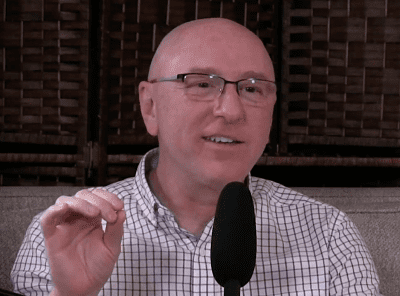
 Anthony Miller is widely known across post- and progressive- Mormon internet communities for his thoughtful contributions on faith, spirituality, religion, scripture, and relationships. Anthony has presented at multiple Sunstone Symposium sessions in the past and at this Summer’s Thrive Conference where he gave a presentation titled “Growing Beyond Grief” which we hope to feature on a future episode of Mormon Stories / The Gift of the Mormon Faith Crisis. Anthony has also given past interviews with Gina Colvin’s A Thoughtful Faith and appeared on multiple episodes with Bill Reel and Allan Mount (linked on Anthony’s blog) unpacking the Gospel Topic Essays.
On these episodes with Mormon Stories, we hope to dig deep into Anthony’s personal Mormon story including:
- What he calls his “literal faith” in the truth claims of the Mormon Church, including using his patriarchal blessing as the literal guidebook for the choices and direction he pursued in life
- How his faith began to unravel after he discovered the LDS-published Gospel Topic Essays
- How he sought community and healing during his faith crisis, including the founding of a Mormon Spectrum group
- How he deconstructed his past beliefs and is reconstructing a sense of spirituality after his faith crisis
….and so much more.
We hope our listeners will draw from Anthony’s rich experience in learning to navigate a mixed faith marriage, communicating across faith and belief, reconstructing a sense of spirituality after a faith crisis, and creating support communities for people inside and outside the edge of Mormonism.
Episode Transcript
Host: John Dehlin · Guest: Anthony Miller
This transcript is machine-generated and lightly edited for readability. The audio is authoritative. Please excuse occasional errors in names and spelling.
Introduction and Welcome
Part 1 of 7 · Ep. 1159
Anthony Miller [00:00:03] Shapes. Oh, society loves their shapes.
John Dehlin [00:00:09] Mormon Stories is a production of the Open Stories foundation and relies solely upon the support of people like you, its listeners to help keep the podcast alive or to become a member of the community. Please become a monthly subscriber by visiting MormonStories.org and clicking on the Donate button or on the right side of the page under support. All contributions to Mormon Stories are completely tax deductible in the United States and go towards producing the podcast and building communities and programs of support for Mormons like you. Thanks for your support. Hello everyone and welcome to another edition of Mormon Stories Podcast. I am your host, John Dehlin. It is August 5, 2019, it's Monday morning and we are broadcasting to you recording live from the Mormon Stories Podcast studios in Salt Lake City, Utah. And we are very excited to have today's special guest. Today we are interviewing Anthony Miller, and many of you will know Anthony, and many of you won't know Anthony. If I had to describe Anthony just in a few sentences, he's someone that I met at a Mormon Stories workshop, kind of a faith crisis workshop a few years back. That's where we first met and he is a financial advisor. And I've been able to be in touch with Anthony over the years as he's gone through his own faith crisis and his own faith journey, which has included being in a mixed faith marriage and having children also while he's going through a faith crisis. And for those of you who know Anthony, what he's kind of very, very well known for is being an excellent writer, a really thoughtful guy, and someone who has, to all appearances, to those of us who have observed him, to have really handled his faith crisis, navigated his faith crisis in a way that's very graceful, very gracious and very thoughtful. And so today is going to be in some ways a traditional faith crisis narrative story with just a remarkable human being. Much like the Donna Show Walter interview and the many others that we've done on Mormon Stories podcast. Where it's going to also be very interesting is just to hear Anthony's very graceful and thoughtful observations about navigating a faith crisis. And also we'll talk a little bit about progressive Mormonism, post Mormonism, we'll talk about the institutional church. We'll do a little bit of discussion around that in addition to a story. And then finally, I invited Anthony to speak at the Thrive conference recently in June20. Those of you who are following Mormon Stories will know that we've released five inner five presentations, five presentations from the Thrive Conference, Margi's, Natasha's, Christian, Moore's, mine. And then we had Alan and Katie Mount talk about what they talked about. We are going to end today by doing a review of Anthony's presentation at Thrive and that's going to be co released on the Mormon Stories podcast and on the Gift of the Mormon Faith Crisis podcast as part of that Thrive series. But today you are just. You are in store for a remarkable human being sharing with us his faith journey and sharing with us tips and tricks and observations around Mormonism, broadly post Mormonism and how to navigate a faith crisis gracefully and thoughtfully. So I should also mention that Anthony's been on the thoughtful faith with Gina Colvin. He's appeared on several other podcasts as well. And we honor all those interviews and we're also glad to have you with us today. So, Anthony Miller, welcome to Mormon Stories podcast. It's. It's been way too long since we've had you.
Anthony Miller [00:04:35] Thank you, John. I really appreciate the opportunity to be here today.
John Dehlin [00:04:39] Now, have you been on other episodes as a. As a. You have, right? Yeah. As a commentator?
Anthony Miller [00:04:43] Yeah, I. I participated in the panel after the policy was reversed.
John Dehlin [00:04:48] Right, the November 2015 policy.
Anthony Miller [00:04:50] Yeah.
John Dehlin [00:04:50] Yep, yep. Is that the only time.
Anthony Miller [00:04:53] That's only time on Mormon Stories. Okay.
John Dehlin [00:04:55] All right, so we're officially. We're having you back, but officially. Yeah, yeah. But this is the first time we kind of had you two all to ourselves.
Anthony Miller [00:05:04] Maybe again if I don't screw this one.
John Dehlin [00:05:05] Yeah, yeah, absolutely.
Anthony Miller [00:05:06] Yeah.
John Dehlin [00:05:07] Okay. So is there anything I got wrong about the introduction or anything you wanted to add about the introduction?
Anthony Miller [00:05:13] Nope. That's very kind. The things you said are very kind. Yes, that's accurate.
John Dehlin [00:05:17] Okay. All right. So, you know, we've heard a lot of people's faith crisis, sort of, you know, their histories prior to their faith crisis. We don't want to cover super familiar ground there, but I do always like to give a little background and so tell us what you want to. Just about your. Your years prior to your faith crisis as a Mormon.
Mennonite and Family Background
Anthony Miller [00:05:41] Okay. So I'd actually start before I was born. And all my ancestors are Mennonite, very faithful members of the. Of an Anabaptist tradition that came out of Germany and Switzerland and so forth. They're very peaceful people, conscientious objectors. They were severely persecuted during the period of the Reformation. There was a lot of pioneering type tradition and history in that. And Mennonites keep fantastic history and genealogy. So unlike with the LDS tradition and a lot of genealogists today where we have a family tree that starts from us and then goes up. The way Mennonites keep track of genealogy is they'll have a major character in the past and then they'll have a book that have all of their descendants in the book. So in any event, I think it goes a little bit to my social DNA. On my mother's side, my mother's father was the equivalent, rough equivalent of a general authority in the Mennonite faith. He had a radio show, he had a mission, he was on very important boards and decision making capacities. And my mother's mother wrote historical fiction about faith. And she would be the rough equivalent of like a Gerald Lunn from an LDS standpoint. And on my mother's side, also, in addition to writers and ministers, she had an. I have an uncle who was a minister and another uncle who got a PhD and was a professor at University of Virginia. So on my father's side, we had entrepreneurs and we had people significantly involved in charitable endeavors and things like that. And so that's part of my DNA entrepreneurship education. I always thought that if my parents join the church, I probably would have become a minister and I would have written and so forth. So that's kind of where I come from. And at a young age, when I was three years old, I was born in northern Indiana. I was the oldest in our family. At a young age, my parents moved to the Phoenix area of Arizona for health reasons. And shortly after they moved there, my mother took me and my sister, that's about a year and a half younger than me, to the local church around the corner from the apartment where they were living, thinking that maybe the pastor's daughter might do babysitting. And she just happened to walk in on a Relief Society meeting. I don't know if they called it homemaking back then or whatnot. My mother also was trained as an educator, got a degree in home economics to teach secondary ed. And she walked into this church and just was in heaven with all these women working on things that were interesting to her. And they ended up taking the discussions, were baptized in a fairly quick number of weeks. They had actually never attended church, just received the missionary discussions and read the Book of Mormon. They couldn't figure out why they would get baptized at a restaurant. But when they followed, you know, their directions to the steakhouse where the baptism was, they recognized that it wasn't spelled steak with an E, a K. So in any event, the church worked really well for them. But it was extremely devastating to the. My mother's parents into the extended family. They flew out, this was around 1970, and did everything they could to save our family from, you know, this non Christian faith that worshiped Joseph Smith and all that kind of stuff. I often wonder whether my grandfather sent my mother Fawn Brody's book, but I haven't asked my mom about that. In any event, the church worked really well for them. Within about five years, my father was serving in a bishopric. My mother was serving in various capacities. Around the time that I was 8 years old, we ended up moving to East Mesa in the Arizona area.
John Dehlin [00:09:59] Really quickly.
Anthony Miller [00:10:00] Can you go just a tiny bit raised?
John Dehlin [00:10:01] Oh, okay. Can you go just a tiny bit more into why they felt what they were feeling or thinking as to why they would want to make a change? Do you have a clear sense for that?
Anthony Miller [00:10:11] Yeah, yeah, I do. And so I think that also goes to my story, is they. They looked at faith with a fair amount of literalism. And so my mother would tell me, she would ask my grandfather, you know, in the book of James, it says that the elders of the church would anoint with oil. And she would ask, why don't we do that? And he didn't have a satisfying answer for her. And my father had other questions, largely born out of literalism in terms of interpretation of Scripture. And he didn't feel like he received good answers for that. So, like, what happens to people that never have the opportunity to hear about Jesus Christ? Why would they spend, you know, eternity in hell suffering if they never got a chance? And things like that and those kinds of questions that they had, they felt like they received satisfying answers as they met with the missionaries and came into the LDS church, they were very much literalists. So if you think of me growing up in the church in the 70s and in the early 80s, that was. That was the time of Bruce R. McConkie. Like, we would read Mormon doctrine in our home. Like, you know, if I envision a family home evening, like we probably were reading from Mormon doctrine as if it were scripture almost. My mother took things like DNC138 very literally, that when the brethren are acting within their stewardship and within their responsibility, that they're speaking the very word of God. Not that they're perfect, because certainly there are times that they're not working within their stewardship and their responsibility. But when they were, you know, the narrative was, and I think continues to be, is that God is speaking through them. God's very interventionist. He guides them and he corrects them. And my mother also taught us a Tremendous amount of faith based on literalism of things like that. Blessings are revelatory, that patriarchal blessings are the equivalent of scripture, things like that. We have a story and I don't think it's very embellished actually. I think it actually happened around the time I was five. We were quite poor, so my, my father took the entrepreneurial route and it usually didn't work out very well. So we were very poor most of the time. While I was, while we lived in East Mesa, I think I took count that we went, I went to like five different schools because we would constantly get evicted from the homes that we were renting and we were poor a lot. So anyway, the story goes that when I was about five years old, we didn't have very much money. My mother, mother maybe had, you know, a couple dollars or something like that. And I was a baby and she didn't have diapers and she had run out of milk and run out of toilet paper. And the car was almost out of gas and she made a little money doing some sewing and alterations. And so in faith, she set aside money for tithing and that left her enough to buy a little bit of gas for the car. And with that faith of paying tithing, she put a little gas in the car. And wouldn't you know it that one of the neighbors was going out of town on vacation and they didn't want to throw away their milk, so they brought milk to the door. And then that night some teenagers apparently prompted by the spirit toilet paper at our house. So we had toilet paper and then somebody else in our ward had some diapers that their kids had outgrown and brought them over and said, we figured we'd give these to you. And so it's tremendous story of faith that paying tithing, even on a small amount there was enough to buy gas for the car. And we got toilet paper, milk and diapers. And it was inspiring. And those were the kinds of stories in our family. And in fact, I think my mother actually submitted that to the Ensign and it got printed at one point because she's a writer also, in addition to having been studied education and doing homemaking and sewing alterations, things like that. So in any event, so I grew up in East Mesa. We were very poor. I was born in October. And so I was. I went to school young before I turned five. And so I was always the youngest kid in the class. And so I was the short, red headed, thick bottle, thick glasses, red headed, poor kid in class. And since we would routinely get evicted from the places that we were living. Every time I would go to a new school, whoever the bully was would need to test out the new kid. And so I would get in a lot of fights and spend time in the principal's office and learn how to use chairs in the classroom as a weapon and things like that to protect myself. So that was part of my experience growing up. I was kind of the nerdy kid with ADD tendencies but have good memory and recall. And so I could attend class, take notes, listen to the lectures, not do any homework, ace the tests, but get a B in the class because I didn't do the homework. So in any event, that was kind of my experience. But the church was significant for us during these years. You know, so that family that the ward gathers around during Christmas time because otherwise they wouldn't have a Christmas, that was our family. And my father ended up making some choices when I was a teenager that got him excommunicated. And so I found myself in a single parent family as the oldest of four children, my father not really having the capacity to pay very much in child support. So by the time I was around 14, 15, that's when they got divorced. I would mow lawns on the weekends and when I could drive, deliver pizza and my mother would do sewing and alterations out of the home as opposed to spend time to go back to school and get a secondary ed certificate. And so with her sewing and alterations and with me delivering pizza and mowing lawns, we tried to be financially self reliant. And we felt very fortunate for the months that we only had to rely on the church for food and the church took care of us. You know, I had amazing home teacher. We were living in this little wooden house, wooden foundation farmhouse in East Mesa. I didn't have a room, so I slept on the couch. But the ward came over and would trim trees away, you know, from the house so that the limbs didn't fall and smash the house. And, and we constantly were blessed by the members of our ward. I had father figures from the church when it was time to go to prom. You know, all, all we had in our family was a rusted out, you know, around 1970 Plymouth Fury Station wagon that we used as a pickup truck. And I'd put the lawnmower in the back because that's what I would take to Milan's. And in any event, my scoutmaster let me borrow his turbo diesel Mercedes to go to prom, things like that. And so the church was very, very important for our family, My friends Were largely lds. Mesa, Arizona, at the time, when I was growing up was about a third lds. We had release time, seminary. It just worked really well for me. And. And the way the illusory truth effect works, you know, as you would know, is when you repeat something over and over and over again, the way our minds work is we believe it and we believe it's true, even without challenging it. And so, you know, I grew up with a pretty significant literal belief, you know, based on these stories that I would receive from my mother, that we'd read for Mormon doctrine, that we would get in the church, that we get in seminary. Even as a youth, my parents were so black and white, thinking, so conservative, that they even sent me to Cleon Skousen workshops. And for those people that don't know, Cleon Skousen was a fairly conservative, John Bircher type literalist with regard to the different millennia and the Constitution and things like that. And that didn't entirely sit right with me. But I mean, that's what I was exposed to growing up.
Intellectual Awakening and Early Faith
John Dehlin [00:19:29] I love that stuff. Yeah, well, first 2,000 years. Yeah, well, it was like an intellectual awakening for me.
Anthony Miller [00:19:34] Right.
John Dehlin [00:19:35] Because I'm like, this guy's brilliant and charismatic, and all of a sudden, the Old Testament became interesting.
Anthony Miller [00:19:40] Yeah, yeah, yeah, definitely. That was my part of growing up. So in any event, you know, I made mistakes, as all youth do growing up. Most youth, yeah.
John Dehlin [00:19:54] Probably all.
Anthony Miller [00:19:55] Pretty much all, yeah. And by the time I graduated from high school, my mother remarried a man from Tempe, Arizona, an engineer, also with very black and white literal belief. A very good man. He had been widowed maybe about a year, and he had four children also. So within about a month or two after I graduated from high school, I found myself moving to Tempe. Instead of being the oldest in the family, not being the oldest anymore, in a house where I didn't feel like I really had my own space. All my friends were in East Mesa. We didn't have a lot of money for me to drive back and forth to see my friends. And before too long, I felt like the opportunity for me was to move to Sandy, Utah, to live with my father. And so that's what I did. And I ended up working at Solitude Ski resort. And not too long what age. So I was graduated from high school. So I was 18.
John Dehlin [00:21:02] Okay.
Anthony Miller [00:21:03] And one thing that did happen when I was in high school, our extended family, the Mennonite family, they were really concerned for our salvation and they saw value in families and things like that, but they still were Very quite concerned for us. And so I have a dear aunt who I think in an attempt to want to help me, but also provide me opportunities to see outside the box of Mormonism, she funded me attending a Young Life Youth camp. Young Life is a non denominational Christian youth group. Kind of like mutual, but like fun with rock and roll and clapping and stuff like that. And in Northern California. And I attended that during my junior year and after I graduated from high school in my senior year. And it ended up backfiring, I think, a little bit in that, you know, in the woods in Northern California. During a break during this Young Life camp, I was out praying, contemplating God and Jesus and Christ and so forth. And I had a pretty strong spiritual experience that I interpreted as Heavenly Father wanting me to go on a mission. And that was really probably the first really strong spiritual experience that I had, a construct in which to place it, thinking that this experience is God communicating something to me. And God was communicating to me that I needed to go on a mission. And so when I moved to Utah, I talked about this with my father. Even though he had been excommunicated, he still had quite literal belief in the church. And I told him that I had a testimony I needed to go on a mission. But I wasn't quite so sure about the other truth claims of the church. I mean, I believed them, but I couldn't say with certainty that I knew that they were true. And so. So he said, well, let's take Moroni's challenge. Why don't you read the Book of Mormon an hour a day or something like that and ponder it in your heart and think about it and pray about it and then we'll talk about it. And after about a week or two, I don't remember exactly, but not too long after I started this exercise, he sat down with me one day and he asked me, you know, when you're reading these things and you're pondering them, how do you feel about it? And I said, well, I feel a sense of love and connection and I feel a warmth in my heart and my soul. And he asks, what do you think that is? And I'm like, I. I don't know. And he opened the Scriptures to me and he says, well, could these be the fruits of the Spirit? And I said, well, yeah. And he asks, why would you think you'd be filling the fruits of the Spirit? And I'm like, well, because they must be true. And I'm like, huh, that's what that is. Like, I felt that before Like a couple times in seminary and in church, I felt that that's the Holy Ghost. And he's like, yeah, that's what the Holy Ghost is. So what do you think that you should do about it? And I thought about it, and he was tender. I mean, it was a leading conversation. But he was helping me identify this construct that when we felt these spiritual experiences, what they were, were divine witnesses of truth. And so he helped me identify the spirit. He helped me identify the construct that they were reliable witnesses of truth, and that that meant the Book of Mormon was true. And I said, okay, so the Book of Mormon is true, but I'm not so sure about the Joseph Smith story. I'm like, I believe it, but I can't say that I'm certain about it. And he said, well, what you do is you learn line upon line. So just in the same way that you read the Book of Mormon and you pondered it in your heart and you prayed about it, and you had that experience, and that experience means that it's true. You need to do the same things. You need to read the teachings of the prophet Joseph Smith, and you need to ponder it in your heart and pray about it. And then if you have those experiences, then you can move on to the next thing, and line upon line, you can establish a degree of certainty about the truthfulness of the church. And so that's what I did. So. But, you know, working at a ski resort isn't necessarily a great environment if you're trying to stay within the bounds of behavioral prescriptions. But by the time I was about 19, because I had the testimony that I needed to serve a mission, because I knew in my heart, based on the constructs of spiritual experiences, that the Book of Mormon was true and Joseph Smith was a prophet. I met with my bishop, and I did what I needed to do so that I could be worthy to go on a mission. By that time, my mother. My father had also remarried. He remarried my stepmother, and my stepmother was an accountant, an amazing human being, also a very literal believer, did substantial amounts of genealogy based on my father's line. She was an ordinance worker at the Jordan River Temple. You know, there are other stories of literalism. For example, before my mission, when I was living with them, by this point, we were living in the sugar house area. My. My stepmother said, you know, the. The. The oil light has gone on in our car. And I don't understand it because I just changed the oil, like last week. Could you go look at it? So I go out and I look at the car, it was this Ford Fairmont station wagon that had a 300 T2 V8 in it so I could do burnouts with it. And so like that. And I go out and I p. Dipstick in the car and there's no oil on the dipstick. And I go back in to her and I'm like, there's no oil on the dipstick. And she says, well, that can't be. I got the oil changed like last week, and I've been driving it to the temple, you know, to do my shifts at the temple, you know, and to the. And. And to do genealogy and so forth. And she's like, why don't you. That, that can't be right. Why don't you take it down the street to the Jiffy Lube or whatever the Quick Lube place was and ask them what's up? And so I took the car to the Jiffy Lube down the street and they pulled the dipstick and there was no oil on it. And they pulled the drain plug and there was no oil in it. So when they did the oil change, it was on a change of shift and they didn't put any oil in the vehicle. And it was driven probably about 150 miles with zero oil in it and didn't seize. And that was God, right? You know, every faith tradition has these kinds of stories, right? But in my faith tradition, it was a confirming miracle that we could drive a car with no oil in it. And it was because God wanted my stepmother to be able to serve in the temple and do genealogy. So in any event, it's kind of an EFY type story.
John Dehlin [00:28:08] I love it. We're gonna come back to that, right?
Missionary Experience in Barcelona
Anthony Miller [00:28:10] Okay. So in any event, so I got my house in order and. And by the time I was about 19 and a half, not quite 20, I found myself called to the Barcelona, Spain mission. Again, very literalistic, ADD tendencies. Hated school because it was boring. The only class that I ever got an F in was an English class because you have to do homework when you're reading literature. Did great in physics and math and things like that. So in any event, I find myself in Barcelona, Spain and I end up with these amazing. An amazing trainer that was not very great on the rules. Excuse me, but he was a fantastic missionary. The typical missionary when I served in Spain during a two year period, would baptize between two and three people. I mean, that's what it was. And my trainer had baptized quite a bit more than that. And so I learned from him and it was very similar to my experience with my father of how to help people identify the spirit, what that means, and then commit them to baptism based on that. And we baptized. And then my second companion was older. He was in his mid-20s, and he had been a Fuller Brush salesman before he converted to the church and then a year later went on a mission. He was so much more mature than the rest of us because he was like 25, and we were all 19 and 20, and he was fantastic. He had tremendous sales skills, you know, of what to do when you knock doors and so forth. He ended up becoming the. One of the APs for quite a period of time, a traveling AP that go around and train people, you know, these sales skills.
John Dehlin [00:29:56] So.
Anthony Miller [00:29:57] But any event, in my mission, I picked up in Spanish pretty good. There was something. I mean, I'll come back to it. But before I went on my mission, my patriarchal blessing has a lot of pretty fantastic stuff in it. That was pretty stretching for me. But one part of my patriarchal blessing says that if I'll honor my parents, that I'll live long upon the earth, and that I'll see the day when millions, thousands and millions will die as flies. And that I'll be preserved to minister to the afflicted. And that with my great faith, I'll raise them from their beds of affliction. And that I would have such great faith that I could move mountains and calm the waves of the sea, which kind of freaks you out because, like, only Jesus calmed the waves of the sea. But that was part of my identity, that part of my patriarchal blessing. And so I had tremendous faith, and I think it contributed to my capacity to learn Spanish pretty quick as well as to believe. Remember that blue book drawing on the powers of heaven, you know, that had stories about how Nephi and Lehi in third Nephi, they would speak with such power and authority that, you know, the detractors could not disbelieve their words. Like, I believed, you know, kind of like Neo and the Matrix, you know, faith kind of thing. And in my mission, I ended up getting a sense of identity and reputation. I could totally reinvent myself from that poor, short, redheaded, Coke bottle, glass, thick kid growing up and had contacts by then and gained a little weight from working out and so forth. But I was still pretty short. And in any event, in my mission, I ended up spending about 13 months in one ward. And wherever I went, I baptized. And so my mission president stuck me in a ward in Ospitalet. It's in a suburb of Barcelona. And every one to two months, he'd give me a new companion so that I could teach them how to baptize. And in that ward, I don't know how many people I baptized in that ward, but quite a few. And today, still, today, one woman is in the Stake Relief Society presidency, and she married a counselor in the stake president that I did splits with and the ward mission leader that I worked with when I was in that ward. He became a CES seminary teacher and a stake president and a mission president, you know, and other people I baptized were instrumental. The last area that I served in is now a stake, and a lot of the people that I worked with, who I worked with, are part of that. And that's an important part of my journey that we'll come back to in a little bit. But it was a significant sense of identity, because as human beings, at least during our first half of life, we equate our roles and our experiences and our reputation, the forms in our life, to our identity. And it significantly increased my confidence and my identity. And so much so that by the time I left my mission, the ward gave me a farewell when I left. So I came home from my mission totally on cloud nine, totally certain about the truth claims of the church. The model and the formula functioned. You know, it worked like you pray, you ponder, you have these spiritual experiences, though that construct is those are reliable witnesses of truth. One of my most spiritual experiences on my mission, my tendency was to be a perfectionist. And being a perfectionist generally isn't conducive to spiritual experience, because you're kind of beating yourself up, and that makes it hard to be present, you know, in the moment. And toward the end of my mission, I was looking at the shortfall, and I was concerned about whether my offering of my mission was a worthy offering to Heavenly Father. Could he say, well done, thou good and faithful servant? And I really struggled with this. And so I fasted and I prayed, and after a few days of this, I. I was on splits or joint calls with one of the assistants to the president, one of the APs, and we went and visited this family that we had baptized a few months earlier. And subsequent to the baptism, we really involved them in missionary work. We taught discussions in their home to people that were their friends or people that we found on the street or whatnot, and really had this close relationship with them. And it was about time to leave after our visit, and at night, and. And the sister, the woman said, before you leave, there's something I need you to read. And I feel prompted that I need you to read this. And so she went back into her room and she came out with her journal. And she wanted me to read her journal entry of the day of her baptism. And, and so, so I, I read what she wrote. And she described how she was excited about what we were teaching her, and she felt in her heart that she needed to be baptized. And, and she thought the experiences that we had identified were the Holy Ghost. And she explained the day of her baptism, going to Sunday school and feeling the Spirit during the lesson. And she wrote about how she felt when she came out of the water of baptism. And, and she wrote that when Elder Miller had his hands on my head and I was confirming her a member of the church and, and conveying unto her the gift of the Holy Ghost, she wrote that I felt like I wished that Anthony or the Elder Miller would never take his hands off my head. And at this point, like, I'm crying, you know, totally moved by her vulnerability and a sense of spirit. And in that moment, I felt like I received an answer from God. And the answer that I felt like I received was that it's not yours to judge whether your offering is worthy, because that's almost a selfish thing to consider, but it's yours to just have gratitude for the opportunity to participate in the lives of others. Because it's not about you, it's about God, and it's about gratitude. And that was one of my most spiritual experiences on my mission. It was life changing. I still had a tendency and propensity to be a perfectionist after that, but I constantly came back to that, that what this is about is an opportunity to participate in the lives of others. So in any event, so I came home from my mission.
John Dehlin [00:37:17] Ron, what year was that?
Anthony Miller [00:37:19] So I served 86 to 88.
John Dehlin [00:37:21] Okay, so you're two years older than me, basically.
Anthony Miller [00:37:24] I turned 53 this year. So my mission was transformative. It totally reinvented my identity, my confidence, it taught me how to study. It helped me navigate my ADD tendencies. You know, here I am, a straight white male, an extrovert and a literalist. And. And that's what a lot of the brethren are, right? So the church is built around me. And so it fit really well. And another little bit part of my story is on my mission, my bishop, and then subsequently he became my stake president was F. Michael Watson. So Michael Watson, for those don't know, you can look him up on Wikipedia. He was secretary to the first Presidency for A very, very, very long time. So from the 70s all the way up to, I think President Monson, he was secretary to the first Presidency. There's probably no one that knows more about the inner of the church than F. Michael Watson. He was there for the September six and everything in between. But in any event, I was like
John Dehlin [00:38:42] to say he knew where the bodies were buried.
Anthony Miller [00:38:44] He would know where all the. No one would know where more of the bodies are buried than Michael Watson.
John Dehlin [00:38:49] He was definitely in the 70s and 80s, probably 90s, one of the most powerful unknown people, probably one of the
Anthony Miller [00:38:56] most powerful people in the church. There's that one letter about, I think, where a mission president or something asks about the location of Cumorah and the letter from the first Presidency saying that there's a cave in Hill Cumorah that has all the plates in it that F. Michael Watson wrote that letter. That's his signature on that. And if you used to watch General Conference and see the statistical report, read it was F. Michael Watson. So in any event, my bishop, he lives. Lives in Bountiful, and he was my bishop while I was on my mission. My father had a relationship with him and my stepmother too. And so they moved to Bountiful so they could be in his ward. And by the time I came home from my mission, President Watson had worked with my father. And not all the rules were really followed the way they needed to be, but exceptions were made. And shortly after I came home from my mission, I rebaptized my father as a member of the church. And that was a very moving experience too, to be able to do that. But it caused dissonance because I was a rule follower on my mission, or at least I. I intended to be a rule follower follower. And there were rules about a divorced person in a relationship with somebody that contributed to a divorce and adultery. And there were rules about getting caught up on child support and so forth. And those rules weren't really followed when my father was rebaptized. And so that stretched me a little bit, but I trusted that. I mean, the Book of Mormon is full of examples of divine deception. You know, I didn't consider it deception, but kind of the ends justify the means kind of thing. And so in any event, my. My father was rebaptized shortly after I came home from a mission and. And then I ended up moving to Utah county to go to school. And my mission taught me study skills and how to navigate my ADD tendencies. And so I came back and where I before that, I hated English and homework I went to school year round with heavy load and got a degree in Spanish. Well, I got an associate's in humanities in four quarters and then with very good GPA went to BYU and love study. My plan was to get a PhD in Spanish and become a Spanish professor so I could be an educator because I couldn't be a minister, right, because I was Mormon. But I wanted to be an educator and teach Spanish. And my literalist faith put me at a point where I knew I had the equivalent of about three semesters left before I finished my undergrad. And the pool of potential candidates for an eternal companion is better, probably when you're an undergrad. I started praying to meet potential candidates that the Lord would feel would be most appropriate for me. And sure enough, when you start praying for that. I met my wife at a New Year's eve party on December 31, 1999, and I was fascinated and intrigued by her. She's super smart. I won't tell her story, but I will brag that she.
John Dehlin [00:42:38] You said 89, right?
Anthony Miller [00:42:40] 99. 89, that's right. Okay, 89. And she graduated valedictorian of her college at Utah State University. She's. Yeah, she is no lightweight. In any event, I met her and. And became totally infatuated, fell in love with her, totally romantically obsessed. That was back in the day when long distance phone calls were super expensive and I was a poor college student delivering PIZ and driving horses and carriages in downtown Salt Lake, you know, while I was going to school, taking 20, 24 credit hours in a semester or in a quarter. And in any event, we were married within nine and a half months of meeting. And it made sense instead of for her transferring to BYU where I had spent about a year to transfer to Utah State. And so I went to school year round there and. And in a total of about three years, I completed my bachelor's in Spanish between Utah Valley, BYU and then about a year at usu and my wife completed a bachelor's degree in dance at usu. And my dream was to become a Spanish professor and her dream was to become a dance professor. And so she wanted to get a Master of Fine Arts and Modern Dance and be a dance professor. And I knew how to use a calculator and I knew two humanities professors to self pay through school was going to be a problem. And so what we ended up doing is we ended up moving to Holiday in the Salt Lake area.
John Dehlin [00:44:21] That's where I live.
Anthony Miller [00:44:22] Perfect. Yeah, that's right. I've been to your House and not too far from where we lived. We were on 13th and 47th. In any event, we moved there and we went to University of Utah for grad school. And I got an MBA with an emphasis in finance and marketing, thinking that I would work in international business and be able to use my Spanish and that she would get a Master of Fine Arts in Modern dance. U of U has one of the top modern dance programs in the country. She could go work at any university she wanted. And we were in a married student ward there in Salt Lake, and we continued to thrive. Our bishop there was Ron Rasband. Loved Ron Rasband. Spent time in his home out at Dimpledale.
John Dehlin [00:45:06] Current Mormon Apostle.
Anthony Miller [00:45:07] Current Mormon Apostle Ron Rasband, working for Huntsman Chemical. Probably worked for Huntsman Chemical. He told me his story. He was in a married student ward and he was the Elders Quorum president, and John Huntsman was his bishop. And, and. And Ron Rasband pitched the clamshell styrofoam thing to McDonald's and got it.
John Dehlin [00:45:28] Yeah, right.
Anthony Miller [00:45:28] And so. And then he became president of Huntsman Chemical.
John Dehlin [00:45:32] That's what made John Huntsman Sr. A billionaire, I think, or at least the Ron.
Anthony Miller [00:45:37] Ron Rasband's selling clamshells.
John Dehlin [00:45:41] Styrofoam clamshells to McDonald's for Big Macs.
Anthony Miller [00:45:44] It was certainly a contributor into John Huntsman becoming a billionaire. And it probably didn't hurt Ron Rasband's income or net worth either. But he and his wife, they were amazing, you know, in the married student wards, they just get the cream of the crop, you know, to be examples to you. And one of my best friends when I was in grad school was Craig Ballard. And Craig is Elder Ballard's son. And he was entrepreneurial and a good friend. And so that gave me opportunities to spend time in Elder Ballard's home and in his office in the church administration building and to become good friends with a gentleman. First name is George, I think he was the chief financial officer of the church for a period of time. And so not to defer to authority or it makes any difference or anything, but just to share that this is part of my experience. And my story is that I was exposed to these individuals like President Watson, who became Elder Watson. He. He eventually was in the first quorum of the 70 before he went emeritus. And the interactions with Elder Ballard and, you know, with Craig and get a feel for what it's like for the family of an apostle and so forth, these are part of my story in that they reinforced a foundational Part of my testimony, and that is that there's divine appointment, that there are mantles of discernment, and that DNC 138 applies when they are speaking within their stewardship and within their responsibility, that they are speaking for God. And I had many spiritual experiences that I believed were confirming of that. Again, my friends who are apologists would say, you're putting them up on a pedestal and saying that they're infallible. No, I don't think they're infallible. Like Elder Ballard, you know, could make bad business decisions, he could even make bad policy decisions. But if he was preparing to act within his stewardship and authority as an apostle of the Lord Jesus Christ to give a talk or to teach a lesson, that's when the mantles of discernment came into play. At least that's what my reconciliation was. And after Bishop Rasband was released, I had an opportunity to serve as ward clerk for the next bishop. And then after a little while, after that, we had had our first child. By that time, I ended up teaching Sunday school as gospel doctrine and family relations teacher and my wife ended up as Relief Society president in our ward. So both of us had opportunities to serve in ward council. And not too far in after having our first child, our son, my wife decided to finish her mfa, but decided she would be a stay at home mom and that would be okay. And so in any event, I finished my MBA while I was in my MBA program, I did an internship with a financial services company and realized that I could be an entrepreneur in the financial services industry, build a financial planning practice, or end up being a manager of an agency or, you know, office, something like that. And we ended up moving to the Murray area in the Crosspoint condominiums there, almost to Redwood Road. And we bought our first condo. We had our first child. Things were going really well. I had opportunity to serve as young Men's president there. I was on the good track, right? Educated, financially self reliant, extrovert, white male, married once. It worked a little bit.
Patriarchal Blessing and Church Involvement
John Dehlin [00:49:51] Connected.
Anthony Miller [00:49:52] A little bit connected. Yeah. Yeah. I mean, if I, if I had a question, you know, with, with one phone call, I could call Michael Watson or with another phone call, I could call Craig and get an audience with Elder Ballard, you know, pretty easily. Not that I abused that or used that a lot, I didn't really. But when I did have questions, you know, I'd ask my father and my father would. Because he had a close relationship with Michael Watson. In any event, not too long after graduation in 1996, we got recruited to move to Billings, Montana. I had an opportunity to be a manager with a financial services company there, and that could put me on a career path that I thought that I wanted to be on. But there's another part of my patriarchal blessing that I had to figure out, and that is my patriarchal blessing. While I was receiving my patriarchal blessing, and we were all quiet and the patriarch was blessing me, there were noises that were happening in this empty house that was just the patriarch and my father and my stepmother and me. And, like, a door was rattling and so forth. And now I realize that it was probably just the air conditioning. But in any event, afterwards, my patriarch told me that those noises were your ancestors and they were here to observe your patriarchal blessing. And in my patriarchal blessing, it tells me that I would spend my life in the service of the temple, and that my ancestors would be watching me, and that I would have many spiritual experiences and that I would hear the voices of angels in the temple, and it tells me that I would be known as the savior of the living and of the dead also. And again, that's quite a bit of pressure. And so when we moved to Billings, Montana, we knew that it could only be a temporary stay because there was no temple. Like, we were in the temple district, where you would drive to Idaho Falls, like five, five and a half hours away, or you drive to Cardston, Canada. But sure enough, within a few months of moving to Billings, Montana, they announced the Billings, Montana temple. So divine, you know, serendipity or intervention. And. And. And I looked around Billings, Montana, and. And there today, There are about 110,000 people in Billings, Montana. So it's the size of Provo, but without the rest of Utah county around it. And today There are about 4 to 5,000 members of the church. So there's the equivalent. Well, there's three stakes now, but they're small stakes. But in any event, there were two stakes at the time. There wasn't release time, seminary, but there was strength there. And my wife and I had talked about wanting to raise our kids in the mission field because we wanted our kids to follow the gospel, because they had a testimony, not out of peer pressure. I remember one time one of my friends from Logan came up to Billings to meet with me, and we went to a Sunday evening adult session of state conference. And it was incredibly spiritual. And after we walked out of that meeting, my friend and me, before we walked into the meeting, my friend says, you should move to Logan because it's great because my friend lives in Logan. He's a financial advisor there in any event, probably, probably my best friend. And before we went into the state conference, he said, you should move to Logan. He says, it's great. And I said, well, I want my kids to grow up in the mission field. I want them to do things not out of peer pressure, but because they have a testimony. He says, logan's great because of all the peer pressure. It means that they can sit on the fence a while while they're figuring it out. And we went into the state conference and it was incredibly spiritual, like you cut it with a knife kind of thing. And we left and my friend said, wow, that was amazing. Like, I haven't had very many meetings like that. And I said, yeah, there were no fence sitters in that meeting. So that's what we wanted. We wanted our kids to grow up and gain a testimony and, and do the right things, not out of peer pressure. And billings was the place for that. And so we decided to stay. I looked around in my community and there were a lot of people that were quite senior or approximately getting close to retirement in the financial services industry who didn't have successors. And as an entrepreneur, I knew that I could grow a financial planning practice fairly quickly if I acquired practices of retiring insurance agents and then offered financial planning to those clients. And, and there were different contractual arrangements where I could add associates to my practice. So if I took over a practice that had maybe 400 households in it, maybe 20 of them were really good candidates for the kind of financial planning that I would do. But then I would have, you know, close to 400 households who I wouldn't be actively working with, but I could have associates work with them and it would be great, you know, and then we could afford to pay staff and so forth. And over the years, we've taken over about nine practices over the last little bit more than 20 years and service about 4,000 households in our community. My practice today has several associates and staff and so forth.
John Dehlin [00:55:46] Thank you for joining us today on Mormon Stories. If you enjoyed this episode, please help us make more like it by becoming a monthly subscriber@mormonstories.org. Rabbit Hole an album chronicling the heartaches and rewarding discoveries of her Mormon faith crisis. You can purchase her album on itunes or by visiting mindygledhill.com.
Anthony Miller [00:56:29] It's all just poison in disguise Teacups for candy coated Poison in the sky Teacups full of candy co.
Deep Engagement With Church Doctrine
Part 2 of 7 · Ep. 1160
Anthony Miller [00:00:03] Shapes. Oh, society loves their shapes.
John Dehlin [00:00:09] Mormon Stories is a production of the Open Stories foundation and relies solely upon the support of people like you, its listeners to help keep the podcast alive or to become a member of the community. Please become a monthly subscriber by visiting MormonStories.org and clicking on the Donate button or on the right side of the page under support. All contributions to Mormon Stories are completely tax deductible in the United States and go towards producing the podcast and building communities and programs of support for Mormons like you. Thanks for your support,
Anthony Miller [00:01:03] But in any event, so there was a temple in Billings, Montana, and we knew we could stay. And because I took my patriarchal blessing literally, right? Because literal doesn't work. But over time along the way, what would happen is I would encounter things that would cause dissonance. And so I remember that Richard Hatzoffel. Is that how you say his name? Anyway, he's a professor at byu and similar to like a BYU Education Week, there used to be a thing where speakers like Susan Easton Black or whatnot would go out to the mission field, you know, like Billings, Montana, and have an evening fireside, you know, and in one of those, I was introduced to the verbiage of putting things on a shelf in faith, that you would receive further light and knowledge someday. And sometimes every now and then, you would be able to unpack something on your shelf and pull it off your shelf because you had found an answer and you could reconcile that thing. So the way mind works is I was accumulating things on my shelf, like lots of things in the Second Ward that we were in in Billings. I was very quickly first counselor in the Elders Quorum Presidency, and our Elders instructor decided to teach the Lectures on Faith in Elders Quorum. And there's a problem with Lecture on Faith Number Five. I don't know if your listeners know this, but you can Google Lectures on Faith and read Lecture on Faith Number five. And the problem is, is the reference to the Godhead as having two personages, one of spirit and one of tabernacle. So they're not both physical, and the Holy Ghost is their combined mind. And that causes a lot of dissonance. Like, if your testimony is based on Bruce R. McConkie Benson Hinckley Pack, or Mormonism, like mine was, there's a reason
John Dehlin [00:03:00] they dropped this thing from the standard works.
Anthony Miller [00:03:02] Yeah, yeah, but it wasn't. It was canonized until the early 1900s.
John Dehlin [00:03:05] Yeah.
Anthony Miller [00:03:06] And the Lectures on Faith get reference in our materials, like in our lesson manuals and at General Conference. So it gets referenced pretty frequently.
John Dehlin [00:03:14] Totally. Or used to.
Anthony Miller [00:03:16] Yeah. Even though it was Canada, you know, taken out of the canon. And so I would shelve that it was decan. Yeah, it was decanonized, but it still gets referred to. So in any event, I would shelve things as I would run into them around that. You know, I think it was. It was the late 1990s that President Hinckley started doing interviews. So he was interviewed by Larry King and is interviewed for print media and so forth. And there were some things that he said in some of those interviews that were pretty stretching to me because they conflicted with what I taught from lesson manuals. Right. And what was in Mormon doctrine and so forth. Things that my testimony was based on
John Dehlin [00:04:01] and sort of been The Mike Wallace, 60 Minutes and the Larry. And the Larry.
Anthony Miller [00:04:05] Yeah. And there might have been a Newsweek article and. And so forth.
John Dehlin [00:04:08] Right. Polygamy.
Anthony Miller [00:04:10] Yeah.
John Dehlin [00:04:11] God. God being once a man.
Anthony Miller [00:04:13] Yeah, yeah. And I'm like, well, no, wait a second. Yeah, we know. And we talk about those things, you know, because he would say, I don't know that we talk about that stuff very much.
John Dehlin [00:04:21] When asked if man can become man
Anthony Miller [00:04:22] could become God, or if God was once a man. Yeah.
John Dehlin [00:04:25] He's like, yeah, I don't know that we. I don't know that we emphasize it.
Anthony Miller [00:04:28] Yep. I don't know. We talk about it. I don't know that we know about much. I'm like, well, I've talked about it a whole lot.
John Dehlin [00:04:33] Right.
Anthony Miller [00:04:34] Like, not in every elder's quorum, but frequently we'd talk about it. And so it was stretching to me. And I thought, well, maybe he's old, and he didn't, like, hear the answer quite right and so forth. So around that time, my friend who taught gospel doctrine, he was really stretched by that. And I was his home teacher, and that was what he needed to unpack his shelves. Because what he did is he went and he did research and study, and he stumbled across Book of Abraham problems.
John Dehlin [00:05:08] And around what year?
Anthony Miller [00:05:11] I think. I think it was probably 2000. And it was 2001.
John Dehlin [00:05:14] Okay.
Anthony Miller [00:05:15] Yeah, 2001. And he stumbled across Book of Abraham issues, and he was in faith crisis, and I had never seen that before. And I was his home teacher, and I. I went, and you loved him. And. And tried to support him, and. And I could not comprehend how he could, you know, give up his eternal marriage and the blessings of the gospel over something that surely we would receive further light knowledge from someday, you know, and he. He Shared with me book Abraham stuff. And he didn't share very much before I knew it was a problem. And I put it on the shelf. And I look back at that now and think, why wasn't I in a place in my life at that time where I was ready to unpack that stuff? And I can't say why. I think that because I conflated, like most human beings do, at least first half of life, human beings, is I conflated so much of my identity and to my roles and my reputation into my constructs of things that it was too threatening to my identity to unpack those things because it would. It would just be devastating. And I saw how devastating it was for my friend. So he ended up leaving the church. And I ended up getting called to be gospel doctrine teacher, which was my favorite calling ever in the church. Like, I loved teaching gospel doctrine. And I took his place as gospel doctrine teacher. And I thrived in that calling. In Billings, I had been first counselor in the elders quorum presidency. I had been ward mission leader at the time that the temple was being constructed. Had a fantastic time. We baptized in our ward. We baptized something like a third of all the baptisms in the stake that year. A year later, we had retained 100% of the people we had baptized. You know, it was giving me all this reputation and everything, great relationships. But then I got to teach gospel doctrine. And the way I would prepare for gospel doctrine is very thoughtfully, at least that's what I felt is with sincere prayer. I would study the lesson, and I would pray and ask to be an instrument in God's hands, to know what principles to emphasize in my class. And I would feel guided as to what principles to emphasize because I didn't feel like you could usually you couldn't cover all the lesson material in a single setting and have a deep conversation. And then when I would go and teach class, I would shake people's hands as they would come into the classroom with a prayer in my heart that God could help me know what they need and to be attentive, you know, as to what they might be experiencing as I shook their hand. And as I would teach my class, I would do it with a prayer in my heart that I could be an instrument in God's hands to know what people need in the class. And there were. There were many times over the years, over the multiple times that I served as gospel doctrine teacher. It was a cumulative of about nine years out of. Out of 20 that I was active in Billings. I was gospel doctrine Teacher and, and, and people would come to my class and we'd have great spiritual experiences. And I would feel like God was leading me as to what to emphasize. And I would get reinforcement because people would write me handwritten notes or they would come up after class and they would say, you, you know, I was really struggling with something and you gave me, or this conversation gave me exactly what I needed. And so those spiritual experiences, again, I interpreted under the construct that that was God revealing to me what people needed. I was acting within my stewardship and responsibility. Not that DNC138 applied to me, but that there was a revelatory process that God could use us as an instrument when we were acting within the bounds of our stewardships and roles. And that when we had those spiritual experiences, they also represented divine witnesses of truthfulness, of the truthfulness of the subject matter, the topic in the lesson, the thing that we were doing in the ritual, and so forth. And I loved being gospel doctrine teacher. So I, I never was able to get through all four years as gospel doctrine teacher. I would teach a couple years or two and a half years and then I would get a new calling. And, and after serving about two years maybe in gospel doctrine as a gospel doctrine teacher, I was still in my 30s. I was called to be on the stake high council and ordained a high priest. So I couldn't see my friends. I mean, I could see my friends, but I couldn't hang out with them in elders quorum, right? So no more elders quorum lesson ended up with the high priests. So I loved the time that I served on the stake high council. By that time I had found the five love languages that a lot of people are aware of. And it was instrumental in saving our marriage and saving my relationship with our two children. We have a son who is now 26 and we have a daughter who's now 21. And both of their primary love languages is quality time. And my wife's primary love language is quality time. And mine's physical touch and words of affirmation and like my number four one is probably quality time. And without recognizing that love and emotional intimacy was quality time, quality time, activities and so forth, it was very detrimental for a period of time to our marriage and it wasn't helpful for my relationship with my children. I discovered the five love languages. I figured out my wife and I and our family, we worked to become multilingual in the five love languages. And so I started teaching the five love languages. I had like an hour and 20 minute presentation on the five love languages. And I would teach it. I ended up teaching it in all the units in our stake, including units in the other stake. And I would teach it to PTA groups and even in businesses, because the dynamic would impact businesses. And these were all things that I was doing while I was on the high council. And also while I was on the high council, my patriarchal blessings started to be fulfilled because I was called to be an ordinance worker in the Billings, Montana temple. And we moved to a house that was within where we still live. Around 2002, we moved to a house that it's about three minutes from the Billings, Montana temple. So again, everything was being fulfilled. But there's a couple other things that I would share. One is, now I look at it and I would say that some of the parts of my patriarchal blessing would. Would be spiritual abuse. But at the time, I believed it literally. So my patriarchal blessing tells me it states that as I get older in my life, indicating that it's not when I was in my 20s that it warns me that I would marry within the bounds of the church. And so I interpreted that well, first of all, I didn't know what to do with it. I actually shared it with my mission president. I'm like, what do you make of this? Like, thousands of millions die as flies and angels in the temple. And warning me about when I get older, you know, that I marry within the folds of the church so that charity could be in my home and that my children could follow me through many generations and so forth, and. And they didn't know what to make of it. And warnings, my understanding, are usually if it's going to be a problem. And I never was really tempted to date outside of the church. And in any event, when I match that with things and I won't share what those things are, but when I match that with what my wife's patriarchal blessing says, the reconciliation that I had was that my wife was going to die early and that I would end up needing to select a second wife, a new mother for my children. And I was so certain that my wife would die young based on my patriarchal blessing, based on hers, that we would talk frequently about eternal plural marriage, about what she would want me to look for in a replacement mother for our children. It was like a fact. At least that's how I interpreted it with I. She was way more nuanced than I was, and I didn't recognize that until after my faith crisis. But I was so literally believing in this that When I bought life insurance on my wife, I bought 10 year level term insurance because I was sure she wasn't going to live that long. I mean, it's weird, right?
John Dehlin [00:14:50] You.
Anthony Miller [00:14:51] Yeah, but.
John Dehlin [00:14:52] But I have heard this many times.
Anthony Miller [00:14:55] Really?
John Dehlin [00:14:55] Yeah.
Anthony Miller [00:14:56] Well, they might have been in a stake, in the Dimpledale stake, and it might have been that same patriarch, not
John Dehlin [00:15:03] necessarily the patriarchal blessing, but a priesthood Mormon priesthood leader, for whatever reason deciding that his wife was going to die early and having to grapple with what that meant, including lots of thoughts or even behaviors around polygamy as one way to reconcile and. Or express.
Anthony Miller [00:15:23] Yeah, those thoughts. Yeah. Yeah. So that's what I struggled with. But where the trauma was is I love my wife. I. I love my wife. And I loved my wife then. And anytime she would travel without me, I would plead in prayer to God to not take her from me over and over again because I was so sure that he was going to take her from me because of what my patriarchal blessing said. And sometimes she would hold me as I was, as I was crying because I was so fearful that he would take her. So anyway, so I struggled with things and I would put things on my shelf and I would. Excuse me, I would, as I would teach gospel doctrine, I would encounter conflicts in scripture that aren't reconcilable, you know, and I would encounter conflicts between scripture and science and what we know about world history. And I couldn't reconcile them. But I was holding so strong to my construct of literalism, so strong to my Benson Packer, McConkie Hinckley Mormonism. It resonated for me. It was such a part of my identity and I didn't want to threaten that. And, and I was. And my apologist friends teased me about it, but I say that I was too faithful to study things that would cause dissonance, you know, so when I would prepare for the year that I would teach church history and Doctrine and Covenants, I would read the David Ridges books, but there's no way I was going to read Rough Stone Rolling or no man Knows my history. Because, you know, there was that Bruce R. McConkey talk years and years ago that my mission president drilled into us as missionaries that you need to stay in the mainstream of the church. You need to not have gospel hobbies. You need to focus on the stuff that you get from the brethren. Remember that. I remember one zone conference where my mission president, a great man, J. Boyd Fenn from Southern Utah, he served as mission president in Barcelona and then was mission president of the Guatemala mtc. Great man. And he. I'll never forget it. In that zone conference, he walked over to the piano and he started pounding one key over and over and over again. And referring to Bruce R. McConkie's talk about staying in the mainstream of the church and a little bit of a backstory to that is one thing that participated in my father's excommunication was not staying in the mainstream of the church and receiving blessings that promised him things that are not mainstream and believing that he would participate in things that are not mainstream. And I had a fair amount of dissonance because Michael Watson like confirmed some of these things, even though, like I didn't know what to do with that. So I shelved that too.
Navigating Mainstream Mormon Culture
John Dehlin [00:18:46] That your dad might have big calling someday.
Anthony Miller [00:18:49] Yeah, that. Yeah, like it's his story to tell. But like one of them was that he would be instrumental when the saints were called to go back to Missouri and, and that his skill set would be very instrumental in how that exodus would happen. You know, things like that, or that he would be a very influential leader someday. And my mother was such a literalist too, that after my father was excommunicated, she told me that the way that patriarchal responsibilities happen is that if my father was called to do something and due to worthiness he could not fulfill that, that his responsibility would fall on me. So I carried that too, in addition to all these other things in my patriarchal blessing that were unhelpful. Well, I mean they were helpful in accumulating my identity and my certainty, but they were also unhelpful because they were oftentimes period caused periods of significant dissonance. So in any event, back to the period of time that I was on the High Council, there was a period of the time when I was on the High Council where I was assigned to a branch that was about a 90 minute drive away from Billings, a small branch in a small town in central Utah. And there was a period of time that I would need to go more than just once a month because the branch president had moved away. And there was no branch president, there was just the two counselors. But I needed to be there more often. And so my Sundays consisted of getting up quite early, going to the High Council meeting, and then driving 90 minutes or more to Harlaton, Montana. And then just about every time I went, I had an opportunity to speak in church or teach. That's what happens in small branches. And then I wouldn't get home until quite late in the afternoon. But also during that period of time, my wife was the Relief Society president in our ward, and I think our daughter might have been four or five around that time, and our son was five years older. And so we found ourselves having to obtain babysitters because my wife was in ward council and I was on the Stake High Council. And how do you get your kids ready for church when that happens, right? And. And we were all in. Like our testimony was. I can't remember who said it. It might have been Hinckley. I can't. It might have been somebody else that said something like, double your fast offerings, double your blessings. So we did over and over again until our fast offerings were more than any car payment we had ever had every month. And it worked like my business grew. We were having great success, you know, financially, reputation, opportunities to serve. It was fantastic. But we were stretched thin. It was tough and we were tired. So I'm growing a business. I'm an ordinance worker working on the Friday morning shift in my 30s. That affects my business, right? Because I'm taking time off to be an ordinance worker. I'm on the High Council, my wife's Relief Society president. We have two young kids, and it stretched us. So. One thing I'll share, another foundational experience that happened is during that time that I was in the High Council, there was a Sunday that I was assigned to speak in my home ward. And there's this family in my home ward who I deeply loved, who I'd served with for a very long time, both the husband and the wife. And the husband was a counselor in stake presidency. And I reported to him, he was my friend. And we went camping together with young men and stuff like that. And he. On a girls camp excursion, on a river rafting trip, he had a heart attack and died. And I was assigned to speak in church the Sunday, like a day later or two days later. And what would I say? Like this dear widow and her kids, like, what do I say to a grieving ward when my friend died? And I, I brought, I brought a whole bunch of clean fixes.
John Dehlin [00:23:38] I love it. We love tears on Mormon stories.
Anthony Miller [00:23:41] And I don't. I. I can't say it's the most sincere prayer that I ever made, but it was close. And I asked Heavenly Father, what could I possibly say to this family? And I really felt inspired about the things that I shared and, and I shared that sometimes when bad things happen, and this might have been a quote that I drew from Elder Packer or Elder Maxwell or something like that, we tend to ask the why. And the satisfying answers never come when we ask the why. But if we ask in humility, what can I learn from this? What can I do now? That's when the satisfying answers come. And that and some other things that I shared. It was a sacred Sunday for me, at least. And about a couple weeks later in the temple, I was number two in the session, which meant that. That I led the prayer circle. And when I look and this dear sister, this widow, showed up to my session and she stood in the prayer circle. And I had a tendency to pray for the single members of the church on the high council. I advocated for the single members. The statistics are that at any given time, about a third of the church is unmarried. You know, either they're unmarried or they're widowed or they're divorced or. I don't know if it includes part member family in that statistic. But a third of the church doesn't fit in the dominant narrative. Church, temple, and, you know, families.
Faith Questions and Single Adult Experience
John Dehlin [00:25:39] You mean a third of adults?
Anthony Miller [00:25:40] A third of adults. Okay, yeah, yeah, A third of adults. Right, right. And. And all these messages are targeted against the traditional vanilla Mormon family. Right. And so I advocated for the singles frequently and tried to bring their voices into it, particularly women. And so I remember praying in that prayer circle, and this dear sister was in the prayer circle and praying and just feeling a tremendous sense of spiritual connection. God. Right, the Holy Ghost. And after that, then I went behind the veil, and I was assigned to the women's side to bring the women through. And when this dear sister came up to the veil, I recognized her voice, and I'm acting on. On behalf of the Lord, you know, to bring her through the veil. And at that moment, I knew in my heart that Scott was. Excuse me, that Scott was standing next to. And. That I was acting vicariously for my friend to bring his wife through the veil. And. It was a sacred experience. And, you know, that I filtered through my constructs and understandings that I had at the time. And it was so sacred that I knew that I couldn't tell anyone unless I felt prompted to do so because it was just for me. And if she sensed what was happening, that was for her. And, you know, maybe that was a fulfillment of my patriarchal blessing that I would hear the voices of angels. And. In any event, I'll come back to that. But I didn't tell anyone about that experience for years. It was so sacred. And at one point, I felt prompted to share it with my wife, and I did, but I didn't I didn't share that experience with anyone else other than my wife until my faith crisis because I needed to know what that was when I came to the reconciliation, that the temple wasn't what it represented itself to be. In any event, we'll come.
John Dehlin [00:28:52] I'm going to ask you about that after the deconstruction.
Anthony Miller [00:28:55] Okay.
John Dehlin [00:28:56] Thank you for sharing.
Anthony Miller [00:28:57] Thank you. So I had many confirming spiritual experiences. And so I had certainty. And you know, if, if there are 12 fast and testimony meetings in the year, like I would speak at five or six of them. Like I was that guy, right? And I was sincere. You know, I would say often my testimony would be, you know, I have a lot of questions that I don't have satisfying answers for. But I know, I would say, I know that when I live according to these principles, I experience the Holy Ghost in my life, right, Those kinds of testimonies, or that I know when I read the Book of Mormon that I feel the spirit of God in my life. And in any event, I had many experiences over my lifetime that were treasured and precious. Times when I gave blessings to my sister, times when I was teaching, times when I was exercising priesthood. Many, many spiritual experiences that were precious to me and treasured. And after a few years serving on the High Council, I got called to be first assistant in the high priest group and then high priest group leader and for a period of time. And that was a treasured experience. The friendships that I developed with the men with whom I served, the people that we served, treasured, treasured experiences. But all this time I would encounter more things to shelf because they would cause dissonance, because they were irreconcilable, you know, with, with the teachings of the church or what was in the scriptures or, you know, what I knew to be true based on my construct of what spiritual experiences were, you know, and if I would encounter something to unpack that was dissonance causing, then I would shelve it. You know, there was a period of time that I started to deconstruct Freemasonry. And that made me uncomfortable. And so, you know, the narrative is if you're uncomfortable, it's because it's not God, right? So you shelve it if you're uncomfortable because that would be Satan trying to deceive you or whatnot. My patriarchal blessing tells, tells me that if I would hold to the iron rod, that I would have the gift of discernment. And so my construct was that my spiritual experiences represented that blessing being fulfilled, that I would have discernment. And so again, my business continued to grow. It was doing fantastic. There was a blip with the financial crisis. I had an opportunity to buy into a real estate development of office space that we had built out in four phases, about 32,000 square feet of office space. And so I did that with my very good friend who was my stake president, you know, and another friend who was serving in another stake, calling in the other adjacent stake close friends. And I had great friendships, you know, with my leaders being on stake or ward councils or whatnot. I continued. I had an opportunity again, after another ward reorganization to teach gospel the doctrine again. It was fantastic. So a total of about 9 out of 20 years I was teaching gospel doctrine. And in any event, My son ended up going to Utah State University because he could do it on a legacy scholarship, because we did our undergrads there. And due to some health reasons, there was a period of time that he wasn't real active in church. It ended up being chronically infected tonsils, and it took a couple years for us to figure that out. But my son is brilliantly smart and extremely thoughtful, but he never really showed interest in dating girls. We questioned whether he might be gay, but he never really showed attraction to boys either. He grew up in a very affirming home. I was a social libertarian. I was very uncomfortable with the whole Prop 8 thing because I felt like if government could legislate against same sex marriage, they could legislate against religious belief. And so I was a social libertarian and we were very LGBTQ affirming in our home. I remember arguing with my son when he was a teenager during Prop 8 for legalized same sex marriage. And he was arguing against that, you know, but he's kind of libertarian with regard to social issues too. And what he was explaining is that government should only have civil unions and marriage should be a religious ordinance. I'm like, apply whatever meaning to the word you want, you know? But in any event, he grew up in a very affirming home. We questioned as to whether he was gay. There was something that happened when he was in Young Men's, when I was in leadership positions and so was my wife. And our son was extremely bullied in our ward, brutally bullied in our ward. His name is Nelson. And there were members of the young men that referred to him as Nelly, which is a gay slur in Great Britain. And they brutalized him. It was bad. We had no idea how bad it was, but it was bad enough that we told him he didn't have to go to Young Men's anymore. It wasn't until years and years after, after our son had gone to college, that one of my dear friends who was in the Young Men's program as a leader came to me in tears asking for forgiveness for how bad our son was brutalized and bullied when he was in Young Men's. And we had no idea. And there was a period of time that I carried a fair amount of guilt over that, particularly when I found out how bad it was. But in any event, my son was away at College and 2016 was supposed to be a banner year for me. You know, I. 2016, I would turn 50 years old so I could join AARP and get a discounted Outback Steakhouse, you know, and is that true? Yeah. Yeah. If you join RRP and you're 50, you can get.
John Dehlin [00:36:08] I turned 50 in 15 days. Are you telling me that I.
Anthony Miller [00:36:11] You can join Double IRP and get a discount in Outback Steakhouse? That's amazing.
John Dehlin [00:36:15] Thank you.
Anthony Miller [00:36:15] Yeah, yeah, not at IHOP yet. You gotta be older for that.
John Dehlin [00:36:18] Okay, okay.
Anthony Miller [00:36:19] But at Outback Steakhouse. Yeah, it'll Outback.
John Dehlin [00:36:21] I'm coming for you.
Anthony Miller [00:36:22] It covers the tip, you know, it's great.
John Dehlin [00:36:24] And.
Anthony Miller [00:36:25] And when you're 50, you can put more in your 401k plan. Yeah, so. So I could put. You could put 25,000 in your 401k plan instead of, you know, less than that, 18 and a half or 19 and a half or something like that. I should know the exact numbers because I'm a financial planner, but you can put 25,000 in your 401k if you're. Yeah, so I was excited about that. We were going to become empty nesters because our daughter was graduating from high school. And my dream was to be ordinance worker with my wife. And the rules at the time were my wife couldn't be an ordinance worker if we had a minor child at home. And with our daughter graduating from high school and going off to college, we would be empty nesters so that we could travel more and we could serve as ordinance workers together. I mentioned that I came off of my very best year of my business. It was growing our real estate development project we had. We were building out our fourth stage building. We were filling out units for lease. I found myself as ward mission leader. I was building a Spanish branch for our stake in our ward. So all the Spanish speakers that were native Spanish speakers would come to our ward and we had Spanish speaking missionaries. And. And so I would translate with the help of Spanish speaking missionaries and other members of our ward who were fluent in Spanish, we would translate state conference and ward meetings and so forth into Spanish. And we were having success, we were having baptisms. And so we would become empty nesters. We could travel more. Business was doing great. I was fulfilling my dream. Teaching, I had just finished, I think it was my sixth year or seventh year teaching at Rocky Mountain College. I taught upper division finance and investments there in addition to my business and these other things. And everything was going really well. And the only thing that wasn't quite great is my son. While he was at college, he never went to church, but he did go to institute and he took all these classes on church history, but he would never go to church and he was still a priest. And I was waiting for the day that he would be active and call me so I could go do the fatherly thing and ordain him an elder and so that he could have his patriarchal blessing. And in any event, on April 29th of 2016, my wife had traveled down to Utah to visit my mother in law for her birthday. And she was driving down from Logan with our son to go visit my mother in law. And then she would return a week later to move him from school year housing to summer housing because my son was following our same model. He was going to school year round so he could graduate quicker. And our son came out to us as gay that day. And. And so my wife calls me that evening, April 29, 2016, and she said, nelson just came out to us as gay. And I thought that I had processed that, what that meant. Right. But I hadn't really, and I couldn't shelf the implications of what that meant for our son and our relationship with him. We responded exactly as we needed to. You know, this doesn't make any difference. You might as well just told us that you had blue eyes instead of brown. Right. Kind of thing.
A Son Coming Out and Rethinking Church Teachings
John Dehlin [00:40:18] How did you avoid The Bruce R. McConkie, Boyd K. Packer, Spence W. Kimball literalistic rhetoric, that it was evil and perverse and because. Because you were literalistic on so many other things. I know you said you're libertarian politically, but.
Anthony Miller [00:40:33] Yeah, social libertarian.
John Dehlin [00:40:36] Social libertarian, yeah.
Anthony Miller [00:40:37] Fiscal centrist, but social libertarian.
John Dehlin [00:40:41] I wonder how you avoided that part of the Bruce Armakanki heritage.
Anthony Miller [00:40:46] Yeah, yeah. So I would go, I would go back. I mean, there's a lot of contributors to that reconciliation. And I mean, I could go back to one of my closest friends in elementary school. Maybe not closest friends, but a pretty good Friend. His name was J.J. jackson, African American, when I was in sixth grade. And I knew in my heart that there was nothing wrong with him. And it was before 1978, right? And I shelved my inner voice even as a sixth grader, because I knew nothing was wrong with my friend JJ Even though the church said that he wasn't valiant and something was wrong with his spirit kind of thing. And. In college, I had, you know, professors that were gay, Spanish professor that was gay. My wife's primary professor that led the school of dance at USU was gay. And if I go back to that spiritual witness when I was at a Young Life youth camp in Northern California, I was around all these people that had disparate reconciliations or beliefs about God and Jesus. And I knew that God loved them, even though with agency they had different beliefs. And so somehow I was able to hold that that's what free agency meant, that people could have different beliefs and that it would be okay, it's their journey, and that somehow some of that would work out in the end. And so I think that's how I reconciled my social libertarian views. Is that, that, excuse me, if my neighbor was in a gay marriage, there was nothing less than about it. They didn't have the fullness of the gospel. They couldn't participate in the fullness of the gospel, but they weren't evil for living that way, right? That goes back to why we decided to raise our kids in Billings, Montana. I. I wanted our kids to know that if a neighbor smoked cigarettes or drank wine, that they weren't evil. Right? I wanted them to be exposed to. There are good people that have different standards than we do. And somehow that's how I was able to reconcile that.
John Dehlin [00:43:21] Okay?
Anthony Miller [00:43:23] But I could not shelf the implications for my son because I knew in my heart God would not want him to live a life absent the kind of intimacy that my wife and I shared. That would just be a God, that I wouldn't want to have anything to do with that degree of cruelty. I just couldn't shelf that. And so that evening, I was in our master bedroom on our bed, on my iPad. My daughter was sleeping downstairs. My wife and son were in Springville, Utah. I went online to search for resources to support our gay son because I wasn't aware of any resources of how an active, believing member of the church could support a gay child with the belief that God would not want them to live a life absent the intimacy that a married couple shares. And in that evening, somehow I stumbled across the gospel topics essays that I didn't know existed and I had always been led to believe they were anti Mormon lies. And I stumbled across Mormon stories and I stumbled across and I'll explain how this happened. I stumbled across Mormon Think and the CES letter and Fair Mormons debunking of the CS letter and Jeremy's debunking of their debunking and for the subs all in one night. All one night.
John Dehlin [00:44:50] Oh really? Literally one night.
Anthony Miller [00:44:52] And for the next three days I almost didn't sleep like maybe four hours a night because I was consuming this stuff and and it wasn't the CS letter, it wasn't Mormon stories. Although that first night I did watch Jeremy's interviews and Tyler Glenn's interviews and it wasn't Mormon Think and it wasn't even the huge list of all the problems on the Fair Mormon Index of topics, although that's later a problem. The moment it happened is I was reading the Race in the Priesthood essay and I was reading the the footnote for cited source number 9 where Brigham it's a February 1852 speech by Brigham Young. And you know, because I'm analytical, I figured out that this talk was given the very day after Brigham Young established legal slavery in Utah. And in this speech he announces God ordained and blacks should be happy for it. Legal slavery in Utah and and blood atonement by decapitation, violent imagery for mixed race marriage or mixed race offspring. And he announces this God ordained ban and the and that blacks would never ever have any authority and they shouldn't be able to vote and they should have no leadership positions. And in the speech he says that and, and the essay takes this partial phrase and then they adopt it. And, and I was, as I was reading this speech, I reconciled that when they put this in the essay it was dishonest and my core value of integrity, you know, if you were to go through things like enneagram or other kinds of things, a core value that connects to all those is integrity, right? And not deceiving people. And in my industry as a financial advisor, there's significant requirements of disclosure to people and working with integrity. And when I would have a temple recommend and I would say yes, I'm honest in my dealings with my fellow men, like I would do an accounting as to how transparent I had been with my clients and in my interactions with people. And the partial phrase is Brigham Young says that someday they would have all the blessings of the priesthood and more. And in the essay it says that after all the sons of Abel which could be interpreted to as all white people or all white people that would have been born of Abel if Abel wasn't killed by a literal Cain. And Cain's a problem because Cain's not a real person. That was a shelf item. That's a mythical character. All the sons of Abel, after they all receive an opportunity to receive the priesthood first, kind of at the end of restitution of all things. So it seems like Brigham Young was alluding to at the end of the millennium, after all the different resurrections, and all white people first had an opportunity to receive the blessings of the priesthood that at that time then blacks would receive the opportunity of the priesthood and all the blessings of the priesthood more. And then the curse would be taken from them. And. And the context of that speech seems to make it say that their noses wouldn't be wide anymore and they would be made white when they would receive the priesthood. And I'm reading this, and this is the prophet of God. Like this isn't a Brigham Young that I knew from anything that I taught in lesson manuals, you know, in priesthood manuals. I didn't know this Brigham Young and Brigham taught all this and announced the ban. And. And then as I continued to read the essay, the essay is very clear in my mind when you read the essay and the cited sources, that the ban was never ever from God. Joseph Smith ordained people, black people, to the priesthood. One of the people that was ordained to the priesthood was in a mixed faith or mixed race marriage. Right. And there was never a revelation for the ban. It was never from God. It was entirely man made. And the essay I perceived was blatantly dishonest because it said that today's brethren were disavowing the theories. Theories, you know, for the ban. And I knew they weren't theories. They were at least little deed doctrines. Right? And they were teachings of the church. They were testified of truth. No doubt that the brethren that taught about the ban had spiritual experiences related to that. And they thought that they were testifying, you know, under the construct that those were reliable divine witnesses of truth of God. And today's brethren were disavowing the theories which were doctrines and teachings and testimonies of past brethren. And what that meant was there was no discernment. At least that was my reconciliation at that moment. There was no discernment for more than 125 years. They harmed people. They led the church astray. They had not the capacity to discern between inspiration from God and their own biases and prejudices. And because today's brethren were disavowing those things, those spiritual witnesses, those testimonies, those doctrines, those teachings of past brethren. What that meant is that future brethren could easily and summarily disavow what today's brethren said. So we could have zero confidence that there was any mantle of discernment or that anything that today's brethren were teaching were actually from God. And I'm reading this essay and I'm having this experience based on this background that I shared with you about how significant to my testimony that divine witnesses of truth, mantles of discernment, DNC138 and so forth were. And that the construct of spiritual experiences were that they represented divine witnesses of truth in that moment. As I read that essay, I recognized that I had spiritual experiences about partially or entirely inaccurate things and that my spiritual experiences were not reliable divine witnesses of truth. And. And in that moment, the heavens closed and God ceased to exist like I felt God. And I read the race and the priesthood essay and God ceased to exist because my construct of God failed and my brain could not hold that spiritual experiences were what I thought they were and that that construct was that that was God the way I understood that construct. And Gina Colvin refers to this experience, if it's an acute experience like this, as God leaving the corner of the room where you once knew him. You know, we have the metaphor of the rabbit hole or this physical sensation of falling. And like I felt that. Like I felt like I was falling in that moment, sitting on my bed with my iPad, reading the race in the priesthood essay. And Gina Colvin in my interview with her, she refers to it as divine absence now and talks about divine absence in the rest of the hermeneutics in Christianity is a call to future growth because it's a recognition that your past constructs were brittle and they crumble on you. And so you experience a divine absence which calls you forward to reconstruct a sense of spirituality and divinity. But when I was experiencing it, it was not that eloquent because God ceased to exist on me. And so I anxiously tried to figure out how to make the church true again and. And have that connection with God again. And I. And I consumed the balance of the essays and. And this experience of my Son coming out and not being able to shelve that and recognizing that I had received spiritual experiences about things that were inaccurate, partially or entirely, and that the brethren did and that the BRE brethren had zero discernment, like there were no mantles of discernment. Not just one person, but all the brethren for over 125 years and they harmed people in the name of God because there was no discernment. I consumed the balance of the essays and just as I perceived that there was dishonesty and lack of transparency in the Race and the Priesthood essay, I, I experienced the same thing with many of the other essays that there was dishonesty. At least that was my experience with them based on what I was bringing to the table. And so I searched for reviews or discussions about the essays and I found Mormonthink. And Mormonthink just does take downs of the essays, particularly of the Race and the Priesthood essay, where the essay says, you know, there was never a church wide teaching or policy of segregation, but there was local segregation. So that's like an attorney type parsing to hide that the Brethren supported segregation on local levels. Right. And so I'm consuming Mormon think and then I'm searching and then I'm watching you interview Tyler Glenn and Jeremy Reynolds. And then I read the CS letter and then I read Fair Mormon's debunking of it because Jeremy refers to fairmormon debunking it. So I read Fairmormon and like their, their reconciliations were not helpful at all. And then Jeremy debunk debunks their reconciliations. And so like I said, for the next three days with almost no sleep, I'm, it's acute. I'm trying to, to put the genie back in the bottle and it can't. And so I'm crying. I've got more than my, my iPad open, I've got my computer open, my notebook computer open, I've got my iPad open, I'm searching these different things. I'm consuming information and it's acute. And I think we'll talk about this a little bit when we talk about my Thrive presentation, but I want to mention it at this point is that as human beings we conflate our experiences and our roles, or Eckhart Tolle would say forms to our identity. And, and when a construct like an acute existential faith crisis happens like this, it's not only a crumbling of belief, but it's a crumbling of identity. Like I don't know who I am because my identity was based on these forms, on these roles, on these experiences. And every single thing that was on my shelf crashed. You know, the problems with the Book of Mormon and the Tower of Babel myth crashed, Joseph Smith and the Kirtland dedicatory prayer, praying to Jehovah, the Eternal Father crashed. All the trinitarian verses in the Book of Mormon. Crashed. I mean, crash, crash. It was all crashing. The First Presidency, supposedly in F. Michael Watson, validating some of the things that my father was saying. Crashed. My patriarchal blessing telling me that I would lose my wife and pleading with God not to take her from me. Crashed. Every single thing crashed. And so for the next about 10 days, like, I'm figuring, I'm. I'm like, maybe if I can figure out an answer, like, if I listen to one more podcast or read one more book, you know, I ordered the Givens books. I had. I was reading Michael Ash's stuff. I was spending tons of time on Fair Mormon. Never in my life other than my mission, was I consuming more scripture. I was doing all the things that I would counsel someone to do if they were in faith crisis. I was. I was pleading in prayer for hours. I was studying scriptures. I was pondering. I was like, I wanted God to come back. Like, please come back. And nothing. And about 10 days into this, I felt like I was going insane, literally, because I had lost my identity. I had lost God. And I called my dear friend, my bishop, and I was afraid to tell people about the essays. Like, we hadn't talked about the essays. What if someone read those and they were having the same experience as me? I didn't want to put them into this. So I call my bishop, and he meets me on a Wednesday night. Wednesday or Thursday night at the chapel, and I tell him. I'm like, ed. Well, I'm sure I called him bishop. I'm like, I. I stumbled across the essays, and I don't believe anymore. And I lost God and the heavens close, and I don't know what to do. And he's. He was, like, aware of the essays, but he hadn't read them. He was too busy as a bishop to unpack them. And I said, I need a calling for a faithful unbeliever because I can't teach by faith. Noah built an ark because Noah's not a real person, right? That's a myth. There was no global flood. That was a shelf item, right? And he started to ask a little bit about the weeds, like, what are some of the things? And I thought, oh, I'll share something. That was somewhat innocuous. And I had said, you know, did you know that the church didn't end plural marriage in 1890, that that was basically a fraud? They continued to seal people, you know, until the early 1900s. And he's like, oh, yeah, I knew That I wouldn't be here. For what? For that I'm a descendant of one of those post 1890 ceilings. And I'm like, what? I'm like, how could I not know this? Like, I was so faithful. I would give, I gave everything to the church. I went to seminary, I took classes at institute, I took religion classes at byu. And I had no idea because I stayed in the mainstream of the church. My mission president, pounding that one key on the piano. Don't have gospel hobbies. You need to play the whole piano, and you need to stay in the mainstream of the church and not get on the periphery. And I wept. And he consoled me. He, his reaction as a pastoral calling, as a bishop. I don't know that he could have done anything better than what he did. Like, it was amazing. It wasn't his role to be an apologist. He didn't have any answers. Ten days in, there was already a huge knowledge gap because I was just consuming tons of information. And he gave me a blessing as I wept. And he said, well, I could call you to be assistant scoutmaster. You know, I'm like, oh, okay. Calling for a faithful unbeliever. I don't want to lose my community, my identity, my marriage, my reputation. Like, I didn't have a lot of LDS clients, but would my LDS clients leave me? I was so afraid. How would my parents react? How would my siblings react? You know, is, is my wife going to reconcile things like me? I, I, I just, I didn't know what to do. And I, I said, yeah, I'll, I'll be assistant Scout Master. He says, well, I'll take a couple weeks to do. You don't have to go teach gospel principles. You know, if you want to help translate and sacrament meeting, that's fine, but I'll, I'll call you to be assistant Scout Master. And so I continued to go to church. And it was painful. It was so incredibly painful because I would, because it was Book of Mormon year, and I had taught Book of Mormon year two or three times. And I knew those lessons like the back of my hand, you know, And I would read the teacher's manual even if I wasn't in gospel doctrine. I would read the teacher's manual whether or not I was teaching or whether or not I was even in the class to know what my wife was going to talk about so we could talk about later. And there were lessons in the manual that taught inaccurate and sometimes very false information. And I'm sitting in class and I'm listening to a gospel doctrine lesson taught straight from the manual. And it includes inaccurate information and the teacher's testifying of it, and the members of the class are responding well. And I taught and testified of several of those things that are inaccurate. And I had spiritual experiences and they weren't. And the stuff was inaccurate. Not all of it, but some of it. And it was extremely painful. And that cognitive dissonance of trying to hold two opposing thoughts at the same time when they're totally incompatible, like, I. It was painful. And so for the subsequent weeks, I would spend, you know, three to six hours a day, work days, consuming information I'd get. I started getting up at like 5, 5, 30 in the morning so I could go on walks and consume podcasts and audiobooks and so forth. And I just was filling my book queue and my Kindle queue, consuming information. And about six weeks in, there was a podcast where the thoughtful faith group was mentioned and Mormon Stories Podcast community. It was two. It was too sharp for me at that time. And ex Mormon Reddit, like, there was no way that was going to be helpful for me.
Race, Priesthood, and Identity Crisis
John Dehlin [01:05:07] I mean, around what year is this?
Anthony Miller [01:05:09] So this, this is June of 2016. Okay, so three years ago. And. But there was a podcast that mentioned the. A thoughtful faith community. So I, I search for and I find a thoughtful faith to, you know, to be vetted and, and I'm like, almost shaking as I'm messaging back and forth with Geralee, hoping that she'll let me in. Like, just let me in. Like I need to find a safe place, like, please. Because I'm totally in the dark night of the soul, crying myself to sleep, you know, a couple days before knowing the full background and history and context of DNC132. I read all of 1D and C 132 in one sitting. And I recognized that celestial marriage and plural marriage were synonymous. I knew the history of how Emma reacted to it, how it was originally taught in the church, how it was lived, and that DNC132 had nothing to do with my marriage. 0 and, you know, laying in the fetal position, ugly crying while my wife held me. That's what I was going through. And so Jeralee let me in and I did this extremely heartfelt, painful introductory post. And everyone could see what I was experiencing.
John Dehlin [01:06:45] And.
Anthony Miller [01:06:45] And virtually hundreds of people surrounded me and held me as I wept on the bed and that I had found a place that understood what I was experiencing and that I wasn't going insane and that I wasn't Alone. I mean, I had been experiencing disassociation before that night that I joined a thoughtful faith. I asked my wife, am I even the same person that I was three weeks ago? You know, because why else would God not answer me? And it led to extreme depression. I couldn't work. There was one morning of severe suicidal ideation from spiraling depression and negative self talk and disassociation that I experience has scared the crap out of me. And so I go online and I. And I. And I get in a thoughtful faith and I share this. And by divine providence or serendipity or God or whatever it is that you want to call it. Lindsay Hansen park was visiting her best friend in Billings, Montana. And this is another crying part. But she messaged me and she said, no way. I'm in Billings. Let's go to breakfast tomorrow. And so in a Friday morning in Billings, Montana, at a high, I hop over breakfast with Lindsay and her husband and her friend and her friend's husband. For the first time, I told someone my whole story in person was someone that could hold it and understand it. And you know, Lindsay, she is a jewel. And she sat through, I don't think it's embellishment, thousands of these experiences, and. And she validated my experience. And she asked questions, and she kept saying, you've got this. Like you feel like you're sinking in quicksand, but you're standing on solid ground. And she asked me questions about what I did for a living. And I told her about, you know, entrepreneurial tools that I used with people. Like if I meet with a new client, I asked them if, you know, one of the first questions I asked them is if. Let's assume we were sitting here three years from today, and we were looking back to today from that three years in the future. Over those three years, what needs to have happened in your life for you to feel happy with your progress? Specifically, what dangers do you have or concerns that need to be eliminated, what opportunities need to be captured, and what strengths do you have that you have going for you that need to be focused and refined and followed through on? And I would. I use that with clients. I use that with consulting. I'd use that with students. And Lindsay recognized that I was using these entrepreneurial tools to try to navigate what I was experiencing. And she was telling me, you've got all the tools like you. You're going to be okay. There's light on the other side. There's a reason that you're experiencing grief. There's a reason that you're experiencing anger and depression. It's not Satan. This is what happens when we grieve, and it burns the ground for new growth. And you're going to be okay. And she told me over and over again that you're going to be okay. And two hours later, between Lindsay and between the thoughtful faith group, they gave me a reprieve from the dark night for the first time in about six weeks of crying myself to sleep almost every night, pleading with God hours a day. And they held me. And Lindsay said, you have to come to Sunstone. And I said, I thought Sunstone was for nerdy, fringy people. And she's like, yeah, you're going to fit right in, you know? And over this time, as I was deconstructing, my wife was my person, right? And. And so I needed to vent about and deconstruct with my person. And so I would with my wife. But they ended up being wounded conversations, wounding conversations on both our parts, because she wasn't in a place to unpack things or she reconciled things differently than me, even given the same information. And my wife is this amazing, nuanced human being. And at one point she said, you know what? I know you're hurting. I know you need to vent about and process these things, and I know this is real for you, but it just can't be with me. So I need you to go find people and places and groups of support where you can go vent about and process these things so that when you're with me, you can be with me. And I was. My apologist friends think I'm still a linear thinker, but I was such a linear thinker, I would say, how do you do that? Like, how can you not want to know these things? But she supported me, and she wanted me to find support and. And Sunstone would be that. And you were doing Mormon transition, transition Mormon stories type of workshops at the time, and it turned out that you were going to do one a day before Sunstone in 2016. So I took Lindsay's advice. Like, I would give anything. You know, I would travel around the world like everything was crumbling. And so to take off a week of work to go to Setstone in a faith transition workshop, you know, and in a thoughtful faith dinner that was nothing to give up because I was losing everything. I was so depressed most Mondays, I couldn't go to work if I went to church on Sunday. And so about a month later, in July, I drove down to Salt Lake and I went to the thoughtful faith dinner And I met these other people that held me online, and they held me in person. And I sat with Jeralee, and I asked, will I feel it again? Will I feel God again? And she said, I don't know, Anthony. Everybody's journey's different, but we're here for you. And I sat with other people, and they held my hand. You know, the Thoughtful faith was very important to me. I had people like Bill Real reach out to me and message me, and he'd spent hours on the phone with me, you know, and other people, multiple people reached out to me and held me, and I had phone conversations. And during that week, I went to the Thoughtful Faith dinner, and that was fringy. That made me uncomfortable. Gina Colvin talked about the feminine divine, and I was like, I thought that was sacred, and we're not supposed to talk about that. And I went to the Faith Transitions workshop, and by divine providence or serendipity, our group was small. Sorry, it wasn't a big group, but Gina colvin and Thomas McConkie and Thomas's fiance was in the group. So there was maybe 12 of us there or 10 or something like that. And I'm in this fan faith transition workshop with you and them in. In the dark night still. And it might have been the second or third time that I told the story about Scott standing next to me in the temple and asking and through tears. I don't know what that is. I don't want to give that up, but I know it's not what I thought it was. What do I do with that? You know, and with Grace? You and Gina and Thomas helped me. And I went to every session that I could about faith crisis and why I stay and communicating across faith and belief and keeping relationships. And I sat with Jodi England Hanson, and she held my story. And I hadn't had interactions with a transgender woman before. And I told Kimberly Anderson my story, and she held it, and she held me in her arms and told me I was going to be okay. And. And. Things started to shift inside of me so I could feel again. And I felt this overwhelming sense of spiritual connection with these people, with Kimberly and Jody and Bill and Gina and Nathan, Crystal. I met Jana there. Other people. And the last night, you know, I'm. I'm weeping sitting there at the table after we ate dinner and Tyler's singing trash acoustically, you know, because his story, I felt connection to it because I had a gay son and he had an acute crash, too. And. And I could feel again, and it was too triggering to call it God, but I could feel again. And I went home. I walked across campus. It was at U of U to the vrbo. And I got home to where I was staying and I was gonna drive home on Sunday and my son called me and he said, dad, I know you're at Sunstone. You have to tell me what's going on. Because he knew what Sunstone was. And I said, nelson, I've been afraid to tell you because I don't want you to think it's your fault. But in searching for resources, I stumbled across all these things that aren't anti Mormon history. They're just history. And I've lost belief. And he said, dad, you should have come to me right away. He said, I. I've. I've been unpacking this for the last few years because he had to unpack his Mormonism and to be able to unpack and reconcile his spirituality before he could reconcile his sexuality so he could come out to us. And he said, you need to come and see me on your drive home. So I did. And I drove from Salt Lake to Logan. And a sacred thing happened in that. Over hamburgers on a Sunday afternoon in Logan, the roles changed. And it was like he was the father and I was the son. And I told him my story and he was consoling me, telling me I was going to be okay. Shapes. Oh, society loves their shapes.
John Dehlin [01:19:12] Thank you for joining us today on Mormon Stories. If you enjoyed this episode, please help us make more like it by becoming a monthly subscriber@mormonstories.org. Rabbit Hole. An album chronicling the heartaches and rewarding discoveries of her Mormon faith crisis. You can purchase her album on itunes or by visiting mindygledhill.com
Anthony Miller [01:19:41] I our imperfections but it doesn't matter now it doesn't
John Dehlin [01:19:51] matter
Anthony Miller [01:19:54] now it's not just poison in disguise Teacups full of can decoded poison in the sky Teacups full of.
Sabbatical and the Dark Night of the Soul
Part 3 of 7 · Ep. 1161
Anthony Miller [00:00:03] Shapes. Oh, society loves their shapes.
John Dehlin [00:00:09] Mormon Stories is a production of the Open Stories foundation and relies solely upon the support of people like you, its listeners to help keep the podcast alive or to become a member of the community. Please become a monthly subscriber by visiting MormonStories.org and clicking on the Donate button or on the right side of the page under support. All contributions to Mormon Stories are completely tax deductible in the United States and go towards producing the podcast and building communities and programs of support for Mormons like you. Thanks for your support.
Anthony Miller [00:01:07] As I left Logan and I was driving home, I was out of the dark night of the soul from that week and I got home and I recognized that. I couldn't heal if I was continually rewounded. And so in talking about it with my wife and my dear friend, my bishop, I told him that I have to take a sabbatical. I can't do this, it's too painful. And my dear bishop told me, I'm going to support you in whatever you decide to do. If you're happy at church, come to church, and if you're not, don't come. But it doesn't make any difference how we feel about you. And I told him, I said, I can't, I can't be a home teacher. I can't, can't be asked to give a priesthood blessing. Because I had unpacked the messiness of the priesthood restoration. By that point I had been consuming so much information about church history. And he asked, do you want me to tell Will? Will was my high priest group leader. I said, no, Will's my friend. I said, I need to tell Will in person because when I was high priest group leader, a member of our high priest group went through faith crisis and left. And I thought maybe it was my fault and I needed Will to know that it wasn't his fault. And so I contacted Will and, and I took yours and others advice. I didn't get into the weeds. I just said, you know, I've stumbled across difficult church history and the gospel, gospel topics essays, and I've encountered things that I haven't been able to reconcile and my views about the church have changed and I need to take a break and I can't be a home teacher anymore. And Will said, I want you to meet with me. And he says, I know it's going to look like I'm trying to convince you not to take a sabbatical, but that's, I just want to meet with you because I would understand. And so I went and met with my friend Will for a couple hours and found out that he was way more nuanced than I thought he was. And he said, I want to understand what happened. I'm like, are you sure? Because, like, what if you react like I did to this information? And he said, no, I want to understand. He said, because I have multiple members of our family that, due to intellectual issues, lost their belief and have left the church and they're too angry to talk about it. And I wanted to understand why. And so I did. I started unpacking some of the weeds, and he was able to hold that somehow he was that nuanced and he was compassionate and these men trusted me. In my experience, even though I was coming to such disparate reconciliations, to give you an idea of how nuanced my wife is, is at that time, we found ourselves on a walk not too far from the temple because it's so close to our house and there's a field and a walking path there, and we're walking along, and I asked my wife, how in the world can you be supporting me in my journey when I'm coming to all these reconciliations? Or conclusions is the word I used at the time. Conclusions sounds like a much more final word yet. Right. So I prefer reconciliations now because things are subject to change. But how can you support me when I'm coming to all these conclusions that are so different than you about the church? How can you possibly do that? And she said, well, it's like our son. She said, I don't believe our son chose to be gay, and I don't believe God would want him to live a life absent the kind of intimacy that we share. But I trust my son and I want him to have those experiences. And I trust God and I trust that it'll all work out in the end. And that's how I feel about you. I know you're not making this up. I don't think you're deceived by Satan. I know that's a sincere thing that you're experiencing, and I don't know how it works, but I trust you and I trust God and I trust that it'll all work out in the end. And again, I would say, how do you do that? Because I couldn't understand it. I couldn't understand that degree of nuance. As I unpacked things and we would periodically discuss things, I realized that we were in a mixed faith marriage and I had no idea. And I'd say, but DNC138 and general conference talks. Like if. If the brethren give a talk and it's something that offends your inner consc. Your inner voice, like, doesn't that mean that they're watchmen at the tower? And DNC 138 applies and they have divine appointment and discernment and if it doesn't sit well with us, it's because we're not being humble and we either need to shelve it or we need to pray to God to understand, you know. And she's like, no, if it doesn't work for me, it doesn't work for me. I'm like, what? What is that? You know, she didn't grow up as a McConkie Hinckley Packer Benson Mormon. She wasn't. And all this time, you know, 26 years of marriage and I had no idea how nuanced she was. We were in a mixed faith marriage and I didn't know it. So I came back and I started my sabbatical and I worked really hard on processing grief, the grieving process. I used entrepreneurial tools. There were people that I talked to, I had phone conversations. I traveled down to meet with the Mormon Historians group and met Robin Jensen and we went to the Church History Museum and I was freaking out because they like had the Seer Stone there and the Kirtland bank stuff and the different versions of the first vision right there in the Church History Museum. I'm like, that would have crashed my shelf just going to the Church History Museum, you know. And I got all this help and I. And I started to heal and things shifted inside of me. I followed yours and others advice about not making rash decisions while I was in grief. I told myself that I wouldn't make any decisions about my membership or resigning for at least a year. I told myself that I wouldn't be public about it until I was no longer in grief or at least a year. You know, I did have a public conversation once and one of my dear, dear friends publicly shamed me as a core whore. And it was so painful. And I knew I couldn't do that. And I knew he couldn't hold it. He accused me of some great sin because the only way that I could have spiritual experiences about inaccurate things is deception by Satan under his construction. And you know, my dear friend loves me and I love him, but he couldn't hold that. So in any event, I continue to heal. And. And then on December 1st in the salt Lake Tribune, there was an article that said in the next year in 2017, the essays would be supplemental material for gospel doctrine. And I felt like I can talk about the essays with my friends now because they're going to learn about them next year, right? And Elder Holland or Elder Ballard told the CS that they were supposed to teach the essays to the seminary students. You know, I told my bishop, you need to study the essays because the seminary kids are going to learn about this, and then they're going to go home and they're going to ask their parents about polyandry. And my wife agreed to study the essays because I told her that our kids needed to hear about the essays from us and not come to us later and ask if we knew about it. And then sense betrayal because we hadn't told them about it first. And so she slowly. It took her about a year, I think. She did an essay a month. I'm not quite sure how she handled it. But in any event, so what I did is I created a friends list of about 100 local members that I felt could help hold the conversation, and also members from my nuanced Mormon groups or post Mormon groups. And I created this friends list, and I did a post linking that Salt Lake Tribune article saying, this is going to be interesting with the essays next year. I stumbled across things with the essays that I couldn't reconcile. And so I'm getting feedback from my local friends that have different degrees of nuance or orthodoxy. And one of my friends who I used to debate about vaccines and so forth and politics and so forth, you know, we were friends on a surface level. I included him in the group and. And he. He commented, what essays? And I'm like, well, here's the link. And he went and read the essays. And then the subsequent maybe about three hours, he totally crashed in front of, like, a couple hundred people in that thread, my dear friend. And I'm trying to hold him, like, he's like, what? And he, like, reads the first vision essay and the race essay, and he's reading these things, and he's totally crashing right in front of everyone. And I'm trying to hold him. I'm like, well, there's faithful reconciliations, and there's the Givens book, and there's the Ash book, and there's the Laura Hales book and so forth, you know, all in front of that. And then I continue, you know, message him, you know, and then a few weeks later when he's asking friends about it and he stumbles across the CS letter, and then I'm trying to hold him from that, you know, this. This. This man who's become a very dear friend of mine through all this, I'm trying to catch him. And I have people messaging me privately saying, thank you so much for talking about these things. I have been in so much pain because I've been unpacking these things, and I thought I was going insane and that I was all alone, or I can't talk about this with my spouse because I'm afraid I'm going to lose my marriage. And I start processing these things, and then. And then I start to heal more. I have some polemic interactions with some apologists online, you know, because whether they want to believe it or not, the experience is that when we're unpacking these things and when we're processing grief and anger and depression, like, we speak with emotionally charged language, we just do. And so then we go to a Daniel Peterson page or something like that, and we're asking sincere questions, but it's emotionally charged because we're grieving. And then we get met with gaslighting and smackdowns and ridicule. And I knew this when I was 9, and you were just lazy and you must have not been very curious about your faith and, you know, you were weak and all of this kind of stuff. Right. Totally unhelpful. And I got in some pretty polemic conversations with a few of them, but something weird happened because I ended up with these very, very close friendships with a few of them. And there's one who's a former. It's complicated, but he's a former professor at Dixie in St. George. And there's one who's a dear friend now, who's an African American, amateur apologist, philosopher type of person. And I developed these friendships with these people, and they helped me increase my capacity to express myself in less emotionally charged language. And they trusted, even though we have totally different reconciliations about things, they trusted my experience, and that was incredibly healing to develop these relationships with them. And I created a Mormon spectrum group, but I was afraid to do anything with it because I still wanted to be a member and I didn't want to get at risk of church discipline. And I met with my dear friends in the Stake Presidency. They called me and they spent a few hours.
Creating a Thoughtful Faith Support Community
John Dehlin [00:14:32] Did you feel like creating a support group might get you in trouble?
Anthony Miller [00:14:37] Absolutely. Yeah. Yeah. Because the Church Handbook of Instructions, I mean, it was born out of what happened in the past, where you'd get these study groups and they'd start reading the Journal of Discourses and then practice polygamy or something like that.
John Dehlin [00:14:53] Right.
Anthony Miller [00:14:54] And then I remember the letter that was read that said you shouldn't go to Sunstone, actually didn't say Sunstone. You shouldn't go to symposia. Right, right. And so the church handbook of instructions, you know, says that. And in Billings, Montana, the leadership is pretty black and white, like they go by the manual. There are some beautiful analogies. You know, my dear friend and business partner in the real estate development complex, my stake president, you know, I told him about, he hadn't read the essays yet. I told him what happened. And he gave this beautiful allegory. This was earlier in the process, he said, imagine you spent your whole life building this amazingly beautiful thousand piece puzzle that gives you meaning of life and purpose. And you know, he didn't use the word constructs, but how you view things. And then through no fault of your own, your thousand piece puzzle that was the foundation of everything, gets knocked onto the floor and it's all lying on the floor in a thousand pieces. And that's what's happened to you. And what you're going to do now is you're going to lean down onto the floor and you're going to pick up one piece at a time and you're going to look at it and you're going to sit with it and you're going to determine whether that's something that could be in your new puzzle. And if it is, you'll set it on the table, and if it's not, you'll set it aside and over time, you'll pick up pieces and you'll put them on your table and you're going to build a new puzzle, but it's going to be a lot smaller than the old one. But it's actually going to be stronger and more meaningful because it's going to be a puzzle that you created. And at the time he shared that metaphor or allegory with me, I didn't even have the strength to pick up one piece because it was during the dark night when he shared that with me. But over time, that's been a very, very meaningful story. And anyway, he and the other members of the stake presidency invited me in. They wanted to let me know what the line of apostasy was. They wanted to know my concerns. You know, they didn't have a way to reconcile that. I had spiritual experiences about inaccurate things by that point. They had read the essays by that point because of what happened to me. My bishop told our ward council they had to study the essays and And I was experiencing extreme dissonance because so many of my friends were studying the essays and not coming to the same reconciliation as me. The Stake High Council, I don't know if it's just me or if it was other people, but the Stake High Council were studying the essays together and unpacking them in High Council meeting on Sunday mornings. And I was experiencing extreme dissonance as to how they could read cited source number nine and not have a similar experience to me in the race essay, you know, or read the actual First Vision accounts and not deal with the experience that I had. But of course, I was bringing different experience to the table with that because I saw the evolution of theology of Joseph Smith in the Scriptures and in the history, and that matched up exactly to the different accounts of the first Vision. Thinking he's just retelling a story based on his evolved theology. Like if he gave a version of the First Vision after the King Follett discourse, it would have been a different version, right? Because it's just he was imputing his evolution of theology. How can my friends on the High Council not see that? And I told the Stake Presidency, I'm like, you know, if you. I'm not going to send anyone the CS letter or to Mormon think, but if people ask, I'm going to send them to the essays or rough stone rolling or fair Mormon, right? And they're like, okay, well, the line of apostasy would be sending them to those other critical things. And I'm like, look, if you think that my interactions with people constitute apostasy, just let me know and I'll resign because I'm not going to put you, my friends, and my friends on the High Council, almost every single one of which were friends of mine with whom I served. I'm not going to put you through a disciplinary council. So you just let me know. No, no, no, we're not thinking that. We just wanted to let you know what the line was. And these are my dear friends, like, you know, one on the High Council or on the State Stake Presidency. We went to lunch together and talked about this and unpacked this. They were genuinely concerned about me and what I was experiencing. So in any event, where are we on time?
John Dehlin [00:19:29] We were at two and a half and I just ordered lunch. And so I'm stalling until lunch comes.
Anthony Miller [00:19:35] Okay, all right, so when lunch comes, then we'll take a break. All right. So anyway, so my apologists for.
John Dehlin [00:19:41] And this is wonderful.
Anthony Miller [00:19:43] Thank you.
John Dehlin [00:19:44] And a lot of the feedback I got from listeners with Donna was just let your guests talk. And so I'm doing that.
Anthony Miller [00:19:51] Oh, very good.
John Dehlin [00:19:54] When you need to meditate and do your yoga thing, you let me know.
Anthony Miller [00:19:57] Okay. So we'll have some teaching moments in here, but this whole background and context gives. Will give you a context of the reconstruction phase. So during all of this, I was reaching out to some people and, you know, some of my friends, including members of our Mormon Spectrum group, when they went through a faith transition, like, they, it was so painful because everyone disappeared on them. They didn't know. Like, one of my dear friends just stopped attending and no one reached out to her at all. Nothing. Zero. And I had about a half dozen friends on top of those that were assigned to me. So my home teacher and my bishop and my stake presidency, they were assigned to me. But I had about a half dozen other friends reach out to me to find out if I was okay and what I was doing. And one set of friends is a dear friend that was my prior home teacher that was in another ward because of a boundary change. And I, I was visiting with him and his wife. He had read Rough Stone Rolling. He had to kind of reorder his view of Joseph Smith after reading Redstone Rolling and. And he was teaching seminary, so I thought for sure he was teaching the essays. He's like, no, we weren't told to teach the essays. And I'm like, really? Because the Cesar presentation from Elder Ballard said, you're supposed to know it by like the back of your hand. And anyway, almost exactly a year to the day from the crash, the wife of this dear couple thought she was sending me a private message, and she wasn't. She posted to my Facebook timeline, oops. And she wrote, I just want you to know that the Luns love you and it doesn't matter to us if you're not Mormon anymore. On my Facebook, and I had already come out to, you know, my kids and to my mother. I wrote a letter to my mother and to my sister in law and come out to my mother in law and so forth. So I had already come out with regard to my changed beliefs. Again, staying out of the weeds. You know, my views about the church have changed. I can't reconcile these things. My interpretation of the word of wisdom is different. So you might find me with a coffee instead of a Diet Coke, or I might drink a glass of wine with dinner or something like that. But I'm the same person. My marriage is strong. I'm not going to go off the deep end, you know, I seek divinity in my life, you know, addressing what their primary concerns would be. That letter that I wrote to my member was mother was helpful enough that I actually put it in one of my blog posts on my blog, unpackingambiguity.com and people have found that helpful, that letter to my mother, because there was a lot of thought that I put into that as to how I came out to her about my change belief. Anyway, my dear friend Sister Lund outs me on Facebook, and about an hour or two after the post, I get a message from a dear friend in support groups who lives outside of Boise. And she messaged me, and she says, I can't believe she did that to you. And I'm like, who? What? And I go online and I look at my Facebook post and. And she. She met. Put this on my wall for all her friends and all my friends to see. And there were already people answering with compassion. And my friend modeled compassion. And by that time, I was largely done retraversing the stages of grief with regard to my lost faith and belief and community and reputation and identity that I let it stand. You know, one of my dear friends said, I don't know what's going on, but I'm on Team Anthony, you know, and it was great. And so I was outed. And a little bit more than a month and a half later, I did my full public post as to my changed beliefs. I titled it the why and explained, you know, some of you have noticed that I've been posting about these kinds of things, and this is the why. And I was totally out with my faith. So my change of beliefs. These online support groups, like the A Thoughtful Faith Group, were critically important to my journey, and they acted kind of like my journal of what happened is I would deconstruct something new. I would do a Facebook post in A Thoughtful Faith or Thoughtful Transitions sometimes in the Mormon Stories podcast community about something that I had unpacked or deconstructed. And. And that ended up being my journal. And so what I did is I. I went back to my original Thoughtful Faith introductory post, and I made a comment below to tell people how I was doing a year later. And. And then providing links kind of as a directory or index to the other posts that I made. And then I took those posts as well, and I copied them into, you know, an electronic document so that I could keep them. And that was extremely helpful to. To my journey. It was. It's also been extremely helpful because I'm no longer a member of the A Thoughtful Faith group. And had I left or been asked to leave or deleted from the group before I had the opportunity to go back and gather those posts and that information, two things would have happened. Number one, that would have been extremely painful because I would have had very vulnerable conversations, left in a thoughtful faith without my ability to go back and delete or modify them. And then the. And the second reason, probably the. The bigger reason that would have been painful would have been that information. That was my story, that was my journal, and I needed to be able to copy that stuff and transfer it to electronic documents that I could later post on my blog or keep for myself. It was very, very important. I know people have had very disparate experiences with the thoughtful faith. I know that you recently have as well. And. And. And I experienced privilege there, you know, because I contributed a lot. Sometimes I went beyond the rules in terms of my conversation that might have got other people kicked out, and I would edit them. I probably was a pain in Mark. Mark's side multiple times.
John Dehlin [00:27:05] What did Frigo.
Anthony Miller [00:27:06] Yeah, I know. I. I know I was. And I've asked for forgiveness, and he told me, don't worry about it. But in the end, in. In November of 2018, I. In talking with Jerily and Mark, I. I recognized that I needed to leave. And it was because my presence there made it not the same safe place place it was when I entered there. Because what I needed in June of 2016, the November 2018 ME, would have made that not the same safe place. So I understand that. And so they gracefully allowed me to do a farewell post. Not an exit post, but a farewell post. And it was extremely meaningful to me. I know other people. Not too long after that, there was kind of a. I know that the moderators don't like to call it the purge, but that's what people experienced something like more than 800 members were summarily and without warning deleted from the group. And it was extremely traumatic for many of those people. Some of them have told me it was more painful than their leaving the church was with what happened with a thoughtful faith because they had vulnerable things left there in the open because they had all this. The right word isn't intellectual capital, but basically their journal and their story is there, and they can't access it, and they don't have that information. It was like their journal was taken from them, and it was extremely painful. I have a tremendous amount of empathy for the moderators of a thoughtful faith with the things that the church is doing. I have no idea how they are able to moderate that because to me, the things that the church is doing is. Just makes it so hard. And a thoughtful faith is for almost everyone that goes into a thoughtful faith, it's a temporary stay. You know, very, very few people can reconstruct into a Dan Witherspoon faith in a matter of a few months or a few years. Like, that takes decades to do. And so in any event, they're. They're not perfect, but I know that they've done things that have been unkind, and so I want to hold grace for them because they were safe place for me. I feel really bad, you know, about people that have been wounded there, and I might have even written things there that wounded people. But in any event, so I'm not there anymore. It's kind of interesting that they call it Waters of Mormon now. And I think some people might not recognize how significant that is because it's very subversive. And I don't know if it was meant to be that, but the Waters of Mormon are where the faithful people went when the corruption to get away from the corruption of Noah and the priests. Like, that's pretty subversive to call it Waters of Mormon. I don't know if they realize that. But, you know, anyway, so the thoughtful faith was a significant part of my journey. So, anyway, that takes you my background and my history and my experience into the point where I'm totally public. And I return in 2017 to moderate sessions at Sunstone, and. And I start accumulating members in my Mormon spectrum group and. And then we can break for lunch, and then I'll tell you the next
John Dehlin [00:30:54] thing and I'll just. There's a listener who asked. First of all, thank you. What a beautiful story so far. Don't go away. We've got more to come. But what a beautiful story. Very graceful, very thoughtful. Everything we hoped for and wanted.
Anthony Miller [00:31:09] Thank you.
John Dehlin [00:31:11] Not to derail, but somebody asked, why are they so harsh? I think, meaning the Thoughtful Faith group, just a tiny bit of history, just for fun.
Anthony Miller [00:31:19] Yep.
John Dehlin [00:31:19] I started the Thoughtful Faith podcast and I started the Thoughtful Faith Facebook group. And honestly, I grabbed the Thoughtful Faith domain before I ever grabbed the Mormon Stories domain, because I'd read a book called A Thoughtful Faith, edited by, I think, Phil Barlow back in the 80s when I was at BYU and I was really just this idea of, like, Richard Bushman and. And Laurel Thatcher Ulrich and all these Mormon intellectuals who knew all the history but were faithful. That amazed me in the 80s, and it continued amazing me into the 90s and beyond. And so for many, many years, I wanted to make Mormonism a place that could support people like that. And then after I left the church for a while and felt dark and sad and didn't feel like I had the support I needed to raise my family and have a healthy marriage, I came back and said, well, we need to more explicitly create resources and communities of support for people who are trying to reconcile thought and faith. And so that's when I created this DLDS website. That's when I recruited Dan Witherspoon to do Mormon Matters podcast. And then eventually in 2012, I created the A Thoughtful Faith Podcast. And I think it was a little before then that I started the Thoughtful Faith Group. But these groups are incredibly hard to moderate. And you know, with the Mormon Stories group, even before that, I would try and moderate. I could have, I wouldn't have been able to do Mormon Stories podcast if I had, because moderating Mormon Stories podcast community is a full, would be more than a full time job.
Anthony Miller [00:33:01] Right.
John Dehlin [00:33:02] And I would always try to manage the tone in the Mormon Stories podcast group. And it'd always be super controversial because the faith, you could never please the faithful people. But if you were too strict, then the people struggling wouldn't feel validated. And if you tried to create space for the doubters and the people who were angry, you were alienated the faithful people. And it was just impossible. And the same thing happened with the Thoughtful Faith Group, but Jerilyn Renshaw was like the savior, you know, and, and Mark Crego joined her, if not immediately, soon thereafter, John Grimes and Dan's there and I, and I'm, and I'm skipping this little part of history where Micah Nicolaisson and Sarah spacing on her name. They did the Thoughtful Faith podcast for a little while prior to Gina.
Anthony Miller [00:33:48] Right.
John Dehlin [00:33:49] But A Thoughtful Faith was always my almost love song to Mormonism in a sense of like, even if they kicked me out, even if I couldn't make it work, I am going to still support spaces for who, for people who need it. Because I, I've always believed that that is important and not just a bridge, a soft landing to then leave. Like, I, I've always been aware that there are some people that are going to be able to make that work. And I've, you know, me and the Open Stories Foundation, I've just always wanted to make sure that was possible. But I just want to say on the record, there's no way the Thoughtful Faith Group would have grown and survived without Jerry Lee and Mark Crego. And their. And Dan and, you know, John and all these other people. But really it's Jer Lee, and for a long time, until just very recently, was Mark. And they have been heroes, real heroes.
Anthony Miller [00:34:45] That's my experience. I mean, they caught me. They were the space that caught me when I needed to be caught in the dark night of the soul, you
John Dehlin [00:34:53] know, and they've done that for tens of thousands of people.
Anthony Miller [00:34:56] Unbelievable. But at the same time, you know, when. When Nelson gives his talk about the empty chairs in heaven, the sad heaven talk, or when they. Or when they unwind the policy with no apology, no acknowledgement, you know, of the people that committed suicide over this and the pain and everything, you know, whenever Elder Oaks talks, basically, you know,
John Dehlin [00:35:21] when those things are before him.
Anthony Miller [00:35:23] Right. You know, or when the. Or when the. Or when the. The temple language was reordered a little bit, reconfigured. Not necessarily that it says anything different. It's just reworded to be less sexist. You know, that's the group where people can process these things.
John Dehlin [00:35:39] Super important.
Anthony Miller [00:35:40] But at the same time, then it's too hard for it to feel safe for people that are in the tender early stages, because some people are going to be at a point that they're just not going to be able to put a thoughtful spin on. On an Elder Oaks talk. Right. So I don't. I don't even know how they moderate that.
John Dehlin [00:35:59] Yeah. And they don't get paid. You know, it's. It's a ma. Like if we were to pay Jerry lee or Mark $15 an hour for their efforts over the past however many years, it would be in the hundreds
Anthony Miller [00:36:12] of thousands of dollars, nearly 24,7.
John Dehlin [00:36:15] And how thankful. It's like a Coke machine or a referee. Like, if everything goes perfectly, they're never noticed. And the only time they're noticed is when there's something wrong. Right. So it's a thankless job. There's no compensation. And they have done it out of the pureness of their hearts for years to the benefit of tens of thousands of people. And so. But the group gets ruined. And so to answer the question, why are they so harsh? It's more like the group gets ruined if they don't moderate. But if you moderate, you piss people off. And there's no graceful way to kick someone off because it means so much to people.
Anthony Miller [00:36:57] Yeah.
John Dehlin [00:36:58] That they don't want to ever leave. Yeah, I didn't want to leave. So. So people's. It meant so much to them. Their hearts are tied to it again, all their comments. And so, you know, why did they have to just unceremoniously remove, whatever, a thousand people or 900 people or whatever. It doesn't matter. It's because there's one. No time to negotiate and arbitrate 900 people that need to leave.
Anthony Miller [00:37:23] Right.
John Dehlin [00:37:23] There's no time to do that. And it would take forever.
Anthony Miller [00:37:26] Yeah.
John Dehlin [00:37:27] And there. And otherwise the group dies because the moderators want to all quit and all the people complain all the time. So there's just no way. So this is my love to Jerry Lee and Mark and everyone who's supported that group and everyone who still does. I am sorry. I grieve with the people who have been removed. I'm not trying to invalidate your pain. I'm not trying to make excuses for the behavior, but I have a thousand percent compassion and empathy for the role of the mods there. I have gratitude for what they've done, and I hope the Waters of Mormon and its new iteration just has continued health and success, because Mormonism needs that space, and the institutional church in 2019 is still not close to providing it. And where else can he go, you know, right now?
Anthony Miller [00:38:15] Yeah, I, I love those.
John Dehlin [00:38:17] Really. Where else can you go, people?
Anthony Miller [00:38:19] There's nowhere else to go.
John Dehlin [00:38:20] Even the Maxwell Institute's trying to start following that. No, but they're not there.
Anthony Miller [00:38:24] It's not safe for people in the early stages because, you know, I, I told this to my local leaders. I said, you know, they were concerned about my Mormon spectrum group, and then we'll get that into the next session. But I said, you know, yours is a pastoral calling, and so your responsibility is to lead people to faithful reconciliations. And for people who are deconstructing, that's not safe. They need to be fully validated regardless of where their reconciliations lead them. And you can't do that. That is not your calling. And so we need to have safe spaces where people can deconstruct and vent and be validated, whether or not they end up with a faithful reconciliation. They need that. And, And a thoughtful faith has a window of that, but it can't be all of it, because otherwise it wouldn't be a safe place for people in the initial stages. I love those people, and I have sat with people who were ugly crying over the trauma of being kicked out, too.
John Dehlin [00:39:27] Right.
Anthony Miller [00:39:28] And it just tears my heart apart. And I just want to hold them in that and sit with them in that. And I, I don't think the, the moderators intend to cause trauma, but they Do.
John Dehlin [00:39:41] Of course not. Yeah.
Anthony Miller [00:39:42] And, and so, you know, that's a very tender thing.
John Dehlin [00:39:47] It is. Wendy writes, I can honor the delicacy of the moderator's position, but dropping volumes of people without giving them an explanation is devastating to those who have already been exiled from their tribe. Even a blanket letter, the graceful way is to communicate why they're being removed. And so I think they would do
Anthony Miller [00:40:02] it differently again now.
John Dehlin [00:40:04] Yeah, sure.
Anthony Miller [00:40:04] Yeah.
John Dehlin [00:40:05] But then again, like, I'm just 900 form letters. Copy paste, copy paste.
Anthony Miller [00:40:09] Yeah.
John Dehlin [00:40:10] All the responses of, like, hey, like, I, The. My honest response is, yes, yes, Wendy, Yes. Everyone who's been hurt.
Anthony Miller [00:40:20] And
John Dehlin [00:40:22] until you realize the excruciating sacrifice of time, you, you know, go, Go create a group and have a thousand people in it. And until you've done that and you've done it for not just a month or six months or a year, do it for five. And then. And then if you've survived, you get to make suggestions to these people.
Anthony Miller [00:40:43] Yeah. And.
John Dehlin [00:40:44] And, but that's probably sounds invalidating because I also am validating the pain.
Anthony Miller [00:40:49] Every single one of those people are human beings.
John Dehlin [00:40:51] Yeah, exactly.
Anthony Miller [00:40:52] You know, and some of them ugly, cried themselves, you know, to sleep over that. And I just would say, I sit. I sit with you in that, you know, Wendy. Is it Wendy that I know?
John Dehlin [00:41:04] Wendy Wilcock Jensen.
Anthony Miller [00:41:06] Yes. I sit with you in that.
John Dehlin [00:41:07] Yeah.
Anthony Miller [00:41:08] You know, and. And if. If I hadn't been asked to leave in November, I would have been one of those people.
John Dehlin [00:41:19] Yeah.
Anthony Miller [00:41:20] And.
John Dehlin [00:41:21] And I was one of those people,
Anthony Miller [00:41:22] and you were one of those people.
John Dehlin [00:41:24] But I, you know that. But I get it.
Anthony Miller [00:41:27] It's just.
John Dehlin [00:41:28] But I get it.
Anthony Miller [00:41:29] Yeah.
John Dehlin [00:41:30] And we. And we love everyone and we understand everything.
Anthony Miller [00:41:33] I sit with you in that Our
John Dehlin [00:41:35] hearts are with everyone, absolutely everyone affected. It's just one of those hard things about Mormon Internet.
Anthony Miller [00:41:40] So just like, saying to validate someone's experience doesn't mean agreeing with it.
John Dehlin [00:41:45] Right.
Anthony Miller [00:41:46] You know?
John Dehlin [00:41:47] Yeah.
Anthony Miller [00:41:47] To validate the messiness of what happens doesn't mean that I agree with or justify what happened. Right.
John Dehlin [00:41:54] Yeah.
Anthony Miller [00:41:56] And, boy, I wish that it was done differently. And I'm sure that they wish that it was done differently.
John Dehlin [00:42:12] Thank you for joining us today on Mormon Stories. If you enjoyed this episode, please help us make more like it by becoming a monthly subscriber@mormonstories.org work. Rabbit Hole, an album chronicling the heartaches and rewarding discoveries of her Mormon faith crisis. You can purchase her album on itunes or by visiting mindygledhill.com.
Anthony Miller [00:42:46] It doesn't matter
John Dehlin [00:42:49] now it doesn't matter
Anthony Miller [00:42:54] now it's all just poison in disguise Tickets full of candy coated poison in the sky Love Jacobs for Love Candy Co.
Part 4 of 7 · Ep. 1162
John Dehlin [00:00:03] Shapes.
Anthony Miller [00:00:05] Oh, society loves their shapes.
John Dehlin [00:00:09] Mormon Stories is a production of the Open Stories foundation and relies solely upon the support of people like you, its listeners to help keep the podcast alive or to become a member of the community. Please become a monthly subscriber by visiting MormonStories.org and clicking on the Donate button on the right side of the page under support. All contributions to Mormon Stories are completely tax deductible in the United States and go towards producing the podcast and building communities and programs of support for Mormons like you. Thanks for your support. Hello everyone and welcome back to another edition of Mormon Stories Podcast. I'm your host, John Dehlin. It's August 5, 2019 and we are in the middle of several good hours, precious hours, golden hours with Anthony Miller for those of you who don't know who for some reason are tuning in a little bit midway. Anthony has been known for many years kind of on Mormon Facebook and elsewhere as a very thoughtful and gracious, diplomatic and wise voice for those who are transitioning away from orthodoxy and or out of Mormonism. And he has blogged a lot, he's written a lot on Facebook, and he started to do interviews on podcasts and even speak. He spoke at Thrive June 2019 and he speaks at Sunstone regularly. And he's just one of those beloved, wise, thoughtful, kind people. And we love to have those types of people on Mormon Stories podcast, if you haven't noticed. So we've just spent several hours talking about Anthony's background growing up in the church, his many years in the church, including his mission as a very orthodox member. And then we spent a lot of time with talking about his deconstruction and the cracks that developed in his faith and what led to him losing his faith and how low he got to the point of kind of being rescued by various resources in Mormonism, including several podcasts, Sunstone, Other Friends and Relationships, and the thoughtful faith group, etc. And the last we left it was with him kind of reconciling his loss of faith and telling his priesthood leadership and his wife knowing and his gay son knowing. And, and I think we kind of, it's kind of time to talk about reconstruction a little bit, even more than we've already talked about it. Is that right?
Deconstruction and Reconstructing Christian Faith
Anthony Miller [00:03:24] A little bit more on deconstruction. And then yeah, the emphasis of the story really is on reconstruction.
John Dehlin [00:03:30] So really quick we will for those who are joining us live, just to let you know what's up, we'll be talking about the a little bit more about his deconstruction then we'll be talking about reconstruction. And we've got a lot of special topics that we're going to be talking about as well. I've got a list of like 20 questions I want to ask. So there will be kind of an informal part of this interview where it's just two guys who spend a lot of time thinking and talking about Mormonism, just talking about what's up and progressive Mormonism, post Mormonism, Community of Christ, the current church, general authority, compensation. We'll be talking about a lot of cool, fun, interesting things. And then if there's time today, we'll actually kind of close that and then we'll allow Anthony to give his Thrive presentation to me and to us so that we can record it and make sure we share that and tell us what that's about.
Anthony Miller [00:04:26] The Thrive presentation was about growing through grief and a sense of loss and betrayal and growing through that in a healthy way and then beyond that's super important.
John Dehlin [00:04:36] So lots of cool stuff ahead. For those joining us live on Facebook, we welcome you. Please share this around on groups on your wall and please make comments and questions for Anthony. I'll do my best to cull those during the parts where he's telling the story. And then at the end I'll incorporate questions and comments. And if you love Anthony, share that. If you don't love Anthony, for that one person out there that may not love Anthony, you don't have to say anything. It's okay. But the rest of you, please do share. Feel free to effusively heap praise upon Anthony.
Anthony Miller [00:05:11] Yeah, because my second most important love language is words of affirmation. So go for it.
John Dehlin [00:05:17] Open up. I love it. Let it play.
Anthony Miller [00:05:19] Absolutely. So in any event, so I deconstructed church history. And as I was deconstructing church history, I saw these models out there of individuals who practice a thoughtful faith with the premise that they held onto a form of Christianity and they practiced that Christianity through the tool of the Latter Day Saint Church, or we used to call it the Mormon Church. And. And I'm pretty optimistic. And so I thought if it takes Dan Wotherspoon a couple decades to do this, I surely should be able to do this in 12 or 14 months or something like that. I didn't actually explicitly think that, but I thought that I could reconstruct a sense of nuanced Mormonism. And it was something that I, even though my capacity to sit with ambiguity and an increased sense of nuance relative to what I had before, even though that capacity had increased. I still had this underlying sense of concern or anxiety of needing to figure out a way to reconnect with my tribe, even if I got banned, to be called to the primary for the rest of my life, just to be able to reconnect with my friends, like, I love these people, hundreds of them and hundreds, and my community, and to be able to sit with my wife in church and so forth. But every time I tried, it was so incredibly wounding. It was so incredibly difficult that, anyway, I was in the struggle with that. So I thought if I could deconstruct Christianity and then come up with some sort of reconstruction with regard to Christianity, I could practice a sense of Christian faith. And I read, you know, books from Richard Rohr, and I read materials from Marcus Borg and John Shelby Spong and Rob Bell. I loved stuff from Rod Bell and blog posts from Rachel Held Evans and so forth. And so I was interested in this idea of Christianity. The Liturgist podcast was a huge help to me. And Mark McCarg's book Finding God in the Waves, he's Science Mike on that show. That was really helpful for me, even though I hadn't had a similar reconstructive experience to what he did. So in any event. So I took a deep dive, and one of my friends suggested that I start with Bart Ehrman's Misquoting Jesus. So I did and realized that the story of the Gospels in the New Testament is a lot less literally reliable or a lot less literal than I had always been led to believe. And I continued to study books from Bart Ehrman and John Shelby Spong. And. But then I figured, you know, I reconcile this because this is how my brain works. I figured that Mormonism is foundationally based on the Old Testament, right? Because polygamy was a restoration of Abraham's polygamy, and Moses visits Joseph Smith in person to bestow keys. And the LDS construct of Jesus atonement and resurrection, if it's literal, seems to be very reliant on a literal fall, a literal Adam and a literal garden. And so I studied Old Testament. You know, I got Bachavoy's book. And I also spent time with the Bible unearthed as well. And what I reconciled as I went through that is foundationally the problems with the church aren't the gospel topics, essays, or even, you know, the CS letter stuff. And I'll give a couple examples. So two books that were very vital to my faith journey and reconstruction were Sapiens and. And God of Human History. And in those books, Yuval Harari and Reza Aslan talk about how human beings perceive spirituality or perceive a connection of something greater than themselves. And as part of human evolution, social evolution, what we did as human beings is we created symbols or fictions or folklore or myth constructs to be able to communicate and express and talk about our experiences with the divine. And so not specifically in those books, an example of that would be, you know, the messiness of our ancestors who didn't understand why a volcano would go off. And so they invented a myth construct with this idea that there's a volcano, there might be volcano gods, and the volcano gods have certain requirements and behavioral litmus tests and required sacrifices and so forth in this myth tradition in order to appease the volcano gods so that the volcano wouldn't erupt. And what human beings did is when they found things that were unexplainable, they would create myths in order to provide context for the unexplainable. And through most of history it seems like humanity has accepted that they're myths, you know, like, like Yuval Harari in his book Sapiens explains that for, for groups of larger than about 150 people to function with each other, they need to have a common myth. And an example of a myth is the myth of currency. So currency is just a symbol that represents an exchange of value whether it's time or whatnot. It's not actually a real thing, it's just a fiction. And in the same way we create other kinds of fictions with regard to borders. For example, if you're standing on the other side of the border to Canada and I'm on in and I'm in the United States, like we're both human beings. This idea that you're a Canadian and I'm a United States citizen, that's just a human made, man made myth construct, right? The human beings created so that we could protect ourselves and so that we could interact with each other. So Harari and Reza Salon explained in their books how important myth constructs are. And to a greater extent Reza Aslan explains the development of myth constructs with regard to the divine and God and how human beings create God and they envision God with human characteristics because it makes God more relatable and so forth. And they develop these over time. And the somewhat in our human history, invention or development of the Yahweh myth construct, fish fiction, legend, tradition, however you want to call it, by myth, I'm not saying that it's not real by my myth. I'm saying that it's a story that's developed in order to be able for human beings to protect themselves and to connect and so forth. In any event, the Old Testament. What I found as I studied the development of the Old Testament, that the the books attributed to Moses, first of all the consensus of scholars is that the character of Moses in scriptures never existed. So written Hebrew wasn't invented until about 300 years after a character named Moses might have lived, upon which whose life legends were created. And scholars and David Bockavoy could explain much better than me that the Pentateuch or the five books attributed to Moses are a compilation from several different source texts of different stories or myth traditions, in many cases that conflict with each other to build what we have today. In the five books attributed to Moses and in the form that we know them today, they weren't actually created until after the Babylonian captivity. So maybe 538 BCE. And with Mormonism that's a problem because that means there was no such thing as a Pentateuch in the way that we know it, at least in 600 BC compiled in a biblical text with a whole bunch of books on a set of brass plates like that didn't exist. Right. You know, and there are other Jewish origin myths that are entirely mythical, meaning that they're stories, they're fictions, and maybe there's some element of historicity that a legend was created out of, but they're myths. We know that between 3000 and 2000 BCE the population of the earth was between 50 and 60 million people. And there were diverse languages and cultures and spiritual practices. But the Jewish origin myth is that there was a single Adamic language and then a Tower of Babel and then a confounding of tongues or languages. And out of that Jewish origin myth, which is totally non historical, like it's, it's the same as a flat Earth myth, It's the same as a global flood myth. It's a myth. It's not something that actually happened. But out of the tower and the confounding of language myth, you, Joseph Smith didn't realize that the Old Testament wasn't historical. You know, that they were origin myths never meant to be literally historical because
John Dehlin [00:16:02] he didn't have the geology and Darwin and the radiocarbon dating, all the sorts of things that would have allowed him to know that the timeline didn't add up.
Anthony Miller [00:16:14] Yeah, the Jewish origin myths were his construct of how everything came to be. He didn't know that. Sometimes I say if Joseph Smith was a Muslim and he believed in the literal Historicity of the Quran, the Book of Mormon would have been about a different tribe. The Book of Mormon is Joseph Smith's actualization of his perceptions of divinity and the historicity of the Bible, and he created that. I think Dan Vogel's reconciliation, the pious thrawd reconciliation, has a pretty compelling argument. You know, I'm getting sidetracked. But the pious throat theory, like, if you go to Venice beach to a faith healer, the faith healer knows that what they're doing is a fraud, but they also know that if they provide something to you that gives you sufficient faith in what they're doing, whether it's placebo effect or serendipity or whatever, some people are going to experience healing, right? And I think Joseph Smith knew that what he was creating in the Book of Mormon as he dictated or narrated those stories, he knew that they were stories, right? Some of them based on him and his family, some of them borrowed from other ideas. And as an eclectic aggregator, actually quite as a genius, like, if you were to take somebody like comedian Robin Williams and put him next to Joseph Smith, like, I think they probably would have some similarities, you know, in terms of their creativity. But in any event, Joseph actualized his perception of biblical Jewish origin myths and to answer all the pressing questions of the day for his family and in the New England area in northeastern United States at the time, to answer all the questions from infant baptism to universalism and all that kind of stuff, and he actualized that. And the pious fraud theory, to my understanding, is it says that Joseph Smith believed what he was doing, even though it was fraudulent, was from God because it brought people to his perception of Jesus. Right? And so it can't be wrong. You know, even though I'm committing a fraud, it can't be wrong if it's bringing people to what his perception of Jesus was. And it was so convincing. I think, you know, everybody has different reconciliations, but most of the early leaders totally believed him. You know, I. I think that Oliver Cowdery, you know, knew some. There was some messiness in it, but I think Oliver Cowdery actually thought that, you know, the maybe cumulative three hours a day during the dictation of the Book of Mormon that Joseph Smith was speaking, and then maybe the other 10 plus hours a day that he was pondering in his heart and skipping rocks and studying his Bible and praying and coming up with more ideas that he could put into those three hours a day of dictation. I think Oliver Cowdery probably believed that something divine was happening. But in any event back to the Jewish origin myth thing. And here's the problem. If there was more than a single Adamic language and if the Tower of Babel story is a myth, an origin myth, and it didn't happen, that means the brother of Jared story is a myth, right? Created because Joseph Smith believed it was literal history. That's a problem. But it's not only a problem for the Book of Ether, it's a problem because the Nephite interpreters are said to have initiated with the brother of Jared. So if the brother of Jared is a myth, then the stones that would become the Nephite interpreters are a myth. Kind of like if we had a device that was related to the flat earth myth in the Jewish origin myths, that device would be mythical if it was born out of the flat earth myth. And so the brother of Jared is myth. The rocks that would become the Nephite interpreters from the brother of Jared is a myth. King Mosiah using those Nephite interpreters to translate 24 Jaredite gold plates, that would be myth. Moroni using the Nephite interpreters to do a language translation from the Adamic language or whatever the single language was of the brother of Jared into what would be the 2/3 sealed portion of the Book of Mormon, the Grand Revelation, you know, it would be like 1500 pages of text. Because if the Book of Mormon's 500, you know, or it'd be a thousand pages of text, that's a problem. So Moroni is using mythical Nephite interpreters to translate the Adamic language into Hebrew and writing it in reformed Egyptian into what would become the 2 3rd seal portion. And then Joseph Smith using the brother of Jared's mythical Tower of Babel origins. Nephite interpreters, you know, to study the characters or to translate anything, you know, or whatever, however you used them, that would be a myth. And the whole historicity in my view of the Book of Mormon crumbles if we just accept that the Tower of Babel in the single Adamic language, Jewish origin myth from the New Testament is a myth. But it doesn't stop there because the, the Noah myth is adapted from the Gilgamesh myth, right? Noah wasn't a real person. There wasn't a 600 year old man who built a ark and put a zoo in it. And that's a problem because the Book of Abraham has a literal descendant of Cain who's not a real person. That's an origin myth having black skin go through a literal historical ham. Noah's sun, which is a myth. And then having Noah's granddaughter Aegyptus discovering Egypt after the waters receded from the global flood. And the global flood is a myth. Like we know, we know that to discover Egypt and then there was a righteous pharaoh, which is anachronistic, that couldn't have the priesthood. And it's all based on the flood myth. And the flood myth is a myth and Cain is a myth and Ham is a myth, and floodwaters over Egypt is a myth. And so you can argue all you want about different reconciliations for the Book of Abraham, but if the flood myth is a myth, it's a problem, right? And the consensus of scholars is that the other biblical patriarchs in the form that they're represented in scriptures aren't historical at all. Like if you ask a biblical scholar who's not apologetic whether Abraham existed, they might say, do you mean the Abraham of Scripture or do you mean the Abraham of history? And they'll say, well, the Abraham of scripture was this character. But what they'll tell you if they're honest about it, is the Abraham of history didn't exist. There was no man that was about 100 years old that had a kid with his slave, with the approval of God to impregnate his slave, and then had a subsequent child with a woman that was almost 100 years old. That is an origin myth. Moses is a composite legendary character. The consensus of scholars is that Moses the character didn't exist. The Exodus. The consensus of scholars is while there might have been some people that moved out of Egypt and ended up going into the Canaanite area, the Moses of scriptures is a mythical character and the Exodus is a myth. While not a full consensus, it's pretty clear also that the story of the lost 10 tribes is a complete origin myth. It's totally non historical. So that's a problem for your patriarchal blessing that tells you that you came from tribes that were mythical. Right? And it makes a problem for the historicity of the Book of Mormon, because the Book of Mormon is foundationally based on this gathering of the lost tribes. But the lost tribe story isn't a historical myth. So the Exodus is a myth. The Tower of Babel is a myth, the Flood is a myth, The Garden of Eden is a myth, a literal historical fall of a character named Adam. Total myth. You don't even need to read the CS letter to realize that there is a problem with Mormonism if those are all origin myths, right? Because the, the lds, the Latter Day Saint construct of Jesus is foundationally based on literalism, of a literal historical fall and a literal historical Adam. And if that becomes allegory, it takes a tremendous amount of nuance to come up with this idea that there would need to be a literal historical atonement. Like, you can't have one without the other. And I think we see that. Maybe we'll visit about this a little bit later. But that's a level of dissonance in a shelf item that a lot of people have that accept that evolution is real. And so then they come up with some sort of reconciliation. Well, maybe Adam was the first person that actually had a spirit in them or something like that. But it's all very, very, very difficult. So in any event, so I deconstructed the Bible and recognized that, you know, Jonah wasn't a literal historical person. It was a satirical allegory. It's a beautiful story that was written by writers to offer a pushback or a contrary view to the other Hebrew writings that suggest that God could care or not about non Israelites. You know, the story of Jonah is this beautiful satirical allegory. It's not historical. There was never a person named Jonah who spent time in a fish. That's an origin myth. Right. But people who hold on literalism need Jonah to be a real person. Because in what ended up in the gospels, attributed to the historical Jesus is this idea that the sign of Jonah would be, you know, evidence that Jesus was divine and resurrected. But. But the historical Jesus never said that, you know, because if you study Barterman and other biblical scholarship, the Gospels were written by the equivalent of, you know, grandchildren or great grandchildren of contemporaries to Jesus in a totally foreign language. It was written in educated Greek. Jesus and his followers spoke Aramaic. Most of them probably weren't literate. And the gospels, while they have some historical information in them, they're very messy. They're not reliable eyewitness accounts. They were anonymously written. Mark was the oldest. Soon after that, there was the Jewish siege, the Jerusalem siege, where the Romans came in and killed, you know, over a million Jews and crucified them across the side of the road. So the writers of the Gospel told this story of the creator of the universe coming and taking on divine form and suffering the same fate that the Jewish people did, being crucified along the side of the road in the Jerusalem siege. And it's just really messy. Matthew and Luke have a lot of direct borrowing and then conflicts with Mark. Mark is the earliest Gospel. There's also supposedly a Q source that told some of the miracle stories that ended up in Mark and Luke. So Mark and Luke were like, they call it the synoptic problem, but they were borrowing from other sources. They weren't eyewitness accounts. They were written very, very late. And then John is like not considered a synoptic gospel. It's written way, way late. It wasn't written by the apostle John. And if you read the Scriptures, the New Testament, in the order that they were written, you can see an evolution of Christology. So Jesus becomes divine in Mark at his baptism. There's nothing about his birth. And then whoever wrote Matthew and Luke have an evolved Christology where Jesus becomes divine at his birth. And then they try to, in a non historical sense, impute Moses archetypes into the Jesus. But we know that Matthew chapter two is not historical because Herod died in 4 B.C. you know, and there's all sorts of problems there. And then late, late, late, late, when the Gospel of John comes around. Jesus isn't only divine at birth, he's divine since the beginning. And there's almost nothing in the Book of John that's actually historical. It's primarily a theological book that creates a totally different Jesus going around saying that he's Jehovah, he's the great I am from the beginning. One of the most beautiful stories in the Book of John, I'm going to share this anyway since. But it's a tangent is the story of the woman taken in adultery. It's a beautiful story. It never happened. It's a late edition. It's not in the earliest text and manuscripts. But the story of the woman taken in adultery, what happens is it's during one of these Jewish harvest festivals. And during this particular Jewish harvest festival, it corresponds with the words of the prophet Jeremiah. And in the words of prophet Jeremiah, Jeremiah is condemning the Lord, Yahweh is condemning his people through Jeremiah and saying, if you don't do what you need to be doing, your name isn't worth the dust or your name isn't worth what's written in the dust. Something like that. So in that context, this story is placed in this Jewish festival time, that during these Jewish festivals they'd all get together and they'd get in tents and they'd drink wine and they'd sleep around and they commit adultery and they'd party and that's what they would do during festivals. It's like Sturgis, but without motorcycles. Right. And so in the story, all these Jewish leaders who totally were committing adultery and drinking and all that kind of stuff, Hypocritically, bring this woman caught in the very act of adultery that they were most likely were doing as well. And they bring her, you know, with a blanket around her, caught in the very act, to Jesus and say, you know, we've caught this woman in adultery and the law says that we should stone her. And then Jesus doesn't say anything, and he gets down on the ground and he starts drawing in the dirt. And for the people that understand the context of this story, they could perceive that what the writer was trying to say is Jesus was writing their names in the dirt, which said that he was Jehovah and it was the fulfillment of Jeremiah, that their names weren't worth dust, and that's why they all leave, you know, and the story of the woman taken in adultery is a beautiful story, and it's a myth. And there's value in the myth, right? And the early adherence to Christianity understood that it was myth. You know, literalism is a gentile heresy. According to John Shelby Spong, that's much more recent. They knew it was a myth. Jesus knew that Jonah wasn't a real person. Jesus knew that Noah wasn't a real person. But that's a problem for Mormonism, right? Because, well, you don't have to spend any time reading to reconcile polygamy if you know that Abraham wasn't a real person, right? Because you don't have to reconcile that God would approve Abraham having, you know, multiple wives and having sex with his slave and. And having God approved polygamy or that God could approve other things in the Bible, genocide and slavery and other kinds of things. You don't have to reconcile polygamy if you understand that the Abraham of history isn't the Abraham of scripture and some myth. So there was nothing to restore from God. Like, he was never behind slavery or polygamy or anything. And the Book of Mormon has the Exodus in it. It has the lost 10 tribes. It has a totally anachronistic biblical compilation of the Pentateuch. It says that those books were written by Moses or of Moses, indicating they're written by Moses. They weren't written by Moses. They were attributed to a composite mythical character. So I deconstructed all of this stuff, you know, so how was I going to return and engage in my tribe knowing that the Exodus is a story? You know, how do I go to the temple and participate in ordinances that are based on myths? They're not real, right? And so it was really tough. So as I was deconstructing all those things, this is the big problem. So, you know, if you want to deconstruct stuff, deconstruct that the Jewish myths, origin myths, aren't literal history. They were never meant to be literal history. They weren't created until around plus or minus 1000 BC and they weren't really compiled into the Pentateuch as we know it today until after the Babylonian captivity. You know, I mean, Deutero, Isaiah and David Bacavoi's great blog posts on that, you know, are problematic for the Book of Mormon. But the deal is they're. There was no literal fall, there was no Adam, there was no flood, there was no Tower of Babel. And so let's talk about the beauty of the myth, right? Let's have a Sunday school class where we talk about the myth of the story of the woman taken in adultery and it never happened. And it's beautiful, right? Let's talk about the story of the myth of Jonah. It's a beautiful story and not have to hold literalism with regard to that. So in any event, I deconstructed all of that and so what to do next?
Scripture, Historicity, and Loss of Belief
John Dehlin [00:35:31] And that's very common. I think over half of people who end up losing their faith in Mormonism become atheist or agnostic. Because if you hold the Book of Mormon with the same level of scrutiny that you do. Well, if you hold the Bible with the same level of scrutiny, the Book of Mormon or Abraham, it just totally crumbles as David Bockavoy says, it's just as flawed, if not more so.
Anthony Miller [00:35:51] Yeah, yeah. John Hamer, actually his studies are more about the Bible. He stopped studying church history 10 years ago. And you know, he would tell you that the first actual character in the Bible that actually is a literal historical character is David. And the stories attributed to David aren't actually historical. So like David didn't kill a giant, you know, and if you read the Bible, there's another story in there that somebody else killed Goliath instead of David. Right. So it's a problem for literalism. So in any event, and Mormonism kind
John Dehlin [00:36:27] of is its foundation is a very literalistic, even to the blood promises and the tribes of Israel and the Book of Mormon. Like the whole point of the Book of Mormon is to preach to the pure blooded lost tribes of Israel, which were the Lamanites like, and we don't know, can't be more explicit. That's not metaphor, Right. Joseph was sending missionaries to the frontiers of the Midwest to convert the Lamanites, right?
Anthony Miller [00:36:52] Yeah, yeah.
John Dehlin [00:36:53] So it's pretty Literal. It's a problem.
Anthony Miller [00:36:54] Yeah.
John Dehlin [00:36:55] So now we don't know who the laminates are, so.
Anthony Miller [00:36:57] Right, yeah. Because DNA, we don't know who they are, so. And they're not flourishing like a rose. Right. So in any event. So I would say that I kind of deconstructed that. So there is something that I would say. So there's this idea of pre rational thought, rational thought and transrational thought. So pre rational thought is when there are things that you don't understand and you don't know, you can create myths to explain the unknowable. So an example of pre rational thought is to see a rainbow and think, oh, that is a sign of God. It's a sign of favor or God smiling on us or whatever when we see a rainbow and we're moved and awed by it and we experience a sense of spiritual connection with that. But then eventually we hopefully become educated and we understand rational thought. And rational thought is that a rainbow is light refracting through moisture in the air. That's what it is. It's not a divine being on a crystallized planet near a star called Kolob that lives with his plural wives and something other than blood flowing through their veins smiling on us with this divine sign. It's light refracting through water. Right. But the challenge is that when we go through a faith deconstruction, we spend a lot of time in rational thought and I think we kind of get stuck there. You know, John Ogden in his book talks about truth, beauty and goodness and needing to have a balance. And if you only stick in one, it's problematic. And that is the same. True is true with this model in that after rational thought, the next place to go is trans rational thought. And with trans rational thought, it's you. You are present in the moment and you see the beauty of the rainbow and you know that that's light refracting through moisture in the air. But you sense a connection of beauty and meaning, even though you know it's not a divine being somewhere doing something. Right. And that's part of the reconstruction, that's accepting that there are myths, accepting that these things aren't literally what they we thought they were, and then reconstructing a sense of meaning because we found beauty in them. Like I had all these treasured spiritual experiences that I didn't want to get up, give up. You know, in our faith transitions workshop, I was weeping, telling you the story of my friend standing next to me, me at the veil in the temple with me, acting Vicariously to bring his wife through the veil. And I needed to know what that was. And so I needed to reconstruct. And so as part of this experience, I. I knew I needed to return to the mission field because my foundational spiritual experiences were largely experienced in the mission field. And then they were the basis for the balance of how I constructed things. And so in. In fall of 2017, my wife and my son and I, we went and we spent nearly three weeks in Barcelona. And. And when I returned there, I've returned several times since I left my mission. When I returned there, it just so happened that it was going to be state conference where I served. And so it was actually the first time I was back in church since my sabbatical. And we went to state conference, Saturday evening, adult session of state conference, my wife and I. And I saw all these amazing people who I dearly love and who I served and people I baptized. And there were three talks that I would talk about in this state conference. The first talk was from my friend who I did joint calls with. And he was a recently returned missionary when I was serving there. His name is Herman, and Herman was a counselor in the Stake presidency. And he talked about. I don't remember exactly right now what he talked about, but he talked about things that I felt, a sense of spiritual connection too. And I felt what I used to call the spirit during his talk. And then his wife, who's the Stake Relief Study president, I think maybe a counselor, but I think she's the president. She was the first person that I baptized in Hospitalette Christina. And Christina gave a talk and I felt a sense of spiritual connection that I would have called the Holy Ghost before. And then after they spoke, the mission president got up and spoke. And the mission president there is a retired doctor, I think, from north of Salt Lake somewhere, and he gave a talk about the Word of Wisdom. And he taught and testified of things that are entirely inaccurate from a historical standpoint. Totally misrepresenting the history, totally misrepresenting what's in the canon. And looking around me, people were sensing the spirit. So same thing. Feel this spirit. Something totally inaccurate is being taught and testified of. People feel the spirit. It's not a reliable construct, right? So not only from my experience, but I see this happening in others. And I'm needing to reconstruct what spirituality is. So, you know, along the deconstruction, I studied what the elevation emotion is. So if you go to Wikipedia and you look up elevation emotion, what elevation emotion is is that when human Beings participate in acts of moral goodness or they perceive them like when they read scriptures and they ponder in their heart how merciful God has been with his children, you know, that kind of thing. When they perceive acts of moral goodness and they ponder it and they contemplate on it and they participate in it or receive it or whatnot, they experience something called the elevation emotion. And the elevation emotion, if you were to read the description of the elevation emotion, it's what Paul writes in Galatians, it's the fruits of the spirit. You feel a warmth and expanding in your, in your heart and in your core. Your charitable disposition increases your tolerance for others happens as well. This is what we experience that we would call a burning in the bosom, right? And Michael Ferguson has a great TED Talk about this, your Brain on God, where he talks about putting active believing members of the LDS Church in a functional MRI machine and having them read talks or listen to talks or scripture or sing hymns or whatnot, or pray. That would give them spiritual experience. And then he can track exactly what's happening in their brain when that happens. And then he would also tell you that when people are experiencing elevation emotion, there's a release of dopamine in their system. And that release of dopamine in the system, that's what creates that experience of warmth in your heart, in your chest, or the burning in your bosom. And Mormons are really, really good at acts of moral goodness, right? We have acts of moral goodness in our sacred texts. We do home and visiting, teaching or ministering is what they call it now. We do service to others. We're family focused. We have this great community. We do all these things that give this positive feedback, Luke, of experiencing the elevation emotion through practices and acts of moral goodness. But the construct in Mormonism is that that experience is a divine, reliable witness of truth. But in my personal experience, it was demonstrably not because I had those experiences about inaccurate things. And sitting in this state conference, it was demonstrably not because that mission president was teaching and testifying of things emotionally, or elevation emotion moved himself about things that were entirely inaccurate. And. And it's not. The construct is a false construct. At least it was there and it was for me. That's my reconciliation. Other people have different reconciliations. So earlier I talked about the illusory truth effect, where if you repeat things enough, you believe them. Like if kids get up and say, I know the church is true, or the testimony is gained in the bearing of it, that's the illusory truth effect. And then there's elevation, emotion, where you participate in acts of moral goodness and you have that spiritual experience that we call, and then you impute some sort of construct of what that means. And then there's one more thing that happens, and that is confirmation bias. So the way confirmation bias works is as human beings, we cannot physically see outside of our paradigms. We have blind spots. And an example of that that I think almost all of the viewers would be aware of is, or if I pointed out they would be aware of it, is the most commonly driven car on a road today is the Honda Accord. That's a rational, statistical fact. If you have never driven a Honda Accord, if you have never ridden in one, driven one, rented one, owned in one, most all the Honda Accords on the road are totally invisible to you. You don't see them hardly at all. Even if you're looking for them intentionally, you're not going to see them all. But the moment that you buy a Honda Accord and start driving it, you see them all. That's how our brains work. That's how confirmation bias works. So imagine how that works in your sacred text. You read a sacred text with confirmation bias, and you can only physically see what supports your bias. You can't even see the things. Like, I could go today to my act of believing friends, and I could point out these specific scriptures in the Book of Mormon that are clearly trinitarian, with revivalist trances and things that are totally contrary to current Mormon doctrine today in the Book of Mormon. And they could not physically see it because that's how confirmation bias works. They can't see it. And so you add all these things together. And I'm seeing this happen in this state conference where this mission president is teaching inaccurate things about the Word of Wisdom. And I'm starting to put things together. And then over the subsequent weeks, two weeks or so after that, my wife and my son and I, we go to Tarragona and we see Roman ruins, and we see devotion to the divine. That was around the time of Christ. And we see feminine divine, and we go to the Gaudi Museum, and we learn about his devotion to the divine through art and the building of the Sagrada Familia. And we go to the Sagrada Familia. It's a big cathedral that's taken a very long time to build. And we see this sincere devotion to the divine. And people, like, lived there and spent their whole life building that thing. And we go to the Catholic Cathedral in Barcelona that took, like, hundreds of years. To. To build and. And we have a rental car and we drive to this medieval town called Bessalou that's north of Barcelona. And we go to this old, ancient Jewish quarter that's in this medieval town. They had ritual bathing baths that have their evidence of devotion to the divine, and that those Jews in that Jewish quarter went underground during the Spanish Inquisition, and it wasn't discovered again until the early 1900s. And we see all this devotion to the divine and we go to Montserrat. Like, if you ever go to Barcelona, you need to get on the train or you need to rent a car and you need to go to Montserrat. It's this amazing mountainous mystical experience where there's this monastery and this cathedral and there's this Black Madonna and Jesus and so forth. And we did all this, and we saw all this huge spectrum of devotion to the divine. And I saw also in state conference, this amazing, beautiful devotion to the divine in state conference. And right at that time is when Reza Aslan's book came out, God of Human History. And on the flight home, I listened to the book where he talks about the creation of myth and devotion to the divine and constructs of God and so forth. And then his view of pantheism. And I had never heard of pantheism before, but the premise of pantheism is that there's maybe a divine design, an omnipresent. Omnipresent force for good. You know, so like a Star wars thing, maybe, I don't know. And since it's omnipresent, we're all part of it, so we're all divine. There's divinity in you, there's divinity in me. There's divinity in our listeners and viewers. And with pantheism, that's what God is. God is everything. And our sense of spiritual connection is as we are fully present in the moment, aware of our own consciousness, the consciousness of others, and participating in all this, everything. We have divine moments. And I pushed back a little bit as I was reading that, but at the same point, Rez Aslan's construct of pantheism seemed to resonate with me. It seemed to have correlations with things that I was reading from Richard Rohr and Rob Bell and others that seemed helpful for me, and even with progressive Mormons who I dealt with, and different support groups and at Sunstone get togethers. And it gave me this construct, and I finally had had enough shift and heal within me that I felt comfortable attributing that sense of connection and calling it God. Right? But it's totally different meaning. Richard Dawkins calls pantheism sexed up atheism because there's not a God being to worship or that cares about tattoos or how many steps a person takes on a particular day of the week or the temperature of your caffeine. Those are all man made constructs. So God saying that blacks can hold the priesthood and then they can't, and then they can. That's totally man made. That's a man made construct. Or God saying that children of a gay parent can't be baptized and now they can. That's totally man made. There's, that's, that's not from God. Those are human constructs that we create and that we're, we feel a sense of inspiration based on our experiences and then we actualize that in, in fictions and myths and symbols and, and constructs. So had a conversation a couple days ago with the Escobars and they asked about inspiration. Do you think the Book of Mormon is inspired? They asked me and I would say, I told them, I said my reconciliation is. I'd ask you, do you think the Beatles were inspired when they wrote yesterday?
Spiritual Experiences, Emotion, and Confirmation Bias
John Dehlin [00:53:20] Absolutely.
Anthony Miller [00:53:21] Absolutely they were inspired. But does that mean there was this God being breathing that through them or were they having a sense of connection with something greater themselves and that give. Gave them not dictating inspiration, but they were inspired by that experience and they were able to actualize that beautiful, amazing song in that. And I said that's what scripture is. That's my reconciliation scripture. Sacred texts are human beings actualization of their sense of divinity, their relationship with divinity, their understanding of the expectations of divinity. And they actualize it that way. And what we are working with is the Yahweh myth. And the Yahweh myth is very, very male centric. At least that's largely what survived. There's evidences of the feminine divine. Maxine Hanks would tell you there's evidence of the feminine divine in scripture, but it's an actualization of human beings in the same way that the Beatles were inspired to write yesterday. Right. And I think the Escobars liked that answer and wanted to continue the conversation. But that's what I was reconciling. And I'm flying home on the plane having listened to God of human history, having seen all this beauty and devotion to the divine. And something shifted inside of me such that the devotion to divine in Mormonism, that was so painful when I deconstructed it because it was part of my identity somehow. It wasn't painful anymore because all it is is a symbol of devotion to the vine. At this point, I would tell a story so well, let me tell about our Mormon spectrum group and then I'll tell the story. So there's significant value in in person support. I shared my story of Lindsay Hanson park sitting with me, holding my hand, telling me I would be okay. As human beings, there's something that happens when we're in person. We mirror each other like we see each other in each other. People who are on the autism spectrum have a different experience maybe. But for the majority of us, when we see a baby smile, you know there's a dopamine release in our system. There's a sense of connection that's so important. That's why when people are processing grief or things like AA are so incredibly helpful. Alcoholics Anonymous, Alcoholics Anonymous. To be in person with someone, to be able to tell your story with full vulnerability and know that no matter how bad you screwed up, you're unconditionally validated and loved, it's so incredibly important. People that processed a faith crisis 20 years ago in the corner of a library in Boise, Idaho, Like, I don't know how they did it. Like, my heart breaks for them, right? People who process a faith crisis today, listening to this episode or online in support groups, but without in person support, it's infinitely better, but it's not the same as being in person. And that's why I came to Sunstone. That's why I traveled to the Church History museum. That's why I needed to sit with people in person. And that's how we process grief. That's how we heal. Being validated. And whether you want to call it a spiritual connection or whether you want to call it elevation, emotion, or whether you want to call it whatever, whether you want to call it God, whatever you want to call it. When we have that shared experience and that we can. Brene Brown talks about the power of holding the hand of a stranger and sitting and listening to their story and how significant and healing that is. I needed that. And I built this. I created this Mormon spectrum group and it was just an online entity. And I met with some of my dear closest friends now in Billings, Montana, and I listened to their story and we would hug each other and we would cry and I would tell my story. Dear, dear friends. But it was time to start meeting on a regular basis. And I have a dear friend, Sarah Hugh Sabawa. She told me I could mention her name. She co leads this group with me. She's a therapist. To me, she is a gladiator. She was practicing as a therapist in the Detroit area when the policy came out and she focused on the LGBTQ community and she fought like a gladiator to keep those kids alive. And she saw the trauma and she is just a gift of a human being. My dear, dear friend Sarah and I've had the opportunity to present co present with Sarah in sessions at Sunstone. She co leads our Mormon Spectrum group with me. And we decided that beginning In January of 2018, we would start meeting monthly as a group and we wouldn't publicize the group. I so I have a secret Mormon spectrum Yellowstone county group and then I have an invitation group that people can find us with. And then I have a kind of an entity page so people can find us. And then I vet people to make sure that we don't want to introduce people to faith crisis or anything. But if people are aware of some of the problems and they want in person support, like we'll invite them into our group. And. And so we were talking about starting to do that. And so I was a little concerned because I come home in very early November. I'm. I'm fully at peace with the ambiguity that I probably won't ever return to the church because I can't belong there, because I can't say Abraham wasn't a real person or Noah wasn't a real person or the priesthood isn't a thing. Like you can. There's like these excellent essays in dialogue last year from a BYU professor, Roger Terry, that explain that the priesthood isn't a thing. Right. But in any event, I can't say that. And so I was at peace with that. I wouldn't go to church. And then in mid November of 2017, I've come home, I have peace. I'm okay using the word God now. I can attribute it how I want in a way that's helpful for me. And In November of 2017, there's this YSA face to face and Elder Ballard, remember I've been in his home, been in his office. I trust that man. I did. And Elder Oaks are doing this YSA face to face and they're using a binder of pre prepared notes like it was rehearsed. It was supposed to be question answer, but it was totally rehearsed. It was totally clear. And in that YSA face to face, Elder Ballard said, you know, there's. I'll paraphrase it. He said, you know, there's this perception that we've been Trying to misdirect or hide or suppress difficult things or church history. And he said, I want you to know that I know the Brethren, and I know that due to the integrity of the Brethren, there's never, ever, ever from the beginning of time, I think, meaning from the beginning of the restoration, there's never, ever been any attempt to suppress difficult information. And I perceived that that was a blatant lie and a rehearsed lie and that he knew it was a lie. And I was holding out hope that the church could be a place that I could return to. And I knew with that it's not going to happen, maybe not in my lifetime, although I have different reconciliations, maybe right now, but at that time. And that was a tipping point for me. And it could have been something else. It could have been the Joseph Bishop story. It could have been what came out of the lawsuit from kind of the east coast, from that kid that went to prison for a long time about how the church handles allegations of sexual abuse and what Curtin McConkey done, that all of those things could have been tipping points. But for me, it was Elder Ballard, in my perception, blatantly lying about that. I mean, Joseph Smith blatantly lied because he rewrote history to write out his use of the Seer Stone in Joseph Smith history. You know, he lied. From the beginning of time, there's been lying. Right. And suppression. And. And so I decided to resign. I struggled with it for about a month, and I submitted my resignation through QuitMormon. And what year was that? That was in December 2017. Okay. And. I trust what you suggested, and I did this. I wanted to be thoughtful about it. I didn't want to resign when I was processing and grief. I didn't want it to be an emotionally charged choice. I've seen people resign thinking that that would relieve their pain, but they were grieving and that wasn't the thing that took away their pain. And so I wanted to be very thoughtful about that. And so from crash to resignation, it took about 20 months. I submitted my resignation. I knew how the process worked. I knew, first of all, I let my wife know that I had submitted it and that I needed to do this to have peace in my life, because I needed to get rid. I needed to set a boundary for myself and for the leaders of the church that I'm not going to carry this underlying anxiety that you're going to somehow be a safe or healthy place for me to return. I needed to set that boundary. Also, if I was excommunicated and went back, I would not be allowed to speak in church. But if I go back as a resigned member, I can, right? It's a weird thing. So in any event, so I chose to resign and it was processed on January 5th of 2018 and my friend Sarah, with all her experience said, but sometimes that gives people a new thing to mourn. So if you need someone to sit with you in this, let me know. But the day that my LDS tools stopped working and I knew that I was not a member anymore, it brought me a significant sense of peace because I had set a boundary for myself and them. Also. I knew that I could support these dear people that I love in our Mormon spectrum group without any concern that my local leaders could feel threatened and then threaten me with discipline for supporting people as they're processing a faith transition in a safe place with full validation acceptance regardless of where they end up. We have the full spectrum in our group. I'm not going to reveal other than Sarah said it was okay and there was a couple others that said it was okay, but we have the full spectrum in our group. I mean, we have nuanced believers all the way to Buddhist Mormons and non believers and resigned people and everything in between. In our group we have people who are active. We have people half of them are in mixed faith marriages. We have the full spectrum and we sit with them in their journey regardless of their reconciliation. If they reconcil reconcile evangelical Christian Christianity, we hold that for them. If they reconcile nuanced Mormonism, they hold that. We hold that for them. If they're in the depths of anger and they need to vent and process, we hold that for them. And, and it's so important to have that in person support. It's so critical. Shapes oh, society loves their shapes.
Resigning from the Church and Building New Community
John Dehlin [01:06:12] Thank you for joining us today on Mormon Stories. If you enjoyed this episode, please help us make more like it by becoming a monthly subscriber@mormonstories.org. Rabbit Hole an album chronicling the heartaches and rewarding discoveries of her Mormon faith crisis. You can purchase her album on itunes or by visiting mindygledhill.com.
John Dehlin [00:00:09] Mormon Stories is a production of the Open Stories foundation and relies solely upon the support of people like you, its listeners to help keep the podcast alive or to become a member of the community. Please become a monthly subscriber by visiting MormonStories.org and clicking on the Donate button or on the right side of the page under support. All contributions to Mormon Stories are completely tax deductible in the United States and go towards producing the podcast and building communities and programs of support for Mormons like you. Thanks for your support.
Anthony Miller [00:01:00] Teacups Full of Love Candy In January of 2018, as a resigned member full of a group with only one other resigned member at the time, we started meeting in the evening. And it is such a sacred experience to sit with people and hear their story. Like, you know, this. It's a gift. You know, it goes back to that answer that I received on my mission, that it's not mine to question whether my offering is acceptable or worthy, but it's mine to simply be grateful for the opportunity to participate in the lives of others. And that's what it's about, right? So we started meeting and it was a sacred experience. That first meeting that we got together and everybody told their story, it was one of the most sacred experiences of my life. And so we've been there for each other. When people go through a faith transition, there are a whole bunch of things that happen. So first of all, when people are grieving, they can really screw things up if they're also testing behavioral boundaries, right? So Alison Udall, I. I reached out to her because there wasn't a Mormon spectrum group in Billings because I hadn't created it yet. And I drove to Bozeman, Montana and sat with Alison and, and we talked, and it was very healing. And she said, you know, if someone's never drank alcohol during their life, and all of a sudden they realize that, that that is a human construct, right? That that's not anything to do with God, and they want to start drinking again. Like, it's not healthy for them to explore behavioral boundaries in their 40s or 50s like the rest of the world does when they're in college. There are consequences, right? And so when people are processing this and they want to explore a behavioral boundary and figure out how to have a glass of wine with dinner. Like, it's not helpful for them to drink a ton of alcohol when they're in severe grief. And so we sit with people in that. And so if there's a person in our Mormon spectrum, group that says, you know, that's out of the church, not going back. And they say, hey, I've tried beer, I can't stand it. I want to figure it out. Like a couple of us, not the whole group, but a couple of us, we'll go to the brewery and try a flight of beer, right? And we'll talk about, you know, how much is too much, don't drink till you pass out, stuff like that, you know, or other behavioral boundaries. People can get themselves in a ton of trouble when they're testing behavioral boundaries, particularly when they're in the grieving process. So I think, I think there's a role for that in a Mormon spectrum group to help coach people, you know, if that's what they're dealing with. Some of the most tender conversations in our group have to do with raising kids in a mixed faith marriage. Like, what do you do if you teach your kid nuance and critical thinking and they know that Jonah's not a real person and they go to a seminary lesson where it's all about Jonah being a real person. Your kids are going to get othered and that's painful. What are you going to do? Right? So we have tender conversations about what are we going to do when you're teaching your children that differentiation is okay. All right, so now I'll tell the story. So there's a dear sister in our group who was a member and she married a non member. And with great faith and dedication for years and years and years, she would plead with God to soften her husband's heart so he would join the church so they could be an eternal family. And she'd go to the temple very faithful. She was in my classes that I taught Sunday school, and this was her greatest desire. And then she went through a faith crisis and lost belief. And it just so happened that one of her daughters is not in the church and another daughter went on a mission, came home and was going to get married in the temple in Billings, Montana the first weekend of May. And that was very painful for her. There was a lot that she was bringing to the table that added to that pain. And she asked the group if some of us would go to the temple on a Friday afternoon and walk around the temple and process what she was going to experience in a few weeks. And, and so we did. There were five, six of us, you know, active Mormons, nuanced Mormons, non Mormons, resigned Mormons, with this dear sister, you know, walking around the outside of the Billings, Montana temple and she would sit where she was going to sit and process that whole thing. And we laughed and we cried and we hugged each other. But there's something that. A dynamic that happens out of these in person conversations, a level of curiosity and connection. I could call it God, you know, but my definition, what I attribute to that meaning is different than it used to be, happens in these kind of discussions. And somehow out of this conversation, somehow, I don't know where we led to it, but we started talking about symbols. And I said, you know, as human beings, we have symbols of devotion to the divine, and these symbols can be very deeply meaningful and sacred to us, and it can be extremely painful when their meanings evolve or change. But symbols are extremely meaningful to us. So I said, for example, the symbol of an empty cross, for an evangelical Christian, at least for the evangelical Christians with whom I've spoken, they've explained to me that it's a deeply meaningful symbol because it's a symbol of Christ's resurrection, because Jesus isn't on the cross. And it's this deeply meaningful symbol of hope, of the love of God, of faith, of connection, of community. It is the symbol that is the most deeply meaningful symbol to my friends who are evangelical Christians, and for Catholics, the symbol of the cross with Christ suffering on it is a deeply meaningful symbol because the very creator of the universe would take on the form of one of us and suffer and die for. I mean, think about how mind blowing that is that the creator of the universe would take on the form of Jesus as God and sufferer for us on the cross. It's a deeply meaningful symbol. And I said, for Mormons, at least after the early 1900s, the cross is a murder weapon, right? Maybe even a sign of apostasy or of victory of Satan or something, right? So it's a murder weapon. So it's the same symbol, but it has different meanings to it. And I asked this dear sister, I asked her, imagine back when you were an active, believing member, if your daughter had gone through a faith transition and converted to evangelical Christianity, and if she had come to the reconciliation, that the most deeply meaningful symbol to her of devotion to the divine would be an empty cross. And it would be very meaningful to give her a bracelet with an empty cross on it as an act of believing black and white thinking member, could you have had the capacity to buy your daughter a cross, an empty cross with a brace on a bracelet as a symbol of devotion to the divine? And she thought about it a little bit and she says, you know what? Yes, I could. I could do that. And I. And I pointed to the windows on the side of the temple. And two rooms away was the room where her daughter would be sealed. And I said, that's your daughter's cross. That's all it is. It's just a cross. It's a symbol of devotion to the divine. So if you could hold space for your daughter and buy her a bracelet with a cross on it, can you hold space for your daughter's cross today and support her in her symbol of devotion to the divine? And she said, you know what? I can. And you know what else I can do? She said, I can get my daughter a bracelet, and I can have symbols on it that represent us, our family. And so that's what this dear sister did. She brought bracelets for the girls, tie tacks for the men with symbols on them, beautiful symbols on them that represented her family. And she gave her daughter this bracelet and told her, when you're in the temple and you're kneeling across the altar holding your husband's hand, in that moment, I want you to look down at that bracelet and see that that's us there with you. And it was a deep, deeply, deeply meaningful conversation, a very spiritual conversation, deeply meaningful, not only for the sister, but for all the members of our group to reparse. How painful differentiation of the meanings that we attribute to symbols are like when someone takes off their garments, you know, or if I take off my wedding ring and throw it at my wife, right? Those are symbols. They're just human constructs. They're fictions or myths. They're symbols that mean something to us. And religious symbols. And differentiation of religious symbols can be extremely painful because of what they represent. But that's all they are. They're just a cross. So my wife is first counselor in the Stake Relief Society presidency, and she's an ordinance worker. But I already shared with you before how nuanced she is because she trusts God and she trusts that it'll all work out in the end. Although it was painful to her for me to resign, she supported me in that because she saw that it gave me peace. There was a period of time that her participation in the temple was extremely wounding to me because I know what the symbols are. You know, there's a symbol in the endowment that's a remnant of the excommunication penalties. So I would envision my wife going to the temple on a weekly basis and pantomiming a symbol that represents a Masonic dagger to be used to slice my throat, cut open my breast, and disembowel me and that's the symbol. And she's pantomiming that in the temple every week. And that was an extremely painful thing to envision her doing that probably it took a year before I even expressed to her that that part was painful and why it was painful because I didn't want to ruin the experience for her, you know, and of course she said, well, that's not my experience, that's not the meaning that I attribute to that symbol. And, and because of the value of our local Mormon spectrum group and because of the curiosity and the conversation that came out outside the temple that day in a sacred moment that people walking inside and outside of the temple had no idea what was going on, the sacred moment that was happening right there that gave me a sense of peace, that I can support my wife in her devotion to the divine with her cross. And I have different symbols and my neighbors have different symbols and we all have different symbols. And then where the creativity gets involved is in a mixed faith marriage is recognizing that we have differentiated practices that give us a sense of spiritual connection and growth and connection to the divine or whatever symbol or word you want to use. If you want to call it God, great. If you want to call it elevation of motion, great. You know, whatever it is, we all have these different symbols and we have individual things that we need to be doing, but we need to find shared spiritual languages. And so that's what we did. So my wife has her symbols and I have my symbols and we found together shared spiritual languages that are safe for us. So for example, in 2018, my wife and I created a GoFundMe and we established an irrevocable trust and we raised about $28,000 to buy a replacement trailer home for a woman and her disabled 26 year old daughter. This is something that couldn't be done in the church. A fast offering expenditure of $28,000 that wouldn't work. But that's what we did because service to others is a shared spiritual language. And it gave me the opportunity in a safe way to engage with my dear friends in the church who might feel uncomfortable with my presence. Some of them, maybe even I understand that there were some of them that referred to me as the apostate capital T, capital A, which pissed my wife off. She was ready to take down that. But I was able to gauge people inside and outside of the church in a shared spiritual language of service. Some of them donated money and time. They worked alongside me to move out stuff and store it in My enclosed trailer, you know, just for staging. They helped move back in, they helped clean the new trailer. And I was able to claim my own Mormonism, my own the parts of Mormonism that were significant to my experience that give me a sense of spiritual connection that I could share with others in a safe way and I could share that with my wife. And it was deeply meaningful. And there's other things that my wife and I have done that have constituted shared spiritual languages. More recently, when we Traveled to Moab, Utah for Easter Jeep Safari, we go Jeeping and 4x4ing, we have a rock buggy and so forth on the way down. And on the way back, we listened to Eckhart Tolle's A New Ear. And we would listen to a chapter and we'd visit about it. And then we listened to Oprah's Super Soul Conversation chapter review the gift.
John Dehlin [00:16:12] Gold.
Anthony Miller [00:16:12] Yeah, gold, where Oprah is talking with Eckhart Tolle with call in, you know, listeners, and they're reviewing the chapter and so forth. And my wife and I are listening to this and it's a safe, shared spiritual language. Like she can hold those constructs of the divine and a construct that we are not our egoic voice, Our identity is not our experience. Our identity is not Mormon or non Mormon or American or Mexican. Those are just human constructs. Those are labels, those are form. What our identity is is our being. What our identity is is our inner voice and consciousness. Not the shame based, conditioned, you know, should voice that's worried about the past or the future. It's our inner soul and our consciousness. And we're driving through Yellowstone park and I'm holding my wife's hand and I'm feeling the aliveness of the trees and the majesty of nature totally present with my wife, having this intense spiritual connection with her. And it's beautiful, you know, and it was very helpful to my reconstruction and journey because what came out of that, and I mentioned this in my interview with Gina, is I go back and I revisit my past spiritual experiences and there seems to be a common thread, I wouldn't say 100%, but this common thread that the majority of my past treasured spiritual experiences did have this element of being fully present in the moment, letting go of my shame based egoic voice and being with others or sacred text or singing the spirit of God like a fire is burning with my stake, you know, before our temple is going to be dedicated, or standing at the veil with my dear friend who lost her husband or my other treasured spiritual experiences. There seems to be this common thread that there's a relationship to some of the words of Eckhart Tolle about being fully present in the moment. And so I strive to do that. And I recognize that my spiritual practices now are tremendously impacted by that. And recognizing that my identity is not my form, it's not my role. Those are just my experiences. They affect me. If I'm experiencing anger, there's anger within me. So I'm going to sit with it. I'm going to question, why am I feeling anger? What am I going to do with this? What can I do forward? It helped me to interact with apologists, with people that are angry without, you know, with other people, with people that vehemently disagree with me, to recognize that their being is separate from their, their identity, you know, or what they perceive their identity. And my identity isn't what other people think of me. It's not that I'm a financial planner or a college professor, or that I speak at Senstone, or that I'm here with you today. That's actually not my identity. My identity is my being. And so that's been a huge part of my reconstruction.
John Dehlin [00:19:51] So jump in for a sec.
Anthony Miller [00:19:52] Go for it.
John Dehlin [00:19:53] Okay. Remember what you're about to say. Okay, Just a couple just practical tips. The I loved what you shared about your Mormon Spectrum community. It reminds me of the episode I did with Paul and Lisa Hacking called An Extraordinary Family. You know, ordinary Families, extraordinary Mormon Journey where they talk about the women of Waka being with Lisa when Lisa had to sit outside the temple during a temple ceremony. Very similar. Just a tiny bit of history and info so that people can take advantage. For those who don't know, back in 2011, we created about 100 plus Facebook groups, you know, Chicago, Dallas, Houston, London, etc. And you know, there are several hundred of these groups now all over the world that were created to be supports for Mormons questioning their faith, struggling their faith. And again, like you said, Anthony, these face to face support groups so you can make friends, have someone hold you, be with you, et cetera. Oddly enough, coming out of my excommunication in 2015, I held a little retreat and invited Alison Udall and Steve Holbrook to that retreat along with Kim Turner. And we did a lot of brainstorming then about what was needed. And that's when the Mormon Spectrum project kind of was born. And I'm only mentioning that as well so that people know that, you know, the only reason this group exists in Montana is because, because you know Anthony created it. Yep. And the one in Columbus, Ohio is because Leah and Cody Young created it and you don't. What you can do is you can go to mormonspectrum.org map and look for a community in your local area and if it's there, you can join it. It may or may not be active. If it's inactive, you can be as a, as a sense of mission or purpose or calling. You can be the one that reactivates the group and gets it going. Because these groups only thrive when committed leaders prioritize generating activities and get togethers. But if you don't find a group in your area, you don't have to be a victim. What you can do is what others have done. You can reach out to Steve Holbrooke or Alison Udall or the good folks at Mormon Spectrum and you can create your own local support group, create a meetup group, create a Facebook group and register it with the Mormon Spectrum group. You can message me and give me the link. We'll promote the heck out of it. And I promise you, no matter where you live, almost without exception, if you give us a chance to help you promote the group, we can get you 40 to 100 people in the group in no time. And this is where lives really start being transformed. I'm just going to also add my good friend Clint Martin, who's been so supportive in the Thrive event that we held in June. We're going to hold another amazing Thrive event in November. We're going to have the guitarist for Imagine Dragons Wayne sermon keynote along with Amber Skora, who is, who is the author of the New York Times bestseller Leaving the Witness, about Joe's Witnesses. We we are trying to figure out how to help progressive and post Mormons better. And what Clint is twisting my arm to do is to take all the content from the workshops and retreats that Natasha and I have been sharing for years and years and years and just make all that available for free on the Internet. And we're chunking up in a way to where those who want to start holding local support groups and more intentional support groups to facilitate people who are newly experiencing a faith transition and need support. We're going to just do our best to provide some content, some little learning modules, some discussion questions so that leaders of these communities, if they choose, or people who are members of these communities, can hold these little weekly or monthly support groups with intentionality, with content about spirituality, with content about mental health, with content about relationships, with content about communicating with believing family and friends. With content about communicating with bishops and stake presidents, all that stuff. You'll have a lot of resources to draw from to facilitate training and conversation. Not that these resources are needed, but we found that a lot of people found value from these things, and that's true with the Gift of the Mormon Faith Crisis podcast as well, which, Anthony, you're a supporter of. So I just wanted to throw out that kind of public service announcement, not for any other reason than to give people some practical tips so that they can either find or create the types of communities that you've created and that have meant so much to you and so many other people.
Supporting Others Through Faith Transitions
Anthony Miller [00:24:41] Thank you. Yeah. Yeah. So as an extrovert, entrepreneur, educator type, when I lost my community, I just went and created a new one.
John Dehlin [00:24:50] Right.
Anthony Miller [00:24:53] I have dear friends in our group that are introverts.
John Dehlin [00:24:56] Right.
Anthony Miller [00:24:57] And they have other amazing gifts and talents. And so it would have been a stretch for some of them. Pretty difficult. Although these are pretty amazing human beings in my group, they might have created a group, too. So I want to talk a little bit more about.
John Dehlin [00:25:16] But sometimes also people are. They can't afford the risk, because we know that Leah and Cody were excommunicated explicitly for the creation of their group, and that's some people. And we also just fortunately, are hearing through the grapevine that the church has learned from the public the way that we've made excommunications public to kind of shine a spotlight on them. The church is learning that it's only losing when it excommunicates its members for things like starting a support group or for expressing free thought on Facebook. So to calm people's nerves, it looks like the church is reworking its excommunication disciplinary council policies.
Anthony Miller [00:25:55] And.
John Dehlin [00:25:55] And that it's called kind of a churchwide halt on excommunicating people for the stuff that the Youngs got excommunicated for. But I just want to acknowledge that there are going to be people who can't afford that risk, and so they're not going to be able to for that reason as well.
Anthony Miller [00:26:08] Yeah. So when the Youngs were excommunicated, we. We discussed this in the group, and we expressed to people like, we will hold space wherever you are at, and if this group feels unsafe for you because of the Young's excommunication, like, we will totally support you unconditionally in whatever you need. And we deconstructed what happened with the Youngs and talked about how Adam Parsons went and testified on their behalf. Right. And he hasn't faced discipline action for it. So part of it might have been leadership roulette. But Sarah and I co lead the group, and I'm not a member and she is a member of the church. And I do want to share a couple more things about our group because this is a sacred space for us. There's one member of our group that's been going through a faith transition for more than a decade. And that member did it all by himself. Oh, I revealed it was he. He did it all by himself. And after he joined our group, he wrote me a message and he said, I never really realized how alone I was until I wasn't alone anymore. One member of our group met with just a few of us. We also do an informal meetup at a coffee house on Sunday morning for those that it's not safe to go to church. Sometimes people show up. One member of our group told us that that member wouldn't be alive if it weren't for our group. That suicidality was something that that person experienced. And like, if that was the only thing that happened out of this for that person to be with us, it was worth it. Right.
John Dehlin [00:28:17] And we know from Donna Showalter and so many others that a faith crisis can lead to suicidal ideation and even behavior. So it's a real thing.
Anthony Miller [00:28:28] One of my friends who's a therapist that has worked a lot with people in faith transition told me that over several years, that therapist hasn't had one, not one person go through a faith crisis that didn't have at least some episodes of suicidal ideation. Not one.
John Dehlin [00:28:51] Yeah.
Anthony Miller [00:28:53] I mean, sit on that for a little bit.
John Dehlin [00:28:55] Yeah.
Anthony Miller [00:28:56] This is serious stuff. Right. You know, I had one severe morning of that when I was in disassociation and depression. And before I got a reprieve from the dark night of the soul. I can't imagine. And my heart goes out to people that deal with this on a regular basis. So we need to sit with people in grief. We need to understand how to sit with people in grief. To not minimize their experience, to sit with them in that. Like, this is important stuff. Like if Jesus said, where two or three are gathered there, I am in the middle of you. Like, let's have that happen, you know? And you can call it God being in the middle of us or whatever it is. Like, we need to do that. That's what matters. There's one member of our group that's okay if I use his name. His name is Chris. He's a former bishop. I served with him on The High Council. He's this amazing human being, very nuanced, active member of the church, has a state calling. He met with our stake president, and the stake president learned about the group. And the stake president is a. The current stake president used to be a counselor, and he's a dear friend. And he was concerned about our group because his concern was, you get a group of people together and some are deconstructing and you're going to get the spiral of negativity, get out of control in the group. And that was his concern. And my friend Chris told our stake president, president, if it weren't for that group, I wouldn't be active in the church because I can't have the kinds of conversations that I have in that group in the church. And I need a place to be able to have those conversations. And that group helps me be active. And this really intrigued our stake president. So he called me and my wife in for an interview. I'm a non member, but he's my friend. When I resigned, I sent a letter to my bishop and my stake president. They were different bishops and stake presidents than during my dark night of the soul period. And I sent them a letter and I said, I want to let you know that you didn't do anything wrong. You're going to get something from membership records that say no contact. Because the Nagel letter says no contact. And Anthony's retained an attorney to resign. And it sounds pretty intimidating if you noggle. Yeah, the Quint Mormon. And so I wrote a letter to my bishop and my stake president. You didn't do anything wrong. I don't want to be proselytized, but if you're doing something that is Matthew 25:34 through 40 stuff, if you're doing service or you know, that kind of thing, like, call me, I will stand with you in that. That is how I experience the divine. And so I have a good relationship with them. They're my friends. They reach out to me. My bishop made himself our home teacher for a period of time. In the letter, I told him, you need to support my dear wife. Like, here's my dear wife with a gay son, you know, who has a partner and a resigned husband sitting on the widow's row in church. You know, like, you need to support my wife. She finds divinity in her participation, and you need to support her. In any event, my dear friend, my stake president invited my wife and I in and we visited and we wanted to talk, and he wanted to talk about the group. And I shared with him, you Know, yours is a pastoral calling. Your responsibility is to help people arrive at faithful reconciliations. And that's not safe when people are going through this and they need to be able to have tender private discussions without risk, with full validation. It's an AA kind of thing. Not that we're alcoholics, but that we need a safe place. Right? And I told him, I said, here's how you know how to minister to people in faith crisis. Number one, you need to find out what their boundaries are for you. So if their boundary is don't proselytize me, then respect that boundary. Find out what their boundaries are. Number two, what you need to do is you need to listen to their story without trying to correct it or come up with some sort of meaning from it. Just sit in their story. Okay.
John Dehlin [00:33:19] It's a big ask, huh? It's a big ask.
Anthony Miller [00:33:21] It's a big ask. Right. But that's what I told them. That's what you need to do. And then the third thing was find shared spiritual languages. So if my spiritual language includes service to others, let's do that together, right? We don't have to talk about whether Noah was a real person. When we're doing service to others or ministering to a widow or somebody whose child committed suicide or something like that, we don't have to. We can do that. Shared spiritual language. The next thing is, and this is the stretching thing, if you could trust that God could have a journey for the 99.3% of the world that aren't active LDS trust that God could have a journey for me that's not the same as yours. That's the big ask, that's the nuance. Trust that. And then the fifth thing is let me know what your boundaries are. So if you don't want me to come to Sunday school and in a lesson about Jonah, say it's a beautiful satirical allegory or a lesson about the woman taken in adultery to share the history behind that and that it's a myth, but it's a beautiful story. So let's understand why the writers put it in there. If you don't want me to do that, let me know what the boundary is. So those are the fives. And he was taking notes. And I said, I'll do a blog post on it. And I did. About a week or two later, our stack president asked Chris to speak in Stake Conference on Faith crisis. Chris being the member of our group. And. And it was in the adult evening session and Chris spoke about our group a whole bunch of our groups showed up to support him. You know, my active, believing friends are like, what is Anthony doing at state conference? Right? And we showed up to support him and he gave this beautiful talk about faith crisis. My friend Chris in our group, and he mentioned our group in his talk, you know, not by name. He didn't out anybody or tell anyone's story. And it was an amazing thing. And so I think our local leaders, they know me and they know Chris and they know Sarah and they know some of the other people in our group and. And the sense of integrity that we attempt to carry with ourselves. And sometimes people are going to vent, and sometimes I'm going to vent. You know, like I'm going to vent about how they unraveled the policy or I'm going to vent. You know, sometimes all of us in a grieving process are going to find new things to get upset about or grief, right? We need to get good at grief. Every single person listening to this or watching this is going to experience grief in their life because everyone's going to have a loved one die and there are going to be other things that happen in your life that are going to cause grief. And we need to get good at traversing grief and not think that the stages of grief are of the devil because they're uncomfortable or something like that. So in any event, I think our local leaders don't know quite what to do with this because they don't quite understand. Unless you've had a divine absence, unless your constructs have failed like that, it's hard to know what that is. You know, David Osler has a new book. I've got it ordered. I haven't read it yet, but I understand it's absolutely fantastic. Where he surveyed more than 300 people to try to understand their experience. I would say of an active believing member, David Osler probably knows as much as anyone does about the experience. But the majority of local leaders don't understand divine absence. They don't understand God leaving the corner of the room where they once knew him unless they've gone through it themselves. Right? And so they're not quite sure what to do with that. They're not quite sure when I say I had spiritual experiences of, you know, that I. About things that were inaccurate because their construct is. That would be deception, right? And so they're not quite sure what to do with that. You know, when I say the Jewish origin myths, you know, are myths, you know, they're not quite sure what to do with that because that conflicts with their Constructs of the divine. And I am over generalizing, and I'm sorry for overgeneralizing because everybody has a different experience and journey and some people can nuance these things, but we have a really good relationship, you know, at least that's my perception. And while they don't know quite what to do with our group, I think they do see that our group provides support that they couldn't. And so they haven't gone to the members of our group and said, we're going to take away your temple recommend if you meet up with Anthony and Sarah and Chris, you know, and that's good. You know, I think that you need to be comfortable with that. And we can call it home church. You can call it whatever you want. You know, we call it our Mormon spectrum group, and it's a treasured thing.
John Dehlin [00:38:31] So part of the thing that's interesting or hard about being in this space for a long time is that the church can kind of wax and wane or oscillate between more strict and more progressive and tolerant.
Anthony Miller [00:38:49] Oh, that's a good thing. But I want to talk about that. Yeah, let me talk about one more thing and then I'll get to that.
John Dehlin [00:38:54] I'm just saying, like, I hope that the church is going to be okay with these support systems. In the past, there have been times where they were okay with it, and then there have been times when they weren't, and then, yeah, there have been times where they swung back. Yeah. I will just say I forgot to mention the website. ThriveBeyondMormonism.com is where we're going to be releasing these modules that groups can decide if they want to use to help them facilitate these support groups. Because we need more like. Like Anthony's. So, anyway, keep going. What else do you want to talk about?
Anthony Miller [00:39:26] So we had spiritual experiences, participating in the church and serving others and doing things. And we were fed by the divinity or the experience or whatever you want to call it, spiritual connection, whatever you want to call it, in interacting with other people. And that doesn't end when we lose literalism or orthodoxy. And so things like these Mormon spectrum groups are extremely important. You know, in person, support is extremely important. I would drive two hours to Bozeman, Montana to be in Alison Udall's group if I didn't have a group in my area. Right. And we have people in our group that live in northern Wyoming that have to drive three hours to come to our group, you know, and so in any event, in person, support is so vital, you know, what's weird, there's people
John Dehlin [00:40:14] in Holiday, Utah who are alone and lonely and don't know what we're.
Anthony Miller [00:40:17] And they don't know.
John Dehlin [00:40:18] Yeah, that's why. That's. That's again why. Because Clint came to me and said, great. These Mormon Spectrum groups exist. They've existed since 2011. Many. We had our faith crisis in 2019. We'd never heard of any of this.
Anthony Miller [00:40:32] Yeah.
John Dehlin [00:40:32] So as great as your group is, as great as Mormon spectrum is, people don't know about these groups. And people are totally still. A lot of people are still suffering in silence alone.
Anthony Miller [00:40:42] Yeah.
John Dehlin [00:40:43] So we've got to figure out a way to get the word out.
Anthony Miller [00:40:46] Yeah. My guess is. So in Billings, Montana, there are about 4 or 5,000 members out of a population of 110,000. I estimate that maybe 2800, 2900 are active. My guess then is there are probably about 2 to 300 people that would benefit from our group in Billings, Montana. But we don't prospect for members. You know, we're not building a new church or something. Remember the Youngs were accused of building a church or something.
John Dehlin [00:41:17] Yeah, they always say that.
Anthony Miller [00:41:18] And so we're not out recruiting and we don't want to introduce someone to Faith Crisis.
John Dehlin [00:41:23] Nope. And I'm not saying either of those. I'm just saying people going, people need
Anthony Miller [00:41:27] to know that we know that we exist. Yeah. And so, you know, that's why part of why I have a blog, that's part of why I'm doing things like these interviews because. Because at least I'll share it on social media. Some of the more recent members of our group found out about our group because I was on the Mormon Stories panel about the rollback of the policy. They wouldn't be members of our group if I wasn't on that panel because they wouldn't have known about it. And so in any event, other things. So the thing that I was getting at it was Sunstone. So the first year, Sunstone and the transitions workshop and those relationships took me out of the dark night of the soul. The second year I went to Sunstone in 2017, I moderated several sessions. You get a discount if you moderate and they need help. So like volunteer to moderate or whatnot. And then with my friends Nick Stewart and Sarah Zibawa and Janice Spangler and others, last year I co presented. I over committed myself. I co presented in five sessions at Sunstone. That's a little bit too much. And it was the second year that I did the first time. Attendees welcome Dinner. But it was a sacred. It was like efy, but for adults and a lot deeper conversations. And the connection isn't from goose pimple myth stories. Right.
John Dehlin [00:42:58] It's also sometimes like Comic Con.
Anthony Miller [00:43:00] It's like Comic Con. Yeah. Because they're on the whole spectrum.
John Dehlin [00:43:02] Like it's like Robert Downey Jr. Michael Quinn.
Anthony Miller [00:43:05] Oh, yeah, yeah, yeah. At this Sendstone, there was like a session where this guy came out and announced himself as a prophet of a fundamentalist group. He said he was the one mighty and strong and all the way to Blair Ostler did something on queer polygamy. Like, I mean, it's the whole spectrum. Like anything that you want is there. Jim Bennett presented, you know, the apologist presented. Jackson Washenburg was there and talked about myth and millennials and so forth. It was an amazing experience. So last year I co presented in five sessions and I got way more out of it than I contributed. And there's a story that came out of it that I wanted to share and that's the King Solomon story. It has to also go with due to differentiation. So we were presenting a workshop based about mixed faith marriages and how differentiation can be so extremely painful. So if my next door neighbor is a Jehovah's Witness and in their devotion to the divine, they believe that they're not supposed to celebrate holidays and birthdays. You know, I might even see beauty in their devotion to the divine, even though that doesn't work for me. But if my wife and I, you know, are LDs and some of our most spiritually connecting experiences are related to the celebration of holidays and birthdays in our family and they're treasured and so forth, and. And then my wife goes through a faith transition and becomes a Jehovah's Witness and then comes to me and says, in my devotion to the divine, I don't feel like I can participate in birthdays or holidays anymore. That's an extremely painful experience to move that differentiation. And I'm thinking if I'm the active believing member, I'm thinking if she can all of a sudden out of nowhere change her belief about the importance of birthdays and holidays, she could change how she feels about me too. Right. And that's painful and scary. Excuse me, without having those conversations about those things. So differentiation is, you know, as human beings, we wanted to protect our tribe. And so it's programmed into us to be uncomfortable with differentiation, but we need to do better at being comfortable with differentiation of experiences and belief. One example of differentiation is the five love languages I referred to. Earlier. My love and emotional intimacy for my wife is quality time and acts of service. For me, it's physical touch and words of affirmation. Like, once I get that, we can have totally differentiated perceptions or experiences of what love and emotional intimacy means, that doesn't have to be painful anymore. Right. So the question is, if we can be comfortable with differentiation of love languages, can we be comfortable with differentiation of spiritual reconciliations or spiritual languages? Right. That becomes more painful and tender. Particularly if our spouse's symbols caused trauma to us. That differentiation can be very painful. And so that brings the story, the story which came from Derek Knox. He's a convert, gay man, theologian to the church. It was at the Affirmation conference, and it was so amazing that we shared it in our Sunstone presentation on mixed faith marriages. And at Affirmation, this active, believing woman mother came up in the Q and A and asked through tears, I don't know what to do. She said, my daughter's a lesbian and she doesn't want to go to seminary anymore. It doesn't feel safe to her. She says that it'll kill her to go to seminary. And I don't know what to do because I'm afraid that I'm losing my daughter and that she's going to lose God. And it was extremely painful, that differentiation. And Derek thought about it a little bit, and he says, you know, in the Bible, in Kings, there's this story and there's this story of these two women, and they each have a child, a baby. An infant, and one of the babies die. And so these two women are arguing over whose child is the surviving child, and they go before the king, and the king thinks about it again. This never happened. This is a myth. But it's absolutely beautiful. And we should talk about it in home church or Mormon spectrum or whatever. Anyway, they take the baby before Solomon, and Solomon says, I know what we'll do. Bring the sword or whatever the cutting device is. We'll cut the baby in half, and each of you can take half of the baby. And one of the women is totally satisfied with that because that person was more concerned about winning than the life of the child. And the other mother said, I want you to give the child to the other woman. Right. And we assume that that woman was the mother, but it's not clear, actually. But what is clear is that woman loved that child enough that she would rather have that child grow up in a different home than hers. So Derek said. Than die. Yeah. And so Derek said to this dear woman, do you love your gay daughter enough that she could grow up in a different spiritual home than you instead of die. And the mother thought about it and said, of course, yes, right. One of my dear friends is an active nuance believing member. And he was sitting in the audience there and something clicked in his head because he wanted his wife to sit with him, his non believing wife to sit with him, or his nuanced believing wife to sit with him in church. And it was extremely painful. And what clicked with him in that moment was that his wife would spiritually thrive and live and grow in a different spiritual home than in the Latter Day Saint church. It was extremely helpful. And so we've told that story, you know, when we go through a faith transition and we have a divine absence and a deconstruction and we're in rational faith, you know, rational thought, maybe even when we're in transrational thought, that doesn't necessarily change our black and white thinking. Before it was all right and everything else was wrong and afterwards burn it down with truth, you know, kind of thing. And that binary thinking tends to be pretty unhelpful. So these stories, the story of the cross and the story of King Solomon and the baby and having someone live in a different home so that they can live and thrive, that applies not only for the active believing member to realize that the non believer might spiritually die. I mean, we talked about suicidal ideation, right? They might even die if they try to force them to be in a place that causes them tremendous pain. And they could thrive and live outside in a different spiritual home. But these stories are helpful not only for the active believers, they're helpful for us as the deconstructed believers to recognize that the church could be totally something that's triggering and traumatic and wounding to us. We could believe that the church is full of corruption and that it needs to be burned down. But we could also recognize, or I could recognize that my active believing, nuanced believing wife experiences divinity in her participation in the church and she thrives there. And why would I want to take that away from her, even though it would be extremely painful for me to sit beside her in those moments? And we need to sit with this and we need to understand that differentiation is the design. We are all going to process things differently. We're going to reconcile things differently. I'm going to have friends, apologist type friends, that totally accept that Noah wasn't a real person and that there wasn't probably an exodus and that the Jewish origin myths, you know, or Even that the Tower of Babel story is a total of myth, but they have a way of reconciling in order to be able to participate in the church and find whether it's literalism or figuratism or non literalism in a way that feeds them. And as long as they're not inflicting harm, you know, and. Or a degree of harm that's really traumatic, I think we need to hold space for other people experiencing divinity in their participation. If they're inflicting harm, you get in the middle of that thing, right? If there is a sacrament meeting and somebody is railing on gays, you know, using the family proclamation, you know, you get up and you walk out of that meeting, or you go to that meeting with a rainbow flag wrapped around you, right? If my son is being bullied for being gay, even though he wasn't stereotypically gay or out and you're a youth leader, you get in the middle of that, right? And if it's safer for him to not go to young men's, then that's what you got to do, Right? But if significant harm isn't being perpetuated, I think we need to trust that people can have totally different experiences than us and reconcile things differently than us. And we should be able to hold space for that because the truth of the matter is, whatever we've reconciled today, it's probably going to be different ten years from now. So we need to do better with that. Participating in Sunstone, participating in my Mormon spectrum group, participating in some of these online groups are what helped me develop these kinds of reconciliations. Last year I co presented in five sessions. This year it was more moderate. I co presented in two sessions, one communicating across faith and belief and one about post orthodox growth and spirituality. The recordings of those are our intellectual capital. So we'll go ahead and we'll post those on my blog so people can listen to that. But I would encourage people to buy the audio to the Sunstone presentations. There are some amazing things in there. And I'm tremendously filled by my participation in the lives of others by participating at the Thrive conference about grief. You know, participating in Sunstone, you know, this is my church now. I. Not. Not that it's careful.
John Dehlin [00:54:16] Yeah, right.
Anthony Miller [00:54:17] Not the church in the way that the young stake president thought it was a church, but this is how I experience the divine in my life.
John Dehlin [00:54:27] Amen. So relate to that.
Anthony Miller [00:54:30] All right?
John Dehlin [00:54:33] So beautiful. And it's so hard and it's so. I mean, so you've been doing this a couple years. Right.
Anthony Miller [00:54:43] 39 months.
John Dehlin [00:54:46] It's so hard because sometimes there really is a bit of a kind of developmental stages to this, and you've handled it very, very gracefully.
Anthony Miller [00:54:56] Thank you.
John Dehlin [00:54:57] But sometimes it can be hard because, number one, it can really wear you down over time. Like hearing, you know, you talked about hearing dozens or hundreds or even thousands. Imagine tens of thousands of these stories over time. And all the pain you see, one of the risks of this type of work is that all that pain and suffering and trying to hold that can really wear you down over time.
Anthony Miller [00:55:24] Yeah, that's what Bill Rill's experiencing. So in the enneagram, whatever the number is, that you're the social justice warrior person. That's Bill Rill. Right. And Bill is supporting. I mean, Bill. When I was in the Dark Night of the Soul, I had multiple, multiple hour conversations on the phone with Bill Rill, and he didn't know me from Adam. Right. And that's the kind of human being that he is. And so he's getting rewounded over and over and over again as he supports people and he experiences divinity in that participation. But his personality type is he is the social justice warrior. Right. And so, you know, he's asked me to run his Facebook page and moderate, you know, his posts, but I haven't and. Because that's not who Bill is. Right. And so he rubs people the wrong way sometimes, but that's how he's built. I think that if there is divinity in this, there needs to be voices all over the place. And so if Bill Real's inner voice tells him to do what he's doing, you know, and he's not doing out of grief and he's taking breaks so that he's not continually rewounding himself and destroying his life, you know, then I trust that journey. Right. And if you're doing that, I trust that. And if Fiona Givens is doing that and Maxine Hanks and Jody England Hansen and, you know, and I don't want people to leave it alone. I'm like, can you imagine what would have happened if Lindsey Hansen park had left the church and not left it alone and left it alone. I'm grateful that Lindsay didn't leave it alone. Like, well, look at what she's done with Sunstone and with Year of Polygamy and the thousands and thousands of lives that she's affected. You know, So I think we need, in person, community. We need books and resources to reconstruct. You know, for me, it was Sapiens and God of human history and finding God in the waves and Eckhart Tolle and, you know, Rob Bell and things like that for other people. They're going to have other things, but. But we need to find, you know, going to your talk, you know, at the end of thrive, we need to find the things that we can have a passion for and do good and go do those things. And that will feed us. And. And if that. If there's anything that's going to stretch our active believing members, it's seeing us thrive and doing good things and metaphorically offering our hand and inviting them into that experience. And they're going to experience God in that they will. My friends experienced God in the trailer home project they did because God was in that, you know, or elevation of motion or whatever it is, whatever, you know, meaning that you want to attribute to that symbol. There was one of my friends, not a close friend, but he took over for me as ward mission leader because I just disappeared, you know, I wanted to be thoughtful and not crash in front of everybody in my ward. And I met him once or twice, and then he took my place as ward mission leader. And about a year after my faith crisis, he called me and he said, I want to understand what you do and what happened to you. And he came and visited me and I told him about my journey. And at the end of the conversation, we stood and he gave me a hug and he said, you know what, Anthony? He said, I don't understand this. I said, what? He said, there's light in you and everyone that I've seen going through a faith crisis, their countenance changed, but I don't sense that in you. What is that? And it was a helpful conversation because I said, you know what? I said, if you had met with me when I was processing the anger and depression stages of grief, I would have had a different countenance. And it wasn't because of Satan. It was because I was processing grief. The reason that you experienced light in me and that you experienced light of me in before is because I'm not currently in a state of deep grief, right? So if you go back to what I mentioned before about my conversation with Alison Udall and so forth, when we go through a faith crisis and we are in deep, deep grief due to loss of identity and a sense of self betrayal, and we silenced our interviewal voice and we're angry and, you know, all this kind of stuff, and we're in grief, our countenance changes. And then if we start testing behavioral boundaries and we act like a college student and we open our marriage or start drinking too much and we're doing drugs and we're doing it to self medicate. And like we're totally feeding into the narrative that people left because they just wanted to smoke or they just wanted to drink or they just wanted to have sex, or they're taken over by Satan and their countenance has changed and all that is is grief. People are processing grief. That was extremely helpful conversation with this friend because I've been able to share that experience in Sunstone presentations and in our group and online to say, you know, we need to be thoughtful as to how we're interacting with active believing members and family. That might be coming from a place of fear or might be coming from a place of stereotypical narratives of why people leave and what happens when they leave. Because they're going to see us processing grief. They're going to think that our countenance has changed, that we've been taken over by Satan. They're going to see us, you know, test behavioral boundaries, like drink, like almost all the rest of the world drinks, you know, and for most of them, it's not a problem. Alcoholism is a severe problem, definitely. But for the majority of people that drink, it's not a problem to have a glass of wine with dinner. But when people are grieving and they make a mistake and their marriage falls apart and so forth, like we feed into these narratives. That's not helpful for those people. And so in these local support groups, you know, if we can help mentor and coach people through these types of things so they don't make huge mistakes, they won't feed into that narrative. That's very unproductive. And we can and help people not visit the kind of trauma that happens when people are experiencing extreme grief.
John Dehlin [01:02:04] Absolutely. Yep.
Anthony Miller [01:02:07] Anyway, so those are. Those are the main things. And then you had questions.
John Dehlin [01:02:13] Yeah, I've got a lot. And just to follow up, people just don't know about these resources, so you'll just have to forgive me when I mention them, but go for it. But we have penetrated such a small percentage of Mormonism with all of our collective efforts. So I'm glad you're plugging Sunstone. I hope you're okay with me plugging Mormon Spectrum.
Anthony Miller [01:02:33] Absolutely, absolutely.
John Dehlin [01:02:35] And the gift of the Mormon Faith Crisis podcast is 50 hours of content to support people to handle a faith crisis gracefully. Natasha's wonderful, Margi's wonderful. And that's all important. Marriage on a Tightrope podcast is amazing. To support couples in Mixed faith marriages, you know, thoughtful faith is great with Gina. For people trying to mature spiritually and hold on to faith in some form or another. Dan Witherspoon is continuing his work. I don't know the name of his podcasts now, but there's a whole library of Mormon Matters episodes with Dan Witherspoon.
Anthony Miller [01:03:12] Secular Buddhism.
John Dehlin [01:03:13] Oh, and I was going to say critical. Eckhart Tolle is amazing. You know, the Oprah, the Oprah dialogue with that card came out in 2007 was amazing. But Noah Rasheta comes out of our tradition. Noah, you know, he was, you know, faithful Mormon, had a faith crisis, got turned on a Mormon Stories podcast, eventually left the church, but is still in a mixed faith marriage, supports his wife and now his podcast. Secular Buddhism is the most popular Buddhist themed podcast in the world. And he's an amazing human and a lot of growth and spirituality.
Anthony Miller [01:03:48] And you know, we're not the only tradition that was based on literalism, you know, Jewish origin myths and so forth. So there's the Liturgist podcast, there's the Robcast from Rob Bell, there's all sorts of other people from other traditions that were based on literalism and it was brittle and it crumbled. And so there are these innovators, you know, if you redefine what a prophet means to be people that come from the margins, that are the innovators, entrepreneurs that make a difference, if that's what a prophet is, there are prophets everywhere. You know, Rob Bell's a prophet, Bern Brown's a prophet, Eckhart Tolle is a prophet, Rachel Held Evans was a prophet. You know, these are people that are coming from the margins and making a difference. When creative destruction happens, when institutions that are based on brittle constructs begin to crumble and they try to self protect and all these things that you're talking about where you sense this volatility of reaction to things, that's what happens to institutions when they're long in the tooth, excuse me, in their industry or institution life cycle. That's what happens. You know, that's what happened at Kmart. You know that that's what happened. John Hamer's going to give a paper. I'm super excited because. Gospel Tangents is going to go to the John Whitmer association and they're going to record this so they can post it. But John Hamer is going to do a presentation about why faith traditions, when faced with the brittleness of their literalist prior constructs, what happens when they go into a period of creative destruction and they either try to reinvent themselves or they fail, or they reinvent themselves and do what Community of Christ did. And he tells the story of this church that was based on the flat earth Jewish origin mythology. And it was in Illinois, Zion, Illinois. And they created this, they were building this utopia. And then it came to this period of time where the founders of the church realized that they couldn't hold the brittle literalism of the flat earth. And so they tried to reinvent themselves as an evangelical Christian faith. But too many of the members were too conservative in their beliefs. And so the church just totally crumbled. And so that's an example of it not working. Right? So for faith traditions to reinvent themselves, you know, when we go through a faith transition and we enter stage four faith, like we're all over the place, right? And we're not 100% stage four with some things, we're still stage three. That's why I had to go to a thoughtful faith and Reddit was too sharp, right? And some things were in stage four and some things we get glimpses of stage five and we go back and forth and it's volatile, you know, like if an apostle were to go through something like this, what you would probably hear is a talk about all the seats in the choir we need to fill. Or then if he's giving a talk and something comes up that's triggering to him, he might give an angry talk about taffy pulling and react like that and then trying to push things back. In stage three, he might give a talk about lamenting that Gen Z is supportive of same sex marriage and transsexual,
John Dehlin [01:07:17] or how you have to crawl over or under or around the Book of Mormon.
Anthony Miller [01:07:21] Right.
John Dehlin [01:07:21] If you're going to leave the church.
Anthony Miller [01:07:23] And if that apostle was experiencing a stage four experience, you would see all this volatility in that experience. And that apostle would also give talks about the things that he can't hold, like literalism with regard to the fallen Adam, which is a Jewish origin myth. And that apostle's only construct for Jesus that requires a literal fall. So that apostle would give a talk about that, Right? That's Elder Holland, by the way. So what John Hamer would tell you is that Community Christ evolved into a healthier construct because the hierarchy went through a faith transition. And there were enough in the hierarchy that grew towards stage five faith so that the hierarchy was comfortable, reinventing the institution. Because in stage three, your relationship is with priesthood and institution. And with stage four, you're renegotiating everything and In Stage five, your relationship is with the divine. And if your relationship is with the divine, you don't really give a crap about preserving the tradition. Although you don't want to wound people. You're about doing what's right. Right.
John Dehlin [01:08:48] Yep. And we've admired Community of Christ for a long time because of that, you know, like on Mormon stories and stuff. But I don't know that Community of Christ is out of the, out of the woods yet. Well, and I'm curious to see. I want them to succeed. I want John Hamer to succeed. I love their prophet. I love Steve Veazey, you know, and Robin Linkart. I want them to succeed. But we also know that whenever churches get progressive, whenever they get liberal, more often than not, they just start dying.
Anthony Miller [01:09:24] Right. Because rigid literalism and loyalty engenders growth. Typically. Although the LDS Church, in my opinion now is shrinking, in the developed world,
John Dehlin [01:09:36] it's shrinking people who self identify as Mormon.
Anthony Miller [01:09:38] Yeah, shrinking.
John Dehlin [01:09:40] Yeah.
Anthony Miller [01:09:41] But stage five people, Stage five faith people, they don't measure their success based on growth.
John Dehlin [01:09:51] Right.
Anthony Miller [01:09:52] Like, I can go sit with John Hamer or others from Community of Christ, and their desire for me is to reconnect with spiritual practices in the divine. And if I do that in their church or in the Episcopalian church or in my Mormon spectrum group or with Eckhart Tolle, they're totally supportive in all of that. And so their measurement of success isn't growth. That's a stage three measurement. That's not a Stage five measurement. Now, I would say, and we visited about this a little bit earlier off camera. You know, Gina Colvin has come out and said
John Dehlin [01:10:35] that she's resigned from Mormonism.
Anthony Miller [01:10:36] She's resigned from the church, although her stake president hasn't processed the letter yet, even though he's had it since January, is my understanding.
John Dehlin [01:10:44] And she's been ordained in Community of Christ.
Anthony Miller [01:10:46] Yeah, she. In their last general Conference, she's been confirmed a member of Community of Christian. And if you were to talk to her over a year ago, she would have said, I don't want to have anything to do with anything born out of Joseph Smith. But yet she joined Community of Christ. And what she has expressed to my understanding, not to tell her story, but what she expressed in a recent podcast is that Community of Christ is like a Stage 5 faith institution, continually trying to reinvent itself in a stage 5 faith type of reconstructed after a crash from literalism institution. And she wants to be a part of that.
John Dehlin [01:11:29] Yeah, right. Yeah.
Anthony Miller [01:11:31] And, and, and then Brian Whitney just posted he was Ordained.
John Dehlin [01:11:36] Most people don't know who that is,
Anthony Miller [01:11:38] but Brian Whitney was the resident historian on a thoughtful faith for a period of time. He's blogged Worlds Without End. He's an editor for Clifford Books. He did the interviews with David Bachavoy and other. You know, he's a brilliant human being. Getting a master's degree related to publishing. Yeah, I think he has a degree in history. Worked in the church history department. He is an amazing human being. And I am so grateful for my conversations online and in person with Brian. You know, I had a conversation with him a year ago, and he wasn't so sure about Community of Christ because how they do a prayer for peace. He mentioned this isn't speaking out of turn, I don't think. Didn't quite resonate with him, but he is now a member. What do you think would happen with Community of Christ if 20 or 30 Gina Colvins joined Community of Christ a year? What do you think would happen?
John Dehlin [01:12:43] Yeah. John Hamer and I have been talking about this since 2007.
Anthony Miller [01:12:48] What do you think would happen to Community of Christ if Gina Colvin was one of their apostles?
John Dehlin [01:12:52] Right.
Anthony Miller [01:12:53] I'm not saying that's.
John Dehlin [01:12:54] Or John Hamer.
Anthony Miller [01:12:55] Or John Hamer.
John Dehlin [01:12:56] Yeah.
Anthony Miller [01:12:57] Yeah. So. So I don't. I don't know.
John Dehlin [01:13:02] Yeah. I really want this strategy to succeed.
Anthony Miller [01:13:05] I. I really want a Stage 5 faith organization to be successful, but I. That's not how they measure success.
John Dehlin [01:13:10] No, no, no. But that's not. I think that's. I wasn't communicating what I was trying to say. I get that. That's not how Steve Veazey thinks, or John Hamer or Robin Linkart. Can the church survive where it doesn't have to sell off its property and turn out the lights and kind of go away? That's more the question.
Anthony Miller [01:13:29] Absolutely.
John Dehlin [01:13:29] I'm asking.
Anthony Miller [01:13:30] Yeah.
John Dehlin [01:13:30] And even if, as you know from Going Clear, even if Scientology is diminishing in members, it's increasing in real estate and financial assets, and the church is kind of similar. So. Yeah, so it's tricky there, too. Like, I wish. I'm desperate for us to find a model for community, identity, morality, spirituality, growth, healing, mental health, all that stuff that's actually financially sustainable.
Anthony Miller [01:14:05] Yeah. I mean, it's messy. I mean, if you study economics and business and industry life cycles, the period of creative destruction where businesses need to reintroduce the innovators, it's messy. But some things do come out of those, and they can be decentralized. You know, they can be small groups, they can be institutions. It could, you know, community of Christ could play a role in that. When you look at the LDS Church in its history, it looks like there are some people that have gone through various degrees of loss of literalism. So, for example, Hubie Brown, he advocated for looking at the ban as a policy, and he was in the First Presidency. But that's not how the hierarchy of the LDS Church works. How the hierarchy of the LDS Church works, according to my understanding, is the senior two to three apostles. Pretty much everyone else follows what they do, right? So if Ron Rasband said, if you don't unroll the policy, the exclusion policy, when I'm prophet, I'm going to unwind it. First of all, he would never say that because that's not the protocol. But. But second of all, that's not how the dynamic works. But if Elder Holland told Oaks and Nelson, if you don't unwind the policy, I'm going to unwind it. He's senior enough that maybe that's what happened. Right. So for the LDS Church to go through the change that it needs to go through, this is my view, you need two or three very senior members in the hierarchy to spend most of their time in Stage five faith. So that means you need multiple members of the most senior apostles to go through a faith deconstruction. And so we can speculate. This is fun. Like, does Elder Uchtdorf spend time in Stage five faith? The guess is that he was exposed to the Faith Crisis Report by Marlon Jensen in 2013.
John Dehlin [01:16:29] That's for sure. Because I helped with that.
Anthony Miller [01:16:31] Yeah, that absolutely happened. And then In October of 2013, after he read all those stories, he gave the Come Join with us talk where he totally went off script and said there were things that were done that were not in accordance with our values. But people refer to it as the Doubt yout Doubts talk. But he totally went off script in that talk, you know, and one narrative that I heard is the reason he was demoted is because of that talk. But you know, people don't spend 100% of their time in any one of these stages. Like, we're complex human beings and so we go back and forth. And in some things we might be a Stage three and some a four or five or whatnot. But if Uchtdorf spends a fair amount of time in Stage five, if Holland is, and you see these very bifurcated things coming from Holland, if he's firmly in Stage four and all he needs is to be able to reconcile some construct of Jesus with a non literal Fall like that'll give him permission, I think, to start to move into five, at least based from the outside what I see. You know, and even Ballard, like he said, we need to listen to our LGBTQ brothers and sisters. Like four years ago they didn't even say that word. Right. And he's giving a talk at BYU about that. So he's being stretched a little bit. You know, maybe Christofferson's being stretched a little bit, I don't know.
John Dehlin [01:17:57] With his brother Tom.
Anthony Miller [01:17:58] With his brother Tom. Like, you know, I don't know that Oaks or Nelson, you know, I know
John Dehlin [01:18:06] Rasband's close to the Huntsman family, and I know that not all the children of the husband family are probably orthodox.
Anthony Miller [01:18:14] True. Absolutely. That's true. Yep. And so all you would need. It doesn't work if you have one. Like President Kimball tried to get emeritus status in and the rest of them shut him down. Right. You know, and he was the senior when that happened. Hubie Brown tried to get things happened, but he wasn't there wasn't enough of them, you know, and let's not forget
John Dehlin [01:18:41] that Oaks was on the founding board of Dialogue. Elder Oaks was on the founding board of Dialogue magazine. And Jeffrey Holland was a Yale graduate scholar who we all thought, you know, was. Was our hope, our shining hope.
Anthony Miller [01:18:55] Yeah, so. So it's not how smart they are. It's because I don't think I was dumb when I believed that Noah was a real person.
John Dehlin [01:19:06] No. No, it's not smart.
Anthony Miller [01:19:10] Shapes or society loves their shapes.
John Dehlin [01:19:17] Thank you for joining us today on Mormon Stories. If you enjoyed this episode, please help us make more like it by becoming a monthly subscriber@mormastories.org
Anthony Miller [01:19:28] the inspection
John Dehlin [01:19:32] rabbit hole. An album chronicling the heartaches and rewarding discoveries of her Mormon faith crisis. You can purchase her album on itunes or by visiting mindygledhill.com.
Anthony Miller [01:19:56] It doesn'. Now it's all just poison in disguise Teacups full of candy coated Poison in the sky Teacups.
Part 6 of 7 · Ep. 1164
John Dehlin [00:00:03] Shapes.
Anthony Miller [00:00:05] Oh, society loves their shapes.
John Dehlin [00:00:09] Mormon Stories is a production of the Open Stories foundation and relies solely upon the support of people like you, its listeners to help keep the podcast alive or to become a member of the community. Please become a monthly subscriber by visiting MormonStories.org and clicking on the Donate button or on the right side of the page under support. All contributions to Mormon Stories are completely tax deductible in the United States and go towards producing the podcast and building communities and programs of support for Mormons like you. Thanks for your support. I'm gonna change hats for a second. I've been interviewing. Now I'm going to be friend of Anthony, Okay? Because I don't get to hang out with Anthony, and we didn't get to hang out this past week. So forgive me, this is now going to be just you guys participating in me and Anthony talking. And for those of you who get mad that I talk too much in interviews, I've shown a lot of restraint today. But now I'm going to have a conversation with Anthony.
Reconstruction, Grace, and Life After Mormonism
Anthony Miller [00:01:26] Perfect.
John Dehlin [00:01:26] So, on the one hand, we all want these. We all want to look at these tea leaves and read them as if Holland's having a faith crisis and Christofferson's right with us. And maybe Ballard's cracking. When I've tried to talk to John Hamer about this anymore, my sense is that he doesn't, as one person, doesn't have a real taste for this type of thing. He calls it Kremlin watching. But. But, you know, I remember how much hope we had. You know, we would all just say, well, when Packer dies, you know, yeah, when Packer dies, everything's gonna change. And they're, on the one hand, let's. Maxine Hanks is doing whatever she's doing, and the Neo apologists are doing whatever they're doing. And Flumen and Mason and Barlow and Givens and Bushman, they're all in there working hard as beavers, trying to. And let's celebrate all that in some way and say we hope things change because honestly, for no other reason. Well, we love the church. We love the people in it. And even if you don't, even if you hate the church and the people in it, well, if you hate the church, there's still a lot of people are being affected by it.
Anthony Miller [00:02:42] And you want it to be healthy for the loved people that you mean.
John Dehlin [00:02:46] But it's also hard because you will know that there have been people around for decades who were saying this about Hubie Brown back then, and who were saying this about. And they've broken our hearts a lot. And they've shown this capacity to give us hope. It's kind of like Armand Moss and the angel in the beehive. Retrenchment and assimilation. They've shown this incredible ability to. To stretch and grow and then dash our hopes. And, you know, I think we all know that. What keeps them from doing this? There's that quote, you know, Martin Luther King quote, that power never relinquishes itself voluntarily. It must be forced. Martin Luther King said that, I believe. And he was just talking about how in the civil rights movement, they were patient. They were patient. They were patient and kind and diplomatic, and nothing ever changed. And it wasn't until they were like filling the jail cells and embarrassing Linda B. Johnson or John F. Kennedy on national news that change happened. And so I guess I'm saying two things. One is they break our hearts a lot. And I think the reason why they do that is because they know, you know, these support groups, they may want to be tolerant of them, but they know that as soon as Mormons start talking, the virus of doubt starts spreading.
Anthony Miller [00:04:15] Yeah.
John Dehlin [00:04:15] And they worry that if they're too tolerant, this. This virus of doubt, which is already sweeping the church, is just going to sweep it more. So there's. There's that, and then there's, you know, just giving up power. It's really hard to do that. And why would they do that? You know, it's impossible to get a man to see a point of view, and his livelihood depends on not seeing it. And I think they know that if they became community of Christ, they'd see tithing receipts tank. They would see, you know, butts and seats tank. They would see. It's not like the progressives and liberals would all go, okay, I'll stay. Now so many of us. Or, you know, those people would just go, yeah, well, you were making this up all along. And now, now you've confirmed that you're all frauds. I'm not. I'm not stand for this. And. And I'm just painting as someone who's been doing this a few more years longer than you, I'm just painting like I'm being candid and vulnerable about my. When I get angry, when I get frustrated, when I lose my patience and cool. When I'm less diplomatic. Part of that is just having my heart broken so many times for so many years.
Anthony Miller [00:05:31] No, no doubt. So I have a couple observations.
John Dehlin [00:05:36] Yeah.
Anthony Miller [00:05:38] Who in their right mind would freaking give up a job at Microsoft to go back to school and do this. Did someone force you to do that? Was it the divine? What was it?
John Dehlin [00:05:50] I thought it was divine at the time.
Anthony Miller [00:05:51] Okay, yeah, well, call it whatever you want. No one hoped that into being. That's how it works. And institutional and personal experiences. What I'd suggest is that everything that you said is absolutely accurate. But if enough of those human beings go through an awakening and a divine absence and they transition into a relationship with the divine instead of with the priesthood and the narrative, then they won't care, just like you didn't care. And they'll do what's right, even if it means they're going to lose the conservatives. So right now I think you're right. Like they're losing. I think we visited about this, speculated where the church is pretty orthodox. They're probably losing about 1 to 3% of active believing members per year of ward council type people that are stumbling across the essays or they can't. They're going into faith crisis. So, you know, if you go to a ward in Logan and The ward has 500 members, five to 15 members a year are probably going through a faith transition. And you don't see it all because they're not all like reading the CS letter and resigning. A lot of them are still in the pews as non believers, but about, I think about 1 to 3% a year. You've mentioned that. That's probably anecdotally, you know, so over a period of 10 years, if 5 million members become 4 million active members, there's some pressure there. But the other thing is, I talk about earlier, about how our minds work and how our brains work. And with confirmation bias, we can't see the Honda Accords unless we drove one or own one. And the brethren, my perception, again, we're just totally speculating here, but my perception is that in their minds, the only reason they could foresee leaving or losing faith is if they believed that the other brethren were in apostasy. So in their confirmation bias, the only thing they can see is we need to fear the conservatives because they would never leave over us, right? And so they can't even see us. We're the Honda Accords and they can't even see us. And they're afraid if they move too fast and they, you know, because the inside information is supposedly there is a coordinated plan to over time refer to the Book of Mormon as a revelation. You know, they're already referring. Not as a translation, not as a translation. And they'll stop talking about the plates and they'll start talking more about the seer stones. And that 10 years from now you could be in a BYU religion class and believe that the Book of Mormon is a 19th century revelation or creation that is non historical. And it would be an accepted valid point. There is supposedly a strategic plan to get to that. And the orthodox apologists would totally agree with. Disagree with that. But it seems to be. That seems to be the direction we're going. I mean, if just the orthodox apologist would just accept that the Jewish origin myths are origin myths. So that means it's all figurative. Right. Or a lot more of it than they would want to accept. That's the direction that we're going. That people can experience divinity in their participation. And there are stories like the woman taken in adultery in the Book of Mormon that are beautiful. Right. And people can experience a sense of spirituality with that and so forth. So there is that. But my sense is that from their confirmation bias, they can only see physically what would cause them to leave, but they're being stretched. And that's why you're getting these bifurcated messages where Elder Gay gives this amazing talk that I've listened to five times about how God called him, you know, almost reprimanded him when he was giving his sister a blessing, that he needed to see her the way God saw her, instead of the constructs that he saw her through. And then on the other end, you get the Renlunds talk and the Corbridge talk. Right. And sometimes they're the same person giving these bifurcated messages. And that's what happens. That's what happens when creative destruction is happening to institutions and political parties and all of that.
John Dehlin [00:10:33] Yeah. And it may be we're going through creative destruction. It may be.
Anthony Miller [00:10:38] I think so.
John Dehlin [00:10:39] It may be. And it may be this has always been true. Which is why you would get the Hubie Brown talks and the. You would get the Lowell Bennions or the Lennon Arringtons.
Anthony Miller [00:10:47] It's all evidence of creative destruction from margins.
John Dehlin [00:10:51] Well, I guess what I'm talking about is, is kind of.
Anthony Miller [00:10:55] That it's not going to make a difference.
John Dehlin [00:10:56] What, what difference ends up getting made. And that's.
Anthony Miller [00:10:59] I don't know.
John Dehlin [00:10:59] I mean, we think about that all the time.
Anthony Miller [00:11:00] Yeah.
John Dehlin [00:11:01] And. And this goes to something else, so. And again, people can stop listening if they want, but I'm just talking Anthony now as a friend. So another topic that's really interesting to me is this sort of topic of like being gracious or graceful.
Anthony Miller [00:11:17] Yeah.
John Dehlin [00:11:18] Like when you Know, there was this funny quote that someone said once. As. As Bill Real is, John Dehlin once was. And as John Dehlin is, Bill Real may become. And this was back when Bill Real was really being faith seeking understanding. Right?
Anthony Miller [00:11:33] Yeah.
John Dehlin [00:11:34] And. And believe it or not, before, you know, before, for many, many years, I was giving the why, why I stay talk at Sunstone. I was creating stale ds. And I was really criticized by everybody for walking that line of trying to expose people to doubts or at least to the. To the factual evidence, but also trying to be thoughtful and diplomatic and gracious and kind and. And, you know, this is just me being vulnerable. And you probably already know this from listening, but when you see all the LGBT depression and suicide, all the families torn apart times 14 years. You know what I mean? Or 20 years, depending on how you're counting, you start to really get. You start to feel like these guys aren't listening. These guys have so much hubris. And. And being patient and graceful and gracious and diplomatic isn't moving the needle. And then you talk about someone like a new named Noah. He moved the needle. Yeah, he did, right?
Anthony Miller [00:12:39] Sam Young moved the needle.
John Dehlin [00:12:40] Sam Young. And he wasn't.
Anthony Miller [00:12:41] Kate Kelly moved the needle.
John Dehlin [00:12:42] Yeah.
Anthony Miller [00:12:43] Bill Real is moving the needle. You move the needle. Yep.
John Dehlin [00:12:46] And so something that's always hard for me whenever, you know, let's just say Patrick Mason or Spencer fluman or Thomas McConkey or Terrell and Fiona Givens or Richard Bushman or whoever. Pick any person. Maxine Hanks. You know, people will talk about, oh, they're so angry or they're harsh or they're not gracious or they're negative or they're critical or whatever it is talking about any of these people that you just mentioned. Right?
Anthony Miller [00:13:12] Yeah.
John Dehlin [00:13:13] I'm always torn between, like. Yeah, but they're the ones that move the needle. And so I'm always torn between beating myself up, oh, that Facebook post was a little harsh. Or, oh, that my tone wasn't quite right in that interview that I did. Or, oh, man, Anthony's so poised and gracious. Man, I wish I could be like Anthony. Or, oh, Thomas McConkey. Everybody loves Thomas McConkey. And, oh, he's so graceful and gracious. But, you know, but I ask myself, what. What. What moves the needle? And I don't say that saying that I really know, because I think we're all speculating. And I'm not saying that to toot my own horn or anyone's horn, because I honestly don't know. But we're all kind of guessing at this. And it just seems like what, what moves the needle is, is like massive awareness and massive negative public, you know, publicity and just really hard edged direct action. That's what that appears to be. After doing this for 14 to 20 years and trying to study the past 30 or 40 years, it seems like that what's moving, that's what moves the needle. And then sometimes it's hard to feel like there's this kind of like noble, intellectual, progressive class, kind of this elitist Mormon studies kind of class that looks down on all the change makers as like lesser than pedestrian, negative kind of Persona non grata. When it seems like those are the people that really are moving the needle, that's hard. And I don't know if I'm imagining that or if that's really going on.
Anthony Miller [00:14:56] I would say it would. And I do have some thoughts about this.
John Dehlin [00:15:00] Yeah. Well, here. Thank you for letting me express it.
Anthony Miller [00:15:03] Yes. So think about Eckhart Tolle. Eckhart Tolle says a lot of pain that we experience our life is our attachment to form or our attachment to our egoic voice, or our identity and suffering with regard to things that we can't control. So Eckhart Tolle would say, While there's value in listening to that, that's not who we are. And it's not helpful to experience suffering based on that. What we should do is listen to our inner voice and consciousness and trust that that's what we should do. And so I don't have.
John Dehlin [00:15:58] Is there a difference between personal spiritual growth and effective action that changes an institution?
Anthony Miller [00:16:04] So Eckhart Tolle would say, listening to your inner voice or your consciousness or your being doesn't mean you don't go to work.
John Dehlin [00:16:16] So
Anthony Miller [00:16:20] Lindsay Hansen park can do what she's doing out of her listening to her inner voice as opposed to feeling that she should do that, or I'm failing if I don't do that, or I should feel shame if I don't do that. Because it's been programmed to me that if something's broken, I'm supposed to fix it and it's my responsibility. She could be doing these amazing things that she's doing and we could ask her about it. I'll ask her about it because in those quiet moments when she quiets her egoic voice and listens to her inner consciousness, her connection to the divine or God or whatever it is that you want to call it, that it leads her to do, this is what I. This is. This is where you belong now. And so the old me might have thought that this was maybe a cop out. You know, you have skills. You should get in there. You should, like, tear down everybody's shelves. You know, it should do all these kinds of things. And I've kind of reconciled that. People are going to unpack, and I'm
John Dehlin [00:17:23] not arguing for that, by the way.
Anthony Miller [00:17:25] I know you're. I know you're not.
John Dehlin [00:17:26] I don't want that to be a straw man.
Anthony Miller [00:17:27] Right. Yeah. People are going to unpack their shelves when they're ready. The. The church is going to change. When three, four of the senior hierarchy in control hit stage five faith, that's when it's going to change. My perception is David Bednar would run it into the ground with small F fundamentalism, even if There are only 2 million members, unless he goes through a faith crisis. So that's totally beyond my control. Just like I can't control, you know, if Elder Ballard is going to unpack his shelves and go through a faith transition and realize that Moses isn't a real person or Abraham's not a real person, like, I can't do anything about that. Either that's going to happen or it's not. And my identity is not going to be based on that. But what feeds me is listening to my inner voice that says, I need to be here right now with you, and I needed to be at Sunstone last week, and I need to be doing the things that I'm doing that participate in the lives of others. And I can strategize about these other things, and I can sit with people and say, we can do this and we can do that. But in the end, it's not helpful for me to get all upset about something that I can't control or that I don't have direct influence over. And my motivation shouldn't be based on shoulds or shame or scripted narrative voices. It should be based on my inner voice.
John Dehlin [00:19:00] Yeah. And I. I love all that language. I so just ask it a different way. The. The church's policies for interviewing children changed because Sam Young made some very big direct actions that were viewed as very offensive and attacking of the church. The church became more sensitive to women's issues when Kate Kelly spoke very strongly and loudly organized marches and went out the church for how it treats women. New named Noah did his thing. You know, several people have been involved in trying to help the church see what's wrong about its LGBTQ policies and ultimately leading to them rescinding the 2000November 2015 policy. The essays were a result of very specific and direct and kind of some sometimes sharp elbowed actions. And though sometimes being a warrior and I don't want to. You know, you said something earlier that was basically, everyone's got their role to play.
Anthony Miller [00:20:15] So if we. If Sam Young was sitting right here. I don't know if he's watching Sam, but if we were to ask you in the quiet moments, did you do what you felt called to do not out of shame or should, but in your heart you knew that you needed to protect the children. I guess my bet is he'd probably say yes.
John Dehlin [00:20:41] Who of us is not gonna say that?
Anthony Miller [00:20:44] I don't know. I think in a moment of vulnerability, Sam would be honest and say no. I did this because I was programmed that I was the protector, and I did it because I felt like I should. And I would feel guilty or shamed if I didn't. I don't know. I mean, maybe he did for those reasons.
John Dehlin [00:21:04] You don't think it's just as simple as he was outraged by the harm being done and he wanted to help protect people.
Anthony Miller [00:21:12] So he could have been an Enneagram aide or whatever, the social justice warrior one. You know, it could be how he's designed. It could be because he. He saw things that he didn't see before, because he saw outside of his paradigm, because his paradigm's crumbled. It could be any number of things. So I'm not saying that people shouldn't be gladiators. Absolutely not. Be a gladiator. Be. But do it. Not out of shame and guilt and perfectionism. Do it because that is what feeds you. So I don't know if Mike does what he does out of processing trauma or wounding that he's seen sitting with people whose kids have committed suicide. I don't know if that's what drives Mike. I don't know. I haven't sit with him in that. I think that some of it is, you know, in his story with you, he shared about the message of that kid that was going to commit suicide if he didn't watch that video. That leads me to believe that there's some of what Mike does, that it's not all out of spite. Yeah, right.
John Dehlin [00:22:26] That's what I'm saying.
Anthony Miller [00:22:28] And so I don't know if we're talking past each other. I don't think we are. I think you kind of get what I'm saying, and I certainly get what you're saying. You know, I shared earlier in the interview that when I sit down with somebody. I'm a financial planner, so I'm all about planning for the future and, you know, fixing problems and everything. And I sit down with somebody and I say, you know, if we were having in this conversation, I would say if we were having this conversation three years from now, so in 2022, and we were looking back to today, what needs to have happened in our life for us to feel happy with our progress with regard to these issues? And then specifically what dangers need to be eliminated? And then determine what of those dangers do we have control over and which ones don't we? What opportunities need to be captured and what do we have control over and what strengths? What do we have going for us that we need to focus and follow through on? And I would have a lot of answers for that. So I would say we need. We need active, believing members of the church to love a gay person, because there's nothing that opens someone's heart more to nuance than loving a gay person. So let's give them opportunities. Let's invite them to the Pride Parade, let's take them to encircle, let's support Lisa's organization. Let's do all of these things.
John Dehlin [00:23:56] And.
Anthony Miller [00:23:56] And that'll make a difference. You know, that's an opportunity. These small groups, home church, you know, whatever it's going to, Mormon spectrum, these are all things that are going to make a difference. So we can be intentional in this, but we do need to recognize what we have control over and what we don't and then focus on the things that we have control over anyway. Yeah, I think maybe we're speaking past
John Dehlin [00:24:23] each other a little bit, maybe. And I'll just summarize. I think that I, Because I brought you on because of your gracefulness and graciousness, and I always like to kind of like, look at both sides. And so as I reflect on the many times I lack gracefulness and graciousness, two things I'm aware of how hard I've found it to be to actually make tangible, meaningful change in the church, which I think we have.
Anthony Miller [00:24:55] Yeah.
John Dehlin [00:24:56] And to do it gracefully and graciously. That's super. It's super hard to instigate change in this church. Yeah, it's really super extra. Really hard to do it graciously and gracefully. And in. So that's part one and part two is sometimes I'm frustrated by, you know, groups of people that sometimes you may associate with and that, you know, kind of the Mormon studies, Mormon intellectual, liberal, progressive, believing Mormon crowd who look down on Many of the change, they kind of look down their noses at many of the change agents who were the very ones that, that really made the sacrifices to. That in many ways led to the meaningful change. That's what I'm saying.
Anthony Miller [00:25:46] Well, I think there's an opportunity there. So how I'm built as an extrovert and how I process things and how I'm expressing myself post grief. Although I'm sure I'll find more things to grieve that fits for my local Mormon spectrum group than playing to your strengths. Right. So I need to play to my strengths and you're playing to your strengths. Right.
John Dehlin [00:26:13] I don't know. Sometimes I feel really inadequate and guilty and like insecure.
Anthony Miller [00:26:17] So, yeah, listen to Eckhart Tolle again. That's your ego. That has nothing like. Anyway, listen to Erick Art Trully again. So I play to my strengths. You play to your strengths. I think it's help, you know, I think we're all in this together and I think, you know, that I can sit down with Maxine and others and I don't think Maxine looks down at the change agents. You know, at least I haven't got that perception.
John Dehlin [00:26:44] She's been very generous to me.
Anthony Miller [00:26:48] But I can sit down with Spencer Fluman or Brian Hoglett or others and. Or Robin Jensen or Jackson washburn or Tarek LaCour or, you know, others. Jeff Lindsay wouldn't sit down with me, but. And I can have tender conversations with them and say, look, can you trust. Well, back to those five things, like, these are my boundaries, listen to my story, let's find, share spiritual languages, trust that my journey could be different than yours and let me know what your boundaries are and having those kinds of conversations. So I have a good friend in St. George area who is a black and white fair Mormon apologist and he's my friend and he disagrees with my reconciliations, but we can find some commonality. And I, I think that's putting in the work. I mean that. I think that's what Lindsay's doing too. So. Yeah, I mean, I mean, do you
John Dehlin [00:27:54] connect emotionally is what I'm saying.
Anthony Miller [00:27:55] I. Absolutely, 100%.
John Dehlin [00:27:57] That's all I'll say.
Anthony Miller [00:27:58] Yeah, yeah, yeah. I mean, I mean, there I got some feedback, you know, I did a post and like, what do you want me to talk about? And I got some feedback that want me to say things that burn it down, you know, and maybe for some people my talk about Jewish origin myths is the equivalent of burning it down. I don't Know, but, you know, I feel very comfortable with what I'm doing, and a year from now, it might be different. So that's where I am now.
John Dehlin [00:28:30] Well, I love what you're doing. That's why I brought you on. And I love what you said about maybe we all have a role to play.
Anthony Miller [00:28:37] Yes, I believe that.
John Dehlin [00:28:41] But it's hard. It's hard when we're doing different things sometimes to not only see the world through kind of our lens, you know, depending on our perspective. Okay, bunch of questions. You ready? Go for it. So. So how do you look back? Now, you mentioned. I think you've already answered this. You talked about when you felt the, you know, the, the miracle of the, the Jiffy Lube miracle that you mentioned, when you, when you mentioned the rustling of noise at the temple.
Anthony Miller [00:29:19] In my patriarchal blessing.
John Dehlin [00:29:20] In your patriarchal blessing, when you mentioned the temple veil with Scott. A lot of our listeners always want to know how you reinterpret those things. Now, do you leave room for them still to be divine miracles, or do you reinterpret them in more secular ways?
Anthony Miller [00:29:38] Well, I think serendipity, like the oil in the car, that happens everywhere. So I don't know. I don't know the answer to that. I don't think there's an interventionist God being that made our car run with no oil. So I could have a testimony, you know, I, I don't believe that. So I, I don't know. And I'm okay not knowing what that is. With things like my, My deceased friend Scott standing next to me at the veil in the temple. I don't. I don't know. You know, I, I do think that, like I mentioned, I think if Joseph Smith was a Muslim and believed in the literal historicity of the Koran, he would have filtered or interpreted his experiences through that construct, and the Book of Mormon would have been about a different tribe. And with that reconciliation, I would say that many of my spiritual experiences in the past, I think what I was doing was filtering those experiences through the constructs that meant something to me. So whether Scott or his consciousness or spirit were standing next to me or whether in an intense sense of spiritual connection and emotion with my dear friend, his widow, standing at the veil. And the only way I could filter that was through the construct that I was acting vicariously for him, you know, I don't know, because I don't know how much of that experience was me filtering my experience through the constructs that I had. So I don't know. I Hope that our consciousness continues, but I don't know. And that's okay.
John Dehlin [00:31:23] You're okay not knowing. So some people come to me sort of with almost panic attacks, realizing they're going to die, especially if they have some near death experience or a cancer diagnosis. All of a sudden they're like, yeah, when I was, when I left the church, I was secular and I was fine not knowing about the afterlife and suspending judgment or even just being an atheist sometimes. I've seen some clients get triggered into literal, regular panic attacks when they start thinking about an imminent death.
Anthony Miller [00:31:53] Yeah.
John Dehlin [00:31:56] Do you ever have those moments?
Anthony Miller [00:31:59] So I unpacked that. Yeah. Ann. I can't remember Anne's last name, but she was married to Carl Sagan. I think she wrote something. And whenever this comes up, I'll like search online for her quote, Carl Sagan's widow's comment. And I feel embarrassed for not knowing her last name. But she has this quote where she says people asked if in the final moments if Carl became a believer as he faced his imminent death. And basically what she says in this quote, and I encourage your listeners to Google it and look it up because it's pretty impactful. She said, no. She said, what we sat with is the miracle, you know, in this small blue dot and all of this history and everything that happened that we had, the moments that we had together and they were precious. And she said, I, you know, expressed that I don't think I'll ever see him again. But I'm so grateful for what I have another way of parsing that is to say, let's say in life, we're in watching a movie and it's the most amazing movie and we're loving the movie, but we know the movie is going to end because it's a movie. Does that make you want to get out, get up and walk out of the movie because you know it's going to end? Or do you want to see what's going to happen next? Right. So this life is going to end. I don't think anyone really knows what's going to happen after it ends. But the current present moment is pretty amazing. And I don't want to leave it because I want to see what happens next. So those are some constructs that have been helpful for me.
John Dehlin [00:33:57] Have you tried to have communication with the divine again? You talked about that communication stopping all of a sudden. Have you found a way to reconnect, get that connection going again? Have you given up trying?
Anthony Miller [00:34:12] I would say for at least a year I continued to pray, even as someone in divine absence that had lost literal belief in the traditional Mormon way. Now, my perception is that a lot of my sense of prayer has value in terms of gratitude or devotion or expressing my sense of gratitude for the opportunity to participate, to, I don't know, a greater consciousness. And maybe it's only for me, I don't know. But I experience the same. You know, there are studies that have been done that people in a meditative experience have the same brain activity as when they're praying. So physiologically, it's the same thing. So if you're listening to a violin solo and it's bringing you totally into the present, or if you're playing with your dog and it brings you totally in the present, or if you're meditating or whatnot, physiologically brain activity, FMRI machine kind of stuff, the same thing is happening that's happening in prayer. Now, if your prayer constructs are about asking God something like he's a vending machine, versus expressing gratitude or desire or stuff like that, you know, that's probably going to be a different experience of prayer. But in any event, so I still. I'm in. Still in the struggle with that. There's a recent liturgist podcast episode about prayer that I found very beautiful. And anyone that is struggling with the idea of prayer, I encourage that they go to that liturgist podcast episode about prayer. And there's another one about God that's somewhat recent.
John Dehlin [00:36:03] Thank you for that. Do you ever feel guilt or sadness about leaving the church knowing that it helped your family so much, that it was such a positive and incredibly meaningful part of helping your family kind of transcend out of poverty and help you get to a place of great privilege? Did you ever, during your faith crisis, kind of go, man, how can I do this? I can do this to the legacy of my parents. How can I do this after all the church has done for me?
Anthony Miller [00:36:32] Absolutely I did. Yeah. When I was in the grieving process and the deconstruction process, I felt like I needed to fix it, you know, and I felt guilty, and I was grieving the constructs of my spiritual experiences, and I didn't want. I had a conversation with my sister. I don't know if she'll be comfortable with me sharing this. I think she'll be fine. When I told her I had lost belief, she's very active believing, she asked, well, what about that day? You gave me a blessing about this, that and the other. And it was so helpful. And we had this very close spiritual experience together. And I said, that is still a very treasured experience to me. I just don't interpret it the same way that I used to. I, I think there's divinity in the church and the divinity is in the people. And I don't think what I'm doing now in any way depreciates those amazing things that my youth leaders and other leaders of the church did for me as a youth and for my family. I don't think it depreciates that at all.
John Dehlin [00:37:43] What about the argument of not walking away out of loyalty to what, you know, what the church did for you and your family?
Anthony Miller [00:37:52] So in our Sense One presentation with Sarah and Jana this year, we talk about post orthodox growth and spirituality. And we did an exercise where we looked at a list of personal and spiritual values. Excuse me. And part of the exercise was to quickly identify your top three and then recognize spiritual practices related to your top three are what are going to feed you. And realize that if you're married to someone or you have relationships with that, have other top values, that sometimes there can be differentiation in that. So my values of integrity and transparency supersede my value of loyalty. Whereas I have friends in the church that their value of loyalty supersedes their value of integrity and transparency.
John Dehlin [00:38:45] Kind of the Jonathan Haidt values, reconciliation.
Anthony Miller [00:38:48] Absolutely.
John Dehlin [00:38:48] Yeah, absolutely. So that's what keeps you from, you know, many will say, well, I stay to help. I stay to help the church better get better. You're saying your values balance.
Anthony Miller [00:39:01] If that is your value, do it.
John Dehlin [00:39:03] But that's why you can't do it.
Anthony Miller [00:39:05] I can't do it.
John Dehlin [00:39:06] Don't want to do it.
Anthony Miller [00:39:07] Yeah. Because my values are different.
John Dehlin [00:39:09] Yeah.
Anthony Miller [00:39:10] My values are about. Include transparency. It includes advocating for people on the margins and integrity. And those kinds of things would cause dissonance for my friends in the church if I participated in the church according to my values.
John Dehlin [00:39:35] Yeah.
Anthony Miller [00:39:35] So I don't want to hurt my friends.
John Dehlin [00:39:38] Yeah. I relate to that. I got to the point where I just. If I'm going to go to church, I have to be quiet because I'm just disrupting everyone's church experience.
Anthony Miller [00:39:45] Yeah.
John Dehlin [00:39:46] That's not kind. I value being kind.
Anthony Miller [00:39:50] Yeah. I have friends that do that and go to church and then they go to another church so they can be spiritually found.
John Dehlin [00:39:55] Yeah.
Anthony Miller [00:39:55] So they do two churches. Absolutely.
John Dehlin [00:39:59] I always listen to people's faith narratives from the, from the mind, from the viewpoint of an orthodox believer, and also from the, from the framework of sort of the stereotypes about why people leave and So I just want to, as an orthodox believer, throw back a few of those tropes and have you answer them. So one would be you. You left because you had a brittle, unrealistic, literalistic faith that, you know, you. You expected too much of the scriptures, you expected too much of the brethren. All this literalism stuff. There's a lot of people that never took it too literally, never took it too seriously, never viewed the church as like, the one and only true church, never viewed prophets as perfect or, you know, near perfect. So it's on you that you had just such a brittle, literalistic faith. What would you say to that?
Anthony Miller [00:40:57] Sure, it was brittle. I got it from Benson, McConkie, Hinckley and Packer. I got it from the scriptures, the way they represent themselves. And I got it for. That's what fed me and that's what made me thrive in the church, was based on that. And now I'm thriving in different ways. But my dear friend Dick Osler, Papa Ostler, it's pretty painful, you know. You know who he is. It's pretty painful for him. At least that's what he's expressed when people leave. But he actually trusts that people thrive outside, too, and so he grieves the loss. So I think if I'm on the outside practicing good and metaphorically and physically offering my hand and bringing people into shared spiritual languages and experiences, that will ease some of their concerns about those things.
John Dehlin [00:42:03] Excellent. Beautiful. Okay, next one. You. You were offended you lost money with your stake president. Your son was bullied as a. As a gay kid in the church, and then ultimately your son came out as gay. So, you know, you were either offended or you get a pass because your son was gay. And that's kind of why you left the church.
Anthony Miller [00:42:26] Yeah. So I didn't lose money with my stake president, but because that project actually has gone well.
John Dehlin [00:42:32] Oh, okay, good. Congratulations.
Anthony Miller [00:42:34] Yeah, thanks. Yeah, so I left because I was offended. I hate that Sunday school lesson. And I taught that at least twice, you know, because there wasn't a seat in the pew in the Kirtland dedicatory thing or a misspelled name.
John Dehlin [00:42:52] Milk stripping.
Anthony Miller [00:42:52] Or milk strippings. Yeah. Thomas Marsh. Yeah. So, yeah, if someone bases their membership and belief and testimony in the church on not being offended among a bunch of other human beings, that's pretty brittle construct. And if people think that the only reason that I would leave is because I offended. Been offended, that's a pretty brittle construct, too. And they don't know who I am. So, no, I didn't leave because I was offended.
John Dehlin [00:43:28] There's always the classic kind of apologetic. You know, Fawn Brody's book's been out since 1945. The Tanners have been out since the 60s and beyond. You know, Russell M. Nelson mentioned the Peepstone in the hat in 82 or whatever in the ensign. Sure. People have known about Joseph's polygamy since the 1800s. Like you. You didn't know the church history because you didn't do what others have done to learn it. And so by your own neglect of actually learning the real history, you know, were susceptible to feeling lied to and betrayed when in reality, the church, you know, you could find. If you wanted to find it, you could for. For decades and decades.
Anthony Miller [00:44:15] Yeah. Yeah. So that's super unhelpful for my friends that are apologists. That is not helpful to.
John Dehlin [00:44:23] Is your blood pressure rising, people?
Anthony Miller [00:44:25] Yeah, I mean, I had some pretty polemic conversations with traditional apologists about those kinds of things and explained that, you know, I. I did what I was taught to do. I stayed in the correlated curriculum. Curriculum. I stayed in the mainstream of the church. If they would have posted the text of the different versions of the first vision in Truth Restored or Our Heritage, I would have read them. Absolutely. I would have read them. You know, and I've even recently gotten an argument with people saying that the text of the different versions of the first vision should be in saints. And they're like, no, it's a narrative history. And this, that, and the other.
John Dehlin [00:45:04] And.
Anthony Miller [00:45:04] And I'm like, no, that's not what transparency looks like. And they're like, you're trying to hold the church to the same level of transparency that you have to operate with as a financial advisor. And that's not how history works and so forth. And kind of we go back and forth. I would say that in the end, people don't leave church over the history. They don't lose belief over the history. All that does is bring them to a place to unpack the messiness. And so, you know, I was exposed to Book of abraham in, like, 2001.
John Dehlin [00:45:39] Right.
Anthony Miller [00:45:40] And I wasn't ready to unpack it. You know, or I could go back to them and say, do you know that the Jewish origin myths are myths and that Abraham's not a real person because the information's out there.
John Dehlin [00:45:54] Right.
Anthony Miller [00:45:54] You know, so it's just not helpful to do that. That shames people. That doesn't help people remember. The number two thing to minister to people in faith crisis or transition is to listen to their story and trust their experience and don't tell them it's wrong.
John Dehlin [00:46:12] Right.
Anthony Miller [00:46:13] So,
John Dehlin [00:46:15] yeah, people only are open to learning when they're ready.
Anthony Miller [00:46:19] When they're ready.
John Dehlin [00:46:20] Yeah.
Anthony Miller [00:46:21] Yeah.
John Dehlin [00:46:22] And it's not. And it's harmful to, to blame people who, who feel victimized. So that's why I'm bringing this up.
Anthony Miller [00:46:32] I just can't even. I just can't even imagine or understand how someone could actually believe that would be helpful for someone to reconnect to God, to browbeat them and blame them and shame them and say, you must have not been very faithful or curious about this faith that you paid all this money to and spent all this time with. Like, I don't understand how anyone could think that that could be helpful or pastoral in way whatsoever.
John Dehlin [00:47:00] Yeah.
Anthony Miller [00:47:00] But they do it. So
John Dehlin [00:47:05] this is just. Oh, what about the fact that you left because your son was gay?
Anthony Miller [00:47:10] No, I, I didn't leave. My, My son's gay and my wife is still in the church.
John Dehlin [00:47:14] So that. Okay, no, this is just a weird question, but. And this is like multiple multiverse. This is Spider man multiverse stuff. Perfect. If you had been called as a mission president or a stake president before you really had your crisis of faith.
Anthony Miller [00:47:32] Yeah.
John Dehlin [00:47:33] Do you think that could have kind of locked you in where you wouldn't be where you are now? Once the trappings of like the higher office. Once you assume the kind of trappings of the higher offices.
Anthony Miller [00:47:50] So this is a tender conversation because one of my dearest friends went through his faith deconstruction while he was serving in a stake presidency. And he had served as bishop twice. You know who he is. And he went through a faith deconstruction while he was in a stake presidency, recognizing that he had neglected his family and harmed his family by neglecting them by all of his service for more than 20 years. And that was crushing to my dear friend. I just can't even comprehend or imagine because there are things that happen in my life that I can navigate for. But to go through a faith crisis realizing that you've been serving in positions where you neglected your family for the church, you know, he deserves to be angry as long as he wants to be angry, you know, or my friends who have lost a loved one to suicide, you know, or a gay child or something like you, you live in that as long as you need to. In the anger stages, I would say how I'm built. I would have been just like my friend if I was a branch president of that Spanish speaking branch for our stake or If I was in the stake presidency or if I was a bishop, if I would have stumbled across this stuff, because how I am built, it would have just been more painful, but the result would have been the same. That's just how I'm built.
John Dehlin [00:49:28] Yeah. Sometimes I've been meeting a lot with a lot of current, least serving bishops and even currently serving stake presidents or former stake presidents and bishops. And sometimes getting called in a higher office actually accelerates their faith crisis. Yeah. And we've interviewed a lot of bishops where they lost their faith because they were called as bishop or stake president or in Hans Mattson's case, area authority.
Anthony Miller [00:49:55] Those are such tender conversations.
John Dehlin [00:49:58] I'm getting like one a week. A missionary who's serving their mission, a bishop who's currently bishop. Like, it's getting crazy.
Anthony Miller [00:50:05] Well, they have people in their congregations that are going through this and then they try to do more than the pastoral thing. They try to become apologists, and then they understand that it just, it crashes their shelves and it doesn't add up.
John Dehlin [00:50:16] And that's a real dilemma for the church. I don't know how I would recommend that they deal with that.
Anthony Miller [00:50:21] We need three members of the Quorum of the fifteen to go through a faith crisis and then we can fix it.
John Dehlin [00:50:27] All right, did you guys hear that? Church headquarters, we're ordering three. We're requesting the faith crisis of three apostles.
Anthony Miller [00:50:35] How about Ballard? Ballard, Holland and Uchtdorf?
John Dehlin [00:50:39] Okay.
Anthony Miller [00:50:39] Yeah.
John Dehlin [00:50:39] All right.
Anthony Miller [00:50:40] Yeah, let's get them through into stage five faith. And then by the time that Nelson and Oaks die.
John Dehlin [00:50:49] Right.
Anthony Miller [00:50:49] You know, so it takes time to go through this.
John Dehlin [00:50:51] This is crap. This is called Kremlin.
Anthony Miller [00:50:53] We have a deadline.
John Dehlin [00:50:53] John Hamer.
Anthony Miller [00:50:54] Yeah, we have a deadline. This is Kremlin watching get through faith crisis so that you can have a female priesthood and you can unpack the overloaded truth cart. And Maxine Hanks and Fiona Givens can be apostles and you know, and then within a generation, we can fix the non literalism and accept that Abraham's not a real person and all of that stuff.
John Dehlin [00:51:17] And then unicorns and rainbows and jelly beans will dance together.
Anthony Miller [00:51:23] Well, yeah.
John Dehlin [00:51:23] My Little Pony, Strawberry Shortcake. I'm just joking. No, no, no. But seriously though, I love the optimism. We need a. We need a. They're all.
Anthony Miller [00:51:35] They're all symbols. Reza Aslan talks about taking his two twin sons to different faith traditions. He's a Sufi Muslim and his wife's an evangelical Christian. And he has one 7 year old twin who decided he wants to be a Jew. And the other seven year old twin went to kind of Hinduism service and realized that there's purple elephants that like shoot arrows. And he's like, this is a religion. I'm in with that. So not quite unicorns, but they're all symbols. They're it.
John Dehlin [00:52:01] No, it's true. And the church is going to change. It's just a matter of when. Yeah, it's changing.
Anthony Miller [00:52:06] Yeah. Maybe it will happen in my lifetime. I don't know. I mean, but my, my study of institutional and economic theory and institutional theory and business and so forth and looking at the church as an institution, it has to go through a creative destruction process. And we can either wait for Jackson Washburn's generation to be in the senior leadership or we can have. It's not going to change because the way the traditional hierarchy works unless there's, you know, two or three of the very most senior apostles that go to get to stage five faith.
John Dehlin [00:52:41] Did you ever consider allowing them to hold a disciplinary court on you? You said that you didn't want to put your friends through that.
Anthony Miller [00:52:47] Yeah.
John Dehlin [00:52:48] Is that why you didn't do it?
Anthony Miller [00:52:50] Yes.
John Dehlin [00:52:51] Okay.
Anthony Miller [00:52:52] I don't want to put my friends in faith crisis. Like if they want to unpack their shelves, they can unpack their shelves and they can come to our Mormon spectrum group and we'll support them. But I, I didn't want to put them through that. Like, I love these men. I served with them. I, I still love these men.
John Dehlin [00:53:09] Sure. So some would say the church is already changing all the Russell M. Nelson changes with, you know, the shortening, the mission of. Wait, what, what have they done? The allowing missionaries to call home, shortening church service to two hours, the temple ceremony changes. There's a lot of really significant, you know, rolling back the November 2015 policy. Some would say we're on the fast track to becoming community of Christ. Or just like Spencer Fluman in the Maxwell Institute and Phil Barlow being hired into the Maxwell Institute and Daniel Peterson getting jettisoned and rough stone rolling and the essays and you know that there are a lot of people that say this is the most aggressive, high velocity change the Mormon Church has probably ever been through. Allowing temple, you know, allowing weddings, you know, before the ceilings without a year wait. Like those are all things we all prayed for for decades.
Anthony Miller [00:54:10] So if you want to attribute the divine to some of that, that's okay. But, but a lot of it's not divine. So the church hasn't been retaining youth and for years they've had a demographic mismatch between males and females because more males would leave the church in between their mission. And so if you looked at active 25 year olds, singles in the church, there was a demographic mismatch. There were too many women for men. So I guess you could bring back polygamy or something. Right. But it was a problem. And so the brethren were looking at this and they said what do we do so that we lose fewer of our youth during that gap year between graduation and a mission? And so they thought we'll lower the mission age so that we lose fewer of our youth. We'll give them more spiritual experiences. The construct is that means it's true and we'll have greater attention. But that's not what's happening. Jana Reese's statistics show that a third of those missionaries are coming home early. They should have delayed the mission age, not reduced the mission age because of the demographic. Jonathan Heights talked about this. Of today's youth are about five years less mature than older generations were at their same age for a number of different reasons socially. And so they're sending kids on missions today that are about as mature as our generation was at maybe when they were 15 or 16 and they're like 18 and they have never been away from home. They've never had to be totally self reliant and they're not used to it and they're not able to handle that. And so it was a huge mistake, a huge blunder to lower the mission age. It's been a disaster, it's caused trauma. And so what they're doing instead of.
John Dehlin [00:56:09] Even Jackson Washburn comes home early from his mission.
Anthony Miller [00:56:12] Yeah. And that's his story to tell. Well, I mean it's known he's talking, but yeah. Yeah. And so, yeah, even Jackson came over and he's like one of the most mature people that age who I know.
John Dehlin [00:56:24] Intelligent, wise, Absolutely. Graceful, gracious.
Anthony Miller [00:56:28] Absolutely.
John Dehlin [00:56:29] Except when he's being a little bit of a.
Anthony Miller [00:56:31] He's working it out. Give him some time.
John Dehlin [00:56:33] I know. Compared to me when I was his age.
Anthony Miller [00:56:35] Oh, yeah. So, so, so they're causing a problem.
John Dehlin [00:56:39] I was going to say gadfly, by the way. I'll just, I'll finish the sentence.
Anthony Miller [00:56:42] Okay.
John Dehlin [00:56:42] Sometimes he's a little bit of a gadfly.
Anthony Miller [00:56:44] Okay.
John Dehlin [00:56:45] But he's amazing. He's lovely, brilliant.
Anthony Miller [00:56:48] I love that young man. Yeah. I, I, anything I can do to support him, I would.
John Dehlin [00:56:53] Yeah.
Anthony Miller [00:56:53] And I have and I will. I would say lowering the missing mission age was a huge mistake. There's nothing divine about it. It was Trying to retain youth. It's totally backfiring on them. So that what they're doing now is they're going to do service missions, which is going to create an othered experience. Because when you're a female and you're going to look for a husband, you want an RM who served a proselyting mission, because that meant that they were more faithful than those that went on a service mission. It's a total disaster. It's just an absolute total disaster to our church. They're dividing stakes to smaller units and they're creating wards with fewer members in it because the church is shrinking. And so, you know, part of reducing church is to increase retention. And part of it is that they can fit more wards in a building that has nothing to do with the divine. That's totally institutional, strategic thing. Rewording the words in the temple for women. If you look at the words before and the words after, it says the same thing. They just reworded it, you know, so whether your women's ears are anointed to hear the word, the counsel of their husband, or whether it's to hear the voice of the Lord, it's the same thing, you know, or whether they're covenanting to heed the counsel, you know, of their husband versus something with a new and everlasting covenant or something like it's the same thing. The words and the rewording in the temple are the same thing. They didn't change anything. The execution penalty is still there. You just don't pantomime the whole thing. So they haven't changed anything. So none of that.
John Dehlin [00:58:44] A lot of progressive liberal Mormon women feel like they've made changes that really affect how women are treated and talked about in the ceremony.
Anthony Miller [00:58:53] So I wouldn't negate that experience. And there is some. So, like Eve speaks more, right?
John Dehlin [00:58:59] The Harken thing, right?
Anthony Miller [00:59:00] Yeah, yeah. And so there is that.
John Dehlin [00:59:03] That's big. Come on.
Anthony Miller [00:59:04] Okay, I'll give you that. So, but I mean, you have to study the foundational where the temple came about and why men and women set apart and why men know the new name and the women don't. And you have to realize that it's all a section 132 thing. It's all about polygamy. It's all about this belief that freemasonry is ancient instead of something that was developed in the 15-1700s. And I'm not going to divide others. I'm not going to diminish other people's experience. If there are women that are totally fed in that. I love that. You know, if my wife is fed in that, I totally love that. But I just share my perspective, my experience. My opinion is I don't think that they materially changed anything.
John Dehlin [00:59:51] You're saying it's lipstick on a.
Anthony Miller [00:59:53] They just reworded the farm animal thing. Yeah. Yeah.
John Dehlin [00:59:58] Okay. Do you ever. This is. I almost know the answer because, you know, you're being gracious and graceful. Do you ever get frustrated with the neo apologists, as I call them, with the Masons, the Flumens, the. The Bushmans, the. The Givens? That there's. If I've had to distill my concerns, it's that there's. There's a lack of willingness to truly hold the institutional church accountable for the things that it's done wrong, the way that it's deceived people, the way it's harmed people. They want to kind of not go there because they don't want to damage their ability to make change within or hurt their capital. And then there's still an allegiance ultimately to tithing and to loyalty to the brethren and to, you know, to an institution that some would say is built on deception and. And sometimes harming people, even though it's done a lot of good. So have you ever experienced frustration with neo apologists in any material way? Or. Or do you see them as just total allies in the cause?
Anthony Miller [01:01:06] So this is a. Both and answer. Okay, so my frustration with the neo apologists is when they use words that they attribute a totally different meaning to, like translate. Yes, that's an example. When they use words or the word true. Right. True can mean accurately what it's represented to be, you know, or true can mean that it has utility. Like a painting could be true or a song could be true. Right. It can have a different meaning. And so they'll talk about the Book of Mormon being true because it has utility. And they know that the typical member, what Jeremy calls a chapel Mormon, believe that they're saying that the Book of Mormon is accurately what it represents itself to be. And so my frustration with the neo apologists is when they use words or symbols and they know they're attributing a different meaning to that word, and they're using it with traditional believers without clarifying that they're attributing a totally different meaning to that word. And so I do experience a fair amount of frustration with that. On the other hand, my heart goes out to them, like, I didn't read it because I wasn't gonna Read it. But Jeff Lindsay's smackdown of Brian Hoglid, that's disgraceful. I mean, that is embarrassing what Jeff Lindsay did to Brian Hoglid. I mean, there's no divinity in what he did.
John Dehlin [01:02:51] And Brian Hoglid's a BYU professor who has been open about his changing views on the Book of Abraham and its authenticity and.
Anthony Miller [01:02:58] Yeah.
John Dehlin [01:02:59] In a very courageous act, working for the Maxwell Institute.
Anthony Miller [01:03:01] Yeah.
John Dehlin [01:03:02] And I didn't read, but it doesn't surprise me. So Jeff Lindsay gobsmacked him.
Anthony Miller [01:03:06] Absolutely.
John Dehlin [01:03:07] And I'm sure Peterson or and the
Anthony Miller [01:03:09] Mormon Interpreter has done, you know, printed takedown essays on David Bachavoy and on the Gibbons, you know, other people and. Right, right. And so, so my heart goes out to these neo apologists that are trying to make space and trying to help people who experience a sense of the divine and their participation in the church, who have these super well funded right wing conservatives that are just doing smackdown. I mean, I have a tremendous amount of respect for Jim Bennett, even though I come to a lot of different reconciliations than he does on things. And I went to a session to support him at Sunstone and afterwards I told him, I said, jim, and you know, my heart goes out to you because my sense is that it's only a matter of time before a right wing takedown piece is made on you.
John Dehlin [01:04:01] And who's Jim Bennett?
Anthony Miller [01:04:03] Jim Bennett is Bob Bennett's son. He did a.
John Dehlin [01:04:06] He's the one who did the thing with your. With Bill Real.
Anthony Miller [01:04:09] Yeah, yeah, that, you know, where they
John Dehlin [01:04:11] debated the CES letter.
Anthony Miller [01:04:13] Yeah. And he shared his reconciliations with regard to fallibility of profits and all this kind of stuff. And, you know, probably a pretty helpful reconciliation for somebody that's trying to do a nuanced middle way. And, you know, I respect Jim Bennett. You know, his sarcasm comes across as cruelty for people that don't realize that it's just sarcasm. But, you know, I told him, I said, I really respect the work that you're doing, but, you know, I'll stand with you when the right wing does a takedown on you because, you know, I think it's not going to be fair. And he's like, oh, I know those guys, that, that, that'll never happen to me. And I'm like, they knew Brian Hoglid, you know, and the Givens and David B, you know, they, they're still caught in their brittle constructs, like, but they're losing, they're losing.
John Dehlin [01:05:10] Aren't they kind of losing their credibility over time? Aren't they kind of being marginalized I mean, as Flumen and Barlow and Givens are all hired in the Maxwell Institute and they're the ones getting the Deseret Book contracts now. They're the ones who are creating content for the Maxwell Institute that's really marketing a progressive, nuanced form of Mormonism at byu. Yeah, that's Saudi Arabia or the Medina, if not the Mecca of Mormonism.
Anthony Miller [01:05:38] Roger. Roger Terry, a BYU professor, did a two part essay on dialogue last year about the restoration of the priesthood and how the meaning that we attribute to priesthood has nothing to do with history. It's not a thing. And he's a BYU professor.
John Dehlin [01:05:51] Right. Aren't these classic apologists kind of losing their relevance and just kind of flailing as their respect and power kind of disappears or.
Anthony Miller [01:06:01] No, they're heavily funded.
John Dehlin [01:06:03] Yeah, they are.
Anthony Miller [01:06:04] You know, and they're funded through shell ways from the church too. Like Saints Unscripted or the three Mormon ones.
John Dehlin [01:06:12] Book of Mormon. What's the website?
Anthony Miller [01:06:14] Book of Mormon Central.
John Dehlin [01:06:15] Book of Mormon Central.
Anthony Miller [01:06:16] Yeah, they're fun. They're funded from the church.
John Dehlin [01:06:17] Also, don't let's not forget the More Good Foundation.
Anthony Miller [01:06:20] Yeah, absolutely.
John Dehlin [01:06:21] All those nonprofits.
Anthony Miller [01:06:22] Yeah. So in institutional creative destruction, when companies lose innovation, this is what happens. So what's happening is exactly what's supposed to happen. It's what happens. It's messy.
John Dehlin [01:06:38] Yeah.
Anthony Miller [01:06:39] It's evolution.
John Dehlin [01:06:40] It is, yeah. I really want to have you. I. I have to take a call right now from somebody who is in a really bad spot. So I have to kind of wrap up. Even though I want to keep going really quick. I'll fire around like 15 second answers.
Anthony Miller [01:06:54] Go.
John Dehlin [01:06:58] Do you go to church with your wife ever?
Anthony Miller [01:07:00] Yes.
John Dehlin [01:07:01] To just kind of support her.
Anthony Miller [01:07:04] Not to support her because she doesn't want me to go if I'm going to be wounded. But I'll go to a funeral with her. I'll go to a missionary farewell or homecoming with her. If there's a member in our Mormon spectrum group that's giving a talk in church, I'll go and support those people. And I'll go with my wife. But my wife wants me to do what spiritually feeds me. And going and sitting and listening to a talk about American exceptionalism or the Gospel of Jesus Christ, they don't talk about any of the teachings of Jesus from the Gospels. That's just not helpful for me.
John Dehlin [01:07:38] If we could wave a magic wand and change the Church of Jesus Christ of Latter Day Saints, are there changes that could be made that would get you to get Rebaptized and go back or has that ship sailed?
Anthony Miller [01:07:51] It would need to be a stage five faith organization.
John Dehlin [01:07:54] So if it became community of Christ overnight, you'd do it? You'd rejoin
Anthony Miller [01:08:01] today? I think I would.
John Dehlin [01:08:05] Nice.
Anthony Miller [01:08:05] But it wouldn't be the same church.
John Dehlin [01:08:07] No.
Anthony Miller [01:08:07] All the conservative members would have thought it was an apostasy and left because women would have the priesthood. We'd have a gay bishop. The word of wisdom would be the way it is canonized. It's not a commandment. Bring your coffee to church.
John Dehlin [01:08:21] No one true church.
Anthony Miller [01:08:22] No one true, true church.
John Dehlin [01:08:24] No exclusive authority.
Anthony Miller [01:08:26] Abraham's not a person. Scripture is figurative. Instead of spending 1 to 2 billion a year on the BYU's, we'd be spending 1 to 2 billion a year making a difference in the world. Matthew 25, 34, 40. Stuff. Yeah. If they did those stuffs, those kinds of things, I would totally experience divinity in the participation of that.
John Dehlin [01:08:47] Are you tempted to follow the example of John Hamer, Jener, Gina Colvin and Brian? What's Brian?
Anthony Miller [01:08:53] Brian Whitney.
John Dehlin [01:08:54] Brian Whitney. Any interest in the possibility of joining another church someday?
Anthony Miller [01:08:59] I church shop.
John Dehlin [01:09:00] If they're a stage five church, I church shop.
Anthony Miller [01:09:04] I don't know. I can't answer that question.
John Dehlin [01:09:06] It's not a no.
Anthony Miller [01:09:07] It's not a no.
John Dehlin [01:09:08] Okay.
Anthony Miller [01:09:09] Yeah.
John Dehlin [01:09:09] So you're open to it?
Anthony Miller [01:09:11] Yeah. I want to talk about the story of the woman taken in adultery and how beautiful that is.
John Dehlin [01:09:16] Do you miss church?
Anthony Miller [01:09:17] Absolutely.
John Dehlin [01:09:18] Okay. And you miss the spirituality and faith community and all that?
Anthony Miller [01:09:22] Yeah, absolutely.
John Dehlin [01:09:24] Is. Is now the best time in the world ever to be a post Mormon?
Anthony Miller [01:09:29] I don't think there was ever a better time.
John Dehlin [01:09:31] Yeah. Do, do you. Are you excited about that?
Anthony Miller [01:09:34] I am so excited about it. Sunstone this week was like EFY for adults with deep conversations that are real and honest. Like it. It was amazing. I don't think there's ever been a better time to be a postmortem.
John Dehlin [01:09:47] Yeah. All right, well, because I've got to run. And we love our listeners who have been sticking with us all throughout this. So shout out to them. How can people follow you and what can people look for from Anthony in the months and years ahead?
Anthony Miller [01:10:04] So you can find me on unpackingambiguity.com that's my blog. I'll post links to this interview there. You can find me on Facebook, you can email me@unpackingambiguitymail.com you're going to find me presenting at Sunstone and at Thrive conferences, things like that. And you know, a lot of people have asked if I'd write a book, and I probably will eventually write a book. So I'll tell my story in my book and how I reconciled things. And there were a lot of people that wanted to know specifically how I parse things. You know, like somebody said, what do I. What do I do when my active believing family members are, like, really pushing me? They want to know why I've left. And I'm like. I asked her, is your well being reliant on their reaction to that? And she said, yeah, kind of. And I'm like, well, then you just need to tell them the least possible. I stumbled across the essays. I can't reconcile the information, and I need to take a break while I. While I work it out. I'm still seeking divinity in my life, you know, so people have appreciated the way I parse things. And I think a book that shares those kinds of things might be helpful to people. You know, they can adapt it to what works for them.
John Dehlin [01:11:25] All right, Anthony Miller, well, you've been a delight. You've exceeded my very, very high expectations.
Anthony Miller [01:11:32] Thank you.
John Dehlin [01:11:33] We've talked for, I don't know, eight hours maybe.
Anthony Miller [01:11:36] Is it that long?
John Dehlin [01:11:37] Seven, Something like that. But you're awesome. We'll have to do the thread. We still have to do the thread
Anthony Miller [01:11:42] presentations, so we'll do that.
John Dehlin [01:11:43] We can do that over. Over. We can do that over Zoom or another time.
Anthony Miller [01:11:47] Sure, absolutely.
John Dehlin [01:11:48] I'd also. I think we could have you on for lots of things if you're willing, because I think there's a lot of wisdom you have to share with people, and I'd love to give you my microphone for that. Cause if you'll come back.
Anthony Miller [01:12:01] I will come back. That's very kind. I'll actually be back for a wedding in Lehigh in a couple next week, actually, so maybe I can stay an extra day or something. Okay, we'll figure it out.
John Dehlin [01:12:13] All right. Any final words you want to give to our audience, look them in the camera and say,
Anthony Miller [01:12:18] I. I just, you know, I. I would. I would hope that you know how grateful I am to be here today and for you. So know that. Thank you.
John Dehlin [01:12:33] Oh, thanks, man. Thanks, Anthony. We feel that way about you. You're a sweetheart.
Anthony Miller [01:12:38] Thank you.
John Dehlin [01:12:39] You are a sweetheart.
Anthony Miller [01:12:40] Thank you.
John Dehlin [01:12:40] And you took the. You took the hard questions. I. I threw some hard ones at you.
Anthony Miller [01:12:44] Throw anyone you want. Thank you.
John Dehlin [01:12:47] You're amazing. All right, Anthony. Thanks again. You're awesome.
Anthony Miller [01:12:50] Thank you.
John Dehlin [01:12:51] Wasn't he great? Thanks to all of you for tuning in. Please email him or us. You can email us@mormonstoriesmail.com thanks to everyone who supports us. We couldn't do this without your financial support. Anthony, thank you for your financial support. Sorry to out you. Hope that's okay.
Anthony Miller [01:13:09] That's fine.
John Dehlin [01:13:11] If you want to support us, we require your support. We need it. Mormonstoriesmail.com you can donate. Make a monthly donation. It's tax deductible. It all goes towards our mission and we really appreciate it. Huge thanks to Cody Layton for doing our multimedia production spending all day with us. He's amazing and we're grateful for him. We're grateful for our board of directors and all our supporters. Please stay tuned for more cool stuff in the weeks and months ahead on Mormon Stories Podcast. Check out all the cool podcasts and organizations that Anthony talked about as well, because we love our big, huge, beautiful Mormon community. You guys take care, give us feedback and we'll see you guys soon on another episode of Mormon Stories. Take care.
Anthony Miller [01:13:57] Shapes oh, society loves them.
John Dehlin [01:14:04] Thank you for joining us today on Mormon Stories. If you enjoyed this episode, please help us make more like it by becoming a monthly subscriber@mormonstories.org. Rabbit Hole an album chronicling the heartaches and rewarding discoveries of her Mormon faith crisis. You can purchase her album on itunes or by visiting mindygledhill.com.
Anthony Miller [01:14:44] Matter now it's all just boy in
John Dehlin [01:14:51] disguise
Anthony Miller [01:14:54] Teacups for love Candy coated Poison in the sky
John Dehlin [01:15:05] Jacobs full of candy Co.
Reflection, Activism, and Looking Forward
Part 7 of 7 · Ep. 1165
Anthony Miller [00:00:03] Shapes. Oh, society loves their shapes.
John Dehlin [00:00:09] Mormon Stories is a production of the Open Stories foundation and relies solely upon the support of people like you, its listeners to help keep the podcast alive or to become a member of the community. Please become a monthly subscriber by visiting MormonStories.org and clicking on the donate button or on the right side of the page under support. All contributions to Mormon Stories are completely tax deductible in the United States and go towards producing the podcast and building communities and programs of support for Mormons like you. Thanks for your support. Hello, everyone, and welcome to another edition of Mormon Stories Podcast. I'm your host, John Dehlin. It's August 19, 2019, and it's one day away from my birthday, my 50th birthday. Tomorrow is my 50th birthday. So congratulations to me. No, just being silly. So we're doing something a little bit different today. Those of you who have been following Mormon Stories will know that last week I interviewed Anthony Miller about navigating a Mormon faith crisis gracefully. And we're bringing him back to do a presentation around something that he did at the Thrive Conference in June. What's the title of what we're going to be doing today?
Anthony Miller [00:01:47] So the title is Growing Beyond Grief, Loss and Betrayal after a Mormon Faith Crisis.
John Dehlin [00:01:53] And this is something that we're going to share both on the Mormon Stories feed and the Gift of the Mormon Faith Crisis podcast feed. But because there overwhelmingly positive and strong reaction to Anthony's interview, we're going to spend 30 minutes just talking about the reactions to Anthony's interview, some clarifications he wants to make, and then we're going to jump right into that Thrive presentation.
Anthony Miller [00:02:19] Perfect.
John Dehlin [00:02:20] So this part's going to be appended to the last interview and then we're going to jump into the new one. So welcome back to Mormon Stories podcast. Anthony.
Anthony Miller [00:02:27] Thank you very much. Thank you very, very much.
John Dehlin [00:02:30] Yeah, so like you did the Mormon Stories interview and what's the reaction been just in general?
Anthony Miller [00:02:37] Wow. I'd have to say that it was so incredibly overwhelming, the tender messages that I received. One of the first messages that I
John Dehlin [00:02:47] received
Anthony Miller [00:02:49] was from an Episcopal priest. He's next to bishop in his station in the Episcopal Church and. And he's in a deep faith crisis and searching for resources online. He stumbled across Mormon Stories and listened to my interview and reached out to me looking for community and other kinds of resources. And that was a very tender thing. And so I'm working with the Liturgist podcast, has local in person support communities and they also have a Facebook group for clergy. And so I'm working on connecting to him, to those kinds of resources. I received messages.
John Dehlin [00:03:33] Can I just say that surprises me, because I would think that the Episcopal Church is so liberal that there's kind of no way to have a faith crisis in the Episcopal Church.
Anthony Miller [00:03:42] Yeah. So that. Well, and that brings up. So there's a lot of other different reasons that people experience a change of faith or an evolution in that they come to the reconciliation, that their church isn't what they thought it was or what it represented itself to be in their experience. And in this case, what was stretching him was the institutional protections of the church and the importance being less on practicing the actual teachings attributed to the Jesus of the Gospels and more on reputation and power and money and influence and things like that. And that's what led him to a faith crisis as opposed to rigid, brittle literalism. So we all come to this differently.
John Dehlin [00:04:36] I just want to say I love. I love how many Jehovah's Witnesses and Orthodox Jews and Catholics and evangelical Christians listen to Mormon stories. I mean, number one, I'm just happy to help whoever needs help. But also, it's so great to know that we're doing stuff that transcends Mormonism, that really speaks to so many people and that just call to the universality of what the world's going through right now. It's just kind of really. It's fun.
Anthony Miller [00:05:02] I. I think so.
John Dehlin [00:05:03] Yeah.
Anthony Miller [00:05:04] I. You know, I was thinking about this. I can't remember. I was talking about this with a few people and that I. I'm not quite sure. And maybe there. There are equivalent, rough equivalents to Mormon stories. There certainly are things like the liturgists and. And the Robcast and other kinds of podcasts that deal with these kinds of issues, but I don't necessarily know that there's a podcast, and like I said, maybe there. There is. That gives people an opportunity to tell their personal experiences. And so I think that that contributes to this experience and people listening to my story and to the other stories of the people whom you've interviewed, because people are seeking that they. They want to hear people's stories, and they want to know that it's safe, and they want to know that they have some degree of connection with what other people have experienced.
John Dehlin [00:05:57] Yeah.
Anthony Miller [00:05:58] So another thing that I want.
John Dehlin [00:05:59] Shout out to ecclesiastic. Shout out to Episcopal bishop, wherever you are. Yes, we love you.
Anthony Miller [00:06:05] I won't say where he is. He is in the Western Hemisphere. So I had some other Very tender conversations. I had a couple men reach out to me who had lost a father, and they were struggling with some different things. And so as I shared my experience, one of my most treasured spiritual experiences at the temple and what I perceived was my friend Scott standing next to me at the Veil. That was a very tender experience for them to hear that story because they had similar types of experiences or experiences that were related to my experience that they wanted to figure out how to hold and still treasure those experiences, whether it was a dream or was there other kinds of things. And they really appreciated how I invulnerability shared how significant that was to me and that I could still hold that experience as a treasured experience, even though I'd come to a different reconciliation with regard to what it meant.
John Dehlin [00:07:09] Yeah.
Anthony Miller [00:07:09] So those were pretty tender. I would say that.
John Dehlin [00:07:12] And that's one of the most common things believers ask is, what about all those times when you were inspired? Like, what do you do with all that? You're just going to throw it away or recontextualize it in some secular way?
Anthony Miller [00:07:24] Absolutely.
John Dehlin [00:07:25] So that's a really important topic to address.
Anthony Miller [00:07:28] Yeah. Yeah. So there were a couple people that reached out to me that. So I'm an extrovert. So when this happened, I just found Mormon Spectrum, went to Bozeman, met with Alison Udall, and then created my own Mormon Spectrum community. So I just created my own. Right. And there were a number of people that reached out to me that they're not built that way. They're built more as introverts. And so they found themselves feeling all alone and suffering. And they're like, you know, two men who reached out to me almost said almost exactly the same thing that, like, they said, I am the absolute worst place that I could be all alone in a faith crisis. I live in Utah county, and I'm like, no way. I'm like, I am so jealous of you. Like, some of the very best resources are in Utah County. And so the Steve Holbrooke Utah Valley
John Dehlin [00:08:24] Post Mormon Community uvpm, you can find it on Meetup. You could find it through Mormon Spectrum. There's a Facebook group, but it's got over 2,000 people. Like, it is literally the largest Post Mormon support group in the world and the most active.
Anthony Miller [00:08:38] Absolutely. And if you go to ex Mormon Reddit, they'll have a pinned weekend meetup thread at the top. And a lot of those meetups in Utah county are part of that group in several different locations.
John Dehlin [00:08:50] Yeah.
Anthony Miller [00:08:51] And Utah county also has an oasis.
John Dehlin [00:08:54] Yep.
Anthony Miller [00:08:55] Which is very.
John Dehlin [00:08:55] Is that still going on? Utah County Oasis?
Anthony Miller [00:08:58] I think so, because John Ogden told me. Oh, I can't remember if he told me last night that he spoke at the Utah county one or the Salt Lake one, but Oasis still is out there.
John Dehlin [00:09:09] There's a Salt Lake Oasis. That's amazing. There's definitely kind of a Davis County Oasis. Those are the only two oasis in Utah that I'm aware of still being active. John Ogden came to the very first Utah County Oasis meeting. But my understanding is the Utah County Oasis thing is kind of inactive, but that's an opportunity for activity.
Anthony Miller [00:09:30] Someone can pick it up. Yeah. And run with a. And so both of these. Oh, I can't.
John Dehlin [00:09:35] What I will say is that my friend Clint Martin is starting a Thrive group in Springville. And that's just a support group for people going through a faith transition. They meet monthly. And if you want to reach out to Clint Martin or Thrive or whatever, if you want a dedicated monthly support group for people in faith crisis, it's there in Springville. And Clint's a quality guy, so.
Anthony Miller [00:09:58] Excellent.
John Dehlin [00:09:59] Yeah.
Anthony Miller [00:10:00] So what I ended up doing is John Ogden's been running a third Sunday meetup, evening meetup at around 7 o' clock at Third Space Studios in Provo. And he calls his program Move Upward. And so they have different topics. John has different topics. And so sometimes there might only be a few people or sometimes there might be 20. Last night I think there were 11 or 12 people. And so I invited these two men to come visit with me a little bit before John Ogden's meetup. And we had this fantastic discussion about our ancestral stories and how our ancestral stories can help give us a sense of connection and meaning and understanding of experience and tie ourselves into with these common stories to our act of believing. Because if you go back in our history, all of us have an ancestor that left a faith tradition to become Mormon. Right. And so the kinds of pain or experience of dissonance from differentiation of family beliefs that we might experience when we go through a faith transition, that's part of our history, because all of us have that in our history, whether it's one generation away or five generations away. And John shared a story of one of his ancestors who left his family in England to join the LDS Church. And although they corresponded with letters, they never saw each other again. So that we all have these kinds of stories. And that was a fantastic discussion. It was very helpful for these two men that I brought with me to that support group. There are amazing support groups in Utah County.
John Dehlin [00:11:49] And we've had John Ogden on Mormon Stories, but he's got a book that a lot of people like.
Anthony Miller [00:11:52] When Mormons Day is a fantastic book. He, in July, on July 14, did a blog post. He blogs and posts it on Medium about the future of religion in Utah County. And in that blog post, he talks about how when Mormons doubt seems to be kind of the introduction or the beginning of the questions, not the end of the questions. And so the question then, going forward is where does the innovation and what, how do we practice a sense of community? How do we express, whether it's through stories or service or whatnot, our moral and ethical values to our children? And how do we all do that going forward if we're unplugged from the turnkey organization of church? So in any event, I hope that he has another book in him to share with regard to those topics.
John Dehlin [00:12:49] He's a good writer.
Anthony Miller [00:12:50] He is very. I very much appreciate John Ogden.
John Dehlin [00:12:54] Shout out to John.
Anthony Miller [00:12:55] So, and then, and then in that meeting last night, I asked John about resources because I wanted my friends that I brought to that meeting to hear about that. And John shared about Thomas McConkey's Lower Lights program, among other things. So these are, you know, when we were finishing up.
John Dehlin [00:13:16] And Lower Lights is just. We've had Thomas McConkey on Mormon stories, too. For those who don't know, Lower Lights is kind of this monthly he does, I think, one in Utah county, in many Gled Hill space, and I think he does one in Salt Lake. And it's basically just kind of like a monthly, kind of almost like a Buddhist sangha kind of meditation, sit and meditate, then hear a little homily kind
Anthony Miller [00:13:37] of thing, mindfulness, maybe there's topics that they deal with. He also does retreats, too, that can be over a weekend or multiple days. That can be pretty helpful as well. So this all goes back to what I was talking about with regard to creative destruction and the strategic bypasses that occur when institutions kind of get long in the tooth and individuals begin to feel disconnected, either from literalism that they found brittle or from their community, because they just don't really feel spiritually fed in what they do. And so whether it's Sunstone or whether these groups like Thomas McConkie or John Ogden or whether it's Mormon spectrum meetups or whether it's the thrive groups like Clint and his wife are putting together, these are all the things that kind of come out of that. And if we look at other faith institutions years ago, what really fed or connected to the baby boomers and some of the Gen Xers in other faith traditions where the super large stadium type of churches where thousands and thousands of people show up and that really connected to them. But what seems to be happening with those communities is that's not. Is what's feeding the younger generation. And people are looking for more intimacy in their conversations. They're looking for more authentic, vulnerable type of conversations, whether it's talking about stuff from Brene Brown or whether it's talking about the kinds of things that we talked about last night with ancestral stories and how we communicate our stories to our children and talk about the messiness of the past and the ambiguities of. I don't know what to do with that spiritual experience that I had. It means a lot to me, even though I reconcile things differently now and so forth. And so if we look at what other faith traditions are doing, some of these large evangelical churches they're creating, they're sponsoring these kinds of small groups. So in my local community, there's an evangelical Christian church that has planted several different locations. It's called Harvest. And they have these different small groups where people get together, you know, and we could call it home church or whatever it is that you want to call it. They have these other groups called T groups based on this professional last name Townsend, where it's a safe group where people get together and talk about and process their very most vulnerable kinds of things. Almost, you know, with a tie of an aa, Alcoholics Anonymous, AA type of setting, where you have this group of people that you can just be totally vulnerable and totally who you are. And churches, at least Harvest Churches, sponsoring and helping coordinate these kinds of things. We see other strategic bypasses, like John Hamer with Community of Christ. They have video lectures about different topics. In Toronto, in Toronto. So if you go to his Facebook or their Facebook page for the Toronto congregation, it's called Center Place, they have a number of fantastic video lectures about different topics. So if you want to learn about Jewish origin myths, because that was one question that I got from feedback from a lot of people. If you want to learn about Jewish origin myths, John Hamer has a lecture about how the Pentateuch came about or who wrote the Bible, the first five books. There's another lecture that John sponsored where somebody gives a presentation about Judaism before the rabbis and talks about kind of the evolution of Judaism and how we additional information about how we know that the five books that are attributed to Moses weren't actually written and compiled in Any format that's even remotely close to what we have today until after the Babylonian captivity and so, or the Gilgamesh myth, you know, with Noah, that got adapted into the Noah myth and so forth. So there's some fantastic stuff there. Two other strategic bypasses, like I mentioned before, the Liturgist podcast has these different groups. They go around and meet with people and do tours and Rob Bell does something similar and other groups do things similar and other faith traditions as well. What they're doing is they're organizing specific service projects that give people connecting experiences, whether it's serving the homeless or at a Pride parade or other kinds of things. So these kinds of things are what are happening with the creative destruction that's happening in Protestant Christianity, it's happening in Catholic Christianity, and it's happening in the Latter Day Saint movement. And there are some times where the Church ends up adopting these. So for example, I can't remember her name off the top of my head, but the primary program didn't come from the Brethren. It was created by a woman and it was developed and then later adopted by the Church. The Church welfare program was created by women in the Relief Society. It wasn't this grand revelation that was given to the Brethren. The women created it in the early 1900s and it was very, very successful. And then the Brethren eventually kind of shut it down and then reinstituted it as coming from the Brethren and then they preside over that, you know, kind of thing. So the young men and young women's program, all these kinds of things that are very key to Mormons experiences these days, were born out of what happened in the field as opposed to a top down kind of thing. And so what I see is whether or not the Church adopts some of these things, like creating places for safe conversations, like Mormon spectrum groups or John Ogden's group or Clint's group, whether they way, whether they create those kinds of things or whether individuals create those outside, those are the kinds of things that people are looking for and that are going to feed them and they're going to give them opportunities to connect and rebuild community and reconstruction. And so the Church can choose to do it, you know, or we're going to do it anyway if the Church doesn't do it.
John Dehlin [00:20:11] Even if the Church does do it, we're going to do it.
Anthony Miller [00:20:13] Even if the Church does do it, we're going to do it. Yeah, because that's how things work. And so I think a lot of time we can get really concerned about whether the Church is going to do what it needs to do, become a healthier place. But my sense is that we're going to do what we need to do for healthiness to. To happen, whether or not the church does it, you know, and if the church can do it and we can participate it in a healthy way, great. And if they're not, then we're just going to do it anyway.
John Dehlin [00:20:40] Yeah.
Anthony Miller [00:20:41] So a couple other things that I would share. I hope my microphone's dropping a little bit. All right, so a couple of things that I. Other things that I share is I think people can hold grace, that when I write something, I don't do a first draft. Right.
John Dehlin [00:20:59] And I don't either.
Anthony Miller [00:21:00] Yeah. And. And I like narrated a six chapter book first draft, you know, in my interview. And I think people hold grace, that I probably go back and restate a few things like, you know, when if there's someone in a ward that have doubts, it's not uncommon that the leadership of the ward will place them in the primary so as to not cause problems for the other people in the ward. And I used the word ban and that probably was pretty insensitive because it's pretty cool to be in the primary too.
John Dehlin [00:21:33] You know, it's true. Ann, Margi and I were in the primary forever and we knew it was because we had been flagged. And it hurts, right? And it happens.
Anthony Miller [00:21:40] It does. Yeah. But I was pretty imprecise in that, you know, or when I talked about the people that we might impute the label lamanites on in Mesoamerica, you know, as saying that they're not blossoming like a rose. Like, this is serious stuff, you know, in Mesoamerica because of whatever you believe about climate change. Like in Mesoamerica, they're not able to grow. The subsistence farmers aren't able to grow crops like they used to. And the way North America has prosecuted the drug war has created all these problems in Mesoamerica with violence and drugs and so forth. And so it's not their fault, it's not these people's fault that find themselves in a circumstance where they're very distressed and they're trying to find ways to take care of their family. And so I wanted to be sensitive when I mentioned that they're not blossoming, blossoming like a rose. And it's not because of their choice, it's because of all these other dynamics that are happening.
John Dehlin [00:22:56] Yeah. And if you just, I mean, you just have to understand world history to know American colonialism and when countries don't do well, it's not because they're not smart or capable or hardworking. It's usually because of exploitation of resources and domination of geopolitical power. And that's what keeps other countries down.
Anthony Miller [00:23:15] Yeah.
John Dehlin [00:23:16] Read gun germs and steal. Right, Right.
Anthony Miller [00:23:19] Yeah. And so there are some things that I said that are pretty imprecise. I would also share that I shared my story. Coming from a place of significant privilege in the church, the church made a significant impact on my life. Coming out of poverty, giving me opportunities as a straight white man, male extrovert. The church worked for me and my experience and my story was significantly biased by my experiences that I brought to the table. And my experience of my faith crisis was greatly affected by my experiences. Other individuals who go through an experience in the church, they're going to have different experiences and their experiences are going to result in bringing something different to the table. And so. If I was a mother in a single parent family after divorce, my experience in the church would have been very, very different than the one that I actually had. And it was only a couple few years ago when women on the local level had any input whatsoever in sacrament meeting topics, when that got changed, that ward councils would plan sacrament meeting. You know, so there are women that have had a totally different experience in terms of feeling like their voice is validated, that they have equal representation and so forth. And that's going to affect what their experience is in the church. It's going to affect their experience. If they go through a change of belief or faith crisis, it's going to affect their experience as their deconstructing and reconstructing. And not everybody's going to come up with the same experience that I did. I need to do this tighter.
John Dehlin [00:25:15] Yeah.
Anthony Miller [00:25:16] Not everyone's going to come up with the same reconciliations that I have. You know, my apologist friends, you know, they might look at the same data that I do with regard to Jewish origin myths or stuff from Bart Ehrman and the development of the New Testament and they'll have totally different reconciliations and that's okay. So, I mean, what I would say is you can take my word for it that there wasn't a flat earth. It's still not. And there wasn't a global flood and there wasn't 6,000 years ago a single man and woman from whom we all descended and carry their DNA. So there's some of the things that I shared that I think you can take my word for, even though I'm not a scholar or professional in those areas. But there's other things that, you know, people come up with reconciliations that work for them, you know, with regard to whether the character of Moses in scriptures was based on someone that was an actual person or not. You know, so people come up with different reconciliations about those things. And I would mention that. So those were kind of the main things that I wanted to share. At the end, we were talking about the complexity. You know, we all have a role to play and we all, you know, want things to be healthier. And you were asking questions about.
John Dehlin [00:26:36] Can I say one thing?
Anthony Miller [00:26:37] Yes.
John Dehlin [00:26:37] Speaking of apologists, I got this fun little text from Jackson Washburn. So shout out to Jackson.
Anthony Miller [00:26:43] Oh, he sent that to me too. Yeah, Share that, please.
John Dehlin [00:26:46] Yeah, I got this message from Jackson, who we love, those of you who don't know. We interviewed Jackson before. He's this super, almost prodigious, precocious, brilliant young man who knows more about church history and apologetics than me. And I've been doing this for 20, whatever years, and he's been doing it for like three but brilliant kid who ended up going on a mission and then coming home early for health reasons. But he's an awesome kid. And he. He messaged me and he said, my apologist friends told me that you and Anthony savaged me in your interview. But then I listened to it and you were very kind, so thank you.
Anthony Miller [00:27:28] Yeah, he sent me the same thing. I'm like, yeah, so we all filter our own perceptions of things through our own biases. So maybe his apologist friends thought we were being unkind to Jackson. And I don't think we were.
John Dehlin [00:27:44] No.
Anthony Miller [00:27:44] And he doesn't think we were.
John Dehlin [00:27:45] We love Jackson.
Anthony Miller [00:27:46] Absolutely. So anyway, toward the end, we were kind of talking about what role do we have to play? Graciousness versus the change makers, the social justice warriors and so forth. And the Mormon studies elite, that you kind of use that term to suggest that maybe they look down on the change makers and so forth. And we kind of started that conversation with regard to, like, everybody has a role to play. And my sense is that we should do things based on what feeds us and what drives us, as opposed to out of guilt or shame. And I wanted to share two things. One is one of my friends who's very nuanced, believing, watched the interview and he wanted to know when I was going to, like, turn super negative, you know, because he's like, yeah, you're doing this with thoughtfulness now, but when are you going to get turned super negative? And my response to this friend, Dan is his name was. Two things. One, we all have different experiences, like I mentioned before. And so I wasn't. I didn't experience the trauma of a sexual assault that was invalidated by a church leader or something like that. I didn't experience a woman not feeling like she had equal representation or an equal voice or any opportunity to preside outside of primary over men. I wasn't the person who lost my son, was bullied, but I didn't lose a gay child to suicide. So we all have these different experiences that we bring to the table and that can affect how people react to and process these things. But the other thing that I mentioned to Dan is that we're all built differently. And so there are different models to explain how we process information and how we function and how we thrive. One of them is the Enneagram. But there's others, like there's the Kolbe with a K, K, O, L, B,
John Dehlin [00:29:54] E,
Anthony Miller [00:29:56] or there's analytical, expressive, amiable driver. There's different models that we can use for communication. But in any event, if I were to mention the Enneagram, a couple of the Enneagram primary personality types, number nine is the peacemaker. So someone whose primary core connotative tendency is to be a peacemaker, they're going to approach things very differently than a number eight. A number eight is the challenger. So the challenger is the social justice warrior. So Bill Real is a challenger. I think that if Kate Kelly or if Sam Young or if Mike Norton did the Enneagram quiz, it's probably quite likely that the challenger, number eight, fits into how they're built. I'm number seven, I'm the enthusiast, but also with number five and number four, the investigator and the individualist. So my approach to things is going to be different as the enthusiast investigator, individualist, than someone who's the challenger and the peacemaker. And my sense is that if we were going to talk about who you mentioned might be the more Mormon studies elite group, My. My sense number one is, is some of them, and this is an overgeneralization, but some of them might have not. Might have blind spots in that they might not have experienced the same trauma that others have. Right, number one. Number two, they might not be an Enneagram. Eight, you know, they might not be the social justice warrior as how they're built. And. And so if they're the PeaceMaker or number six on the Enneagram as the loyalist. If they're the loyalist or if they're the Peacemaker, they're going to have a different experience of how they process things than the social justice warrior or the enthusiast. And I think some of that is what's going on. And so when I mentioned that there's an opportunity to go to work or do some work, I think what I was trying to express is the opportunity is to sit down and share each other's experiences so that we could recognize that we're all bringing different experiences to the table and we have different ways of approaching things. And we need to recognize that we have blind spots, that we process things differently than other people do. And as we work together to do that, then maybe at least it's a little bit easier to hold space. I don't know that a peacemaker is ever going to sit down to the social justice warrior and feel super comfortable that you know that because they approach things so differently. But I think that we can increase our capacity to hold space. There's just people are built differently and they process things differently. And we all have a role to play based on how we're built and what our experiences are.
John Dehlin [00:32:57] Yeah, and I, I love, I think we ended our conversation around kind of this idea that maybe the best approach is to have appreciation for all sides. And I, and it really is in many instances a matter of personality. And so a more studious, let's just say introverted, patient, peace loving person personality is going to maybe tend more towards the Mormon scholar, Mormon studies, even apologetic kind of group. And maybe someone with more of a brash or an impatient or a extroverted personality is going to more likely become an activist. And my only point is sometimes I've seen, sometimes personally I've been excluded from things, you know, I've been, you know, talked about in ugly ways. And I've seen that with Bill Real, I've seen that with Mike Norton. And I think, you know, this is a messy business and you can offend people and you can hurt people and you can go over the top and you can sometimes be too angry or too mean spirited or whatever. So I mean, there is that, but then, but then, you know, it's, it's hard, it's kind of hard in all the different areas. And what I just love is, is this mentality that we can appreciate everybody, we can appreciate the Tom Kristoffersons, who are totally faithful and living a lifestyle we could never contemplate. But he's a beautiful, kind, loving, thoughtful man. He's not some sellout, he's not some gay Uncle Tom for the church. And we can love that and we can love the, you know, the thoughtful apologists, I'll say, who are really sincerely believers and trying to defend what's sacred to them. And we can love the progressive Mormon scholars, and we can love the activists, and we can love the quiet people who are staying out of the whole fray. You know, I think the ideal is to kind of find value and appreciate
Anthony Miller [00:35:01] everyone's role and we can validate people's experience while simultaneously vehemently disagreeing with them.
John Dehlin [00:35:09] Yeah, that's important too.
Anthony Miller [00:35:10] Right. So my apologist friends, you know, that might beat me up, because beat me up give me a hard time, not actually beat me up, might give me a hard time for being a linear, concrete thinker, but that works for me. And we need people in the world that are linear, concrete thinkers. And we need people that are abstract thinkers too. Right. We need the whole spectrum. And I can probably increase my capacity to sit with ambiguity and understand that people process things differently, but I can't change my core connotative how I'm built. I'm not going to be the peacemaker or the loyalist. That's just not how I'm built. I'm not going to be the person that's totally comfortable with totally abstract thinking without any sort of making sense in a concrete way. I can increase my capacity, but that's just never going to be how I'm built. And I think that we need to do a better job understanding that we're just built differently.
John Dehlin [00:36:19] And just to just one, one last time to kind of try and give a little bit more form to what I was expressing. You know, we had Fawn Brody's book no Man Knows my history since 1945. We had the Tanners, we had Sunstone, we had Dialogue. We had decades and decades of Mormon scholarship. And we. And there's a lot of needles that got slowly moved, but that didn't really get moved. And we even had feminists in the 70s and 80s. And, you know, of course, one huge thing that emerged was the Internet. But the Internet alone isn't necessarily changing Orthodox Judaism or Jehovah's Witness or evangelical Christianity. The Internet isn't necessarily moving those organizations at the same velocity that it is Mormonism. I see. And I think that's because we have had a group of activists that have been willing to really, really challenge the church and confront it very directly. And so when I see those people and I consider myself one of them, and that's why I'm really sensitive to this, when I see these types of people getting really Disrespected by people who actually are enjoying the benefits of their activism in terms of improving a church that was recalcitrant to change for over a century and a half. It just, it bugs me a little
Anthony Miller [00:37:38] bit, and rightly so. You know, you know, just this last week the church came out with that it's going to do child protection training. But it's not even close to what like the Boy Scouts of America or the rest of, you know, institutions in America do. But at least it's a start. And I don't doubt that eventually two deep leadership is the standard. And we actually have really good child protection training. That's more than.
John Dehlin [00:38:09] We have a long way to go,
Anthony Miller [00:38:10] a half an hour once a year. And I think that eventually we'll get to that place and that there'll be an end of sexually explicit conversations with youth behind closed doors with a non professional. I think that we'll eventually get there and that's going to change people's lives. And I think that we're getting there quicker than we otherwise would because of Sam Young. And people can get all upset about Sam Young, you know, bathing himself on Temple Square. You know, one of the things he did during the fast, because he expressed that he felt dirty being affiliated with a church that would treat sexual assault and treat matters of shame and things like that with regard to children in the church in a way that he found very distasteful. I think in the end, Sam will have been a change maker that will make a difference that's going to touch the lives of millions of people.
John Dehlin [00:39:09] But, and that's a perfect example. Like, there's someone you and I know who is viewed very lovingly, who I've heard disparaging Sam Young for his efforts. And I'm like, why do we have to do that?
Anthony Miller [00:39:21] Oh, horrific, horrific things.
John Dehlin [00:39:24] Why do we have to disparage Sam Young even if he does some really quirky things? And again, it's sort of sometimes beloved Mormon studies people that do this sort of thing.
Anthony Miller [00:39:36] Some, some, yeah. And like, you know, people bring different experiences at the table and they're built differently. And so if they're a peacemaker and they experience privilege in the church and they were never harmed and they never had, you know, a bishop go beyond the mark in an interview. You know, they have blind spots and they need. And we all have blind. I have blind spots. We all need to recognize that we have blind spots.
John Dehlin [00:40:01] But sometimes it's also people who. There are, there are sometimes people who want to have a voice, who try to have a voice, who try and do their own forms of activism. And maybe they don't get the same uptake of interest or attention. And sometimes it's not these people that never had a bad experience with the church. There's sometimes envy in our community of people who are either threatened or ambitious. And so when they see someone really emerge, getting traction, like Kate Kelly or Sam Young or Bill Rail or whoever, then sometimes I see that criticism come out of envy. And there are a lot of these Mormon studies types that have been writing or thinking or blogging forever and nobody cares about what they have to say, or very few people do. And I think sometimes it also comes out of envy or jealousy or feeling threatened that their domain might be encroached upon by other people that are able to successfully navigate these waters and get traction so well.
Anthony Miller [00:40:55] And for some of them, it's not safe. Maybe they're in a mixed faith marriage, maybe they're employed by the church currently and maybe after they retire and they're not employed by the church anymore, they can speak more openly. Yeah, you know, there's just a whole lot of reasons people experience.
John Dehlin [00:41:13] But shout out to Sam Young. Yes, Bill Real Radio Free Mormon. Yeah, you know, Lindsay, there's so many good. Aren't you proud? And yourself, like, aren't you proud of all the change makers we have in our community, all the courageous people, the Escobars?
Anthony Miller [00:41:28] I'm grateful Young. There was this talk about pride, so from presidents. Yeah, yeah, I'm grateful is the word I would use to be affiliated and have friendships with many of these people, the change makers as well as the Mormon studies people that are helping people, you know, just all of them. So I'm grateful for the opportunity to participate. As I mentioned last time, I would end with a couple observations with regard to my interview. So like I mentioned, a lot of people reached out and they wanted more information about the Jewish origin myths. And so this last week I uploaded Ryan Wimmer's Sunstone presentation onto my blog about Israelite origins to talk about that. And I will add more things to my blog for resources with regard to books or videos or lectures or other kinds of things. If people want to take a deep dive into the Jewish origin myths and, and then based on when they study that information, you know, and if they decide to read apologetics or whatnot, they can come to their own reconciliations as to how that impacts Mormonism. You know, I was interacting with one of my friends who I would consider an apologist, a defender of the faith kind of thing. And he and I brought up, you know, the problem with the Book of Abraham in that it's foundationally based in the flood mythology. And there wasn't a global flood with waters that covered Egypt, and Cain and Ham, you know, weren't actual historical persons. And he had an interesting reconciliation. He says, well, when Joseph was receiving the revelation of the Book of Abraham, he didn't know that those were myths. So he, you know, he parsed that based on his understanding, which is a pretty flexible, non literalistic reconciliation of things. But even people who accept that some of these things are myths, that there wasn't actual. An actual Adam and Eve pair from whom we've all descended, who lived at the same time, even people that recognize and accept that that's a myth, that's not actual history, many of them do come up with reconciliations that are meaningful to them. And as long as they're not inflicting harm on other people to a degree that's, you know, then, then I, I feel like I can be supportive of people in that. And sometimes people just aren't ready to unpack the implications of those things. So in any event, and then the last thing is, I really felt grateful. There were a number of people that, who reached out to me who are active believing members, who watched my. Watched or listened to my interview. And David Osler was one. And I have a lot of respect for David. He's the one who wrote the book that was recently released called Bridges. And I mentioned him in my interview in that there's. I think that there may not be very many people who haven't experienced a divine absence or a faith crisis who understand as much as David Osler, because he put in the work and he did. His background included data and surveys and doing statistical analysis and so forth. And so he put in the work and put in together focus groups and he did surveys and studies, and then he put that information together and formatted it in his book called Bridges. And I've listened to several of his interviews with regard to the book, and I felt like they were pretty helpful. I had hoped to read the book this weekend, but didn't get it done before today. And then I'd like to visit with David about what are the similarities and what are the differences between that and the study that you did years ago that got used in that LDS faith crisis report in 2013 where Elder Jensen presented that to President Uchtdorf? It seems to me like that there's a lot of commonalities in that data. And if you go to the end of that, around page 121 of that faith crisis report, and I posted a copy of it on my blog, if people want to read that, tell us the URL unpackingambiguity.com so if you go to unpackingambiguity.com if you scroll down, there's a big black picture of LDS Faith Crisis Report. And Greg Prince and Travis Stratford indicated that they were okay that this got released originally, it was confidential. And I understand that you participated in the development of that. And it explains what the problem is and explains how people stumble across things that result in a loss of faith. It explains the demographics of the people that you talked to as you were putting together that study. And then at the end, starting at about page 121, there are recommendations from the scholars that put that group together as to what needs to happen going forward. And this is six years ago. And many of the things that that report recommends are the things that I see coming from David Osler's data as well. And some of the things that we're talking about that we started this conversation with with regard to local groups, places that you can talk about things that are challenging, being able to sit with ambiguity, supporting people, even if they have differentiated beliefs, things like that. And so that report makes some of those recommendations. So, and my perception is, and I want to read his book, like I said, and then visit with him about it, but that some of his data is confirming some of the data that came out of that LDS Faith crisis report. So any event, that's where I see the future of things going. You know, with the Kremlin watching, we speculated about what there would need to be for major institutional change. And my bias is that it would take the control of the hierarchy going through a faith transition and spending more time in stage five faith for there to be the kind of significant institutional changes that my opinion would be healthier. But in the meantime, until that happens, or if it never happens, all these strategic bypasses have happened, and they're continuing to happen. I think they're going to continue to happen going forward.
John Dehlin [00:48:23] So I also think, you know, there's this quote that I like to say a lot, that power or never, never relinquishes itself voluntarily. It must be forced. I attribute that to Martin Luther King.
Anthony Miller [00:48:33] Right.
John Dehlin [00:48:35] I don't see the change happening, you know, with, with even Community of Christ, the reorganized church. Like, I don't know the history. Well, it could be that in the 60s, all these leaders just became enlightened. It also could be that the Utah church was just drubbing the RLDS church and they were just losing and they, they, they were hemorrhaging or just clearly failing. And it, sometimes it takes sort of hitting rock bottom in terms of just getting pulverized that you achieve humility. And, you know, one option is that our three of the six senior members of the Quorum of the twelve have a stage four to stage five faith crisis. Another option is the church just keeps getting its rear end handed to it over time. And it. And because the buildings become empty and people are fleeing from activity, then the church gets humbled and decides to make changes, but only after it's kind of forced by, honestly, pr, bad pr, media exposure and just kind of like grassroots rot as the church continues to suffer from its unjust actions and policies. That's another possibility.
Anthony Miller [00:49:50] Yeah, I mean, it's really complex. You know, there are just so many moving parts, and I think we have a tendency to oversimplify things. But yeah, the more members love a gay person, the more women believe that they should have equal representation and a voice, the More people read DNC 132 with the question in mind, was Emma equal to Joseph? Were the women or the virgins or whatnot that belonged to Joseph that became his belongings? Is what it seems like the DNC132 is saying, is that expressing equality, is that expressing that women have an equal voice? You know, people are going to struggle with that. And so whether it's church history or whether it's Jewish origin myths or whether it's LGBTQ issues or whether, you know, any number of things, whether people think about it and they think really the creator of the universe gives a crap about green tea. Like, seriously, you know, of all the other things that are so important today, like he would reveal, you know, takes time out of.
John Dehlin [00:51:07] Which is a healthy beverage, which is
Anthony Miller [00:51:09] a healthy beverage to not drink green tea. You know, whatever it is, the changes are going to happen. It's going to be complex and we can oversimplify, but in the end, I think whether it's inside or outside, there'll be healthiness. And so we'll be here doing our thing, and I'll do my thing. And John ogden and Thomas McConkey and Maxine Hanks and Lindsay and Lindsay and the Givens and other people are going to do their thing. And if the church wants to come along for the ride, then it'll come along for the ride as an institution.
John Dehlin [00:51:43] And Sam and Sam Reddit and Reddit and all the groups Mormon spectrum and
Anthony Miller [00:51:51] the lawsuits with regard to how the church has handled reports of sexual assault and abuse. These things are all going to result in an evolution to something that either it will rent, either it'll be like Apple Computer and reinvent itself and introduce the innovator back in or new innovators back in or it's going to be like the institutions that self protect and they don't reintroduce the innovators.
John Dehlin [00:52:21] All right, well that's a good little post mortem review. Yeah, post review of your interview. I could talk to you more. One thing that we clearly didn't talk about last time that we remembered after was kind of theories around compensation of general authorities.
Anthony Miller [00:52:37] Oh yeah.
John Dehlin [00:52:37] Should we save that because we've only got an hour and a half for your presentation.
Anthony Miller [00:52:41] I can say that really quick.
John Dehlin [00:52:42] All right. This is fun. Little Kremlin watching.
Anthony Miller [00:52:45] Yeah. So people gave Grant Palmer a hard time.
John Dehlin [00:52:52] Grant Palmer?
Anthony Miller [00:52:53] Yeah, Grant Palmer hard time. When he suggested that when people become members of the quorum of the 12 that they get like a million dollars or something like that. He said some other things too. Like he said that they know it's not true. And I'm not convinced that they've gone through a faith crisis. And no, it's not actually what it represents itself to be. I'm not convinced of that. But with regard to compensation, I don't have direct knowledge. But I can tell you how that works because other charitable organizations or other businesses do this. So how it would work is if you became a high level general authority in the quorum of the 12 or the President of the church, what the institution would do is create an escrow account. And for people that don't know what an escrow account is, is it's like a third party holds funds or resources on your behalf. So like when you have a mortgage, you pay into an escrow account for your property taxes and your insurance. And then when your property taxes are due, the escrow company pays the taxes directly. Or when your property insurance is due on your home, the escrow company will pay the homeowner's insurance premium directly. So in any event, that's what an escrow account is. So what a charitable organization would do is they would create an escrow account and that escrow account would be for your benefit. And what it would do, it could do a number of things. Number one, it could clear out your debt so it could become a substitute creditor. So if you owned, if you owed money on your mortgage. What the escrow account could do is pay off your mortgage for you so you don't have that debt obligation anymore. And then you would have a loan to your escrow account. And from an income tax standpoint, what would happen is there would be imputed interest to you on that loan since you're not making payments on it, but you wouldn't have to pay back the loan per se, but you would have. The escrow account would become a substitute creditor to clear out all your debts. If you had expenses that the escrow account could take care of and not have it be considered a taxable distribution to you, then the escrow account could pay those things. So if it was reimbursement for things that wouldn't be considered a taxable distribution, the escrow account could do that in any event. So. So that's how those things work. And if a charitable organization sets up an escrow account for its executives and does this kind of thing, it kind of acts as golden handcuffs a little bit. Because if you have an escrow, say you have a million dollar escrow account and you have a $500,000 loan because it paid off your mortgage, if you don't abide by certain terms or something like the loan could be due in full right away and you'd have to pay back that loan. Or there might be other provisions in there that if you violate particular provisions, then the loan gets called, and then the escrow account could be set up in such a way that the loan is forgiven when you pass away or something like that, so that it doesn't end up being a taxable event for your heirs. So, like I said, people gave Grant Palmer a hard time with this because it just sounded so weird. But this is a pretty common practice. And so, you know, I've indirectly heard numbers of a million dollars, or if you're president of the church, maybe it's a larger amount than a million dollars, but that's how charitable organizations do it. I don't have firsthand knowledge that that's how the church does it, but it's highly likely that that's how that's done.
John Dehlin [00:56:51] And you feel like that's fun or interesting or important to mention. Why?
Anthony Miller [00:56:55] Because the more of those kinds of arrangements that happen, the harder it is for the church to have full disclosure. So if the church has escrow accounts for the apostles of a million or for the president of the church of multiple millions of dollars, and there are all these expenditures for the escrow accounts, or there's imputed interest with 1099s for the loans, or if there's a way to track how those escrow accounts got funded and so forth, then it becomes really messy when, when you have to disclose that there's the stipends, that all the kids in the family go to school for free, that how these escrow accounts are run and so forth, you know, that gets kind of messy. It was messy enough when I think it was President Eyring's paycheck stub got released to show that at least several years ago his stipend was 120 grand. So with inflation, it would be a fair amount more than that. And people have gone into and looked at this. So President Monson never earned a whole lot of money, you know, and became a general authority pretty young. But when he died, I think he owned four houses, you know, that weren't inexpensive.
John Dehlin [00:58:28] Nice ones.
Anthony Miller [00:58:29] Nice ones, yeah. Yeah. And so there it wasn't just purely out of investments, you know, or pure luck, you know, or outside people giving him those houses, you know, outside people. Very wealthy Mormons. What they'll do is they'll. They'll pay tithing in kind, either with real estate parcels or homes or stock or whatnot. They'll pay tithing in kind. So if the church ends up with a million dollar home in Heber, Utah, from an in kind donation with the understanding that a general authority might end up living in that at some point, you know, those kinds of transactions, that's how that works. And so that's why it's interesting is because the more that that kind of stuff exists, the harder it is for financial transparency to happen.
John Dehlin [00:59:23] Right. And, you know, there was this term that Grant Palmer kind of introduced, this idea of church broke, which I understand to mean your obligations, social, financial, occupational, are so interwoven with the viability of the church that there's no way you could ever stray or come clean or in any way defect from kind of the standard narrative because there's just too much at risk and too much pressure. These sorts of financial ties maybe help explain why it's going to be really hard for any member of the Q15 to ever kind of go rogue. Right?
Anthony Miller [01:00:00] Yeah. Certainly a contributing factor. Yeah, Yeah. I mean, there are some that are really quite successful. President or elder bishop, elder Rasband, he
John Dehlin [01:00:14] doesn't need any money because Huntsman, because
Anthony Miller [01:00:16] he was president of Huntsman Chemical.
John Dehlin [01:00:18] Yeah.
Anthony Miller [01:00:19] But there were others, you know, that would have financial interests that would be a contributing factor that would make it very, very difficult for them to express disagreement or doubt, not only for their own personal reputation and a sense of obligation and heritage and, and their own ancestral stories that they feel that they might feel that they're betraying, but there'd be contributing financial interests that would not be the only reason, but could be a contributing factor to make it very difficult for them. Right.
John Dehlin [01:00:54] So all right, maybe we'll do our own episode on that sometime. But that'd be interesting, a little way to end this little segment. So perfect. Thanks for. Thanks for giving us kind of that post mortem review of your interview. I got great feedback.
Anthony Miller [01:01:11] Thank you.
John Dehlin [01:01:12] You're a lovely human and we're just honored and grateful to have you share your stuff with us. So thank you.
Anthony Miller [01:01:18] Thank you very, very much.
John Dehlin [01:01:28] Thank you for joining us today on Mormon Stories. If you enjoyed this episode, please help us make more like it it by becoming a monthly subscriber@mormonstories.org. Rabbit Hole an album chronicling the heartaches and rewarding discoveries of her Mormon faith crisis. You can purchase her album on itunes or by visiting mindygledhill Imperfections. But it doesn't matter
Anthony Miller [01:02:05] now it doesn't
John Dehlin [01:02:08] matter
Anthony Miller [01:02:10] now it's all just poison in disguise Teacups full of candy Cool in the sky.
Transcript © 2026 John P. Dehlin. All rights reserved. Brief quotations are welcome with attribution and a link to mormonstories.org; all other use requires written permission.
Part 1 – Anthony provides his Mormon background:
Part 2 – Anthony shares how cracks formed in his faith:
Part 3 – Anthony discusses finding community during his faith crisis, including founding a Mormon Spectrum group:
Part 4 – Anthony discusses deconstructing his past beliefs:
Part 5 – Anthony shares how he and others have formed community to find new purpose in life:
Part 6 – Anthony and John have a conversation about contemporary Mormon issues:
Epilogue – Recorded 8/19/19 – Anthony shares the feedback he received from his interview:
Part 1
Part 2
Part 3
Part 4
Part 5
Part 6
Epilogue

61 Responses
I would like to comment on your thoughts about who moves the needle. Although podcasters, Sunstone, You Tube and other social media celebrities get conversations started, it ‘s the rank and file Mormons like me and my husband who vote with our feet that move the needle. I don’t know how many full tithe paying all in members like us are really leaving. The church is now as opaque with their membership statistics as it’s finances. But judging from the reaction when we resigned, it’s enough lost revenue and free labor to be noticed by the corporate church. Since we left 5 years ago, despite an attorney writing that we wanted no contact, it’s been a steady stream of boundary violations. They have literally weaponized every person we had a relationship with when we were members. Just as we finally establish boundaries with one person another shows up. It’s like playing wack a mole. This smacks of desperation and as Quit Mormon stats have climbed so have the mainly cosmetic changes. In the end it’s futile. Progressive and conservative churches are all losing members. I see now that all religions are based on myths and unverifiable beliefs.
Thank you for sharing your experience here. This stuff is so messy. And yes. That is my experience too, that many people lack the capacity to respect boundaries.
From my story, you heard me share how significant and helpful the Church was for so much of my life.
There were means of support that would have been very unlikely to have occurred outside a faith community. I suppose after my parents divorced that we could have lived in Section 8 housing, been on government welfare, and relied on secular programs like Big Brothers Big Sisters, a public school based Boy Scouts of America troop, and things like that. However, I am not really that confident that the means of support would have been as helpful and coordinated as they were, coming from my Wards.
I am not quite sure that I would have been able to navigate my ADD type tendencies without the structure of the Church, and especially, my mission. I might have ended up on an entrepreneurial route, like my father, but without developed skill sets of focus, study, delegation, and follow through like I developed on my mission.
I very well could have ended up as a ski bum, working enough to ski and smoke weed in the winter, and then working as a river guide in Moab during the summers, earning enough to mountain bike and smoke weed in the summers. It is hard to say.
I am not confident that I would have ended up with the skills to graduate Summa Cum Laude, with full tuition scholarships from USU, and then follow that with 2 masters degrees, and be able to build a business that serves more than 4000 households, without my experience in the Church…or a Church at least, that offered similar support systems and role models. Maybe I could have. My grandfather created a significant business, but my father didn’t, and all but one of my father’s siblings did not experience success as an entrepreneur.
In my interview, I shared the distinctions between Pre-Rational Thought, Rational Thought, and Trans-Rational Thought.
My experience and belief is that there can be beauty and meaning in Trans-Rational Thought. I can know that it’s all myth, but I can find meaning, value, community and connection in the myth.
Money is a myth. It is a complete human-made construct. Yet, the myth has utility (use).
A sense of identity by where we live, our citizenship, the schools we attended, our hobbies, etc., are all human-made myths. They are “forms” created by human beings in order to connect with each other, to support each other, and to protect each other.
I believe where the brittleness lies is when we get dogmatic about our myths because that seems to often lead to the harm and abuse of others.
I don’t know if what I am sharing here is helpful. I hope so. This thoughts and reconciliations have been helpful for me.
I’ve been really stretched by living in a mixed-faith marriage, with an active believing 21 year old daughter, and an active believing wife who is an ordinance worker and 1st Councilor in the Stake RS Presidency. I’ve been stretched by having parents and one sibling, plus 2 step-siblings who are still orthodox believing. I’ve been stretched by having hundreds of active believing friends, whom I dearly love.
I believe that brittle constructs based on literalism and dogmatism will continue to fail, but I don’t believe it will be helpful if we all stop stretching ourselves by camping in Rational Thought for the rest of our lives. I am NOT suggesting that is what you are expressing here. I am just expressing my experiences with these things at this moment in time.
Thank you again, so much, for listening to my story.
Anthony,
Thank you so much for sharing your story and thoughts! I could feel a change or evolution going on inside of me as I listened.
About a year and a half ago I read Joseph Campbell’s interviews in book form called the Power of Myth and it changed my life and led me to this day as I just a few days ago shared with my family that I will be taking a break from the church.
I am leaving partially because it has been difficult over this past year and a half to reconcile my acceptance of the idea that the scriptures and prophets and most importantly, Jesus Christ, is a myth while continuing to go to church. I tried justifying that I could stay in the church by focusing on appreciating the beauty of the symbolism and myths that profoundly add meaning and beauty to the world. I could sit during the sacrament and think about how the story of Jesus metaphorically represents the amazing reality about the human journey and the types of qualities we possess, such as the ability to grow and evolve through struggle. It IS amazing! But it has been exhausting to sit in church and listen to people who take it all literally. I feel like it holds me back from the joy of really contemplating with freedom the significance of the stories as myths and poetry. And it makes me feel guilty if I find that same meaning and beauty in other myths, such at those in Islam, Buddhism, Hinduism, ect.
Anyway, I thought I would be alone forever in my life with this belief and passion in mythology but I have now found someone who sees it the same way as me. IT IS SUCH A RELIEF. I am currently trying to figure out if I can find or create a support group. It would be so amazing to find even more people who believe the same.
Again thank you, and if you are able to give me advice or guidance on how to find these people I would appreciate it so much!
Thank you Sunshine 🙏😊
Nancy I am concerned about LDS monies. Gov Herbert is LDS. He collects taxes and then never tells where they go. LDS is not a church…it is a government hiding behind a church claim. It is rumored the LDS have a trillion dollars savings account. Herbert is a businessman who knows our economy is ready to pop and send us deep into recession. I am wondering if he is collecting taxes for the group of elite to escape to an island and live like kings during the greatest recession to hit America. If you have studied the US constitution, you know it gave America the kingdom come taken from the Jews, Matt 21:43 which the apostles wanted back! Acts 1:6 they cornered the resurrected Jesus asking when they would get it back! Jesus told them it was non-of -their-business. This angered me that Judah wants it all.
Herbert has brought thousands of immigrants to Utah. He allows many illegals here. They come here believing we must feed them first before we feed our families, pets and selves. In a recession these people would kill for food. Are there any programs to teach these people to self-sustain? With Herbert reaming us and allowing Rocky to ream us…very few electrical improvements and then only when things do not work…we could be in big trouble. I live in Salt Lake. The country acts like a business, not a government. They give alms to those who are not entitled. I talked to a man on the train. Asking why he left Oregon to come to Utah. “I heard about the freebies. I quit my job, sold everything and came to Utah.” “How much to you earn an hour?” “$25.00” He likely doubled his salary and gets all the freebies Utah’s church/state governments give. Do you know of a group willing to protest the counties tax increases that only property owners pay? Renters pay nothing yet they increase government spending.
In 1851 B. Young applied corporation to Greater Salt Lake City. Dartmouth v. Woodward did not authorize application of corporation to government. Corporations are businesses. Corporation means: invisible, intangible, contemplation of law, artificial non-existent person. Salt Lake County is an imaginary government run by con artists like those in the Emperor’s New Clothes. They laugh that they have all the money they want and hold our homes for ranson. The LDS Church never existed…it is a hallucination. The first vision says Smith saw the father and his son. John 1 says no man has seen god. 14 yr old snot-nosed Jo never say god either. Jo talked to Jesus who told him to created a restored church. Acts 3:21 says Jesus cannot leave heaven until the restoration of all things. Lying Jo never say Jesus either. Smith was executed in Carthage jail after he wrote his government and constitution now lost–so so. It is so terrifying everyone would leave the LDS church. By their fruits, ye shall know them. I have studied LDS courts and government and they declared war on MO, 1838…lost…Jo escaped execution with extortion. He declared war on Ill and almost conquered her. Young lost the Utah 1847 war with the US arm. Young bragged he knew how to get everything he wanted. He implemented Jo’s priesthood, corporate murderous government in UT, 1851. He secretly declared war of the fed congress and departments and got congress to create a corporate seat of gov for him, 1871! He created the state of Deseret 1851, congress created UT 1896. Young’s enabling act lies. UT has never submitted to our US constitution. Corporate government is called Deep State, corporate government, democracy but never republic or kingdom come or zion or Matt’s kingdom taken from the Jews and given to anther NATION. Jo had to overthrow our republic to fulfill his dream of ruling the world.
If they have a trillion dollars saved to the coming depression, they will rule the world using the same law they got put into Roe v Wade. Our preamble secures the same blessings of liberty to the living born and unborn. When the unborn can be murdered upon whim, so can the born. This must be why Herbert is leaving us with many people willing to murder to get what they want. I am interested in meeting with people who are exMormons. They understand Jo’s goal but may not understand his government. I know more about his government than his church.
About 3 yr ago I got my property tax and looked up the law allowing the tax…it did not exist. A non-existent government is governed by nonexistent law! I tried to use but did not have the money to pay the filing fee. Herbert has so many scams to plunder us I cannot keep track of them. He seems to be escaping off the top of our taxes for secret things. In Roe the unborn living citizens is GUILTY AS ACCUSED INSTEAD OF PROVEN. The unborn was forced to exist without its permission. It was forced to rent the womb. It is evicted before the lease is up to murder without cause. The number takes unborn possessions…life. Jo wrote a law: exterminate non-members for their wealth…god had given their wealth to the LDS to do with as they see fit. Roe denies both the born and unborn their day in court, knowing the charges against them, calling witnesses in their favor, faced with witnesses against, objecting, filing evidence in their favor and on and on. I found these denials in Sonia Johnson’s papers at the UofU. She filed court documents in them. I was born a corporate slave. LDS have not conquered the presidency. God would not allow mitt or his father to be elected president of the US. We have 2 presidents (Trump & Nelson), 2 governments (republic & corporation) and 2 constitutions (ratified constitution & Smith’s murderous constitution) government America. Email me: georgeschmidt2000@yahoo.com
I really do not want illegals or immigrants coming for my food…I have every little. UT has kept me poor. Anyone who wants what I have takes it and I cannot recover it. Half my retirement fund was stolen. I can not prove Herbert will not obey any code, or US law. He dictates to judges what they rule and they do it just like they did at the time of Young. I read Blood of the Prophets, Mtn Meadow massacre. It reveals Jo’s constitution…frames people for crimes not committed and on and on. Thank you.
Hi Anthony, I noticed you hesitated when you compared spiritual experiences from your past with what you currently experiance… though I disagree with your biblical conclusions etc I can agree that church history is messy.
Anthony, satan has many ways of lurring us down paths that don’t promote obviously the mind and will of God. The devil prefers, I’m assuming, to bypass the straight up attacks where you see, feel, and hear the evil where he presents ample empirical evidence of his exsistance. It makes sense, yes?—- that he and his followers employe more subtle attacks where we feel it is our own enlightenment that gave us the impetus to alter our lives drastically and influence others down our same ill inspired path.
Anthony my brother, as a run of the mill striving to follow Jesus person, I have encountered evil in a empirical evidence way–sight, sound, and touch that strengthens my understanding all the more that the countering infinitly more powerful influence who is the embodiment of wholeness and LOVE even GOD, that he does exsist. I have always thought such encounters with disbelievers would surely all the more motivate an agnostic / atheist to want to learn and want to embrace the light and truth and succor / protection from Jesus. I wittness if our religious motive is to embrace and live to the best of our given ability the truth that “it is life eternal to KNOW God the Father and his son Jesus whom he has sent” then that which is true will remain and that which is false will fall away. If our religious motive is anything other than being firmly rooted to the foundation of Christ which is perfecting ourselves in him through HIS grace , merits, and mercy / 2 nephi chapter 4—Nephi’s approach— if this is not our approach then the victory of satan’s deception surely will have its day with us…
Great hope and victory and DELIVERANCE in and through our most loving advocate Jesus can be yours mine and everyone’s if we simply let him in… love and optimism for you my brother Anthony. Jay
https://youtu.be/mIRGlahbLWE
Jay,
Thank you so much for listening to my story. While I don’t reconcile things the same way as you do with regard to literal reliability and historicity of the stories and attributed to Jesus in the Gospels, I do find significant meaning in those stories and teachings, and I believe that is part of why they have endured and become such a significant part of Western Culture.
At the very least, I can express that I stand with you in striving to live according to many of those teachings attributed to Jesus—particularly Matthew 25:34-40.
I suspect that in your reconciliation of things, that might not be enough, but that is what I presently have to offer.
Thank you Anthony for sharing your faith transition with such vulnerability, eloquence, and wisdom. I found your authenticity and discussion of stages of faith refreshing and empowering. I appreciated your sharing the practical question you pose to your clients, which question is valuable in other settings.
In listening to the discussion about change makers ‘moving the needle’ in the Mormon Church I am reminded of the unchangeable nature of psychopathy—I don’t believe the inherent, core nature of the Church has changed in the least, only some of its external behaviours as necessary to hang onto the life source of those who feed it.
When I hear of members acknowledging and overlooking the ‘bad, because there is so much ‘good’ in the Church I am reminded of the dynamics of enmeshed, unhealthy relationships where there is no space for authenticity.
I’m only a little past the half way segment of the first episode. At first I thought that 6 episodes would be a bit too much, but it is interesting so far. I, too, like your parents, Anthony, spent a lot of time reading Mormon Doctrine. And I attended an evening seminar with Cleon Skousen. I was really into the patriotic stuff and was even advised, once, by my stake president to play ETB filmstrips for priesthood classes. I had been very moved, as a recent convert, to follow the instructions given in 1970 general conference by Elder Benson, and I would buy cases of recommended books and give them away, though I got little response from members.
I never served a mission since I was married when baptized, but I served in ward and stake missions. And wherever I lived, I was considered the missionary in my ward whether called or not. I would even visit other Christian churches looking for the “golden”. And when converted, the missionaries told me to pray about everything and that those good feelings meant that the HG was testifying God’s truth to me. I have had many amazing spiritual experiences, from what I used to term Satanic ones to healings, to missionary ones. I never doubted the church, but I always wondered why everyone didn’t try harder to be perfect, since we were in “The Lord’s Church”. How I loved being a member of God’s true church, but moving from being a leader in an island branch to a very fast growing ward at the edge of Mormon country, would see the gradual development of that “shelf”.
And, Jay, You may be trying to help Anthony with your supposed knowledge of Jesus, but I would advise you to do a lot more studying on the Bible, it’s many versions, its authors and redactions, anachronism problems like in the B of M, the history of Christianity by highly acclaimed professors at theological schools in big universities. And if you don’t really study, but take some leader’s word for “truth”, then you are no different than Mormons who believe because of a good feeling. We cannot prove that God either exists or doesn’t and although I think that Jesus could have existed, there is no real proof outside of the scriptures and that isn’t proof. There are stories in the Bible that are very similar to ones of other cultures centuries before Hebrew stories. When I really began to study Mormonism, I didn’t stop when I found conflicts. I continued studying Christianity and other Abrahamic religions. I can still remember an online quote by P.C. Hodgell, “That which can be destroyed by truth, should be.”
Back to Anthony’s story. I’m taking a day off from my fence building hoping, but not praying, that the fence will keep out the neighbor’s wandering, scary bull.
Panhandle Rag,
Thank you for your thoughts and for listening to my story.
Maggie,
Thank you so much for listening to my story. In my reply to Nancy above, I share some thoughts that relate a little to your comment here.
Anthony – Thank you for replying to my comment. Who you are and the example you mentor has given me much to reflect on. I’m going to revisit Elkhart Tolle’s writings. I was pleased to find a Mormon Spectrum group has recently been started here in Vancouver.
Panhandlerag, I very much agree about the arm of the flesh is not where we place our confidence. Let me be clear that unless our fidelity is in Christ alone, (see Nephi’s example in how this is walked out in 2 nephi 4) we will eventualy to varying degrees be deceived. If our motive is to know God and for no other reason it is to KNOW God and be perfected in and through him grace for grace—then our “itching ears” for contrary to God’s truths will not win the day with us.
P.H.R., To know God is to see and understand the transcendence of his truth which is beyond contrivances of man’s making. Enos and how he obtained God’s most desired truth is so very instructive in this regard. See what motivated him and see how he ultimately obtained truth independent of the initial helpful examples or proclamations of those who had already obtained:
And I will tell you of the wrestle which I had before God, before I received a remission of my sins.
3 Behold, I went to hunt beasts in the forests; and the words which I had often heard my father speak concerning eternal life, and the joy of the saints, sunk deep into my heart.
4 And my soul hungered; and I kneeled down before my Maker, and I cried unto him in mighty prayer and supplication for mine own soul; and all the day long did I cry unto him; yea, and when the night came I did still raise my voice high that it reached the heavens.
5 And there came a voice unto me, saying: Enos, thy sins are forgiven thee, and thou shalt be blessed.
6 And I, Enos, knew that God could not lie; wherefore, my guilt was swept away.
In all our intellectual pursuits which are not without value and satisfaction, to sacrifice on their alter that which opens the windows of heaven = bringing a broken heart and contrite spirit— our lack of this humility and meekness in fervent prayer to God would be playing to the designs of the adversary…
It is beyond worth it for us to work through the muck of religious and secular traditions of man to KNOW God and his truth, and to pray for deliverance and to be motivated to move forward with this significant door unlocking counsel:
And now, I, Moroni, would speak somewhat concerning these things; I would show unto the world that faith is things which are hoped for and not seen; wherefore, dispute not because ye see not, for ye receive no witness until after the trial of your faith.
Also, significantly helpful when reading God’s word and maximizing its purpose of reading it with the focused motive of KNOWING him, please read the instructive quote below with a new heart.
“Let us here observe that three things are necessary for any rational and intelligent being to exercise faith in God unto life and salvation.
3. First, the idea that he actually exists;
4. Secondly, a correct idea of his character, perfections, and attributes;
5. Thirdly, an actual knowledge that the course of life which one is pursuing is according to His will. For without an acquaintance with these three important facts, the faith of every rational being must be imperfect and unproductive. But with this understanding, it can become perfect and fruitful, abounding in righteousness unto the praise and glory of God the Father and the Lord Jesus Christ.”
All the best to you in the pursuit of having God, not man, reveal his truth… Jay
Can you provide links to the essays by BYU professors you mentioned? I specifically remember one about the history of the priesthood.
Jules,
Here are the essays about the development of the meanings we attribute to to the priesthood and the messiness of the history:
https://www.dialoguejournal.com/wp-content/uploads/sbi/articles/Dialogue_V51N01_1.pdf
https://www.dialoguejournal.com/wp-content/uploads/sbi/articles/Dialogue_V51N02_2.pdf
Jay, you may know more about the Mormon scriptures and writings than I, but I studied everything I could for over 40 years. And when it comes to knowing God, I would have to ask, “Which god?” The god of the Mormons? The god of the Muslims? Or of the Jews or the Christians. They all seem to base their beliefs primarily on the Bible and therefore must all believe in the same god but they don’t seem to. The Jews follow the Hebrew Scriptures, Mormons follow Mormon scriptures and the Greek [translated]Bible, Muslims believe, as did Joseph Smith that the Bible has lost much meaning in translating, and therefore follow the Qur’an, and mainstream Christianity follows the Greek [translated] Bible. And of course all these are different, and since we have no original transcript of the Bible, we have no idea what Jesus (if he even existed) said. All scripture has been changed by religious institutions. And the Book of Mormon and Book of Commandments (basically the D & C) have been altered substantially. (I currently have the 1980 version, the pre-1980 version and copies of the 1830 B of M and the 1833 Book of Commandments, as I supposed many members have.)
Maybe you can answer the following question that I ask of many Christians: Had you been born in Arabia to good Muslim parents, taught by them and attended Muslim schools, married a Muslim woman, and sired children in the Muslim faith, would you be a Muslim, now, or a Christian? Now according to mainstream Christian faith, to be a Muslim might lead to dire consequences in the afterlife, through no fault of your own (probably in hell). Now of course as a Mormon you feel that only good Mormons can go to hell, having committed the unforgivable sin, but at least as a Muslim believing in Allah, your prospects still would not be too good, and still through no fault of your own. Most Christians I ask, just won’t answer, but a few days ago a Christian non-church attender DID tell me that he would be a Muslim. What would you be?
When you talk of believing in God, you seem to presume that all those good people who believe in different gods don’t count, but they try to live their lives according to what they think their god or gods want them to do. And there are some 900 million Hindus, 1.6 million Muslims, and 2.3 billion Christians, nearly half of whom are Catholics. And though Christianity is the world’s largest religion, by the year 2100, according to PEW Research (cited by Deseret News), Islam will have surpassed Christianity in numbers. (And then Muslims can say they must have the true religion because of their numbers.)
You cannot prove any deity exists nor can I prove any god does not exist.. As an agnostic, I do not feel I can know either way. A god’s existence may not be impossible but to me and scientific inquiry such existence is highly improbable. At this time I am not in the pursuit of finding God or a god or gods. I study the Bible as to its meaning realizing how important it has been to the development of Western culture. I have learned a lot from the writings of many theological professors and am currently reading “The Meaning of the Bible”, authored by two professors, one an orthodox Jew and the other a Christian, and have learned why Jews are not Christians–there are no references to the coming of Jesus in the Hebrew Scriptures and Jesus did not fit the characteristics of the Messiah as are written in the Hebrew Scriptures.
Keep reading and studying Jay. Study all the Abrahamic religions and learn what each of those four (if you class Mormonism as a religion) think about Jesus. And also read what most of this country’s Founding Fathers thought of Jesus. Like John Dehlin, I will probably always be a Mormon ns many ways due to how immersed I was in that culture for so long. I don’t appreciate the shunning I get from past friends and of my daughter and family no longer contacting us, but I was once brainwashed into such thinking so I can’t really blame people for what they believe. It is still painful for me. There are good teachings in all religions but for me I see no reason to follow one over another or any at all. Back to Anthony.
Thank you for sharing that your son was bullied in Young Men’s . I had the same experience in Young Women’s and it took me a long time to overcome the ensuing feelings of worthlessness and depression. John has stated many times on Mormon Stories that the church is wonderful for young people and perhaps it is for some if not many. Unfortunately, it was incredibly harmful for me. Though I am deeply sorry for the bullying your son endured, I am grateful to know that my experience is not unique.
Melissa,
Thank you for your kindness and thoughts.
Our son is doing really well these days. He and his partner both graduated from USU, and they really have bright futures ahead of them.
It is good to read that you have overcome the affects of your past negative experiences.
Have you ever wrote a blog post about your different theories of the spirit that you talked about in your interview??
@Sean,
Yes.
Some here: https://unpackingambiguitycom.wordpress.com/2018/07/12/progress-with-my-reconciliation-of-spiritual-experiences-with-my-faith-deconstruction-and-reconstruction/
Some here:
https://unpackingambiguitycom.wordpress.com/2018/07/11/on-pantheism-and-spirituality-the-way-i-understand-it/
And, I didn’t write this, but I found it helpful:
https://web.archive.org/web/20180909021207/https://rationalfaiths.com/testimony-spiritual-experiences-and-truth-a-careful-examination/
Anthony,
What a great surprise to see you on here this morning! Thank you so much for all you have done in Billings. You provided me with so many valuable resources during my very turbulent faith crisis, and the community is so lucky to have someone like you. I think about you and your sweet family often and how kind you were to me at a time when most of the people I trusted didn’t seem to take me very seriously. I really hope to be able to make as much of an impact as you do someday. Hope all is well :)
Miranda,
So much love and appreciation for you!
Thank you for being part of my journey.
We miss you here in Billings.
PHR,
in holy writ we are told that all truth will be gathered in as one during the 1000 year reign of Christ once this earth makes the transition from tellestial to terrestrial. So much beauty of thought and lived behavior can be found through heaven inspired luminaries across the religious board… I am a believer in Christ who believes in the restoration of God’s more full truths given to us through Joseph Smith. I dont believe in the form of polygamy Brigham and others claim Joseph started… There are so many things in the history of heaven revealed religious truth that man distorts / misrepresents… To understand this fallen satan saturated exsistence is to know that people have manifested a high degree of instability in follow through and overcoming… To know Christ is to “verily be the manner of person that he is” it is to believe in earnest this book of mormon admonition:
2nephi 9
41 O then, my beloved brethren, come unto the Lord, the Holy One. Remember that his paths are righteous. Behold, the way for man is narrow, but it lieth in a straight course before him, and the keeper of the gate is the Holy One of Israel; and he employeth no servant there; and there is none other way save it be by the gate; for he cannot be deceived, for the Lord God is his name.
And also these words from nephi in regards to the measurement of what constitutes inspiration from a person:
2 nephi 28
31 Cursed is he that putteth his trust in man, or maketh flesh his arm, or shall hearken unto the precepts of men, save their precepts shall be given by the power of the Holy Ghost.
To know Christ is to gain access to true freedom of thought and behavior that is not pacified by a wrong / familiar spirit but is rewarded by the unspeakable (neglected) gifts of the Holy spirit. PHR, In every generation of revealed truth apathy and disenchantment / apostasy wins the day… when Christ is our focus this changes. Unfortunately we love to place people in front of Christ and this is where the trouble cascades. Read and apply holy writ as this great man admonishes and watch the intervention of God be the linch pin- convincer in your life:
Moroni 10
30 And again I would exhort you that ye would come unto Christ, and lay hold upon every good gift, and touch not the evil gift, nor the unclean thing.
31 And awake, and arise from the dust, O Jerusalem; yea, and put on thy beautiful garments, O daughter of Zion; and strengthen thy stakes and enlarge thy borders forever, that thou mayest no more be confounded, that the covenants of the Eternal Father which he hath made unto thee, O house of Israel, may be fulfilled.
32 Yea, come unto Christ, and be perfected in him, and deny yourselves of all ungodliness; and if ye shall deny yourselves of all ungodliness, and love God with all your might, mind and strength, then is his grace sufficient for you, that by his grace ye may be perfect in Christ; and if by the grace of God ye are perfect in Christ, ye can in nowise deny the power of God.
33 And again, if ye by the grace of God are perfect in Christ, and deny not his power, then are ye sanctified in Christ by the grace of God, through the shedding of the blood of Christ, which is in the covenant of the Father unto the remission of your sins, that ye become holy, without spot.
34 And now I bid unto all, farewell. I soon go to rest in the paradise of God, until my spirit and body shall again reunite, and I am brought forth triumphant through the air, to meet you before the pleasing bar of the great Jehovah, the Eternal Judge of both quick and dead. Amen.
“Said the Prophet Joseph Smith after one of the most revelatory meetings in his life, “There was nothing made known to these men [the Twelve] but what will be made known to all the Saints of the last days, so soon as they are prepared to receive” (Teachings, p. 237). This is the religion of every man. Not “Take my word for my experience,” but “Duplicate it in your own life.” How far do I go with this? All the way.
Let me then come to a close. I have hiked, with my wife and at night, all the way from the base of what is known as Mt. Sinai to the top. (Incidentally, with a very sore toe. Climbing hurts, and the more you climb, sometimes the more it hurts.) We went up to where the air is thinner and the veil thinner. There isn’t time to describe the feeling, but we were able to recollect that Moses, there, had face-to-face communion with God. He came back down and said to the children of Israel, in the name of the God whose name he knew, “Now, you are invited to go back up with me.”
And they said, “Thank you. No. That’s for prophets. That’s for people who are a bit fanatical. We will stay here and you go up, Moses.”
In his absence they built an idol. The power of religious impulses goes in many directions. They built an idol—a thing—and were denied the privileges of Moses (D&C 84:23–25). That is what our generation is now doing again. We are staying down below and then claiming superiority for our judgment in doing so.” Truman G. Madsen, On How We Know, BYU Devotional Address, Sept. 20, 1994
Jay, I want to tell people of all religions: “If you want to stay true to your religious beliefs, never, never read and study. Just read what your leaders tell you to read (like in LDS Gospel Doctrine classes.) and do what your leaders tell you.
If you base your beliefs of Moses and his life on the Greek translations of the Bible or Mormon scriptures you will get a much different understanding than reading the Hebrew scriptures. Understanding the Hebrew will show that Moses could not have written the Torah. And that famous prediction of the coming of Jesus in Isaiah is incorrectly translated. And remember that the Greek Septuagint came from the Hebrew. Unless you are afraid for your testimony, you might want to learn the difference between the Hebrew and Greek and Catholic versions of the Bible
You should also read Volume 1 and 2 of “Joseph Smith Begins His Work” which is an exact copy (according to a letter of 29 July, 1974 from Joseph Anderson of the Church History Department) of the 1830 edition of the B of M, and 1833 copies of “The Book of Commandments”, “Doctrine and Covenants”, “The Lectures on Faith”, and the “Fourteen Articles of Faith”, yes 14.
One of the very interesting things I came across on my faith journey concerns the name of the Church. 3Nephi 27:8 tells us that the name of the church must have the name of Jesus (Jesus speaking here.) in it. For 6 years in the early church, the name was changed to not having the name of the Savior. On pictures of the Kirtland Temple we can see the name written as “The Church of the Latter-Day Saints”. Does that mean that for 6 years it was not the Lord’s church? Then many of the revelations written in the D & C must be wrong!
I hope you have read “The Essays”. I told a bishop’s wife about these and she refused to look at them, saying that they were anti-Mormon, but like others have told me, when they also refused to read them, “The Lord put the essays on the Church website, to trap the non-valiant.” Does that mean that the Lord really does “lead us into temptation,” and that sections of the website approved by the First Presidency are attempting to deceive members?
John mentioned that Mike Norton is responsible for the reversal of the exclusion policy. I’ve never heard this before. What did he do to cause the change?
Bruce,
I think John was just listing names of “needle movers” and not specifically attributing the reversal of the Policy to Mike.
Anthony, I just finished part 2, and can see that you were fortunate to live in heavily populated Mormon areas where you can attend these support groups. I had no support group and still don’t. You talked about polygamy. I just looked up Section 132 and in the original (1833), where polygamy was forbidden. I lived in an area where polygamy caught on and this area was some 10 driving hours from the Utah–Idaho border. I had a former EQ counselor who went into polygamy and moved to the Mexican colony area. I got caught up into that movement as did others and even approached a sister to be a second wife. But fortunate for me, she moved to southern Utah and became a plural wife of a former stake president. At that time, there was a sort of polygamy underground where men could advertise to find wives.
Even while still active, I read mounds of material by Ogden Kraut, a famous polygamist. There is some real weird stuff out there on the fringes of Mormonism. In my current ward boundaries (I haven’t attended in several years.) there are active LDS who believe in a flat earth, that Joseph was not a polygamist, that Joseph was and that all men need to be practicing it, in the Law of Adoption, that the top 15 leaders are leading the church astray, in Denver Snuffer (But they keep quiet.) Earlier there was a big meeting with Thomas Green who was finally imprisoned by the State of Utah for marrying lots of women and collecting welfare for each one, and even one member of the bishop was there. I wasn’t but it was put on in the home of this former EQ councilor of mine. In the days here, with polygamy, there were men at a social who would talk in groups. I know because I was a part of it. Many members were deeply into prophecy of the early leaders and preparation for the last days was on most minds. In my early days in this area, food storage and general preparation, not going to doctors, preparing and using herbs, was a big thing,. (Reading the Mormon Stories Interview of Tara Westover was similar to life here. Many members and non-members have become survivalists, just like Tara’s dad was.
Patriotism was also a big thing, black helicopters, Bo Gritz (LDS), and meeting Randy Weaver of the FBI standoff at Ruby Ridge, Covenant Communities, noose thrown on the table before county commissioners to oppose building code implementation, guns openly carried into public meetings, bishop’s tires being slashed, meetings where people talked of being at “The Lord’s Supper”, of seeing angels. Active members who held sacrament meetings in their homes. People who were on the fringe in Utah moved to this one area and where the bishop would read the names of at least 2 families a week moving in. But, though I was on the edge, I remained strong through those years and did nothing out of the ordinary–maybe called the Stake President to repentance and was called to answer for giving a sacrament talk using the quotations of ETB.
Oh, what I would have given for a support group! It is still tough. I went through much of what you did but the CES Letter came out just as I was basicallythrough my journey, although I may never be completely through it. I mainly went through Mormon Think and Mormon Stories. And I cried for days also. But the hardest thing was that after a few years of non-attendance, my grandparent days ended. And this was especially hard on my wife, whose schizophrenia seems to have worsened. I’m a bit over 20 years older than you and have been married over 50 years to the same woman.. There was one very active family in our area who left the church, but I haven’t seen them in years, so I have no one to communicate with except this site. I have one active LDS friend plus two others but only because they are secretly on the fringe.
I will continue to listen to your story. It would be tough, I suppose to have a gay child, but I doubt not a lot harder than having a schizophrenic spouse who tells members things that I have had to continually explain to members. Life sure has its problems. Thanks for your story so far.
Panhandle Rag,
My heart breaks for people who have and continue to process these things without in-person support.
I think you’d be surprised of how many people could use support these days. The CES Letter has had a significant impact on the types of communities you’ve mentioned.
Thank you again for listening to my story.
Anthony, there seems to be a world of difference being a truth-seeking Mormon transitioning to non-Mormon in a populated LDS area and a member in a small rural community. I live in the country 5 hours from the nearest temple or interstate, 2 hours from the nearest Walmart, and 20 minutes from a town of 700. But still, within a mile radius of where I live are 6 active families, including a bishop and 3 inactives including me. Since we have lived here, the members aging 60–80 consider themselves “last-day Mormons.” Though some may be “on the edge” in ways, they all consider Joseph Smith a prophet, with a few believing the teachings of early leaders over the present ones.
When my wife and I stopped attending, one of the hardest problems we faced was how to make friends. After over 40 years since conversion, we knew what our age-group knew. We knew the Church. Though we rarely went to socials, (due to us always sitting alone because most of the time not having a family), there were times with the brethren in the ward, when we would talk about last day prophecies, and conspiracies, and preparation. With that gone, I didn’t and still don’t know where to find people with those ideas. For a while I would join shooter groups or senior luncheons or attended a different Christian church once a month, but I gradually discontinued that. I now read a lot and research religion, having learned researching as a graduate student.
But many people of my age, in rural areas, are what you would probably call electronic device illiterate. I have a laptop (Got my first one last fall.), don’t own a smart phone (Living in a mountainous canyon area and in a metal building, makes that rough, although I tried Verizon for a year but gave that up.), don’t understand most of what you are talking about in segment 3, and acquire most of my religion concepts from books, I find through purchasing online college lecture DVD’s, and then ordering from Amazon, going to Mormon Stories, which is one of only three websites I even know how to join, or just browsing the internet. I have enjoyed going to ldschurchgrowthblogspot learning about growth by stake and mission throughout the world, and watching podcast called “The Big Questions” out of Great Britain on BBC.
I live in a very religious community (Most rural areas are.) and I have met and talked to briefly, one atheist, the local librarian, a deist (Most of our nation’s Founding Fathers were deists.), a close neighbor who is a Karrite (Believes in the written Hebrew scriptures but not the oral Talmud, talked to a couple of Messianics, and my 80-year old close neighbor-friend who is active LDS , like those like your high council friends who can read of discrepancies in Mormonism but not be fazed by them.
A quarter mile from me is a family who used to be very close. Taught husband to play guitar, played music with him in 5 states, helped him go on a mission, was very influential with him marrying his life-long friend. (After I wrote and sang the song he requested to his girl, she told who told her then fiance it was all over and that LDS shot himself.) and helped him in many ways. Was even best friend with his mother for 15 years. And his wife was my daughter’s best friend and probably still is. I phoned and talked to the wife in December and asked why her husband only talked to me, maybe 5 minutes total, in 7 years and she replied, “You were his mentor for so long. He will never forgive you for what you have done [gone against the Church] and he will never forget.” I guess that is the same as with my daughter. Forgiveness seems to be a lost item in some homes.
I know I am rambling, but Mormon Stories is what keeps me sane. It helps me keep my wife, who is even more computer technologically illiterate than I am, sane. But I want to than you, Anthony and John, and those many commenters over the years who have given me a community of sorts, even if not really a personal one.
Thank you so much. I’ll return back to this with some book and resource suggestions for you.
In the meantime, click this link to go to my blog: http://www.unpackingambiguity.com
These were such good episodes. Anthony’s thoughts about myths and deity really spoke to me. I so much admire his ability to listen to others and validate as well as being a caring person. I have listened and re-listened to the episodes and I am inspired by how he deconstructed and reconstructed his faith.
Thank you so much!
Thank you Anthony. Your description of the types of feelings you encountered after discovering these things resonate with me so much. I also remember the exact moment of everything just coming down and the “falling” feeling. Afterwards I felt so desperate to have God tell me it’s ok, just let it go, or something like that. I felt like I had done something bad by researching all these issues for hours and hours on end over the months and I didn’t deserve to feel the Spirit because I should have just had faith and now I somehow had betrayed Heavenly Father and Jesus. I still remember the look on my wife’s face when I told her that there is a lot of evidence that Joseph Smith authored the Book of Mormon. It was a look that exposed a terror she felt that I would never want to cause her to feel again. Like you, going to church became such a task as I felt so isolated and I was reminded every week of the thing I had lost and I could not get back no matter how much I prayed. I stopped attending only very recently after my angel wife told me that she could see the pain it was causing me and she didn’t want me to go for her sake. During that time driving home one day from work, for a split second I thought it would be better if I just ran my car into this wall on the highway, because then my wife and family wouldn’t have to deal with the grief of having an apostate family member. I tried to get my wife to look at the issues with me and to look at my own personal research, but she does not want to and I don’t blame her and one side of me does not want her to look into these things because I know the type of despair that truly materializing the facts in your mind causes. On the other hand, she is the person I most want to be understood by, not just understood but also validated. I feel so ashamed, but I wish she could just reach the same conclusions that in my mind the evidence leads you to and the conclusions I have come to draw. And then we could rebuild something together. I just want to be with her after all this and I am so worried that while now she is understanding she will just get tired of her unfaithful husband. (You know what kind of unfaithful I am talking about.) I feel so very alone, my siblings and parents are members. I told one of my brothers who is a little more nuanced that I stopped attending and while he accepted my decision, he also played Devils advocate, that’s the way he likes to put it. He gave reasons of community, a framework to raise our son in and our future child who is currently on the way. I’ve thought about all these things, of course. I only recently found mormon stories and its helping me but I still feel so very lost. I have to say, I do feel very relieved not going to church, however, because having to put on a mask and pretend to have beliefs that I do not just was causing more harm than good, I believe. Anyway, thanks for sharing as it seems to me that there could never be a light at the end of this tunnel for me the way things are right now. Hopefully one day I can find a way to process and grow from all these things the way you seem to have done.
The Guy Next Door,
Thank you so much for commenting here. I am so grateful that you found my interview helpful.
I specifically shared some of the things I did for people who are traversing the same things I experienced. This includes some of the things you’ve shared here.
I tended to impute my interpretation of things upon my wife’s experience. For example, that she might get tired of her apostate husband and feel like she needed a worthy believing priesthood holder as a husband. What I found in asking her was that she wasn’t experiencing this. And, I trust her when she shares that kind of thing with me, even though I didn’t easily understand it.
In my interview, I shared the stories of the Cross and the member of our Spectrum Group, the woman with a gay daughter and the King Solomon story, the examples of differentiation in things like the 5 Love Languages, and things that my active believing wife shared with me—that she viewed my journey like our son’s journey as a gay man, and that she trusted us, and she trusted God, and she trusted that it would all work out in the end.
I don’t know if your wife is that nuanced. I hope she is.
Sometimes, it can be helpful to have a tender conversation and ask a question like, “What is your greatest fear with regard to my changed beliefs?” And then, listen, validate, and seek to empathize with the answer. If she experiences full trust and validation in expressing her greatest fear, it’s possible that she might be able to hold you sharing your greatest fear. And, her response to your greatest fear might alleviate your concerns.
Even if the answers are not validating, and they lead to seeking the skills and help of a marriage counselor, my opinion (not a professional or skilled one in any way), is that it can be helpful to be fully vulnerable with our fears with our spouse, as long as they are in a place where they can hold the discussion without feeling attacked or threatened.
You aren’t alone. We are all around you. It sometimes takes work to find each other, but we are out there.
There is light at the end of the tunnel.
Thanks so much Anthony for taking the time to share your story at such a vulnerable level. I’m sure this podcast will serve as a source of comfort and knowledge for many. I know that I was truly enlightened.
Thank you so much!
Anthony, thank you so much for sharing your story. It is powerful and inspiring. I just recently let my believing husband know, after years of wrestling with doubts and issues, that I am leaving the church. It’s podcasts like this one, and stories like yours, that help me have the courage to live a more authentic life. My husband and I have a lot to figure out but I feel like your story is one he could listen to and would provoke a lot of thought for him.
Also…I was born and raised in Billings, MT. I lived up the street from the mission home and learned about the church when I was a 16 year old. My husband and I were married in the Billings temple 😊.
Thank you so much!
No doubt that we would know many of the same people here and that you would know some of the people in our Mormon Spectrum Support Group.
If you ever find yourself visiting and want to meet with some of our Group, shoot me an email, and I’ll make it happen.
To The Guy Next Door, I can tell you life eventually gets easier. My wife was with me on the journey. But my only beloved child, a daughter whom we adopted from the Church, gradually wanted nothing to do with my wife and me. Broke wife’s heart. As of this spring, we can no longer count her 5 children as our grandchildren. I made a lot of mistakes along the way regarding explaining my journey too fast. The beginning trip was over 7 years ago and there weren’t as many resources as now. My wife still has anger toward the Church. Not healthy!
I would strongly recommend that you go through all the Mormon Stories that apply to you and there are many. I have been helped so much by this site. And Anthony Miller has a lot of links to explanations of the essays and books to help you, but concentrate on Mormon Stories podcasts. I live in a very small area with no support but Mormon Stories. I began Mormon Stories with the one about the tapped-into-general-authorities institute director and his wife. I remember being scared even though I was in the early stages of my journey. I even e-mailed the podcast to my daughter, warning her to stay close to the church, but once I began, I went down the rabbit hole and read all I could find that had anything to do with Mormonism and Christianity and then world religions.
On this trip, you will feel alone, but trust me, you are not. All Christian Churches in the U.S. are having similar problems. The internet is waking a lot of people up. But, like finding a cure for arthritis, the waking up the Church will probably not come in your lifetime. The people on earlier podcasts and commenters, love people just like you and I’m one of those commenters. I am 74, a past very active TBM (means true believing Mormon), an agnostic, and am thankful for the good things I got from the Church.
I can’t express how hurt I have been from being turned down from being allowed to join A thoughtful faith group, which is now Water of Mormon.
I was told to keep quiet about, to not bring it up otherwise I would never be allowed to join.
It is so triggering for me to hear about this support group for which I was denied support from.
Jeralee decided to just block me, because I responded with snarkiness regarding not allowing me to join the group, thinking that I was dealing with the likes of Gina Colvin and having consumed hours and hours of her podcast which mentioned the support group.
I’ve reached out to Dan Wotherspoon to help advocate my joining, but unfortunately I was voted by the moderator group that I wasn’t allowed to join.
This has been one of the most hurtful events for me. As someone that consumed hours and hours of podcasts, I felt entitled to join the group, but I wasn’t.
The funny thing about all this, is that I still wish to be part of this special group. I consider myself a middle way Mormon or Latter-day Saint, or whatever of the likes of Dan, or Rob Terry (formerly Randal Bowen). I suppose that if I look for the divine in every life situation then joining the Waters of Mormon or then A thoughtful faith support group wasn’t meant to be and allowed me to find support in other places.
But I still annoys me to no end to hear of this support group that denied me support during a time I needed it the most. It still hurts because I wish I could be part of it if it means that I can find the likes of Anthony Miller and Lindsay Hansen Park, Bill Reel, and many others that I wish to be associated with.
David,
One of the reasons they changed the name is to make clear that there was never any direct affiliation between Gina’s podcast and the A Thoughtful Faith Support Group.
Neither Bill, Gina, or I am in that group anymore.
I don’t know if Lindsay is a member there, but her presence is broad among other groups.
Unfortunately, I join the group thinking that Jeralee was like Gina Colvin.
That got me flagged and banned from ever having an opportunity to join the group.
The sad part, is that my appeal was turned down. So it seems like I will never be allowed to join.
I’m the type of person that understands the nuance and still wants to make the church work, so not being a part of that group feels extremely hurtful to me.
I was in that group for a while, you are not missing anything. One of these days I might write or present something about my year or so experience there.
David, I shouldn’t say your not missing anything, it is a meaningful group to many.
Thanks Ryan,
I’m still trying to make middle way Mormonism work for me.
I’ve been active throughout my faith transition for a while now. Since early 2015, and even before then I was already having serious doubts, but I would say 2015 was the year I stopped being TBM, even though I was probably NBM since 2012.
Wow. I just finished listening to all 6 episodes.
Thank you, Anthony, for being willing to share your “dark night of the soul” and the wisdom you have gained from it. I resigned from the LDS church about 15 years ago, but I am still married to a TBM. I love him dearly, but we still have problems sometimes. I appreciate your insights on how to deal with a believing spouse..
In my ongoing faith reconstruction, I currently define God as the sum total of all the conscious life in the universe. I guess that makes me some sort of a pantheist. How I relate to that — can I or should I pray to he, she, they, or it, worship it, etc. — I’m still trying to figure all of that out. Stand by for further developments…
And thank you, John, for another epic interview. IMO, this has been one of the best ones yet, and that’s saying a lot. They just keep getting better and better.
— EDiL13 (Elohim’s Daughter in Law)
EDiL13,
Thank you 🙏😊
Anthony thank you for sharing your story. It really resonates with me. Your calm and cool moves are exactly opposite of my insane and desperate actions after the rug of my religious life was yank from under my feet. You are like the cool James Bond of Exmormons. Moving forward I am going to draw from your words and thoughts! Thanks so much Janie Hamai
54 years young. Daughter, sister, friend, Aunt, wife, mom, school nurse, reader, truth seeker, excessive instructor, people lover, animal lover, and lover of life!
Your wife seems even cooler than you! Like James Bond’s boss? M? No Q oh shoot I should have picked a better example. Just me
Janie Hamai
Janie,
My wife is way cooler than me!
My faith transition was full of bumps and crashes along the way—particularly as I found new things to grieve.
Thank you for your kind words 😊
Could someone please share the book titles of the books Anthony referred to regarding the Jewish origin myths? I have been relistening to the podcasts to try and find it, but haven’t come across it yet…..
Vanessa,
By sometime next week, I will upload a guest blogpost from Ryan Wimmer of his recent Sunstone presentation on these topics.
In the meantime, these are some things you may find helpful:
Either the book, The Bible Unearthed, or the television series based on the book. The season costs $6.99 to stream on Amazon video, but I think it is worth it.
https://www.amazon.com/Episode-1-The-Patriarchs/dp/B002EC3UG8/ref=sr_1_1?crid=I82AKK8K0UWW&keywords=the+bible+unearthed&qid=1565378066&s=instant-video&sprefix=The+Bible+unearthed%2Caps%2C276&sr=1-1
This lecture on how the 5 books attributed to Moses came about from John Hamer at Community of Christ is very helpful:
https://www.facebook.com/TorontoCongregation/videos/380166435914448/
John also did one on the Flood myth:
https://www.facebook.com/TorontoCongregation/videos/328913291356447/
Or, you can start with Wikipedia and follow into the cited sources and go from there:
“Scholarly consensus sees Moses as a legendary figure and not a historical person,[3][4] while retaining the possibility that a Moses-like figure existed.[5][6]”
https://en.m.wikipedia.org/wiki/Moses
Thank you for your reply and for your wonderful interview! My husband (who has now listened to it twice) was the one who suggested I listen to your interview. I have since sent it to my SIL and two cousins. We greatly appreciated your insight!
I highly recommend, “Biblical History and Israel’s Past: The Changing Study of the Bible and History,” by Megan Bishop Moore and Brad E. Kelle. It gives and excellent overview of the beginning of biblical archaeology when it was believed excavations confirmed such stories but as Archaeology improved the methodology many of the biblical stories began to unravel. It also discusses some of the Christian apologetic die-hards who maintain the tradition in a respectful but skeptical manner. You also cannot go wrong with James Kugel, “How to Read the Bible,” and another book with the exact same title by Marc Zvi Brettler, “How to Read the Bible.”
Anthony, I so appreciated your story because it helped me to further understand the process by which I was “converted” to the church and likewise how I lost my belief. I have always felt that knowing and understanding oneself is essential . Learning new truths about myself and about my world is exciting. I especially love discovering that something I have always believed is not accurate. Being able to see the world with new eyes is quite thrilling. You helped me feel that, as I listened to your analysis of the deconstruction of your faith. I loved how you talked about elevation emotion (was that the term?) and the psychological processes that are in play. I remember one time I was at temple square watching the “faith in every footstep” movie and I was feeling anger as I resented the emotional manipulation from the movie and at the same time fighting back tears because the manipulation was working! On a lighter note , you are the male equivalent of Donna Showalter!
Thank you so much Janeen 🙏😊
Excellent interview. I am continually humbled and better understand the traumatic event of losing faith when it has been your life for so long. When I look at my own story I realize my time as a devout member was really short. I was on and off devout until I was 25 years old when I lost belief. I continued activity with little problem for a while due to my wife and being a BYU student. But I never faced the level of trauma so many others have.
After listening I realize me and Anthony are far more on the same page than previously thought. I’ve argued for a long time that Mormon specific problems are small when compared to the much larger problems with the foundational stories of Israel that is at the heart of Judaism and the two world’s largest religions that grew out of it: Christianity and Islam. Mormonism is a small fish in comparison.
Thank you so much for listening and for your kind thoughts my friend.
Cain is NOT a “mythical character”. The children of Cain still exist in Saudi Arabia, Yemen, Syria, Iraq, and Elam (province of Iran). The y call themselves the “Qayin” (Arabic: “Cain” Hebrew: “Cain”). They wander, they do not farm, they have a “mark” of protection. They speak Arabic. They do not farm. They claim Cain as their ancestor. You assume Abel had no children when he was killed. False. The Children of Abel are still alive, and call themselves the Sabians. They exist in southern Iraq and Elam province of Iran.
Have these people been DNA tested to determine ancestry?
Just because their origin traditions claim something does not make it accurate.
Israelites claim to be descendants of Noah, and Noah is a mythical character. There wasn’t a 600 year old man between 3000-2000 BCE who built an ark and put a zoo in it. That is entirely mythical, and an adaptation of the earlier, Gilgamesh myth.
Anthony, your podcast with John was amazing. Especially was touched with #1162. You mentioned many books that have helped you in your journey and you mentioned one that I can’t seem to find. It’s the book about the Israel/Jewish Origins by I believe a Ryan Winover? I have tried to google this book and can’t find it. Can you please share with me the correct name and author?
Thank you 🙏
Ryan did a presentation of a paper on Israelite origins at Sunstone.
Here is a blogpost with the material he presented, plus the audio of the presentation.
https://unpackingambiguitycom.wordpress.com/2019/08/16/israelite-origins-and-mormonism-ryan-wimmers-2019-sunstone-symposium-guest-post/
It wasn’t a book.