860-861: Carol Lynn Pearson – The Ghost of Eternal Polygamy

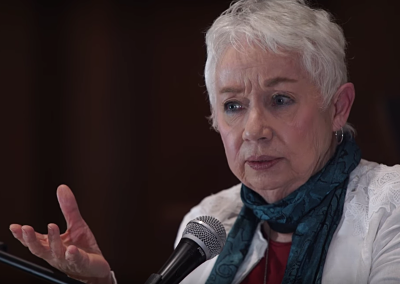
Mormon Stories Podcast is excited to team up with Sunstone to present a recording of our live podcast on 1/25/18 with Carol Lynn Pearson where we discuss her book, The Ghost of Eternal Polygamy. Special thanks to the Salt Lake City Community of Christ for hosting such a wonderful evening and for the many listeners who came to enjoy the experience.

These episodes closely follow the abstract of the book:

“‘Polygamy?’ says the mainstream Mormon Church, “We gave that up long ago.” Not so, claims noted LDS poet and author Carol Lynn Pearson, who examines the issue as it has never been examined before. Any member of the LDS Church today who enters the practice of polygamy is immediately excommunicated. However, Pearson claims, polygamy itself has never been excommunicated, but has an honored and protected place at the table. It has only been postponed, a fact confirmed by thousands of “eternal sealings” giving a man an assurance that he will claim as wives in heaven the two, three, or even more women he has sequentially married during his lifetime. No such opportunity is available to women. Through her own personal stories, those of her ancestors, and the thousands of stories that came to her through an Internet survey, Pearson shows the power of the Ghost of Eternal Polygamy as it not only waits on the other side to greet the most righteous in heaven, but also haunts the living—hiding in the recesses of the Mormon psyche, inflicting profound pain and fear, assuring women that they are still objects, harming or destroying marriages, bringing chaos to family relationships, leading many to lose faith in the church and in God.”

Episode Transcript

Full text · 18,100 words · 16 chaptersHost: John Dehlin · Guest: Carol Lynn Pearson

This transcript is machine-generated and lightly edited for readability. The audio is authoritative. Please excuse occasional errors in names and spelling.

Welcome and Introduction to the Evening

Part 1 of 2 · Ep. 860

John Dehlin [00:00:02] Mormon Stories is a production of the Open Stories foundation and relies solely upon the support of people like you, its listeners to help keep the podcast alive or to become a member of the community. Please become a monthly subscriber by visiting MormonStories.org and clicking the donate button on the top right side of the page. All contributions to Mormon Stories are completely tax deductible and go towards producing the podcast and building communities and programs of support for Mormons like you. Thanks for your support. I want to say to all of you, hello and welcome to another episode of Mormon Stories Podcast. I'm so thrilled that we're doing this live. So thankful to Community of Christ and to Lindsey Sunstone, the Open Stories foundation, and mostly to all of you who have come on a Thursday night and are willing to spend some time with us.

Carol Lynn Pearson [00:01:05] And I get to say thank you too, John, before you keep going on, thank you for the beautiful music. Thank you to Lindsay. I love you, Lindsay. John, thank you for inviting me. I love you, John. Don't you ever forget it. And I love your good wife Margi sitting right there. And I love my friend Kim Turner and Tamara Wright for taking care of all my ineptitudes so I can do what I do. And we thank the community of Christ for being so Christlike as to welcome us here. Thank you.

Introducing Carol Lynn Pearson and Her Work

John Dehlin [00:01:35] Let's give everyone a round of applause. So those of you who follow Mormon Stories podcast will know that this is not the first time we've had the dear Carolyn Pearson on our program. We definitely did one of those epic four or five hour interviews with Carolyn, and we're not going to be retreading a lot of that ground from that interview, but we are going to refer all our newer listeners to that episode and we'll say that it's definitely one of the most important episodes we've ever done. So if you haven't, check that out, pause this, go listen to it, then come back and finish listening to this interview. Carolyn has been important to so many of us for so long. I don't know if it's doing her adequate justice to call her the Maya Angelou of Mormonism. Do you like that? Is that okay?

Carol Lynn Pearson [00:02:30] Well, that would be way okay. Would that. It would be true. Thank you for the thought.

John Dehlin [00:02:34] No, we named our second child after Maya Angelou, so we have deep respect for her work. But when I read her writings, I feel like she's every bit worthy of that title and more. Her books are so wonderfully written. I don't know that I've ever read A more inspiring and thoughtful and wise author as Carolyn so I'm glad Lindsay was able to plug those books. Today. We're here to plug an amazing book. And not to plug but to explore and to encourage not only everyone to purchase this book, but but to read it and to share it. I think it'd be kind of cool to read Greg Prince's introduction or sort of description of this book, because from Greg Prince, this is actually saying a lot. Greg Prince wrote, rarely in the history of Mormonism has a literary work become approximate cause of a shift in the way the institutional church sees itself, interprets its past, or charts its future. With Juanita Brooks, Mountain Meadows Massacre and Lester Bush's Mormonism's Negro Doctrine and Historical Overview being on the very short list. Now, Greg is not necessarily known to be effusive in his praise, but he writes, the ghost of eternal polygamy has the potential of joining that list. Blending her personal passion and insights with the voices of the respondents to her massive survey, Carolyn Pearson has hit a home run in her quest to to illuminate both the damage that Mormonism's de facto practice of polygamy continues to inflict and the route to a better, more humane place. Those who truly hope for eternal polygamy or who resent any call to institutional reform will be upset, but countless others will rejoice that she has shown a more excellent way. I have to admit that I stopped reading Mormon books a long time ago just because I kind of have gotten bored. And maybe it's a little bit of avoidance, but I've had this book for a while and I haven't read it. But over the past two days, I read it. And I'm just telling you, this is an amazing book. It's important and it's super powerful. And I just can't say enough about the importance of this book. How many of you have read it? Raise your hand. All right, good for you. About half of you. The others of you have some work to do, so let's dig right in. So, Carolyn, you have a long history. 40 books, is that right?

Carol Lynn Pearson [00:05:08] 40 plus books to count. Plays and small books and humor. Yeah.

John Dehlin [00:05:13] So poetry, plays, books. But what you know, what you've often been known for. Carolyn is the author. She wrote My Turn on Earth, the lyrics for My Turn on Earth. Right.

Carol Lynn Pearson [00:05:29] And the story.

John Dehlin [00:05:30] And the story, the wonderful hymn. If you don't walk as most people do, some people walk away from you. That's hers as well.

Carol Lynn Pearson [00:05:40] I won't. I won't. Yep, that's mine.

John Dehlin [00:05:44] And of course, Lindsay's already mentioned her book Goodbye, I Love youe. And Carolyn in My Realm has been really known as an advocate for the LGBT community for decades and decades. So there was a point a couple years ago where she was like, hey, I'm kind of putting a little bit of the brakes on that effort. And I was like, oh, my gosh, how can that be possible? That's kind of you're going to ride out into the sunset on your LGBT work. And she had something else in mind. So tell us just a little bit about why you decided to do this as your next, if not final work, or at least book. Did you say this is your final book?

Carol Lynn Pearson [00:06:25] Oh, no.

John Dehlin [00:06:27] Okay, good. Okay, good. So as her next book.

Carol Lynn Pearson [00:06:31] And I don't recall exactly what I said to you, John, but the fact is that I was born into this world with women's issues, and then I married into gay issues and had an opportunity because of that to do some very important work for our LGBT people. But along the line, I continued to do my work for women, a lot of things, and especially that DVD that Lindsay held up. Mother Woe of the morning. 16 women throughout history in Search of God the Mother. Very, very important. But I felt that there was something further that I wanted to do for women. And it just kept coming at me as sort of the major issue that needs to be handled before we can move on to other things of how to bring women more centrally into the LDS Church. Because this concept of eternal polygamy, I think, gets in the way. And it haunted me terribly when I used to believe in polygamy. And as you may have read those who have read the book, the first major trauma that I had on this subject was in seminary class at the late great by high school in Provo, when our seminary teacher Boris's testimony that this is God's way of marriage and that we are not allowed to live it now, but if we are sufficiently worthy, if we, as we become less selfish, you young women, if you become less selfish, you will understand the beauty of all this and yearn to live this principle. And I remember truly where I was in that classroom watching that much beloved teacher bear us his testimony and knowing that he would not lie to us, but knowing. And walking home knowing that there was a wedge between me and God, between me and God's church, because that was not right. And that led to so many years of study and anguish and tears. As a very good, thoughtful BYU student, I would study the books of the Brethren, and then I would come home and weep because I was forever second class. And the final thing that proved that was polygamy. So that has always been something that has been very hurtful, very hurtful to me. And gradually, as you will read in the book, I. I gave that up, believing that that is never was and never will be of God. And I continued to see hurt around me. I continued to hear from women, and I continue to hear from my loved cousin in Provo, whose husband had passed 10 years before her, asking her, how do you feel about that? You and I are going to move over there one of these days. How do you feel? Oh, I feel fine about it, but. But I wonder if my husband has taken a second wife already. And I was just floored and then furious. And I remember leaving her house and saying, somebody needs to do something about that. And obviously, I am the person.

John Dehlin [00:10:16] Obviously. Absolutely.

Carol Lynn Pearson [00:10:19] No, I am perfectly positioned to write this book, which I do.

John Dehlin [00:10:24] Absolutely. Absolutely. So this book, I mean, really, at the core, it's about the role of women in our theology and in our world. I mean, really. But you chose to sort of address that through the lens of polygamy. And Lindsay and I are. Have had a few talks about the extent to which everything sort of traces back to polygamy. Right. And so talk about that, because really, I think if this book had a message, it's that women and men need to be partners in life, in government, in marriage, in church, government, et cetera. Why talk about the role of women and the importance of women through the lens of polygamy versus just doing a book about women and the need for us to respect and love them more?

Women, Partnership, and the Book's Core Themes

Carol Lynn Pearson [00:11:15] And we love women, don't we, John?

John Dehlin [00:11:20] We do.

Carol Lynn Pearson [00:11:25] And, I mean, who can just write a book about women? I mean, and especially if you're on the trail of trying to find a fuller place for women in this world, we have to look at all that and say, okay, what are the things that need to change? What are the things that we've got to move forward with in order to create a place where partnership can live. And moving out of polygamy, out of patriarchy, into partnership is the larger general theme of this book. And many of us understand and like the word partnership. And you can even hear some of our general authorities use the word partnership as they talk about what marriage should be. But marriage can never be a partnership if polygamy is anywhere on the horizon. And consequently, I mean, there are plenty of ways that people can choose different aspects of what's holding us back from men. And women being true partners, which does not mean doing the same things, thinking in exactly the same way. We need the richness of the diversity of whatever women and men bring to the table, but they have to bring it equally and with equal regard for what it is that they bring. And to me, in my particular religious organization, the concept of polygamy is one of the. And maybe the first obvious thing that holds us back from moving into partnership. Because a polygamous arrangement is antithetical to partnership. It simply is, and it is my belief and my commitment to do whatever I can until I die, that the LDS Church, which I happen to love, the Mormon community, which I regard very, very highly, deserves better than this. And my theme is we are better than this. And that's why I have spent all the time that I have in bringing forward all of these really heartbreaking stories to show the worst of what is going on in our community. So we can do better, because we are better.

John Dehlin [00:14:09] I love it. I love the story about the screenplay you were asked to write. Can you tell us that story? Because this is a super cool story.

Writing a Joseph Smith Screenplay for Hollywood

Carol Lynn Pearson [00:14:24] Sure. This was when, in the 80s, late 70s, late 70s, that I was invited by, well, Jim Conkling, who was a producer in Hollywood, who had been invited by the Brethren to be the person to head producing a major motion picture about the prophet Joseph Smith.

John Dehlin [00:14:54] So the Brethren were thinking about sponsoring.

Carol Lynn Pearson [00:14:57] Oh, they were

John Dehlin [00:15:00] in the 70s, they

Carol Lynn Pearson [00:15:01] provided the money and it was determined to ask six, maybe it was eight, but I think it was either six or eight different writers to produce a screenplay for a small amount of money that they would give. And then whichever of those turned out to be the best, that one would be chosen to be actually filmed. And the Brethren wanted it to go through this Hollywood office because they didn't really want it to come directly from Salt Lake. So Jim called me and asked if I would be one of these several to try it. And I was honored. And I thought, oh, boy. Joseph Smith and I had not had a really, really smooth sailing relationship. But I knew that he was an extraordinarily, tremendously, dramatically interesting figure. And this whole thing interested me a lot. And I had spent some years writing religious scripts and educational scripts for BYU Motion Picture Studio. So anyway, I decided, yes, I would do that. And so I dove in and for a couple of years I immersed myself in the materials that Jim sent to us, books and papers and out of print things. And it was fascinating to really read everything that I could about Joseph. And I wrote this screenplay that I called

John Dehlin [00:16:44] you, called It. Brother Joseph. Brother Joseph, the American Prophet.

Carol Lynn Pearson [00:16:48] Yeah. And I really enjoyed writing it, and I found tremendous appreciation and empathy for Joseph, and I found a lot of anger against him as well. And right off the bat, I said to Jim, we're going to bring polygamy into it. Well, we have to somewhat, but that won't be the focus. So I did bring it in, and I think I had a couple of scenes that were really very poignant and very correct in how it handled all that. But to shorten all this, there were really only, I understand, about three or four of the writers that made it through to finishing a screenplay. And at any rate, yours was one

John Dehlin [00:17:44] of two that made it to the end.

Carol Lynn Pearson [00:17:46] Yeah. Of those that were finished, mine was one of two that was selected as good possibilities. And they actually thought about trying to combine these two screenplays. And, I mean, that's a weird thought. But anyway, finally, that project did not happen. And the criticism that came from Salt Lake City about mine was that I was too. Sure, go ahead.

John Dehlin [00:18:10] Too sympathetic to Joseph's wife, Emma.

Carol Lynn Pearson [00:18:14] I was.

John Dehlin [00:18:17] And also too sympathetic to Joseph's friends who turned against him at the end. I'm assuming William Law.

Carol Lynn Pearson [00:18:23] Yeah, yeah, yeah, yeah. And that's true. I was. I was sympathetic, and I am sympathetic to those men and certainly to Emma. So, anyway, that's the story about that particular thing, John.

John Dehlin [00:18:37] And the project was put on hold. It says the powers at church headquarters could not agree on how to represent their founding prophet, and so no film was made.

Carol Lynn Pearson [00:18:47] That's true.

John Dehlin [00:18:48] Can you. Would you ever be able to share that screenplay?

Carol Lynn Pearson [00:18:53] Oh, I own it, but I'm. I wouldn't want to put it out. It really is not a great screenplay.

John Dehlin [00:19:05] Who believes that? Raise your hand.

Carol Lynn Pearson [00:19:06] No, it's not a great screenplay. I did a lot of good things with some of the characters and some of the scenes, but it was a little bit too much like a stage drama, and it relied too much on dialogue. But I did some very good things with it.

John Dehlin [00:19:26] Well, you wrote. You wrote a theme song.

Carol Lynn Pearson [00:19:29] I did.

John Dehlin [00:19:29] Will you read. Do you mind reading some of the lyrics of your theme song? Is that all right?

Carol Lynn Pearson [00:19:35] Sure.

John Dehlin [00:19:35] I've got a start for you. I think that's it right there. I love to have her read those of you who heard the Mormon stories interview before.

Carol Lynn Pearson [00:19:41] Okay.

John Dehlin [00:19:42] She's great at reading.

Carol Lynn Pearson [00:19:43] I did write this is a theme song. And I refer to this theme song at the end. And I had this being. Yes, I had this theme song being sung as Joseph comes out to greet this wagon Train of dozens and dozens of wagons. They just poured. And this was all historically accurate. These wagons just poured into far West Missouri. And I had this, this theme song going. As he would shake hands with people coming through. Brothers and sisters, hold out your hands. Let me touch you, help you understand that we are brothers and sisters, all family. Your joys are my joys and your hurts hurt me. Way down within us where spirit is flowing, there moves the dream, the, the vision, the knowing that from the beginning God's breath was inside us. There is no ending, not death can divide us. Brothers and sisters, hold out your hands, Love one another till everyone stands as brothers and sisters, sharing the sun, Learning at last that we are one. And Joseph did try to, you know, create Zion did try to teach that we are one and we care for each other and help each other. And much of that happened well in those early days and a lot of it didn't. So

John Dehlin [00:21:27] some of the feedback that this book has received from a few people probably reflects the temperament of many who have studied Joseph's life in the 21st century. And that's just a feeling of real frustration and anger at Joseph Smith. Talking to a close friend of mine just a couple days ago who just was furious at Joseph Smith. And while you don't pull punches on Joseph, you have a chapter called Brother Joseph where you know you are not only critical of him, but you also are very kind to him. Can you talk about that and how someone who knows so much and feels so strongly about the issues that come from Joseph that you would write this very hard hitting book that made me want to punch Brick, how you can still have love for Joseph?

Assessing Joseph Smith's Role in Polygamy

Carol Lynn Pearson [00:22:26] Well, I have had people say to me, you were much too kind to Joseph, much too kind to him. And I understand that there is a way in which that likely could be true. I already did have all those stories that I had culled when I was commissioned, of course, to show Joseph in the best light possible. So I had found all of those stories and I wanted to show him as much as was correct toward the beginning for a lot of his strengths. And I really did not want to just go after him, to punch him for just doing all this dirty, awful stuff. And. And so as I read that screenplay again and all of those instances are correct, I didn't make up one thing about those. And they did show a man who was generous to a fault, who came home barefoot, having given away another pair of boots, who really did a lot of remarkably kind things. And so I wanted to show that part of him so that I could feel more balanced when I actually said the words, Joseph made an error. Joseph made a mistake when he brought us polygamy. And also, you know, I was maybe remembering something I've never forgotten from Speech 101 at BYU, where I majored in Speech and Drama, that a major thing to remember about creating a speech is meet your audience where they are and take them where you want them to go. And I wrote this book not just for those who are dissidents. I wrote it not just for people who already kind of hate Brother Joseph. I wrote this for the people that I really wanted to get on board and walk with me through all of this to get to some of the tough stuff. And so I really felt that if I gave them a glimpse of that I was not a hater of Joseph, which I was not, and I am not that I would ask, I would invite them to get on board and they would think, oh, maybe I can do that. And I've had a number of people write to me and thank me for letting them continue to have their feelings about Joseph. Oh, I tell you that I know that I did that, and I don't opponent apologize for doing that because it was an honest thing that I did.

John Dehlin [00:25:42] And you also don't pull punches. I'll just. Can I read a little bit of.

Carol Lynn Pearson [00:25:46] Sure.

John Dehlin [00:25:47] Do you want to read it or you want me to?

Carol Lynn Pearson [00:25:48] Go ahead.

John Dehlin [00:25:49] Okay. Joseph's biographers, those who today are faithful to the church he founded, as well as those who have no reason to be partial to Joseph, paint a picture with strokes that suggest. Here we go. A tragic hero who acted sometimes recklessly. He placed quick and unjustified confidence in people who turned out to be traitorous. He was not economically realistic, attempting far more than he or his people could manage, running up debts that plagued him all his life, and fleeing from a financial disaster that he himself caused and that nearly destroyed his church. He was overly optimistic, overlooking the practical obstacles in a plan and going ahead anyway, often to fail. He prophesied success for a rash venture, then blamed his followers for their lack of worthiness when it failed. He could be obstinate when contradicted. He believed all his revelations, never questioning, never doubting that they came from God and making proclamations. In the words of Mormon scholar Eugene England, in the full flush of classic hubris. Mormon historian B.H. roberts put it this way. The prophet lived his life in crescendo. That sounds like the kind of character that Furies will surely take down. Mm.

Carol Lynn Pearson [00:27:01] Yeah, I believe that he was a very, very, very complicated man, and I think he was a tragic hero.

John Dehlin [00:27:09] But the writing is just so powerful.

Carol Lynn Pearson [00:27:12] Oh, gosh.

John Dehlin [00:27:12] So good. Yeah, it's so good. No question that Joseph used his people, asking of them more and more. He used his people as building blocks, but the edifice they were creating was for each of them, was just as much as it was for him. So, okay, so that. That was super useful to understand. You love Joseph, but you also are willing to be critical of him.

Carol Lynn Pearson [00:27:38] Oh, yeah.

Why Polygamy Started and Historical Justifications

John Dehlin [00:27:39] Chapter three is a really interesting chapter. It's called the why of Mormon Polygamy, and you talk about why it happened. So what is your best after studying this really in depth, if it wasn't revelation from God, how and why did it happen? If you had to sort of like, give us a timeline, you wrote a little bit about maybe Fanny Alger and what Joseph was feeling and thinking. By the way, what does comely mean? You used that word to describe faintly Alger. I think you were quoting others.

Carol Lynn Pearson [00:28:08] I was quoting that it meant attractive.

John Dehlin [00:28:10] Attractive.

Carol Lynn Pearson [00:28:10] Attractive.

John Dehlin [00:28:11] Okay.

Carol Lynn Pearson [00:28:11] All right, pretty.

John Dehlin [00:28:12] So what's your best summary of how and why polygamy happens?

Carol Lynn Pearson [00:28:19] I do quote there saying that I went to Utah to interview a whole bunch of people, and I interviewed. Well, one of them was Professor Marvin Hill. And he said to me, do you want me to tell you how I think polygamy got started?

John Dehlin [00:28:37] And he was a church historian, right? Church historian? No, no, no.

Carol Lynn Pearson [00:28:41] But he was a professor of history. But he wrote an important book with Dallin Oaks on the fate of the persecutors and Joseph. So he said, my best guess on how polygamy came to be is that two things happened at the same time. Joseph was studying the Old Testament deeply learning about prophets. Joseph knew that he was now a prophet, and he was trying to decide, what does that mean? What does a prophet do? What is a prophet? And Brother Hale said at the same time, I believe Joseph fell for Fanny Alger, and he had all these feelings for her that he felt had to be wrong. But somehow or other, these two things that he had was experiencing came together, and they relieved him of this terrible, terrible dilemma. And he began to think, okay, if I am a prophet, and there were prophets in the Old Testament, and many of them had more than one wife, and if I am having these feelings for a woman other than Emma, these feelings must be coming of God, and this must mean that I, as a prophet, should participate in the same thing that many of the other prophets did. And so, said Professor Hill, I believe that Joseph Sort of created his answer by bringing those two things together and making it work.

John Dehlin [00:30:29] Do you think he believed it?

Carol Lynn Pearson [00:30:30] Oh, I think he believed it. I do believe that Joseph thought that he was doing the will of God. Now maybe there was a time when that got so far away from him that he. I hope that he wondered, is this really what God wants me to do? But I think that rather than just beginning and ending with the idea that he was a scoundrel, which I cannot do, I believe that he did believe a very great deal of what this was all about.

John Dehlin [00:31:05] One of the coolest things about this chapter is you sort of take down each of the historical justifications that people have used to justify polygamy. And I'm going to just read some and if you want to give like a one second response.

Carol Lynn Pearson [00:31:17] Yeah, that'll take you a long time.

John Dehlin [00:31:19] Well, let's do a couple. So necessary to multiply and replenish the earth.

Carol Lynn Pearson [00:31:23] Did do it at all? No, no. Well, Joseph doesn't have any progeny that can be proven from these other wives. And in Utah, it's been shown statistically that monogamous women provided slightly more children than each polygamous woman did.

John Dehlin [00:31:46] Okay. Too many women. So many women in Utah. We just had to find them. You know, we just had to marry multiple humble women, all the widows.

Carol Lynn Pearson [00:31:56] The church acknowledges that the demographics show that there was really never a time in all those decades that there were more women than men.

John Dehlin [00:32:04] Polygamy produced more faithful members, raising up a righteous seed, as they say.

Carol Lynn Pearson [00:32:12] The way you define faithful. You can, you could say, though, those polygamy brought people who also were very hard line, authority oriented, polygamous people. But, you know, when I sent an email to Tom Kimball asking his opinion on that, he said, ah, from what I see in my family. And he was a, quote, great, great grandson of Heber Sea. He, he said the polygamy just brought more. What was the word he used?

John Dehlin [00:32:48] Tom said

Carol Lynn Pearson [00:32:51] polygamy brought more fundamentalist people.

John Dehlin [00:32:54] Yeah. Even now the majority of my Kimmel cousins are not Mormon. Tom says, yeah, yeah. How about there had to be a restoration of all things. Oh, he said fundamentalists and atheists is what he wrote. Yeah, yeah. Restoration of all things.

Carol Lynn Pearson [00:33:09] Oh, golly, that's just so, that's.

John Dehlin [00:33:12] So let's restore everything in the Old Testament, right? Everything.

Carol Lynn Pearson [00:33:15] Yeah. Let's get, let's get animal sacrifice back. Let's get. You can't. You know, I'm wearing two different kinds of clothing put together that, you know, this is, this is linen and this is. Whatever this is. Maybe silk. Let's. Let's. Let's bring back that you can stone your children if they disobey you. Let's bring. Bring back all these things. How ridiculous. You know, if you build a new house and you say, oh, let's choose something to take from the old house that will really, you know, remind us of our good times there, you'll choose something beautiful. You won't find the ugliest, dirtiest thing that you could Practice. Could bring and say, boy, we got to restore. I mean, I have no patience with that term. No patience at all.

John Dehlin [00:34:07] I got her going.

Carol Lynn Pearson [00:34:08] Everything had to be restored.

John Dehlin [00:34:09] I got her going a little bit. All right, so maybe there weren't more women. There were more righteous women. The men were scoundrels. So we needed, you know, the righteous women needed to be married to someone.

Carol Lynn Pearson [00:34:24] Wait, how did. That's not really in there.

John Dehlin [00:34:27] There are more righteous women. There are more righteous women than men.

Carol Lynn Pearson [00:34:31] Yeah, okay, well, see, I have no patience with that either. That's just.

John Dehlin [00:34:37] You wrote, this is pretty insulting to men.

Carol Lynn Pearson [00:34:41] That was terribly insulting to men.

John Dehlin [00:34:44] Thank you. Thank you, Carolyn. I appreciate that.

Carol Lynn Pearson [00:34:47] That's just so rich.

John Dehlin [00:34:48] And there's all sorts of the crazy

Carol Lynn Pearson [00:34:49] stuff, and the only documentation anybody can find for that was some silly dream by somebody, some general authority's son who had a dream saying, you know, when Lucifer sent out, you know, the call that. Follow me, that there were what, a lot more men that followed? No, women followed. So there were a lot of women who righteously stayed with Christ, and we have to find a place for them. Come on. I'll give you a lot of my dreams that bring out all kinds of weird things. I just give that no credence at all.

John Dehlin [00:35:29] And this chapter is wonderful because it gives a takedown of every single major justification ever offered towards polygamy. And it's really good.

Carol Lynn Pearson [00:35:36] Well, listen, go to the one that says, if polygamy hadn't been, I wouldn't even exist. That's my favorite awful one.

John Dehlin [00:35:45] What's wrong with that, Carolyn?

Carol Lynn Pearson [00:35:50] I tell in the book of my great grandmother on my mother's side who said no to polygamy. We'll get to that story. There was the great grandmother on my father's side who said yes to polygamy. I came through the second wife. You're telling me I wouldn't exist unless polygamy had existed? That my eternal soul would not have found some clever way to get itself down to this earth in some perfect spot in order to continue My eternal life. Listen, every war that has ever existed brought forth beautiful children. Rape has brought forth beautiful children. Does that mean that these things are good just because they brought forth a child? Come on, there's no logic to any of that stuff. Yeah, turn the page. Get a new child.

John Dehlin [00:36:48] Just read us that last I love Imagine. Join with me in invoking visual imagery of this final few sentences of this chapter.

Carol Lynn Pearson [00:36:59] Sure. Right. Well, I have to read the paragraph ahead of it. Brother Joseph said that friendship is a grand fundamental principle of Mormonism. True friendship, I believe, is described in that. Lovely thought. I have read more than once from writer Dinah Craik, who lived in England during Joseph Smith's lifetime. Oh, the comfort, the inexpressible comfort of feeling safe with a person. Having neither to weigh thoughts nor measure words, but pouring them all right out just as they are. Chaff and grain together, certain that a faithful hand will take and sift them. Keep what is worth keeping, and then with a breath of kindness, blow the rest away. I count myself as a friend to Brother Joseph and I wish to honor him like this. I hold the fullness of his life in the palm of my hand. Chaff and grain together, I keep the many kernels worth keeping, and with the breath of kindness, blow the rest away. And that's why I have spent so many months, a couple of years, more years, trying to get rid of the chaff of polygamy so we can truly see the more honorable aspects of Brother Joseph's work. Our good friends at Community of Christ have done that. You know, they give us a good example in a lot of ways.

Emma Smith and the Emotional Weight of Polygamy

John Dehlin [00:38:50] One of the first moments of this book that made me want to literally punch my fist through a brick wall was when you talked about Emma specifically, and I should know this, but I had totally forgotten. I'll just read her. Eternal salvation was at stake. She gave in, took women by the hand and gave them to Joseph. She watched as the two Partridge sisters were married to her husband, not knowing it was a charade to appease her, not knowing that they had been married to him months before.

Carol Lynn Pearson [00:39:32] Yep.

John Dehlin [00:39:34] Can you talk about Emma and.

Carol Lynn Pearson [00:39:36] Pretty dishonest.

John Dehlin [00:39:38] Well, just talk about Emma and why you wanted to dedicate a chapter to Emma.

Carol Lynn Pearson [00:39:42] Well, golly, as I dedicate there the first page of the book. This book is dedicated to Emma, who was the first to weep. Emma was so brave and so truly committed to Joseph's work. That's what must have driven her crazy. She was not pretending she believed in Joseph's work. I think all the way through so she had to find a way to hold in one hand her belief in Joseph's divine calling and the tremendous personal hurt that came to her through polygamy. She was this bright woman. She was a couple of years older than Joseph. She was much more educated, but she. She revered him as her prophet and her husband. But this thing, this dishonest event that came into her life that drove a wedge between her and her husband, seemingly because of God, which things she didn't really know about for quite some time. She.

John Dehlin [00:41:09] Evidently, she was wife number 20 something. Right?

Carol Lynn Pearson [00:41:13] I don't remember what it was. She. She saw what was happening.

John Dehlin [00:41:17] What number was Emma sealed to Joseph? Well, 23 something.

Carol Lynn Pearson [00:41:21] Yeah, she wasn't sealed for. For a long time. She knew something about what was going on with. With Fanny Alger, and. But she was kept in the dark for a lot of these women. And so this woman that I think all of us who know anything about her revere a lot was treated very, very badly. She was treated dishonorably and dishonestly by her husband, and she had to find a way to deal with that, because here she was, this prominent woman in the community. Her commitment to Joseph was profound, and I believe she was torn almost to madness sometimes. And I wonder sometimes if she wasn't afraid for her life because there were people who wanted to get rid of her, really, when she was being a stumbling block to the church, I think she was sometimes afraid for her life.

John Dehlin [00:42:28] Talk about the healing experience you had and almost the visionary experience you had visiting Nauvoo in the context of thinking about Emma and Joseph and the revelation and polygamy. It's one of my favorite parts of the book.

Carol Lynn Pearson [00:42:46] Right. Well, I was asked to go to Nauvoo with affirmation. You know who they are? The community of our LGBTQ brothers and sisters in the church and out of the church who have Mormon base. And I didn't want to go. I was so busy writing this book. I was saying no to all my friends. Going to a movie. I was doing nothing because nothing was as interesting to me.

John Dehlin [00:43:17] Go to a movie.

Carol Lynn Pearson [00:43:18] Why should I do that when I could write this book that was so thrilling to me? I would get up in the morning, and I could not wait. Anyway, it was thrilling to write this book, so I said no to go. But finally, my dear friend Randall Thacker convinced me, oh, please, please come to Nauvoo. It was a leadership conference, and so I went, and it was a wonderful experience. And my assignment was to give a talk about Emma in what I understood to be called the big room in Joseph Smith's red brick store upstairs. And as part of that, I gave the presentation of Emma Smith, who is one of the 16 women that I present in Mother Woe of the Morning, who have a connection to God, the mother, either wanting her, having forgotten her, whatever it was. And of course, we know that Joseph did have a concept that there must be a mother in heaven. And so I utilized that as my way to write that, that scene of Emma. So I. So I did that and then I went downstairs and Lachlan Mackay, this very delightful, charming man who is now one of the twelve apostles in community of Christ, was there as the shopkeeper. And this is the store where Joseph. It was really built so Joseph could earn a living, but two or three months into collapsed because Joseph gave away all the goods he couldn't. The people who could not pay for the goods, he couldn't not give them to him. So anyway, that's where we are. We're in Joseph Smith's brick store and I am the last one to finish as people are talking to me and I. I'm. Lachlan had shown us around and he knew of my interest in polygamy. So he's there as the shopkeeper. And I choose a few things that I'm taking home.

John Dehlin [00:45:23] A mug, right? A Joseph Smith mug.

Carol Lynn Pearson [00:45:25] A Joseph Smith mug that my pens and things are in on my desk. It says, Joseph Smith's red brick store. And so as Laughlin is wrapping these things for me for travel, he says, you know the room up there, one of those two offices? That's the place where Joseph Smith wrote out your section 132 about polygamy. And I said, wow, really? Just right up there, that's where that happened. And he said, yes, it did. And I said. I said, please, I've got to go back up for a minute. Can I please? He said, certainly. Take your time. So I ran up the stairs. Well, I've got to read it then.

John Dehlin [00:46:09] You got to read it. It's all ready. Tell us what you're reading, though. Oh, you're going to read. Okay. Yeah, yeah. You know your book. These are the Joan of Arc boots, right? No, I want to see you wear your Joan of Arc boots.

Carol Lynn Pearson [00:46:26] I do.

John Dehlin [00:46:27] Do you ever wear them in public?

Carol Lynn Pearson [00:46:28] No, no, I kept my Joan of Arc boots. When I played Joan of ARC BYU director Harold Hansen, we were supposed to turn all the costumes in, but I kept the boots. And they were just felt boots and long shoed laces And I thought if I asked here, Dr. Hansen would have given to me. But I didn't ask. I just took them. So they're in my personal archives and

John Dehlin [00:46:53] I write, tell them when you wear them.

Carol Lynn Pearson [00:46:56] Well, once in a while, I have taken them out and worn them when I needed to feel Joan's courage coursing through my veins. I have Joan of Arc's boots to wear.

John Dehlin [00:47:09] Can you guys see cute little Carolyn Pearson putting on her Joan of Arc boots to give a little courage for the day? I love them. I want to see a picture of you in your boots. Okay, good point. I'm sorry.

Carol Lynn Pearson [00:47:19] We can arrange that, John.

John Dehlin [00:47:20] Okay.

Carol Lynn Pearson [00:47:20] Okay. No, these boots I bought in Carmel, California.

John Dehlin [00:47:24] Okay, I'm sorry. I digress.

Carol Lynn Pearson [00:47:26] I digress. And let's get back into the mood here, because this is very important. So I am up there in Joseph's office, and I call down, I'm to going inside, but I won't touch anything. And this is an office right by the big room where I just presented Emma. And I stand there in the office, and I am seeing in my mind's eye three men in that office. Joseph, his brother, Hyrum, his secretary, William Clayton, discussing plural marriage and Emma's refusal to accept it. I listened as Hyrum urged Joseph to write the revelation down and let him take it over to Emma and read it to her, certain he could convince her it was of God. Joseph replied, you do not know Emma as well as I do. Hyrum persisted. And so Joseph spoke the revelation, which William wrote down sentence by sentence. I walked with Hyrum as he hurried to his sister in law, sat at her home, and read aloud the revelation that spoke of the eternal nature of the marriage covenant and the acceptability, sometimes the commandment of plural marriage. I watched Emma's face, only skeptical at first, become hard, her eyes narrow, her mouth pursed as she heard the words directed to her. But if she will not abide this commandment, she shall be destroyed, saith the Lord. I watched Emma rise now with fire in her eyes as she angrily ordered Hyrum to leave, saying that those words were not from heaven, but to come straight from hell. Hyrum left. Emma collapsed in sobs. And I watched, seeing it all as I stood there in Joseph's office in the red brick store. I remembered then the big room just feet from where I now stood. I watched as Emma and her Mormon sisters, in that room, in their homes, in their wagons, in sickness and trial, in childbirth, welcomed and used the spiritual power Joseph had promised them. They Administered to one another through the anointing of oil and the laying on of hands. They rebuked illness and darkness. They pronounced healing blessings and did so in the name of the Lord. A strong intent moved through my body and settled in my chest. I raised my palms in front of me, and I spoke aloud softly. Dear God, our Father and Mother, who art in heaven and in our hearts and in this room, I am so grateful to be standing here. I am grateful for the beautiful and important things that happened in this city and in this building. And now, as a member of the church that Joseph founded, as a Mormon woman who has been blessed by many things that happened here, but has been deeply wounded in consequence of something that transpired in this. This room, I take it upon myself to pronounce a healing blessing. I bless the hurt that has developed from some of the words that were written in this room. Words in what is known as section 132 of the Doctrine and Covenants. Words that through many generations, have harmed the heart and lives of countless Mormon women and men. That this hurt will have an end, that the damage done by the concept of eternal polygamy will cease, that the wrong will be righted, and that soon there will be a time of new light, of healing and of peace. Through the power of my love and my faith, I pronounce that this blessing will be fulfilled. And I do it in the name of Jesus Christ. Amen.

John Dehlin [00:51:55] Huh? Don't you love the image of Carolyn Pearson running around pronouncing blessings to heal all the messed up Mormon stuff that we've been suffering from for centuries? Isn't that a beautiful image? Well, she's doing it.

Carol Lynn Pearson [00:52:15] Should not we all be doing that? John, everybody here has the power of healing.

John Dehlin [00:52:22] I like it when you do it.

Carol Lynn Pearson [00:52:23] Okay, John. I'll keep doing it.

Zina, Henry, Phoebe, and Stories of Women Harmed

John Dehlin [00:52:27] So another story that made me want to put my fist through a brick wall was about Zina. And not just Zina, but Henry.

Carol Lynn Pearson [00:52:34] Oh.

John Dehlin [00:52:34] Oh, my gosh. Can you just tell us a little bit about Zina and Henry?

Carol Lynn Pearson [00:52:37] Yeah. Well, see, Zina seems to have been a very smart, personable, attractive young woman. And Joseph recognized that, and he recognized that Zina would be a good addition to the building of his godly kingdom. And so he approached Zina as he had approached and would further approach a number of women to tell them that God was commanding him to take another wife, and she was the woman. And Zina told him that she was engaged to marry Henry, and that's what she wanted to do. And so she moved forward with that. And actually, Joseph was supposed to present to conduct the marriage ceremony, but he did not show up. And instead, what's his name, who was mayor of Nauvoo?

John Dehlin [00:53:40] Not John Bennett.

Carol Lynn Pearson [00:53:41] I believe it was John Bennett who Gross. Conducted the sealing. And. No, I'm sorry, not sealing. They were not doing sealings then. But who conducted the marriage but Joseph, when asked why he had not shown up to perform the marriage, he said, I cannot give away that which is mine. And he continued to court Zina after she was married and to tell her that she was to be one of his wives, and she held to her marriage with Henry. And some of this is kind of confusing as to when and how and who was there and whatever, but nevertheless, she did agree to be sealed to Joseph for eternity while maintaining her marriage with Henry. And the story, the official story, is that Henry was there and gave his permission. There is some family history that contests that. At any rate, my dear friend told me that his family had always considered that Henry was a bounder because he left Zina. And so Joseph, and then later Brigham had to take her over. And then when they learned that at the time that Zina was sealed to Joseph, that Henry was on a mission that Joseph had sent him on, and again when she. When Joseph died and the widows were apportioned out and she was given, some of them had their choice, I do believe, but she was given to Brigham at that time.

John Dehlin [00:55:33] That's those words given to Brigham, right?

Carol Lynn Pearson [00:55:35] Yeah. Well, at the time that she began to live with Brigham as his wife, Henry had been sent on another mission by Brigham. So anyway, that's the story of. Of Henry B. And Zina Jacobs.

John Dehlin [00:55:55] And you wrote that Brigham even excommunicated him first.

Carol Lynn Pearson [00:55:58] He did.

John Dehlin [00:55:58] Is that right?

Carol Lynn Pearson [00:55:58] He did, yeah. Because.

John Dehlin [00:56:00] Why?

Carol Lynn Pearson [00:56:01] Well, because evidently, from what the family can figure out, because. Because Henry was trying to get Zina back. So that's one of our really bad stories.

John Dehlin [00:56:14] You're making me angry, Carolyn Pearson.

Carol Lynn Pearson [00:56:16] I'm sorry. That's what happened, John. We gotta toughen up if we're Mormons.

John Dehlin [00:56:21] And so this chapter's. So this chapter is called Is There no Help for the Widow? What. What's your basic point, focusing on widows?

Carol Lynn Pearson [00:56:30] Well, I'm showing us, first of all, so that we can understand the dilemma of widows today. We have to understand how this thing happened. So at the time, and seemingly before Joseph died, he made arrangements to tell the 12 that if he died, his wives were to be given to them for their earth life, but they were still sealed to him. And Any children that they had. And they were to have children with his sealed widows now, their wives for this earth. And they all understood that when they met Joseph Heaven, they were to deliver to him that wife and all the children that they had raised up for him. And that set the scene for what happens today with.

John Dehlin [00:57:29] With the FLDS church, with.

Carol Lynn Pearson [00:57:31] Well, no, with our widows.

John Dehlin [00:57:32] Oh, right, right, right, right.

Carol Lynn Pearson [00:57:34] With LDS widows who are one of the groups. And we. Sometimes we need to be talking about the various groups of LDS people who are especially hurt by the teachings and the policies that we still have today around the idea of eternal polygamy.

John Dehlin [00:57:53] We'll get to that.

Carol Lynn Pearson [00:57:54] Yeah.

John Dehlin [00:57:55] The next part that made me want to put my fist through a brick wall was the part about Phoebe Woodruff. I almost exploded when I read this. Do you want me to read it or you?

Carol Lynn Pearson [00:58:07] Go ahead.

John Dehlin [00:58:08] Phoebe Woodruff is the first wife of Wilford Woodruff. Wilford Woodruff is known for what reason? Related to polygamy.

Carol Lynn Pearson [00:58:18] I didn't he do the manifesto?

John Dehlin [00:58:21] He did the manifesto. Right. So this is the guy ending the polygamy manifesto. It's his first wife. He's president of the church. You're not going to believe this. In 1882, Phoebe Woodruff, first wife among seven to Wilfer Woodruff, fourth president of the church, speaking at a mass meeting of Mormon women held in defense of polygamy, said, if I am proud of anything in this world, it is that I accepted the principle of plural marriage and remained among the people called Mormons and am numbered with them today. However, a few days later, a longtime friend asked, how is it, Sister Woodruff, that you have changed your views so suddenly about polygamy? I thought you hated and loathed the institution. Phoebe responded, I have not changed. I loathe the unclean thing with all the strength of my nature. But, Sister, I have suffered all that a woman can endure. I am old and helpless and would rather stand up anywhere and say anything commanded of me than to be turned out of my house in my old age, which I should be most assuredly if I refused to obey counsel.

Carol Lynn Pearson [00:59:51] Well, I have a fine quote from Leonard Arrington, my good friend in there, as he talks about the difficulty, the pain, the confusion that these Mormon women had and that they pretended one thing and then they felt another. And he said, most of the reason that we don't have good biographies of the early brethren, because of all the family mess that it was just so terrible for most of these families, there was simply not good feeling between them.

John Dehlin [01:00:26] Yeah. He writes Nearly every important Mormon entered into plural marriage. And in nearly every instance, the first wife, though formally giving her approval for the second marriage, privately opposed the second marriage and privately was jealous of the second wife. Now this is Leonard Arrington, church historian, faithful, believing person who knew more about church history than, you know, most people on the planet. While she attempted to sublimate her feelings, these were recognized by her children and these were magnified by them so that it was impossible for them to look upon the second wife and second family in an objective way. Feelings developed between first, second and subsequent families, privately, not publicly. They made snide remarks about their quote, aunts. Wives would tear pages out of husband's diaries that referred to the other wives and families. They would destroy letters to or from the other wives and families. Bitter complaints would be made which were passed on to children and great grandchildren. And sometimes apologists, polygamy apologists will say, oh, but there's all these women who spoke so glowingly of the institution, and there may have been some. Let's just acknowledge that. Your response, though, to that sort of broad, broad stroke would be what?

Carol Lynn Pearson [01:01:41] Well, human beings, and especially Mormon human beings, try very hard to make the best, even of a bad deal, to put our best face forward. And I believe there were a lot of polygamous wives who to some extent or another, were successful in creating a life perhaps of cheerfulness and doing the best that they could. But everything of goodness that came from this, I think, was in spite of polygamy and none of it because of polygamy. I have looked for God's fingerprints everywhere on polygamy, past, present, and I do not find one fingerprint of God anywhere.

Carol Lynn Pearson's Great-Grandparents and Polygamy's Legacy

John Dehlin [01:02:39] Well, one of the dramatic climaxes for me in this book was the story of your great grandparents, Mary and Mary's husband, James. James, I don't want to spoil the dramatic climax, but what do you want to tell us about Mary and James?

Carol Lynn Pearson [01:02:57] Oh, golly, I'll take in the whole story. I mean, for, for people who haven't read it. Do you want to save them the. To get to the. Okay.

John Dehlin [01:03:05] Promise you'll buy the book even if she tells the story. Raise your arm to the diagonal.

Carol Lynn Pearson [01:03:10] No.

John Dehlin [01:03:11] Okay.

Carol Lynn Pearson [01:03:13] I. I knew early on that somehow my. My great grand. My great grandparents who came from Nottingham, England, and James was a lace maker, and he was important in developing some of the machinery that led to new kinds of lace making. And they had a nice home there. And when they were converted at the church, they were very, very devoted. And so they made plans to come and they did. The family came a year early and James stayed to make money. And so they settled in Utah and were called fairly quickly to go up and settle southeastern Idaho, the little town of Paris. And they already had. They knew Charles C. Rich, who had stayed in their home. They held the mission home when they were in Nottingham. And the thing that I learned mostly about them was that during their marriage, at a time when James brought home a second wife, that his wife of those many decades who had given him, what, seven children, that she left him and she no longer would live with him as husband and wife. And so I knew that strange, intriguing story. And I remember asking.

John Dehlin [01:04:54] She said no, right? She said, no.

Carol Lynn Pearson [01:04:55] She said, no, no. And they must have had a conversation about it. Every Mormon couple had a conversation about polygamy. And nevertheless, and I never knew why at this late time in their lives, would James, knowing it was against his wife's strong wishes, why would he do that? And I would ask my Aunt Mamie, and she was quite bitter about the whole thing. But anyway, nobody knew anything more than what I have just told you that happened.

John Dehlin [01:05:32] Then comes Lindsay Hansen, Mark.

Carol Lynn Pearson [01:05:34] Then comes Lindsay, Lindsay Hansen park, that troublesome, beautiful, red headed woman who still drinks Diet Coke, but because of me, she's drinking less and less. So here comes Lindsay, and I listen to all of her podcasts because, as you know, she has done this wonderful series that she originally called 100 podcasts of polygamy. It's gone into much more than that now, but I remember I was standing in my kitchen listening to the podcast, and at the time I was writing this book and he was interviewing, oh, I know his name, but I've forgotten this very smart historian about some of the ways that polygamy was happening in Utah, as Brigham took what Joseph had done and, and doubled it and doubled it and really made it this gigantic part, this foundation of Mormonism. And I heard Lindsay say in 1873, Brigham Young, In 1873, Brigham Young gave a sermon in Paris, Idaho, in which he said that if a man refused to take a second wife in the eternities, he would lose the wife he had. And I remember. What did she just say? And I played it again in Paris, Idaho, 1873. So I rewound and I listened again. Paris, Idaho, 1873, he would lose the wife he had. I was just thunderstruck. And I thought, wow, if that is true, that answers a lot of family questions. So I immediately ran the phone and I called my siblings and I said, did you know this? And of Course they didn't. And my. My St. George brother who loves to get on the Internet and ferret out things, Warren, he. He quickly found. And you know, all of these sermons are available on the Internet. So he just put in Brigham Young and the date in Paris, Idaho, and the whole sermon was right there. And it's true, this is what he said, that if a man refuses to take a second wife, he will lose even the one wife that he has when he gets to heaven. And I thought, damn, I thought, I betcha that is what, what. What happened that all these years, he. He said no to the thing. And then when he heard from the person that he considered to be his prophet that if he didn't go along with this, he was going to lose this wife that he loved dearly. And so I'll bet you he just said, I've got to do this. I have to do it for the sake of our family. I had been really angry with him before, but now I felt so bad for him. And so that's the story.

John Dehlin [01:08:54] Yeah. And Brigham Young goes on to say things like, joseph received revelation on celestial marriage, a great and noble doctrine now where a man in this church says, I don't want but one wife. I will live my religion with one. He will perhaps be saved in the celestial kingdom, but when he gets there, he will not find himself in possession of any wife at all. Brigham Young doesn't come out too well in your book. Carolyn Pearson, I am so sorry. What do you want to say about. What do you want to say about Brigham Young?

Carol Lynn Pearson [01:09:26] Do you know, at the beginning of that sermon, he says, I have brought to you many a fine doctrine, and I have never taught you anything that is not correct. I have never made a mistake or however he put that there. And, you know, and I tried and I found some good things to say about Brigham because Brigham does have a lot of important things that he accomplished. He really, he brought his people here and he made, without his energy, his commandeer personality, perhaps this experiment here might never have been successful. And I went out of my way to say that I admire how he had the Salt Lake Theater built before the Salt Lake Temple was even finished. And he brought in of the best actors from across on both coasts, and he made this thing the gem, the theatrical gem of the country, really. So I tried to tell some of the really fine things about Brigham Young, but there are a lot of things about Brigham that I cannot. I cannot condone or admire.

John Dehlin [01:10:50] Thank you for joining us today on Mormon Stories. If you enjoyed this episode. Please help us make more like it by becoming a monthly subscriber@mormonstories.org thank you very much.

Part 2 of 2 · Ep. 861

John Dehlin [00:00:02] Mormon Stories is a production of the Open Stories foundation and relies solely upon the support of people like you, its listeners to help keep the podcast alive or to become a member of the community. Please become a monthly subscriber by visiting MormonStories.org and clicking the Donate button on the top right side of the page. All contributions to Mormon Stories are completely tax deductible and go towards producing the podcast and building communities and programs of support for Mormons like you. Thanks for your support. So let's, let's bring this to the modern day. I know when I heard about this book, I'm like, look at me. Like people just kind of now forgotten about it. They don't really take it seriously. Even Gordon B. Hinckley on Larry King Live said, you know, that it's in the past, it's no longer doctrinal. And I think there's sort of this big catch all in Mormonism about the afterlife, which you write about very directly, which is Heavenly Father is a loving God and he'll figure it all out in the afterlife. And so even my own mother, honestly, who's sealed to a man, who's sealed to his late, his late wife, when I asked my mom about being a plural wife in heaven, she's literally just like, you know what, it's all going to be fine in the afterlife. I'm not even worried. Heavenly Father is going to figure it out. Having said that, you have 8,000 narratives that you've received from women and men talking about how the teachings around polygamy are still affecting women in the church today. Can you give us a sample of how these teachings are literally affecting people's happiness, health and well being in 2017?

How Eternal Polygamy Still Affects Members Today

Carol Lynn Pearson [00:02:03] Sure. Some of the individuals who are particularly affected by this, and I grant to you, John, that there are women who will say, that doesn't bother me, that doesn't. But for every one of those, I think I could find a lot of women who either will acknowledge that it's very difficult for them or have put it so far down in their psyche that it's there causing trouble in their personality and in the way they see the world, the way they see themselves and the way they see their husband, so that it does cause a significant problem. Some of the people who, some of the women who are most. Well, let's talk about my survey for just a moment then. As long as you brought that up, please. I knew that I wanted to do something about this subject because it just. I have received so many stories from women. I started getting stories from Women. When I first put, 50 years ago, when I put out that little book called Beginnings, women began to trust me and write me their stories that sometimes were just very painful. And some of them had to do with their feelings about polygamy. So I quickly began to learn that a lot of young women who, who, they understand that if they die soon, certainly their husband is going to be sealed to another woman, and that will make them automatically eternal polygamists. And I had been getting all of these various stories and I thought, I want to do something with these, but I don't know what to do, so I'm going to really shorten all this. But I had a really good conversation with Greg Prince, who convinced me to do a major survey just with my own name. So I put out a survey just on social media asking for Mormon and ex Mormon women and men to just take this survey. And we had established quite a few questions about how they felt about the inequality in the sealing practice. And you know, what is meant when I say the inequality in the sealing practice, that a man can go back to the temple and have another woman sealed to him, which is not the case with a woman.

John Dehlin [00:04:47] And we have at least two members of the first presidency who have done just that. Is that right?

Carol Lynn Pearson [00:04:51] Indeed. Indeed we have that. The top two leaders in our church

John Dehlin [00:04:55] today, Russell Nelson and Dallin, have been sealed to a second.

Carol Lynn Pearson [00:05:01] They are eternal polygamists. Right, Right. So I sent out this survey wanting to get information and at the end saying, if you could tell me your story or the story of somebody near to you who has had some kind of an experience with this, I would appreciate it. And so on day number one, I wrote an email to Greg, who was more involved with the actual mechanics of the survey. And I said, could you look and see how many we had people, how many people had taken the survey today? And I was hoping, oh, maybe there would have been three or four or 500, that would be great. So he got back to me and said, it's 10 o' clock now in the east and today, so far we've had over 2,400 people take this survey one day. And then he added, this blows the faith crisis survey out of the water. So we just waited, and every day the number was larger. And when we closed the survey down after having had it open for four weeks, we had had over 8,000 people taking the survey. And so I spent months reading through all of the answers to all of these questions. But the part that really interested me was at the end when I had asked for stories because that's what I really, really wanted. And so I, in my very non technological fashion, put out my yellow post it notes here and there and here and there and began to write down certain themes that began to emerge. Widow, husband, bringing up other men's children, all of these different themes. And I correlated the number with that and I began to create these different documents. And so I found that I had so many stories, and of course I could never find out who wrote these stories. It was totally anonymous, but I estimated that there were about 15% of these stories that were saying something like, polygamy is just wonderful, you just have to have more faith. But about 85% of them were stories of enormous heartbreak. And so I thought, well, it appears that I'm going to have to write a book about these because I have the material. And so I began to gather all of these stories into their thematic place and decide what chapter. And I initially thought, I'll just give these stories out and that's what will be the book. And then I thought, no, I kind of want to be in the book. And so I decided that I would bring my own Persona into the book as well, as well as bringing certainly not any new historical material. I'm not a scholar who could find some brand new thing from way back there, but I wanted to give a thread of history so we could see why some of these things had developed as they did. And then to that add these stories, mostly from these women as well as from these men. And you know, one of the very first stories that I got was from a woman. And then, well, she had told her story on the survey, but she also emailed me and I just could hardly bear that she was telling me that. She said, I'm a young mother and I'm happily married, but the anxiety is always there, this terror. And it has turned me into a hypochondriac. I don't fear death, but I know that if I die young, my husband will have another woman sealed to him and I will live in eternal polygamy. I fast and I pray, but no peace comes. I've spent many nights in tears. I go to a therapist, but she can't help me at all because the church has not changed its policy on this. So I spend my whole life going to doctors saying, surely if we catch the cancer early, I won't die, and then he won't marry again and be sealed again, and then I won't be an eternal polygamist. And she weeps during the Night. So these are just normal women who are fearing death because it will very likely mean that they, without their permission at all, are going to become eternal polygamists. So that is a large group of women, probably all women, because we're all in danger of that, and we're all in danger of living wonderful lives and getting the celestial kingdom. And there we'll meet it, because our husband will be a righteous man, and he will be offered the opportunity to take another one or two or however many wives. You know, back in the 1800s, they talked about, well, that there must be hundreds of mothers in heaven in order to get all of these planets populated and all of that. So this is still deep in our Mormon psyche.

John Dehlin [00:11:01] Not just bad. For a long time in the 19th century, leaders taught that you could not achieve exaltation.

Carol Lynn Pearson [00:11:08] Right, Absolutely.

John Dehlin [00:11:09] Without being a polygamist. Is that right?

Carol Lynn Pearson [00:11:11] That's absolutely right.

John Dehlin [00:11:12] So we've got all that doctrine, doctrine on the books of prophetic statements uttered by the first Presidency.

Carol Lynn Pearson [00:11:18] Right. And those are not quoted now, but they have never been thrown out, and so they're still there. So this is one way in which nearly all women, and some women are deeply, deeply hurt. This anticipation. And, you know, there are a lot of women who love their husbands dearly, but the stories I get from them, and they almost all say the same word words. I find myself holding back part of my heart from my husband, even in our most intimate moments, because I have this image that one day, even in eternity, this beautiful intimacy that he and I now share will be shared by him with many other women, or at least one or two others. And so one of them said, I hold back a part of my heart so that when the. When the blow comes, I will have still a little part of myself left. Now, that's just terrible. We talk about wanting to have strong Mormon marriages. You want strong Mormon marriages. Get rid of this ridiculous concept of eternal polygamy. And this dear man who perhaps knows that his wife who loves him, just kind of withdraws. He has nothing to give her. He can't rewrite all that. So this is another great category of hurt. And another great category of hurt was developed from what you just heard about the widows. The young Mormon widows sometimes call themselves the Mormon lepers, because good Mormon men are not really enthusiastic about dating them. I mean, they've already been claimed by somebody else. And so. And then if one of these. And I tell very interesting stories in the book, I hope you enjoy, just

Sealing Policies and Their Impact on Single Women

John Dehlin [00:13:35] to drive this home, you're a single Mormon man. And you meet a woman who you may or may not love, but you find out she's already been sealed to her late husband in your mind. You can't marry her because you don't want to build a life with someone who won't be your eternal partner in the hereafter. So it's church dances or activities. Oh, you're. Why are you here? Like, you shouldn't be here, right?

Carol Lynn Pearson [00:14:02] Absolutely Rude statements that have been made. You're no good to any of us. Why are you on this cruise? Or how was it one a woman put it? So this man that I was wanting to date said to me, you know, if I fell in love with you and married you, I would spend my whole life making you into a celestial being that I knew I would have to turn over to your husband once we got to the next life. Why would I do that?

John Dehlin [00:14:35] Because husbands make women celestial beings.

Carol Lynn Pearson [00:14:39] Well, so anyway, there is this terrible dilemma that is not solvable. So the widow thing is one more terrible thing. And while we're at it. So let's look at. See, it's not that polygamy is terrible for women and great for men. Polygamy is terrible for men. You know, some men write, when I was a teenager, I thought, oh, that's the greatest thing I can look forward to, all these great wives in the celestial kingdom. And then I grew up and I thought, what is this? This would be terrible. So, but let's say here's a man who starts to date a widow and he falls in love with her. I have one long, beautiful story in here I want you to read. But so here's a theoretical man who somehow I'm going to. I love this woman. I'm going to marry her. And they do marry and they have children. And he knows, and he is taught by the doctrines of the church. He knows that these children that have come from his own loins, from his DNA, they don't really belong to him because nor does his wife really belong to him, because just like Joseph told the 12, you can raise up earthly children that you will then give to me once I meet you in the eternities. So this man who has married this widow and had children with her knows he is raising these children that are not his and that he will lose them in the eternities, to be in the select, in the divine kingdom of this man who got there first, who has the patriarchal privilege of having now is the. That the woman is still sealed to him. And of course, this woman has the possibility Breaking that ceiling. But that's a hard thing. And there are a lot of reasons why these ceilings wait months and years and years and are not even done. And when some of the ceilings are done, the woman has to. In fact, I have read in these stories that came to me, she has to drag that dead husband through the mud to prove that somehow it is okay for her to leave him and be sealed now to this new husband. And then so what do we do? We're leaving him out there floating unexalted. Why do that to somebody? And there's the most heartbreaking story here of an older woman who. She had her children with her first husband, and he died. And she has lived now 30 years with another husband that she just adores now. And there's always this question and this fear, I'm going to lose him when we die. And on one occasion, her children approached her and said, mom, we know how much you love your current husband. We want to give you permission to break the ceiling with our father so that you can be sealed to the husband that you now love so much. And it was hard for them to do. And she wept as she heard her children say that. But she did go ahead and have that sealing canceled. And then, as she wrote in this story to me, that ruined the relationship she had had for 30 years with the family of her first husband. They chopped her off every list. They refused to look at her. If she came to a family gathering at church, she was, in effect, dead to the family that she had had a beautiful relationship with of her first husband. Where is Christ in that kind of circumstance? He would never want that to happen. It's our ridiculous idea that we have this chart and this authority in front of us. That we can draw these stick figures and say, oh, this one, this one. This male figure goes with this female figure. Now we've got. Let's surround him with another couple of skirts here. No, let's erase that one. Let's do this. Let's do this over here. It becomes the most ridiculous chart you could ever think of creating. And that's what we do. And it breaks the hearts of women and it breaks the hearts of men. And I have stories from men who really believe with all their hearts that they are raising children that should be their own, that are in reality, that they will live eternally with a man that they have never known. And what is the confusion of these children somehow when they study all this? They're told, well, you won't live eternally with this man. You think is your father. You will live eternally with a new father that you've never met. It gets more and more ridiculous and heartbreaking as it goes along. So let's see, what are some of the other particular awfulnesses that I should

John Dehlin [00:20:35] just note that every chapter in the book is followed by a few pages of vignettes or stories from the survey. So interspersed with Carolyn's wonderful writings, you'll find eight or 10 narratives or paragraphs of people sharing their stories. And it's a really. It's a really important part of it.

Carol Lynn Pearson [00:20:54] There are feelings about this you would never even guess. My mother was petrified of dying because she was the second wife of my father and knew she would have to live polygamy forever. It broke my heart to watch her trying so hard not to die. Die. Strange things come up around this all the time. We could just go, yeah, we could go. We could go on and on reading these awful things. My uncle's jokes about polygamy waiting for us in heaven pierced his wife's heart and mine too, even though I was still a child. It just. It pops up everywhere, everywhere. And it's indefensible.

The Message Polygamy Sends About Women's Worth

John Dehlin [00:21:44] Another point that you make in the book, you have a chapter called five pennies make a nickel. You talk about what sort of message polygamy sends to women about their relative worth in our culture. Can you talk about that just really briefly? Well, because the implications, you know, as we say, polygamy sort of touches everything. To what extent does the teaching of polygamy send a message to women about their relative worth?

Carol Lynn Pearson [00:22:14] Well, it does. Two women make a man or five women? Five women, five pennies make a nickel? It is impossible to come up with any observation about that than that the worth of women is of lesser value than the worth of men. And I think I go through many things in the chapter there that just give us a glimpse of patriarchy in general. It's just not a good place to live. Nobody should live in patriarchy. We need to work toward partnership.

John Dehlin [00:22:55] So you have three recommendations because you are a constructive, optimistic, positive person. You have three sort of visions for a partnership towards tomorrow. I'm going to read each one and then I'm going to have you comment. Is that okay?

Carol Lynn Pearson [00:23:11] Sure.

John Dehlin [00:23:13] You say, here are my beliefs regarding what must and will happen to achieve a Mormon future. That is truly post polygamy belief. Number one, a couple who chooses to marry in the temple can go into that holy place and stand on equal ground. What do you mean?

Carol Lynn Pearson [00:23:29] The language is different in the sealing situation. Women give themselves, men receive them. The total understanding is from the get go that a man will be able to have another woman sealed to him. And somehow or other it is my belief that that must and will stop. We have precedent for that. Hugh B. Brown was given permission by David O. McKay and brother Brown was very distressed at the confusion that happened time after time after time with women not being able to be sealed to another. So Brother Brown received permission from President McKay to do this very thing to seal a woman to her second husband and just do it and let the Lord work it out in the next life. If the Lord's going to work all these things out in the next life, let's make it as easy as we can on the people here and now alive. So I think that's the easiest way. Want to do just make it very easy and say something like, this couple is joined to be sealed eternally dependent only on their love and the will of the Lord. Let it be at that. Something like that.

Hopes for Doctrinal Change in the Church

John Dehlin [00:24:55] All right. Belief number two. This is my favorite. Section 132 of the Doctrine and Covenants will receive an inspired revision with plural marriage removed from the canon so that women and girls will be spared the wounding to our femaleness that we receive today. So just take it out, take it out.

Carol Lynn Pearson [00:25:15] Well, you see, you need to read this chapter too. I go through many ways in which the Doctrine and Covenants was given revision. The Book of Mormon was given revision. The hymns that we sing were given revision. We didn't want to offend Missouri, so we rewrote the hymn Long Be the Blood that was Shed by Assassins. By assassins. Illinois. We took that out because we didn't want to offend the good people of Illinois. We very seldom think, what shall we do not to offend the hearts of women? That never comes up.

John Dehlin [00:26:06] And it's super interesting to learn that, John.

Carol Lynn Pearson [00:26:09] I just want to remember that. Listen. Reading section 132, as we all do, and I have several stories here of young girls sang in institute, in seminary. When we, when we read section 132. One girl said, I left the. The room sobbing and I never went back to seminary. Another young girl wrote, we studied 132. I went to the bathroom and I sobbed and sobbed and sobbed. Now that should be a cry to arms to everybody in authority in this church. That vision of a young girl studying section 132 and going to the bathroom and sobbing and sobbing and sobbing. We. They should be ashamed. Go ahead, John.

John Dehlin [00:27:03] We can clap. You can clap for that. We don't have to remind everyone how many revisions the temple ceremony has been through. Right. And that's supposed to have come straight from God. And of course, we know the Doctrine and Covenants. Even the Book of Mormon has experienced significant revisions. So why not the Doctrine and Covenants? Right, of course. But there's also just some really interesting history. The Hebrew J. Grant, James E. Talmage and others put together an abbreviated version of the Doctrine and covenants in the 1830s. And they actually removed all the stuff that sort of. They felt was super. 1930s. Sorry, 1930s. And they removed all the stuff they felt was superfluous because there's a lot of stuff in there that was sort of, you know, specific to the time and the place. So guess what? Heber J. Grant produced a version of the Doctrine and Covenants, and he left out section 132. But when it went to Prince, what was that?

Carol Lynn Pearson [00:27:59] Talmage.

John Dehlin [00:28:00] Talmage was a part of it, but Hebrew Junior was also a part of it.

Carol Lynn Pearson [00:28:02] He was the president.

John Dehlin [00:28:04] Right.

Carol Lynn Pearson [00:28:04] Who allowed who. Who authorized that?

John Dehlin [00:28:06] But as it's going to print, people

Carol Lynn Pearson [00:28:09] start getting really nervous, the fundamentalists. And keep in mind that there were plenty of fundamentalists back then that. That polygamy did not die. It's still part of the Church.

John Dehlin [00:28:19] Right?

Carol Lynn Pearson [00:28:20] Right.

John Dehlin [00:28:20] Yeah. And they. They raised a stink.

Carol Lynn Pearson [00:28:23] Yeah.

John Dehlin [00:28:24] And so Heber J. Grant had the printing halted. But we have precedent.

Carol Lynn Pearson [00:28:27] He destroyed. He shredded the books that were already printed and said no more were to be published.

John Dehlin [00:28:34] But we have precedent of a Mormon prophet publishing a version of the Doctrine and covenants without section 132. Do you guys know that? It's kind of cool. Right?

Carol Lynn Pearson [00:28:44] And other sections were dropped as well, but 132 was a significant one that was dropped.

John Dehlin [00:28:50] All right. Belief number three, the doctrine of plural marriage will be disavowed entirely and no longer considered the word of God as pertains to history, the present, or the eternal future. Do you want an apology with that?

Carol Lynn Pearson [00:29:05] I wouldn't necessarily ask for one. It would be nice. It would be good.

John Dehlin [00:29:11] But you basically want it disavowed.

Carol Lynn Pearson [00:29:14] Well, Celia, I think we. Yes, indeed. Yes. And I think we're getting very close to disavowing the very troublesome doctrine or teaching or whatever you want to call it, about our black brothers and sisters being withheld from the priesthood and temple entry. The wording is very close to decrying to what's the word? Yes. To saying that it never should have happened in the first place. And it is my belief that eventually that will have to happen for polygamy. You know, the church gave in 78, gave the priesthood, but that didn't solve the problem. There continued to be a lot of very difficult things around race, and there continues today to be very difficult things around race. So that the brethren realized that they had to do something more, which, you know, and writing that essay was a closer to the truth kind of thing. And it suggests and it gives the words that Brigham was affected by the social feelings of the day. Those may not be the correct words, but that was the intent of the words there, that Brigham was influenced by what was going on in the country today. And I believe with all my heart that eventually, and certainly this will be after I'm long gone. However, how great would it be if this could happen soon? But eventually, I believe the Church will disavow plural marriage. I think there is really no leg for it to stand on. And if we're going to try to cleanse the Church of the damage that polygamy has done and does today, it's very hard to say, well, God wanted it, but now we see that we don't need it anymore. I think the cleanest, clearest way to do it would be to say this was done in error. We are finally fixing it. We are throwing away the teachings, the doctrine, so that it will no longer hurt our people. Now, John, sometime, I don't know, I'm willing to continue to whatever you want to do there, but I want to read the part in the book that I describe how the Church will feel once polygamy is done away with.

John Dehlin [00:32:20] Well, let's find it. Let's end with that.

Carol Lynn Pearson [00:32:22] Okay.

John Dehlin [00:32:22] And then we'll have a question or two.

Carol Lynn Pearson [00:32:23] No, you got it.

John Dehlin [00:32:25] You got it marked?

Carol Lynn Pearson [00:32:26] I do.

Audience Questions and Open Discussion

John Dehlin [00:32:27] All right. For those who want to ask a question to Carolyn Pearson, if you'll just kind of queue.

Carol Lynn Pearson [00:32:31] Yeah. I have a couple of things that I. That I want to read, but this is. This, I think, is very important. The Brother Joseph whom I came to love and whom I love still would weep to see today's tears on this subject. He himself said, I have always had the satisfaction of seeing truth triumph over error and darkness give way before light. I believe satisfaction is what the eternal spirit of Brother Joseph felt as he saw the ending of the priesthood and temple ban. And I believe that satisfaction is what brothers Brother Joseph will feel as he sees the departure of the ghost of eternal polygamy. This departure is inevitable, I believe, because we will listen to the better angels of our nature, because we want to be not only on the right side of history, but to be on the side of right because polygamy bears bad fruit and has failed the test of Joseph's own words of being virtuous, lovely, of good report and praiseworthy, it has proved itself to be a destroyer. We, leadership, membership, women, men, all are better than to allow the pain and the stain of polygamy to remain on a church that is so vitally good, so profoundly strong in so many ways, and so demonstrably based on the principle of love taught by Jesus of Nazareth, by Brother Joseph, and by every other man and woman across the globe and across the centuries who grasped a spark of God and shared a godly message. When the ghost is finally banished, each young and tender girl will learn at church and at home that if she marries she will become the singular and full partner of a husband of her choice, and that her divine nature and individual worth are such that she will never be one of here or in heaven. The writings of the folklore around polygamy, the old stories and the statements even of prophets, will have been put away in the drawer marked expired and will generate no more fear than ghost stories told around the campfire. Every individual member of the church and every congregation will feel more open to the presence of our long lost heavenly mother, for the disturbing ghost has been evicted from both earth and heaven and the glorious Goddess, full and soul partner that she is in the creation and sustaining of life is welcomed back into the family. Marriages will be sweeter, with no holding back a piece of the heart, just in case. A wife will sleep better, never startled in the night by the terrible thought if I die before he does. An elderly widow will spend her last days with peace of mind and no disquieting thought of I wonder if he has taken another wife already. A husband will invest fully in his one and precious partner with never a thought that she is not enough here or will be added to in heaven. A widow will be able to mourn her loss and then, if she wishes, look forward to a new relationship in which she can be seen as the desirable woman, that she is unobstructed by prior attachment. Her love for a past husband and a present husband do not conflict, for she knows that God is not asking her to make impossible choices and that in heaven there will be many happy surprises. A man who chooses to marry a widow will do so with full confidence that this is a blessed union and can only lead to good in this world, world and the next, for him, for her, for her children, his children their children and for her deceased husband. The entire family invests only in love and not in anxiety. Confident that each relationship, wife to husband, sister to brother, mother and father to children, is secure. The claim of our church that we create and support strong families will be even more true as the ruptures and the tensions produced by the ghost will have ceased. No one will experience apprehension over paperwork that plots out who will be with whom in heaven. All will breathe easily. Confident that in the spectacular, spectacular organization of the family of God, our Father and Mother in heaven, all of us will receive with each person we have loved and been loved by a perfectly designed relationship with eternal joy in good measure, pressed down, shaken together, and running over a connection that our earthly mind cannot now begin to grasp and intertwined with every benefit will be the Supreme One. A God who has prepared an eternity that will break the hearts of women and render them forever subordinate will be dismissed as preposterous. We will see with more clarity and with deeper appreciation the one in the mirror, the one on the other side of the bed, and the one who thought this all up in the first place. A new buoyancy will render us a stronger people, a people more prepared to gift the Lord with our portion of Zion.

John Dehlin [00:39:09] How's that for prophecy and revelation? I'm voting you prophets here in Revelator. Is that okay? Can we sustain all the favors? Any opposed? Is that blasphemous?

Carol Lynn Pearson [00:39:33] That's wonderful. We are all. We are all, all in our own wonderful, private, sometimes public way, prophets and seers and revelators.

John Dehlin [00:39:48] All right, well, I think we've kept you here a long time. Is there anyone dying to ask a question? All right. Martine.

Carol Lynn Pearson [00:39:58] Hi, Carolyn. About a year and a half ago,

Guest [00:40:00] I heard you say that you were going to mail a copy to each of the Quorum of the twelfth and the First Presidency. So I wondered how that went.

Carol Lynn Pearson [00:40:13] And second part of the question, but

Guest [00:40:14] it relates to the first, is that obviously the top two men, as John mentioned earlier, and you get to talk to leaders of the church, are eternal polygamists.

Carol Lynn Pearson [00:40:26] So my hopes are not great that

Guest [00:40:30] anything is going to change anytime soon.

Carol Lynn Pearson [00:40:34] What's your view?

John Dehlin [00:40:36] Okay, so for those in the listening audience, the question is, did she mail a copy of this book to all the members of the quorum of the 12 in the First Presidency?

Carol Lynn Pearson [00:40:46] Yes, I did, along with a copy addressed by name to each wife. And I didn't expect to hear back from any of them, but I have reason to believe that some of them were looked at. I have hope that there have been conversations. I know nothing, but I have hope that some of those were looked at. As to how I feel about our two top leaders being eternal polygamists, that is none of my business. What Brother Nelson and brother, excuse me, what President Nelson and President Oaks do is not my business. I try very hard to follow a spiritual lead of a teacher that I love. Many of you know, Byron, Katie, who says you have to look at everything in this world as either your business or God's business or their business. And if you get out of your business and try to mess around in their business or God's business, it's useless. And so I am content to stay in my business. And I know that my business is to look around and see the suffering of my sisters and see the suffering of my brothers. And when I see suffering, it is my business to call attention to it. And that's what I have done in my writing, and that's what I will continue to do in my speaking from now until the day I die. And that is my business, and I will do it as strongly as I can.

John Dehlin [00:42:31] Any other questions for. Yes, Lindsey. Yeah, Come. Come talk to the mic. That's okay. That way it'll make it into the recording. Come back this way because of the feedback. Thank you.

Guest [00:42:48] You've talked so beautifully about everything, so I don't want to destroy the spirit of that, but I was hoping you could talk about how this doctrine has really set up a lot of grooming behavior in our community. You know, seminary teachers and stepdads and things like that.

John Dehlin [00:43:06] Thank you.

Carol Lynn Pearson [00:43:06] In. In our LDS community or. Well, it certainly has. And where Lindsay has helped to make us very, very much aware of all of the damage that's done in the FLDS community and some of the. The other groups. But this concept certainly does affect and in a grooming, kind of unnatural way to groom young women for male authority, whatever it looks like. And I didn't tell one of the stories in the book is from a young woman who said I was being taken home by the babysitter. And all of a sudden he began to excuse me, the babysitter is saying I was taken home by the man whose children I had been babysitting. And all of a sudden he started to talk to me about DNC132 and did I know what it meant. And soon he was telling me that I was going to be one of his wives. And by the. We got to my home and he kissed me and I ran in and my father could see how and anyway, the father told the man called, the man said if he ever contacted his girl again, he'd break his face. But you see, from the beginning, girls are taught to respect authority. Girls are taught that the boys receive the priesthood and they don't, and that they are to have reverence for the priesthood. So, of course, that's a grooming. Nor did I tell that. I mean, we all know the terrible story of Elizabeth Smart. And not that she was willing or groomed to take the terrible authority of that man, but that crazy man took the door of Mormon polygamy to make that happen. Nor did I tell the story of the mission president in the 80s in Australia who went rogue. And this has been told in by other places as well. And had personal interviews with his 12 sister missionaries and began to groom them about polygamy. And they looked up to him as they would look up to God. He was their authority figure. And before the story got out by one of the Smart girls calling home, he had had sexual relations with six of the missionaries. That's an extreme thing. That's a very extreme thing. But it shows what can happen when the idea of polygamy is still present in the atmosphere and when young women are taught to give tremendous respect to the male portion of the community because they are the ones who carry the power of God. And that's all I want to say right now. And I'm sure Lindsay could say a lot more.

John Dehlin [00:46:32] Other final questions? Yes, Kelly, Come speak here.

Carol Lynn Pearson [00:46:42] I was just curious.

Guest [00:46:44] We've talked mostly tonight about polygony, more specifically in the LDS Church.

Carol Lynn Pearson [00:46:49] I was just wondering if you had

Guest [00:46:50] an opinion on the practice of consensual polyamory, though.

Carol Lynn Pearson [00:46:55] I don't. I have no use for it. That's just a personal thought. I have no use for polyamory. I believe in commitment of one to one. I know there are plenty who feel differently, but I'm the one you asked.

John Dehlin [00:47:14] I love it. Okay. Was there anything else you wanted to make sure?

A Formal Personal Statement on Polygamy

Carol Lynn Pearson [00:47:16] Well, yes, John, I have one more thing to read. I don't like to read a lot, but this I wrote out because I didn't want to misspeak. Tonight I am formally offering what you might call a personal manifesto. I am declaring that there is a whole set of new stories. Call this the Mormon women's section. Stories to be put on the same table and examined under the same light as the many thousands of stories from women that were recently the result of what we may call the Harvey Weinstein phenomenon. The dynamics are different, but the Results are the same. The teachings and policies in the LDS Church regarding the likelihood and often the assurance of eternal polygamy is nothing less than gender based abuse. It is an assault on the spiritual, emotional and sexual lives of LDS women. This is not a good day to defend the abuse of women because I have heard from or spoken with thousands of believing or formerly believing LDS women. I can report how these teachings and policies cause large numbers of women to feel the words they use sound like an echo of words you have been reading or hearing on the national scene. I feel violated, intimidated, held hostage, used, threatened, crazy, confused, angry, terrified, powerless, voiceless, inadequate, insecure. In my marriage, I'm seen as property, as eternal chattel in danger of being destroyed. Just like Emma, without dignity, hopeless, of lesser value than a man in God's eyes, soul sick. In the words of one woman. Bludgeon is the right term. I have felt bludgeoned by polygamy. Soul sick, bludgeoned, assaulted, abused and the abuser. A personage given a place of high honor in our church. A personage that I call the Ghost of Eternal Polygamy. His mission purportedly is to connect the human family in God's kingdom. To my observation, he divides and destroys. His main achievement is to break the hearts of women. In the Book of Mormon we read regarding the Nephite men taking more than one wife. Ye have broken the hearts of your tender wives and the sobbings of their heart. Hearts ascend up to God against you. This is not a good day to defend breaking the hearts of women. Catchy phrases have cropped up in today's culture across the country. MeToo in Hollywood. Time's up. I do not have a short and snappy phrase for us, but I do have a very powerful one and one that I will hold to until the day I die. We are better than this and we must do better than this.

John Dehlin [00:51:59] I promise you. Thank you, Carolyn. We love you so much. Before you guys leave, I just want to thank a few people. Amy Grubbs, is Sharon still here? Amy and Sharon, can you guys come forward? These events are made possible by so many people. This is Sharon Price who helped us organize this event tonight. Thank you Aaron. This is Amy, Amy's director of operations. This is Cody Layton. He. Cody helps us in all sorts of ways, including editing the podcast. Want to thank Trevor Haugen for for being willing to do audio and video tonight. And I want to thank my lovely wife Margi. And Clara's here with her. They make all of this possible. Love you guys. Thank you so Much want to thank the community of Christ for allowing us to have our meeting here. They're so lovely. Please give them your support if you feel so inclined. I want to thank all those who donate support the Open Stories Foundation. Many of you here are supporters. Your donations are what makes all this possible as well. And just most, most of all, many of you had things you could have been doing tonight. I am so heartfelt grateful that we found filled the room and were able to show Carolyn Pearson how much she means to us and how grateful we are for her work. So I love you all and I'm just very grateful that you would come and to show your support for Carolyn. And she wants to say something else.

Continued Church Participation and Closing Reflections

Carol Lynn Pearson [00:53:55] John, I find that in our discussion it has not yet come up and I think it is a question for many who will be listening here if I still participate in the church. And consequently I would like to just tell you that, yes, I do. I'm very active in my Walnut Creek 2nd Ward in California, and believe it or not, I feel much loved in my ward and much loved in my stake. And there are many people in my ward who have read this book, many of whom have told me it has changed their lives and change their marriage. And a very dear woman said to me, I can now snuggle up to my husband in bed and whisper to him, you are mine, all mine. So this is the church experience that I have in my ward. And I just want to make sure that that is understood, that I am and I believe in the goodness of Mormondom. And I believe with Karen Armstrong, who was a Catholic nun who left the church and hated religion and came back and said, let us back into the heart of every religion and get rid of the stuff that is poisonous or that is foul and get back to compassion and get back to the Golden Rule. And this is what I hope for my Mormon community, that we can get rid of some of the things that still are foul and that we can get into true compassion and the Golden Rule and become a true part our own corner of the Lord's vast Zion. Thanks.

John Dehlin [00:55:56] I want to issue a quick challenge to everyone. I would so love to see that table emptied. Carolyn brought a bunch of books for you to purchase. There isn't a book that she's created that isn't a perfect gift for someone you love. So if any of you feel generous or supportive or grateful or just interested in having a wonderful gift to give to yourself or to someone else, I would love to see that table empty by the time we leave here. Tonight.

Carol Lynn Pearson [00:56:22] And the Ghost of polygamy is 20 bucks on Amazon. It's 15 out there.

John Dehlin [00:56:27] So discount. And those of you in the Internet, please buy Carolyn Pearson's books, CarolynPierson.com and the Ghost of Eternal Polygamy should be the first book you get. It's so powerful. Thank you for joining us today on Mormon Stories. If you enjoyed this episode, please help us make more like it by becoming a monthly subscriber at mormonstories. Org. Thank you very much.

Transcript © 2026 John P. Dehlin. All rights reserved. Brief quotations are welcome with attribution and a link to mormonstories.org; all other use requires written permission.

_____________________________________________

Part 1: Carol Lynn discusses some of the historical instances of Mormon polygamy in her book

Part 2: Carol Lynn discusses the modern-day implications of Mormon polygamy

_____________________________________________

Part 1:

Part 2:

Part 1:

Download MP3

Part 2:

Download MP3

A supporter is worth a thousand followers

Your generous donations ensure we can continue to provide support for those transitioning. Help us keep these essential discussions alive and accessible to all by making a donation today.

similar episodes

31 Responses

  1. Many of these programs remind me of today’s fathers. In today’s society, when a couple brings a child into the world, the father immediately knows that his chances of being a full-time parent with equal rights is around 50%. Among women with college degrees, 90% of all divorce filings are initiated by the wife. Nationally, the mother receives primary physical custody nearly 85% of the time. When it comes to equality, I’ve noticed that nearly everyone wants to say they support it but in actuality, very few demonstrate the qualities necessary to achieve it. If “I” can get the upper hand, it must be God’s will. Or, if not God’s will it still works out better for me.

    Does this really differ from the plight of women who suffer in the shadows of polygamy? What is the importance of virginity prior to marriage if one’s husband is subject to entering into numerous sexual relationships after promises and commitments have been made? The arguments in support of polygamy are zero with only the ghost of Joseph preventing change. Of all the emotions a person may endure, the stress of uncertainty must be considered amongst the most cruel. I don’t see a happy ending in mankind’s endless pursuit of utopia. Equality is a word; a grand idea who sits alone with no one truly willing to welcome it into their churches, homes, and lives.

  2. T he simple truth is that while the practice of polygamy has long been suspended within the largest Mormon denomination, it remains canonized in Section 132 of the Doctrine & Covenants. It is therefore an doctrine of the Mormon Church and is inexorably linked with the notion of eternal marriage. As such It can never be repudiated without calling into question the prophetic reliability of Joseph Smith. Like it or not, if you are a Mormon who upholds section 132, you are going to have to live with the history of harms that polygamy has wrought and with the continuing stigma associated with “the principle”.

  3. I love, love, love this interview. One of my comments from her survey was included in her book! Thank you so very much for interviewing Carol Lyn! She is truly amazing!

  4. Thank you so much for this interview, and for this book. As I listened I felt wounds healing over that I was no longer aware even existed.

  5. Only Carol Lynn Pearson could say these things and make a difference. I’m so glad she spoke up and made the strongest of possible statements as her closing remarks. I never read her things way back in the 70’s because I was afraid she would soften what I had experienced as a pretty harsh religion. I didn’t want to be lulled by beautiful words. My decision to leave decades later proved that I could no long bear the weight of this religion, so demanding, and yet true in my eyes. In recent years I have begun to read a few of her poems and thoughts, and realize how much sweeter my walk with God could have been if I had listened to voices like hers. God bless you Carol Lynn.

    1. The timeline for these new discoveries does not match the Book of Mormon timeline. Good try but no cigar (so to speak).

    1. Thank you Nancy. I love that! I wish every woman in the LDS Church would demand their right to have multiple husbands! Oh, that would be a beautiful way to rub Mormon men’s noses in the poop of all these Mormon messes (the gross doctrines born out of sexism, inequality, and lust)!

  6. As a 23 year old male with no sisters, the emotional impact of this doctrine has been not something I have regularly had to bear. This interview and particularly part 2 did just that and allowed me to empathize with these issues which effect and are recognized by so many women and which also effect but are not commonly acknowledged by many men. The LDS theology is centered on an atonement narrative that seeks to offer meaning through suffering by suggesting that taking on burdens willingly or otherwise can be used to lift up another. Thank you Ms. Pearson for offering males both young and old an opportunity to bear (even so slightly) the effects of this complex practice and to pursue a more informed and uplifting resultant faith.

  7. My wife told me that if she preceded me in death and that if married another women for eternity I would be a polygamous for less than a minute because she would repudiate our temple marriage in heaven even if it meant having to go to hell. She told me that I was forewarned and not to think she would think differently in the next life.

    She had a saying that she rarely used, “This is non-negotiable.”

  8. Doing away with polygamy in all its forms isn’t going to solve the problems discussed in the interview. As long as people believe they’ve been “sealed”, all of the issues of “to whom” and “who gets the kids” and just what does an “eternal family” mean anyway remain unsolved. This is what happens when someone takes what they thought was a good idea and doesn’t think it through

  9. I love Carolyn Pearson when I first read her poems s as a college student at BYU and 1968 I want to thank her for her Courage to speak out and admire her talent for doing so. She truly is like Joan of arc

    she’s very bold to stand up to the patriarchy in this church and speak the truth about polygamy
    Polygamy obviously devastated and disgusted her to motivate her she give the blessing in Nauvoo to end of polygamy— what do you think the leadership would’ve thought of her at that time

    It is cool that she likes to put on the boots of Joan of arc and try to walk in her footsteps as she has done —-and yet she doesn’t seem to realize that the church would never have allowed Joan to do what she did— and Joan gave her life

    I don’t believe the leaders will allow or respect anything Carolyn tries to do— because this church is based on the doctrine of polygamy and patriarchy

    By condemning polygamy she is taking a stand similar if not exactly like William law
    He also had the courage to stand up and speak about the evils of polygamy by writing it down and giving it to the members of the church just as she has.
    But he was in extreme danger for his life for doing so and in his Expositor newspaper which led to the death of Joseph Smith
    the church has always hated him and blamed him for the death of Joseph Smith
    And yet he only told the truth of polygamy and Joseph Smith‘s desires for power

    The difference between them is William recognized the evils of polygamy and concluded that the man Joseph Smith, was not a prophet of God after all

    Law was willing to speak the truth at the peril of his life

    Caroline feels she can continue attending the church as a normal member and has no fear of her life like he did, although it’s still took tremendous courage to speak out in this church Who really knows what kind of discipline she might receive

    it makes you question if she truly knows all the other lies and deceit and disturbing truths about Joseph Smith— what he did and said— which shows what a despicable character he was

    I just don’t understand when she truly knows the evils he committed in the name of polygamy if she doesn’t see him for what he is

    And to be terribly truthfully honest (Who dares ask) is she attending for the social interaction and support of the family and friends?? Forgive me but she has a financial investment with her many books. ‘what is keeping her from leaving the church when she knows such a man is the founder of it all’???

    1. I agree with this comment. How can she still idolize Joseph Smith? His life story is one of aggressive power hunger and fleeing from the consequences of his actions as he fled from state to state to avoid prosecution. Perhaps it is a publicity strategy. If she left the mormon church she would no longer have the sympathy forum that she has now.

  10. To Carol, I love what you are saying about polygamy. Your book is a great step in the right direction, HOWEVER, why stop there? To throw out D&C 132 and the doctrine and teachings about polygamy, is to acknowledge that Joseph Smith was wrong about one thing BUT what about so many other doctrines in question? This kind of reasoning will lead to doubting ALL Mormon doctrines! .

    .
    For example, What about God’s nature, and the nature of the “godhead”? Joseph Smith evolved on this too! Look at what used to be taught about God the Father “being a personage of spirit, glory and power: possessing all perfection and fullness: the Son, who was in the bosom of the Father, a personage of tabernacle, made, or fashioned Iike unto man, or being in the form and likeness of man, or, rather, man was formed after his likeness, and in his image; – he is also the express image and likeness of the personage of the Father…” Etc. as printed in the 1835 edition of the D&C, in the Lectures on Faith, which (unknown to most modern Mormons) was removed from the Doctrine and Covenants!
    .
    Well, if Joseph Smith and Brigham Young and John Taylor and other “prophets, seers, and revelators” are wrong about this, what else? Seriously, this will be the beginning of the end of Mormonism. This is why the First Presidency and the Twelve Apostles (aka “the Brethren”) will NEVER throw polygamy out. That would be t he beginning of the end of Mormonsim! Not good for their jobs. They would have to get new jobs! This threatens their jobs, status, and reputations!

    1. I agree with you and l’d like to recommend anyone who will be willing to, to read grant palmer’s new latest book called; restoring christ, grant has now very sadly passed away but he is and was a wonderful man with a reputation of trust and honor, he was honest and reliable, sincere and he can answer so many questions and queries in his book.

  11. Carolyn, you are my GODDESS HERO! I wish everyone would read your book so they will know the truth about polygamy. I will write more privately. LOVE AND HONOR ALWAYS,

  12. Too many people are in denial of what is true, clinging to their preferences. Too many others are self-anointed authorities. And others are biased researchers without openness nor the spirit of revelation.

    The good and bad about polygyny (the technical term, spelled correctly) gives its descendants unique genetics and backgrounds/personalities/worldviews. We wouldn’t have our current set of life experiences, etc. if it weren’t for polygyny. I wonder if Ms. Pearson’s grateful for them enough to admit it helped get us where we are today (pros & cons) or if she just assumes we’d all be better off if Eve, Emma, etc. had not partaken…

    1. Polygyny or polygamy whatever. Many of us inherited genetic defects through polygamy DNA–including but not limited to bipolar in my family, heart defects and others. Check the diseases that exist in the small polygamous gene pool currently and in any group that includes close intermarrying of relatives. Polygyny/polygamy did not strengthen the family line either through DNA or through epigenetic material affected by the poverty and poor circumstances that existed in polygamous communities wherever the mormons practice their special revelation.

  13. The ghost of eternal polygamy has always affected me. I grew up in a mixed-faith household and was taught that because my dad didn’t believe that one day my mom could choose to be with a faithful man (or become an angel in heaven) thus destroying my family. This created a wedge between my relationship with my dad, because I thought he didn’t love us enough to want to be an eternal family and he should just get it together and go to church for our sakes.

    It also caused a great deal of worry for me after the birth of my oldest son. I went through a difficult pregnancy and labor. I was terrified by the idea of bearing the souls of men, because having one child was so emotionally and physically taxing that I decided that Mormon Heaven was its own special kind of hell. On top of being a mother to billions of spirit children, I would have to share my husband, who I adore and love with all my heart.

    Thank you! This podcast was so emotionally healing for me on so so so many levels (Although it has been 3 years since I decided I didn’t believe in Polygamy at all, I am still hurt by it).

  14. Thank you Carol Lynn for giving more members a voice than you can possibly realize A voice of healing! I am an active member of the LDS church. I love and cherish my husband and we are raising 5 beautiful children. We, as husband and wife, have discussed this topic of polygamy several times as it has been troubling to me over many years and he is very understanding. We watched your podcast together. Thankfully, my husband is naturally very interested in all things history and learned many years before me some disturbing facts in the arrangement of Joseph Smith’s secret plural marriages. We both recognize that several of these plural marriages and sexual relationships were very deceptive to Emma and caused her agony. So, I consider myself very blessed to be united with my husband in this issue because I know many LDS spouses can feel very threatened and even criticize their partner for feeling deeply troubled over polygamy. They can Regard their spouse’s feelings as a sign of unfaithfulness, pride, or rebellion. This is another way the history and practice of eternal polygamy in the LDS church is currently eroding families. As a young woman and even as an adult growing up in the LDS church, it is a fact that the notion is presented and believed that plural marriage is perhaps a “celestial law”…that maybe one day if I were to obtain entrance into the Celestial Kingdom (which is the goal, is it not?) that this practice might actually exist! This message is portrayed in our faith in various ways such as in our most sacred places of worship which are temples, our scriptures in section 132 of the D&C where Emma is threatened more than once that she will be destroyed by God if she doesn’t support polygamy, and the doctrine of eternal polygamy and current sealing practices as described in your podcast. Are we, as LDS men and women, to be “destroyed” as well if we don’t support polygamy as a Godly revelation and continued eternal practice in present day? It is a very REAL undercurrent of our LDS culture today that effects the psychosis of the members…perhaps without actually realizing it’s happening. This is disturbing on so many levels to say the least! I can relate to women that took the survey, and I appreciated you bringing to light the suffering of men alike. My concern is, shall the chain of phycological abuse caused by polygamy continue in my own children? I don’t want that! So now what? How confusing it feels to be part of a marvelous church, that truly has SO much good, but at the same time knowing that the leadership and membership as a whole in the church upholds the doctrine of polygamy as a revelation and commandment from God (as stated on lds.org). Who knows…what if the leadership of the church privately recognizes the practice of plural marriage to have been human error on Joseph’s part and the church would benefit from revising this doctrine!? The damage it has created is substantial, but in renouncing polygamy as a godly revelation, they fear the entire authenticity of the church will then be in question, and that’s not a risk they are willing to take. Sadly, this is most likely the reality. So members either have to “shelve” the issue or try to navigate a way to be a “faithful member” virtually creating their own brand of Mormonism by sifting out what they can accept as revelation and what they cannot, or abandon the faith altogether. All options are difficult.

  15. The sad fact is that shorn of polygamy the LDS church really doesn’t have much to offer that you can’t get even better in other churches. The suggestion that the LDS church should reject antiquated theologies in the same way the Church of Christ has is an interesting case in point. The CoC has seen it’s membership fall with each and every liberalization step they took. Now, CoC’s membership is only a fraction of what it was just 30 years ago.

    Polygamy is really the ONLY unique thing that the LDS church has going for it. The church would have faded away long ago if not for polygamy and expunging it even now would be catastrophic to the future of the church membership numbers.

    Of course, this is NOT to say that polygamy is “good” for the members. Lynn Pearson is absolutely right that it causes untold pain and harm. Most LDS members would be better off leaving the church altogether than sticking with this. So in one sense abolishing polygamy in the LDS church would be healthy for the members but bad for membership.

  16. Others would be excommunicated (and have been) for having voiced much less than Carol Lynn Pearson – so glad she can get away with it! the Walnut Creek Ward in California is not like MANY wards which would almost burn her at the stake (pun intended).
    Keep up the good work CLP! I don’t see Section 132 being taken out of D&C in my lifetime, but hopefully for my grandchildren!

  17. I believe all men are tested and that the main purpose of Joseph Smith and Brigham young was small but an IMPORTANT role to have what we have today.
    You think the prophets now days are perfect ? That they have not sinned? Even with all the knowledge and support we have to tempt us from doing the wrong things, they are still done. could Joseph have been a normal man with desires that weren’t in tune with the spirit? Could he have be confused ? Could his purpose only be limited to an extent to just bring back followers and the book or Mormon exclusively ? Before he may have got carried away with his spiritual life and facing real and higher temptations?
    Was Joseph described to be a man ? Or pure like the son of god? Joseph Smith was a man and had free agency. I ask myself why the lord why children are killed and why people are raped and why people bring grief upon eachother. It is not up to the lord to make your decisions, he can only guide you through the Holy Spirit, even then you still have the freedom to willingly disregard it due to how YOU personally feel and what you desire, whether good or bad.

  18. I love Carol Lynn Pearson, but don’t understand why she belongs to the LDS Church. She really doesn’t believe Joseph Smith Jr. or Brigham Young were Prophets. Why does she stay in the church? I’ve left the church and no longer believe and don’t believe in any of or care about any more. I don’t understand why intellectual people stay!

  19. The forthright conviction of this wonderful personality based on fantastic research backed by the purity of a caring heart are driven by a WILL to truth and true care that is more than commendable. Her manifesting the pragmatic reality of the immense suffering polygamy has caused and continues to perpetrate in this toxic world view that has engineered believing societies has filled my heart. Thank you Carol Lynn.

Leave a Reply

Your email address will not be published. Required fields are marked *