
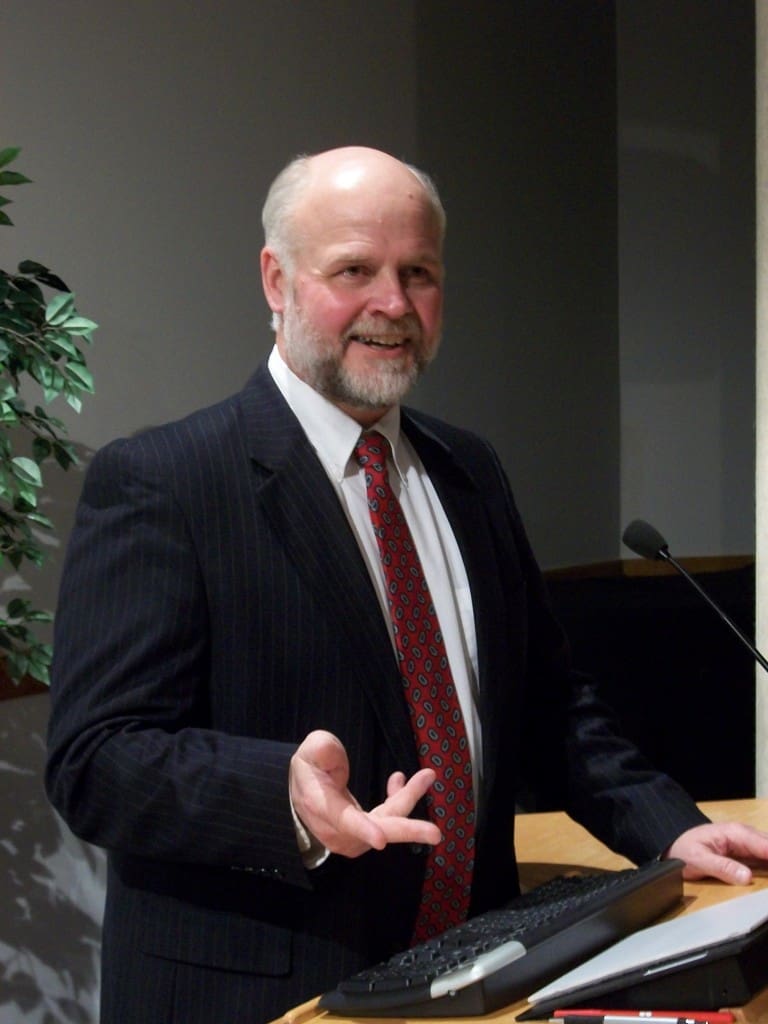
 Dr. Dave Christian has served as a psychologist to believing and post-Mormons for decades.
In this episode, Dave begins by discussing his LDS pioneer ancestry, and his early years in the LDS church as a faithful, science-loving boy from St. George. He then discusses early doubts he began to have regarding his LDS faith as he explored the field of epistemology (the study of how we know things). In spite of these doubts, Dave chose to serve an LDS mission in the Australia Sydney Mission (1979 to 1981 timeframe), and during this time struggled with the pressure tactics employed by his mission president (Orson Wright). Ultimately, to Dave’s surprise, Orson Wright was removed from the mission for propositioning the sister missionaries of the mission to be his polygamous wives — and the reasons for President Wright’s removal from the mission were covered up by LDS Church leadership including Thomas S. Monson and Joseph B. Wirthlin.
This episode provides a fascinating look into the issues of: 1) how we come to feel as though we “know” things, and 2) how LDS church members (and members of other religious faiths) can be manipulated into claiming religious knowledge through emotional means.
Dr. Christian is available to provide psychotherapy in Utah, and Skype-based coaching outside of Utah. To contact Dr. Christian for an appointment, check out his contact information here.
Episode Transcript
Host: John Dehlin · Guest: Dr. Dave Christian
This transcript is machine-generated and lightly edited for readability. The audio is authoritative. Please excuse occasional errors in names and spelling.
Introduction and Welcome
John Dehlin [00:00:00] Mormon Stories is a production of the Open Stories foundation and relies solely upon the support of people like you, its listeners to help keep the podcast alive or to become a member of the community. Please become a monthly subscriber by visiting MormonStories.org and clicking on the Donate button on the right side of the page under support. All contributions to Mormon Stories are completely tax deductible and go towards producing the podcast and building communities and programs of support for Mormons like you. Thanks for your support. The kindly light amid encircling gloom
Dr. Dave Christian [00:00:43] Lead thou me on the night is dark and I am far from home.
John Dehlin [00:00:52] Hello and welcome to another edition of Mormon Stories Podcast. I'm your host John Dehlin, and I am super excited to have back with us today a return guest on Mormon Stories podcast. Dr. Dave Christian appeared on Mormon Stories Podcast in kind of early 2011 when he spoke at the very first Mormon Stories Conference that was ever held in New York City where where he discussed as a topic in that conference, sort of the difference between utility and validity. And it's a concept that has reached a lot of people and has been really super useful. But that's just scratching the surface of Dave's awesomeness. Dave Christian has a PhD in psychology from Utah State University. He's been my friend for at least six years, if not more my walking buddy. But Dave is honestly, I'll just embarrass him by saying he's one of the brightest minds I know and he's super interesting for many reasons. Not only has he been a therapist to Mormons and post Mormons for multiple decades, but also Dave has this amazing story of how he, you know, grew up in St. George and went to serve a mission in Australia. And while he was on that mission in Australia, his mission president received some very interesting revelations about polygamy and the sister missionaries. That sort of jump started in him a faith crisis that led to him leaving the church in his youth, in his sort of college years. And so he has served sort of he has lived sort of multiple decades as a post Mormon, but who also was a therapist to Mormons. And he's just really bright and really interesting and faithful. Devout Mormons use him as a therapist all the time. So he's really good at following the guidelines of psychotherapy, which is to be, you know, to support the values of the clients and not to impose your values on them. Very respectful. But also something super interesting is that even though he probably might lean a bit more towards the atheist or agnostic side in his life, recently he was just voted as sort of president of the Cache Valley Unitarian Universalistic Church because he is interested in sort of communities after Mormonism or even sort of church like communities after Mormonism for post Mormons and people of other persuasions. And so we're going to do this in two parts. We're first going to talk about his story, which is fascinating. And then we're going to have Dave share with us a presentation that he recently delivered at the Cache Valley UU Church where he talks about the work of Jonathan Haidt, who produced a book called the Righteous Mind. And we're going to talk about how Jonathan Haidt's principles can apply to post Mormons and secular folk who are seeking to create sort of replacements for religious community. So that is a huge long introduction, but Dr. Dave Christian, welcome back to Mormon Stories.
Dr. Dave Christian [00:04:43] It's good to be here.
John Dehlin [00:04:45] Yeah. So why don't we just begin by you telling us a little bit about your upbringing in St. George, and you can even start with your ancestry if you want.
Dave Christian's Upbringing and Early Faith
Dr. Dave Christian [00:04:57] Oh, boy, this could get along. Yeah. Well, as you said, I was born in St. George down in Utah's Dixie. It was a small town at the time. I believe about 5,000 people when I was born there. Predominantly LDS, probably over 90%, if I remember correctly. You ask about my ancestry on both sides of my family multiple generations back. My great, great, great, great, some sort of, I don't know how many great grandfather was Joseph Knight, whose buggy Joseph borrowed, I understand, without asking to go get the gold plates. And Joseph Knight, of course, played a prominent role in early church history. So, yeah, many of my ancestors came across the plains, Handcart company members. These were some of the stories that I heard frequently when I was a child from my grandmother, my maternal grandmother. She told us the stories of our relatives who were in the handcart company. So, yeah, had a pretty traditional LDS upbringing.
John Dehlin [00:06:05] And was it Dudley Lovett, right, that settled St. George?
Dr. Dave Christian [00:06:10] Yeah, Dudley, he was Dudley Levitt, who was my grandmother's or my paternal grandmother's grandfather, was sent to southern Utah by Brigham Young to colonize southern Utah. He had five wives, each of whom he placed in a separate community. That probably made his, especially when the, the proclamation against polygamy came out, made it a little easier for him to escape detection of the federal authorities because each of his wives was, as I understand, located in a different community. He founded the community of gunlock outside of St. George. And yes, he was also a common grandfather for our former governor, Mike Levitt.
John Dehlin [00:06:54] Excellent. So you got the righteous blood in your veins.
Dr. Dave Christian [00:06:58] Pretty righteous blood there.
John Dehlin [00:06:59] All right, okay. So, yeah, why don't you just tell us a little bit about your upbringing in St. George, kind of pre mission, just to hear a little bit about what the church meant to you during that time.
Dr. Dave Christian [00:07:15] Yeah, I was a pretty serious Mormon kid, took the church very seriously. I was deacons, teachers, priests, quorum president. I was on the seminary council. My uncle was on my dad's side, was a prominent teacher at the seminary and may have been the principal as I recall. So I was on the seminary council there. Spent a lot of time with all of my extended family members. We would get together every Sunday at my grandfather's or uncle's places. And it was not uncommon for there to be between 50 and 80 people showing up at family gatherings, which still occurs down there on a given Sunday afternoon. Big extended family, lots of church involvement. Everything centered on the church. All of our family activities began with prayer. Our family reunions were always a recounting of our family history and how it went back to the origins of the church. So for me, family and church were inseparable. They were essentially interwoven to a point where it was very hard for one to tell where one ended and the other began. So I took the church very seriously. I was kind of a precocious kid. I asked lots of questions. I pestered my mother with lots of questions. And I had kind of a dual interest. I was very interested in science and also very interested in the church, and probably much more interested in the church than most kids are. I really thought, well, if this is the, the way that everything works in the world, it's all an extension of the church and the gospel. I wanted to know it in all of its details. So I was reading Mormon doctrine. I was reading most works by church presidents that most kids my age would not have had much interest in. We had a fellow in our ward who was very interested in the more obscure aspects of the church. He was the Mormon, or, excuse me, the gospel doctrine teacher. And he had meetings at his home on Sunday evenings for people who wanted to discuss church issues in greater detail. Most of the people who went to those meetings were in their 40s, 50s, and 60s, but I was the only kid who was 14, 15 and 16 going to that kind of a meeting just because I was intensely curious about how the intricacies of the church works. So anyway, took it very seriously. But my interest in science was just a little bit at variance with the church stuff because, of course, science has a very different Way of approaching truth. It's based on empiricism, it's based on data. And so I got very interested in science in my ninth grade year. I had the good fortune to have the teacher of the year in the state of Utah. Jack Hippler was my science teacher and encouraged all of us to do science fair projects. I did an animal behavior project using my pet gerbils, which did extremely well. I went to the regional level and was one of the first kids from Utah to go to the international Science and engineering fair and had a great time there. Competed quite successfully at the international level. So that got me hooked on science and science fairs. And I did those for all four years of my, my high school. Each year I competed and went to the international Science and engineering fair.
John Dehlin [00:10:39] Do you remember the four, the other three experiments? I don't want to tax your memory too much.
Dr. Dave Christian [00:10:45] Sure, no. In principle, I started off looking at the behavioral characteristics of gerbils. So I was fascinated with B.F. skinner and his behavioral work. Had read up at great length on Skinner and Watson and the early behaviorists. And so taking off from their work, I also had access to a full woodworking shop, my dad's. And so I had great fascination in making scientific equipment. So I made mazes, I made shuttle boxes, I made all sorts of devices, laboratory apparatus that I could test my gerbils in. So, yeah, the first studies were on behavioral characteristics of gerbils, Their learning rates, motivational factors, color detection, ability to discriminate, vertical versus horizontal horizontality, things of that sort. And then as I progressed on, towards the end, I got interested in the physiological aspects of the gerbils and how that interacts with their behavior. By my last year, I had designed and built probably the world's only gerbil centrifuge.
John Dehlin [00:11:53] Whoa. That'll make them dizzy.
Dr. Dave Christian [00:11:56] Well, actually, not the way that I set it up. It wouldn't make anybody dizzy. One of the prizes I had won in one of the science fairs was an all expense paid trip to tour
John Dehlin [00:12:06] the
Dr. Dave Christian [00:12:08] facilities at Wright Patterson Air Force Base in Ohio. And they were doing centrifuge work with astronauts and jet pilots, seeing what the effects of high G forces were on them. Because our military planes at that time had evolved to a point where they could produce more, more G force than the pilots could withstand. So they discovered it wasn't good to have a jet aircraft that in a dogfight could produce 10 GS if it made your pilot pass out and crash the whole thing. So they were looking at how to help Pilots withstand higher G forces and I was interested in looking at how G forces affected.
John Dehlin [00:12:44] So you're spinning these little gerbils around until they pass out?
Dr. Dave Christian [00:12:48] No, actually not quite to pass out. One of my. There are very tight regulations on the use of animals, so the American Humane Society governs the use of laboratory animals very carefully. I had to have a supervising biomedical scientist in my own laboratory that inspected on a regular basis.
John Dehlin [00:13:07] That's awesome.
Dr. Dave Christian [00:13:08] So anyway, but I.
John Dehlin [00:13:09] That's pretty advanced stuff for a high school kid.
Dr. Dave Christian [00:13:12] It was a lot of fun. I had a lot of fun. I enjoyed doing science. But I guess the way it ties into our story today is that I developed a really deep appreciation of science, how it goes about understanding the world. And this created a little tension with my faith based worldview that I was getting from Mormonism. So trying to reconcile those was a bit of a trick. So it was approaching time for me to get ready for a mission.
John Dehlin [00:13:40] Okay, real quick. Was there an emotional component to what would you have described yourself as having a testimony? And was there an emotional point component to it where you had, you know, had the youth conference experience or received some sort of emotional experience or even took Moroni's Challenge and tried to pray? How is that for you, emotionally? Before we get into the intellectual.
Dr. Dave Christian [00:14:07] Yeah, absolutely. No, I got the whole emotional side, the spiritual side, had had good experiences at youth conferences and all the kinds of typical experiences LDS kids have. And so I appreciated that side. I mean, yes, I feel the moving quality that you get when singing. We thank the old God for a prophet in state conference, scout camps, other places, testimony meetings. So I definitely resonated with that emotional spirit, spiritual, whatever you're going to call it, aspect of the church. And yet I was very interested as a budding psychologist in what the heck is this stuff? Is this the spirit? Is this something that's coming from God? Or is this something that humans produce when exposed to the social situations that churches create? And so I was already kind of questioning what philosophers call epistemology. How do you know? How do we know anything? What does it mean to know? Of course, I was being taught in church and seminary and everywhere else that how you know is through a spiritual witness, this burning of the bosom, as it was referred to. And had I felt those kinds of things? Sure. But my question was, is this what they claim it is or is it emotion? Is it feeling very good about something that you want to believe? So that was creating a bit of tension in me. And as I approached the missionary experience, I went to my bishop in the interviews leading up to the mission, and I said, you know, Bishop, I have a problem here. In not too long, I'm going to be expected to be out there in the mission field telling people that I know this is the only true church. And to be honest with you, I've never set foot in another church. And I said, that seems intellectually a bit dishonest to me to make that kind of a claim, that I know this is the only true church when I've never set foot in another church. And I also have questions about whether or not this thing that we're feeling is it really, is that the spirit? And is that telling us that we're members of the only true church? So he understood my quandary, didn't really know how to coach me in it. He was a cattle rancher and I think came from kind of just a different mindset about these things. So I had a couple of my buddies who were kind of nerds like myself. We said, well, let's go to Las Vegas.
John Dehlin [00:16:32] But we, of course, that makes perfect sense.
Dr. Dave Christian [00:16:35] When the going gets stuff, you go to Vegas. But being nerds and spiritual nerds, we had a different mission in mind. We didn't plan on casinos or wine, women or songs. We wanted to attend churches. And it was the nearest place to St. George where you could get an exposure to a really big diversity of churches. So we packed it up really early on a Sunday morning and had it all mapped out thanks to the Yellow Pages so that we could start at about 8 o' clock in the morning. And during the course of the day, we'd attend six or eight different churches around Las Vegas. We went to Greek Orthodox, we went. We went to regular Catholic, we went to Lutheran, we went to Christian Science, As I recall, we went to a Pentecostal church. I still remember our last church of the day. It was getting pretty late, but we found a service out. Oh, and in each case, we would try to catch the minister afterward and ask them some pressing questions to kind of help us understand how they saw the world and how it compared to our own beliefs. So by the end of the day, the last one on our list was a Pentecostal, a black Pentecostal church out on the west side of Vegas. And we finally found it out in a kind of sketchy neighborhood and it was already rocking by the time we got there. The music was playing, the rock band was fired up. We could hear lots of hallelujahs coming out the door. So we went in and we Quickly realized as we took our seats on the back row, we were the only white boys in the congregation and felt just a little bit out of place. And by the middle of the service we were being the minister was doing an altar call asking for folks to come down and get saved. And we noticed that everybody was turning around looking at us. So anyway, we had some good experiences. But the long story short was I came back to my bishop and he says, zoe, you ready to go on the mission? I said, mmm, I still can't say that I know for a certainty that the church is true. I believe it's true.
John Dehlin [00:18:34] What were your reactions to these churches? Just were they. Did you feel inspired, uplifted, confused? Were they boring, uninteresting?
Dr. Dave Christian [00:18:42] Yeah, it was interesting to me. But I think the real question I had was the epistemological question is how do you know? How did these people know? So many of my questions to these ministers was, how do you know that your church is true? We got quite a grab bag of answers. I think in the Greek Orthodox and Catholic traditions we had references made to, well, we have this line of authority that dates back for millennia, centuries if not millennia. And so they had some historical claims on truth, I think was how they would explain it. Others would make more reference to spiritual manifestations. And so still I don't think it clarified much. I guess like Joseph Smith's story, after visiting all the different faiths, I was still struggling with a lot of confusion.
John Dehlin [00:19:34] So you went to your bishop, Went back to your bishop.
Dr. Dave Christian [00:19:37] Went back to the bishop, said, bishop. He said, do you have a testimony? I said, well, I can say I believe the church is true, but I really cared a lot about intellectual honesty and so I couldn't really bring myself to say that I knew the church was true. But he said, you know, that's good. And I quoted to him the scripture out of the Book of Mormon where it says, only after, after the trial of your faith shall ye receive a witness. I said, bishop, I think that's what I'm going to have to do. I'm going to have to go out and jump in, show my faith, and maybe that's where I'm going to get my more firm witness of things. And he said, that's good enough for me. Elder Christian.
Mission Call and Missionary Experiences
John Dehlin [00:20:13] So you got your trial of faith in the form of a mission.
Dr. Dave Christian [00:20:17] Got the mission trial, yeah, I got what I was bargaining for. So I got called to Australia, Sydney, Spanish speaking mission, which kind of surprised me. Didn't know they had Spanish speaking folks over there. But they have quite a few immigrants. This made me the third generation of Spanish speaking missionaries in my family. My grandfather, Louis Christian had been one of the first six missionaries who opened up Argentina to missionary work. Went down with one of the apostles and opened that area. My father had gone across the river to Uruguay where he was a missionary. And this made me the third generation of Spanish speaking missionaries in our family. So I thought that was cool. But things got really interesting.
John Dehlin [00:21:03] Yeah. So do tell what happened on your mission?
Dr. Dave Christian [00:21:06] Well, I landed in the Australia Sydney Mission and they had been apparently. Well, Australia was a tough mission. It was really hard to get baptisms there. And I've talked to missionaries from Australia prior to this and they said it was just a tough, tough place to get converts. The Aussies don't have a lot of use for religion and they don't really like outsiders in general. They would call us Yanks, they would call the Brits Palmies. And they had nastier terms for people from other places. So they really didn't by and large care much for outsiders and certainly not people preaching religion to them. And so the church had developed a new proselyting program called the Harvesting the field approach. And this was under the administration of Spencer W. Kimball. Our area supervisor was Lauren C. Dunn and his brother in law, Orson Wright was our mission president in Australia. And they had, just before I got there, implemented this program called the Harvesting the field approach, which was a whole different approach to missionary work. It was a hard sell approach, for lack of a better term. I think they realized they were going to have to do something different because the traditional discussions were not cutting it. The harvesting the field approach was a completely different set of discussions. So we memorized the traditional discussions. But then we had our secret weapon, as it were, and that was this very intensive set of discussions that were intended to be delivered in one sitting. It was literally possible to meet somebody on the street, deliver this set of discussions and have them baptized within 24 hours.
John Dehlin [00:22:57] What? Same like same day?
Dr. Dave Christian [00:23:01] Theoretically, it was possible to do it all in one day.
John Dehlin [00:23:04] Wow.
Dr. Dave Christian [00:23:05] And more commonly, perhaps in two days. You'd meet them one day, schedule the meeting at the chapel. And to manifest our faith, we were recommended to always have the baptismal font full because that would be a manifestation of our faith. So we also were asked to manifest our faith by working celestial weeks, as they were called, which were 90 hour work weeks. This showed our faith.
John Dehlin [00:23:28] Whoa.
Dr. Dave Christian [00:23:29] So we would take people off the street. We'd pretty aggressively. We were trained to be pretty aggressive in rounding folks up, bring them to one of these chapel based discussions. And then it was called the commit and challenge procedure, which to me, when I first saw this in action, I was frankly appalled. And I wondered what I'd gotten myself into because what I witnessed seemed unethical, it seemed psychologically coercive. And just to get give you a quick snippet of what I was watching, these people would be essentially taught the eight discussions in the span of a couple of hours. And with regard to each thing, whether it's word of wisdom or tithing, we were instructed to get them down on their knees and have them pray. And then if they got a burning in their bosom or any sensation really, we would say that's the spirit witnessing to them that what we were telling them was true and they should say yes. It was not uncommon for us to put a ring of six or eight missionaries around one person, all of us on our knees, and the poor person in the middle praying, to say the least. That made people feel pretty edgy and certainly feel a lot of pressure. Our goal was to get them committed and accept the challenge for baptism and baptized all in the same day. And I saw that happen.
John Dehlin [00:24:56] Did it work?
Dr. Dave Christian [00:24:57] It worked. Baptismal numbers went up considerably.
John Dehlin [00:25:02] Wow. So it was actually effective?
Dr. Dave Christian [00:25:04] It was effective. And so I didn't have issues with its effectiveness. I had issues with how it was being done. So at first, as a new missionary, I said to myself, okay, we just, I just got to go with the flow here. I must. It's me. I don't get the picture. I have insufficient faith to understand why this is the right way to do things. After all, it's under the direction of Spencer W. Kimball himself. It was being pilot tested there. Who am I to question this kind of a procedure? So anyway, excuse me. My discomfort with this steadily went up though, as I watched being practiced. And our mission president, President Wright, would give us big pep talks every missionary meeting on how we need to do this with more diligence and more intensity. So in my missionary interviews with him, I progressively started raising questions about what we were doing. First, gently, and he gently pushed back and let me know that my concerns were not necessary, that this was the right way to, to do things. But it progressively sat worse and worse with me. I was experiencing more and more dissonance about this. It was upsetting because I felt we were coercing people to do things that really was not what they wanted to do. So each interview with my mission president, I got a little more intense in confronting him about the Methods we were using specifically, my charge was that I didn't feel they were appropriate, that we were being coercive, and that really what we were doing was generating a psychological pressure on people and that's what they were knuckling under to. Not anything spiritual. And he got progressively more angry with me in each interview when I continued to push him on these points.
John Dehlin [00:26:56] And I'm wondering, I'm also wondering, with your background as a teenager in studying Skinner and behaviorism, if those principles occurred to you as you pondered epistemology and pairings from classical conditioning or operant conditioning. I'm wondering if. If those principles, as they applied to sort of epistemology and how you were trying to generate testimony and commitment to the church in your converts. I'm wondering if those merged in your mind at all or if that wasn't something you kind of connected the dots on. Do you understand my question?
Dr. Dave Christian [00:27:45] Yeah. Tell me if I'm on the right track here with your question. I could see that what we were doing was using principles I'd already learned about in some psychology to bring about conversions. And if that's the case, if these conversions were based on conditioning principles and other well known psychological principles, well known in the psychology field, this wasn't a spiritual conversion at all. It was a psychological phenomenon we were creating.
John Dehlin [00:28:13] So apply the principles to the missionary process of conversion. Just real quick for us to tell us how you would look at it now.
Dr. Dave Christian [00:28:20] Oh, yeah. Before I left on my mission, I had been exposed in a psychology class at Dixie College. I took one year of college before I left, I was exposed to Stanley Milgram's work. And Stanley Milgram, for those who may not be acquainted with him, wrote a classic work called Obedience to Authority. He did research at Yale which showed that everyday people could be coerced very easily to obey authority. In the experiment that he did, leading them to punish or do what they thought was punish a subject up to shocking them with up to 350 volts of electricity. And he redid the study, did it many different ways, and found it to be very consistent. The study got replicated elsewhere. It was a fairly robust finding, meaning that it was very stable, wasn't just a fluke. And so what I saw, among other things, was obedience to authority. That once you create a social situation where people believe that there is a recognized authority, once they've recognized the authority of that person, they can be led to do and experience things that they can't under other circumstances, and they can be led to do things that are both Very honorable and very dishonorable. And I felt much of what we were doing was. Was dishonorable. That in our obedience to our church authorities, we were doing something unethical with these people, causing them to make life altering choices that might not always be in their own best interest. And certainly I could see how behavioral principles of reinforcement we were using those principles, fellowshipping. And sadly, in many cases, we'd fellowship people aggressively until the time they came into the church. And then members and missionaries would move on to the next person and that person would suddenly find their fellowshipping and their friendships dropping off sharply. So this, to me, just didn't. It smacked of psychological conversions rather than spiritual conversions. Yeah.
John Dehlin [00:30:27] And the only other sort of psychological principle that I'll probably slaughter here is just this notion with Pavlov of unconditioned stimuli, unconditioned response, and then conditioned stimuli and conditioned response. You're trying to manufacture these feelings, right? These emotions, and then you're pairing them, you're telling them what the feelings mean, you're interpreting them for them. And sometimes I wonder as I try and piece together epistemology and how testimonies are created, whether by pairing emotions with a narrative that the church is true and that Joseph Smith and God and Jesus and the whole deal, you're actually, you know, that's an important part of the epistemological question is the conditioned pairing of stimulus and response. Does that make sense?
Dr. Dave Christian [00:31:26] Absolutely. Comes straight out of Pavlov and his dogs. For those who are acquainted with the developer of classical conditioning, Ivan Pavlov, Russian physiologist, he demonstrated that you can get even simple organisms like dogs to respond in remarkably, in ways that are very remarkable compared to what you would think would be possible with these conditioning principles. And certainly we were getting people to pair these emotions and get them to label those as signs from God that they should do what we were asking them to do. Of course, people in other religions are doing something very similar. So how can these emotions, if they're truly from God, be pointing necessarily to Mormonism? Or the same emotions or something very similar seems to bubble up in a Pentecostal revival. I attended Pentecostal revivals in Las Vegas. There was no lack of spiritual emotion there, I can assure you. These were people speaking in tongues and yelling Hallelujah. And as I looked at them, they seemed to be quite spiritually moved, shall we say. But who's to say which of these strong spiritual emotions are the true ones? It just raises all sorts of questions.
John Dehlin [00:32:38] Yeah. So how did you deal with that building conflict in your mind and your mission?
Dr. Dave Christian [00:32:45] Well, I'd say I had what psychologists call intense cognitive dissonance because I was being torn in two directions. On the one side, I wanted to be a good missionary. I was working hard, I was playing by all the rules. I was being, you know, the best missionary I knew how to be. And I assumed that that would get me the blessings that go with that. I again had started this mission on the premise that after the trial of your faith you shall receive a witness. But the witness I seemed to be getting was that there was major fraud going on and that I was a part of that fraud. And I was being compelled and willingly participating in a type of fraud that I felt was just absolutely inappropriate. And so I would say that I started experiencing clinical depression at that point. I was down, I was confused, I was saying good. And I expected. The conflict I was increasingly experiencing with my mission president led me to believe I was probably going to be dishonorably released. He was getting progressively angrier with me. In the last interview that I had with him about three months before the end of my mission, he was so angry with me that he called both mission assistants in on my private interview. And I suppose that was for the purposes of having witnesses in the event that I would be called into a church disciplinary court. And they sat in on the interview and he said, elder Christian, you need to give up these ideas that you're talking about. You need to follow the program as we've got it here. He essentially indicated I was following following Satan and that I was being misled. And at some. I remember in that interview I looked into in the eye and said, President Wright, I need you to know that I will not be changing my opinions on these things. I continue to believe that what we are doing is unethical and that our methods are inappropriate. And he was livid with me and I assumed I would be getting a summons for a church court after that interview. He was so angry. But then something very strange happened. Shortly after that interview, expecting my summons for a church court, instead we got a summons for a mission wide meeting. And this didn't happen very often where all missionaries were called into church headquarters. When we arrived there, sitting on the stand was Thomas Monson, Joseph B. Worthlin, Lauren C. Dunn Area Supervisor But I didn't see President Wright. I thought that was strange. Everybody was quite curious about this kind of surprise meeting. Nobody had heard that we were going to have an apostle and so forth with us. And they explained very calmly that there was A change in mission presidency. Joseph B. Wirthlin was going to be our new mission president. Brother Wright, or President Wright, was back in the States. And the. The implication we were drawing from this is that he'd been called to some higher calling because, of course, the missionaries had great respect for him. But I was really uneasy in that meeting. And I looked around and I noticed that our 12 sister missionaries were absent. And I thought that was strange. Why wouldn't the sisters be here? Here are 200 elders, and the dozen sisters we had were not there, for lack of a better term. I smelled a rat. And in the week or so after that, I called up President Worthland and I said, president Wirthlin, I'm scheduled to be leaving in about three months, but I have a question for you or some questions that I need to ask that won't wait until my final interview. And he was very cordial and invited me to come into mission headquarters to chat with him. So my companion and I trained it all the way in.
John Dehlin [00:36:42] And what year. What year is this approximately, do you think?
Dr. Dave Christian [00:36:46] Oh, goodness. I graduated 77. I went to Dixie from 78, 79, 80. 81. About 1981.
John Dehlin [00:36:54] Okay.
Dr. Dave Christian [00:36:55] And I'm not great with dates, but pretty should be 81.
John Dehlin [00:36:57] Okay.
Dr. Dave Christian [00:36:58] So I sat down across from President Worthland, and he was very pleasant. He said, how can I help you? And I said, president Wirthlin, I have one question for you. Did President Orson Wright receive an honorable discharge from his missionary services here? There was a long pause, and after that pause, he said, elder Christian, will you promise me that you won't tell anyone else what I'm about to tell you? And I said, no. I said, I have seen too much coercion. I have seen too much abuse of power. I will not be a part of anything of that sort. Whatever you have to tell me, just tell me or not. I don't think he was ready for that. But I was surprised because after another long pause, he started to talk on my terms. And he said, as a matter of fact, President Wright is being tried for his membership in Salt Lake right now. And he said, I am not at liberty to go into the details. But he said, you obviously know something. Would you be willing to share with me what you know? And he said, and would I have your permission to share whatever you share with me to be passed on to the general authorities who are handling his case? And I said, you have my permission. So I proceeded to explain, explained to him the considerable discomfort I had experienced with President Wright with his very Authoritarian, heavy handed techniques that we had all been trained to use ourselves in this commit and challenge procedure where we would get people to get down and we would, to my mind, create these feelings in unethical ways and then use them to coerce people into membership in the church. He was very appreciative with what I shared and extended an invitation to me to come to Salt Lake City anytime I wanted to, following my mission, to discuss with the general authority my concerns any further, if I had them. And I told him I intended to take him up on that invitation.
Mission President Orson Wright and Polygamy
John Dehlin [00:39:03] So at this point you didn't know anything about the polygamy?
Dr. Dave Christian [00:39:06] Didn't know it at this point.
John Dehlin [00:39:07] Okay.
Dr. Dave Christian [00:39:08] Nobody to my knowledge in the mission knew it. It was a very well guarded secret from what I could tell. And I could imagine so because President Wright was idolized by most of the missionaries, we were led to believe that we were very special, that God had called us to that mission because we were a cut above other missionaries. Here's the special factor again, which I think many religions use, that you're a peculiar people, that you're a special people, that you're a church chosen person. That's a very heady experience. And it had been used to great advantage in our mission. We were also told by President Wright that if we were diligent in our missionary services because we were using this special program and had had a special calling to come to this mission and use it and pilot test it, we could have our callings and elections made sure. Whoa, that's not a common promise. So we had been led to believe that we were the elite. And of course, missionaries in return believed President Wright was very elite, that he was a special mission president. So it was in the. Well, I'm going to cover a lot of territory quickly here and if you have questions, you're welcome to ask. When I got back to Utah, I and one of my missionary companions who had also had questions, arranged to go to Salt Lake and they scheduled us to meet with Thomas Monson, who was an apostle at the time. And the day or the night before we were to meet with Apostle Monson, we got a call from church headquarters indicating that he had to have some minor surgery and was not going to be able to meet with us. So they had switched us to Carlos Aces, who was head of the missionary committee.
John Dehlin [00:40:55] Why did you want to go talk to him?
Dr. Dave Christian [00:40:57] Well, I had these questions about how do you know what is true? The epistemological questions.
John Dehlin [00:41:03] Okay, all right. So you were still wondering that I was still trying to figure that out,
Dr. Dave Christian [00:41:07] because to me, that was the kingpin, that was the centerpiece. You could argue church history, you could argue church doctrine, you could argue scriptures, you could argue lots of other things. But when it always came down to it, when discussing with church leaders, how do you know this is true? The trump card was always the witness of the Spirit, and that's the feelings. The burning in the bosom, the whisperings of the spirit. It goes by all the names that we know. My concern was that those feelings could very easily be produced through psychological means, especially coercive means. In fact, when I had gotten home before I was headed to Salt Lake, I performed a little experiment. I got down on my knees and I prayed to Buddha. And my experiment was this. I was going to imagine Buddha. And I'd seen him a bit because many of in the last area in Australia was predominantly Buddhist. They were Southeast Asians. So I got quite well acquainted with Buddhists. And so just as an experiment, I decided what would happen if I prayed to Buddha. But I really believed that he was going to answer my prayer and that he was really kind and compassionate and he wanted me to feel good. So I essentially performed the test and I prayed to Buddha and I put myself in the same mindset that I did when I got warm feelings praying to Jesus. Guess what?
John Dehlin [00:42:32] Tell us.
Dr. Dave Christian [00:42:33] Warm feelings. And I was praying to Buddha. Hmm, that shouldn't happen. Oh, but of course, they could always come back and say, well, that was Satan trying to fool you. Well, now we get into very circular logic. How do you know the difference between Satan trying to fool you? Maybe Buddha's right. And the feelings Mormons are getting are the foolings of Satan rather than the promptings of the Spirit. The problem is the logic is circular. There's no way to take test. So I wanted somebody to show me, how do you test? Where's the ultimate test here? Because this, excuse me, turns into a really circular, confusing thing. If the ultimate test for truth is a flawed test, it's not worth much. So that's when those were the kinds of questions I wanted to ask Thomas Monson and ended up asking the same questions to Carlos AC Carlos Ace is a really nice fellow. He grew up a few doors down from my mother in Monroe, Utah, and he's actually my mother's first or second cousin. Utah's a small place, as we know. Very nice chap. Very nice fellow. Absolutely had nothing of use to me in addressing this question. He simply reiterated the church line, the party line. You just know, you just have to take this on faith. But that begs the question. So I suddenly realized that even somebody of his stature, head of the missionary committee, didn't understand it and didn't have any better answers than anybody else. And so that was really, to me, kind of the final nail in the coffin with regard to the epistemology question. I realized the church had no better answers than any other faith on the planet that I had run into and that its fundamental way of knowing the truth was fundamentally flawed.
John Dehlin [00:44:26] So what about the polygamy?
Dr. Dave Christian [00:44:29] Well, that started coming out. I have a family member who was a bishop at the time, and two of those sisters in my mission were in his ward. And so I got information about what had happened from multiple sources. We had one of our mission assistants who had come home and he was willing to talk about what had happened. He knew much more about it than others. I had other sources that let me know what had happened. I also got information from Carlos Ace, although they were still being relatively tight lipped about what was going on. You can imagine this was very embarrassing to the church. And here's essentially what I learned from the multiple sources piecing it together. President Wright had apparently had some kind of an inspiration or revelation that polygamy was coming back and that he personally was going to be one of those called to practice it as it was practiced in the beginning. Only certain individuals would be called into the practice of polygamy. It's not a self chosen thing and he was one of them and he was cutting edge and the Lord wanted him to start the process. He had had apparently attempted to get all 12 sister missionaries committed to this idea using the very spiritual practices we were using to get people testimonies of the Book of Mormon and committed to a spiritual witness that they were to be members of the church. So of course, these sister missionaries knew the procedure very well. And when he laid out the evidence for them, probably from Journal of Discourses, Doctrine and Covenants, you, you can make a pretty good case, of course, depending on which sources you cite, he apparently made a very good case. And then using those very methods that I was questioning him about, those were the methods he used to get them. 10 of the 12 missionaries, sister missionaries, committed that they would become his plural wives.
John Dehlin [00:46:24] Wow.
Dr. Dave Christian [00:46:25] Two of them broke the code of silence apparently that he had sworn them all to. This is what I again, this is what I pieced together from various sources. And they told their parents back in the states and within 24 hours of the time that they told their parents what was going on they notified church headquarters and they had the general authorities on planes heading to our mission to remove him as fast as they could.
John Dehlin [00:46:51] Good for them.
Dr. Dave Christian [00:46:52] That was a good choice on their part.
John Dehlin [00:46:53] They did the right thing.
Dr. Dave Christian [00:46:55] But as is so often the case, they would not tell the whole story. That would make them look bad. And of course, they couldn't tell this story because it highlighted the very problem that I was concerned about. If you could use these methods to coerce missionaries into believing something that is completely contrary to the church doctrine. What is this method? Apparently it's a very arbitrary tool. It's a generic tool you. You're using. It can be used as much for evil as it can be for good. It's not a unidimensional tool. It's not a tool that only works for good. It can be used in any number of ways. And I think they realized that was a horribly thorny issue that they would not want out in the public eye. So, no, they kept it Watergate style as secret as they could, as long as they could.
John Dehlin [00:47:48] And in your visits to Salt Lake, did you ever try to, like, confront them about it or get them to admit it? Did you ever.
Dr. Dave Christian [00:47:57] I just had the one interview with Carlos Ac, and it was, you know, probably about an hour long. So, no. I think at that point I realized I had the answer to my question. They didn't know any more about this than I did. Their depth of understanding, understanding and their appreciation of the problems with this method. They had no good answers to this problem.
John Dehlin [00:48:23] Yeah.
Dr. Dave Christian [00:48:24] The other thing, that's just kind of an interesting side story. My companion and I were ushered into the church office. Excuse me. It was the Hotel Utah, that building at the time, and where many you of the church offices were. Excuse me. It would be the building just to the east of that building, the administrative building. That's it. The administration building. We were sitting there, sitting in a very nice waiting room to be called up to President Ace's office. And in walks President Kimball. And it took me a moment to recognize him because he was shuffling rather badly, and I didn't realize he was getting to that state of health. But he turned as he came into the waiting room and he saw the two of us. And he came over and he spoke to both of us, and it was immediately apparent it was President Kimball. But I was surprised because he had several days worth of beard growth on his face and he didn't seem to be making a lot of sense. And I immediately recognized he was senile, and that was rather shocking to me. Even at that stage, I kind of thought, the prophet's the prophet. He's a lucid person. But it became immediately apparent in our chat with him that he was losing his faculties. The other thing that was strange was that he had a $20 bill in his hand. And he went over to the receptionist at the desk and said he had found the $20 bill and wondered who it might belong to. And she, of course, stood up and addressed him and said, oh, you know, I'm not sure, but I'll take it and look for the owner if you'd like. So he wandered out of the office, and then he wandered back in about five minutes later asking about the same thing about the $20 bill. And it was apparent to me that he was. Was really not in possession of his faculties. The other thing that was rather strange, I was there to confront the Lord's anointed. And I remember this statement specifically. As he chatted with I and my companion. He said, I love the clean, sweet look in your eyes, elders. That's not what he should have said because I was there with a lot of hard questions challenging the fundamental tenets of the church. And yet he said he liked the clean, sweet look in my eye. If he had the power of discernment, why didn't he say, elder, I see that you're seriously troubled and what you need to get yourself right with the Lord. That would be what I would expect if he was a prophet, seer and revelator. But no, he just saw me as a lovely elder there.
John Dehlin [00:51:11] So did you ever hear what happened to the sister missionaries?
Dr. Dave Christian [00:51:16] I did.
John Dehlin [00:51:18] Do you know if they're still in the church, out of the church, anything like that?
Dr. Dave Christian [00:51:22] Don't know the details, what I heard. And again, this is, you know, from various sources that I was able to piece it together. They were immediately sent out of the mission. Some were sent to other missions in Australia. Some were so psychologically devastated when. When they realized they had been duped. And you can imagine what these poor sisters must have gone through to realize that the very tools, the very spiritual method you'd been using to convert people to the gospel you think is the only true one, you suddenly realize that's just been used on you to commit you and give you a spiritual witness of something that is, in the eyes of your church, completely wrong and an apostate doctrine. You can imagine the cognitive dissonance these poor sisters had. And I understand from pretty reliable sources, a number of them were psychologically devastated that they required counseling when they got back Shaken up would be a very mild term for them.
John Dehlin [00:52:23] And we'll just put a call out to our listeners. If anyone has additional details to share about this story, we welcome them to come to this blog post on MormonStories.org and share what you know. Wouldn't it be crazy if any of our listeners actually were a part of the mission or actually experienced what we're talking about? So just briefly before we jump to our part two, what did this do to your testimony and how did you deal with it?
Leaving the Church and Life After Mormonism
Dr. Dave Christian [00:52:53] Well, that point, it was no holds barred. And by that I mean I felt at complete liberty to study what I wanted to, to look into anything. So I was going to University of Utah, starting my work up there. I went to the Special Collections section of the Marriott Library and found the best documents I could. Early church history documents, View of the Hebrews, Spalding manuscripts, some of the more controversial ones. Read those copies in the secure area that they have there for that. Of course, there was nothing like the access to documents that we have today on the Internet. I had to track down hard copies of most things at the time.
John Dehlin [00:53:36] How would you have known to look at View of the Hebrews or the Spalding Manuscript? Were you connected to Dialogue or Sunstone at the time?
Dr. Dave Christian [00:53:43] Sunstone Dialogue. I had some good professors, friends at Dixie College who were presenters at Sunstone. They had been active participants in Sunstone for some time and really kind of got me access to the sources that I needed to get my exodus from the church occurred very rapidly. At that point, I was fed up. I was angry at the deception that I had been a part of that I had actually perpetrated on other people, people I contacted a few of the converts I'd had in Australia that I was closest to and let them know that. And this was just again, out of a sense of honesty that I had come to another, a very different conclusion about the church, that I personally was going to be out of the church. If they wanted to know more details, I would be happy to share. But if they were happy with their church membership and did not want to know the details, I would respect their choice to stay in the church and so support them in that. None of them wanted to know. Yeah, and I respected that, my family.
John Dehlin [00:54:45] But I do talk to people who experience a lot of guilt about people that they converted on their missions and feeling like they, they were part of a, of a deception.
Dr. Dave Christian [00:54:56] I certainly felt that that's probably what drove my desire to reach some of my converts that I could still find in contact and Offer that option to them. I was open with my family. I let them know first, as discreetly as I could, that I had. Well, I was a stake mission president at the time. They immediately put me in a state mission president at Dixie College. I went into my stake mission presidency. And this wasn't all at once. It wasn't just after the Salt Lake meeting, but I just intensely devoured everything I could on church history.
John Dehlin [00:55:30] Did you read Von Brody?
Dr. Dave Christian [00:55:31] Yep. Read Von Brody, read that snowman knows my history. And some of Juanita Brooks works. She's actually my grandmother's sister. No. Excuse me. Yes, my grandmother's sister, Juanita Brooks.
John Dehlin [00:55:46] Oh. And you were down there in Southern Utah, so Mountain Meadows Massacre would have.
Dr. Dave Christian [00:55:49] Yep. I read all the church history, the good his. The. The history that you don't get in seminary. Everything I could get my hands on. And it just became apparent that all the indicators I could see, the most honest, open documents I could get my hands on, whether it was church history, that the story didn't hold up. This was man made, was my conclusion from church history documents. I was very interested. I had a friend who was very active in the Equal Rights Movement. I read From Housewife to Heretic by Sonia Johnson and realized the church was just on the wrong side of that issue. Blacks and the priesthood, I mean, just everything came tumbling down. Realizing the church is on the wrong side here. And so it wasn't just the missionary experience. It was product of intense study at University of Utah as well. And my family was not happy with. With my. My departure from the faith.
John Dehlin [00:56:48] Yeah, I was just gonna say, like, we're in 2015 now. I mean, oh, I can use my own, you know, so I. I started losing my faith. And, you know, seriously, in 2000, 2001, it took me another 14 years after that to sort of really, really get to the point where I. I wasn't sure if I wanted to stay anymore in a significant way. And it took the church excommunicated me to actually push me over the edge, to leave it. And even in 2015, we have lots of websites and apologists that are sort of saying, you know, you don't have to leave, that it can be true, but the church is imperfect. And, you know, sort of the utility versus validity approach, it may not be as valid as you thought, but there's still a lot of utility. And even for people who have decided it's just not true and they're questioning the utility, there's still a lot of fear about, you know, what about family? What about my future, Can I raise good kids? You know, can I stay a moral person that keep people even in 2015 too scared to leave or not seeing the benefit in leaving. So how do you leave in the early 80s?
Dr. Dave Christian [00:58:11] Well, it was messy. And you're right, it's a whole different. It's a whole different playing field today compared to back then. I felt very isolated. I didn't know many people who were leaving. The Internet had not been invented yet, so there were no online communities, there was no online anything. I had a few friends who were questioners and doubters and whatever you might call that crowd, liberal thinkers. So I tried to connect as best I could with those sources and people and create a little sense of community there my family was. Unfortunately my father passed away a couple of years after I made my transition out of the church. And I had an uncle who came to me hours after his. His funeral, his brother and let me know that in his estimation my father had died of a broken heart because of my exodus, that that was the cause of his death. Kind of messy. He should have known better, I think. Very bright fellow, has a PhD. But of course that doesn't affect the emotional side so much. So no, it was poorly received throughout the family. Family was very upset. My stake presidency. I had to go into them and let them know that I could no longer in good conscience be the stake mission president. I think they knew me well enough to not get into a detailed discussion. They were quite gracious about it and I think correctly recognized that it was well beyond the point where I could be argued out of my thinking. Went to University of Utah, took one final in institute class from reed C. Durham Jr. Church history class. My family wants. Oh, I'll just give one last try. But unfortunately in that class I found what I felt were just. It was faith promoting history. And I confronted him on it and I confronted him openly in class because it was getting so blatant. Basically pretty disgusting to me how faith promoting this class at high level it was is university class in church history and I thought maybe a little more objectivity would be there. So we had strong words after class. And that was the last of his class that I attended. I found that my roommate, who was our elders quorum president was in the process of trying to get me excommunicated, was starting those procedures. But the end of the school year came and apparently my departure made that impossible or at least they gave up the effort. So anyway, it was tough. It was hard finding community. It was hard finding support. I certainly Felt ostracized from my family.
John Dehlin [01:00:57] And yet you leave the church in your early 20s and here you are in your mid-50s, and how's it been?
Dr. Dave Christian [01:01:09] Well, it's been a crazy, crazy ride, but a good one, I'd say. Overall, can you be a.
John Dehlin [01:01:15] Can you be a moral, happy, healthy person and raise moral, good children after leaving the church?
Dr. Dave Christian [01:01:24] It's a great question. It was a question I asked myself. I. That was what I wanted to do, wanted to have a family. I kept many of my Mormon values, even though doctrinally I didn't keep much. But the values, the inherent values of being good to other people and being compassionate and raising a good family and being a good husband, father, all of that that I kept with me and other things as well. So I was lucky that I made this transition before I got married. So when I met my spouse, she had not been Mormon. She was actually fairly involved in the Christian Science Church, which was a concern to me. We did premarital counseling. We resolved the fact that she was not going to expect the children to be raised that way. Christian Scientists, you may know, devout ones, do not accept any medical treatment. Everything that was a little scary to me, thinking of my kids never having medical treatment. But we resolved that, so that was fortunate. And started attending the Unitarian Church on and off, as well as other churches. I felt a need for spiritual community, but liberal community when I went on. After I completed my graduate work at Utah State, I did my internship at University of Mississippi Medical center in Jackson, Mississippi, and stumbled onto the Unitarian Church, which was a very nice liberal religious community. They were open to people who were atheists, agnostics, secular humanists. You, if you were religious, that's fine. Former Mormon, former Baptist, former Buddhist, active Baptist, active Buddhist. If you wanted to show up, you're welcome. So I found that very endearing, Had a very liberal orientation to the world, very accepting and very much oriented towards doing good. It's kind of the central purpose of the Unitarians, I'd say. So attended there off and on. Moved to Moscow, Idaho, where I took a faculty position at University of Idaho. We were active in the Unitarian Church there and have been active in it on and off for many years until, as you mentioned earlier here a few weeks ago, they asked me to be the president of the board at our local church.
John Dehlin [01:03:32] Excellent. And I've met Dave's three wonderful children, and they're really great kids. And so I would just say that one of the reasons I brought Dave on is just because he really has been a good friend, but also he's been able to model what I think is a very highly ethical, productive, giving and joyful life as a post Mormon. So we need all sorts of role models, but I think that's one we all need. So. All right, so we're gonna, we're gonna conclude this portion of the interview and we were gonna encourage our listeners to stay tuned for part two where we're going to actually listen to Dr. Dave Christian's presentation on building community and even church like community after, you know, after being a religious person. And he's going to borrow a lot from the work of Dr. Jonathan Haidt and the Righteous Mind. And again, Dave is one of the most brilliant minds I know. And so it's just so worth the listen. So please stay tuned. And Dr. Dave Christian, thanks for joining us. And by the way, for those who don't tune into part two, Dave, in addition to doing psychotherapy, he also does coaching as a, you know, someone with a training in psychology. And so if you're struggling with a faith crisis, you know, if you have marital distress, if you have need of someone to coach and to counsel with who has a very solid psychological training, you can go to mydocdave.com you can reach out to Dave Christian and he will do Skype coaching sessions with you. Or if you, you live in the Utah area, he can do psychotherapy with you. So check out mydocdave.com for ways to get ahold of Dave as well. So Dr. Dave Christian, thanks for joining us at part one of your presentation.
Dr. Dave Christian [01:05:42] Thank you, John.
John Dehlin [01:05:45] Also, please join us@mormonstories.org if you want to make comments, if you have questions for Dave, if you like or dislike his presentation, and more importantly, if any of you have information about this mission, we would love to hear more feedback. So please join us for the further discussion@mormonstories.org thanks listeners. Talk to you soon. Thanks for joining us today on Mormon Stories. If you enjoyed this episode, please help us make more like it by becoming a monthly subscriber@mormonstories.org music for this episode was provided by the Lower Lights.
Dr. Dave Christian [01:06:44] Anger or Mouth
John Dehlin [01:06:50] I draw myself apart, searching my soul.
Transcript © 2026 John P. Dehlin. All rights reserved. Brief quotations are welcome with attribution and a link to mormonstories.org; all other use requires written permission.

95 Responses
https://www.sltrib.com/ci_5559624 = appears SLT mentions him in a positive light
I was a missionary under Pres. Wright in Australia and after my mission dated one of the sister missionaries who Wright had asked to marry.
Harvest the field was introduced under the previous mission president Loren C. Dunn. Yes people did show up the chapel not knowing the font was full and they were going to be baptized at the end of the discussion. However I met a guy after my mission who knew Pres Wright and told me that Wright was under extreme pressure from the previous mission president and then regional representative Dunn to increase baptisms. He believed the stress on Wright to increase baptisms led him to have psychological problems. What we use to call a nervous breakdown.
Christian states 10 sister missionaries consented and 2 called their fathers. This is not totally accurate. This missionary I knew neither consented or reported she just ignored him. It was also a gradual process. In one meeting he asked her to pray about who she should marry. She thought he meant after her mission. Then in the next meeting he asked her if she had been praying about who she should marry, which she hadn’t. Then he asked her to pray if she should marry him and the Holy Ghost would confirm it was right. She was very confused by this request. Later in front of other missionaries Wright asked her, “Would you do anything for the Lord to which she replied, “NO!.” Which of course shocked the other elders who didn’t know the hidden meeting. She just ignored the situation hoping it would go away.
She had just come home at the time Wright was sent home. The church did have her go to church HQ and tell what had happened. They also asked the sister missionaries who had planned to be roommates together to go to different colleges as if they would start something on their own. This sister missionary was active, believing and later married in the temple. However her father was inactive and she felt bad that she could not tell him her experience since he already had bad feelings towards the church.
Neil,
So do you know this sister missionary?
Dear Neil. The story you have told is mine. I did not give this information to you. This could only have been given to you from a second party. Now that makes this story a third party account. It is obvious from some of the distortions of the truth that you don’t have a clear understanding of what really took place. I am concerned that people are using this type of twisted stories to destroy people’s testimony of the gospel of Jesus Christ.
I served as a missionary under Orson Wright and had a very different experience than what was depicted on Dr Christian’s podcast too. It was clear to me that Dr. Christian’s understanding of the polygamy situation came mostly from gossip. I hope people who are deciding to leave the church will use more discretion than listening to twisted gossip before making their decision. Because I still believe the Church of Jesus Christ to be the truth on earth today. I am disappointed that you use such distortions to help people leave the church.
Thank you, Karen, for your courage to step forward and speak your truth. I think we all realize that stories repeated and repeated again cannot help but stray further and further from what actually happened. Even first-hand experience is colored by the unavoidable cognitive filters and belief systems of the human condition.
It would be super if you could see your way clear to describe in more detail your first-hand recollections of your experiences with President Wright regarding the polygamy issue. I am sure that all of us reading this site would value an information source up close and personal with what actually happened.
Thank you in advance if you choose to share more of your story.
Thank you, Karen, for coming forward to correct misinformation. We all know how stories can become distorted/embellished when passed from one person to another.
Your first-hand, personal experience with President Wright makes you a valuable resource for this discussion. I am sure everyone reading these posts would deeply appreciate it if you could see your way clear to share with us your account of what DID transpire in your dealings with your mission president relating to polygamy.
One way to mitigate gossip is to set the record straight. Would you be willing to share some specifics from your recollection of what you actually experienced? And perhaps also some of what you heard from other sources you consider reliable, like other sister missionaries?
My brother-in-law served there as well. He always thought Wright had been sent home because when they had the mission wide meeting that told everyone to quit using the method, Wright held a follow-up meeting that told them all that the method had been taken away because they weren’t righteous enough, but that if they would only be more righteous and keep using it, all would be well.
I’ll note he refused to use the method.
I was surprised that Dave somehow missed the all mission meeting where they were told to quit using the method and did make the one where they noted Wright had been released.
I was in this mission and I went to the meeting and there wasnt anything mentioned about the ‘method’ Wright was already gone by the time the meeting occured.
Doctor I’m Surprised at one so educated making such a general statement about the character of the Australian people .. especially from the lock tight culture of a Mormon missionary .
No time for religion ?? Don’t like outsiders ??
When we call yanks and poms we rarely mean it as an insult . Our sence Of humour is one Americans have struggled to understand .
Come back as a citizen and try not to strut your ( we rule the world ) American feathers and I guarantee you will find love and solid friendships like you never have .
A word of advice doctor . As one so educated I feel you have a greater responsibility to be careful how you present information .
My I suggest you do not generalise .
Try using the word some … eg some Australians have no time for religion .
I’m Australian and connected with the Australia people on my Australian mission and baptised over 20 people . I’m not boasting .. as I am now xmo . But just remember we precieve people in different cultures as we view our own world view .. and so often get it so wrong . The extreme results of this is a phinonama called zenaphobia . I’m not saying your zenaphobic just maybe a bit arrogant .
But if you come to Australia as a citizen we will throw a shrimp on the barbie ( that’s bbq not Barby doll ) well sink a few beers with you . Shout out to the bar man “ an other beer for the yank “ which will be an affectionate term which when translated actually means we like you .
And yes all us Australian yobos can’t spell .
Great video John. Epistemology is something we should all be concerned with.
I do believe personally with the main resurrection mentioned in the N.T.
However we all need to face , ultimately , epistemology. Thank you very much for your efforts & courage of commitment !
I relate strongly to this. I served as a sister missionary in the Melbourne Australia mission during this time period. We used the harvest method. I experienced this process many times and never did feel comfortable with it. But..as a missionary you don’t argue, you just do it. And you didn’t dare questions the mission president, or Elder Dunn. There were also many sisters in the Sydney mission that got sent to other missions after President Wright got sent home. We had one of these sisters come to our mission. To look at it now it seems pretty incredible that they got away with it. They may have had higher baptismal rates, but the retention rate was abysmal.
So where is part 2?
Coming soon!!! Probably end-of-week.
Praise God!
I was in that same mission in the ’77-’79 time frame. Yep we were taught to use high pressure sales tactics. Not an uplifting experience.
John: A poster on an RFM thread years ago claimed that is wife was one of the affected missionaries, that she did not receive needed counseling, and that she was sworn to secrecy.
https://exmormon.org/phorum/read.php?2,829242
Excellent podcast. I really loved hearing this mans story. I’ve been thinking about it all morning. His experiences on his mission were mind bending. I really appreciate hearing his perspective and experiences.
What happened to Orson Wright? Was he excommunicated? Also what about his wife? What did she think of all of this and where is she today?
orson davis wright & his lovely & patient wife of over 63 years had a long & respectable life in SLC. she passed away in December. it’s a very human & sad story all around. Dr. Christian is right to question the legitimacy of emotional epistemology.
This is from a comment I made yesterday but it won’t show up here. Probably because it included URLs, which might be hitting the spam filter.
I saw an obituary for Orson Wright’s wife from last year. It mentioned their service in Australia. It said Orson was still alive and was her loving husband. There was a service listed for an LDS chapel. I’m guessing this was an embarrassing moment in their lives that they were able to move beyond it as a family and in the church. One thing to keep in mind (as mentioned by Paul below), we should be cautious when discussing his family, as they don’t deserve to be dragged into a scandal.
Hi John. I’m a long time listener and first time commenter. I’m a never-mo who has probably listened to 100 episodes of Mormon Stories. I’m from Boise and have many Mormon friends, acquaintances, and coworkers, and I’ve always been kind of fascinated my mo culture. You are a great dude, John. Keep up the good work. There are countless people out there like me just listening (usually) from the sidelines, but we hear your kind words and message of love and acceptance.
I really enjoyed this interview. I went with my husband to one counseling session with Dr. Christian after my faith crisis became full-blown. I wish we could have continued, because I believe he could have helped us a great deal. My husband became concerned when he found he wasn’t LDS and was worried he would take my side too much. Thanks for the interview. Greatly looking forward to part 2.
Great Interview. It resonated with me on various levels. The hard core sales tack tics were encouraged to use in my mission in the 80’s. Pressuring people into baptism that were down on their luck or during periods of emotional turmoil. We also pressured people to pray with us to “Help them better feel the spirit”.
This never felt right to me and was told these feeling were the power of Satan.
Served in the same mission just after in 84-85. For such a juicy piece of gossip, the polygamy attempt was still virtually unknown among the members. I heard occasional vague references and finally got someone to spell the beans. Kind of an implicit code of silence was imposed. We were still feeling the ramifications of Dunn’s hard-sell and the members would say his name like it was a curse word and the church was not well liked at the time.
Wasn’t Dunn the GA that was caught telling huge whoppers? I remember hearing of that somewhere. I think in the late ’80s.
The name Dunn rang a bell for me too — had to look it up, but you’re probably thinking about Paul H. Dunn. Different GA, don’t know if they’re related.
Paul H. Dunn was a very dynamic speaker and very popular with the youth. I remember attending one of his talks once — standing room only. People loved his stories about all the exciting things he had done in his life, until it turned out that most if not all of it wasn’t really true.
EDiL13
This episode suggests an interesting question for research: In general, where do ex-Mormons go after they’re done with the Mormon church, and specifically, what percentage of them end up becoming Unitarian Universalists? That’s where I ended up too, although I have noticed that a significant number also seem to end up either joining some other fundamentalist Christian church or else becoming atheists and/or not participating in any organized religion at all.
In my case, I realized that religion had been most of my social life for over 30 years, and I had the choice of either doing without or finding another church to join, since that was the only way I knew (or at least that I was familiar with in my own experience) to be a part of a community of nice people who were trying to do good in the world, and that was the sort of social life that I wanted. I have noted that there are a number of other ex-Mormons (as well as atheists) in the Unitarian Universalist congregation that I now belong to.
So do you plan to do any more research now that you’ve finished your dissertation, John? If so, this might be an idea…
EDiL13 (Elohim’s Daughter in Law)
Dunn was over my mission in 1983 in Missouri as a GA. He had us give up Pdays and work 90+ hours a week. We would knock on doors and invite to baptism as the door appoach. I hated then and hate it now. After a couple of months I told my junior no more we were done with his crap.
Once people understand the principle of “circular logic”, they recognize it EVERYWHERE! Before Dr. Christian even uttered the word, I was already thinking it. I hope we can all help people understand and recognize it.
John, I listened to the podcast and enjoyed your guests comments very much. But I did not appreciate the discussion of the situation with the mission president and the sister missionaries when the victims are still alive and would presumably want not to become public figures. Another thing that I did not appreciate is that you asked anyone who knew more details to come forward. It is likely that you may hear from people the sister missionaries have confided in and that information could result in the identities of those sister missionaries becoming public. The victims should control what information becomes public. Your way of handling this so far is not in the best interests of the victims. As a practicing psychologist, you should know better. They should not become public figures unless they want that. Your actions have greatly increased the probability that they will be outed by “the Internet”. If they are outed on reddit or elsewhere following the publicity you have generated, shame on you. You should do better than that.
I can’t see anyone being outed. Not the type who listen here. Consider that it may be a cathartic opportunity these victims have never been given in a culture that traditionally wants these issues suppressed.
I am so grateful to have served under President Neely in the Chicago Ill. Mission in 1990-1991. We used the “Ammon model” Our mission president told us to go out and serve people. If they wanted to learn more, we taught them, otherwise we served them either way it was a win. It was a wonderful experience.
Unfortunately, as we heard in this podcast, not everyone is that lucky. So, I am also, I am so grateful that I learned as a young person to think for myself and not to be influenced by adults or authority. When young people have the confidence to think for themselves, it helps to prevent victimization. Problematically, I have found that as I have taught my children intellectual independence many adults (especially in the LDS church)do not want to treat a young person with love and kindness if they do not conform on demand.
Oh man, Shanahan. I would have DIED to have an “Ammon Model” like that on my mission. It’s exactly what I wanted. I suffered a lot as an introvert who definitely did not excel at door-to-door, pressure approaches. My happiest memories of that time were of just what you mention – serving others. I don’t spiritually identify with the LDS faith anymore, but I still think of that time with mixed emotions.
I was a missionary in Independence Missouri from 83 to 85. I experienced Elder Dunn’s “Harvest the Field” approach. Dr Christian is accurate in his description of the methodology. At one point in my mission we were given word that Elder Dunn wanted us to tract and give baptismal challenges at the door. I do not know if this actually came from Elder Dunn however I did my job faithfully until we were told to go back to the previous aggressive approach: “Hello. We are representatives of the Lord Jesus Christ and he sent us to your home to leave his peace and a blessing. May we come in and do it.” Often if we were let in to give a discussion we would perform a hard or soft challenge for baptism. We were made to feel special to be called to ZION and that there was little time to harvest the field to make way to the Lord’s second coming. I personally felt very uneasy with the approach but did it dutifully. I had some good experiences but wonder what could have been with a more altruistic approach. I had my faith crisis at BYU and left the church after graduation in 93. The issues I had intellectually with the church and it’s approach to it’s historicity have now been vindicated in the age of the Internet and the recent admissions.
I searched a little on Google, and it looks like this issue has come up briefly a few times:
* https://exmormon.org/phorum/read.php?2,829242
* https://exmormon.org/phorum/read.php?2,577338,579909
* https://exmormon.org/phorum/read.php?2,421077,421077
* https://www.mormondiscussions.com/phpBB3/viewtopic.php?f=1&t=23197&p=570374
* https://www.postmormon.org/exp_e/index.php/discussions/viewthread/26983/
Here’s a chronology of the mission presidents, showing Dunn, then Wright, then Wirthlin (with brief tenure, finishing up for Wright):
https://preparetoserve.com/australia-sydney-mission/
Comments keep saying Wright’s hard-sell approach was inherited from Loren C. Dunn. While Dunn was mission president in Australia (1976-78) he was also a member of the First Quorum of Seventy. Prior to that he directed the Missionary Department at church headquarters and was in the 7-member First Council of Seventy (essentially the Presidency of the Seventy). This would have made me guess his approach to missionary work was acceptable in the regard of church leadership at the time. A couple commenters above said Dunn brought this teaching system to Missouri in the 1980s. It doesn’t appear that he was a mission president, but he was president of the North America Central Area during this time (which apparently included Missouri and Nauvoo). He also headed up the church’s departments for Correlation, Curriculum, Church History, and Family History. He was well-trusted and unblemished by any of this. If Wright truly did follow Dunn’s process, then I doubt his dismissal was a disavowal of aggressive missionary tactics.
https://en.wikipedia.org/wiki/Loren_C._Dunn
https://www.lds.org/ensign/2001/07/news-of-the-church/elder-loren-c-dunn-dies-at-70?lang=eng
I also saw an obituary for Wright’s wife from last year, and at the time he was still alive. Respecting Paul’s comment that we should avoid dragging the innocent into a scandal, I won’t link to it. He has a family too, after all.
I just noticed that Dunn published two books (both through Bookcraft). The first was during his mission presidency: “Prepare Now to Succeed on Your Mission” (1977) by Bookcraft. I guess he was something of an authority on being a successful missionary. His second book was a collection of his talks from 1968-83, called “This I Know” (1985). An interesting title, given Dr. Christian’s questions about epistemology. I wonder if he addresses *how* he knows. I’m guessing so.
I believe my brother in law was in that mission. He was in Australia and reports that his MP was sent home for “secretly” marrying sisters in the mission.
Continuing with Loren C. Dunn, I’m curious if his writings or sermons reveal anything about his approach to missionary preaching. Was his heavy-handed spiritual pressuring typical of LDS leaders, or was it his own style?
While he was mission president he spoke at general conference about the witness of the spirit. It was mostly standard stuff. But he did tell a story about a 19th century missionary in Australia who sought to see the face of God, and did! And he reported how President Kimball had just visited Australia and told them to “Grow!” He said they were growing, and it was because of spiritual witnesses by burnings in the bosoms. This was the focus of the rest of his talk. He stressed that this knowledge cannot come through rationality.
https://www.lds.org/general-conference/1977/04/did-not-our-heart-burn-within-us?lang=eng
He had argued this in GC before:
https://www.lds.org/general-conference/1972/10/how-to-gain-a-testimony?lang=eng
Again, nothing very unusual. Here are more talks by Dunn, yet to be examined:
https://instituteofreligion.org/?&ga=4&l=Dunn&f=Loren&m=C.
https://speeches.byu.edu/speaker/loren-c-dunn/
And I found other people commenting about Dunn’s super tough missionary approach. It seems like fire-and-brimstone was his standard technique with missionaries.
https://www.exmormon.org/mormon/mormon100.htm
https://www.salamandersociety.com/foyer/mpfromhell/
https://www.reddit.com/r/exmormon/comments/2y4x3g/loren_c_dunn/
I saw mentions of Dunn organizing “Wilford Woodruff Weeks” (which I still found in some recent missionary blogs). Dunn pushed for on-the-spot baptisms “like on the day of Pentecost”.
https://mormondiscussions.com/phpBB3/viewtopic.php?f=1&t=3860&st=0&sk=t&sd=a
Simon Southerton recalls this too (while his dad was a bishop in Australia), and this seems similar to what Hartman Rector was doing with the San Diego Mission at the same time. Maybe this high-pressure technique isn’t just attributable to Dunn.
https://simonsoutherton.blogspot.com/2013/11/meldrums-x-lineage-ugly.html
Dr Christenson
Thank you for a very clearly stated and educational expression of your mission experiences. You seem a very ethical man. I applaud you for your maturity and courage to speak your values to your Mission President and General Authorities even under difficult circumstances. It speaks to your apparent character. I found your statements on the state of mind of the Sister Missionaries who trusted and agreed to the silence and the polygamy a current day example of the horrific situation for women of the early Church. Those coming to Zioin from over seas and finding themselves trapped in a lie, women stranded in Utah as well as those entrapped by Joseph Smith. The Sister Missionaries in your mission delt with the devastation of the Mission President. Can you imagine seeing up close what that would look like if it had been who they believed to be a Prophet of God!
Elder Lorne C Dunn interviewed me before I could go on a mission. I do not have a lot of fond memories of that man. Freaking on me for what I did before I was baptized. When I asked him what suggestions he had for me to change my past he lectured me on being a smart aleck.
Ooops Dr Christian sorry for writing your name incorrectly
The first Mrs. Wright passed away in 2014.
https://www.legacy.com/obituaries/saltlaketribune/obituary.aspx?pid=173415853
“Harvest the field” or “el boom de los bautismos”( called in spanish), during my mission time in Chihuahua I heard many stories from less active members about this coercive method used to baptize many people also during the 80’s in Mexico. Sadly the results of this method were deeply damaged for the people as well for the Church because many of this “converts” feel duped and manipulated into doing something that was not a real conversion…I struggled with that feeling of guiltiness that something like this could happen in the Church and as a Missionary really make me question Am I really following Jesus Christ or I am also been duped ?
Mariano, I worked in Chihuahua on my mission in the early 70’s, then part of the North Central Mission. We were instructed to use the same high pressure tactics to baptize as many as possible. We showed “Man’s Search for Happiness” to prospects and then immediately pressured them into baptism the same day. It was a numbers game. Sounds like these tactics were common place for almost 2 decades.
Thanks, Dr. Christian. Discussion of your mission brought back difficult memories for my husband and I. Wright was bishop of our married student ward at the U of U (before he was your mission pres.), and because of our callings, we got to know him well. A temple recommend interview with him was not a pleasant experience, as he often went off script into issues that were none of his business.
When Wright was dismissed from the mission in Australia for indiscretions with sister missionaries, I felt vindicated, because until then I’d always assumed that because he made me uncomfortable there was something wrong with me.
We also thought Wright had passed away – but it was his wife who passed last year. Just found her obit and there are 110 family photos posted with it. Pres Wright is shown with a cane and wheelchair.
https://obits.dignitymemorial.com/dignity-memorial/obituary.aspx?n=Patricia-Wright&lc=4088&pid=173420724&mid=6230302&Affiliate=saltlaketribune&PersonID=173420724&FHID=11609
Thanks for the link to the obit and pictures. They are in my ward. I had no idea.
John or Dr. Christian, can either one of you recommend a good book, etc. about epistemology and how one can evaluate “spiritual” vs. “emotional” experiences?
This is probably the single most difficult issue for me going forward as a post-mo. I don’t know how to evaluate past experiences – what to keep vs. what to reexamine.
I served my mission in Central America during the time of John Dehlin, 1989-1991. I used to think only my mission was crazy and I had the only “Hitler” mission President. My mission President caused me harm and I still regret parts of my mission now 25 years later. I loved the people ( and still do), but despised the mission office, the President and his tactics. I knew at the time he was being protected by the GA who called him, his former mission President. SLC was aware of him and did NOTHING. He tried to send me home for refusing to work on a P-day and for another time refusing to baptize someone with cerebral palsy. He was crazy !! He claimed dreams and visions he receive from God, that as a missionary I knew were wrong. We were young kids which no one would listen to. He sent 3 consecutive of my companions home. One for being over weight ! I would not consider my MP to be a Christian. I could go on for literally hours of horror stories from my mission.
My MP made a pact with God. That if God helped his son’s health that the mission would baptize 100%. (we were told all the other Central American Missions, especially Guatemala and Nicaragua were baptizing hundreds and we were not worthy ). Well every month for the 2 years we pushed the numbers for the 100%, his pact with God. Until finally the MP’s last month we got 100%, by deceit. I have left out many details, but my companion and I baptized 3 people the first week of that month (Pressure off us!). And instead of nurturing and helping out the new converts we were pulled from our area, to another area that had not baptized. This was done until all areas had a baptism. (who cared about those who were just baptized). Imagine the last week of the month, all of us working in the final area just to baptize one person. What a waste !
I came home, tried to tell my Stake President and was ignored.
Now I identify with John and many out there, and know I am not alone. I ask, why do they continue to call “jerks” and power seekers as mission Presidents. Why are the humble people not called ? The more I find out about power seeking leaders, the less I want to attend church. I see this same structure in my Stake. I am still active in church, but I wish the decision-makers (supposed “leadership”) would open their eyes and cease the cliques and power abuse. The LDS church needs an honest, open discussion about Mission Presidents, Stake Presidents who are abusive and protected by the higher ups. We are not having honest discussions. If we talk about this more, they will finally change with the pressure. They have caused extensive harm to thousands of returned missionaries. We just kept quiet.
I still want to attend church and believe in the good of the LDS church, but I reject Mormon culture and trying to find my place in the world. For those of us still hanging on, if you have a family member who is a GA, reach out to them and tell them the truth of the front lines of the church and to tell the real stories of what they have created.
My other church soap box topic is Early morning seminary…John please have a Podcast on it and it’s inherent problems.
One thing Joseph Smith got right was the 121st section of the D&C. That is it the nature and disposition of almost all men when they get a little authority as they suppose the immediately begin to practice unrighteous dominion.
It would be very interesting to have a show about some of the negative experiences people have had serving missions. We know all about the positives, but I am sure there are many, many stories like this one that need to be told. We always hear about missionaries who stay out in the field, even if they lose a family member in death. What about missionaries who come home with a health crisis, or are sent home early because they were guilt tripped into confessing something that happened before their mission? It would be a fascinating show.
I was at BYU circa 1982 sitting waiting for class to start when I glanced over and noticed that the girl sitting next to me had really interesting scripture covers. I commented on them and she said that they were made out of kangaroo fur. I asked her where she got them and she said that she had served her mission in Australia.
Wow, I said that must have been a cool place to serve a mission. She said not really because she had served her mission under unrighteous dominion and that her mission president had tried to start a polygamous cult with the sister missionaries. Church leaders had subsequently told them to disregard everything that mission president said because it was unrighteous dominion. She said it was hard for her to talk about her mission because she was still trying to come to terms with it.
At that point the instructor arrived and class started. Even at that tender age I wasn’t shocked because I guess I had never idealized church members. I had already seen both positive and negative behavior among the membership in my home ward. I do remember thinking poor her, what a horrible experience for her to go through, especially on a mission.
I did see her around BYU on and off over the next couple of years until my graduation. I didn’t ask her about it again though because obviously it was a sensitive subject.
I am commenting because there was some implication in the podcast that the sisters in question were sworn to secrecy. That certainly was not my experience with my classmate. She spoke about it quite openly to me, a casual acquaintance. It certainly didn’t seem like she was under a gag order. As for the church as an institution, I completely get why they wouldn’t want to print this in the Church News. ;D
John, you may have just been using Utah slang, but you should know it’s never okay to refer to abuse or the retelling of it as “fun.” No, it would not be “fun” to hear about the horrific experiences of the women this mission president sexually abused, especially first hand. It took my breath away (and not in a good way) to hear the chuckle in your voice as you remarked how fun it would be to hear from them.
I resonate with emaN’s observation.
I, too, glitched, John, when I heard you use the word ‘fun’ in connection with hoping to hear more details about Orson Wright’s innocent victims.
I’m sure you’ll be able to sharpen up your empathy for those abused by Church authorities, as much as it does feel ‘fun’ when the Church displays more of its True Colors and disgusting core values.
I am glad when the Church gives us a clear view of the fruits by which we shall know the True Church. This is a new slant on the cliche’ “True Church”. The True [actual] Church is a Remarkably Disgusting Church.
Anyone who has been listening to Dehlin for any amount of time knows he’s a very empathic interviewer. Please, let’s not succumb to the strangely popular phenomenon of “I’m offended” or “I’m outraged” that pervades online discourse these days. Only a fool takes offense where none was intended, as Mom used to say.
Two points:
– “Fun”, in some circles, is like the word “funny”. Not always meaning “funny” exactly, but often “interesting” (Like the saying, “Funny ‘ha ha’ or funny ‘interesting’?”) Dehlin uses “fun” in this way all the time in his interviews. I can see why it might be off-putting to some listeners, but listeners gaining a bit of cultural awareness in the various ways people express themselves would help here.
– He chuckled. Another human sound that doesn’t only have one meaning. In the context his was an ironic “people are crazy sometimes” chuckle. Think about all the times you laugh for various reasons.
Anyway – all that said. Cut him some slack and be empathetic listeners too. Dehlin’s a friend.
Based on your feedback, I edited the episode to remove the “fun” comment, along with the comment that gave the impression that I was soliciting information that would violate people’s privacy. I hope this helps. Thanks for the feedback! I’m clearly flawed, but willing to accept respectful, constructive feedback!
Based on your feedback, I edited the episode to remove the “fun” comment, along with the comment that gave the impression that I was soliciting information that would violate people’s privacy. I hope this helps. Thanks for the feedback! I’m clearly flawed, but willing to accept respectful, constructive feedback!
Great disclosures, Dave!
Cudos to you for having the courage as a young man to stand up to phony Church authority and speak your Truth unflinchingly. (Standing, clapping slowly …)
I don’t recall you mentioning the eventual fate of Orson Wright. Was the pompous bastard excommunicated? Or did the sordid affair get swept under the carpet along with all of the rest of the Church’s rotting secrets?
I don’t think John was trying to get anyone to talk about the mission girls. I don’t think he thought it would be “fun” to hear their stories or out them, that’s just silly talk. Who in their right mind would want that?. I think and please correct me if I’m wrong, that he wanted to hear from anyone who experienced or heard the details of Orson Wrights miss deeds.
I had heard he was disfellowshipped. but was in good standing within 6 months or so. I cant confirm this 100% though.
It seems that picking up wives in the mission field was a tradition among early Mormons.
The New York Times in 1860 supposedly quotes apostle Heber C. Kimball in an address to departing missionaries:
“Brethren, I want you to understand that it is not to be as it has been heretofore. The brother missionaries have been in the habit of picking out the prettiest women for themselves before they get here, and bringing on the ugly ones for us; hereafter you have to bring them all here before taking any of them, and let us all have a fair shake.”
Love you all.
Great quote, tropical!
If Heber really said that, he revealed the true purpose of the Law of Celestial Marriage = lotsa sex with hot babes, and the hotter the better!
Heber didn’t even have the decency to label the unclaimed women who arrived in Utah unmarried as ‘sweet spirits.’
Liberty through Obedience
RESTORATION: Levitical Rites and the Melchizedek Priesthood
Levite Priests were the only tribe to have multiple wives as part of their PRIESTLY AUTHORITY.
With the proper balancing of ritual and tone, incantation and the placing of hands Melchizedek Power emanates through the Saints of the Latter Day, with authority as in the days of old, when slaves were owned and concubines were bought and sold and dark skin was a sign of the manichean reality. Hashem, our Heavenly Father so ordained.
Levitical Rights –– carry on today through Elohim’s Mormon Guardianship.
Beyond the sound of one hand clapping
there is the Melchizedek Priesthood,
the powers of which allows one to keep time
with no hands clapping.
With the shekels gathered, the babes are bonked, the meat is divvied up and the hides sold off the Levites of the Melchizedek Priesthood hung out in the coolness of their temple and entertained other powers to acquire. That’s why, the “LDS church” is indemnified by this many wife idea. Without many wives The Restoration can’t “Come To Pass.”
And it came to pass, and so it goes –– hope it all gets sorted out in the end.
Ephima
John thanks for posting the above missive, a llittle late, posted on the 28th, but still important for the faithful.
it’s good to know from whence the inspiration comes.
I’m a bit skeptical of the chronology of mormon re-reformation –– restoration.
the restoration did’nt take the first time, it fatlers as can be expected with such claims.
Hoping in one hand and wishing in the other for it all to be sorted out in the end.
Dear me, we know another vision for mormondom needs refiguring.
The liberal notion of the faith is worth pursuing, whishing for a better tax dodge.
Can’t help but wonder where it’s all gong? Ritual Anointing might suffice but the nagging questions remai?
Ephima
Does anyone know if any of the Sisters and the Mission president consummated their marriage? How did that not get asked?
Yes I do think it is very important to know if the mission president consummated the marriages
It shouldn’t be hidden —like they try to hide The fact that most of Joseph Smith marriages were consummated
Yes I respect the privacy of the girls please ….don’t give their names or information Was the mission president excommunicated ?
Yes, Emma, we certainly would like to know if Orson Wright was excommunicated. That is the only possible ‘Right Action’ from The Brethren for such an egregious crime that inflicted real damage on real people, in addition to damaging the pristine reputation of the Only Twoo Church. Never mind that The Brethren would be hard pressed to recognize ‘Right Action’ even if it hit them hard upside their exalted heads.
I listened to The Righteous Mind (audiobook read by the author) last year and found it fascinating. Can’t wait to hear you two discuss it!
I haven’t posted here in a long time, but this story caught my attention.
I served in Melbourne Australia from 1980 to 1982 and I still have my copy of “Harvest the Field” and the even more disturbing companion the “Baptismal Discussion”. Loren C. Dunn was our area administrator and pushed both of these hard. After Elder Dunn’s release, Elder Pinegar became the new area authority and abolished them stating that we as missionaries had corrupted them. He was wrong, we were using those programs just as Elder Dunn had set them up. By putting the blame on us, Elder Pinegar was covering up. He told us in an area Motivation and Development meeting that inviting people to Christ was noble, commanding them was of the devil.
Elder Dunn remained a GA after that despite the fact that what he pushed on all the missions in Australia, New Zealand, and Papua New Guinea was inherently evil. This was my first lesson in how things get covered up to protect the organization. It was also my first experience of being manipulated to do things that seemed very wrong and yet being told that if we asked God, he would make us feel that it was right. Well, myself and many others believed God was behind it and worked these programs with vigor. We were sure the “spirit” had born witness that we should follow our priesthood leaders, which led us into manipulating others as we had been.
I heard the rumors of President Wright getting sisters to secretly marry him, but I never put two and two together to see how they had been manipulated to believe they should. The message on epistemology here in this podcast is too important to be ignored…
My mission president, William Bradford, authored the original “Harvesting the Field” approach in Chile, and worked with Loren Dunn later to spread this program abroad to other missions. In spanish, the term was “Cosechando el Campo”. My mission was from ’75-’77.
I recognized a lot of the program features from Dr. Christian’s story:
1. The idea to kneel down with the investigator and try to manipulate a spiritual experience.
2. The intensive rework of the lessons, to lay out an overview of the gospel, end-to-end, in one discussion. This one less was called the “Overview”, “Sobrevista”.
3. The linking of results of this program with the potential for having your calling and election made sure — President Bradford talked about this all the time. Having a pretty close relationship with him, I came to understand that when Elder Bradford was appointed to the very first cohort in the new First Quorum of Seventy, he had received his second anointing.
In our mission, we did not do the “Overview” at the chapel with the intention to baptize the investigator right then and there. We certainly used the silence after the prayer, the specific emotional manipulation, to tell the investigator that if they had a warm feeling, or more specifically, if we did, then that was the Holy Ghost telling them/us that they should be baptized, and we challenged them to do so whenever they/we had that feeling.
I do not remember work weeks being 90 hours. However, President Bradford instituted a detailed time accounting status report that was anal in the extreme. I took joy in malicious compliance, writing down every bathroom break and other item to fill the ridiculous timecard.
Coincidentally, having a gung-ho companion, we really took the program seriously, and became the “Master Harvesters”/ top baptizing missionaries for a month, tying the mission record to that point at 22 baptisms. I remember the pressure to do this was so great, that in one case, I said to the family, “If you don’t get baptized, I know, by the spirit, that something bad is going to happen to you. They got baptized, but of course, went inactive immediately.
After that month, we had a zone conference, and President Bradford decided to show that careful timekeeping correlated with high number of baptisms, so he read my maliciously-created time report as if it was the example of righteous missionary work. At this point I was deeply remorseful for the manipulation, and determined to never submit another weekly status report.
The APs (we called them “Apes”) went around the room challenging each companionship with how many baptisms they would have in the coming month. They expected the “Master Harvesters”, Elders Crego and Bischoff, to give a goal of at least 10-15. I said “zero”, which caused quite a stir.
At least I was honest.
I served in the New Zealand Christchurch mission on the same dates as Dr. Christian and heard the story about the mission president in Australia. We were amazed at the time, but were more focused on getting our investigators to the BCD (Baptismal Challenge Discussion). Philip T Sontag was our mission president at the time and he was all over this BCD which was our name for the same thing Dunn had introduced in all of the missions he was over including the missions in NZ. I hatted the BCD from the beginning and was glad when we discontinued it. Baptism numbers did go way down however and of course we felt bad about that.
My faith crisis came from reading the BofM. Mormonism can’t be found in the BofM, and in my opinion, the BofM is anti-mormon literature. I still attend the church for my families sake and rarely speak to anyone about my faith crisis. It’s a lonely world in this situation.
The internet is our modern day Urim and Thummim and I am glad to have it to be able to listen and read from very wise people like Dr. Christian. Thank you John for all your work and thanks to Dr. Christian for his work. Thoroughly enjoyed listening! Can’t wait for part 2!
Jack- there are many Facebook groups full of people who have similar feelings to you and can support. Try searching for “A Thoughtful Faith” on Facebook. This group helped a lot when I was going through the beginning of my faith crisis.
On my wife’s mission Elder Poll, who was AP and BFF with Elder Holland, gave sisters at his visitors center a special training on the spiritual beauty of polyandry during Joseph Smith’s time— yes, I said polyandry and not polygamy. My wife said it was the most disturbing training she ever experienced in her life. She said one sister even said “what the hell” under her breath next to her. There is some really intense history in our church that is secretly spiritualized and romanticized behind closed doors even among authorized high up leaders that are not kicked out for teaching it. It seems like the key to teaching disturbing principles appropriately in our church, and not get kicked out like Dr. Dave’s mission president, is to teach them as an eternal principles that are not asked of us now but were asked of saints during Joseph Smith’s time and will be asks of only certain individuals in the eternities. I believe that abusive principles are always abusive principles and teaching them in a spiritual or romanticized way or removing them from the present time do not make them any less abusive or disturbing to the truly moral and compassionate heart.
All men and women deserve happiness and spousal support, love and undivided devotion in this life and saying that God said otherwise for certain individuals seems terribly wrong and abusive. It is amazing to me that this church feels like it has the moral high ground in the marriage and family department when it has such unhealthy family formation principles at its very core that it still supports in subversive ways.
John could you please have your guest answer the following questions ??????was the mission president excommunicated ?????
and did he consummate the marriage is with the missionaries???
These things should not be a secret
Thank you
Speaking as one who was there and knew some of the people., their was no consummation . The people I know who gave information to Church HQ about what happened did not know the results of his church court. I am currently friends with one of Wrights missionary’s assistants at the time. Their were lots of evening phone calls to Wright from the sisters but the assistants did not know what was going on. Also some of the sisters who were under this stress were having disturbing dreams but Wright interpreted the dreams for them to show that what he was asking was right.
Dr. Christian,
Enjoyed your discussion on building community. Your ideas are applicable.
Tossing in a few ideas off the top of my head. (I’m no expert.)
A large part of community is emotional rather than verbal-intellectual.
To form community, you would need to get (SMALL) groups to do pleasant activities which would increase the level of oxytocin among the group.
Women are probably more adapted to group bonding than men. Bonding occurs in SMALL groups not mass society, because of frequent pleasant familiar face-to-face repetition.
Spiritual experiences and testimonies may have a linear relationship with low seratonin level. In other words, depressed people, like in Utah, may be more spiritually inclined. In the past, a couple of guests on John’s podcast had their testimonies turn off, when they got on anti-depressants. (But I don’t think anti-depressants are the way to go.) But perhaps exercise, nutrition, sunshine and someone to listen to them would work better, to help them out of their faith crisis.
UU could just do Mormonism as a working model, but leave Joseph Smith and his dream-based scripture out of the framework. (But don’t tell anyone what you are doing.)
Thanks Dave and John. I enjoyed your podcast. PS. We need to get John a seer stone and possibly a hat.
Love you all.
Their was NO consummation. Individuals I know who told what happened were never told the results of Wright’s church court and they don’t know.
I know one of the assistants to the President at the time. He said the sister missionaries were making lots of phone calls in the evening to the President but the assistants didn’t know what was going on. Also some of the sister missionaries were having vivid dreams while they were under this anxiety. Unfortunately Wright was interpreting their dreams for them to show this is what they were suppose to do.
I have been told by a Wright acquaintance that he thinks he snapped under the pressure to increase baptisms which caused this to happen due to his psychological problems.
When I had my final interview with Wright his only piece of advice was, “The only thing you need to do in your life is just follow the Spirit” Little did I know at the time to what extremes this concept was being taken too.
The madness and gullibility of people seems to have no bounds. I choose scepticism and pragmatism in the search for ‘light and knowledge’ and not the emotional ‘burning’ that has been used as an instrument of persuasion to manipulate.It’s obvious that the antagonists in this story, Wright and Dunn, were recipients of the ‘second anointing’! Indestructible and unaccountable for their ‘violence’ and ‘deceptions’. How sad? Their long suffering emotionally battered wives remain by their sides, victims of the same priesthood con that has been used for millennia to control and subvert.
Polygamy and polyandry are both abusive practices, especially as practiced by the early Mormons. It breaks my heart to read the stories of these women and their children, whether they “accepted” and lived it or not. Words of Heber C. Kimball and other leaders were horrible. Kimball “I think no more of taking another wife than I do of buying a cow.” Despicable.
The polygamy alone is enough to tell me these men were not righteous men, and certainly not prophets, mouthpieces of God. I think Wright’s main goal was lust, even if not spoken. I can only imagine what his wife suffered with from him.
And I’m tired of the church brushing all these deviances under the rug. Honesty is needed, so members and potential converts can accurately evaluate if we want to give them our money and time, or if want to seek out a more worthy church or cause. Quit lying!!! “Choose the right and let the consequences follow.”
Well stated, ameliafyoung!
I’ll just spin your last quote slightly:
“Choose whatever your heart (or your gonads) truly desire, and let the consequences follow.”
The Mormon Church used to be more about lotsa sex than lotsa money. Today it’s more about lotsa money, but lotsa sex is still right up there, as President Wright so graphically illustrated.
The veils in the temples should be replaced with a denim curtain sporting a giant zipper you unzip and crawl through to enter the Celestial Room.
Hey Gary, wouldn’t the proper term for Amelia be “ovaries.” When in doubt just use “rocks.”
I have to agree with you, why define motivation in spiritual terms, like driven by an “angel with a sword,” when it is more realistic and factual to use the obvious physical explanation.
I wonder when dating at BYU, what it would have been like
if I had said the Lord commanded us to do this. Or we gotta do this, otherwise an angel with a sword will kill me.
But then the women at BYU didn’t require such lines.
It seems BYU women must carry the DNA of their polygamist ancestors. Once outta her cage, you got a tiger by the tail. And it was I who had to put on the brakes.
Outstanding podcast John. One of the most important you have ever done in my opinion because it deals with the central core question that mystical must confront. How do you know what the “truth” is? The notion that internal psychological factors can be stimulated and manipulated to condition people to conclude that something is real and legitimate when reason and common sense tells them that it is not is a powerful construct and an answer to those who retreat to the supposed safety of spiritual testimony when the they have no rational answer to the manifest weight of the historical and doctrinal issues that confront them.
I can’t help but wonder if the Church is making use of Pavlov and Skinner’s conditioning principles by accident or by design. The answer to that question goes to the heart of Mormon claims to legitimacy because manipulation constrains free agency. If your decision process is successfully being manipulated, do you really have agency?
Thank you Dr. Dave for sharing your experiences about personal truth, how to know truth and abuses within the church. I’m interested in why it seems the church covers up prophets that have dementia, yet still lead the church. You saw odd behavior with Kimball, and I’ve heard a few stories that Monson is suffering from this as well. Is this true to anyone’s knowledge? How do we know anyone has “authority”?
It is true President Monson is experiencing advanced dementia. Just don’t ask how I know. The Church has made a half hearted attempt at transparency by saying he is suffering from the effects of his age. I wish they would be more honest but I believe they fear it would impact people’s confidence in the leadership. They should tell the truth and then emphasize how the structure of the First Presidency and the Quorum of the Twelve insures competent leadership even if the President becomes incapacitated.
This was so fascinating, I can’t wait for the second interview! I have been checking frequently to see if it has been posted yet. The Righteous Mind is on my top 5 list of favorite/life changing books I’ve read! Right up there with Dale Carnegie’s book in my opinion.
At this time I was serving a mission in Brisbane Australia. I and the mission was very impacted by the extreme method of proselytizing. I found your account accurate and even gentle in your presentation and analysis. I also experienced the disonance you referred to. Fortunately I had a wise Mission President who changed the program without letting Elder Dunn know what was doing. Like you I have been privy to the details of what was going on and how the situation got exposed. The experience taught me the reality of the abuse of power and that we should respect our priesthood leaders but not worship them or let them get between us and our relationship with the divine. Unfortunately, I am currently experiencing a similar case of extremism with my son and a wacked out mission president.
Although the milgrim experiment expressed successfully the power of authoritive instruction .. I don’t feel the milgrim experiment is a strong enough example to use for the power of authority in religion .
Fir example the mountain meadows massacre
Jim jones massacre .. Manson . Etc
All these extrene Horrific examples were effected by a much stronger force . A believe that god expected this of them .
I do believe it’s this extra powerful element that makes people really go over the edge . There is an imaginary third party that is real to the religious person … God .. god the all powerful ( will destroy you if you do not obey )
I strongly doubt milgrim Alone in a white coat could have convinced those people to shock those people to death …. unless he had them indoctrinated and said god wants you to do this .
I served 79-81 Sydney, Australia mission.
I was a new convert of 14 months. All I knew was that missions were great. I was all in.
I did not ever push any investigator into baptism however I did teach the mission lessons.
Another fact to add. Wright ( will not address as President) taught if you follow a priesthood leader you will be blessed, you will be double blessed if you follow a priesthood leader if they are leading you astray. A obvious Red Flag yet this was taught to us anyway.
Under Dunn (will not include his title either)and Wright we were also instructed to covenant to baptize weakly ,include a number of baptisms , covenant with Heavenly Father and report at end of week to mission assistants how many soles were baptized per my covenant . Then accept the mission assistants reeking on you for breaking the covenant you made . I never made a covenant to baptize any or many and pray about it before the lord.
I am still all in as a member, my heart feels for all of you
Bruce Lockerobert David, I am glad to hear that you served under Orson Wright and still have a testimony. I also was a missionary under Orson Wright. I was a sister missionary who does know much of the truth of what took place but find it offensive when people demand that they hear what happened. We were asked to not discuss our experiences. I felt that it was not my place to share someone else’s story and my story is intertwined with other sister missionaries stories. It would be nearly impossible to tell much of anything about my story only because it would not make any sense with sharing more of other sister missionaries experiences too. When others demand to know if we did get married and consummate our relationship, with Orson Wright, I find that offensive too. I’ll tell you if that’s the story you want to hear that you will only find it if you go back to your Hollywood soap operas.
No sister missionary ever married Orson Wright and I discussed this with the sister who began this whole situation with Orson Wright. This other sister missionary and I discussed many of the details for quite a few hours. Over the years I’ve discussed this story with other sister missionaries too. No one ever married Orson Wright. None of this was to take place until after the first temple was built on the Australian continent. Brigham Young once said , “The bells of hell toll anytime a temple is announced.” That is what happened in Australia with the announcement of the very first temple being built. The missionaries were the ones being targeted in the worst ways. Satan wanted to protect his domain and stop the first temple from being built on the Australian continent.
I was interviewed by Elder Monson when I returned home to SLC. Then approximately ten years later I had a second interview with President Monson who by that time was a member of the First Presidency. My experience was difficult to understand but with time I have come to learn a great deal of wisdom as a result of the trials I have both witnessed and personally experienced. I love the Lord and gained a great deal of love and respect for President Monson as a result of my time discussing the issues of my mission while sitting in his office. Pres Monson had a great deal of compassion for all who have suffered as a result of hardships they experienced while serving under Orson Wright in the Sydney mission and also mentioned another such mission where troubles also occurred. During the first year after returning home from my mission I was able to talk with Elder Essay and share my concerns I had, with him. At one time Elder Essay did say the Orson Wright’s downfall was related to pride.
I’ve come to see the problems of pride in my own life and watched it’s effects in those around me too. When we judge others we too are filled with pride. When we gossip or share untruths about others this is pride. For this reason I will not share too much of a story that is so intertwined with others experiences. I can not presume to understand how others felt as a result of their own trials.
What my mission experience did for me was that I came to see the influence of Satan and feel the power of God in very profound ways. As a result of my missionary experiences, I can not deny Satan is real, I feel very strongly that we do have a loving Father in Heaven who loves us and will one day make up for the injustices that have occurred. Some of you are calling for that to happen in our day. You likely won’t find justice in this life but you will eventually find justice and compassion and love for your own trials.
I have felt God’s love for me and others who suffered during my mission experience to such a degree that I feel within every part of my body that God does live and is aware of what is going on. If we trust in his timing all will be made up to us. I have remained an active member of the LDS faith because of my love for my Heavenly Father. I am thankful to be married in the temple and raised a family of four sons who also have served missions. We still have our problems but, I do trust in God’s love for me and his plan for my happiness in this life and the next. So, don’t give up.
Karen, I hope you won’t find it offensive, but your comment reminded me of Helen Mar Kimball and the polygamous wives who to their dying breath defended polygamy, no matter how bad it was. I recognize that you have not done that.
I do not think it is offensive for people to want to know how it is that a mission president instituted a plan to make plural wives of his sister missionaries. When things like that are kept a secret it leaves open the possibility of repetition, or worse. You may not be the right person to reveal it, but I think we should be careful about judging others who seek to do so.
It is a simple answer to blame Orson Wright’s error on pride, even simpler to accept someone else who says so. But simple answers to complex problems are invariably wrong. That his error was caused by pride was not my experience of him. I thought he was a very spiritual man, at least in the orthodox Mormon sense. He followed his leaders with exactness, and expected his missionaries would do the same with him. He had great faith that great spiritual witnesses would result. And they did, for many. He used same tools to get a revelation about polygamy. Whether those witnesses came from God, Satan, the human mind, or elsewhere is for each person to judge for themselves. But for me, I think part of Orson Wright’s problems came from his absolute commitment to following what he felt was revealed to him, according to Mormon theology on truth. At least in this case he was wrong, very wrong. And so the Church cut him loose.
If there is one overriding doctrine that has never changed in the Church, it is that God gave unto every one of his children the freedom to choose. And when we as adults hand that power over to another, however much we respect that person or his position, I think we fail to magnify the gift God has given us. Thanks be to people like Dr Christian who, whilst his experience with Orson Wright was quite different to mine, had the courage as a young man to risk criticism and shame when standing up for what he felt was true, when so many were ignoring misgivings and dutifully following what someone else had told them.
Bob, your first comment about suggesting I am defending polygamy was something I did not do. It is not a part of our church today and I don’t accept it.
I have spent a great deal of time trying to understand how what happened in my mission could happen in our day. This only left me with feelings of doubt and anger. Perhaps this is where some of the readers are as well.
I’d like to submit an opposite point of view that may not be accepted here because the idea of polygamy in our day is either a curiosity or abhorrent to most people. I suspect this is where Bob’s condemnation of me comes from. Joseph Smith realized that adopting the practice into the church would be a great trial for the members. He did not want to introduce it to the membership. I feel it goes against our ideas of family. Perhaps one thing we may all agree on is that truth is the same yesterday, today, and forever because this idea of truth not changing is what the scriptures teach. We know that polygamy was practiced in the past and in order to have a restitution of all things, I believe polygamy was once again restored for a time only. Now I can’t say what that means about the future. I think this part stirs up a great deal of fear and perhaps anger because of what we don’t understand.
Our prophet, President Nelson, has told us that the church is continuing to be restored so there will be more things to come. I suppose studying the scriptures could teach us more about what this restitution could be. I believe we have some amazing things to look forward to in regards to this restitution.
I found that focusing on the problems of the past stirs up anger and fear. So I’ve chosen to believe in a loving Heavenly Father who has my best interest at heart . As a result I feel a deep gratitude for Him. In return I often feel at peace and enjoy a love that goes beyond my understanding. So by focusing on my relationship with my Heavenly Father I have learned much that I would not have pursued without going through this trial. I admit I don’t have all the answers yet but, one day they will come.
Dear Karen,
You’ve made what’s dirt-simple convolutedly complicated.
Joseph Smith was an ingeniously clever sex addict who created polygamy as the consummate (pun intended) pickup line.
He did it behind Emma’s back. That should tell you something.
You’re a woman. Put yourself in Emma’s footwear and simmer in her thoughts for a while.
All the Best!
Gary,
You are judgemental and outright disrespectful. Your comments shut down all communication and close the opportunity for seeking understanding. You immediately put on your anger hat and show a disregard for anyone who chooses not to believe as you do. Because of your slamming others beliefs I question if you have any understanding of spiritual experiences in your own life. It’s easier for people to make fun of something they don’t understand.
I know people of spiritual understanding who don’t happen to believe as I do so please don’t think I am disregarding you simply because you don’t believe as I do. I’ve lived in a culture where the LDS people are in a minority, for most of my life and feel respect for anyone who chooses to live a life of commitment and decency to a spiritual level that makes them reach for more than the acceptance of all the evils of this world.
I wish you luck and hope you will find happiness in trying to destroy others beliefs in God and their religion. I don’t think it’s possible to find happiness that way but, it’s your life and you can try.