
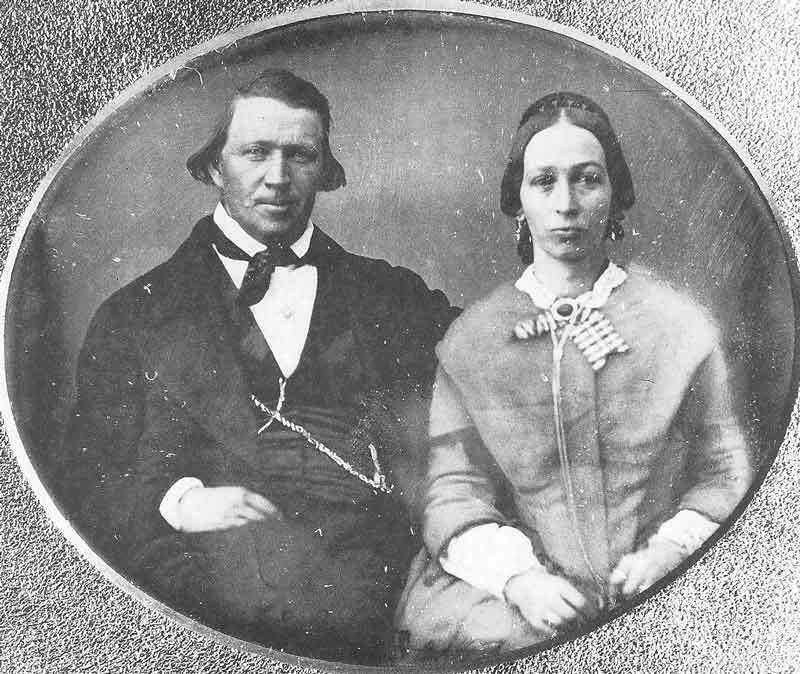
 Recently, The Church of Jesus Christ of Latter-day Saints released its long-awaited series of essays on polygamy in Kirtland/Nauvoo, Utah and post-manifesto polygamy, igniting a firestorm of discussion online.
In this second installment, we bring together an all-star cast of Mormon Stories favorites to discuss the Early Utah Polygamy essay:
- Lindsay Hansen Park, who in the middle of an amazing and incredibly exhaustive project for Feminist Mormon Housewives in the Year of Polygamy podcast series.
- Joe Geisner, a long-time Mormon historian who has been assisting Lindsay in her research for the Year of Polygamy project.
- J. Nelson-Seawright, a political science professor at Northwestern University, frequent blogger and commenter on Mormonism and a favorite guest of Mormon Stories.
Episode Transcript
Host: John Dehlin · Guests: J. Nelson-Seawright, Joe Geisner, Lindsay Hansen Park
This transcript is machine-generated and lightly edited for readability. The audio is authoritative. Please excuse occasional errors in names and spelling.
Introduction and Welcome
John Dehlin [00:00:00] Mormon Stories is a production of the Open Stories foundation and relies solely upon the support of people like you, its listeners to help keep the podcast alive or to become a member of the community. Please become a monthly subscriber by visiting MormonStories.org and clicking on the Donate button on the right side of the page under support. All contributions to Mormon Stories are completely tax deductible and go towards producing the podcast and building communities and programs of support for Mormons like you. Thanks for your support.
J. Nelson-Seawright [00:00:36] The kindly light amid encircling gloom
John Dehlin [00:00:43] Lead
J. Nelson-Seawright [00:00:43] thou me on the night is dark
Lindsay Hansen Park [00:00:48] and I am far from home.
John Dehlin [00:00:55] Hello and welcome back to another episode of Mormon Stories Podcast. I'm your host, John Dehlin. It is November 25, 2014 and I am joined by an amazing, cool, interesting panel to discuss part two of our series on the new polygamy essays@ LDS.org for those of you who follow Mormon Stories episode 503, we discussed essay number one, which was the essay the LDS Church released about the, you know, polygamy in the Kirtland and Nauvoo period. We were joined by Lindsay Hansen park, the amazing hostess or host of Feminist Mormon Housewives podcast in the Year of Polygamy. She is back with us today. Lindsay, we're so pleased to have you here.
Lindsay Hansen Park [00:01:52] Thanks for having me. I like the word hostess then.
John Dehlin [00:01:54] It makes me think of Twinkies or Ding Dongs.
Lindsay Hansen Park [00:01:58] Yep, there you go.
John Dehlin [00:02:01] We also have back the illustrious J. Nelson Seawright. He's been hosting Mormon Stories episodes as of late, but he's been with me since literally the beginning of Mormon Stories in one way or another. He's a professor, political science at Northwestern University and he's just a great guy. And Jay, it's so great to have you back on Mormon Stories.
J. Nelson-Seawright [00:02:29] Happy to be here as always. And you know, we get to talk about polygamy. What's better than that?
John Dehlin [00:02:33] Yeah, it's like sex, religion, politics, Mormonism. We have the dream job, don't we?
J. Nelson-Seawright [00:02:40] Totally, absolutely. I mean, it might even be a reality show for all I know.
John Dehlin [00:02:45] And, and while John Hamer wasn't able to join us, we are super delighted to have with us for his first appearance on Mormon Stories. If I'm not, if I'm not mistaken, it's Joe Geisner. And I just have to say, Joe, I'm gonna let you introduce yourself, but I'll have to say that over the past five or five or seven years, Joe has been behind the scenes, one of the most influential sort of sources and, and Kind of behind the scenes players of kind of Mormon intellectual thought. Joe, I don't. I don't know a ton about you other than that in really important times, you've shared with me really important information, but why don't you just. I. I did listen to one interview you did with Lindsay on Feminist Mormon Housewives podcast, but tell us a little bit about yourself.
Joe Geisner [00:03:38] Well, thank you, John, and I'm excited to be with Jason and Lindsay and yourself. Quickly. I have been a member of the church since I was 9 years old. My family converted to Mormonism through another family and went to byu, went on a mission, did all the normal stuff that most young men do, and married in the temple. Susan and I, matter of fact, this is our anniversary tonight. Though she's not feeling all that well, so it worked out to where I could be with you. But she and I have been married now for 34 years. My mother in law said it would never last.
John Dehlin [00:04:28] And what's your connection to Mormon studies?
Joe Geisner [00:04:32] I started doing Mormon studies, just really into it on my mission instead of eating. As I told Lindsay, instead of eating, I would buy books and read books, and we were able to. Or I was able to buy a lot of books that way and just read everything and continue to read to this day. I was able to meet Leonard Arrington when I was about 17, and I would say he was a huge influence on setting me on the path to study Mormonism. I really have been a collector of Mormon books and pamphlets and booklets and things like that. I only started writing maybe about 10 years ago, and I've been. I've now been published in Journal, Mormon History, John Whitmer, and Sunstone.
John Dehlin [00:05:42] Excellent. Okay. Yeah. You've been around a while and you've seen a lot of stuff. All right, Joe, well, welcome. Thanks for coming on Mormon Stories.
Joe Geisner [00:05:51] Thank you.
Setting the Stage: Nauvoo and Utah Polygamy
John Dehlin [00:05:52] Okay, so. So, Lindsay, you said something really interesting, and I'm going to use this as the hook. A lot of us think of the Navu polygamy is like the juicy meat, you know, of. Of Mormon polygamy. And what I heard you say, kind of as we talked before this call, is that this essay is actually your. I don't know, I don't want to say your favorite, but. But the, the one that for you is maybe most interesting. Is that what you said?
Lindsay Hansen Park [00:06:23] Yes, I did say that. And I think that. I think that Nauvoo Polygamy gets all this attention, and rightly so. There are some fantastic stories about Nauvoo polygamy, some heartbreaking stories. As well. But Utah polygamy is really. I'm not going to use the word meat in relation with polygamy like you did, because I think that's disgusting. But I really. I'm just kidding. But I really, I think that this is the interesting part, the Mormon Reformation. And I have to credit Joe Geisner, who really kind of got me really interested in this topic. I joke that he's my dealer. I'll open my inbox and I've got, like, some new essay out of the archives from Joe. It's just fantastic. The. Somebody should be making a Showtime or HBO series on this because Utah polygamy is fascinating.
John Dehlin [00:07:17] Okay, well, the essay we're going to be reviewing today is called. I'm going to pull it up right now. It is called, Oops, sorry, I've got the wrong link there. It is called Plural Marriage and Families in Early Utah. And so I, I think it makes sense. There's just so much here to kind of go to cover many of the main sentences, but we don't want to take too long, so we have to find a balance. But, but before we begin, I want to give each of you a chance to kind of give an opening statement about this essay. And, Jason, why don't we start with you, if you're comfortable. We'll, we'll dig into the deep, deep stuff. But what do you think is really important as an overview of this essay?
What the Essay Gets Right and Wrong
J. Nelson-Seawright [00:08:06] Well, I think that this essay does say a lot. I mean, it corrects an awful lot of myths that I heard growing up about polygamy. You know, the idea that the number I heard as a child was 4% of Mormons were involved in plural marriage. And this essay definitely does not allow that, that kind of interpretation. So I think that's really helpful for people to understand that this was not peripheral but central to what Mormonism was in the 19th century. The essay does an awful lot of work of trying to justify polygamy, which is interesting because the first essay, the Nauvoo essay, did a lot of theological work about justifying this as well. So there's a lot of, in a way, overlap, but there's also a lot of reaching out for a variety of possible explanations, and I think we should talk those through carefully, actually, as we go. But that's an awful lot of what's contained in the essay. Something that's really downplayed in the essay that I think is interesting is the connection between polygamy and the overall structure of governance in Utah. The way that polygamy shaped the political project of Mormons vis a vis their own people. And vis a vis the US Government is alluded to a little bit, but basically underplayed. And that's a huge theme that I hope we'll have a chance to talk about.
John Dehlin [00:09:25] You're saying the relationship between polygamy and
J. Nelson-Seawright [00:09:27] the government, polygamy and the state government, and polygamy and the federal government. So the essay talks a little bit about the federal government, but it doesn't talk about the strategies that Mormons used both to control dissent within the Utah Territory and to keep federal power out to protect the practice of polygamy. So there's this kind of dual political strategy that really defines the way that politics worked, what kind of society, in political terms, Mormonism was in the 19th century. That's really a pivotal aspect of thinking about polygamy in Utah that the essay doesn't want to deal with.
John Dehlin [00:10:02] Okay, well, feel free to bring that up when we hit the point that makes sense. Joe, why don't you tell us what's interesting about, you know, as an overview, this essay to you.
Joe Geisner [00:10:15] I found it to be quite positive. I was actually surprised, pleasantly surprised. I've been skeptical of most of these essays and been quite critical about a few of them, but all in all, I actually found a lot of good. It's a complicated subject. Mike Quinn in 1990, during the Centennial of the Manifesto at Sunstone, when each there was Tom Alexander, Jan Ships and Michael spoke on it, a session, and I'll never forget sitting there and Mike said, there were no white hats, there were no black hats. Everybody wore gray hats. There were no good guys, there were no bad guys. Everybody tried to be good. So it is a complicated subject and in a short essay, but I thought they did really well. I really like the last paragraph because I think that they couldn't have said anything more true. You look at the Mormon hierarchy and it is built by polygamous descendants, and that goes all the way into presiding bishops and bishoprics, the presiding Primary presidency, the presiding Relief Society presidencies. They are all descendants pretty much of polygamists.
John Dehlin [00:11:51] All right, well, thanks for that, Joe. Lindsay, why don't you tell us what you love about this essay, just at a high level or what you find interesting.
Biblical Basis and One Man One Woman Claims
Lindsay Hansen Park [00:11:59] Okay, yeah. Love is a strong word. And I think that what I'm going to say is going to be controversial because I'm actually quite critical of these essays. I thought the Kirtland and Nauvoo essay was a step forward. This essay, I think, is interesting. To me. And what I'm going to say, I know, is going to be controversial, but on the podcast that I do, Year of Polygamy, we talk about this sort of, what I call this Mormon tradition of this doublespeak, right? We find it in Nauvoo, and we find how Joseph Smith is telling the public one thing and then telling, you know, people privately another thing. And this goes on throughout Mormon history. We can see this all up into the 1920s, and Mormons telling the public one thing and doing something differently. I call it the sort of Mormon tradition. And I actually see that in this essay. And I'll give you. I'll just give you an example if you're reading. I think the most interesting thing about this essay, to me at least the most salacious thing, is the footnotes. Particularly on footnote two and six, it will go ahead and say one thing, and then the footnote will say something completely different that will, like, counteract what it was footnoted for. So I know it's kind of strong to say it's like the Mormon tradition of the devilspeak, but it just reminded me of that. Like, like, for example, I don't know if you want to talk about it right now, but they say, you know, only the church president was allowed to authorize plural marriages. Footnote two. And then you go down to footnote two, and it says, actually, at times, other people were also authorized. And it does that a few times here. And so I just, to me, I found that really fascinating. I don't know if they, like, expect people to not read the footnotes or they think that they're being forthcoming or if it is this tradition of double speak. I don't know what it means, but there.
John Dehlin [00:13:44] Interesting. Okay, well, those are all, all three of you are highlighting some important themes for us to. To keep in mind. So, so let's dive in. I. I kind of noticed that this essay begins with kind of this kind of preamble disclaimer where it kind of wants to set the tone, you know, so it talks about the Bible in the Book of Mormon, teaching that marriage is between a man and a woman, and that that's God's standard, except for in specific periods where he is declared otherwise. Does that, does that sentence rub any of you guys the wrong way?
J. Nelson-Seawright [00:14:20] Well, first of all, I mean, the Bible doesn't teach much of anything about what marriage ought to be. The Bible tells us stories about marriages, but it doesn't have theolog passages that say marriage should be such and such, unless you Want to call the Epistles of Paul, which tell us that marriage is maybe not the best idea, but the Bible doesn't really give us a standard of God's standard. The Book of Mormon does say, yeah, one man, one woman, no concubines, no whoredoms, except unless the Lord will command you to raise up children. So they've got it right on the Book of Mormon part, but not the Bible.
John Dehlin [00:14:53] Okay. Was someone else.
Joe Geisner [00:14:56] Yeah, it was. To me. This is one of those digs that we're continuing to see now with the God's law, or God's standard is this one man, one woman, and making sure that it's excluding gay folks. And that's a real troublesome development, one that I think is becoming more accentuated by the movement with the rest of the country. So, yes, that trend is very troubling.
John Dehlin [00:15:42] Okay.
Lindsay Hansen Park [00:15:43] I think I might be the contrarian tonight. I don't know what it is, but I was comparing this. The wording on this essay to, like, the Kirtland one, and I actually think this one has a lot of hopeful language in the opening. The Kirtland one sort of says, this is the way it's always been, and this is the way it's going to be. But this wording, I think, leaves it open. It says, marriage of one man to one woman is God's standard, except at specific periods when he declared otherwise. Right. And we know what they're getting at with this, which is polygamy. However, I think that that wording is really funny because that could open up a lot of doors, that if God wants marriage to be different, God can change it.
John Dehlin [00:16:30] Right.
Joe Geisner [00:16:31] I like that. Lindsay, I hope you're. I mean, I see that as optimistic, maybe even too optimistic, but that would be wonderful.
John Dehlin [00:16:39] Yeah.
J. Nelson-Seawright [00:16:40] Well, there's always the opportunity to reinterpret. That's one of the great things about Revelation. But as it stands, the fact that they feel the need to begin multiple essays with statements that attack LGBTQ people, even indirectly, is frustrating.
John Dehlin [00:16:55] Yeah.
Lindsay Hansen Park [00:16:55] Oh, it's for sure frustrating. But, I mean, it's because they know that they're in a really tricky position. I mean, how can you possibly see, say, you know, what traditional marriage is when you are Mormon? Like, that is who we are. Like, polygamy has defined us. So I think that this is their attempt at that. But I did. All I'm trying to say is I found this wording a lot more open and hopeful than some of the other essays.
John Dehlin [00:17:21] Right. Okay. Well, cool. As the preamble moves on, it Kind of tries to give this kind of correlated overview, which is that basically, you know, polygamy really began in the early 1840s. It was stopped in the 1890s, you know, more or less when the manifesto happened. And then, you know, Mormons wanted to abide by the law. And then it does a little bit of a blurb on acknowledging some post manifesto polygamy, which I think is. Which is good. Right. So any quick thoughts on just the remainder of that preamble? Anybody like or dislike what's going on there?
J. Nelson-Seawright [00:18:11] So we know that the famous phrase from the first essay was several months before the 15th birthday. I think for more than half a century deserves to be the famous phrase from this essay.
John Dehlin [00:18:22] Okay, tell us why.
J. Nelson-Seawright [00:18:23] Because the idea here is that polygamy was practiced for more than half a century, starting in the early 1840s. If we read the last essay, it started in the 1830s. That's open for debate, so we don't have to decide that. But the last approved plural marriages happened in the early 20th century. So if we count people who lived plurally married, plural marriage was still being practiced with church sanction through the middle of the 20th century. I mean, if you got married in 1910 or something, we can do demographics and say there are polygamous people living in the church under church approved polygamous marriage. Well, until the post war period. So when we say for more than half a century, we might as well say for more than a century, which is more than half a century.
John Dehlin [00:19:14] So you're saying living Mormons were practicing polygamy for 80, 90, 100 years or so.
J. Nelson-Seawright [00:19:20] For 100 plus years, yeah. And so when they say for more than half a century, that's true, but not the half of it.
John Dehlin [00:19:27] Yep. Okay.
Joe Geisner [00:19:30] I was particularly struck by the statement was instituted among members of the Church of Jesus Christ of Latter Day Saints in the early 1840s. Much happier than the Nauvoo Kirtland that I think. Didn't it say something about 1831? And I'm so much more happy to see that there's absolutely no evidence, in my opinion, for this 1831 dating. Lennon Cook, in a wonderful biography on Joseph Kingsbury, who's a really interesting figure, makes it clear that Louisa Beaman was the first plural wife. And I think that's 1841. So I'm so happy just for that. As I said about the complications, though, the manifesto is extremely complicated, and I know that there's no way this is where there should be. That footnote again for Mike Quinn's work and his explanation of how the manifesto came about in his new plural marriage article is the best. There's nothing even to compare with how good. And there needs to be a footnote for people to go there and read that.
John Dehlin [00:20:55] Yeah. As I understand that he has not been cited yet in any of these essays. Is that right?
Joe Geisner [00:21:01] That is correct. That's also my understanding.
John Dehlin [00:21:05] It's kind of a tragedy, right?
Joe Geisner [00:21:06] I mean, it really is the best Mormon historian. The best. There's nobody even close to how good he is. I remember talking with Mike. This would have been a couple years before he was excommunicated. And we were talking, and I said, mike, you really see yourself as a defender of the faith, don't you? And he said, absolutely. He said, that was my goal. That's been my goal for since I was a young man, was to be the defender of the faith. Mike could take the hard questions and the hard problems and make them simple and make them understandable and keep them faithful.
John Dehlin [00:21:45] Yeah. So, I mean, it would have been classy to include him here. So that's a lost opportunity. Maybe they'll correct it at some point. Lindsay, any thoughts on this, the remainder of this preamble?
Omissions, Citations, and Post-Manifesto Polygamy
Lindsay Hansen Park [00:22:01] Yeah. To the Mike Quinn thing. I do think it's fair to say that the historians cited have built upon Mike's work. So, I mean, it's not, of course, they left him out, which is terrible. But the terrible part to me is it's his work that has brought a lot of this to light. So that's what I struggle with. But, yeah, for the wording on here, if we're being so particular about wording, it's funny that they feel the need to say one man to two or more women. Right.
Joe Geisner [00:22:34] Which.
Lindsay Hansen Park [00:22:35] It's so funny they have to take particular care to say one man to two or more women. But if we look back at Nauvoo polygamy, we know that's not always accurate either. So that's an interesting phrase. But the thing that was the most interesting to me was, again, the footnote number two. It says, only the church president held the author. Let's see that. Sorry, I'm struggling. Tonight, only the church present held the keys authorizing the performance of new plural marriages. Footnote two. And then you go to footnote two, and it says, the church president periodically set apart others to perform plural marriages. And to me, that's so funny, because it's interesting how they. Why they would have to say that. Why they even felt the need to say that when we know historically, like during the manifesto, for example, people were performing plural marriages behind the back of other apostles, and some apostles were excommunicating polygamous while their other apostles were performing them. And you know, Woodruff knew about some and then Joseph Fielding Smith didn't. And I mean, it's so messy. I don't know how. I don't know why they put that statement in there.
John Dehlin [00:23:44] Well, I mean, my immediate reaction was, yeah, the prophet holds the keys, but then others, you know, are given permission to administer. Right. I mean, those both things can be true, can't they?
Joe Geisner [00:23:58] That's correct. That is correct.
Lindsay Hansen Park [00:24:00] Except for not everybody had the prophets approval at all times, right?
Joe Geisner [00:24:09] Well, yeah, that's right, Lindsay. That matter of fact, with Wilford Woodruff in particular, he didn't want to know. Again, going to Mike's essay, he talks about that, I think it was the Johansens marriage, and that was one of the things that was being scrutinized in the committee that was saying that there had been 40 men marrying plurally. And that was sort of the impetus for the manifesto and the wording Mike talks about. It's very interesting that in the wording it was that Woodruff wanted it to be that we don't know in his original draft. And Cannon said, you know, you're going to hurt the Johansens. You need to just say you don't know. And, and so you're right. It was like Woodruff sort of gave others the power and then said, but don't tell me about it.
Lindsay Hansen Park [00:25:16] And that's what I'm trying to say here. Like it's this weird sort of wording. To me, it just, it just rubs me the wrong way that they're saying. It's as if they're trying to say, look, only the president of the church was authorizing these marriages. But that's not really what's being said. And so I, for me, I find it misleading. I think it's misleading. I think it's not backed consistently throughout Mormon history and especially when we know that even, you know, in 1860s Utah and 1870s, as they're moving south, this gets really messy and people. It becomes a point of contention. Who gives authorization for these marriages? Do you have to go all the way to Salt Lake now or can your stake president? It becomes a messy thing. And so I don't know. For me, that was the most interesting part of that paragraph.
J. Nelson-Seawright [00:26:06] I think that's right. And I think they're trying to depict it all as this rational revelation led process when it wasn't. I mean, we can say there's revelation, but it clearly wasn't a rational and orderly process. And I think that you're right that there's a kind of dual message on that.
John Dehlin [00:26:26] So two. Two of the things that you guys haven't mentioned that stuck out to me are just really quickly, it tries to talk about how after 1890 that, that, you know, most of the new plural marriages that were performed were in Mexico and Canada outside the jurisdiction of US Law. My understanding is that it. The plural marriage was illegal in Mexico and Canada as well. Is that right?
Joe Geisner [00:26:51] Correct.
John Dehlin [00:26:51] And so, and so to kind of lead us to think that we were trying to obey the law to the best that we could by just doing it in countries outside of where it was illegal in the US that. That felt a little bit deceptive to me. Did any of you guys feel that about that phrase or is that just me?
J. Nelson-Seawright [00:27:11] Oh, it's deceptive, but it's the. It's the same game that Woodruff played. You know, in the manifesto, they said they're going to obey U.S. law. And by disobeying the law of other countries, they were obeying US Law, or at least partly obeying US Law. There are and always have been laws against breaking other countries laws, but they were not breaking US Marriage law because they were doing the breaking of marriage laws outside the US So this is one of those carefully worded statements that's entirely dishonest except in the literal meaning.
John Dehlin [00:27:42] Yeah, except for the small number of plural marriages that were still performed within the United States. States during those years. So they still were breaking the law in the US at least to some degree. Right.
Joe Geisner [00:27:53] And the reality was that Mexico and Canada were not confiscating Mormon property. They weren't coming after the Salt Lake Temple and. And all the other properties. This was all about money, which is pretty usual.
John Dehlin [00:28:10] Yeah. And then the, the last thing, just that last sentence. Today, any person who practices plural marriage cannot become or remain a member of the church. You know, we still practice plural marriage in the church. It's just an eternal thing. It's just. It's not a temporal thing anymore. And it's temporal in the sense that it's when you're a previous spouse has passed on where we can enter into more plural marriages. But, you know, we still believe in plural marriage. And that's an obvious point. But did you guys have that reaction as well?
Joe Geisner [00:28:43] Yes.
John Dehlin [00:28:44] Yeah.
Lindsay Hansen Park [00:28:44] Yeah. It's not just that. Sorry.
John Dehlin [00:28:46] Go ahead, go ahead, Lindsay. Then. Then, Jason.
Lindsay Hansen Park [00:28:49] Oh, it's not just that for me. I, you know, in studying this, this practice and this history of it, it's. It's become so clear to me how, you know, we villainized in my generation growing up fundamentalists for so long. And there really is a good case to be made that they're living the, I guess, quote, true Mormonism, because that is what I mean. Even during the manifesto especially, prophets and apostles are divided and they're torn, and like I said, they can't trust one another, and some of them are excommunicating. There's this great story that Mike Quinn tells about a woman that is being disciplined by her bishop because she is being adamant and sort of stubborn about her polygamy. She's saying, yeah, I am a polygamist. What are you going to do about it? And so she is going to be executed excommunicated, and the apostles are seeing this through. And so Woodruff says privately to some other apostles, I'm really proud of her. She's really standing up for, you know, true Mormonism. And he kind of intervenes and makes sure that she's not excommunicated. And yet his apostles are doing this work. And so for, for me, I feel like it's. It's weird that we. That we still say that no Mormons. I mean, I know why we say say it, but we say no Mormons practice plural marriage. But I feel like that's kind of a betrayal to all of our ancestors. Maybe that's unfair. Maybe I'm going to come under fire for that. But they would have, they would be really upset at that statement today, I think.
John Dehlin [00:30:21] Right. Yeah, I see that. That's how I felt when Romney, you know, called polygamy disgusting or awful or whatever. He used that. That really bothered me when he made that statement. Statement, you know, 2008, I think. Yeah.
J. Nelson-Seawright [00:30:35] And I.
John Dehlin [00:30:35] And I just, I'm reiterating the point that Russ, as I understand that Russell M. Nelson and Dallin H. Oaks are both in plural marriages. Is that true?
Joe Geisner [00:30:45] They are the only two, I believe, in the. Of the 15. Yes.
John Dehlin [00:30:49] But they are in plural marriages today. And I just think we need to address that. Okay.
J. Nelson-Seawright [00:30:56] So, John, I wanted to say about that sentence that there's a tragic irony there. In order to become Mormon, you have to not practice plural marriage. There are a lot of countries in the world and a lot of societies where plural marriage is legal and accepted. And so when we do missionary work in these societies, a lot of them are in Africa and Asia, families who want to join the church and are plurally married. The husband has to leave all but one wife in order to become Mormon. So we've gone so far in this that we now go into societies where this is a normal and legal practice and we break up families in order to join the church.
John Dehlin [00:31:34] Right, right.
Lindsay Hansen Park [00:31:36] There's like, I can't remember the quote, but I think it was in the 70s in Egypt, there was a plural. Plural marriage case that the church had to deal with. And of course, community of Christ has had to deal with this since. This idea of, like, do we allow polygamists in other countries to come into the church? So I think it's definitely an issue that not just Mormons are facing. But, yeah, I agree with you. That's what I'm trying to say. I don't know if I'm saying it articulately enough, but we have really. We just swung so far from where we were. At one point. You could only be if you were. Wanted to get anywhere in your priesthood. If you wanted to rise up in the hierarchy at all, you had to be a polygamist. They would not let polygamists be. Be a leader, a bishop, or stake president over other polygamists if he was not a polygamist himself.
John Dehlin [00:32:29] And it was taught to be a requirement for exaltation, right?
Lindsay Hansen Park [00:32:32] Yeah, For a period of time, yes. I would say yes.
Joe Geisner [00:32:38] The layers of irony are amazing. The community Christ actually will baptize polygamists now and allow them to. To keep their multiple families as long as they commit to not marrying additional wives.
John Dehlin [00:32:55] Interesting.
Joe Geisner [00:32:56] Yeah, so the. The irony just is. Is so awesome. That's so thick.
Justifications Offered for Plural Marriage
John Dehlin [00:33:02] Okay, so then it goes on to talk about how we don't understand all of God's purposes for plural marriage. And then it. Then it offers some, I guess we could assume, speculative reasons for why it may have been practiced. And I'm just gonna. I'm gonna list them off, and then I'll have each of you talk about the ones you want to talk about. So it talks about the Book of Mormon reason, which is to increase the number of children born under the covenant. It says that a large number of children were born under plural marriage, which we addressed in our last episode because. Because it turns out that it. I think we agreed last episode that. That polygamous marriages had less children per wife than. Than, you know, monogamous marriages. But it also talked about how, you know, per capita inequality of wealth was diminished, and it allowed more women to marry into, I guess, higher SES kind of families. It talks about strengthening the sense of cohesion and group identification among LDS members. And then for me, what was the most shocking was that it highlighted ethnic intermarriages as being more prevalent, as if sort of this was a diversity or a multicultural campaign to help bring people of color into the fold. So, Lindsay, why don't you start with this one? And then Jason and then Joe.
Lindsay Hansen Park [00:34:39] Yeah, there's a lot to say about this paragraph. And again, I would go to footnote six, because this is where I find it interesting, where they say plural marriage did result in the birth of large numbers of children with faithful Latter Day Saint Holmes. And then you click on the footnote and it says, studies have shown that monogamous women bore more children per wife, except for the first. And I just like, because, yes, studies have shown this, that this was. I mean, of course, this was the 19th century argument that because it was what they thought, doctrinal and scriptural, that we, of course, have to bring more children, more spirits of, you know, these tribes of Israel and our bloodlines. And all of these things get really complicated. And so that was what. I mean, you can read journals of polygamous women saying, this is my calling. This is what I'm doing. I'm bringing these tabernacles here. So they. That was an argument used, but we know now that that's not the case, that polygamous women usually would have less children than monogamous women, as footnote six suggests.
John Dehlin [00:35:44] Right.
Lindsay Hansen Park [00:35:45] So that's, you know, that's one reason sort of debunked right there in their own footnotes.
John Dehlin [00:35:50] That really is schizophrenic.
Lindsay Hansen Park [00:35:52] Yeah. Funny, isn't it? It's Mormon tradition. Just kidding. That's probably very cynical. But, yeah, that is a part of it. And then this idea, this is an interesting idea and one that we're still parsing out on my series on the podcast, that women sort of needed. Needed this. Like, hey, like, we're doing you a favor. We're doing you a favor. 19th century women. And I don't know if you can really say that polygamy was a favor to 19th century women. It was a lonely wife. A lot of these women were neglected. Heber C. Kimball is a good example. He had so many wives that lived in poverty because he just was gone all the time and he could not care for them. And a lot of these women, you know, represent sort of women being taken care of by the state in a way. I mean, you read their letters to Brigham Young saying, my husband isn't doing this. Will you please give me flour. I don't think that this was really a benefit. I don't. I know of myself. Like, if that is my, you know, like what I get instead of, you know, being a single woman struggling on my own, I don't know that that's really a good argument. Now, of course, there is this idea of the 18th or the 19th century woman being forced into prostitution, which we know did happen in some instances, but in Utah specifically, this became a heated debate. You know, you had Gentiles calling Mormon polygamous women whores and prostitutes, and you had the Mormons saying, we're keeping them from prostitution. And there's this great book called Polygamy, Prostitution and Power that sort of talks about these dynamics. But I just, I think this reasoning, they're really trying hard and they're falling on old stories that have now since sort of been disproved. So this was a disappointing part of the essay for me.
John Dehlin [00:37:39] Okay. All right, Jay.
J. Nelson-Seawright [00:37:42] So I mean, the point about the demography, I think is done really well. The way they word this is technically true. You know, plural marriage did result in lots of children, but monogamous marriage has since resulted in lots of children. The fact is, any arrangement you have with thousands of people participating in it is going to result in lots of children. So that's true, but not actually meaningful. The one that's really interesting to me is this per capita inequality of wealth argument. I'm going to take the statement that they made and take the exact same facts and restate this. One thing that happened in 19th century Utah is that wealthy and powerful men accumulated a lot more wives than less wealthy and less powerful men. That is the exact same fact as what they're saying about per capita inequality of wealth. The most powerful men in one arena became the most powerful in the marital arena as well. I'm not sure I understand how that's a huge benefit. I mean, this is something we see in patriarchal societies all over the world. Powerful men and economically successful men dominate in other arenas, including sexual and marital arenas. And what this sentence tells us is that that happened among the Mormons as well. So the Mormons were patriarchal. That doesn't really answer why we needed polygamy. The ethnic intermarriage point is.
John Dehlin [00:39:05] Let me just jump in really quick. It's also slippery slope because we know that same sex marriages on average have a higher, higher per capita income. And I don't think we want to use that as a justification. I don't think the church wants to use that as a justification for making a certain non traditional type of marriage. Okay, right. Anyway, go ahead.
J. Nelson-Seawright [00:39:27] So then with the ethnic intermarriages point, the kind of ethnicities they have in mind here are things like Danish, not, not, you know, Latino or something, so, you know, Danish people and immigrants from Germany or something were able to mar into established households and unite diverse immigrant population. Again, we can take the exact same facts and state this a little differently. We can say newcomers to Utah territory who didn't speak the language were taken advantage of by wealthy and powerful men and added to their collections of wives. And that's actually also an accurate statement. The point is, what they've done is word very dicey situations in the most desirable possible way and tried to present these as reasons for having plural marriage, when in fact they describe realities that have possibly benefits and also a lot of power politics behind them that isn't nearly as attractive.
John Dehlin [00:40:24] I should just add that as I remember William Law's writing in the Nauvoo Expositor, that was one of his main complaints is that these immigrant girls would come over with promises of being part of Zion and then they would be kind of farmed out to Joseph as. As plural wives, as really vulnerable kind of victims. Do you guys remember that? Am I remembering that right?
J. Nelson-Seawright [00:40:49] That is one of the stories in the Expositor. Yeah. And there are a lot more stories that fit that narrative that happened in Utah than in Nauvoo. This is one of the things that actually was a real problem in the early years in the Utah territory was these immigrants would arrive from Europe and have no idea that this plural marriage stuff was going on, because that wasn't part of the missionary outreach, believe it or not. And they would show up in Utah and be surprised and appalled and kind of stuck in this desert in the middle of nowhere with a society that didn't look at all what they thought they were going for. So one of the reasons the Journal of Discourses existed was to help get the message out that Mormons were a little different to the missionary converts before they arrived in Utah.
John Dehlin [00:41:35] Wasn't there a missionary pamphlet that denied the practice of polygamy that was passed around in Europe that was actually written while they were practicing polygamy?
Joe Geisner [00:41:45] Oh, you're thinking of John Taylor's.
John Dehlin [00:41:46] Yeah, that's work.
Joe Geisner [00:41:48] I think. 1850. Again, that's just off top of my head.
John Dehlin [00:41:51] Yeah, yeah, yeah. So basically they were recruiting these immigrants to come to Utah, telling them there was no polygamy, specifically while they were practicing polygamy, and then they'd be arriving in Utah and discover that in fact, they were to become plural wives potentially.
Lindsay Hansen Park [00:42:09] Well, that's not across the board. We do know that there was a huge, I guess, apostasy or, you know, exodus from the British saints, specifically when they found out about polygamy after orson Pratt in 1852. And it was heartbreaking. And there's these stories of these little girls coming up to the missionaries, crying with tears in their eyes, saying, elder, is it true that Brigham Young has 89 wives? You know, and they're just heartbroken about it and. Hey, Joe, you should tell the story, the handcart story of the immigrants that came from the handcart company.
Joe Geisner [00:42:45] Okay. Jason, you still have things to say or.
J. Nelson-Seawright [00:42:51] No, no, it's fine.
Lindsay Hansen Park [00:42:52] Go ahead.
Joe Geisner [00:42:52] Okay. Well, actually, my head is swirling with all your wonderful information. Charles Penrose, before I get to the handcart. Charles Penrose wrote September 8, 1885 in his diary, and he's on a mission in England. He says, before leaving Deptford, Kent, England, I showed Sister E. Waterfall, 40 years of age, single, the portrait of Benjamin Laws of Kane County, Utah, who had written to Brother N.J. porter of Centerville for a wife. Sister W. Said she would go out to Utah if he would send money for her immigration. I told her to get me her portrait, to send him. He was 60 years old and a widower. The idea that these guys were not soliciting women, there was always that thing that the missionaries weren't soliciting women to get them to convert and to come to Utah. You've got Charles Penrose diary right there saying that about the handcarts. The number of men and young boys who died on the handcarts were much more than the women, mainly the young women. The young women survived. There were various reasons. Usually it had all the way to do from men not wanting to see their daughters die, for starters. And so they would give up their food. They would be the last ones who would go without food. So you have that. Just all kinds of things like that that were happening when they entered the valley. Most of the survivors were these young girls, and some of them were as young. I think the youngest was around 11 years old. I'm trying to find exactly that information, but I believe she was like 11 years old and being married off. But most of them were 12, 13, 14, 15 year old girls. And they were being farmed out essentially to these polygamous men and brought into their homes and then being married immediately. The research that's been done on it by Conal o' Donovan has found that most of those children were having children within a year after that marriage. So this idea that children weren't, you know, that they were holding off on bringing them into letting them grow up before they were having sexual relations is really a myth. There's that famous letter from Wilford Woodruff to George A. Smith. He wrote it in April 1, 1857, where he says to George A. Smith, nearly all are trying to get wives until there is hardly a girl 14 years old in Utah. But what is married or just going to be married? And Wilford Woodruff himself offered his 14 year old daughter Phoebe to Brigham Young. And Young's response was that he was no longer marrying young girls or actually young wives is his response. He said, but I'll find a husband for her. So the idea of marrying off these young girls, there was actually one group of people who benefited from having lots of offspring, and that was the men. When I did some research on Parley Pratt, here's what I found was that Parley, he fathered 36 children, 23 of whom lived to adulthood. In May 1854, Heber Kimball prophesied to Pratt that his posterity would be as numerous as the stars of heaven. From those 23 children, Pratt would have 266 grandchildren, with an estimated 30 to 50,000 descendants today. Joseph Smith and Emma Smith. And I received this information from the head of the Joseph and Emma Smith family group that they have 1100 living descendants. That's who really did benefit from that, the men. Yeah, on the immigration, I was thinking about that. I had the same reaction that you did, John. It was like, huh, do they realize that the only black people that were brought to Utah were brought in as slaves, you know, and the Indians were pretty much wiped out. So, I mean, people of color were not doing that well, but.
Demographics, Inequality, and Women's Agency
John Dehlin [00:48:25] And to be fair, the essay doesn't, doesn't say people of color, but I
Joe Geisner [00:48:30] mean, it doesn't, right.
John Dehlin [00:48:30] When you read ethnic intermarriages, that's often what we think, right?
Joe Geisner [00:48:34] Diverse immigrant population. And you know, and from my understanding, I mean, I could be wrong, but from the things I've read, like the Scandinavians, you know, they would collect in one area of Utah, like that Manti and that area. And then, you know, my wife's ancestors, who are mainly Scottish and English, you know, they would gather in Ogden area. And, and so my understanding is, and that's really what happened a lot with those handcart girls was if, let's say they were from Scandinavia, you know, they were farmed out to Scandinavian families or the English were farmed out. So, yeah, so I'm not sure I see a lot of.
John Dehlin [00:49:27] Okay, I see what you're saying.
Joe Geisner [00:49:28] Diversification on that. But. But I will agree that it did create a sense of cohesion and group identification. It created a. You know, the persecution complex of our people is huge to this day. It is huge. And polygamy definitely created that sense of persecuted people, which then creates a cohesion and group identification. And that's important.
John Dehlin [00:49:58] That's in some sense the. The success of 20th century Mormonism is probably. Probably has polygamy to think. Would you guys. Would you guys agree to that? At least to some degree?
Lindsay Hansen Park [00:50:12] I agree to that. I mean, I. It's interesting to see what the legacy is, what, what Mormons, I think, think it is opposed to, like whatever one else thinks it is, I think is different. But, yeah, I argue for this on the podcast all the time, that it really did mark us as a people. But of course, like I said, what I struggle with in the first part of this essay is they completely try to divorce themselves from that now, when what we were, were polygamists. That's what we were known by. That's what shaped our doctrine and still continues to shape our doctrine. I just, I don't think Mormonism can get away from it. So it's always funny when I see them trying to get away from it because that's what made us who we are. That's why we're not still in Nauvoo.
J. Nelson-Seawright [00:50:59] No, I agree completely with that. The things that Mormons have because they went through polygamy include the temple ceremonies, the idea of sealing for time and eternity, the organizational structure of the church as we have it, the sense of secrecy, where you don't cast pearls before swine, and we do the milk before meat thing. We don't tell outsiders what we really think. That also is a legacy of polygamy. I mean, the way that the church is. Is created by polygamy. I don't think it's a coincidence that the largest branch of Mormonism is a branch that went through this polygamous passage.
John Dehlin [00:51:37] Right.
Joe Geisner [00:51:38] The only way that the church could ever change that would be to decanonize. 132.
John Dehlin [00:51:46] Right? Yeah. And I have that as listed as something to talk about a little later. So let's. Jason, what do you think about this idea that one of the most important things about polygamy is this idea of sacrifice, personal sacrifice. It's almost like the Abrahamic test all over again that it was hard. Financial difficulties, strife. But so much love and joy came out of obedience, love, tenderness, and affection with many of the marriages that were based on religious belief more than on romantic love. How does that kind of argument strike you?
J. Nelson-Seawright [00:52:30] And then, Lindsay, I'm going to say that that paragraph. There's a mixture of truths and untruths in this paragraph. The challenges of political polygamy and plural marriage are, let's say, abundantly attested. I haven't read the many, you know, hundreds of journals and diaries that we have from this period, but I've read a couple dozen of them. And most people who lived through polygamy and wrote extensively about their lives describe lots of struggles related to the practice. This was simply incredibly difficult. It's hard to fund multiple households in an agrarian society. It's hard to balance jealousy. When you have these multiple relationships at work, there are going to be favoritisms, there are going to be inequalities, and those are going to create jealousy. And they consistently did. So these challenges that the paragraph discusses are abundantly historically attested. It's also certainly true that Mormon families in the 19th century loved each other, and there was joy. What the paragraph wants us to think is that there were lots of people who. Who felt joy because of plural marriage. And that's something that's actually very hard to find in these journals. We see a lot of public performance of joy in plural marriage. You can see people giving speeches about how wonderful plural marriage is for women. But aside from that PR realm, when we read the journals, there aren't a whole lot of people saying, I'm so grateful. Women, I should say in particular, saying, I'm so grateful that I entered into plural marriage. That's something that the historical record doesn't show so much. And something interesting in the essay is that there's a footnote to the claim that there were a ton of challenges connected with prolonged marriage. There is no footnote for the joy and love connected with plural marriage.
John Dehlin [00:54:18] Wow.
J. Nelson-Seawright [00:54:19] So there's a problem there.
John Dehlin [00:54:22] Lindsay, do you share Jason's review of the diaries and journals that you've come in contact with?
Lindsay Hansen Park [00:54:30] Yeah. I mean, I think it's a good acknowledgement to say that this was more about religious devotion than romance, because if you do try to argue about romance, you're going to fail, because very rarely is have I ever seen anything to resemble romantic love. I mean, the closest thing, honestly, was Joseph Smith's relationships with some of his women, but some of the women he was associated with. Golly. But I do. I mean, it's such. This is such a hard. Such a hard one. Because I think we see this mirrored today in Mormon culture. We have this sort of pedestalization of women, right? We say LDS women are incredible and they're so great. And being a mother is the best thing to the point where it becomes almost ritualized, right? We get up and we say these things together. We say these things in church. We sing about them in our primary songs, we sing about them in our hymns, how much we love our roles, how much we do this. And yet, you know what? I do the work that I do with Feminist War on Housewives, we deal with a lot of women who are doing these things and saying these things and living these roles that they're supposed to live, but privately, it's really hurting them. And we see this with plural marriage, too. I think it became sort of this ritualized practice to toe the party line to say polygamy was a good thing, to try to make the best of it. And the more that you can make the best of it, the more righteous you were to your neighbors and friends. And yet polygamy, in every single case that I've ever studied, not just Mormon, polygamy becomes a caste system, right? You have. Usually it's the first wife is at the top, the second wife and the other wives under her are treated according to sort of this caste system. And how well they are treated depends on where they fit in this caste system. And that demeans your soul. Like, to not be valued equally demeans your soul. And so even though you can get really good at saying one thing and doing another thing, I think that when we say that polygamy was this religious practice, fine, but it was really on the backs and the hearts of these women that had to sacrifice. And it wasn't easy for men either. I'm not trying to say it was, but these essays are just so lacking in the women's perceptions of polygamy and women's experiences, in my opinion. And this is one of those examples,
John Dehlin [00:57:00] even though they mentioned financial difficulty, interpersonal strife, and longing for the sustained companionship of the husband, they didn't go far enough.
Lindsay Hansen Park [00:57:09] No, no, I don't think they went near far enough. Because I think. I mean, for me, any sort of attempt to sort of justify this, other than saying this was one big mistake, I don't think is going to be good enough for me because it broke the hearts and the backs of everyone that was involved. And we talked about this on Natasha, and I just Recorded a podcast for Mormon Mental Health talking about this. But at what cost? Like, of course there is beauty that comes from struggle. And we brought up the Holocaust. Right. But like, do we, do we say that God wants people to always suffer? I mean, it's this Abrahamic sacrifice. And if you take that to its logical conclusion, the argument that, you know, beautiful things come from sacrifice and struggle, you can get into some really dark periods of human history where of course, beauty comes out of it because humanity can survive and thrive. But is that really what we want to do? And especially in such an unequal way, we want these blessings to come on the backs of women? Is that who God is? I don't think so.
John Dehlin [00:58:20] Yeah. I've never articulated this before. I just had this thought. I was trying to figure out why I hate so much the idea of Abrahamic sacrifices. Part of it's because I associate it with like Jim Jones and the Kool Aid, where, where that principle can be so misused to really do destructive things. But at the end of the day, it's not, it's not the sacrifice part that I have a hard time with. I do believe that working hard for something and sacrificing can pay good benefits. It's when you're asked to do something evil like kill your child or marry a 14 year old girl, when, when all of a sudden I have a problem with it. And that's, that's whatever problem here that it's not about. It's not the sacrifice part. It's the part about doing something that's truly evil and someone telling you that it's actually from God. That's when I have a problem. Joe, real quick. I think we've touched on this pretty well. Is there anything kind of really quick and big you want to, you want to mention about this section?
Joe Geisner [00:59:22] No, you know, it's okay. But I did. I really like what you, you just said. I thought that was excellent.
John Dehlin [00:59:27] Oh. So thank you. Okay, so. So, so the next part of the session, the section talks about how not everyone was expected to live it. That some did, but many didn't. And then it starts going into the ratio of men to women and the percentages. Joe, do you want to, do you want to start off on this one and talk about, you know, when they try and talk about its prevalence and, and, and who didn't. Didn't practice what stuck out to you?
Joe Geisner [01:00:05] Yeah, the, you know, this, it was like Lindsay had brought up earlier, this was really a hierarchical thing. And I think it talks about 23%, which is actually my understanding also that it was 20 to 30%, somewhere in there of total population. Again, it would be more women and more children and less men. But if you didn't practice polygamy, or if you abandoned polygamy, which would even be worse, you would be ruined. The bishop, I think of the 20th Ward, his name was Sharp, and he finally just had enough. He felt he had given up enough, and he was not going to jail over this. Joseph F. Smith heard about it in Horror, Hawaii, when he was a mission. I think he was the mission president at that point. And he denounced him in letters. You know, people. They held a court, a high council court. Well, first they asked him to resign his office, and he refused. And so then he. They held a court, and they took his office away from him. He appealed it to the First Presidency. The First Presidency upheld. And even the Deseret News ran an editorial about him. And they wrote, by offering amnesty to polygamists who will throw their manhood to the dogs and enter the ranks of the debased by discarding their helpless and dependent wives and children. An alternative that death itself would not induce a true Latter Day Saint to accept. So the idea that you could just pick and choose and that you had absolute freedom on whether you wanted to be a polygamist or not is another myth. John Smith, Joseph F. Smith's oldest brother, who was church patriarch, was condemned in council meetings frequently because he reluctantly married a second wife. But he never lived with her. There's absolutely no evidence that he ever even spent any time with her. And what they would go after him for was because John actually smoked. And I think he drank coffee or tea, one or the other, and they would go after him over that. The problem is they all smoked. They all drank coffee, and some more than others. And my understanding is John did smoke frequently, but it wasn't any different. But they really went after him because he wasn't a polygamist.
John Dehlin [01:03:20] Right?
Joe Geisner [01:03:21] Yeah.
Lindsay Hansen Park [01:03:22] And can I just say one thing about that, too, John?
John Dehlin [01:03:24] Please?
Lindsay Hansen Park [01:03:24] Because I feel like the. So to Joe's point, I mean, of course, we know, like Brigham Young used the. When he established the United Order, he kind of cleans house with the bishops. He uses that to sort of establish bishops that are going to follow him more strictly. But what. What we didn't talk about yet is women, if they had a choice. And as we know, some women did not have the choice to enter into these polygamous families.
John Dehlin [01:03:52] It says women were free to choose their spouses, whether to enter into a polygamous or a monogamous union or whether to marry at all. Okay, keep going.
Lindsay Hansen Park [01:04:00] Okay, so. So that is true if you are choosing your partner, but if you were already married to someone, if you were the first wife, there are several instances of men showing up in the wagon with a woman that they did not choose to be in their family. They didn't even know about it sometimes, and it caused a great amount of discord. In fact, there's a story from Santa Clara of a woman who specifically said, I do not give you permission to take on a plural wife. And the priesthood leader said, listen, you just do it anyway and she'll come along. And this man really, really, really struggled and he didn't want to do it. And he fought off his church leaders for a long time and finally they gave him this sort of blessing saying, she will come along. And so he takes a second plural wife, and his first wife, of course, does not come along as was promised, and he ends up sort of neglecting and almost abandoning his second wife. And it was terrible for all three of them. It was just terrible. And so while women were not forced into it like we would think of the FLDS today, you know, you know, young girls being married off, of course that did happen too. I don't know that a 14 year old can consent. And there's stories of like Ann Gorge Lee, who claims that she was sort of sold off to John Digley to kind of, you know, end her family's troubles. It's, I mean, it's just way, it's way more complicated than that.
John Dehlin [01:05:32] Yeah, it reminds me of just saying that a young Mormon boy or man can decide whether or not he wants to serve a mission. Well, that's technically true, but the social consequences of not serving the mission are pretty severe, at least historically, in the church. And so it's not acknowledging probably the intense social pressure that Joe talked about as well. Jason, talk about your thoughts on the percentages and the prevalence and the. And kind of this section of the essay.
Was Plural Marriage Truly Voluntary
J. Nelson-Seawright [01:06:02] I want to talk a little bit, just really up front, if possible, about this question of whether it was mandatory or not. I mean, not only were there these social pressures and possible sort of coercive elements in that light, but there was heavy theological pressure on men and women to do plural marriage. So I'm going to give you my favorite quote, which is from Daniel H. Wells, who was one of the counselors to Brigham Young, talking in one of the polygamy trials and reported in the notorious anti Mormon newspaper the Deseret News. So this is pretty good, reliable stuff, right? He says it's a doctrine of the Church that when male members come to a thorough understanding of plural marriage and other circumstances being favorable, if they fail to obey it, they would be under condemnation and would be clipped in their glory in the world to come. The circumstances that would excuse a person would be physical incapacity and the like. They to whom the revelation shall come and who can and will not obey it, shall be damned. So the promise was not just, you're not going to get exaltation in the highest degree of glory. If you understood the principle and were offered the chance to participate in it and you didn't, that's damnation. For women, the theological threats had to do with the behavior that their husband will resort to if you don't allow them to participate in plural marriage. So there was theological reasoning about how men were created to live in plurality, that it wasn't right to have sex other than at times when the woman was fertile, that it was sinful to do that, that men would be driven into this lust during periods when their wife was menstruating or just had had a baby, and that they would go off and go to prostitute prostitutes, and that they would be driven into the rampant sexual misbehavior that they imagined non Mormons were carrying on. And that all of this was going to be theologically inevitable to women who didn't enter into plurality with their husbands. So both men and women were threatened with dire consequences. Men would lose their exaltation and be damned. Women would end up with husbands who. Who were wicked whoremongers, really, if they didn't enter into plural marriage. So that the pressures were not just social, but really in the core of Mormon theology. In terms of the demographics, I think this is. Demography is tricky. Do we want to talk about the population at a given moment? Do we want to talk about the stock or the flow? So if we talk about the group of people who at any given year were currently involved in plural marriage, we're actually going to underestimate the overall footprint. What you really want to do is take a given year and look of people alive in that year. How many of them would at any point in their lives be part of a polygamous family? And the best numbers for most of the 19th century in Utah put that at 50% or higher in most years. So we can say that 25 to 30% were involved in any given year. But over the course of life, about half of Mormons were involved in polygamous families at one point or another. This is a huge footprint. So when we say things like most leaders of the church are descended from polygamists.
John Dehlin [01:09:22] Sure.
J. Nelson-Seawright [01:09:23] Because most Mormons were involved in polygamy at some point, right?
John Dehlin [01:09:28] Yeah.
Joe Geisner [01:09:30] Would it be all right if I jump in real quick?
John Dehlin [01:09:33] Sure.
Joe Geisner [01:09:33] Okay. Because Jason really said some important stuff. This is from a letter from Edwin Woolley to Brigham Young, and he's talking about Orson Pratt. He said, the only circumstance of any note that has transpired since we came that is worthy to be chronicled is that Professor Orson Pratt has added to his stock of ribs and took a lass by the name of Phelps, about 16 or 17 years of age the evening before last. And I believe it agrees well with him, as I seen him the next day looking as fresh and young as ever. And if any difference, I think 16 years was added to her life. We've all heard the comment that Brigham Young said after he learned about polygamy. He says, I felt as if the grave was better for me. Everybody should. I'm guessing everybody knows who Eliza Ann Webb Young is. She wrote the 19th wife and her mother, Eliza Jane Webb, and her father were very prominent members of the church. This is what Eliza Webb writes about Brigham Young. She says, this is to a question that she had been asked. She says, I do not know his. They're talking about plural marriage. I do not know his motives for commencing the practice of polygamy, But I rather expect he was pleased to learn from Joseph that God was not displeased with the practice of polygamy. At least he entered into it with so much zeal. I'm sorry, I'm reading it right from the holograph. But any man could. He says it was a very great trial for him, but I doubt that very much. I think he is by nature very groveling in his desires. So, you know, there's two different examples, I think, of where men were pretty enthusiastic about entering into the practice of plural marriage.
John Dehlin [01:11:50] Yeah, that makes sense. And maybe they didn't even know what they were getting into. Right? I mean,
Joe Geisner [01:11:57] well, I don't know. I think both Brigham Young and Orson Pratt, in those two circumstances, knew exactly what they were doing. There's the stories that Fanny Stenhouse wrote in her first book where Brigham would be sealing people and he would look over and see a young woman, and he would go, okay, I don't think this woman's right for you, and then start pursuing her himself.
Lindsay Hansen Park [01:12:23] Right. Can I say one good thing, though, really, about this? So it mentions divorces Right. I don't know if you want to talk about the divorces yet, but I actually think this is something that the essay did a good job in acknowledging, is that divorces were more fluid. And I think it's Craig Foster who's done some work on this, and he actually argues that polygamous marriage is. Were more sort of equitable for women than other 19th century women at the time because women had more fluidity for divorce. Now, I don't necessarily agree with his premise that it was more equitable, but that is true. We do know that Mormon women were sort of. Divorce was still frowned upon and all of that, and it was difficult to be divorced. But sometimes women had a lot more sexual fluidity than other 19th century women. Of course, people died younger and so they would remarry many more times. But we see kind of now where people are living longer. You get married at, you know, 18, and you're with that same sexual partner your entire life. That was not the case for 19th century Mormons. There's a story, I think it's John D. Lee's wife. She would leave him in Nauvoo, go run off with a man, sort of divorced John D. Lee and then eventually joined him back in Utah and joined back up with him. So. So I think the essay did a good job at talking about the divorces. I thought that was a step in the right direction.
John Dehlin [01:13:48] Jason, did you have other points you wanted to make about the kind of demographics?
J. Nelson-Seawright [01:13:53] Not for the moment. That's. That's all right.
John Dehlin [01:13:55] Okay. Okay. All right, so. So we go on. It talks about. It does acknowledge women being married at young ages. Does anyone know if there was a Lost Boys equivalent problem in 19th century kind of Utah Mormon polygamy? Do you guys know what I'm talking about there?
Coercion, Consequences, and Underground Polygamy
Lindsay Hansen Park [01:14:19] Well, you could get castrated. Is that what you're talking about? I'm kidding. That was probably a little.
Joe Geisner [01:14:24] No, no, no, you're absolutely right, Lindsay.
Lindsay Hansen Park [01:14:28] There are stories in especially southern Utah, which was fanatical during the Mormon Reformation, and especially in 1850s, where young boys. There are stories of young boys wanting. Why, you know, wanting these young women similar to their age, and bishops wanting them and being castrated for them. And of course, those are the more salacious stories. But like Joe mentioned there. There was this idea of the hierarchy. So if you wanted to marry just an average guy, but, you know, a bishop or a stake president or a priesthood leader wanted you, chances are you're going to be pressured a lot more by your family and by your community to marry the higher priesthood leader. And so in a lot of cases, these young men were left out. In fact, even in Nauvoo, there's a story of one of Joseph's wife's. And now I can't remember the name. She was only 17, I think, at the time. She was dating a boy, and he came back and wanted to date her and didn't know that she was already married to Joseph. And kind of laments like, all these women are already taken up by all the leaders of the church. So I think. I think that there was a culture of that happening.
Joe Geisner [01:15:43] I think you're thinking of William Clayton who married Margaret Moon, and it was Aaron Farr who came back, and they were. They had actually been engaged.
Lindsay Hansen Park [01:15:53] There's two. That was not who I was thinking, but that's.
Joe Geisner [01:15:55] Oh, okay. Sorry.
Lindsay Hansen Park [01:15:57] No, that's great. There's. There's another example.
John Dehlin [01:15:59] Right. Okay. So the essay moves on and starts talking about how the. The federal government rises up to start cracking down. Jason, I think this is a great point to have you talk about kind of your governmental points that you wanted to make. Does that feel like a good time?
J. Nelson-Seawright [01:16:21] No, it does. I mean, something that. So something that's finessed both in the earlier essay and here is the fact that the driving issue that led to the Mormons leaving Nauvoo and going across the plains to Utah was plural marriage. There was tension. There was the unavoidable fact that if you live in the middle of a whole bunch of other people, other people are going to notice what your marriage practices are. So in order to be able to institutionalize this unusual marriage practice, the Mormons wanted to be in a context where they were far away from everyone else. So the choice of Utah territory for the Exodus was in large part in order to find a good environment for the institutionalization of polygamy. And then the moment they arrive in Utah territory, they begin these political maneuverings to try to get an institution, institutional context that's going to allow them to shield polygamy from outside interference. They get an early territorial government that gives them a lot of decentralized power and a lot of autonomy, such that Brigham Young becomes the governor. There's essentially one party government. It's an electoral authoritarian regime. In the political science jargon, there was only one party. People who wanted to vote for another party faced zero possibility of contributing politically. They had zero political representation, and they were socially marginalized. And this one party dominant regime was built in order to govern the polygamous system within Utah and to shield that system from regulation from outside. From the moment Utah was founded, arguably, polygamy was already illegal under US law, and it certainly was explicitly illegal by the 1860s. The idea that there could be any legal gray area is messy. But there was political sheltering in spite of the existing laws because the Utah government kept federal agents at bay. So there was an effort to discredit judges who were sent from the outside. This is one of the things that led into the Utah War. During and after the Utah War, there were tense negotiations between the church and the new government that was sent in from Washington about where can the soldiers be positioned, how active can the government be in exploring and interacting with the politics and the life of people in Utah. And 100% of this was about keeping outsiders away from Mormon marital practices. There was nothing else Mormons were doing that was going to be very interesting to outsiders. It was all about shielding polygamy. So what we end up with is this situation where I'm going to borrow an idea from a colleague of mine, Ed Gibson, who writes about sub national authoritarian regimes. And the idea is boundary maintenance. People who want to run an authoritarian regime inside a larger democratic political context have to strike bargains with willing partners at the national level in which they trade their support and resources for someone looking the other way and giving a blind eye. And this is exactly the politics that Mormons try to do throughout the 19th century. They try to strike bargains with the Democratic Party and with people in the south during the period of the Civil War and with the Democratic Party that was mostly southern based after the Civil War to get shielding from enforcement of universally applicable laws in exchange for Mormon support of one sort or another for the national projects of the south and the Democratic Party. This project didn't work out ultimately, but this entire sort of state building enterprise that went into Deseret and then utah throughout the 19th century century was motivated by the desire to create a safe space where this illegal practice could be protected from law enforcement. And I think that's something that when we see them talking about the government passing these laws and there was this contestation, this is part of this story. But a part of the story Mormons need to know is that what went along with this was, you know, in the Mormon charming language, it theo democratic regime in which the church was the government and people had no choice.
John Dehlin [01:20:57] Right? So it really did impact what was going on at the territorial level, at
J. Nelson-Seawright [01:21:05] the territorial level, at the national level. I mean, this created intense problems for Washington. So I mean, this is a political story that matters for all Americans, but for everyone who lived in Utah, not just Mormons, polygamy defined the political life of the territory. It created a system where if you didn't support polygamy, you had no voice, you had no representation. And that was something that is a real consequence and a real sort of legacy up to this day, where Utah politics has this very theological character that we see as an echo of that time.
John Dehlin [01:21:46] Interesting. Fascinating. Well, good. Well, you know, so does anyone have any. Anyone. Anything they want to say about kind of the. The persecution?
Joe Geisner [01:21:58] There's a great story, if you don't mind please telling it. Okay, so, you know, right there at the end, they let. Last few years of 1880, Taylor had gone underground. I mean, nobody was seeing him. None of the church leaders who were polygamists were speaking at conference. They were having monogamous leaders do it. Angus Cannon was basically, who was the stake president in Salt Lake. He was basically running the show for. For conferences and things like that. So Cannon was, like, you know, high on the priority list of getting him. Of getting him captured by the US Marshals. And Taylor sent him to Mexico to negotiate a land contract. On his way down, the marshal caught him. So they. They were in one of the state rooms in one of the last cars in the train, and during one of the toilet breaks, Cannon slipped out the rear of the car and stood looking, trying to figure out where he could escape to get away from the U.S. marshals. And I guess the train hit something, and he flipped out of the back of the car and hit the ground. And the U.S. marshals then found him, and he was, I guess, walking around aimlessly, just bleeding all over and had broken his nose. So they captured him, they took him back in, and they had to put up a $45,000 bond. And the church was really in financial jeopardy, so Taylor told him to jump bond. And I don't know how many years. It was at least a good year before Frank Cannon, the prodigal son of George Q. Cannon, was able to negotiate with Grover Cleveland so that Cannon could plead guilty. And he was fined $450 and 175 days in jail. But the idea that these guys weren't there was that part I read in the essay about that they did their time and stuff like that. Well, not always interesting.
John Dehlin [01:24:38] Any other quick thoughts or comments about the persecution?
Lindsay Hansen Park [01:24:43] I do want to say that they sort of use persecuted language when they explain it. They say that in the sentence to help their husbands avoid prosecution, plural wives often separated into different households or went into hiding under assumed names, particularly when pregnant or after giving birth. And I just. I think that that's an interesting way to phrase it because it's like I can hear almost, you know, instrumental hymns in the background now as we hear this and we picture this pregnant woman, or just giving birth, being ripped apart from her family and having to leave. And I just think it's weird that we still. Not weird, but interesting that we still claim this sort of persecuted narrative sort of, with that language. Maybe I'm reading that wrong. And it is true. Mormons have needed this sense of being a persecuted people, and they were persecuted in my mind. But of course, I mean, being persecuted for your beliefs is one thing, but also having really strange, sometimes harmful beliefs is another thing. So it's interesting when I compare it to the FLDS church. Like, we look at them and we say, like, of course, you guys need to stop what you're doing. But how we look at them is. Is kind of similar to how the rest of the world looked at 19th century Mormonism.
J. Nelson-Seawright [01:26:05] Right?
Joe Geisner [01:26:06] You're absolutely right, Lindsay. And really, that whole law about cohabitation is just wrong. I mean, there's no way around that. That's unconstitutional and all that. I mean, nobody else in American society were ever prosecuted for cohabitation, you know, so, yeah, there really was things that the federal government did that were just wrong.
J. Nelson-Seawright [01:26:37] Yeah, I agree with that. One of the things that's messy, though, is that Mormons look back and conflate actual persecution with attempts to get a territory to obey the law and acknowledge federal legal supremacy. Which, you know, those are two different things. So when we talk about, for example, Idaho territory denying the vote or the right to serve on a jury to anyone who believes theologically in plural marriage, which did happen, that is outright religious persecution. That's saying if you have this belief, you're going to be denied citizenship, and that's unquestionably persecution. But then on the other hand, when we have a group of people who, in a variety of different ways, just explicitly reject the legal authority of the government and the government tries to arrest them, I think it's a little problematic to call that persecution. And when we call both of those things persecution, we're muddying the waters a lot.
Lindsay Hansen Park [01:27:35] And that's such a great point to bring up your Idaho case. Right. So the government does this, and it was. It was discrimination. And so how does the church respond? They say, you know what, your whole ward or branch can renounce Mormonism, go vote, and then we'll rebaptize you back in. And of course they do this. And so to your point, Jason, it's like, of course the government would have an inherent internal distrust of Mormonism, I mean, of Mormons in general, because they were constantly and consistently disobeying them, saying one thing and doing something else. And so, I mean, that's where it gets really messy. Because even, like, legitimate, I mean, I'm trying to think during the Reed smooth here, Smoot hearings, I see examples where these lines get really messy of, like, what is real persecution and what is just, you know, enforcing the law. But it's because Mormons from their very beginnings were telling the public one thing, telling the government one thing, and then doing something else.
John Dehlin [01:28:41] Right. And then I. And this is going to be a very unsophisticated point, but I just couldn't help but read this essay, this part of the essay, and think about the article of faith that says, we believe in obeying, honoring, and sustaining the law. And if I were to get up in a sacrament meeting today and say, I broke the law, but I felt like I was being persecuted and it was an act of civil disobedience, I just don't think there would be a lot of sympathy for me. And it just seems like the way that we've acted with regards to the law, at least in this case, is very different from the way that we kind of think of ourselves as historically honoring the law. Is that fair?
Joe Geisner [01:29:24] Absolutely.
John Dehlin [01:29:25] Yeah.
Joe Geisner [01:29:26] I think it was Boyd Packer who wrote the essay about civil disobedience is not a Mormon thing for not wanting to serve in a war for the military,
J. Nelson-Seawright [01:29:45] which is also a hilarious example because as Mike Quinn and others have written about, Mormons actually did exactly that and employed pacifism during a couple of wars they didn't like, most particularly World War I. So the idea that Mormons don't refuse to serve in the military is also historically untrue.
John Dehlin [01:30:04] Right, right. Okay. So then it goes on and. And talks about, you know, post manifesto polygamy, and I don't know. So, you know, we're getting kind of to the end of the essay, and it talks about how after the 1890s, you know, monogamy started coming into fashion. And over time, monogamy became the way that the Saints ultimately were identified. And I thought it was interesting that it said the Beginning in the 1890s, converts outside the United States were asked to build up the church in their homelands rather than move to Utah. Aside from. Aside from the fact that that the manifesto was issued in 1890. Wasn't there something about a prediction that Joseph had made that made everyone think that 1890 was, like, potentially going to be the second coming? That made 1890 more significant in a few other ways. Can somebody help me clarify that?
Joe Geisner [01:31:17] I don't mind if it's okay. Yeah. There's actually quite a few things. There is the revelation that if he lives to a certain age, which, if you add the time, I think it's 1889, actually. But there are multiple patriarchal blessings which describe 1890 as the time Jesus will be returning. And those are right from Kirtland on in the quorum of the 12 meetings when they're discussing. Because there are only, I think, only three apostles who actually support out of the 12 that actually support the manifesto. All the rest are either neutral or opposed to the words to doing it, to giving up plural marriage. And the discussions, particularly from Moses Thatcher, is that the members of the church, the Saints, will go to Canada and they'll go to Mexico. And he uses the term battle axe of the Lord, which is exactly what Brigham Young called the Indians to rise up and destroy the United States over polygamy. And that would all be ushering in the return of Jesus. So, yeah, there was this real millennial feel that it was then, it was happening then. Wilford Woodruff believed it. There's multiple accounts of all these guys essentially believing that.
John Dehlin [01:33:01] Jason, anything to add on that point?
Legacy, Fruits, and Long-Term Impact of Polygamy
J. Nelson-Seawright [01:33:03] Well, with this idea about converts coming to the United States and whether they were encouraged to come or not, there's a little bit more messiness here than the. Which I guess is surprising.
Joe Geisner [01:33:14] Right.
J. Nelson-Seawright [01:33:14] Because that's never happened before. But an issue here is that before the 1890s, going back actually a ways before that, the US and other foreign governments had cooperated to try to prevent the emigration of polygamists. So Mormons were being blocked and not allowed to enter the US and they were trying to stop them in England to keep this from happening. These were not legal immigrants, if you believed in polygamy for a certain period of time. And that happened into the 1890s. So there was a legal and political pressure that made it actually very difficult for converts to come. They had to lie about being Mormon and convince customs agents and so forth that they weren't Mormon in order to come. And so there were other reasons why converts weren't coming to Utah as much at that point that had nothing to do with the will of the church alongside whatever encouragement there may have been.
Joe Geisner [01:34:14] If you don't Mind, there's one other thing about what Jason just said that he reminded me is that folks like Anton Lund and James Talmadge, these guys, David O. McKay, these up and coming church leaders, were dyed in the wool monogamous. There was no way they were going to do a plural marriage. The ones who were doing plural marriage, like Marion Tanner, who married Annie Clark Tanner in her famous book Mormon Mother, that's just a horrific tale of living life in polygamy. They were supposedly the up and coming. I think Clough was another one. And they were the up and coming guys. And by the mid-1880s or so, they were on the outs. And the monogamists were coming in. Penrose. Charles Penrose was a dyed in the wool monogamist. These kind of people were not going to be polygamists, right?
John Dehlin [01:35:27] Yeah. So as we kind of close out the essay, it kind of makes this summary that the plural marriage was a sacrifice. But it kind of goes on to say, look at all the amazing faithful Saints, missionaries, members, leaders that came through, you know, polygamous loins, so to speak. It's almost as if to say, you know, you shall know them by their fruits. And the fruits of polygamy are all these amazingly awesome Mormons that exist today, which happens to be us. What do you guys think about that as a. As a conclusion, you know, to the, to the essay? We'll start with Lindsay.
Lindsay Hansen Park [01:36:17] Gosh, if we're gonna go with the fruits of polygamy, I think that would be a risky, risky way to go, because we are seeing the fruits of Mormon polygamy in some fundamentalist groups. And I would argue that a lot of the fundamentalist groups are theologically sound in the way that they are practicing it as far as their interpretations of how 19th century leaders lived it. And of course, that might be controversial to say, but I think that there is a good case to be made. They are living that. So if we want to talk about the fruits of polygamy, I don't know that that's a great way to go. However, I am, you know, the descendant of polygamous ancestors, and I grew up with these great heartwarming stories. Of course, they weren't all the stories. I soon learned that there was a lot of discord in my family history, but, you know, I'm glad I'm here, and I like my pioneer ancestors, so I think that that's good. I do think it did mark us as a people, which I think it is tragic that the church has sort of institutionally thrown, you know, Every polygamist under the bus. I understand why they did it. I think that they had to do it. I mean, if you. If you read anything about the manifesto, Woodruff was tormented. They were going to take the temples, they were going to seize these. He at one point orders the destruction of the endowment house. I mean, he was really, really conflicted about this. And so I understand why they. They have distanced themselves from it. And yet I read what these women have sacrificed and given up for this practice. So it's also heartbreaking for me to hear, you know, like, just this distance that we have from it, because it is what made us who we are. And I don't think we can get away from it. I think we try and we pretend that we are, but I see it everywhere. I see it permeating every. Every sort of thing, from hymns that we sing to wording that we still keep, to scriptures, to theology, it's. And to culture, it's everywhere. And now. Now that I know the history of polygamy a little bit better, I can't unsee it. I see it everywhere in Mormonism. And so. So I'm conflicted. I feel that that sort of. That paradox of it did mark us as a people, and yet that's not who we pretend to be anymore. So it's almost like rejecting your grandparents. I don't know. Maybe that's too dramatic. So that's where I will end on that. This essay, I think, is super interesting, and I think people should give Utah history more of a chance when they talk about Mormon polygamy.
John Dehlin [01:39:02] All right, Jason, what do you think?
J. Nelson-Seawright [01:39:06] So specifically on this idea that polygamy was amazing for the church because of all these great people who are born from polygamous, like Lindsay. I mean, I'm very happy that the world now not.
John Dehlin [01:39:16] Joe. Joe, sorry you're left out of that
J. Nelson-Seawright [01:39:18] because you're a convert, but I'm actually not totally sure if I have polygamist ancestry. I'm not totally sure. I have an awful lot of none Mormon lines, but whatever. I might. The world's better because y' all are here. And that's great, but it's just as true to say that most Mormon leaders and most U.S. and Canadian members are descendants of the marginalized Mormons who refused to practice polygamy as it is to say that they're descendants of polygamists. I mean, about half of society was involved in this practice. About half wasn't. And almost all Mormons in North America are descended from both halves. And to say wow, look what polygamy did. You could also say, wow, look what resistance to polygamy did. It's a contentless argument. I think that the real legacies of polygamy are theological, but they're also found in our bigotry towards the people who practice polygamy today. The stereotypes we have about those people are an extreme expression of distancing from our own past that I think is really unfortunate. I think we ought to see those people as people who are operating in a faith tradition that's a cousin of our own, and understand that they're expressing their honest and sincere beliefs, at least many of them, and that we can have some respect and human love for them even if we don't want to do what they're doing. And that's a legacy of polygamy I'd like to see us get over.
John Dehlin [01:40:54] Right, Joe, any quick thoughts?
Joe Geisner [01:40:57] Well, I am definitely the oddball, right?
John Dehlin [01:40:59] Yeah.
Joe Geisner [01:41:00] Being a non polygamist.
John Dehlin [01:41:01] Yeah. Yes. You're a little bit lesser than, unfortunately.
Joe Geisner [01:41:05] That's right.
John Dehlin [01:41:06] I mean, that is the implication, I think, of that statement. Right. That we're pretty wonderful, you know, isn't it?
Joe Geisner [01:41:13] Oh, I agree. Well, you know, I would. Like I said I went to BYU and went on a mission, and I was determined that I was going to marry someone whose ancestry went way back. And it was just a big plus that she came from polygamous stock and her family was part of the Mormon Battalion, and Joseph Smith baptized one of her ancestors. And so it was like, oh, yeah, to be a true Mormon, you have to do all that.
John Dehlin [01:41:46] We adopted you into our polygamous awesomeness.
Joe Geisner [01:41:49] That's exactly, exactly. I'm in agreement with both Jason and Lindsay on this. And the only thought I have is I brought it up a little bit earlier and you commented on it is really the only way that Mormonism will truly be able to deal with this polygamy issue. And the fundamentalist issue is once 132 would be, you know, would no longer be in the scriptures. It would be de. Canonized. And there's plenty of precedent for that. James E. Talmadge actually wanted that. He convinced the others in the 12 and the first presidency of creating a scripture of doctrine and Covenants, essentially, that would have removed D&C132. And then when the fundamentalists attacked the first presidency and 12, they backtracked and removed the book. But, you know, that's really the only way. That's the only way.
John Dehlin [01:43:02] Yeah. I mean, that was my biggest concluding statement is these essays do not acknowledge that polygamy plural marriage is still canonized scripture. It doesn't refer at all to D&C132, and it does not acknowledge the fact that people are entering into plural marriages in 2014 through our temples. Lindsay, did you. Does that bug you?
Lindsay Hansen Park [01:43:35] Yes, of course it does. This is a. This is an issue for Mormon women in general. This is just such a painful thing. And I. And not to dismiss the feelings of Mormon men, but this is a huge, huge problem that plagues Mormon women across the faith spectrum. It's just. It's something that keeps women up at night.
John Dehlin [01:43:58] Yeah. Jason, did you have a thought on that?
J. Nelson-Seawright [01:44:03] Well, as in so many other things, it turns out that the footnotes are a little different. I mean, they do actually mention D and C132 twice in the footnotes to the essay. So it is there, but it's not in the text.
John Dehlin [01:44:14] Is it there in the context that we still believe in it and practice
J. Nelson-Seawright [01:44:20] isn't clear at all. But the thing is, you can't get rid of this. You cannot get rid of this. Given the way that Mormonism is constructed today. Mormonism nowadays, being first and foremost the religion of eternal families, Families can be together forever. That primary song and the lesson that missionaries teach and the movies and the advertisements and the general push that we have to define ourselves as the Church of the Eternal Family. The doctrine of the eternal Family is fundamentally rooted in polygamy. It's a doctrine that does not have independent life. And Mormonism, if you get rid of Polygamy, you de canonize 132. We're left with the loss of a central defining element of our current theological identity. So I don't think that's even a plausible solution.
Lindsay Hansen Park [01:45:17] And yet, though. So I actually agree with you, Jason, but yet that's how we practice Mormonism right now, right? When we sing in primary, families can be together forever. We don't think about polygamy at all. We think this is our little family, and this is how it works. And so in our heads and in our cultural culture. Thank you. We have sort of distanced ourselves from it, but you're right. Theologically, we aren't
John Dehlin [01:45:48] right.
Joe Geisner [01:45:50] I remember piggybacking on Lindsay's comment. I remember sitting in Sunstone and Carolyn Pearson sitting in the front row, and she said that one of her closest friends would. Every time they would see one another, she would be in tears. And she said this woman actually had nightmares that her husband, when he got to the celestial kingdom, would take multiple wives and that she would just be one of many. And I think I have to believe that many women that are active, believing members of the church face that issue constantly. Carolyn was so articulate in explaining that, and it hit me very hard.
Lindsay Hansen Park [01:46:43] I'm glad you brought up Carolyn because her and I have had many conversations about polygamy and I would argue that not just many women, but every single Mormon woman has to at some point confront this issue. It's just, it's inevitable because, I mean, there's still a lot of weird folk doctrine that permeates it. But I mean, there are thousands of stories that I've heard, thousands of women who have struggled with this to one variety or another. And Carolyn would tell you the same thing there. I mean, it's just, it's unimaginable the ways that this practice still hurts women. And in some ways, we're still living this practice today because it's a shadow that hangs over Mormon women. My sister in law, who's very, very active and very faithful. You can't say the word. You can't even say the word polygamy. She cannot handle it. And I've talked about this on Natasha's podcast where we talk about the pain and I'd recommend everyone listening to that. But I mean, I worried about every aspect of my life as a perfectionist. I worried about my cooking and about the way that I looked and the way that I was in bed. I worried that if I was lacking in any of those places that my husband could find someone better. And that's the shadow that hung over me. And I just think it's something that Mormon men don't really have to think about. And it's clear that, that those aspects are not in these essays. And that to me, is the biggest shame of these essays.
Theological Problems and Temple Implications
J. Nelson-Seawright [01:48:17] And there's a collection of supporting tropes that make this worse in a way. Right? Like the way that in the temple we depict women as receiving exaltation through their husbands, so that there's a one way dependence in a way where women rely on men asymmetrically in the next world. So when we think about men having many wives, this not only becomes a jealousy and a marginalization issue, but also it means that their wives are each of them going to get a smaller share of life in the next world because they get that through the man theologically.
Lindsay Hansen Park [01:48:58] And that's the idea, Right, Sorry to interrupt.
J. Nelson-Seawright [01:49:02] Sorry, say it again.
Lindsay Hansen Park [01:49:03] And That's a very 19th century idea, right? That women who couldn't hold property could hold it through their husbands. And here we see it sort of carried on now.
J. Nelson-Seawright [01:49:13] Women hold priesthood through their husbands. Women are priestesses to their husbands. They receive exaltation in worlds without end through their husbands. And this sort of notion of exaltation as, as received, mediated through the mail makes the stakes of this even worse, doesn't it?
Lindsay Hansen Park [01:49:34] And this is why I don't think, you know, that women's ordination or any of those things is on the table until the church confronts this idea, because it is so inherently tied to women as property. I mean, we can use whatever flowery language we want to about women in the church, but theologically we are property. Theologically, we are crowns in the eternal jewels of some man. And I mean, there is just no way to get around it. I mean, the option that I was told is if you don't want to do that, then you can be the administering angel to somebody. And this is the problem because Mormon heaven is so hierarchical. And I don't want to live in a Mormon heaven where I've got servants. That's just, to me, that's not heaven. Where I'm sitting on a throne and somebody is serving me, that's, that's not heaven to me.
J. Nelson-Seawright [01:50:27] Amen.
John Dehlin [01:50:29] But the only pushback, I'd say is just that in the, in the lived experience of the average 21st century Mormon, 20 something or even 30 something, I'm not sure they're particularly feeling haunted. You know, I mean, my mom is, you know, I think she's 80, she's married polygamously to her current husband, my stepdad. And to be honest, it doesn't bug her at all. One of my sisters has told me, yeah, if I have, you know, to share my husband with someone else, it's just, it doesn't bother me. And I think, you know, the greatest fallback for the church is this sort of idea that it's all going to be worked out in the hereafter. And I don't, don't you think it's possible that, yes, there are some women who suffer, but that the vast majority are just like, oh, we don't understand that. Oh, it's not gonna really, you know, it's gonna be worked out in the end. God's just. And, you know, they're not really worried. Is that, is that fair to say?
Lindsay Hansen Park [01:51:37] No. I mean, I don't want to discount anyone's experiences, but I think at some point or another, every single Mormon woman has to confront that. Whatever conclusions they draw from, that is one thing. But every woman has had to confront if they're okay with this or not. And maybe it is that coping mechanism, that idea that it's all going to work out in the next life. And again, I have strong theological disagreements with that stance, because Mormonism is not about, God will make you happy in the end. It's you do. You're obedient first, and then you will be happy. That is the principle that we follow in Mormonism, and that was the way polygamy was taught. It's a struggle, but if you live it, you'll find the joy. So there's no theological argument to be made there that if you, you know, you'll just be happy with it somehow in heaven, that just doesn't make sense theologically or historically. And so if that's how women, you know, put it on their shelf, if you will, if you want to use that metaphor, then fine. But every single Mormon woman has to confront this. And I stand by that statement, whether they come to the conclusion that they're okay with it or not. Because, you know, I'm not saying anything against polyamory. Some people live that successfully or whatever. But Mormon polygamy, the way that it is, is inherently. There's such an inherent power dynamic with women as property, women as the key. They are keys to men's eternal glory. And that might sound harsh, but I think that there's theological evidence for that. And as long as that's the case, women are always going to be the losers. It's given us a heaven of being eternally pregnant and creating these worlds for man's dominion. And someone can argue with me on that. But what I know about women in the hereafter is virtually silent. We know that they will be a help, meet unto their husbands, and help create these children. And what else do we know?
J. Nelson-Seawright [01:53:41] Yeah, I want to agree with Lindsay. We can take your anecdotes, John. I mean, I've had hundreds of conversations with Mormon women of multiple generations, younger than me, older than me, who have had to wrestle with exactly these issues that Lindsay's talking about. I mean, Mormon women leave the church today because of not being able to resolve issues around polygamy. This is a driving force in a way that it isn't for men. And I think that that's. I mean, it's abundantly clear that this is a widespread issue. I mean, I think it's. I don't know if absolutely every woman faces this. There are people who are amazingly capable of sidestepping things that seem obvious. That is true. But if we're going to say virtually everyone. I think that's almost certainly true. A relative of mine frequently jokes about how if in the next life her husband wants to be a polygamist, he's going to have to marry two more women because the first woman he marries, she's going to leave him.
John Dehlin [01:54:48] Yeah, yeah.
Joe Geisner [01:54:51] One of the. My antidote on this is one of the last times I attended priesthood meeting, the teacher wasn't there or something. So this topic of discussion for the Quorum was polygamy. And they were all convinced that polygamy would be reinstated shortly. And I said, if you think those 15 guys in salt Lake have any inkling of reinstating polygamy, I have a bridge to sell you in Brooklyn. But unfortunately, Mormon men do think about polygamy frequently.
John Dehlin [01:55:34] Yeah, yeah, that's right.
Lindsay Hansen Park [01:55:36] Well, again, I just want to point out, like you Mormon men, whether you're even consciously aware of it, you grow up knowing that you are entitled, possibly potentially, to having multiple sexual partners and, you know, women to add to your sort of eternal relationship. And I've. I've talked about this before on my podcast, but I was in love with two men when I was engaged. So this was a very real personal issue for me. And I remember very acutely feeling the unfairness of having to choose. Right. Because of this marriage pressure. I felt like I had to choose between one man and another and realizing that my husband wouldn't have to do the same thing. And that. I mean, I cannot describe the pain that that felt. But I also think that we can't really appreciate what it's like for Mormon men to have that sort of sense of entitlement. It really puts us at an unequal position right from the beginning.
Joe Geisner [01:56:35] Yeah.
John Dehlin [01:56:36] And I just want to say that I actually am really plugged into the pain and suffering. I was just for the sake of, you know, the spirit of Mormon stories pushing back a little bit just to. Just to kind of explore other people's experiences. All right, so this has been a wonderful discussion. It's totally time to wrap up. And so what I want to do is I'll have Joe go first, then Jason, and then we want to give Lindsay our. Our final word. So final thoughts on this essay before we close. Joe, you go first. Assuming we didn't lose you.
Joe Geisner [01:57:23] Well, you didn't. I'm sorry. I'm sorry.
John Dehlin [01:57:25] Okay.
Joe Geisner [01:57:25] I was trying to. I. I'm going to stick with my guns. Even though I do agree with Lindsay that there are problems with the essay, I still think that it's got some real positives to it, as I mentioned dates and different things. So I'm going to support that. I see it as a positive step. Even though I've been critical, I've consistently said that every one of these essays is a good thing because since the early 1990s, late 1980s, we were told that we couldn't listen to alternate voices. If you associated with alternate voices, you risked your church membership. I had Lavina Fielding Anderson early on tell me this was just before she was excommunicated. She said, joe, you know, don't be telling people that you and I are friends. Don't be telling people you and I talk. You're going to put your church membership at risk. We were afraid. I think all of you are way too young to have experienced that.
J. Nelson-Seawright [01:58:44] Pardon?
John Dehlin [01:58:45] Oh, I was laughing, but I was at BYU in 93. But yeah, I hear what you're saying for sure. It's a different environment.
Joe Geisner [01:58:53] So seeing these topic essays coming about, I see it as a positive thing because Brent Metcalfe and I were talking about the things that he and David Wright works communicated for the exact things that they said are found in the Book of Mormon essay. And so we have to say this is positive. Thank you.
John Dehlin [01:59:25] All right, Jason.
J. Nelson-Seawright [01:59:29] So I want to agree that there is a positive element to these essays. I mean, this essay has a couple of things in it that I've said in the past, and people have told me I was a liar or deceived. The idea that polygamy didn't produce more babies is something that is really fairly well established. And I found made that point a variety of times in the past. And faithful friends and family have said, wow, this is just anti Mormon garbage. And it can't be anti Mormon garbage anymore when the Church has published it. So I think that's a nice step. But my thinking about this essay as a whole, I think you can look at this essay and we had the recent General Conference talk where we were told that the Internet doesn't have a truth filter. Well, this essay does have a truth filter because what it gives us is filtered truth. There is truth in this essay, but it's presented in a way to leave you consistently with untrue impressions. You will learn much more by reading the work of the scholars in the footnotes than by reading the essay. The essay is going to leave you with misconceptions. And there's a lot more work to do to really understand what happened than what the Church is giving us in this essay. So if you want the Unfiltered truth that doesn't have as much of a prior agenda. Read these books by Jesse Embry, by Ronald Walker, some other people, Carmen Hardy, and so on and so forth that have done really amazing work about these parts of Mormon history that aren't really fully and carefully reflected in the text of the essay.
John Dehlin [02:01:06] Excellent. Thanks, Jay. All right, Lindsay, you get the last word.
Final Reflections and Closing Thoughts
Lindsay Hansen Park [02:01:12] Okay. Well, I know I've been a little, maybe a lot critical of the essay, but I do see it as an overall step. I'm just grumpy. I've, you know, it's been the shootings or the riots in Ferguson, so I've been up all night last night watching those. So I'm a little tired and grumpy. But I do. I do agree. I think that these are really positive steps. They're not perfect. I never expected them to be, and they actually exceeded my expectations. So that is good. The one thing that I am consistently critical of the essays for is the absence of women's perspectives. And that doesn't just mean giving a nod to women's, you know, experiences and saying, yeah, it was really hard. They really hated it. That could have been done more, of course, because I think that that would have been more representative of the actual experiences of many Mormon women. But I think that it just comes through such a male lens. These essays look at polygamy through such a male way, which is fine if you're a man, but it doesn't work for many women who are, you know, feel that they're going to be asked to live this practice. And I think that that that is the biggest problem with these essays. I would have loved to see more of a. Of a female lens being. Using your truth filter thing filtered through a female lens, because this really is an issue that affects women. So I think disproportionately more than it affects Mormon men. And so to me, that is the biggest tragedy of these essays is that, you know, the church says that they want to make things better for women. Like, this would have been a really great, great opportunity to do that. And I just think that they did not do that here.
John Dehlin [02:02:56] Right. All right, well, I guess I just want to thank all of you, Jay Nelson Seawright, Joe Geisner, and Lindsey Hansen park, for joining us again to review the second essay. I want to encourage all our listeners to please come on mormonstories.org if you have comments or thoughts. The last episode was quite popular, and I anticipate that this will be too. I hope that our panelists will be willing to check out the comments there and maybe comment here or there because that's always interesting. And most importantly, I guess I want to wish you guys success in your respective projects because you're all doing really great and exciting things. And I hope that that we can complete the series and let our listeners know that we plan on doing a final if you're not too tired of this topic. And Lindsay, I don't know how you're doing it, or Joe, even worse, but if you're not too tired of this topic, we may even have a third episode. So with all that, thanks to everyone for joining us and we'll talk to you guys again soon.
Joe Geisner [02:04:08] Thank you. You all three were very kind to allow me to participate. Thank you.
John Dehlin [02:04:14] You're great. Joe and Lindsey and Jay, you guys are awesome. Thanks so much.
Lindsay Hansen Park [02:04:18] Thanks.
J. Nelson-Seawright [02:04:19] Well, thank you, John.
John Dehlin [02:04:24] Thanks for joining us today on Mormon Stories. If you enjoyed this episode, please help us make more like it by becoming a monthly subscriber@mormonstories.org music for this episode was provided by the Lower Lights.
Lindsay Hansen Park [02:04:51] Anger or malice
J. Nelson-Seawright [02:04:57] I draw my myself apart, Searching my soul.
Transcript © 2026 John P. Dehlin. All rights reserved. Brief quotations are welcome with attribution and a link to mormonstories.org; all other use requires written permission.
77 Responses
For me, it only played 7 minutes and 4 seconds. Is the error on my end?
Me too….
I got three more seconds. Mine ended abruptly, mid-sentence, at 7:07.
Thanks for the interview!
Re. Section 132 – Aren’t there more options than complete decanonization and doing nothing?
Thank you very much Joan for listening. Do you see other options? I would love to hear you thoughts.
I’ve seen suggestions that v. 26, 41-44, 51-58 and 61-65 be removed, along with other minor adjustments.
Thank you Joan for your response. I wrote this for another group, about this podcast, in response to the idea that Mormon Theology does not allow for the de-canonization of 132. Here is my response:
I think it is quite debatable if Mormonism has a theology (I am not the only person who suggests this). With that being said, you can make theology say what ever you want it to say. Theology doesn’t need evidence or logic or history. You can just make it up. So, yes, Mormon “theology” can say what ever the leaders want it to say. I am correct about 132, there is historical precedent and it would be quite easy for the 15 to De-canonize. There is nothing in Mormonism that has absolute ties. I really like what Mark Scherer has written and said: “The Community of Christ has to decide whether they would follow a prophet from Palmyra or a carpenter of Nazareth?” They chose to follow the carpenter and as I told Mark, they are on solid footing, we Utah Mormons are on sand.
In the piece you wrote for the other group, what exactly is it about Mormon theology (if we have one) that “does not allow for the de-canonization of Section 132?” Since, as you say, theology is just made up, I assume Mormonism “doesn’t allow for de-canonization” in the sense of : the costs of doing so would be too high. Does all the same have to be true in the case of a radical revision? Wouldn’t that please the most people by not getting rid of it entirely.
I really think there is a connection between the true 24 November 1889 revelation by Woodruff, in which the entire quorum of the twelve, felt happiness, “great joy”, or as Abraham Cannon wrote “heart[s] filled with joy and peace. It sets all doubts at rest concerning the course to pursue.” and what George Q Cannon meant when he read D&Cov 124:49-50 directly after Woodruff announced the manifesto in the 6 Oct 1890 general conference. Cannon saw the manifesto as pertaining to the US only, as did most of the apostles. The federal pressure (US Sec of Interior), the pressing need to get the confiscated property back, etc forced the church back into as Lindsay expresses “doublespeak” time, i.e. giving the feds what they wanted to hear, and everyone else something different. Woodruff was going way off the rails, when he even began abandoning his own plural wives and declaring in general and stake conferences doctrine which he didn’t believe himself, like “no cohabitation with your wives married to you before the manifesto”. That was really painful for the saints to be forced into divorcing entirely their own wives and children. This was why we had in the Juarez, MX high council minutes in April 1894 George Cannon quoted as saying, “I believe in concubinage, or some plan whereby men and women can live together under sacred ordinances and vows until they can be married. Thus our surplus of girls can be cared for, and the law of God to multiple and replenish the earth can be fulfilled.” These are historical facts, not anti-mormon rumors. Then this re-appeared with Richard Lyman who for 20 years had a polygamous wife in secret while serving in the quorum of 12. I think when Hinckley said to Larry King that there are “no Mormon fundamentalists” this monopolization on the word/trademark Mormon is ludicrous, bull-headed – why can’t someone who believes in polygamy and the book of mormon call themselves Mormons?
First of all, thanks to all of you who participated in this podcast. There were some very good things brought out by each of you.
I did have a question for Lindsey. When is the podcast you did with Natasha on polygamy supposed to be released? I’m very much wanting to hear it.
I am a woman who is in her early 40’s and I have to say that polygamy and the nauseating weight of knowing it almost certainly will be required after this life has tormented me since I was young enough to have read or heard anything about it. I have read endless numbers of books on the topic over the years trying to understand it more, but it only continued to gnaw on my soul the more I learned over the years. It essentially was the reason I finally decided to leave the church. Everything about it is demeaning to women and I cannot and will not believe that God wants any woman to feel like a piece of eternal property. My marriage is severely on the rocks because of my decision and my family is torn apart on the belief spectrum. I have been blamed for my lack of faith. But I wish the blame could ever be put where it truly belongs, but despite the essays and their strides to be more open about the topic, there still is so much ache in my heart wanting more. The essays did little to soothe the broken heart that I have had because of feeling stuck in a religion that I loved and hated. Had it not been for the whole polygamy thing and all the implications that have been apart of our church and our doctrine because of it, I more than likely would still be in the church. It is the biggest factor that I wrestled with that eventually led me out for my own spiritual sanity.
Hey, peg, the pain in your posting is palpable (apologies for the accidental alliteration). You have my empathy. TBMs often seem to see us as pains in the butt, at best, and Satan-worshiping heretics at worst. Your experience illustrates how viscerally painful it is to leave the religion you were raised with, especially this one, and how “leaving the church and leaving it alone” is really not an option. Your first-person experience provides support for John’s statistical work about why people leave. This is real and deserves respect.
I think that almost all disaffected Mormons feel as they do because we both were sold and bought an idyllic concept of truth that seems naive as we age and the world opens up. (Maybe I am only speaking for myself, as many TBMs have posted here and elsewhere they they knew long ago of Joseph’s polygamy and polyandry. I did not.) The protective cocoon of the church is a source of both tremendous comfort, but certain revelations create great pain and frustration. You don’t have to embrace all of it or any of it. For me, the greatest source of satisfaction outside the church is the ability to decide for myself what I believe and which path to follow.
Whatever happens to you, and I hope your family holds up during this transition, you will emerge on the other side of the refiner’s fire with a stronger sense of self because you will have chosen; you will own the decision. Best of luck.
Thank you David. I sincerely appreciate that.
Amen Square Peg–amen!! I am done with this church and all religion and even God and this essay–Nauvoo one is the nail in the coffin. I am a man, I have a large sex drive, but I love my one wife and I keep those external desires at bay!! No woman should feel like a piece of meat and under valued because a man-not a God says we can have more than one wife. So Hell it is for me if the Mormobs are right. The woman in my life deserve more than what Josrph Smith and his sex starved friends desired. Sorry to offend anyone LDS–this is coming from a member whose family joined the church when he was 6, and I have been active ALL my life!!
Goto,
There’s no way God would send you to hell for treating your wife the way she deserves to be treated. I have to believe that was NEVER the will of God-merely man assigning God to their actions to justify themselves. If there is a God, he will punish instead those who treated his daughters poorly instead. No Father would want his daughters to be devalued in such ways.
This is blaming the victim at its finest. WE were the ones who were punched in the throat by the church that was supposed to have our best interests in mine yet we are the ones who are blamed for our lack of faith. Just know that you have lots of company and lots of prayers on your (our) behalf to that God I’m not sure I believe in any more!
Yes Bill, It does feel that way. I hope we all can find the help and the strength needed to work through our individual faith journeys. I hope we all find ourselves in happier and healthier places in the future. Best wishes to all who find themselves in these difficult circumstances.
Square Peg,
People fall for Mormonism and things like polygamy because they do not believe in or know what Christ taught. They don’t even know what Joseph Smith taught. They just believe whatever the ‘Church’ today tells them. Blind faith will always cause people to be deceived.
The truth will set you free from your troubling feelings about polygamy, for polygamy was never and will never be a law of God. But it is usually what false prophets preach and practice. Even many true prophets throughout time have fallen for polygamy, for it is very enticing to the natural man and most men desire it in one form or another. ‘Serial’ polygamy, by divorce & remarriage, being the most common & accepted form of polygamy in the Church today.
But the bottom line is Christ continually condemned polygamy in every way. If we study his teachings and example on love, the Golden Rule and his words on marriage, we find there is no way he would have ever allowed for polygamy. It is the opposite of love, it is extreme abuse & selfishness on the part of men. It is completely contrary to the Golden Rule, for men would never want done to them what they do to women in polygamy, nor would men put up with it, as women shouldn’t either. And last but not least, Christ clearly taught in Matt. 19:9, that married men can’t marry another woman or it’s adultery, even if he divorces his 1st wife 1st, for there is no such thing as divorce in God’s eyes, it’s just a vain invention of man. So Christ condemned all polygamy when he condemned remarriage after divorce, because his reason was that marriage is unbreakable and only between 2 people.
So if we want to have peace and know right from wrong we need to study, live and believe the words of Christ, then we won’t fall for men who teach abusive whoredoms like polygamy.
If you even just study the words of Joseph Smith and how he spent his whole life preaching, warning & fighting ‘against’ polygamy, then you will feel better, realizing that he warned us that if we fell for men who preached or practiced polygamy we would be damned. But Brigham had other ideas and desires, and when Joseph was gone Brigham started preaching opposite to Joseph and changed the scriptures and started saying that Joseph really did live polygamy secretly. But there is no proof of that whatsoever, only lots of vile hearsay against Joseph, usually by those who had every reason to lie to justify their adulteries.
Even if it ends up that Joseph really did weaken and fall for polygamy and lie is whole life, it still just means he was a false prophet, for Christ also clearly taught that true prophet would not lie. And even if Joseph didn’t lie about polygamy and was innocent of it, it appears he lied about almost everything else. So I believe he was innocent of polygamy but that he was just another false prophet teaching many things contrary to the words of Christ. And Christ warned us about falling for just such false prophets.
So even though we are raised in a Church and thus tend to believe it’s the only true church, like anyone in any other religion does who was raised in their churches, we all have to one day follow Christ and ‘prove all things’ and test to see if the Church we were raised in is really true or not. Which I found it was not and none are.
But the Gospel of Jesus Christ is true and we can follow him independently of any church or man or prophet. For his Gospel is simple to understand and it’s easy to tell true prophets from false ones if we study and live his Gospel.
It all boils down to who you gonna believe, Christ or anyone else.
Hello, Joseph did practice polygamy and polyandry. The church admitted this already.
Something that I haven’t seen in any of the podcasts on polygamy are the genetic repercussions of the practice. Because of the practice I believe that genetic predispositions to nondominant genes were passed down. Also with so many different half siblings it was difficult to track who were cousins. Hasn’t this also caused some pockets of genetic illness in Utah descendants? Just curious….
I have not heard of any genetic abnormalities in the Utah/Idaho/Arizona population as a whole or polygamous descendants as a whole, perhaps because the population was large enough and as was mentioned only practiced by perhaps 50% of the population and immigration helped. Where it has clearly caused genetic abnormalities are among the flds in Colorado city / hildale utah. It has greatly increased the incidence of fumarase deficiency. Just google that phrase and Colorado city and you’ll find a gold mine on the Internet. A small closed population is where the problems really begin to manifest themselves in significant numbers.
Thanks for the info. Great podcast. And good insight on how an essay can be spun. Thanks to Lindsay, J, and Joe…etc for using their time to dissect this essay and bring the many issues surrounding this history to light.
Some error on playback. Can’t even download it.
Doug – Try again. Those problems should be fixed.
This is one of the best commentaries (podcasts) I have heard to date on the topic of polygamy. Lindsay is by far the first person that I have heard that articulates my own feelings about polygamy (from a woman’s perspective). The church essays are a great admission (along with even Brian Hale’s work) by the church about some of the prior practices of polygamy (despite the double-speak), but they do not deal with the root of the issue for many of us. Lindsay explains exceptionally well what the problem with polygamy is for most women. I really appreciated the push back that she gave concerning the fact that some women express being just “fine” with the idea of polygamy and why that doesn’t resolve the issues of marginalization, inequality, and devaluation of women that polygamy creates, she gave voice to so many of us, please keep it up!
I’m curious to know if Lindsay or other women here have watched “Sister Wives” on TLC…and what their reaction is to the seemingly positive portrait that the Brown’s project about polygyny?
Rio, perception is everything isn’t it? I don’t see a positive portrait after watching any of the episodes I’ve seen, actually my response is pit-in-the stomach, horrid feelings. You can conclude whatever you want, regardless, my views about what polygny does to women (devaluation, etc) doesn’t change because of “sister wives.”
Also, do you truly believe that “reality” TV is reality? Just curious on that.
My question wasn’t to challenge anything you or Lyndsay said, but rather to simply ask what your perceptions of the show were.
Thank you for your response.
I apologize Rio if I came across as abrupt, I suppose that it’s in part that I find it frustrating that the argument that some women are “fine” with this form of oppression, that I (or other women) should be as well, I suppose I’m a little defensive about it, so I am sorry if I was a little rude in my response.
I do not have a high opinion of reality tv in general and “sister wives” is no exception, I have not watched most episodes, but what I did watch left me feeling as I stated above.
I spoke to a my sister today who regularly watches the show, she likewise doesn’t have positive feelings about polygyny and said she likes to watch the show to see the “person” she likes “win” whatever conflict is going on (gawking at their lives)…so anyways there is another opinion.
From what I have watched with Sister Wives it does not seem like they are very happy and admit jealousy and they even complain about not getting enough time with their husband, etc. They seem to take solace in each other’s company somewhat but that is surely not the ideal for women.
But even if some women say they like polygamy that does not mean it is a righteous way to live. Many or most women for the last 6000 years have just gone along with and some have even liked being abused, controlled and demeaned by men in so many ways, in the home, society or church.
Just look how most women in the Church don’t seem to have a problem with being demeaned & disrespected by Church leaders and not allowed the Priesthood, when it is said to be the greatest thing there is. And how they just go along with the false idea of ‘obeying their husband’ and letting him be the leader and decision maker in the family.
Such things are not right and are unrighteous dominion, but most women since the Church began have accepted it and many even thought it was right and good.
When God/Christ actually teach the opposite & expect men to honor & respect women and their equal position, power, Priesthood & voice in all things, in the home, church and society. Neither spouse or gender presides over the other, both have all the same right & gifts & powers as the other in God’s eyes. Yet women have been taught, by men, that they don’t & most believe it.
Another enlightening discussion. My great-grandfather took two sisters as plural wives marrying the oldest sister around 1880 and then taking the younger one, which was my great-grandmother, as his second wife a few years later. My grandmother was born in 1899 and grew up living in a house just down the street from where her father lived with his first wife, her mothers’ older sister, and their children. She was not allowed to tell anyone that he was really her Dad, she and her siblings called him uncle whenever they were in public. These two sisters gave birth to 25 children which has astounded me ever since I first learned about it. My grandmother told us of the many difficulties, rivalries, resentments and disappointments that came from living in such a huge family with one side forced to pretend their father was simply an uncle. After her father died she told me she used to pray that her mother could die before her aunt died, “So that Mama could have Daddy all to herself for a while”, as she put it. To her disappointment the aunt went before her mother. My grandmother remained a devout and active member of the church her entire life but she was forever grateful polygamy had been abolished before she was ever expected to participate.
Listening to these discussions about how plural marriage was presented and practiced and how especially unfair it was to the women and children has really heightened the empathy I hold for the many feelings and emotions my grandmother would express about her experience growing up with it. Thanks for the education.
Amazing post!!
Thanks so much – glad to know these essays are incomplete to a lot of other people. I look forward to reading the books in the footnotes as suggested.
Kathleen Flake’s THE POLITICS OF AMERICAN RELIGIOUS IDENTITY deserves more attention. I’m surprised, in fact, that it never came up in the conversation. Not that the point was to acknowledge every scholar who has contributed to our understanding of polygamy, but her study is important as it underscores the centrality of polygamy and early Mormon identity and how Mormonism reinvented itself during the early 20th century. It is referenced in the footnote of “The Manifesto and the End of Plural Marriage” essay, but I generally don’t think it comes up enough. I highly recommend it and look forward to Flake’s forthcoming book on polygamy, which will also be published by North Carolina Press. I would love to hear her on Mormon Stories!
A round of applause for all of you–each one contributed to my understanding of the essays. I appreciate learning about the instances where the footnotes seem to contradict statements in the body. Lindsay, thank you.
I do have a correction for Joe, though. Towards the end you said that Charles Penrose was a dyed-in-the-wool monogamist. I think you might have been thinking of someone else, because Penrose was definitely a polygamist. He had three wives and continued to live with all of them post-Manifesto. He was indicted for unlawful cohabitation in February 1885 and spent the next few years hiding on the Mormon Underground while continuing in his job as editor of the Deseret News. He was my great-grandfather.
Susan,
Thank you for listening. Yes, I have no idea what I was thinking! I will chalk it to brain freeze or dementia. :-)
I did know about Romania Bunnell Pratt, his secret wife, but I didn’t know about Louise Elizabeth Lusty, his second wife. So thank you for your website about Penrose’s life. It was fun to go though the dates.
Susan, has anyone transcribed his missionary diaries. The quote I read about his recruiting a woman to be a wife for the man in Utah, is the only entry from this period I have. I would love to get the other entries from this mission.
This was an excellent discussion. There is however, one aspect of Mormon polygamy that I have not heard discussed. There are divorced men in the LDS church today who are sealed to more than one living woman. If you are a divorced female who is still sealed to her former husband and that man chooses to be sealed to his current wife, you receive a form letter from his bishop. The letter asks two things; does the ex-spouse owe you money and do you know of any reason he would not be worthy to be sealed to his current wife. Your permission is not requested, nor is it required. You are essentially being informed that you will soon have an eternal sister wife and your thoughts on the matter are of no concern.
Thankfully, when I received such a letter, it arrived nine months after my resignation from the LDS Church, and I had been divorced for sixteen years. Even so, the cold legalese wording of the letter made me angry. I couldn’t help wondering how such a letter would be received by a woman who had been divorced for a much shorter time. It also occurred to me that in some cases the ex-husband could be requesting a sealing to the woman with whom he had cheated.
I agree with Lindsay that polygamy is a painful subject for Mormon women. I don’t think that the church has addressed that pain, in fact, the wording of the letter I received leads me to believe that the church leadership doesn’t even know that the pain exists.
Great podcast. I am a product of polygamy via Orson Pratt and his 10th wife.
Growing up Mormon in semi-rural northern Utah, i.e., somewhere between SLC and Ogden, we never had in-depth discussions of polygamy. Instead, the practice was the source of a family tale about my great great grandfather. In the retelling, he was asked to take another wife and consulted the lone extant spouse. She, wisely, said she would consent if she could pick the woman, and then proceeded to select her best friend. This arrangement seemed to work fine for a while, until great great grandfather came home with a teenage bride he had consulted neither wife about. When he was told to flee to Mexico because the feds were coming shortly thereafter, the two older wives told him to have a safe trip. Apocryphal? Perhaps, but entertaining, nonetheless. Regardless, this was the one story we told, and we treated polygamy as an aberration necessitated by the unbalanced gender ratio and the need for the women folk to be taken care of. I never heard one person make the “raise up seed” rational, which takes me a bit by surprise. Minus the polygamy, this is the proliferation strategy of Palestinians or Albanians in Kosovo.
So, if women did not have more children in polygamous relationships, and some men were unable to find brides (per the anecdote Joe shared) because many younger women were already married to older church leaders, and marrying and having sex with women doesn’t really qualify as “taking care of them,” one is left with very unsettling assumptions about the real motivation for polygamy.
After listening, the issue I have is this: Would God’s one and only true church try to destroy people’s lives (Mike Quinn, Fawn Brodie, etc.) for writing factual information? I cannot resolve this. I’ve read David Grant’s account of how he came to know, which includes excerpts from Clayton Christensen’s explanation of his own process. I respect their experiences, but I really believe at this point that, if this is God’s church, I’ll take the Telestial and be fine with it, thank you very much.
By their works ye shall know them, indeed. Mormons are nice people, and the church donates millions to charity (paltry compared with Catholic Relief Services), but what happens to those who don’t tow the line is frightening. Is there room for dissent with a discussion of truth? I think there has to be.
Apologies for the ramble. Thanks to all four of you for a very enlightening conversation.
Thank you for pointing out that it is not necessary to marry and have sex with someone in order to take care of them. We successfully take care of children and the elderly all the time in this society without doing so. This argument has always bothered me.
How confident are we in the information number given in the podcast regarding the quantity of Joseph Smith’s polygamous descendants? I think one of the guests said the number was somewhere around 1100.
I ask this because my understanding was that it has been difficult to prove that Joseph had married all the women that claim to have married him and that in some cases DNA testing has disproven claims of descent from Smith (and no where proven it).
Combined with the fact that Emma denied Smith was a polygamist (as well as the entire RLDS church) it makes me wonder as to the veracity of all the claims. Let’s not forget that the Utah church had a vested interest in proving Joseph’s polygamous ways to justify their own practices.
I am NOT trying to defend Joseph (whom I believe was a con man of sorts), but I have even less trust of the Utah Mormon leadership. The very fact that having proof of Joseph’s polygamy is in the interest of the LDS church makes such claims suspect in my view. If Smith had not actually been a polygamist then the entire polygamist foundation of the Utah church (which exists to this day in theological terms) is dust.
If the Church was true and the leaders were honest & righteous they would admit that there is no proof whatsoever that Joseph ever preached or practiced polygamy and that there was only a lot of vile hearsay against him, from mostly those who had every reason to lie. And they would admit that there is tons of proof that Joseph preached, fought and warned against polygamy his whole life. They would also admit that Christ taught that ‘true prophets can’t lie’, and that either Joseph or Brigham did lie.
Righteous people, especially true prophets, assume someone is innocence until proven guilty. Thus they would assume Joseph was innocent of polygamy and not believe vile hearsay, no matter how much.
But they can’t admit that cause they know most people would leave the Church if they knew the whole truth about it’s history and leaders.
Thus, it seems to me that all the LDS leaders, (like those in Brigham Young’s day), really like & desire polygamy and don’t care that it is against Christ’s teachings or that it is abusive to women. When did they ever truly respect women’s divine equality & rights anyway?
I believe that the Church worded this last essay in a way that leaves it open to bring polygamy back, probably just as soon as it becomes legal nationally and enough of the membership will go along with it, which it seems most members already are ok with polygamy, or they would have left the Church long ago, for it’s easy to find out and see that Christ (and Joseph Smith even) was totally against polygamy and called it adultery.
So those who would believe in men who claim to be ‘prophets’ and who would treat women that way, must want the perk of polygamy themselves or they wouldn’t have anything to do with such men or teachings, they would listen to Christ instead, (who clearly taught that married men can’t marry another wife or it’s adultery).
I think that within 10 years the church will be living polygamy again and also accept same sex marriage, given their history of changing doctrine to whatever the majority of society or members want, even if the Church once totally preached against it.
The Church seems more concerned about keeping members then about keep the commandments of Christ.
“… there is no proof whatsoever that Joseph ever preached or practiced polygamy and that there was only a lot of vile hearsay against him …” I’m not sure how you can say this, Lilli, despite the fact you rarely pass up an opportunity to say it. Is all of Todd Compton’s work based on lies and third-hand information? On what are you basing your long-winded assertions, other than personal conviction?
@David – I would love to hear more about the evidence behind Joseph’s polygamous marriages. In particular, how much evidence is there that comes from non Utah Mormons?
It is hard for me to give much weight to the statements of Utah Mormons since they had such a vested interest in justifying the continuing LDS practice of polygamy.
Of course, all such questions could finally be put to rest for good if we could find just one polygamous descendant of Joseph that can be verified with DNA testing.
David,
I have studied this a lot and I have never seen or read any of any proof that Joseph preached or practiced polygamy. But we have tons of proven and published proof from him while he was alive that he was totally against it.
It would not even have made sense for him to lie and live it secretly, for he would have known that as soon as people found out they would lose all confidence in him. Joseph warned the Saints that they would be damned if they ever fell for anyone, even a prophet who preached or practiced polygamy, even if he himself taught it.
If he thought the people would have to accept it someday he would have never said that and other things and set himself and the BoM up to be rejected. For he totally denounced polygamy in the BoM too, leaving no room for it in any circumstance. Joseph also set the people up to later reject Brigham, (for it appears Joseph was about to excommunicate Brigham but died before he could do so), and thus many or most Saints did not follow Brigham, for Joseph had taught them that polygamy was and always will be a whoredom, just like Christ did.
If the Church had any proof I believe they would have waved it around long ago, like in the Temple Lot Case when they tried using their best evidence, but couldn’t prove that Joseph lived polygamy. They only have hearsay from other people, things said or wrote by people after Joseph was gone and couldn’t defend himself anymore.
One sided testimony is not proof, no matter how much.
Do you have any references to proven & published accounts of Joseph preaching or admitting to polygamy that he published while he was alive? He always denounced any accusations that he was practicing polygamy. Do you think he lied? Do you believe he was a true prophet? Christ said that was impossible, that true prophets have to keep his commandments in order to be such, including “Thou shalt not bear false witness”.
So whether Joseph lied or Brigham lied, the Church has no foundation and either ended with Joseph or was never started by true prophets in the 1st place.
Though it appears Joseph may not have lied about polygamy and was truly innocent, it appears he lied about most everything else.
I believe Joseph was a false prophet who wrote the Book of Mormon, with help & many sources, including his own father’s dream of the Tree of Life that he accredited to Lehi and then never seemed to mention that his father had the same dream. Kind of front page news that the Church never mentions. Why? Because people would start putting 2 & 2 together. Joseph was a gifted story teller & I believe others helped him write the BoM, which teaches many things contrary to Christ, which again, true prophets would not have written.
The Church is not founded on Christ’s teachings, for polygamy is completely contrary to the teachings of Jesus Christ on so many levels. Not to mention all the other things the Church preaches and practices past and present that are contrary to the commandments of Christ.
You’re absolutely right about one thing Lilli, LDS doctrine isn’t based on the teachings of Christ. That’s because it was conceived of and founded by a devious young treasure seeker who had no problem lying through his teeth to protect his own skin and separate folks from their women and money. Then again the Church of Christ has the same problem with their founder.
Great job on this episode! Many thanks to all involved. Does anyone have some sources for further reading about information on immigrant young girls coming to Utah, getting married off to church leaders, and having babies a year later? This is new to me and I would like to read into it a little further. Thanks in advance.
Josh – I’d start by reading this: https://www.solomonspalding.com/docs/exposit1.htm
Thanks John.
Thank you very much for this discussion.
A couple of points. First, if my wife and I were having issues involving trust, and the other were to respond with half-truths; “double-speak”, technically true but (seemingly intentionally) misleading statement, meaningless facts which (seemingly intentionally) divert the issues and all of the other problems raised by the panel, there really wouldn’t be any therapist who would recommend forgiving and letting go. The same for employees, friends and politicians. Why should an institution which not only claims to represent God, but also asserts moral authority and calls on its members to “chose the right” be held to a lower standard?
I understand the (admittedly guarded) optimism expressed, but at some level isn’t this like an abusive husband who only beats is wife once that week, so we should be happy?
I do hope there is a third episode and if so, the panel discusses the conflicts between the LDS Church which releases an essay pointing to polygamy as starting in the 1840s and specifically between one man and multiple women and the LDS Church which releases an essay stating that it started sometime in the 1830s and at one point had more polyandrous marriages.
Another question is what is the game plan for the church? Or is there? This may be too hot of an issue for this site, because it would undoubtedly be seen as undermining the leadership by speculating, but from a now outsider’s view, what is the point? Is it baby steps to address it? People guess that it’s inoculation, but it’s opened such a can of worms that simply saving future generations doesn’t seem likely.
I know women who have voted with their feet over this issue, so is this such a major item that they decided to move forward a bit? There are rumors that Monson is not completely mentally fit, so are there battles behind the scenes?
Can someone PLEASE teach/tell Lindsay Hansen Park how to stop her ‘baby talk’. It undermines the valid research she has done on this important topic. Lindsay, you are smart, strong, competent women. Please stop being coy and ‘cute’ in the way you speak. And please, for the love of god, stop narrating what you are saying—as you are saying it. Or giving disclaimers before you speak. Just say what you have to say. (e.g., “I know I’m probably going to be controversial here – giggle, giggle– but…..”) JUST SAY IT, DON’T NARRATE ABOUT WHAT YOU ARE ABOUT TO SAY. It is more than annoying and belies the usually smart insight that you have to share. I know nothing about you, but I would guess you grew up in Utah and have been socialized to second-guess yourself or at least speak like you do. Please read Deborah Tannen’s “Speaking 9-5” and reflect a bit on your speaking style. You are not a little girl. You are a grown woman doing an important work. Please talk like it. The cutesy, coy, cadence you use (which is the verbal equivalent of ‘batting your eyelashes’ is obnoxious and ridiculous. Speak with authority, with confidence, and get rid of that ‘general conference’ infantilized way of speaking. Tough love needed and given. With this said, thank you for your Year of Polygamy podcasts and contribution.
Sloan, that was harsh! I think Lindsay navigates the mine field of female podcasting very well. She knows her audience. She is speaking to both believers and non-believers, and yes she lives in Utah where the “B” label is easily acquired. You accused Lindsay of ‘general conference’ speaking and I have to disagree. I don’t think her delivery is at all like that of the ‘sistern’. This is a case of ‘walk a mile’; Lindsay can’t be expected to sound one way on line and another in her real life. She is functioning well in the society in which she lives. Let the woman be who she is.
Wow and ouch! This is just how I speak. It’s not an act and I don’t plan on changing it. I’m not an elitist, I don’t care to sound like one, and it doesn’t bother me if it distracts from the privileged messaging you are used to hearing.
Aside from your condescending “tough love,” don’t tell me how to better change and communicate my feelings so it’s more palatable to you.
Well put Lindsay. Sloans’ so called “tough love” is nothing more than an attack on the messenger from someone too weak minded to discuss the message. BTW, there is absolutely nothing wrong with the way you deliver the message! Thanks for all the work.
Can someone PLEASE teach/tell Sloan McCae how to stop his/her ‘telling people what to do all the time’. It undermines the semi-valid comment s/he has made on MormonStories.org. Sloan, you are smart, strong, competent commenter. Please stop being authoritative and ‘helpful’ in the way you type. And please, for the love of god, stop telling strong, smart, competent woman what to do all of the time. Or giving disclaimers about how much you like a person before you type something utterly assholish. Just don’t say completely condescending and rude things when you feel you have to say them. (e.g., “You are not a little girl.”) JUST DON’T SAY IT, TURN OFF THE PODCAST IF YOU DON’T LIKE IT. It is more than annoying when you feel you have to share a stupid, rude opinion that no one wants to hear. I know nothing about you, but I would guess that you’re a brown-haired anglo of East-English and Dutch descent, and have been socialized to think that you can open your fat mouth about anything you want to, and that someone would actually like to hear your opinion. Please read Michael Staver’s “Do You Know How To Shut Up? and 51 other life lessons that will make you uncomfortable″ and reflect a bit on your life. You are not sharing an opinion that anyone wants to hear. You are a listener to a free podcast. Please act like it. The belittling, unkind comment you left (which is the verbal equivalent of ‘being a douchecanoe’ is obnoxious and ridiculous. Enjoy the silence of your stupid opinion with authority, with confidence, and get rid of that ‘general conference’ patriarchal, paternalist, patronizing way of typing. Tough love needed and given. With this said, thank you for nothing.
You said that extremely well myrrrrnaloy.
Sloan, please reread your comment and tell me you can see how incredibly condescending, sexist, and elitist it sounds.
Lindsay is an incredible expert at what she does. She does not need you to “teach” her anything. She is unearthing this incredibly vital history, using an approach and format that has never been done before, highlighting women’s voices that have been completely left out of history, and you want to micro manage her “speaking style?”
Dude no.
The way you made that comment was annoying, so I’m going to send you a list of 5 books on proper communication to improve your style. You are a big, strong, smart man, and you can totally do better!!! I know you’ll appreciate my little bit of tough love!
actually, lindsay’s style is to mormon studies what buffy is to superheroes.
“what, you don’t think someone like me fits the typical mold? Let’s see if I give a damn while I am busy slaying hell beasts/the misogyny monster of mormonism’s past present and future.”
Typical feminist hysteria. Sloane was merely providing unsolicited, valuable feedback about how offensively female Ms Hansen Park comes across. S/He isn’t saying anything all of us haven’t thought ourselves: narrative driven, female centered programming would be better if it had 100% more penis. That’s all. Maybe invest in a prosthetic? I understand the fMh podcast has begun fundraising. I hope they spring for a top of the line prosthetic penis for Ms Hansen Park. It is a small thing to ask for from a FEMINIST podcast: be more like a dude. Not just any dude- an academic dude, the very best kind of dude that there is.The world needs more of them.
Oh you Western women are funny. So sensitive and reactionary. And for the record, I am a woman as well, although gender is irrelevant for this discussion (amusing however that you all speculated that I am a man). In fact, I am an active, main stream, professional LDS women who would like to see Lindsay ‘up her game’ a bit. (Insert clip of Eliza Doolittle here please). lol. Speaking with authority, without apologizing for your comments, in a confident, straightforward way is neither male or female. It simply lends credibility and yes is more pleasing to the ear. It is neither ‘privileged’ (one of Lindsay’s favorite words) or elitist, or male. You ladies need to all grow up. We are talking about Feminism here, after all. So take it from a true Feminist who has successfully lived and worked in a man’s world for 25 years. One who has successfully functioned in a male-dominated Church, and a male-oriented Gospel. You can do better is all I’m saying. Apologies if the feedback wasn’t kind and gentle enough for your taste. Maybe the dude’s are better at this than we are. They simply take this kind of feedback—for what it’s worth—shrug and move on. Grow a thicker skin ladies and keep up the great FMH PodCast Lindsay. I really am a fan and admire what you’re doing. Otherwise I wouldn’t waste my time trying to make you better at your craft.
Sloan, you are exactly what I guessed you were, which makes your criticism worse. You could have made your point in a much kinder way, or you could have kept your opinion to yourself. It is disappointing when women criticize other women for superficial things. If Lindsay had been on video, you probably would have criticized her appearance (for her own good, or course). If women must be judged, they should be judged for what they say, not how they say it. Criticizing Lindsay’s delivery, is like criticizing Kate Kelly’s tone. Your comments were rude and you owe Lindsay a sincere apology.
Wrong on all counts Cynderella. Let me make my point with an analogy: I give training to women MBA’s who are entering the workforce and I tell them: Dress for the job you want, not the job you have. In other words, don’t dress like a receptionist if you want to be the CFO. How you dress is going to give cues to others about how to treat you, indicate what you think of yourself, how seriously you take yourself, etc. If you want to be seen as and treated like a secretary, dress like one. If you want to be seen as an executive, dress and speak like one. Same principle applies here. If Lindsay wants to become more credible and be taken seriously, she need to improve her delivery. It is a simple suggestion. I am not attacking her worth as a person or the work she is doing. I would tell John Dehlin the same thing. He is too wordy, talks too much and talks over his guests in an attempt to lead them to the answer he wants to hear. (Does that make you feel better that I have no problem dolling out the advice to both men and women equally?) lol. I would never criticize Lindsay’s appearance btw, because it IS irrelevant in this context. So, I can see that I’ve struck a nerve with all you girls (which is what you’re acting like). But perhaps you would all do well to calm down a bit, put your emotions in check and say the hardest thing of all “Maybe the suggestion is valid and maybe this is some food for thought.” You don’t have to agree with me or take the suggestion, but this emotional over reaction is hilarious. And who are you to decide that we have to be ‘nice’ or keep quiet? Sounds very Relief Society to me…..I haven’t read those rules anywhere. So ladies, put on your big girl pants and grow up and ‘up your game a bit’. Hugs and kisses. And lot’s ‘o love, Sloan. LOL.
Just two points, Sloan. First, you didn’t criticize John and second, Lindsay didn’t sign up for your class. Your criticism was unsolicited. Keep the hugs and kisses, but have a nice day, Cyn.
When you train women with MBA’s, do you charge extra for the condescension? JW.
This is called thread High-jacking, the theme and intent of this thread is not about anyone’s delivery style or getting training for an interview… You have proving how disparate you are to stoop low enough in high-jacking a thread. Very disrespectful and self centered you might consider getting some training yourself!
Are you aware that inserting an apostrophe after “MBA” is incorrect? In doing so, you indicate that you are speaking of the MBA in the possessive, not the plural. The correct way to write the acronym in this case would be simply, MBAs.
As a feminist with a master’s degree myself, I am surprised that you were unaware. Actually, I’ve seen you make this mistake more than once and this “western woman” would like you to know that it’s annoying! :-/
Please brush up on your grammar. Also, please strip yourself of all femininity and make yourself more like a man because if you are going to work in a male-dominated world, the last thing you should be doing is celebrating your diversity as a female. It’s much better to strap on a fake penis and blend in.
You’re a feminist? Really?
So you want to “see Lindsay ‘up her game’. . .? That’s funny Sloan. I certainly hope she doesn’t stoop to your level. You imagine you are perceived as authoritative when in fact you simply come across as self righteous and petty. And nothing I’ve seen you post here would be interpreted as “pleasing to the ear.” Hysterical stuff Sloan!
Oh God, Sloan. You are so annoying and condescending.
Where can I read more about polygamist marriages from hand cart companies? It sounded like he said Connor Donovan” but I can’t find any author by that name.
It sounds like someone started this project, to tell the truth, and someone else said not to much.
Hopefully there will be a follow up that will be completely honest. and will include that it was not gospel but culture again.
Even the race and priesthood one didn’t come out clearly and say this was purely culture, no Gospel, and was always wrong.
There seems to be plausibly deniability built.
We still can’t be completely honest.
https://www.slate.com/blogs/lexicon_valley/2014/12/16/uptalk_is_okay_young_women_shouldn_t_have_to_talk_like_men_to_be_taken_seriously.html
John: my dad is sealed to three women, consecutively married and divorced, and interestingly enough, before my mother passed away, there were times when #1 (my mother) and #3, together with us kids, attended functions together, or all spent the night in the same house, and we all got along well! So, maybe that portends well for our potential Celestial Kingdom situation.
There have always been a lot of women who have put up with or even liked polygamy, especially ‘serial polygamy (by divorce & remarriage). But it still doesn’t make it right.
For Christ condemned all polygamy, even serial polygamy.
No matter what leader or lady may condone or like any type of polygamy, they don’t trump Christ.
I’m not trying to justify it. I’m also not too worried about what Christ said about it. Just pointing out our rather interesting family situation.
Lilli,
I am always able to figure out who you are regardless of the blog on which you are commenting. “For Christ condemned all polygamy.” Many of your sentences begin with “for.” It is unmistakeable.
I do wonder though, if maybe you are misinterpreting things? I do not mean to be rude, I mean to have a real conversation about this. Do you sincerely believe that a loving Christ, who atoned for our sins and descended below all – having felt all pain, all sadness… do you REALLY think he would condemn the woman who divorced her abusive husband, found real love and then remarried? I am not sure exactly what the Bible states because frankly, I think it has been so tainted by evil people that I don’t read it as much as I should but really, I think we need to give our Lord more credit than that.
Sorry, I do not consider remarriage to be polygamy in any form. It is common sense and if we really believe in our Savior, I think we need to realize that He is a reasonable being. Why would he do what he did if he wasn’t?
I would have liked to hear more from female perspectives than male in this particular podcast.
My husband served his mission in West Africa, and they were actually not even allowed to teach polygamists because they didn’t want to break up families. Thanks for the great podcast! Polygamy is so interesting!
John asked a good question about the ‘lost boys’ phenomenon and while I can’t find the source, after looking for quite a while, there is an account, I read years ago, of an inquiry by Brigham Young about what he considered an serious problem of increasing masturbation among young men in the early Utah territory and the reports coming back to him that blamed polygamy, since there were simply not enough women left to marry, as the polygamists were getting all of them. So the question would be:
1. Would the leaders see this as an excuse for the sin/problem with polygamy, or would they more likely…
2. See the sin of masturbation as the reason why these young men didn’t deserve to have wives in the first place?
as Thomas More observed concerning crime and poverty:
“For if you suffer your people to be ill-educated, and their manners to be corrupted from their infancy, and then punish them for those crimes to which their first education disposed them, what else is to be concluded from this, but that you first make thieves and then punish them.”
― Utopia
This I suspect is the base of the Church’s predisposition toward capitalism and its priority of power over people, and wants of the powerful over needs of the many.
There has also been a curious thing to note here about the panel’s reaction to the essays (Lindsay’s reaction being the most perfect example) – the Church can’t win here.
On the one hand, the leaders attempt to leave polygamy (our people’s Paris Hilton Sex Tape and ‘booster’ to fame and notoriety) behind, and there is a part of us, that rightfully feels it is wrong and cheating to fail to acknowledge it and/or hide it. Then whenever there is even the slightest move toward seeing it as a positive – as in the current doctrine of eternal polygamy through Earthly remarriage, we are still mad/angry/pissed. This is the problem of building something on evil. You can add as much fresh milk as you want to that vat of sour, it is just a matter of time before it is all bad again.
In our case, much like America in general, we are built on exploitation and greed, and nothing can fix that, short of reinvention. Has there been much good in the Church and its roots – for sure. But just as the Salt Lake Temple was completed by the subversion/misappropriation of the tithing system (out people’s ‘sale of indulgences’ moment – funny how these big buildings always undercut actual Christian charity), the tangible support structure for all we have is fundamentally corrupt. The ends do not justify the means.
It is one thing have bad branches in an otherwise good tree as they can be pruned, but a bad trunk means that all the good branches are always in jeopardy.