
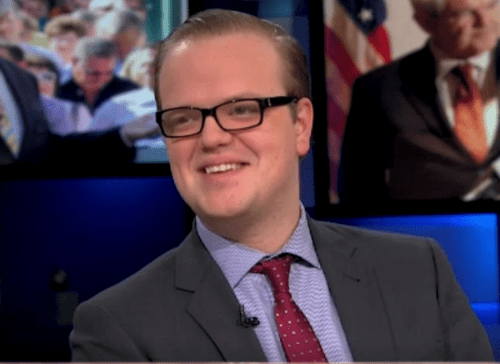
Journalist McKay Coppins joins John Dehlin to talk about spending the 2012 presidential campaign covering fellow Mormon Mitt Romney as a journalist for BuzzFeed. McKay, who grew up attending the same Massachusetts ward as Romney though he has no real memory of him before politics, describes how he became a journalist and ended up assigned to Romney’s traveling press corps. He walks through how the Obama campaign’s early, aggressive ad spending on Romney’s record at Bain Capital put Romney on the defensive about his business background for the rest of the race, and describes the day-to-day mechanics of life on the press bus: the same stump speech three or four times a day, the catered sandwiches reporters paid for themselves, and the routines of a national campaign.
McKay talks at length about how carefully both Romney and the church avoided discussing Mormonism in public. Romney rarely said the word “Mormon” out loud until late in the campaign, while the church’s public affairs office, McKay learned, had an informal policy against ever saying Romney’s name, referring to him only as “the presidential candidate.” He also discusses the scale of Mormon grassroots organizing for Romney, which Republican operatives told him was unmatched in the history of a presidential campaign, and reflects on what Romney could have done differently to make his business record work in his favor. McKay compares the intense media focus on Mormonism during Romney’s 2008 run to the more muted coverage by 2012, when the country had largely already had that conversation. He closes with a personal story from the campaign trail in Puerto Rico, about Ann Romney and a rope line full of reporters, that captures for him what it is like to be a quietly identifiable Mormon in a room full of people who assume you are not. McKay’s own reflections on the campaign are collected in his article, A Mormon Reporter on the Romney Bus.
What’s covered
- 00:00 Introduction and guest background
- 03:13 Growing up Mormon and becoming a journalist
- 10:36 Bain Capital and Romney’s political identity
- 33:27 Life on the Romney campaign press bus
- 45:18 Romney’s faith and its role in the campaign
- 54:42 Mormon enthusiasm and the Huntsman factor
- 1:10:18 What could have gone differently for Romney
- 1:17:23 The Mormon moment in American politics
- 1:23:04 Personal reflections on Romney and Mormonism
Episode Transcript
Host: John Dehlin · Guest: McKay Coppins
This transcript is machine-generated and lightly edited for readability. The audio is authoritative. Please excuse occasional errors in names and spelling.
Introduction and Guest Background
Guest [00:00:00] 1, 2, 3.
John Dehlin [00:00:07] Mormon Stories Podcast is a production of the Open Stories Foundation. All donations to Mormon Stories are fully tax deductible and go directly towards keeping the podcast alive and towards building a community of support for Mormons like you. To support the podcast or to join the community, please become a monthly subscriber today@mormonstories.org hello and welcome to another edition of Mormon Stories Podcast. I am your host, John Dehlin, and I'm very excited to have a special guest today. His name is McKay Coppins. Some of you may not know who he is, but McKay had the distinction of being a reporter following the Mitt Romney campaign for during the 2012 presidential election. And he's also LDS or Mormon. So we're super excited to have you on McKay. So thanks for joining us.
McKay Coppins [00:01:04] Yeah, thanks for having me on.
John Dehlin [00:01:06] I want to just say at the outset that this is a special episode of Mormon Stories, also because it's being brought to you today by Sunstone. It was Sunstone, the Sunstone Foundation, Sunstone magazine that helped put this together. And they are going to be having an upcoming edition of Sunstone Magazine, an article that features sort of reflections, maybe a little bit of discussion about the Romney campaign and the election. And so what we've done is they helped us kind of arrange to get McKay on and what we're going to do is have a little promotion for Sunstone because we support Sunstone. We think they're doing great work, their symposiums are fantastic every year and their magazine is just in a historical part of Mormonism. So we've got a special deal where for those of you who want to subscribe to Sunstone magazine, you can go to sunstone.org I believe is the URL. You can also go. I believe it's also sunstonemagazine.com but if you go and subscribe to the magazine, you will get a 20% off discount of the normal subscription price. All you have to do is where there's a special coupon code, type in the phrase Mormon Stories, all one word. And if you do that, you can get a 20% discount off of the magazine. It's also a very worthy cause and I just can't say enough good things about Mary Ellen and Steven and the good people at Sunstone. So please consider doing that. We'll mention this at the end as well. This is not applicable to the digital subscriptions, which are already super cheap, but it's for the print magazine version. So thanks Sunstone, for putting this together. Okay, McKay, again, thanks so much for joining us today, and I'm just super excited to dig into your experience covering the Romney campaign. But let's start if it's all right. Just talk to us a little bit about growing up in the church, your hometown, and a little bit about your background, if you don't mind.
Growing Up Mormon and Becoming a Journalist
McKay Coppins [00:03:13] Yeah, I was born in Provo to my parents when they were at byu. And when I was very young, my parents moved to the Boston area, Massachusetts. So I actually grew up there. And although I don't remember it, I was actually in Mitt Romney's ward in Belmont for a time. Yeah, I was very. I actually have no memory of him as a non politician.
John Dehlin [00:03:45] Okay, so he wasn't a bishop or anything when you were deacon?
McKay Coppins [00:03:49] Yeah, no, no, no. I never did a temporal recommend interview with him or anything like that. My parents casually knew him as somebody in the ward and then he went on to be the stake president, of course. So they knew him, but weren't, you know, best friends with him or anything. But yeah, so I kind of grew up in that same world that Mitt Romney inhabited. So whatever. You know, I never felt like I had a personal connection to him. I did feel like I always kind of had an understanding of the culture and world that he came from, the
John Dehlin [00:04:28] environment that he swam in.
McKay Coppins [00:04:30] Yeah. And so. And then after. So I grew up there in Massachusetts, graduated from high school, went to byu, served a mission in Texas, and then came home, married my wife, who actually also grew up in Massachusetts. We knew each other for a long time and then after college moved out to New York and I've been a journalist working out here ever since.
John Dehlin [00:04:56] And that mission, as I read in your buzzfeed article that we'll link to in the podcast, that mission was in Dallas, right? Speaking Spanish.
McKay Coppins [00:05:03] Yeah, that's right. I was in the Hispanic areas of Dallas.
John Dehlin [00:05:08] And that comes in later in a cool story that we'll let you tell later.
McKay Coppins [00:05:12] Sure.
John Dehlin [00:05:13] Okay. So how does one become a reporter for a legitimate, significant news source?
McKay Coppins [00:05:24] That's an increasingly relevant question in our industry since it's struggling a lot. I. At byu, I got an internship as I was graduating with Newsweek magazine and at the internship, just did everything I could to try to get a job offer out of it. So spent a few months working for free there and finally convinced them to give me a reporter job. And so I spent about a year and a half as a reporter there covering politics and, you know, anything else that they wanted me to cover. And then at the beginning of this year, I was approached by Ben Smith who was a former Politico reporter who was being tapped to be editor in chief of this website, buzzfeed. And his charge was to turn it into a actual national news organization, whereas bullshit before this was sort of just an aggregator of funny and interesting content on the web. And so he hired a small team of political reporters, approached me about it, and honestly, the reason that I took the job was because I wanted to be a campaign reporter. And he promised me the opportunity to travel and cover the presidential campaign. And I knew even then that there was a pretty good shot that Mitt Romney was. Would be the Republican nominee. Most people thought that there was a pretty good shot that would happen. And, yeah, it just was kind of an exciting opportunity to kind of be out there covering this candidate who obviously is important to our church's time and kind of this time in our church's history, regardless of what we think of as politics. So I took the opportunity and spent the last year covering Mitt Romney on the campaign trail.
John Dehlin [00:07:24] So, McKay, help me out here. I remember. Is Newsweek magazine still in print?
McKay Coppins [00:07:30] It actually is ending its print run at the end of this year.
John Dehlin [00:07:35] Okay, so it is still.
McKay Coppins [00:07:37] Yes, but I got out at the right time.
John Dehlin [00:07:40] Okay, so it is getting out. So you're not with Newsweek anymore?
McKay Coppins [00:07:43] No, not anymore, no.
John Dehlin [00:07:45] Okay. Okay. Wow. And I imagine. I just can't imagine. I'm not in any way trying to ask you your income, but I'm trying to square working for sort of an online blog with living in New York City and being able to make ends meet. But the math doesn't seem to add up.
McKay Coppins [00:08:02] Well, actually, it was a lot harder at Newsweek, which was struggling financially and had very little money. We did fine. And Annie works, obviously, also my wife. But when I got a job, when buzzfeed came to me, they actually had just closed a round of funding, $15
John Dehlin [00:08:23] million venture capital kind of stuff.
McKay Coppins [00:08:26] Venture capital, yeah. And so they had some to kind of recruit good reporters. And so, yeah, we've actually done. It was an increase in quality of life to come to BuzzFeed. Oh, good. And, yeah, so we do fine.
John Dehlin [00:08:42] Any idea if they're going to. Was this kind of a big thing to see if they were going to survive?
McKay Coppins [00:08:49] Yeah. And they actually are doing great. They ended up vastly surpassing their revenue projections for this year. And it's kind of in the New York media world, which is a very insular world. BuzzFeed's actually kind of a very exciting, you know, thing that a lot of people are paying attention to because it's Very successful. We have now opened a D.C. bureau and are opening a bureau in LA too. So coming a full on news organization.
John Dehlin [00:09:19] Yeah, that's great. That's great. Congrats. That's for everyone's listening. That's buzzfeed.com spelled as it sounds. Okay, so I guess I want to start with Bain Romney. Now, I used to work at Bain. That was my first job out of college, really. And so I know a little bit about Bain. Worked there for about a year. And Romney was kind of famous there, I have to say. He was really well respected amongst Bain people. And, you know, as the guy who saved the company, he was viewed as a turnaround artist. He was viewed as brilliant and hardworking and ethical. Just, you know, very highly respected at Bain. You know, the way that his Bain involvement got spun in the media was that it's this company that outsources jobs, that does these leverage buyouts, that siphons the money from the companies and leaves them high and dry. And some say that that was a pretty significant blow to his 2012 campaign. Do you think that those were fair characterizations or do you know anything about the Bain stuff? And did you have any comments about it, seeing that that's sort of where he kind of grew out of. Into politics?
Bain Capital and Romney's Political Identity
McKay Coppins [00:10:36] Sure, yeah. I mean, definitely from a political reporter's perspective, I can say that I think the Bain stuff really did hurt him. Because over the summer before really either campaign was spending very much money. The Obama campaign kind of took a risk and decided to dump about $25 million into ads, mostly about Bain, in kind of an effort to define Mitt Romney early on in the campaign as kind of this corporate raider, you know, greedy Gordon Gekko type figure. And a lot of people at the time, a lot of pundits, thought that that was actually an act of desperation because no campaign, you know, there's really no precedent for a presidential campaign spending that much money that early on. But I think that it actually paid off because from that point on, Mitt Romney was sort of always playing defense when it came to his business record. That was going to be what he. Right. That was supposed to be kind of the thing that won the election for him, that he was going to run on, that he was the guy who understood the economy and understood business. And he always found himself kind of defending various acquisitions and various investments and things that he had done. And so Bain's something that I think hurt him in the election.
John Dehlin [00:12:01] But I'm curious if you agree, having worked at Bain, I agree that there were some shady, I don't want to say shady things, but their job was to increase bottom lines. And sometimes I felt like the stuff that Bain would do to increase the bottom line wasn't always in the long term best interest of the companies. It was more in the short term interest of the investors to maximize short term profits or short term movement in the stock price for an arbitrage opportunity, basically. But having said that, when I first heard about Romney running for president, I was super excited because I felt like what better training to be a leader and a decision maker? Because you get all this experience of going company to company to company, you analyze the problems. It's based on data, it's very scientific and mathematical, you know, kind of researchy and it's empirical and you know, and it's measurable. So if you're successful, you turn the company around and there's profit. So it's not some fuzzy, nebulous kind of thing. It just felt like that that was actually an asset that I thought many people were going to respect and that frankly I felt like would prepare him well to do the type of budget kind of cuts that might be needed or you know, economic turnaround or, you know, right. Sizing of government programs. Did you ever get the sense that it was a bit unfair, that really Bain should have been more of an asset instead of a liability for Romney?
McKay Coppins [00:13:36] Yeah, I mean, I think there's no question that things like this, when they enter a presidential, any subject, and we'll talk about how the Mormonism got this treatment later, but I think, I think any subject, any world, any idea that enters a presidential campaign kind of gets picked apart and nitpicked to death to the point where it's really hard for the electorate to see the forest from the trees. And I think that that absolutely happened with his business record. I mean, I think that part of the problem was. So you had, you know, during the primaries, a lot of his opponents went after, after his business record. And then obviously Obama did. So you had on one hand a lot of attacks, some of them fair, some of them not so fair on his business record. But then also I think on Romney's end, he and his campaign didn't really have faith that in their ability to explain private equity to the American public, they just didn't really believe that people could understand it. And so their defense was kind of simplified and not really intellectually honest either. Saying that, you know, his whole, you know, Mitt Romney would say like my whole career has been to create jobs and that was my whole purpose was to create jobs at these companies, when in reality, like you said, that wasn't the main purpose of his job. Right. Some of the. Certainly in many cases he did, and he helped create state and sports authority and these huge companies that, you know, now employ hundreds of thousands of people. But that wasn't the main purpose of his job. The main purpose was to make money for his investors. I think that the argument that could have been successful for him would have been, you know, regardless of what you think of some of these deals, the fact is, you know, I understand the economy because I've spent my entire career, you know, figuring out how to make money and what, you know, what business ventures work and what doesn't and how these things operate. And I think that's a message that Mitt Romney never really quite got through to the voters.
John Dehlin [00:15:52] So let's talk about Governor Romney for a second. In Massachusetts, I was again, as a Mormon and a Mormon that by the time Romney ran for governor, I'd become kind of a progressive, progressive politically. So I was just tickled pink to have kind of a pro choice, seemingly pro lgbt, pro, you know, universal health care, as it seemed kind of Mormon candidate. Like, I was like in heaven when, when I thought Romney might run for president. I was so proud that he also represented kind of the progressivism and still within the Republican Party so he could get. He could be a moderate and maybe. And maybe really do well. And so I was so disheartened when he started changing his political stance late in his tenure as governor and then swaying so incredibly right during 2008. Do you think. Do you have any way of knowing whether those original progressive political positions were the real Romney? I mean, they certainly seemed consistent with. With his father, who was also very progressive, at least in many ways socially. Or do you think that it was just sort of Romney trying to be successful and he's got to run as a progressive in Massachusetts and just doing what he needed to do to win. Do you have any sense for that?
McKay Coppins [00:17:24] Yeah, I mean, that has always been the question everyone's tried to answer. It's really hard to tell with Mitt Romney what his. His true political philosophy was. I mean, you know, you had in 2012, this 47% video that leaked where he told a room of, you know, wealthy donors that half the country basically is kind of mooching off the government. And when you heard him talk about that stuff, it really did seem like that was an authentically kind of fiscal conservative, almost libertarian view. But on the other Hand, you know, maybe he was just kind of pandering to the rich donors in the room. So it really is hard to know. I did in my reporting. I have talked to people who knew Mitt Romney back as he was Preparing for his 2008 run, who said that he. There was a meeting at some point, probably more than one, but I know of at least one meeting where he kind of got in a room with political strategists who were going to make up his presidential campaign in 2008. And they basically looked at the field of opponents that he would have, which included John McCain, who is generally seen as kind of more moderate, and Rudy Giuliani, who was seen as more moderate. And they decided the only room for him, for Romney would be as kind of a right wing culture warrior. And so there was a decision made in this room that that's how he would run his campaign. Whether that actually is consistent with what he actually believes, I really think only Mitt Romney could tell you that.
John Dehlin [00:19:04] Yeah. Yeah. Well, I just have to say, I guess I was biased in 2008 because of my disappointment in him changing his positions. But I have to say that when I saw him trying to look Mike Huckabee in the eye and say I'm the true conservative, between the two of us, it really rang kind of hollow to me and disingenuous. When people like Fred Thompson and Huckabee got really mean spirited towards Romney, I felt it was because he was just not being truthful and kind of being insulting to people who probably truly deserve to be viewed as the culture warriors. Any thoughts on that?
McKay Coppins [00:19:50] Yeah, no. I mean, regardless of what he personally believed on these social issues and on fiscal issues, but it's clear that he was not the cultural conservative that say, Mike Huckabee was Fred Thompson and you know, in 2012, Rick Santorum, Rick Perry, I mean, you just look at his kind of background. He, you know, went to Harvard, he spent his adult life in Massachusetts, you know, having a lot of Mormon friends. He obviously was exposed to kind of social conservatism, but also, you know, had a lot of acquaintances and friends in his circle who, who were liberals. And he seemed kind of at ease running as a liberal, or not a liberal, but kind of a center left Senate candidate in 94 and then a gubernatorial candidate. And he clearly was not the down home, football watching, beer swigging, NASCAR fan, red state guy that Mike Huckabee was. Right. And so, yeah, I think that in that aspect it certainly did not ring true.
John Dehlin [00:21:03] Yeah. And this is sort of really getting ahead of ourselves. But I think Romney could have been elected president. I'm not sure it would have been this time, but what we clearly saw in this election for me was that minorities, women, and even LGBT kind of issues seem to have won the day. And so even if Romney wasn't able to have emerged from this campaign as the Republican nominee, it's clear that the lesson coming out of this election was that the Republican Party needs to change on social issues and become probably more progressive. And so I just wonder if Romney could have stuck to Governor Romney, progressive Romney, and even lost his second attempt. He would have potentially been primed for his third attempt to actually come across as an authentic progressive and also with all the fiscal bona fides and be viewed potentially as the father of a new version of Republicanism. Is that too far fetched?
McKay Coppins [00:22:18] Well, I think that anytime you lose a presidential run twice, you know, barring examples like Richard Nixon and people, you know, back in the, you know, 70s and 60s, I think that it's really tough to run after you've lost twice, especially once you've been the party's nominee. That said, I do think, you know, maybe in some alternate universe where maybe he had been reelected as Massachusetts governor, governor and maybe didn't try for the presidency until 2012 the first time, and had kind of stayed true to those roots, kind of the way Jon Huntsman was running his early and failed primary campaign. You know, you could see some circumstance where people turn to him as a, you know, a kind of moderate alternative to the current brand of Republicanism. But I think at this point that's clearly off table. Right.
John Dehlin [00:23:13] Well, I just wonder whether he had a lot to carry. He had his Mormonism, he had his personality that some people struggled with. He had other things. I just wonder whether these claims of inauthenticity and of not really knowing who he was was an important factor in just being too much for him to overcome.
McKay Coppins [00:23:36] Yeah, I think that the authenticity thing really was a problem for him throughout, you know, his whole political career and a big part of not just because he had, you know, flip flopped on key issues and because had kind of evolved from being this very moderate person in Massachusetts to a kind of very conservative culture warrior, but also because, frankly, because he did shy away from his faith, which I think anyone you talk to says is kind of at the core of who he is. And so I think that that was part of the problem and trying, you know, and connect with people when you're hiding what's really at your core and what colors your whole worldview and your life experience. It is hard to make people believe that you're a real human being.
John Dehlin [00:24:31] And yet, as you write so eloquently in your buzzfeed article called oh, I had it open and it's not open
McKay Coppins [00:24:40] anymore, a Mormon reporter on the Romney bus, I think.
John Dehlin [00:24:44] Yeah, I got it now. Yeah, Mormon reporter on the Romney bus, you mentioned that. Isn't that so Mormon to want to be accepted so badly that in some ways we might hide or obscure a little bit who we are?
McKay Coppins [00:24:59] Yeah, I mean, that's been my experience. It's interesting. Since writing that article, I've talked to a lot of Mormons and some Mormons and maybe it's a difference between where you grow up or where you've practiced your Mormonism. But some Mormons tell me that I'm off base on there, but like I wrote in the piece, is that there's almost a genetic longing among Mormon to feel accepted and normal and to have people kind of see your faith as something that doesn't make you weird, but that makes you good or great or if nothing else, just another thing about you. And I think that we do, as Mormons sometimes tend to squirm when we're asked about kind of the eccentricities of our faith and the darker chapters of our church's history. And we can sometimes try to talk our way around these issues or obscure the reality or truth about them. And I think that Mitt Romney did that a lot throughout his political career. And I came, as I write in the piece, I always kind of found that annoying until I found myself put in those positions as a reporter and realized it really is hard to talk about this stuff, especially in the spotlight on the national stage. Yeah.
John Dehlin [00:26:27] Yeah, it is hard. So real quickly you talk about this in the article a bit. But I've already had people, I posted to Facebook that I was interviewing you and one of the first questions that came up is what does he really believe? Like, is he, you know, what some call in the blogosphere a tbm, a true believing Mormon, a literalistic, you know, sort of Book of Mormon is historical, this is the one true church kind of Mormon. Is he a progressive, universalistic kind of Mormon? That's kind of a new wave kind of thing. Or is there any way to really know?
McKay Coppins [00:27:03] Yeah, that's a really interesting question. I think I should premise this answer by saying that again, like many of anything about Romney's belief system, I think Mitt Romney is the only one who could Truly tell you. But there was an interesting view video from 2008 campaign, from his 2008 campaign where he's talking to an Iowa kind of talk radio host. I don't know if you've seen this, but it's basically 10 minutes of him talking to the radio host when hethey're off the air. But Romney clearly doesn't realize that there's a camera recording. And he gets into this argument with the radio host because he feels like the radio host is kind of treating him unfairly. He's kind of like an evangelical social conservative guy. He feels like he's treating him unfairly, asking too many questions about his religion. You know, all the same complaints that we heard a lot from Romney's campaign. But he talks a lot about Mormonism. And I think from the sense at least, you know, Joanna Brooks, the great Mormon writer, scholar, writes on that video that it's clear that he is kind of a more literalistic Mormon, that he, he takes the teachings in the Bible. And at the same time, though, you also get an interesting part of this conversation where he's challenged by the radio host on why he used to be pro choice on the abortion issue. And like you said in 2002 when he was governor of Massachusetts, 2004, he, he was very pro choice on that issue, which many Mormons would think is at odds with the church's position. But he kind of makes this very eloquent case that church personally, you know, my church teaches that abortion is wrong, but my church doesn't teach that there shouldn't be choice in society. And he kind of makes this case for how you can be pro choice politically while still being an active believing Mormon. So there are areas where I think that in his belief system, I think that for the most part, he probably is a true believing Mormon, like you said. But at the same time, I think that he also probably sees the church as a bit diverse or open to interpretation. Probably most conservative or orthodox Mormons would see it.
John Dehlin [00:29:40] Yeah. And you write in your article a bit about his displays of private religiosity on the campaign. Talk about that just for a bit.
McKay Coppins [00:29:48] Yeah, he was very fervent in his worship and prayer. I had, you know, many people on the campaign and aides tell me that he would keep the Sabbath day holy, for example, wherever he was in the country, whatever he was doing most of the time, he tried to take Sunday off from campaigning, which is actually pretty unheard of in a national presidential campaign where it's kind of a sprint the last few Months. But he tried to take Sundays off, and when he couldn't, he would make every effort to go to a sacrament meeting. Wherever he was in the country. He would read the Book of Mormon on his iPad. He would often be seen praying privately to himself on the campaign plane, not by his reporters who were sitting in the back, but by his aides. And generally, you know, everyone said that they were kind of amazed by how fervent he was. And I write in the piece that also, you know, as a Mormon, would kind of admire his religious stamina because the campaign trail is an exhausting place, and it's a very. It's a very frenetic pace. And I counted in the last two weeks, we took something like 50 flights, several flights a day, all over the country.
John Dehlin [00:31:16] 50 flights?
McKay Coppins [00:31:17] 50 flights in the last two weeks alone.
John Dehlin [00:31:21] You were on those flights?
McKay Coppins [00:31:22] I was, yeah. I was on the travel press corps. We were in the back of the plane with him. He sat up in the front in the nice fancy part, and we sat in the back. But, yeah, I flew all around with him, and I was exhausted. And by the end of the day, I was not in the mood to the Book of Mormon and spent half an hour on scripture study, but, you know, and would often fall asleep without saying any kind of meaningful prayer or anything. But for some reason, I do, you know, I find it impressive. But Romney was very, very active in his faith throughout the campaign.
John Dehlin [00:32:02] I was really disappointed when I posted a picture to Facebook of Romney praying. How many cynical people said, oh, well,
McKay Coppins [00:32:09] it's a photo op.
John Dehlin [00:32:10] You know, I was really disappointed. I think he's a sincerely believing and observant Mormon.
McKay Coppins [00:32:19] I think if nothing else, you know, I think if he's sincere in anything in his life, it's in his, you know, in his family life and in his religious life, because, you know, people, politicians, you know, politics, and especially presidential campaigns are kind of cynical places. And certainly his campaign made a lot of decisions that could be read as cynical, but I really don't. I mean, having spent a year plus, you know, covering this guy, I really don't see any evidence to believe that he's not very sincere in his. In his observing of the faith.
John Dehlin [00:32:55] Yeah. So kudos to him on that. So tell us really quickly what it's like to be. What I want to do now is kind of jump into a bit of a chronological covering of his campaign for 2012, but I want to start with what it's like to be an official reporter on the campaign. So, like you say that a Bunch of you in the press corps would ride around on the same plane that he was. Like, talk about all that.
Life on the Romney Campaign Press Bus
McKay Coppins [00:33:27] There was kind of a group of reporters, I think it was probably around 30 reporters who were designated as Mitt Romney's traveling press corps. And we would go everywhere he went from the primaries in New Hampshire. We were following him around. Everywhere he went, the campaign would. The bus to travel around, you know, the state of whatever given primary it was. And we, the press would be on one bus, and Mitt Romney would be on the bus ahead of us. And we would drive around the state and, you know, hear the same stumps three or four times a day and, you know, eat the same Jimmy John sandwich.
John Dehlin [00:34:20] Did you get to pick your meals or was it always catered?
McKay Coppins [00:34:23] It was generally catered. You know, who pays for all this? The outlet, the news organizations do, buys the stuff and then charges the reporters. And so we would get, like, emails every couple weeks or so from the campaign telling us how much we owed them. And where it started to get really expensive was once he became the nominee and got a campaign plane right before that, we were kind of. It was kind of up to us to find our way the state where he'd be campaigning. So we would take commercial flights there and then kind of meet the campaign and all get on the bus together. Once he got his own plane, we started getting charged to fly on it. So it would be thousands of dollars in a given week just to fly around. He would be in one day, especially toward the end, he would be in four or five states in one day. It's just an insane lifestyle. And it's kind of amazing to think that some of these. I mean, he's 65. John McCain, I think, was, what, like, 72? It's just amazing to think that these guys, how old they are, how that they're maintaining this schedule.
John Dehlin [00:35:48] And you're married during this time?
McKay Coppins [00:35:50] Yes, I am.
John Dehlin [00:35:52] So you, like, didn't see your wife for like a year or two, still married?
McKay Coppins [00:35:56] Well, you know, the presidential campaign after the Republican primaries, it kind of died down for a while. Right. Like, they spent a lot of time both fundraising and kind of attending these fundraisers. There's the proposal, the whole press cord, and go to him, with him to these fundraisers. So I did get time to come back to New York when he was fundraising or not campaigning. So the really busy time was the beginning of the year and then the last few months of the year.
John Dehlin [00:36:33] So what was the longest stretch you were away from home?
McKay Coppins [00:36:39] I think at the End it was except for one 24 hour stop back at home to repack my suitcase. It was close to two months.
John Dehlin [00:36:50] Oh, my goodness. Wow. And you're just expected to crank out an article like every day or what?
McKay Coppins [00:36:57] Yeah, basically. I mean, yeah, any news that was broken, which is honestly you would think would be easy. But when you're hearing just the same stump speech every day and there are no developments in the campaign, nothing new is happening, it's actually surprising. Hard to find something new to write every day.
John Dehlin [00:37:16] Well, it seems inefficient. Why do we need 40 parallel stories every day of the same events?
McKay Coppins [00:37:23] Well, that was kind of buzzfeed's thought too. And so when I got sent out, my mandate was to not write what we in the journalism industry called day stories, which is kind of. Here's a recap of everything Mitt Romney did today. Because we know that newspapers already write stories like that and they're already out there. So my job was to find interesting insights or try to coax, you know, new small revelations out of his campaign AIDS or, you know, whatever, try to find new angles. And so there was pressure on me to produce something new. But I think that that was one of the things that made BuzzFeed interesting and also gave me a chance to write a lot about Romney's religion, was because we were constantly looking for new angles and things that weren't boring.
John Dehlin [00:38:18] That sounds interesting. Yeah.
McKay Coppins [00:38:21] Writing about that stuff.
John Dehlin [00:38:23] Yeah. Say that last part again. You went out for a second.
McKay Coppins [00:38:27] I got to spend a lot of time writing about Mitt Romney's faith and where he came from and it family and what it says about him.
John Dehlin [00:38:36] Okay, so you followed him around for a year or whatever, and you never actually got to talk to him, is that right?
McKay Coppins [00:38:47] Yeah, that was. He was not the. John McCain was famous for, you know, spending a lot of time with his press corps. He would come back to the back of the plane or on the bus together and would just kind of shoot the breeze with the reporters.
John Dehlin [00:39:01] Mitt Romney, Straight talk Express. Right.
McKay Coppins [00:39:06] I didn't cover the 2008 presidential campaign, and I came to kind of, you know, it became this like, mythical thing in my mind. Like, I couldn't imagine having that much access to a presidential candidate because Mitt Romney was very closed off. Very rarely came back to the back of the plane to talk to reporters. We, you know, gave very few interviews. And when he did, it was generally to friendly TV outlets, you know, like Fox News. But he. The only really exchanges I had with him was when he Would hold kind of a press conference and I would shout out question and then he would answer it. But I never, you know, came face to face with him and said, you know, by the way, I grew up in Belmont and, you know, my family knows you. We never had an exchange like that.
John Dehlin [00:39:57] So when you did get to ask questions, did you ask ones about religion?
McKay Coppins [00:40:05] I never did ask Hinton directly at press conferences, questions about religion, mostly because the only times he held press conferences was when there actually was news to ask questions about when a new jobs report came out after that 47% tape came out, usually when he had to clean something up, clean up some kind of gaffe or when he had something to announce. So generally I would ask questions about the actual news of the day, But I did ask a lot of questions about his religion to his campaign spokespeople and would kind of email them or call them and say, look, I'm writing this story. These are the questions that I have. Do you guys have any comment? Can you check with the governor, find out? And as I write in the piece, I never got an answer, a single on the record answer to a Mormon related question all year campaign.
John Dehlin [00:41:07] And you asked, how many do you think you asked?
McKay Coppins [00:41:11] I mean, dozens probably.
John Dehlin [00:41:14] So things like, you know, do you believe the Book of Mormon is historical? Like, what would you ask?
McKay Coppins [00:41:19] Not so much that, but more like, do you believe that your immigration position is in line with what the church teaches about immigration or the church's stance about immigration? Do you. Is the governor's. Was the governor's change in his abortion position influenced by religion at all? And if so, in what way? Generally would try to get at how his. How his faith and how his religion intersected with his political life and career and positions.
John Dehlin [00:41:59] Okay. Yeah. No dice, huh?
McKay Coppins [00:42:04] No. And what was funny is that I ended up having a lot of people on the campaign tell me that the reason they never engaged any of those questions, and I mean, obviously for the first half of the year, the campaign just didn't want to talk about it at all. But they were especially wary of talking to me about it because they knew I was Mormon and because they worried that I kind of spoke a language that they didn't speak and that Romney did speak. They kind of worried that every question I asked had some secret gotcha question lurking behind it that they didn't understand. Right. And so kind of this weird dynamic where the fact that I was Mormon almost made me a liability to them. They didn't see it as something that would make me more sympathetic to the candidate. Instead, they just worried that it made me more dangerous.
John Dehlin [00:43:05] You know, there were times where I tried to think of the most devastating question that could have been asked to Romney publicly. And the best one I could come up with was, do you believe that the Book of Mormons. Do you believe in the basic narrative of the Book of Mormon that, you know, Native Americans were dark skinned because of a curse from God? And the reason why I thought that that would be such a tough question is because it could affect the Hispanic vote if the headline was, you know, Mormon, you know, Romney believes that, you know, that Hispanics are dark skinned because of a curse from God. It's a long headline. It seems like that could have been really devastating.
McKay Coppins [00:43:45] Yeah. Yeah. Well, I wrote a lot about kind of the church's racial legacy and did ask the campaign about stuff like, you know, did he object to the. He was alive and an active Mormon at the time of when, you know, black men weren't allowed to receive the priesthood. Did he object to that? Questions about that? Again, the campaign never responded, although he was asked in a. I think it was Meet the Press, in a Meet the Press interview in 2008 about. About that and the prophecy in 1978, or the revelation to extend the priesthood to all men. And he kind of dodged by telling the story about when he first heard that the ban had been lifted. He was driving somewhere and he said he pulled over the car and began to cry because he was so happy. But he never really answered the question about, you know, did he believe that this was a doctrinal thing? Did he believe that this came from God? And he never answered that question. And, you know, that question remains to be answered on his part.
John Dehlin [00:45:04] Yeah. Yeah. So was it smart for him to avoid discussing. Oh, I thought it was interesting. You wrote in the article that the church wouldn't answer your questions, religious questions either. Is that true?
Romney's Faith and Its Role in the Campaign
McKay Coppins [00:45:18] Well, they wouldn't answer my political questions. So that was kind of the interesting. I mean, the really interesting kind of telling detail here was that Mitt Romney, until August, never said the word Mormon in public. Never said. Just never said the word. He would talk about his faith very occasionally, but he would always say my faith or my beliefs or my religion. And then on the flip side, when I talked to the church and tried to get comments from them for stories, they would never say Mitt Romney's name to me. And I actually found out later that the church public affairs office had a policy to not say Mitt Romney's name. They would kind of Vaguely refer to him as the presidential candidate or a presidential candidate, but that's weird. Instructions not to use his name. And I think it was kind of, you know, they tried very hard all year to show the world that they were not, you know, partisan in this race and that they weren't backing Mitt Romney because he was Mormon. They for some reason decided that part of that effort required them to not use. I can't explain it, but I'm also not in pr, so maybe our listeners here who are in that industry can understand why or explain it.
John Dehlin [00:46:50] Interesting.
McKay Coppins [00:46:51] I can.
John Dehlin [00:46:51] So do you think it was smart of him to avoid talking about religion?
McKay Coppins [00:47:00] I mean, that's a hard. It's a hard question. I get asked it all the time and, you know, just in conversations and things like this, I think that he should have opened up about it. I think certainly it did. It would not have made sense for him as a candidate or a politician to answer some of the questions I was asking. And so I understand from a political perspective why he didn't answer them. But on other ones, I really think that, like I said earlier, Mitt Romney is, if nothing else, a very sincere believer in Mormonism. And some of the most humanizing anecdotes from his life are from his church service, right. From when he goes out and kind of serves a sick boy in his ward or a poor family that he's home teaching or whatever. He has a lot of stories from his life where he was very compassionate and service oriented. And we didn't really get to hear those stories very much on the campaign trail because he spent so much year hiding from his faith. And he felt like part of that effort to hide from his faith meant he couldn't tell stories about his faith. So I think that the answer is yes, it was a mistake because in the end, I think he could have countered this narrative that he was greedy and completely detached from the common man by kind of telling stories about the Mormon experience, which tell a different story
John Dehlin [00:48:42] about him, which is very human. Right.
McKay Coppins [00:48:45] I mean, certainly he has a different experience than most Mormons because he's worth $200 million. So certainly it wouldn't completely solve the issue of whether he's really part of the common man. But he had a lot of human experiences that the few times we did get to hear about them were very moving. And so I think that it was a mistake not to bring those up earlier and more often.
John Dehlin [00:49:13] Right, yeah, that makes sense. I remember reporters calling me to try and get ideas on stories, and,
McKay Coppins [00:49:24] you
John Dehlin [00:49:24] know, it was interesting. When they would contemplate bringing up religion, they were pretty fair about it. They would say, look, we don't go ask John McCain about his religion. We don't ask, you know, we don't ask Joseph Lieberman to explain away the Old Testament and all the atrocities that happened in the Old Testament. They would ask me, is his Mormonism really relevant and is it fair to bring it up? How did you come out on that, whether Mormonism really was even relevant? Like, did the voters deserve to know? Was there anything about his Mormonism, plus or minus? You know, there were people, there were, you know, let's just say disaffected Mormons in the blogger knackle who would say he's covenant in the temple to, you know, to obey the prophet and so he'll be Thomas S. Monson stooge if he's elected president. You know, they would have these sort of apocalyptic kind of, you know, doomsday kind of scenarios because of his Mormonism. How did you come out on that issue?
McKay Coppins [00:50:28] Yeah, I mean, I obviously as a reporter who wrote a lot about his religion, obviously I think that his faith was fair game to discuss as a window into understanding who he was and his worldview. But I think that, like, I just had very little patience. I saw a lot of that same stuff. And I mean, I just, I mean, I guess I put it this way. There are certainly things about Mormon doctrine that are very troubling if you read the like two sentence summary of them without kind of delving into them more. Right. And then there are certainly parts of Mormon doctrine that are a lot are troubling when you read 10,000 pages on them. But I think that the problem with a lot of that kind of apocalyptic theorizing or speculation was that they saw it all as very black and white. And anyone who's been in, who lives Mormonism knows that, or really any religion knows that the reality of it is a lot more than black and white. Right. And I think that his Mormonism was certainly fair to cover and discuss, but you have to do it in a very rigorous way where you're exposed to many different voices, many different ideas. You understand what the beliefs and ordinances and teachings are and, and how they're filtered onto actual practice and living by Mormons because it's easy to say, you know, well, the Book of Mormon clearly says that dark skin is a curse, therefore Mitt Romney is racist. Right. Because he believes the Book of Mormon. It's actually a lot more complicated than that. And I think that in Discussing anyone's faith, including Barack Obama's, for example, in 2008, the determination that he is a black liberation theologist and therefore hates people was clearly a ridiculous jump. And I think that a lot of the associations and connections made based on Mitt Romney's Mormonism were kind of similar.
John Dehlin [00:52:53] You said hates white people. Is that what you said?
McKay Coppins [00:52:56] Yeah. You saw that a lot. That was a narrative that was pushed on the. In the conservative media a lot based on Barack Obama's association with Jeremiah Wright. And I mean, I think we saw a lot of this kind of simplistic discussion of Mormonism this time around.
John Dehlin [00:53:15] Yeah. And it seemed like there were a lot of people poised to try and sort of co opt the Romney moment, to sort of display or to sort of move their own agendas. And I think that I felt a lot of that pressure myself in 2008. I think I felt it a little less this election for some reason. But I sense that you found that distasteful. Like when the Mormon Think website thing came out, it seemed like you didn't have much tolerance for that.
McKay Coppins [00:53:48] Well, yeah, I mean, look, I think that like all these voices and discussions are important within the Mormon and ex Mormon and post Mormon community community. Although this stuff is all good and important. But I think that I have low tolerance for anyone, whether it's the most orthodox Mormon or the most bitter ex Mormon, to use presidential election and spotlight on our faith to try to convince the world that your experience is the only experience. And I think we saw a lot of that.
John Dehlin [00:54:25] Yeah, that's a great way to summarize it. Let's shift topics a bit. What role did Mormons play in helping Romney in his campaign? And what role did his family play or not play?
Mormon Enthusiasm and the Huntsman Factor
McKay Coppins [00:54:42] Yeah, it turned out actually that Mormons, I mean, we already, we knew and it was obvious that Mormons were very enthusiastic about Mitt Romney. But I actually talked to a lot of Republican operatives and strategists who believed that the Mormon kind of grassroots efforts for Romney were almost unparalleled in their effectiveness and certainly would have been, you know, paid off a bit more if Mitt Romney had actually won. But the Republican Party actually reported the highest grassroots activist participation of any presidential campaign ever. Most doors knocked the most calls, made the most voter contacts made. And most of the Republican officials that I talked to, they wouldn't say it on the record, but on background would say, yeah, I mean, it's the Mormons. Mitt Romney just has kind of this Mormon army out there of very excited, very Passionate voters who have missionary experience, know how to knock doors, know how to talk to people, and they're going out and doing this. And so Mormons clearly played an important role in kind of at the grassroots level.
John Dehlin [00:56:07] Was this just Mormons showing up at the, you know, the Iowa Romney campaign office or the, you know, Georgia Romney campaign office, making phone calls and going door to door and. And making flyers? I mean, how would Mormons have gotten engaged?
McKay Coppins [00:56:25] Yeah, I mean, like any presidential campaign, you have these, you know, dozens of campaign offices in every state, scattered throughout the state, and you have people show up. And most of the hard work done in a presidential campaign is done by these kind of volunteers. And, yeah, you would show up, you would get your marching orders, you'd go out and canvas neighborhoods with literature and also with kind of a script that you read where you said, who are you planning on voting for? And here are directions to your voting place. This is why you should vote for Mitt Romney, et cetera, et cetera. And those things any political operative will tell you, really ends up making the difference in the long run. And Romney's team of kind of grassroots Mormon volunteers was unparalleled in its enthusiasm.
John Dehlin [00:57:22] Right. And what about Ann and his sons? I mean, his sons got such a bad rap. Were they really involved? You know, were they central? Were they peripheral, any sense?
McKay Coppins [00:57:35] Yeah, they were certainly not center stage in the campaign, but in the last couple months, they all. They all fanned out across the country and would basically campaign as mini Romneys. Like, they would hold their own rallies, talk to people in different states, wherever the candidate wasn't there. And, yeah, I mean, they weren't making a lot of strategy decisions. They weren't running the campaign, but they were out there campaigning for their dad. The one interesting, really interesting figure was Tag Romney, his oldest son, who actually got a lot of credit in October for helping to kind of turn his dad's campaign around. You'll remember Mitt Romney's first debate performance was kind of very dominant. And a lot of people credit Tag, who with his mom, Ann, came together and told Romney, told Mitt, you know, you need to tack to the center. You need to be more moderate. And that was kind of the approach he took in that debate, and, you know, kind of totally threw Obama off guard. Ended up looking very authoritative, very presidential. It was kind of a big moment. And Tag Romney got a lot of credit for that. So he is somebody I think you should keep an eye on, along with probably Romney, who's considered to be a possible Senate candidate. In Utah. I think that his sons actually will stay involved in politics in one way or another going forward.
John Dehlin [00:59:22] So maybe the third time's a charm for the Romney legacy.
McKay Coppins [00:59:25] That's right. Maybe Tag or Matt Romney are gonna, will actually be the first President Romney.
John Dehlin [00:59:33] So they're going to run for Orrin Hatch's seat when he retires or what?
McKay Coppins [00:59:37] That's what people are speculating. Yeah. That once Orrin Hatch retires that Matt will go or Josh will go up and run. Of course, you have Jason Chaffetz there, who also is eyeing that seat. So we'll see what happens. But it's very possible.
John Dehlin [00:59:55] Got it. So I know time's running short, so let's just talk quickly about kind of the, you know, the results of the election. Do you think? Do you think? Well, first of all, how did Romney win the primary and why did Huntsman, was he almost a non factor? Do you have any thoughts on that?
McKay Coppins [01:00:21] Yeah, I mean, frankly, Huntsman was a non factor because he ran as the candidate that Mitt Romney would have been if he had stayed true to his Massachusetts roots. Basically, Jon Huntsman ran as a moderate. He ran as somebody who believed in gay rights, who thought that the tone of the Republican Party had grown much too extreme and too conservative. He believed in evolution and in global warming and science and a lot of the things were upsetting to Republican based voters. He also, you know, wasn't a great candidate. He wasn't. He had never run a presidential campaign before, obviously never run on the national stage and wasn't quite ready for prime, I think, in a lot of ways. But yeah, he kind of fizzled out of New Hampshire. He only came in third. And Mitt Romney won the primary by kind of proving that he was the only competent guy up on the stage those debates. I mean, I think that you remember the people that actually decided to run for the Republican primary, besides Jon Huntsman and Mitt Romney, were largely not seen as very serious candidates. You had a kind of, a lot of Tea Party figures, a lot of people who had been out of politics for a long time and couldn't really articulate their case during debates. And so Mitt Romney kind of proved that he was the electable candidate and that's how he won also by spending tens of millions of dollars on attack ads on all of his primary opponents.
John Dehlin [01:02:18] Right. And so once it turned to the general election, do you think, you know, do you think, what's your analysis of how he ran against Obama?
McKay Coppins [01:02:41] In what way?
John Dehlin [01:02:42] Well, why did he lose?
McKay Coppins [01:02:47] I think there are a lot of reasons. I think that like we said, he had an authenticity problem. He let Obama define him early on as kind of a villainous character and had trouble overcoming that. But in the end, he was running on a platform that just really didn't match kind of the current American electorate, the demographics. Yeah, I mean, he was very hawkish on immigration, which made it difficult for him to win over Hispanics. He obviously was not tailored message to the working poor, which was an increasingly large segment the population. And on social issues, you know, he was very pro life, very opposed to same sex marriage. There are two issues that are very mating to younger voters and so kind of turned off younger voters. The thing is the platform he had, and I sympathize with him, not as, not politically, but somebody, you know, kind of observing this whole election play out because the platform that he ran on probably would have been a winner in 2000, for example. You know, 12 years ago we had a very, very different electorate. But he's facing a different America. And the Republican Party obviously now is realizing that they have to kind of brand themselves and rebuild themselves. One interesting thing that did happen though, once he pivoted from the primary to the general, is he became a little bit looser and more open to talk about his Mormonism. He never really got comfortable with it. But at the Republican National Convention on the last night, if you were watching or if any of the listeners were watching, there was kind of an amazing half hour block where Mormonism was completely the focus of the convention. He had several Mormons from Massachusetts who he had served or served with as a bishop or as a leader get up and kind of give these testimonials of Romney's church service. And a lot of people in the political class and a lot of reporters were kind of shocked that this was happening because Romney had spent so long avoiding the issue of his faith. But yeah, he got up there and I mean, all these people got up there and talked about it. There was a prayer given by a Mormon in Massachusetts to open the night at the Republican National Convention. And then Romney himself, even for the first time publicly in that kind of setting, said the word Mormon. And so it was kind of actually a big pivot point. Like I said, he didn't obviously make Mormonism a big part of his campaign after that, but it seemed to sort of relieve a lot of tension. And from then on, Mormon became a more openly discussed topic, but also something that was seen as a lot less taboo.
John Dehlin [01:06:12] Yeah, do you think? I mean, there was some reporting and I don't know if this happens every election. There was some reporting that, like, he and Ann were devastated at the loss. Like, really shocked and devastated. Is there any way to know whether that's kind of true? Whether they really thought they were going to win?
McKay Coppins [01:06:36] From a lot of that they really believed. I mean, I was talking to senior campaign advisors the morning of the election, and they were convinced they were going to win. Their internal polling data that they had in the campaign showed them winning. It just ended up being that their internal data was wrong, basically, but they really believed they were going to win. And people I talked to who were inside the room as the returns started to come in that night said that it was kind of. Yeah, it was kind of a sense of shock that came over Romney and his wife and his senior campaign aides who were there, who really thought he was going to win. He actually only wrote a victory victory speech because he was so certain that he was going to win. And when it became clear that he was going to have to concede, had to spend, you know, 20, 30 minutes quickly writing a concession speech, I don't
John Dehlin [01:07:32] understand that because number one, he's a numbers guy. Number two, he would have surrounded himself with really smart people. And number three, all you had to do was go to Huffington Post or Politico or Real Clear Politics or the New York Times, and you'd see that, like in all the battleground states, 8 out of 10 or 10 out of 10 of all the polls had Obama beyond the margin of error. Like, it was kind of clear to anyone following the polls. How could they think that their polls were right and all the others were so significantly wrong? Or did I misread those reports?
McKay Coppins [01:08:09] No, that's about right. I mean, I think that the. The public polls had basically universally Obama winning in key swing states. I don't think we're all out the margin of error. A lot of them were still inside, but they all had him winning, which would seem to indicate to Romney that he was not looking at a happy election night. I think, though, that's kind of great ironies. One of the great ironies of this campaign that, that Romney, coming from a background of data and number crunching, ended up having terrible data to look at in his campaign. What basically happened is his campaign believed, as many conservatives believed and many pundits believed, that the turnout in 2008, which showed kind of record minority turnout, record youth turnout, was a fluke because Obama was a very exciting, inspirational figure. And there is the kind of this movement that had formed around him, but that four years later people were disillusioned and that they wouldn't turn out to the polls at the same rate that they did in 2008. So the Romney campaign was banking on an electorate that had fewer minorities and fewer younger voters. And so all their polls were modeled after this idea that it would be. That would be the electoral makeup. So those were the polls that had him winning, but they ended up being wrong. Minority turnout actually increased slightly from 2008, as did the youth vote. It increased slightly from 2008, so they ended up just basically predicting that. Wrong.
Guest [01:09:58] Yeah.
John Dehlin [01:09:58] Our minority population is growing, not shrinking. Right.
McKay Coppins [01:10:03] And I think that that's just a reality that the Republican Party is going to have to come to terms with now. They can't win just with the white vote anymore. They're going to have to do what they can to win over minorities.
What Could Have Gone Differently for Romney
John Dehlin [01:10:18] Now, did you put together a scenario in your mind where if you had been hired as Romney's campaign manager or if some things had gone differently, how Romney could have won? Did you ever put a theory together about what he could have done differently to win?
McKay Coppins [01:10:36] I mean, I didn't, no. I mean, I didn't picture myself. I never quite got that far in my imagination was riding on those long nights, but I did. I mean, one of the things that always perplexed me was that Romney never got the message about his business record to kind of the positive message about his business record to stick. I mean, it just seemed kind of insane to me. That man who probably would have been the first authentically business experience president in a century, he just couldn't make that case to the American people. I mean, it seems so obvious, right? Like we're in a stagnant economy, growth is slow, people like Obama, but they just don't feel like he could get the job done. Romney comes in with this kind of very compelling backstory and message and I just never understood why he couldn't make that statement. I think that he should have started very early on with lot ads that were very positive, but showed him as kind of this kind of brilliant, hard charging business leader. And I just, I didn't understand why the campaign didn't make that case more forcefully.
John Dehlin [01:12:02] I wonder if he just lacked charisma. You know, he wasn't. If he had Bill Clinton's charisma, I wonder if that would have been just totally different.
McKay Coppins [01:12:11] No, absolutely. I think if he had Bill Clinton's charisma, he would be president right now. But that's not something I would have Been able to change as Romney's campaign manager.
John Dehlin [01:12:22] Right.
McKay Coppins [01:12:25] The case for him. Ads could have made the case, surrogates could have made the case, but they just never quite got their message right. I don't think.
John Dehlin [01:12:35] Do you think a lot of people make issues about the 47% comment, about his comment that he likes to fire people, and then about his binders full of women comment? Do you think, you know, there's two ways to look at it. Like, if any of us had to speak on the record for 16 hours a day, we would all say silly things or stupid things or things we regret. And then there's others that say that those sort of uncovered the real Romney. Where do you fall?
McKay Coppins [01:13:05] Well, I don't think those are mutually exclusive. I think that you can say things that you shouldn't have said that actually do reveal who you are. But the examples you brought up, I think of those examples, only one authentically, you could make the case. Authentically showed what he believed, which was the 47% comments. I mean, the I like to be able to fire people comment was just clearly taken out of context and was not actually representative of what he was saying at all. And then the binders full of women thing, again, I think that it was a fun thing to make fun of on Twitter and it became kind of an Internet meme. And it was fun to joke about, but did it really, you know, open a window into his soul or into what he believed about gender identity? I don't think so. You know, so I don't know. I think that, like, that a lot of the gaffes that people say kind of derailed his campaign probably actually didn't change that many votes. The 47% thing was, I think, the exception. And I've always wondered if we ran this exact campaign through some kind of model, absent the 47% video, you know, how the outcome might have been different? Because I think the media coverage of it sort of died down after a while. But I think that a lot of people saw that video and never quite shook the image of Mitt Romney up there in a dining hall talking kind of what was apparently very contemptuously of 47% of Americans. I think that that really did hurt.
John Dehlin [01:14:55] Right? Yeah. Do you think Mormonism hurt him, helped him, or was just a total wash?
McKay Coppins [01:15:05] I think that. I don't think it hurt him, actually. I think that it was probably a wash. I don't know that it really helped him because they didn't use it the way they could have. But I think that as I Write, I think he, despite all of his campaign's best efforts, actually ended up helping Mormonism in a lot of ways. I think that there are certainly problems that the church is going to have to face going forward. As far as a lot of Americans kind of tying the Mormon Church to Romney, which for many Americans, it's not a good thing.
John Dehlin [01:15:43] It's not a. What you went out for a second.
McKay Coppins [01:15:46] It's not a good thing. I'm saying I think that a lot of Democrats probably have not very great feelings about the Mormon Church right now because they associate it with Mitt Romney, and that's kind of the only association they have. That said, I do think that Mitt Romney's entire political career served to kind of put Mormonism into the political mainstream in a way that it wouldn't have without his presidential candidacy. And so I do wonder, and I think that the next time Mormon runs for president and gets as far as Mitt Romney did, I doubt people will be making as big a deal out of his faith as they did this time around. I think in that way, he did kind of help Mormonism progress.
John Dehlin [01:16:38] Yeah. And we're down to the last couple questions. Just really quickly. So there's a lot of talk about the Mormon moment. I remember 2008 being a pretty significant Mormon moment, and then there was this feeling amongst many Mormons that Mormonism was just going to be a huge deal in 2012. I kind of felt like it fizzled. I kind of felt like people didn't care and that maybe non Mormons just really didn't care that much about. It turned out that they didn't really care much about Mormonism and that really it was just us thinking that everybody cared about Mormonism a lot more than we did. But what was your take?
The Mormon Moment in American Politics
McKay Coppins [01:17:23] No, I think you're right. I mean, I think in 2008, part of the reason was because Mitt Romney engaged the question of his faith a lot more. Right. Because he was trying to win over evangelical voters in the primary, felt this need to convince evangelicals that Mormonism was just another Christian sect and that they could accept him and his faith. And so that made it kind of a very hot topic to write about and talk about on TV and on radio and in podcasts. But I think that by 2012, I think you're right that, you know, a lot of Americans felt like we'd already been through this once. And frankly, as the year wore on, I mean, there was certainly a lot of coverage of Mormonism. But as the year wore on, I Think people just slowly kind of got used to it and they were vaguely aware of some of the controversies related to the religion, but generally didn't have to say about it. And I was always expecting, even as a campaign reporter that there would be some moment in October where an Obama surrogate or some Democrat, Democrat would go on TV and kind of let loose on Mormonism somehow. And I was, and I was just kind of waiting for that moment to see, you know, how it would play out and was ready to, you know, writing about it and it never really happened. It just kind of, like you said, it kind of fizzled. And honestly, I think that that's kind of good for Mormonism. I think that rather than having all these media manufactured moments, Mormonism has slowly, gradually kind of been elevated to the status of a lot of other religions in our country to where it's going to be paid attention to, people are going to talk about it, but it's not seen as this weird, crazy kind of movement that everybody has to wonder about all the time.
John Dehlin [01:19:34] Did you get any grief about your stories from Mormons?
McKay Coppins [01:19:39] Oh, sure. I mean, yes, I would write stories about. I remember once, yeah, I would get a lot of kind of angry emails and tweets anytime I wrote about the Mormon issue in a way that Mormons didn't want to see it written. I remember once when I wrote about the kind of racial history of the church and how that might play out in the election. I got this one Mormon on Twitter who was just convinced that I was going to hell and that I had betrayed our religion and how dare I? Of course, I don't have to tell you, John. I'm sure you get all kinds of angry emails too. But it was just kind of, it was an interesting experience to see Mormons get so worked up about these parts of our history being brought to the forefront. And while I'm certainly sensitive to that and I understand why people are kind of queasy about it, I do think that our defensiveness and oftentimes fear of confronting these issues just makes it worse. And I hope that the so called Mormon moment helped even just a little bit to heal us of that.
John Dehlin [01:21:06] Yeah, me too. So any, you know, there's talk of John Huntsman in 2016 of me a Love. I was wondering whether Romney had a chance to run again like you said. No, Nixon. Nixon lost twice and then came back and ran. Any future prospects for Mormon politicians other than Romney's sons that we're talking about or not really, I don't know.
McKay Coppins [01:21:33] I mean There are certainly rising stars in the party. Whether they'll run for president, I don't know. But you have people like Jason Chaffetz, you have Jeff Lake down in Arizona who was just elected to the Senate, but no one, I mean, Jon Huntsman is a possibility, but at this point, I think the Republican Party is so upset with him that I doubt he'd ever get the nomination.
John Dehlin [01:22:03] They're mad at him, Is that what you said?
McKay Coppins [01:22:05] Yeah, they're mad at him because he kind of failed to fall in line after the primary and ended up just being kind of an outspoken critic of the party rather than. Than a. Kind of a good soldier. But, yeah, I don't really see anyone in the immediate future who looks like an obvious presidential nominee.
John Dehlin [01:22:27] Got it. Well, why don't I end the main body of questions? Is there any final reflection or thought or personal moment either about Romney or about American politics or about being a reporter or being about a Mormon reporter covering a Mormon politician? Any final thought or insight or reflection, maybe even personal, that you wanted to kind of leave as we kind of. As we kind of wrap this up?
Personal Reflections on Romney and Mormonism
McKay Coppins [01:23:04] Yeah, I mean, I think we actually alluded to a story early in the podcast, and I guess I'll tell it now so I don't leave people hanging. But this story, something when I was on the campaign trail and I wrote about this, kind of reminded me of what it's like to be a Mormon and how hard it is to kind of talk about these issues in our face sometimes. There was a moment during the primary in Puerto Rico that Romney had just finished a rally. And afterward, a small group of reporters was talking to his wife, Ann on the rope line, and she was talking about the rallies she had been to in Puerto Rico and how she didn't understand any of them because they were all in Spanish. And then asked the press corps, does anyone here speak Spanish? And like I told you, I speak Spanish. I learned it on my mission. And one of the reporters told ann, you know, McKay does, and she turned to me, and in that moment, I thought, you know, this would be a great opportunity to tell her that I was a fellow Mormon, because I didn't know if she knew or not. But with all. With all the reporters kind of looking at me and Ann looking at me, for some reason, I just couldn't. I couldn't say it. So I just kind of let the conversation move on without me. And as I was thinking of it afterward, I was like, why didn't I tell her it was Mormon? And I thought maybe it was because I didn't want to see reporters. I didn't want reporters to think I was using my religion to get some kind of in with the candid family. But I think that the real reason was just that I didn't want to feel different. And I think that that was something that most Mormons can relate to at some time in life. I think that we all have moments where we just want. We want to blend into the background and want the things that make our faith weird or different to kind of disappear. And that's something that I made me kind of understand why Romney had such a hard time talking about these issues on the campaign trail. But at the same time, you know, that's kind of what makes the Mormon experience great, is us kind of reconciling the harder parts of our religion with who we are and being able to talk about those things. So that's something that I came to appreciate this year as a reporter covering Mitt Romney.
John Dehlin [01:25:51] Were there moments where Romney made you feel proud to be a Mormon?
McKay Coppins [01:25:56] Yeah, absolutely. I think that there, you know, during the convention, certainly hearing some of the stories about his kind of service, I remember, you know, during those stories, while these people stood up there and told these stories about Mitt Romney, you know, coming to the bedside of a cancer stricken young boy and doing all these kind of remarkable acts of service that took a great degree probably of emotional energy. I remember looking around the convention hall and everybody there was like, there really were very few people who were not crying. I mean, people. These stories were bringing tears to these people's eyes. And I realized that Mitt Romney, you know, being this very wealthy, very powerful, very competent individual, never would have had these experiences if it weren't for his Mormonism. And so that, I think that was one of the moments in the campaign where I did feel. Feel really proud to be part of this faith.
John Dehlin [01:27:05] Yeah, I'm really proud. I'm really. I think Romney has done great things. And, you know, I don't know that any other Mormon has risen to his level of achievement or prominence or notability other than maybe some entertainers or athletes. But he definitely has brought Mormonism to a new level of consciousness in America. And it's through, you know, honorable works, you know, and I'll just throw my two cents in and say I'm. I'm proud to call Mitt Romney a fellow Mormon.
McKay Coppins [01:27:44] Yeah, me too.
John Dehlin [01:27:46] So what's next for McKay Coppins?
McKay Coppins [01:27:50] I'll be staying at Buzzfeed covering national politics. I may in the near future have a book in me. So I might be writing a book and basically moving on to other beats. It's kind of interesting. Interesting. Now covering politics without having this religion beat as sort of a crutch to lean on every time I out of a story idea. But I'm sure I'll be writing about Mormonism again in the future.
John Dehlin [01:28:25] Sure, sure. All right. Well, McKay Coppins, how should we tell people to follow what you do? But buzzfeed.com is one. Anything else you want to tell people in terms of how to follow your good work?
McKay Coppins [01:28:39] Yeah, if you're on Twitter, I'm akaycoppins. I'm C K A Y C O P I N S. And on Facebook, you can also friend me or follow me or subscribe to my updates or whatever you do on Facebook, just look me up. McKay Coppins, I'm right there.
John Dehlin [01:28:59] All right, McCullough. Oh, well, I just want to thank you so much for not just for coming on Mormon Stories, but again, as a fellow Mormon, for your writings, your articles, your coverage of this very important moment. I think you did it with class and integrity and with insight and intellect. I loved following your stuff. I was proud, just as proud to have a fellow Mormon riding that bus or that airplane knowing that you were able to cover this important event with the particular insight. So I think you deserve a ton of credit for the good things you did for your people as well. So as a fellow Mormon, thank you, McKay Coppins, for what you did for us the past couple years.
McKay Coppins [01:29:51] Thanks, John. And obviously I don't need to tell you, but you've been a long time listener and appreciate everything you do. Also. I think that. But the stories and the interviews that you do are vital to the Mormon conversation. So keep it up.
John Dehlin [01:30:07] Thanks, McKay. All right, take care.
McKay Coppins [01:30:10] Yeah, you too.
John Dehlin [01:30:11] Everybody else, again, just a quick reminder that this episode was brought to you by Sunstone magazine. If you want to go to sunstonemagazine.com or sunstone.org and subscribe to Sunstone Magazine, which I encourage you to do, you can type in Mormon Stories as the coupon code, discount code, and you can get a discounted 20% off a year subscription to Sunstone. They're good people. They're doing good work. Look for the new Sunstone magazine coming out soon. Sunstone may support other special editions of Mormon Stories. But also if you want to have a conversation with McKay or with other listeners of the podcast, maybe go to mormonstories.org where we post this podcast. Please feel free to give your comments there to talk about it. Maybe Mikayla, stop by and answer a question or two if you have it. And again, thanks everyone so much for listening and for your support. You guys take care.
Guest [01:31:17] 1, 2, 3
John Dehlin [01:31:23] thank you for joining us today on Mormon Stories. Music today was provided by the Saber Rattlers. Check them out at saber-rattlers.com the Mormon Stories logo was generously donated by StudioCase.com thanks for listening.
Closing Hymn
Guest [01:31:38] Come come ye saints no toil nor labor fear but with joy when you're away Though hard to you this journey may appear Grace shall be as your day Tis far for us to strive Our useless cares from us to drive to the San Jo Hearts will swell oh, all is well, all is well. Why should we mourn? I think our lot is hard Tis not so all is right why should we think to earn a great reward if we now now sh the fight Gird up your lo fresh courage Take our God will ever us for sake soon we'll have tale to tell all is away well all is well oh, all is well all is well. Sam. And should we die before our journey is through happy days all is well we that are free from toil and sorrow too with the just we shall dwell but if our lives are spared again to see the saints, the rest obtain Or I will make this chorus well oh, all is well all is well all is well
John Dehlin [01:35:30] all is well
Guest [01:35:32] well all is well oh, all is well. All is well all is well Sam.
Transcript © 2026 John P. Dehlin. All rights reserved. Brief quotations are welcome with attribution and a link to mormonstories.org; all other use requires written permission.



5 Responses
Great interview. I enjoyed looking behind the curtain of a big time political campaign. Thanks for the insights!
The picture makes him look like Tom Arnold.
Thank you. I thoroughly enjoyed this. Great perspective.
Interesting.
Even though McKay had a closer view of the Romney campaign it is interesting he was left wondering (as we all were) who the real Romney is. Romney as a candidate was a huge disappointment. I had hoped his campaign would “raise the bar” in terms of honest rhetoric and put the focus back on issues rather than character assault. I feel like Romney sold his soul in pursuit of the presidency, with one of the more dishonest campaigns we’ve seen. It kinda makes all Sunday School lessons about “standing up for truth/honesty” pure nonsense. It was disappointing to see the church-owned newspaper, Deseret News, run counter to the claims of political neutrality in their coverage of the campaign. The overall message seems to be “the means justifies the ends,” the same message we got from the Prop 8 campaign. Sad.
What a great choice as a guest for this episode, very well done! What a unique experience that must have been for McKay, what a story he has to tell. If he writes a book detailing this experience, I would be interested in reading it.
As McKay talked about the difficulty he witnessed Mitt Romney had explaining the church and his faith, and then when McKay related the story at the end about deciding he didn’t want to open himself up to questions about the church in his encounter with Ann Romney, I made a connection in my head with some other topics I’ve been thinking about. Maybe I’m off base with this connection, but here is my thought: has the church’s insistence (since at least correlation, if not before) on promoting its version of historical events and reasons (or lack thereof) for doctrinal claims made it more difficult for its members to engage with others in these types of discussions? Let me elaborate on what I mean by “these types of discussions”: I mean discussions where a member is not simply presenting the church to someone for the first time who knows nothing, or next to nothing, about what the church is about and how it came to be. McKay talks about how we sometimes “squirm when we are asked about the eccentricities of our faith and the darker chapters of our church’s history” (I had to quote verbatim, it was a brilliant summary of what I am getting at). I believe there could be a very direct link between the degree to which the church promotes only its explanations and the amount of difficulty and/or reluctance of church members to engage with individuals who have a different explanation.
It is interesting that this would be the case, and in my experience I agree that the reaction by the average rank and file member is this squirming and/or talking around the issue. It is even more interesting given the institutional motivation to missionary work and spreading the church to our friends and neighbors. Maybe the effect (squirming) is not actually caused by what I am proposing (institutional conformity on the issues), but if there is a connection then I think that would motivate church leadership to address it in some way.
I for one was one who used to talk around the difficult issues if they were brought up, because I was certain I could make it seem like the details didn’t actually matter without actually telling the other person that they must have their facts wrong. Knowing what I know now, which is still not all that much, I believe I would respond much more calmly and very matter-of-factly. Admit what is troublesome, admit what I don’t know or don’t understand, embrace the quirky things that are harmless or that make us who we are as a people and then see where the conversation goes from here.