
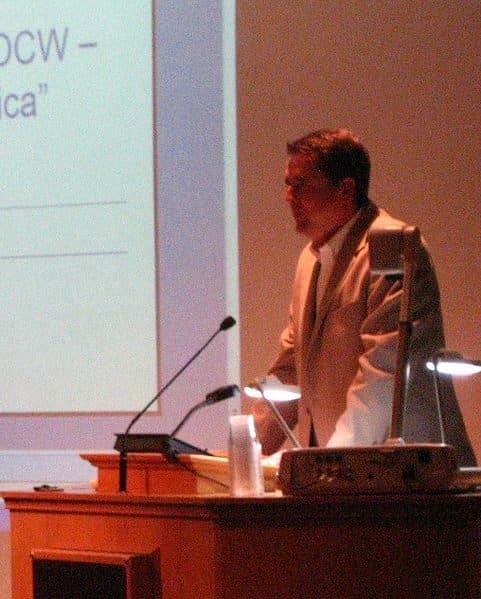
This 4-part workshop series was recorded during the August 2010 Salt Lake Sunstone Symposium. During the workshop, we explored techniques for navigating an LDS Faith Crisis — both in and out of the church.
Part 1
Episode Transcript
Host: John Dehlin
This transcript is machine-generated and lightly edited for readability. The audio is authoritative. Please excuse occasional errors in names and spelling.
Introduction and Workshop Overview
Part 1 of 4 · Ep. 178
John Dehlin [00:00:00] Hi, this is John Dehlin. Thank you for joining us today on Mormon Stories. What you are about to hear is part of an all day workshop recorded at the Salt Lake Sunstone Symposium on August 4, 2010. The first half of the day was dedicated to navigating an LDS faith crisis in or out of the LDS Church and the second half of the day was dedicated to navigating an LDS marriage when one of you loses their faith. Since I'm in graduate school, I put this workshop on in part to help raise money for my family's health insurance. So my initial intent was to only share this workshop with those of you who contributed financially to the podcast. However, many of you, my financial supporters, have encouraged me to go ahead and release the full workshop anyway so that all can benefit. So that's what I've decided to do. But I'm doing it with a plea. If you have not contributed to Mormon Stories and you find value in this workshop, please take a moment to contribute to Mormon stories today@mormonstories.org either with a one time donation or signing up for a monthly subscription. Without this support, I cannot continue to create this content for others and for you. So thanks so much to all of you who are monthly subscribers and please keep in touch through email@mormonstoriesmail.com and now on to the workshop.
Speaker Background and LDS Upbringing
John Dehlin [00:01:16] I hope you enjoy so I'll just give you a really brief intro. My mom's here. Hi Mom. I'm 40 years old, born in the covenant. My mom tells me I'm a fifth generation. I think I'm a sixth generation and we have arguments about which is more which is better to be a fifth or sixth generation. She comes from the generation where the lower your number is the better and I think it's cooler to be have a bigger number, but I think depending on which line you trace it through. Pioneer Ancestry Had a wonderful church experience growing up. Marvelous. I served a mission, went to byu, married in the temple, and have always just been really grateful to be a member of the church and still am. I'm still a member, still active in the church, married with four kids and I guess I stumbled into this area through a really tough mission experience which you can listen to if you go onto my podcast. But then when I was called to be a seminary teacher in Seattle when I worked for Microsoft, I started studying church history in depth and I discovered this huge chasm between the narrative that I was kind of taught in seminary growing up and what the historical record actually showed and that made me feel betrayed and lied to. And deceived and. And sad. And my kind of whole worldview caved in. And it's been about 10 years, 10 or 11 years since that happened. And I've just been trying to find my way since then. I started a podcast to try and share my journey with other people. Lots of listeners now. And I've spent the past five years informally counseling with people who are going through faith struggles. So I've probably counseled with over 1,000 people just in the past five years, either through email or phone or personal visits across the world. So that's the experience that I bring, I guess. And I actually have left my former career as a technology guy, and I'm in the second year of a PhD program at Utah State University in clinical psychology, where I hope to be a therapist for people who are struggling. So that's a brief introduction. I have to admit that. That this title is not ideal. Somebody here emailed me and said it's a horrible title because it's, you know, how to. How to navigate a crisis of faith, and maybe there are other ways to look at it. And the best analogy that I could come up with was Adam and Eve in the Garden of Eden. I love the metaphor of Adam and Eve because there's sort of this. There's this situation in the Garden of Eden where Adam and Eve, they're kind of blissfully ignorant. Things are simple, they know what they're supposed to do, life is taking care of them, and everything seems great. And this is sort of the way that some of us grow up in the church, where it's just. It's just a fantastic, wonderful, idyllic Garden of Eden experience. But we all know that Eden can't last forever. And at some point, we get cast out of the garden and life becomes complex. There are thorns and thistles and noxious weeds and bad weather and dangerous animals and all sorts of nasty things that come about. And it's easy to think of that as a horrible experience. And this is the only. This is the only picture I could find of Adam and Eve sort of in their later years. And I'm pretty sure our church created this, but I'm not totally sure. But you have to ask yourself, if Adam and Eve were trying to decide which they would have rather had at the end of their life, would they rather stayed here or they rather have had this? I think that they would be willing to give up the safety and the security and the comfort that they had originally and would be willing to trade that for the difficulty and the complexity but also the probably greater amounts of joy and fulfillment and satisfaction that they were able to experience in the mortal world. And I kind of think of that as what the crisis of faith offers all of us. It's not this horrible, terrible thing that's going to wreck our lives. I see it as leaving the Garden of Eden for the first time, and it's scary and. And it's dangerous. But in my experience, for the people who have approached it constructively, it leads to incredible amounts of fulfillment and enlightenment and joy and meaning and purpose if you go through it. And I'm not saying leaving the church leads to that. I'm saying that going through a crisis of faith and figuring out how to rebuild and find meaning in or out of the church leads to this level of fulfillment and satisfaction for the people, I think, who approach it constructively. And it's not easy. I don't have all the answers. I did look for other interesting Adam and Eve photos, by the way, and I thought that was a fun one. And then I think this is my favorite. That's Homer and Marge. Anybody know who the snake is? Can anyone tell who the snake is? Any Simpsons fans? It's Mr. Burns, and he's using a donut instead of an apple to attempt. Another analogy I think is apt. And maybe I don't want to beat this to death. We all maybe rode a tricycle when we were young, and it was safe and it was comfortable and it was fun. But what if you were able to graduate from your tricycle and ride something a little bit more fancy? Which would you pick? Yeah, there's some blood and crashes that sometimes you're going to confront, but there's also a lot of joy. And so maybe Lance Armstrong isn't the best example, or maybe he is of what we're talking about. But here's a quote. I asked a bunch of my listeners and friends to just share some quotes or insights, and this is one that I really like, that I thought I'd put up front. Out of suffering have emerged the strongest souls. The most massive characters are seared with scars. And I don't know who said that I should look that up, but I think that that's true. And I think that I want this presentation to be one about hope for all of us, not one of tragedy at what we're going through. Rahm Emanuel. I don't want to get into politics here, but Rahm Emanuel is fond of saying, never waste a good crisis. And I think that's another way to look at what we're experiencing. And if I had to throw my own two cents in, I think that a faith crisis can be a beautiful, wonderful gift. So let's maybe talk about a refinement of faith instead of a crisis of faith throughout the day. So for many people, the LDS Church experience can be likened. Unleave it to Beaver. A lot of you won't know what that is, but there's this wonderful show where there were two young boys and wonderful parents, set in the 50s, where just everything was perfect and wonderful and golly, gee willikers, isn't life swell? That's the Beaver Cleaver family. And this is something that Beaver Cleaver would say, gee, Wally, Mormonism is the greatest thing since sliced bread. And that's sort of how it is for many of us. This is the Ayer family. This is just the perfect example of showing how wonderful the perfect Mormon life can be. And I actually believe that this is achievable. And I know families like this. And if Everybody can have 12 kids and all of them return missionaries and all of them sealed in the temple and all of them handsome and going to Harvard for their graduate work, I think that's fantastic. But it doesn't happen for everyone. And for others, the crisis of faith is like the Truman Show. Anybody seen that movie? Or the Village? Anybody seen the Village? I'm not going to try to explain these metaphors, but for those of you who have seen these things, you can kind of get what I'm talking about. Or the wizard of Oz, where you're able to peek behind the curtain a little bit and see that things are a little bit different than you thought. Or Pleasantville. Anybody seen Pleasantville? See some heads nodding. And I like this metaphor a lot because the color that comes into people's lives when they kind of reach this awakening represents the type of positive enlightenment that I'm hoping that we can focus on today. Not that everybody who's in the church in a traditional mindset is dark and monochrome. I don't believe that. I'm not setting up this thing where everyone who's a believer in the church is ignorant and Pollyannish and uninformed. I don't believe that at all. But for some reason it doesn't work for some people. And for them I liken unto these metaphors. And the Stepford Wives would be another example of a type of metaphor that the church can be like for some people, their church experience. And if I had to summarize what all these images sort of were trying to invoke it's this idea that something that you once believed in, maybe in totality, didn't end up being quite what you thought it was. And to be honest, this is just maturity. Your parents end up not being what you thought they were. Your spouse maybe doesn't always end up. Except for my parents. That's the one. Well, my mom. Maybe your spouse isn't always what you thought your spouse would be. Maybe your children didn't end up like you. So this is just life. It's just dealing with complexity and falling short of ideals. But I think if I was trying to think of the best analogy that I could think of for people that I work with every day, it'd be the parable of the Concorde, which was a really famous airplane that could reach Mach 21350 miles per hour, cruising a few hours from New York to London. Luxurious and spacious. Wonderful. There's the pilots. There it is flying. And the Concorde is an amazing airplane, maybe one of the best ever designed. And the only problem is, every once in a while, it erupts in a ball of flames. And so if you're. If you're one of those 99% or 95% of the passengers that are able to enjoy the Concorde, it's outstanding. You. You're having the greatest ride of your life. But if you happen to be on the margins, maybe you're a feminist, or maybe you're gay, or maybe you're an intellectual. If you happen to fall on the margins in some way, it's not just like it's an unfortunate thing or unpleasant thing. It can be a catastrophic thing. And so we go from Mormonism is the greatest thing since sliced bread to help me. I'm actually on fire. And this isn't too. I mean, this is. Yes, this is not realistic, but I mean, emotionally, I don't think it's too far from reality. I have people call me every day. My wife left me because I read the wrong book and she took the kids. I'm suicidal because I can't stop my attraction for people of the same sex. And I don't know what to do because I don't want to end my marriage. But I'm terribly lonely and sad and depressed or, you know, I'm a woman, and I bought the Mormon way hook, line and sinker. I had all these opportunities, but instead I became a mother. And I did everything I was told to do. But now I'm 40, my life is not what I thought it would be. And now I feel like I'VE wasted my life and I'm suicidal. And I get these calls two to three times a week from people. Not that it's the majority of the church, but it's some and so. And definitely minority. But. So the question that I wanted to start with, to kind of frame our discussion, is what determines someone's feeling about the church? What makes some people have a wonderful experience, and what makes some people want to leave it? And I think it is important to start by something that I hope you won't be bored with, but it's my quick analysis on how religions work. Okay. And I'm going to just stipulate that we're putting aside the question of divine origins and absolute truth claims. This is a bit of a secular interpretation of how religions work. But I think it's important because I think there are lessons here that are important as we're trying to unravel and then reconstruct our own faith. So I think humans are born with some very basic needs. You think about Maslow's hierarchy of needs. They need food and shelter and air. They need some type of social network. They need a sense of identity. They want to belong to something. Oftentimes, people want to be led. I remember an elders quorum lesson where I was trying to help some people think out of the box, and a guy raised his hand and he said, I don't want to think out of the box. I want you to tell me what I need to do, and then I want to do that. There's a good group of people that just. That's how they want to live their life. And I don't think that that's bad. I think oftentimes that's laudable and simple and a lot less complex. If you can do that. Just some people aren't able to. A lot of people need some type of meaning in their life. They want to understand why we're all here. People long for spirituality. One of the major things is people have to deal with this dichotomy of knowing that you exist and knowing that your loved ones exist, but that your life is going to end at some point. And you have to figure out, what does that mean? What's the purpose of it all? What happens when we die? We need family support in raising a family, and we need help dealing with tragedy and chaos and all sorts of horrible things. And so as I've tried to figure out how religion works, this is from the picture from south park, is that charismatic leaders who may or may not be inspired by God, understand how Humans work, they understand that people have these needs. And they, whether it's through sincere divine revelation or whether it's through their own personal motives, they either have an experience with the divine or they claim to have an experience with the divine, something that no one else was fortunate enough to be privy to. And we kind of just have to take their word on it. And from there they usually try and write down their experiences in some type of scripture. And from there, if the religion is really successful, it's usually because their leader got killed in some way and that somehow makes them even more successful. Whether it's Jesus or Moses, he kind of just disappeared, or Buddha just kind of got enlightened and taken up somewhere, or Joseph Smith. So once these leaders die, churches spring up to try and institutionalize and make policy around the core teachings of that leader. And even as soon as the church is erected, it's not staying true to the teachings of its leader because it's impossible. But churches do their best to come up with policies and guidelines to try and institutionalize what that charismatic leader came up with. So how do they gain converts? First thing they do is they create a simplified narrative of the founding of that church so that you know, you can't tell a whole story. So you just make it really simple. You create a simple story or narrative that you can tell people in an elevator or in a 30 minute little discussion on their doorstep, and you give them a core set of doctrines or teachings to believe in. These are based on helping to resolve all those issues that I raised earlier about the human condition. And you give them some standards to follow and maybe even a cultural identity that they can assume. And you give them a community infrastructure of support. And that's crucial. I don't think you'll have a successful religion without a successful community. And so these missionaries often target the least fortunate, the poor and the sick and the needy and the suffering, because they're least happy. And they most are dealing with these issues on a day to day basis, whether it's death or meaning or poverty or whatever. They teach them the doctrines of the standards, they tell them the founding story. And this is the most important part. And I hope I'm not, I hope, I don't mean to offend anyone here. I'm not telling you that this is what your religious experience was. This is my best attempt at understanding religion experiences more broadly. And I'll leave it to you as to what your own experiences were. But you introduce these potential converts to this community and you make them feel loved and Embraced and accepted. Then you do something to facilitate an emotional experience with them so that they feel tears, they feel tingling, they have the hair raised up on their skin, and you associate that. You pair it in a very classically conditioned sense to the church so that they associate that emotional experience with the church and with the community and with the teachings that they experience. And once they've made that connection, then they draw the conclusion that those emotions that they felt meant that this is the church that they should join and that this is the church where God is and that they should be a member. And that's the anchor upon which people then commit the rest of their lives to, as I've been able to understand it. So to simplify the formula, founding story plus scripture plus a community of support plus some happy emotional experience or fulfilling, rewarding emotional experience, leads to a conversion or a testimony. Yes. Glenn, I just want to ask you a question. Yeah.
Emotions, the Spirit, and Missionary Training
Guest [00:19:25] Do you know if the church still does the missionary training? Like, I took a class at BYU and I was there 20 years ago, and they taught us this exact thing. Help the converts identify and recognize the spirit, that when you see that they're having this emotional response, that's when you make that connection. And so it was very explicit instruction that I had. And I'm not sure if the church is still doing that with missionaries that go out today or if they've moved to a different approach or not. I'm just curious if anybody knows.
John Dehlin [00:19:54] I would say yes. I would say absolutely, yeah, they did for you, Brian. Yep. That's just. I don't know how else it would work. So what they ask for in return is some percentage of your income, usually some time that you can dedicate to make the church successful. You have to take on the. You have to take on the behavioral and appearance identities of the religion, because that's an important part of it. You need to be able to follow the rules and do what you're asked. Within reason.
Guest 2 [00:20:26] Something that dawned on me in the previous slide was connecting an emotional experience to the spirit. Can you talk a little bit more about that underlying assumption that emotions and the spirit are the same thing? My personal view is that they are not.
John Dehlin [00:20:37] Okay. Yeah.
Guest 2 [00:20:37] But can you talk a little bit more about them?
John Dehlin [00:20:38] Sure. I don't. You know, I'm not saying that this is truth, and that's why I tried to give that disclaimer that I'm not trying to tell you what your religious experiences have been, but this. For people who have had a crisis of faith, this has been one of the things to cause their crisis of faith. I remember when I was, you know, in my later teen years and I was watching the Muppet Movie, I was a huge Jim Henson fan. He's one of my personal heroes. And during this Muppet movie, I start crying and the hair starts standing up on my. On my arms. And I feel the exact same thing that I felt in youth conference testimony, meeting. And I started asking, whoa, why am I feeling that when Kermit, you know, has a wonderful resolution with Miss Piggy? And to me. To me, there was no difference in terms of how wonderful I felt. Now, I'm not trying to tell you what the spirit is and what the spirit isn't. I think it would be fun to have you try and tell me what the difference is in a way that we all could relate to. I don't think you could. I think I've been through enough of these conversations to where people try and explain the nuance of an emotional experience versus the spiritual experience. And I think that you may think that for you, you understand that, but I don't think you could ever say anything that would help the rest of us get that for our own personal experiences. Now, I don't want to derail our conversation by having that debate, but all I'll leave you with is I totally validate that the spirit might exist as we conceive it, and it may very well be the center of some of our personal experiences, and the rest is emotion, or the spirit uses emotion. I don't know that we can solve that here, but I do not reject that possibility. And I'm not trying to tell you that your spirit is just emotion. That's. I think that's the best that I can offer. Okay. I'm really not. But I think for people who can relate to what I'm saying about struggling with the difference between spirit and. Okay. So, I mean, at least I'm not losing most of you or offending most of you, as I say that for many, this is a great bargain. I mean, life is messy. Life is ugly. You just have to look to other countries to know that life can be a disaster. And so sometimes trading a little bit of money and a little bit of time, you're actually way ahead than you would have been if you tried to make it on your own. So I don't think that. I think that this is a totally good deal for those in the early category, for those for whom the church experience works. So how do churches keep members? If you think about all these items that I listed for food and shelter. Our church has a welfare program for social stuff. They have all the social activities. Relief society, elders quorum, high priests, young men, young women's primary. It's fantastic sense of identity. I'm a Mormon pioneer stock. It's my tribe, it's my heritage, it's my people. The Jews have something like this, Catholics have something like this, Muslims have something like this. It's a beautiful thing when you have it, some sense of morality. Do we want to spend every moment of our lives trying to decide what's moral and what's not, what's ethical and what's not, how we should live and how we shouldn't? It's a lot easier if you just sort of get some basic guidelines and live by them and then enjoy your life instead of having to make some life changing, crucial decision at each turn. For the meaning of life, we have the plan of salvation. It tells us why we're here, where we come from, where we're going. For spirituality, we have rituals and church experience and testimony meetings and general conference. For those who enjoy that stuff, I certainly do. For coping with death, we have the resurrection, we have heaven, we have eternal families. For family support, we have, you know, your wife's pregnant, casseroles for two weeks straight. You need, you know, you need all the sod laid in your front lawn. Tell the elders quorum, you have 30 people showing up at 7pm and you'll have your sod laid in about, you know, know, 20 minutes. For dealing with tragedy and chaos again, you've got home teachers and visiting teachers and all sorts of support. And for creativity, you have choir and music and roadshows. Well, we used to have road shows and all sorts of other wonderful things that help people develop their creative aspects, creative speaking, et cetera. It's wonderful. It's beautiful, it's fantastic. Again, for many, it's a fantastic bargain. So if, if it's all so wonderful, why would anyone leave? And I shouldn't be telling you this because you're going through it, but in some sense I'm just trying to kind of bring us all on the same page. So what makes one person believe and others leave is what that slide should say. But the two key words are function and context. So if you were to tell me the context of your lifelong and current Mormon experience and the function that the Church plays in your life today, I think I'll have a pretty good shot at telling you whether you're going to leave or stay in the church. So I'll Give you an example. If you are a pioneer stock, your immediate and extended family are all true believing orthodox members of the church. You love the members of the church and every Sunday you go and you're just raptured in joy to see everybody. If you fit well with the culture, if you had a wonderful church experience growing up, if you're fundamentally a social person and like being with other people, if you believe the historical narrative that the Church teaches you, if you view the leadership in a positive way, if your employment or your income is somehow based on your relationship with the church, or if you have a fantastic ward experience, I can tell you that probably with a 95% probability, I can predict whether you're going to remain a member of the church. Now, I'm leaving that 5% wiggle room for whoever just made that comment over here. Who is that? Okay. And you know what? Any one of these items can be enough to keep someone in the church even when others fall down. So you can no longer believe in the historical narrative. And I've had bishops and members of Stake High Councils write me and say, I don't believe the church is true anymore, but it's the best thing I know. I don't think I could find something better. It would hurt all sorts of people if I left. So I'm staying. And I've got numerous people I think wards. 10% to 30% of the members of the ward on some level don't believe everything about the church or its teachings, but stay for other reasons on this list. Either their spouse will leave them, or they just loved it growing up, or they think it's a great place to raise their kids, or they're just social or their job, or they're into construction in the Salt Lake Valley or something like that. Now let's flip it. If you are a convert and you don't have this legacy of pioneer heritage, if the members annoy the crud out of you every time you go, and you wonder why you go, if you had a horrible abusive experience growing up in the church and your parents were mean and nasty and you associate all sorts of unpleasantries with the church, if you just are not social, if you just don't like being with people, if the church is causing sincere damage to a loved one, maybe you have a gay son, maybe you have, you know, maybe you're single and you just feel like you don't fit in, if you don't believe the church's narrative, if you view the church leadership as false or corrupt or somehow dissatisfaction, income you have a crummy ward, the church brings you sadness. Overall, these are the types of things that will make you leave or make you want to leave. And again, any of these issues can be overcome or can be deal killers, depending on your situation. But I do have one disruptive factor that can make it so. Somebody who fits all the previous. All those previous things that I describe. I have still found instances where someone leaves the church. And this is when. And this is why I'm a little bit less enthusiastic about. Well, I've completely stopped recommending Stale DS as the pathway for people that I recommend as sort of my first recommendation. So I created this site called staleds.com my goal was to help people stay in the church. And what I try to do is take a James Fowler stage five approach where you reinterpret all the narrative and the myth. You become a buffet Mormon, where you take the things that you like and believe and you reject the things that you don't. You engage the church on your own terms, you gain confidence, and you become a happy stage five healthy Mormon. I've been selling that to people for years now. And as much as I want that, part of me wants that to be what helps people bridge this terrible Sophie's choice that they have to make between abandoning something that they love or that's going to cause them all sorts of pain and going into this wilderness that could be wonderful or could be disastrous. The thing that time and time again stops this solution from working with people is not that these people have been offended. It's not that these people drink alcohol or want to drink or want to cheat on their wife. It's that they don't feel like they're being honest or that they have integrity by playing the silent complicit role of appearing active and with the program when inside they don't feel like that's really who they are. And I hate admitting this, but I've tested it so many times now that I sort of now view the stale DS approach as something that's going to work for maybe 5% of those in a major crisis of faith who really have some of those factors that I mentioned earlier lined up for them. And I don't mean that it's an invalid approach. I'm still trying to make it work. And I know people who've made it work, and I'm sure many of you here have made it work, and I'm cool with that. And I don't want to discourage you from trying that path, but I don't Want to set you up. Just like a leader might tell a gay person that if they just get married to a heterosexual person and have a family and go on a mission, that they'll no longer be gay. I think that's setting a lot of people up for disappointment. And I think that setting people up that this approach is going to work for them. It's not going to be the first thing that I recommend. So what are your options? Your options are to live in denial, to live in the closet, to just kind of white knuckle your church experience, and to kind of suffer in silence. How many of you are in that position right now? Anybody? Okay, how fun is it now? I'm having a ball. She said, I'm having a ball. Can you take five seconds for some and explain Fowler stage five just a little bit? Sure. So I'm a horrible person to explain Fowler stages of faith, but I'll give it a go. Ignore one and two, because it's basically in the childhood. Stage three is your traditional, literalistic, orthodox believer who does everything they're told, who believes everything they're told, and who sort of as if they're falling with an iron rod, as Richard Pol would say, they're closing their eyes, holding fast to the iron rod, and they're going wherever the church takes them. And it works for them, and it's awesome for those for whom it works. And it worked for me for a long time. Stage four is when you have this dark night of the soul where maybe you find out that the narrative isn't what you thought it was. Maybe it stops working for you on a functional level. Maybe you just have some other type of crisis that makes you doubt everything, not just the church's truthfulness, but maybe Jesus and maybe God and maybe everything. And it's this stage where you're just. Your whole worldview is unraveled and you've got to figure out how to piece something back together again. That's Fowler stage four. And what Fowler says happens can happen in stage five is you move away from the literal and you move more towards the metaphorical and the symbolic. And so even if you're not sure Joseph saw God and Jesus in the garden, you can. You can enjoy that metaphor as symbolic of the type of communication you might be able to have with the divine. Even if your God doesn't have 10 fingers and 10 toes, but instead it's just some warm feeling that you feel. You can still say you believe in a God because you feel some type of influence. Just one second, you can still believe in Jesus, even though you may not know if he existed or not. You can call him your savior because he saved you from pain and sorrow. And so you're saying, okay, I can deal with that. And the Book of Mormon may not be historical to you because of DNA evidence or anthropological evidence or archaeological evidence, but you read it and you feel inspired and you can say, we'll learn a lot from the stories. And just like the fables and the myths that inform our children, that may not be true. The Church provides this beautiful structure of myth and allegory and symbolism that can provide you meaning even if you don't believe everything you're told, do everything you're told. You can kind of swim in and out and see all paths, all religious paths and even non religious paths as ways up Mount Fuji. And this just happens to be the one that you follow. But you also can simultaneously legitimize other people's faith paths or atheistic or agnostic paths as well. If you'll step up to the mic, I'd love your thoughts. What do you deal with people who cannot move to the symbolic stage? Yeah, well, that's exactly what the rest of today is all about. So. So option one is, then there's probably more than five, but suffer in silence, White knuckle it. The second is, and I tried this for many years, stay, but be a disruptive force. You know when somebody says Joseph was like a lamb to the slaughter, you raise your hand. When, you know when somebody quotes Brigham Young's wife, you say, well, there may have been more than one. And anytime that something is inaccurate or inadequate, you feel the urgency, the moral need to set everybody straight, to tell the truth and to ruin everybody's Sabbath experience. And I don't think that's sustainable, but man, I've tried to make it sustainable. The third option is being a cafeteria Mormon, you know, which is just, you can call him a Jack Mormon. I don't know what you want to call him, but you know, you can just say, I'm just going to do it. Feels good to me, and I'm not going to worry about what people say. And just sort of, on a very practical level, engage the church in ways that work for you and not sweat the small stuff. We talked About Fowler Stage 5. You can go inactive as another option and you can become an ex Mormon. You can resign from the church and just completely leave it altogether. So those are some of the options. And I have to tell you that this can feel like a Sophie's Choice. How many of you don't know what it means? A Sophie's Choice. Okay, Meryl Streep, 30 Years Ago, movie Holocaust, Germany. A woman with her two young children in a train station. Some Nazi soldiers come up and they say, I'm gonna take one of your two children. You have one minute to pick which one, and if you don't pick one, I'm gonna kill them both. And you. So she, in desperation, picks one of the kids. The other one gets hauled off and gets killed in a concentration camp, and she has to live with that choice for the rest of her life. Now, I don't think that what we're experiencing is quite that dramatic, but sometimes it can feel that dramatic. It can feel kind of like a husband who's gay but married a woman and had lots of kids, and now he's 40 and he's trying to decide what to do. Do I try and find a more meaningful, fulfilled type of love that is actually more authentic to me, but then abandon my wife and kids? Or do I stay with my wife and kids but sort of never get that type of intimacy that others get to have in their life experience? There's just. There's no good option there. I mean, there might be, but oftentimes when you're faced with that choice, it doesn't feel like there's a good option. And sometimes it can feel like that for us. So there are all sorts of factors that can determine whether this is going to work for you. And everyone's got to figure that out for themselves. Their own cost benefit, how the church is, you know, how they're experiencing the church, whether they have kids involved, what their level of knowledge is, how much they've thought about things, how pragmatic they are. And I have to say, integrity is a very important part of this. Now, I'm not saying that people with integrity leave the church, but I am saying that integrity often becomes a reason that people leave the church. But I think that there are also people who stay in the church and maintain a ton of credibility. And I think I could mention some people, and I think there's some people in this room who meet that.
Why Members Leave and Fowler Stages of Faith
Guest 3 [00:38:02] Thank you for joining us today on Mormon Stories. To comment on this episode or to provide feedback, please check us out@mormonstories.org if you want to help keep Mormon Stories alive, please consider either making a financial contribution or spreading the word about this episode through your blog, Twitter account, Facebook page, family newsletter, or through your ward bulletin and ward newsletter. Just kidding about those last two. Music on this episode was provided by Clayton and Sky Pixton. Check them out@claytonpixton.com or skypixon.com that's sky with an e s, k, y e pixton.com thank you.
Navigating Faith Differences With Children
Part 2 of 4 · Ep. 179
John Dehlin [00:00:00] Mormon Stories podcast takes a ton of work and depends solely upon listener support to keep this program alive. Please consider a donation today@mormonstories.org. I would like to just start off opening up for questions.
Guest [00:00:23] One of the questions that I have
Guest [00:00:24] is
Guest [00:00:26] My kids are 5, 14, 214 year olds, 16, 18, 19. And at what point or how do you navigate with your children what you're going through? Do you let them find out on their own and then the question of integrity is later raised? So how do you.
John Dehlin [00:00:46] Fantastic question. This is a complex one. And this is something that I can't begin to claim to say that I have figured out because my oldest is 14 years old, they're not 40, and you can't see what types of kids they end up being. All I can do is tell you how I've dealt with it and the experiences for those with whom I've discussed things with. And I would say there's an age factor in this. And believe it or not, some of you might have never contemplated trying to explain polygamy to a 4 year old or a 6 year old or DNA evidence to a 5 year old. You know, there's an age to which this crisis of faith you're having just isn't relevant to a young child. And so one of the first things you have to decide is at what age, what is the age appropriate for starting to consider addressing these things? And I would say before 8, it works on some level. So for me, you know, when my five year old, when we read her the story of Noah and my 5 year old said to me, so dad, God created all those people, right? Yep. And he created all those animals, Right. And he loved them all, right? Yep. And then he killed them all. That was an instance where with a five year old, I actually felt like I needed to say something. And that's a lesson you can teach a very young kid. Because I think kids come by this notion of God being loved very naturally and we, through institutional religions and doctrines, spoil that for them. But I said to my daughter in that instance, honey, you're mommy and daddy and you never have to believe that God is anything other than love. And if you're ever taught anything by anybody that represents God as anything other than a loving person person, you don't have to believe that if it doesn't feel right to you. I know we can talk about justice and, you know, judgment and all that stuff, but I'm not going there with a five year old. So there are things you can tell a young child, but starting at the age 8 and probably depending on the maturity of your kids, between the ages of 10 and 12, we have started having very candid conversations. We make sure that our kids know that just like Thomas Jefferson wasn't perfect and Benjamin Franklin wasn't perfect and lots of people weren't perfect, Joseph Smith wasn't perfect. And the leaders today aren't perfect, and your leaders at church aren't perfect and your mommy and daddy aren't perfect. And we set them up to never really to try to never idealize anybody in a way that may be a disservice to them later. And that's a conversation you can have pretty early on, as far as, you know, Book of Mormon historicity and polyandry and peep stones and those types of issues. And these are all historical ones. It's the same thing with tolerance, for example, for gays, homosexuals, et cetera. We start having these conversations with our 12 to 14 year olds and we're going to teach them to love and support gay people. We're going to teach them about. The Book of Mormon has some historical questions that are very problematic, that our church history is largely fiction. I heard someone say to me just the other day, we teach our children, and these are believers, these were true believers, almost fundamentalists. And what they tell their children is most of the history you hear at church is fiction and they still believe it. They just say that the narratives at church are just oversimplified, don't become too wed to the narratives there. And so, you know, that's something you can do. But with our children, we did not want them making decisions about missions and temple marriage and lifelong commitments of tithing and other things to the church under the assumption that they felt like we were fully on board with everything that was taught in a literalistic way, and then have them, when they're 35, just like me, turn to me, dad, why didn't you tell me you knew all this stuff and you didn't tell me? That's something that I couldn't, I can't stand. I'm willing, as scared as I am, to mess with my kids faith and their conviction. I don't feel like I can do that to my kids, portray myself as believing something that I don't feel good about. Now that doesn't mean that I tell them everything or disrupt their own experience. Like my experience is my experience and they're entitled to their own experience. So I don't think that you should make your faith journey their journey. But at the same time, I Think that you need to be able to have a level of integrity and openness and candor with your child, especially when they're 12 or older, but then give them the freedom to navigate their own way. Because if you try and push them out of the church, guess what? They rebel by becoming more committed to it. Not that that's a bad thing. I mean, if you're gonna have rebellion, isn't that the best kind? The worst kind of rebellion is they're the super strong, active member.
Guest 2 [00:06:02] So for your kids, because they are a little bit more enlightened and have been given more knowledge, how do they interact with their peers in the ward setting?
Guest 3 [00:06:11] Is it uncomfortable for them or.
John Dehlin [00:06:13] That is one of the most heartbreaking parts of what I'm telling you. Because my daughters, they have their Uncle Scott, who's this fantastic golfer, this wonderful tennis player, super athletic, never mean, super nice, super successful, and he's gay. And she loves. They love their Uncle Scott. And we had him in our home two weeks ago. We stayed all week. And they do not feel like gays are evil. That's not how we raise them, or that they're sinners. So they have to sit through Sundays where gays are lifted up as signs of the times and indication of wickedness run amok on the earth. And there are other instances where they hear stories about how a couple that didn't get married in the temple died in flames in a car crash on their way home from their wedding. And you know that if you violate the law of chastity, you're like gum that's already been chewed or a piece of board that's had a nail driven into it. And they've come to me and said, dad, this is really hard for me because all my friends get to say whatever they want to and whatever they feel in church. And I have to stay silent. And that's hard on one level. And the way that I've felt better about it. And you don't have to accept this, and I may not always accept this, but the way that I've gotten through that problem is to realize that in every aspect of our lives, we have to show restraint. You can't say everything you want to say in a work situation, you can't say everything you want to say in a school situation, you can't say everything you want to say to your spouse. And so there is some value in just being respectful and knowing the context of who you're with and what you're doing and learning that some things you just have to show discretion about. Yes. So, okay, wait. But that doesn't make it necessarily easier for them. And I don't know what this is going to do for them in the long run, but I do think there's some value in teaching them that they don't just always say whatever they think at any time.
An Orthodox Parent's Perspective on Faith Crisis
Guest 4 [00:08:24] May I offer a perspective of a parent of an older child? Because I came to my crisis of faith shortly before my oldest son decided to go on a mission. And all three of my children were raised Orthodox. TBMs. And I had a new kind of crisis to face. I felt like I owed it to my son to explain some of the difficult things that he was going to have to deal with as a potential missionary. But at the same time, I didn't want to destroy his testimony and change his mind about going on a mission. That was a very difficult thing for me. And I talked to a good friend of mine about it who said, do not lay your crisis feet. He's a kid. He's been raised to believe this in a very orthodox, devout way all his life, and suddenly you're dumping all your issues on him and expecting him to react to it the way you have as an older, more mature, more wizened adult. And that was a tough thing. And I did. I showed him your slideshow, why they leave. And I said, you know, I just want you to know that these are some questions that you might face from potential investigators. And he still opted to go. And he came and. Really annoying uber Mormon now, but. And I. And that's a new crisis I'm having to deal with because he doesn't know how deeply I've gone the other way. And so. But it's. It's something that's kind of ongoing. We've always felt like we've raised our children to be critical thinkers and not to blindly accept authority. But it's hard to counter all that conditioning they get outside the home when they go to church.
John Dehlin [00:10:06] Yeah. Yes. Thank you. That's a great story. And I'm just gonna add, and then we'll have Toby talk. But I think that trying to walk this path in the middle way brings to the parents sort of an extra burden of responsibility, because there's a degree to which, if you raise them in the church, you can just send them to young men, send them to young women, send them to primary. They're gonna get a pretty good upbringing, even if you're not doing all the things you should be doing. For me, what I've had to do is say, okay, I'M going to send them to young women's or young men's. I'm going to send them to primary, but I am going to be an involved parent. They're not going to grow up in my family. I'm sorry to keep harping on this. In our family, they're not going to grow up homophobic. And there's nothing that the church is going to be able to do because we're going to bring in loving examples that can then inspire them and make them know that whatever they hear, wherever they hear it, that's not true to their experience. And you can create a home where God is love, where other religions are validated, where you visit other religious groups, where you bring in non members so that they can see that non members are wonderful people. You can create a culture in your home where those become their core values, and nothing that some random seminary teacher teaches them is going to be able to penetrate that. I believe that that's possible. But you have to be involved. You have to turn your daily scripture study into daily inspirational thoughts that reinforce the values that you want them to have. You have to turn your family home evenings into lessons that reinforce the values that you want them to have that may or may not be the ones that they hear elsewhere. But if you're proactive enough, I think you can embed enough within them that they can keep those values. Toby. Hannah.
Guest 5 [00:11:55] Well, you. You just made my. The point I was going to make, that the integrity word that you threw in, I think requires that you not. Not stay on the sidelines in all issues like that with your kids or with other people in Sunday school class, you know, to let them get away with preaching a bunch of crap, you know, is just not right. I think you're not being honest. You're not being honest with the Lord and with yourself if you don't say something. And you may pay a price for it. But I think that. These are tough choices to make because there are times when it's best to keep your mouth shut. Yeah, I think, but. But at times you got to speak up, too.
Guest 6 [00:12:50] It's true.
Guest [00:12:52] Well, I just want to ask a question. And what is at risk if you encourage your daughters to sit in that meeting at church and to actually raise their hand and say, you know, I don't really believe this. I don't really see gays the way that you're describing it and that they're not, like, forcing an answer down anybody's throat, but at least raising the question so that other people in the class Might, you know, I mean, little pebble that starts in Avalon. I'm just wondering, what is the risk where we would want them to be silent in that situation?
John Dehlin [00:13:25] I like how you framed it. It's a total risk reward evaluation that some of the most sophisticated, thoughtful adults that I've ever met have not been able to successfully navigate. So to put that on a 12 or 14 year old is asking a lot to know when to speak up and make yourself suspect and sort of an outlier at a time when peer influences are sort of at a peak in terms of their importance.
Guest [00:13:54] So is it peer pressure then, that we're having them cave into peer pressure by being silent?
John Dehlin [00:14:01] No, Glenn, that I completely empathize with the idealistic streak that you are advancing. And I have tried to live it myself. And all I'll say is that people don't go to church to have their parade rained upon. People go to church not to learn. People go to Richard Bushman once. Richard Bushman once told me that Sunday school is more like a ritual than it is instruction. You go to Sunday school to be told the things you already know and believe and to have that reinforced in your daily life.
Guest 7 [00:14:36] Yeah.
John Dehlin [00:14:36] So, yeah, there are times to speak out, but you do it enough times and you've really ruined your position in the group. And the extent to which you can either carefully manage your cachet or your credibility so that you do 300 service projects for every two disturbing comments you make. There are sophisticated, intelligent, nuanced, deeply sensitive and patient people who can spend their whole time in church building up credibility for that occasional comment where they destroy everybody's day. And somehow they're able to be viewed as an equal member of a faith community. But by and large, saying unpleasant things, speaking up, is not welcomed in our culture. It's frowned upon and it's demonize. And you get marginalized, in my experience. So integrity, Les Miserables, you know, wave the flag, build the barricade, have at it. But, you know, Javert will come. Tom, did you.
Guest 7 [00:15:51] Yeah, I just wanted to make a comment about when you mentioned about being an involved parent and how crucial that is. I think that's important. I think that is a deciding factor in things, minus the fact that in my childhood and growing up, there was some very influential leaders in the church, like a seminary teacher or a young men's president or something like that, that actually had more of an impact on me than my parents did. So even though you're an involved parent, that doesn't exactly escape the fact that your kids might gravitate to a leader or seminary teacher. So that's an important aspect for me because one particular seminary teacher I had, I grew very close to and he had a big impact on my testimony and my decision to go on a mission and everything like that. So even if you have involved parents, it's still important to remember that part. But I had a question. On your list, you didn't mention apologetics at all. Is that, I mean, what's your take on apologetics and why was that not on your list?
Apologetics and Parenting Through Doubt
John Dehlin [00:17:01] I don't know how I could forget apologetics. That's terrible. What was I thinking? I guess I see apologetics as. Is ancillary a word? What list did it belong on? What? What list did apologetics. There were a lot of lists. Yeah, that's what I was about to say. I see apologetics as ancillary to stage three Mormonism, because basically in my mind what most apologetics does is it basically says, let's get this really intelligent person with lots of letters behind his name with a PhD who can address some topic like Book of Abraham or DNA and talk about it in such a complex way that's completely non understandable by anybody to the point where any traditional member who wants to try and understand it is going to give up three paragraphs in and they're going to conclude, well, if someone way smarter than me feels good about this, can stay a member, then I'm going to kind of just keep my hat in that ring. I don't think that apologetics leads anybody.
Guest 5 [00:18:09] I have to.
John Dehlin [00:18:10] I almost speak extreme language. I think that in my experience with apologetics, often it leads to just sort of reinforcing a traditional worldview by trying to create reasonable doubt on the issues that would cause people disruption to the point where they go back into their orthodox literalistic worldview. Maybe there are some new age third wave apologists that are coming out that are trying to push people more in the stage five Fowlers direction. But I can tell you that in response to putting up staleds.com, the president of FAIR, the Foundation for Apologetics and Information Research or whatever, openly called me a wolf in sheep's clothing at a keynote at last year's FAIR conference. So I've had personal conversations with people at fair. They consider me an enemy and. Or at least the ones that I've talked to. That's the impression I've gotten. I see no indication that they're trying to move people towards a more metaphorical, nuanced, sophisticated belief. And so that's a long way of saying I put apologetics as back in the literalistic orthodox. Do you disagree? I'd love to hear your view tomorrow. Do you still have the microphone?
Guest 8 [00:19:28] I just.
Guest 7 [00:19:29] I guess if they're your enemy, I guess that's your. That'd be your take. But I think that I don't.
John Dehlin [00:19:33] I didn't say that they're my enemy. I said they viewed me as an enemy.
Guest 7 [00:19:37] Okay.
John Dehlin [00:19:37] There's a huge difference.
Guest 7 [00:19:38] Okay.
John Dehlin [00:19:39] I've tried to reach out to them. I've tried to have them on my podcast. Every controversial issue that I cover, I've reached out to Daniel Peterson or Lewis Midgley or John lynch or whoever, and it's very hard to get them to engage. I guess I do not consider them
Guest 7 [00:19:53] enemies, I guess, for me, because I do see a lot of people that take peace in apologetics, where they go to apologetics, whether it's whatever. And that answers questions for them. So that gives them solace, at least for a while. For some people, it's permanent and. And I guess to me, it's like. You didn't mention it. Was that intentional?
John Dehlin [00:20:13] No, I. It never came. Never crossed my mind. I think I've largely discounted them. I do see them as transitional. I do see many people who leave the church began heavily engaged in apologetics on their way out. Is there anybody here who used to be really active in apologetics, who then. Okay. But, yeah, forgive me for discounting that. I don't want to invalidate people's experiences. I never found apologetics very satisfying for any of my significant questions. One of the most disappointing moments of my Mormon life was reading no Man Knows My History by Fawn Brody, and then reading Hugh Nibley's response called no ma', Am, that's not history. Completely unsatisfying, inadequate response to that book. And I found a lot of what they do to be that. But I don't mean invalidate or discredit people who find value in it. Shel.
Guest 3 [00:21:08] So, John, my kids are similar in age to yours. And so back to this parenting, these parenting questions. I'm curious whether you, you know, your vision for how things will work out for your children. Will you be disappointed if they don't marry in the temple, if they don't go on missions? So I feel like I'm wanting to be honest with them about, you know, what I've learned and wanting to stay and wanting to make our way in it. But then I feel like I might be disappointed if my daughter doesn't marry in the temple. And so I feel like. And that's very confusing to me to have both of those feelings, like.
John Dehlin [00:21:42] Yeah.
Guest 3 [00:21:43] So I'm curious how you think of that. Like, your son turns 19, doesn't go on a mission, doesn't. Will you be able to make peace with knowing that it's not, you know, does that make sense?
John Dehlin [00:21:54] Yes. Thank you for that question. This is why I tried to frame the very beginning in terms of enlightenment, not crisis. A good. A colleague of ours named Bonarichi once said that the opposite of a small truth is a lie, but the opposite of a big truth is another big truth. And maturity is about dealing in paradox and learning to have opposing truths or opposing goodness simultaneously existing in your mind. That's what leads, in my opinion, to transcendence, to enlightenment, to true empathy. And we're going to talk about that a lot in the session this afternoon. But when I talked about it as a Sophie's Choice, I mean that in a good way and a bad way. So will I be sad if my kids don't marry in the temple? A part of me will absolutely be terribly sad. Will I be sad if my son doesn't serve a mission? A part of me will be terribly sad. No question. Will I be sad if my kids take their names off the records of the church and leave it? Part of me will be terribly sad. On the flip side, if my kids have a wedding and their Uncle Scott gets to go and other extended family member and friends who aren't members or active members or temple recommend holding members get to go, that's going to be awesome. I don't even know if all of a temple recommend that. I don't know. But I mean, that's going to be a beautiful thing. And if my kids leave Mormonism but find something that works for them better, then I'm going to feel like that was awesome. And part of what makes this complex is we're conditioned to think that if you leave the church, your life unravels. But guess what? Plenty of kids raised in the church, their lives unravel. And so I'm not buying into this fear that you need to make decisions based on fear, uncertainty and doubt, I think that's untrue. If you are a good parent with a sincere heart, doing your best, and you try and replace the positive things the church brought to you with other things or trade up, I think you can be equally successful or better at raising wonderful kids and a strong family. So I don't believe in navigating that decision from a place of fear. How's that? Okay. Yes.
Testimony of an Organization Versus Testimony of Jesus
Guest [00:24:22] Quick comment that I'd like your feedback on in a lot of these solutions that we're talking about, which I appreciate you bringing up, because I think this is a very deep topic for a lot of us. Something I hear missing is a differentiation between a testimony of an organization, a testimony of a church, versus a testimony of Jesus Christ. And I think that differentiation can be helpful in navigating because one leads one place and it can break you down. If the church organization, if you see flaws, you're like, oh my gosh, what happened? But at the same time, I think to successfully navigate, and I'd like your feedback on this, to have a testimony of Jesus is a different thing.
John Dehlin [00:25:01] Okay. I think that's a valid and a healthy way to work through and to grow within your faith perspective, to untangle the difference between inspiration you feel a church you belong to, a leadership structure that's sometimes bureaucratic and just doing the best that it can, full of imperfect people of which we all qualify to the doctrine and the theology to just Jesus. You know, I think it's important to unpack all that and try and get clear on where you stand and how you feel about each of those things. So I don't invalidate that at all. I think that's wonderful. And a lot of people like to say things like, well, the church isn't perfect, but the gospel is, or the leaders are imperfect, but the church is perfect. And people use all sorts of ways to interpret those different components to find happiness and value. And I think that's great. I think that it's been complex for me because the church leadership doesn't always talk as if they're just one component of a broader array of options or components to your well being. When you're kind of listening to the brethren. The idea that I often get is we are God's voice on the earth. You know, basically there's probably a scripture that says something to the effect of whether it is by my own voice or the voice of my servants, it is the same. And so it's hard to. It's hard to live within Mormonism saying, well, the brethren imperfect and the church isn't perfect, but I love Jesus and I'm okay. Because every Sunday and every general conference, you're going to be getting a different message. And some like to say, pay, pray and obey. I think that's a little bit cynical, but that can wear on you. And sometimes it's hard to know what Mormon doctrine is anymore. Like you can not believe in the church leadership, but believe in the doctrine. But, like, you know, do I believe in 132 of the doctrine and Covenants or not? Do I believe in, you know, what's doctrinal anymore? I think the church has even put out a recent press statement that said there's core doctrine and peripheral doctrine. Core doctrine is Jesus Christ. Everything else is peripheral. I can't imagine Brigham Younger, Joseph Smith talking that way. I don't think that's what they lived and fought and some of them died for. So it gets really confusing for me to be able to persist with this clear separation. But I think it's something that we all have to work through. There was a question up here.
Faith Crisis Within Marriage and Family
Guest [00:27:51] Okay, so kind of listening to what you're saying right now. I'm currently in a place where I'm finding a lot of beauty and nuance. And I'm looking at a lot of these different things. Maybe not literally, and I have a lot of doubts about all these different things. But kind of like you're saying, I see a lot of beauty and nuance. I think rituals can be a big thing. And I want to get married in the temple. I want to do all these different kinds of things. I want to raise my family, the church. But, like, right now, I'm single and I'm seriously dating a girl. This is kind of related to Shelley's question, but it's like, how so? To me, I'm very comfortable where I'm at in looking at all these things very literally. Not literally and in a nuanced way. But how can I be open with this girl I'm dating who is very tbm, who is very wanting the same things I want, but in kind of different ways, without scaring her away, without making her think, well, he's just going to give up, or he doesn't really want the same things as I do? How can I be open about my way of looking at things nuanced and without scaring away kind of, or also hurting her?
John Dehlin [00:29:12] So I spent five hours with Carolyn Pearson last Thursday. So I would ask you all to forgive me for continually bringing up homosexuality as a metaphor for what we're all experiencing. But the metaphor is just so applicable for me. You feel different than a lot of people around you. You. You're scared about being open about who you are because of the potential consequences. So you stay in the closet, and maybe you decide that you're going to try and make the decisions that a normal person would in your environment. Like for a gay man to marry a heterosexual Woman. And you do that with this. If I have this testimony and I read the Scriptures and pray and fast and I'm really sophisticated and read lots of James Fowler, folks, Fowler and Jeff Burton, then I'm going to be smooth sailing. But for the gay men who have tried that, my understanding is they've had low success rates at fulfilling their spouse and being able to sustain that long term. So it's not to say that your path, you won't be able to sustain your path until you're dead. I hope you do. I hope I can. I'm still trying to. But what I can tell you is that you probably should be responsible enough to look at the probability or consider the possibility that the probability that you're going to later on down the road maybe experience some bumps and some crises of faith that will be tied to what you know now about yourself. I think that might provide to you an impetus to feel a responsibility to be candid so that she knows what she's marrying. Not that you're something, not that you're some object, you know, that's a monster. But like if you're open and you're out of your closet with her and you say, look, I view the church differently. I don't maybe see the Book of Mormon the same way others do, or I don't see church leadership the same way, but I love you. I'm committed to you. I'm committed to our children, I'm committed to always supporting you, your faith journey. But you got to know that I'm different. And I don't know how that's going to play out. I can tell you now my goal is to be 100% committed all the time. But I can't promise you that someday there are going to be things that I struggle with. If you can just have that one five minute conversation with your fiance, then she knows what she's marrying and you've told her. But if you knew that you had this fundamentally different perspective and you kind of kept that from her because you didn't want to mess up a potentially good thing, there's a chance that she might feel like you pulled a bait and switch on her later and kept some important things back. And this is my own bias and values. So I would love to hear if anybody else would have different advice for this young man who's got a microphone. Okay, so we'll come back to you. Let's have a couple.
Guest 8 [00:32:16] So I don't disagree with you at all. And I think it's really important not to Do a bait and switch and to be open with somebody you're thinking about having a permanent relationship with. The one thing I would add to what you said is that I'm constantly terrified. So I did that with the woman I married early, before we were, before we got married. And we, you know, she seemed like a questioning person too. But I have this recurrent experience of. I've always. So my analogy, which is stupid, is that I've always been in the stream, swimming along the left hand edge of the stream and very happy there. I'm the guy who does 500 service projects and raises his hand and occasionally does Fowler five things. But when you interact with people who are on the center, it's not infrequently the case for me that people come over to my edge and then they keep going. And I, and it scares me to do that to people. And it's a recurring experience that I don't. That's my biggest issue in being open,
John Dehlin [00:33:19] is what do I want to do to other people in my answer.
Guest 8 [00:33:22] But yeah, so there's both things.
John Dehlin [00:33:26] Let's get the microphone over. Sorry. Okay, we have five minutes. We'll deal with this then. We'll start with your question after we're done. The young lady over here in the back. Okay.
Guest 2 [00:33:37] The thing with marriage that's difficult is that you're going to change no matter what. And after 20 years with a person, they may look at you laughing, they may look at you and go, who are you? Where did you come from? You're not the person I married. Well, neither are you. And so I do think it's important to be, to present the real person. I've got teenage daughters who are dating and looking at marrying, and I tell them this all the time. You have to present who you really are. Don't pretend to be something because you, you think it's going to make them happy because somewhere down the road you're going to go, okay, this is, I ended up in a place I never intended to go. And your spouse is going to go, where the hell are you? And you know, I don't have good answers other than if you are having those kinds of feelings, you cannot marry her under the pretense that you are this TBM straight arrow person who's always going to be at her side through all of the church expectations. Does that make sense? It's like John said, there's no guarantee that you won't. Maybe you will. Maybe you can navigate this and stay right there in a committed LDS way and Maybe you won't, but it's incredibly painful for the spouse when they've put in that much time and they find out that your feelings were not what you portrayed them to be right from the beginning.
John Dehlin [00:35:11] Let's go to the back and I want to end with Natasha and then
Guest 8 [00:35:13] we'll go to break.
Guest 4 [00:35:17] I've been married 36 years, so I have a little bit of experience, raised four children. But I just wanted to say that it just seemed like the emphasis keeps being her. And you deserve equal happiness by being who you are and accepting that and being authentic to yourself for your own happiness.
John Dehlin [00:35:42] All right, we're going to end with Natasha and we're going to take a five minute break.
Guest 6 [00:35:47] I think my advice is very similar. What's wonderful about relationships is that it's, especially marriage, I think, is that it puts us in our most vulnerable position if we're willing to go there. But allowing ourselves to be vulnerable is very difficult and there's fear involved and there's, it's scary to be vulnerable because you know that you have the potential to be hurt. Your best bet to be happy and her best bet to be happy is to find somebody who is able to tolerate that vulnerability. And that means all your fears, all your doubts, all your goodness, all your crap. And if she, if you, you will, you need find somebody who loves you where you're at right now, not what your potential is and not what you may become or could become or who you were maybe a few years ago right now who you are. And you need to be able to find somebody in the same way that you're able to offer her that whatever her stuff is, that you're okay with her right now. And then you start a journey hopefully that, yeah, there's change. There's all things that happen. There's roads you can't even imagine will come up, but you'll be more equipped to be able to deal with those types of roads and journeys in your life. Most of us didn't know this going in, so we're trying to figure out those roads now, you know, in the marriage. And that's a harder road sometimes. So I think marital education, premarital education is so important. I'm so glad you asked that question and good luck in all of that.
John Dehlin [00:37:20] Natasha Parker, ladies and gentlemen. Okay, take a five minute break and then we'll come back for more. Thank you for joining us today on Mormon Stories. To comment on this episode or to provide feedback, please check us out@mormonstories.org if you want to help keep Mormon stories alive, please consider either making a financial contribution or spreading the word about this episode through your blog, Twitter account, Facebook page, family newsletter, or through your Ward Bulletin and Ward newsletter. Just kidding about those last two. Music on this episode was provided by Clayton and Sky Pixton. Check them out@claytonpixton.com or skypixon.com that's sky with an E S K Y E pixton.com thank you. The sun gone down.
Moving Past a Black and White Worldview
Part 3 of 4 · Ep. 180
John Dehlin [00:00:00] Mormon Stories podcast takes a ton of work and depends solely upon listener support to keep this program alive. Please consider a donation today@mormonstories.org.
John Dehlin [00:00:19] Okay, let's start back up with the question right here. Let's bring the microphone right here.
Guest [00:00:28] I have a copy of your article from staleds.com about staying in the church, and I was wondering if you could address the subject of moving past the true, false or binary world, as you put it. The way I look at it is. Or that makes sense, applying it to the church as a whole. And different concepts, they may be true, they may be false. Official doctrine, not official doctrine, but the way I see it is you apply it to individual issues and more specifically, the one and only true church concept. And in my mind, that's either true or it's false. How do you find middle ground in that?
John Dehlin [00:01:11] It's a great question. It's a bold claim for the church to say that in spite of being less than 1/2 of 1% of the world's population, it's the one and only true church with exclusive priesthood authority and all other religions and ordinances performed are illegitimate. That's a pretty bold claim. I think that's part of its success and growth. I think that as the church ever tries to back away from that, it probably won't see continued prosperity. So I think that the brethren that talk that way are sincere and they believe it. And I also think that that's the best way to have a healthy, thriving religion that I've seen. I think there are exceptions to that where a charismatic pastor can get 4,000 people to attend his local church. But if you're going to create a religious movement worldwide, you're not going to do it saying, yeah, they're good, we're good, everybody's good. So come on, you know, So I mean, I understand where the true false paradigm comes from in terms of the church, and I think that they're sincere and smart to emphasize that, but I think it obviously sets them up for increased scrutiny. And so when Gordon B. Hinckley says, this is either everything it claims to be or the greatest fraud that's ever been perpetrated, that's going to make a lot of people take that challenge seriously. And I think it's led a lot of people out of the church. So I don't doubt the fact that either Joseph had something like he claimed or he made it up. I think one of those two things is likely true and one of them is likely false. But fortunately, religion thrives in the world of the unprovable and the unknowable. And no one's ever going to be able to go back and know what experience Joseph actually really did or didn't have. And that is the good fortune that religion rests upon. So the rest of us have to just decide what we think. But in reality, either decision is going to be somewhat of a leap of faith. And anybody who says that God doesn't exist is taking a leap of faith and can be just as zealous and dogmatic about their atheism as any Mormon can be about theirs. And so, you know, is pedophilia bad? I think that's pretty clear. Is murdering someone in cold blood bad? I think that's pretty clear. And did some things happen and other things not happen? I think, yeah. I think it's going to be hard to ever take something that's withstood the test of time from a religious perspective and be able to draw a really clear conclusion. I don't think that you could ever say that. All you have to do is read a certain amount of books and be a certain level of iq and you will conclude that the church isn't what it claims to be, because I've met Richard Bushman and I've met Armand Moss, and I've met Bill Bradshaw, and maybe some of you here who know all the historical problems and inaccuracies and yet remain literalistic, absolute true believers. I'm coming out with a podcast with Bill Bradshaw in a couple weeks that I filmed last Friday. And that man has been through tough times at byu. He's got a son who's gay. He's one of the foremost activists for gay rights. He's a biologist who believes heartily in evolution and has spent his life teaching it. And he is a literal believer in the truthfulness of the church without any apology.
Guest 2 [00:04:45] Even that one true church thing.
John Dehlin [00:04:47] Well, I think that he probably has a broader view of goodness and a conviction to withhold judgment as to what heaven's like and who goes where and how we should judge or condemn others who aren't of our faith. But I think if you were to ask him, does he believe that Joseph was a prophet of God? I think he would say yes. And I think he would say that Joseph had the vision he had and that the authority, and I'm speaking for him, so I could be wrong, but I think that he would say that the priesthood authority that we claim to have, that he would believe in that. Okay? And there's a middle ground between the true and the false as it relates to the church and its origins. You can believe that the Book of Mormon is an inspiring and inspired document, that somehow, in some twisted way, God, through his power and influence, orchestrated the production of that book to the betterment of mankind. I've even heard Grant Palmer, who has explicitly invalidated the church's truth claims, say that he believes the Book of Mormon brings people to Christ and it should be read and celebrated. And you could say the same thing about Joseph Smith in the church, that it was messy and maybe it's not exclusively true, but maybe our church is as good or as true as any other, and maybe even the best. And maybe God's hand was in this whole thing. And so there's inspiration and value there, even if it's not literalistically, exclusively true. So that's a middle ground that a lot of people feel comfortable walking. And I think most of the members that I've sat down and said, is this really the one and only true church on the face of the earth? And all others are illegitimate. A lot of them are like, I don't know, it's just a great place to raise your kids. You know what I mean? That's what they'll say in private. That's not what they'll say in front of their kids or in front of a lot of times. But, you know, we live in a practical world. I'll just say this if ever you get a chance to read. An author called Kaim Potok, P O T O K. He's written several books. One's called the Chosen, one's called the Promise, one's called My Name is Asher Lev, and one's called David's Harp, and he explores the modernity of Judaism and the Jews. And the Catholics have figured this out way ahead of us, because I know plenty of Catholic friends who, who say, I think the Pope's full of crap and I use birth control and I'm pro choice, but I'm a Catholic and no one can tell me that I'm not, even though those three things are fundamentally opposed to Catholic teachings and doctrine. And anybody know what the largest branch of Judaism in the United States is? Reformed Judaism. Reform Judaism. Did you know that a Reformed rabbi can be an atheist and still be a rabbi? You can deny that Moses ever really existed and still be a rabbi in Reform Judaism, and that's the predominant form of Judaism in the United States. So other religions that are more mature have figured out that there's value in the culture and the heritage and the myth and the Tradition and the hymns, but, you know, but we don't have to believe all the stupid stuff. Mormons are young and still somewhat thriving, and so we haven't gotten there. But at some point the information, the critical mass is going to tip, I predict. And whether it's the homosexuality issue or more information about church history or some Paul Dunn like scandal or Mark Hoffman like scandal in the next 100 years, there's going to be a certain tipping point and a breaking point where the church is going to have to create room for non traditional, unorthodox, metaphorical views or even heretics, or it's going to just lose everybody. Yeah, I mean, we've tipped several times. And so I think the church is going to become more and more accommodating, but I think it's going to take a lot of time. And some of us may be around and some of us may not be okay.
John Dehlin [00:08:49] Yes.
Guest 3 [00:08:50] I just like to comment on the subject of, of the problems of raising your kids when you're not terribly orthodox. I've got kids who I have a very close relationship with and they turn out amazingly well and quite orthodox members of the church in spite of the fact that their dad's a heretic. And I looked at it, you don't want to totally desert the church when you realize that, you know, out on the outside world you got 35% illegitimacy and an awful lot of other problems out there. But I just always told my kids, I like you going to church. I think it's a great thing. I just don't want you to end up being a blind, unquestioning believer. You know, that's always the thing. I told them, don't be a blind, unquestioning believer. But other than that, I, you know, get what you can out of it.
John Dehlin [00:09:41] Thank you. That's great, Great advice from someone a little more experienced than me, that's for sure.
Losing Faith Beyond the Church
Guest 4 [00:09:47] I have a question. So I had a real crisis of faith about a year ago when I read God's Problem. And so it was more than just with the church, it was with God. And so I want to be more like him. He stays in the church, but I feel like I need to get over this big hump. And I'm in this, I don't know, lost area right now. I've talked to my bishop about it and that was kind of a disaster. But not exactly because he's my friend, but I don't know, gave me my temple recommend after a little bit. But, you know, I had to answer no to most of the questions. He wanted me to be honest. So I said the first five and he said, okay, we have to stop. But anyway, so I feel like. Anyway, so after, after this big hump, I don't know how to get over this hump to back. To be feeling comfortable with God and comfortable with church. And I feel like I've lost my faith. And I feel like I want to get it back, but I don't know if that's possible, having been completely faithful my whole life and then having this crisis. And so it's more than just with the church, it's with God. And that bothers me. But I. I don't want to leave. I'm not leaving. My ward's great, you know, and I have. There's a lot of people so far still in my ward that are staying, but they're leaving gradually. And a real close friend of mine and her family are taking a sabbatical, but I don't think they're coming back. So anyway, if I could help me in this gray area until I can
John Dehlin [00:11:08] get back into it, I'll tell you. I can't ever presume to think that how I've reconciled the God question is going to help you. But if it help, I'll share with you. Most people that I've worked with who have lost their testimony in the church end up quickly losing their testimony in the Bible, in Jesus and in God, and at least experience a season of atheism or agnosticism because it's just so tightly interwoven and authoritative that you become so disenchanted. You don't want to trust anybody. You don't want anything to do with religion because you feel so disappointed and deceived and disenfranchised and frustrated. You can't trust anybody. Maybe that's a little bit of how you felt. So, yeah, it's very easy for all that to unravel. And I've been there. And I guess for me it starts with just a simple decision. Like it really is just. It's just like I could go this way or this way. I'm going to go this way. Not that this way is the right way. I just have to pick or I'm going to just keep standing here. So I start from the belief that in important times in my life, when I've had a righteous wish or desire and I've put my efforts towards that righteous goal or ambition, I felt power and communication and influence buoy me up and support me in those things. And Something like Mormon stories or the fact that all of you are here listening, like, it's just crazy that that would be possible. And I feel like something's happened where power greater than my own has somehow played an influence in all that. And I felt moments of inspiration and emotion that I think is more than emotion, personally. And so like, I slap God as the label on that now, whether that has 10 fingers and 10 toes or a beard or is a male or a female or like, you know, three husbands and one wife or four wives and a husband. Like, I don't know, I'm not invested anymore in like, how personal that God is, how powerful that God is. I really can't believe in an omniscient, omnipresent, all powerful God, as Brian Dalton called it in a podcast, the Big G God. It's just hard to believe with all the horrible tragedies that happen in this world, you know, just like the Mormon plan of salvation, that there'd be one correct path for God's children to follow. Yet very tiny slivers throughout the entire human existence have had even access, basic access to being part of that plan. Even now, at its growth zenith of power and influence, it's 4 or 5 million active members in a world of 6 billion people. If that's the best God can do, I'm thinking I'm not sure he's powerful enough for me to really, like, be too invested in. I mean, I'm not. And you can tie it all back to our worthiness in the pre existence and we were awesome, weren't we? But I mean, so like a big G God. A big G God is just something that I. But like, so if I make my God nebulous, it can still feel very personal and real to me. And it doesn't have to be with a beard and walking on marble and whatever else. So that's where I start. It's a decision. And then I guess I've decided that if I had to choose between. Glenn's laughing at me right there. If I had to choose between living in a world where there's no meaning and no purpose and no design and it's all random, that actually feels as absurd to me as the idea that there's some celestial supreme being out there that screwed everything up, but we're still here. So, like, both are actually equally absurd. Like, if you ask me in my heart, how likely is it that this is just some random, you know, calamity of molecules that resulted in hearts and love and beauty and art and compassion and altruism, that doesn't feel right to me either. I mean, it really doesn't. Like, I don't. I think there are people who are atheists who have totally found a very comfortable, meaningful, fulfilling perspective. And I don't invalidate that at all. When I hear an atheist speak in altruistic, beautiful terms, I'm touched and moved. So I don't invalidate that. I call myself a believer. And so that's where I start. And then I try and build on top of that. And now it's amazing. When I've interviewed Richard Bushman and I said, do you think about the church in terms of true and false? And he said, no, I couch my testimony in terms of goodness. My testimony of the church is built upon a foundation of the goodness that I've experienced within it. And I think that's a neat way to start building back a foundation. By their fruits you shall know them. Build upon goodness wherever you can find it. And that's something you can believe in. And I think a life of belief is a one. It can be well lived. So the other thing is, Carolyn Pearson once said, my God is bigger than any church that'll be. In the interview that comes out in a couple weeks, I thought that was pretty cool. But that's the best I can offer, I guess. But I. It means a lot to me. Only after. If you have the microphone, you can wait.
Guest 5 [00:17:09] I was trying to.
John Dehlin [00:17:10] Are you following up on her or a new thing?
Guest 5 [00:17:12] No, same thing.
John Dehlin [00:17:13] Okay, Kim, then.
Guest 5 [00:17:14] So one of the keys of what Richard Bushman said was not only the word goodness, but the goodness that I experience in it. And to me, I want to focus on the word experience. One of the things that we often do when we think about faith or when we think about God is we think about it in terms of belief. Alma defines faith as a species, subspecies of belief. And I think that's a mistake. I think that evidence of things not seen is a lot closer and that the idea that I experience God as I live my life in a certain way, I come to have a set of experiences that inform my belief system rather than the other way around. And I don't simply ask the question, does belief in God make sense in terms of a crummy world? I live my life a certain way and I have a certain belief response to that. An experience of God. And that informs me anyway.
John Dehlin [00:18:10] Beautiful.
Guest 5 [00:18:11] Thanks.
John Dehlin [00:18:12] It's my second kiss. You got my first.
Guest 2 [00:18:16] I just wanted to ask you because you said earlier that you lost your belief in God, but You don't want to leave, you want to stay.
Guest 6 [00:18:23] And I'm just curious why you want. And I don't mean that flippantly, but I think that's where the answer lies.
John Dehlin [00:18:32] I'll play Phil Donahue. Lisa's going to respond to Glenn's question.
Guest 3 [00:18:43] Okay.
Guest 4 [00:18:44] Well, there's a couple of reasons, I guess. Well, I'm a big supporter of gay marriage and I live in San Francisco and I feel like I can do good in the church by staying in the church and helping that. And I have a lot of friends in my ward that think like I do who haven't quite left. Some of them, some of them haven't. And so I get a lot of support from them and my entire family. You know, I'm a 12th generation Mormon and I'm, you know, and my niece is getting married. I'm going to cry on Saturday. And the first of 25 nieces and nephews. And I want to support them and I want to be in their life and if I leave, my family will probably disown me.
John Dehlin [00:19:26] This is.
Guest 4 [00:19:26] I didn't know I was getting so emotional.
Guest 2 [00:19:28] Sorry.
Guest 4 [00:19:29] I mean, no one would let their kids come and visit for my family, I guess. I had my first niece come and visit me just this last week and we just dropped her off yesterday and it was just wonderful and we loved each other. So I don't want to lose that. And I think my family, they already have a problem with me not following the prophet on the gay marriage thing. They think I'm gonna go to hell. Some of them are joking about that, but they're worried I'm gonna be lost in heaven and we're not gonna be an eternal family. So that's why I'm staying.
John Dehlin [00:20:04] George,
Guest 6 [00:20:09] I have a two part question. One is, I guess generally for the audience and if you want to respond to it is I have a 19 year old daughter and she's engaged to get married. He's a returned missionary, 24 years old. So inevitably the question is, you know, they're going to get married in the temple. And I haven't renewed my temple recommend for a year, a little bit over a year. And, you know, and I don't plan on renewing it. And so I guess has anybody gone, has anybody navigated through that experience with, you know, you don't want it, you don't want to, you're not ready to talk to all your kids about it or some of them. But then the inevitable question is, well, why aren't you going to be there? For my wedding. That's one thing. And the second thing is I see your mom's here, and I wanted if you could comment about how you know this, the relationship between you and your mom and your brother and your family when you started going through your own crisis and how your family reacted and how you know what's happened in your family.
John Dehlin [00:21:20] I'm more comfortable talking about other people. Okay. Does someone have an answer to his first question?
Guest 7 [00:21:31] Okay, I have an answer for that, I guess. No, I just. It's being recorded. Okay. So I'm the mother of 11 children, followed everything as was prescribed with the intention of. I was a convert at 16. Then I bought the whole thing hook, line and sinker. Believed it all, thought I did anyway, and followed everything with an intention of getting a testimony of it. Because they say, you know, you have to live it first and then you'll get a testimony. Well, it never happened. Never happened. Never happened. Never happened. Well, so about, I don't know, 13 years ago, had a big crash emotionally and everything. I only had nine children at the time. Then I had.
Temple Recommends, Honesty, and Staying Authentic
Guest 2 [00:22:16] We are slow learners.
Guest 7 [00:22:19] Okay. So then I had. About 10 years ago, I had the experience of actually seeing another view. Experiencing. What he says is that when you find what John mentioned earlier, that he's found that when people have this crash, when they come out of it, they have a different view. Either they see things in the church and they can stay, or they see things out. I had a different view of spirituality about 10 years ago, and my husband knew all along everything that was going on, but my children didn't know. So then I just kept playing the game. And every year that I had to go in for my temple recommend, that was the only time I was nervous. It was the only time that I was, like, really, really concerned because I knew I was going to have to lie or I was going to have to switch it around or twitch it, you know, and I'd have to go through this, jumping through the hoops, trying to make myself say yes to all those believing questions. Yeah. Because it was an integrity issue, for sure. Well, about seven years ago, I talked to a bishop. I took my temple recommend and laid it on the table. And I said, here, this is how I see God. This is how I see Christ. This is what I believe about the atonement, and all not even related to what Mormons believe at all. So I said, are you going to take my temple recommend? After each time I said something, and he never took it. So then I thought, oh, good. But then I Didn't have the guts when it came due to renew it, to say the truth again. So I went to somebody else, and I just finally decided just before the interviews, I'd always go, oh, I'm just going to say yes, yes, yes, yes, no, no, no, whatever, and get it over with. Well, then about a year and a half, I don't know how long ago, year and a half ago, I guess I decided to tell the truth. And I told my husband, I'm going through the same process. Oh, I'm gonna have to go in there again and tell everything. And I don't want to lie. And my husband just said, look, just tell the truth. And I said, okay. You know, I knew what the result was going to be, but he thought it wasn't going to be that way. I'm like, whatever. So I go in there and I told the truth. Which left me with no temple recommendations. I'd had two children, already married in the temple. I'd already attended their temple weddings. Then a month later, my husband gives my daughter a blessing and tells her it's time for her to go to the temple. She's not getting married. She's not going on a mission. But he says, I'm thinking, oh, good grief, you had to tell her that. That's retarded. So now I'm stuck because it's going to come out, you know. And so he. I think, oh, they're not going to let her go because she's only 23. They won't let her go. So I'm just praying on that. Not telling anybody anything, not telling him anything. And eventually she did go. She did get permission to go. Well, at that point, I had to tell her because the culture is that the woman goes with her daughter and escorts her in the temple. I couldn't do that. And so I just had to tell her. And then once I told her, all my children are very, very close to each other, so I knew they were all going to find out. So I'm like, well, I made that choice to tell the truth in November. So when all the truth comes out and hell hits the fan and all the older kids find out, it's like April at conference, I guess, when finally a lot of them found out because they're, you know, they talk. And every one of my children now has been talked to and explained. Just that I don't believe whatever those temple recommend questions are that I had to say. No, I don't tell them what I do believe necessarily. I just say, that's how it is. I don't have a temple recommend, and I'm sorry. And my daughter got married last March. I wasn't in the temple. I was getting the flowers, and I was there when she came out. And my girlfriend took over and was the mom in the. In the temple. And then she was the mom for my son who just went through because he's going on a mission. She. She was the mom in the temple then, too. And I'm like, my kids love this lady. I survived it. They survived it. And my youngest child, who's 8, just really doesn't know anything yet. You know, I haven't told him anything. He doesn't know. I mean, he sees. I don't wear the clothes that Mormons do. I don't do the. You know, I wear sleeveless clothes. And I just let. I'm just who I am now. I'm like, I would have been if I had never been Mormon. I try to be whatever that means with 11 children anyway. And when I was 16, I was never getting married and never having kids. Then I joined the church. And then I started to believe in all this stuff. I probably never should have done it, but I did. So, anyway, I survived. They survived. We're all happy. I mean, you know, as happy as a person can be, which is a tbm and believes their mom's not going to be with them in heaven. But, hey, you know, that's how it is.
Guest 2 [00:27:02] I kind of torn because I think part of what I want to say is probably better for this afternoon, but. So I'm going to keep it short. Try to keep it short. My wife says, you know, I've been thinking, you know, earlier we were talking about what do we do, raising our kids. What I heard was kind of a phrasing, sort of beating around the bush, but a phrasing of, well, you know what? I don't want my kids to have to go through stage four. I just want to lift them from stage three to stage five now. So the question is, is that going to work? And is that really an advisable thing? And my life experience informs me that we as human beings will have a crisis, at least one, maybe more. What I try to do with my kids is say, look, if you're not careful, you could end up using the church as the club or the hammer. When you have a crisis and you want to strike out and you want to beat up on people, if you want to go the total TBM route, you're going to use the church as your stick of power. And if you want to run away from the church, you're going to use the church as the weapon to beat off all those people who really love
John Dehlin [00:28:36] you
Guest 2 [00:28:38] and want to put their arms around you and just say, hey, whatever it is, I'm here for you. At that point, the church doesn't matter to them. You do, and you won't let them. So in our own points of crisis, I think what John said, you have to start with a decision, because at some point, you are at nothing. There's nothing there. And you say, look, what do I want in life? Well, what do I want to do now? And then just build on that and recognize the tendency to grab whatever is handy and use it as a big frying pan or as a club or whatever, and refrain from that, or apologize when you do recognize and say, oh, you know what? I am so sorry. This is what I just did, and I didn't want to do that. Well, I did. But, you know, make it right now to our experience with our kids and Gail's experience here. Yeah, that's kind of rough. We can immunize or inoculate our children against some of the more contentious issues. I find it interesting that the church architects only build the churches for, like, 50% activity in the first place. Seems awful strange to me. We have 11 kids. If we look at our youngest, he's 8 right now, 12 years, he'll be getting ready to get married. Let's make it 14. We'll have 26 on our side of the family. And if he marries another family, there's not a ceiling room in this church big enough for just the immediate family members. Okay, what does that say? So it's just simple things like that and the other.
John Dehlin [00:30:45] I finally remembered.
Guest 2 [00:30:47] My main point here is that we tend to bundle things together. Marriage is not the same thing as sealing. Marriage is a community event. It's the joining of families. Sealing is a commitment between you and your spouse and God. And if we can have enough time with our children, it doesn't take years. It just takes a few months, maybe, if we can lay the groundwork and be very careful about it. But we might persuade them that having a marriage and then having a ceiling separate like it's done in most countries of this world, would be a good thing and not to collapse the experience and lose some of the joy and energy by having a two in one, but pull them apart and make them separate. So that's an option.
John Dehlin [00:31:46] Thank you. Thank you, John and Gill. Thank you so much. Yeah, so you know that. Thank you for that perspective. I do look forward to the day where people get married so that everyone can enjoy the experience. And then if they choose to get sealed, they can do that later. I know that's complicated, but that's what I hope for. George, I don't know if we answered your question about how to handle the temple recommend. It's a tough one. You just kind of have to. Everyone's got to make that decision of where they are in terms of pros and cons, what the cost is of being authentic and open versus the, you know, versus the benefit. You have to think about if you're able to nuance things to feel good about living that middle ground. And then if at some point you feel like you can't, then you just have to do what is right and let the consequences follow. And I don't know that there's any other easier answer than that. Your second, real quick, your second question. Just about my own personal experience. I'm really, really, really, really lucky. My wife, when I went through a struggle, she just went right there along with me. And we've pretty much been lockstep the whole way, both when we've been loving the church and then kind of going inactive a little bit, but then coming back and now trying to be in this middle ground. We're just like, joined at the hip. So I'm really lucky that way. We're going to talk all about that this afternoon, so I don't want to talk too much about marriage. And then real quick, I'm really lucky. My mom has been a dialogue subscriber. Since when, mom? Since like the 80s. Yeah.
Guest 8 [00:33:37] So
John Dehlin [00:33:40] she's, you know, expressed occasional sadness about what the implications might be for my kids or grandkids or the family. She wants me to be thoughtful and cautious about the things I do. She doesn't want me to throw out the baby with the bath water. But I've never, ever felt a moment of shame or disappointment on the part of either of my parents. And I think that's the fact that because they're both active, I think that's really, really unique. But I think my mom probably has somewhat of a stage five Fowler like view on things, and I think that makes it possible. My siblings are all committed true believers, too, but I've never felt any shame. I. I always feel the secret disappointment that I'm a disappointment to them. I don't know that that's ever going to go away, but I don't think they've ever done anything to make me feel that way. It's just how I feel. So I'm fortunate most people don't have that. Mom, did you want to add anything to any of that?
Guest 9 [00:34:43] I would be happy to answer any specific question honestly, but as far as. I'm afraid I might ramble if I take a, you know, the big view. One thing I could say is that I went on a journey about the same time as John did, but it was an intellectual curiosity type of a journey where I found things fascinating. Well, you know, and so it wasn't tied in with heartbreak and disappointment and I've been lied to or anything like John's was. So I'm coming from a hugely different perspective. And yet we did go on a similar journey as far as knowledge. And I've read all the books, pretty much all the books that John's read, and my husband has read all the books as a courtesy to me. And he's a true believer, as true as they come. But we do discuss things, and he has an intellectual way of looking at it, but it doesn't penetrate him. And so my. I don't have this heartbreak and disappointment that others have. I just. I'm just intellectually stimulated by what I'm learning. And so any question you want.
John Dehlin [00:36:17] What about your feelings for how I've ended up and then what I've done to try and help others.
Guest 9 [00:36:23] Okay.
John Dehlin [00:36:24] And how we've handled the kids.
Guest 9 [00:36:27] I've had no disappointment whatsoever or hearty about John's journey personally. Some of the family members, I think, are worried, and I don't know if he's told you that his brother's a high church, has a high visible position, not as a general authority, but as a very visible position in church organization. And. And they look alike, and they're both highly charismatic. So it's interesting if you don't get them mixed up because it might be a problem. And I think there are family members who worry and some of the grandchildren are worried. What's going on with Uncle John? Yeah, what's going on with him? What's this on his Facebook? This is worrisome. Do you know that he might not have a testimony? Has that ever occurred to you? What would that be like? So I don't have any fears because I know John's heart and I know his compulsion to be honest and to have integrity. And I always used to say he's butt honest because he would get himself in trouble by being too honest and honest gratuitously. I mean, there's certain things is too much information.
Guest 3 [00:38:07] So
Guest 9 [00:38:11] I Love John, and I'm proud of him. And I feel very strongly that he's helping people and that he's providing something that's very much needed at this point in time. So if you want to see me anytime and ask me any questions, I'm like, John, I'm pretty honest, so I'll be happy to answer any questions.
John Dehlin [00:38:33] You can see where I learned my butt honesty right here. And then I'm gonna. Then I'm gonna do a couple more slides and then we'll do more questions on this topic.
Guest 8 [00:38:44] Is there a path where you can be genuine on honest but not marginalized? I mean, we've just seen a couple stories of fear of being marginalized in your family. Fear of or not fear, but reality of being marginalized and being able to participate with your family and being honest in church. All of a sudden you now can't be trusted. Even though you've taken a path of you're trying to be more honest, more authentic, and now you're not trusted. Is there a path?
John Dehlin [00:39:15] Well, to be honest, I think there is. And here are some of the factors that I think would increase your likelihood of being able to follow that path. If you have a lot of money, if you are of high social reputation, if you have a personality that is disarming, you have a very good sense of humor and you're tactful, and if you're diplomatic, if you have some type of power, influence, or heritage that really backs you up, then I think within moderation, you can. You still. There's still lines you will not be able to cross. But in those instances, some people, I think, are able to make it work. But I think that that's a very, very small percentage. That's my experience. I see a lot of head shaking. No, Toby, let's do Toby. And then I'm going to do a couple more slides and then we'll have more discussion.
Guest 10 [00:40:18] This question about the temple recommend that's come up, there's a lot of wiggle room on those temple recommend questions. I mean, it depends how you take it. I know people who've got to answer, but for years I've. I've objected to that question. Are you honest? You're dealing with your fellow man or whatever that question is. And every church I've ever brought that up with say, yeah, that's right, that's right. This is how I figured out, understand it. Sustaining the brethren. What does it mean to sustain the brethren? I think it means sustain the brethren. Tell them when they're full of Baloney. I think that's sustaining the brethren. I don't perceive the. They're in the right path now. There's some things you can't. You're going to get dropped. But a lot of this, there's just
John Dehlin [00:41:13] a lot of wiggle room on those. Yes, there's a lot of wiggle room on the questions. If you think about the fact that, number one, they're explicitly told never to deviate from the temple recommend questions, they're not allowed to add to it. Joseph Smith's name never appears in any of the temple recommend questions. They're always framed in do you have a testimony of which could be anything from I hope it's possibly true to I have a burning conviction that it is. And then if you look at, you know, tithing isn't defined for you. They don't ask for your W2s. They don't tell you what it has to mean to have God this or Jesus that or what that has to mean to you in terms of. Do you wear your garments at night? Well, they don't say every night. They don't say all night. I mean, so, I mean, yes, yes. And if any of you want to read my essay, how to stay in the church after crisis of your faith, there's actually a section on how to nuance the temple recommend questions. It's much edited, it was much more bold, and I've cut it down to avoid potential action against me, especially the tithing section. But the only issue with that, Toby, is that in the end, there are people who come to me and say, in my heart, I know. Oh, in my heart, I know that what I mean when I answer the questions isn't what they mean when they ask it. And so for some, they end up feeling like it's unethical. But there are all sorts of reasons why if someone feels like they need or want a temple recommend, they should feel like there's so much flexibility. Just the fact that every leader is going to interpret things differently. And there could be a leader in a Cambridge ward in Boston where you say, I don't know if I believe God exists. And he's like, that's fine, join the club. And then you can go to some draper bishop who's like, telling you that if you don't pay 10% your, you know, on your growth, then you're not, you know, legitimate. And it's open to so much variation. The questions are so broad, you're allowed at the end to make the own interpretation. I think that if you Feel like you need or want a temple recommend. I think that there are ways to do that ethically. And the only caveat I have is that there are a lot of people who end up saying this just doesn't feel honest anymore. So I'll just say that. Okay, yes, we have one more comment, then I'll do some slides. What.
Guest 11 [00:43:44] I am a mother of six. I am from a family that is a thinking family. And I. I can say, having an hour in this, that the most important thing is that is you. When this young man said, we are talking to you children, you're more important than the church. And if you can't get to the point where you're more important than the church, then you've got to go and do some very healthy therapy in getting yourself to realize that you are the ultimate concern, and you really are the ultimate concern. And you are playing against goodness by trying to debate this. And the way you handle it is like Richard Bushman said, he has faith in the. What was that? In the good. In his experiences, he went away from Salt Lake and he got clout. He's a political person, but he's also an intelligent person, like we all are. And, you know, he has a book out that's in our home that now the fifth one in our family is starting to read it and then to analyze at the end of it, well, what did you get out of it? And the guy, the little guy who's. Who's my grandson, whose first year finishing byu, read it. And everyone said, why would the mother ever let that kid read that? And I asked the mother, and the mother said, who is my daughter, my oldest daughter, who's from Berkeley, who's from Stanford, and who has. I'm bragging right now. And that's not good, is it? That isn't good. My kids wouldn't like that, but I sort of like that in a way. But, you know, all you people in this room need to brag. It's you that are important. It is not anyone else. It is not anything or foundation that is above you. You are the one to create it. And you made a statement at the beginning, before we all got involved in our talk, that it's the travel of integrity, the navigating wisely through integrity and restraint. And I add to that to become whole. And every one of us in this room need to have as a desire to become whole, every. And if it goes to all parts of the world with all kinds of things, that's what you search after. You don't stay in this little pot. It's devastating. And God doesn't want it. And I just read we're reading this summer because we have time on our hands and we're trying to make money out of 18 acres of hay. But on that, he's just got through reading Bushma's book. I took the back of the book to see if this guy was meant to be what he's supposed to be in his intellect. And I really did have to just say, I'm going to put it down. But my husband read through it and my. Who else has read through it? Well, they've all got on the coffee table. So you know what? We're missing the boat and this idea
Guest 9 [00:47:52] of
Guest 11 [00:47:54] which the reflections of the maturing faith. That's why we're here. That's the motto for this week. And so you myself, anything that is very worthy of mankind is what you need to be a part of. And it goes far beyond the church.
John Dehlin [00:48:16] Anyone to join me in a
Guest 8 [00:48:21] beautiful
John Dehlin [00:48:25] real brief. Can it be really brief, please?
Guest 2 [00:48:31] We have a family meeting every Sunday just for logistics, to find out where everybody is at and what we're doing and make arrangements and all that. For years we tried to come up with a family mission statement and I couldn't do it. Nothing seemed to fit. The closest thing that I could get was the 13th article of faith. And if you look at that, that really expresses our desire as a people to seek goodness wherever and to embrace it.
John Dehlin [00:49:09] I can sign up for that.
John Dehlin [00:49:13] Thank you for joining us today on Mormon Stories. To comment on this episode or to provide feedback, please check us out@mormonstories.org if you want to help keep Mormon Stories alive, please consider either making a financial contribution or spreading the word about this episode through your blog, Twitter account, Facebook page, family newsletter, or through your ward bulletin and ward newsletter. Just kidding about those last two. Music on this episode was provided by Clayton and Sky Pixton. Check them out@claytonpixton.com or skypixon.com that's sky with an E S K Y E pixton.com thank you.
Guest 7 [00:50:04] Though like the wonder the sun gone down.
Grieving the Church and Finding a New Path
Part 4 of 4 · Ep. 181
John Dehlin [00:00:00] Mormon Stories Podcast takes a ton of work and depends solely upon listener support to keep this program alive. Please consider a donation today@mormonstories.org. Okay, I'm going to just There are some little healthy tips and tricks along the way that have been helpful for a lot of people. Instead of like trying to delve into each one, I'm going to rifle through them and then at the end I would like you to ask questions or bring stuff up that you want to talk about, but this is not going to be giving any of them their due treatment. But I want to just file them in your brain and then let you decide what you want to talk about. It is absolutely unavoidable that if you have a crisis of faith, you're probably going to feel some anger or resentment or you're going to grieve the Garden of Eden that you were once in. And I would just say that grieving is not only okay, it's healthy. And that anger is also probably unavoidable and probably healthy and even justified. But it's also good to try and then figure out how to move beyond the anger once you can Go slowly is some fantastic advice that I first learned on the New Order Mormon website. There's no hurry. As you're working through this journey. Don't do an Al Pacino Scarface. Take everyone down with you. Burn the bridges. There's no need for any of that. Write your letter to everyone and mail it to them and their children. You may decide that you want to get to that place at some point, but there's no rush. So take everything slowly. Find meaning in the journey. There's a lot of beauty. I mean, I just the fact. Just the friends that I've made and many of those friends are here. Just the friends that I've made through this journey. If I died today, I would feel like I was the luckiest man on earth. And that's just the friends that I've made, let alone all the other good things that have happened. And when you meet someone who's been through a crisis like you have, you almost sometimes have a friend for life in deep ways that you could have never arrived at through 40 years of lunches at a, you know, at a lunch sandwich shop. So there are all sorts of beautiful parts of this journey if you're willing to see it, for people who feel like they need to move on. I really liked what Richard Dutcher once wrote as he was struggling in his journey. He basically likened he said, I'm basically leaving Mormon filmmaking for now, and I'm not going to comment on whatever his personal faith journey was relative to the church, but he likened it unto this boat. Imagine this land of just peril and danger and sadness or whatever. Or imagine this place where without a lot of structure and support and guidance, you can be eaten alive. And I kind of think that the world can be that kind of place. Like, there's a lot worse places you could be than growing up in a really good, solid LDS ward with a good, solid LDS family. That structure, even if now you find it lacking, has created a lot of incredibly beautiful, talented, amazing, wonderful people. And so you can kind of almost look at your church experience as this boat that got you from a place where you could have faced a lot of peril across a river to a place where now you have a new set of adventures and opportunities for further enlightenment and joy. And it was kind of that boat that got you across that river, away from a place that may have been a lot more perilous. And you certainly don't necessarily feel like you need to now that you don't want to stay on the boat anymore, now that you're ready to go take this adventure on this new land, the need to destroy that boat or disparage it or mock the people who are also on the boat having their own journey. And I really like that metaphor. Not to say that, like, those who go through a crisis of faith are more enlightened than those who never have one. It's different, but this is how I like to look at it, if that's of any help. Don't soil your own nest. You know, even birds don't make a mess in their own nest. Realize that your family relationship, your community, your neighborhood, all that's very valuable. It may be easy to dismiss when you're feeling frustrated, but don't unnecessarily spoil your relationships and your network and your friends and family and work. Try and be sensitive and realize that those relationships are valuable, and sometimes we treat them carelessly to our own peril. And I've certainly done that. Complimentary to that is don't burn bridges. There's just never a need to make enemies. And I think that's a good guideline. I think it's really important to be careful who you talk to about this kind of stuff. There are many bishops who will never understand. In fact, the last few bishops I've had who have said, you're doing something weird on the Internet. What's that thing you're doing? You know, I'm like, okay, do you want to have that conversation? And the last two bishops I've had have been like, actually, I don't want to have that conversation. That was awesome. Because I don't think my bishops are in a place to want to have this conversation. So it can only go one way, and that's bad. So instead, don't seek out people to. Don't force your feelings and views and perspectives on people. Like, look for people who are going to be empathetic. If you have to get on the Internet, there's, you know, Post Mormon, New Order Mormon. There's, you know, what are all the other websites? There's Sunstone, there's Further Light Knowledge, there's Ex Mormon, there's Faces east, there's Fair, the Apologetics Board, there's all these different places. Mormon Stories has a forum, lots of places where with privacy and with people who will understand, you can vet and brainstorm, network, get ideas, get tips and tricks, but not make people uncomfortable or destroy your relationships. And so if any of you need a place like that, I've created one on Mormon stories called MormonStories.org forum. You can join that. Ask any question. Confidences are kept. There are other places, too, that I'm not even mentioning here. If any of you are interested, find that place. But don't think that it's going to be helpful to try and have this conversation with your mom or your sibling or your bishop or your neighbor
Guest [00:07:05] or
John Dehlin [00:07:06] your kids if you don't have every reason to believe they're going to be advocates for you. And most of the time, if you're a true believer in the church, you can't have this conversation. Your mind can't go there, or your whole worldview unravels. All this hope that the afterlife has given you and all this money and time that you've invested, all of a sudden it comes up into question, was that a good decision? And you're 50 and 60. That's a heavy thing. I've raised my kids and I mean, that's just most people aren't willing or able to go there and don't force it. Enough said. That's what I meant by just don't, like, hook up with an old high school girlfriend to tell your Mormon problems to if you're married, and that be the way that you handle your crisis of faith. So that's why I say constructive Internet relationships. Find ones that are going to be compatible with, with your situation. How to talk with the Bishop. There's a way to talk to the bishop that is non threatening and that is non. That puts you in a minimally vulnerable place. So it is unavoidable that there's this bit or this switch that's flipped in terms of how you're viewed within your ward community. You're pretty much either viewed as with the program or not with the program. And people who are viewed as with the program are going to get a certain. Get a certain amount of respect and a certain set of callings that people who are viewed as not with the program are probably never going to get. And that is probably unavoidable. Once you've had a real crisis of faith. Unless you're going to just live in the closet, if you're going to be in any way open or try and be authentic, you have to get used to the fact that you'll probably never be young men's president, young women's president, unless you live in the mission field where they're desperate to get anybody. And then all sorts of things are possible. But if you live along this corridor here, you know, there are certain colleagues you're never going to get. And so if you can get comfortable with that fact that you're always going to be viewed with a little bit of suspicion in your ward, then there's a way to have a constructive conversation with the bishop that's minimally revealing. And it goes something like, bishop, I love the church. It's awesome, you're awesome, everything's wonderful. This is the most incredible thing I've ever been a part of. But I'm working through a few things right now. Totally non threatening. Doesn't make him think, oh, I have to worry about him. He's gonna, you know, it's just like, oh, well, he's struggling. Oh yeah, let's give him some space. And you just say, yeah, I'm just kind of struggling with some things. I need a little space. Before you, like come to me thinking that I'm gonna accept a calling, you may need to kind of just ask me first if, you know, if I think it's a good fit. Maybe I'll tell you now. There's certain callings that would really work for me. Nursery's awesome, you know, activity committee. Absolutely. Emergency preparedness, I'm there. Home teacher, maybe, you know, but ward missionary leader may not be able to do that one. A gospel doctrine teacher probably should stay away from that. And you can kind of, if you want to even go that, but you don't even need to go there. You can just keep it as simple as I'm working through some things right now. I need a little time. I don't really want to go into it. You, you don't have to worry. I'm not going to try and infect other people. There's no sin I've committed. I'm not an adulterer. I'm not into pornography. I'm totally living in harmony with how I feel. God wants me to live, but I just need a little space and I may be a little picky about my colleagues. That's all you need to say. And yeah, there are going to be some implications, but as long as you're non threatening, there are people like that all over wards who don't even have crises of faith, who are just, I'm too busy, my kids are giving me too much trouble, I'm sick. I mean there are people like that all over the ward. So you just become this category of person. But then if you're non threatening and constructively engaging in your ward, you can have a nice relationship if that's what you want to have. So that's a high level view on how to talk to your bishop. Coming out to the family is just really tricky. You know, there's just no good way to talk to a devout believing member about a crisis of faith. There's just no good way to do it. So in some ways that same conversation I just mentioned about with the bishop is one way you can approach your family. Very non threatening. Don't try and talk to them about Fanny Alger. You know, just say, I'm struggling but I think you guys are awesome and I love the church and unless you get to the point where you feel like it's Les Miserables time and I need to raise that flag and, and I'm going to go down with the ship and I need to be a person of integrity and I'm going to lay it all on the line. I think there's a lot of integrity and honor about someone who feels like that's what they need to do. It likely is going to come at a high cost and a high price. But every one of us has our own journey. And you know, the jails in Selma, Alabama had to be filled before the police started listening to the protesters. You know, I mean, so there's some extent to which just like when Harvey Milk hands the phone to those young gay men in the movie Milk and says when they know one of us, they vote for us two to one, every time one of us comes out, we create more space and tolerance and empathy for those coming down the road later. So I think there is some virtue intactly and respectfully at some point, being open and authentic. But everybody's got to make that call of when it's going to be healthy and constructive for them versus destructive for their own relationships. And I don't have any magic secret sauce there, but I think that it needs to be navigated respectfully and carefully. A lot of people like to write these big, long letters, six pages of every single historical problem they've had and all the problems they have with the church. Again, I put that in the same category as what I said before. Sometimes that's awesome and candid. Sometimes that's just. That's like running up to a little child and telling him the Santa doesn't exist. I mean, who would do that? I mean, what's the positive benefit of, like, raining on people's parade or making them doubt something that they love and appreciate? So everyone's got to make this call, but I don't necessarily, like, put that out as something I think everyone should do all the time. Look at things as a blessing. Don't throw away the good. Don't throw away the baby with the bathwater as you're going through your crisis. I like this idea of trading up. If you're going to, like, stop going to church, don't just, like, sit and watch TV during that time. Maybe unless it's some awesome tv, but, like, maybe find a way to volunteer. Find a way to enrich your life spiritually in other ways. Make lunch for the family or dinner so that when they come home, your wife or your husband didn't have to help with that. Like, find a way for every.
Guest [00:14:19] If you.
John Dehlin [00:14:20] If you take away the Book of Mormon in the scriptures, replace it with Eckhart Tolle or with some other spiritual things, something that feeds you. If you stop serving in the church, find nonprofit or charitable organizations that you do care about and serve there. But. But always try and trade up instead of, like, trade down. Because if you're going to leave the church and then just be this bitter, bitter, miserable, horrible person who's unpleasant and no one likes to be around you and your life's a wreck. What's the point? I mean, yeah, it was authentic, but it was an authentic mess is what it ended up being.
Guest 2 [00:14:57] So
John Dehlin [00:15:00] someone wrote, find a constructive hobby. I think that's a great suggestion. A lot of times a traditional LDS life doesn't leave much room for hobbies, and that's a great way to direct your efforts. I've already talked about the parallels on being gay and losing one's faith. Carolyn Pearson, like the biggest question I got for Carolyn Pearson was how can you stay in the church after all you've seen and suffered and experienced? And she said I can stay in the church because I'm out of all my closets. And I think that's really a powerful thing. I think that, I mean, Mom's right. There is such thing as too much information and everyone doesn't need to know everything about you all the time. But like there is something to be said about just living a genuine, sincere, honest life. And I like this idea of for the important closets that we get to a place where we can be authentic with those around us that almost never in the long run backfires. It almost always in the long run helps others, helps you bring, brings everybody more joy. If you're constructive in how you come out of your closet. Let's have a comment.
Guest 3 [00:16:10] I just really feel it necessary to interject on the Carolyn Pearson the out of all of her closets because I did spend three days at her retreat this last weekend or whatever and she did qualify that very strongly with her notoriety. Her celebrity status does help tremendously with that. She does is afforded a certain protection that the average person would not be.
John Dehlin [00:16:45] It's true. Thank you. The option of leaving the church completely is an interesting one. As I mentioned before, I do not buy into the fear, uncertainty and doubt that like your children will become pedophiles and drug addicts when you leave the church. Anybody who's around the Draper Sandy Salt Lake area knows that there are plenty of drug addicts in the high schools, in the churches along this corridor. And sometimes it seems like in my anecdotal experience, the more orthodox the parents are, the more, the more of a guarantee that the kids are going to leave the church in the end, not the opposite. So to think that like keeping your. That one, keeping your kids, raising your kids in the church means that they're going to remain Mormon. Two thirds of all members of the church go inactive or leave it. Two thirds. So I mean, inactivity is the norm. So if you think you're going to raise your kids and that they're guaranteed going to be Mormon if you raise them in the Mormon church, you're kidding yourself, especially the 20 somethings. I've heard that inactivity rates among people in their 20s right now in America is extremely high. And I think this gay homosexuality issue is really driving a wedge between the younger generations and the older generations. But so I Don't believe in this doubt and scariness. I don't believe that people should live in fear or in the closet because they're scared of what might happen if they leave the church. But I am not going to ever say that leaving the church guarantees you a wonderful, rewarding, fulfilling life. I don't think that's true at all. I think the church has succeeded as tremendously as it has because in aggregation, it has a very compelling package to offer people, and especially families, in terms of identity, support, values, happiness. If you fit within the profile of the average member, it can be a fabulous experience that is unparalleled in terms of what you could assemble for yourself. That's why I like this analogy of homeschooling. If you're going to, you know, there are people who homeschool kids who go on to be national mayor of scholars and whatever, right? But I mean the average parent, if the average parent would try to put together what a really good public school can provide, that fantastic physics professor that can get a kid excited about physics like none other, that English professor that really knows the literature and can make you feel the poetry, that wonderful experience on an athletic team where you can be that star basketball player or football player, you know, whatever that experience is. Like a really good public or private school experience is almost impossible to duplicate by just two parents who have full time jobs and raising other kids. And I don't want to totally over offer that analogy, but like to just pull your whole kids out and yourself and say, well, we're just going to, we're going to provide and supplement for our kids what the church used to. That's a tall order. The identity, the set of morals and values, the community, the structure, the support. When your kids in their teen years think you're stupid, who's going to help support them when you've taken away their supplemental support structure in the church, You've got other leaders that they may be willing to listen to when they think you're full of it. And so like, all I can say is like, it's a non trivial matter to just say I'm packing up and we're going to go find happiness. A lot of people spend a lot of years really struggling to replace and to trade up what they gave up. And I think that's why so many people often stay. Having said that, I absolutely know people who have done it and they've raised fantastic children that are contributing, happy members of society. I've got a couple people I want to interview for my podcast who I can offer as people to emulate and to model. So I'm just going to say it's a non trivial matter and it's something you want to think about and take in a way that's measured. A lot of people try and find joy in other churches. Some have been successful, some haven't. I went through a phase where I went to the Unitarian Church for a while. I went to the Episcopalian church thinking that they're gay friendly, that they're more liberal. And I don't even maybe just conditioning, but I'm just so Mormon to the bone that nothing touches me like Come Come Ye Saints or Abide With Me. Although it's not a Mormon hymn or you know, whatever. My spiritual language is Mormonism and I'll never be able to shake that, I don't think. So for me it's either this church or probably no church. And so. But other people have been able to find success there in churches. And so I don't want to shut that off for you, but for me that hasn't, hasn't worked out so well. This is a psychological point that's really rooted in the things I'm studying in psychology. But I think we overvalue words and ideas and language. I think that oftentimes we think that we can use the word cult, or we can use the word deceived, or we can use the term fraud, or we can use the term, you know, oppressive. And we can really become invested in some of these notions about what the church is or isn't or what our experience is or isn't. And I don't know that that's always constructive. I don't think that every thought or feeling that the brain generates should be believed and obeyed. And so don't let words and ideas and history and language and some feelings be the master of your decisions. Try and step back from a lot of the turmoil that's going on in your head and see if you can dig in and tap into a deeper place to guide your decisions and your ultimate destinations. I'm speaking very nebulously here. If you've read any of the works of like Eckhart Tolle or if you've studied Buddhism at all. There's a real value in consciousness and contact with the present moment and awareness and meditation. There isn't this hippie thing where you're burning incense and saying om. It's like realizing that there's a you that's behind the thoughts and feelings that are racing through your body. And there's A deeper truth and compass that you can tap into to orient the decisions you make. That's probably safer and more constructive than believing some of the words and ideas and notions and labels that sometimes we get an affinity for. I know I'm speaking very hippie nebulous here, but I hope I've connected with some of you. If not, we can talk later. If you're going to decide that the church's value system is no longer your own value system, don't stop there. Build back up what your value system is. Don't be defined by what you're not in relationship to the Mormon Church. Decide what your values are and then actively and proactively pursue them. And nothing. If you're going to believe that you need to leave the church, if you're going to believe that that's the authentic, true thing to do. You model a lifestyle that is worthy of emulation and that speaks of itself in terms of the goodness and truth that you're putting forth to the world. Don't have your post church experience, be that you're this bitter, angry, unpleasant person, have it be that you're more Christian than most of the Christians out there, even if you don't believe in Christ. And that's much more of a testament to whatever you believe people should do and follow than your intellectual arguments or dissent that you might be able to put forward to people. I think that the real enemies, there's a lot of this who's in the church and who's out of it, and true believers and non believers. And a lot of times we get caught up in thinking that the enemy is either the church or the enemies to the church. But I don't buy into that anymore. I think that the enemies on both sides are hate, fear and intolerance. And I think that former Mormons can sometimes have as much hate, fear and intolerance as liberal and as progressive as they think they are, as the most dogmatic and orthodox religious person. And I've experienced that personally myself. And so I don't think that the church is the enemy. I don't think that anti Mormons are the enemy or ex Mormons are the enemy. I think the enemies are hate, fear and intolerance and lack of empathy. And so regardless of where you end up, I would challenge you and I would challenge myself to build love and tolerance and empathy for people as your primary value or one of your primary values, regardless of where you are in relationship to the church. What time is it? Is it noon? Okay. Well, I'm happy Well, how many of you are staying for the afternoon session? Oh, you go to 12:30. Awesome. Okay, then I'm ready for more questions and thoughts. I made it through my long list of slides. Was that helpful? Okay. Okay, good. Thank you. Okay, more questions. Comments. You mentioned Richard Dutcher's boat analogy, and you mentioned the importance of not getting to the other shore and turning and mocking those who are still in the boat. But one thing I recall that he mentioned was that it can become burdensome, counterproductive, and even unbearable to continue to carry the boat once you've reached that other shore. And that's. That's a tough place to be when you feel like you're kind of being forced to continue to carry that boat by. Forced by the culture, the pressures. Oh, yeah. I tried to say that being that white knuckling, closeted grin and Barrett silent person is one of the toughest places to be. And I just want to go on record. One of the people in this audience was very instrumental in helping me come to this place of understanding. But I used to be pretty hard on people who left the church. I used to be pretty critical of them. I used to always dismiss them as bitter and angry and discontent and unenlightened. And a good friend who's here was able to sit down with me at a restaurant once and explained to me why, for them, leaving the church was the only way that they were going to become whole again. And it was through that experience where I realized that some people will have to leave the church to find wholeness. And staying is a recipe for continued sadness and mental illness. And so I just want to go on the record that for people who feel like they need to leave, there's no shame, there's no inferiority, there's no inadequacy. It's an act often of courage and of conviction. And I think I've seen it work out really well for a lot of people. So I just have to say that. Okay. I don't know if I answered your question, but. But I agree. It's a horrible thing. I don't even know if it's a question as much as it's a real tough place. It is. It is.
Sharing Your Faith Journey With Others
Guest 4 [00:29:07] My question's about just. There's so many things. I want to introduce the question, but I want to talk about sharing with other people, because for me, it's been such a great experience. I mean, I've always been a question. I've always tried to figure out the whole world in my mind and to finally have the answers. Not the way I expected, which is fine, but it was just like, oh, everything makes sense. And I feel so much better now. And, you know, I'm still finding this middle way and these kinds of things. And maybe it's the missionary spirit in me, but it's like, I want to share these things with people, and I understand. Like, there's so many people that I can't. I can count on one hand the people I've actually talked to about it. And so. And one guy was someone that left the church, and I thought, you know, I'm going to help this guy find peace. And then. And then we got talking about it. I haven't followed up with him, but then I found out that he still goes to church with his kids. And I'm like, oh, no, I hope I didn't, like, ruin that for him. And so, like, there's a girl on my board, and we went to dinner the other night, and I was just thinking, like. And she. I knew her story because she was a convert, and her. And I don't know, I want to get some other people's insights on this, but, I mean, she was a convert and she. Her family is Methodist and they live back east, and she's the only one that's a member. And I was just thinking. And I started asking her questions. I was like, so are you happy being a member of the church? And she's like, no one's ever asked me that before. Or like, I was kind of asking her questions like, is your life better? Like, are you happy? Are you, like. And I don't know that she had the perspective to kind of look at that, you know, from my perspective, because she thinks, you know, she's a. She's a true believer. And so I almost want. And like, I know her parents wanted her to come home and just, you know, all of these things. And I didn't talk to her about it at that time, but I don't know, I just wanted to hear about what other people's experiences have been with sharing to people that they think have either left the church to help them find peace once they've left to know the truth.
John Dehlin [00:31:15] Wayne. Oh, wait. Yeah.
Guest 2 [00:31:20] So kind of two thoughts along, kind of my experience with that. Sorry. I had a sibling kind of go through, you know, this journey a few years before me, and I remember them. I remember them trying to talk to me about it. And to your comment on perspective, I did not have the perspective to even have that conversation with them. I remember them sincerely saying, you know, I don't understand why, you know, repentance. I have to go to, you know, a bishop who is practically a stranger and explain these things. And I remember kind of parroting back everything that I had been taught. Well, they're there to help you through the process and to help ensure that, you know, that you have fully repented of all your sins. And therefore, and I look back now and I've kind of brought that into my experience, going, if that person isn't in a place where they can even kind of understand or have a perspective, I found it to kind of be a waste of time a little bit. And also, secondly, you know, I look at, you know, Like my. Sorry, you know, my parents and, you know, the great rock that the church has been for them and even for me, and I wouldn't want to take that away from them at all. You know, I was really lucky that my. My kind of transition was, I mean, shockingly kind of easy. I mean, not easy. There's obviously societal and familial challenges, but I think with other family members having kind of gone through it with Mormon stories and other things, it helped me not hit kind of stage four, like a brick wall. It helped me kind of go through it. And obviously there's frustrations and other challenges, but I never experienced the anger or some of the other things. Obvious frustrations, a big thing to experience. But my two things were, I wouldn't want to take that away from people, even though I'm excited, I'm interested about it. And second, having been there, I mean, them speaking to me about fell on deaf ears. So.
John Dehlin [00:33:32] Thank you.
Guest [00:33:46] Yeah, I think it's. I like your point very much that you can't go out indiscriminately, broadcast all of your doubts. I mean, you got to realize that if, for a large percentage of the members of the church, if the president of the church or Joseph Smith stood up and said, hey, the whole thing's a fraud, a lot of members of the church would end up in a mental institution that they can't cope with that. And you have to realize that there are some people who are totally emotionally involved in the church. And if you come and burst their bubble, they can't cope with it. So you have to be discriminating in who you discuss your doubts and reservations with. And I'll just make one more point. Probably other people are familiar with the story of Thomas Ferguson. He wrote. He was a lawyer. He wrote a book on archaeology and the Book of Mormon, and then he found out about the Book of Abraham. And he totally lost his faith in the Mormon Church, but he continued to go to church and live an orthodox Mormon lifestyle. And he said, you know, there's no point in trying to destroy the Mormon Church. It's too big and too powerful. You can do it if you wanted to. So he said, run the things that you like about it and don't spend all your time worrying about things that you can't reconcile. And, you know, I think that's good advice.
John Dehlin [00:35:24] It can be like barking at a train trying to, you know, trying to destroy the church. I mean,
Guest 5 [00:35:32] so I appreciate all the sort of cautionary tales people are telling. I want to say something a little bit on the other side. So my family all know pretty much what I believe. And I have a brother who's, I guess he's currently in the Stake Presidency, but he was a bishop and he was interviewing people and, you know, somebody would start raising really, really hard questions. And he would ask me when I would come visit him to go talk with those people because he knew that I'd encountered every question they had. And so you can be a little bit of a light and a help. And by some people knowing the right people, knowing who you do trust, you can be in a position to be helpful. Also, you know, I spoke to my bishop and I told him, here's what I think about the Book of Mormon and if I teach seminary, I'll never say it. Okay, I'll. This is how I teach about it and this is how I feel about it. And I don't feel a conflict between those two things. I can talk about Nephi and people go like, they think, I know him, you know, he's my best friend or something like that, or Amulek and I, and I don't, you know, I don't need to go into details about what I actually believe right now. But so I did, you know, I've talked to my bishops and they know exactly what I am and I'm still getting pretty darn good callings. But I live in California. In Northern California. In Northern California, yes.
John Dehlin [00:36:50] One of the two best places to live for a person like you in the entire world.
Guest 6 [00:37:00] I think your advice about going slowly applies to talking to other people too, about your feelings. You can say something and kind of feel out how they're going to respond to you and just kind of go from there.
Guest [00:37:16] Thank you.
Guest 4 [00:37:20] Just a follow up to what I was saying. I mean, I guess the reason why I kind of brought that up was, and I guess it's a personal journey I've decided. But I guess one of the first things I came to is I was just like, why didn't anybody tell me? Like, I wanted to know. Like, I would have loved to have had somebody come and sit down and say, this is it. Like, I mean, I don't know, just kind of explain everything, like the way John does. I mean, we don't have that ability to do that. But it just. The feeling I got was when I finally kind of figured all this out, I was just like, why didn't someone come and tell me? I wanted to know. And so I don't know.
John Dehlin [00:38:01] Yeah, that's why it's not easy. I think it can be a great act of love that people will thank you for in the right circumstances. And the only other thing I'll add, everything that Wayne said, I totally agree with and validate. But sometimes I'll just give you an example. I was in the mtc. There was this daughter of a member of a stake presidency that I grew up in who wrote me and said, john, I'm leaving the church. I found out about the Masons in the temple and I'm leaving. And I wrote her the riot act and I told her that she was going to hell and she needed to repent. I just said, we're no longer friends. You're dead to me. Goodbye. Not really that bad, but, I mean, that's how I felt. And I wrote her that. No, that wasn't how I did it, but that planted a seed for me. And I'm not saying plant seeds of doubt. I'm saying that like small ways of giving little subtle invitations to have further conversations that are not hard sell but soft sell. If you ever want to talk, I'm here can actually be plant important seeds that then when people feel ready, they germinate.
Guest 2 [00:39:14] Yeah, no, I totally agree. My mind was just saying it's tough to go from a cold start. I mean, that's where it's tough. But obviously my siblings and friends conversations, you know, those little conversation starters then made a big deal. I've just found it to be not worth it or not very effective going from a cold start. But you can, through questions and stuff, you kind of know who you can have conversations with, how you can. How deep you can go with it. Sure.
John Dehlin [00:39:39] And some people will always thank you. You know, I get that. Let's do Julie and then. Okay. We'll work up to Natasha.
Deciding Whether to Stay or Leave the Church
Guest 6 [00:39:50] I just wanted to ask a question. Just because you've worked, you know, you've talked and worked with so Many people in similar positions to us and my struggle. I think I'm through my crisis. I think, you know, I'm not angry anymore. I feel like spiritually, I have a set of beliefs that feel really good to me. So I feel like I'm in a good space. Except for the confusion. I'm always, what do I do? Should I really stay in? Should I leave? Should I stay? Should I go? One week at church, I come home. Okay, let's move to California then. One week, you know, oh, this is great. People are nice, and I just feel like I can't decide what to do. I sometimes worry about me, you know, being Gail, sitting outside while my kids get married. I don't have a temple recommend because just with me, I'm not able to do that anymore. I kind of had to step back, although I'm active. So I think, am I setting myself up for future heartache? Am I setting myself up for my kids thinking I'm a little off? Am I making the right choice? And I just cannot, you know, even though I feel good about my beliefs and I feel good with, you know, people know enough, but not too much to where I'm still acceptable. But I don't know exactly, you know, I mean, are there people that you've seen that are in this back and forth thing that seem to ever get it, or are they always doing what I'm doing and changing their mind every other week, what to do? That's my question. What's your experience with people?
John Dehlin [00:41:10] It's a great question. Thank you. I started talking a little bit about this when I talked about the opposite of a small truth is a lie. The opposite of a big truth is another big truth. This idea of paradox, of dissonance, you know, which is it, mercy or justice? Which one? You know, you're never going to solve that. You're going to have two truths staring each other in the face, and you're going to always be living in that borderland of uncertainty. In navigating those two things, that's like. I see that as like the pinnacle of maturity and enlightenment. When you are able to experience the dissonance that you're feeling and find peace and comfort with it, maybe that's going to build within you a sense of compassion and empathy for others that make you what Fowler, I think, was talking about. Someone who can love a true believer and just be right there with them when they tell you how awesome the church is. And when someone says, I hate the church and I think it should burn, you say, man, I feel everything you're feeling, and you can be sincere on both sides of that. And I guess what I'm saying is, if you try, you will not be able to pick one or the other. You will never be able to say, I'm going back into the box. As a true believer, I don't think I've almost never met maybe one or two people in my whole life. That's an unlikely situation. But if you decide you're leaving it, you don't leave it. You cannot leave Mormonism. Once you've been raised in it, it will always be a part of your life. You will never be able to leave it unless you kill yourself or move to someplace in India where the church hasn't gotten yet and someday it's going to be there. You know what I mean? And you'll always have your family and friends. So, I mean, you can think you're leaving it, but you will always be Mormon. And that's why I like to tease away LDS Church member for Mormon, because you can be Mormon ethnically or culturally or in your heritage and tribe. But all I'm saying is I think people like us are going to have to face this dissonance and paradox for the rest of our lives. We will never be fully comfortable in the church, and we will never be fully comfortable out of the church. And maybe there's a way to allow that dissonance to build within us a deeper sense of love and humanity and compassion and empathy where we can become special people that can play in all areas, and they'll never be that peace. And yes, you may not go to that temple wedding of your daughters, but you will get some sweet experiences with people that you would have never. Some experiences of authenticity and integrity that you would have never, ever been able to have when you were in the box. And so you just have to say, there's the bad, but there's the good, and try and cultivate more good, and try and just become comfortable with the uncertainty and the flexibility that the bad will sometimes present. And I know this is where I think Buddhism and Eastern philosophy is very helpful. This is why I love the book A New Earth by Eckhart Tolle, the Oprah series where Oprah interviewed Eckhart Tolle. Ten chapters. It's been able to fill an important part of my spiritual view and worldview to learn to be comfortable with discomfort, basically. And so that's my lame attempt at trying to paint for you how I deal with that. I don't mean to say sorry, you're Always going to suffer. But that's what Buddha said. Life is suffering. Start there. If you start there, then, like, there's all these sort of surprises along the way if you start with life is suffering.
Guest 6 [00:44:57] And I, for me, kind of where I come to is I base my decision on, you know, what will make me the most happy. Am I going to be more happy if I feel awkward around the family all the time and there's that, or I'd be more happy if I feel like I'm being more authentic to myself and making that decision, which one ultimately is going to make me the most happy? And that's. Yeah. Even though there's not necessarily one that's going to make you complete.
John Dehlin [00:45:20] Yeah. And as long as you add to that, oftentimes what's making you happy is bringing joy to other people. It's not just about what makes you happy. It's about. I mean, part of making yourself happy is going to be bringing joy to others. Then I think that's the perfect guide is just follow, follow where the joy and the light is as much as you can, you know? Yes, sir.
Guest 7 [00:45:43] Yes. I work in mental health in Washington State. And earlier today, you made mention of suicidal ideation for a number of people come in with these pressures related to, you know, their transition. And also later on, you made mention of, you know, making contacts, going slow Internet, you know, contacts where you might not feel comfortable or are unable to express yourself accurately and truthfully to those around you. Are those two things connected? To a certain extent. In other words, you find much more relief from talking to those people that you really want to talk to about these kind of pressures that are going on inside. In other words, if you go, well, I'm torn between, I really want to tell my spouse, but I can't. But I'm going online, for example, and trying to express myself there. So the true contacts that should be made during that process. And I know you're trying to protect the other person. I'm not trying to batter you with my concerns, but, you know, those things that take place that are traumatic, I work with a lot of, you know, trauma patients, for example, people who've gone through traumatic experience. And is that perhaps something that would relieve a person's pressure to a greater extent if they're being able to make contacts with the people they really want to?
John Dehlin [00:47:05] Yeah. I mean, I'll just say, in my experience, like, there are some people who are just not in the position to be candid with a loved one. I've seen a spouse serve divorce papers within a month and take the kids away when somebody simply read the wrong book and started, you know, questioning things. I mean, there are a lot of stakes. People can lose jobs, people can. I mean, I've seen incredibly contributing wonderful people who are making all sorts of incredible differences in the world who will be an eternal disappointment to their parents because their parents consider them and evaluate them purely by the question of whether they're a devout orthodox member of the church. The stakes can be really high. So I've also seen people who went years thinking they were the only person in the world having these problems and questions that there was something wrong with them. And so I found online to be a wonderful place where people can discover they're not alone, get validated and explore things in a way. Like all this stuff that I'm trying to communicate today I didn't come up with. This is through talking to over a thousand people. I could have never come up with all this on my own. And I'm not saying it's all that great. I hope someone does a better job than me. But. But like all this stuff is now available for people that wasn't available before. And this stuff can be really helpful because it's based on the experiences of other people as they've tried and failed things. So I think online can be a wonderful place. It can also be a dangerous place where you get sucked into negotry and unpleasantries. And it can be a way to avoid having those authentic conversations with the people you really need to have those conversations with. So I'm all for coming out of the closet. I'm all for authentic relationships. Everybody's going to have to assess their situation and then decide when the right time is in the right way for them to come out to the right people. And I think that the Internet can be a great way to help people do that in the right way and to time it in a way that's maximally healthy for everyone involved. But in the end, I don't think people can stay in the closet on this stuff. I don't think it's sustainable 5, 10, 20 years without doing either serious damage to your psychological well being or a disservice to others. And so I think eventually we're all going to have to have the conversation with the people that are close to us. We've only got a couple more minutes, so I'll.
Priesthood, Gender, and Closing Reflections
Guest 8 [00:49:44] Okay, yeah, just a quick comment, and I don't want to oversimplify anything that's been said because everything is very valid here. But during my journey with my crisis, and at the risk of sounding like I'm going to give a standard Sunday school answer here, I ended up sitting down one day and writing a letter to God because I was just so angry and so done with all this crap. And when I did that, it was interesting how I kind of opened the floodgates of a new level of communication there. And one of the things that came to me, and I'm hearing this in my mind as we're having this discussion, and that is that I kept going to other people and to the institution and to the bishops and to the family members to validate what was going on in my heart. And it finally came to me that we can't go there for that validation. So the question of, am I going to sit outside of the temple during one of my children's marriages? The answer to me is likely yes. But I don't need to be in that temple to validate who I am and how God feels about me. And it seemed like when I had that revelation, and I'm going to, I mean, that's a strong word, but that's to me what it was. Everything shifted and I got to the downward side of the crisis, it felt like, and it changed my perspective. And in one of your slides, you mentioned that looking at the journey, looking at the big picture of your crisis, and, you know, books like Eckhart's book, really was able to do that for me. And I would recommend it to anyone to be able to step into that big picture and realize that on a conscious level to make that happen.
John Dehlin [00:51:35] Thank you. One more comment up here and then I'm going to give a few closing comments and then we can figure out lunch or whatever.
Guest 9 [00:51:48] Well, I was just wondering, you were talking about how long a person can sustain maybe the fence sitting. And you talked earlier about your conversations with bishops and other types of people that are, that feel they have a stewardship over you. How long? And I realize it's going to be different for everybody. And I really do need to learn to live in the moment and not, you know, be planning years ahead. But I see myself talking to my bishop and saying, you know, the things that you said, they sound great. That's a wonderful conversation. How long is that going to hold them off before they're back saying, okay, if you had enough space, can you be the, you know, can you teach and relief Society now? Can you, you know, you know what I'm saying?
Guest 3 [00:52:34] Then what's your follow up?
Guest 9 [00:52:35] What do you say then at that Point. Well, not quite there or.
John Dehlin [00:52:42] Yeah, you know, it just totally depends on the bishop and your ward and your situation. No one's knocking on my door to have special callings. I can tell you that. I teach the 6 year olds in primary and I think I'll be there forever unless I ask to step down.
Guest 9 [00:53:00] So they don't think you can do too much harm there is what you're saying.
John Dehlin [00:53:02] That's exactly what the bishop said when I said there, there are things I would have a hard time teaching. He's like, well, could you handle the 6 year olds and just kind of try and stay away from the controversy with the six year olds? And I'm like, yeah, I think I could probably do that. So he gave me the calling. But yeah, it's hard, it's hard to do this long term. That's why I no longer say clds. Now I'm like, that's one tool of many tools that you can consider as it works for you. Okay. Oh, Natasha, we didn't come into. Let's let Natasha end before I end.
Guest 9 [00:53:41] Okay, I'm sorry. I just wanted to go back to the comment that you were making. I think out of all the journeys we make in life and now that it's completely devoid of relationships because we do have to take into, you know, into account culture and families and all that, but our spiritual journey is our most individual journey and I think many times we overstep that bound in our missionary efforts and whether our missionary effort is to go knocking on all the doors and give them a Book of Mormon or if it's to go out knocking on all the doors of our ward members and give them a copy of no Man Knows My History. It's still that same idea that, you know, I have gotten something in my own spiritual mind and in my journey that now I want to share or teach you. And I have no idea if you are ready or not for either one of those messages because I hear people, your comments were so classic because people are saying that on the other side, well, why didn't anybody tell me about the gospel, you know, why didn't anybody tell me about the Book of Mormon before this? And so it's a very individualized journey for each one of us and if we can just kind of have a tolerance for that, you know, with each other.
John Dehlin [00:54:48] Beautiful, beautiful. Thank you. Okay, I'm going to end with this. I had a friend named Matt from Microsoft who planted this idea in my mind a long time ago and I totally dismissed it and ignored it. And his point was, John, I don't believe in the church anymore, and I'm leaving it. But I don't see that as a horrible, tragic thing. And don't think I'm advocating leaving the church, but I'm trying to make a broader point. And he said, but I don't see that as this horrible, terrible thing. My ancestors were pioneers, and they did the best that they could with what they had. They were potato farmers in England or they were immigrants in Texas, or whatever they were. And when they came across the missionaries and they joined the church, they were following their conscience, following their conscience, following their light, following their truth. And everything that they did, everything that they believed, everything that they brought to me has contributed to who I am today. And I think it's a beautiful and a wonderful thing. But now I am a pioneer. It's scary for me to leave the church. It's not comfortable. It's not something I would choose. It's not something I want to choose. But in many ways, that's got to be what it was like for them to cross the plains and for them to walk 1500 miles and for them to bury children along the way. It's tragic, it's difficult, it's uncomfortable, it's sad sometimes. But what a wonderful thing it must have been for them to arrive in the valley and what a wonderful legacy they've left for me. And maybe some of us aren't going to be able to remain active or true believers in the church. But what if together we can infuse meaning in this journey to carve out spaces for people like us so that our descendants may not have the same church that we had, but maybe we can give them something comparable or even better through our united efforts. And if I ever, you know, as I put myself in the place of contemplating ever leaving the church, I hope that if that's what I end up doing, that that's the perspective and the framework in which I engage that activity. And if I stay in the church, I hope that I'm staying in the church in a way where I'm going to build that room for the doubter and the disbeliever and the heretic in the future, so that when they make that choice, they can choose to be in or out of the church, but maybe can feel some welcome in either place. And I hope that everyone here will consider themselves maybe in that light
Guest 2 [00:57:42] and
John Dehlin [00:57:42] help that give meaning to your journey so that it's not just I left the church and I lost out. It's more like I'm going to carve out something even better for my descendants. And just as a total coincidence, Carolyn Pearson, when I interviewed her last week, she said there's one thing I want to do before we end, and that's to share a poem called Pioneers. And this will be on the podcast. But I'm going to end with this
Pioneer Heritage and Poetic Closing
Guest 3 [00:58:16] Pioneers. My people were Mormon pioneers. Is the blood still good? Truth flew by like a dove and dropped a feather in the west where truth flies. You follow if you are a pioneer. I have searched the skies and now and then another feather has fallen. I have packed the hand card again, packed it with the precious things and thrown away the rest. I will sing by the fires out there on that uncharted ground Where I am my own captain of tens, Where I blow the bugle, bring myself to morning prayer, Map out the miles and never know where or when or if at all I will finally say this is the place I face the plains on a good day for walking the sun rises and the mist clears I will be all right. My people were Mormon Pioneers.
John Dehlin [00:59:44] Thank you. Thank you for joining us today on Mormon Stories. To comment on this episode or to provide feedback, please check us out@mormonstories.org if you want to help keep Mormon Stories alive, please consider either making a financial contribution or spreading the word about this episode through your blog, Twitter account, Facebook page, family newsletter, or through your Ward Bulletin and Ward newsletter. Just kidding about those last two. Music on this episode was provided by Clayton and Sky Pixton. Check them out@claytonpixton.com or skypixon.com that's sky with an E S K Y E pixton.com thank you.
Transcript © 2026 John P. Dehlin. All rights reserved. Brief quotations are welcome with attribution and a link to mormonstories.org; all other use requires written permission.
Part 2
Part 3
Part 4

Our Platforms:
Social Media:
Contact us:
MormonStories@gmail.com
PO Box 171085, Salt Lake City, UT 84117



22 Responses
Finally!! I can’t tell you how bad I’ve been wanting to see this workshop.
This was really enjoyable to listen to. I was happy to hear you mention how disappointing it was for you to read ‘No ma’am that’s not history’. The Ad hominem attacks with poor/non-existent arguments against Brodie’s major points from what was supposed to be one of, if not the best Mormon scholar did more to damage to my testimony than any piece of ‘anti-mormon’ literature.
In the 4th episode regarding the non-threatening conversation with your bishop, I would caution anyone to consider how orthodox your bishop is. I presented myself exactly like John said – just stating general doubts but no “worthiness issues.” I can see now that I was immediately viewed as an apostate because he started grilling me about specifics, and when I didn’t accept his bad apologetic answers he took my recommend, released me from my calling, and refused to allow me to perform any priesthood ordinances including baptizing my kids. Just a caution to all – if you decide to speak to your bishop understand that the decision about what level of activity you have may be made for you.
This should be compulsory listening to church leaders, the missionary department and Mormons experiencing a faith crisis. i recently read my journal entries from my early church years and I was a stage 3-member; rock solid, testimony bearing, not a “shadow of doubt” Mormon. But this made me a lousy missionary, for most people I met. I’m moving beyond the faith crisis and feel more at peace than I’ve ever been and a far better missionary, because I can now connect to people. It’s a beautiful thing coming out the other side, requiring patience, pondering, praying, reading and listening. John’s work is invaluable.
Great podcast John. I just finished listening to the whole thing. I agree with you on several points, but then there are some things you said that I just can’t get behind.
If you are talking with someone who foresees that the “middle way” is not going to be sustainable long term, why would you encourage them to prolong the inevitable? I have a friend who did just that and spent 20 years waiting for his spouse to warm up to the idea of his disbelief before he told her everything. Right after he “came out” to her she served him divorce papers and ended the marriage. He told me that he deeply regrets wasting so many years of his life now and can’t do anything to get that time back. I think that is tragic. I would not have encouraged him to stay in a situation that made him so unhappy. How do you think the middle way concept benefits someone who knows they can’t sustain it?
JJ – I didn’t get that out of this podcast. Didn’t John say that it’s NOT sustainable for the majority?
I obviously don’t know your friend, nor his ex-wife, but there are ALWAYS other issues at play than just “belief” or “disbelief” which I think John addressed at least a little (when he talked about fear/hate/intolerance. I would suggest that fear is the biggest of those three, and it sounds like someone like your friend spent 20 years afraid to say anything, and then when he did, his wife had a sudden shot of fear that was enough to serve divorce papers. of course I’m biased in my psychological views, but fear is what it always comes down to for me.
To the lady in the 3rd episode with the 6 kids and the Bushman book on her coffee table: Thank you so much for your kind words about becoming whole. I felt like Matt Damon in Good Will Hunting hearing “It’s not your fault” and cried over my dishwater listening to you. I hope everybody’s mothers (including my own) will have your same charity and love towards their kids’ spiritual journeys.
John,
I appreciate that you are more often acknowledging the value leaving the Church can have in people’s lives. Coming from someone who greatly appreciates what you do, but also spent two painful years trying to stay active in the Church without believing, I know that the ‘StayLds’ approach, while well intentioned and beneficial to some, can also cause unnecessary hardship and fear of being non-lds. I think it takes a very special (and even admirable) type of person to be able to be fully active in an organization they do not believe in and even dislike in some aspects. In some ways it is comparable to homosexuals trying to marry heterosexually. I think it is great that you provide the resources for those who want to try that road, but I applaud your no longer making that the default route or suggestion and look forward to more great stuff from you.
Sorry for one more comment. But I just started listening to the new mormon stories/mormon expressions piece and saw you used the same analogy of homosexuals trying to marry heterosexually. Did you use that once before and it sub-consciously came to my mind making me think it was my own idea?
Also, in response to you, in the mormon expressions piece mentioning how you change your mind a lot. That is something I have noticed about you before and it is actually something I really admire. I feel that you have an impressive ability to go where the facts take you and facts often take us in wildly different directions, so I hope you don’t see your frequently changing mind as a negative thing. As Bertrand Russel has said ‘Not to be absolutely certain is, I think, one of the essential things in rationality.’
John has been pushing the idea that staying in the church is a recipe for failure, heartache and a wasted life. Once you are injured, you might as well lay down in the prairie to die as the wagon train moves on towards happy valley.
The “middle-way” is not just a matter of showing up on Sunday or not, or having your name removed from the database. Unless you can completely purge Mormonism from your life, you will always have to deal with it on some level. It is a part of you. It is a part of your life history and experience. If you have a history with the church, your family and friends are probably Mormon too. You can hate that part of your life (and with valid reasons, I don’t disagree with that). You can continue to purge it. That will probably help.
I will counter argue this: how many people are successful at purging Mormonism from their life? Can you get rid of it all so that you no longer think about it, care about it, or have to deal with it? The “vast majority” of people fail trying to rid Mormonism from their life, and experience great anxiety trying, often causing collateral damage to their family, friends and loved ones in the process. Is this really viable in the long-term?
If you aren’t out, and you aren’t in, you are in the middle somewhere.
How long will we be in the middle? I know how long I will be there — until I die. It’s been a part of my life for 40 years so far. I can’t erase that short of a traumatic head injury. My extended family is Mormon. I suppose I could go live as a hermit in a cave, but I don’t want it that bad, and I would still be stuck with myself every day. My jokes are way too corny, and I’ve heard them all. If I ended up on a desert island like Tom Hanks, I wouldn’t be surprised to find out that Wilson is a recent convert.
Life is crappy like that. I can wish I came into the world, born to a family in the perfect religion that was actually true, but it doesn’t seem like anyone gets that deal. *Shrug* I plan to take that up with God when I see them next. It’s definitely going in the suggestion box as a future option.
Sorry, chopped off my previous comment too early.
StayLDS is about making the best of what you have. It isn’t about pushing people back into the old box. Many of the people there don’t even attend church, but we still talk about how to process the Mormonism in our life in positive ways. That is FAR different than the approach other communities take.
Brian,
I very much regret that my recent statements have caused you concern. A few quick things for the record…
1) I called Brian a while ago to let him know my thoughts/feelings…and I don’t think I’ve said anything different publicly than what I told Brian privately — and I even told him that I’d be sharing my feelings publicly….so I’m a bit shocked that this has come as a surprise (at least to Brian), but I’m sure it’s all about the way things have been said/positioned (I suck at speaking off the cuff).
2) I still heartily support StayLDS as an option for people. I don’t believe that I’ve condemned the StayLDS approach anywhere, and I know that I’ve said in several places (the John Larsen podcast, etc.) that I still think that the StayLDS approach is good/right for some people.
3) My only issue w/ recommending StayLDS like I used to (and feeling the need to clarify my position now) is the anecdotal feedback that I’ve received from many, many people I’ve been in contact with who have tried the approach. After dozens and dozens of personal friends have contacted me and told me that the position was not ultimately tenable for them (on integrity grounds, and on happiness grounds)…..it made me realize that I needed to be more careful about promoting and recommending StayLDS to folks as if I thought it was something that had a high probability of working for most people. The data tell me that (on average…for most people) it’s a great transitionary technique to help people in the short to medium term — but that for most people, it is not a tenable approach in the long term….mostly because people end up feeling like they’re either lying in the temple recommend interviews…..or 2nd class citizens without temple recommends….or generally being silently complicit in supporting things like Prop 8, homophobia, the mall, etc…..and that the absolute truth claims, and the inability to be candid/vocal/authentic at church just wear people down in the end.
That said, I still ABSOLUTELY believe that for some people, it’s an excellent approach, and I’m SUPER glad that ya’ll are still doing what you’re doing. I totally support the “StayLDS” path being made available for folks who feel like they want/need it. 100%.
So when I compare StayLDS to a gay man marrying a straight woman — it’s only a statement about my understanding of the probability of it working out in the long run. Some people can do it. But in my experience, it is problematic for many/most — can often have negative consequences — and the last thing I want to do is set people up (especially believing spouses or parents/siblings) with expectations that are not tenable for the semi-believer or the disbeliever (“Just stay. John Dehlin can stay….why can’t you?!?!?”)
Anyway…I’m totally happy to clarify this publicly, or to make a statement…or work w/ you all on positioning. Just let me know.
But I hope you will see that I’m only trying to figure out how to help the most amount of people…and I don’t want to set people up with unrealistic expectations….that’s all.
But I love StayLDS, still consider it to be a viable path for some…and want to see it/ya’ll succeed.
Does that help at all?
I’m 3/4ths of the way through and just wanted to say thanks to everybody who made it possible to listen in on this workshop online.
John,
We don’t disagree on any of those main points. It’s how you are saying it, not what you are saying. There’s a big difference between saying
“Middle-way Mormonism, staying connected on some level, is good for some people, but not everyone makes it work forever”
vs.
“Middle-way Mormonism is bad for most people. They fail at some point and can’t make it last.”
Both of those statements contain the same basic facts, but they tell two different messages to the audience listening to you. One says, give it a try if you think it might help. The other says STAY AWAY, it’s poison and for failures! (most people believe they are just like “most people”)
When it comes to StayLDS.com, I don’t know where these people all end up, but they get there with less bumps and bruises. We have hundreds of people a day visiting the site to consume the articles and forum content, and decide how they want to use it (or not) in their life journey. Most are lurkers, which is fine, and it is intended and managed that way.
Maybe I should see things different, but I am not focused on controlling everyone’s experience that visits the site, or how they use the information. They’re adults and need to figure that out. If they are coming to the site because of disaffection, then I am pretty sure there isn’t a choice or direction available to them with zero negative consequences. We can try to make the best of the situation though. I agree that we should try our best to make it clear about who makes better candidates for trying to stay. And we should not set people up with unrealistic expectations.
We are trying to run a support site, and reach out to people to help them — a very special segment of the overall LDS faith/disaffection spectrum. Your name is highly associated with the site. I would really prefer that you communicate your changing view on this in a positive way rather than a negative way. That’s my only beef.
We agree on everything else.
John,
I been listening to your podcasts for a year now (and I have listened to all of them), and I must say that you have come a long way. It is probably due to the fact of the listener feedback and e-mails you receive that help you know where changes are needed to be made in your approach. Two things that Mormon Stories has helped me with is to realize that I am not along in my doubt and to discover that there are several people in the Church that take different approaches to their faith than the typical TBM. I wouldn’t say that it was Mormon Stories along that helped me stay in the Church, but it was your open mic approach that lead me to other resources and people that were active Church members that viewed Mormonism under a different light from me. Parts of my faith are definitely in doubt, parts of it have been redefined, and much of it is honestly better than when I was a TBM. I admit I was a bit worried at some parts when you sounded as though you were not sure how long you could stay a member, but I also realized that even if you did leave (or were ex-communicated), you would still be doing things like Mormon Stories because you are Mormon to the bone.
John and crew, thanks for putting this series together and making it available, I spent all day yesterday listening and really enjoyed it.
The discussions about the StayLDS option are interesting. I couldn’t force myself to remain in a faith and culture that I didn’t believe in anymore, so I chose to leave. I feel lucky. In my case leaving the church didn’t mean losing my wife or being disowned by family members. I feel so bad for anybody in that sort of position, who don’t really get to chose their own path, but instead have to find a middle way inside a religion that is all in or all out.
What a great podcast. Several of my TBM children have begun listening to the podcasts, not because I requested it, but because they are seeking answers. I only attend a partial block on Sundays now, but discussions like I have just heard, allow me to feel acceptance of ward members who have previously rejected me. Maybe that is what Mormon Stories Podcasts are about, respect and building commonality.
John,
It seems you are receiving a lot of criticism for changing your view on staying LDS (although to me it seems a more plausible view). As I’ve listened to your podcasts for the past six month, at times, I’ve felt very frustrated with your view on staying in the church. I can see where this solution can work for awhile for some and even a lifetime for others. For me it was not sustainable.
During this podcast you seemed to be able to articulate many of the beliefs and feelings I have felt during my faith crisis. But there was a moment in the workshop that you criticized anyone who would walk away from the church. The message seemed to be that anyone who choose to leave was making a terrible mistake. I spent 4 years trying to stay LDS and in the end could not keep trying to live something I did not believe in. I came to a point that staying LDS brought too much conflict and confusion into my life and not enough spiritual experiences. I left to find peace and a new spiritual journey.
Leaving comes with a very heavy price and with very little support. I turned to Mormon Stories to find the support I couldn’t and can’t find from family and friends (besides my husband who is in the same boat with me). So I am relieved to hear you say that staying may not always be the best option.
I really would like to find a group that has chosen to leave but accepts the fact that the LDS church will always be a part of their lives and that can look at the chuch in a positive light. When we decided to leave the church I had two criteria that were NOT options for me. First, I would not lose my faith in a higher power. I personally have had too many experiences throughout my life to close that door. Second, was to not leave the church a bitter person who hated the church and everything about it. I have too many people I love and care about that are true believers. My hope is that you can help create an atmosphere where people who leave feel they have a positive path to follow and a support group to help them though the tough times. I’ve been scared to look too much on the internet for fear of finding a lot of bitterness and hate. I only want to look ahead and find peace and joy without closing the door completely on Mormonism.
Thank you for what you have done and for helping so many people. I think what you are doing is helping more people than you can imagine.
Thank you, once again, for all of your hard work and diligent efforts in bringing such a thoughtful and honest dialogue out for all of us to digest. There are too many moments from this presentation to highlight but just know that you have brought an incredible amount of peace and comfort to my journey. Blessings to everyone who was involved in supporting this.
Hi John,
I have a wonderful branch president. I think he really understands me when I tell him about some of the things that I struggle with in this church. One thing he said to me in confidence back in April that parallels what you said is this (I’m paraphrasing), “Once you’ve eaten from the tree of knowledge you’re never the same” He also asked, “What do you think of accepting yourself as being on the margins?”. At that point I felt great acceptance and realized that self acceptance of where I’m at was more important than my perception abuot how much or how little others accepted me. I even felt permission to be different in asking questions and in diplomatically talking about marginal ideas. At one point he emailed me thanking me for the questions I ask in Sunday school. I treat his response to me as a blessing and I am free to be me without hurting others and that is powerful. Thankfully, I am able to express concern and care for many individuals in my branch and with that they accept me being me with all my questions and marginal thoughts and ideas.
I want to mention that my faith crisis has been traumatic and I left for several years. Yet now, I have come back, thanks to the open discussions and outlets through Mormon Stories and your counsel. As a convert I have no other family in the church. Why do I struggle with coming back and have such a strong desire to stay if I don’t have characteristics that are typical to those who have families and grew up in the church? Not only do I have no family before me in the church but my husband is not a member and I have no children. So I definitly do NOT fit into many parts of the typical picture of mormonism! Yet, why do I feel so strongly that I need to walk this journey and why do I feel like I relate and completely empathize with those who visit these sites and have spoken at your symposium? I do feel that when I go to church and get togethers with branch members it just feels like home; the music, the mannerisms, dynamics, and collective humility are all things that appeal to me about this church that I haven’t found anywhere else. The church is good and it’s challenging. With so many things that happen I try to say myself “This too shall pass…the good AND the bad”.
[Regarding Jesus Christ as a core doctrine and everything else being peripheral:] “I can’t imagine Joseph Smith or Brigham Young talking that way.”
Actually Joseph Smith did say something very similar to that: “The fundamental principles of our religion are the testimony of the Apostles and Prophets, concerning Jesus Christ, that He died, was buried, and rose again the third day, and ascended into heaven; and all other things which pertain to our religion are only appendages to it.” ( TPJS, 121)